Answer
B
Mark scheme

Examiner's comment
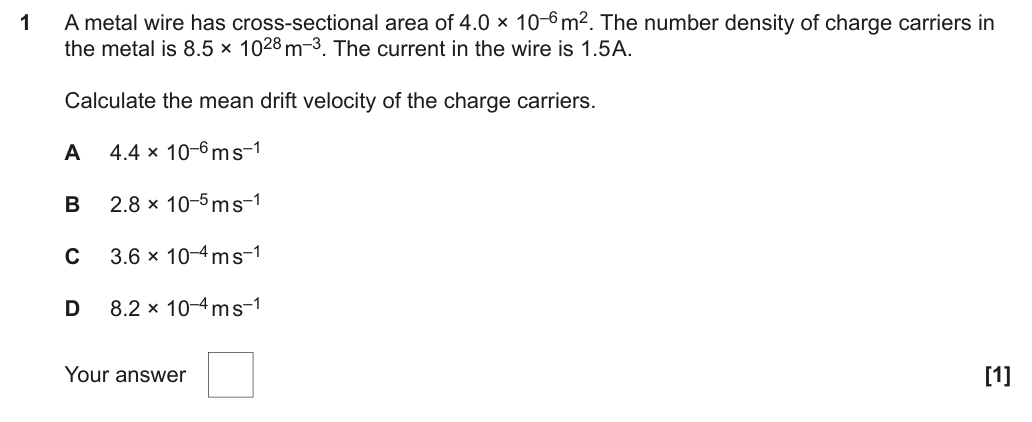
This question was answered well. High scoring candidates often wrote an equation in the white space and substituted into their expression the data.
B
This question was answered well. High scoring candidates often wrote an equation in the white space and substituted into their expression the data.
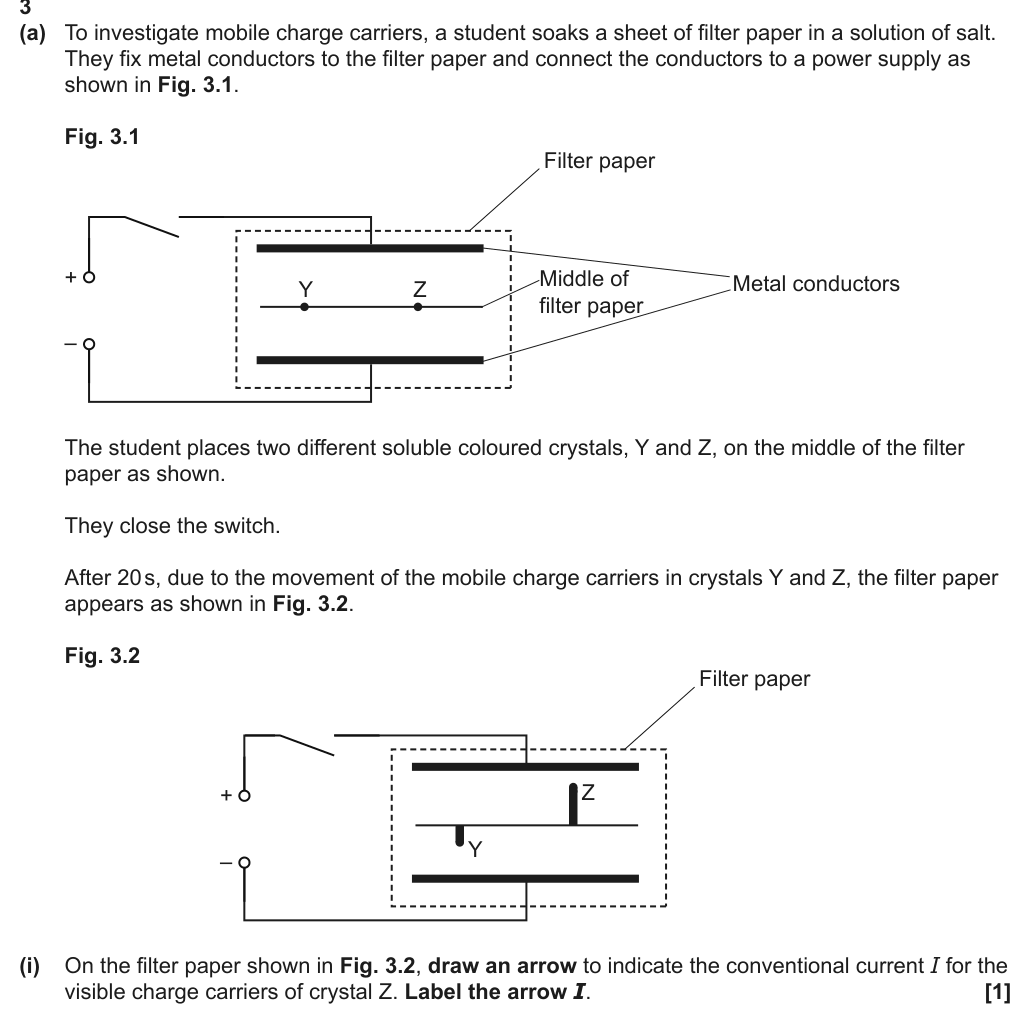
Many candidates did not draw an arrow on the filter paper. Some lower performing candidates incorrectly drew an upwards arrow on the filter paper.
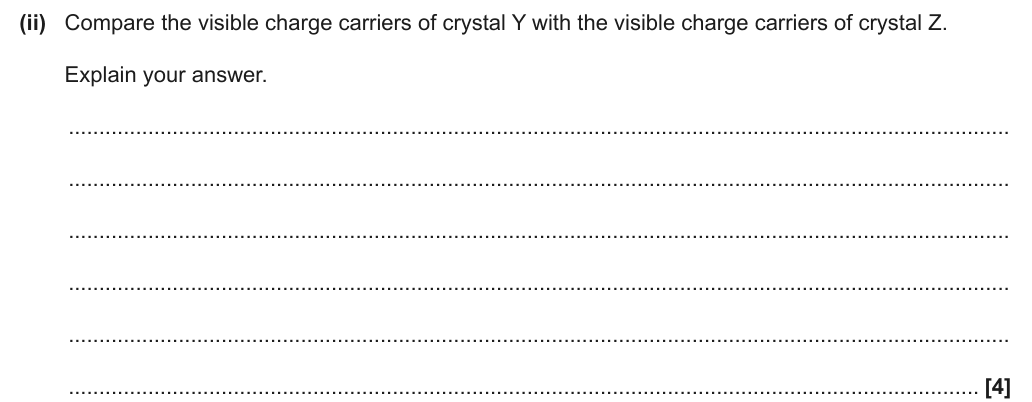
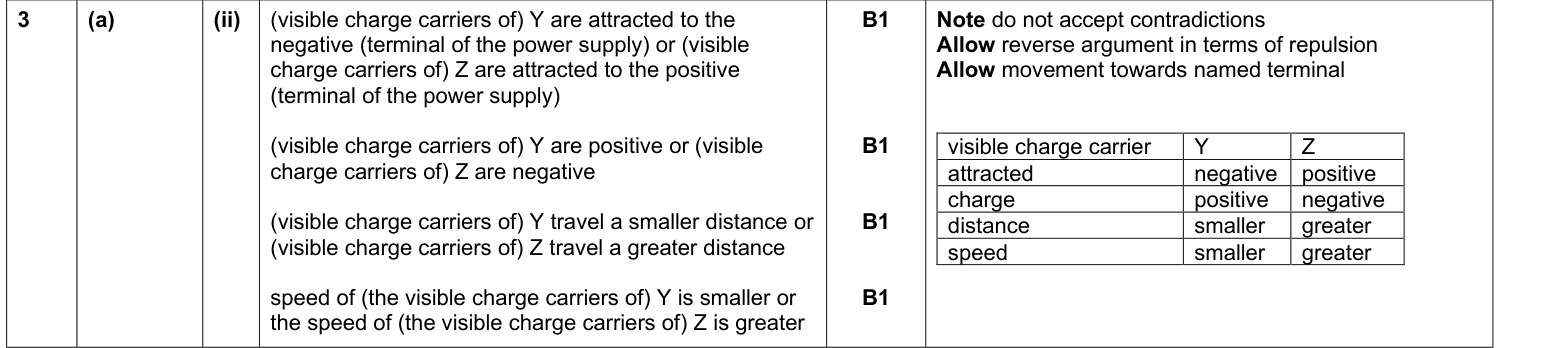
The question was based on a practical showing the movement of charge carriers. Many candidates correctly stated that since the charge carriers in Z were moving towards the positive metal conductor, these charge carriers were negative and that the charge carriers in Y were moving towards the negative metal conductor, these charge carriers were positive. Fewer candidates discussed the distance travelled by the charge carriers (in 20 s) and related this to the speed of the charge carriers. A small minority of candidates incorrectly discussed the number of charge carriers or the quantity of charge on the charge carriers – there was not enough information provided for any conclusion. In effect both crystal Y and Z also have invisible charge carriers which move in the opposite direction.
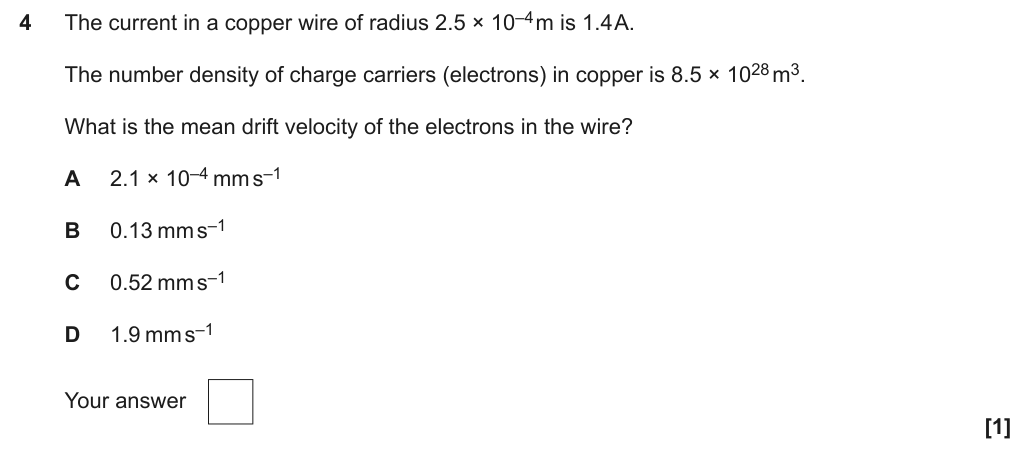
C
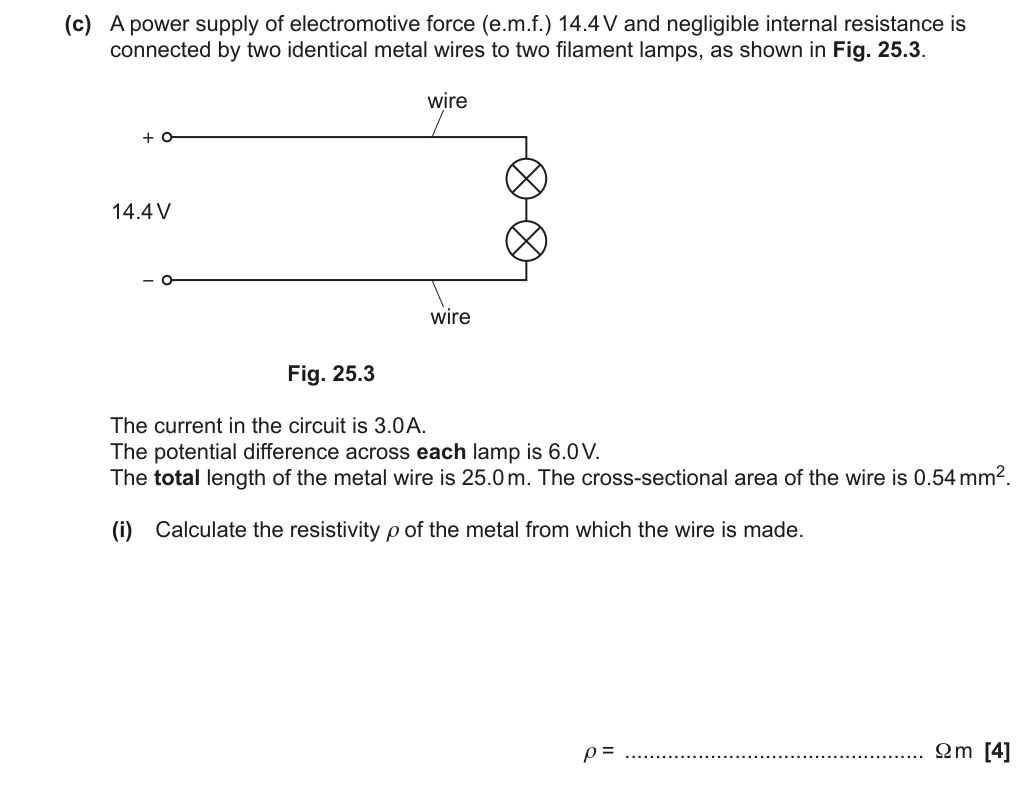
This relatively straightforward calculation, with no difficult unit conversions, was correctly answered by many candidates. The calculation does involve calculating the cross-sectional area, and many candidates showed this in working at the side, to support their calculation.
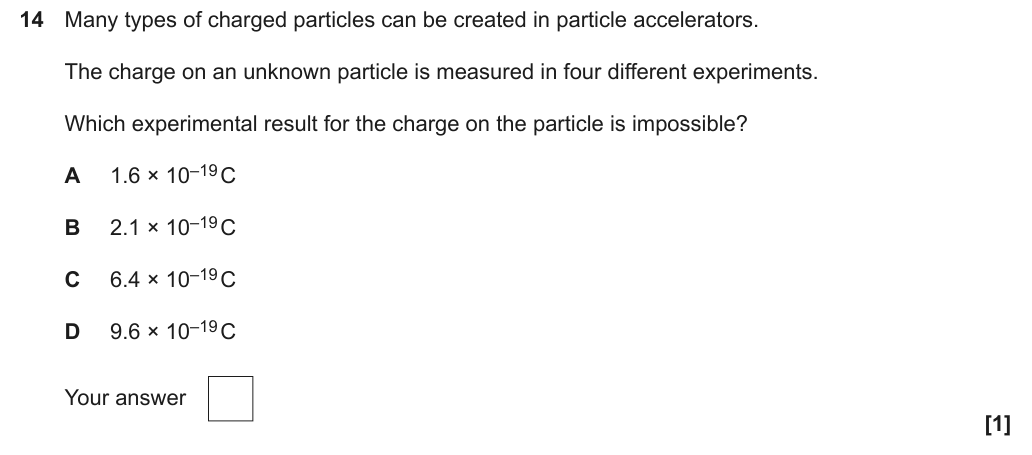
B
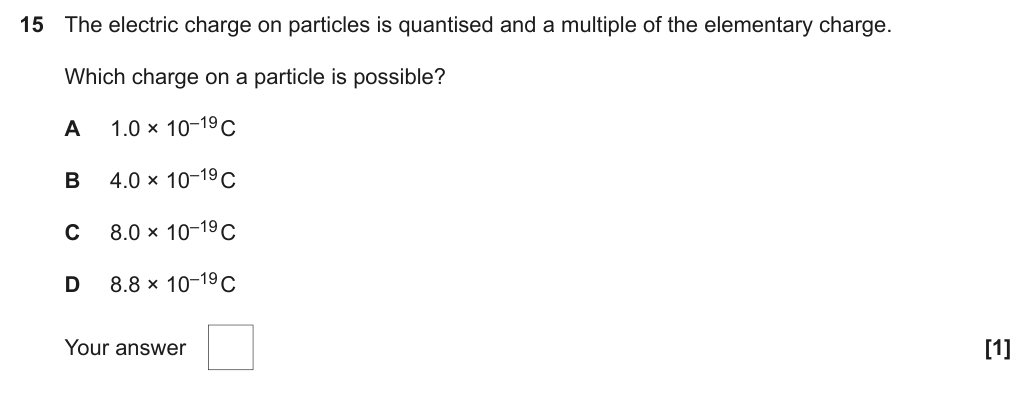
Most candidates appreciated that the change should be a multiple of the elementary charge and many were able to calculate the correct response. D was the most common incorrect response.

The vast majority of candidates were able to correctly identify the direction. This was indicated in many ways, from a single arrow on a point on the circuit, to multiple loops around each separate part. Few candidates did not attempt this, which may be due to missing the question rather than a lack of understanding. Candidates are encouraged to take care to look for questions where there is no clear answer space.
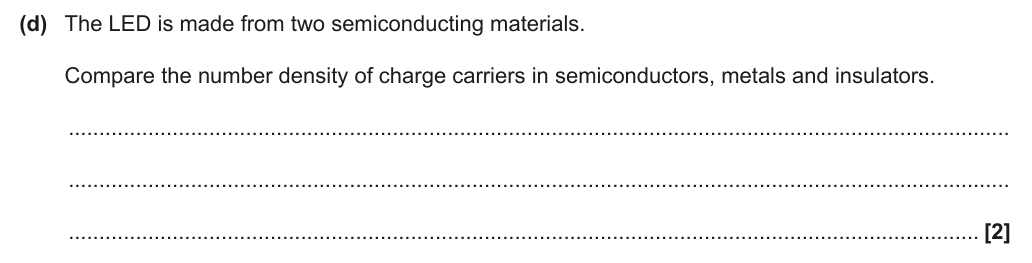
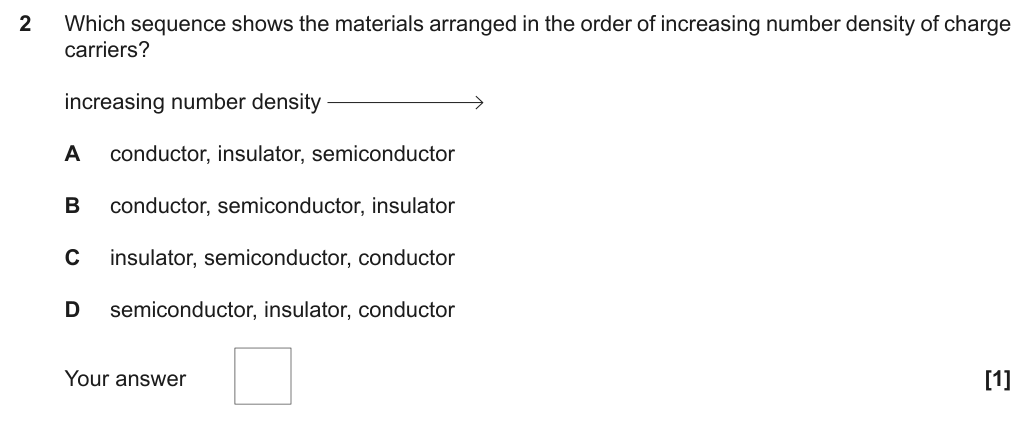
Most candidates were able to appreciate the order of number density of charge carriers. Many candidates gave numerical values to support their answer, although this was not required, and in many cases their values were accurate. Candidates should be encouraged to use comparative terms (highest, higher) rather than simple stating that values are high, as this can lead to ambiguity.
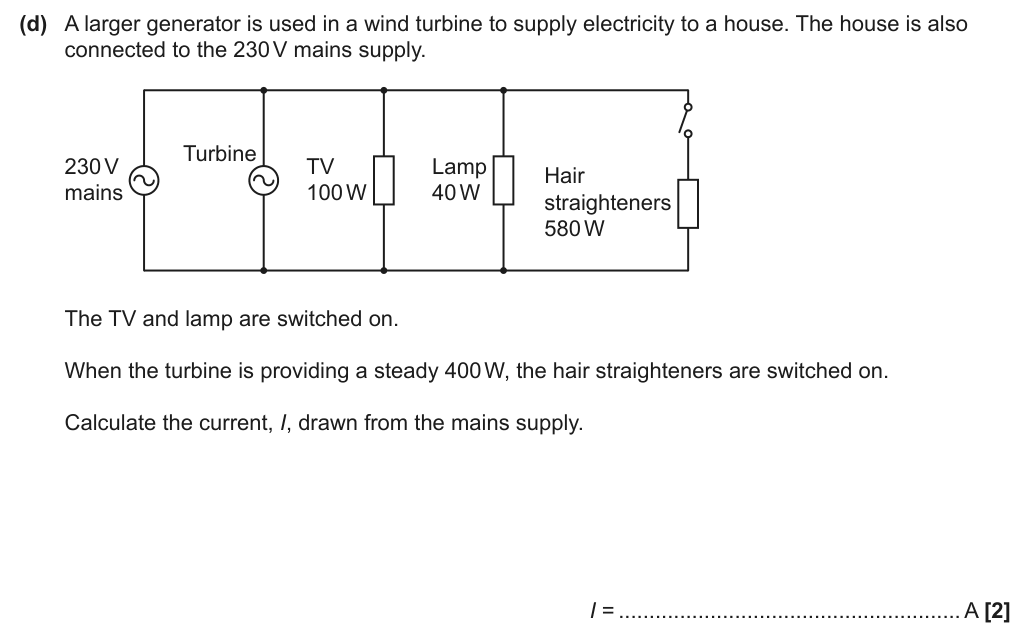
Some candidates were able to correctly calculate the current. Most incorrect answers came from adding together all the powers, including the turbine, or simply just dividing the turbine power by the mains voltage.
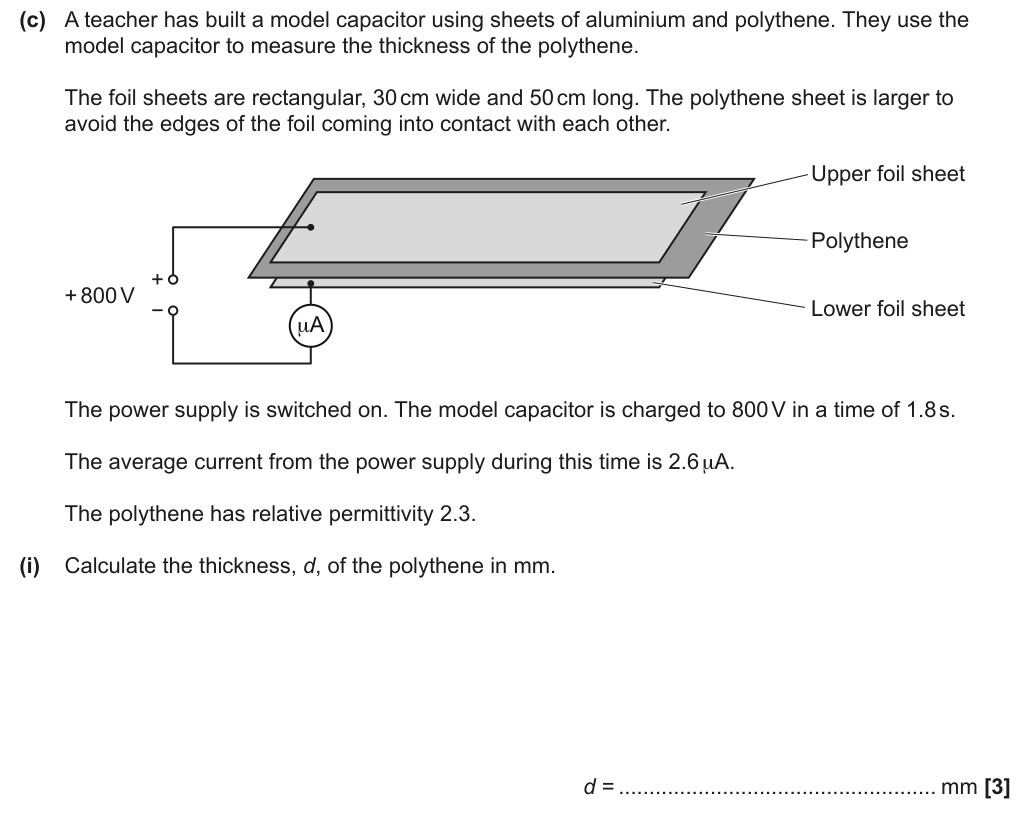
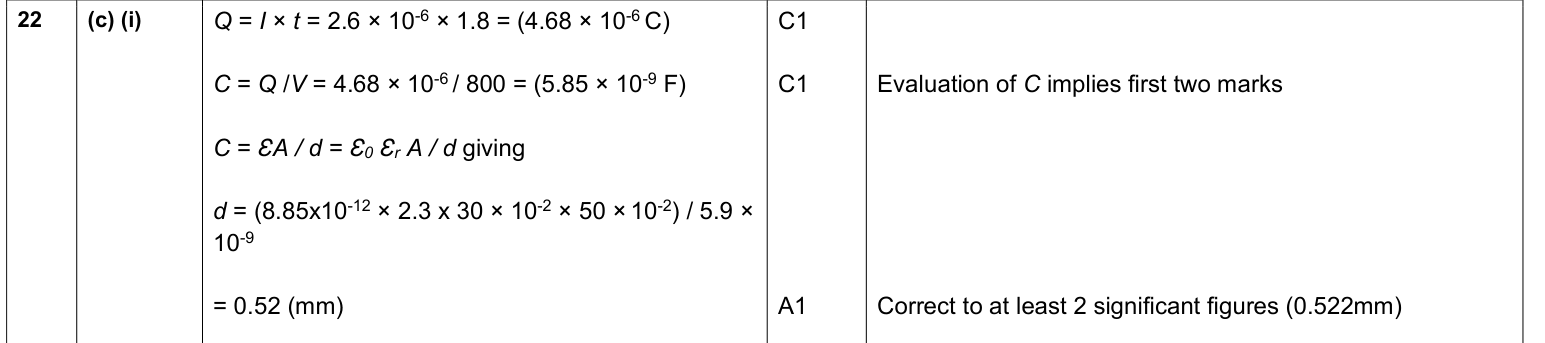
• used calculators effectively with careful consideration of unit conversions, such as in Questions 18 (d) and 22 (c) (i) • demonstrated an ability with logarithms and manipulation of exponential equations, such as in Questions 18 (e) and 19 (c) • gave suitable detail and care in responses to Level of Response questions, paying particular attention to the specifics of the question • had a clear appreciation of command words • gave appropriate use of scientific language and terms, in particular in Questions 22 (c) (ii) and 23 (d) • applied consideration of significant figures in calculations, especially in Question 21 (c) (ii). • did not attempt all of the multiple-choice questions, and this did not appear to be a timing issue • did not show suitable working in extended calculations, such as Question 21 (c) (i), which means that it was not possible to award C marks • only gave limited detail in the Level of Response questions, such as not explaining the description of both models in Question 17 • drew a poor line of best fit in Question 23 (b) (iii), assuming that the line would pass through the false origin • chose too small a range for a gradient calculation in Question 23 (c), or just used a pair of points • were unable to differentiate terms such as precision, resolution and accuracy, especially in Question 23 (d) • did not express scientific knowledge with sufficient accuracy, such as in Question 20 (c). Just under half of candidates were able to calculate the thickness correctly. The most common way was to calculate the capacitance and then use the parallel plate capacitor formula. This allowed clarity in setting up the calculation and generally resulted in the correct answer. Several candidates attempted to carry out the calculation in one go. This often resulted in an error, such as using 2.3 in place of the actual permittivity of the polythene. Another common error was to use the formula for the capacitance for a sphere. There seemed to be little difficulty in converting all the units correctly, either in the initial calculation or by converting to mm at the end. As always with this type of calculation, structuring it carefully allows for intermediate marks to be awarded should the final answer be incorrect. This exemplar shows how clear and careful setting out of a calculation can lead to C (compensatory) marks. This candidate has shown the working for (and then calculated) the charge, Q, separately on the top of the right-hand side. This gains the first mark. The candidate has then re-arranged the equation in the centre, with the capacitance in the denominator. The calculation for the capacitance is clearly shown (4.68 x 10⁻⁶ ÷ 800) which is all that is required for the second C mark. It is almost always the working that gains the C mark, not the evaluation. The evaluation is required for the A (accuracy or answer) mark, and in this case there is an error leading to an incorrect final answer. However, this good structuring of the solution leads to 2 out of the 3 marks.
Skills: M0.1 Recognise and make use of appropriate units in calculations; M2.2 Change the subject of an equation, including non-linear equations; M2.3 Substitute numerical values into algebraic equations using appropriate units for physical quantities
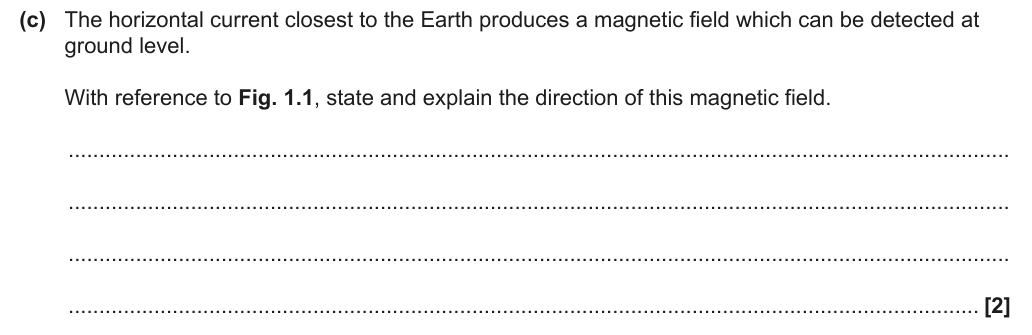
Candidates who gained full marks often started by correctly stating the direction of current. A common mistake was attempting to apply either Fleming’s left-hand or right-hand rule to the situation. A common misconception was stating that current was in the same direction as the flow of electrons. Labelling diagrams Candidates could gain marks by adding to the diagram. These responses were only creditworthy if it was clear what quantity the addition represented for example, an arrow to the left at an appropriate place labelled ‘current’ or ‘I’.
Skills: M4.2 Visualise and represent 2D and 3D forms, including two-dimensional representations of 3D objects
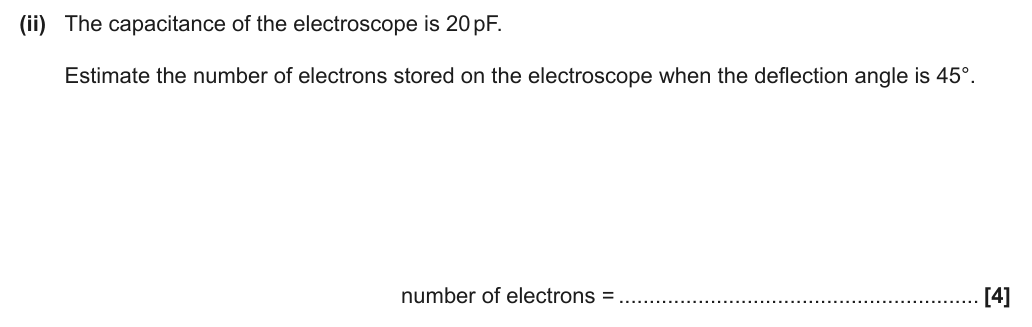
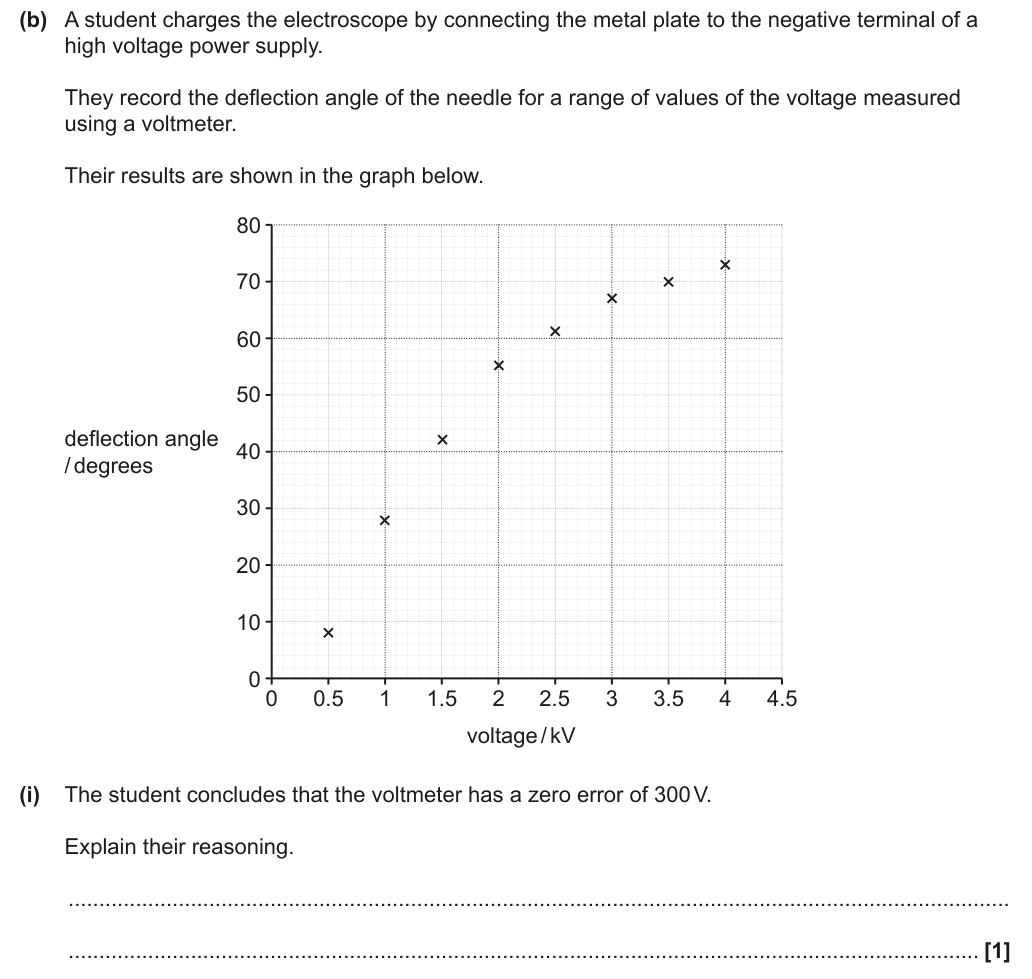
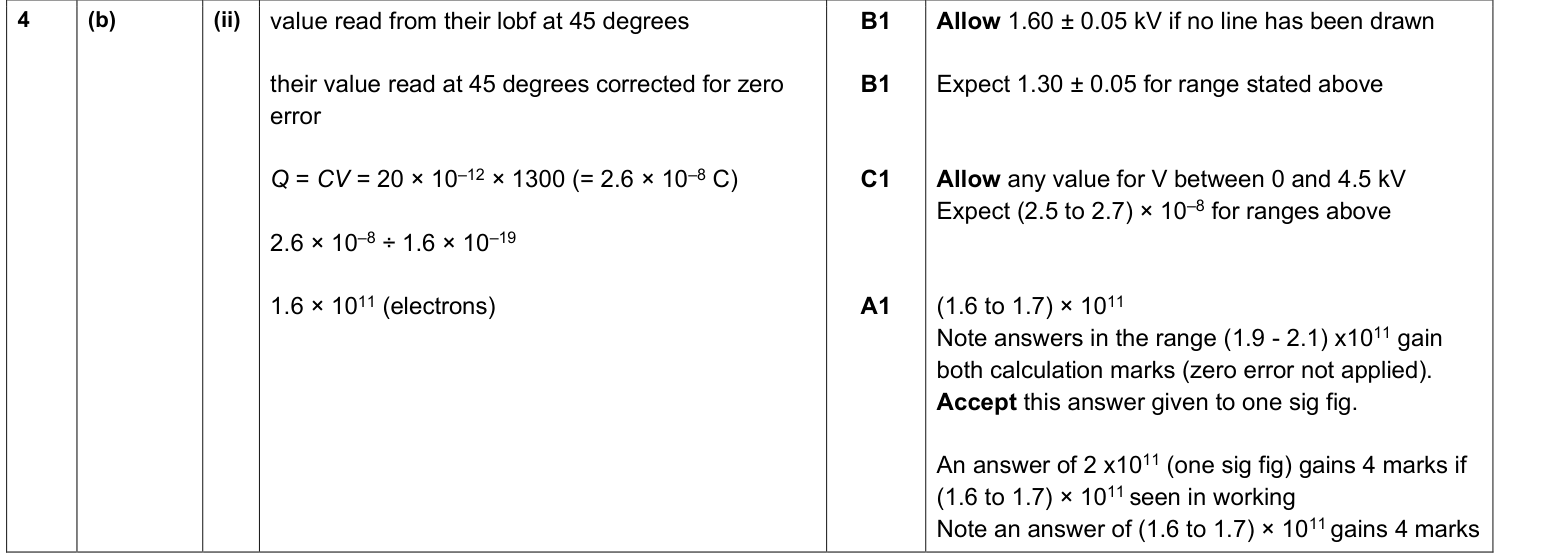
Many candidates gained 3 marks for this question for correctly using the Q = VC formula with data read from the graph. Very few candidates gained all 4 marks usually for one of the reasons identified below. Common mistakes • incorrect read off for the voltage at 45° • not correcting for the zero error • using an incorrect power of ten for pF.
Skills: M0.2 Recognise and use expressions in decimal and standard form; M2.3 Substitute numerical values into algebraic equations using appropriate units for physical quantities; M3.1 Translate information between graphical, numerical and algebraic forms
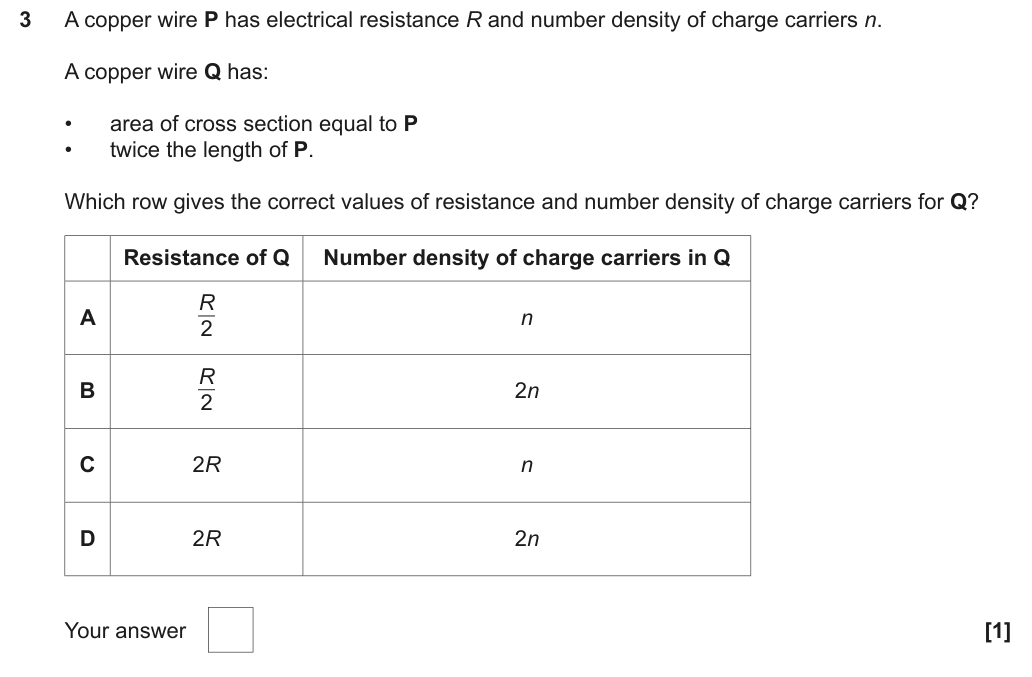
C
Overall, candidates performed well. They correctly determined that because the copper wire, Q, has an equal cross-sectional area to copper wire, P, that n (the number density of charge carriers) is the same for both wires. Most candidates determined that the resistance of Q would double in size due to the length of wire Q being twice as long, hence why the most common distractor was D.
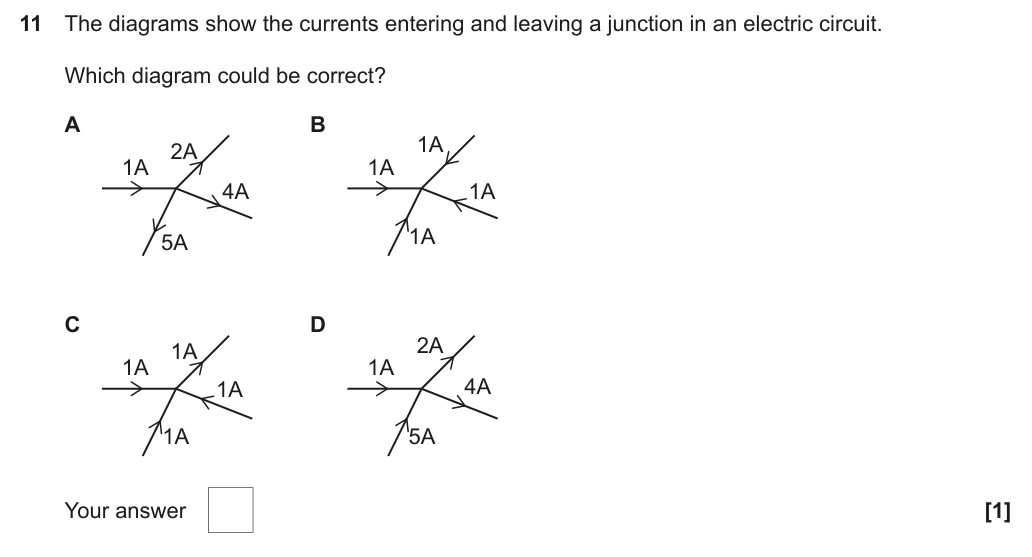
D
Candidates performed well on this question by correctly applying Kirchoff’s current law that the current flowing into a junction must be equal to the current flowing out of it to give the correct answer D.
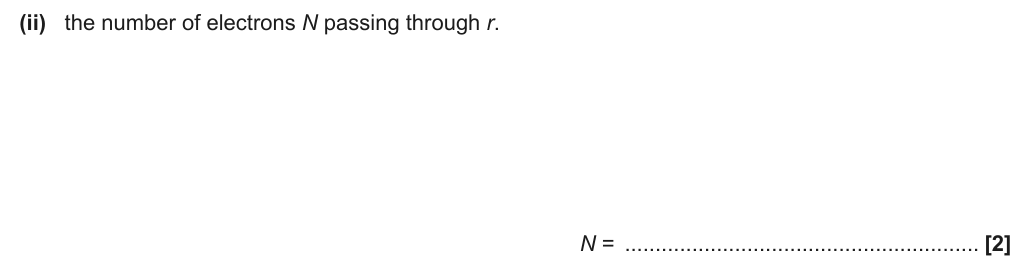
This question required candidates to determine the total charge flow and then divide this by the change on one electron.
Skills: M0.2 Recognise and use expressions in decimal and standard form; M2.3 Substitute numerical values into algebraic equations using appropriate units for physical quantities
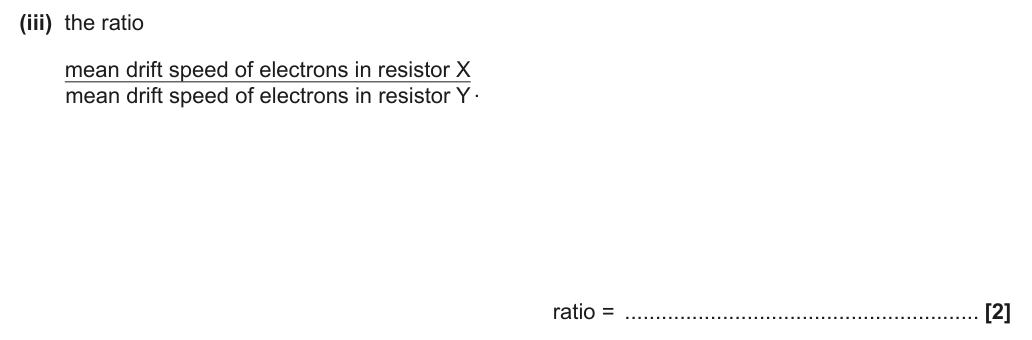
Candidates needed to understand how the current in X and Y would be different and relate this to the I=Anev equation.
Skills: M0.3 Use ratios, fractions and percentages
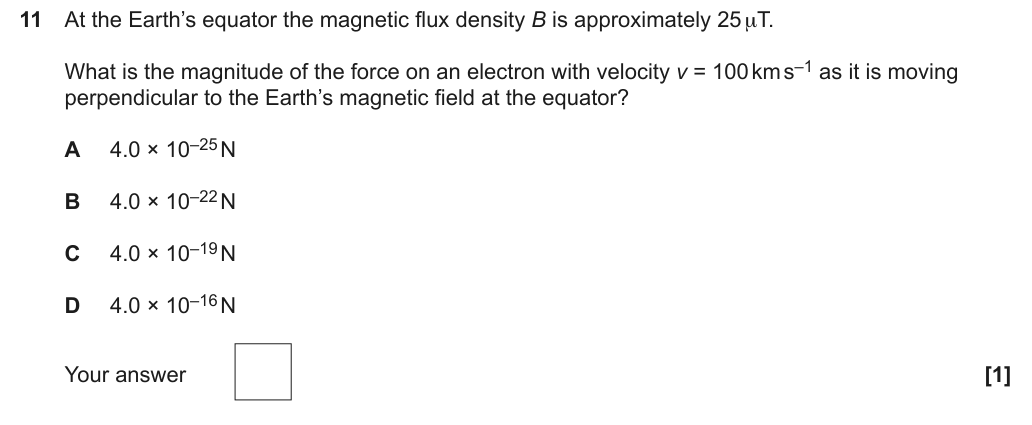
C
Most candidates were able to calculate the force, using F = BQv. The powers of ten in the various quantites appeared to have caused few problems. SThis was the multiple choice question that had the most ‘no responses’.
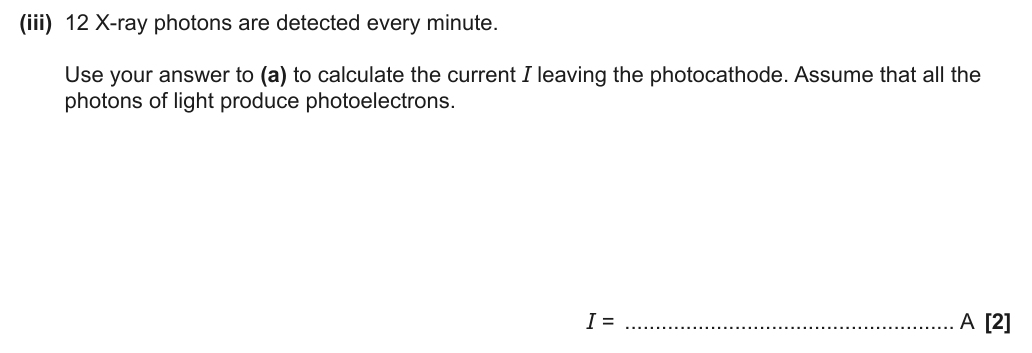
A little under half of the candidates were able to correctly calculate the current. Incorrect methods included missing out the factor of 12, or by dividing by 3600 instead of 60.
Skills: M0.1 Recognise and make use of appropriate units in calculations; M0.2 Recognise and use expressions in decimal and standard form; M2.3 Substitute numerical values into algebraic equations using appropriate units for physical quantities
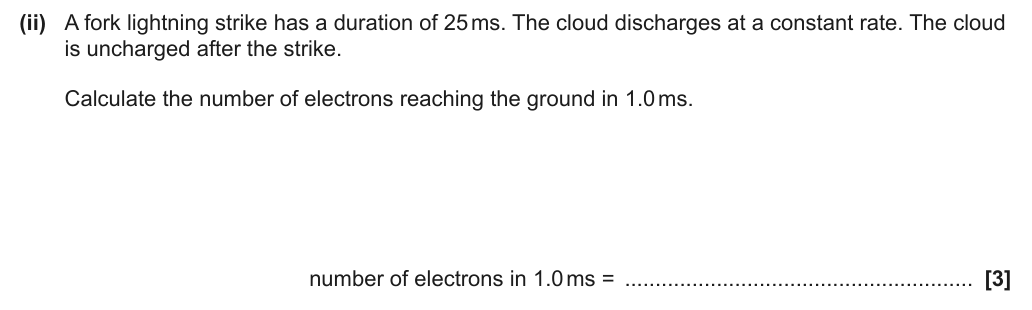
This question could be answered in several ways. Most candidates chose to calculate the current in amps and then converting back to ms at the end. Very few were confused by the need to give the answer in ms. This question polarised the candidates with the vast majority scoring 0 or 3; those who got part way to solving it generally ended up with the correct answer.
Skills: M0.2 Recognise and use expressions in decimal and standard form; M0.3 Use ratios, fractions and percentages; M2.3 Substitute numerical values into algebraic equations using appropriate units for physical quantities
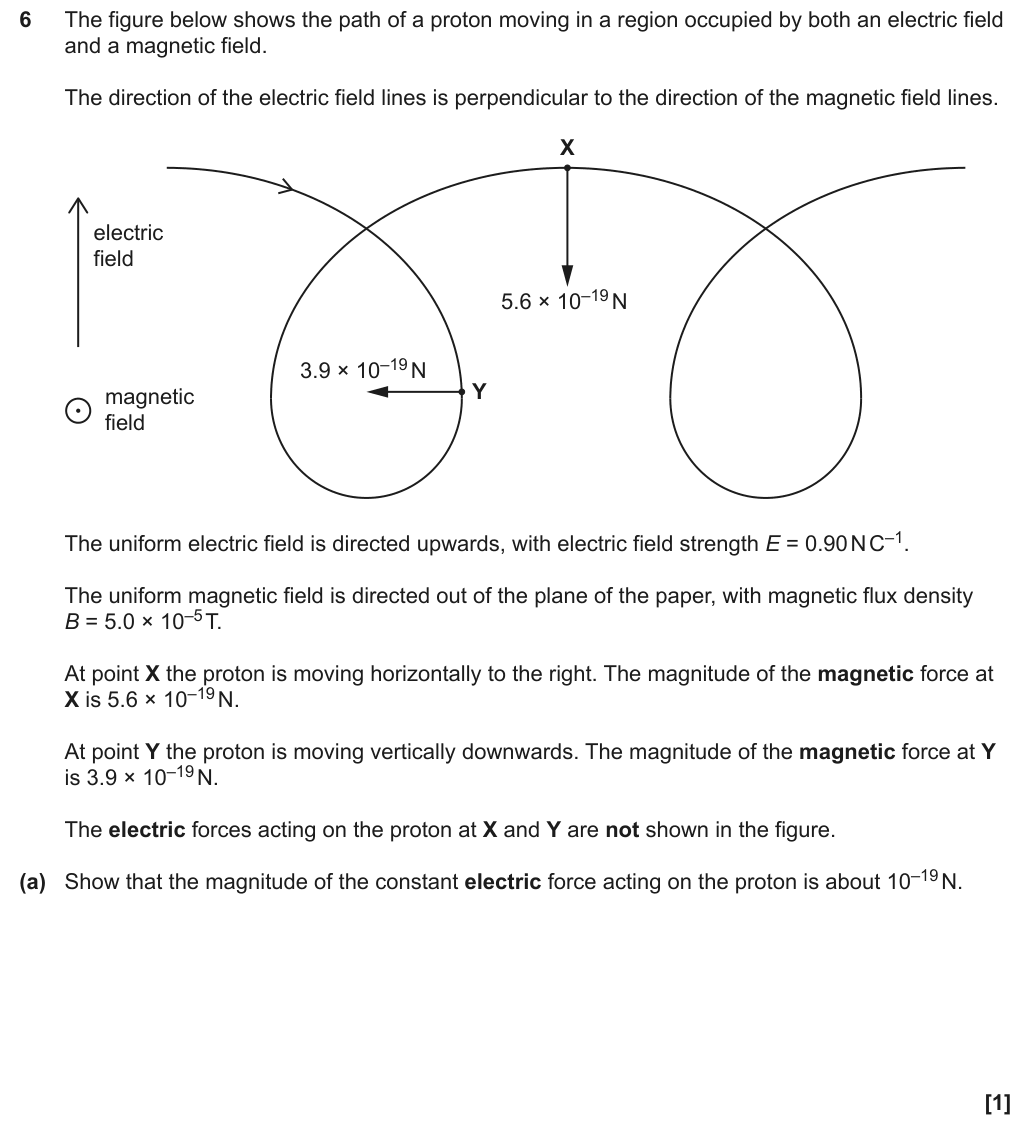
This was an easy introduction to the question, which used the definition of electric field strength; E = FE / Q. Being a ‘show that’ question, candidates needed to show their working in full, including writing the value for the electronic charge (rather than simply ‘e’) and giving the answer to at least 2 s.f.
Skills: M0.2 Recognise and use expressions in decimal and standard form; M2.3 Substitute numerical values into algebraic equations using appropriate units for physical quantities
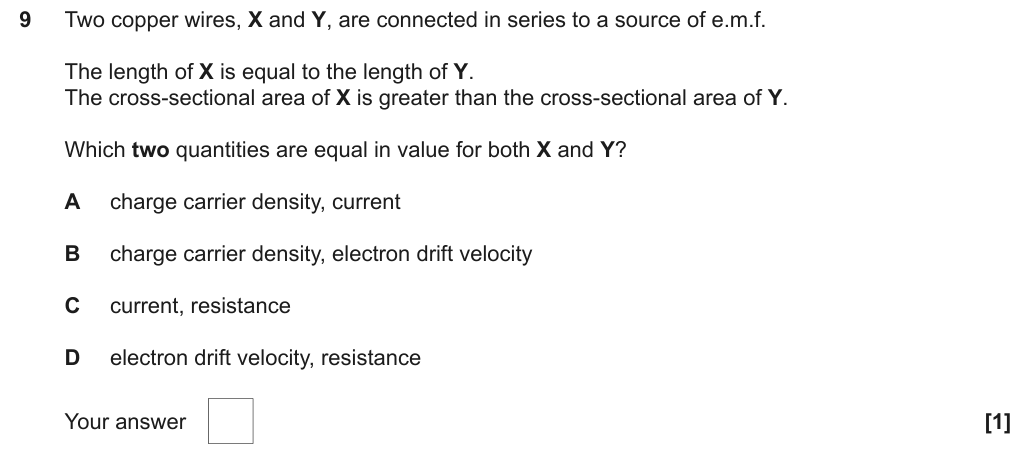
A
Only half of candidates gave the correct answer A by understanding and applying the equation I = Anev.
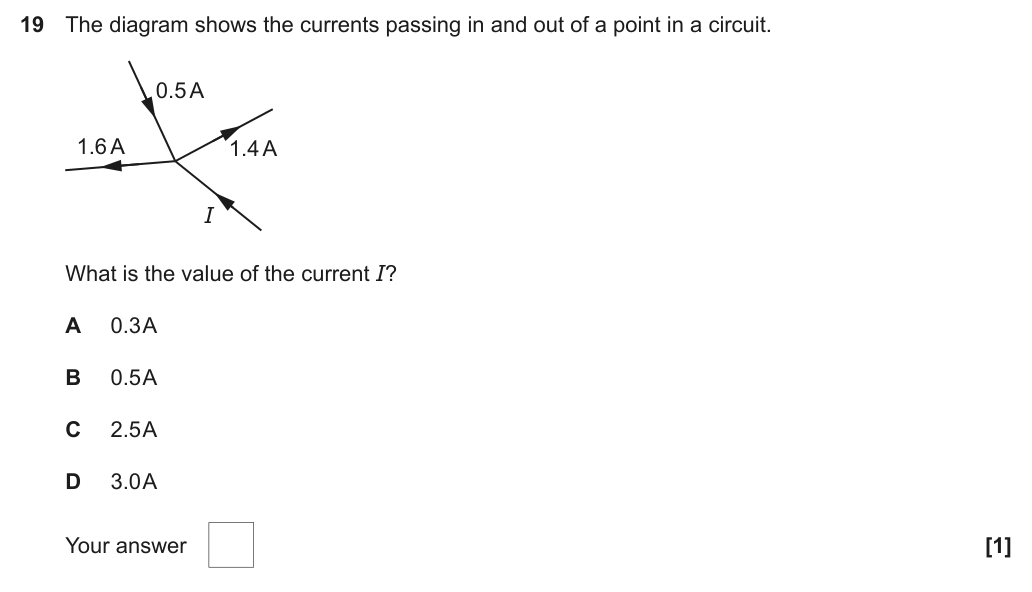
C
This question was answered well as most candidates applied Kirchhoff’s Law and that the sum of the currents entering a junction is equal to the sum of the currents out of the junction to give the correct answer of C.
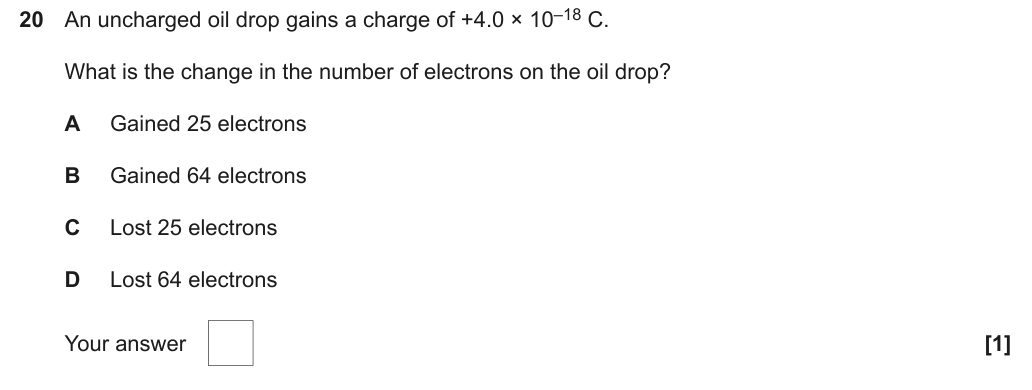
C
Most candidates correctly answered this question as they determined that the oil drop had lost electrons (since the oil drop had gained a positive charge) and used the charge of an electron to give the correct answer C. The most common distractor was D.
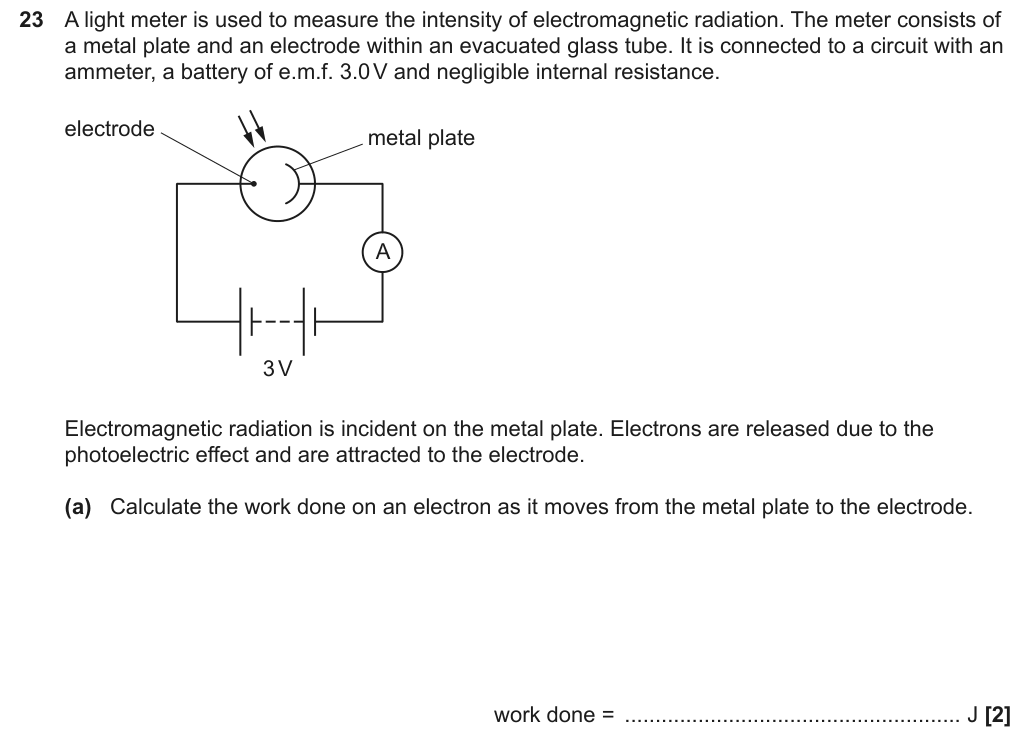
Candidates performed well on this question as most candidates correctly applied the equation W = VQ to calculate the work done on an electron and its corresponding charge as it moved from the metal plate to the electrode with a potential difference of 3 V from the battery connected in the circuit.
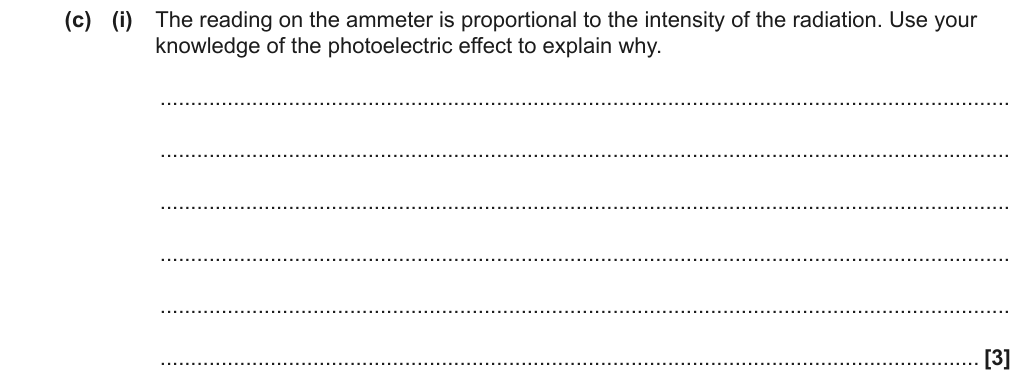
Candidates did not perform well on this question as 60% of candidates achieved no marks. A common response was to describe that greater intensity leads to more photoelectrons which was not given, and few made the important connection between intensity and ‘rate of photons hitting the plate’. Also, many candidates did not apply the 1:1 correlation between photons and electrons in the photoelectric effect as they simple stated that more electrons were released without applying knowledge of the individual interaction between incident photons to the release of electrons. Many took the reverse view that greater current led to greater intensity or simply referred to the ammeter reading rather than referencing current. This exemplar demonstrates a typical response from candidates where a simple statement is made in relation to the intensity of electrons emitted and corresponding current reading on the ammeter. As in many similar responses the intensity of radiation is not linked to the ‘rate of incident photons’ resulting in a similar ‘rate of electron emission’ due to the 1:1 interaction between photons and electrons. Candidates were then required to link the rate of electron emission to the equation Q = It to conclude that current is equal to the rate of flow of charge and hence the ammeter reading is proportional to the intensity of the radiation.
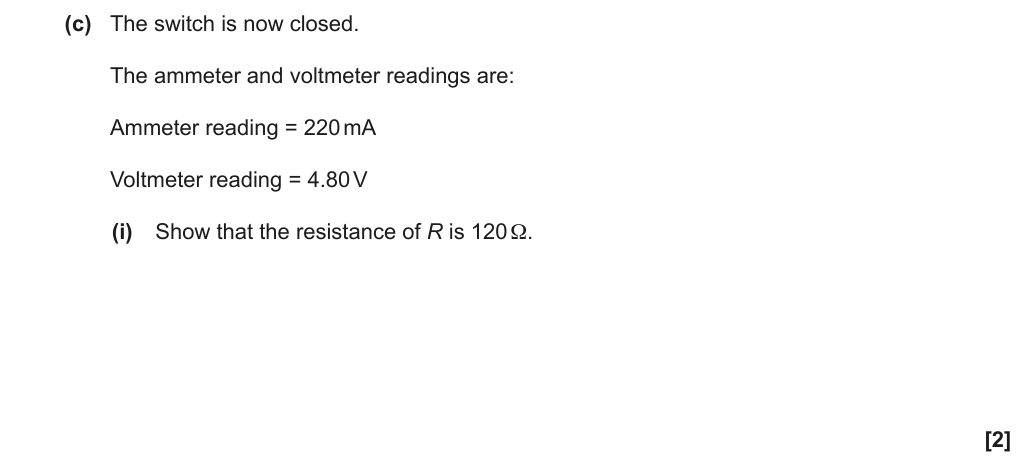
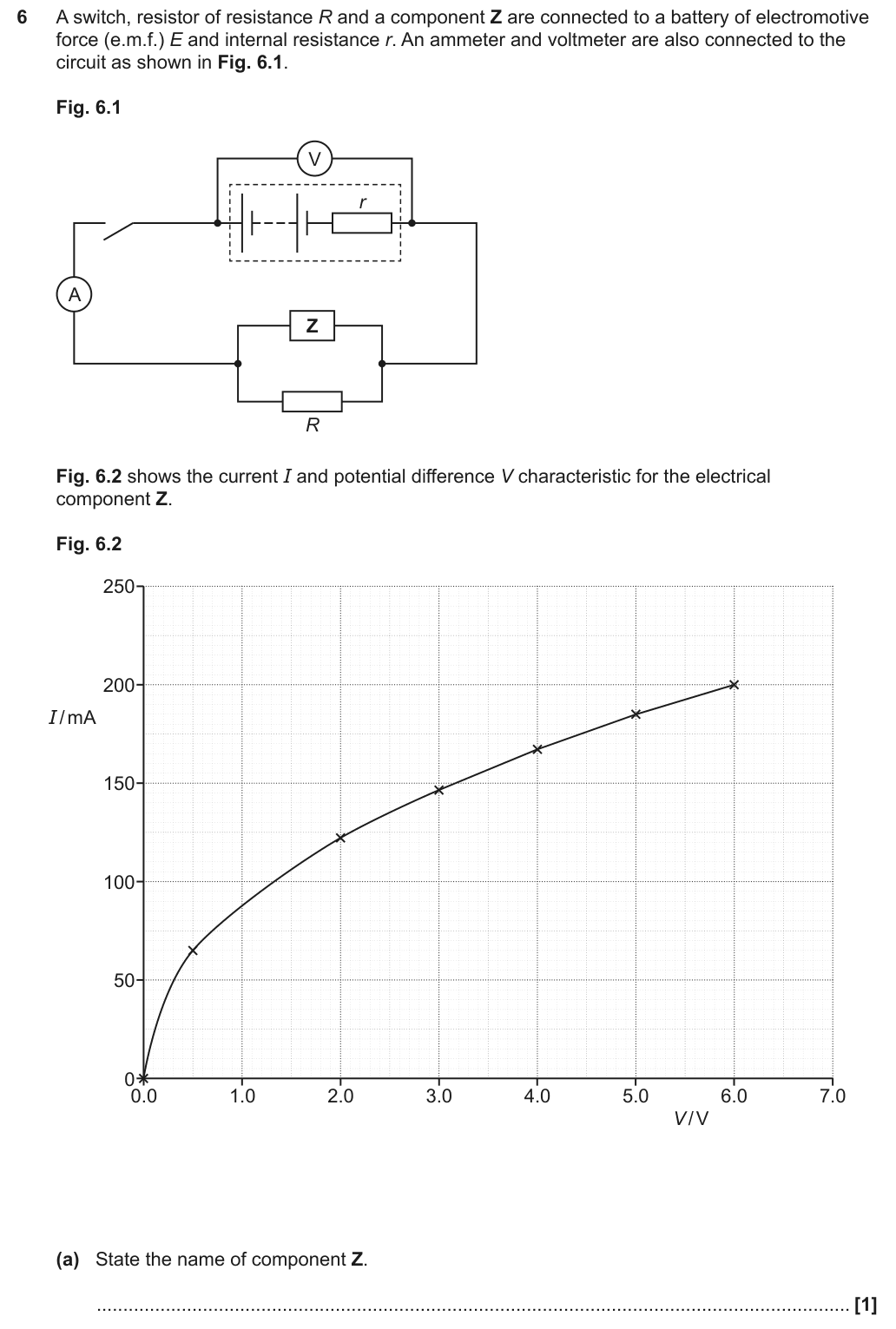
For this ‘show question’ it was expected that candidates would begin by stating that the current in component Z was 180 mA for the given potential difference. More able candidates then stated that the current in R was 220 mA − 180 mA = 0.040 A before stating the final division. A common alternative method which also gained full marks was again to identify 180 mA as the current in Z which gave the resistance of Z as 26.7 . The resistance of the parallel network was then calculated to be 21.8 . Candidates then needed to show correct working for the use of the parallel network of resistances formula. Many candidates did not know the current of 180 mA and so did not score marks. Some candidates attempted to working backwards by stating the current in R was 0.040 A – without explanation this did not score marks. In this exemplar, the candidate clearly stated the current in Z for a p.d. of 4.8 V which gains the first mark. The subtraction of 220 mA – 180 mA is then shown and the then the final line demonstrates the equation used by the substitution of correct numbers, including the conversion of 40 mA to 0.04 A, and the response of 120 .
Skills: M2.3 Substitute numerical values into algebraic equations using appropriate units for physical quantities; M3.1 Translate information between graphical, numerical and algebraic forms
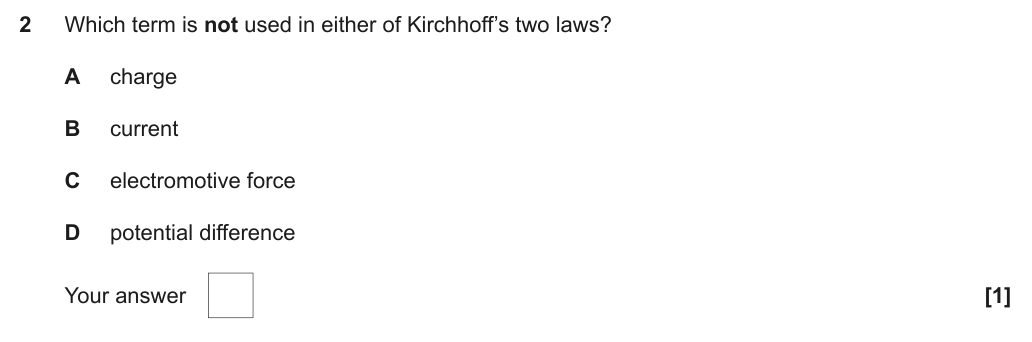
A
This question assessed candidates understanding of Kirchhoff’s two laws with most candidates applying their knowledge that current and potential difference were used in the laws. This meant that most candidates answered A correctly but C was a common distractor.
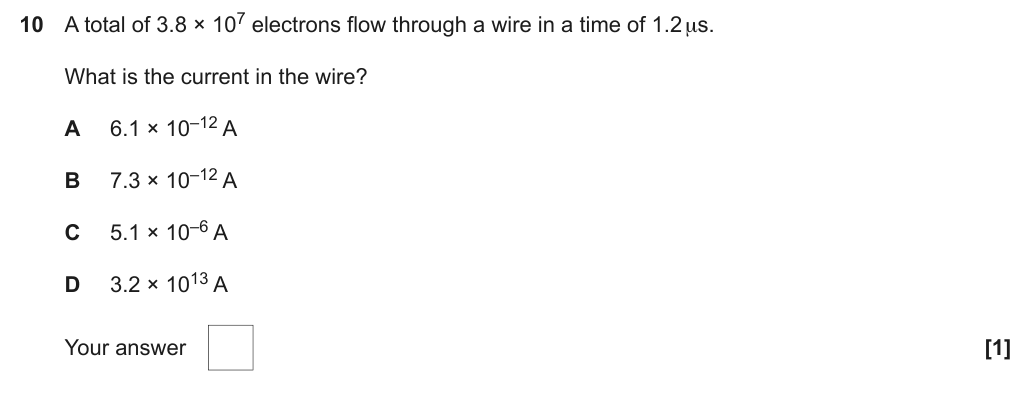
C
This question was generally answered well but candidates had to use the charge of an electron to calculate the total charge of the electrons flowing in the wire. If candidates missed this step in their working, they weren’t able to access the correct value for the current.
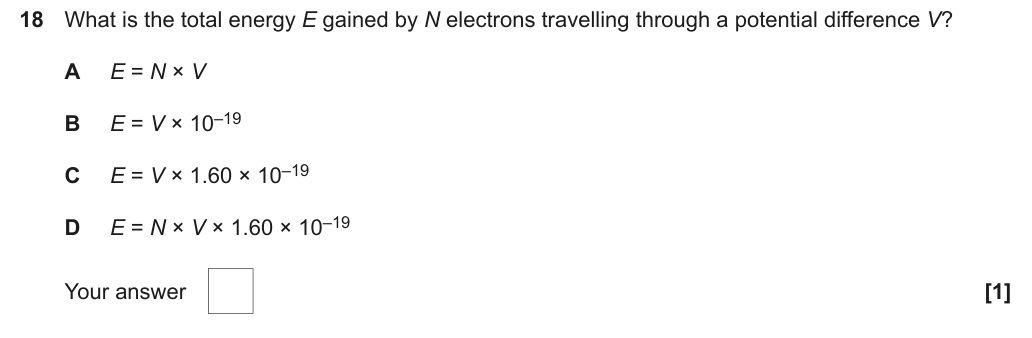
D
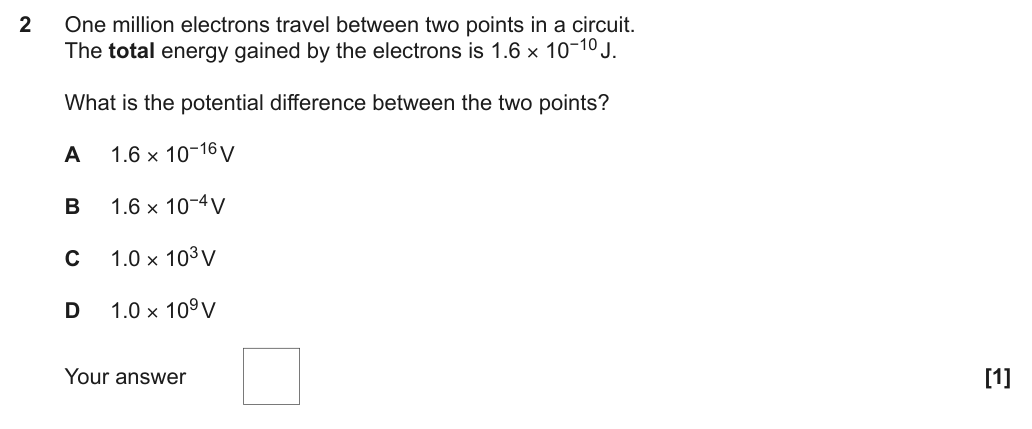
This question was generally answered well with candidates giving the correct answer D by selecting and applying the equation W = VQ and that the charge of one electron is 1.60 × 10⁻¹⁹ C.
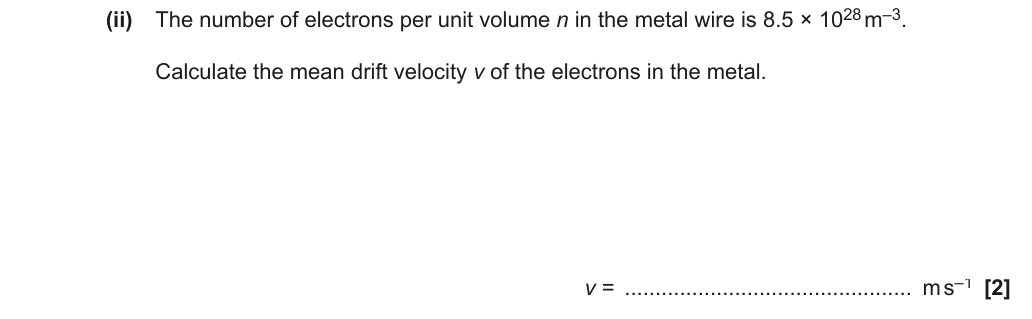
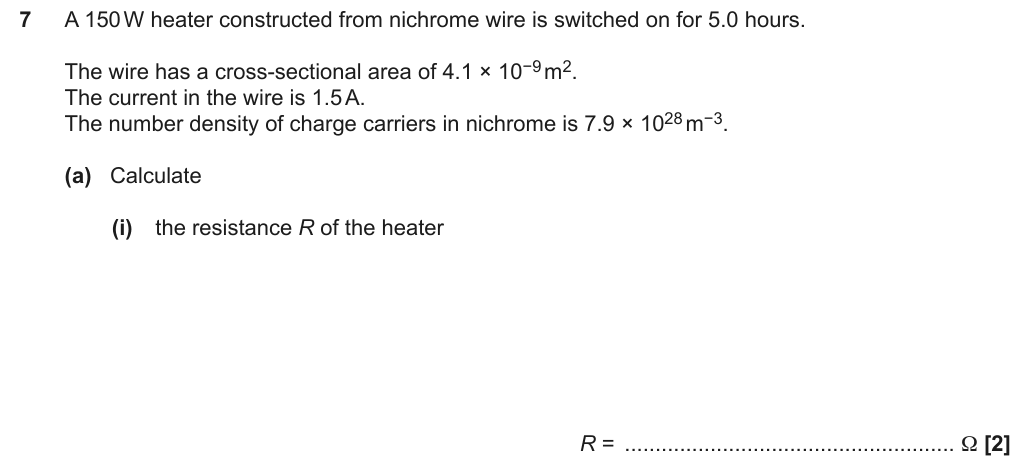
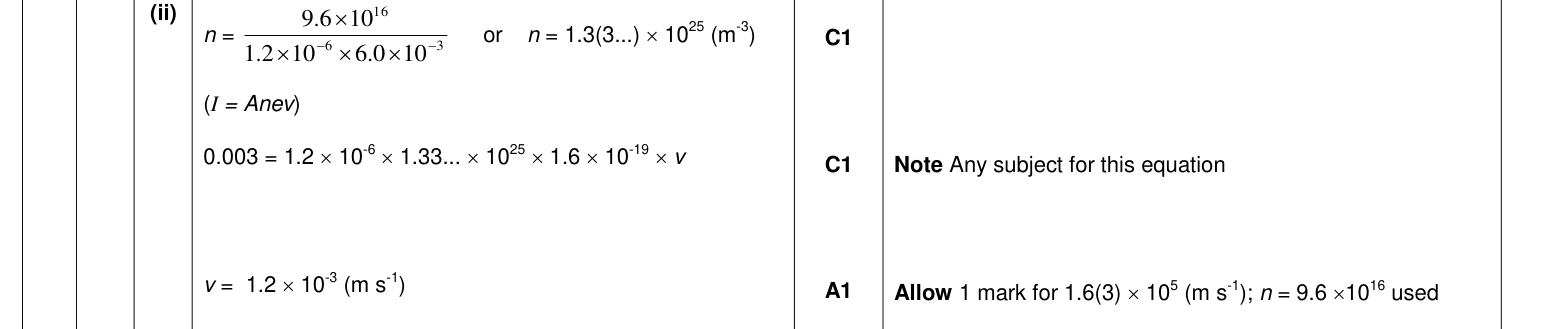
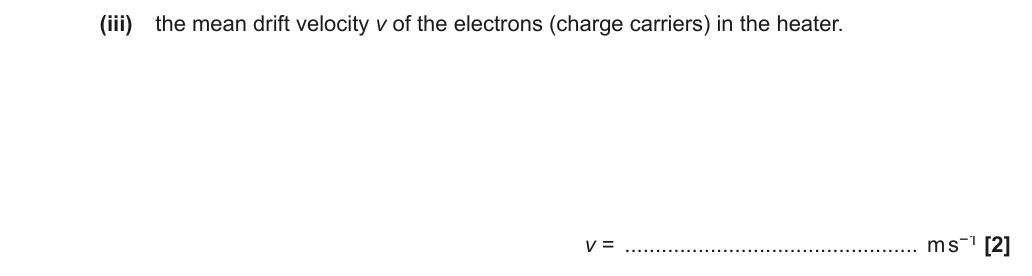
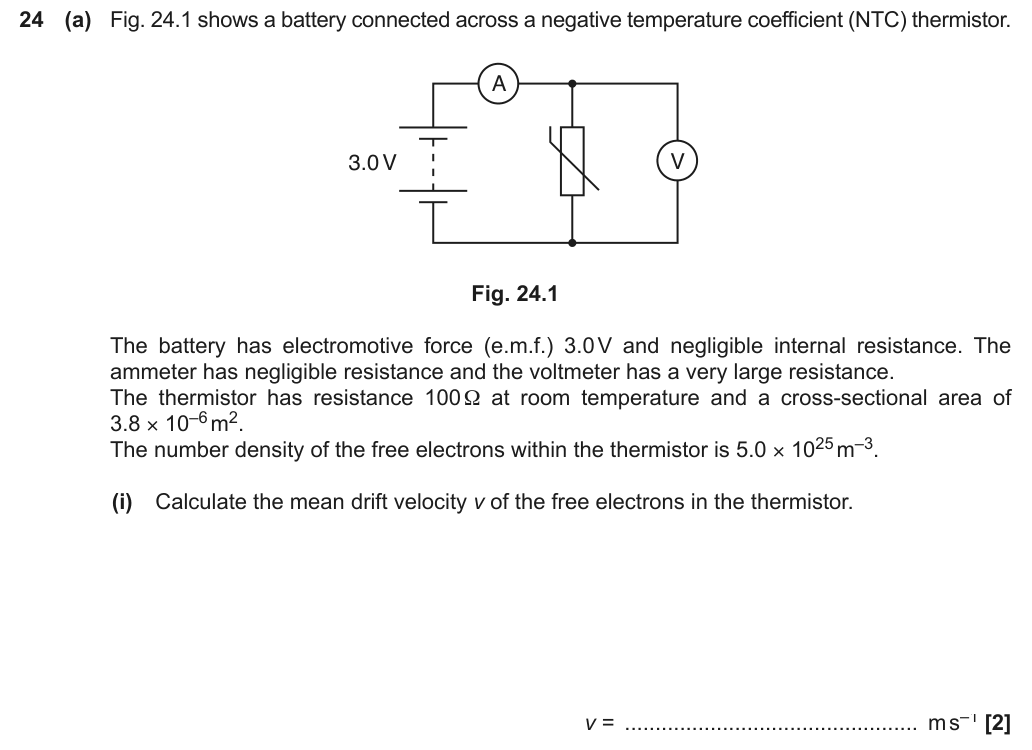
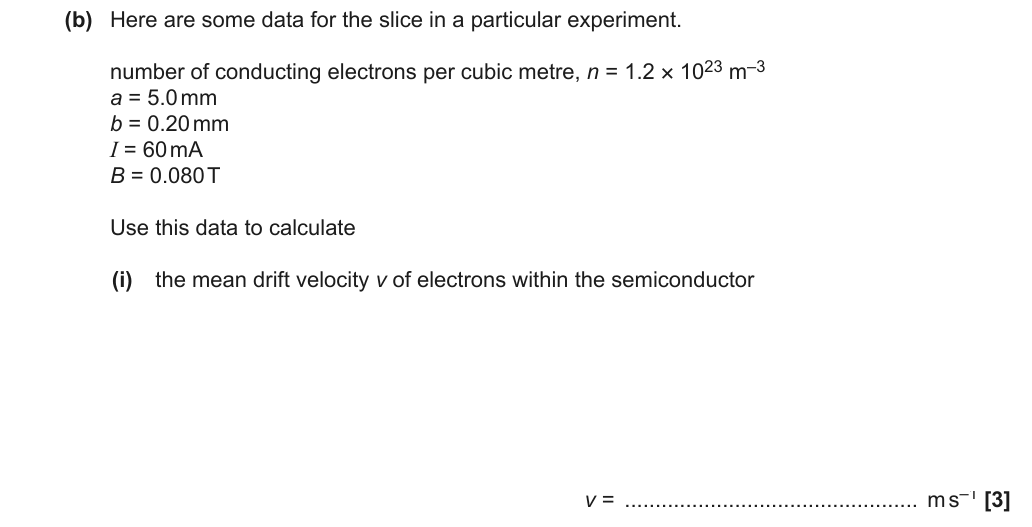
Most candidates were given at least 1 mark with half the candidates correctly calculating the drift velocity using the formula I = Anev. Less successful responses did not select the correct formula and some candidates had an incorrect or absent conversion of the cross-sectional area to m2.
Skills: M0.2 Recognise and use expressions in decimal and standard form; M2.2 Change the subject of an equation, including non-linear equations
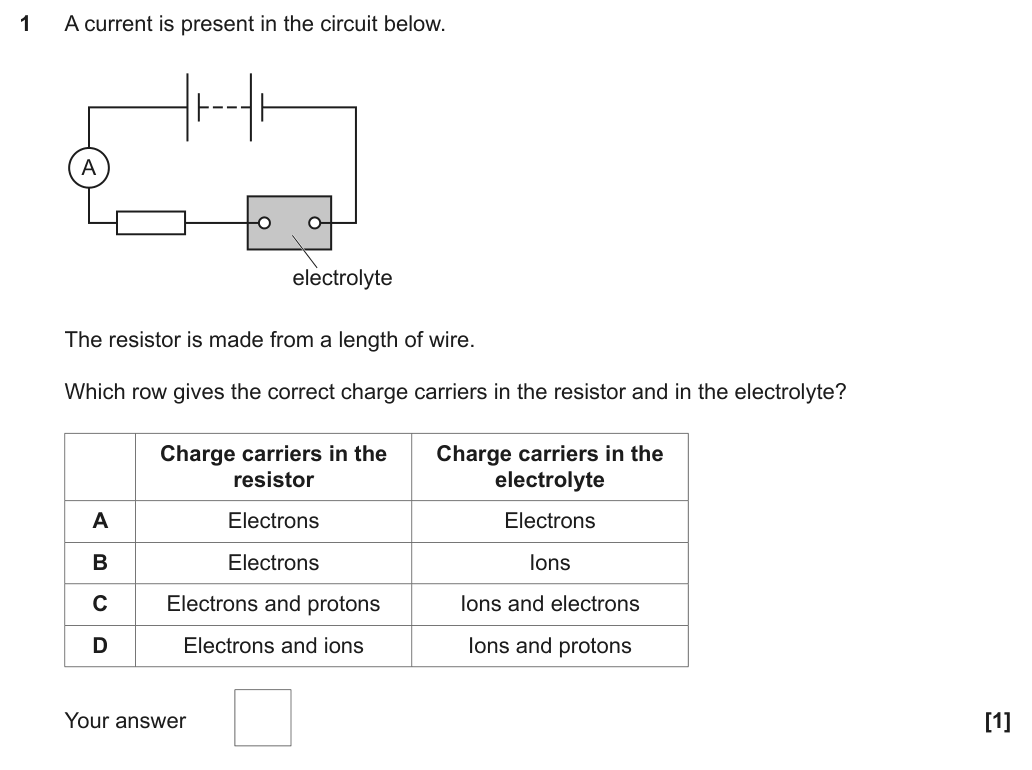
B
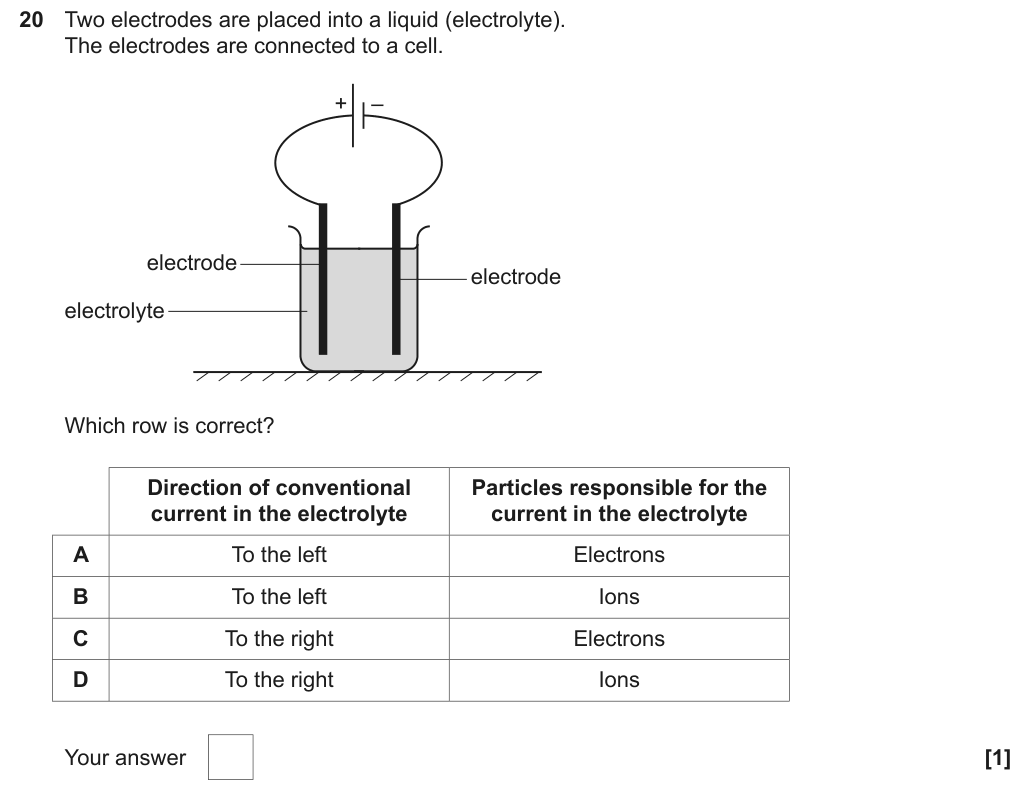
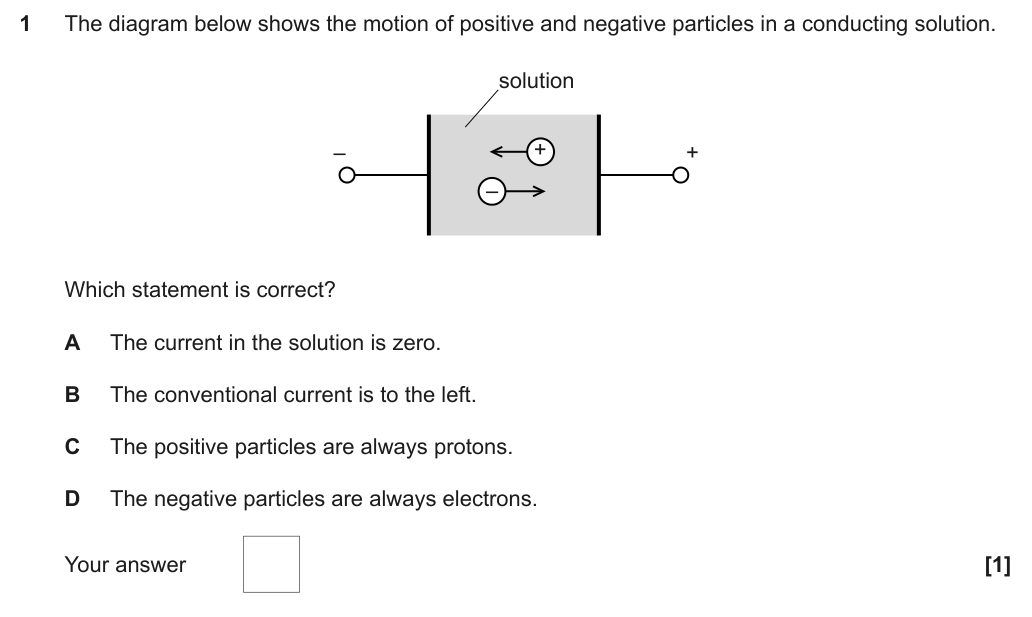
The vast majority of candidates were able to correctly recall the correct charge carriers in the resistor and the electrolyte. A proved to be the most common distractor, possibly as the others contained “protons”.
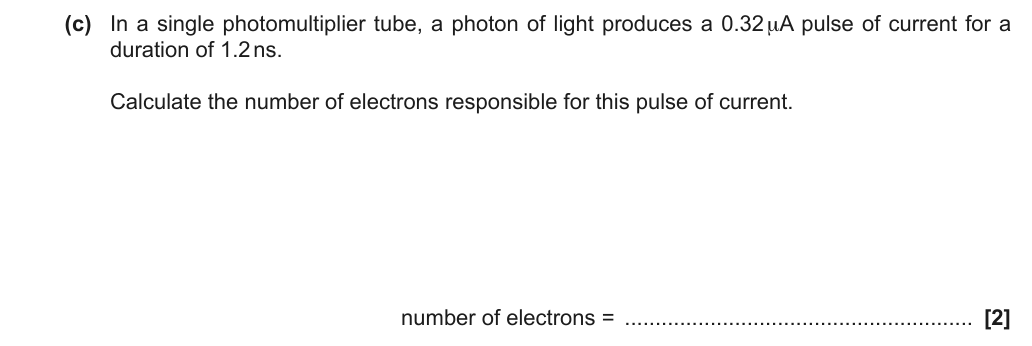
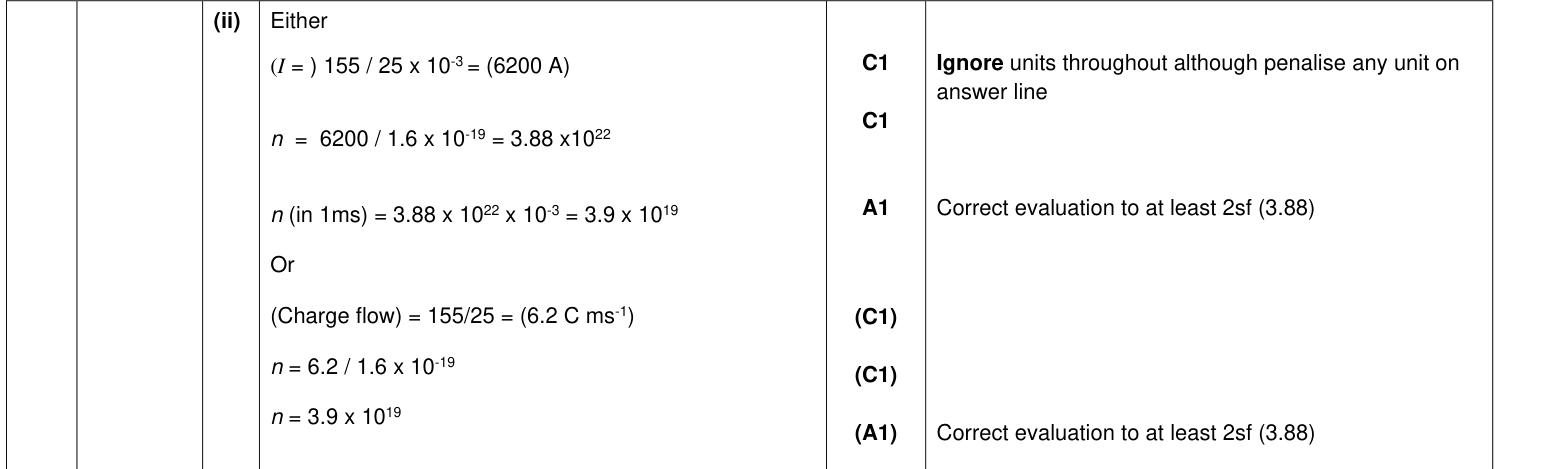
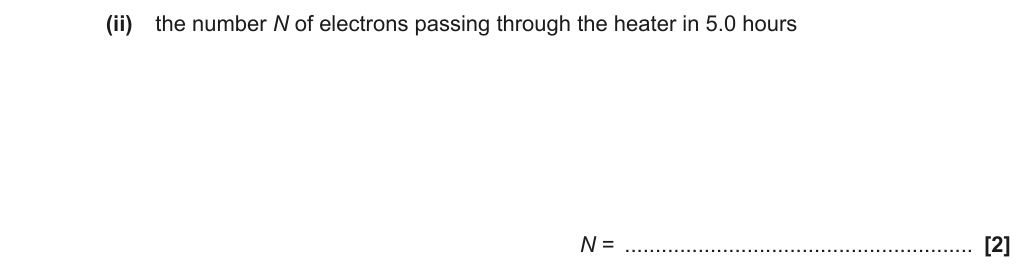
This calculation was done well by a large majority of candidates. There were few errors in the unit prefixes, with the most common one being 1.2 ns as 1.2 10-12 s. A small number of candidates calculated the charge correctly, but then took it no further to determine the number of electrons.
Skills: M0.1 Recognise and make use of appropriate units in calculations; M0.2 Recognise and use expressions in decimal and standard form; M2.3 Substitute numerical values into algebraic equations using appropriate units for physical quantities
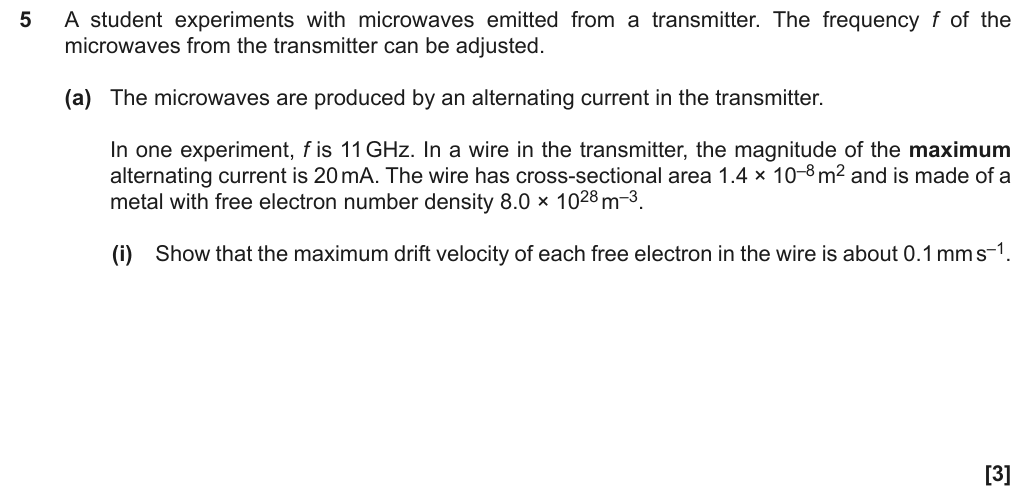
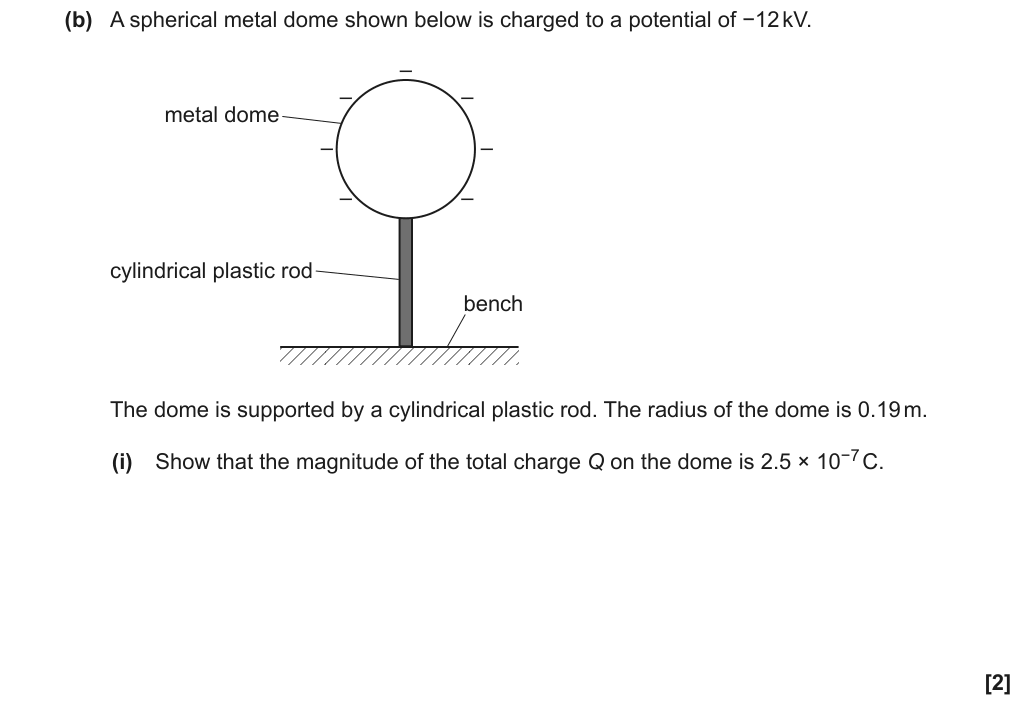
Since the answer is given here and candidates are being asked to show where it comes from, it is important to show every stage in the working. The following steps were necessary to gain full marks: write down the correct formula substitute the given values and the values of any physical constants (such as e) work out the answer to more significant figures than given in the question The exemplar above shows the type of response that gained full marks.
Skills: M0.2 Recognise and use expressions in decimal and standard form; M2.2 Change the subject of an equation, including non-linear equations; M2.3 Substitute numerical values into algebraic equations using appropriate units for physical quantities
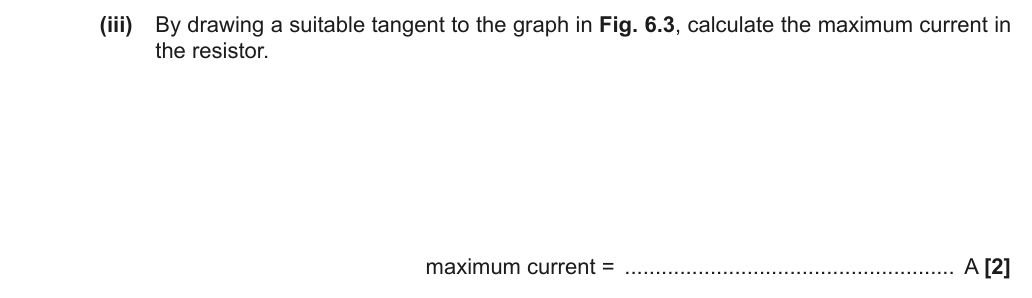
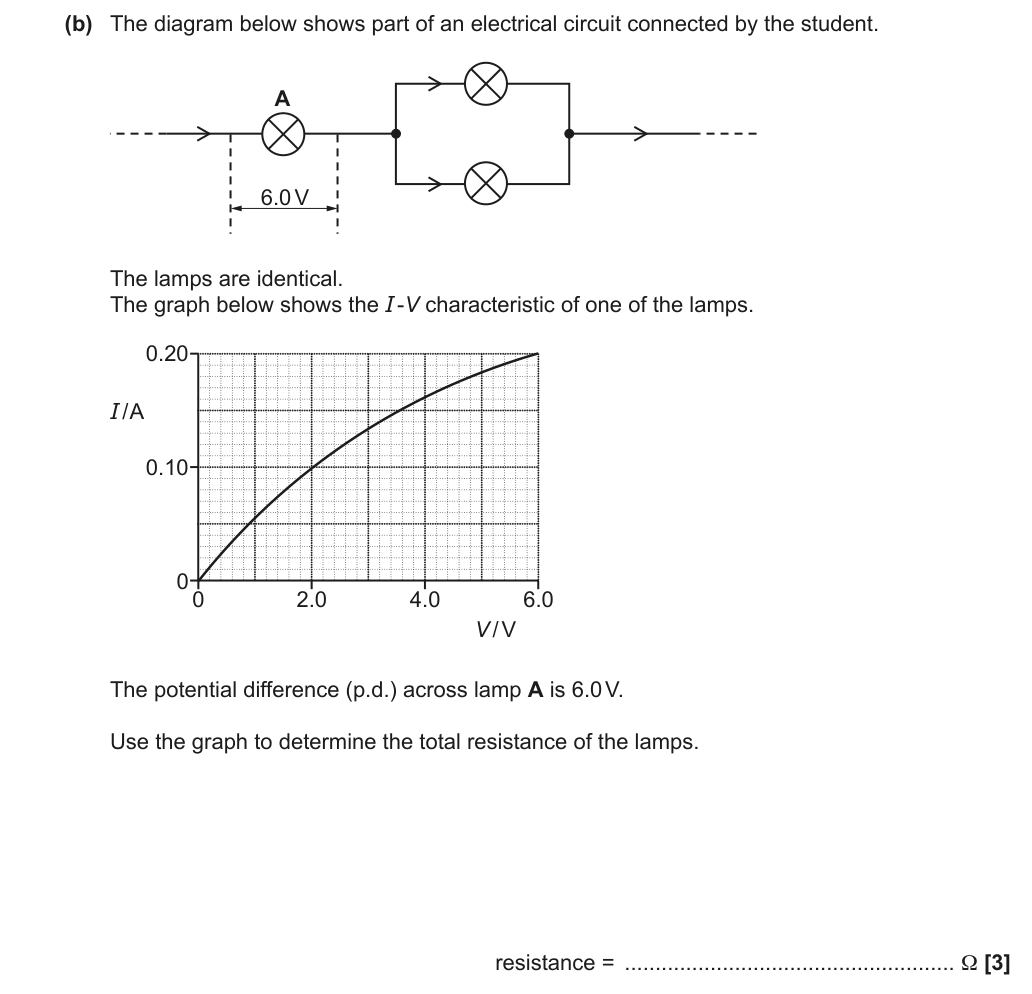
Many candidates lost marks here because they did not realise that, to calculate the maximum current in the resistor, they had to draw the steepest possible tangent to the graph.
Skills: M3.6 Draw and use the slope of a tangent to a curve as a measure of rate of change; M3.9 Apply the concepts underlying calculus (but without requiring the explicit use of derivatives or integrals) by solving equations involving rates of change using a graphical method or spreadsheet modelling
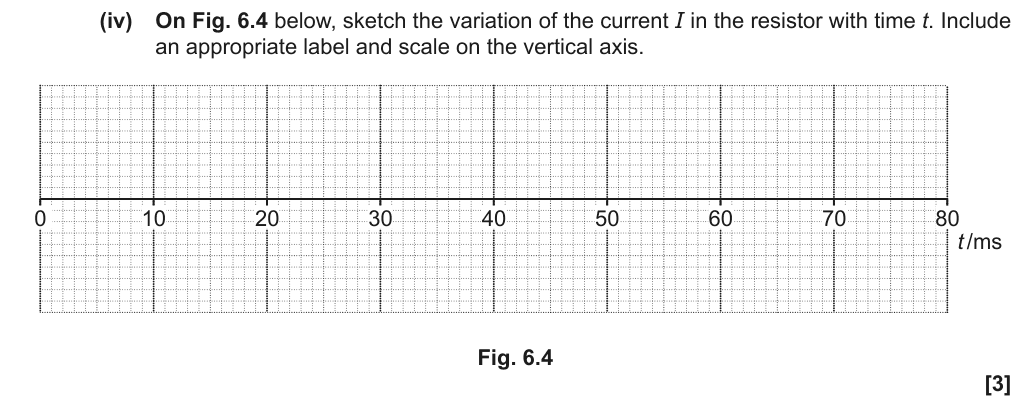
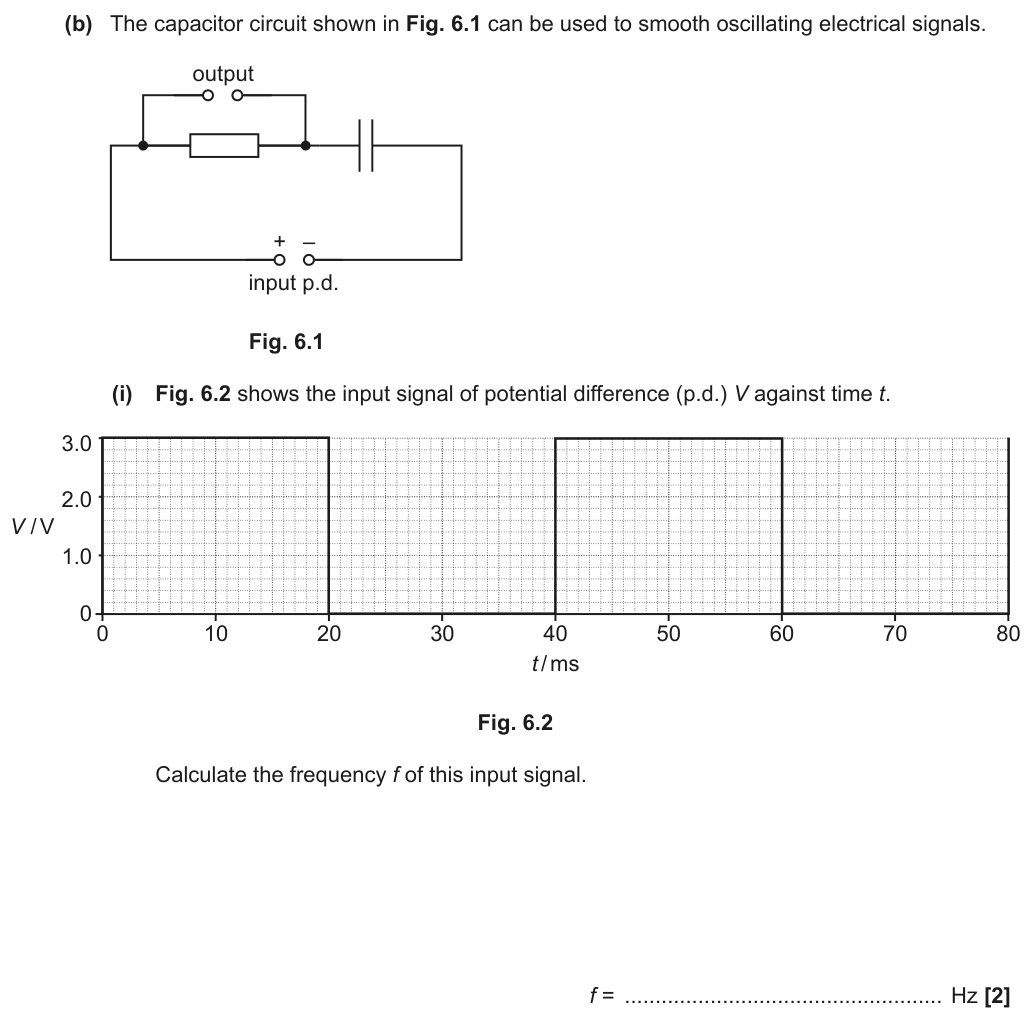
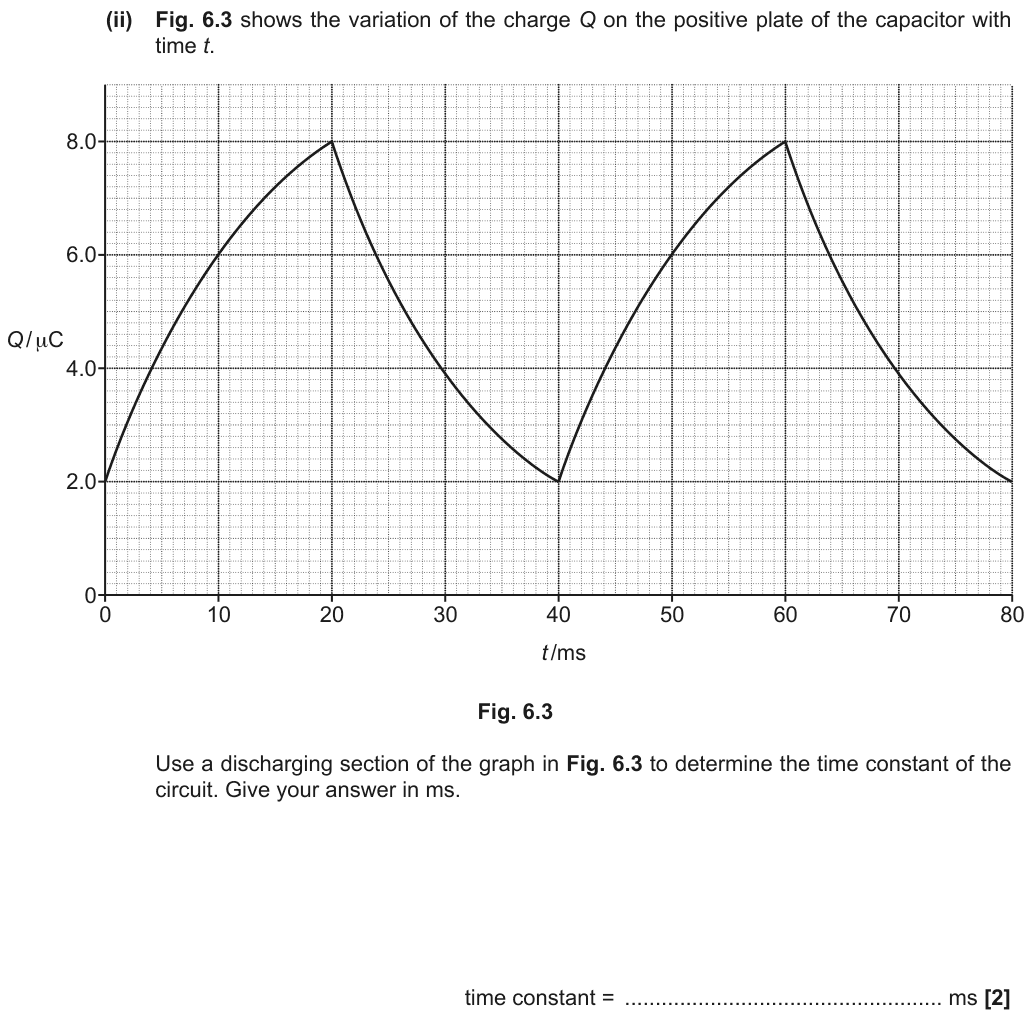
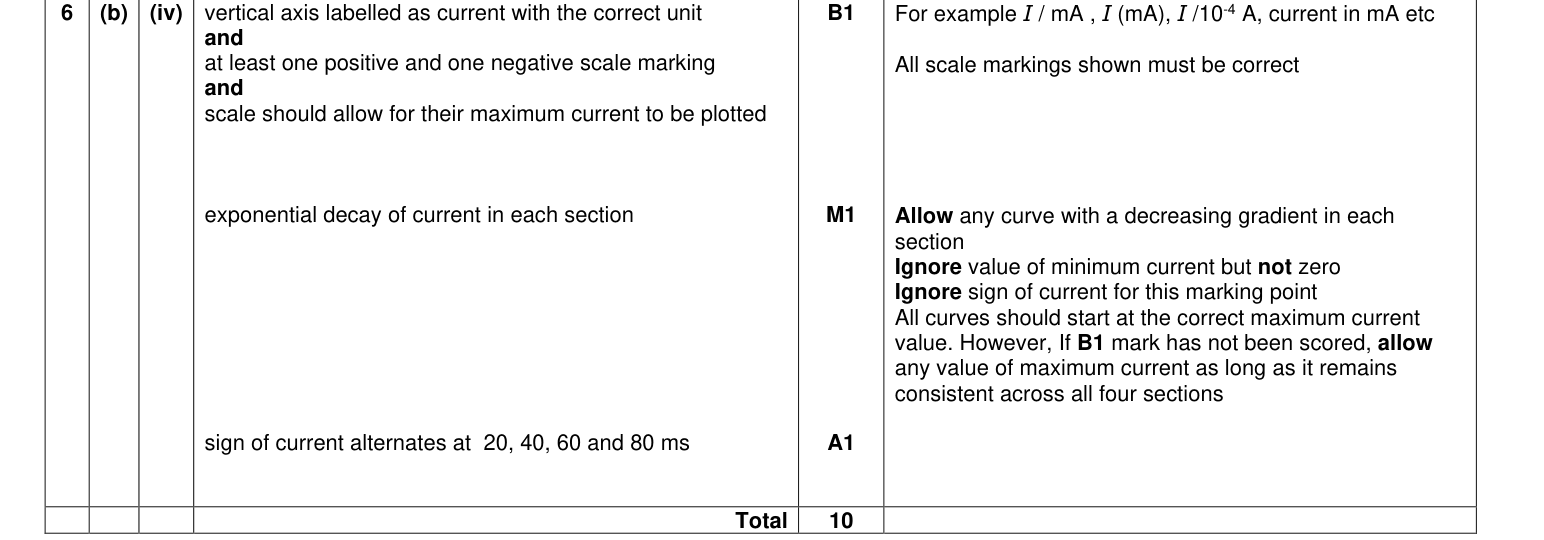
Since I = ΔQ/Δt, the graph of I against t can be found from the gradient of the graph of Q against t. The gradient is positive from 0 – 20 ms and negative from 20 – 40ms; this represents the current flowing one way around the circuit while the capacitor charges and then the opposite way while it discharges. Since the gradient is never zero, the value of the current is never zero either. Tasks that caused problems in 6(b)(iv) • drawing an exponential decay, particularly in the negative section of the graph (most drew a sinusoidal curve). • converting the maximum current into mA or µA. • labelling the vertical axis and drawing on a sensible scale. If any of your students’ results are not as expected, you may wish to consider one of our post-results services. For full information about the options available visit the OCR website. We send a weekly roundup to tell you about important updates. You can also sign up for your subject specific updates. If you haven’t already, sign up here. Attend one of our popular CPD courses to hear directly from a senior assessor or drop in to a Q&A session. Most of our courses are delivered live via an online platform, so you can attend from any location. Please find details for all our courses on the relevant subject page on our website or visit OCR professional development. ExamBuilder is the question builder platform for a range of our GCSE, A Level, Cambridge Nationals and Cambridge Technicals qualifications. Find out more. ExamBuilder is free for all OCR centres with an Interchange account and gives you unlimited users per centre. We need an Interchange username to validate the identity of your centre's first user account for ExamBuilder. If you do not have an Interchange account please contact your centre administrator (usually the Exams Officer) to request a username, or nominate an existing Interchange user in your department. Review students' exam performance with our free online results analysis tool. It is available for all GCSEs, AS and A Levels and Cambridge Nationals. It allows you to: • review and run analysis reports on exam performance • analyse results at question and/or topic level • compare your centre with OCR national averages • identify trends across the centre • facilitate effective planning and delivery of courses • identify areas of the curriculum where students excel or struggle • help pinpoint strengths and weaknesses of students and teaching departments. Find out more. Post-results services Keep up-to-date OCR Professional Development Signed up for ExamBuilder?
Skills: M3.12 Sketch relationships which are modelled by y = k/x, y = kx², y = k/x², y = kx, y = sin x, y = cos x, y = e^(±x) and y = sin²x, y = cos²x as applied to physical relationships
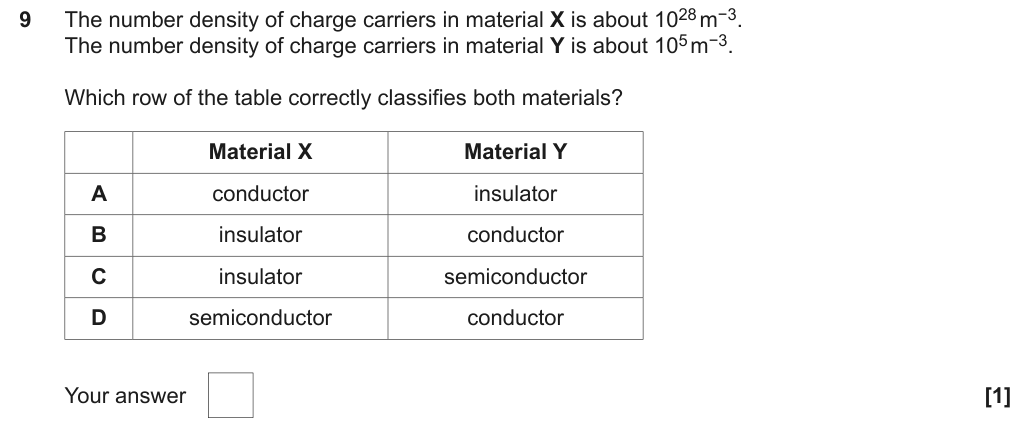
A
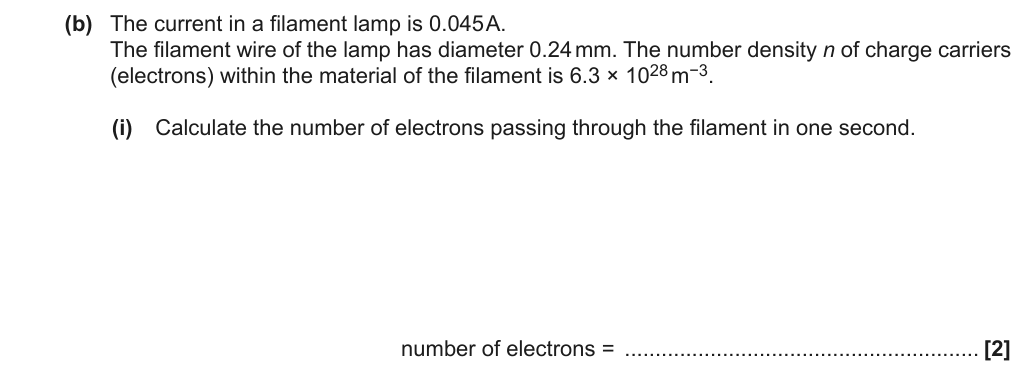
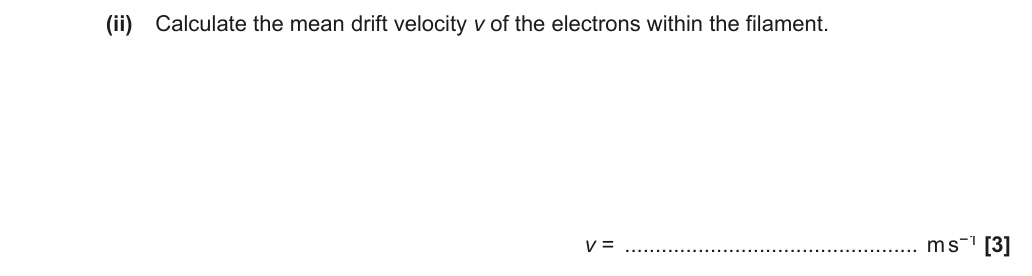
Skills: M0.2 Recognise and use expressions in decimal and standard form; M2.2 Change the subject of an equation, including non-linear equations; M4.3 Calculate areas of triangles, circumferences and areas of circles, surface areas and volumes of rectangular blocks, cylinders and spheres
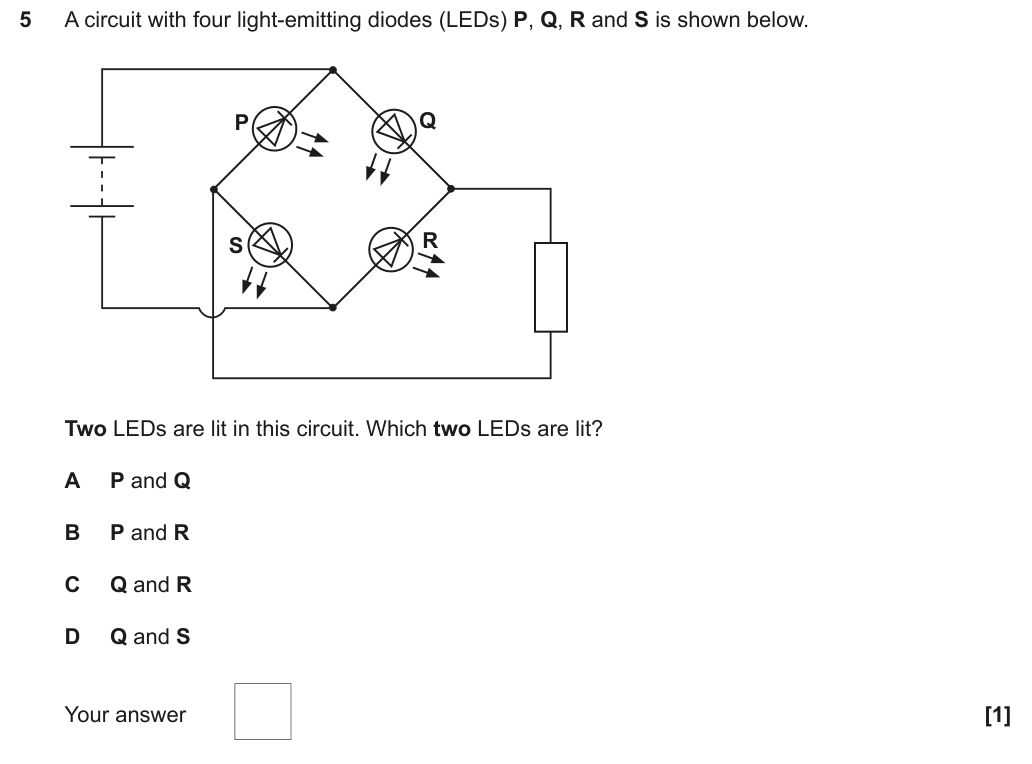
D
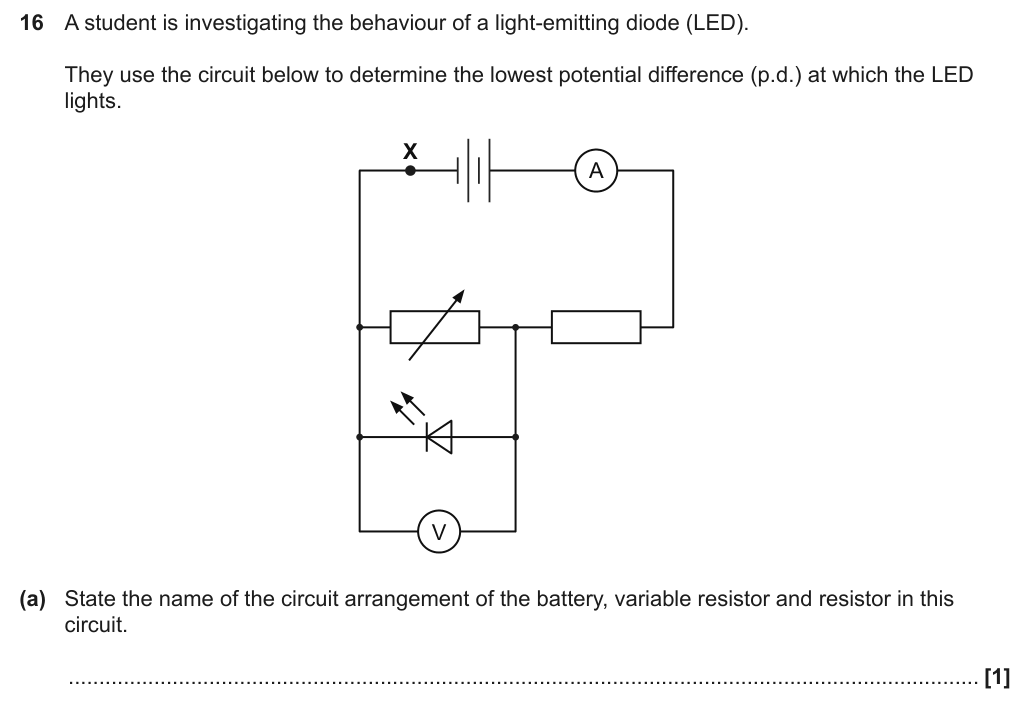
The correct response is D. This question also proved to be challenging as not many candidates will have come across this style of circuit before. Therefore in most cases, it will have to have been worked out from application of conventional current flow. It would likely be evident that LED Q is lit, probably accounting for the very few candidates selecting response B. Many candidates incorrectly selected response A, presumably as its polarity is the same as Q.
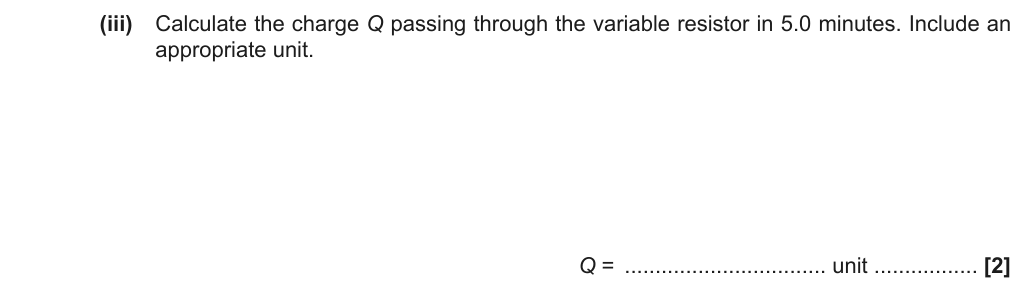
Skills: M0.1 Recognise and make use of appropriate units in calculations
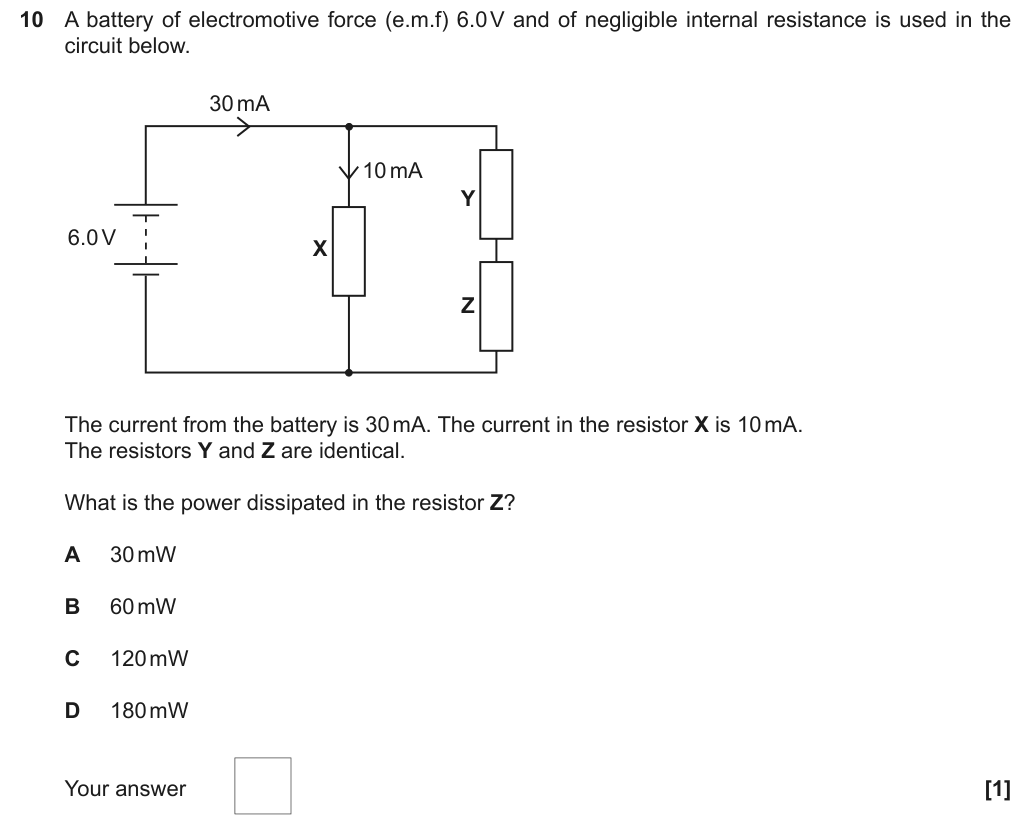
B
The correct response is B. This is another question which was correctly answered by around two thirds of the candidates. The simple solution is through determining the current through Z and the p.d. across it thereby finding the product. Working demonstrated some tortuous routes, such as calculating all the resistances, which does indicate a lack of confidence about circuit calculations. However, in many cases this did lead to the correct answer.
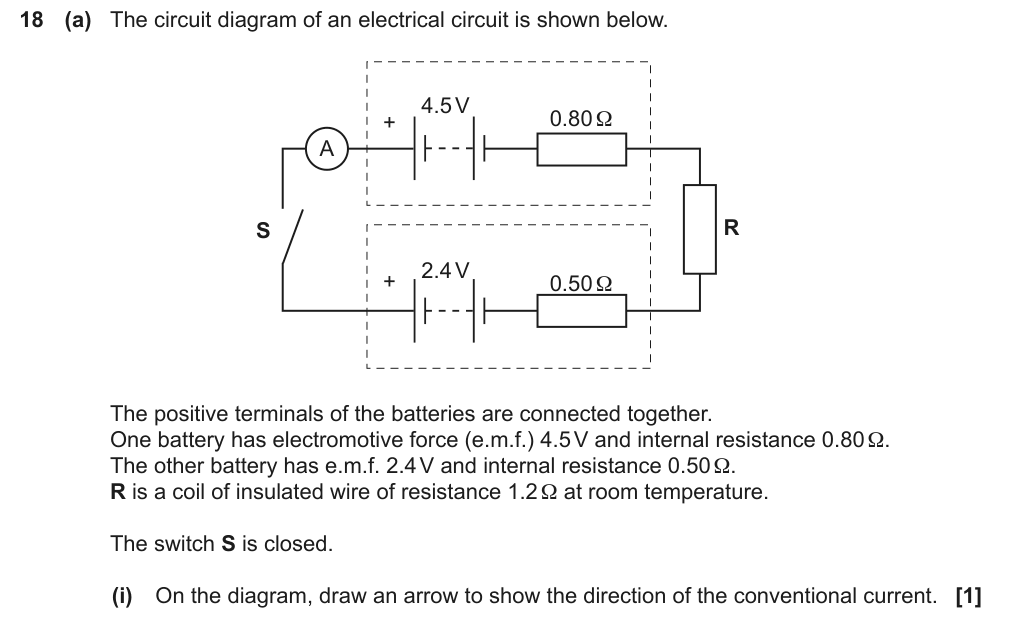
This question required the candidates to appreciate that the sum of the emfs will lead to an anticlockwise conventional current. This question was answered well by the majority of candidates, however a number put two directions on, one from each cell.
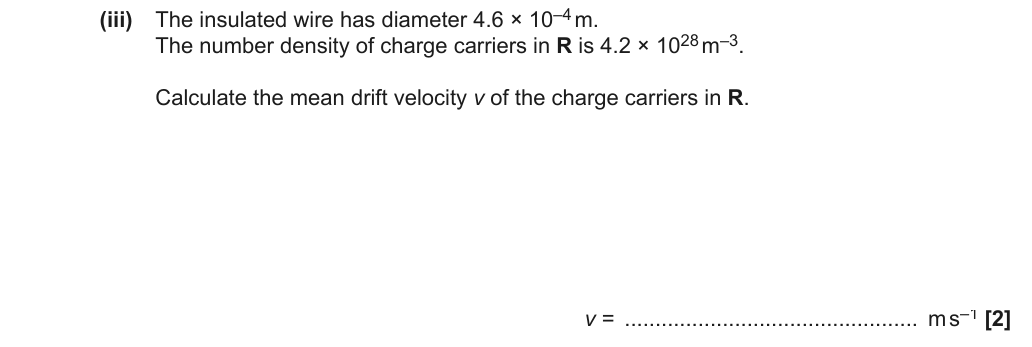
This question was well done by a large number of candidates, many of whom scored full marks by correctly following through with their value of current from the previous part. Few candidates used the diameter instead of the radius when determining the cross sectional area, and for the most part the setting out of the calculation meant that credit could be given even if arithmetic errors occurred later.
Skills: M0.2 Recognise and use expressions in decimal and standard form; M2.2 Change the subject of an equation, including non-linear equations; M2.3 Substitute numerical values into algebraic equations using appropriate units for physical quantities; M4.3 Calculate areas of triangles, circumferences and areas of circles, surface areas and volumes of rectangular blocks, cylinders and spheres
A
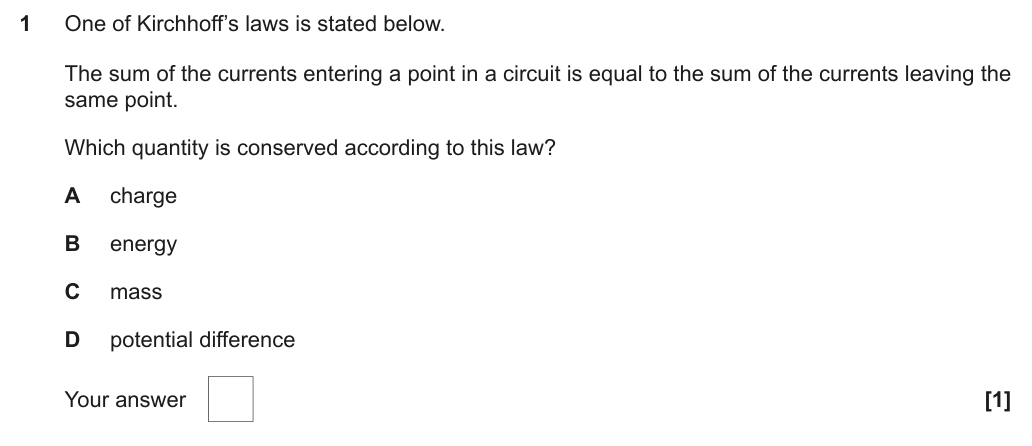
Comments on responses by question type Multiple choice questions Some of the questions, such as Question 1 on Kirchhoff’s first law and Question 19 on a stress-strain graph for an elastic material, are expected to be done quickly without much reasoning. Questions 1, 6, 13, 16, 17 and 19 proved to be particularly straightforward, allowing most of the candidates to demonstrate their knowledge and understanding of physics.
A
B
D
Skills: M2.3 Substitute numerical values into algebraic equations using appropriate units for physical quantities; M3.1 Translate information between graphical, numerical and algebraic forms
C
Questions 2, 12, 14 and 15 proved to be straightforward, allowing most of the candidates to demonstrate their knowledge and understanding of physics.
High achieving candidates found Question 7 straightforward.
Skills: M0.1 Recognise and make use of appropriate units in calculations; M0.2 Recognise and use expressions in decimal and standard form; M2.3 Substitute numerical values into algebraic equations using appropriate units for physical quantities
High achieving candidates found Question 7 straightforward.
High achieving candidates found Question 7 straightforward.
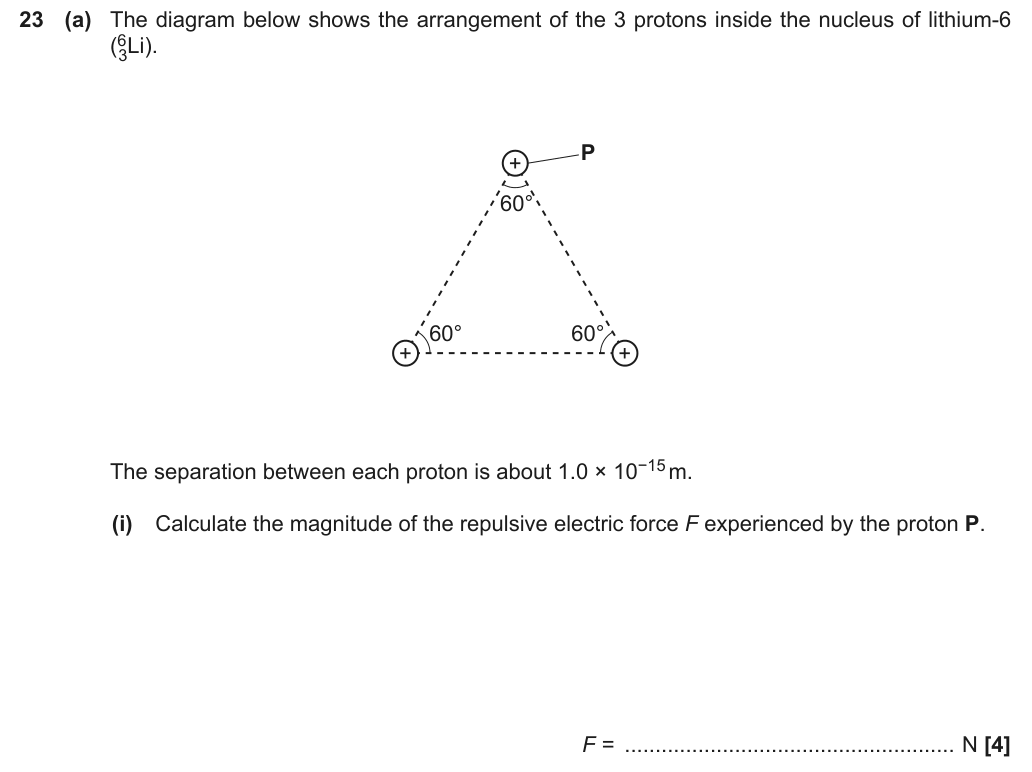
Skills: M0.2 Recognise and use expressions in decimal and standard form; M2.3 Substitute numerical values into algebraic equations using appropriate units for physical quantities; M4.5 Use sin, cos and tan in physical problems
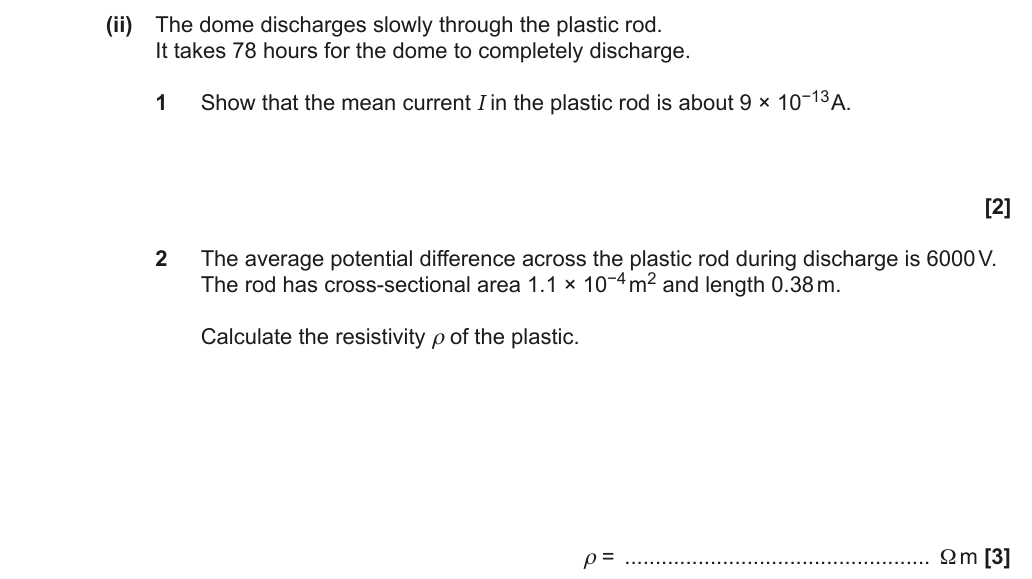
Skills: M0.1 Recognise and make use of appropriate units in calculations; M0.2 Recognise and use expressions in decimal and standard form; M2.2 Change the subject of an equation, including non-linear equations
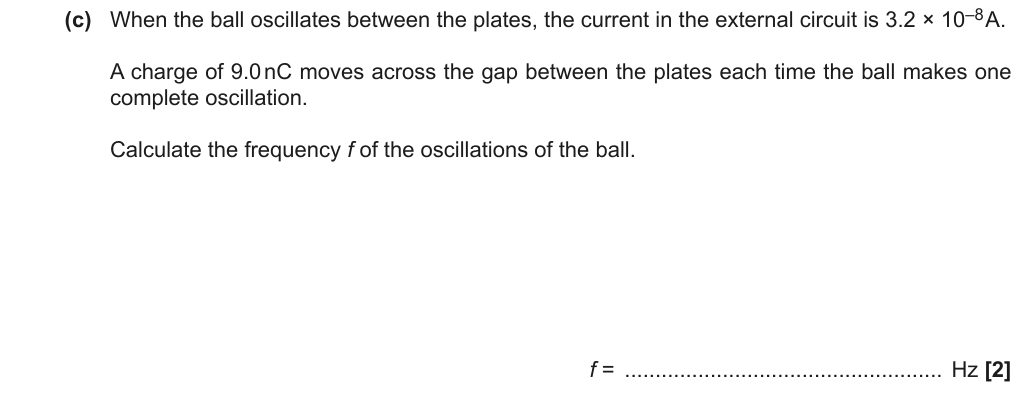
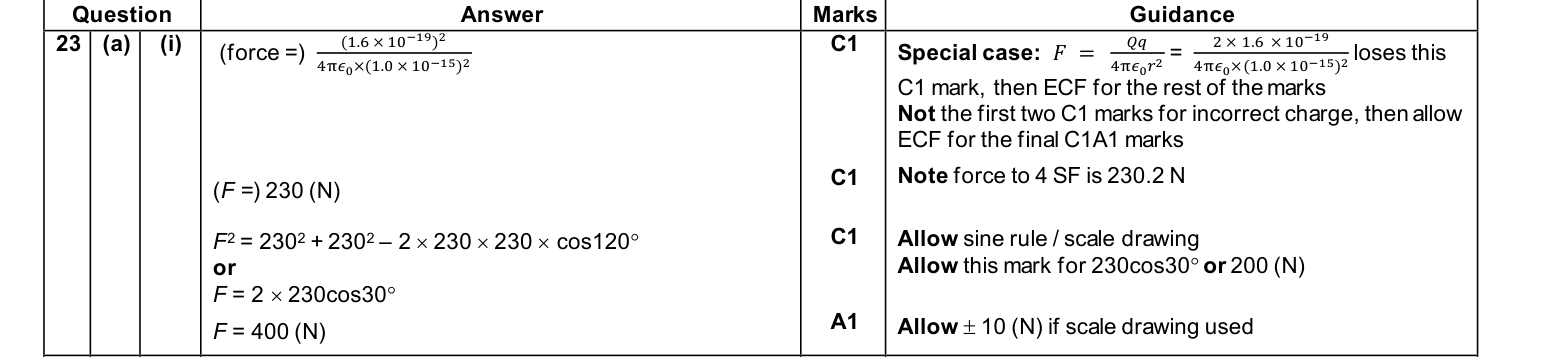
Comments on individual questions Question 1ai Many lower ability candidates did not appreciate the uniform nature of the electric field between the plates and attempted to use Coulomb’s Law. Question 1aii Most candidates scored a mark for showing the weight and tension forces accurately. AfL Do not use the word ‘gravity’ in place of ‘weight’ Question 1aiii Although most candidates knew the principle of moments, many were unable to apply it correctly in this situation. Question 1b The purpose of this question was to challenge the candidates to use their knowledge of electric fields in a novel practical situation.
Skills: M2.2 Change the subject of an equation, including non-linear equations; M2.3 Substitute numerical values into algebraic equations using appropriate units for physical quantities
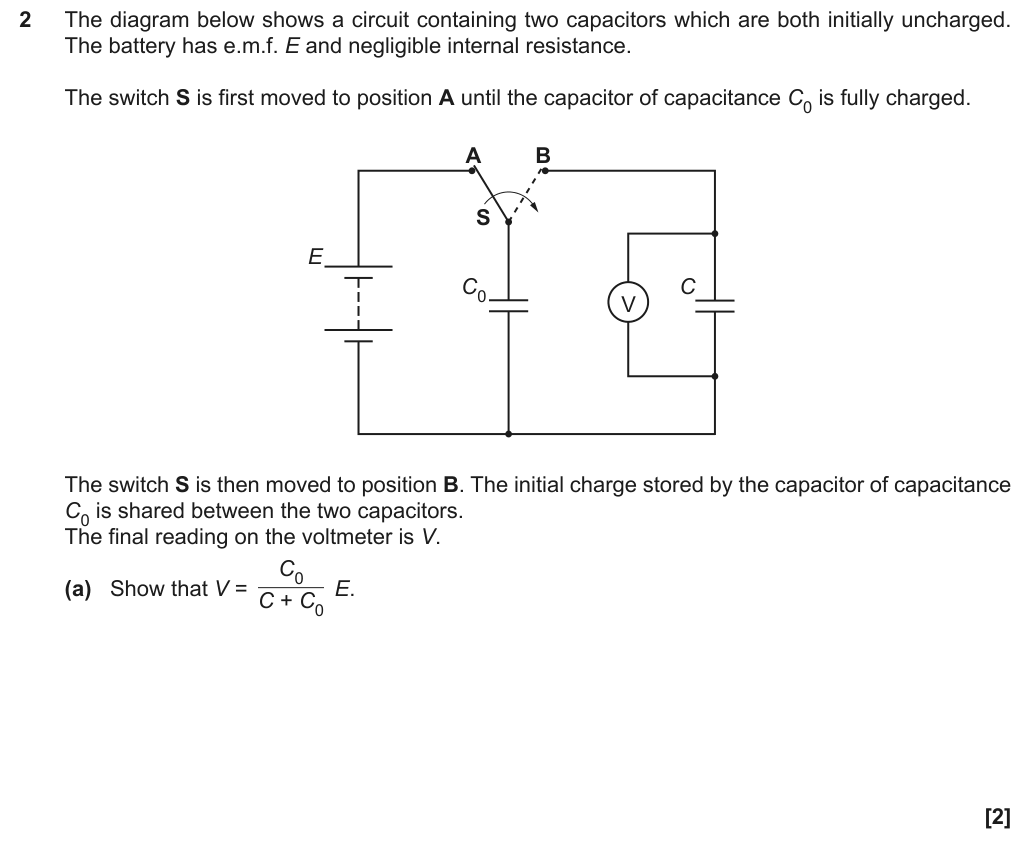
Since this paper is synoptic, candidates need to be able to apply their knowledge and understanding in unfamiliar contexts in order to gain high marks, To do well in this paper, candidates must be able to: • perform and layout calculations logically, showing clear working (such as Question 6c) • produce concise but accurate responses to questions which involve extended writing (such as question 1b) • craft clearly structured and well-reasoned arguments to the Level of Response Questions (3b and 5d) • process and interpret data from an experiment to reach conclusions (Question 2). Question 2a Some candidates obtained Q = EC0 by applying the definition of capacitance at A, but then did not realise that charge would be conserved on switching from A to B. Question 2bi Some candidates correctly took the reciprocal of both sides of the given equation but were then unable to show a rearrangement into the standard linear form. A common difficulty was an inability to expand the bracket in 1 E × (C + C0) C0 to give C EC0 + C0 EC0 Question 2bii Some candidates gave their response to 2 d.p. instead of to 2 s.f. as required. Question 2biii Most candidates gained the mark for using a large triangle (spanning more than 1.5 on the x–axis) to determine the gradient of the worst-fit line.
Skills: M2.2 Change the subject of an equation, including non-linear equations
B
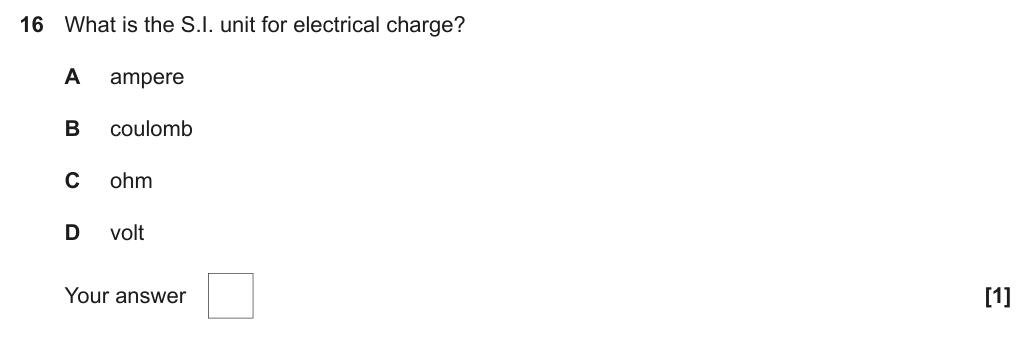
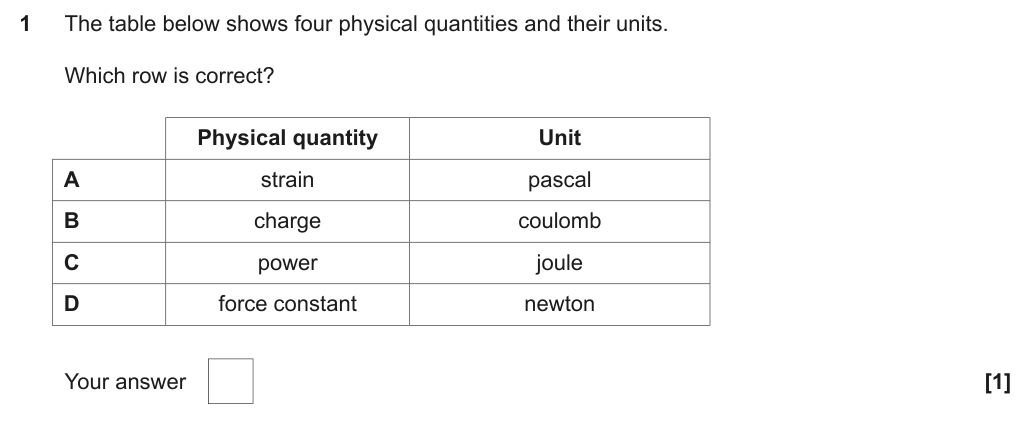
This was an easy starting question for all the candidates. It was testing knowledge of S.I. units used in a range of topics. The majority of the candidates got the correct answer B. The most popular distractor was D, followed closely by A.
C
C
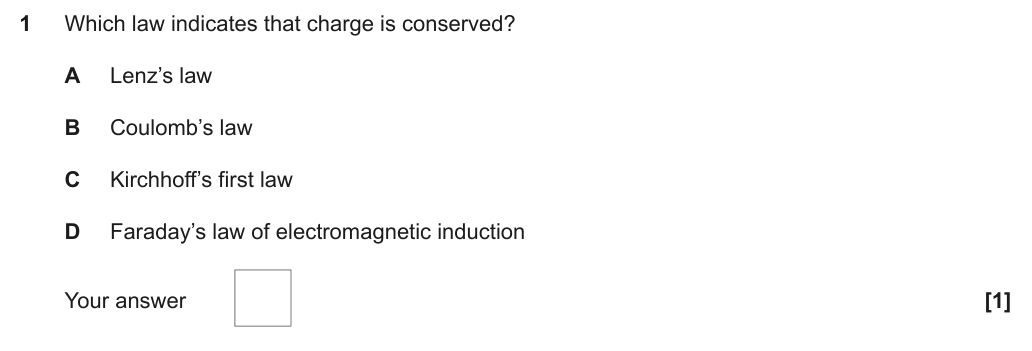
This was a well-answered question with most candidates correctly recalling that charge is conserved according to Kirchhoff’s first law. A significant number of candidates distracted towards B; perhaps because of the unit of charge is the coulomb.
B
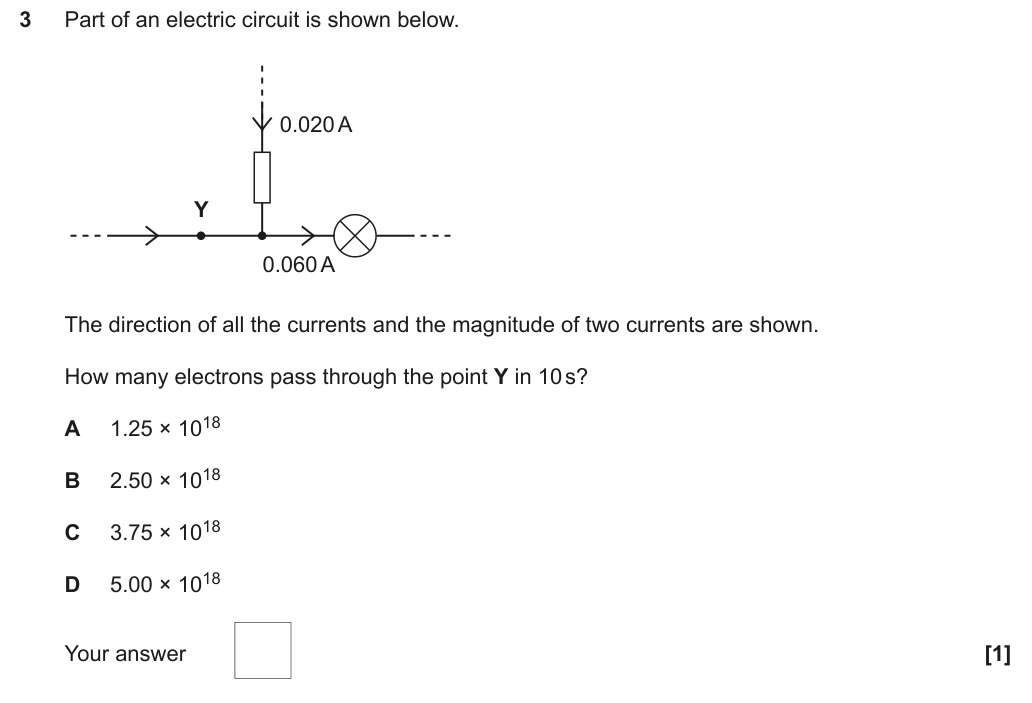
This was not an easy question, but most candidates did extremely well in this multi-step calculation. The directions of the currents are important. The current at Y and the current in the resistor, must add up to 0.060 A. The charge passing point Y in a time of 10 s can be calculated using ∆Q =I∆t and finally the number of electrons can be determined by dividing the charge passing through Y by the elementary charge e. Therefore number of electrons = = 2.50 × 10¹⁸ The key, correct answer, is B. The most popular distractor was C, in which a current of 0.060 A is assumed; the rest of the distractors were equally favourable. A was the answer for a current of 0.020 A and D was the answer for a current of 0.080 A. It is worth mentioning that most of the candidates just wrote down the correct answer in the box, without any calculations. On the surface, this looks reckless, but it is an excellent strategy if the numbers are being punched into the calculator correctly. The exemplar 1 below shows a typical correct answer, with numbers jotted down for visual help. The candidate has the correct current at Y. Without the 0.040 A, the answer would have led to one of the distractors. It is worth pointing out that the final step of the calculation must have been done directly on the calculator. An excellent time-saving approach.
Skills: M0.2 Recognise and use expressions in decimal and standard form; M2.3 Substitute numerical values into algebraic equations using appropriate units for physical quantities
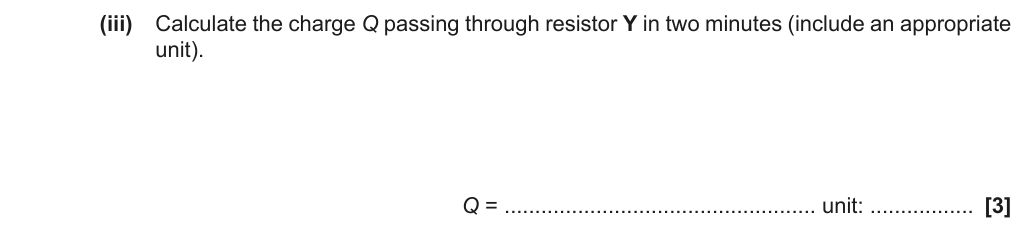
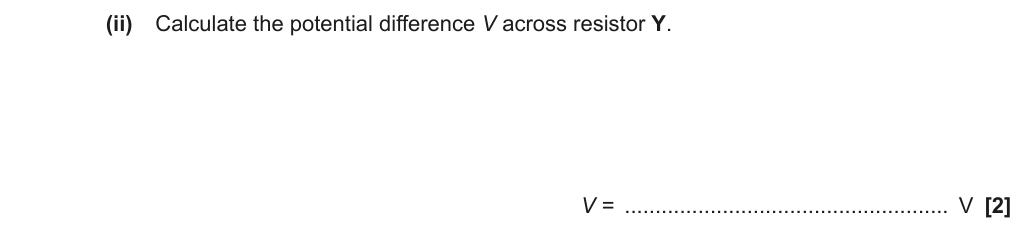
The majority of the candidates gained a mark for the unit of charge on this question. A common incorrect answer was 21.6 C where candidates had used the total current in the circuit rather than the current of 0.09 A in resistor Y. Some candidates did not change the time in minutes to a time in seconds.
Skills: M0.1 Recognise and make use of appropriate units in calculations; M2.3 Substitute numerical values into algebraic equations using appropriate units for physical quantities
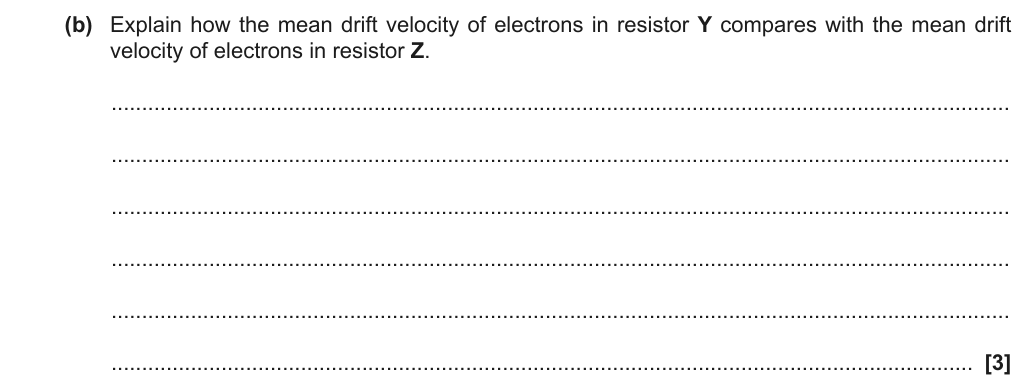
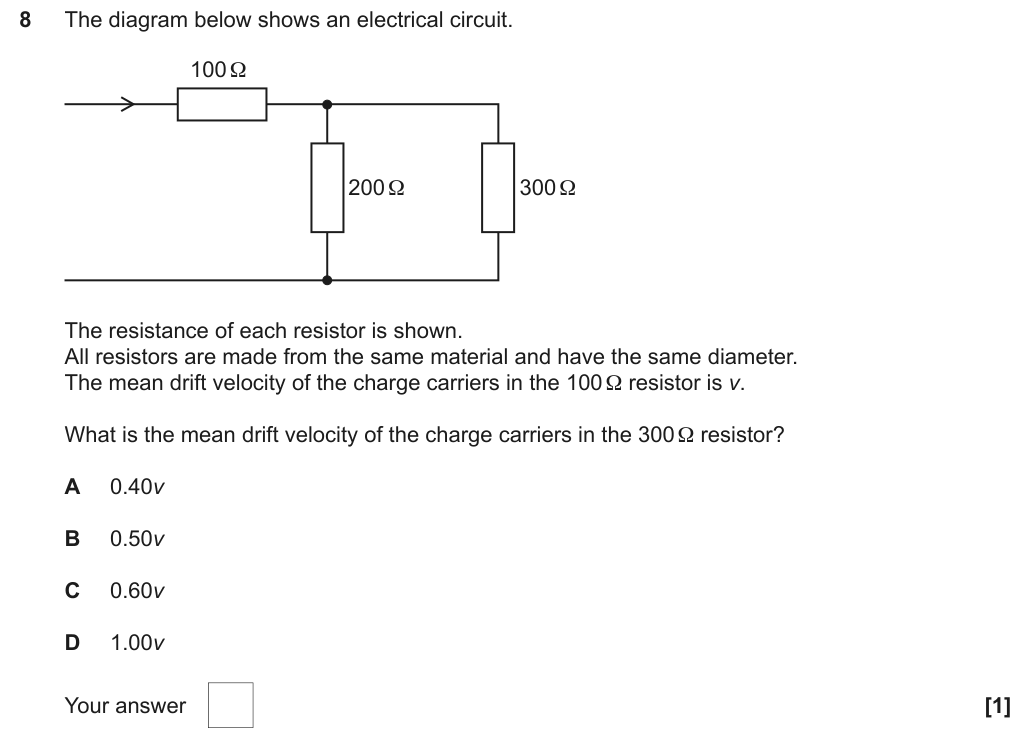
In this question, many candidates correctly quoted the equation and stated that the mean drift velocity was directly proportional to the current. The majority of the candidates realised that there was a larger current in resistor Y than resistor Z; however, few candidates realised that the current was 1.5 times larger and therefore the mean drift velocity was 1.5 times larger.
Skills: M0.3 Use ratios, fractions and percentages
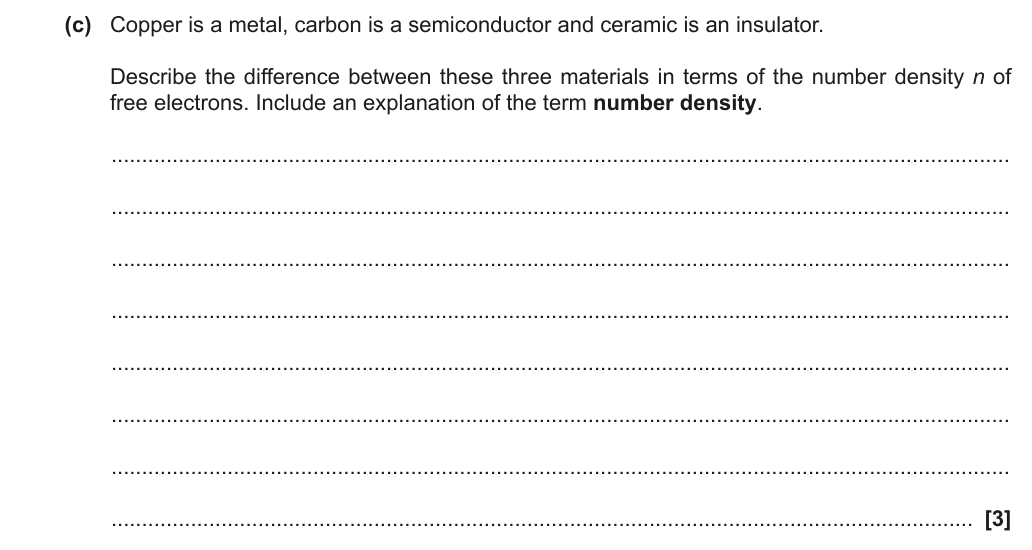
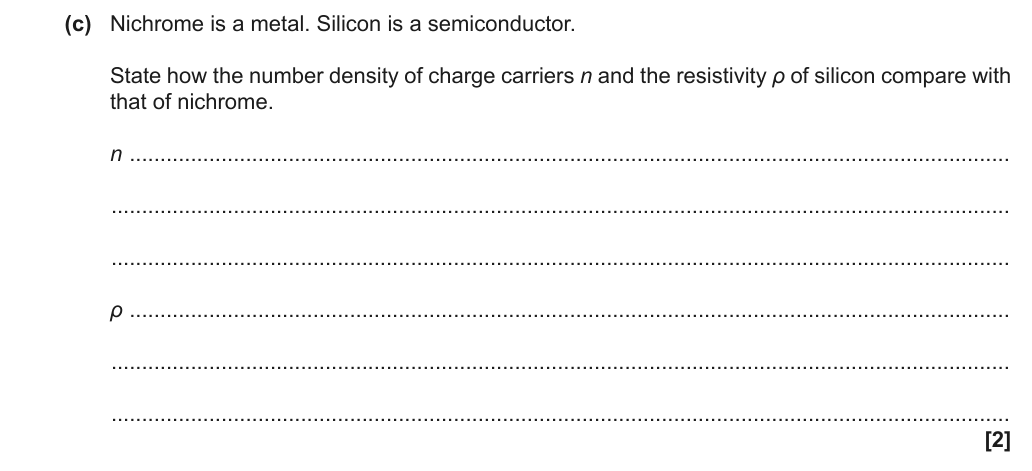
In this question, many candidates did not score the mark for explaining that the number density was the number of free charge carriers per unit volume. Some candidates incorrectly defined it as the number of electrons as opposed to free electrons, while other candidates stated that it was per unit area. The majority of the candidates gained two marks on this question. They explained that copper was a conductor or the larger the value of the number density the better the conduction and then related the three materials correctly. A number of candidates correctly stated example number densities. Some candidates’ explanations were too vague.
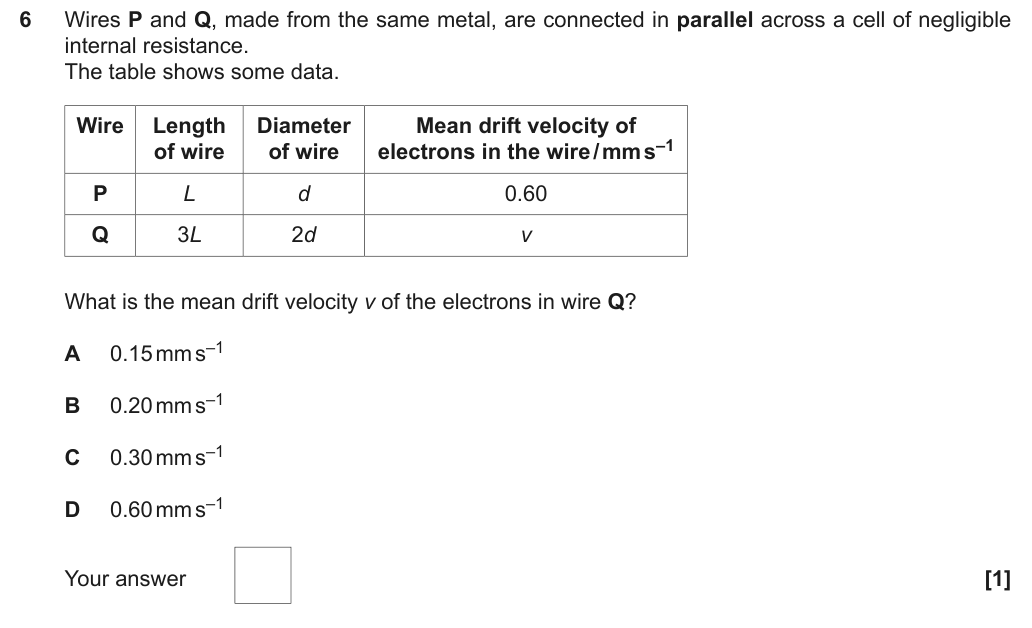
B
This was a question on combining together three important expression in the topic of electricity; V = IR, R =ρL/A and I = Anev. On top of this, there was the additional information that P and Q were in parallel and hence the potential difference across each wire was the same. The mean drift velocity v of the electrons is given by the expression 𝑣𝑣= 𝑛𝑛𝑛𝑛𝑛𝑛𝑛𝑛∝ 𝐿𝐿. The cross-sectional area A, and hence the diameter d of the wire has no effect on v. The relationship above implies that for wire Q, v = 3 × 0.60 = 0.20 mm s-1. The correct answer is B. All the distractors were equally popular. About a third of the candidates, mostly from the very top end of the ability range, were successful in this very demanding question.
Skills: M0.3 Use ratios, fractions and percentages; M2.2 Change the subject of an equation, including non-linear equations
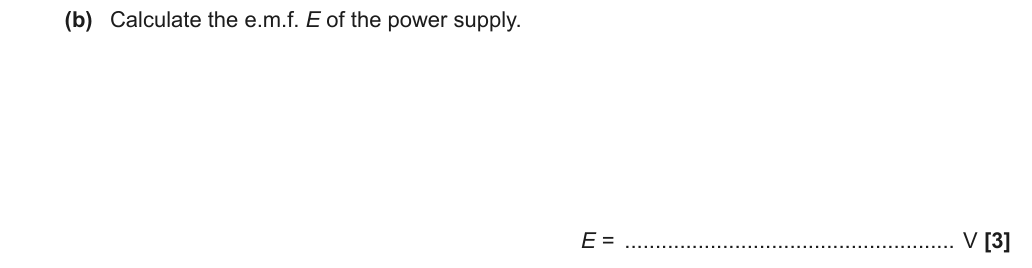
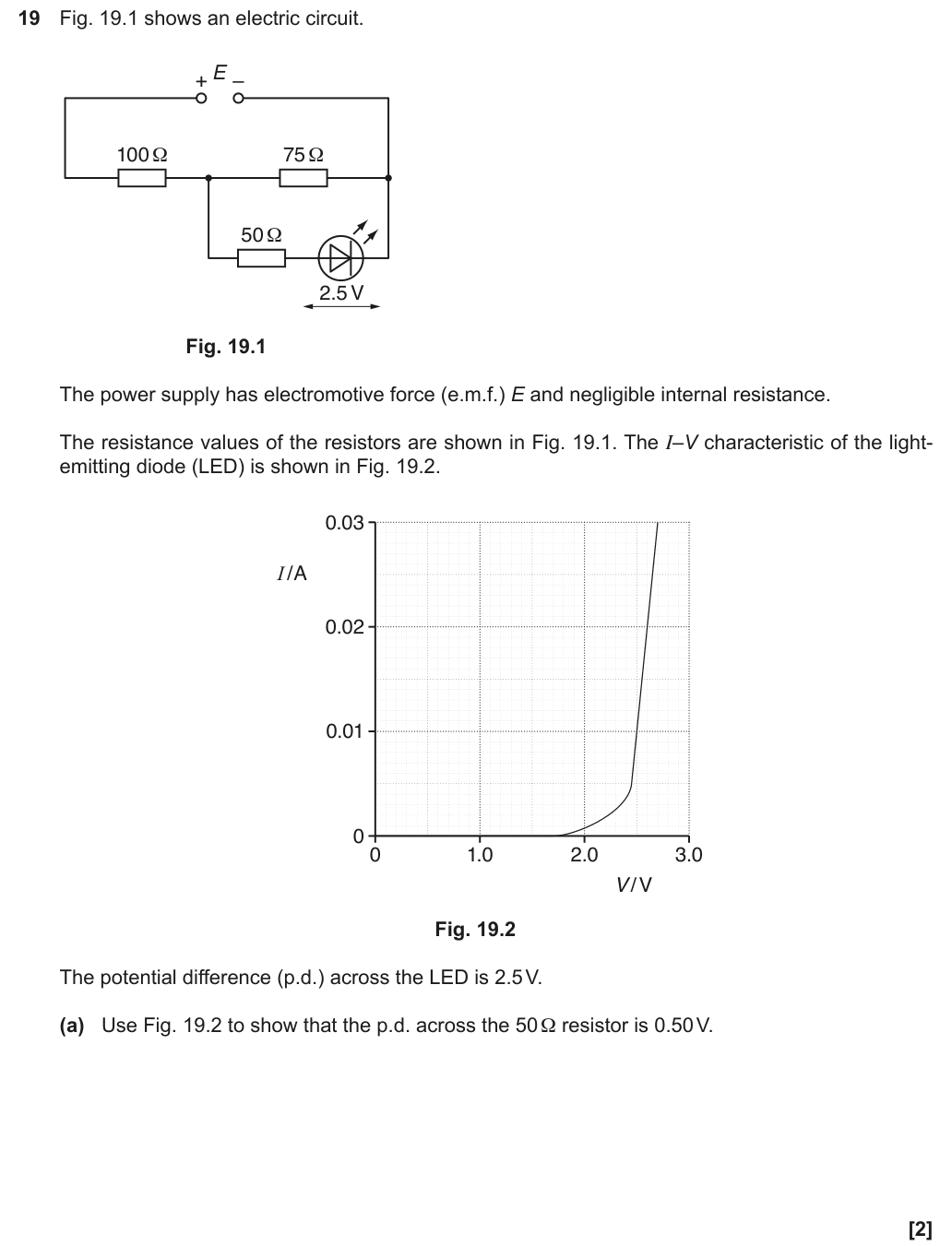
The analysis of the circuit proved to be problematic with most of the candidates getting as far as calculating either the resistance of the LED as 250 Ω or the p.d. across the LED-50 Ω resistor combination as 3.0 V. The stages thereafter demonstrated all the usual misconceptions; these are summarised later. About a quarter of the candidates produced flawless solutions using a range of techniques from Kirchhoff’s two laws to potential dividers. The simplest solution had the correct current of 0.050 A in the 100 Ω resistor, followed by the correct value of the e.m.f. of 8.0 V. This type of solution is shown in exemplar 7. This exemplar shows a perfect response from a middle-grade candidate. The response should have been written to 2 SF. However, because the answer was 8.0 V, a 1 SF response was allowed without incurring any penalty.
Skills: M2.3 Substitute numerical values into algebraic equations using appropriate units for physical quantities
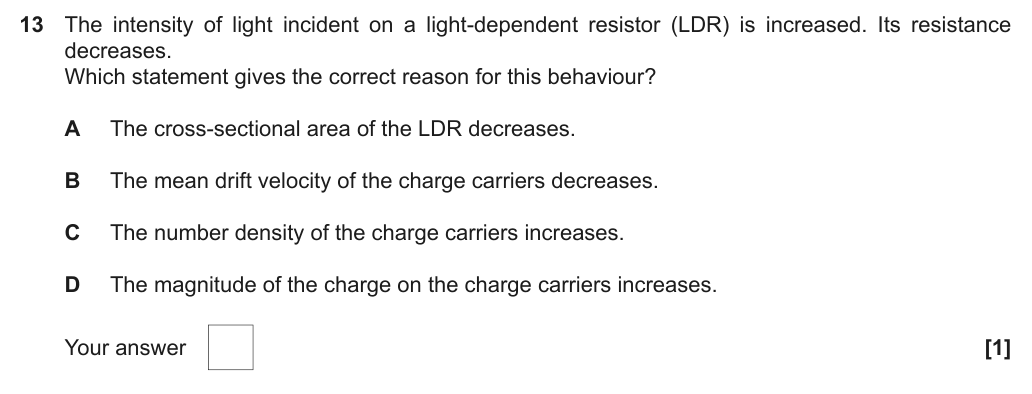
C
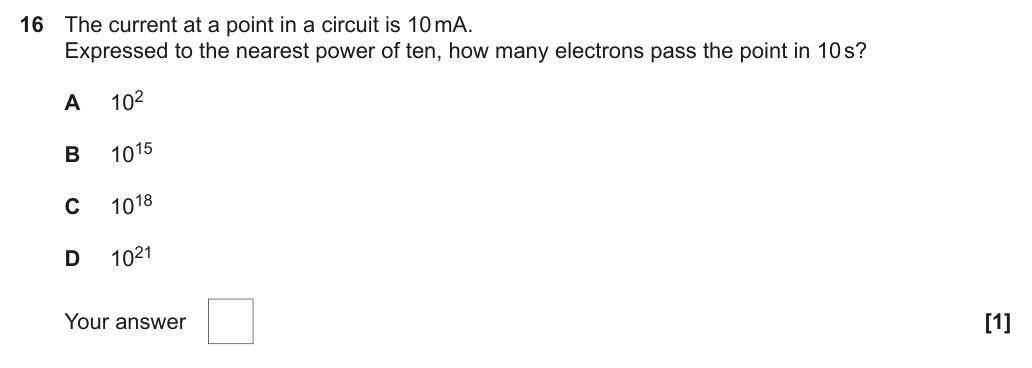
C
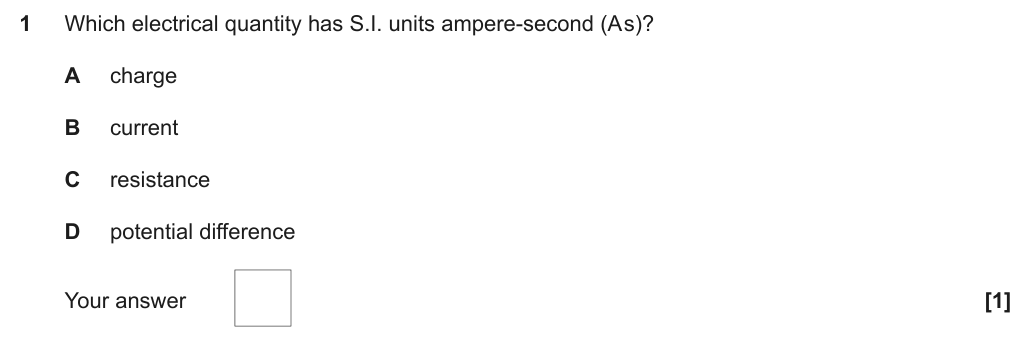
A
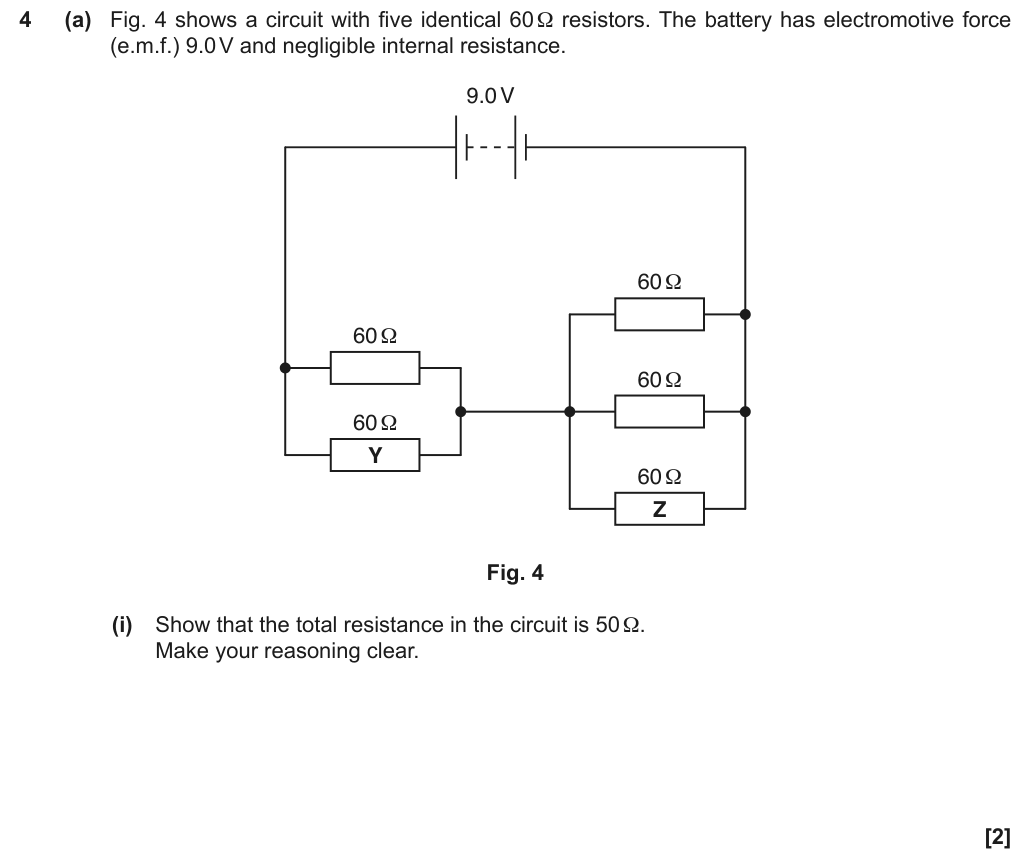
Questions 1, 2 and 6 proved to be particularly straightforward, allowing most of the candidates to demonstrate their knowledge and understanding of physics. Question 1 Question 2 This was a well-answered question with most candidates demonstrating excellent knowledge of resistors in series and parallel combination.
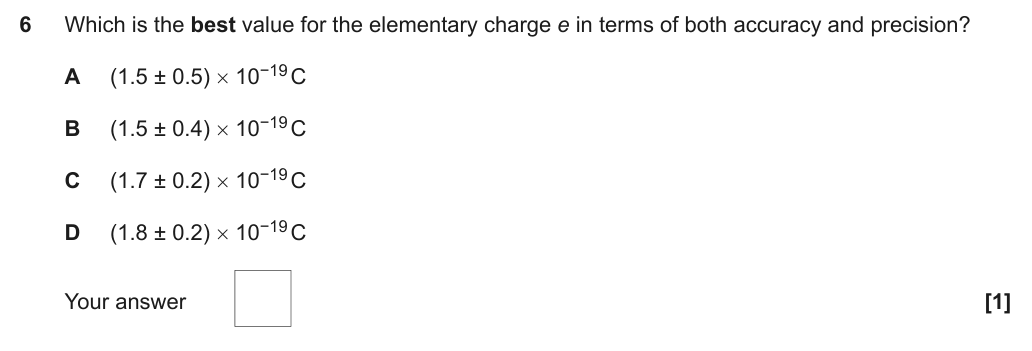
C
There was an erratum issues for this question. The term precision was replaced with uncertainty. The performance of the candidates was as expected with most opting for the correct answer C. A very small number of candidates opted for D because this value had the smallest percentage uncertainty.
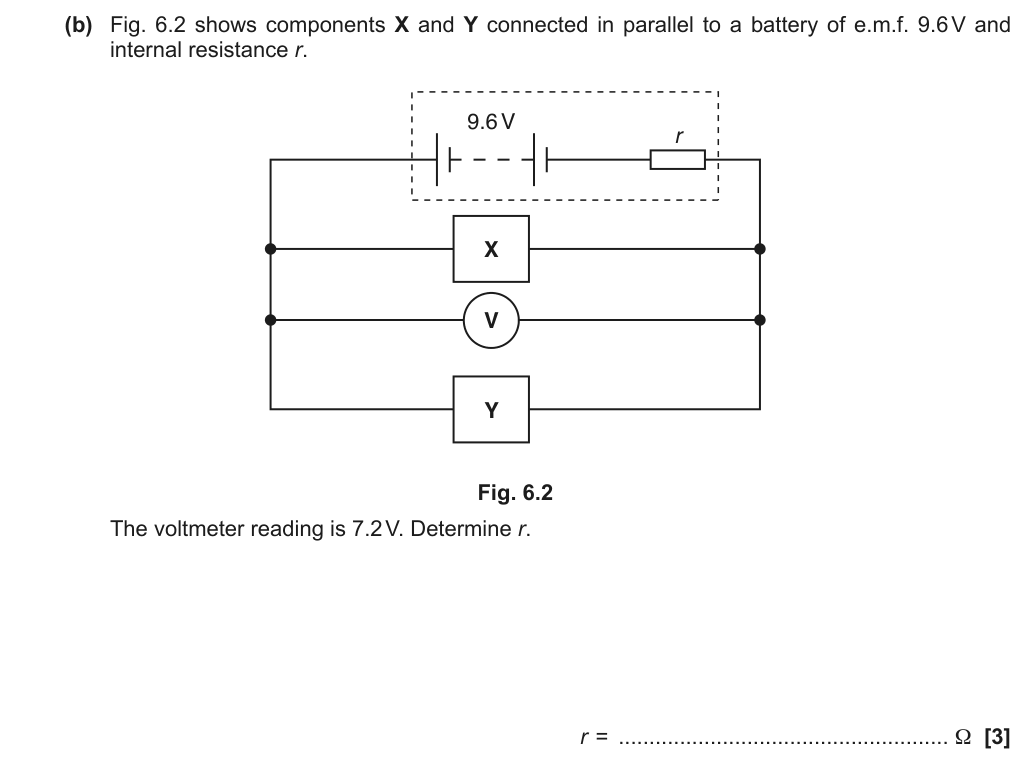
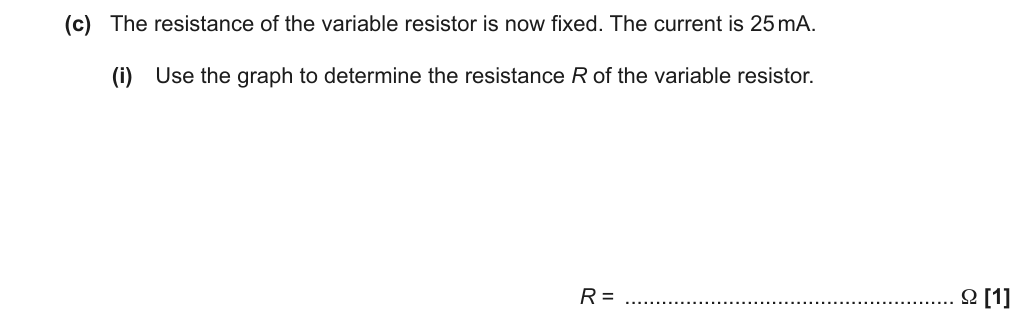
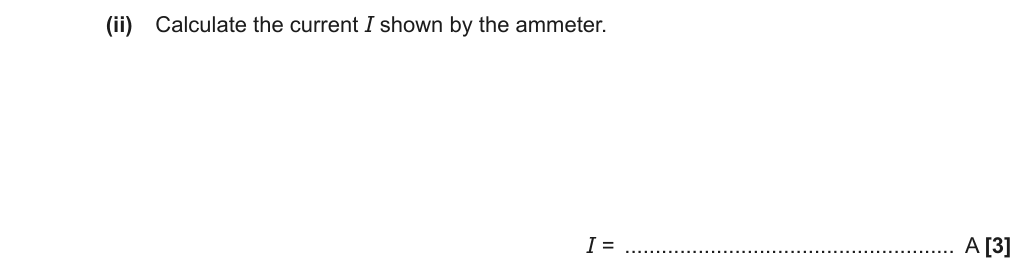
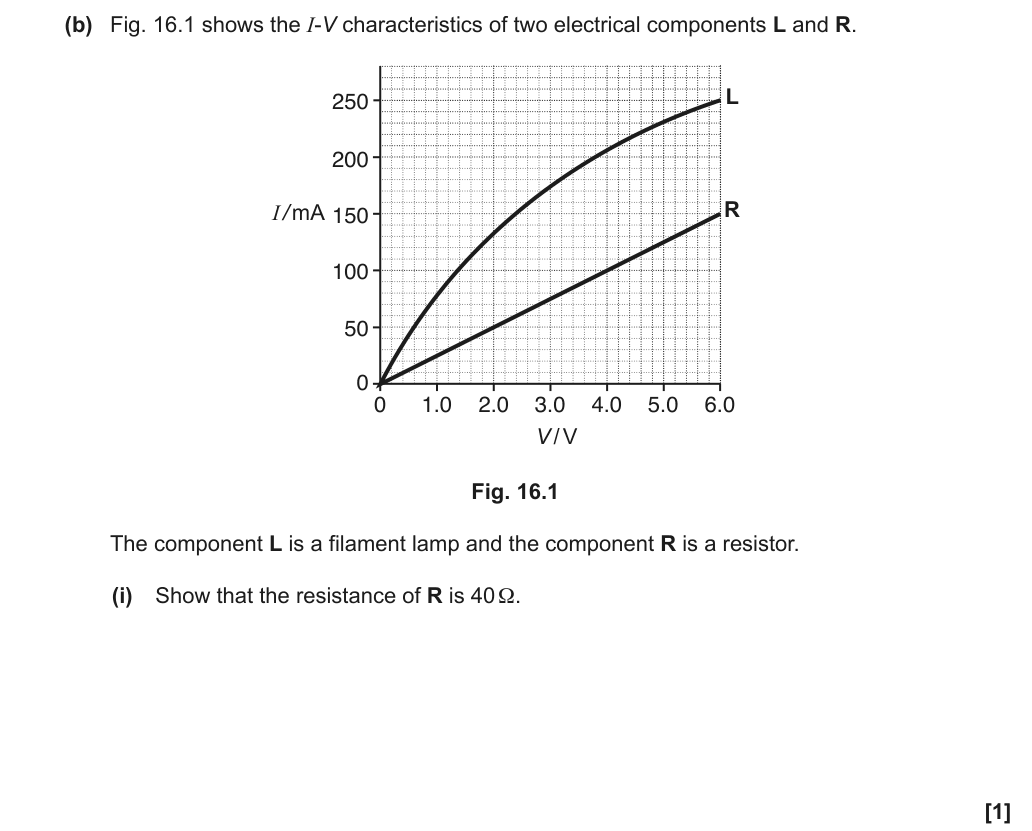
This question assessed candidates’ knowledge of internal resistance as well as their understanding of series and parallel circuits. Many candidates correctly determined that the ‘lost volts’ was 2.4 V. Unfortunately, the total current in the circuit was more difficult for candidates to determine. Candidates needed to identify that the potential difference across each component was 7.2 V and use the graphs to determine the two current values. Again, good candidates clearly show their working. The advantage would be in that an error in reading information from the graph would still allow further credit. The candidate has clearly state the method and at the top stated that Ir = 2.4 V. The candidate has then clearly read the currents for each component at a potential difference of 7.2 V to then determine the total current. There is then a correct calculation to determine the internal resistance r.
Skills: M2.2 Change the subject of an equation, including non-linear equations; M3.1 Translate information between graphical, numerical and algebraic forms
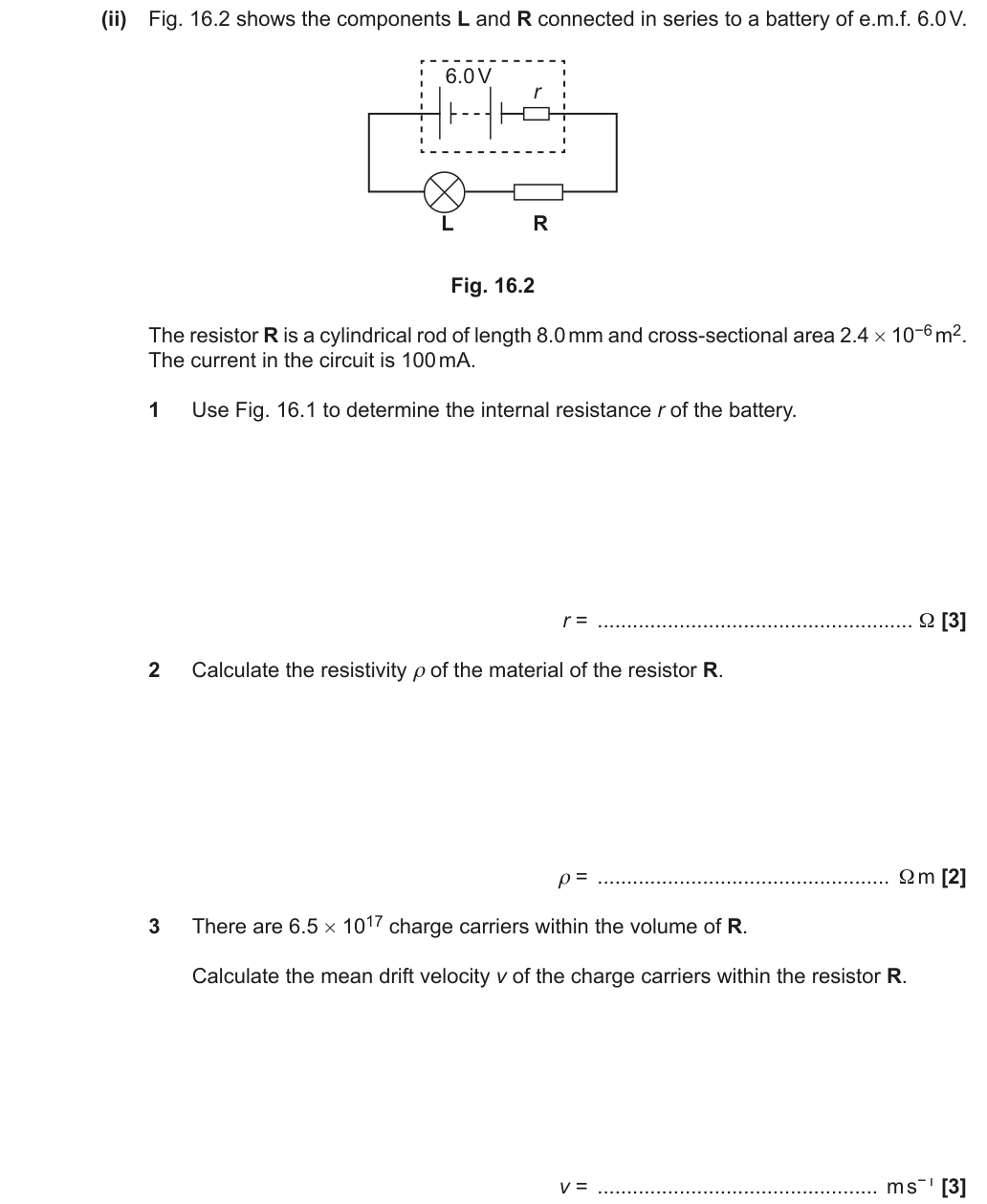
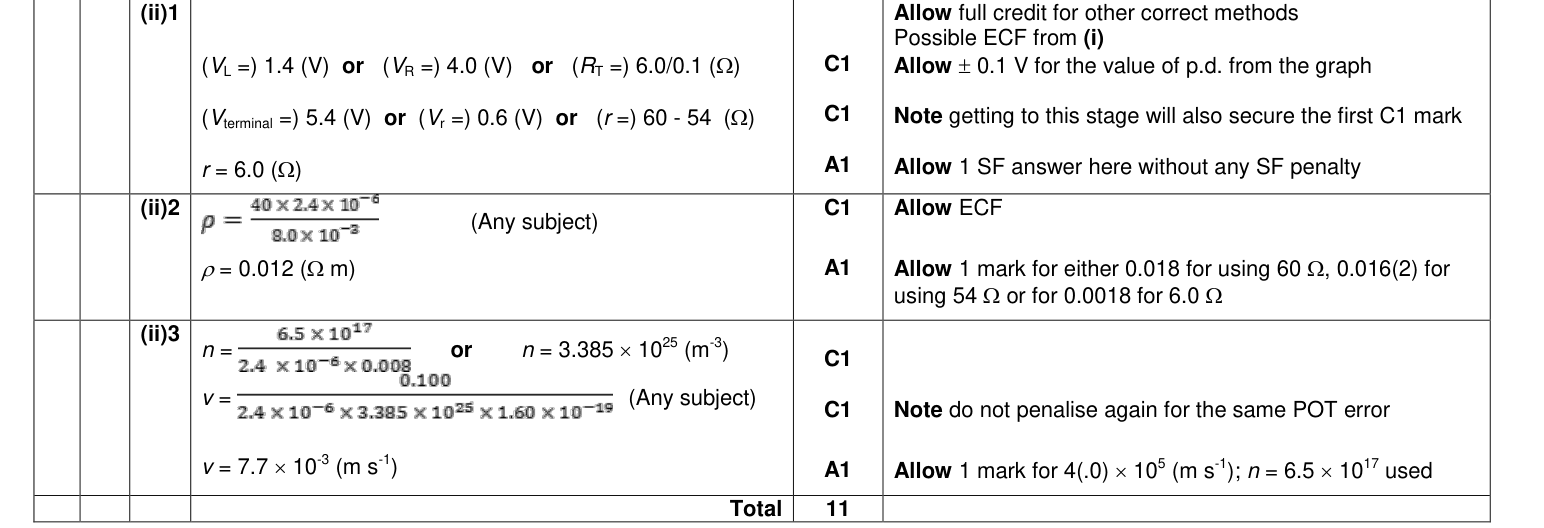
This was a discriminating question with many of the top-end candidates effortless getting the correct answer of 6.0 Ω for the internal resistance r. The most common error was omitting the resistance of the filament lamp in the calculation. This gave an incorrect value of 20 Ω for the internal resistance. Candidates doing this still managed to pick up 1 mark for the total resistance of 60 Ω. The success in this question depended on understanding the term n in the equation I = Anev given in the Data, Formulae and Relationship booklet. A significant number of candidates took n to be the total number of charge carriers within the volume of R, instead of the number of charge carriers per unit volume (number density). Those who appreciated this had no problems coping with prefixes and powers of ten. The correct answer was 7.7 × 10⁻³ m s-1. Using 6.5 × 10¹⁷ for the number density, gave an answer of 4.0 × 10⁵ m s-1; examiners credited 1 mark for this incorrect answer, mainly for the manipulating and using the equation I = Anev. This exemplar illustrates a perfect answer from a C-grade candidate. The equation has been rearranged correctly and the substitution is all correct and easy to follow. The number density n has not been calculated separately – it forms an integral part of the whole calculation. The one big benefit of this is that you do not end up with rounding errors. A decent technique demonstrated here. All correct for 3 marks.
Skills: M0.2 Recognise and use expressions in decimal and standard form; M2.2 Change the subject of an equation, including non-linear equations; M2.3 Substitute numerical values into algebraic equations using appropriate units for physical quantities; M3.1 Translate information between graphical, numerical and algebraic forms
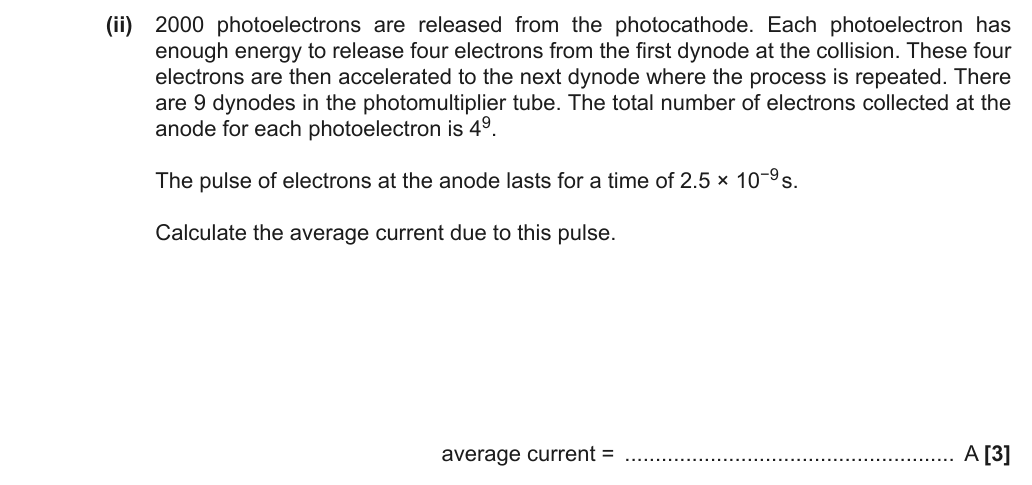
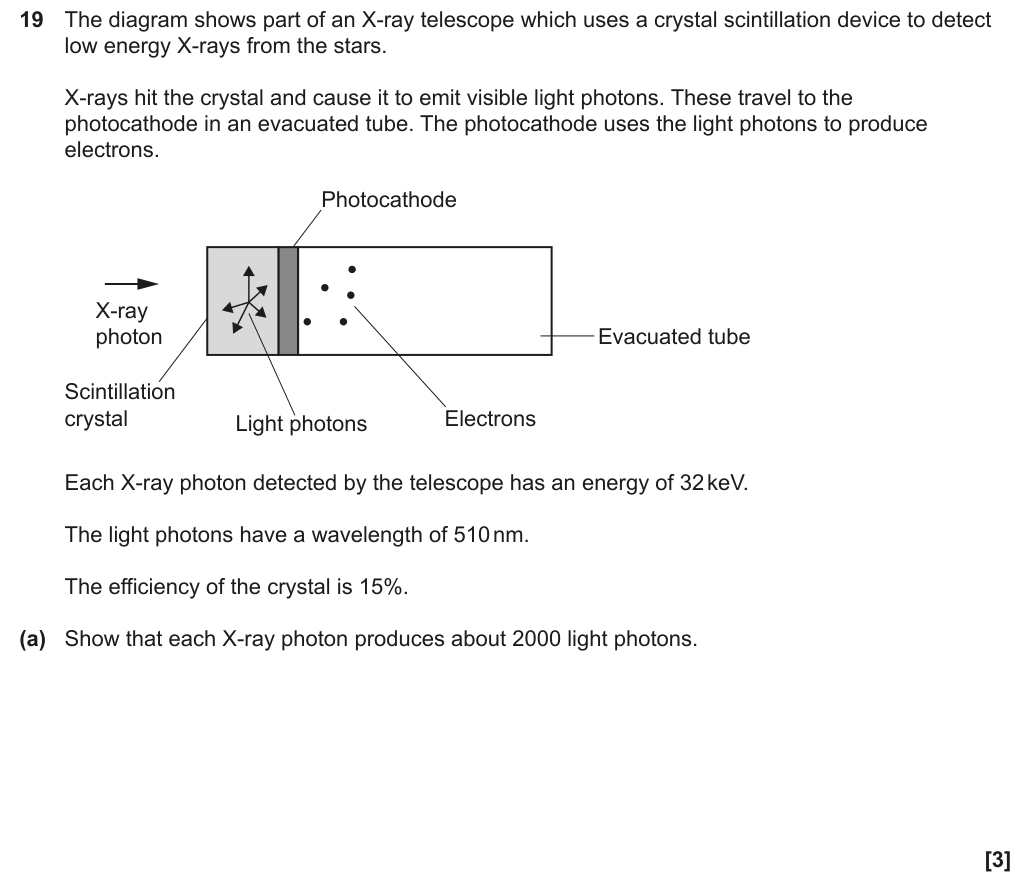
Almost all of the candidates attempted this last section of the paper with some success. In part (i) most candidates showed that they understood the theory behind the question and subtracted the appropriate two numbers from part (b) to gain the mark. Part (ii) was done well with a significant number obtaining the correct answer. Another large group forgot that 2000 electrons were released and performed the calculation for only a single electron being multiplied up and so forfeited the final mark.
Skills: M0.2 Recognise and use expressions in decimal and standard form; M0.5 Use calculators to find and use power, exponential and logarithmic functions; M2.3 Substitute numerical values into algebraic equations using appropriate units for physical quantities
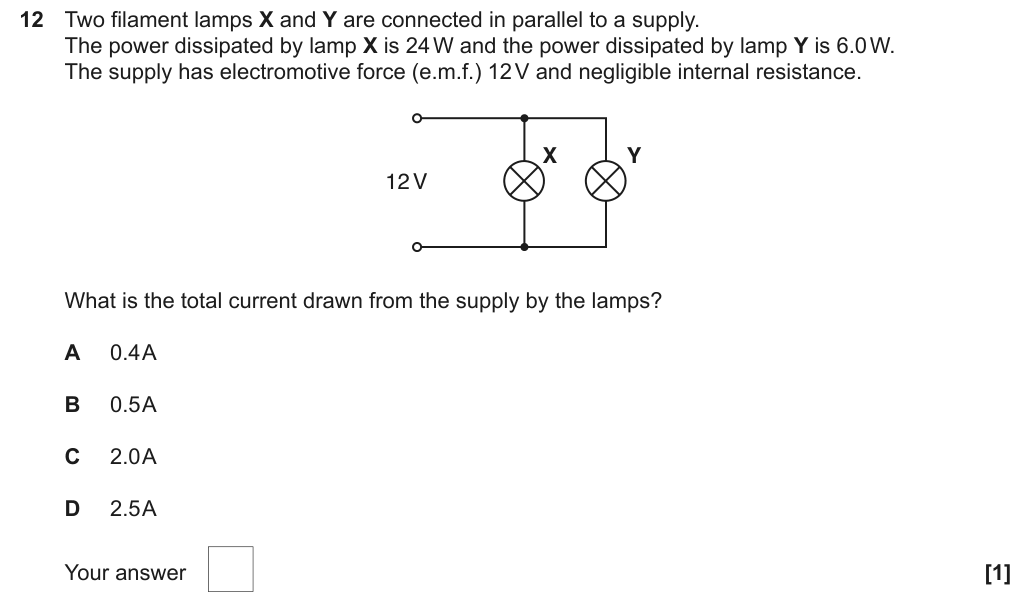
D
B
C
Skills: M0.1 Recognise and make use of appropriate units in calculations; M0.2 Recognise and use expressions in decimal and standard form; M2.2 Change the subject of an equation, including non-linear equations
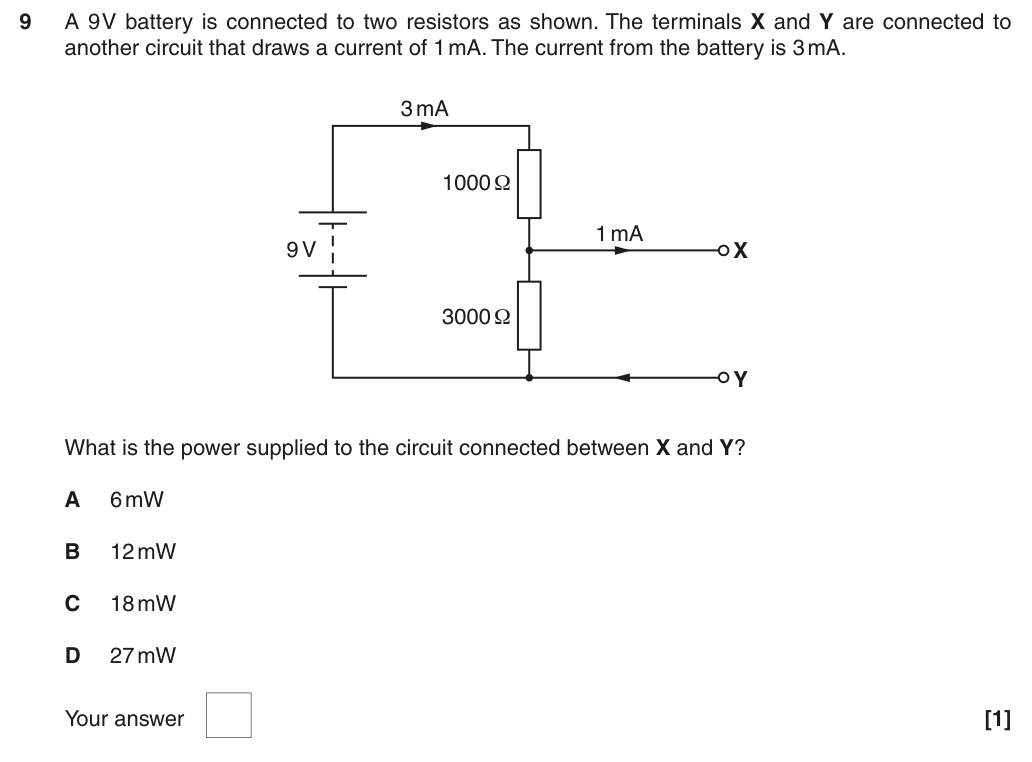
A
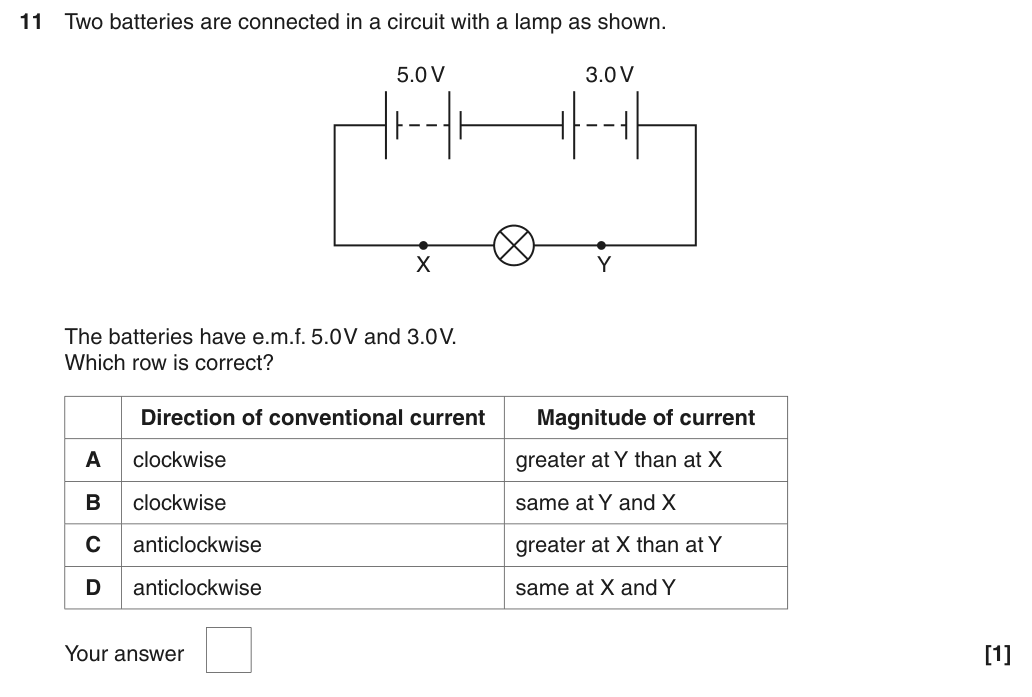
D
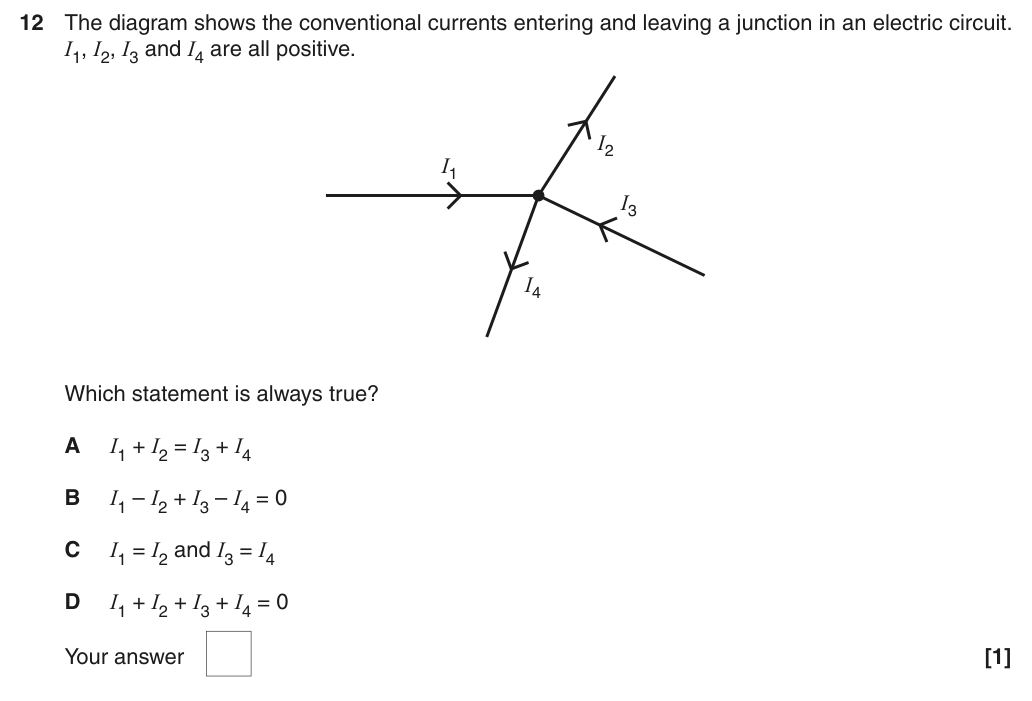
B
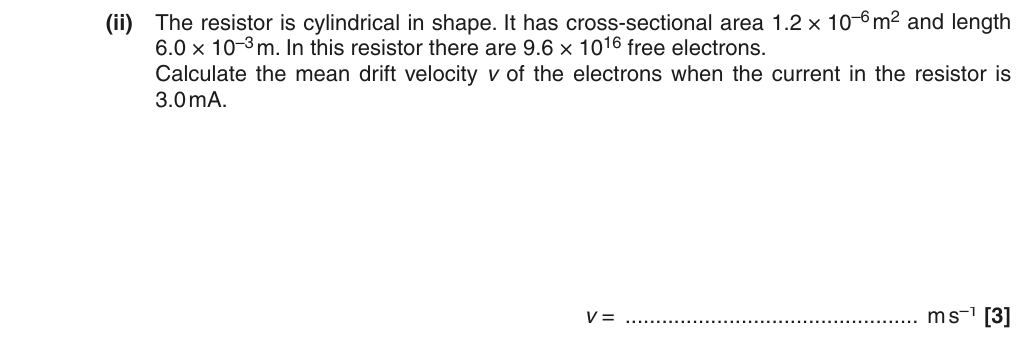
Skills: M0.2 Recognise and use expressions in decimal and standard form; M2.2 Change the subject of an equation, including non-linear equations; M2.3 Substitute numerical values into algebraic equations using appropriate units for physical quantities
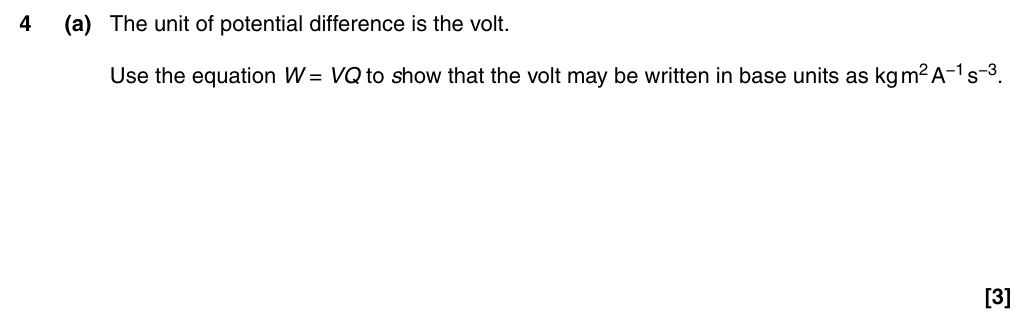
Skills: M0.1 Recognise and make use of appropriate units in calculations; M2.2 Change the subject of an equation, including non-linear equations
Dropping marks on calculations, practical questions or the six-mark level of response questions? Book a trial session with a specialist OCR physics tutor.