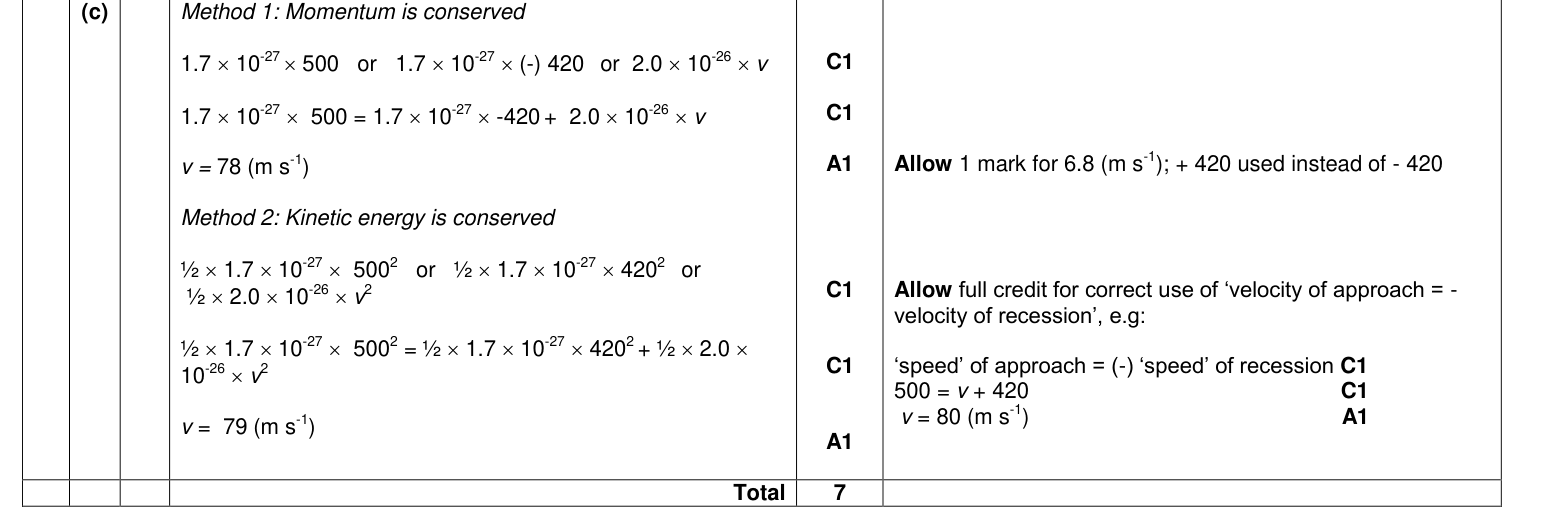
Answer
B
Mark scheme

Examiner's comment
Total energy and momentum are always conserved in inelastic collisions (unless there is an external force, which would have been mentioned). This leaves B as the only possible answer.
Notes and key-term cards for this topic are being written by our tutors. The past-paper questions below are ready now.
| Series | Paper | Q | What it asks |
|---|---|---|---|
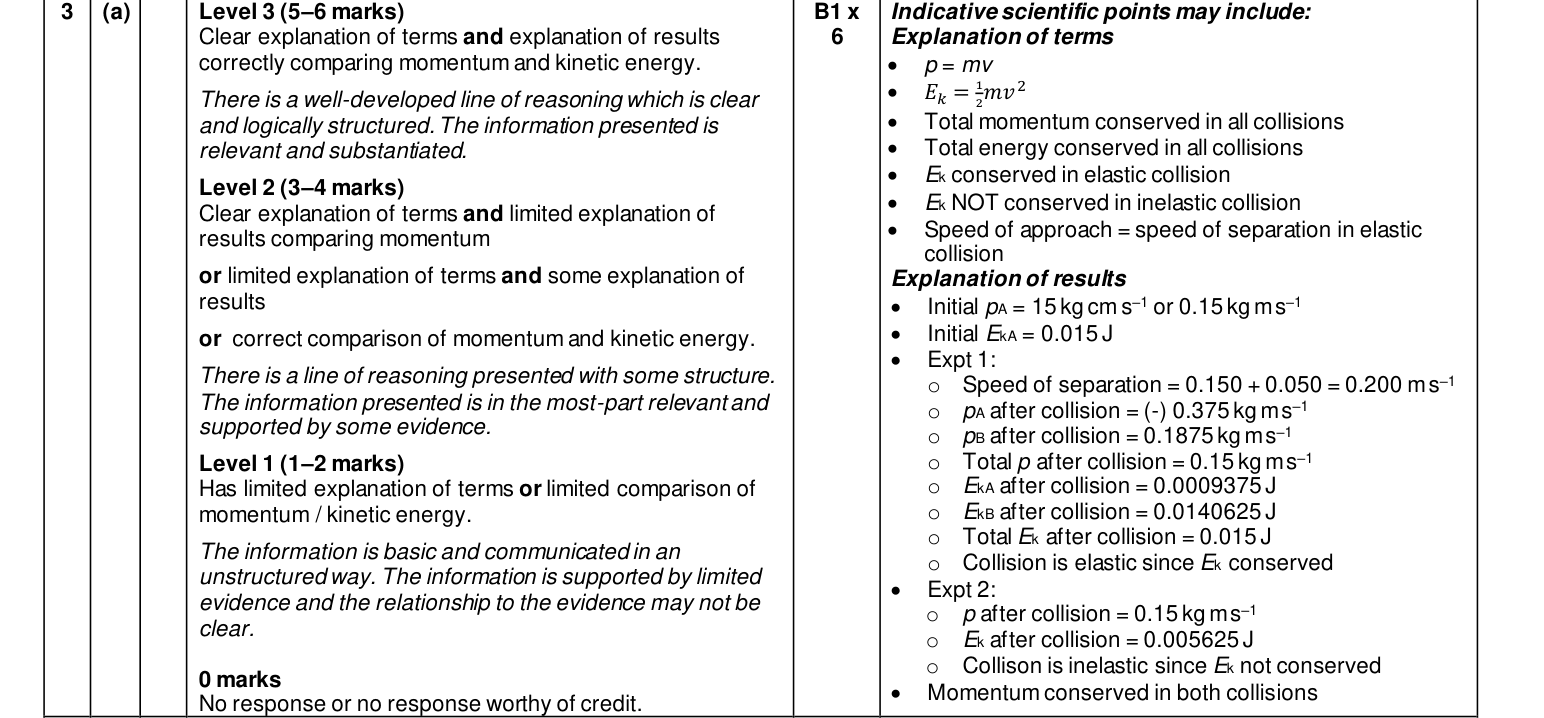
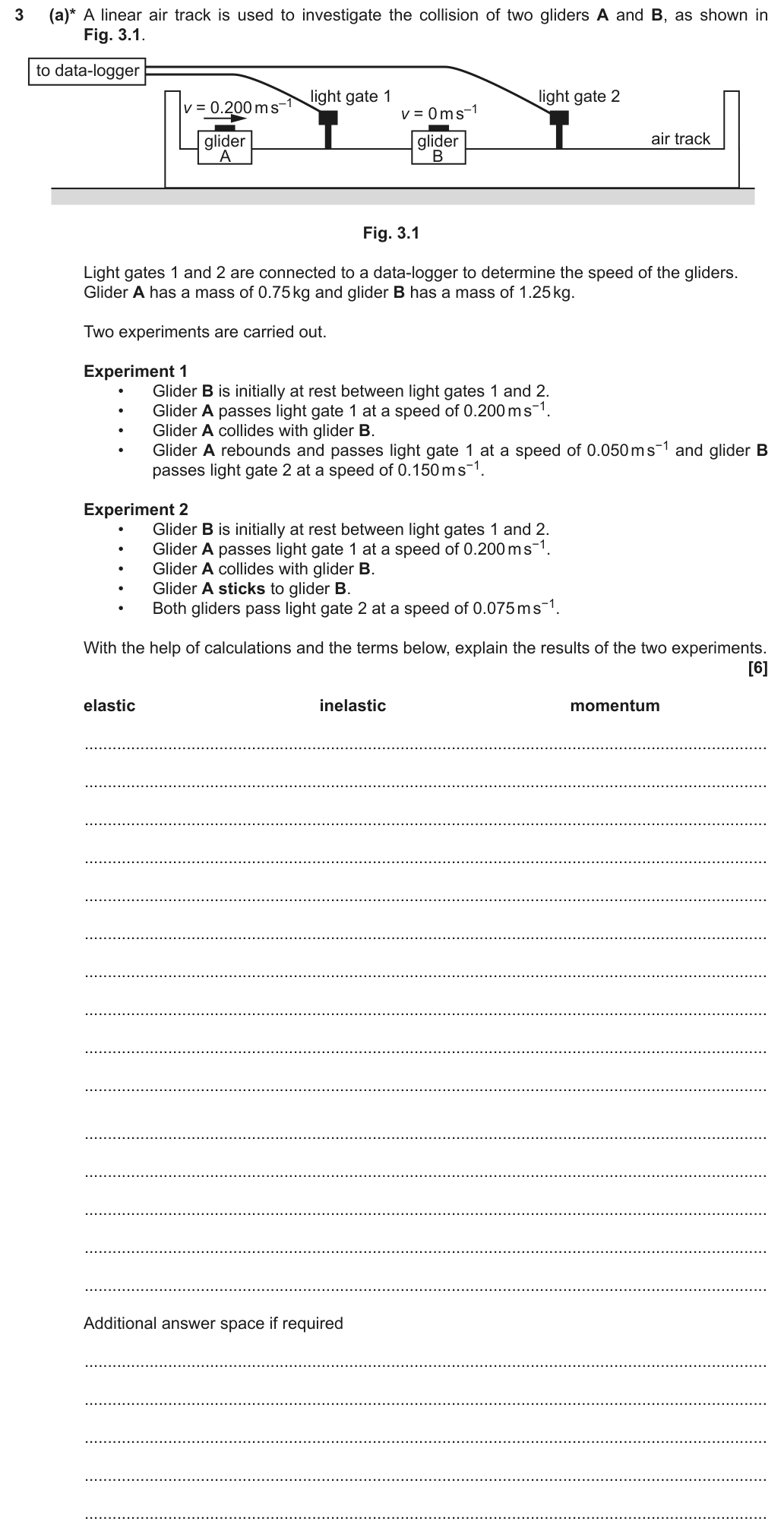
| November 2021 | AS Paper 2 | 3(a) | (a)* A linear air track is used to investigate the collision of two gliders A and B, as shown in |
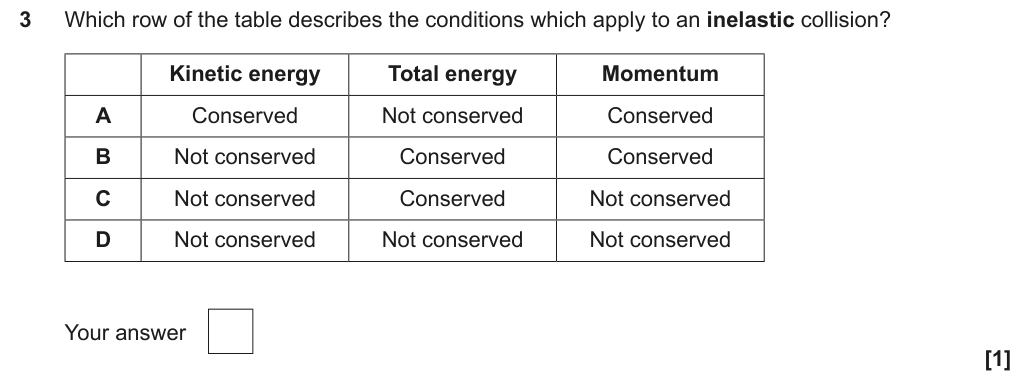
B
Total energy and momentum are always conserved in inelastic collisions (unless there is an external force, which would have been mentioned). This leaves B as the only possible answer.
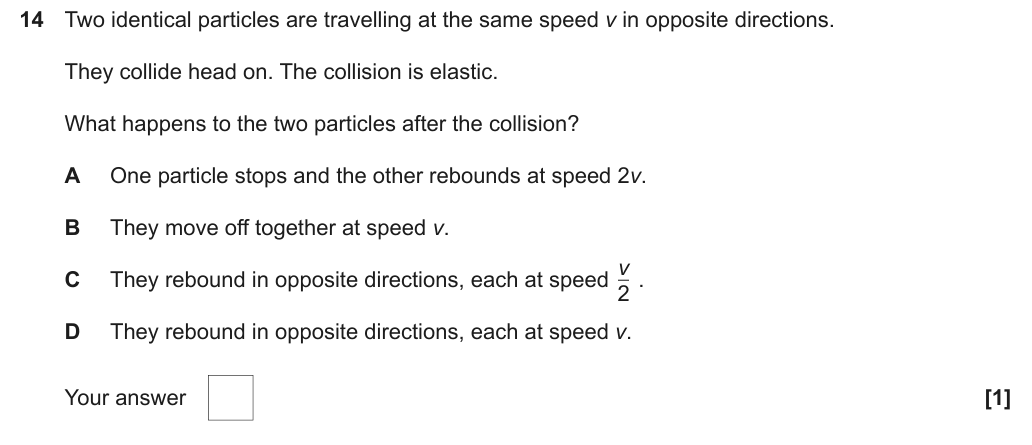
D
The question was answered well. Candidates usually correctly identified that the particles would rebound in opposite directions but the common error was to suggest the speed of the particles would be halved. If this was the case, then the kinetic energy would not be conserved.
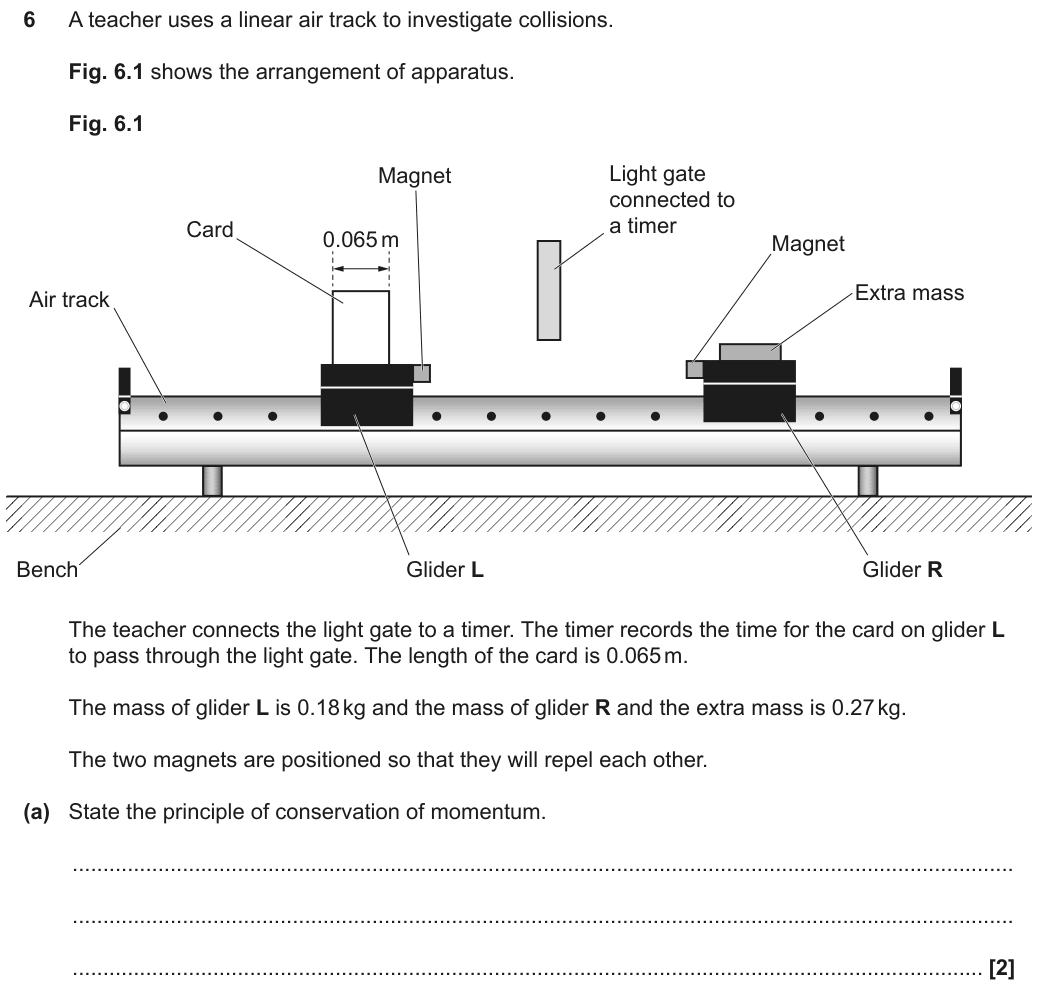
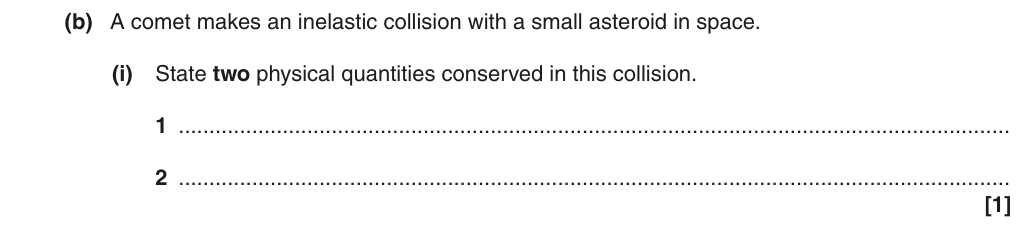
Most candidates discussed the total momentum but many candidates did not state provided there was no external force. Lower performing candidates often gave vague detail such as the ‘momentum is the same’.
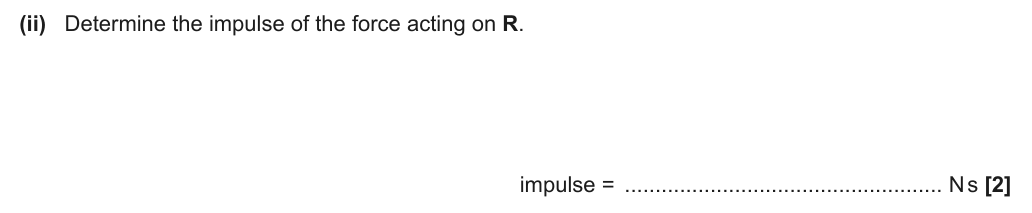
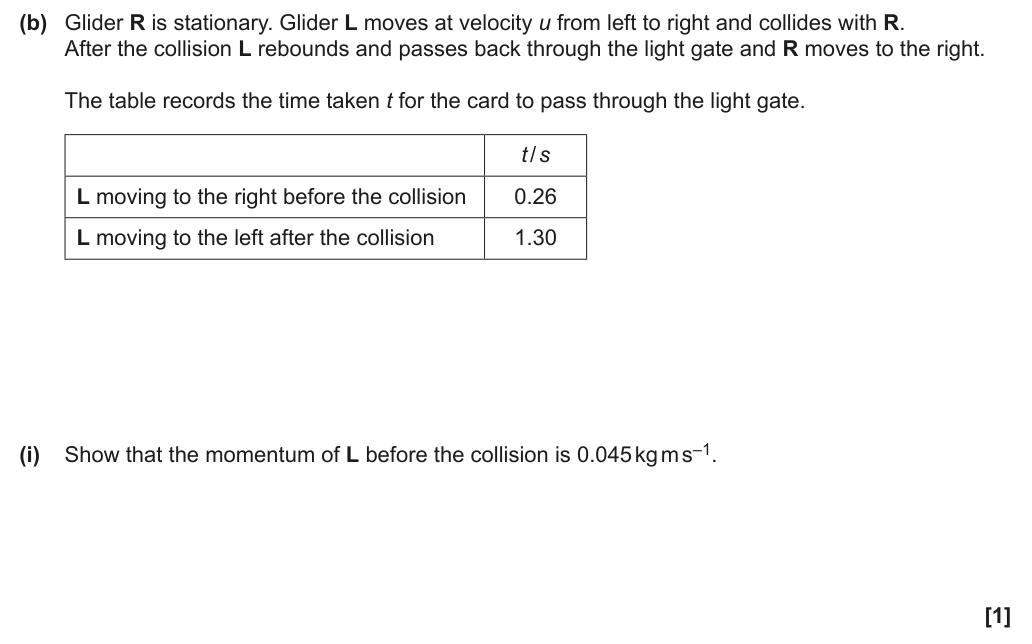
Many candidates correctly worked out that the momentum after the collision of glider L was 0.0090 kg m s-1. However, they did not understand the vector nature of momentum and incorrectly determined the impulse as 0.036 N s.
Skills: M2.3 Substitute numerical values into algebraic equations using appropriate units for physical quantities; PAG1 Investigating motion
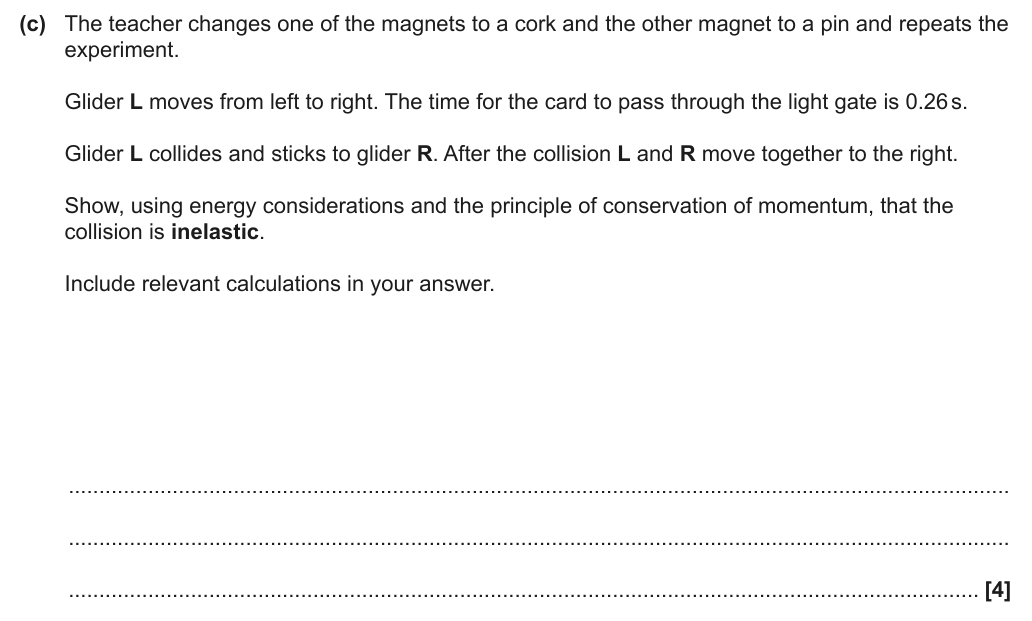
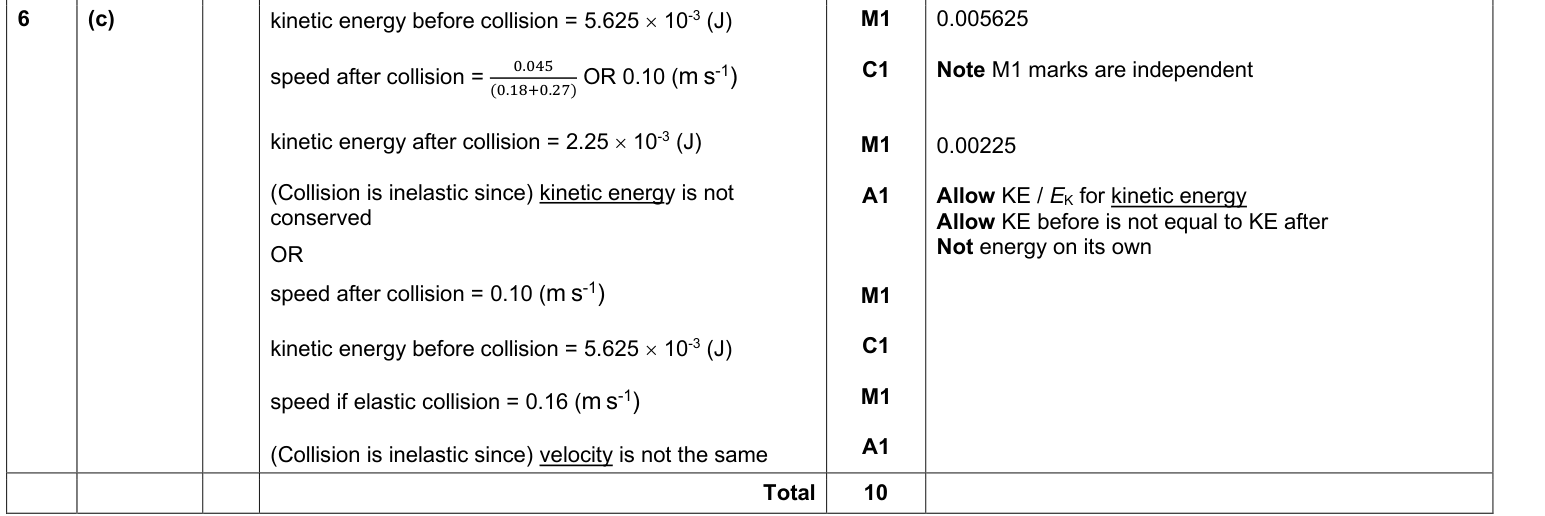
This question gave candidates the opportunity of structuring their answer for several calculations. High performing candidates clearly showed their working, firstly working out the initial kinetic energy before then working out the speed of both gliders after the collision, using the principle of conservation of momentum and then the kinetic energy after the collision. A conclusion in terms of the kinetic energy not being conserved was needed for the final mark.
Skills: M2.3 Substitute numerical values into algebraic equations using appropriate units for physical quantities; PAG1 Investigating motion
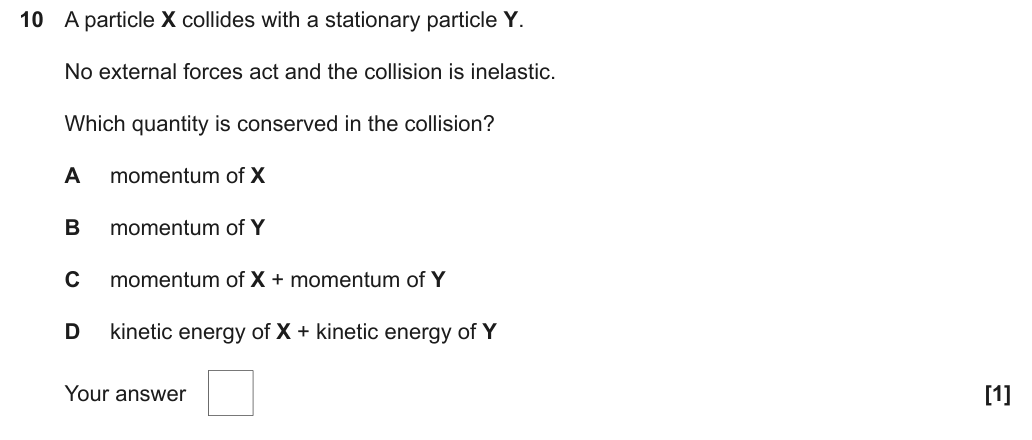
C
Many candidates correctly applied understanding of inelastic collisions that momentum is conserved, but the kinetic energy is not conserved to give the correct answer C.
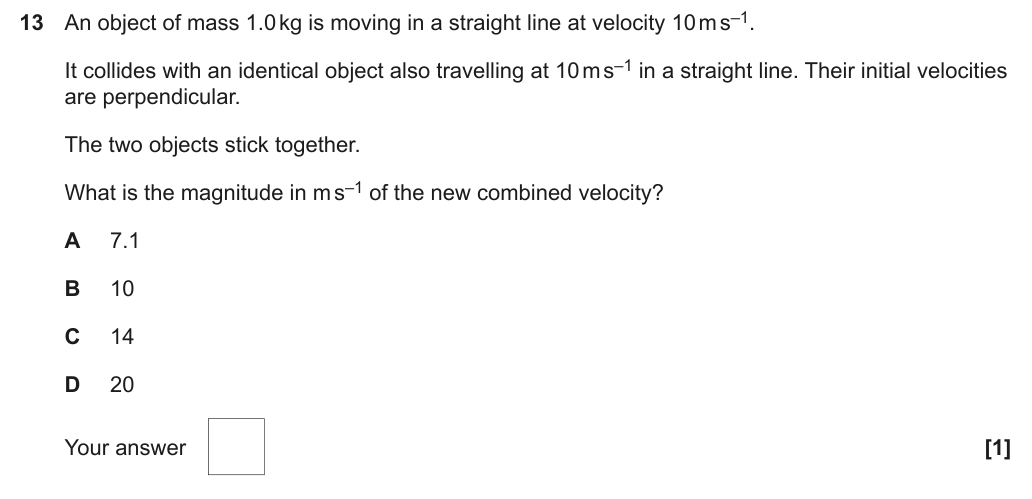
A
This is a conservation of momentum question. The momentum of each object is 10 kg m s-1. The combined momentum has two components at right angles to each other of 10 kg ms-1. The magnitude of this momentum is √ (200). To find the speed, divide this by 2.0 kg, giving 7.1 m s-1, so the answer is A.
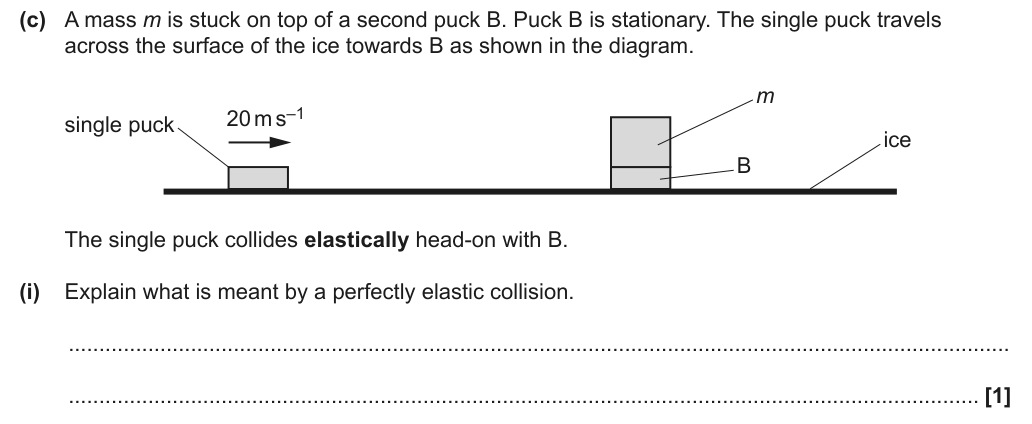
Many candidates correctly stated that the kinetic energy in the collision is conserved. Where credit was not gained, it was invariably due to candidates stating that ‘energy was conserved’ without explicitly stating kinetic energy.
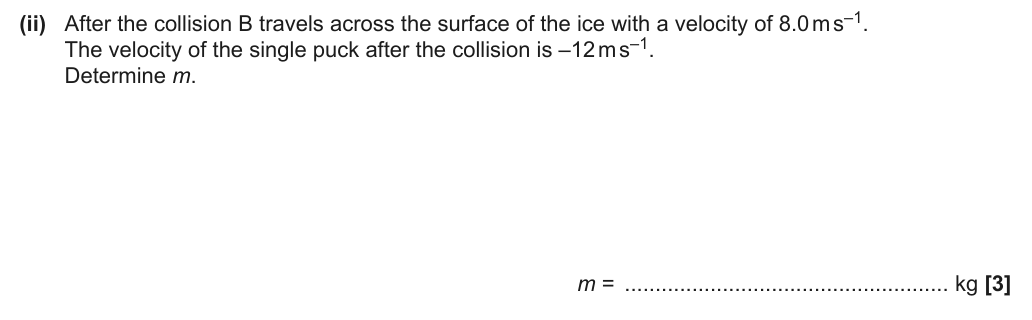
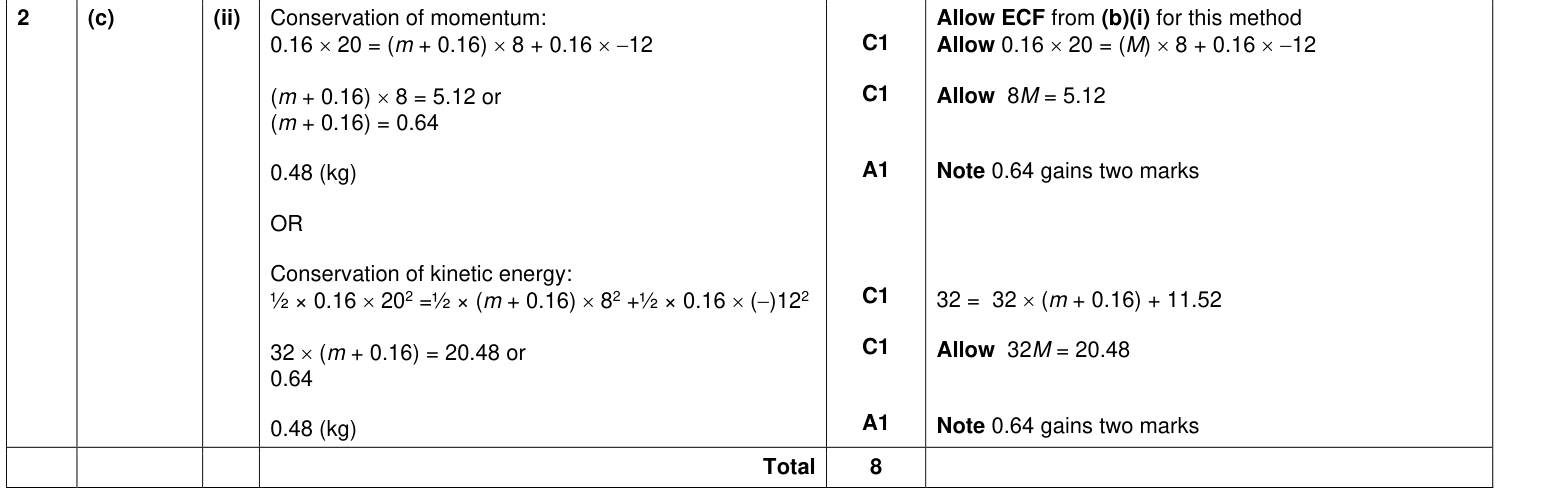
High scoring candidates generally scored well on this question. Most candidates attempted to determine m by using a conservation of momentum method. A small minority correctly used a conservation of kinetic energy method. The common error for the conservation of momentum method was to have an incorrect sign. A few candidates did not allow for the original mass of the puck.
Skills: M2.2 Change the subject of an equation, including non-linear equations; M2.4 Solve algebraic equations, including quadratic equations
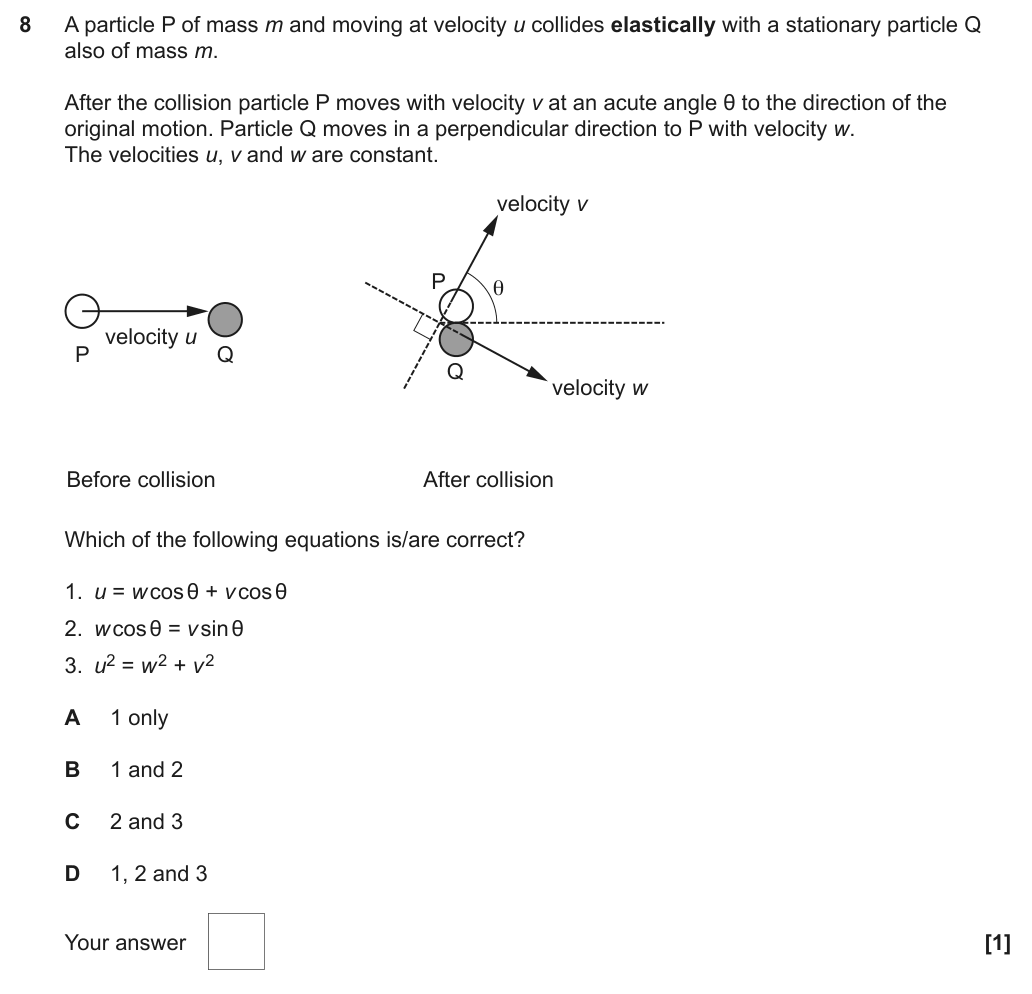
C
A good number of candidates answered this correctly. As this collision is elastic, the total kinetic energy (KE) for the collision, ½mu2 remains unchanged. The total KE after the collision is ½mv2 + ½mw2. Equating these expressions gives statement 3 as correct, eliminating answers A and B. Statement 2 must also be correct and comes from conservation of momentum at right angles to the dashed line. Looking along the dashed line, the momentum is mu before the collision. After the collision, the component of momentum along the dashed line for P is mvcosθ. The angle Q makes with the dashed line is not θ, so the component of momentum along that dashed line for Q cannot be mwcosθ. This makes statement 1 false and so the correct answer is C.
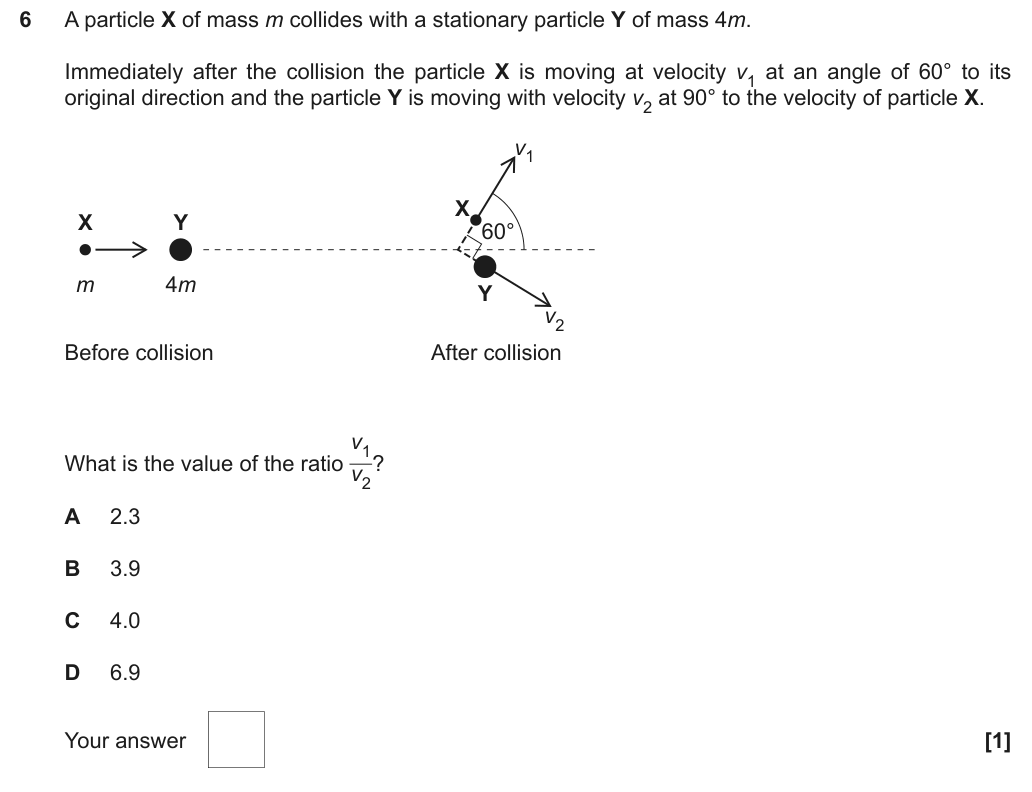
A
Candidates found this question challenging. Conservation of momentum applies both horizontally and vertically here. This means that the vertical upwards component of the momentum of X must equal the vertical downwards component of the momentum of Y. So m v1 sin(60o) = 4m v2 sin(30o). Rearranging this expression will give the correct answer of v1 / v2.
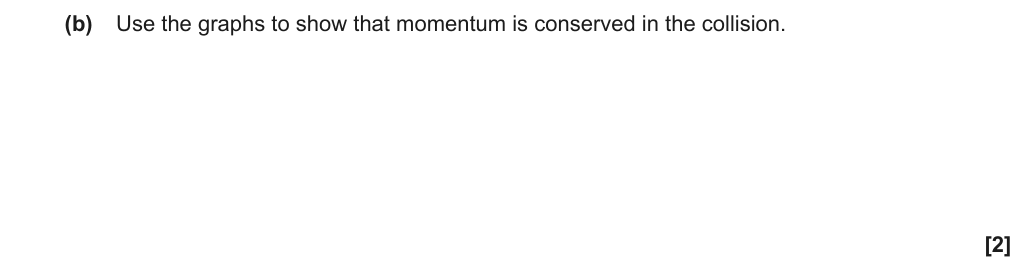
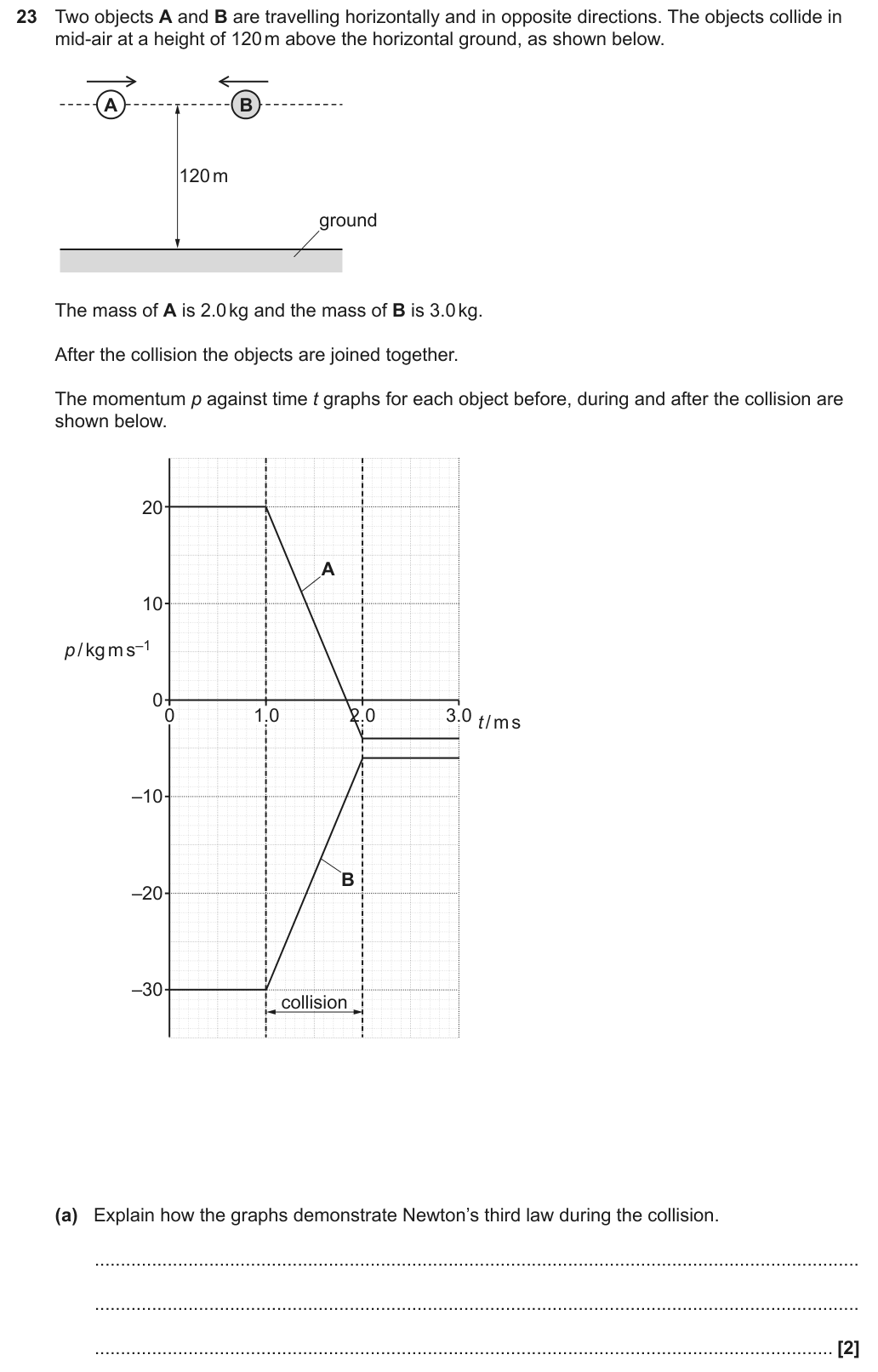
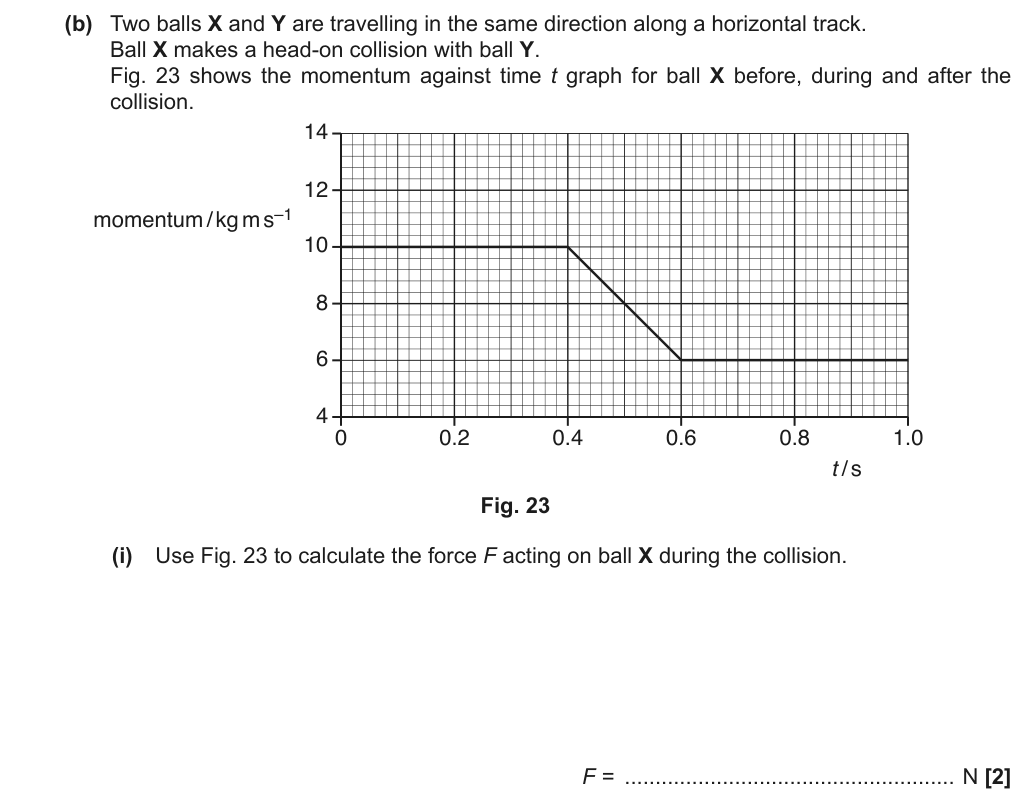
Most candidates performed well on this question as they used the graph to show that the total momentum before and after the collision for objects A and B was conserved and that the values were the same. If marks were not given it was generally because candidates had not followed on with and carried out a simple calculation even though they had read the correct momentum values from the graph.
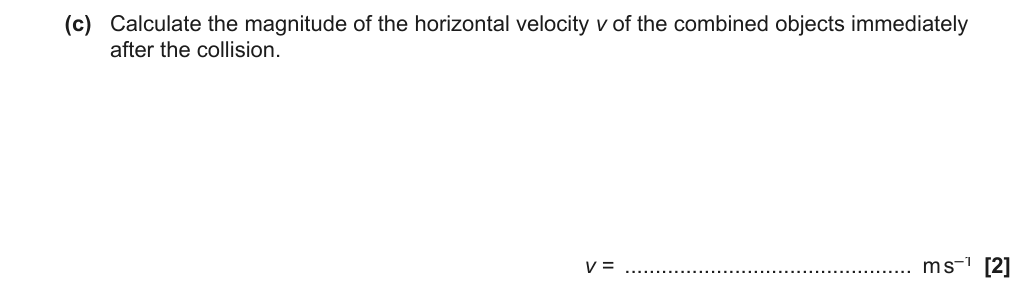
About half of candidates were given 2 marks for correctly calculating the velocity of objects A and B combined after the collision. Most candidates used an expression for the momentum of the combined objects (5v) and equated this to the total momentum of the two objects before the collision (10 kg m s–1). A significant number of candidates did not apply the conservation of momentum correctly and used a momentum value from the graph or didn’t use the combined mass of the objects A and B.
Skills: M2.3 Substitute numerical values into algebraic equations using appropriate units for physical quantities; M3.1 Translate information between graphical, numerical and algebraic forms
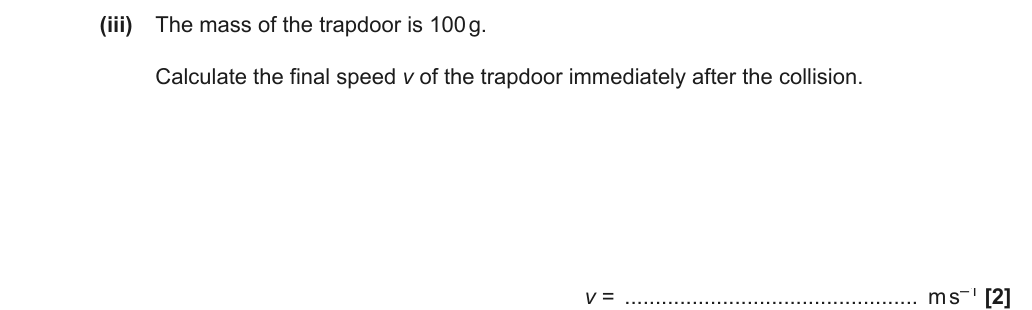
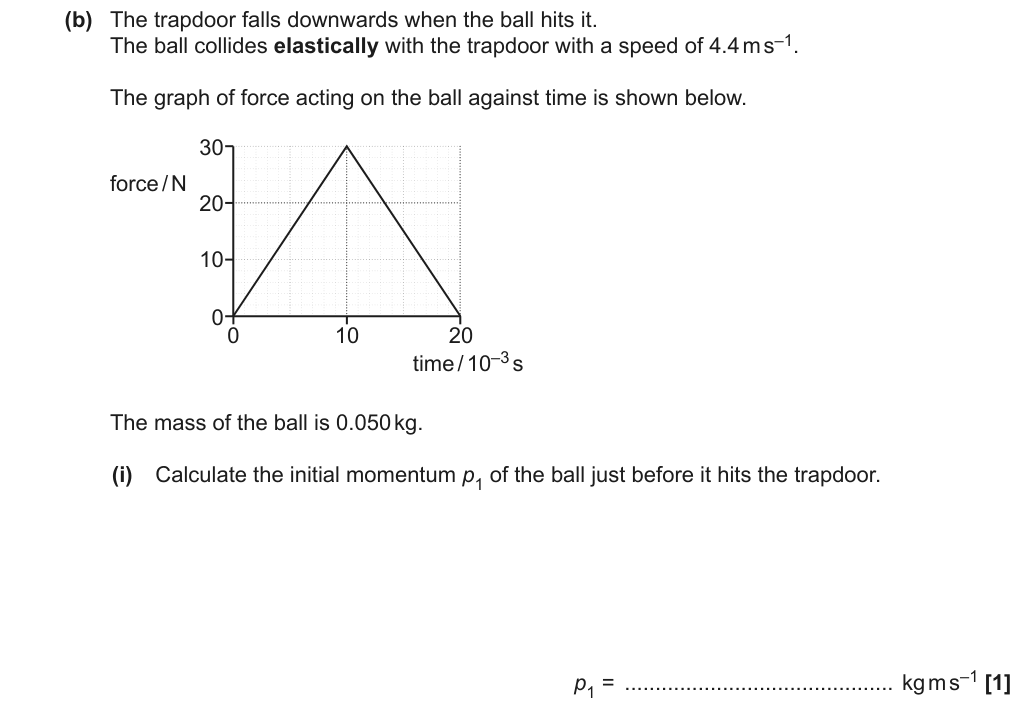
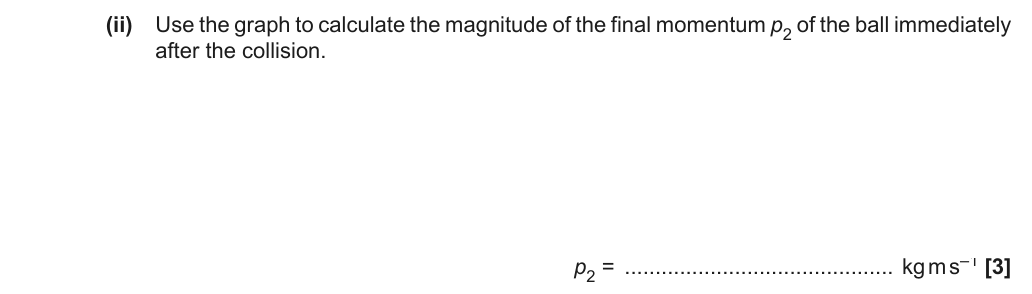
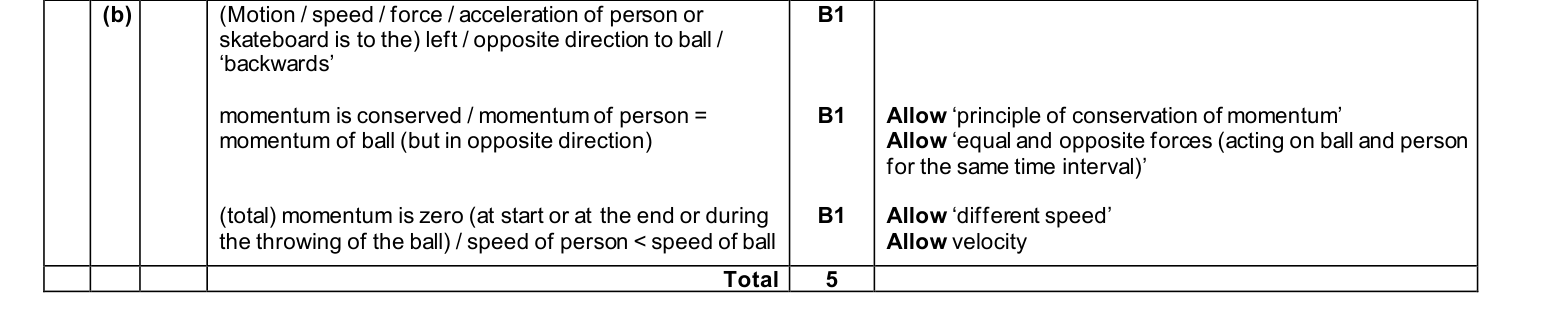
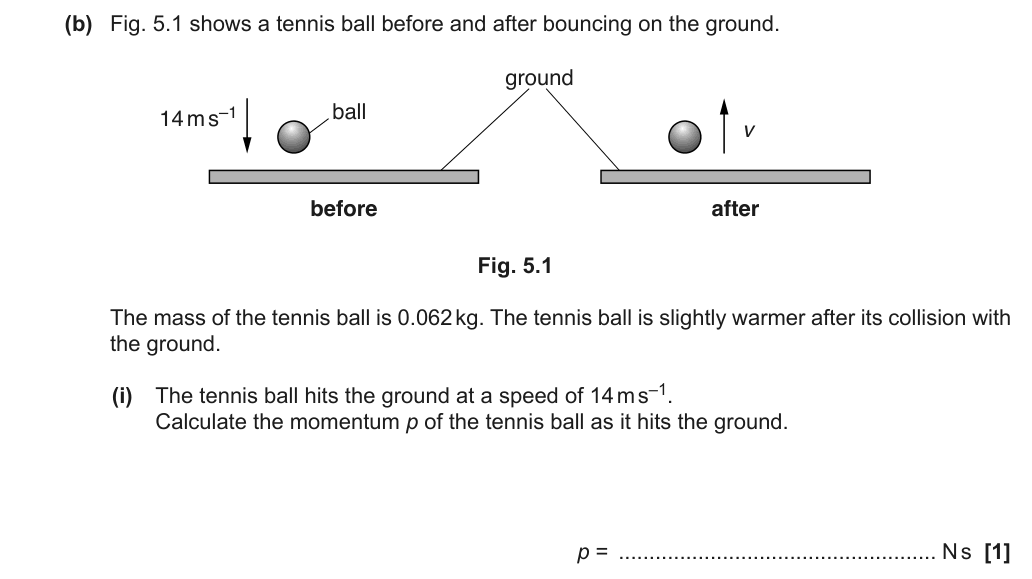
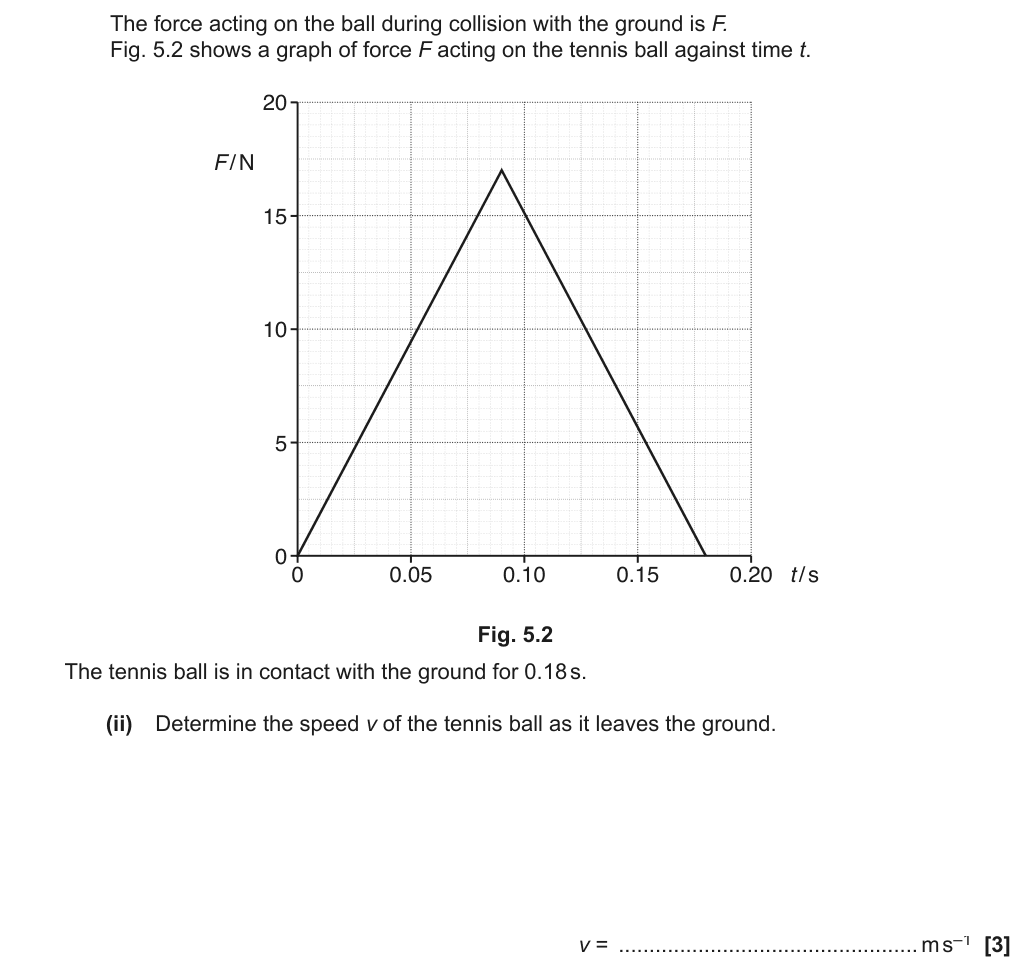
In Q16(b)(iii), the momentum of the trapdoor is not equal to the final momentum of the ball but is equal to the impulse provided to the ball by the trapdoor (albeit in the opposite direction to that of the rebounding ball).
Skills: M2.3 Substitute numerical values into algebraic equations using appropriate units for physical quantities
Skills: M2.3 Substitute numerical values into algebraic equations using appropriate units for physical quantities; PAG1 Investigating motion
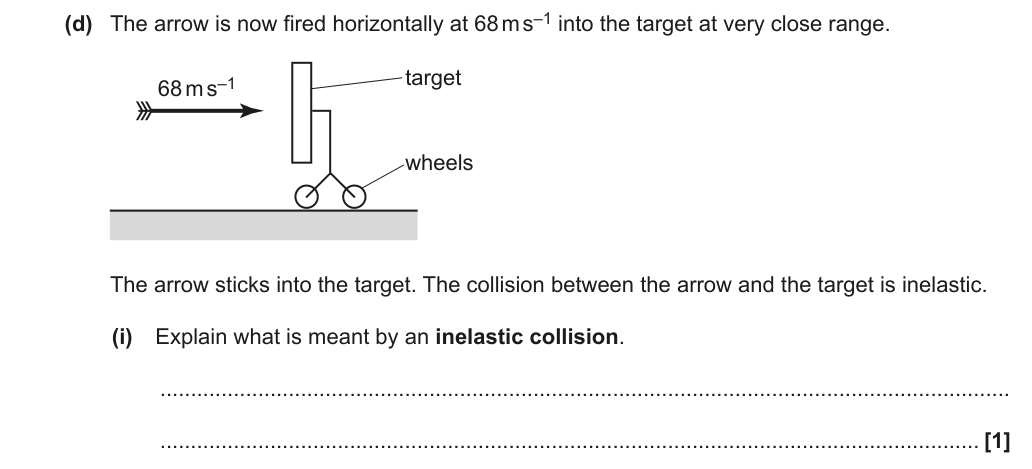
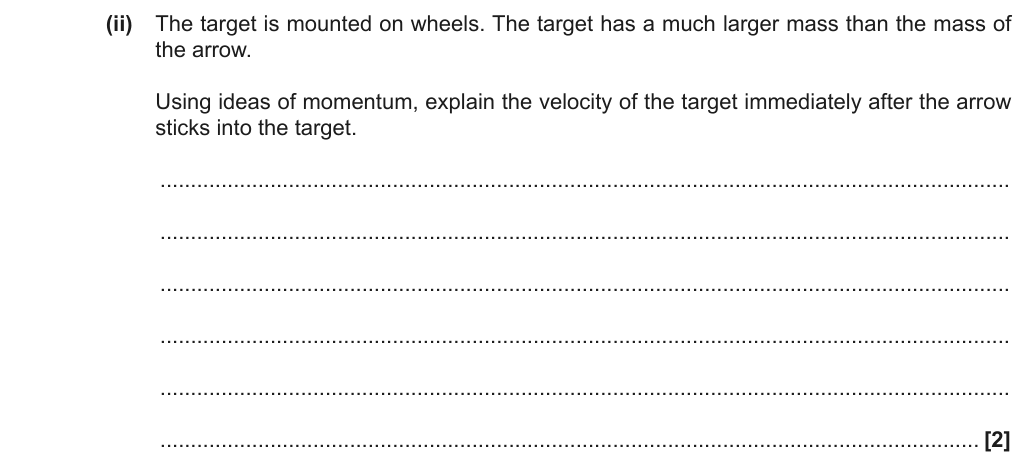
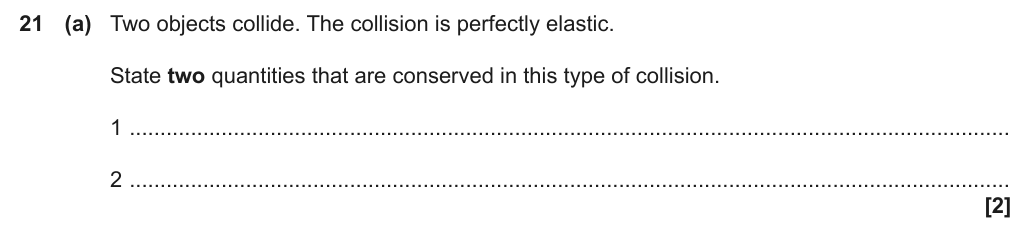
Questions 21b, 23bii, 27b and 28a. • showed too much detail when answering numerical MCQs – this was both time- consuming, and unnecessary when most calculations could have been done on calculators • demonstrated poor recall of basic definitions and misunderstood key concepts, e.g. confusing work function and threshold frequency in the description of the photoelectric effect in 28a • did not define labels, or letters used in descriptive responses • truncated or rounded numbers prematurely within calculations, which led to incorrect final responses, e.g. Question 21b is all about the principle of conservation of momentum.
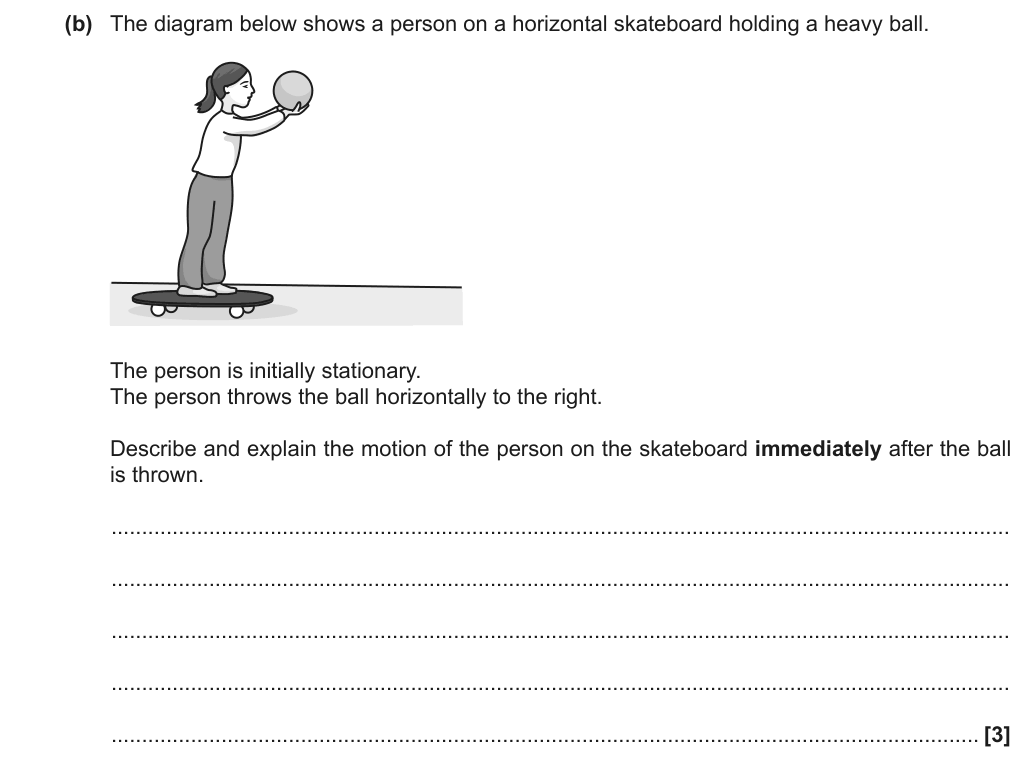
Questions 21b, 23bii, 27b and 28a. • showed too much detail when answering numerical MCQs – this was both time- consuming, and unnecessary when most calculations could have been done on calculators • demonstrated poor recall of basic definitions and misunderstood key concepts, e.g. confusing work function and threshold frequency in the description of the photoelectric effect in 28a • did not define labels, or letters used in descriptive responses • truncated or rounded numbers prematurely within calculations, which led to incorrect final responses, e.g. Question 21b is all about the principle of conservation of momentum.
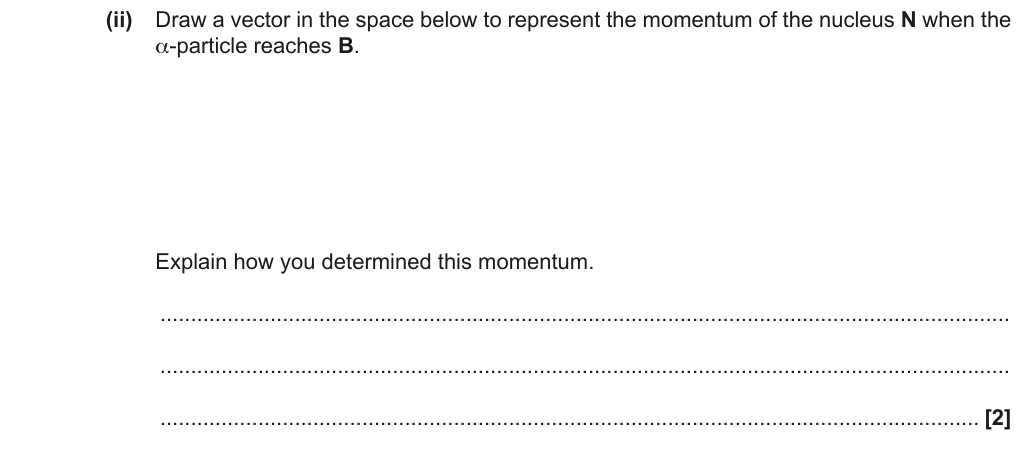
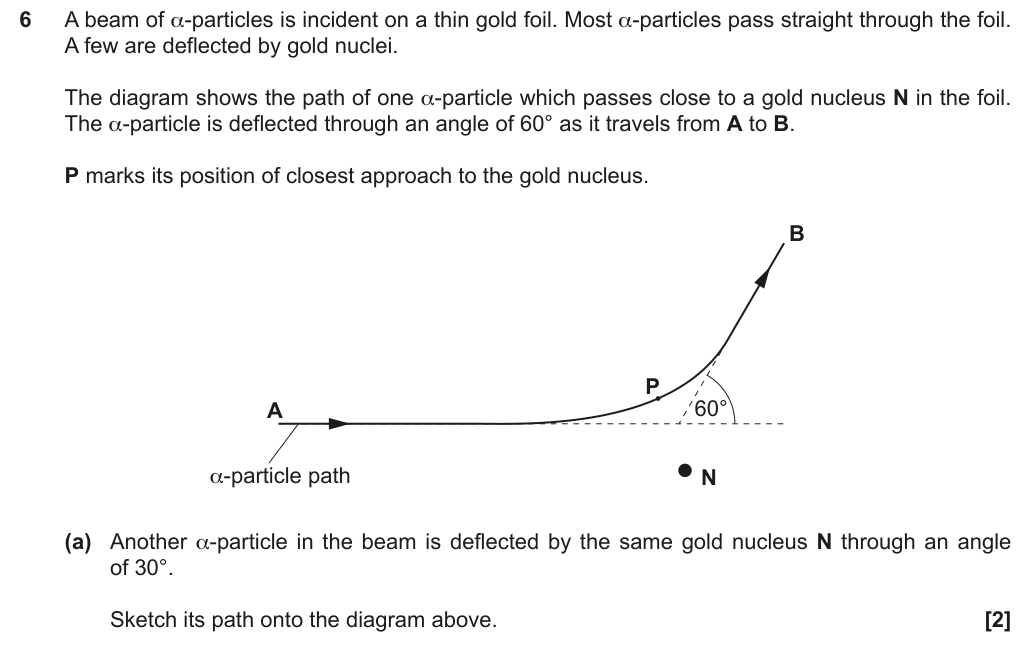
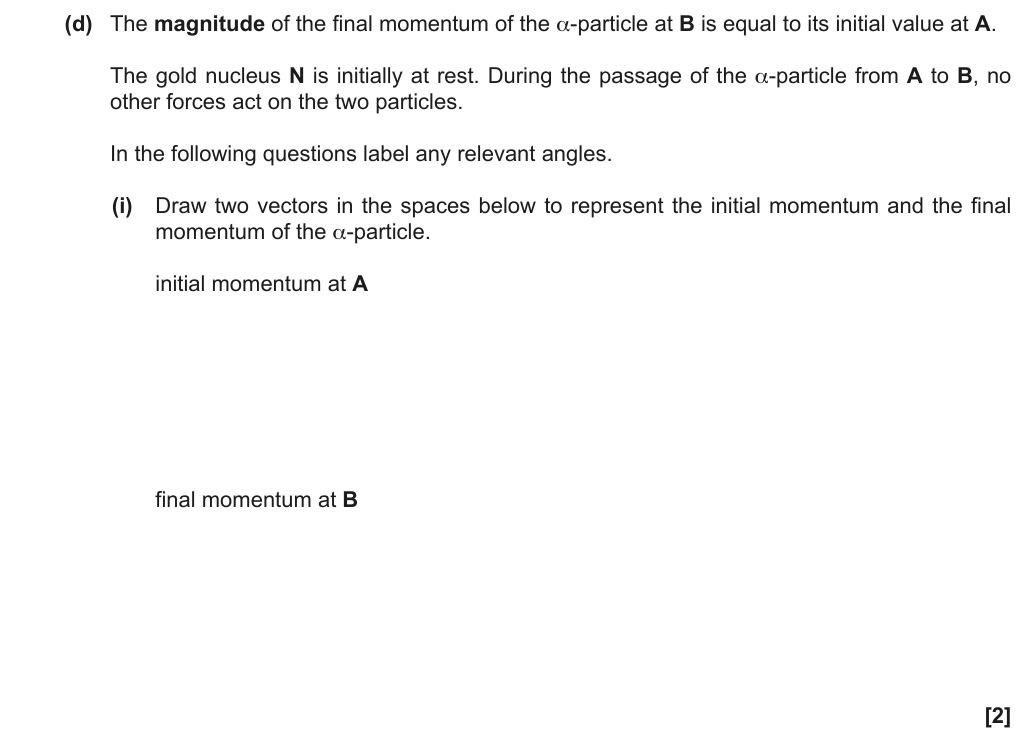
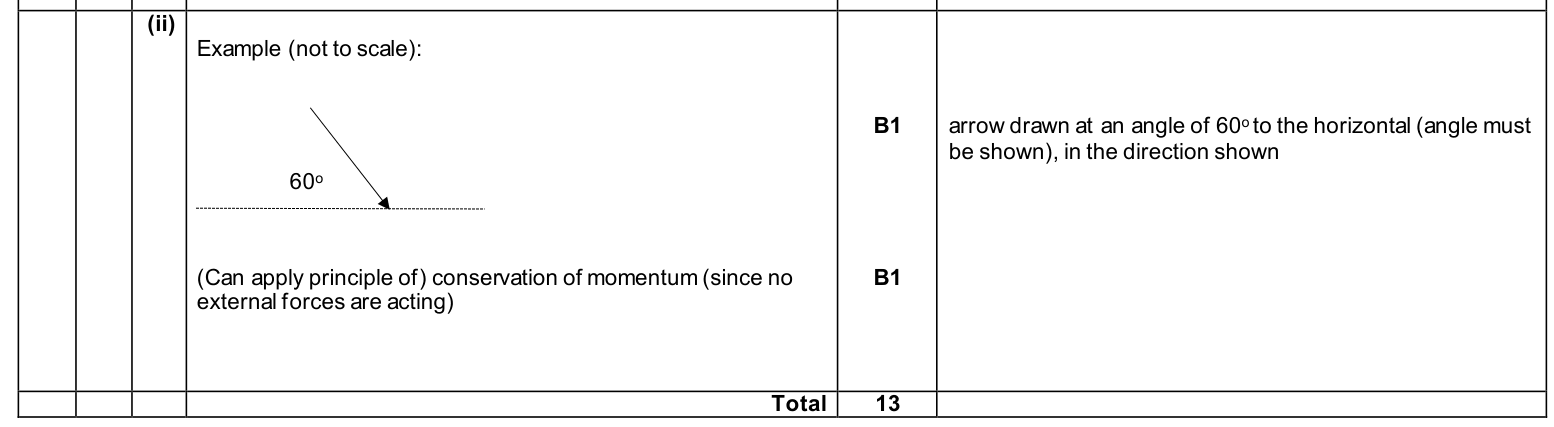
Since this paper is synoptic, candidates need to be able to apply their knowledge and understanding in unfamiliar contexts in order to gain high marks, To do well in this paper, candidates must be able to: • perform and layout calculations logically, showing clear working (such as Question 6c) • produce concise but accurate responses to questions which involve extended writing (such as question 1b) • craft clearly structured and well-reasoned arguments to the Level of Response Questions (3b and 5d) • process and interpret data from an experiment to reach conclusions (Question 2). Question 6a The common errors here were: • not realising that, for the particle to be deflected through a smaller angle, it needed to be travelling further away from N • not labelling the final angle of 30° • not adding arrows to show the direction of travel • drawing a path that continued bending beyond the stated 30° (usually ending up parallel to the original path). Question 6b The most common error here was to use incorrect values for the charges on the two ions. Question 6c This question provided an excellent opportunity for candidates to produce immaculate responses: identify the physics involved, select and write down the correct formula, do the necessary conversion (MeV to J), rearrange the formula, substitute correctly and then write the final response in standard form to a correct number of significant figures. Question 6d This was not an easy question but, even so, a good number of candidates did well.
Skills: M4.2 Visualise and represent 2D and 3D forms, including two-dimensional representations of 3D objects
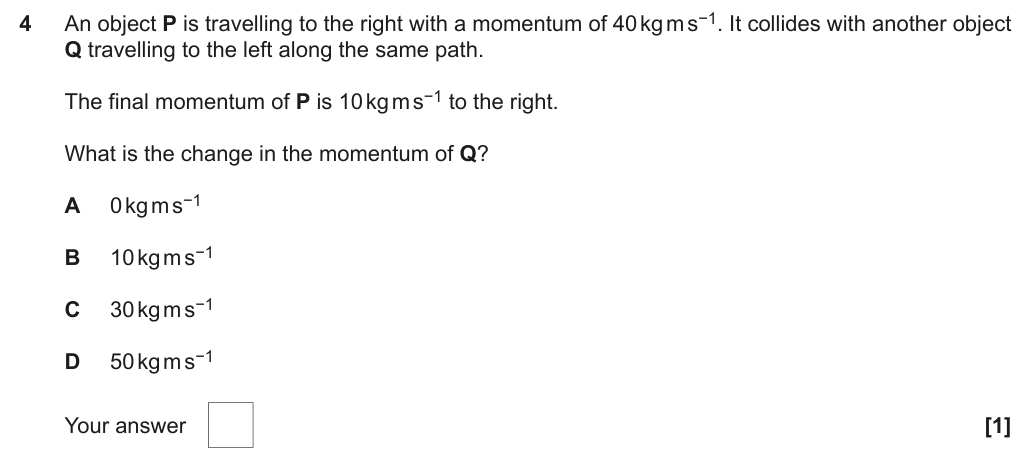
C
Question 4 Question 6 Candidates answered this question well.
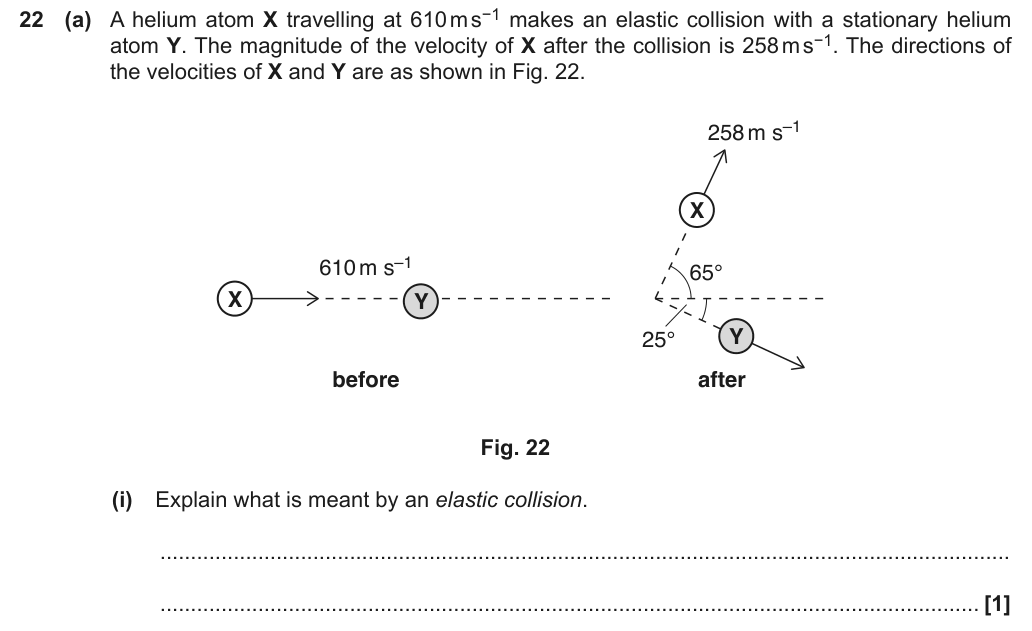
Question 22 (a) (i) Examiners’ report Question 22 (a) (ii) Most candidates correctly remembered that an elastic collision is one in which KE is conserved.
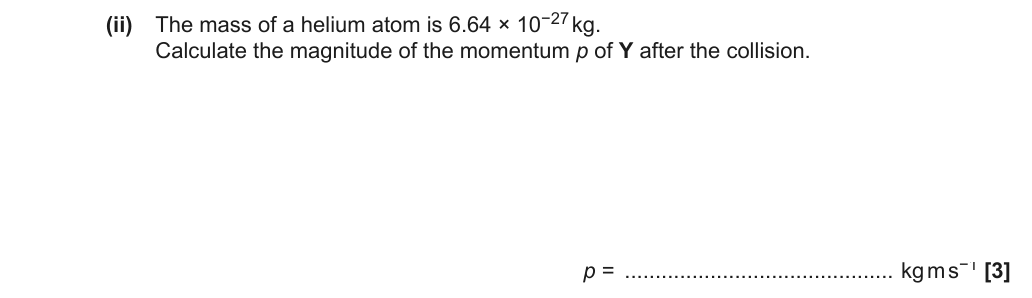
Most candidates correctly remembered that an elastic collision is one in which KE is conserved. In this series, it was acceptable to refer to ‘no loss of KE’. Using the idea that the KE was conserved would have made calculating the velocity of particle Y straightforward. Most candidates preferred a conservation of momentum approach, which of course still works. Many candidates remembered that momentum is conserved in both the x- and y-directions independently and consideration of either was enough. Some candidates forgot that trigonometry was necessary to complete this step, or made errors with which of sine or cosine was required.
Skills: M0.6 Use calculators to handle sin x, cos x and tan x when x is expressed in degrees or radians; M2.3 Substitute numerical values into algebraic equations using appropriate units for physical quantities; M4.5 Use sin, cos and tan in physical problems
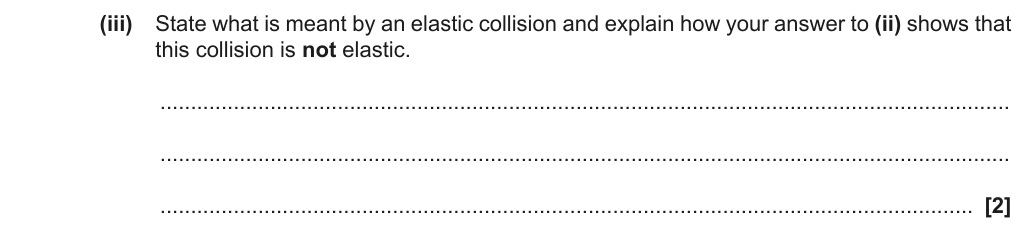
Many candidates did not state that the kinetic energy is conserved – often there were general statements about energy being conserved. Some candidates did not relate their answer to part (ii) as required by the question. Some candidates determined the kinetic energy before and after the ball left the ground – candidates could gain full marks with this approach.
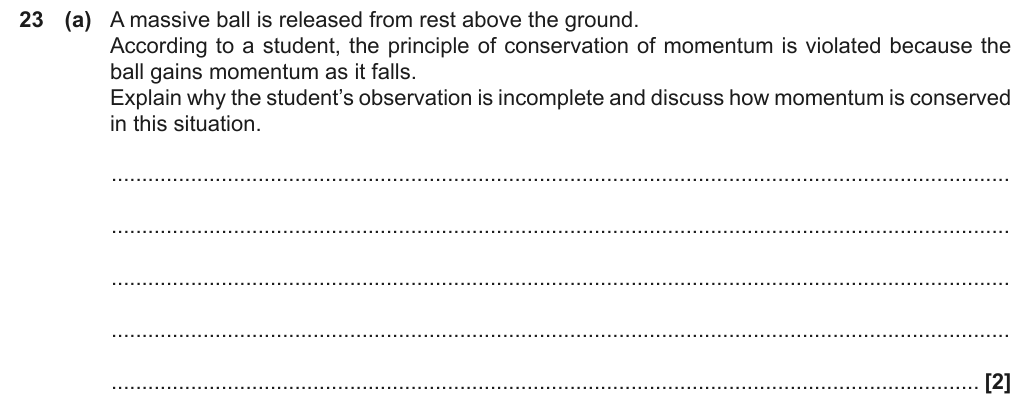

Skills: M3.1 Translate information between graphical, numerical and algebraic forms
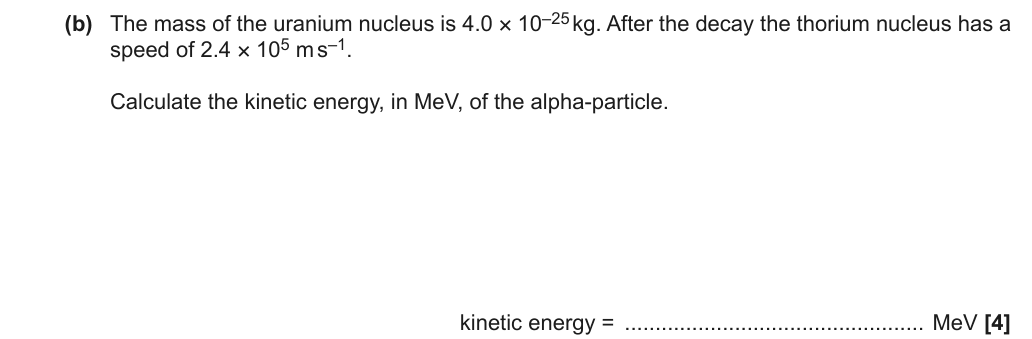
Skills: M0.1 Recognise and make use of appropriate units in calculations; M2.2 Change the subject of an equation, including non-linear equations; M2.3 Substitute numerical values into algebraic equations using appropriate units for physical quantities
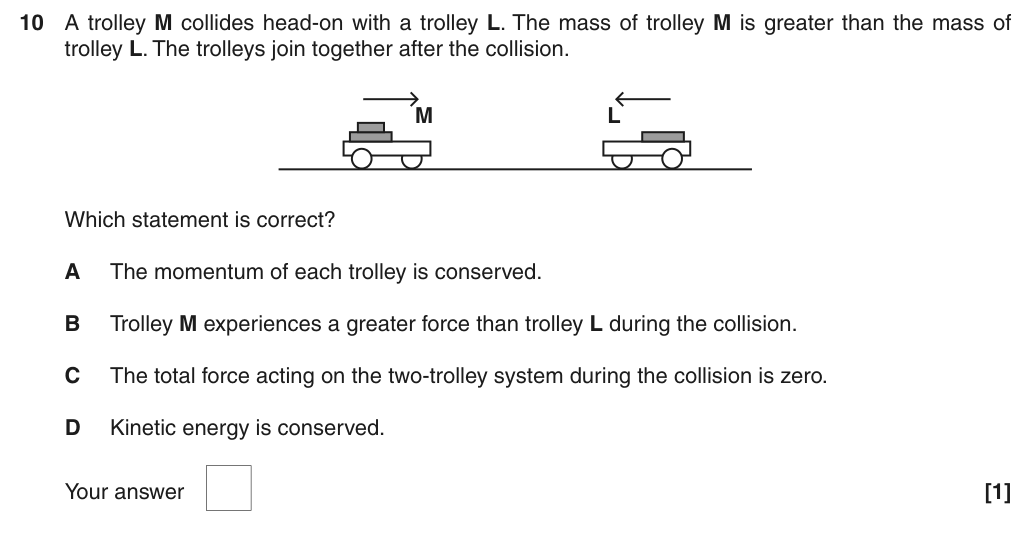
C
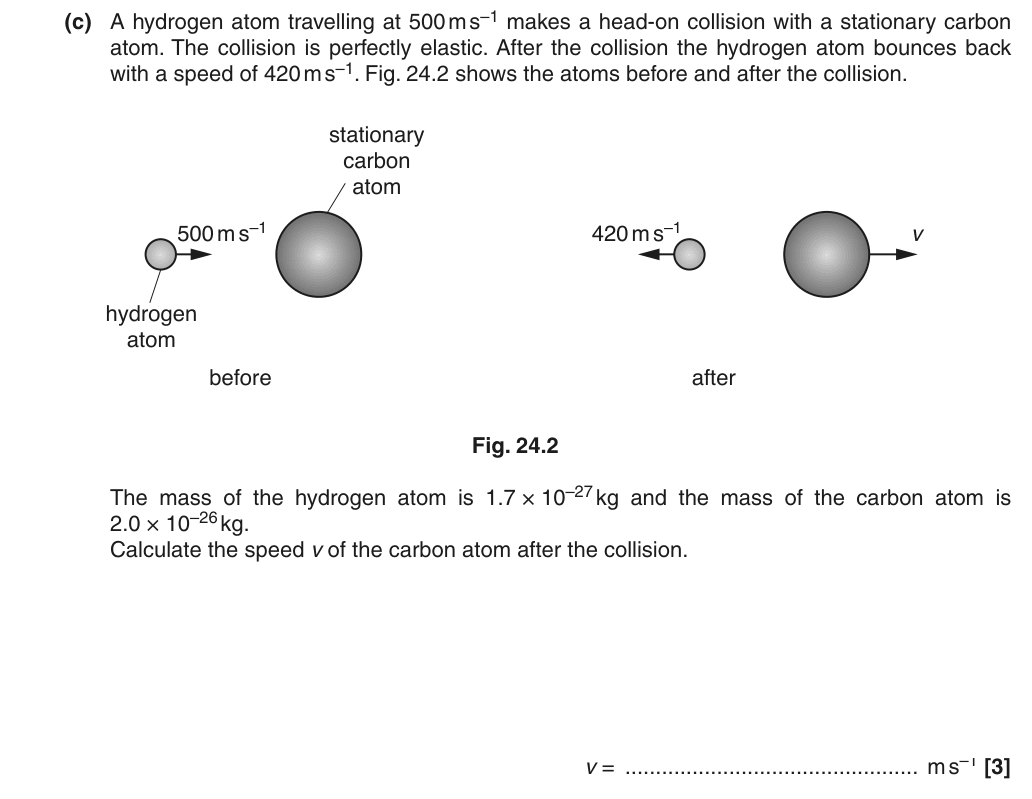
Skills: M0.2 Recognise and use expressions in decimal and standard form; M2.2 Change the subject of an equation, including non-linear equations; M2.3 Substitute numerical values into algebraic equations using appropriate units for physical quantities
Dropping marks on calculations, practical questions or the six-mark level of response questions? Book a trial session with a specialist OCR physics tutor.