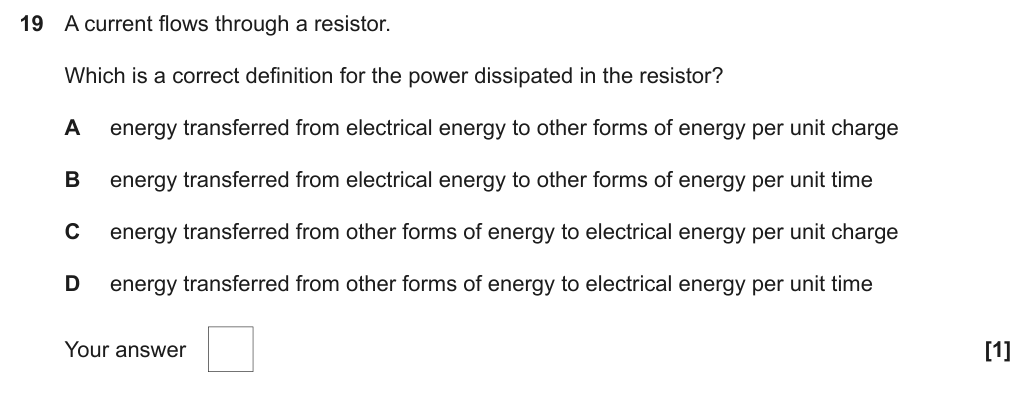
Answer
B
Mark scheme

Examiner's comment
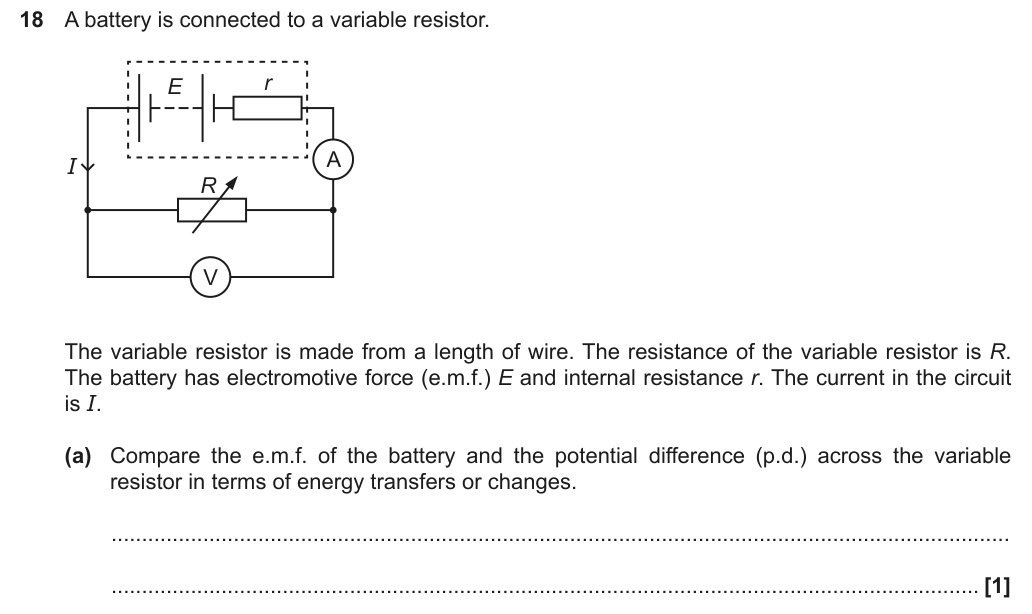
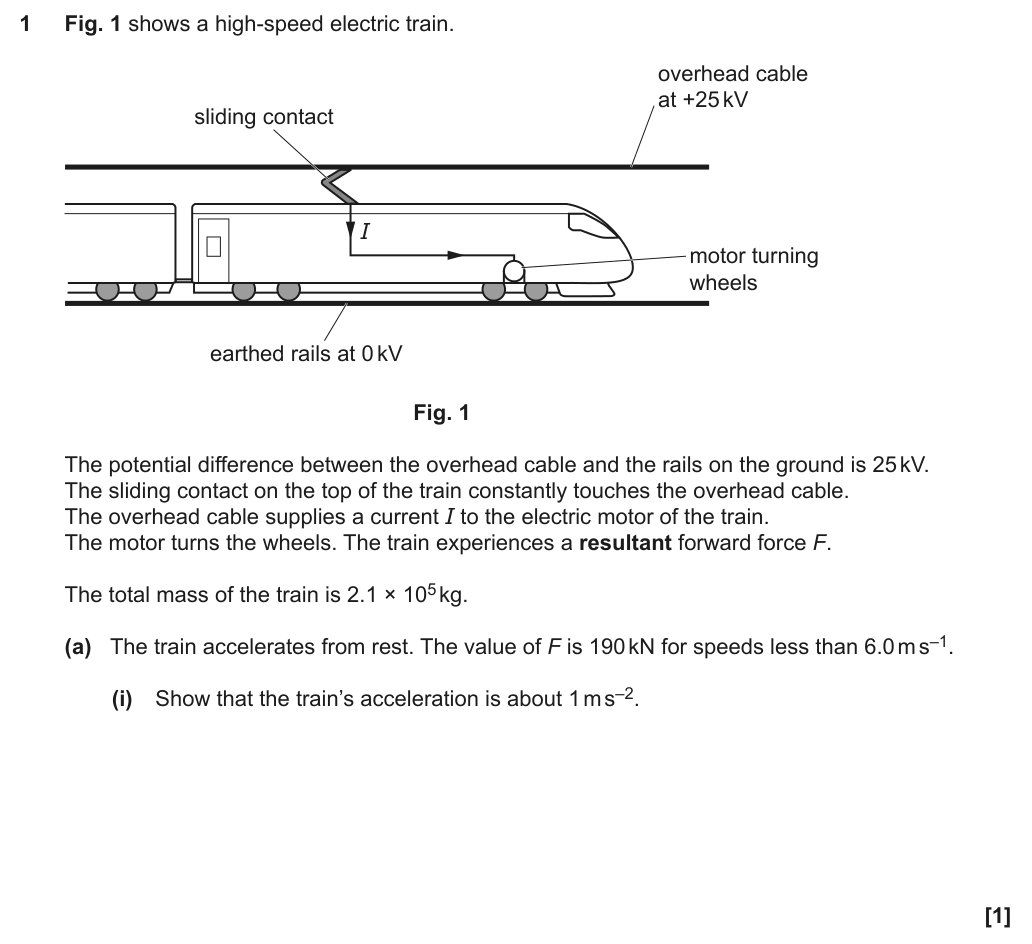
This question was assessing candidates’ knowledge of the definition of power. Many candidates confused the definition of power with the definition of potential difference and gave answer A.
Notes and key-term cards for this topic are being written by our tutors. The past-paper questions below are ready now.
| Series | Paper | Q | What it asks |
|---|---|---|---|
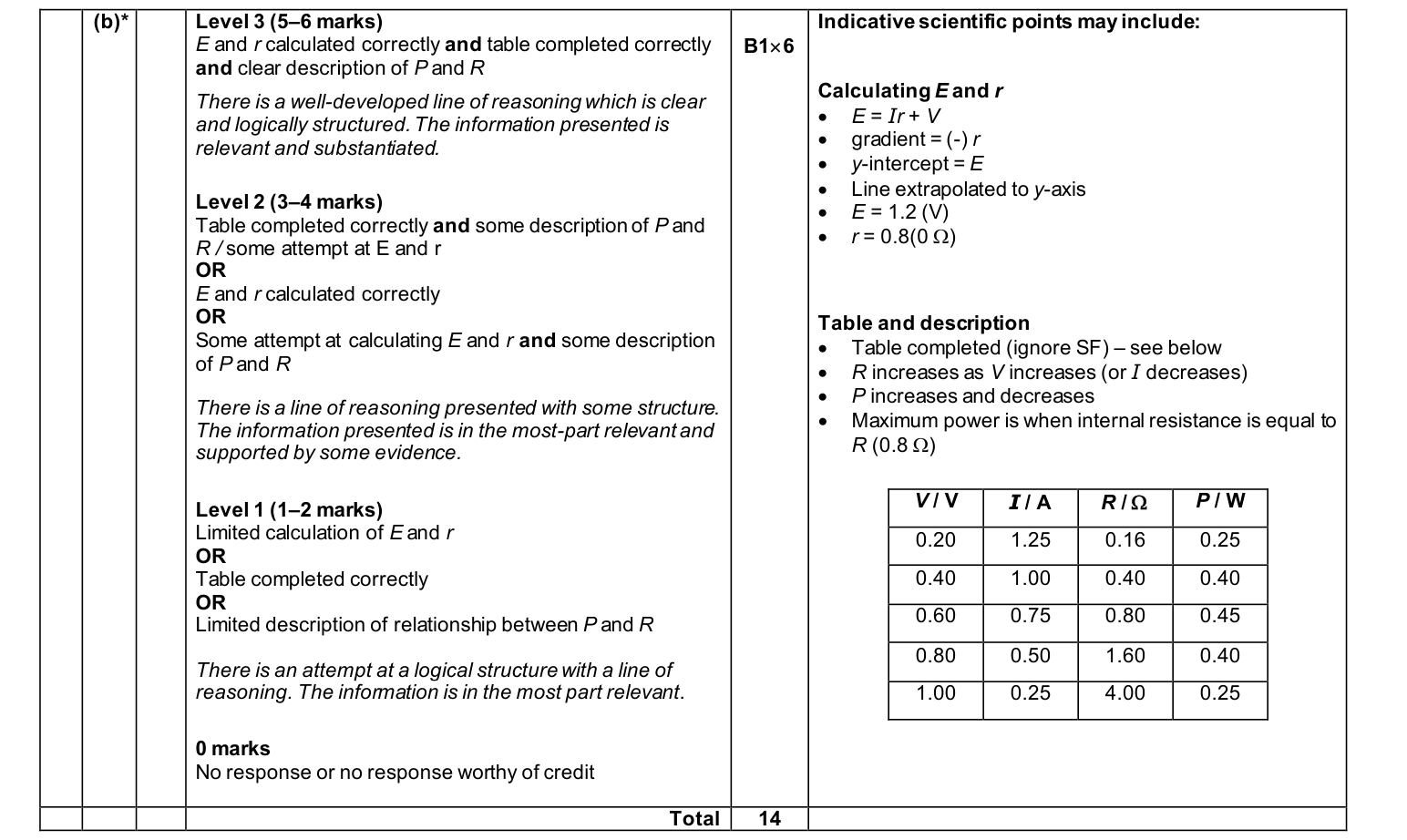
| November 2021 | Paper 2 | 18(b) | A student is doing an experiment to determine the e.m.f. E of a cell and its internal resistance r. • Use the graph to determine E and r. Explain your reasoning. |
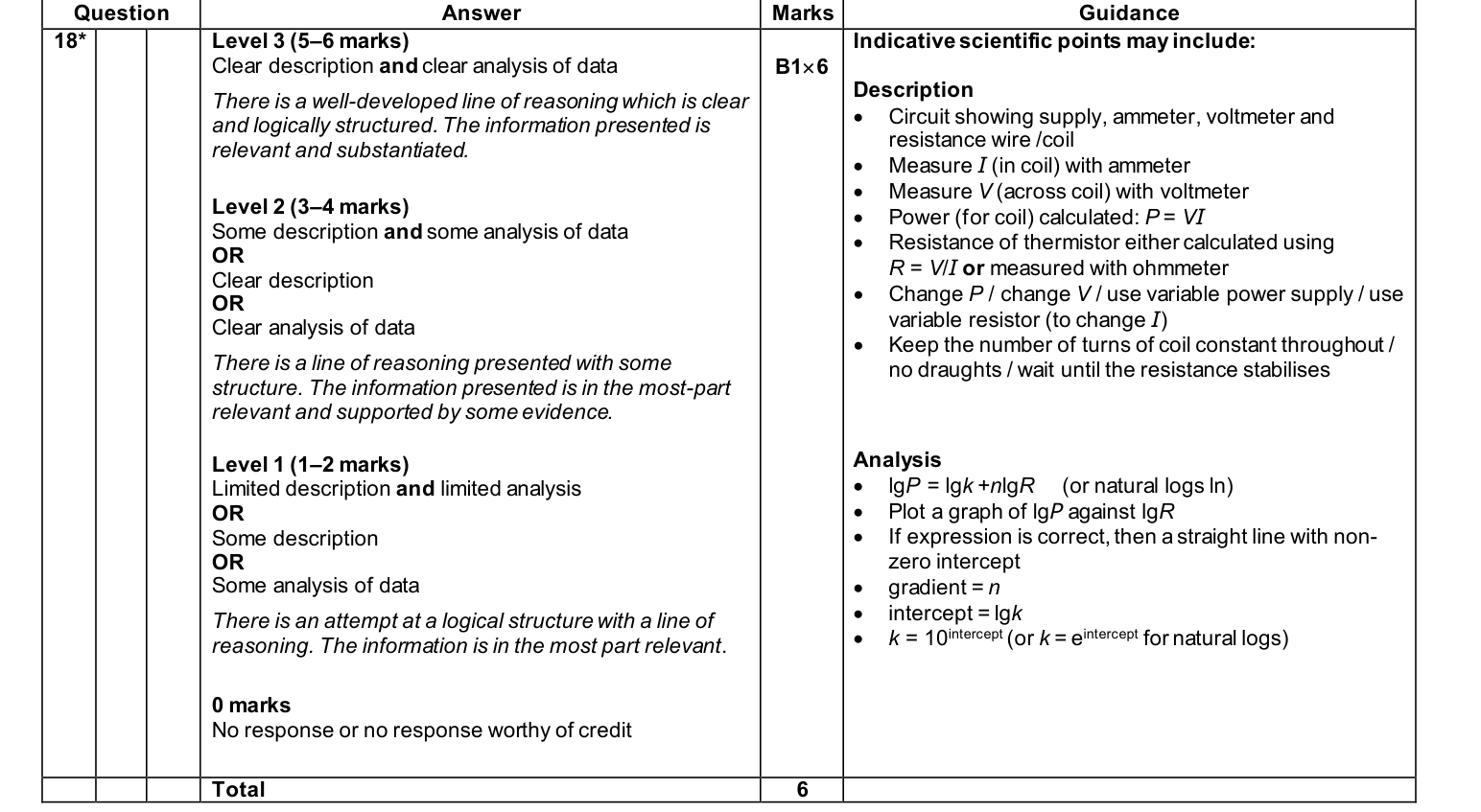
| November 2020 | Paper 2 | 18 | A resistance wire is coiled around a thermistor. The coil of wire will warm the thermistor. Describe how an experiment can be conducted to assess the validity of this expression and how |
| June 2018 | AS Paper 2 | 2 | A student wishes to determine experimentally the efficiency of a small low-voltage DC motor. The Describe with the aid of a suitable diagram how an experiment to determine the efficiency of the |
| June 2017 | Paper 2 | 18(b) | A group of students are investigating the power dissipated in a variable resistor connected Describe, with the help of a suitable circuit diagram, how the students may have determined |
B
This question was assessing candidates’ knowledge of the definition of power. Many candidates confused the definition of power with the definition of potential difference and gave answer A.
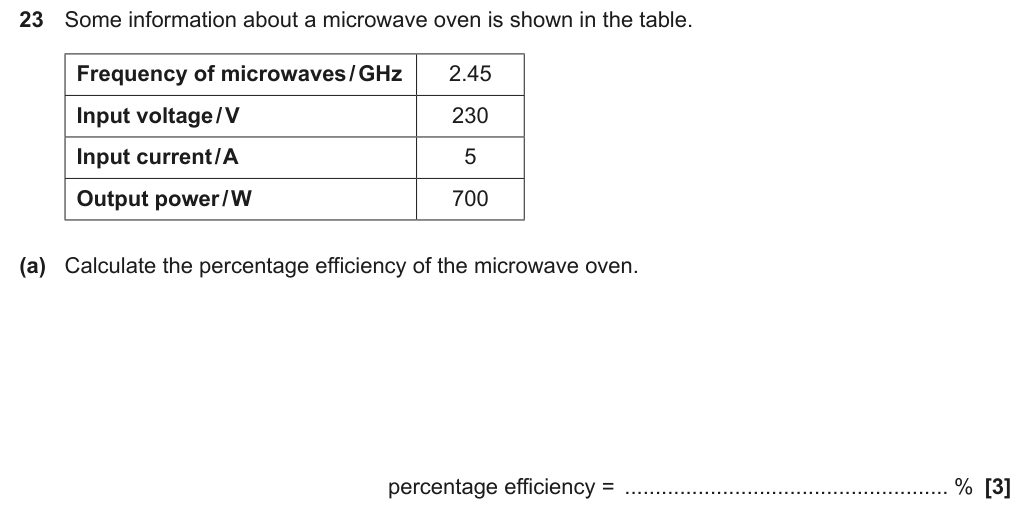
This question was usually answered well. Since this was a multi-stage calculation candidates should be encouraged to show all their working in their answers. In this question high scoring candidates showed the calculation of input power before substituting the data into the efficiency equation.
Skills: M0.3 Use ratios, fractions and percentages; M2.3 Substitute numerical values into algebraic equations using appropriate units for physical quantities
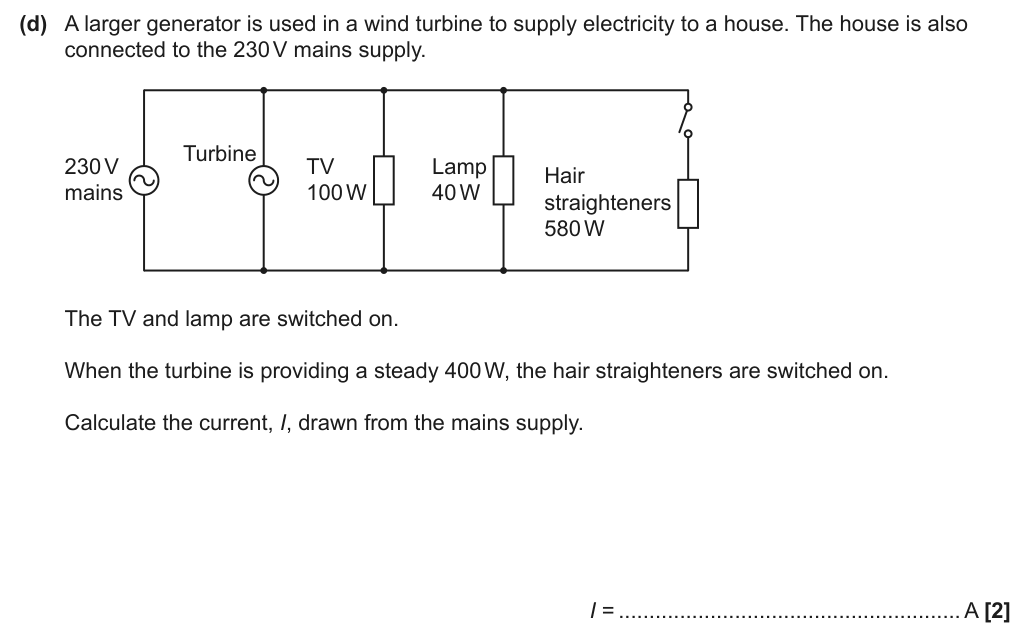
Some candidates were able to correctly calculate the current. Most incorrect answers came from adding together all the powers, including the turbine, or simply just dividing the turbine power by the mains voltage.

While most candidates had an awareness of the unit, some of them wrote their response as kilowatt per hour, either in words or units. Other incorrect, but not uncommon answers, were watts, joules and megawatt-hours.
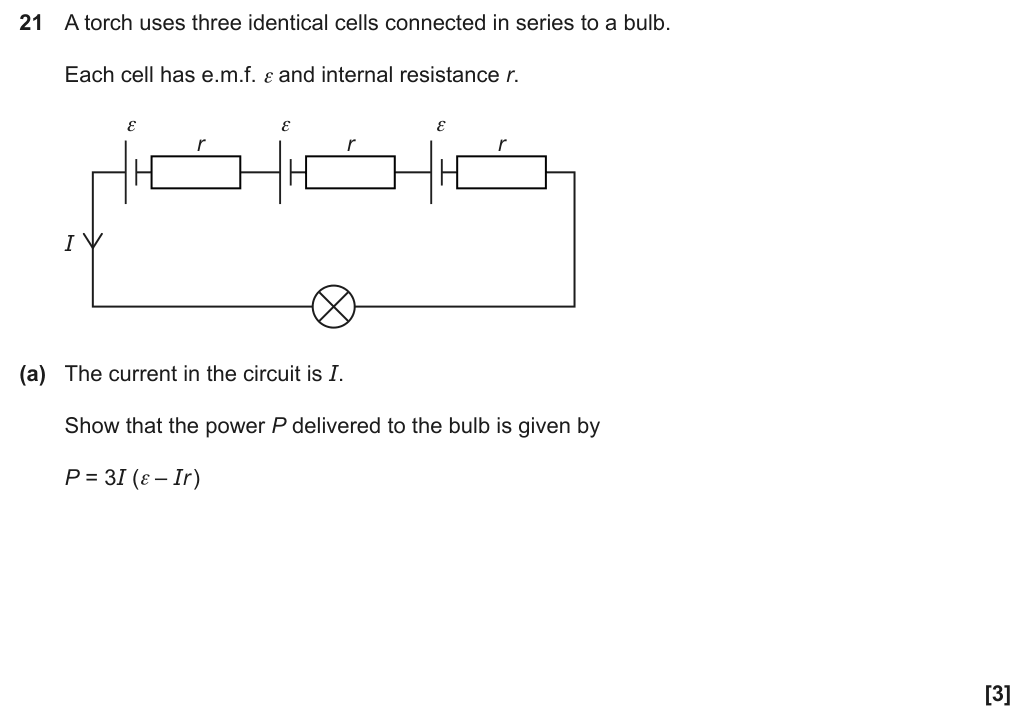
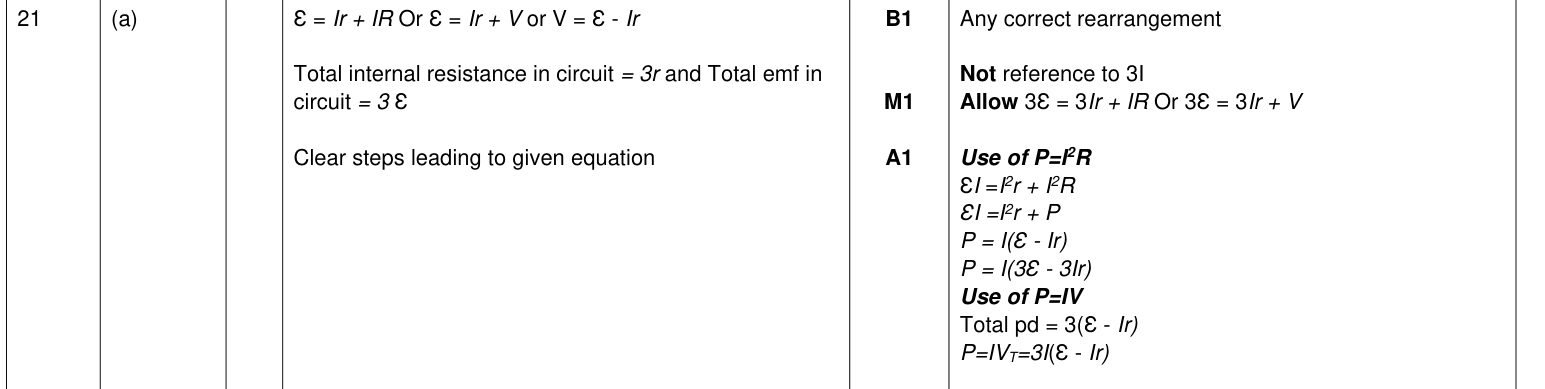
Most candidates achieved 1 mark for this question, for stating the correct expression for e.m.f, ɛ, e.g. ɛ = Ir + V with some candidates showing clearly that the power, P delivered to the bulb is given by the expression P = 3I(ɛ - Ir). Responses that were given 1 mark did not give clear working to express their understanding that the e.m.f. ɛ and internal resistance, r, were increased by 3. Often, candidates would just give an unqualified expression for P, e.g. P = 3 x I(ɛ - Ir), but from this expression it was not clear whether the factor of 3 was for current I or ɛ and r despite the correct application of P=IV. The responses that achieved 3 marks showed a clear rationale in their working and that for the 3 cells in series the total e.m.f. was 3ɛ, and the total internal resistance was 3r. These candidates then showed clear steps in finding an expression for the potential difference across the bulb using ɛ = Ir + V to be, e.g. V = 3ɛ - 3Ir. By showing clear working, it was evident that candidates understood that the potential difference across the bulb was equal to the total terminal potential difference across the three cells in series. These candidates then correctly substituted their expression for the potential difference into an equation for power, e.g. P=IV to show the power P delivered to the bulb given in the stem of the question. delivered to the bulb. The response is given 3 marks.
Skills: M2.2 Change the subject of an equation, including non-linear equations
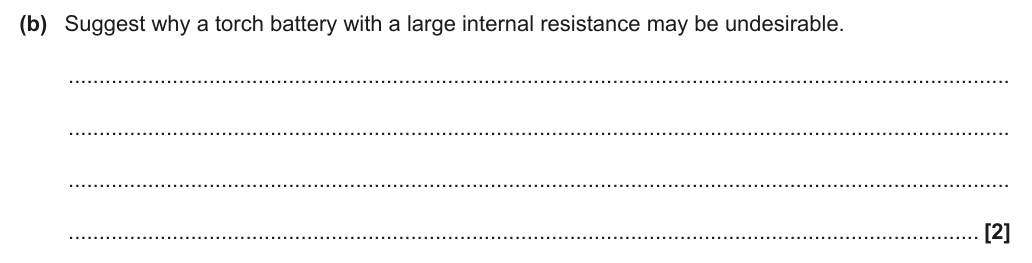
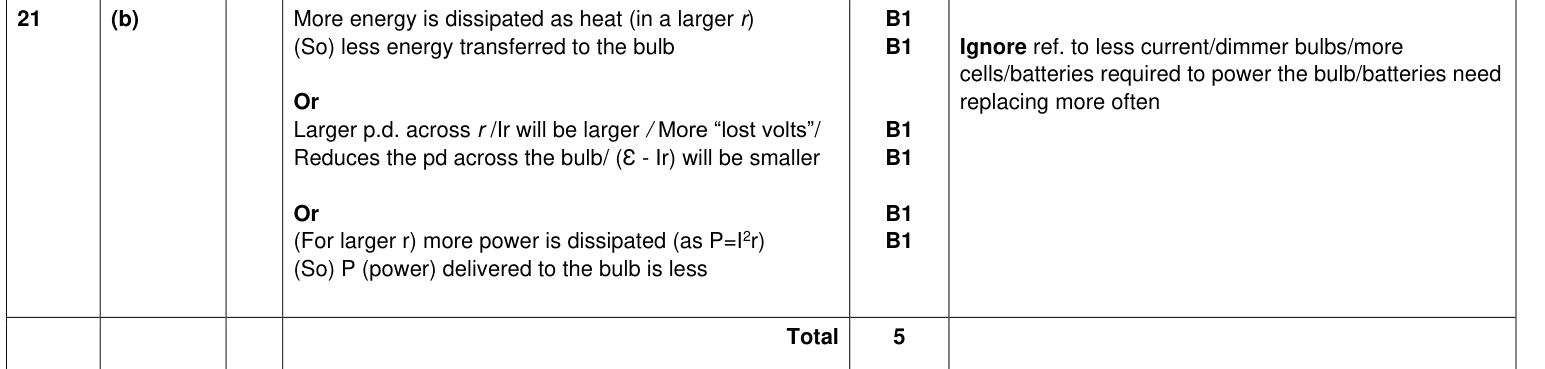
Some candidates achieved 1 mark for this question for suggesting the most common response that the potential difference across the bulb would decrease or that there would be more lost volts across the cells but only a few linked these suggestions to achieve 2 marks. Most candidates mixed suggestions by referencing energy transfer and potential difference which meant that they only achieved 1 mark. Some candidates gave suggestions in terms of current and efficiency, which did not link to the undesirability of a large internal resistance and so were not given any marks.
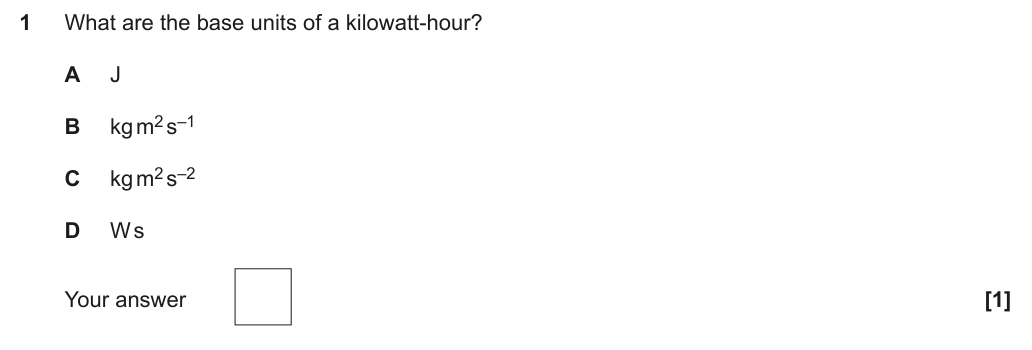
C
A little over half of candidates were able to identify the correct response. Many candidates showed working to obtain their answer. D was a common incorrect response.
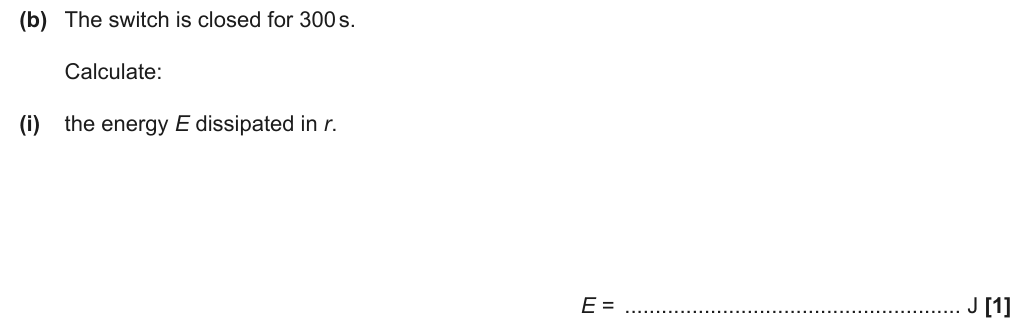
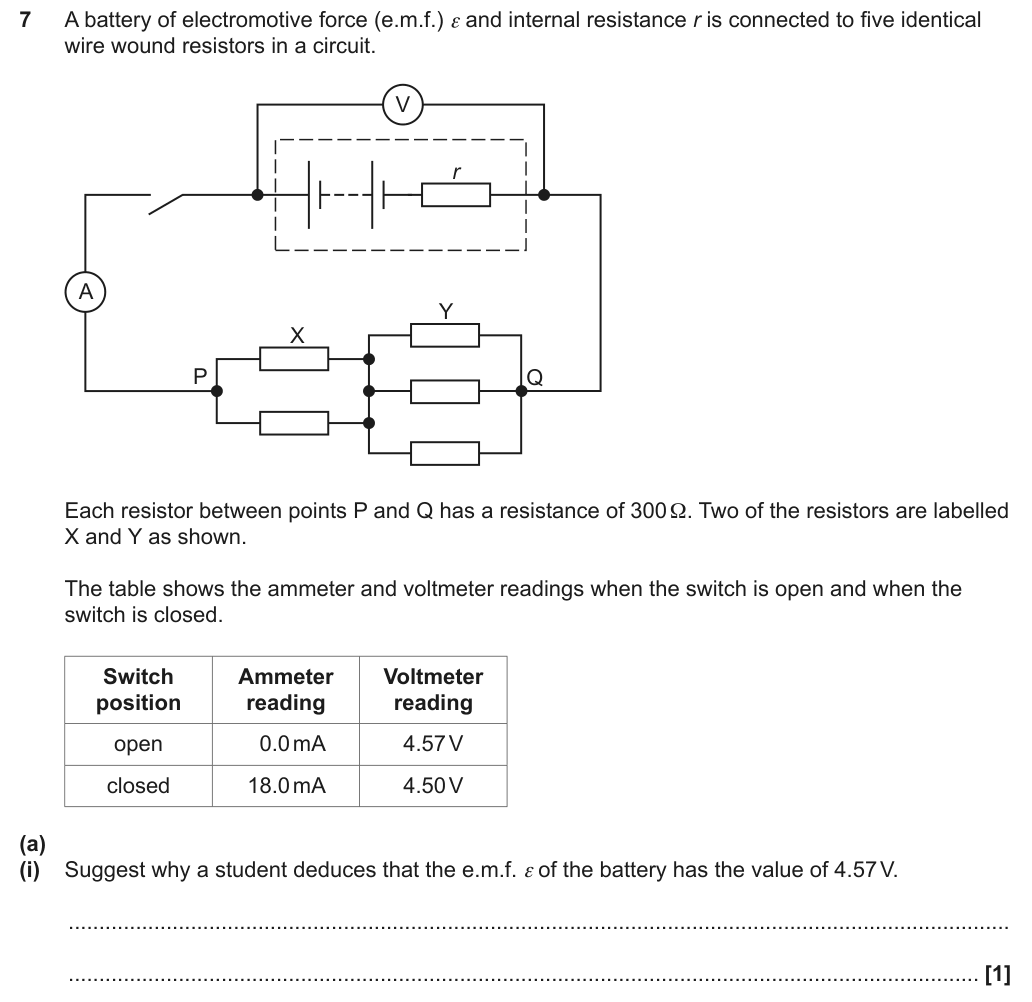
Many candidates incorrectly calculated the total energy dissipated in the five 300 resistors rather than r.
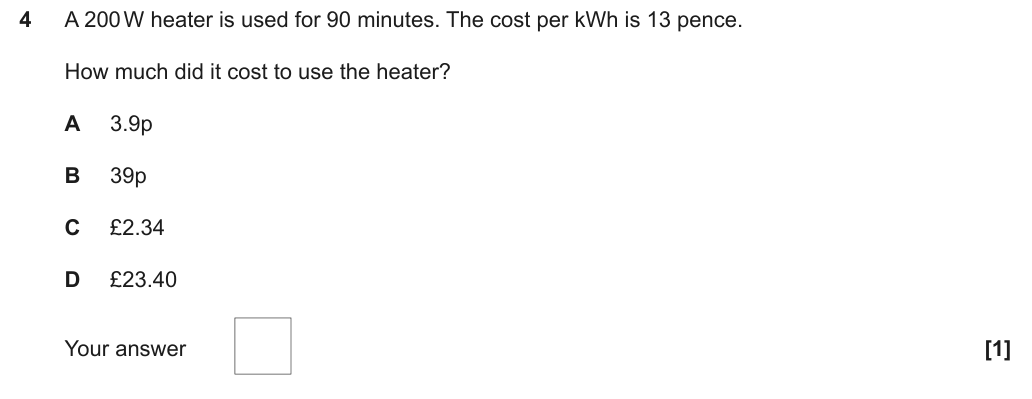
A
This relatively simple calculation was done correctly by a large majority of the candidates. It is good to see candidate’s workings on the question, as there are potential pitfalls in this. A number of candidates answered with response D, which showed a lack of appreciation of their calculation with actual costings.
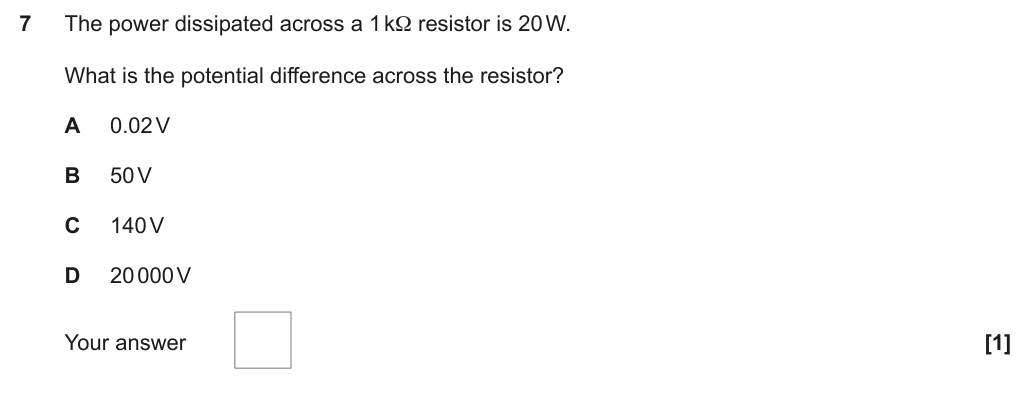
C
This is a relatively simple calculation and was answered correctly by the vast majority of candidates. Although it is quite possible to do this in one calculation on a calculator, it is always good practice to show working as it is less likely to result in a ‘power of ten’ or ‘transcription‘ error.
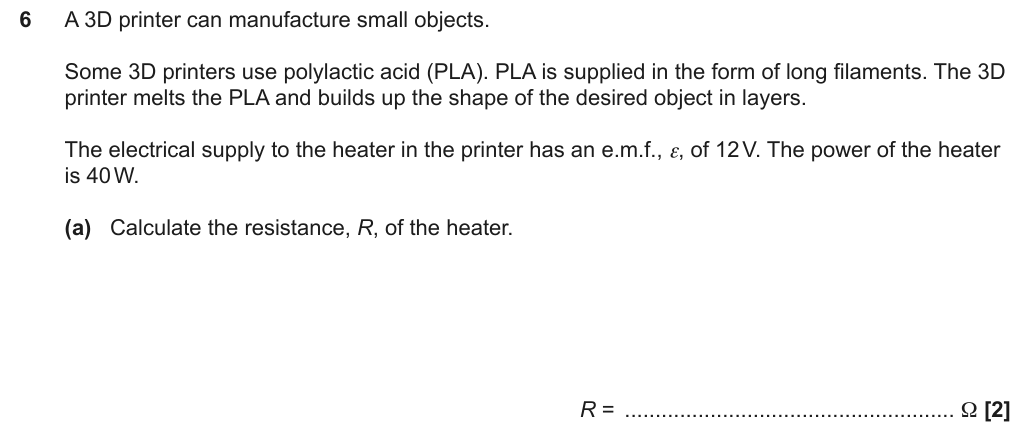
The most common mistakes here were in rearranging the formula and/or forgetting to square the voltage in P = V2/R.
Skills: M2.2 Change the subject of an equation, including non-linear equations
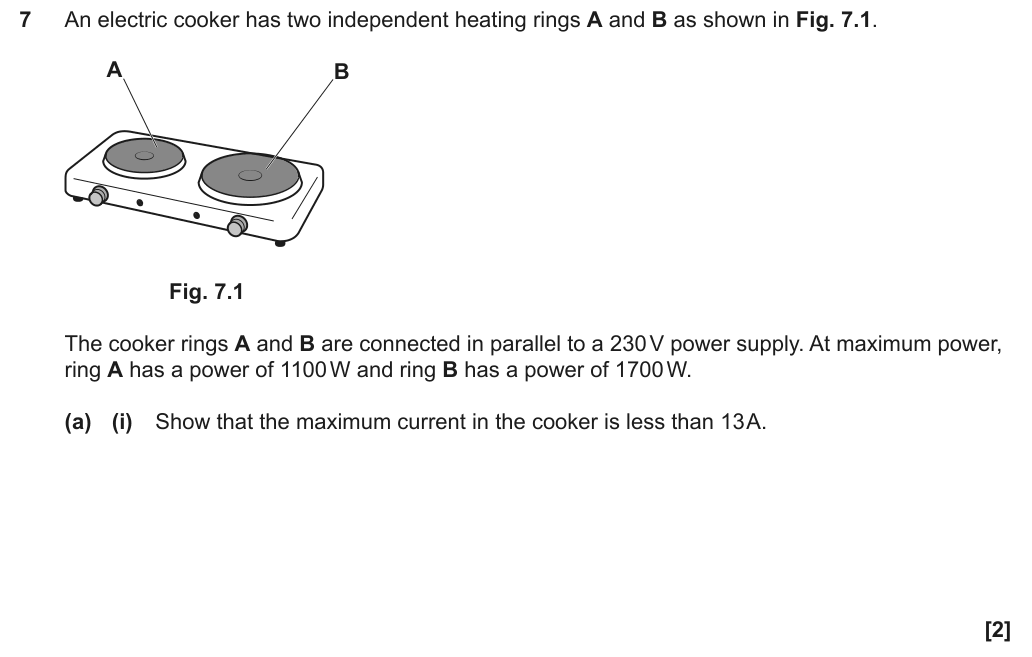
This question was generally well answered with candidates often demonstrating that current was power divided by potential difference. Some candidates simply worked out the current in each ring but did not state the total current. Some candidates attempted to work out the maximum power using 13 A – this did not answer the question since the question required candidates to show that the maximum current in the cooker was less than 13 A
Skills: M2.2 Change the subject of an equation, including non-linear equations; M2.3 Substitute numerical values into algebraic equations using appropriate units for physical quantities
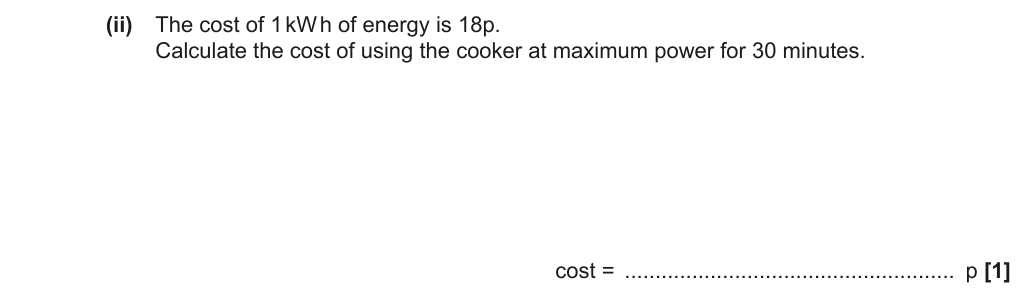
This question was generally answered well. Where errors were made it was usually in the conversion of minutes to hours or not converting the power in watt to kilowatt.
Skills: M0.1 Recognise and make use of appropriate units in calculations; M2.3 Substitute numerical values into algebraic equations using appropriate units for physical quantities
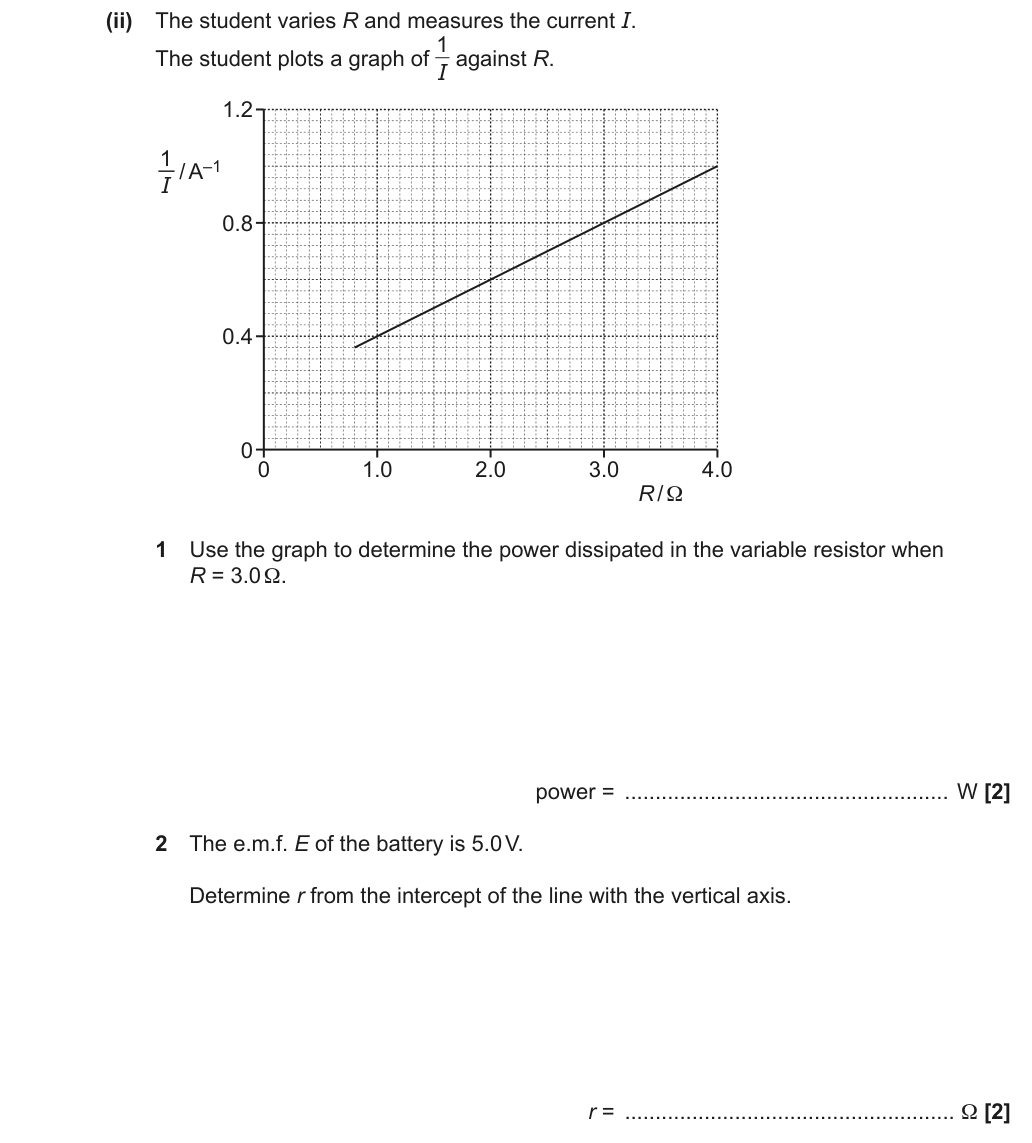
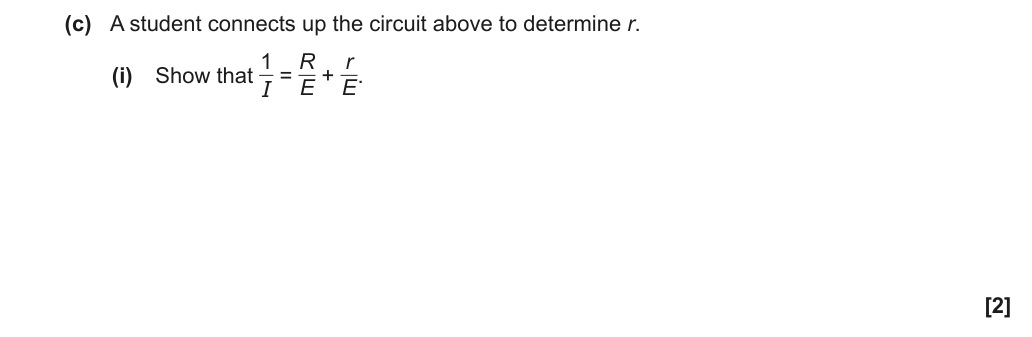
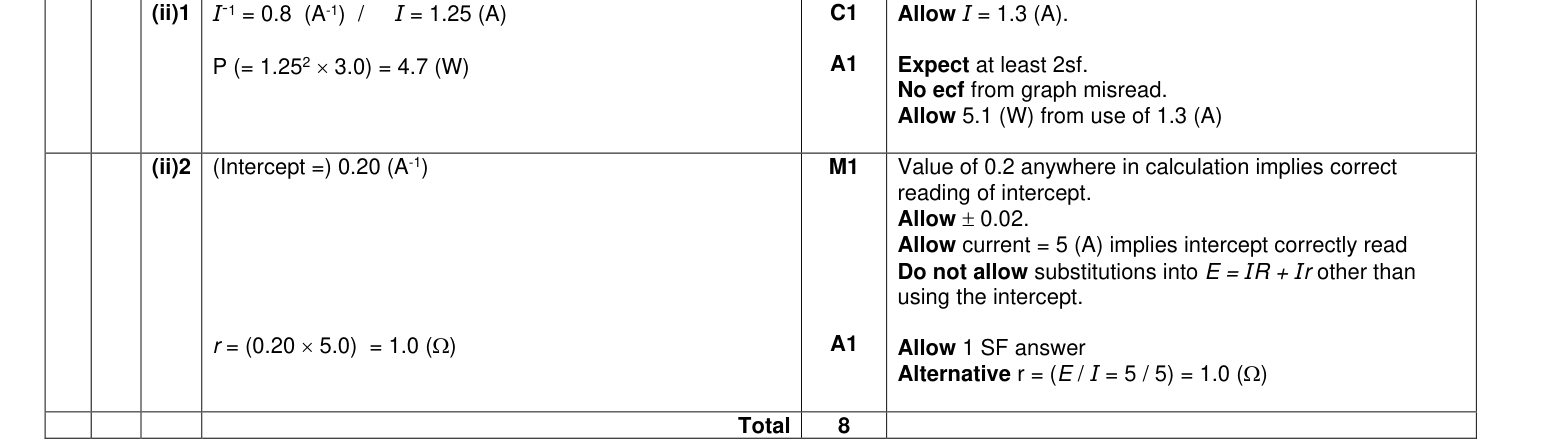
The vast majority of candidates were able to complete 1 correctly – there were few misreads from the graph, although some candidates took the reading of 0.8 as the current rather than the inverse of the current. There were also a few arithmetic slips with some candidates correctly setting out their calculation, such as P = 1.252 3.0, but then not squaring the current. 2 was answered slightly less successfully and although the reading of the intercept was taken, some candidates could go no further.
Skills: M3.1 Translate information between graphical, numerical and algebraic forms; M3.4 Determine the slope and intercept of a linear graph; PAG3 Investigating electrical properties
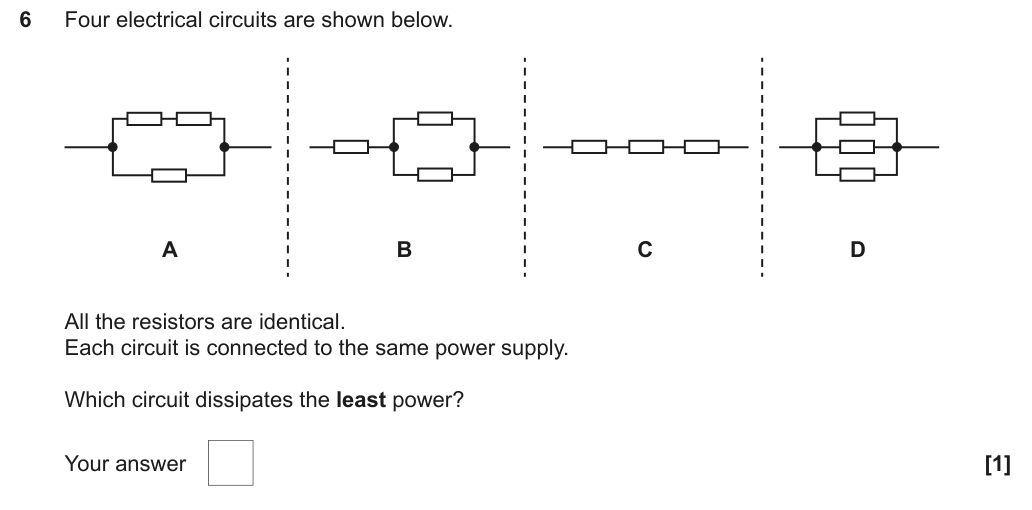
C
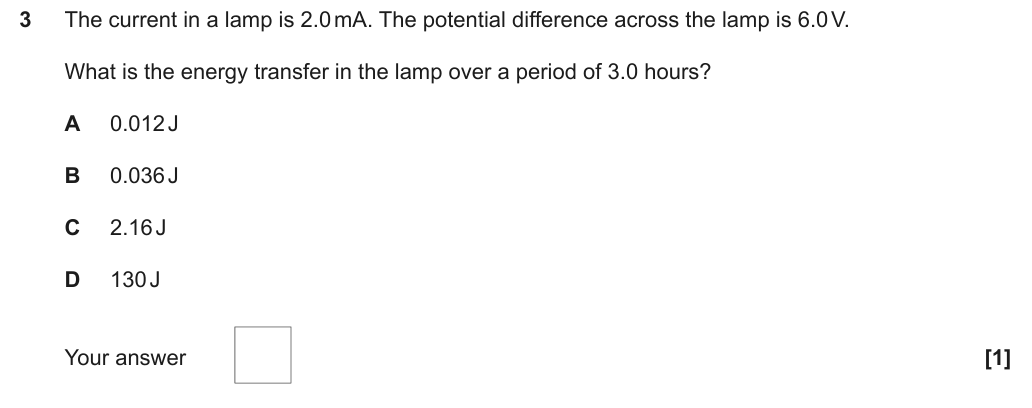
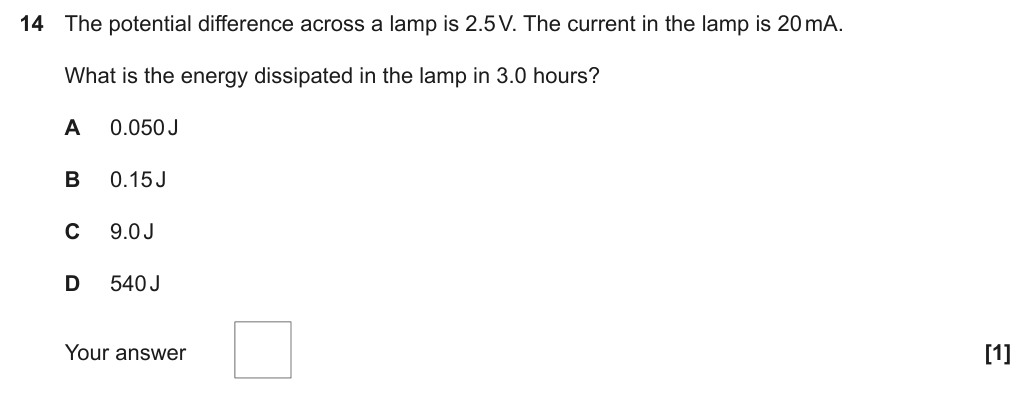
D
The correct response is D. It was encouraging to see that a large number of candidates were able to select the correct answer. Although a relatively straightforward calculation, it does involve two unit conversions (mA to A, and hours to seconds), which if not done would generate one of the distractors. Many candidates showed their working here as they would in a structured question and this is always helpful when the calculation involves more than one stage.
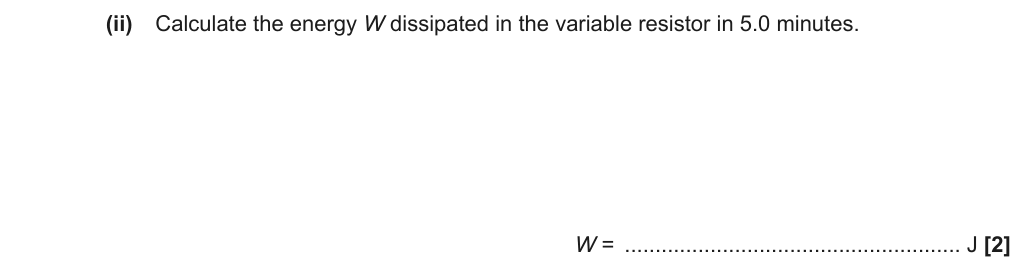
Skills: M0.1 Recognise and make use of appropriate units in calculations; M2.3 Substitute numerical values into algebraic equations using appropriate units for physical quantities
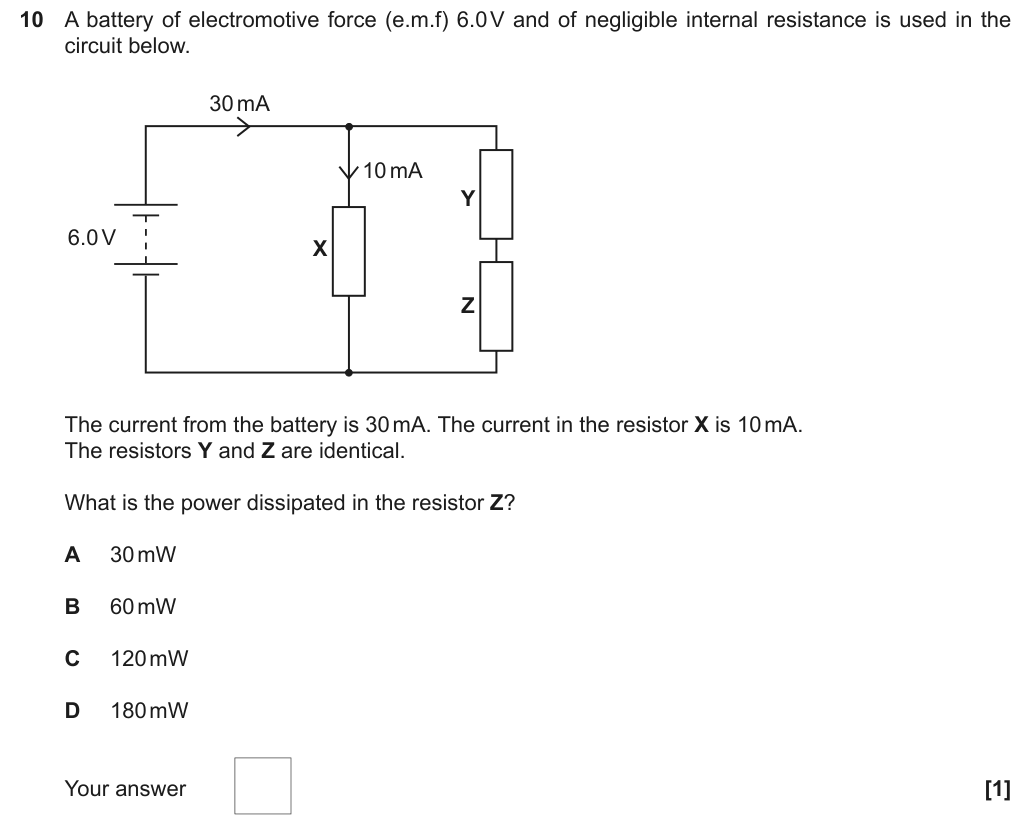
B
The correct response is B. This is another question which was correctly answered by around two thirds of the candidates. The simple solution is through determining the current through Z and the p.d. across it thereby finding the product. Working demonstrated some tortuous routes, such as calculating all the resistances, which does indicate a lack of confidence about circuit calculations. However, in many cases this did lead to the correct answer.
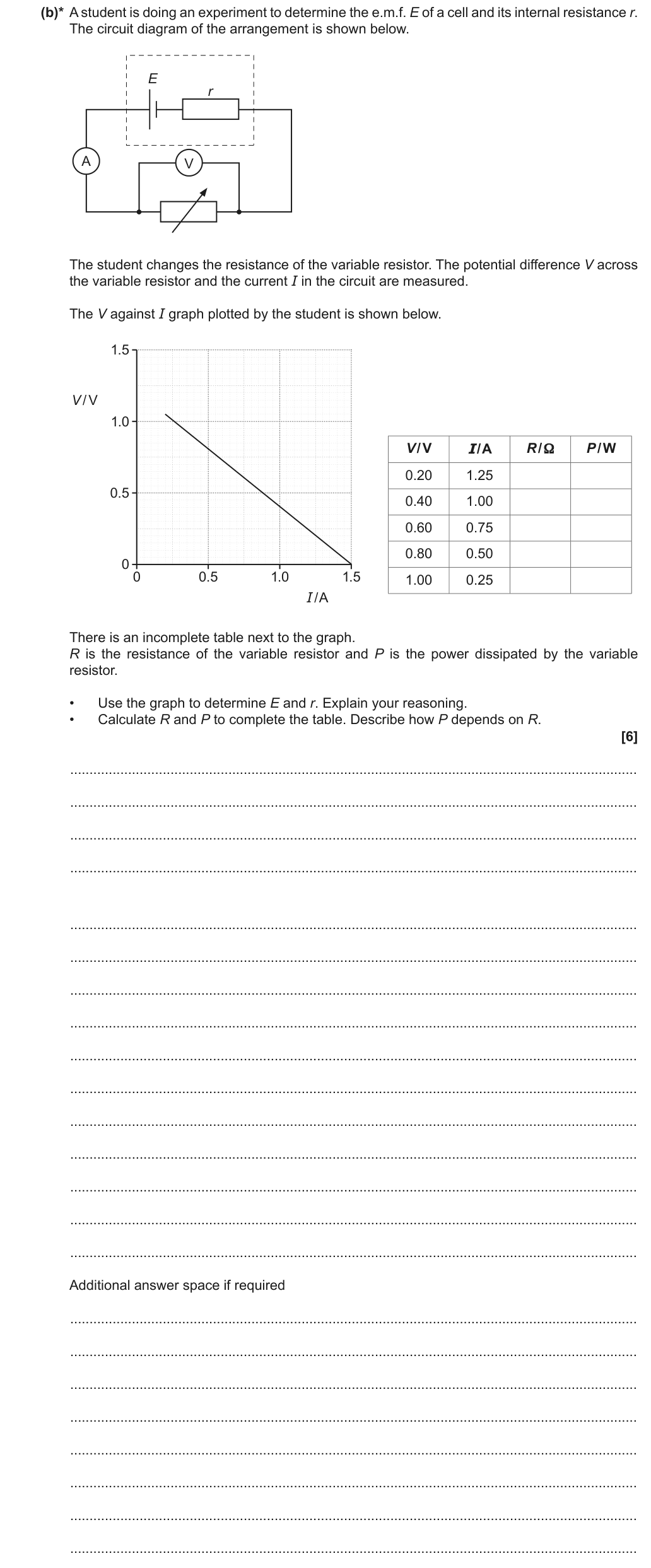
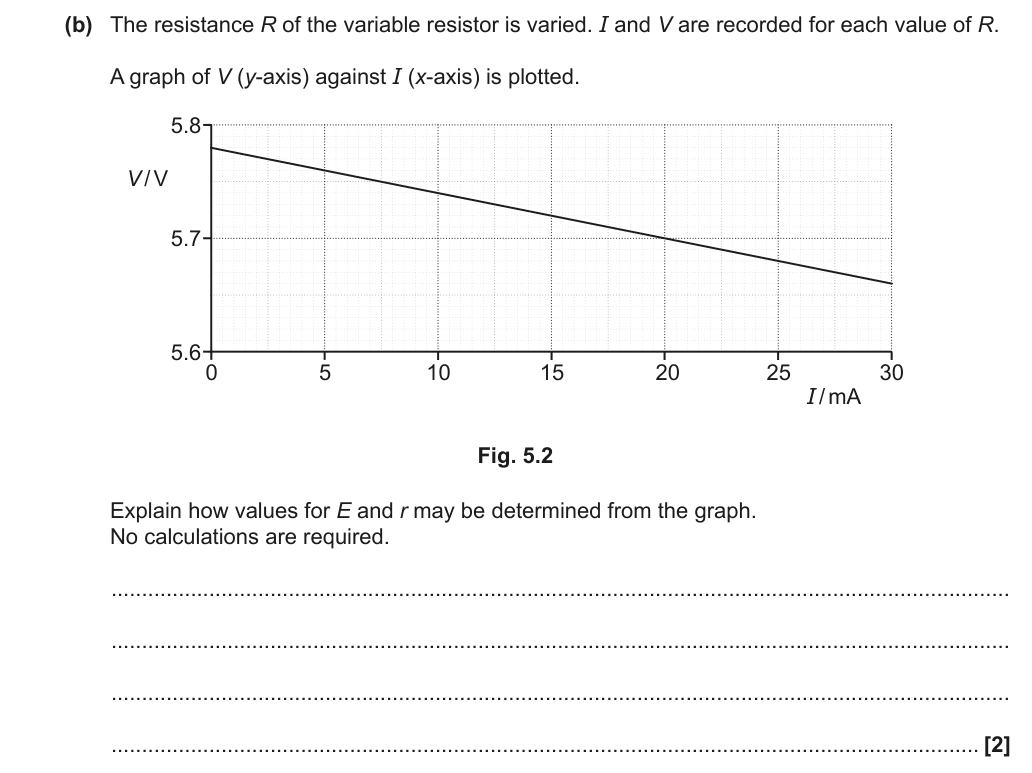
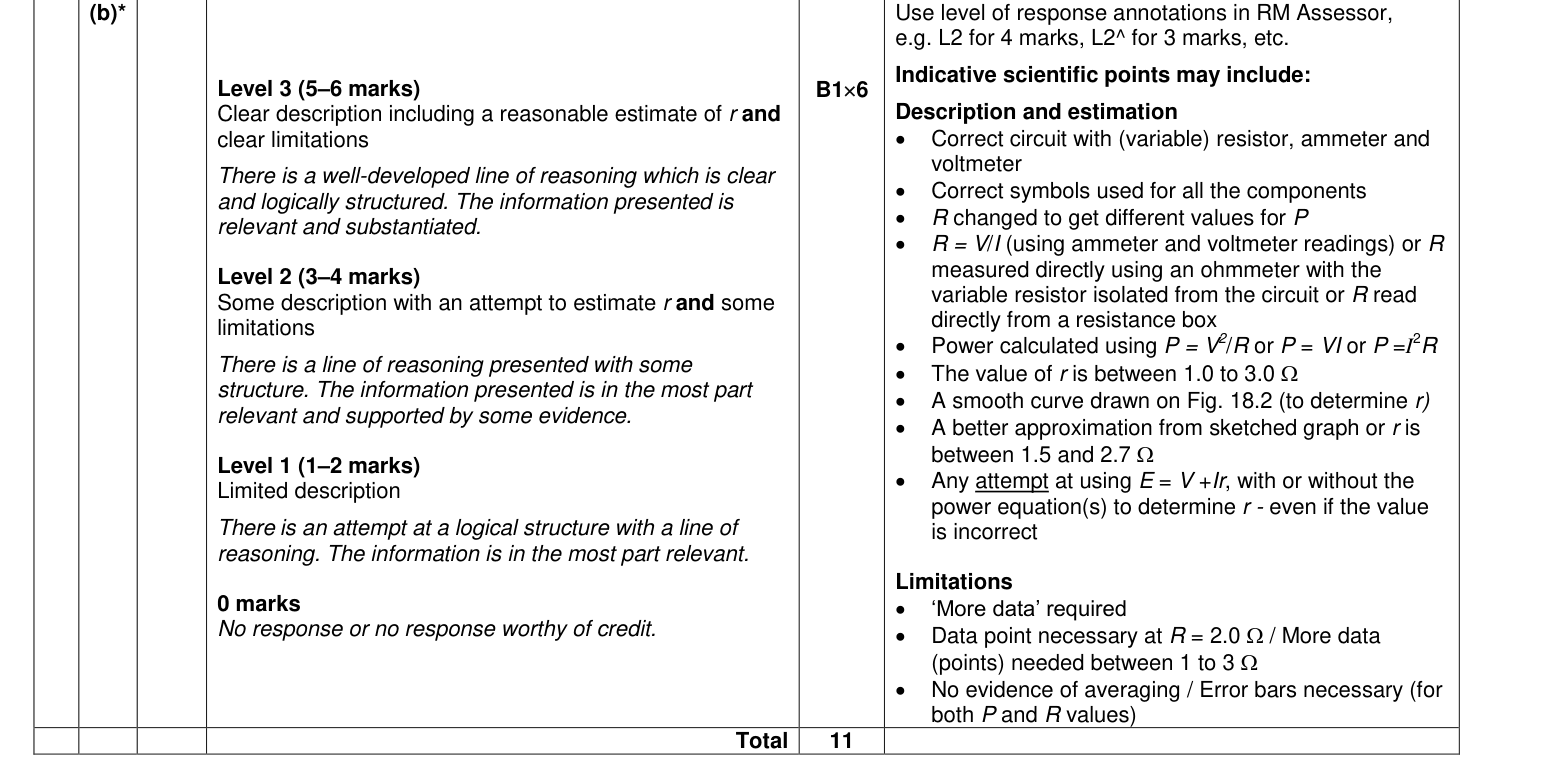
This is the first LoR question on the paper. This question is based on a standard physics practical, so the experimental set up should have been familiar to many candidates. While a holistic approach is taken to the marking, there are key points which should be present for the award of given levels. The question is structured in two main parts: the determination of E and r, and then the calculation of R and P for the table. However, each of these parts contain additional instructions which were often ignored by the candidates. For the emf and internal resistance, an explanation of the method used was required, the most usual way would be based around a rearrangement of E = V + Ir. For the resistance and power, a qualitative description of how they are related is needed, along with an appreciation that when the internal resistance equals the load resistance the power is at its maximum. For the most part, candidates carried out the calculations well, completing the table and identifying E and r correctly, but did not give suitable and detailed descriptions leading to them being limited to lower levels. Very few discussed the resistance and power relationship at all, despite it being a reasonably simple pattern. It is very important that candidates make note of all that is required in a LoR question if they are to access the higher levels. The vast majority of candidates did sufficient work to place them in Level 2.
Skills: M2.3 Substitute numerical values into algebraic equations using appropriate units for physical quantities; M3.3 Understand that y = mx + c represents a linear relationship; M3.4 Determine the slope and intercept of a linear graph; PAG3 Investigating electrical properties
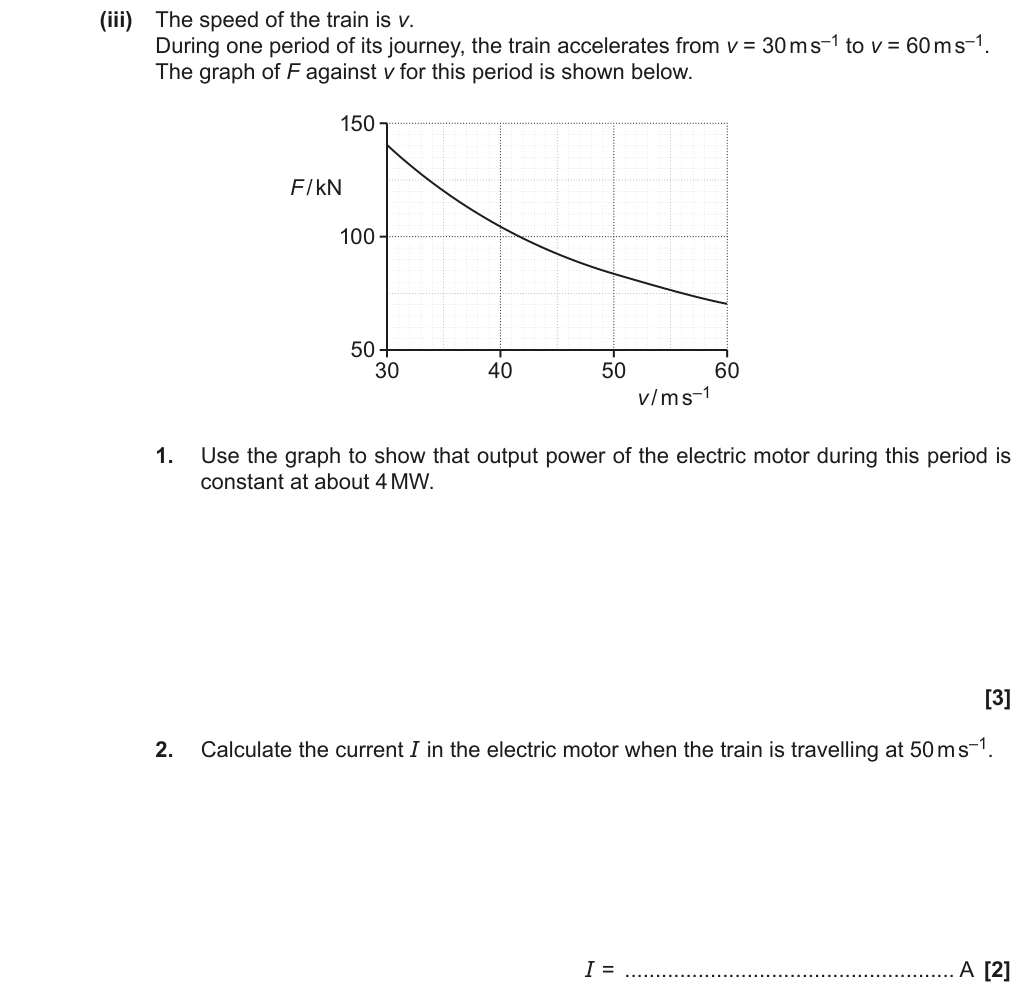
Skills: M0.1 Recognise and make use of appropriate units in calculations; M2.3 Substitute numerical values into algebraic equations using appropriate units for physical quantities; M3.1 Translate information between graphical, numerical and algebraic forms
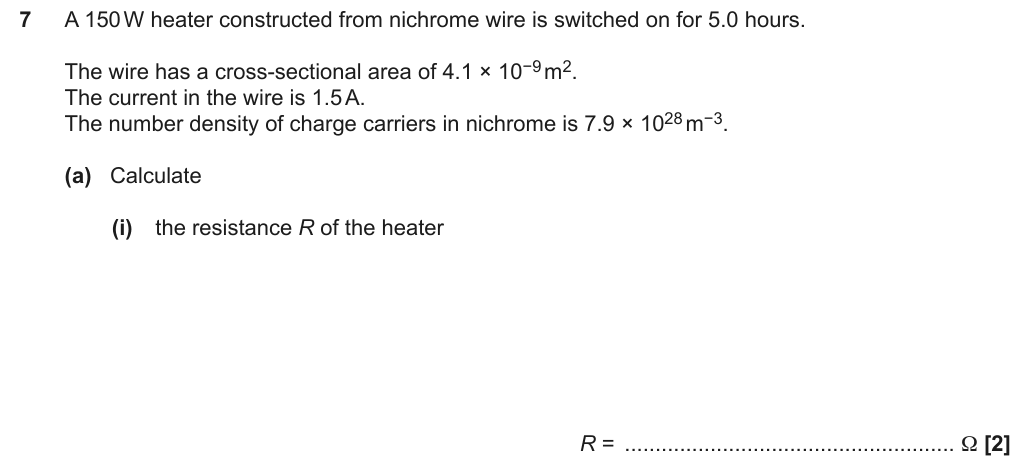
High achieving candidates found Question 7 straightforward.
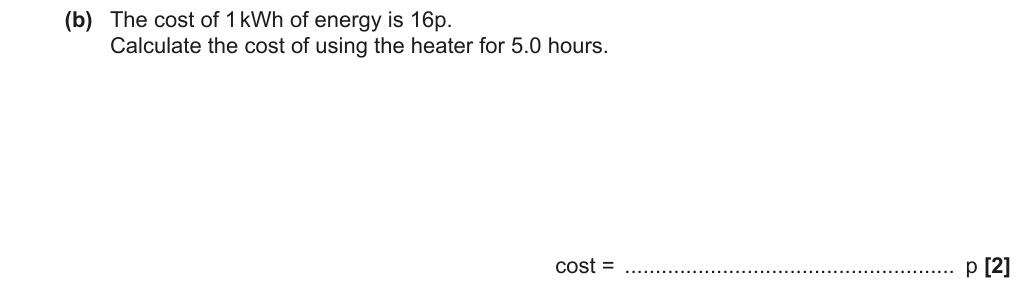
High achieving candidates found Question 7 straightforward.
Skills: M0.1 Recognise and make use of appropriate units in calculations; M2.3 Substitute numerical values into algebraic equations using appropriate units for physical quantities
D
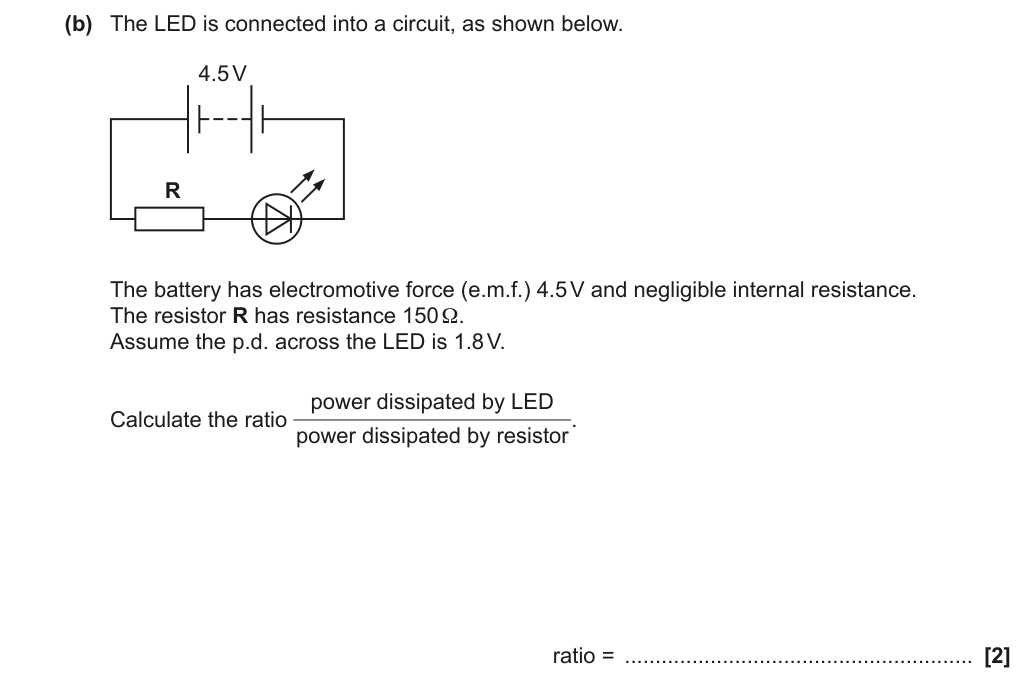
Skills: M0.3 Use ratios, fractions and percentages; M2.3 Substitute numerical values into algebraic equations using appropriate units for physical quantities
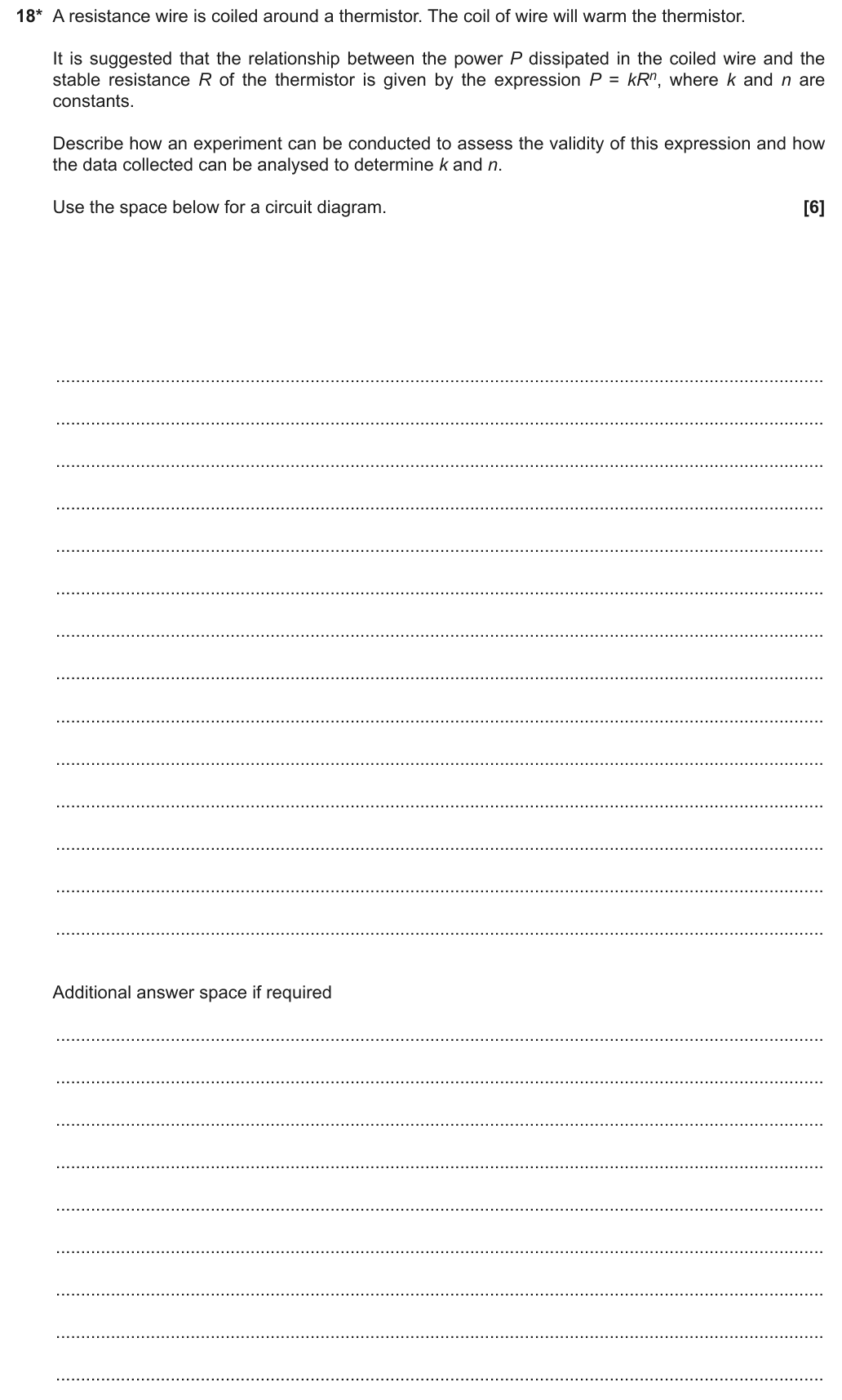
Questions 18 and 21c • correctly used scientific vocabulary in explanations and descriptions, e.g. In Question 18, candidates had to design and describe an experiment with a thermistor wrapped around with a resistance wire, and then analyse and evaluate the experimental data from the planned experiment to determine the values of k and n in the expression P = kRn (P = power of the coil and R = resistance of thermistor).
Skills: M2.5 Use logarithms in relation to quantities that range over several orders of magnitude; M3.11 Use logarithmic plots to test exponential and power law variations; M3.4 Determine the slope and intercept of a linear graph; PAG3 Investigating electrical properties
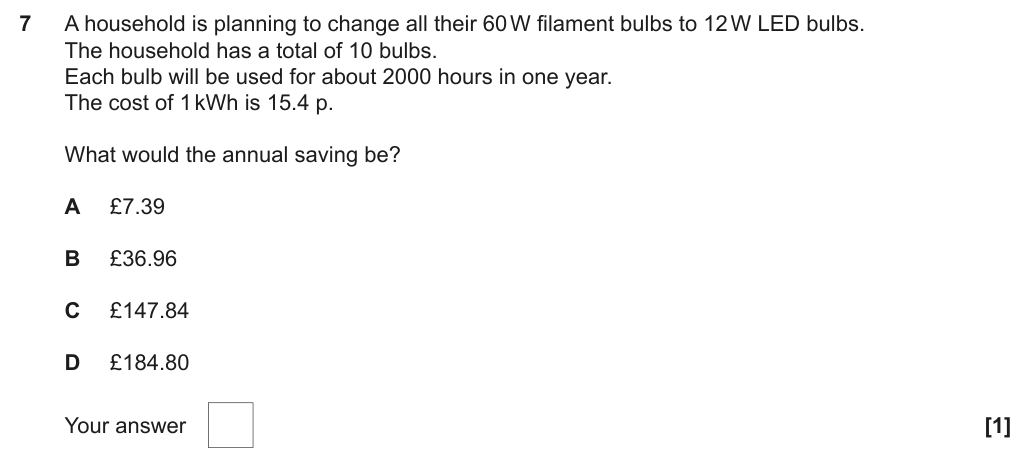
C
This was a tough question on the kilowatt hour, but almost all candidates picked up a mark here. On most scripts there were not much evidence of number crunching; calculations must have been done on calculators – sensible time saving strategy. Some candidates did use elaborate routes to get to the correct answer of C. The annual saving in pounds (£) is calculated as follows: annual savings = (0.060 – 0.012) × 10 × 2000 × 0.154 = £147.84 It is worth pointing out the rationale behind the distractors. A was the answer when the 2000 had been omitted from the calculation above. B was the answer for just using 12 W and finally D was the answer for just using 60 W.
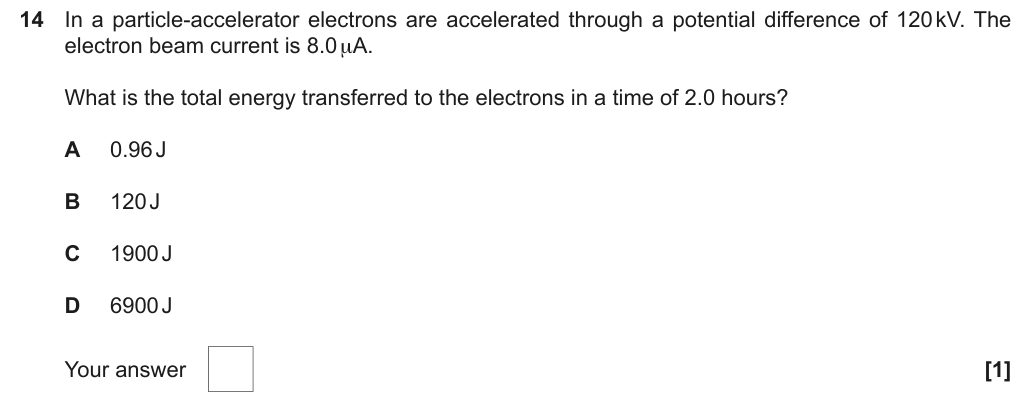
D
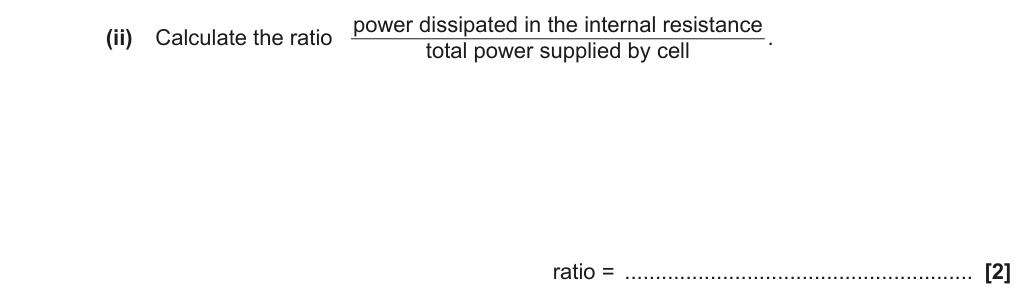
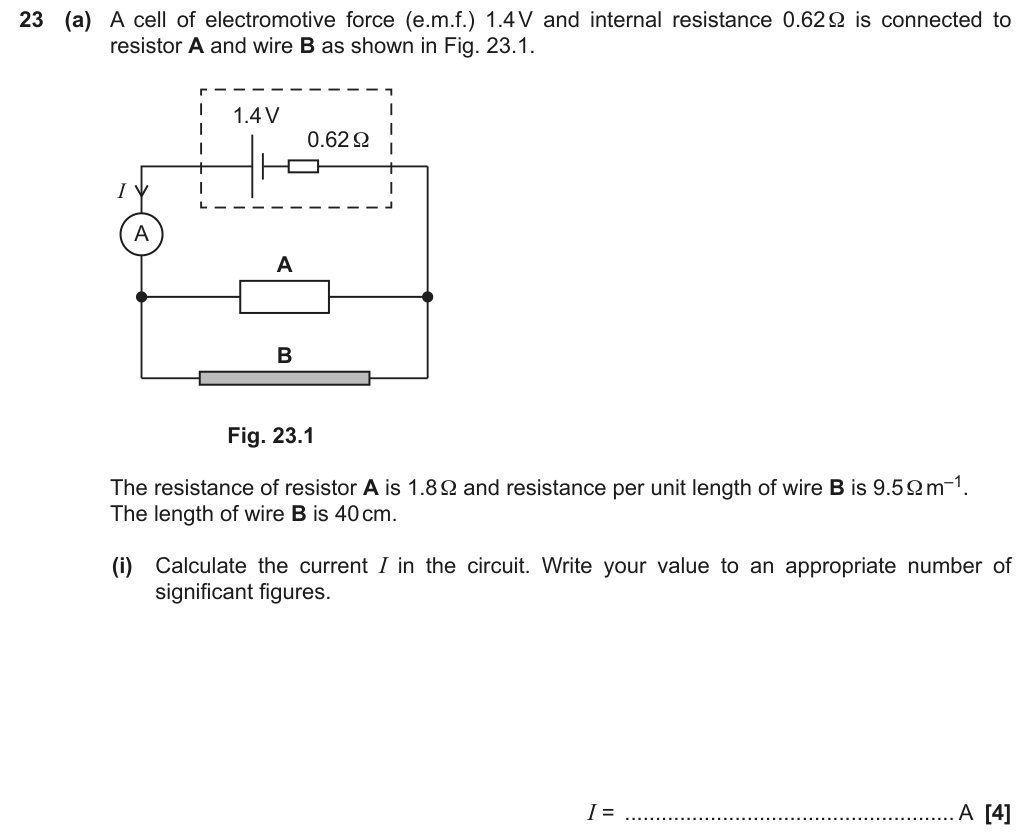
Most candidates scored 1 mark for using an appropriate power equation. The main obstacle here for the candidates was what quantities to use for the total power supplied by the cell. Quite often, the internal resistance was omitted and 0.762 × 1.22 was used for calculating the total power. Top-end candidates used the easier alternative of 1.4 × 0.76.
Skills: M0.3 Use ratios, fractions and percentages; M2.3 Substitute numerical values into algebraic equations using appropriate units for physical quantities
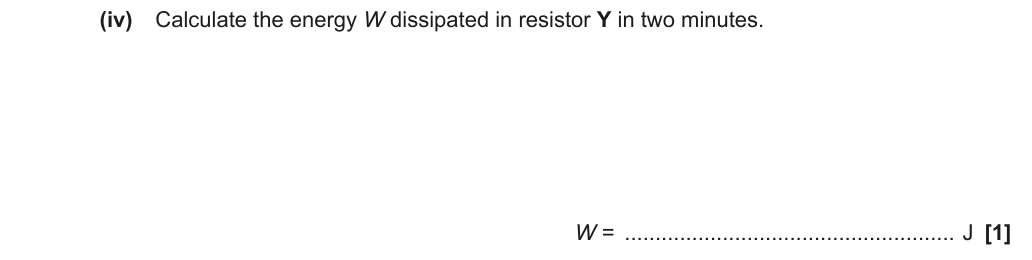
Candidates who multiplied the charge by the potential difference easily gained the mark in this question. Other candidates who used different methods often made mistakes.
Skills: M2.3 Substitute numerical values into algebraic equations using appropriate units for physical quantities
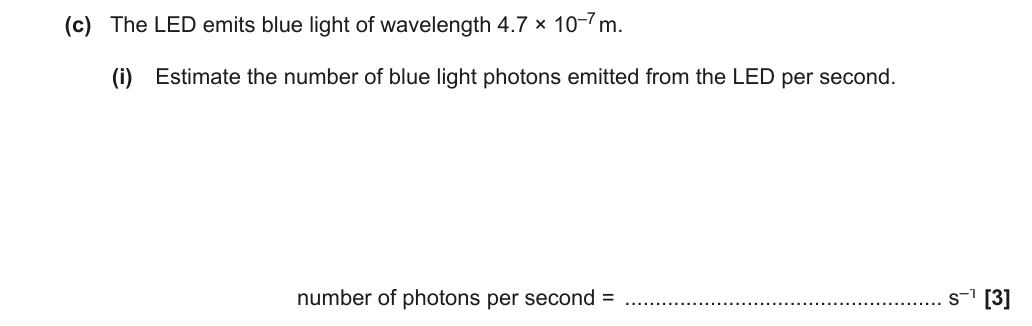
This question required knowledge of both power and energy of photons. It discriminated well with many of the top end candidates getting the correct of 5.9 × 10¹⁶ s-1. A significant number of candidates scored 1 mark for the energy of the photons. Using the power of 0.025 W in the final step of the calculation proved to be the main obstacle in this calculation. Alternative answers using the energy of a photon as 2.5 eV were allowed. This gave the rate of photons emission to be 4.0 × 10¹⁶ s-1.
Skills: M0.2 Recognise and use expressions in decimal and standard form; M2.3 Substitute numerical values into algebraic equations using appropriate units for physical quantities
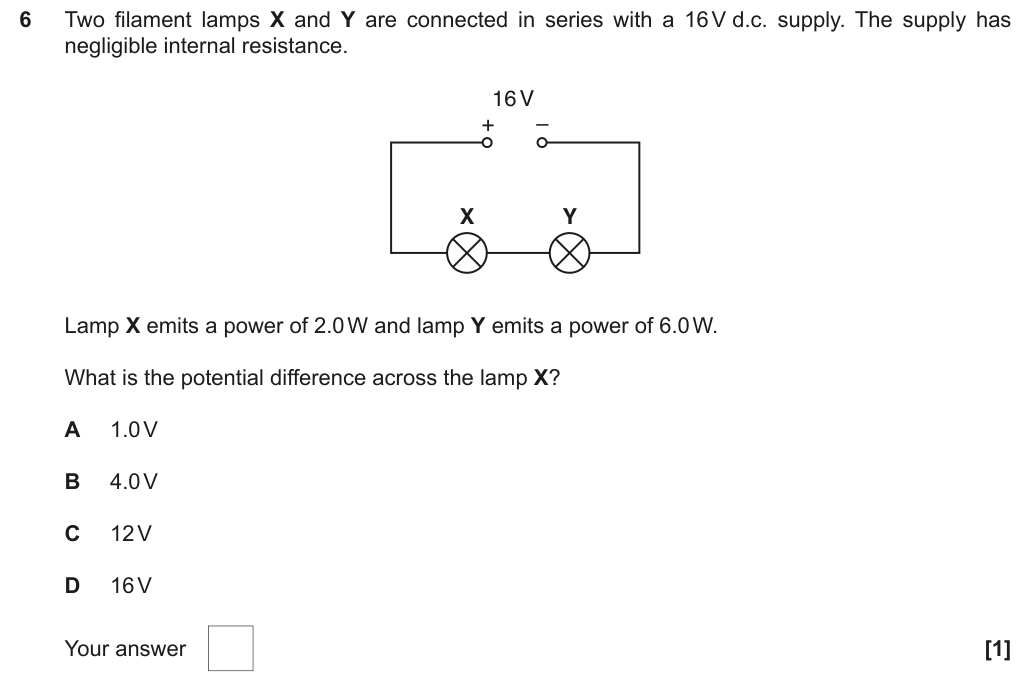
B
Candidates answered this question well. A range of techniques could be used to get to the correct answer B. This is illustrated by the two exemplars below. This shows the thought processes of a top-end candidate. The current in the series circuit is constant, hence the potential difference must be proportional to the power dissipation. These two lines is all it took for this candidate to identify the correct answer B. Here’s another equally valid technique, which may have been a bit time-consuming for this grade D candidate. The total power dissipated has been used to determine the current in the circuit. The correct value of 4.0 V across lamp X has been calculated using this current and the equation P = VI. It is worth noting the sensible approach of annotating the figure. This would have helped to steer away from the popular distractor C.
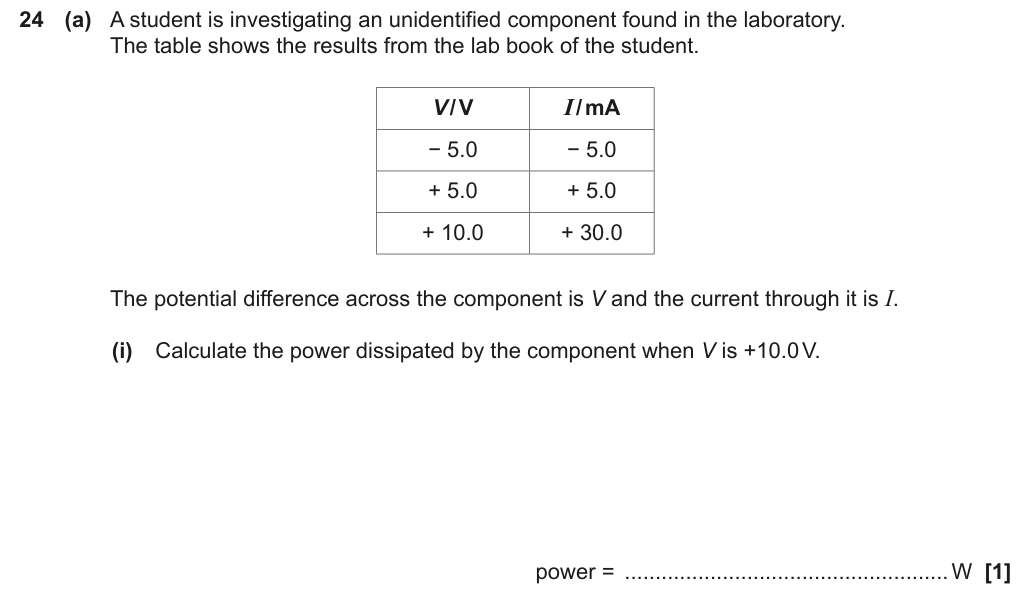
Question 24(a)(i) Question 24(a)(ii) The question was effective in two parts.
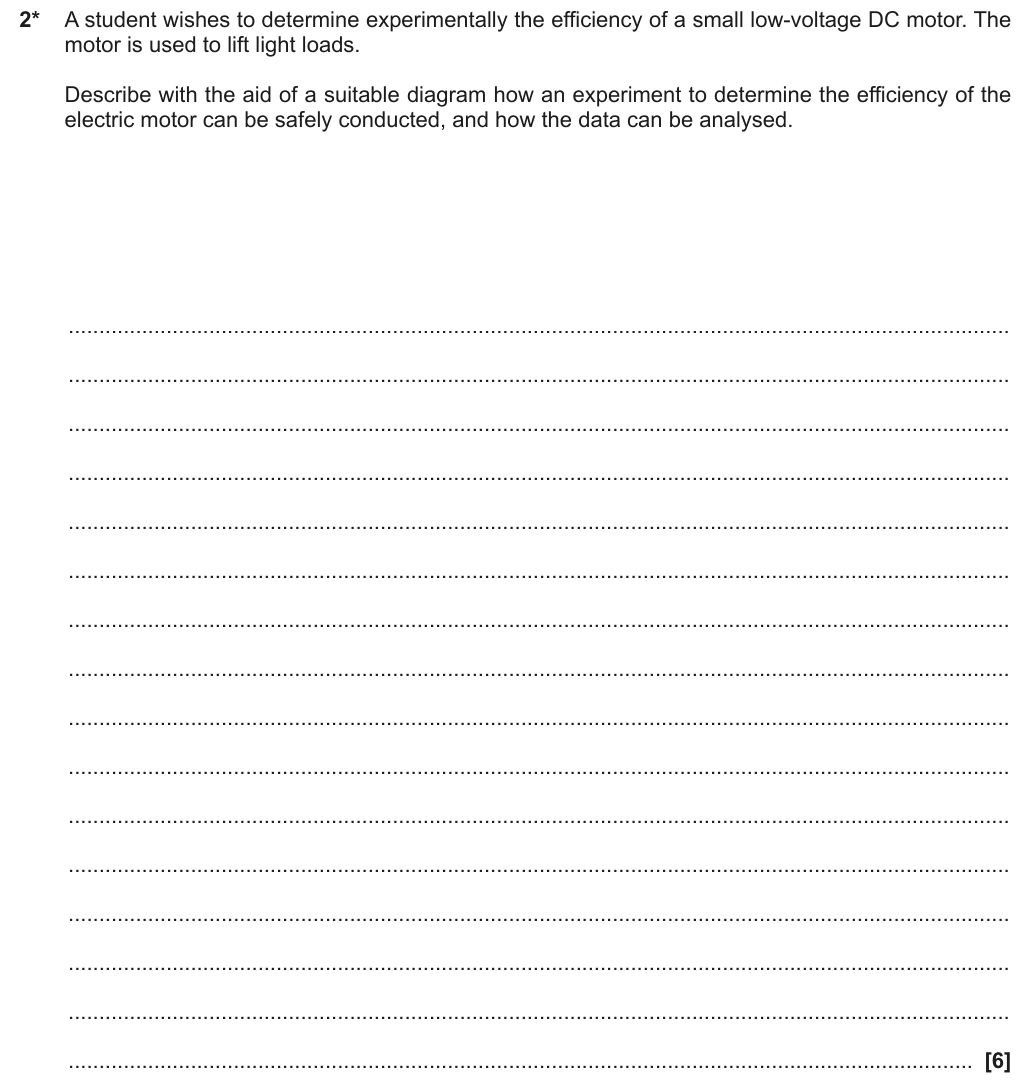
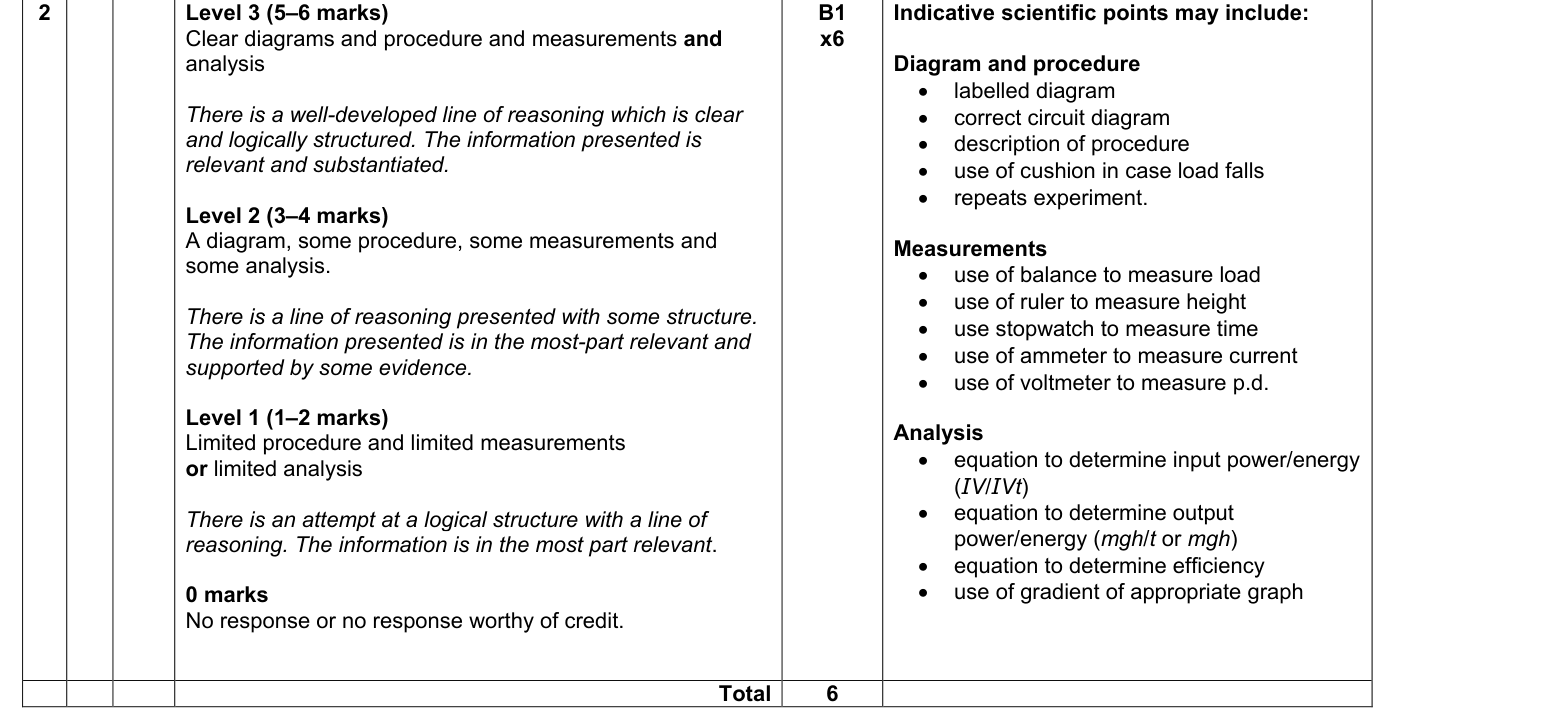
This question is assessing candidates’ abilities to plan an investigation. The question is set to help candidates e.g. “lift light loads” should have given the hint of gravitational potential energy. The stem of the question indicates that a suitable diagram should be drawn. Many candidates did not label their diagrams, or the diagrams were not workable. It was expected that there would be a workable circuit diagram with appropriate measuring instruments to determine the input power or energy; correct circuit symbols should be used. There also needed to be a diagram indicting how the useful power or energy could be determined. See Exemplar 1. When answering planning questions, candidates should identify the measurements that need to be taken and indicate appropriate measuring instruments. Candidates also needed to explain how the data would be analysed. This required them to give the appropriate equations using their measurements to determine the input power/energy, the output power/energy and the efficiency. Good candidates suggested the plotting of an appropriate graph and explained how the efficiency could be determined from the gradient. This candidate has drawn two diagrams – one diagram indicating clearly how the motor is connected to a cell with an ammeter and voltmeter which could be used to determine the input power. The left-hand diagram is an arrangement of the apparatus which indicates the basic set up and included a foam box for the mass to fall into if the experiment does not work properly. This candidate has also underlined key words from the question.
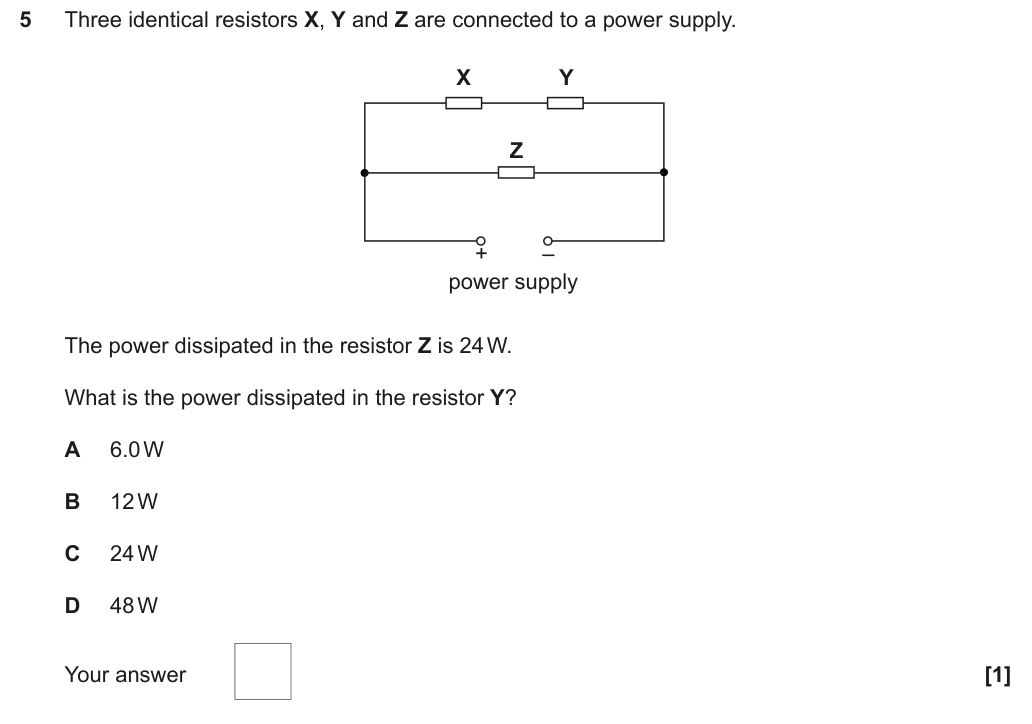
A
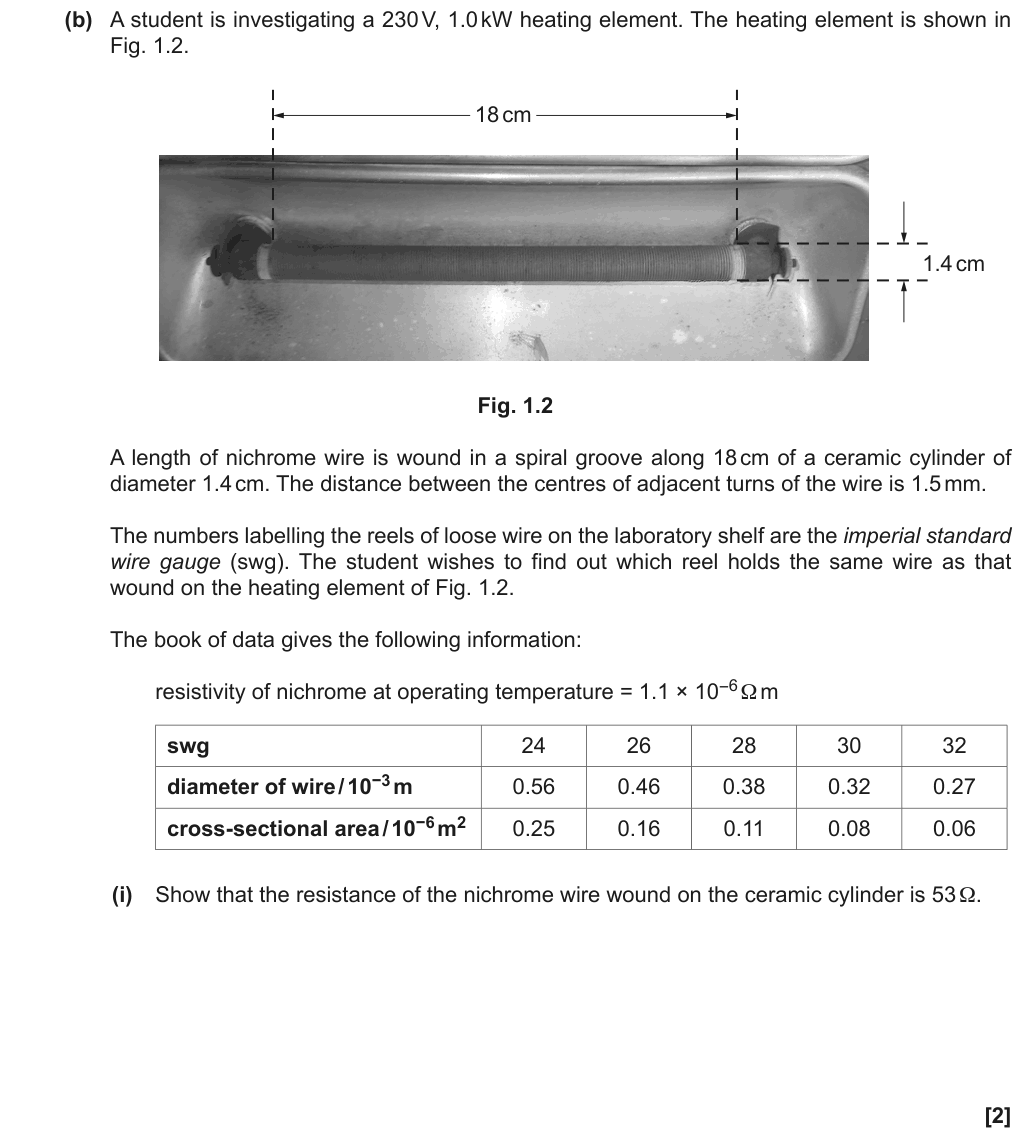
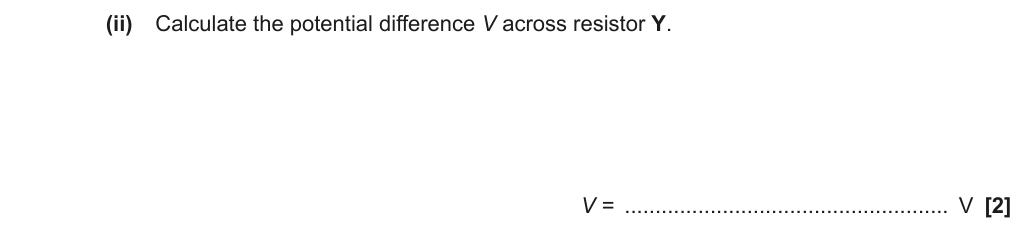
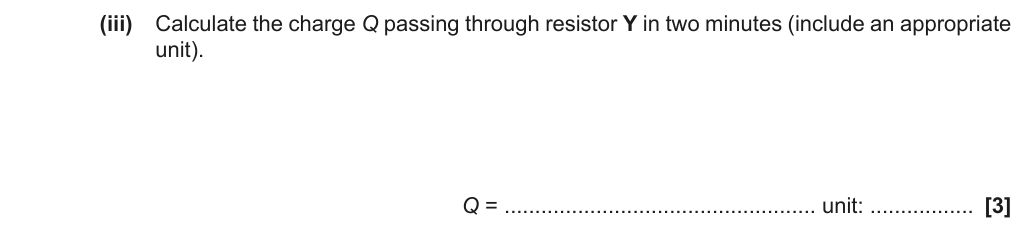
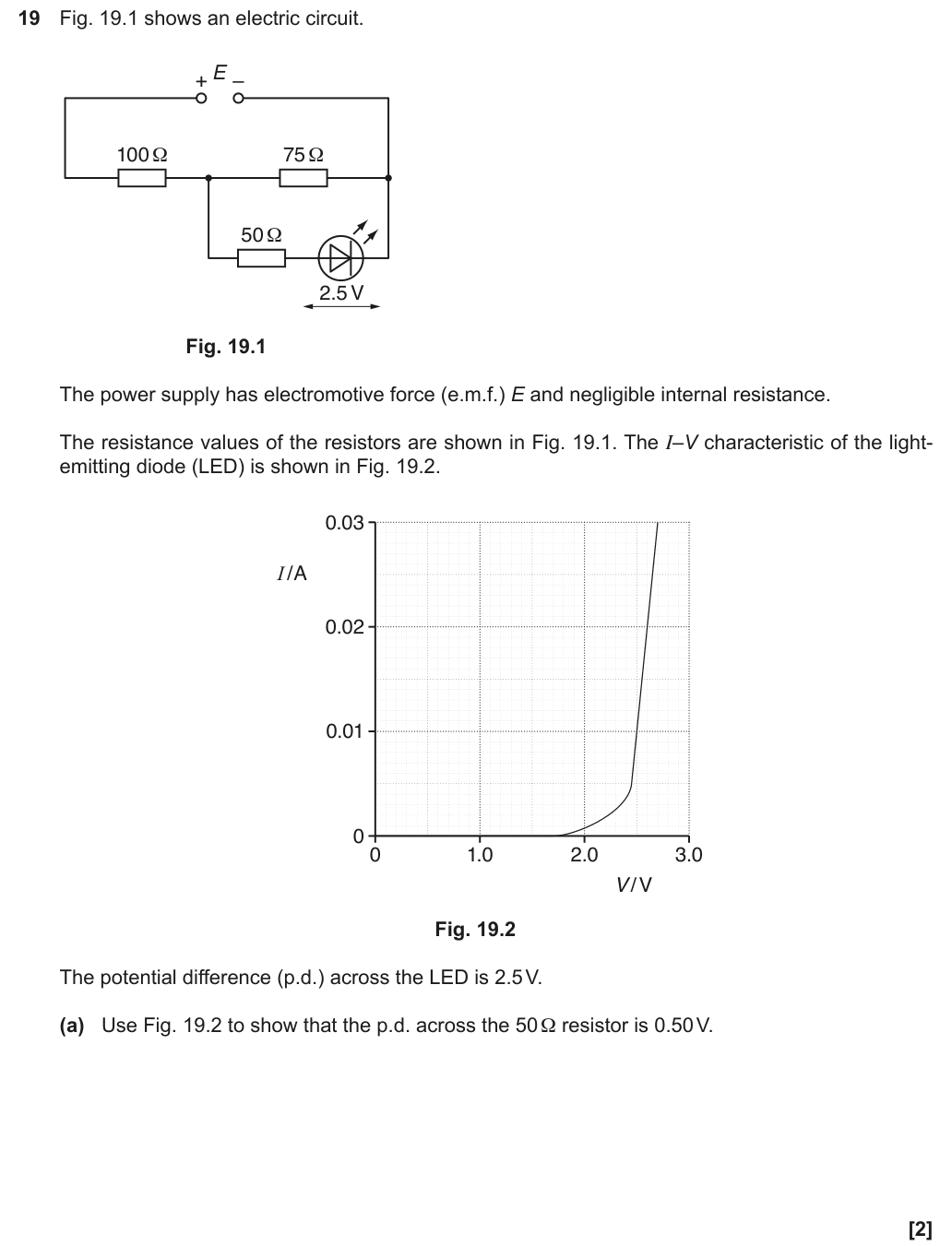
Question 1 (b) (i) Question 1 (b) (ii) Question 1 (b) (iii) The purpose of this question was to challenge the candidates to use their knowledge to solve a laboratory based practical problem.
Skills: M0.1 Recognise and make use of appropriate units in calculations; M2.2 Change the subject of an equation, including non-linear equations; M2.3 Substitute numerical values into algebraic equations using appropriate units for physical quantities
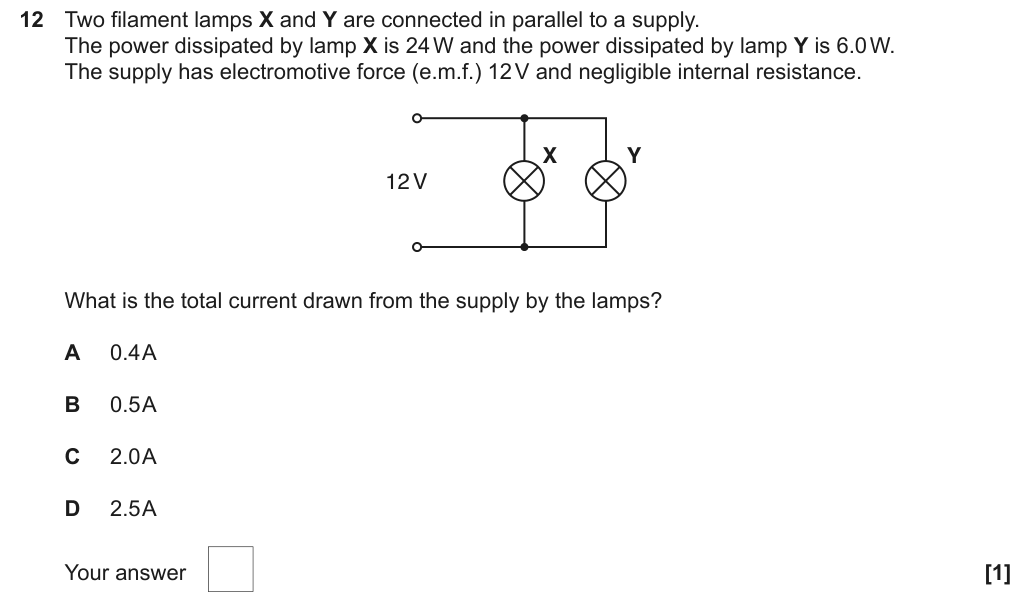
D
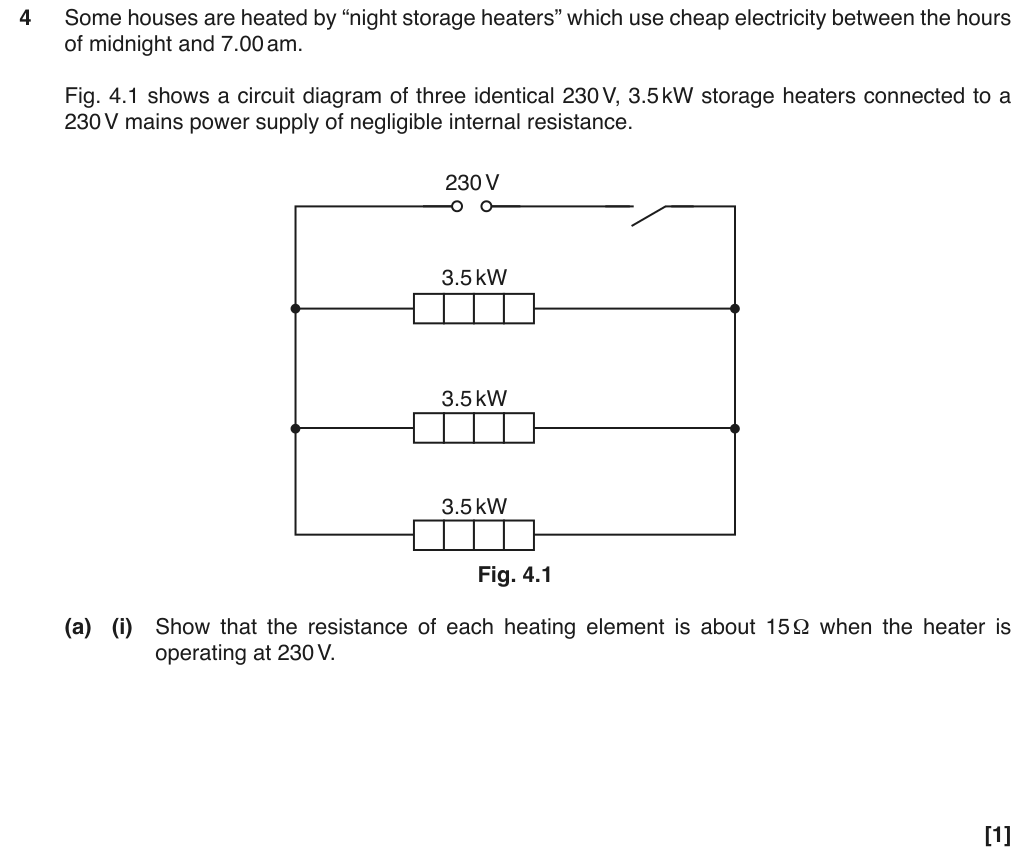
Skills: M2.2 Change the subject of an equation, including non-linear equations
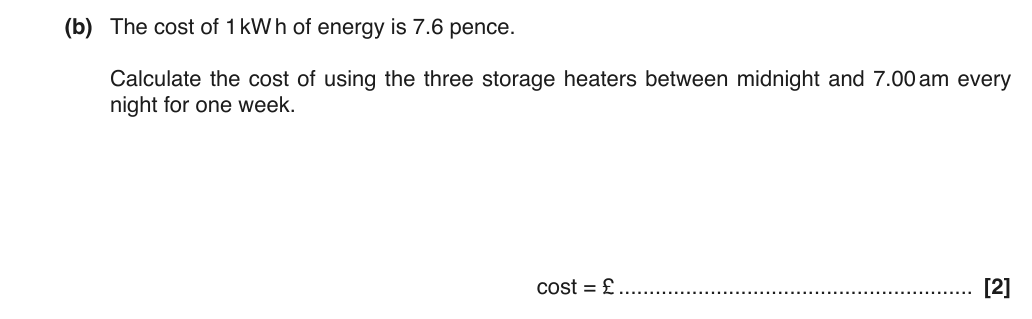
Skills: M0.1 Recognise and make use of appropriate units in calculations; M0.3 Use ratios, fractions and percentages
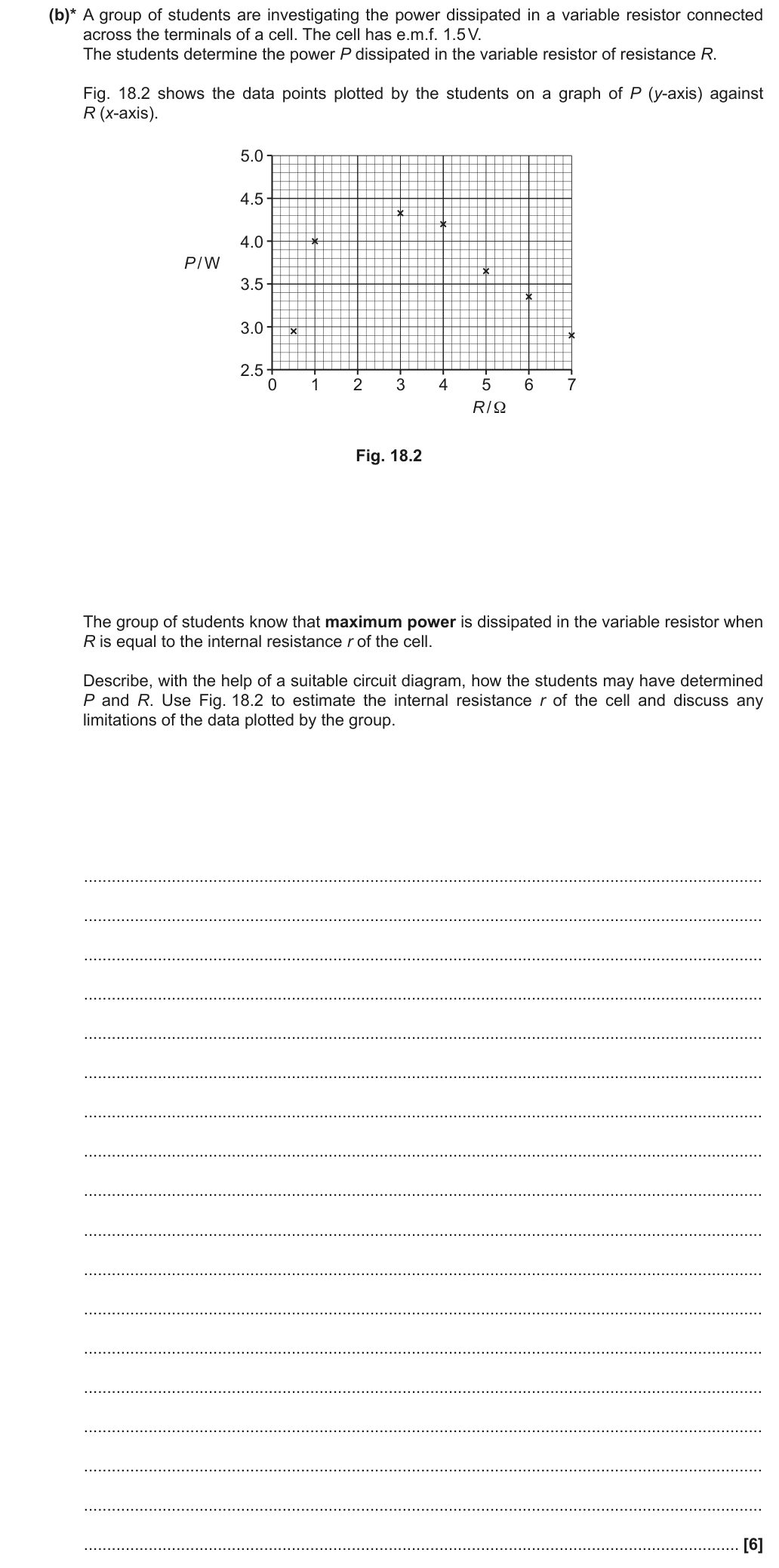
Skills: M3.1 Translate information between graphical, numerical and algebraic forms; PAG3 Investigating electrical properties
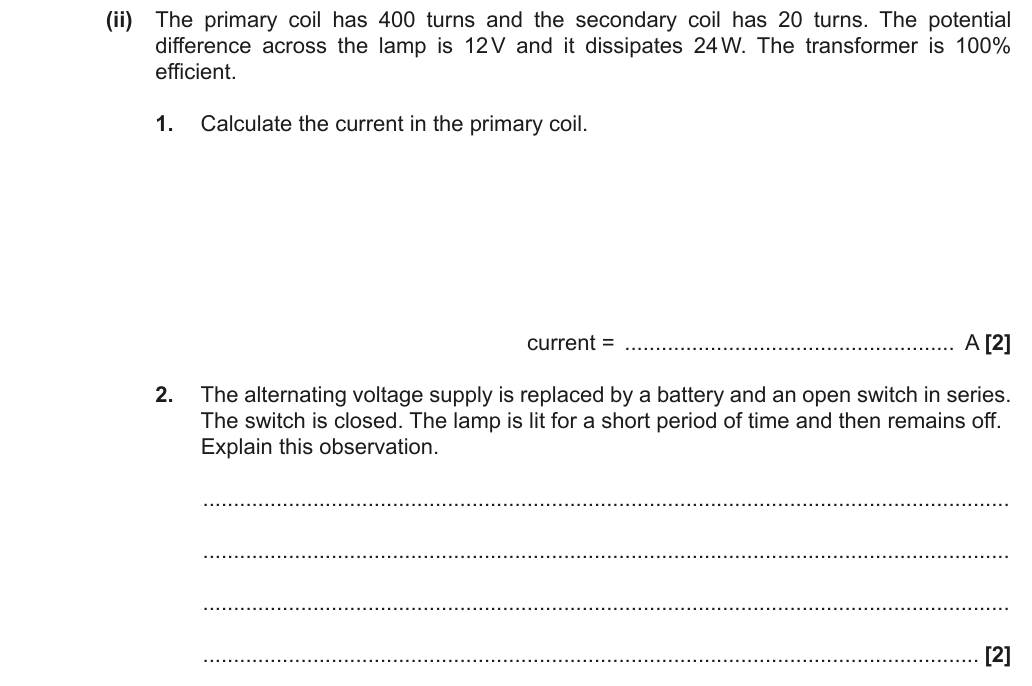
Skills: M0.3 Use ratios, fractions and percentages; M2.3 Substitute numerical values into algebraic equations using appropriate units for physical quantities
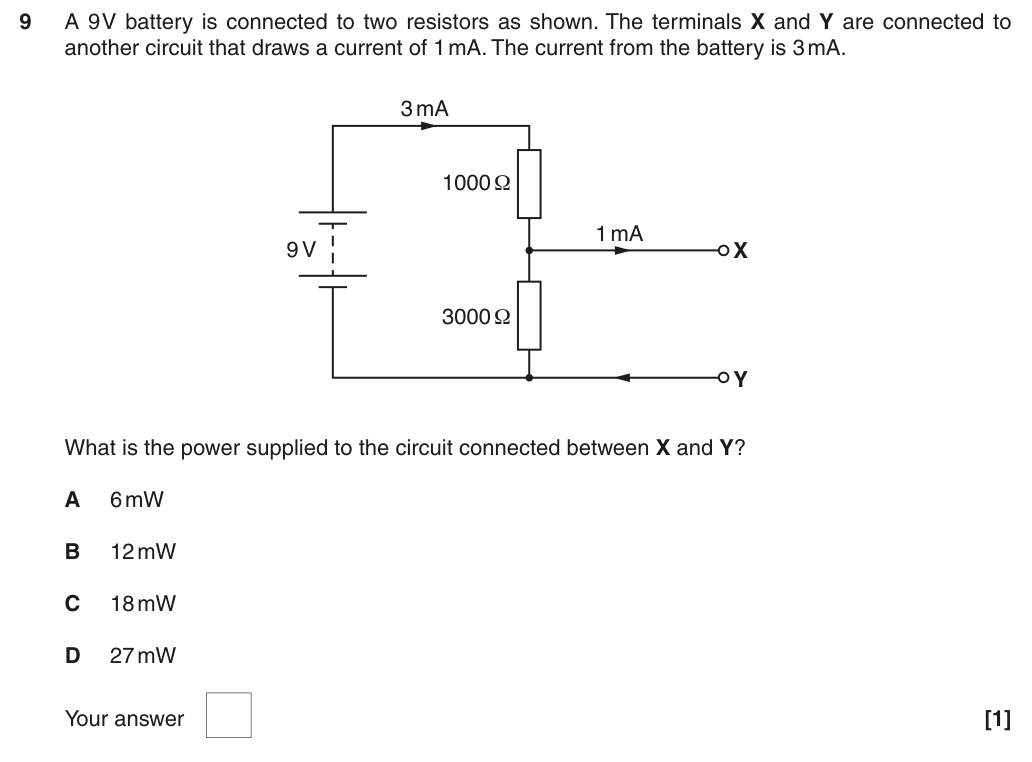
A
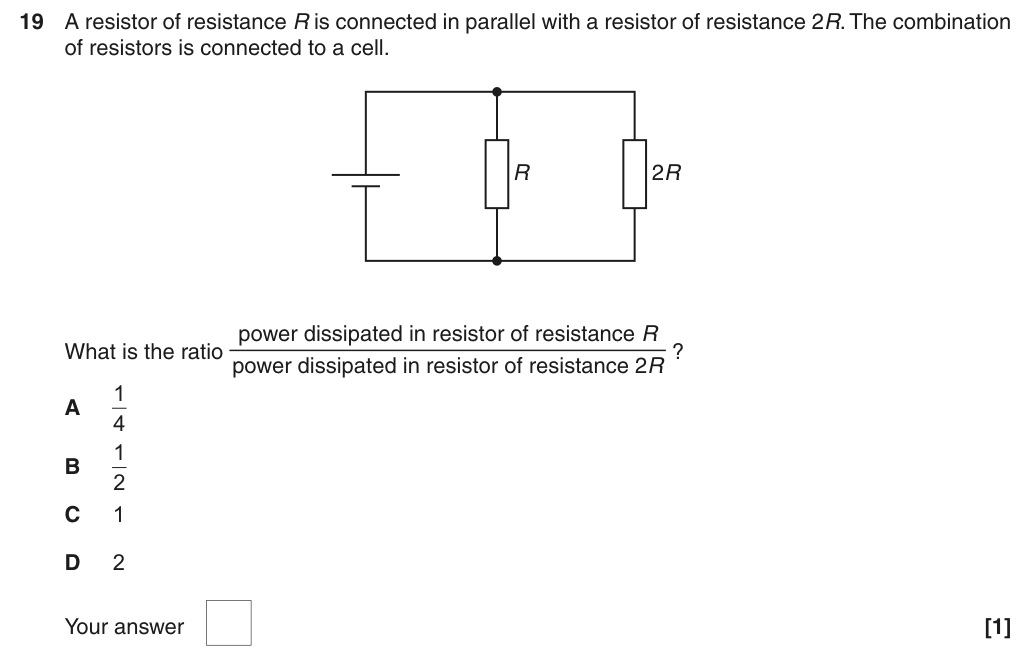
D
Dropping marks on calculations, practical questions or the six-mark level of response questions? Book a trial session with a specialist OCR physics tutor.