Mark scheme

Examiner's comment
There were many ways to express the idea that the horizontal velocity should stay constant.
Notes and key-term cards for this topic are being written by our tutors. The past-paper questions below are ready now.
| Series | Paper | Q | What it asks |
|---|---|---|---|
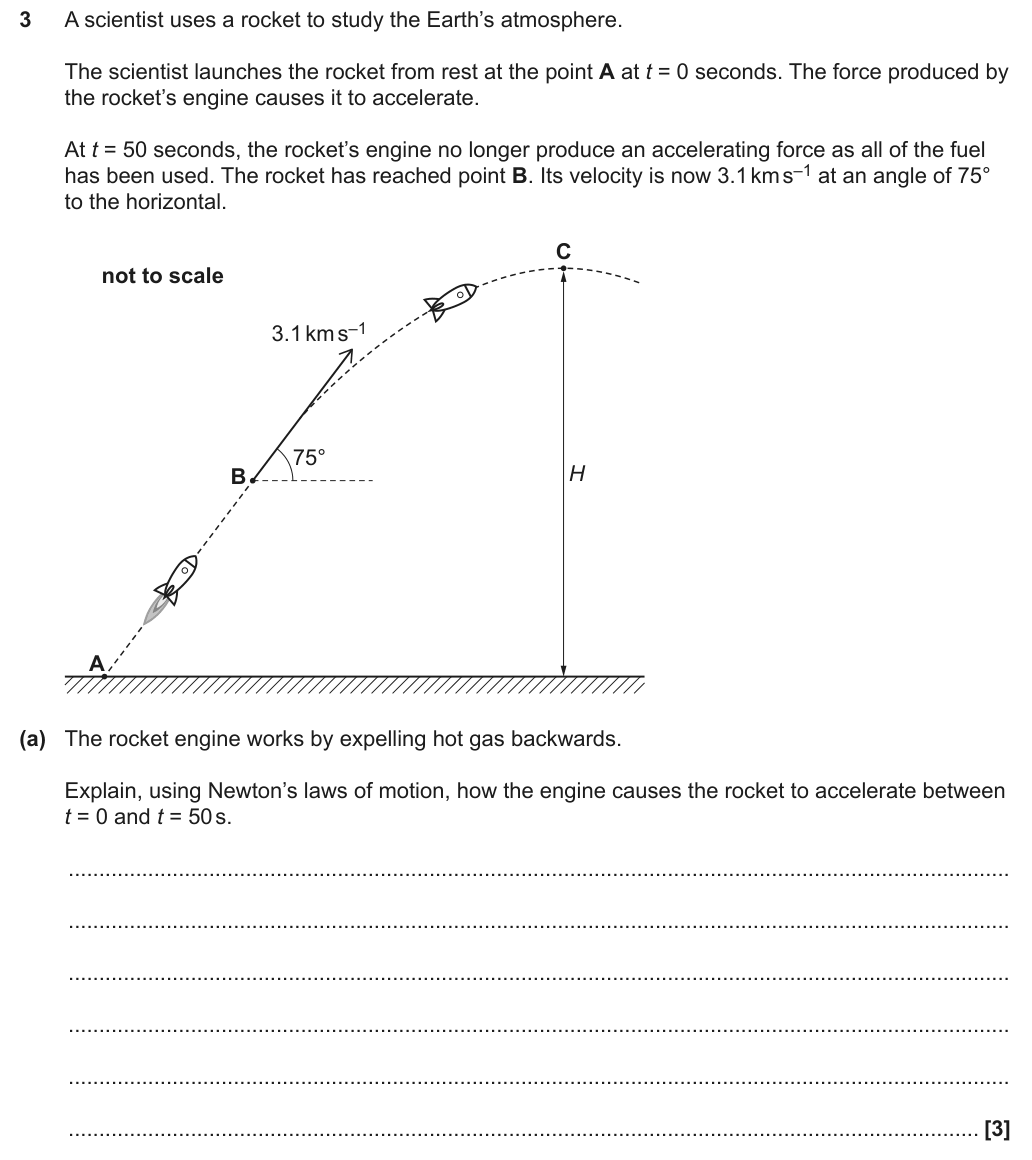
| June 2024 | Paper 3 | 3(b) | *(b) The rocket reaches its maximum height at point C. |
| November 2020 | AS Paper 2 | 4 | A metal ball leaves a horizontal surface with velocity v. Describe with the aid of a suitable diagram how an experiment can be safely conducted, and how |
| June 2018 | Paper 1 | 16(b) | A metal ball is rolled off the edge of a horizontal laboratory bench. The initial horizontal Use your knowledge of projectile motion to suggest the relationship between v and x. Describe |
There were many ways to express the idea that the horizontal velocity should stay constant.
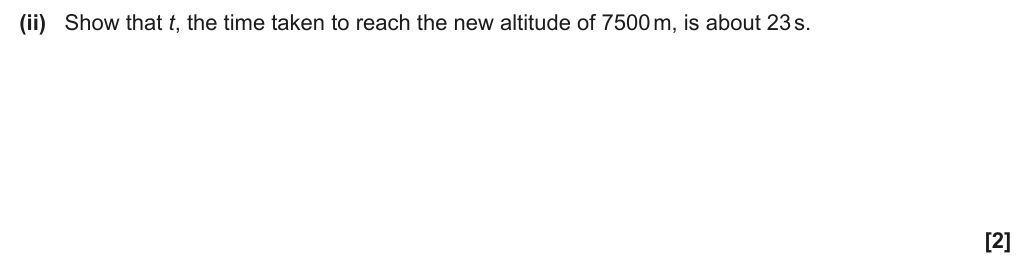
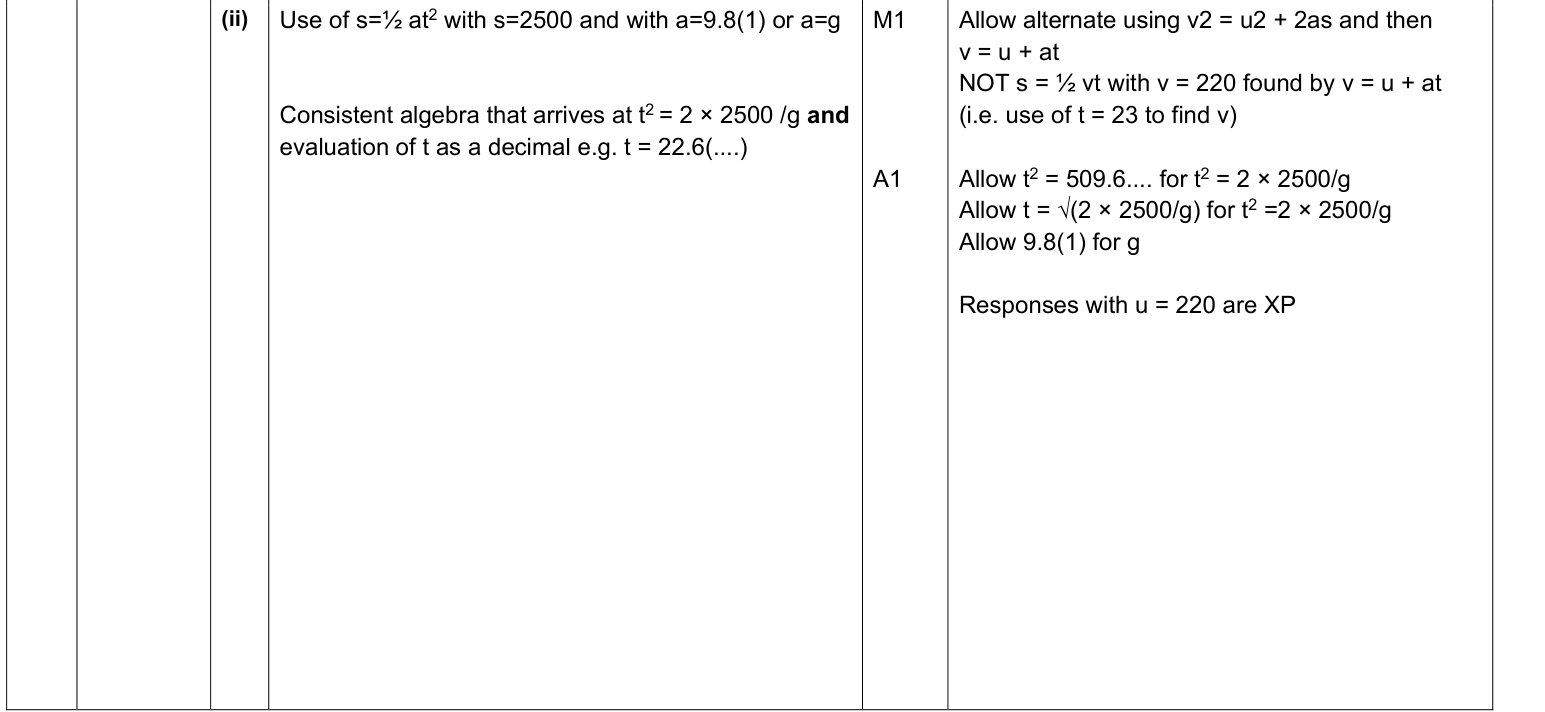
This question tests the idea of independence of horizontal and vertical motion. There are lots of letters involved in the algebra that are applicable to both motions, e.g. u, v, a, and s. Successful candidates made the distinction between horizontal and vertical motion as clear as possible, either by using a two- column table with the headings ‘vertical’ and ‘horizontal’ or by using V and H subscripts on the relevant letters. Once candidates got to the starting point of a displacement of 2500 m with zero initial vertical velocity and an acceleration of ‘g’, they often arrived at the correct answer.
Skills: M2.2 Change the subject of an equation, including non-linear equations; M2.3 Substitute numerical values into algebraic equations using appropriate units for physical quantities
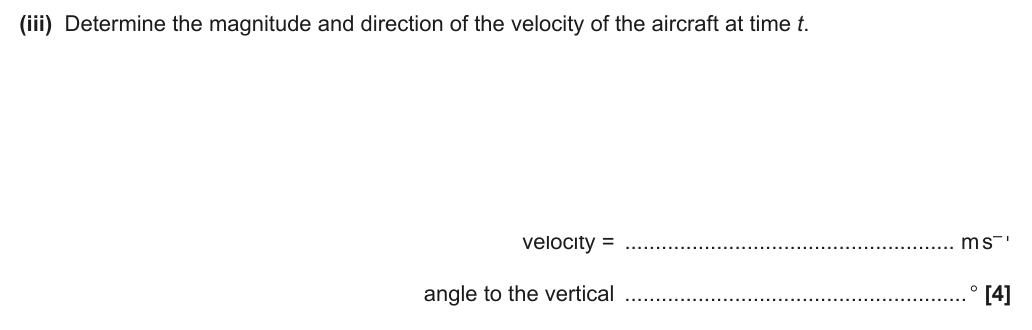
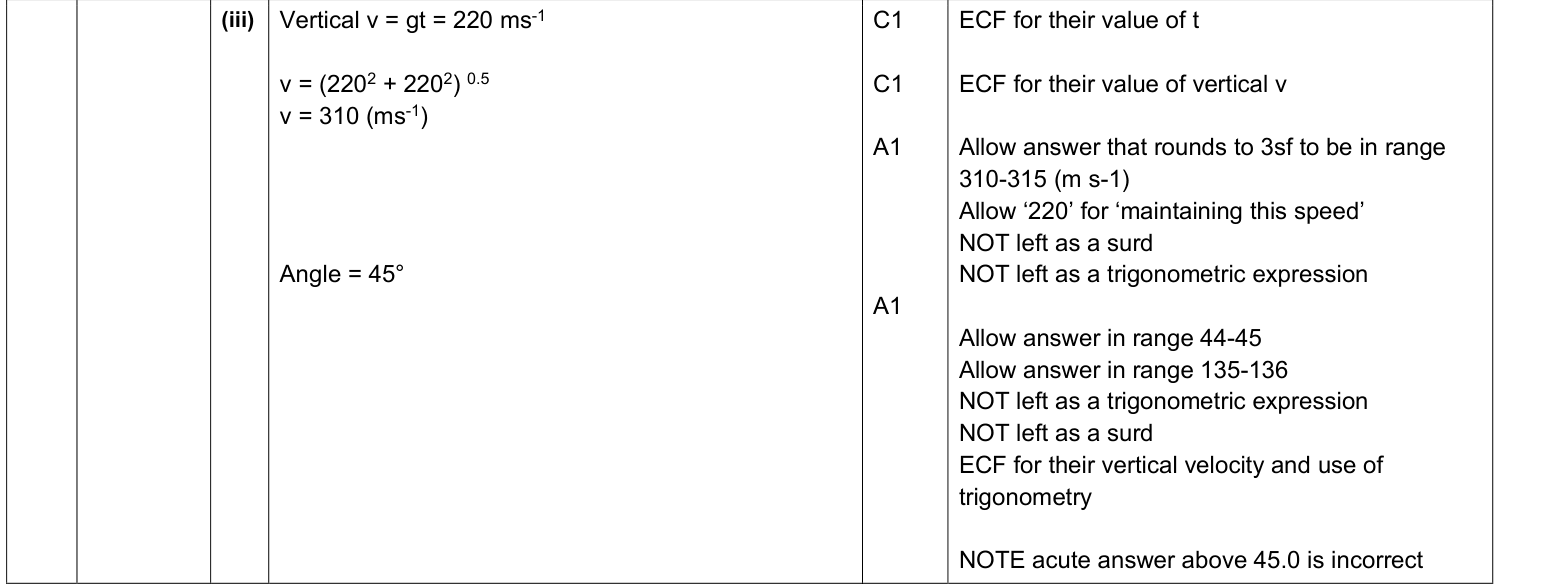
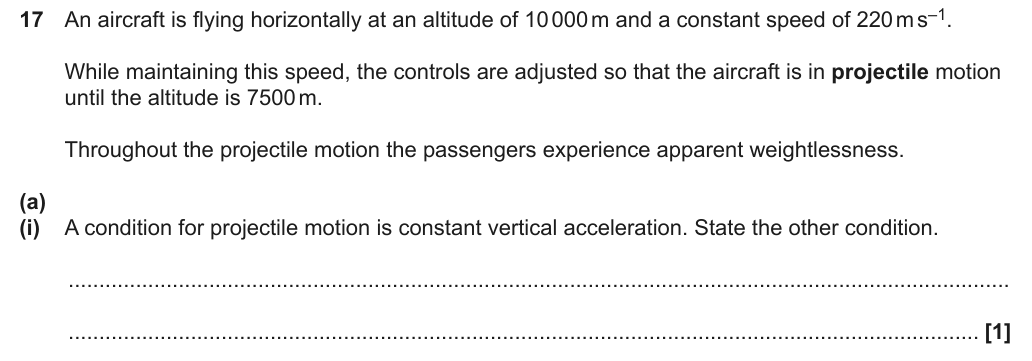
A diagram of the two components of the velocity here was not mandatory; however, it makes it clear in the mind of the candidate what they are doing. The most successful candidates drew a triangle with the two components of velocity with an angle indicated between the vertical and the resultant velocity. They were then clear about how to work out the resultant velocity (Pythagoras) and the required angle. Both acute and obtuse angles to the vertical were acceptable. Acute angles over 45 degrees indicated an error in the trigonometry and so the last mark was unavailable. Few candidates were able to correctly interpret the question’s description of ‘maintaining this speed’ to suggest that the velocity of the plane was 220 m s-1 throughout.
Skills: M0.6 Use calculators to handle sin x, cos x and tan x when x is expressed in degrees or radians; M4.4 Use Pythagoras’ theorem, and the angle sum of a triangle; M4.5 Use sin, cos and tan in physical problems
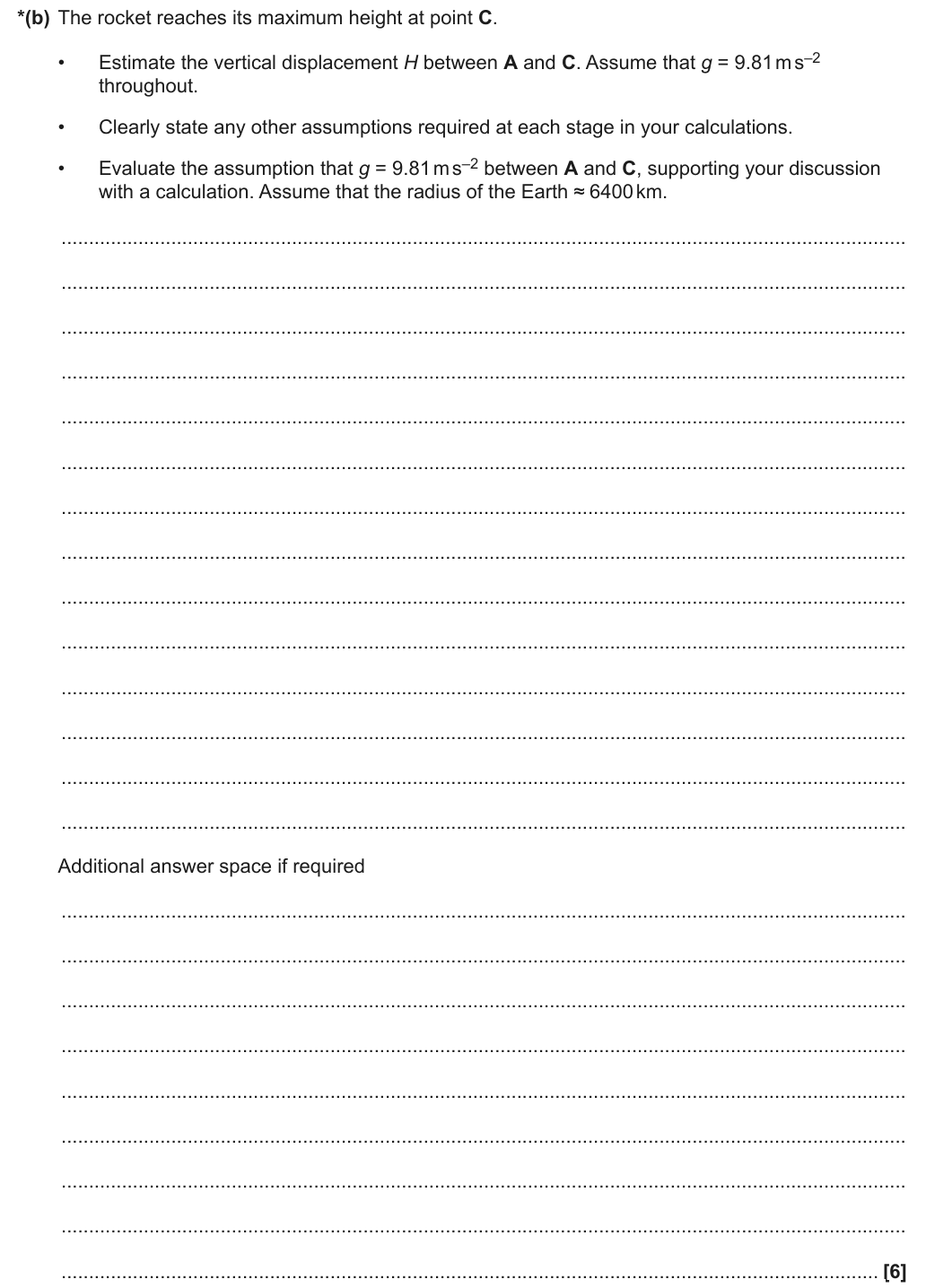
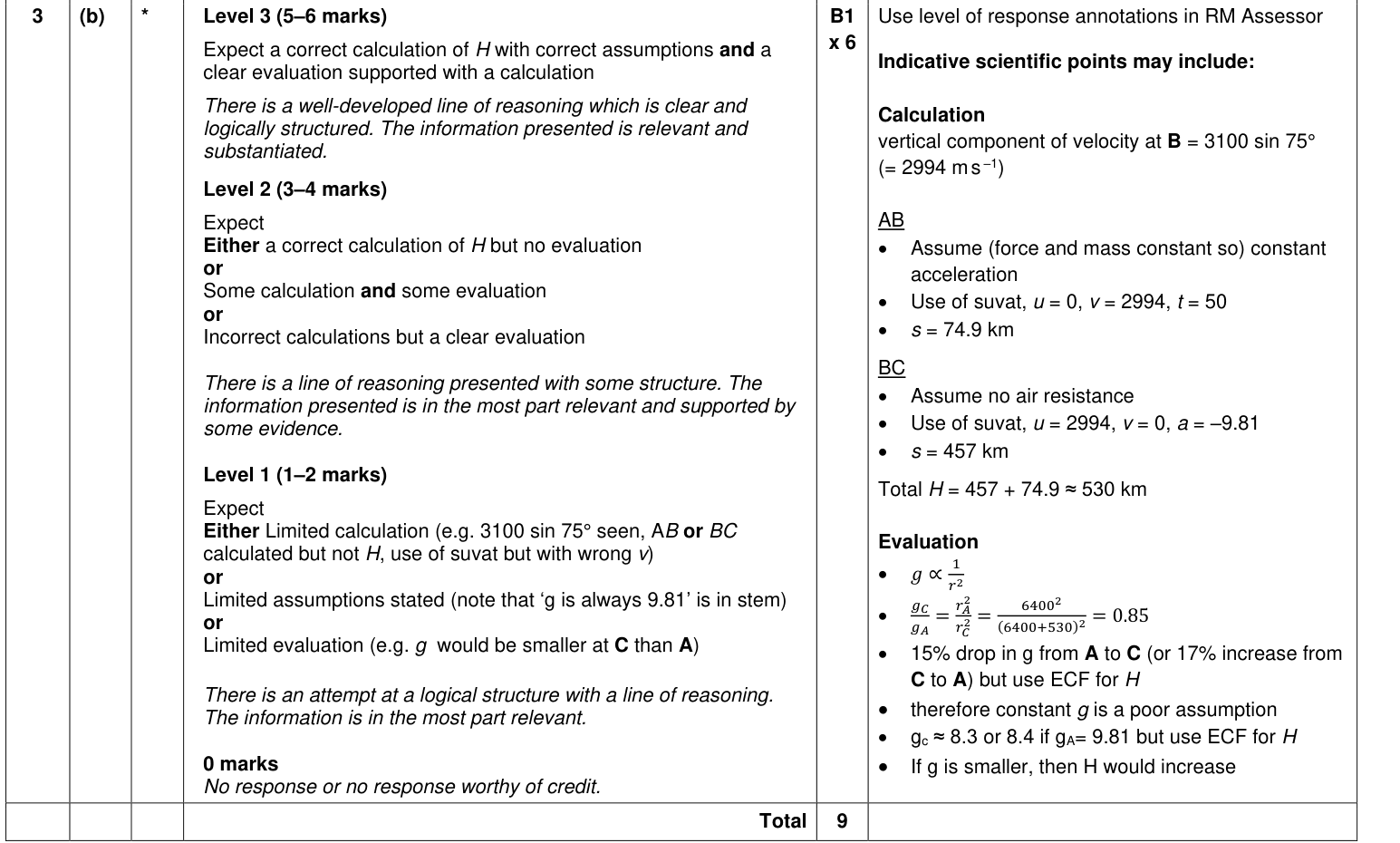
Level 3 candidates set out a correct calculation of H¸ together with the assumptions required at each stage, plus an evaluation of the assumption that g remains constant at 9.81 ms-2 throughout. Level 2 candidates missed out one or more of these three parts, usually the evaluation at the end, which they found quite difficult. Level 1 candidates were often unable to calculate H, or the value of g at height H, correctly Common problems in 3 (b) • omission of sin 75° (or using cos 75°) when calculating velocity • not converting from m to km correctly • not squaring the r term in the calculation for g they have answered each part of the question by using bullet points. Their calculations are clearly set out and so easy to follow, and their handwriting is legible. Instead of just calculating a value for g at height H, they have also given an explicit evaluation: ‘The assumption that g remains constant is not reasonable’. Other candidates went on to say that this means that the rocket would reach an even greater height.
Skills: M0.3 Use ratios, fractions and percentages; M0.6 Use calculators to handle sin x, cos x and tan x when x is expressed in degrees or radians; M2.3 Substitute numerical values into algebraic equations using appropriate units for physical quantities; M4.5 Use sin, cos and tan in physical problems
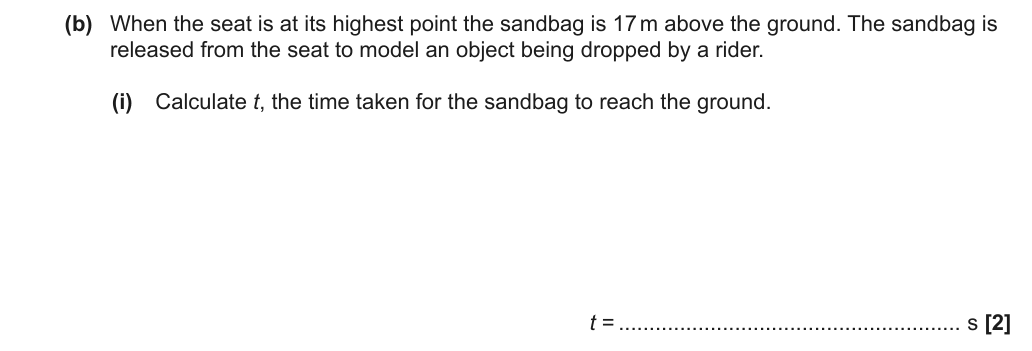
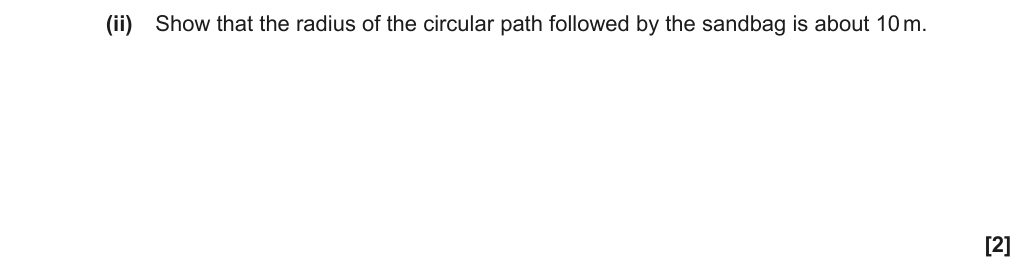
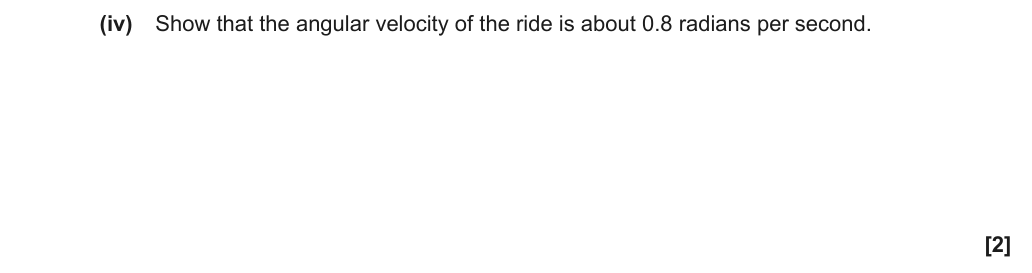
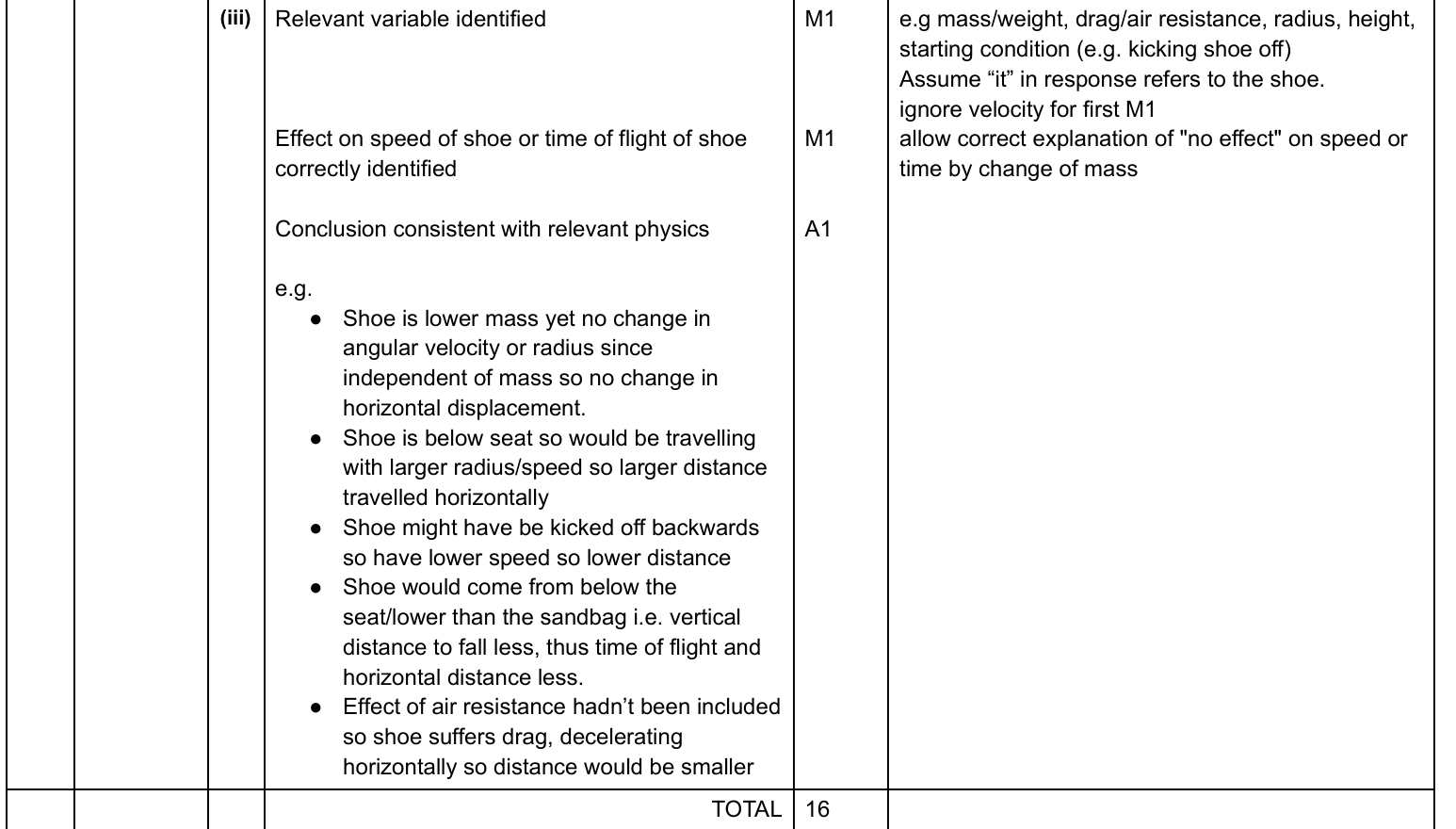
Question 17 (b) explored ideas about parabolic flight due to gravitation. The only force acting on the sandbag and the shoe after they have been released is the weight force, which acts vertically downwards. Many candidates realised that the vertical velocity of the sandbag when it left the swing was zero, enabling them to calculate the time for the bag to fall 17m vertically downwards (using s = ½gt2) To calculate the horizontal distance travelled required both the horizontal velocity (from v = rω) and the time of flight from part (b) (iii). There was lots of scope for applying error carried forward rules as mentioned in the mark scheme.
Question 17 (b) explored ideas about parabolic flight due to gravitation. The only force acting on the sandbag and the shoe after they have been released is the weight force, which acts vertically downwards. Many candidates realised that the vertical velocity of the sandbag when it left the swing was zero, enabling them to calculate the time for the bag to fall 17m vertically downwards (using s = ½gt2) To calculate the horizontal distance travelled required both the horizontal velocity (from v = rω) and the time of flight from part (b) (iii). There was lots of scope for applying error carried forward rules as mentioned in the mark scheme.
Skills: M2.3 Substitute numerical values into algebraic equations using appropriate units for physical quantities
Question 17 (b) explored ideas about parabolic flight due to gravitation. The only force acting on the sandbag and the shoe after they have been released is the weight force, which acts vertically downwards. Many candidates realised that the vertical velocity of the sandbag when it left the swing was zero, enabling them to calculate the time for the bag to fall 17m vertically downwards (using s = ½gt2) To calculate the horizontal distance travelled required both the horizontal velocity (from v = rω) and the time of flight from part (b) (iii). There was lots of scope for applying error carried forward rules as mentioned in the mark scheme.
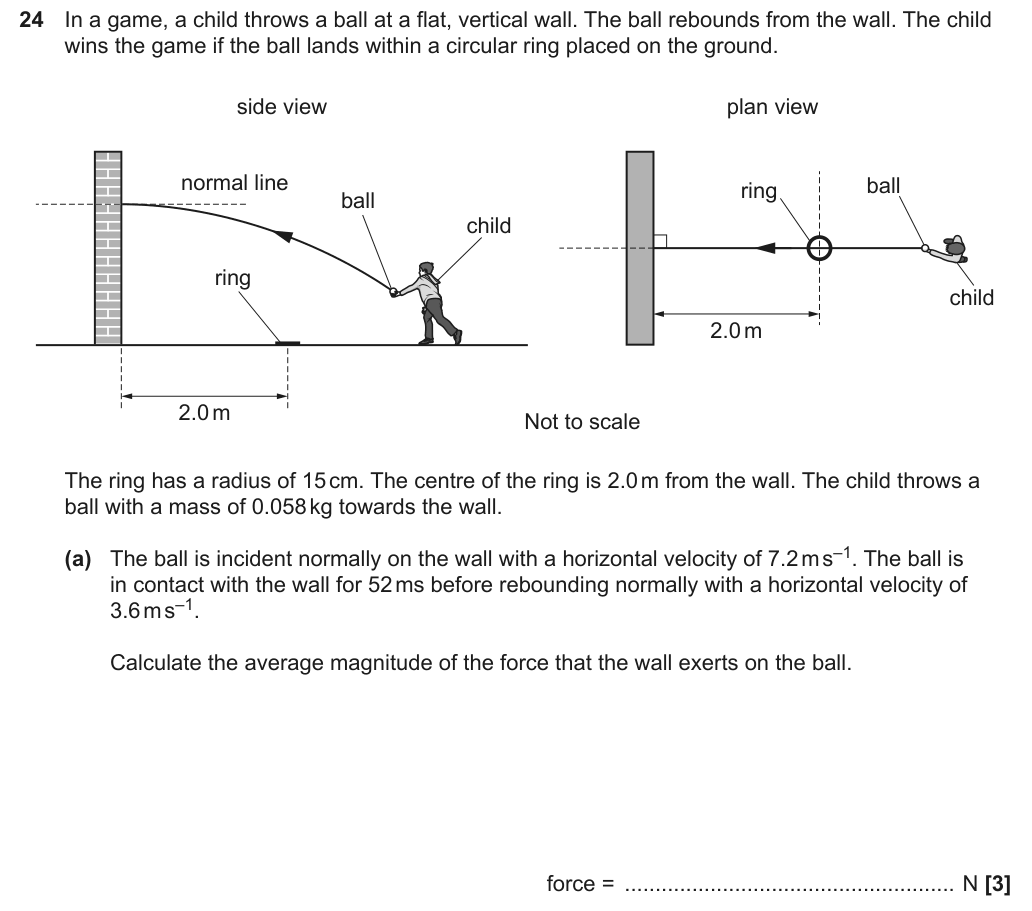
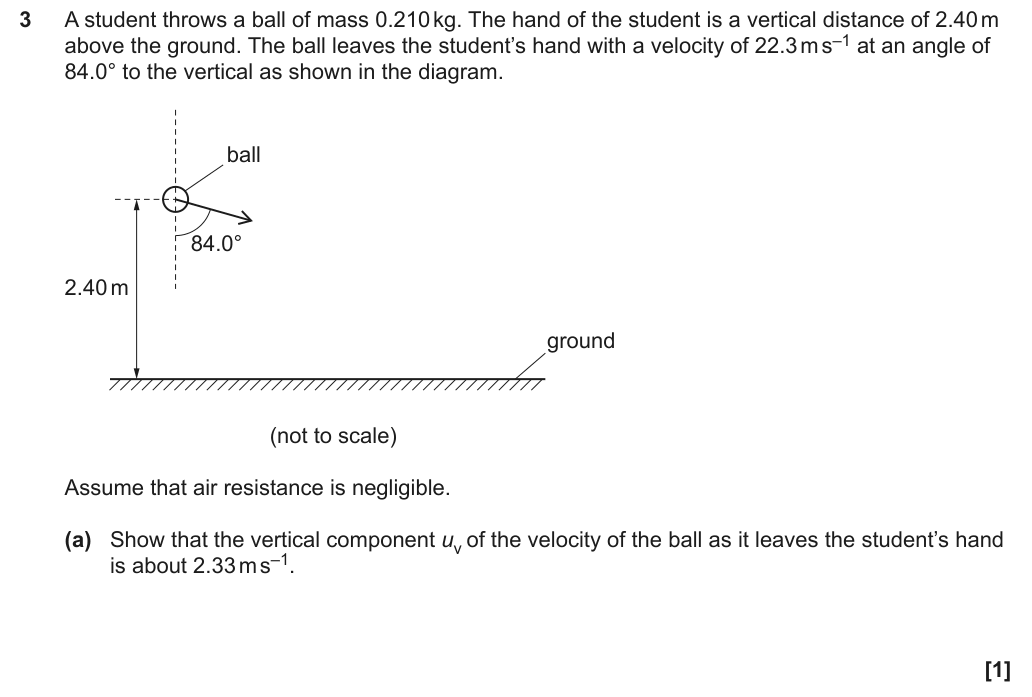
Most candidates correctly calculated that the ball landed at a distance of 2.088 m from the wall and then compared this to the range of the target ring from the wall as 2.0 m ± 0.15 m to show that the child won the ring. Where candidates did not score full marks they had not clearly compared where the ball had landed with the full range of the target ring.
Skills: M2.3 Substitute numerical values into algebraic equations using appropriate units for physical quantities
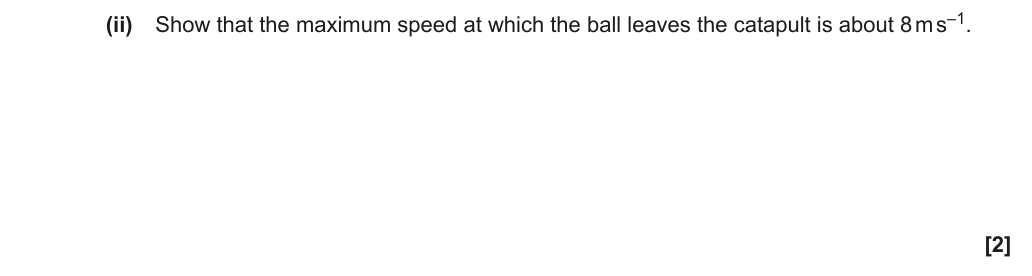
For this part of the question it was necessary for candidates to clearly show the substitution of the data into the equation. This includes the value of g (as 9.81 m s–2) from the data sheet. It was also necessary for candidates to show that having determined v2, this value needed to have the square root taken. Higher performing candidates wrote the final answer as 7.247 or 7.24685 ≈ 7.25 (m s–1).
Skills: M2.3 Substitute numerical values into algebraic equations using appropriate units for physical quantities
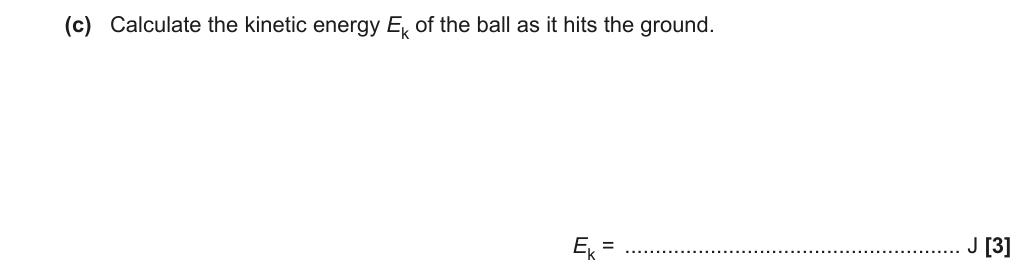
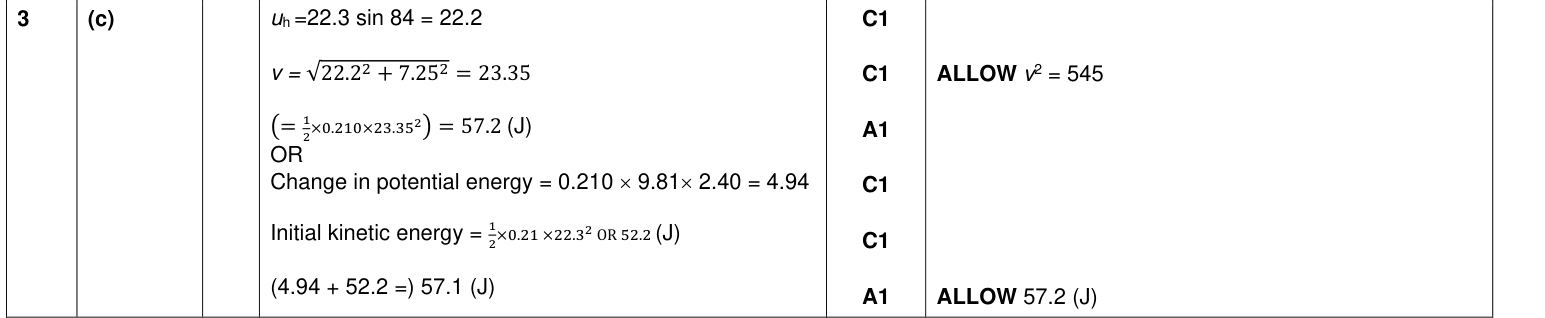
This question proved challenging to candidates. The common error was to calculate the kinetic energy using a value of 7.25 m s–1. There were two main methods of answering this question: Either: determining the horizontal component of the velocity of the ball, (which remains constant) then working out the resultant velocity of the ball as it hits the ground and then calculate the kinetic energy. Or: Calculate the change in gravitational potential energy Calculate the initial kinetic energy of the ball And then add the two values together.
Skills: M2.3 Substitute numerical values into algebraic equations using appropriate units for physical quantities; M4.4 Use Pythagoras’ theorem, and the angle sum of a triangle
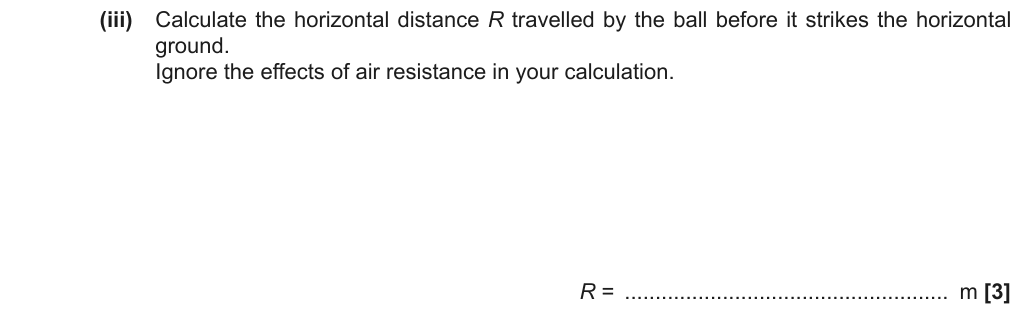
Question 16 (b) (iv) was answered well by candidates that realised the distance in real life would be less and could explain why that was the case.
Skills: M2.2 Change the subject of an equation, including non-linear equations; M2.3 Substitute numerical values into algebraic equations using appropriate units for physical quantities
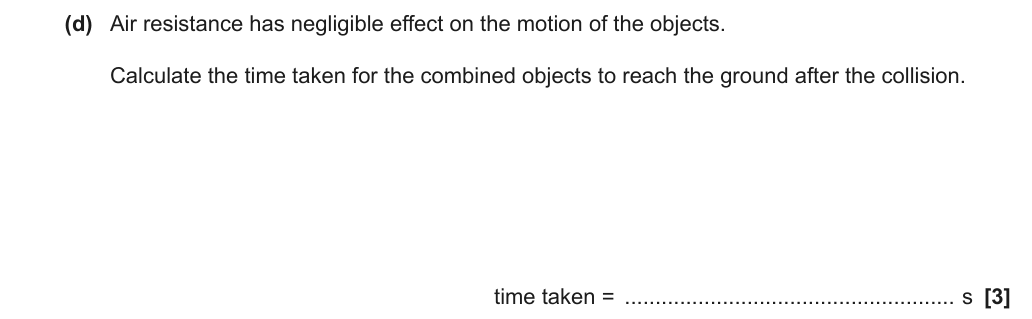
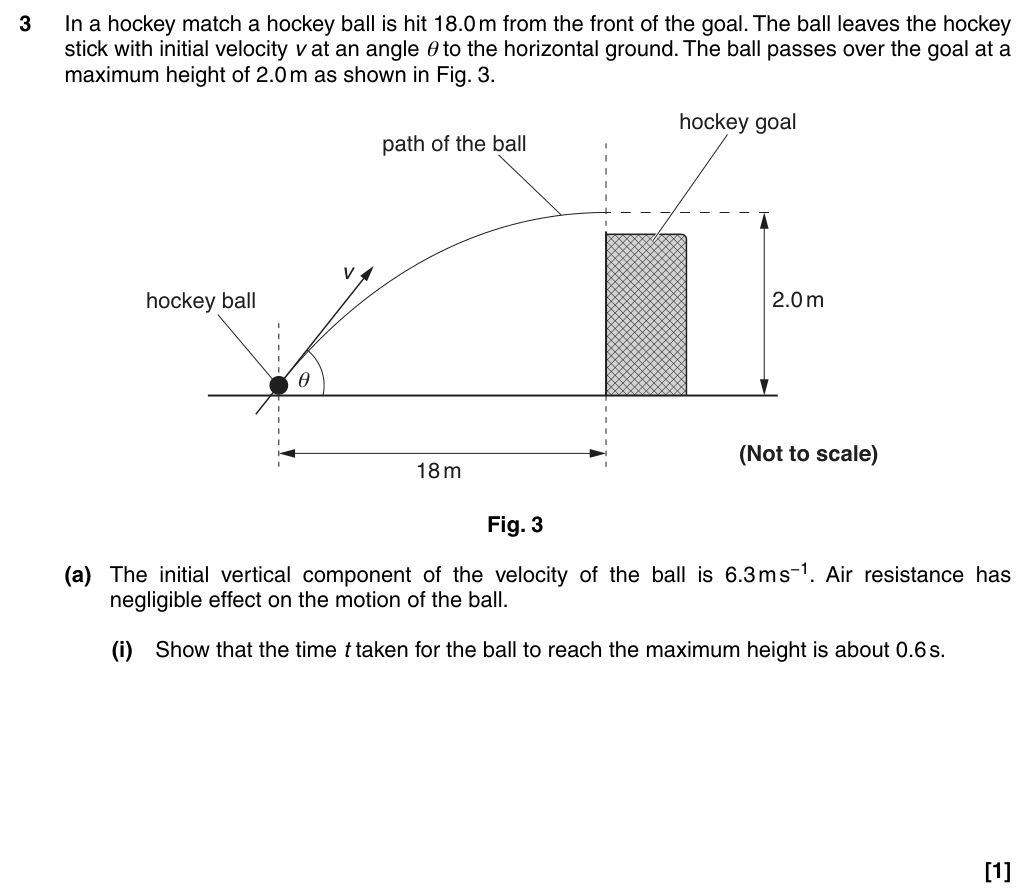
Candidates at the higher end performed better on this question as they were able to identify and apply the correct equation of motion and determine that the initial vertical component of the velocity was zero. Candidates at the lower end tended to either omit the question or make an incorrect attempt to use an equation of motion using a value for the initial velocity (usually the velocity calculated from part c).
Skills: M2.2 Change the subject of an equation, including non-linear equations; M2.3 Substitute numerical values into algebraic equations using appropriate units for physical quantities
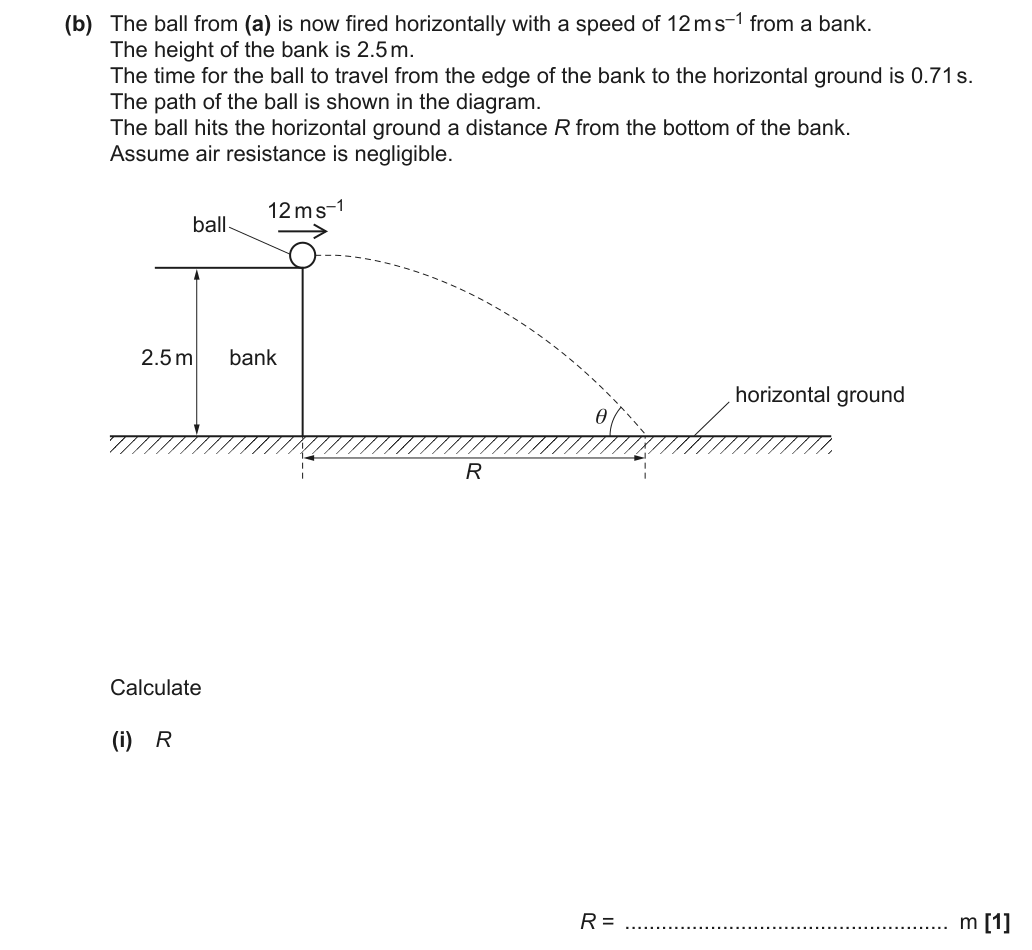
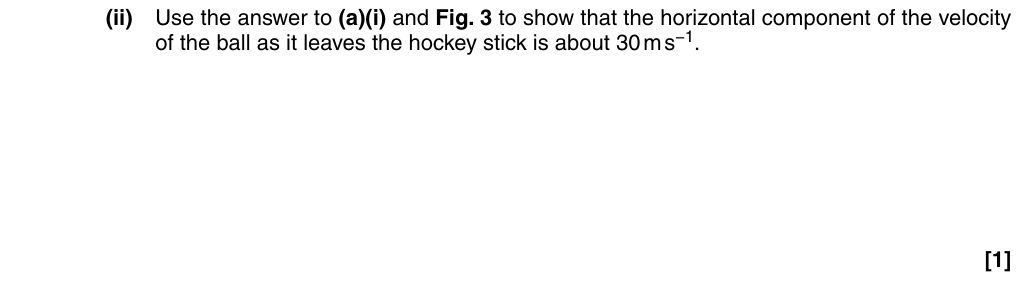
It was expected that candidates would multiply the horizontal velocity by the time. This was generally answered well.
Skills: M2.3 Substitute numerical values into algebraic equations using appropriate units for physical quantities
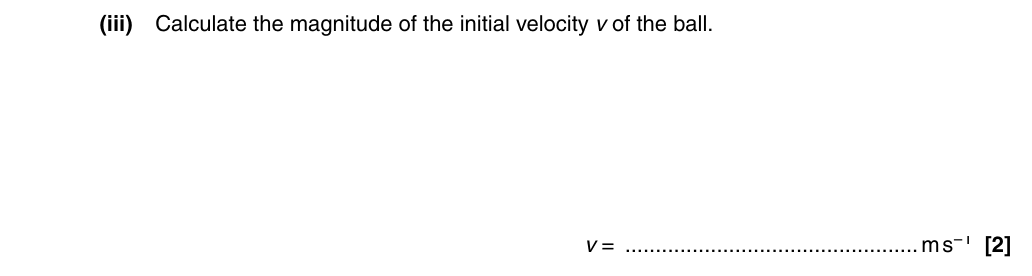
Candidates achieving on this question correctly determined the angle using the horizontal and vertical velocities. Where the response was incorrect, candidates had used either energies or distances.
Skills: M0.6 Use calculators to handle sin x, cos x and tan x when x is expressed in degrees or radians; M4.5 Use sin, cos and tan in physical problems
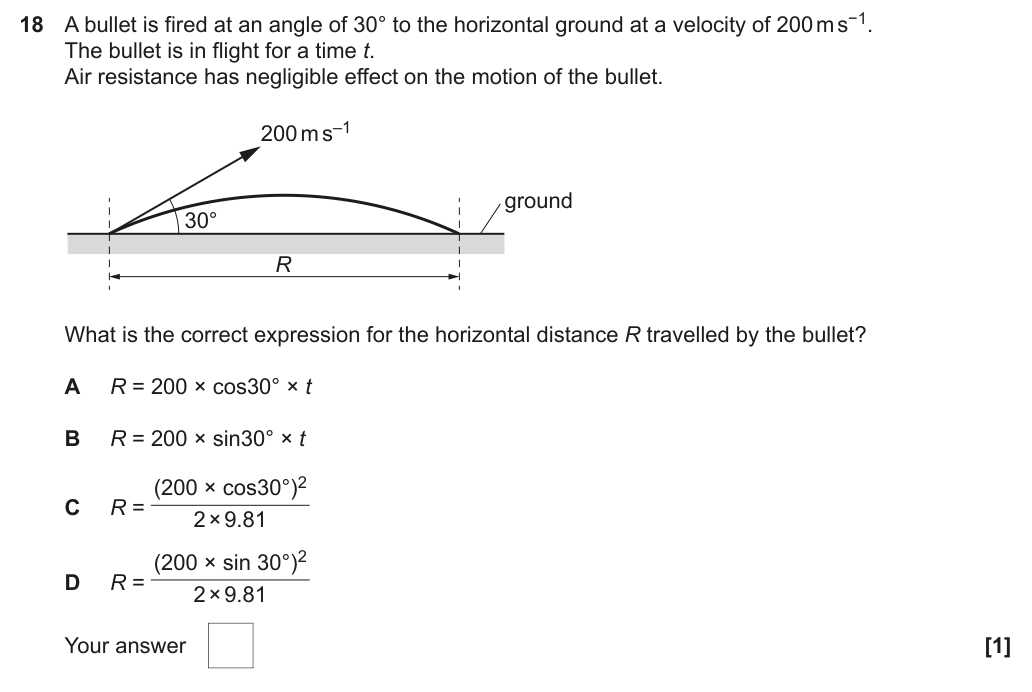
A
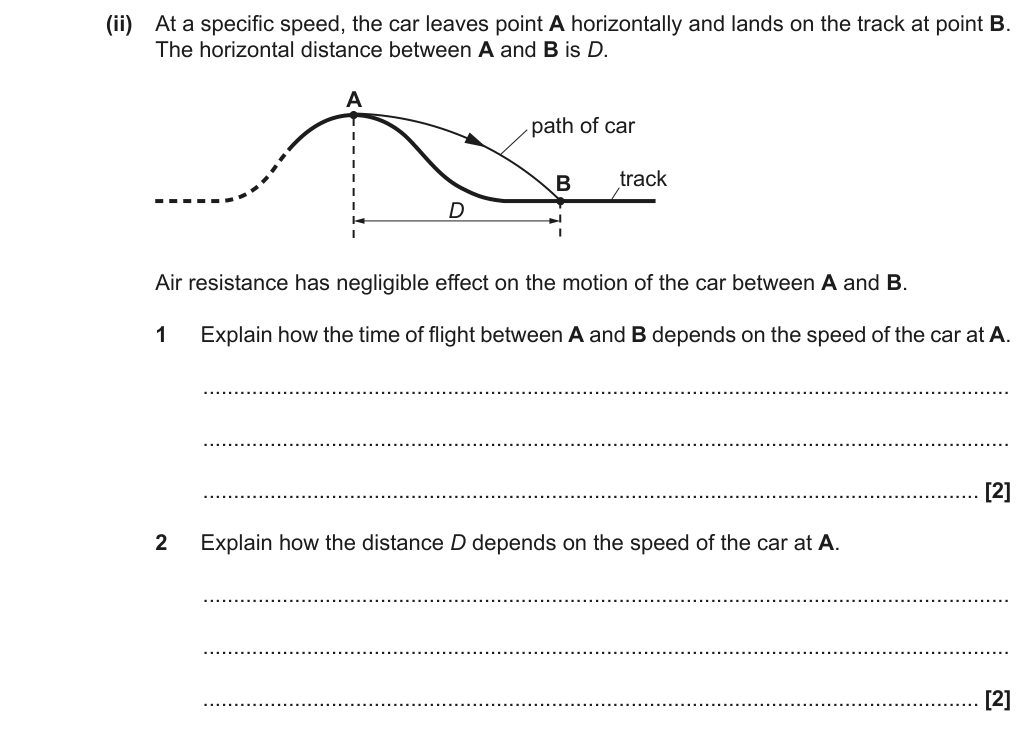
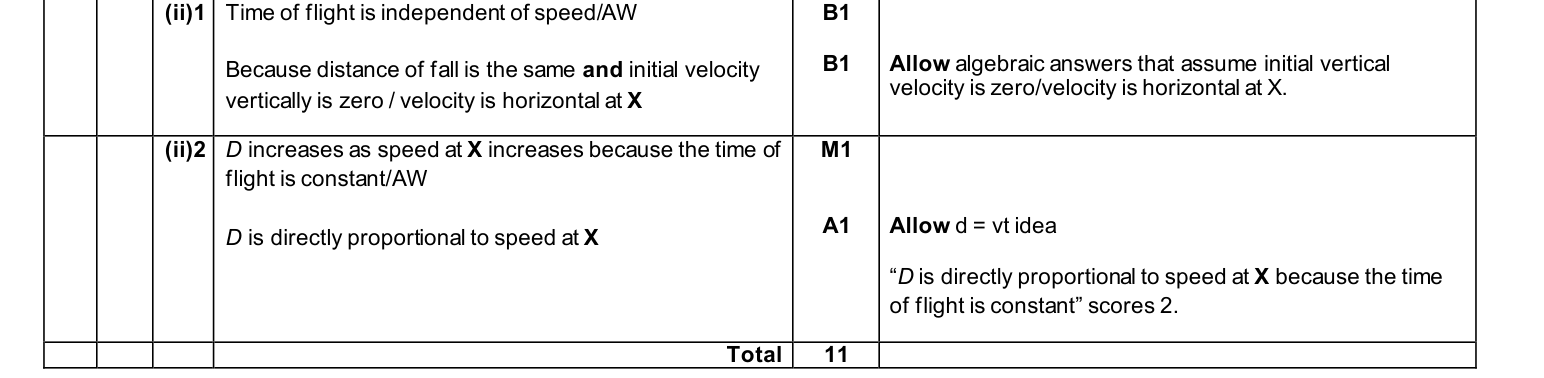
Q21(b)(ii) showed that many candidates thought that the time of flight of the car depended on the take-off speed of the car.
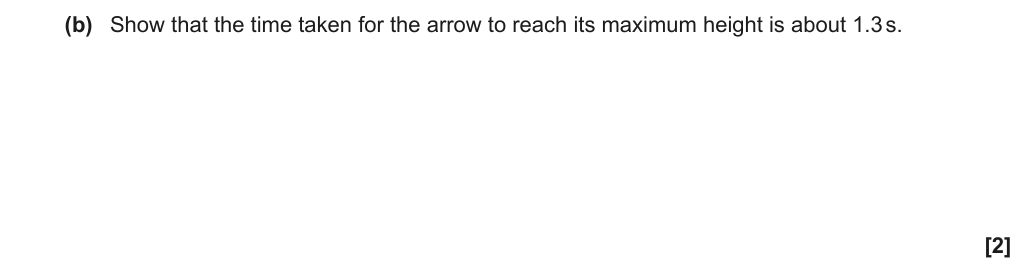
Skills: M0.6 Use calculators to handle sin x, cos x and tan x when x is expressed in degrees or radians; M2.2 Change the subject of an equation, including non-linear equations; M4.5 Use sin, cos and tan in physical problems
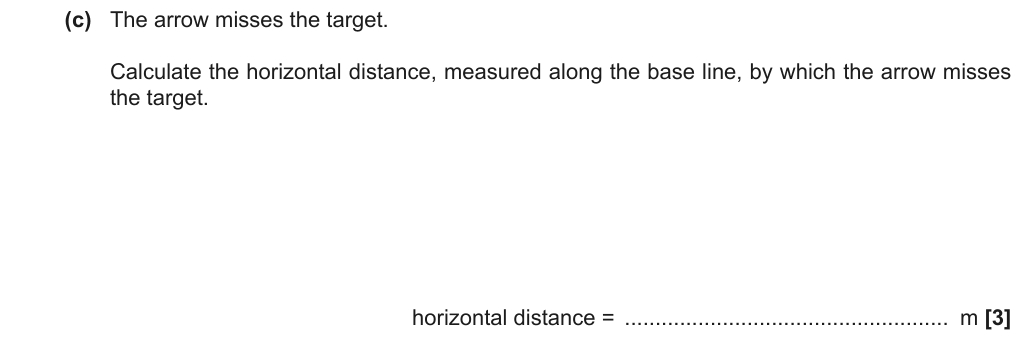
Skills: M2.3 Substitute numerical values into algebraic equations using appropriate units for physical quantities; M4.5 Use sin, cos and tan in physical problems
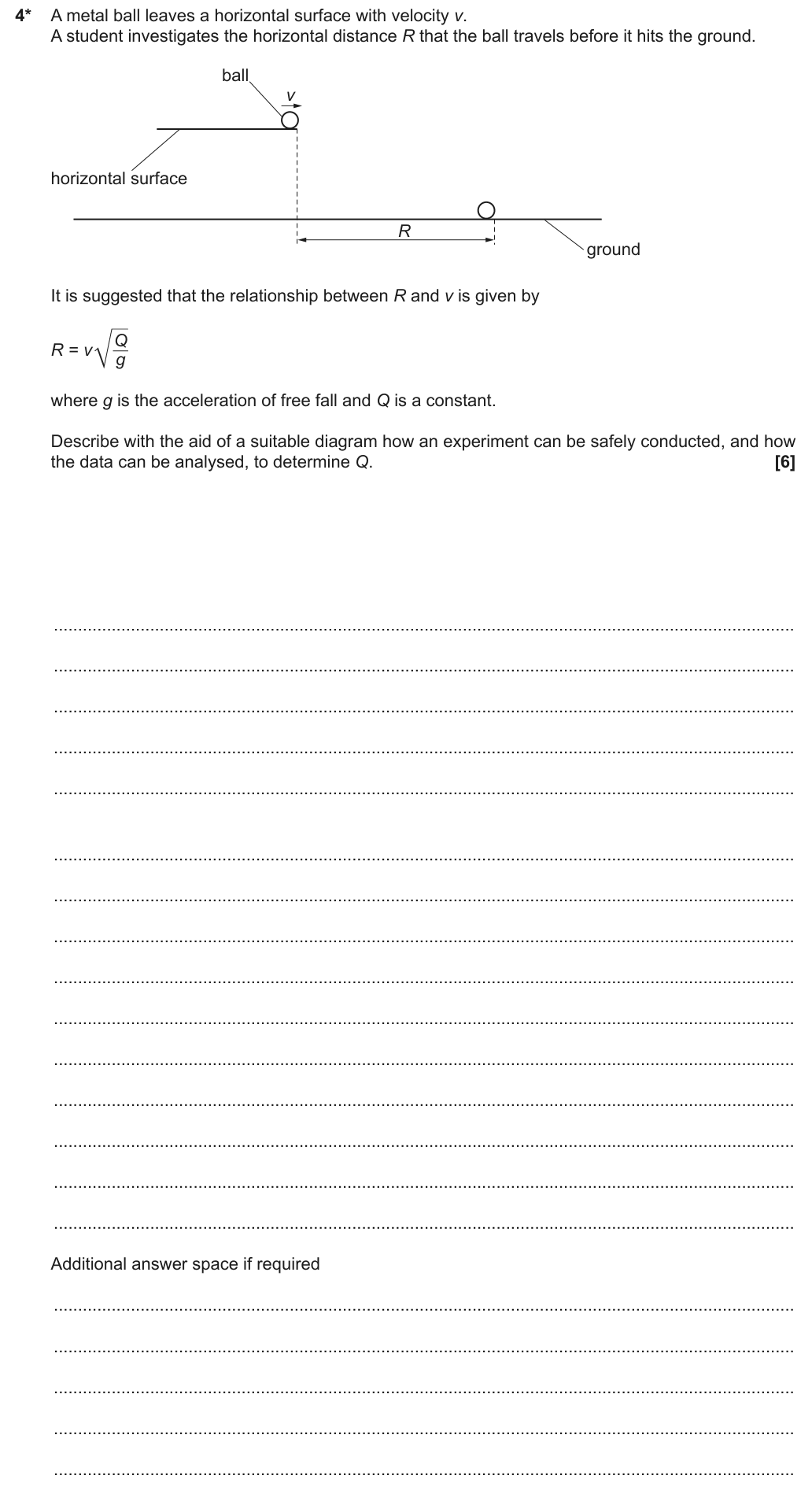
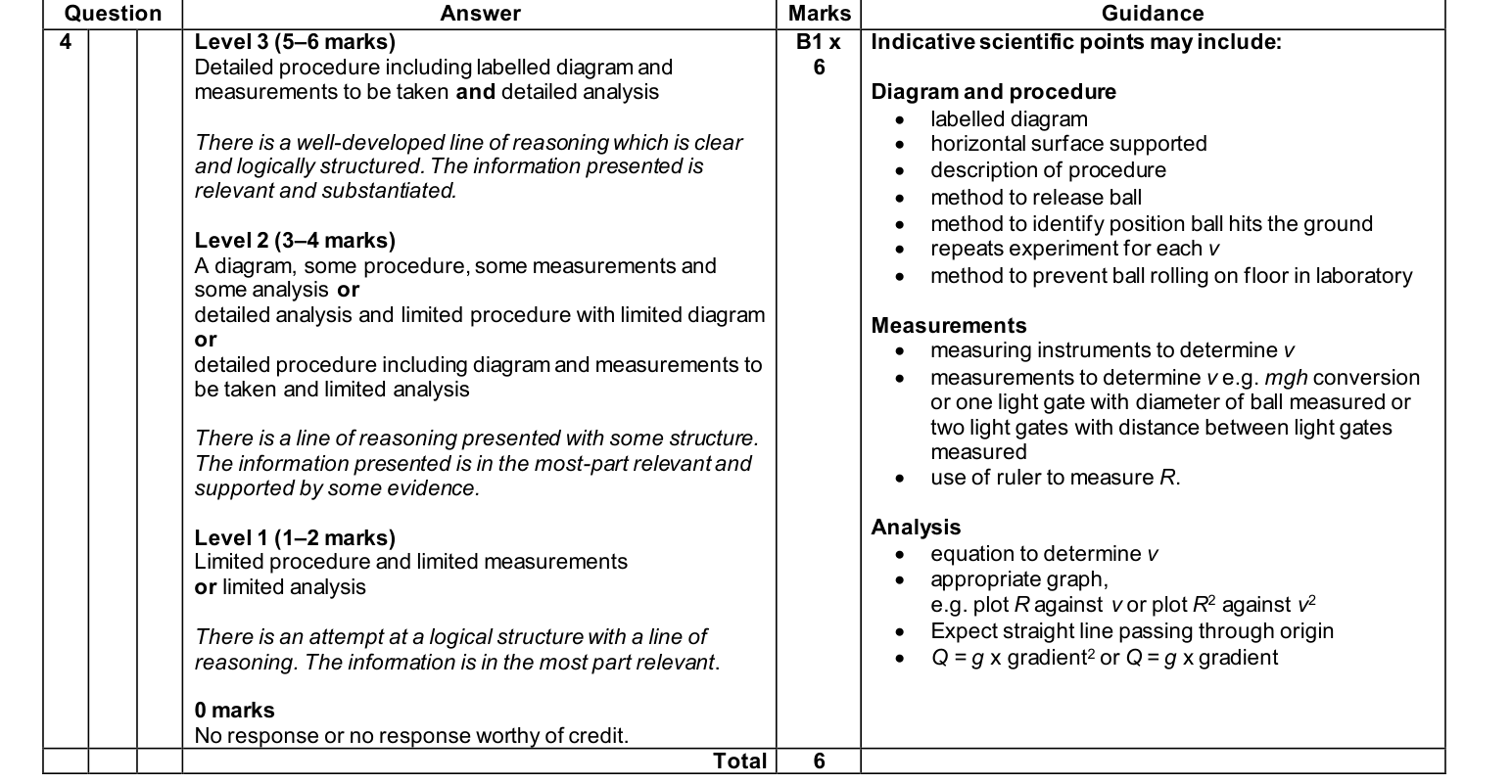
Comments on responses by question type Level of response questions The two LoR questions were Question 4 and Question 8. In Question 4, candidates were required to plan an experiment.
Skills: M3.3 Understand that y = mx + c represents a linear relationship; M3.4 Determine the slope and intercept of a linear graph; PAG1 Investigating motion
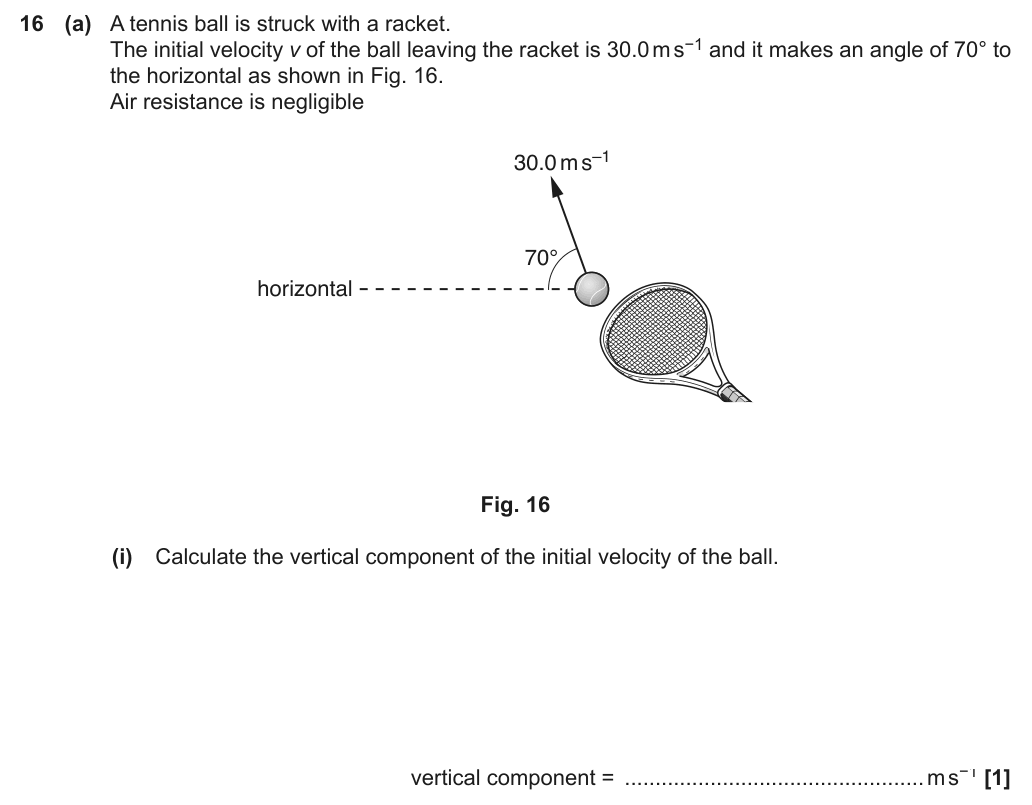
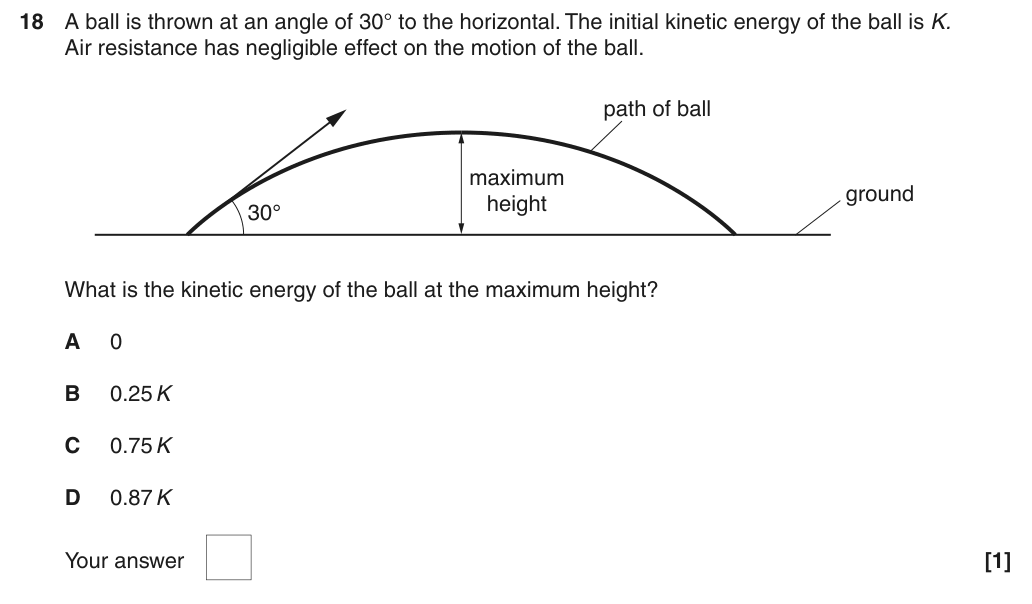
Question 16 (a) (i) Examiners’ report Question 16 (a) (ii) Question 16 (a) (iii) Question 16 (a) (iv) Part (i) was particularly well answered by 95% of all candidates.
Skills: M2.2 Change the subject of an equation, including non-linear equations; M2.3 Substitute numerical values into algebraic equations using appropriate units for physical quantities

Question 16 (a) (i) Examiners’ report Question 16 (a) (ii) Question 16 (a) (iii) Question 16 (a) (iv) Part (i) was particularly well answered by 95% of all candidates.
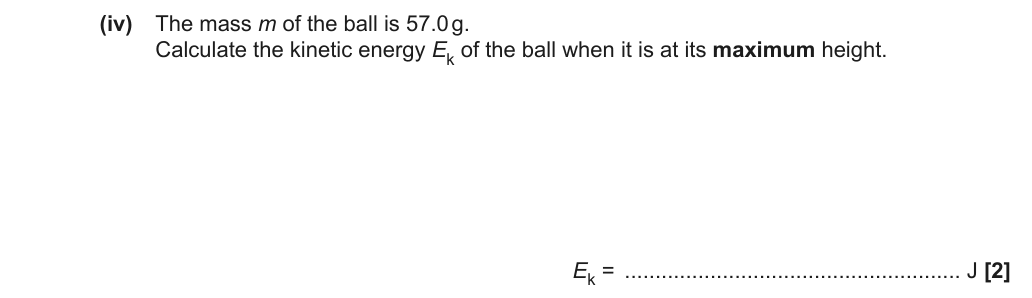
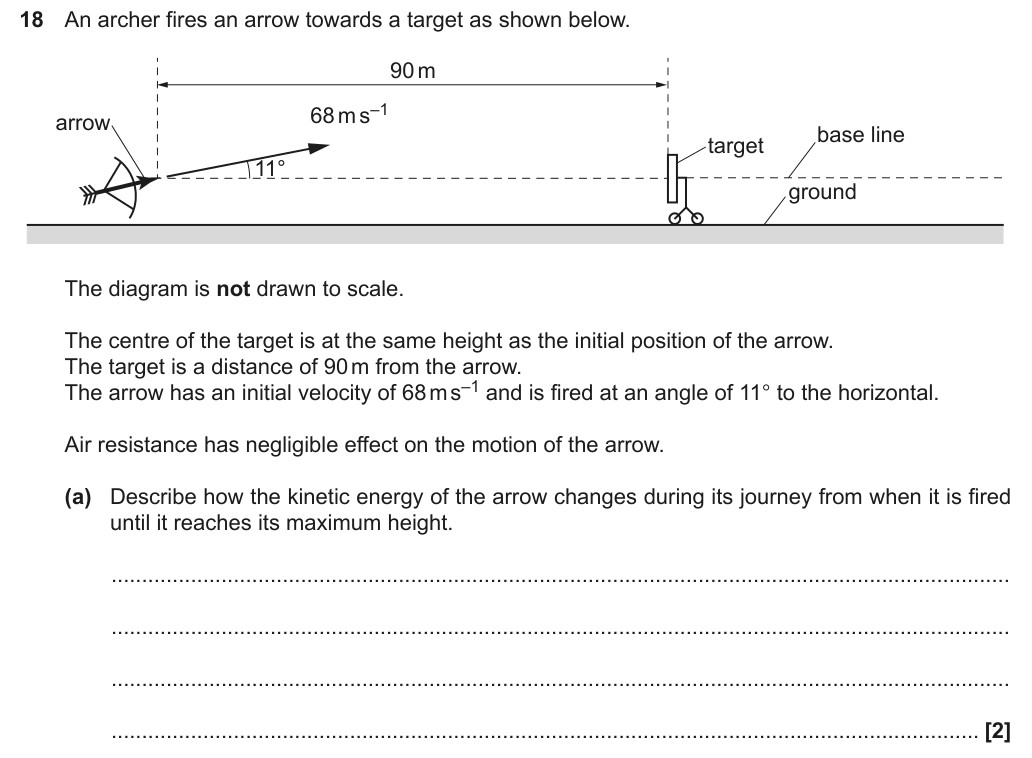
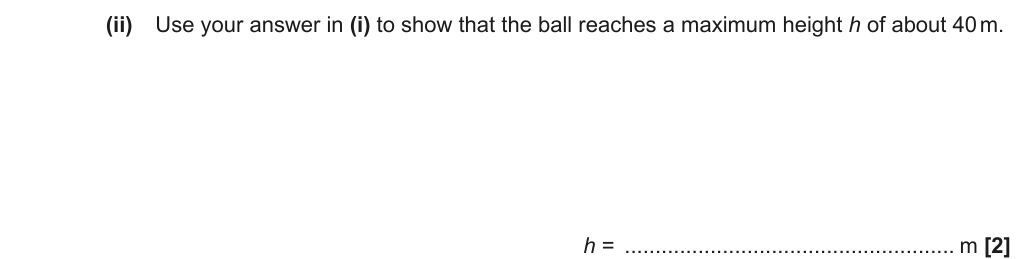
Part (i) was particularly well answered by 95% of all candidates. Nine out of ten candidates scored full marks in part (a)(ii), as they remembered that the question asks to show that the maximum height is around 40m. Working for this type of question is essential. In part (a)(iii), three quarters of all candidates correctly talked about the ball still having a horizontal velocity (which wasn’t zero) and therefore still possessing some KE. The key to this part (a)(iv), remembered by most candidates, was to use the horizontal component of velocity to find the KE at the maximum height. Some used the initial speed and others used the initial vertical velocity component found in part (a)(i).
Skills: M0.1 Recognise and make use of appropriate units in calculations; M0.6 Use calculators to handle sin x, cos x and tan x when x is expressed in degrees or radians; M2.3 Substitute numerical values into algebraic equations using appropriate units for physical quantities
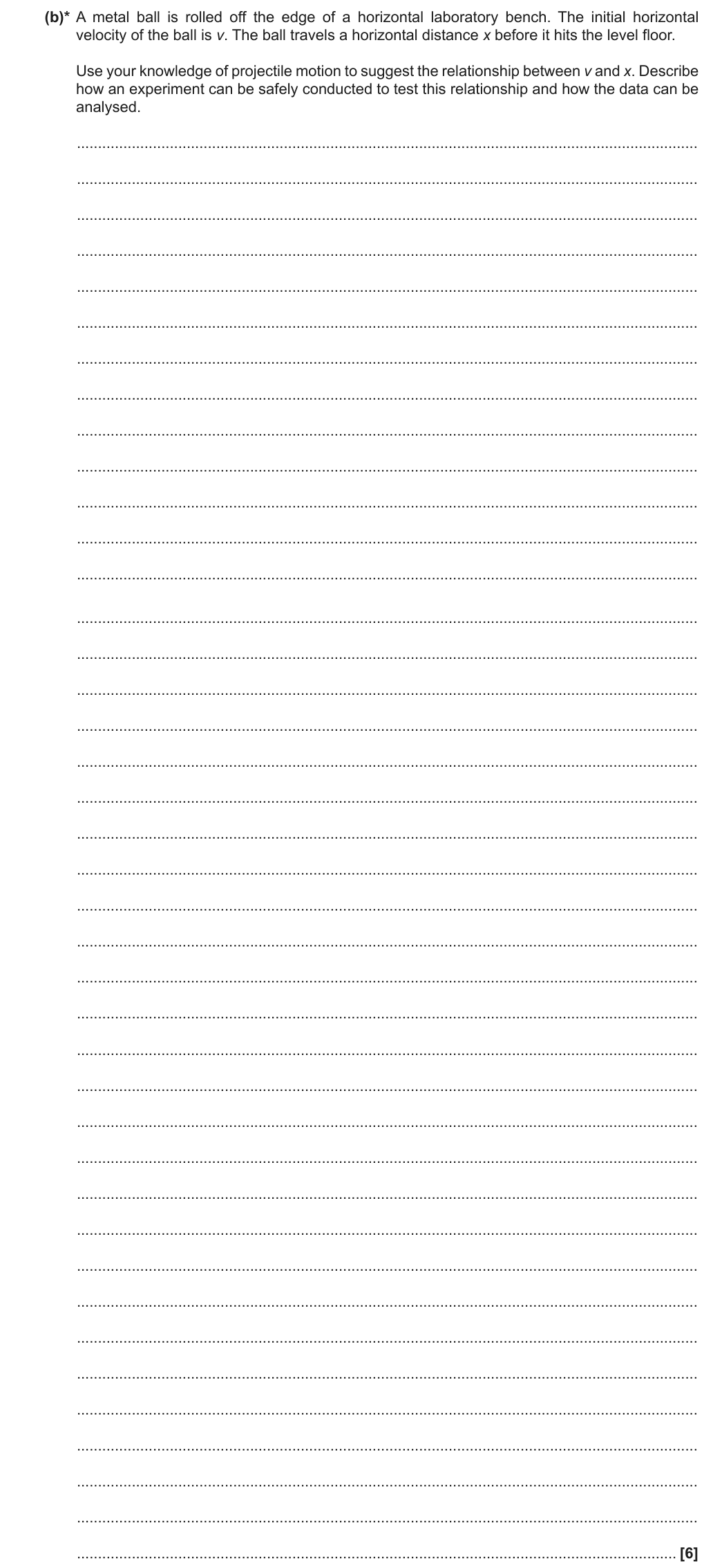
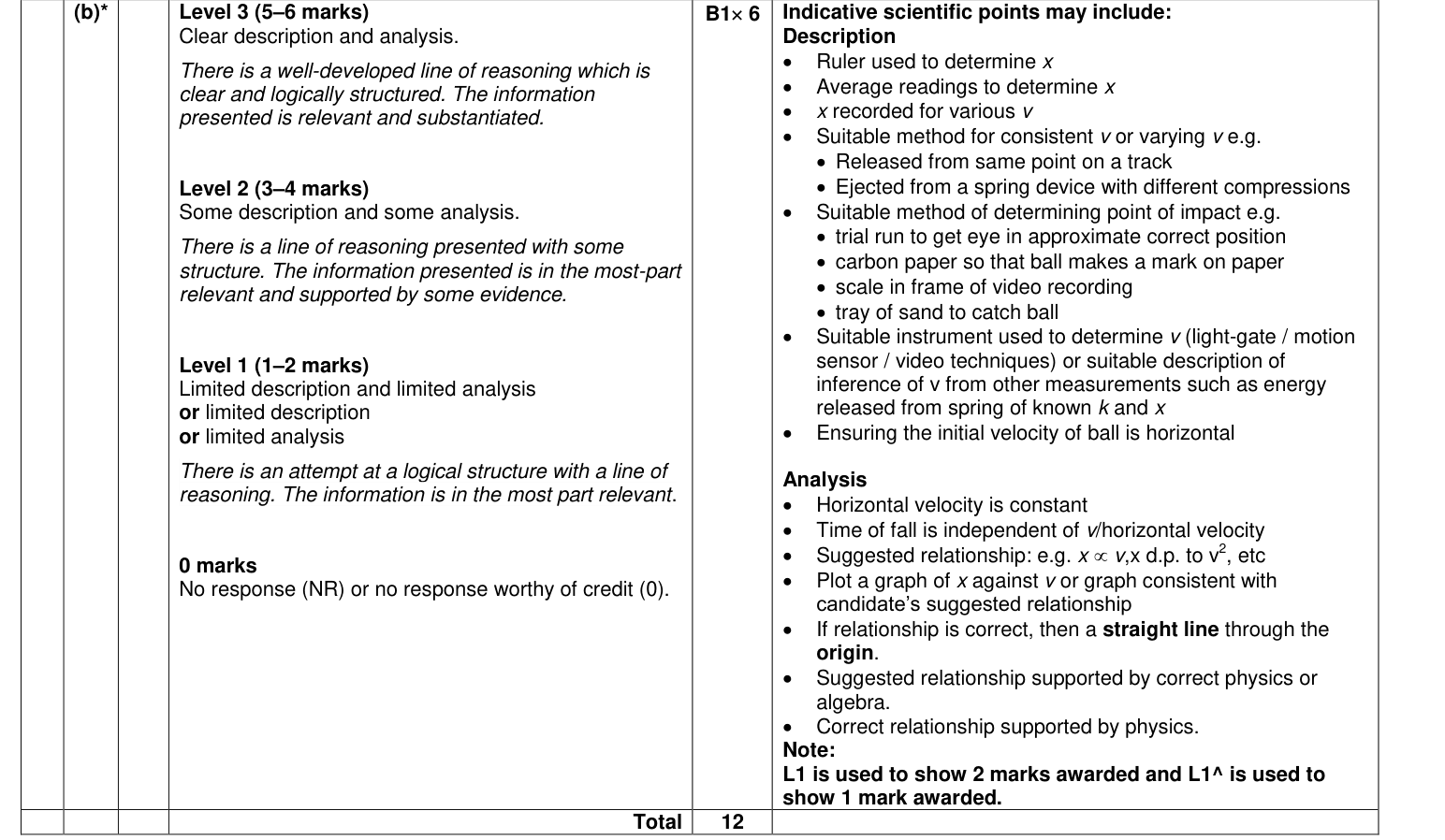
Many candidates had plenty to say that was sensible. There was plenty of evidence that candidates had seen this experiment or had performed a similar one themselves. A few confused the question, instead describing how to find the time of flight or that the ball was falling vertically. Others described what they thought would happen to the vertical component of velocity when they changed the vertical distance that the ball dropped. In the first paragraph, the candidate has made clear that the time of flight is constant and goes on to explain why towards the end of the response. This supports the prediction that 𝑣𝑣∝𝑥𝑥. In addition, the candidate takes time to explain how to obtain data for both the horizontal velocity and horizontal distance. It was pleasing to see light gates and motion sensors being employed, with the best answers explaining how to use the data provided by the sensors to calculate the velocity of projection. The exemplar response also includes the correct analysis. There is a graph of v against x and the resulting best fit straight line through the origin supports the idea that these two variables are directly proportional. Too many candidates did not mention the crucial statement about the line going through the origin, limiting their response to a high L1 or low L2.
Skills: M3.2 Plot two variables from experimental or other data; M3.3 Understand that y = mx + c represents a linear relationship; PAG1 Investigating motion
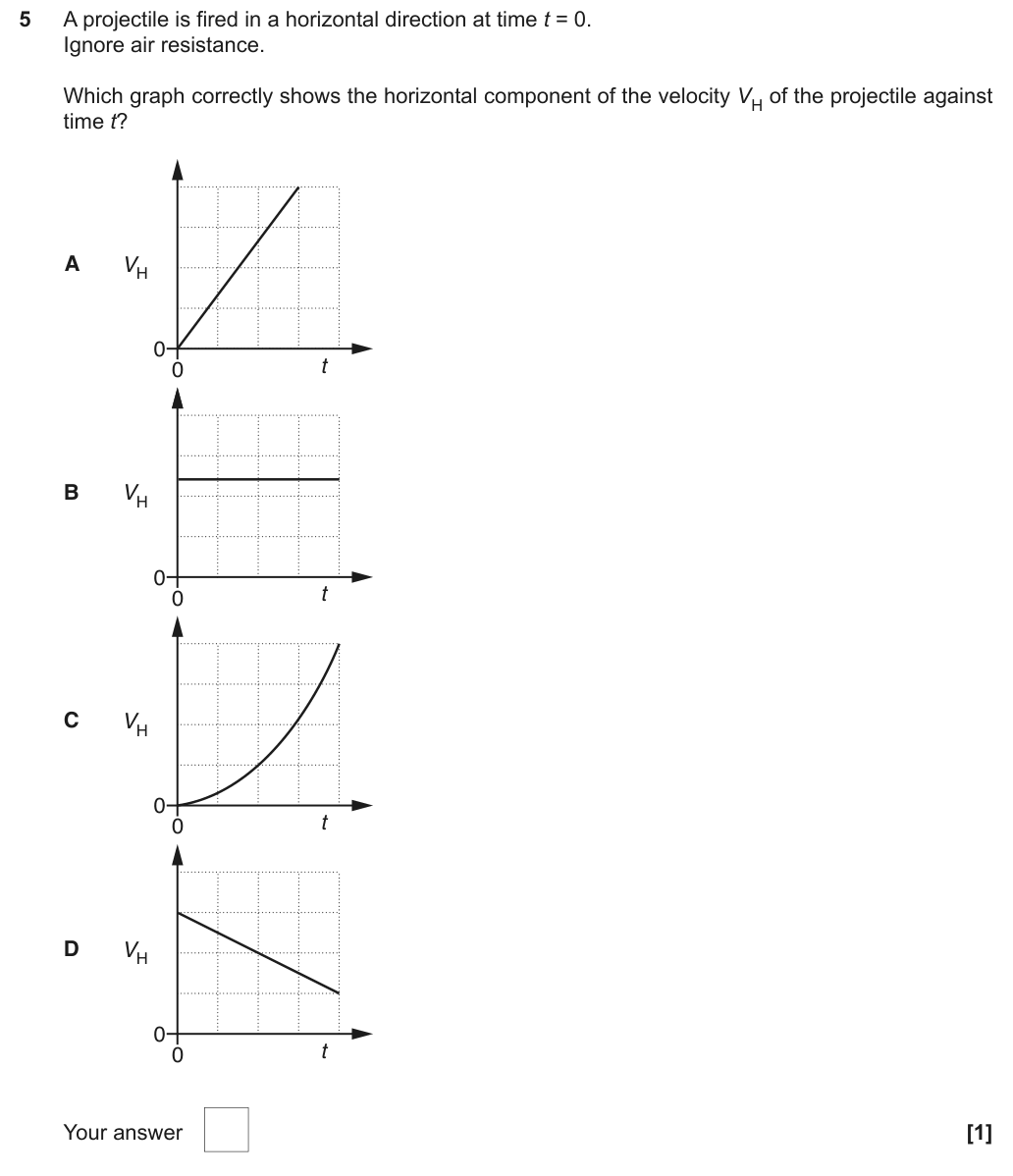
B
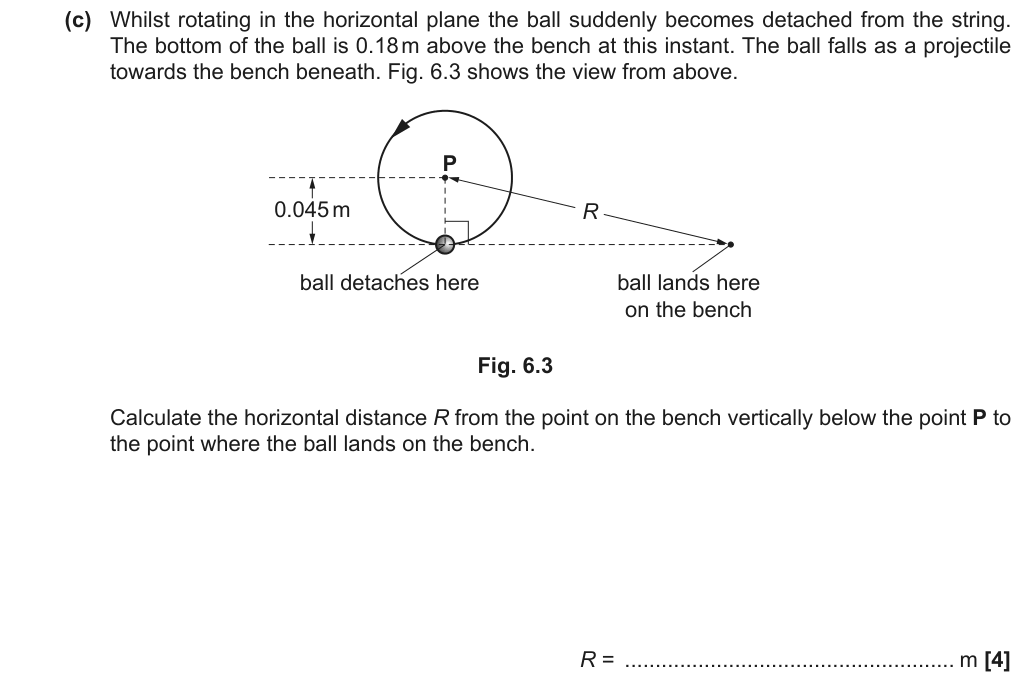
Skills: M2.3 Substitute numerical values into algebraic equations using appropriate units for physical quantities; M4.4 Use Pythagoras’ theorem, and the angle sum of a triangle
C
Skills: M2.2 Change the subject of an equation, including non-linear equations; M2.3 Substitute numerical values into algebraic equations using appropriate units for physical quantities
Skills: M2.3 Substitute numerical values into algebraic equations using appropriate units for physical quantities
Skills: M4.4 Use Pythagoras’ theorem, and the angle sum of a triangle

Skills: M3.12 Sketch relationships which are modelled by y = k/x, y = kx², y = k/x², y = kx, y = sin x, y = cos x, y = e^(±x) and y = sin²x, y = cos²x as applied to physical relationships
Dropping marks on calculations, practical questions or the six-mark level of response questions? Book a trial session with a specialist OCR physics tutor.