June 2019: Paper 3B Medical physics

35 marks · 12 question parts · Paper, mark scheme and report on AQA's site · Have the data and formulae booklet beside you

Question by question

QTopicMarksAOType
1.1 Physics of the eye, the ear and the ECG 1Short answer
1.2 Physics of the eye, the ear and the ECG 4Diagram or graph
1.3 Physics of the eye, the ear and the ECG 5Calculation
2.1 Physics of the eye, the ear and the ECG 2Calculation
2.2 Physics of the eye, the ear and the ECG 2Calculation
2.3 Physics of the eye, the ear and the ECG 2Explanation
2.4 Physics of the eye, the ear and the ECG 3Explanation
3.1 Medical imaging: ultrasound, X-rays, CT, MRI and radionuclides 4Explanation
3.2 Medical imaging: ultrasound, X-rays, CT, MRI and radionuclides 2Diagram or graph
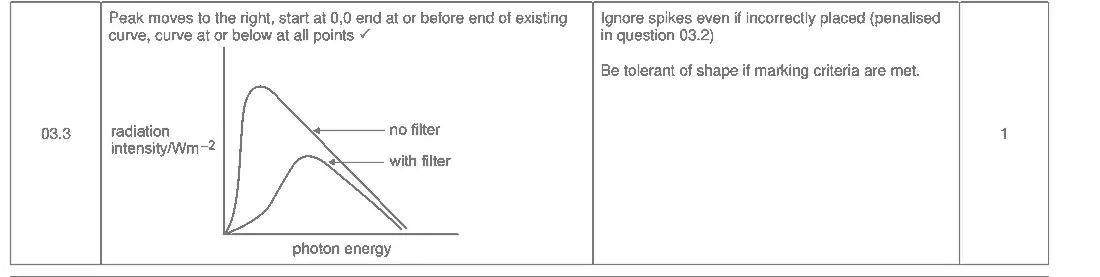
3.3 Medical imaging: ultrasound, X-rays, CT, MRI and radionuclides 1Diagram or graph
4.1 Medical imaging: ultrasound, X-rays, CT, MRI and radionuclides 3Calculation
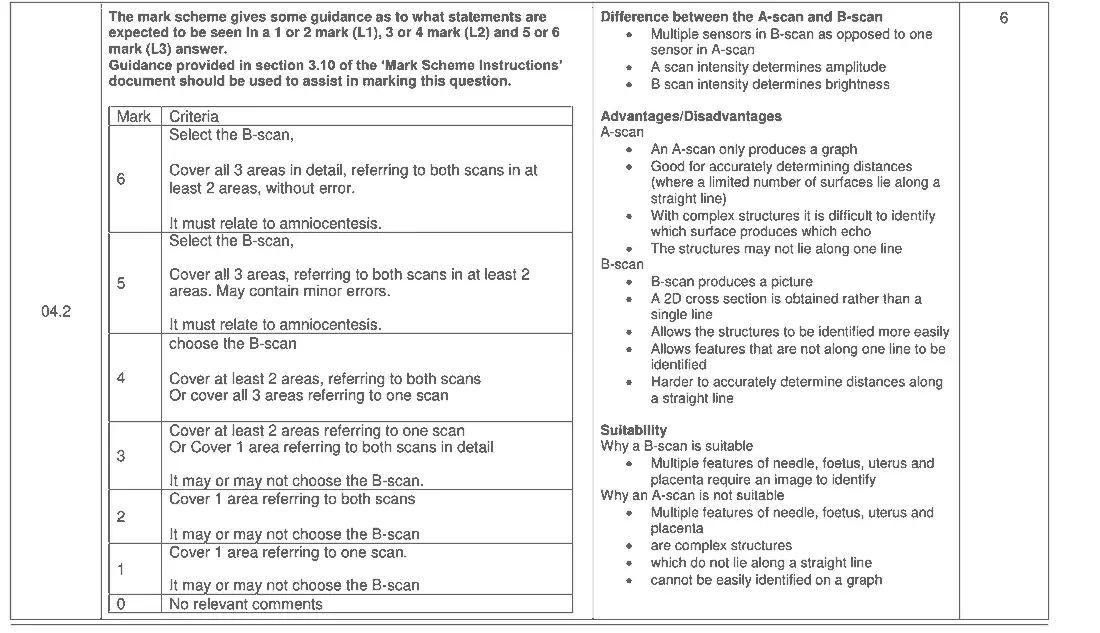
4.2 Medical imaging: ultrasound, X-rays, CT, MRI and radionuclides 6Extended response

The questions

1.11.21.32.12.22.32.43.13.23.34.14.2
June 2019 · Paper 3B Medical physics · Q1.1 1 mark Short answer Easy eye ear and ecg
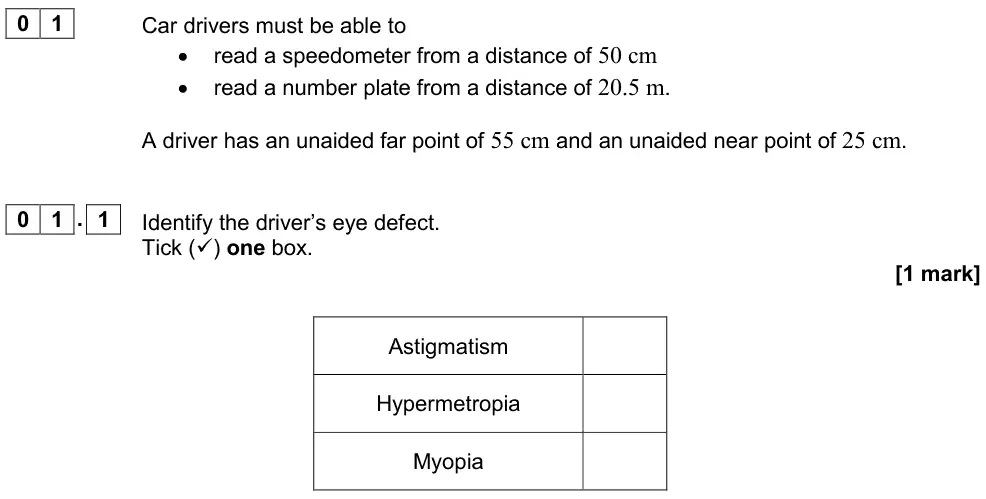
Car drivers must be able to
•
read a speedometer from a distance of 50 cm
•
read a number plate from a distance of 20.5 m.
A driver has an unaided far point of 55 cm and an unaided near point of 25 cm.
Identify the driver’s eye defect.
Tick () one box.
[1 mark]
Astigmatism
Hypermetropia
Myopia
June 2019 · Paper 3B Medical physics · Q1.2 4 marks Diagram or graph eye ear and ecg
Earlier part of question 1 that this part usesEarlier part of June 2019 Paper 3B Medical physics question 1
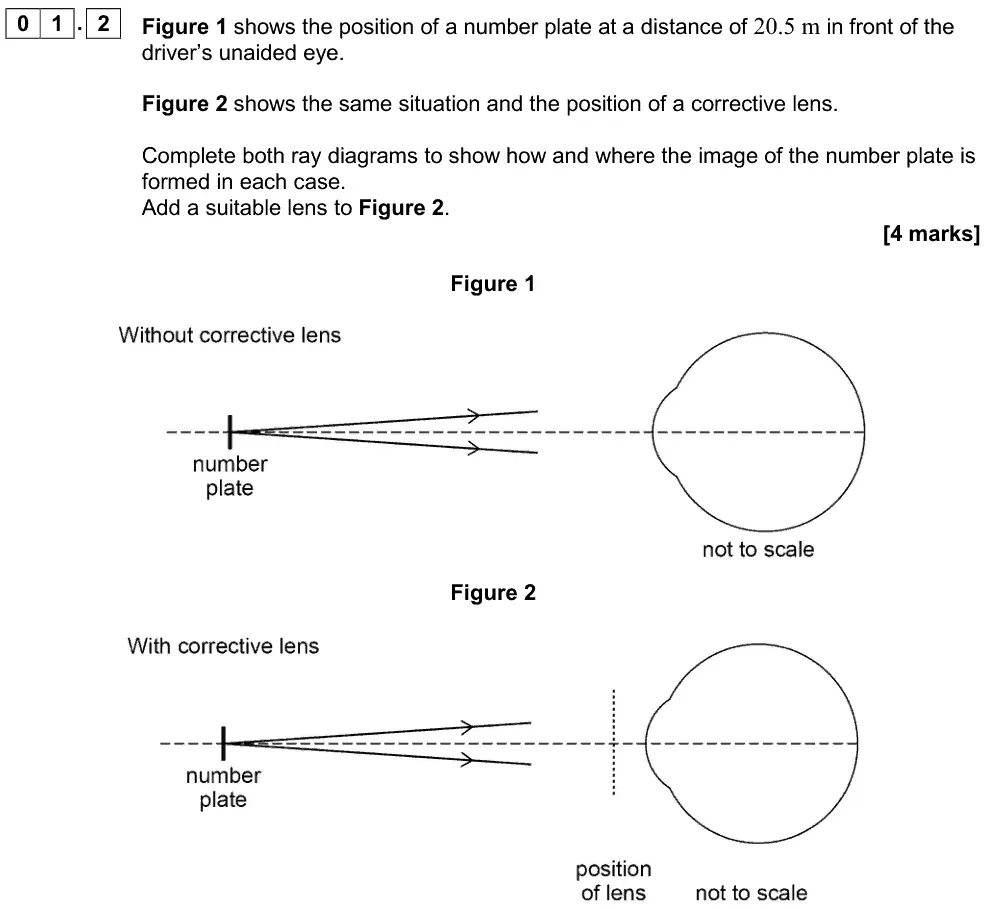
Figure 1 shows the position of a number plate at a distance of 20.5 m in front of the
driver’s unaided eye.
Figure 2 shows the same situation and the position of a corrective lens.
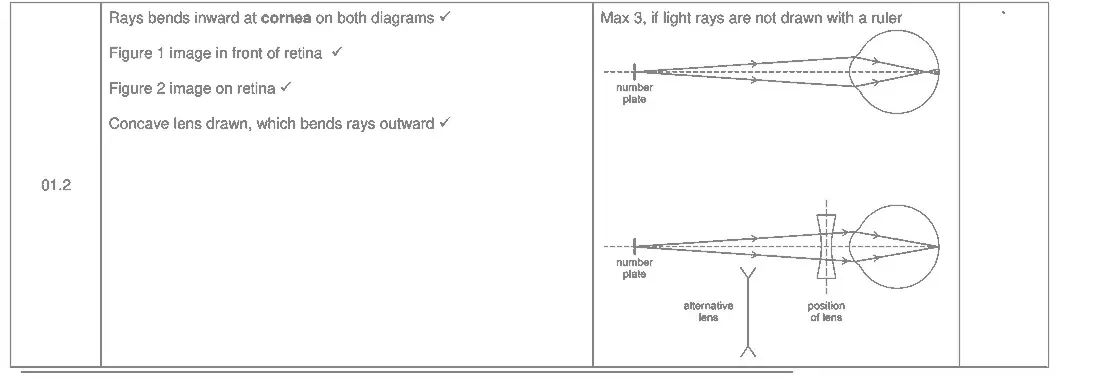
Complete both ray diagrams to show how and where the image of the number plate is
formed in each case.
Add a suitable lens to Figure 2.
[4 marks]
Figure 1
Figure 2
June 2019 · Paper 3B Medical physics · Q1.3 5 marks Calculation eye ear and ecg
Earlier part of question 1 that this part usesEarlier part of June 2019 Paper 3B Medical physics question 1
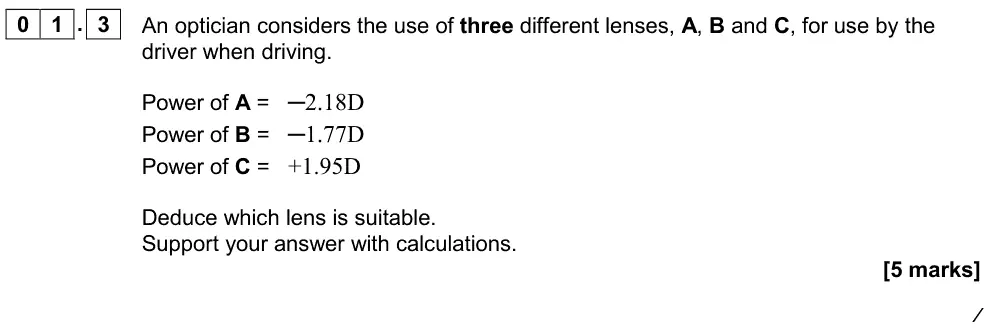
An optician considers the use of three different lenses, A, B and C, for use by the
driver when driving.
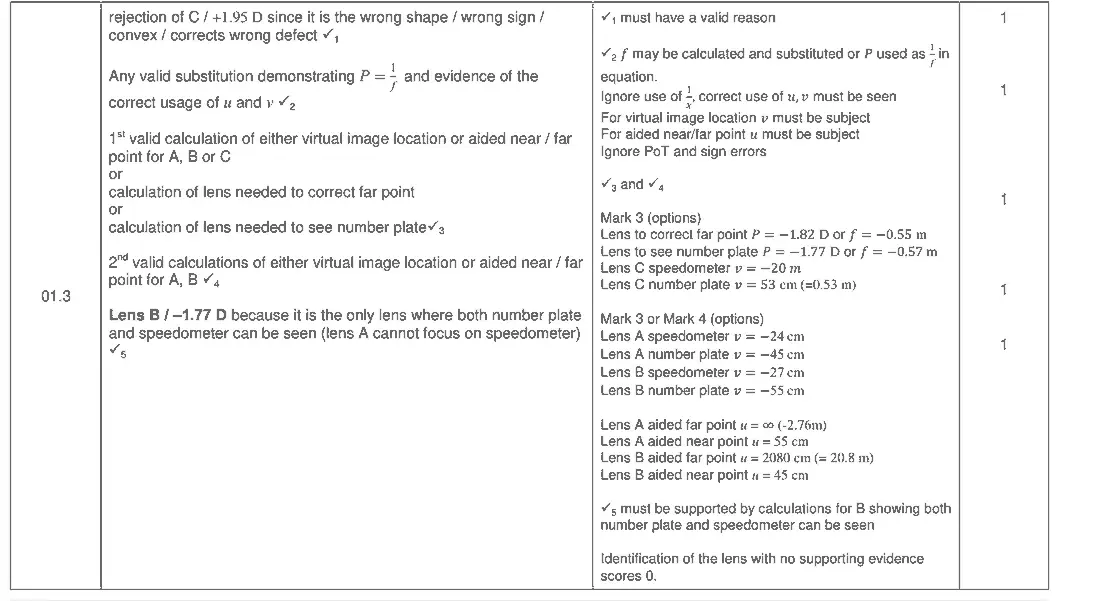
Power of A =   ─2.18D
Power of B =   ─1.77D
Power of C =   +1.95D
Deduce which lens is suitable.
Support your answer with calculations.
[5 marks]
June 2019 · Paper 3B Medical physics · Q2.1 2 marks Calculation eye ear and ecg
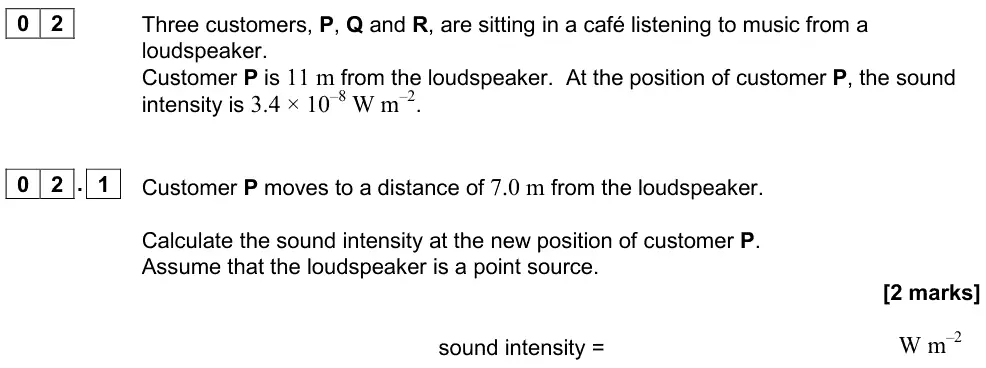
Three customers, P, Q and R, are sitting in a café listening to music from a
loudspeaker.
Customer P is 11 m from the loudspeaker.  At the position of customer P, the sound
intensity is 3.4 × 10⁻⁸ W m–2.
Customer P moves to a distance of 7.0 m from the loudspeaker.
Calculate the sound intensity at the new position of customer P.
Assume that the loudspeaker is a point source.
[2 marks]
sound intensity =
W m–2
June 2019 · Paper 3B Medical physics · Q2.2 2 marks Calculation eye ear and ecg
Earlier part of question 2 that this part usesEarlier part of June 2019 Paper 3B Medical physics question 2
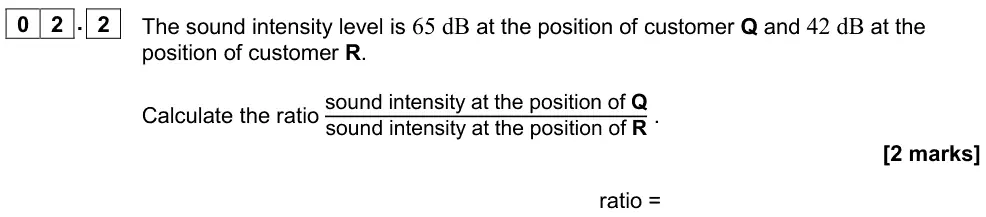
The sound intensity level is 65 dB at the position of customer Q and 42 dB at the
position of customer R.
Calculate the ratio sound intensity at the position of Q
sound intensity at the position of R .
[2 marks]
ratio =
June 2019 · Paper 3B Medical physics · Q2.3 2 marks Explanation eye ear and ecg
Earlier part of question 2 that this part usesEarlier part of June 2019 Paper 3B Medical physics question 2
Customer Q perceives the loudness of the sound differently to customer R.
Discuss whether the use of intensity level or intensity is more appropriate to compare
the perceived loudness.
[2 marks]
June 2019 · Paper 3B Medical physics · Q2.4 3 marks Explanation eye ear and ecg
Earlier part of question 2 that this part usesEarlier part of June 2019 Paper 3B Medical physics question 2
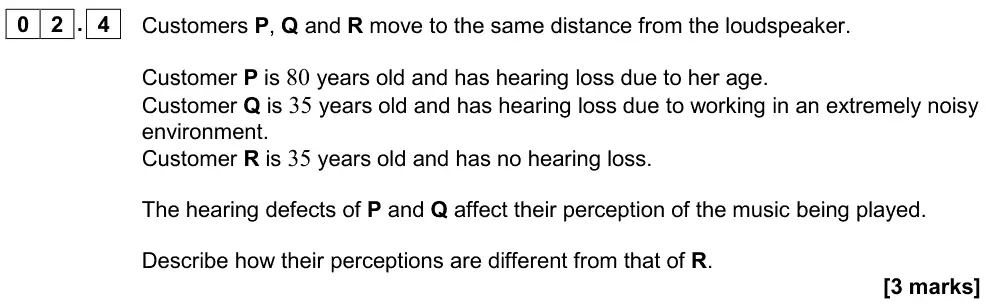
Customers P, Q and R move to the same distance from the loudspeaker.
Customer P is 80 years old and has hearing loss due to her age.
Customer Q is 35 years old and has hearing loss due to working in an extremely noisy
environment.
Customer R is 35 years old and has no hearing loss.
The hearing defects of P and Q affect their perception of the music being played.
Describe how their perceptions are different from that of R.
[3 marks]
June 2019 · Paper 3B Medical physics · Q3.1 4 marks Explanation medical imaging
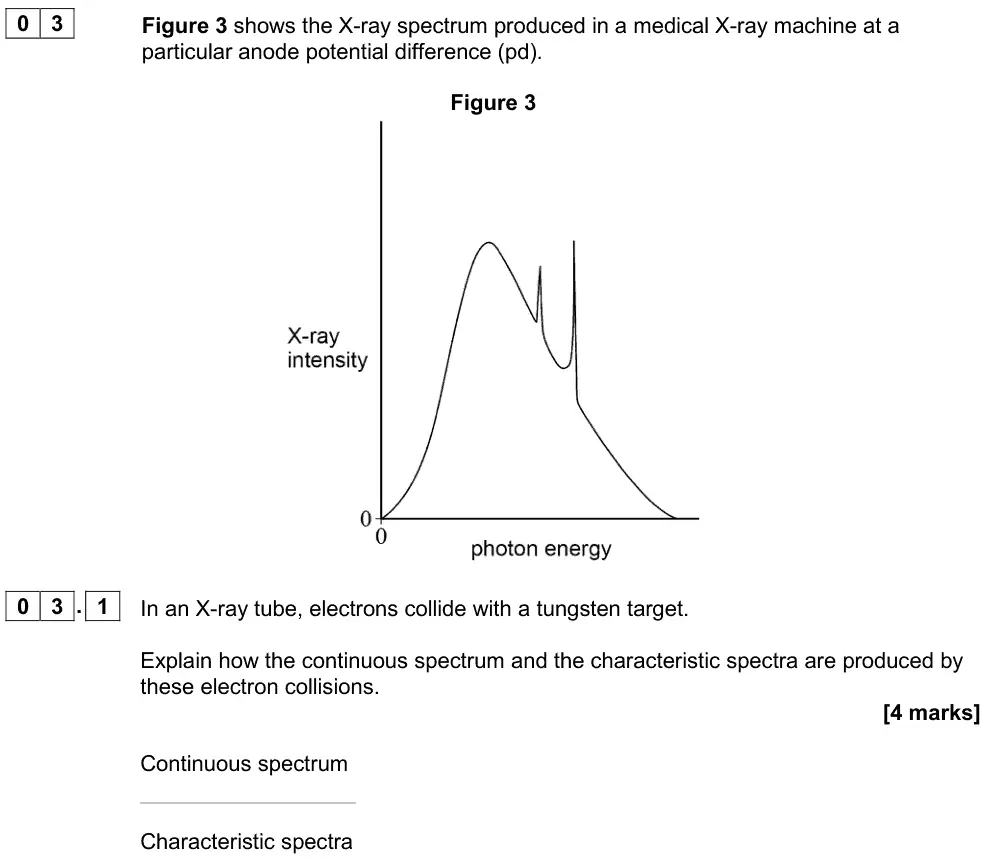
Figure 3 shows the X-ray spectrum produced in a medical X-ray machine at a
particular anode potential difference (pd).
Figure 3
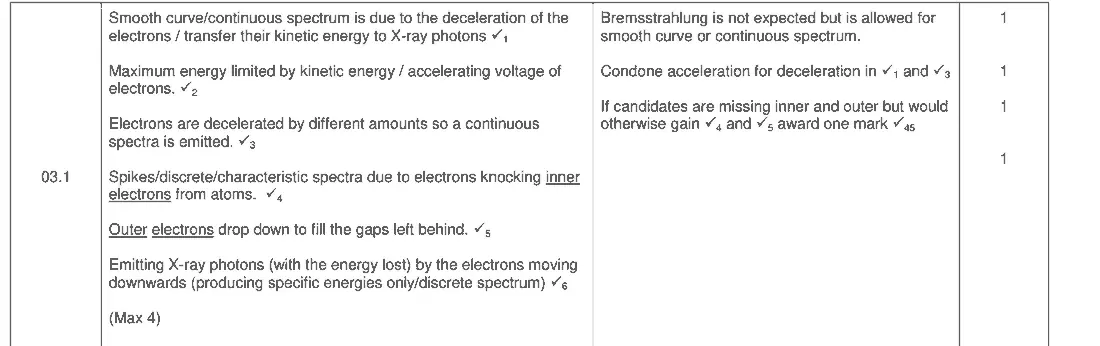
In an X-ray tube, electrons collide with a tungsten target.
Explain how the continuous spectrum and the characteristic spectra are produced by
these electron collisions.
[4 marks]
Continuous spectrum
Characteristic spectra
June 2019 · Paper 3B Medical physics · Q3.2 2 marks Diagram or graph medical imaging
Earlier part of question 3 that this part usesEarlier part of June 2019 Paper 3B Medical physics question 3
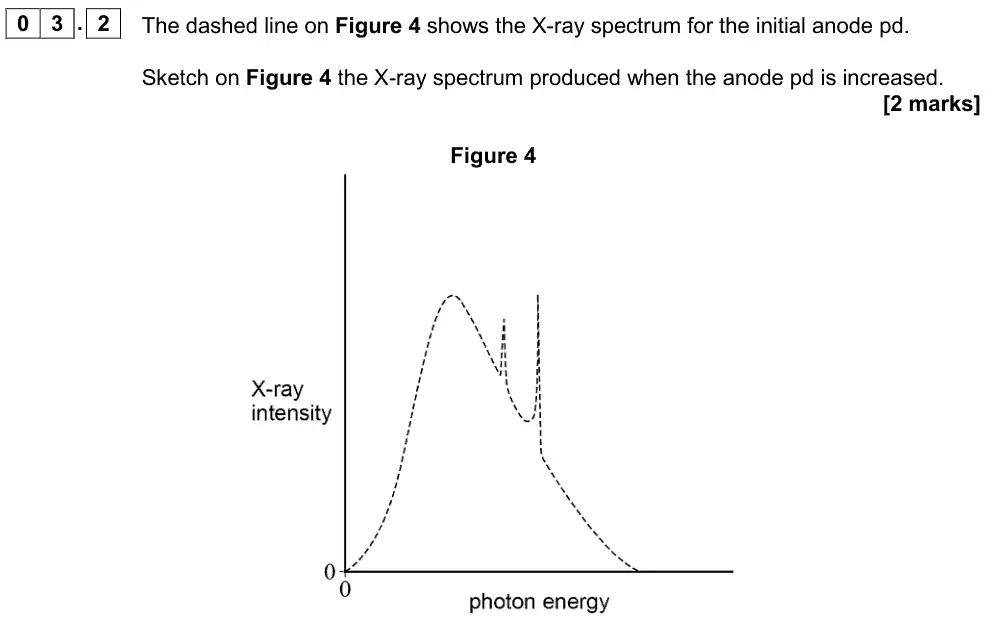
The dashed line on Figure 4 shows the X-ray spectrum for the initial anode pd.
Sketch on Figure 4 the X-ray spectrum produced when the anode pd is increased.
[2 marks]
Figure 4
June 2019 · Paper 3B Medical physics · Q3.3 1 mark Diagram or graph medical imaging
Earlier part of question 3 that this part usesEarlier part of June 2019 Paper 3B Medical physics question 3
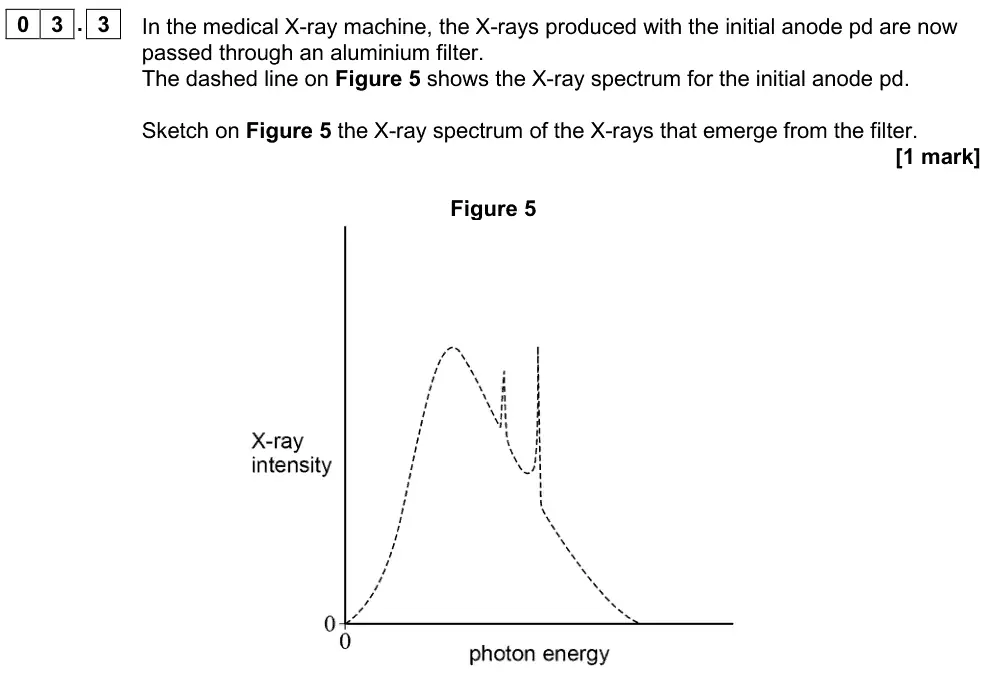
In the medical X-ray machine, the X-rays produced with the initial anode pd are now
passed through an aluminium filter.
The dashed line on Figure 5 shows the X-ray spectrum for the initial anode pd.
Sketch on Figure 5 the X-ray spectrum of the X-rays that emerge from the filter.
[1 mark]
Figure 5
June 2019 · Paper 3B Medical physics · Q4.1 3 marks Calculation medical imaging
Ultrasound is commonly used in medical procedures.
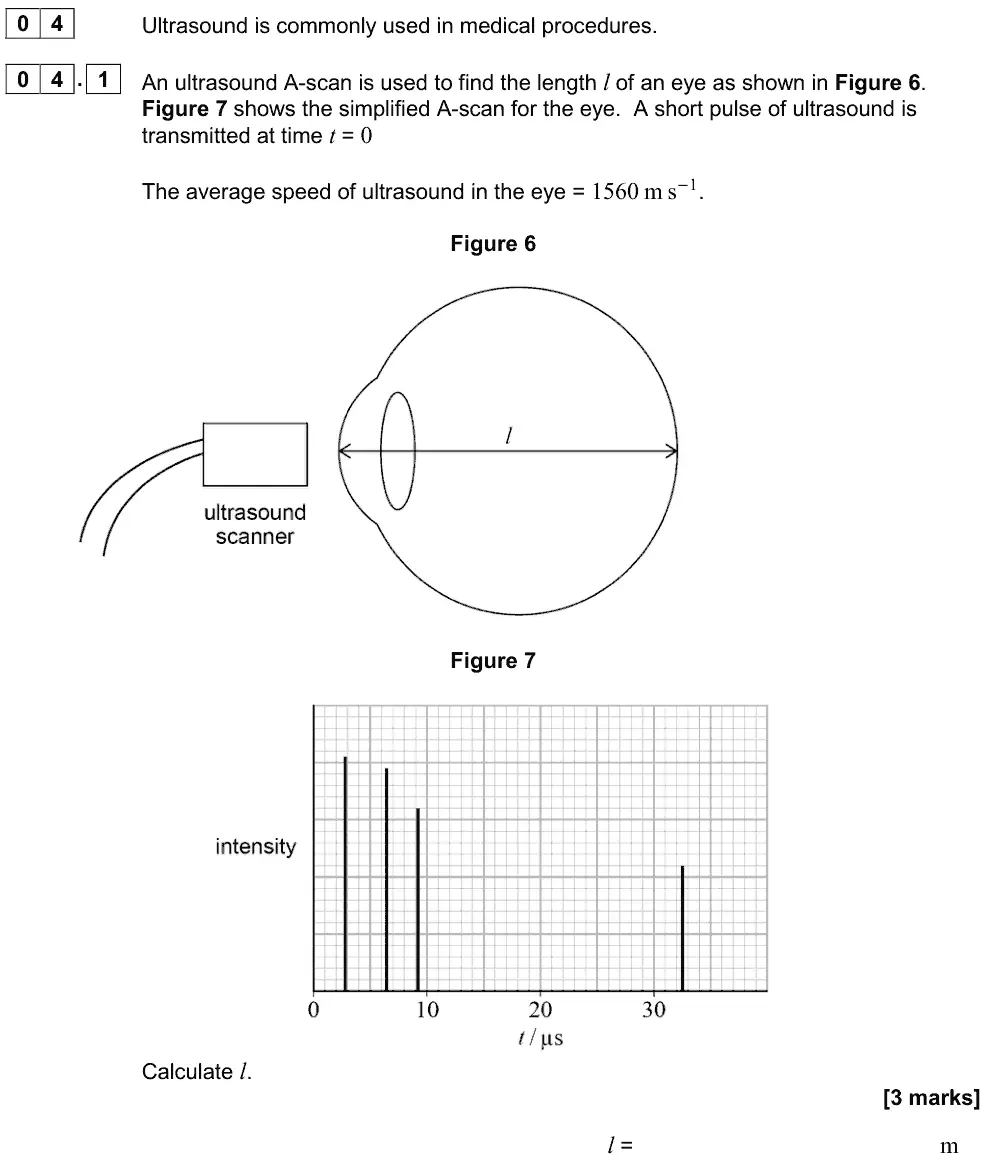
An ultrasound A-scan is used to find the length l of an eye as shown in Figure 6.
Figure 7 shows the simplified A-scan for the eye.  A short pulse of ultrasound is
transmitted at time t = 0
The average speed of ultrasound in the eye = 1560 m s−1.
Figure 6
Figure 7
Calculate l.
[3 marks]
l =
m
June 2019 · Paper 3B Medical physics · Q4.2 6 marks 6-mark extended response medical imaging
Earlier part of question 4 that this part usesEarlier part of June 2019 Paper 3B Medical physics question 4
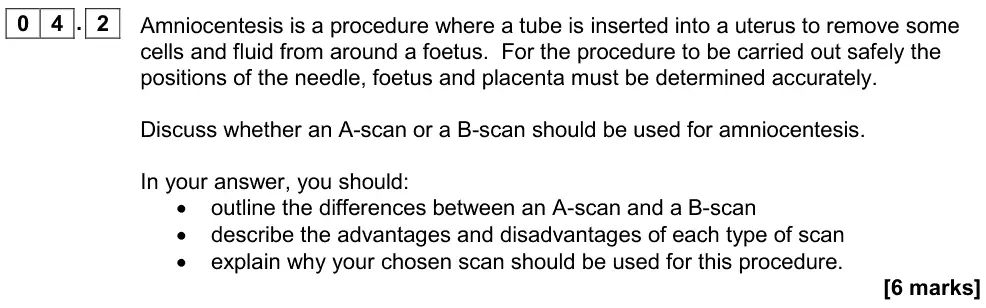
Amniocentesis is a procedure where a tube is inserted into a uterus to remove some
cells and fluid from around a foetus.  For the procedure to be carried out safely the
positions of the needle, foetus and placenta must be determined accurately.
Discuss whether an A-scan or a B-scan should be used for amniocentesis.
In your answer, you should:
•
outline the differences between an A-scan and a B-scan
•
describe the advantages and disadvantages of each type of scan
•
explain why your chosen scan should be used for this procedure.
[6 marks]

Work with an AQA physics tutor

Want a paper marked and gone through with you? Message us.

Prefer email? Send an enquiry

If you are under 18, please include a parent's contact details. Enquiries go to enquiries@physicsaleveltutor.com and are deleted once handled. All tutoring is online.