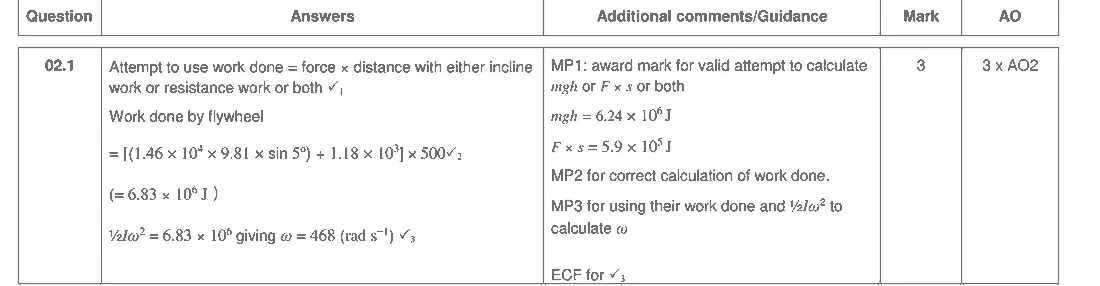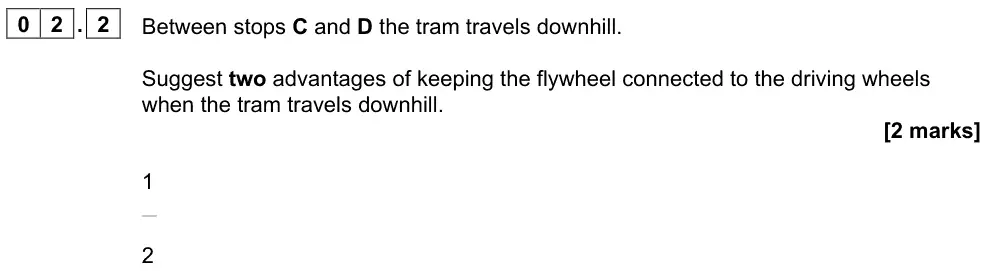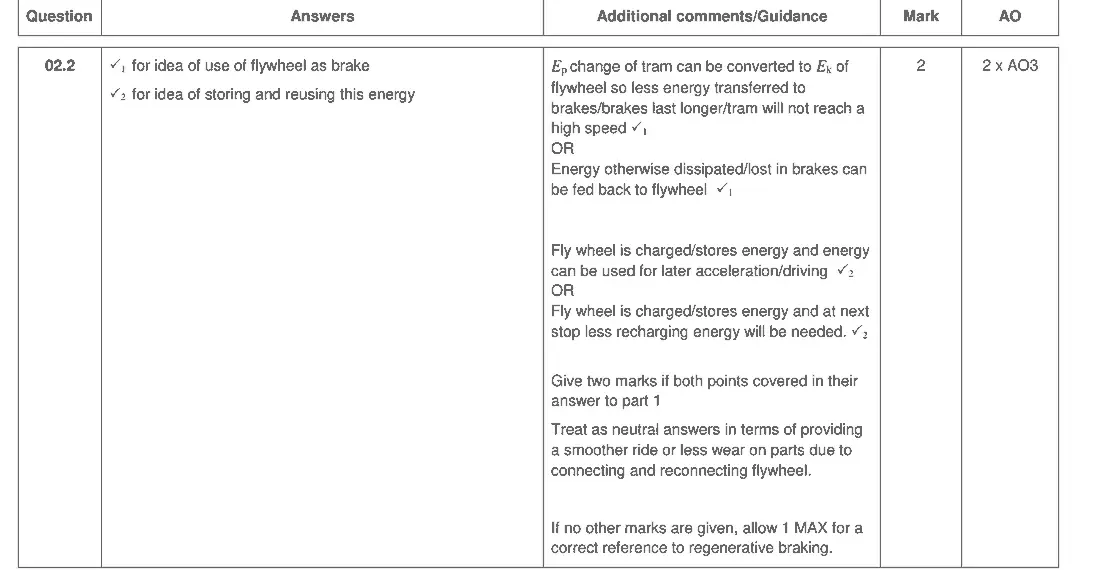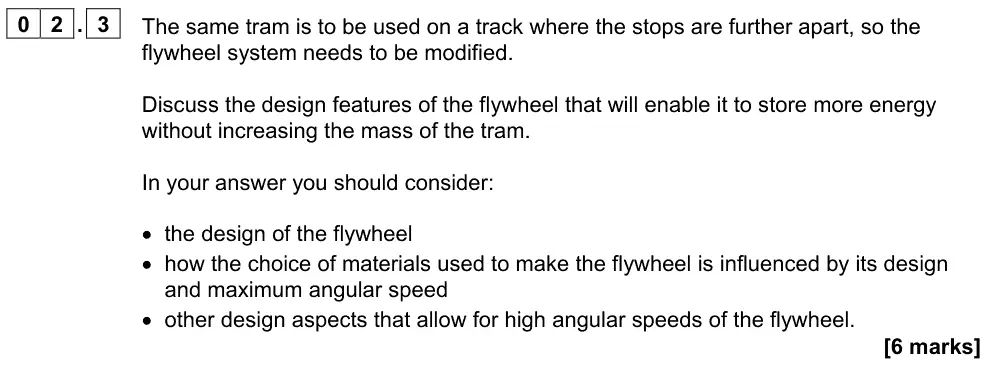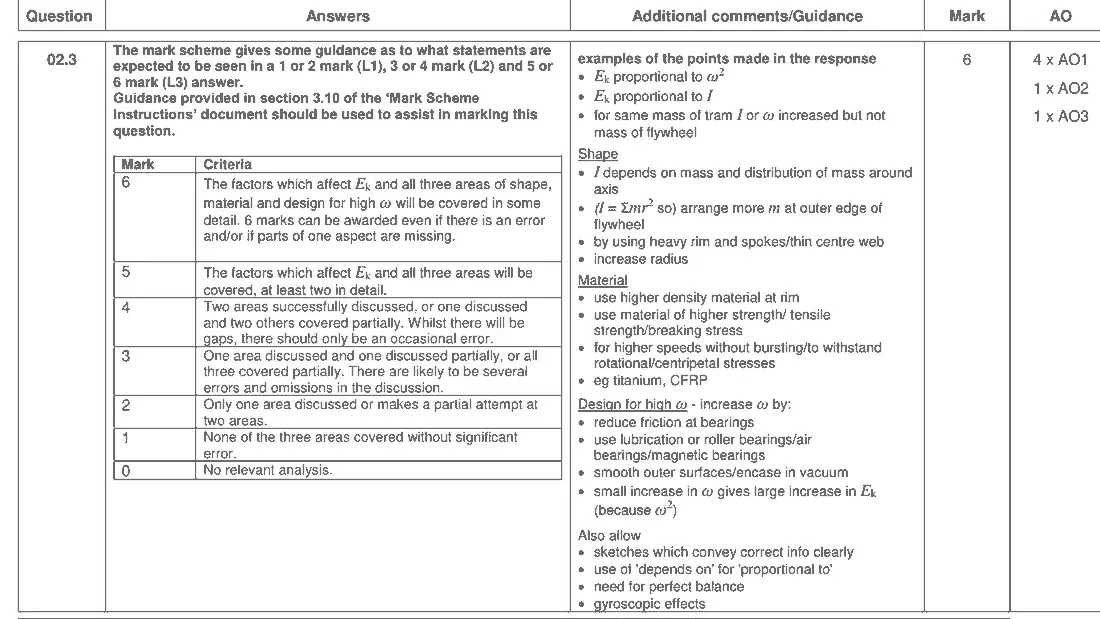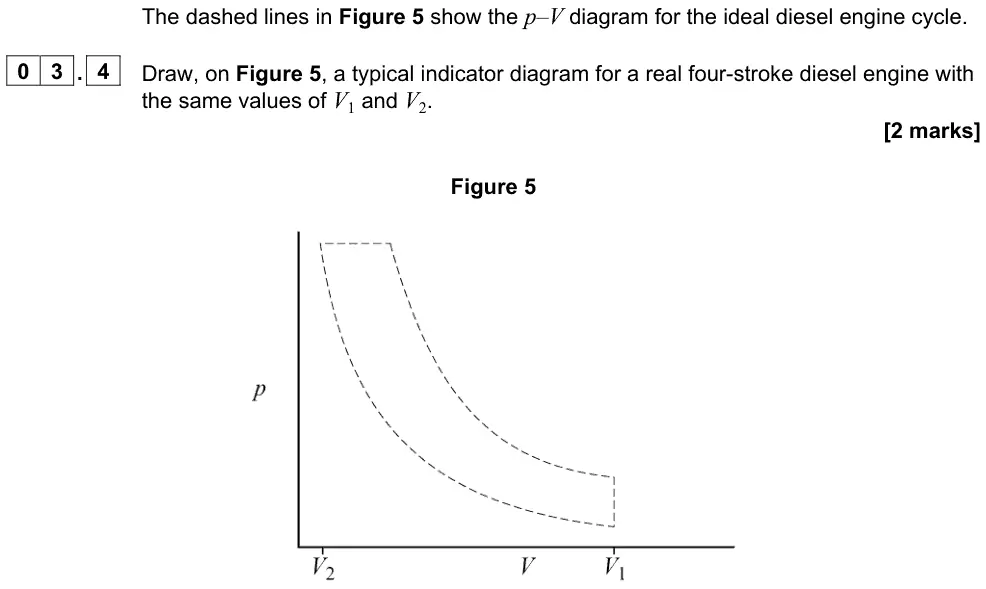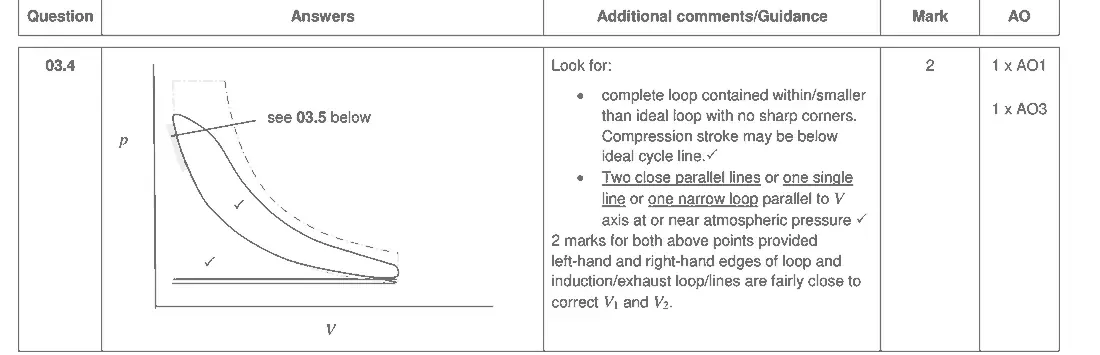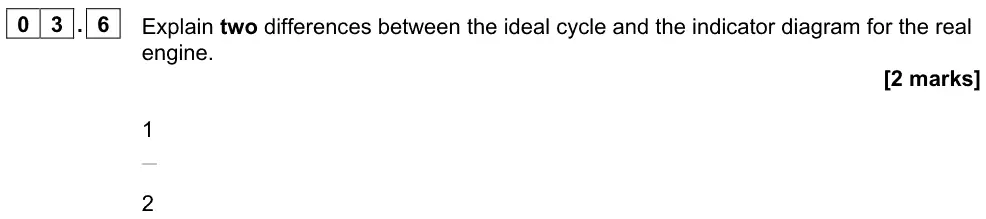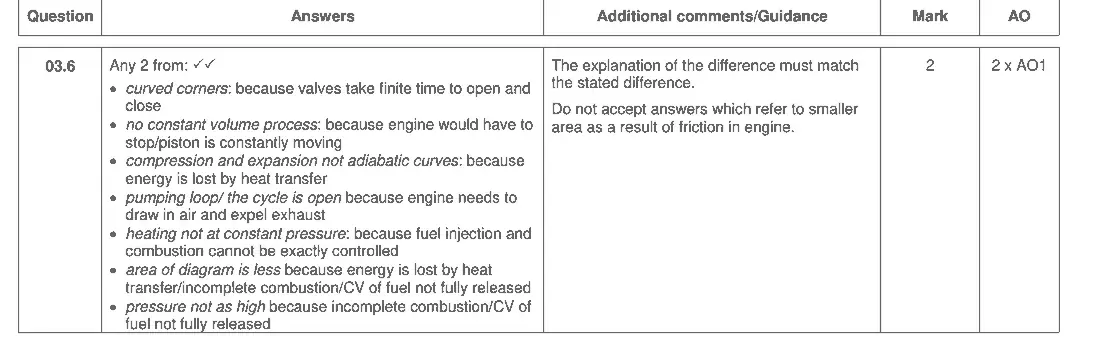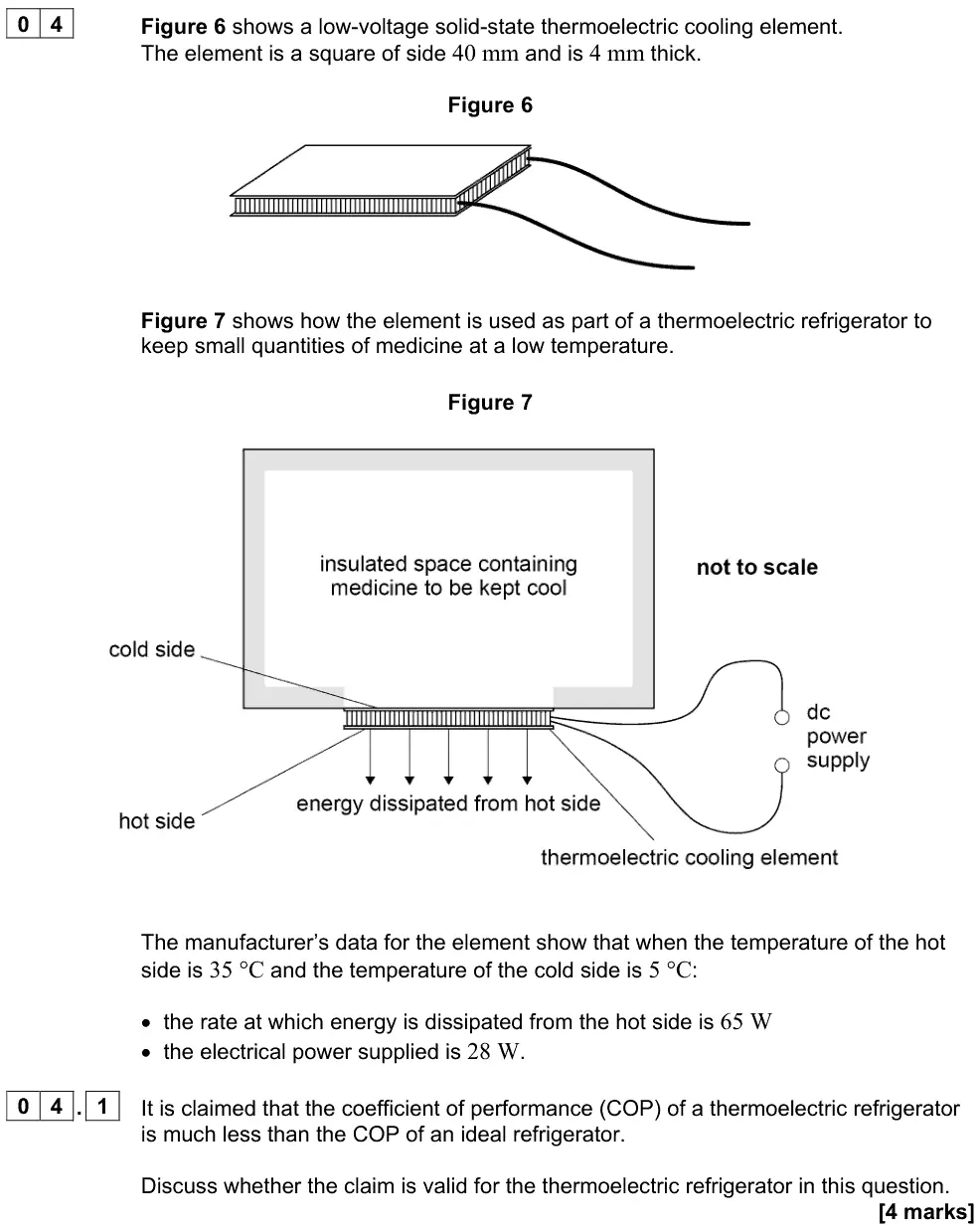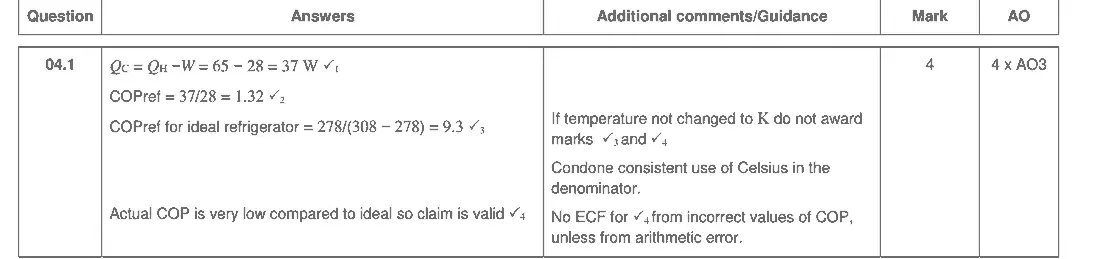
Mark scheme
Examiner's comment
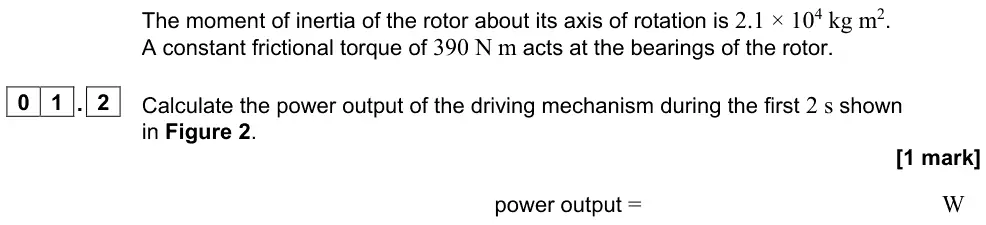
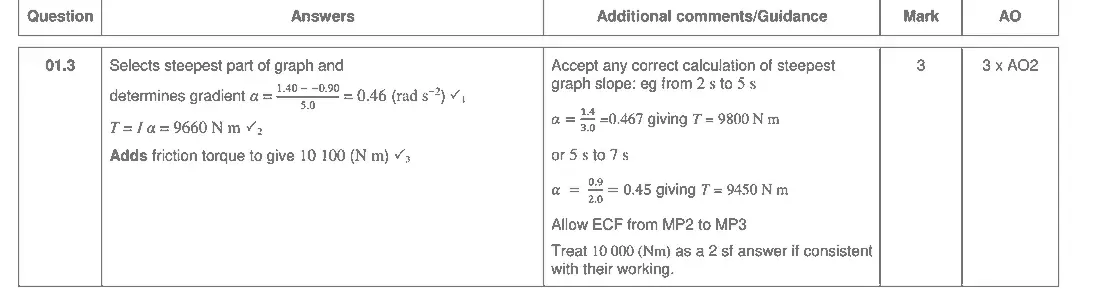
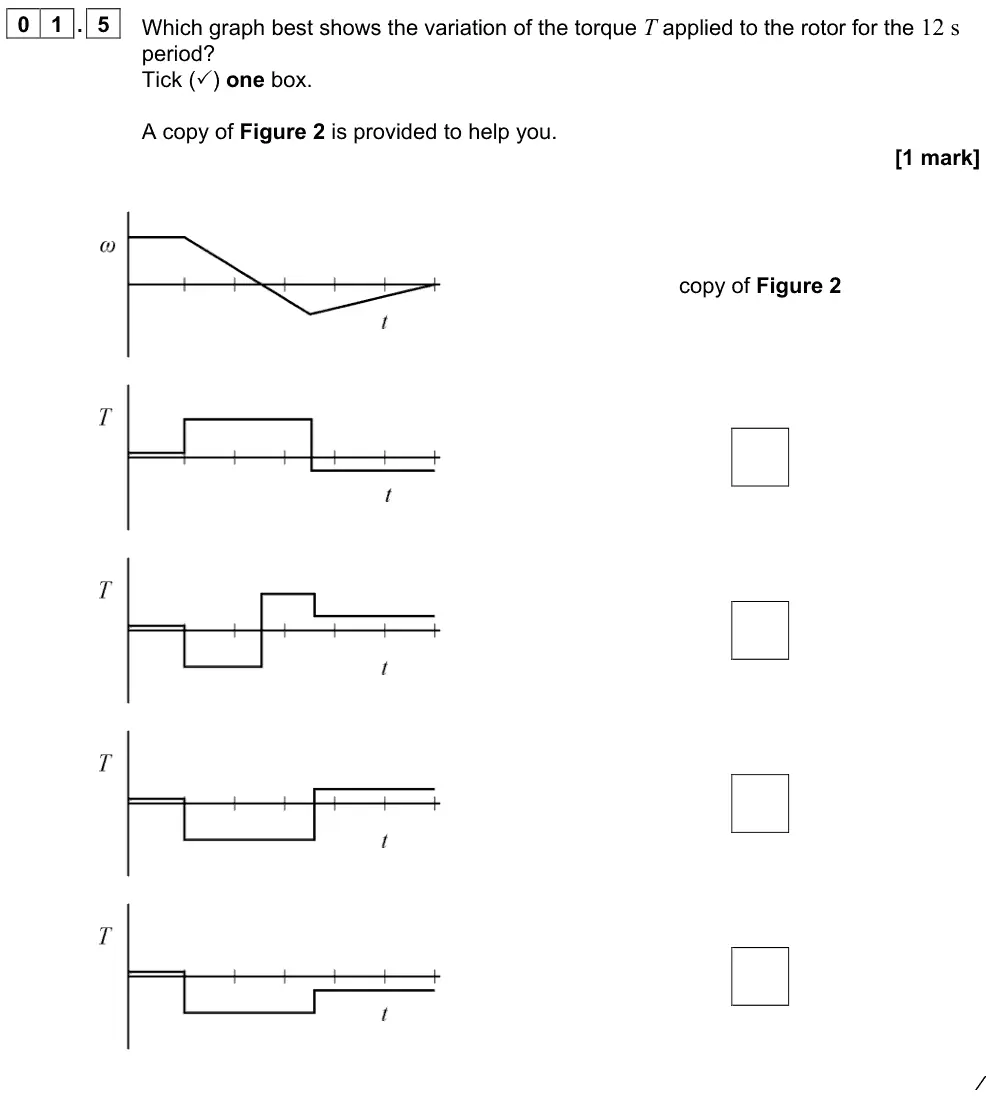
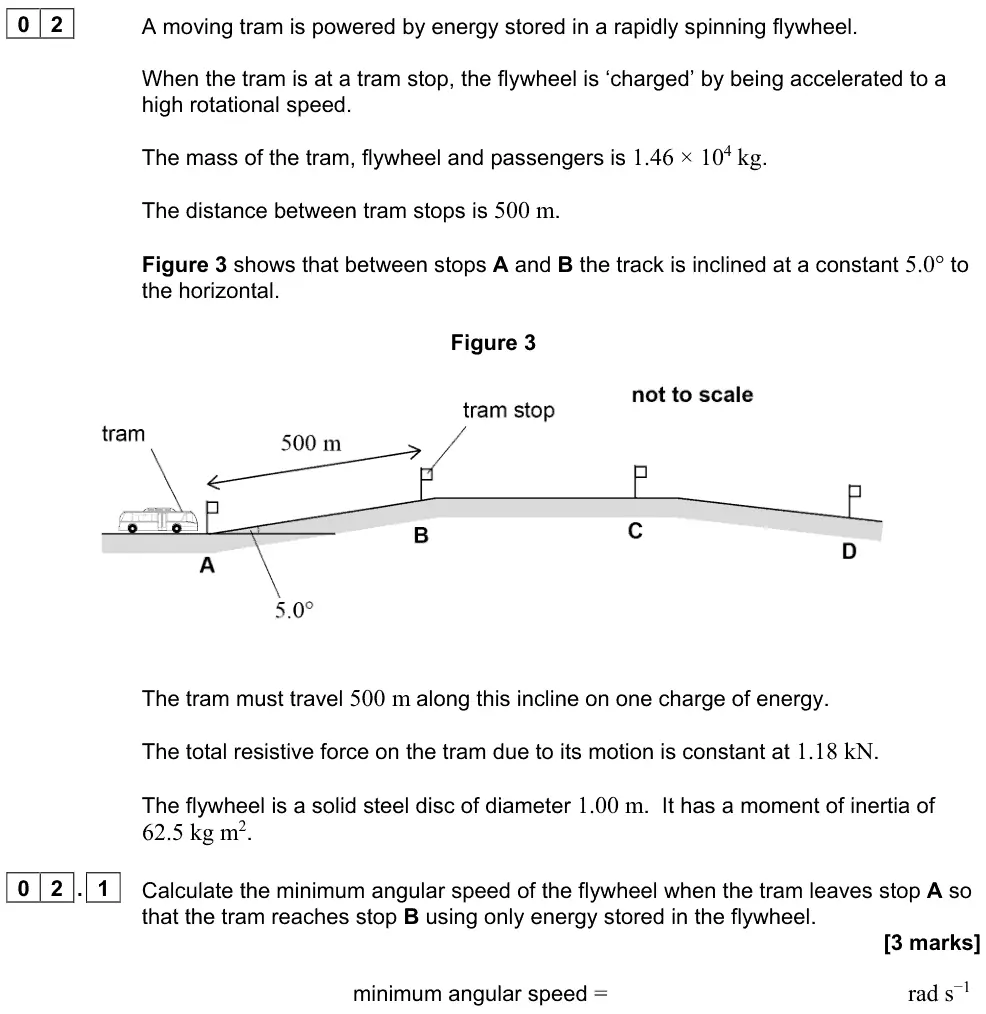
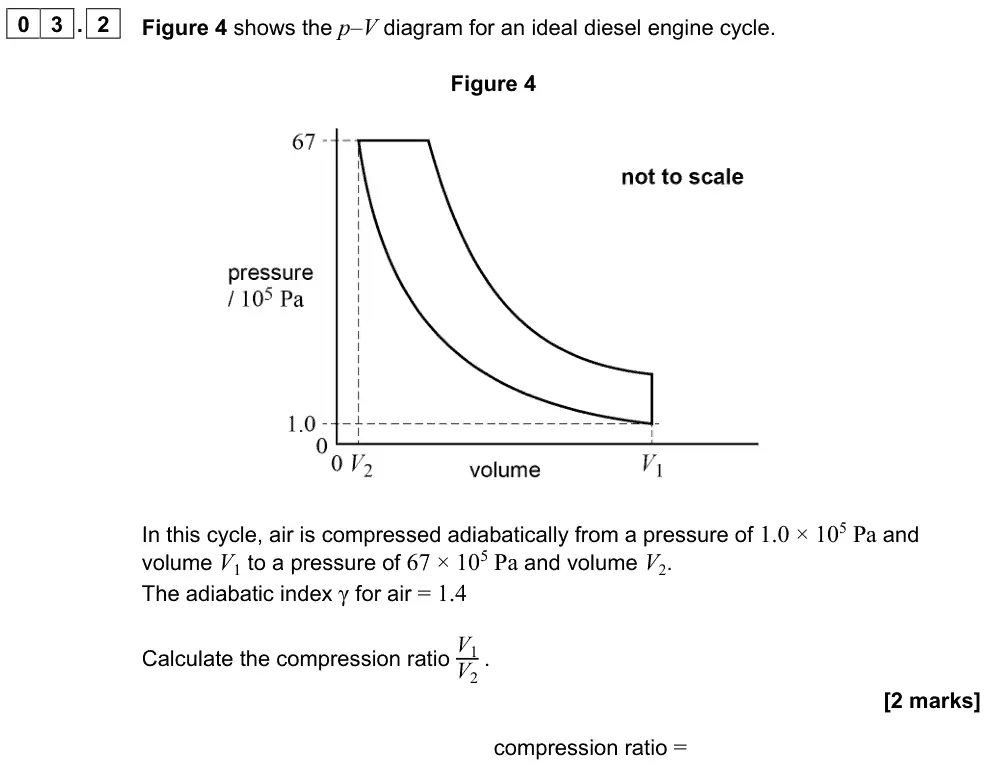
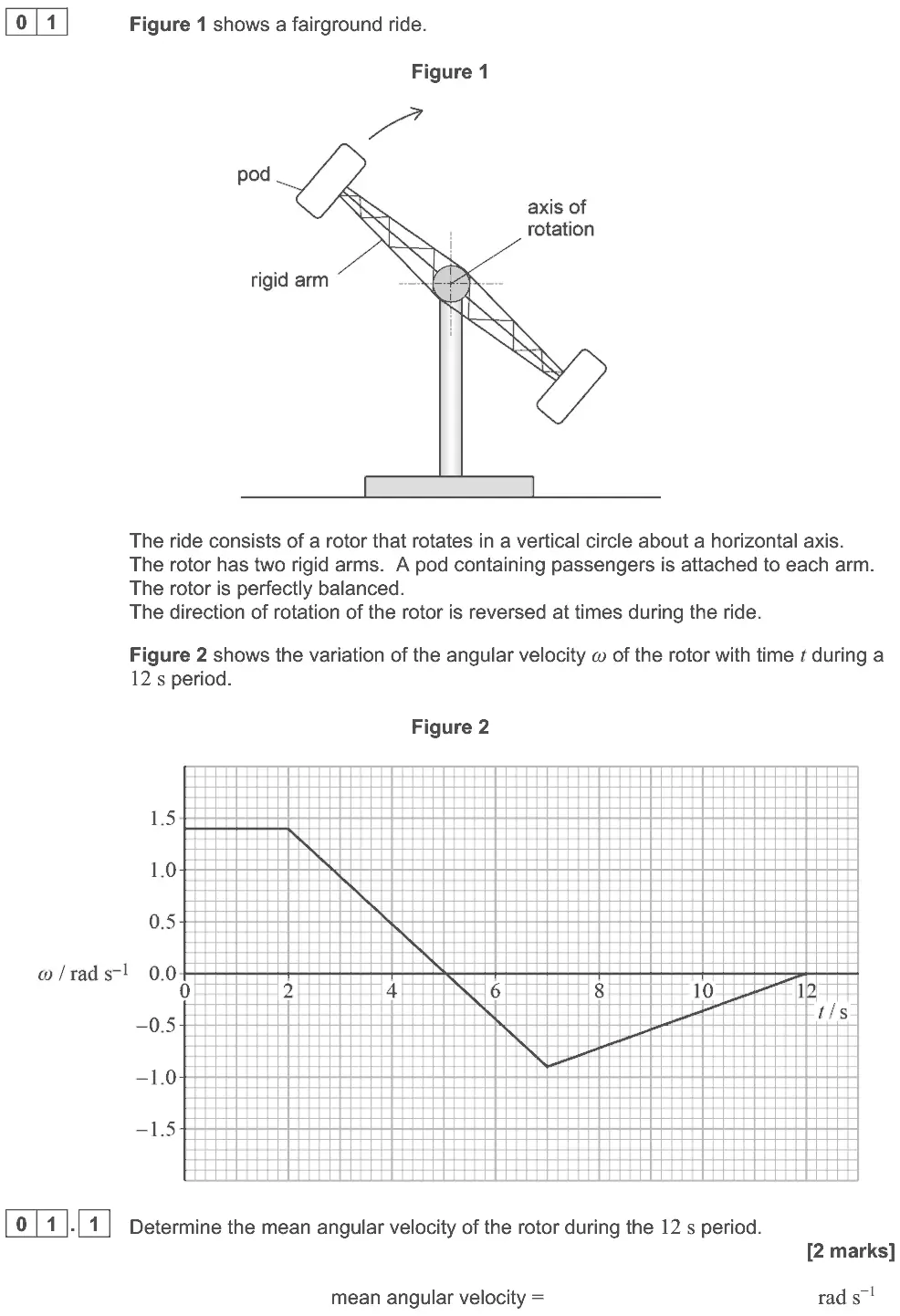
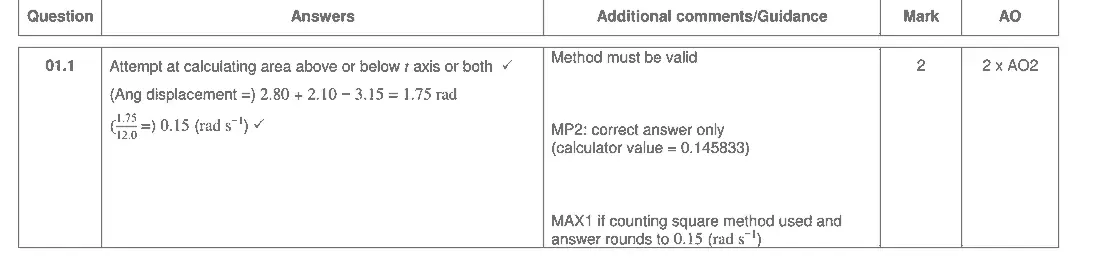
About two-thirds of students scored the first mark for an attempt to find the angular displacement of the rotor. Many of these were unable to do this accurately enough for the second mark. Some added the areas without taking the negative angular velocity into account. A very small number of students tried to answer by averaging ordinates from the graph or by counting squares, but were unsuccessful. Students did better on the rotational dynamics questions (Q1 and Q2) than the thermodynamics questions (Q3 and Q4). The concept of the reversed heat engine (Q4) is still not well understood. As in previous years, calculations were answered with more confidence than the questions which required qualitative answers. This is borne out by relatively high mean marks for questions 01.1 to 01.4, 02.1, and 03.2. Question 01.1 It was pleasing to see many confident answers, with students showing the steps in their calculations. In fact, more students were able to deal with the maths involved here than were able to calculate areas of triangles in question 01.1. About three-quarters of students showed a correct substitution of data into p1V1ϒ = p2V2ϒ . Some of these were then let down by not knowing either how to deal with the maths or how to use their calculator. A few used (pV)ϒ = c or pV = c.
Notes from the mark scheme and report
- Answer: 0.15 rad s^-1 (net angular displacement 2.80 + 2.10 - 3.15 = 1.75 rad over 12 s)
- areas below the axis must be subtracted
- square counting max 1
Skills: MS3.8 Understand the possible physical significance of the area between a curve and the x axis and be able to calculate it or estimate it by graphical methods as appropriate; MS3.1 Translate information between graphical, numerical and algebraic forms