June 2025: Paper 3B Engineering physics

35 marks · 16 question parts · Paper, mark scheme and report on AQA's site · Have the data and formulae booklet beside you

Question by question

QTopicMarksAOType
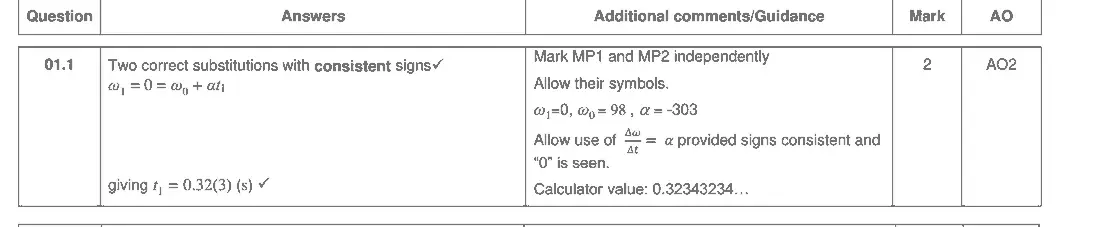
1.1 Rotational dynamics 2AO2=2Calculation
1.2 Rotational dynamics 2AO2=2Calculation
1.3 Rotational dynamics 1AO2=1Calculation
1.4 Rotational dynamics 3AO3=3Calculation
2.1 Rotational dynamics 3AO1=1,AO2=2Show that
2.2 Rotational dynamics 1AO1=1Short answer
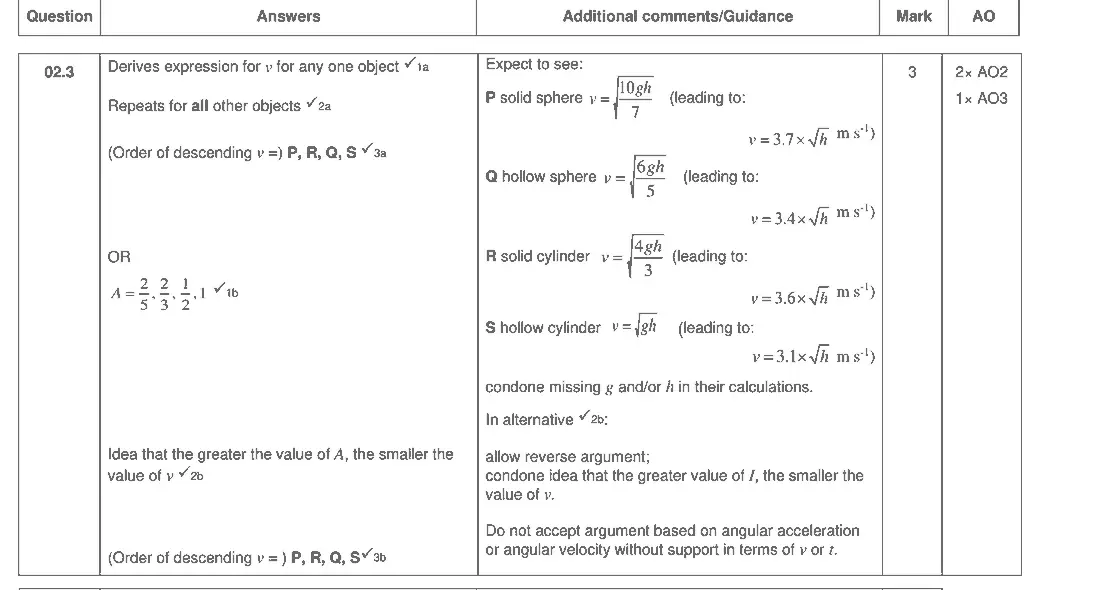
2.3 Rotational dynamics 3AO2=2,AO3=1Explanation
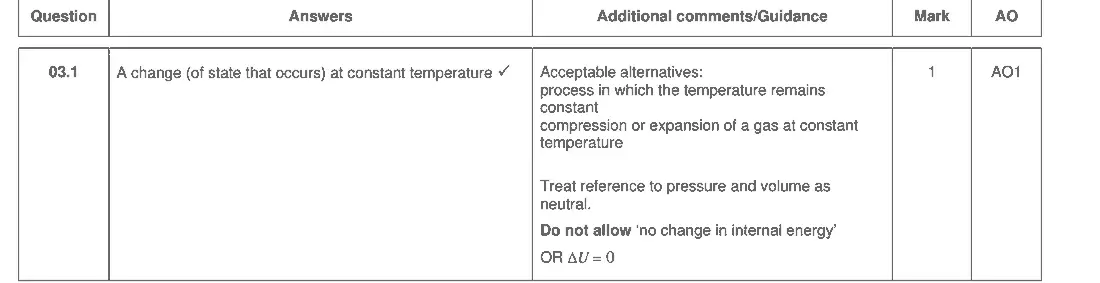
3.1 Thermodynamics and engines 1AO1=1Short answer
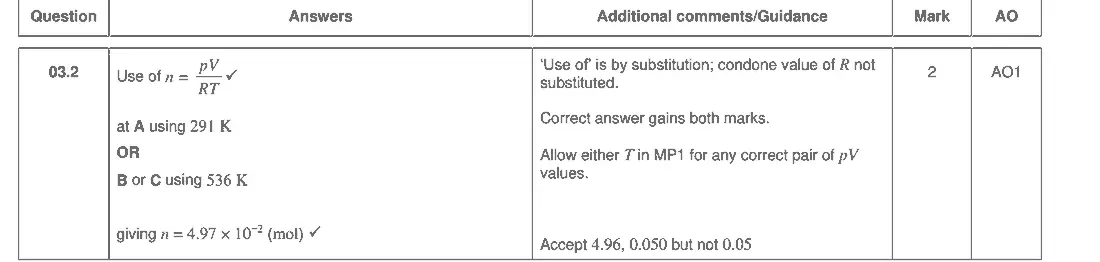
3.2 Thermodynamics and engines 2AO1=2Calculation
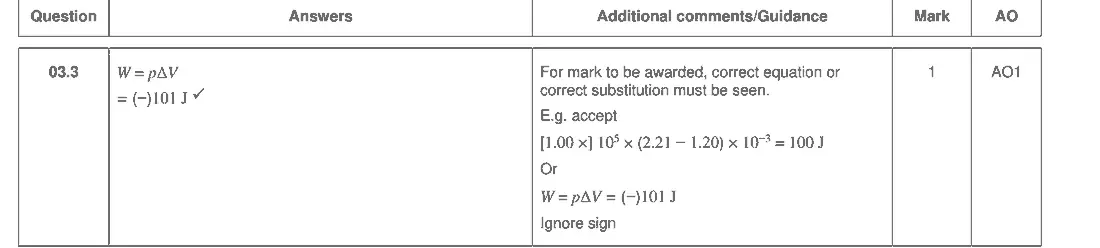
3.3 Thermodynamics and engines 1AO1=1Show that
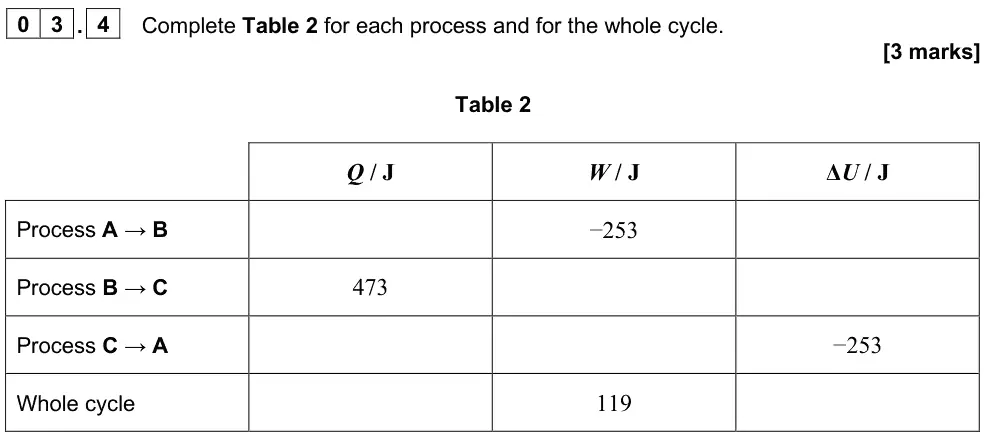
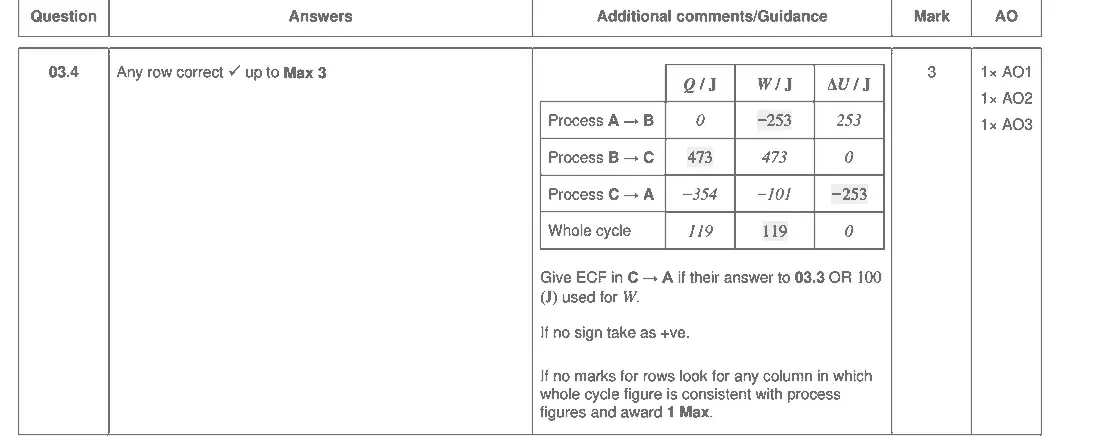
3.4 Thermodynamics and engines 3AO1=1,AO2=1,AO3=1Calculation
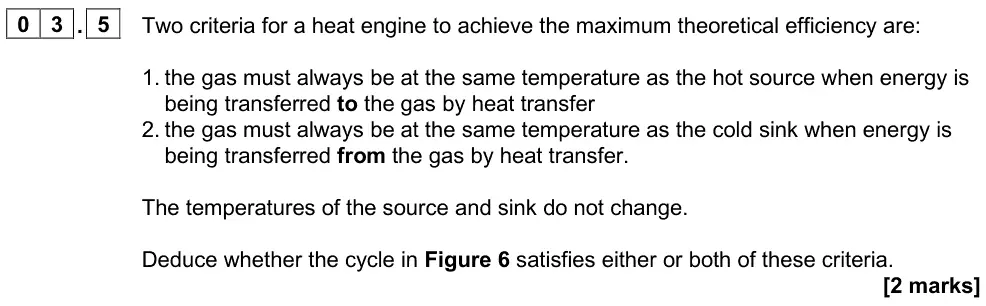
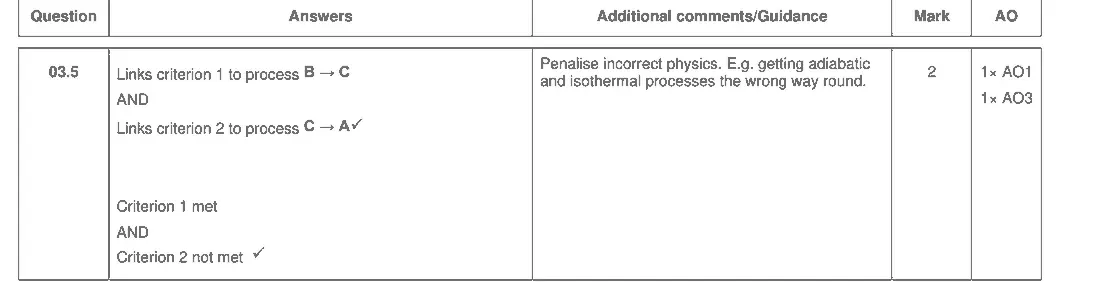
3.5 Thermodynamics and engines 2AO1=1,AO3=1Explanation
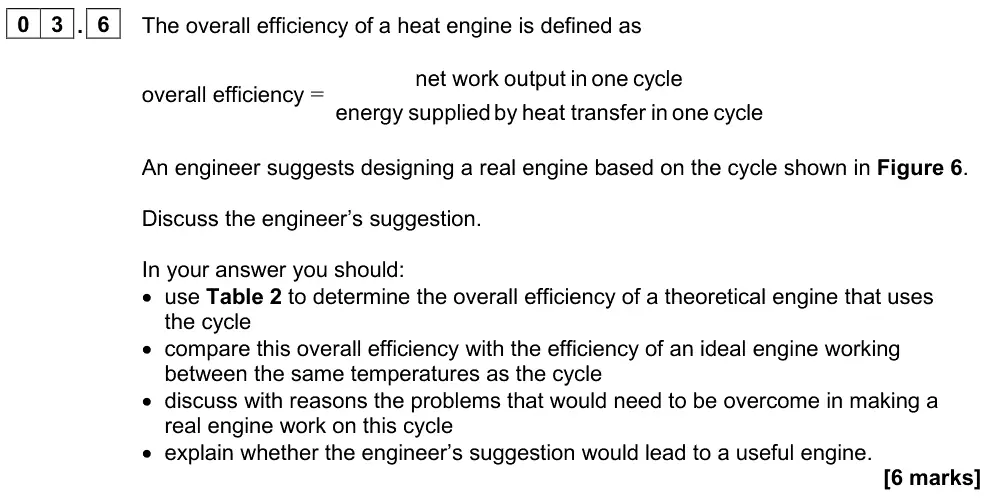
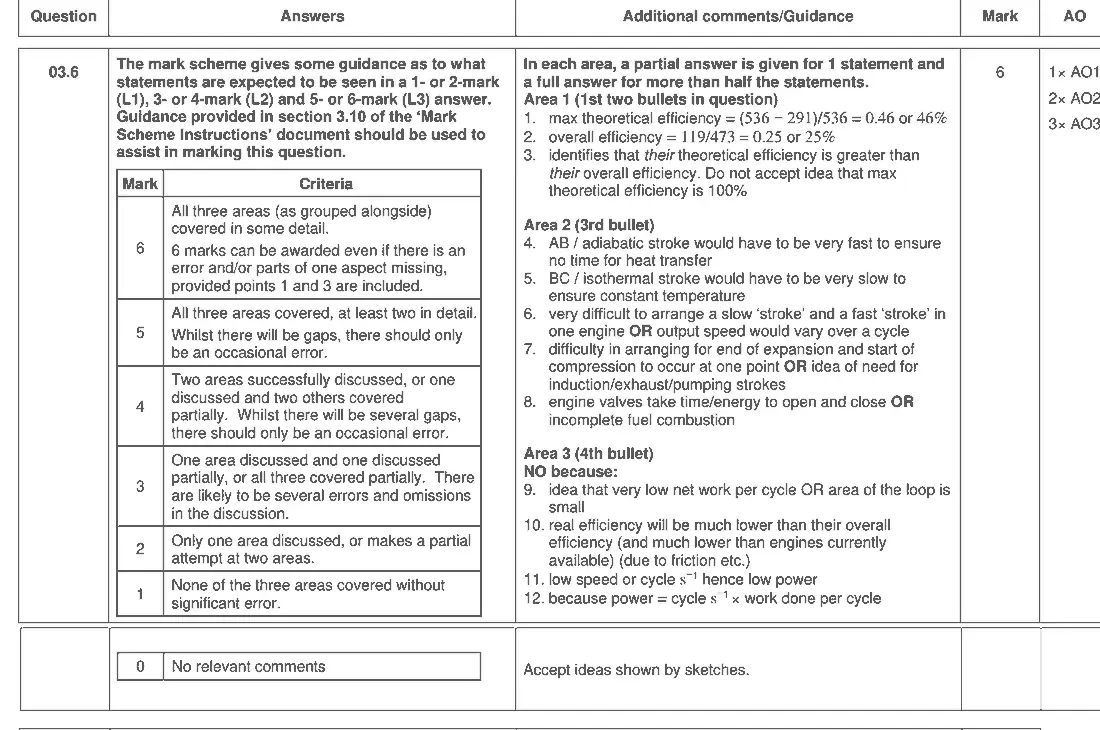
3.6 Thermodynamics and engines 6AO1=1,AO2=2,AO3=3Extended response
4.1 Thermodynamics and engines 1AO1=1Short answer
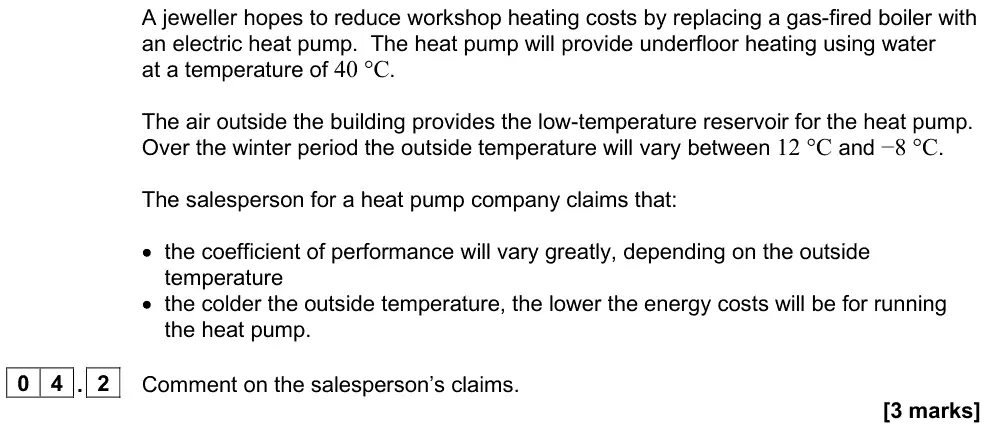
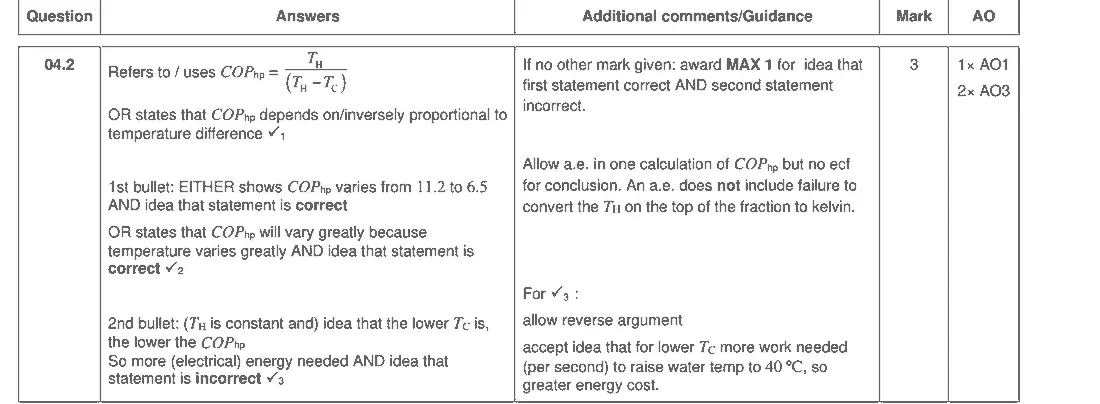
4.2 Thermodynamics and engines 3AO1=1,AO3=2Explanation
4.3 Thermodynamics and engines 1AO2=1Short answer

The questions

1.11.21.31.42.12.22.33.13.23.33.43.53.64.14.24.3
June 2025 · Paper 3B Engineering physics · Q1.1 2 marks AO2=2 Calculation Easy rotational dynamics
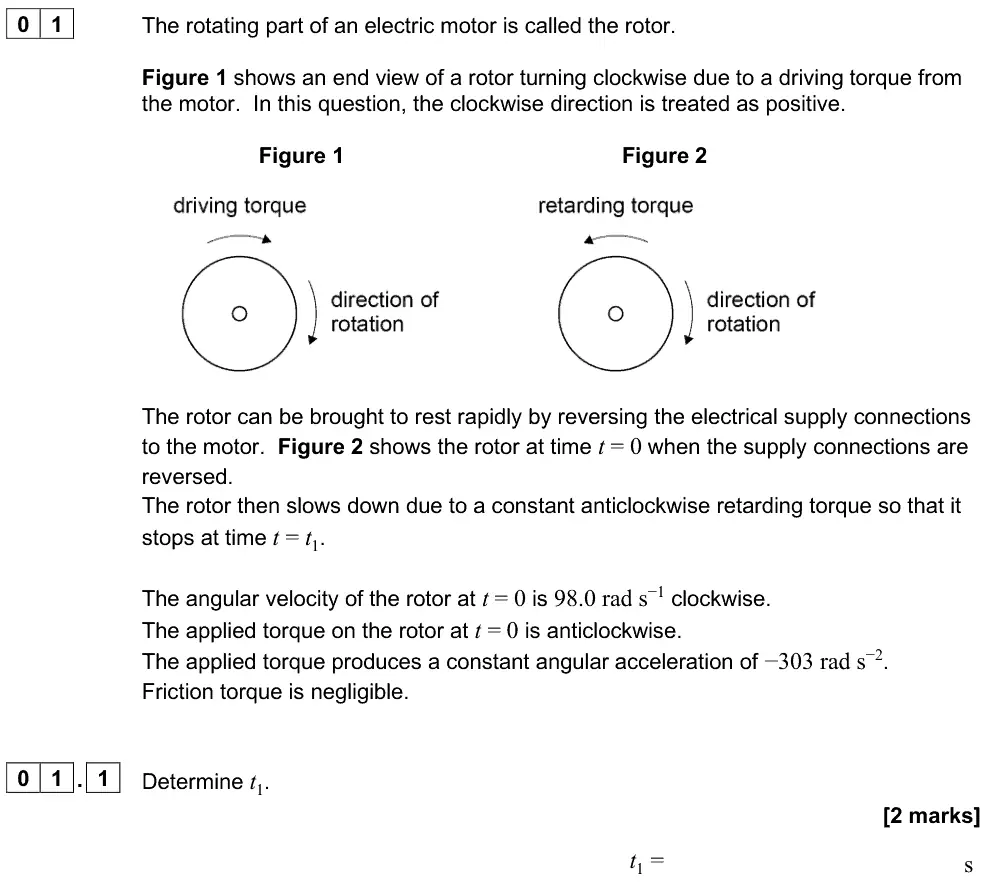
The rotating part of an electric motor is called the rotor.
Figure 1 shows an end view of a rotor turning clockwise due to a driving torque from
the motor.  In this question, the clockwise direction is treated as positive.
Figure 1
Figure 2
The rotor can be brought to rest rapidly by reversing the electrical supply connections
to the motor.  Figure 2 shows the rotor at time t = 0 when the supply connections are
reversed.
The rotor then slows down due to a constant anticlockwise retarding torque so that it
stops at time t = t1.
The angular velocity of the rotor at t = 0 is 98.0 rad s−1 clockwise.
The applied torque on the rotor at t = 0 is anticlockwise.
The applied torque produces a constant angular acceleration of −303 rad s−2.
Friction torque is negligible.
Determine t1.
[2 marks]
t1 =
s
June 2025 · Paper 3B Engineering physics · Q1.2 2 marks AO2=2 Calculation rotational dynamics
Earlier part of question 1 that this part usesEarlier part of June 2025 Paper 3B Engineering physics question 1
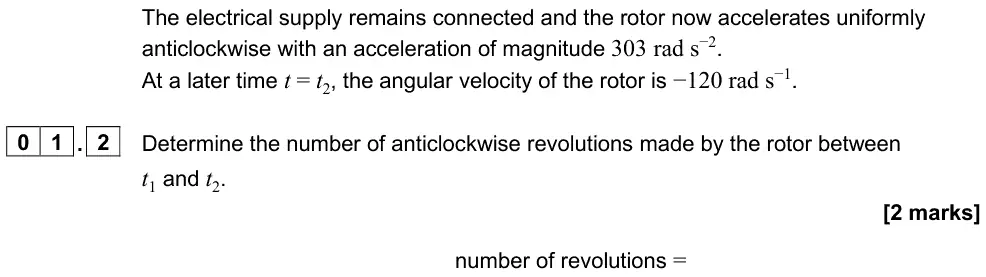
The electrical supply remains connected and the rotor now accelerates uniformly
anticlockwise with an acceleration of magnitude 303 rad s−2.
At a later time t = t2, the angular velocity of the rotor is −120 rad s−1.
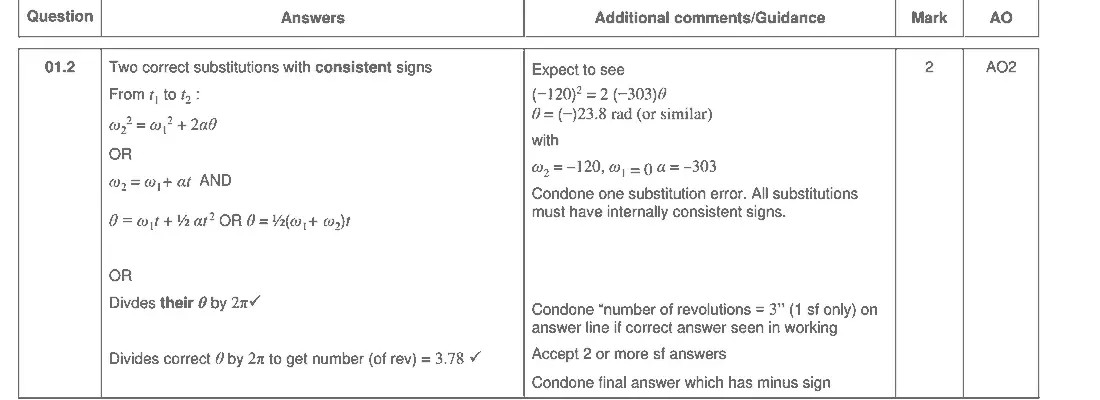
Determine the number of anticlockwise revolutions made by the rotor between
t1 and t2.
[2 marks]
number of revolutions =
June 2025 · Paper 3B Engineering physics · Q1.3 1 mark AO2=1 Calculation Easy rotational dynamics
Earlier part of question 1 that this part usesEarlier part of June 2025 Paper 3B Engineering physics question 1
The moment of inertia of the rotor about the axis of rotation is 9.60 × 10⁻² kg m2.
Calculate the angular impulse on the rotor between t = 0 and t2.
[1 mark]
angular impulse =
N m s
June 2025 · Paper 3B Engineering physics · Q1.4 3 marks AO3=3 Calculation Hard rotational dynamics
Earlier part of question 1 that this part usesEarlier part of June 2025 Paper 3B Engineering physics question 1
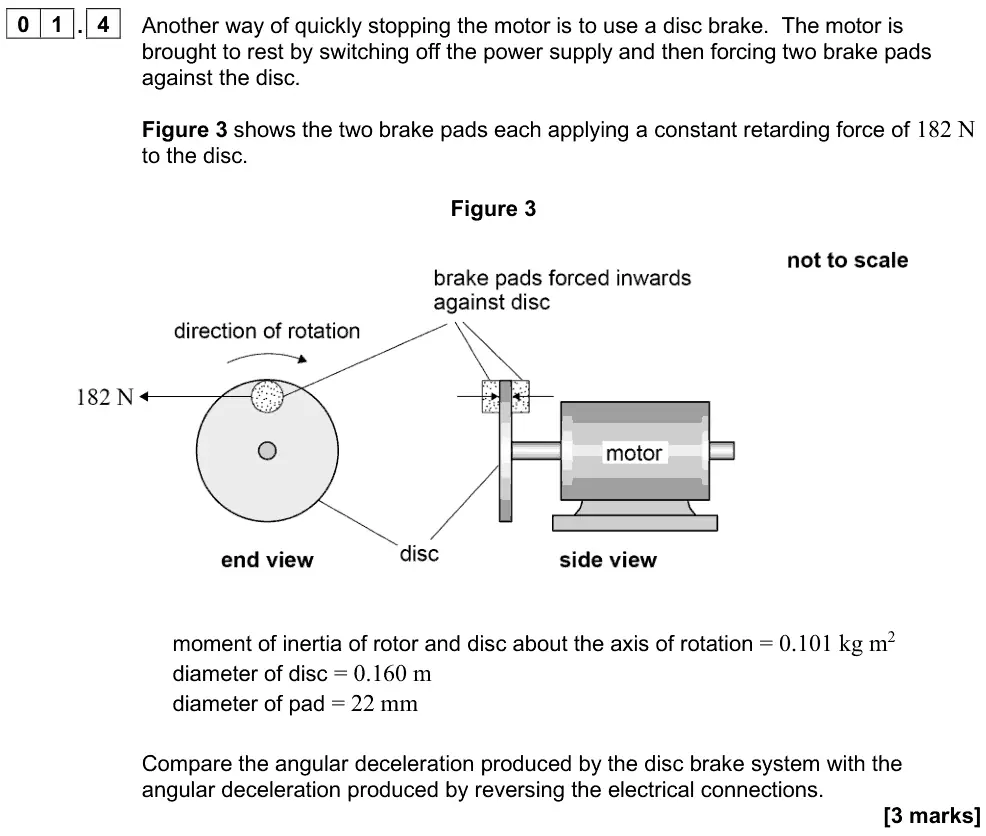
Another way of quickly stopping the motor is to use a disc brake.  The motor is
brought to rest by switching off the power supply and then forcing two brake pads
against the disc.
Figure 3 shows the two brake pads each applying a constant retarding force of 182 N
to the disc.
Figure 3
moment of inertia of rotor and disc about the axis of rotation = 0.101 kg m2
diameter of disc = 0.160 m
diameter of pad = 22 mm
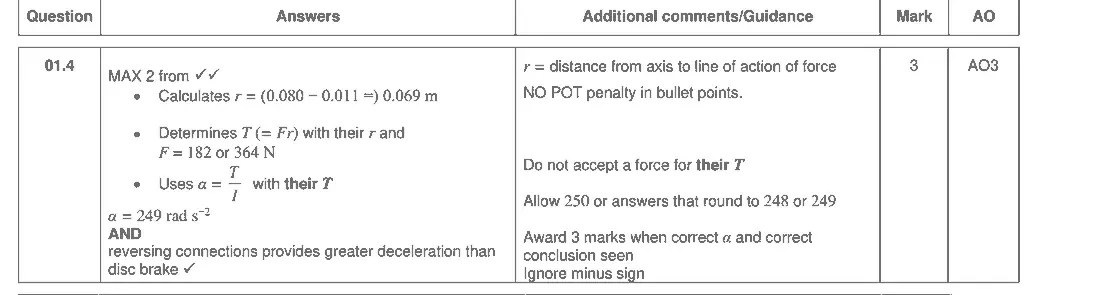
Compare the angular deceleration produced by the disc brake system with the
angular deceleration produced by reversing the electrical connections.
[3 marks]
June 2025 · Paper 3B Engineering physics · Q2.1 3 marks AO1=1, AO2=2 Show that rotational dynamics
The moment of inertia I of any rolling object about its axis of rotation is given by
I = Amr2
where A is a constant that depends on the shape of the object
m is the mass of the object
r is the radius of the object.
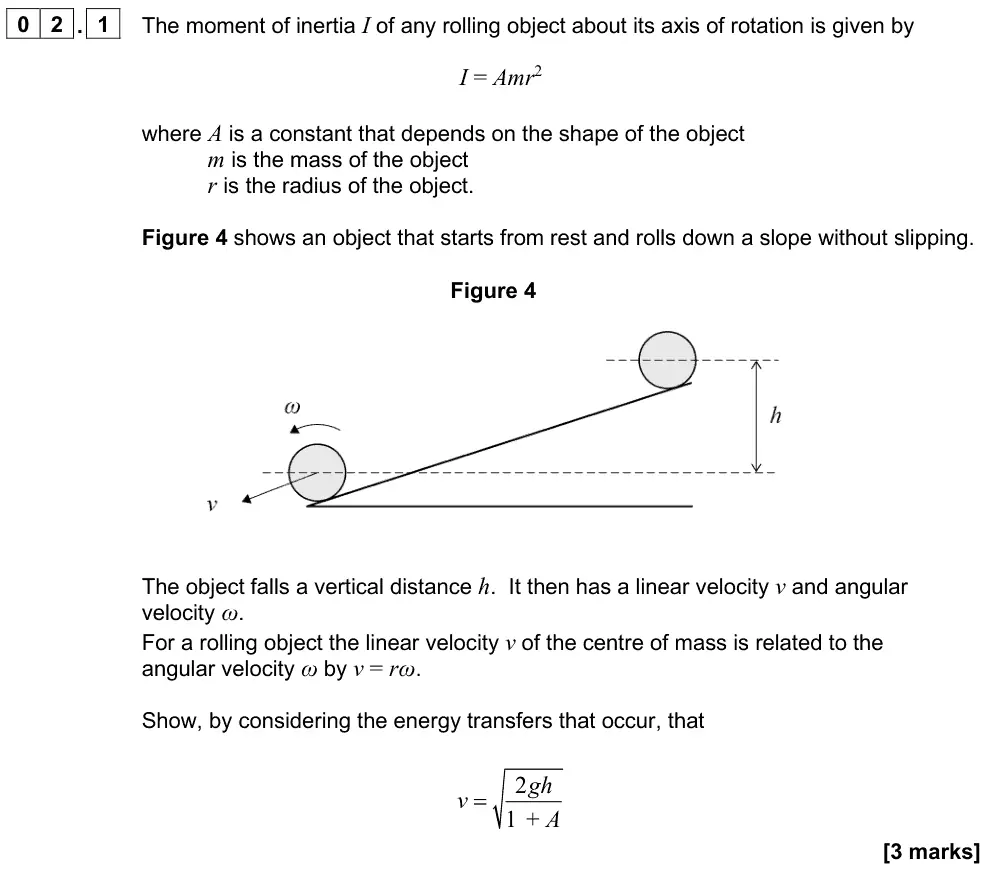
Figure 4 shows an object that starts from rest and rolls down a slope without slipping.
Figure 4
The object falls a vertical distance h.  It then has a linear velocity v and angular
velocity ω.
For a rolling object the linear velocity v of the centre of mass is related to the
angular velocity ω by v = rω.
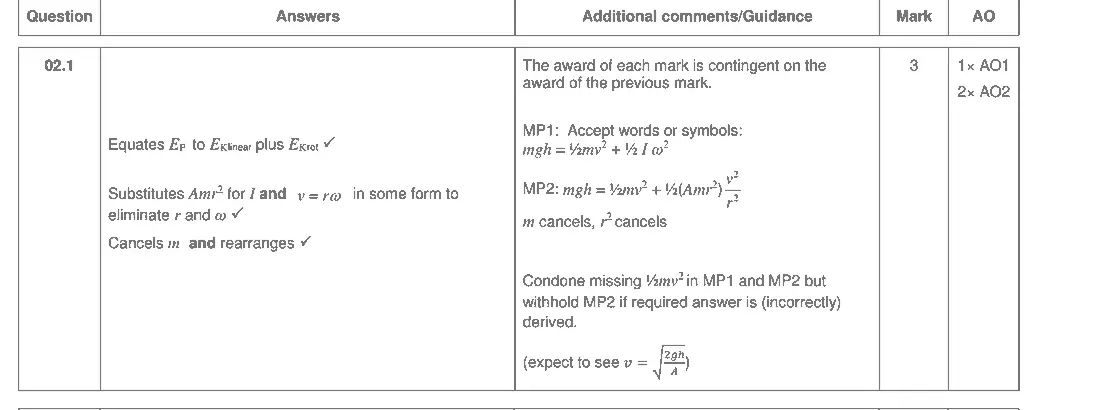
Show, by considering the energy transfers that occur, that
2
1  +
gh
v
A
=
[3 marks]
June 2025 · Paper 3B Engineering physics · Q2.2 1 mark AO1=1 Short answer Easy rotational dynamics
Earlier part of question 2 that this part usesEarlier part of June 2025 Paper 3B Engineering physics question 2
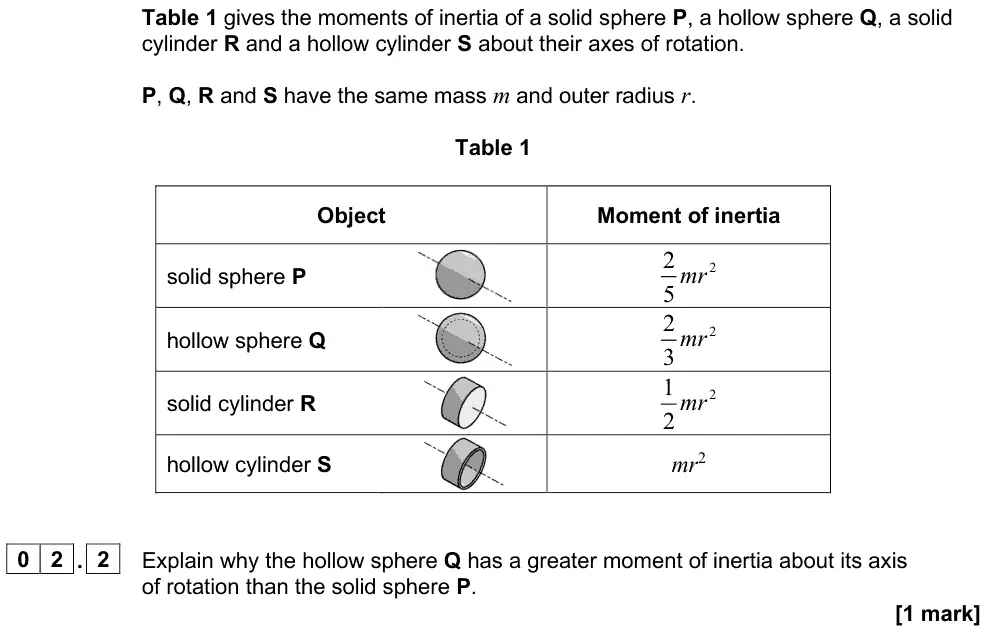
Table 1 gives the moments of inertia of a solid sphere P, a hollow sphere Q, a solid
cylinder R and a hollow cylinder S about their axes of rotation.
P, Q, R and S have the same mass m and outer radius r.
Table 1
Object
Moment of inertia
solid sphere P
2
2
5 mr
hollow sphere Q
2
2
3 mr
solid cylinder R
2
1
2 mr
hollow cylinder S
mr2
Explain why the hollow sphere Q has a greater moment of inertia about its axis
of rotation than the solid sphere P.
[1 mark]
June 2025 · Paper 3B Engineering physics · Q2.3 3 marks AO2=2, AO3=1 Explanation rotational dynamics
Earlier part of question 2 that this part usesEarlier part of June 2025 Paper 3B Engineering physics question 2
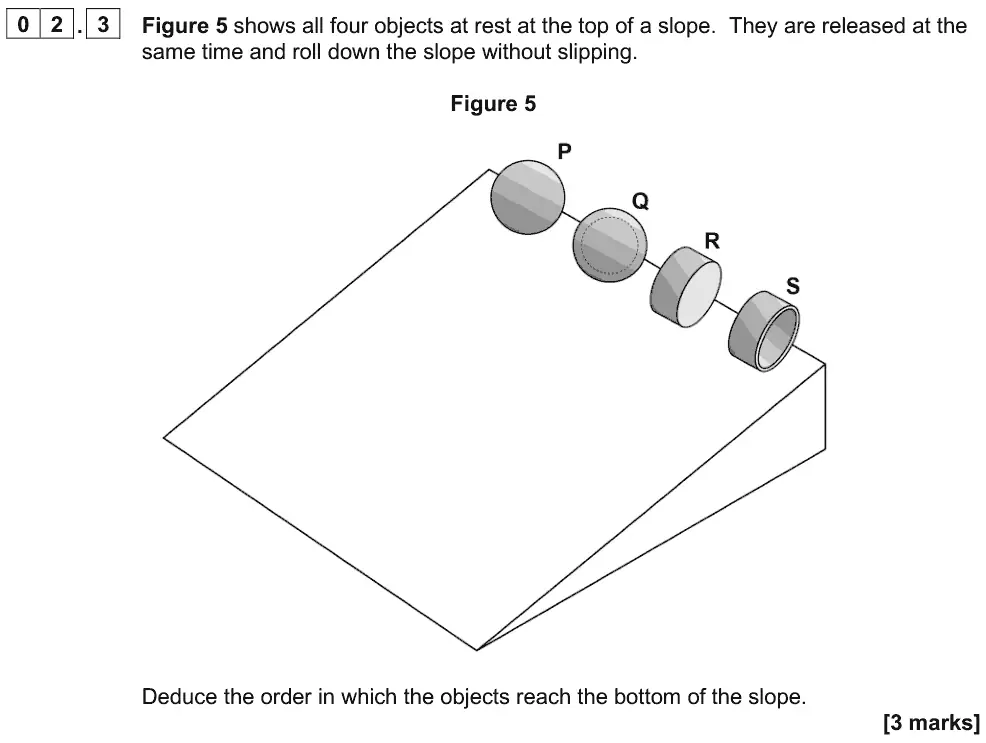
Figure 5 shows all four objects at rest at the top of a slope.  They are released at the
same time and roll down the slope without slipping.
Figure 5
Deduce the order in which the objects reach the bottom of the slope.
[3 marks]
June 2025 · Paper 3B Engineering physics · Q3.1 1 mark AO1=1 Short answer thermodynamics and engines
State what is meant by an isothermal change.
[1 mark]
June 2025 · Paper 3B Engineering physics · Q3.2 2 marks AO1=2 Calculation thermodynamics and engines
Earlier part of question 3 that this part usesEarlier part of June 2025 Paper 3B Engineering physics question 3
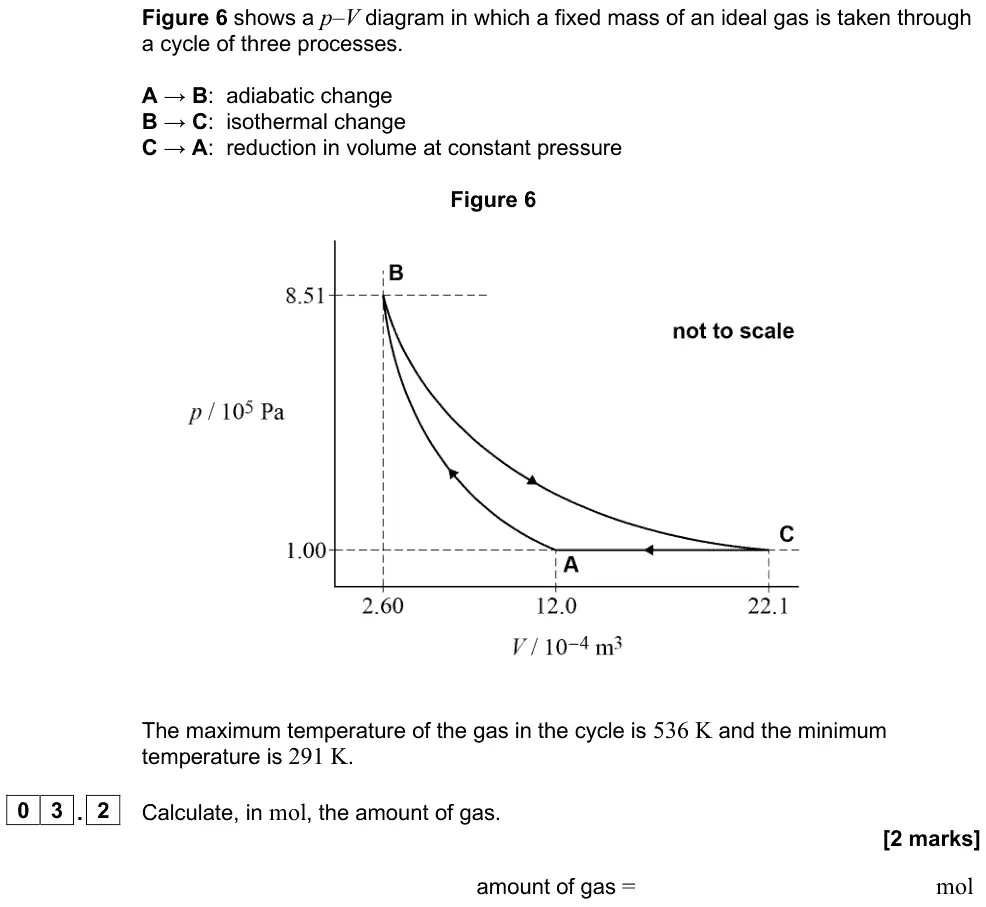
Figure 6 shows a p–V diagram in which a fixed mass of an ideal gas is taken through
a cycle of three processes.
A → B:  adiabatic change
B → C:  isothermal change
C → A:  reduction in volume at constant pressure
Figure 6
The maximum temperature of the gas in the cycle is 536 K and the minimum
temperature is 291 K.
Calculate, in mol, the amount of gas.
[2 marks]
amount of gas =
mol
June 2025 · Paper 3B Engineering physics · Q3.3 1 mark AO1=1 Show that thermodynamics and engines
Earlier part of question 3 that this part usesEarlier part of June 2025 Paper 3B Engineering physics question 3
Show that the work done in process C → A is about 100 J.
[1 mark]
June 2025 · Paper 3B Engineering physics · Q3.4 3 marks AO1=1, AO2=1, AO3=1 Calculation thermodynamics and engines
Earlier part of question 3 that this part usesEarlier part of June 2025 Paper 3B Engineering physics question 3
Complete Table 2 for each process and for the whole cycle.
[3 marks]
Table 2
Q / J
W / J
ΔU / J
Process A → B
−253
Process B → C
473
Process C → A
−253
Whole cycle
119
June 2025 · Paper 3B Engineering physics · Q3.5 2 marks AO1=1, AO3=1 Explanation thermodynamics and engines
Earlier part of question 3 that this part usesEarlier part of June 2025 Paper 3B Engineering physics question 3
Two criteria for a heat engine to achieve the maximum theoretical efficiency are:
1. the gas must always be at the same temperature as the hot source when energy is
being transferred to the gas by heat transfer
2. the gas must always be at the same temperature as the cold sink when energy is
being transferred from the gas by heat transfer.
The temperatures of the source and sink do not change.
Deduce whether the cycle in Figure 6 satisfies either or both of these criteria.
[2 marks]
June 2025 · Paper 3B Engineering physics · Q3.6 6 marks AO1=1, AO2=2, AO3=3 6-mark extended response thermodynamics and engines
Earlier part of question 3 that this part usesEarlier part of June 2025 Paper 3B Engineering physics question 3
The overall efficiency of a heat engine is defined as
overall efficiency =
net work output in one cycle
energy supplied by heat transfer in one cycle
An engineer suggests designing a real engine based on the cycle shown in Figure 6.
Discuss the engineer’s suggestion.
In your answer you should:
• use Table 2 to determine the overall efficiency of a theoretical engine that uses
the cycle
• compare this overall efficiency with the efficiency of an ideal engine working
between the same temperatures as the cycle
• discuss with reasons the problems that would need to be overcome in making a
real engine work on this cycle
• explain whether the engineer’s suggestion would lead to a useful engine.
[6 marks]
June 2025 · Paper 3B Engineering physics · Q4.1 1 mark AO1=1 Short answer Hard thermodynamics and engines
State what is meant by the coefficient of performance of a heat pump.
[1 mark]
June 2025 · Paper 3B Engineering physics · Q4.2 3 marks AO1=1, AO3=2 Explanation thermodynamics and engines
Earlier part of question 4 that this part usesEarlier part of June 2025 Paper 3B Engineering physics question 4
A jeweller hopes to reduce workshop heating costs by replacing a gas-fired boiler with
an electric heat pump.  The heat pump will provide underfloor heating using water
at a temperature of 40 °C.
The air outside the building provides the low-temperature reservoir for the heat pump.
Over the winter period the outside temperature will vary between 12 °C and −8 °C.
The salesperson for a heat pump company claims that:
• the coefficient of performance will vary greatly, depending on the outside
temperature
• the colder the outside temperature, the lower the energy costs will be for running
the heat pump.
Comment on the salesperson’s claims.
[3 marks]
June 2025 · Paper 3B Engineering physics · Q4.3 1 mark AO2=1 Short answer Easy thermodynamics and engines
Earlier part of question 4 that this part usesEarlier part of June 2025 Paper 3B Engineering physics question 4
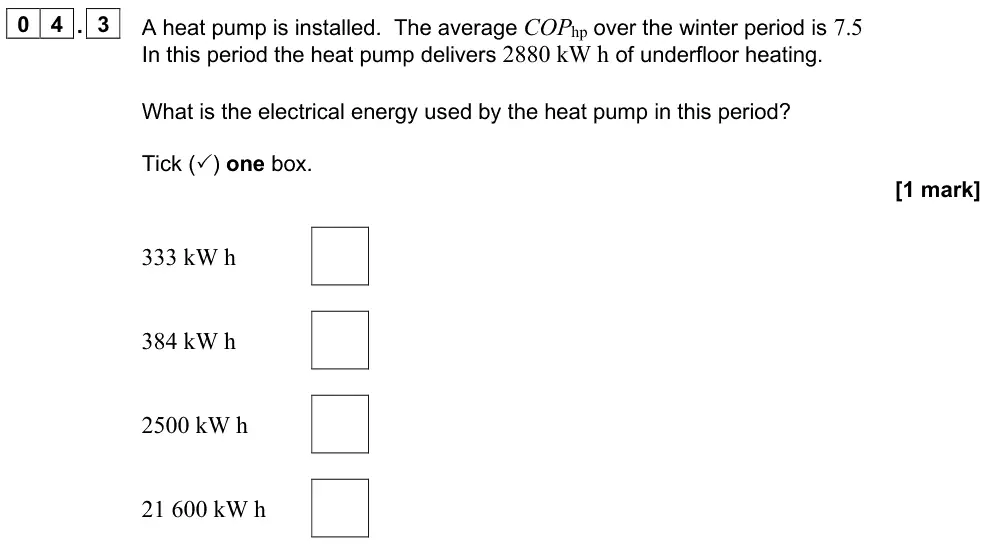
A heat pump is installed.  The average COPhp over the winter period is 7.5
In this period the heat pump delivers 2880 kW h of underfloor heating.
What is the electrical energy used by the heat pump in this period?
Tick () one box.
[1 mark]
333 kW h
384 kW h
2500 kW h
21 600 kW h

Work with an AQA physics tutor

Want a paper marked and gone through with you? Message us.

Prefer email? Send an enquiry

If you are under 18, please include a parent's contact details. Enquiries go to enquiries@physicsaleveltutor.com and are deleted once handled. All tutoring is online.