
November 2021: Paper 3B Engineering physics

35 marks · 12 question parts · Paper, mark scheme and report on AQA's site · An autumn series using the paper written for the cancelled summer exams · Have the data and formulae booklet beside you

Question by question

QTopicMarksAOType
1.1 Rotational dynamics 3AO1=3Explanation
1.2 Rotational dynamics 1Calculation
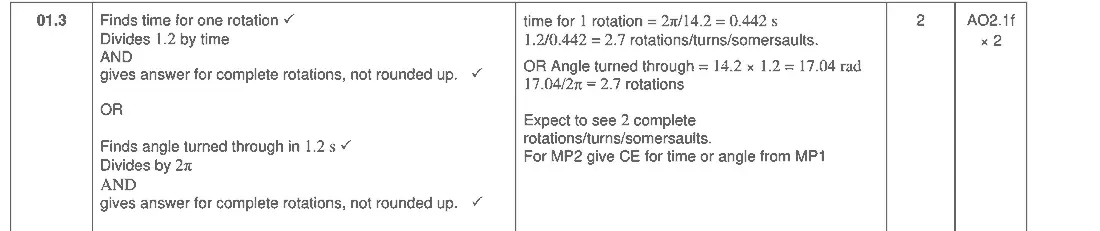
1.3 Rotational dynamics 2AO2=2Calculation
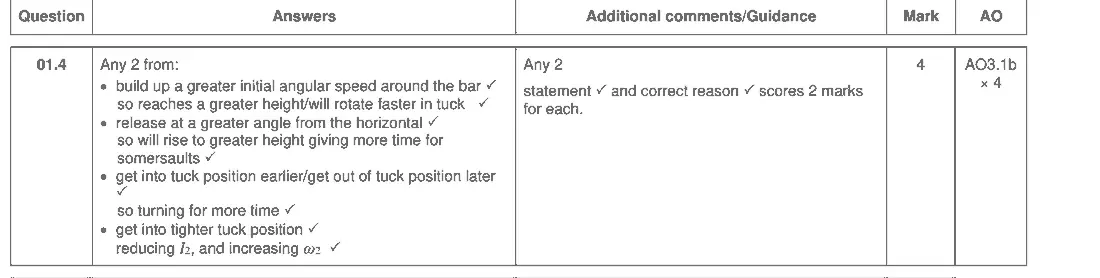
1.4 Rotational dynamics 4AO3=4Explanation
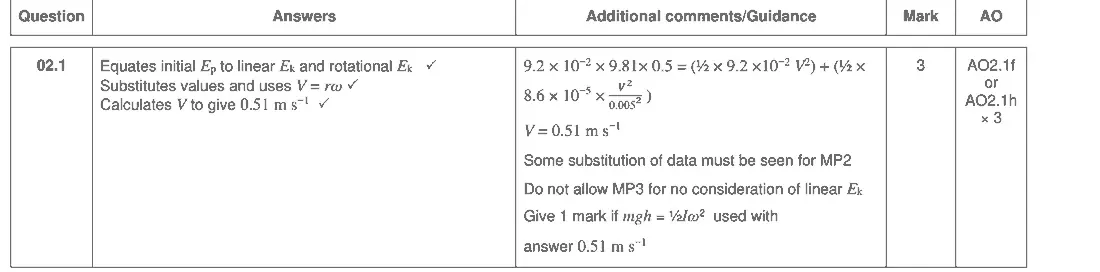
2.1 Rotational dynamics 3AO2=3Calculation
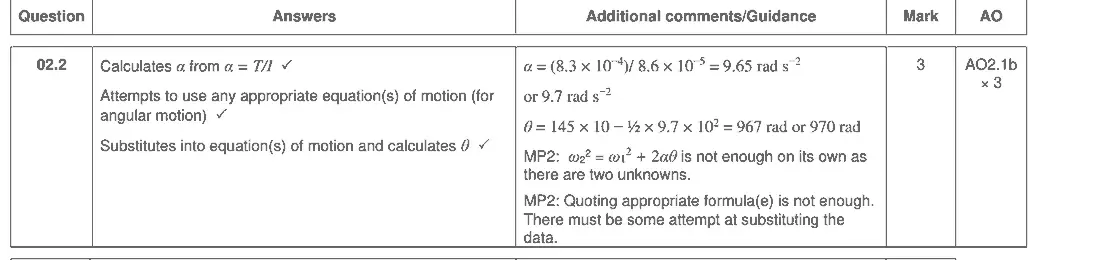
2.2 Rotational dynamics 3AO2=3Calculation
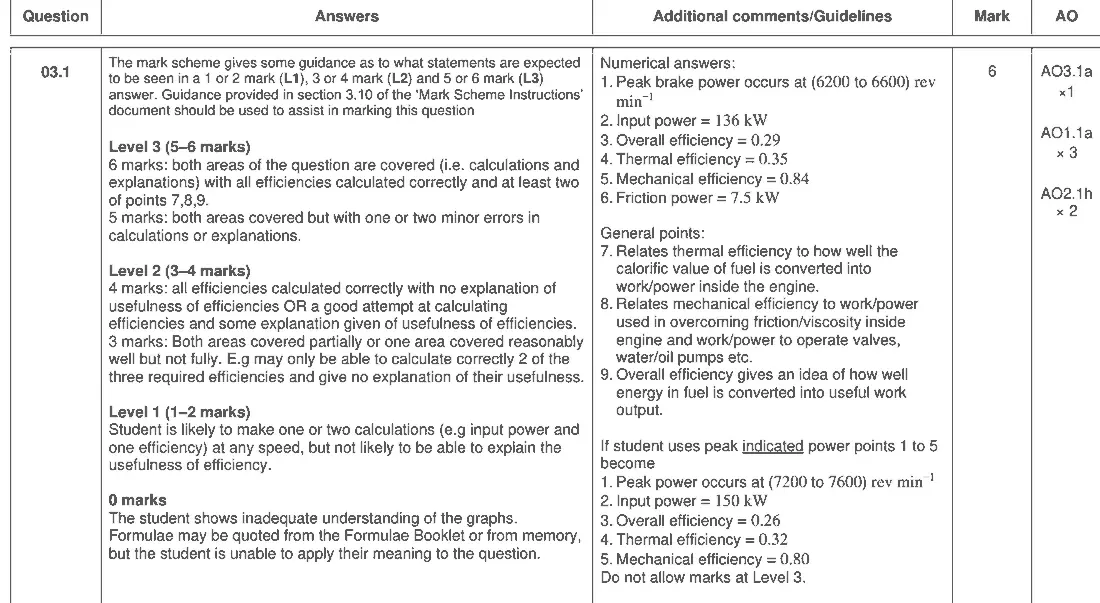
3.1 Thermodynamics and engines 6Extended response
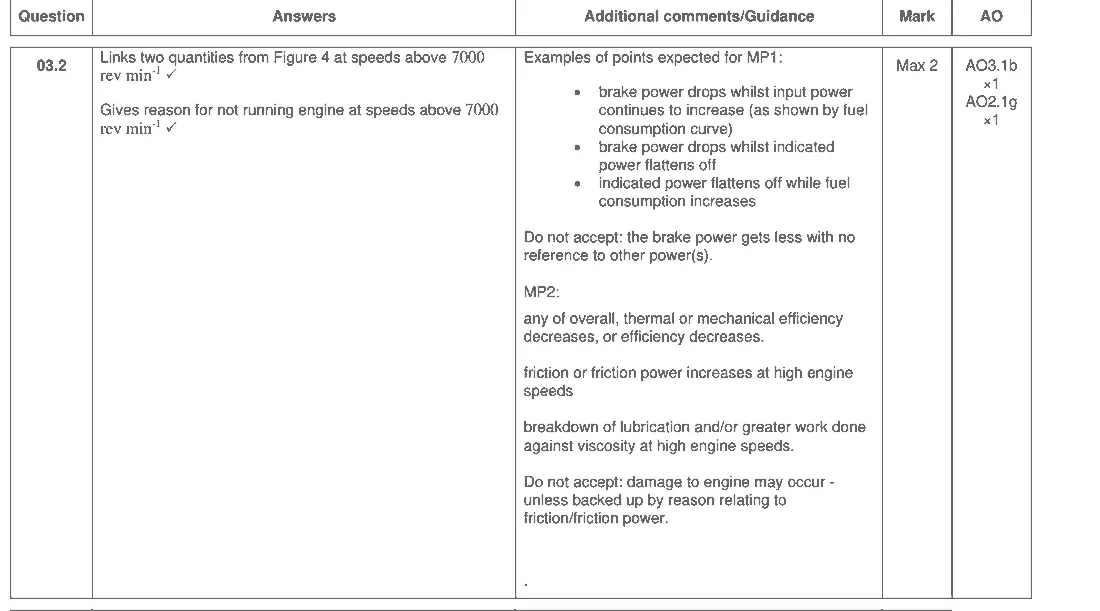
3.2 Thermodynamics and engines, Rotational dynamics 2Explanation
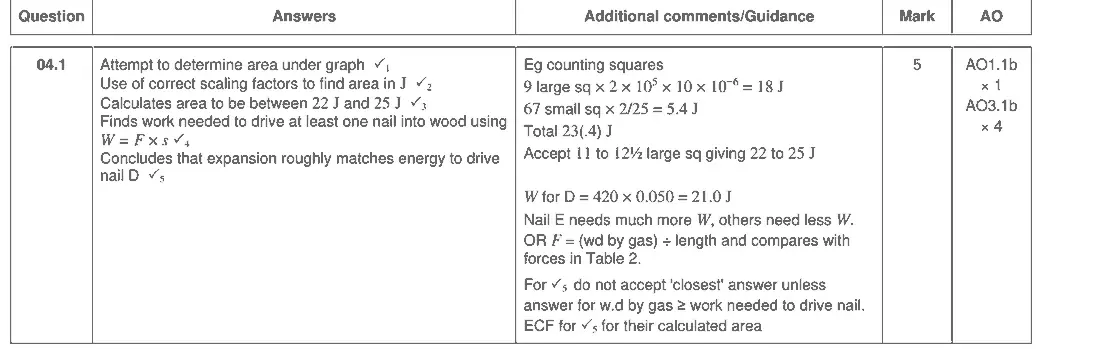
4.1 Thermodynamics and engines 5Calculation
4.2 Thermodynamics and engines 3Explanation
5.1 Thermodynamics and engines 1AO1=1Short answer
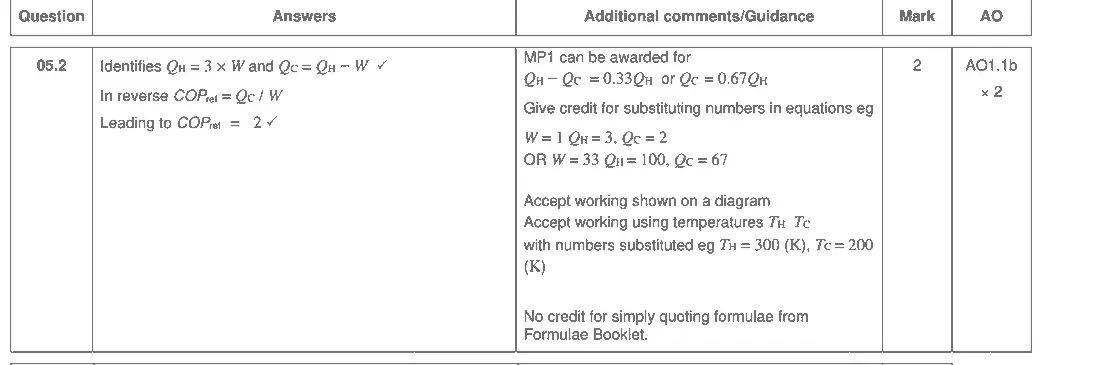
5.2 Thermodynamics and engines 2AO1=2Calculation

The questions

1.11.21.31.42.12.23.13.24.14.25.15.2
November 2021 · Paper 3B Engineering physics · Q1.1 3 marks AO1=3 Explanation rotational dynamics
A gymnast dismounts from an exercise in which he swings on a high bar.  The
gymnast rotates in the air before landing.
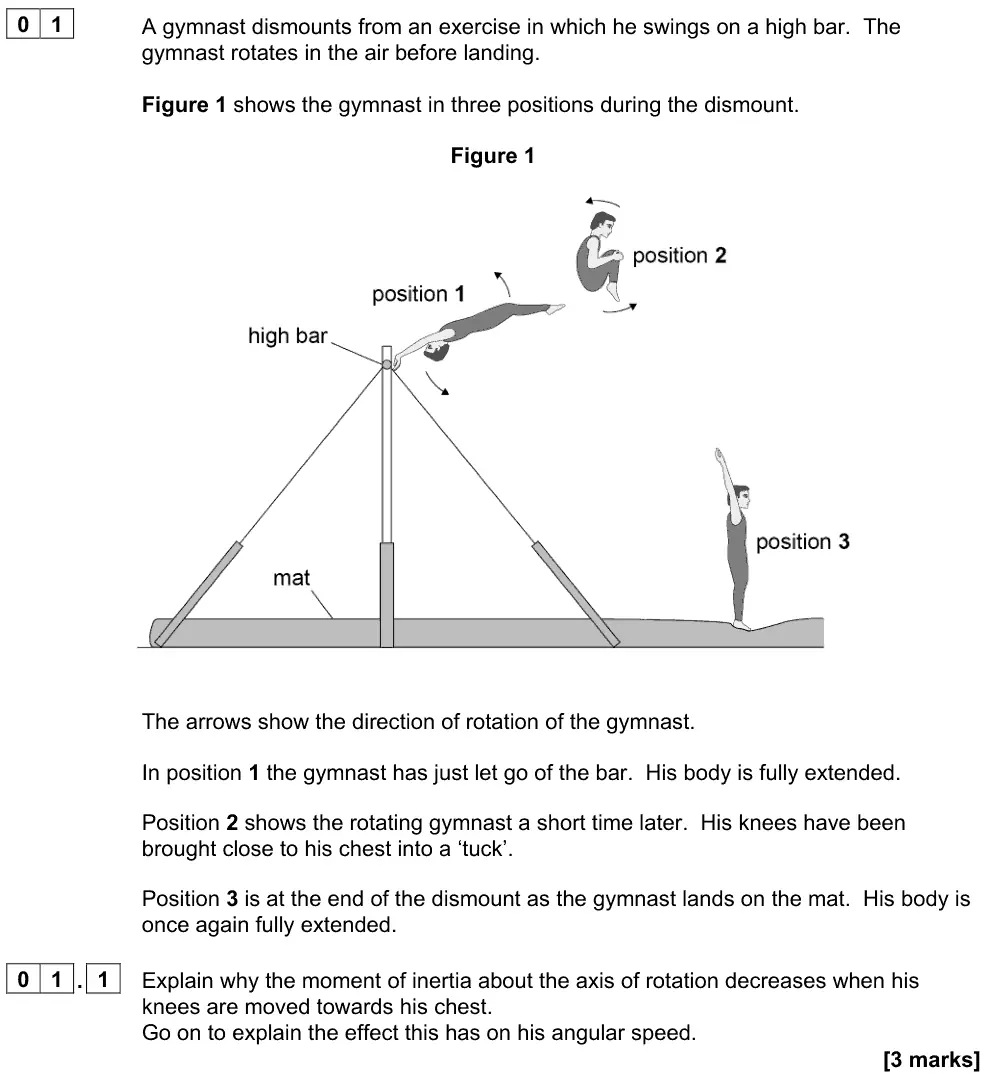
Figure 1 shows the gymnast in three positions during the dismount.
Figure 1
The arrows show the direction of rotation of the gymnast.
In position 1 the gymnast has just let go of the bar.  His body is fully extended.
Position 2 shows the rotating gymnast a short time later.  His knees have been
brought close to his chest into a ‘tuck’.
Position 3 is at the end of the dismount as the gymnast lands on the mat.  His body is
once again fully extended.
Explain why the moment of inertia about the axis of rotation decreases when his
knees are moved towards his chest.
Go on to explain the effect this has on his angular speed.
[3 marks]
November 2021 · Paper 3B Engineering physics · Q1.2 1 mark Calculation rotational dynamics
Earlier part of question 1 that this part usesEarlier part of November 2021 Paper 3B Engineering physics question 1
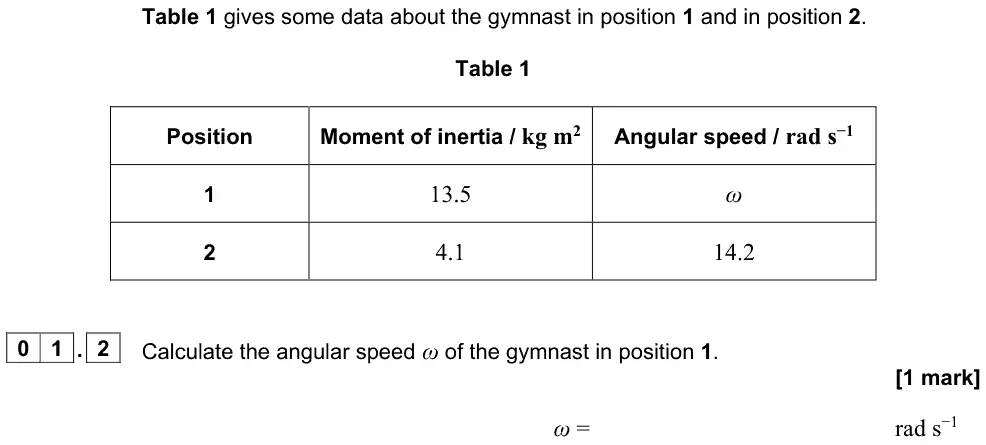
Table 1 gives some data about the gymnast in position 1 and in position 2.
Table 1
Position
Moment of inertia / kg m2
Angular speed / rad s−1
1
13.5
ω
2
4.1
14.2
Calculate the angular speed ω of the gymnast in position 1.
[1 mark]
ω =
rad s−1
November 2021 · Paper 3B Engineering physics · Q1.3 2 marks AO2=2 Calculation rotational dynamics
Earlier part of question 1 that this part usesEarlier part of November 2021 Paper 3B Engineering physics question 1
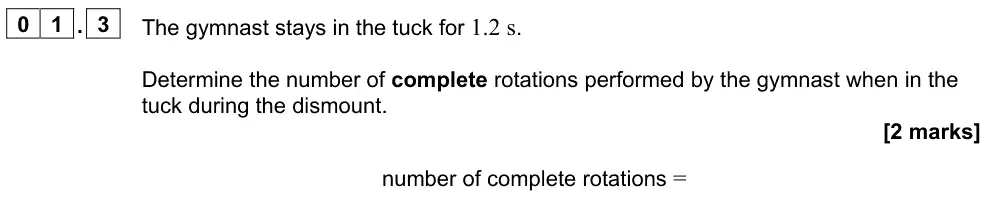
The gymnast stays in the tuck for 1.2 s.
Determine the number of complete rotations performed by the gymnast when in the
tuck during the dismount.
[2 marks]
number of complete rotations =
November 2021 · Paper 3B Engineering physics · Q1.4 4 marks AO3=4 Explanation rotational dynamics
Earlier part of question 1 that this part usesEarlier part of November 2021 Paper 3B Engineering physics question 1
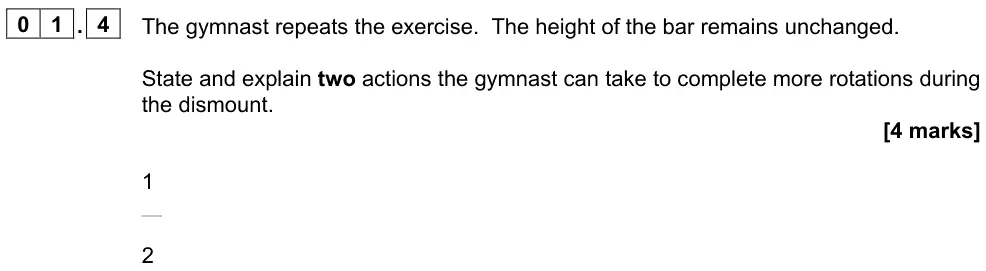
The gymnast repeats the exercise.  The height of the bar remains unchanged.
State and explain two actions the gymnast can take to complete more rotations during
the dismount.
[4 marks]
1
2
November 2021 · Paper 3B Engineering physics · Q2.1 3 marks AO2=3 Calculation rotational dynamics
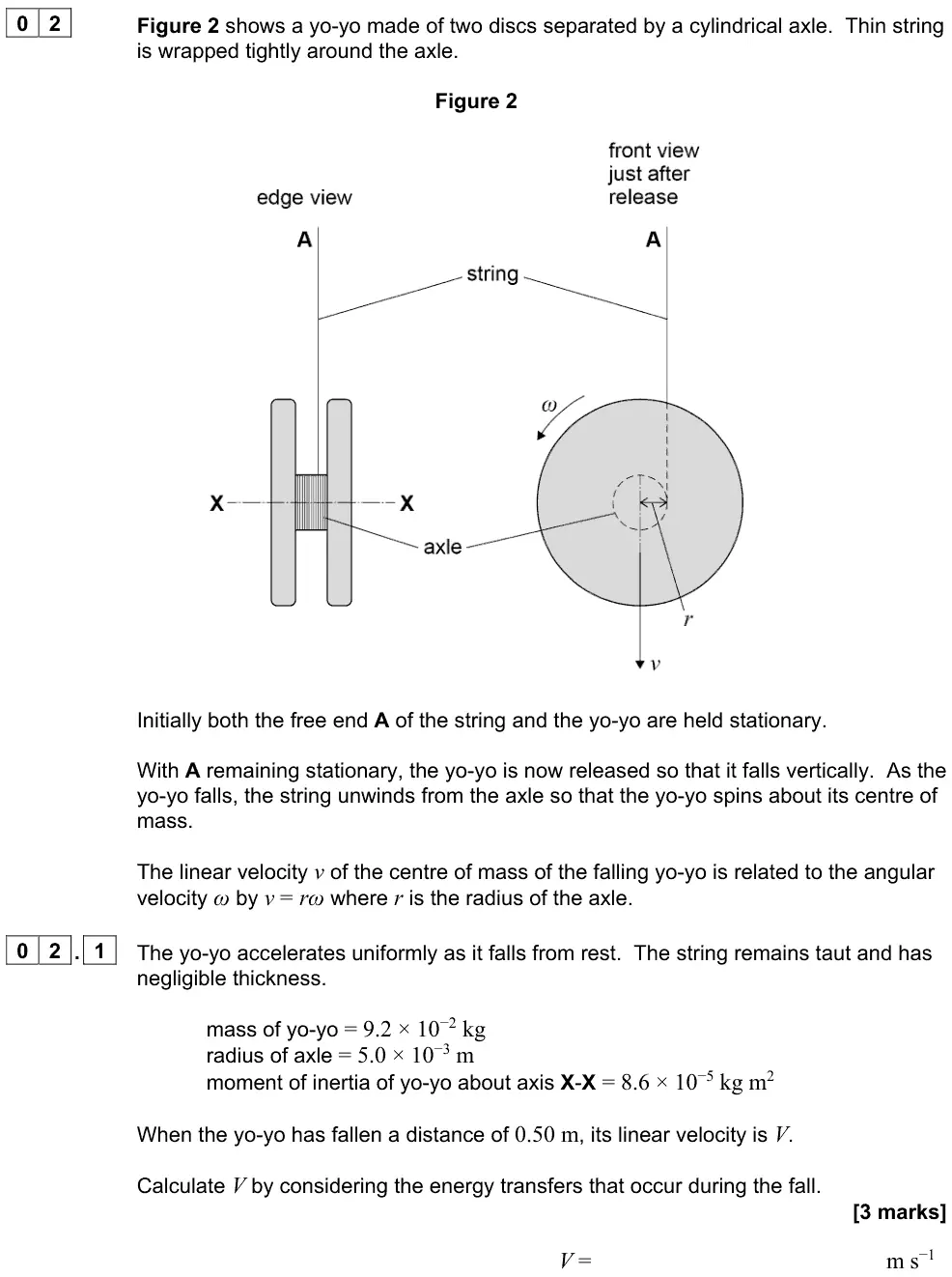
Figure 2 shows a yo-yo made of two discs separated by a cylindrical axle.  Thin string
is wrapped tightly around the axle.
Figure 2
Initially both the free end A of the string and the yo-yo are held stationary.
With A remaining stationary, the yo-yo is now released so that it falls vertically.  As the
yo-yo falls, the string unwinds from the axle so that the yo-yo spins about its centre of
mass.
The linear velocity v of the centre of mass of the falling yo-yo is related to the angular
velocity ω by v = rω where r is the radius of the axle.
The yo-yo accelerates uniformly as it falls from rest.  The string remains taut and has
negligible thickness.
mass of yo-yo = 9.2 × 10⁻² kg
radius of axle = 5.0 × 10⁻³ m
moment of inertia of yo-yo about axis X-X = 8.6 × 10⁻⁵ kg m2
When the yo-yo has fallen a distance of 0.50 m, its linear velocity is V.
Calculate V by considering the energy transfers that occur during the fall.
[3 marks]
V =
m s−1
November 2021 · Paper 3B Engineering physics · Q2.2 3 marks AO2=3 Calculation rotational dynamics
Earlier part of question 2 that this part usesEarlier part of November 2021 Paper 3B Engineering physics question 2
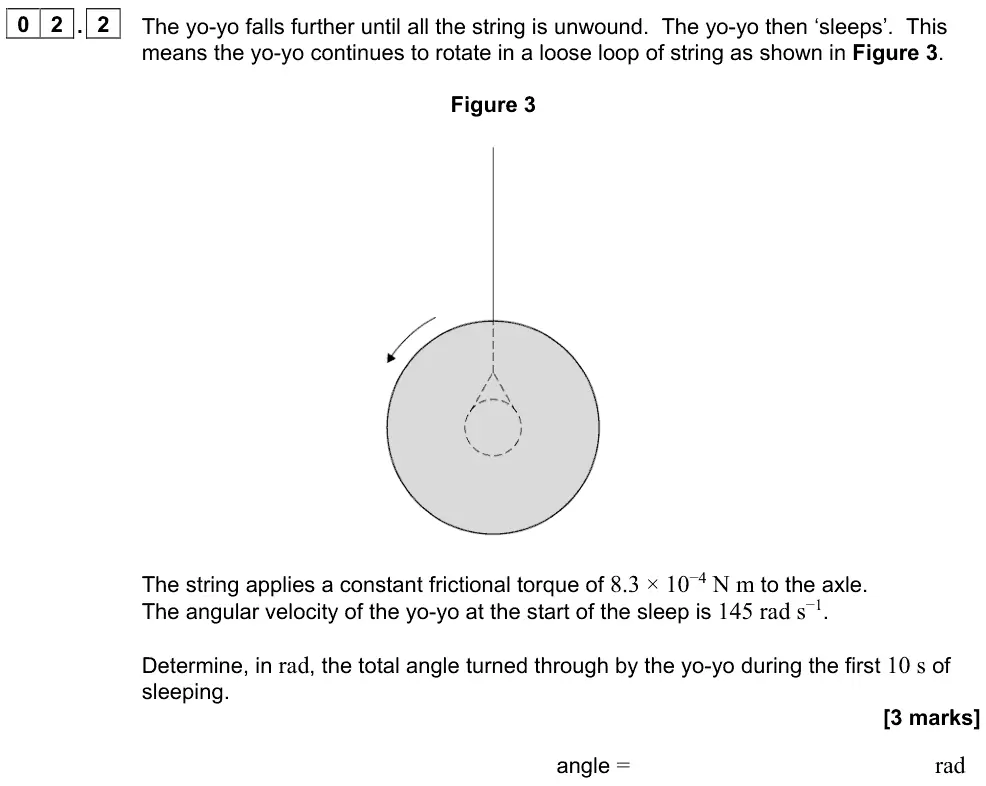
The yo-yo falls further until all the string is unwound.  The yo-yo then ‘sleeps’.  This
means the yo-yo continues to rotate in a loose loop of string as shown in Figure 3.
Figure 3
The string applies a constant frictional torque of 8.3 × 10⁻⁴ N m to the axle.
The angular velocity of the yo-yo at the start of the sleep is 145 rad s−1.
Determine, in rad, the total angle turned through by the yo-yo during the first 10 s of
sleeping.
[3 marks]
angle =
rad
November 2021 · Paper 3B Engineering physics · Q3.1 6 marks 6-mark extended response thermodynamics and engines
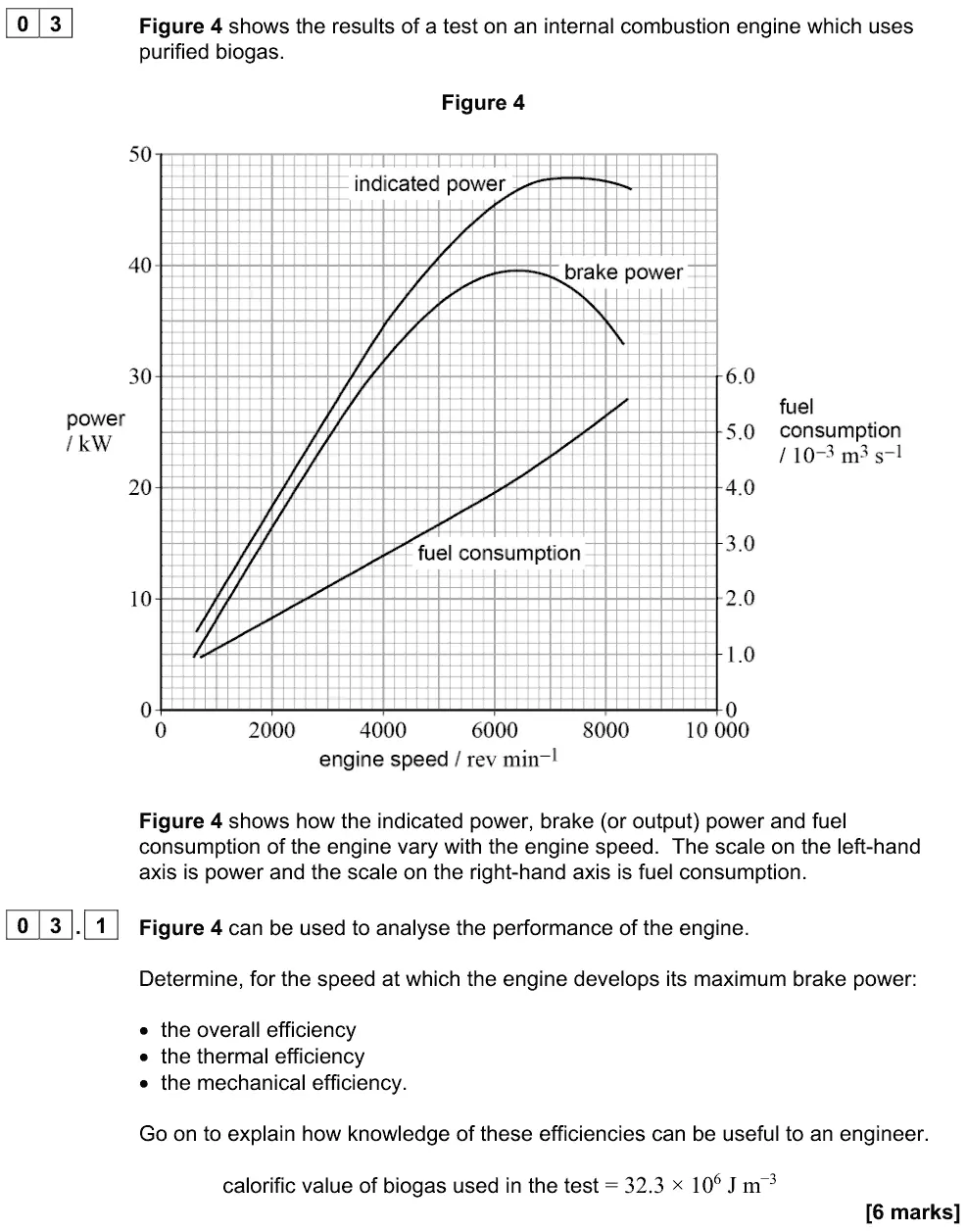
Figure 4 shows the results of a test on an internal combustion engine which uses
purified biogas.
Figure 4
Figure 4 shows how the indicated power, brake (or output) power and fuel
consumption of the engine vary with the engine speed.  The scale on the left-hand
axis is power and the scale on the right-hand axis is fuel consumption.
Figure 4 can be used to analyse the performance of the engine.
Determine, for the speed at which the engine develops its maximum brake power:
• the overall efficiency
• the thermal efficiency
• the mechanical efficiency.
Go on to explain how knowledge of these efficiencies can be useful to an engineer.
calorific value of biogas used in the test = 32.3 × 10⁶ J m−3
[6 marks]
November 2021 · Paper 3B Engineering physics · Q3.2 2 marks Explanation thermodynamics and enginesrotational dynamics
Earlier part of question 3 that this part usesEarlier part of November 2021 Paper 3B Engineering physics question 3
Explain why it is not advisable to run this engine at speeds above 7000 rev min−1.
Refer to Figure 4 in your answer.
[2 marks]
November 2021 · Paper 3B Engineering physics · Q4.1 5 marks Calculation thermodynamics and engines
Figure 5 shows a tool for driving nails into wood.  Only part of the tool is shown.
Figure 5
Fuel is mixed with air in the combustion chamber and is ignited by a spark.  The gas
expands rapidly and drives the piston along the cylinder.  The plunger attached to the
piston drives the nail into the wood.
Table 2 shows the average force needed to drive nails of various lengths completely
into a particular type of wood.
Table 2
Nail
Length / mm
Average force / N
A
32
250
B
38
320
C
45
370
D
50
420
E
63
560
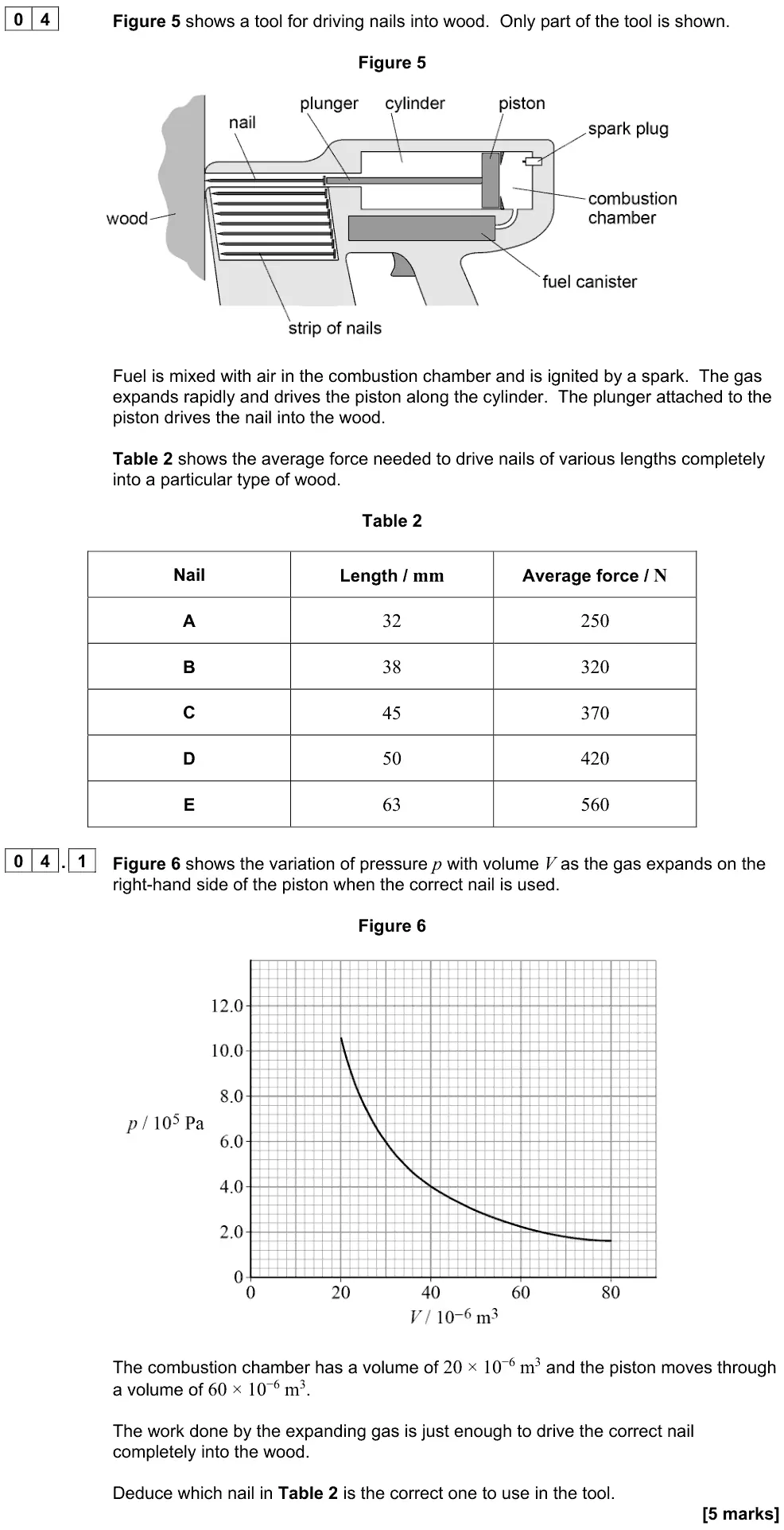
Figure 6 shows the variation of pressure p with volume V as the gas expands on the
right-hand side of the piston when the correct nail is used.
Figure 6
The combustion chamber has a volume of 20 × 10−6 m3 and the piston moves through
a volume of 60 × 10−6 m3.
The work done by the expanding gas is just enough to drive the correct nail
completely into the wood.
Deduce which nail in Table 2 is the correct one to use in the tool.
[5 marks]
November 2021 · Paper 3B Engineering physics · Q4.2 3 marks Explanation thermodynamics and engines
Earlier part of question 4 that this part usesEarlier part of November 2021 Paper 3B Engineering physics question 4
After a nail has been used, another nail takes its place automatically.  The tool can
drive up to 180 nails per minute.
Discuss why the expansion cannot be isothermal.
[3 marks]
November 2021 · Paper 3B Engineering physics · Q5.1 1 mark AO1=1 Short answer thermodynamics and engines
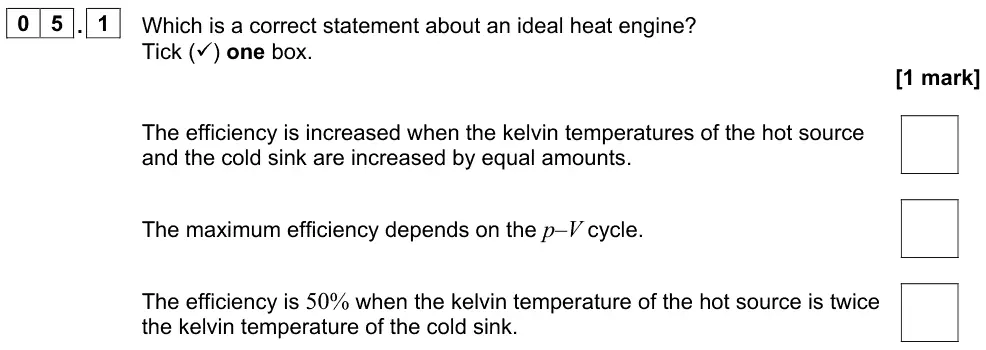
Which is a correct statement about an ideal heat engine?
Tick () one box.
[1 mark]
The efficiency is increased when the kelvin temperatures of the hot source
and the cold sink are increased by equal amounts.
The maximum efficiency depends on the p–V cycle.
The efficiency is 50% when the kelvin temperature of the hot source is twice
the kelvin temperature of the cold sink.
November 2021 · Paper 3B Engineering physics · Q5.2 2 marks AO1=2 Calculation thermodynamics and engines
Earlier part of question 5 that this part usesEarlier part of November 2021 Paper 3B Engineering physics question 5
An ideal heat engine has an efficiency of 0.33
The same engine works in reverse as an ideal refrigerator between the same hot and
cold spaces.
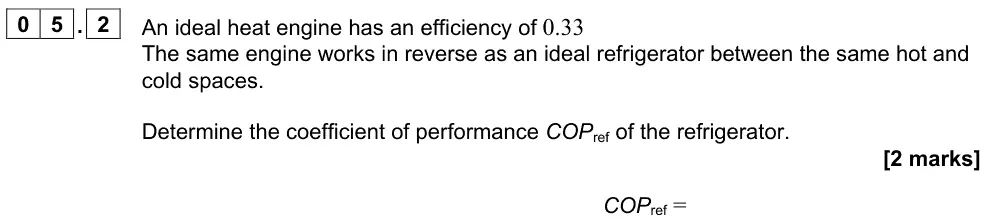
Determine the coefficient of performance COPref of the refrigerator.
[2 marks]
COPref =

Work with an AQA physics tutor

Want a paper marked and gone through with you? Message us.

Prefer email? Send an enquiry

If you are under 18, please include a parent's contact details. Enquiries go to enquiries@physicsaleveltutor.com and are deleted once handled. All tutoring is online.