Examiner's comment
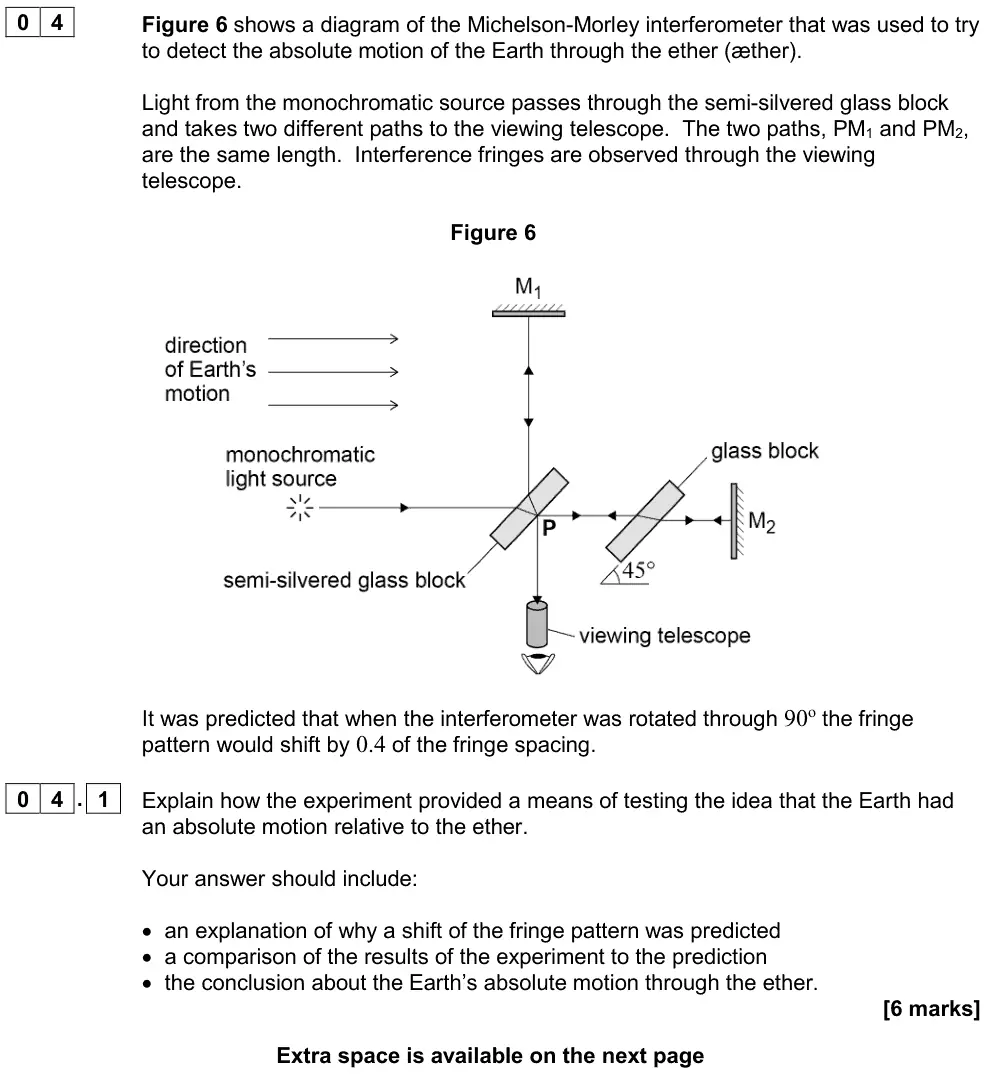
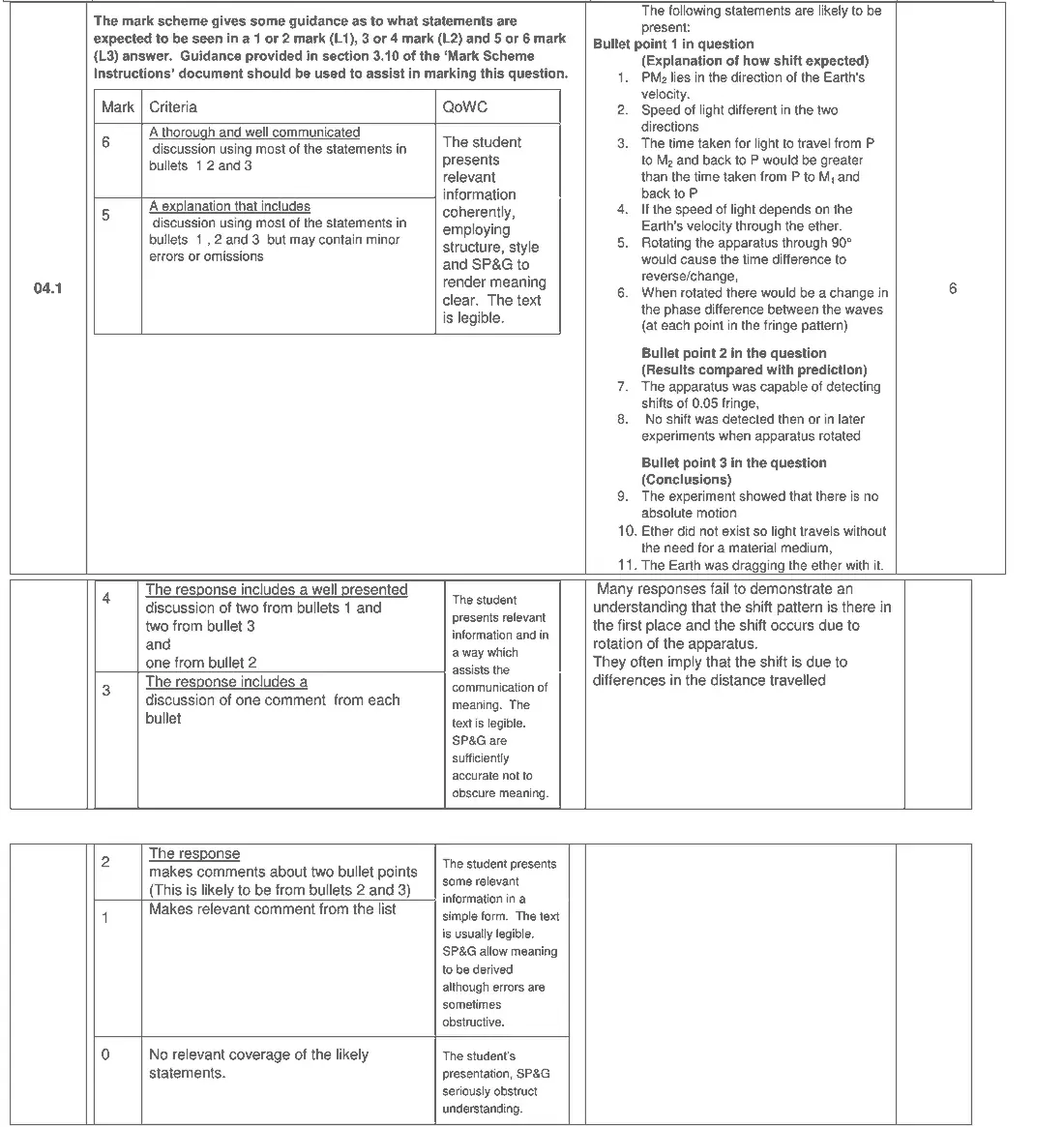
04.1 Students needed to demonstrate a clear understanding of the prediction, the experiment itself and the conclusions, as outlined in the bullet points in the question. Even the better students rarely addressed the first bullet point in the question with any conviction, so were limited to a mark in the middle level. Many responses showed only a superficial understanding of the experiment, with many appreciating no more than that rotating the apparatus was expected to produce a fringe shift and as there wasn’t one, there is no ether. Those who had more knowledge of the experiment itself often failed to provide adequate detail in their responses, particularly the detail relating to anticipated effect of the ether, the change in times of travel for the light waves, and the expected changes in phase difference when the apparatus was rotated. Responses from many students indicated a lack of understanding of how fringes were formed and no appreciation that there would be fringes seen whatever the orientation of the apparatus. For full notes on the experiment see: http://filestore.aqa.org.uk/resources/physics/AQA-7407-7408-TG-TPIP.PDF
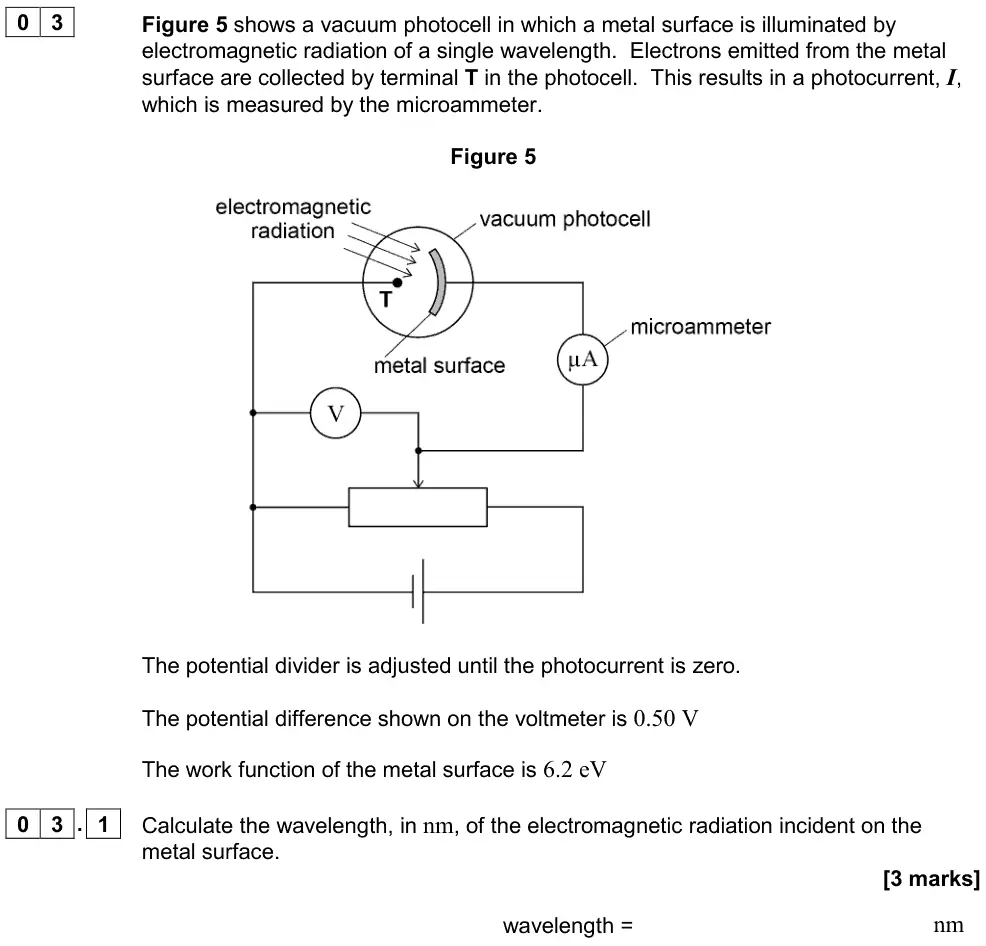
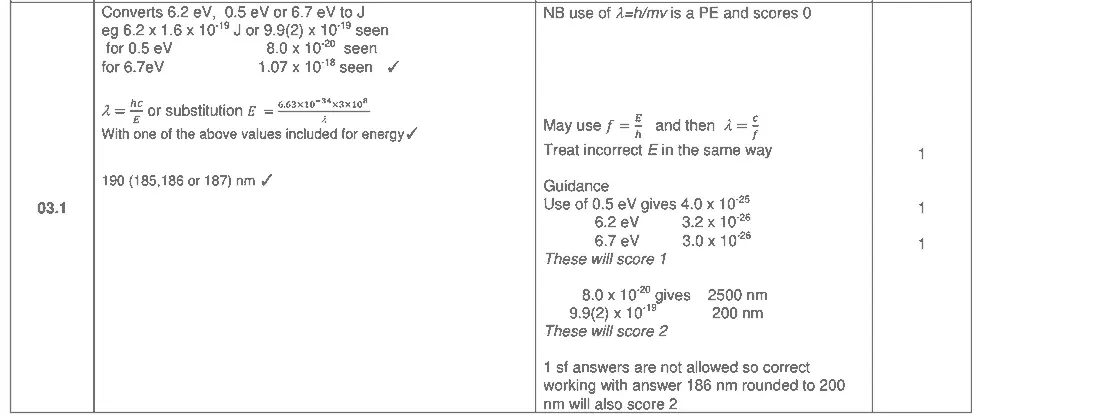
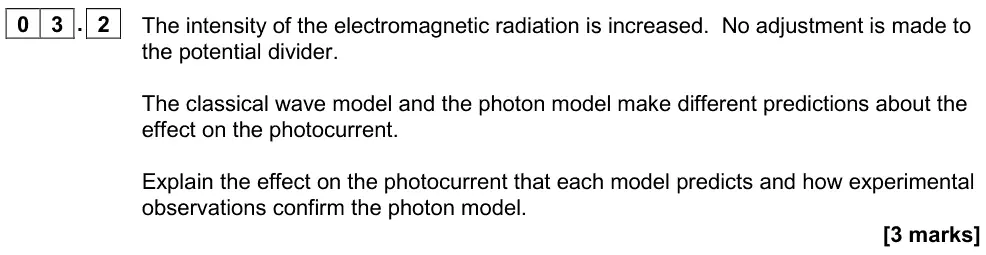
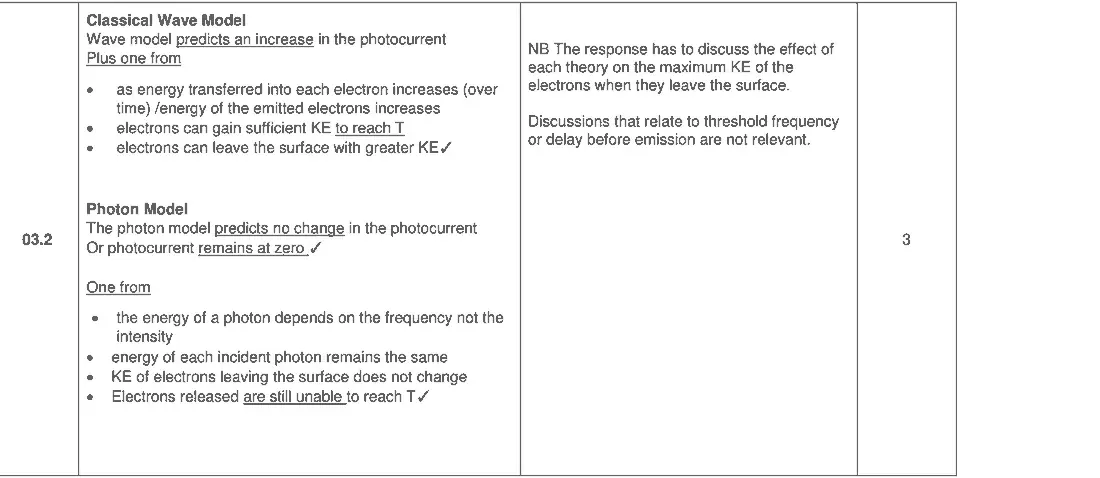
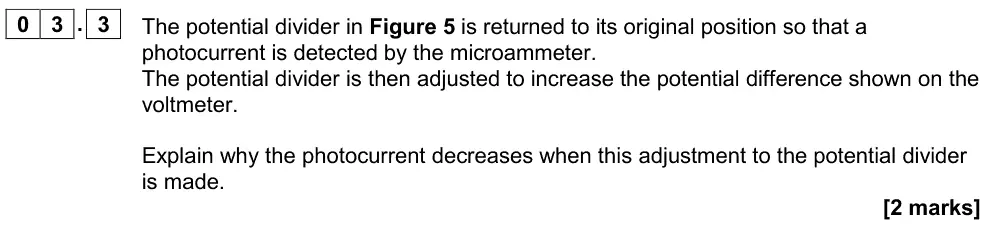
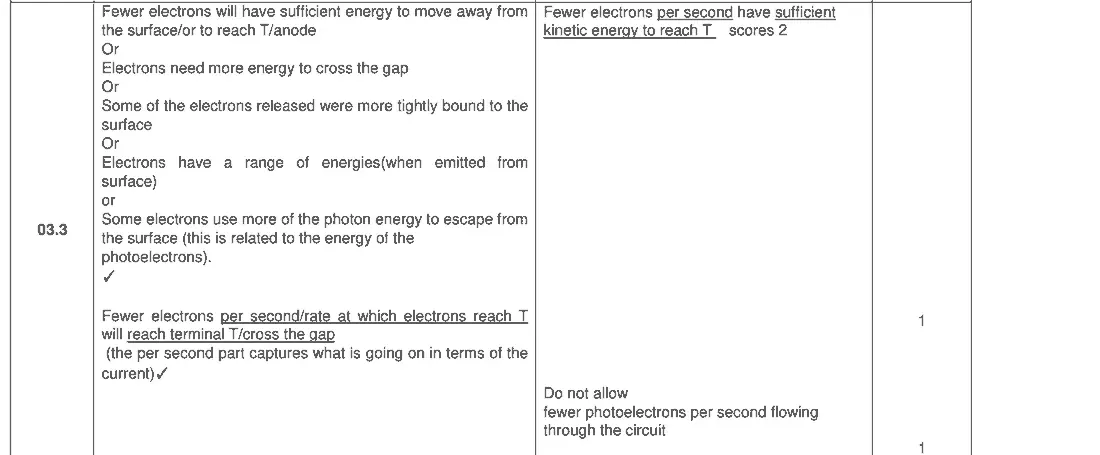
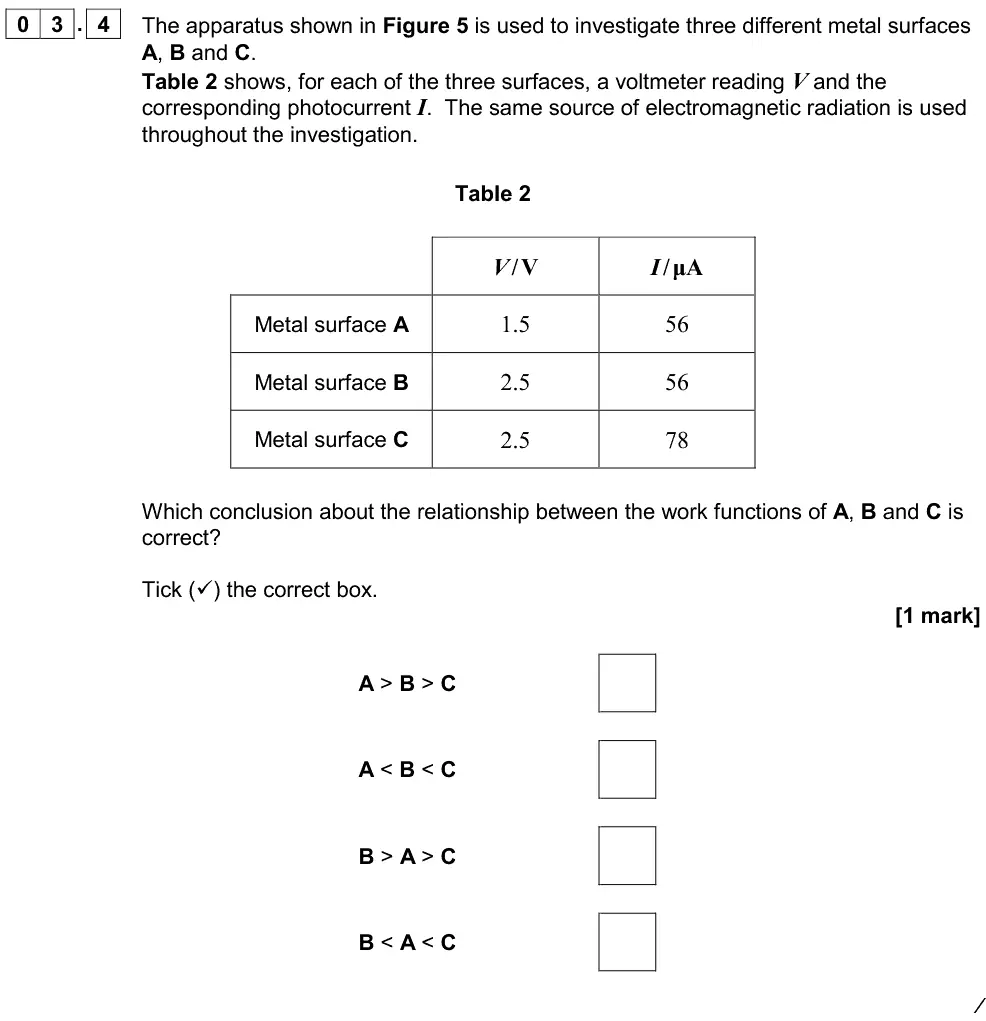
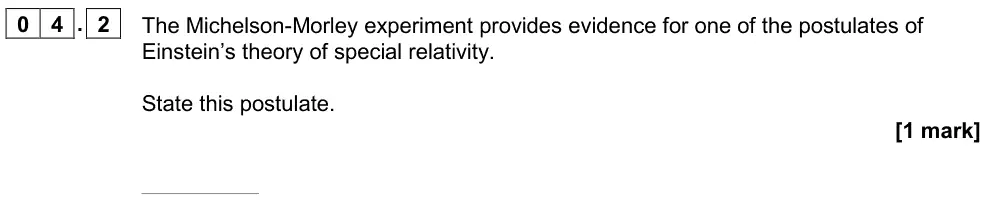
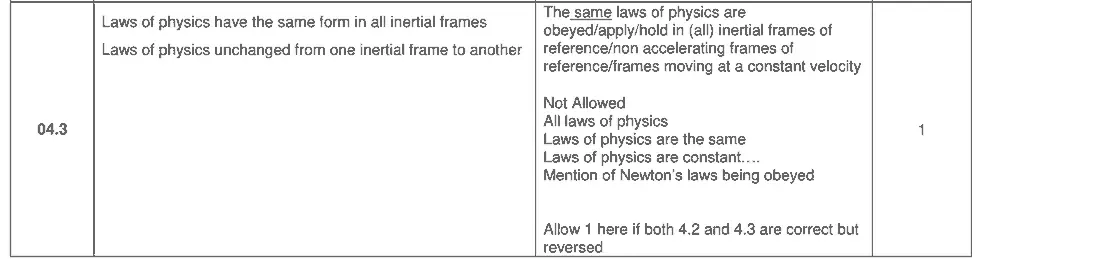
Apart from question 3, most parts of each question proved to be accessible to many/most students. Apart from part 03.1, which was answered quite well, a majority of the students had insufficient understanding of the experimental arrangement in question 3 to deal successfully with the questions asked. The question is dealt with in more detail below. The other part that presented particular difficulties was the 6-mark question, 04.1, in which relatively few students were able to give a convincing discussion that was worthy of a mark in Level 3. The other parts that were answered surprisingly poorly were 04.2 and 04.3 where the statements of the postulates were frequently incorrect or incomplete.