
November 2020: AS Paper 1

70 marks · 31 question parts · Paper, mark scheme and report on AQA's site · An autumn series using the paper written for the cancelled summer exams · Have the data and formulae booklet beside you

Question by question

QTopicMarksAOType
1.1 Classification of particles, quarks and conservation laws 2Short answer
1.2 Classification of particles, quarks and conservation laws 1Short answer
1.3 Classification of particles, quarks and conservation laws 1Short answer
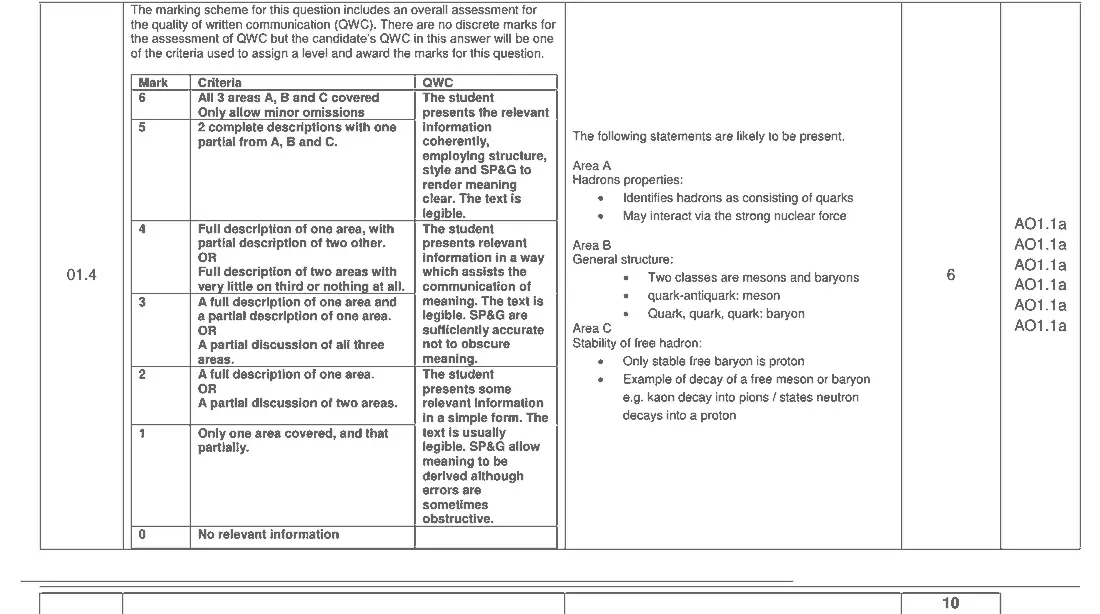
1.4 Classification of particles, quarks and conservation laws 6Extended response
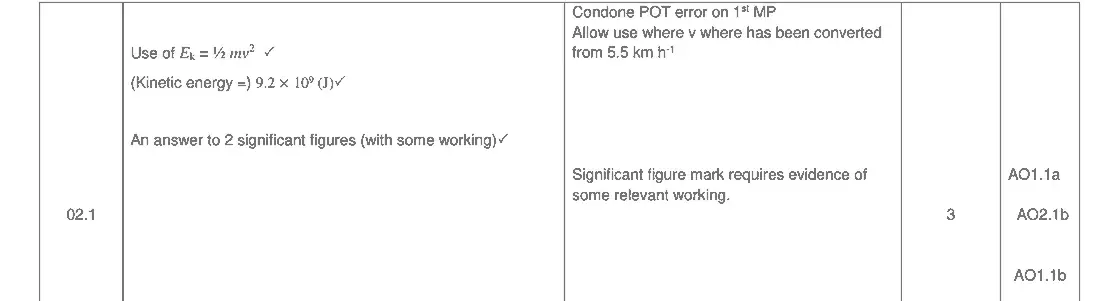
2.1 Work, energy, power and conservation of energy 3Calculation
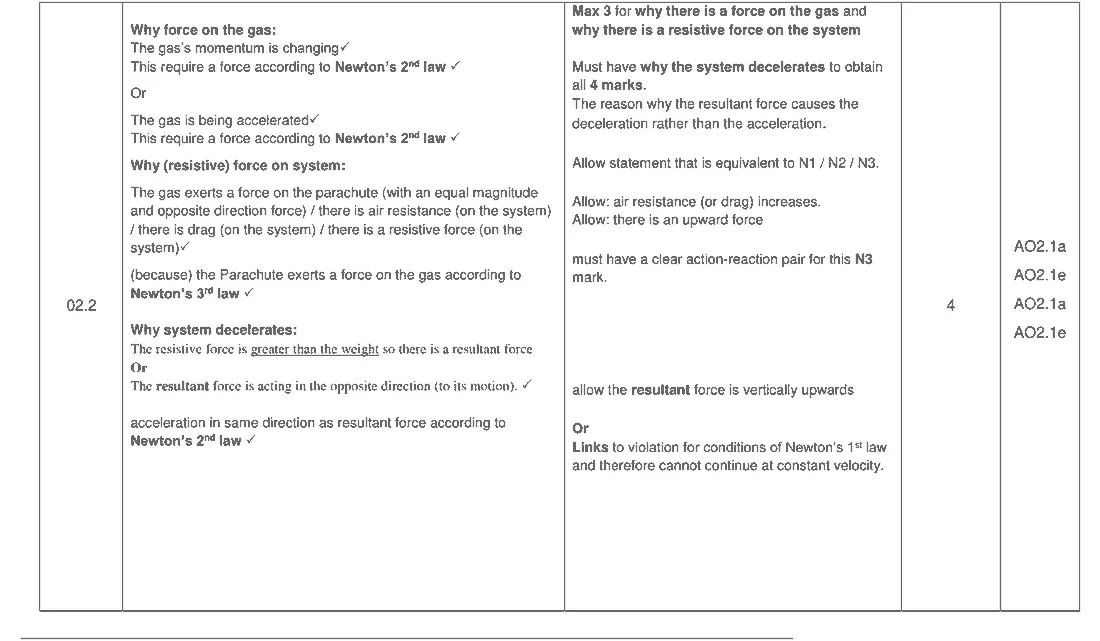
2.2 Newton's laws of motion and momentum 4Explanation
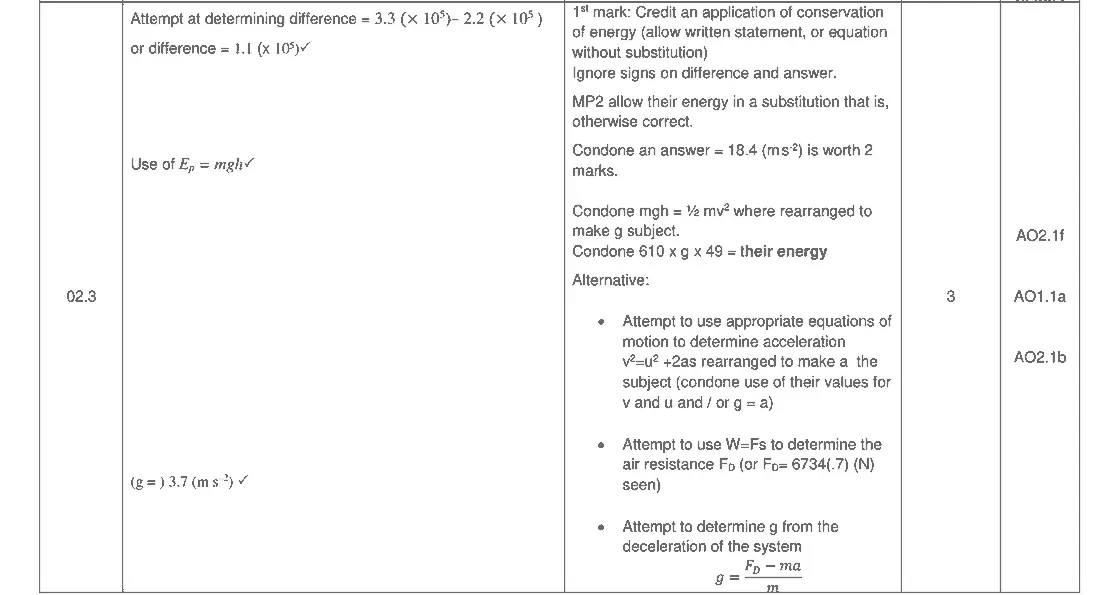
2.3 Work, energy, power and conservation of energy 3Calculation
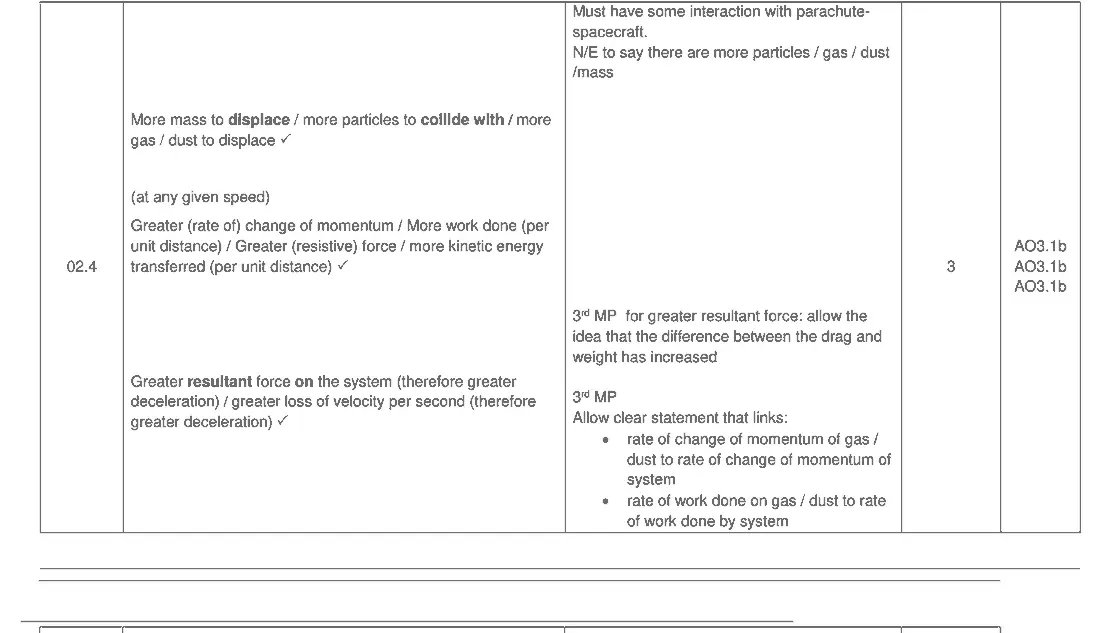
2.4 Newton's laws of motion and momentum 3Explanation
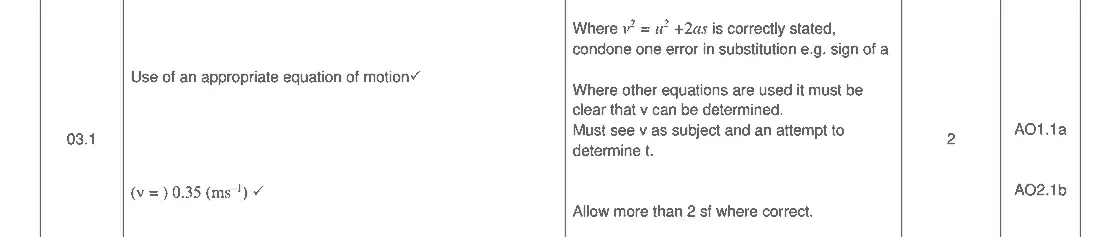
3.1 Motion along a straight line and projectile motion 2Calculation
3.2 Scalars, vectors and moments 1Show that
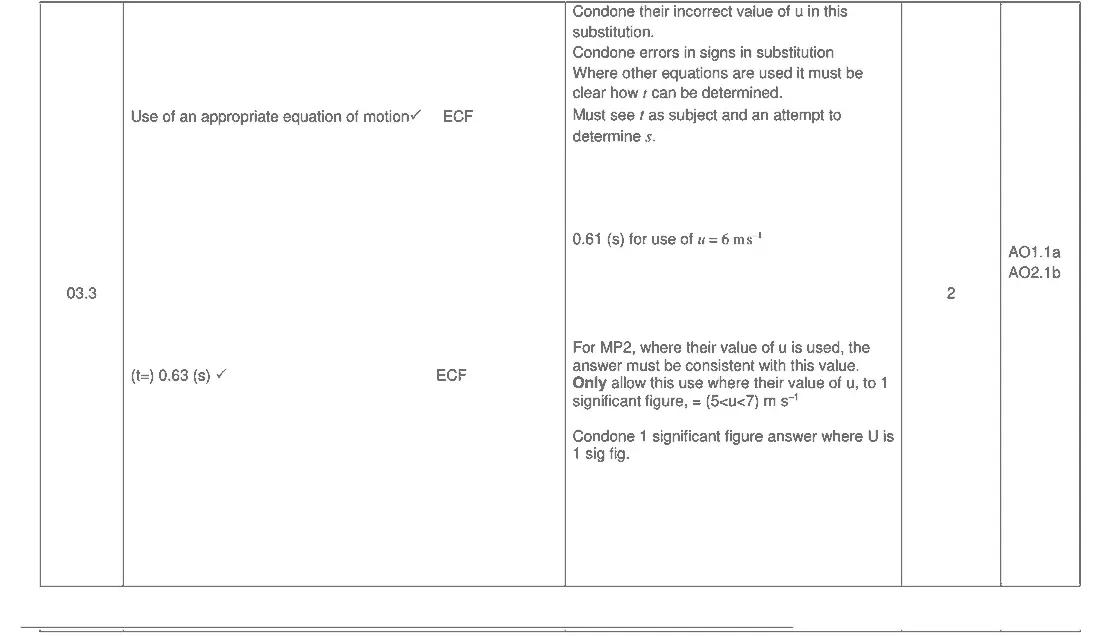
3.3 Motion along a straight line and projectile motion 2Calculation
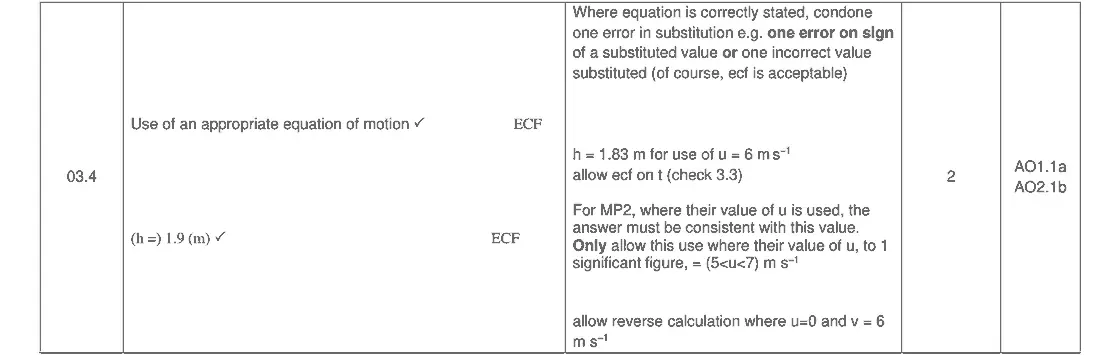
3.4 Motion along a straight line and projectile motion 2Calculation
3.5 Motion along a straight line and projectile motion 1Diagram or graph
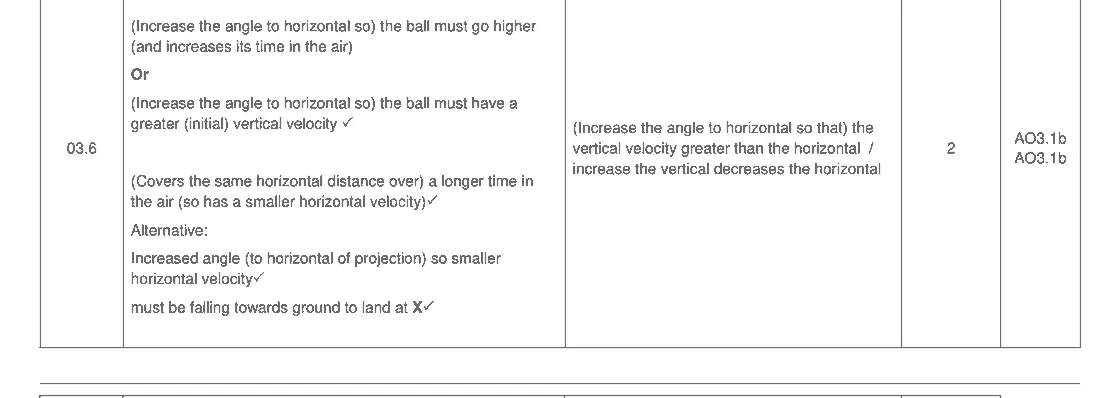
3.6 Motion along a straight line and projectile motion, Scalars, vectors and moments 2Explanation
4.1 Atomic structure and stable nuclei 1Calculation
4.2 Atomic structure and stable nuclei 2Calculation
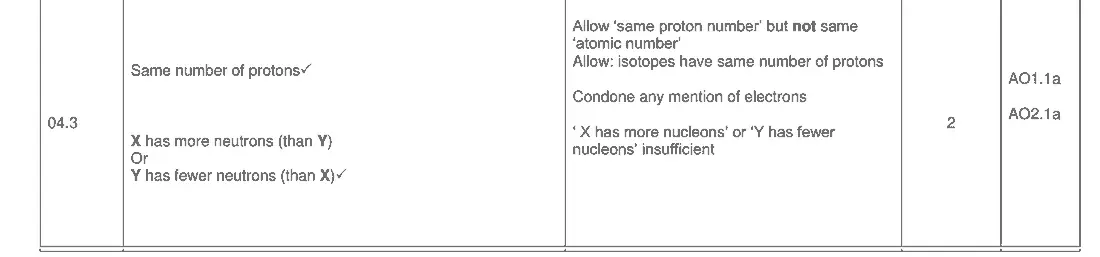
4.3 Atomic structure and stable nuclei 2Short answer
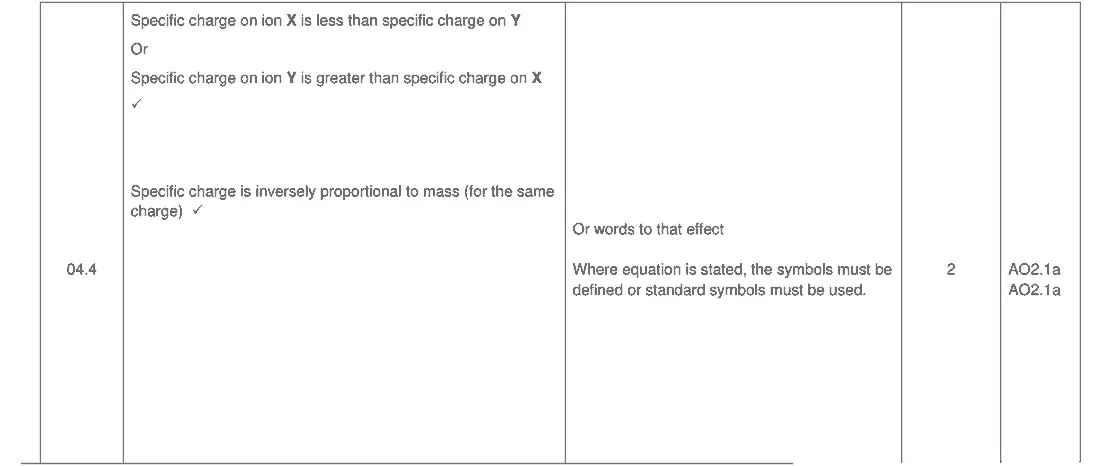
4.4 Atomic structure and stable nuclei 2Explanation
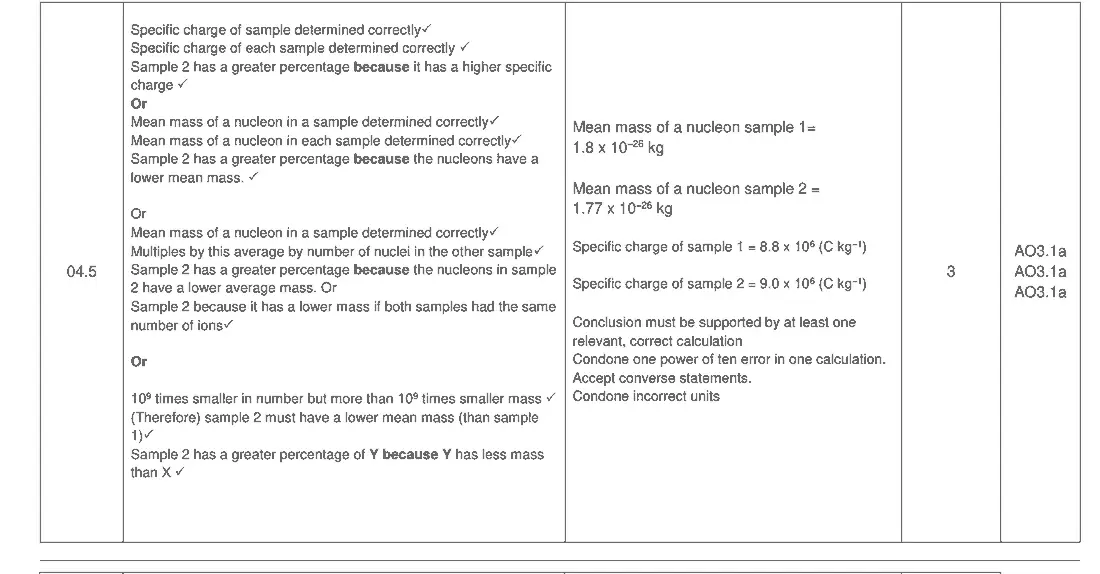
4.5 Atomic structure and stable nuclei 3Calculation
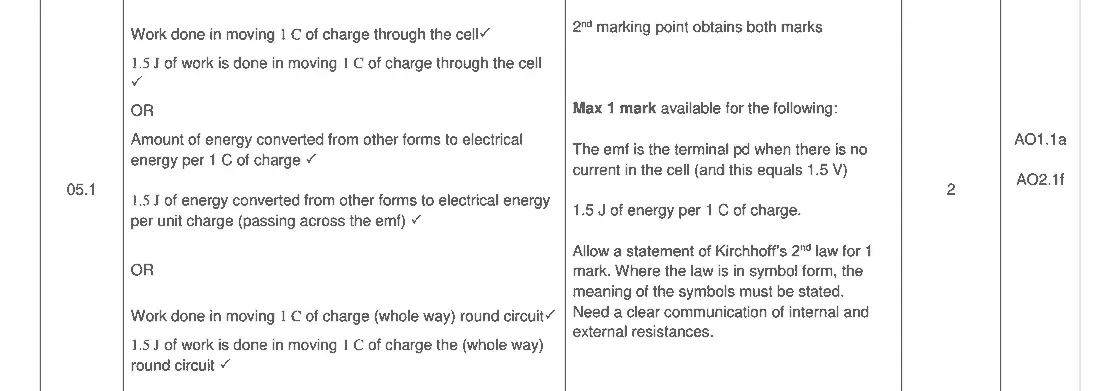
5.1 Electromotive force and internal resistance 2Short answer
5.2 Electromotive force and internal resistance, Circuits and potential dividers 1Show that
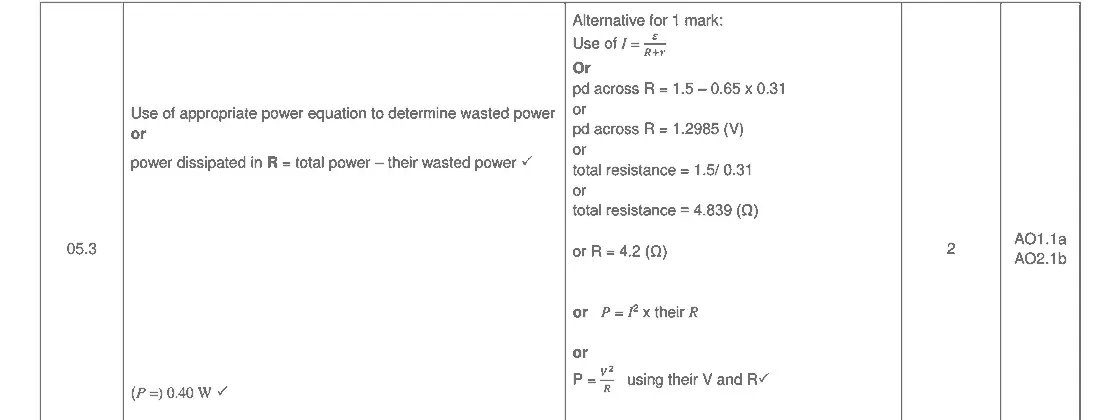
5.3 Electromotive force and internal resistance, Circuits and potential dividers 2Calculation
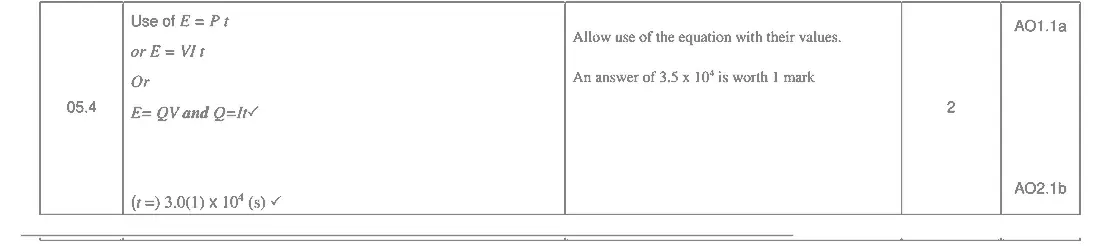
5.4 Circuits and potential dividers 2Calculation
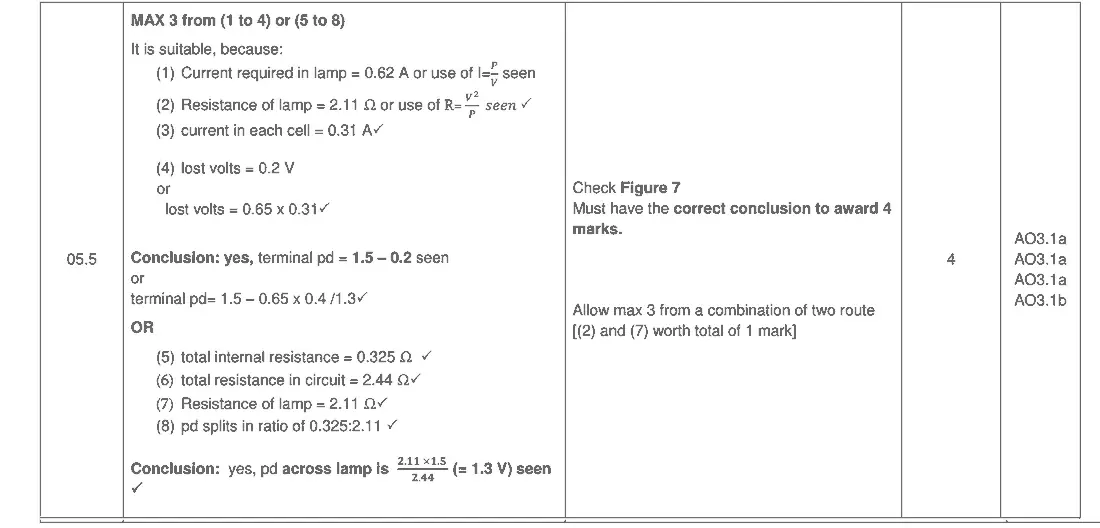
5.5 Electromotive force and internal resistance, Circuits and potential dividers 4Calculation
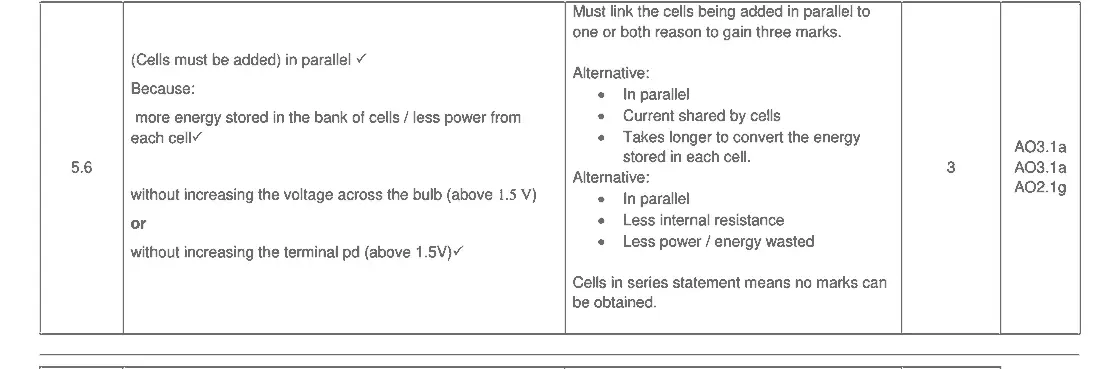
5.6 Circuits and potential dividers, Electromotive force and internal resistance 3Explanation
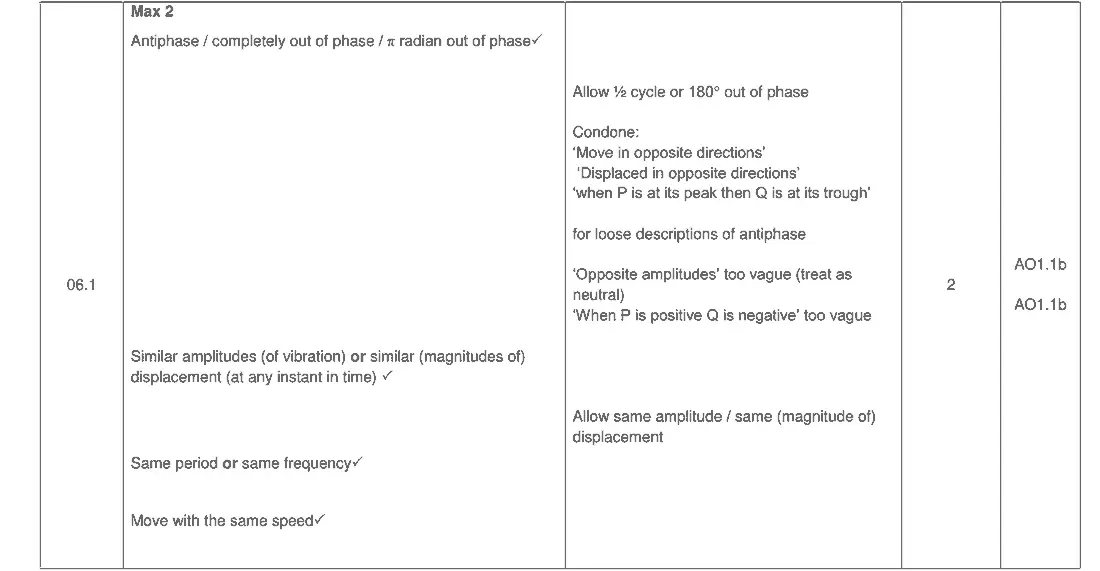
6.1 Superposition and stationary waves, Progressive waves, longitudinal and transverse waves 2Short answer
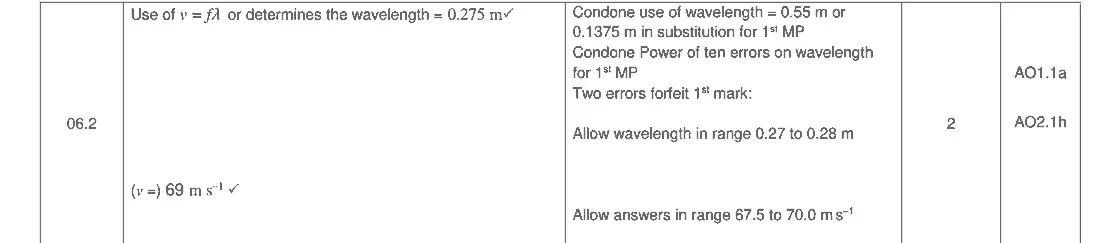
6.2 Progressive waves, longitudinal and transverse waves, Superposition and stationary waves 2Calculation
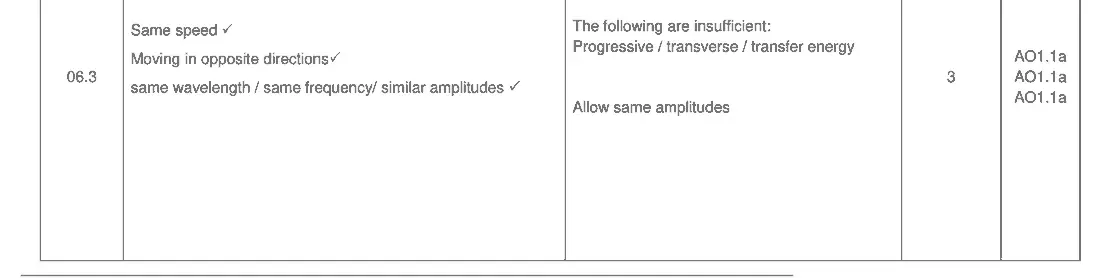
6.3 Superposition and stationary waves 3Short answer
6.4 Superposition and stationary waves 1Diagram or graph
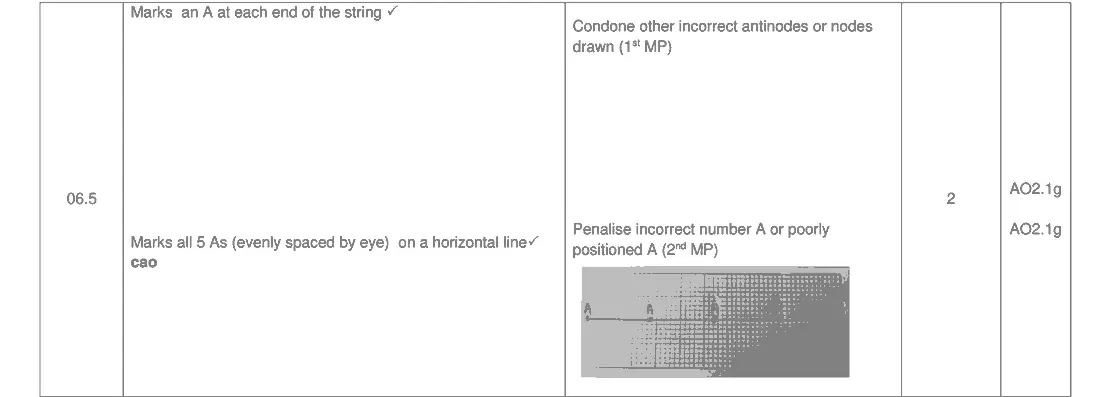
6.5 Superposition and stationary waves 2Diagram or graph
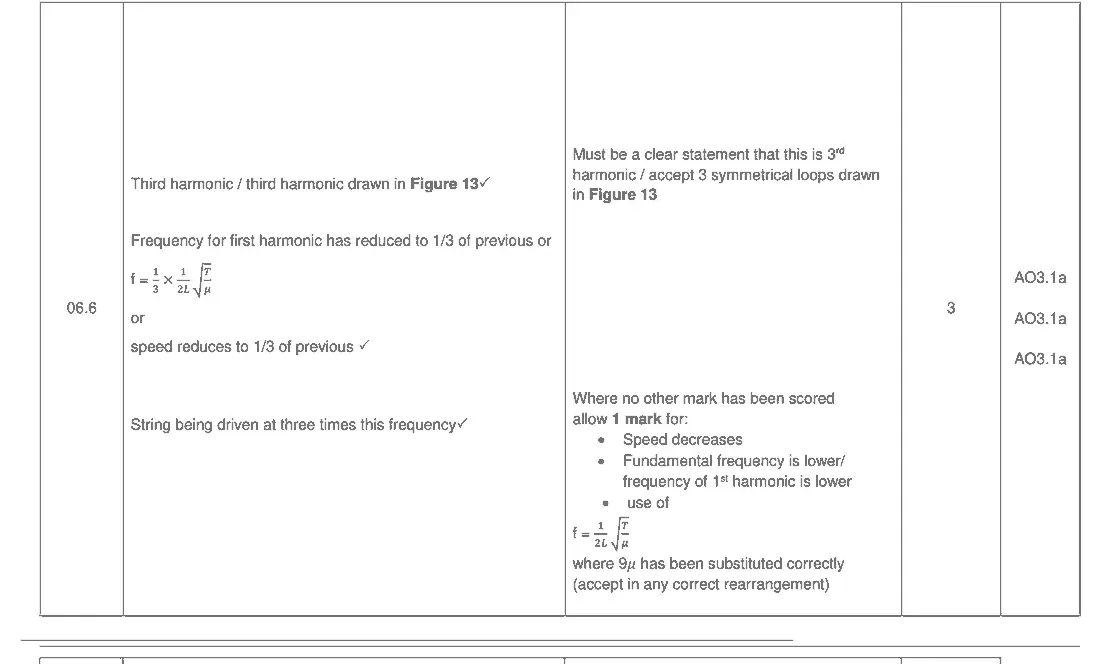
6.6 Superposition and stationary waves 3Explanation

The questions

1.11.21.31.42.12.22.32.43.13.23.33.43.53.64.14.24.34.44.55.15.25.35.45.55.66.16.26.36.46.56.6
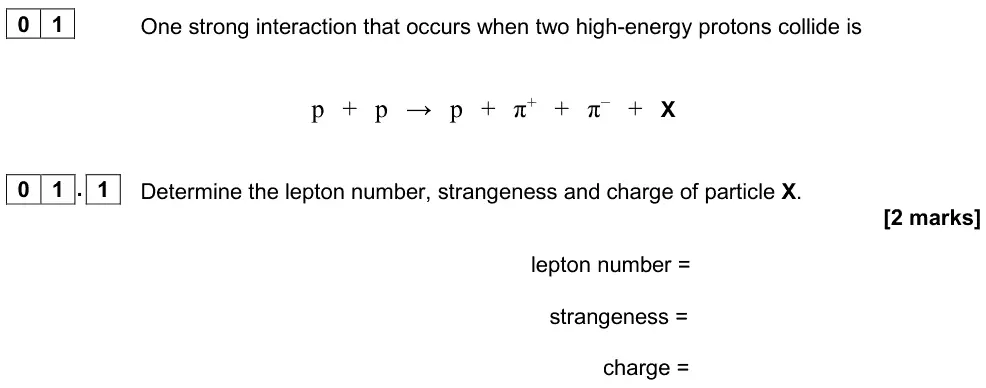
November 2020 · AS Paper 1 · Q1.1 2 marks Short answer classification of particles and quarks
One strong interaction that occurs when two high-energy protons collide is
p   +   p   →   p   +   π+   +   π−   +   X
Determine the lepton number, strangeness and charge of particle X.
[2 marks]
lepton number =
strangeness =
charge =
November 2020 · AS Paper 1 · Q1.2 1 mark Short answer classification of particles and quarks
Earlier part of question 1 that this part usesEarlier part of November 2020 Paper 1 question 1
Identify particle X.
[1 mark]
November 2020 · AS Paper 1 · Q1.3 1 mark Short answer classification of particles and quarks
Earlier part of question 1 that this part usesEarlier part of November 2020 Paper 1 question 1
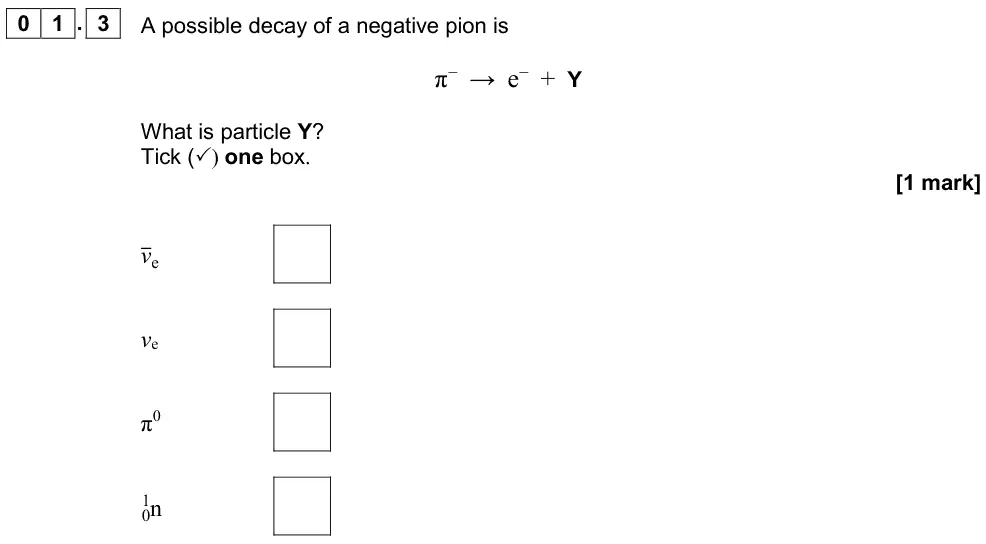
A possible decay of a negative pion is
π−  →  e−  +  Y
What is particle Y?
Tick () one box.
[1 mark]
νതe
ve
π0
n
0
1
November 2020 · AS Paper 1 · Q1.4 6 marks 6-mark extended response classification of particles and quarks
Earlier part of question 1 that this part usesEarlier part of November 2020 Paper 1 question 1
Some subatomic particles are classified as hadrons.  There are two classes of
hadrons.
Discuss the nature of hadrons.
Your answer should include:
• the identifying properties of hadrons
• the structure of a hadron in each class
• a discussion of the stability of free hadrons.
[6 marks]
November 2020 · AS Paper 1 · Q2.1 3 marks Calculation work energy and power
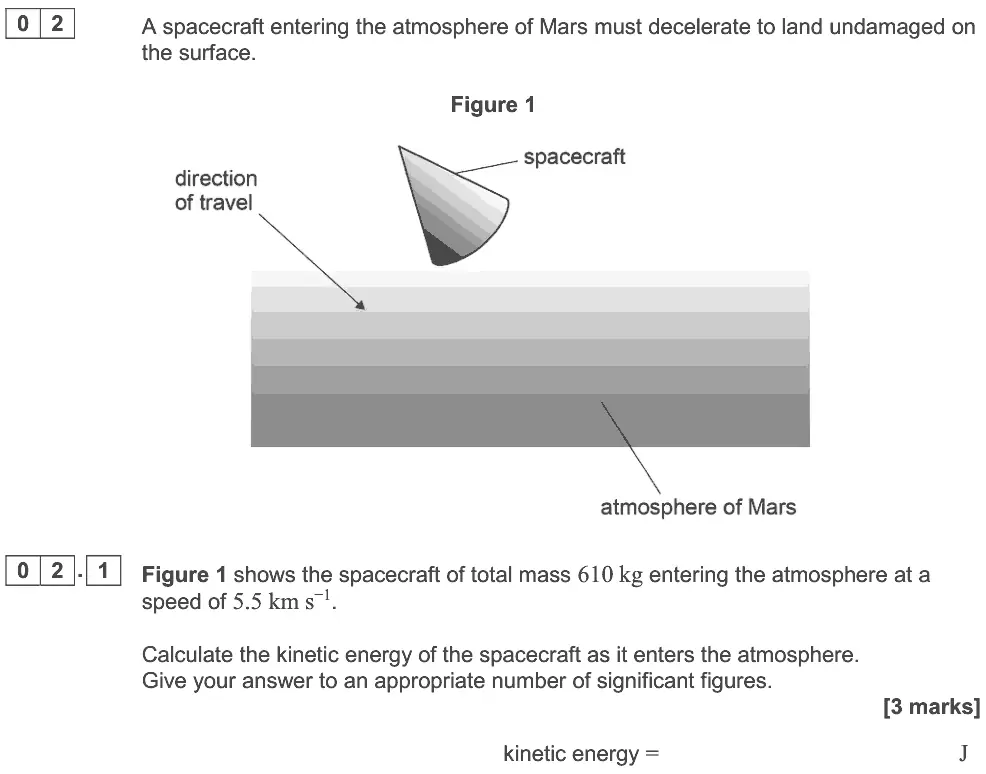
A spacecraft entering the atmosphere of Mars must decelerate to land undamaged on
the surface.
Figure 1
Figure 1 shows the spacecraft of total mass 610 kg entering the atmosphere at a
speed of 5.5 km s−1.
Calculate the kinetic energy of the spacecraft as it enters the atmosphere.
Give your answer to an appropriate number of significant figures.
[3 marks]
kinetic energy =
J
November 2020 · AS Paper 1 · Q2.2 4 marks Explanation newtons laws and momentum
Earlier part of question 2 that this part usesEarlier part of November 2020 Paper 1 question 2
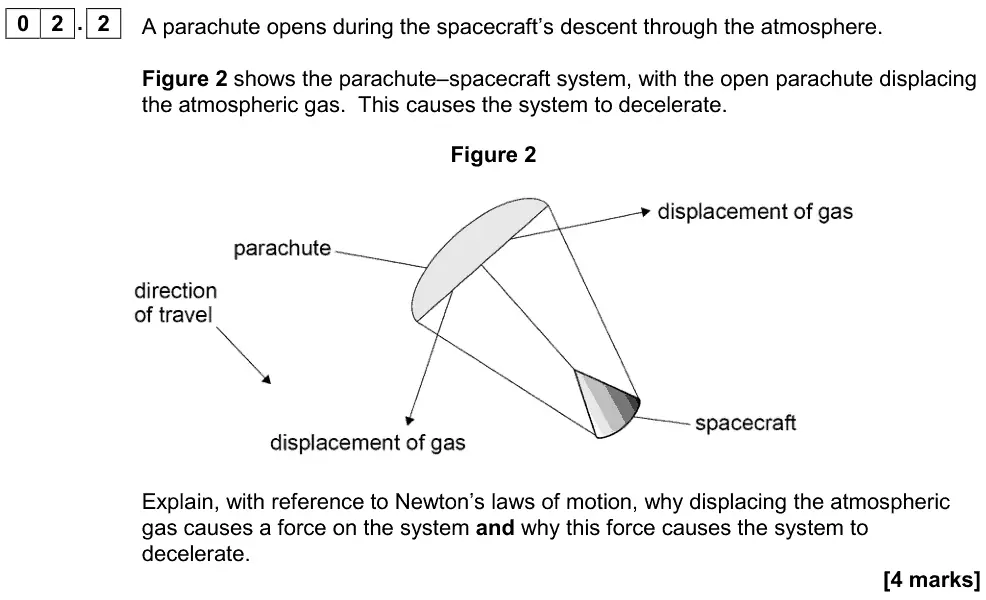
A parachute opens during the spacecraft’s descent through the atmosphere.
Figure 2 shows the parachute–spacecraft system, with the open parachute displacing
the atmospheric gas.  This causes the system to decelerate.
Figure 2
Explain, with reference to Newton’s laws of motion, why displacing the atmospheric
gas causes a force on the system and why this force causes the system to
decelerate.
[4 marks]
November 2020 · AS Paper 1 · Q2.3 3 marks Calculation work energy and power
Earlier part of question 2 that this part usesEarlier part of November 2020 Paper 1 question 2
As the parachute–spacecraft system decelerates, it falls through a vertical distance
of 49 m and loses 2.2 × 10⁵ J of kinetic energy.
During this time, 3.3 × 10⁵ J of energy is transferred from the system to the
atmosphere.
The total mass of the system is 610 kg.
Calculate the acceleration due to gravity as it falls through this distance.
[3 marks]
acceleration due to gravity =
m s−2
November 2020 · AS Paper 1 · Q2.4 3 marks Explanation newtons laws and momentum
Earlier part of question 2 that this part usesEarlier part of November 2020 Paper 1 question 2
Dust from the surface of Mars can enter the atmosphere.  This increases the density
of the atmosphere significantly.
Deduce how an increase in dust content will affect the deceleration of the system.
[3 marks]
November 2020 · AS Paper 1 · Q3.1 2 marks Calculation motion and projectiles
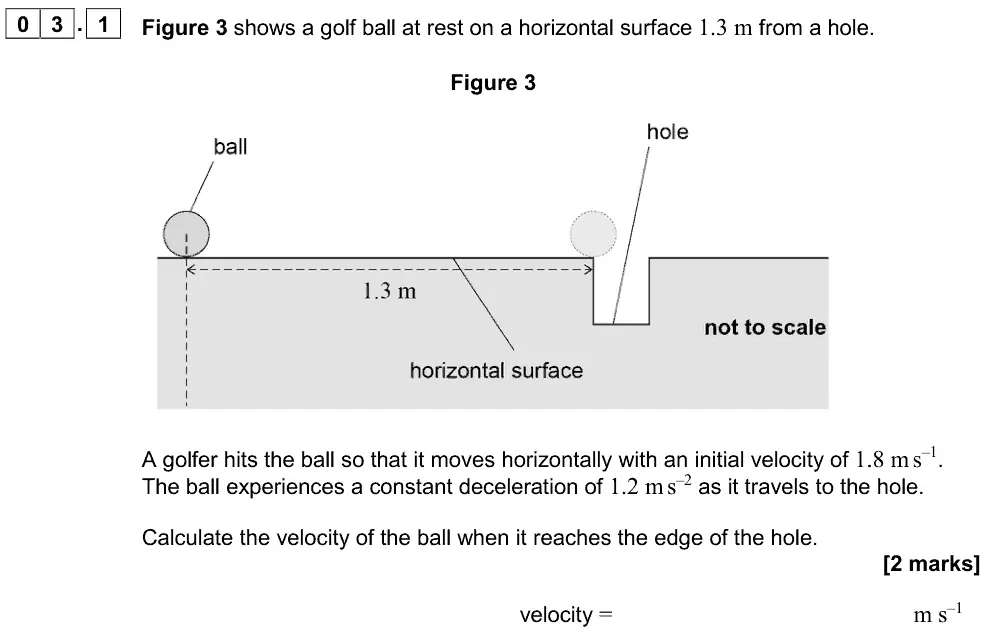
Figure 3 shows a golf ball at rest on a horizontal surface 1.3 m from a hole.
Figure 3
A golfer hits the ball so that it moves horizontally with an initial velocity of 1.8 m s–1.
The ball experiences a constant deceleration of 1.2 m s–2 as it travels to the hole.
Calculate the velocity of the ball when it reaches the edge of the hole.
[2 marks]
velocity =
m s–1
November 2020 · AS Paper 1 · Q3.2 1 mark Show that vectors and moments
Earlier part of question 3 that this part usesEarlier part of November 2020 Paper 1 question 3
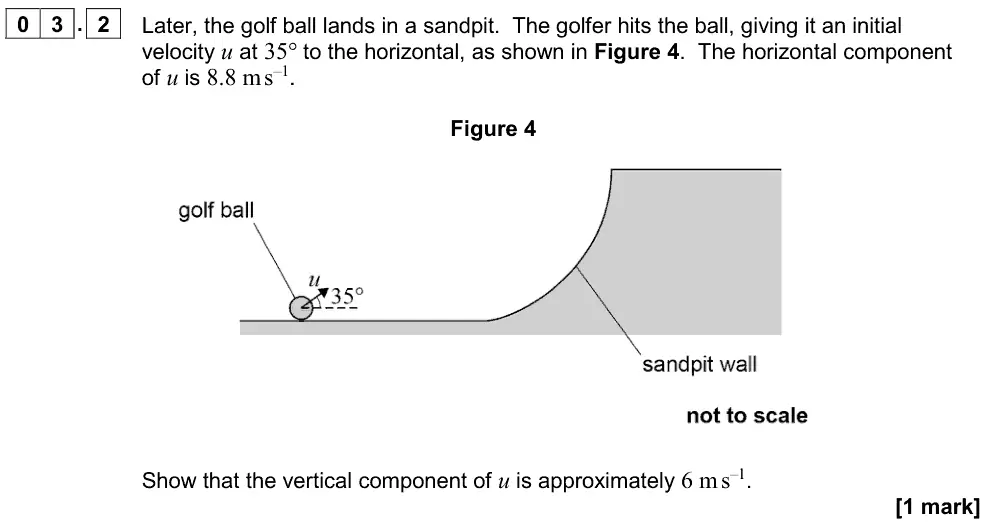
Later, the golf ball lands in a sandpit.  The golfer hits the ball, giving it an initial
velocity u at 35° to the horizontal, as shown in Figure 4.  The horizontal component
of u is 8.8 m s–1.
Figure 4
Show that the vertical component of u is approximately 6 m s–1.
[1 mark]
November 2020 · AS Paper 1 · Q3.3 2 marks Calculation motion and projectiles
Earlier part of question 3 that this part usesEarlier part of November 2020 Paper 1 question 3
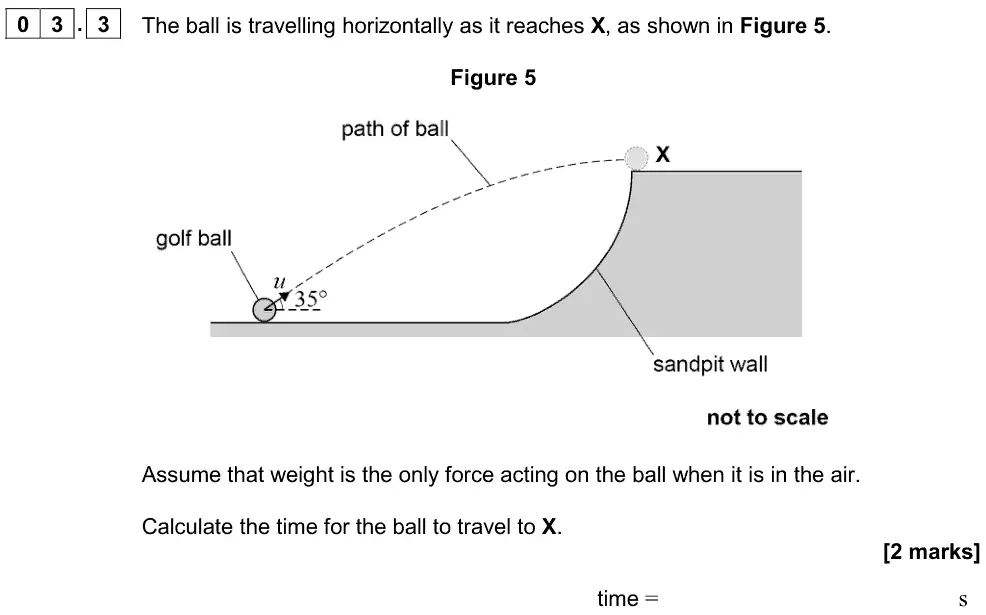
The ball is travelling horizontally as it reaches X, as shown in Figure 5.
Figure 5
Assume that weight is the only force acting on the ball when it is in the air.
Calculate the time for the ball to travel to X.
[2 marks]
time =
s
November 2020 · AS Paper 1 · Q3.4 2 marks Calculation motion and projectiles
Earlier part of question 3 that this part usesEarlier part of November 2020 Paper 1 question 3
Calculate the vertical distance of X above the initial position of the ball.
[2 marks]
vertical distance =
m
November 2020 · AS Paper 1 · Q3.5 1 mark Diagram or graph motion and projectiles
Earlier part of question 3 that this part usesEarlier part of November 2020 Paper 1 question 3
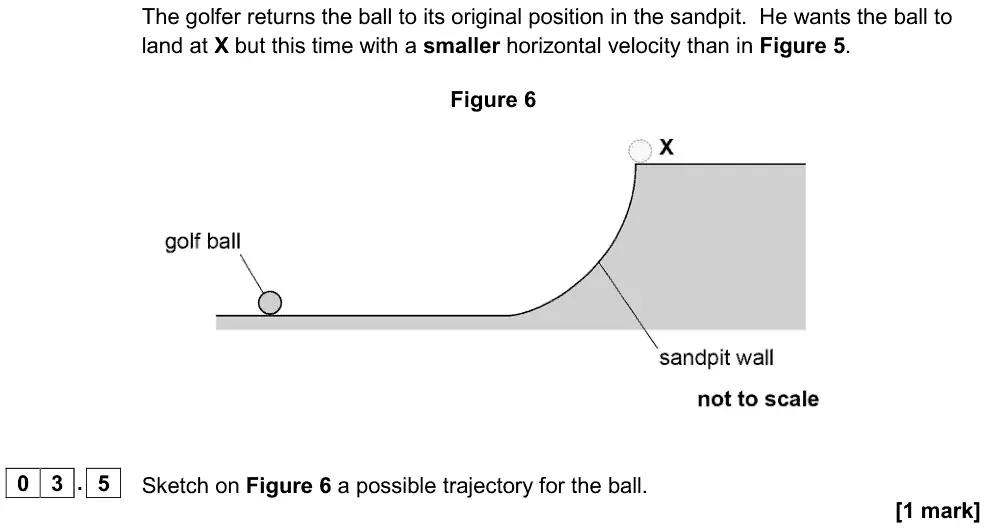
The golfer returns the ball to its original position in the sandpit.  He wants the ball to
land at X but this time with a smaller horizontal velocity than in Figure 5.
Figure 6
Sketch on Figure 6 a possible trajectory for the ball.
[1 mark]
November 2020 · AS Paper 1 · Q3.6 2 marks Explanation motion and projectilesvectors and moments
Earlier part of question 3 that this part usesEarlier part of November 2020 Paper 1 question 3
Explain your reason for selecting this trajectory.
[2 marks]
November 2020 · AS Paper 1 · Q4.1 1 mark Calculation atomic structure and stable nuclei
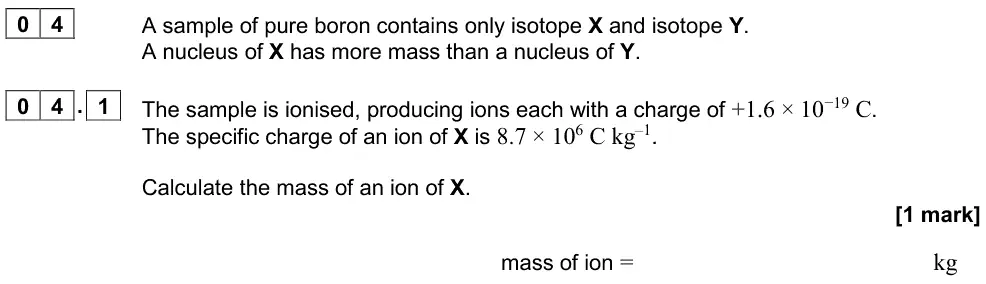
A sample of pure boron contains only isotope X and isotope Y.
A nucleus of X has more mass than a nucleus of Y.
The sample is ionised, producing ions each with a charge of +1.6 × 10⁻¹⁹ C.
The specific charge of an ion of X is 8.7 × 10⁶ C kg–1.
Calculate the mass of an ion of X.
[1 mark]
mass of ion =
kg
November 2020 · AS Paper 1 · Q4.2 2 marks Calculation atomic structure and stable nuclei
Earlier part of question 4 that this part usesEarlier part of November 2020 Paper 1 question 4
Determine the number of nucleons in a nucleus of X.
mass of a nucleon = 1.7 × 10⁻²⁷ kg
[2 marks]
number of nucleons =
November 2020 · AS Paper 1 · Q4.3 2 marks Short answer atomic structure and stable nuclei
Earlier part of question 4 that this part usesEarlier part of November 2020 Paper 1 question 4
Compare the nuclear compositions of X and Y.
[2 marks]
November 2020 · AS Paper 1 · Q4.4 2 marks Explanation atomic structure and stable nuclei
Earlier part of question 4 that this part usesEarlier part of November 2020 Paper 1 question 4
Ions of Y have the same charge as ions of X.
State and explain how the specific charge of an ion of X compares with that of an
ion of Y.
[2 marks]
November 2020 · AS Paper 1 · Q4.5 3 marks Calculation atomic structure and stable nuclei
Earlier part of question 4 that this part usesEarlier part of November 2020 Paper 1 question 4
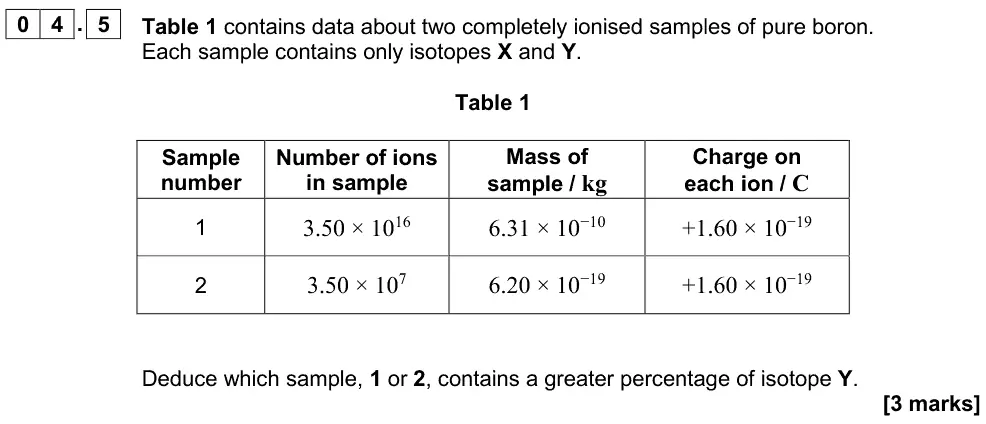
Table 1 contains data about two completely ionised samples of pure boron.
Each sample contains only isotopes X and Y.
Table 1
Sample
number
Number of ions
in sample
Mass of
sample / kg
Charge on
each ion / C
1
3.50 × 10¹⁶
6.31 × 10⁻¹⁰
+1.60 × 10⁻¹⁹
2
3.50 × 10⁷
6.20 × 10⁻¹⁹
+1.60 × 10⁻¹⁹
Deduce which sample, 1 or 2, contains a greater percentage of isotope Y.
[3 marks]
November 2020 · AS Paper 1 · Q5.1 2 marks Short answer emf and internal resistance
A cell has an emf of 1.5 V and an internal resistance of 0.65 Ω.
The cell is connected to a resistor R.
State what is meant by an emf of 1.5 V.
[2 marks]
November 2020 · AS Paper 1 · Q5.2 1 mark Show that emf and internal resistancecircuits and potential dividers
Earlier part of question 5 that this part usesEarlier part of November 2020 Paper 1 question 5
The current in the circuit is 0.31 A.
Show that the total power output of the cell is approximately 0.47 W.
[1 mark]
November 2020 · AS Paper 1 · Q5.3 2 marks Calculation emf and internal resistancecircuits and potential dividers
Earlier part of question 5 that this part usesEarlier part of November 2020 Paper 1 question 5
Calculate the energy dissipated per second in resistor R.
[2 marks]
energy dissipated per second =
J s−1
November 2020 · AS Paper 1 · Q5.4 2 marks Calculation circuits and potential dividers
Earlier part of question 5 that this part usesEarlier part of November 2020 Paper 1 question 5
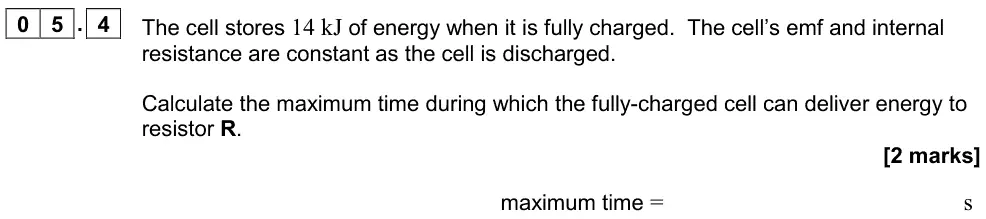
The cell stores 14 kJ of energy when it is fully charged.  The cell’s emf and internal
resistance are constant as the cell is discharged.
Calculate the maximum time during which the fully-charged cell can deliver energy to
resistor R.
[2 marks]
maximum time =
s
November 2020 · AS Paper 1 · Q5.5 4 marks Calculation emf and internal resistancecircuits and potential dividers
Earlier part of question 5 that this part usesEarlier part of November 2020 Paper 1 question 5
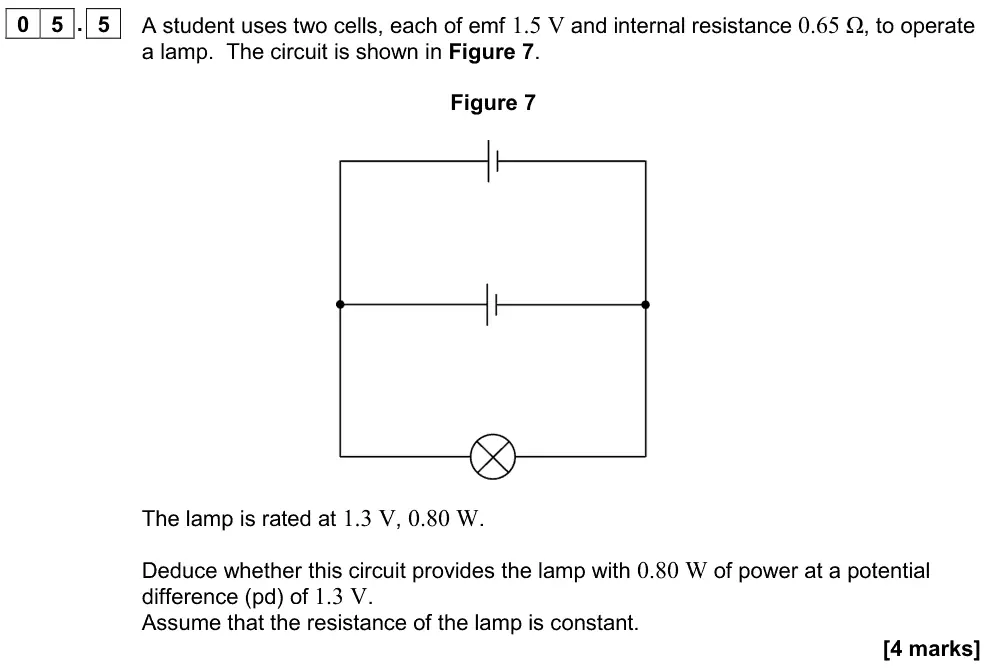
A student uses two cells, each of emf 1.5 V and internal resistance 0.65 Ω, to operate
a lamp.  The circuit is shown in Figure 7.
Figure 7
The lamp is rated at 1.3 V, 0.80 W.
Deduce whether this circuit provides the lamp with 0.80 W of power at a potential
difference (pd) of 1.3 V.
Assume that the resistance of the lamp is constant.
[4 marks]
November 2020 · AS Paper 1 · Q5.6 3 marks Explanation circuits and potential dividersemf and internal resistance
Earlier part of question 5 that this part usesEarlier part of November 2020 Paper 1 question 5
The lamp operates at normal brightness across a pd range of 1.3 V to 1.5 V.
State and explain how more of these cells can be added to the circuit to make the
lamp light at normal brightness for a longer time.
No further calculations are required.
[3 marks]
November 2020 · AS Paper 1 · Q6.1 2 marks Short answer stationary wavesprogressive waves and polarisation
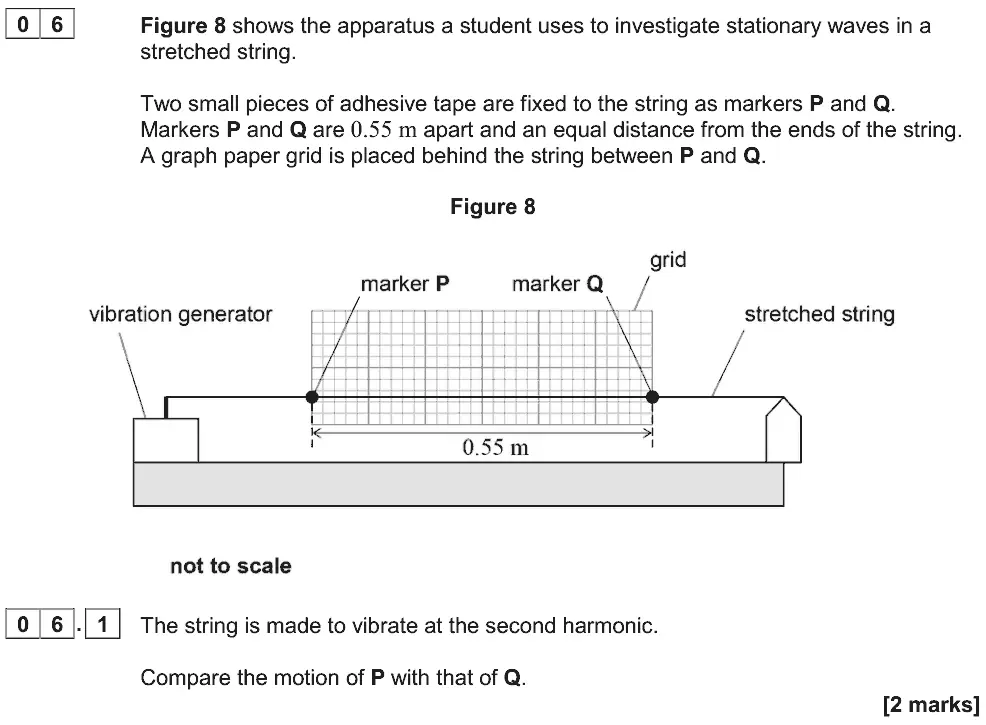
Figure 8 shows the apparatus a student uses to investigate stationary waves in a
stretched string.
Two small pieces of adhesive tape are fixed to the string as markers P and Q.
Markers P and Q are 0.55 m apart and an equal distance from the ends of the string.
A graph paper grid is placed behind the string between P and Q.
Figure 8
The string is made to vibrate at the second harmonic.
Compare the motion of P with that of Q.
[2 marks]
November 2020 · AS Paper 1 · Q6.2 2 marks Calculation progressive waves and polarisationstationary waves
Earlier part of question 6 that this part usesEarlier part of November 2020 Paper 1 question 6
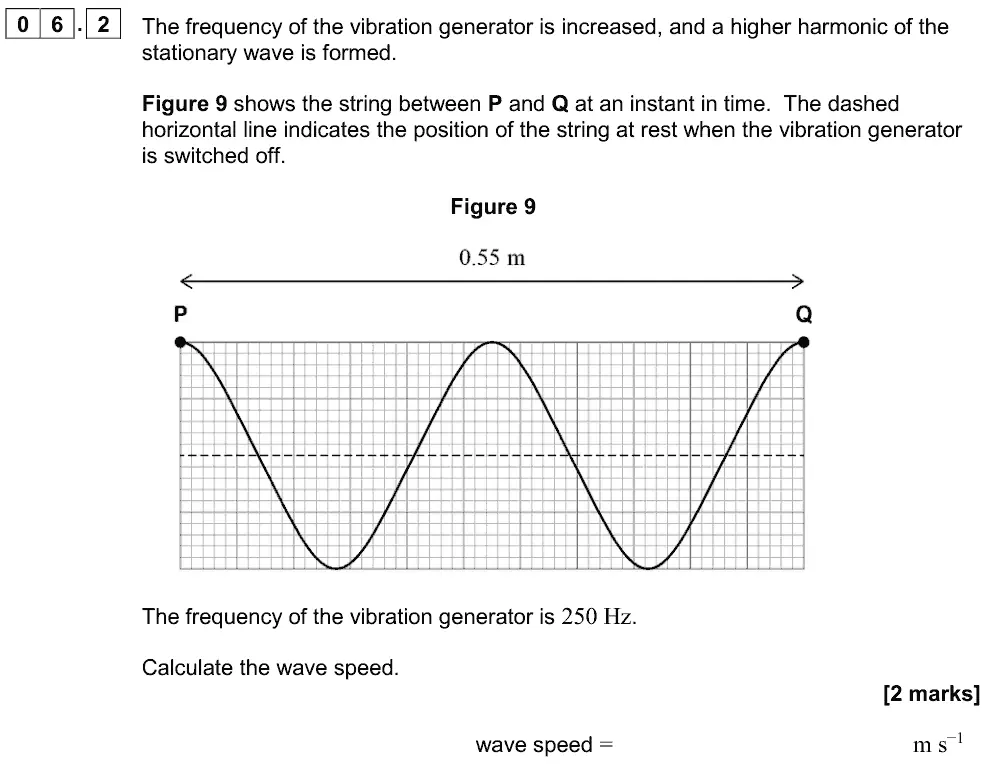
The frequency of the vibration generator is increased, and a higher harmonic of the
stationary wave is formed.
Figure 9 shows the string between P and Q at an instant in time.  The dashed
horizontal line indicates the position of the string at rest when the vibration generator
is switched off.
Figure 9
The frequency of the vibration generator is 250 Hz.
Calculate the wave speed.
[2 marks]
wave speed =
m s−1
November 2020 · AS Paper 1 · Q6.3 3 marks Short answer stationary waves
Earlier part of question 6 that this part usesEarlier part of November 2020 Paper 1 question 6
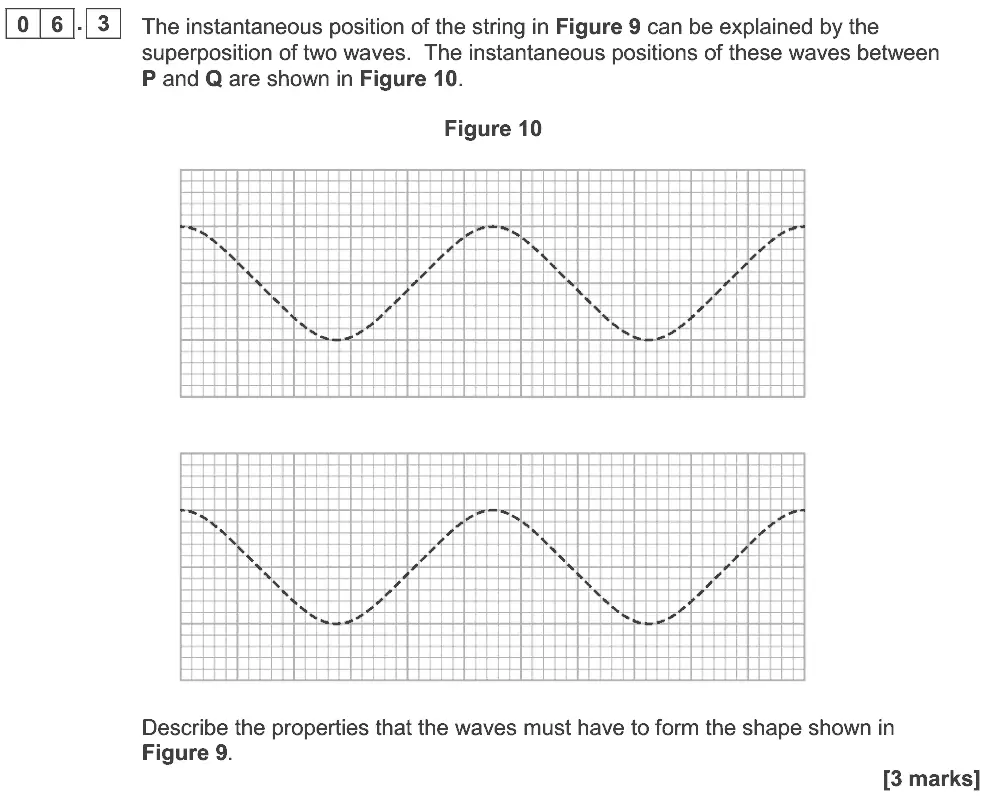
The instantaneous position of the string in Figure 9 can be explained by the
superposition of two waves.  The instantaneous positions of these waves between
P and Q are shown in Figure 10.
Figure 10
Describe the properties that the waves must have to form the shape shown in
Figure 9.
[3 marks]
November 2020 · AS Paper 1 · Q6.4 1 mark Diagram or graph stationary waves
Earlier part of question 6 that this part usesEarlier part of November 2020 Paper 1 question 6
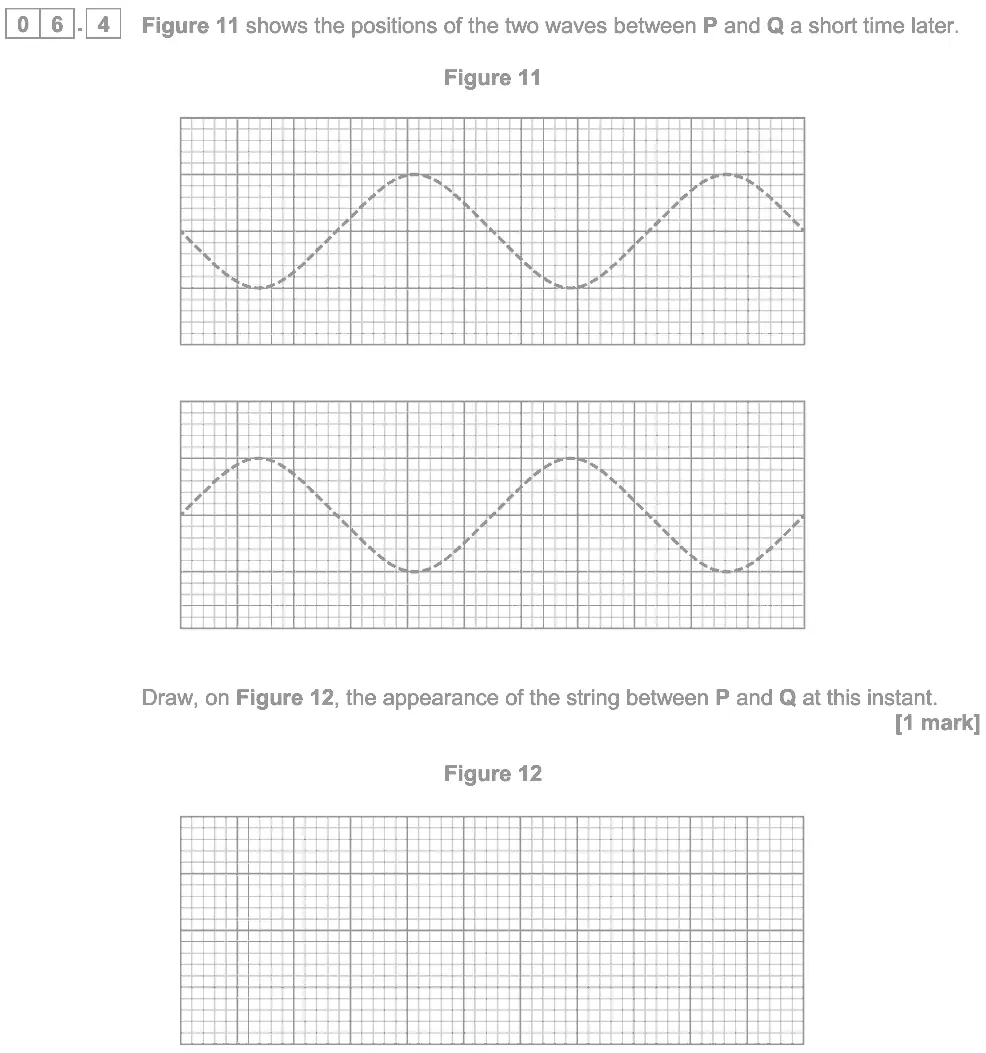
Figure 11 shows the positions of the two waves between P and Q a short time later.
Figure 11
Draw, on Figure 12, the appearance of the string between P and Q at this instant.
[1 mark]
Figure 12
November 2020 · AS Paper 1 · Q6.5 2 marks Diagram or graph stationary waves
Earlier part of question 6 that this part usesEarlier part of November 2020 Paper 1 question 6
Annotate (with an A) the positions of any antinodes on your drawing in Figure 12.
[2 marks]
November 2020 · AS Paper 1 · Q6.6 3 marks Explanation stationary waves
Earlier part of question 6 that this part usesEarlier part of November 2020 Paper 1 question 6
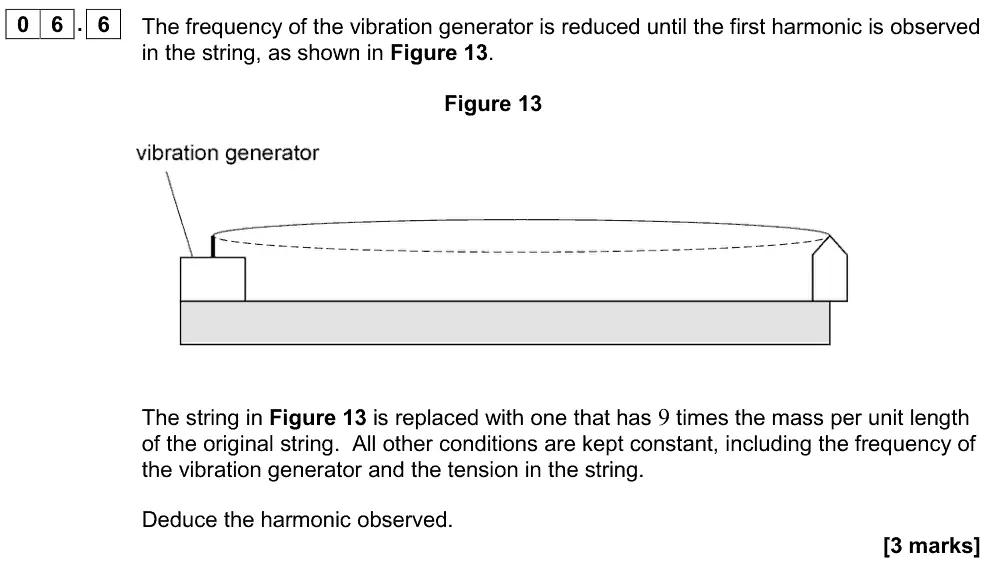
The frequency of the vibration generator is reduced until the first harmonic is observed
in the string, as shown in Figure 13.
Figure 13
The string in Figure 13 is replaced with one that has 9 times the mass per unit length
of the original string.  All other conditions are kept constant, including the frequency of
the vibration generator and the tension in the string.
Deduce the harmonic observed.
[3 marks]

Work with an AQA physics tutor

Want a paper marked and gone through with you? Message us.

Prefer email? Send an enquiry

If you are under 18, please include a parent's contact details. Enquiries go to enquiries@physicsaleveltutor.com and are deleted once handled. All tutoring is online.