
June 2016: AS Paper 1

70 marks · 31 question parts · Paper, mark scheme and report on AQA's site · Have the data and formulae booklet beside you

Question by question

QTopicMarksAOType
1.1 Newton's laws of motion and momentum 1Short answer
1.2 Newton's laws of motion and momentum 3Explanation
1.3 Newton's laws of motion and momentum 1Calculation
1.4 Newton's laws of motion and momentum, Scalars, vectors and moments 2Explanation
1.5 Newton's laws of motion and momentum 1Calculation
1.6 Motion along a straight line and projectile motion 2Calculation
1.7 Newton's laws of motion and momentum 2Explanation
2.1 Superposition and stationary waves 2Explanation
2.2 Superposition and stationary waves 2Explanation
2.3 Superposition and stationary waves, Progressive waves, longitudinal and transverse waves 5Calculation
2.4 Superposition and stationary waves 1Short answer
3.1 Materials, stress, strain and the Young modulus 2Short answer
3.2 Materials, stress, strain and the Young modulus 2Short answer
3.3 Materials, stress, strain and the Young modulus 3Calculation
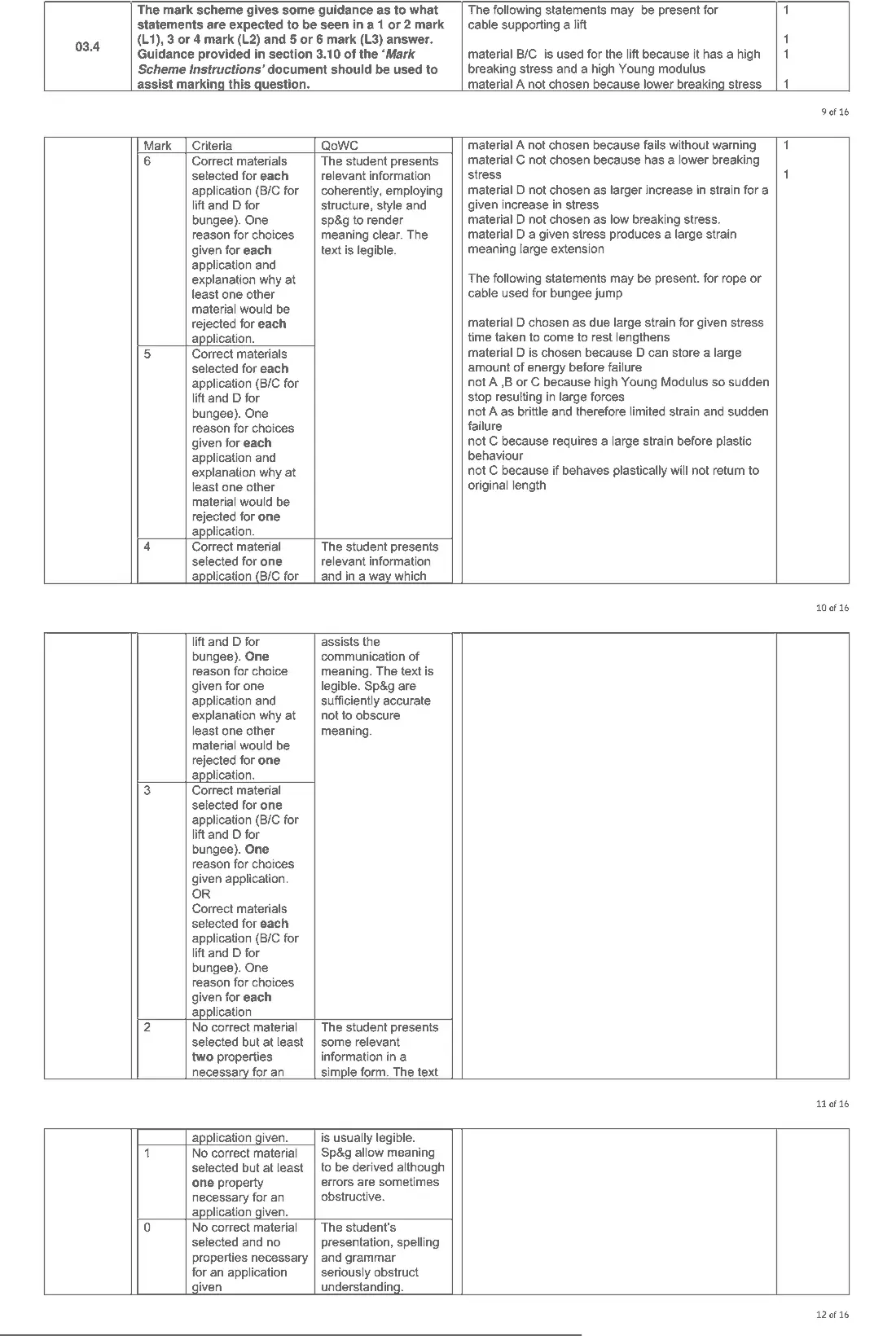
3.4 Materials, stress, strain and the Young modulus 6Extended response
4.1 Current, potential difference, I-V characteristics and resistivity 3Calculation
4.2 Circuits and potential dividers 1Calculation
4.3 Circuits and potential dividers 1Calculation
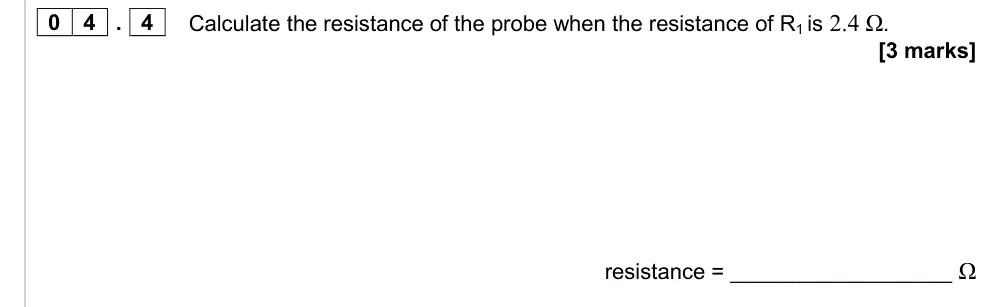
4.4 Circuits and potential dividers 3Calculation
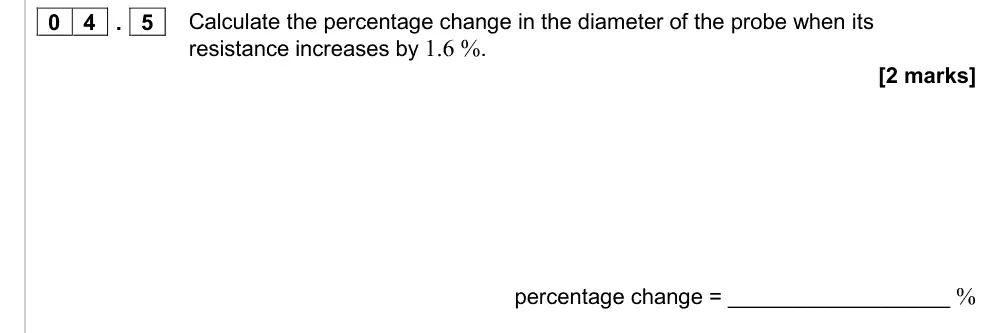
4.5 Current, potential difference, I-V characteristics and resistivity 2Calculation
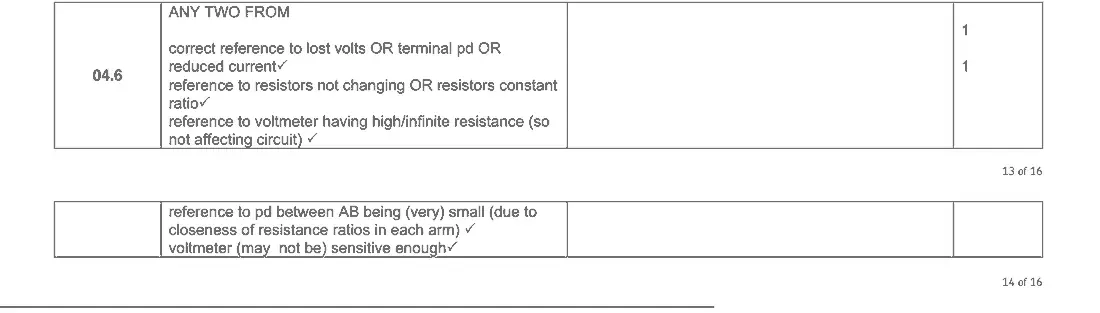
4.6 Electromotive force and internal resistance 2Explanation
5.1 The photoelectric effect 3Explanation
5.2 The photoelectric effect 2Explanation
5.3 The photoelectric effect 3Calculation
5.4 The photoelectric effect 1Calculation
5.5 The photoelectric effect 3Explanation
6.1 Atomic structure and stable nuclei 2Short answer
6.2 Particles, antiparticles and particle interactions, Classification of particles, quarks and conservation laws 2Explanation
6.3 Particles, antiparticles and particle interactions 4Calculation
6.4 Atomic structure and stable nuclei, Particles, antiparticles and particle interactions 2Short answer
6.5 Particles, antiparticles and particle interactions 1Short answer

The questions

1.11.21.31.41.51.61.72.12.22.32.43.13.23.33.44.14.24.34.44.54.65.15.25.35.45.56.16.26.36.46.5
June 2016 · AS Paper 1 · Q1.1 1 mark Short answer newtons laws and momentum
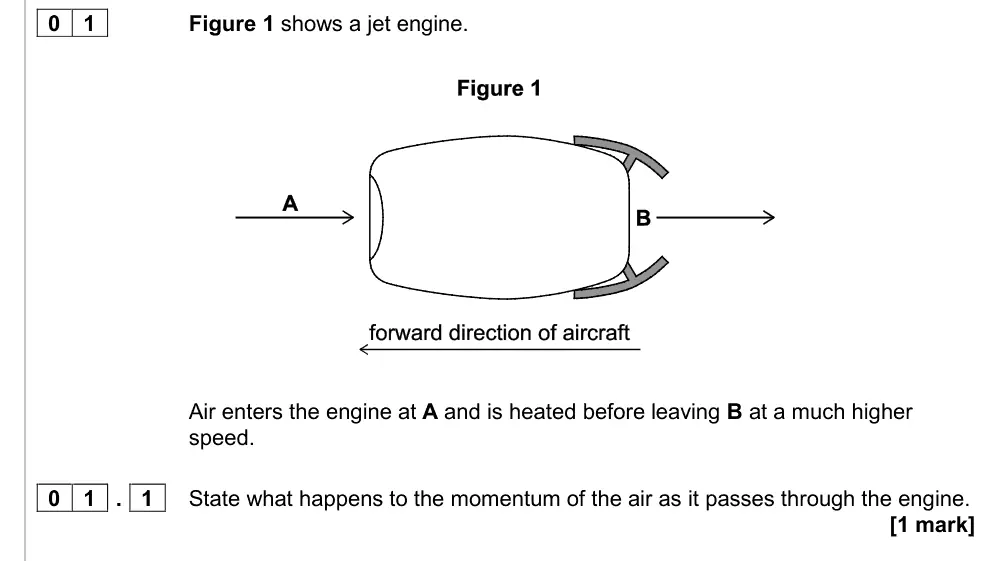
Figure 1 shows a jet engine.
Air enters the engine at A and is heated before leaving B at a much higher
speed.
State what happens to the momentum of the air as it passes through the engine.
[1 mark]
June 2016 · AS Paper 1 · Q1.2 3 marks Explanation newtons laws and momentum
Earlier part of question 1 that this part usesEarlier part of June 2016 Paper 1 question 1
Explain, using appropriate laws of motion, why the air exerts a force on the
engine in the forward direction.
[3 marks]
June 2016 · AS Paper 1 · Q1.3 1 mark Calculation newtons laws and momentum
Earlier part of question 1 that this part usesEarlier part of June 2016 Paper 1 question 1
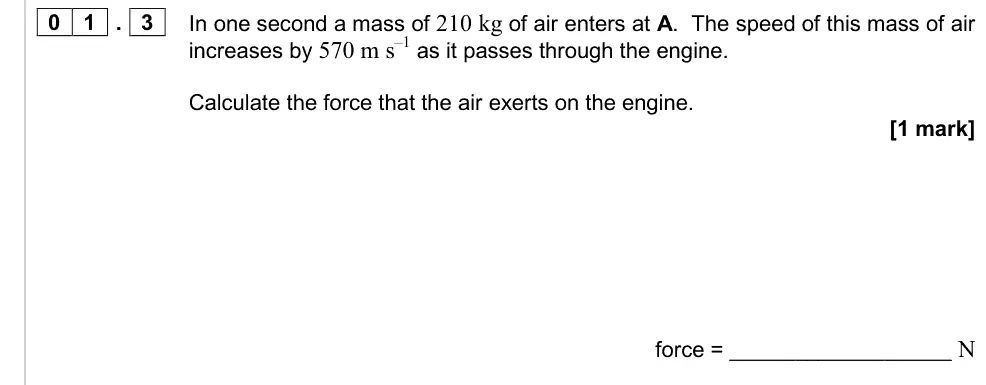
In one second a mass of 210 kg of air enters at A.  The speed of this mass of air
increases by 570 m s–1 as it passes through the engine.
Calculate the force that the air exerts on the engine.
[1 mark]
force =  N
June 2016 · AS Paper 1 · Q1.4 2 marks Explanation newtons laws and momentumvectors and moments
Earlier part of question 1 that this part usesEarlier part of June 2016 Paper 1 question 1
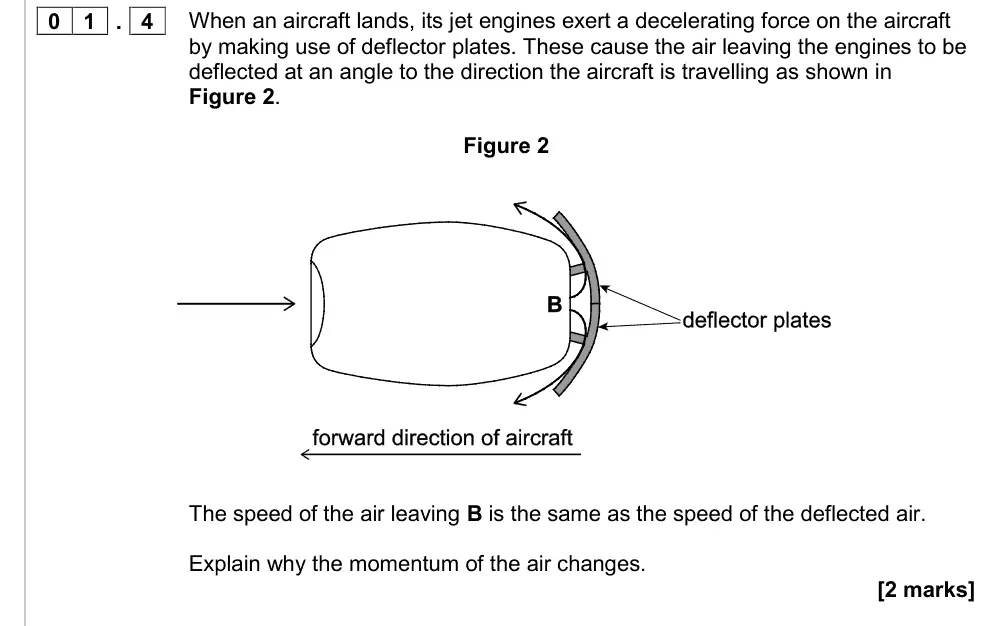
When an aircraft lands, its jet engines exert a decelerating force on the aircraft
by making use of deflector plates. These cause the air leaving the engines to be
deflected at an angle to the direction the aircraft is travelling as shown in
Figure 2.
Figure 2
The speed of the air leaving B is the same as the speed of the deflected air.
Explain why the momentum of the air changes.
[2 marks]
June 2016 · AS Paper 1 · Q1.5 1 mark Calculation newtons laws and momentum
Earlier part of question 1 that this part usesEarlier part of June 2016 Paper 1 question 1
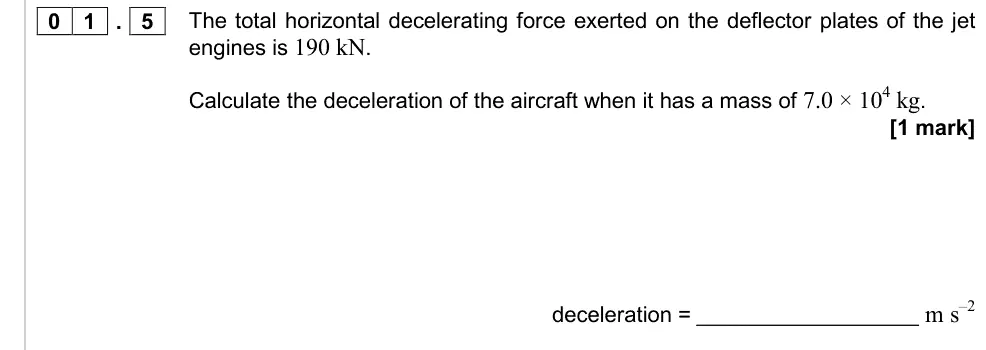
The total horizontal decelerating force exerted on the deflector plates of the jet
engines is 190 kN.
Calculate the deceleration of the aircraft when it has a mass of 7.0 × 10⁴ kg.
[1 mark]
deceleration =  m s–2
June 2016 · AS Paper 1 · Q1.6 2 marks Calculation motion and projectiles
Earlier part of question 1 that this part usesEarlier part of June 2016 Paper 1 question 1
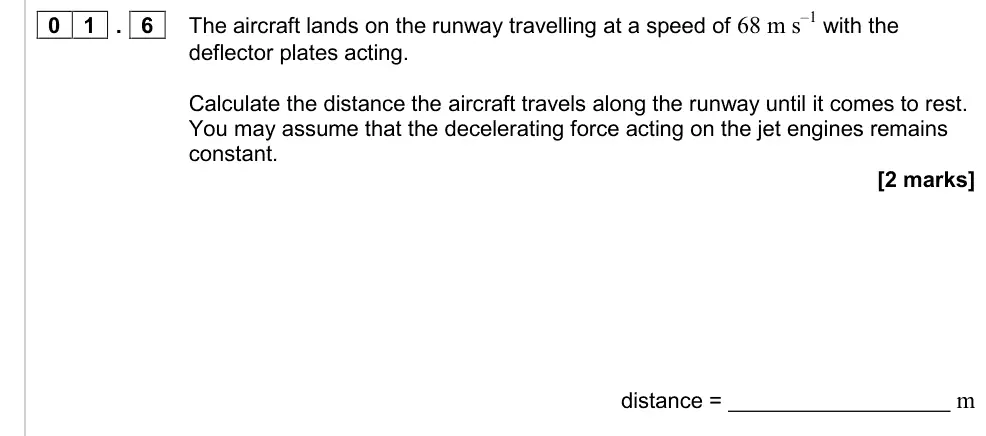
The aircraft lands on the runway travelling at a speed of 68 m s–1 with the
deflector plates acting.
Calculate the distance the aircraft travels along the runway until it comes to rest.
You may assume that the decelerating force acting on the jet engines remains
constant.
[2 marks]
distance =  m
June 2016 · AS Paper 1 · Q1.7 2 marks Explanation newtons laws and momentum
Earlier part of question 1 that this part usesEarlier part of June 2016 Paper 1 question 1
Suggest why in practice the decelerating force provided by the deflector plates
may not remain constant.
[2 marks]
June 2016 · AS Paper 1 · Q2.1 2 marks Explanation stationary waves
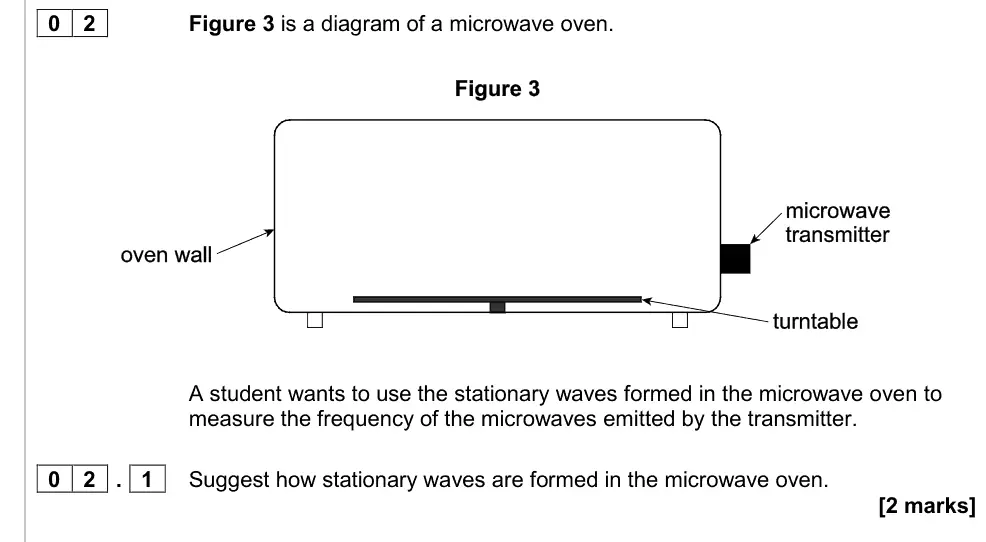
Figure 3 is a diagram of a microwave oven.
A student wants to use the stationary waves formed in the microwave oven to
measure the frequency of the microwaves emitted by the transmitter.
Suggest how stationary waves are formed in the microwave oven.
[2 marks]
June 2016 · AS Paper 1 · Q2.2 2 marks Explanation stationary waves
Earlier part of question 2 that this part usesEarlier part of June 2016 Paper 1 question 2
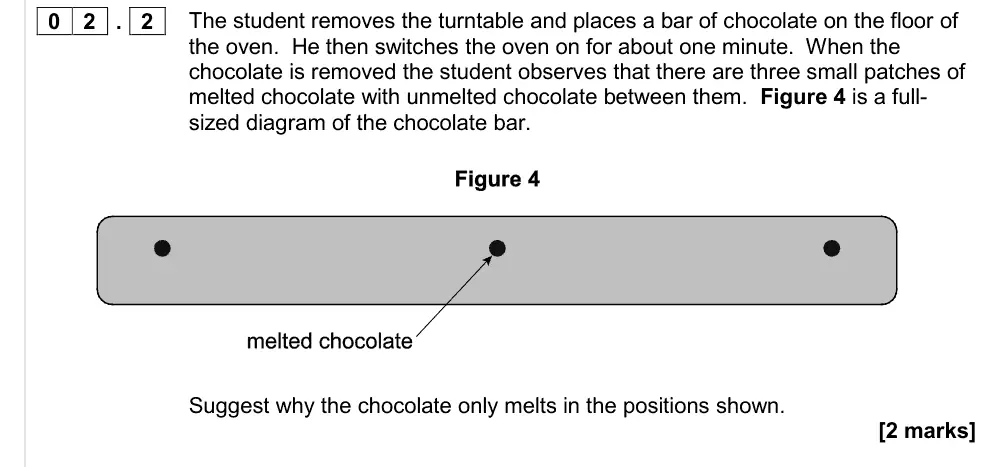
The student removes the turntable and places a bar of chocolate on the floor of
the oven.  He then switches the oven on for about one minute.  When the
chocolate is removed the student observes that there are three small patches of
melted chocolate with unmelted chocolate between them.  Figure 4 is a full-
sized diagram of the chocolate bar.
Suggest why the chocolate only melts in the positions shown.
[2 marks]
June 2016 · AS Paper 1 · Q2.3 5 marks Calculation stationary wavesprogressive waves and polarisation
Earlier part of question 2 that this part usesEarlier part of June 2016 Paper 1 question 2
Calculate, by making suitable measurements on Figure 4, the frequency of the
microwaves used by the oven.
[5 marks]
frequency  =  Hz
June 2016 · AS Paper 1 · Q2.4 1 mark Short answer stationary waves
Earlier part of question 2 that this part usesEarlier part of June 2016 Paper 1 question 2
Explain why most microwave ovens contain a rotating turntable on which the
food is placed during cooking.
[1 mark]
June 2016 · AS Paper 1 · Q3.1 2 marks Short answer materials and young modulus
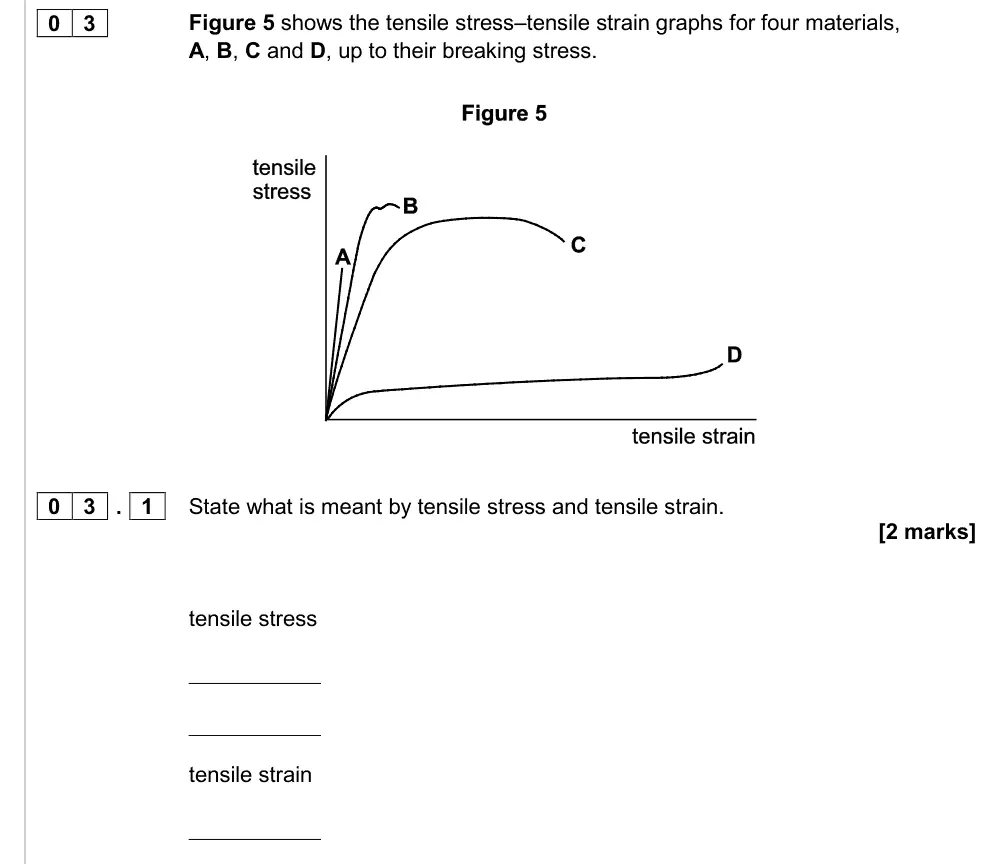
Figure 5 shows the tensile stress–tensile strain graphs for four materials,
A, B, C and D, up to their breaking stress.
State what is meant by tensile stress and tensile strain.
[2 marks]
tensile stress
tensile strain
June 2016 · AS Paper 1 · Q3.2 2 marks Short answer materials and young modulus
Earlier part of question 3 that this part usesEarlier part of June 2016 Paper 1 question 3
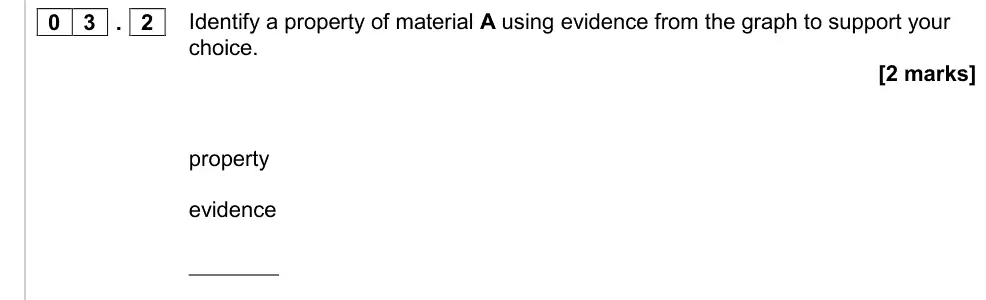
Identify a property of material A using evidence from the graph to support your
choice.
[2 marks]
property
evidence
June 2016 · AS Paper 1 · Q3.3 3 marks Calculation materials and young modulus
Earlier part of question 3 that this part usesEarlier part of June 2016 Paper 1 question 3
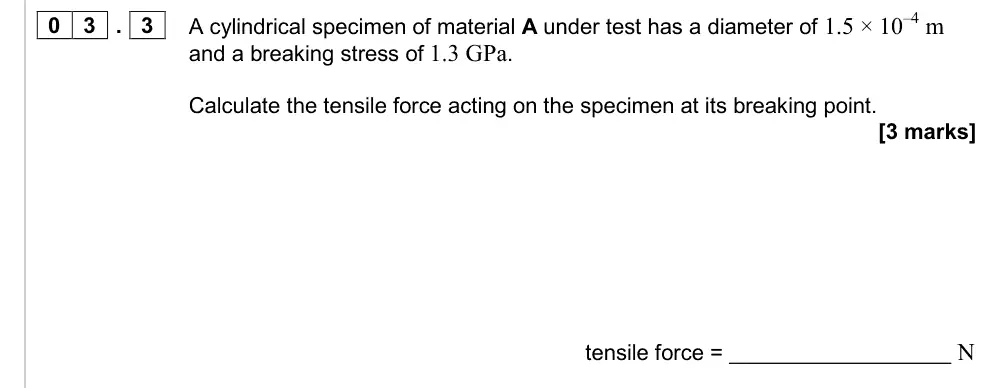
A cylindrical specimen of material A under test has a diameter of 1.5 × 10⁻⁴ m
and a breaking stress of 1.3 GPa.
Calculate the tensile force acting on the specimen at its breaking point.
[3 marks]
tensile force =  N
June 2016 · AS Paper 1 · Q3.4 6 marks 6-mark extended response Hard materials and young modulus
Earlier part of question 3 that this part usesEarlier part of June 2016 Paper 1 question 3
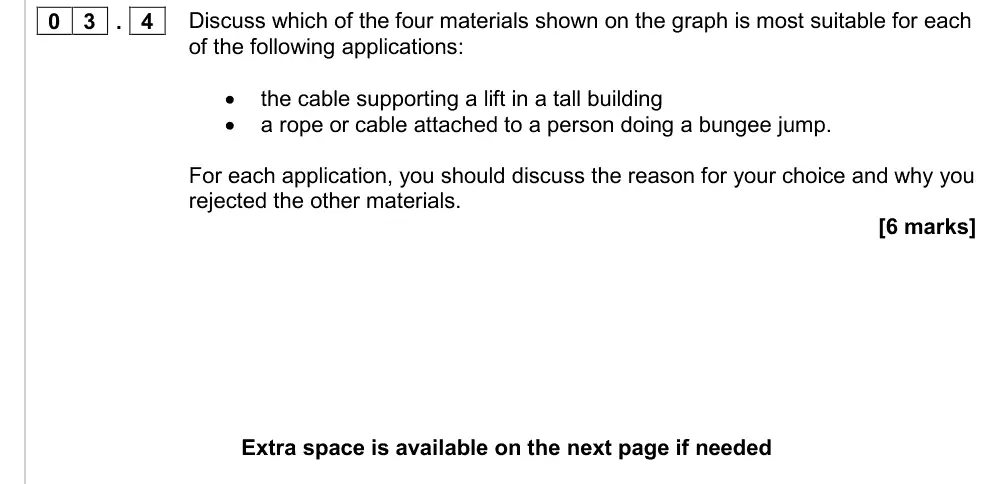
Discuss which of the four materials shown on the graph is most suitable for each
of the following applications:
•
the cable supporting a lift in a tall building
•
a rope or cable attached to a person doing a bungee jump.
For each application, you should discuss the reason for your choice and why you
rejected the other materials.
[6 marks]
Extra space is available on the next page if needed
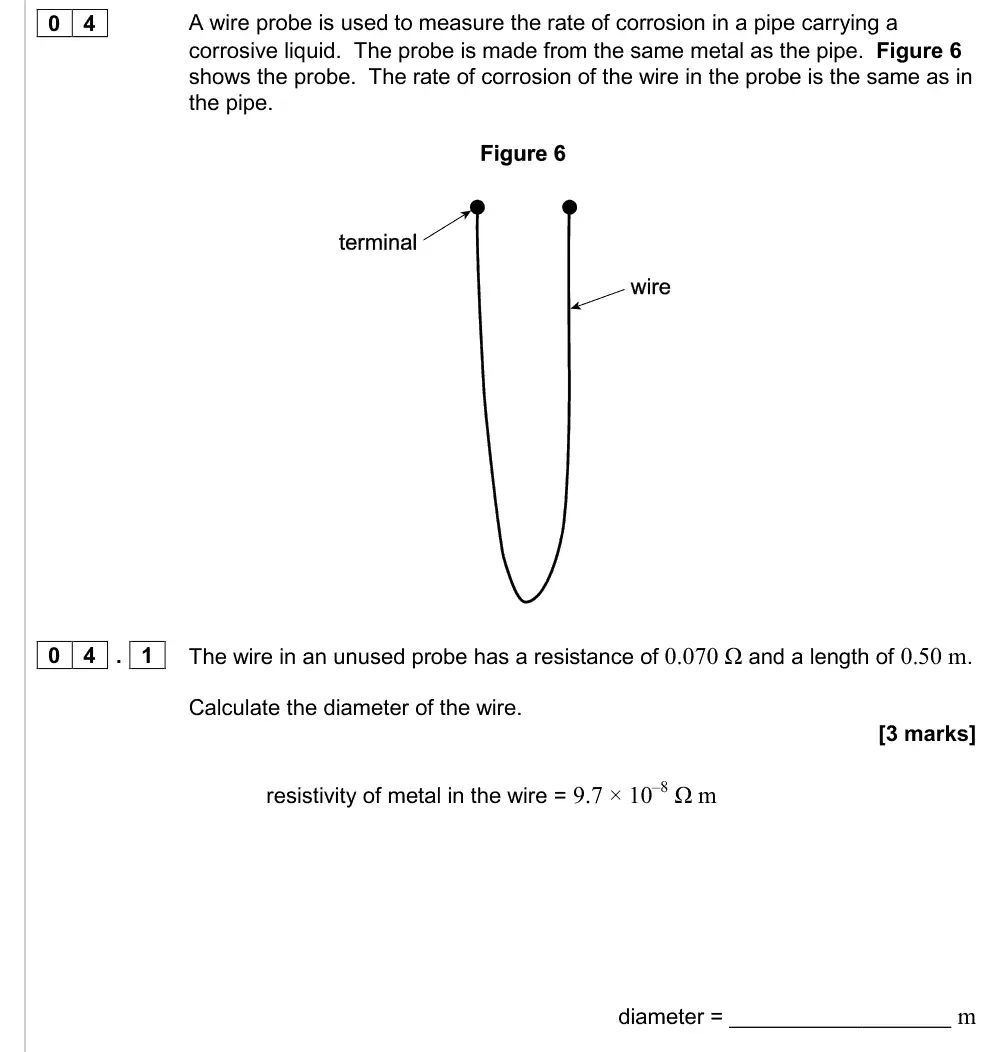
June 2016 · AS Paper 1 · Q4.1 3 marks Calculation Easy current voltage and resistivity
A wire probe is used to measure the rate of corrosion in a pipe carrying a
corrosive liquid.  The probe is made from the same metal as the pipe.  Figure 6
shows the probe.  The rate of corrosion of the wire in the probe is the same as in
the pipe.
The wire in an unused probe has a resistance of 0.070 Ω and a length of 0.50 m.
Calculate the diameter of the wire.
[3 marks]
resistivity of metal in the wire = 9.7 × 10⁻⁸ Ω m
diameter =  m
June 2016 · AS Paper 1 · Q4.2 1 mark Calculation circuits and potential dividers
Earlier part of question 4 that this part usesEarlier part of June 2016 Paper 1 question 4
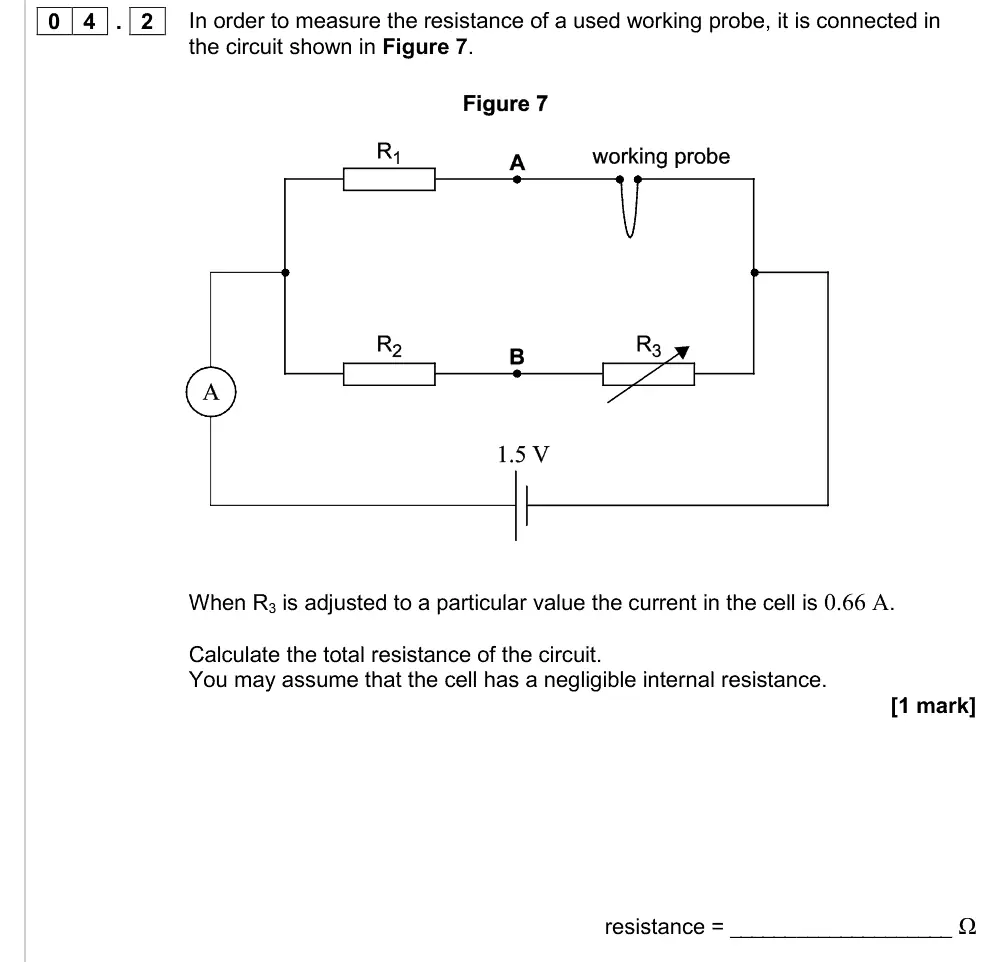
In order to measure the resistance of a used working probe, it is connected in
the circuit shown in Figure 7.
When R3 is adjusted to a particular value the current in the cell is 0.66 A.
Calculate the total resistance of the circuit.
You may assume that the cell has a negligible internal resistance.
[1 mark]
resistance =  Ω
June 2016 · AS Paper 1 · Q4.3 1 mark Calculation circuits and potential dividers
Earlier part of question 4 that this part usesEarlier part of June 2016 Paper 1 question 4
The resistance of R2 is 22 Ω and the resistance of R3 is 1.2 Ω.
Calculate the current in R3.
[1 mark]
current =  A
June 2016 · AS Paper 1 · Q4.4 3 marks Calculation circuits and potential dividers
Earlier part of question 4 that this part usesEarlier part of June 2016 Paper 1 question 4
Calculate the resistance of the probe when the resistance of R1 is 2.4 Ω.
[3 marks]
resistance =  Ω
June 2016 · AS Paper 1 · Q4.5 2 marks Calculation current voltage and resistivity
Earlier part of question 4 that this part usesEarlier part of June 2016 Paper 1 question 4
Calculate the percentage change in the diameter of the probe when its
resistance increases by 1.6 %.
[2 marks]
percentage change =  %
June 2016 · AS Paper 1 · Q4.6 2 marks Explanation emf and internal resistance
Earlier part of question 4 that this part usesEarlier part of June 2016 Paper 1 question 4
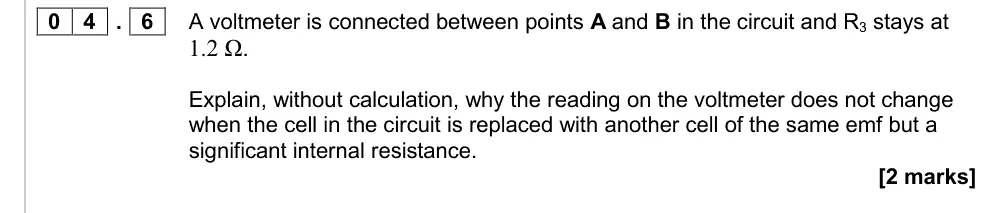
A voltmeter is connected between points A and B in the circuit and R3 stays at
1.2 Ω.
Explain, without calculation, why the reading on the voltmeter does not change
when the cell in the circuit is replaced with another cell of the same emf but a
significant internal resistance.
[2 marks]
June 2016 · AS Paper 1 · Q5.1 3 marks Explanation photoelectric effect
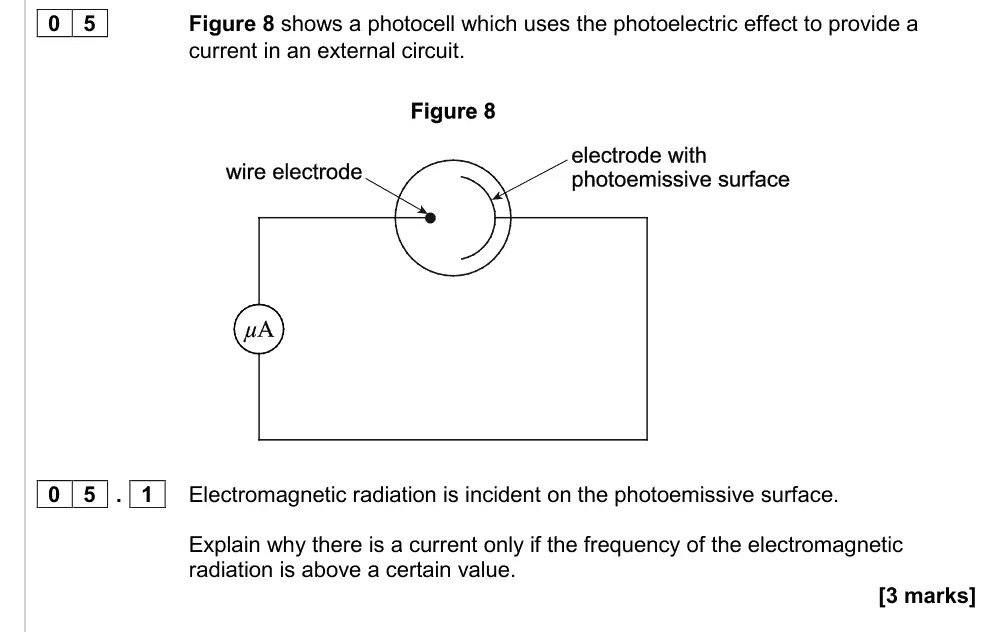
Figure 8 shows a photocell which uses the photoelectric effect to provide a
current in an external circuit.
Electromagnetic radiation is incident on the photoemissive surface.
Explain why there is a current only if the frequency of the electromagnetic
radiation is above a certain value.
[3 marks]
June 2016 · AS Paper 1 · Q5.2 2 marks Explanation photoelectric effect
Earlier part of question 5 that this part usesEarlier part of June 2016 Paper 1 question 5
State and explain the effect on the current when the intensity of the
electromagnetic radiation is increased.
[2 marks]
June 2016 · AS Paper 1 · Q5.3 3 marks Calculation Easy photoelectric effect
Earlier part of question 5 that this part usesEarlier part of June 2016 Paper 1 question 5
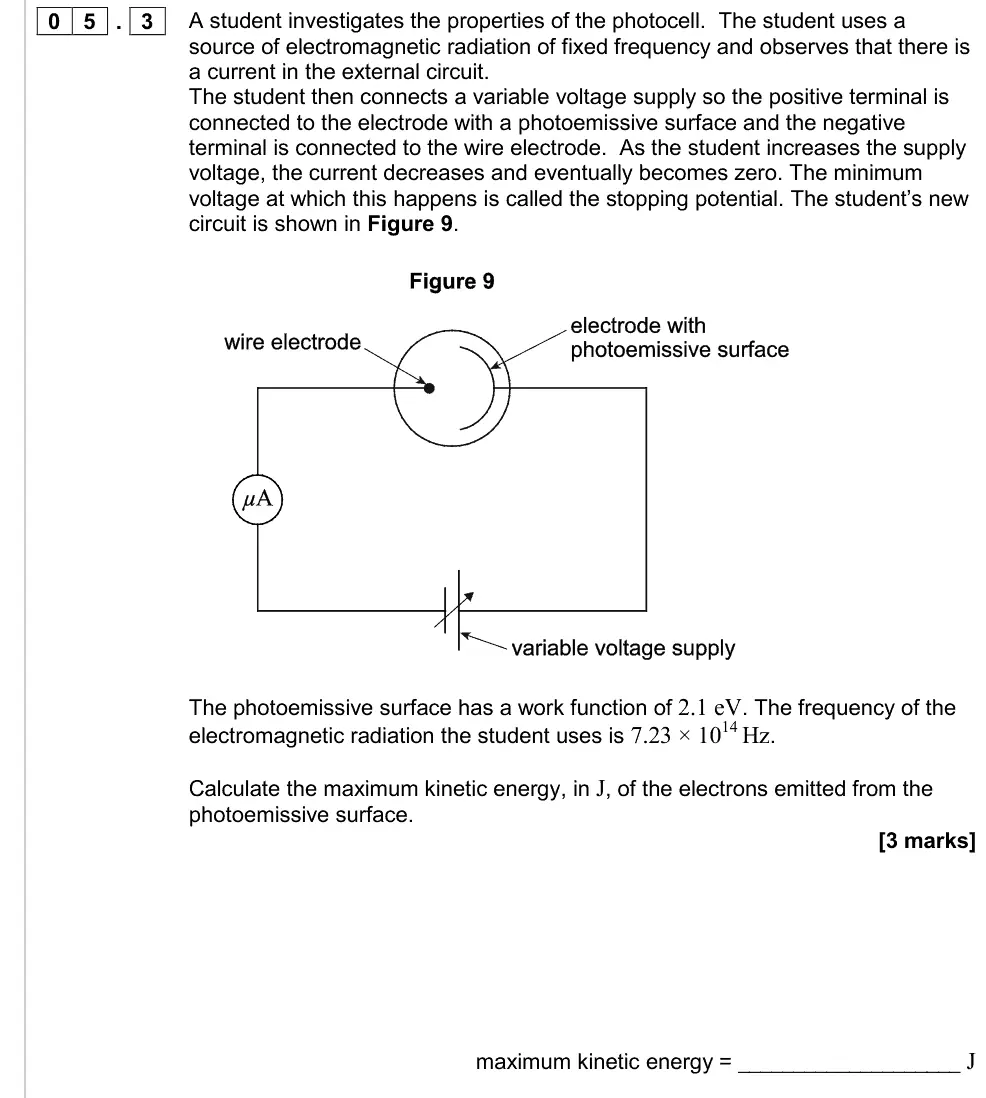
A student investigates the properties of the photocell.  The student uses a
source of electromagnetic radiation of fixed frequency and observes that there is
a current in the external circuit.
The student then connects a variable voltage supply so the positive terminal is
connected to the electrode with a photoemissive surface and the negative
terminal is connected to the wire electrode.  As the student increases the supply
voltage, the current decreases and eventually becomes zero. The minimum
voltage at which this happens is called the stopping potential. The student’s new
circuit is shown in Figure 9.
The photoemissive surface has a work function of 2.1 eV. The frequency of the
electromagnetic radiation the student uses is 7.23 × 10¹⁴ Hz.
Calculate the maximum kinetic energy, in J, of the electrons emitted from the
photoemissive surface.
[3 marks]
maximum kinetic energy =  J
June 2016 · AS Paper 1 · Q5.4 1 mark Calculation photoelectric effect
Earlier part of question 5 that this part usesEarlier part of June 2016 Paper 1 question 5
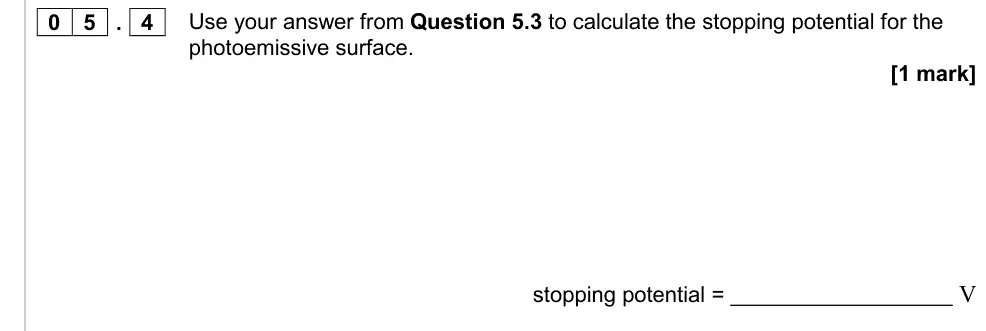
Use your answer from Question 5.3 to calculate the stopping potential for the
photoemissive surface.
[1 mark]
stopping potential =  V
June 2016 · AS Paper 1 · Q5.5 3 marks Explanation photoelectric effect
Earlier part of question 5 that this part usesEarlier part of June 2016 Paper 1 question 5
The student increases the frequency of the electromagnetic radiation.
Explain the effect this has on the stopping potential.
[3 marks]
4
June 2016 · AS Paper 1 · Q6.1 2 marks Short answer atomic structure and stable nuclei
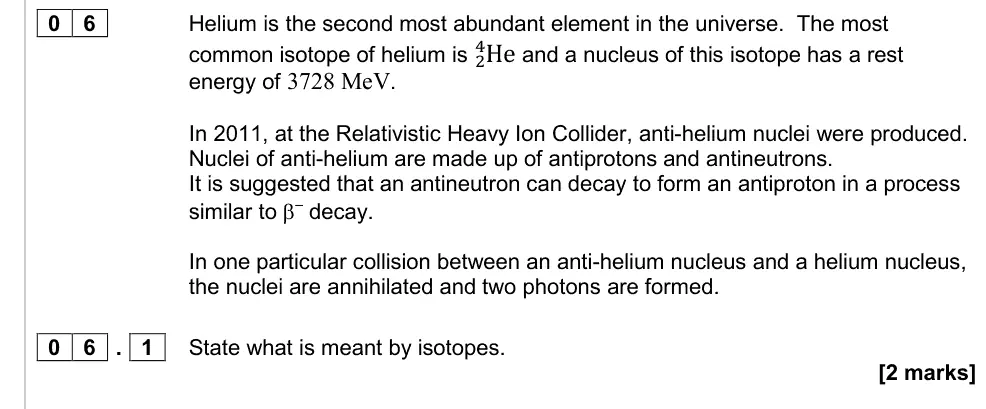
Helium is the second most abundant element in the universe.  The most
2
and a nucleus of this isotope has a rest
energy of 3728 MeV.
In 2011, at the Relativistic Heavy Ion Collider, anti-helium nuclei were produced.
Nuclei of anti-helium are made up of antiprotons and antineutrons.
It is suggested that an antineutron can decay to form an antiproton in a process
similar to β– decay.
In one particular collision between an anti-helium nucleus and a helium nucleus,
the nuclei are annihilated and two photons are formed.
State what is meant by isotopes.
[2 marks]
June 2016 · AS Paper 1 · Q6.2 2 marks Explanation particles antiparticles and interactionsclassification of particles and quarks
Earlier part of question 6 that this part usesEarlier part of June 2016 Paper 1 question 6
Explain why two photons are formed instead of a single photon when a helium
nucleus annihilates with the anti-helium nucleus.
[2 marks]
June 2016 · AS Paper 1 · Q6.3 4 marks Calculation particles antiparticles and interactions
Earlier part of question 6 that this part usesEarlier part of June 2016 Paper 1 question 6
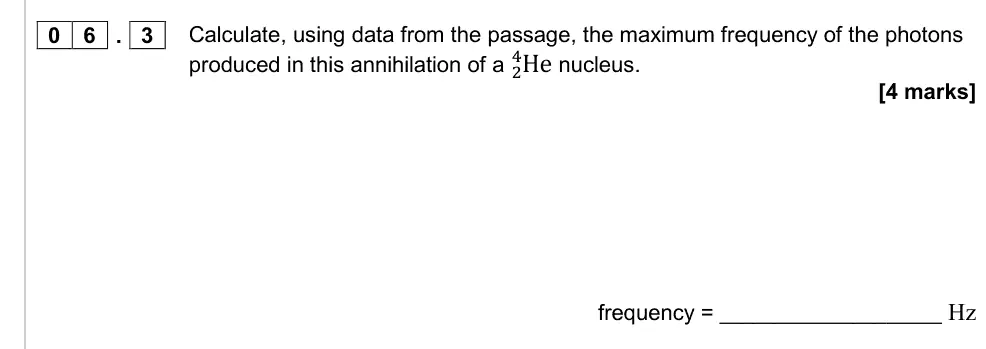
Calculate, using data from the passage, the maximum frequency of the photons
2
4
nucleus.
[4 marks]
frequency =  Hz
June 2016 · AS Paper 1 · Q6.4 2 marks Short answer atomic structure and stable nucleiparticles antiparticles and interactions
Earlier part of question 6 that this part usesEarlier part of June 2016 Paper 1 question 6
Complete this equation for the possible decay of an antineutron.
[2 marks]
June 2016 · AS Paper 1 · Q6.5 1 mark Short answer particles antiparticles and interactions
Earlier part of question 6 that this part usesEarlier part of June 2016 Paper 1 question 6
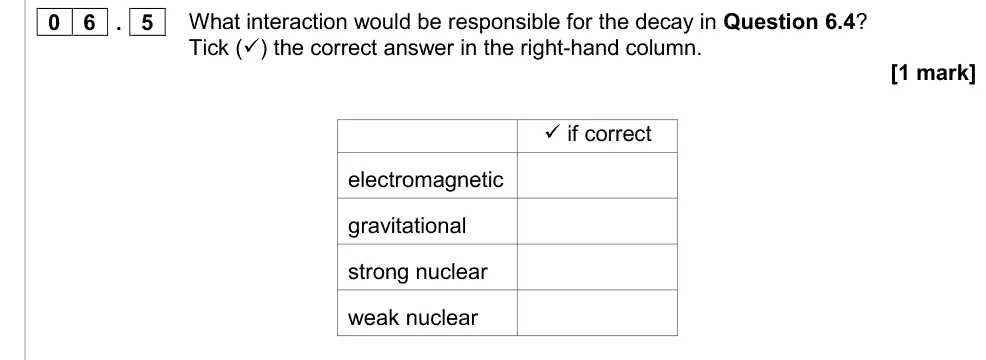
What interaction would be responsible for the decay in Question 6.4?
Tick () the correct answer in the right-hand column.
[1 mark]
 if correct
electromagnetic
gravitational
strong nuclear
weak nuclear

Work with an AQA physics tutor

Want a paper marked and gone through with you? Message us.

Prefer email? Send an enquiry

If you are under 18, please include a parent's contact details. Enquiries go to enquiries@physicsaleveltutor.com and are deleted once handled. All tutoring is online.