June 2022: AS Paper 1

70 marks · 29 question parts · Paper, mark scheme and report on AQA's site · Have the data and formulae booklet beside you

Question by question

QTopicMarksAOType
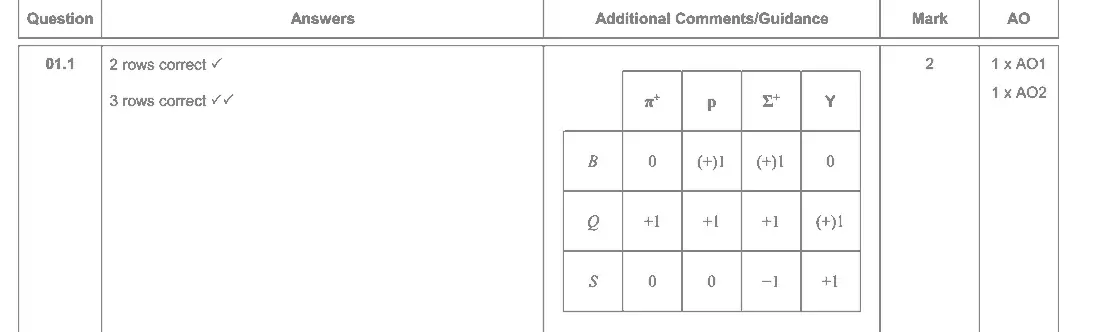
1.1 Classification of particles, quarks and conservation laws 2AO1=1,AO2=1Short answer
1.2 Classification of particles, quarks and conservation laws 1AO2=1Short answer
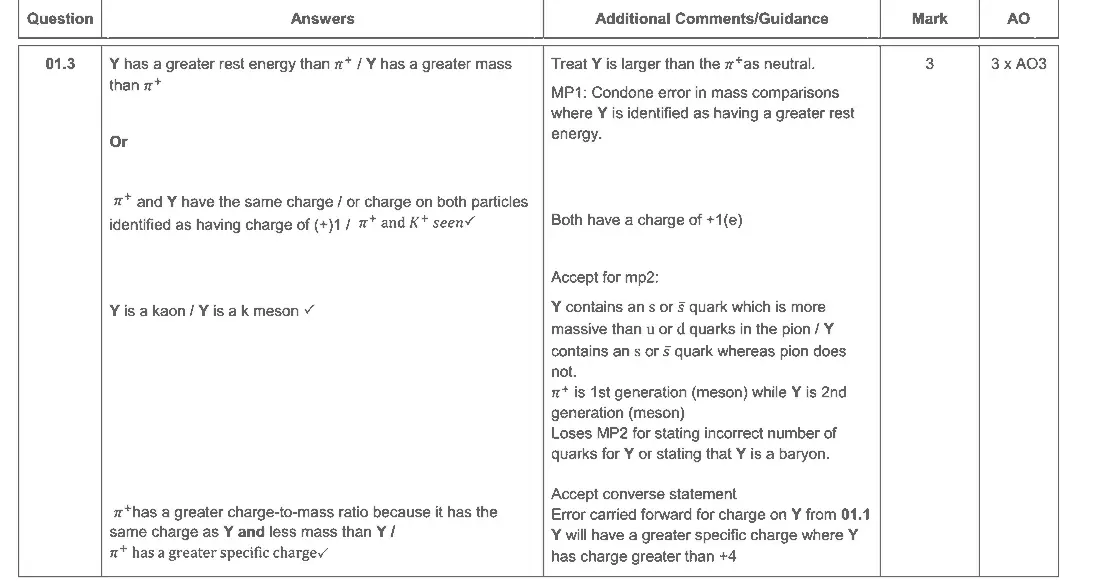
1.3 Atomic structure and stable nuclei, Classification of particles, quarks and conservation laws 3AO3=3Explanation
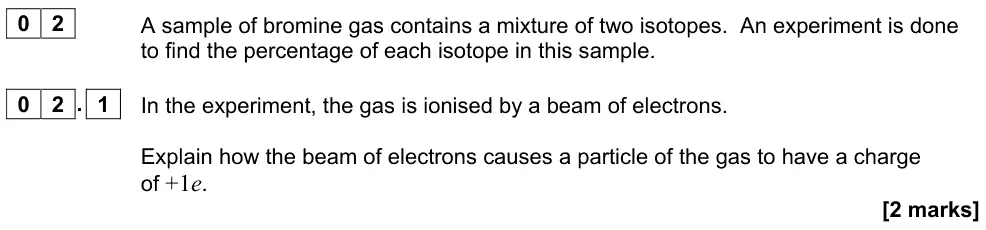
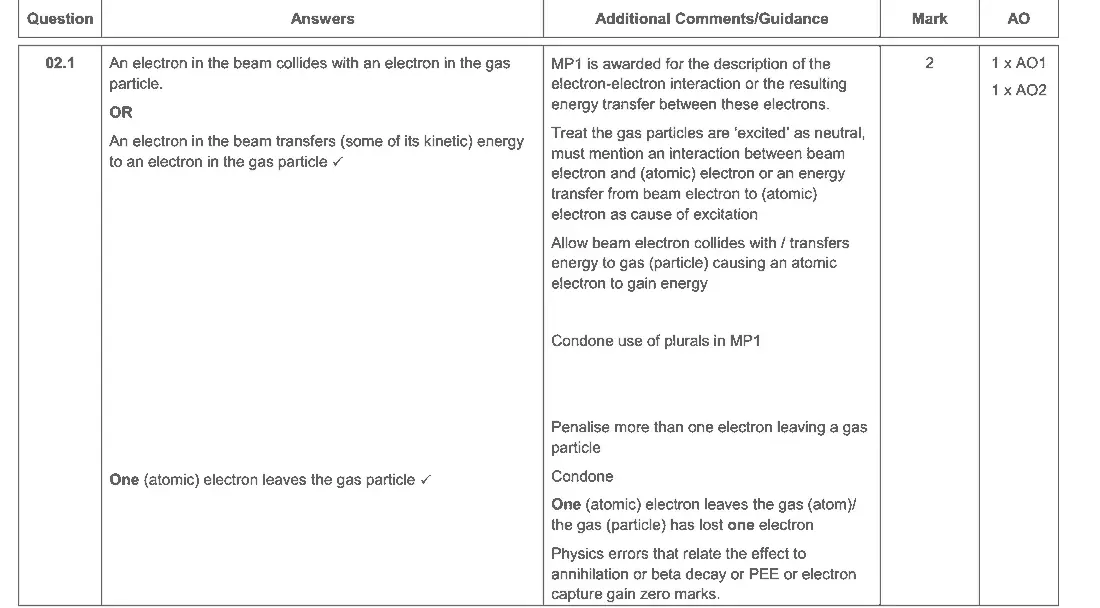
2.1 Excitation, energy levels and wave-particle duality 2AO1=1,AO2=1Explanation
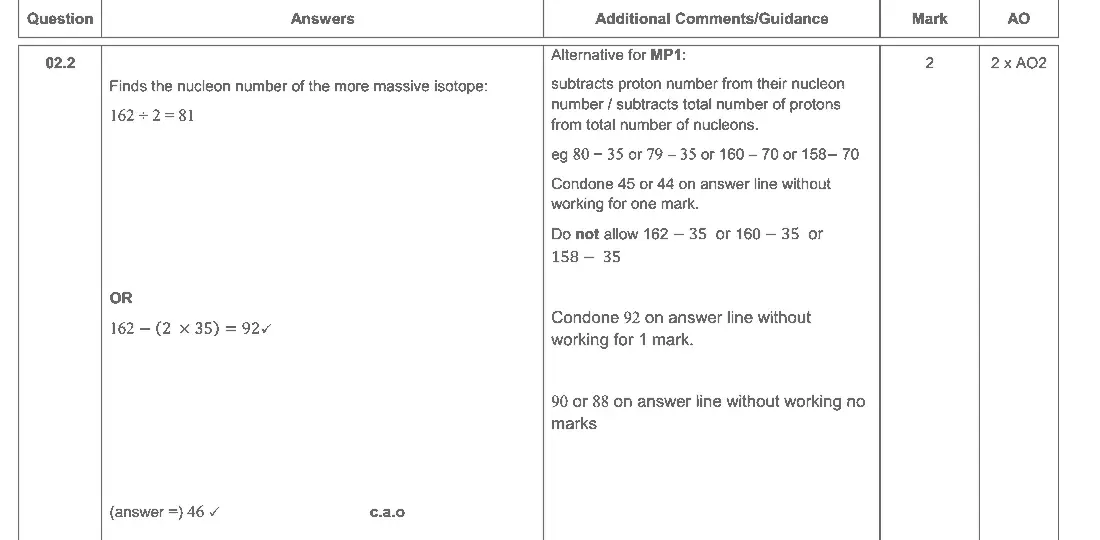
2.2 Atomic structure and stable nuclei 2AO2=2Calculation
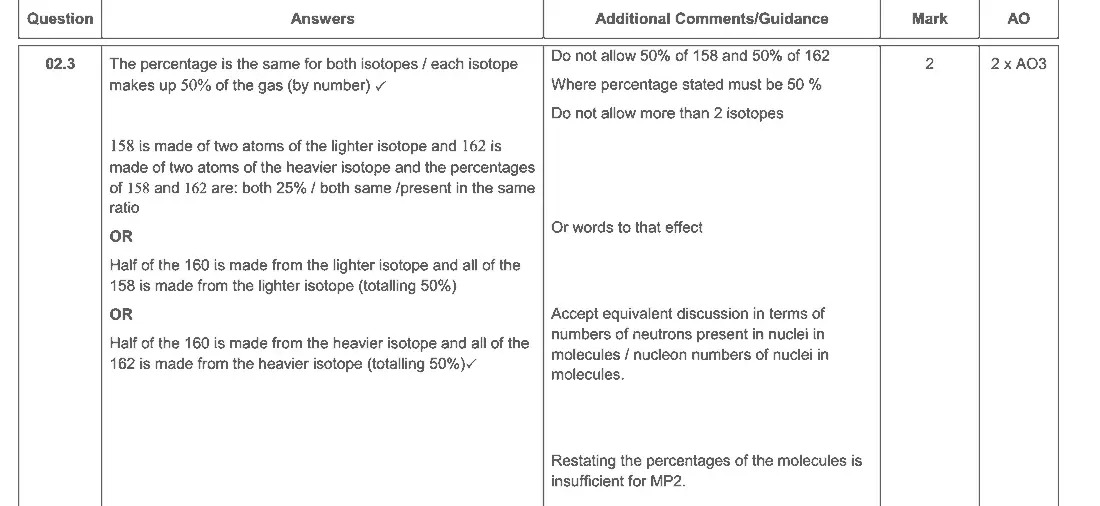
2.3 Atomic structure and stable nuclei 2AO3=2Explanation
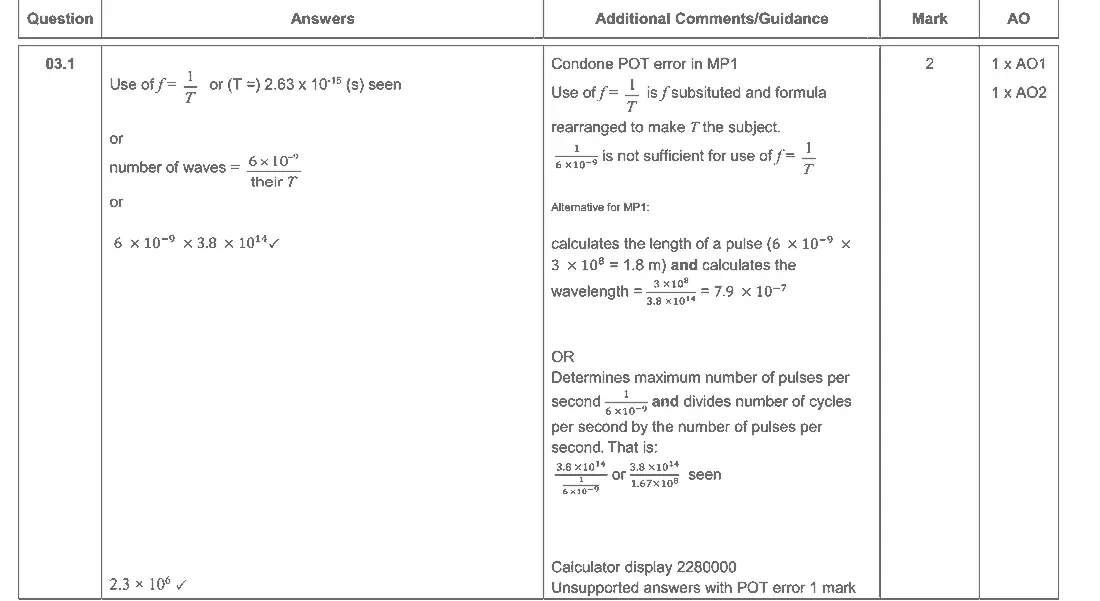
3.1 Progressive waves, longitudinal and transverse waves 2AO1=1,AO2=1Calculation
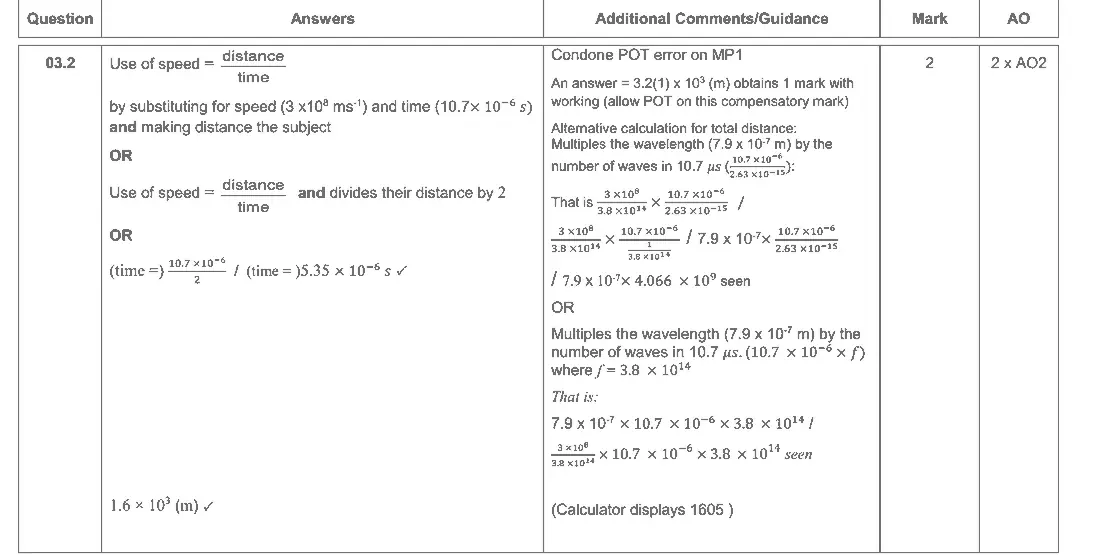
3.2 Motion along a straight line and projectile motion 2AO2=2Calculation
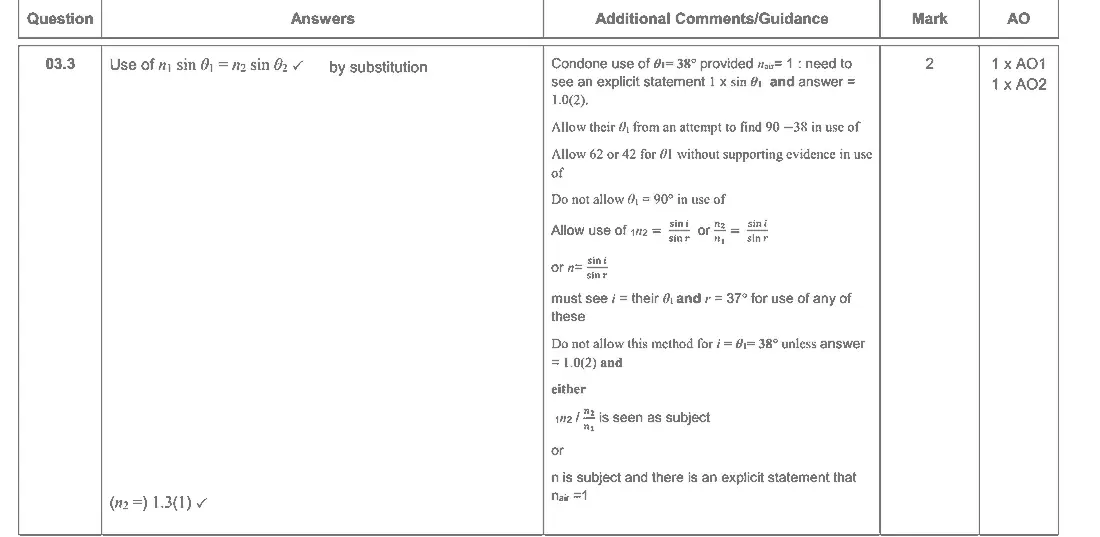
3.3 Refraction, total internal reflection and optical fibres 2AO1=1,AO2=1Calculation
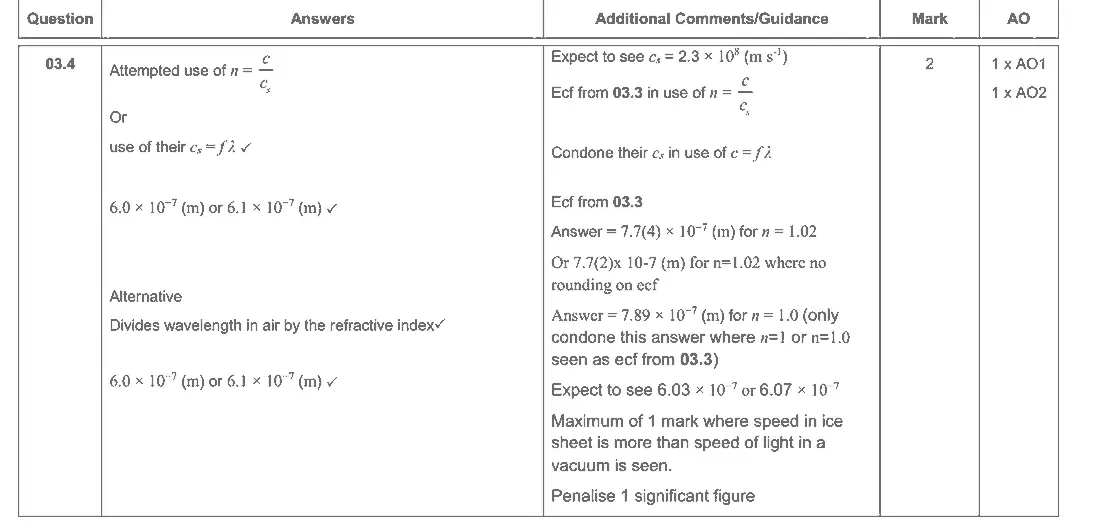
3.4 Refraction, total internal reflection and optical fibres, Progressive waves, longitudinal and transverse waves 2AO1=1,AO2=1Calculation
4.1 The photoelectric effect 6AO1=4,AO2=2Extended response
4.2 The photoelectric effect, Excitation, energy levels and wave-particle duality 3AO1=1,AO2=2Calculation
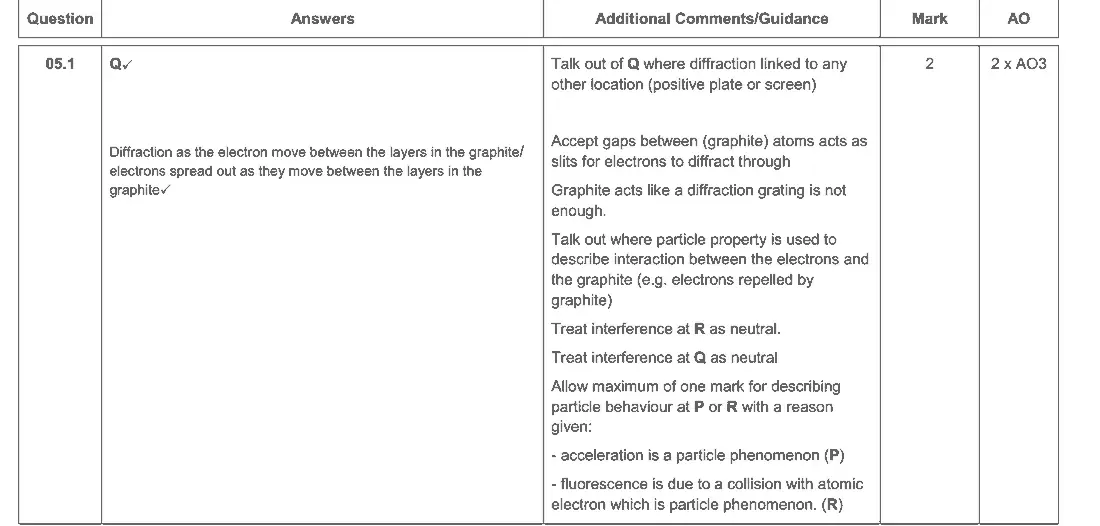
5.1 Excitation, energy levels and wave-particle duality 2AO3=2Explanation
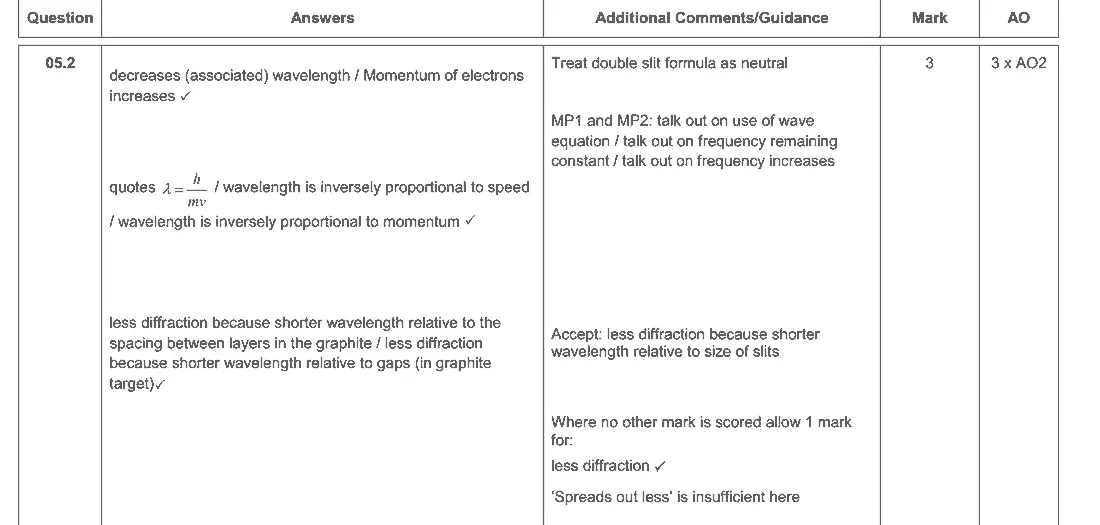
5.2 Excitation, energy levels and wave-particle duality 3AO2=3Explanation
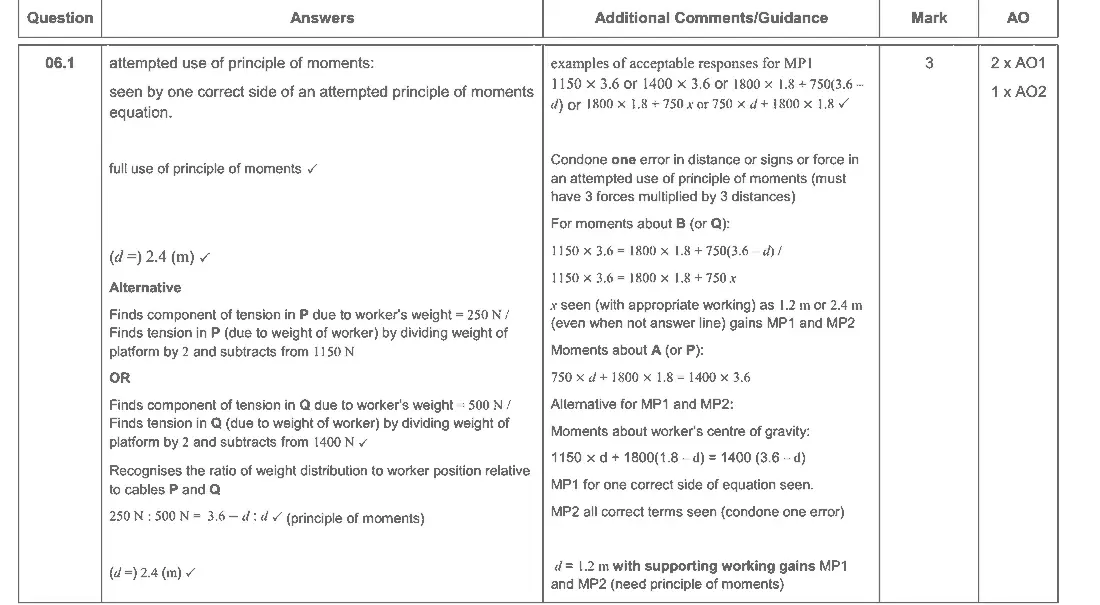
6.1 Scalars, vectors and moments 3AO1=2,AO2=1Calculation
6.2 Materials, stress, strain and the Young modulus 2AO1=1,AO2=1Calculation
6.3 Materials, stress, strain and the Young modulus 1AO1=1Calculation
6.4 Materials, stress, strain and the Young modulus 3AO3=3Diagram or graph
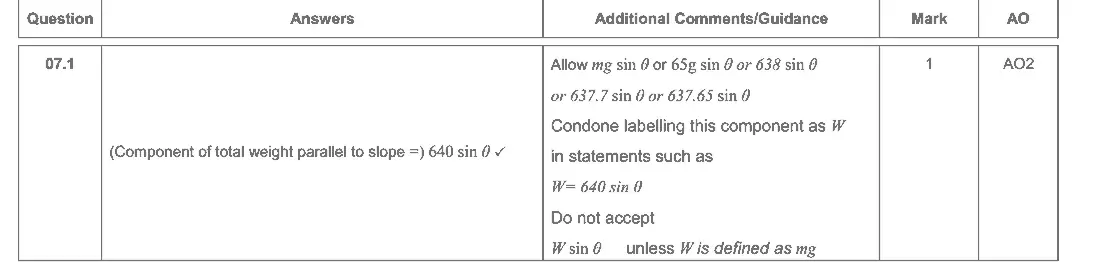
7.1 Scalars, vectors and moments 1AO2=1Short answer
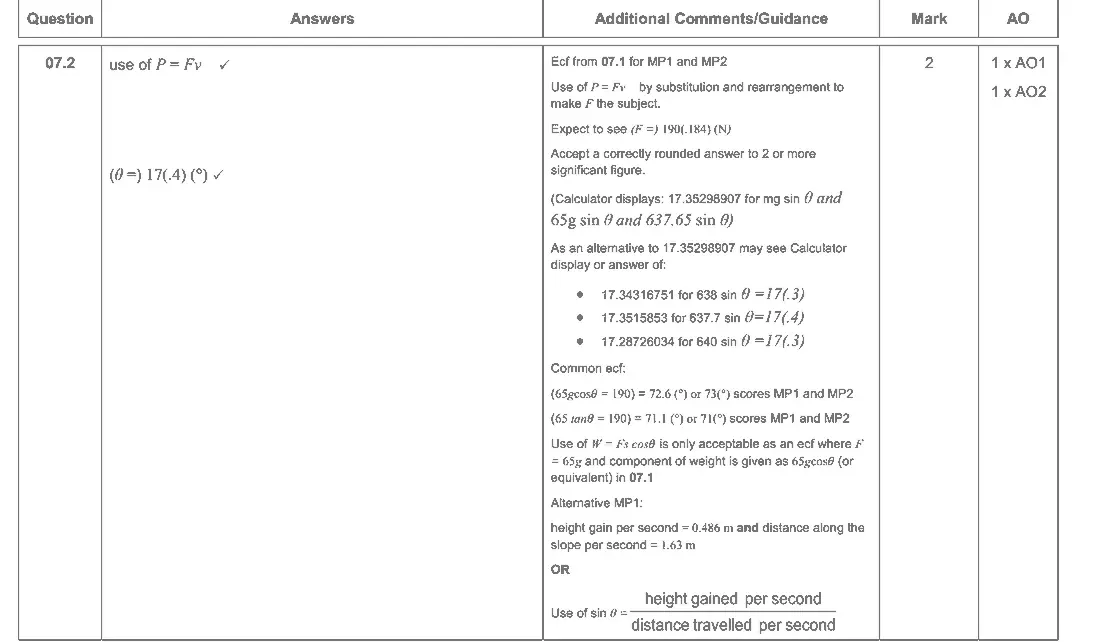
7.2 Work, energy, power and conservation of energy, Scalars, vectors and moments 2AO1=1,AO2=1Calculation
7.3 Work, energy, power and conservation of energy, Scalars, vectors and moments 3AO3=3Explanation
7.4 Motion along a straight line and projectile motion 3AO1=1,AO2=1,AO3=1Calculation
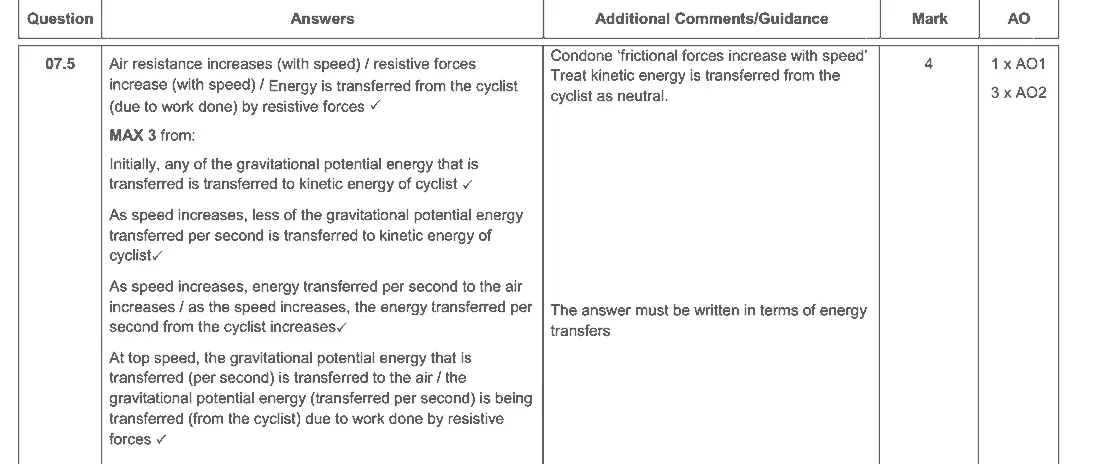
7.5 Work, energy, power and conservation of energy, Motion along a straight line and projectile motion 4AO1=1,AO2=3Explanation
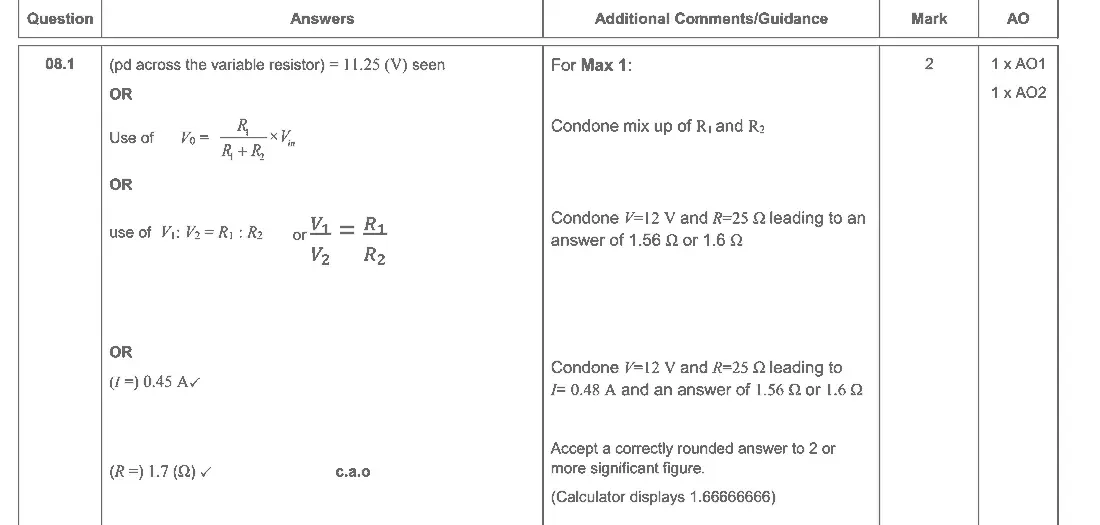
8.1 Circuits and potential dividers, Current, potential difference, I-V characteristics and resistivity 2AO1=1,AO2=1Calculation
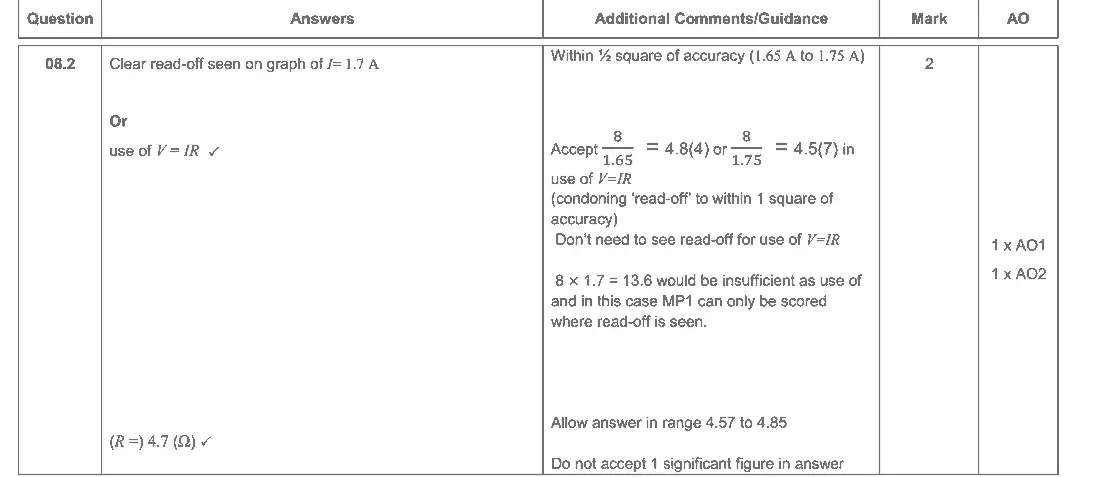
8.2 Current, potential difference, I-V characteristics and resistivity 2AO1=1,AO2=1Calculation
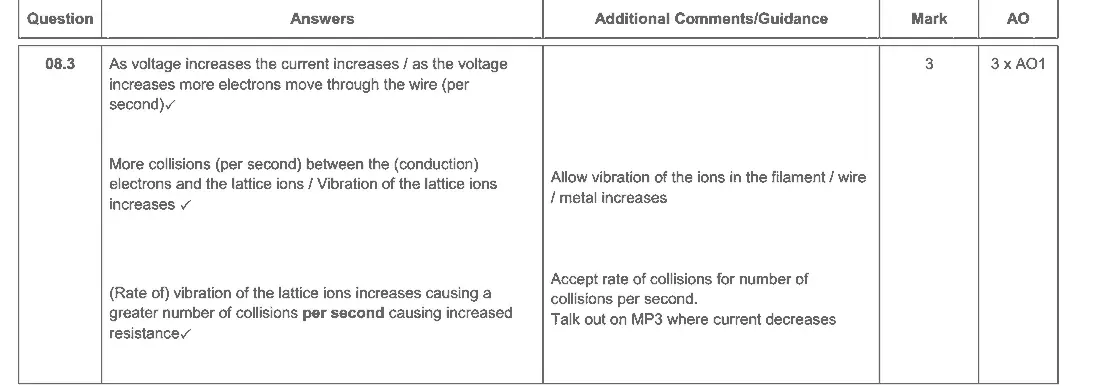
8.3 Current, potential difference, I-V characteristics and resistivity 3AO1=3Explanation
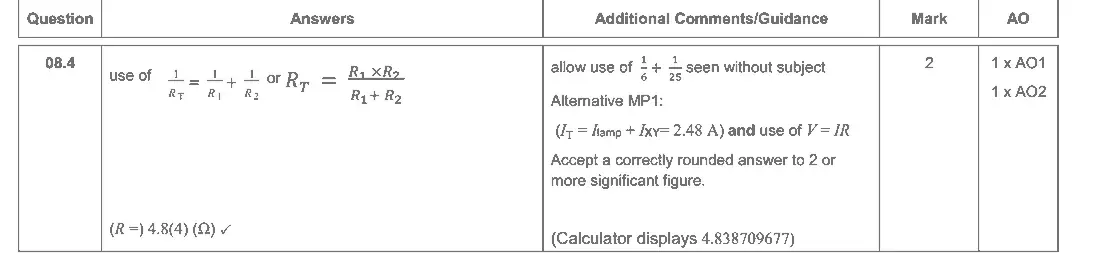
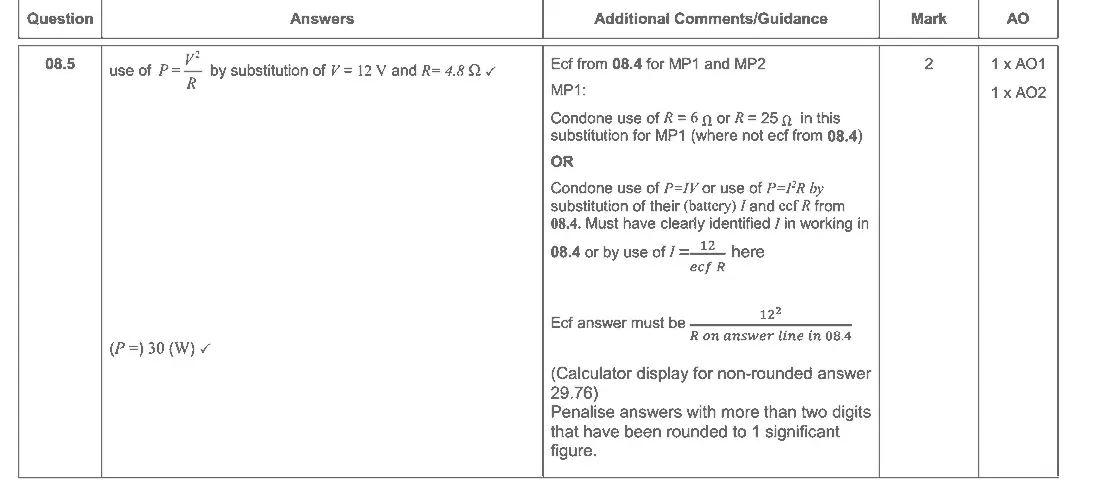
8.4 Circuits and potential dividers 2AO1=1,AO2=1Calculation
8.5 Circuits and potential dividers 2AO1=1,AO2=1Calculation
8.6 Circuits and potential dividers 3AO3=3Explanation

The questions

1.11.21.32.12.22.33.13.23.33.44.14.25.15.26.16.26.36.47.17.27.37.47.58.18.28.38.48.58.6
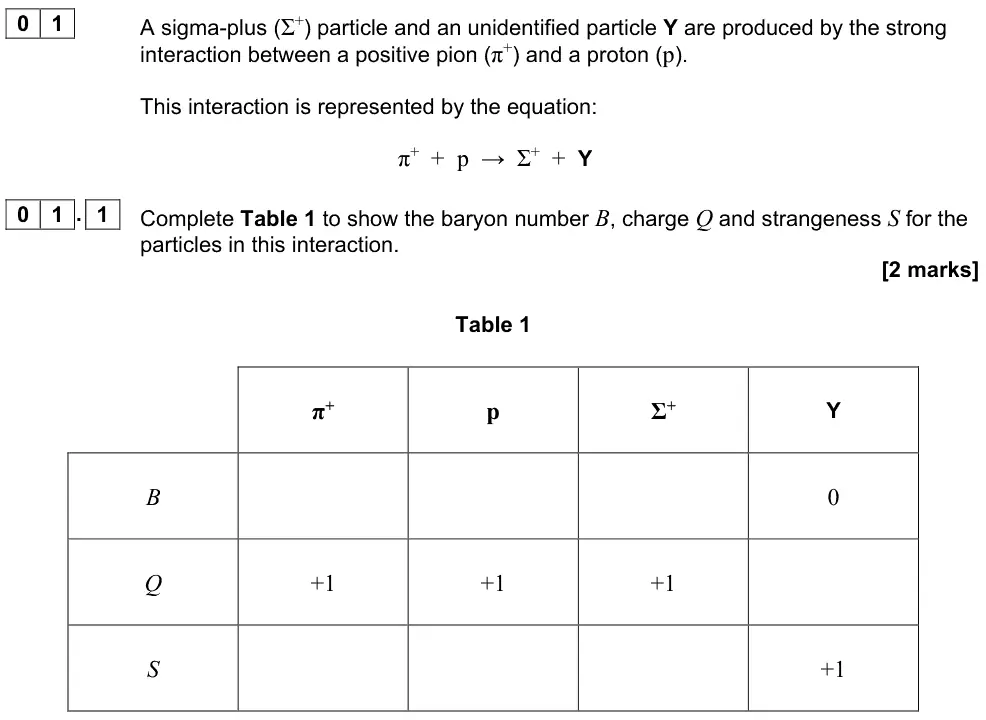
June 2022 · AS Paper 1 · Q1.1 2 marks AO1=1, AO2=1 Short answer Easy classification of particles and quarks
A sigma-plus (Σ+) particle and an unidentified particle Y are produced by the strong
interaction between a positive pion (π+) and a proton (p).
This interaction is represented by the equation:
π+  +  p  →  Σ+  +  Y
Complete Table 1 to show the baryon number B, charge Q and strangeness S for the
particles in this interaction.
[2 marks]
Table 1
π+
p
Σ+
Y
B
0
Q
+1
+1
+1
S
+1
June 2022 · AS Paper 1 · Q1.2 1 mark AO2=1 Short answer Easy classification of particles and quarks
Earlier part of question 1 that this part usesEarlier part of June 2022 Paper 1 question 1
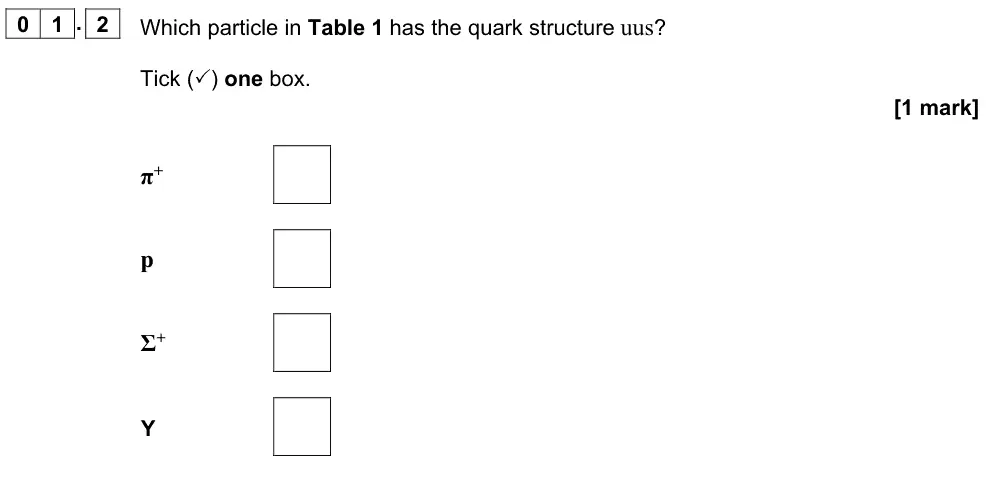
Which particle in Table 1 has the quark structure uus?
Tick () one box.
[1 mark]
π+
p
Σ+
Y
June 2022 · AS Paper 1 · Q1.3 3 marks AO3=3 Explanation Hard atomic structure and stable nucleiclassification of particles and quarks
Earlier part of question 1 that this part usesEarlier part of June 2022 Paper 1 question 1
Deduce which particle, π+ or Y, has the greater charge-to-mass ratio.
Justify your conclusion.
[3 marks]
June 2022 · AS Paper 1 · Q2.1 2 marks AO1=1, AO2=1 Explanation energy levels and wave particle duality
A sample of bromine gas contains a mixture of two isotopes.  An experiment is done
to find the percentage of each isotope in this sample.
In the experiment, the gas is ionised by a beam of electrons.
Explain how the beam of electrons causes a particle of the gas to have a charge
of +1e.
[2 marks]
June 2022 · AS Paper 1 · Q2.2 2 marks AO2=2 Calculation Hard atomic structure and stable nuclei
Earlier part of question 2 that this part usesEarlier part of June 2022 Paper 1 question 2
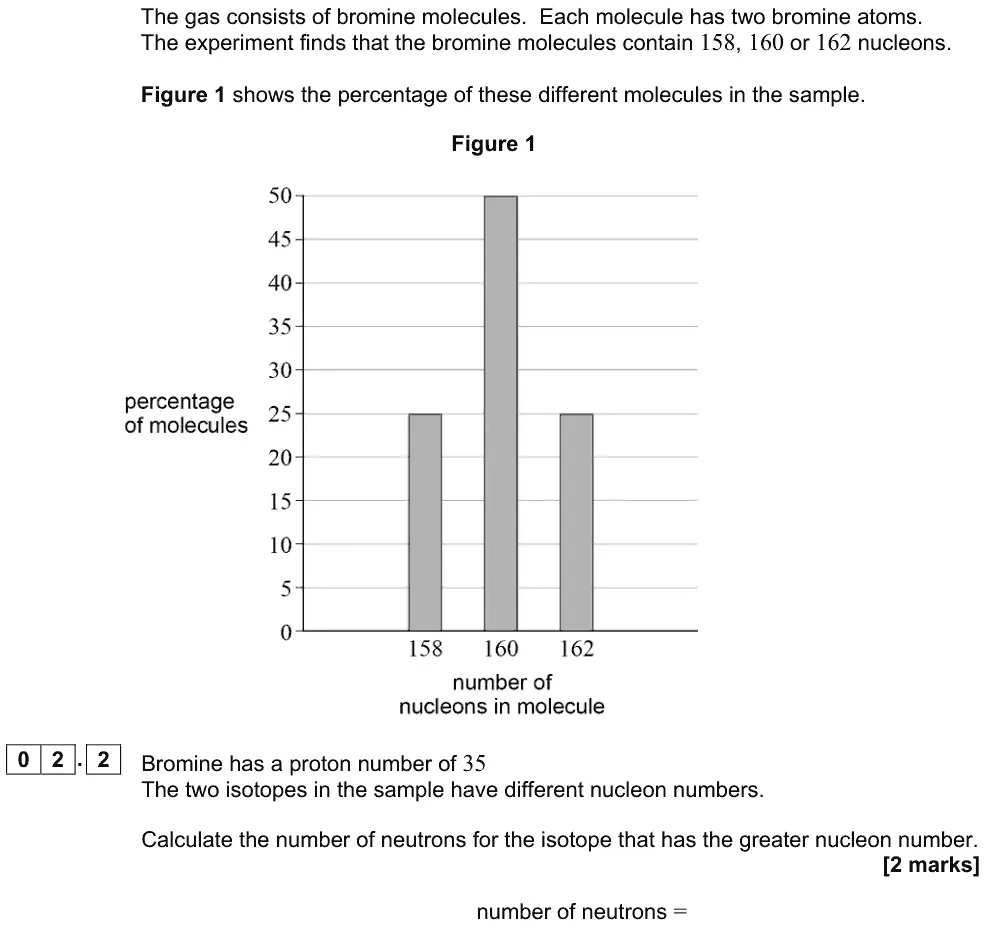
The gas consists of bromine molecules.  Each molecule has two bromine atoms.
The experiment finds that the bromine molecules contain 158, 160 or 162 nucleons.
Figure 1 shows the percentage of these different molecules in the sample.
Figure 1
Bromine has a proton number of 35
The two isotopes in the sample have different nucleon numbers.
Calculate the number of neutrons for the isotope that has the greater nucleon number.
[2 marks]
number of neutrons =
June 2022 · AS Paper 1 · Q2.3 2 marks AO3=2 Explanation Hard atomic structure and stable nuclei
Earlier part of question 2 that this part usesEarlier part of June 2022 Paper 1 question 2
Deduce the percentage of each isotope in the gas.
Justify your conclusion.
[2 marks]
June 2022 · AS Paper 1 · Q3.1 2 marks AO1=1, AO2=1 Calculation progressive waves and polarisation
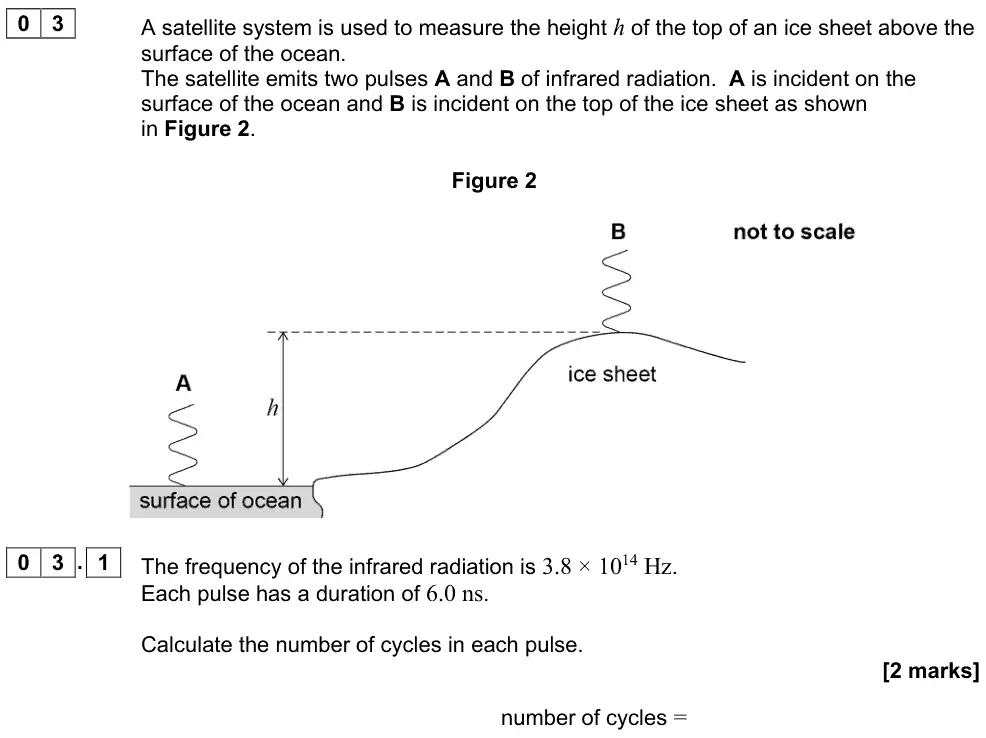
A satellite system is used to measure the height h of the top of an ice sheet above the
surface of the ocean.
The satellite emits two pulses A and B of infrared radiation.  A is incident on the
surface of the ocean and B is incident on the top of the ice sheet as shown
in Figure 2.
Figure 2
The frequency of the infrared radiation is 3.8 × 10¹⁴ Hz.
Each pulse has a duration of 6.0 ns.
Calculate the number of cycles in each pulse.
[2 marks]
number of cycles =
June 2022 · AS Paper 1 · Q3.2 2 marks AO2=2 Calculation Hard motion and projectiles
Earlier part of question 3 that this part usesEarlier part of June 2022 Paper 1 question 3
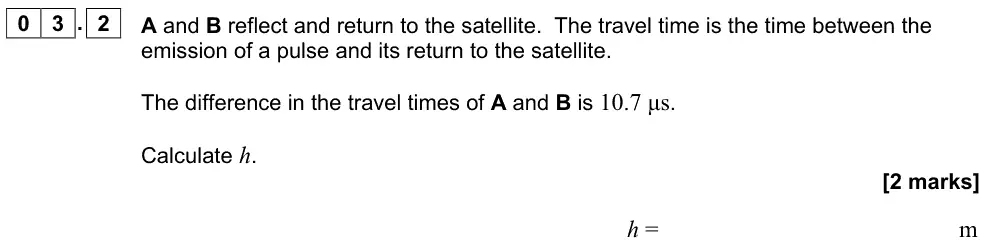
A and B reflect and return to the satellite.  The travel time is the time between the
emission of a pulse and its return to the satellite.
The difference in the travel times of A and B is 10.7 μs.
Calculate h.
[2 marks]
h =
m
June 2022 · AS Paper 1 · Q3.3 2 marks AO1=1, AO2=1 Calculation refraction and optical fibres
Earlier part of question 3 that this part usesEarlier part of June 2022 Paper 1 question 3
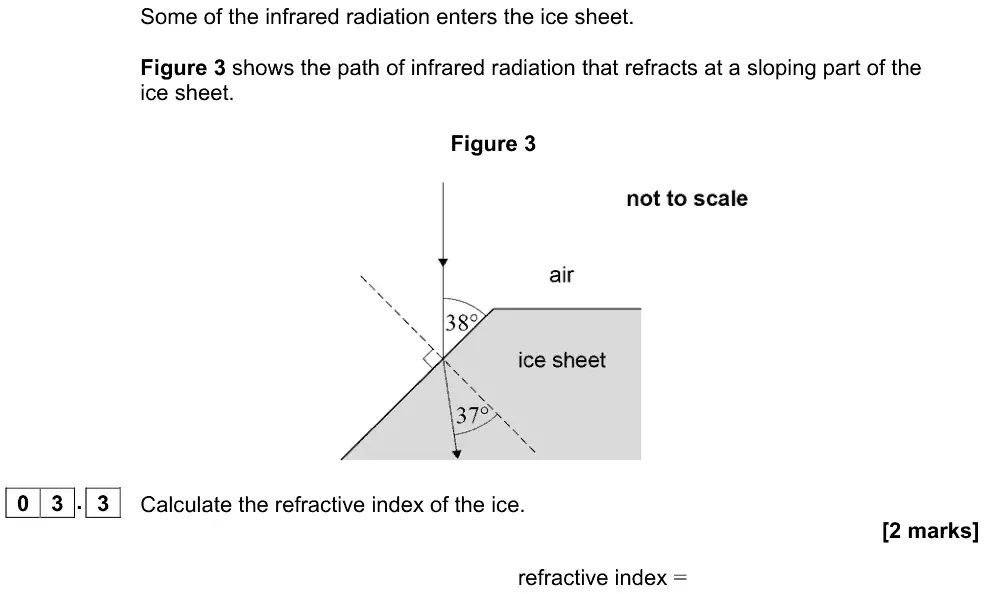
Some of the infrared radiation enters the ice sheet.
Figure 3 shows the path of infrared radiation that refracts at a sloping part of the
ice sheet.
Figure 3
Calculate the refractive index of the ice.
[2 marks]
refractive index =
June 2022 · AS Paper 1 · Q3.4 2 marks AO1=1, AO2=1 Calculation refraction and optical fibresprogressive waves and polarisation
Earlier part of question 3 that this part usesEarlier part of June 2022 Paper 1 question 3
Calculate the wavelength of the infrared radiation when it is inside the ice sheet.
[2 marks]
wavelength =
m
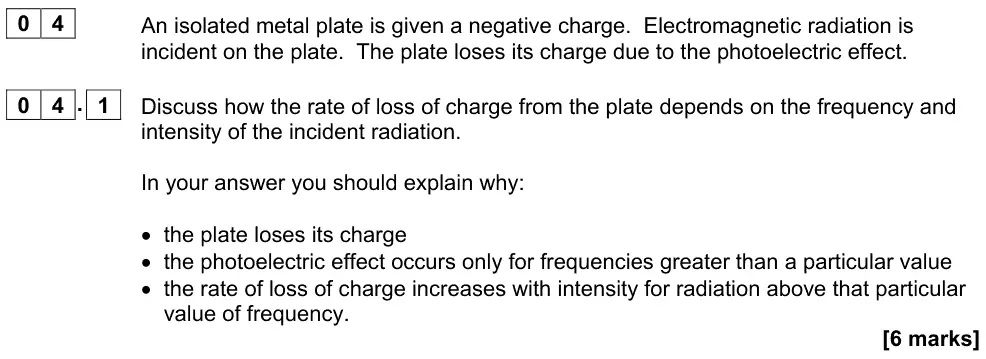
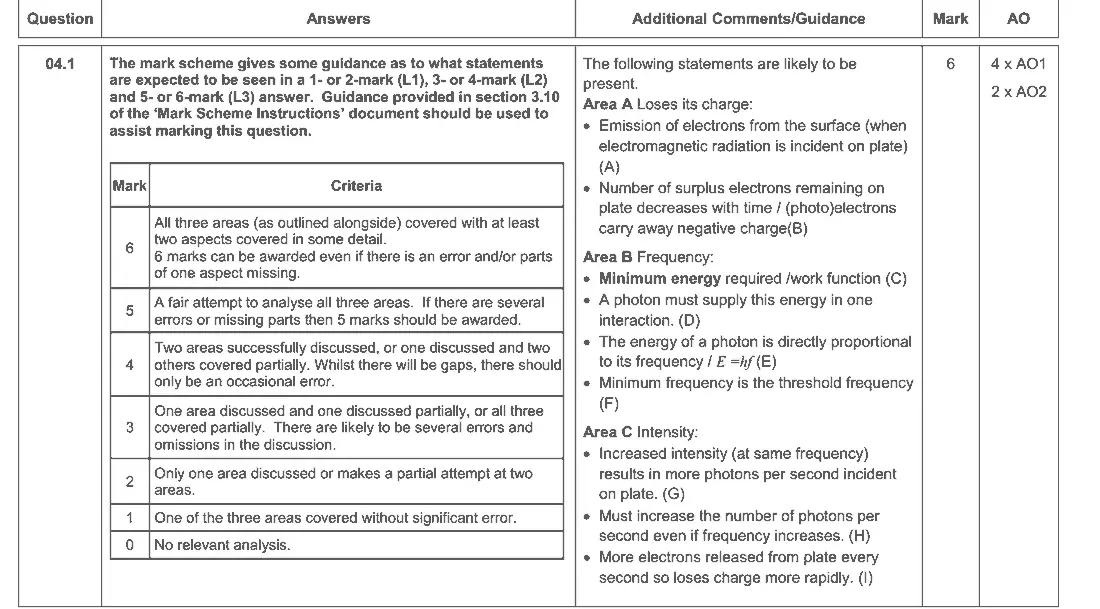
June 2022 · AS Paper 1 · Q4.1 6 marks AO1=4, AO2=2 6-mark extended response Hard photoelectric effect
An isolated metal plate is given a negative charge.  Electromagnetic radiation is
incident on the plate.  The plate loses its charge due to the photoelectric effect.
Discuss how the rate of loss of charge from the plate depends on the frequency and
intensity of the incident radiation.
In your answer you should explain why:
• the plate loses its charge
• the photoelectric effect occurs only for frequencies greater than a particular value
• the rate of loss of charge increases with intensity for radiation above that particular
value of frequency.
[6 marks]
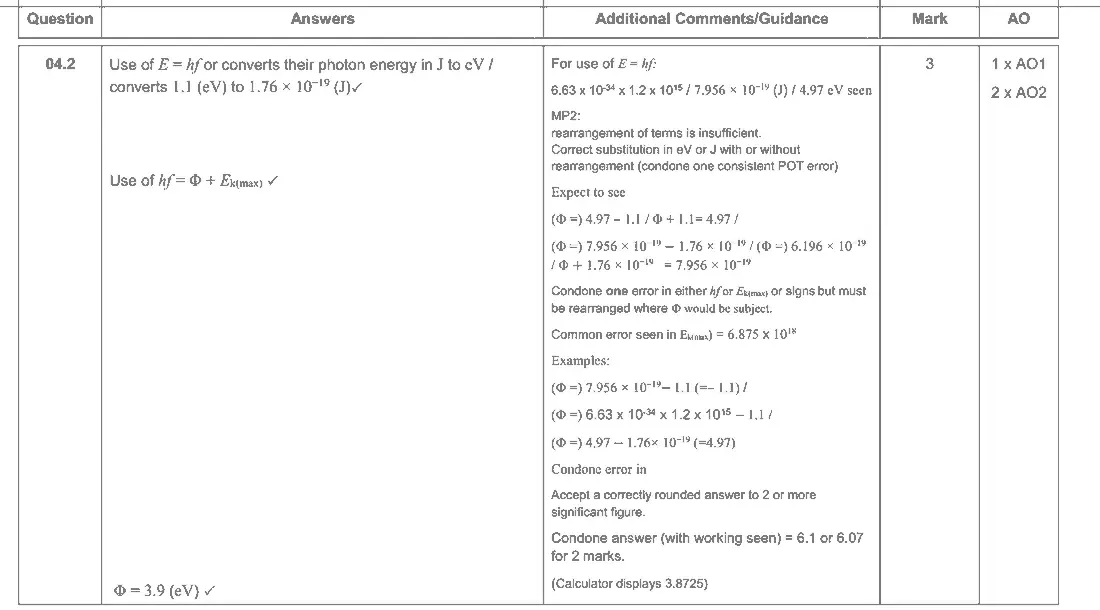
June 2022 · AS Paper 1 · Q4.2 3 marks AO1=1, AO2=2 Calculation Easy photoelectric effectenergy levels and wave particle duality
Earlier part of question 4 that this part usesEarlier part of June 2022 Paper 1 question 4
Charged particles are emitted from the metal plate with a maximum kinetic energy
of 1.1 eV when radiation of frequency 1.2 × 10¹⁵ Hz is incident on the plate.
Calculate, in eV, the work function of the metal.
[3 marks]
work function =
eV
June 2022 · AS Paper 1 · Q5.1 2 marks AO3=2 Explanation energy levels and wave particle duality
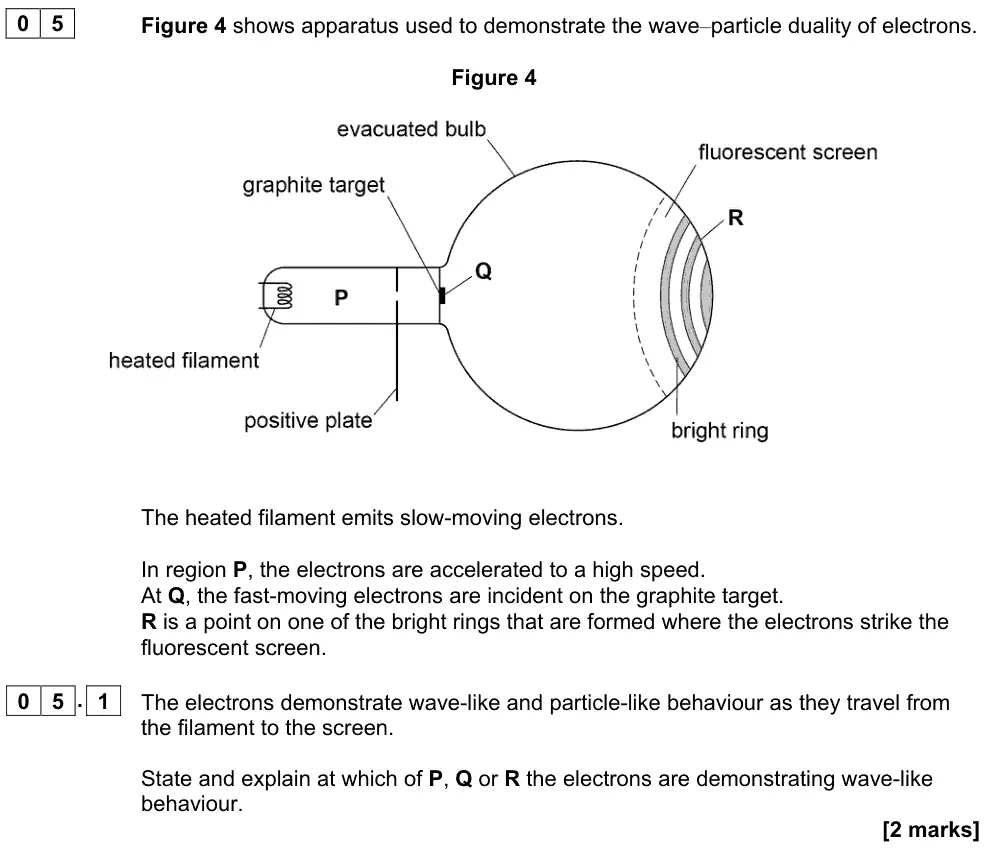
Figure 4 shows apparatus used to demonstrate the wave–particle duality of electrons.
Figure 4
The heated filament emits slow-moving electrons.
In region P, the electrons are accelerated to a high speed.
At Q, the fast-moving electrons are incident on the graphite target.
R is a point on one of the bright rings that are formed where the electrons strike the
fluorescent screen.
The electrons demonstrate wave-like and particle-like behaviour as they travel from
the filament to the screen.
State and explain at which of P, Q or R the electrons are demonstrating wave-like
behaviour.
[2 marks]
June 2022 · AS Paper 1 · Q5.2 3 marks AO2=3 Explanation energy levels and wave particle duality
Earlier part of question 5 that this part usesEarlier part of June 2022 Paper 1 question 5
The apparatus is adjusted so that the electrons are incident on the graphite target with
a greater speed.
Explain why the bright rings formed on the screen now have a smaller diameter.
[3 marks]
June 2022 · AS Paper 1 · Q6.1 3 marks AO1=2, AO2=1 Calculation Hard vectors and moments
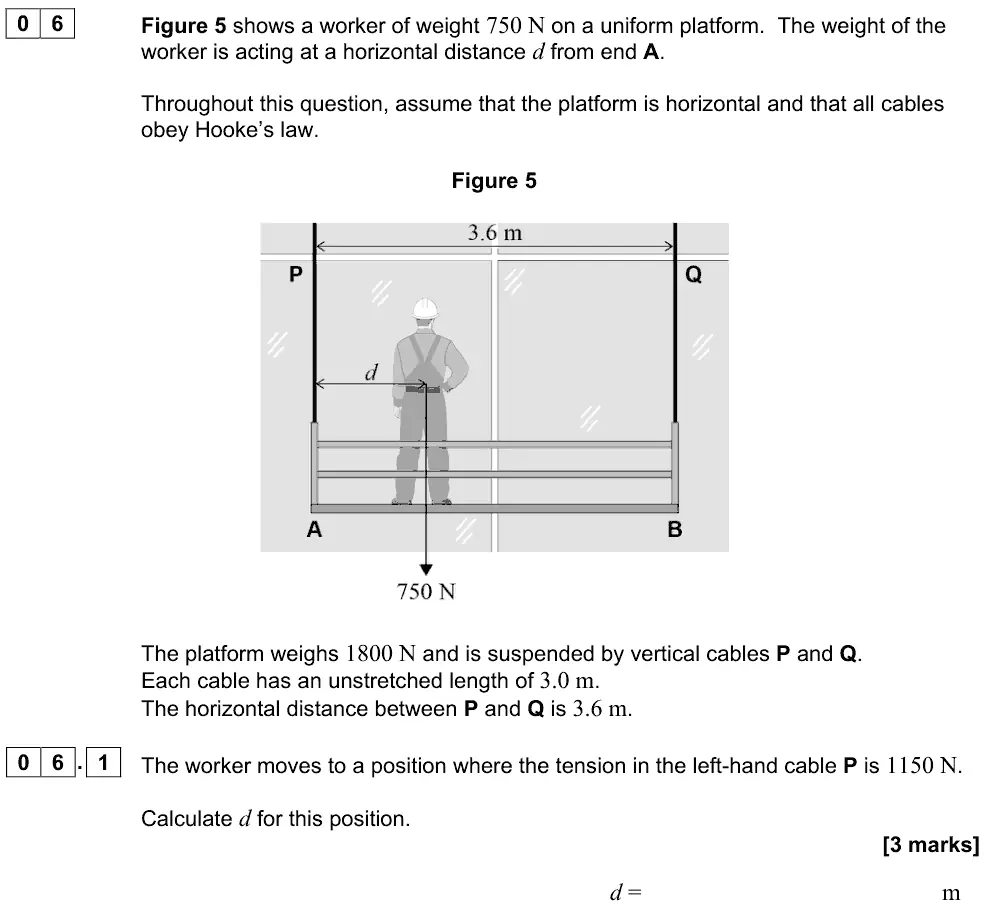
Figure 5 shows a worker of weight 750 N on a uniform platform.  The weight of the
worker is acting at a horizontal distance d from end A.
Throughout this question, assume that the platform is horizontal and that all cables
obey Hooke’s law.
Figure 5
The platform weighs 1800 N and is suspended by vertical cables P and Q.
Each cable has an unstretched length of 3.0 m.
The horizontal distance between P and Q is 3.6 m.
The worker moves to a position where the tension in the left-hand cable P is 1150 N.
Calculate d for this position.
[3 marks]
d =
m
June 2022 · AS Paper 1 · Q6.2 2 marks AO1=1, AO2=1 Calculation materials and young modulus
Earlier part of question 6 that this part usesEarlier part of June 2022 Paper 1 question 6
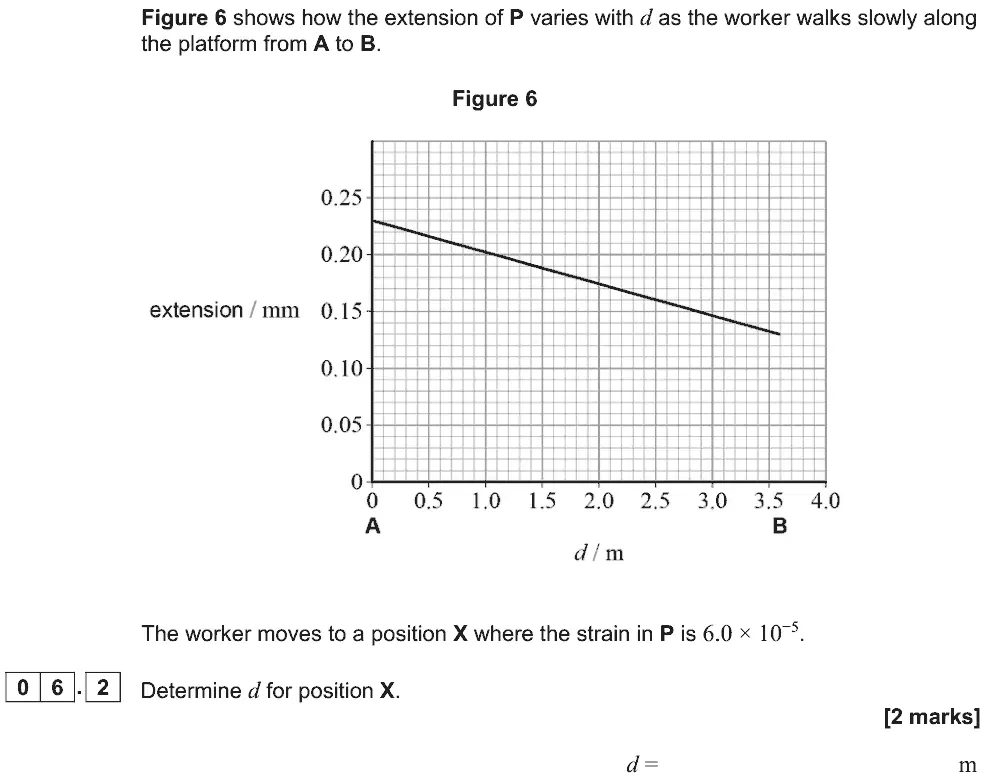
Figure 6 shows how the extension of P varies with d as the worker walks slowly along
the platform from A to B.
Figure 6
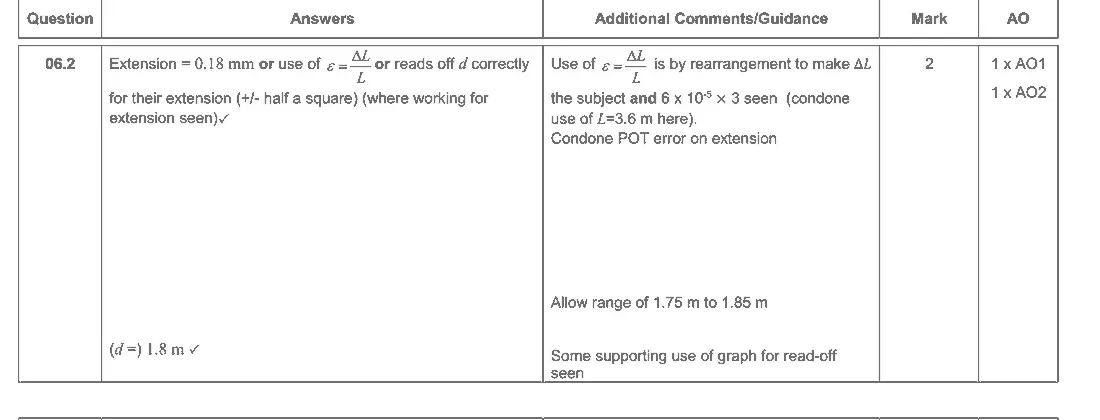
The worker moves to a position X where the strain in P is 6.0 × 10⁻⁵.
Determine d for position X.
[2 marks]
d =
m
June 2022 · AS Paper 1 · Q6.3 1 mark AO1=1 Calculation Easy materials and young modulus
Earlier part of question 6 that this part usesEarlier part of June 2022 Paper 1 question 6
The cable material has a Young modulus of 1.9 × 10¹¹ N m−2.
Calculate the tensile stress in P when the worker is at X.
[1 mark]
tensile stress =
N m−2
June 2022 · AS Paper 1 · Q6.4 3 marks AO3=3 Diagram or graph materials and young modulus
Earlier part of question 6 that this part usesEarlier part of June 2022 Paper 1 question 6
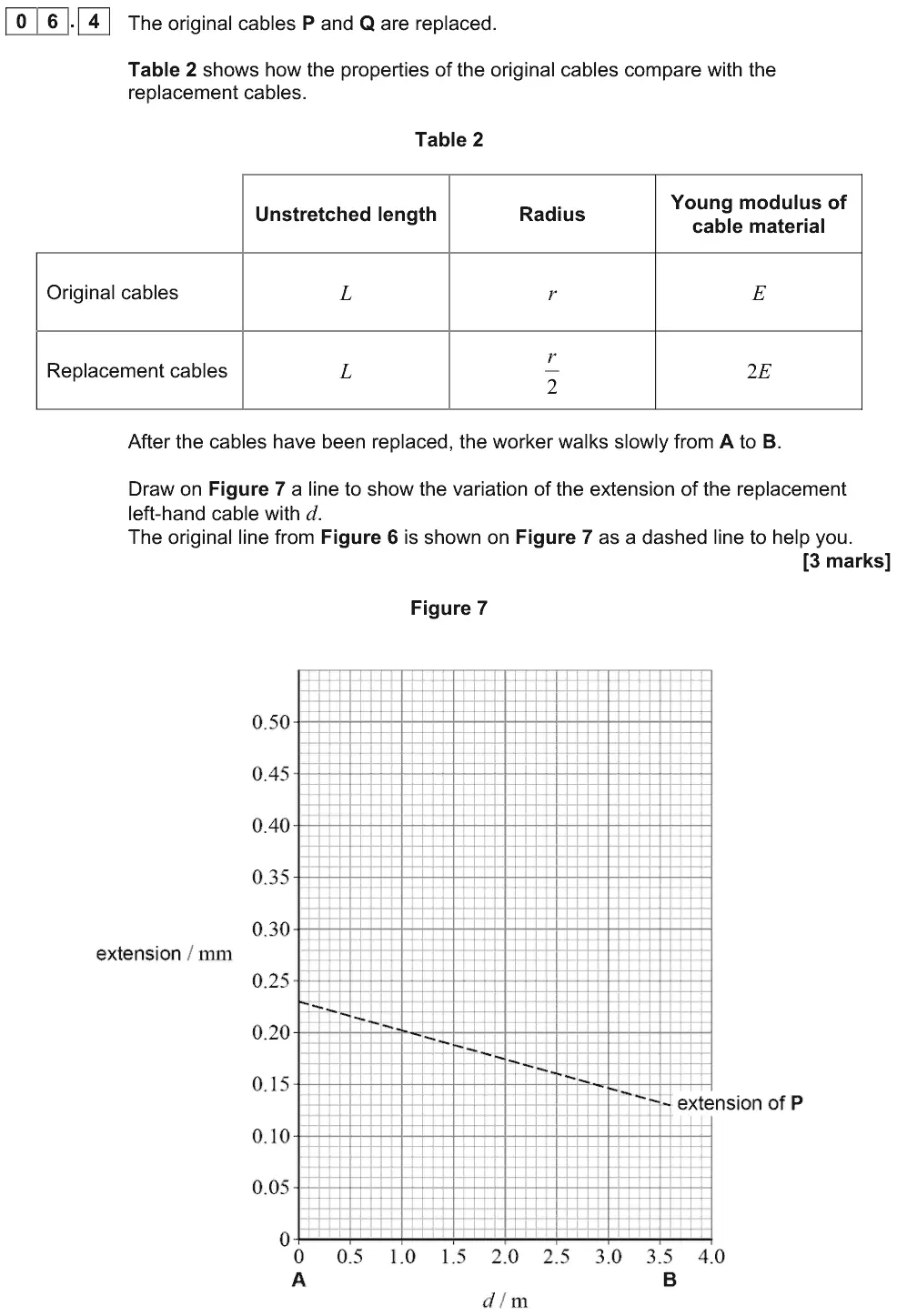
The original cables P and Q are replaced.
Table 2 shows how the properties of the original cables compare with the
replacement cables.
Table 2
Unstretched length
Radius
Young modulus of
cable material
Original cables
L
r
E
Replacement cables
L
2
r
2E
After the cables have been replaced, the worker walks slowly from A to B.
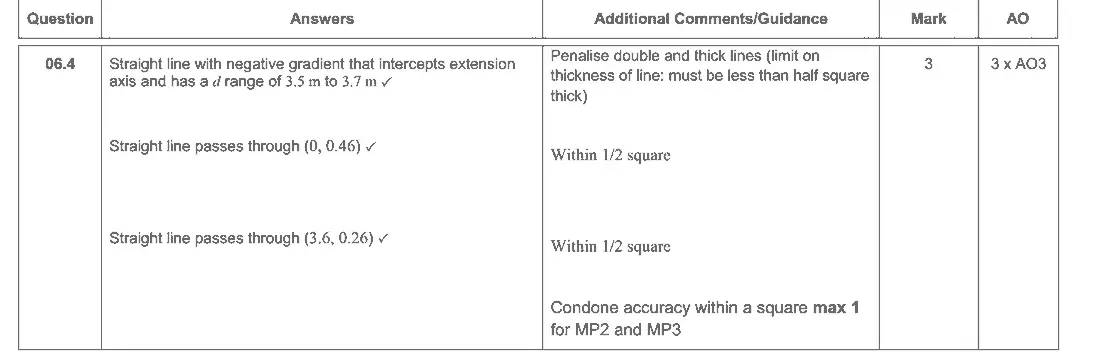
Draw on Figure 7 a line to show the variation of the extension of the replacement
left-hand cable with d.
The original line from Figure 6 is shown on Figure 7 as a dashed line to help you.
[3 marks]
Figure 7
June 2022 · AS Paper 1 · Q7.1 1 mark AO2=1 Short answer vectors and moments
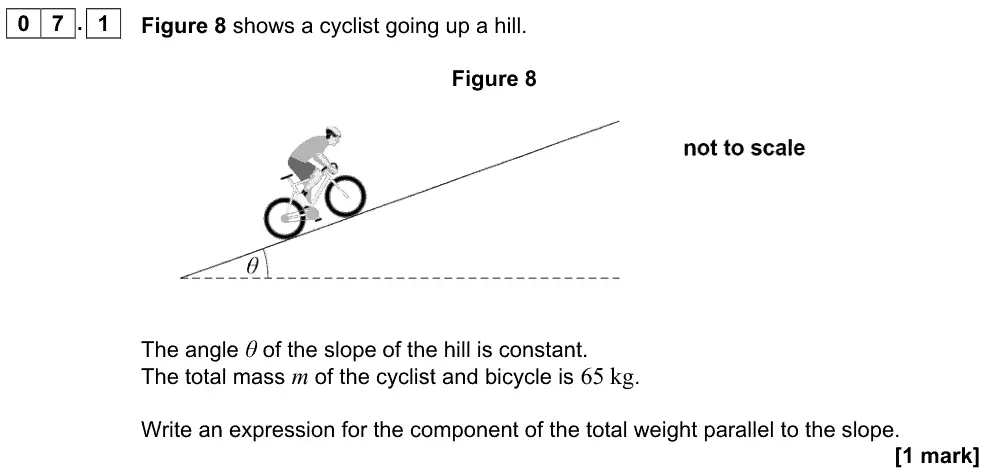
Figure 8 shows a cyclist going up a hill.
Figure 8
The angle θ of the slope of the hill is constant.
The total mass m of the cyclist and bicycle is 65 kg.
Write an expression for the component of the total weight parallel to the slope.
[1 mark]
June 2022 · AS Paper 1 · Q7.2 2 marks AO1=1, AO2=1 Calculation work energy and powervectors and moments
Earlier part of question 7 that this part usesEarlier part of June 2022 Paper 1 question 7
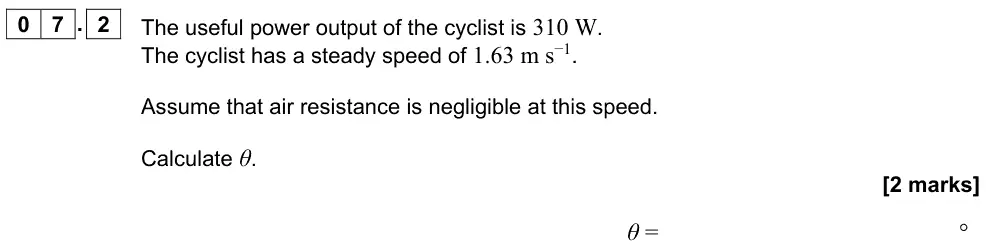
The useful power output of the cyclist is 310 W.
The cyclist has a steady speed of 1.63 m s−1.
Assume that air resistance is negligible at this speed.
Calculate θ.
[2 marks]
θ =
°
June 2022 · AS Paper 1 · Q7.3 3 marks AO3=3 Explanation Hard work energy and powervectors and moments
Earlier part of question 7 that this part usesEarlier part of June 2022 Paper 1 question 7
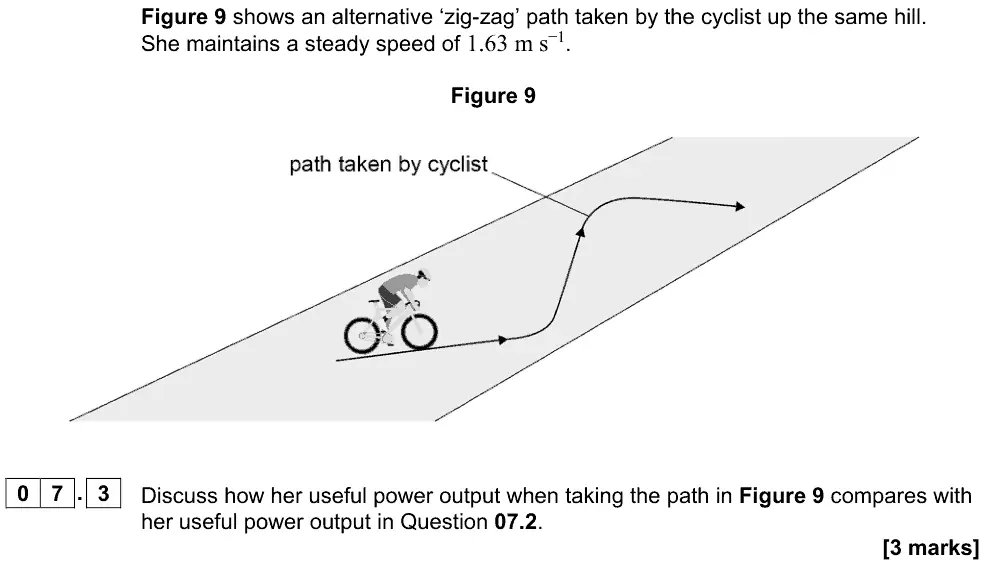
Figure 9 shows an alternative ‘zig-zag’ path taken by the cyclist up the same hill.
She maintains a steady speed of 1.63 m s−1.
Figure 9
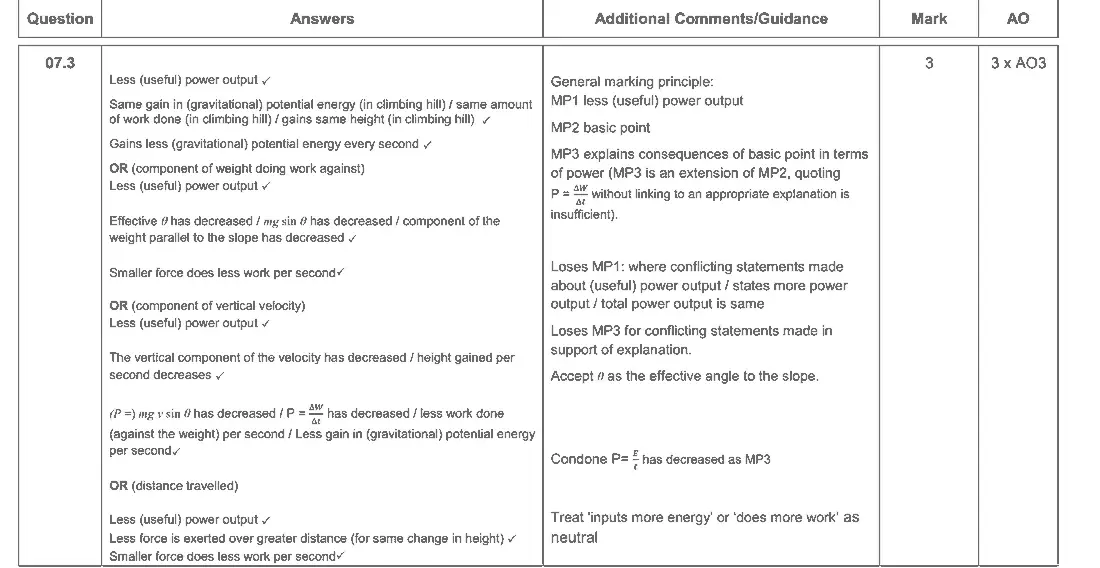
Discuss how her useful power output when taking the path in Figure 9 compares with
her useful power output in Question 07.2.
[3 marks]
June 2022 · AS Paper 1 · Q7.4 3 marks AO1=1, AO2=1, AO3=1 Calculation Hard motion and projectiles
Earlier part of question 7 that this part usesEarlier part of June 2022 Paper 1 question 7
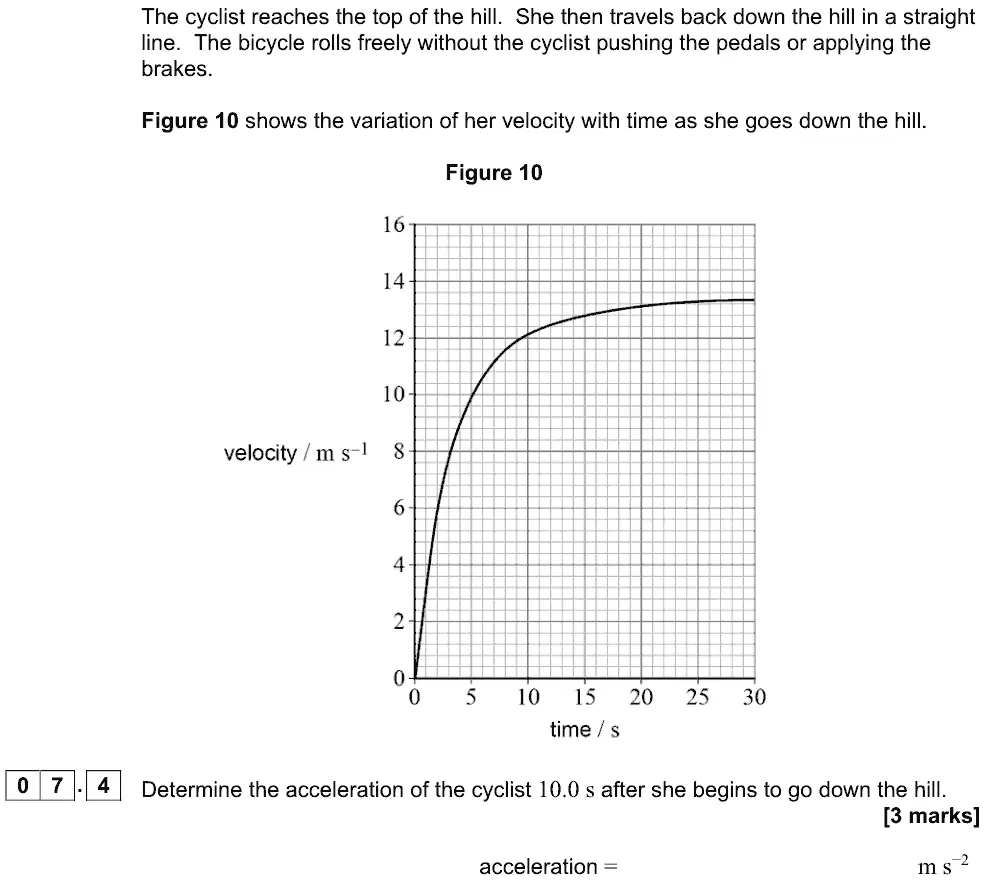
The cyclist reaches the top of the hill.  She then travels back down the hill in a straight
line.  The bicycle rolls freely without the cyclist pushing the pedals or applying the
brakes.
Figure 10 shows the variation of her velocity with time as she goes down the hill.
Figure 10
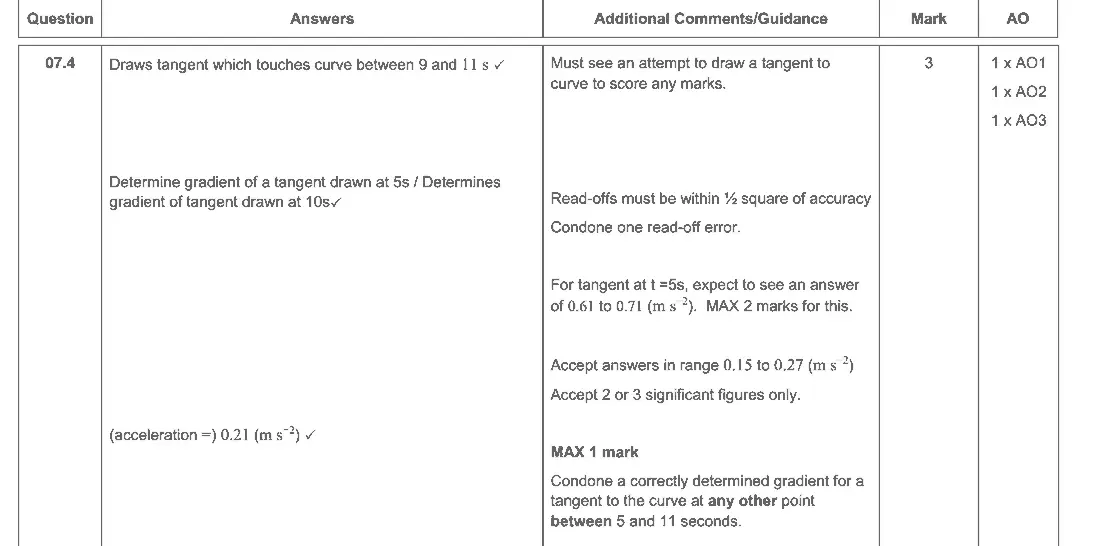
Determine the acceleration of the cyclist 10.0 s after she begins to go down the hill.
[3 marks]
acceleration =
m s−2
June 2022 · AS Paper 1 · Q7.5 4 marks AO1=1, AO2=3 Explanation Hard work energy and powermotion and projectiles
Earlier part of question 7 that this part usesEarlier part of June 2022 Paper 1 question 7
Energy transfers occur as the cyclist travels down the hill.
Outline how these energy transfers explain the shape of the graph in Figure 10.
[4 marks]
June 2022 · AS Paper 1 · Q8.1 2 marks AO1=1, AO2=1 Calculation Hard circuits and potential dividerscurrent voltage and resistivity
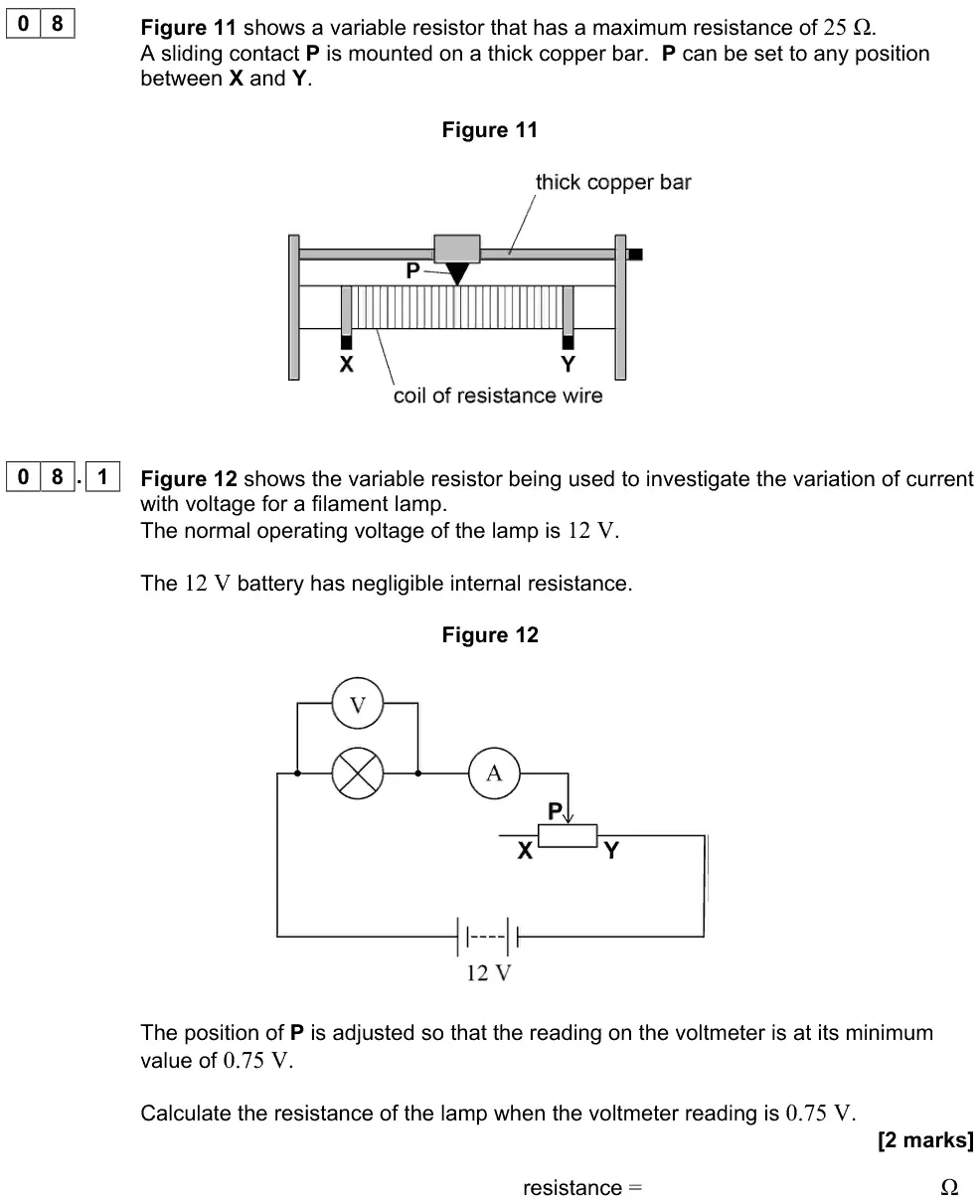
Figure 11 shows a variable resistor that has a maximum resistance of 25 Ω.
A sliding contact P is mounted on a thick copper bar.  P can be set to any position
between X and Y.
Figure 11
Figure 12 shows the variable resistor being used to investigate the variation of current
with voltage for a filament lamp.
The normal operating voltage of the lamp is 12 V.
The 12 V battery has negligible internal resistance.
Figure 12
The position of P is adjusted so that the reading on the voltmeter is at its minimum
value of 0.75 V.
Calculate the resistance of the lamp when the voltmeter reading is 0.75 V.
[2 marks]
resistance =
Ω
June 2022 · AS Paper 1 · Q8.2 2 marks AO1=1, AO2=1 Calculation Easy current voltage and resistivity
Earlier part of question 8 that this part usesEarlier part of June 2022 Paper 1 question 8
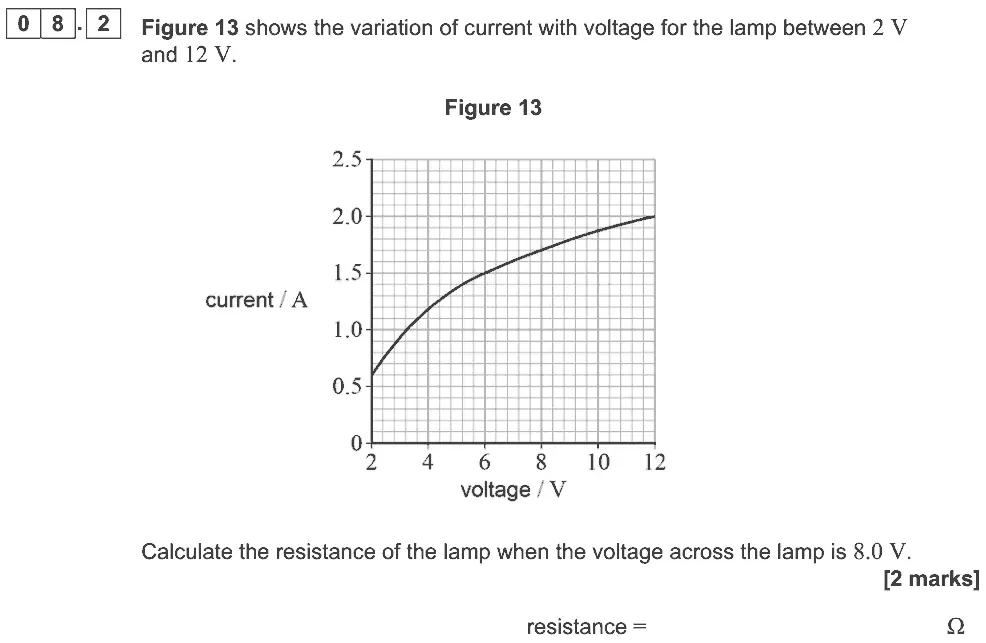
Figure 13 shows the variation of current with voltage for the lamp between 2 V
and 12 V.
Figure 13
Calculate the resistance of the lamp when the voltage across the lamp is 8.0 V.
[2 marks]
resistance =
Ω
June 2022 · AS Paper 1 · Q8.3 3 marks AO1=3 Explanation current voltage and resistivity
Earlier part of question 8 that this part usesEarlier part of June 2022 Paper 1 question 8
Explain, in terms of electron movement, why the resistance of the filament lamp
changes as the voltage changes as shown in Figure 13.
[3 marks]
June 2022 · AS Paper 1 · Q8.4 2 marks AO1=1, AO2=1 Calculation Hard circuits and potential dividers
Earlier part of question 8 that this part usesEarlier part of June 2022 Paper 1 question 8
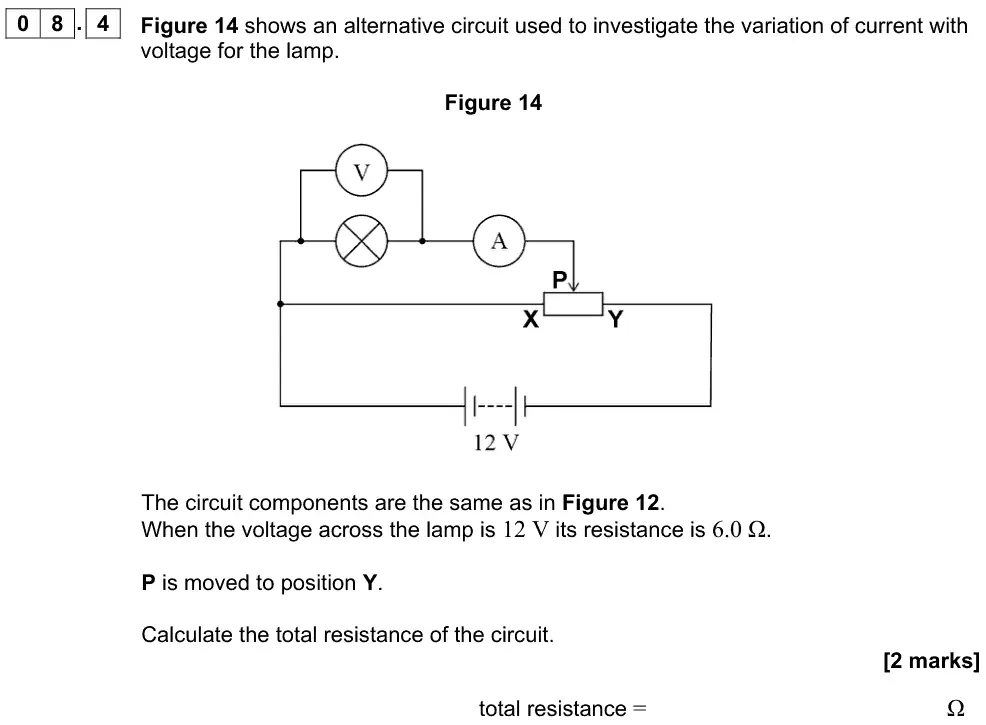
Figure 14 shows an alternative circuit used to investigate the variation of current with
voltage for the lamp.
Figure 14
The circuit components are the same as in Figure 12.
When the voltage across the lamp is 12 V its resistance is 6.0 Ω.
P is moved to position Y.
Calculate the total resistance of the circuit.
[2 marks]
total resistance =
Ω
June 2022 · AS Paper 1 · Q8.5 2 marks AO1=1, AO2=1 Calculation circuits and potential dividers
Earlier part of question 8 that this part usesEarlier part of June 2022 Paper 1 question 8
Calculate the power transferred by the battery when P is at position Y.
[2 marks]
power =
W
June 2022 · AS Paper 1 · Q8.6 3 marks AO3=3 Explanation Hard circuits and potential dividers
Earlier part of question 8 that this part usesEarlier part of June 2022 Paper 1 question 8
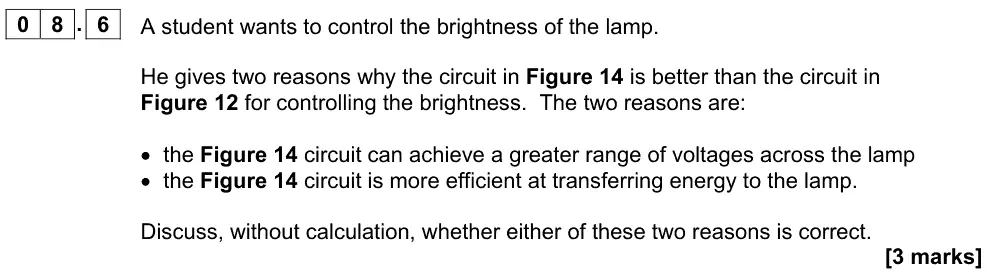
A student wants to control the brightness of the lamp.
He gives two reasons why the circuit in Figure 14 is better than the circuit in
Figure 12 for controlling the brightness.  The two reasons are:
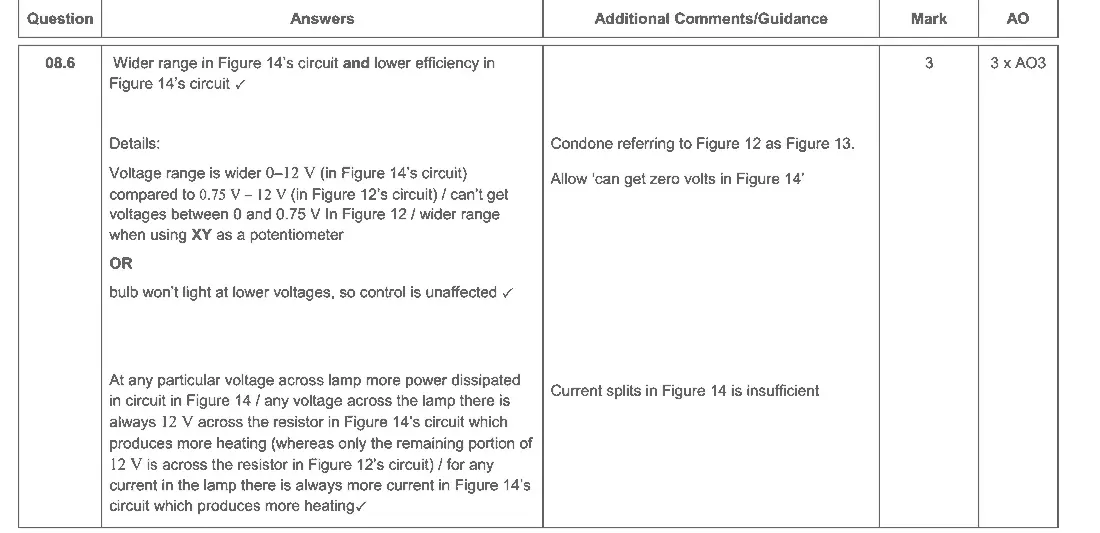
• the Figure 14 circuit can achieve a greater range of voltages across the lamp
• the Figure 14 circuit is more efficient at transferring energy to the lamp.
Discuss, without calculation, whether either of these two reasons is correct.
[3 marks]

Work with an AQA physics tutor

Want a paper marked and gone through with you? Message us.

Prefer email? Send an enquiry

If you are under 18, please include a parent's contact details. Enquiries go to enquiries@physicsaleveltutor.com and are deleted once handled. All tutoring is online.