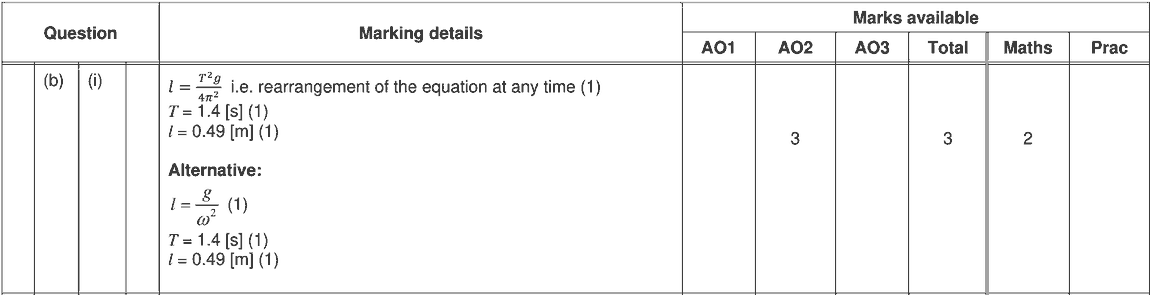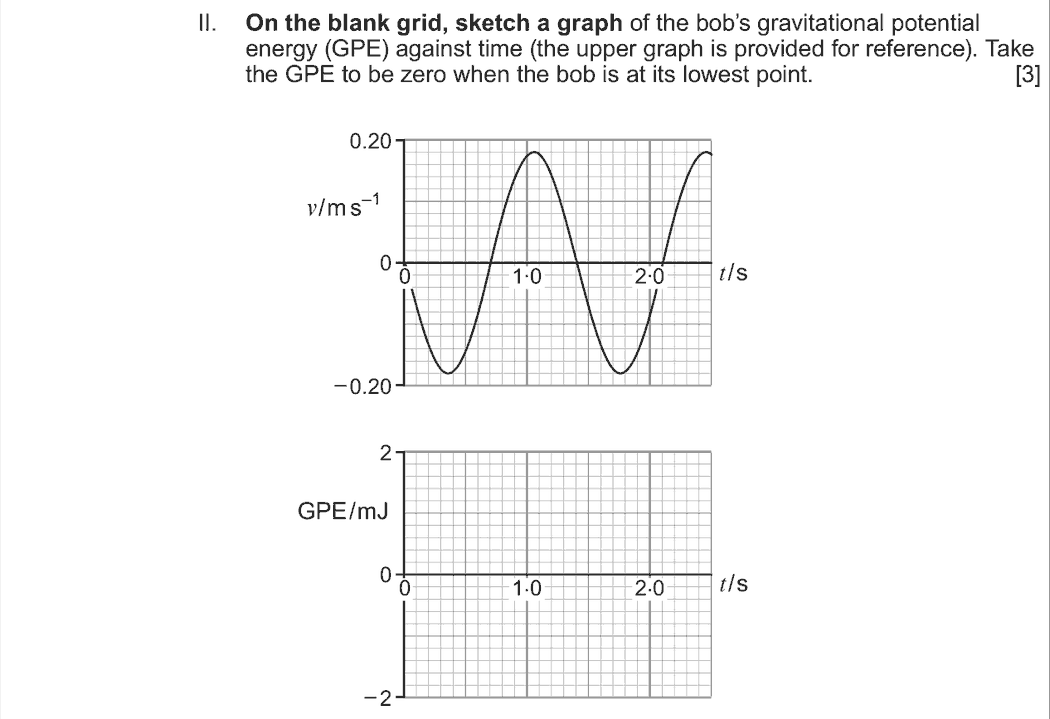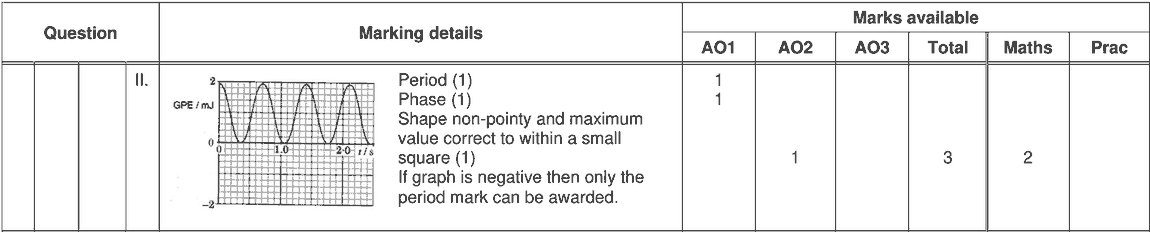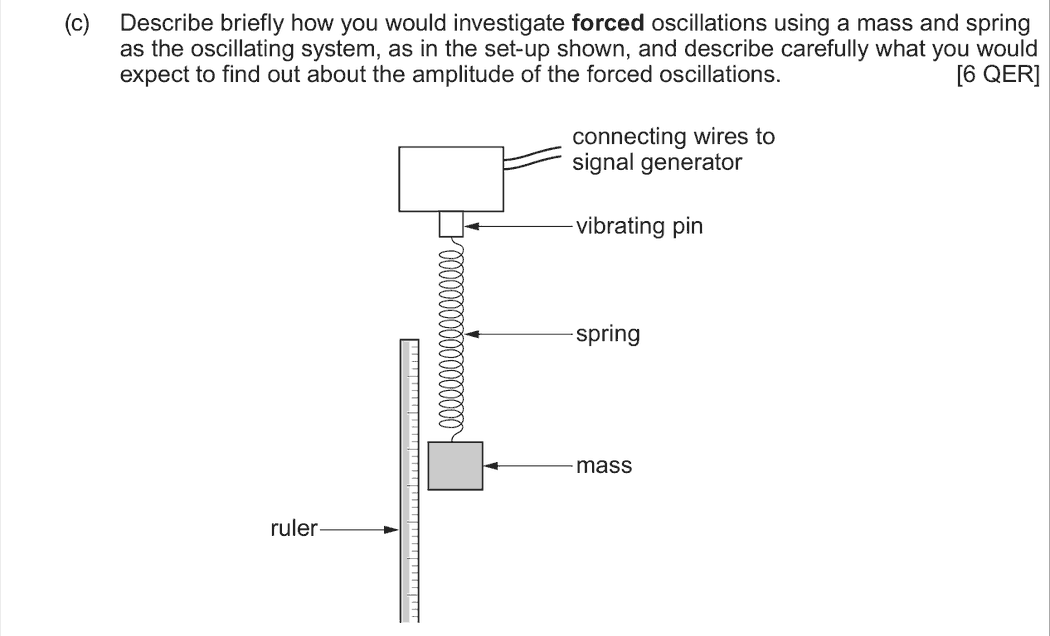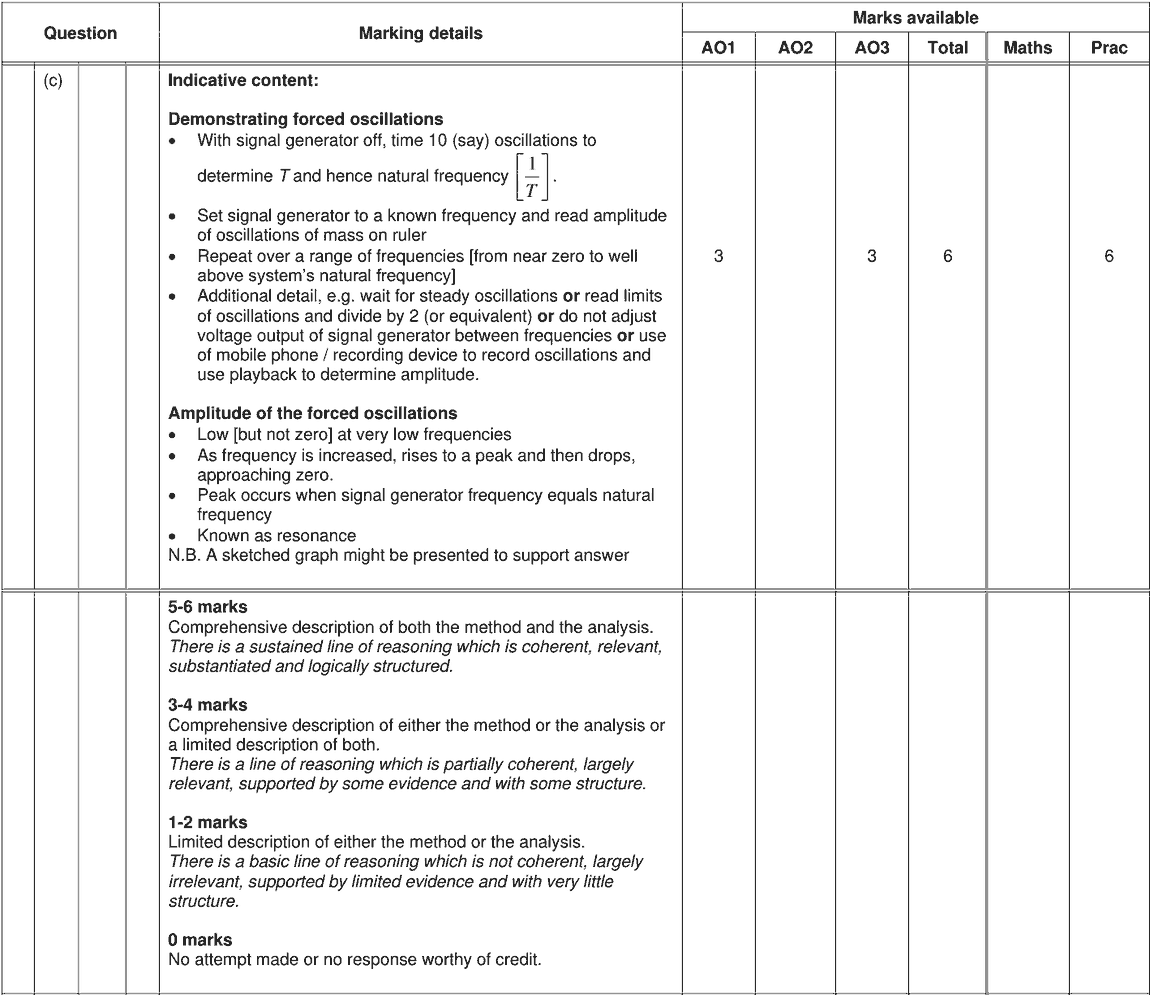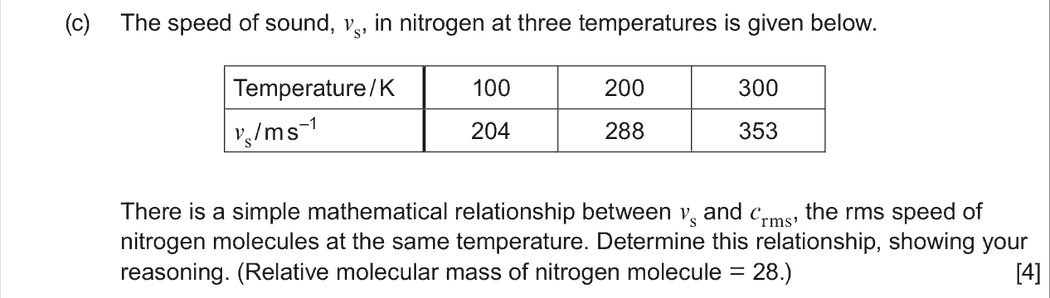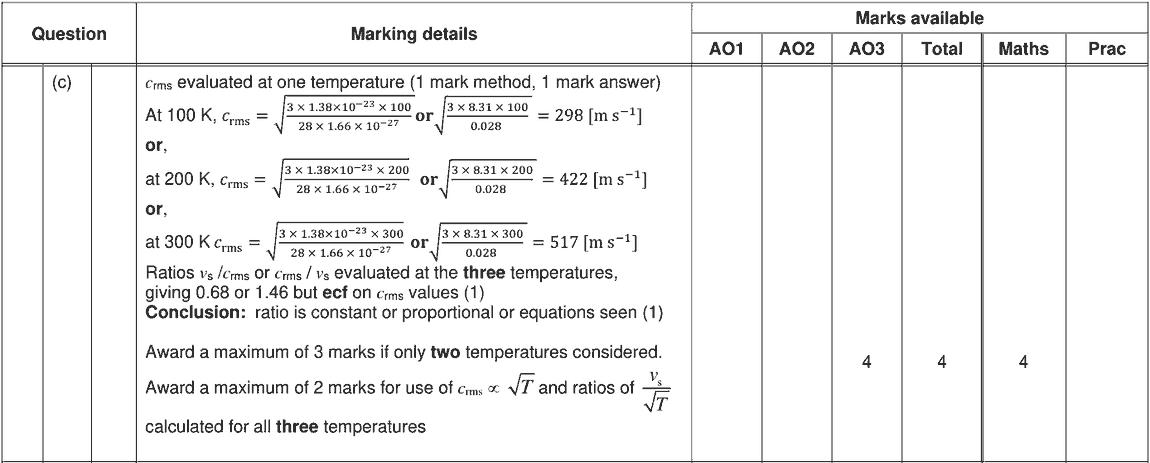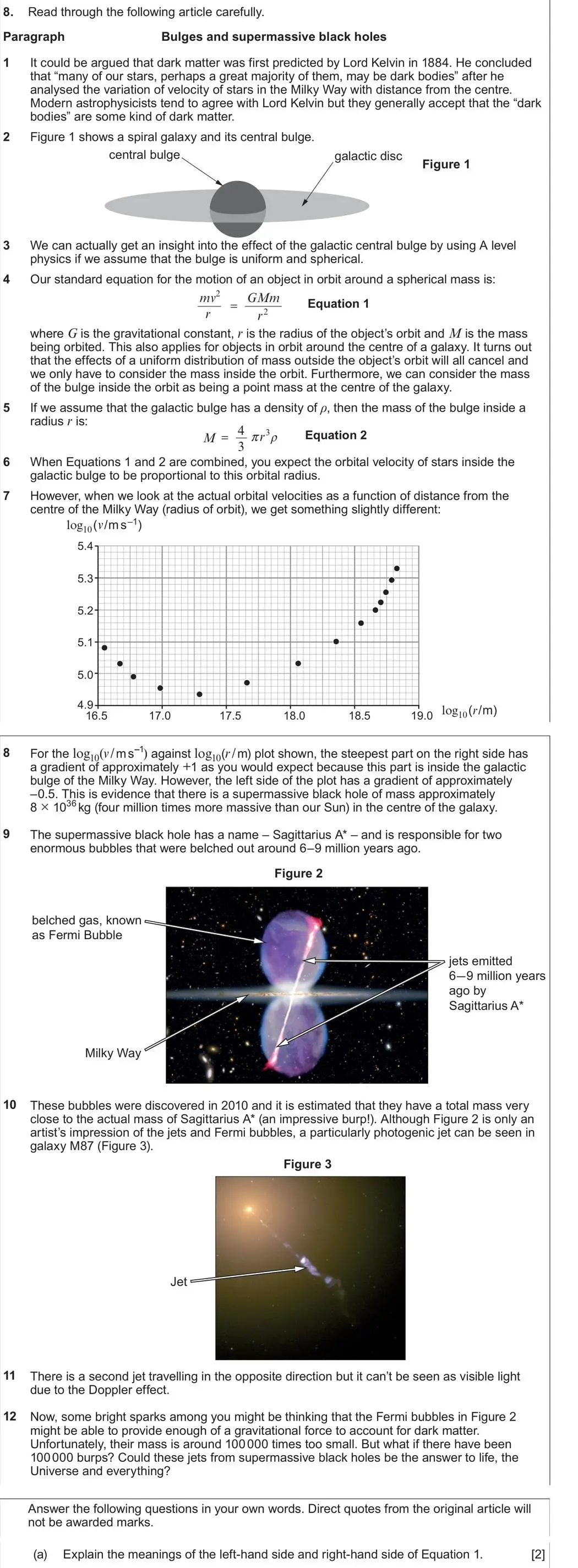
Mark scheme

Examiner's comment
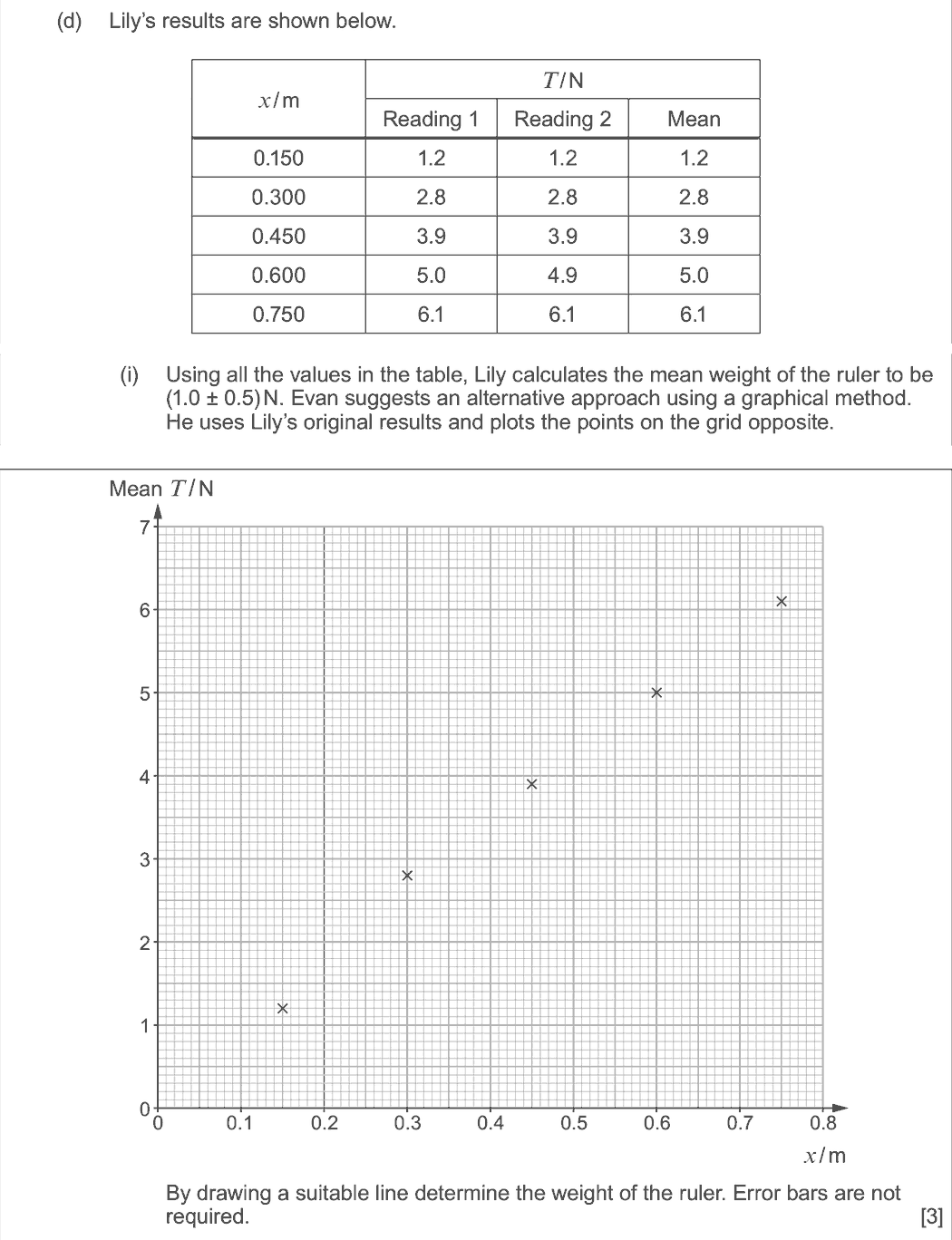
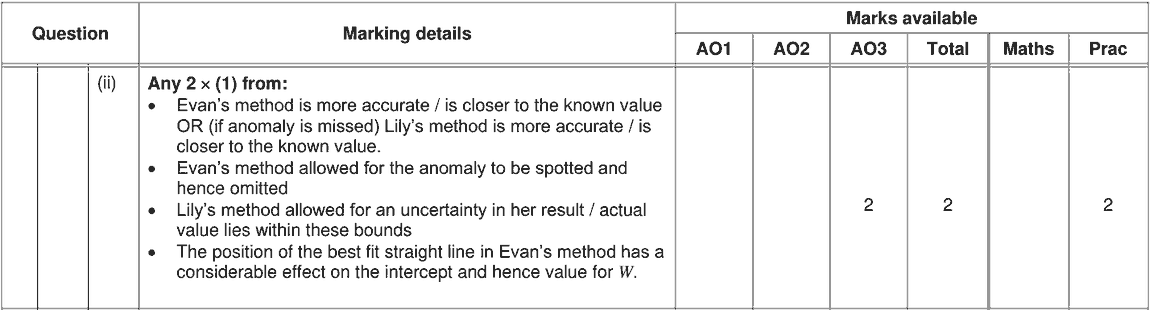
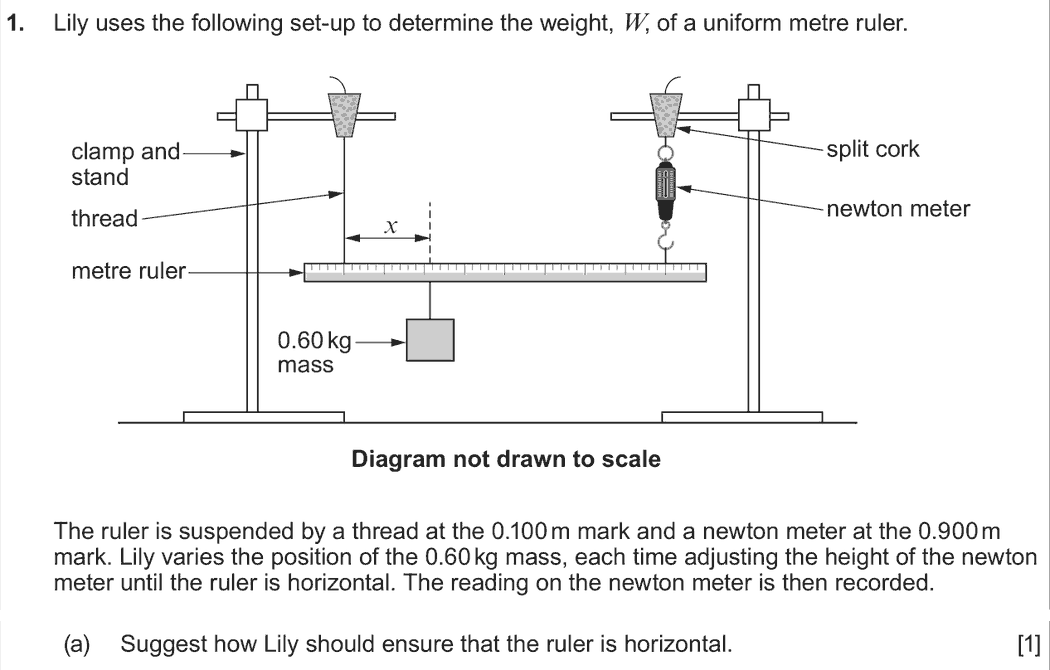
After careful consideration of the diagram in (a), most candidates were able to suggest a way of ensuring the ruler was level. These included spirit levels, vertical height measurements and use of set squares or protractors. In (b) many candidates were able to define the centre of gravity. A small number confused mass with weight and were not awarded credit. Less candidates picked up the second mark as their attempts at labelling the centre of gravity on the ruler were not clear. Responses that didn’t score both marks in (c)(i) failed to include ‘sum of…’ or ‘total clockwise equals total anticlockwise…’. A small number incorrectly used ‘an enclosed system’ in place of ‘a system in equilibrium’. There were many good responses to (c)(ii) that included the principle of moments and convincing algebra. Clearly dividing by 0.8 was enough, however, in many responses candidates showed clear algebraic steps in their workings. Some weaker responses appeared to reverse engineer a response which sometimes left an incorrect ‘0.5 W’ in the starting equation. This year there was no credit for stating the point where moments were taken, although it was good to see candidates demonstrating this. In (d) many candidates did identify the first result as the anomaly. A good appreciation of 𝑦= 𝑚𝑥+ 𝑐 and use of the T intercept often followed. Some candidates used the gradient to calculate the value of W. Weaker responses included the thinking that the gradient of their graph was ‘𝑎 + 𝑊 2 ’ and attempted to proceed with this. This was not credited. Many good evaluative responses were seen in the last part and responses depended on how candidates had tackled the previous question part. Good use of ‘accuracy’ was common.
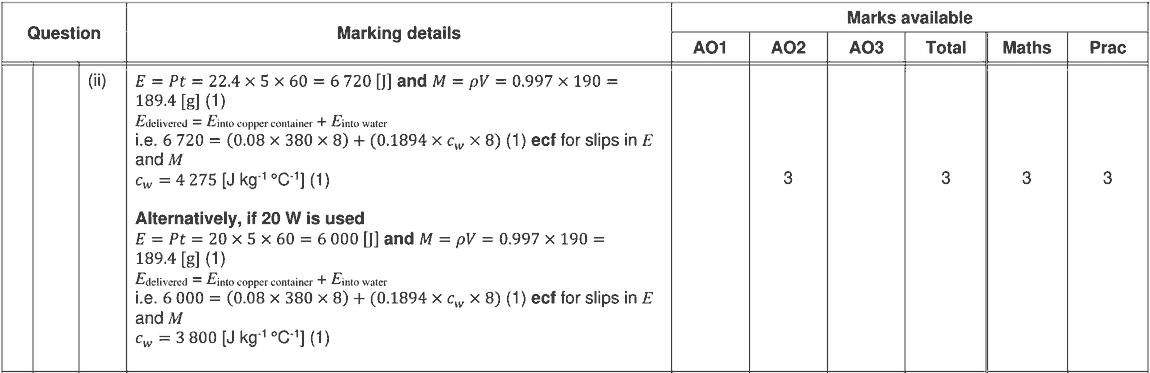
Notes from the mark scheme and report
- Measure the height of the ruler above the bench at both ends, or use a spirit level
- set square or protractor checks against the vertical threads also accepted
- Scheme columns: Practical 1
Skills: Experimentalmethod Describing, planning or improving an experiment; Practicalmarks The mark scheme's Prac column gives this part at least one mark for practical skills