Mark scheme

Examiner's comment
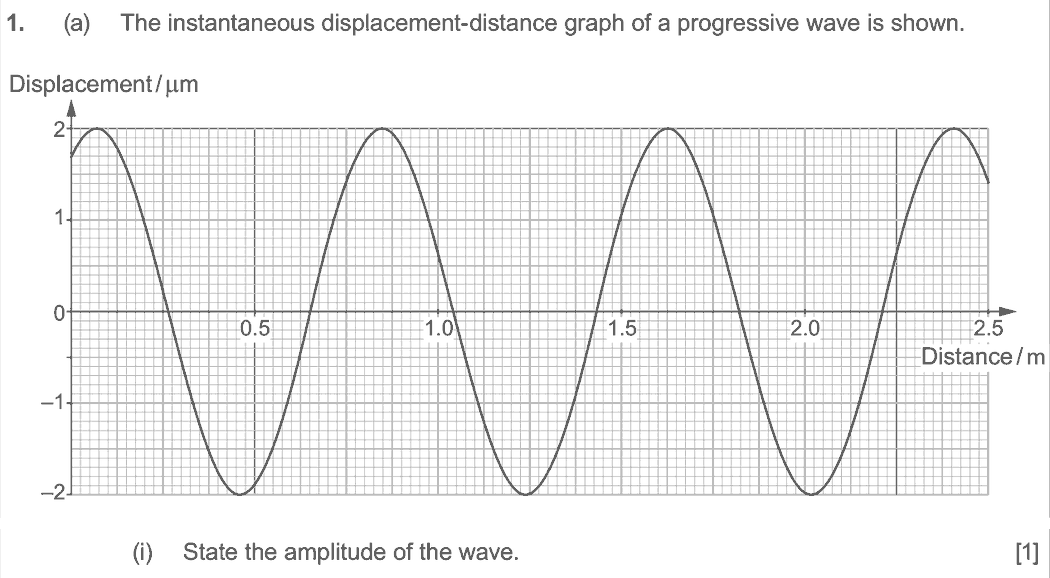
Almost universally correct.
Notes from the mark scheme and report
- Answer: 2 μm (maximum displacement read from the graph)
Skills: Graphskills Reading, plotting or sketching graphs; gradients, intercepts and areas
120 marks for each student (100 in Section A plus one 20-mark option; all four options are here) · 69 question parts · Paper, mark scheme and report on Eduqas's site · Have the Data Booklet beside you
Almost universally correct.
Skills: Graphskills Reading, plotting or sketching graphs; gradients, intercepts and areas

Only a small minority used more than one wavelength to improve the percentage uncertainty.
Skills: Graphskills Reading, plotting or sketching graphs; gradients, intercepts and areas; Mathsmarks The mark scheme's Maths column gives this part at least one mark for mathematical skills

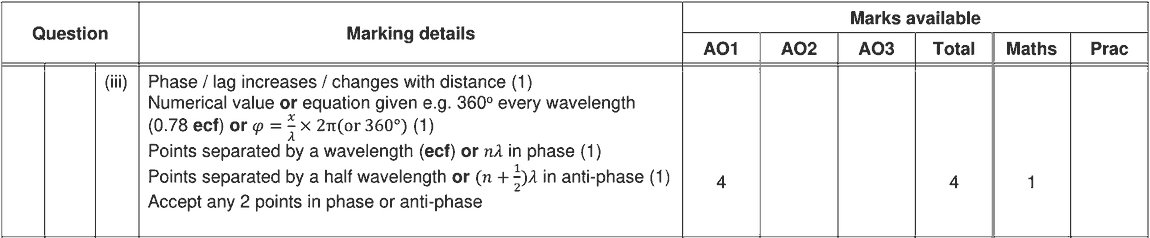
Generally quite poorly answered. Although most candidates were comfortable describing points in phase and in antiphase, very few were willing to discuss the relationship between phase angle and distance. The equation 𝜀= 𝑥 𝜆× 2𝜋 is rather useful.
Skills: Graphskills Reading, plotting or sketching graphs; gradients, intercepts and areas; Mathsmarks The mark scheme's Maths column gives this part at least one mark for mathematical skills
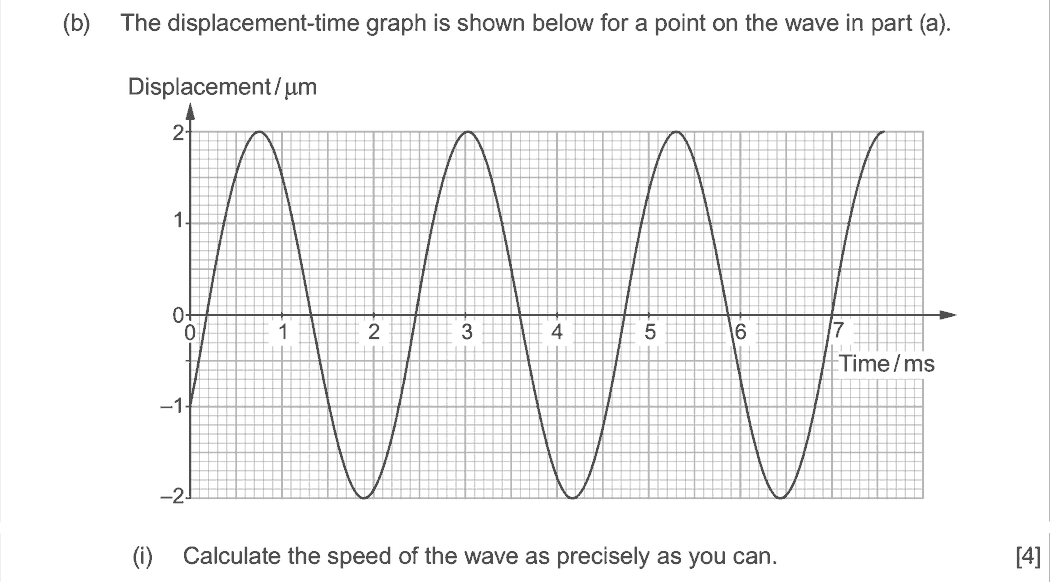
Generally well answered but few candidates used more than one period to improve the percentage uncertainty. There were quite a few power of ten mistakes here too due to the time in ms.
Skills: Graphskills Reading, plotting or sketching graphs; gradients, intercepts and areas; Unitsand conversions Unit marks, base units, prefixes and conversions; Mathsmarks The mark scheme's Maths column gives this part at least one mark for mathematical skills

Again, one of the weak points of the paper. Obtaining the correct displacement proved to be slightly tough but this was more successful than the explanation.
Skills: Graphskills Reading, plotting or sketching graphs; gradients, intercepts and areas; Mathsmarks The mark scheme's Maths column gives this part at least one mark for mathematical skills
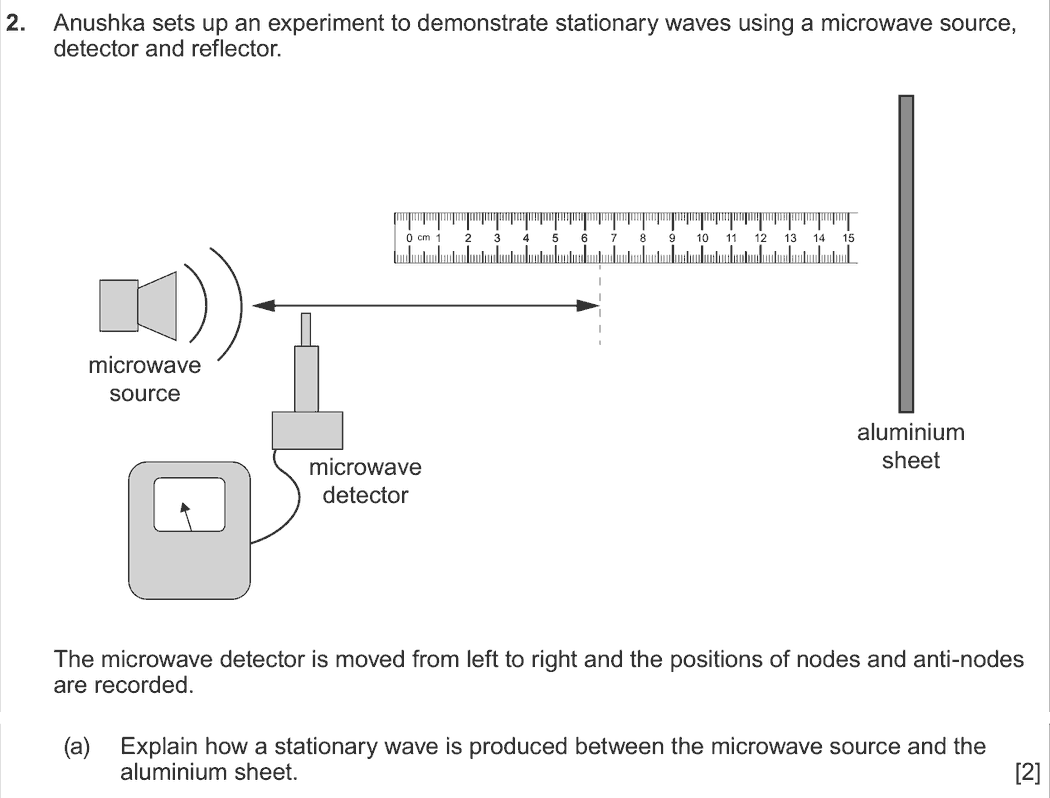
Well answered.
Skills: Practicalmarks The mark scheme's Prac column gives this part at least one mark for practical skills
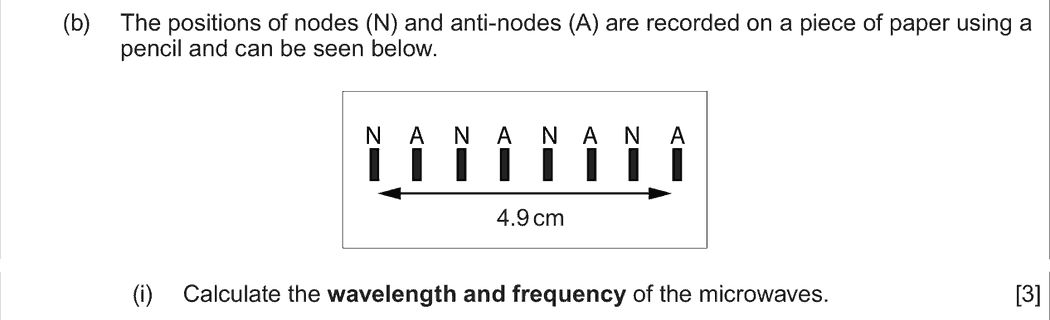
Well answered. The most difficult step here was realising that the series of nodes and antinodes represented 1¾ wavelengths.
Skills: Unitsand conversions Unit marks, base units, prefixes and conversions; Mathsmarks The mark scheme's Maths column gives this part at least one mark for mathematical skills; Practicalmarks The mark scheme's Prac column gives this part at least one mark for practical skills

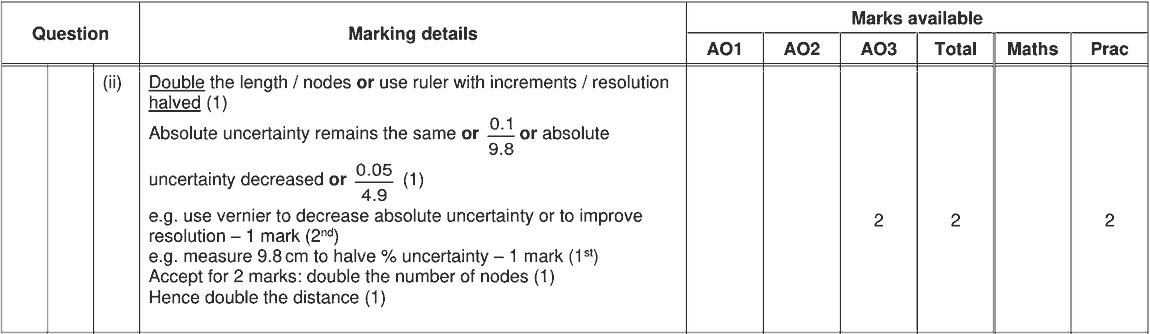
Candidates found it difficult to work out where the second mark was here. Most were able to state that the distance needed to be doubled but failed to go on to explain why this halves the percentage uncertainty.
Skills: Uncertainties Resolution, absolute and percentage uncertainty, combining uncertainties, error bars; Experimentalmethod Describing, planning or improving an experiment; Practicalmarks The mark scheme's Prac column gives this part at least one mark for practical skills

Very well answered.
Skills: Unitsand conversions Unit marks, base units, prefixes and conversions; Mathsmarks The mark scheme's Maths column gives this part at least one mark for mathematical skills; Practicalmarks The mark scheme's Prac column gives this part at least one mark for practical skills
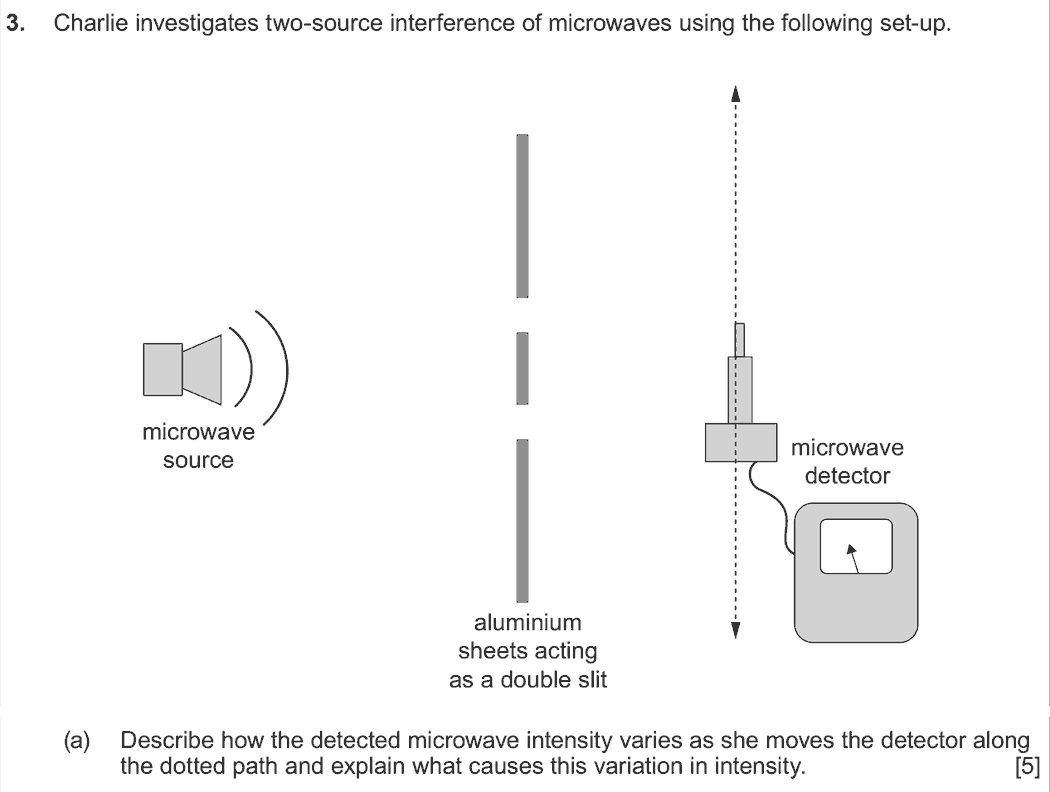
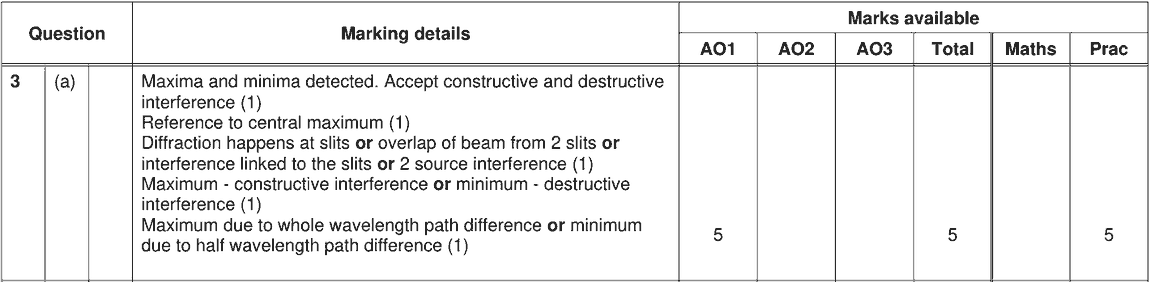
Well answered in general. The most difficult mark to obtain seemed to be the link between path difference and constructive / destructive interference.
Skills: Practicalmarks The mark scheme's Prac column gives this part at least one mark for practical skills
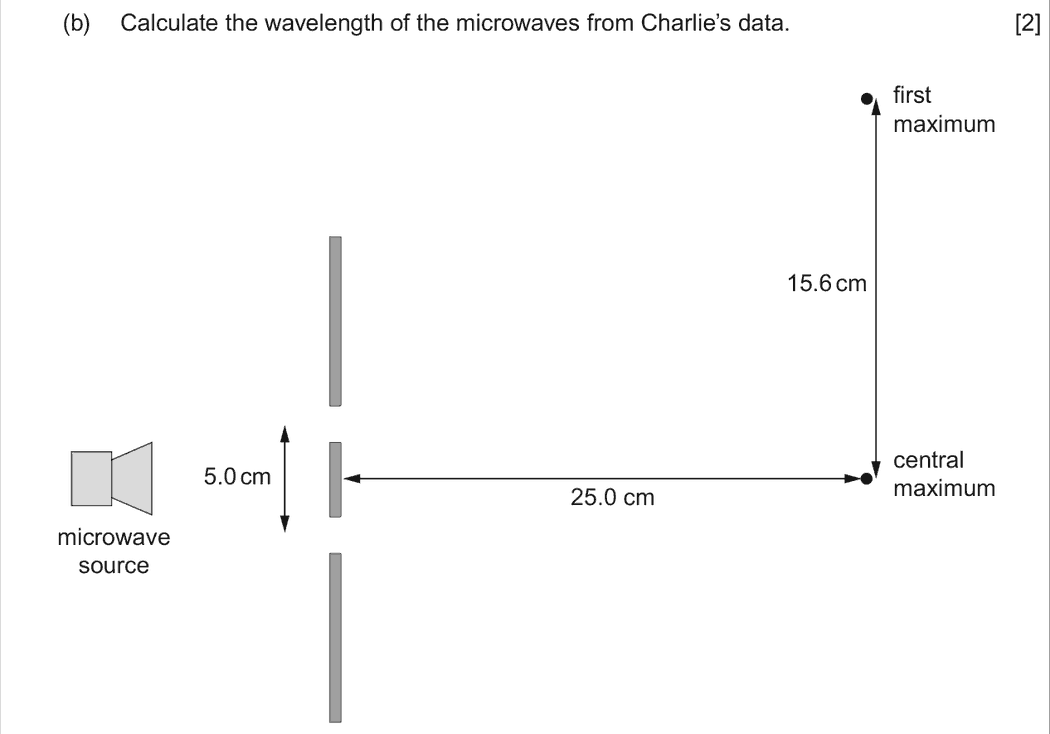
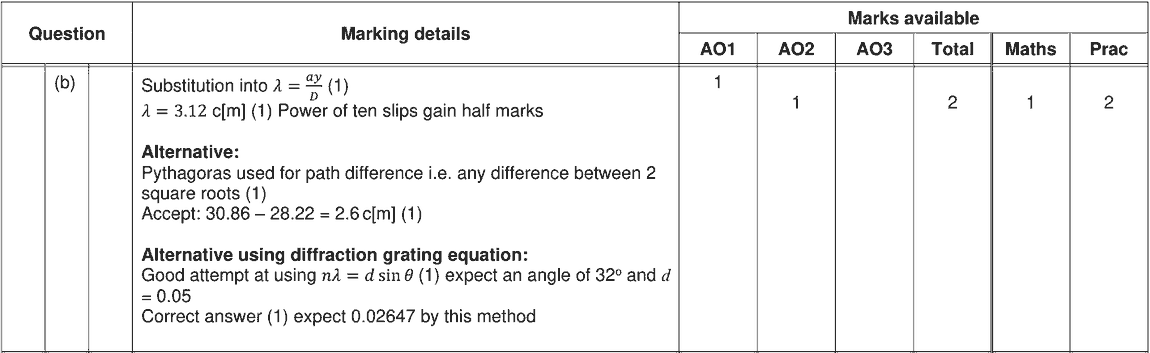
Very well answered but this was a simple substitution. Nonetheless, very few power of ten mistakes were seen.
Skills: Unitsand conversions Unit marks, base units, prefixes and conversions; Mathsmarks The mark scheme's Maths column gives this part at least one mark for mathematical skills; Practicalmarks The mark scheme's Prac column gives this part at least one mark for practical skills
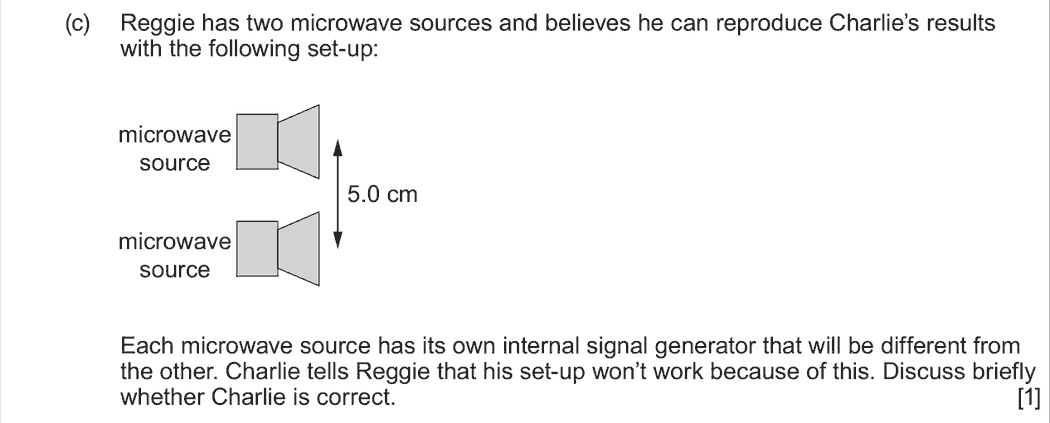
Well answered with the vast majority realising that these sources would not be coherent.
Skills: Practicalmarks The mark scheme's Prac column gives this part at least one mark for practical skills
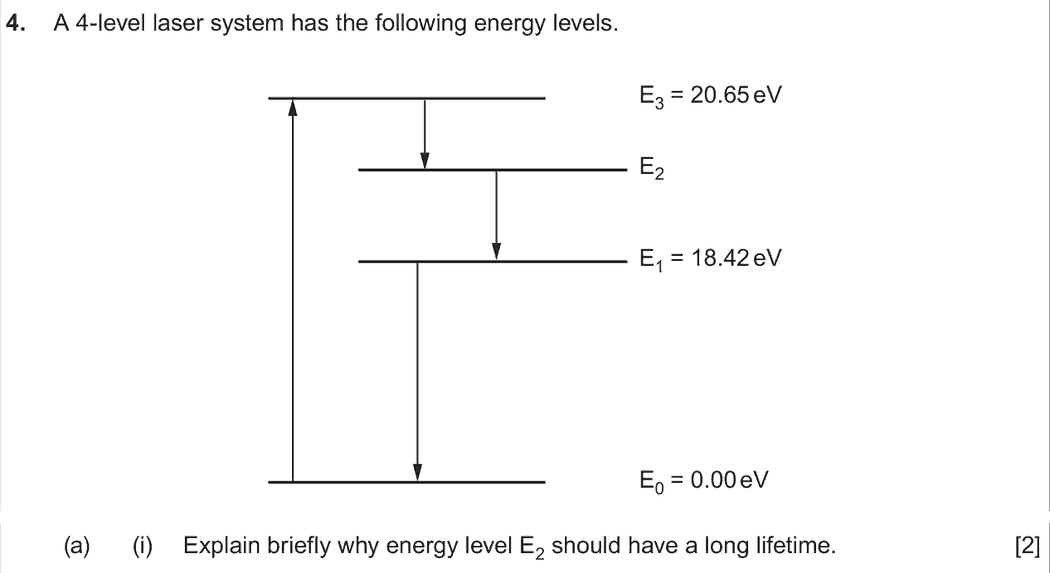
Quite poorly answered. Most candidates were unable to come up with two relevant points.

Well answered but a significant minority finished with just the photon energy or even subtracted the photon energy from E3 (instead of adding it to E2).
Skills: Unitsand conversions Unit marks, base units, prefixes and conversions; Mathsmarks The mark scheme's Maths column gives this part at least one mark for mathematical skills
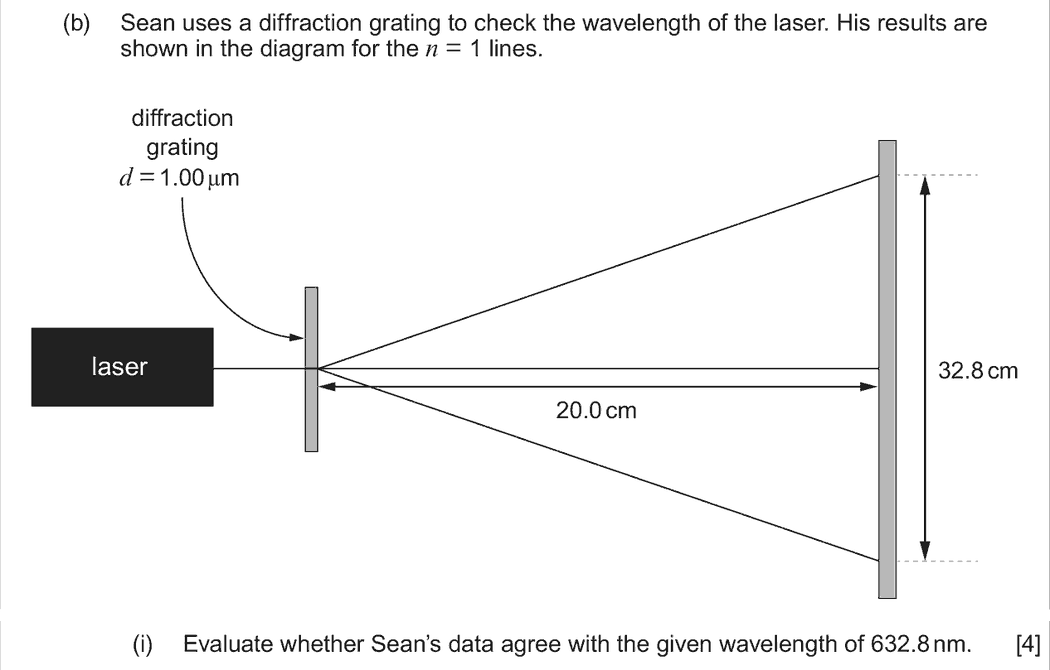
Not a particularly easy part question but extremely well answered.
Skills: Trigonometryand vectors Resolving, components, vector addition, angles; Mathsmarks The mark scheme's Maths column gives this part at least one mark for mathematical skills; Practicalmarks The mark scheme's Prac column gives this part at least one mark for practical skills
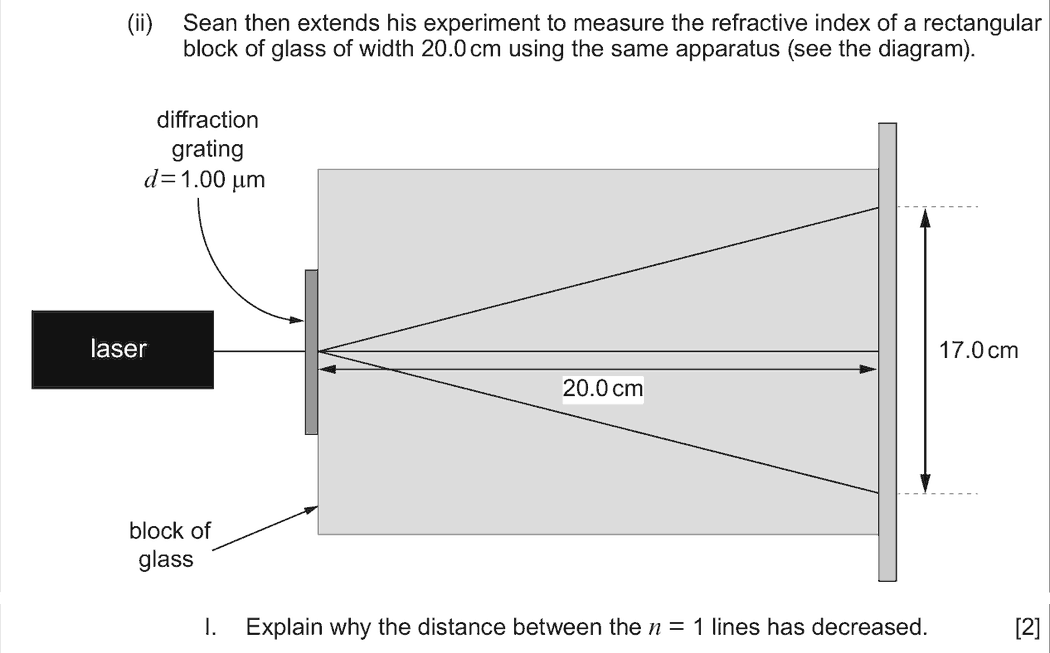
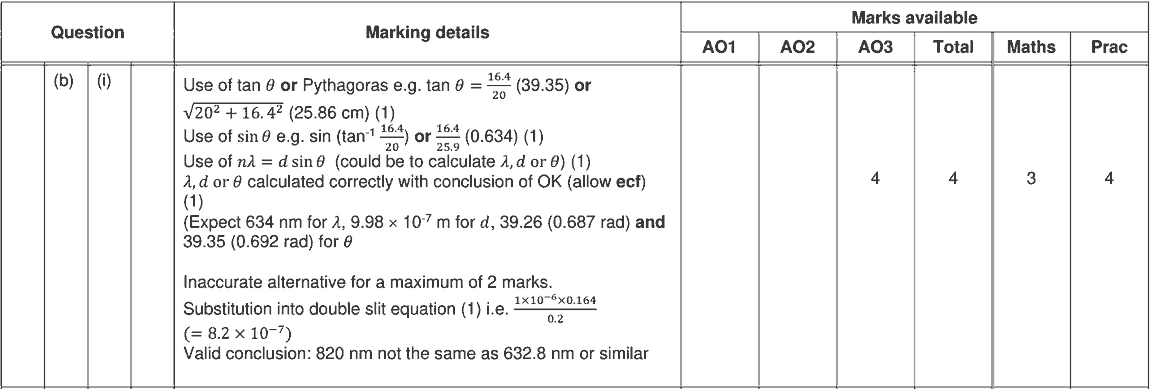
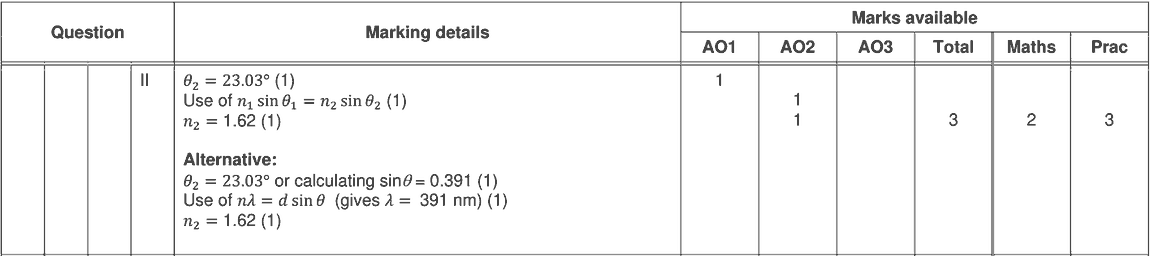
Well answered in general but a significant number were unable to calculate the refractive index (either by the wavelength shortening route or using Snell’s Law).
Skills: Practicalmarks The mark scheme's Prac column gives this part at least one mark for practical skills

Well answered in general but a significant number were unable to calculate the refractive index (either by the wavelength shortening route or using Snell’s Law).
Skills: Trigonometryand vectors Resolving, components, vector addition, angles; Mathsmarks The mark scheme's Maths column gives this part at least one mark for mathematical skills; Practicalmarks The mark scheme's Prac column gives this part at least one mark for practical skills
Skills: Synoptic Needs physics from another component of the qualification

&(ii) Very well answered.
Skills: Unitsand conversions Unit marks, base units, prefixes and conversions; Mathsmarks The mark scheme's Maths column gives this part at least one mark for mathematical skills

Skills: Mathsmarks The mark scheme's Maths column gives this part at least one mark for mathematical skills

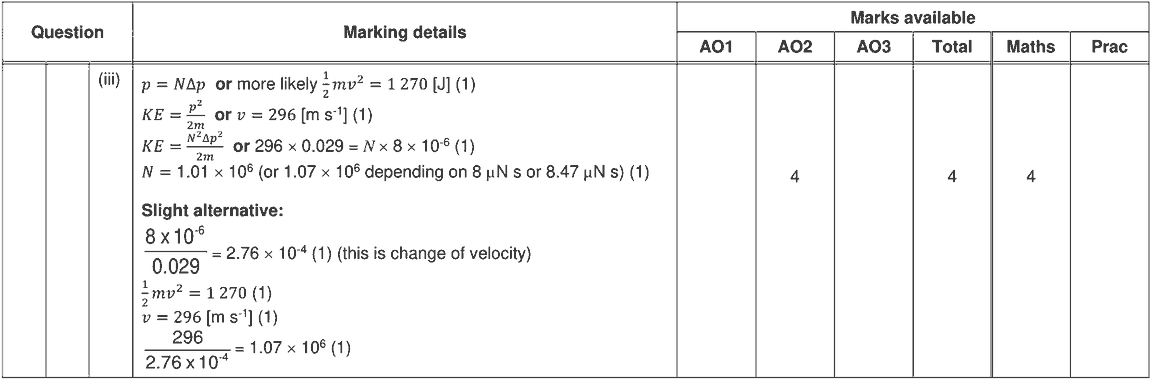
Well answered in general. A significant minority tried to obtain the answer assuming the same KE is transferred every time. Unfortunately, this gives a completely wrong answer.
Skills: Synoptic Needs physics from another component of the qualification; Algebra Derivations and rearranging equations; Mathsmarks The mark scheme's Maths column gives this part at least one mark for mathematical skills

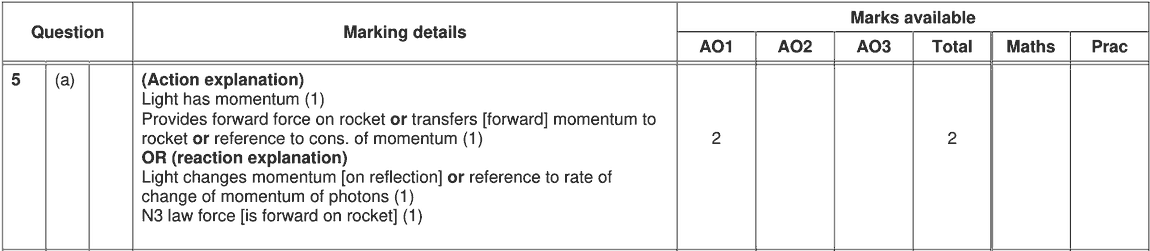
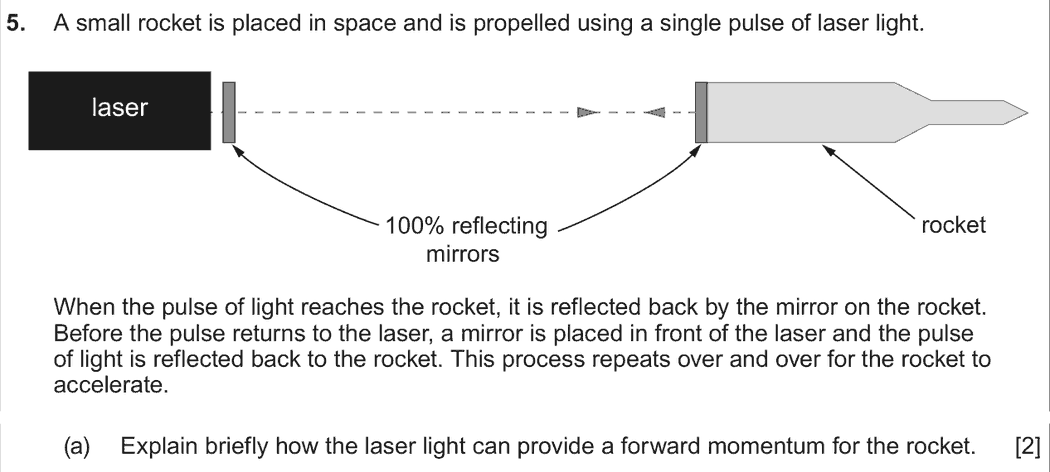
Most candidates realised that conservation of energy was being violated but few were able to explain it completely. Although it was not required, some candidates realised that the red shift of the reflected light could explain this “contradiction”.
Skills: Synoptic Needs physics from another component of the qualification
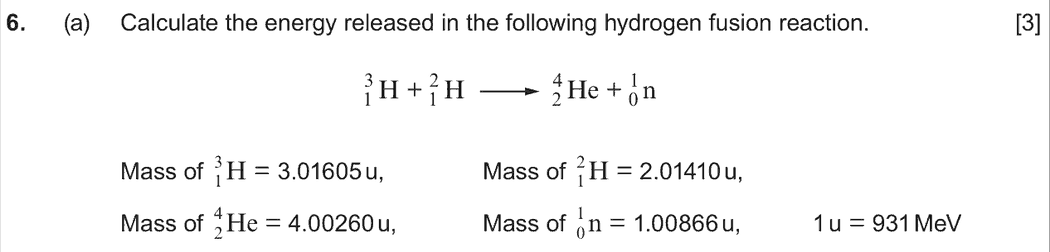
These question types are not particularly easy but are always well answered.
Skills: Unitsand conversions Unit marks, base units, prefixes and conversions; Mathsmarks The mark scheme's Maths column gives this part at least one mark for mathematical skills
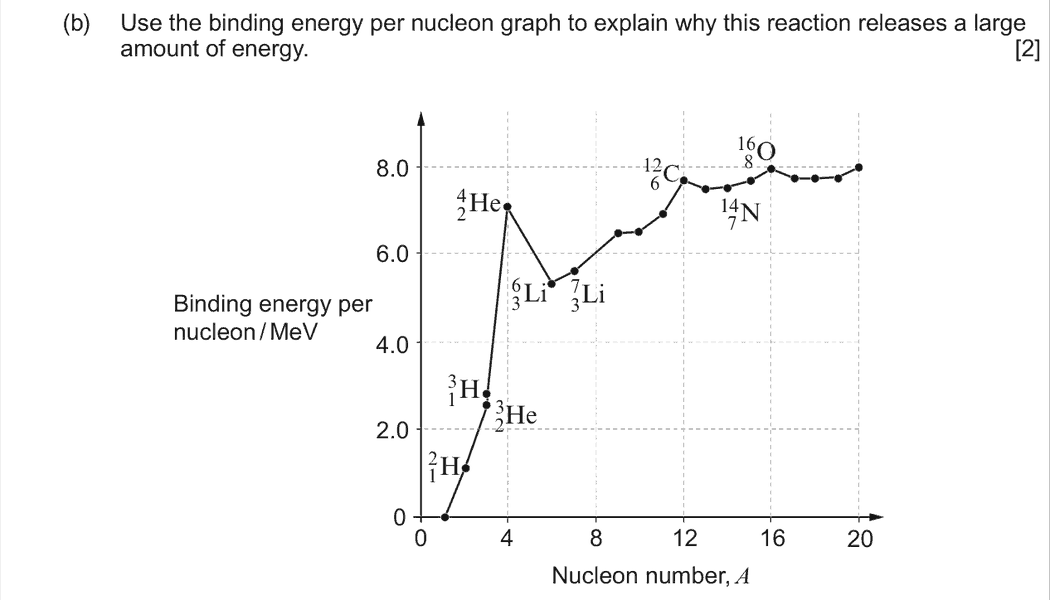
Explaining the previous answer in terms of binding energy proved to be more difficult than the previous calculation in terms of mass.
Skills: Graphskills Reading, plotting or sketching graphs; gradients, intercepts and areas
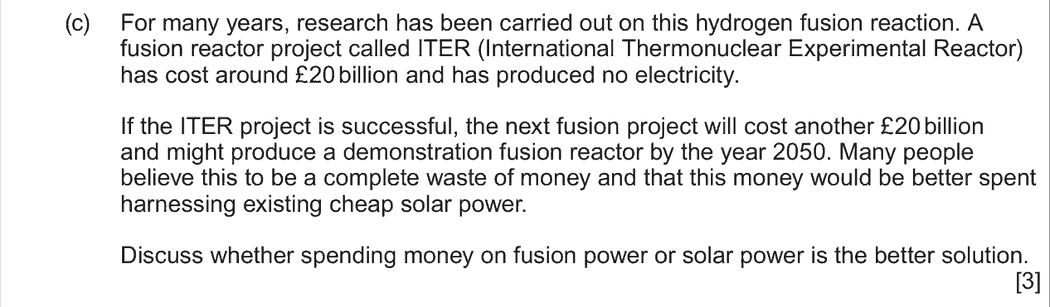
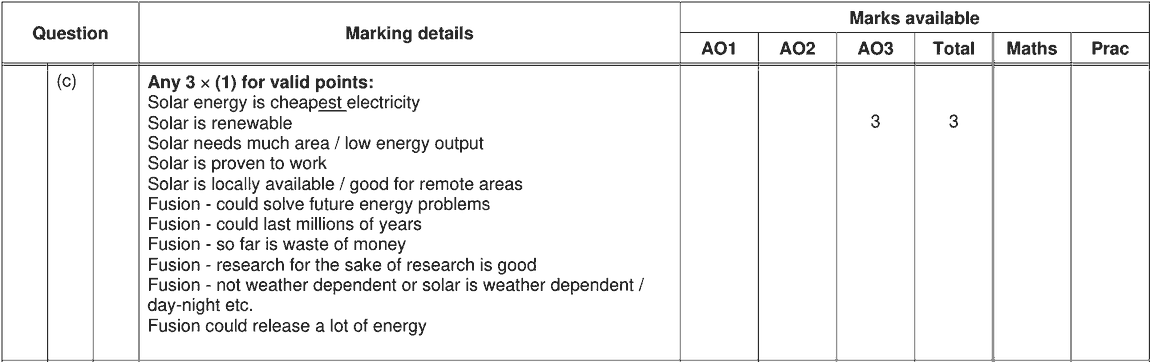
Quite well answered with the majority of candidates being able to make two good, relevant points.
Skills: Issues Benefits, risks, ethical or environmental issues (How Science Works)

Although well answered, one would expect the vast majority to score 3/3 here. This was not the case on this occasion.

Very well answered but this is to be expected when the answer is given in a “show that”.
Skills: Synoptic Needs physics from another component of the qualification; Unitsand conversions Unit marks, base units, prefixes and conversions; Mathsmarks The mark scheme's Maths column gives this part at least one mark for mathematical skills

&(iv)Very well answered with the majority of candidates making no mistakes and obtaining full marks. Calculating the number of nuclei is usually the most difficult step but this was given this time. Small minorities failed to obtain the correct decay constant or mixed up between 10% and 90%.
Skills: Unitsand conversions Unit marks, base units, prefixes and conversions; Mathsmarks The mark scheme's Maths column gives this part at least one mark for mathematical skills

Skills: Algebra Derivations and rearranging equations; Mathsmarks The mark scheme's Maths column gives this part at least one mark for mathematical skills
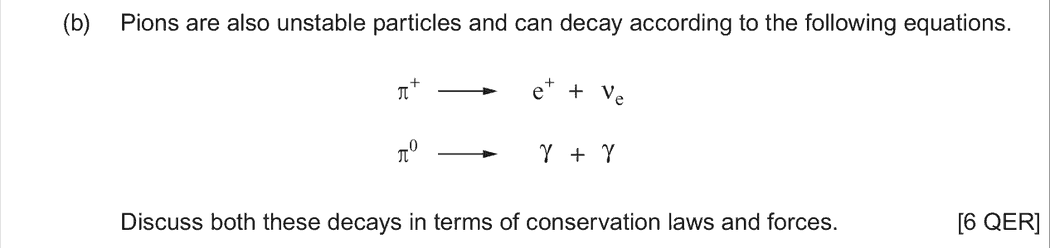
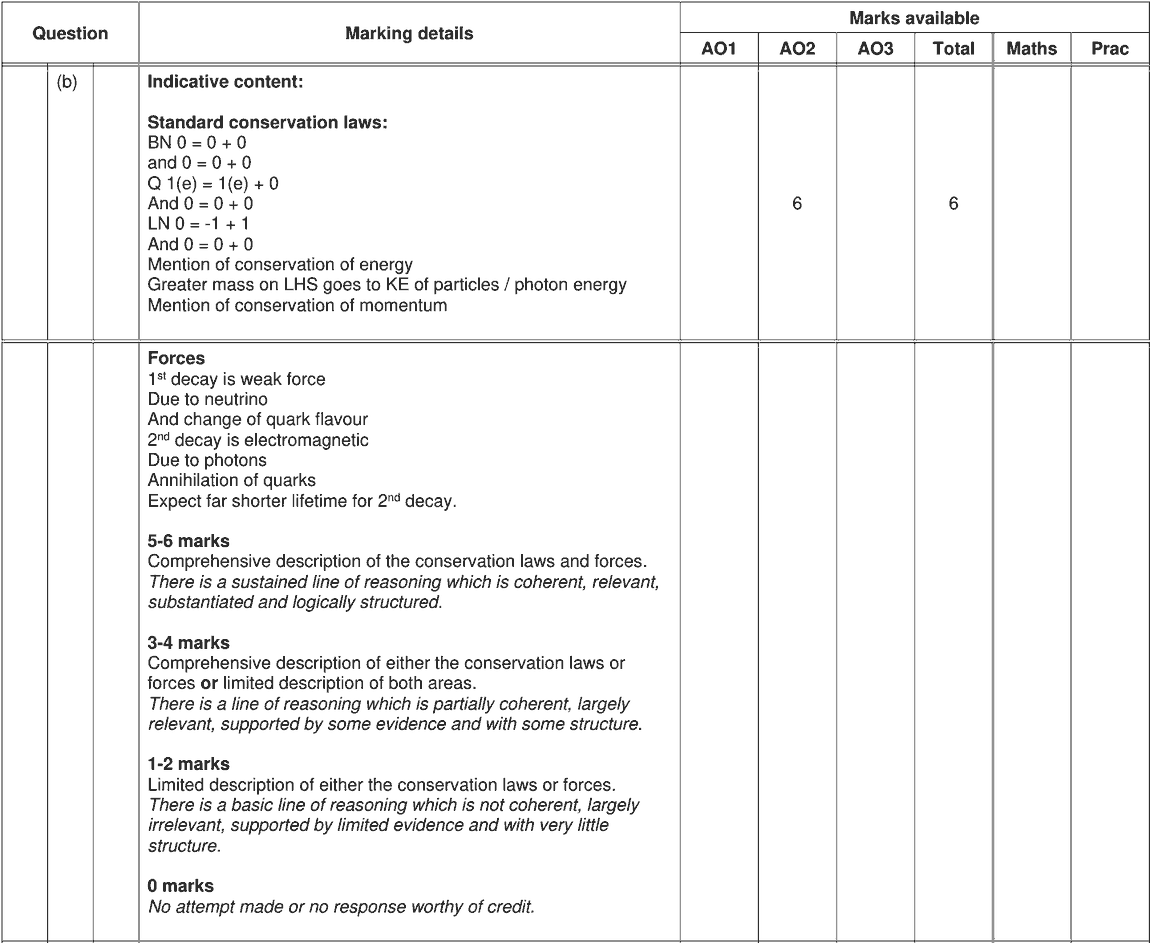
This was a particularly fair and successful 6 mark QER with a mean score of nearly 4/6. The common methods of dropping marks were incomplete answers e.g. • discussing one reaction fully but not the other; • discussing conservation laws but not forces (and vice versa); • not discussing enough conservation laws; • discussing the force responsible for one reaction but not the other. There were some mistakes present too e.g. stating that the lepton number of a positron is +1 (or -1 for the electron-neutrino). Some candidates believed that the photons were leptons.
Skills: QER The 6-mark quality of extended response question
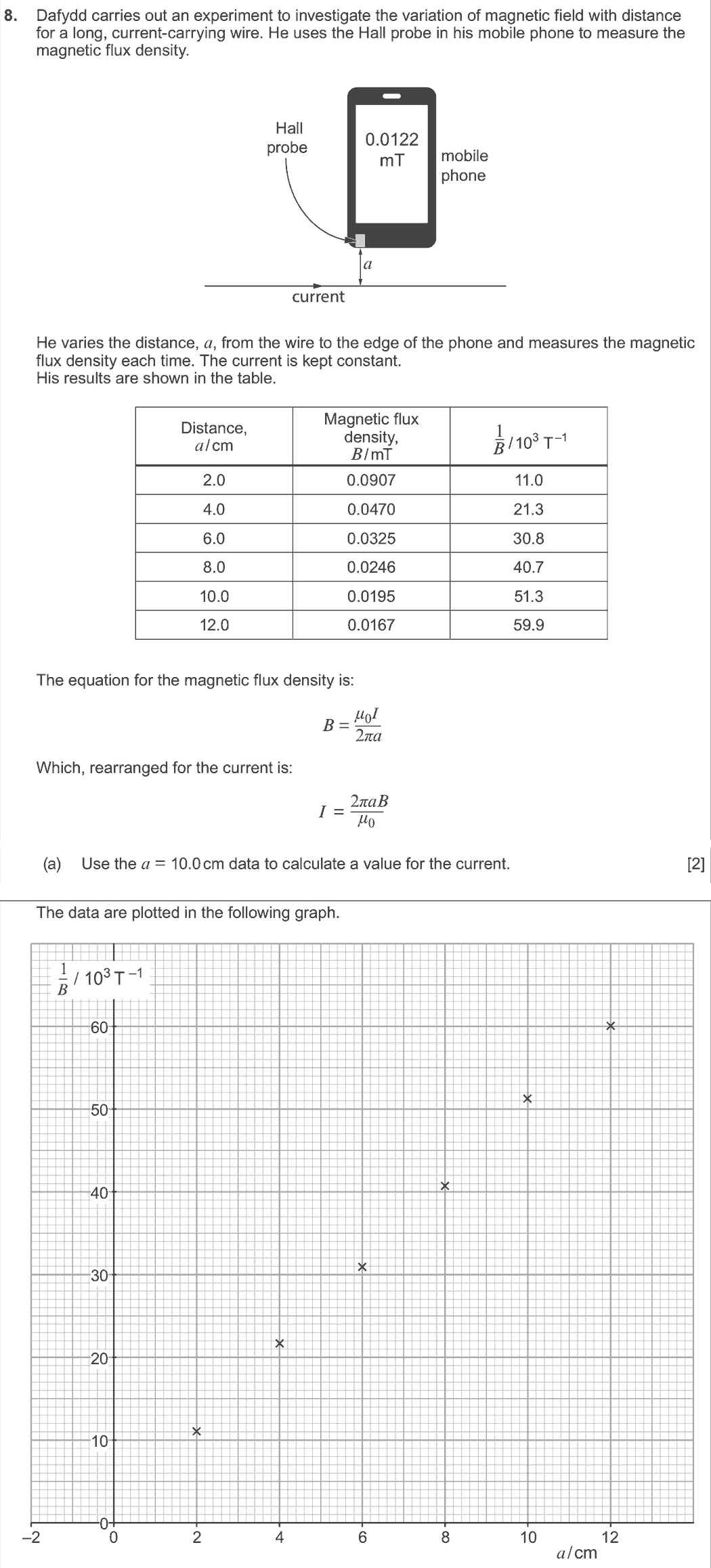
Extremely well answered although some candidates used the reading on the screen of the mobile phone rather than the table.
Skills: Unitsand conversions Unit marks, base units, prefixes and conversions; Mathsmarks The mark scheme's Maths column gives this part at least one mark for mathematical skills; Practicalmarks The mark scheme's Prac column gives this part at least one mark for practical skills

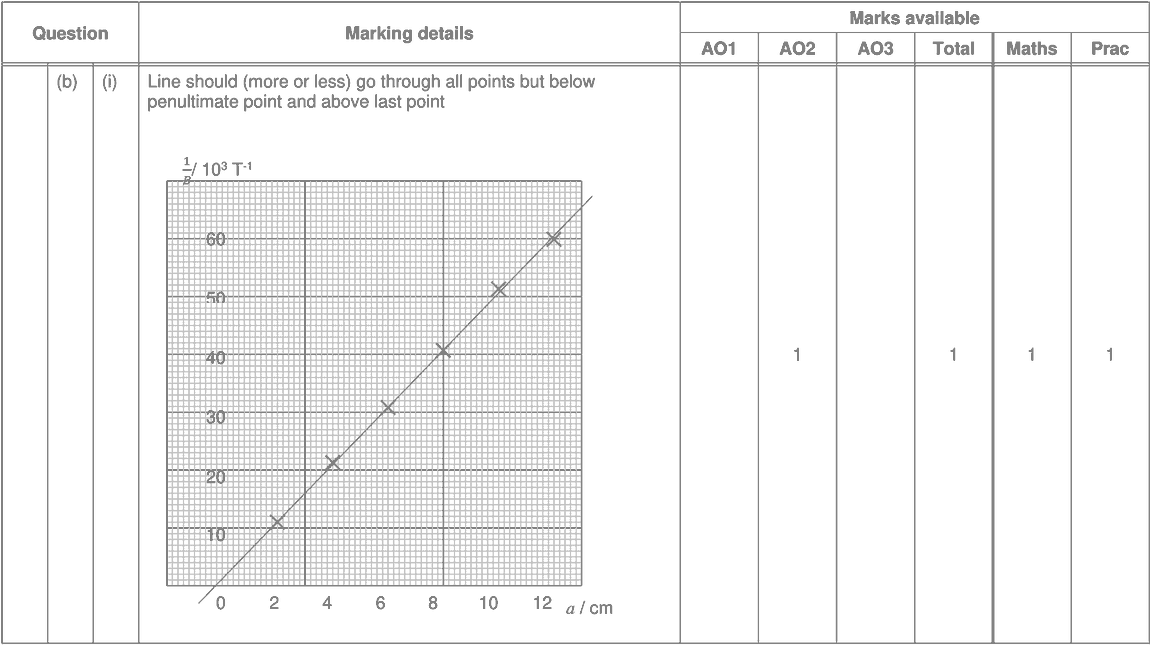
Very well answered although the marking was not particularly strict this year. The main reason for losing this mark was forcing the line through the origin.
Skills: Graphskills Reading, plotting or sketching graphs; gradients, intercepts and areas; Mathsmarks The mark scheme's Maths column gives this part at least one mark for mathematical skills; Practicalmarks The mark scheme's Prac column gives this part at least one mark for practical skills

Once the candidates realised that this was the x-axis intercept the only possible mistake was reading the scale incorrectly e.g. 2 cm instead of 2 mm.
Skills: Graphskills Reading, plotting or sketching graphs; gradients, intercepts and areas; Mathsmarks The mark scheme's Maths column gives this part at least one mark for mathematical skills; Practicalmarks The mark scheme's Prac column gives this part at least one mark for practical skills

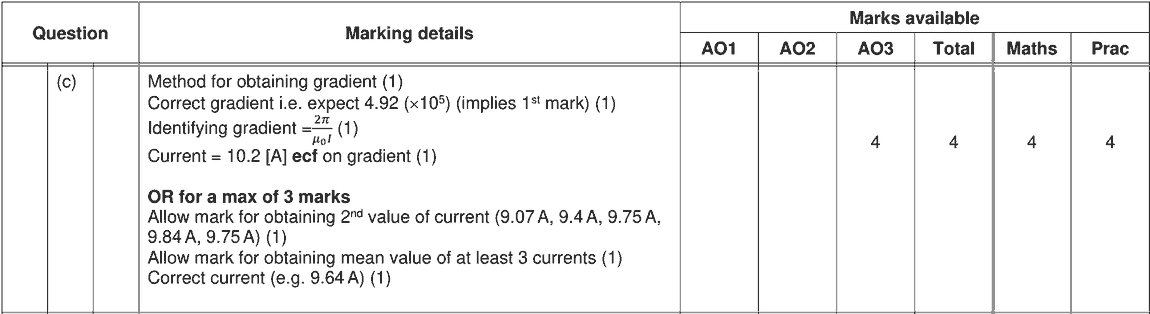
For such a difficult part question, the mean mark was incredibly high. Some rare mistakes were: • wrong numbers in gradient calculations; • equating the gradient to the wrong expression; • power of ten slips.
Skills: Graphskills Reading, plotting or sketching graphs; gradients, intercepts and areas; Unitsand conversions Unit marks, base units, prefixes and conversions; Mathsmarks The mark scheme's Maths column gives this part at least one mark for mathematical skills; Practicalmarks The mark scheme's Prac column gives this part at least one mark for practical skills

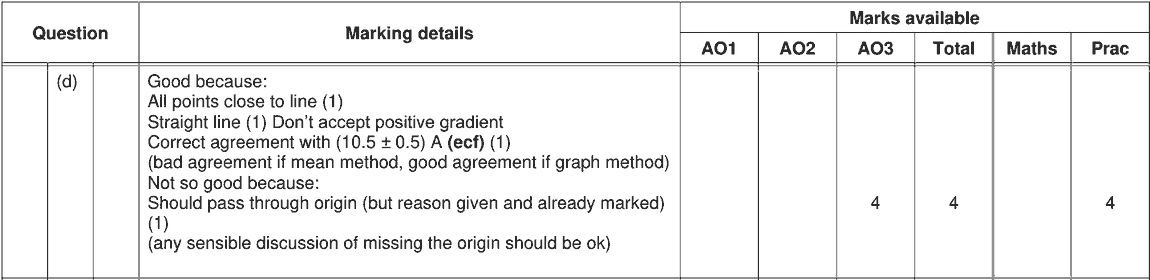
Answers requiring the evaluation of data are traditionally of lower quality. Many candidates stated that their value in part (c) was within the range of uncertainty and said no more. This part question was worth 4 marks and candidates should have thought more carefully about what other things can be said about the quality of the data.
Skills: Uncertainties Resolution, absolute and percentage uncertainty, combining uncertainties, error bars; Graphskills Reading, plotting or sketching graphs; gradients, intercepts and areas; Practicalmarks The mark scheme's Prac column gives this part at least one mark for practical skills
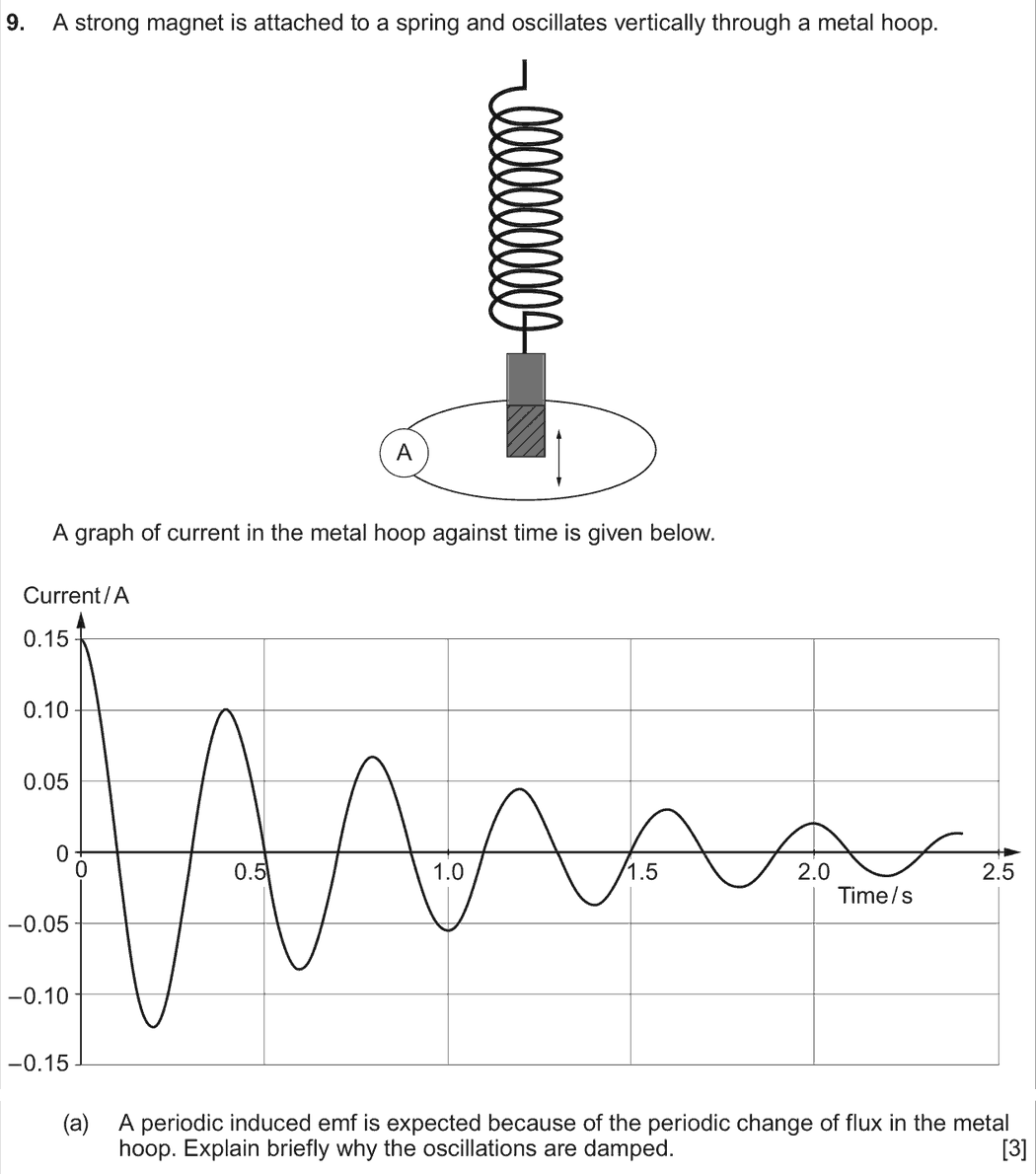
This part question possessed the lowest mean percentage mark. More candidates discussed air resistance than ohmic heating in the hoop.
Skills: Synoptic Needs physics from another component of the qualification

This was an alternative method of asking for the induced emf but most candidates saw through this by using 𝑉= 𝐼𝑅 followed by Faraday’s Law. SECTION B – OPTIONS OPTION A – ALTERNATING CURRENTS
Skills: Synoptic Needs physics from another component of the qualification; Graphskills Reading, plotting or sketching graphs; gradients, intercepts and areas; Mathsmarks The mark scheme's Maths column gives this part at least one mark for mathematical skills

The majority of the candidates answered this correctly.
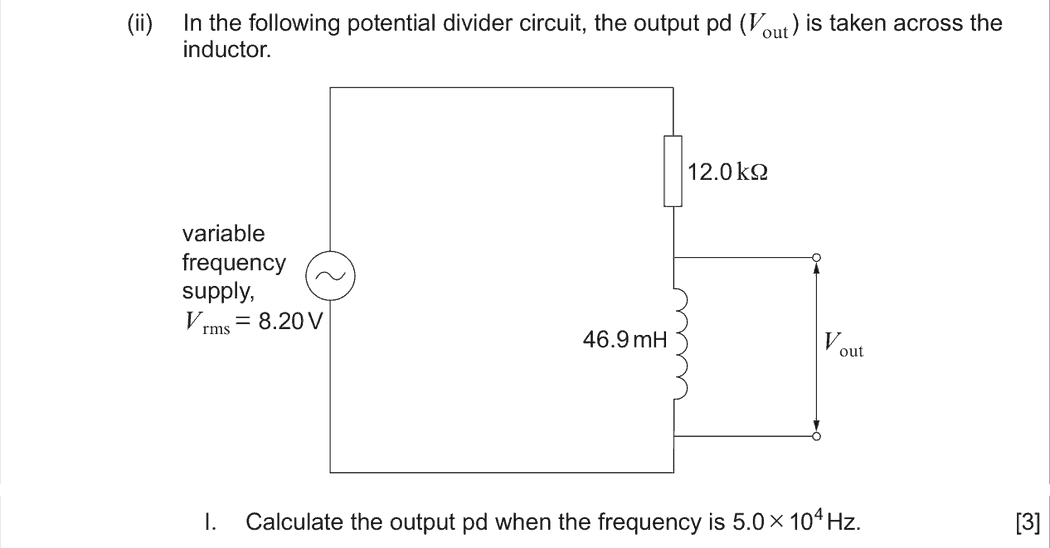
In part I most candidates answered this correctly. Some calculated Z incorrectly or treated the potential divider as resistors in series. Part II most candidates answered correctly.
Skills: Unitsand conversions Unit marks, base units, prefixes and conversions; Mathsmarks The mark scheme's Maths column gives this part at least one mark for mathematical skills

In part I most candidates answered this correctly. Some calculated Z incorrectly or treated the potential divider as resistors in series. Part II most candidates answered correctly.
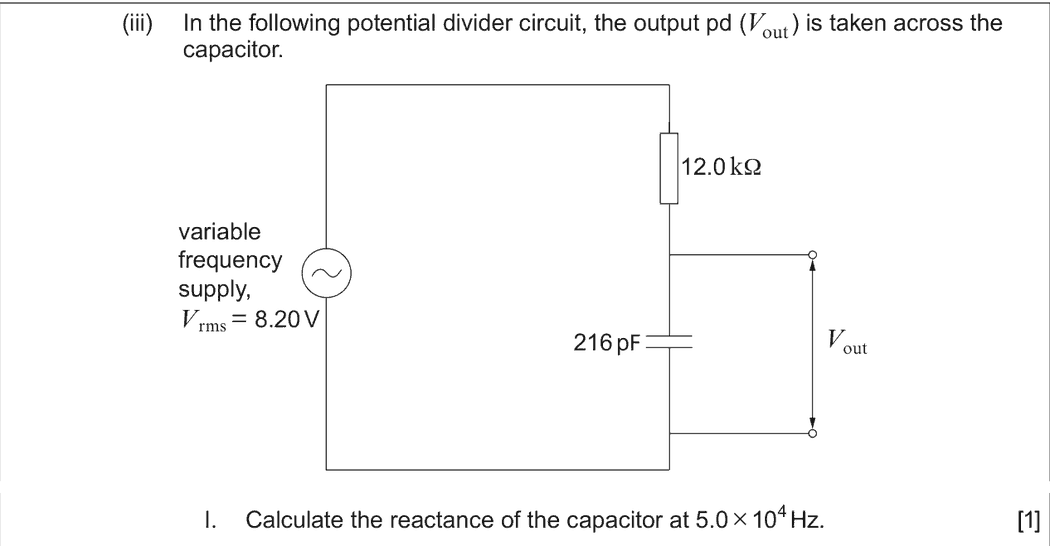
Most candidates calculated part I correctly. In part II some candidates gave a confused explanation here with ‘increased’ and ‘decreased’ used incorrectly / confused throughout. Some candidates gained the first mark for stating that the reactance of the capacitor decreased with frequency, but were unable to link this correctly with a decrease in pd.
Skills: Unitsand conversions Unit marks, base units, prefixes and conversions; Mathsmarks The mark scheme's Maths column gives this part at least one mark for mathematical skills

Most candidates calculated part I correctly. In part II some candidates gave a confused explanation here with ‘increased’ and ‘decreased’ used incorrectly / confused throughout. Some candidates gained the first mark for stating that the reactance of the capacitor decreased with frequency, but were unable to link this correctly with a decrease in pd.
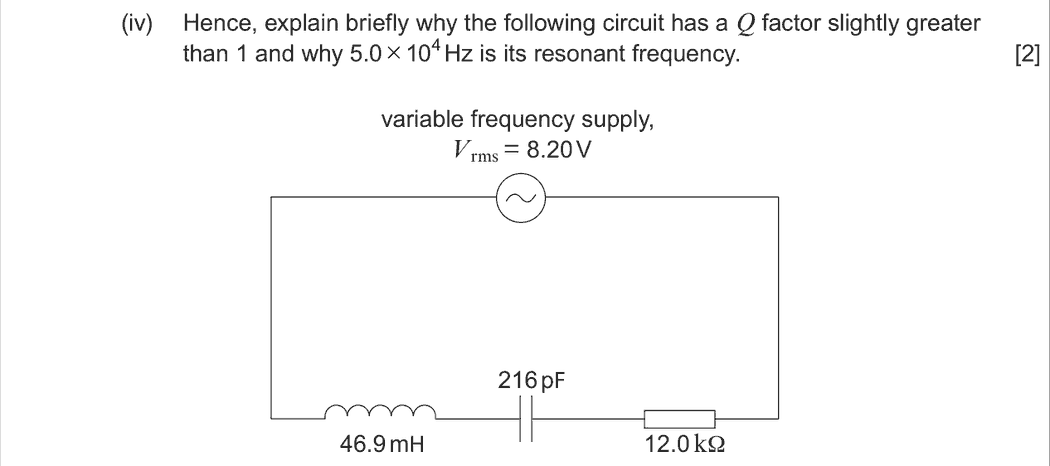
Most candidates answered this by calculating Q and f0.
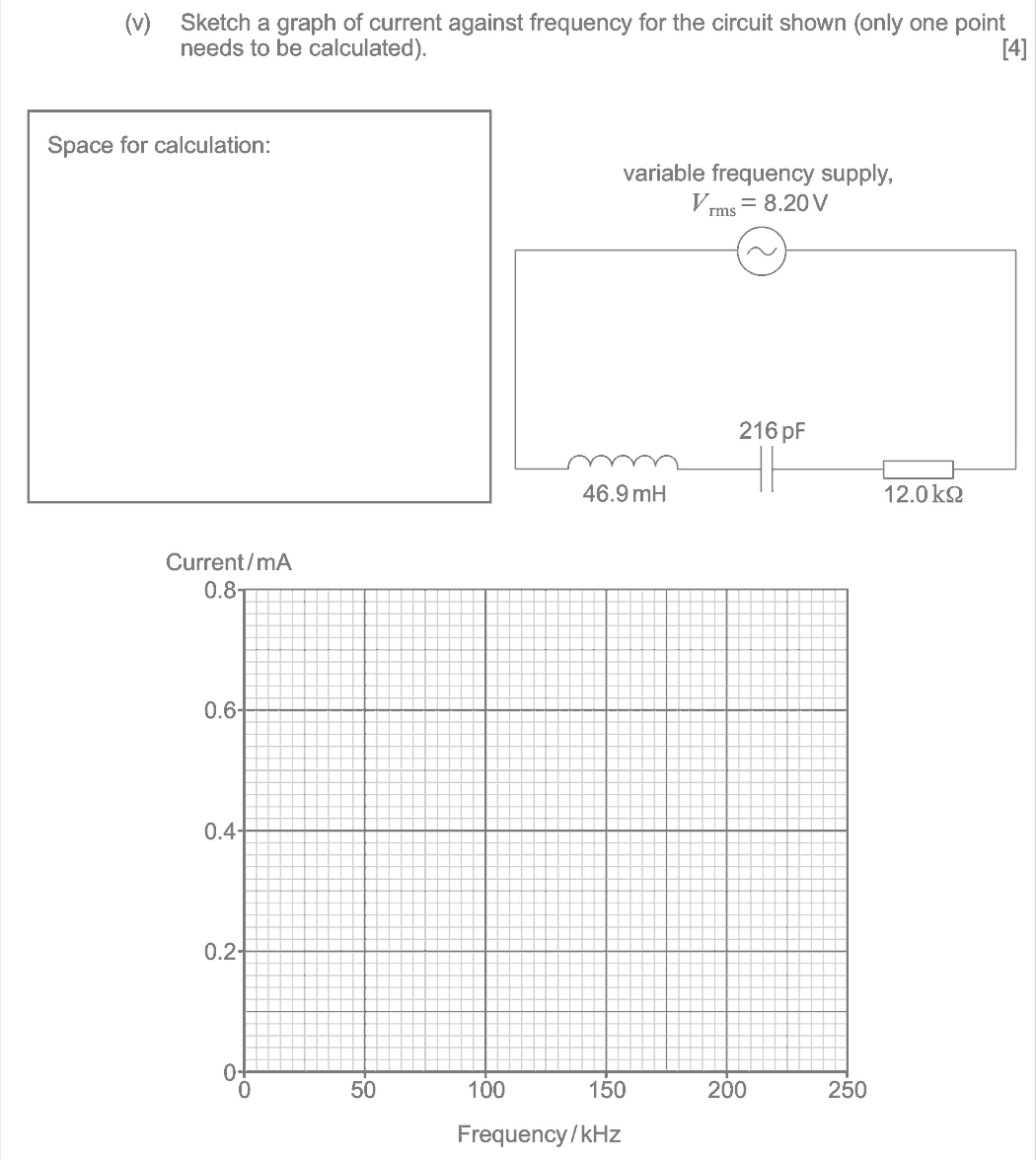
Some good resonance curves seen with the majority of candidates calculating the current at resonance (50 kHz) in order to identify the peak.
Skills: Graphskills Reading, plotting or sketching graphs; gradients, intercepts and areas; Mathsmarks The mark scheme's Maths column gives this part at least one mark for mathematical skills
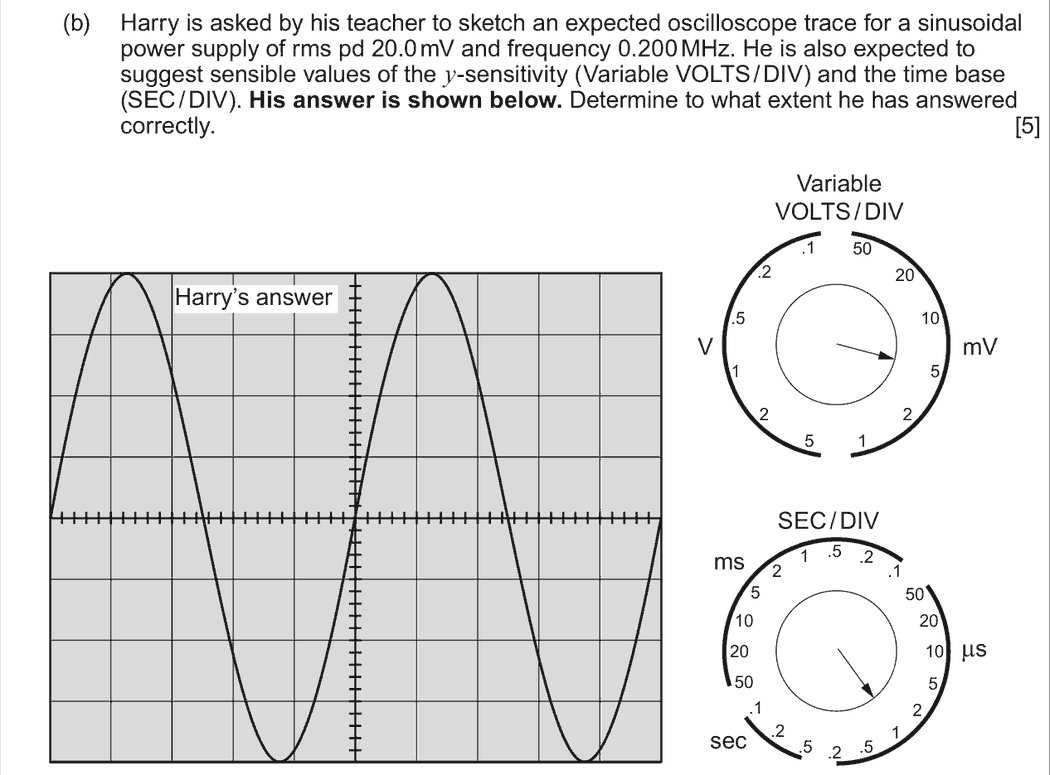
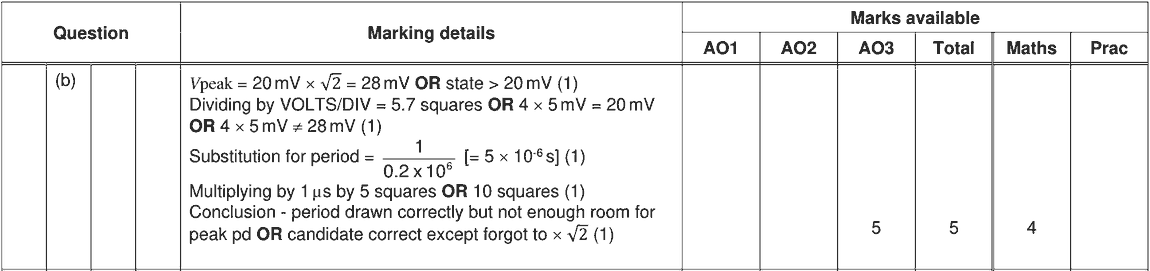
Most candidates calculated the peak pd and used the VOLTS/DIV setting to show that the plotted peak value was incorrect. Most candidates calculated the period and used the SEC/DIV setting to show that the period was plotted correctly. OPTION B – MEDICAL PHYSICS
Skills: Graphskills Reading, plotting or sketching graphs; gradients, intercepts and areas; Unitsand conversions Unit marks, base units, prefixes and conversions; Mathsmarks The mark scheme's Maths column gives this part at least one mark for mathematical skills
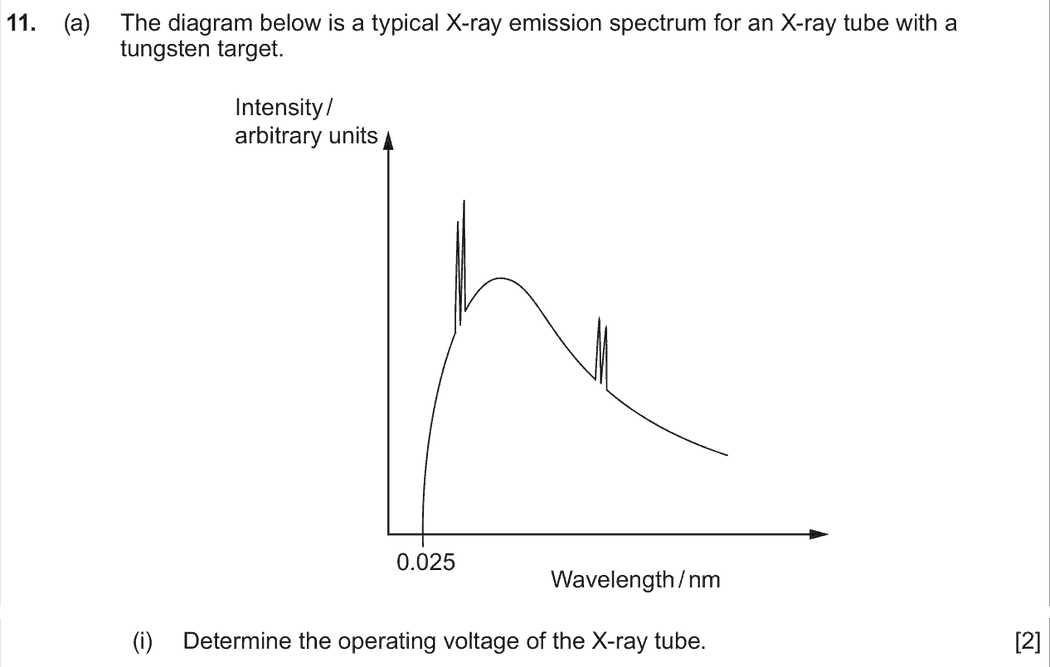
(a)
Skills: Unitsand conversions Unit marks, base units, prefixes and conversions; Mathsmarks The mark scheme's Maths column gives this part at least one mark for mathematical skills

(a)
Skills: Graphskills Reading, plotting or sketching graphs; gradients, intercepts and areas; Mathsmarks The mark scheme's Maths column gives this part at least one mark for mathematical skills
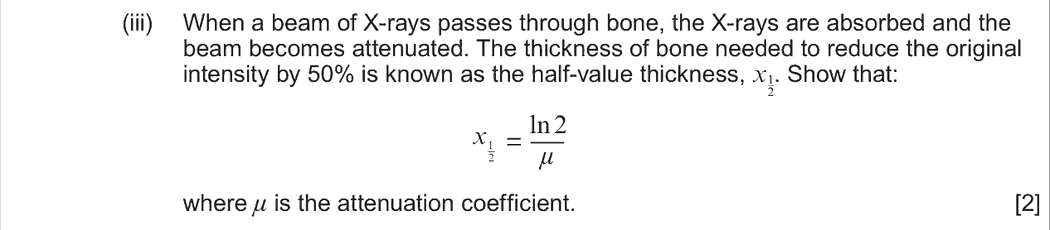
(a)
Skills: Algebra Derivations and rearranging equations; Mathsmarks The mark scheme's Maths column gives this part at least one mark for mathematical skills

(a)
Skills: Algebra Derivations and rearranging equations; Mathsmarks The mark scheme's Maths column gives this part at least one mark for mathematical skills

Not very well answered, many treated it similar to ultrasound A-scans and so described measuring reflection times, also a number thought that electrons were precessing.

Well answered. Many candidates stated f = 42.6 106 B which was accepted for the first mark, most then went on to calculate B = 1.2 T with units which was very pleasing.
Skills: Unitsand conversions Unit marks, base units, prefixes and conversions; Mathsmarks The mark scheme's Maths column gives this part at least one mark for mathematical skills

A number of candidates indicated that half-life was a factor stating either ‘long’ or ‘short’ half-life. This was not accepted unless explained e.g. doesn’t stay in body long / long enough so it can be detected. A large number of candidates stated that it must be a gamma emitter which was excellent.
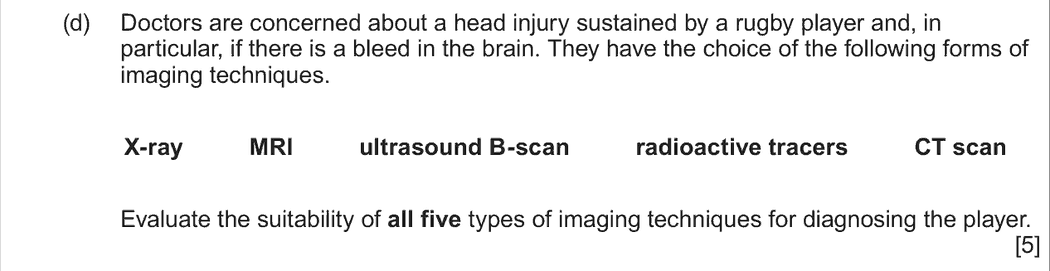
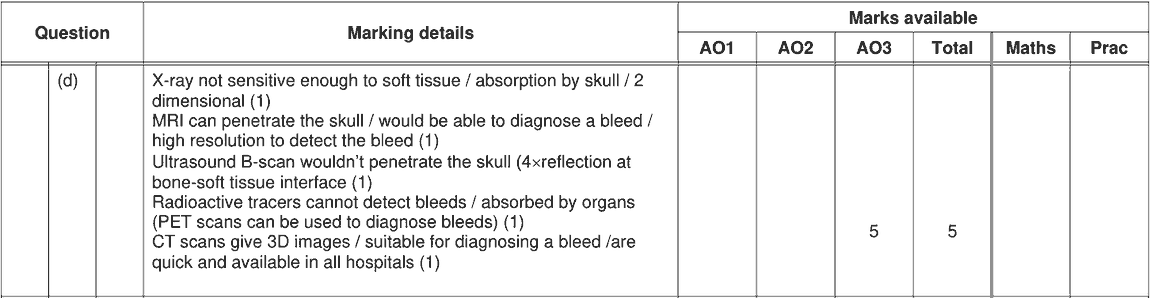
A surprising number of candidates thought tracers were a good option. Explanations were generally not very good with many fixated with cost, and also the ionising effect of CT scans which disregarded the urgent need of the investigation. OPTION C – THE PHYSICS OF SPORTS
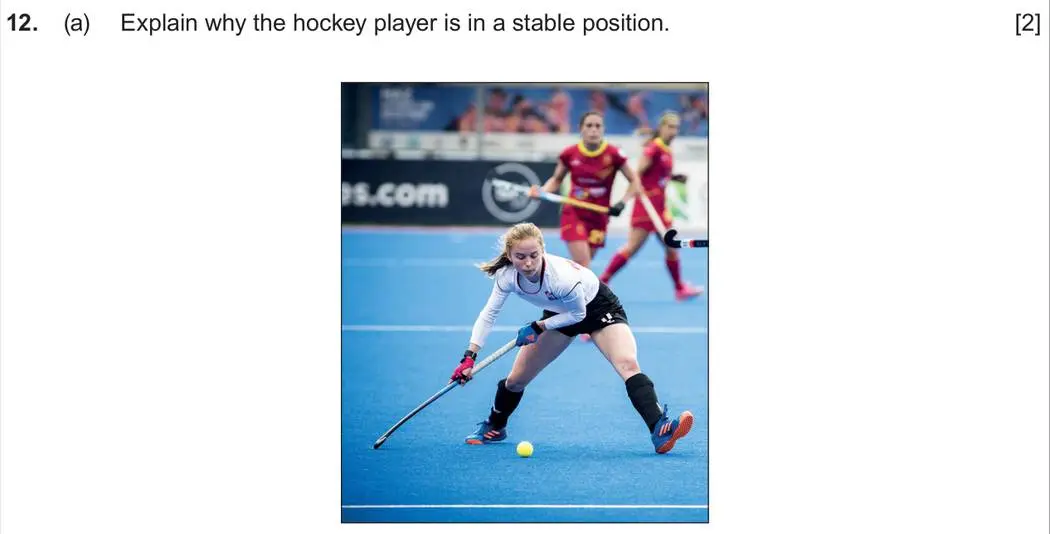
(a) This was well answered by most candidates. The main reason many did not gain full marks was that they did not refer to the centre of gravity being lowered.
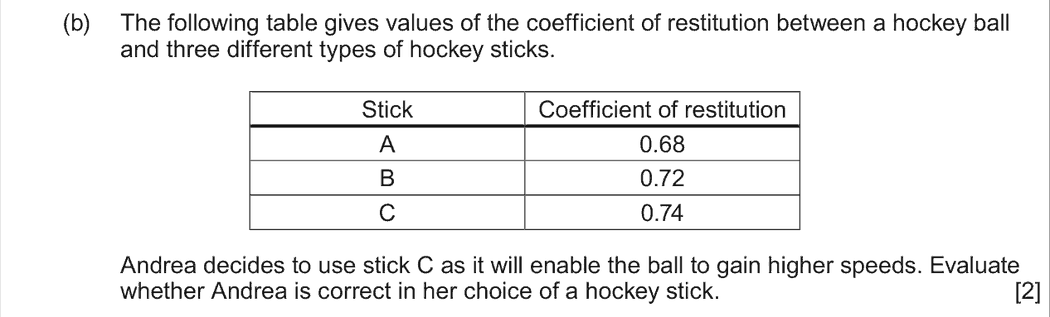
The definition of coefficient of restitution was given by most of the candidates but they were not then able to use this to explain fully why hockey stick C is the preferred option. Some candidates attempted to use the equation based on heights which did not receive credit.
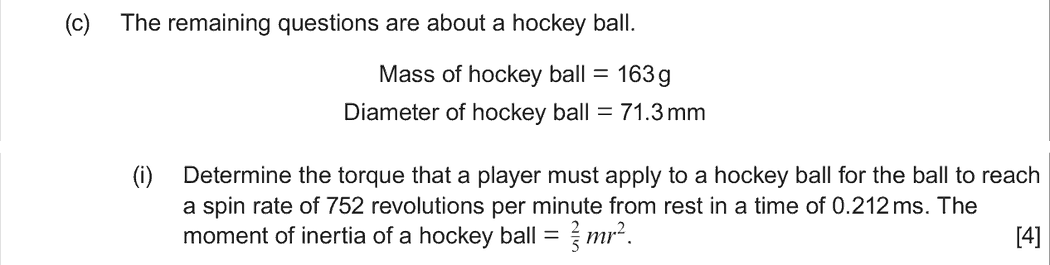
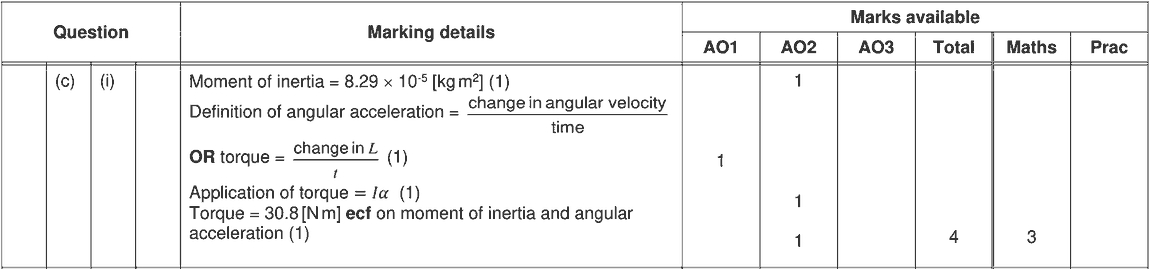
A significant number of candidates were not able to determine the angular velocity correctly from the data given or able to determine correctly the moment of inertia though the equation was given. Error carried forward was applied and many candidates were able to gain marks for determining the torque if the correct equation was used.
Skills: Unitsand conversions Unit marks, base units, prefixes and conversions; Mathsmarks The mark scheme's Maths column gives this part at least one mark for mathematical skills

The linear and rotational kinetic energy and their use were well understood by all candidates and the majority were able to gain full marks with ecf from part (c)(i).
Skills: Mathsmarks The mark scheme's Maths column gives this part at least one mark for mathematical skills

This was not answered well with many not being able to use the speeds correctly in the equation. The sign for the magnitude of the force was consequently omitted by the majority. A significant number then stated that protection was not advisable due to the high force though a minority did gain credit by saying that additional protection was required since the force was high.
Skills: Mathsmarks The mark scheme's Maths column gives this part at least one mark for mathematical skills
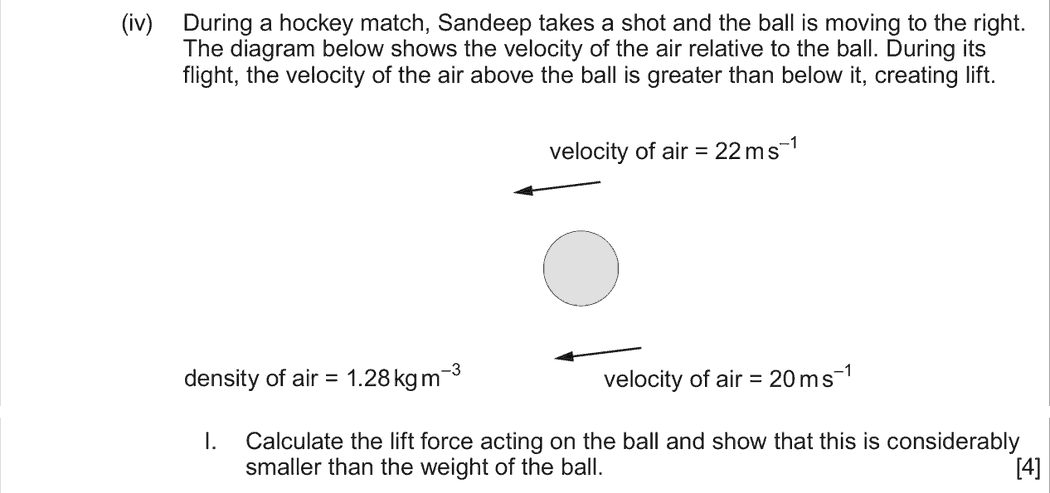
In part I many candidates struggled and used the drag force equation rather than Bernoulli’s equation. Also, the pressure difference was not calculated correctly with 22 rather than 222 – 202 being used. Candidates did gain credit if they used either the surface area of a circle or hemisphere for determining the force. Also an ecf was applied if a correct comparison was made with the weight of the ball for the final mark. In part II most candidates were able to correctly base their answers on the drag force equation but did not give a full explanation e.g. factor of 4 in their final answer. OPTION D – ENERGY AND THE ENVIRONMENT
Skills: Mathsmarks The mark scheme's Maths column gives this part at least one mark for mathematical skills

In part I many candidates struggled and used the drag force equation rather than Bernoulli’s equation. Also, the pressure difference was not calculated correctly with 22 rather than 222 – 202 being used. Candidates did gain credit if they used either the surface area of a circle or hemisphere for determining the force. Also an ecf was applied if a correct comparison was made with the weight of the ball for the final mark. In part II most candidates were able to correctly base their answers on the drag force equation but did not give a full explanation e.g. factor of 4 in their final answer. OPTION D – ENERGY AND THE ENVIRONMENT
Skills: Algebra Derivations and rearranging equations; Mathsmarks The mark scheme's Maths column gives this part at least one mark for mathematical skills

There were mixed responses for this question part. The majority of candidates were able to define intensity. We were not requiring the fact that the area was perpendicular to the radiation direction, however, it was noticeable that some candidates had knowledge of that level of detail. Not all candidates went on to state the correct units or incorrectly stated them.
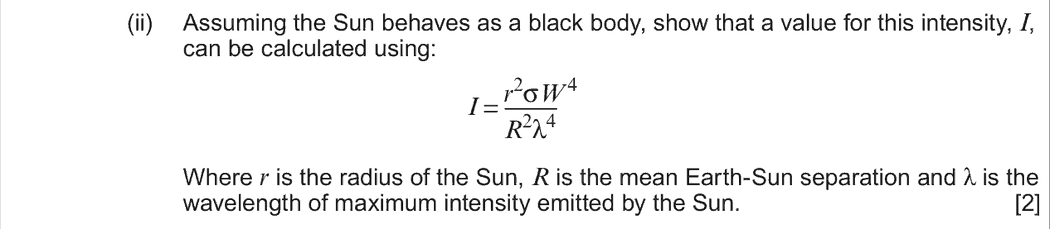
Good attempts were made by most candidates here. 𝑃= 𝐴𝜎𝑇4 and 𝜆max= 𝑊 𝑇 were regularly seen and the orderly presentation of the algebraic steps was pleasing. A minority of candidates were unable to separate the surface area of the Sun with the surface area of the ‘radiation sphere’ created by the Sun considered at the Earth-Sun distance.
Skills: Algebra Derivations and rearranging equations; Mathsmarks The mark scheme's Maths column gives this part at least one mark for mathematical skills

This was not answered as well as anticipated as a minority of candidates incorrectly transferred the powers in the given equation. There were also some clear calculator errors.
Skills: Unitsand conversions Unit marks, base units, prefixes and conversions; Mathsmarks The mark scheme's Maths column gives this part at least one mark for mathematical skills
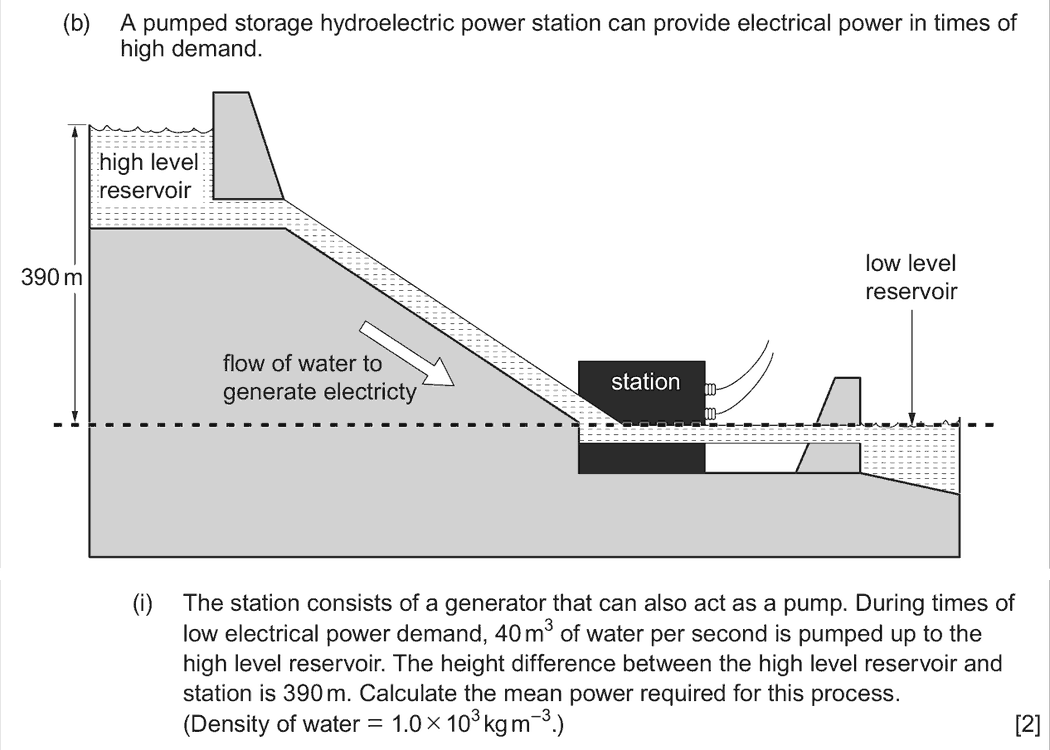
The majority of candidates were able to determine the mass per second and use PE = 𝑚𝑔ℎ per second. This often resulted in the correct answer of 153 MW. There were a minority of candidates who incorrectly rearranged the density equation or tried using 𝑃= 2 𝐴𝜌𝑣3 which did not gain any credit.
Skills: Unitsand conversions Unit marks, base units, prefixes and conversions; Mathsmarks The mark scheme's Maths column gives this part at least one mark for mathematical skills

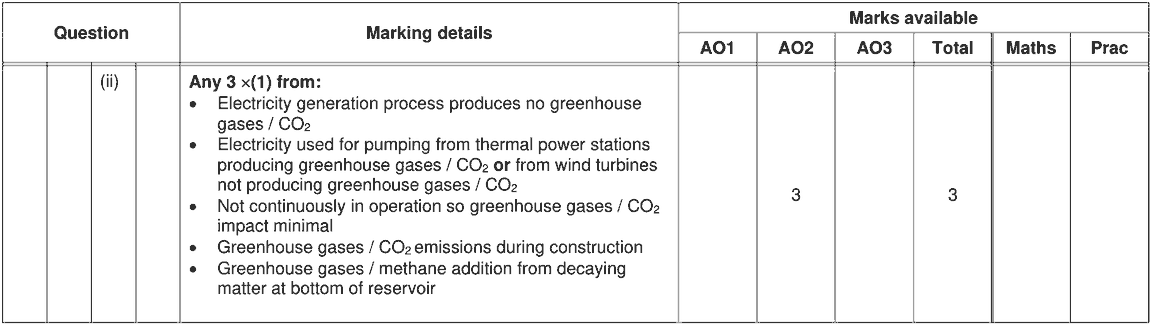
The discussion on greenhouse gas emissions was mixed. There were some very good responses. These candidates generally mentioned that the electricity generated from the hydroelectric power plant produces no greenhouse gases or more specifically, no CO2. They would then go on to say when electricity is bought back for the pumping process, the electricity may have been created in, for example, a thermal power station. The hydroelectric power station using its own electricity to pump the water back up did not gain credit. A minority of candidates suggested that renewable resources are resources that do not produce greenhouse gases. These responses were often confused. A renewable resource can be replenished within a given timescale.
Skills: Issues Benefits, risks, ethical or environmental issues (How Science Works)

Only a small number of candidates were able to explain what is meant by the confinement time. It is the time that the fuel can maintain its internal energy. Some candidates were rewarded for responses that referenced ‘more energy produced from fusion than the energy put in to heat the plasma’.

Candidates in part I generally saw that the Boltzmann constant was the link between temperature and energy which was pleasing. Multiplying 1.1 108 K by 𝑘 or dividing by 𝑒 was required for the first mark. Multiplying by 2 𝑘 was accepted as an understandable alternative. In part II the first mark was accessed by the majority of candidates where they had to manipulate the triple product into the form 𝜏𝐸= 𝑛𝑇𝜏𝐸 𝑛𝑇. Some did not consider the unusual unit for the triple product given in the question. A minority realised that the temperature was required to be in keV and used their value from part I to obtain a correct value. An alternative correct answer used the 10 eV approximation resulting in a confinement time of 4 seconds.
Skills: Unitsand conversions Unit marks, base units, prefixes and conversions; Mathsmarks The mark scheme's Maths column gives this part at least one mark for mathematical skills

Candidates in part I generally saw that the Boltzmann constant was the link between temperature and energy which was pleasing. Multiplying 1.1 108 K by 𝑘 or dividing by 𝑒 was required for the first mark. Multiplying by 2 𝑘 was accepted as an understandable alternative. In part II the first mark was accessed by the majority of candidates where they had to manipulate the triple product into the form 𝜏𝐸= 𝑛𝑇𝜏𝐸 𝑛𝑇. Some did not consider the unusual unit for the triple product given in the question. A minority realised that the temperature was required to be in keV and used their value from part I to obtain a correct value. An alternative correct answer used the 10 eV approximation resulting in a confinement time of 4 seconds.
Skills: Algebra Derivations and rearranging equations; Mathsmarks The mark scheme's Maths column gives this part at least one mark for mathematical skills
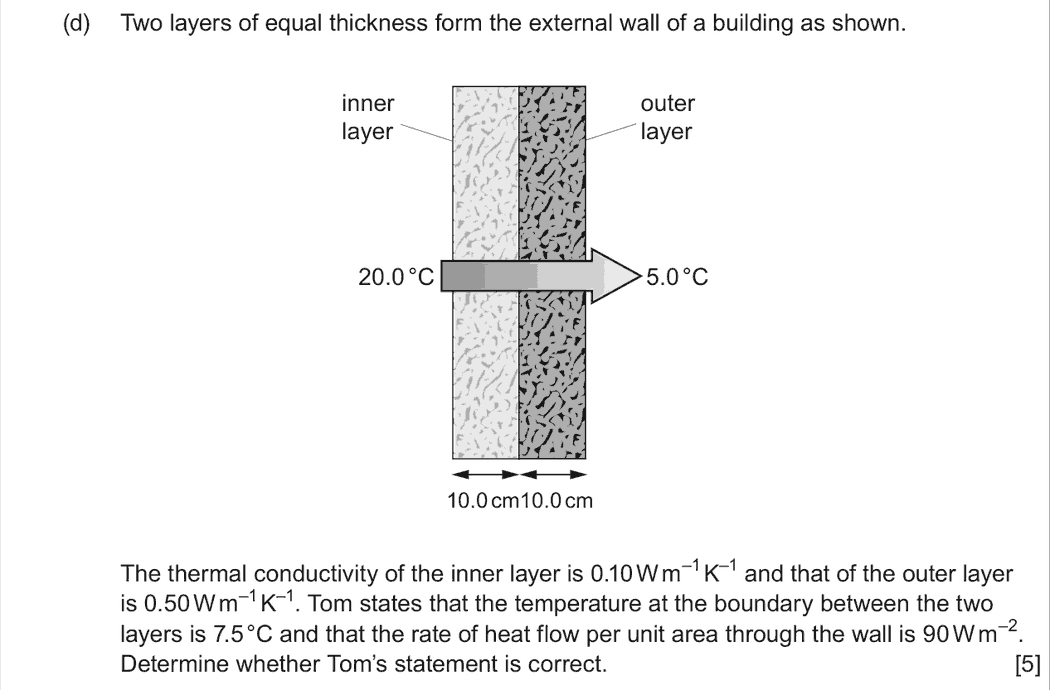
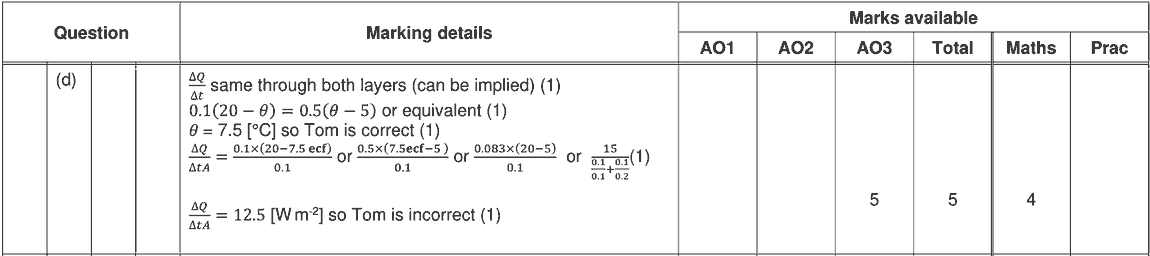
This question was well attempted with a full range of marks awarded. The first marking point was generally achieved through implication within the second and third marking points. However, a noticeable number of candidates are now communicating that Δ𝑄 Δ𝑡 is the same through both layers before they proceed with their calculations. There were different approaches used by candidates. The most common involved setting up a version of 0.1(20 −𝜃) = 0.5(𝜃−5) for 2 marks and correctly determining 𝜃 as 7.5° for the third mark. Simply substituting 7.5 back into either side of the above equation would have achieved the fourth mark. The fifth mark usually followed. Some candidates incorrectly calculated the combined K value for the external wall and did not get past three marks. A minority of candidates implied an understanding of Δ𝑄 Δ𝑡 being the same through both layers, correctly calculated the temperature at the boundary, but then incorrectly calculated Δ𝑄 Δ𝑡 in the individual layers to be different values. This was somewhat contradictory. Summary of key points • The variation with distance of phase of a progressive wave (1(a)(iii)). • Explanation of the percentage uncertainty should discuss the top and bottom of the fraction i.e. the absolute uncertainty and the value itself (2(b)(ii)). • Explaining energy loss or energy conservation in unusual circumstances. Although these were tough applications this year (5(b)(iv) and 9(a)), there is room for improvement. Explaining damped oscillations incorporating Lenz’s Law and ohmic heating proved to be particularly difficult. Explaining the apparent contradiction in laser propulsion of a rocket also proved testing. • In the medical physics option, the role of radio waves in MRI and the evaluation of imaging techniques. • In the energy and the environment option, intensity and the solar constant. PHYSICS GCE A LEVEL Summer 2022
Skills: Algebra Derivations and rearranging equations; Mathsmarks The mark scheme's Maths column gives this part at least one mark for mathematical skills
Want a paper marked and gone through with you? Message us.