June 2022: AS Paper 2

70 marks · 52 question parts · Paper, mark scheme and report on AQA's site · Have the data and formulae booklet beside you

Question by question

QTopicMarksAOType
1.1 Measurements, units and uncertainties 1AO3=1Practical and data analysis
1.2 Measurements, units and uncertainties 3AO2=3Practical and data analysis
1.3 Motion along a straight line and projectile motion, Measurements, units and uncertainties 2AO3=2Calculation
1.4 Measurements, units and uncertainties 2AO2=1,AO3=1Calculation
1.5 Measurements, units and uncertainties 1AO1=1Short answer
1.6 Measurements, units and uncertainties 1AO3=1Practical and data analysis
2.1 Measurements, units and uncertainties 1AO3=1Practical and data analysis
2.2 Circuits and potential dividers, Measurements, units and uncertainties 2AO3=2Calculation
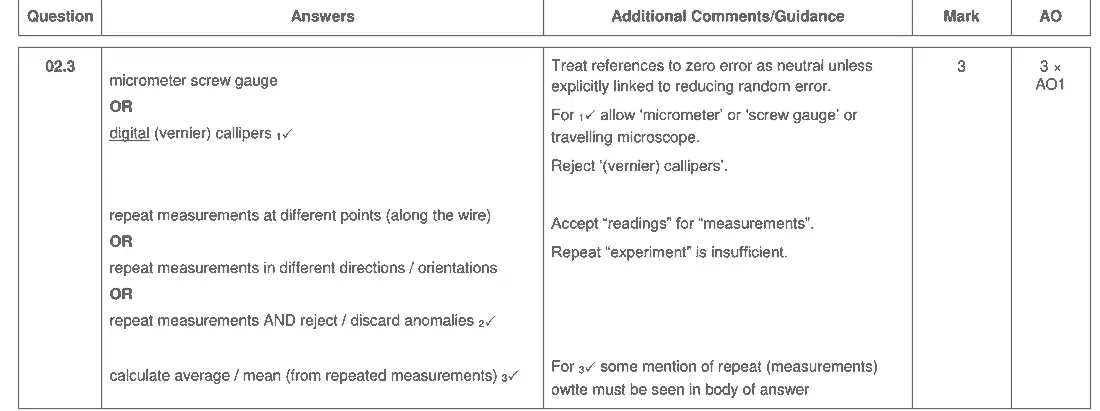
2.3 Current, potential difference, I-V characteristics and resistivity, Measurements, units and uncertainties 3AO1=3Practical and data analysis
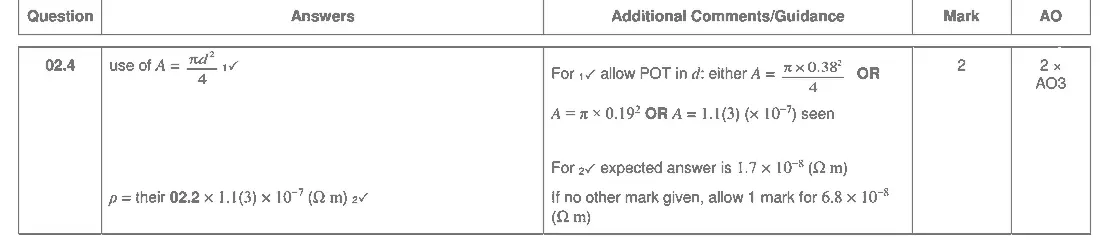
2.4 Current, potential difference, I-V characteristics and resistivity 2AO3=2Calculation
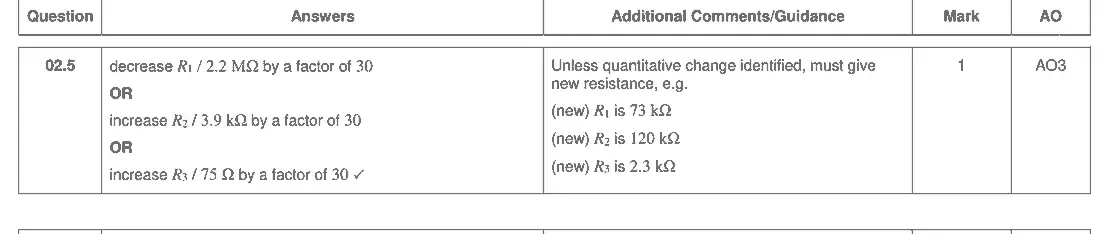
2.5 Circuits and potential dividers, Current, potential difference, I-V characteristics and resistivity 1AO3=1Explanation
2.6 Current, potential difference, I-V characteristics and resistivity 1AO2=1Calculation
3.1 Circuits and potential dividers, Current, potential difference, I-V characteristics and resistivity 2AO2=2Calculation
3.2 Progressive waves, longitudinal and transverse waves 2AO1=2Short answer
3.3 Interference, diffraction and the diffraction grating 2AO1=2Short answer
3.4 Interference, diffraction and the diffraction grating 2AO2=2Show that
3.5 Interference, diffraction and the diffraction grating, Progressive waves, longitudinal and transverse waves 2AO2=2Calculation
4.1 Scalars, vectors and moments, Newton's laws of motion and momentum 1AO2=1Show that
4.2 Motion along a straight line and projectile motion, Work, energy, power and conservation of energy 2AO2=2Calculation
4.3 Newton's laws of motion and momentum 2AO2=1,AO3=1Calculation
4.4 Motion along a straight line and projectile motion 3AO2=1,AO3=2Calculation
4.5 Scalars, vectors and moments 2AO2=1,AO3=1Calculation
5 Atomic structure and stable nuclei 1AO1=1Multiple choice
6 Measurements, units and uncertainties, Materials, stress, strain and the Young modulus 1AO3=1Multiple choice
7 Measurements, units and uncertainties 1AO1=1Multiple choice
8 Particles, antiparticles and particle interactions 1AO1=1Multiple choice
9 Classification of particles, quarks and conservation laws 1AO1=1Multiple choice
10 Atomic structure and stable nuclei 1AO1=1Multiple choice
11 Progressive waves, longitudinal and transverse waves 1AO1=1Multiple choice
12 Excitation, energy levels and wave-particle duality, Particles, antiparticles and particle interactions 1AO1=1Multiple choice
13 Excitation, energy levels and wave-particle duality 1AO1=1Multiple choice
14 Progressive waves, longitudinal and transverse waves 1AO1=1Multiple choice
15 Progressive waves, longitudinal and transverse waves 1AO2=1Multiple choice
16 Progressive waves, longitudinal and transverse waves 1AO2=1Multiple choice
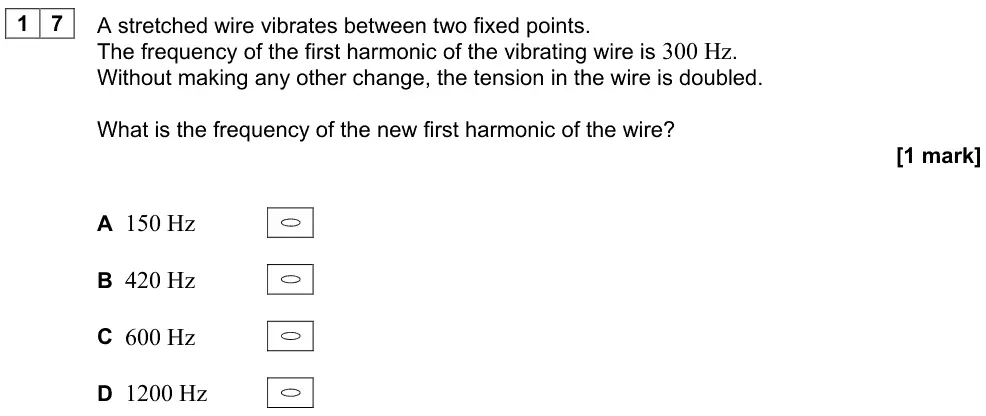
17 Superposition and stationary waves 1AO1=1Multiple choice
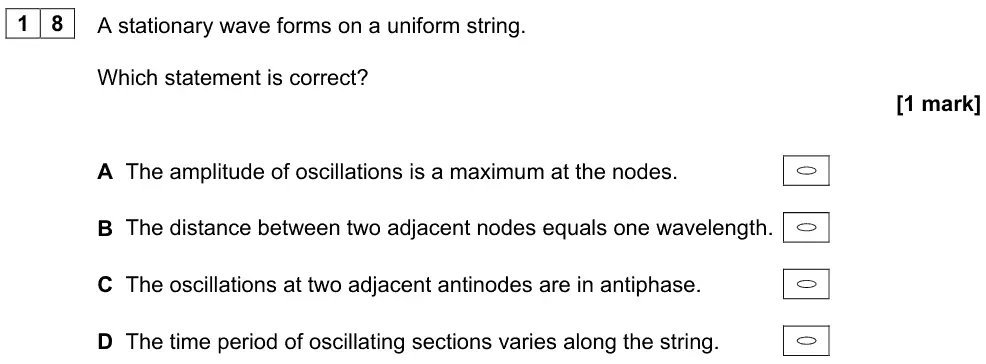
18 Superposition and stationary waves 1AO1=1Multiple choice
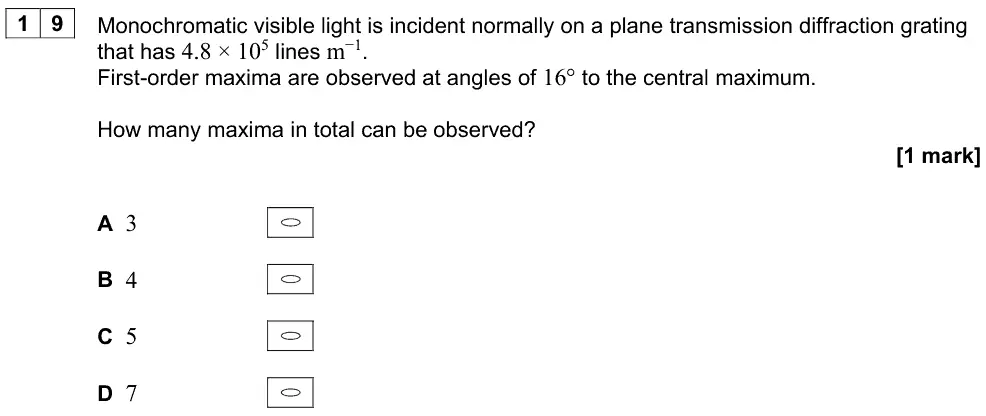
19 Interference, diffraction and the diffraction grating 1AO2=1Multiple choice
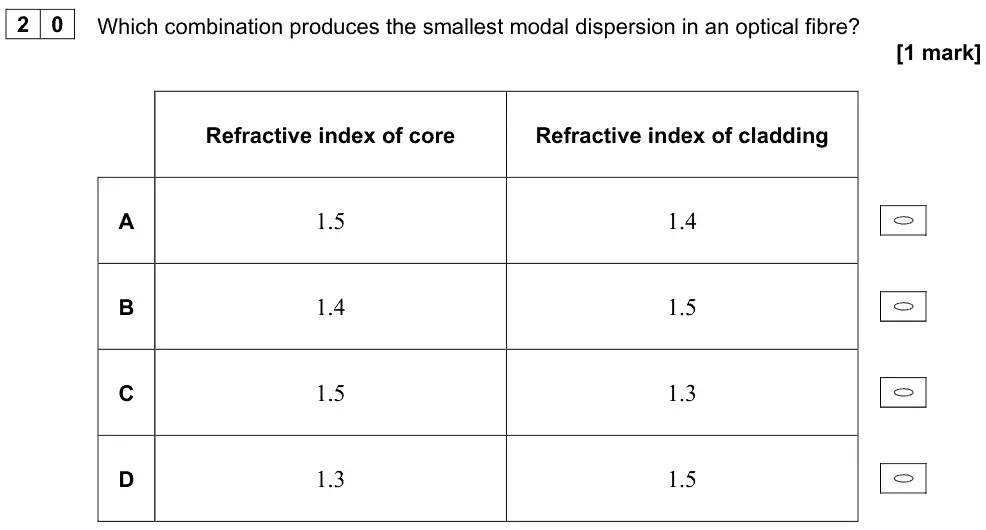
20 Refraction, total internal reflection and optical fibres 1AO2=1Multiple choice
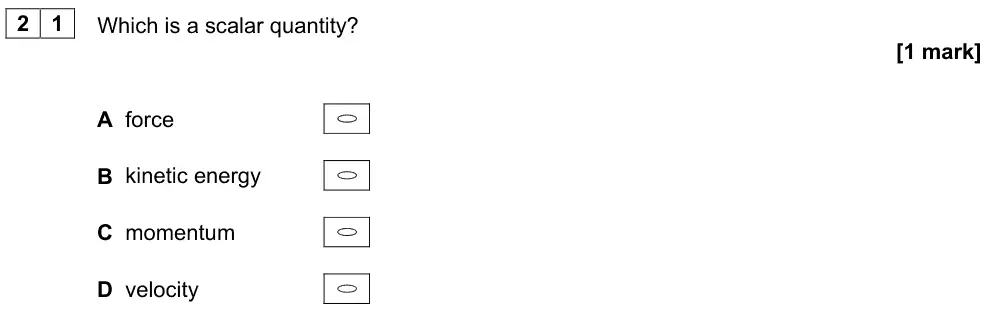
21 Scalars, vectors and moments 1AO1=1Multiple choice
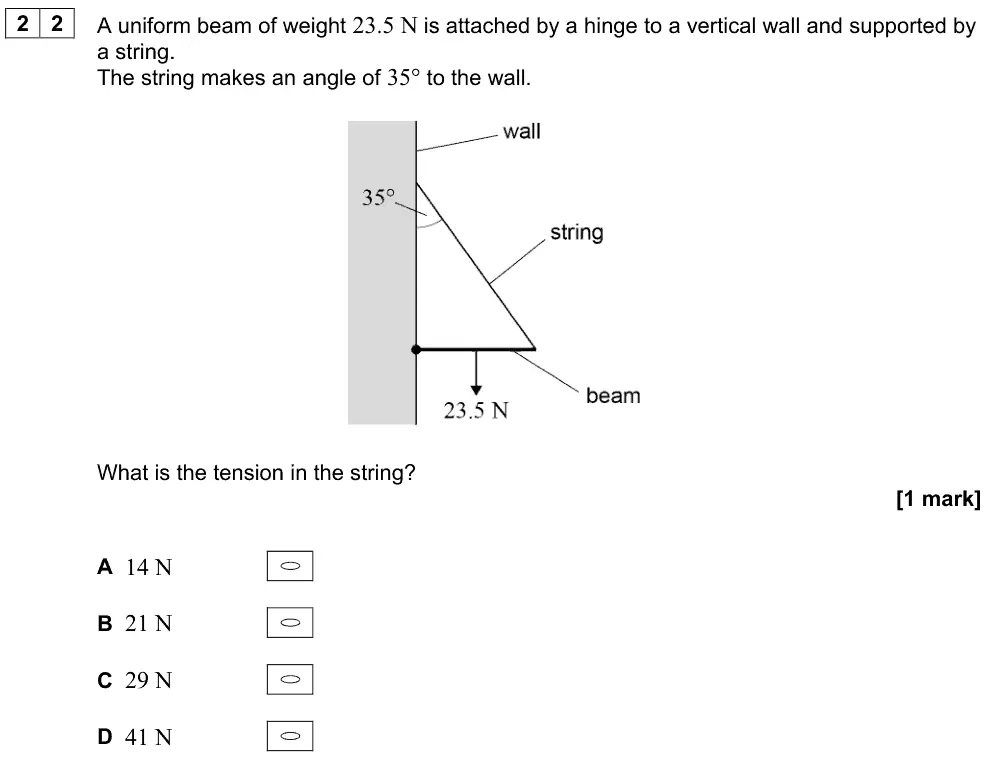
22 Scalars, vectors and moments 1AO2=1Multiple choice
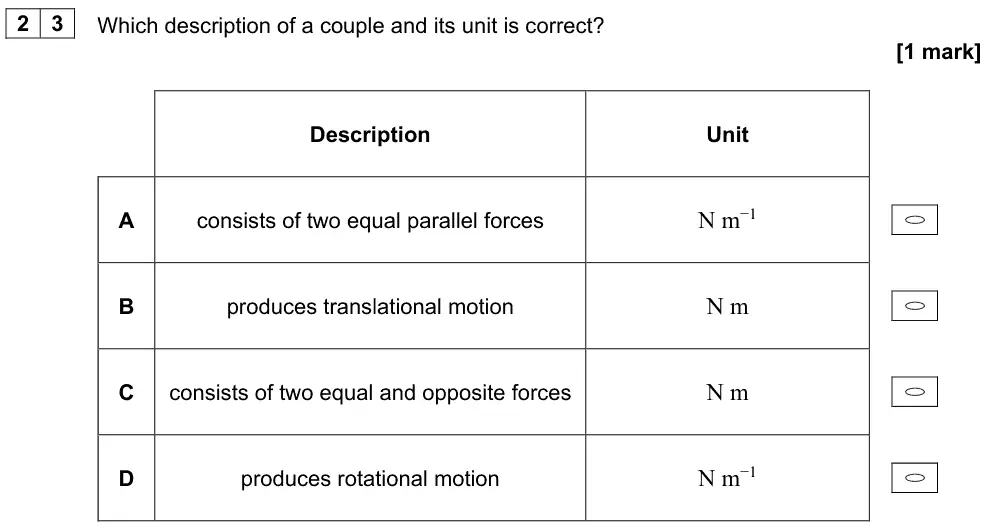
23 Scalars, vectors and moments 1AO1=1Multiple choice
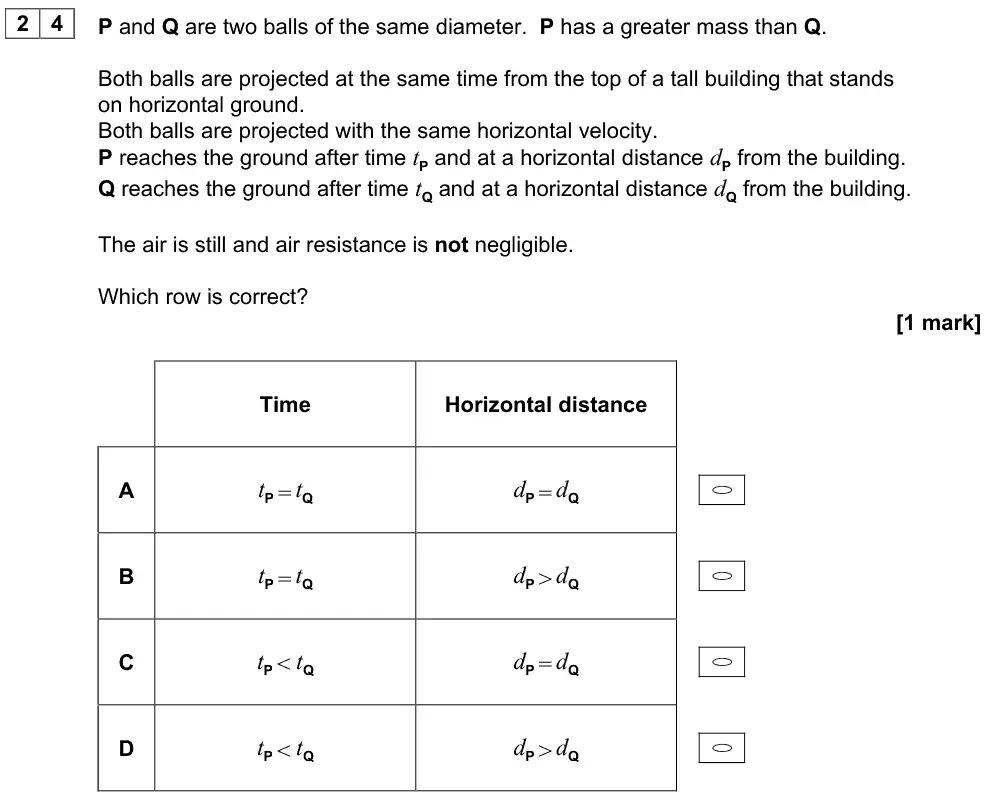
24 Motion along a straight line and projectile motion 1AO1=1Multiple choice
25 Newton's laws of motion and momentum 1AO2=1Multiple choice
26 Newton's laws of motion and momentum 1AO2=1Multiple choice
27 Work, energy, power and conservation of energy 1AO2=1Multiple choice
28 Work, energy, power and conservation of energy 1AO2=1Multiple choice
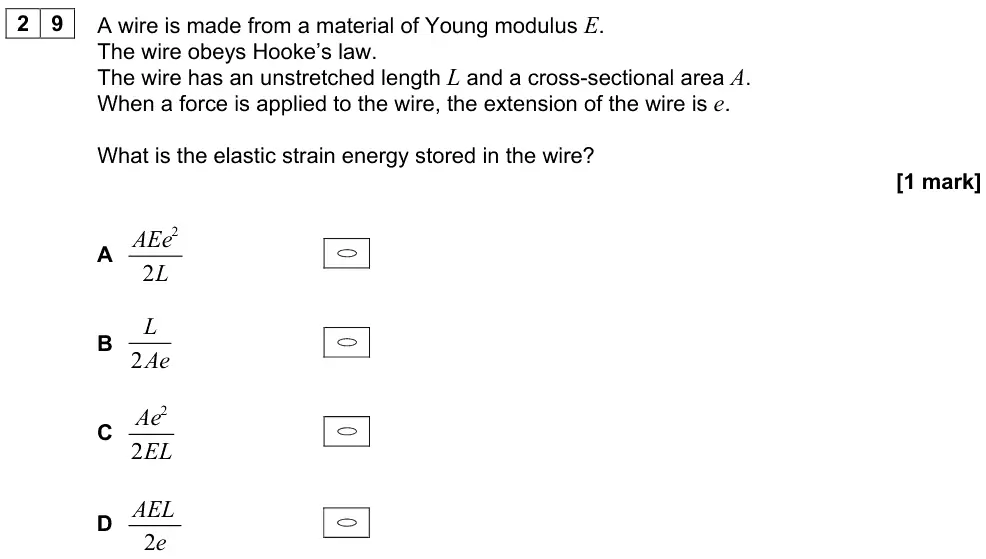
29 Materials, stress, strain and the Young modulus 1AO2=1Multiple choice
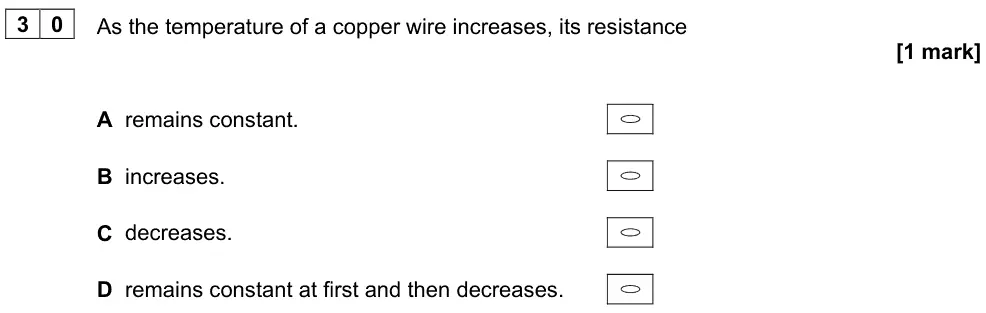
30 Current, potential difference, I-V characteristics and resistivity 1AO1=1Multiple choice
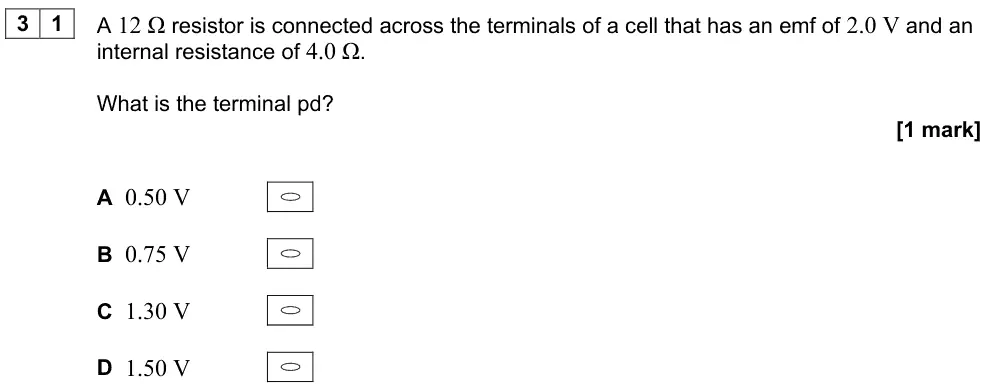
31 Electromotive force and internal resistance 1AO2=1Multiple choice
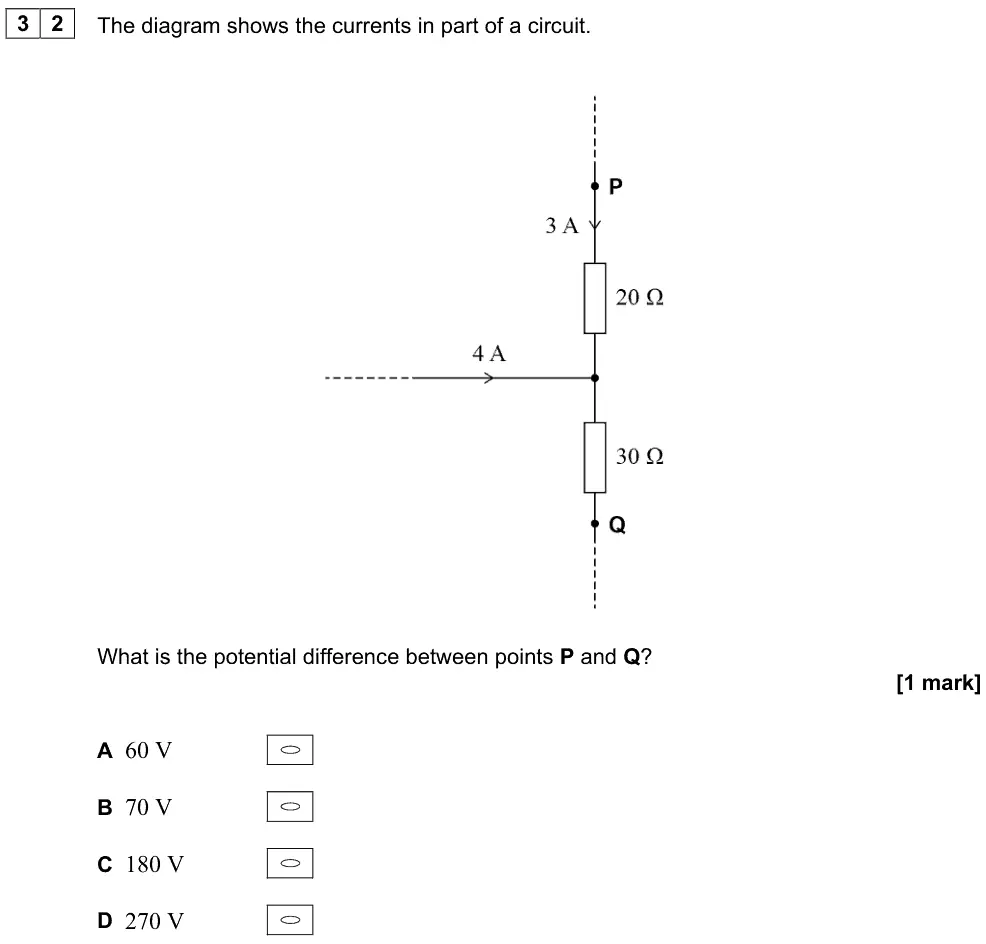
32 Circuits and potential dividers, Current, potential difference, I-V characteristics and resistivity 1AO1=1Multiple choice
33 Circuits and potential dividers 1AO1=1Multiple choice
34 Electromotive force and internal resistance 1AO2=1Multiple choice

The questions

1.11.21.31.41.51.62.12.22.32.42.52.63.13.23.33.43.54.14.24.34.44.55678910111213141516171819202122232425262728293031323334
June 2022 · AS Paper 2 · Q1.1 1 mark AO3=1 Practical and data analysis measurements and uncertainties
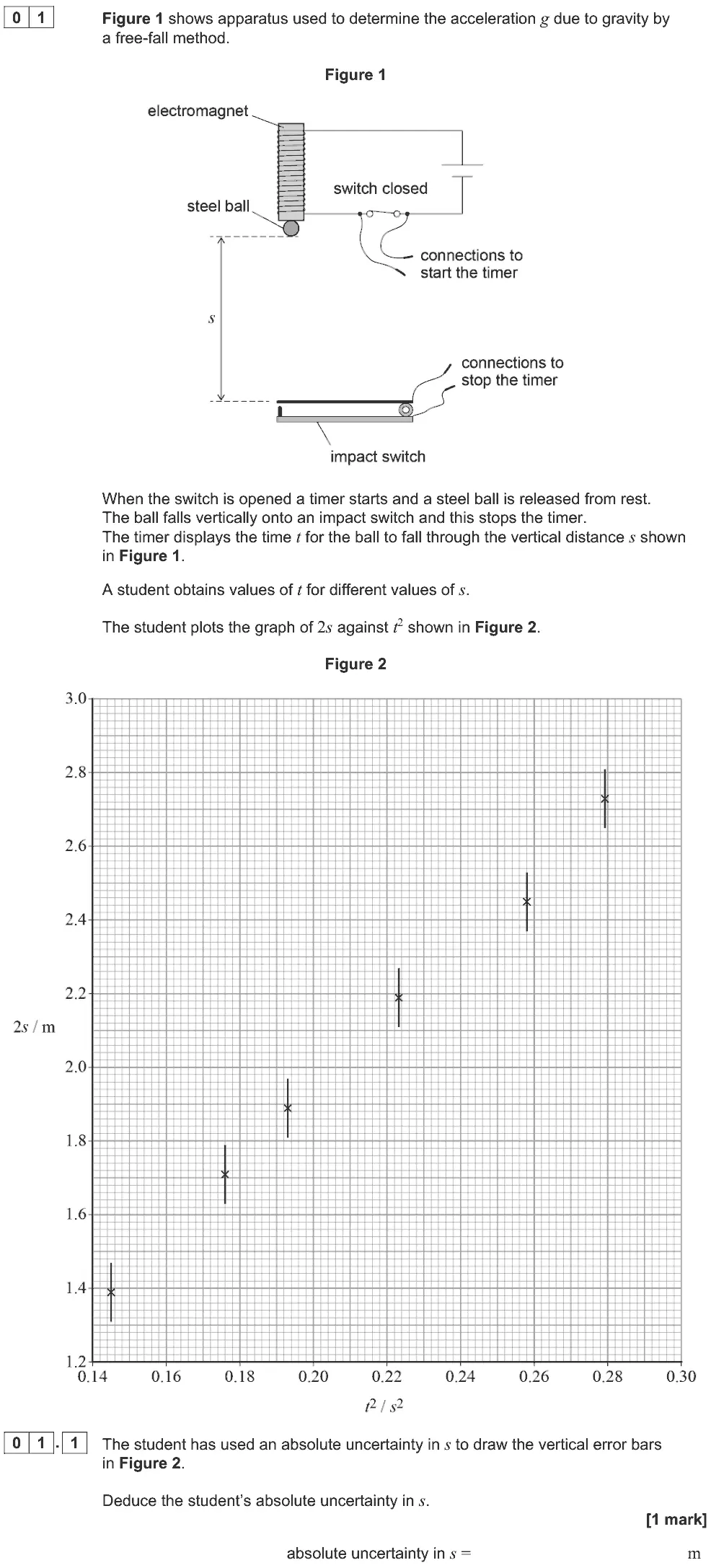
Figure 1 shows apparatus used to determine the acceleration g due to gravity by
a free-fall method.
Figure 1
When the switch is opened a timer starts and a steel ball is released from rest.
The ball falls vertically onto an impact switch and this stops the timer.
The timer displays the time t for the ball to fall through the vertical distance s shown
in Figure 1.
A student obtains values of t for different values of s.
The student plots the graph of 2s against t2 shown in Figure 2.
Figure 2
The student has used an absolute uncertainty in s to draw the vertical error bars
in Figure 2.
Deduce the student’s absolute uncertainty in s.
[1 mark]
absolute uncertainty in s =
m
June 2022 · AS Paper 2 · Q1.2 3 marks AO2=3 Practical and data analysis measurements and uncertainties
Earlier part of question 1 that this part usesEarlier part of June 2022 Paper 2 question 1
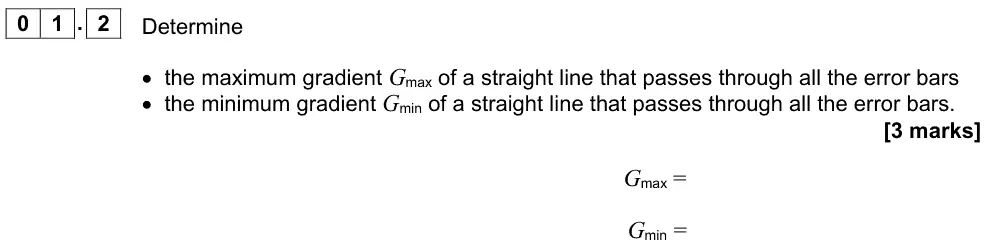
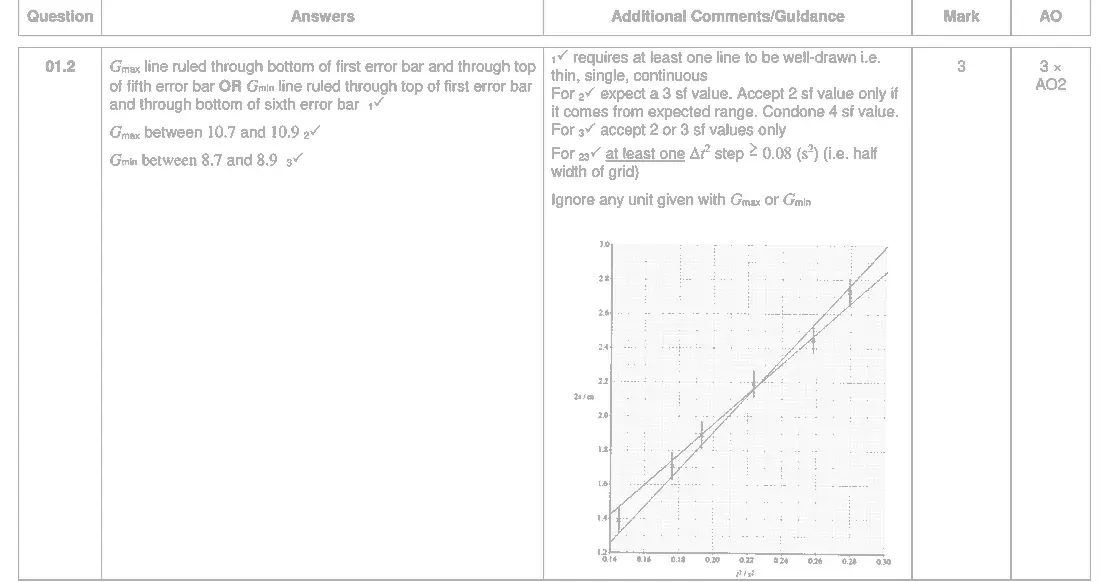
Determine
• the maximum gradient Gmax of a straight line that passes through all the error bars
• the minimum gradient Gmin of a straight line that passes through all the error bars.
[3 marks]
Gmax =
Gmin =
June 2022 · AS Paper 2 · Q1.3 2 marks AO3=2 Calculation motion and projectilesmeasurements and uncertainties
Earlier part of question 1 that this part usesEarlier part of June 2022 Paper 2 question 1
It can be shown that 2s = gt2.
Determine a value for g using Gmax and Gmin.
[2 marks]
g =
m s−2
June 2022 · AS Paper 2 · Q1.4 2 marks AO2=1, AO3=1 Calculation measurements and uncertainties
Earlier part of question 1 that this part usesEarlier part of June 2022 Paper 2 question 1
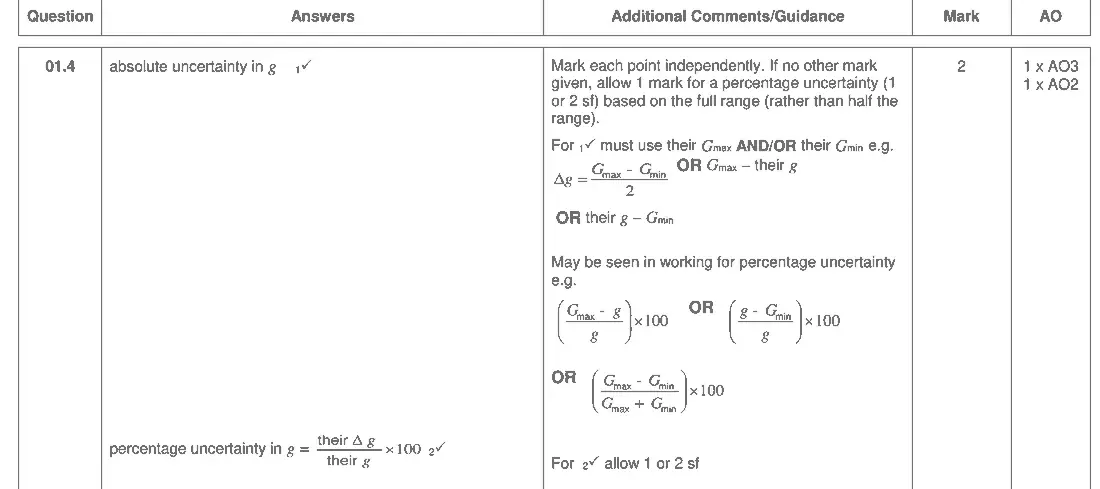
Determine the percentage uncertainty in your value for g.
[2 marks]
percentage uncertainty =
%
June 2022 · AS Paper 2 · Q1.5 1 mark AO1=1 Short answer Easy measurements and uncertainties
Earlier part of question 1 that this part usesEarlier part of June 2022 Paper 2 question 1
A fault develops in the apparatus.
When the switch is opened there is now a 30 ms delay before the ball is released.
State the type of error produced by this fault.
[1 mark]
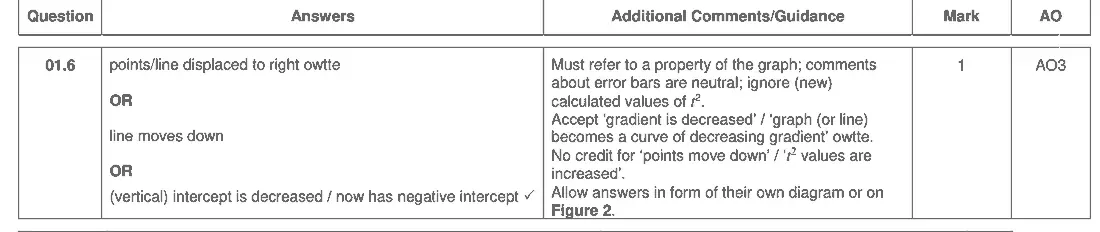
June 2022 · AS Paper 2 · Q1.6 1 mark AO3=1 Practical and data analysis measurements and uncertainties
Earlier part of question 1 that this part usesEarlier part of June 2022 Paper 2 question 1
A graph of 2s against t2 is produced using results from the faulty apparatus.
Describe how this graph is different from the graph in Figure 2.
[1 mark]
June 2022 · AS Paper 2 · Q2.1 1 mark AO3=1 Practical and data analysis Hard measurements and uncertainties
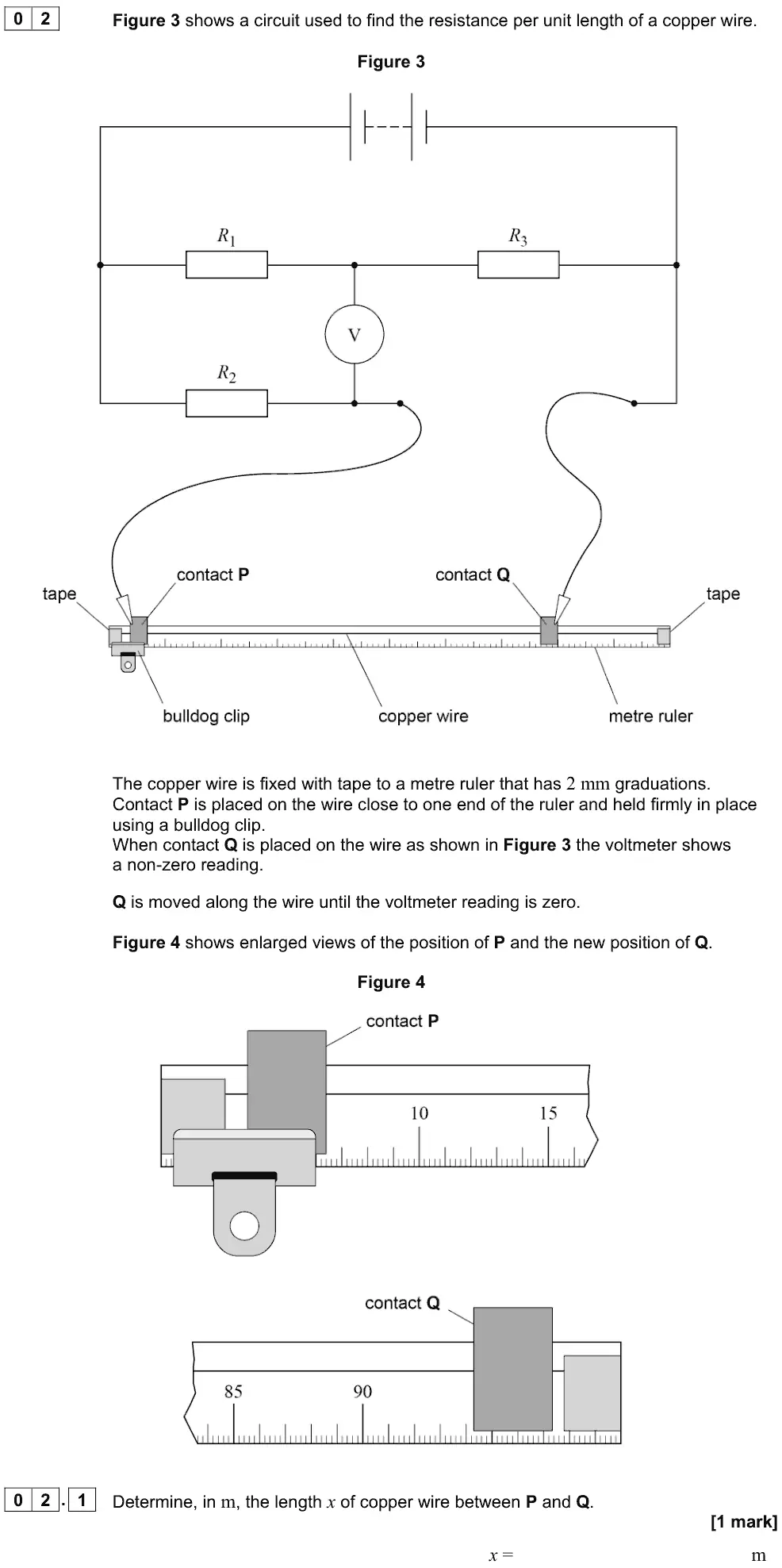
Figure 3 shows a circuit used to find the resistance per unit length of a copper wire.
Figure 3
The copper wire is fixed with tape to a metre ruler that has 2 mm graduations.
Contact P is placed on the wire close to one end of the ruler and held firmly in place
using a bulldog clip.
When contact Q is placed on the wire as shown in Figure 3 the voltmeter shows
a non-zero reading.
Q is moved along the wire until the voltmeter reading is zero.
Figure 4 shows enlarged views of the position of P and the new position of Q.
Figure 4
Determine, in m, the length x of copper wire between P and Q.
[1 mark]
x =
m
June 2022 · AS Paper 2 · Q2.2 2 marks AO3=2 Calculation circuits and potential dividersmeasurements and uncertainties
Earlier part of question 2 that this part usesEarlier part of June 2022 Paper 2 question 2
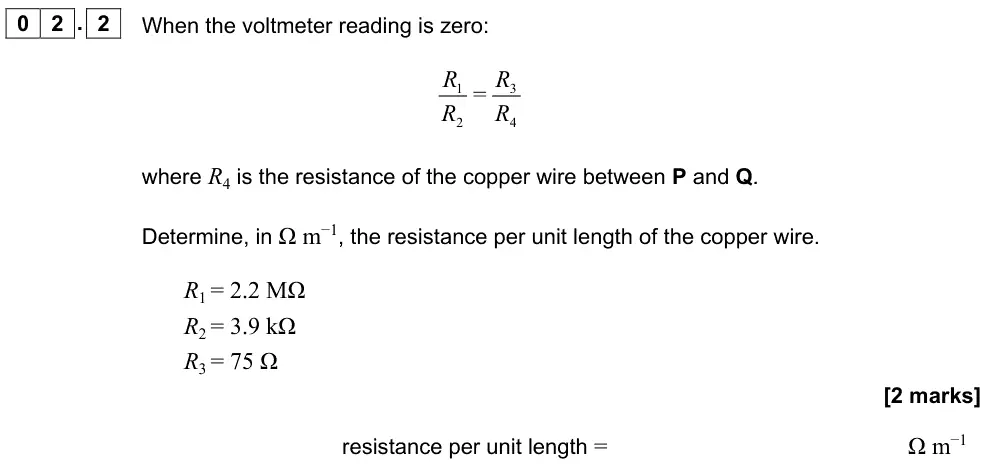
When the voltmeter reading is zero:
3
1
2
4
= R
R
R
R
where R4 is the resistance of the copper wire between P and Q.
Determine, in Ω m−1, the resistance per unit length of the copper wire.
R1 = 2.2 MΩ
R2 = 3.9 kΩ
R3 = 75 Ω
[2 marks]
resistance per unit length =
Ω m−1
June 2022 · AS Paper 2 · Q2.3 3 marks AO1=3 Practical and data analysis current voltage and resistivitymeasurements and uncertainties
Earlier part of question 2 that this part usesEarlier part of June 2022 Paper 2 question 2
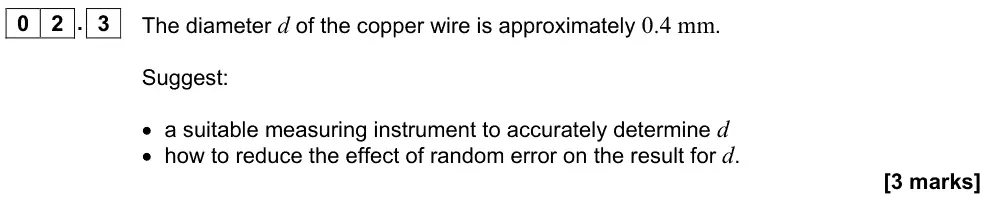
The diameter d of the copper wire is approximately 0.4 mm.
Suggest:
• a suitable measuring instrument to accurately determine d
• how to reduce the effect of random error on the result for d.
[3 marks]
June 2022 · AS Paper 2 · Q2.4 2 marks AO3=2 Calculation current voltage and resistivity
Earlier part of question 2 that this part usesEarlier part of June 2022 Paper 2 question 2
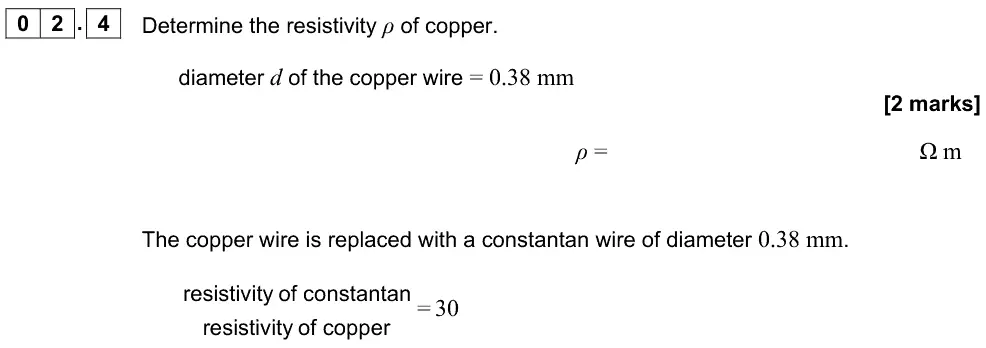
Determine the resistivity ρ of copper.
diameter d of the copper wire = 0.38 mm
[2 marks]
ρ =
Ω m
The copper wire is replaced with a constantan wire of diameter 0.38 mm.
= 30
resistivity of constantan
resistivity of copper
June 2022 · AS Paper 2 · Q2.5 1 mark AO3=1 Explanation Hard circuits and potential dividerscurrent voltage and resistivity
Earlier part of question 2 that this part usesEarlier part of June 2022 Paper 2 question 2
Suggest one change to the circuit to make the voltmeter read zero for the same value
of x as in Question 02.1.
[1 mark]
June 2022 · AS Paper 2 · Q2.6 1 mark AO2=1 Calculation current voltage and resistivity
Earlier part of question 2 that this part usesEarlier part of June 2022 Paper 2 question 2
Calculate, in mm, the diameter of a constantan wire that has the same resistance
per unit length as the copper wire.
[1 mark]
diameter =
mm
June 2022 · AS Paper 2 · Q3.1 2 marks AO2=2 Calculation circuits and potential dividerscurrent voltage and resistivity
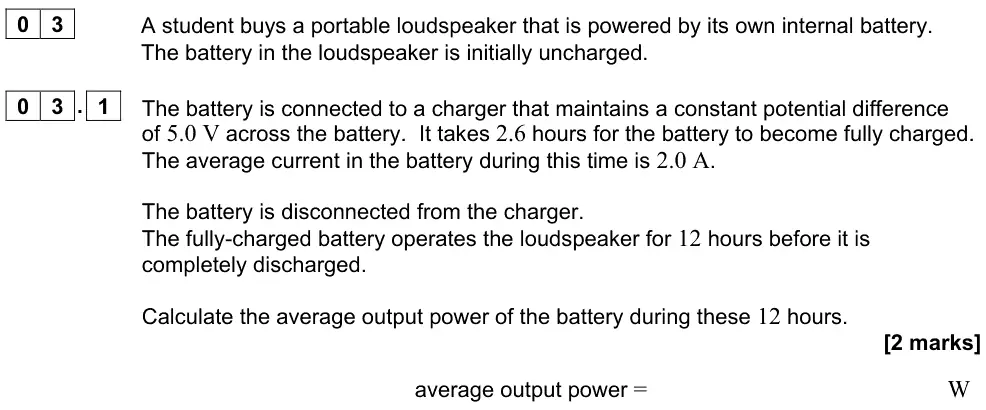
A student buys a portable loudspeaker that is powered by its own internal battery.
The battery in the loudspeaker is initially uncharged.
The battery is connected to a charger that maintains a constant potential difference
of 5.0 V across the battery.  It takes 2.6 hours for the battery to become fully charged.
The average current in the battery during this time is 2.0 A.
The battery is disconnected from the charger.
The fully-charged battery operates the loudspeaker for 12 hours before it is
completely discharged.
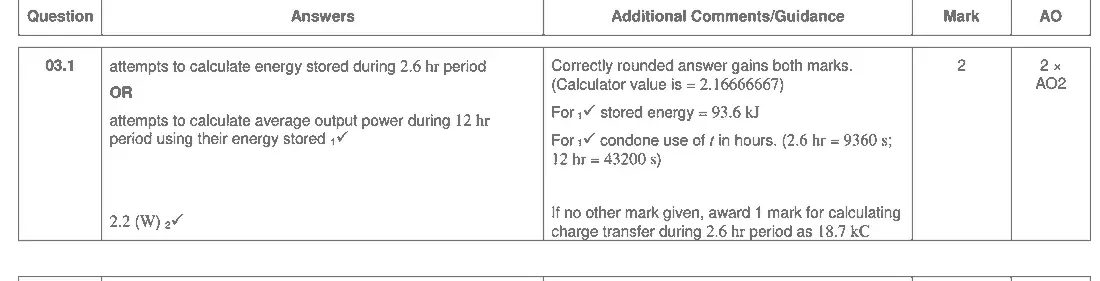
Calculate the average output power of the battery during these 12 hours.
[2 marks]
average output power =
W
June 2022 · AS Paper 2 · Q3.2 2 marks AO1=2 Short answer progressive waves and polarisation
Earlier part of question 3 that this part usesEarlier part of June 2022 Paper 2 question 3
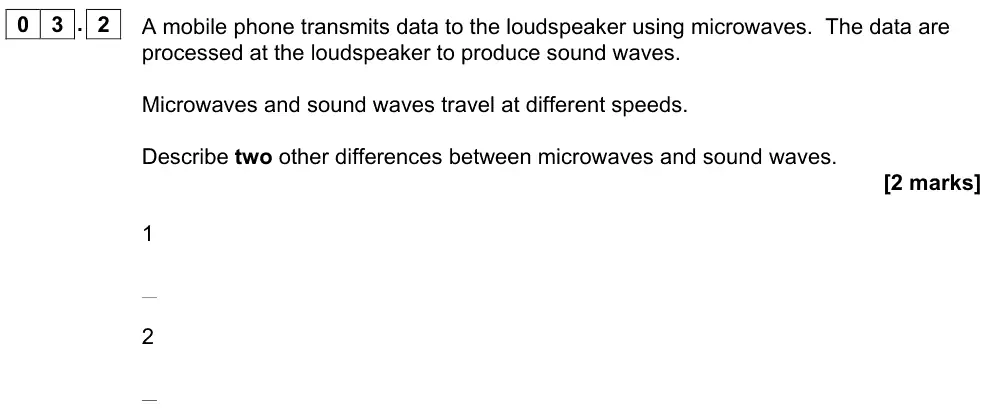
A mobile phone transmits data to the loudspeaker using microwaves.  The data are
processed at the loudspeaker to produce sound waves.
Microwaves and sound waves travel at different speeds.
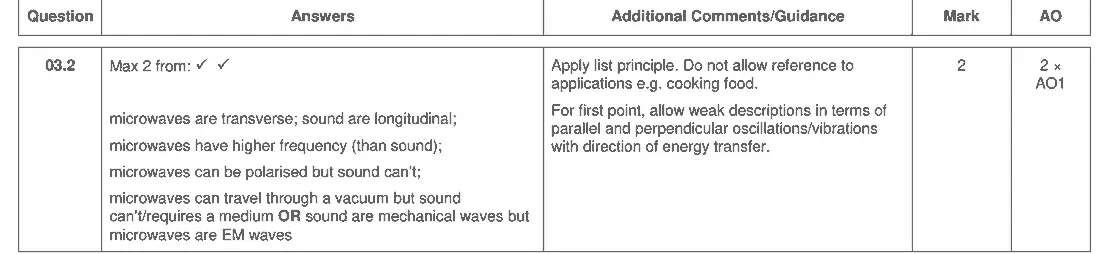
Describe two other differences between microwaves and sound waves.
[2 marks]
1
2
June 2022 · AS Paper 2 · Q3.3 2 marks AO1=2 Short answer interference and diffraction
Earlier part of question 3 that this part usesEarlier part of June 2022 Paper 2 question 3
A second loudspeaker receives the same data from the mobile phone.  The two
loudspeakers act as coherent sources of sound waves.
State the two conditions required for the sources to be coherent.
[2 marks]
1
2
June 2022 · AS Paper 2 · Q3.4 2 marks AO2=2 Show that interference and diffraction
Earlier part of question 3 that this part usesEarlier part of June 2022 Paper 2 question 3
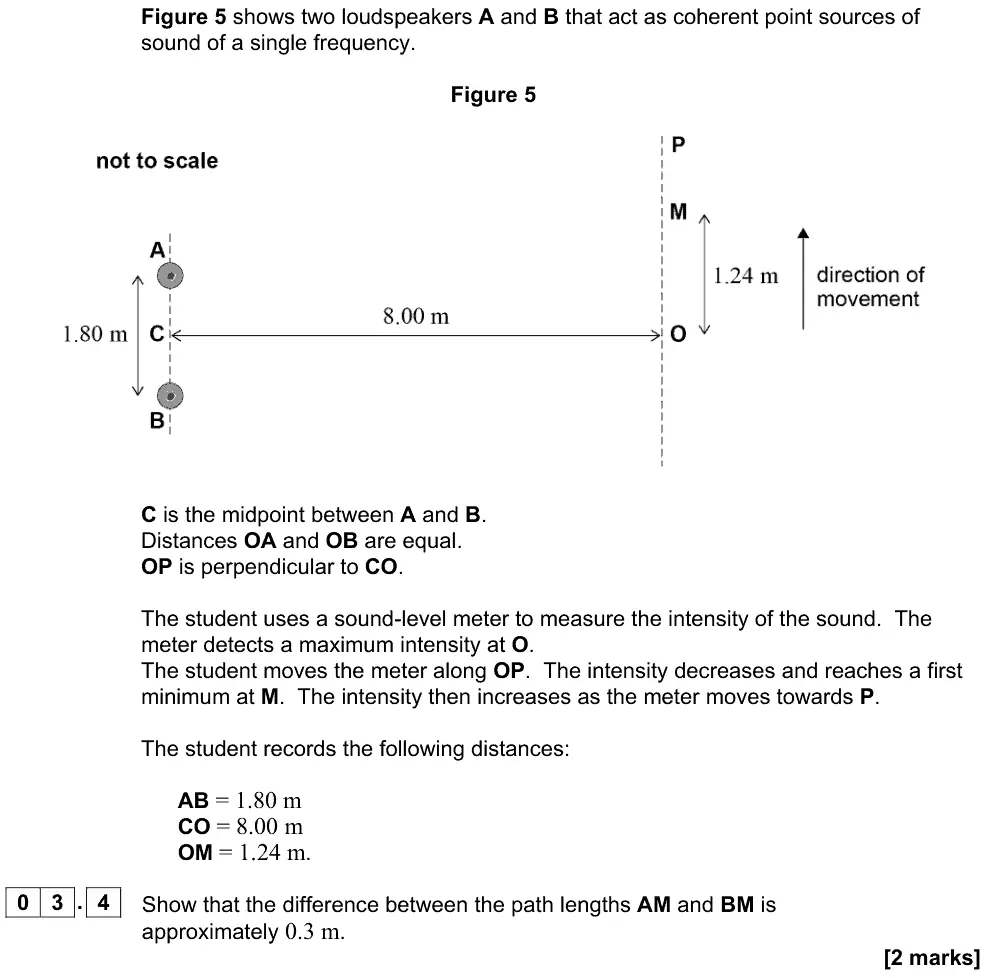
Figure 5 shows two loudspeakers A and B that act as coherent point sources of
sound of a single frequency.
Figure 5
C is the midpoint between A and B.
Distances OA and OB are equal.
OP is perpendicular to CO.
The student uses a sound-level meter to measure the intensity of the sound.  The
meter detects a maximum intensity at O.
The student moves the meter along OP.  The intensity decreases and reaches a first
minimum at M.  The intensity then increases as the meter moves towards P.
The student records the following distances:
AB = 1.80 m
CO = 8.00 m
OM = 1.24 m.
Show that the difference between the path lengths AM and BM is
approximately 0.3 m.
[2 marks]
June 2022 · AS Paper 2 · Q3.5 2 marks AO2=2 Calculation interference and diffractionprogressive waves and polarisation
Earlier part of question 3 that this part usesEarlier part of June 2022 Paper 2 question 3
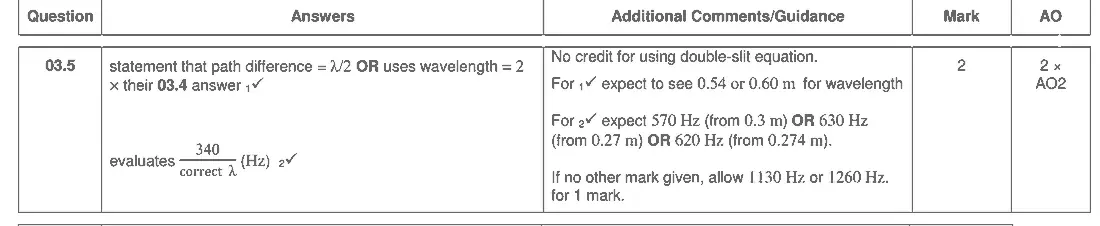
The speed of sound is 340 m s−1.
Determine the frequency of the sound waves.
[2 marks]
frequency =
Hz
June 2022 · AS Paper 2 · Q4.1 1 mark AO2=1 Show that vectors and momentsnewtons laws and momentum
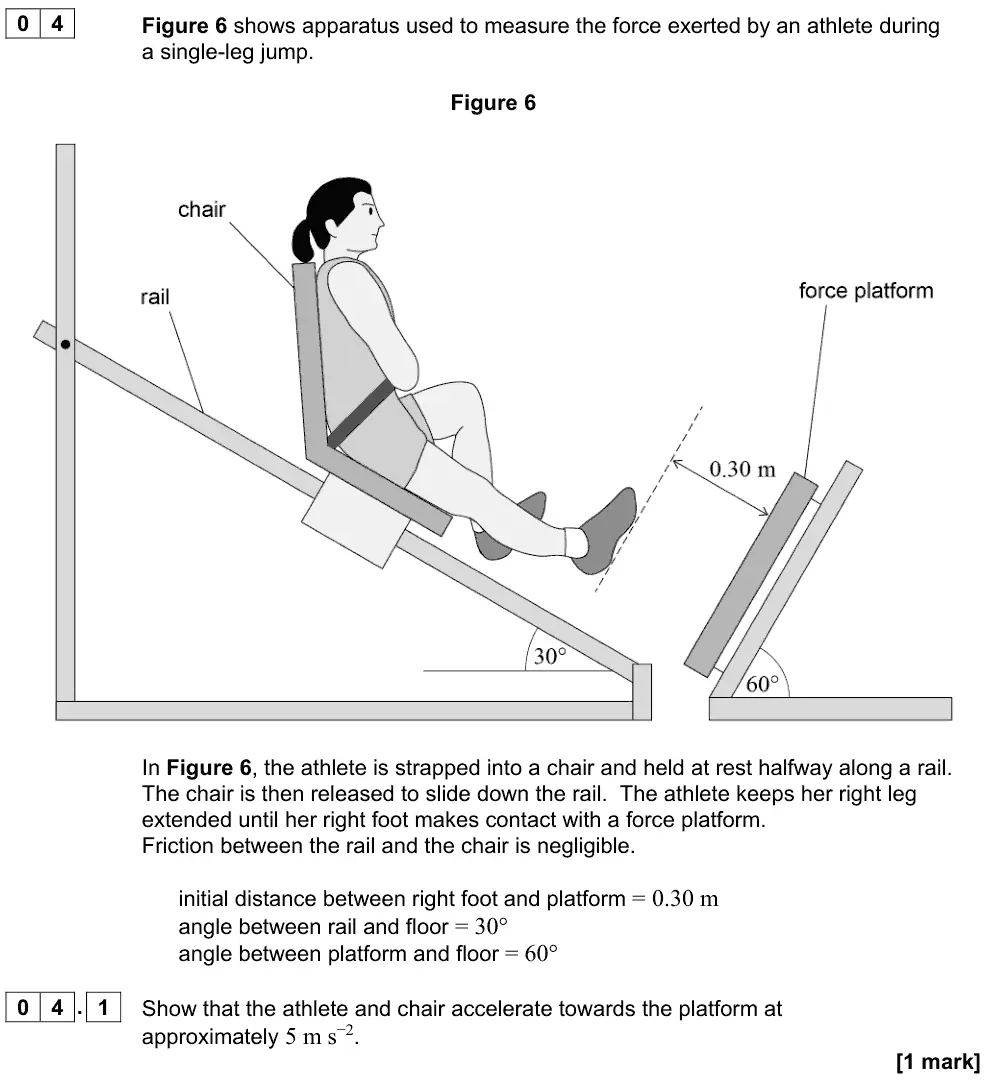
Figure 6 shows apparatus used to measure the force exerted by an athlete during
a single-leg jump.
Figure 6
In Figure 6, the athlete is strapped into a chair and held at rest halfway along a rail.
The chair is then released to slide down the rail.  The athlete keeps her right leg
extended until her right foot makes contact with a force platform.
Friction between the rail and the chair is negligible.
initial distance between right foot and platform = 0.30 m
angle between rail and floor = 30°
angle between platform and floor = 60°
Show that the athlete and chair accelerate towards the platform at
approximately 5 m s−2.
[1 mark]
June 2022 · AS Paper 2 · Q4.2 2 marks AO2=2 Calculation motion and projectileswork energy and power
Earlier part of question 4 that this part usesEarlier part of June 2022 Paper 2 question 4
Calculate the speed of the athlete when her right foot makes initial contact with the
platform.
[2 marks]
speed =
m s−1
June 2022 · AS Paper 2 · Q4.3 2 marks AO2=1, AO3=1 Calculation newtons laws and momentum
Earlier part of question 4 that this part usesEarlier part of June 2022 Paper 2 question 4
After her right foot makes contact with the platform, she uses her right leg to stop
moving and then push herself back up the rail.  She slides down the rail again, lands
on the platform with both feet and comes to rest.
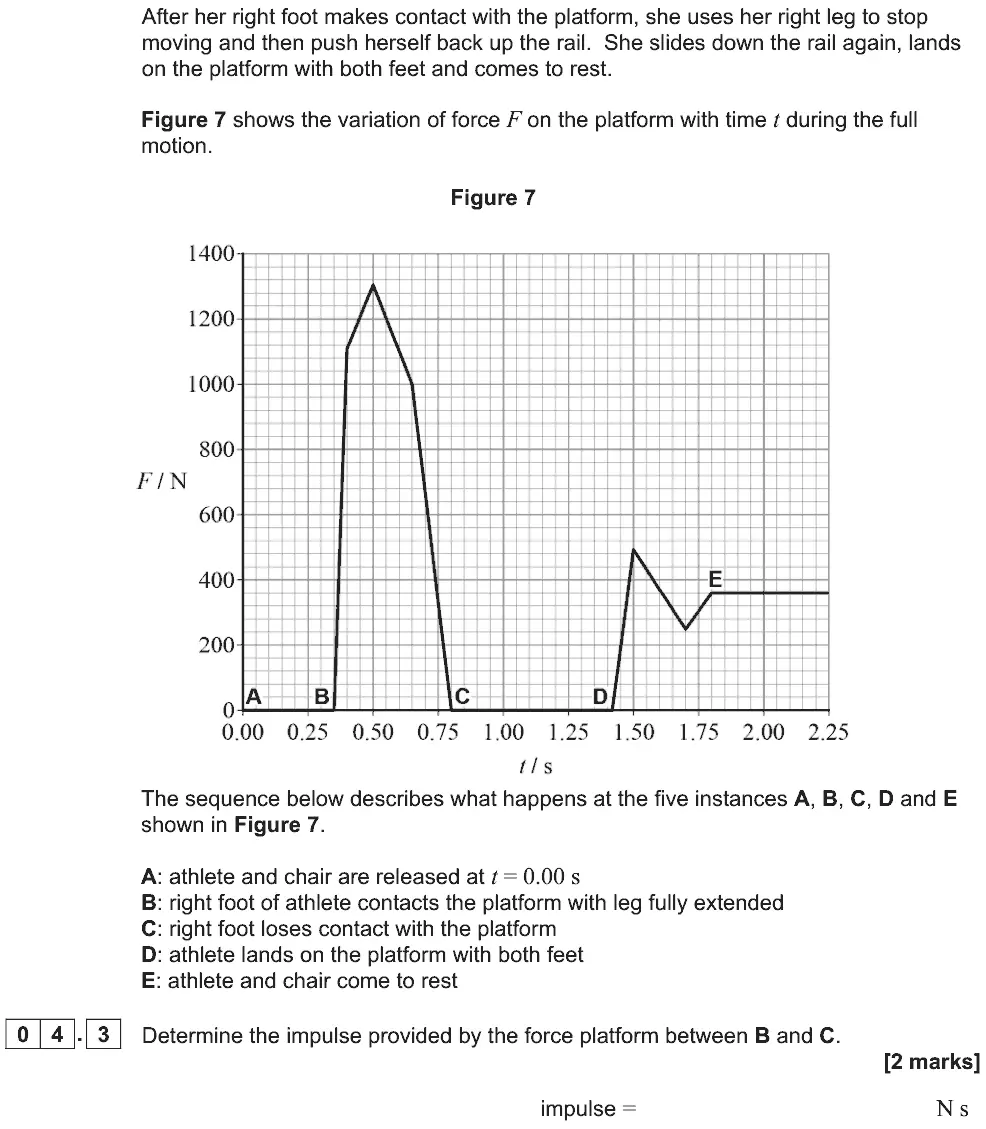
Figure 7 shows the variation of force F on the platform with time t during the full
motion.
Figure 7
The sequence below describes what happens at the five instances A, B, C, D and E
shown in Figure 7.
A: athlete and chair are released at t = 0.00 s
B: right foot of athlete contacts the platform with leg fully extended
C: right foot loses contact with the platform
D: athlete lands on the platform with both feet
E: athlete and chair come to rest
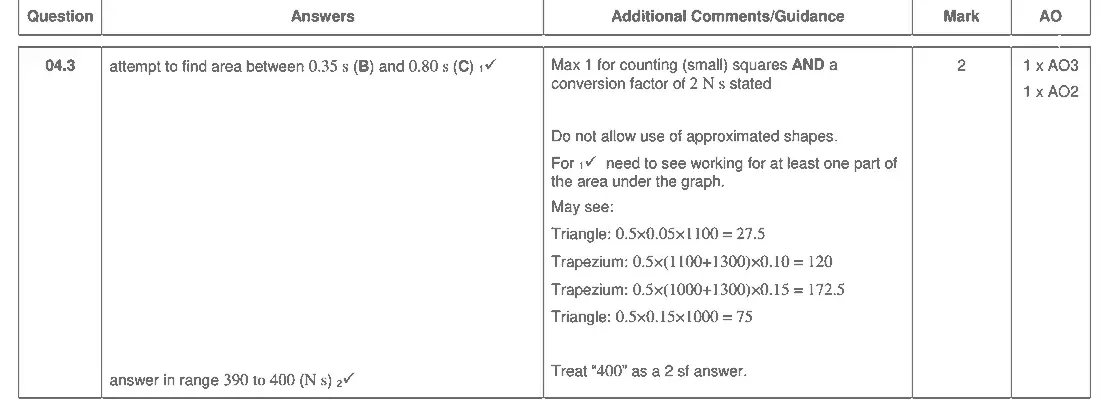
Determine the impulse provided by the force platform between B and C.
[2 marks]
impulse =
N s
June 2022 · AS Paper 2 · Q4.4 3 marks AO2=1, AO3=2 Calculation Hard motion and projectiles
Earlier part of question 4 that this part usesEarlier part of June 2022 Paper 2 question 4
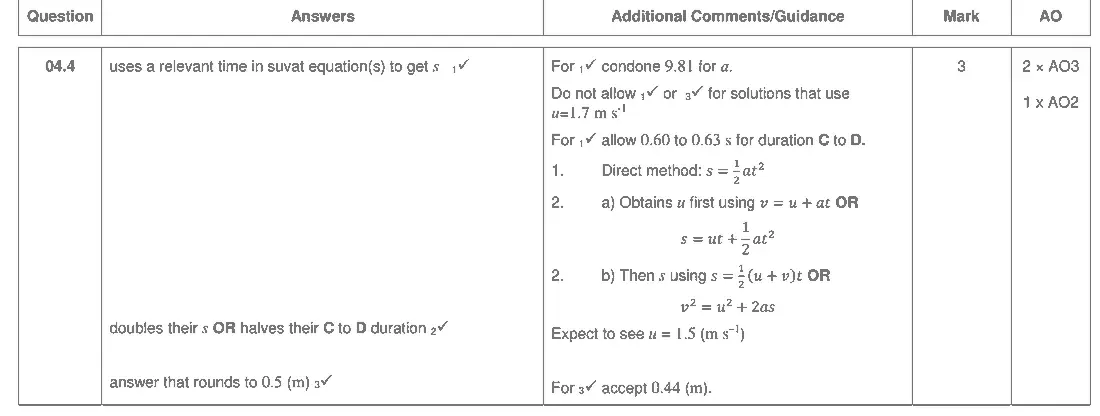
Determine the distance travelled by the athlete between C and D.
[3 marks]
distance travelled =
m
June 2022 · AS Paper 2 · Q4.5 2 marks AO2=1, AO3=1 Calculation vectors and moments
Earlier part of question 4 that this part usesEarlier part of June 2022 Paper 2 question 4
Determine, using Figure 7, the combined mass of the athlete and chair.
[2 marks]
mass =
kg
June 2022 · AS Paper 2 · Q5 1 mark AO1=1 Multiple choice atomic structure and stable nuclei
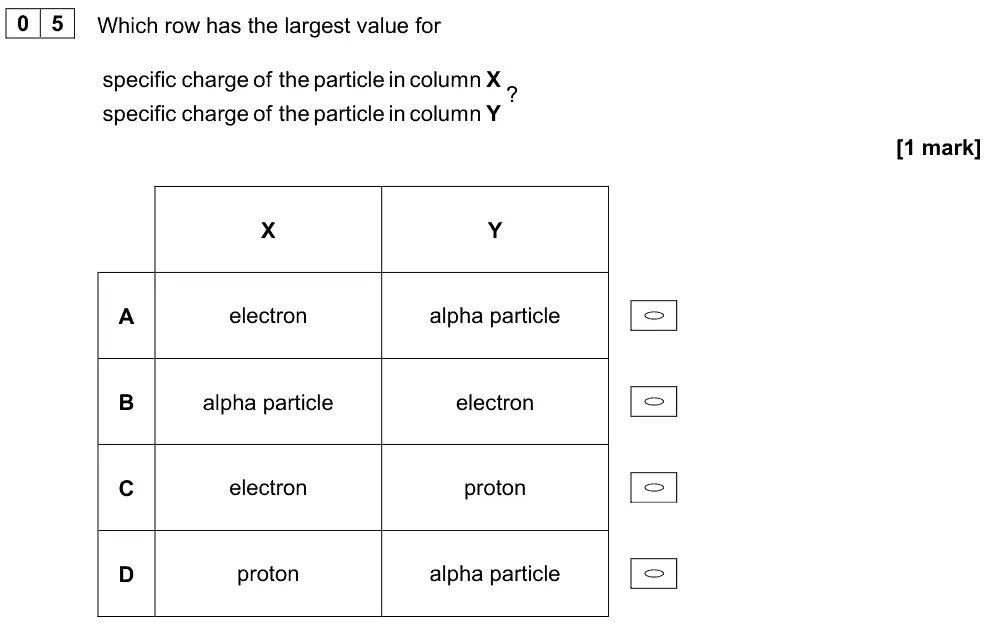
Which row has the largest value for
specific charge of the particle in column
?
specific charge of the particle in column
X
Y
[1 mark]
X
Y
A
electron
alpha particle
B
alpha particle
electron
C
electron
proton
D
proton
alpha particle
June 2022 · AS Paper 2 · Q6 1 mark AO3=1 Multiple choice measurements and uncertaintiesmaterials and young modulus
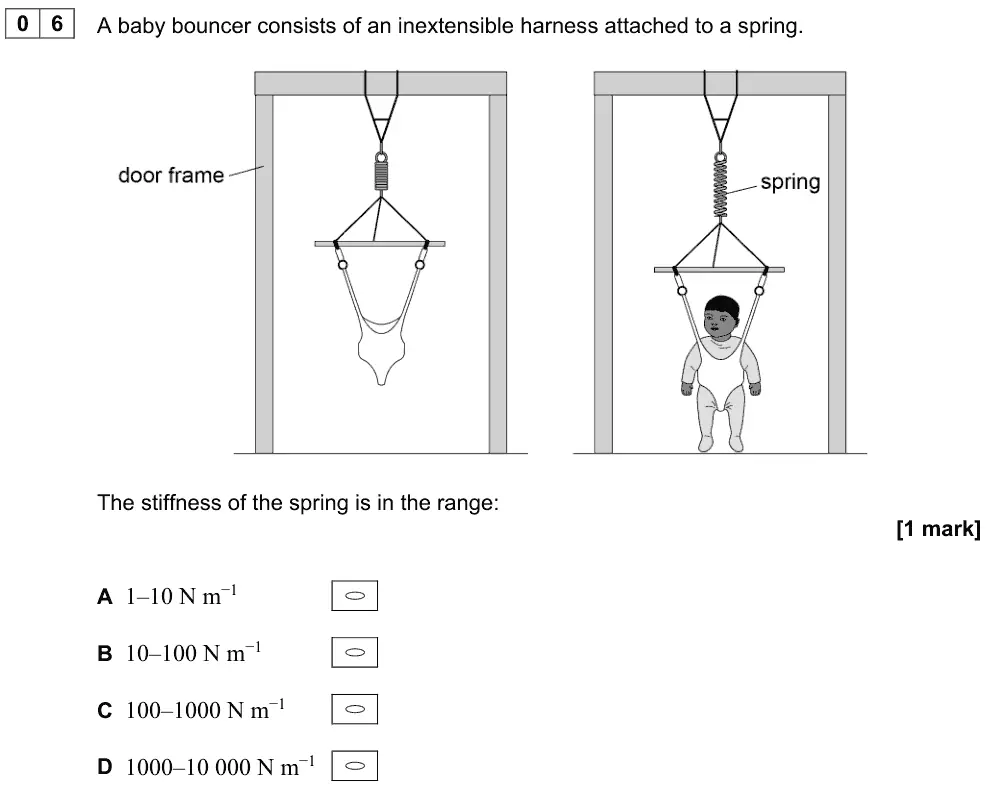
A baby bouncer consists of an inextensible harness attached to a spring.
The stiffness of the spring is in the range:
[1 mark]
A 1–10 N m−1
B 10–100 N m−1
C 100–1000 N m−1
D 1000–10 000 N m−1
June 2022 · AS Paper 2 · Q7 1 mark AO1=1 Multiple choice measurements and uncertainties
Which row only contains SI fundamental base units?
[1 mark]
A A, kg, N, s
B A, K, mol, s
C C, kg, m, mol
D J, K, m, s
June 2022 · AS Paper 2 · Q8 1 mark AO1=1 Multiple choice particles antiparticles and interactions
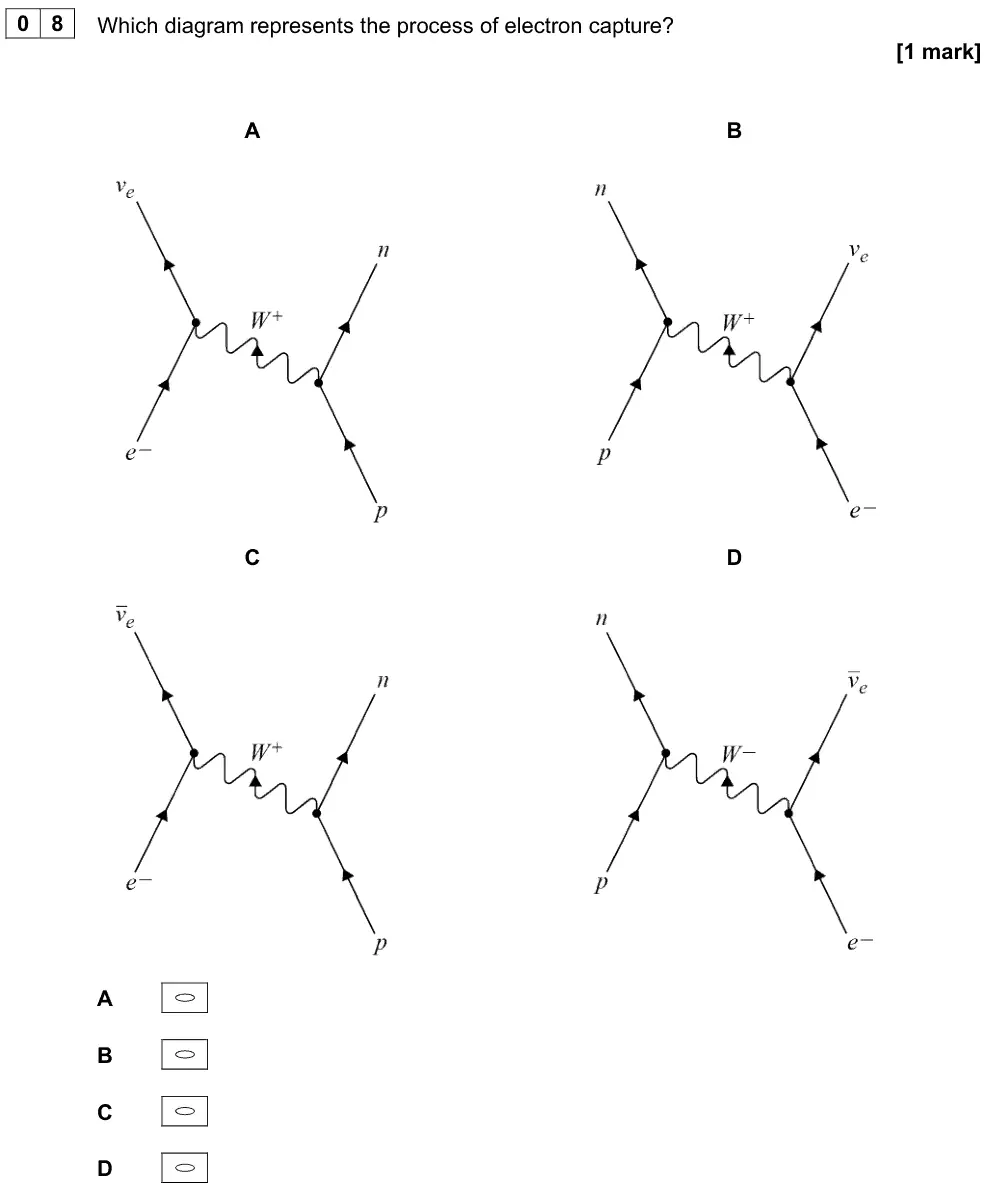
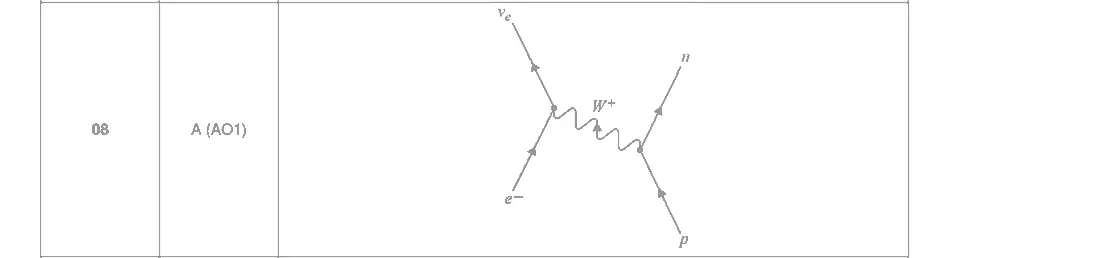
Which diagram represents the process of electron capture?
[1 mark]
A
B
C
D
A
B
C
D
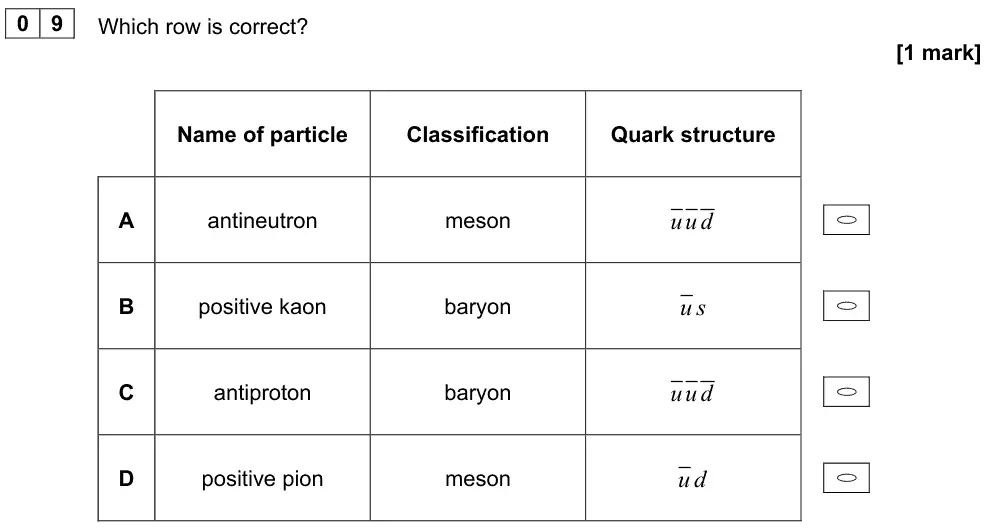
June 2022 · AS Paper 2 · Q9 1 mark AO1=1 Multiple choice classification of particles and quarks
Which row is correct?
[1 mark]
Name of particle
Classification
Quark structure
A
antineutron
meson
uu d
B
positive kaon
baryon
u s
C
antiproton
baryon
uu d
D
positive pion
meson
u d
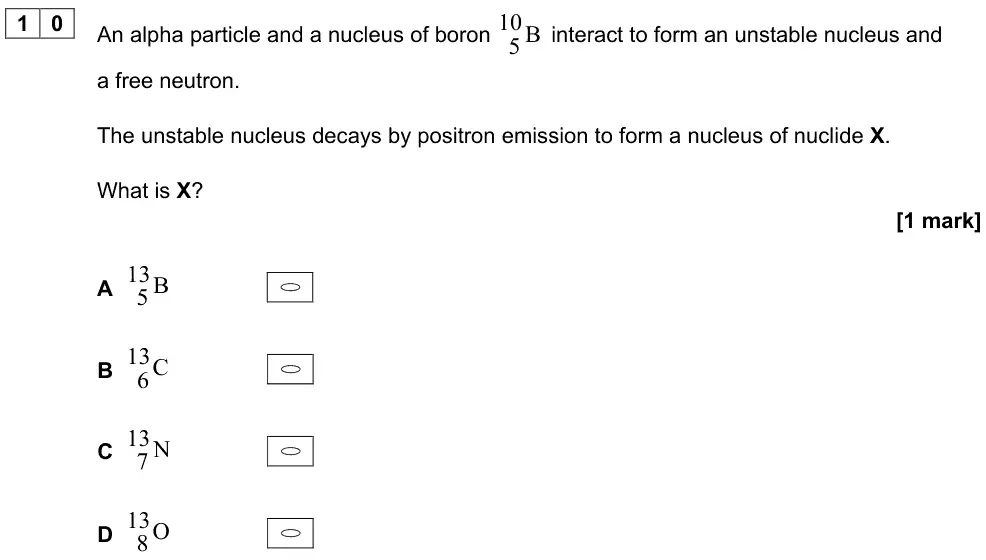
June 2022 · AS Paper 2 · Q10 1 mark AO1=1 Multiple choice atomic structure and stable nuclei
An alpha particle and a nucleus of boron 10B
5
interact to form an unstable nucleus and
a free neutron.
The unstable nucleus decays by positron emission to form a nucleus of nuclide X.
What is X?
[1 mark]
A 13B
5
B 13C
6
C 13N
7
D 13O
8
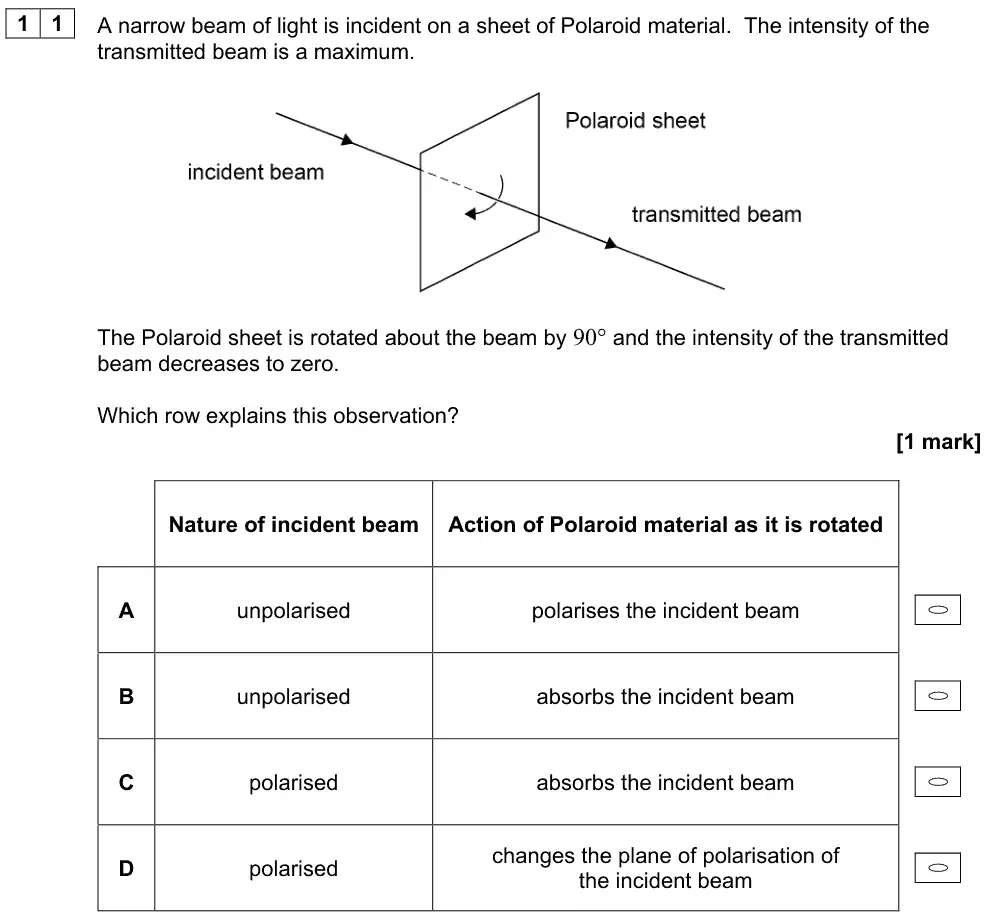
June 2022 · AS Paper 2 · Q11 1 mark AO1=1 Multiple choice progressive waves and polarisation
A narrow beam of light is incident on a sheet of Polaroid material.  The intensity of the
transmitted beam is a maximum.
The Polaroid sheet is rotated about the beam by 90° and the intensity of the transmitted
beam decreases to zero.
Which row explains this observation?
[1 mark]
Nature of incident beam
Action of Polaroid material as it is rotated
A
unpolarised
polarises the incident beam
B
unpolarised
absorbs the incident beam
C
polarised
absorbs the incident beam
D
polarised
changes the plane of polarisation of
the incident beam
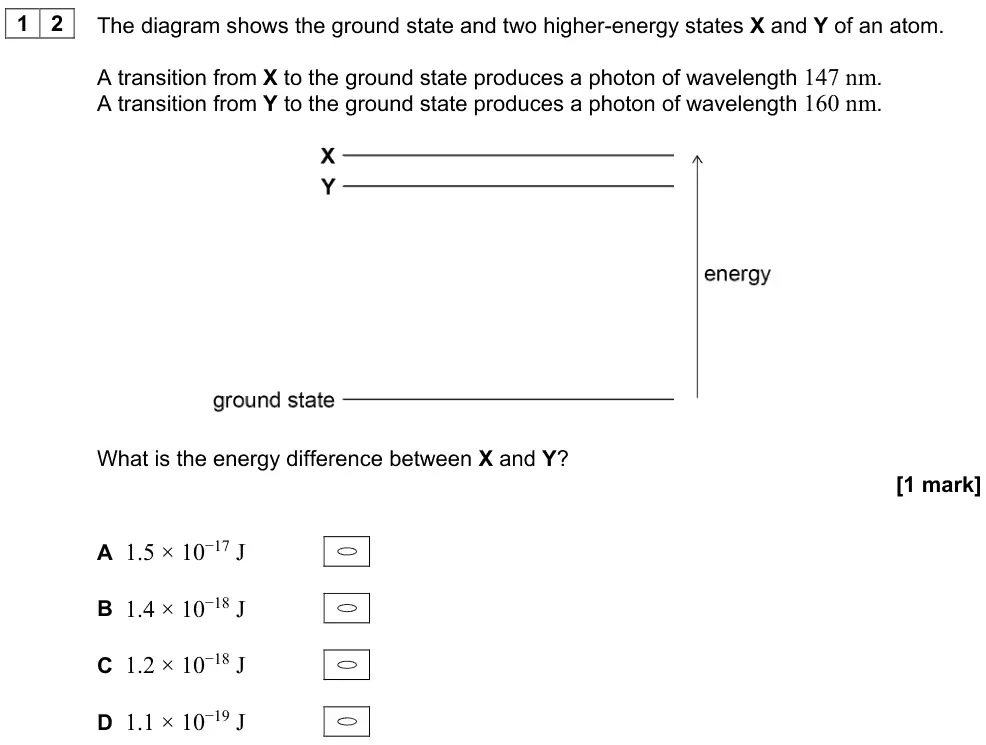
June 2022 · AS Paper 2 · Q12 1 mark AO1=1 Multiple choice energy levels and wave particle dualityparticles antiparticles and interactions
The diagram shows the ground state and two higher-energy states X and Y of an atom.
A transition from X to the ground state produces a photon of wavelength 147 nm.
A transition from Y to the ground state produces a photon of wavelength 160 nm.
What is the energy difference between X and Y?
[1 mark]
A 1.5 × 10⁻¹⁷ J
B 1.4 × 10⁻¹⁸ J
C 1.2 × 10⁻¹⁸ J
D 1.1 × 10⁻¹⁹ J
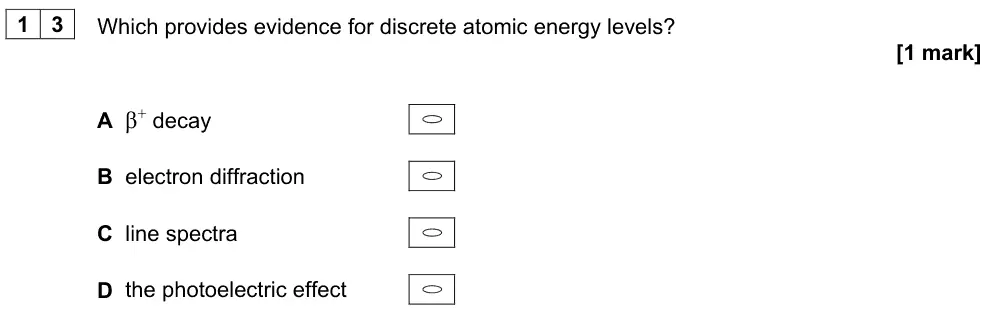
June 2022 · AS Paper 2 · Q13 1 mark AO1=1 Multiple choice energy levels and wave particle duality
Which provides evidence for discrete atomic energy levels?
[1 mark]
A β+ decay
B electron diffraction
C line spectra
D the photoelectric effect
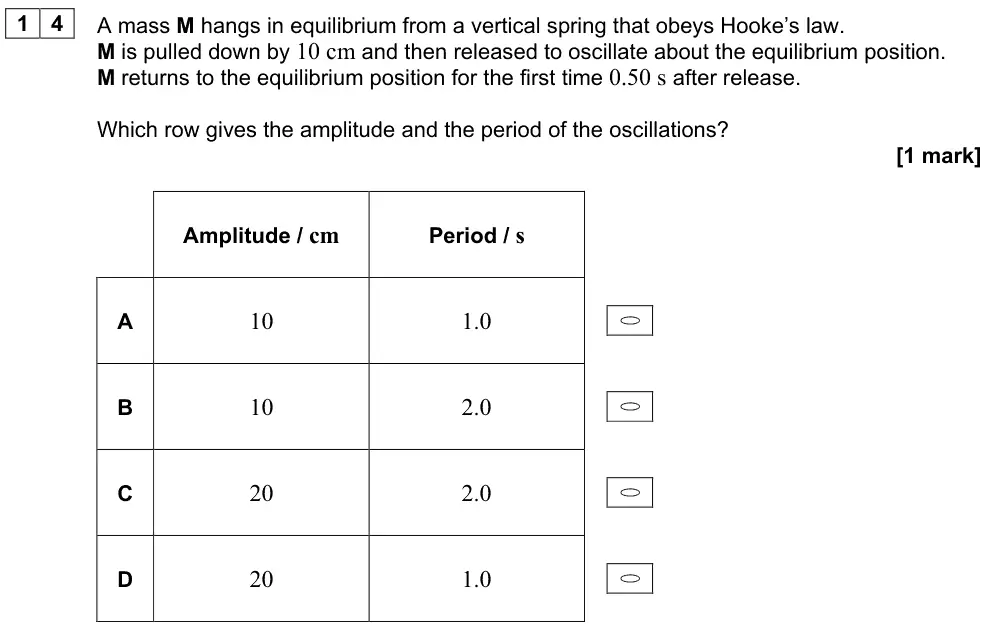
June 2022 · AS Paper 2 · Q14 1 mark AO1=1 Multiple choice progressive waves and polarisation
A mass M hangs in equilibrium from a vertical spring that obeys Hooke’s law.
M is pulled down by 10 cm and then released to oscillate about the equilibrium position.
M returns to the equilibrium position for the first time 0.50 s after release.
Which row gives the amplitude and the period of the oscillations?
[1 mark]
Amplitude / cm
Period / s
A
10
1.0
B
10
2.0
C
20
2.0
D
20
1.0
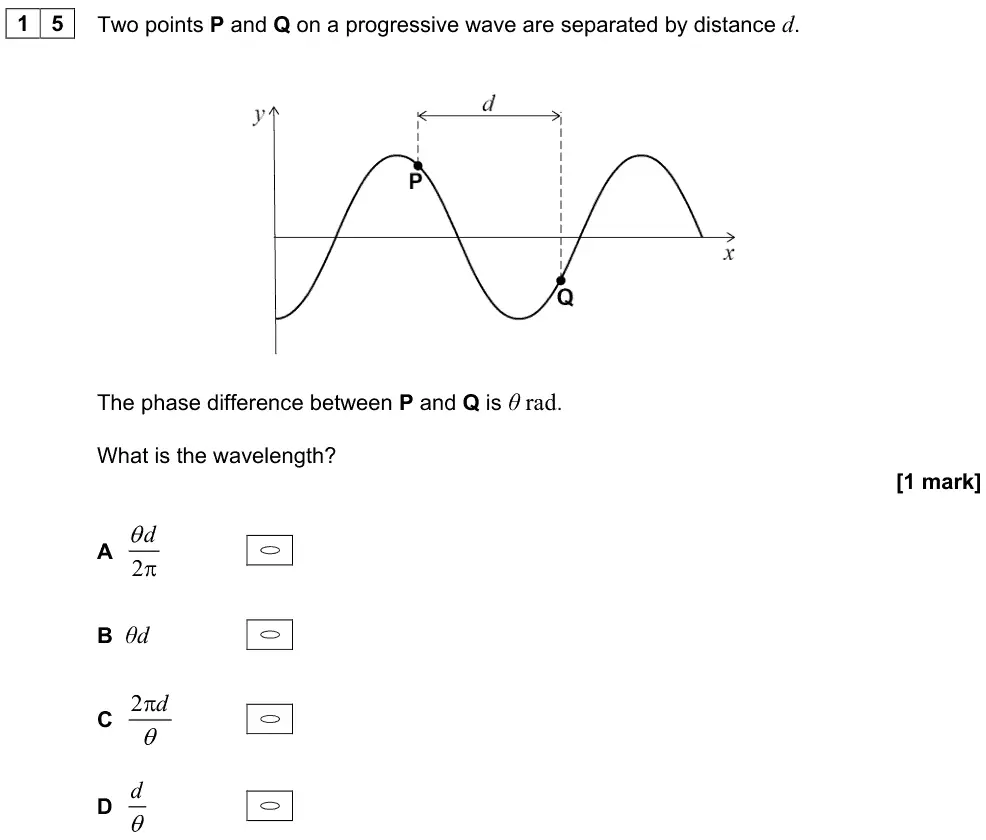
June 2022 · AS Paper 2 · Q15 1 mark AO2=1 Multiple choice progressive waves and polarisation
Two points P and Q on a progressive wave are separated by distance d.
The phase difference between P and Q is θ rad.
What is the wavelength?
[1 mark]
A 2
d
π
B θd
C 2 d
π
D d
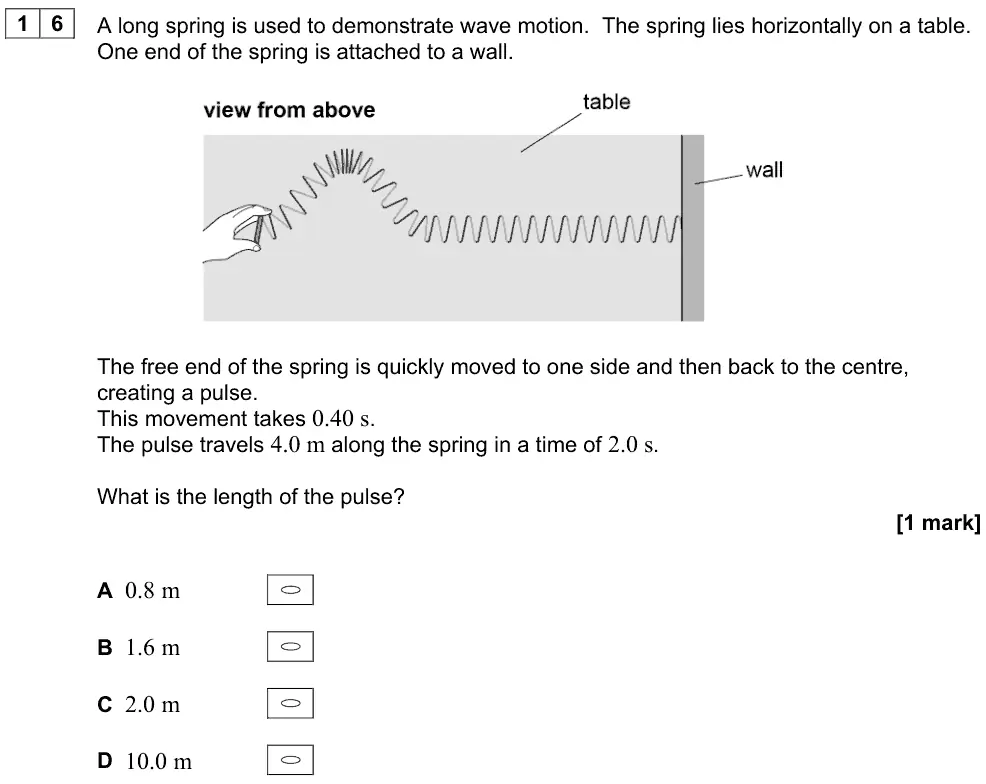
June 2022 · AS Paper 2 · Q16 1 mark AO2=1 Multiple choice progressive waves and polarisation
A long spring is used to demonstrate wave motion.  The spring lies horizontally on a table.
One end of the spring is attached to a wall.
The free end of the spring is quickly moved to one side and then back to the centre,
creating a pulse.
This movement takes 0.40 s.
The pulse travels 4.0 m along the spring in a time of 2.0 s.
What is the length of the pulse?
[1 mark]
A 0.8 m
B 1.6 m
C 2.0 m
D 10.0 m
June 2022 · AS Paper 2 · Q17 1 mark AO1=1 Multiple choice stationary waves
A stretched wire vibrates between two fixed points.
The frequency of the first harmonic of the vibrating wire is 300 Hz.
Without making any other change, the tension in the wire is doubled.
What is the frequency of the new first harmonic of the wire?
[1 mark]
A 150 Hz
B 420 Hz
C 600 Hz
D 1200 Hz
June 2022 · AS Paper 2 · Q18 1 mark AO1=1 Multiple choice stationary waves
A stationary wave forms on a uniform string.
Which statement is correct?
[1 mark]
A The amplitude of oscillations is a maximum at the nodes.
B The distance between two adjacent nodes equals one wavelength.
C The oscillations at two adjacent antinodes are in antiphase.
D The time period of oscillating sections varies along the string.
June 2022 · AS Paper 2 · Q19 1 mark AO2=1 Multiple choice interference and diffraction
Monochromatic visible light is incident normally on a plane transmission diffraction grating
that has 4.8 × 10⁵ lines m−1.
First-order maxima are observed at angles of 16° to the central maximum.
How many maxima in total can be observed?
[1 mark]
A 3
B 4
C 5
D 7
June 2022 · AS Paper 2 · Q20 1 mark AO2=1 Multiple choice refraction and optical fibres
Which combination produces the smallest modal dispersion in an optical fibre?
[1 mark]
Refractive index of core
Refractive index of cladding
A
1.5
1.4
B
1.4
1.5
C
1.5
1.3
D
1.3
1.5
June 2022 · AS Paper 2 · Q21 1 mark AO1=1 Multiple choice vectors and moments
Which is a scalar quantity?
[1 mark]
A force
B kinetic energy
C momentum
D velocity
June 2022 · AS Paper 2 · Q22 1 mark AO2=1 Multiple choice vectors and moments
A uniform beam of weight 23.5 N is attached by a hinge to a vertical wall and supported by
a string.
The string makes an angle of 35° to the wall.
What is the tension in the string?
[1 mark]
A 14 N
B 21 N
C 29 N
D 41 N
June 2022 · AS Paper 2 · Q23 1 mark AO1=1 Multiple choice vectors and moments
Which description of a couple and its unit is correct?
[1 mark]
Description
Unit
A
consists of two equal parallel forces
N m−1
B
produces translational motion
N m
C
consists of two equal and opposite forces
N m
D
produces rotational motion
N m−1
June 2022 · AS Paper 2 · Q24 1 mark AO1=1 Multiple choice motion and projectiles
P and Q are two balls of the same diameter.  P has a greater mass than Q.
Both balls are projected at the same time from the top of a tall building that stands
on horizontal ground.
Both balls are projected with the same horizontal velocity.
P reaches the ground after time tP and at a horizontal distance dP from the building.
Q reaches the ground after time tQ and at a horizontal distance dQ from the building.
The air is still and air resistance is not negligible.
Which row is correct?
[1 mark]
Time
Horizontal distance
A
tP = tQ
dP = dQ
B
tP = tQ
dP > dQ
C
tP < tQ
dP = dQ
D
tP < tQ
dP > dQ
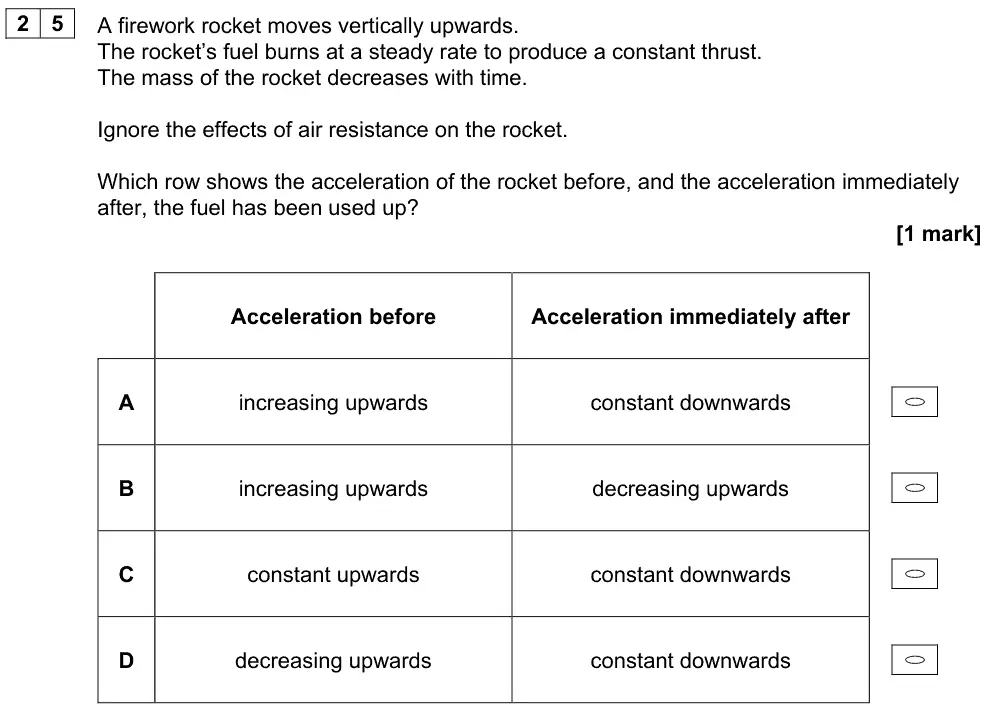
June 2022 · AS Paper 2 · Q25 1 mark AO2=1 Multiple choice newtons laws and momentum
A firework rocket moves vertically upwards.
The rocket’s fuel burns at a steady rate to produce a constant thrust.
The mass of the rocket decreases with time.
Ignore the effects of air resistance on the rocket.
Which row shows the acceleration of the rocket before, and the acceleration immediately
after, the fuel has been used up?
[1 mark]
Acceleration before
Acceleration immediately after
A
increasing upwards
constant downwards
B
increasing upwards
decreasing upwards
C
constant upwards
constant downwards
D
decreasing upwards
constant downwards
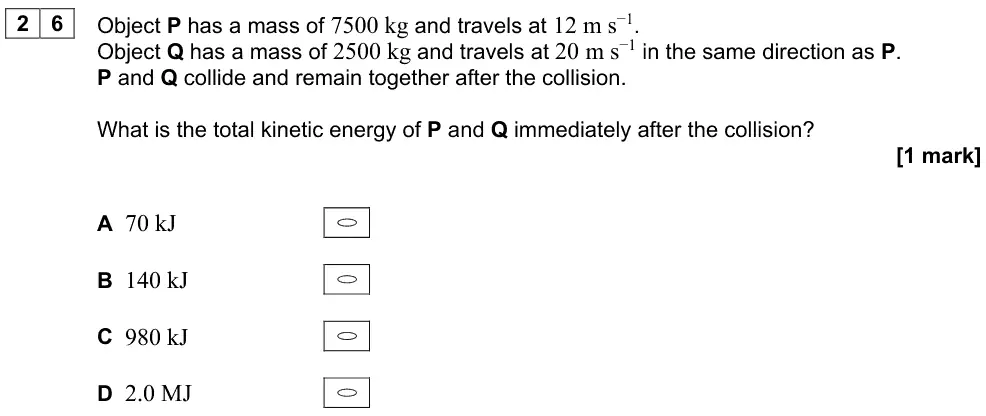
June 2022 · AS Paper 2 · Q26 1 mark AO2=1 Multiple choice newtons laws and momentum
Object P has a mass of 7500 kg and travels at 12 m s−1.
Object Q has a mass of 2500 kg and travels at 20 m s−1 in the same direction as P.
P and Q collide and remain together after the collision.
What is the total kinetic energy of P and Q immediately after the collision?
[1 mark]
A 70 kJ
B 140 kJ
C 980 kJ
D 2.0 MJ
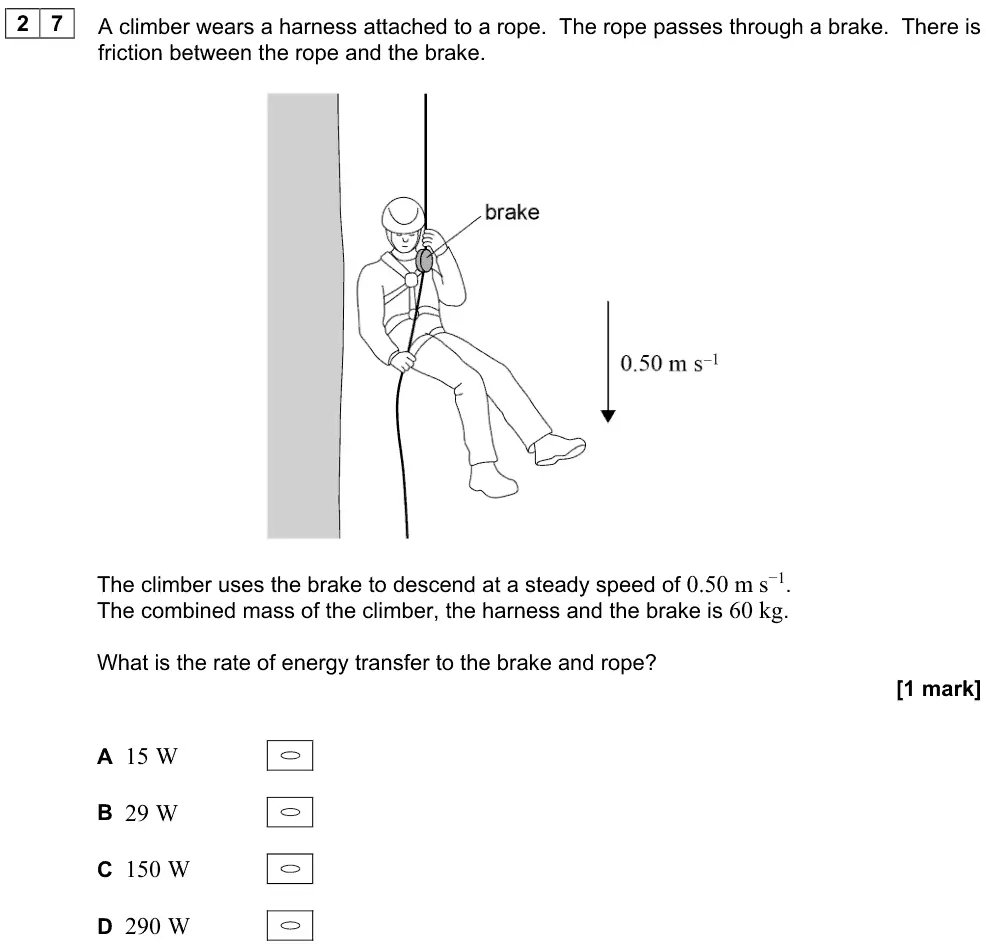
June 2022 · AS Paper 2 · Q27 1 mark AO2=1 Multiple choice work energy and power
A climber wears a harness attached to a rope.  The rope passes through a brake.  There is
friction between the rope and the brake.
The climber uses the brake to descend at a steady speed of 0.50 m s−1.
The combined mass of the climber, the harness and the brake is 60 kg.
What is the rate of energy transfer to the brake and rope?
[1 mark]
A 15 W
B 29 W
C 150 W
D 290 W
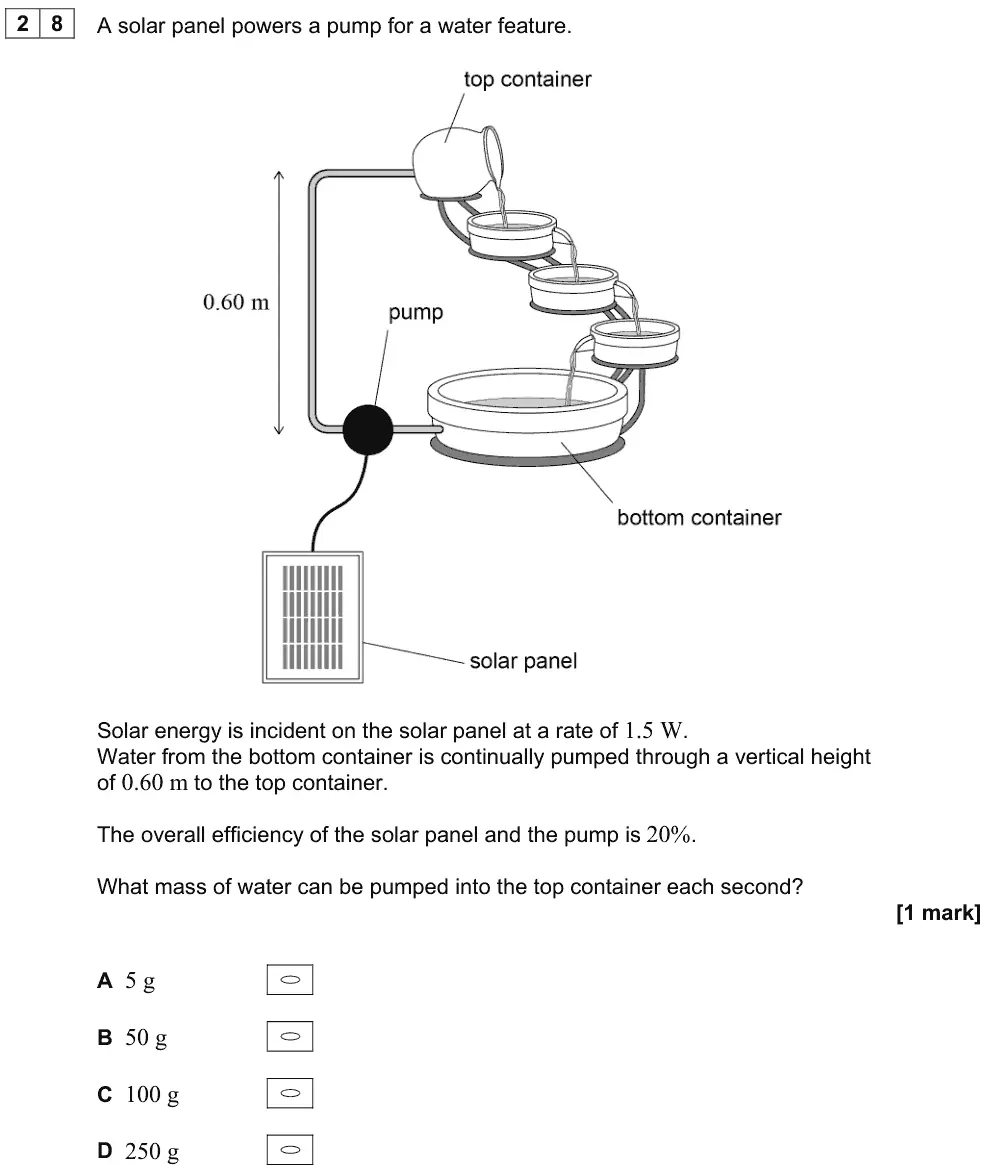
June 2022 · AS Paper 2 · Q28 1 mark AO2=1 Multiple choice work energy and power
A solar panel powers a pump for a water feature.
Solar energy is incident on the solar panel at a rate of 1.5 W.
Water from the bottom container is continually pumped through a vertical height
of 0.60 m to the top container.
The overall efficiency of the solar panel and the pump is 20%.
What mass of water can be pumped into the top container each second?
[1 mark]
A 5 g
B 50 g
C 100 g
D 250 g
June 2022 · AS Paper 2 · Q29 1 mark AO2=1 Multiple choice materials and young modulus
A wire is made from a material of Young modulus E.
The wire obeys Hooke’s law.
The wire has an unstretched length L and a cross-sectional area A.
When a force is applied to the wire, the extension of the wire is e.
What is the elastic strain energy stored in the wire?
[1 mark]
A
2
2
AEe
L
B 2
L
Ae
C
2
2
Ae
EL
D
2
AEL
e
June 2022 · AS Paper 2 · Q30 1 mark AO1=1 Multiple choice current voltage and resistivity
As the temperature of a copper wire increases, its resistance
[1 mark]
A remains constant.
B increases.
C decreases.
D remains constant at first and then decreases.
June 2022 · AS Paper 2 · Q31 1 mark AO2=1 Multiple choice emf and internal resistance
A 12 Ω resistor is connected across the terminals of a cell that has an emf of 2.0 V and an
internal resistance of 4.0 Ω.
What is the terminal pd?
[1 mark]
A 0.50 V
B 0.75 V
C 1.30 V
D 1.50 V
June 2022 · AS Paper 2 · Q32 1 mark AO1=1 Multiple choice circuits and potential dividerscurrent voltage and resistivity
The diagram shows the currents in part of a circuit.
What is the potential difference between points P and Q?
[1 mark]
A 60 V
B 70 V
C 180 V
D 270 V
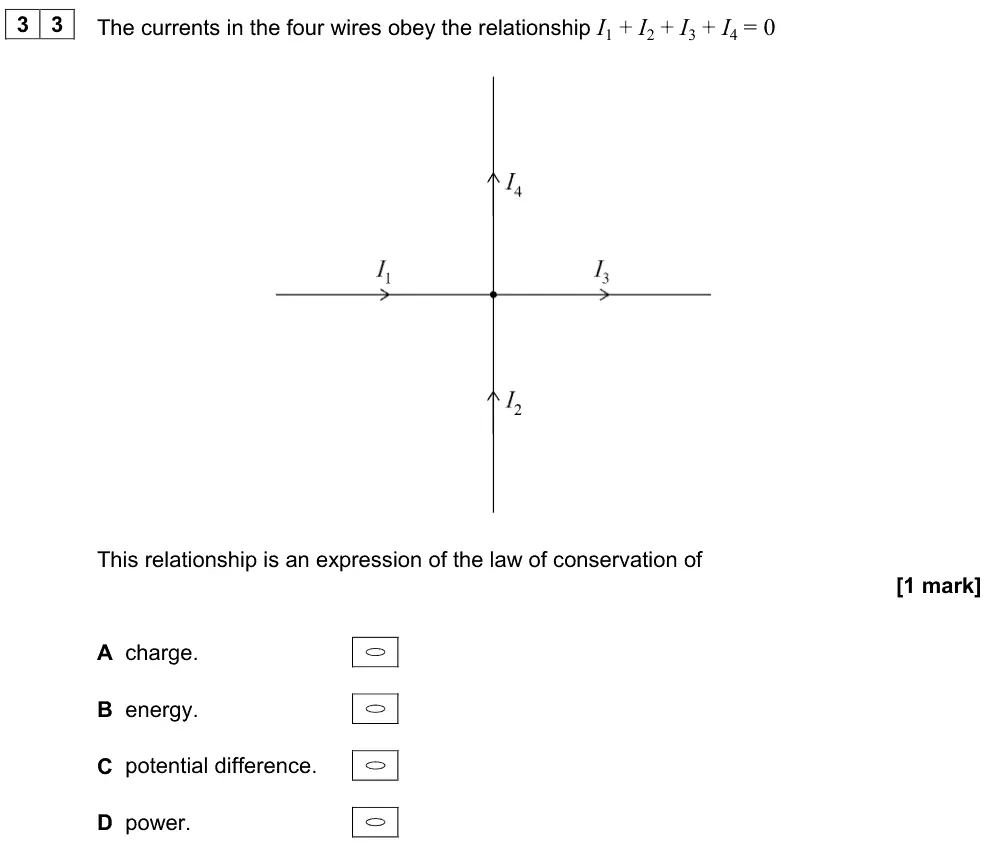
June 2022 · AS Paper 2 · Q33 1 mark AO1=1 Multiple choice circuits and potential dividers
The currents in the four wires obey the relationship I1 + I2 + I3 + I4 = 0
This relationship is an expression of the law of conservation of
[1 mark]
A charge.
B energy.
C potential difference.
D power.
June 2022 · AS Paper 2 · Q34 1 mark AO2=1 Multiple choice emf and internal resistance
A practical power supply provides a steady current I for a time t to an external circuit.
The emf of the power supply during t is equivalent to
[1 mark]
A the energy dissipated in the external circuit.
B the energy dissipated in the whole circuit.
C the energy dissipated in the whole circuit, divided by the product It.
D the potential difference across the terminals of the power supply.

Work with an AQA physics tutor

Want a paper marked and gone through with you? Message us.

Prefer email? Send an enquiry

If you are under 18, please include a parent's contact details. Enquiries go to enquiries@physicsaleveltutor.com and are deleted once handled. All tutoring is online.