June 2017: AS Paper 2

70 marks · 53 question parts · Paper, mark scheme and report on AQA's site · Have the data and formulae booklet beside you

Question by question

QTopicMarksAOType
1.1 Circuits and potential dividers 1Practical and data analysis
1.2 Circuits and potential dividers 2Practical and data analysis
1.3 Electromotive force and internal resistance, Current, potential difference, I-V characteristics and resistivity 1Practical and data analysis
1.4 Electromotive force and internal resistance 1Practical and data analysis
1.5 Electromotive force and internal resistance 1Practical and data analysis
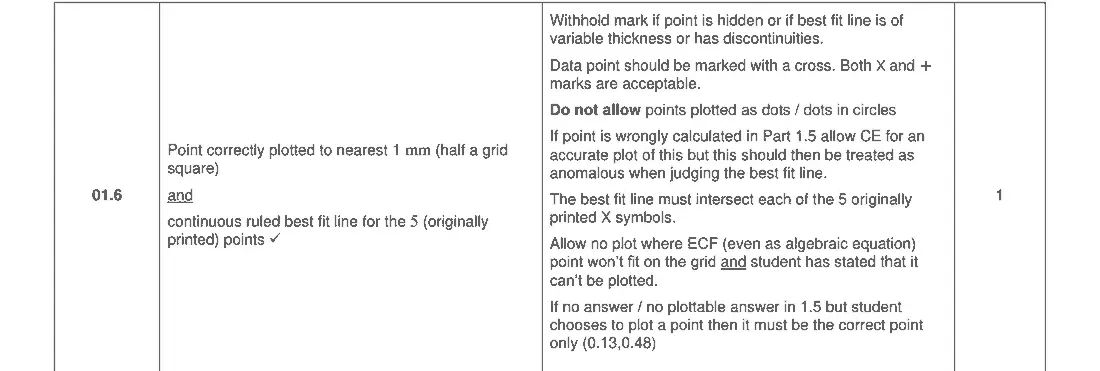
1.6 Measurements, units and uncertainties 1Practical and data analysis
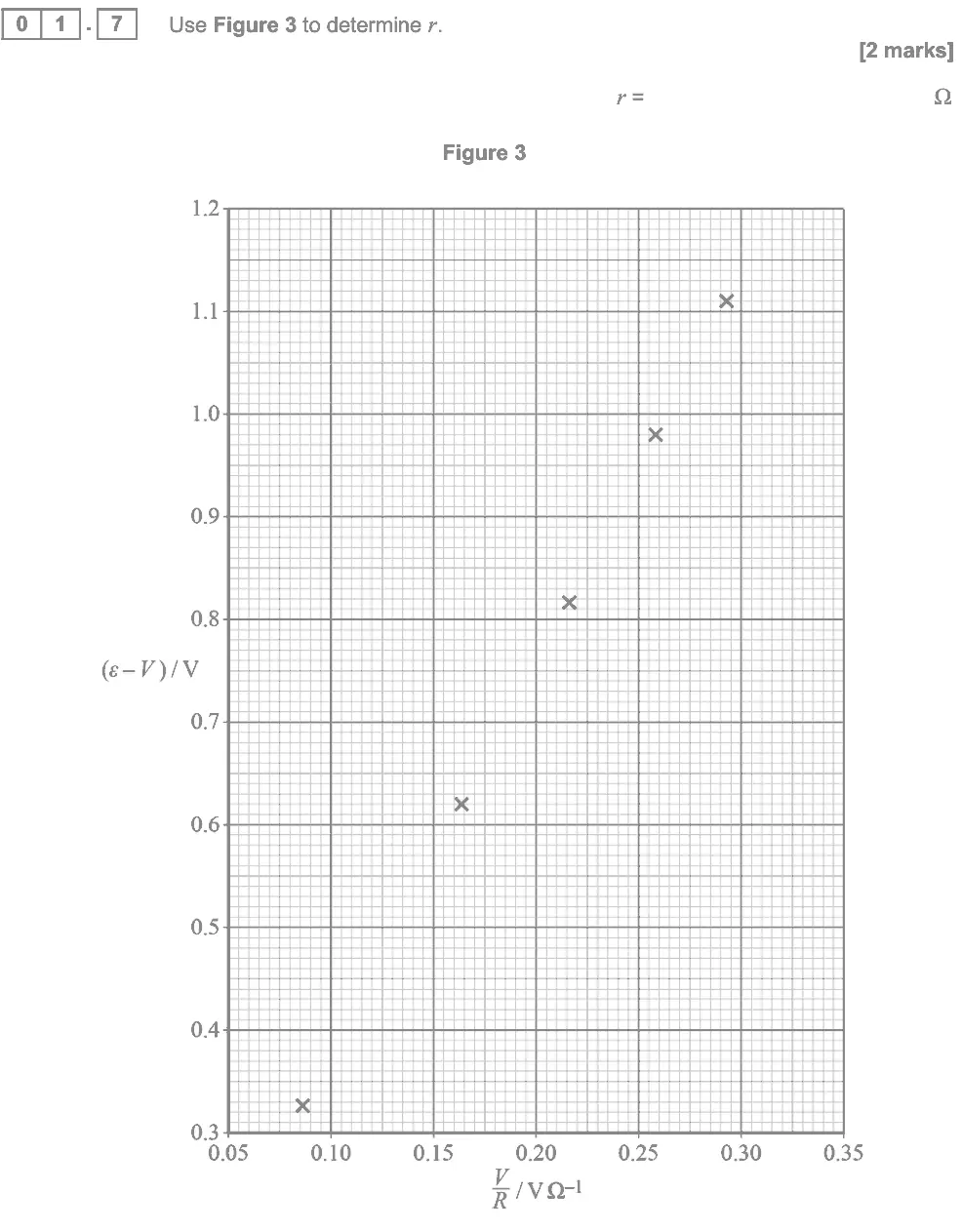
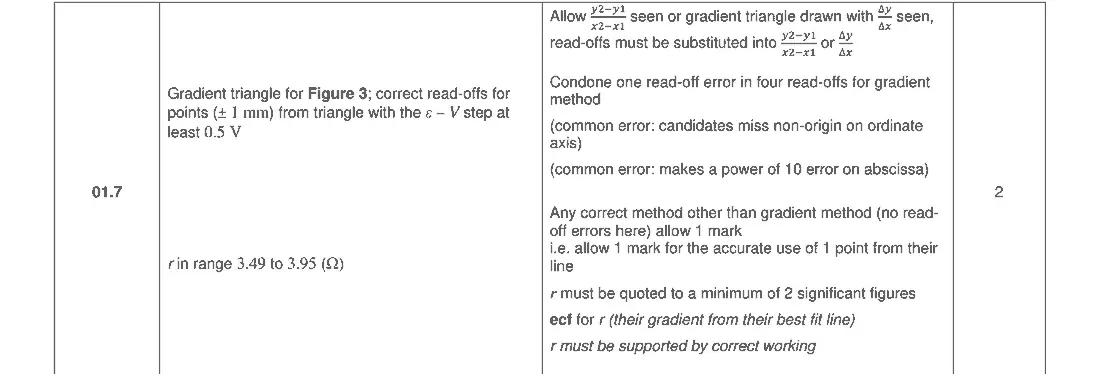
1.7 Electromotive force and internal resistance 2Practical and data analysis
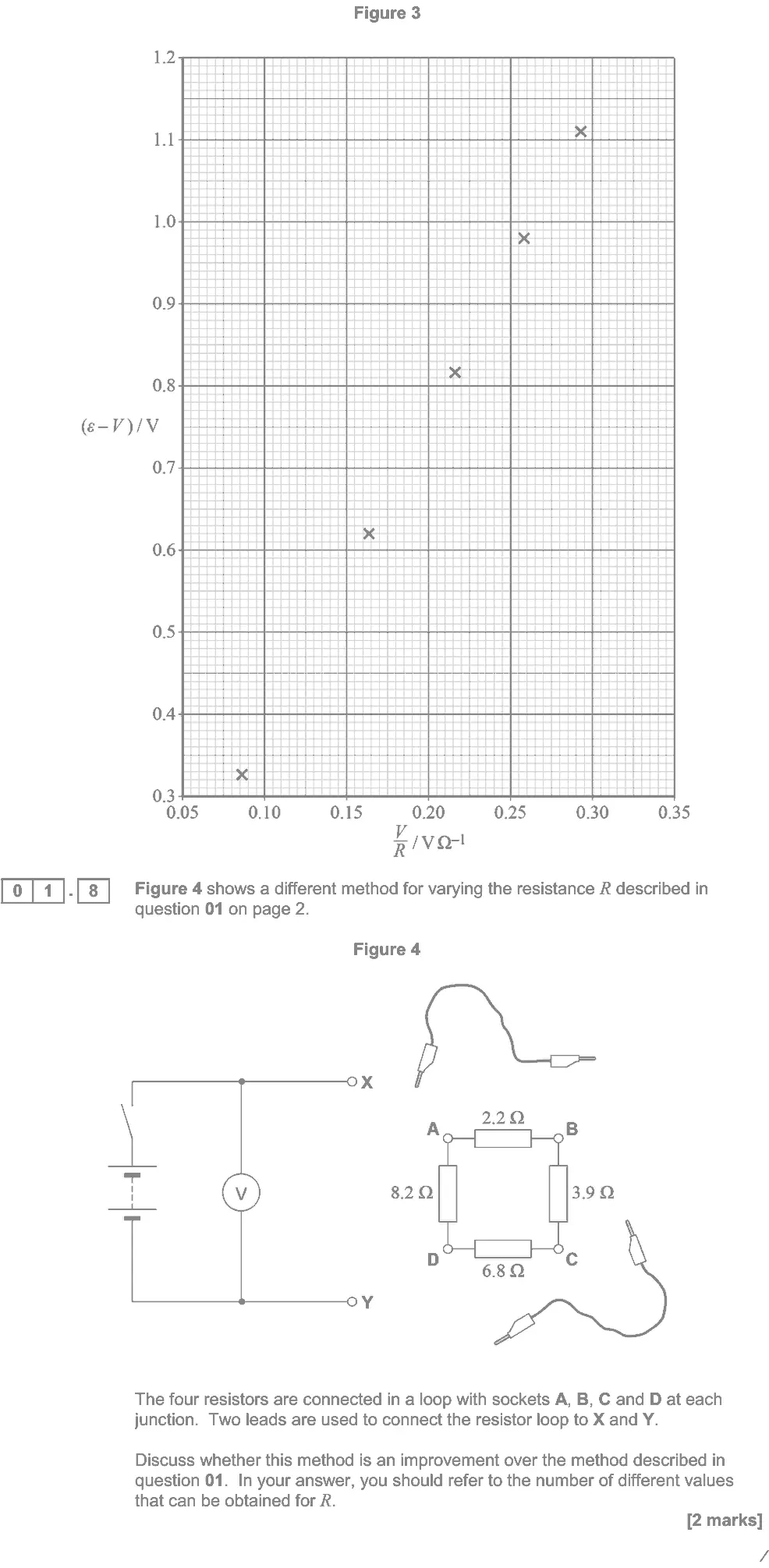
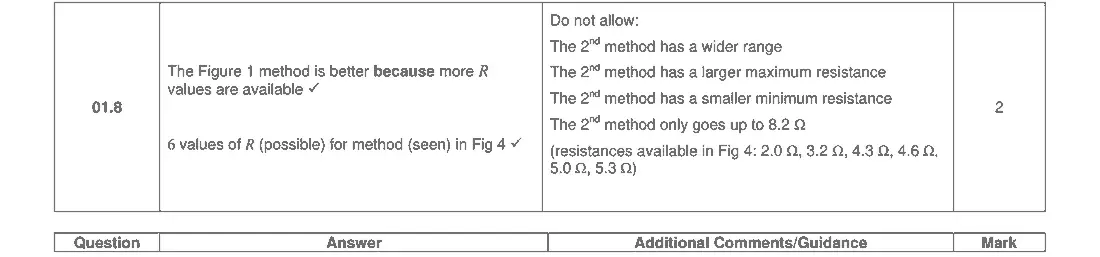
1.8 Circuits and potential dividers 2Practical and data analysis
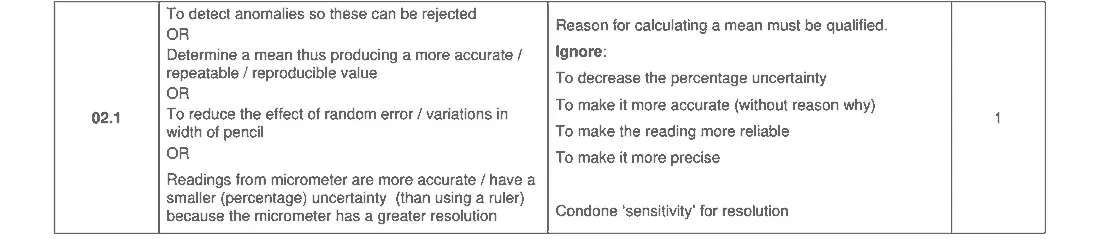
2.1 Measurements, units and uncertainties 1Practical and data analysis
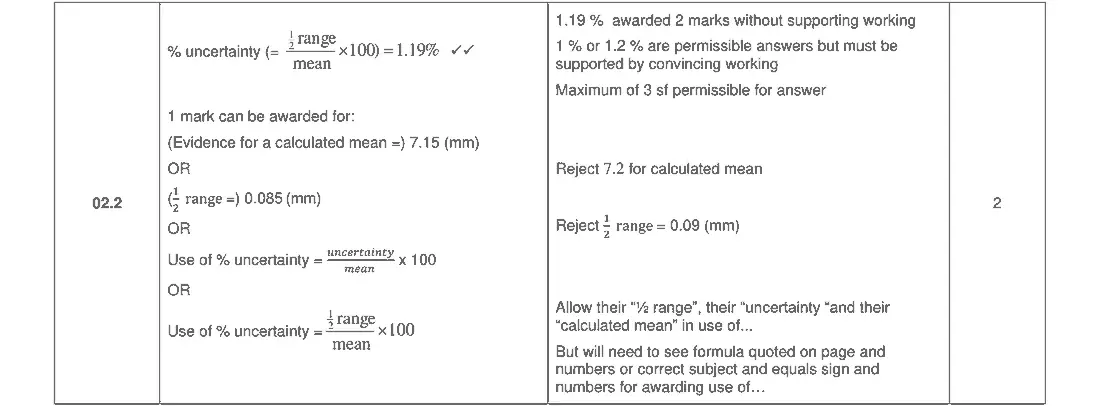
2.2 Measurements, units and uncertainties 2Practical and data analysis
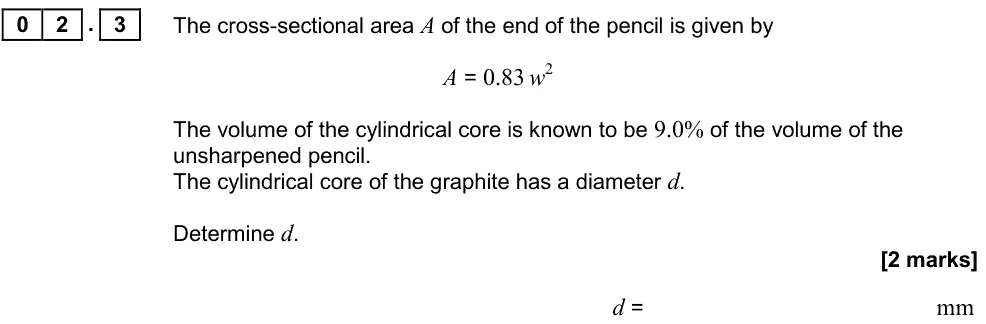
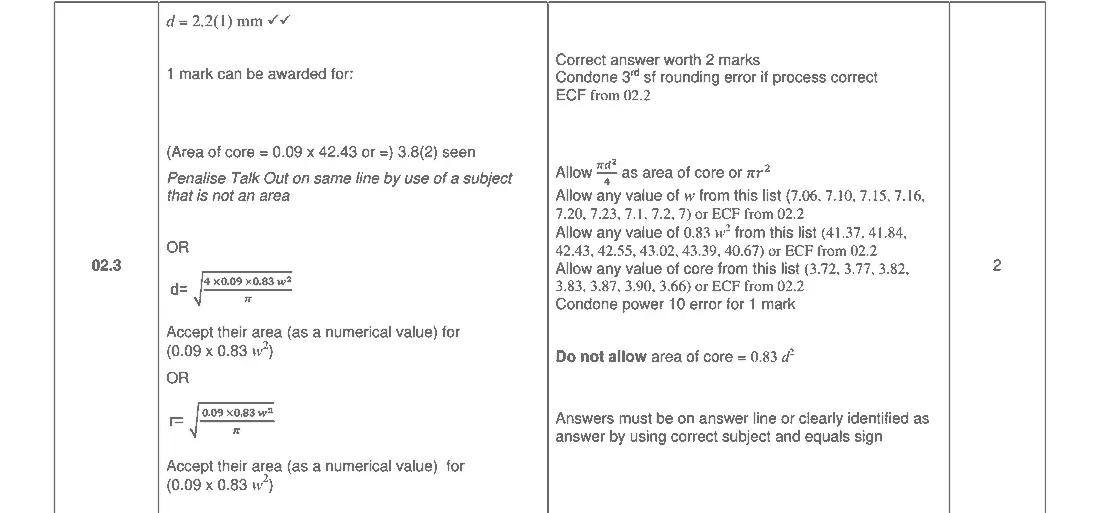
2.3 Materials, stress, strain and the Young modulus 2Practical and data analysis
2.4 Measurements, units and uncertainties 1Practical and data analysis
2.5 Measurements, units and uncertainties 1Practical and data analysis
2.6 Measurements, units and uncertainties 2Practical and data analysis
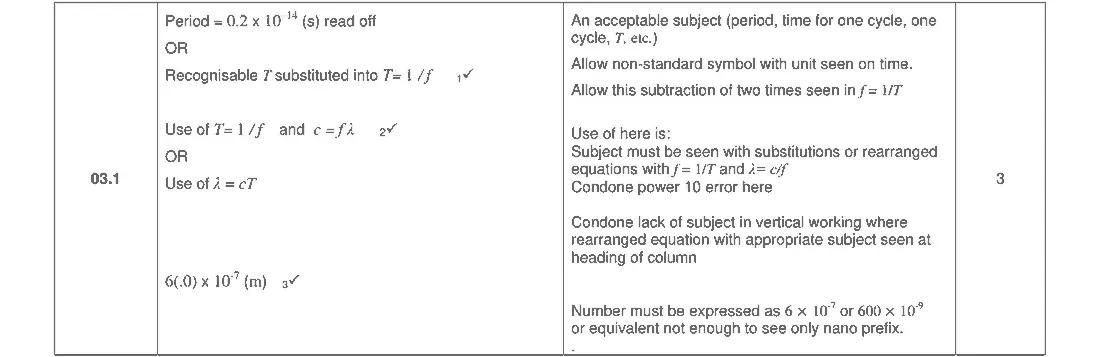
3.1 Progressive waves, longitudinal and transverse waves 3Show that
3.2 Progressive waves, longitudinal and transverse waves 2Calculation
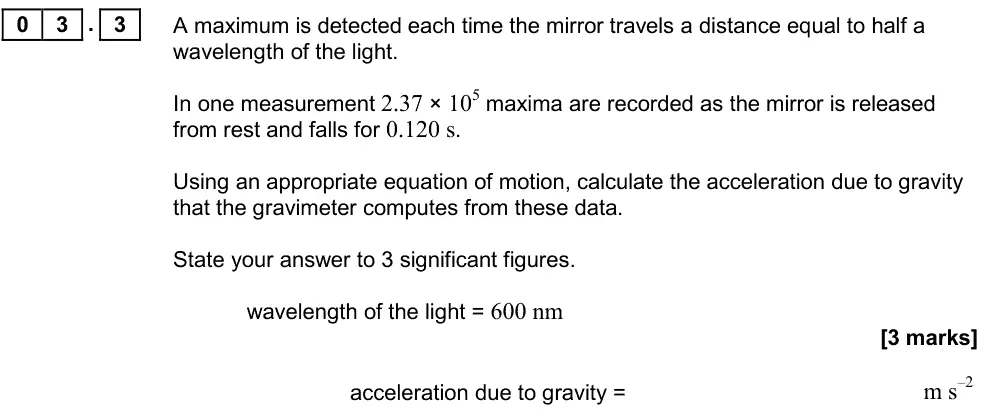
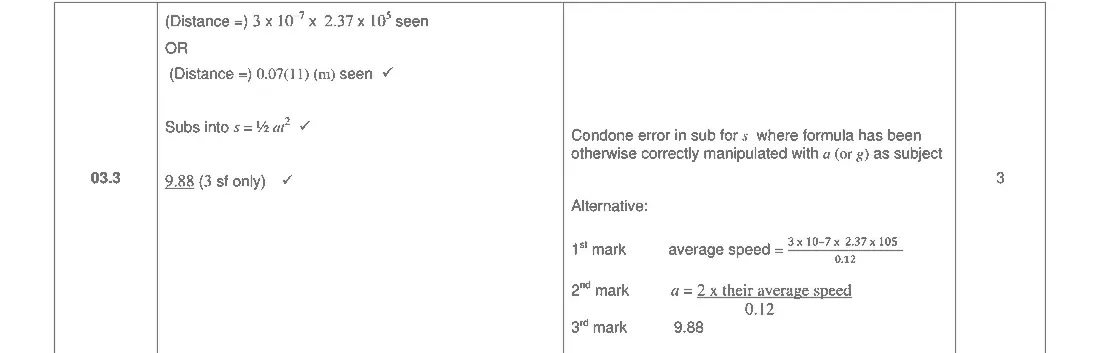
3.3 Motion along a straight line and projectile motion 3Calculation
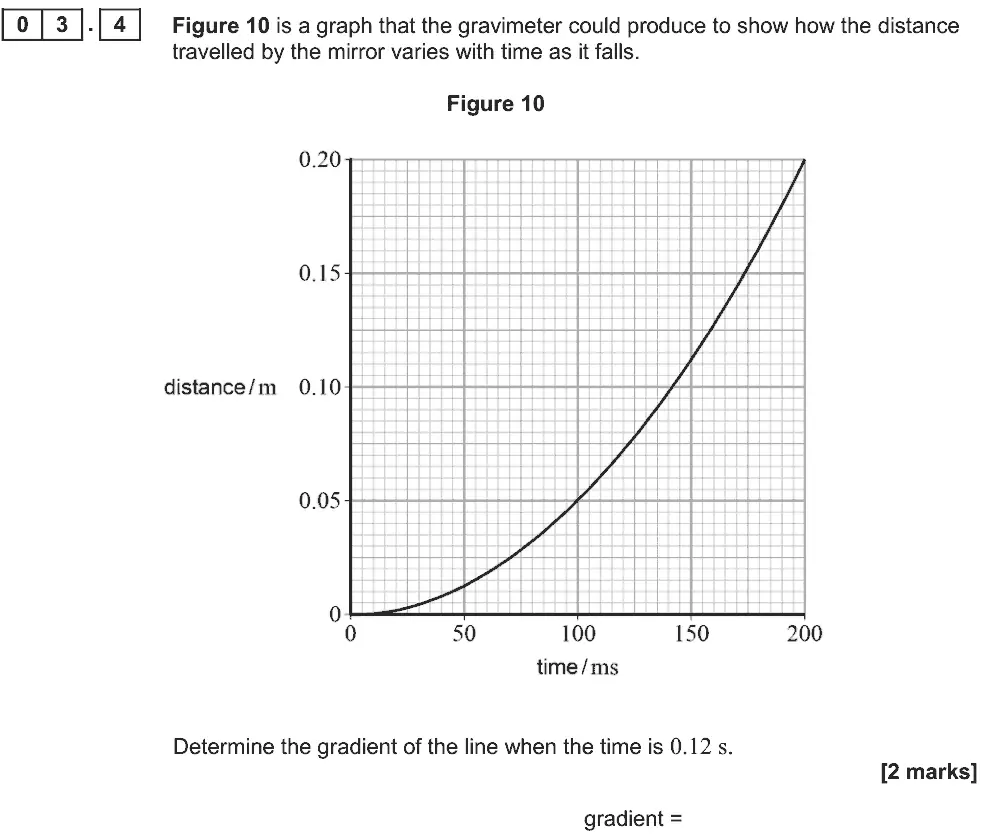
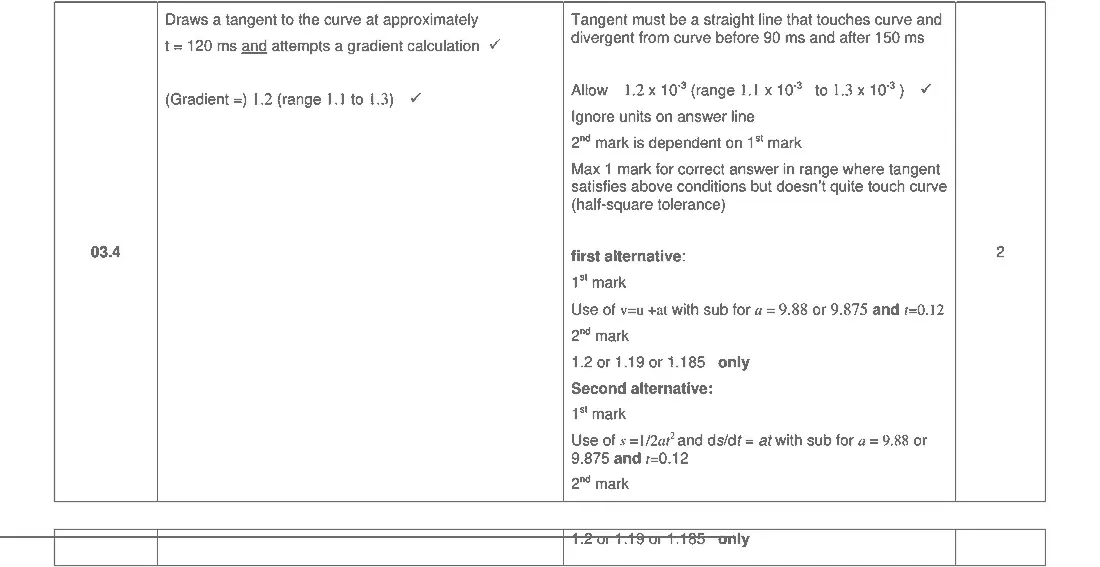
3.4 Motion along a straight line and projectile motion 2Calculation
3.5 Motion along a straight line and projectile motion 1Short answer
4.1 Atomic structure and stable nuclei 2Calculation
4.2 Excitation, energy levels and wave-particle duality 1Calculation
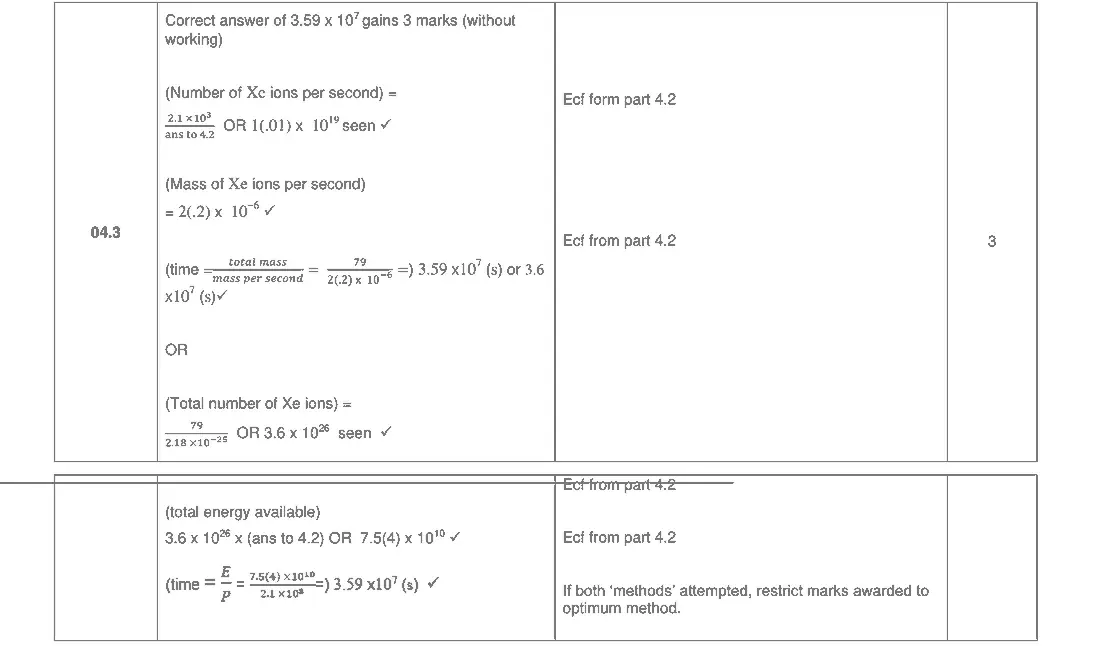
4.3 Work, energy, power and conservation of energy, Excitation, energy levels and wave-particle duality 3Calculation
4.4 Newton's laws of motion and momentum 3Explanation
5 Work, energy, power and conservation of energy 1Multiple choice
6 Classification of particles, quarks and conservation laws, Particles, antiparticles and particle interactions 1Multiple choice
7 Electromotive force and internal resistance, Circuits and potential dividers 1Multiple choice
8 Atomic structure and stable nuclei 1Multiple choice
9 Newton's laws of motion and momentum 1Multiple choice
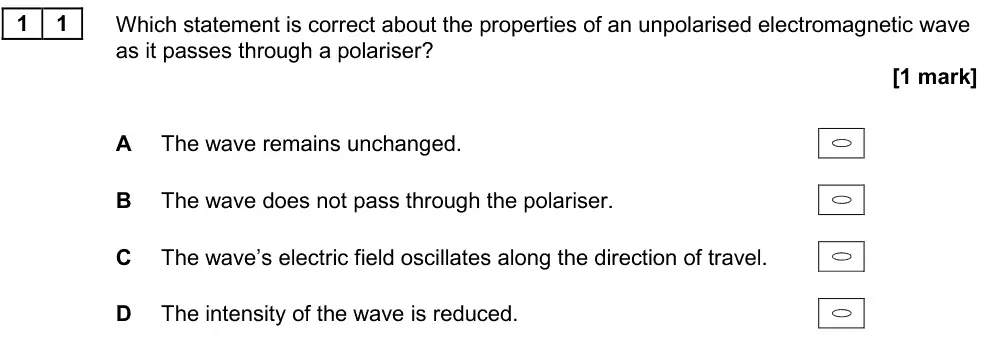
10 Progressive waves, longitudinal and transverse waves 1Multiple choice
11 Progressive waves, longitudinal and transverse waves 1Multiple choice
12 Circuits and potential dividers 1Multiple choice
13 Classification of particles, quarks and conservation laws 1Multiple choice
14 Superposition and stationary waves, Progressive waves, longitudinal and transverse waves 1Multiple choice
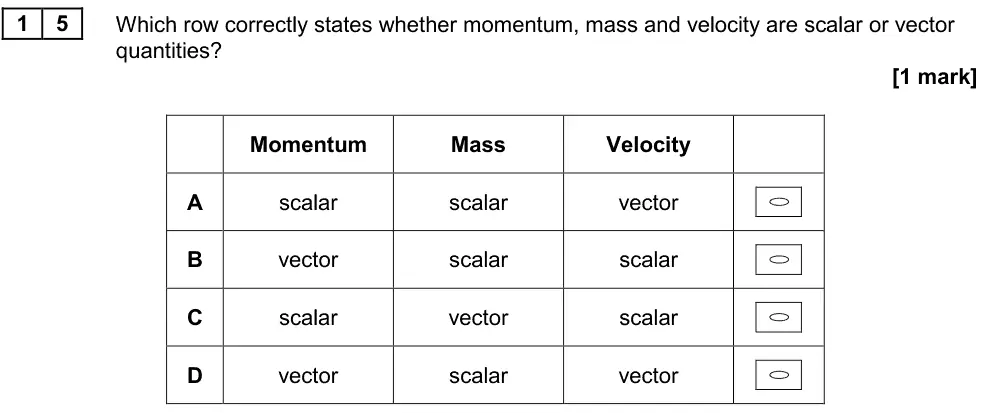
15 Scalars, vectors and moments 1Multiple choice
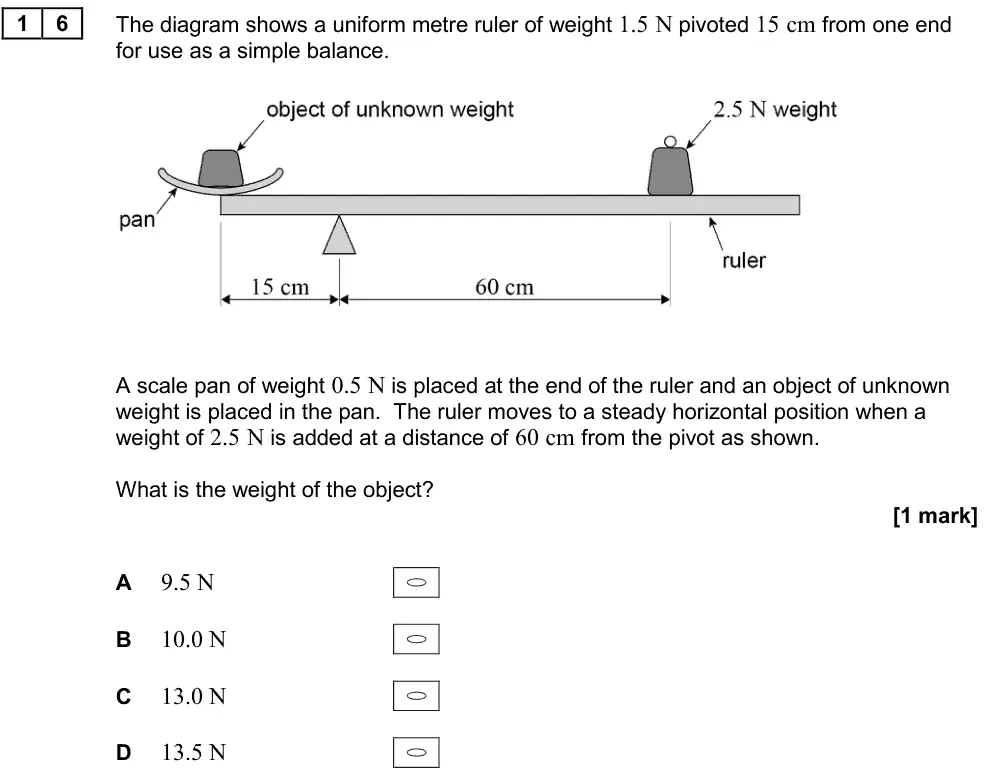
16 Scalars, vectors and moments 1Multiple choice
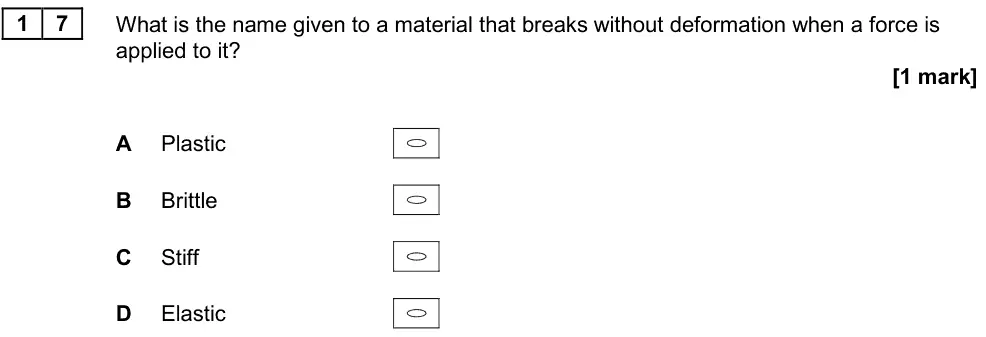
17 Materials, stress, strain and the Young modulus 1Multiple choice
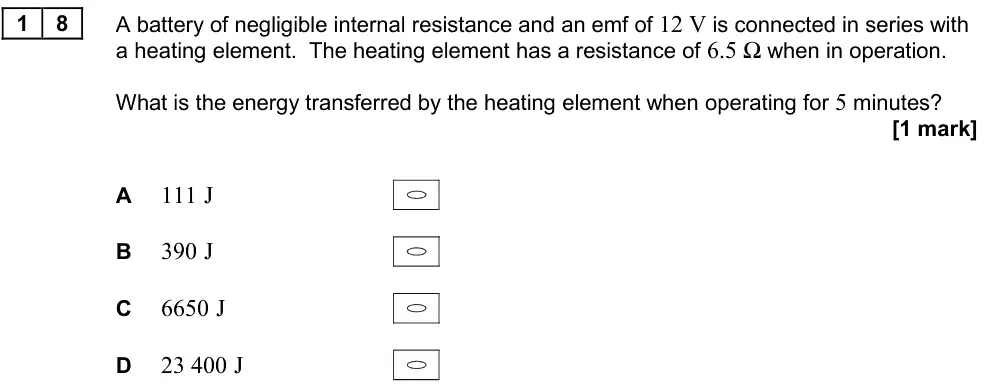
18 Circuits and potential dividers 1Multiple choice
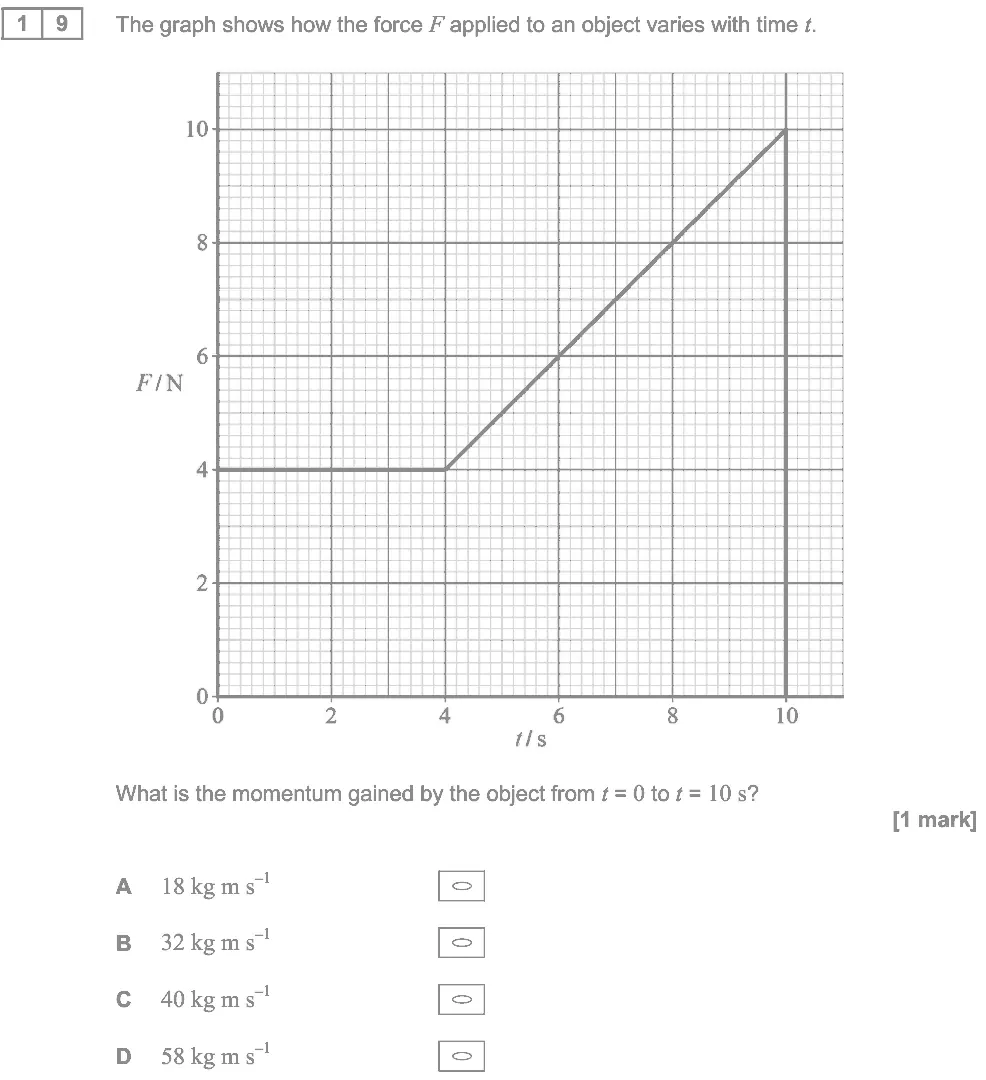
19 Newton's laws of motion and momentum 1Multiple choice
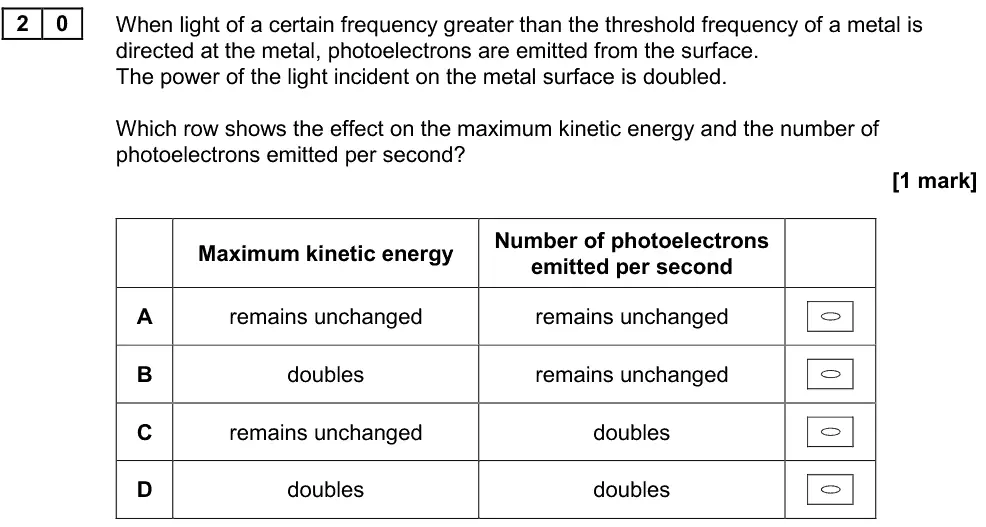
20 The photoelectric effect 1Multiple choice
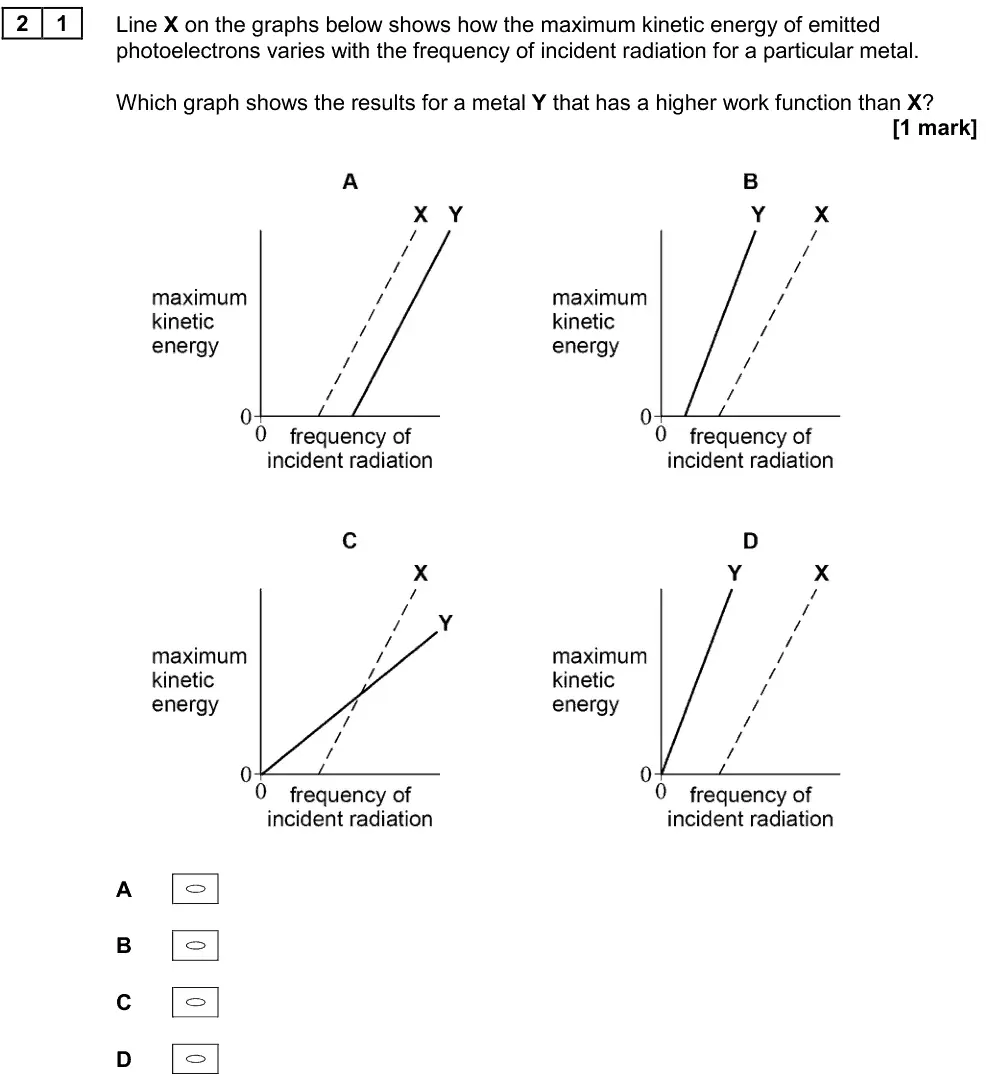
21 The photoelectric effect 1Multiple choice
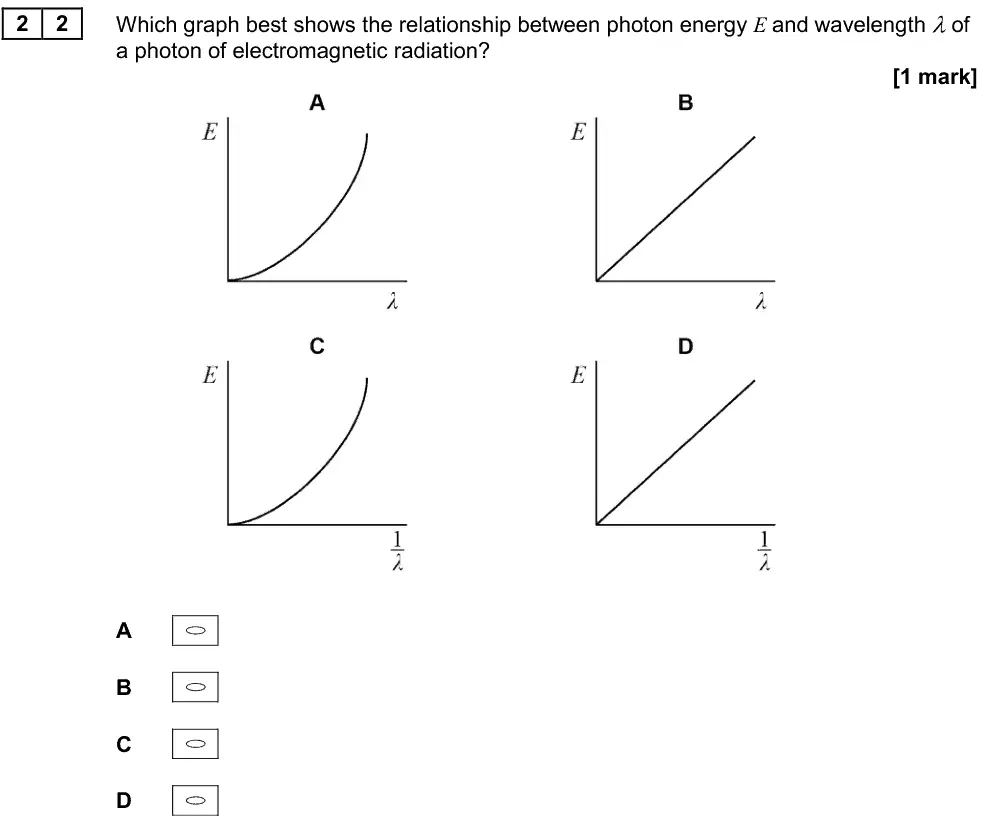
22 Particles, antiparticles and particle interactions 1Multiple choice
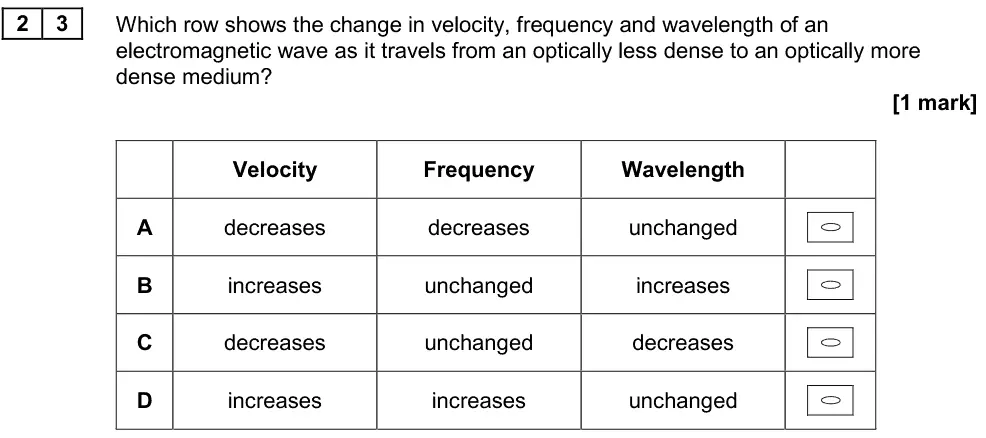
23 Refraction, total internal reflection and optical fibres, Progressive waves, longitudinal and transverse waves 1Multiple choice
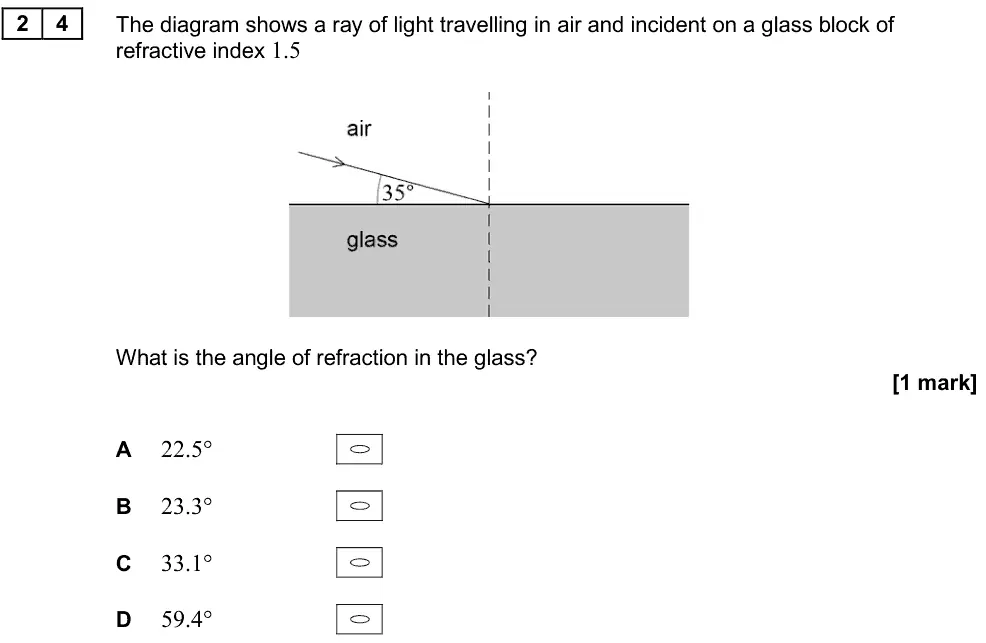
24 Refraction, total internal reflection and optical fibres 1Multiple choice
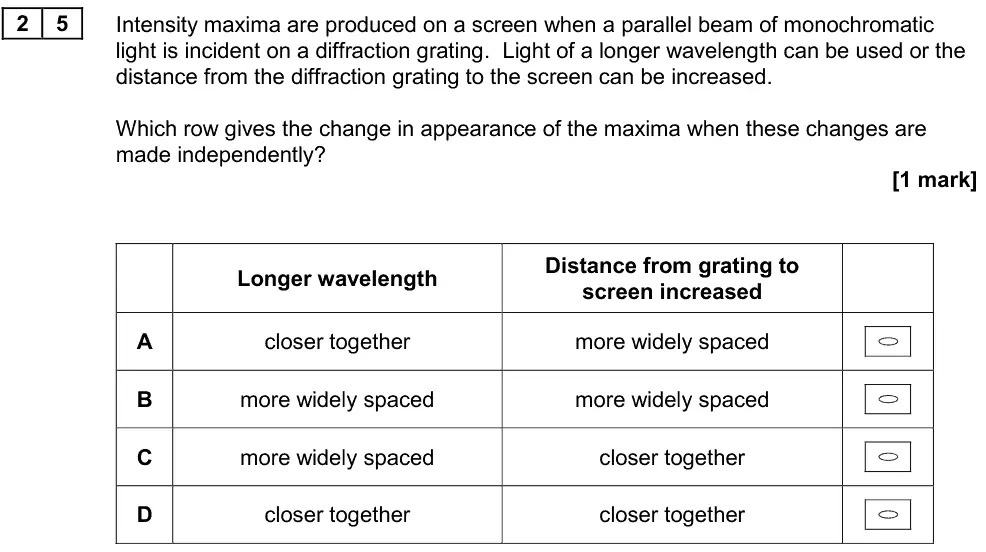
25 Interference, diffraction and the diffraction grating 1Multiple choice
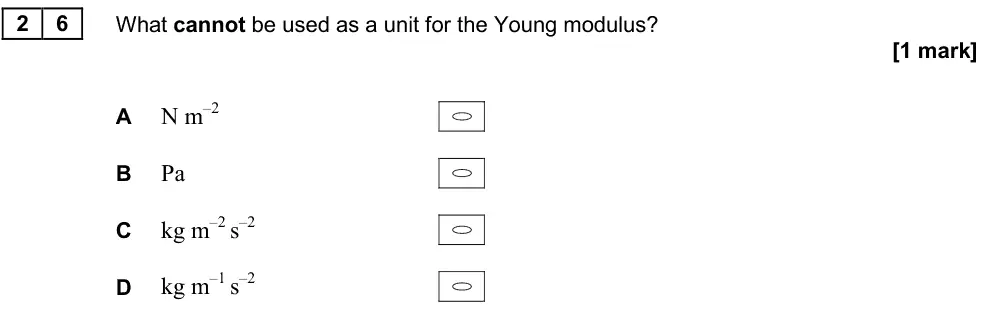
26 Materials, stress, strain and the Young modulus, Measurements, units and uncertainties 1Multiple choice
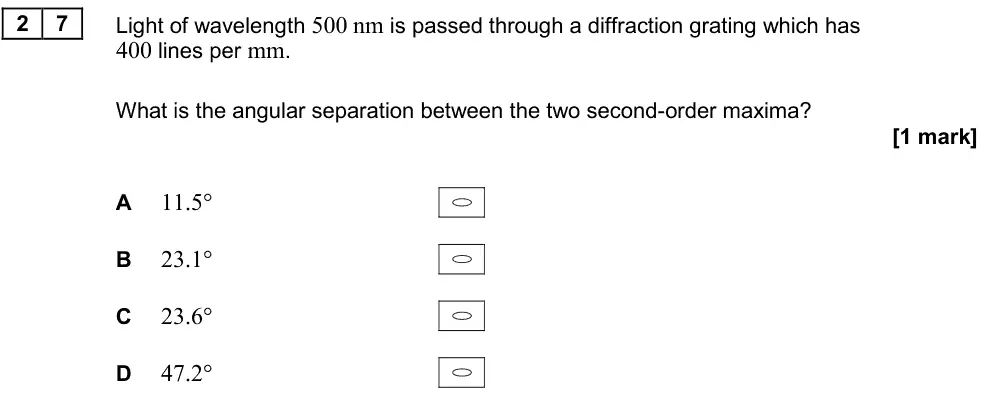
27 Interference, diffraction and the diffraction grating 1Multiple choice
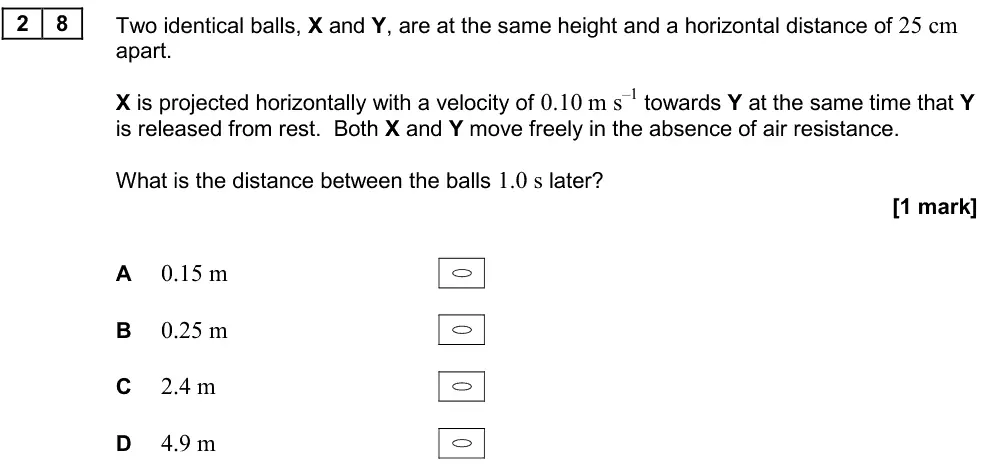
28 Motion along a straight line and projectile motion 1Multiple choice
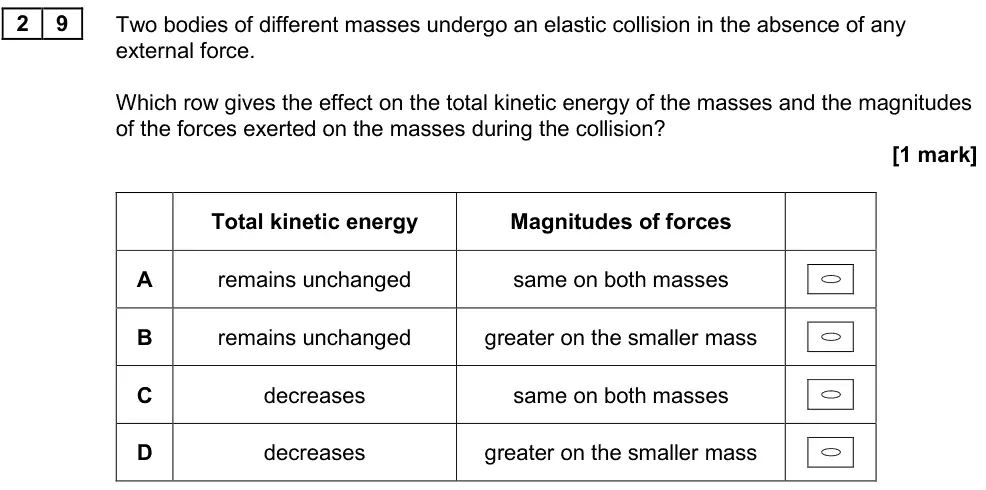
29 Newton's laws of motion and momentum 1Multiple choice
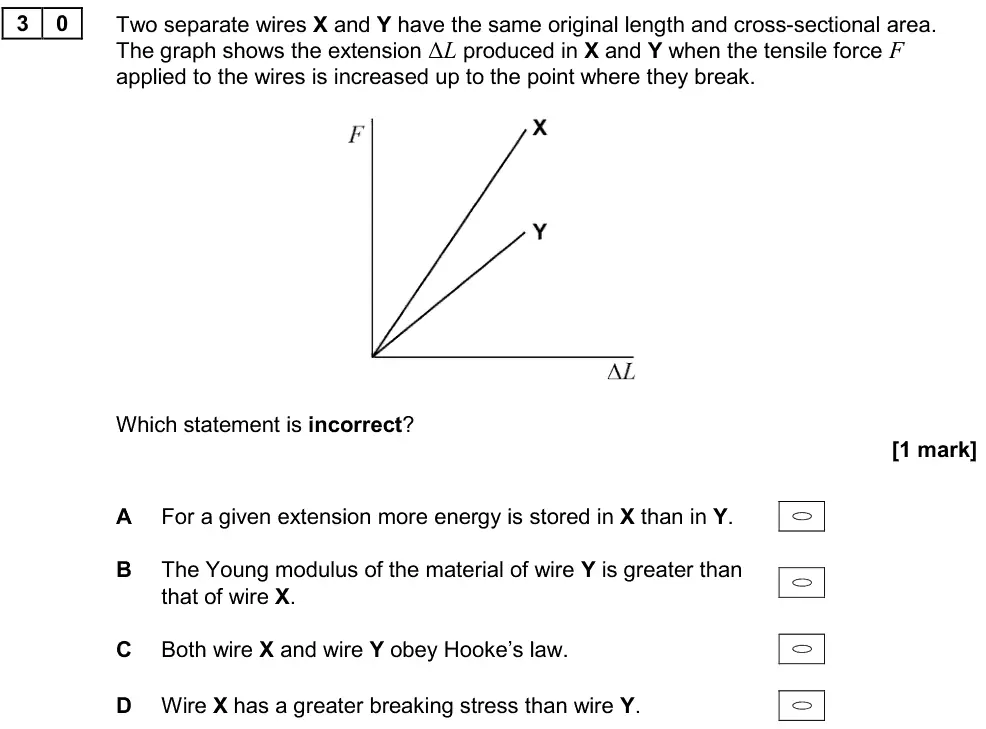
30 Materials, stress, strain and the Young modulus 1Multiple choice
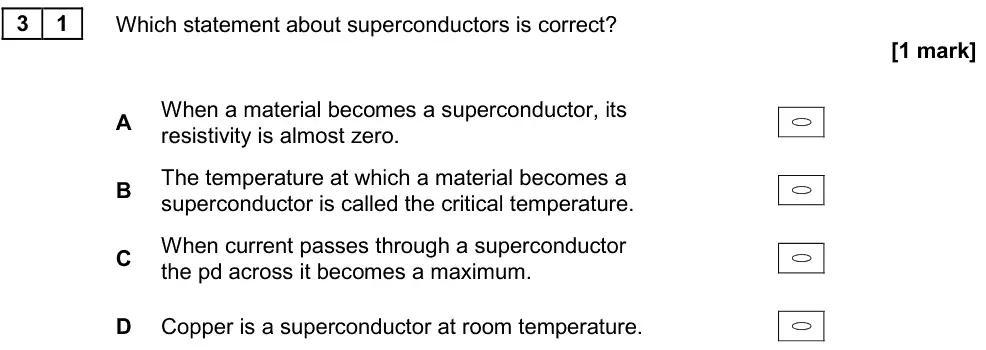
31 Current, potential difference, I-V characteristics and resistivity 1Multiple choice
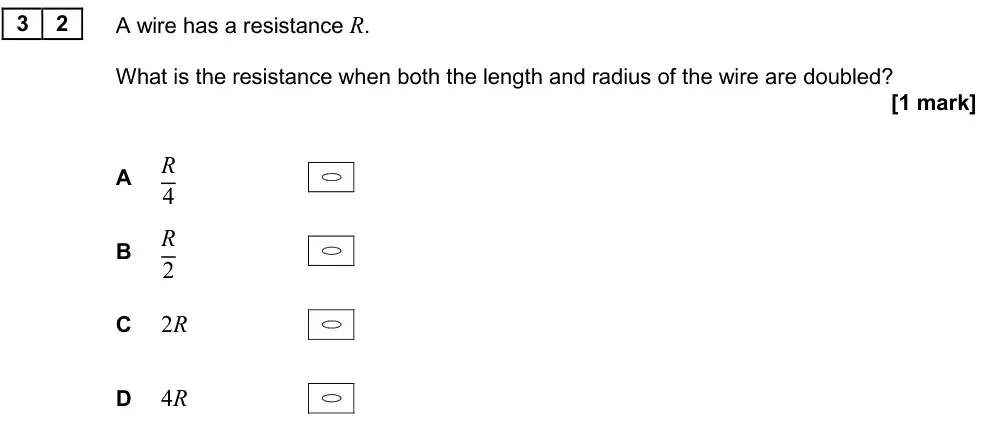
32 Current, potential difference, I-V characteristics and resistivity 1Multiple choice
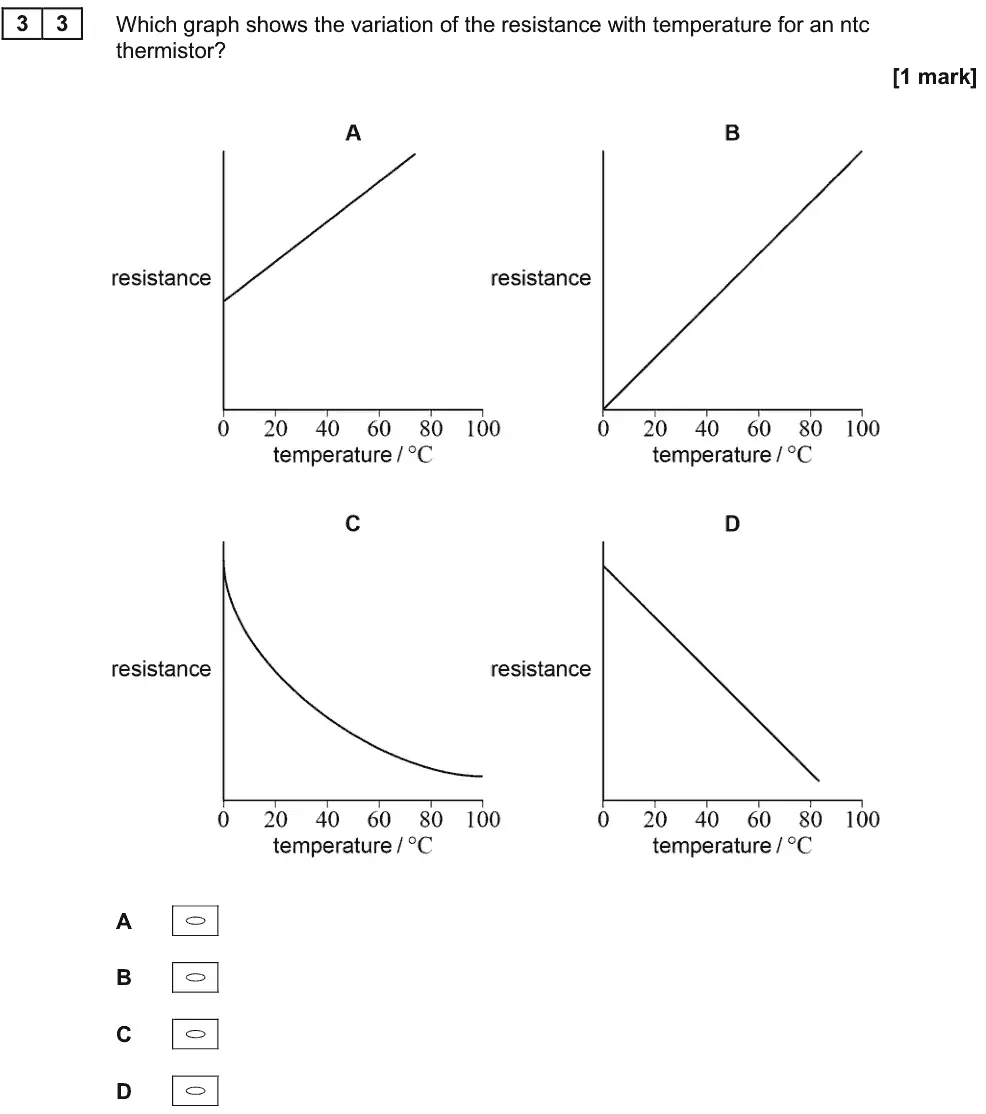
33 Current, potential difference, I-V characteristics and resistivity 1Multiple choice
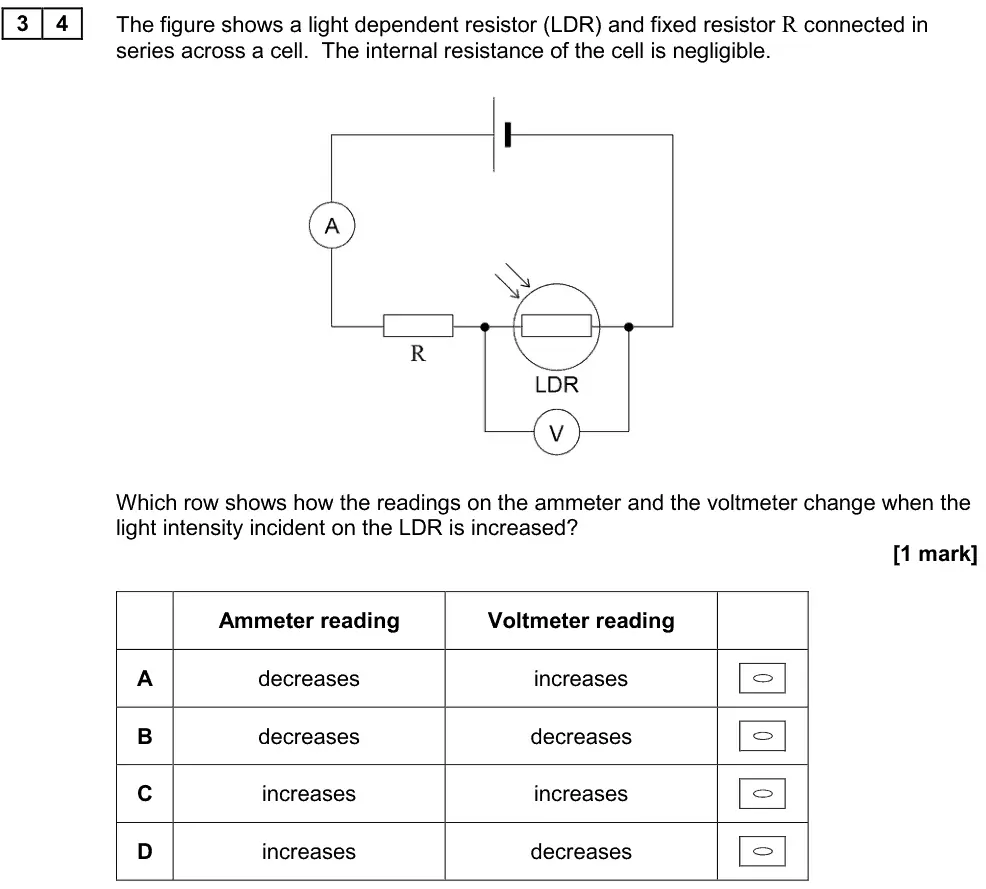
34 Circuits and potential dividers 1Multiple choice

The questions

1.11.21.31.41.51.61.71.82.12.22.32.42.52.63.13.23.33.43.54.14.24.34.45678910111213141516171819202122232425262728293031323334
June 2017 · AS Paper 2 · Q1.1 1 mark Practical and data analysis Easy circuits and potential dividers
This question is about an experiment to determine the internal resistance of a
power supply.
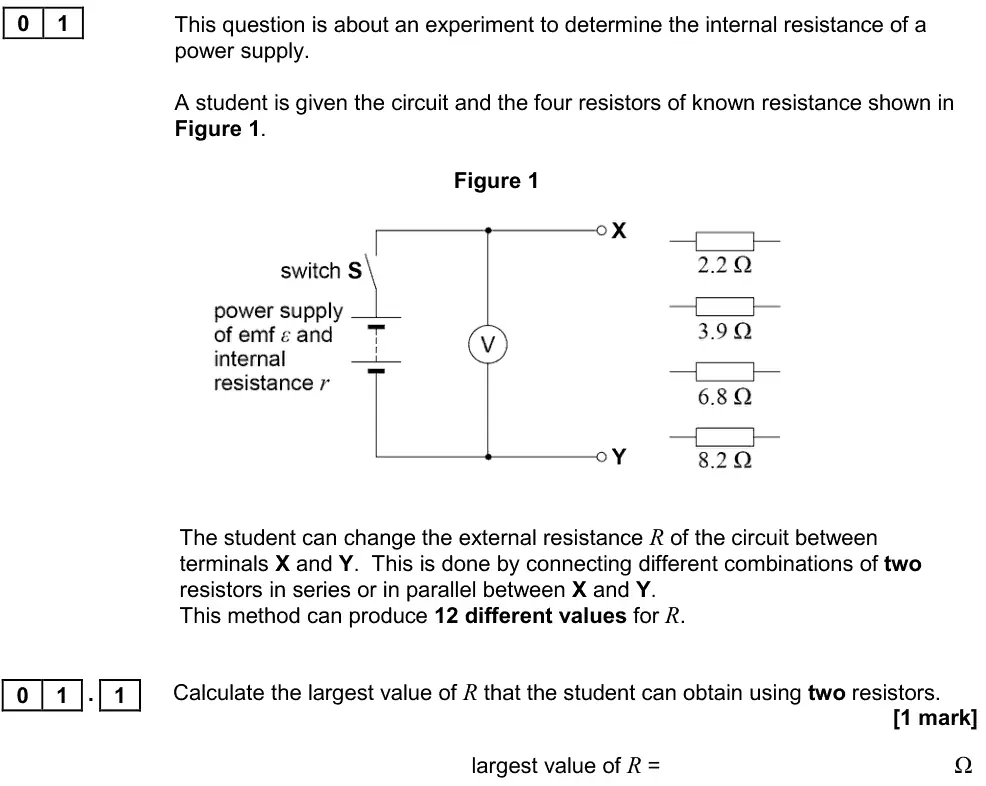
A student is given the circuit and the four resistors of known resistance shown in
Figure 1.
Figure 1
The student can change the external resistance R of the circuit between
terminals X and Y.  This is done by connecting different combinations of two
resistors in series or in parallel between X and Y.
This method can produce 12 different values for R.
Calculate the largest value of R that the student can obtain using two resistors.
[1 mark]
largest value of R =
Ω
June 2017 · AS Paper 2 · Q1.2 2 marks Practical and data analysis Easy circuits and potential dividers
Earlier part of question 1 that this part usesEarlier part of June 2017 Paper 2 question 1
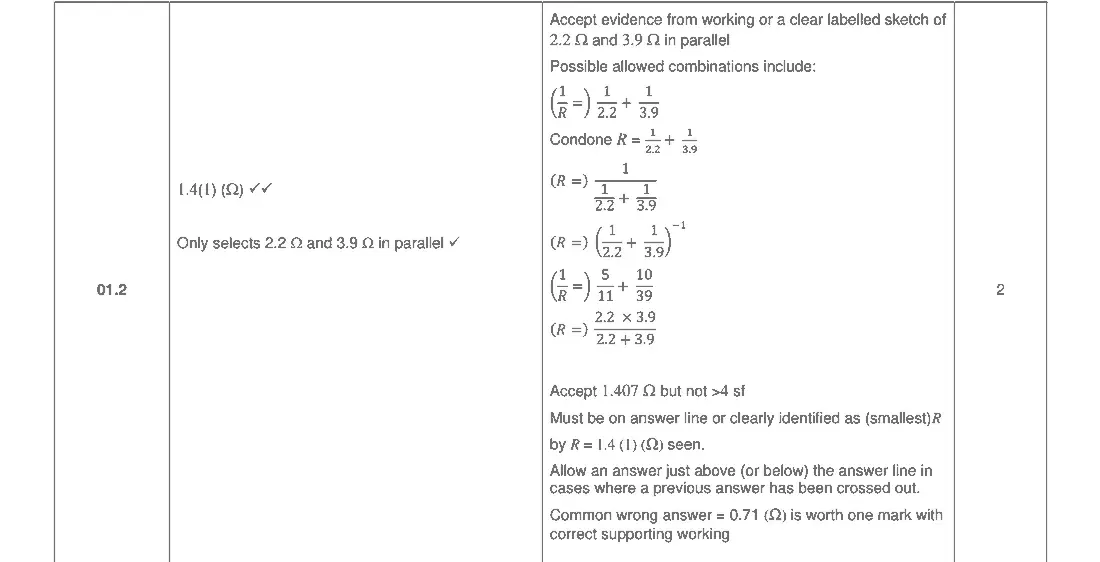
Calculate the smallest value of R that the student can obtain using two resistors.
[2 marks]
smallest value of R =
Ω
June 2017 · AS Paper 2 · Q1.3 1 mark Practical and data analysis emf and internal resistancecurrent voltage and resistivity
Earlier part of question 1 that this part usesEarlier part of June 2017 Paper 2 question 1
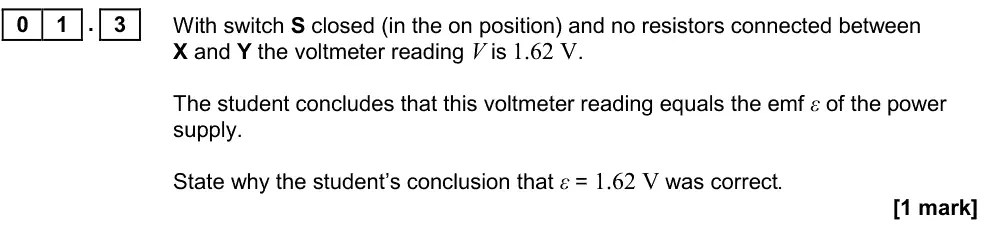
With switch S closed (in the on position) and no resistors connected between
X and Y the voltmeter reading V is 1.62 V.
The student concludes that this voltmeter reading equals the emf ε of the power
supply.
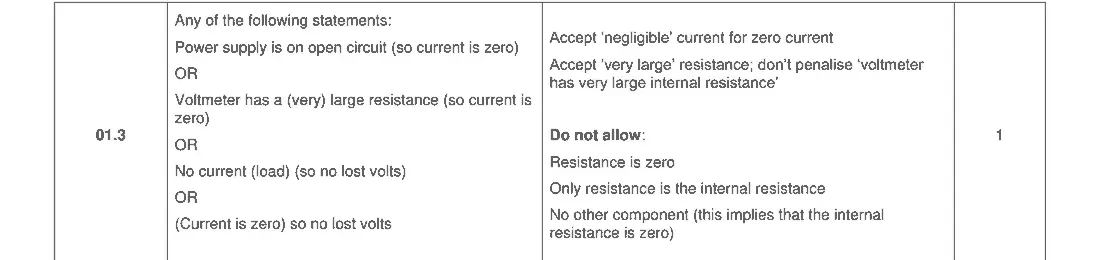
State why the student’s conclusion that ε = 1.62 V was correct.
[1 mark]
June 2017 · AS Paper 2 · Q1.4 1 mark Practical and data analysis emf and internal resistance
Earlier part of question 1 that this part usesEarlier part of June 2017 Paper 2 question 1
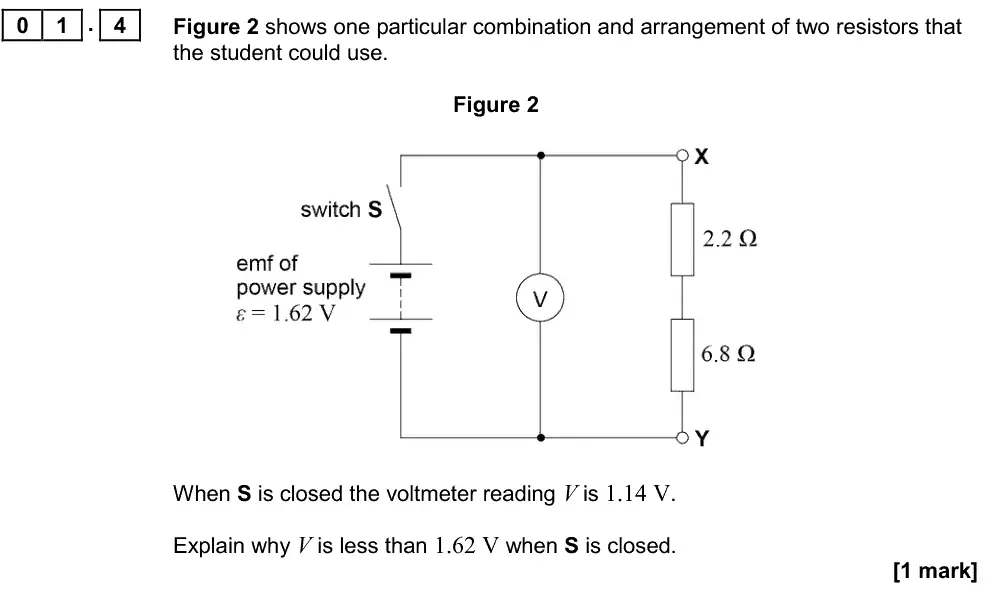
Figure 2 shows one particular combination and arrangement of two resistors that
the student could use.
Figure 2
When S is closed the voltmeter reading V is 1.14 V.
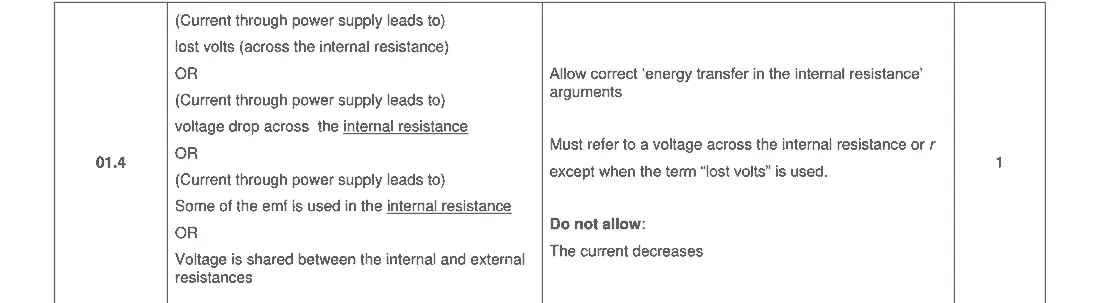
Explain why V is less than 1.62 V when S is closed.
[1 mark]
June 2017 · AS Paper 2 · Q1.5 1 mark Practical and data analysis emf and internal resistance
Earlier part of question 1 that this part usesEarlier part of June 2017 Paper 2 question 1
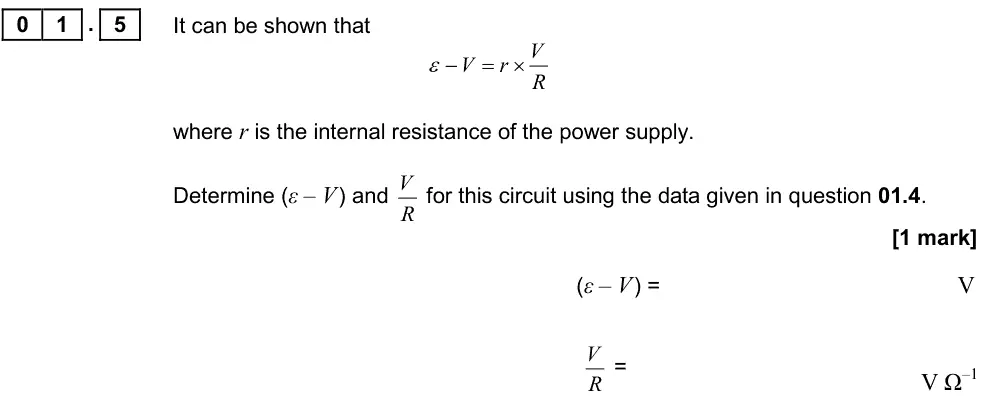
It can be shown that
R
V
r
V
×
=
−
where r is the internal resistance of the power supply.
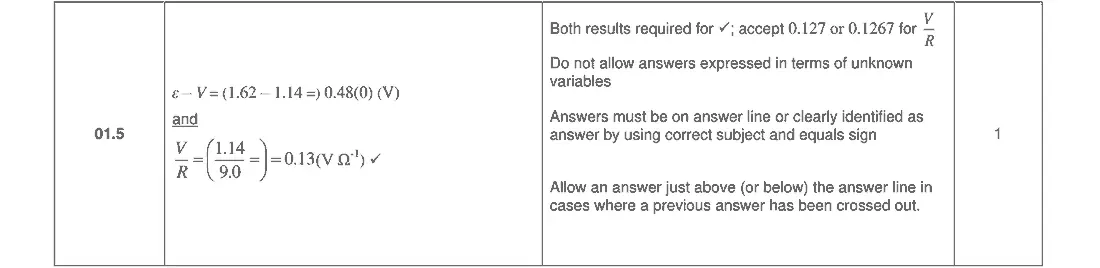
Determine (ε – V    ) and R
V for this circuit using the data given in question 01.4.
[1 mark]
(ε – V    ) =
V
R
V =
V Ω–1
June 2017 · AS Paper 2 · Q1.6 1 mark Practical and data analysis measurements and uncertainties
Earlier part of question 1 that this part usesEarlier part of June 2017 Paper 2 question 1
The student obtains values of V for five further different values of R.
These data were used to produce the graph of (ε – V    ) against R
V
in Figure 3.
Plot the point you determined in question 01.5 on Figure 3 and add a suitable
best-fit line.
[1 mark]
June 2017 · AS Paper 2 · Q1.7 2 marks Practical and data analysis emf and internal resistance
Earlier part of question 1 that this part usesEarlier part of June 2017 Paper 2 question 1
Use Figure 3 to determine r.
[2 marks]
r =
Ω
Figure 3
June 2017 · AS Paper 2 · Q1.8 2 marks Practical and data analysis Hard circuits and potential dividers
Earlier part of question 1 that this part usesEarlier part of June 2017 Paper 2 question 1
Figure 3
Figure 4 shows a different method for varying the resistance R described in
question 01 on page 2.
Figure 4
The four resistors are connected in a loop with sockets A, B, C and D at each
junction.  Two leads are used to connect the resistor loop to X and Y.
Discuss whether this method is an improvement over the method described in
question 01.  In your answer, you should refer to the number of different values
that can be obtained for R.
[2 marks]
June 2017 · AS Paper 2 · Q2.1 1 mark Practical and data analysis measurements and uncertainties
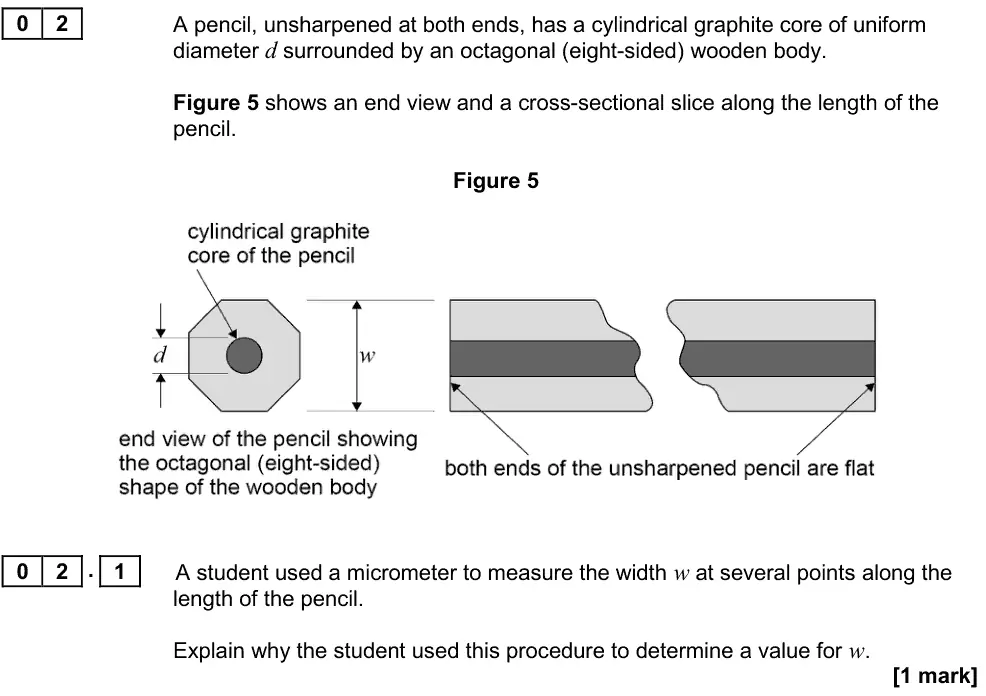
A pencil, unsharpened at both ends, has a cylindrical graphite core of uniform
diameter d surrounded by an octagonal (eight-sided) wooden body.
Figure 5 shows an end view and a cross-sectional slice along the length of the
pencil.
Figure 5
A student used a micrometer to measure the width w at several points along the
length of the pencil.
Explain why the student used this procedure to determine a value for w.
[1 mark]
June 2017 · AS Paper 2 · Q2.2 2 marks Practical and data analysis Hard measurements and uncertainties
Earlier part of question 2 that this part usesEarlier part of June 2017 Paper 2 question 2
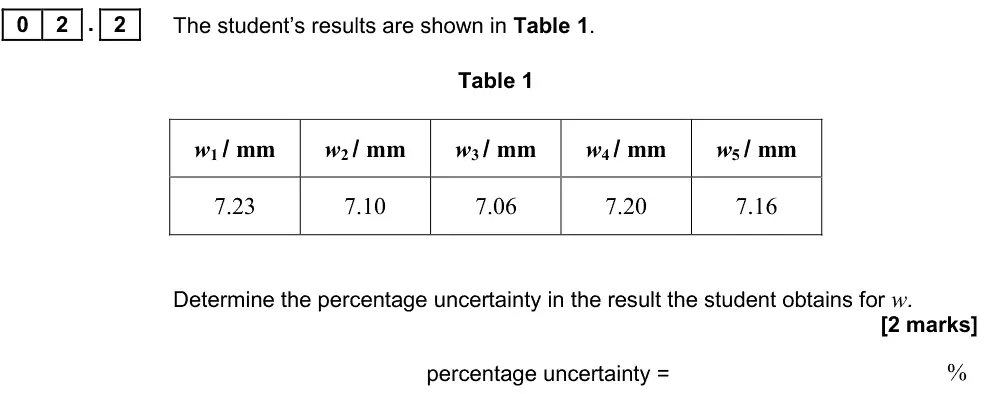
The student’s results are shown in Table 1.
Table 1
w1 / mm
w2 / mm
w3 / mm
w4 / mm
w5 / mm
7.23
7.10
7.06
7.20
7.16
Determine the percentage uncertainty in the result the student obtains for w.
[2 marks]
percentage uncertainty =
%
June 2017 · AS Paper 2 · Q2.3 2 marks Practical and data analysis Hard materials and young modulus
Earlier part of question 2 that this part usesEarlier part of June 2017 Paper 2 question 2
The cross-sectional area A of the end of the pencil is given by
A = 0.83 w2
The volume of the cylindrical core is known to be 9.0% of the volume of the
unsharpened pencil.
The cylindrical core of the graphite has a diameter d.
Determine d.
[2 marks]
d =
mm
June 2017 · AS Paper 2 · Q2.4 1 mark Practical and data analysis Hard measurements and uncertainties
Earlier part of question 2 that this part usesEarlier part of June 2017 Paper 2 question 2
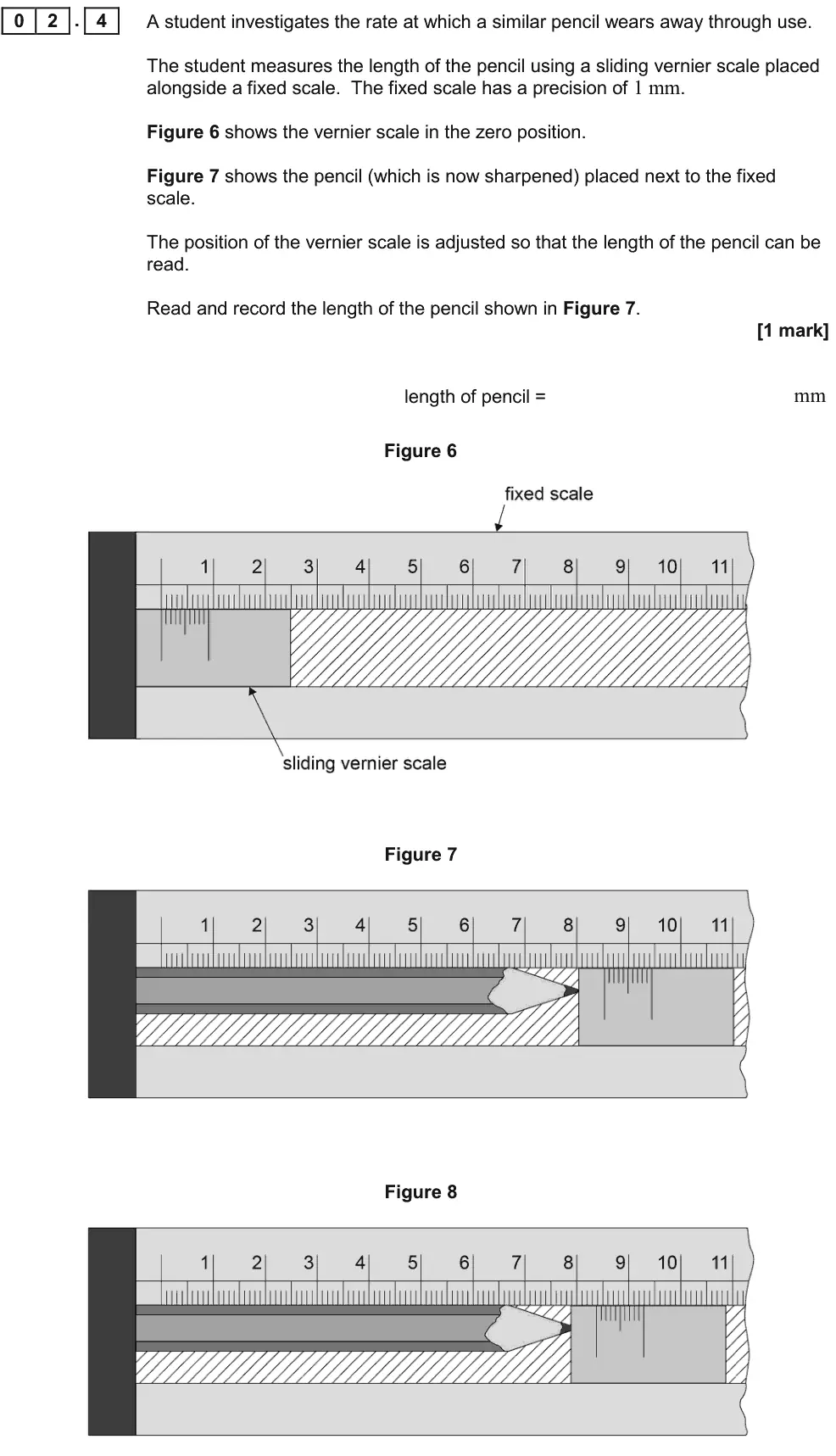
A student investigates the rate at which a similar pencil wears away through use.
The student measures the length of the pencil using a sliding vernier scale placed
alongside a fixed scale.  The fixed scale has a precision of 1 mm.
Figure 6 shows the vernier scale in the zero position.
Figure 7 shows the pencil (which is now sharpened) placed next to the fixed
scale.
The position of the vernier scale is adjusted so that the length of the pencil can be
read.
Read and record the length of the pencil shown in Figure 7.
[1 mark]
length of pencil =
mm
Figure 6
Figure 7
Figure 8
June 2017 · AS Paper 2 · Q2.5 1 mark Practical and data analysis Hard measurements and uncertainties
Earlier part of question 2 that this part usesEarlier part of June 2017 Paper 2 question 2
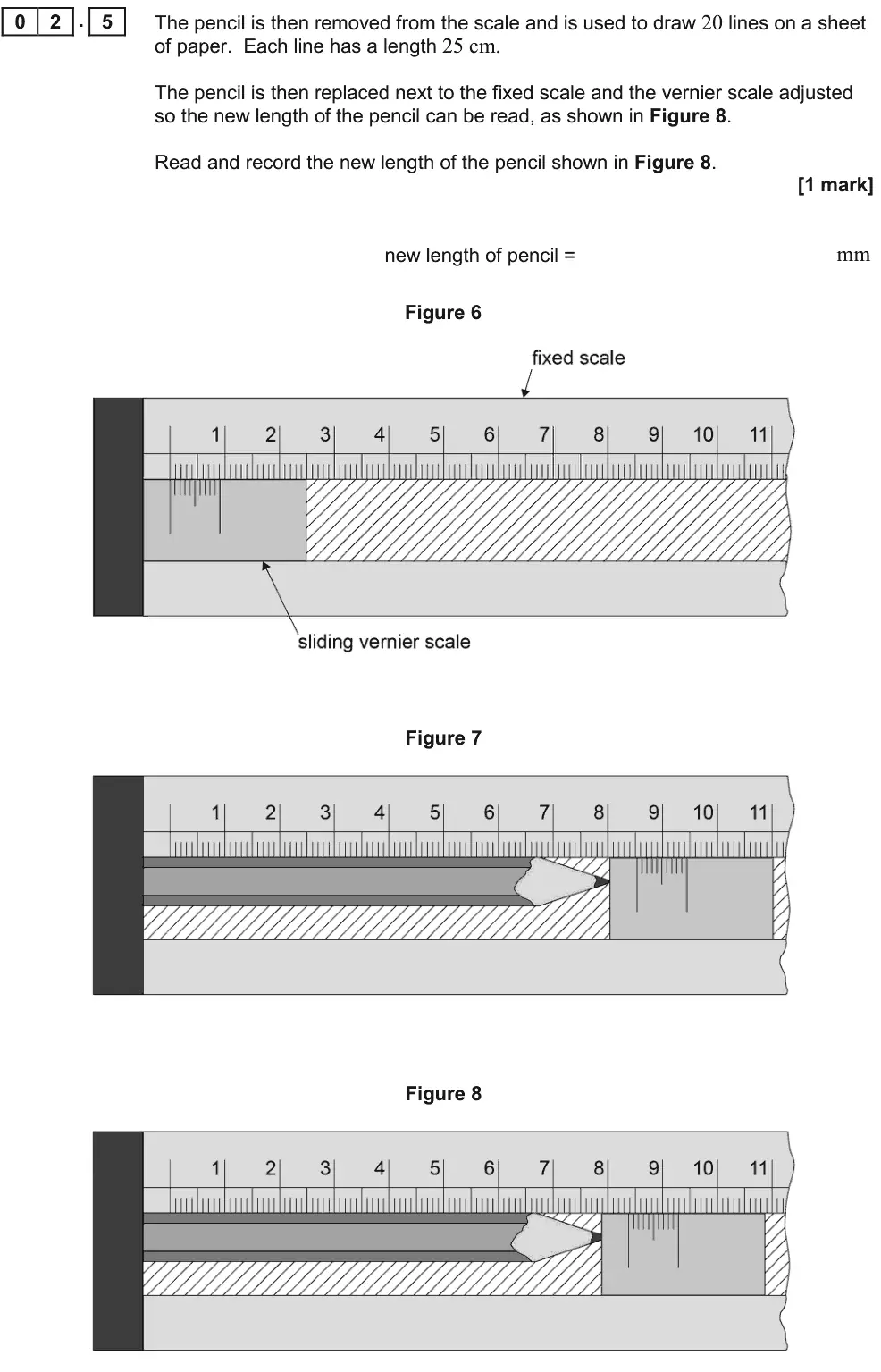
The pencil is then removed from the scale and is used to draw 20 lines on a sheet
of paper.  Each line has a length 25 cm.
The pencil is then replaced next to the fixed scale and the vernier scale adjusted
so the new length of the pencil can be read, as shown in Figure 8.
Read and record the new length of the pencil shown in Figure 8.
[1 mark]
new length of pencil =
mm
Figure 6
Figure 7
Figure 8
June 2017 · AS Paper 2 · Q2.6 2 marks Practical and data analysis measurements and uncertainties
Earlier part of question 2 that this part usesEarlier part of June 2017 Paper 2 question 2
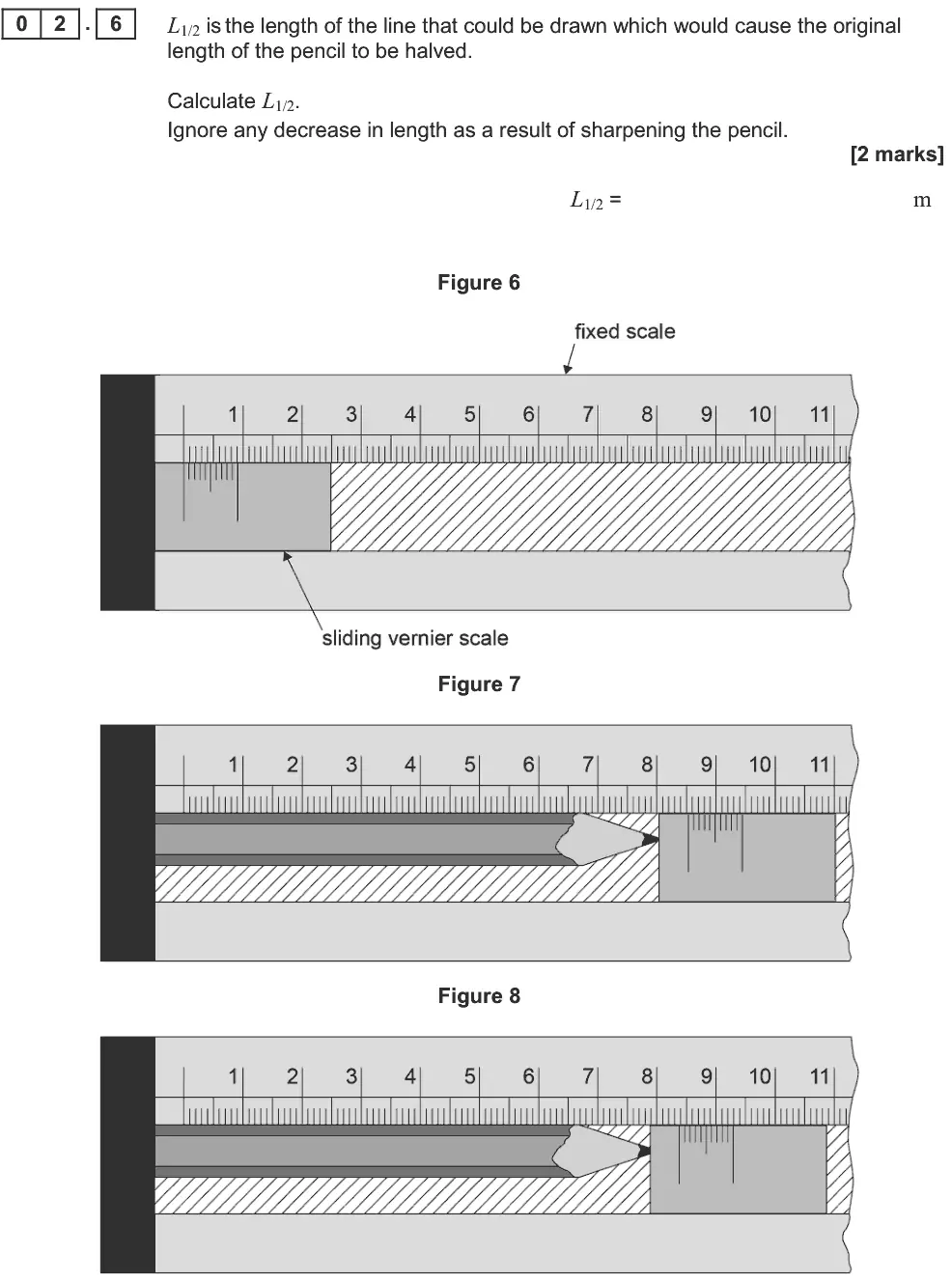
L1/2 is the length of the line that could be drawn which would cause the original
length of the pencil to be halved.
Calculate L1/2.
Ignore any decrease in length as a result of sharpening the pencil.
[2 marks]
L1/2 =
m
Figure 6
Figure 7
Figure 8
June 2017 · AS Paper 2 · Q3.1 3 marks Show that progressive waves and polarisation
A gravimeter is an instrument used to measure the acceleration due to gravity.
The gravimeter measures the distance fallen by a free-falling mirror in a known
time.
To do this, monochromatic light is reflected normally off the mirror, creating
interference between the incident and reflected waves.  The mirror is released
from rest and falls, causing a change in the phase difference between the incident
and reflected waves at a detector.
At the point of release of the mirror, the waves are in phase, resulting in a
maximum intensity at the detector.  The next maximum is produced at the detector
when the mirror has fallen through a distance equal to half a wavelength of the
light.  The gravimeter records the number of maxima detected in a known time as
the mirror falls.  These data are used by the gravimeter to compute the
acceleration of the free-falling mirror.
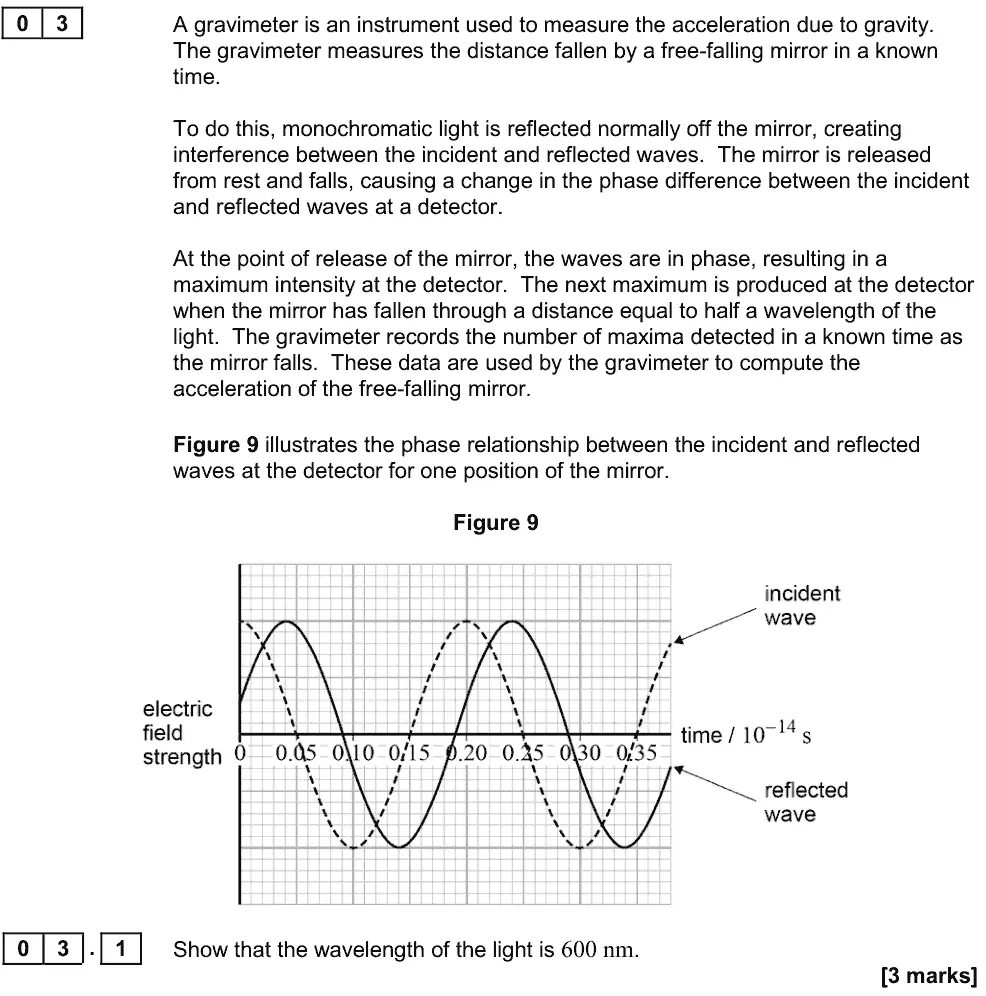
Figure 9 illustrates the phase relationship between the incident and reflected
waves at the detector for one position of the mirror.
Figure 9
Show that the wavelength of the light is 600 nm.
[3 marks]
June 2017 · AS Paper 2 · Q3.2 2 marks Calculation progressive waves and polarisation
Earlier part of question 3 that this part usesEarlier part of June 2017 Paper 2 question 3
Determine the phase difference, in rad, between the incident and reflected waves
shown in Figure 9.
[2 marks]
phase difference =
rad
June 2017 · AS Paper 2 · Q3.3 3 marks Calculation motion and projectiles
Earlier part of question 3 that this part usesEarlier part of June 2017 Paper 2 question 3
A maximum is detected each time the mirror travels a distance equal to half a
wavelength of the light.
In one measurement 2.37 × 10⁵ maxima are recorded as the mirror is released
from rest and falls for 0.120 s.
Using an appropriate equation of motion, calculate the acceleration due to gravity
that the gravimeter computes from these data.
State your answer to 3 significant figures.
wavelength of the light = 600 nm
[3 marks]
acceleration due to gravity =
m s–2
June 2017 · AS Paper 2 · Q3.4 2 marks Calculation motion and projectiles
Earlier part of question 3 that this part usesEarlier part of June 2017 Paper 2 question 3
Figure 10 is a graph that the gravimeter could produce to show how the distance
travelled by the mirror varies with time as it falls.
Figure 10
Determine the gradient of the line when the time is 0.12 s.
[2 marks]
gradient =
June 2017 · AS Paper 2 · Q3.5 1 mark Short answer motion and projectiles
Earlier part of question 3 that this part usesEarlier part of June 2017 Paper 2 question 3
State what this gradient represents.
[1 mark]
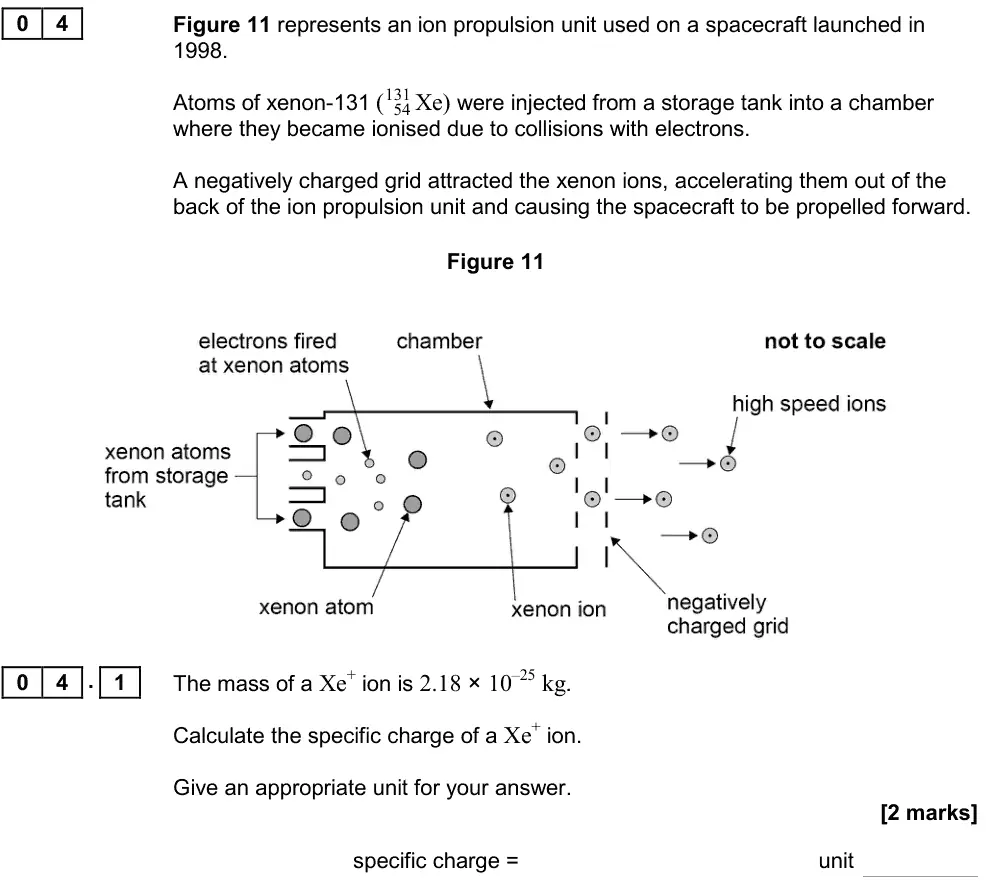
June 2017 · AS Paper 2 · Q4.1 2 marks Calculation atomic structure and stable nuclei
Figure 11 represents an ion propulsion unit used on a spacecraft launched in
1998.
Atoms of xenon-131 (
X
54
131 e) were injected from a storage tank into a chamber
where they became ionised due to collisions with electrons.
A negatively charged grid attracted the xenon ions, accelerating them out of the
back of the ion propulsion unit and causing the spacecraft to be propelled forward.
Figure 11
The mass of a Xe+ ion is 2.18 × 10⁻²⁵ kg.
Calculate the specific charge of a Xe+ ion.
Give an appropriate unit for your answer.
[2 marks]
specific charge =
unit
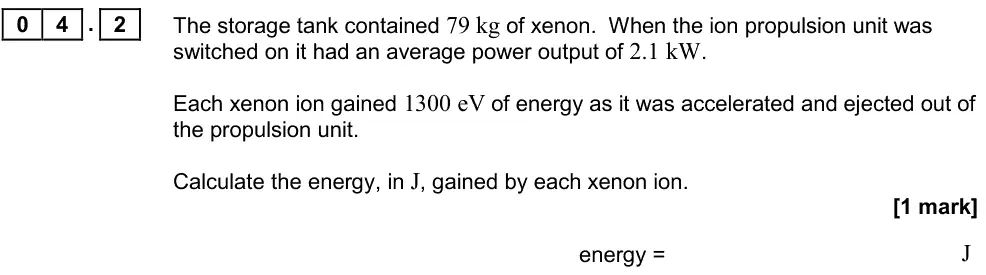
June 2017 · AS Paper 2 · Q4.2 1 mark Calculation energy levels and wave particle duality
Earlier part of question 4 that this part usesEarlier part of June 2017 Paper 2 question 4
The storage tank contained 79 kg of xenon.  When the ion propulsion unit was
switched on it had an average power output of 2.1 kW.
Each xenon ion gained 1300 eV of energy as it was accelerated and ejected out of
the propulsion unit.
Calculate the energy, in J, gained by each xenon ion.
[1 mark]
energy =
J
June 2017 · AS Paper 2 · Q4.3 3 marks Calculation work energy and powerenergy levels and wave particle duality
Earlier part of question 4 that this part usesEarlier part of June 2017 Paper 2 question 4
Determine the length of time the ion propulsion unit operated before all of the
79 kg of xenon was used up.
mass of xenon atom = 2.18 × 10⁻²⁵ kg
[3 marks]
time =
s
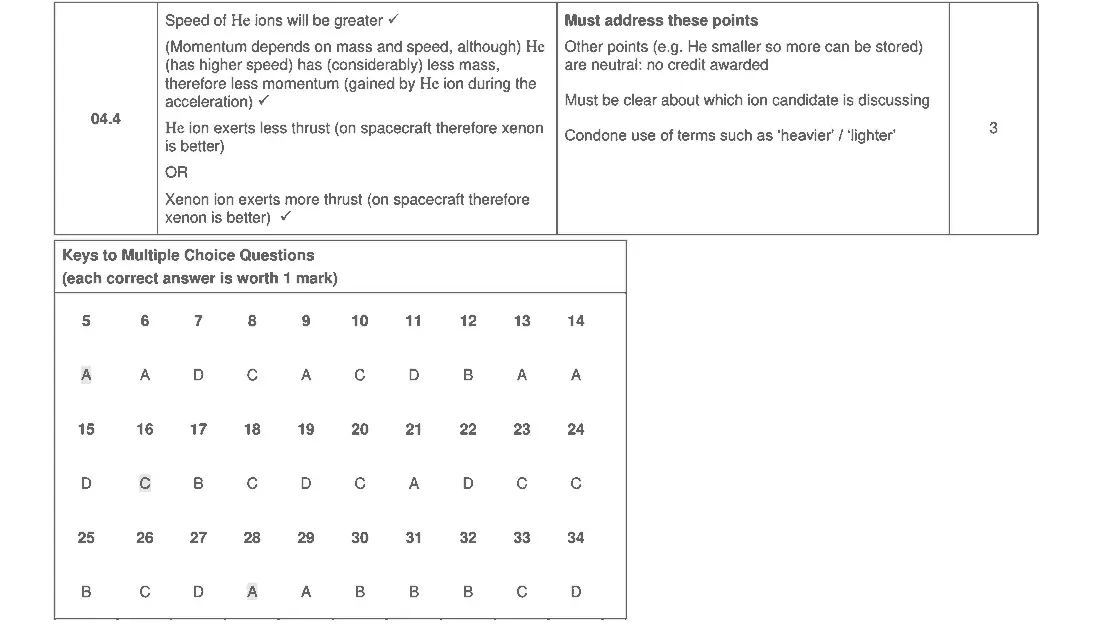
June 2017 · AS Paper 2 · Q4.4 3 marks Explanation newtons laws and momentum
Earlier part of question 4 that this part usesEarlier part of June 2017 Paper 2 question 4
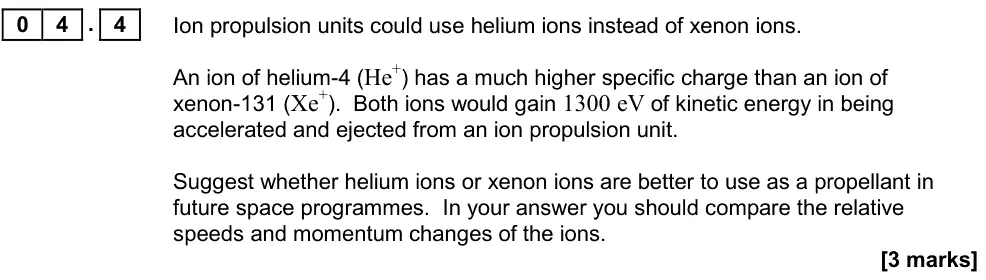
Ion propulsion units could use helium ions instead of xenon ions.
An ion of helium-4 (He+) has a much higher specific charge than an ion of
xenon-131 (Xe+).  Both ions would gain 1300 eV of kinetic energy in being
accelerated and ejected from an ion propulsion unit.
Suggest whether helium ions or xenon ions are better to use as a propellant in
future space programmes.  In your answer you should compare the relative
speeds and momentum changes of the ions.
[3 marks]
June 2017 · AS Paper 2 · Q5 1 mark Multiple choice work energy and power
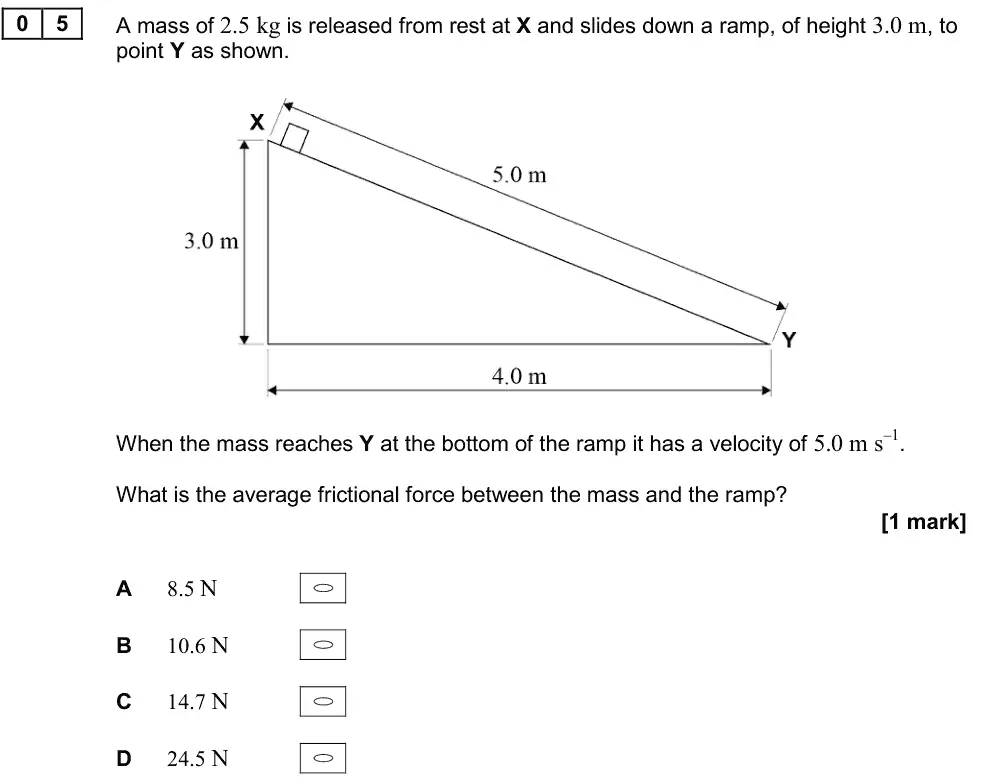
A mass of 2.5 kg is released from rest at X and slides down a ramp, of height 3.0 m, to
point Y as shown.
When the mass reaches Y at the bottom of the ramp it has a velocity of 5.0 m s–1.
What is the average frictional force between the mass and the ramp?
[1 mark]
A
8.5 N
B
10.6 N
C
14.7 N
D
24.5 N
June 2017 · AS Paper 2 · Q6 1 mark Multiple choice classification of particles and quarksparticles antiparticles and interactions
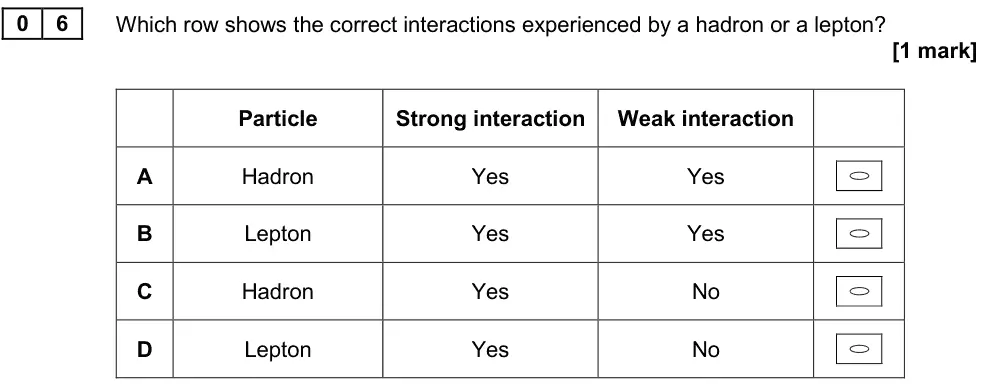
Which row shows the correct interactions experienced by a hadron or a lepton?
[1 mark]
Particle
Strong interaction
Weak interaction
A
Hadron
Yes
Yes
B
Lepton
Yes
Yes
C
Hadron
Yes
No
D
Lepton
Yes
No
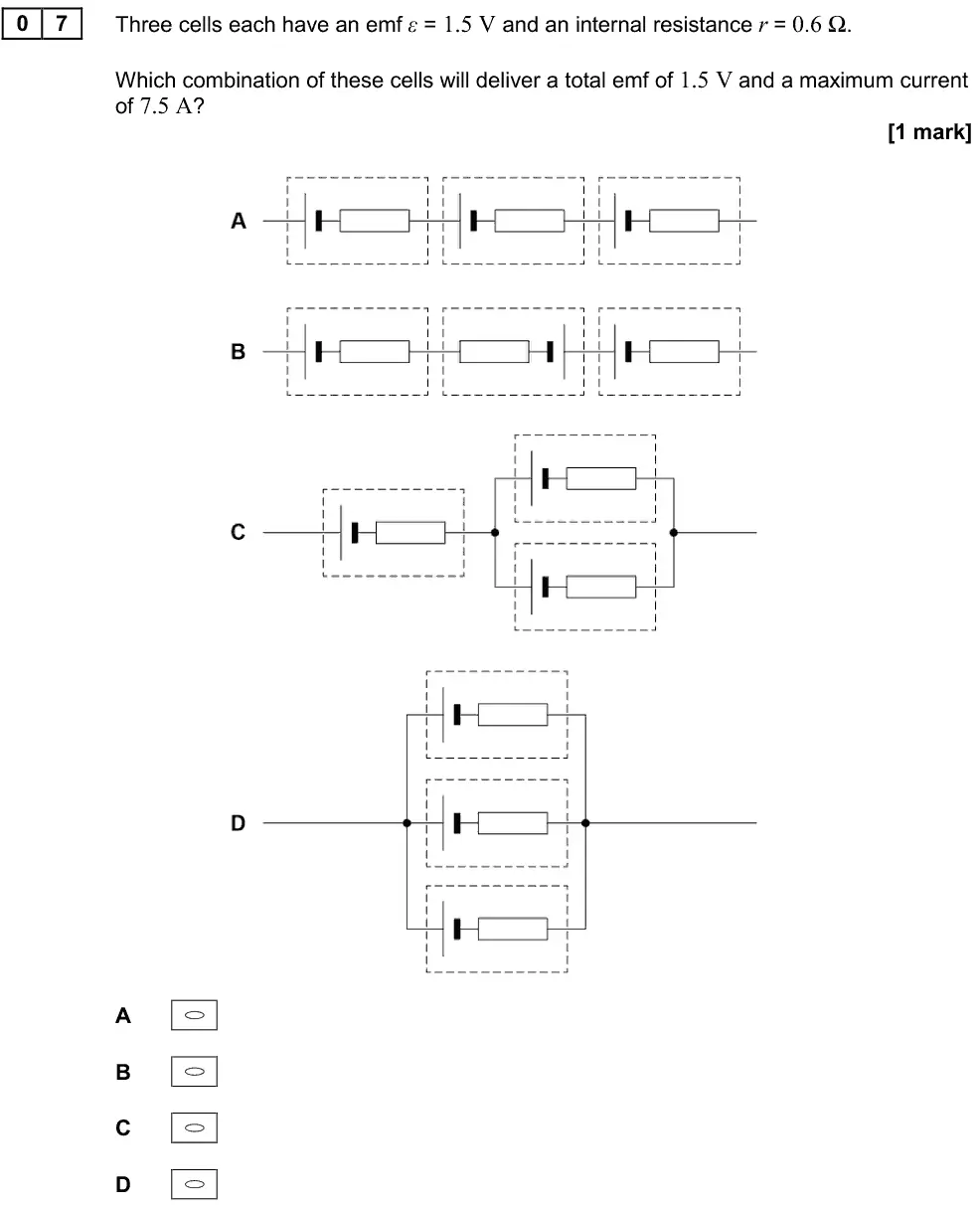
June 2017 · AS Paper 2 · Q7 1 mark Multiple choice emf and internal resistancecircuits and potential dividers
Three cells each have an emf ε = 1.5 V and an internal resistance r = 0.6 Ω.
Which combination of these cells will deliver a total emf of 1.5 V and a maximum current
of 7.5 A?
[1 mark]
A
B
C
D
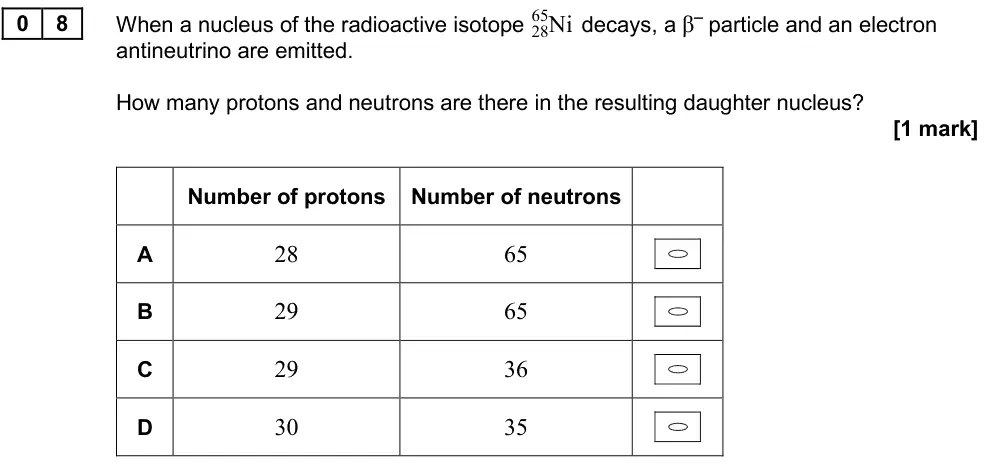
June 2017 · AS Paper 2 · Q8 1 mark Multiple choice atomic structure and stable nuclei
When a nucleus of the radioactive isotope Ni
28
65
decays, a β‾ particle and an electron
antineutrino are emitted.
How many protons and neutrons are there in the resulting daughter nucleus?
[1 mark]
Number of protons
Number of neutrons
A
28
65
B
29
65
C
29
36
D
30
35
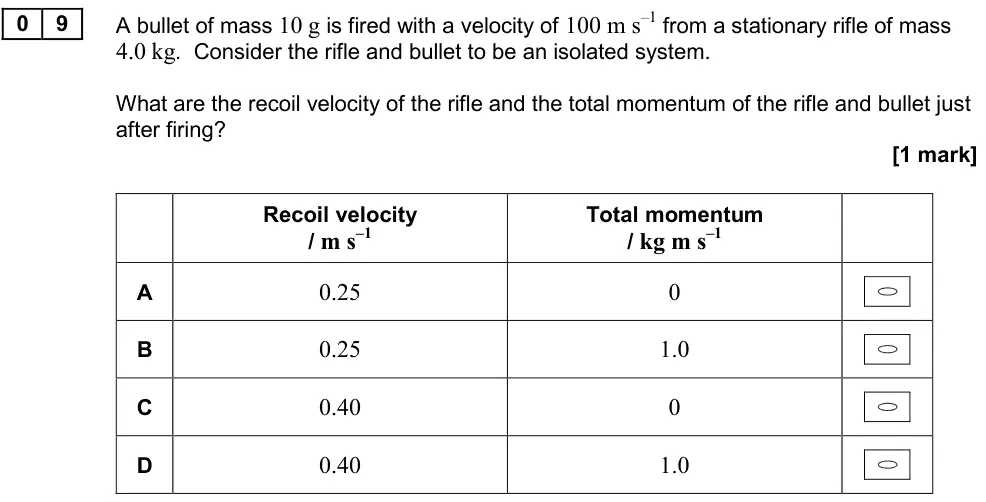
June 2017 · AS Paper 2 · Q9 1 mark Multiple choice newtons laws and momentum
A bullet of mass 10 g is fired with a velocity of 100 m s–1 from a stationary rifle of mass
4.0 kg.  Consider the rifle and bullet to be an isolated system.
What are the recoil velocity of the rifle and the total momentum of the rifle and bullet just
after firing?
[1 mark]
Recoil velocity
/ m s–1
Total momentum
/ kg m s–1
A
0.25
0
B
0.25
1.0
C
0.40
0
D
0.40
1.0
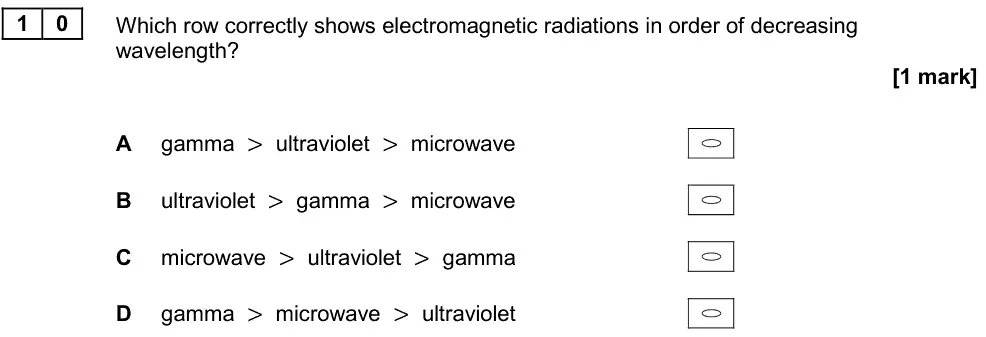
June 2017 · AS Paper 2 · Q10 1 mark Multiple choice progressive waves and polarisation
Which row correctly shows electromagnetic radiations in order of decreasing
wavelength?
[1 mark]
A
gamma  >  ultraviolet  >  microwave
B
ultraviolet  >  gamma  >  microwave
C
microwave  >  ultraviolet  >  gamma
D
gamma  >  microwave  >  ultraviolet
June 2017 · AS Paper 2 · Q11 1 mark Multiple choice progressive waves and polarisation
Which statement is correct about the properties of an unpolarised electromagnetic wave
as it passes through a polariser?
[1 mark]
A
The wave remains unchanged.
B
The wave does not pass through the polariser.
C
The wave’s electric field oscillates along the direction of travel.
D
The intensity of the wave is reduced.
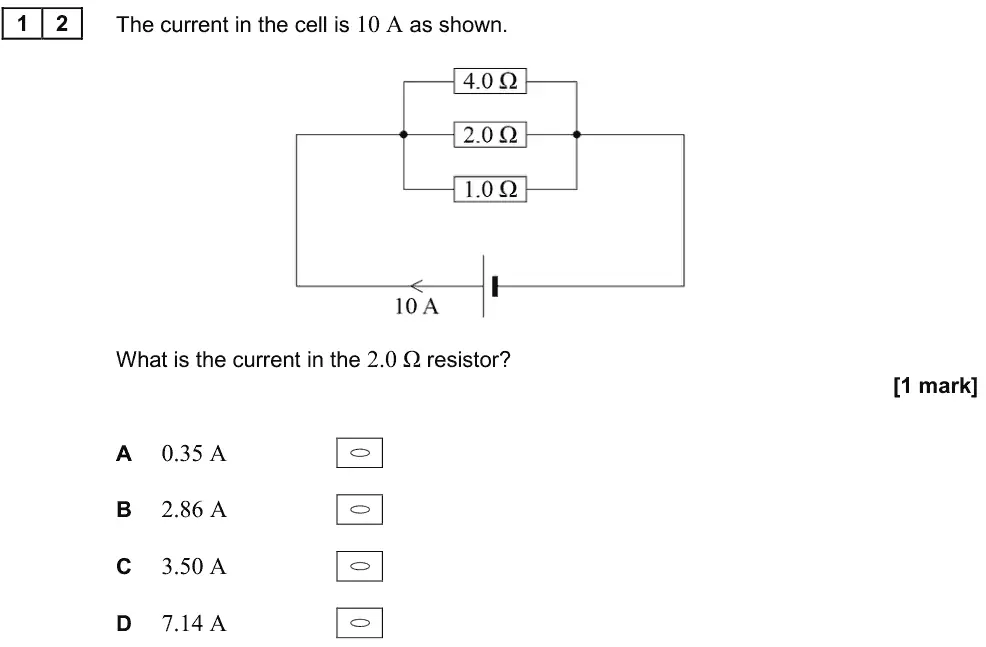
June 2017 · AS Paper 2 · Q12 1 mark Multiple choice circuits and potential dividers
The current in the cell is 10 A as shown.
What is the current in the 2.0 Ω resistor?
[1 mark]
A
0.35 A
B
2.86 A
C
3.50 A
D
7.14 A
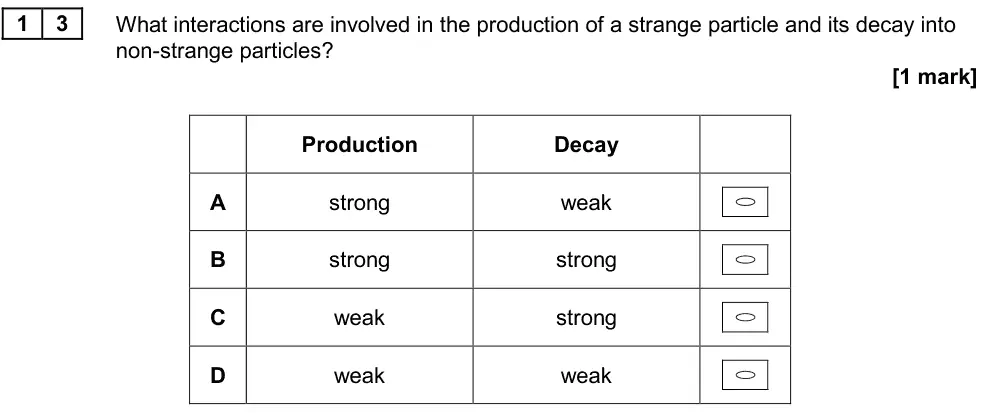
June 2017 · AS Paper 2 · Q13 1 mark Multiple choice classification of particles and quarks
What interactions are involved in the production of a strange particle and its decay into
non-strange particles?
[1 mark]
Production
Decay
A
strong
weak
B
strong
strong
C
weak
strong
D
weak
weak
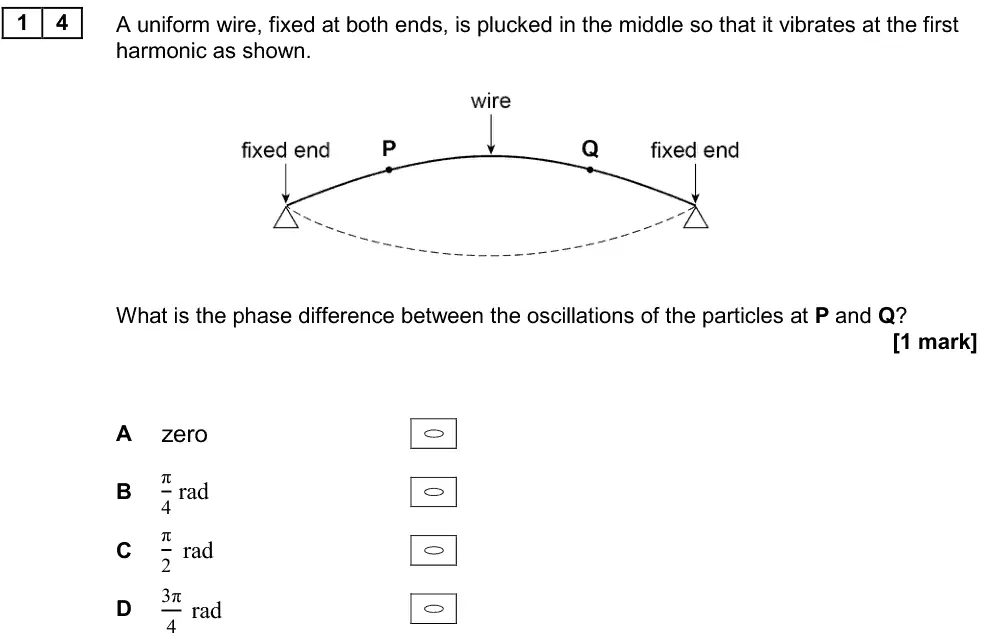
June 2017 · AS Paper 2 · Q14 1 mark Multiple choice stationary wavesprogressive waves and polarisation
A uniform wire, fixed at both ends, is plucked in the middle so that it vibrates at the first
harmonic as shown.
What is the phase difference between the oscillations of the particles at P and Q?
[1 mark]
A
zero
B
π
4 rad
C
π
2 rad
D
3π
4 rad
June 2017 · AS Paper 2 · Q15 1 mark Multiple choice vectors and moments
Which row correctly states whether momentum, mass and velocity are scalar or vector
quantities?
[1 mark]
Momentum
Mass
Velocity
A
scalar
scalar
vector
B
vector
scalar
scalar
C
scalar
vector
scalar
D
vector
scalar
vector
June 2017 · AS Paper 2 · Q16 1 mark Multiple choice vectors and moments
The diagram shows a uniform metre ruler of weight 1.5 N pivoted 15 cm from one end
for use as a simple balance.
A scale pan of weight 0.5 N is placed at the end of the ruler and an object of unknown
weight is placed in the pan.  The ruler moves to a steady horizontal position when a
weight of 2.5 N is added at a distance of 60 cm from the pivot as shown.
What is the weight of the object?
[1 mark]
A
9.5 N
B
10.0 N
C
13.0 N
D
13.5 N
June 2017 · AS Paper 2 · Q17 1 mark Multiple choice materials and young modulus
What is the name given to a material that breaks without deformation when a force is
applied to it?
[1 mark]
A
Plastic
B
Brittle
C
Stiff
D
Elastic
June 2017 · AS Paper 2 · Q18 1 mark Multiple choice circuits and potential dividers
A battery of negligible internal resistance and an emf of 12 V is connected in series with
a heating element.  The heating element has a resistance of 6.5 Ω when in operation.
What is the energy transferred by the heating element when operating for 5 minutes?
[1 mark]
A
111 J
B
390 J
C
6650 J
D
23 400 J
June 2017 · AS Paper 2 · Q19 1 mark Multiple choice newtons laws and momentum
The graph shows how the force F applied to an object varies with time t.
What is the momentum gained by the object from t = 0 to t = 10 s?
[1 mark]
A
18 kg m s–1
B
32 kg m s–1
C
40 kg m s–1
D
58 kg m s–1
June 2017 · AS Paper 2 · Q20 1 mark Multiple choice photoelectric effect
When light of a certain frequency greater than the threshold frequency of a metal is
directed at the metal, photoelectrons are emitted from the surface.
The power of the light incident on the metal surface is doubled.
Which row shows the effect on the maximum kinetic energy and the number of
photoelectrons emitted per second?
[1 mark]
Maximum kinetic energy
Number of photoelectrons
emitted per second
A
remains unchanged
remains unchanged
B
doubles
remains unchanged
C
remains unchanged
doubles
D
doubles
doubles
June 2017 · AS Paper 2 · Q21 1 mark Multiple choice photoelectric effect
Line X on the graphs below shows how the maximum kinetic energy of emitted
photoelectrons varies with the frequency of incident radiation for a particular metal.
Which graph shows the results for a metal Y that has a higher work function than X?
[1 mark]
A
B
C
D
June 2017 · AS Paper 2 · Q22 1 mark Multiple choice particles antiparticles and interactions
Which graph best shows the relationship between photon energy E and wavelength  of
a photon of electromagnetic radiation?
[1 mark]
A
B
C
D
June 2017 · AS Paper 2 · Q23 1 mark Multiple choice refraction and optical fibresprogressive waves and polarisation
Which row shows the change in velocity, frequency and wavelength of an
electromagnetic wave as it travels from an optically less dense to an optically more
dense medium?
[1 mark]
Velocity
Frequency
Wavelength
A
decreases
decreases
unchanged
B
increases
unchanged
increases
C
decreases
unchanged
decreases
D
increases
increases
unchanged
June 2017 · AS Paper 2 · Q24 1 mark Multiple choice refraction and optical fibres
The diagram shows a ray of light travelling in air and incident on a glass block of
refractive index 1.5
What is the angle of refraction in the glass?
[1 mark]
A
22.5°
B
23.3°
C
33.1°
D
59.4°
June 2017 · AS Paper 2 · Q25 1 mark Multiple choice interference and diffraction
Intensity maxima are produced on a screen when a parallel beam of monochromatic
light is incident on a diffraction grating.  Light of a longer wavelength can be used or the
distance from the diffraction grating to the screen can be increased.
Which row gives the change in appearance of the maxima when these changes are
made independently?
[1 mark]
Longer wavelength
Distance from grating to
screen increased
A
closer together
more widely spaced
B
more widely spaced
more widely spaced
C
more widely spaced
closer together
D
closer together
closer together
June 2017 · AS Paper 2 · Q26 1 mark Multiple choice materials and young modulusmeasurements and uncertainties
What cannot be used as a unit for the Young modulus?
[1 mark]
A
N m–2
B
Pa
C
kg m–2 s–2
D
kg m–1 s–2
June 2017 · AS Paper 2 · Q27 1 mark Multiple choice interference and diffraction
Light of wavelength 500 nm is passed through a diffraction grating which has
400 lines per mm.
What is the angular separation between the two second-order maxima?
[1 mark]
A
11.5°
B
23.1°
C
23.6°
D
47.2°
June 2017 · AS Paper 2 · Q28 1 mark Multiple choice motion and projectiles
Two identical balls, X and Y, are at the same height and a horizontal distance of 25 cm
apart.
X is projected horizontally with a velocity of 0.10 m s–1 towards Y at the same time that Y
is released from rest.  Both X and Y move freely in the absence of air resistance.
What is the distance between the balls 1.0 s later?
[1 mark]
A
0.15 m
B
0.25 m
C
2.4 m
D
4.9 m
June 2017 · AS Paper 2 · Q29 1 mark Multiple choice newtons laws and momentum
Two bodies of different masses undergo an elastic collision in the absence of any
external force.
Which row gives the effect on the total kinetic energy of the masses and the magnitudes
of the forces exerted on the masses during the collision?
[1 mark]
Total kinetic energy
Magnitudes of forces
A
remains unchanged
same on both masses
B
remains unchanged
greater on the smaller mass
C
decreases
same on both masses
D
decreases
greater on the smaller mass
June 2017 · AS Paper 2 · Q30 1 mark Multiple choice materials and young modulus
Two separate wires X and Y have the same original length and cross-sectional area.
The graph shows the extension ΔL produced in X and Y when the tensile force F
applied to the wires is increased up to the point where they break.
Which statement is incorrect?
[1 mark]
A
For a given extension more energy is stored in X than in Y.
B
The Young modulus of the material of wire Y is greater than
that of wire X.
C
Both wire X and wire Y obey Hooke’s law.
D
Wire X has a greater breaking stress than wire Y.
June 2017 · AS Paper 2 · Q31 1 mark Multiple choice current voltage and resistivity
Which statement about superconductors is correct?
[1 mark]
A
When a material becomes a superconductor, its
resistivity is almost zero.
B
The temperature at which a material becomes a
superconductor is called the critical temperature.
C
When current passes through a superconductor
the pd across it becomes a maximum.
D
Copper is a superconductor at room temperature.
June 2017 · AS Paper 2 · Q32 1 mark Multiple choice current voltage and resistivity
A wire has a resistance R.
What is the resistance when both the length and radius of the wire are doubled?
[1 mark]
A
R
4
B
R
2
C
2R
D
4R
June 2017 · AS Paper 2 · Q33 1 mark Multiple choice current voltage and resistivity
Which graph shows the variation of the resistance with temperature for an ntc
thermistor?
[1 mark]
A
B
C
D
June 2017 · AS Paper 2 · Q34 1 mark Multiple choice circuits and potential dividers
The figure shows a light dependent resistor (LDR) and fixed resistor R connected in
series across a cell.  The internal resistance of the cell is negligible.
Which row shows how the readings on the ammeter and the voltmeter change when the
light intensity incident on the LDR is increased?
[1 mark]
Ammeter reading
Voltmeter reading
A
decreases
increases
B
decreases
decreases
C
increases
increases
D
increases
decreases

Work with an AQA physics tutor

Want a paper marked and gone through with you? Message us.

Prefer email? Send an enquiry

If you are under 18, please include a parent's contact details. Enquiries go to enquiries@physicsaleveltutor.com and are deleted once handled. All tutoring is online.