
June 2017: AS Paper 2, Depth in physics

70 marks · 27 question parts · Paper, mark scheme and report on OCR's site · Have the Data, Formulae and Relationships Booklet beside you
Question by question

QTopicMarksAOType
1(a) Linear motion: the suvat equations and free fall 1Short answer
1(b)(i) Kinematics: displacement, velocity and motion graphs, Physical quantities and S.I. units 1Show that
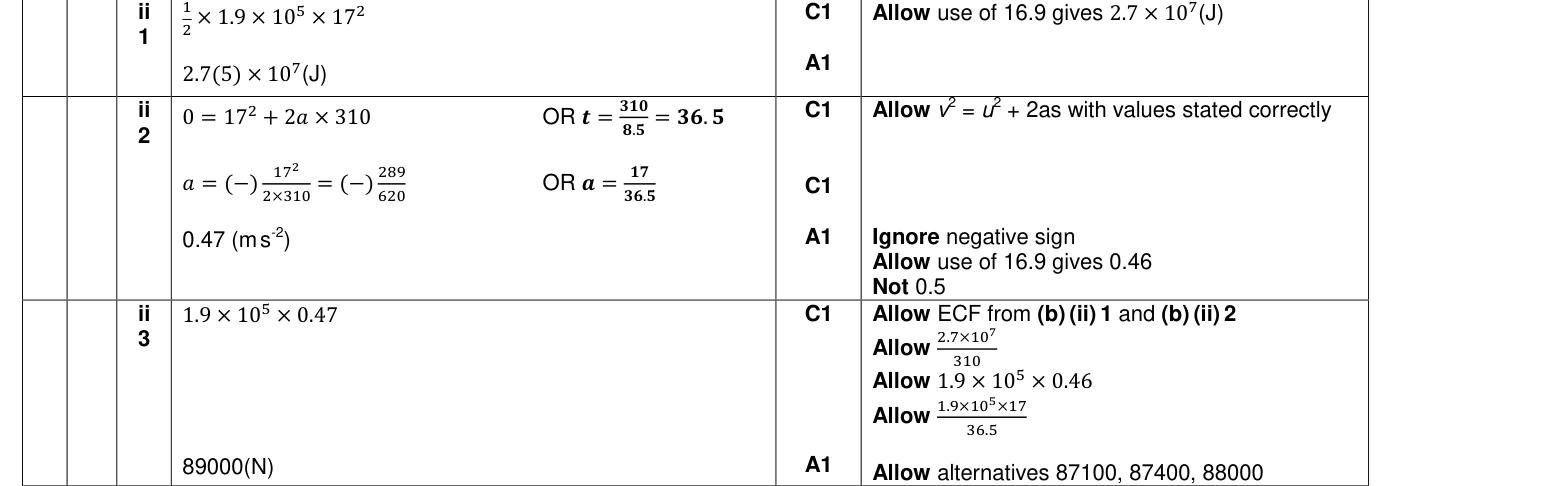
1(b)(ii) Work, energy and power, Linear motion: the suvat equations and free fall, Dynamics, drag and terminal velocity 7Calculation
1(b)(iii) Dynamics, drag and terminal velocity, Scalars and vectors, Work, energy and power 2Explanation
2(a) Springs and Hooke's law, Practical skills: planning, analysis and evaluation, Physical quantities and S.I. units 1Short answer
2(b) Practical skills: planning, analysis and evaluation, Measurements and uncertainties, Springs and Hooke's law 4Diagram or graph
2(c) Practical skills: planning, analysis and evaluation 1Calculation
2(d) Springs and Hooke's law, Practical skills: planning, analysis and evaluation, Physical quantities and S.I. units 2Calculation
2(e) Springs and Hooke's law 2Explanation
2(f) Springs and Hooke's law 2Calculation
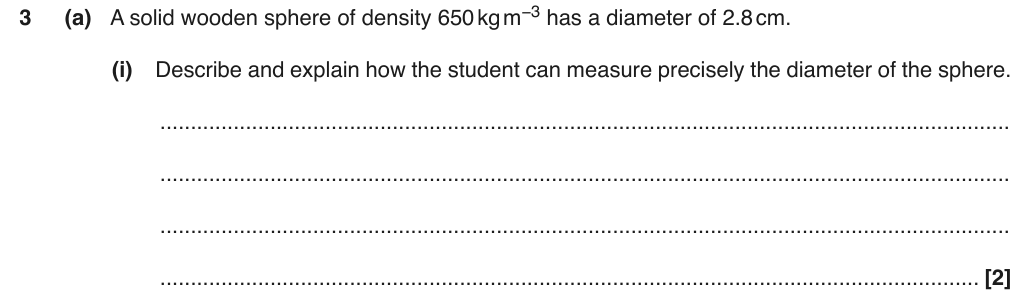
3(a)(i) Practical skills: planning, analysis and evaluation 2Explanation
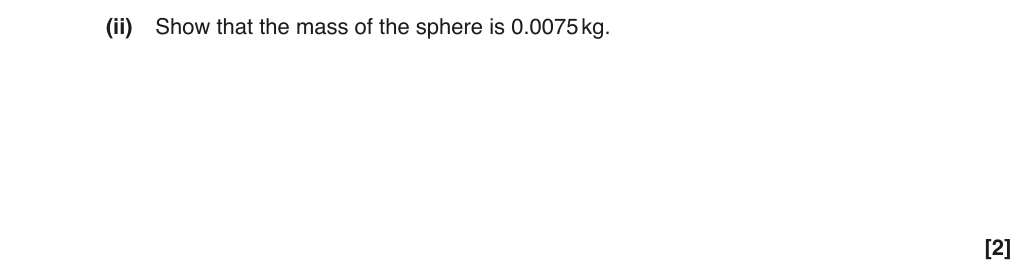
3(a)(ii) Density, pressure and upthrust 2Show that
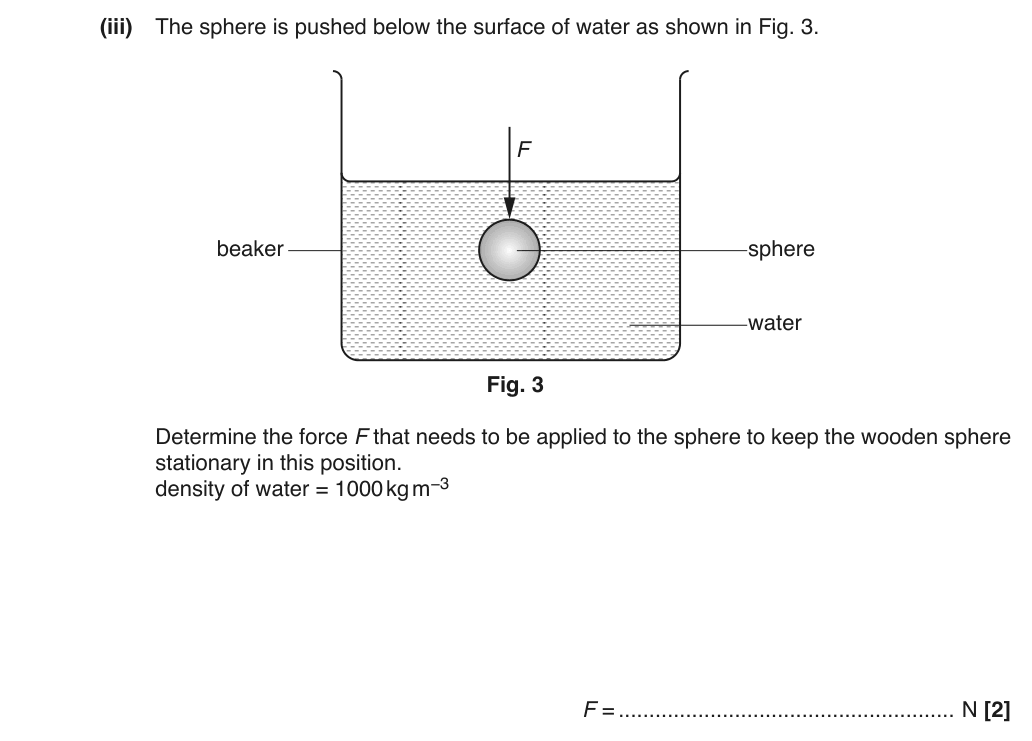
3(a)(iii) Density, pressure and upthrust, Dynamics, drag and terminal velocity, Equilibrium: moments, couples and centre of mass 2Calculation
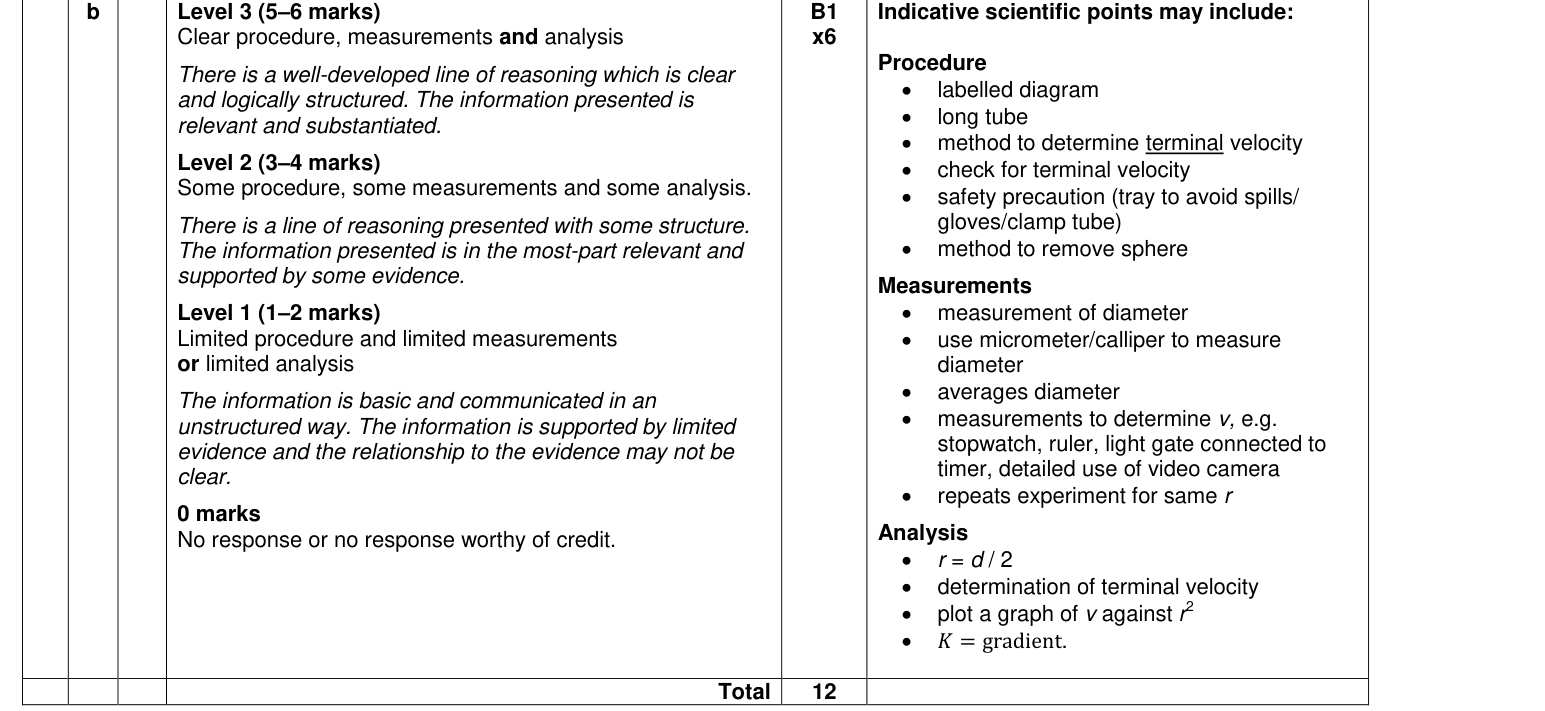
3(b) Dynamics, drag and terminal velocity, Practical skills: planning, analysis and evaluation 6Extended response
4(a)(i) Electrical power and energy 1Show that
4(a)(ii) Resistivity 3Calculation
4(a)(iii) E.m.f., p.d., resistance and I–V characteristics, Resistivity 2Explanation
4(b) Electrical power and energy 2Calculation
4(c)(i) Potential dividers, Series and parallel circuits: Kirchhoff's laws 2Calculation
4(c)(ii) Resistivity, Potential dividers 4Explanation
5(a) Superposition, interference and the double slit, Wave motion: progressive waves, the wave equation and intensity 2Short answer
5(b)(i) Superposition, interference and the double slit 2Explanation
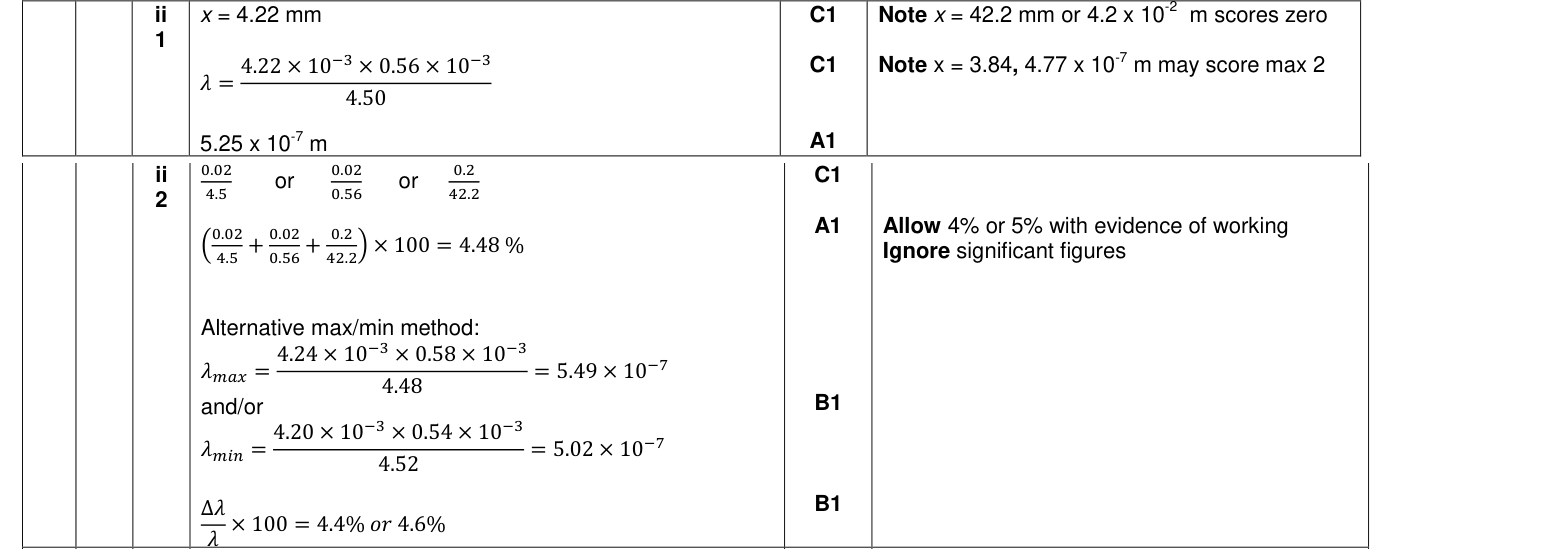
5(b)(ii) Superposition, interference and the double slit, Measurements and uncertainties 5Calculation
5(c)(i) Photons and the Planck constant, Work, energy and power 2Calculation
5(c)(ii) The photoelectric effect, Photons and the Planck constant 2Explanation
6(a) Stationary waves 2Explanation
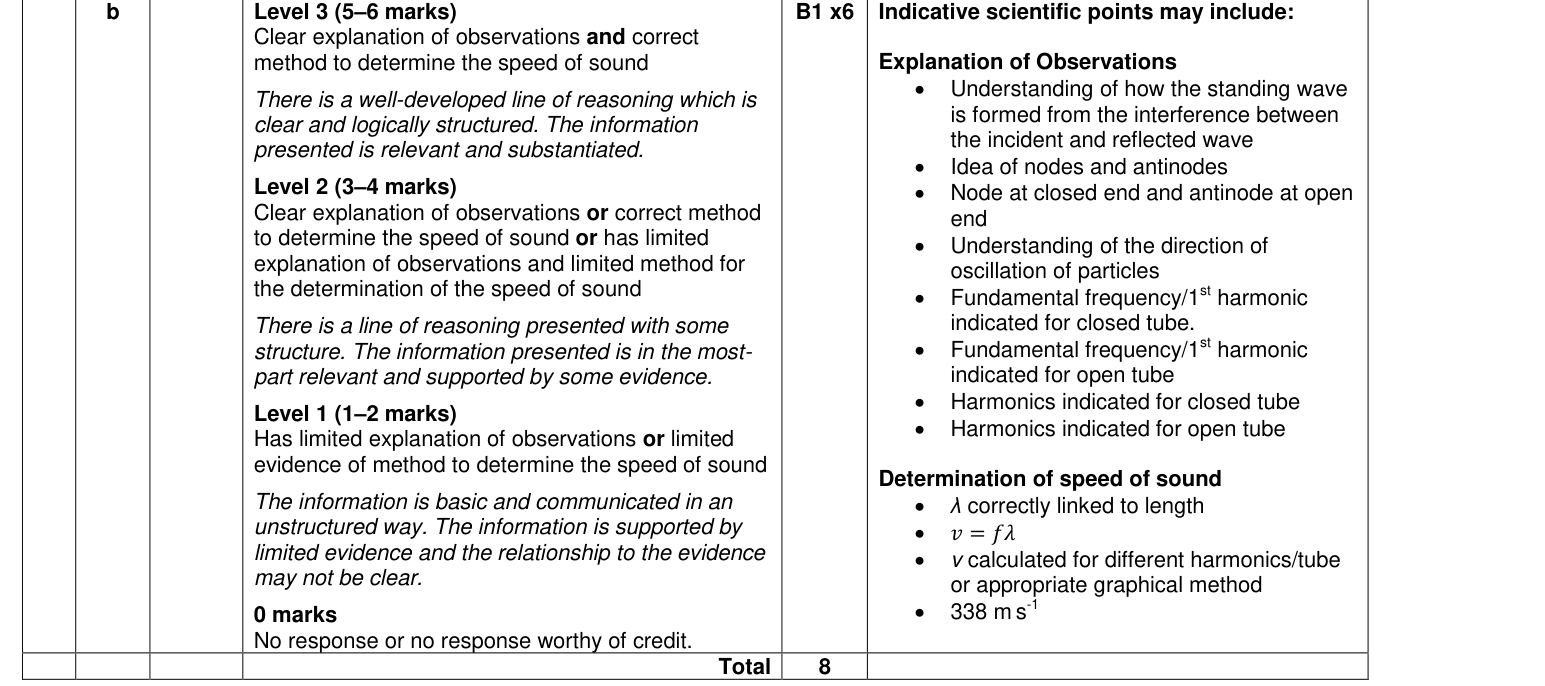
6(b) Stationary waves, Wave motion: progressive waves, the wave equation and intensity 6Extended response

The questions

1(a)1(b)(i)1(b)(ii)1(b)(iii)2(a)2(b)2(c)2(d)2(e)2(f)3(a)(i)3(a)(ii)3(a)(iii)3(b)4(a)(i)4(a)(ii)4(a)(iii)4(b)4(c)(i)4(c)(ii)5(a)5(b)(i)5(b)(ii)5(c)(i)5(c)(ii)6(a)6(b)
June 2017 · AS Paper 2 · Q1(a) 1 mark Short answer linear motion
1 (a) Define what is meant by the stopping distance of a vehicle.
...................................................................................................................................................
...................................................................................................................................................
.............................................................................................................................................. [1]
June 2017 · AS Paper 2 · Q1(b)(i) 1 mark Show that kinematicsquantities and units
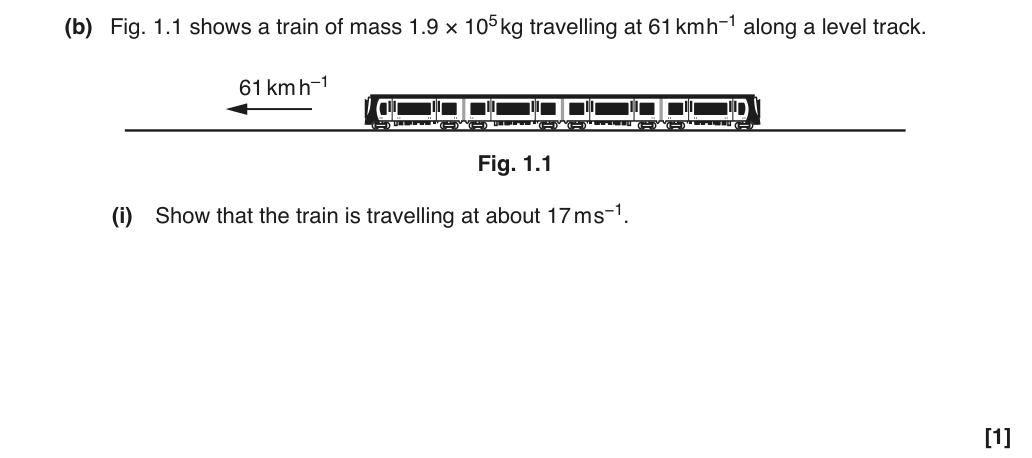
(b) Fig. 1.1 shows a train of mass 1.9 × 10⁵ kg travelling at 61 km h−1 along a level track.
61 km h–1
Fig. 1.1
(i) Show that the train is travelling at about 17 m s−1.
[1]
June 2017 · AS Paper 2 · Q1(b)(ii) 7 marks Calculation work energy and powerlinear motiondynamics and terminal velocity
Earlier part of question 1 that this part usesEarlier part of June 2017 Paper 2 question 1
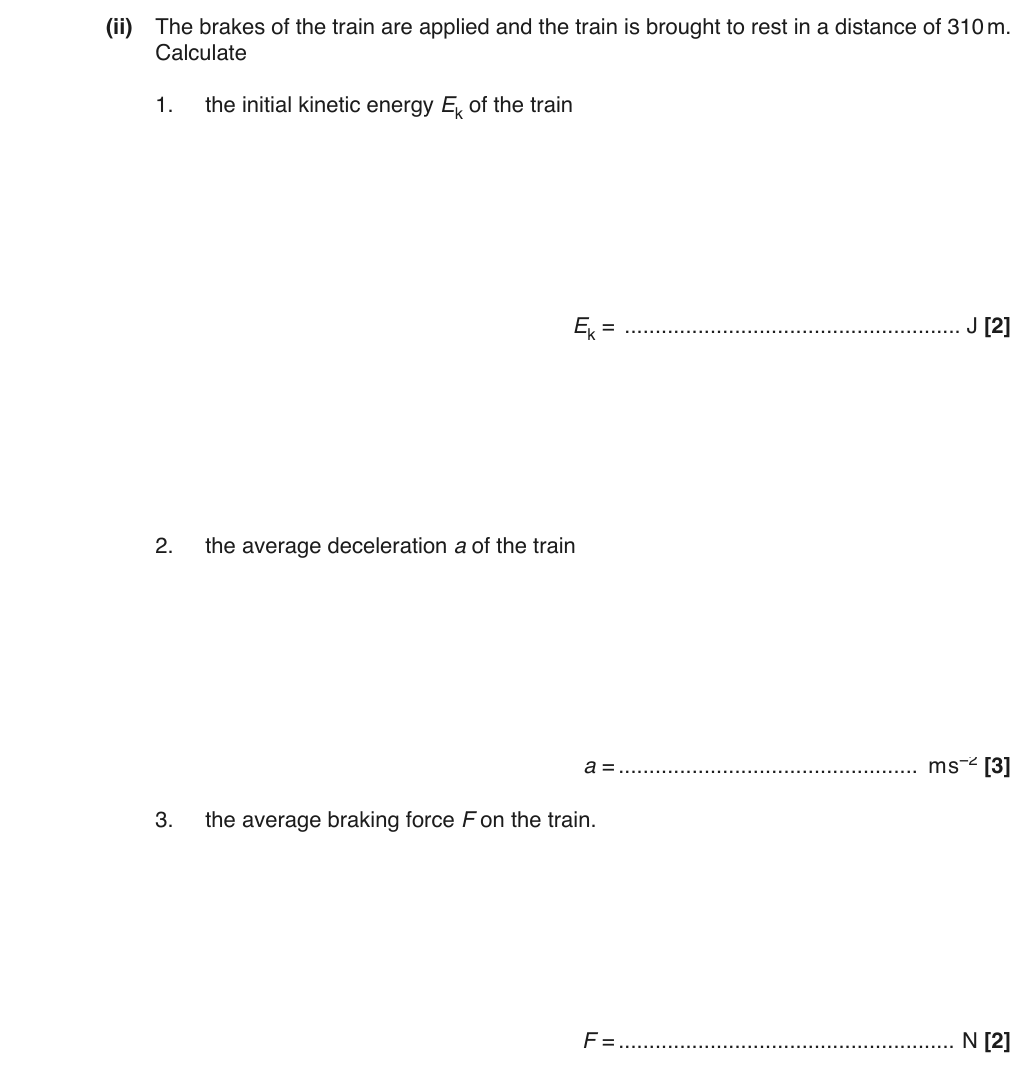
(ii) The brakes of the train are applied and the train is brought to rest in a distance of 310 m.
Calculate
1. the initial kinetic energy Ek of the train
Ek =  ....................................................... J [2]
2. the average deceleration a of the train
a = ................................................. m s−2 [3]
3. the average braking force F on the train.
F = ....................................................... N [2]
June 2017 · AS Paper 2 · Q1(b)(iii) 2 marks Explanation dynamics and terminal velocityscalars and vectorswork energy and power
Earlier parts of question 1 that this part usesEarlier part of June 2017 Paper 2 question 1Earlier part of June 2017 Paper 2 question 1
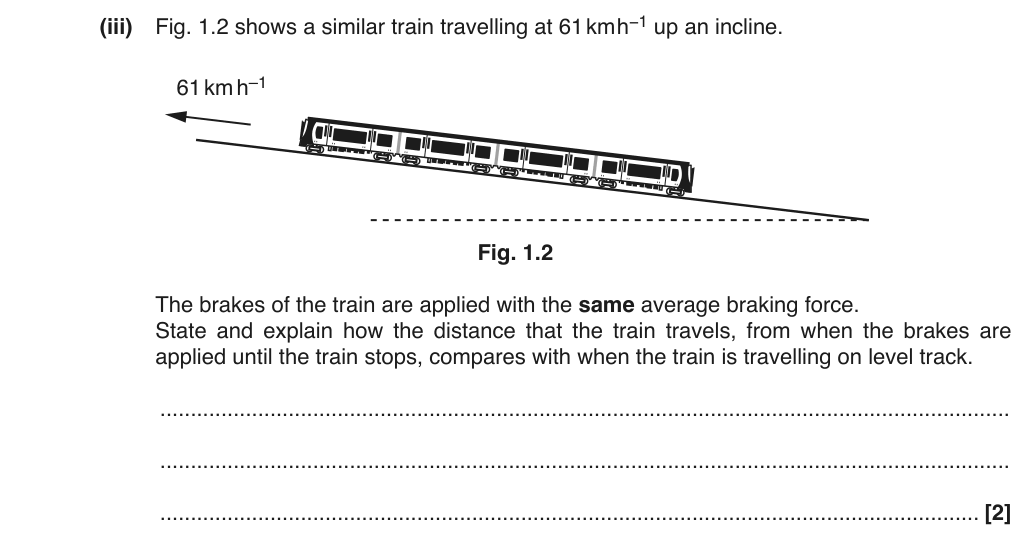
(iii) Fig. 1.2 shows a similar train travelling at 61 km h−1 up an incline.
61 km h–1
Fig. 1.2
The brakes of the train are applied with the same average braking force.
State and explain how the distance that the train travels, from when the brakes are
applied until the train stops, compares with when the train is travelling on level track.
...........................................................................................................................................
...........................................................................................................................................
...................................................................................................................................... [2]
June 2017 · AS Paper 2 · Q2(a) 1 mark Short answer springspractical skillsquantities and units
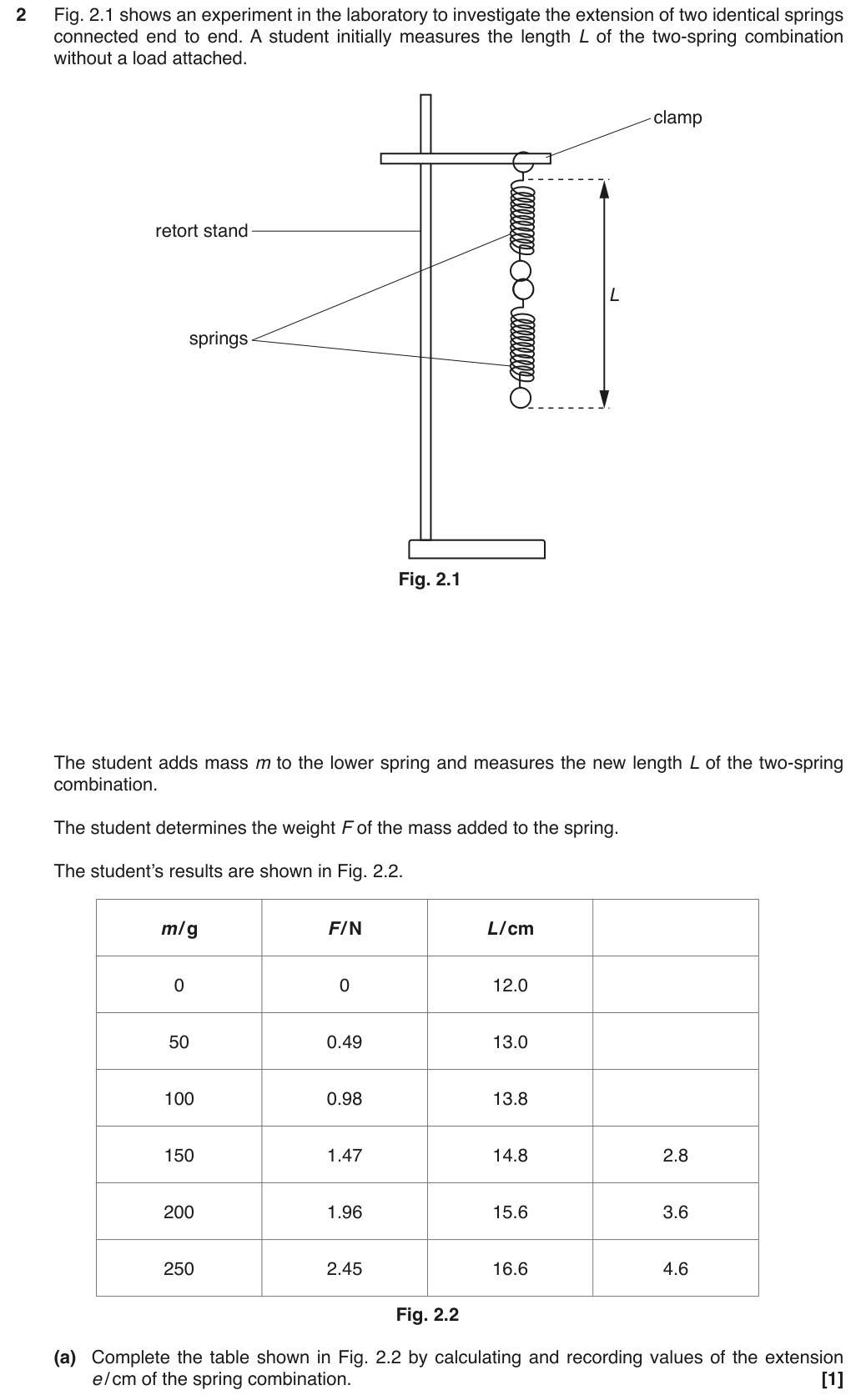
2 Fig. 2.1 shows an experiment in the laboratory to investigate the extension of two identical springs
connected end to end. A student initially measures the length L of the two-spring combination
without a load attached.
clamp
retort stand
L
springs
Fig. 2.1
The student adds mass m to the lower spring and measures the new length L of the two-spring
combination.
The student determines the weight F of the mass added to the spring.
The student’s results are shown in Fig. 2.2.
m / g F / N L / cm
0 0 12.0
50 0.49 13.0
100 0.98 13.8
150 1.47 14.8 2.8
200 1.96 15.6 3.6
250 2.45 16.6 4.6
Fig. 2.2
(a) Complete the table shown in Fig. 2.2 by calculating and recording values of the extension
e / cm of the spring combination. [1]
June 2017 · AS Paper 2 · Q2(b) 4 marks Diagram or graph practical skillsmeasurements and uncertaintiessprings
Earlier part of question 2 that this part usesEarlier part of June 2017 Paper 2 question 2
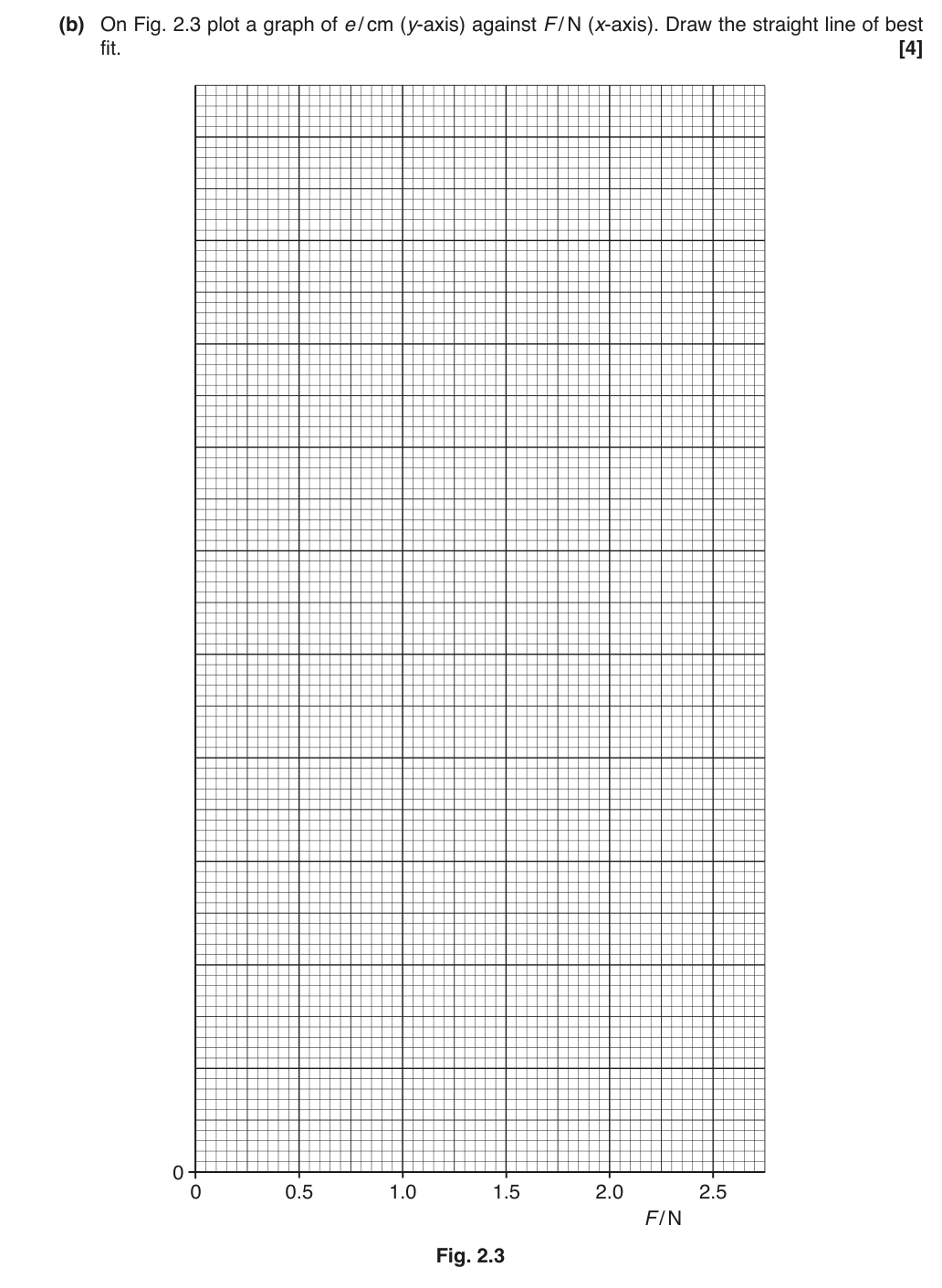
(b) On Fig. 2.3 plot a graph of e / cm (y-axis) against F / N (x-axis). Draw the straight line of best
fit. [4]
June 2017 · AS Paper 2 · Q2(c) 1 mark Calculation practical skills
Earlier parts of question 2 that this part usesEarlier part of June 2017 Paper 2 question 2Earlier part of June 2017 Paper 2 question 2
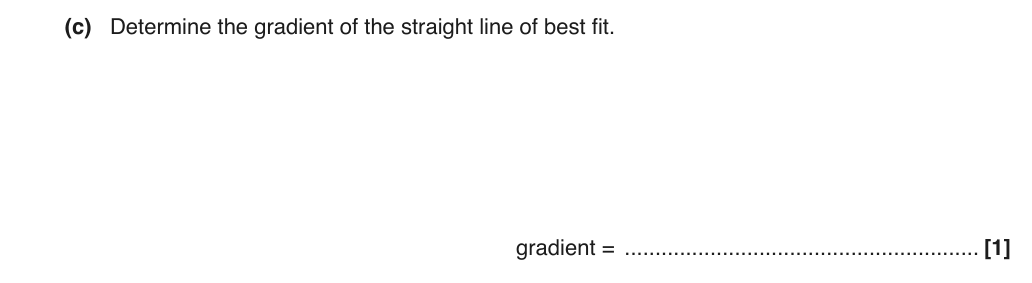
(c) Determine the gradient of the straight line of best fit.
gradient =  .......................................................... [1]
June 2017 · AS Paper 2 · Q2(d) 2 marks Calculation springspractical skillsquantities and units
Earlier parts of question 2 that this part usesEarlier part of June 2017 Paper 2 question 2Earlier part of June 2017 Paper 2 question 2
0
0 0.5 1.0 1.5 2.0 2.5
F / N
Fig. 2.3
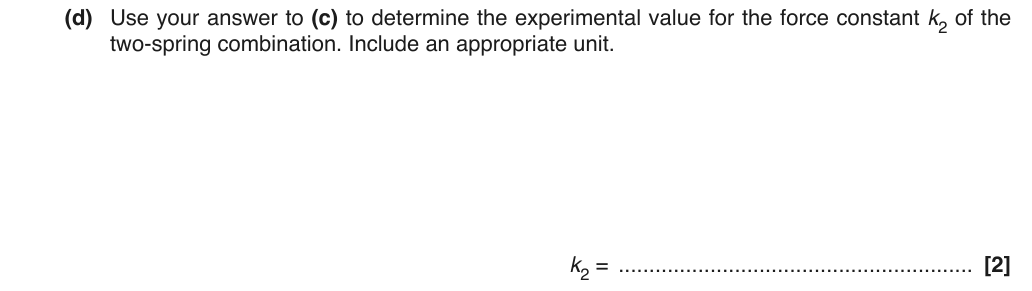
(d) Use your answer to (c) to determine the experimental value for the force constant k2 of the
two-spring combination. Include an appropriate unit.
k2 =  .......................................................... [2]
June 2017 · AS Paper 2 · Q2(e) 2 marks Explanation springs
Earlier part of question 2 that this part usesEarlier part of June 2017 Paper 2 question 2
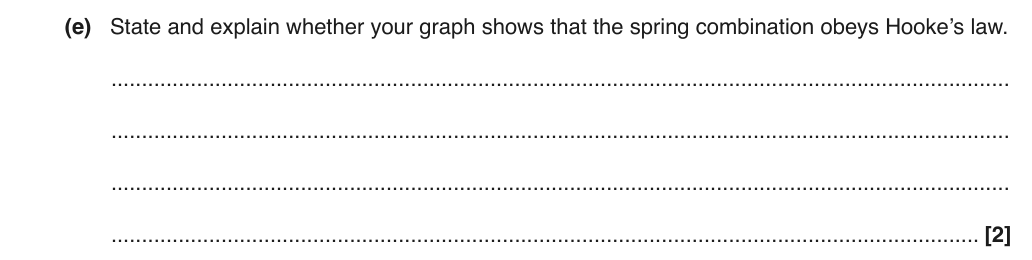
(e) State and explain whether your graph shows that the spring combination obeys Hooke’s law.
...................................................................................................................................................
...................................................................................................................................................
...................................................................................................................................................
.............................................................................................................................................. [2]
June 2017 · AS Paper 2 · Q2(f) 2 marks Calculation springs
Earlier parts of question 2 that this part usesEarlier part of June 2017 Paper 2 question 2Earlier part of June 2017 Paper 2 question 2
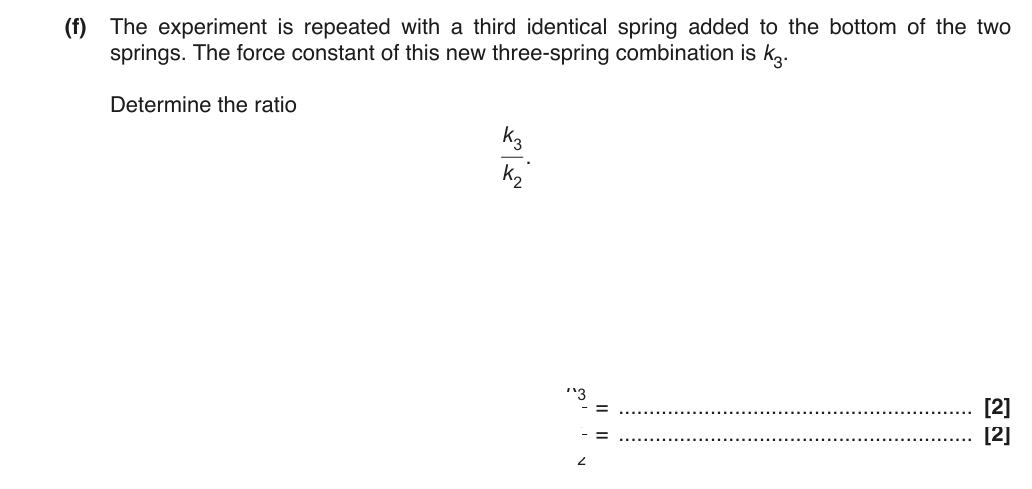
(f) The experiment is repeated with a third identical spring added to the bottom of the two
springs. The force constant of this new three-spring combination is k3.
Determine the ratio
k
3.
k
2
k
3 =  .......................................................... [2]
June 2017 · AS Paper 2 · Q3(a)(i) 2 marks Explanation practical skills
k
2
3 (a) A solid wooden sphere of density 650 kg m−3 has a diameter of 2.8 cm.
(i) Describe and explain how the student can measure precisely the diameter of the sphere.
...........................................................................................................................................
...........................................................................................................................................
...........................................................................................................................................
...................................................................................................................................... [2]
June 2017 · AS Paper 2 · Q3(a)(ii) 2 marks Show that density and pressure
Earlier part of question 3 that this part usesEarlier part of June 2017 Paper 2 question 3
(ii) Show that the mass of the sphere is 0.0075 kg.
[2]
June 2017 · AS Paper 2 · Q3(a)(iii) 2 marks Calculation density and pressuredynamics and terminal velocityequilibrium and moments
Earlier parts of question 3 that this part usesEarlier part of June 2017 Paper 2 question 3Earlier part of June 2017 Paper 2 question 3
(iii) The sphere is pushed below the surface of water as shown in Fig. 3.
F
beaker sphere
water
Fig. 3
Determine the force F that needs to be applied to the sphere to keep the wooden sphere
stationary in this position.
density of water = 1000 kg m−3
F = ....................................................... N [2]
June 2017 · AS Paper 2 · Q3(b) 6 marks 6-mark extended response dynamics and terminal velocitypractical skills
(b)* A student wishes to investigate how the terminal velocity v of a metal sphere varies with the
radius r of the sphere as it travels through a liquid.
It is suggested that
2
v = Kr
where K is a constant.
Describe with the aid of a suitable diagram how an experiment can be safely conducted, and
how the data can be analysed to determine K.
...................................................................................................................................................
...................................................................................................................................................
...................................................................................................................................................
...................................................................................................................................................
...................................................................................................................................................
...................................................................................................................................................
...................................................................................................................................................
...................................................................................................................................................
...................................................................................................................................................
...................................................................................................................................................
...................................................................................................................................................
...................................................................................................................................................
...................................................................................................................................................
...................................................................................................................................................
...................................................................................................................................................
...................................................................................................................................................
...................................................................................................................................................
...................................................................................................................................................
...................................................................................................................................................
...................................................................................................................................................
...................................................................................................................................................
...................................................................................................................................................
...................................................................................................................................................
...................................................................................................................................................
...................................................................................................................................................
...................................................................................................................................................
...................................................................................................................................................
...................................................................................................................................................
...................................................................................................................................................
...................................................................................................................................................
...................................................................................................................................................
...................................................................................................................................................
...................................................................................................................................................
...................................................................................................................................................
...................................................................................................................................................
...................................................................................................................................................
...................................................................................................................................................
...................................................................................................................................................
...................................................................................................................................................
.............................................................................................................................................. [6]
June 2017 · AS Paper 2 · Q4(a)(i) 1 mark Show that electrical power
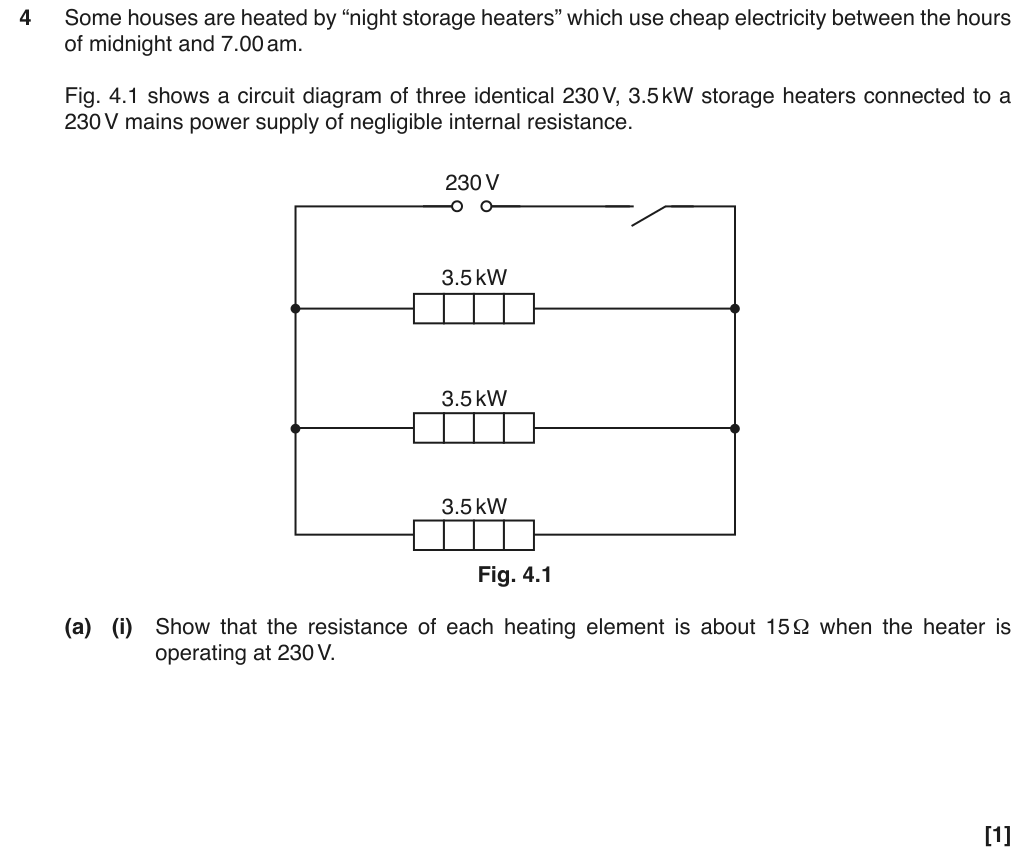
4 Some houses are heated by “night storage heaters” which use cheap electricity between the hours
of midnight and 7.00 am.
Fig. 4.1 shows a circuit diagram of three identical 230 V, 3.5 kW storage heaters connected to a
230 V mains power supply of negligible internal resistance.
230 V
3.5 kW
3.5 kW
3.5 kW
Fig. 4.1
(a) (i) Show that the resistance of each heating element is about 15 Ω when the heater is
operating at 230 V.
[1]
June 2017 · AS Paper 2 · Q4(a)(ii) 3 marks Calculation resistivity
Earlier part of question 4 that this part usesEarlier part of June 2017 Paper 2 question 4
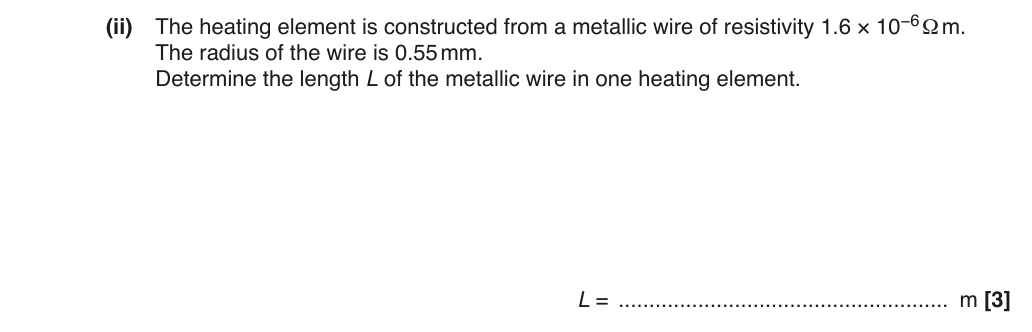
(ii) The heating element is constructed from a metallic wire of resistivity 1.6 × 10⁻⁶ Ω m.
The radius of the wire is 0.55 mm.
Determine the length L of the metallic wire in one heating element.
L =  ...................................................... m [3]
June 2017 · AS Paper 2 · Q4(a)(iii) 2 marks Explanation emf pd and resistanceresistivity
Earlier part of question 4 that this part usesEarlier part of June 2017 Paper 2 question 4
(iii) State and explain whether the heater obeys Ohm’s law.
...........................................................................................................................................
...........................................................................................................................................
...........................................................................................................................................
...................................................................................................................................... [2]
June 2017 · AS Paper 2 · Q4(b) 2 marks Calculation electrical power
Earlier part of question 4 that this part usesEarlier part of June 2017 Paper 2 question 4
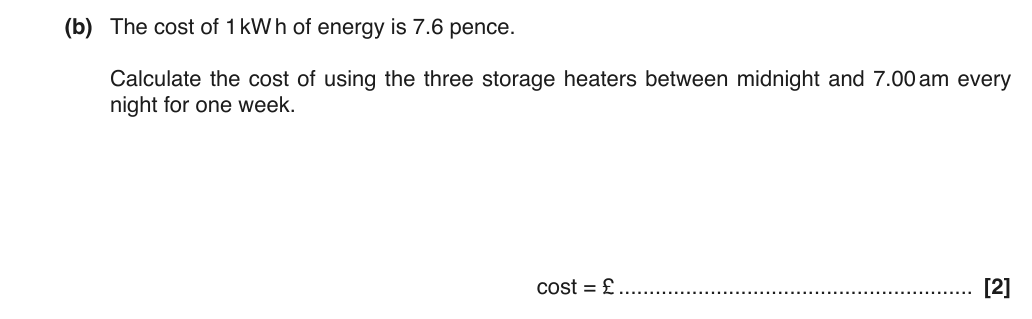
(b) The cost of 1 kW h of energy is 7.6 pence.
Calculate the cost of using the three storage heaters between midnight and 7.00 am every
night for one week.
cost = £ .......................................................... [2]
June 2017 · AS Paper 2 · Q4(c)(i) 2 marks Calculation potential dividersseries and parallel circuits
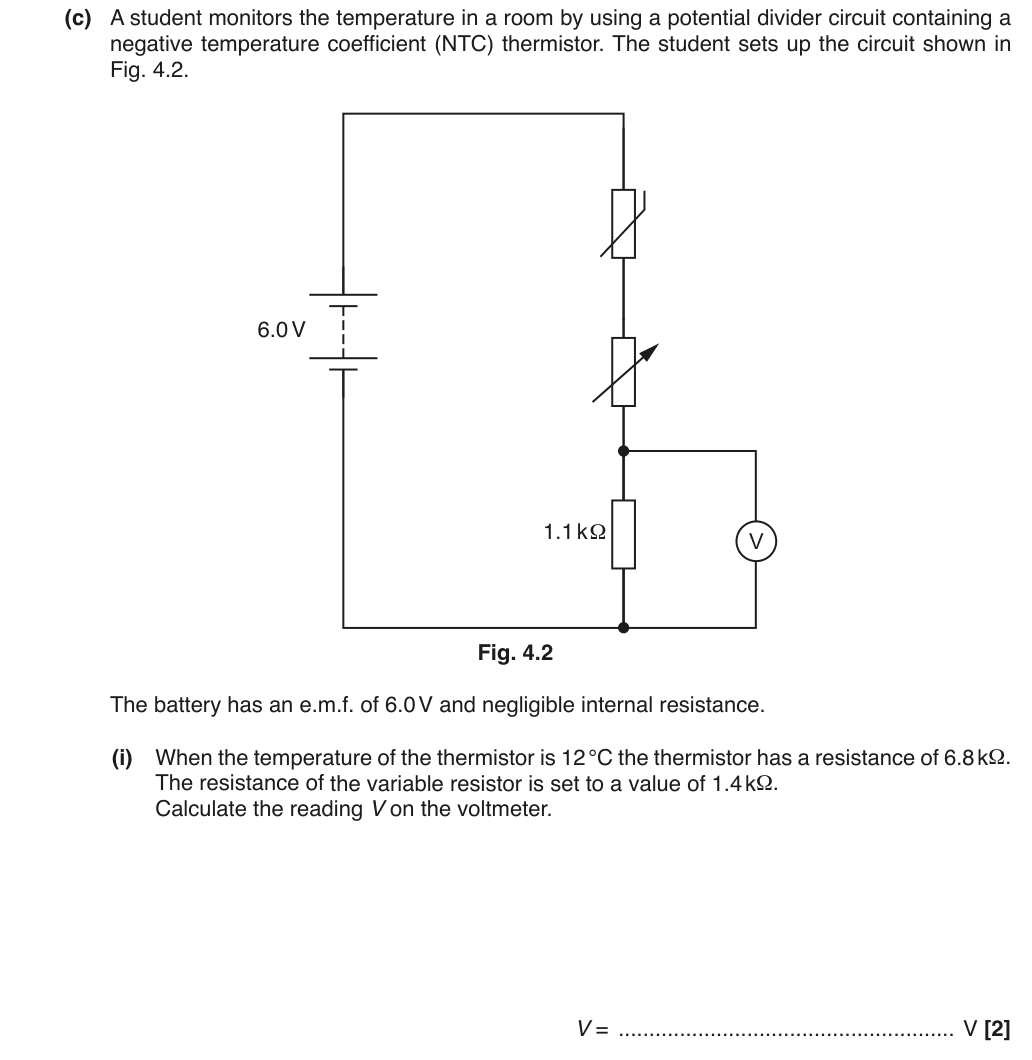
(c) A student monitors the temperature in a room by using a potential divider circuit containing a
negative temperature coefficient (NTC) thermistor. The student sets up the circuit shown in
Fig. 4.2.
6.0 V
1.1 kΩ
V
Fig. 4.2
The battery has an e.m.f. of 6.0 V and negligible internal resistance.
(i) When the temperature of the thermistor is 12 °C the thermistor has a resistance of 6.8 kΩ.
The resistance of the variable resistor is set to a value of 1.4 kΩ.
Calculate the reading V on the voltmeter.
V =  ....................................................... V [2]
June 2017 · AS Paper 2 · Q4(c)(ii) 4 marks Explanation resistivitypotential dividers
Earlier part of question 4 that this part usesEarlier part of June 2017 Paper 2 question 4
(ii) Explain how the reading on the voltmeter will change when the temperature of the
thermistor increases.
...........................................................................................................................................
...........................................................................................................................................
...........................................................................................................................................
...........................................................................................................................................
...........................................................................................................................................
...........................................................................................................................................
...................................................................................................................................... [4]
June 2017 · AS Paper 2 · Q5(a) 2 marks Short answer superposition and interferencewave motion
5 This question is about a laser pen.
(a) Define the terms phase difference and coherence.
phase difference ........................................................................................................................
...................................................................................................................................................
coherence ..................................................................................................................................
.............................................................................................................................................. [2]
June 2017 · AS Paper 2 · Q5(b)(i) 2 marks Explanation superposition and interference
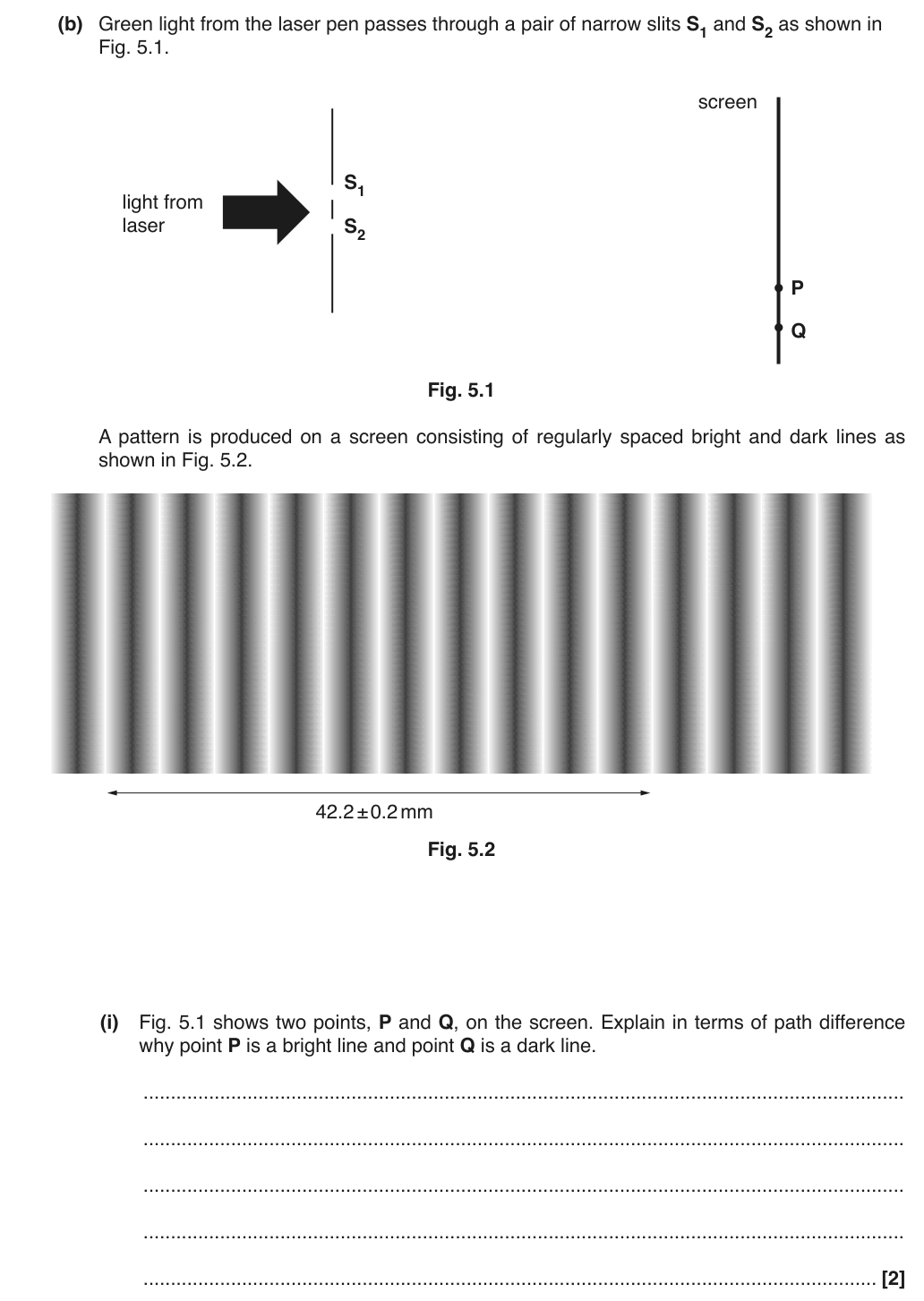
(b) Green light from the laser pen passes through a pair of narrow slits S1 and S2 as shown in
Fig. 5.1.
screen
S1
light from
laser S2
P
Q
Fig. 5.1
A pattern is produced on a screen consisting of regularly spaced bright and dark lines as
shown in Fig. 5.2.
42.2 ± 0.2 mm
Fig. 5.2
(i) Fig. 5.1 shows two points, P and Q, on the screen. Explain in terms of path difference
why point P is a bright line and point Q is a dark line.
...........................................................................................................................................
...........................................................................................................................................
...........................................................................................................................................
...........................................................................................................................................
...................................................................................................................................... [2]
June 2017 · AS Paper 2 · Q5(b)(ii) 5 marks Calculation superposition and interferencemeasurements and uncertainties
Earlier part of question 5 that this part usesEarlier part of June 2017 Paper 2 question 5
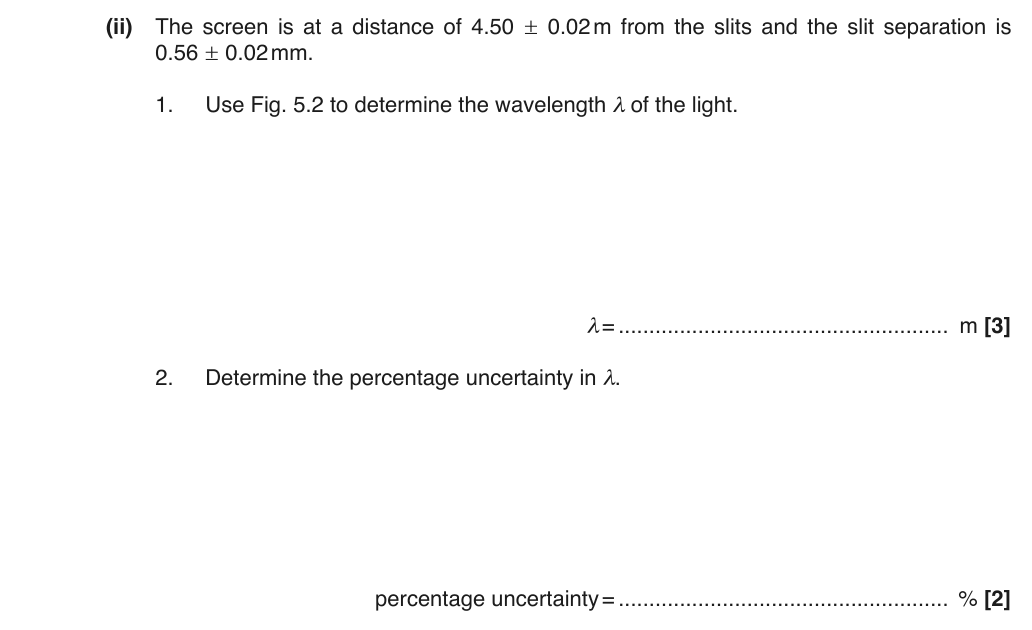
(ii) The screen is at a distance of 4.50 ! 0.02 m from the slits and the slit separation is
0.56 ! 0.02 mm.
1. Use Fig. 5.2 to determine the wavelength λ of the light.
λ = ...................................................... m [3]
2. Determine the percentage uncertainty in λ.
percentage uncertainty = ...................................................... % [2]
June 2017 · AS Paper 2 · Q5(c)(i) 2 marks Calculation photonswork energy and power
Earlier part of question 5 that this part usesEarlier part of June 2017 Paper 2 question 5
(c) The power of the green light from the laser pen is 50.0 mW. It is now used in a demonstration
of the photoelectric effect.
(i) Calculate the number of photons n that the laser emits per second.
n =  ......................................................... [2]
June 2017 · AS Paper 2 · Q5(c)(ii) 2 marks Explanation photoelectric effectphotons
Earlier parts of question 5 that this part usesEarlier part of June 2017 Paper 2 question 5Earlier part of June 2017 Paper 2 question 5
(ii) The green light falls on a negatively charged metal plate with a work function of 2.6 eV.
Explain whether photoelectrons will be emitted.
...........................................................................................................................................
...........................................................................................................................................
...........................................................................................................................................
...................................................................................................................................... [2]
June 2017 · AS Paper 2 · Q6(a) 2 marks Explanation stationary waves
6 (a) Describe how a stationary wave is different from a progressive wave.
...................................................................................................................................................
...................................................................................................................................................
...................................................................................................................................................
.............................................................................................................................................. [2]
June 2017 · AS Paper 2 · Q6(b) 6 marks 6-mark extended response stationary waveswave motion
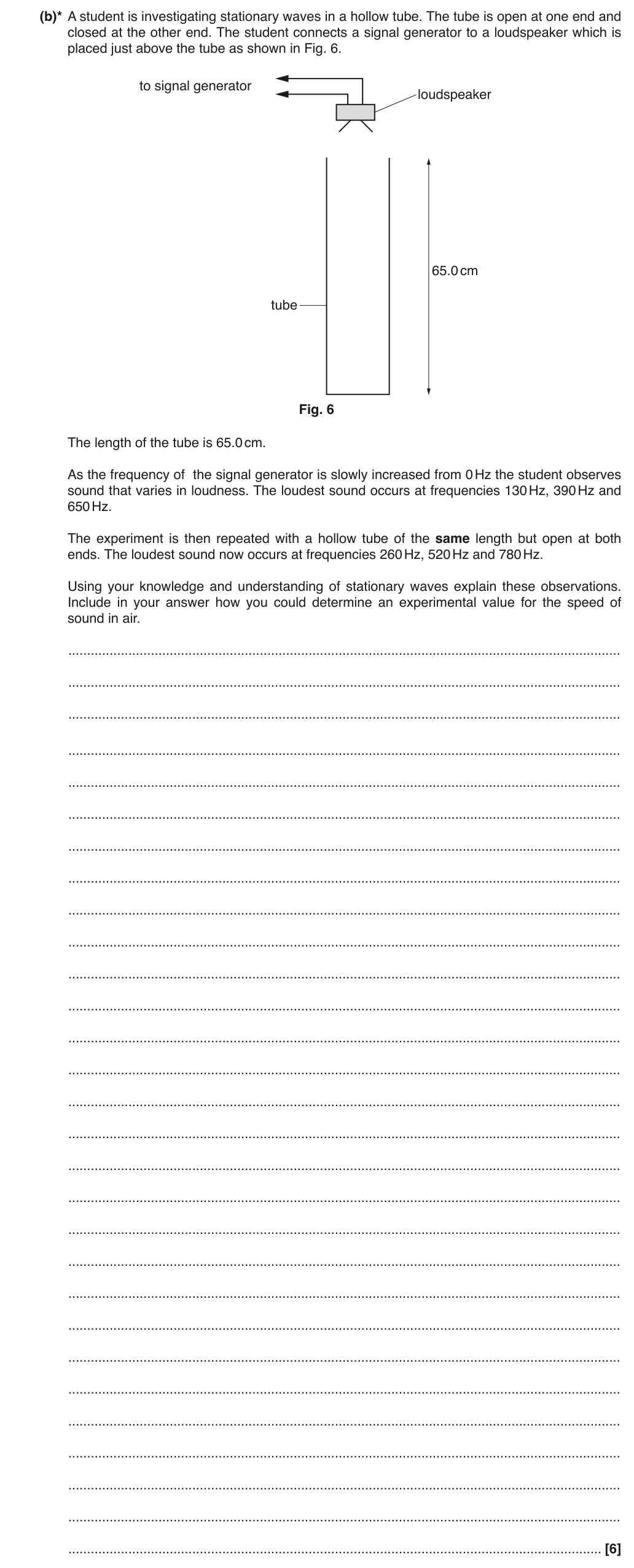
(b)* A student is investigating stationary waves in a hollow tube. The tube is open at one end and
closed at the other end. The student connects a signal generator to a loudspeaker which is
placed just above the tube as shown in Fig. 6.
to signal generator
loudspeaker
65.0 cm
tube
Fig. 6
The length of the tube is 65.0 cm.
As the frequency of  the signal generator is slowly increased from 0 Hz the student observes
sound that varies in loudness. The loudest sound occurs at frequencies 130 Hz, 390 Hz and
650 Hz.
The experiment is then repeated with a hollow tube of the same length but open at both
ends. The loudest sound now occurs at frequencies 260 Hz, 520 Hz and 780 Hz.
Using your knowledge and understanding of stationary waves explain these observations.
Include in your answer how you could determine an experimental value for the speed of
sound in air.
...................................................................................................................................................
...................................................................................................................................................
...................................................................................................................................................
...................................................................................................................................................
...................................................................................................................................................
...................................................................................................................................................
...................................................................................................................................................
...................................................................................................................................................
...................................................................................................................................................
...................................................................................................................................................
...................................................................................................................................................
...................................................................................................................................................
...................................................................................................................................................
...................................................................................................................................................
...................................................................................................................................................
...................................................................................................................................................
...................................................................................................................................................
...................................................................................................................................................
...................................................................................................................................................
...................................................................................................................................................
...................................................................................................................................................
...................................................................................................................................................
...................................................................................................................................................
...................................................................................................................................................
...................................................................................................................................................
...................................................................................................................................................
...................................................................................................................................................
...................................................................................................................................................
.............................................................................................................................................. [6]

Work with an OCR physics tutor

Want a paper marked and gone through with you? Message us.

Prefer email? Send an enquiry

If you are under 18, please include a parent's contact details. Enquiries go to enquiries@physicsaleveltutor.com and are deleted once handled. All tutoring is online.