June 2023: Paper 3, Unified physics

70 marks · 27 question parts · Paper, mark scheme and report on OCR's site · Have the Data, Formulae and Relationships Booklet beside you

Question by question

QTopicMarksAOType
1(a)(i) Gravitational fields, Newton's law of gravitation and gravitational potential, Planetary motion: Kepler's laws and satellites 1Short answer
1(a)(ii) Planetary motion: Kepler's laws and satellites 2Explanation
1(b)(i) Planetary motion: Kepler's laws and satellites 2Show that
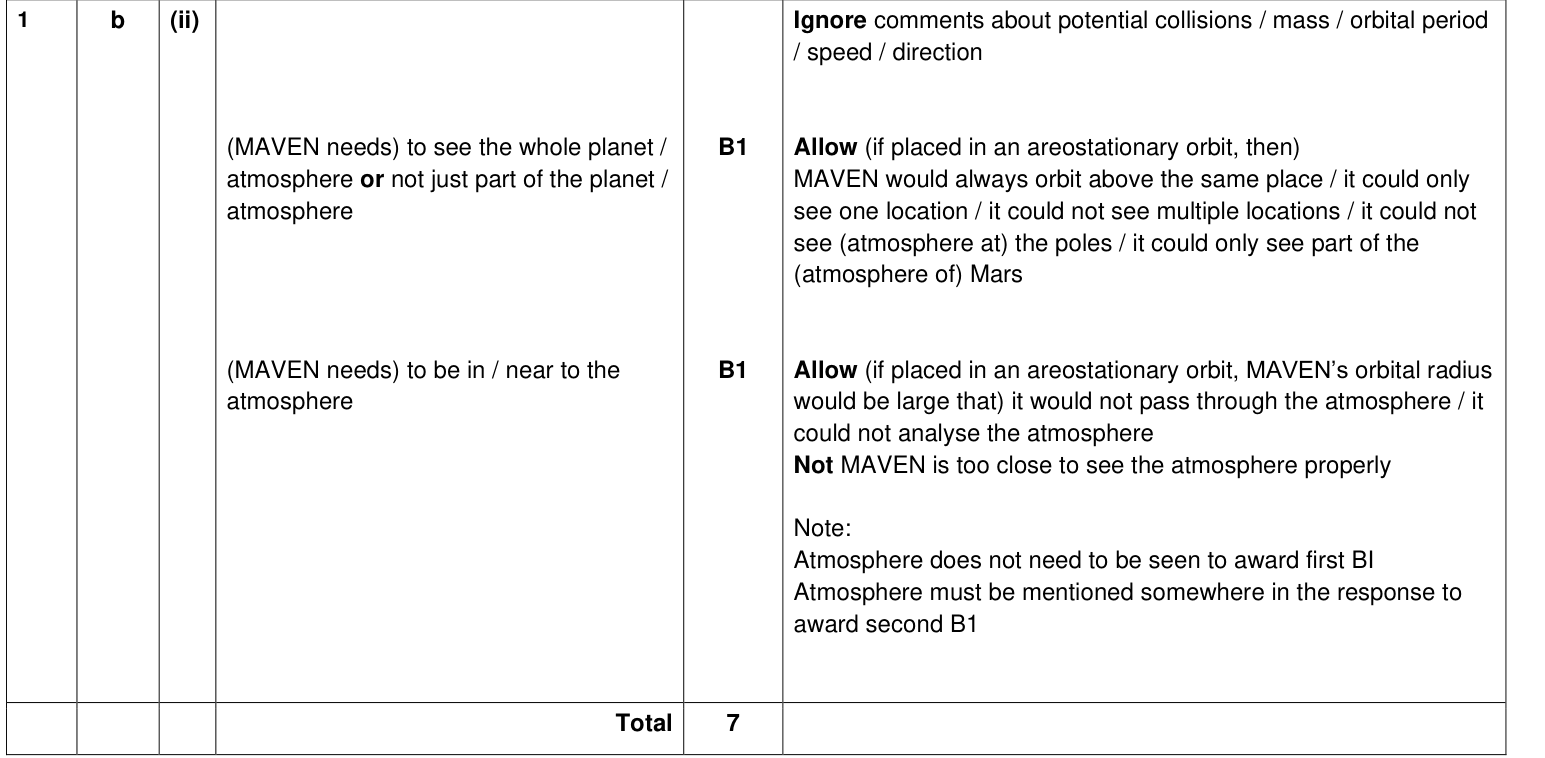
1(b)(ii) Planetary motion: Kepler's laws and satellites 2Explanation
2(a)(i) Resistivity, Practical skills: planning, analysis and evaluation 2Explanation
2(a)(ii) Practical skills: planning, analysis and evaluation, Measurements and uncertainties 3Explanation
2(b)(i) Internal resistance and e.m.f., Resistivity 3Show that
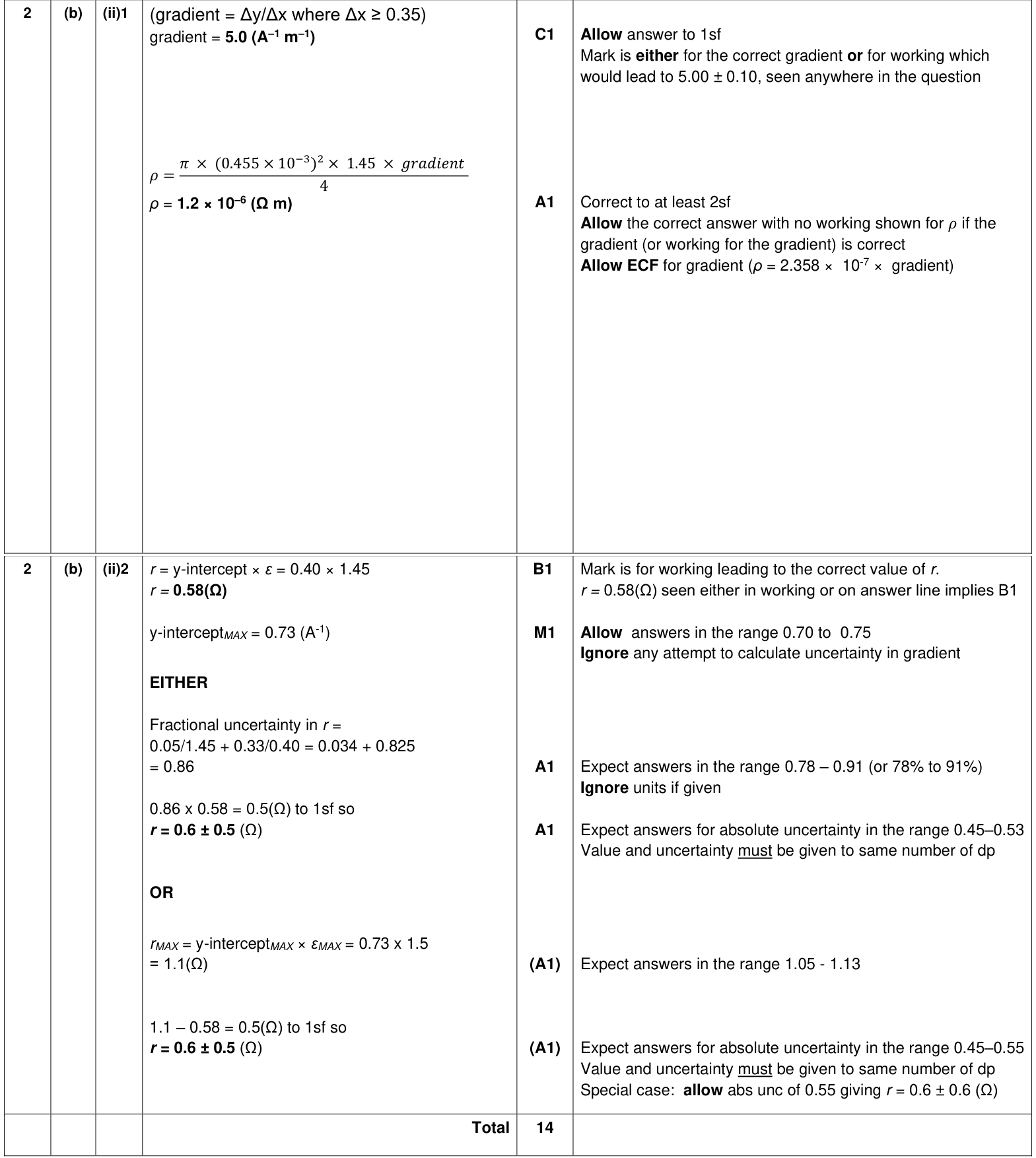
2(b)(ii) Practical skills: planning, analysis and evaluation, Measurements and uncertainties, Resistivity, Internal resistance and e.m.f. 6Calculation
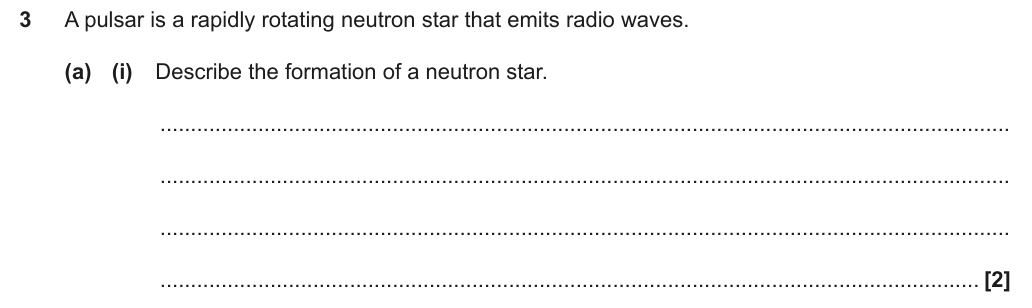
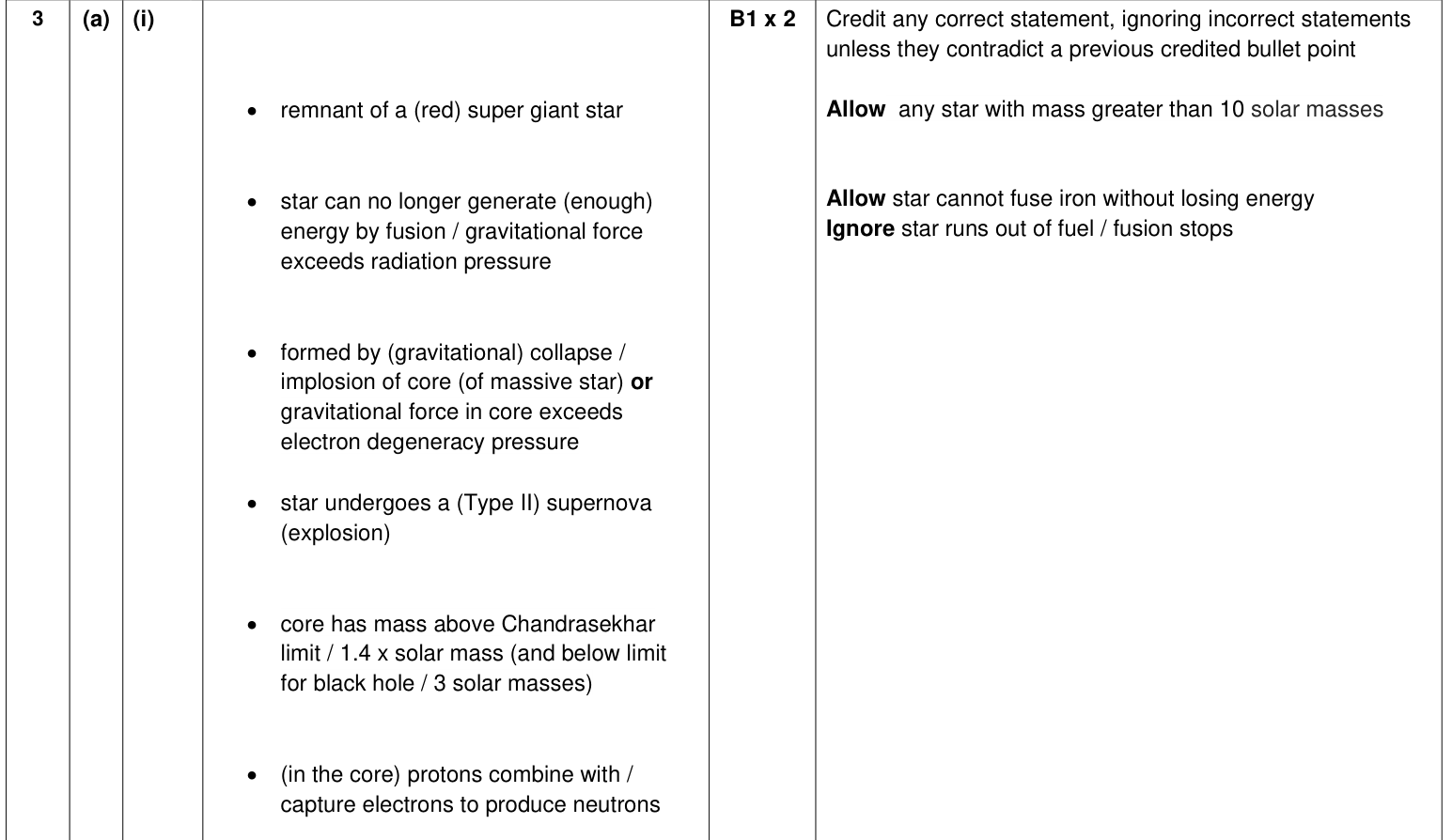
3(a)(i) Stars: stellar evolution, energy levels, spectra, Wien's law and Stefan's law 2Explanation
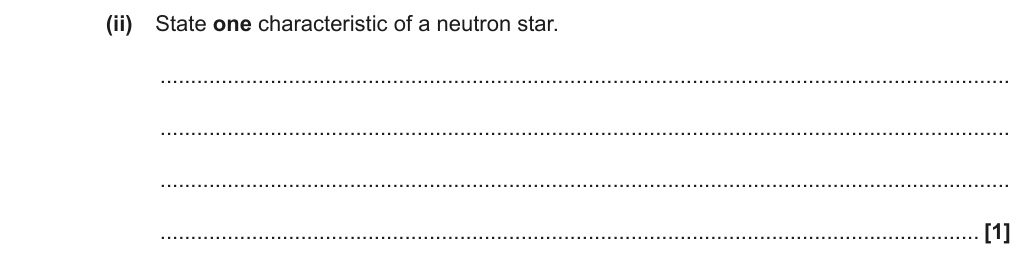
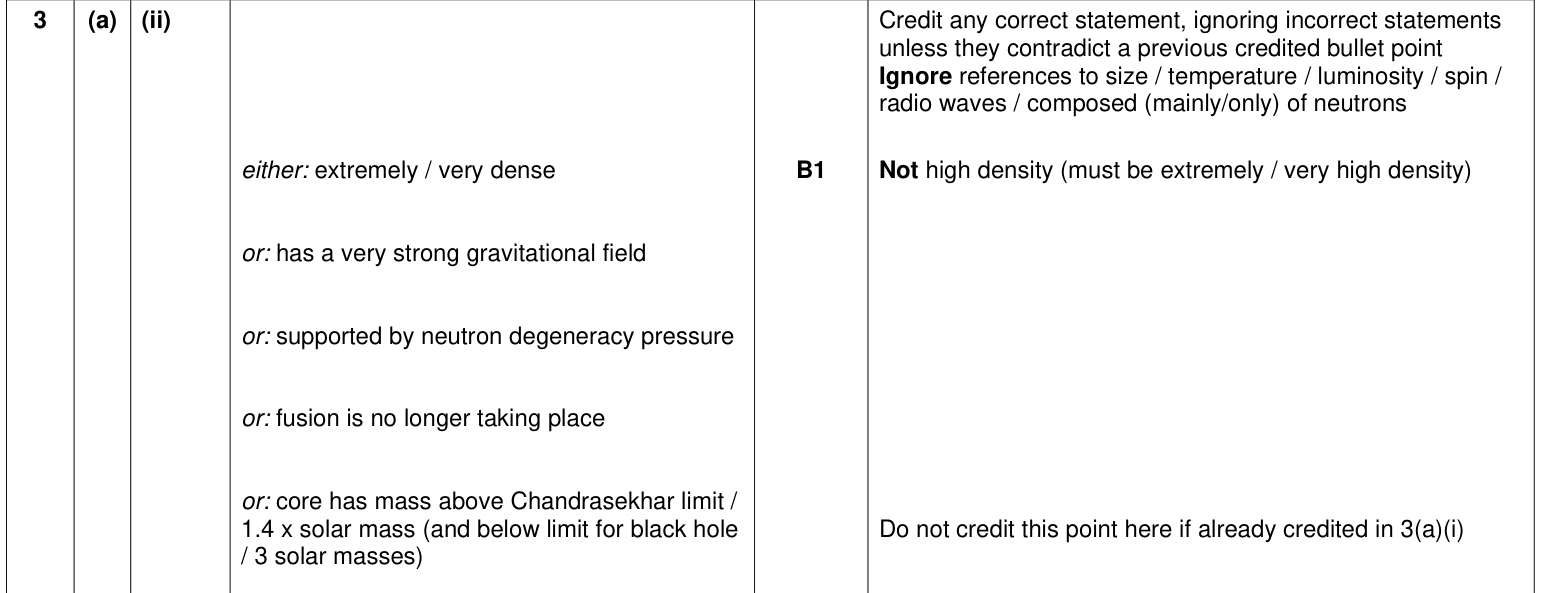
3(a)(ii) Stars: stellar evolution, energy levels, spectra, Wien's law and Stefan's law 1Short answer
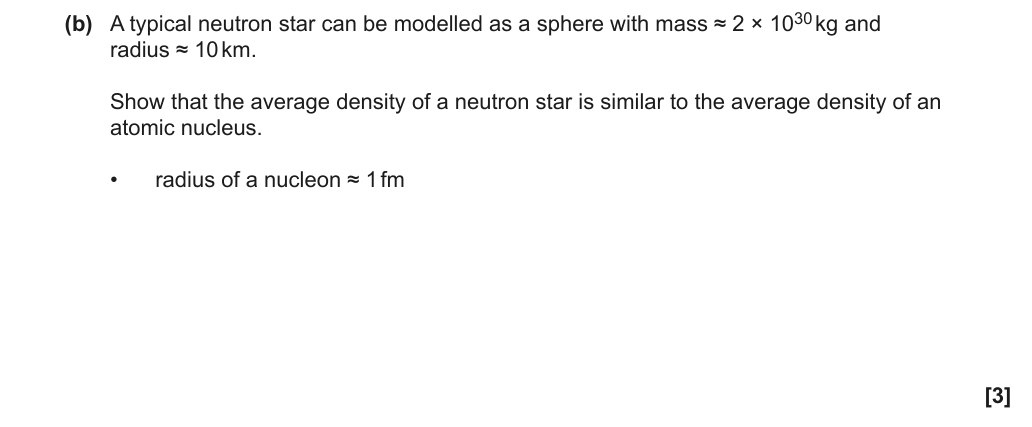
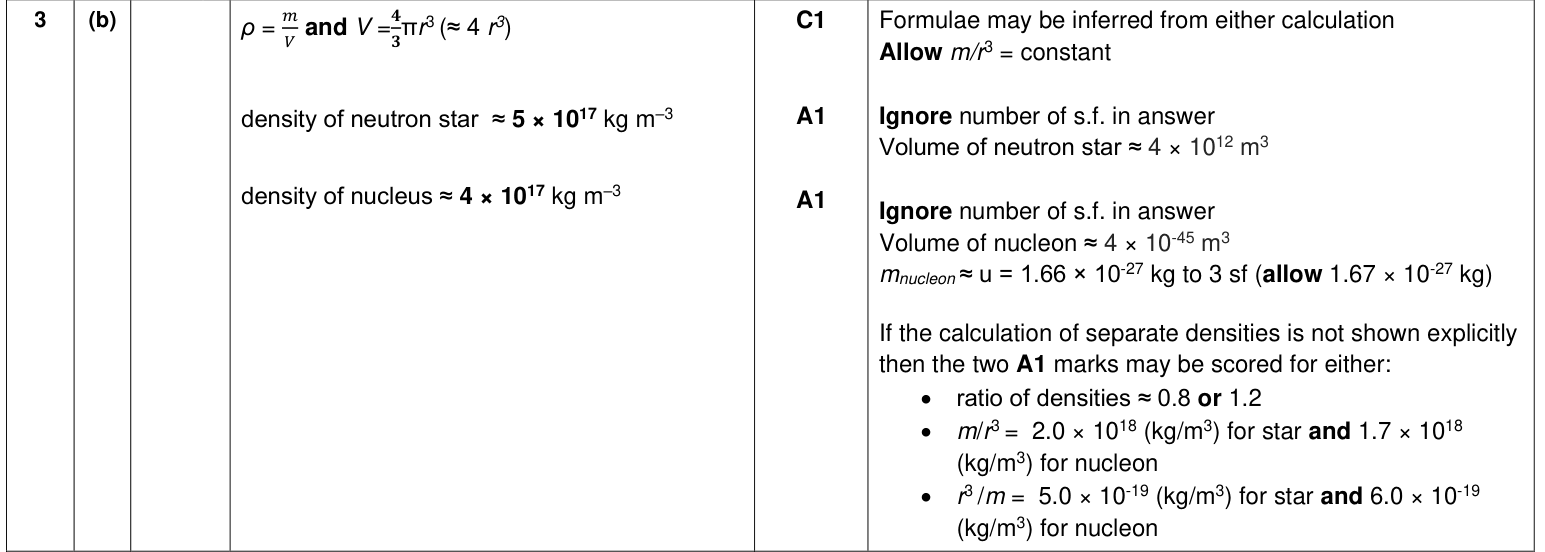
3(b) The nuclear atom and fundamental particles, Density, pressure and upthrust, Stars: stellar evolution, energy levels, spectra, Wien's law and Stefan's law 3Show that
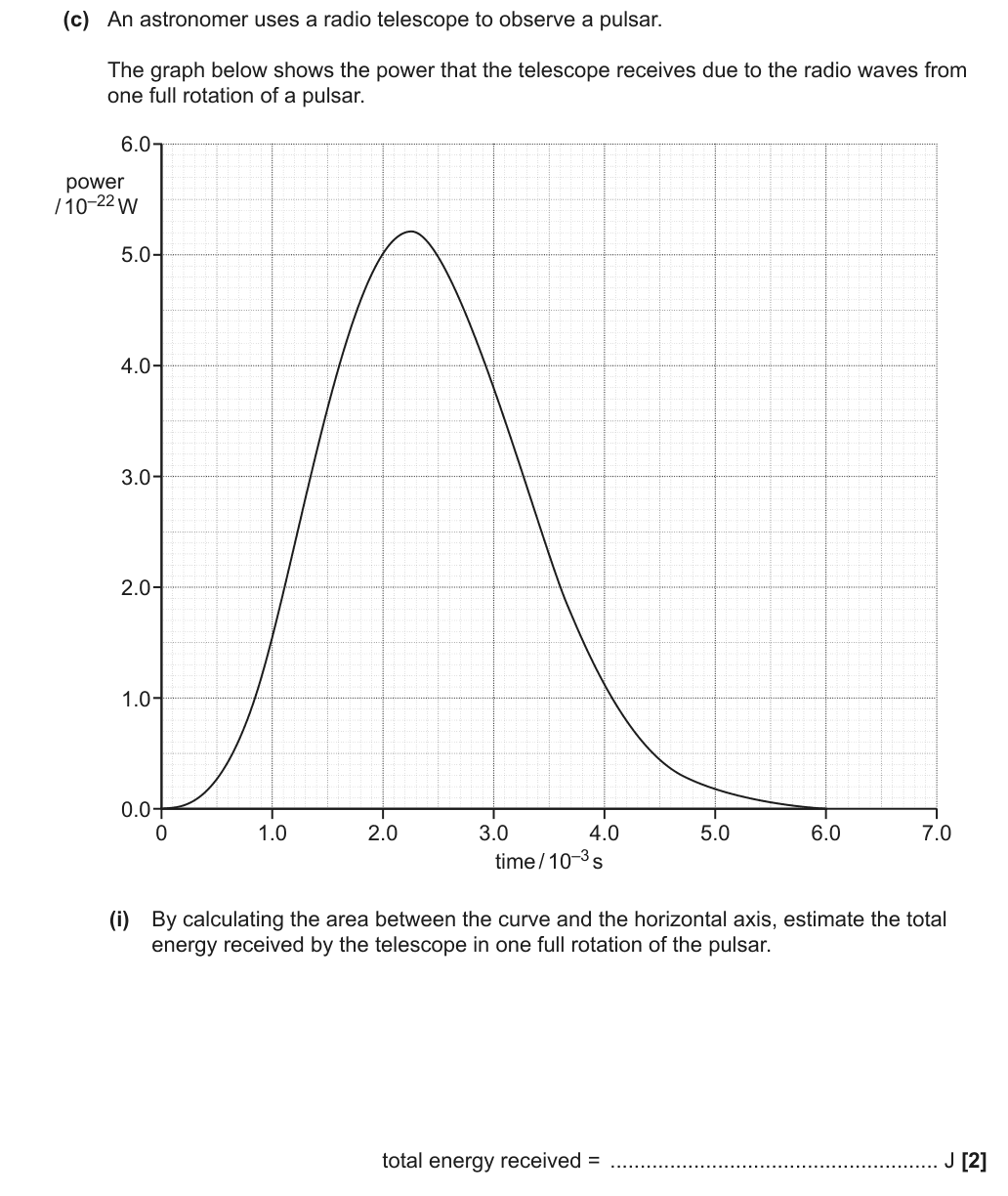
3(c)(i) Work, energy and power 2Calculation
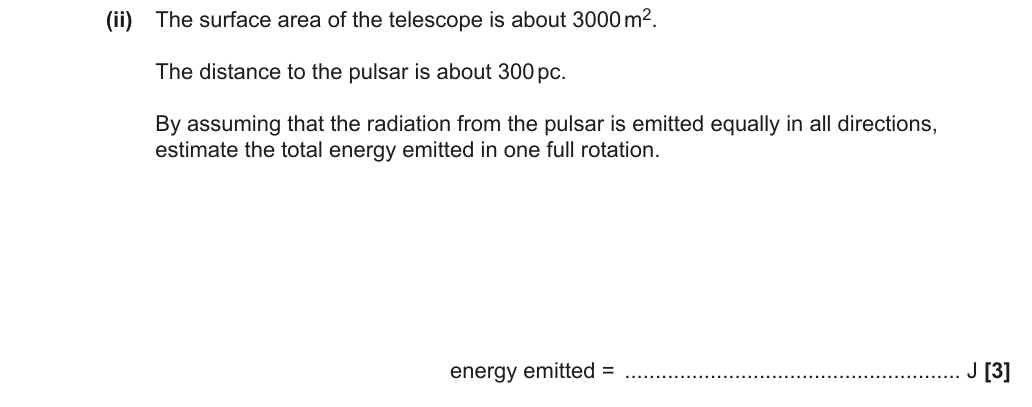
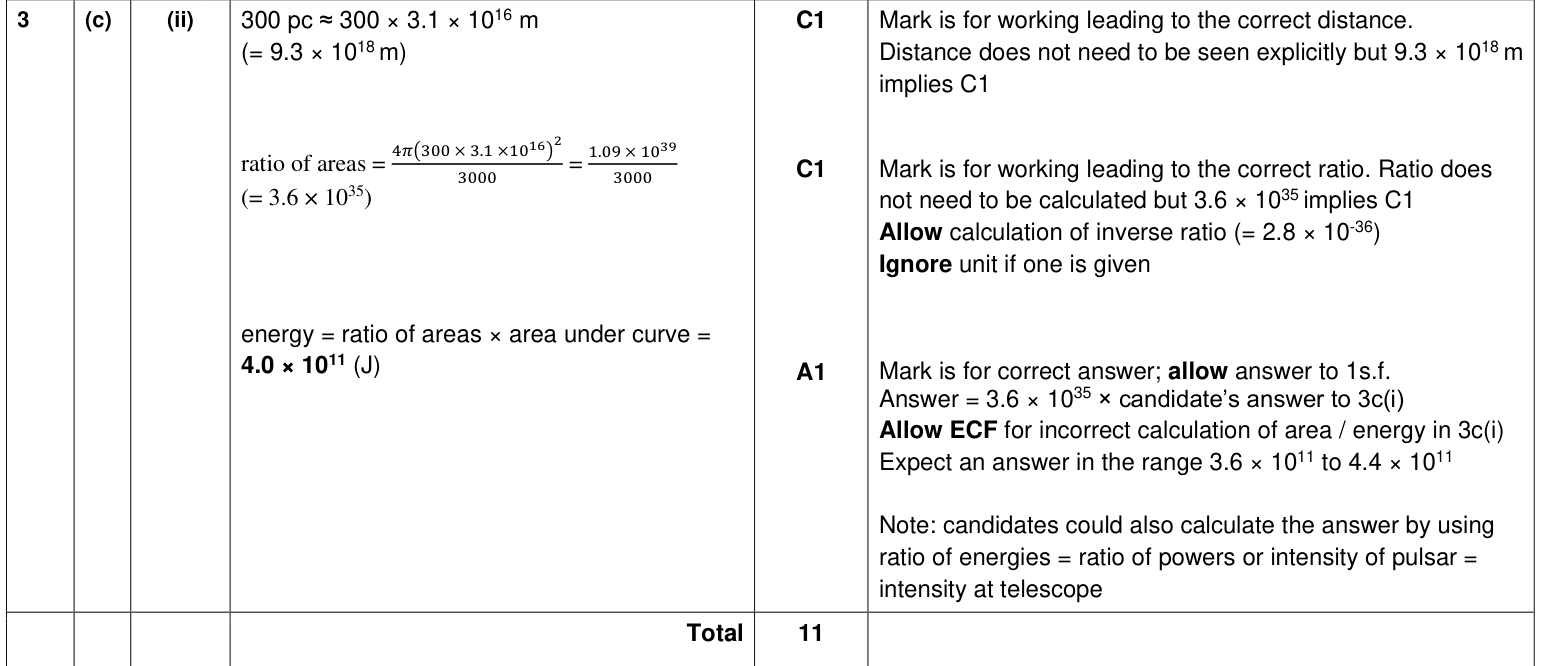
3(c)(ii) Wave motion: progressive waves, the wave equation and intensity, Cosmology: parallax, the Doppler effect, Hubble's law and the Big Bang 3Calculation
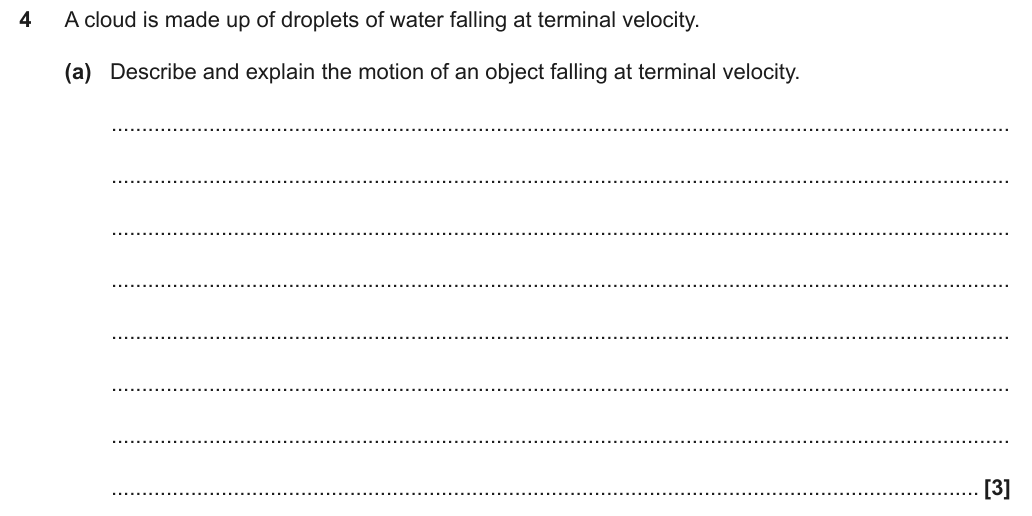
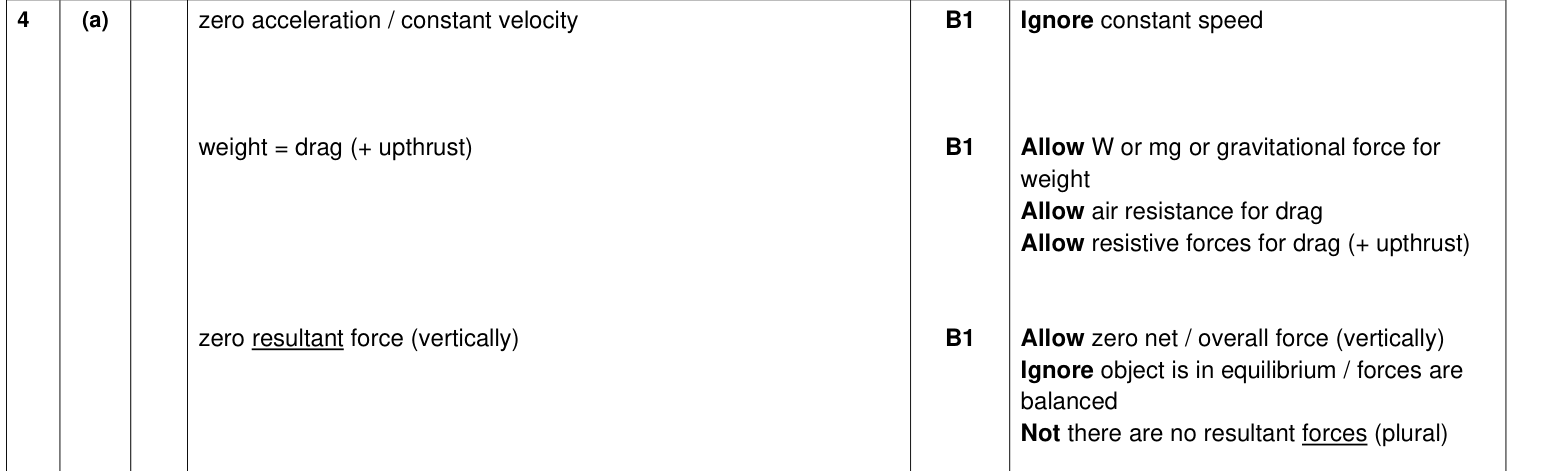
4(a) Dynamics, drag and terminal velocity, Newton's laws of motion and momentum 3Explanation
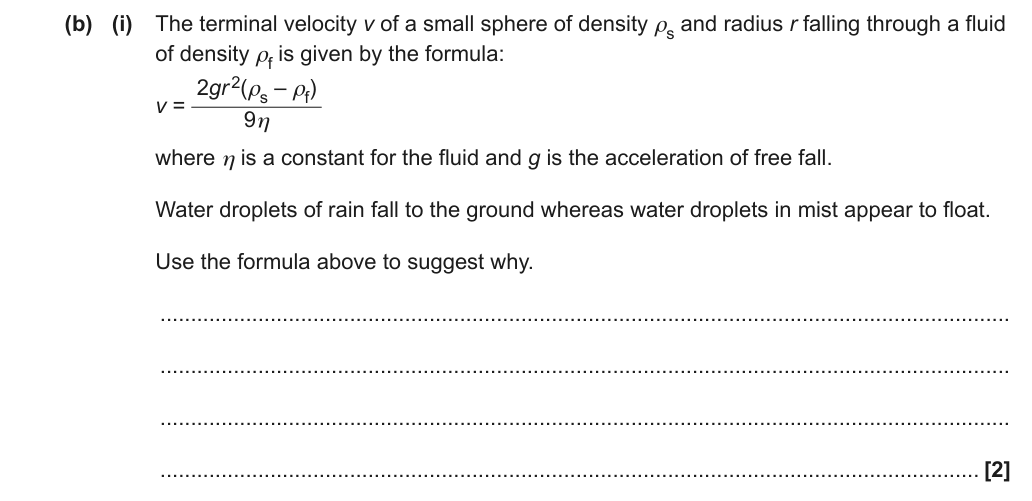
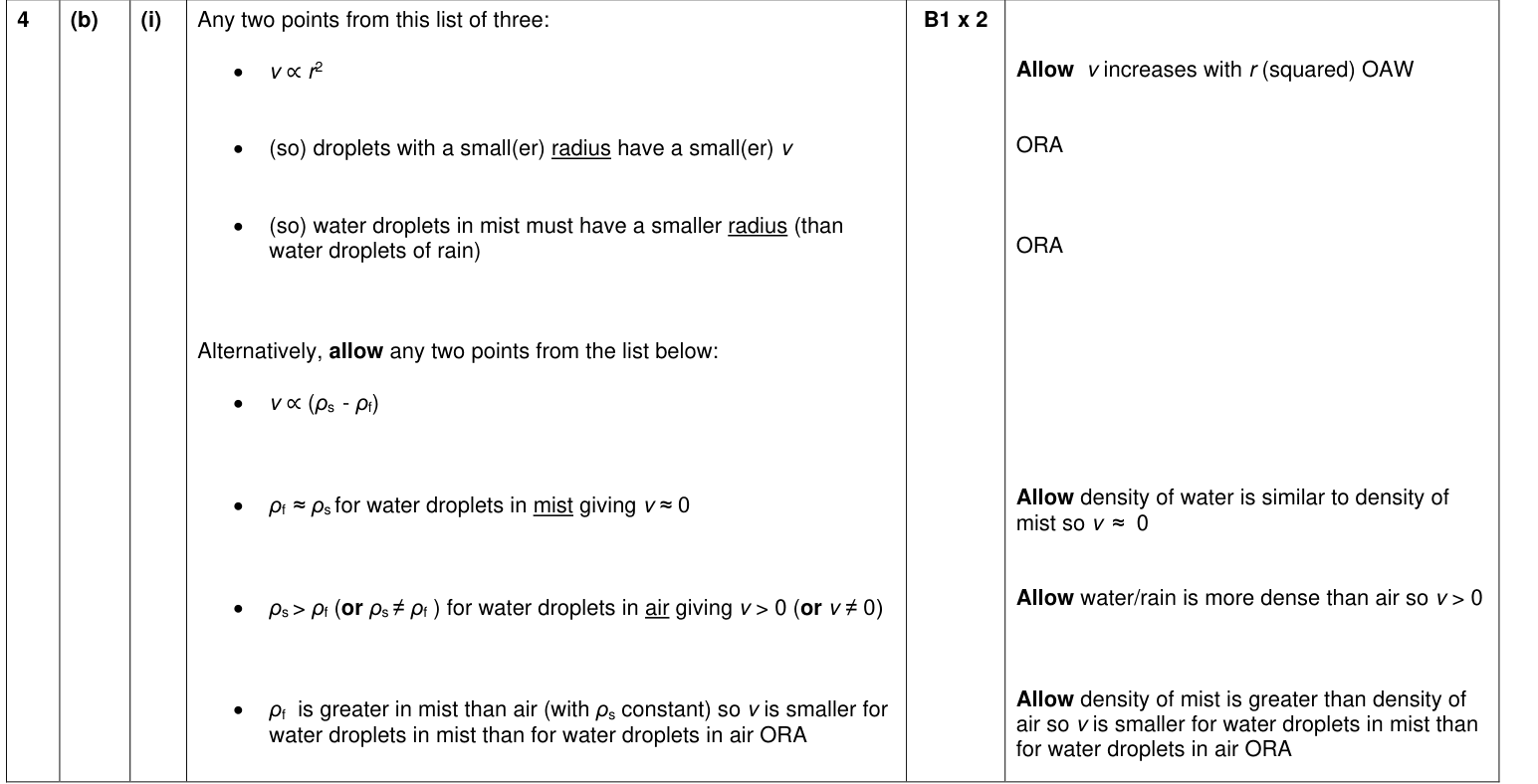
4(b)(i) Dynamics, drag and terminal velocity 2Explanation
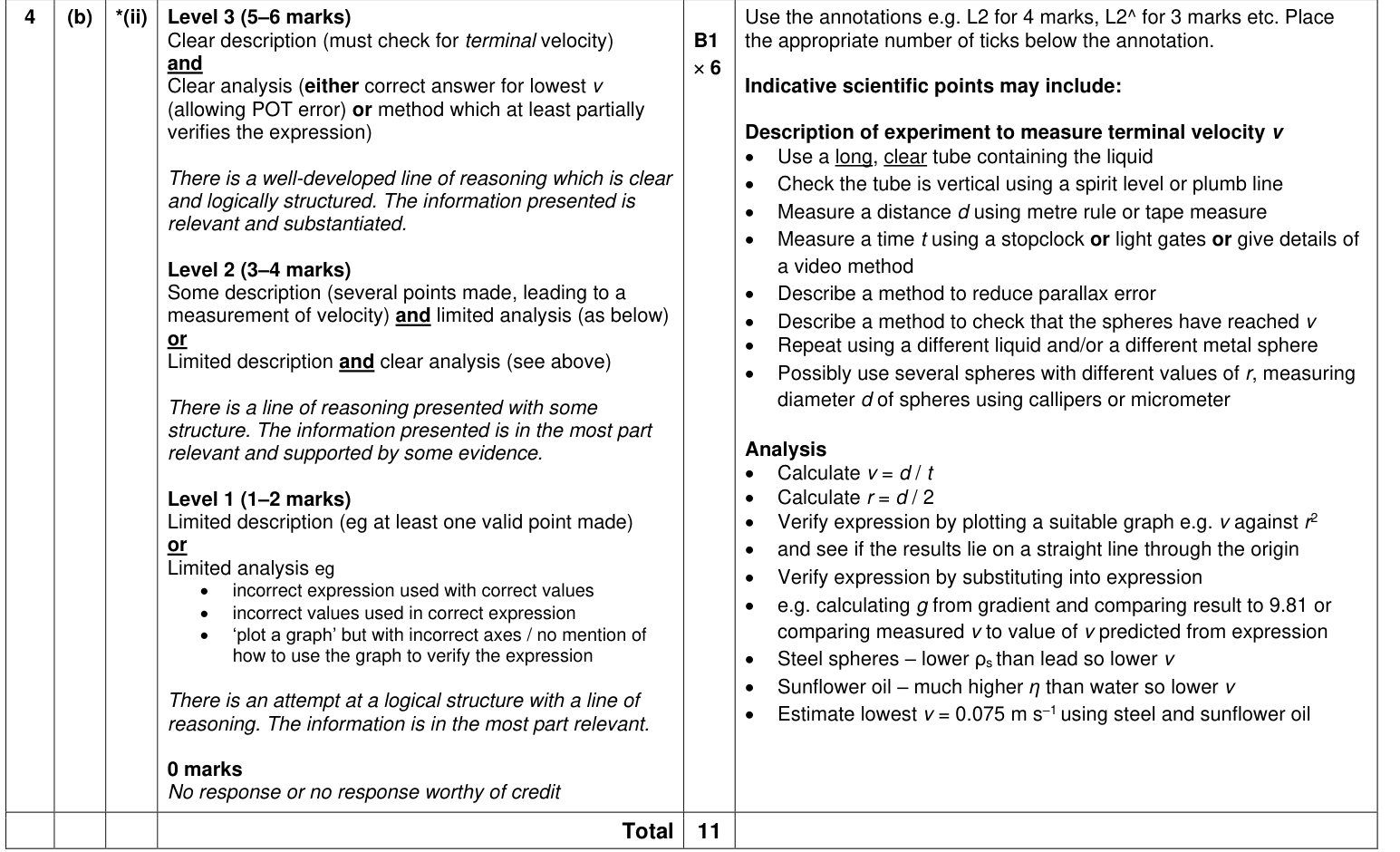
4(b)(ii) Dynamics, drag and terminal velocity, Practical skills: planning, analysis and evaluation 6Extended response
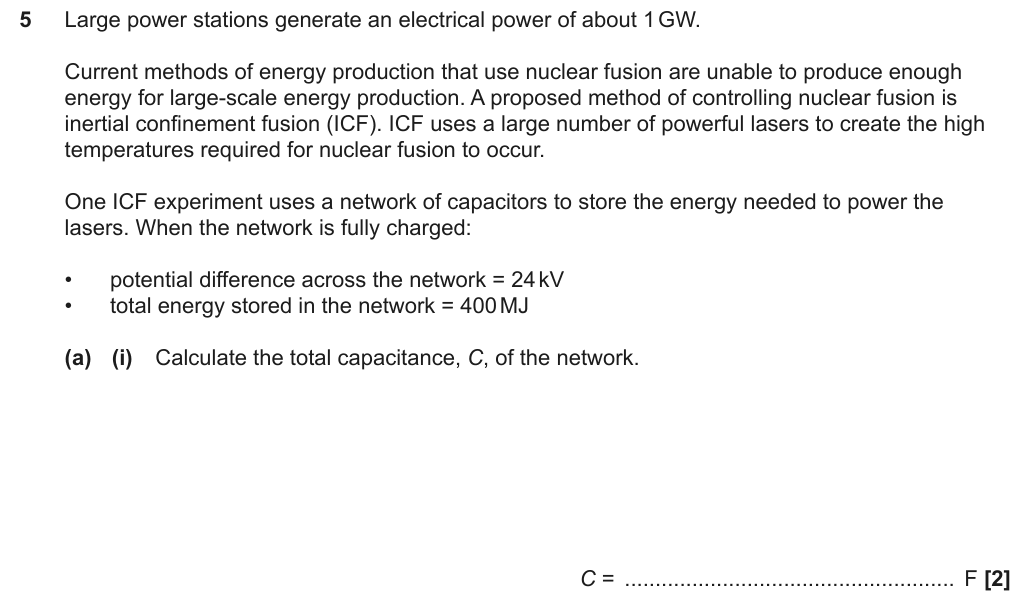
5(a)(i) Capacitors: energy, charging and discharging 2Calculation
5(a)(ii) Capacitors: energy, charging and discharging 1Explanation
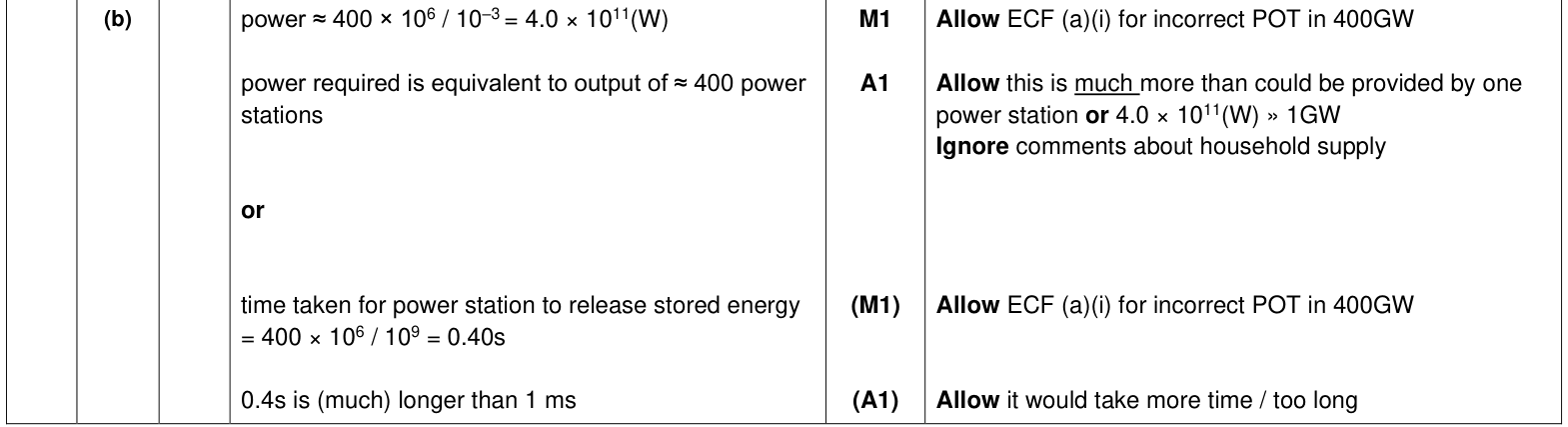
5(b) Work, energy and power, Capacitors: energy, charging and discharging 2Explanation
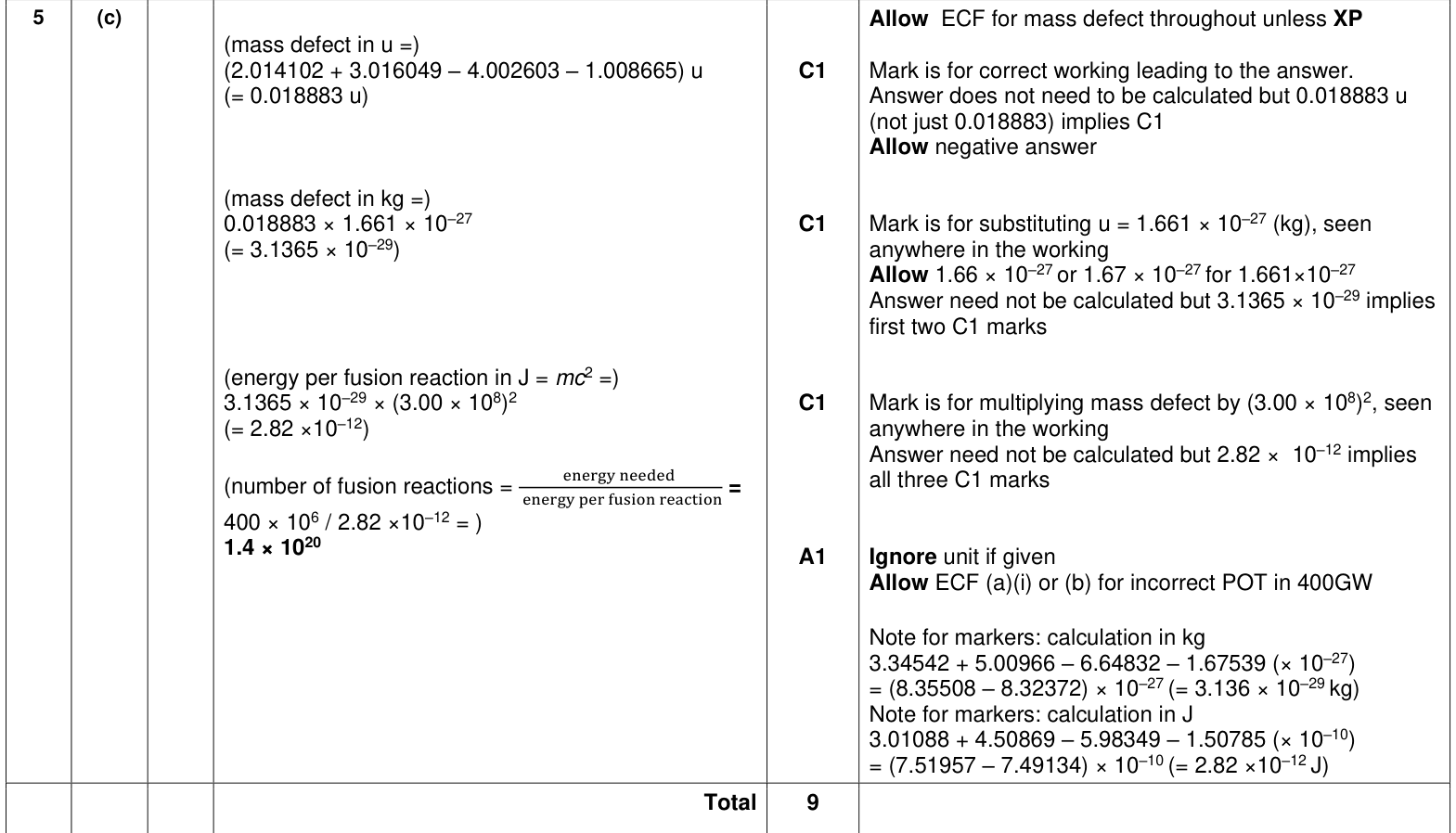
5(c) Mass–energy, binding energy, fission and fusion 4Calculation
6(a) Electrical power and energy 2Calculation
6(b)(i) Thermal physics: temperature, internal energy and specific heat capacity 1Short answer
6(b)(ii) Thermal physics: temperature, internal energy and specific heat capacity, Work, energy and power 2Calculation
6(b)(iii) Work, energy and power, Thermal physics: temperature, internal energy and specific heat capacity 2Explanation
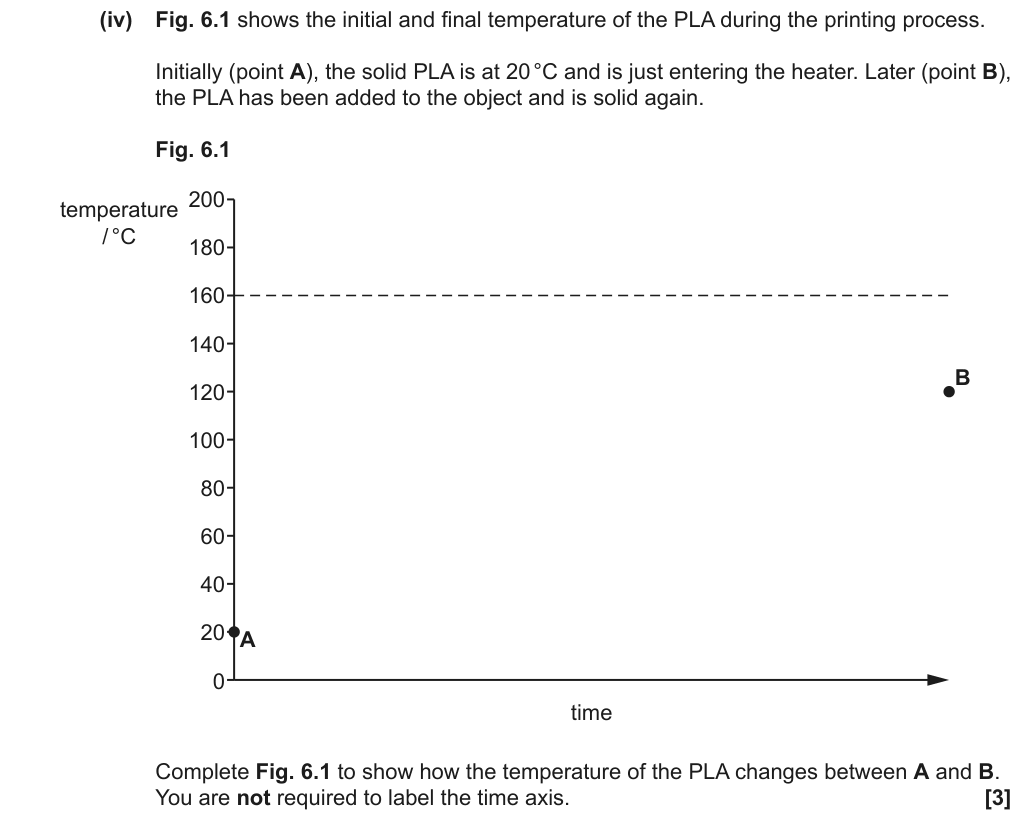
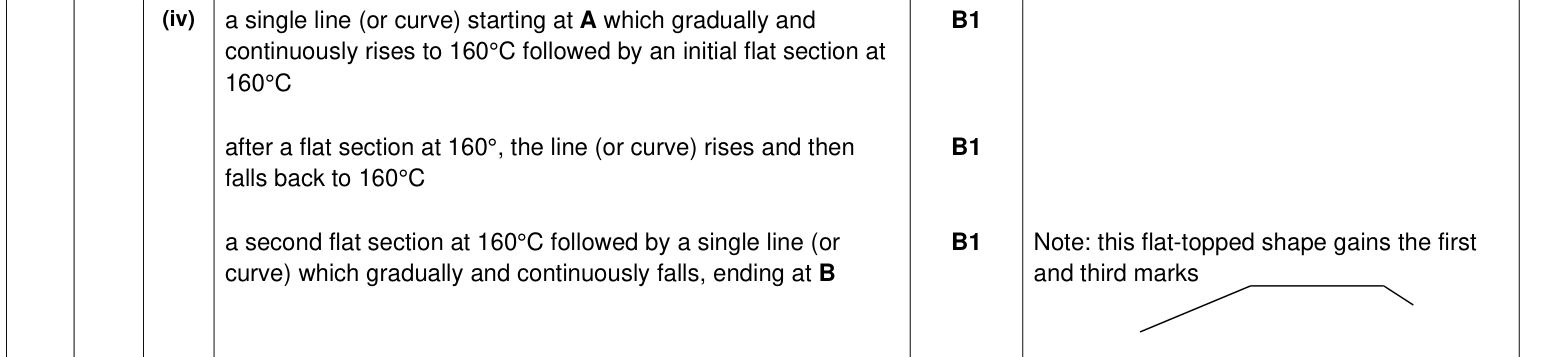
6(b)(iv) Thermal physics: temperature, internal energy and specific heat capacity 3Diagram or graph
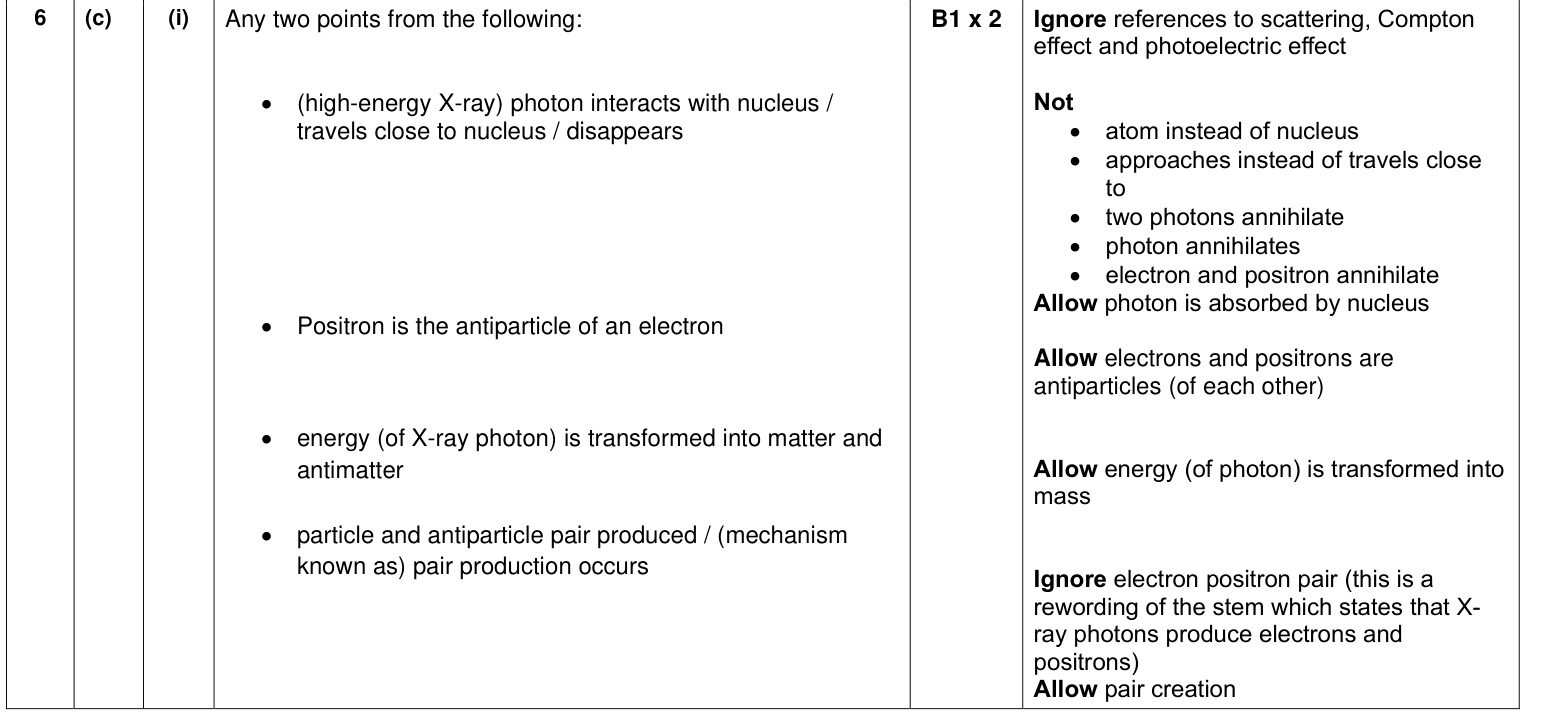
6(c)(i) Medical imaging: X-rays, CAT scans, PET, the gamma camera and ultrasound, The nuclear atom and fundamental particles, Mass–energy, binding energy, fission and fusion 2Explanation
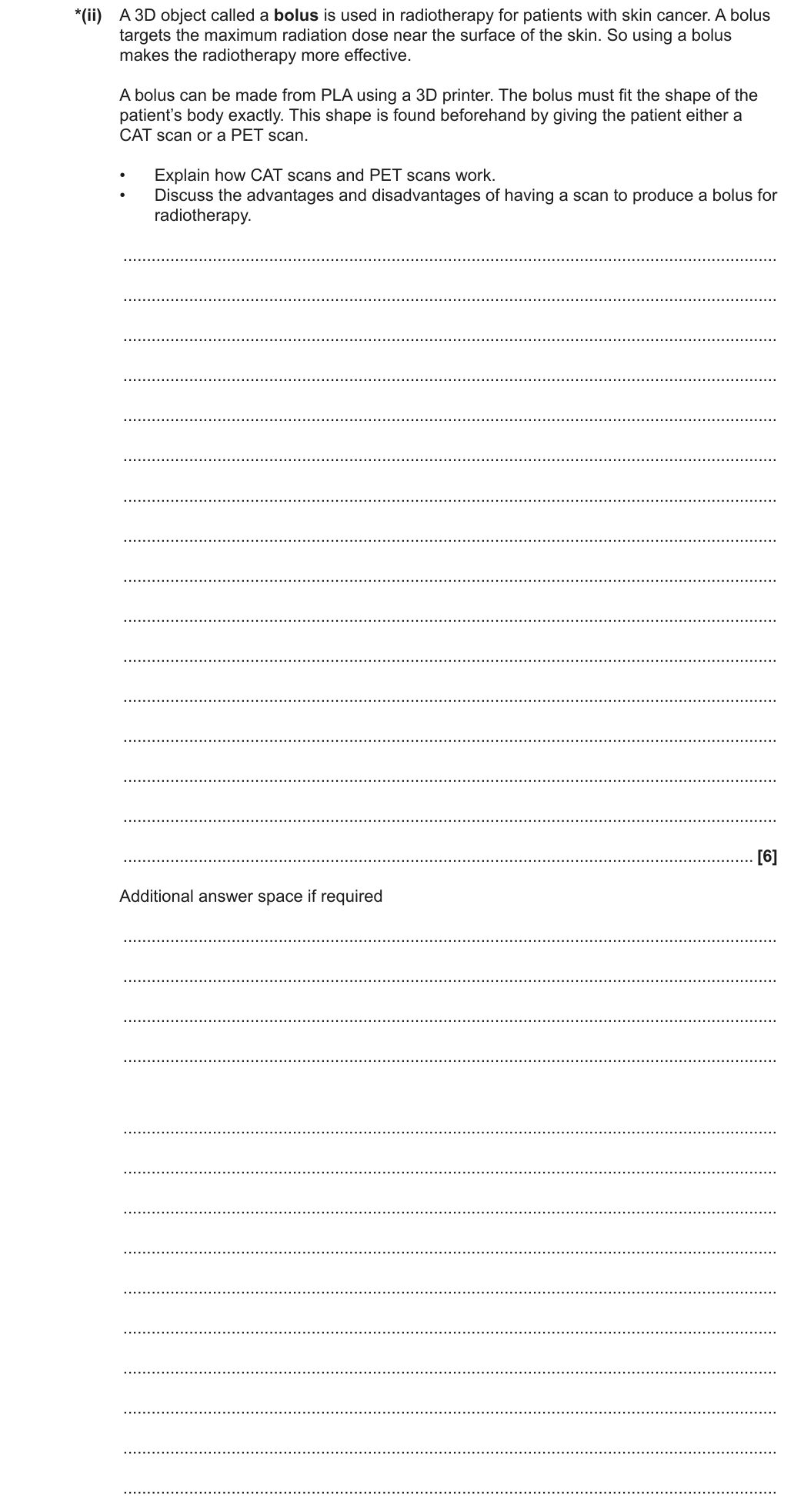
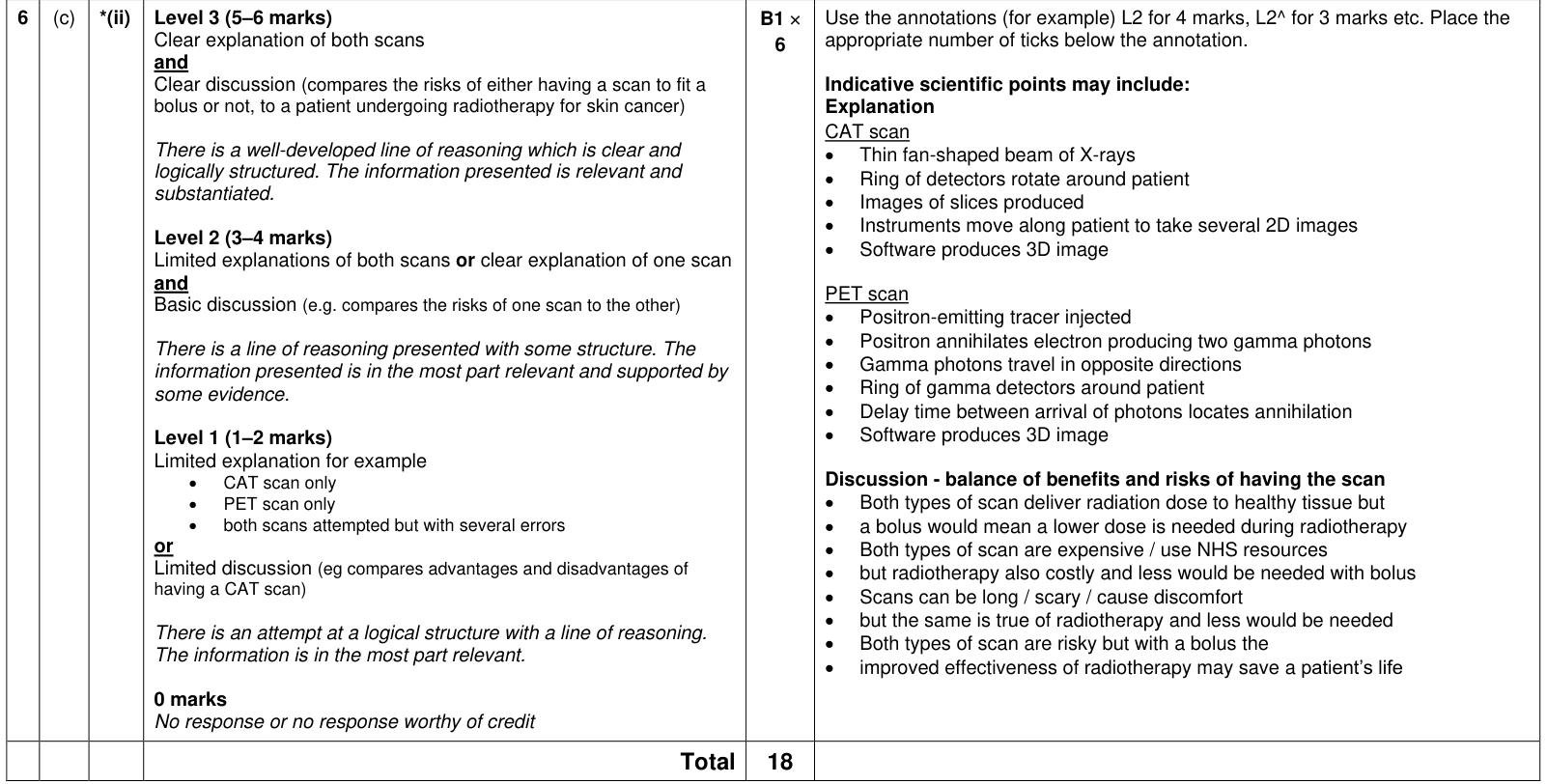
6(c)(ii) Medical imaging: X-rays, CAT scans, PET, the gamma camera and ultrasound 6Extended response

The questions

1(a)(i)1(a)(ii)1(b)(i)1(b)(ii)2(a)(i)2(a)(ii)2(b)(i)2(b)(ii)3(a)(i)3(a)(ii)3(b)3(c)(i)3(c)(ii)4(a)4(b)(i)4(b)(ii)5(a)(i)5(a)(ii)5(b)5(c)6(a)6(b)(i)6(b)(ii)6(b)(iii)6(b)(iv)6(c)(i)6(c)(ii)
June 2023 · Paper 3 · Q1(a)(i) 1 mark Short answer Medium gravitational fieldsplanetary motion
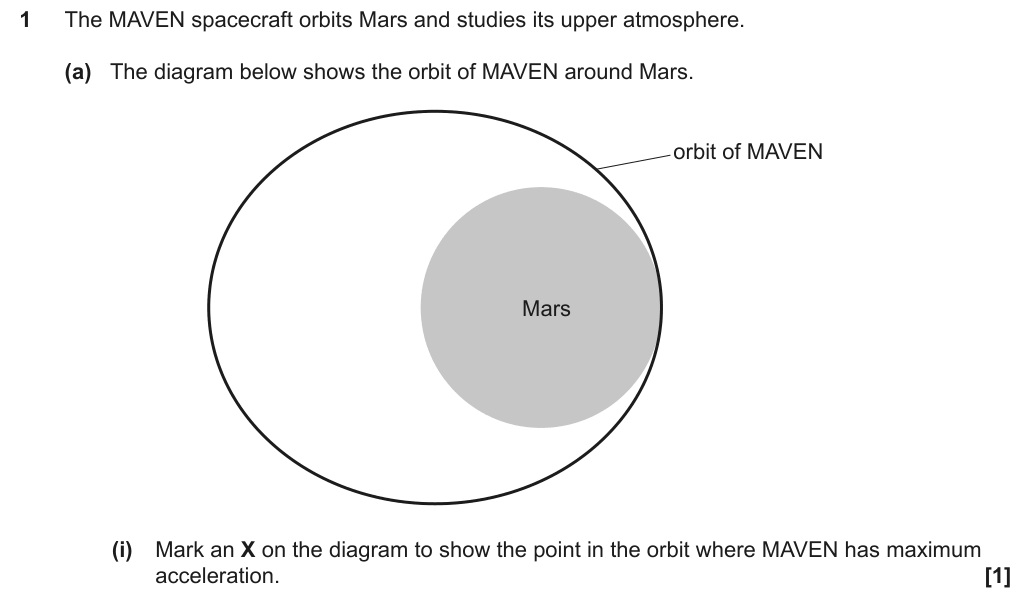
1 The MAVEN spacecraft orbits Mars and studies its upper atmosphere.
(a) The diagram below shows the orbit of MAVEN around Mars.
orbit of MAVEN
Mars
(i) Mark an X on the diagram to show the point in the orbit where MAVEN has maximum
acceleration. [1]
June 2023 · Paper 3 · Q1(a)(ii) 2 marks Explanation Hard planetary motion
Earlier part of question 1 that this part usesEarlier part of June 2023 Paper 3 question 1
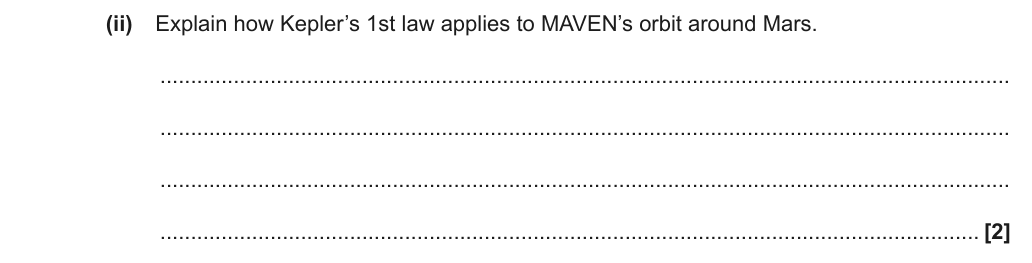
(ii) Explain how Kepler’s 1st law applies to MAVEN’s orbit around Mars.
...........................................................................................................................................
...........................................................................................................................................
...........................................................................................................................................
...................................................................................................................................... [2]
June 2023 · Paper 3 · Q1(b)(i) 2 marks Show that Medium planetary motion
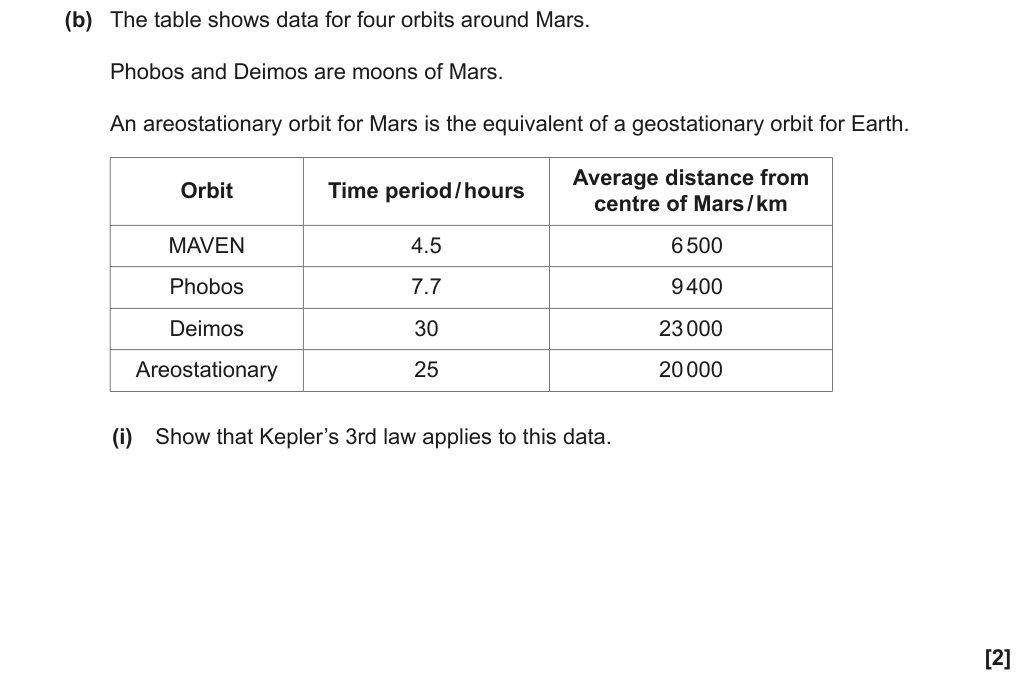
(b) The table shows data for four orbits around Mars.
Phobos and Deimos are moons of Mars.
An areostationary orbit for Mars is the equivalent of a geostationary orbit for Earth.
Average distance from
Orbit Time period / hours
centre of Mars / km
MAVEN 4.5 6 500
Phobos 7.7 9 400
Deimos 30 23 000
Areostationary 25 20 000
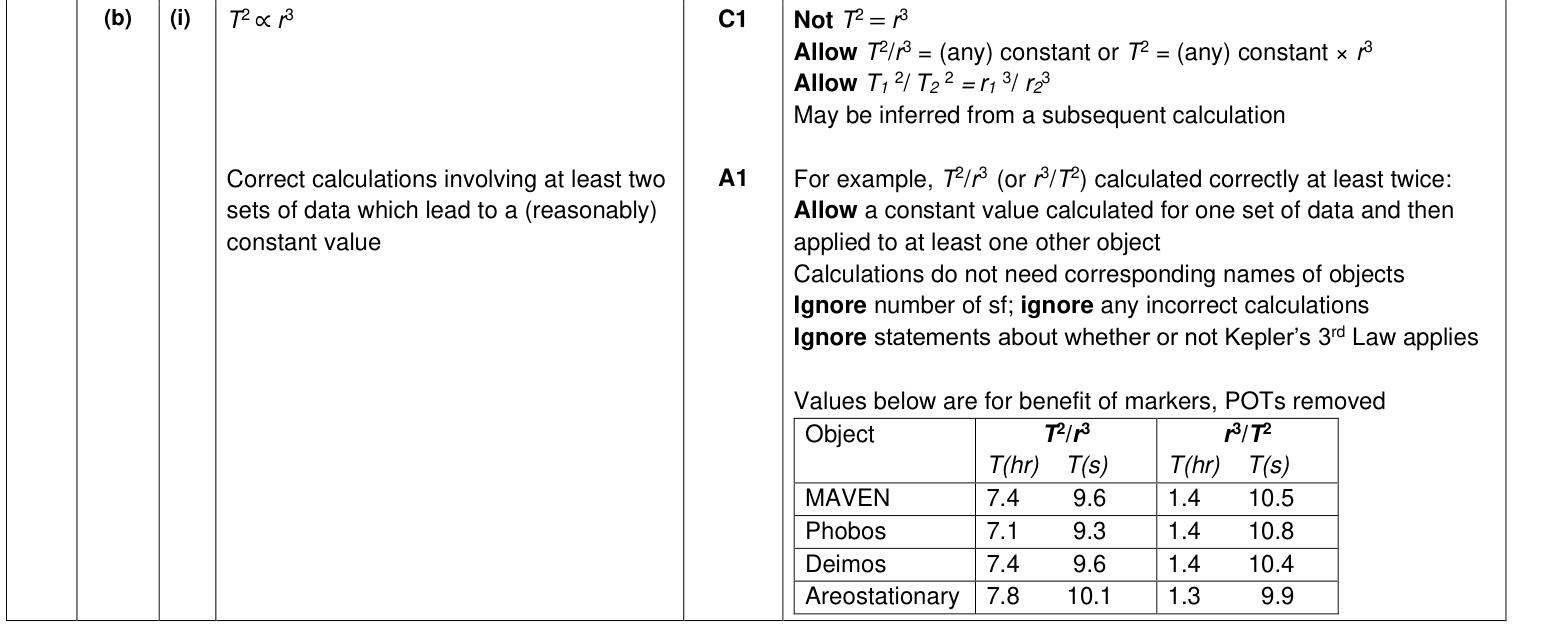
(i) Show that Kepler’s 3rd law applies to this data.
[2]
June 2023 · Paper 3 · Q1(b)(ii) 2 marks Explanation Hard planetary motion
Earlier parts of question 1 that this part usesEarlier part of June 2023 Paper 3 question 1Earlier part of June 2023 Paper 3 question 1
(ii) Suggest two reasons why MAVEN was not placed in an areostationary orbit.
1  ........................................................................................................................................
...........................................................................................................................................
...........................................................................................................................................
2  ........................................................................................................................................
...........................................................................................................................................
...........................................................................................................................................
[2]
June 2023 · Paper 3 · Q2(a)(i) 2 marks Explanation Medium resistivitypractical skills
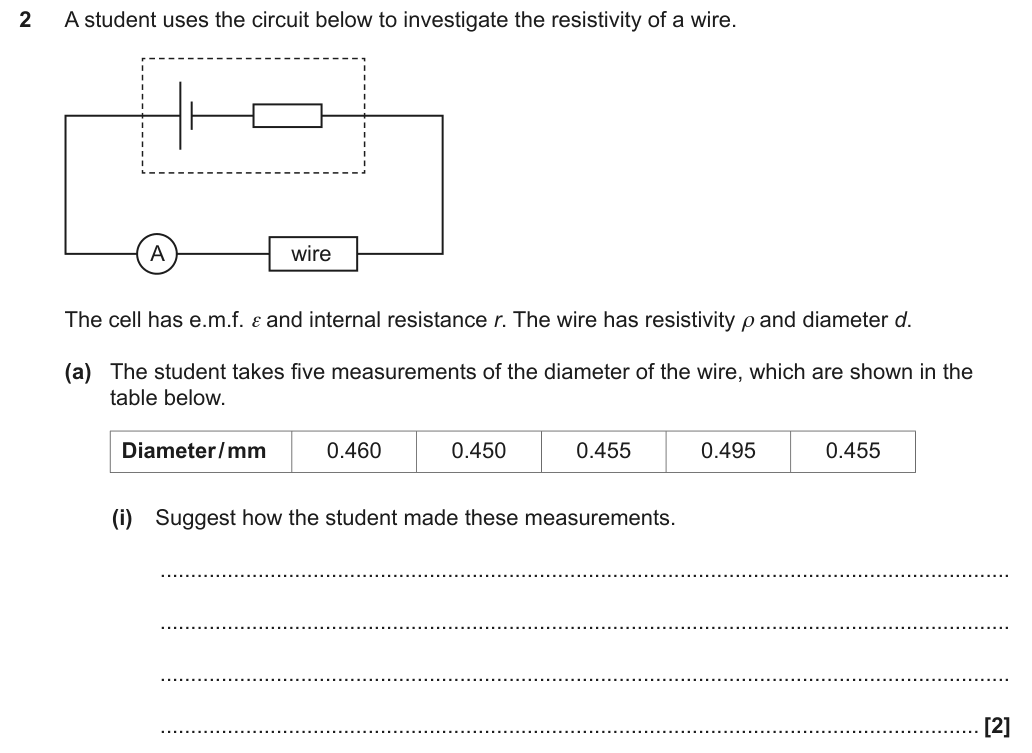
2 A student uses the circuit below to investigate the resistivity of a wire.
A wire
The cell has e.m.f. ε and internal resistance r. The wire has resistivity ρ and diameter d.
(a) The student takes five measurements of the diameter of the wire, which are shown in the
table below.
Diameter / mm 0.460 0.450 0.455 0.495 0.455
(i) Suggest how the student made these measurements.
...........................................................................................................................................
...........................................................................................................................................
...........................................................................................................................................
...................................................................................................................................... [2]
June 2023 · Paper 3 · Q2(a)(ii) 3 marks Explanation Medium practical skillsmeasurements and uncertainties
Earlier part of question 2 that this part usesEarlier part of June 2023 Paper 3 question 2
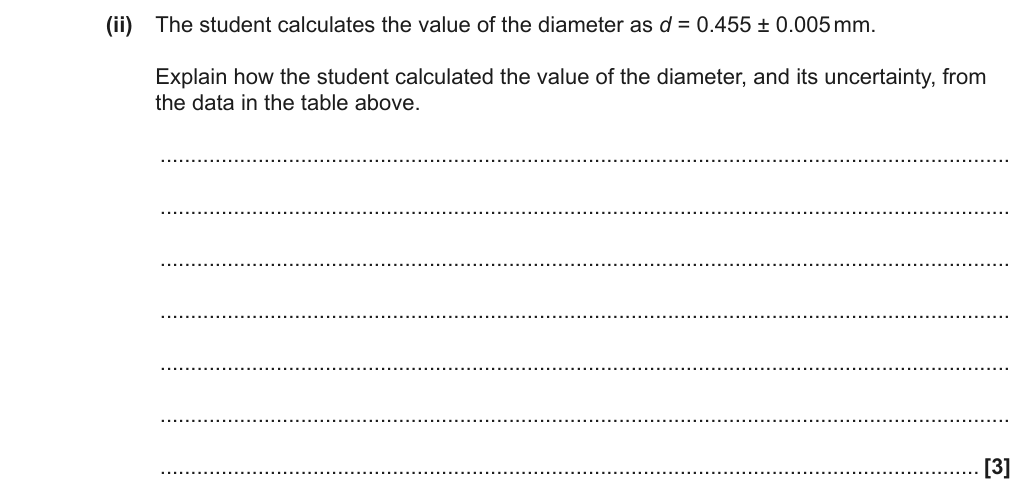
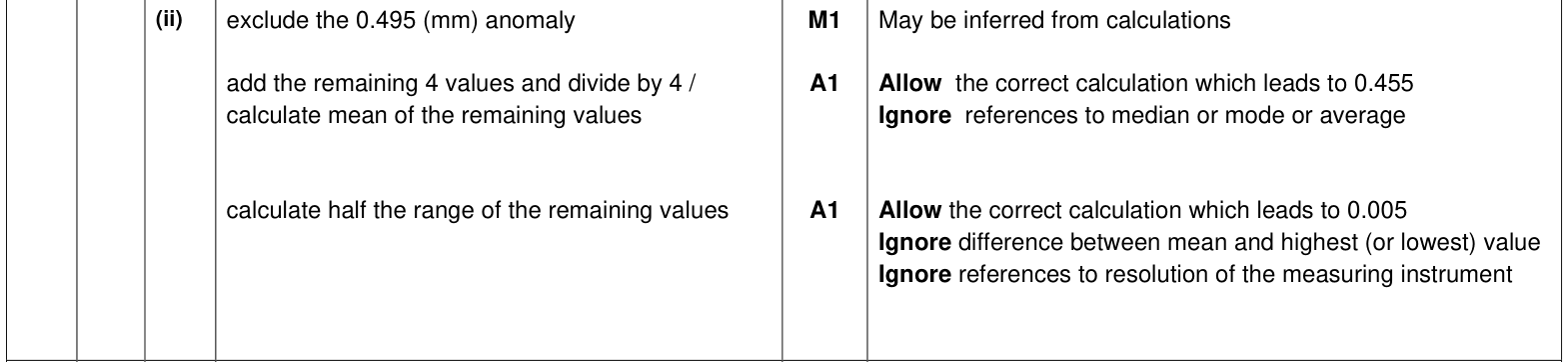
(ii) The student calculates the value of the diameter as d = 0.455 ± 0.005 mm.
Explain how the student calculated the value of the diameter, and its uncertainty, from
the data in the table above.
...........................................................................................................................................
...........................................................................................................................................
...........................................................................................................................................
...........................................................................................................................................
...........................................................................................................................................
...........................................................................................................................................
...................................................................................................................................... [3]
June 2023 · Paper 3 · Q2(b)(i) 3 marks Show that Medium internal resistanceresistivity
Earlier part of question 2 that this part usesEarlier part of June 2023 Paper 3 question 2
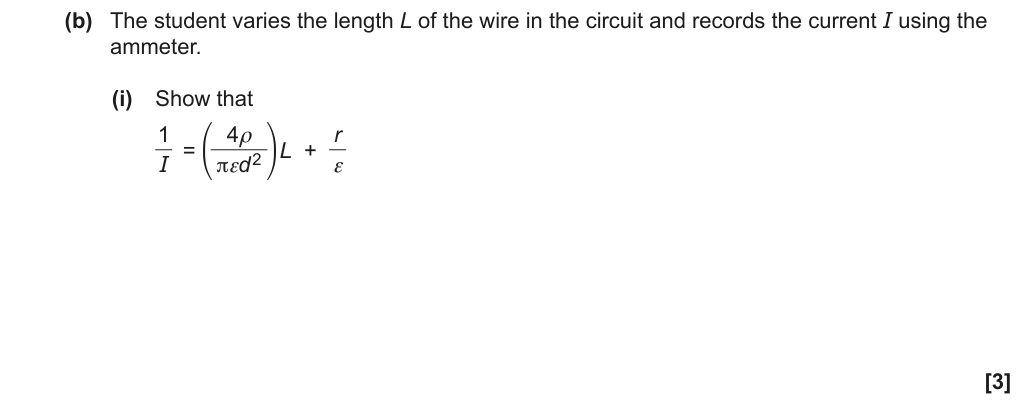
(b) The student varies the length L of the wire in the circuit and records the current I using the
ammeter.
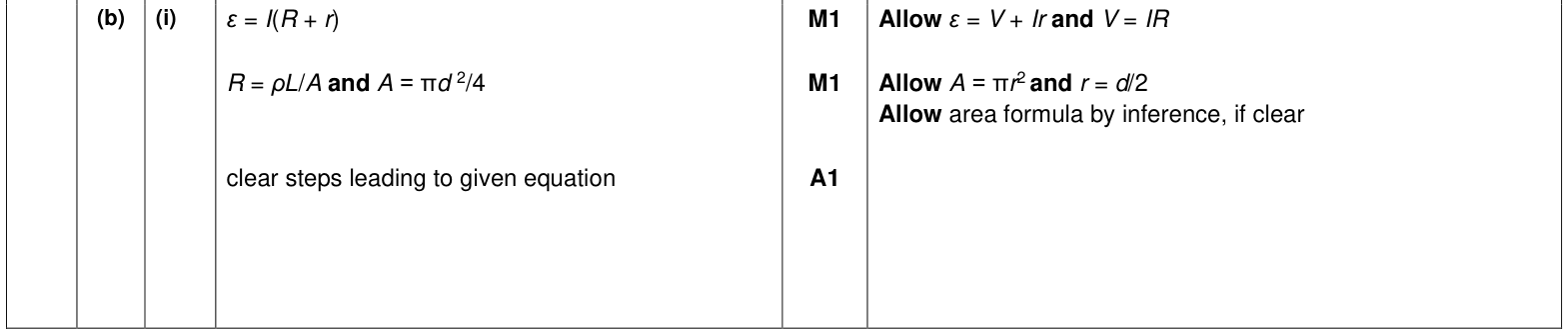
(i) Show that
1 I  =  4ρ ⎛ πεd 2  L  +  r ⎞
⎝ ⎠ ε
[3]
June 2023 · Paper 3 · Q2(b)(ii) 6 marks Calculation Medium practical skillsmeasurements and uncertaintiesresistivityinternal resistance
Earlier parts of question 2 that this part usesEarlier part of June 2023 Paper 3 question 2Earlier part of June 2023 Paper 3 question 2
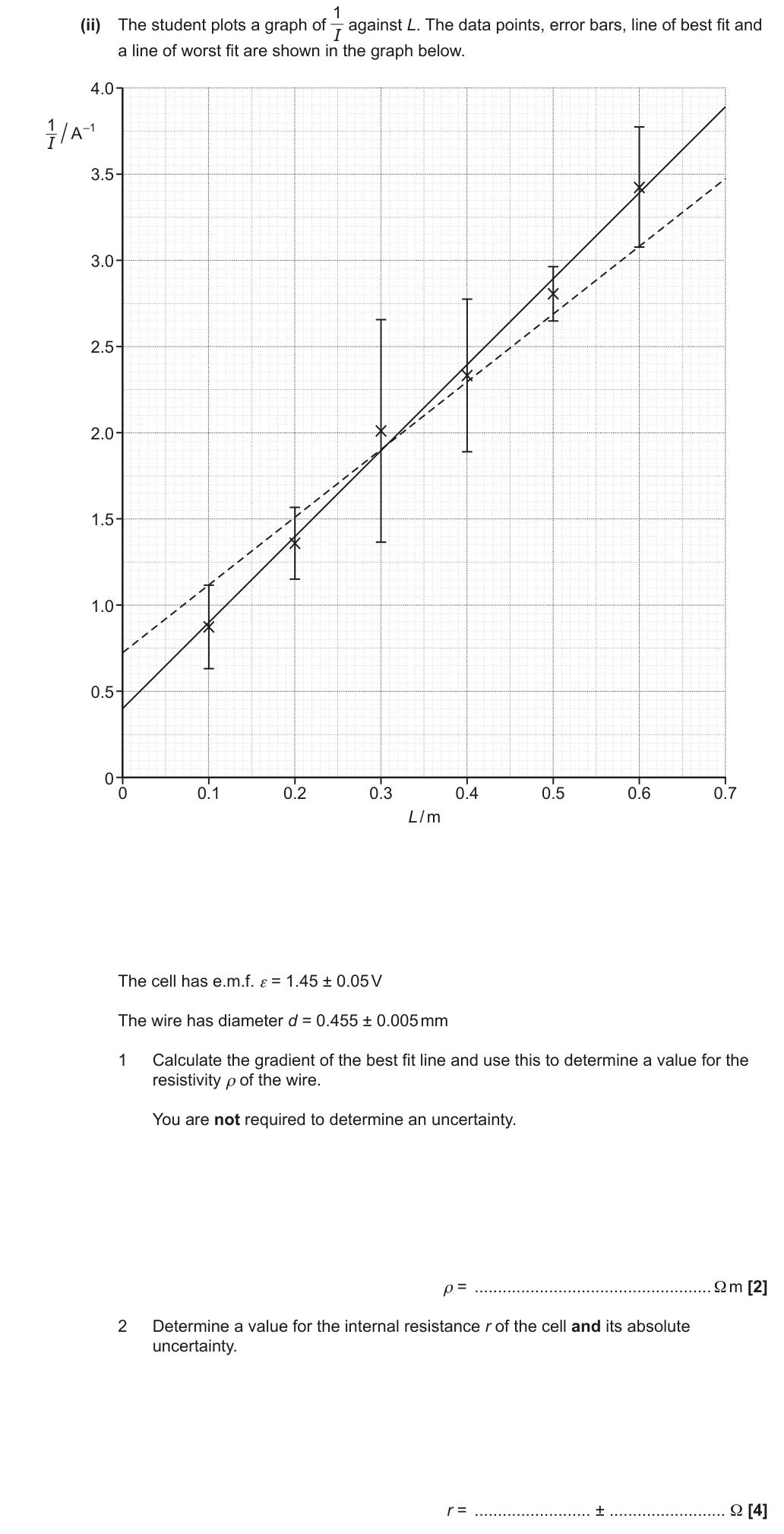
(ii) The student plots a graph of 1
I against L. The data points, error bars, line of best fit and
a line of worst fit are shown in the graph below.
4.0
1 A
– 1
I
3.5
3.0
2.5
2.0
1.5
1.0
0.5
0
0 0.1 0.2 0.3 0.4 0.5 0.6 0.7
L / m
The cell has e.m.f. ε = 1.45 ± 0.05 V
The wire has diameter d = 0.455 ± 0.005 mm
1 Calculate the gradient of the best fit line and use this to determine a value for the
resistivity ρ of the wire.
You are not required to determine an uncertainty.
ρ =  ................................................... Ω m [2]
2 Determine a value for the internal resistance r of the cell and its absolute
uncertainty.
r =  ......................... ± ......................... Ω [4]
June 2023 · Paper 3 · Q3(a)(i) 2 marks Explanation Medium stars
3 A pulsar is a rapidly rotating neutron star that emits radio waves.
(a) (i) Describe the formation of a neutron star.
...........................................................................................................................................
...........................................................................................................................................
...........................................................................................................................................
...................................................................................................................................... [2]
June 2023 · Paper 3 · Q3(a)(ii) 1 mark Short answer Medium stars
(ii) State one characteristic of a neutron star.
...........................................................................................................................................
...........................................................................................................................................
...........................................................................................................................................
...................................................................................................................................... [1]
June 2023 · Paper 3 · Q3(b) 3 marks Show that Easy nuclear atom and particlesdensity and pressurestars
(b) A typical neutron star can be modelled as a sphere with mass ≈ 2 × 1030 kg and
radius ≈ 10 km.
Show that the average density of a neutron star is similar to the average density of an
atomic nucleus.
• radius of a nucleon ≈ 1 fm
[3]
June 2023 · Paper 3 · Q3(c)(i) 2 marks Calculation Medium work energy and power
(c) An astronomer uses a radio telescope to observe a pulsar.
The graph below shows the power that the telescope receives due to the radio waves from
one full rotation of a pulsar.
6.0
power
/ 10–22 W
5.0
4.0
3.0
2.0
1.0
0.0
0 1.0 2.0 3.0 4.0 5.0 6.0 7.0
time / 10–3 s
(i) By calculating the area between the curve and the horizontal axis, estimate the total
energy received by the telescope in one full rotation of the pulsar.
total energy received =  ....................................................... J [2]
June 2023 · Paper 3 · Q3(c)(ii) 3 marks Calculation Medium wave motioncosmology
Earlier part of question 3 that this part usesEarlier part of June 2023 Paper 3 question 3
(ii) The surface area of the telescope is about 3000 m2.
The distance to the pulsar is about 300 pc.
By assuming that the radiation from the pulsar is emitted equally in all directions,
estimate the total energy emitted in one full rotation.
energy emitted =  ....................................................... J [3]
June 2023 · Paper 3 · Q4(a) 3 marks Explanation Medium dynamics and terminal velocitynewtons laws and momentum
4 A cloud is made up of droplets of water falling at terminal velocity.
(a) Describe and explain the motion of an object falling at terminal velocity.
...................................................................................................................................................
...................................................................................................................................................
...................................................................................................................................................
...................................................................................................................................................
...................................................................................................................................................
...................................................................................................................................................
...................................................................................................................................................
.............................................................................................................................................. [3]
June 2023 · Paper 3 · Q4(b)(i) 2 marks Explanation Hard dynamics and terminal velocity
(b) (i) The terminal velocity v of a small sphere of density ρs and radius r falling through a fluid
of density ρf is given by the formula:
2gr 2(ρs – ρf)
v =
9η
where η is a constant for the fluid and g is the acceleration of free fall.
Water droplets of rain fall to the ground whereas water droplets in mist appear to float.
Use the formula above to suggest why.
...........................................................................................................................................
...........................................................................................................................................
...........................................................................................................................................
...................................................................................................................................... [2]
June 2023 · Paper 3 · Q4(b)(ii) 6 marks 6-mark extended response Medium dynamics and terminal velocitypractical skills
Earlier part of question 4 that this part usesEarlier part of June 2023 Paper 3 question 4
*(ii) A student models water droplets falling through air using small solid spheres in a liquid.
The table shows properties of the materials available to the student.
Solid density, Liquid density, Approximate value of
Material
ρs / kg m–3 ρf / kg m–3 η / 10–3 kg m–1 s–1
Water (liquid) 1000 1
Sunflower oil (liquid) 920 50
Steel (solid sphere) 7 800
Lead (solid sphere) 11 300
Describe an experiment to verify the expression given in (i) as accurately as possible.
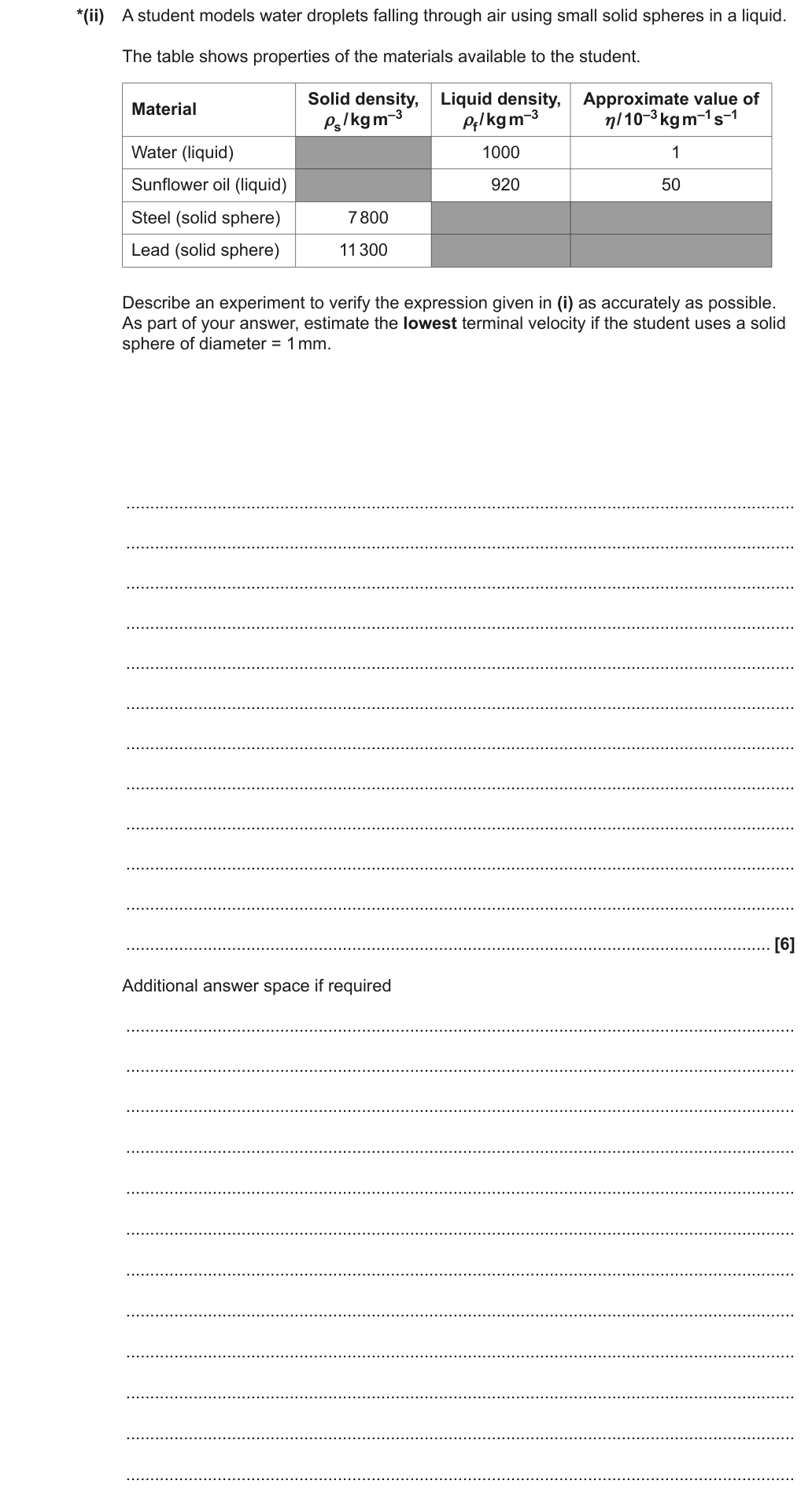
As part of your answer, estimate the lowest terminal velocity if the student uses a solid
sphere of diameter = 1 mm.
...........................................................................................................................................
...........................................................................................................................................
...........................................................................................................................................
...........................................................................................................................................
...........................................................................................................................................
...........................................................................................................................................
...........................................................................................................................................
...........................................................................................................................................
...........................................................................................................................................
...........................................................................................................................................
...........................................................................................................................................
...................................................................................................................................... [6]
Additional answer space if required
...........................................................................................................................................
...........................................................................................................................................
...........................................................................................................................................
...........................................................................................................................................
...........................................................................................................................................
...........................................................................................................................................
...........................................................................................................................................
...........................................................................................................................................
...........................................................................................................................................
...........................................................................................................................................
...........................................................................................................................................
...........................................................................................................................................
June 2023 · Paper 3 · Q5(a)(i) 2 marks Calculation Easy capacitors
5 Large power stations generate an electrical power of about 1 GW.
Current methods of energy production that use nuclear fusion are unable to produce enough
energy for large-scale energy production. A proposed method of controlling nuclear fusion is
inertial confinement fusion (ICF). ICF uses a large number of powerful lasers to create the high
temperatures required for nuclear fusion to occur.
One ICF experiment uses a network of capacitors to store the energy needed to power the
lasers. When the network is fully charged:
• potential difference across the network = 24 kV
• total energy stored in the network = 400 MJ
(a) (i) Calculate the total capacitance, C, of the network.
C =  ...................................................... F [2]
June 2023 · Paper 3 · Q5(a)(ii) 1 mark Explanation Hard capacitors
Earlier part of question 5 that this part usesEarlier part of June 2023 Paper 3 question 5
(ii) Explain why the individual capacitors in the network should be connected in parallel in
order to produce this total capacitance.
...........................................................................................................................................
...................................................................................................................................... [1]
June 2023 · Paper 3 · Q5(b) 2 marks Explanation Medium work energy and powercapacitors
Earlier part of question 5 that this part usesEarlier part of June 2023 Paper 3 question 5
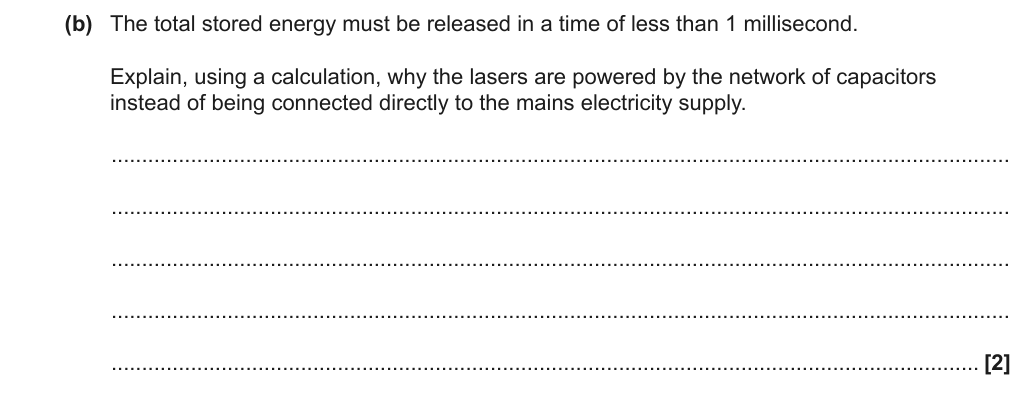
(b) The total stored energy must be released in a time of less than 1 millisecond.
Explain, using a calculation, why the lasers are powered by the network of capacitors
instead of being connected directly to the mains electricity supply.
...................................................................................................................................................
...................................................................................................................................................
...................................................................................................................................................
...................................................................................................................................................
.............................................................................................................................................. [2]
June 2023 · Paper 3 · Q5(c) 4 marks Calculation Hard nuclear fission and fusion
Earlier part of question 5 that this part usesEarlier part of June 2023 Paper 3 question 5
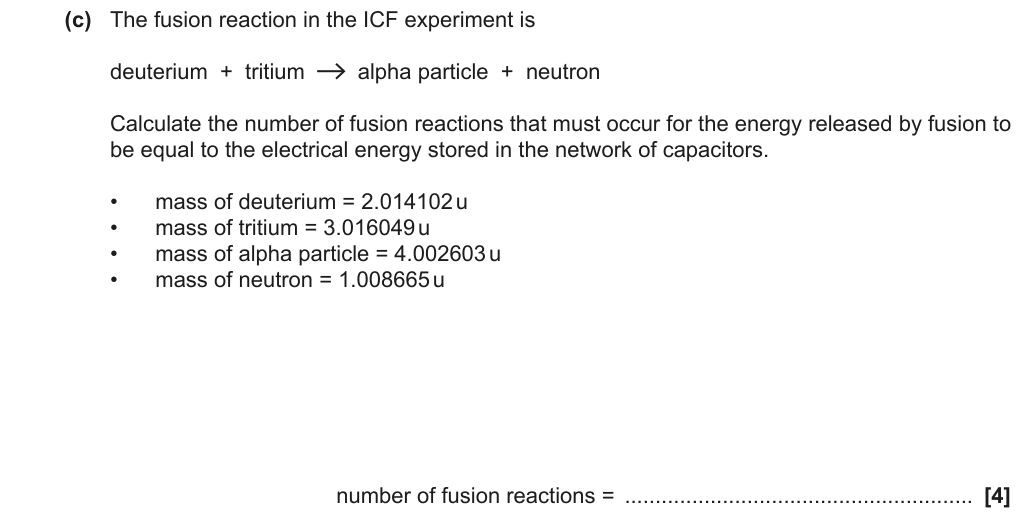
(c) The fusion reaction in the ICF experiment is
deuterium  +  tritium alpha particle  +  neutron
Calculate the number of fusion reactions that must occur for the energy released by fusion to
be equal to the electrical energy stored in the network of capacitors.
• mass of deuterium = 2.014102 u
• mass of tritium = 3.016049 u
• mass of alpha particle = 4.002603 u
• mass of neutron = 1.008665 u
number of fusion reactions =  ......................................................... [4]
June 2023 · Paper 3 · Q6(a) 2 marks Calculation Medium electrical power
6 A 3D printer can manufacture small objects.
Some 3D printers use polylactic acid (PLA). PLA is supplied in the form of long filaments. The 3D
printer melts the PLA and builds up the shape of the desired object in layers.
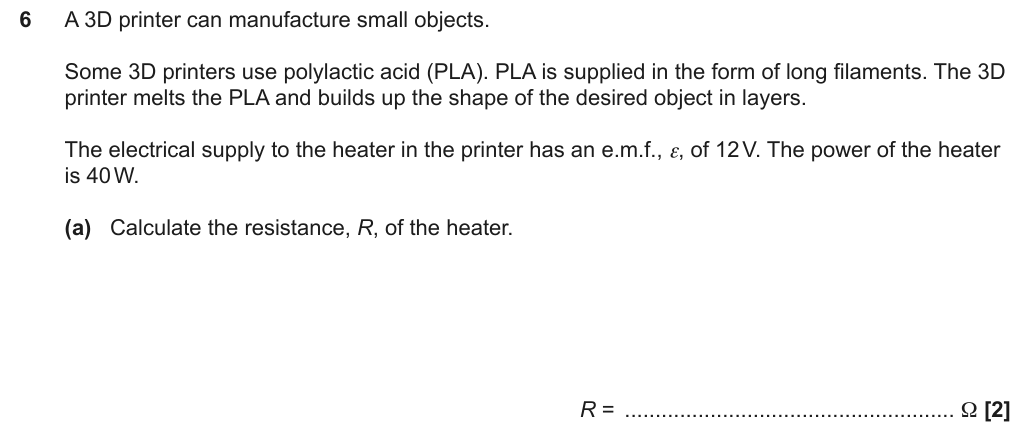
The electrical supply to the heater in the printer has an e.m.f., ε, of 12 V. The power of the heater
is 40 W.
(a) Calculate the resistance, R, of the heater.
R =  ...................................................... Ω [2]
June 2023 · Paper 3 · Q6(b)(i) 1 mark Short answer Medium thermal physics
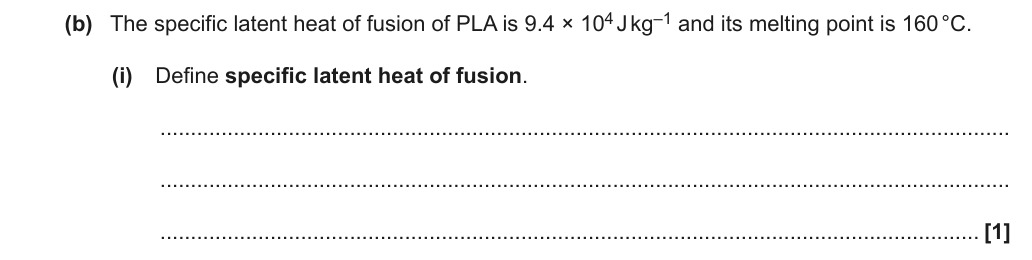
(b) The specific latent heat of fusion of PLA is 9.4 × 10⁴ J kg–1 and its melting point is 160 °C.
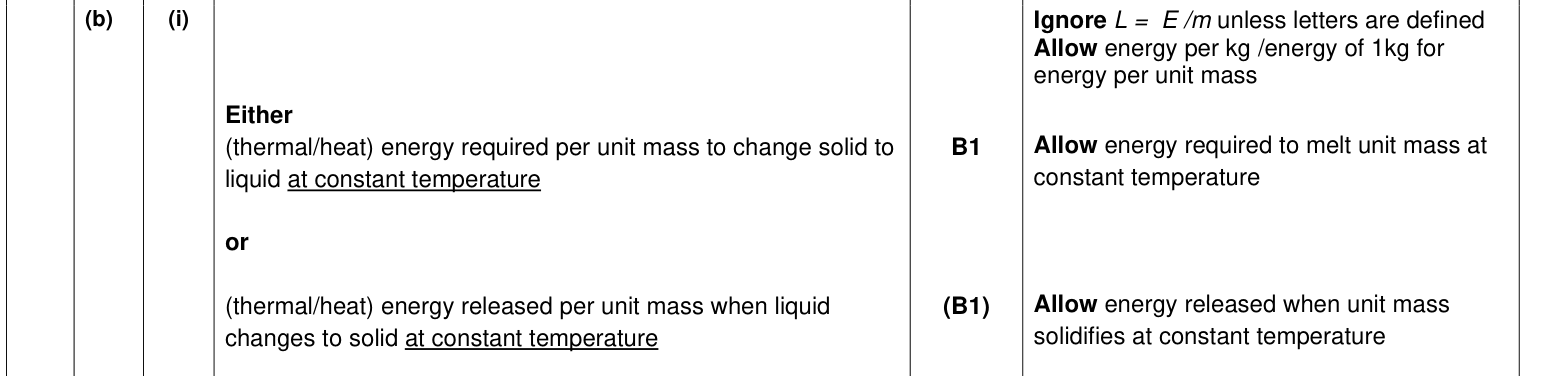
(i) Define specific latent heat of fusion.
...........................................................................................................................................
...........................................................................................................................................
...................................................................................................................................... [1]
June 2023 · Paper 3 · Q6(b)(ii) 2 marks Calculation Easy thermal physicswork energy and power
Earlier parts of question 6 that this part usesEarlier part of June 2023 Paper 3 question 6Earlier part of June 2023 Paper 3 question 6
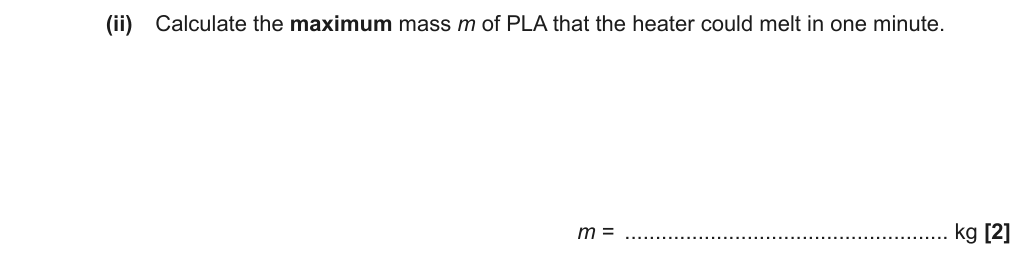
(ii)  Calculate the maximum mass m of PLA that the heater could melt in one minute.
m =  ..................................................... kg [2]
June 2023 · Paper 3 · Q6(b)(iii) 2 marks Explanation Medium work energy and powerthermal physics
Earlier part of question 6 that this part usesEarlier part of June 2023 Paper 3 question 6
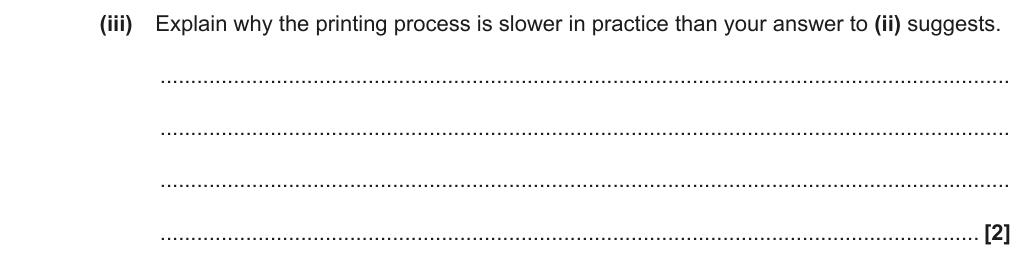
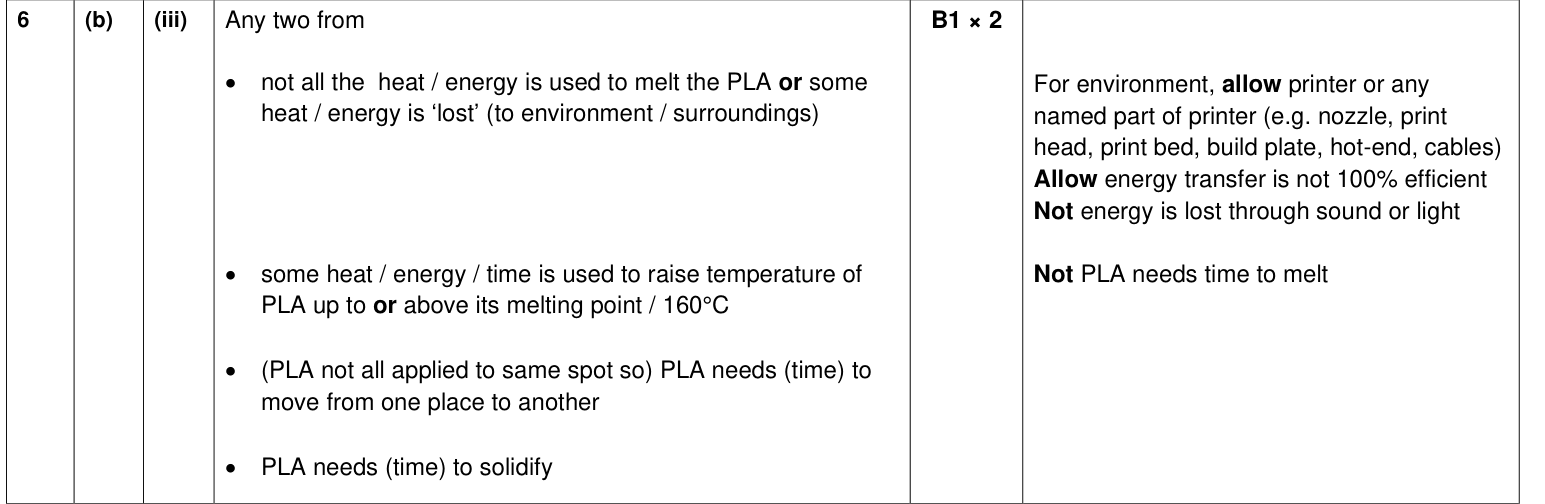
(iii) Explain why the printing process is slower in practice than your answer to (ii) suggests.
...........................................................................................................................................
...........................................................................................................................................
...........................................................................................................................................
...................................................................................................................................... [2]
June 2023 · Paper 3 · Q6(b)(iv) 3 marks Diagram or graph Hard thermal physics
Earlier part of question 6 that this part usesEarlier part of June 2023 Paper 3 question 6
(iv) Fig. 6.1 shows the initial and final temperature of the PLA during the printing process.
Initially (point A), the solid PLA is at 20 °C and is just entering the heater. Later (point B),
the PLA has been added to the object and is solid again.
Fig. 6.1
200
temperature
/ °C
180
160
140
B
120
100
80
60
40
20 A
0
time
Complete Fig. 6.1 to show how the temperature of the PLA changes between A and B.
You are not required to label the time axis. [3]
June 2023 · Paper 3 · Q6(c)(i) 2 marks Explanation Medium medical imagingnuclear atom and particlesnuclear fission and fusion
(c) High-energy X-ray photons can destroy living cells. In radiotherapy, these photons are
targeted at cancer cells.
The radiation dose is the amount of energy that a patient’s body absorbs from the
high-energy X-ray photons.
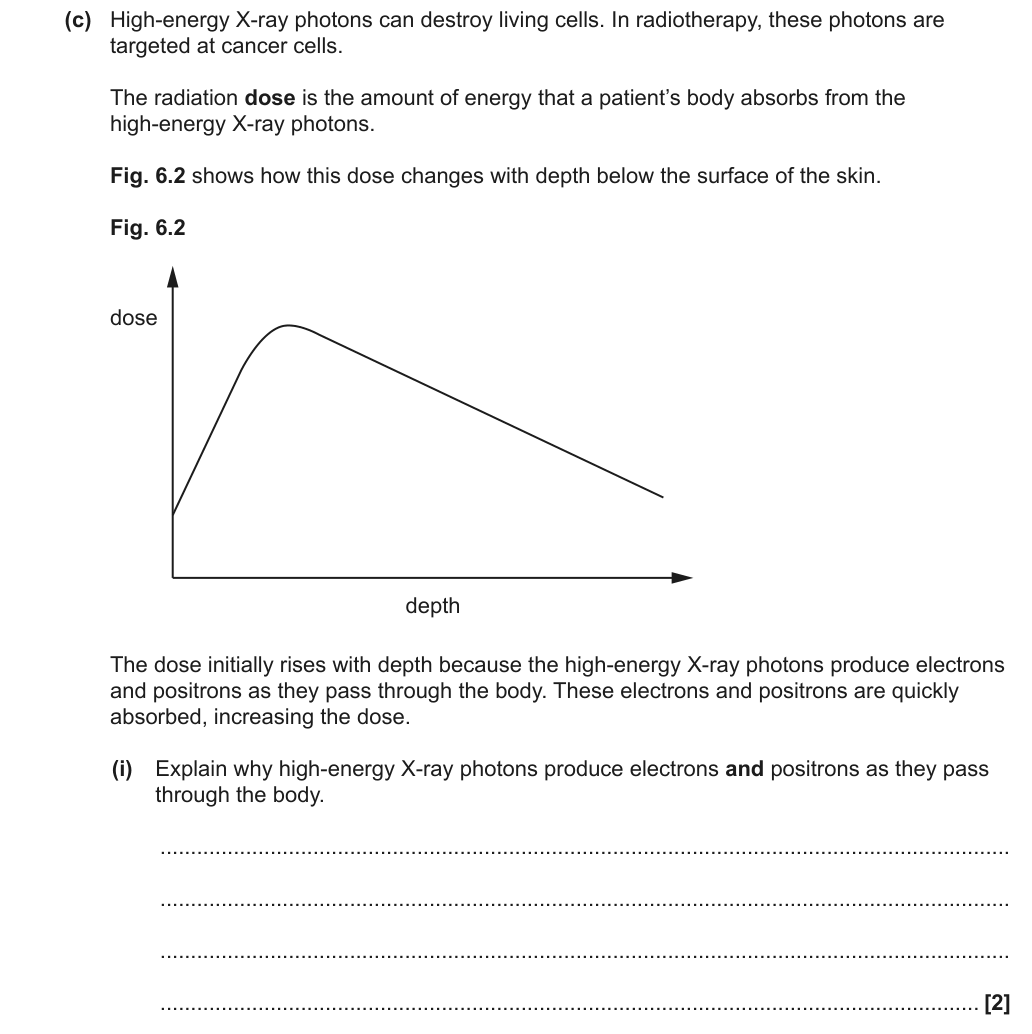
Fig. 6.2 shows how this dose changes with depth below the surface of the skin.
Fig. 6.2
dose
depth
The dose initially rises with depth because the high-energy X-ray photons produce electrons
and positrons as they pass through the body. These electrons and positrons are quickly
absorbed, increasing the dose.
(i) Explain why high-energy X-ray photons produce electrons and positrons as they pass
through the body.
...........................................................................................................................................
...........................................................................................................................................
...........................................................................................................................................
...................................................................................................................................... [2]
June 2023 · Paper 3 · Q6(c)(ii) 6 marks 6-mark extended response Medium medical imaging
Earlier part of question 6 that this part usesEarlier part of June 2023 Paper 3 question 6
*(ii) A 3D object called a bolus is used in radiotherapy for patients with skin cancer. A bolus
targets the maximum radiation dose near the surface of the skin. So using a bolus
makes the radiotherapy more effective.
A bolus can be made from PLA using a 3D printer. The bolus must fit the shape of the
patient’s body exactly. This shape is found beforehand by giving the patient either a
CAT scan or a PET scan.
• Explain how CAT scans and PET scans work.
• Discuss the advantages and disadvantages of having a scan to produce a bolus for
radiotherapy.
...........................................................................................................................................
...........................................................................................................................................
...........................................................................................................................................
...........................................................................................................................................
...........................................................................................................................................
...........................................................................................................................................
...........................................................................................................................................
...........................................................................................................................................
...........................................................................................................................................
...........................................................................................................................................
...........................................................................................................................................
...........................................................................................................................................
...........................................................................................................................................
...........................................................................................................................................
...........................................................................................................................................
...................................................................................................................................... [6]
Additional answer space if required
...........................................................................................................................................
...........................................................................................................................................
...........................................................................................................................................
...........................................................................................................................................
...........................................................................................................................................
...........................................................................................................................................
...........................................................................................................................................
...........................................................................................................................................
...........................................................................................................................................
...........................................................................................................................................
...........................................................................................................................................
...........................................................................................................................................
...........................................................................................................................................
...........................................................................................................................................

Work with an OCR physics tutor

Want a paper marked and gone through with you? Message us.

Prefer email? Send an enquiry

If you are under 18, please include a parent's contact details. Enquiries go to enquiries@physicsaleveltutor.com and are deleted once handled. All tutoring is online.