June 2018: Paper 2

85 marks · 57 question parts · Paper, mark scheme and report on AQA's site · Have the data and formulae booklet beside you

Question by question

QTopicMarksAOType
1.1 Thermal energy transfer and ideal gases 2Short answer
1.2 Thermal energy transfer and ideal gases, Work, energy, power and conservation of energy 3Calculation
1.3 Thermal energy transfer and ideal gases 2Explanation
2.1 Electric fields and electric potential 2Short answer
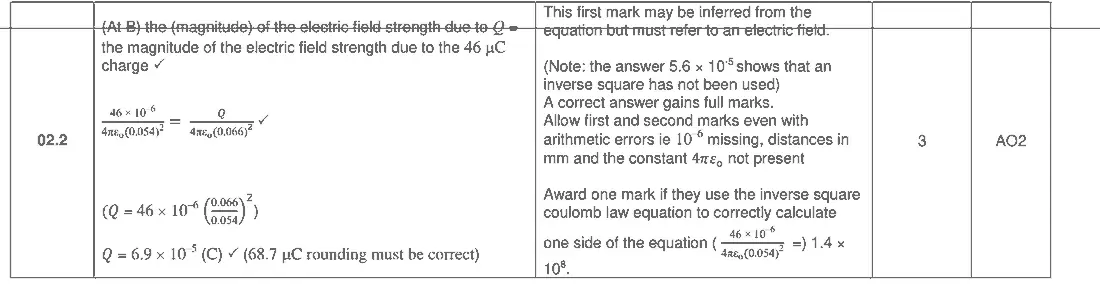
2.2 Electric fields and electric potential 3Calculation
2.3 Electric fields and electric potential 2Explanation
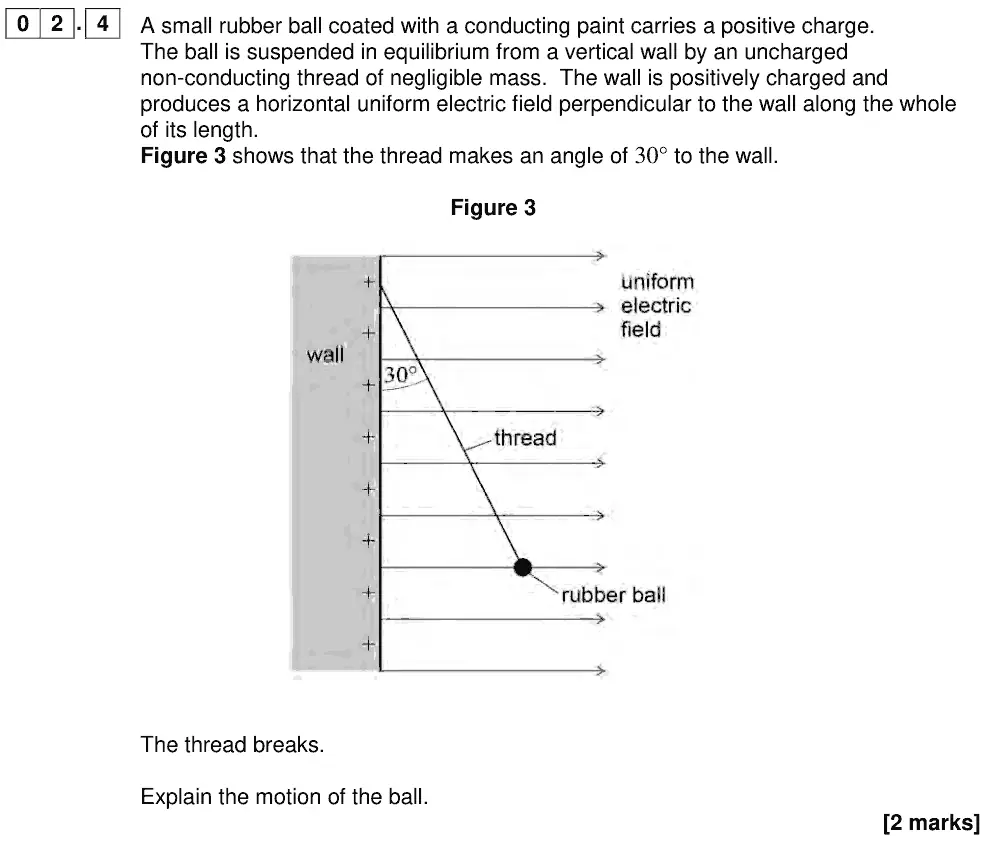
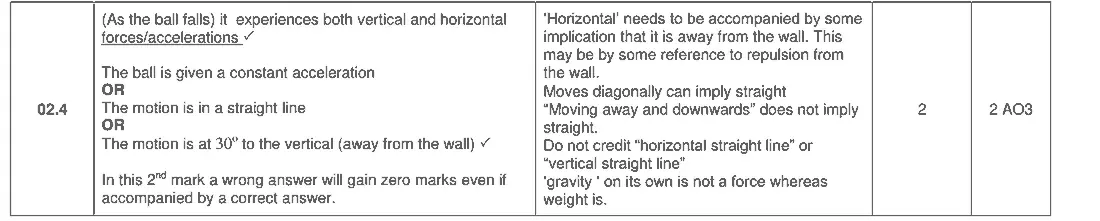
2.4 Electric fields and electric potential, Newton's laws of motion and momentum 2Explanation
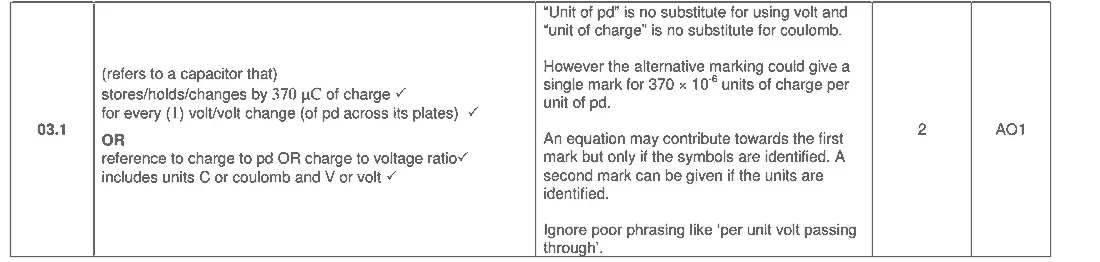
3.1 Capacitance and capacitor charge and discharge 2Short answer
3.2 Capacitance and capacitor charge and discharge 1Calculation
3.3 Capacitance and capacitor charge and discharge 2Diagram or graph
3.4 Capacitance and capacitor charge and discharge 1Calculation
3.5 Capacitance and capacitor charge and discharge 3Calculation
4.1 Electromagnetic induction, alternating currents and transformers 1Short answer
4.2 Electromagnetic induction, alternating currents and transformers 1Short answer
4.3 Electromagnetic induction, alternating currents and transformers 2Explanation
4.4 Electromagnetic induction, alternating currents and transformers 2Calculation
4.5 Electromagnetic induction, alternating currents and transformers 2Calculation
5.1 Rutherford scattering, alpha, beta and gamma radiation 1Short answer
5.2 Rutherford scattering, alpha, beta and gamma radiation 1Short answer
5.3 Rutherford scattering, alpha, beta and gamma radiation 2Practical and data analysis
5.4 Rutherford scattering, alpha, beta and gamma radiation 2Short answer
6.1 Radioactive decay, half-life and nuclear instability 1Short answer
6.2 Radioactive decay, half-life and nuclear instability 1Short answer
6.3 Radioactive decay, half-life and nuclear instability 1Short answer
6.4 Radioactive decay, half-life and nuclear instability 1Calculation
6.5 Radioactive decay, half-life and nuclear instability 3Calculation
6.6 Radioactive decay, half-life and nuclear instability 3Calculation
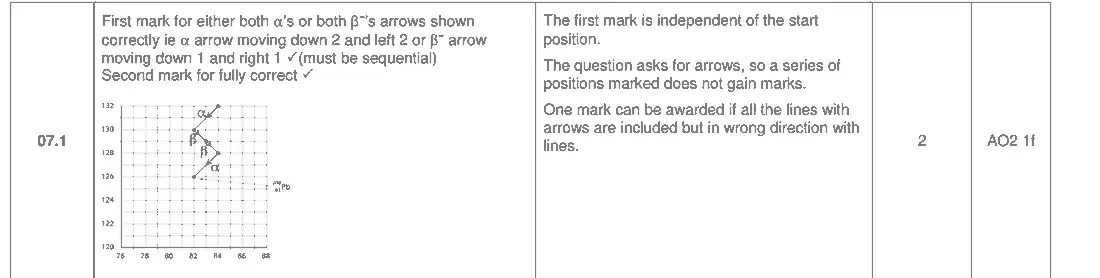
7.1 Radioactive decay, half-life and nuclear instability 2Diagram or graph
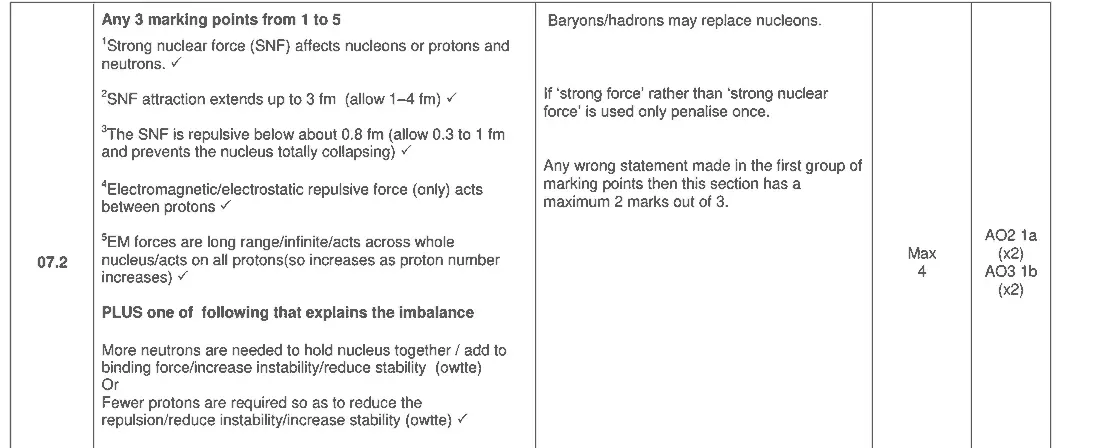
7.2 Atomic structure and stable nuclei, Radioactive decay, half-life and nuclear instability 4Explanation
7.3 Radioactive decay, half-life and nuclear instability 1Short answer
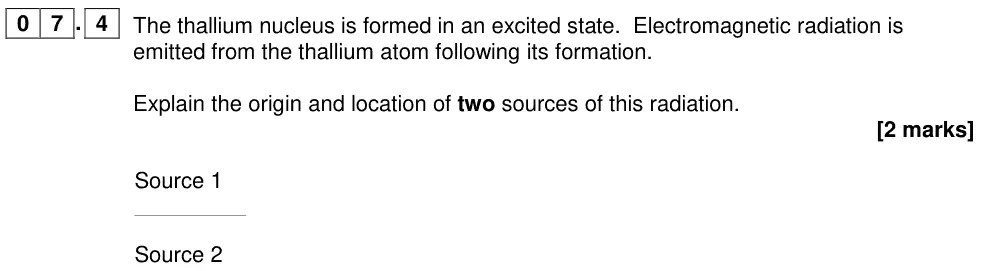
7.4 Radioactive decay, half-life and nuclear instability, Excitation, energy levels and wave-particle duality 2Explanation
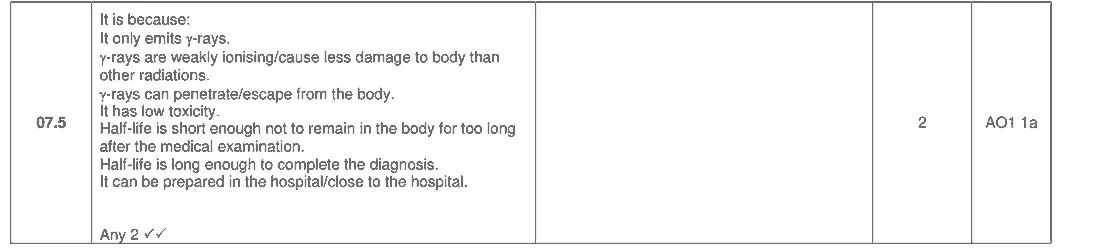
7.5 Radioactive decay, half-life and nuclear instability, Rutherford scattering, alpha, beta and gamma radiation 2Explanation
8 Thermal energy transfer and ideal gases 1Multiple choice
9 Thermal energy transfer and ideal gases 1Multiple choice
10 Molecular kinetic theory 1Multiple choice
11 Molecular kinetic theory 1Multiple choice
12 Molecular kinetic theory, Newton's laws of motion and momentum 1Multiple choice
13 Gravitational fields and orbits 1Multiple choice
14 Gravitational fields and orbits 1Multiple choice
15 Gravitational fields and orbits 1Multiple choice
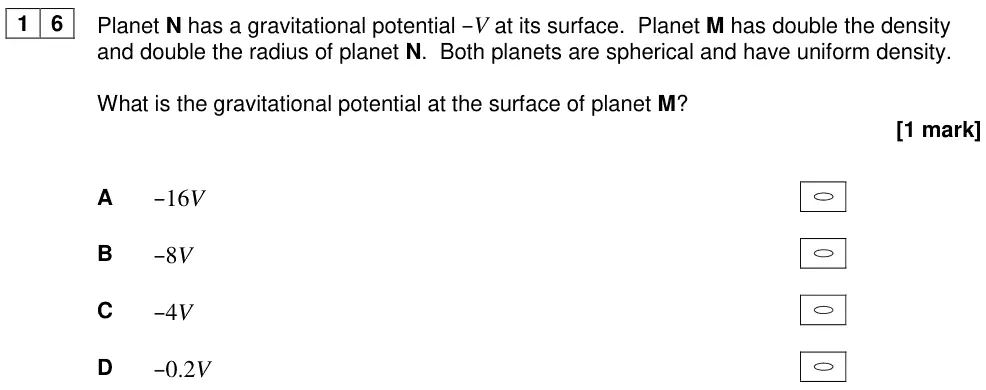
16 Gravitational fields and orbits, Materials, stress, strain and the Young modulus 1Multiple choice
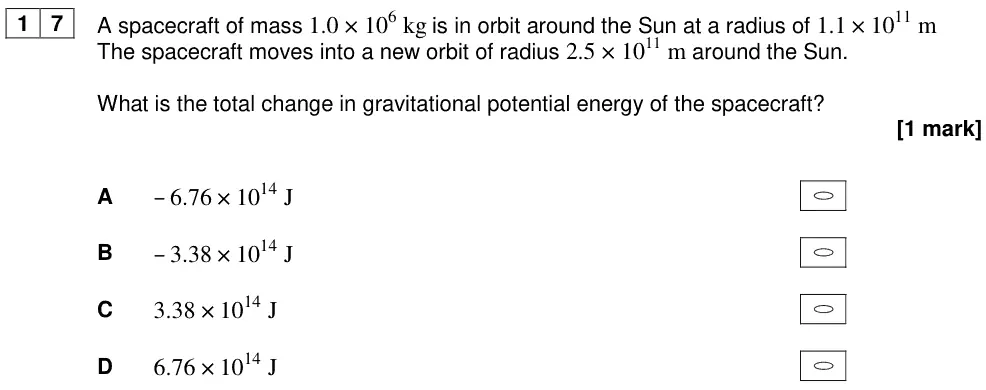
17 Gravitational fields and orbits 1Multiple choice
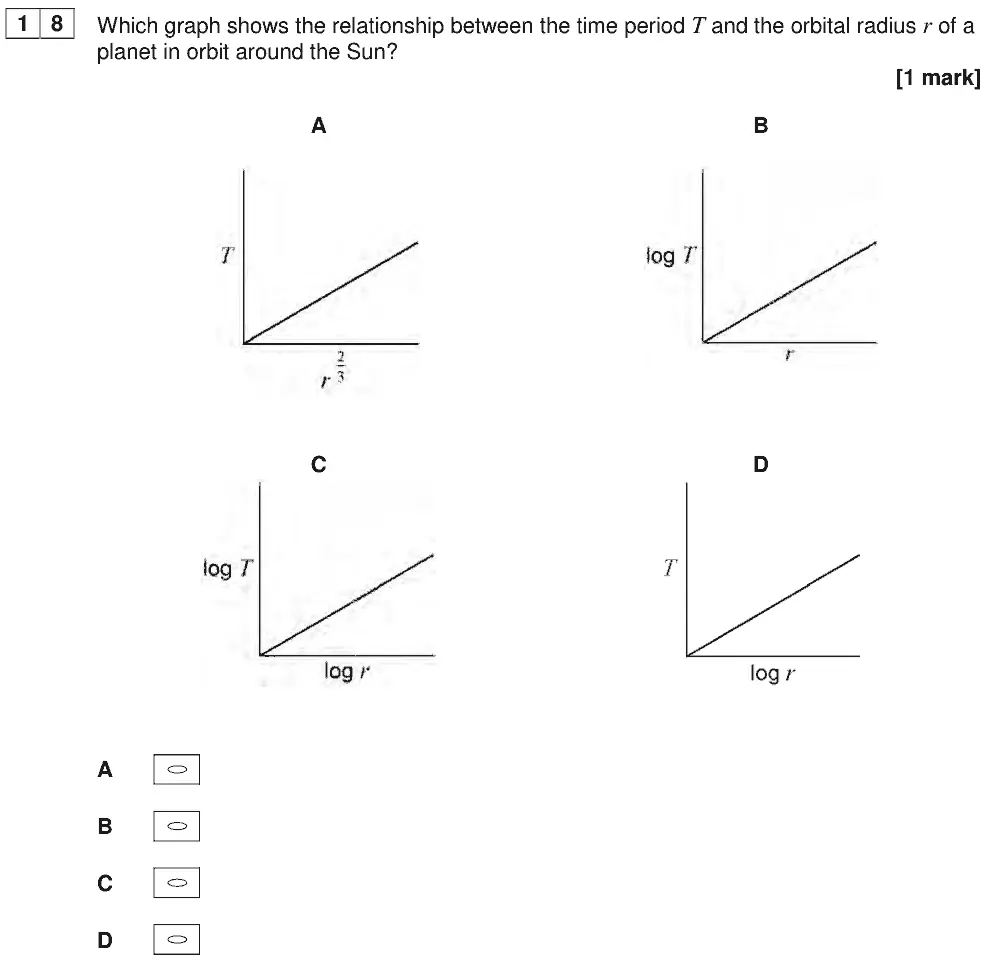
18 Gravitational fields and orbits 1Multiple choice
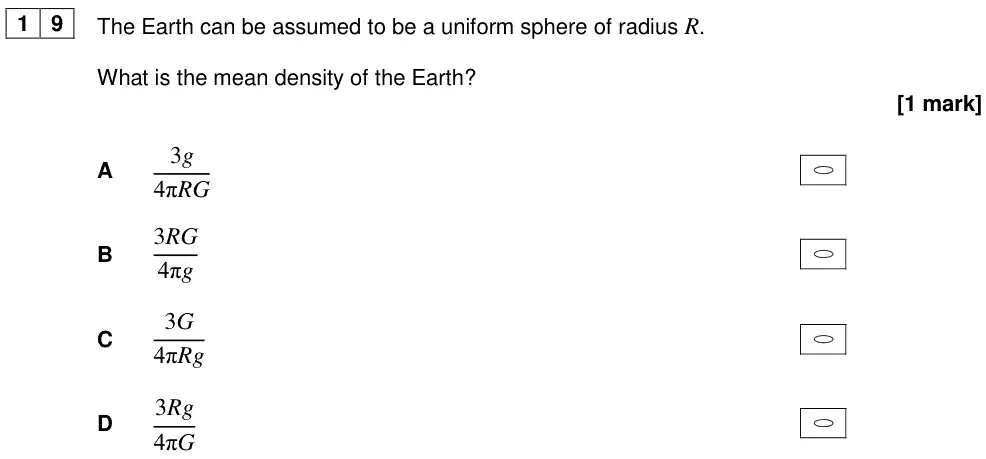
19 Gravitational fields and orbits, Materials, stress, strain and the Young modulus 1Multiple choice
20 Electric fields and electric potential 1Multiple choice
21 Electric fields and electric potential 1Multiple choice
22 Electric fields and electric potential 1Multiple choice
23 Capacitance and capacitor charge and discharge, Electric fields and electric potential 1Multiple choice
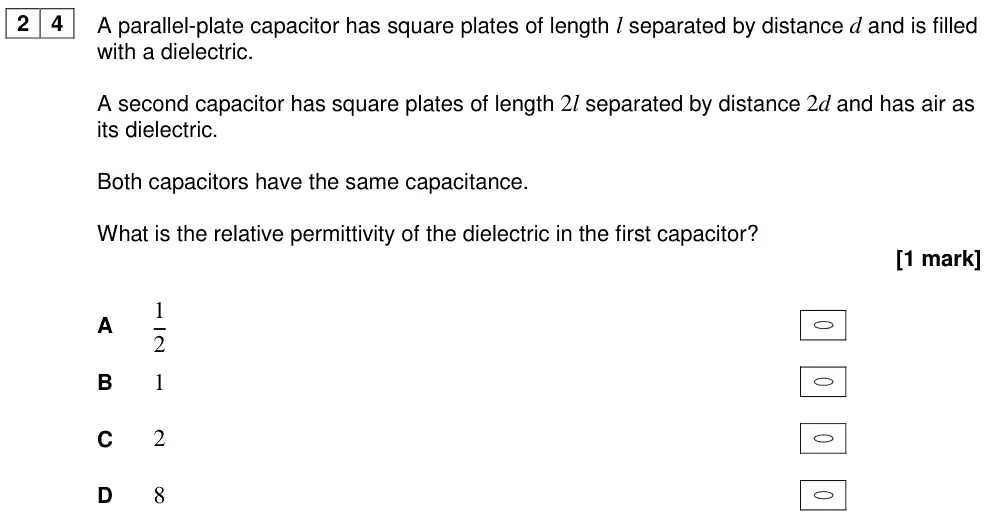
24 Capacitance and capacitor charge and discharge 1Multiple choice
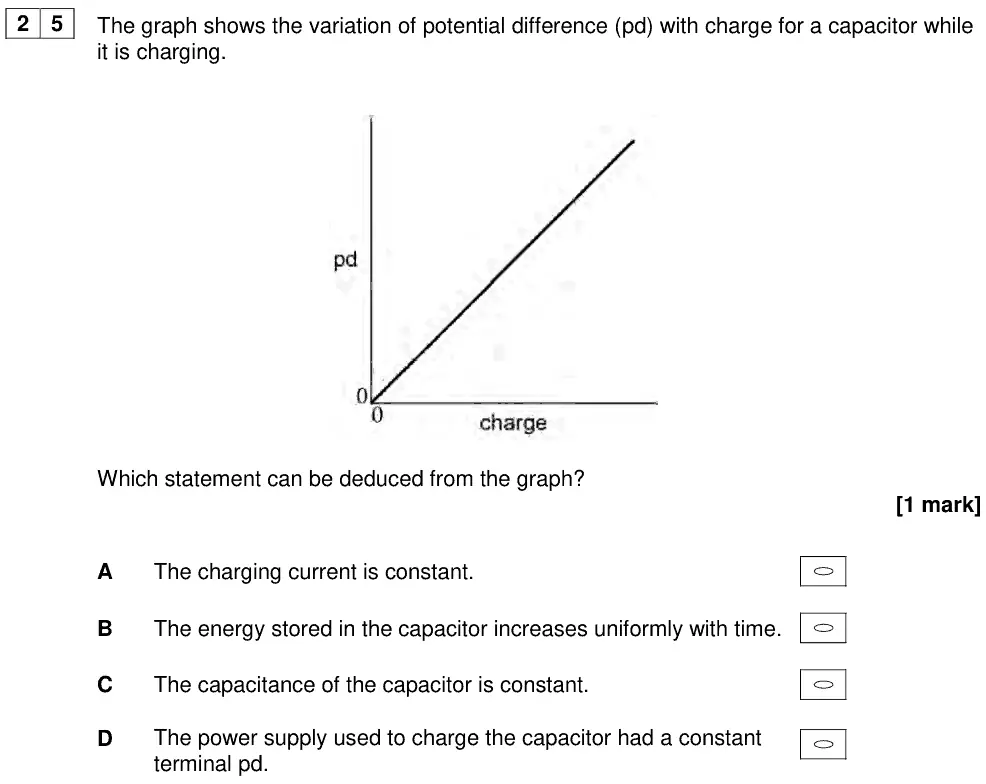
25 Capacitance and capacitor charge and discharge 1Multiple choice
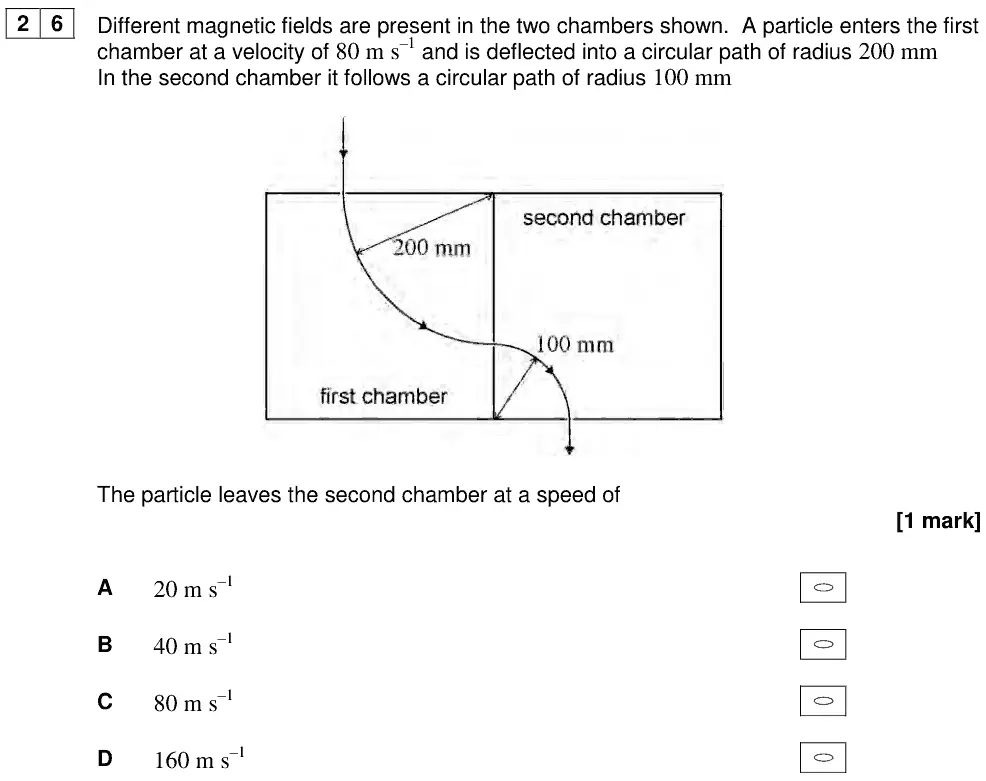
26 Magnetic flux density and moving charges in a magnetic field 1Multiple choice
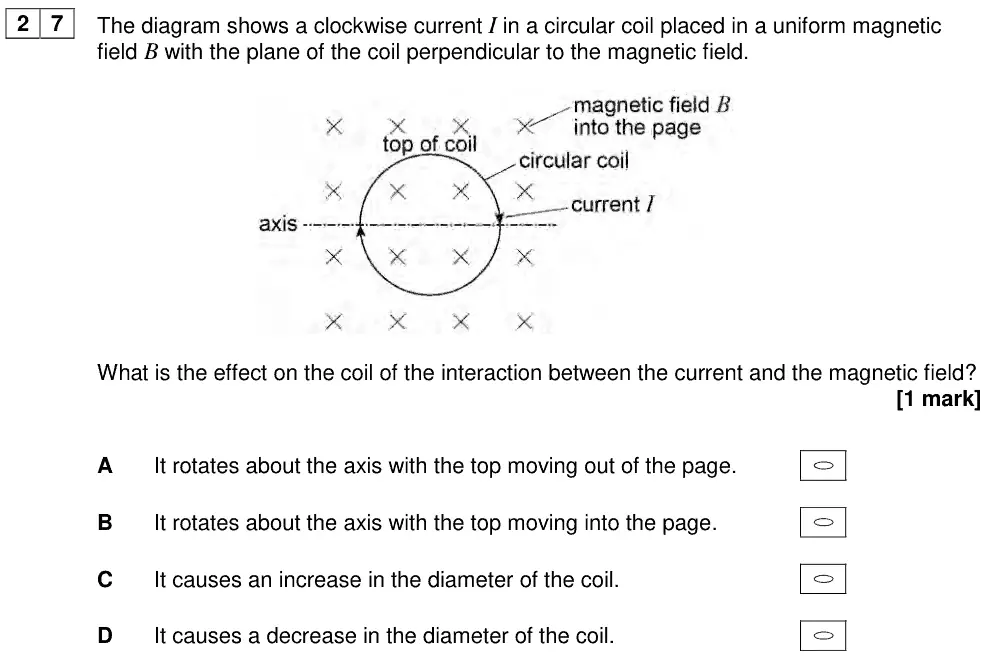
27 Magnetic flux density and moving charges in a magnetic field 1Multiple choice
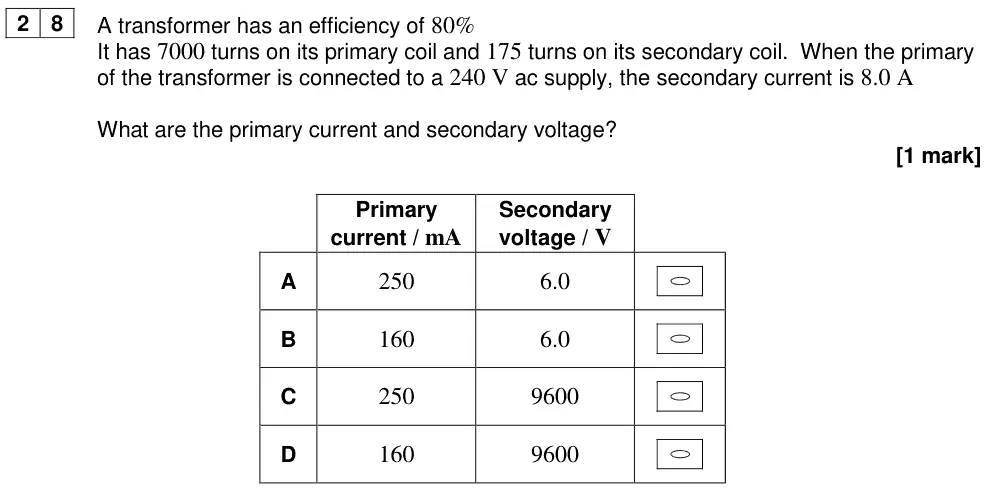
28 Electromagnetic induction, alternating currents and transformers 1Multiple choice
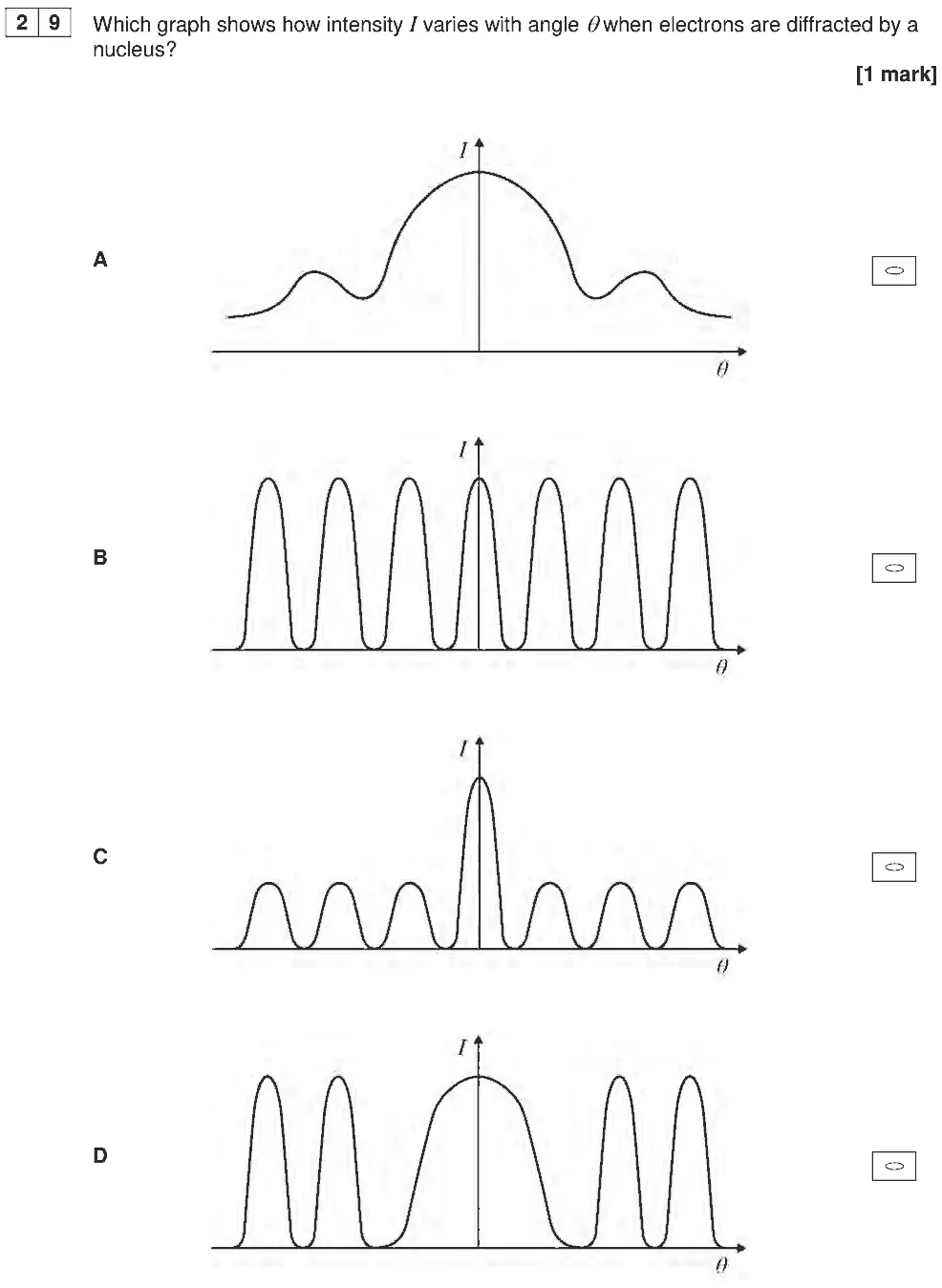
29 Nuclear radius 1Multiple choice
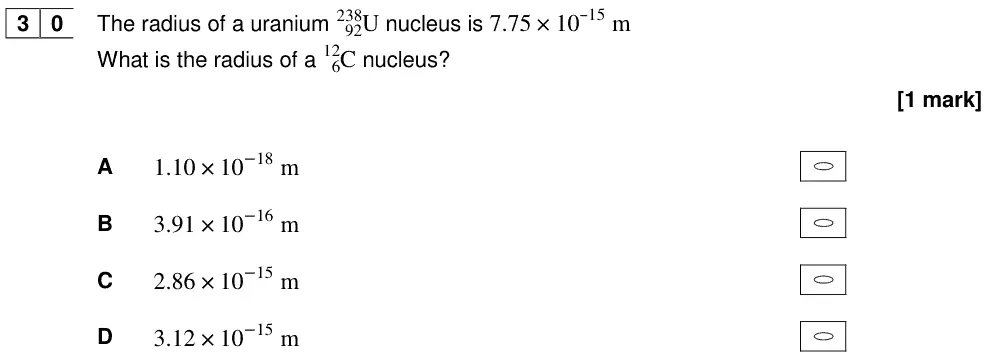
30 Nuclear radius 1Multiple choice
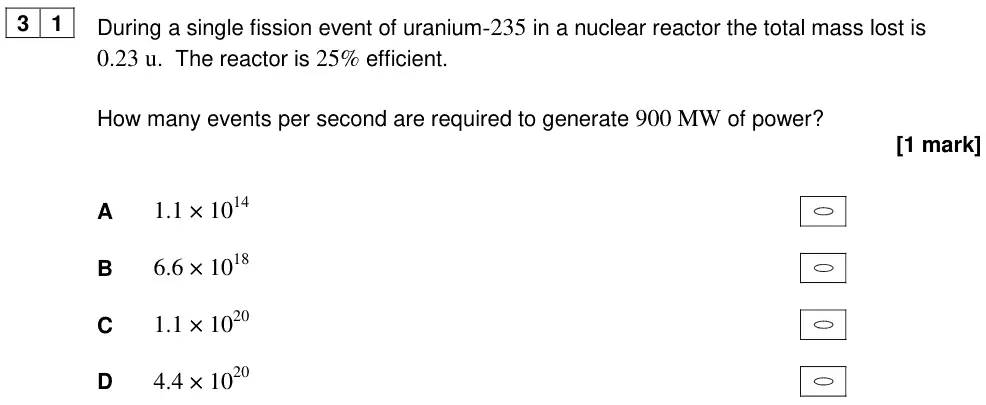
31 Mass and energy, binding energy, fission and safety 1Multiple choice
32 Mass and energy, binding energy, fission and safety 1Multiple choice

The questions

1.11.21.32.12.22.32.43.13.23.33.43.54.14.24.34.44.55.15.25.35.46.16.26.36.46.56.67.17.27.37.47.5891011121314151617181920212223242526272829303132
June 2018 · Paper 2 · Q1.1 2 marks Short answer thermal energy and ideal gases
Explain what is meant by specific latent heat of fusion.
[2 marks]
June 2018 · Paper 2 · Q1.2 3 marks Calculation Easy thermal energy and ideal gaseswork energy and power
Earlier part of question 1 that this part usesEarlier part of June 2018 Paper 2 question 1
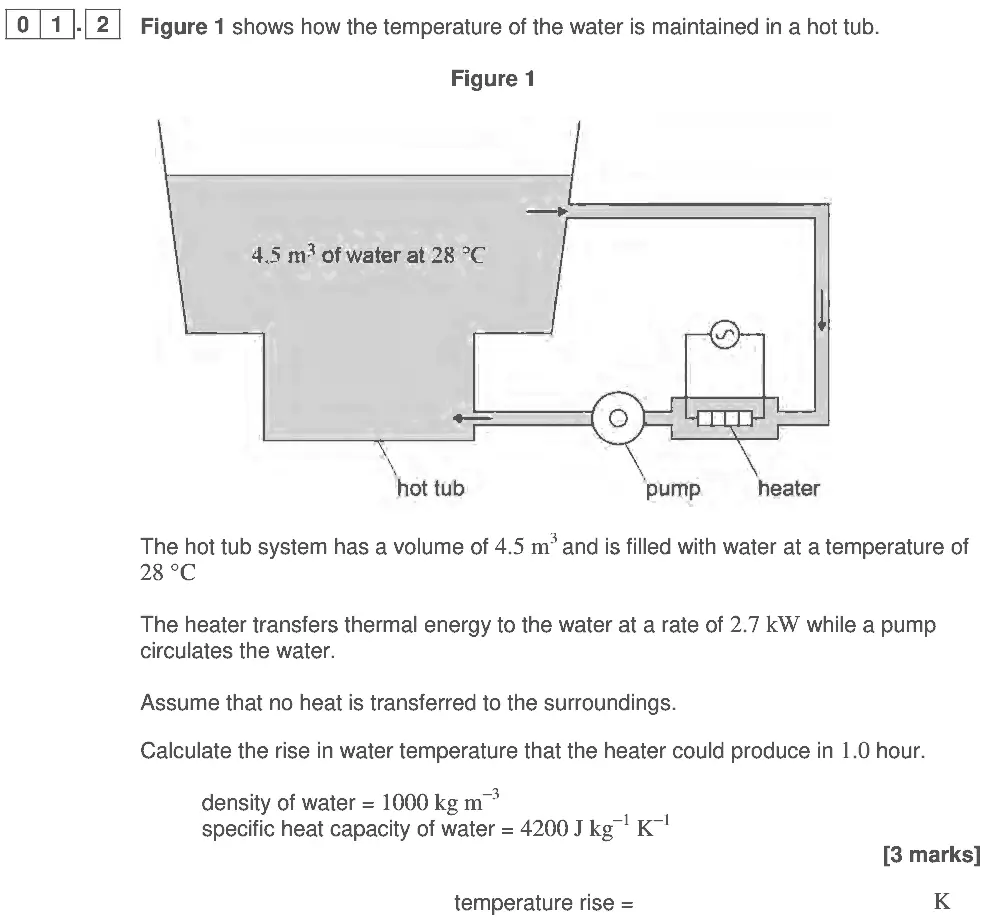
Figure 1 shows how the temperature of the water is maintained in a hot tub.
Figure 1
The hot tub system has a volume of 4.5 m3 and is filled with water at a temperature of
28 °C
The heater transfers thermal energy to the water at a rate of 2.7 kW while a pump
circulates the water.
Assume that no heat is transferred to the surroundings.
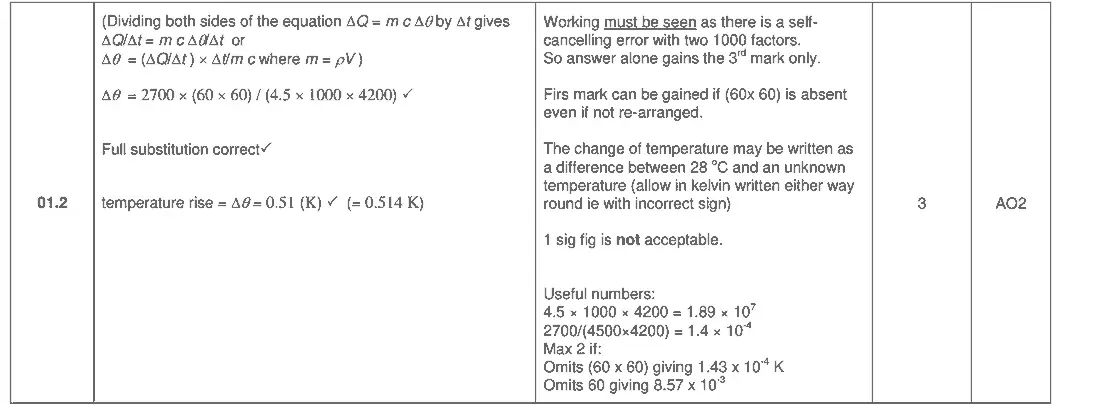
Calculate the rise in water temperature that the heater could produce in 1.0 hour.
density of water = 1000 kg m–3
specific heat capacity of water = 4200 J kg–1 K–1
[3 marks]
temperature rise =
K
June 2018 · Paper 2 · Q1.3 2 marks Explanation Hard thermal energy and ideal gases
Earlier part of question 1 that this part usesEarlier part of June 2018 Paper 2 question 1
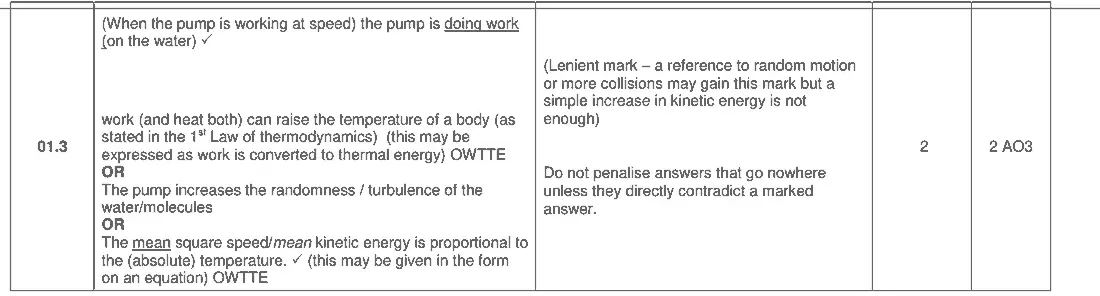
The pump can circulate the water at different speeds.
When working at higher speeds the rise in temperature is greater.
Explain why.
Again assume that no heat is transferred to the surroundings.
[2 marks]
June 2018 · Paper 2 · Q2.1 2 marks Short answer electric fields
Define the electric field strength at a point in an electric field.
[2 marks]
June 2018 · Paper 2 · Q2.2 3 marks Calculation electric fields
Earlier part of question 2 that this part usesEarlier part of June 2018 Paper 2 question 2
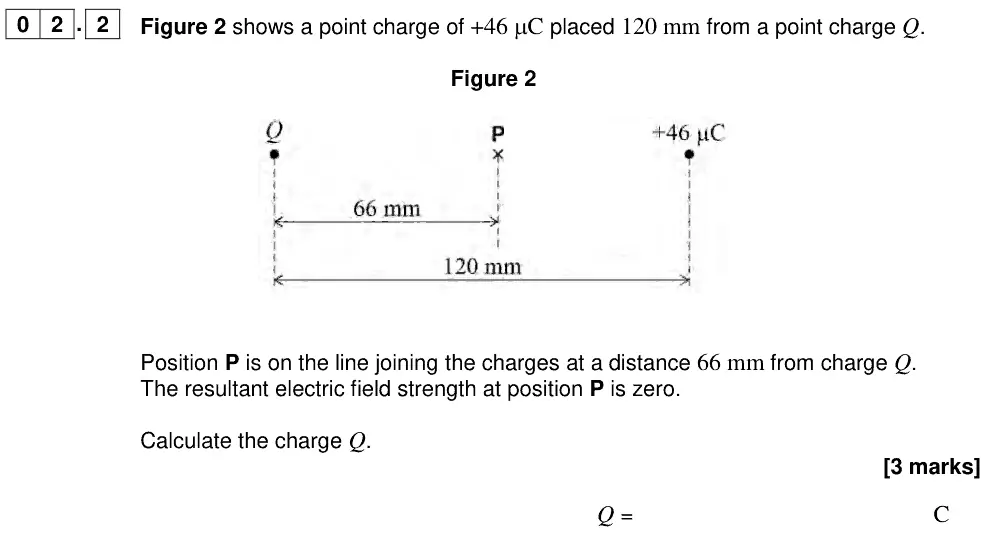
Figure 2 shows a point charge of +46 µC placed 120 mm from a point charge Q.
Figure 2
Position P is on the line joining the charges at a distance 66 mm from charge Q.
The resultant electric field strength at position P is zero.
Calculate the charge Q.
[3 marks]
Q =
C
June 2018 · Paper 2 · Q2.3 2 marks Explanation electric fields
Earlier part of question 2 that this part usesEarlier part of June 2018 Paper 2 question 2
Explain, without calculation, whether net work must be done in moving a proton from
infinity to position P in Figure 2.
[2 marks]
June 2018 · Paper 2 · Q2.4 2 marks Explanation electric fieldsnewtons laws and momentum
Earlier part of question 2 that this part usesEarlier part of June 2018 Paper 2 question 2
A small rubber ball coated with a conducting paint carries a positive charge.
The ball is suspended in equilibrium from a vertical wall by an uncharged
non-conducting thread of negligible mass.  The wall is positively charged and
produces a horizontal uniform electric field perpendicular to the wall along the whole
of its length.
Figure 3 shows that the thread makes an angle of 30° to the wall.
Figure 3
The thread breaks.
Explain the motion of the ball.
[2 marks]
June 2018 · Paper 2 · Q3.1 2 marks Short answer Easy capacitors
State what is meant by a capacitance of 370 µF
[2 marks]
June 2018 · Paper 2 · Q3.2 1 mark Calculation Easy capacitors
Earlier part of question 3 that this part usesEarlier part of June 2018 Paper 2 question 3
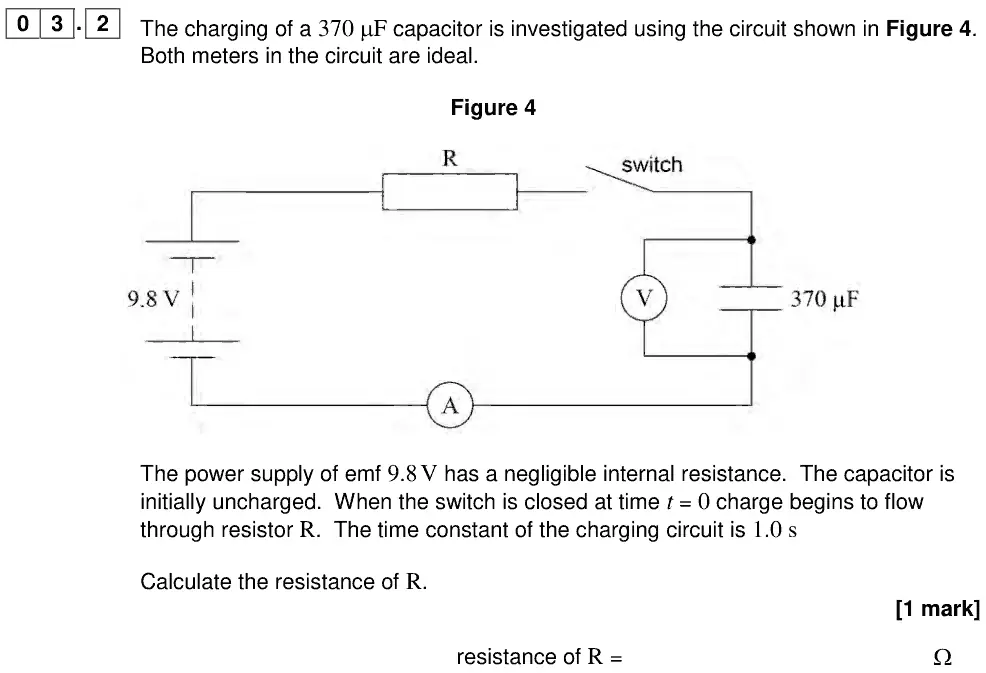
The charging of a 370 µF capacitor is investigated using the circuit shown in Figure 4.
Both meters in the circuit are ideal.
Figure 4
The power supply of emf 9.8 V has a negligible internal resistance.  The capacitor is
initially uncharged.  When the switch is closed at time t = 0 charge begins to flow
through resistor R.  The time constant of the charging circuit is 1.0 s
Calculate the resistance of R.
[1 mark]
resistance of R =
Ω
June 2018 · Paper 2 · Q3.3 2 marks Diagram or graph capacitors
Earlier part of question 3 that this part usesEarlier part of June 2018 Paper 2 question 3
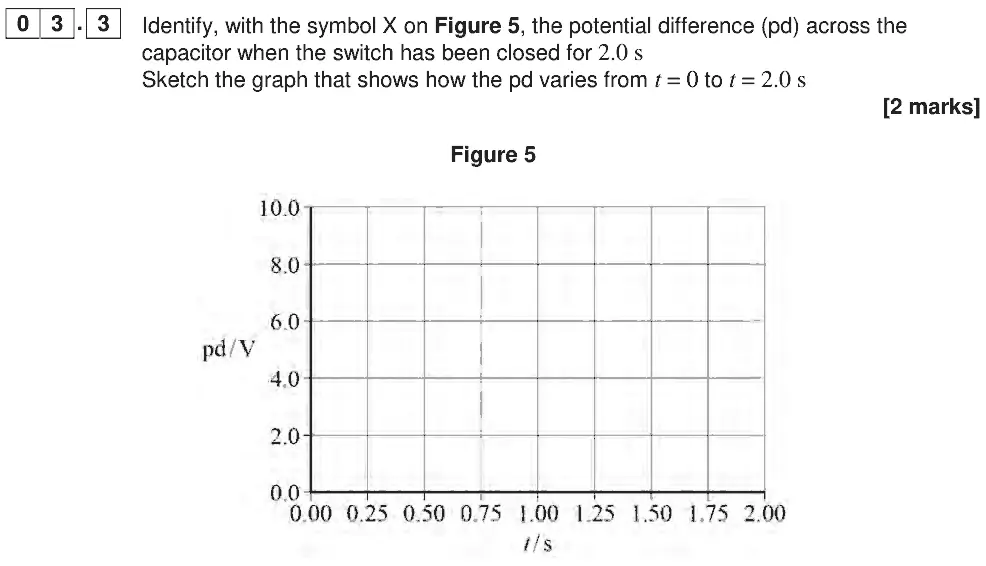
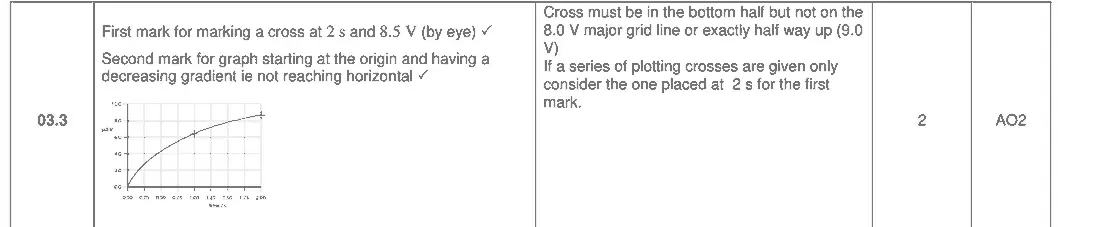
Identify, with the symbol X on Figure 5, the potential difference (pd) across the
capacitor when the switch has been closed for 2.0 s
Sketch the graph that shows how the pd varies from t = 0 to t = 2.0 s
[2 marks]
Figure 5
June 2018 · Paper 2 · Q3.4 1 mark Calculation capacitors
Earlier part of question 3 that this part usesEarlier part of June 2018 Paper 2 question 3
Calculate the time taken for the charging current to fall to half its initial value.
[1 mark]
time =
s
June 2018 · Paper 2 · Q3.5 3 marks Calculation capacitors
Earlier part of question 3 that this part usesEarlier part of June 2018 Paper 2 question 3
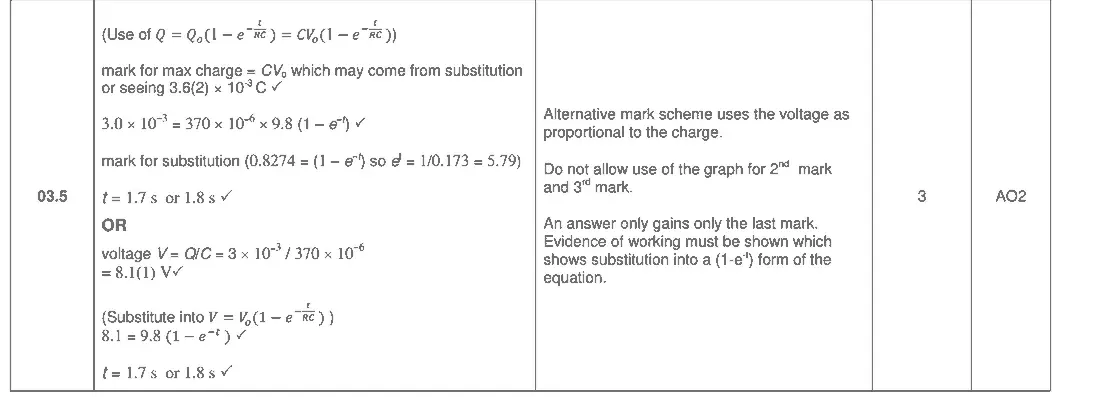
Calculate the time taken for the charge on the capacitor to reach 3.0 mC
[3 marks]
time =
s
June 2018 · Paper 2 · Q4.1 1 mark Short answer Hard electromagnetic induction
State Lenz’s law.
[1 mark]
June 2018 · Paper 2 · Q4.2 1 mark Short answer electromagnetic induction
Earlier part of question 4 that this part usesEarlier part of June 2018 Paper 2 question 4
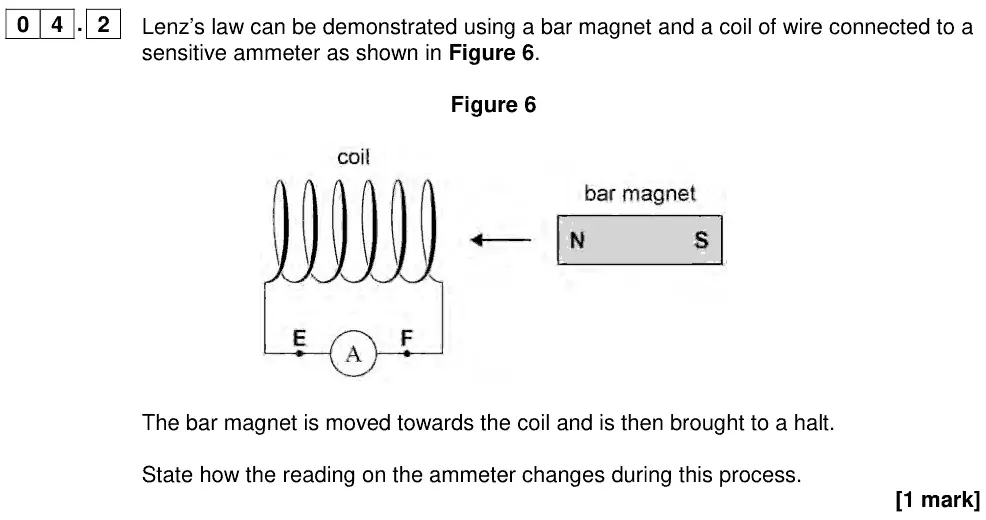
Lenz’s law can be demonstrated using a bar magnet and a coil of wire connected to a
sensitive ammeter as shown in Figure 6.
Figure 6
The bar magnet is moved towards the coil and is then brought to a halt.
State how the reading on the ammeter changes during this process.
[1 mark]
June 2018 · Paper 2 · Q4.3 2 marks Explanation Hard electromagnetic induction
Earlier part of question 4 that this part usesEarlier part of June 2018 Paper 2 question 4
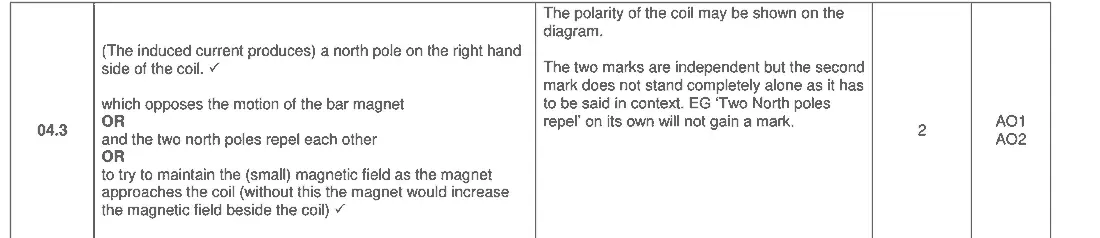
During the demonstration an induced current is detected by the ammeter.  The
induced current is in the direction E to F.
Explain how this demonstrates Lenz’s law.
[2 marks]
June 2018 · Paper 2 · Q4.4 2 marks Calculation Easy electromagnetic induction
Earlier part of question 4 that this part usesEarlier part of June 2018 Paper 2 question 4
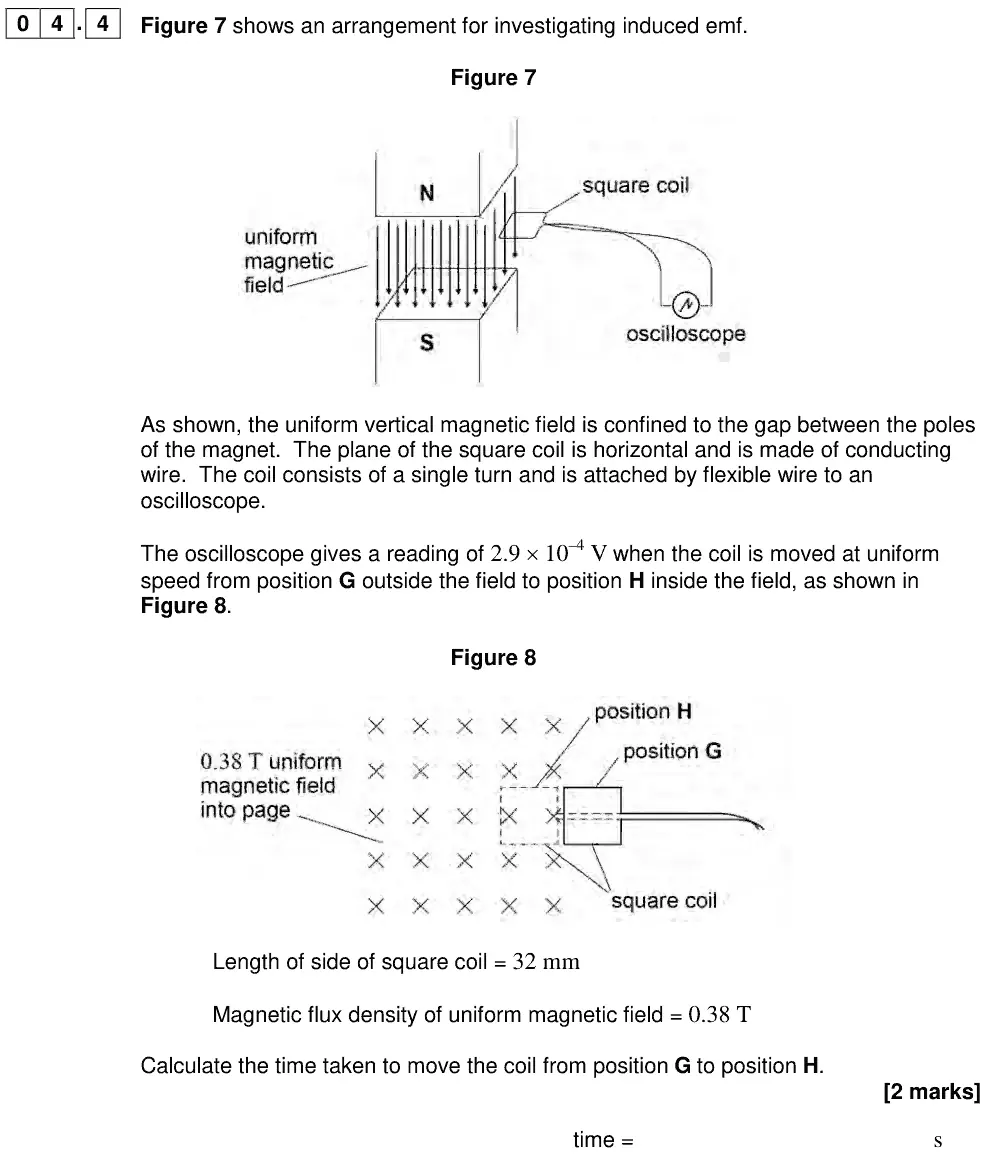
Figure 7 shows an arrangement for investigating induced emf.
Figure 7
As shown, the uniform vertical magnetic field is confined to the gap between the poles
of the magnet.  The plane of the square coil is horizontal and is made of conducting
wire.  The coil consists of a single turn and is attached by flexible wire to an
oscilloscope.
The oscilloscope gives a reading of 2.9 × 10⁻⁴ V when the coil is moved at uniform
speed from position G outside the field to position H inside the field, as shown in
Figure 8.
Figure 8
Length of side of square coil = 32 mm
Magnetic flux density of uniform magnetic field = 0.38 T
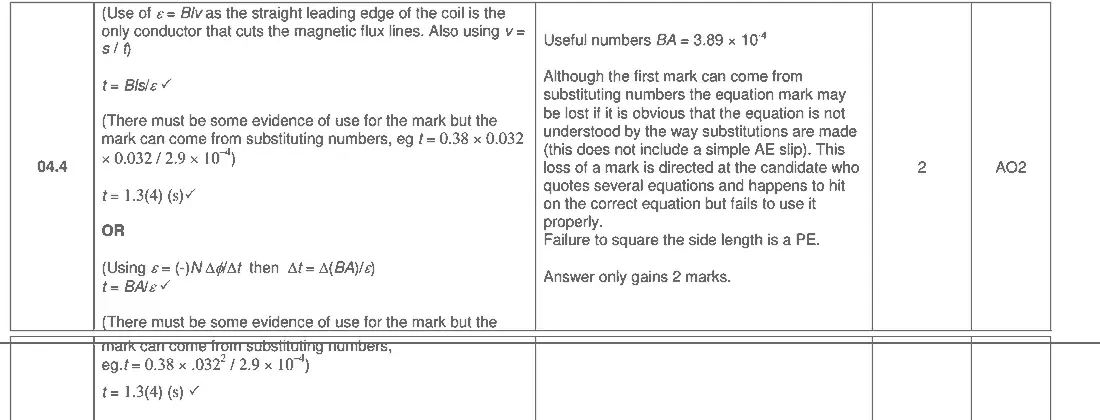
Calculate the time taken to move the coil from position G to position H.
[2 marks]
time =
s
June 2018 · Paper 2 · Q4.5 2 marks Calculation electromagnetic induction
Earlier part of question 4 that this part usesEarlier part of June 2018 Paper 2 question 4
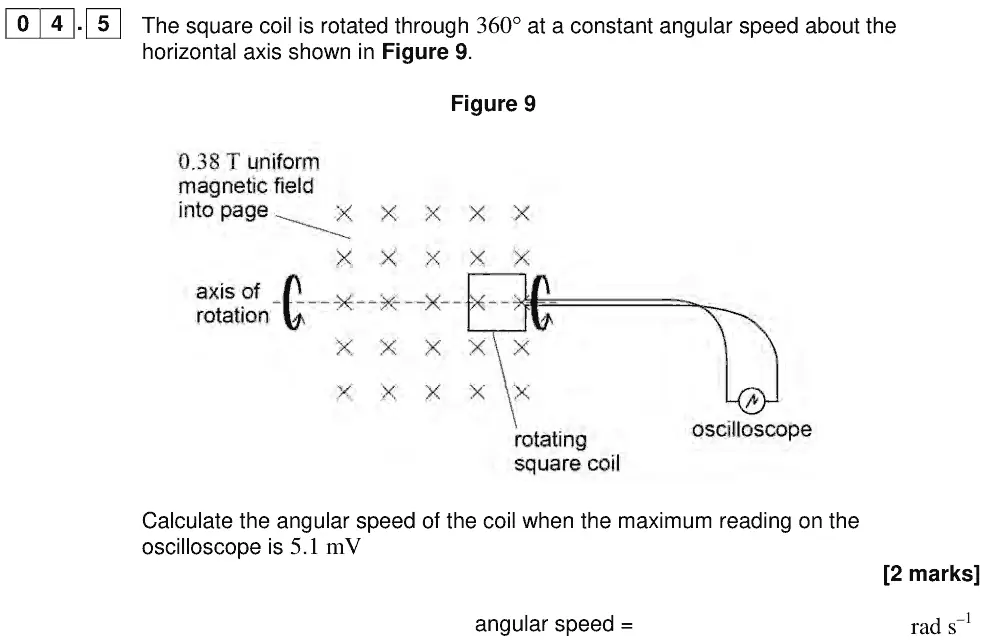
The square coil is rotated through 360° at a constant angular speed about the
horizontal axis shown in Figure 9.
Figure 9
Calculate the angular speed of the coil when the maximum reading on the
oscilloscope is 5.1 mV
[2 marks]
angular speed =
rad s–1
June 2018 · Paper 2 · Q5.1 1 mark Short answer Hard rutherford scattering and radiation
Suggest, with a reason, which type of radiation is likely to be the most appropriate for
the sterilisation of metallic surgical instruments.
[1 mark]
June 2018 · Paper 2 · Q5.2 1 mark Short answer Hard rutherford scattering and radiation
Earlier part of question 5 that this part usesEarlier part of June 2018 Paper 2 question 5
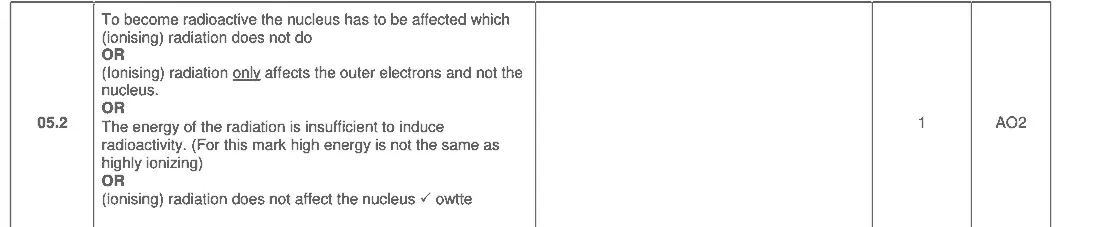
Explain why the public need not worry that irradiated surgical instruments become
radioactive once sterilised.
[1 mark]
June 2018 · Paper 2 · Q5.3 2 marks Practical and data analysis rutherford scattering and radiation
Earlier part of question 5 that this part usesEarlier part of June 2018 Paper 2 question 5
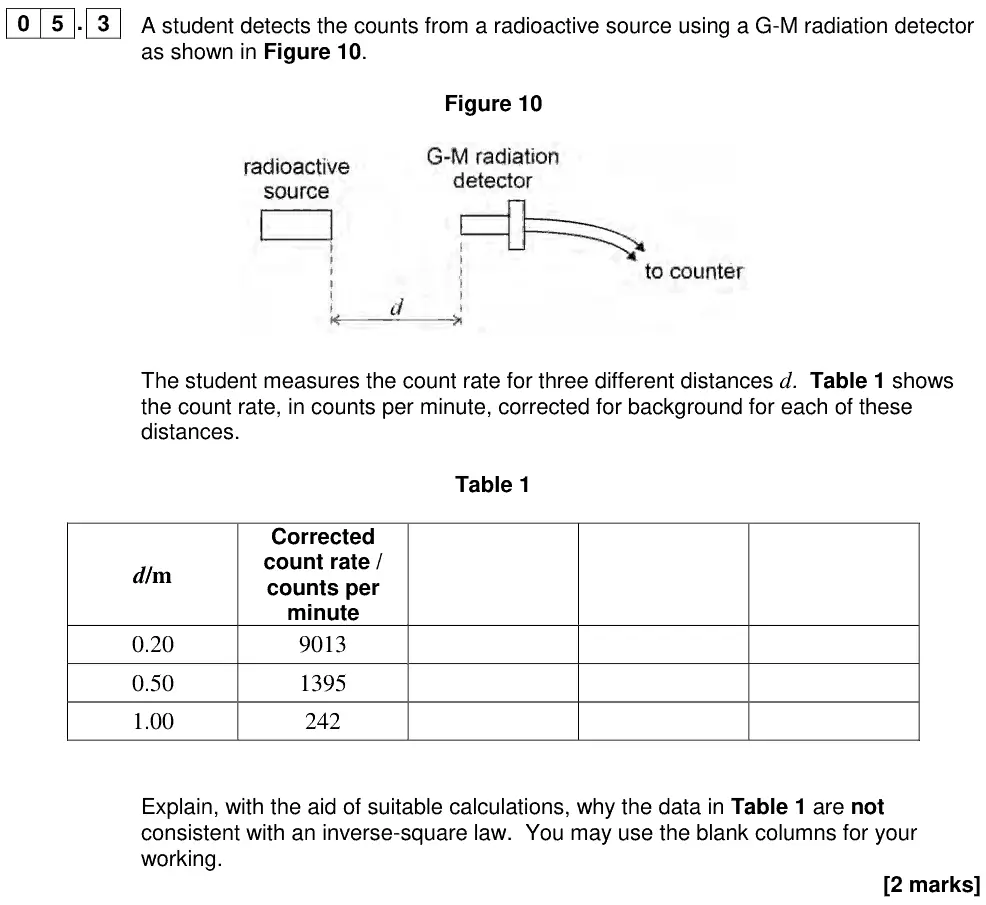
A student detects the counts from a radioactive source using a G-M radiation detector
as shown in Figure 10.
Figure 10
The student measures the count rate for three different distances d.  Table 1 shows
the count rate, in counts per minute, corrected for background for each of these
distances.
Table 1
d/m
Corrected
count rate /
counts per
minute
0.20
9013
0.50
1395
1.00
242
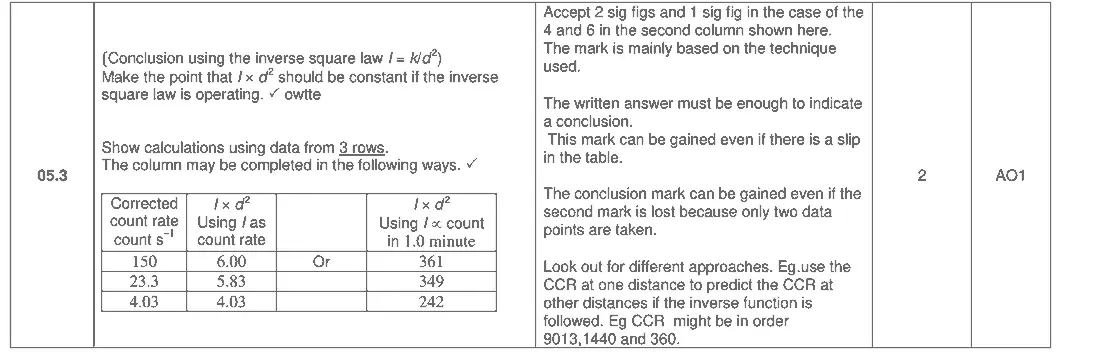
Explain, with the aid of suitable calculations, why the data in Table 1 are not
consistent with an inverse-square law.  You may use the blank columns for your
working.
[2 marks]
June 2018 · Paper 2 · Q5.4 2 marks Short answer rutherford scattering and radiation
Earlier part of question 5 that this part usesEarlier part of June 2018 Paper 2 question 5
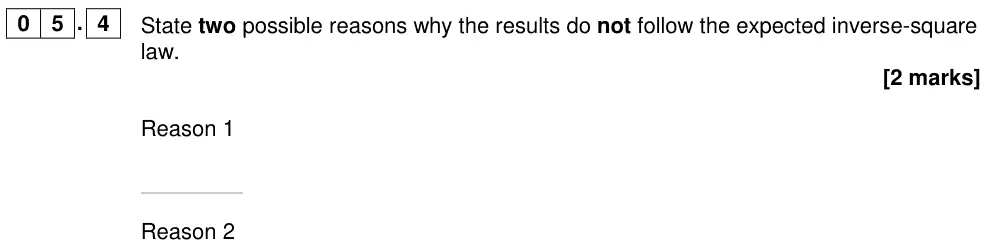
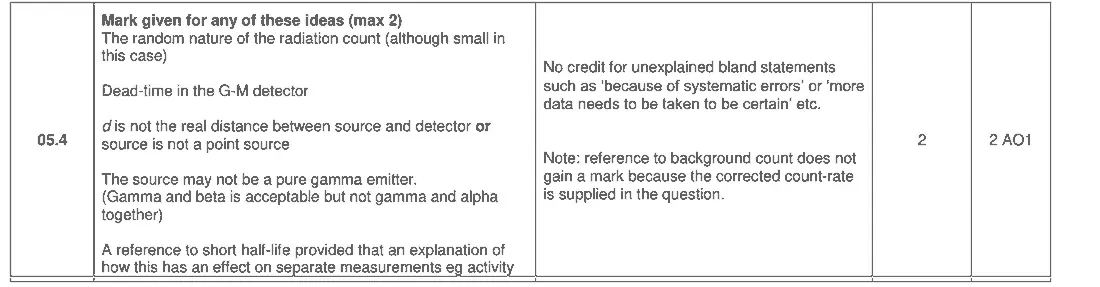
State two possible reasons why the results do not follow the expected inverse-square
law.
[2 marks]
Reason 1
Reason 2
June 2018 · Paper 2 · Q6.1 1 mark Short answer radioactive decay
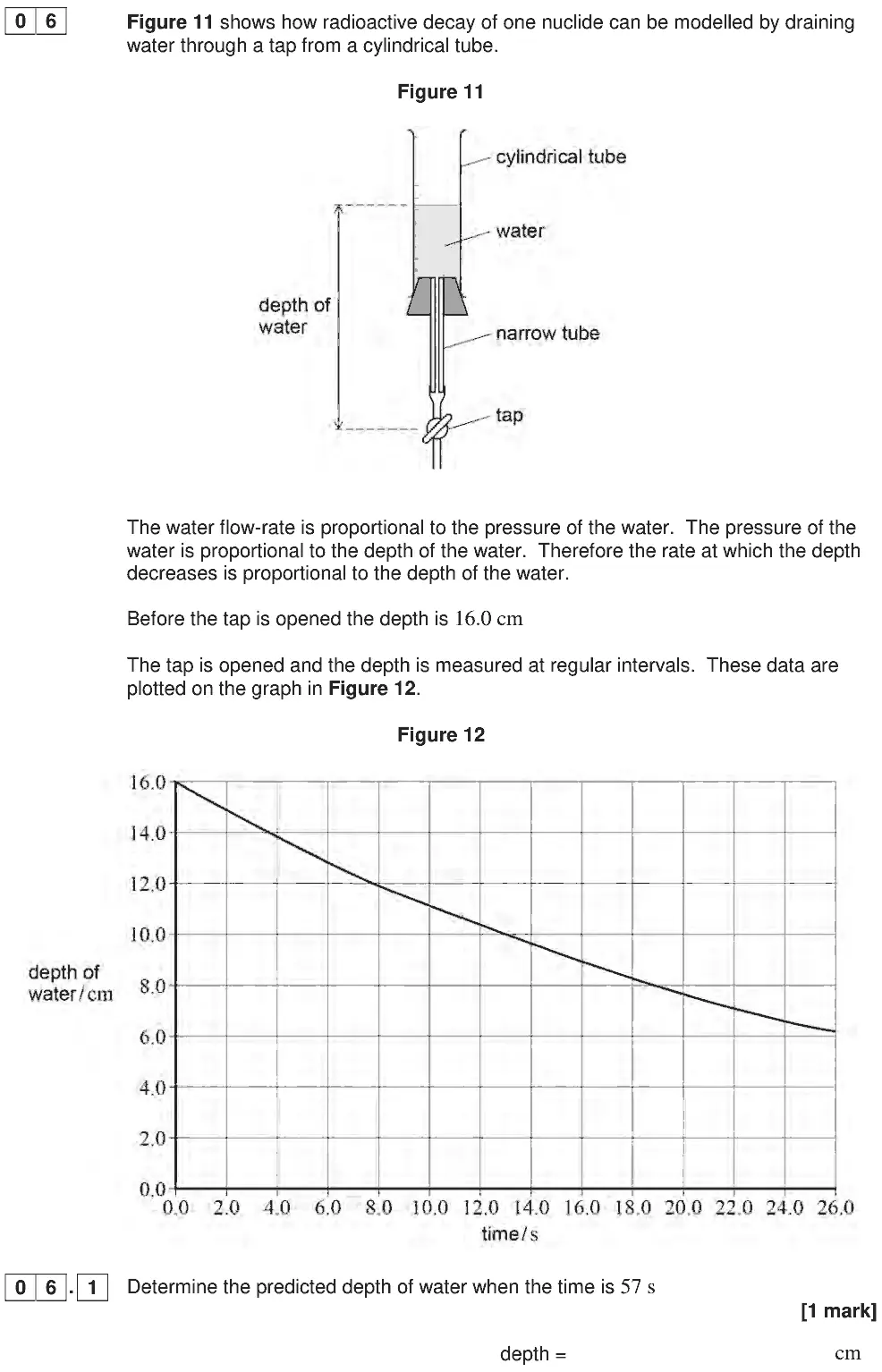
Figure 11 shows how radioactive decay of one nuclide can be modelled by draining
water through a tap from a cylindrical tube.
Figure 11
The water flow-rate is proportional to the pressure of the water.  The pressure of the
water is proportional to the depth of the water.  Therefore the rate at which the depth
decreases is proportional to the depth of the water.
Before the tap is opened the depth is 16.0 cm
The tap is opened and the depth is measured at regular intervals.  These data are
plotted on the graph in Figure 12.
Figure 12
Determine the predicted depth of water when the time is 57 s
[1 mark]
depth =
cm
June 2018 · Paper 2 · Q6.2 1 mark Short answer Easy radioactive decay
Earlier part of question 6 that this part usesEarlier part of June 2018 Paper 2 question 6
Suggest how the apparatus in Figure 11 may be changed to represent a radioactive
sample of the same nuclide with a greater number of nuclei.
[1 mark]
June 2018 · Paper 2 · Q6.3 1 mark Short answer Hard radioactive decay
Earlier part of question 6 that this part usesEarlier part of June 2018 Paper 2 question 6
Suggest how the apparatus in Figure 11 may be changed to represent a radioactive
sample of a nuclide with a smaller decay constant.
[1 mark]
June 2018 · Paper 2 · Q6.4 1 mark Calculation Easy radioactive decay
Earlier part of question 6 that this part usesEarlier part of June 2018 Paper 2 question 6
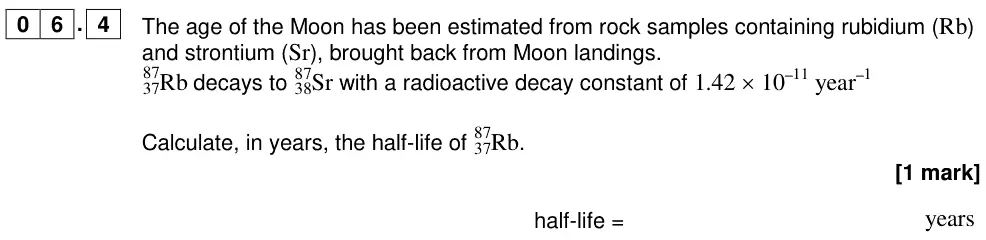
The age of the Moon has been estimated from rock samples containing rubidium (Rb)
and strontium (Sr), brought back from Moon landings.
Rb
37
87
decays to Sr
38
87
with a radioactive decay constant of 1.42 × 10⁻¹¹ year–1
Calculate, in years, the half-life of Rb
37
87
.
[1 mark]
half-life =
years
June 2018 · Paper 2 · Q6.5 3 marks Calculation radioactive decay
Earlier part of question 6 that this part usesEarlier part of June 2018 Paper 2 question 6
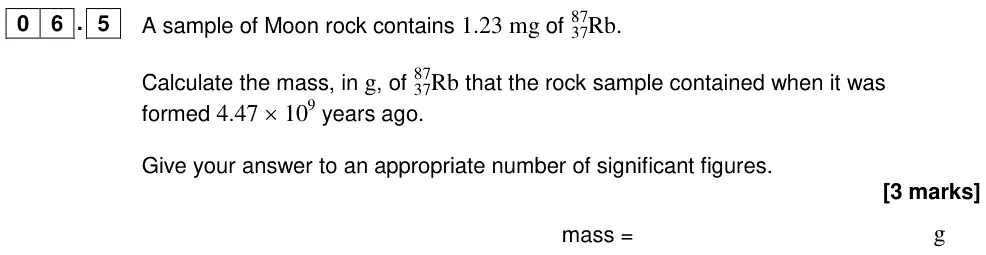
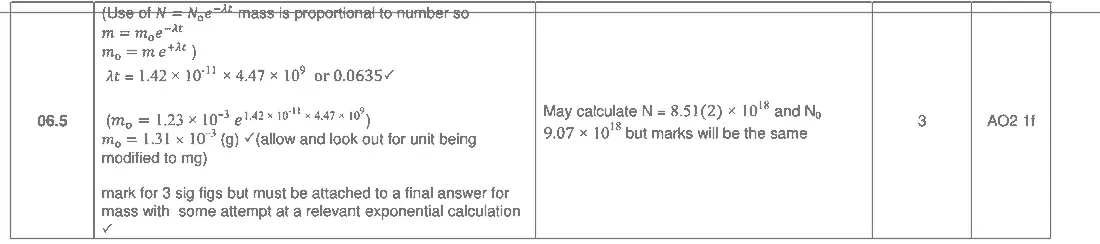
A sample of Moon rock contains 1.23 mg of Rb
37
87
.
Calculate the mass, in g, of Rb
37
87
that the rock sample contained when it was
formed 4.47 × 10⁹ years ago.
Give your answer to an appropriate number of significant figures.
[3 marks]
mass =
g
June 2018 · Paper 2 · Q6.6 3 marks Calculation radioactive decay
Earlier part of question 6 that this part usesEarlier part of June 2018 Paper 2 question 6
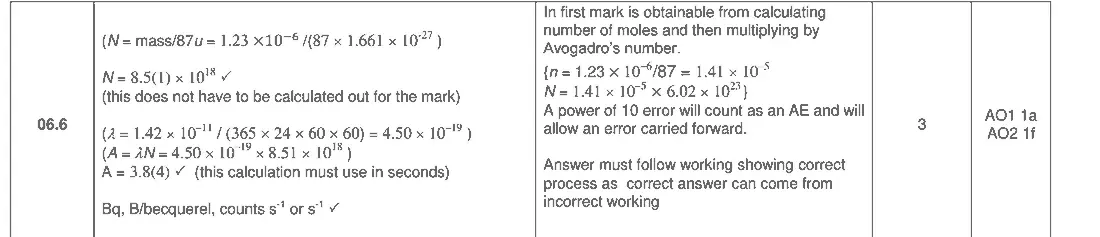
Calculate the activity of a sample of Rb
37
87
of mass 1.23 mg
Give an appropriate unit for your answer.
[3 marks]
activity =
unit
June 2018 · Paper 2 · Q7.1 2 marks Diagram or graph radioactive decay
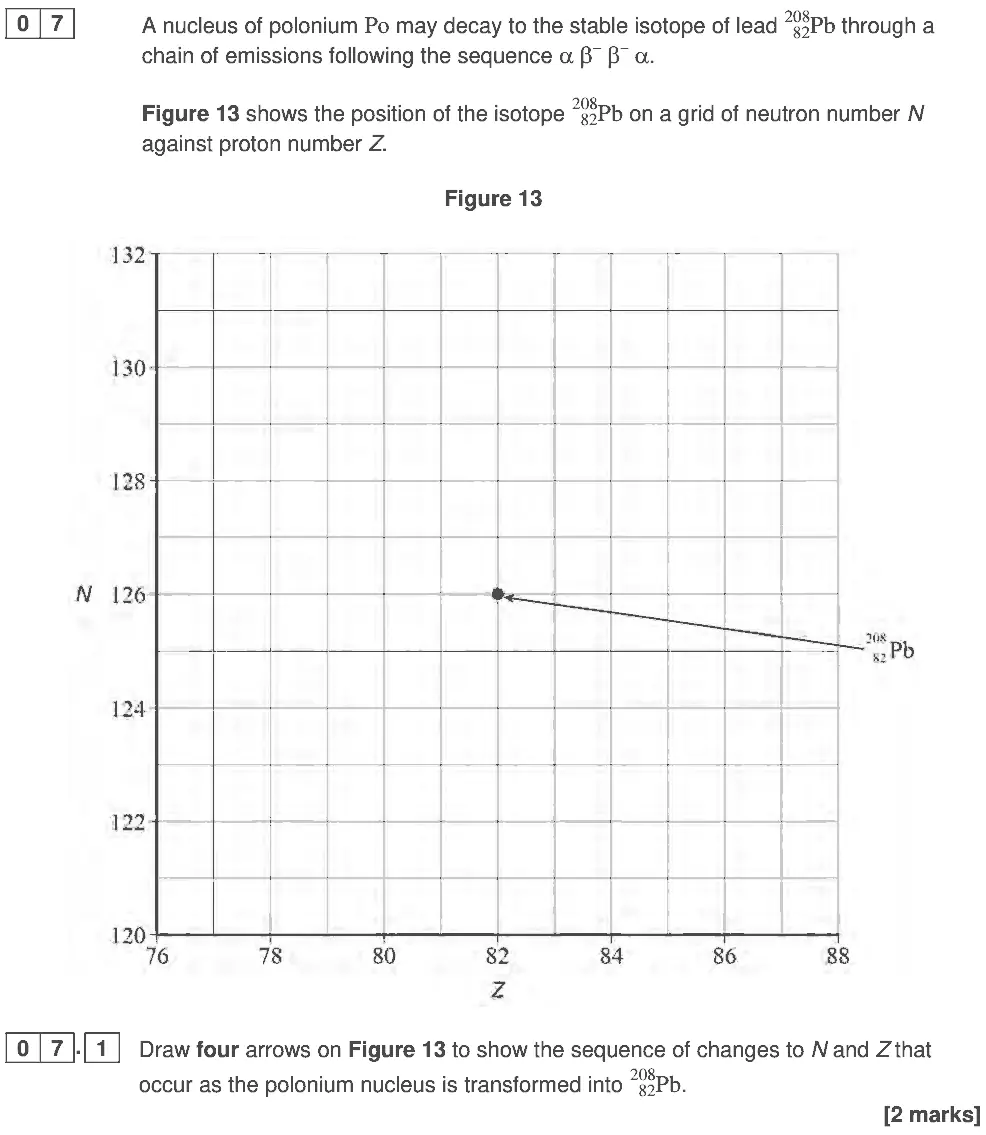
A nucleus of polonium Po may decay to the stable isotope of lead
Pb
82
208
through a
chain of emissions following the sequence α β– β– α.
Figure 13 shows the position of the isotope
Pb
82
208
on a grid of neutron number N
against proton number Z.
Figure 13
Draw four arrows on Figure 13 to show the sequence of changes to N and Z that
occur as the polonium nucleus is transformed into
Pb
82
208
.
[2 marks]
June 2018 · Paper 2 · Q7.2 4 marks Explanation atomic structure and stable nucleiradioactive decay
Earlier part of question 7 that this part usesEarlier part of June 2018 Paper 2 question 7
A nucleus of the stable isotope
Pb
82
208
has more neutrons than protons.
Explain why there is this imbalance between proton and neutron numbers by referring
to the forces that operate within the nucleus.  Your explanation should include the
range of the forces and which particles are affected by the forces.
[4 marks]
June 2018 · Paper 2 · Q7.3 1 mark Short answer radioactive decay
Earlier part of question 7 that this part usesEarlier part of June 2018 Paper 2 question 7
Many, but not all, isotopes of lead are stable.  For example,
Pb
82
205
decays by electron
capture to become an isotope of thallium, Tl.
Write the equation to represent this decay, including the isotope of thallium produced.
[1 mark]
June 2018 · Paper 2 · Q7.4 2 marks Explanation Hard radioactive decayenergy levels and wave particle duality
Earlier part of question 7 that this part usesEarlier part of June 2018 Paper 2 question 7
The thallium nucleus is formed in an excited state.  Electromagnetic radiation is
emitted from the thallium atom following its formation.
Explain the origin and location of two sources of this radiation.
[2 marks]
Source 1
Source 2
June 2018 · Paper 2 · Q7.5 2 marks Explanation radioactive decayrutherford scattering and radiation
Earlier part of question 7 that this part usesEarlier part of June 2018 Paper 2 question 7
Other nuclides also emit electromagnetic radiation.
Explain why the metastable form of the isotope of technetium Tc
43
99
is a radioactive
source suitable for use in medical diagnosis.
[2 marks]
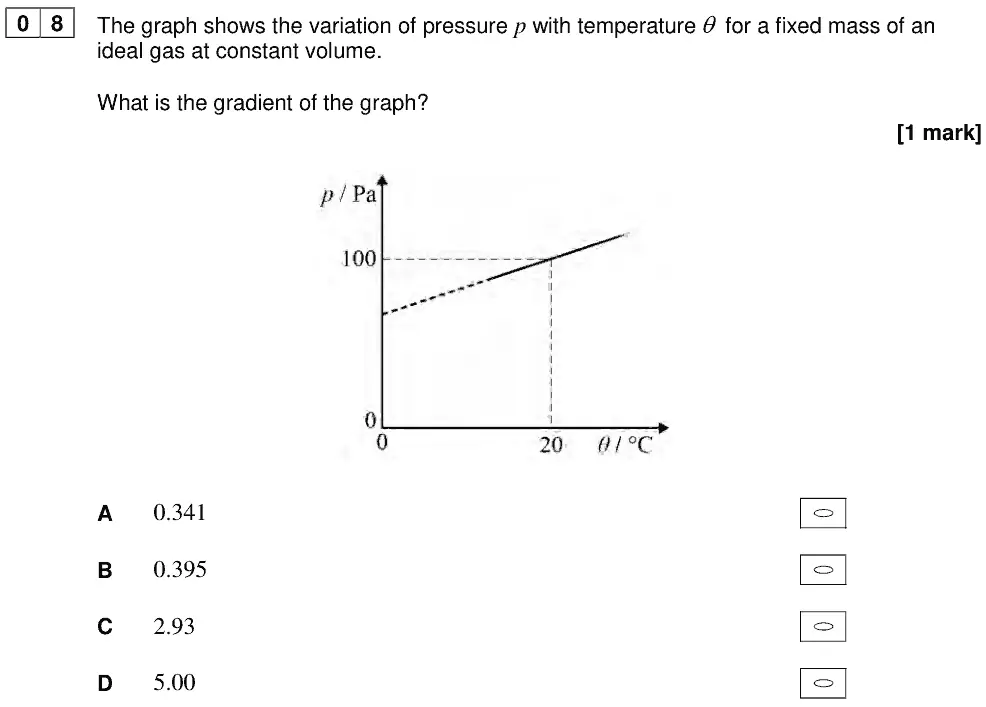
June 2018 · Paper 2 · Q8 1 mark Multiple choice thermal energy and ideal gases
The graph shows the variation of pressure p with temperature   for a fixed mass of an
ideal gas at constant volume.
What is the gradient of the graph?
[1 mark]
A
0.341
B
0.395
C
2.93
D
5.00
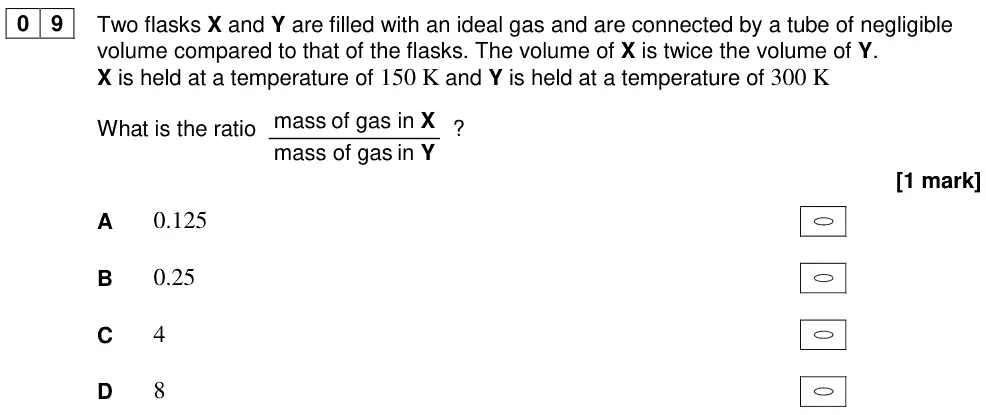
June 2018 · Paper 2 · Q9 1 mark Multiple choice thermal energy and ideal gases
Two flasks X and Y are filled with an ideal gas and are connected by a tube of negligible
volume compared to that of the flasks. The volume of X is twice the volume of Y.
X is held at a temperature of 150 K and Y is held at a temperature of 300 K
What is the ratio
?
[1 mark]
A
0.125
B
0.25
C
4
D
8
mass of gas in X
mass of gas in Y
June 2018 · Paper 2 · Q10 1 mark Multiple choice kinetic theory
The average mass of an air molecule is 4.8 × 10⁻²⁶ kg
What is the mean square speed of an air molecule at 750 K?
[1 mark]
A
3.3 × 10⁵ m2 s–2
B
4.3 × 10⁵ m2 s–2
C
6.5 × 10⁵ m2 s–2
D
8.7 × 10⁵ m2 s–2
June 2018 · Paper 2 · Q11 1 mark Multiple choice kinetic theory
A transparent illuminated box contains small smoke particles and air.
The smoke particles are observed to move randomly when viewed through a microscope.
What is the cause of this observation of Brownian motion?
[1 mark]
A
Smoke particles gaining kinetic energy by the absorption of light
B
Collisions between smoke particles and air molecules
C
Smoke particles moving in convection currents caused by the air
being heated by the light
D
The smoke particles moving randomly due to their temperature
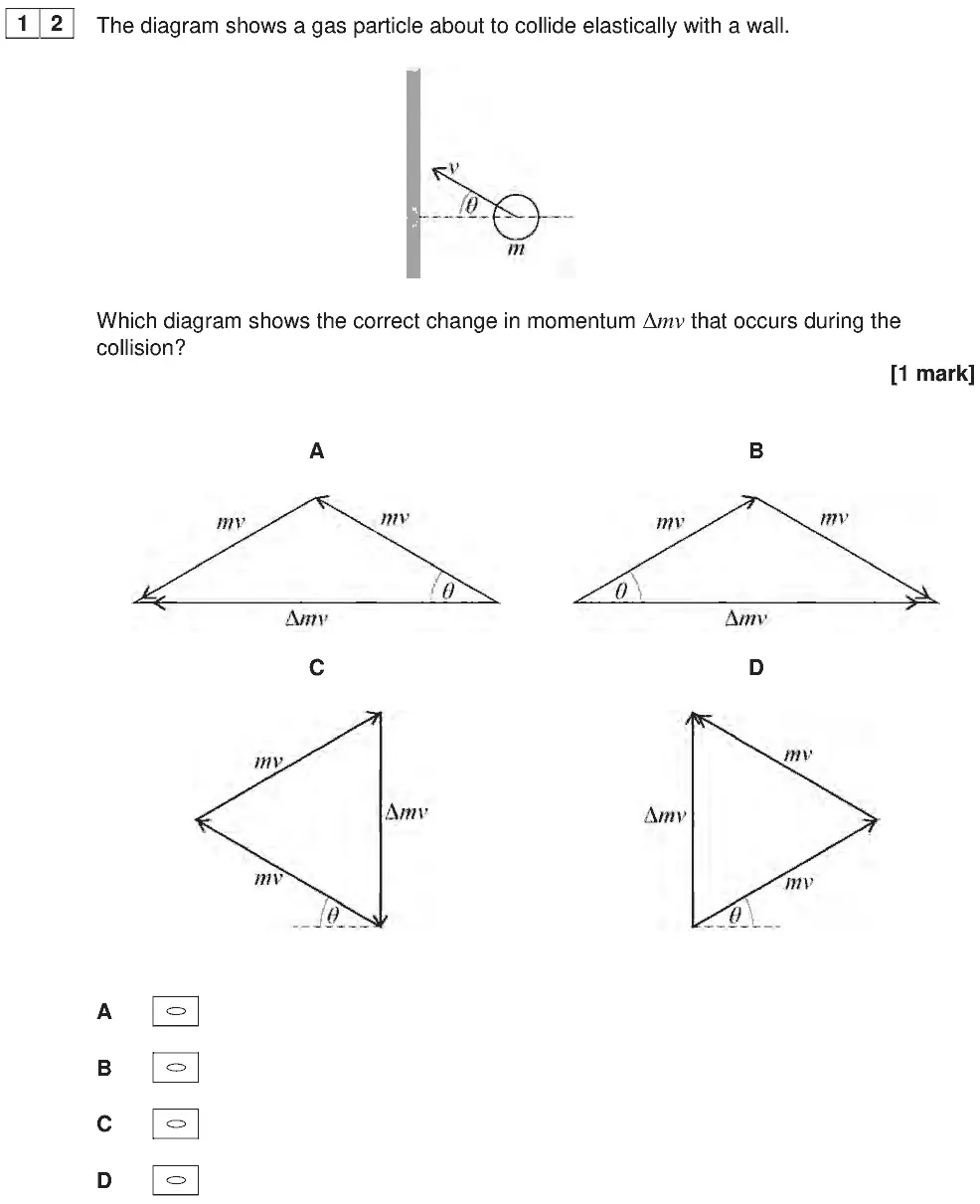
June 2018 · Paper 2 · Q12 1 mark Multiple choice Hard kinetic theorynewtons laws and momentum
The diagram shows a gas particle about to collide elastically with a wall.
Which diagram shows the correct change in momentum ∆mv that occurs during the
collision?
[1 mark]
A
B
C
D
A
B
C
D
June 2018 · Paper 2 · Q13 1 mark Multiple choice Easy gravitational fields
The distance between the Sun and the Earth is 1.5 × 10¹¹ m
What is the gravitational force exerted on the Sun by the Earth?
[1 mark]
A
3.5 × 10²² N
B
1.7 × 1026 N
C
5.3 × 1033 N
D
8.9 × 1050 N
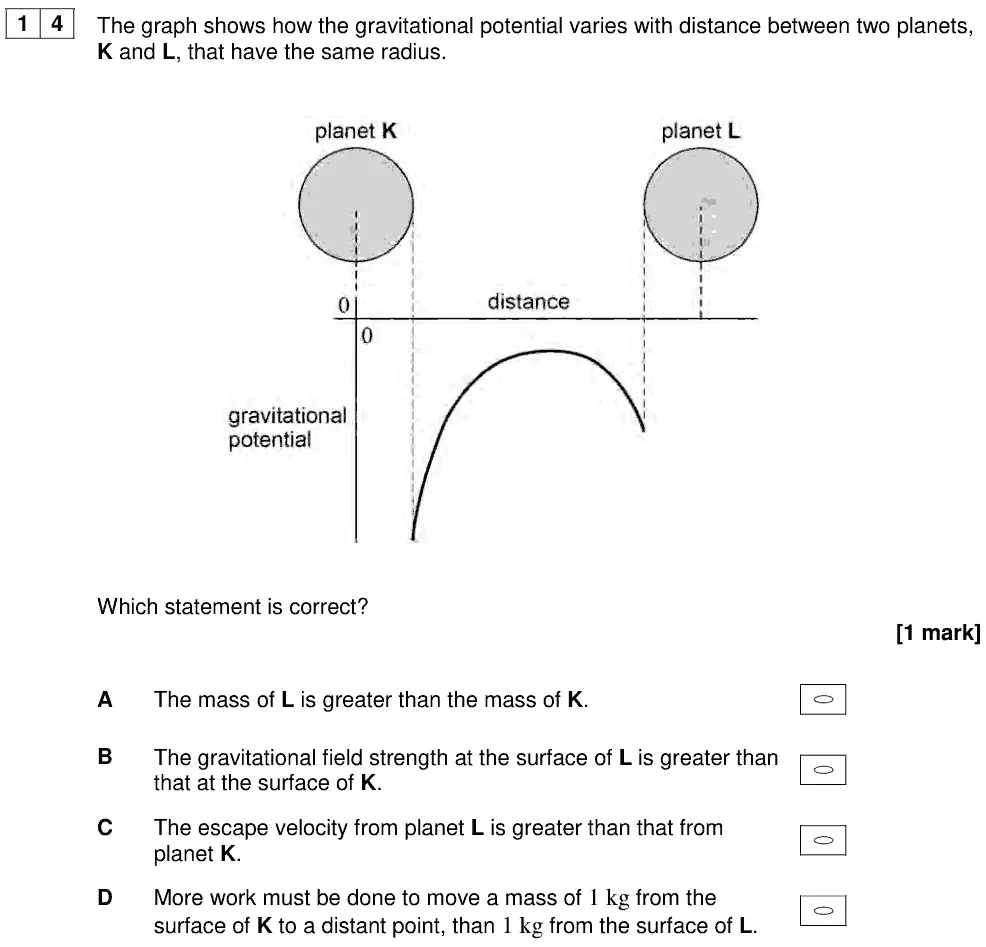
June 2018 · Paper 2 · Q14 1 mark Multiple choice gravitational fields
The graph shows how the gravitational potential varies with distance between two planets,
K and L, that have the same radius.
Which statement is correct?
[1 mark]
A
The mass of L is greater than the mass of K.
B
The gravitational field strength at the surface of L is greater than
that at the surface of K.
C
The escape velocity from planet L is greater than that from
planet K.
D
More work must be done to move a mass of 1 kg from the
surface of K to a distant point, than 1 kg from the surface of L.
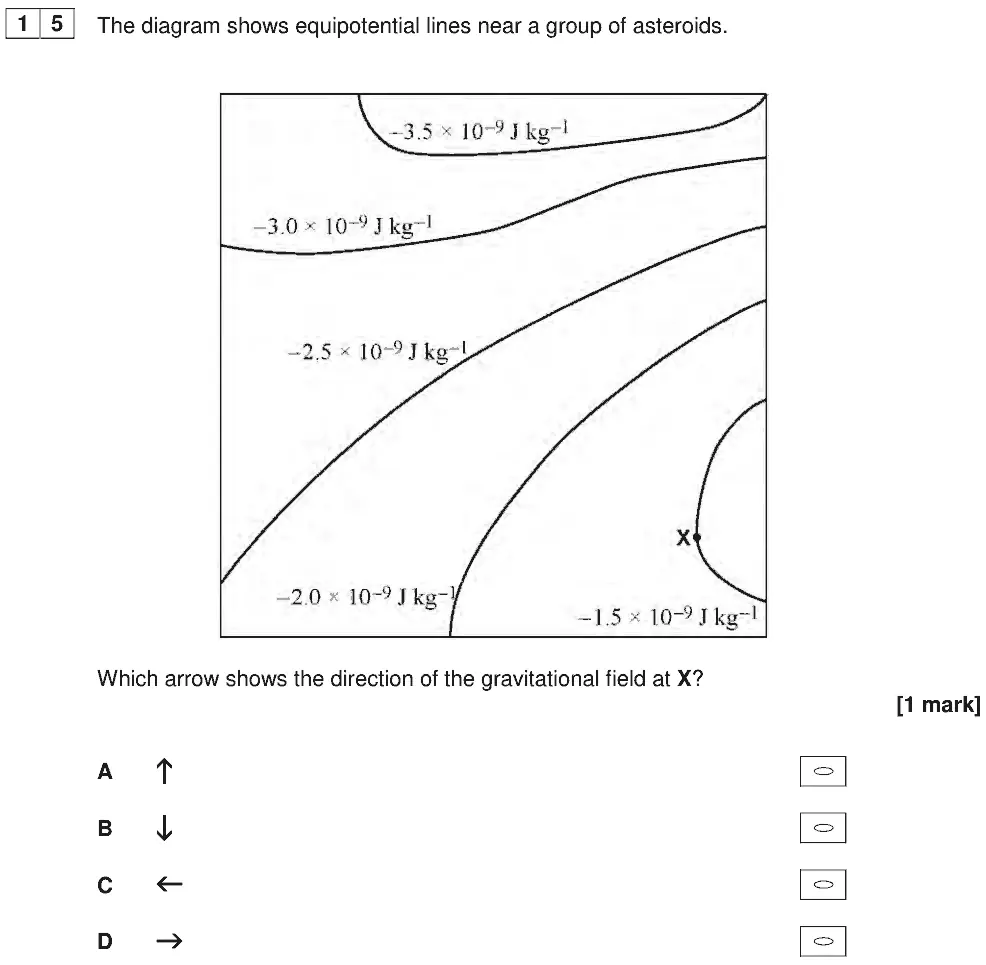
June 2018 · Paper 2 · Q15 1 mark Multiple choice gravitational fields
The diagram shows equipotential lines near a group of asteroids.
Which arrow shows the direction of the gravitational field at X?
[1 mark]
A

B

C

D

June 2018 · Paper 2 · Q16 1 mark Multiple choice gravitational fieldsmaterials and young modulus
and double the radius of planet N.  Both planets are spherical and have uniform density.
What is the gravitational potential at the surface of planet M?
[1 mark]
A
–16V
B
–8V
C
–4V
D
–0.2V
A spacecraft of mass 1.0 × 10⁶ kg is in orbit around the Sun at a radius of 1.1 × 10¹¹ m
June 2018 · Paper 2 · Q17 1 mark Multiple choice gravitational fields
The spacecraft moves into a new orbit of radius 2.5 × 10¹¹ m around the Sun.
What is the total change in gravitational potential energy of the spacecraft?
[1 mark]
A
– 6.76 × 10¹⁴ J
B
– 3.38 × 10¹⁴ J
C
3.38 × 10¹⁴ J
D
6.76 × 10¹⁴ J
June 2018 · Paper 2 · Q18 1 mark Multiple choice gravitational fields
Which graph shows the relationship between the time period T and the orbital radius r of a
planet in orbit around the Sun?
[1 mark]
A
B
C
D
A
B
C
D
June 2018 · Paper 2 · Q19 1 mark Multiple choice gravitational fieldsmaterials and young modulus
The Earth can be assumed to be a uniform sphere of radius R.
What is the mean density of the Earth?
[1 mark]
A
3g
4πRG
B
3RG
4πg
C
3G
4πRg
D
3Rg
4πG
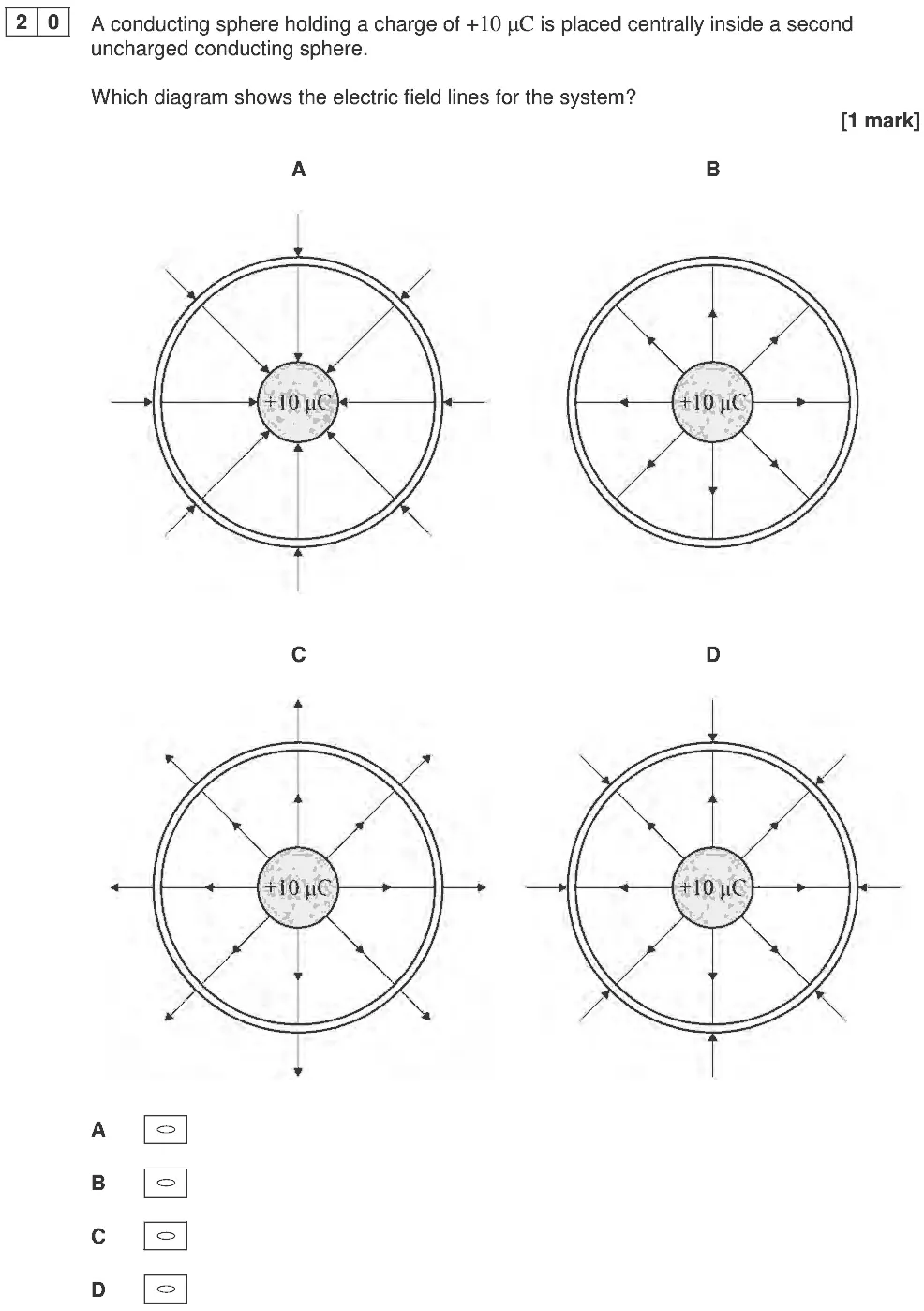
June 2018 · Paper 2 · Q20 1 mark Multiple choice electric fields
A conducting sphere holding a charge of +10 µC is placed centrally inside a second
uncharged conducting sphere.
Which diagram shows the electric field lines for the system?
[1 mark]
A
B
C
D
A
B
C
D
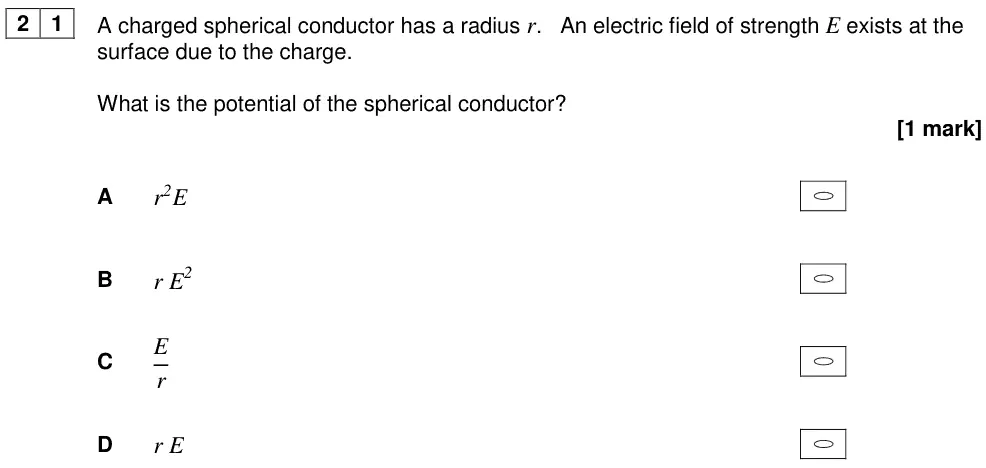
June 2018 · Paper 2 · Q21 1 mark Multiple choice electric fields
A charged spherical conductor has a radius r.   An electric field of strength E exists at the
surface due to the charge.
What is the potential of the spherical conductor?
[1 mark]
A
r2E
B
r E2
C
E
r
D
r E
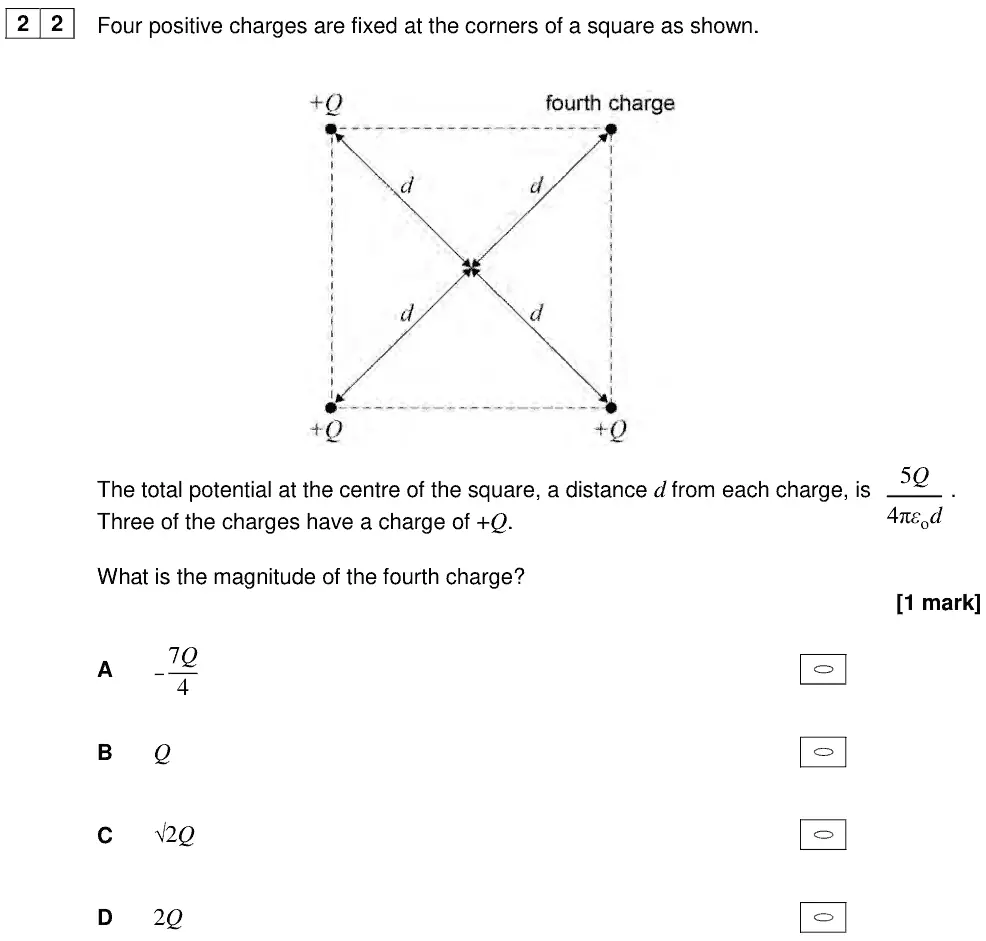
June 2018 · Paper 2 · Q22 1 mark Multiple choice electric fields
Four positive charges are fixed at the corners of a square as shown.
The total potential at the centre of the square, a distance d from each charge, is             .
Three of the charges have a charge of +Q.
What is the magnitude of the fourth charge?
[1 mark]
A
– 7Q
4
B
Q
C
√2Q
D
2Q
5Q
4πεod
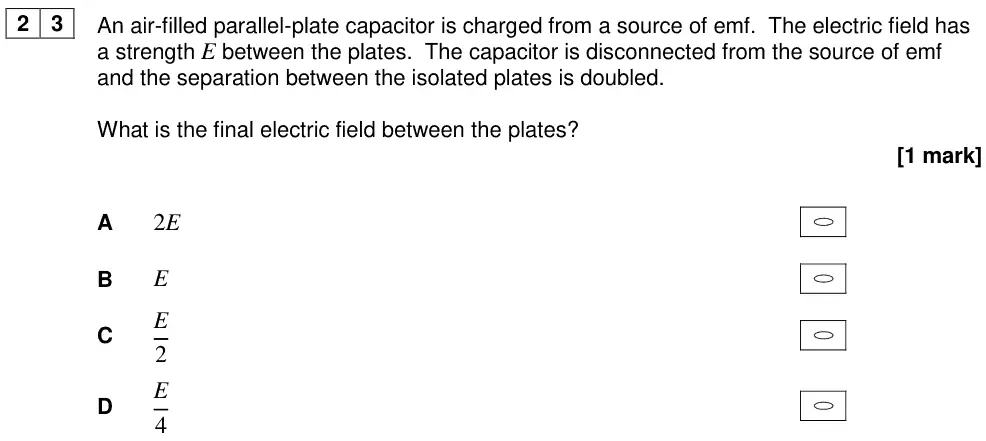
June 2018 · Paper 2 · Q23 1 mark Multiple choice Hard capacitorselectric fields
An air-filled parallel-plate capacitor is charged from a source of emf.  The electric field has
a strength E between the plates.  The capacitor is disconnected from the source of emf
and the separation between the isolated plates is doubled.
What is the final electric field between the plates?
[1 mark]
A
2E
B
E
C
E
2
D
E
4
June 2018 · Paper 2 · Q24 1 mark Multiple choice capacitors
A parallel-plate capacitor has square plates of length l separated by distance d and is filled
with a dielectric.
A second capacitor has square plates of length 2l separated by distance 2d and has air as
its dielectric.
Both capacitors have the same capacitance.
What is the relative permittivity of the dielectric in the first capacitor?
[1 mark]
A
1
2
B
1
C
2
D
8
June 2018 · Paper 2 · Q25 1 mark Multiple choice capacitors
The graph shows the variation of potential difference (pd) with charge for a capacitor while
it is charging.
Which statement can be deduced from the graph?
[1 mark]
A
The charging current is constant.
B
The energy stored in the capacitor increases uniformly with time.
C
The capacitance of the capacitor is constant.
D
The power supply used to charge the capacitor had a constant
terminal pd.
June 2018 · Paper 2 · Q26 1 mark Multiple choice magnetic fields
Different magnetic fields are present in the two chambers shown.  A particle enters the first
chamber at a velocity of 80 m s–1 and is deflected into a circular path of radius 200 mm
In the second chamber it follows a circular path of radius 100 mm
The particle leaves the second chamber at a speed of
[1 mark]
A
20 m s–1
B
40 m s–1
C
80 m s–1
D
160 m s–1
June 2018 · Paper 2 · Q27 1 mark Multiple choice magnetic fields
The diagram shows a clockwise current I in a circular coil placed in a uniform magnetic
field B with the plane of the coil perpendicular to the magnetic field.
What is the effect on the coil of the interaction between the current and the magnetic field?
[1 mark]
A
It rotates about the axis with the top moving out of the page.
B
It rotates about the axis with the top moving into the page.
C
It causes an increase in the diameter of the coil.
D
It causes a decrease in the diameter of the coil.
June 2018 · Paper 2 · Q28 1 mark Multiple choice electromagnetic induction
A transformer has an efficiency of 80%
It has 7000 turns on its primary coil and 175 turns on its secondary coil.  When the primary
of the transformer is connected to a 240 V ac supply, the secondary current is 8.0 A
What are the primary current and secondary voltage?
[1 mark]
Primary
current / mA
Secondary
voltage / V
A
250
6.0
B
160
6.0
C
250
9600
D
160
9600
June 2018 · Paper 2 · Q29 1 mark Multiple choice nuclear radius
Which graph shows how intensity I varies with angle  when electrons are diffracted by a
nucleus?
[1 mark]
A
B
C
D
June 2018 · Paper 2 · Q30 1 mark Multiple choice nuclear radius
The radius of a uranium
U
92
What is the radius of a C
6
12 nucleus?
[1 mark]
A
1.10 × 10⁻¹⁸ m
B
3.91 × 10⁻¹⁶ m
C
2.86 × 10⁻¹⁵ m
D
3.12 × 10⁻¹⁵ m
June 2018 · Paper 2 · Q31 1 mark Multiple choice mass energy and fission
During a single fission event of uranium-235 in a nuclear reactor the total mass lost is
0.23 u.  The reactor is 25% efficient.
How many events per second are required to generate 900 MW of power?
[1 mark]
A
1.1 × 10¹⁴
B
6.6 × 10¹⁸
C
1.1 × 10²⁰
D
4.4 × 10²⁰
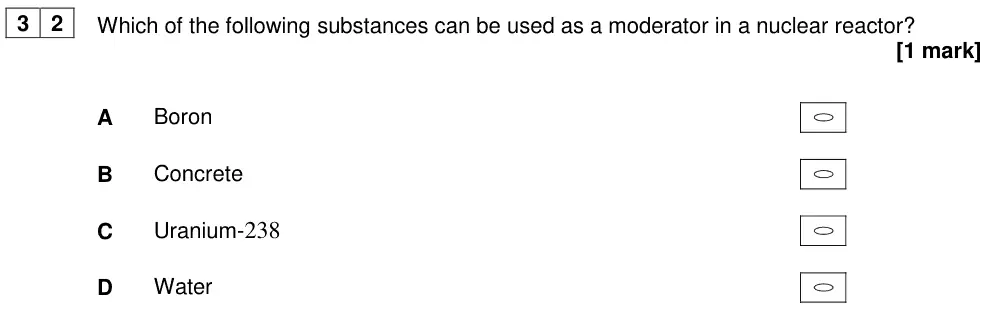
June 2018 · Paper 2 · Q32 1 mark Multiple choice mass energy and fission
Which of the following substances can be used as a moderator in a nuclear reactor?
[1 mark]
A
Boron
B
Concrete
C
Uranium-238
D
Water

Work with an AQA physics tutor

Want a paper marked and gone through with you? Message us.

Prefer email? Send an enquiry

If you are under 18, please include a parent's contact details. Enquiries go to enquiries@physicsaleveltutor.com and are deleted once handled. All tutoring is online.