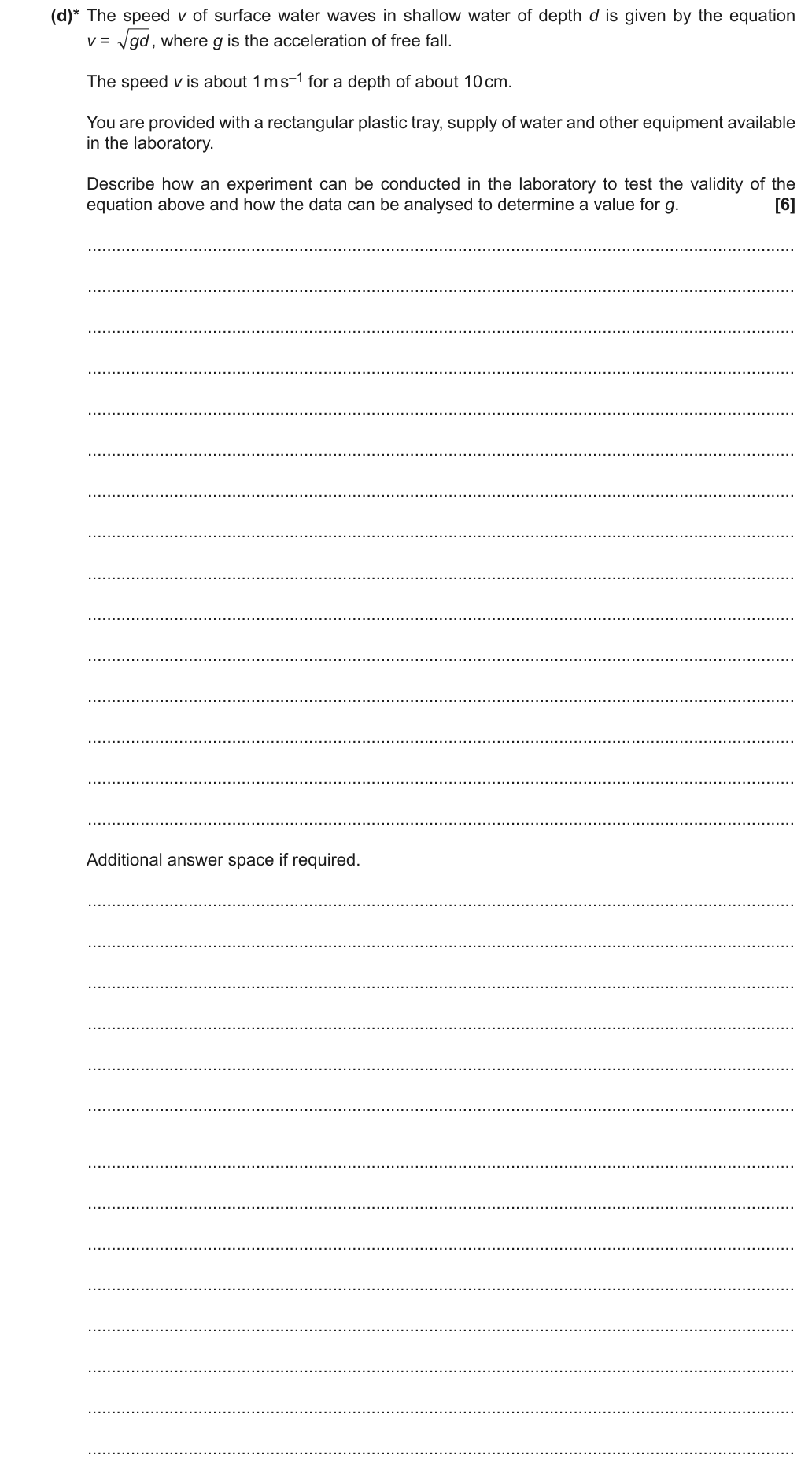
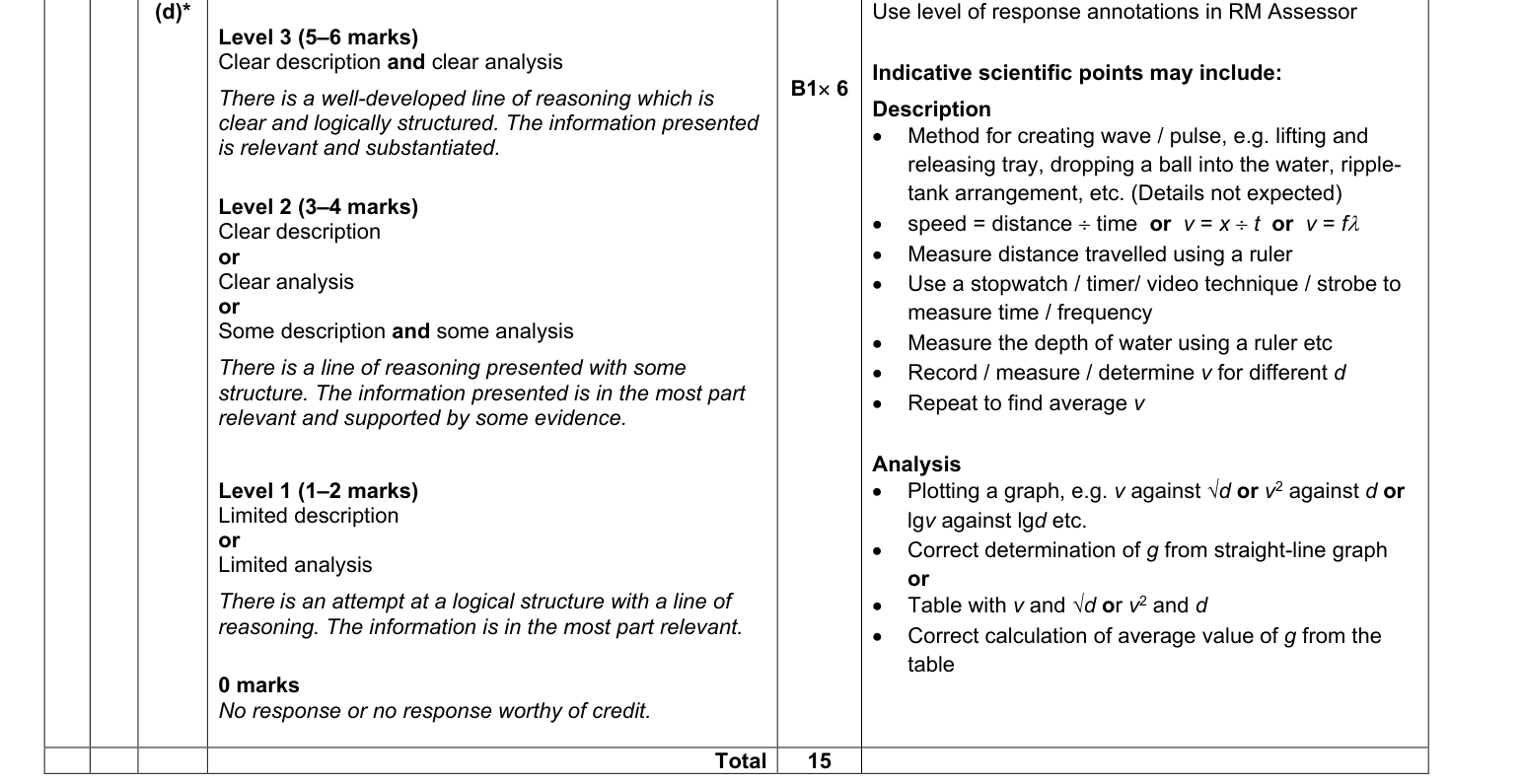
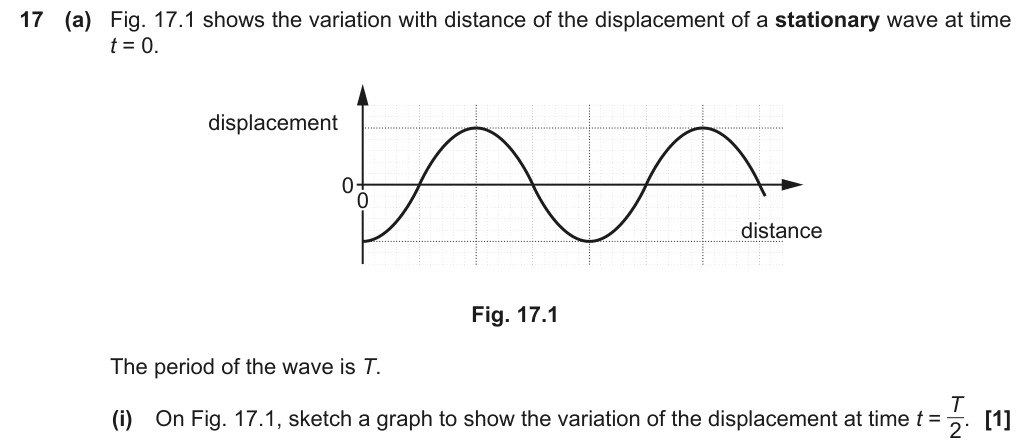
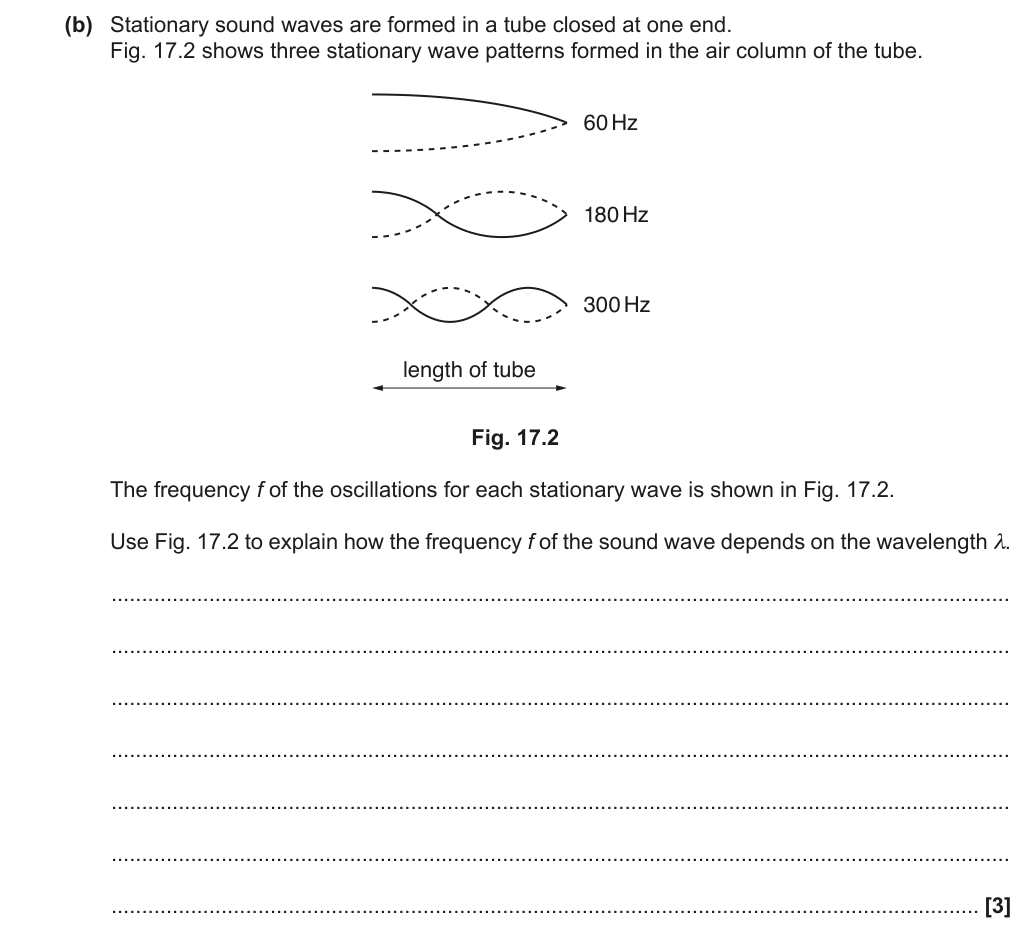
Examiner's comment
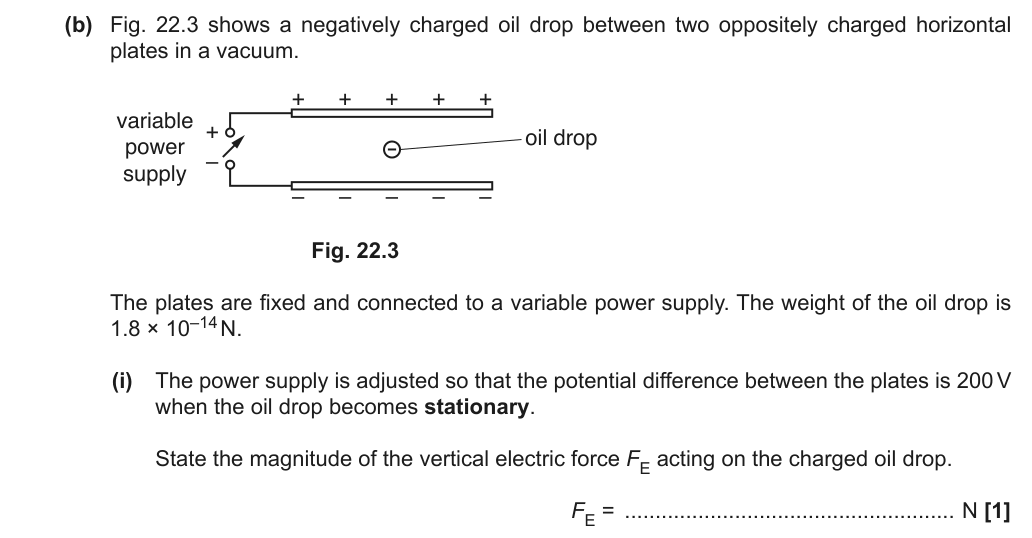
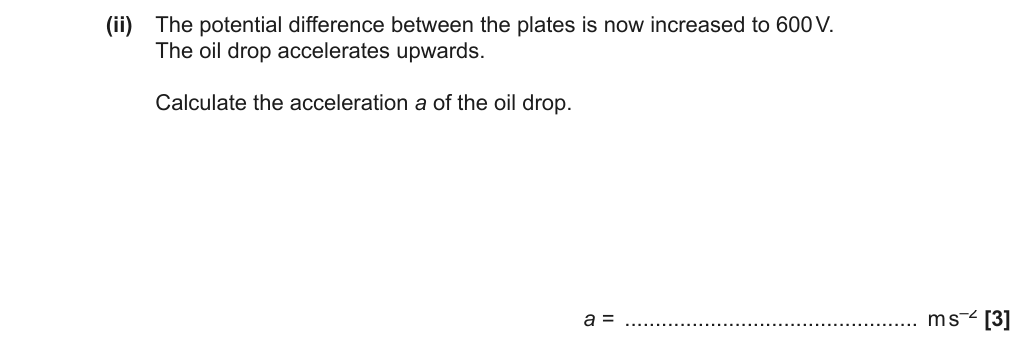
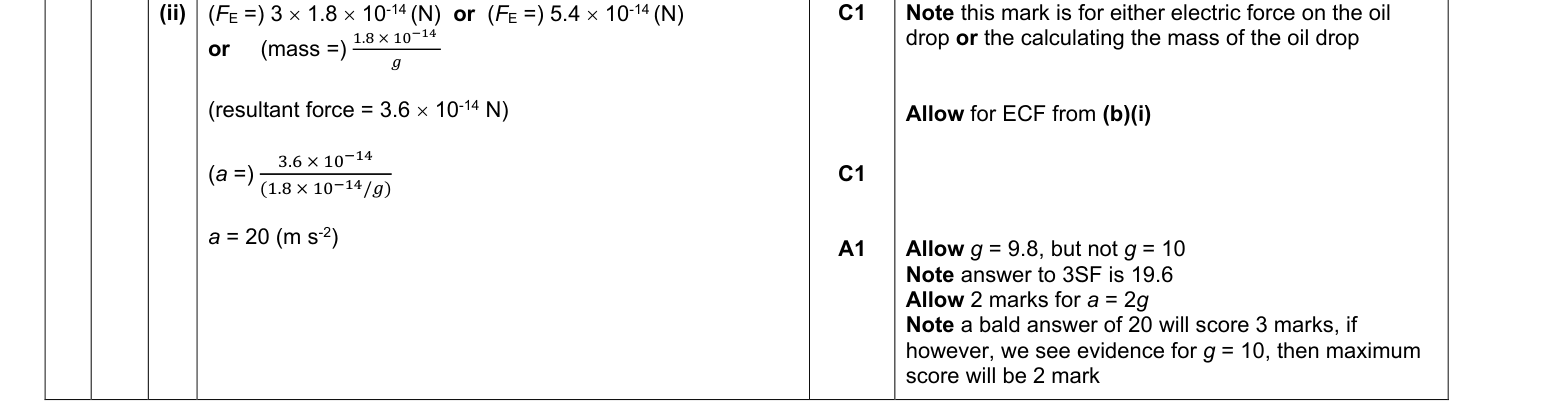
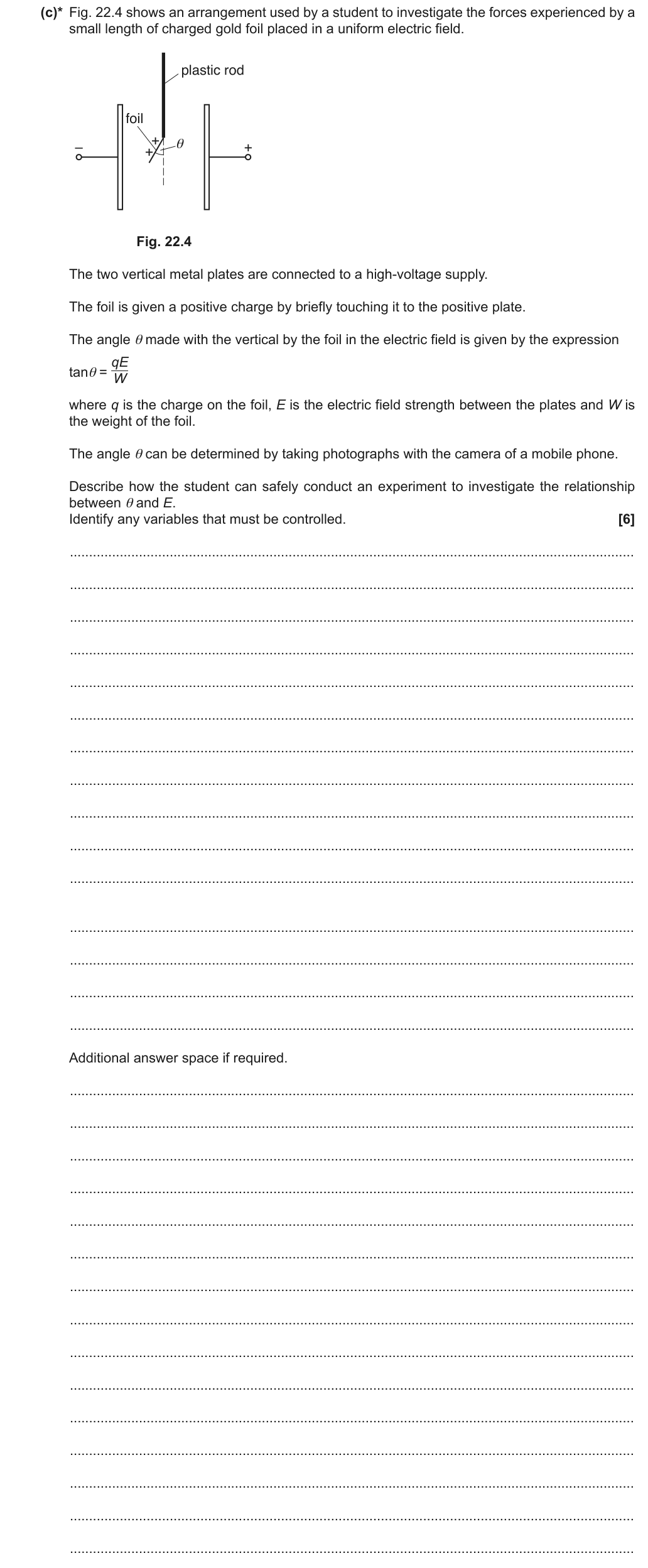
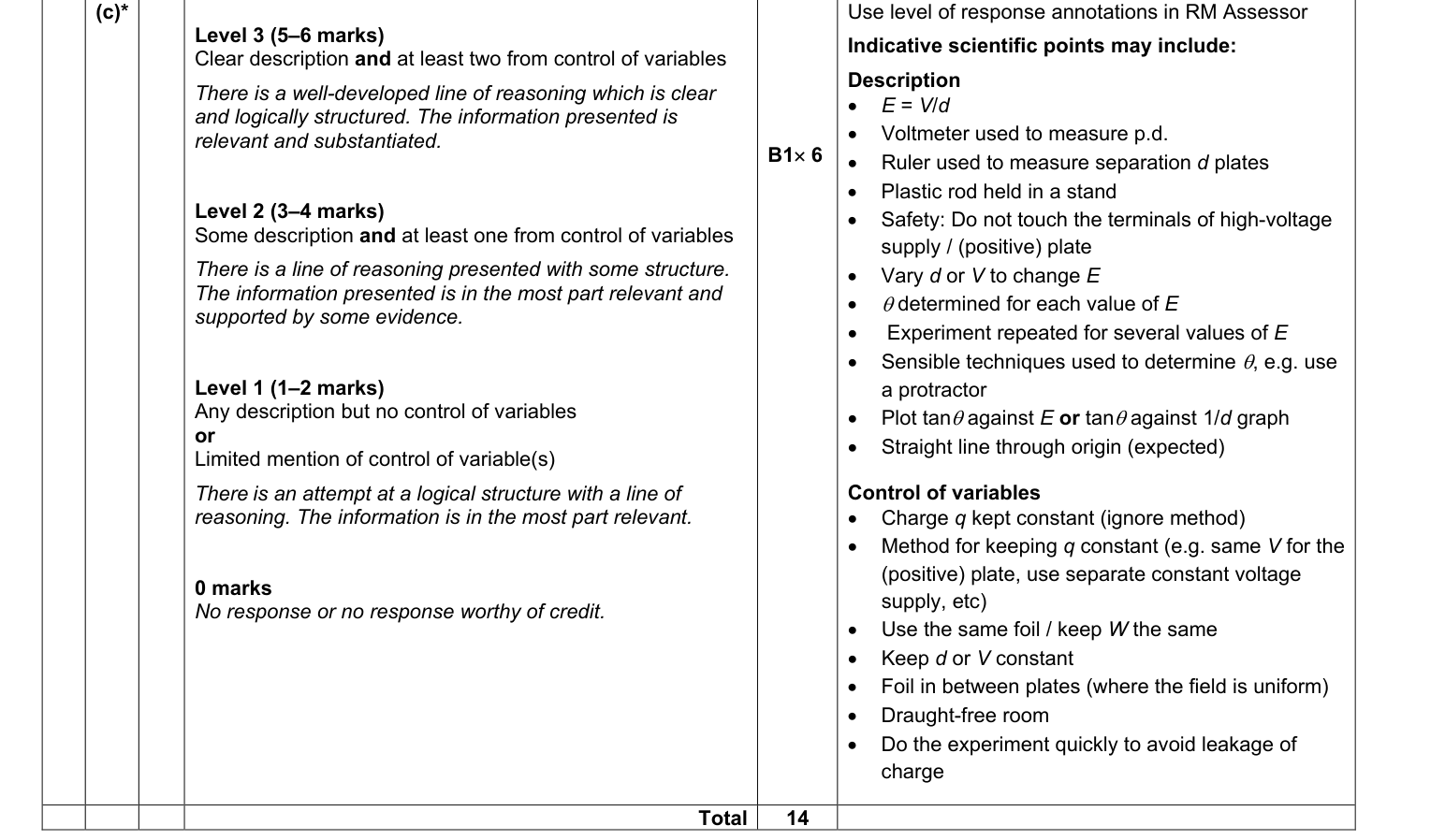
This was the second level of response (LoR) question in this paper. This too was designed to assess practical skills of planning, implementation, analysis and evaluation. The context of the question was force experienced by a charged gold foil in the uniform electric field provided by two parallel plates. Candidates were not expected to have seen such an experiment, but they were expected to use their knowledge of electric field strength and practical skills to present plausible approaches. On occasions, the experimental methods showed poor appreciation of some basic ideas. Some candidates were charging the foil using large current that allegedly would cause heating issues for the foil, while others decided to use Q = It, ammeter and a stopwatch to determine the charge on the foil – failing to appreciate that the time constant will be too small for such a technique. However, on this occasion, such over ambitious techniques were generally overlooked by examiners. As with 16d, a holistic approach to marking was used, with marks given according answers matching the descriptors for the various levels. There is no one perfect answer for this question, examiners were expecting an eclectic approach. The key things examiners were looking for were: - Methods for determining electric field strength E. - Using the right instruments for the measurements. - Plotting the correct graph to show the relationship given in the question was valid. - Correctly identifying the variables that were being controlled (kept constant). Access to higher level marks dependent on fully answering the question – and this included the last statement about control of variables. A significant number of candidates focused on the description and analysis of the data, without ever addressing the last sentence of the question. This question did discriminate well, with L1, L2 and L3 marks roughly distributed in the ratio 1:3:4.