November 2020: Paper 1

85 marks · 49 question parts · Paper, mark scheme and report on AQA's site · An autumn series using the paper written for the cancelled summer exams · Have the data and formulae booklet beside you

Question by question

QTopicMarksAOType
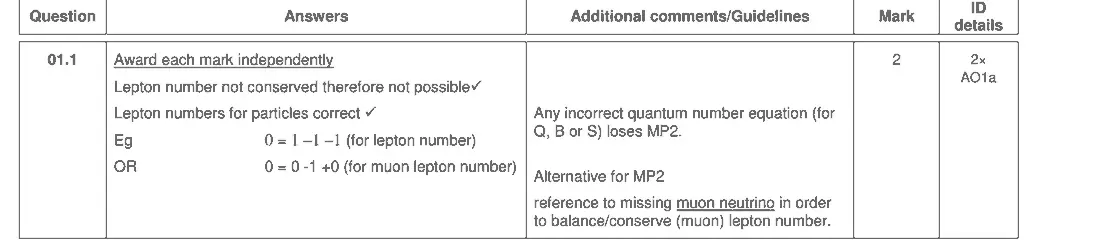
1.1 Classification of particles, quarks and conservation laws 2Explanation
1.2 Classification of particles, quarks and conservation laws 1Short answer
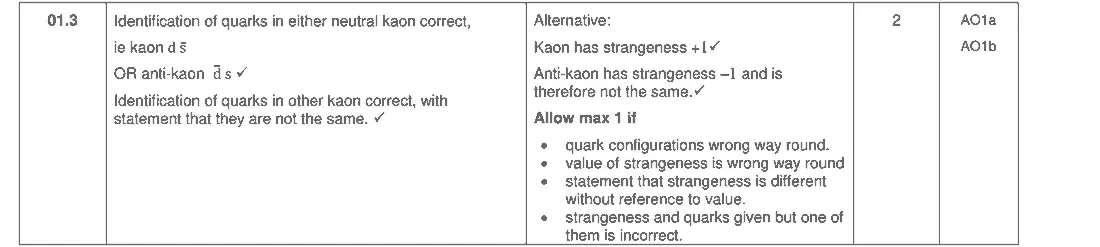
1.3 Classification of particles, quarks and conservation laws 2Explanation
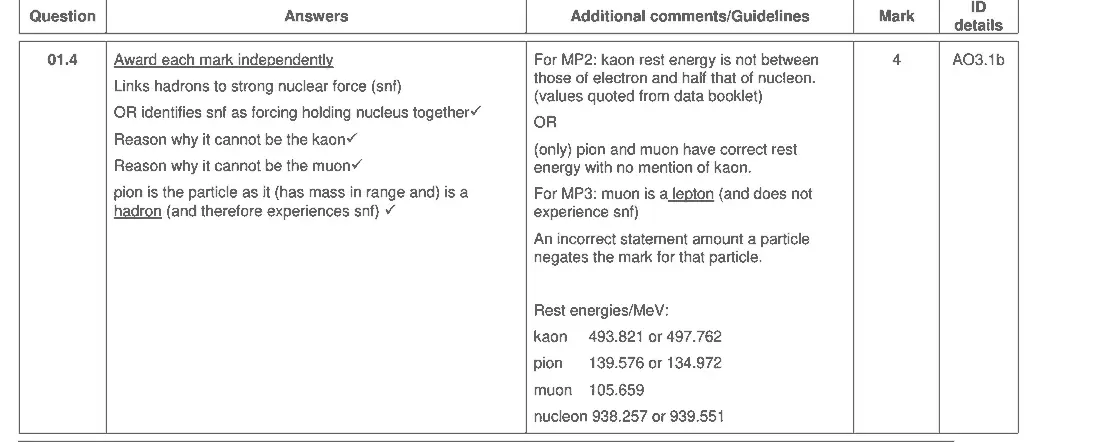
1.4 Classification of particles, quarks and conservation laws 4Explanation
2.1 The photoelectric effect 2Explanation
2.2 Current, potential difference, I-V characteristics and resistivity 2Calculation
2.3 The photoelectric effect 2Explanation
2.4 The photoelectric effect 3Explanation
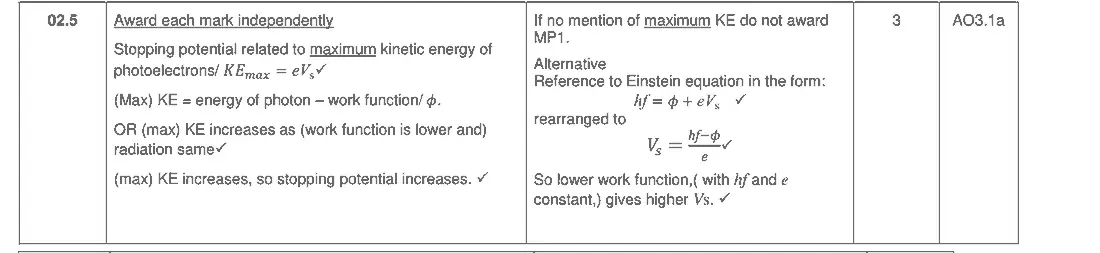
2.5 The photoelectric effect 3Explanation
3.1 Interference, diffraction and the diffraction grating 2Explanation
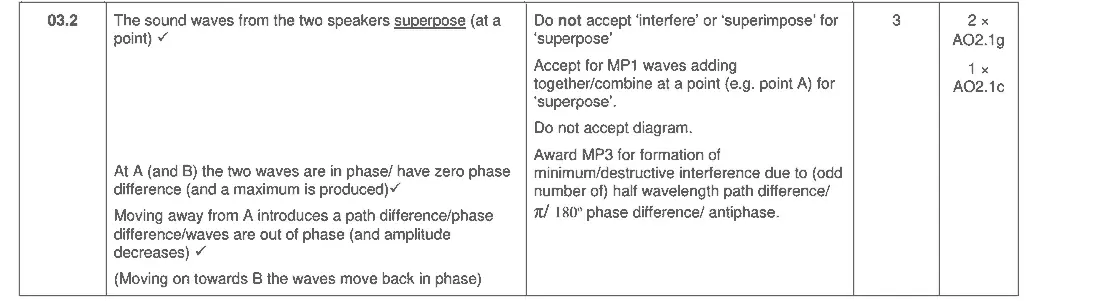
3.2 Interference, diffraction and the diffraction grating 3Explanation
3.3 Interference, diffraction and the diffraction grating 3Show that
3.4 Progressive waves, longitudinal and transverse waves, Interference, diffraction and the diffraction grating 1Calculation
3.5 Interference, diffraction and the diffraction grating, Progressive waves, longitudinal and transverse waves 3Explanation
4.1 Motion along a straight line and projectile motion 3Calculation
4.2 Motion along a straight line and projectile motion 2Calculation
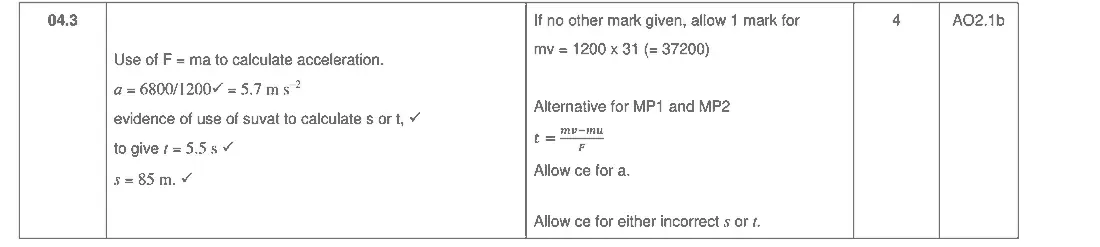
4.3 Newton's laws of motion and momentum, Motion along a straight line and projectile motion 4Calculation
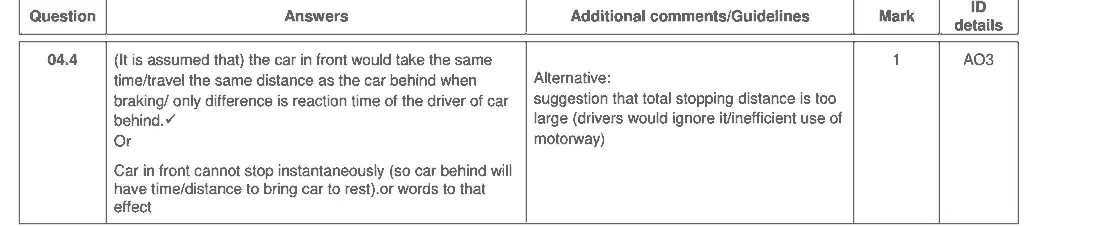
4.4 Motion along a straight line and projectile motion 1Short answer
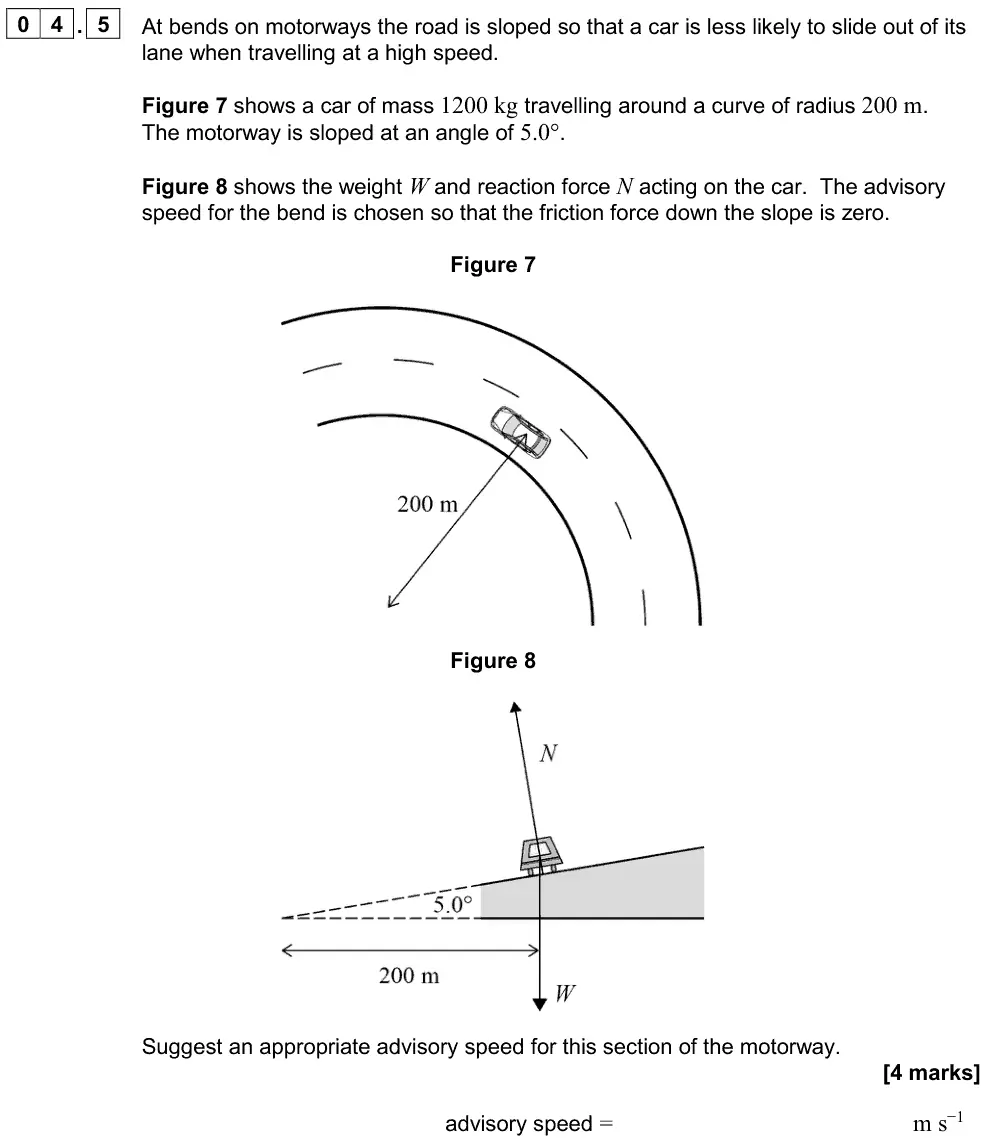
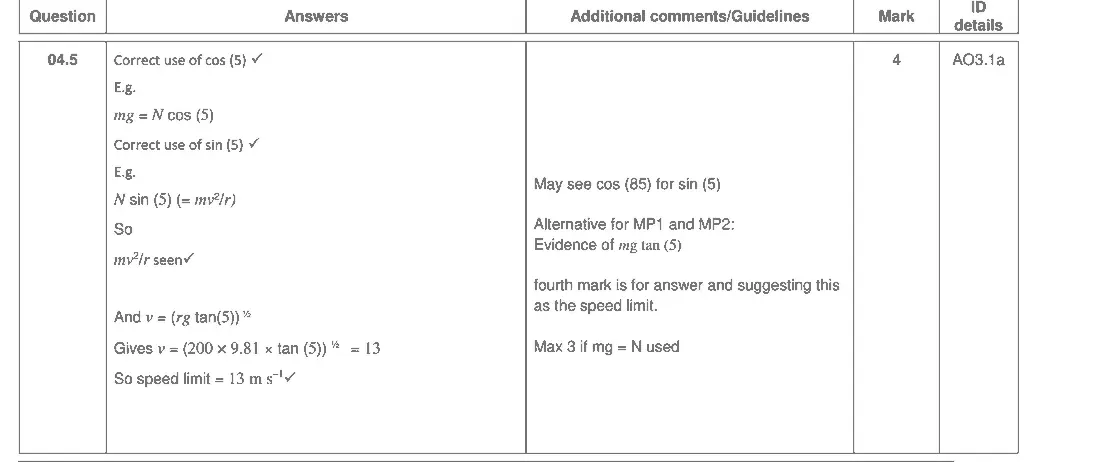
4.5 Circular motion, Scalars, vectors and moments 4Calculation
5.1 Circuits and potential dividers 1Show that
5.2 Circuits and potential dividers 2Calculation
5.3 Current, potential difference, I-V characteristics and resistivity 3Show that
5.4 Circuits and potential dividers 4Calculation
5.5 Current, potential difference, I-V characteristics and resistivity 3Explanation
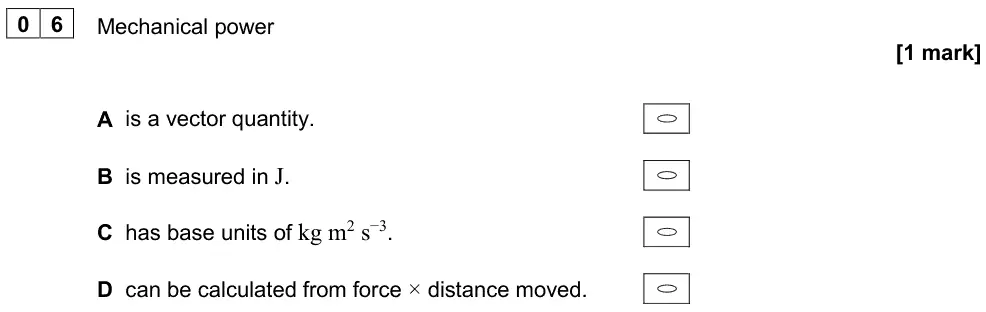
6 Work, energy, power and conservation of energy, Measurements, units and uncertainties 1Multiple choice
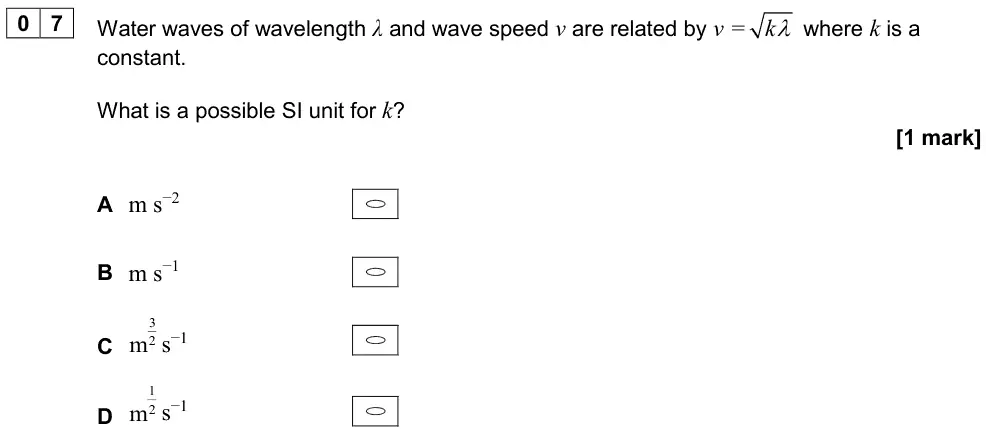
7 Measurements, units and uncertainties 1Multiple choice
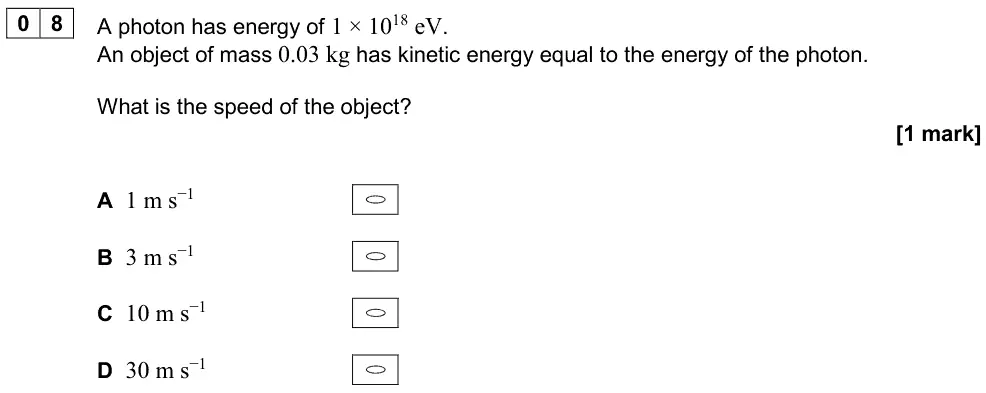
8 Excitation, energy levels and wave-particle duality, Work, energy, power and conservation of energy 1Multiple choice
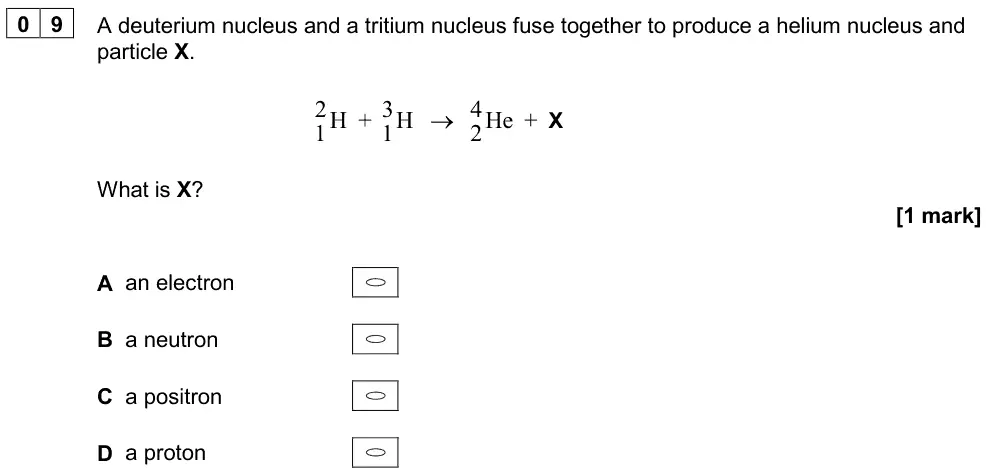
9 Atomic structure and stable nuclei 1Multiple choice
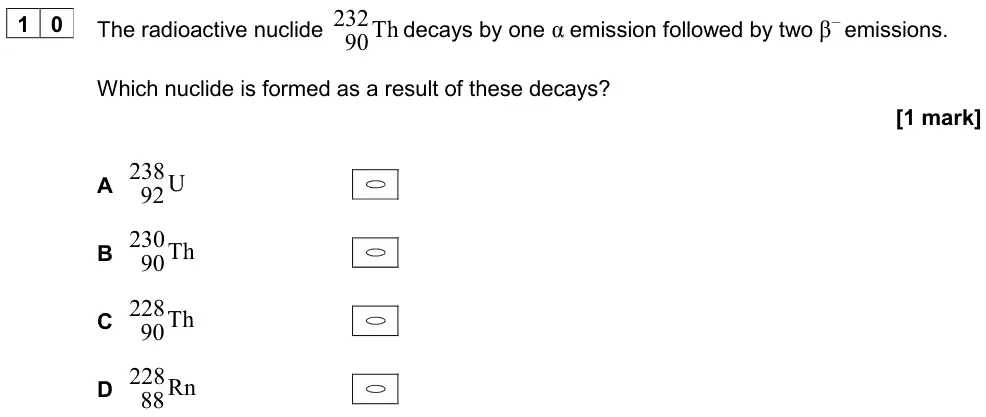
10 Atomic structure and stable nuclei 1Multiple choice
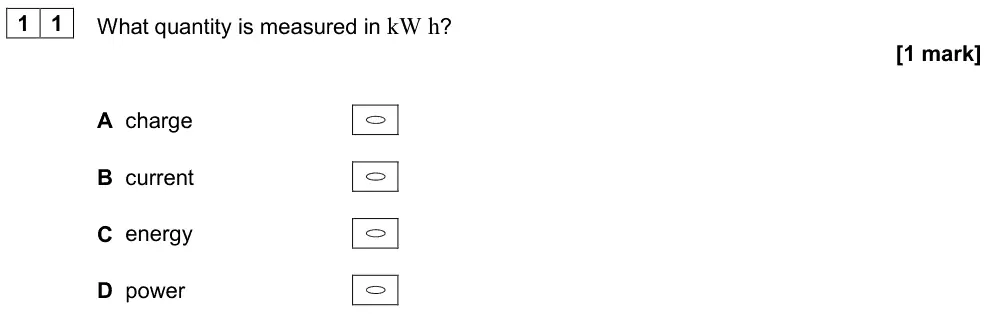
11 Measurements, units and uncertainties 1Multiple choice
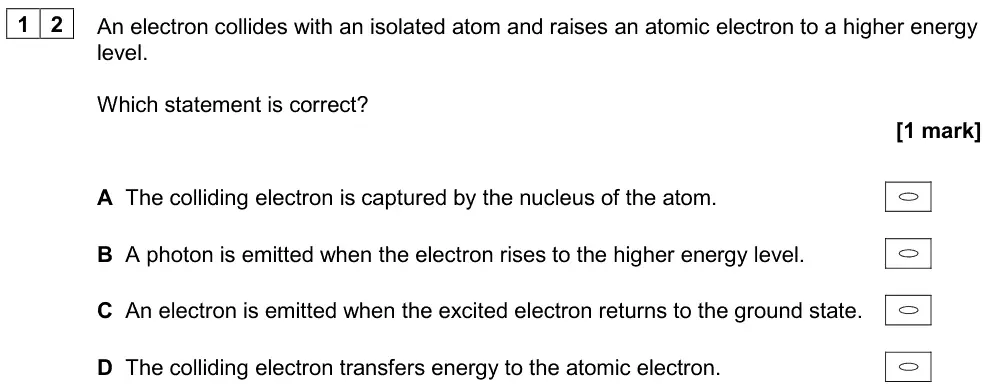
12 Excitation, energy levels and wave-particle duality 1Multiple choice
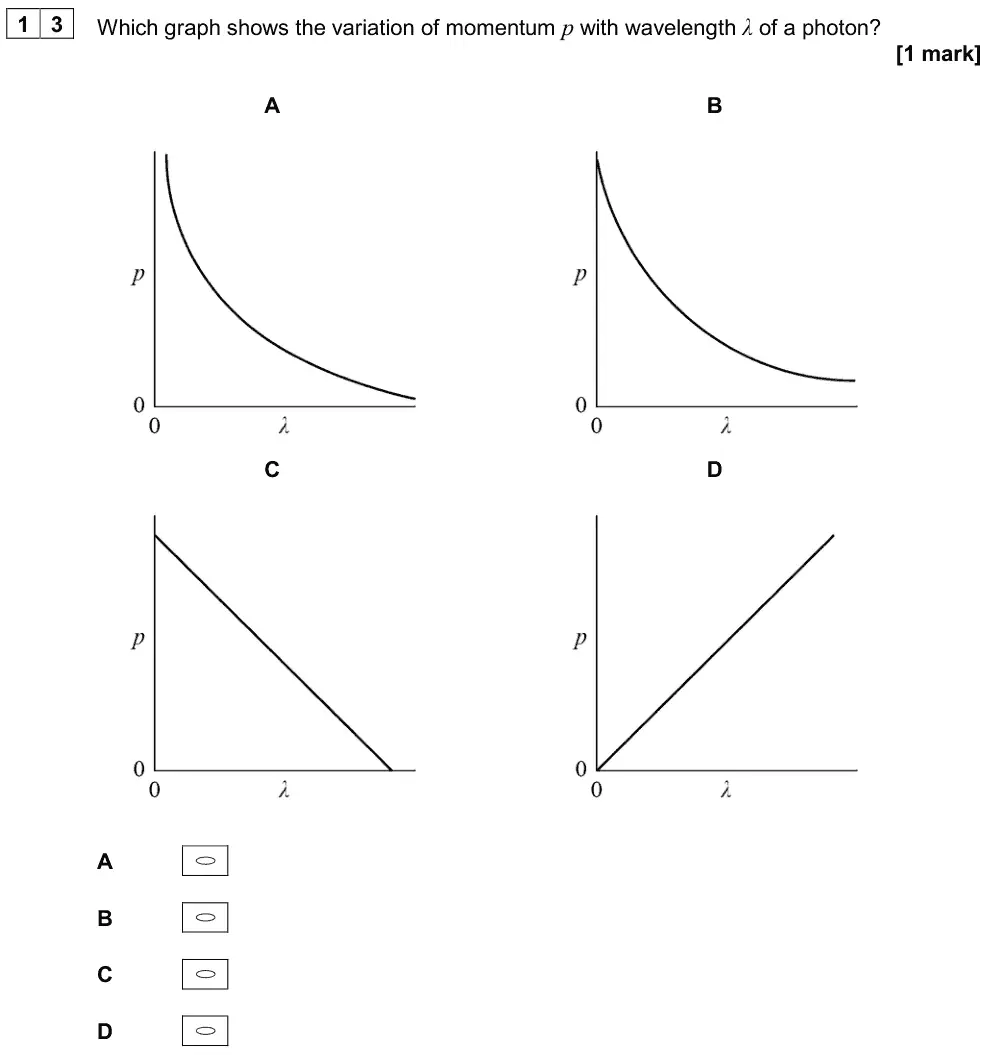
13 Excitation, energy levels and wave-particle duality, Particles, antiparticles and particle interactions 1Multiple choice
14 Refraction, total internal reflection and optical fibres, Particles, antiparticles and particle interactions 1Multiple choice
15 Progressive waves, longitudinal and transverse waves 1Multiple choice
16 Progressive waves, longitudinal and transverse waves 1Multiple choice
17 Progressive waves, longitudinal and transverse waves 1Multiple choice
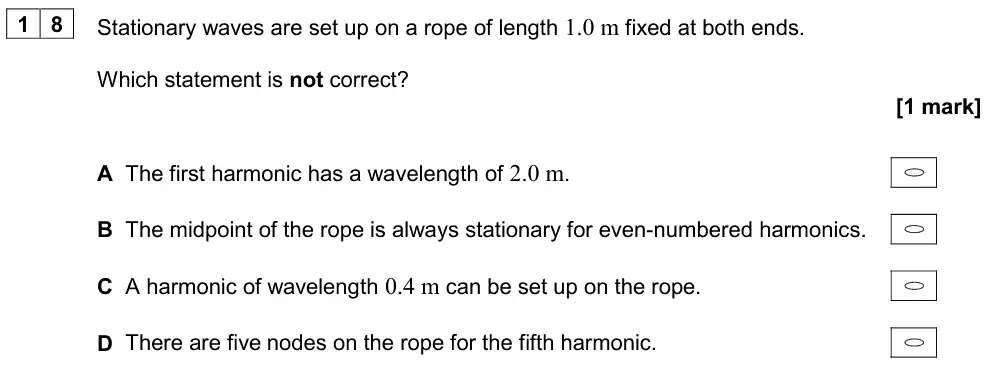
18 Superposition and stationary waves 1Multiple choice
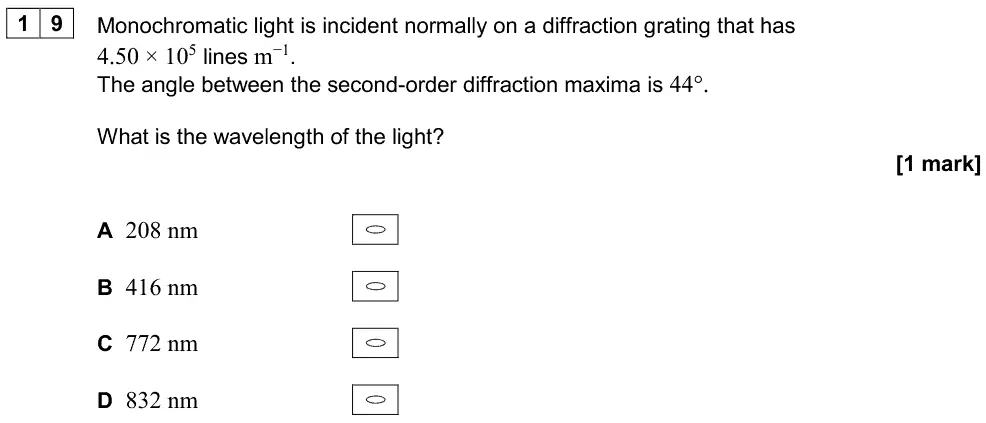
19 Interference, diffraction and the diffraction grating 1Multiple choice
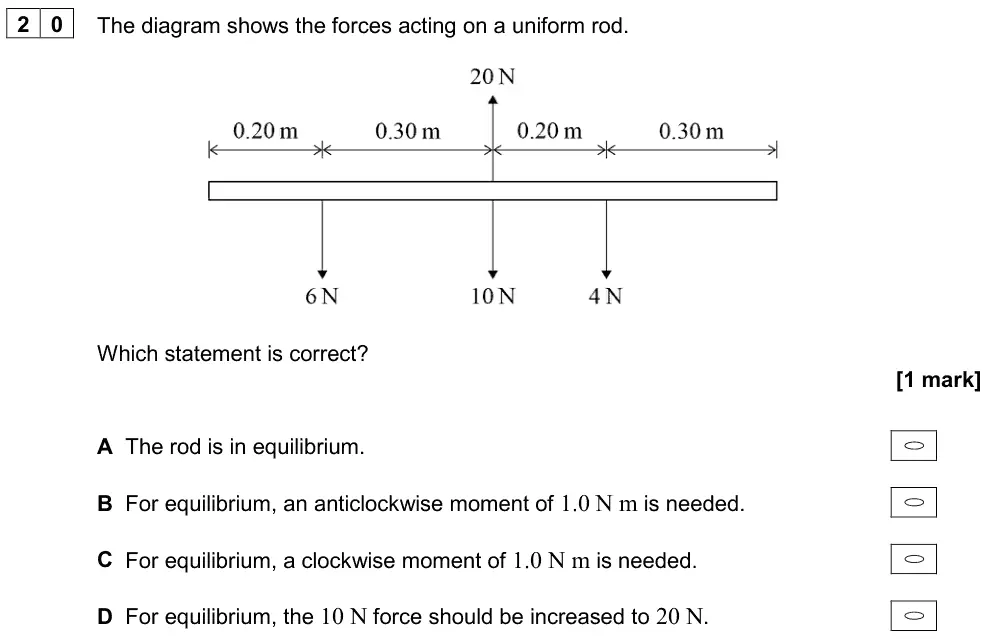
20 Scalars, vectors and moments 1Multiple choice
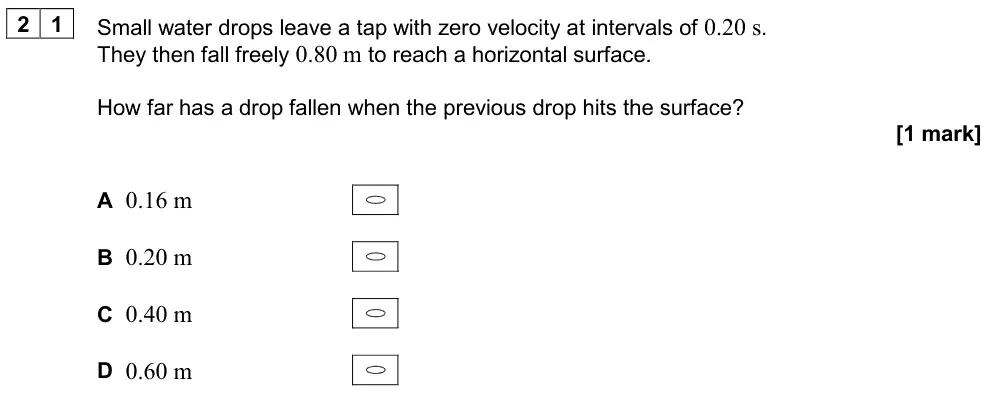
21 Motion along a straight line and projectile motion 1Multiple choice
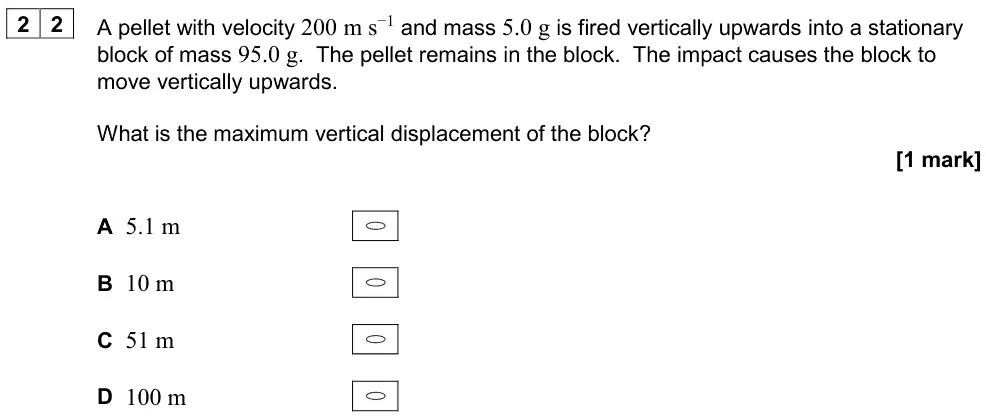
22 Newton's laws of motion and momentum, Work, energy, power and conservation of energy 1Multiple choice
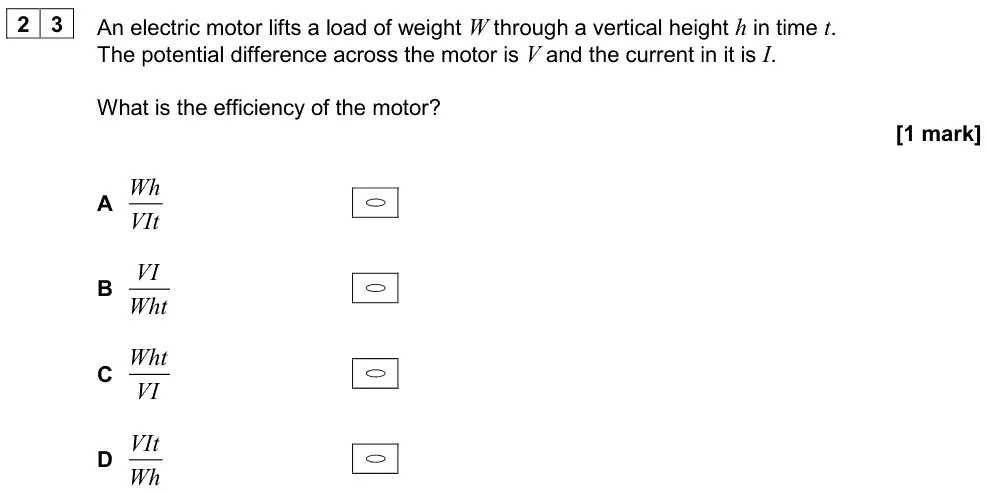
23 Work, energy, power and conservation of energy, Circuits and potential dividers 1Multiple choice
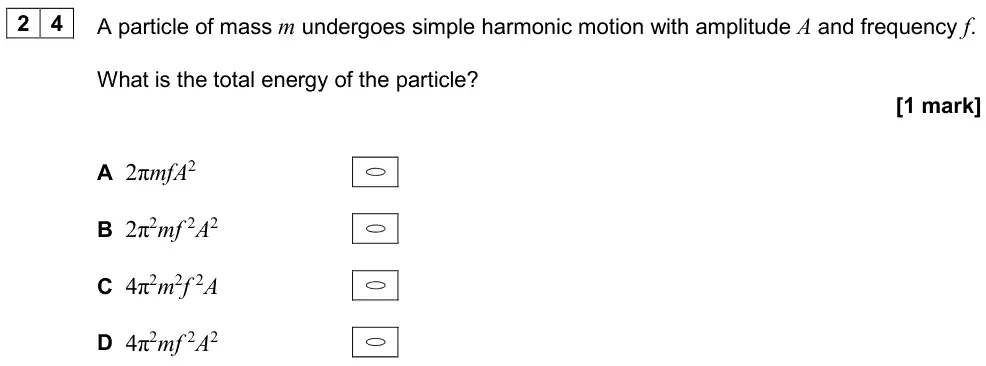
24 Simple harmonic motion, forced vibrations and resonance 1Multiple choice
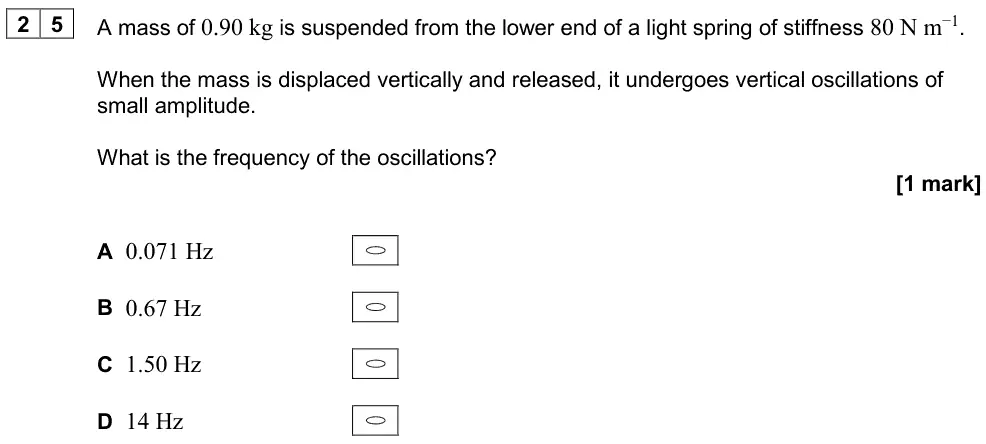
25 Simple harmonic motion, forced vibrations and resonance 1Multiple choice
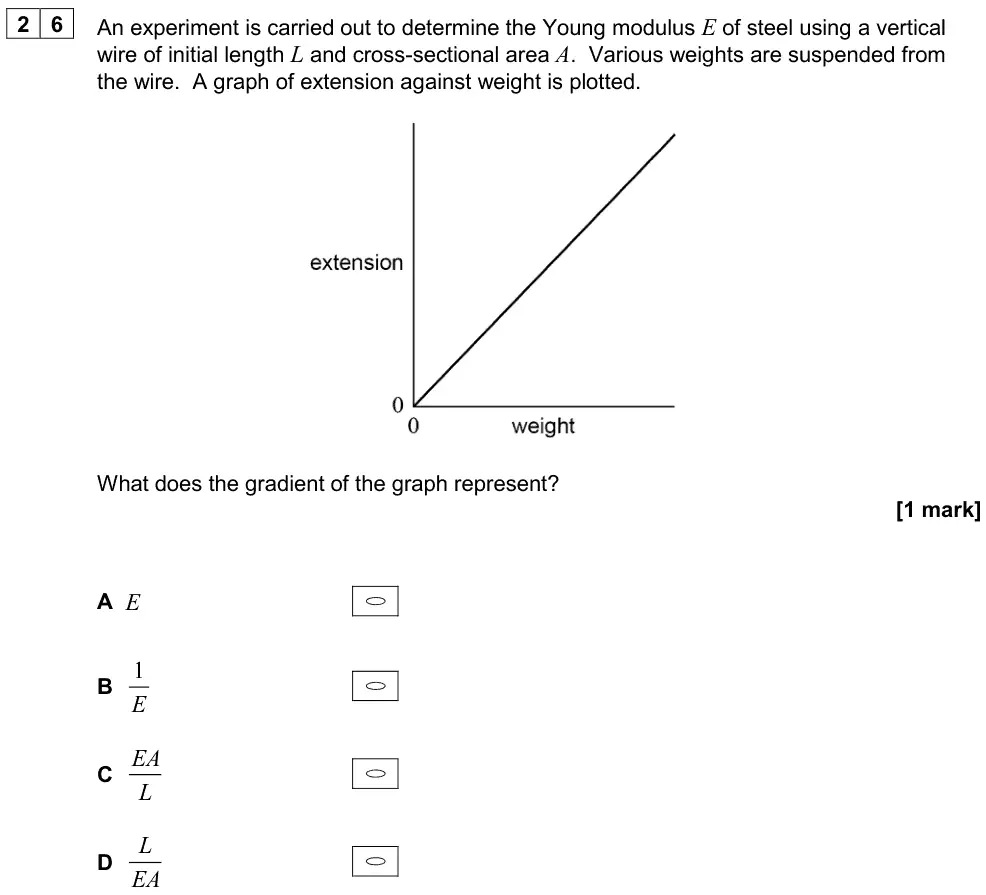
26 Materials, stress, strain and the Young modulus 1Multiple choice
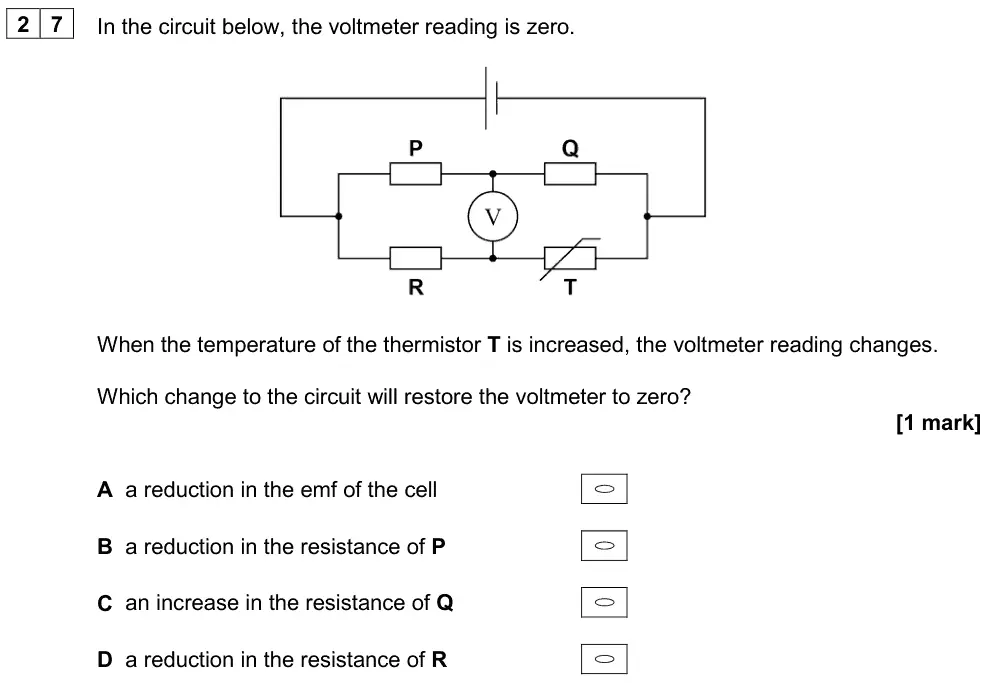
27 Circuits and potential dividers, Current, potential difference, I-V characteristics and resistivity 1Multiple choice
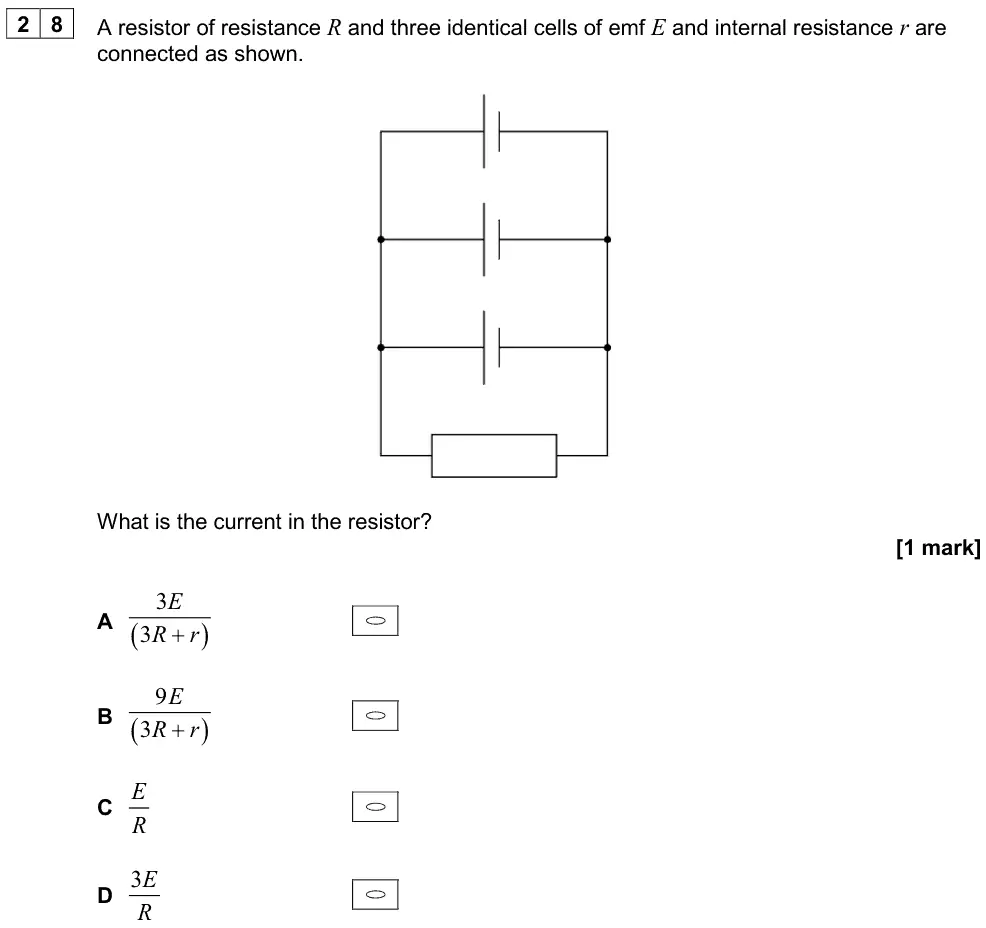
28 Electromotive force and internal resistance, Circuits and potential dividers 1Multiple choice
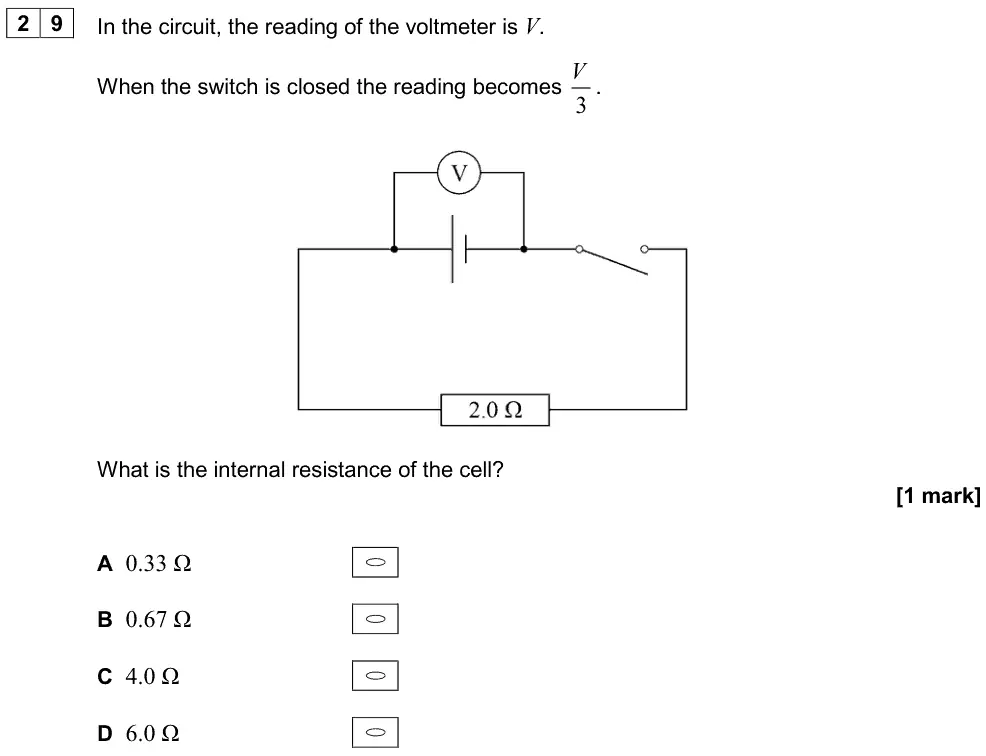
29 Electromotive force and internal resistance 1Multiple choice
30 Simple harmonic motion, forced vibrations and resonance 1Multiple choice

The questions

1.11.21.31.42.12.22.32.42.53.13.23.33.43.54.14.24.34.44.55.15.25.35.45.56789101112131415161718192021222324252627282930
November 2020 · Paper 1 · Q1.1 2 marks Explanation classification of particles and quarks
Determine whether the following reaction is a possible decay for the neutral pion π0.
π0  →  e−  +  μ+  +
ev
[2 marks]
November 2020 · Paper 1 · Q1.2 1 mark Short answer classification of particles and quarks
Earlier part of question 1 that this part usesEarlier part of November 2020 Paper 1 question 1
State the two possible quark configurations of a π0.
[1 mark]
1
2
തതതത are the same particle.
November 2020 · Paper 1 · Q1.3 2 marks Explanation classification of particles and quarks
Earlier part of question 1 that this part usesEarlier part of November 2020 Paper 1 question 1
A student suggests that the kaon K0 and the anti-kaon K0
Discuss whether this suggestion is correct.
[2 marks]
November 2020 · Paper 1 · Q1.4 4 marks Explanation classification of particles and quarks
Earlier part of question 1 that this part usesEarlier part of November 2020 Paper 1 question 1
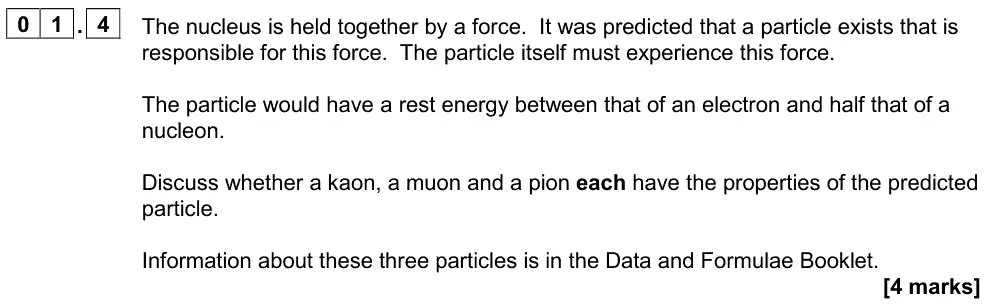
The nucleus is held together by a force.  It was predicted that a particle exists that is
responsible for this force.  The particle itself must experience this force.
The particle would have a rest energy between that of an electron and half that of a
nucleon.
Discuss whether a kaon, a muon and a pion each have the properties of the predicted
particle.
Information about these three particles is in the Data and Formulae Booklet.
[4 marks]
November 2020 · Paper 1 · Q2.1 2 marks Explanation photoelectric effect
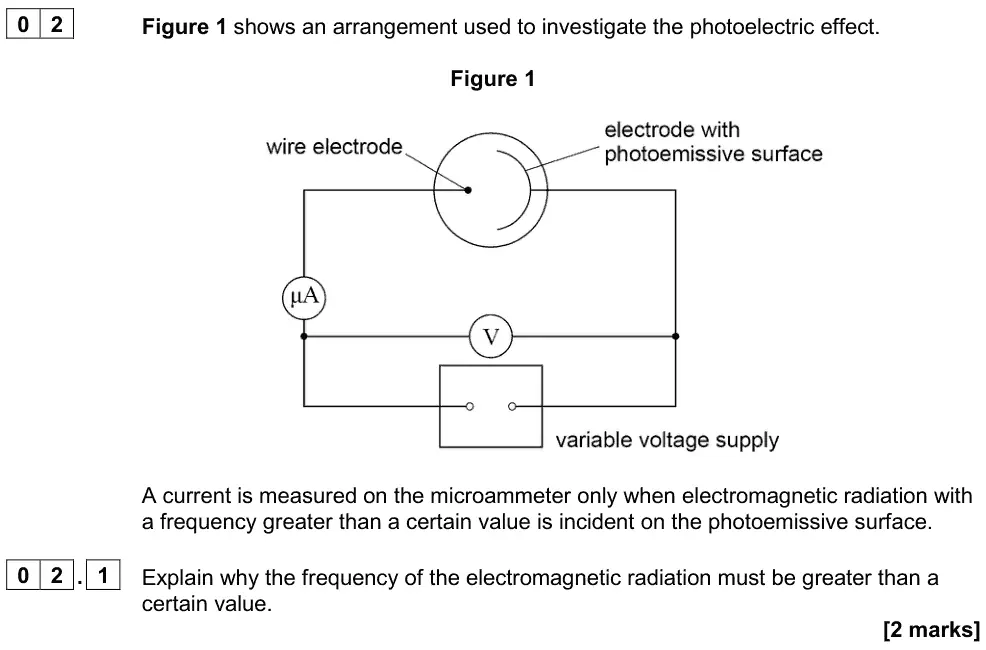
Figure 1 shows an arrangement used to investigate the photoelectric effect.
Figure 1
A current is measured on the microammeter only when electromagnetic radiation with
a frequency greater than a certain value is incident on the photoemissive surface.
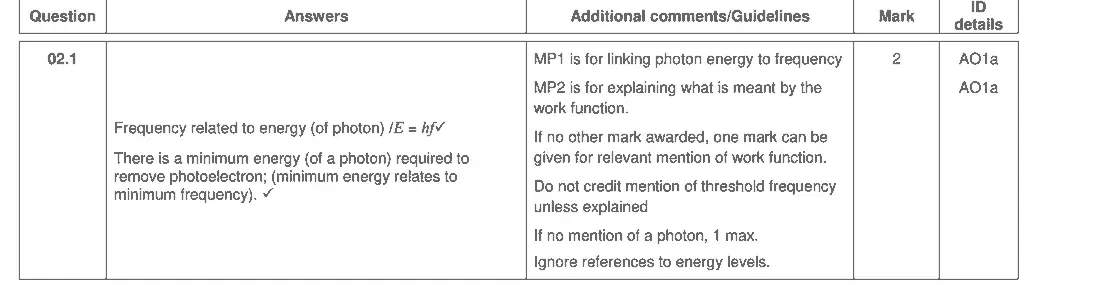
Explain why the frequency of the electromagnetic radiation must be greater than a
certain value.
[2 marks]
November 2020 · Paper 1 · Q2.2 2 marks Calculation current voltage and resistivity
Earlier part of question 2 that this part usesEarlier part of November 2020 Paper 1 question 2
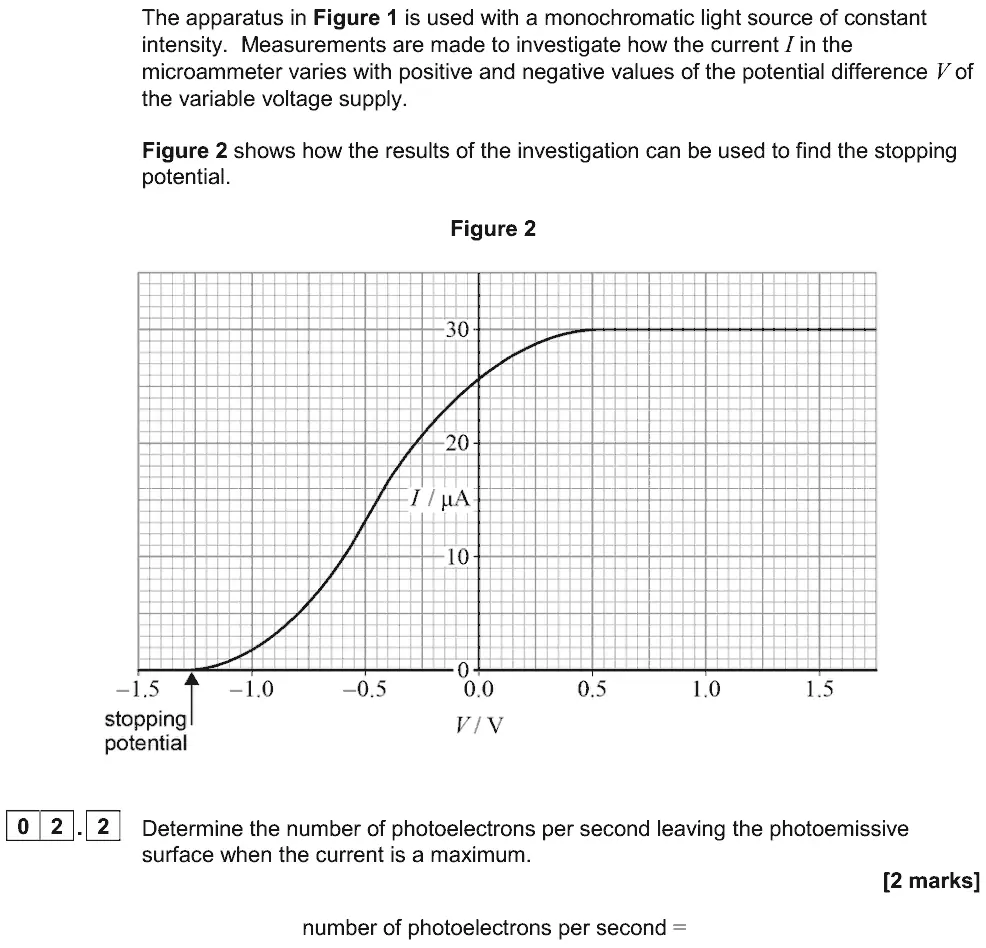
The apparatus in Figure 1 is used with a monochromatic light source of constant
intensity.  Measurements are made to investigate how the current I in the
microammeter varies with positive and negative values of the potential difference V of
the variable voltage supply.
Figure 2 shows how the results of the investigation can be used to find the stopping
potential.
Figure 2
Determine the number of photoelectrons per second leaving the photoemissive
surface when the current is a maximum.
[2 marks]
number of photoelectrons per second =
November 2020 · Paper 1 · Q2.3 2 marks Explanation photoelectric effect
Earlier part of question 2 that this part usesEarlier part of November 2020 Paper 1 question 2
Explain why I reaches a constant value for positive values of V.
[2 marks]
November 2020 · Paper 1 · Q2.4 3 marks Explanation photoelectric effect
Earlier part of question 2 that this part usesEarlier part of November 2020 Paper 1 question 2
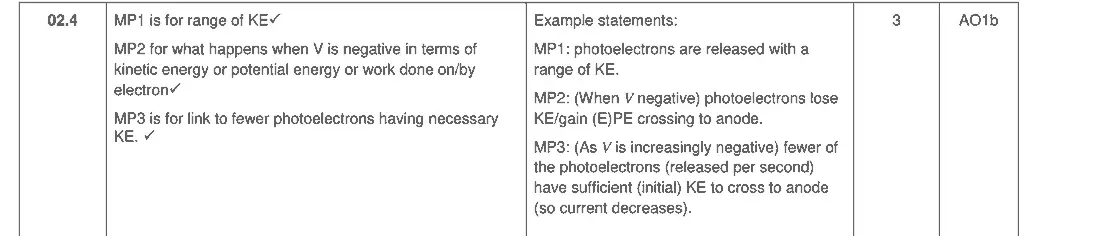
Explain why I decreases as the value of V becomes more negative.
[3 marks]
November 2020 · Paper 1 · Q2.5 3 marks Explanation photoelectric effect
Earlier part of question 2 that this part usesEarlier part of November 2020 Paper 1 question 2
The investigation is repeated with a different photoemissive surface that has a smaller
value of the work function.  The source of electromagnetic radiation is unchanged.
Discuss the effect that this change in surface has on the value of the stopping
potential.
[3 marks]
November 2020 · Paper 1 · Q3.1 2 marks Explanation interference and diffraction
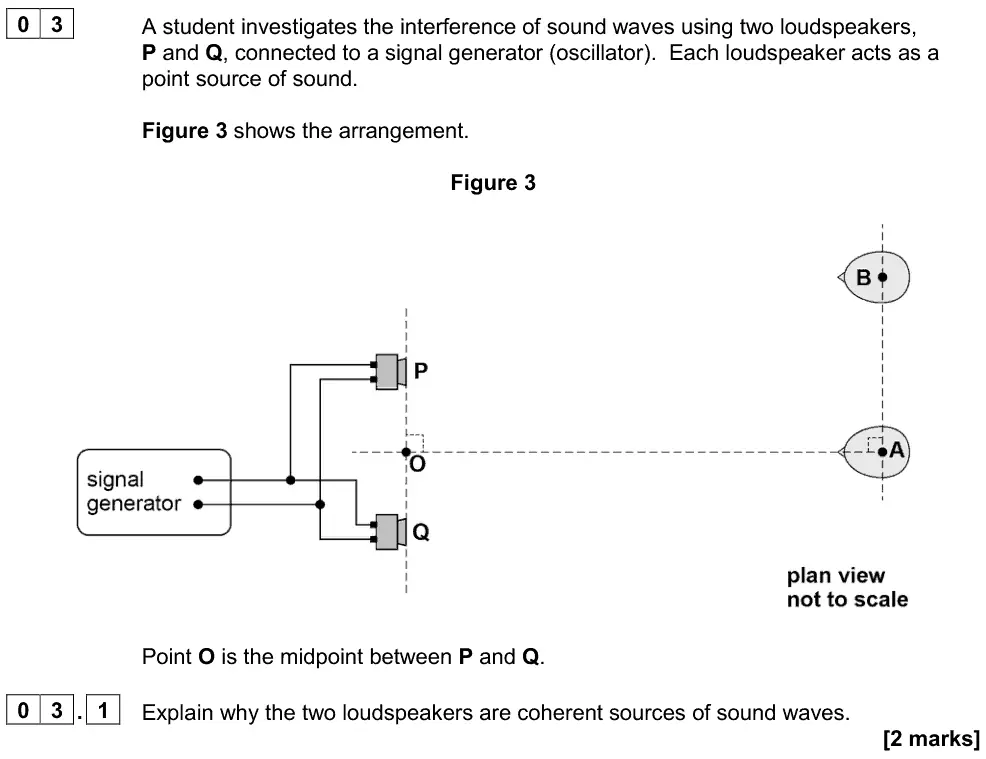
A student investigates the interference of sound waves using two loudspeakers,
P and Q, connected to a signal generator (oscillator).  Each loudspeaker acts as a
point source of sound.
Figure 3 shows the arrangement.
Figure 3
Point O is the midpoint between P and Q.
Explain why the two loudspeakers are coherent sources of sound waves.
[2 marks]
November 2020 · Paper 1 · Q3.2 3 marks Explanation interference and diffraction
Earlier part of question 3 that this part usesEarlier part of November 2020 Paper 1 question 3
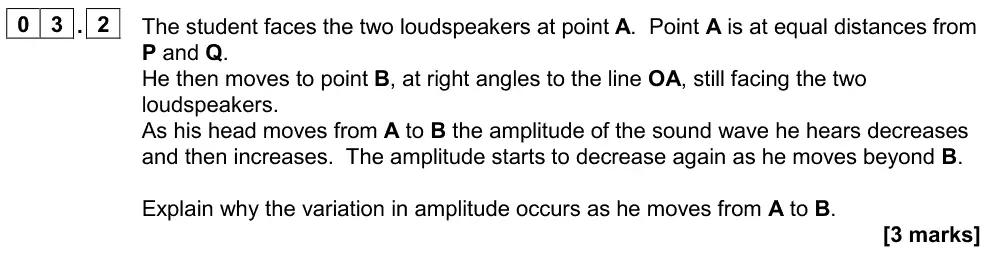
The student faces the two loudspeakers at point A.  Point A is at equal distances from
P and Q.
He then moves to point B, at right angles to the line OA, still facing the two
loudspeakers.
As his head moves from A to B the amplitude of the sound wave he hears decreases
and then increases.  The amplitude starts to decrease again as he moves beyond B.
Explain why the variation in amplitude occurs as he moves from A to B.
[3 marks]
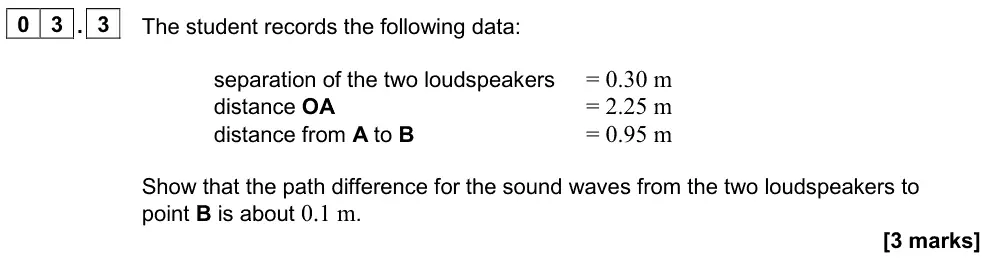
November 2020 · Paper 1 · Q3.3 3 marks Show that interference and diffraction
Earlier part of question 3 that this part usesEarlier part of November 2020 Paper 1 question 3
The student records the following data:
separation of the two loudspeakers    = 0.30 m
distance OA
= 2.25 m
distance from A to B
= 0.95 m
Show that the path difference for the sound waves from the two loudspeakers to
point B is about 0.1 m.
[3 marks]
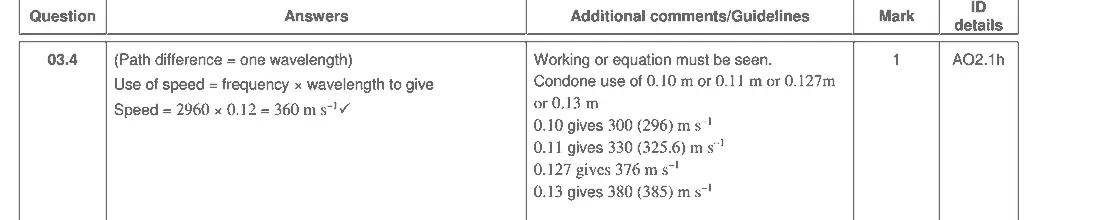
November 2020 · Paper 1 · Q3.4 1 mark Calculation progressive waves and polarisationinterference and diffraction
Earlier part of question 3 that this part usesEarlier part of November 2020 Paper 1 question 3
The frequency of the sound wave is 2960 Hz.
Calculate the speed of sound from the student’s data.
[1 mark]
speed of sound =
m s−1
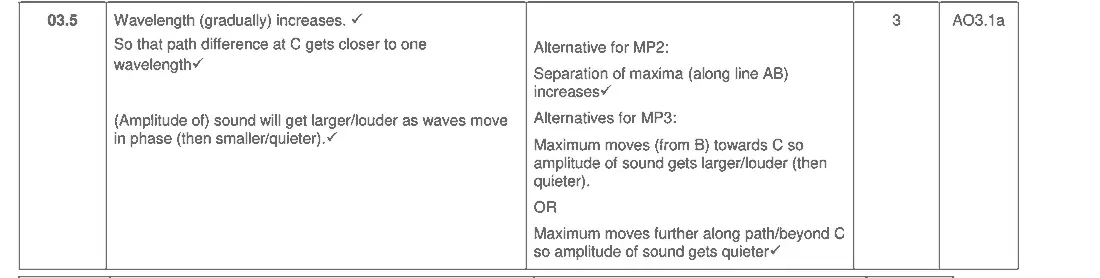
November 2020 · Paper 1 · Q3.5 3 marks Explanation interference and diffractionprogressive waves and polarisation
Earlier part of question 3 that this part usesEarlier part of November 2020 Paper 1 question 3
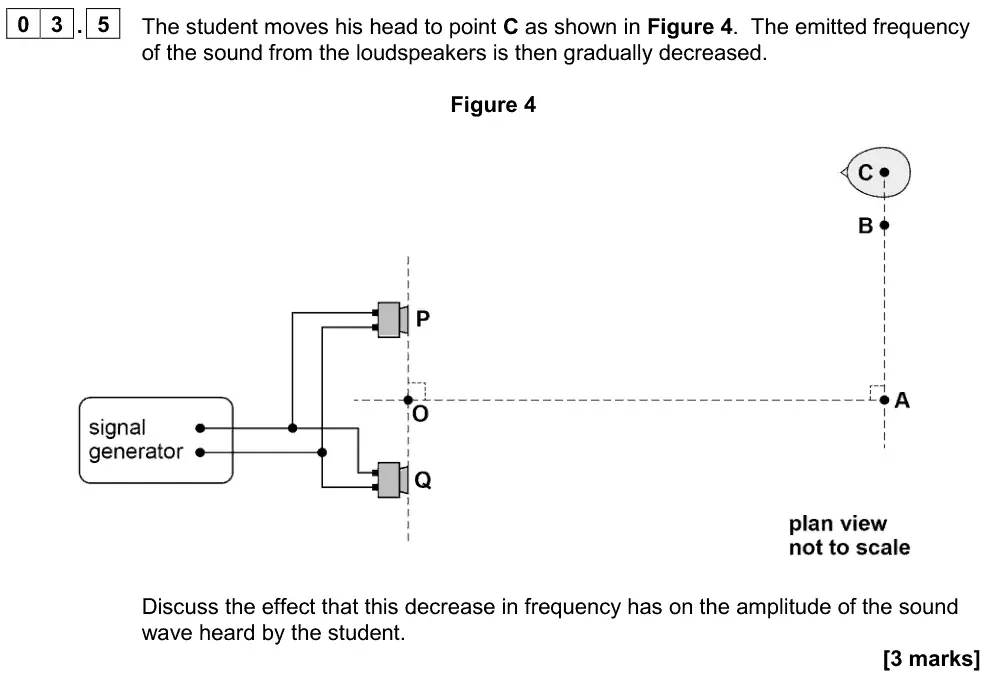
The student moves his head to point C as shown in Figure 4.  The emitted frequency
of the sound from the loudspeakers is then gradually decreased.
Figure 4
Discuss the effect that this decrease in frequency has on the amplitude of the sound
wave heard by the student.
[3 marks]
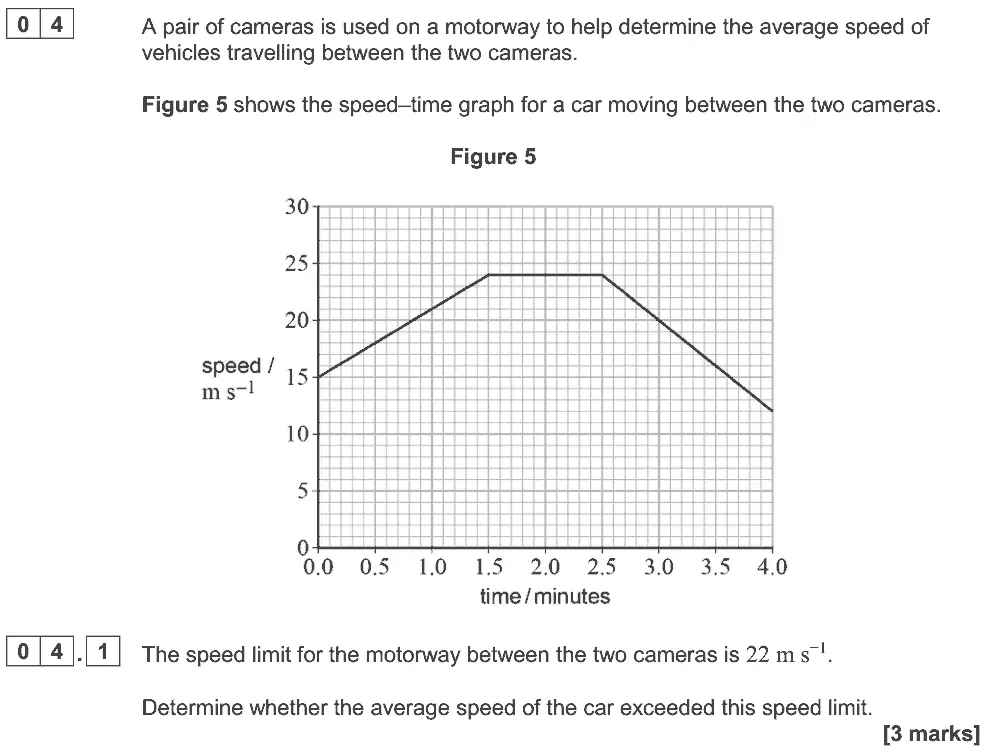
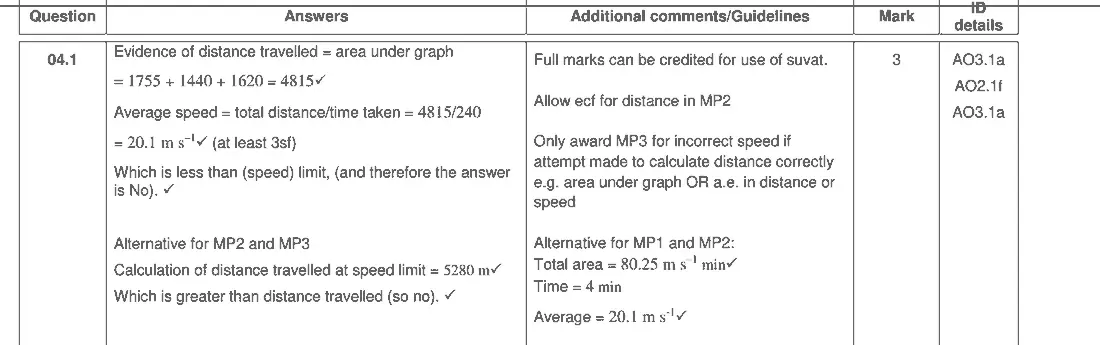
November 2020 · Paper 1 · Q4.1 3 marks Calculation motion and projectiles
A pair of cameras is used on a motorway to help determine the average speed of
vehicles travelling between the two cameras.
Figure 5 shows the speed–time graph for a car moving between the two cameras.
Figure 5
The speed limit for the motorway between the two cameras is 22 m s−1.
Determine whether the average speed of the car exceeded this speed limit.
[3 marks]
November 2020 · Paper 1 · Q4.2 2 marks Calculation motion and projectiles
Earlier part of question 4 that this part usesEarlier part of November 2020 Paper 1 question 4
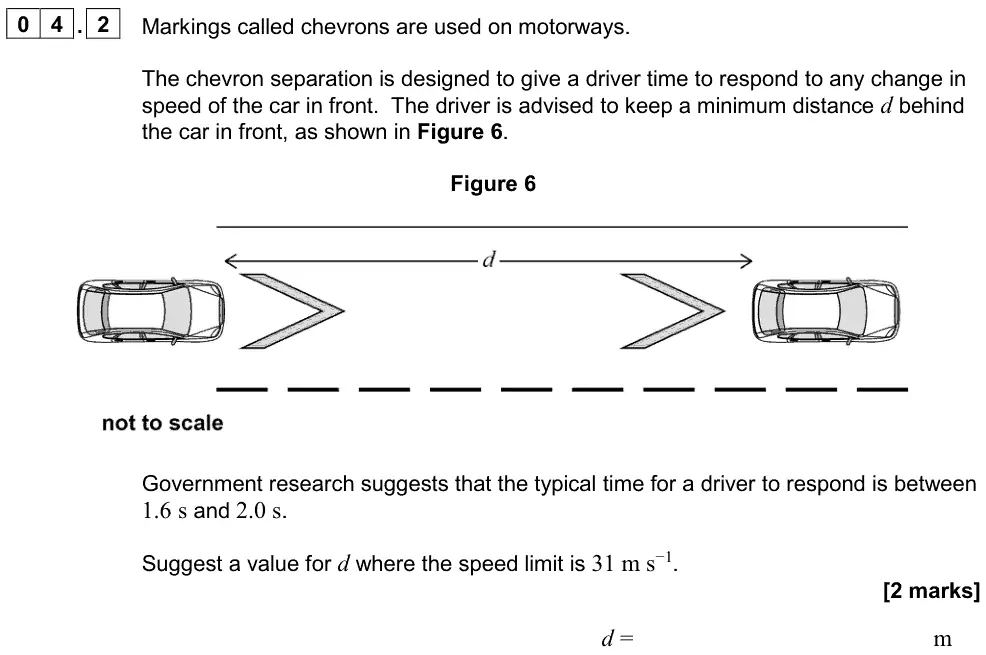
Markings called chevrons are used on motorways.
The chevron separation is designed to give a driver time to respond to any change in
speed of the car in front.  The driver is advised to keep a minimum distance d behind
the car in front, as shown in Figure 6.
Figure 6
Government research suggests that the typical time for a driver to respond is between
1.6 s and 2.0 s.
Suggest a value for d where the speed limit is 31 m s−1.
[2 marks]
d =
m
November 2020 · Paper 1 · Q4.3 4 marks Calculation newtons laws and momentummotion and projectiles
Earlier part of question 4 that this part usesEarlier part of November 2020 Paper 1 question 4
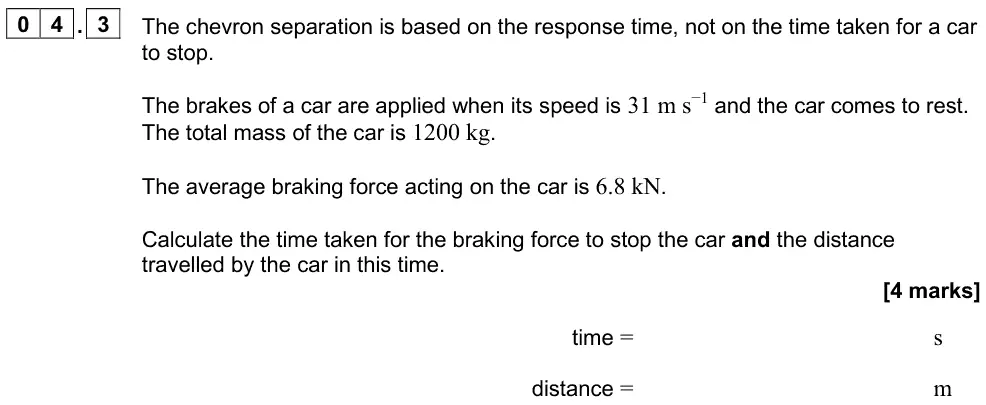
The chevron separation is based on the response time, not on the time taken for a car
to stop.
The brakes of a car are applied when its speed is 31 m s−1 and the car comes to rest.
The total mass of the car is 1200 kg.
The average braking force acting on the car is 6.8 kN.
Calculate the time taken for the braking force to stop the car and the distance
travelled by the car in this time.
[4 marks]
time =
s
distance =
m
November 2020 · Paper 1 · Q4.4 1 mark Short answer motion and projectiles
Earlier part of question 4 that this part usesEarlier part of November 2020 Paper 1 question 4
Suggest why the chevron separation on motorways does not take into account the
distance travelled as a car comes to rest after the brakes are applied.
[1 mark]
November 2020 · Paper 1 · Q4.5 4 marks Calculation circular motionvectors and moments
Earlier part of question 4 that this part usesEarlier part of November 2020 Paper 1 question 4
At bends on motorways the road is sloped so that a car is less likely to slide out of its
lane when travelling at a high speed.
Figure 7 shows a car of mass 1200 kg travelling around a curve of radius 200 m.
The motorway is sloped at an angle of 5.0°.
Figure 8 shows the weight W and reaction force N acting on the car.  The advisory
speed for the bend is chosen so that the friction force down the slope is zero.
Figure 7
Figure 8
Suggest an appropriate advisory speed for this section of the motorway.
[4 marks]
advisory speed =
m s−1
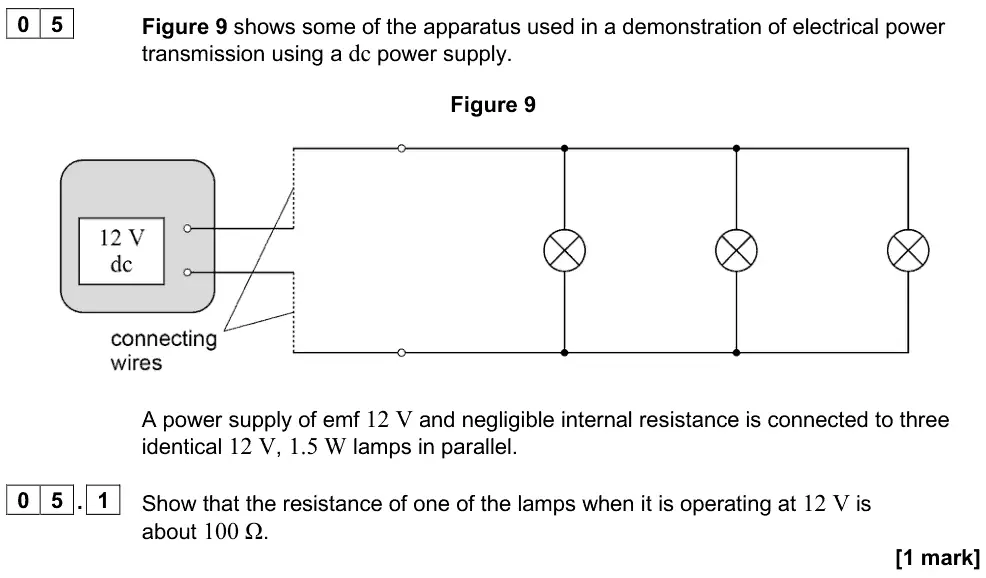
November 2020 · Paper 1 · Q5.1 1 mark Show that circuits and potential dividers
Figure 9 shows some of the apparatus used in a demonstration of electrical power
transmission using a dc power supply.
Figure 9
A power supply of emf 12 V and negligible internal resistance is connected to three
identical 12 V, 1.5 W lamps in parallel.
Show that the resistance of one of the lamps when it is operating at 12 V is
about 100 Ω.
[1 mark]
November 2020 · Paper 1 · Q5.2 2 marks Calculation circuits and potential dividers
Earlier part of question 5 that this part usesEarlier part of November 2020 Paper 1 question 5
Initially the power supply is connected to the lamps using two short copper wires of
negligible resistance.
Calculate the current in the power supply.
[2 marks]
current =
A
November 2020 · Paper 1 · Q5.3 3 marks Show that current voltage and resistivity
Earlier part of question 5 that this part usesEarlier part of November 2020 Paper 1 question 5
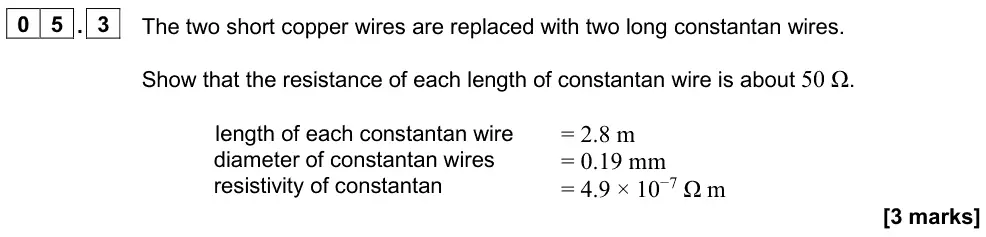
The two short copper wires are replaced with two long constantan wires.
Show that the resistance of each length of constantan wire is about 50 Ω.
length of each constantan wire
diameter of constantan wires
resistivity of constantan
= 2.8 m
= 0.19 mm
= 4.9 × 10⁻⁷ Ω m
[3 marks]
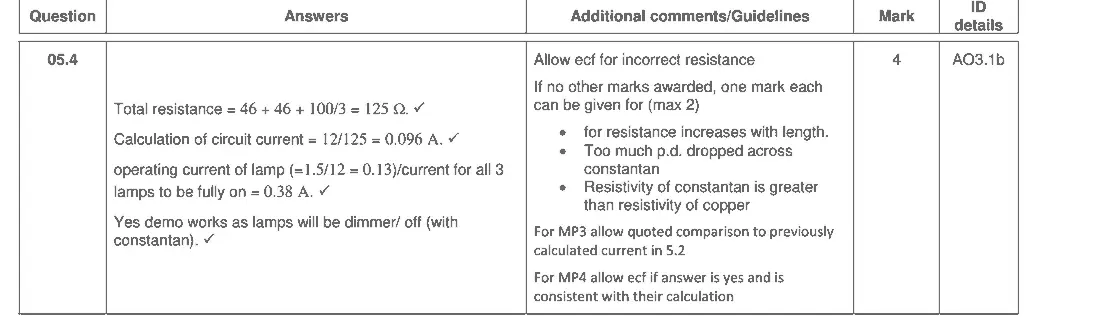
November 2020 · Paper 1 · Q5.4 4 marks Calculation circuits and potential dividers
Earlier part of question 5 that this part usesEarlier part of November 2020 Paper 1 question 5
The demonstration is intended to show that the lamps are significantly dimmer when
connected using the long constantan wires than when using the short copper wires.
Discuss whether the demonstration achieves this.
Support your answer with suitable calculations.
[4 marks]
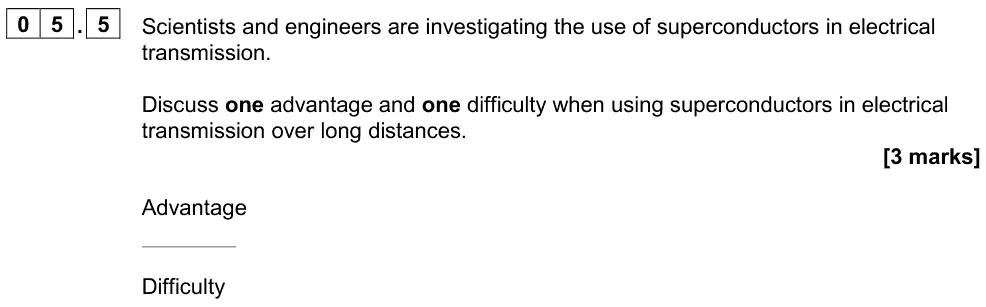
November 2020 · Paper 1 · Q5.5 3 marks Explanation current voltage and resistivity
Earlier part of question 5 that this part usesEarlier part of November 2020 Paper 1 question 5
Scientists and engineers are investigating the use of superconductors in electrical
transmission.
Discuss one advantage and one difficulty when using superconductors in electrical
transmission over long distances.
[3 marks]
Advantage
Difficulty
November 2020 · Paper 1 · Q6 1 mark Multiple choice work energy and powermeasurements and uncertainties
Mechanical power
[1 mark]
A is a vector quantity.
B is measured in J.
C has base units of kg m2 s−3.
D can be calculated from force × distance moved.
November 2020 · Paper 1 · Q7 1 mark Multiple choice measurements and uncertainties
Water waves of wavelength λ and wave speed v are related by v =
k
where k is a
constant.
What is a possible SI unit for k?
[1 mark]
A m s−2
B m s−1
C
3
2
m s−1
D
1
2
m s−1
November 2020 · Paper 1 · Q8 1 mark Multiple choice energy levels and wave particle dualitywork energy and power
A photon has energy of 1 × 10¹⁸ eV.
An object of mass 0.03 kg has kinetic energy equal to the energy of the photon.
What is the speed of the object?
[1 mark]
A 1 m s−1
B 3 m s−1
C 10 m s−1
D 30 m s−1
November 2020 · Paper 1 · Q9 1 mark Multiple choice atomic structure and stable nuclei
A deuterium nucleus and a tritium nucleus fuse together to produce a helium nucleus and
particle X.
2
3
4
H  +  H
He  +
1
1
2
→
X
What is X?
[1 mark]
A an electron
B a neutron
C a positron
D a proton
November 2020 · Paper 1 · Q10 1 mark Multiple choice atomic structure and stable nuclei
The radioactive nuclide 232Th
90
decays by one α emission followed by two β− emissions.
Which nuclide is formed as a result of these decays?
[1 mark]
A 238U
92
B 230Th
90
C 228Th
90
D 228Rn
88
November 2020 · Paper 1 · Q11 1 mark Multiple choice measurements and uncertainties
What quantity is measured in kW h?
[1 mark]
A charge
B current
C energy
D power
November 2020 · Paper 1 · Q12 1 mark Multiple choice energy levels and wave particle duality
An electron collides with an isolated atom and raises an atomic electron to a higher energy
level.
Which statement is correct?
[1 mark]
A The colliding electron is captured by the nucleus of the atom.
B A photon is emitted when the electron rises to the higher energy level.
C An electron is emitted when the excited electron returns to the ground state.
D The colliding electron transfers energy to the atomic electron.
November 2020 · Paper 1 · Q13 1 mark Multiple choice energy levels and wave particle dualityparticles antiparticles and interactions
Which graph shows the variation of momentum p with wavelength λ of a photon?
[1 mark]
A
B
C
D
A
B
C
D
November 2020 · Paper 1 · Q14 1 mark Multiple choice refraction and optical fibresparticles antiparticles and interactions
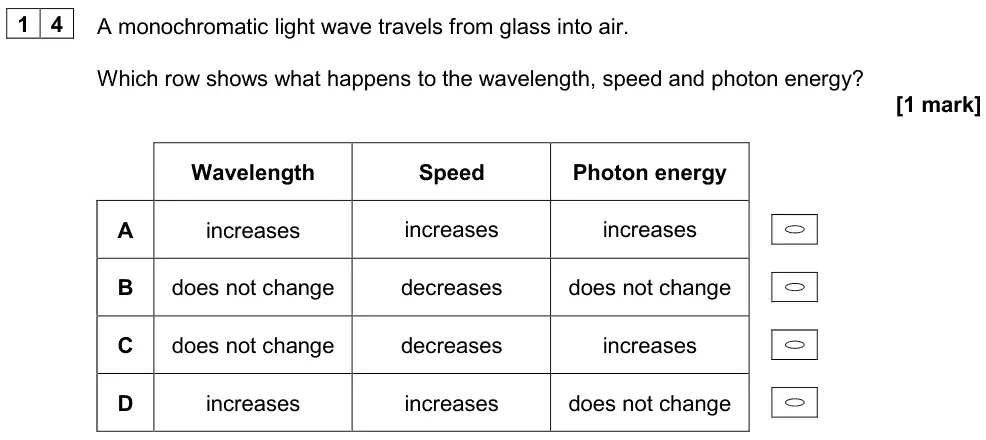
A monochromatic light wave travels from glass into air.
Which row shows what happens to the wavelength, speed and photon energy?
[1 mark]
Wavelength
Speed
Photon energy
A
increases
increases
increases
B
does not change
decreases
does not change
C
does not change
decreases
increases
D
increases
increases
does not change
November 2020 · Paper 1 · Q15 1 mark Multiple choice progressive waves and polarisation
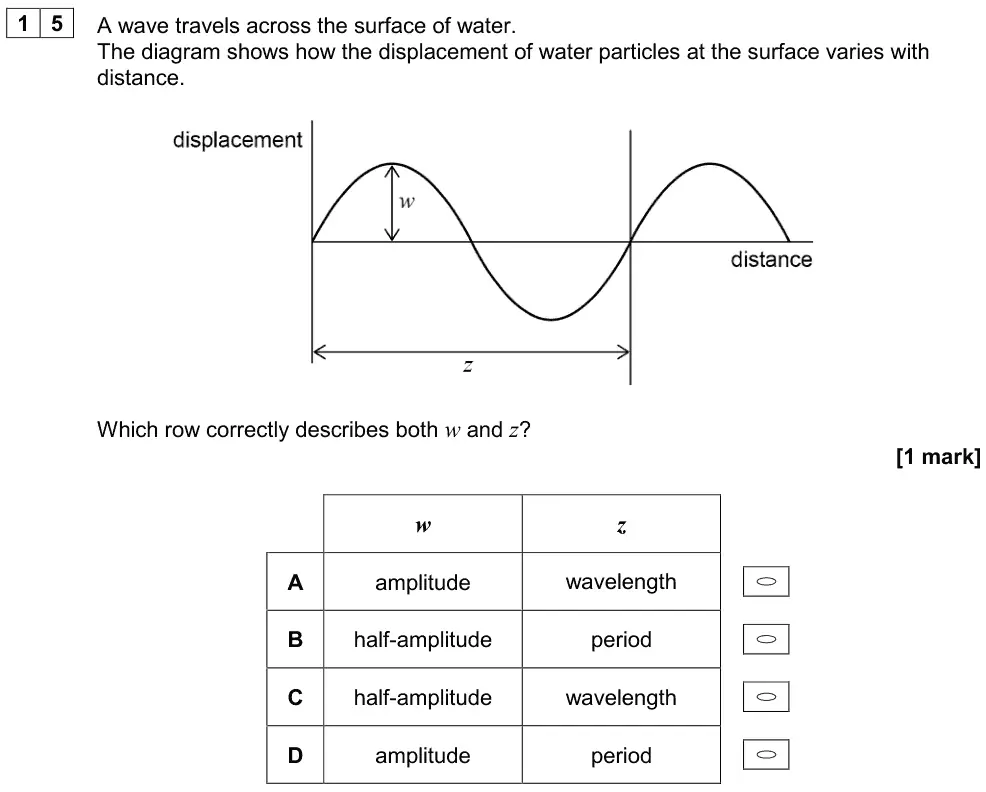
A wave travels across the surface of water.
The diagram shows how the displacement of water particles at the surface varies with
distance.
Which row correctly describes both w and z?
[1 mark]
w
z
A
amplitude
wavelength
B
half-amplitude
period
C
half-amplitude
wavelength
D
amplitude
period
November 2020 · Paper 1 · Q16 1 mark Multiple choice progressive waves and polarisation
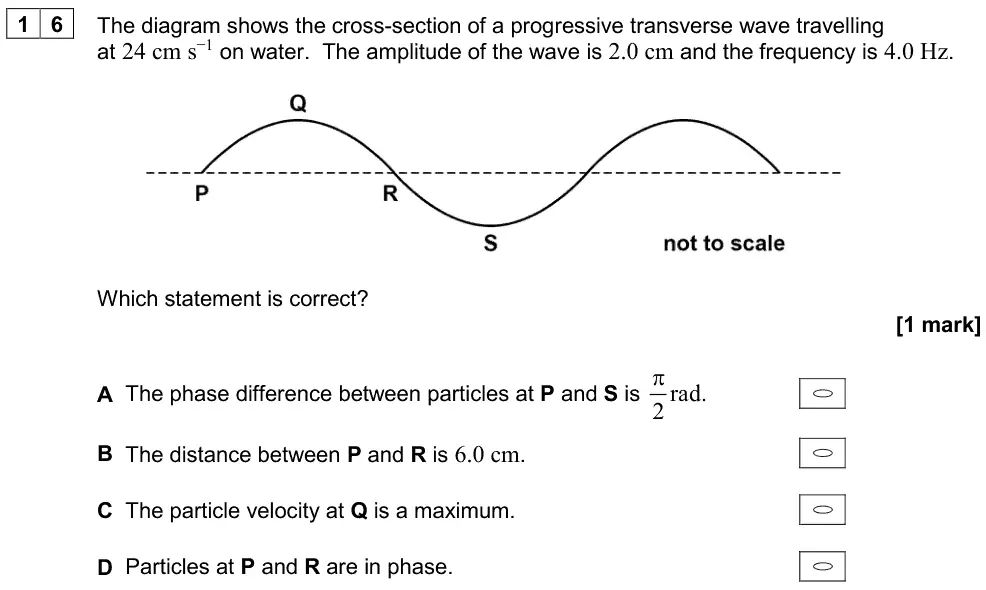
The diagram shows the cross-section of a progressive transverse wave travelling
at 24 cm s−1 on water.  The amplitude of the wave is 2.0 cm and the frequency is 4.0 Hz.
Which statement is correct?
[1 mark]
A The phase difference between particles at P and S is
rad.
2
π
B The distance between P and R is 6.0 cm.
C The particle velocity at Q is a maximum.
D Particles at P and R are in phase.
November 2020 · Paper 1 · Q17 1 mark Multiple choice progressive waves and polarisation
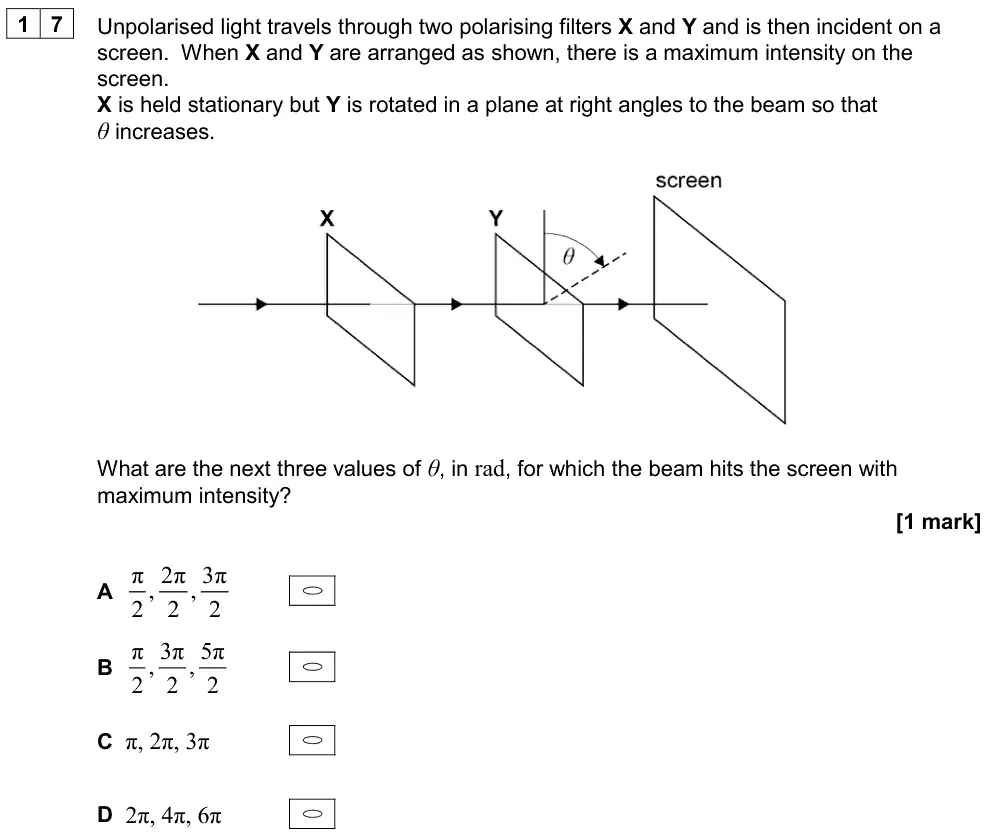
Unpolarised light travels through two polarising filters X and Y and is then incident on a
screen.  When X and Y are arranged as shown, there is a maximum intensity on the
screen.
X is held stationary but Y is rotated in a plane at right angles to the beam so that
θ increases.
What are the next three values of θ, in rad, for which the beam hits the screen with
maximum intensity?
[1 mark]
A π 2π 3π
,
,
2
2
2
B π 3π 5π
,
,
2
2
2
C π, 2π, 3π
D 2π, 4π, 6π
November 2020 · Paper 1 · Q18 1 mark Multiple choice stationary waves
Stationary waves are set up on a rope of length 1.0 m fixed at both ends.
Which statement is not correct?
[1 mark]
A The first harmonic has a wavelength of 2.0 m.
B The midpoint of the rope is always stationary for even-numbered harmonics.
C A harmonic of wavelength 0.4 m can be set up on the rope.
D There are five nodes on the rope for the fifth harmonic.
November 2020 · Paper 1 · Q19 1 mark Multiple choice interference and diffraction
Monochromatic light is incident normally on a diffraction grating that has
4.50 × 10⁵ lines m−1.
The angle between the second-order diffraction maxima is 44°.
What is the wavelength of the light?
[1 mark]
A 208 nm
B 416 nm
C 772 nm
D 832 nm
November 2020 · Paper 1 · Q20 1 mark Multiple choice vectors and moments
The diagram shows the forces acting on a uniform rod.
Which statement is correct?
[1 mark]
A The rod is in equilibrium.
B For equilibrium, an anticlockwise moment of 1.0 N m is needed.
C For equilibrium, a clockwise moment of 1.0 N m is needed.
D For equilibrium, the 10 N force should be increased to 20 N.
November 2020 · Paper 1 · Q21 1 mark Multiple choice motion and projectiles
Small water drops leave a tap with zero velocity at intervals of 0.20 s.
They then fall freely 0.80 m to reach a horizontal surface.
How far has a drop fallen when the previous drop hits the surface?
[1 mark]
A 0.16 m
B 0.20 m
C 0.40 m
D 0.60 m
November 2020 · Paper 1 · Q22 1 mark Multiple choice newtons laws and momentumwork energy and power
A pellet with velocity 200 m s−1 and mass 5.0 g is fired vertically upwards into a stationary
block of mass 95.0 g.  The pellet remains in the block.  The impact causes the block to
move vertically upwards.
What is the maximum vertical displacement of the block?
[1 mark]
A 5.1 m
B 10 m
C 51 m
D 100 m
November 2020 · Paper 1 · Q23 1 mark Multiple choice work energy and powercircuits and potential dividers
An electric motor lifts a load of weight W through a vertical height h in time t.
The potential difference across the motor is V and the current in it is I.
What is the efficiency of the motor?
[1 mark]
A Wh
VIt
B VI
Wht
C Wht
VI
D VIt
Wh
November 2020 · Paper 1 · Q24 1 mark Multiple choice simple harmonic motion
A particle of mass m undergoes simple harmonic motion with amplitude A and frequency f.
What is the total energy of the particle?
[1 mark]
A 2πmfA2
B 2π2mf 2A2
C 4π2m2f 2A
D 4π2mf 2A2
November 2020 · Paper 1 · Q25 1 mark Multiple choice simple harmonic motion
A mass of 0.90 kg is suspended from the lower end of a light spring of stiffness 80 N m−1.
When the mass is displaced vertically and released, it undergoes vertical oscillations of
small amplitude.
What is the frequency of the oscillations?
[1 mark]
A 0.071 Hz
B 0.67 Hz
C 1.50 Hz
D 14 Hz
November 2020 · Paper 1 · Q26 1 mark Multiple choice materials and young modulus
An experiment is carried out to determine the Young modulus E of steel using a vertical
wire of initial length L and cross-sectional area A.  Various weights are suspended from
the wire.  A graph of extension against weight is plotted.
What does the gradient of the graph represent?
[1 mark]
A E
B 1
E
C EA
L
D
L
EA
November 2020 · Paper 1 · Q27 1 mark Multiple choice circuits and potential dividerscurrent voltage and resistivity
In the circuit below, the voltmeter reading is zero.
When the temperature of the thermistor T is increased, the voltmeter reading changes.
Which change to the circuit will restore the voltmeter to zero?
[1 mark]
A a reduction in the emf of the cell
B a reduction in the resistance of P
C an increase in the resistance of Q
D a reduction in the resistance of R
November 2020 · Paper 1 · Q28 1 mark Multiple choice emf and internal resistancecircuits and potential dividers
A resistor of resistance R and three identical cells of emf E and internal resistance r are
connected as shown.
What is the current in the resistor?
[1 mark]
A (
)
3
3
E
R
r
+
B (
)
9
3
E
R
r
+
C E
R
D 3E
R
November 2020 · Paper 1 · Q29 1 mark Multiple choice emf and internal resistance
In the circuit, the reading of the voltmeter is V.
When the switch is closed the reading becomes 3
V .
What is the internal resistance of the cell?
[1 mark]
A 0.33 Ω
B 0.67 Ω
C 4.0 Ω
D 6.0 Ω
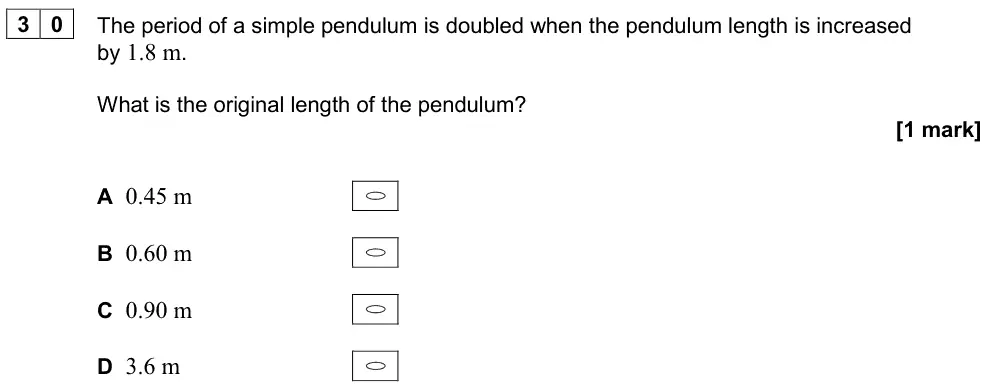
November 2020 · Paper 1 · Q30 1 mark Multiple choice simple harmonic motion
The period of a simple pendulum is doubled when the pendulum length is increased
by 1.8 m.
What is the original length of the pendulum?
[1 mark]
A 0.45 m
B 0.60 m
C 0.90 m
D 3.6 m

Work with an AQA physics tutor

Want a paper marked and gone through with you? Message us.

Prefer email? Send an enquiry

If you are under 18, please include a parent's contact details. Enquiries go to enquiries@physicsaleveltutor.com and are deleted once handled. All tutoring is online.