Examiner's comment
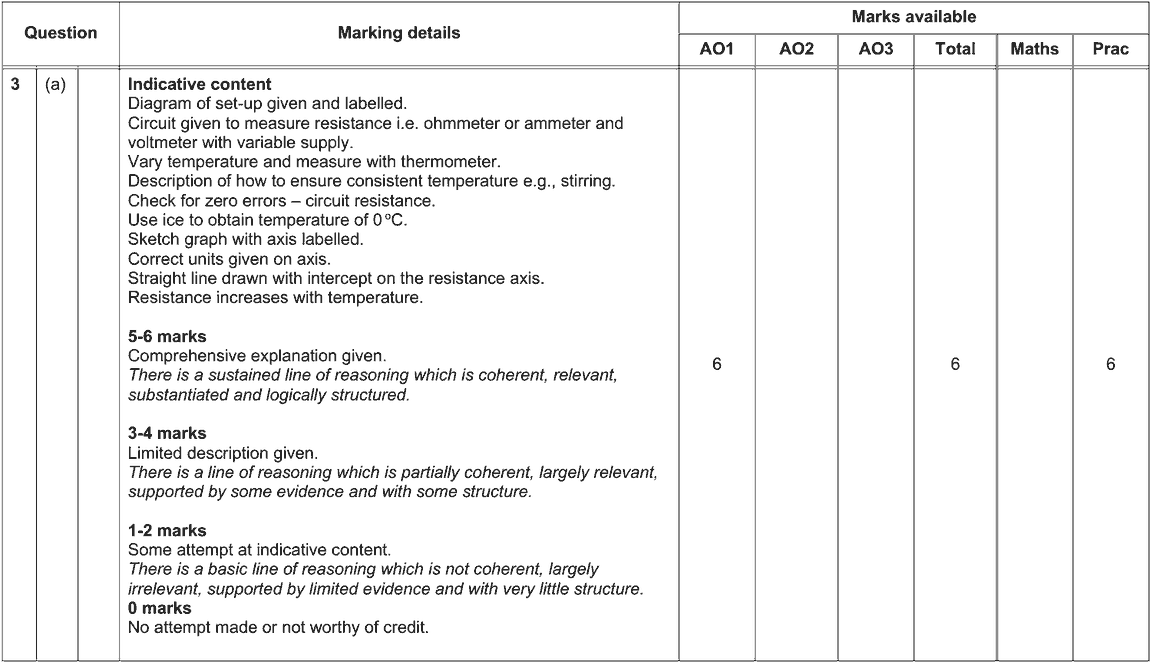
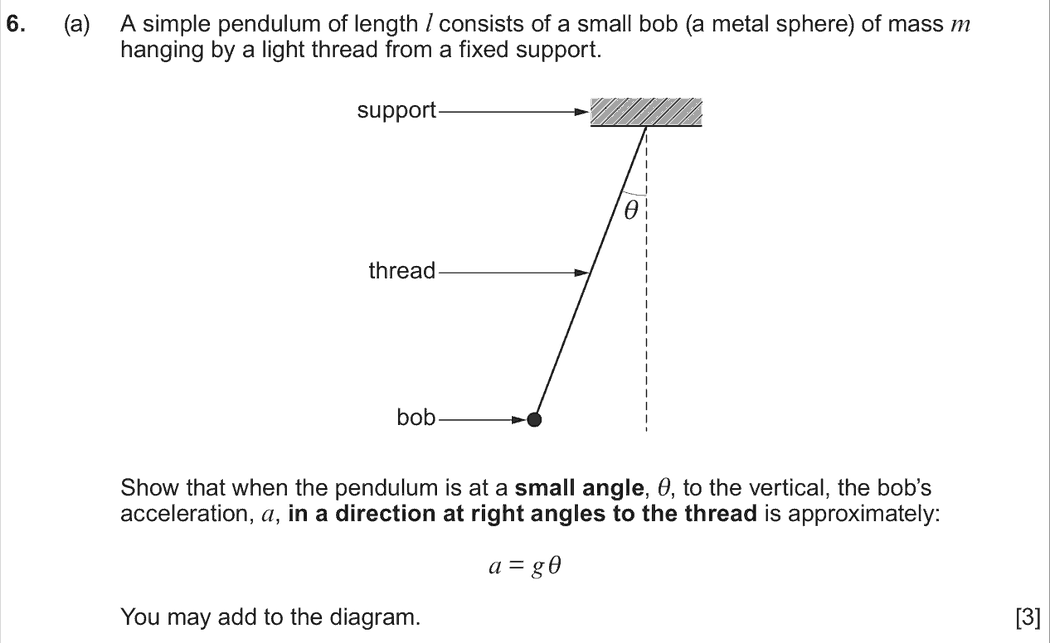
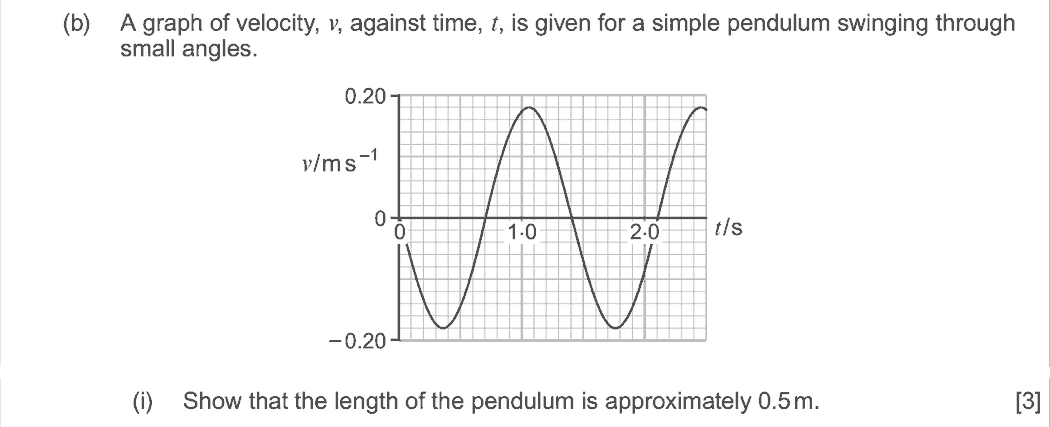
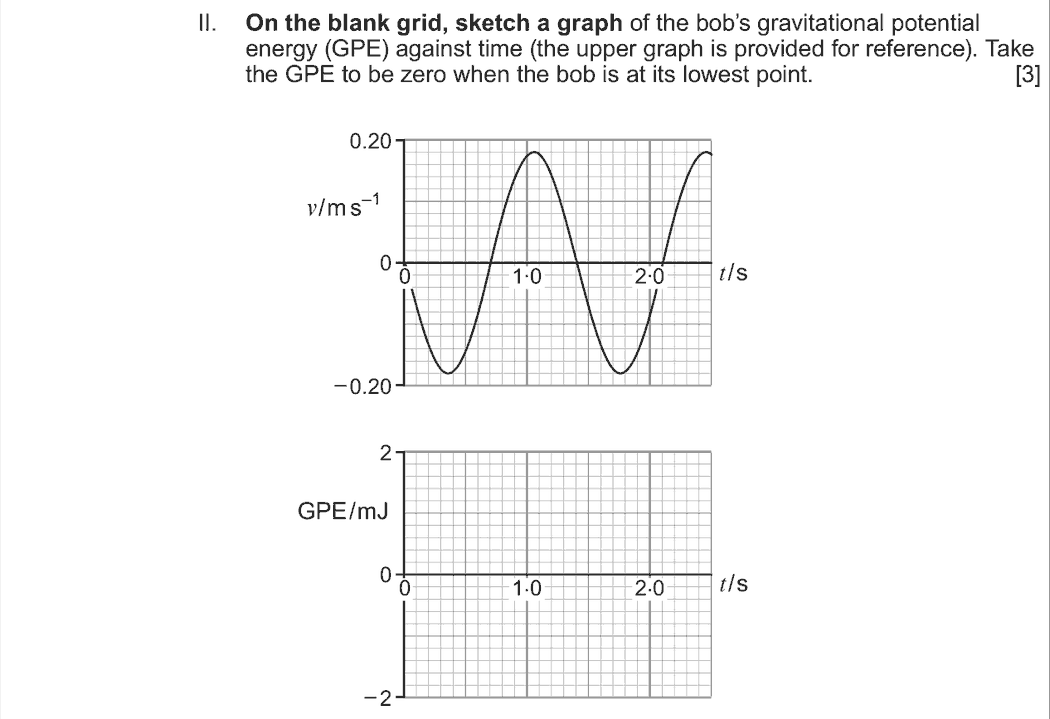
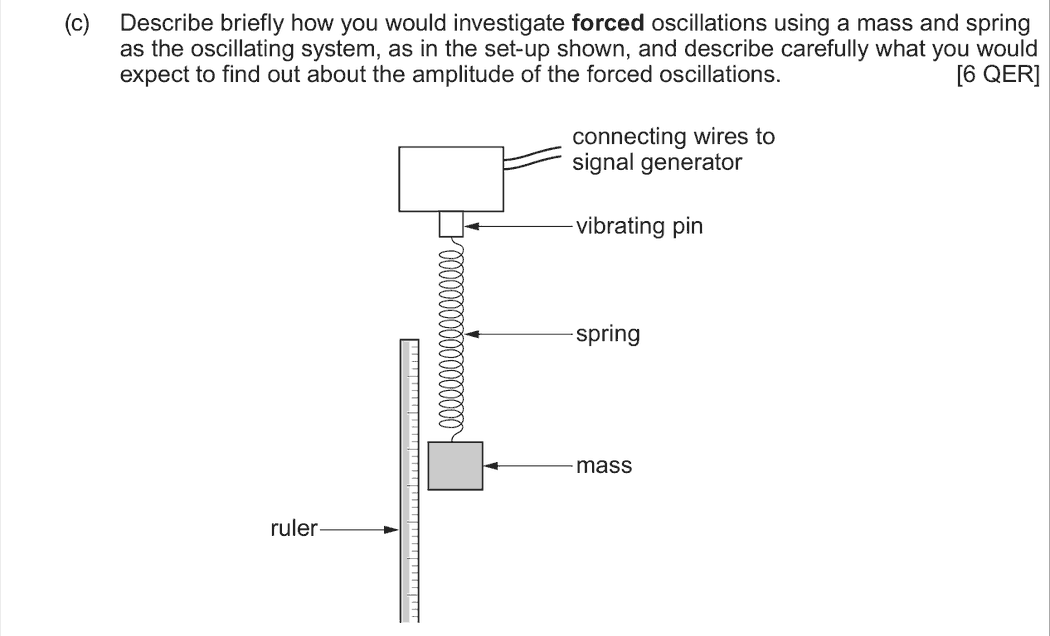
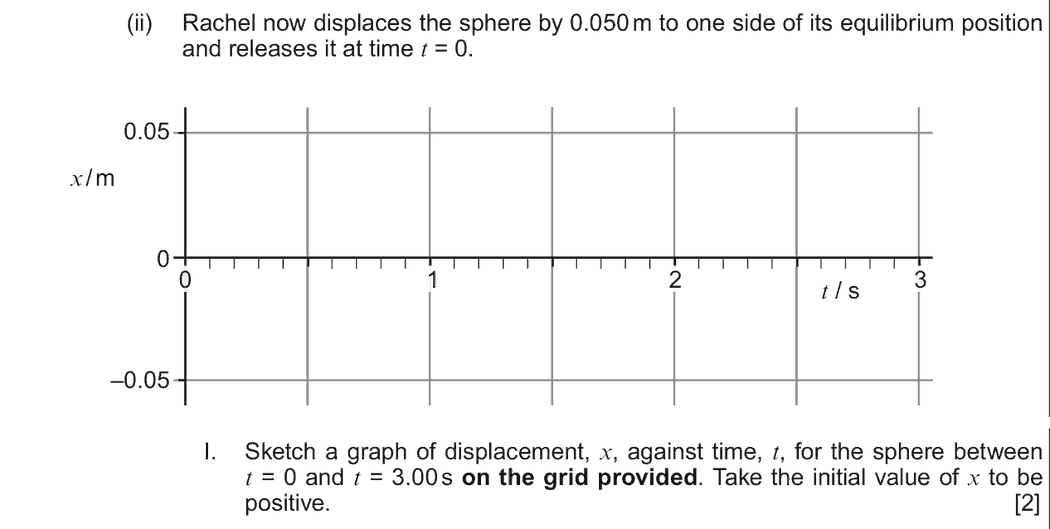
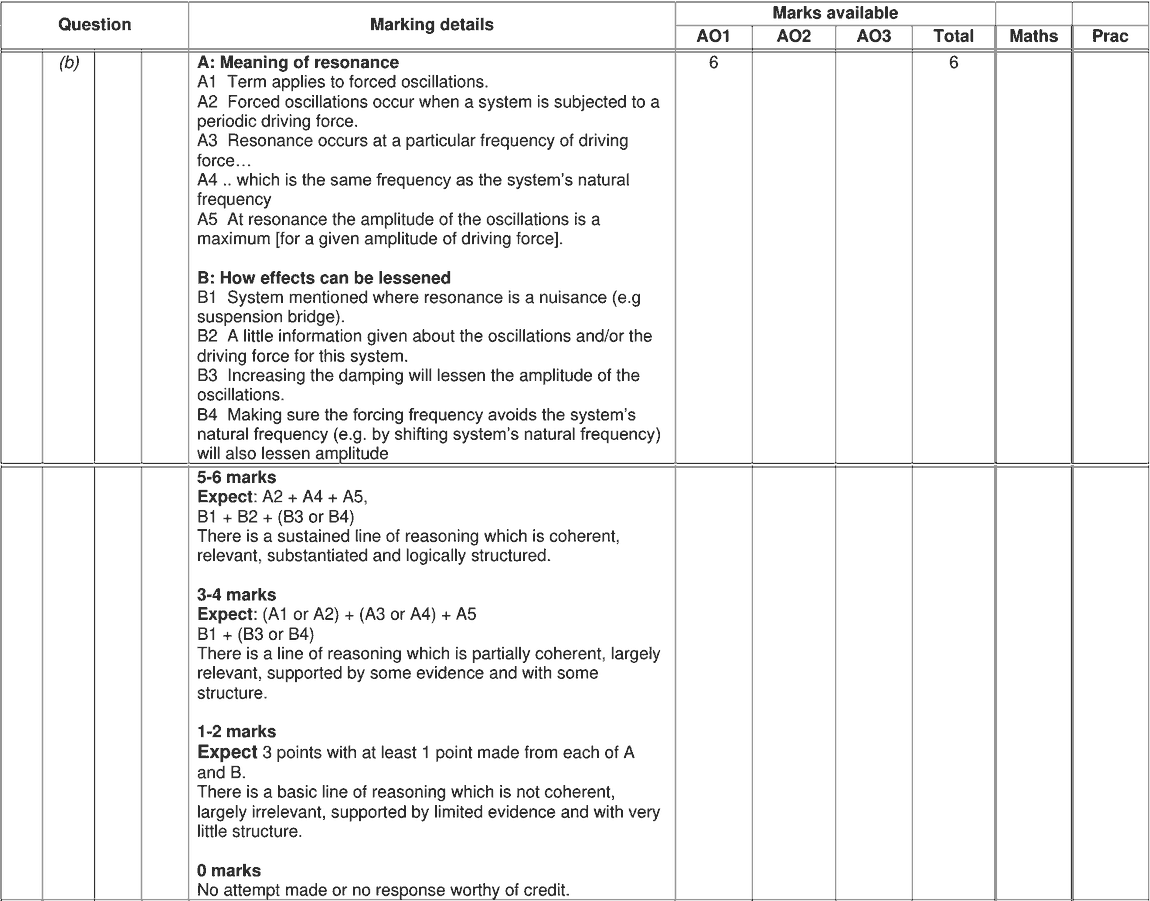
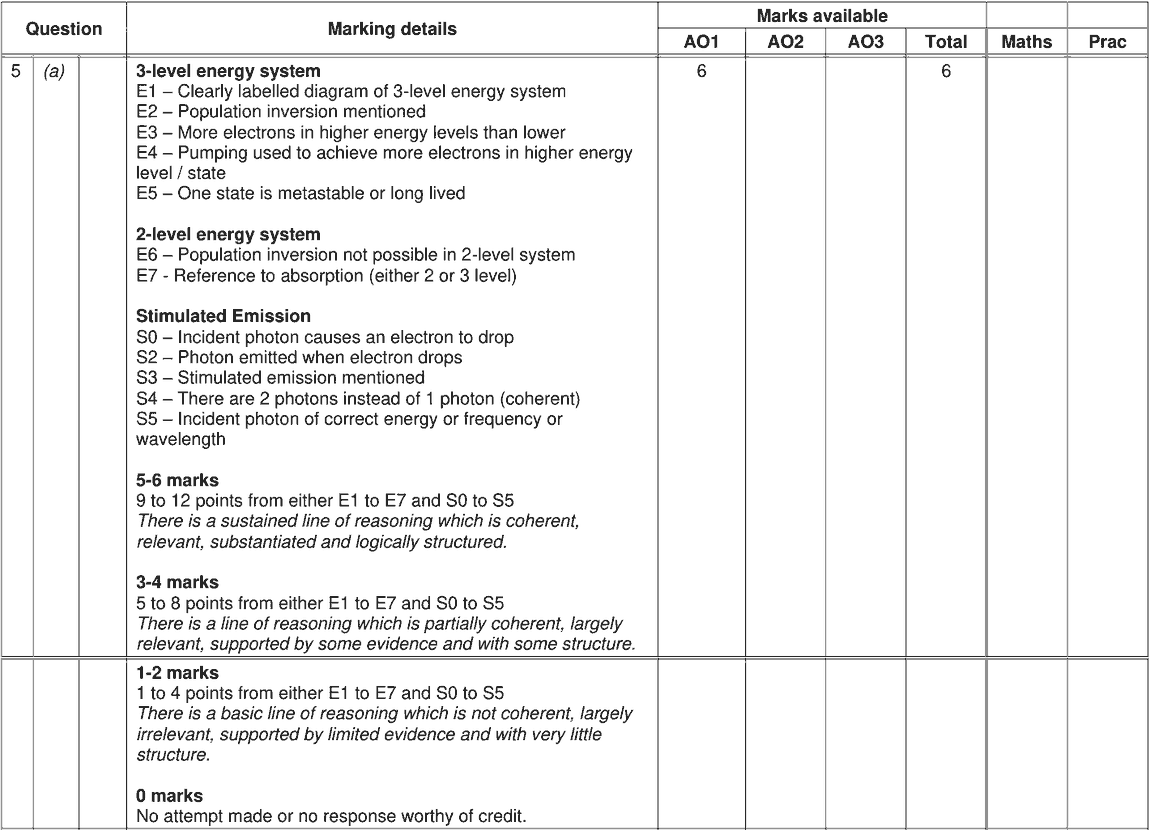
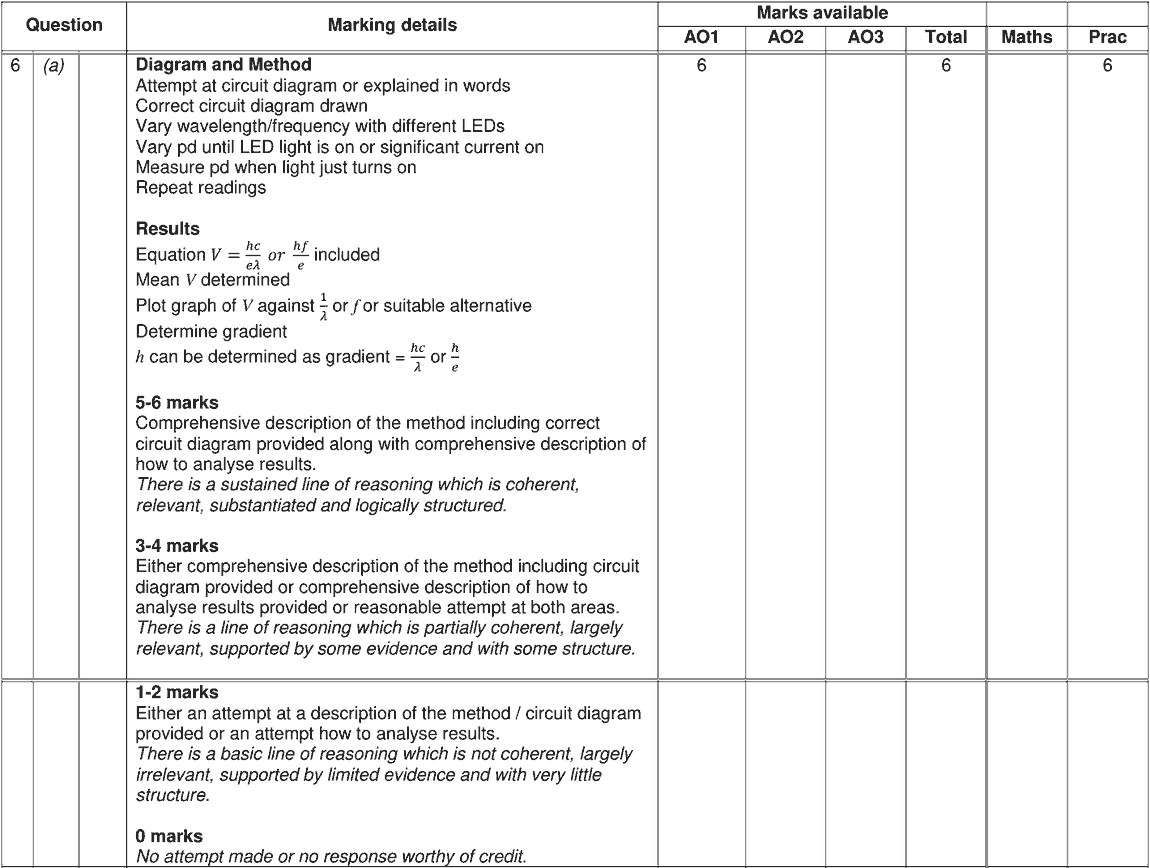
The ‘show that’ question in part (a) proved to be demanding. A significant number of candidates were unable to appreciate where the component of the bob’s weight was acting and diagrams indicating horizontal force directions were confused. The use of tension also halted progress here. The second and third marking points proved more accessible. Mainly very good candidate responses were seen in (b)(i). There were some weaker attempts using 𝑣 = −𝐴𝜔sin𝜔𝑡 but these did not develop as the candidates were unable to determine the amplitude. For the GPE – time graph in (ii) we were looking for the correct period, phase, and shape. There was a good success rate. A triangular wave is not an acceptable alternative for a sinusoid. Candidates who used the negative portion of the graph were only able to access the period mark as this was a significant error. The transition from simple harmonic motion to circular motion in part (iii) proved demanding for some candidates. Some used 𝑎= 𝜔2𝑟 and the periodic time of 1.4 s for the pendulum to be the time for one complete revolution. This is incorrect. Candidates who used 𝑎= 𝑣2 𝑟 were more successful. In the second part of the question, we were looking for candidates to show us that a centripetal force is a resultant force and at the bottom of the swing, this resultant force would be upwards. Some candidates were able to do this. We accepted ‘𝑇 – 𝑚𝑔 = 𝑚𝑎’ for the first marking point. The direction needed to be clear for the second marking point. Some drew a diagram to support their responses and were often rewarded. The last part was the QER and it tested the candidate’s ability to describe how forced oscillations can be demonstrated and how the amplitude varies with frequency. It bridged AO1 and AO3 and this challenged candidates. The description of the experiment was often limited whereas the variation of amplitude and hence links to resonance were more readily seen. A graph would often be seen, however, we wanted it to be referenced in their written response. The simple and effective way of obtaining the natural frequency of an oscillator (when the signal generator is off) was not regularly seen, however, it was encouraging to see additional practical detail regarding the amplitude measurement. There were a minority of confused responses involving damping.
Notes from the mark scheme and report
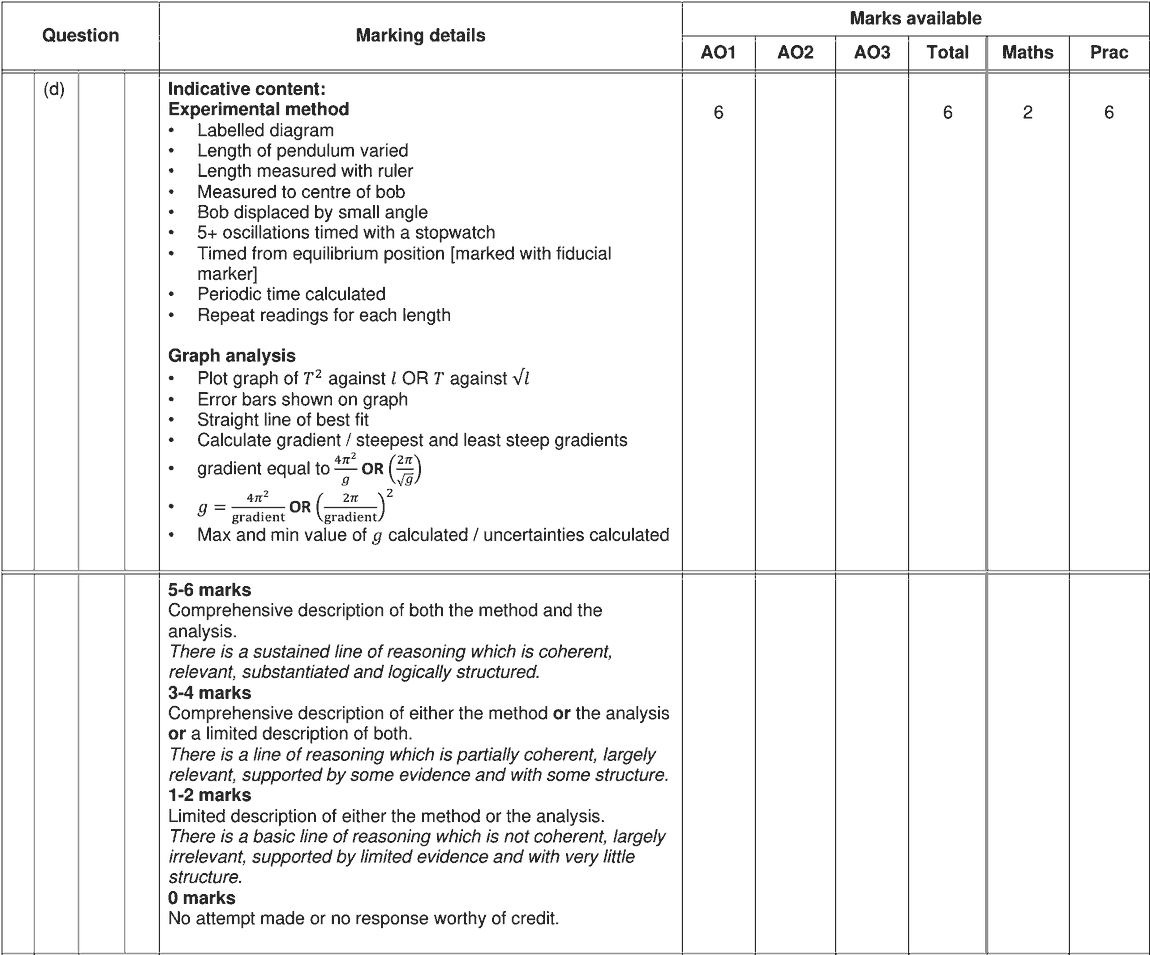
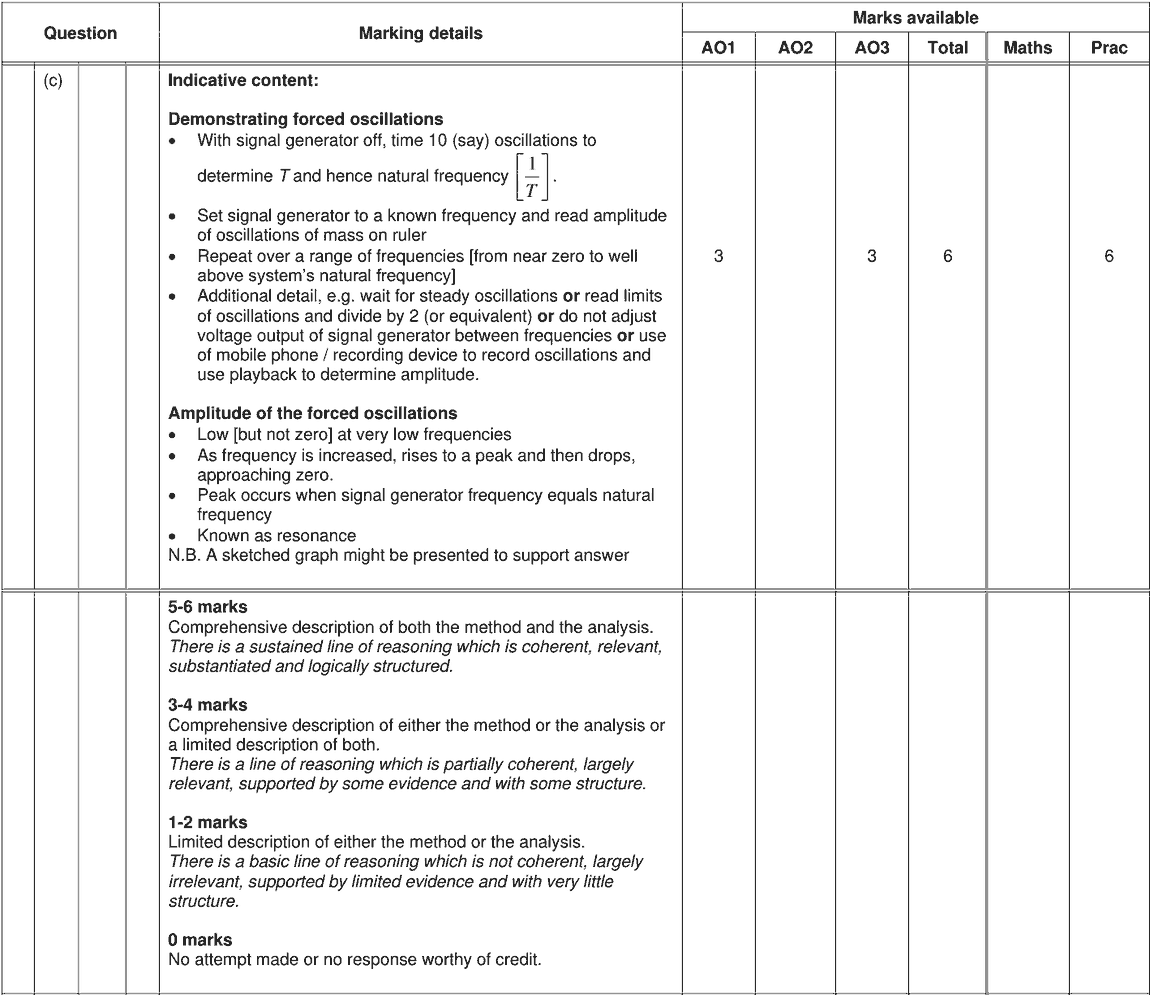
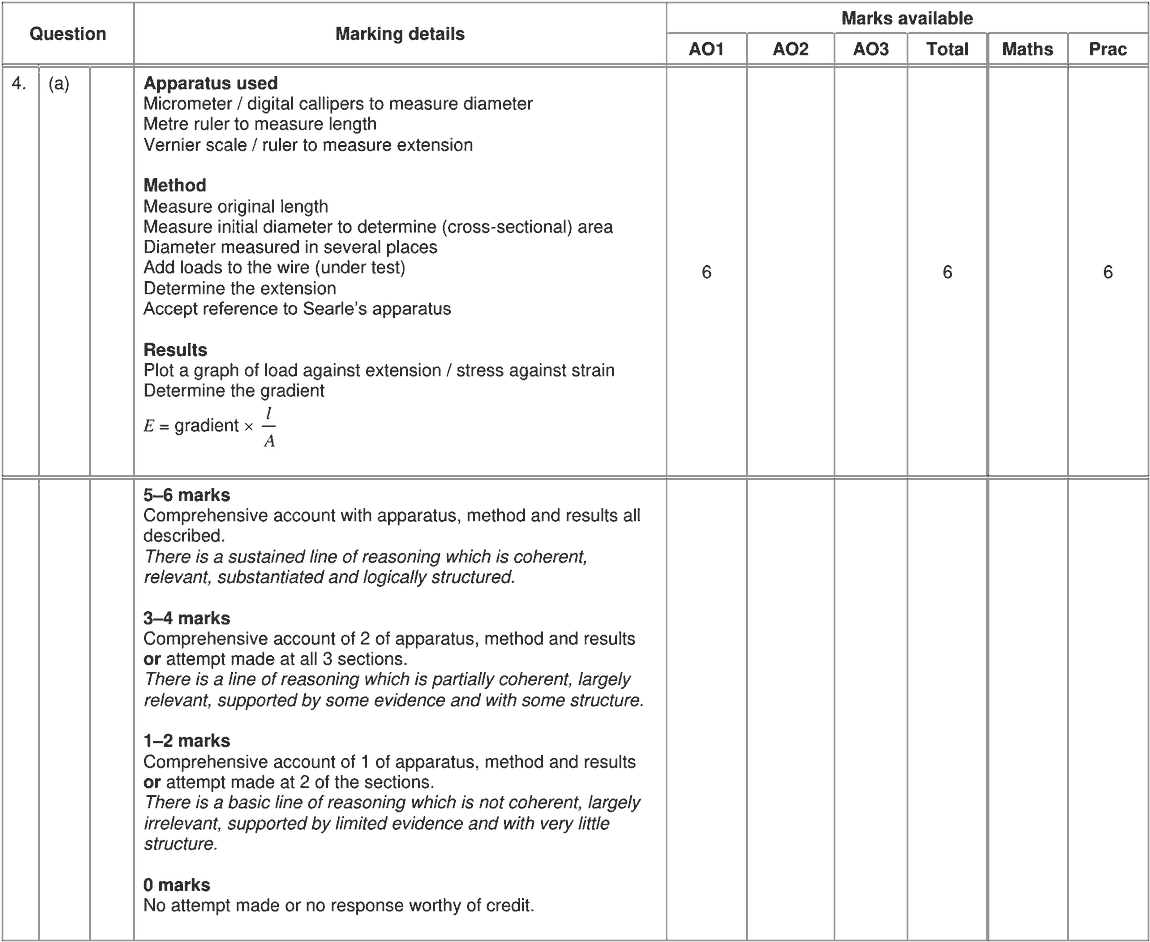
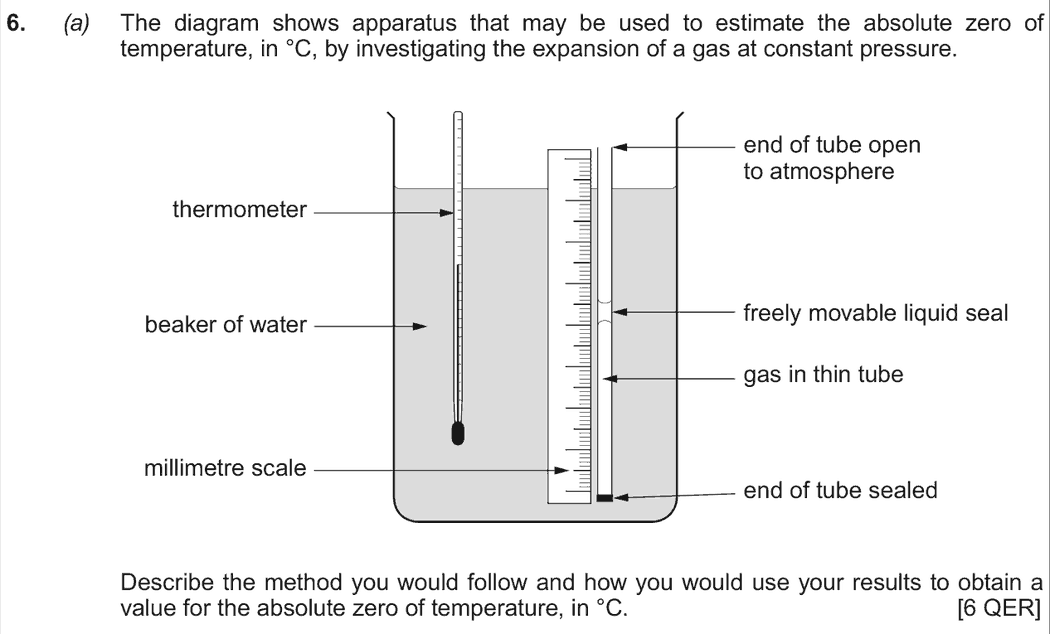
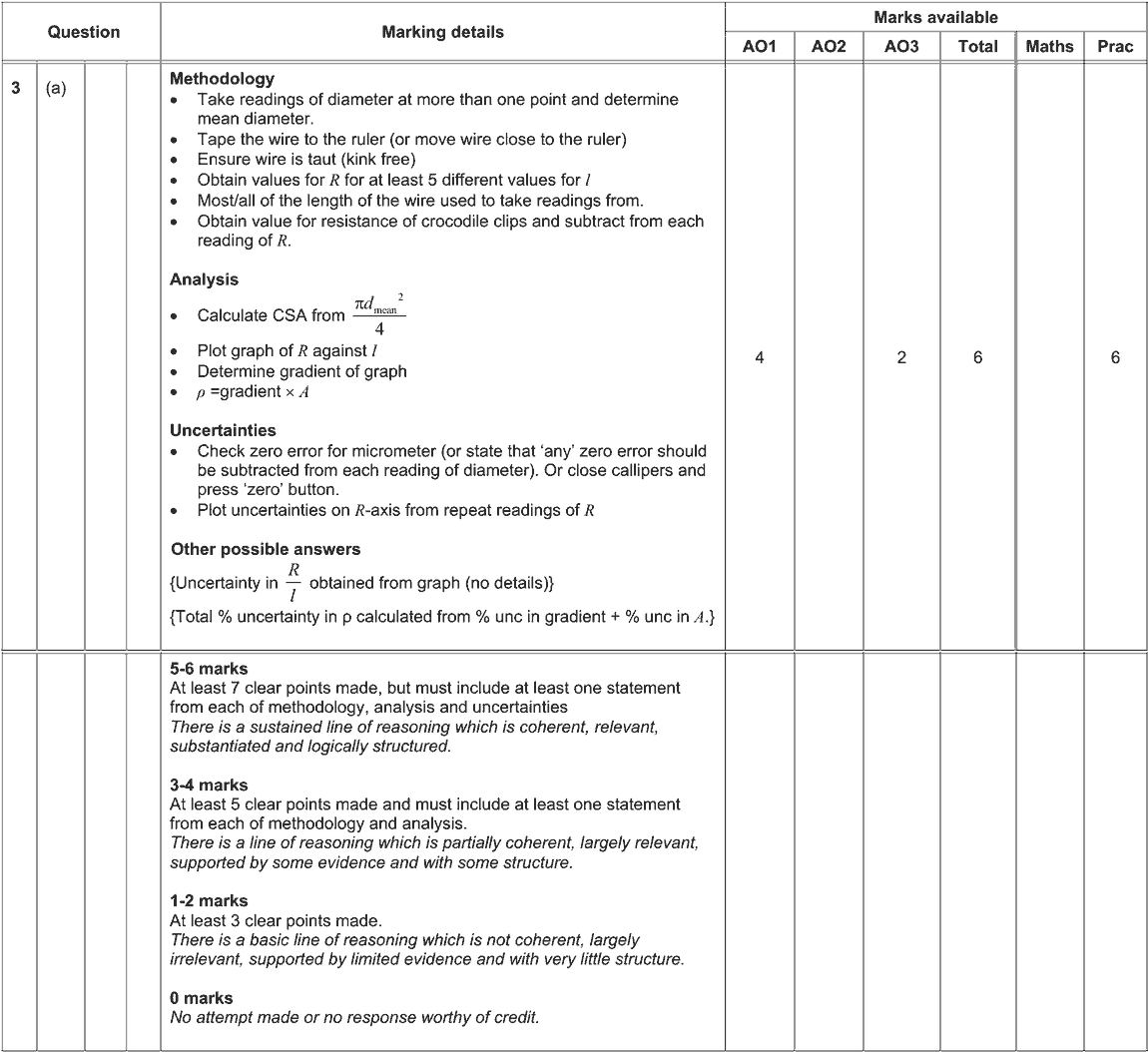
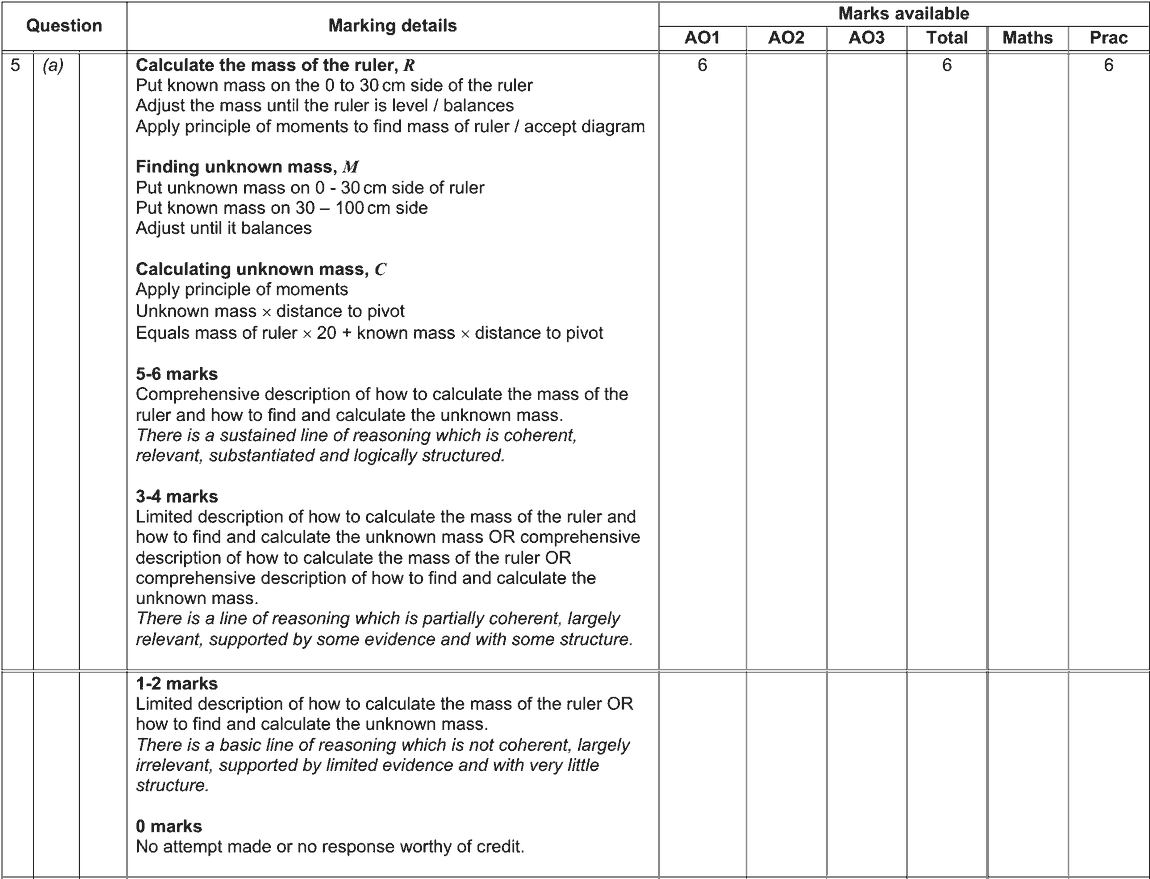
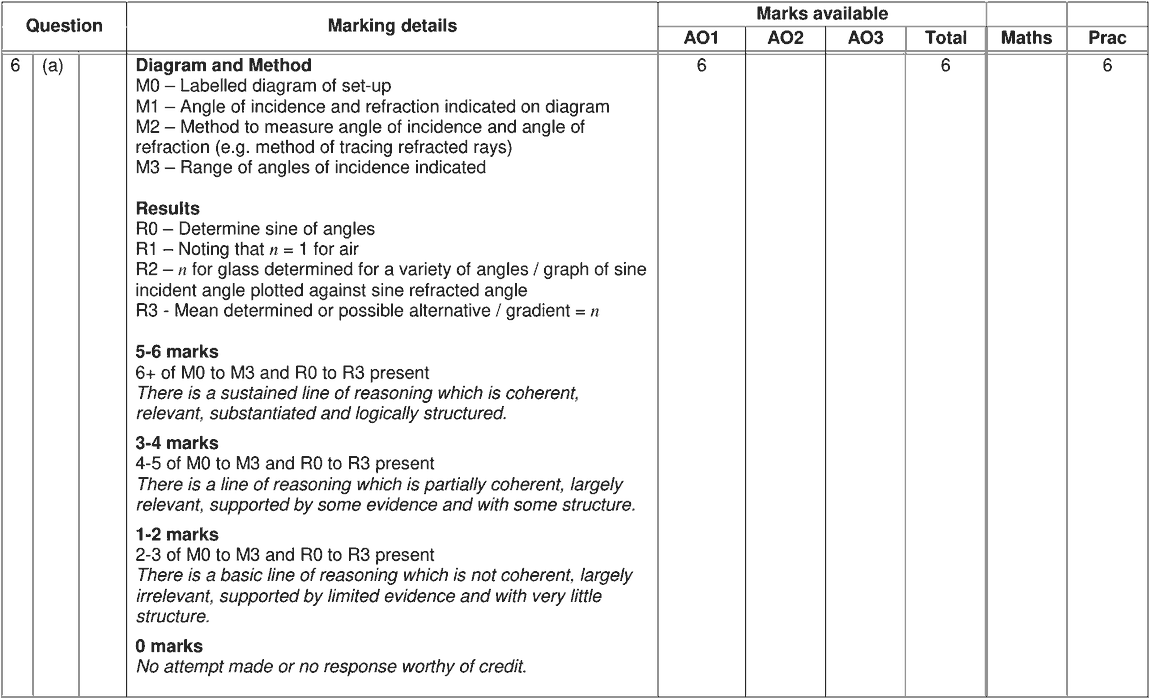
- QER, levels marked. Method: with the signal generator off, time about 10 free oscillations to find the natural frequency
- drive at a known frequency and read the steady amplitude against the ruler
- repeat for a range of frequencies from near zero to well above the natural frequency
- extra detail such as waiting for steady oscillations, halving the full swing, keeping the generator output fixed, or video playback. Findings: small amplitude at very low frequency, rising to a peak when the driving frequency equals the natural frequency (resonance), then falling towards zero
- a sketch graph helps if referred to. Descriptions of the method were usually thinner than the findings
- some confused it with damping
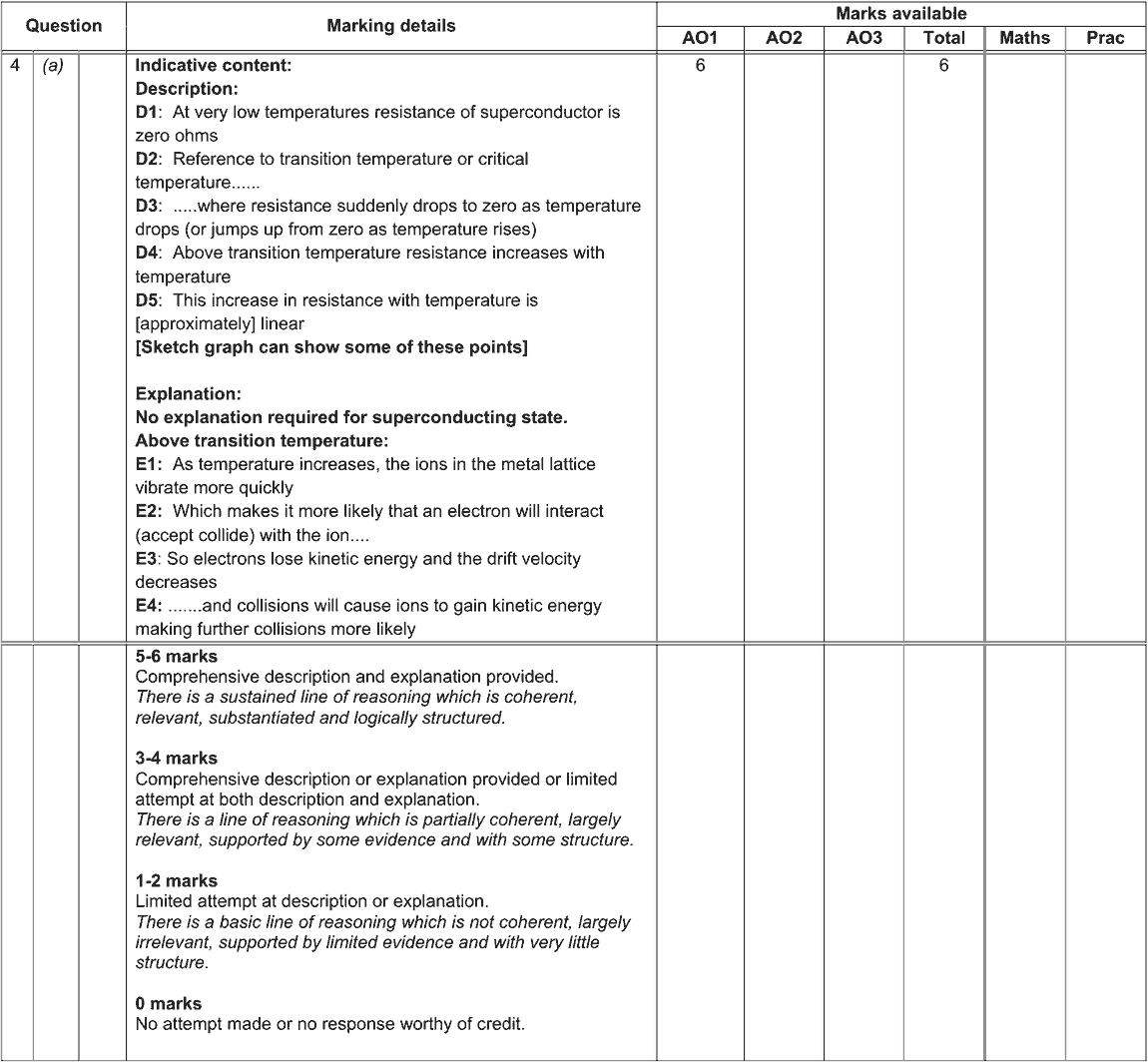
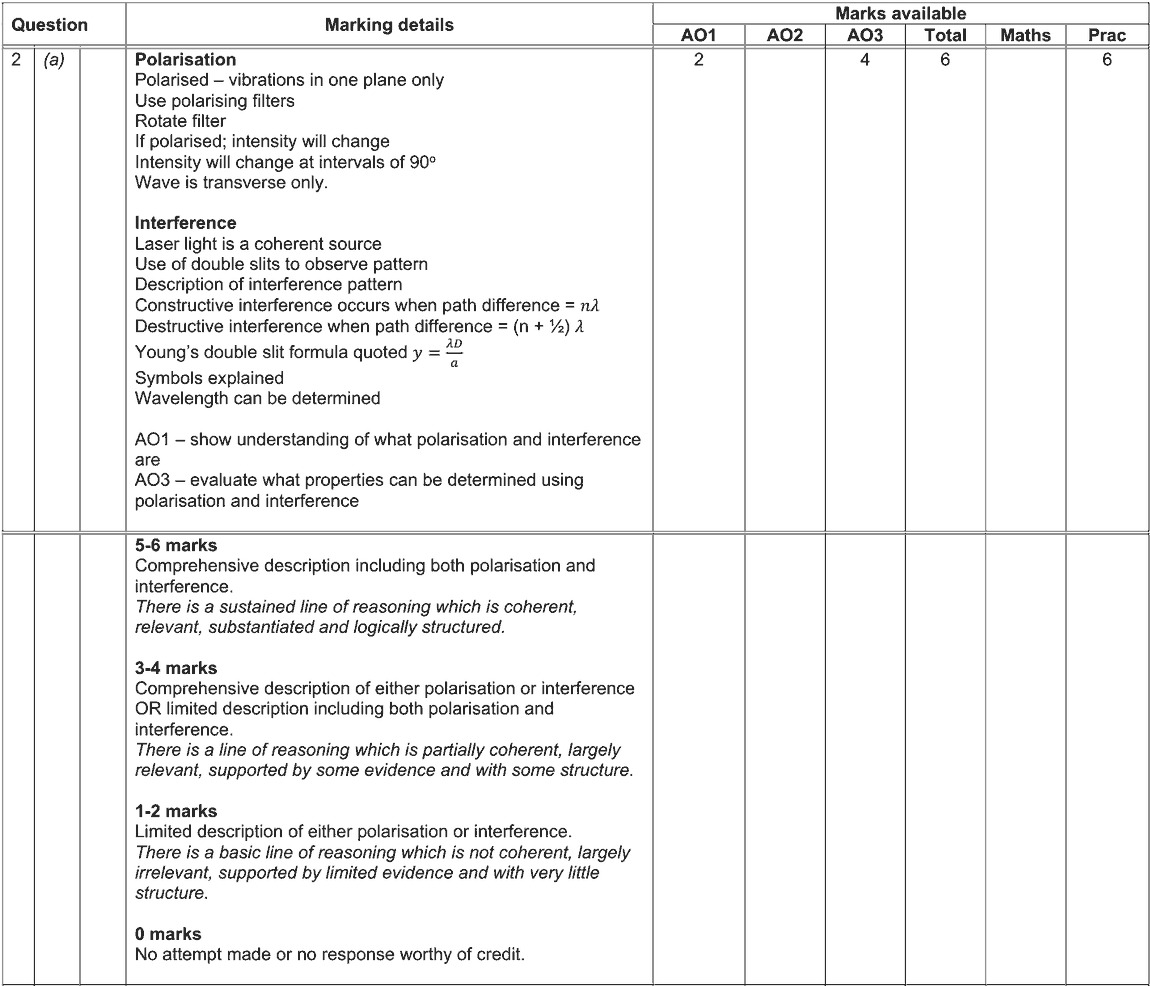
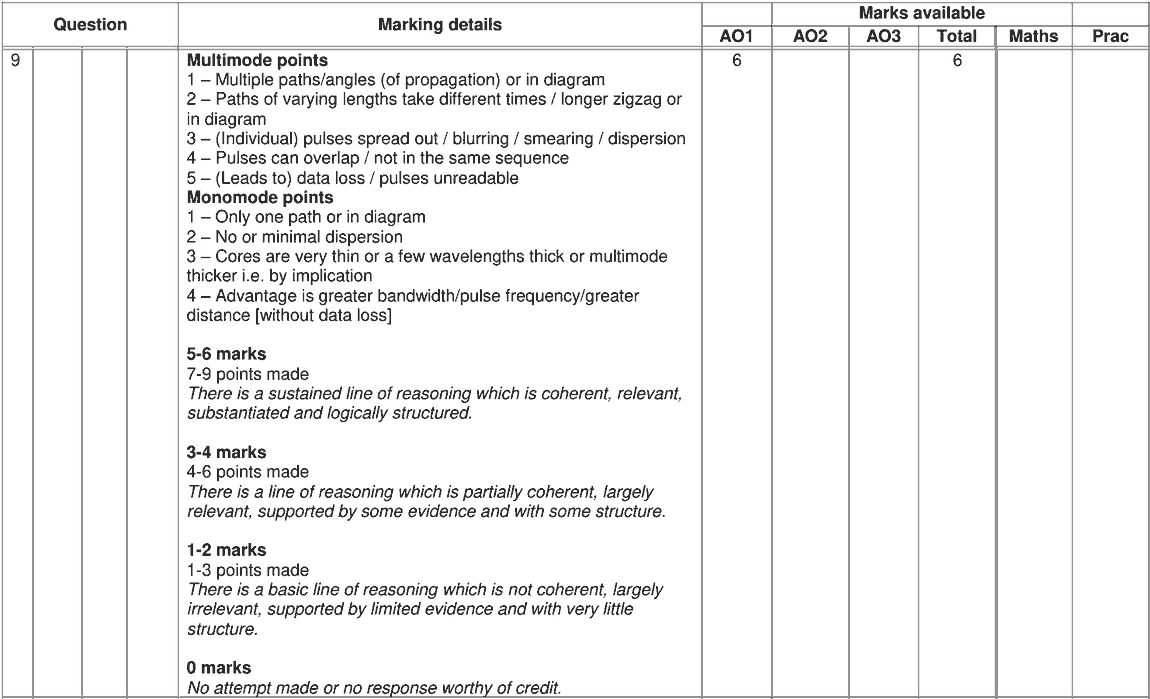
- Scheme columns: Practical 6
Skills: Experimentalmethod Describing, planning or improving an experiment; Practicalmarks The mark scheme's Prac column gives this part at least one mark for practical skills; QER The 6-mark quality of extended response question