June 2016: AS Paper 1, Breadth in physics

70 marks · 42 question parts · Paper, mark scheme and report on OCR's site · Have the Data, Formulae and Relationships Booklet beside you

Question by question

QTopicMarksAOType
1 Work, energy and power 1Multiple choice
2 Work, energy and power 1Multiple choice
3 Electromagnetic waves, polarisation and refraction, Wave motion: progressive waves, the wave equation and intensity 1Multiple choice
4 Wave–particle duality and the de Broglie equation 1Multiple choice
5 Electromagnetic waves, polarisation and refraction 1Multiple choice
6 Dynamics, drag and terminal velocity, Kinematics: displacement, velocity and motion graphs 1Multiple choice
7 Equilibrium: moments, couples and centre of mass, Dynamics, drag and terminal velocity 1Multiple choice
8 Mechanical properties of matter: stress, strain and the Young modulus 1Multiple choice
9 Electrical power and energy, Charge, current and mean drift velocity, E.m.f., p.d., resistance and I–V characteristics, Series and parallel circuits: Kirchhoff's laws 1Multiple choice
10 Collisions: conservation of momentum, Newton's laws of motion and momentum 1Multiple choice
11 Series and parallel circuits: Kirchhoff's laws, Charge, current and mean drift velocity 1Multiple choice
12 Charge, current and mean drift velocity 1Multiple choice
13 Measurements and uncertainties 1Multiple choice
14 Kinematics: displacement, velocity and motion graphs 1Multiple choice
15 E.m.f., p.d., resistance and I–V characteristics 1Multiple choice
16 The photoelectric effect, Work, energy and power 1Multiple choice
17 Mechanical properties of matter: stress, strain and the Young modulus 1Multiple choice
18 Projectile motion, Scalars and vectors, Work, energy and power 1Multiple choice
19 Electrical power and energy 1Multiple choice
20 Electromagnetic waves, polarisation and refraction 1Multiple choice
21(a) Scalars and vectors 2Explanation
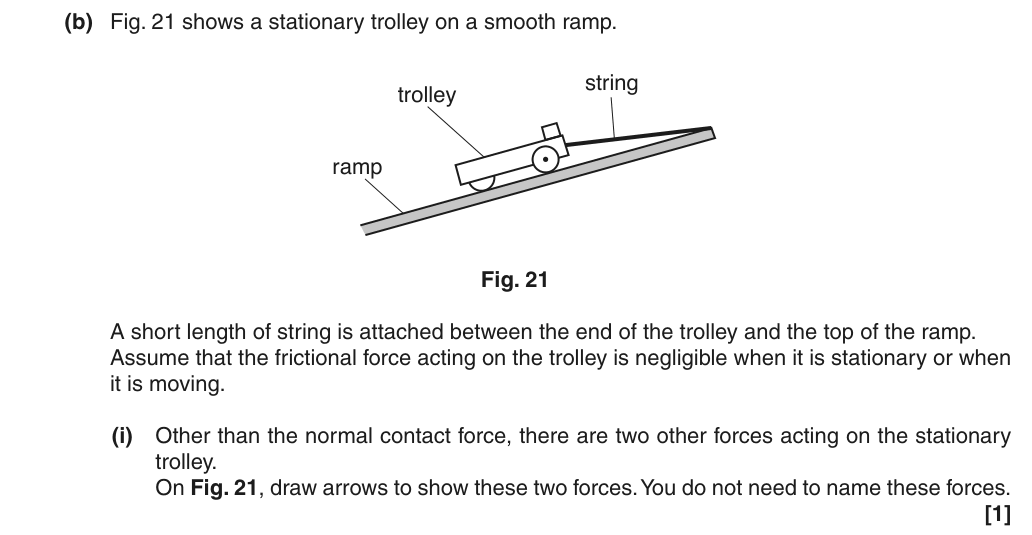
21(b)(i) Dynamics, drag and terminal velocity 1Diagram or graph
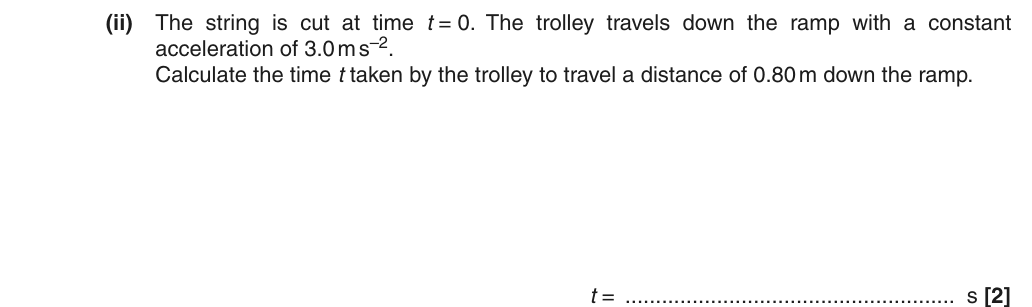
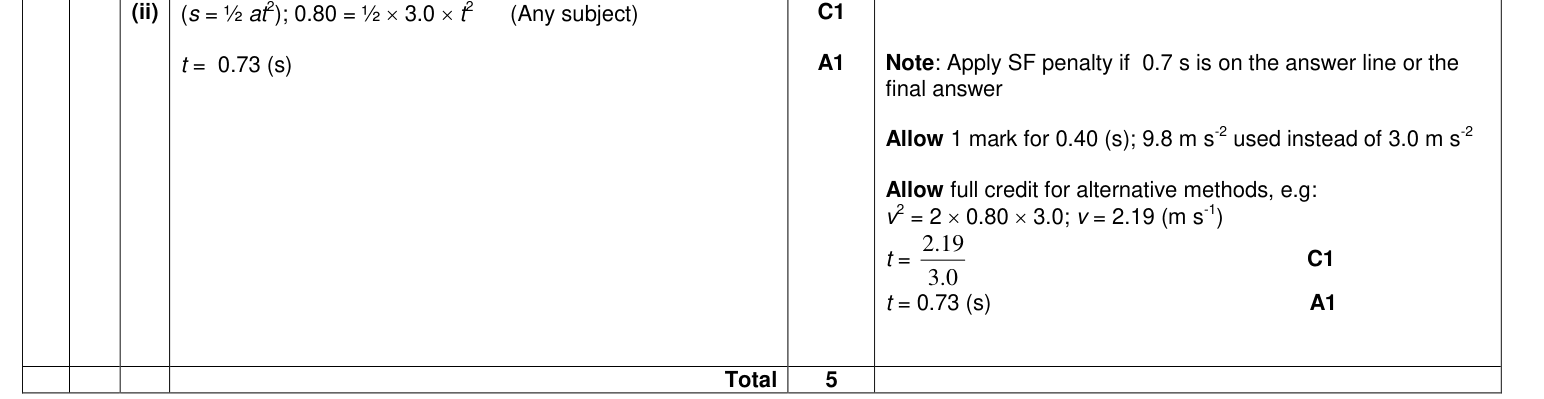
21(b)(ii) Linear motion: the suvat equations and free fall 2Calculation
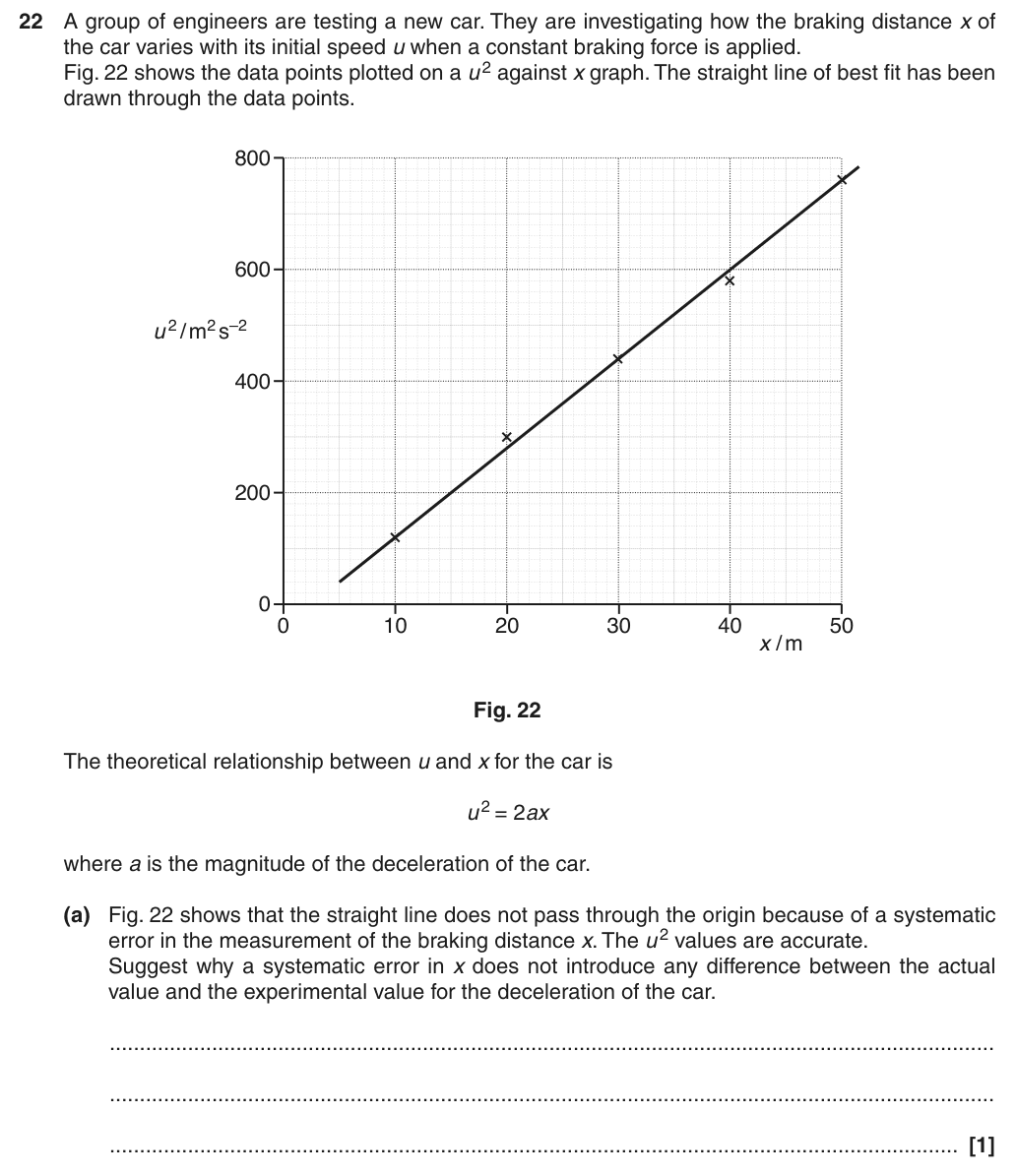
22(a) Measurements and uncertainties, Practical skills: planning, analysis and evaluation 1Explanation
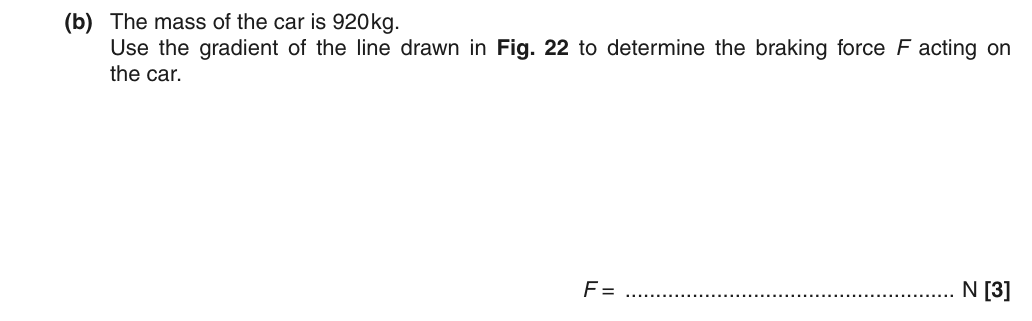
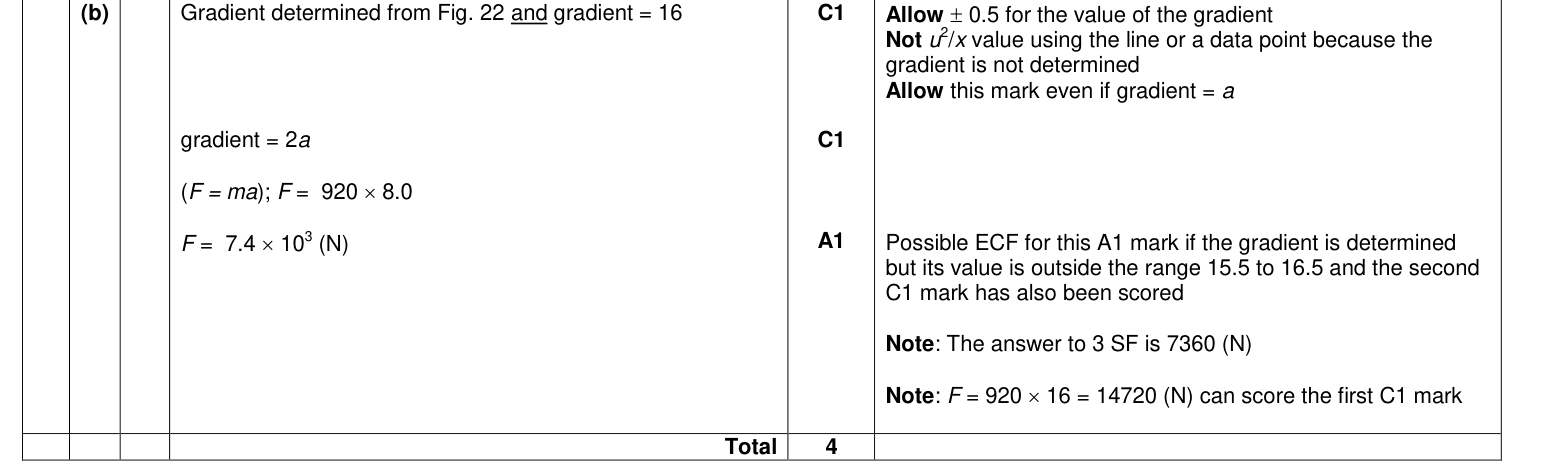
22(b) Dynamics, drag and terminal velocity, Practical skills: planning, analysis and evaluation, Linear motion: the suvat equations and free fall 3Calculation
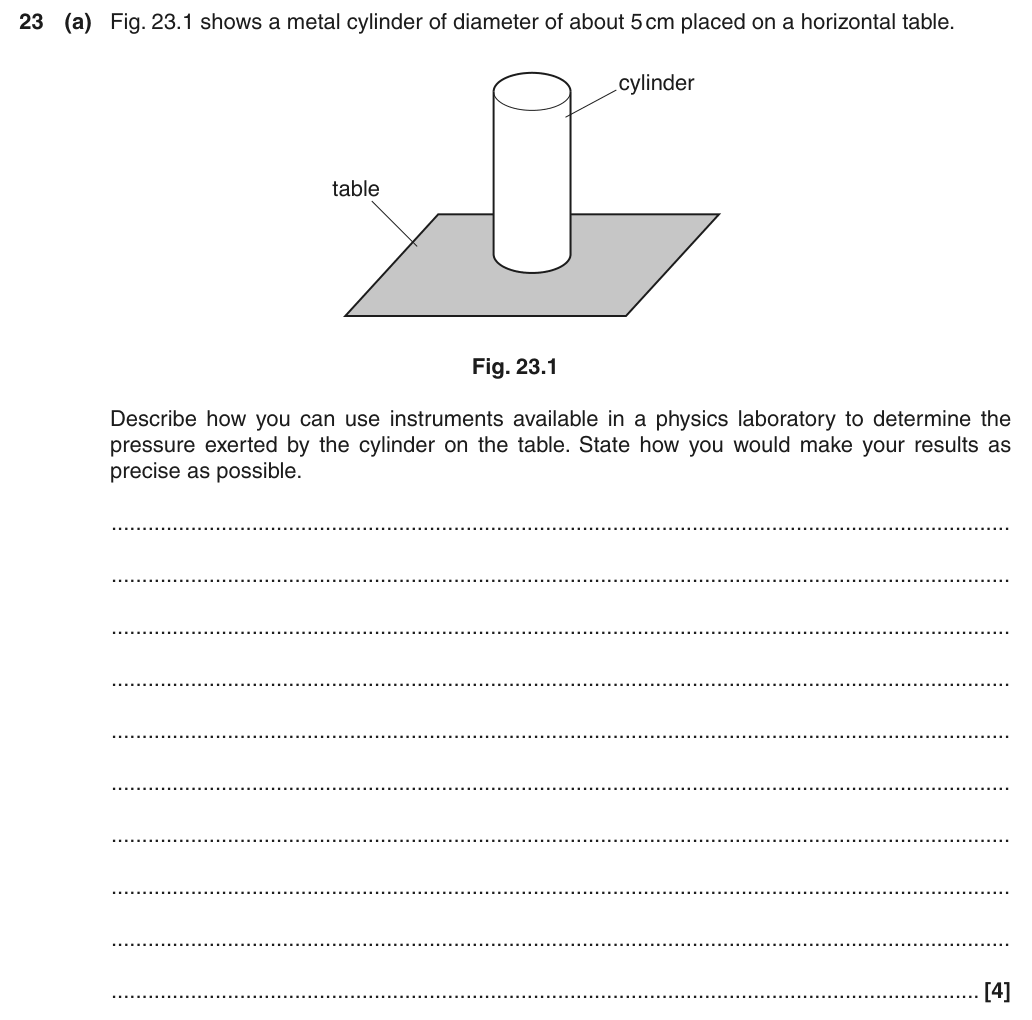
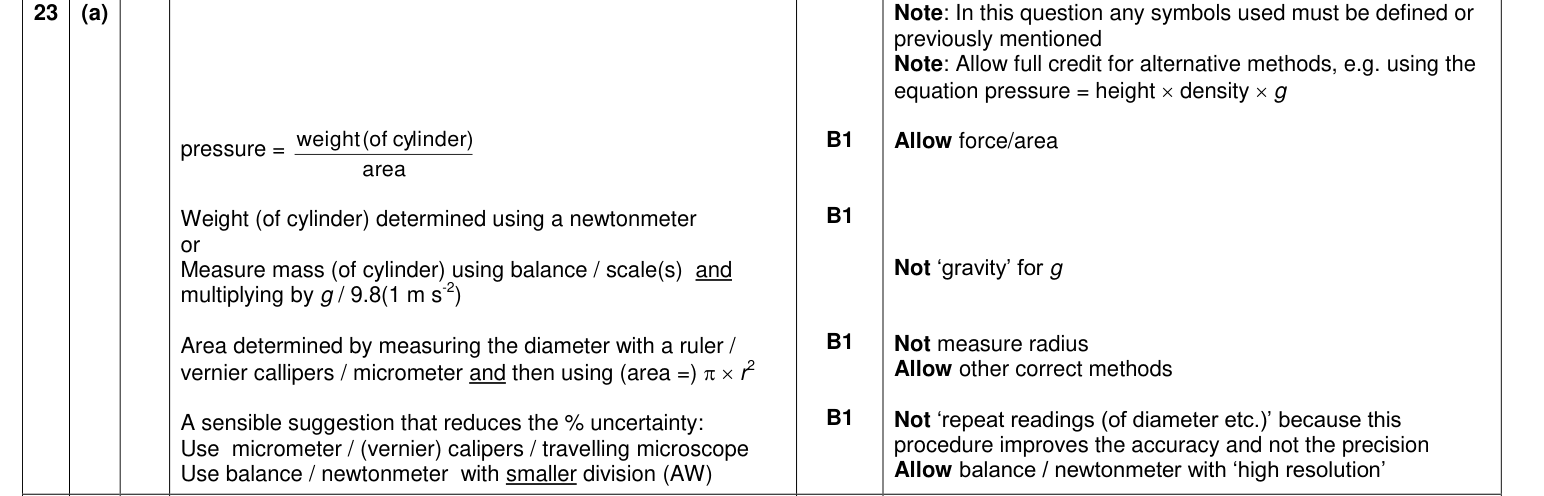
23(a) Density, pressure and upthrust, Practical skills: planning, analysis and evaluation, Measurements and uncertainties, Dynamics, drag and terminal velocity 4Explanation
23(b)(i) Density, pressure and upthrust 1Short answer
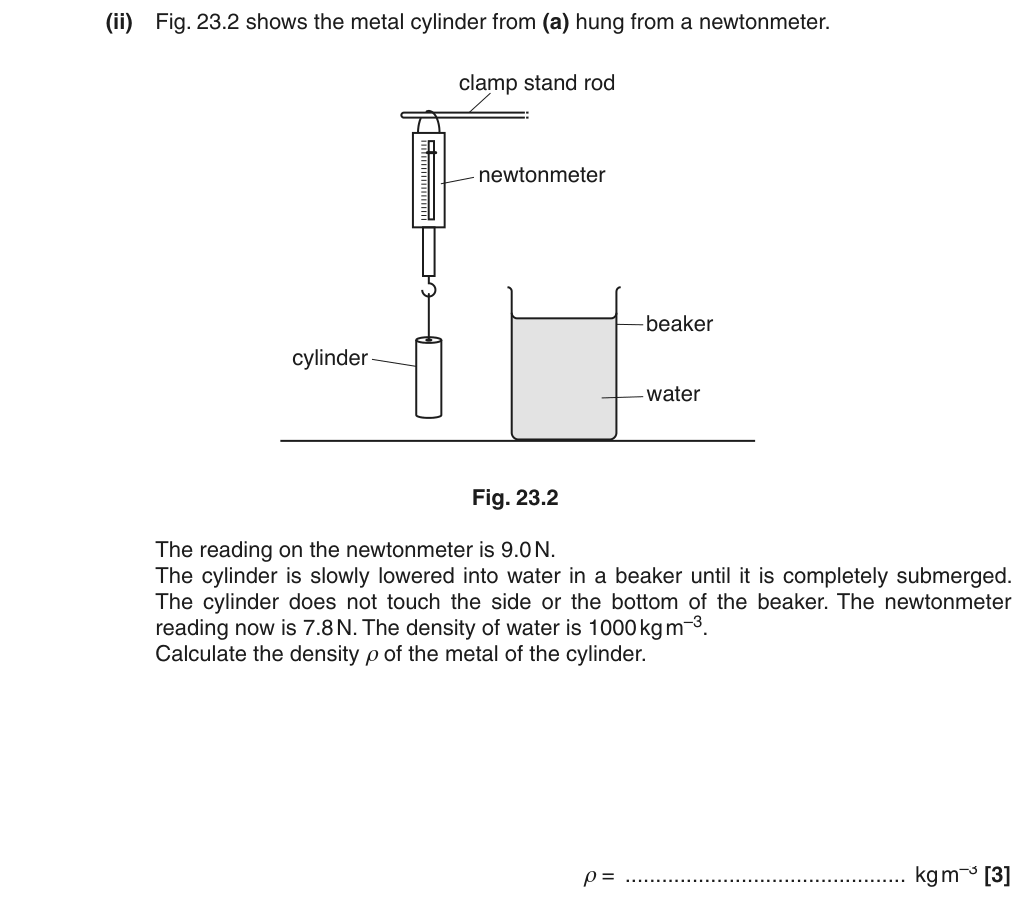
23(b)(ii) Density, pressure and upthrust, Dynamics, drag and terminal velocity 3Calculation
24(a) Newton's laws of motion and momentum 1Short answer
24(b)(i) Collisions: conservation of momentum, Work, energy and power 1Short answer
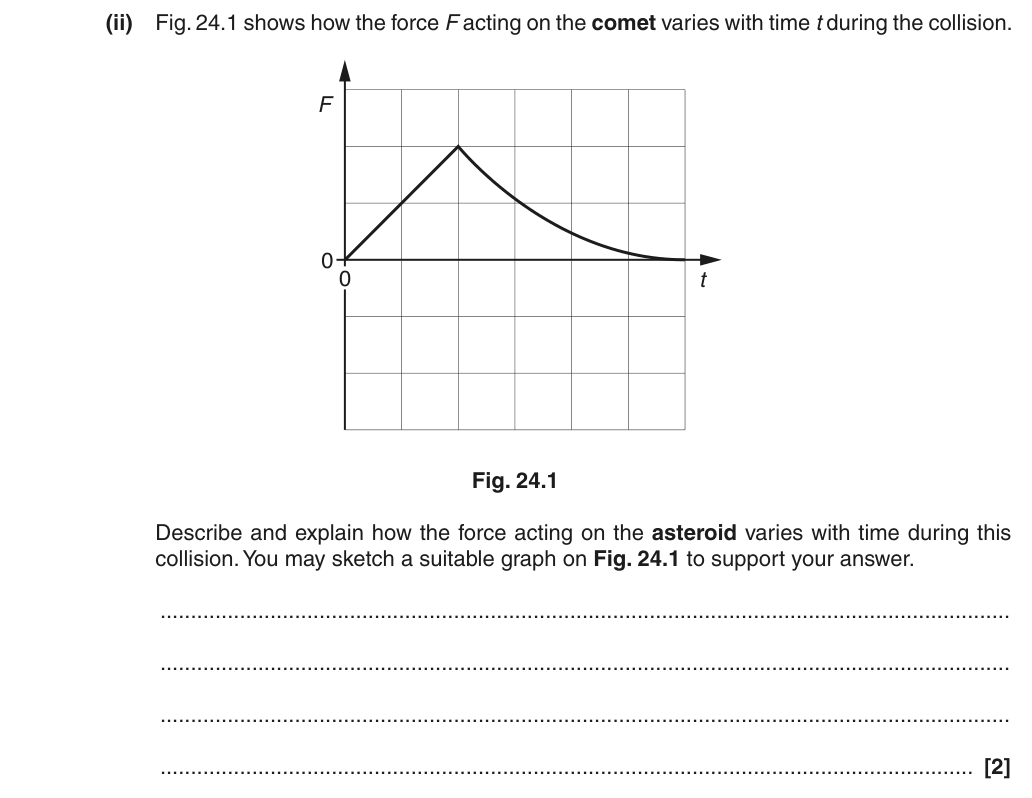
24(b)(ii) Newton's laws of motion and momentum 2Diagram or graph
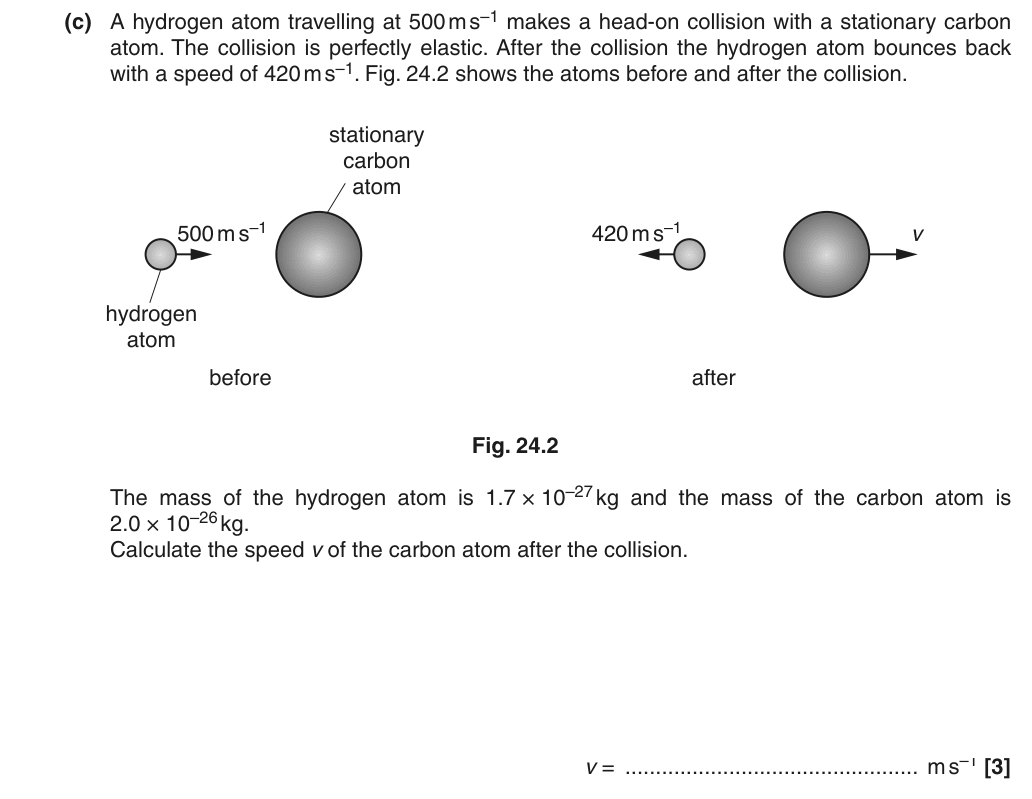
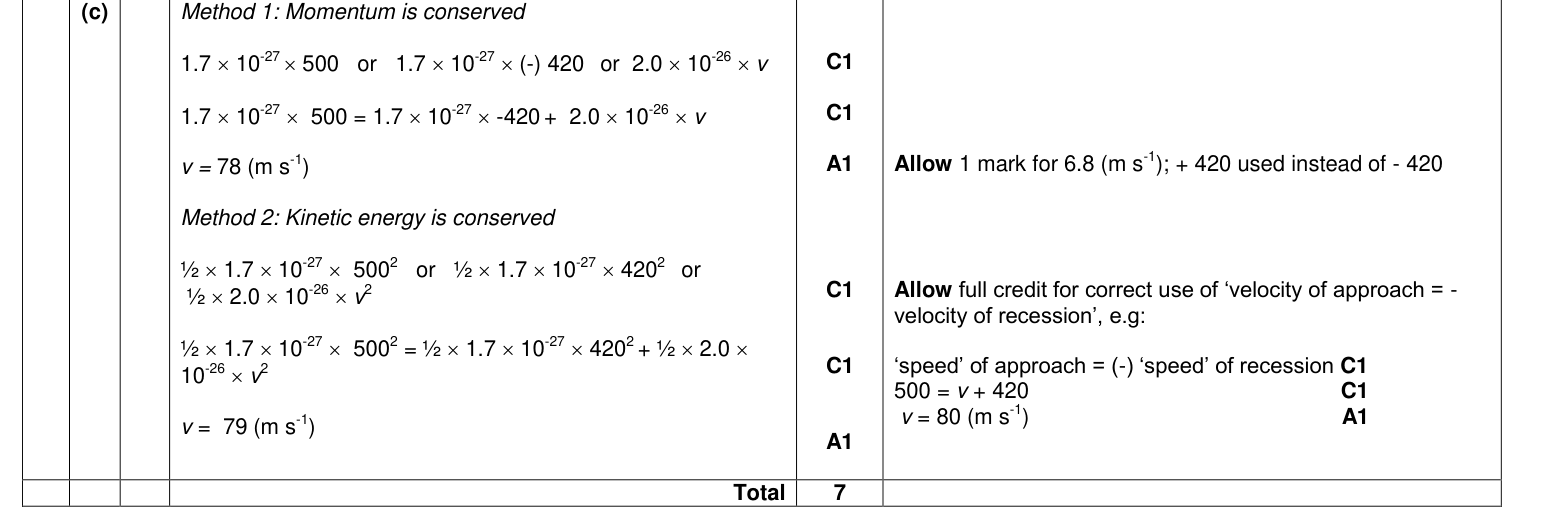
24(c) Collisions: conservation of momentum, Newton's laws of motion and momentum 3Calculation
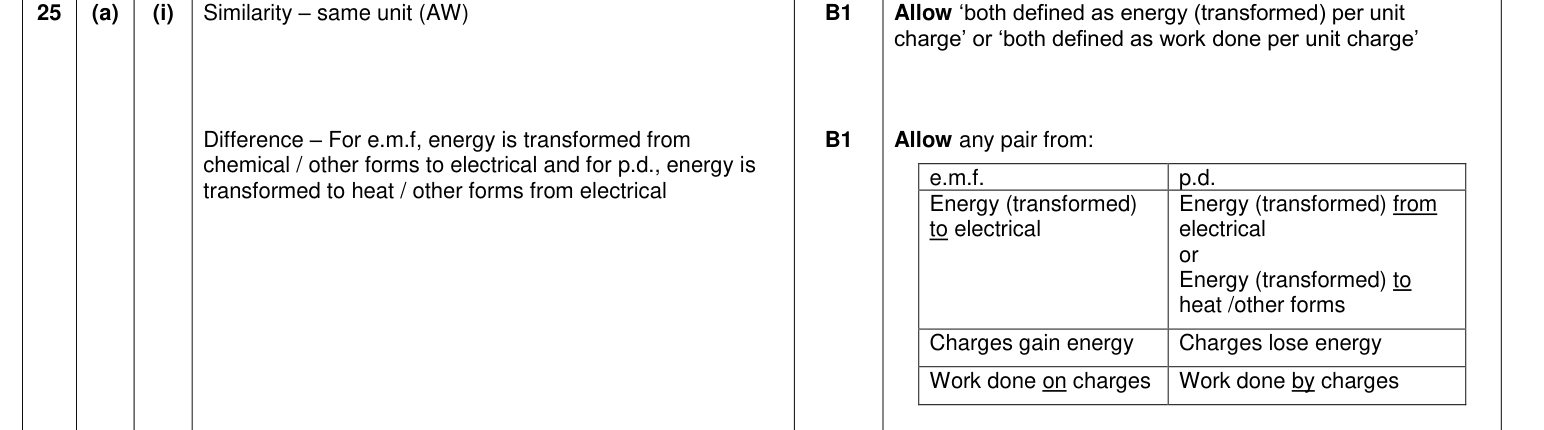
25(a)(i) E.m.f., p.d., resistance and I–V characteristics 2Short answer
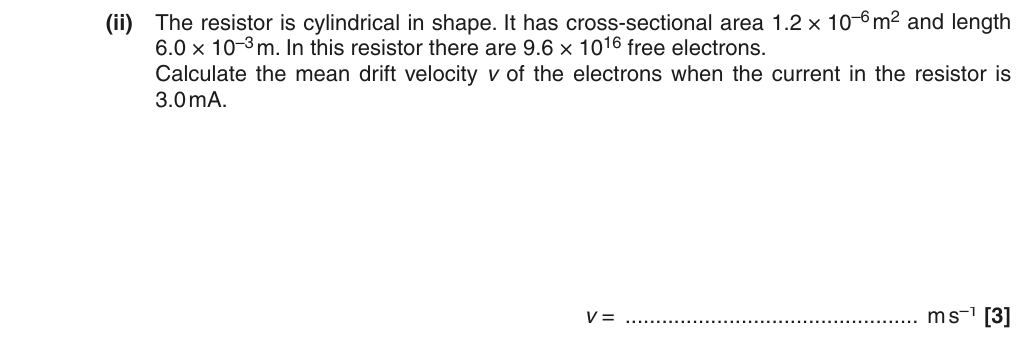
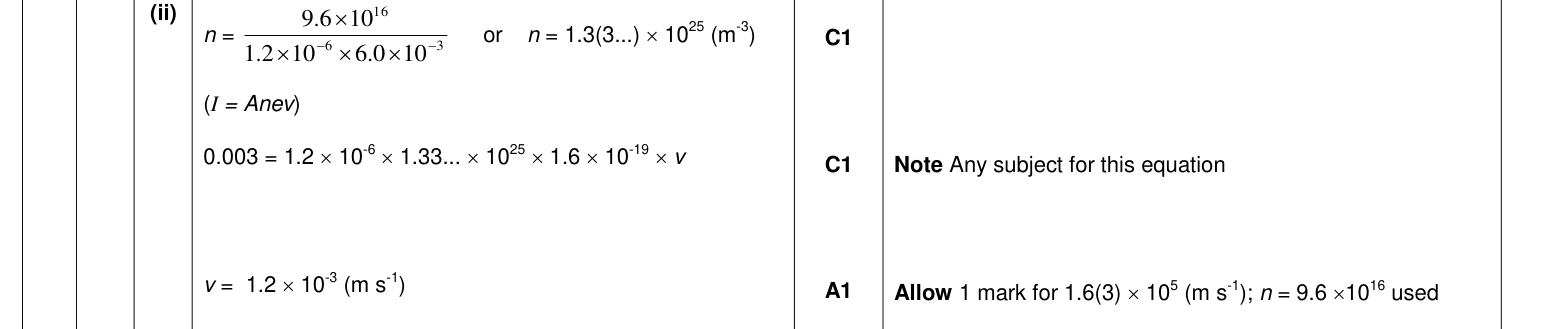
25(a)(ii) Charge, current and mean drift velocity 3Calculation
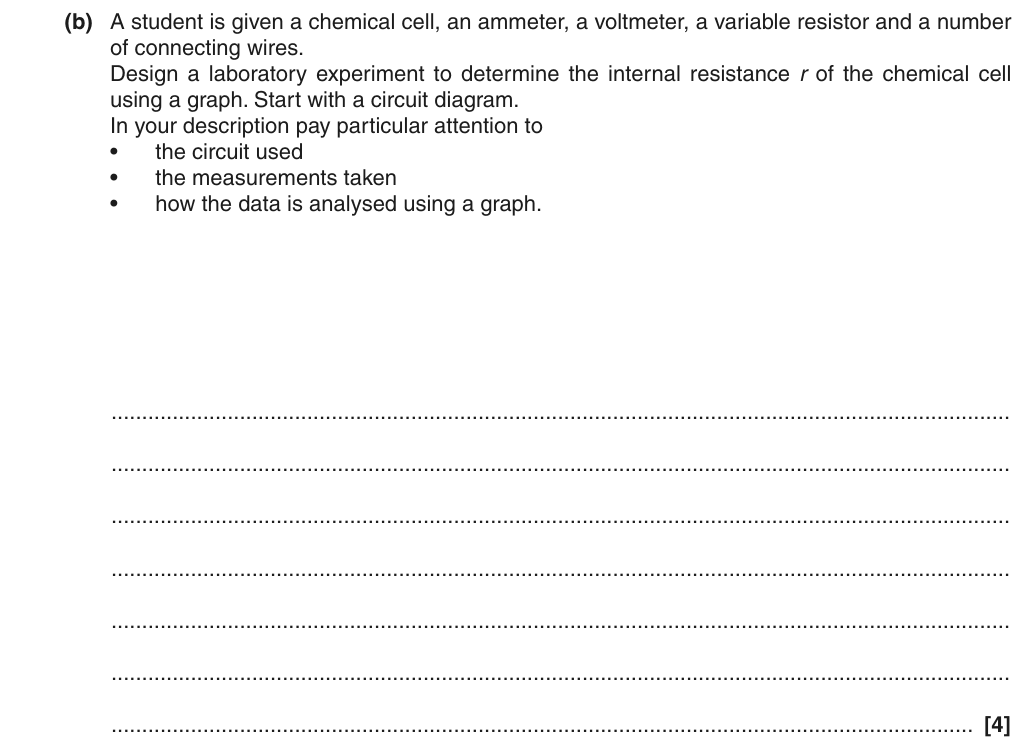
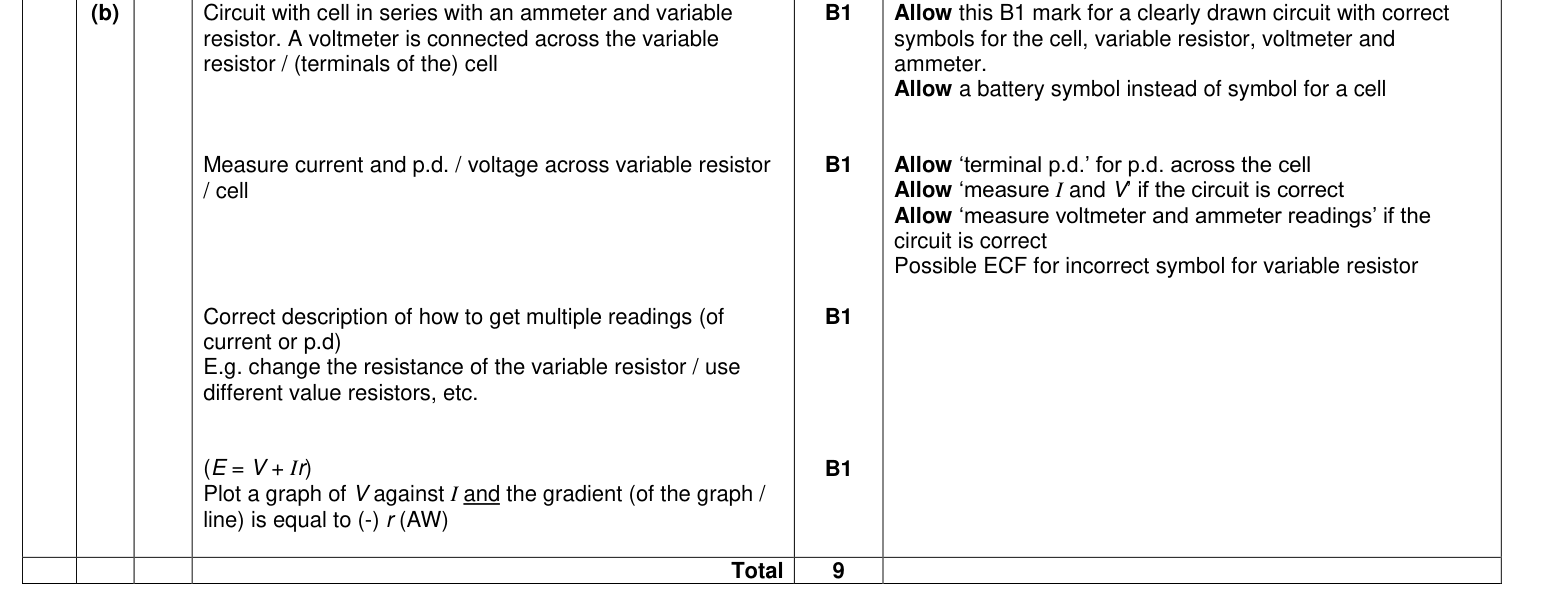
25(b) Internal resistance and e.m.f., Practical skills: planning, analysis and evaluation, E.m.f., p.d., resistance and I–V characteristics 4Diagram or graph
26(a)(i) Wave motion: progressive waves, the wave equation and intensity 1Short answer
26(a)(ii) Wave motion: progressive waves, the wave equation and intensity, Measurements and uncertainties 3Calculation
26(b)(i) Stationary waves, Superposition, interference and the double slit 2Explanation
26(b)(ii) Stationary waves 1Explanation
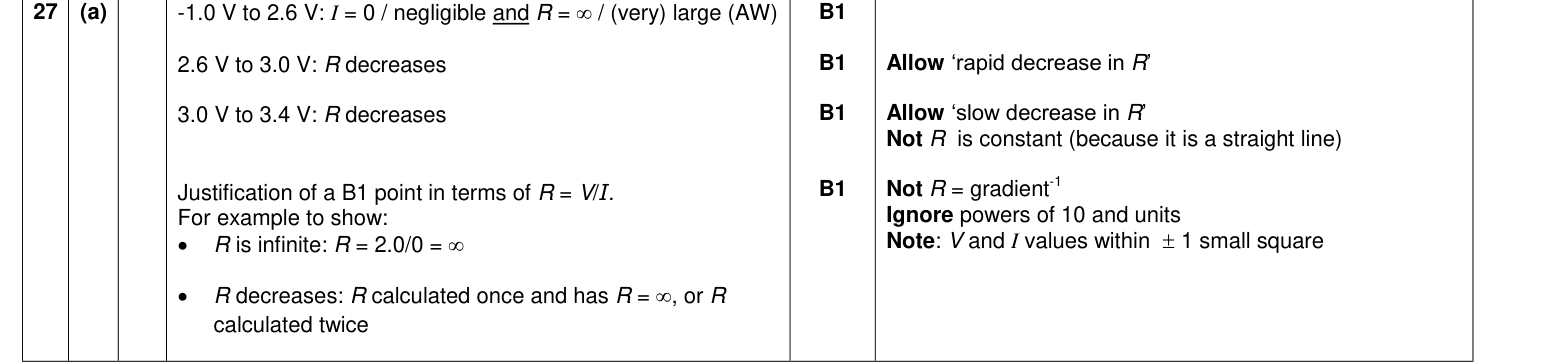
27(a) E.m.f., p.d., resistance and I–V characteristics 4Explanation
27(b) E.m.f., p.d., resistance and I–V characteristics 3Explanation
27(c) Photons and the Planck constant 3Calculation

The questions

123456789101112131415161718192021(a)21(b)(i)21(b)(ii)22(a)22(b)23(a)23(b)(i)23(b)(ii)24(a)24(b)(i)24(b)(ii)24(c)25(a)(i)25(a)(ii)25(b)26(a)(i)26(a)(ii)26(b)(i)26(b)(ii)27(a)27(b)27(c)
June 2016 · AS Paper 1 · Q1 1 mark Multiple choice work energy and power
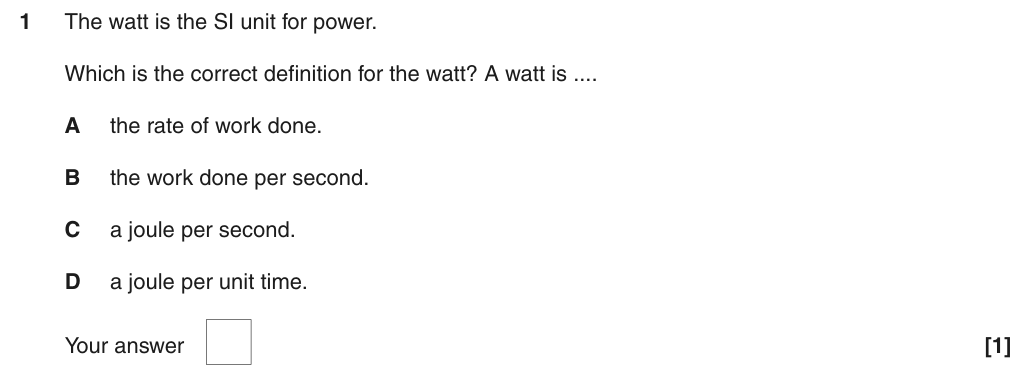
1 The watt is the SI unit for power.
Which is the correct definition for the watt? A watt is ....
A the rate of work done.
B the work done per second.
C a joule per second.
D a joule per unit time.
Your answer [1]
June 2016 · AS Paper 1 · Q2 1 mark Multiple choice work energy and power
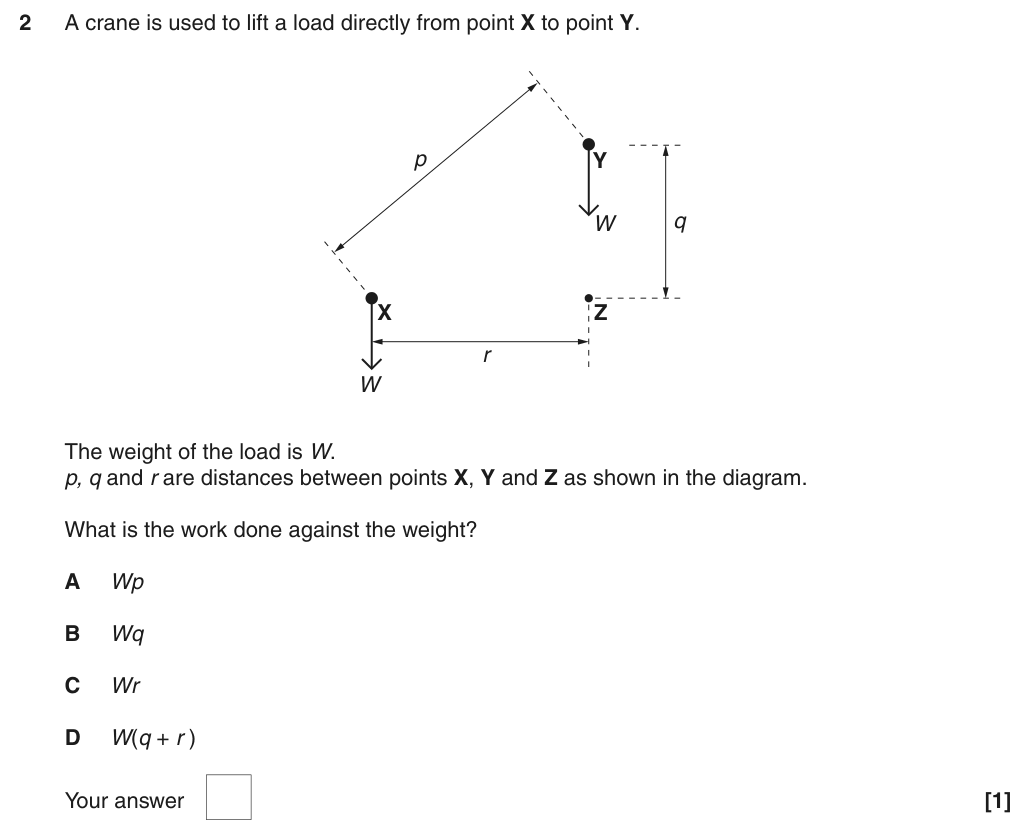
2 A crane is used to lift a load directly from point X to point Y.
p Y
W q
X Z
r
W
The weight of the load is W.
p, q and r are distances between points X, Y and Z as shown in the diagram.
What is the work done against the weight?
A Wp
B Wq
C Wr
D W(q + r )
Your answer [1]
June 2016 · AS Paper 1 · Q3 1 mark Multiple choice electromagnetic waves and refractionwave motion
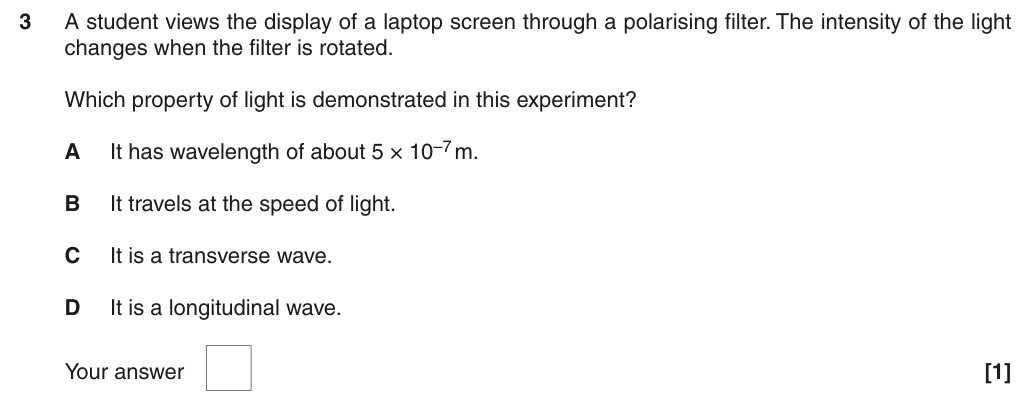
3 A student views the display of a laptop screen through a polarising filter. The intensity of the light
changes when the filter is rotated.
Which property of light is demonstrated in this experiment?
A It has wavelength of about 5 × 10⁻⁷ m.
B It travels at the speed of light.
C It is a transverse wave.
D It is a longitudinal wave.
Your answer [1]
June 2016 · AS Paper 1 · Q4 1 mark Multiple choice wave particle duality
4 Electrons travelling through a thin film of carbon are diffracted.
Which statement is correct?
The electrons behave like ....
A photons and are deflected by the carbon atoms.
B photons and change direction as their speed changes.
C waves and are refracted by the holes in the carbon film.
D waves of wavelength similar to the spacing between carbon atoms.
Your answer [1]
June 2016 · AS Paper 1 · Q5 1 mark Multiple choice electromagnetic waves and refraction
5 In which region of the electromagnetic spectrum is radiation of wavelength 50 µm?
A visible
B infra-red
C microwave
D radio
Your answer [1]
June 2016 · AS Paper 1 · Q6 1 mark Multiple choice dynamics and terminal velocitykinematics
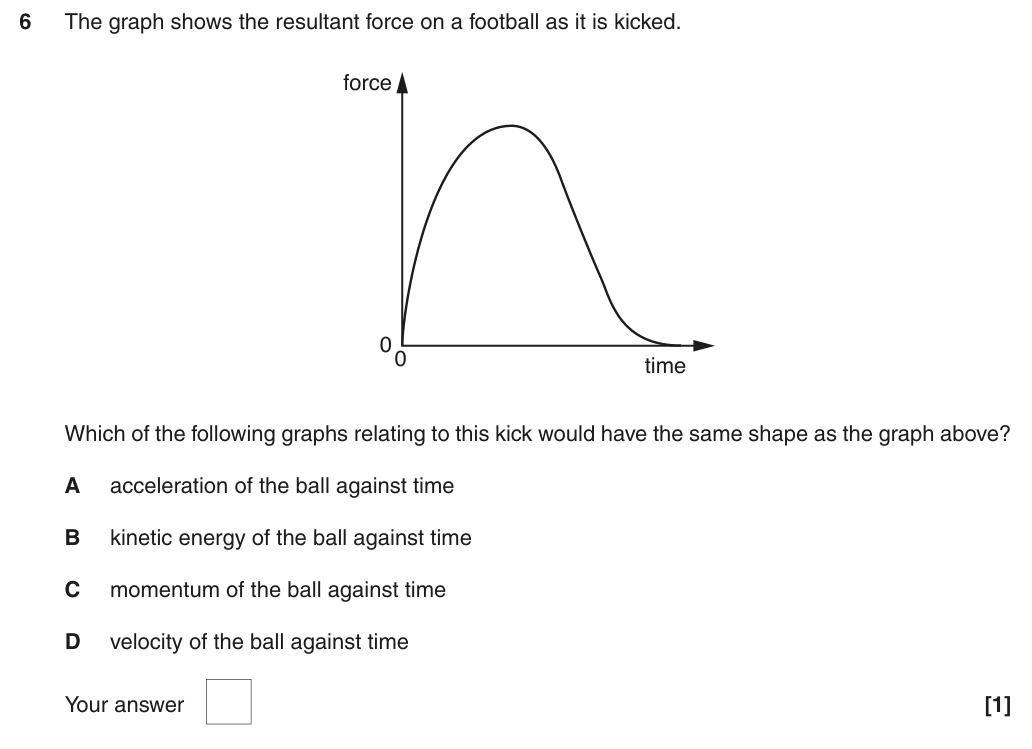
6 The graph shows the resultant force on a football as it is kicked.
force
0
0 time
Which of the following graphs relating to this kick would have the same shape as the graph above?
A acceleration of the ball against time
B kinetic energy of the ball against time
C momentum of the ball against time
D velocity of the ball against time
Your answer [1]
June 2016 · AS Paper 1 · Q7 1 mark Multiple choice equilibrium and momentsdynamics and terminal velocity
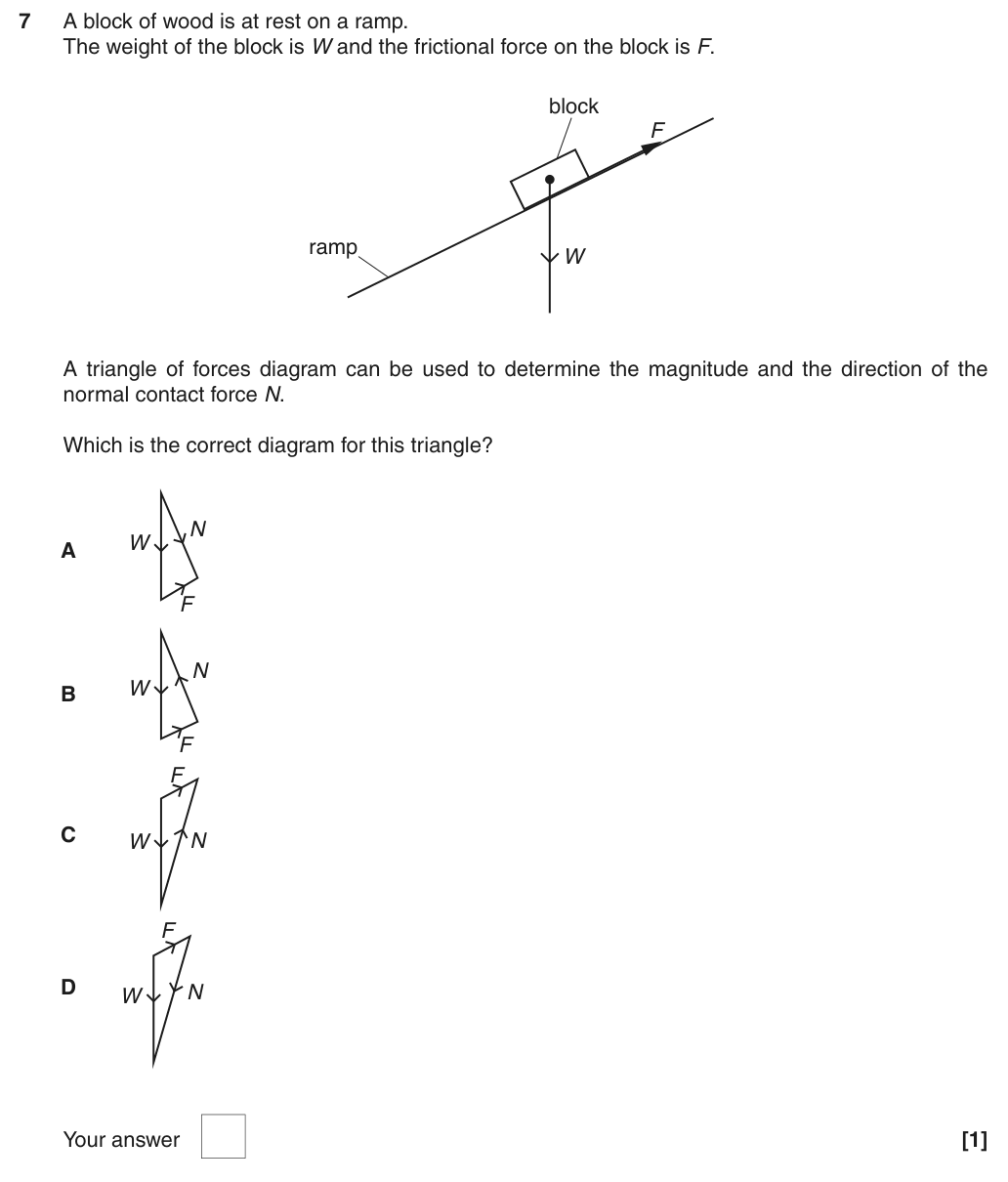
7 A block of wood is at rest on a ramp.
The weight of the block is W and the frictional force on the block is F.
block
F
ramp
W
A triangle of forces diagram can be used to determine the magnitude and the direction of the
normal contact force N.
Which is the correct diagram for this triangle?
N
W
A
F
N
B W
F
F
C N
W
F
D N
W
Your answer [1]
June 2016 · AS Paper 1 · Q8 1 mark Multiple choice materials and young modulus
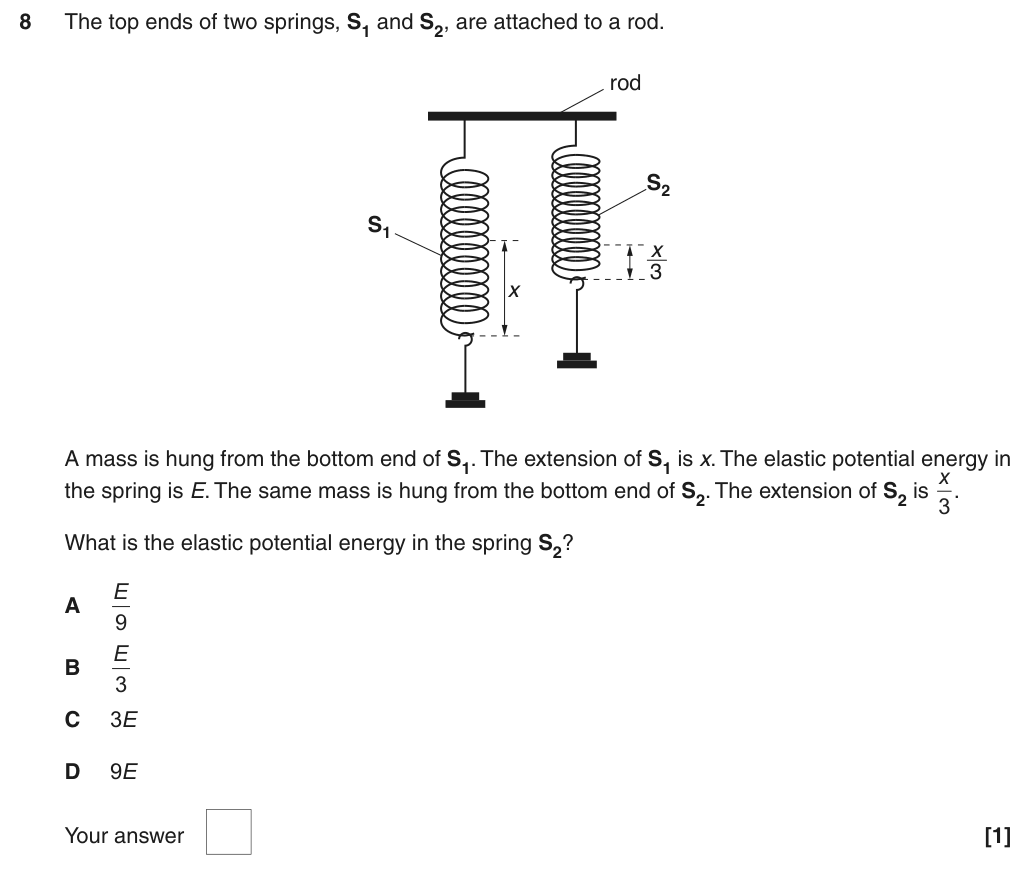
8 The top ends of two springs, S1 and S2, are attached to a rod.
rod
S2
S1
x
3
x
A mass is hung from the bottom end of S1. The extension of S1 is x. The elastic potential energy in
the spring is E. The same mass is hung from the bottom end of S2. The extension of S2 is x
3 .
What is the elastic potential energy in the spring S2?
E
A
9
E
B
3
C 3E
D 9E
Your answer [1]
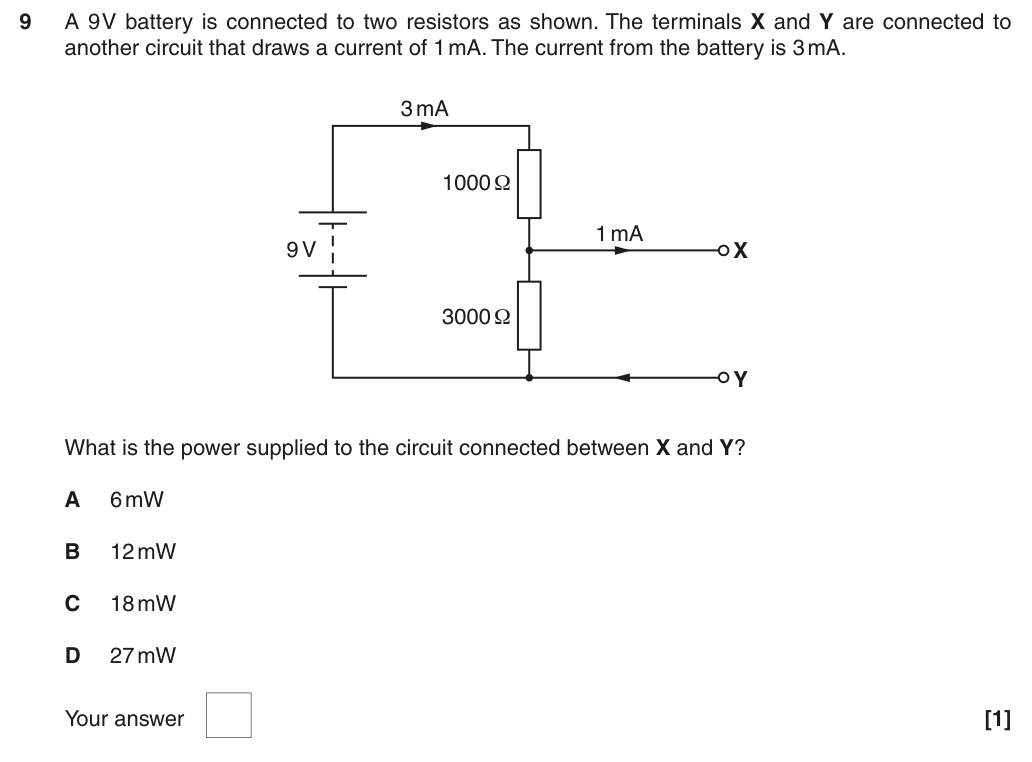
9 A 9 V battery is connected to two resistors as shown. The terminals X and Y are connected to
another circuit that draws a current of 1 mA. The current from the battery is 3 mA.
3 mA
1000 Ω
1 mA
9 V X
3000 Ω
Y
What is the power supplied to the circuit connected between X and Y?
A 6 mW
B 12 mW
C 18 mW
D 27 mW
Your answer [1]
June 2016 · AS Paper 1 · Q10 1 mark Multiple choice collisionsnewtons laws and momentum
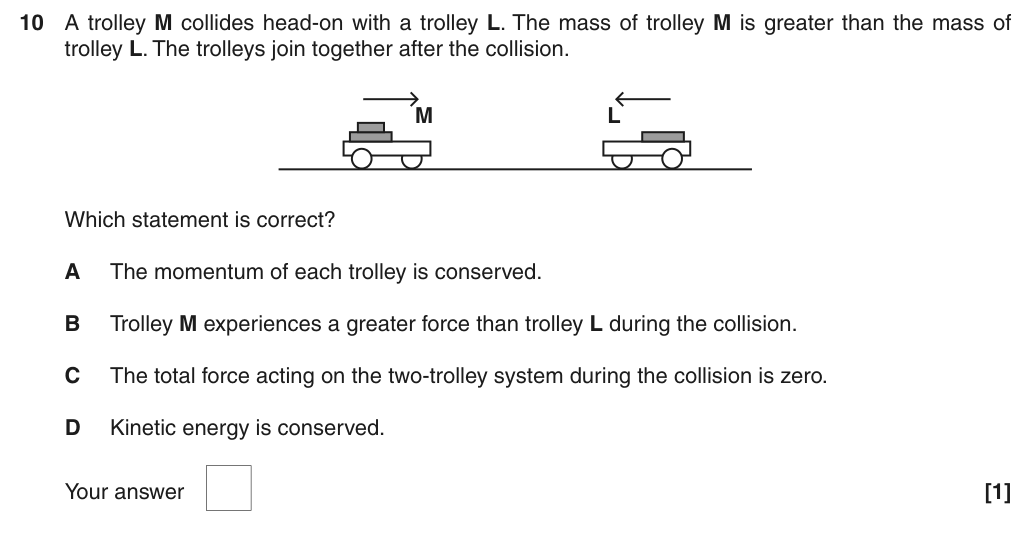
10 A trolley M collides head-on with a trolley L. The mass of trolley M is greater than the mass of
trolley L. The trolleys join together after the collision.
M L
Which statement is correct?
A The momentum of each trolley is conserved.
B Trolley M experiences a greater force than trolley L during the collision.
C The total force acting on the two-trolley system during the collision is zero.
D Kinetic energy is conserved.
Your answer [1]
June 2016 · AS Paper 1 · Q11 1 mark Multiple choice series and parallel circuitscharge and current
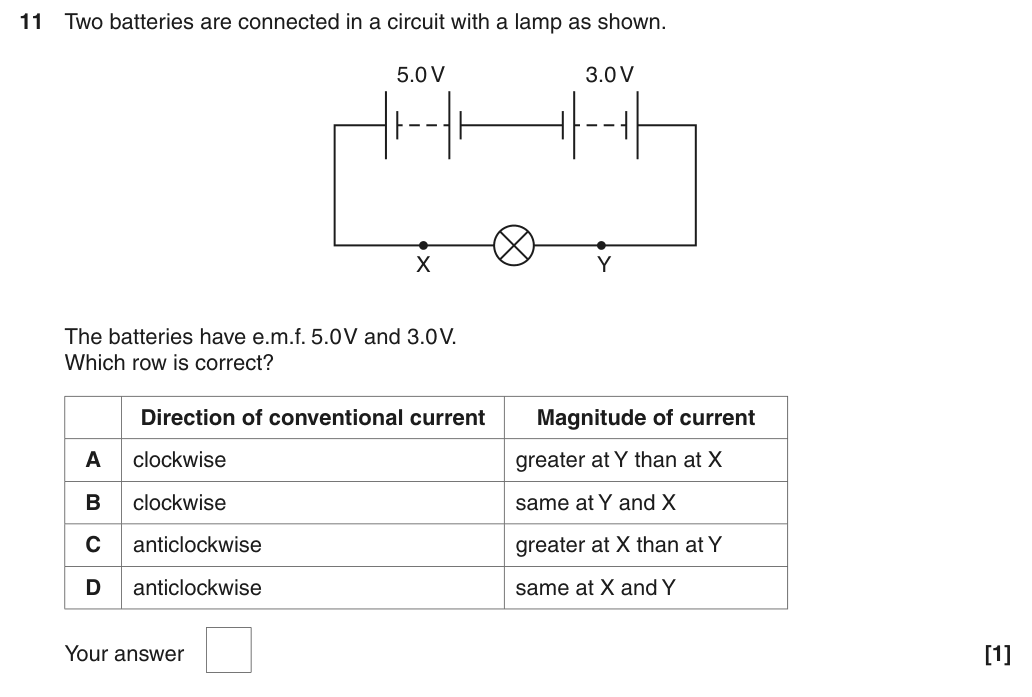
11 Two batteries are connected in a circuit with a lamp as shown.
5.0 V 3.0 V
X Y
The batteries have e.m.f. 5.0 V and 3.0 V.
Which row is correct?
Direction of conventional current Magnitude of current
A clockwise greater at Y than at X
B clockwise same at Y and X
C anticlockwise greater at X than at Y
D anticlockwise same at X and Y
Your answer [1]
June 2016 · AS Paper 1 · Q12 1 mark Multiple choice charge and current
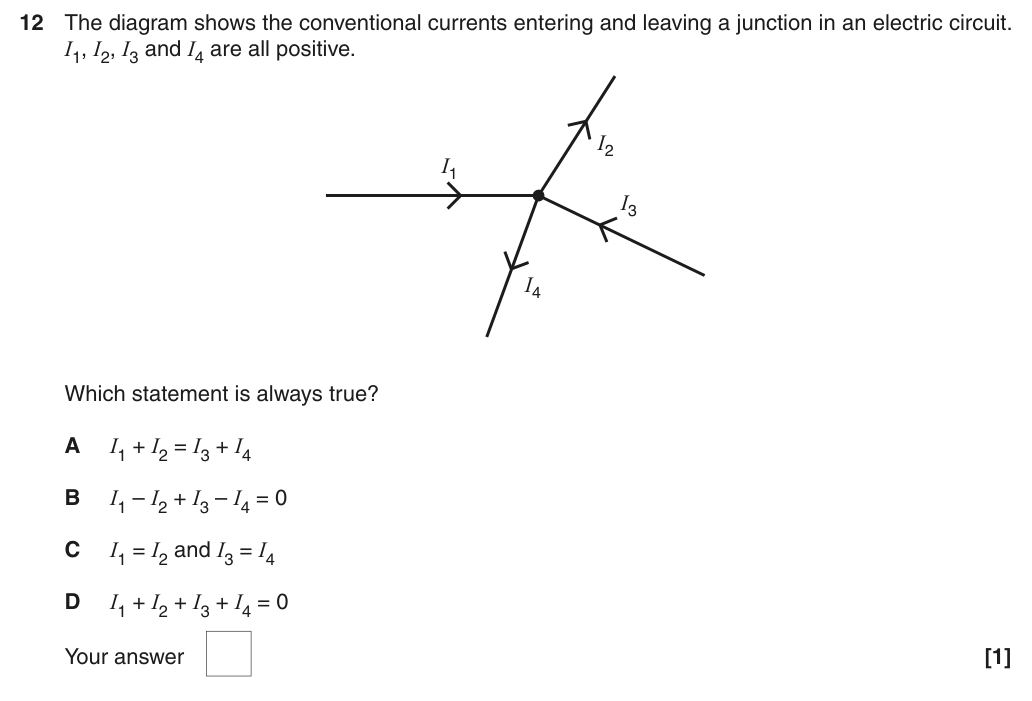
12 The diagram shows the conventional currents entering and leaving a junction in an electric circuit.
I1, I2, I3 and I4 are all positive.
I2
I1
I3
I4
Which statement is always true?
A I1 + I2 = I3 + I4
B I1 – I2 + I3 – I4 = 0
C I1 = I2 and I3 = I4
D I1 + I2 + I3 + I4 = 0
Your answer [1]
June 2016 · AS Paper 1 · Q13 1 mark Multiple choice measurements and uncertainties
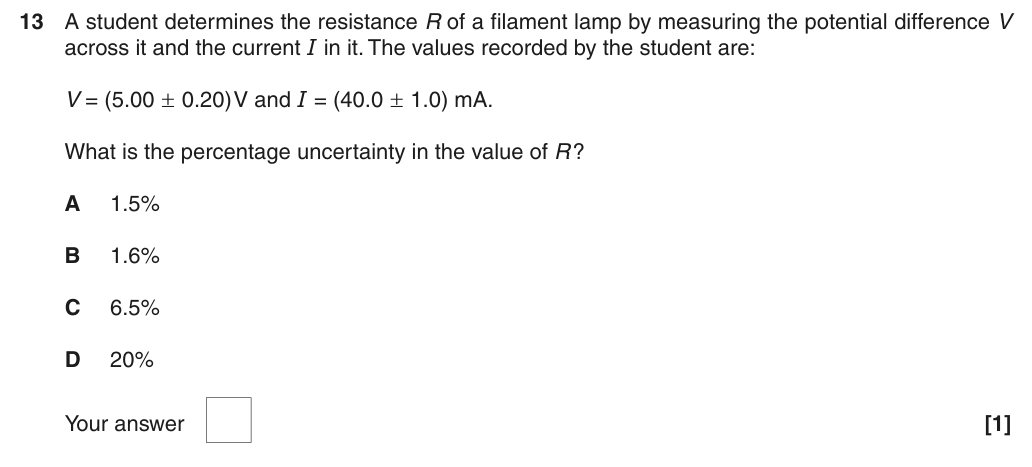
13 A student determines the resistance R of a filament lamp by measuring the potential difference V
across it and the current I in it. The values recorded by the student are:
V = (5.00 ! 0.20) V and I = (40.0 ! 1.0) mA.
What is the percentage uncertainty in the value of R ?
A 1.5%
B 1.6%
C 6.5%
D 20%
Your answer [1]
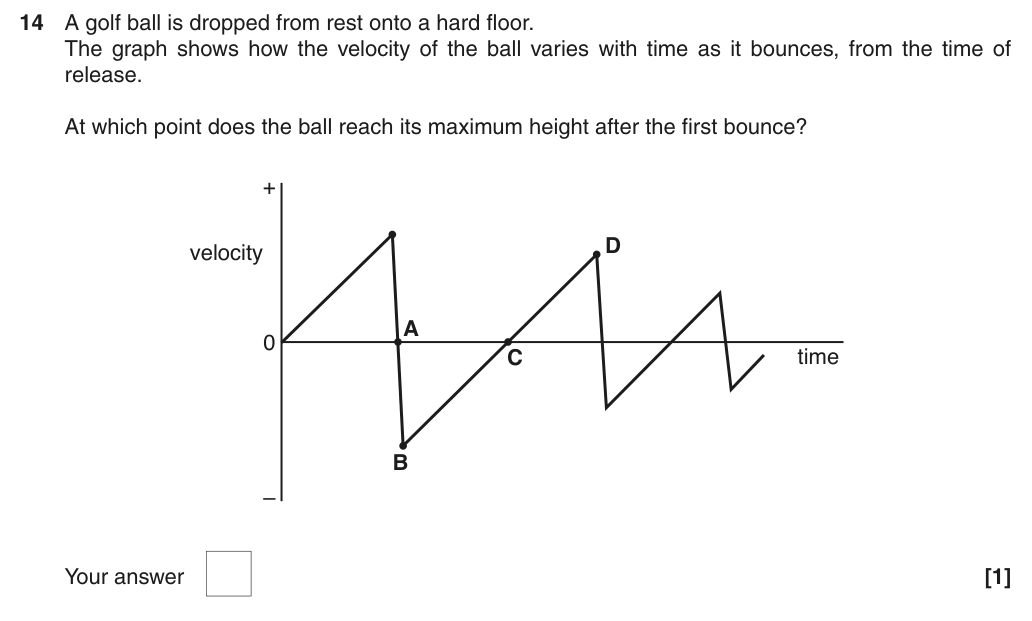
June 2016 · AS Paper 1 · Q14 1 mark Multiple choice kinematics
14 A golf ball is dropped from rest onto a hard floor.
The graph shows how the velocity of the ball varies with time as it bounces, from the time of
release.
At which point does the ball reach its maximum height after the first bounce?
+
D
velocity
A
0
C time
B
–
Your answer [1]
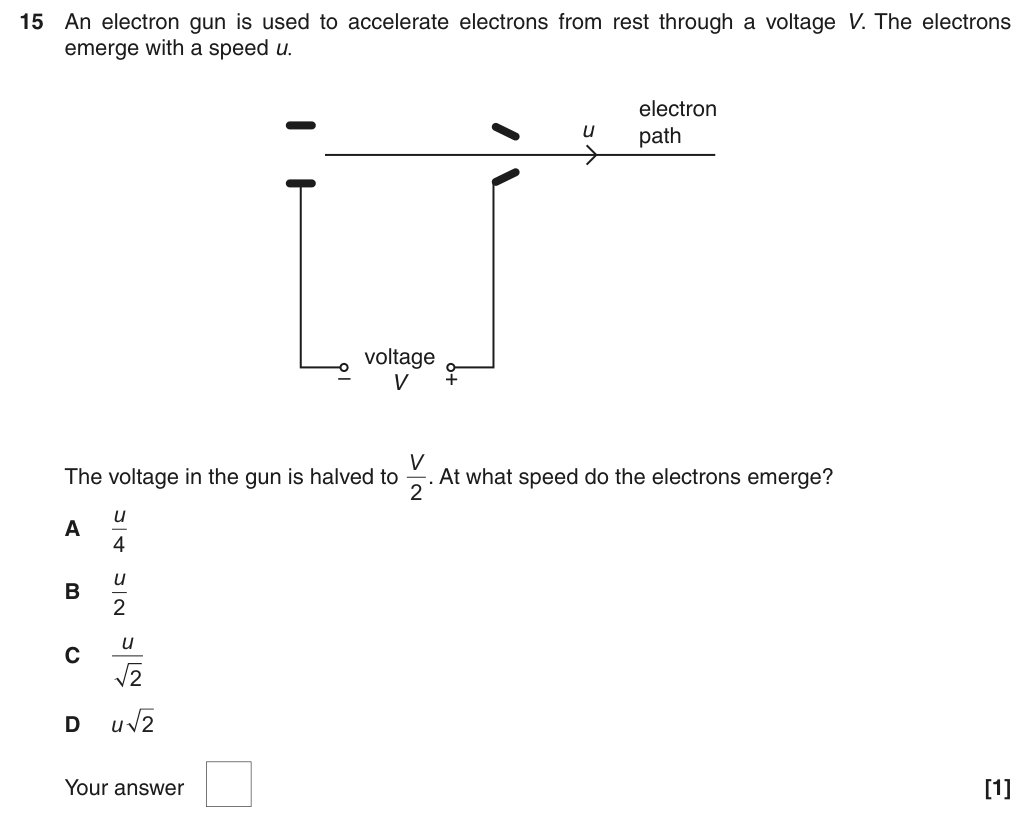
June 2016 · AS Paper 1 · Q15 1 mark Multiple choice emf pd and resistance
15 An electron gun is used to accelerate electrons from rest through a voltage V. The electrons
emerge with a speed u.
electron
u path
voltage
– V +
The voltage in the gun is halved to V
2 . At what speed do the electrons emerge?
u
A
4
u
B
2
u
C
2
D u 2
Your answer [1]
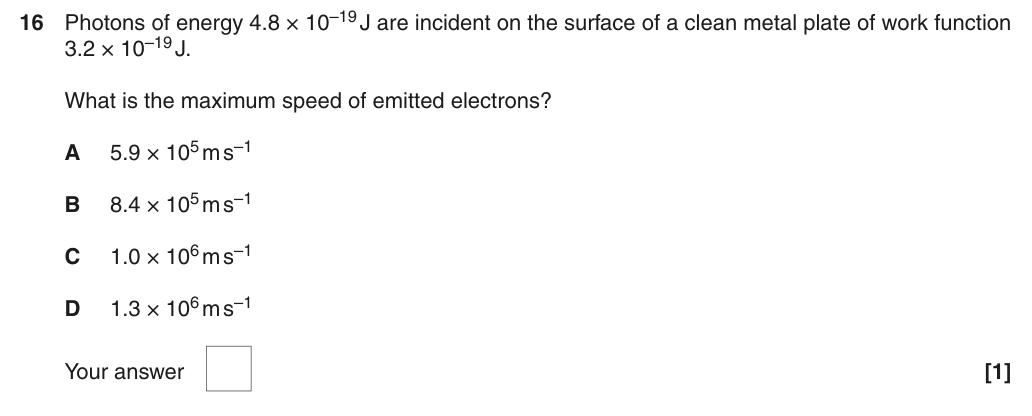
June 2016 · AS Paper 1 · Q16 1 mark Multiple choice photoelectric effectwork energy and power
16 Photons of energy 4.8 × 10⁻¹⁹ J are incident on the surface of a clean metal plate of work function
3.2 × 10⁻¹⁹ J.
What is the maximum speed of emitted electrons?
A 5.9 × 10⁵ m s–1
B 8.4 × 10⁵ m s–1
C 1.0 × 10⁶ m s–1
D 1.3 × 10⁶ m s–1
Your answer [1]
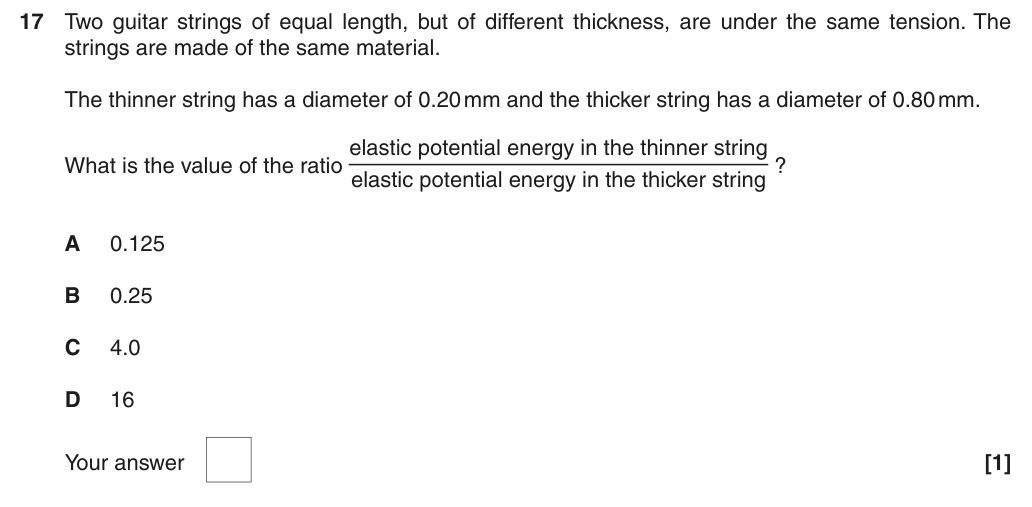
June 2016 · AS Paper 1 · Q17 1 mark Multiple choice materials and young modulus
17 Two guitar strings of equal length, but of different thickness, are under the same tension. The
strings are made of the same material.
The thinner string has a diameter of 0.20 mm and the thicker string has a diameter of 0.80 mm.
elastic potential energy in the thinner string
What is the value of the ratio elastic potential energy in the thicker string ?
A 0.125
B 0.25
C 4.0
D 16
Your answer [1]
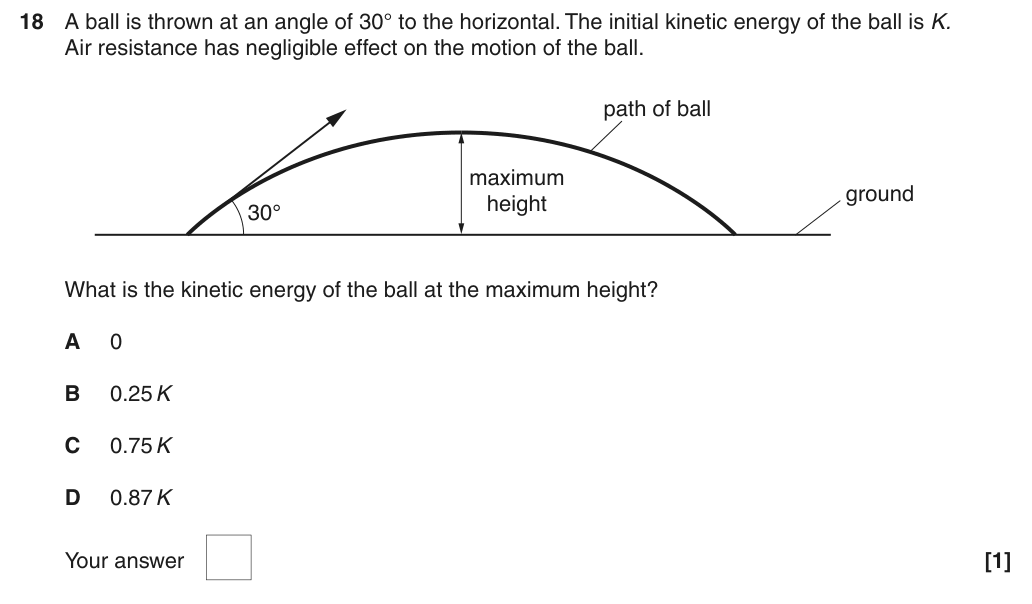
June 2016 · AS Paper 1 · Q18 1 mark Multiple choice projectile motionscalars and vectorswork energy and power
18 A ball is thrown at an angle of 30° to the horizontal. The initial kinetic energy of the ball is K.
Air resistance has negligible effect on the motion of the ball.
path of ball
maximum
ground
height
30°
What is the kinetic energy of the ball at the maximum height?
A 0
B 0.25 K
C 0.75 K
D 0.87 K
Your answer [1]
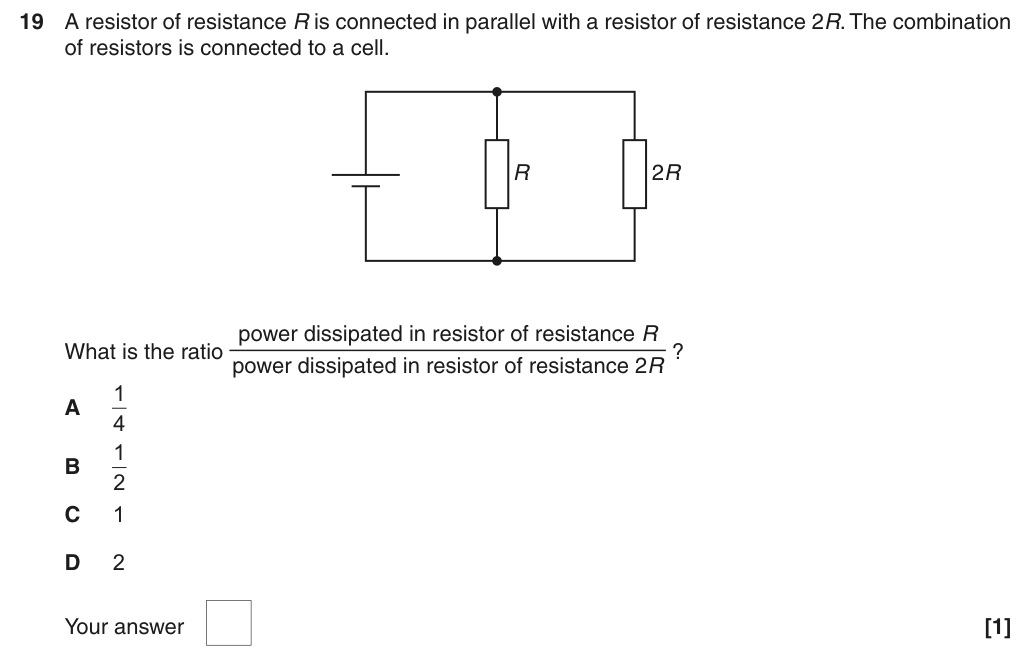
June 2016 · AS Paper 1 · Q19 1 mark Multiple choice electrical power
19 A resistor of resistance R is connected in parallel with a resistor of resistance 2R. The combination
of resistors is connected to a cell.
R 2R
power dissipated in resistor of resistance R
What is the ratio power dissipated in resistor of resistance 2R ?
1
A
4
1
B
2
C 1
D 2
Your answer [1]
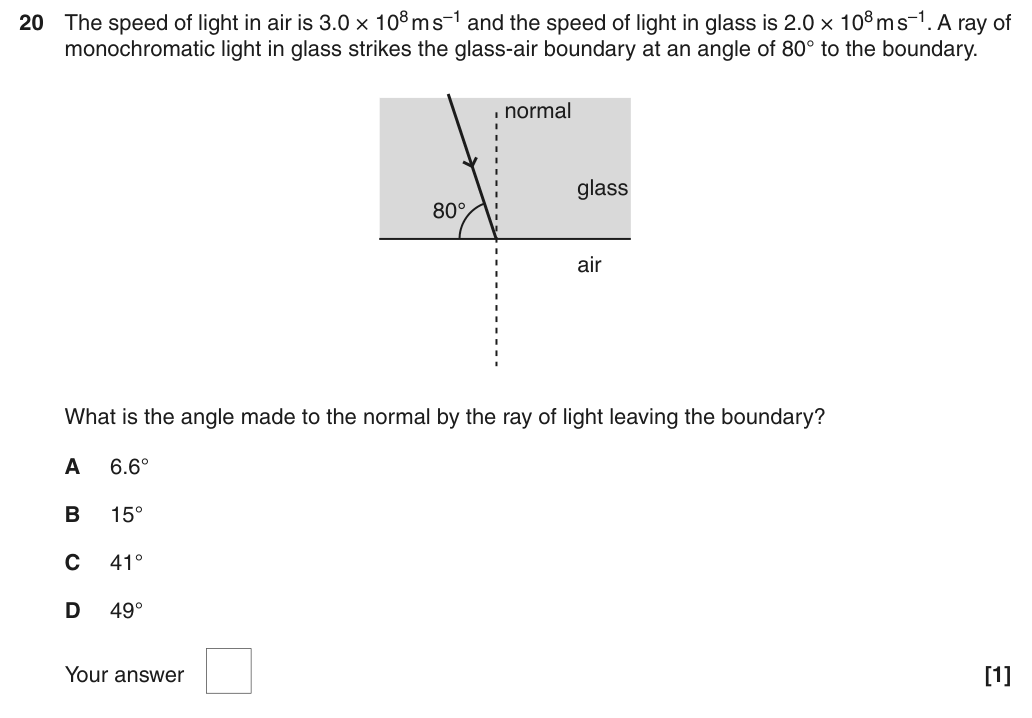
June 2016 · AS Paper 1 · Q20 1 mark Multiple choice electromagnetic waves and refraction
20 The speed of light in air is 3.0 × 10⁸ m s–1 and the speed of light in glass is 2.0 × 10⁸ m s–1. A ray of
monochromatic light in glass strikes the glass-air boundary at an angle of 80° to the boundary.
normal
glass
80°
air
What is the angle made to the normal by the ray of light leaving the boundary?
A 6.6°
B 15°
C 41°
D 49°
Your answer [1]
June 2016 · AS Paper 1 · Q21(a) 2 marks Explanation scalars and vectors
21 (a) Physical quantities can be added together. Velocity and mass are examples of two different
types of physical quantities.
Discuss how the addition of two velocities differs from the addition of two masses.
...................................................................................................................................................
...................................................................................................................................................
...................................................................................................................................................
.............................................................................................................................................. [2]
June 2016 · AS Paper 1 · Q21(b)(i) 1 mark Diagram or graph dynamics and terminal velocity
(b) Fig. 21 shows a stationary trolley on a smooth ramp.
string
trolley
ramp
Fig. 21
A short length of string is attached between the end of the trolley and the top of the ramp.
Assume that the frictional force acting on the trolley is negligible when it is stationary or when
it is moving.
(i) Other than the normal contact force, there are two other forces acting on the stationary
trolley.
On Fig. 21, draw arrows to show these two forces. You do not need to name these forces.
[1]
June 2016 · AS Paper 1 · Q21(b)(ii) 2 marks Calculation linear motion
(ii) The string is cut at time t = 0. The trolley travels down the ramp with a constant
acceleration of 3.0 m s–2.
Calculate the time t taken by the trolley to travel a distance of 0.80 m down the ramp.
t =  ...................................................... s [2]
June 2016 · AS Paper 1 · Q22(a) 1 mark Explanation measurements and uncertaintiespractical skills
22 A group of engineers are testing a new car. They are investigating how the braking distance x of
the car varies with its initial speed u when a constant braking force is applied.
Fig. 22 shows the data points plotted on a u 2 against x graph. The straight line of best fit has been
drawn through the data points.
800
600
u 2 / m2 s–2
400
200
0
0 10 20 30 40 50
x / m
Fig. 22
The theoretical relationship between u and x for the car is
u 2 = 2ax
where a is the magnitude of the deceleration of the car.
(a) Fig. 22 shows that the straight line does not pass through the origin because of a systematic
error in the measurement of the braking distance x. The u 2 values are accurate.
Suggest why a systematic error in x does not introduce any difference between the actual
value and the experimental value for the deceleration of the car.
...................................................................................................................................................
...................................................................................................................................................
............................................................................................................................................. [1]
June 2016 · AS Paper 1 · Q22(b) 3 marks Calculation dynamics and terminal velocitypractical skillslinear motion
Earlier part of question 22 that this part usesEarlier part of June 2016 Paper 1 question 22
(b) The mass of the car is 920 kg.
Use the gradient of the line drawn in Fig. 22 to determine the braking force F acting on
the car.
F =  ...................................................... N [3]
23 (a) Fig. 23.1 shows a metal cylinder of diameter of about 5 cm placed on a horizontal table.
cylinder
table
Fig. 23.1
Describe how you can use instruments available in a physics laboratory to determine the
pressure exerted by the cylinder on the table. State how you would make your results as
precise as possible.
...................................................................................................................................................
...................................................................................................................................................
...................................................................................................................................................
...................................................................................................................................................
...................................................................................................................................................
...................................................................................................................................................
...................................................................................................................................................
...................................................................................................................................................
...................................................................................................................................................
.............................................................................................................................................. [4]
June 2016 · AS Paper 1 · Q23(b)(i) 1 mark Short answer density and pressure
(b) (i) State Archimedes’ principle.
...........................................................................................................................................
...........................................................................................................................................
..................................................................................................................................... [1]
June 2016 · AS Paper 1 · Q23(b)(ii) 3 marks Calculation density and pressuredynamics and terminal velocity
(ii) Fig. 23.2 shows the metal cylinder from (a) hung from a newtonmeter.
clamp stand rod
newtonmeter
beaker
cylinder
water
Fig. 23.2
The reading on the newtonmeter is 9.0 N.
The cylinder is slowly lowered into water in a beaker until it is completely submerged.
The cylinder does not touch the side or the bottom of the beaker. The newtonmeter
reading now is 7.8 N. The density of water is 1000 kg m–3.
Calculate the density ρ of the metal of the cylinder.
ρ =  .............................................. kg m–3 [3]
June 2016 · AS Paper 1 · Q24(a) 1 mark Short answer newtons laws and momentum
24 (a) State Newton’s second law.
...................................................................................................................................................
...................................................................................................................................................
............................................................................................................................................. [1]
June 2016 · AS Paper 1 · Q24(b)(i) 1 mark Short answer collisionswork energy and power
(b) A comet makes an inelastic collision with a small asteroid in space.
(i) State two physical quantities conserved in this collision.
1  ........................................................................................................................................
2  ........................................................................................................................................
[1]
June 2016 · AS Paper 1 · Q24(b)(ii) 2 marks Diagram or graph newtons laws and momentum
(ii) Fig. 24.1 shows how the force F acting on the comet varies with time t during the collision.
F
0
0 t
Fig. 24.1
Describe and explain how the force acting on the asteroid varies with time during this
collision. You may sketch a suitable graph on Fig. 24.1 to support your answer.
...........................................................................................................................................
...........................................................................................................................................
...........................................................................................................................................
..................................................................................................................................... [2]
June 2016 · AS Paper 1 · Q24(c) 3 marks Calculation collisionsnewtons laws and momentum
(c) A hydrogen atom travelling at 500 m s–1 makes a head-on collision with a stationary carbon
atom. The collision is perfectly elastic. After the collision the hydrogen atom bounces back
with a speed of 420 m s–1. Fig. 24.2 shows the atoms before and after the collision.
stationary
carbon
atom
500 m s–1 420 m s–1 v
hydrogen
atom
before after
Fig. 24.2
The mass of the hydrogen atom is 1.7 × 10⁻²⁷ kg and the mass of the carbon atom is
2.0 × 10⁻²⁶ kg.
Calculate the speed v of the carbon atom after the collision.
v =  ................................................ m s–1 [3]
June 2016 · AS Paper 1 · Q25(a)(i) 2 marks Short answer emf pd and resistance
25 (a) A chemical cell is connected across a resistor.
(i) The terms electromotive force (e.m.f.) and potential difference (p.d.) are terms associated
with the circuit.
State one similarity and one difference between e.m.f. and p.d.
similarity:
...........................................................................................................................................
...........................................................................................................................................
difference:
...........................................................................................................................................
...........................................................................................................................................
..................................................................................................................................... [2]
June 2016 · AS Paper 1 · Q25(a)(ii) 3 marks Calculation charge and current
(ii) The resistor is cylindrical in shape. It has cross-sectional area 1.2 × 10⁻⁶ m2 and length
6.0 × 10⁻³ m. In this resistor there are 9.6 × 10¹⁶ free electrons.
Calculate the mean drift velocity v of the electrons when the current in the resistor is
3.0 mA.
v =  ................................................ m s–1 [3]
June 2016 · AS Paper 1 · Q25(b) 4 marks Diagram or graph internal resistancepractical skillsemf pd and resistance
(b) A student is given a chemical cell, an ammeter, a voltmeter, a variable resistor and a number
of connecting wires.
Design a laboratory experiment to determine the internal resistance r of the chemical cell
using a graph. Start with a circuit diagram.
In your description pay particular attention to
• the circuit used
• the measurements taken
• how the data is analysed using a graph.
...................................................................................................................................................
...................................................................................................................................................
...................................................................................................................................................
...................................................................................................................................................
...................................................................................................................................................
...................................................................................................................................................
............................................................................................................................................. [4]
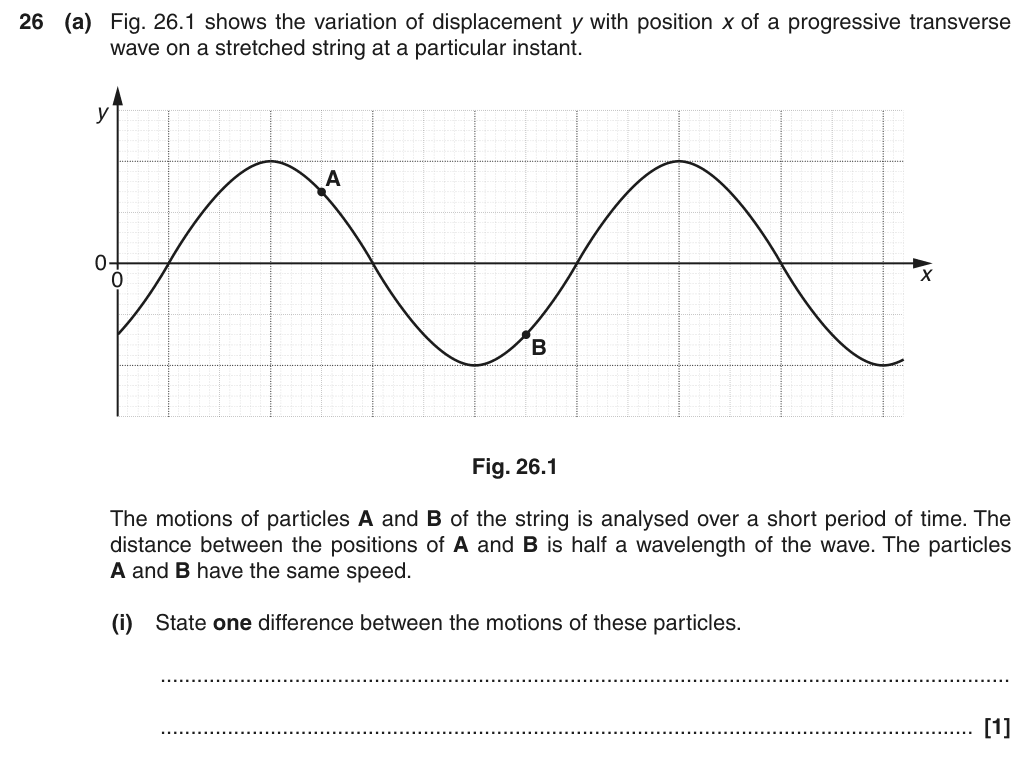
June 2016 · AS Paper 1 · Q26(a)(i) 1 mark Short answer wave motion
26 (a) Fig. 26.1 shows the variation of displacement y with position x of a progressive transverse
wave on a stretched string at a particular instant.
y
A
0 0
x
B
Fig. 26.1
The motions of particles A and B of the string is analysed over a short period of time. The
distance between the positions of A and B is half a wavelength of the wave. The particles
A and B have the same speed.
(i) State one difference between the motions of these particles.
...........................................................................................................................................
..................................................................................................................................... [1]
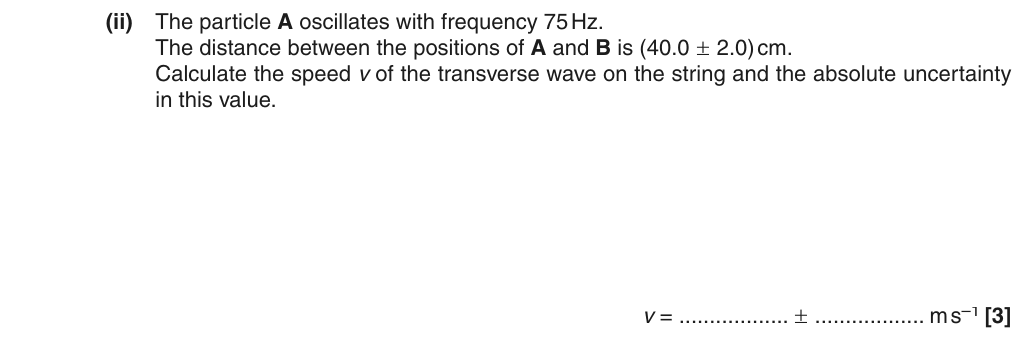
June 2016 · AS Paper 1 · Q26(a)(ii) 3 marks Calculation wave motionmeasurements and uncertainties
Earlier part of question 26 that this part usesEarlier part of June 2016 Paper 1 question 26
(ii) The particle A oscillates with frequency 75 Hz.
The distance between the positions of A and B is (40.0 ! 2.0) cm.
Calculate the speed v of the transverse wave on the string and the absolute uncertainty
in this value.
v = .................. ! .................. m s–1 [3]
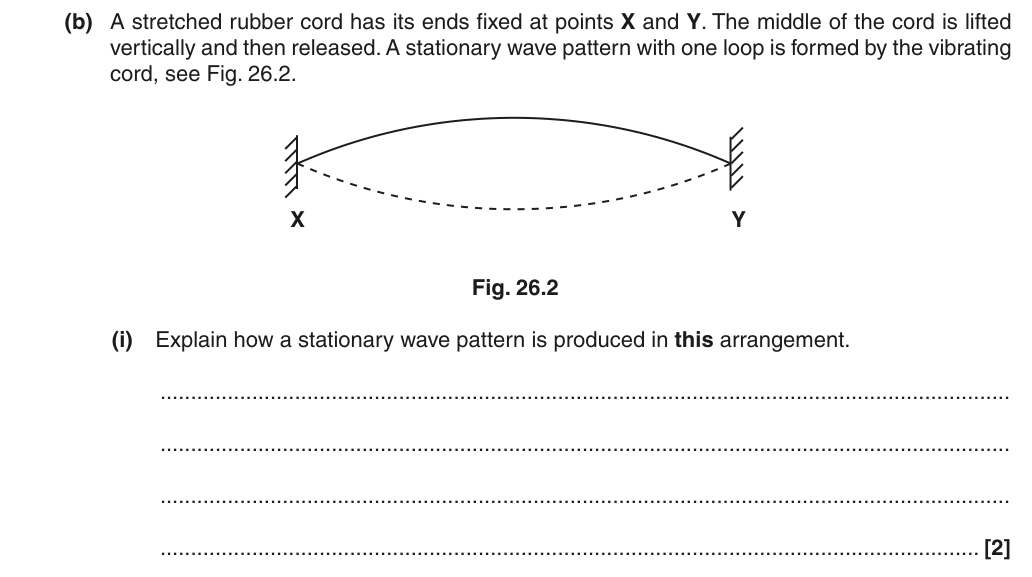
June 2016 · AS Paper 1 · Q26(b)(i) 2 marks Explanation stationary wavessuperposition and interference
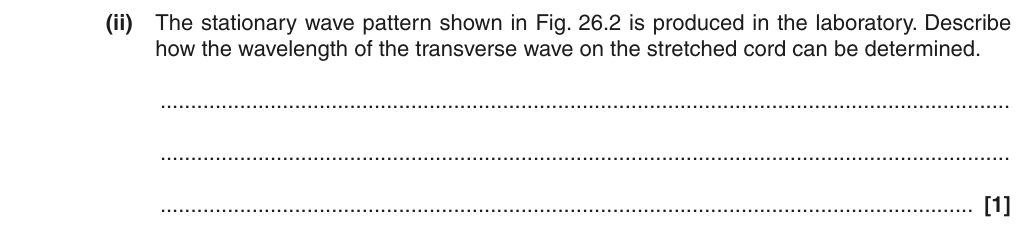
(b) A stretched rubber cord has its ends fixed at points X and Y. The middle of the cord is lifted
vertically and then released. A stationary wave pattern with one loop is formed by the vibrating
cord, see Fig. 26.2.
X Y
Fig. 26.2
(i) Explain how a stationary wave pattern is produced in this arrangement.
...........................................................................................................................................
...........................................................................................................................................
...........................................................................................................................................
...................................................................................................................................... [2]
June 2016 · AS Paper 1 · Q26(b)(ii) 1 mark Explanation stationary waves
Earlier part of question 26 that this part usesEarlier part of June 2016 Paper 1 question 26
(ii) The stationary wave pattern shown in Fig. 26.2 is produced in the laboratory. Describe
how the wavelength of the transverse wave on the stretched cord can be determined.
...........................................................................................................................................
...........................................................................................................................................
..................................................................................................................................... [1]
June 2016 · AS Paper 1 · Q27(a) 4 marks Explanation emf pd and resistance
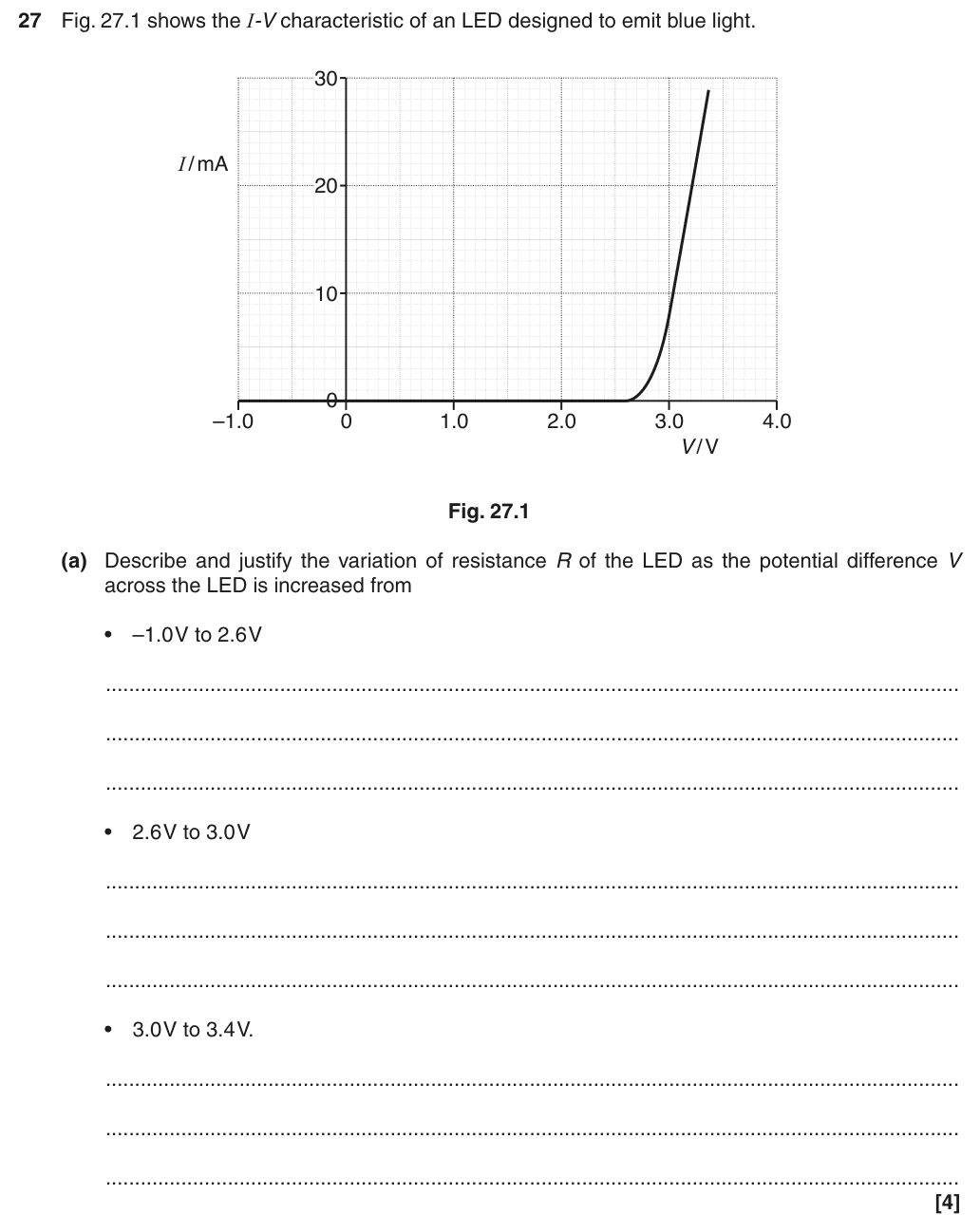
27 Fig. 27.1 shows the I-V characteristic of an LED designed to emit blue light.
30
I / mA
20
10
0
–1.0 0 1.0 2.0 3.0 4.0
V / V
Fig. 27.1
(a) Describe and justify the variation of resistance R of the LED as the potential difference V
across the LED is increased from
• –1.0 V to 2.6 V
...................................................................................................................................................
...................................................................................................................................................
...................................................................................................................................................
• 2.6 V to 3.0 V
...................................................................................................................................................
...................................................................................................................................................
...................................................................................................................................................
• 3.0 V to 3.4 V.
...................................................................................................................................................
...................................................................................................................................................
...................................................................................................................................................
[4]
June 2016 · AS Paper 1 · Q27(b) 3 marks Explanation emf pd and resistance
Earlier part of question 27 that this part usesEarlier part of June 2016 Paper 1 question 27
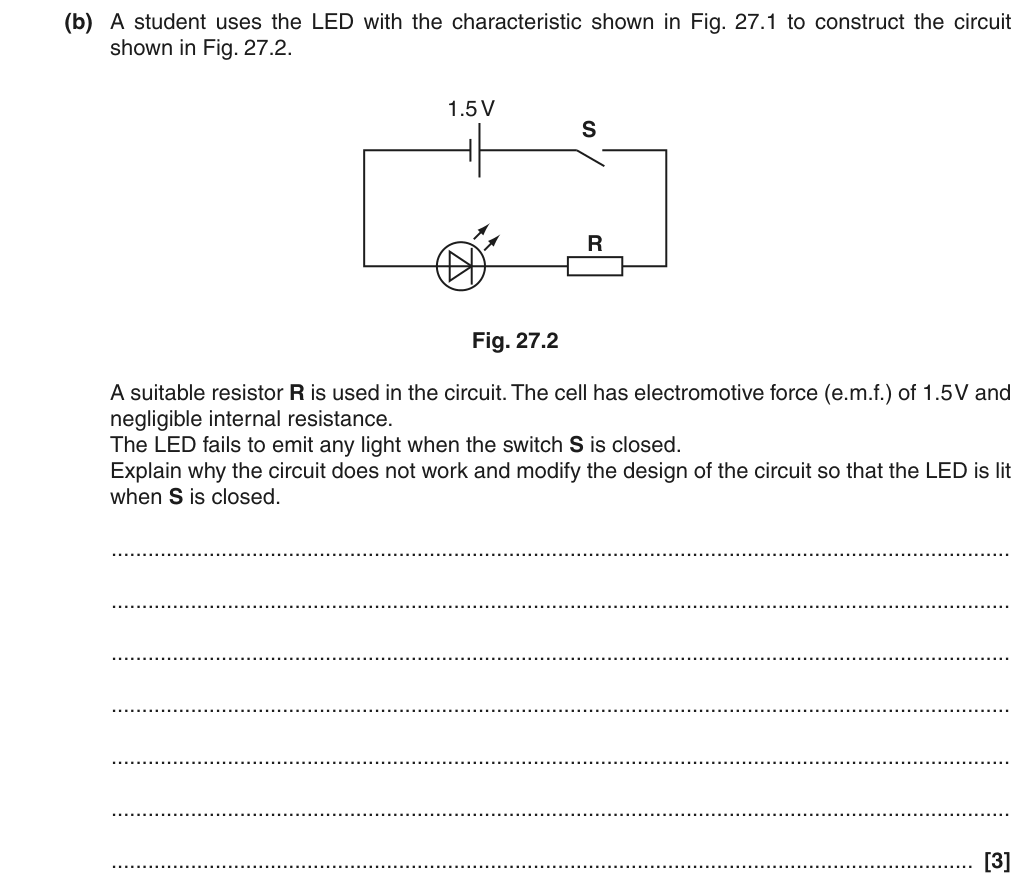
(b) A student uses the LED with the characteristic shown in Fig. 27.1 to construct the circuit
shown in Fig. 27.2.
1.5 V
S
R
Fig. 27.2
A suitable resistor R is used in the circuit. The cell has electromotive force (e.m.f.) of 1.5 V and
negligible internal resistance.
The LED fails to emit any light when the switch S is closed.
Explain why the circuit does not work and modify the design of the circuit so that the LED is lit
when S is closed.
...................................................................................................................................................
...................................................................................................................................................
...................................................................................................................................................
...................................................................................................................................................
...................................................................................................................................................
...................................................................................................................................................
............................................................................................................................................. [3]
June 2016 · AS Paper 1 · Q27(c) 3 marks Calculation photons
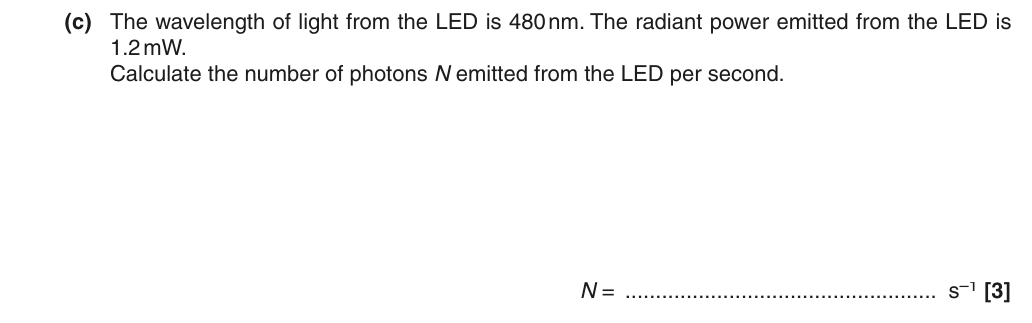
(c) The wavelength of light from the LED is 480 nm. The radiant power emitted from the LED is
1.2 mW.
Calculate the number of photons N emitted from the LED per second.
N =  ................................................... s–1 [3]

Work with an OCR physics tutor

Want a paper marked and gone through with you? Message us.

Prefer email? Send an enquiry

If you are under 18, please include a parent's contact details. Enquiries go to enquiries@physicsaleveltutor.com and are deleted once handled. All tutoring is online.