November 2020: Paper 3, Unified physics

70 marks · 27 question parts · Paper, mark scheme and report on OCR's site · An autumn series using the paper written for the cancelled summer exams · Have the Data, Formulae and Relationships Booklet beside you

Question by question

QTopicMarksAOType
1(a)(i) Electric fields, Coulomb's law and electric potential 2Show that
1(a)(ii) Dynamics, drag and terminal velocity 2Diagram or graph
1(a)(iii) Equilibrium: moments, couples and centre of mass 2Show that
1(b) Electric fields, Coulomb's law and electric potential 4Explanation
1(c) Charge, current and mean drift velocity 2Calculation
2(a) Capacitors: energy, charging and discharging, Charge, current and mean drift velocity 2Show that
2(b)(i) Practical skills: planning, analysis and evaluation 1Show that
2(b)(ii) Practical skills: planning, analysis and evaluation 2Calculation
2(b)(iii) Measurements and uncertainties, Practical skills: planning, analysis and evaluation 4Diagram or graph
2(c) Capacitors: energy, charging and discharging 1Short answer
3(a)(i) Stars: stellar evolution, energy levels, spectra, Wien's law and Stefan's law 1Show that
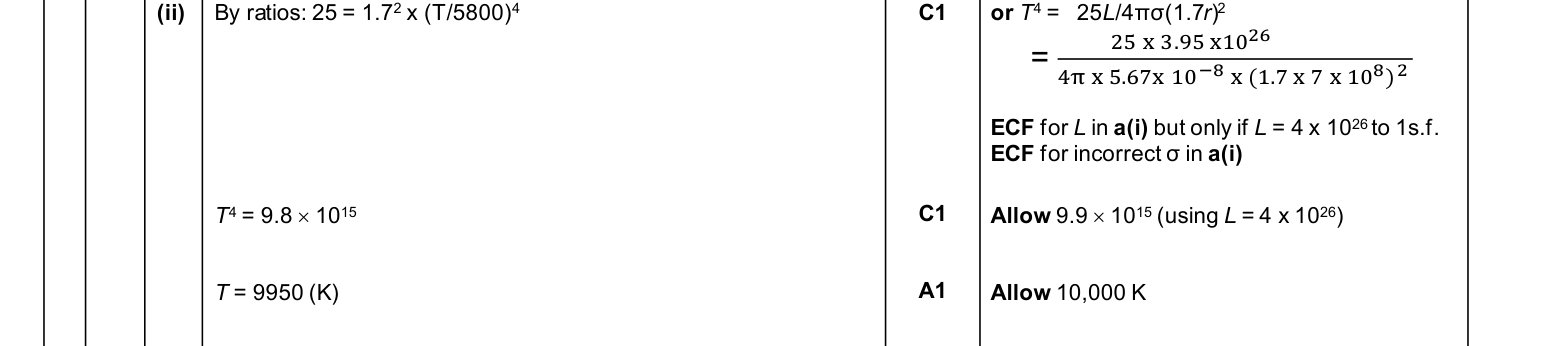
3(a)(ii) Stars: stellar evolution, energy levels, spectra, Wien's law and Stefan's law 3Calculation
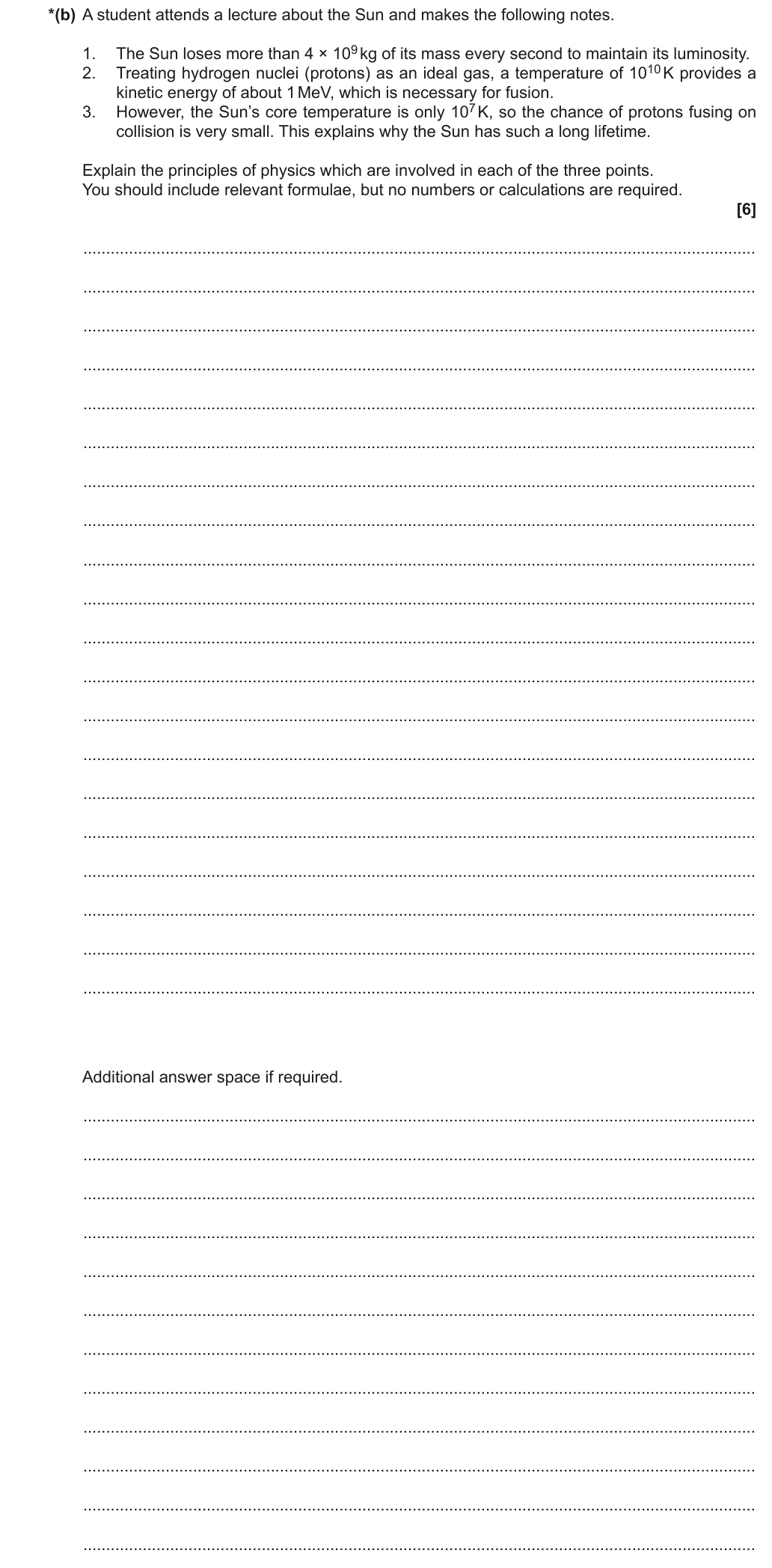
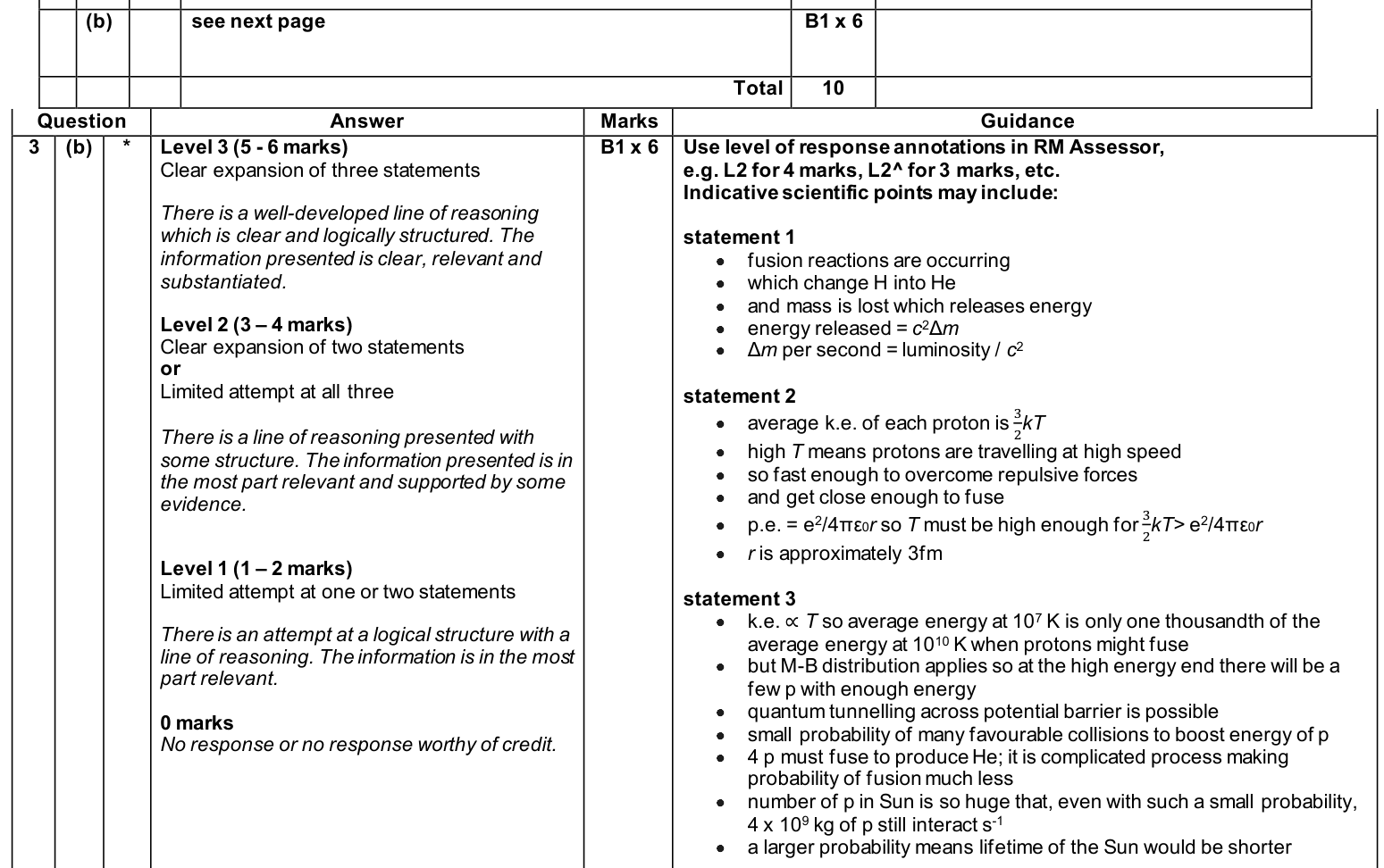
3(b) Mass–energy, binding energy, fission and fusion, Ideal gases and the kinetic theory, Stars: stellar evolution, energy levels, spectra, Wien's law and Stefan's law, Electric fields, Coulomb's law and electric potential 6Extended response
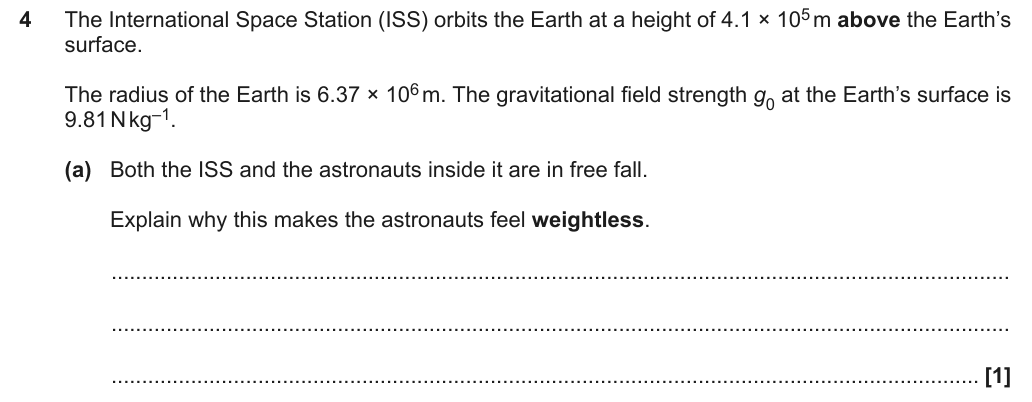
4(a) Dynamics, drag and terminal velocity 1Explanation
4(b)(i) Gravitational fields, Newton's law of gravitation and gravitational potential 3Calculation
4(b)(ii) Circular motion and centripetal force 2Show that
4(c) Ideal gases and the kinetic theory, Thermal physics: temperature, internal energy and specific heat capacity 3Show that
4(d) Wave motion: progressive waves, the wave equation and intensity, Work, energy and power 4Calculation
5(a) Wave motion: progressive waves, the wave equation and intensity, Electromagnetic waves, polarisation and refraction 2Calculation
5(b) Simple harmonic motion, damping and resonance 3Calculation
5(c) E.m.f., p.d., resistance and I–V characteristics 1Explanation
5(d) Electromagnetic waves, polarisation and refraction, Wave motion: progressive waves, the wave equation and intensity, Superposition, interference and the double slit, Stationary waves 6Extended response
6(a) The nuclear atom and fundamental particles 2Diagram or graph
6(b) Electric fields, Coulomb's law and electric potential, The nuclear atom and fundamental particles 4Calculation
6(c) Newton's laws of motion and momentum, Work, energy and power, Photons and the Planck constant 3Show that
6(d)(i) Newton's laws of motion and momentum 2Diagram or graph
6(d)(ii) Collisions: conservation of momentum, Scalars and vectors 2Diagram or graph

The questions

1(a)(i)1(a)(ii)1(a)(iii)1(b)1(c)2(a)2(b)(i)2(b)(ii)2(b)(iii)2(c)3(a)(i)3(a)(ii)3(b)4(a)4(b)(i)4(b)(ii)4(c)4(d)5(a)5(b)5(c)5(d)6(a)6(b)6(c)6(d)(i)6(d)(ii)
November 2020 · Paper 3 · Q1(a)(i) 2 marks Show that Medium electric fields
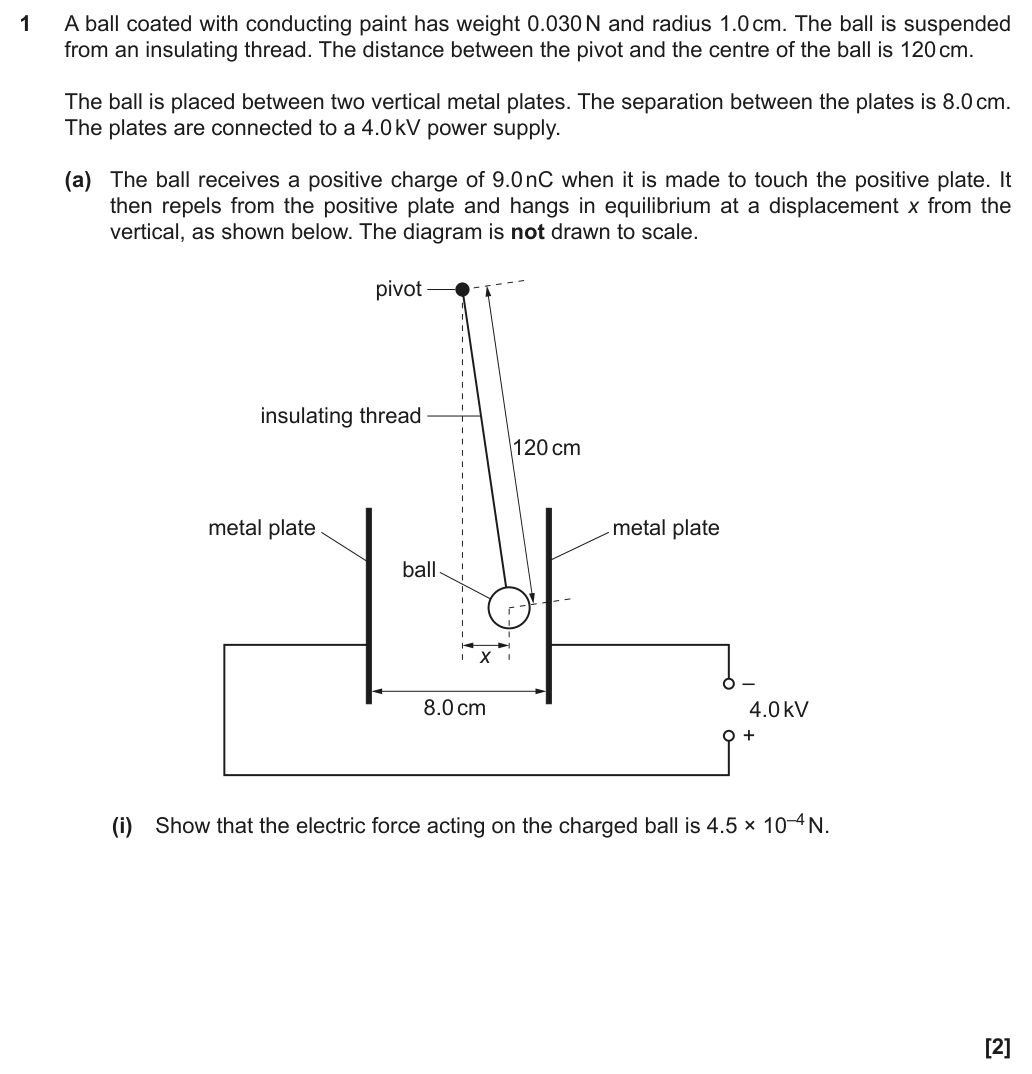
1 A ball coated with conducting paint has weight 0.030 N and radius 1.0 cm. The ball is suspended
from an insulating thread. The distance between the pivot and the centre of the ball is 120 cm.
The ball is placed between two vertical metal plates. The separation between the plates is 8.0 cm.
The plates are connected to a 4.0 kV power supply.
(a) The ball receives a positive charge of 9.0 nC when it is made to touch the positive plate. It
then repels from the positive plate and hangs in equilibrium at a displacement x from the
vertical, as shown below. The diagram is not drawn to scale.
pivot
insulating thread
120 cm
metal plate metal plate
ball
x
–
8.0 cm 4.0 kV
+
(i) Show that the electric force acting on the charged ball is 4.5 × 10⁻⁴ N.
[2]
November 2020 · Paper 3 · Q1(a)(ii) 2 marks Diagram or graph Medium dynamics and terminal velocity
Earlier part of question 1 that this part usesEarlier part of November 2020 Paper 3 question 1
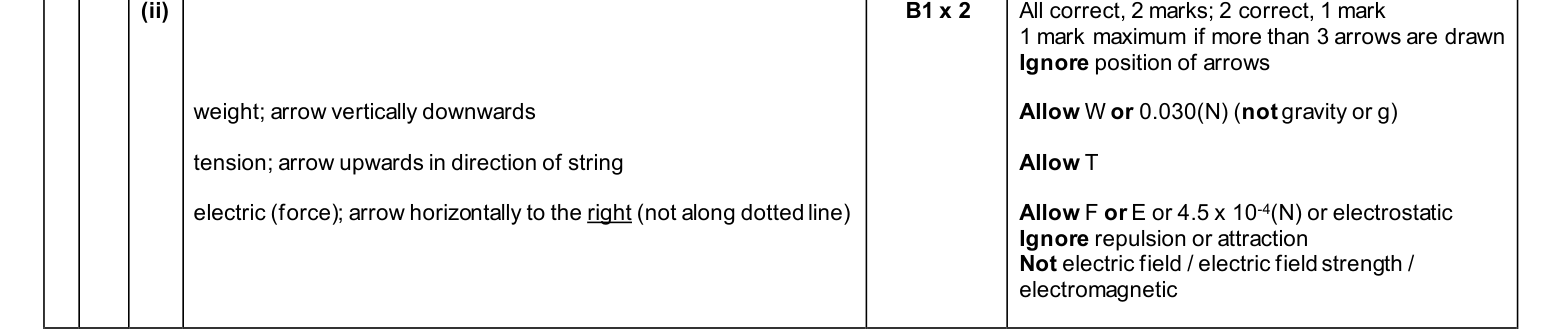
(ii) Draw, on the diagram above, arrows which represent the three forces acting on the ball.
Label each arrow with the name of the force it represents. [2]
November 2020 · Paper 3 · Q1(a)(iii) 2 marks Show that Medium equilibrium and moments
Earlier part of question 1 that this part usesEarlier part of November 2020 Paper 3 question 1
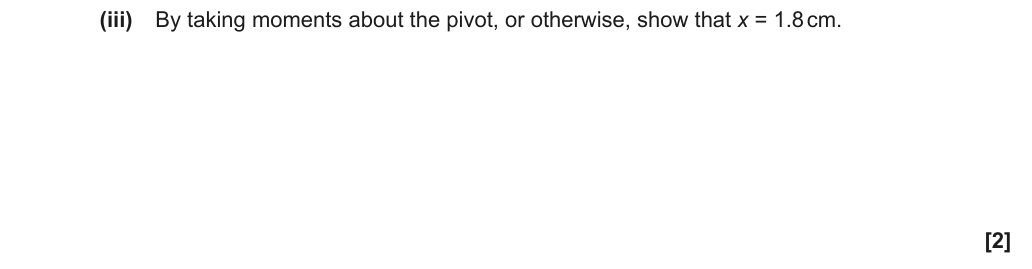
(iii) By taking moments about the pivot, or otherwise, show that x = 1.8 cm.
[2]
November 2020 · Paper 3 · Q1(b) 4 marks Explanation Medium electric fields
Earlier part of question 1 that this part usesEarlier part of November 2020 Paper 3 question 1
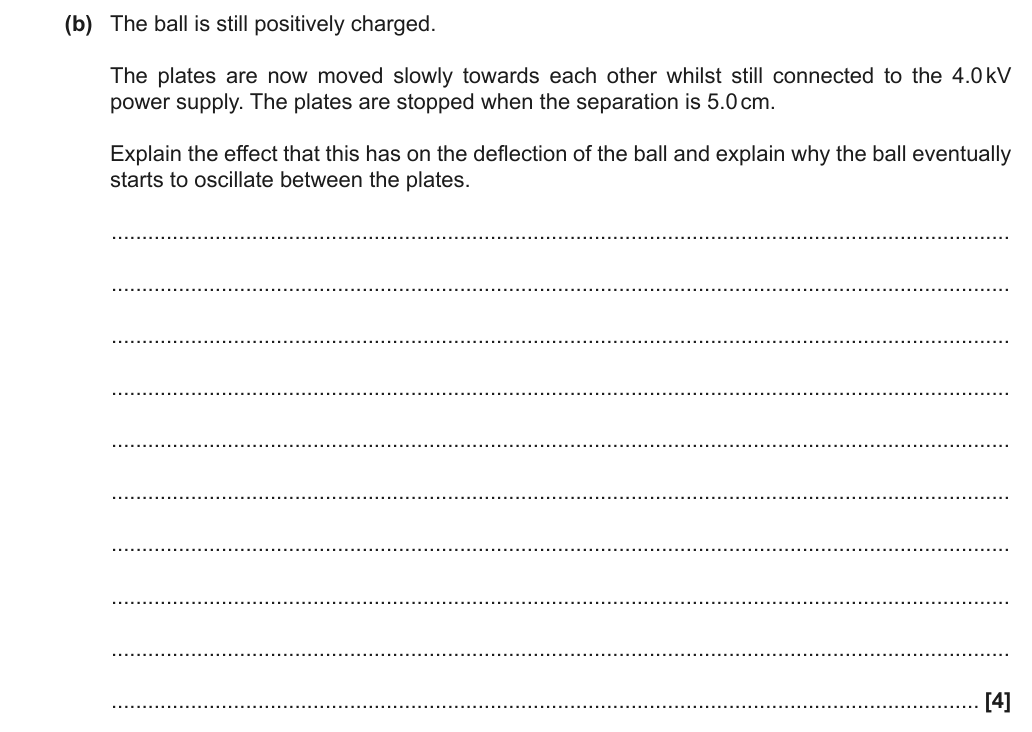
(b) The ball is still positively charged.
The plates are now moved slowly towards each other whilst still connected to the 4.0 kV
power supply. The plates are stopped when the separation is 5.0 cm.
Explain the effect that this has on the deflection of the ball and explain why the ball eventually
starts to oscillate between the plates.
...................................................................................................................................................
...................................................................................................................................................
...................................................................................................................................................
...................................................................................................................................................
...................................................................................................................................................
...................................................................................................................................................
...................................................................................................................................................
...................................................................................................................................................
...................................................................................................................................................
.............................................................................................................................................. [4]
November 2020 · Paper 3 · Q1(c) 2 marks Calculation Medium charge and current
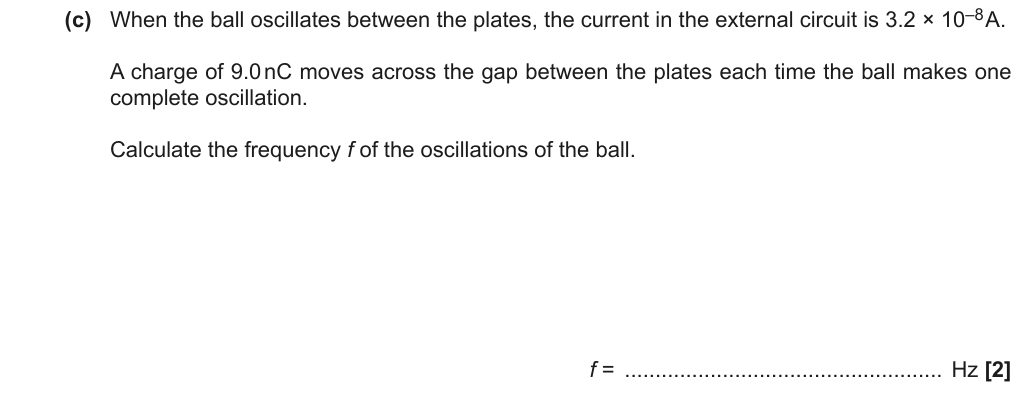
(c) When the ball oscillates between the plates, the current in the external circuit is 3.2 × 10⁻⁸ A.
A charge of 9.0 nC moves across the gap between the plates each time the ball makes one
complete oscillation.
Calculate the frequency f of the oscillations of the ball.

f =  .................................................... Hz [2]
November 2020 · Paper 3 · Q2(a) 2 marks Show that Medium capacitorscharge and current
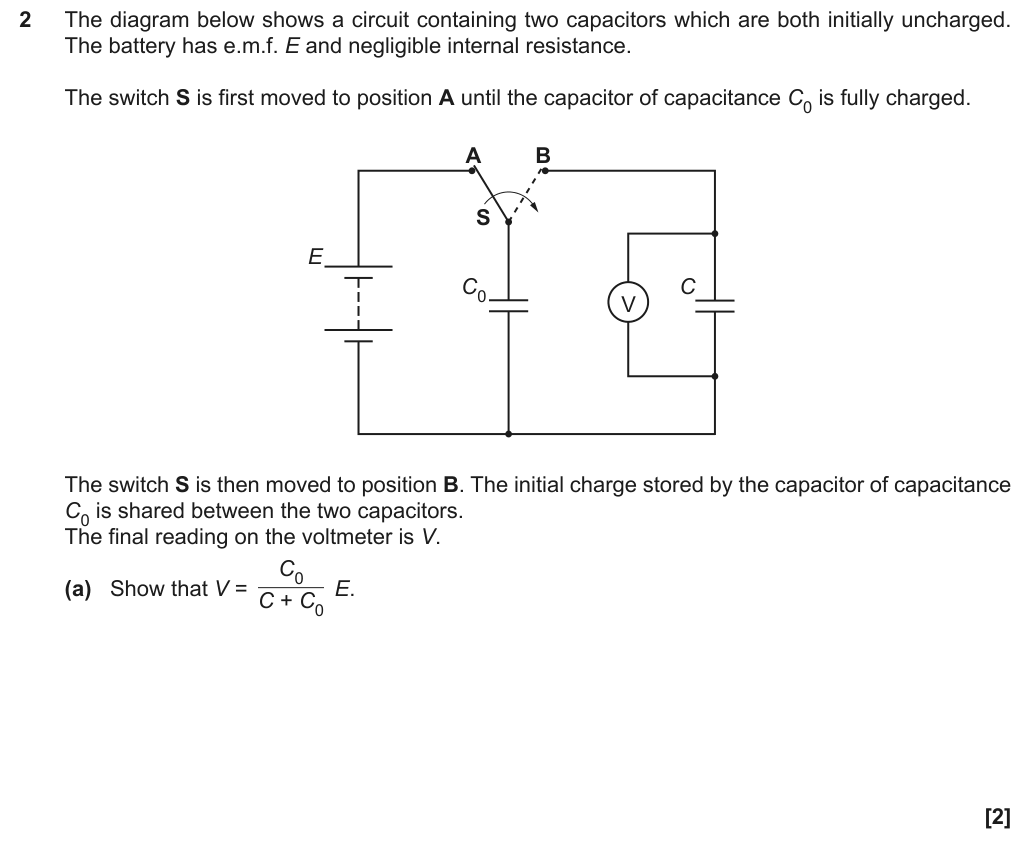
2 The diagram below shows a circuit containing two capacitors which are both initially uncharged.
The battery has e.m.f. E and negligible internal resistance.
The switch S is first moved to position A until the capacitor of capacitance C0 is fully charged.
A B
S
E
C0 C
V
The switch S is then moved to position B. The initial charge stored by the capacitor of capacitance
C0 is shared between the two capacitors.
The final reading on the voltmeter is V.
C0
(a) Show that V = E.
C + C0
[2]
November 2020 · Paper 3 · Q2(b)(i) 1 mark Show that Medium practical skills
Earlier part of question 2 that this part usesEarlier part of November 2020 Paper 3 question 2
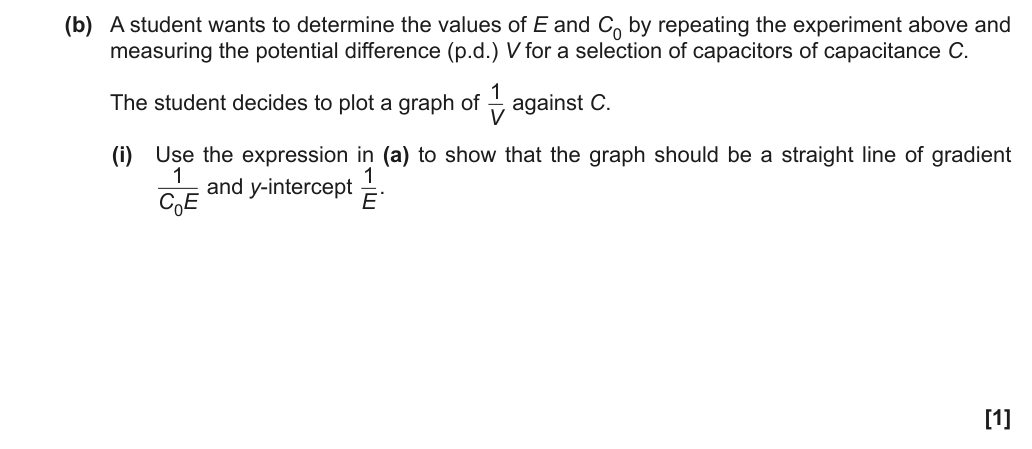
(b) A student wants to determine the values of E and C0 by repeating the experiment above and
measuring the potential difference (p.d.) V for a selection of capacitors of capacitance C.
The student decides to plot a graph of 1
V against C.
(i) Use the expression in (a) to show that the graph should be a straight line of gradient
C0E and y-intercept 1 1
E.
[1]
November 2020 · Paper 3 · Q2(b)(ii) 2 marks Calculation Medium practical skills
Earlier parts of question 2 that this part usesEarlier part of November 2020 Paper 3 question 2Earlier part of November 2020 Paper 3 question 2
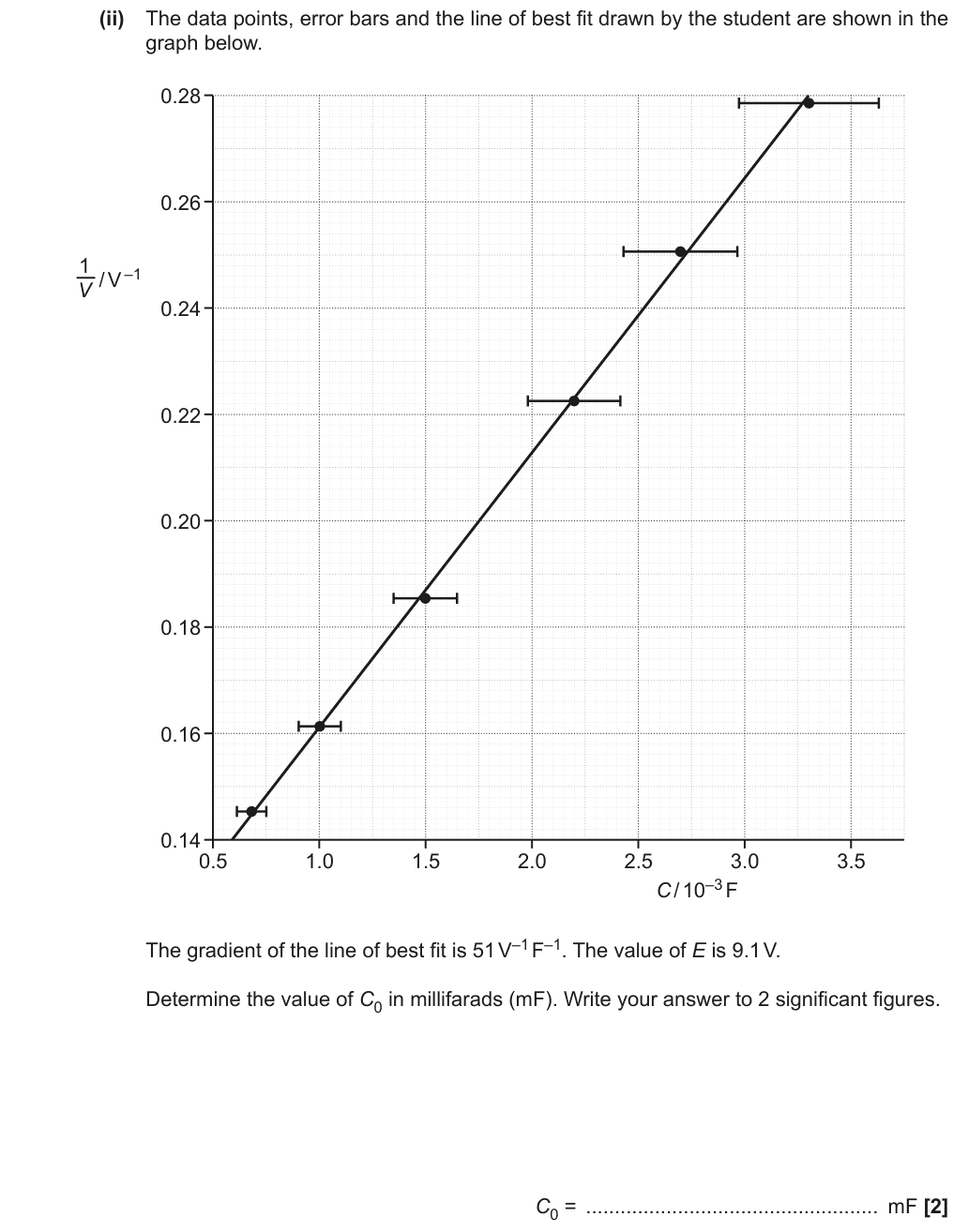
(ii) The data points, error bars and the line of best fit drawn by the student are shown in the
graph below.
0.28
0.26
1
/ V –1
V
0.24
0.22
0.20
0.18
0.16
0.14
0.5 1.0 1.5 2.0 2.5 3.0 3.5
C / 10–3 F
The gradient of the line of best fit is 51 V–1 F–1. The value of E is 9.1 V.
Determine the value of C0 in millifarads (mF). Write your answer to 2 significant figures.
C0 =  ................................................... mF [2]
November 2020 · Paper 3 · Q2(b)(iii) 4 marks Diagram or graph Medium measurements and uncertaintiespractical skills
Earlier parts of question 2 that this part usesEarlier part of November 2020 Paper 3 question 2Earlier part of November 2020 Paper 3 question 2
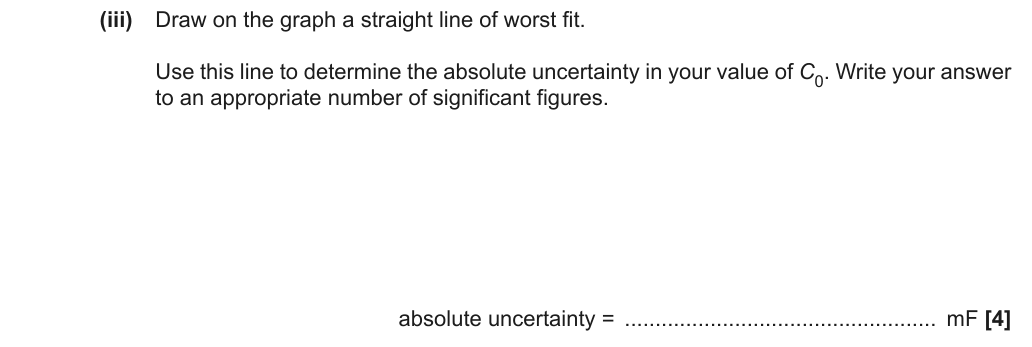
(iii) Draw on the graph a straight line of worst fit.
Use this line to determine the absolute uncertainty in your value of C0. Write your answer
to an appropriate number of significant figures.
absolute uncertainty =  ................................................... mF [4]
November 2020 · Paper 3 · Q2(c) 1 mark Short answer Medium capacitors
Earlier part of question 2 that this part usesEarlier part of November 2020 Paper 3 question 2
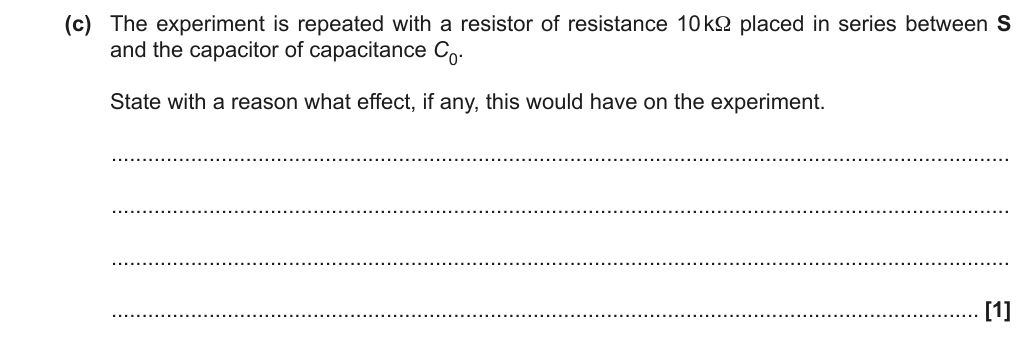
(c) The experiment is repeated with a resistor of resistance 10 kΩ placed in series between S
and the capacitor of capacitance C0.
State with a reason what effect, if any, this would have on the experiment.
...................................................................................................................................................
...................................................................................................................................................
...................................................................................................................................................
.............................................................................................................................................. [1]
November 2020 · Paper 3 · Q3(a)(i) 1 mark Show that Medium stars
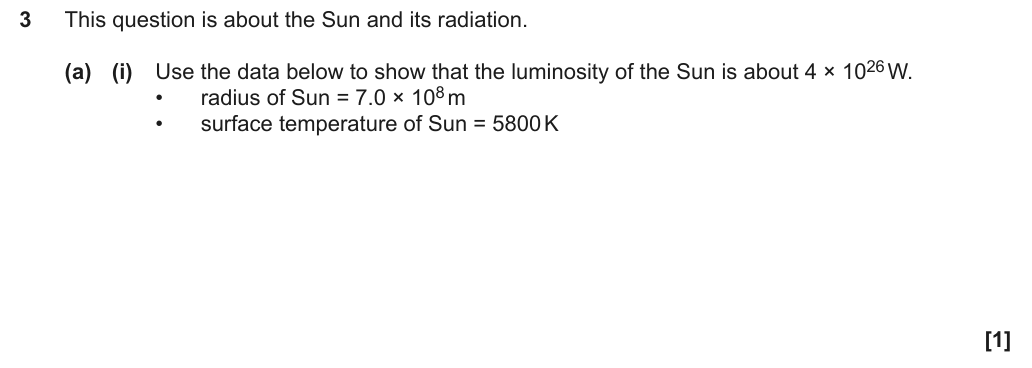
3 This question is about the Sun and its radiation.
(a) (i) Use the data below to show that the luminosity of the Sun is about 4 × 1026 W.
• radius of Sun = 7.0 × 10⁸ m
• surface temperature of Sun = 5800 K
[1]
November 2020 · Paper 3 · Q3(a)(ii) 3 marks Calculation Medium stars
Earlier part of question 3 that this part usesEarlier part of November 2020 Paper 3 question 3
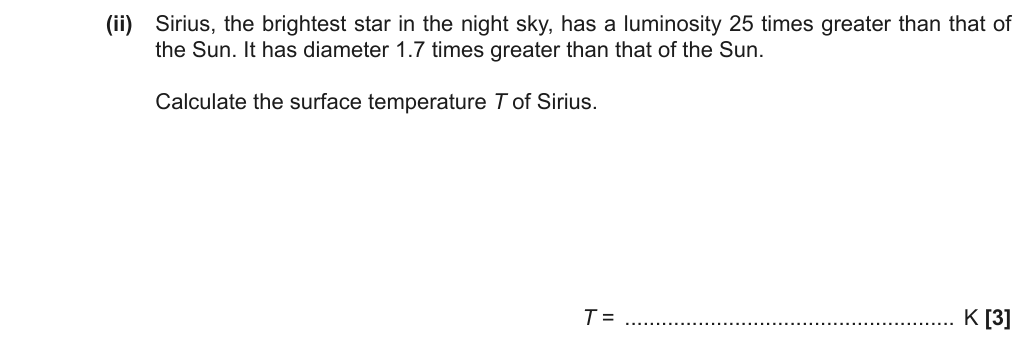
(ii) Sirius, the brightest star in the night sky, has a luminosity 25 times greater than that of
the Sun. It has diameter 1.7 times greater than that of the Sun.
Calculate the surface temperature T of Sirius.
T =  ...................................................... K [3]
November 2020 · Paper 3 · Q3(b) 6 marks 6-mark extended response Medium nuclear fission and fusionideal gasesstarselectric fields
*(b) A student attends a lecture about the Sun and makes the following notes.
1. The Sun loses more than 4 × 10⁹ kg of its mass every second to maintain its luminosity.
2. Treating hydrogen nuclei (protons) as an ideal gas, a temperature of 1010 K provides a
kinetic energy of about 1 MeV, which is necessary for fusion.
3. However, the Sun’s core temperature is only 107 K, so the chance of protons fusing on
collision is very small. This explains why the Sun has such a long lifetime.
Explain the principles of physics which are involved in each of the three points.
You should include relevant formulae, but no numbers or calculations are required.
[6]
...................................................................................................................................................
...................................................................................................................................................
...................................................................................................................................................
...................................................................................................................................................
...................................................................................................................................................
...................................................................................................................................................
...................................................................................................................................................
...................................................................................................................................................
...................................................................................................................................................
...................................................................................................................................................
...................................................................................................................................................
...................................................................................................................................................
...................................................................................................................................................
...................................................................................................................................................
...................................................................................................................................................
...................................................................................................................................................
...................................................................................................................................................
...................................................................................................................................................
...................................................................................................................................................
...................................................................................................................................................
Additional answer space if required.
...................................................................................................................................................
...................................................................................................................................................
...................................................................................................................................................
...................................................................................................................................................
...................................................................................................................................................
...................................................................................................................................................
...................................................................................................................................................
...................................................................................................................................................
...................................................................................................................................................
...................................................................................................................................................
...................................................................................................................................................
...................................................................................................................................................
November 2020 · Paper 3 · Q4(a) 1 mark Explanation Medium dynamics and terminal velocity
4 The International Space Station (ISS) orbits the Earth at a height of 4.1 × 10⁵ m above the Earth’s
surface.
The radius of the Earth is 6.37 × 10⁶ m. The gravitational field strength g0 at the Earth’s surface is
9.81 N kg–1.
(a) Both the ISS and the astronauts inside it are in free fall.
Explain why this makes the astronauts feel weightless.
...................................................................................................................................................
...................................................................................................................................................
.............................................................................................................................................. [1]
November 2020 · Paper 3 · Q4(b)(i) 3 marks Calculation Medium gravitational fields
Earlier part of question 4 that this part usesEarlier part of November 2020 Paper 3 question 4
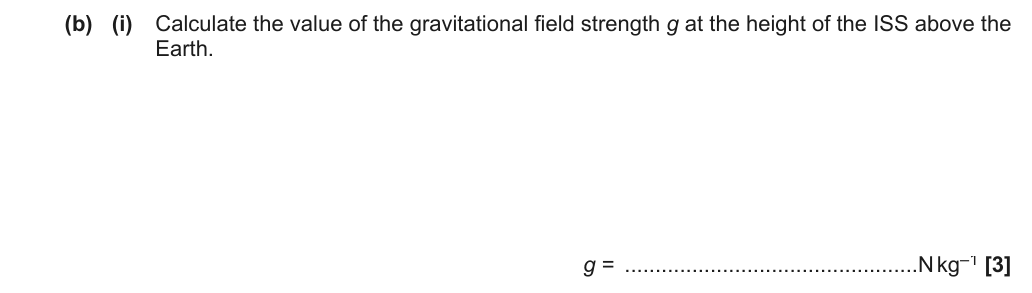
(b) (i) Calculate the value of the gravitational field strength g at the height of the ISS above the
Earth.
g =  ................................................N kg–1 [3]
November 2020 · Paper 3 · Q4(b)(ii) 2 marks Show that Medium circular motion
Earlier part of question 4 that this part usesEarlier part of November 2020 Paper 3 question 4
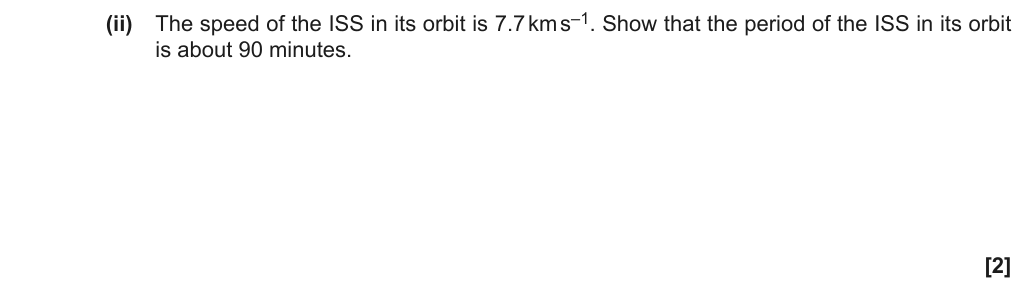
(ii) The speed of the ISS in its orbit is 7.7 km s–1. Show that the period of the ISS in its orbit
is about 90 minutes.
[2]
November 2020 · Paper 3 · Q4(c) 3 marks Show that Medium ideal gasesthermal physics
Earlier part of question 4 that this part usesEarlier part of November 2020 Paper 3 question 4
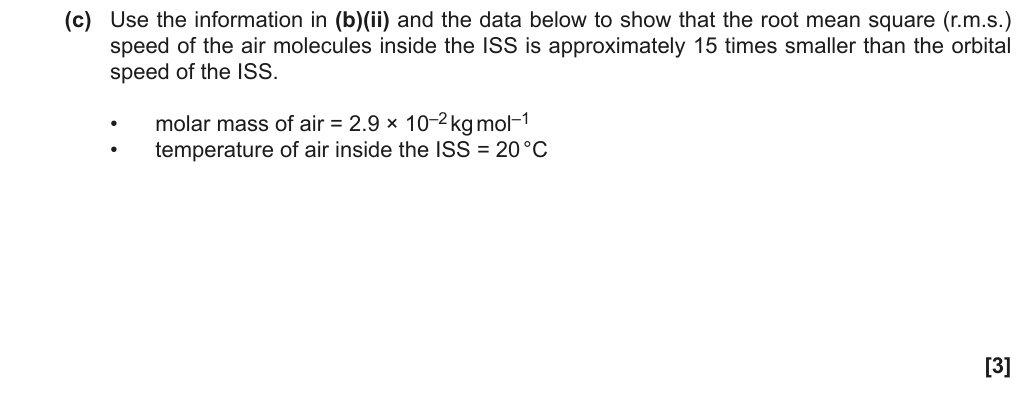
(c) Use the information in (b)(ii) and the data below to show that the root mean square (r.m.s.)
speed of the air molecules inside the ISS is approximately 15 times smaller than the orbital
speed of the ISS.
• molar mass of air = 2.9 × 10⁻² kg mol–1
• temperature of air inside the ISS = 20 °C
[3]
November 2020 · Paper 3 · Q4(d) 4 marks Calculation Medium wave motionwork energy and power
Earlier part of question 4 that this part usesEarlier part of November 2020 Paper 3 question 4
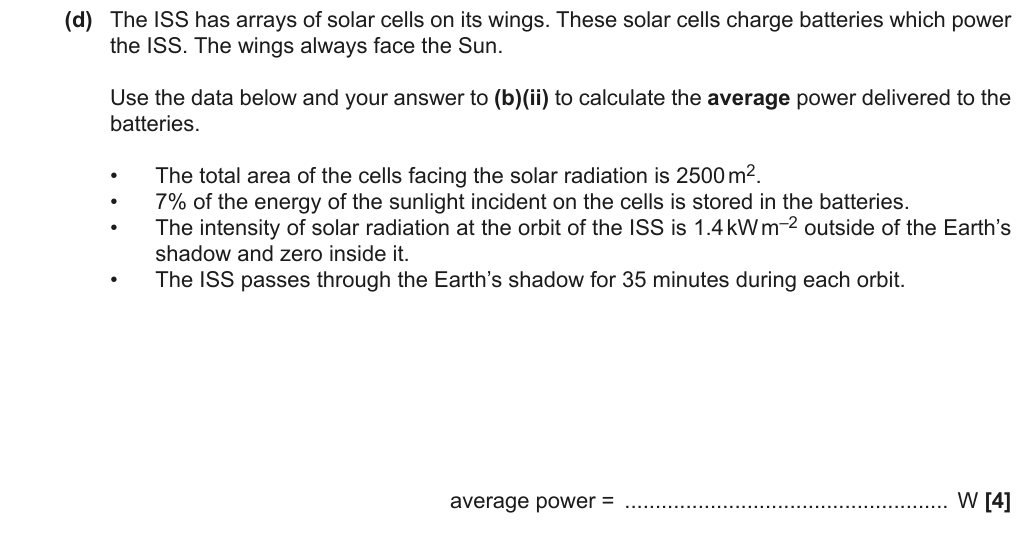
(d) The ISS has arrays of solar cells on its wings. These solar cells charge batteries which power
the ISS. The wings always face the Sun.
Use the data below and your answer to (b)(ii) to calculate the average power delivered to the
batteries.
• The total area of the cells facing the solar radiation is 2500 m2.
• 7% of the energy of the sunlight incident on the cells is stored in the batteries.
• The intensity of solar radiation at the orbit of the ISS is 1.4 kW m–2 outside of the Earth’s
shadow and zero inside it.
• The ISS passes through the Earth’s shadow for 35 minutes during each orbit.
average power =  ..................................................... W [4]
November 2020 · Paper 3 · Q5(a) 2 marks Calculation Easy wave motionelectromagnetic waves and refraction
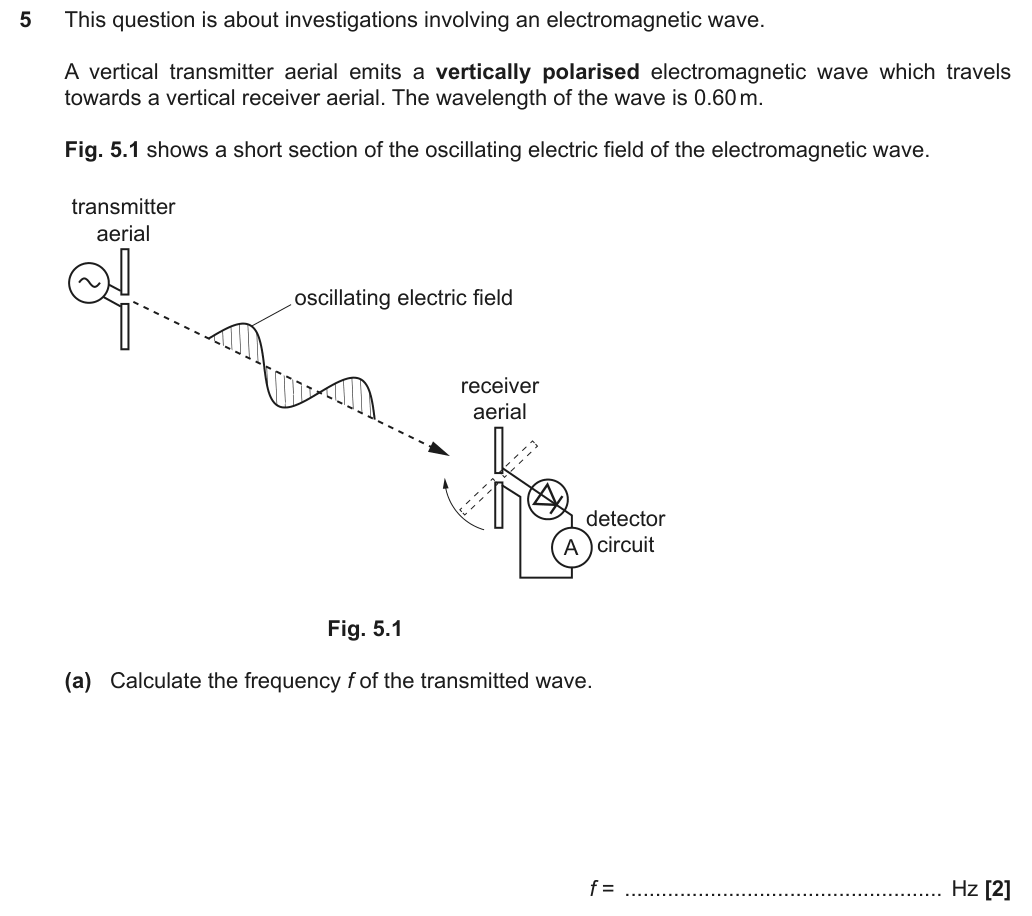
5 This question is about investigations involving an electromagnetic wave.
A vertical transmitter aerial emits a vertically polarised electromagnetic wave which travels
towards a vertical receiver aerial. The wavelength of the wave is 0.60 m.
Fig. 5.1 shows a short section of the oscillating electric field of the electromagnetic wave.
transmitter
aerial
oscillating electric field
receiver
aerial
detector
A circuit
Fig. 5.1
(a) Calculate the frequency f of the transmitted wave.
f =  .................................................... Hz [2]
November 2020 · Paper 3 · Q5(b) 3 marks Calculation Easy simple harmonic motion
Earlier part of question 5 that this part usesEarlier part of November 2020 Paper 3 question 5
(b) The electromagnetic wave is caused by electrons oscillating in the transmitter aerial. Each
electron oscillates with simple harmonic motion.
Calculate the maximum acceleration amax of an electron which oscillates with an amplitude of
4.0 × 10⁻⁶ m.
amax =  ................................................ m s–2 [3]
November 2020 · Paper 3 · Q5(c) 1 mark Explanation Easy emf pd and resistance
Earlier part of question 5 that this part usesEarlier part of November 2020 Paper 3 question 5
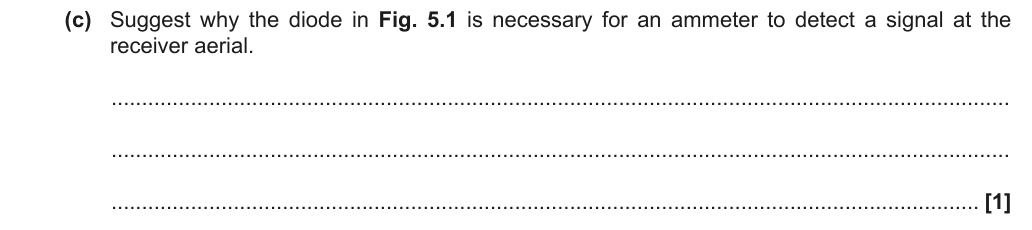
(c) Suggest why the diode in Fig. 5.1 is necessary for an ammeter to detect a signal at the
receiver aerial.
...................................................................................................................................................
...................................................................................................................................................
.............................................................................................................................................. [1]
November 2020 · Paper 3 · Q5(d) 6 marks 6-mark extended response Easy electromagnetic waves and refractionwave motionsuperposition and interferencestationary waves
Earlier part of question 5 that this part usesEarlier part of November 2020 Paper 3 question 5
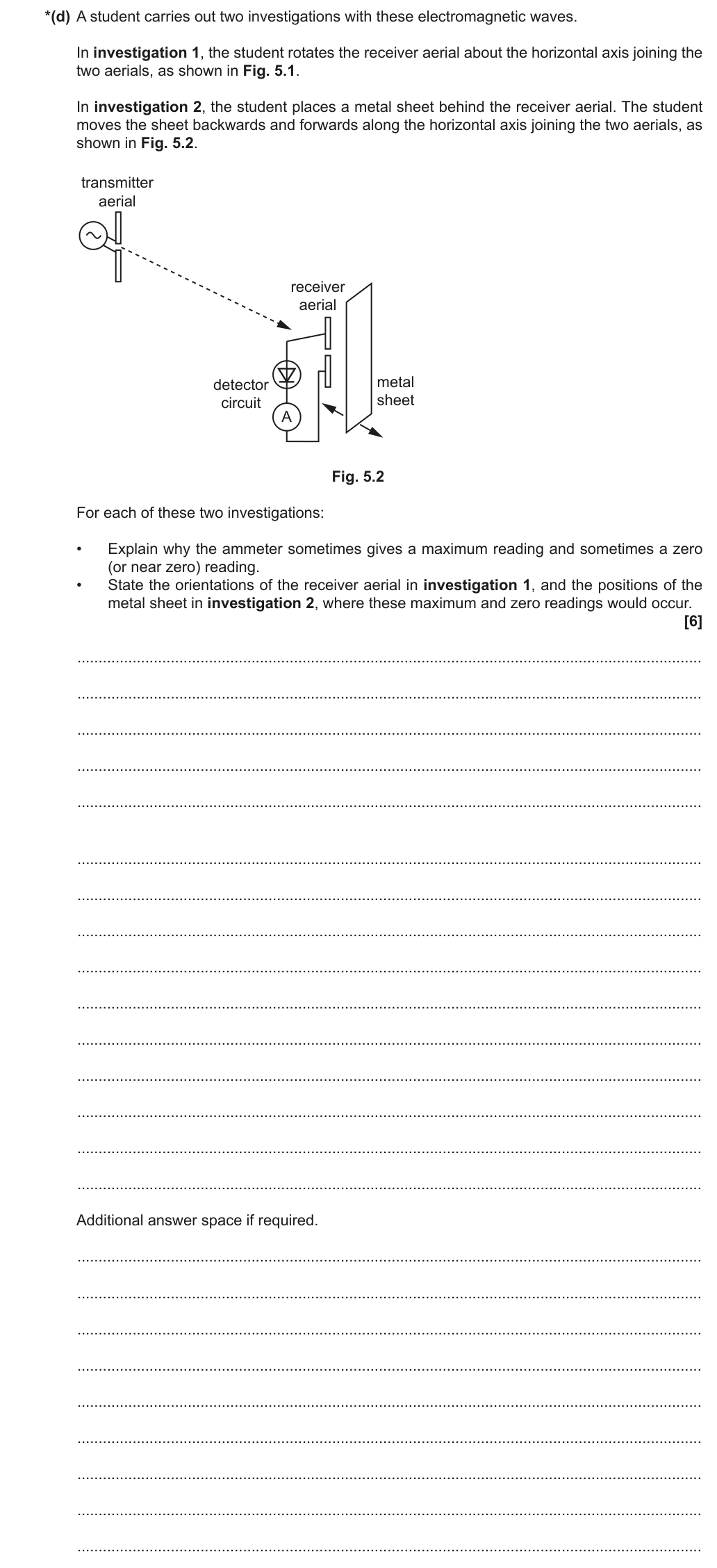
*(d) A student carries out two investigations with these electromagnetic waves.
In investigation 1, the student rotates the receiver aerial about the horizontal axis joining the
two aerials, as shown in Fig. 5.1.
In investigation 2, the student places a metal sheet behind the receiver aerial. The student
moves the sheet backwards and forwards along the horizontal axis joining the two aerials, as
shown in Fig. 5.2.
transmitter
aerial
receiver
aerial
detector metal
circuit sheet
A
Fig. 5.2
For each of these two investigations:
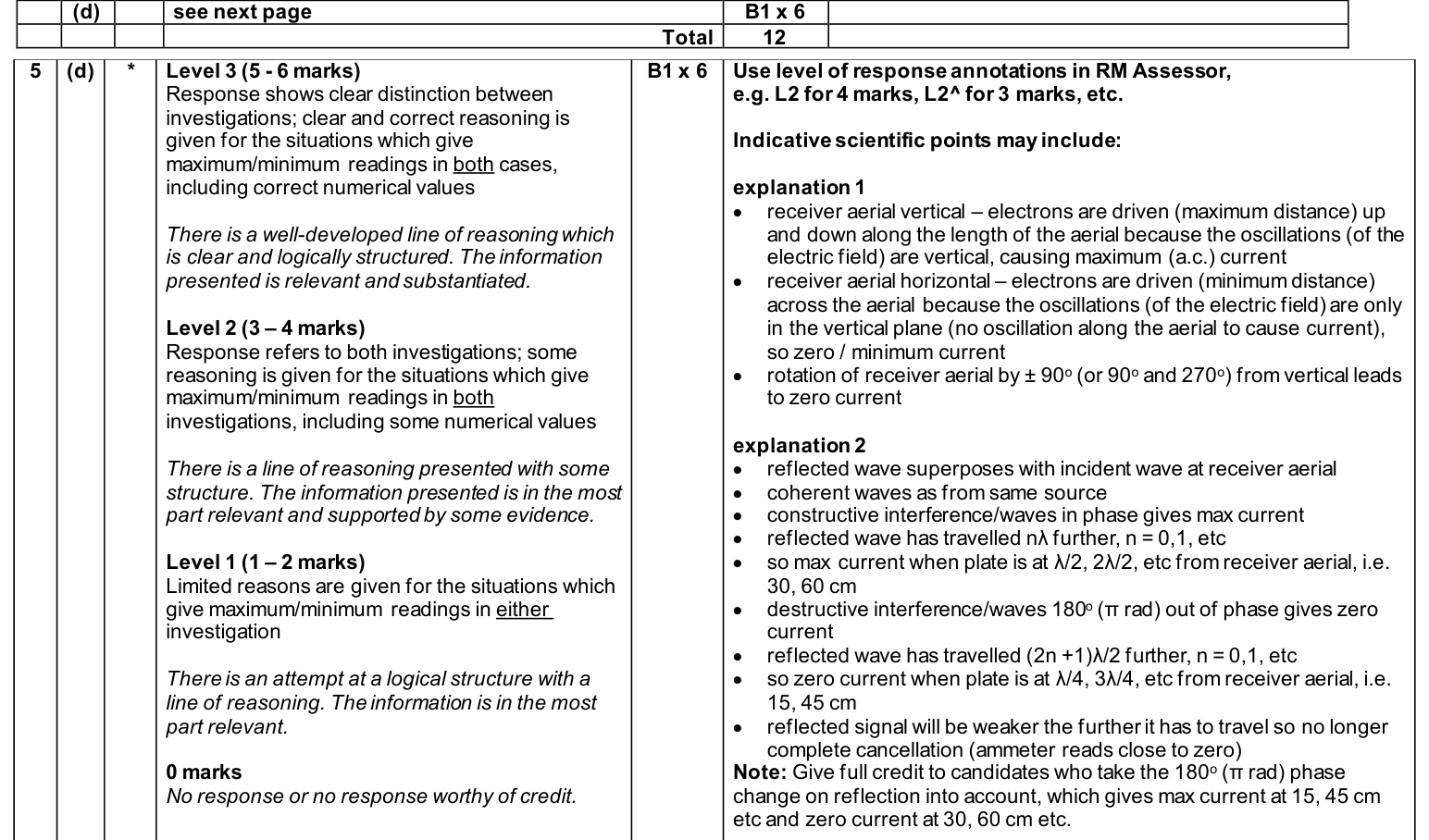
• Explain why the ammeter sometimes gives a maximum reading and sometimes a zero
(or near zero) reading.
• State the orientations of the receiver aerial in investigation 1, and the positions of the
metal sheet in investigation 2, where these maximum and zero readings would occur.
[6]
...................................................................................................................................................
...................................................................................................................................................
...................................................................................................................................................
...................................................................................................................................................
...................................................................................................................................................
...................................................................................................................................................
...................................................................................................................................................
...................................................................................................................................................
...................................................................................................................................................
...................................................................................................................................................
...................................................................................................................................................
...................................................................................................................................................
...................................................................................................................................................
...................................................................................................................................................
...................................................................................................................................................
Additional answer space if required.
...................................................................................................................................................
...................................................................................................................................................
...................................................................................................................................................
...................................................................................................................................................
...................................................................................................................................................
...................................................................................................................................................
...................................................................................................................................................
...................................................................................................................................................
...................................................................................................................................................
November 2020 · Paper 3 · Q6(a) 2 marks Diagram or graph Medium nuclear atom and particles
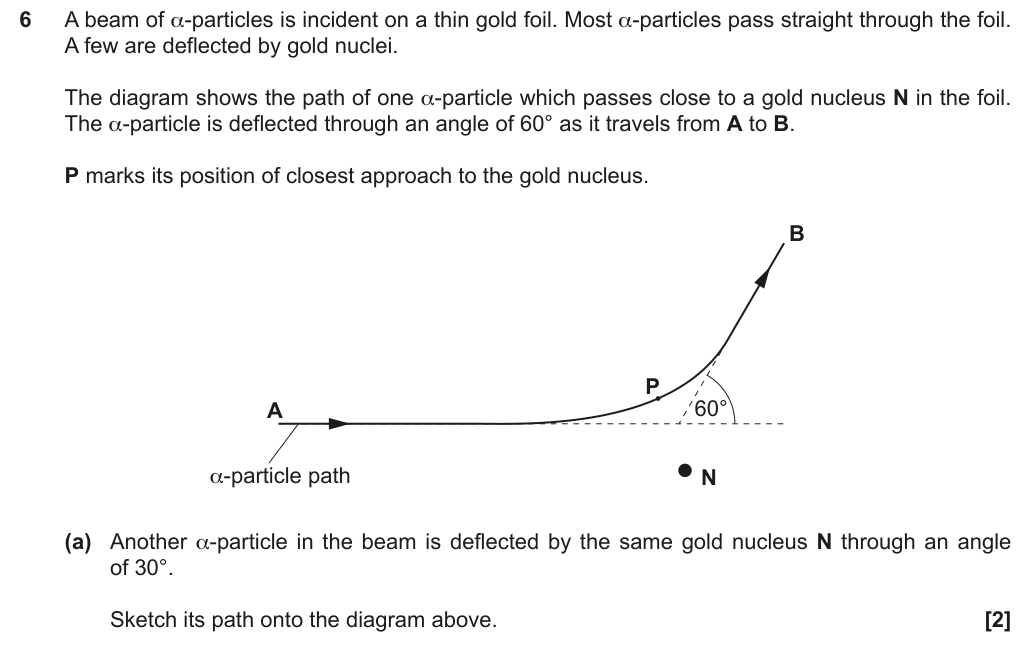
6 A beam of α-particles is incident on a thin gold foil. Most α-particles pass straight through the foil.
A few are deflected by gold nuclei.
The diagram shows the path of one α-particle which passes close to a gold nucleus N in the foil.
The α-particle is deflected through an angle of 60° as it travels from A to B.
P marks its position of closest approach to the gold nucleus.
B
P
A 60°
α-particle path N
(a) Another α-particle in the beam is deflected by the same gold nucleus N through an angle
of 30°.
Sketch its path onto the diagram above. [2]
November 2020 · Paper 3 · Q6(b) 4 marks Calculation Medium electric fieldsnuclear atom and particles
Earlier part of question 6 that this part usesEarlier part of November 2020 Paper 3 question 6
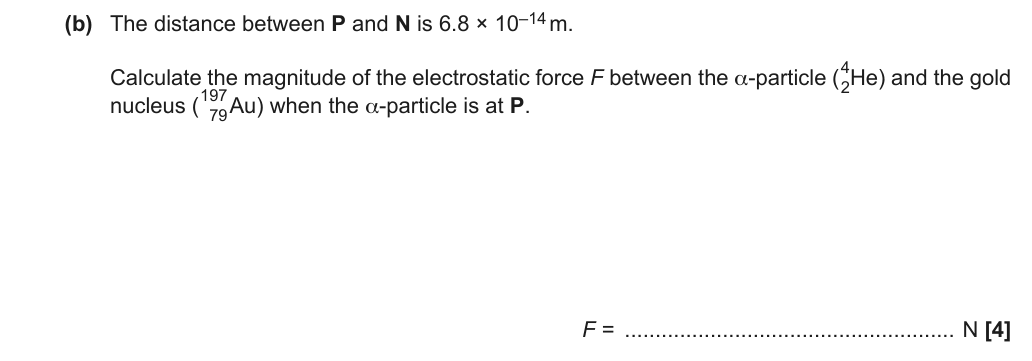
(b) The distance between P and N is 6.8 × 10⁻¹⁴ m.
Calculate the magnitude of the electrostatic force F between the α-particle (4 2He) and the gold
nucleus (197 79 Au) when the α-particle is at P.
F =  ...................................................... N [4]
November 2020 · Paper 3 · Q6(c) 3 marks Show that Medium newtons laws and momentumwork energy and powerphotons
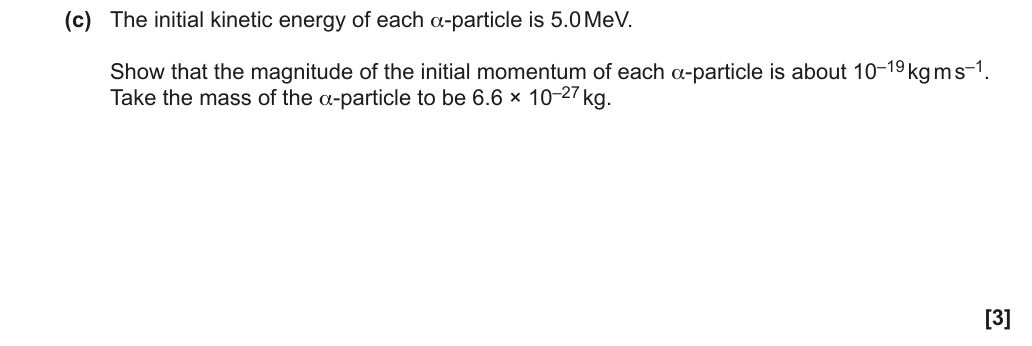
(c) The initial kinetic energy of each α-particle is 5.0 MeV.
Show that the magnitude of the initial momentum of each α-particle is about 10–19 kg m s–1.
Take the mass of the α-particle to be 6.6 × 10⁻²⁷ kg.
[3]
November 2020 · Paper 3 · Q6(d)(i) 2 marks Diagram or graph Medium newtons laws and momentum
Earlier part of question 6 that this part usesEarlier part of November 2020 Paper 3 question 6
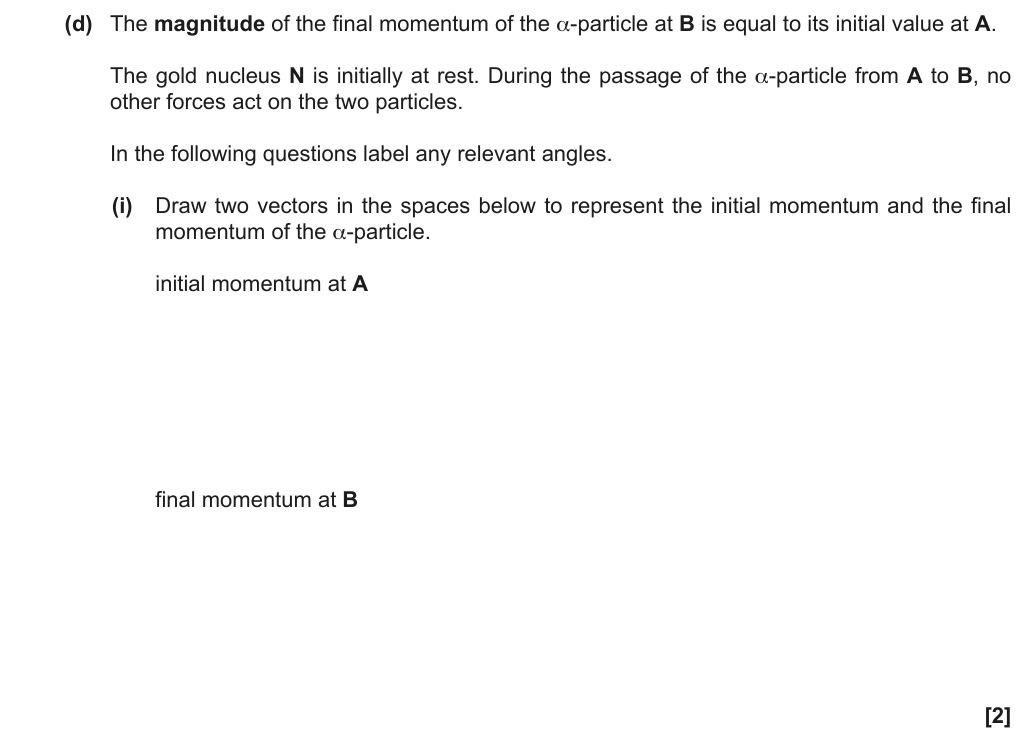
(d) The magnitude of the final momentum of the α-particle at B is equal to its initial value at A.
The gold nucleus N is initially at rest. During the passage of the α-particle from A to B, no
other forces act on the two particles.
In the following questions label any relevant angles.
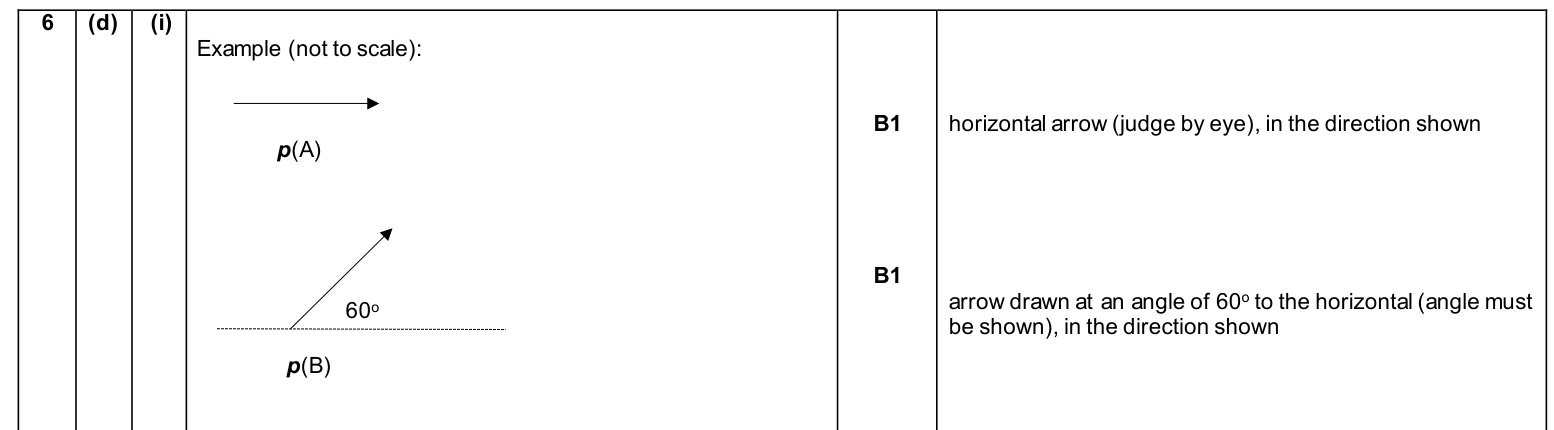
(i) Draw two vectors in the spaces below to represent the initial momentum and the final
momentum of the α-particle.
initial momentum at A
final momentum at B
[2]
November 2020 · Paper 3 · Q6(d)(ii) 2 marks Diagram or graph Medium collisionsscalars and vectors
Earlier parts of question 6 that this part usesEarlier part of November 2020 Paper 3 question 6Earlier part of November 2020 Paper 3 question 6
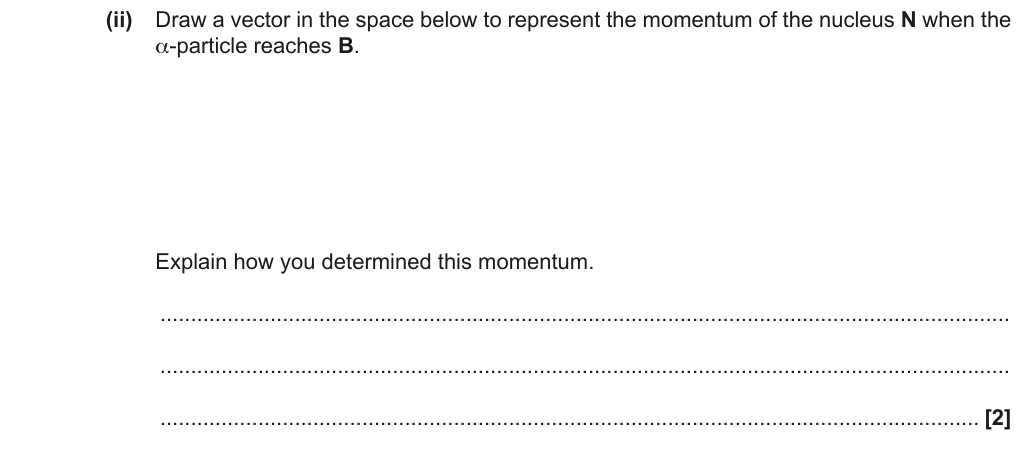
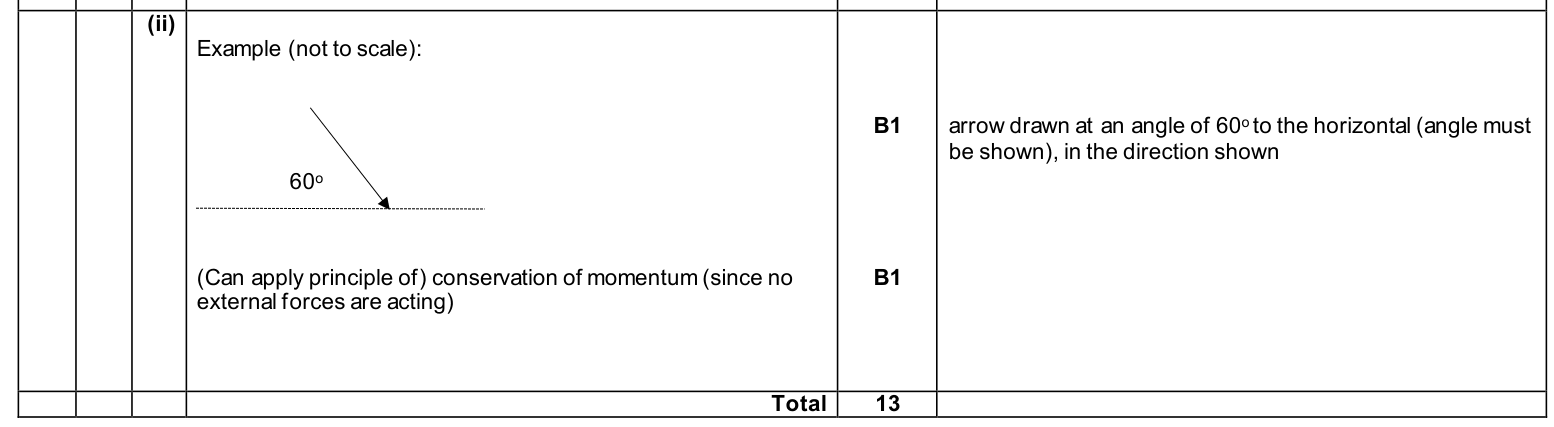
(ii) Draw a vector in the space below to represent the momentum of the nucleus N when the
α-particle reaches B.
Explain how you determined this momentum.
...........................................................................................................................................
...........................................................................................................................................
...................................................................................................................................... [2]

Work with an OCR physics tutor

Want a paper marked and gone through with you? Message us.

Prefer email? Send an enquiry

If you are under 18, please include a parent's contact details. Enquiries go to enquiries@physicsaleveltutor.com and are deleted once handled. All tutoring is online.