Six-mark extended response questions

The six-mark questions marked by level. Level 3 needs the full set of physics points and a clear, logical line of reasoning. 61 questions.

Other types: Multiple-choice questions · Calculation questions · Show that questions · Explain and describe questions · Graph and diagram questions · Practical questions · Short-answer questions

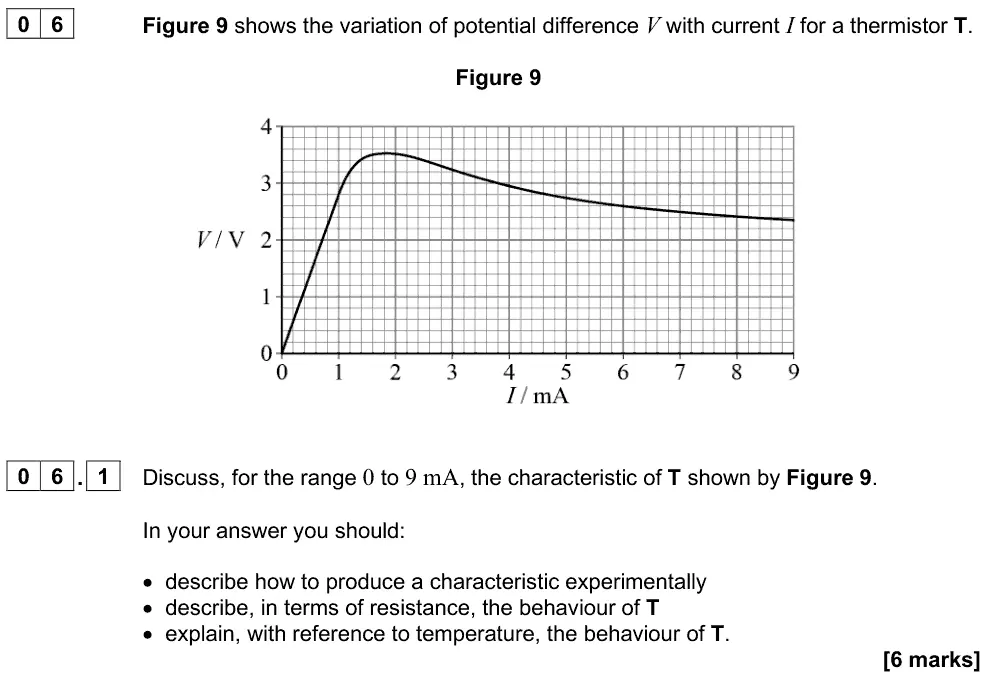
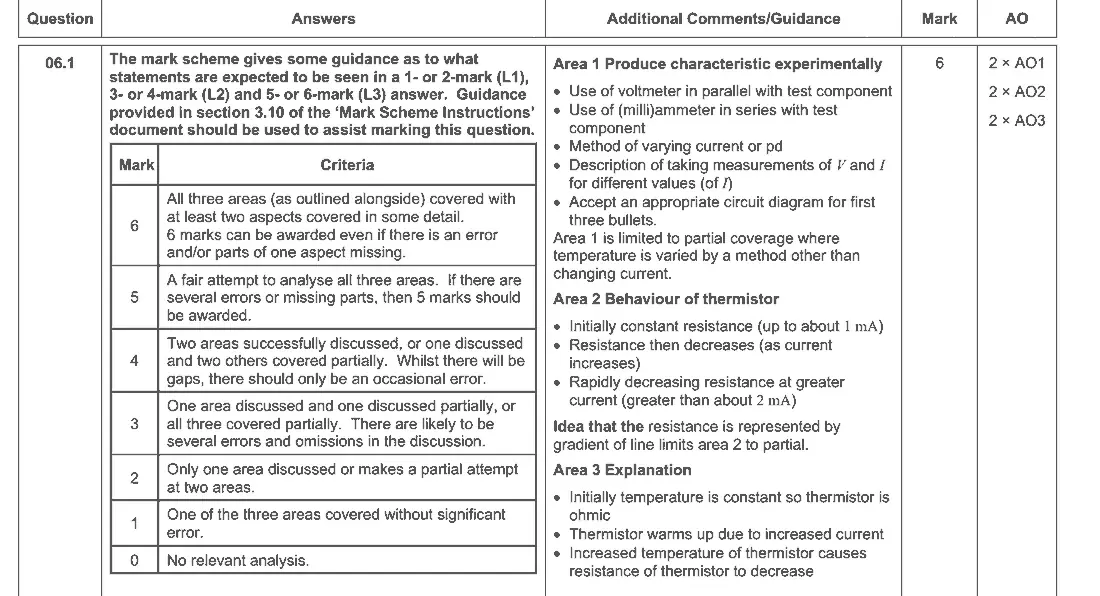
June 2025 · AS Paper 1 · Q6.1 6 marks AO1=2, AO2=2, AO3=2 6-mark extended response current voltage and resistivity
Figure 9 shows the variation of potential difference V with current I for a thermistor T.
Figure 9
Discuss, for the range 0 to 9 mA, the characteristic of T shown by Figure 9.
In your answer you should:
• describe how to produce a characteristic experimentally
• describe, in terms of resistance, the behaviour of T
• explain, with reference to temperature, the behaviour of T.
[6 marks]
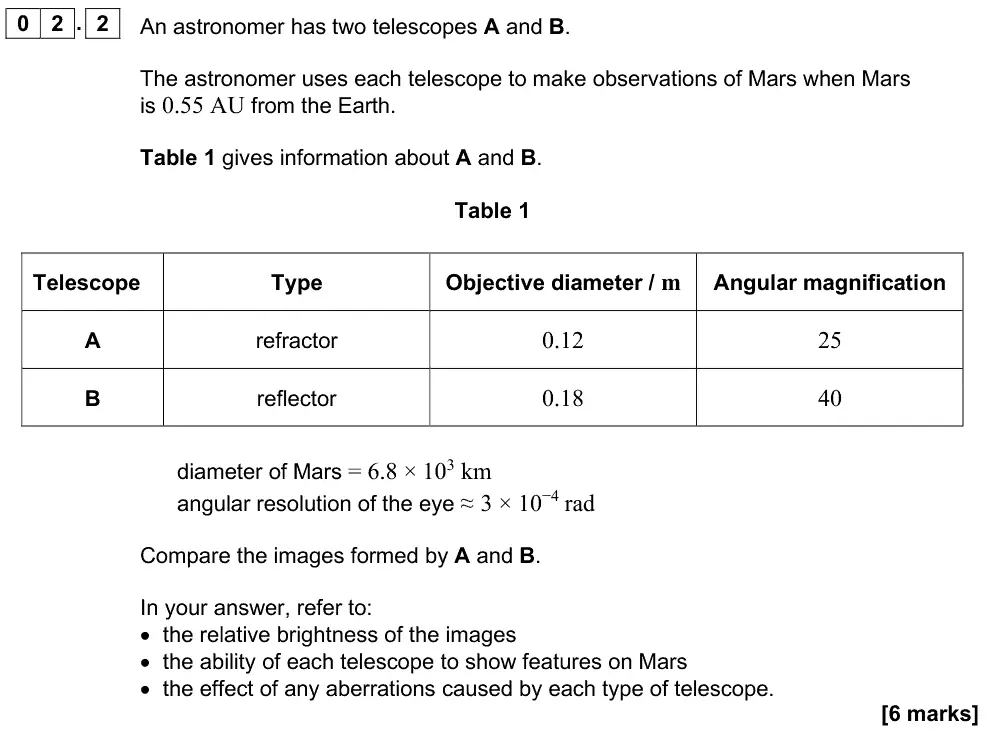
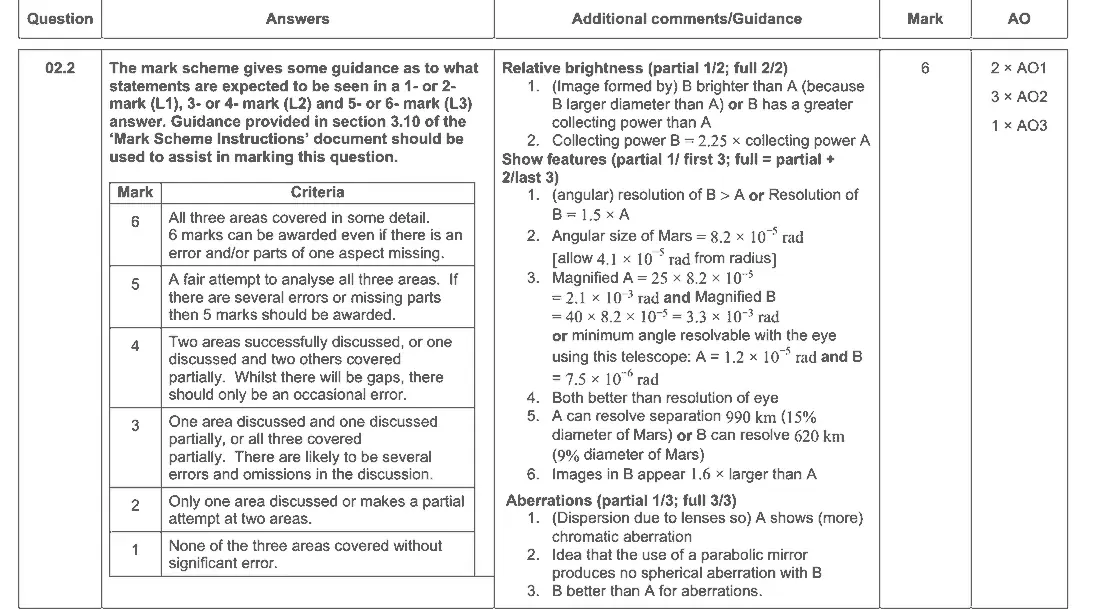
June 2025 · Paper 3B Astrophysics · Q2.2 6 marks AO1=2, AO2=3, AO3=1 6-mark extended response telescopes
Earlier part of question 2 that this part usesEarlier part of June 2025 Paper 3B Astrophysics question 2
An astronomer has two telescopes A and B.
The astronomer uses each telescope to make observations of Mars when Mars
is 0.55 AU from the Earth.
Table 1 gives information about A and B.
Table 1
Telescope
Type
Objective diameter / m
Angular magnification
A
refractor
0.12
25
B
reflector
0.18
40
diameter of Mars = 6.8 × 10³ km
angular resolution of the eye ≈ 3 × 10⁻⁴ rad
Compare the images formed by A and B.
In your answer, refer to:
• the relative brightness of the images
• the ability of each telescope to show features on Mars
• the effect of any aberrations caused by each type of telescope.
[6 marks]
June 2025 · Paper 3B Medical physics · Q2.3 6 marks AO2=2, AO3=4 6-mark extended response medical imaging
Earlier part of question 2 that this part usesEarlier part of June 2025 Paper 3B Medical physics question 2
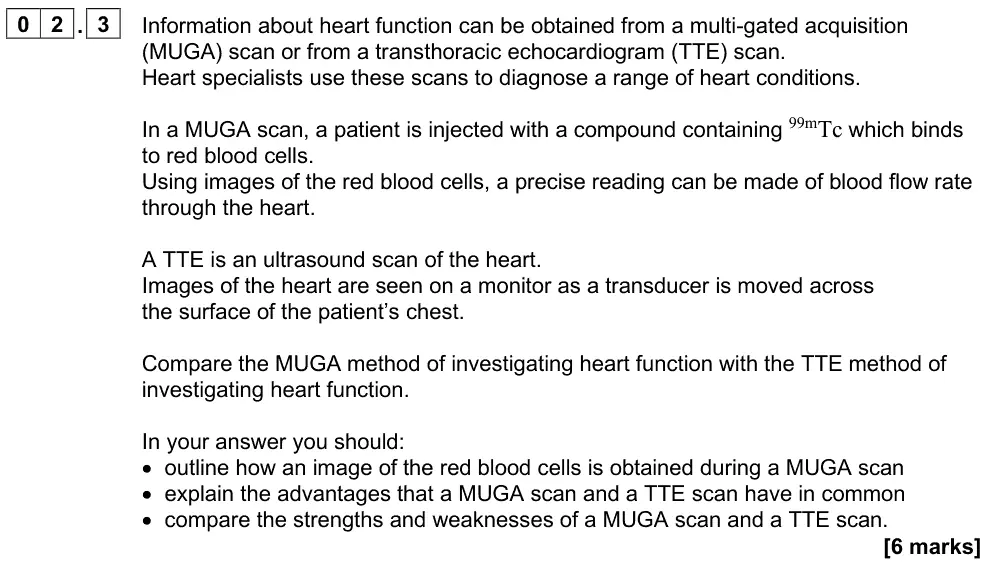
Information about heart function can be obtained from a multi-gated acquisition
(MUGA) scan or from a transthoracic echocardiogram (TTE) scan.
Heart specialists use these scans to diagnose a range of heart conditions.
In a MUGA scan, a patient is injected with a compound containing 99mTc which binds
to red blood cells.
Using images of the red blood cells, a precise reading can be made of blood flow rate
through the heart.
A TTE is an ultrasound scan of the heart.
Images of the heart are seen on a monitor as a transducer is moved across
the surface of the patient’s chest.
Compare the MUGA method of investigating heart function with the TTE method of
investigating heart function.
In your answer you should:
• outline how an image of the red blood cells is obtained during a MUGA scan
• explain the advantages that a MUGA scan and a TTE scan have in common
• compare the strengths and weaknesses of a MUGA scan and a TTE scan.
[6 marks]
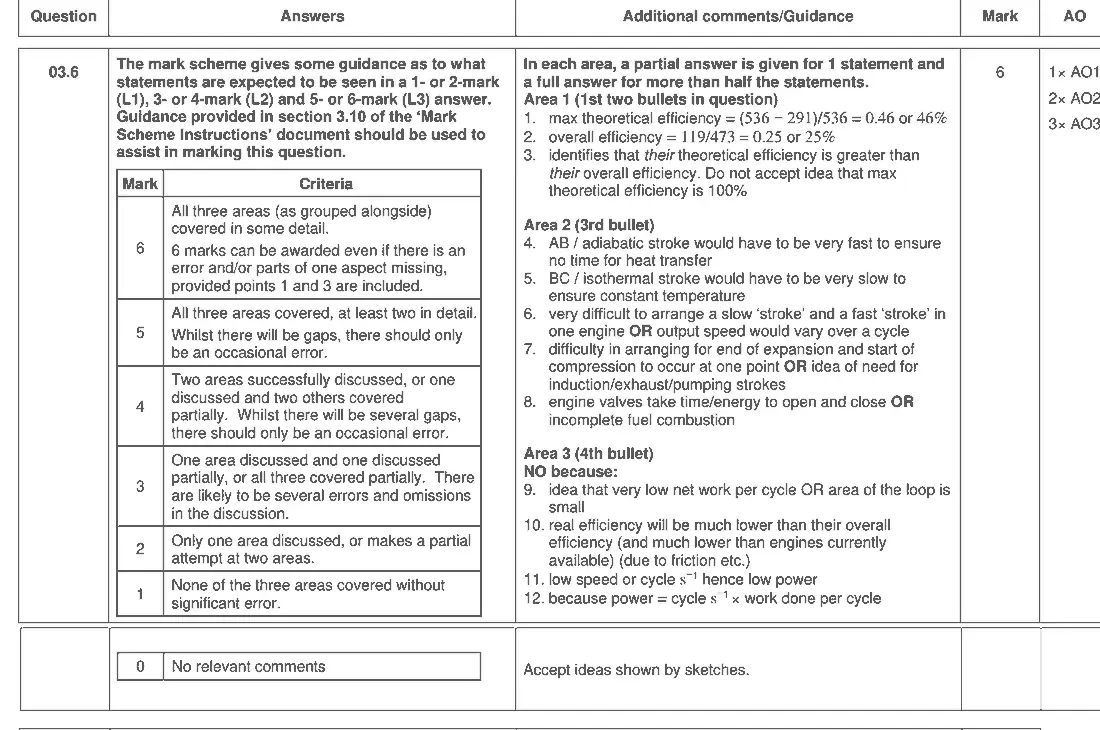
June 2025 · Paper 3B Engineering physics · Q3.6 6 marks AO1=1, AO2=2, AO3=3 6-mark extended response thermodynamics and engines
Earlier part of question 3 that this part usesEarlier part of June 2025 Paper 3B Engineering physics question 3
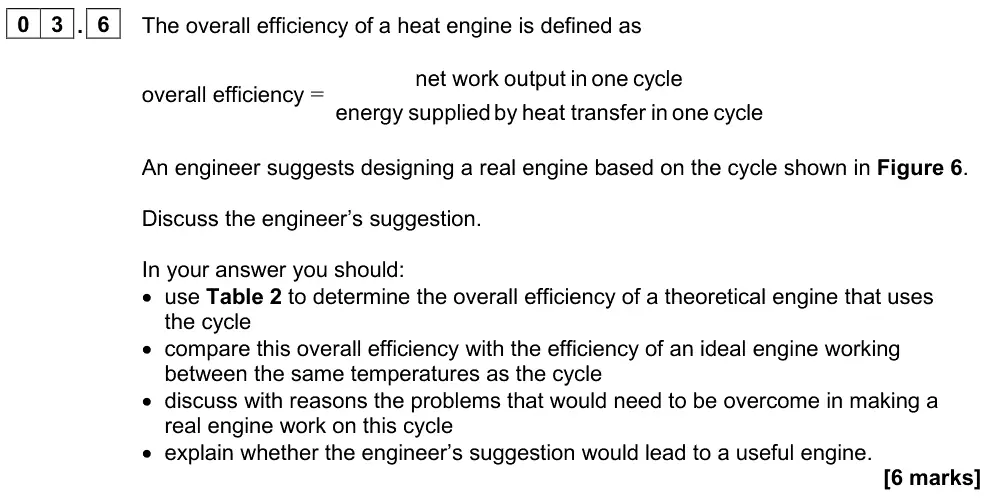
The overall efficiency of a heat engine is defined as
overall efficiency =
net work output in one cycle
energy supplied by heat transfer in one cycle
An engineer suggests designing a real engine based on the cycle shown in Figure 6.
Discuss the engineer’s suggestion.
In your answer you should:
• use Table 2 to determine the overall efficiency of a theoretical engine that uses
the cycle
• compare this overall efficiency with the efficiency of an ideal engine working
between the same temperatures as the cycle
• discuss with reasons the problems that would need to be overcome in making a
real engine work on this cycle
• explain whether the engineer’s suggestion would lead to a useful engine.
[6 marks]
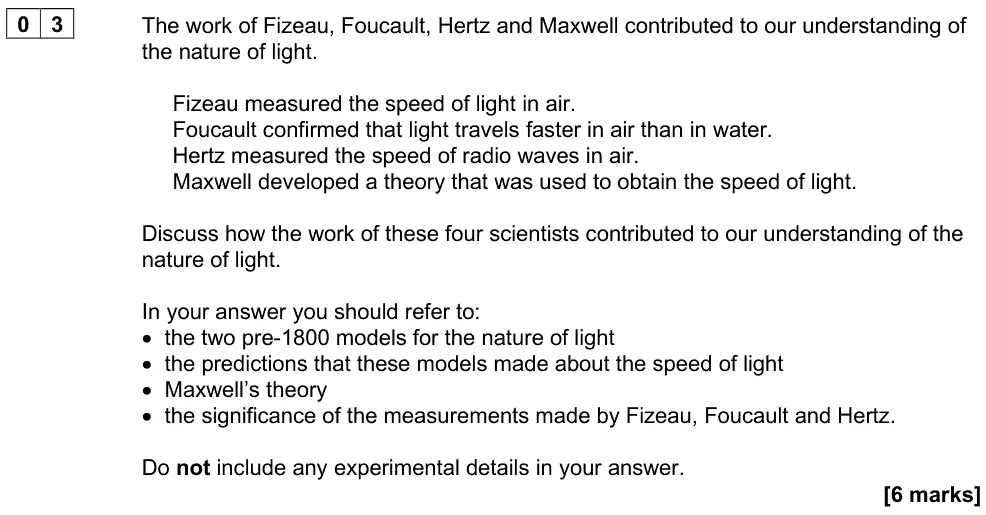
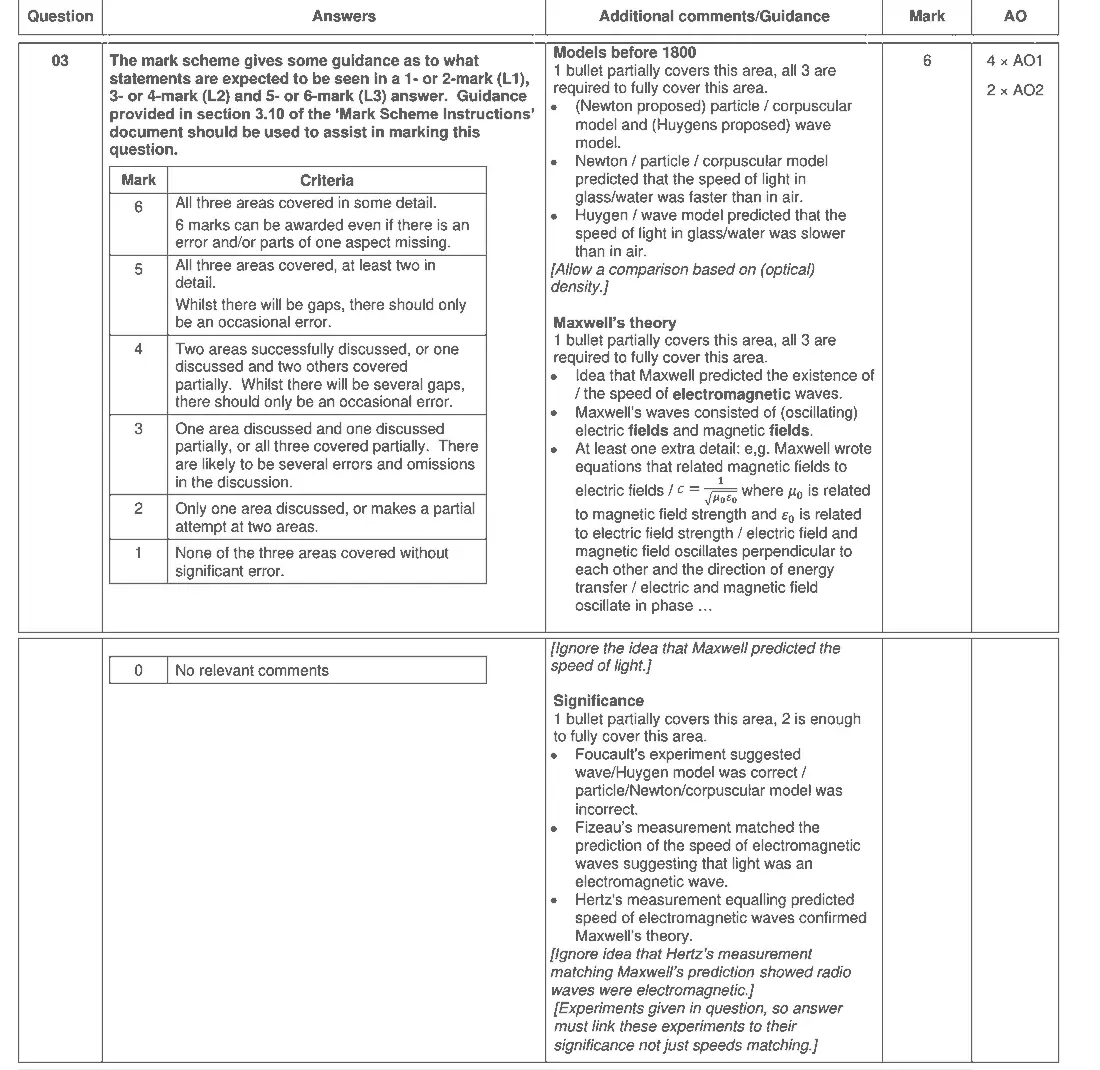
June 2025 · Paper 3B Turning points · Q3 6 marks AO1=4, AO2=2 6-mark extended response wave particle duality history
The work of Fizeau, Foucault, Hertz and Maxwell contributed to our understanding of
the nature of light.
Fizeau measured the speed of light in air.
Foucault confirmed that light travels faster in air than in water.
Hertz measured the speed of radio waves in air.
Maxwell developed a theory that was used to obtain the speed of light.
Discuss how the work of these four scientists contributed to our understanding of the
nature of light.
In your answer you should refer to:
• the two pre-1800 models for the nature of light
• the predictions that these models made about the speed of light
• Maxwell’s theory
• the significance of the measurements made by Fizeau, Foucault and Hertz.
Do not include any experimental details in your answer.
[6 marks]
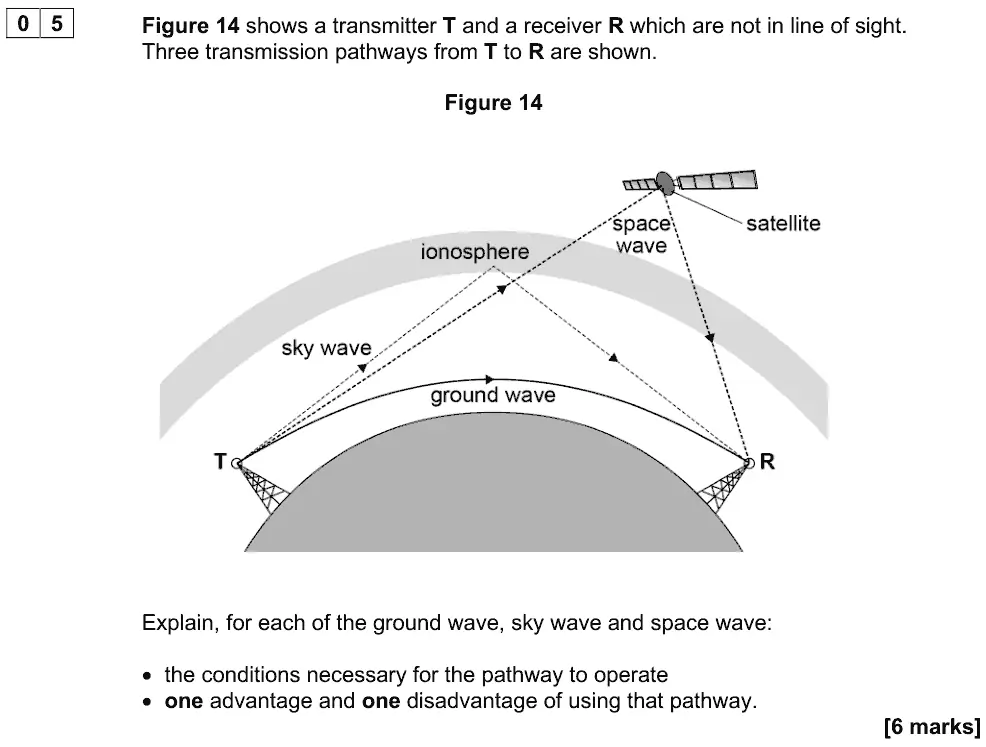
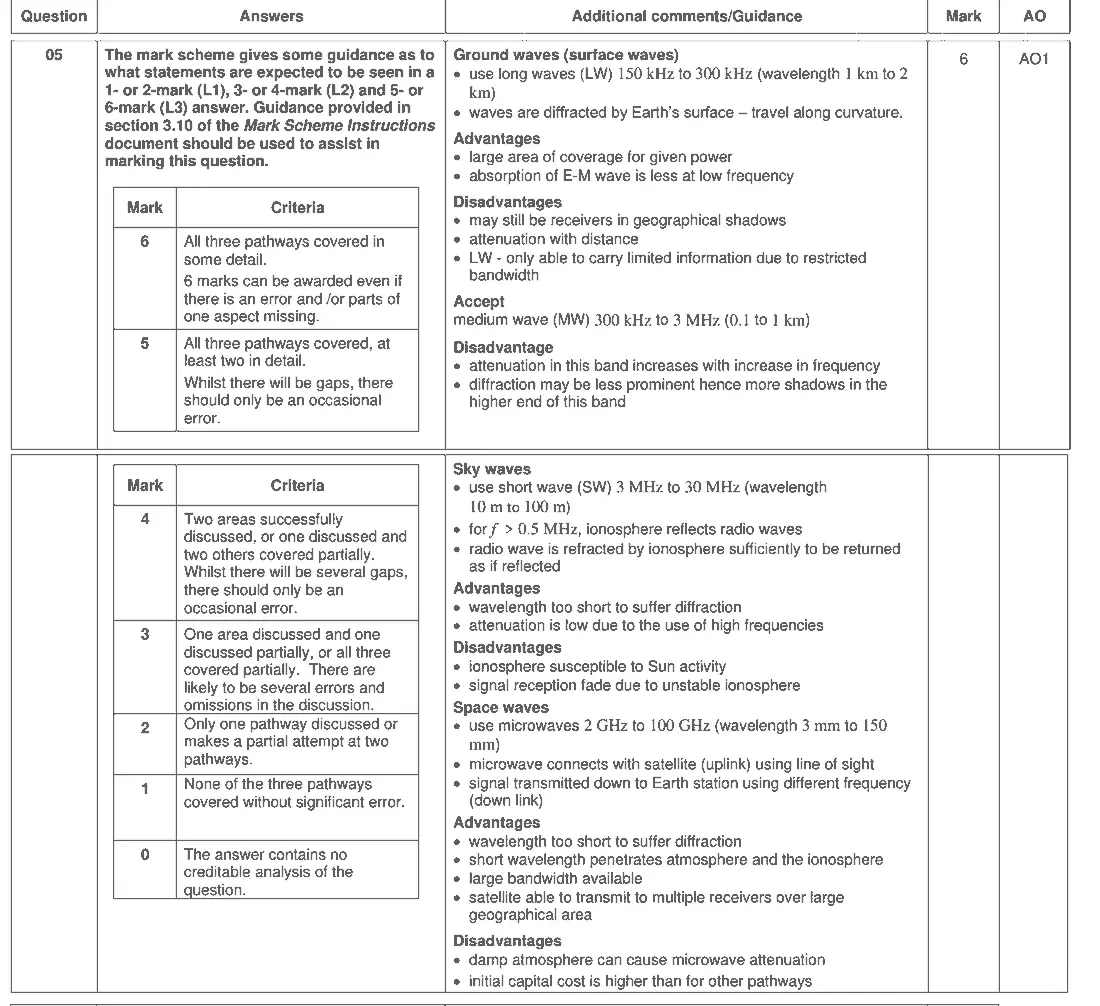
June 2025 · Paper 3B Electronics · Q5 6 marks AO1=6 6-mark extended response data communication
Figure 14 shows a transmitter T and a receiver R which are not in line of sight.
Three transmission pathways from T to R are shown.
Figure 14
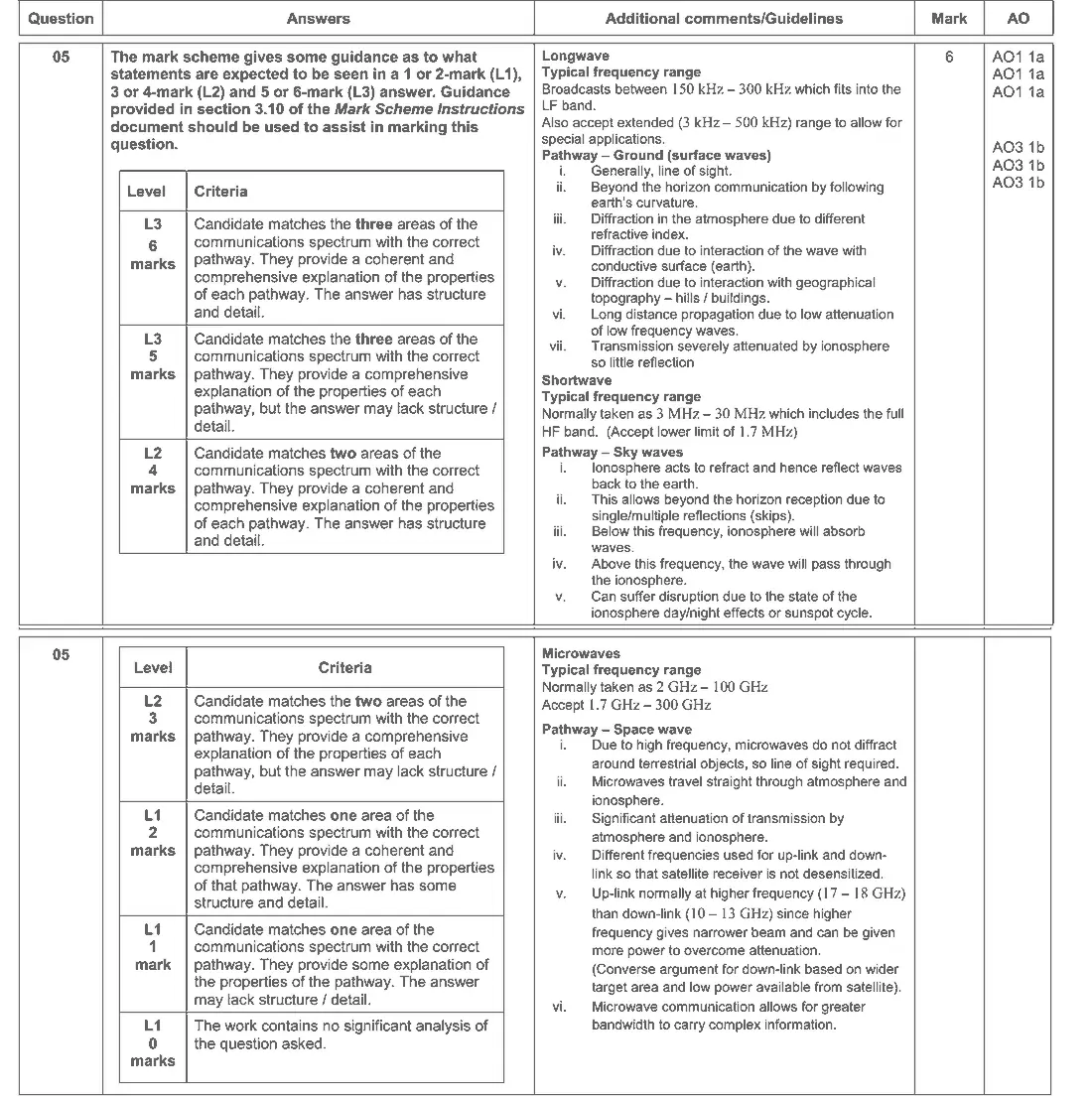
Explain, for each of the ground wave, sky wave and space wave:
• the conditions necessary for the pathway to operate
• one advantage and one disadvantage of using that pathway.
[6 marks]
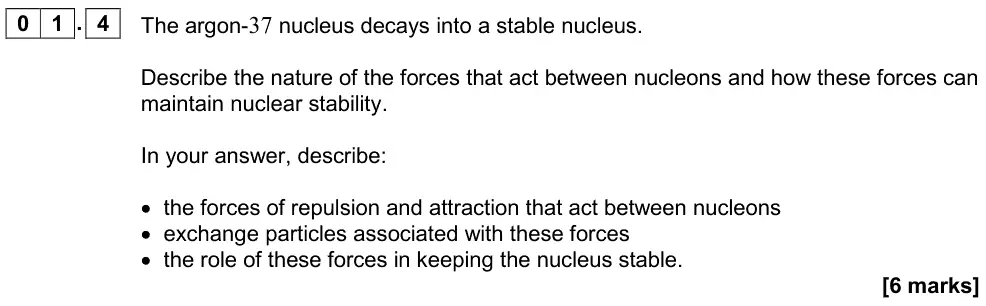
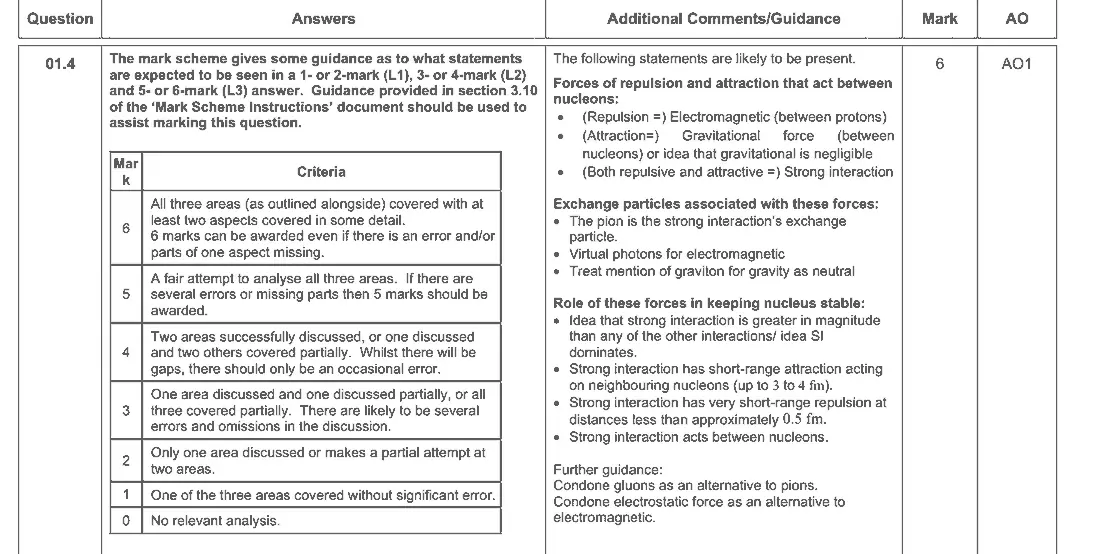
June 2024 · AS Paper 1 · Q1.4 6 marks AO1=6 6-mark extended response atomic structure and stable nucleiparticles antiparticles and interactions
Earlier part of question 1 that this part usesEarlier part of June 2024 Paper 1 question 1
The argon-37 nucleus decays into a stable nucleus.
Describe the nature of the forces that act between nucleons and how these forces can
maintain nuclear stability.
In your answer, describe:
• the forces of repulsion and attraction that act between nucleons
• exchange particles associated with these forces
• the role of these forces in keeping the nucleus stable.
[6 marks]
June 2024 · Paper 3B Astrophysics · Q4.3 6 marks AO1=6 6-mark extended response cosmology
Earlier part of question 4 that this part usesEarlier part of June 2024 Paper 3B Astrophysics question 4
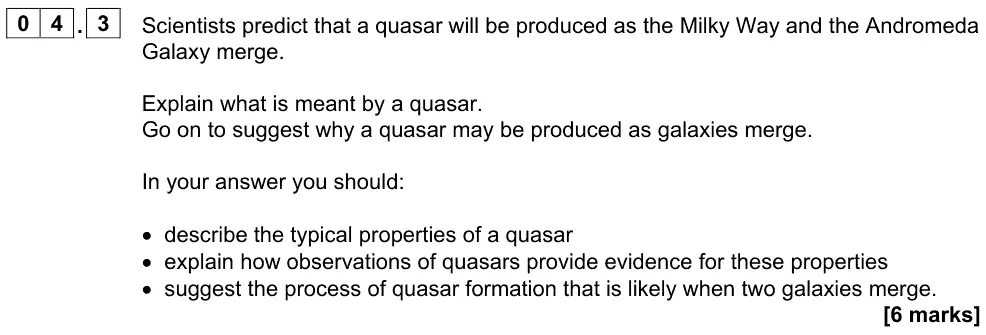
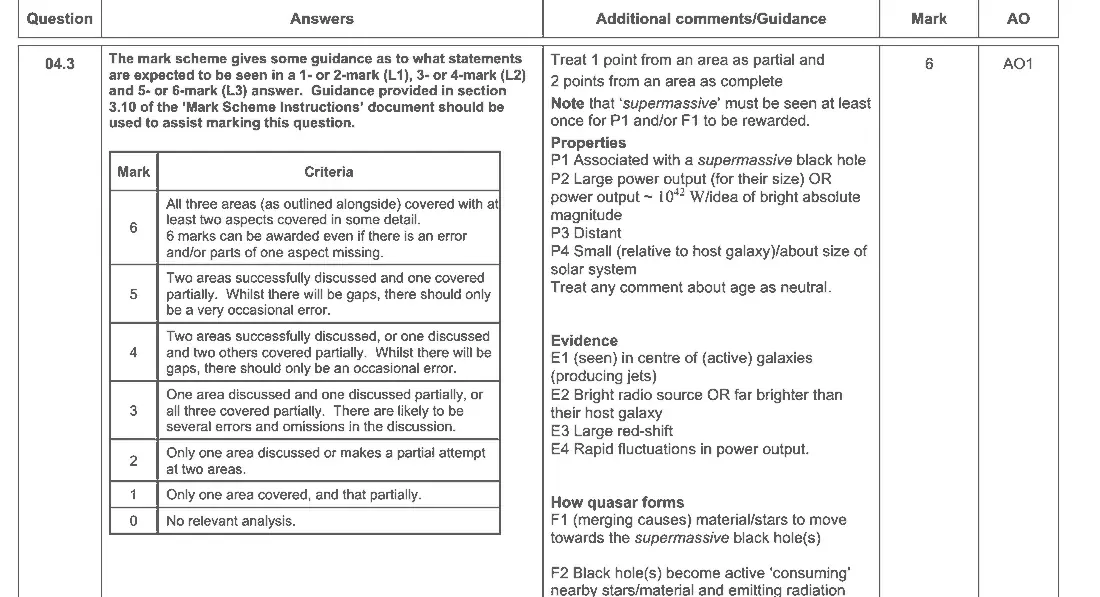
Scientists predict that a quasar will be produced as the Milky Way and the Andromeda
Galaxy merge.
Explain what is meant by a quasar.
Go on to suggest why a quasar may be produced as galaxies merge.
In your answer you should:
• describe the typical properties of a quasar
• explain how observations of quasars provide evidence for these properties
• suggest the process of quasar formation that is likely when two galaxies merge.
[6 marks]
June 2024 · Paper 3B Medical physics · Q3.2 6 marks AO1=2, AO2=2, AO3=2 6-mark extended response medical imaging
Earlier part of question 3 that this part usesEarlier part of June 2024 Paper 3B Medical physics question 3
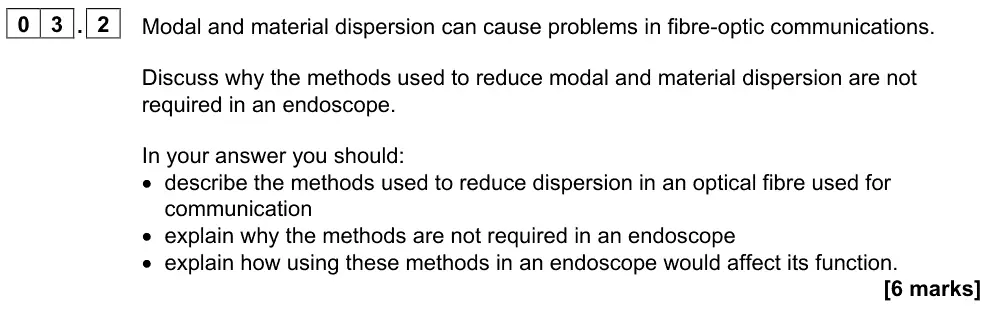
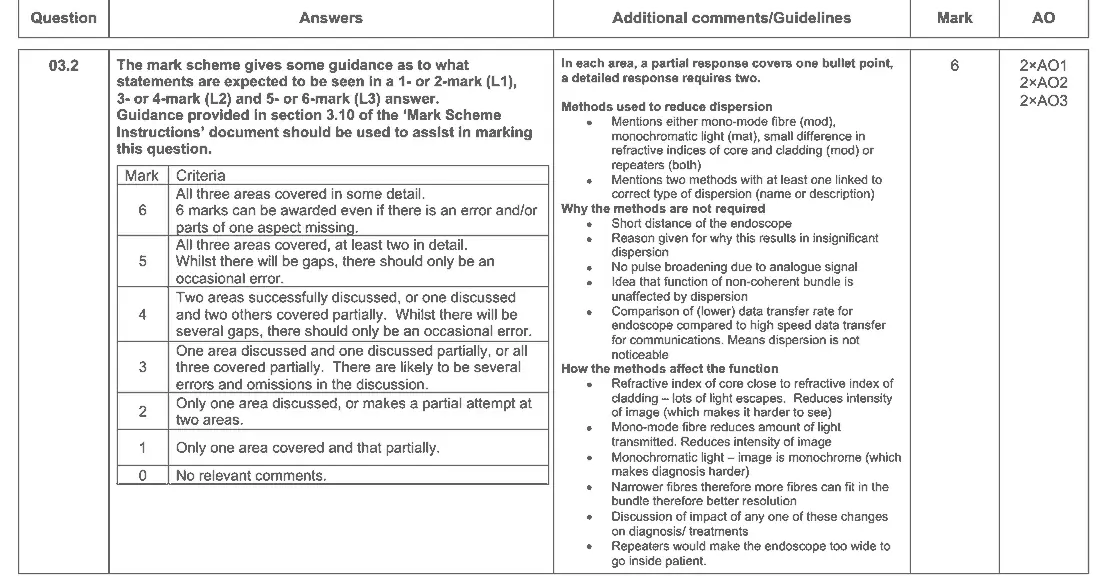
Modal and material dispersion can cause problems in fibre-optic communications.
Discuss why the methods used to reduce modal and material dispersion are not
required in an endoscope.
In your answer you should:
• describe the methods used to reduce dispersion in an optical fibre used for
communication
• explain why the methods are not required in an endoscope
• explain how using these methods in an endoscope would affect its function.
[6 marks]
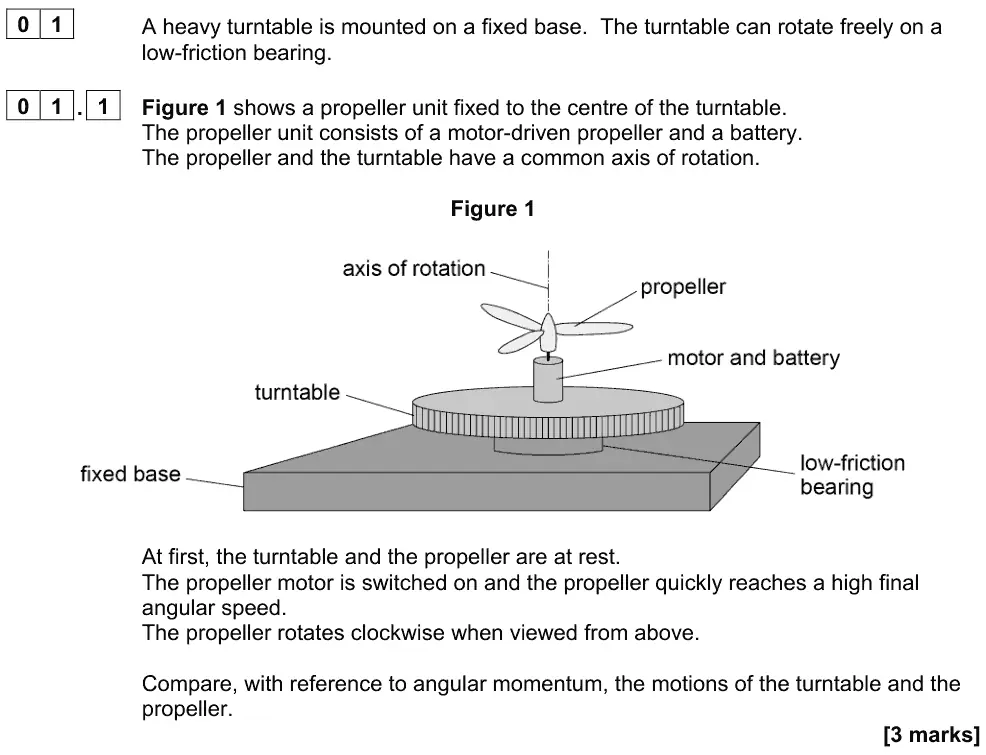
June 2024 · Paper 3B Engineering physics · Q1.2 6 marks 6-mark extended response rotational dynamics
Earlier part of question 1 that this part usesEarlier part of June 2024 Paper 3B Engineering physics question 1
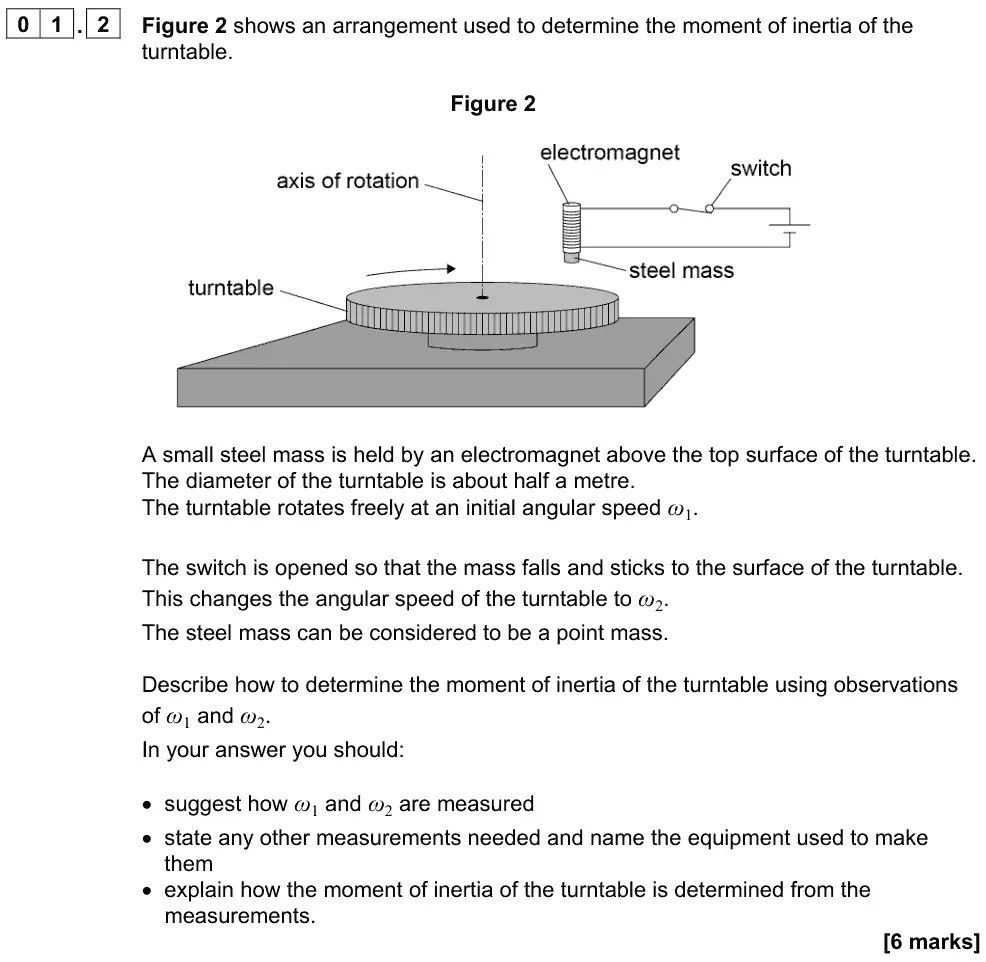
Figure 2 shows an arrangement used to determine the moment of inertia of the
turntable.
Figure 2
A small steel mass is held by an electromagnet above the top surface of the turntable.
The diameter of the turntable is about half a metre.
The turntable rotates freely at an initial angular speed ω1.
The switch is opened so that the mass falls and sticks to the surface of the turntable.
This changes the angular speed of the turntable to ω2.
The steel mass can be considered to be a point mass.
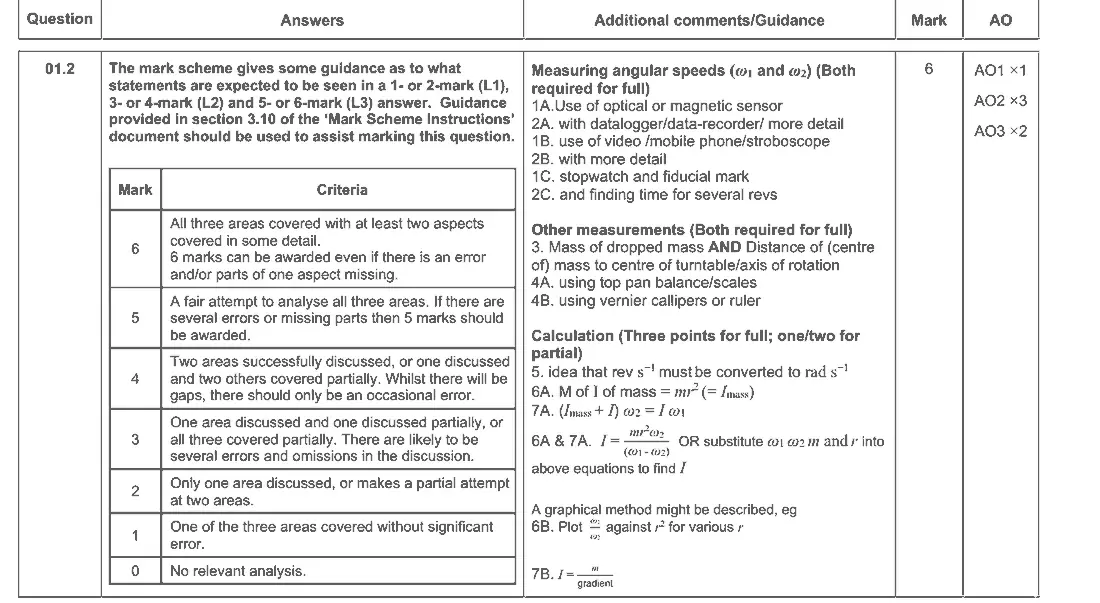
Describe how to determine the moment of inertia of the turntable using observations
of ω1 and ω2.
In your answer you should:
• suggest how ω1 and ω2 are measured
• state any other measurements needed and name the equipment used to make
them
• explain how the moment of inertia of the turntable is determined from the
measurements.
[6 marks]
June 2024 · Paper 3B Turning points · Q2.1 6 marks AO1=6 6-mark extended response discovery of the electron
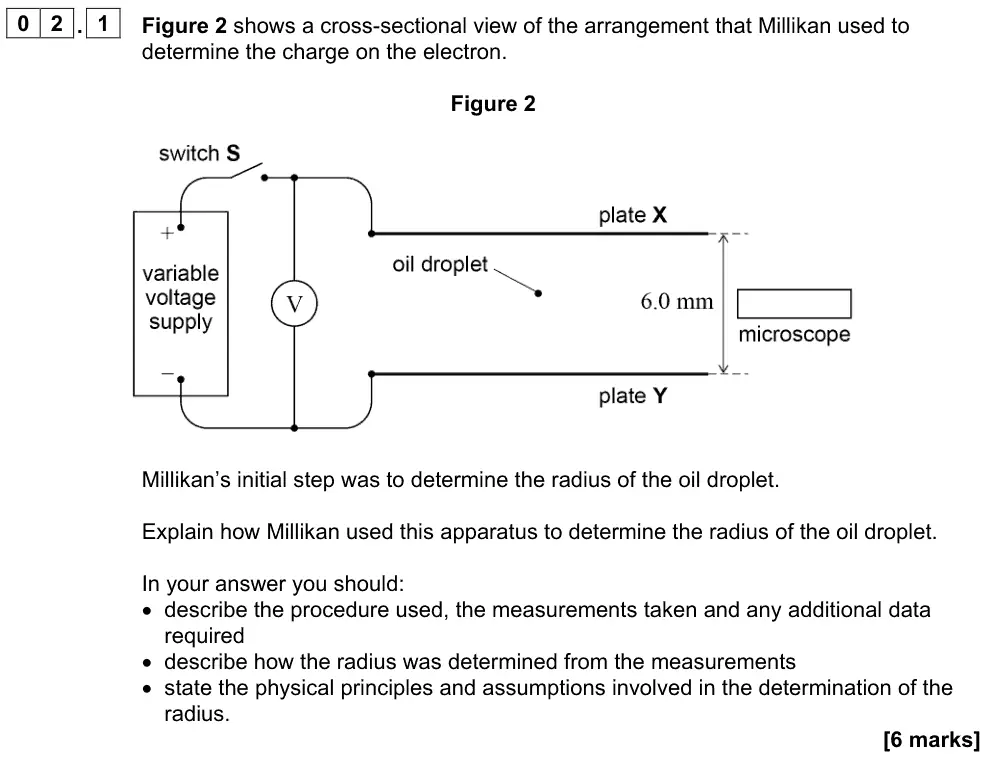
Figure 2 shows a cross-sectional view of the arrangement that Millikan used to
determine the charge on the electron.
Figure 2
Millikan’s initial step was to determine the radius of the oil droplet.
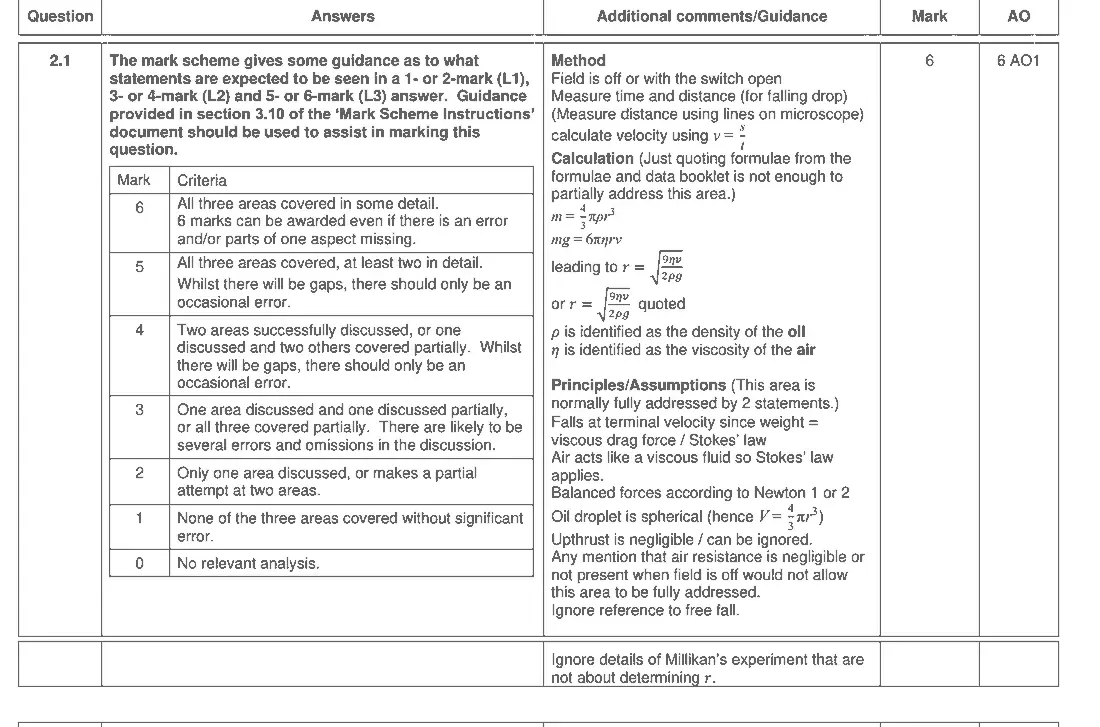
Explain how Millikan used this apparatus to determine the radius of the oil droplet.
In your answer you should:
• describe the procedure used, the measurements taken and any additional data
required
• describe how the radius was determined from the measurements
• state the physical principles and assumptions involved in the determination of the
radius.
[6 marks]
June 2024 · Paper 3B Electronics · Q5 6 marks AO1=6 6-mark extended response semiconductor devices and signalsdata communication
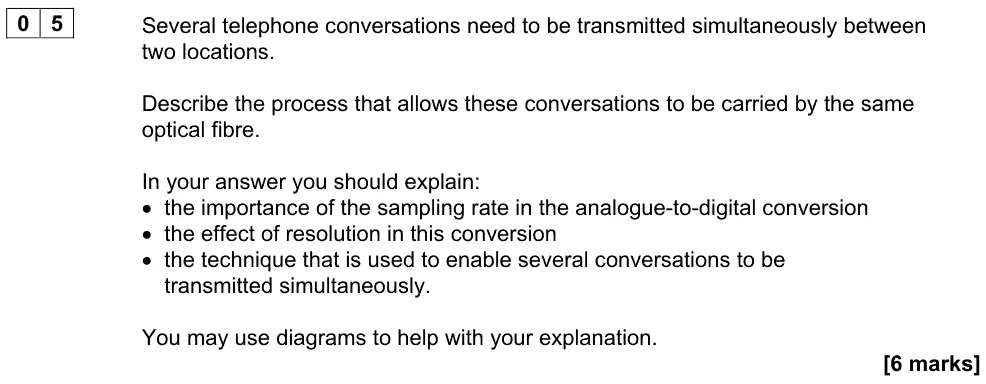
Several telephone conversations need to be transmitted simultaneously between
two locations.
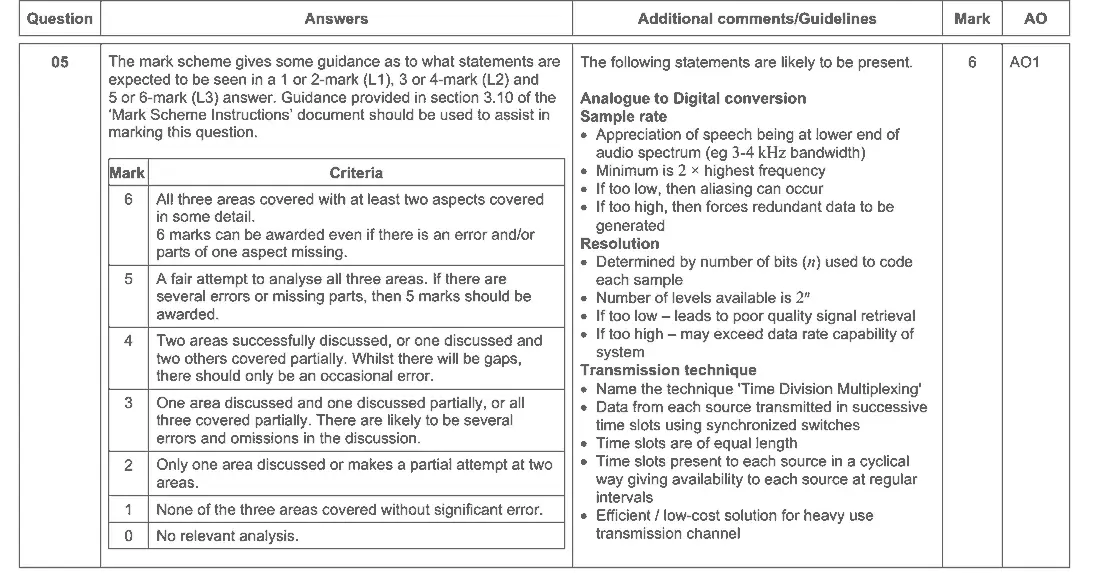
Describe the process that allows these conversations to be carried by the same
optical fibre.
In your answer you should explain:
• the importance of the sampling rate in the analogue-to-digital conversion
• the effect of resolution in this conversion
• the technique that is used to enable several conversations to be
transmitted simultaneously.
You may use diagrams to help with your explanation.
[6 marks]
June 2023 · AS Paper 1 · Q3 6 marks AO1=4, AO3=2 6-mark extended response progressive waves and polarisation
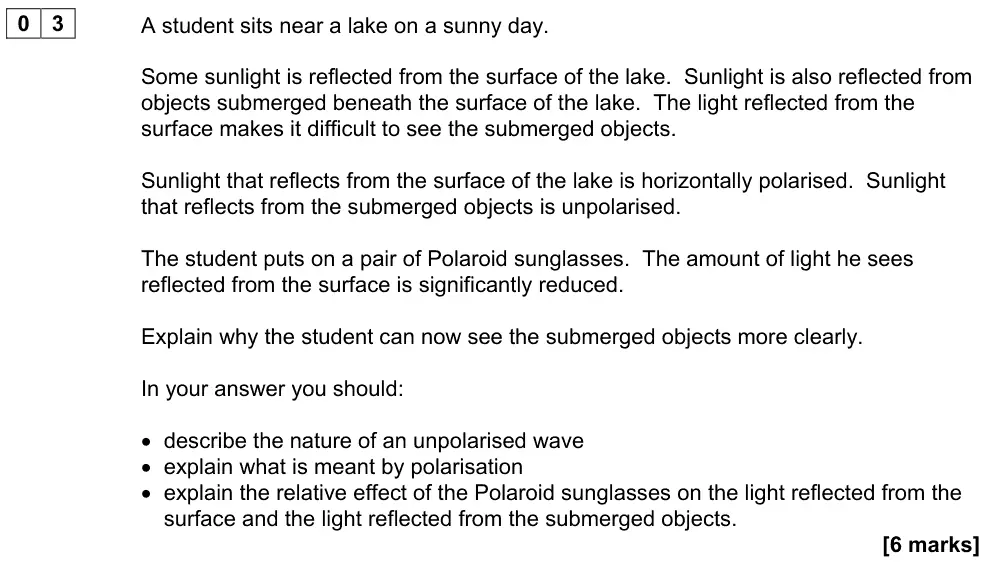
A student sits near a lake on a sunny day.
Some sunlight is reflected from the surface of the lake.  Sunlight is also reflected from
objects submerged beneath the surface of the lake.  The light reflected from the
surface makes it difficult to see the submerged objects.
Sunlight that reflects from the surface of the lake is horizontally polarised.  Sunlight
that reflects from the submerged objects is unpolarised.
The student puts on a pair of Polaroid sunglasses.  The amount of light he sees
reflected from the surface is significantly reduced.
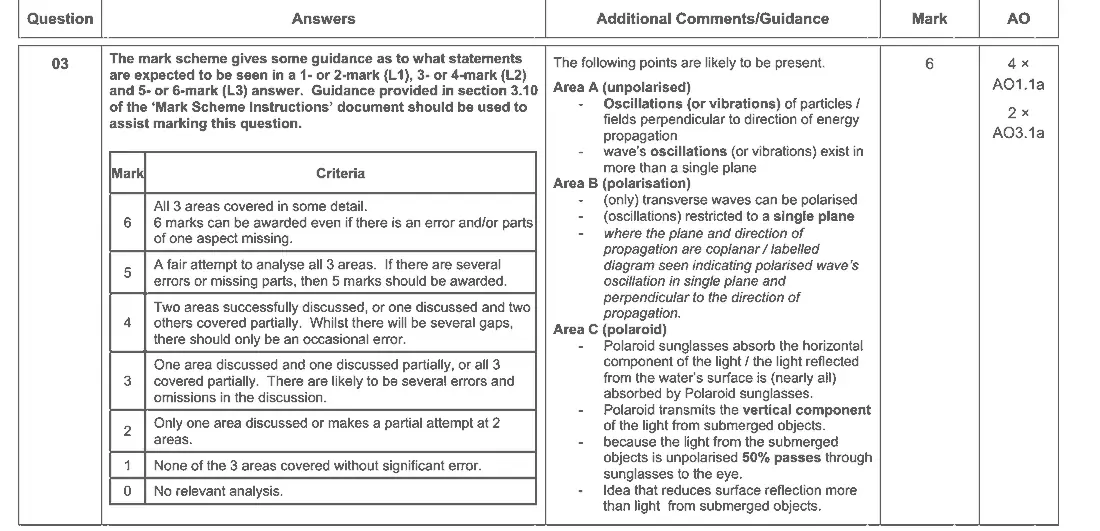
Explain why the student can now see the submerged objects more clearly.
In your answer you should:
• describe the nature of an unpolarised wave
• explain what is meant by polarisation
• explain the relative effect of the Polaroid sunglasses on the light reflected from the
surface and the light reflected from the submerged objects.
[6 marks]
June 2023 · Paper 3B Astrophysics · Q4 6 marks AO2=4, AO3=2 6-mark extended response classification of stars
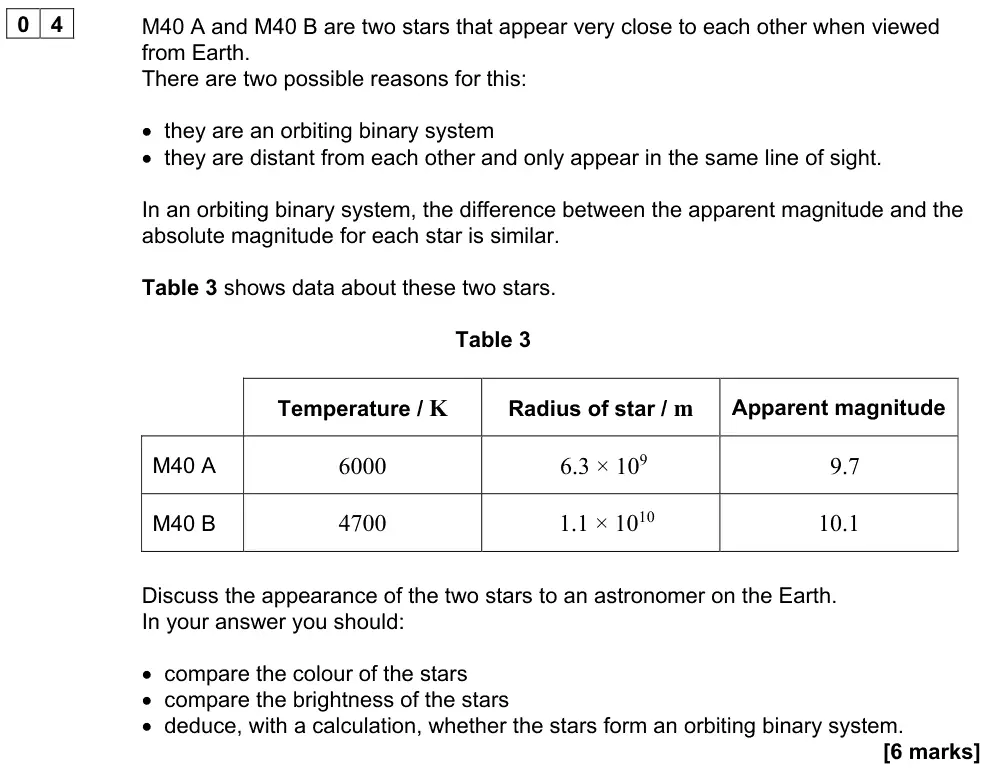
M40 A and M40 B are two stars that appear very close to each other when viewed
from Earth.
There are two possible reasons for this:
• they are an orbiting binary system
• they are distant from each other and only appear in the same line of sight.
In an orbiting binary system, the difference between the apparent magnitude and the
absolute magnitude for each star is similar.
Table 3 shows data about these two stars.
Table 3
Temperature / K
Radius of star / m
Apparent magnitude
M40 A
6000
6.3 × 10⁹
9.7
M40 B
4700
1.1 × 10¹⁰
10.1
Discuss the appearance of the two stars to an astronomer on the Earth.
In your answer you should:
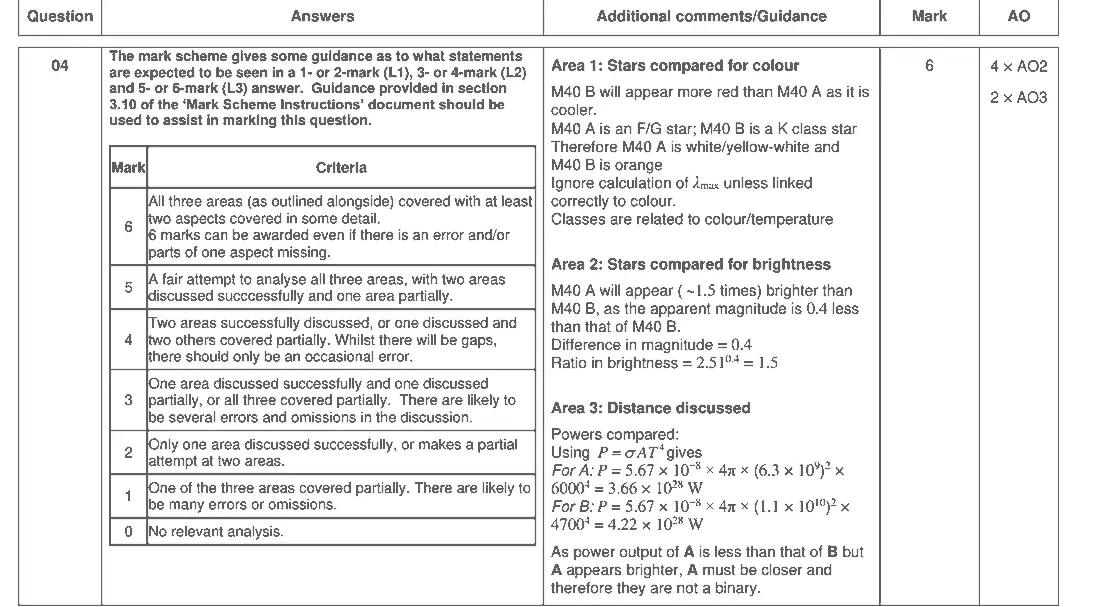
• compare the colour of the stars
• compare the brightness of the stars
• deduce, with a calculation, whether the stars form an orbiting binary system.
[6 marks]
June 2023 · Paper 3B Medical physics · Q5.1 6 marks AO1=2, AO3=4 6-mark extended response Hard medical imaging
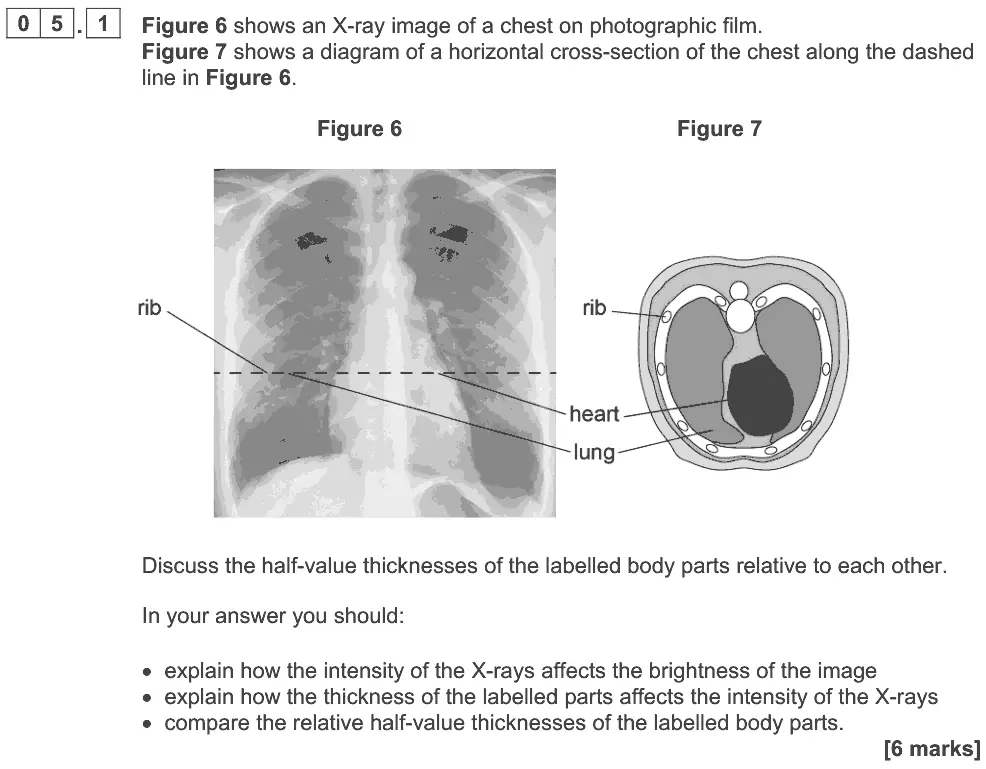
Figure 6 shows an X-ray image of a chest on photographic film.
Figure 7 shows a diagram of a horizontal cross-section of the chest along the dashed
line in Figure 6.
Figure 6
Figure 7
Discuss the half-value thicknesses of the labelled body parts relative to each other.
In your answer you should:
• explain how the intensity of the X-rays affects the brightness of the image
• explain how the thickness of the labelled parts affects the intensity of the X-rays
• compare the relative half-value thicknesses of the labelled body parts.
[6 marks]
June 2023 · Paper 3B Engineering physics · Q4 6 marks AO1=5, AO2=1 6-mark extended response thermodynamics and engines
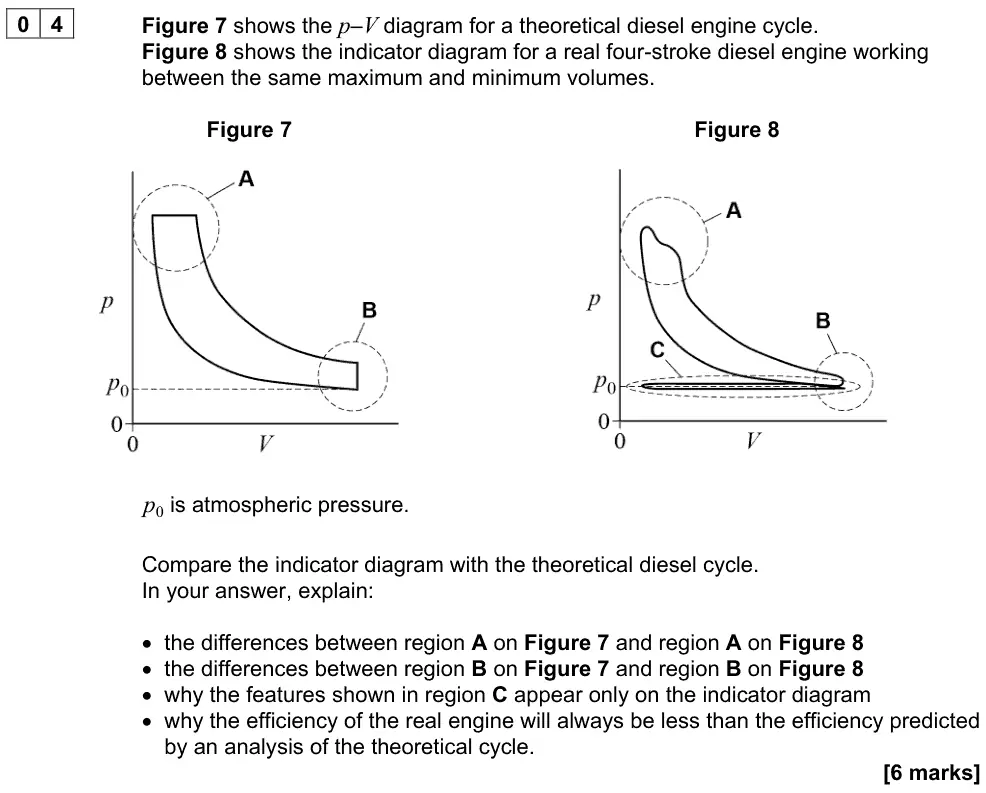
Figure 7 shows the p–V diagram for a theoretical diesel engine cycle.
Figure 8 shows the indicator diagram for a real four-stroke diesel engine working
between the same maximum and minimum volumes.
Figure 7
Figure 8
p0 is atmospheric pressure.
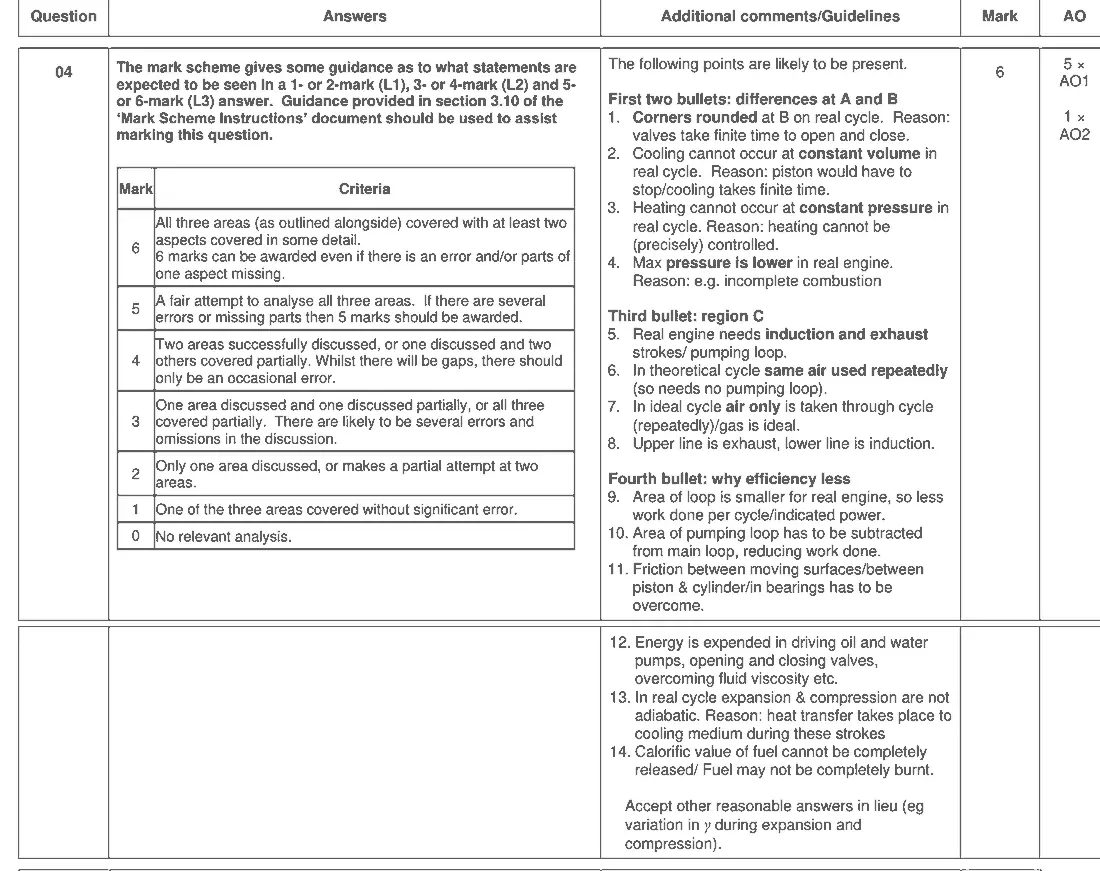
Compare the indicator diagram with the theoretical diesel cycle.
In your answer, explain:
• the differences between region A on Figure 7 and region A on Figure 8
• the differences between region B on Figure 7 and region B on Figure 8
• why the features shown in region C appear only on the indicator diagram
• why the efficiency of the real engine will always be less than the efficiency predicted
by an analysis of the theoretical cycle.
[6 marks]
June 2023 · Paper 3B Turning points · Q1.4 6 marks AO1=4, AO2=1, AO3=1 6-mark extended response discovery of the electron
Earlier part of question 1 that this part usesEarlier part of June 2023 Paper 3B Turning points question 1
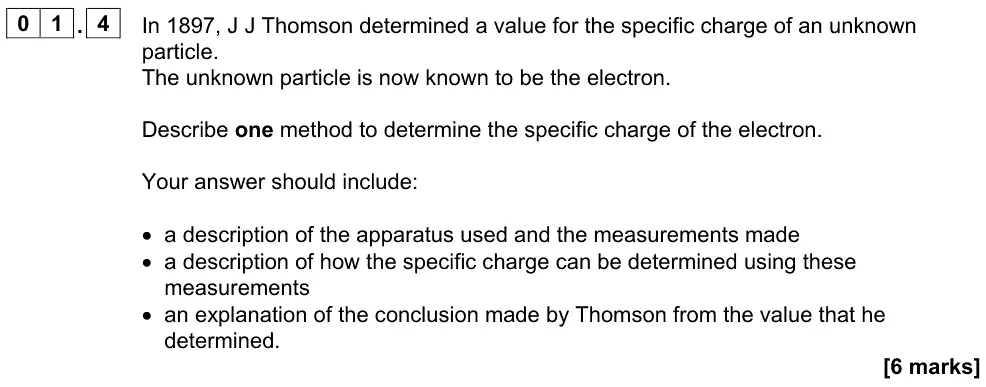
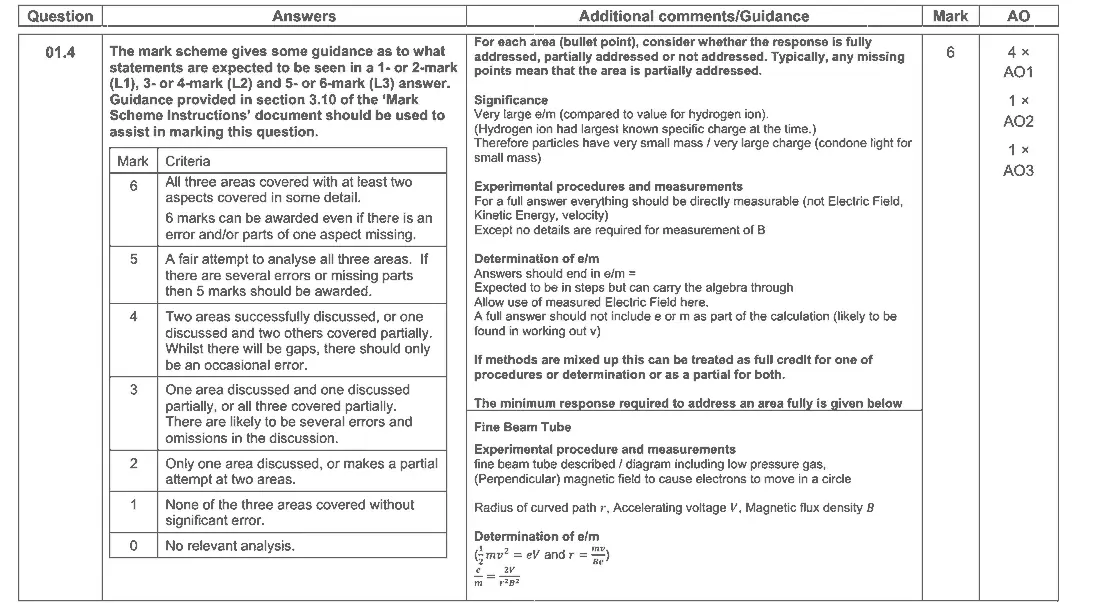
In 1897, J J Thomson determined a value for the specific charge of an unknown
particle.
The unknown particle is now known to be the electron.
Describe one method to determine the specific charge of the electron.
Your answer should include:
• a description of the apparatus used and the measurements made
• a description of how the specific charge can be determined using these
measurements
• an explanation of the conclusion made by Thomson from the value that he
determined.
[6 marks]
June 2023 · Paper 3B Electronics · Q5 6 marks AO1=4, AO2=1, AO3=1 6-mark extended response operational amplifierssemiconductor devices and signals
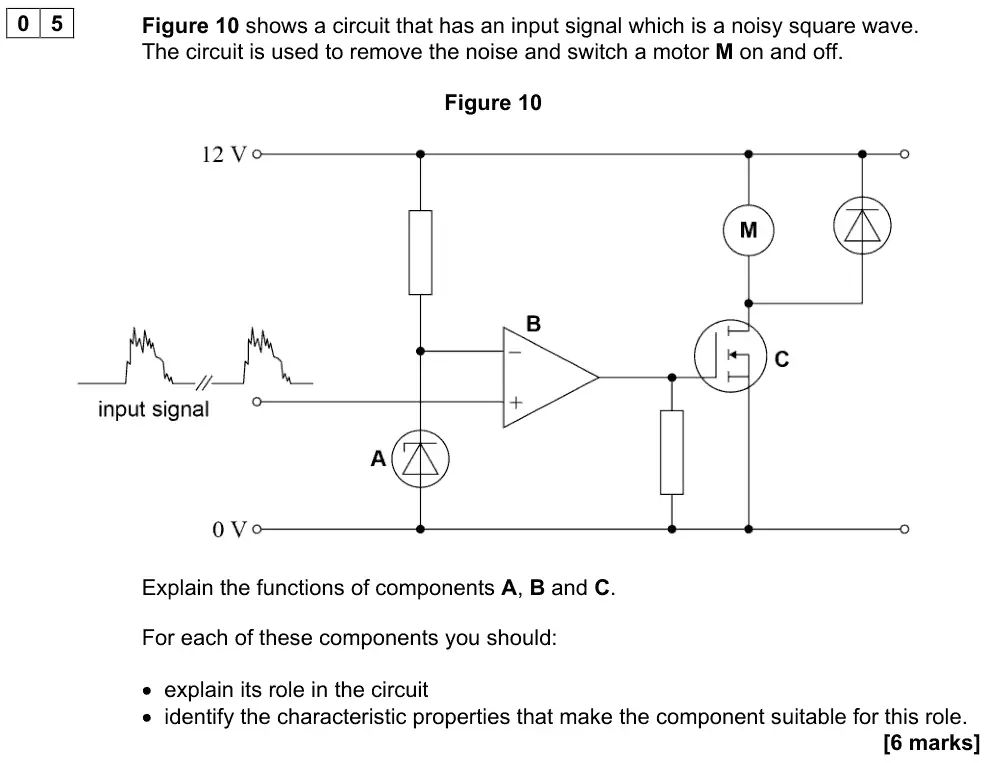
Figure 10 shows a circuit that has an input signal which is a noisy square wave.
The circuit is used to remove the noise and switch a motor M on and off.
Figure 10
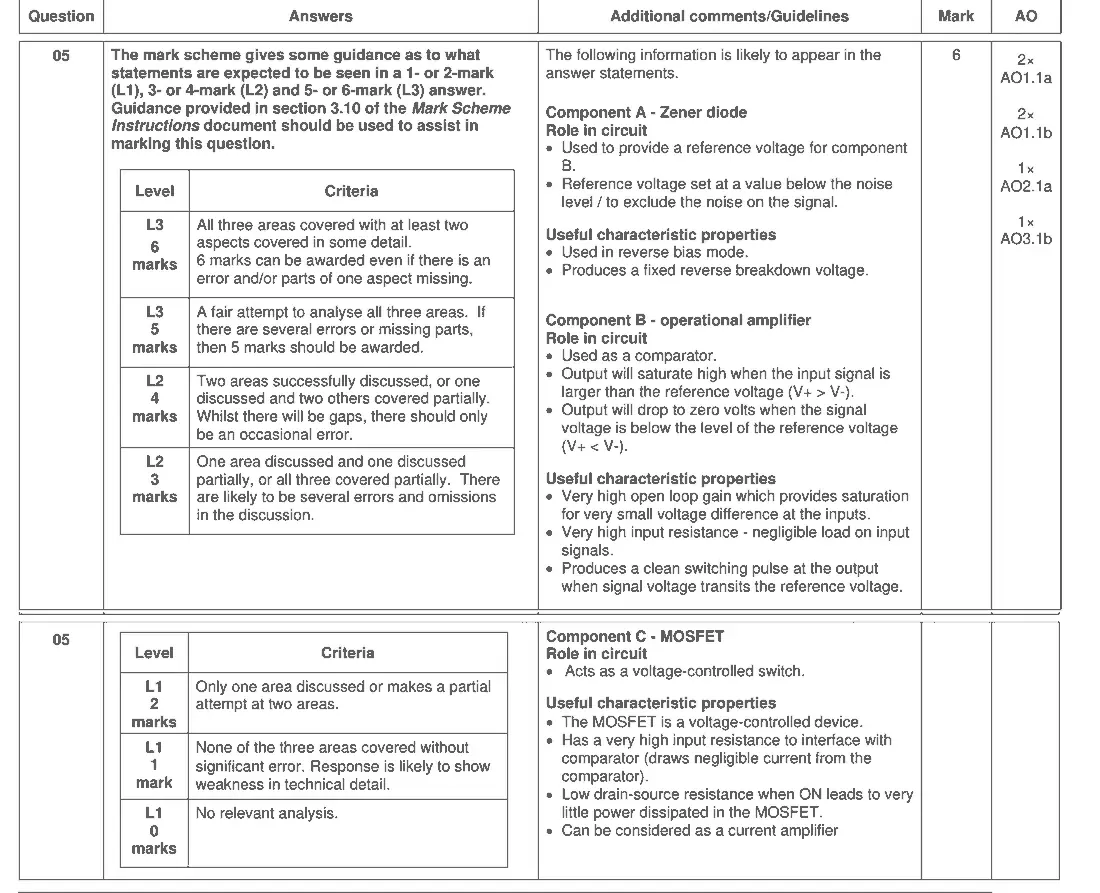
Explain the functions of components A, B and C.
For each of these components you should:
• explain its role in the circuit
• identify the characteristic properties that make the component suitable for this role.
[6 marks]
June 2022 · AS Paper 1 · Q4.1 6 marks AO1=4, AO2=2 6-mark extended response Hard photoelectric effect
An isolated metal plate is given a negative charge.  Electromagnetic radiation is
incident on the plate.  The plate loses its charge due to the photoelectric effect.
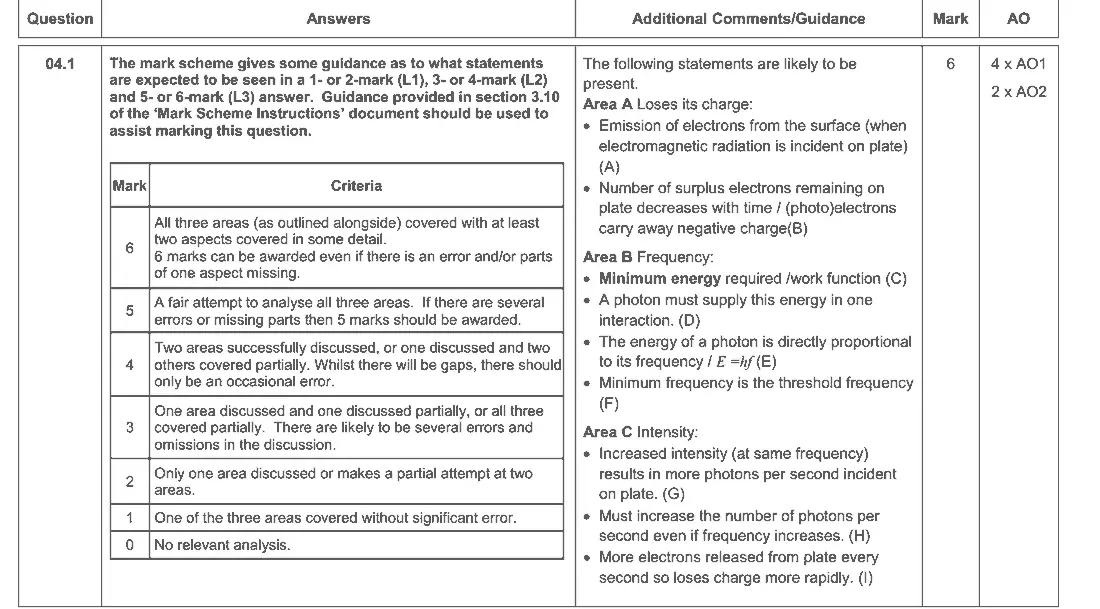
Discuss how the rate of loss of charge from the plate depends on the frequency and
intensity of the incident radiation.
In your answer you should explain why:
• the plate loses its charge
• the photoelectric effect occurs only for frequencies greater than a particular value
• the rate of loss of charge increases with intensity for radiation above that particular
value of frequency.
[6 marks]
June 2022 · Paper 3B Astrophysics · Q4 6 marks AO1=4, AO3=2 6-mark extended response cosmology
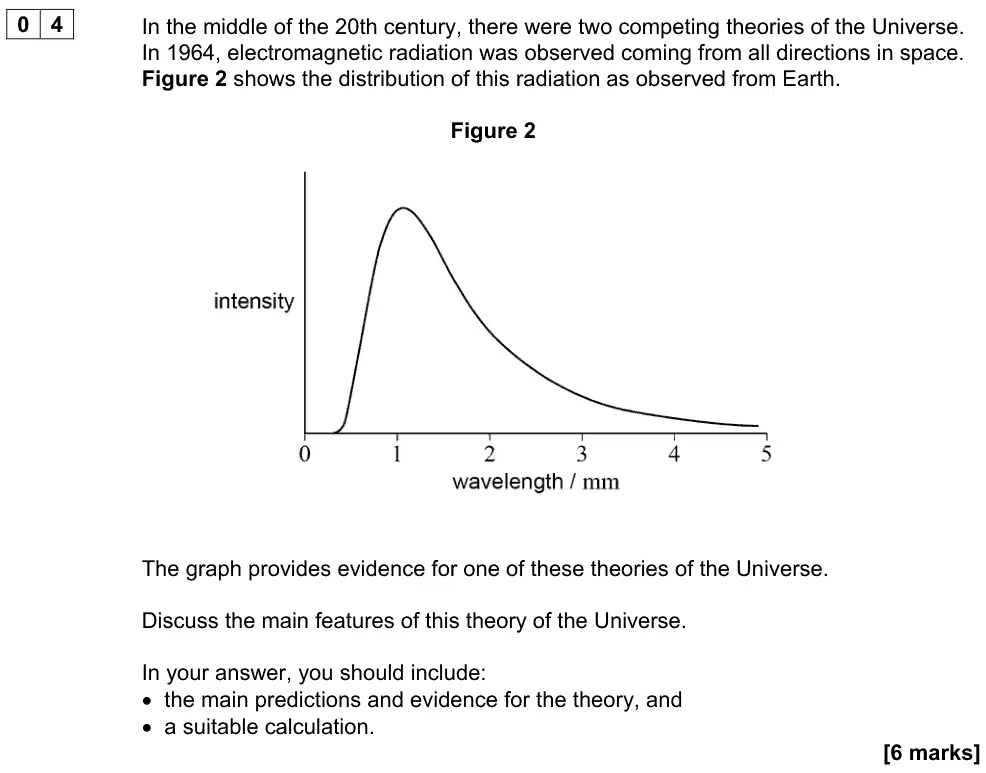
In the middle of the 20th century, there were two competing theories of the Universe.
In 1964, electromagnetic radiation was observed coming from all directions in space.
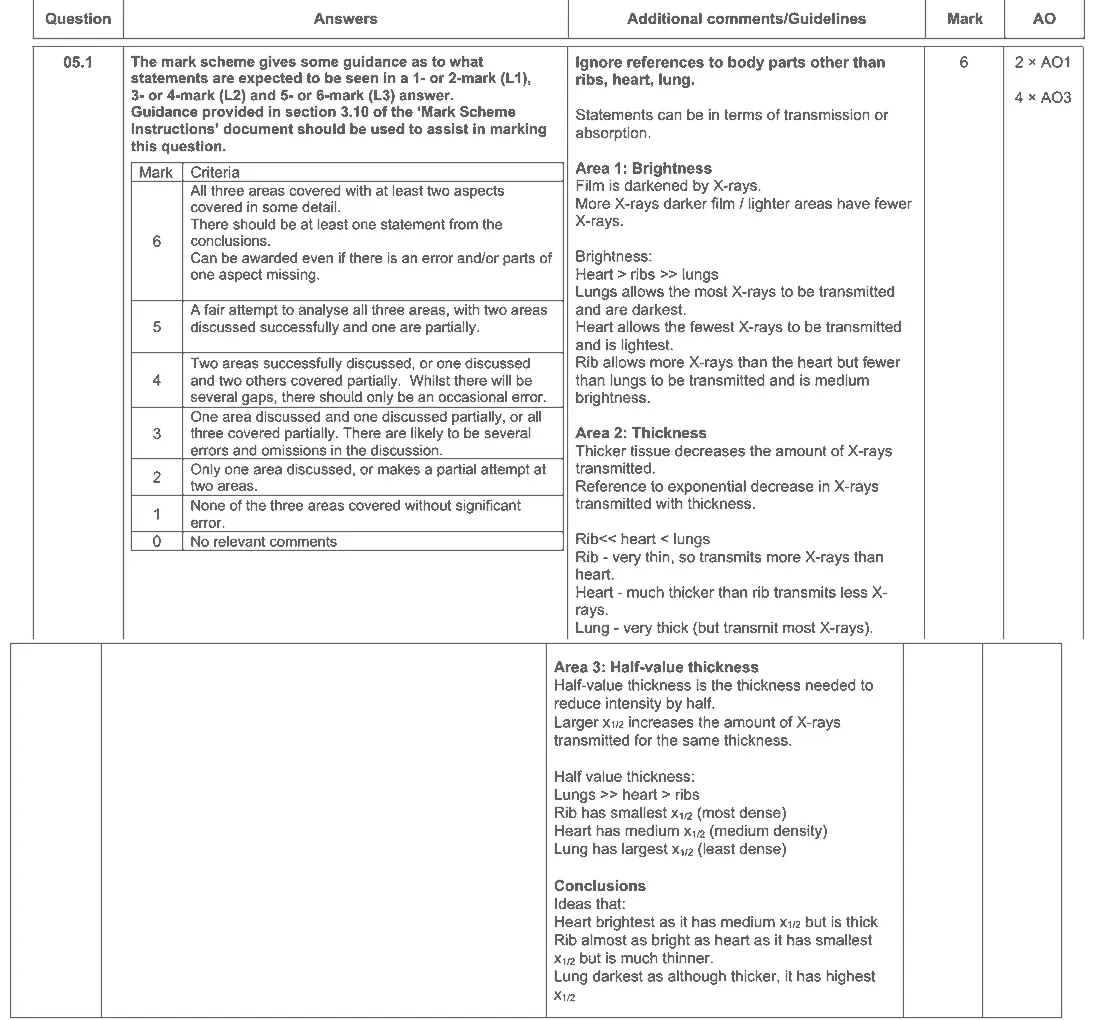
Figure 2 shows the distribution of this radiation as observed from Earth.
Figure 2
The graph provides evidence for one of these theories of the Universe.
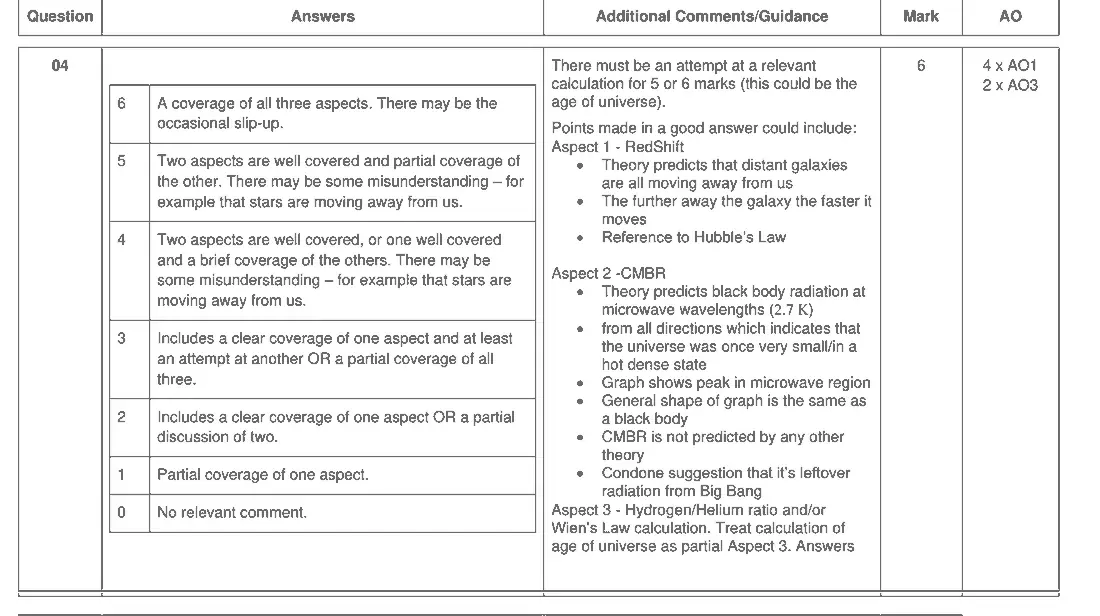
Discuss the main features of this theory of the Universe.
In your answer, you should include:
• the main predictions and evidence for the theory, and
• a suitable calculation.
[6 marks]
June 2022 · Paper 3B Medical physics · Q4 6 marks AO2=1, AO3=5 6-mark extended response medical imaging
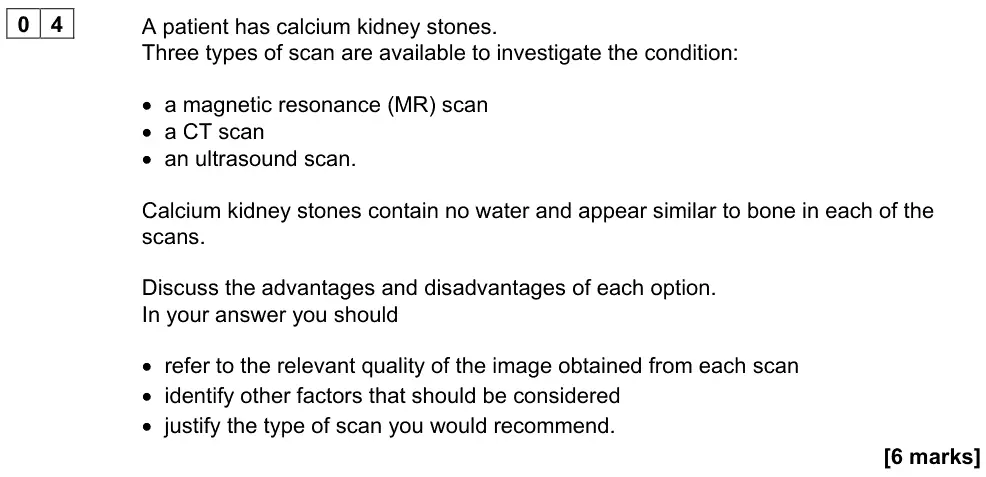
A patient has calcium kidney stones.
Three types of scan are available to investigate the condition:
• a magnetic resonance (MR) scan
• a CT scan
• an ultrasound scan.
Calcium kidney stones contain no water and appear similar to bone in each of the
scans.
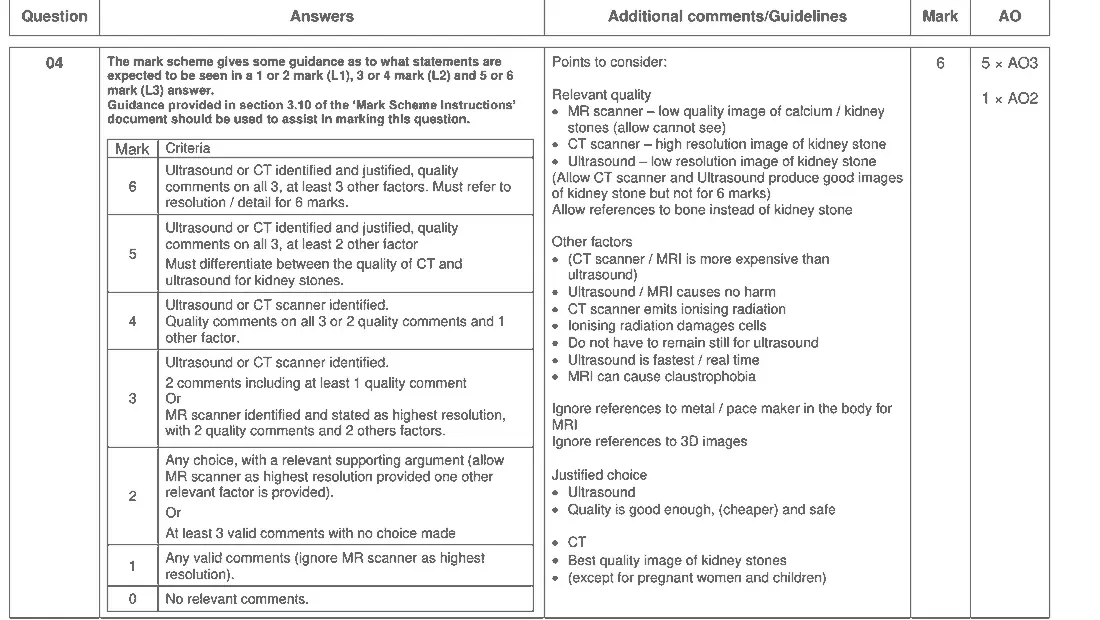
Discuss the advantages and disadvantages of each option.
In your answer you should
• refer to the relevant quality of the image obtained from each scan
• identify other factors that should be considered
• justify the type of scan you would recommend.
[6 marks]
June 2022 · Paper 3B Engineering physics · Q2.3 6 marks AO1=4, AO2=1, AO3=1 6-mark extended response rotational dynamics
Earlier part of question 2 that this part usesEarlier part of June 2022 Paper 3B Engineering physics question 2
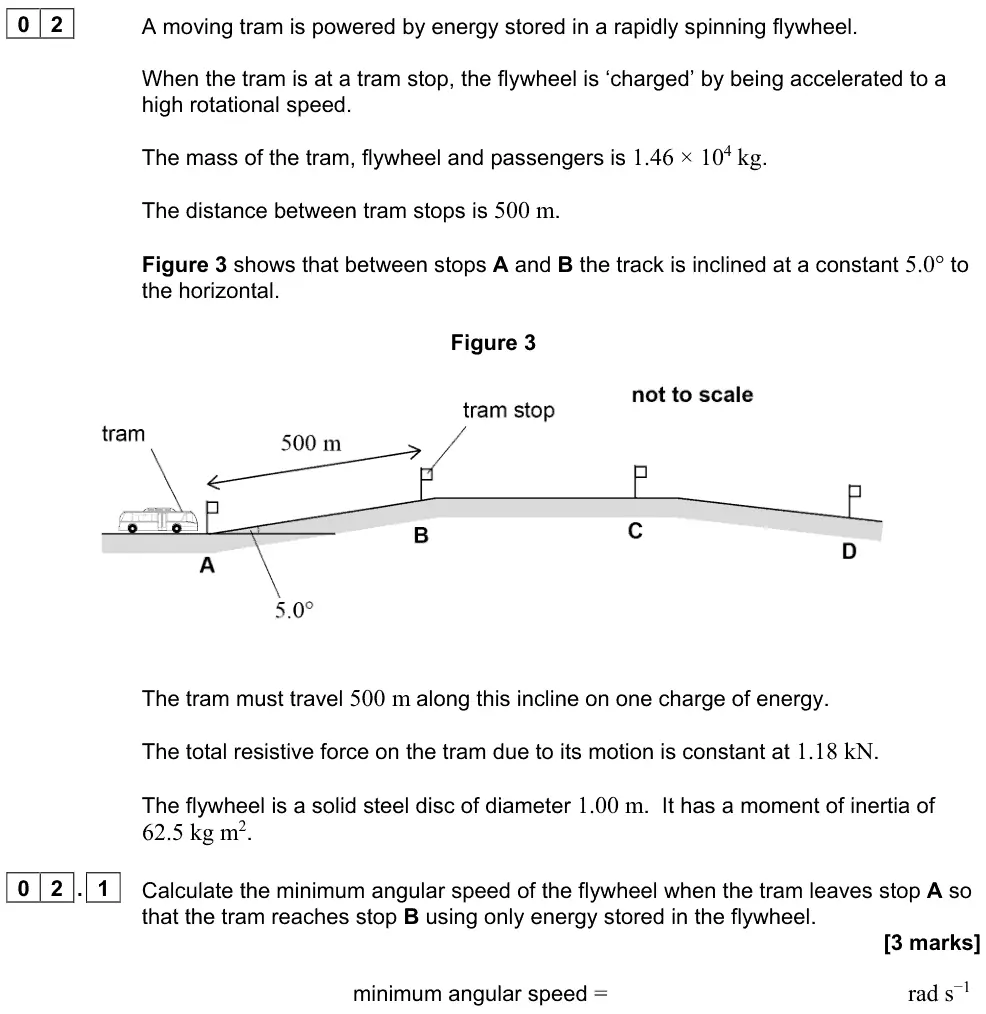
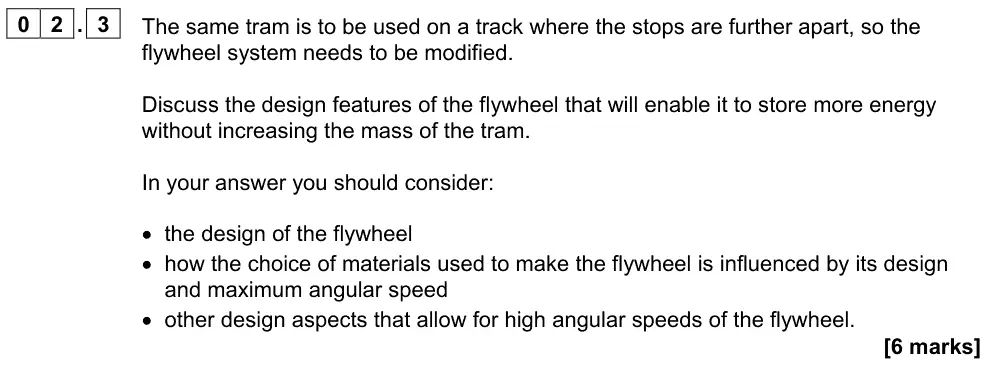
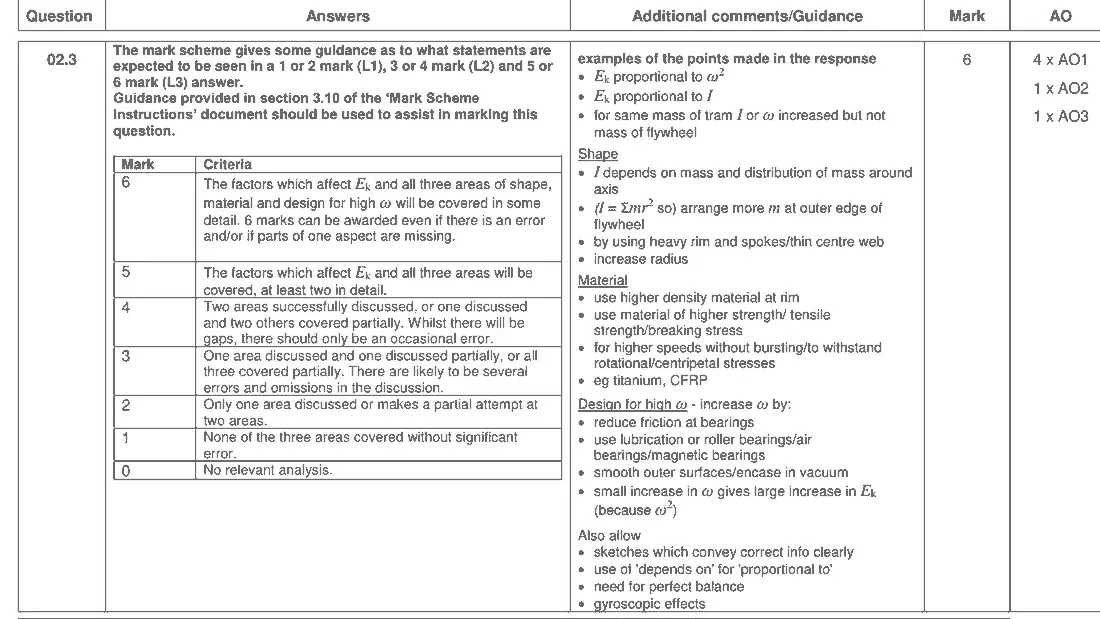
The same tram is to be used on a track where the stops are further apart, so the
flywheel system needs to be modified.
Discuss the design features of the flywheel that will enable it to store more energy
without increasing the mass of the tram.
In your answer you should consider:
• the design of the flywheel
• how the choice of materials used to make the flywheel is influenced by its design
and maximum angular speed
• other design aspects that allow for high angular speeds of the flywheel.
[6 marks]
June 2022 · Paper 3B Turning points · Q1.2 6 marks AO1=4, AO3=2 6-mark extended response wave particle duality history
Earlier part of question 1 that this part usesEarlier part of June 2022 Paper 3B Turning points question 1
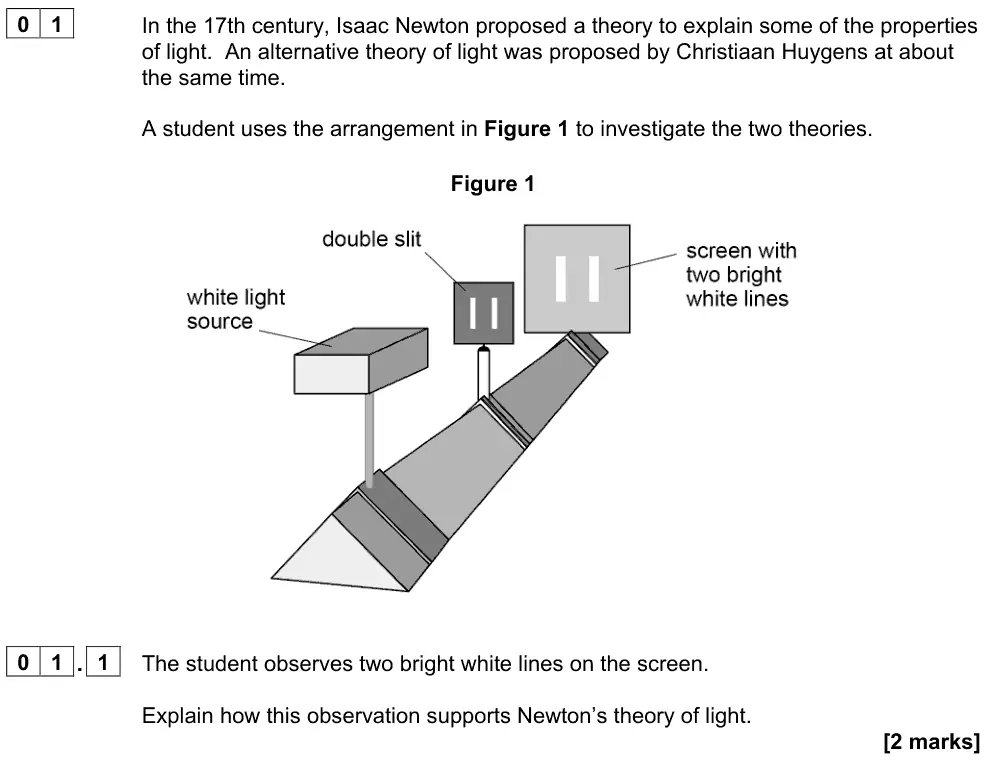
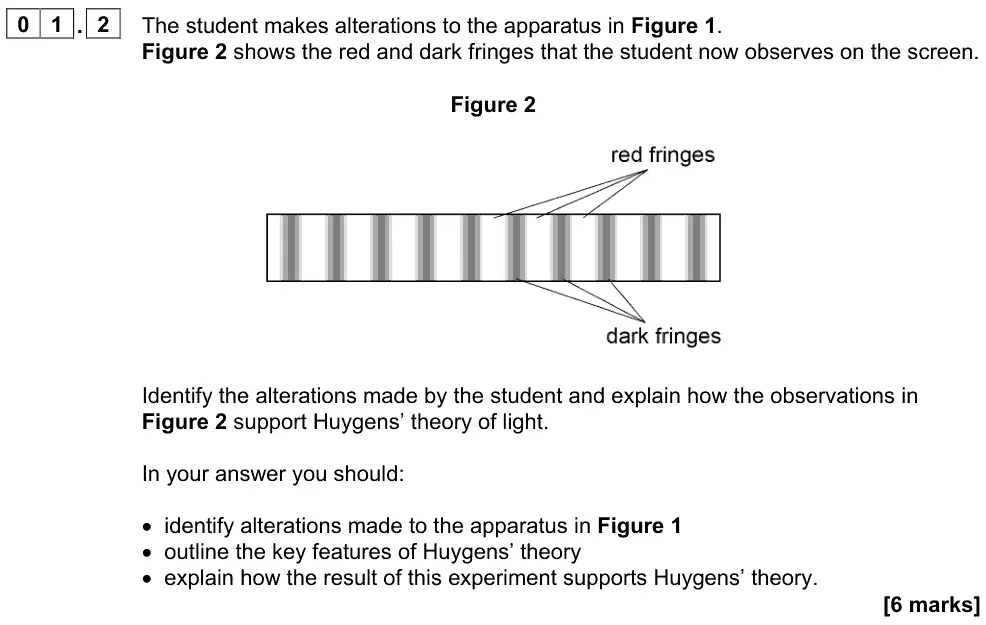
The student makes alterations to the apparatus in Figure 1.
Figure 2 shows the red and dark fringes that the student now observes on the screen.
Figure 2
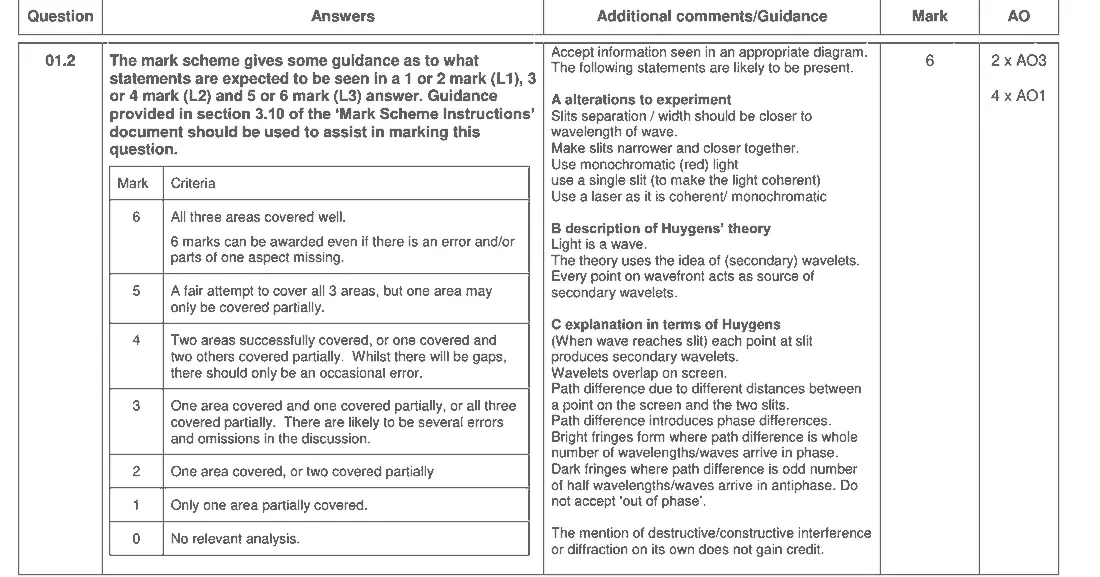
Identify the alterations made by the student and explain how the observations in
Figure 2 support Huygens’ theory of light.
In your answer you should:
• identify alterations made to the apparatus in Figure 1
• outline the key features of Huygens’ theory
• explain how the result of this experiment supports Huygens’ theory.
[6 marks]
June 2022 · Paper 3B Electronics · Q5 6 marks AO1=4, AO3=2 6-mark extended response data communication
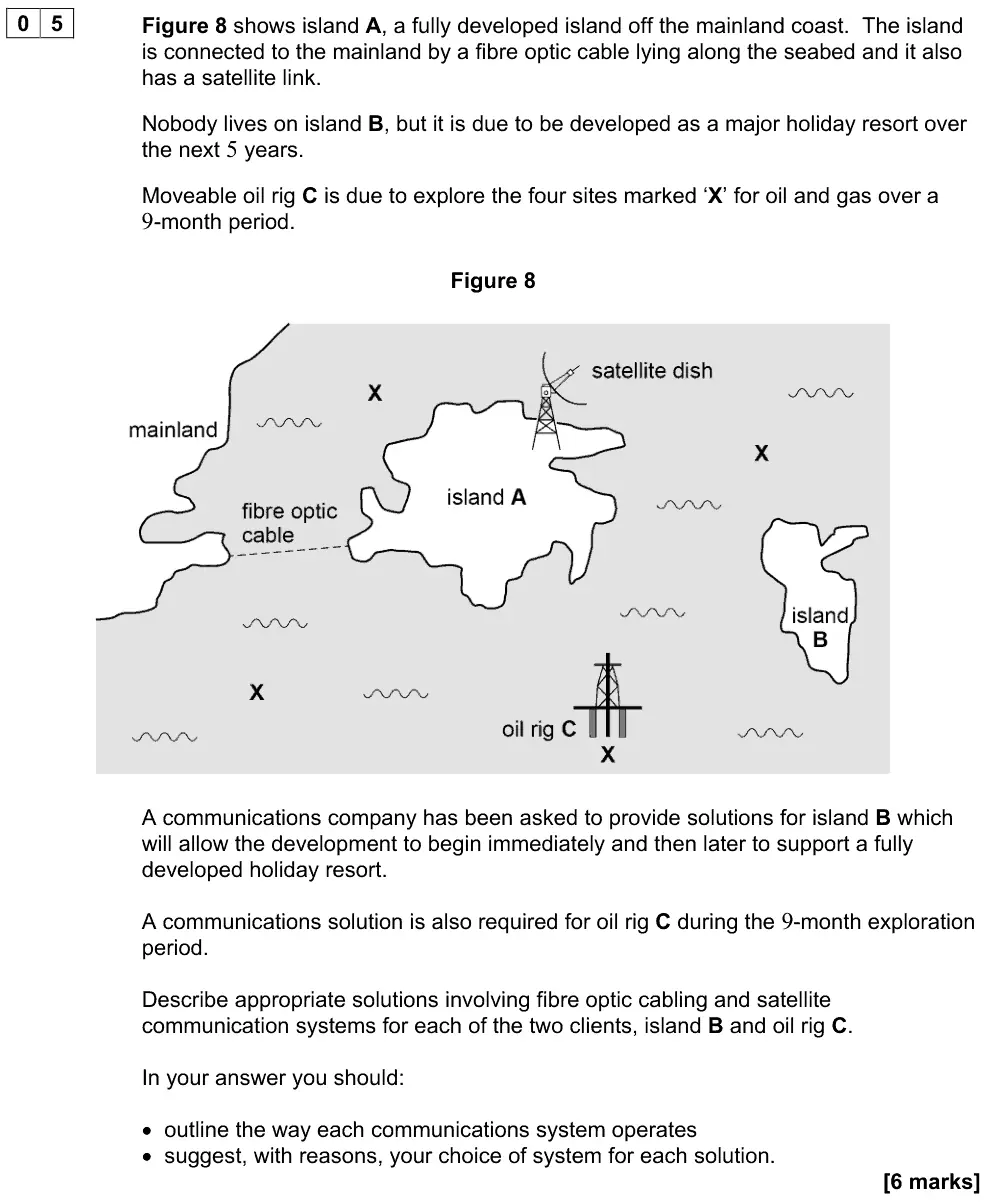
Figure 8 shows island A, a fully developed island off the mainland coast.  The island
is connected to the mainland by a fibre optic cable lying along the seabed and it also
has a satellite link.
Nobody lives on island B, but it is due to be developed as a major holiday resort over
the next 5 years.
Moveable oil rig C is due to explore the four sites marked ‘X’ for oil and gas over a
9-month period.
Figure 8
A communications company has been asked to provide solutions for island B which
will allow the development to begin immediately and then later to support a fully
developed holiday resort.
A communications solution is also required for oil rig C during the 9-month exploration
period.
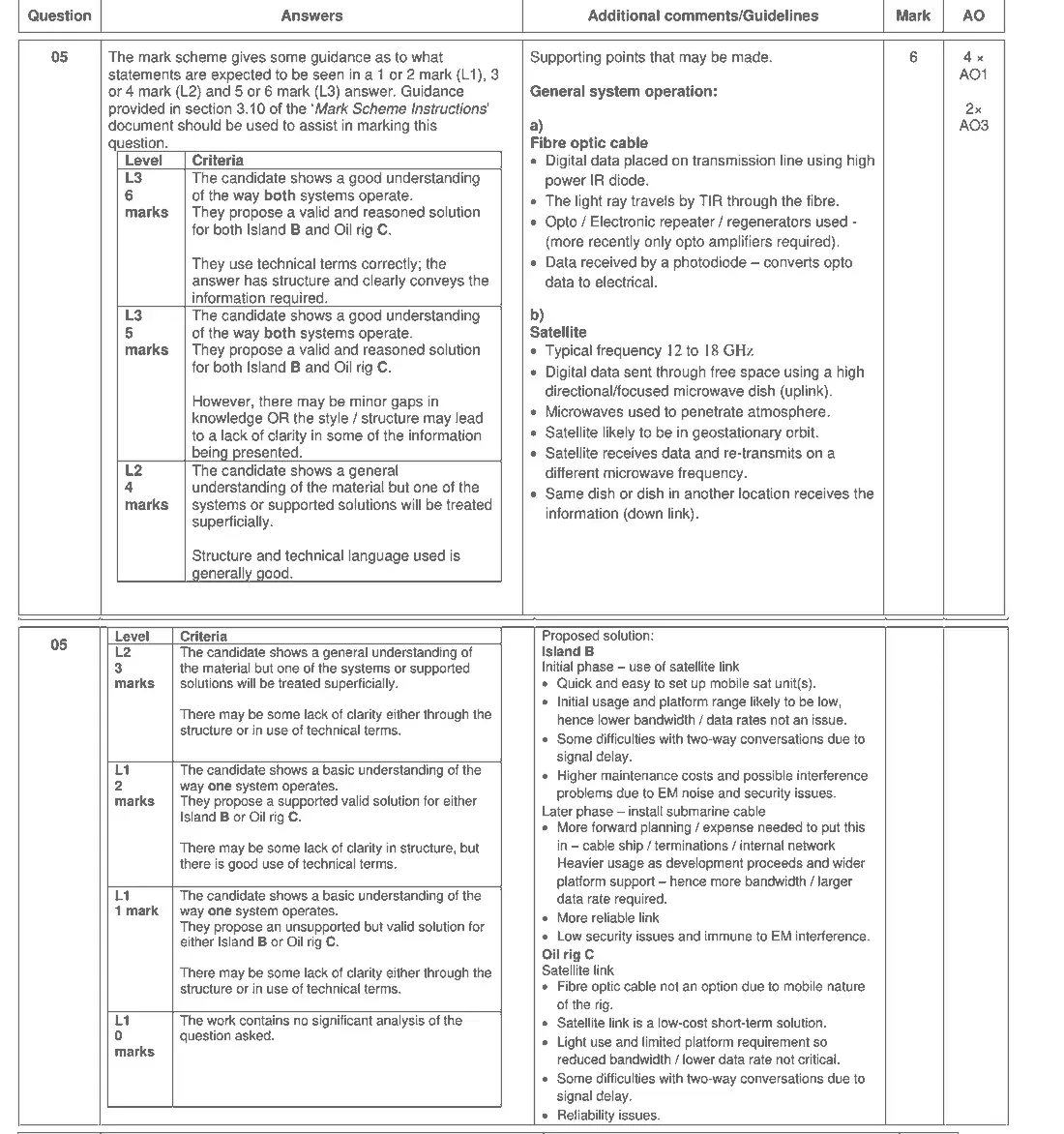
Describe appropriate solutions involving fibre optic cabling and satellite
communication systems for each of the two clients, island B and oil rig C.
In your answer you should:
• outline the way each communications system operates
• suggest, with reasons, your choice of system for each solution.
[6 marks]
November 2021 · AS Paper 2 · Q5.3 6 marks 6-mark extended response energy levels and wave particle duality
Earlier part of question 5 that this part usesEarlier part of November 2021 Paper 2 question 5
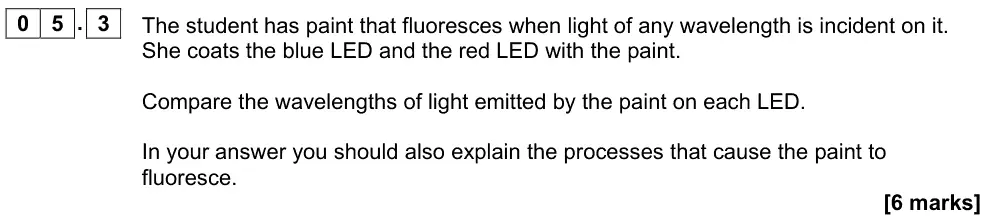
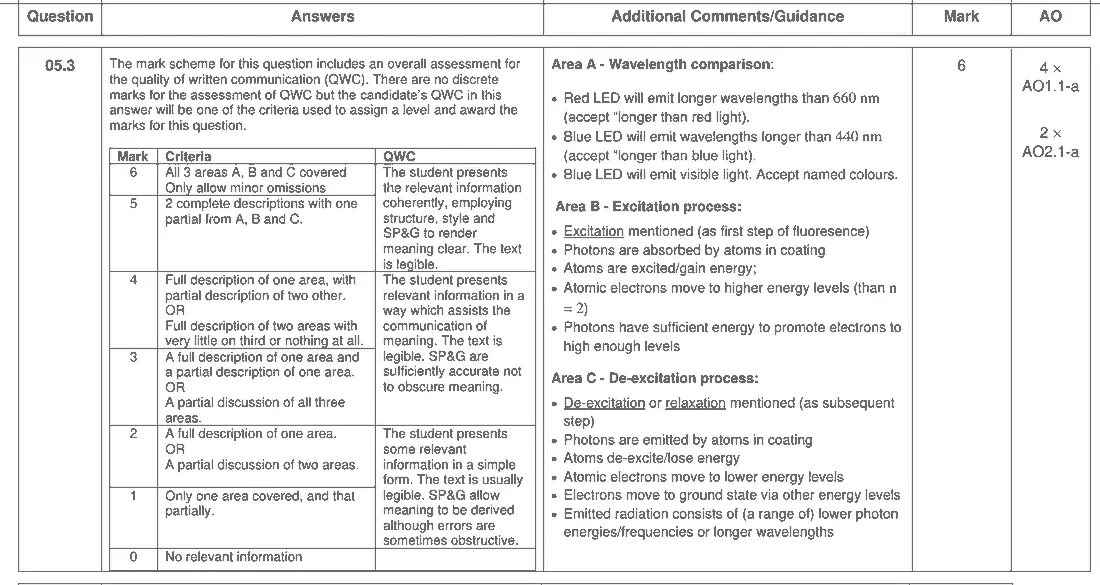
The student has paint that fluoresces when light of any wavelength is incident on it.
She coats the blue LED and the red LED with the paint.
Compare the wavelengths of light emitted by the paint on each LED.
In your answer you should also explain the processes that cause the paint to
fluoresce.
[6 marks]
November 2021 · Paper 3B Astrophysics · Q3 6 marks 6-mark extended response classification of stars
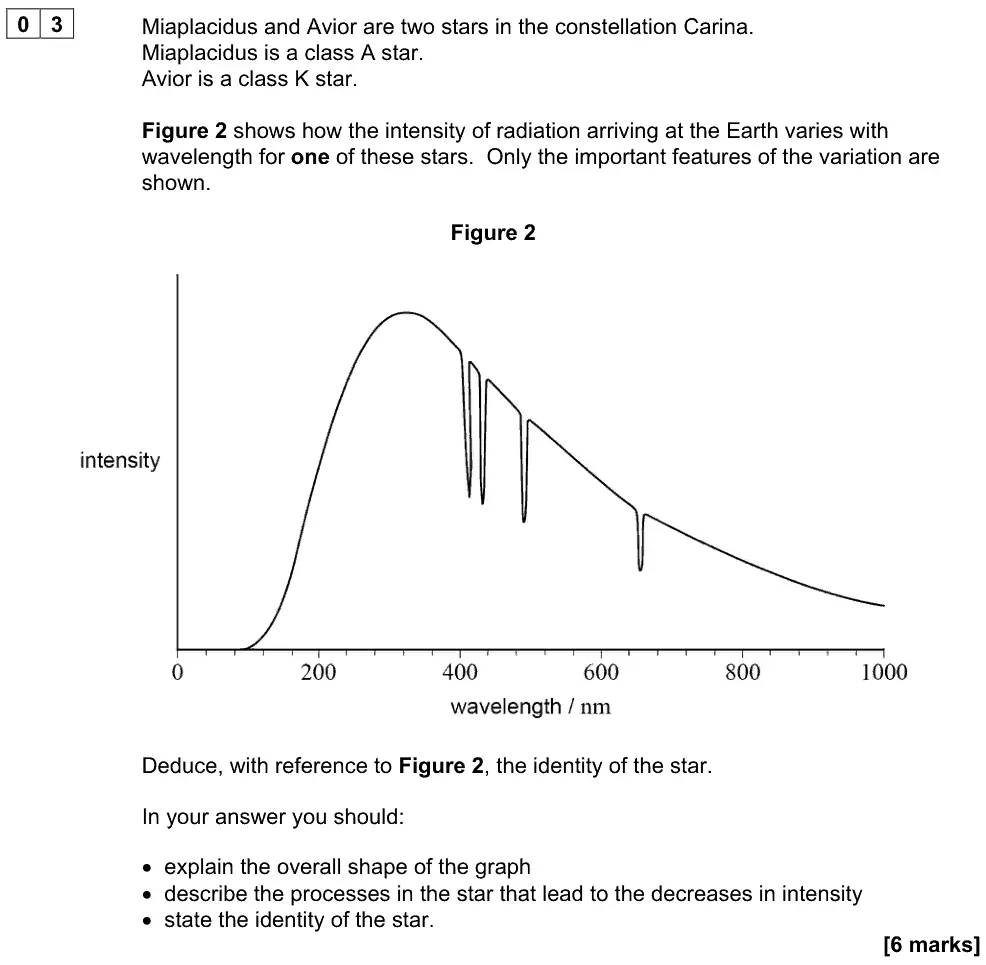
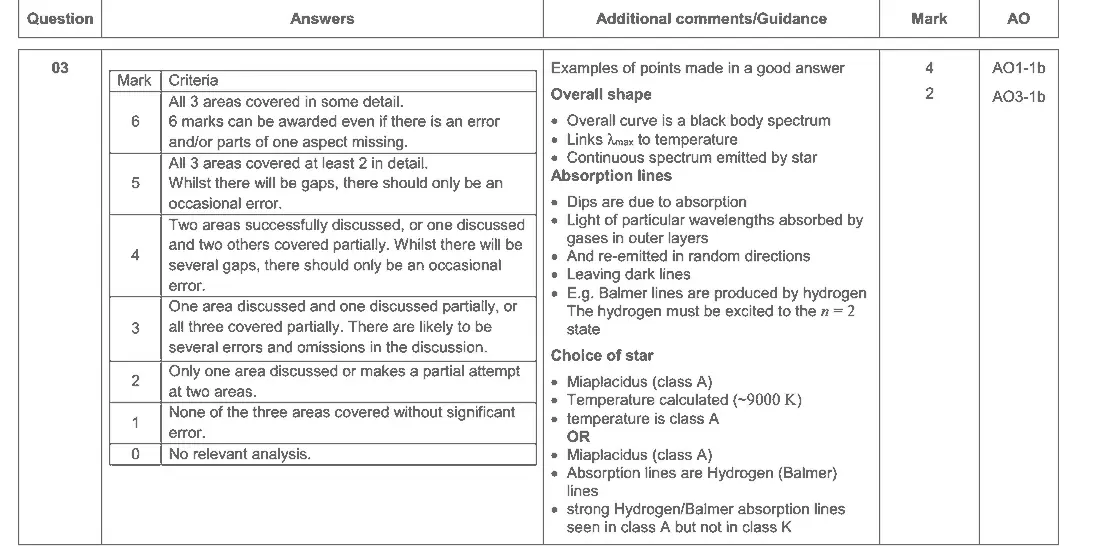
Miaplacidus and Avior are two stars in the constellation Carina.
Miaplacidus is a class A star.
Avior is a class K star.
Figure 2 shows how the intensity of radiation arriving at the Earth varies with
wavelength for one of these stars.  Only the important features of the variation are
shown.
Figure 2
Deduce, with reference to Figure 2, the identity of the star.
In your answer you should:
• explain the overall shape of the graph
• describe the processes in the star that lead to the decreases in intensity
• state the identity of the star.
[6 marks]
November 2021 · Paper 3B Medical physics · Q5.2 6 marks 6-mark extended response eye ear and ecg
Earlier part of question 5 that this part usesEarlier part of November 2021 Paper 3B Medical physics question 5
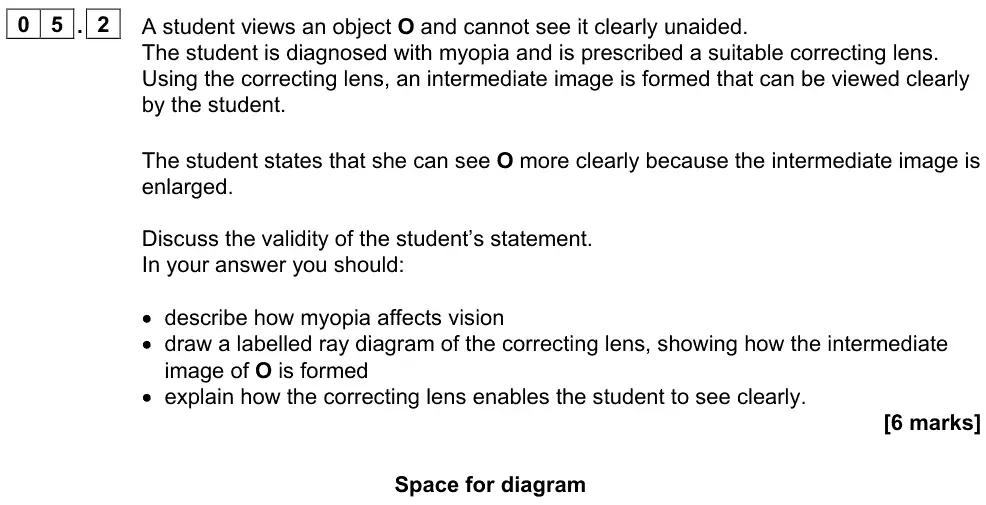
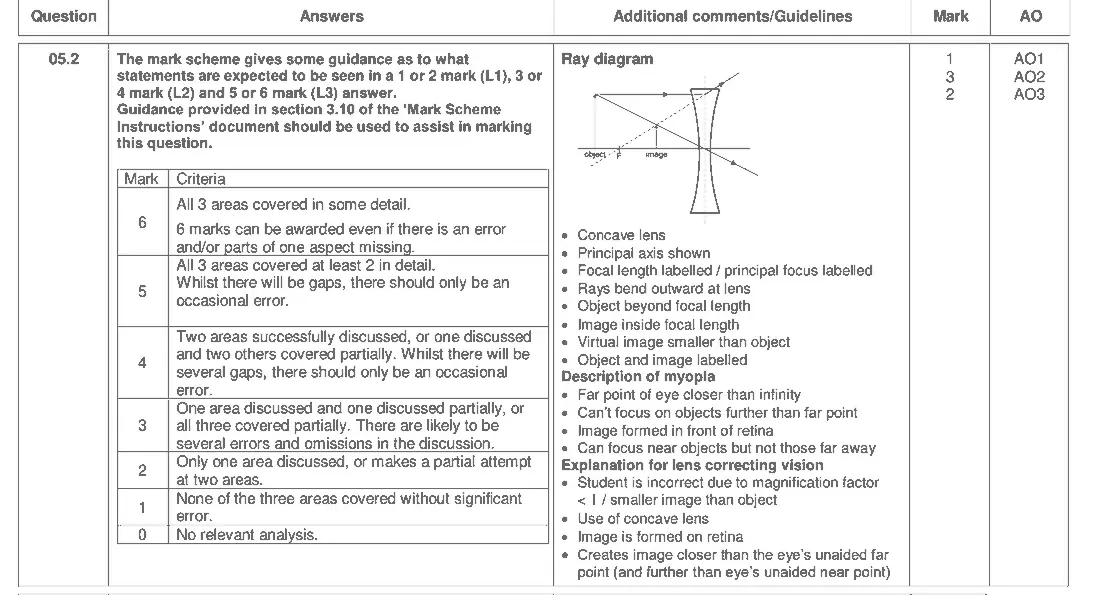
A student views an object O and cannot see it clearly unaided.
The student is diagnosed with myopia and is prescribed a suitable correcting lens.
Using the correcting lens, an intermediate image is formed that can be viewed clearly
by the student.
The student states that she can see O more clearly because the intermediate image is
enlarged.
Discuss the validity of the student’s statement.
In your answer you should:
• describe how myopia affects vision
• draw a labelled ray diagram of the correcting lens, showing how the intermediate
image of O is formed
• explain how the correcting lens enables the student to see clearly.
[6 marks]
Space for diagram
November 2021 · Paper 3B Engineering physics · Q3.1 6 marks 6-mark extended response thermodynamics and engines
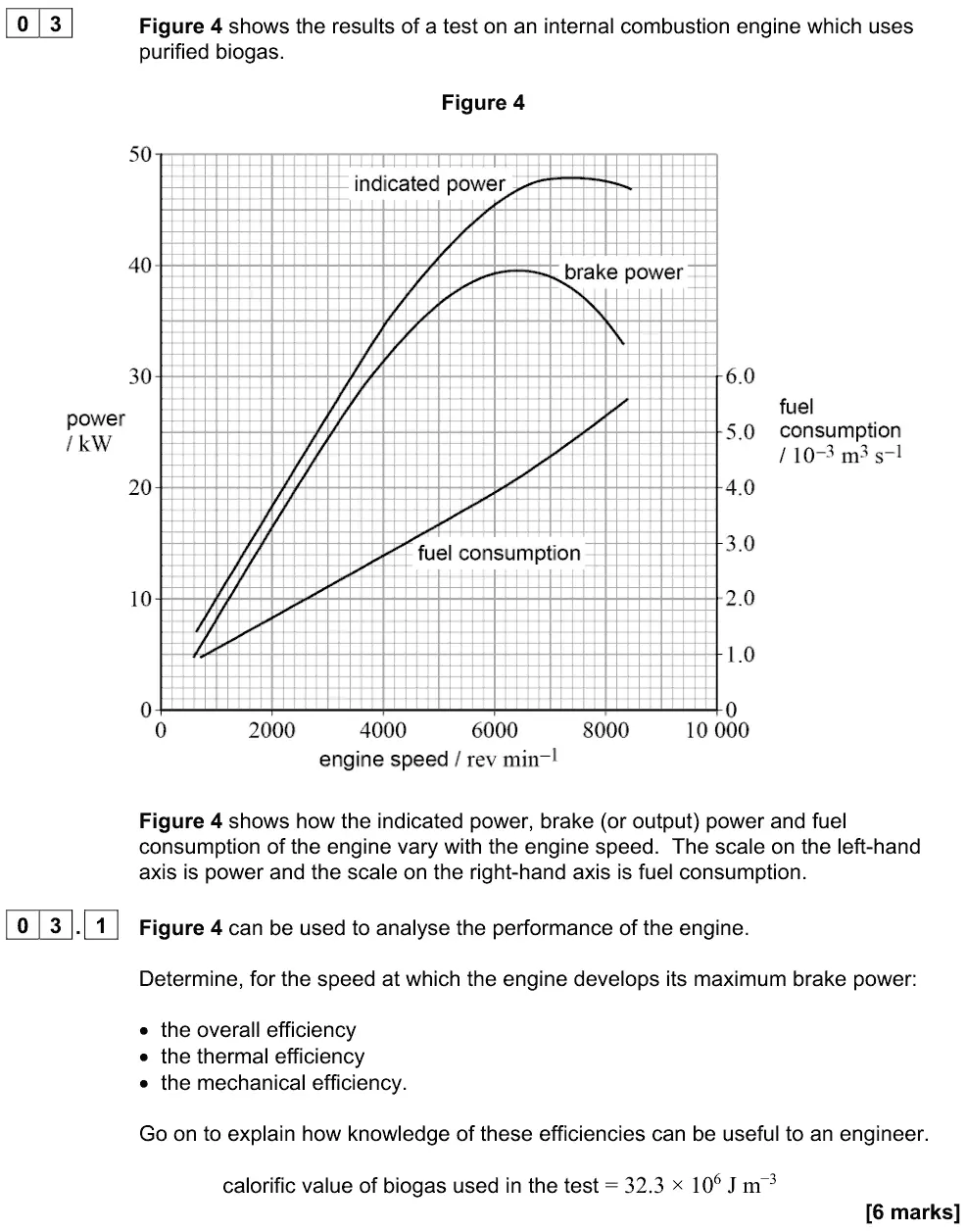
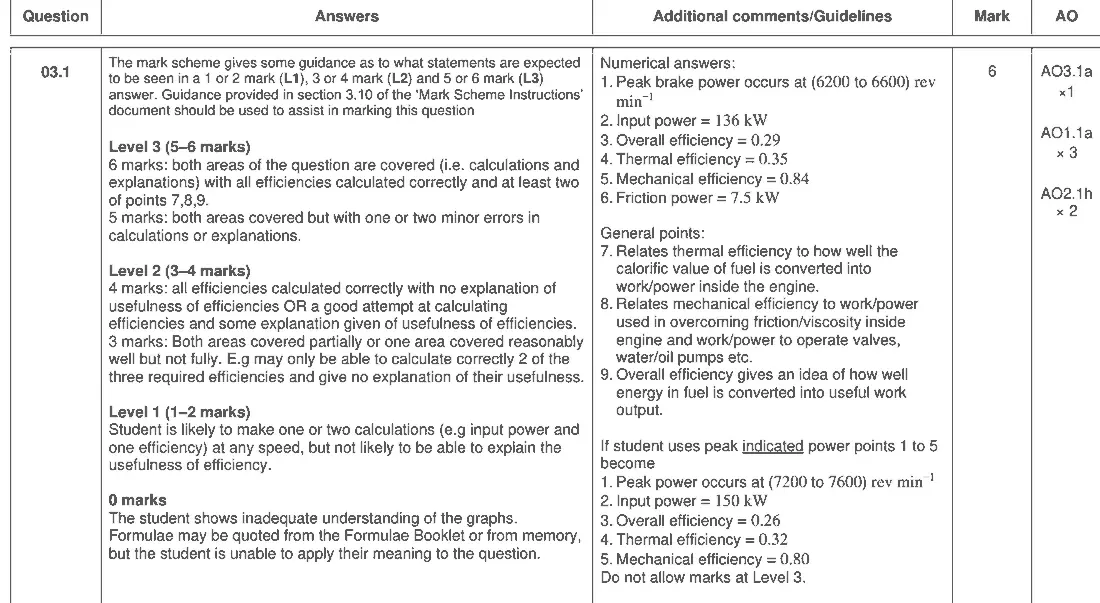
Figure 4 shows the results of a test on an internal combustion engine which uses
purified biogas.
Figure 4
Figure 4 shows how the indicated power, brake (or output) power and fuel
consumption of the engine vary with the engine speed.  The scale on the left-hand
axis is power and the scale on the right-hand axis is fuel consumption.
Figure 4 can be used to analyse the performance of the engine.
Determine, for the speed at which the engine develops its maximum brake power:
• the overall efficiency
• the thermal efficiency
• the mechanical efficiency.
Go on to explain how knowledge of these efficiencies can be useful to an engineer.
calorific value of biogas used in the test = 32.3 × 10⁶ J m−3
[6 marks]
November 2021 · Paper 3B Turning points · Q3 6 marks AO1=6 6-mark extended response special relativity
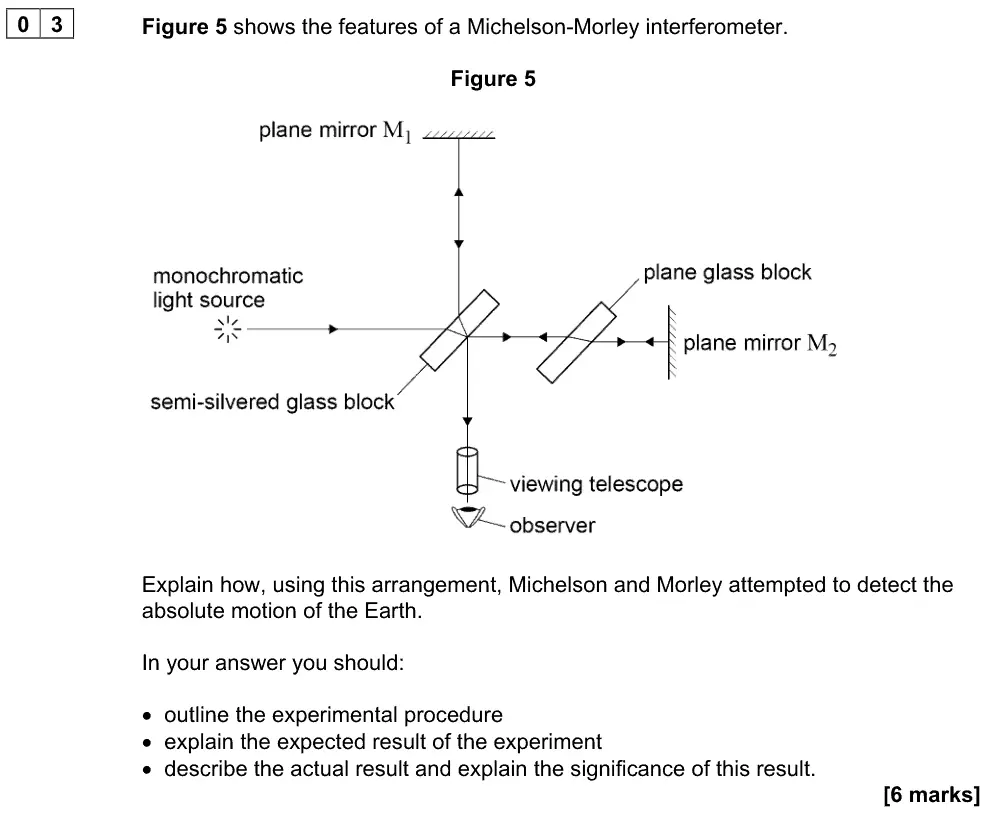
Figure 5 shows the features of a Michelson-Morley interferometer.
Figure 5
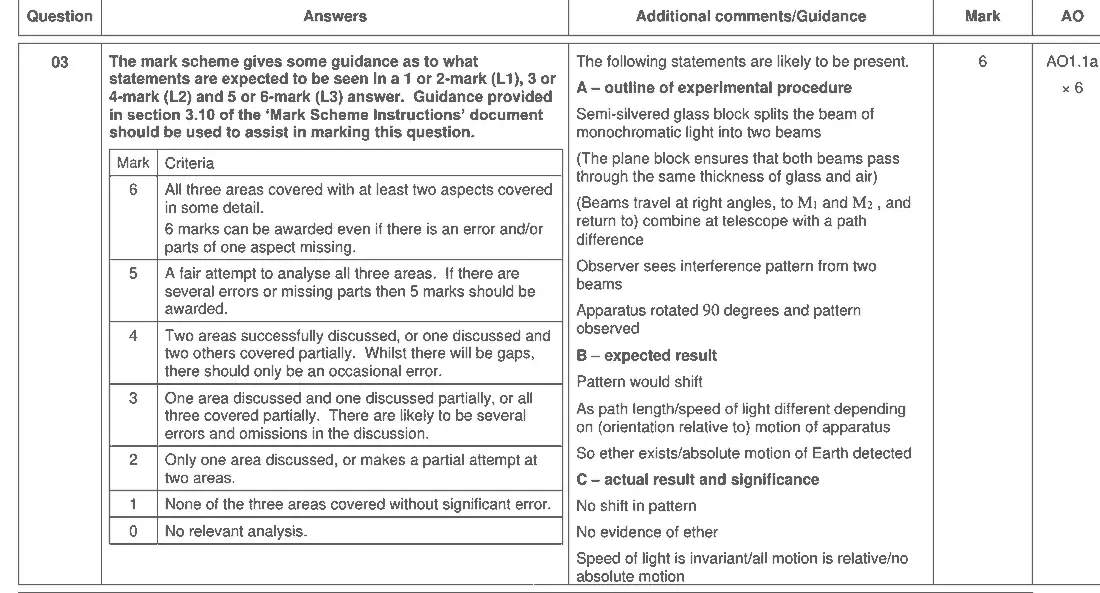
Explain how, using this arrangement, Michelson and Morley attempted to detect the
absolute motion of the Earth.
In your answer you should:
• outline the experimental procedure
• explain the expected result of the experiment
• describe the actual result and explain the significance of this result.
[6 marks]
November 2021 · Paper 3B Electronics · Q5 6 marks 6-mark extended response data communication
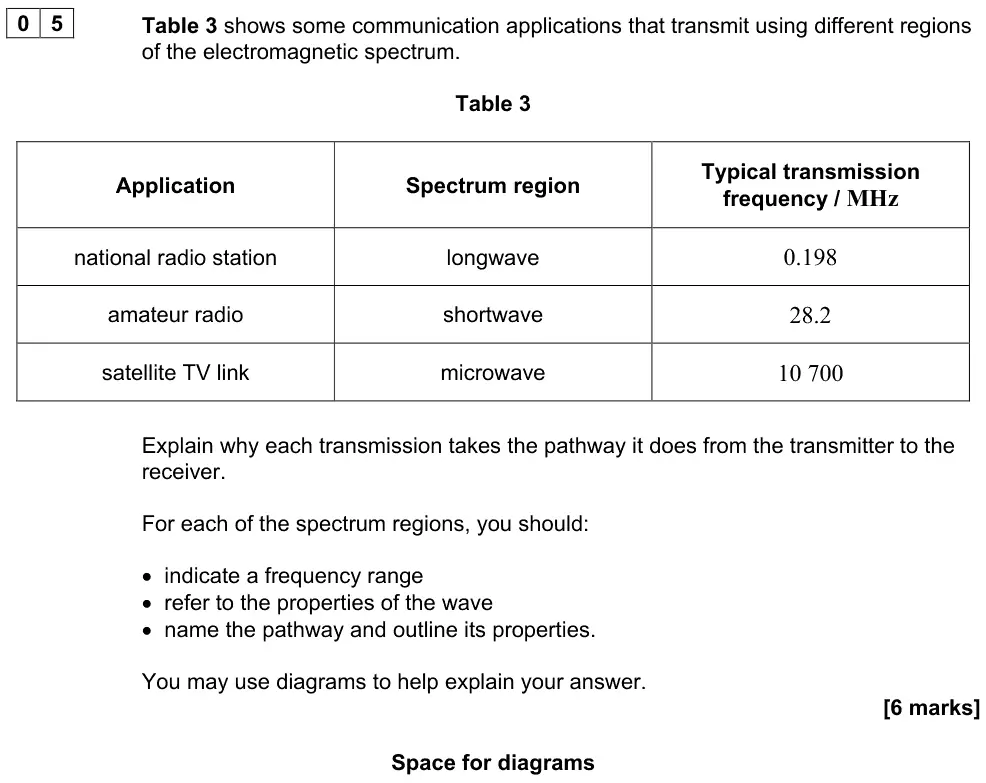
Table 3 shows some communication applications that transmit using different regions
of the electromagnetic spectrum.
Table 3
Application
Spectrum region
Typical transmission
frequency / MHz
national radio station
longwave
0.198
amateur radio
shortwave
28.2
satellite TV link
microwave
10 700
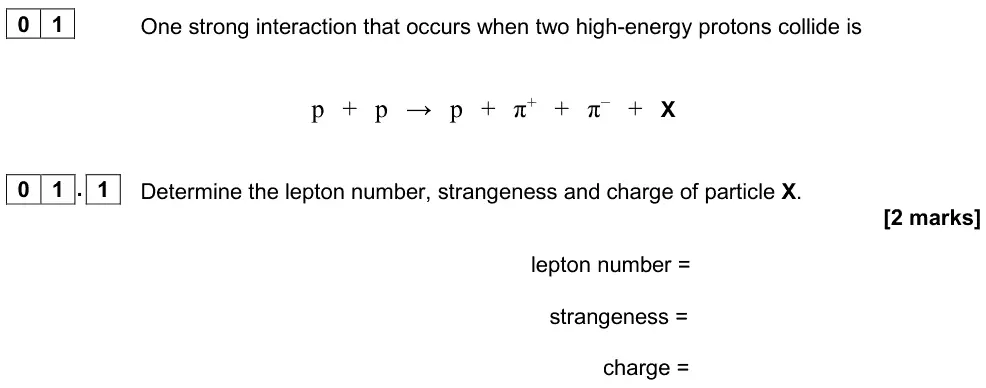
Explain why each transmission takes the pathway it does from the transmitter to the
receiver.
For each of the spectrum regions, you should:
• indicate a frequency range
• refer to the properties of the wave
• name the pathway and outline its properties.
You may use diagrams to help explain your answer.
[6 marks]
Space for diagrams
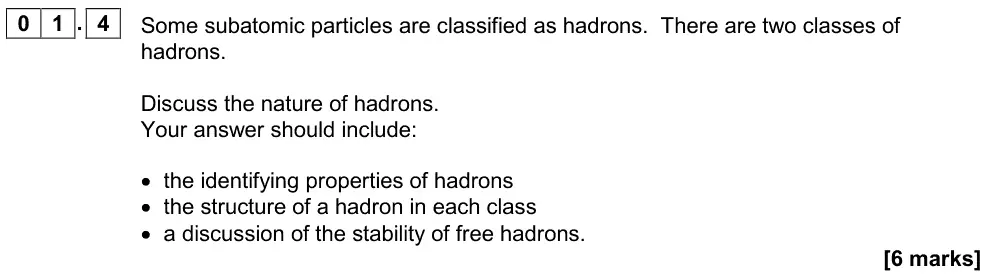
November 2020 · AS Paper 1 · Q1.4 6 marks 6-mark extended response classification of particles and quarks
Earlier part of question 1 that this part usesEarlier part of November 2020 Paper 1 question 1
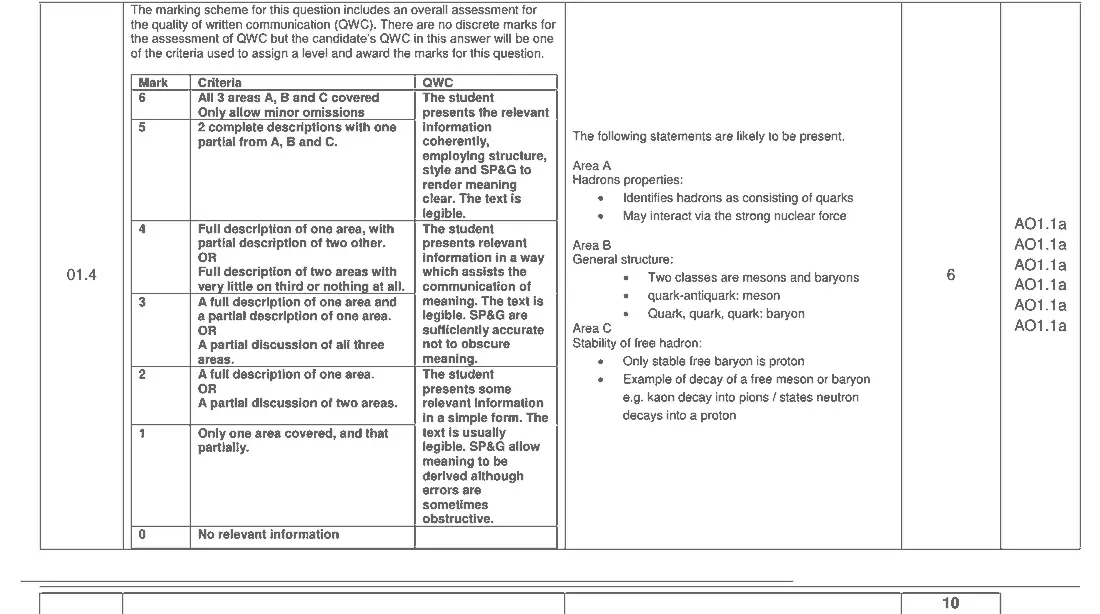
Some subatomic particles are classified as hadrons.  There are two classes of
hadrons.
Discuss the nature of hadrons.
Your answer should include:
• the identifying properties of hadrons
• the structure of a hadron in each class
• a discussion of the stability of free hadrons.
[6 marks]
November 2020 · Paper 3B Astrophysics · Q3.3 6 marks 6-mark extended response cosmologyclassification of stars
Earlier part of question 3 that this part usesEarlier part of November 2020 Paper 3B Astrophysics question 3
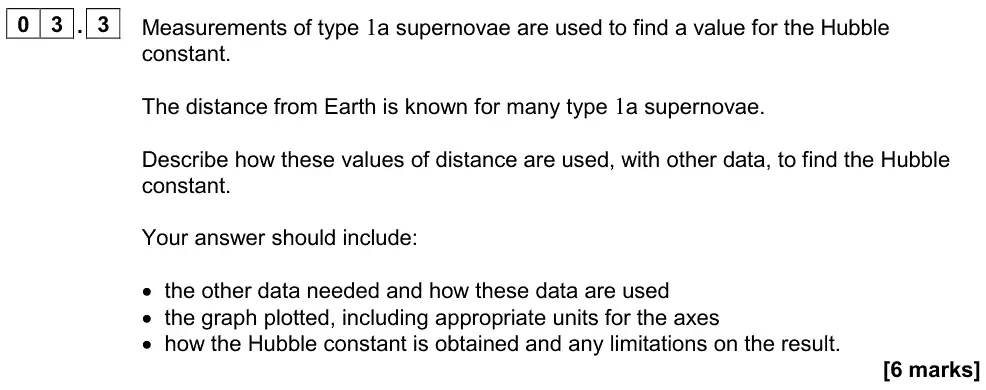
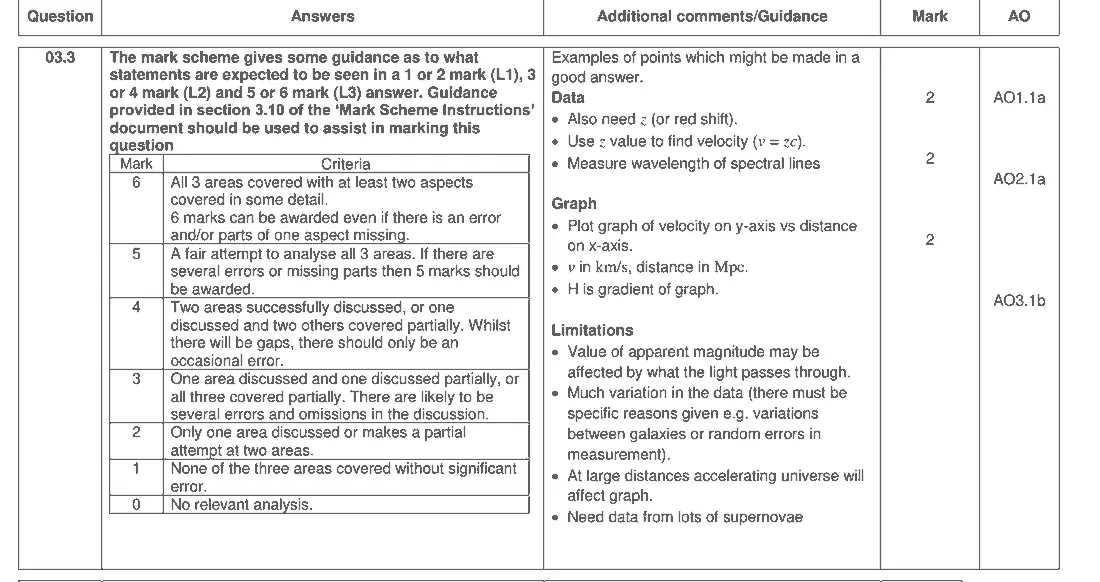
Measurements of type 1a supernovae are used to find a value for the Hubble
constant.
The distance from Earth is known for many type 1a supernovae.
Describe how these values of distance are used, with other data, to find the Hubble
constant.
Your answer should include:
• the other data needed and how these data are used
• the graph plotted, including appropriate units for the axes
• how the Hubble constant is obtained and any limitations on the result.
[6 marks]
November 2020 · Paper 3B Medical physics · Q4.1 6 marks AO1=2, AO2=4 6-mark extended response medical imaging
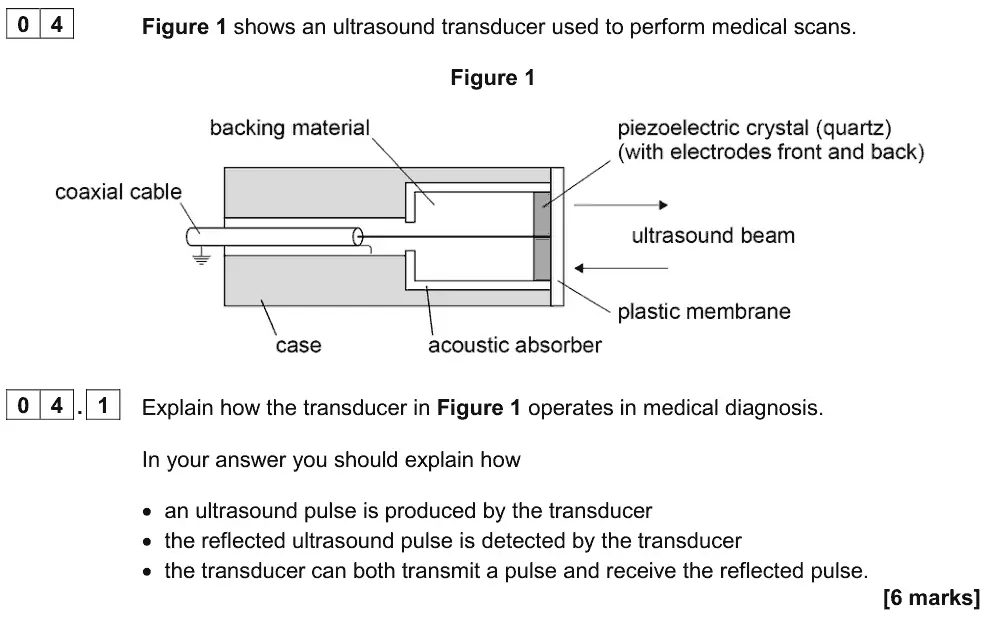
Figure 1 shows an ultrasound transducer used to perform medical scans.
Figure 1
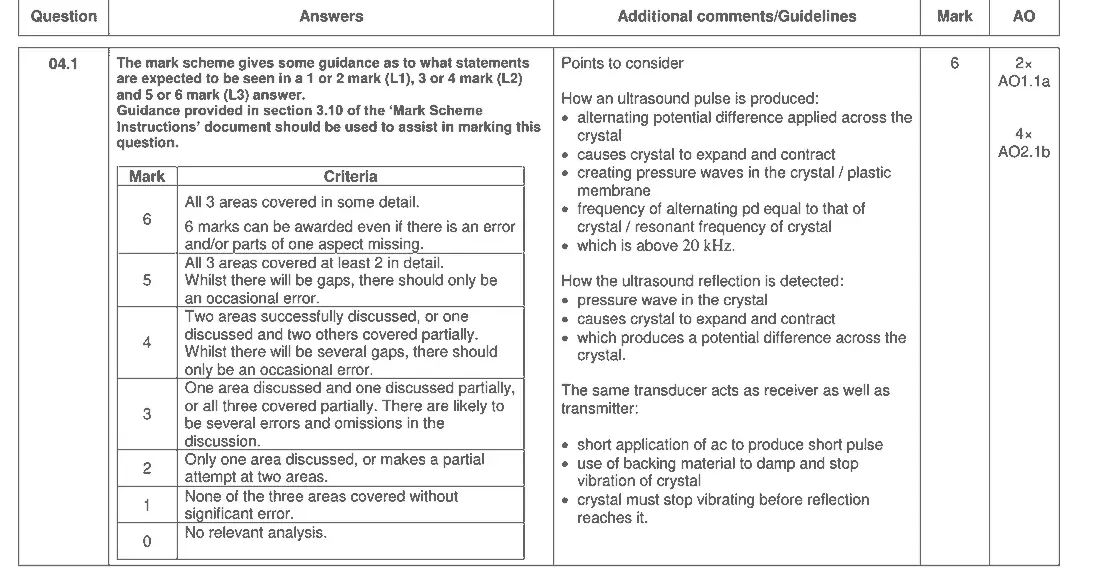
Explain how the transducer in Figure 1 operates in medical diagnosis.
In your answer you should explain how
• an ultrasound pulse is produced by the transducer
• the reflected ultrasound pulse is detected by the transducer
• the transducer can both transmit a pulse and receive the reflected pulse.
[6 marks]
November 2020 · Paper 3B Engineering physics · Q3 6 marks 6-mark extended response thermodynamics and engines
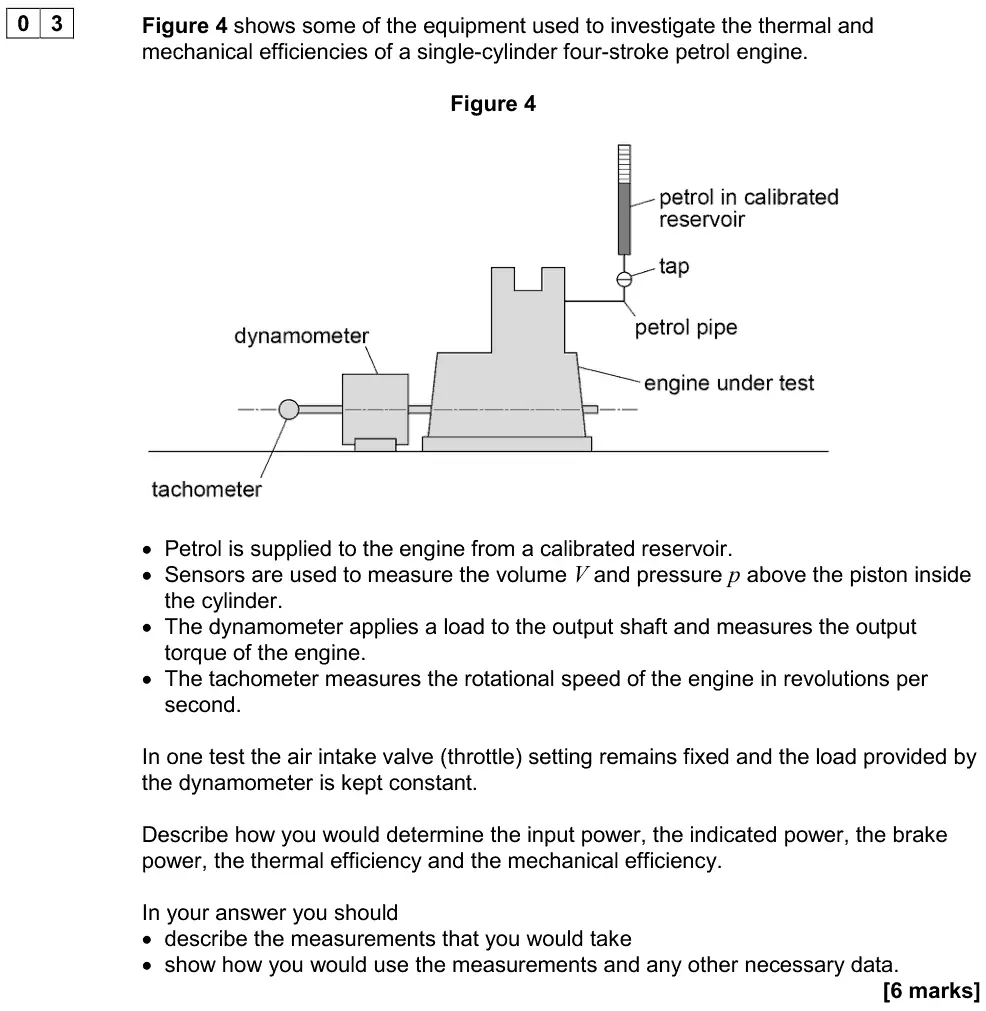
Figure 4 shows some of the equipment used to investigate the thermal and
mechanical efficiencies of a single-cylinder four-stroke petrol engine.
Figure 4
• Petrol is supplied to the engine from a calibrated reservoir.
• Sensors are used to measure the volume V and pressure p above the piston inside
the cylinder.
• The dynamometer applies a load to the output shaft and measures the output
torque of the engine.
• The tachometer measures the rotational speed of the engine in revolutions per
second.
In one test the air intake valve (throttle) setting remains fixed and the load provided by
the dynamometer is kept constant.
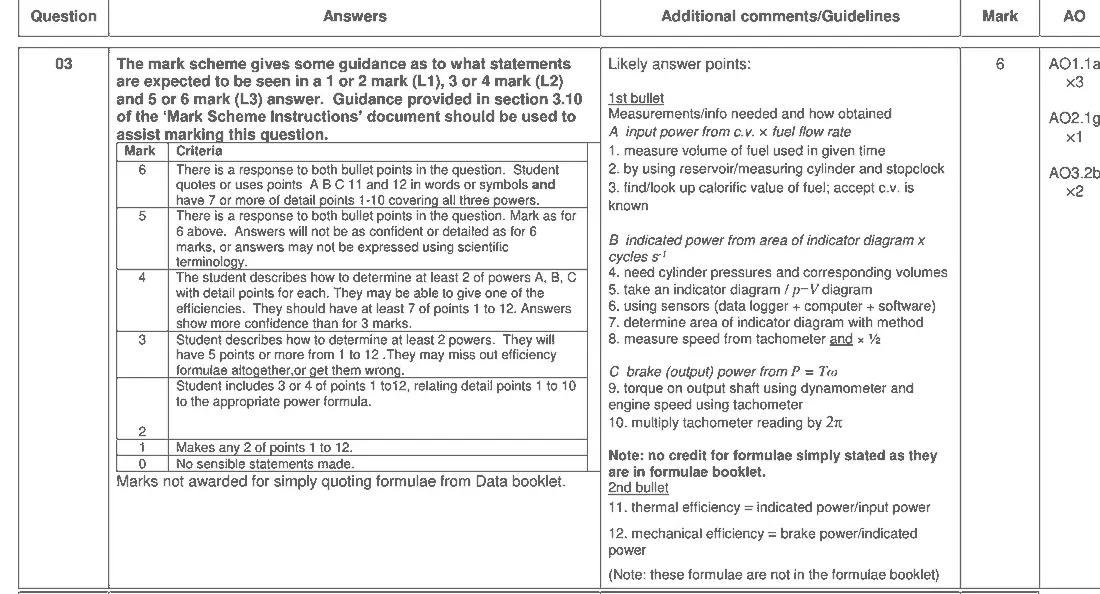
Describe how you would determine the input power, the indicated power, the brake
power, the thermal efficiency and the mechanical efficiency.
In your answer you should
• describe the measurements that you would take
• show how you would use the measurements and any other necessary data.
[6 marks]
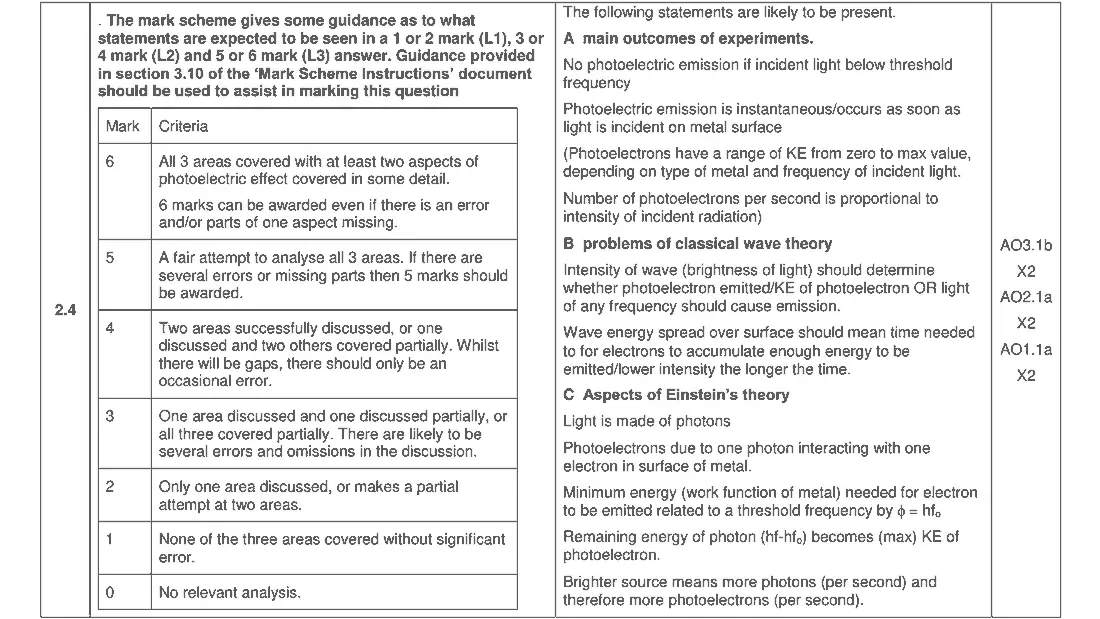
November 2020 · Paper 3B Turning points · Q2.4 6 marks 6-mark extended response wave particle duality history
Earlier part of question 2 that this part usesEarlier part of November 2020 Paper 3B Turning points question 2
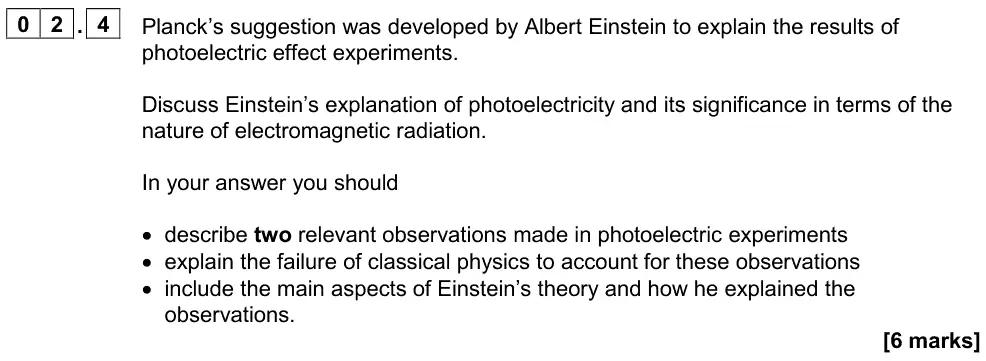
Planck’s suggestion was developed by Albert Einstein to explain the results of
photoelectric effect experiments.
Discuss Einstein’s explanation of photoelectricity and its significance in terms of the
nature of electromagnetic radiation.
In your answer you should
• describe two relevant observations made in photoelectric experiments
• explain the failure of classical physics to account for these observations
• include the main aspects of Einstein’s theory and how he explained the
observations.
[6 marks]
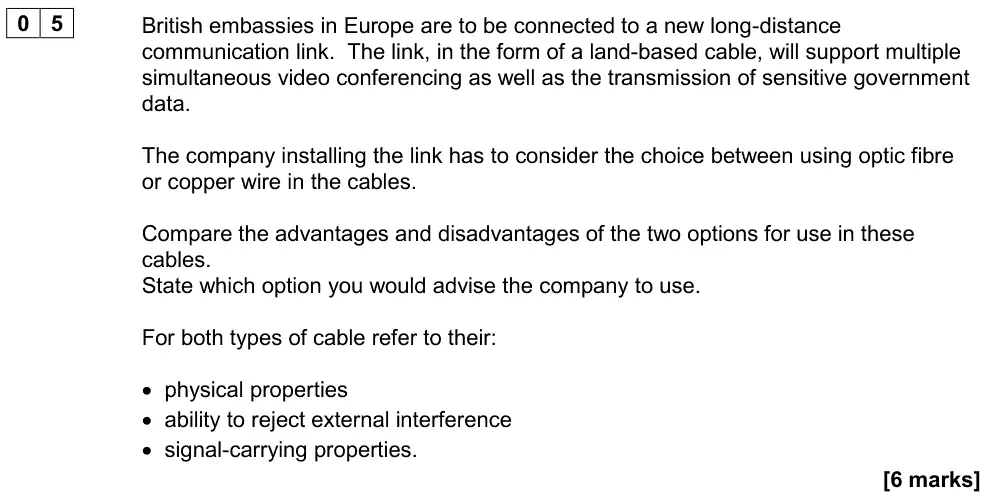
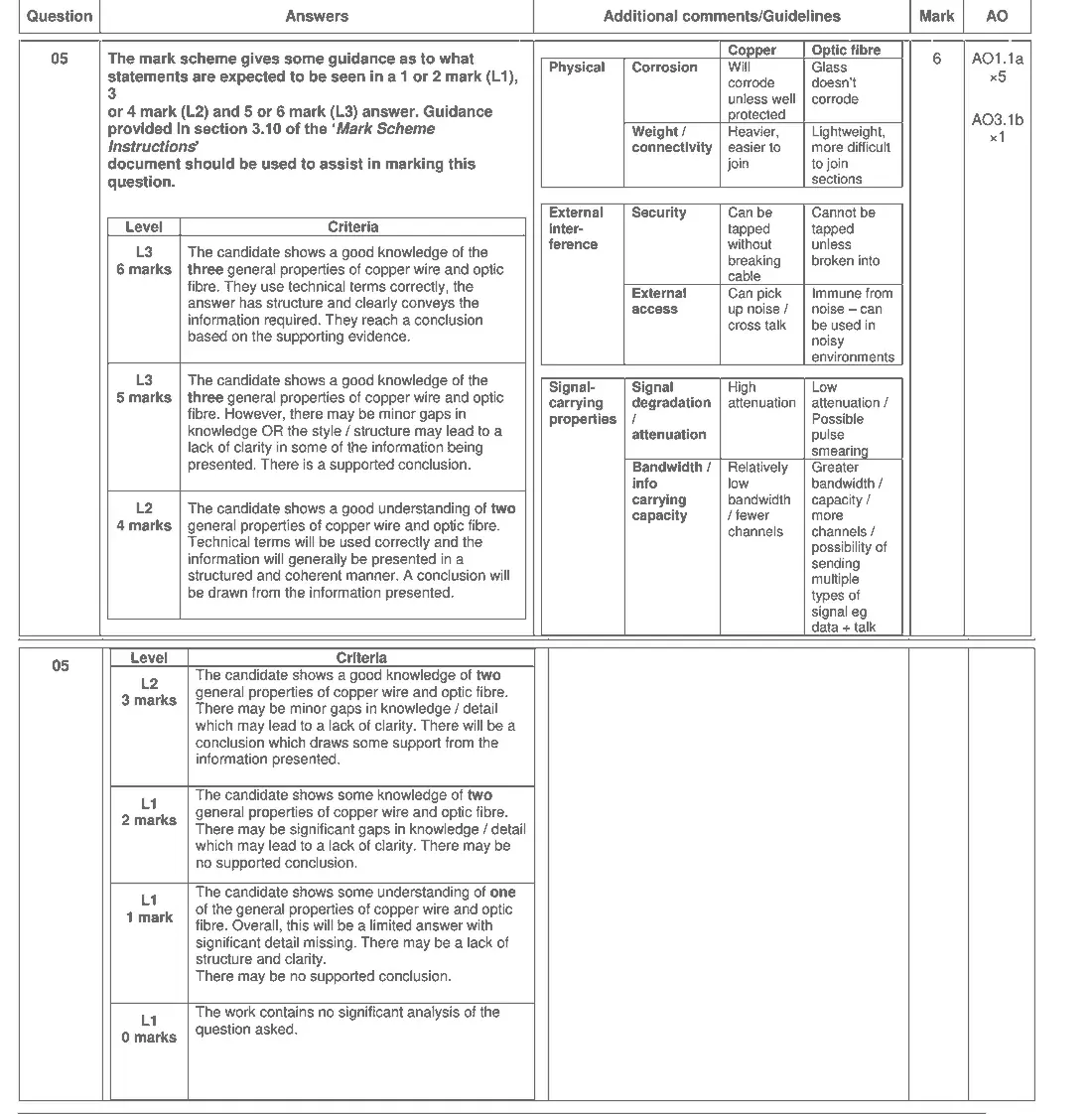
November 2020 · Paper 3B Electronics · Q5 6 marks 6-mark extended response data communication
British embassies in Europe are to be connected to a new long-distance
communication link.  The link, in the form of a land-based cable, will support multiple
simultaneous video conferencing as well as the transmission of sensitive government
data.
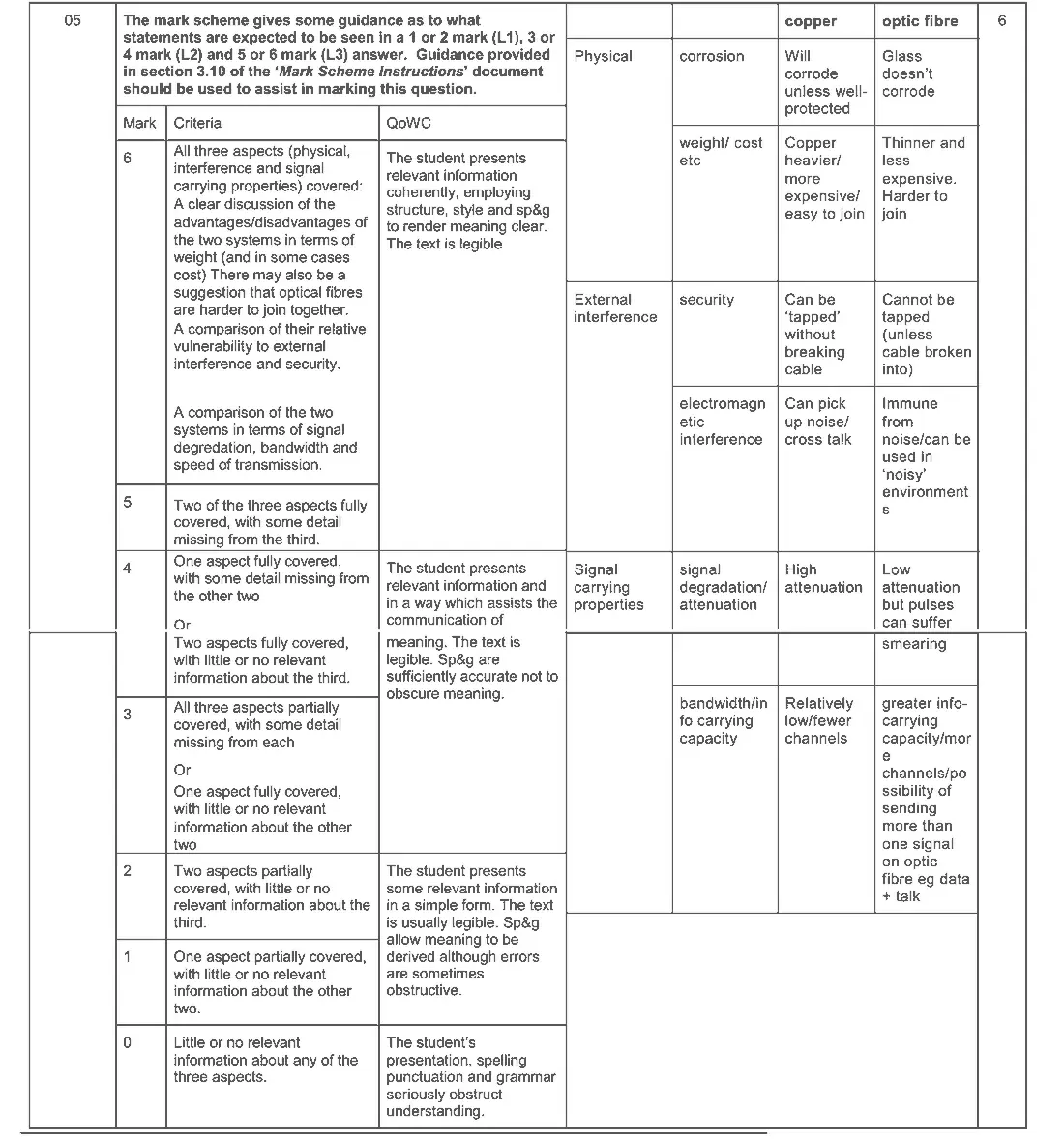
The company installing the link has to consider the choice between using optic fibre
or copper wire in the cables.
Compare the advantages and disadvantages of the two options for use in these
cables.
State which option you would advise the company to use.
For both types of cable refer to their:
• physical properties
• ability to reject external interference
• signal-carrying properties.
[6 marks]
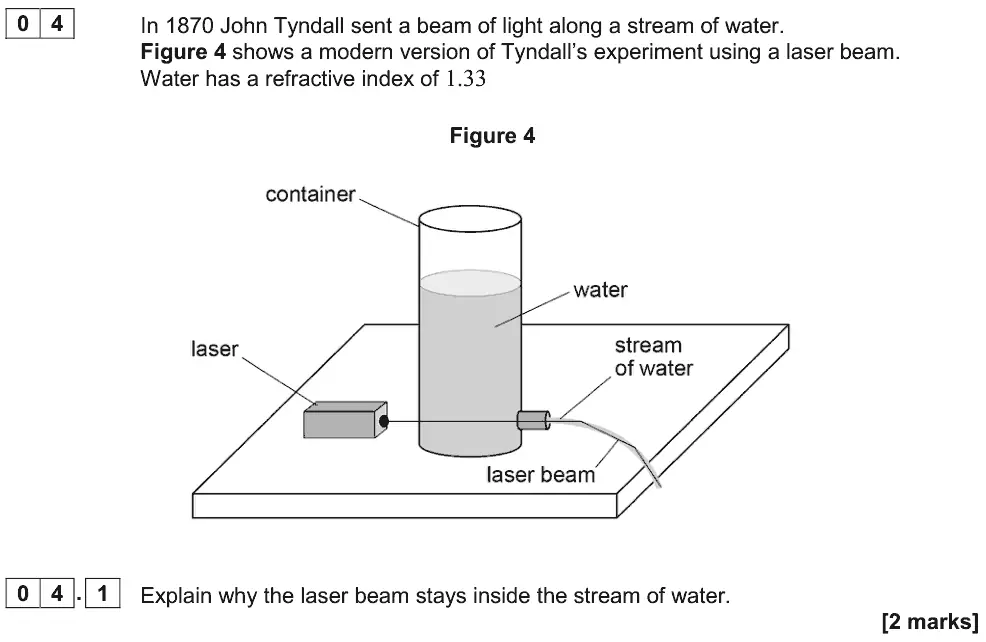
June 2019 · AS Paper 1 · Q4.4 6 marks 6-mark extended response Hard refraction and optical fibres
Earlier part of question 4 that this part usesEarlier part of June 2019 Paper 1 question 4
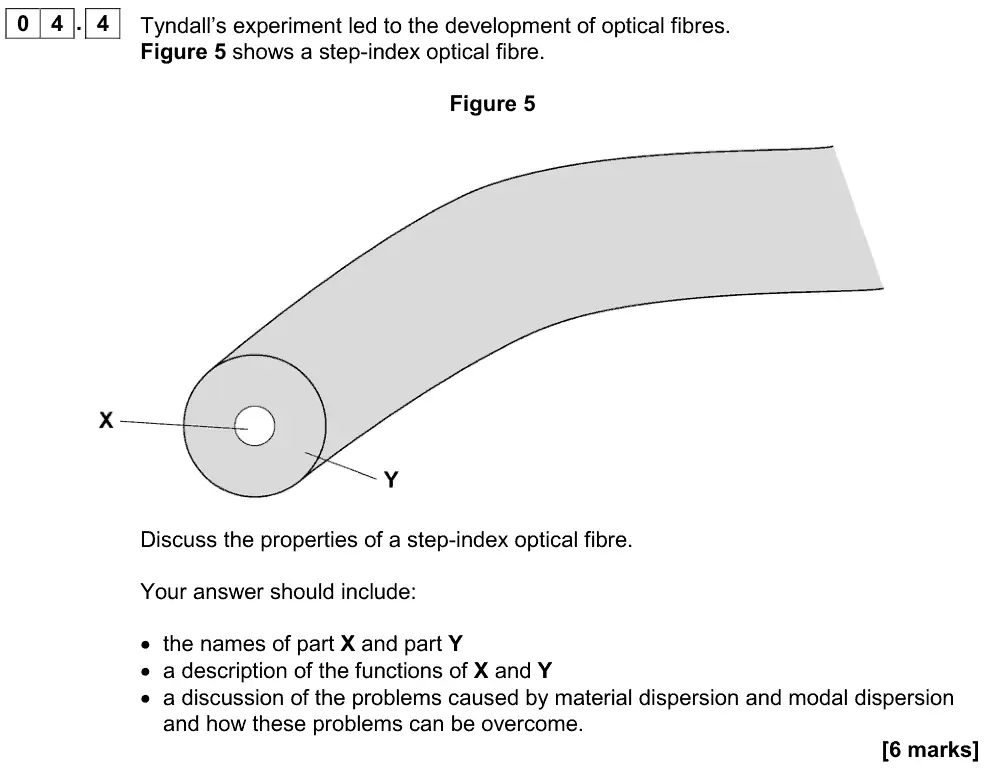
Tyndall’s experiment led to the development of optical fibres.
Figure 5 shows a step-index optical fibre.
Figure 5
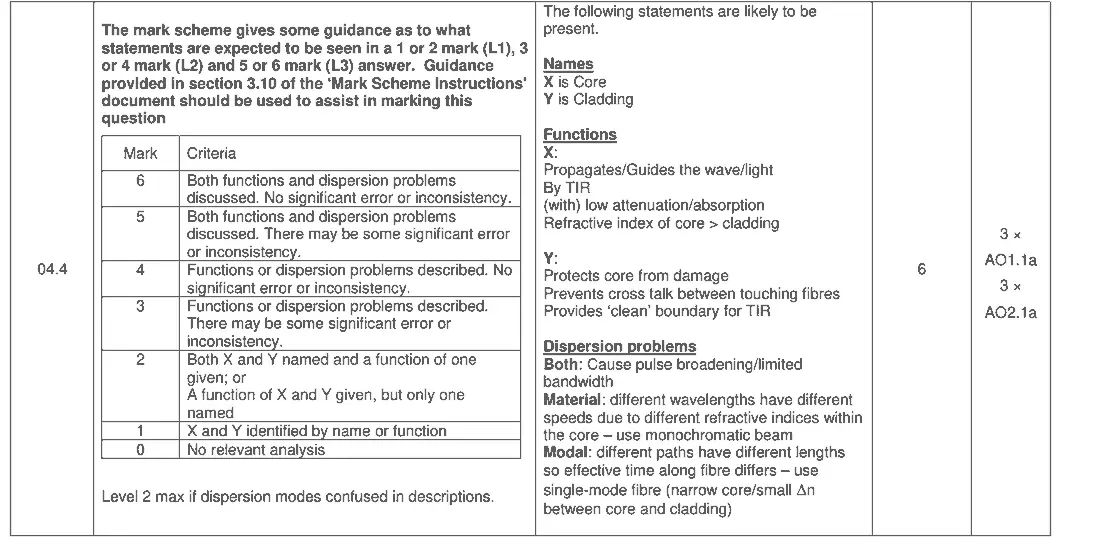
Discuss the properties of a step-index optical fibre.
Your answer should include:
• the names of part X and part Y
• a description of the functions of X and Y
• a discussion of the problems caused by material dispersion and modal dispersion
and how these problems can be overcome.
[6 marks]
June 2019 · Paper 3B Astrophysics · Q1.3 6 marks 6-mark extended response telescopes
Earlier part of question 1 that this part usesEarlier part of June 2019 Paper 3B Astrophysics question 1
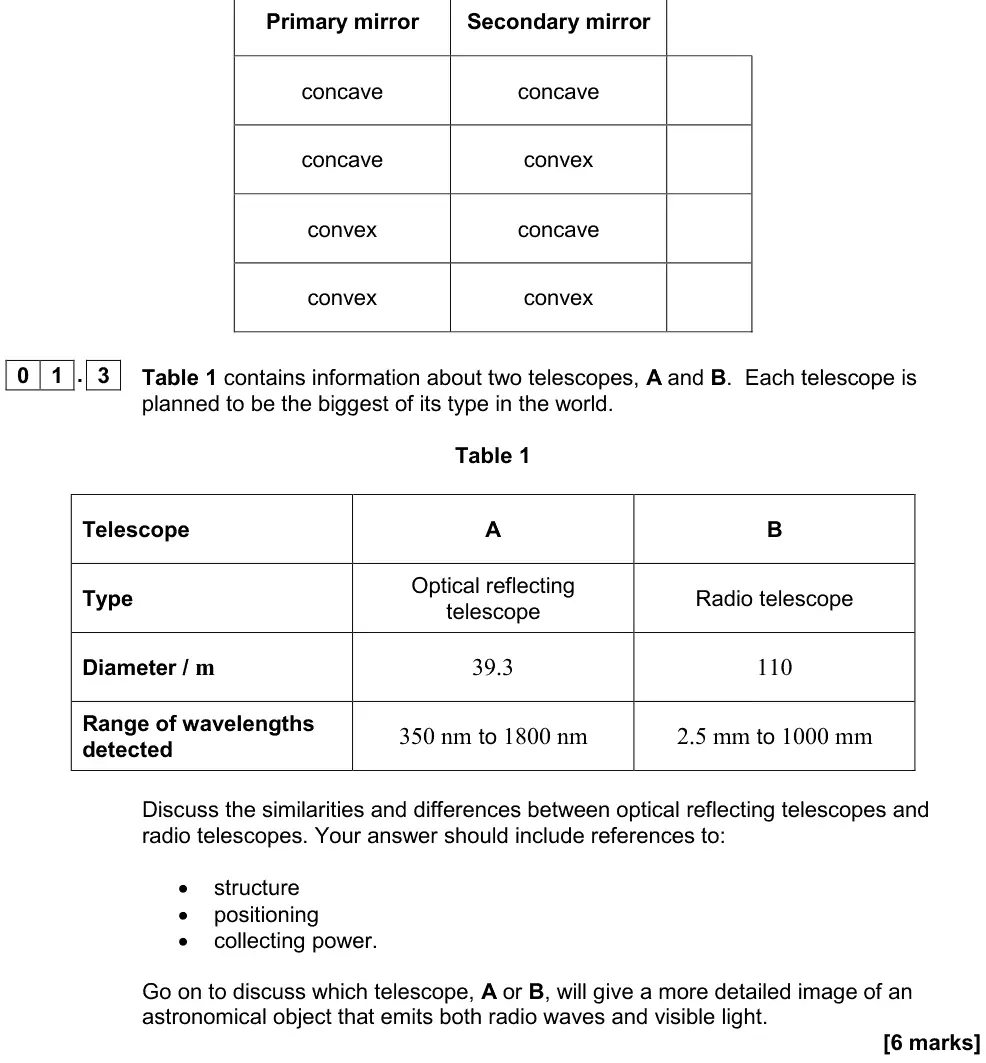
Primary mirror
Secondary mirror
concave
concave
concave
convex
convex
concave
convex
convex
Table 1 contains information about two telescopes, A and B.  Each telescope is
planned to be the biggest of its type in the world.
Table 1
Telescope
A
B
Type
Optical reflecting
telescope
Radio telescope
Diameter / m
39.3
110
Range of wavelengths
detected
350 nm to 1800 nm
2.5 mm to 1000 mm
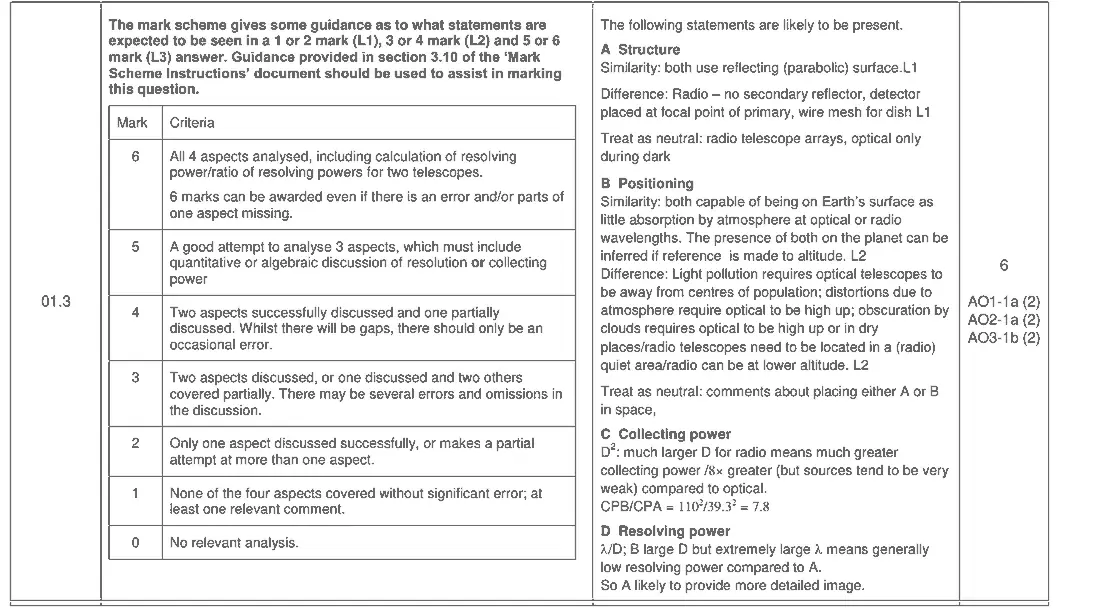
Discuss the similarities and differences between optical reflecting telescopes and
radio telescopes. Your answer should include references to:
•
structure
•
positioning
•
collecting power.
Go on to discuss which telescope, A or B, will give a more detailed image of an
astronomical object that emits both radio waves and visible light.
[6 marks]
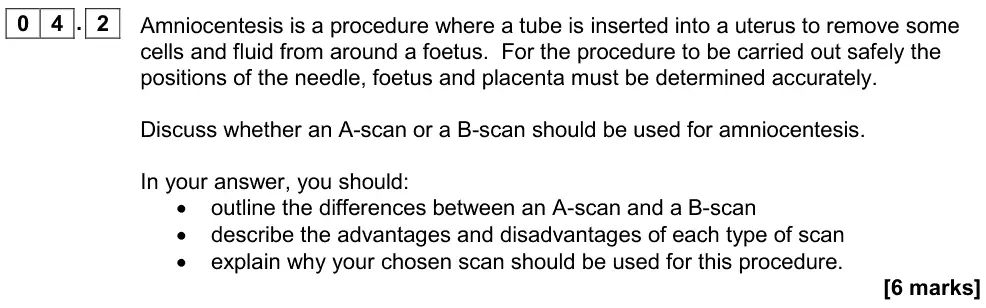
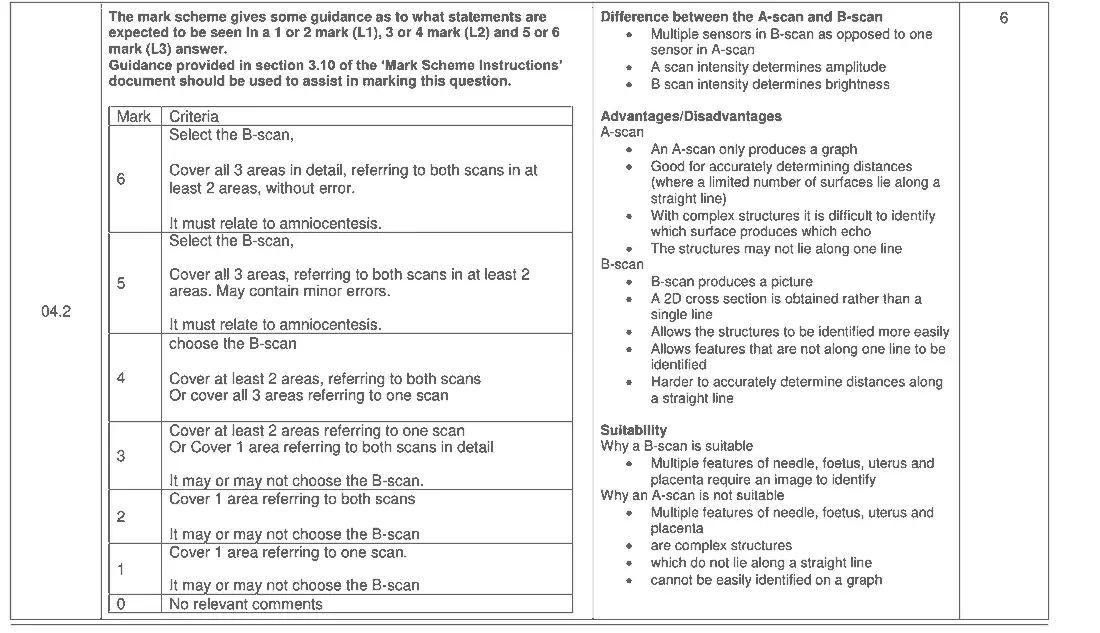
June 2019 · Paper 3B Medical physics · Q4.2 6 marks 6-mark extended response medical imaging
Earlier part of question 4 that this part usesEarlier part of June 2019 Paper 3B Medical physics question 4
Amniocentesis is a procedure where a tube is inserted into a uterus to remove some
cells and fluid from around a foetus.  For the procedure to be carried out safely the
positions of the needle, foetus and placenta must be determined accurately.
Discuss whether an A-scan or a B-scan should be used for amniocentesis.
In your answer, you should:
•
outline the differences between an A-scan and a B-scan
•
describe the advantages and disadvantages of each type of scan
•
explain why your chosen scan should be used for this procedure.
[6 marks]
June 2019 · Paper 3B Engineering physics · Q2.2 6 marks 6-mark extended response rotational dynamics
Earlier part of question 2 that this part usesEarlier part of June 2019 Paper 3B Engineering physics question 2
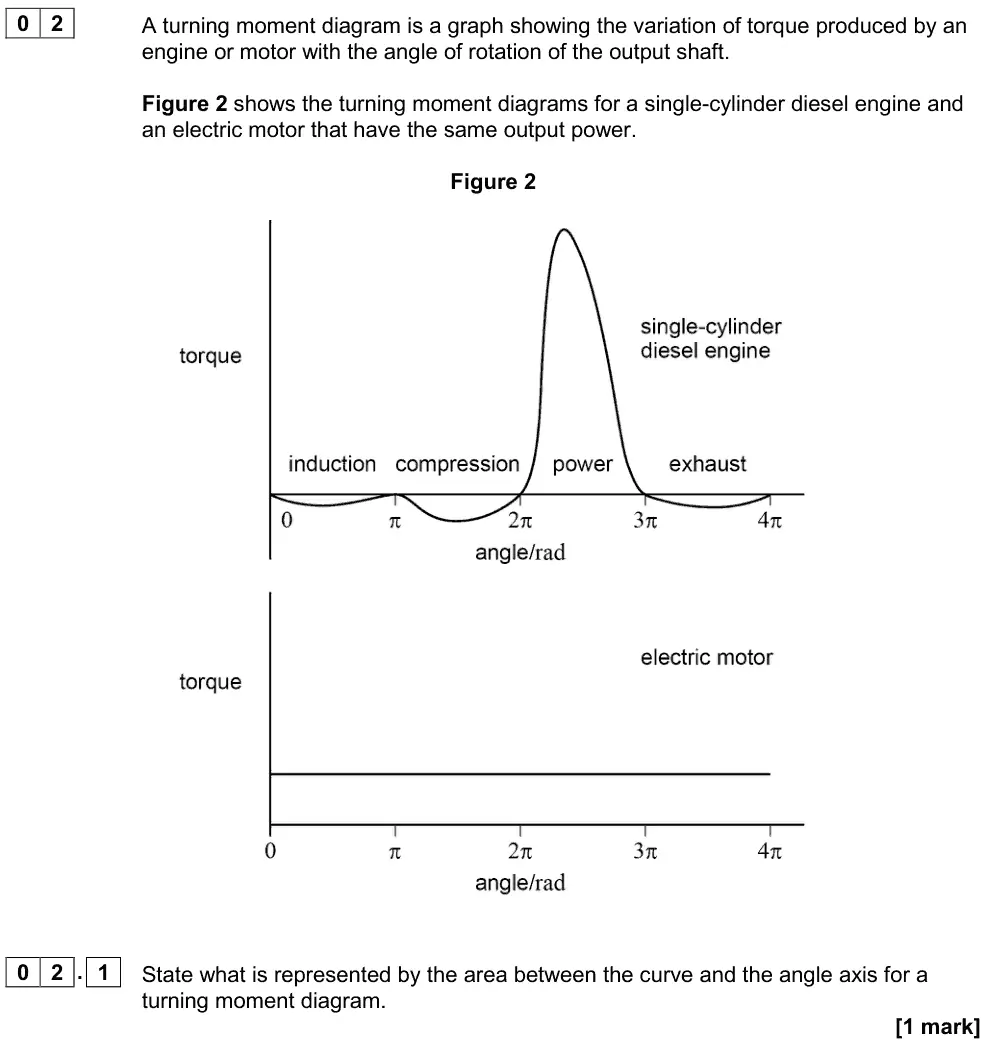
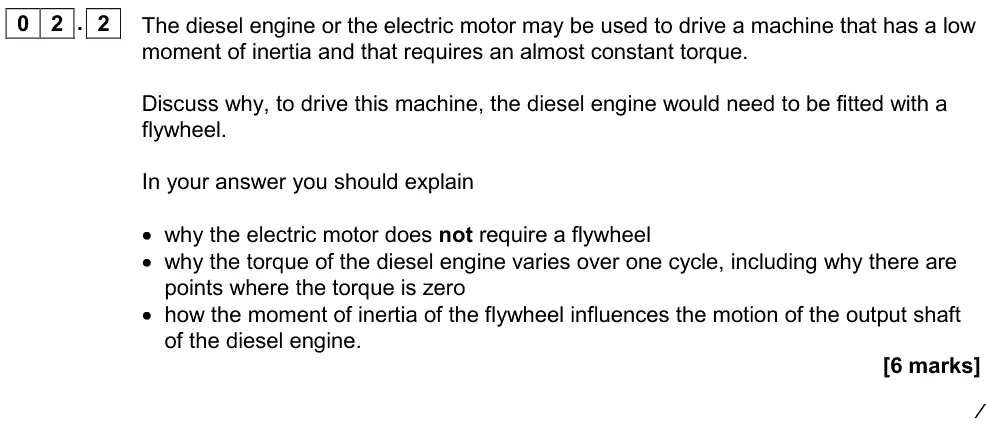
The diesel engine or the electric motor may be used to drive a machine that has a low
moment of inertia and that requires an almost constant torque.
Discuss why, to drive this machine, the diesel engine would need to be fitted with a
flywheel.
In your answer you should explain
• why the electric motor does not require a flywheel
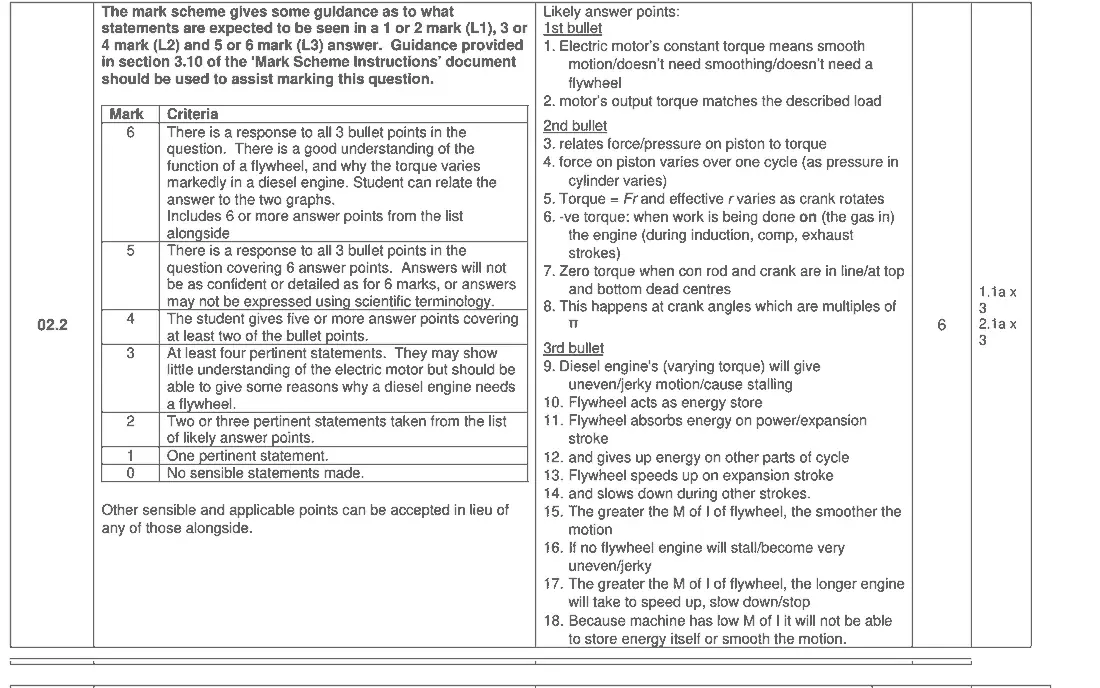
• why the torque of the diesel engine varies over one cycle, including why there are
points where the torque is zero
• how the moment of inertia of the flywheel influences the motion of the output shaft
of the diesel engine.
[6 marks]
June 2019 · Paper 3B Turning points · Q2.2 6 marks 6-mark extended response wave particle duality history
Earlier part of question 2 that this part usesEarlier part of June 2019 Paper 3B Turning points question 2
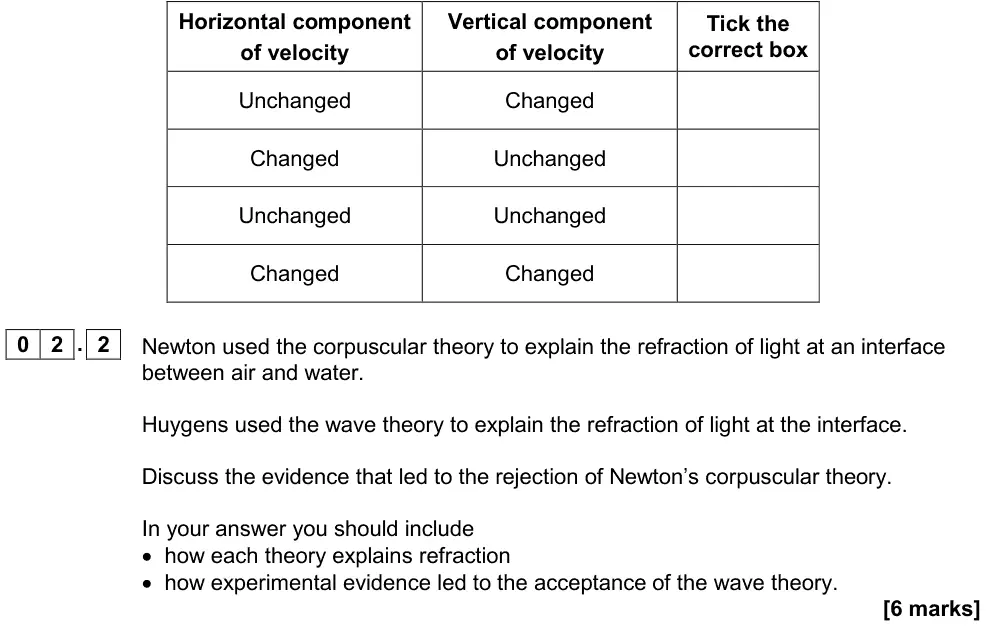
Horizontal component
of velocity
Vertical component
of velocity
Tick the
correct box
Unchanged
Changed
Changed
Unchanged
Unchanged
Unchanged
Changed
Changed
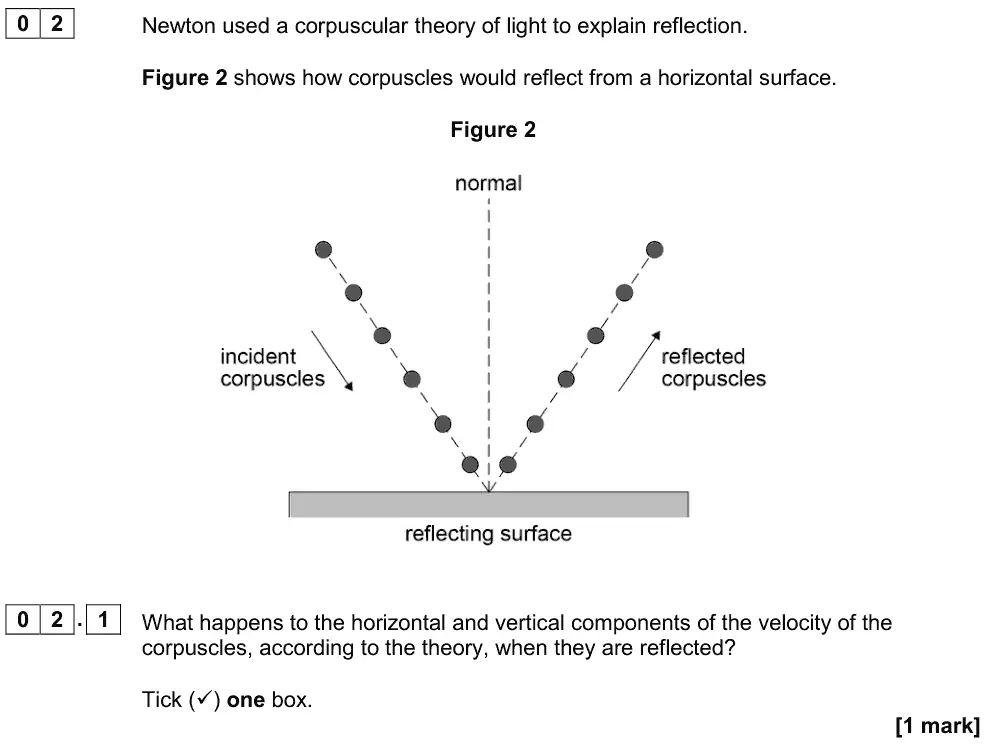
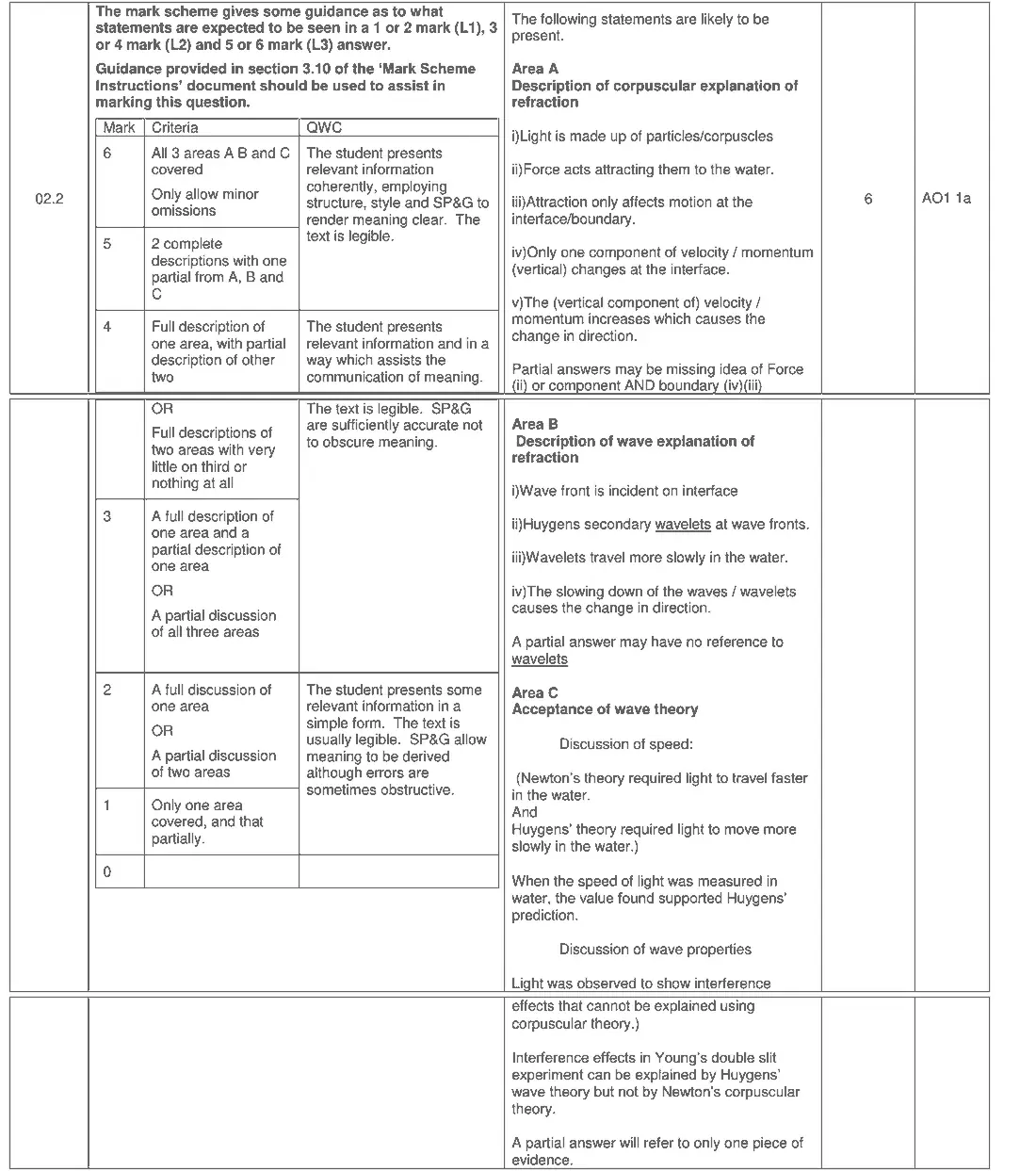
Newton used the corpuscular theory to explain the refraction of light at an interface
between air and water.
Huygens used the wave theory to explain the refraction of light at the interface.
Discuss the evidence that led to the rejection of Newton’s corpuscular theory.
In your answer you should include
• how each theory explains refraction
• how experimental evidence led to the acceptance of the wave theory.
[6 marks]
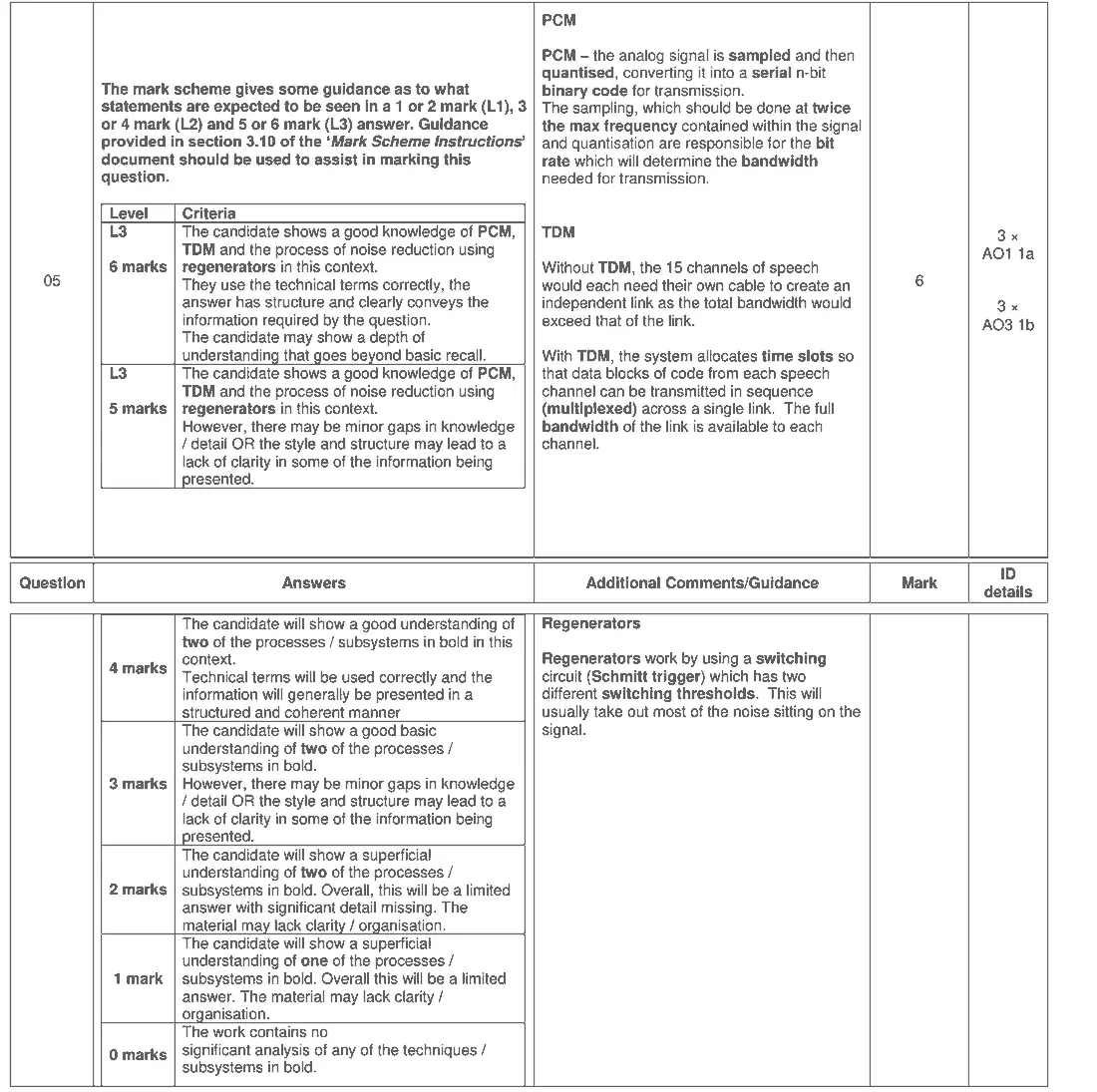
June 2019 · Paper 3B Electronics · Q5 6 marks 6-mark extended response semiconductor devices and signalsdata communication
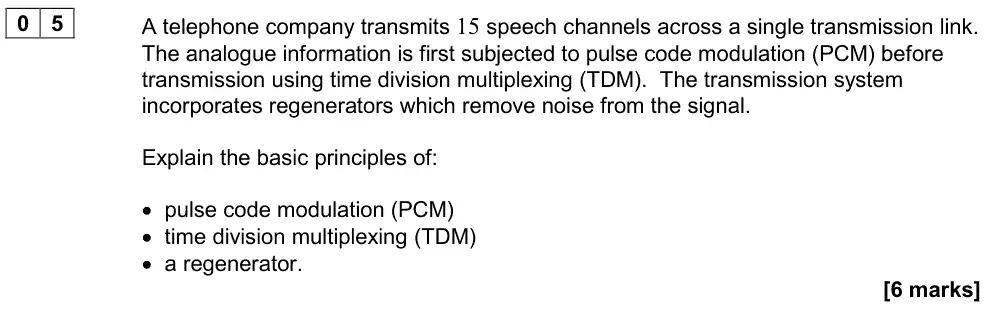
A telephone company transmits 15 speech channels across a single transmission link.
The analogue information is first subjected to pulse code modulation (PCM) before
transmission using time division multiplexing (TDM).  The transmission system
incorporates regenerators which remove noise from the signal.
Explain the basic principles of:
• pulse code modulation (PCM)
• time division multiplexing (TDM)
• a regenerator.
[6 marks]
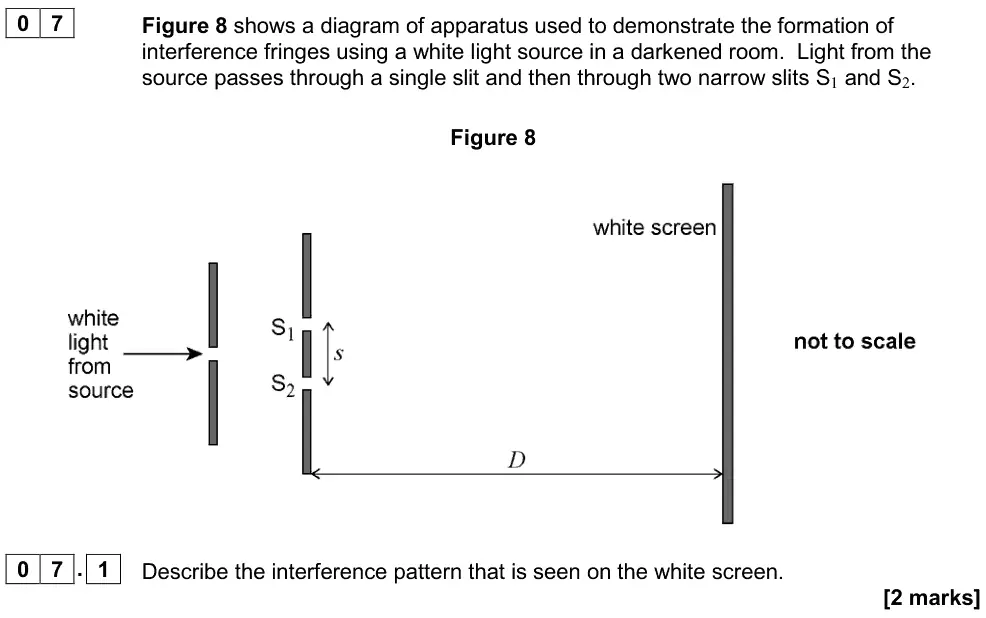
June 2018 · AS Paper 1 · Q7.3 6 marks 6-mark extended response Hard interference and diffractionmeasurements and uncertainties
Earlier part of question 7 that this part usesEarlier part of June 2018 Paper 1 question 7
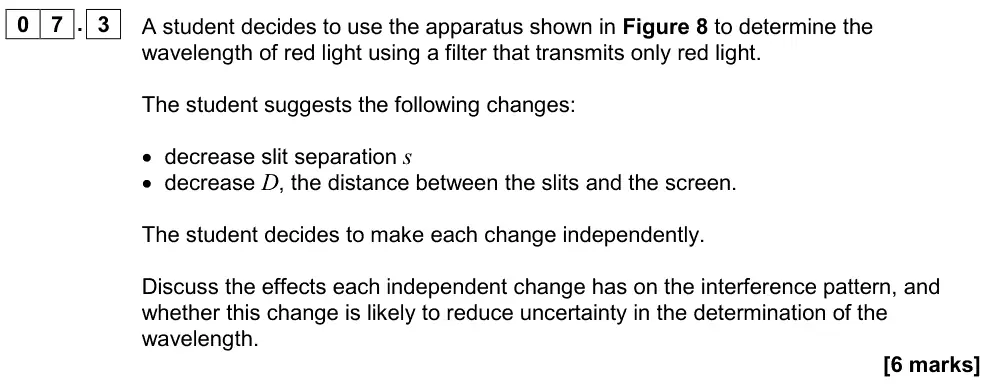
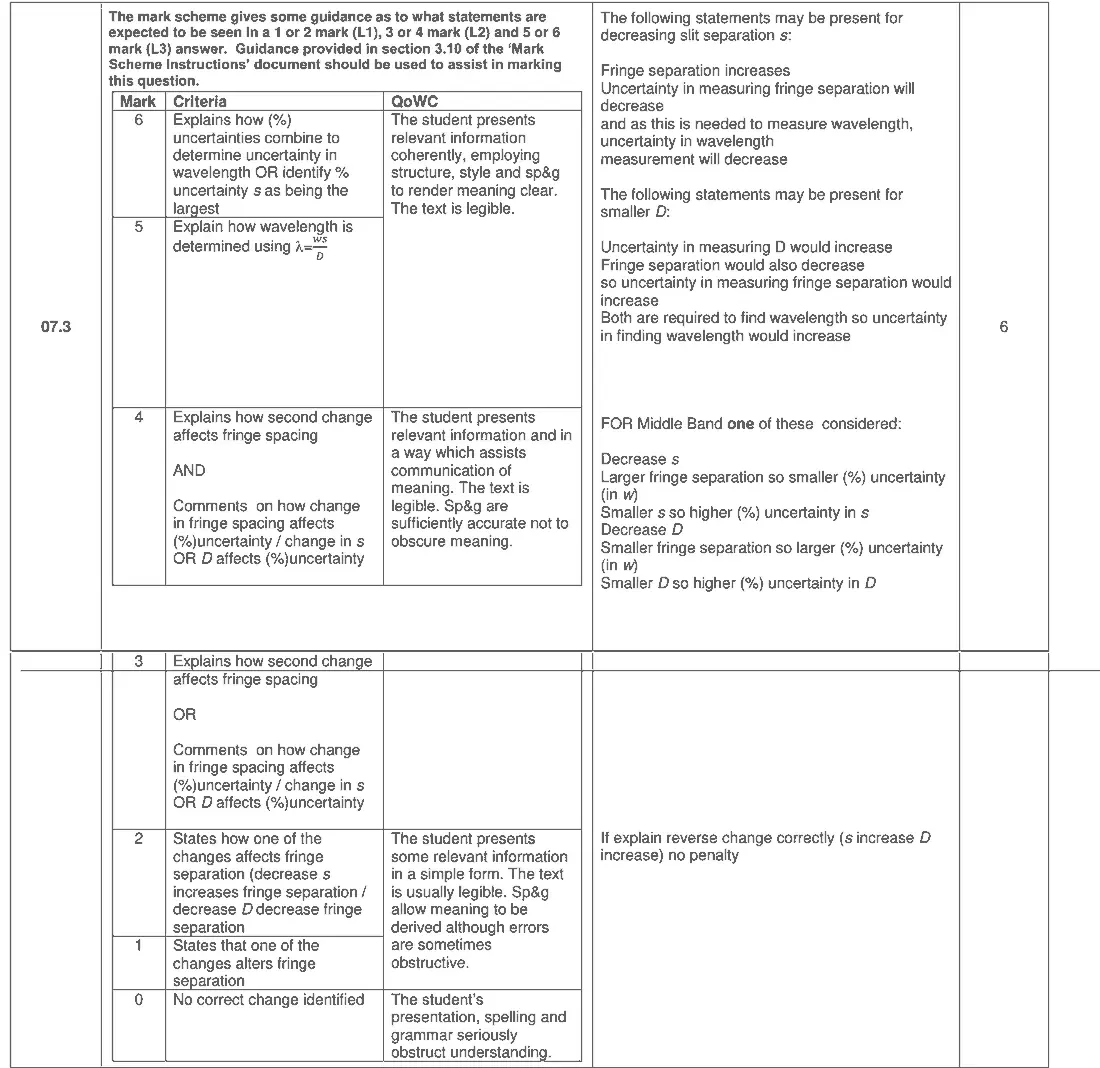
A student decides to use the apparatus shown in Figure 8 to determine the
wavelength of red light using a filter that transmits only red light.
The student suggests the following changes:
• decrease slit separation s
• decrease D, the distance between the slits and the screen.
The student decides to make each change independently.
Discuss the effects each independent change has on the interference pattern, and
whether this change is likely to reduce uncertainty in the determination of the
wavelength.
[6 marks]
June 2018 · Paper 3B Astrophysics · Q2.3 6 marks 6-mark extended response classification of stars
Earlier part of question 2 that this part usesEarlier part of June 2018 Paper 3B Astrophysics question 2
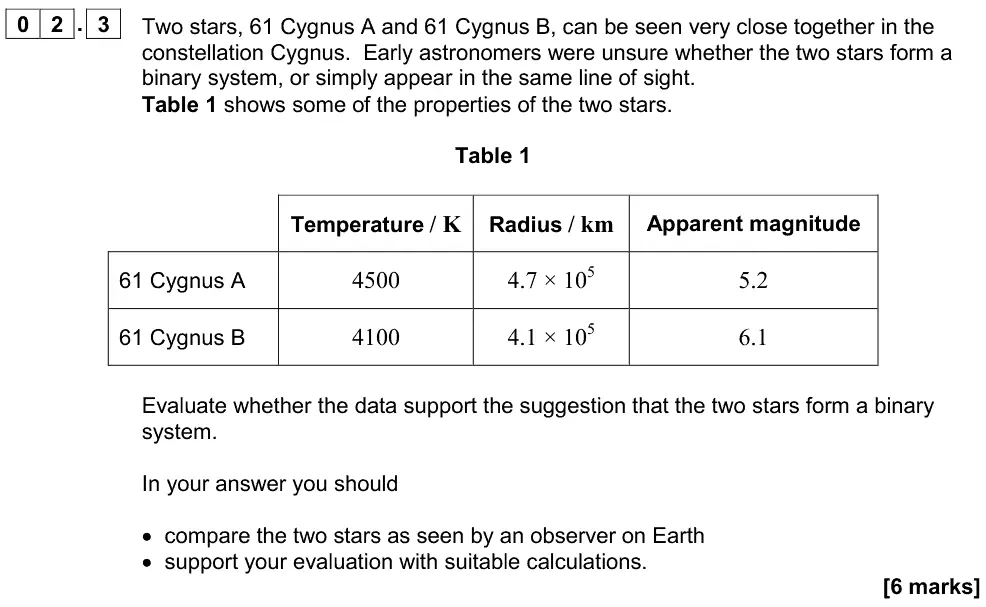
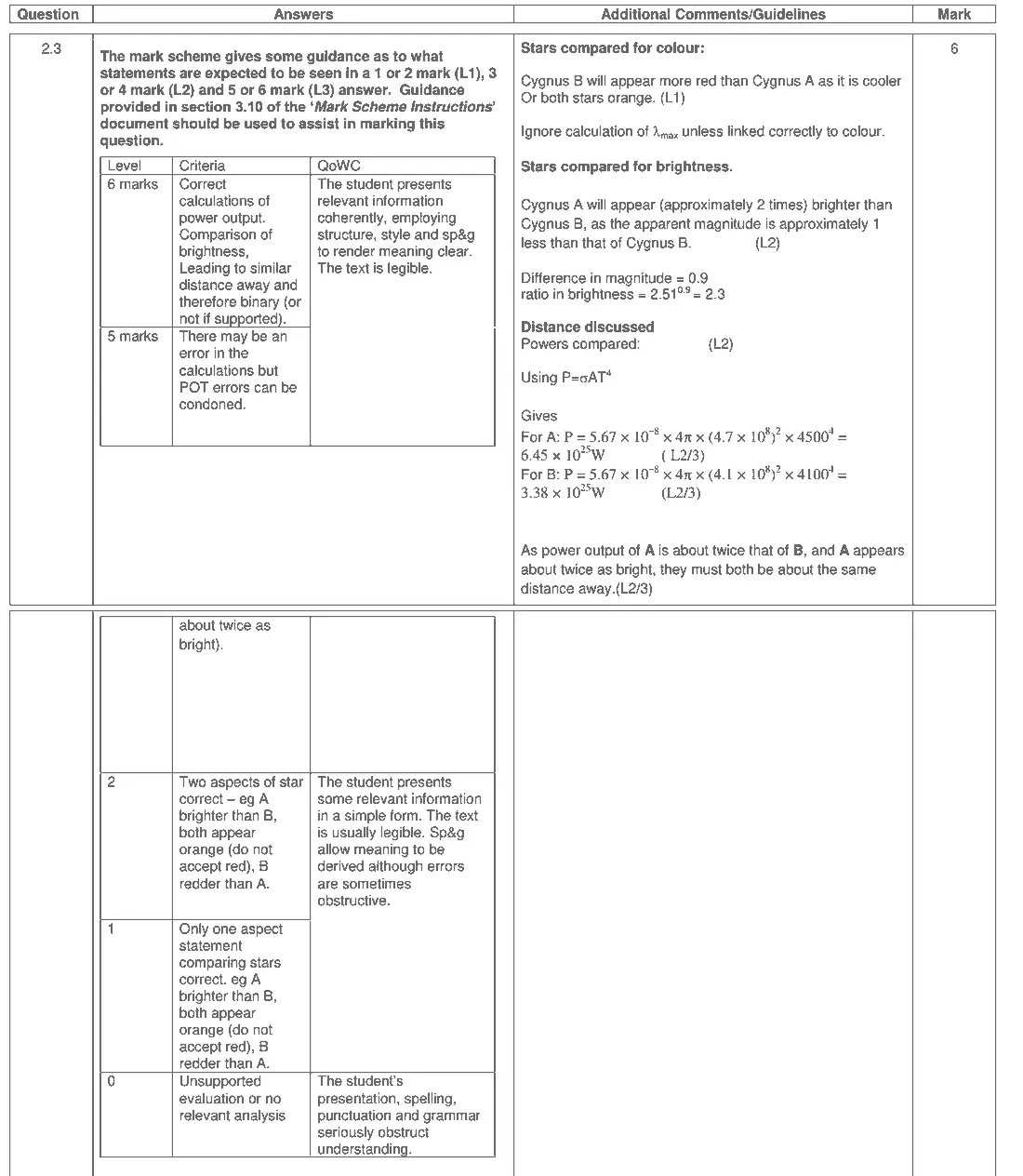
Two stars, 61 Cygnus A and 61 Cygnus B, can be seen very close together in the
constellation Cygnus.  Early astronomers were unsure whether the two stars form a
binary system, or simply appear in the same line of sight.
Table 1 shows some of the properties of the two stars.
Table 1
Temperature / K
Radius / km
Apparent magnitude
61 Cygnus A
4500
4.7 × 10⁵
5.2
61 Cygnus B
4100
4.1 × 10⁵
6.1
Evaluate whether the data support the suggestion that the two stars form a binary
system.
In your answer you should
• compare the two stars as seen by an observer on Earth
• support your evaluation with suitable calculations.
[6 marks]
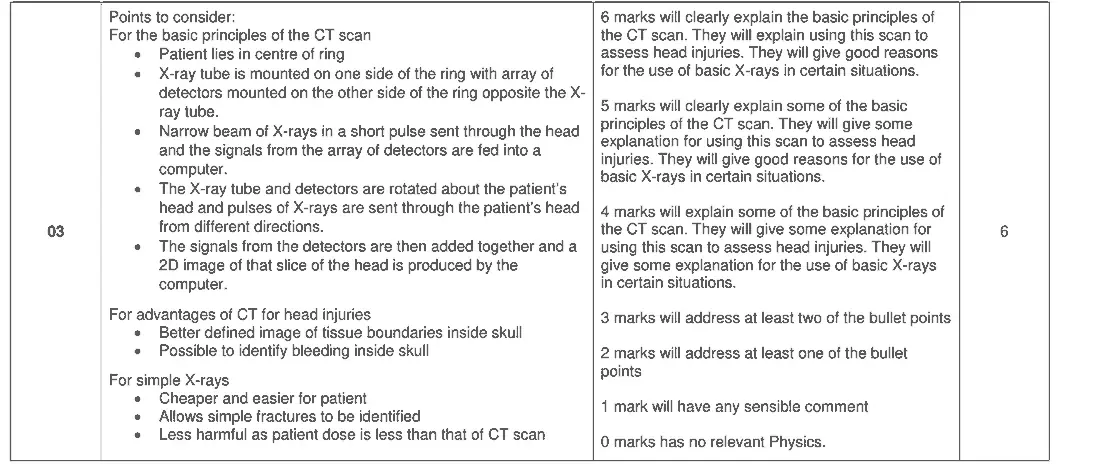
June 2018 · Paper 3B Medical physics · Q3 6 marks 6-mark extended response Hard medical imaging
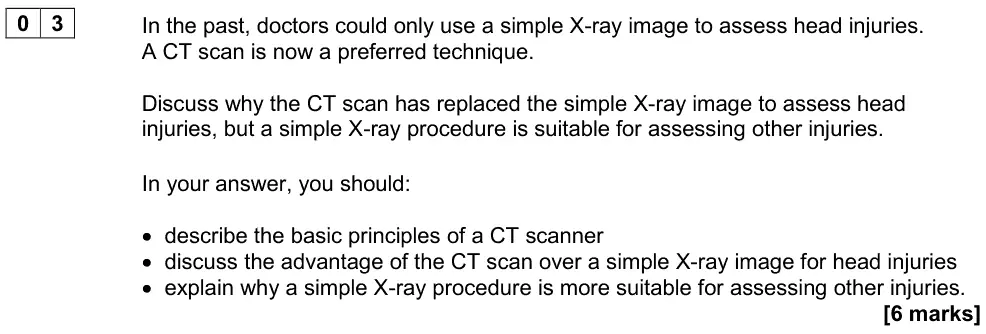
In the past, doctors could only use a simple X-ray image to assess head injuries.
A CT scan is now a preferred technique.
Discuss why the CT scan has replaced the simple X-ray image to assess head
injuries, but a simple X-ray procedure is suitable for assessing other injuries.
In your answer, you should:
• describe the basic principles of a CT scanner
• discuss the advantage of the CT scan over a simple X-ray image for head injuries
• explain why a simple X-ray procedure is more suitable for assessing other injuries.
[6 marks]
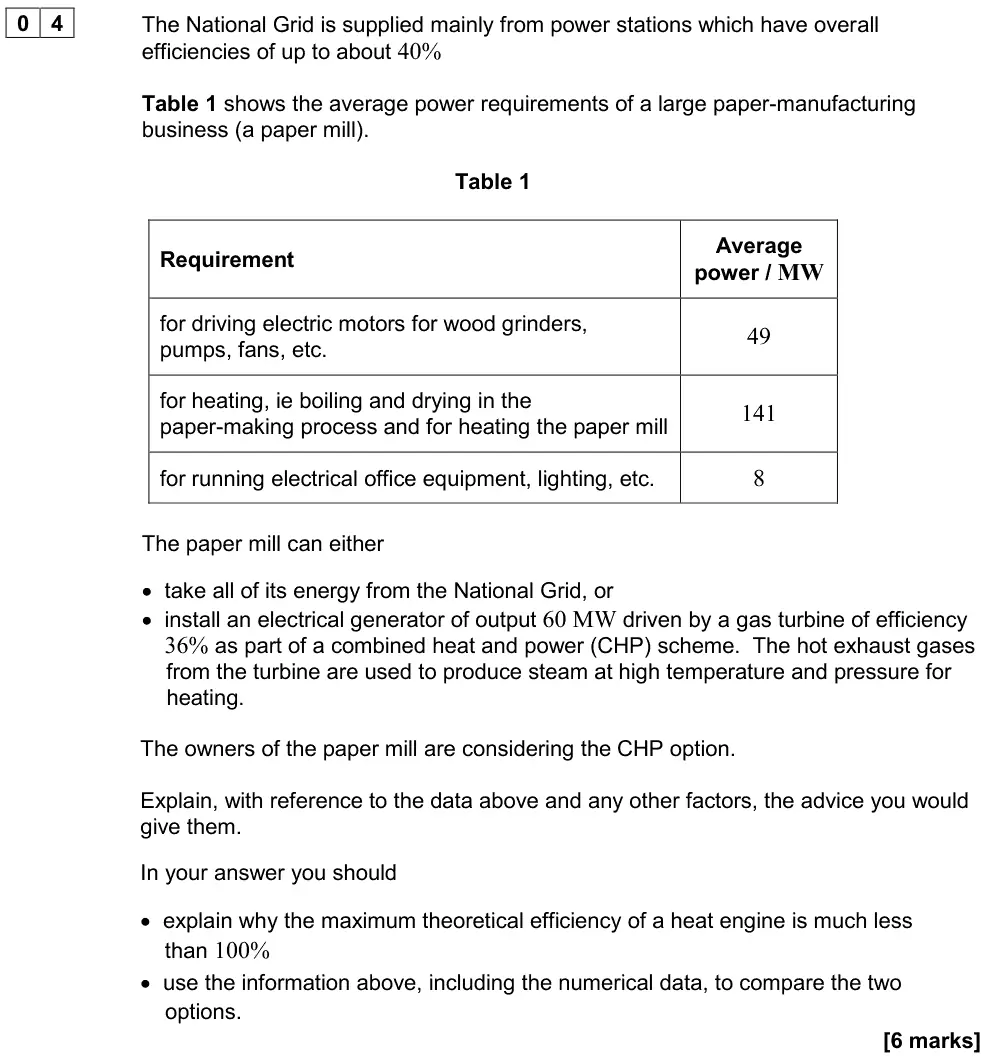
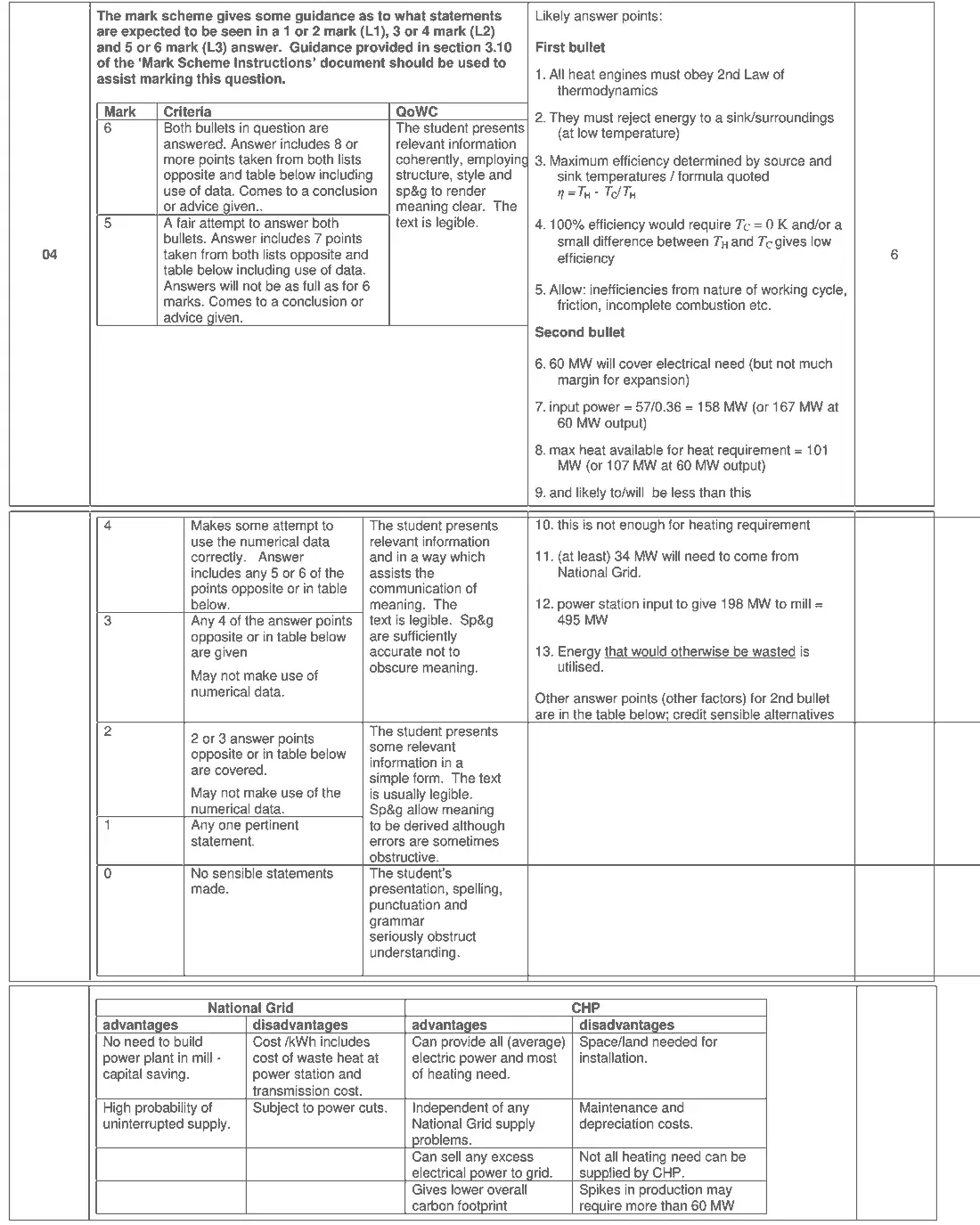
June 2018 · Paper 3B Engineering physics · Q4 6 marks 6-mark extended response thermodynamics and engines
The National Grid is supplied mainly from power stations which have overall
efficiencies of up to about 40%
Table 1 shows the average power requirements of a large paper-manufacturing
business (a paper mill).
Table 1
Requirement
Average
power / MW
for driving electric motors for wood grinders,
pumps, fans, etc.
49
for heating, ie boiling and drying in the
paper-making process and for heating the paper mill
141
for running electrical office equipment, lighting, etc.
8
The paper mill can either
• take all of its energy from the National Grid, or
• install an electrical generator of output 60 MW driven by a gas turbine of efficiency
36% as part of a combined heat and power (CHP) scheme.  The hot exhaust gases
from the turbine are used to produce steam at high temperature and pressure for
heating.
The owners of the paper mill are considering the CHP option.
Explain, with reference to the data above and any other factors, the advice you would
give them.
In your answer you should
• explain why the maximum theoretical efficiency of a heat engine is much less
than 100%
• use the information above, including the numerical data, to compare the two
options.
[6 marks]
June 2018 · Paper 3B Turning points · Q4.1 6 marks 6-mark extended response special relativity
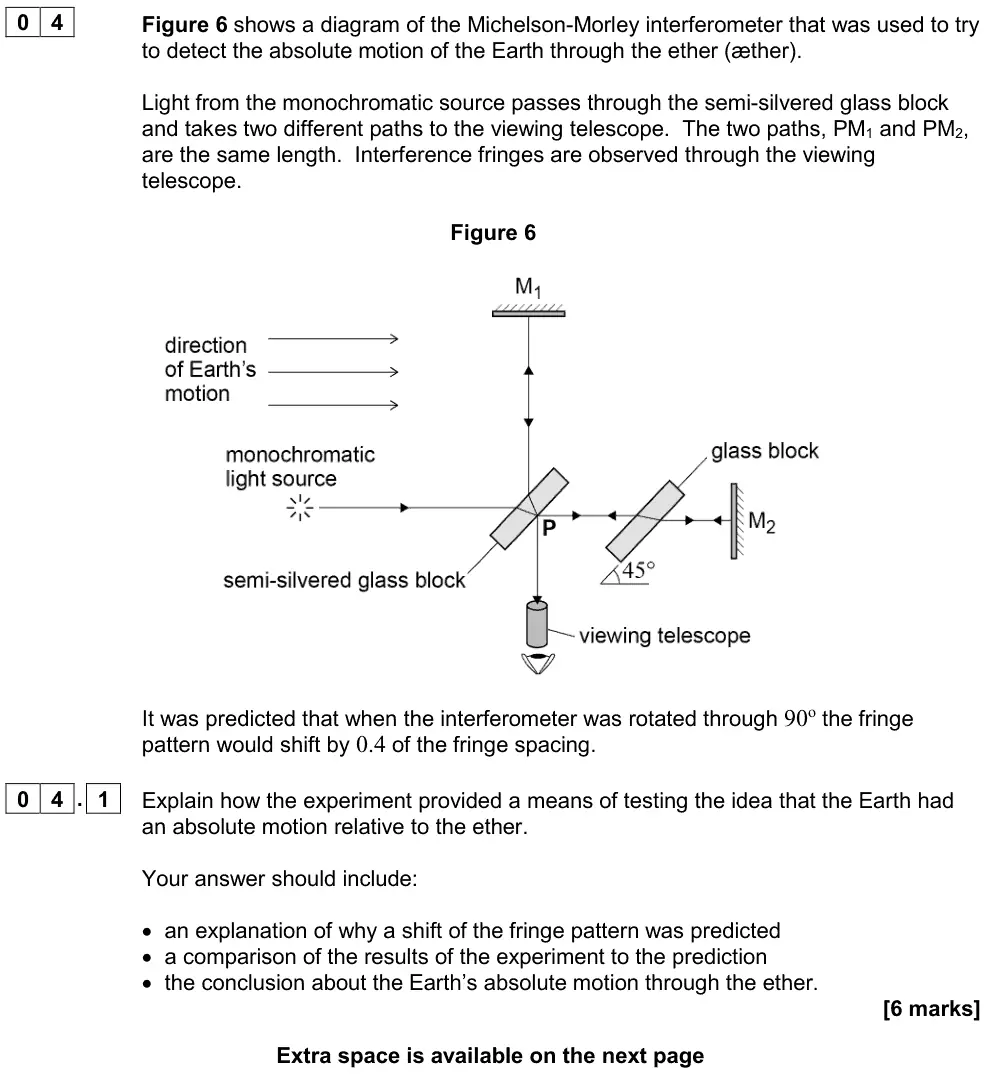
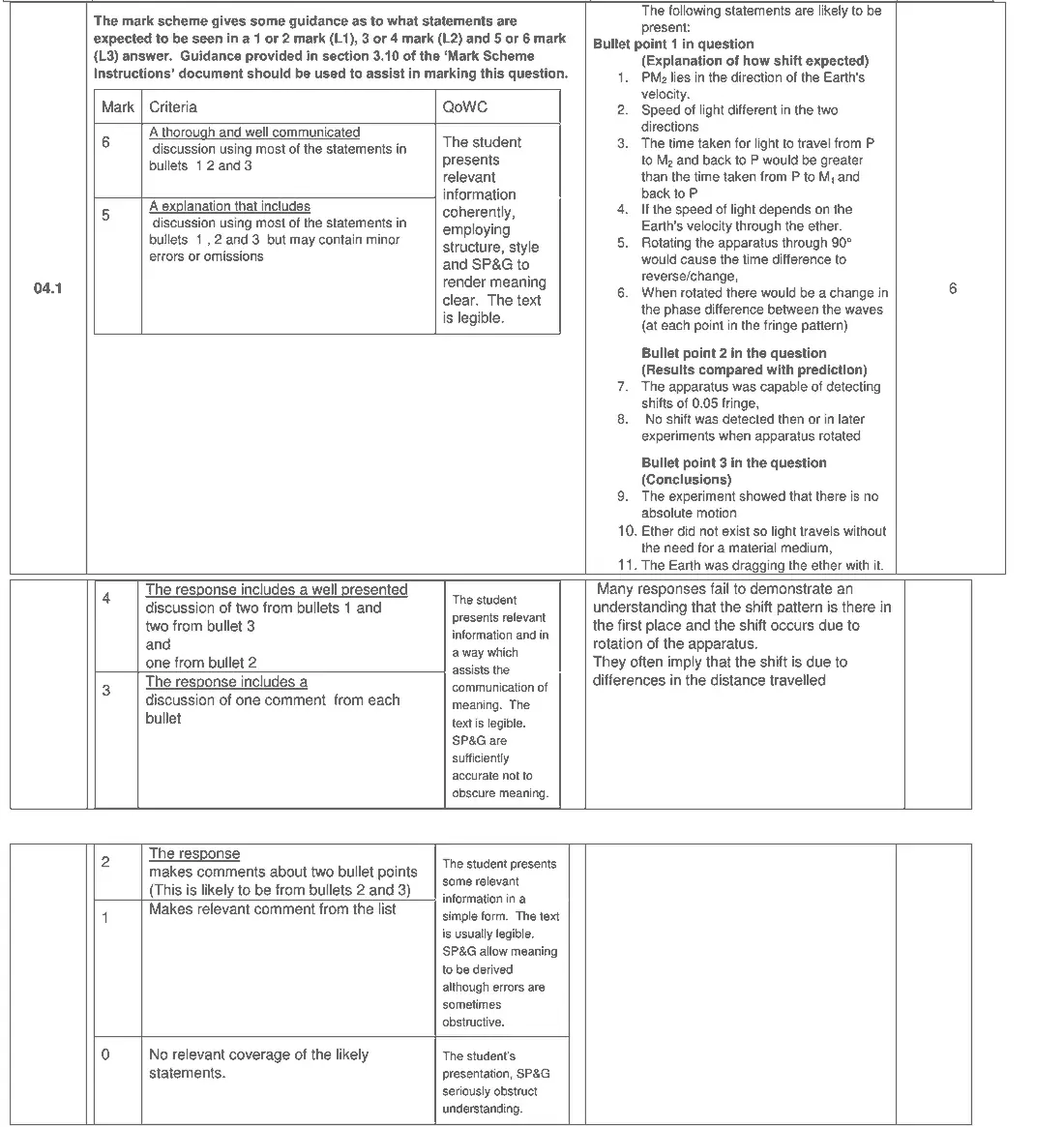
Figure 6 shows a diagram of the Michelson-Morley interferometer that was used to try
to detect the absolute motion of the Earth through the ether (æther).
Light from the monochromatic source passes through the semi-silvered glass block
and takes two different paths to the viewing telescope.  The two paths, PM1 and PM2,
are the same length.  Interference fringes are observed through the viewing
telescope.
Figure 6
It was predicted that when the interferometer was rotated through 90o the fringe
pattern would shift by 0.4 of the fringe spacing.
Explain how the experiment provided a means of testing the idea that the Earth had
an absolute motion relative to the ether.
Your answer should include:
• an explanation of why a shift of the fringe pattern was predicted
• a comparison of the results of the experiment to the prediction
• the conclusion about the Earth’s absolute motion through the ether.
[6 marks]
Extra space is available on the next page
June 2018 · Paper 3B Electronics · Q5 6 marks 6-mark extended response Hard semiconductor devices and signals
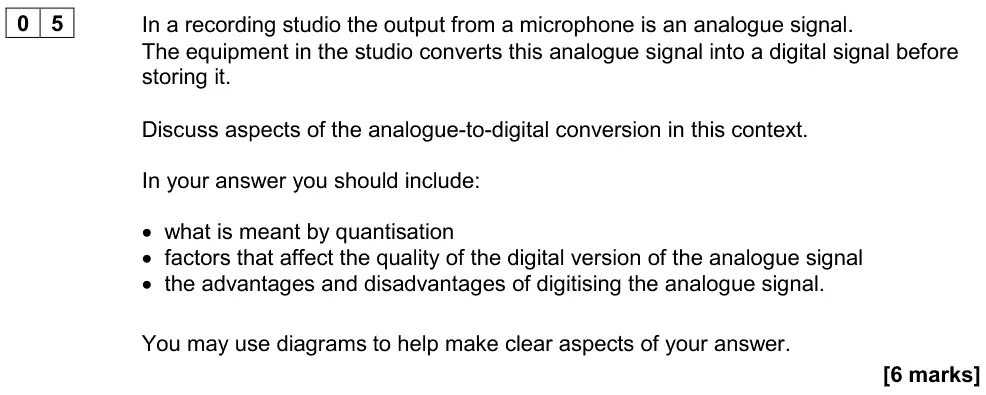
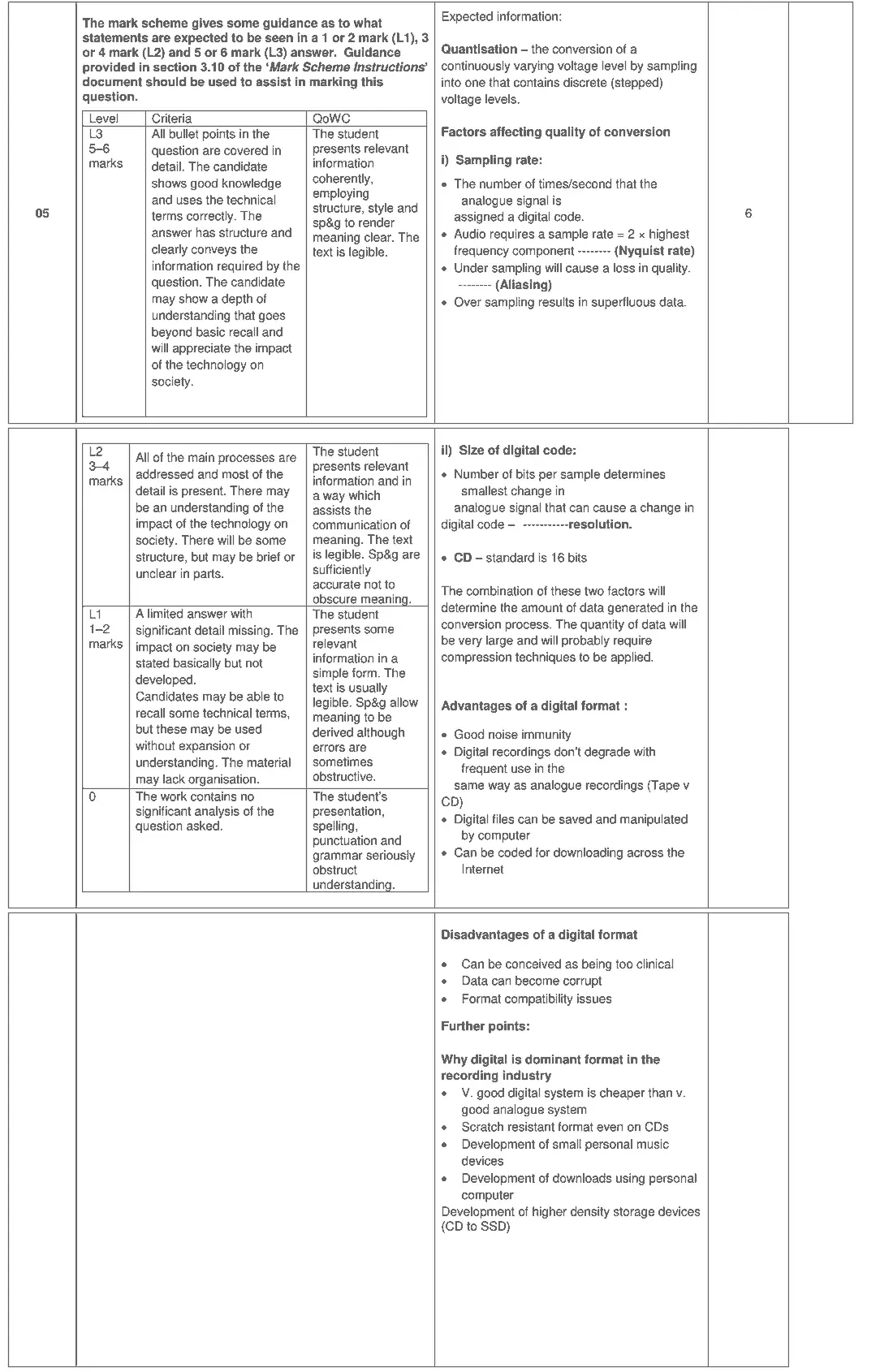
In a recording studio the output from a microphone is an analogue signal.
The equipment in the studio converts this analogue signal into a digital signal before
storing it.
Discuss aspects of the analogue-to-digital conversion in this context.
In your answer you should include:
• what is meant by quantisation
• factors that affect the quality of the digital version of the analogue signal
• the advantages and disadvantages of digitising the analogue signal.
You may use diagrams to help make clear aspects of your answer.
[6 marks]
June 2017 · AS Paper 1 · Q7.5 6 marks 6-mark extended response energy levels and wave particle dualityparticles antiparticles and interactions
Earlier part of question 7 that this part usesEarlier part of June 2017 Paper 1 question 7
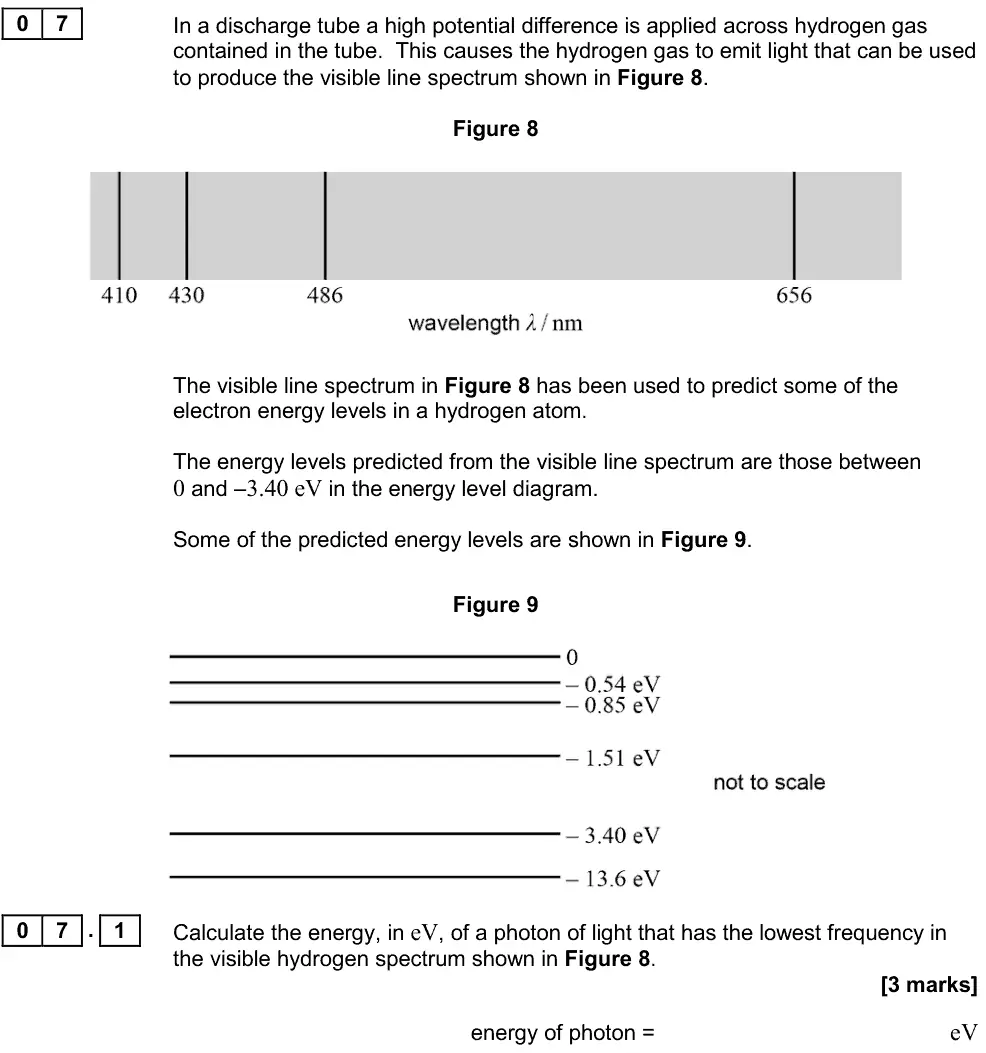
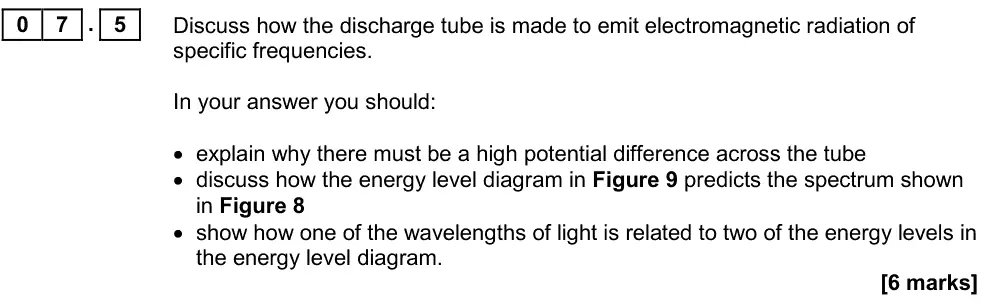
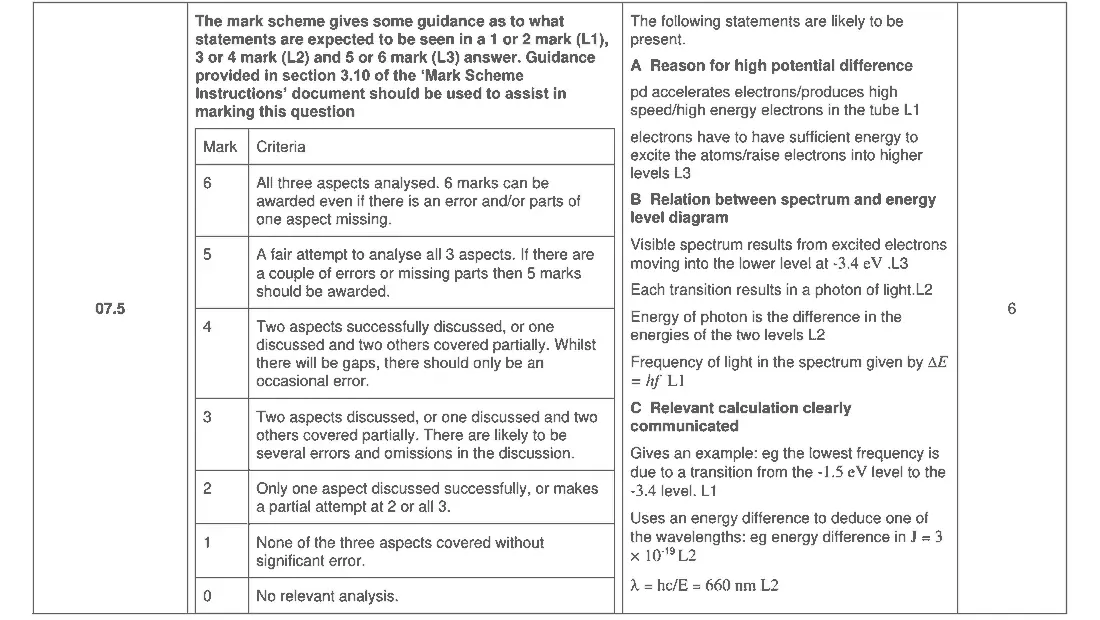
Discuss how the discharge tube is made to emit electromagnetic radiation of
specific frequencies.
In your answer you should:
• explain why there must be a high potential difference across the tube
• discuss how the energy level diagram in Figure 9 predicts the spectrum shown
in Figure 8
• show how one of the wavelengths of light is related to two of the energy levels in
the energy level diagram.
[6 marks]
June 2017 · Paper 2 · Q4.4 6 marks 6-mark extended response mass energy and fission
Earlier part of question 4 that this part usesEarlier part of June 2017 Paper 2 question 4
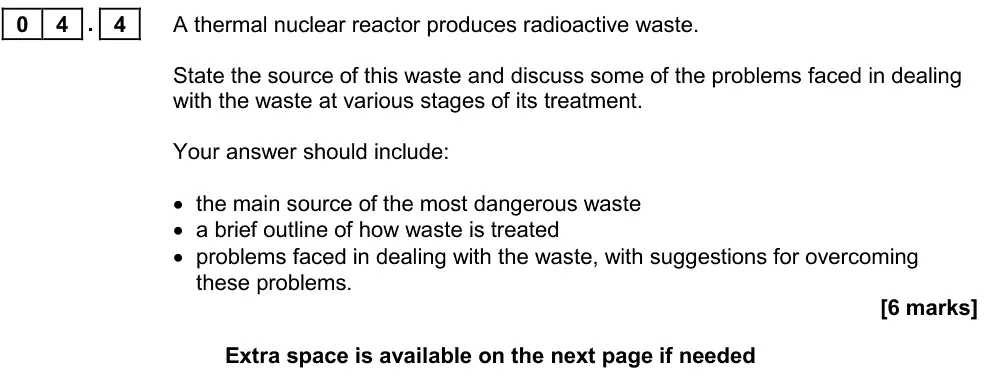
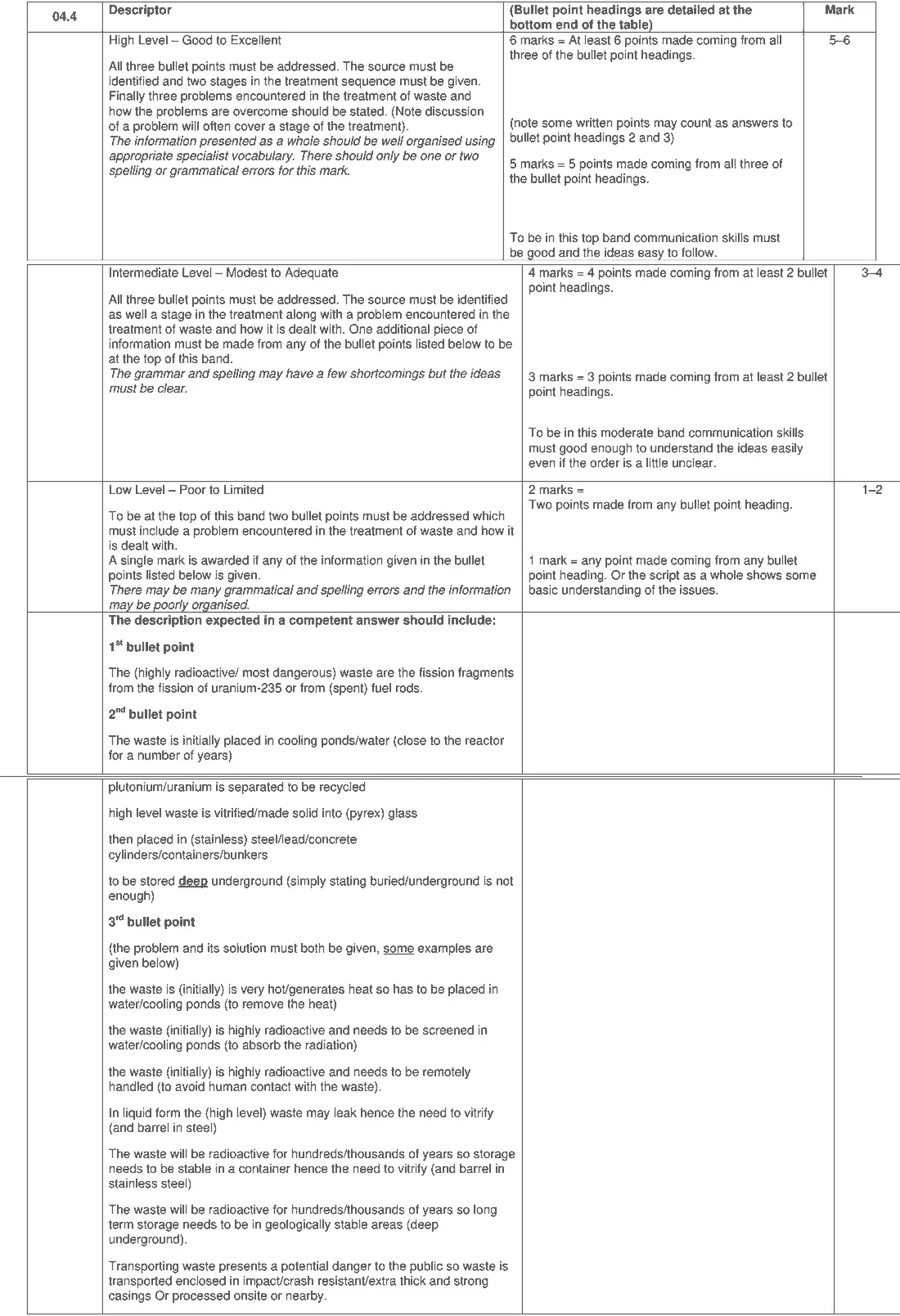
A thermal nuclear reactor produces radioactive waste.
State the source of this waste and discuss some of the problems faced in dealing
with the waste at various stages of its treatment.
Your answer should include:
• the main source of the most dangerous waste
• a brief outline of how waste is treated
• problems faced in dealing with the waste, with suggestions for overcoming
these problems.
[6 marks]
Extra space is available on the next page if needed
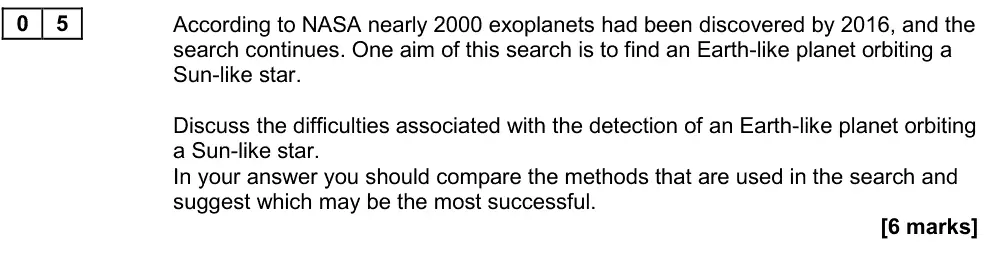
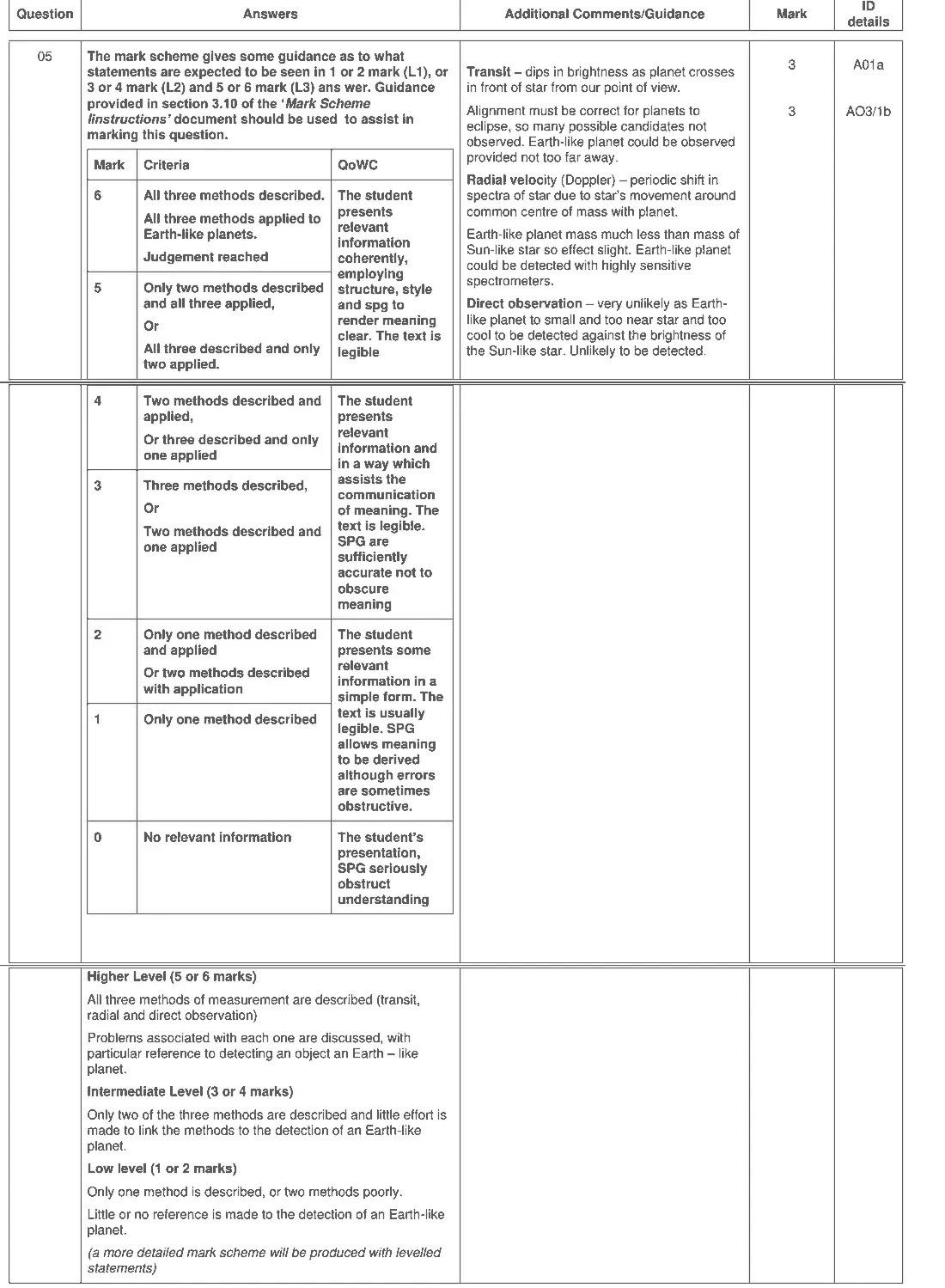
June 2017 · Paper 3B Astrophysics · Q5 6 marks 6-mark extended response cosmology
According to NASA nearly 2000 exoplanets had been discovered by 2016, and the
search continues. One aim of this search is to find an Earth-like planet orbiting a
Sun-like star.
Discuss the difficulties associated with the detection of an Earth-like planet orbiting
a Sun-like star.
In your answer you should compare the methods that are used in the search and
suggest which may be the most successful.
[6 marks]
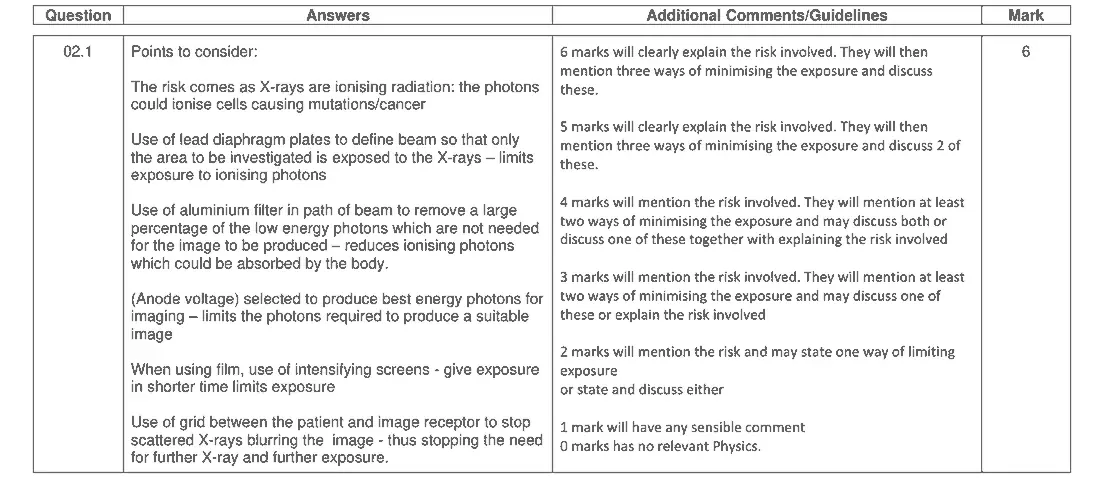
June 2017 · Paper 3B Medical physics · Q2.1 6 marks 6-mark extended response medical imaging
A patient with a suspected broken arm is going to have an X-ray image taken.
Explain the risk to the patient of exposure to X-rays.
Go on to discuss three ways by which the design and use of the X-ray equipment
minimises this risk.
[6 marks]
June 2017 · Paper 3B Engineering physics · Q4 6 marks 6-mark extended response thermodynamics and engines
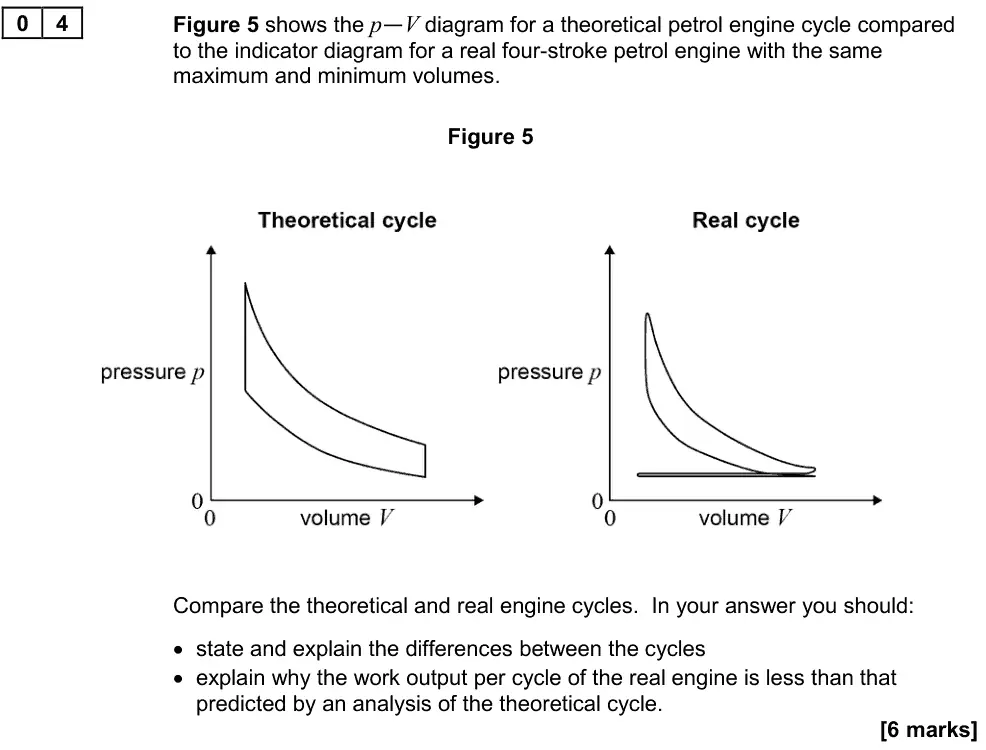
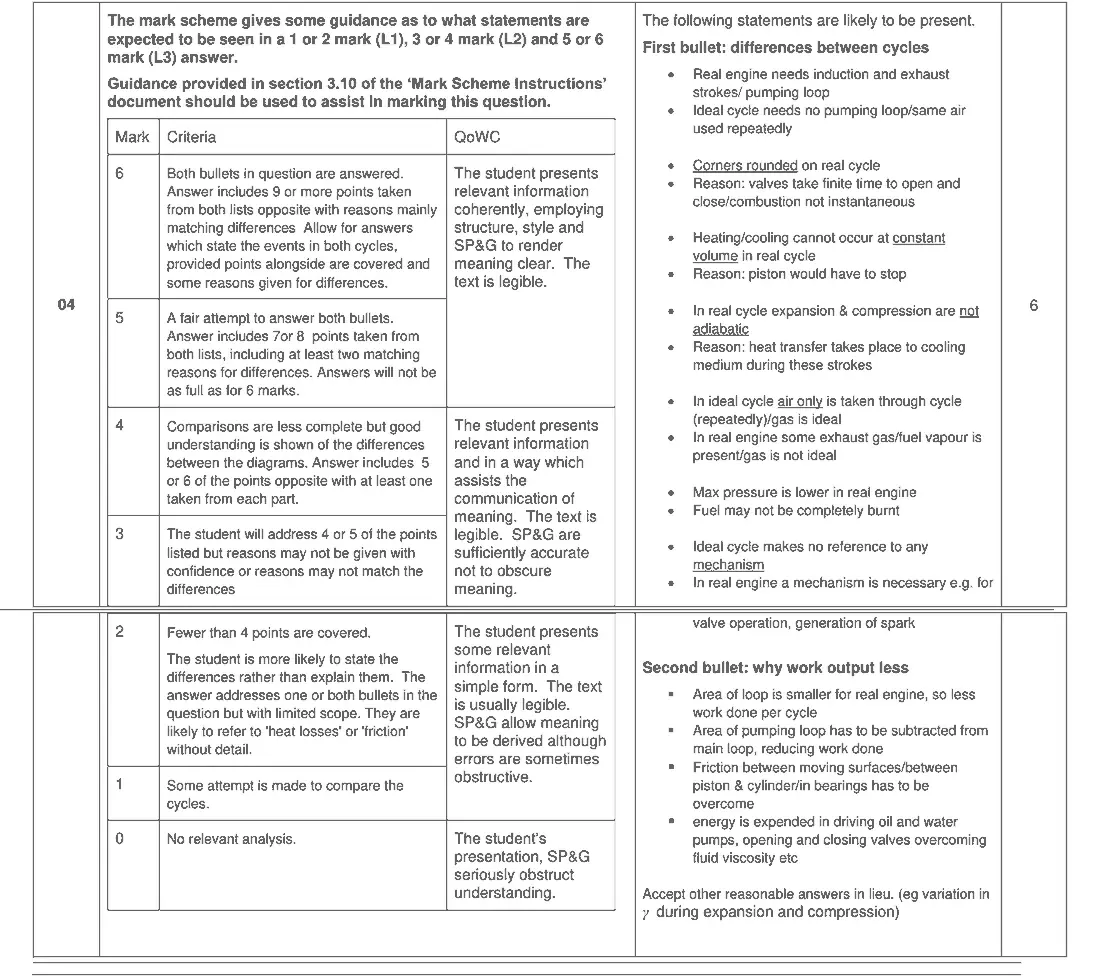
Figure 5 shows the p—V diagram for a theoretical petrol engine cycle compared
to the indicator diagram for a real four-stroke petrol engine with the same
maximum and minimum volumes.
Figure 5
Compare the theoretical and real engine cycles.  In your answer you should:
• state and explain the differences between the cycles
• explain why the work output per cycle of the real engine is less than that
predicted by an analysis of the theoretical cycle.
[6 marks]
June 2017 · Paper 3B Turning points · Q3.3 6 marks 6-mark extended response wave particle duality history
Earlier part of question 3 that this part usesEarlier part of June 2017 Paper 3B Turning points question 3
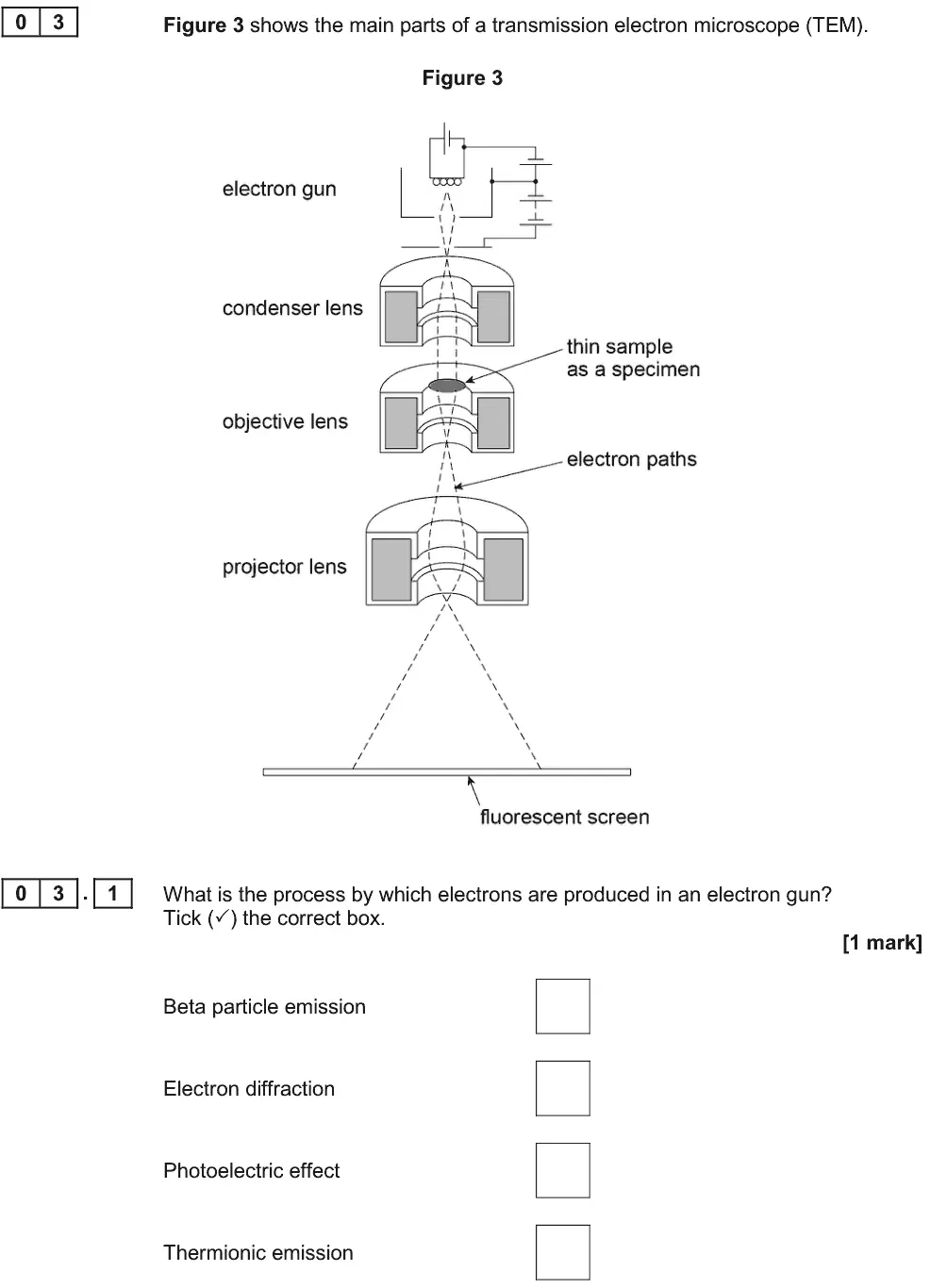
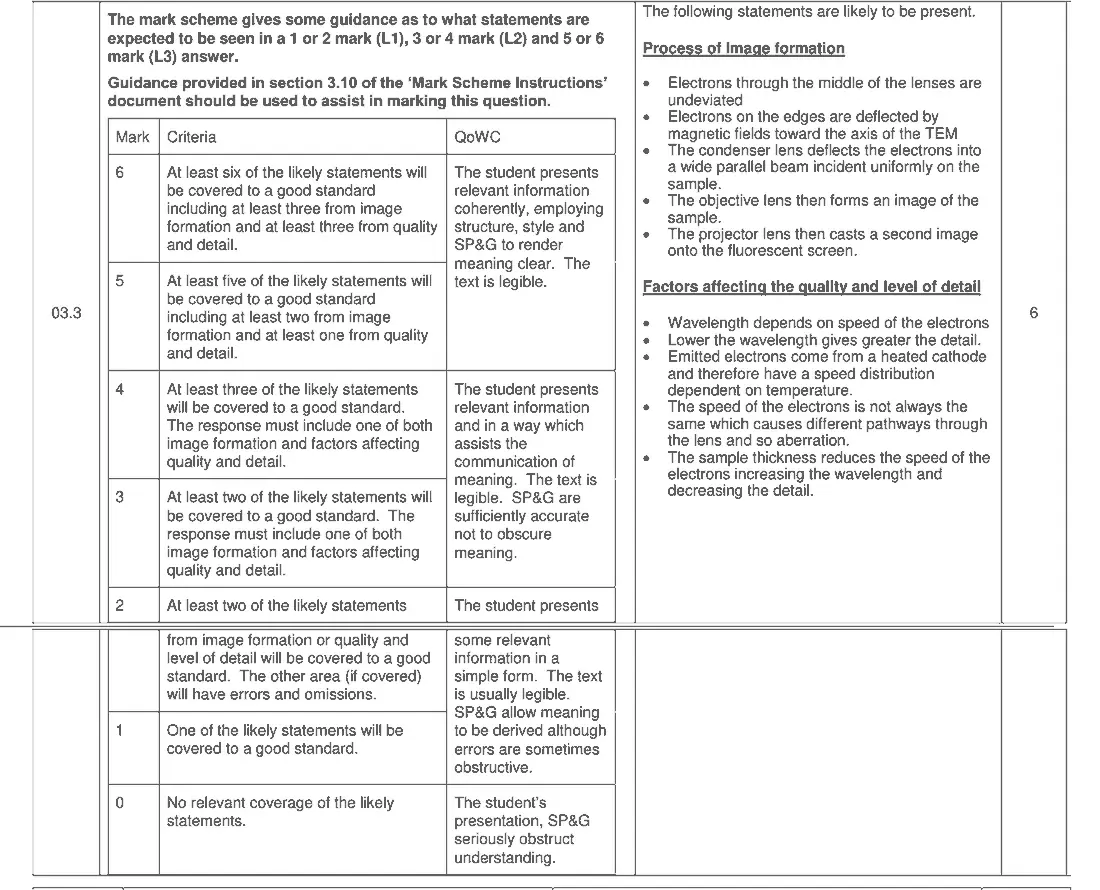
A typical TEM can accelerate electrons to very high speeds and form high
resolution images.
Explain:
• the process of image formation, and
• the factors that affect the quality of, and the level of detail in, the image.
[6 marks]
June 2017 · Paper 3B Electronics · Q5 6 marks 6-mark extended response data communication
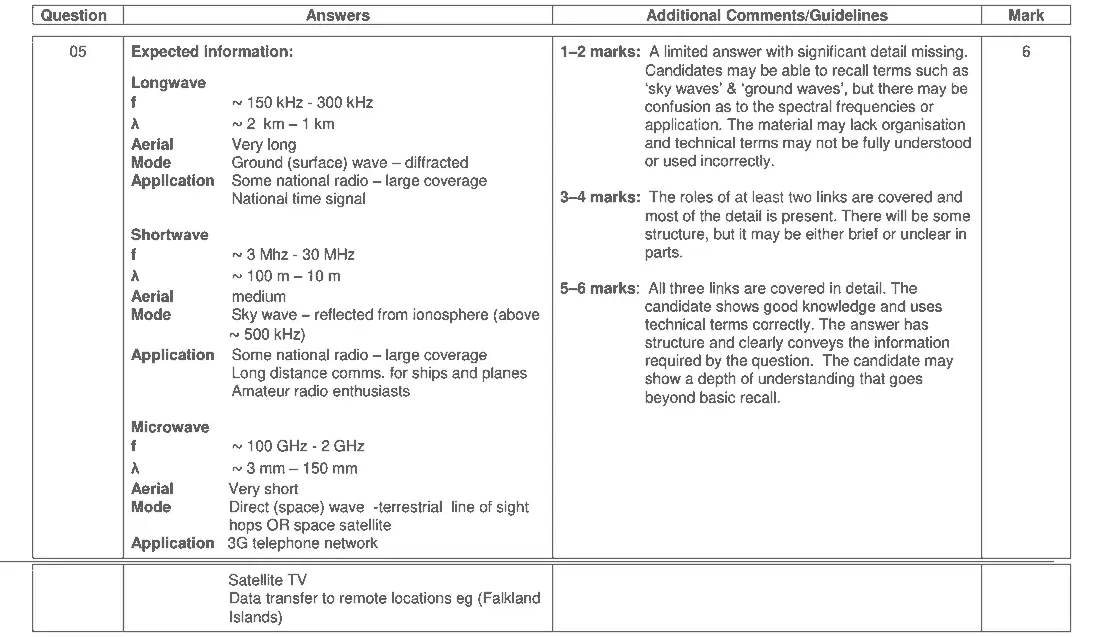
Discuss how longwave (LW), shortwave (SW) and microwave links can be used to
communicate beyond the visible horizon.
For each link, you should give:
• a typical carrier frequency that is used
• an explanation of how the signals travel from the transmitter to the receiver
• a typical use.
You may use a diagram to help make clear aspects of your answer.
[6 marks]
Extra space is available on the next page if needed
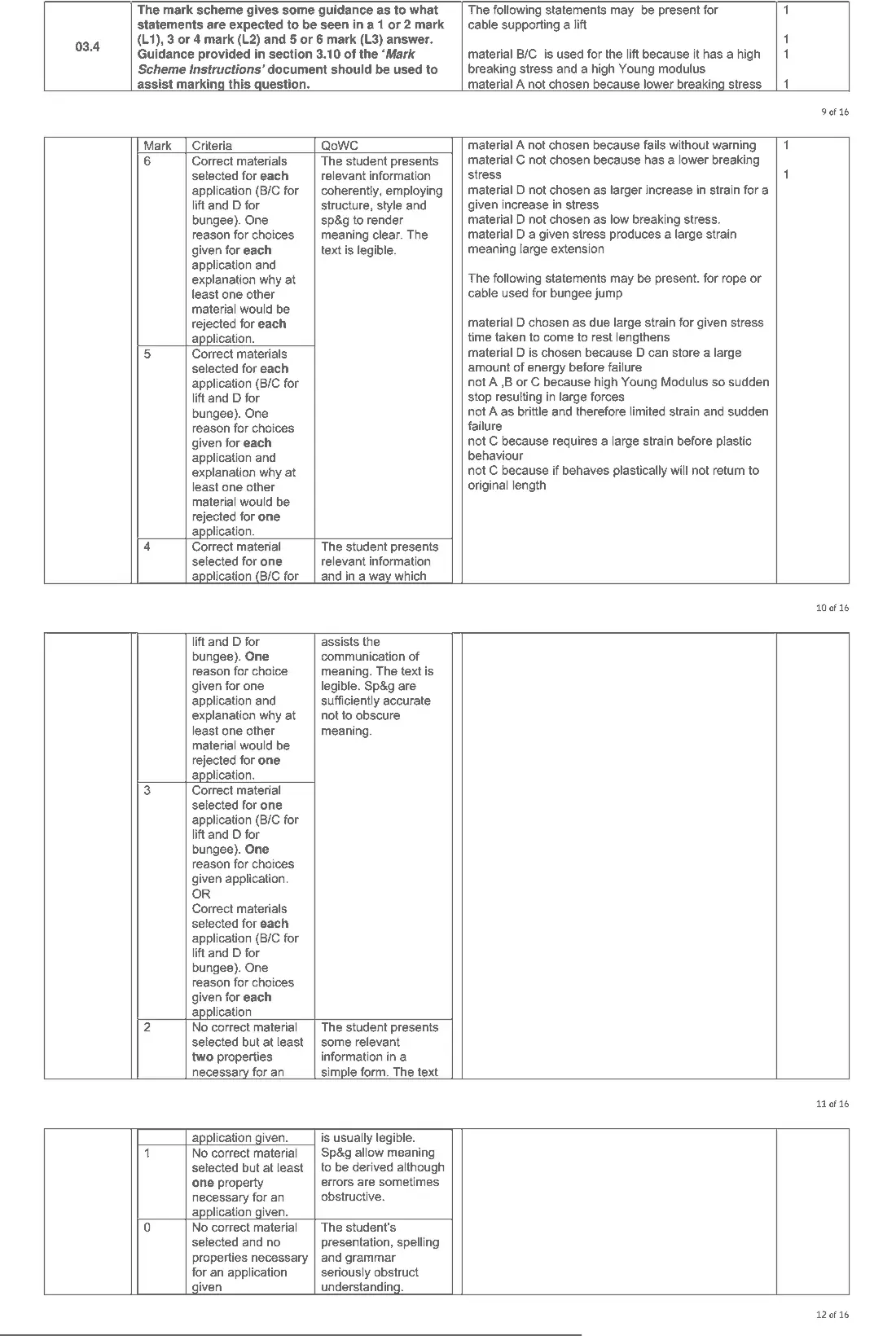
June 2016 · AS Paper 1 · Q3.4 6 marks 6-mark extended response Hard materials and young modulus
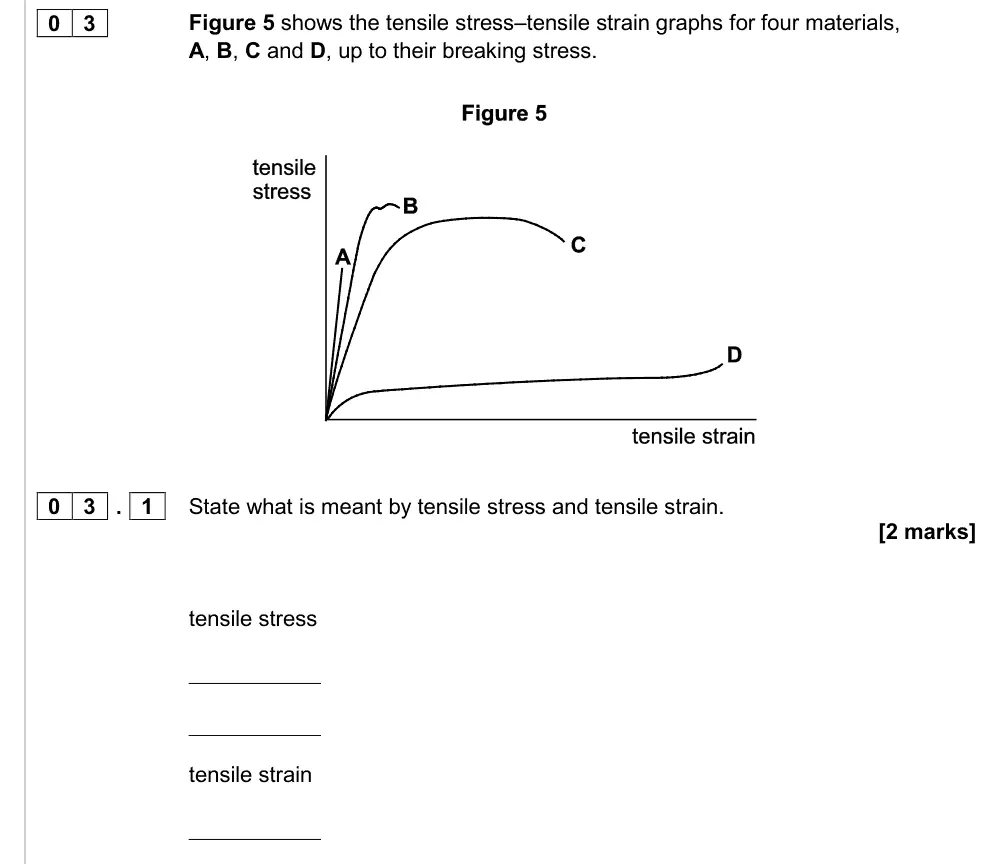
Earlier part of question 3 that this part usesEarlier part of June 2016 Paper 1 question 3
Discuss which of the four materials shown on the graph is most suitable for each
of the following applications:
•
the cable supporting a lift in a tall building
•
a rope or cable attached to a person doing a bungee jump.
For each application, you should discuss the reason for your choice and why you
rejected the other materials.
[6 marks]
Extra space is available on the next page if needed
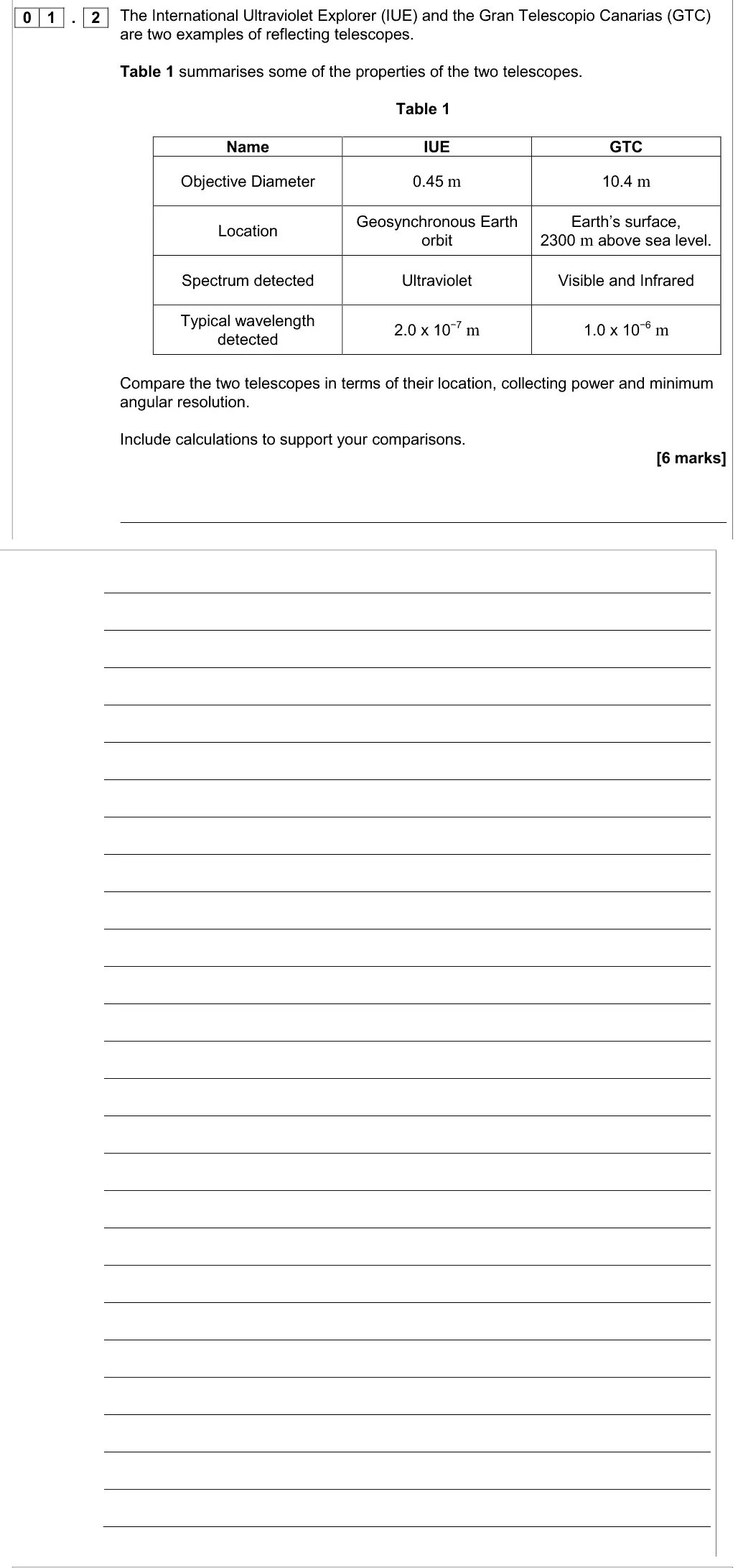
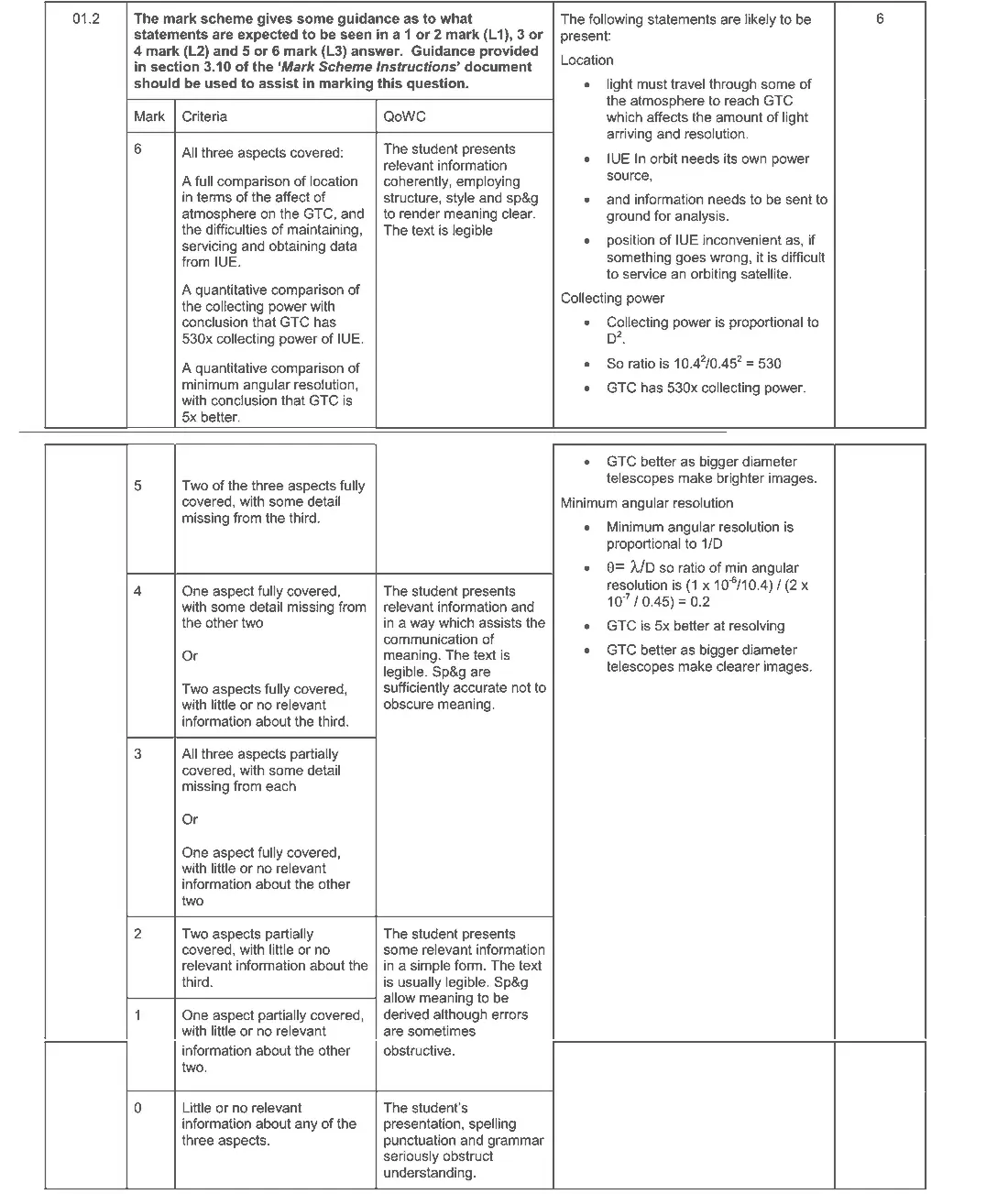
Specimen set 1 · Paper 3B Astrophysics · Q1.2 6 marks 6-mark extended response telescopes
Earlier part of question 1 that this part usesEarlier part of Specimen set 1 Paper 3B Astrophysics question 1
The International Ultraviolet Explorer (IUE) and the Gran Telescopio Canarias (GTC)
are two examples of reflecting telescopes.
Table 1 summarises some of the properties of the two telescopes.
Table 1
Name
IUE
GTC
Objective Diameter
0.45 m
10.4 m
Location
Geosynchronous Earth
orbit
Earth’s surface,
2300 m above sea level.
Spectrum detected
Ultraviolet
Visible and Infrared
Typical wavelength
detected
2.0 x 10⁻⁷ m
1.0 x 10⁻⁶ m
Compare the two telescopes in terms of their location, collecting power and minimum
angular resolution.
Include calculations to support your comparisons.
[6 marks]
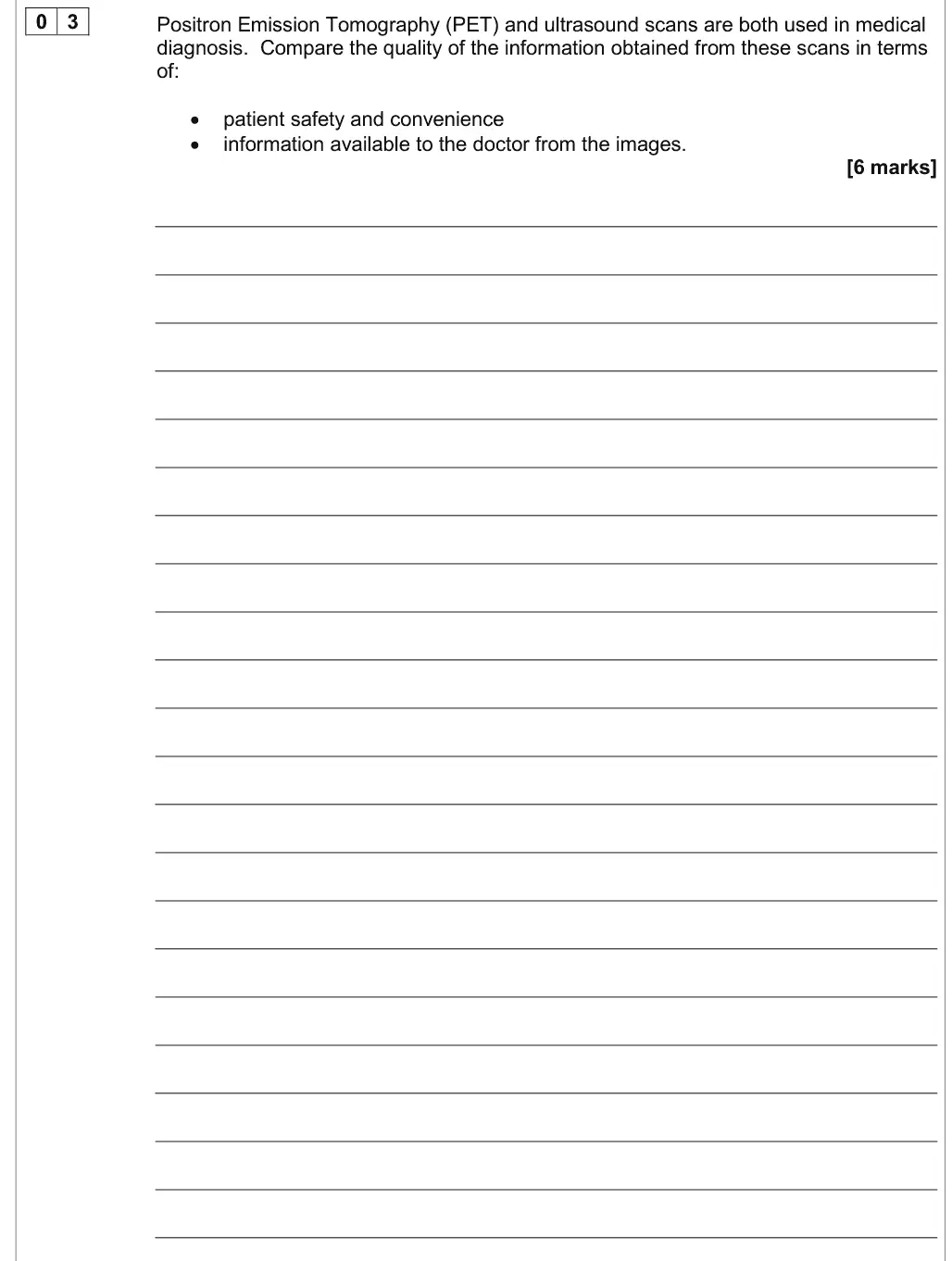
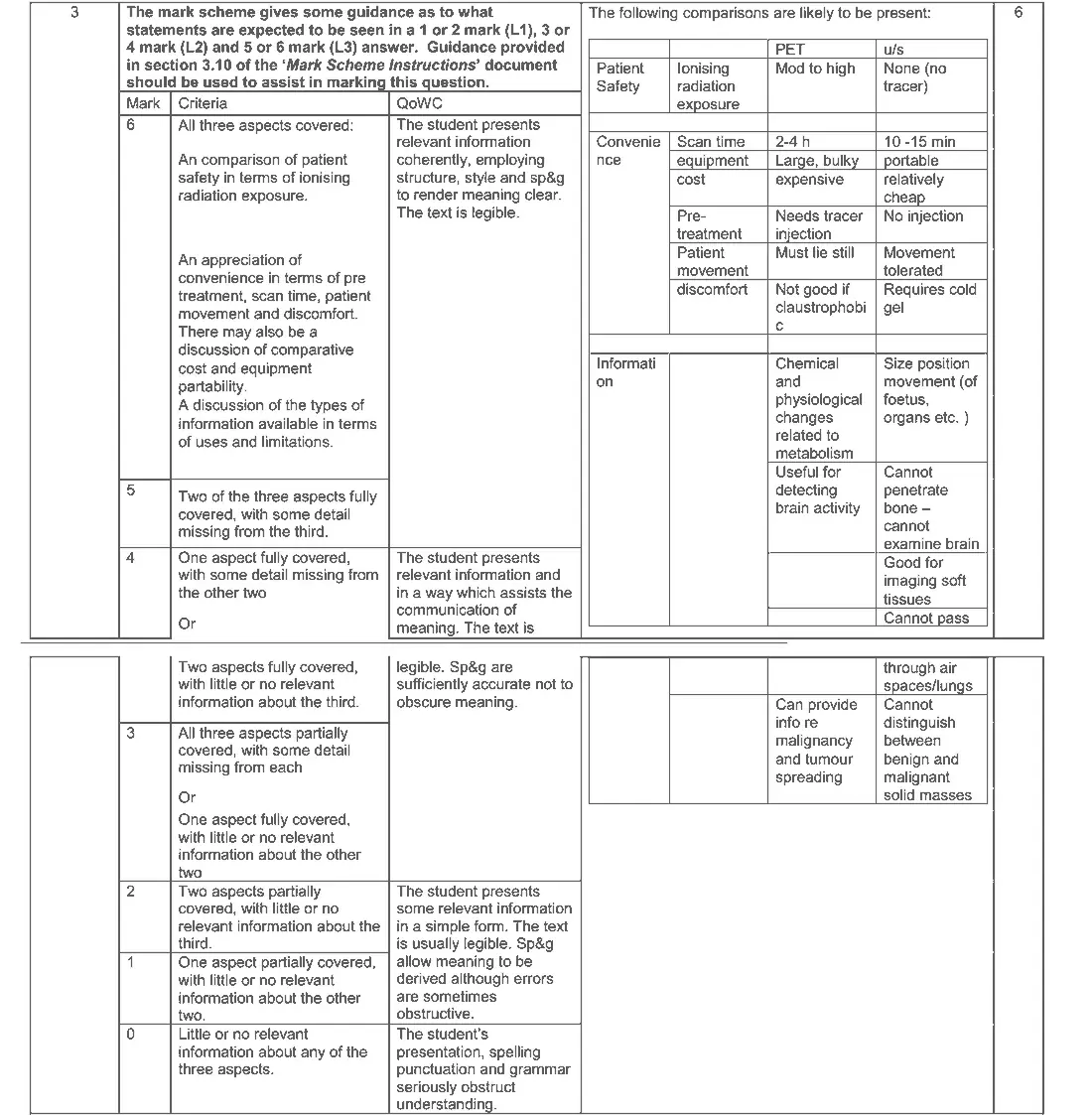
Specimen set 1 · Paper 3B Medical physics · Q3 6 marks 6-mark extended response medical imaging
Positron Emission Tomography (PET) and ultrasound scans are both used in medical
diagnosis.  Compare the quality of the information obtained from these scans in terms
of:
•
patient safety and convenience
•
information available to the doctor from the images.
[6 marks]
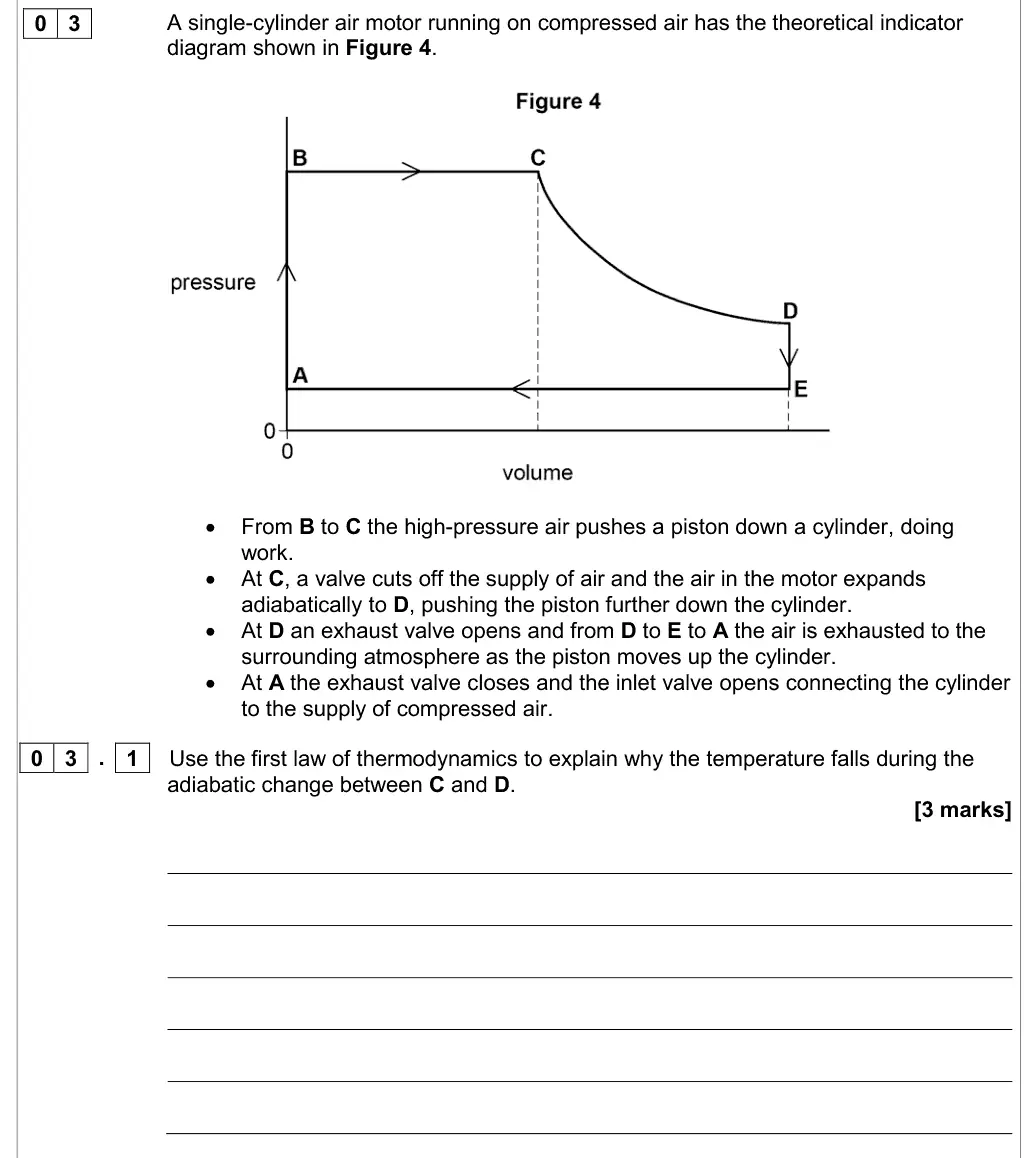
Specimen set 1 · Paper 3B Engineering physics · Q3.2 6 marks 6-mark extended response thermodynamics and engines
Earlier part of question 3 that this part usesEarlier part of Specimen set 1 Paper 3B Engineering physics question 3
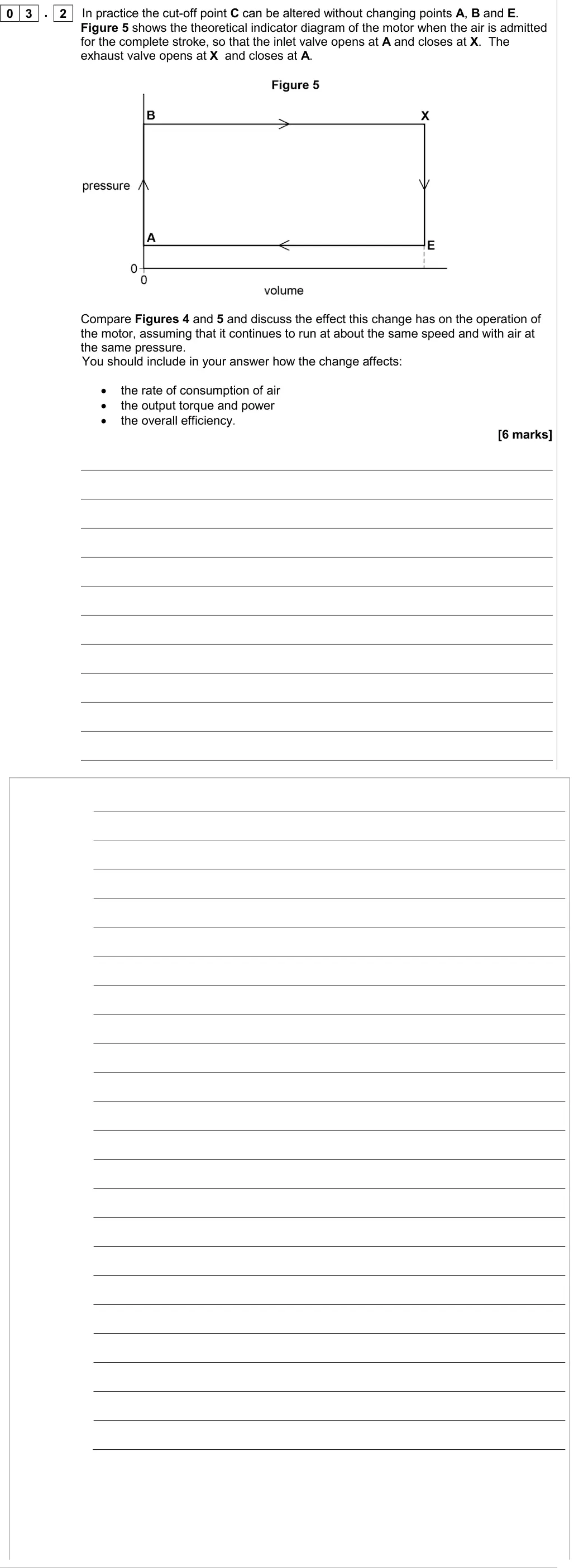
In practice the cut-off point C can be altered without changing points A, B and E.
Figure 5 shows the theoretical indicator diagram of the motor when the air is admitted
for the complete stroke, so that the inlet valve opens at A and closes at X.  The
exhaust valve opens at X  and closes at A.
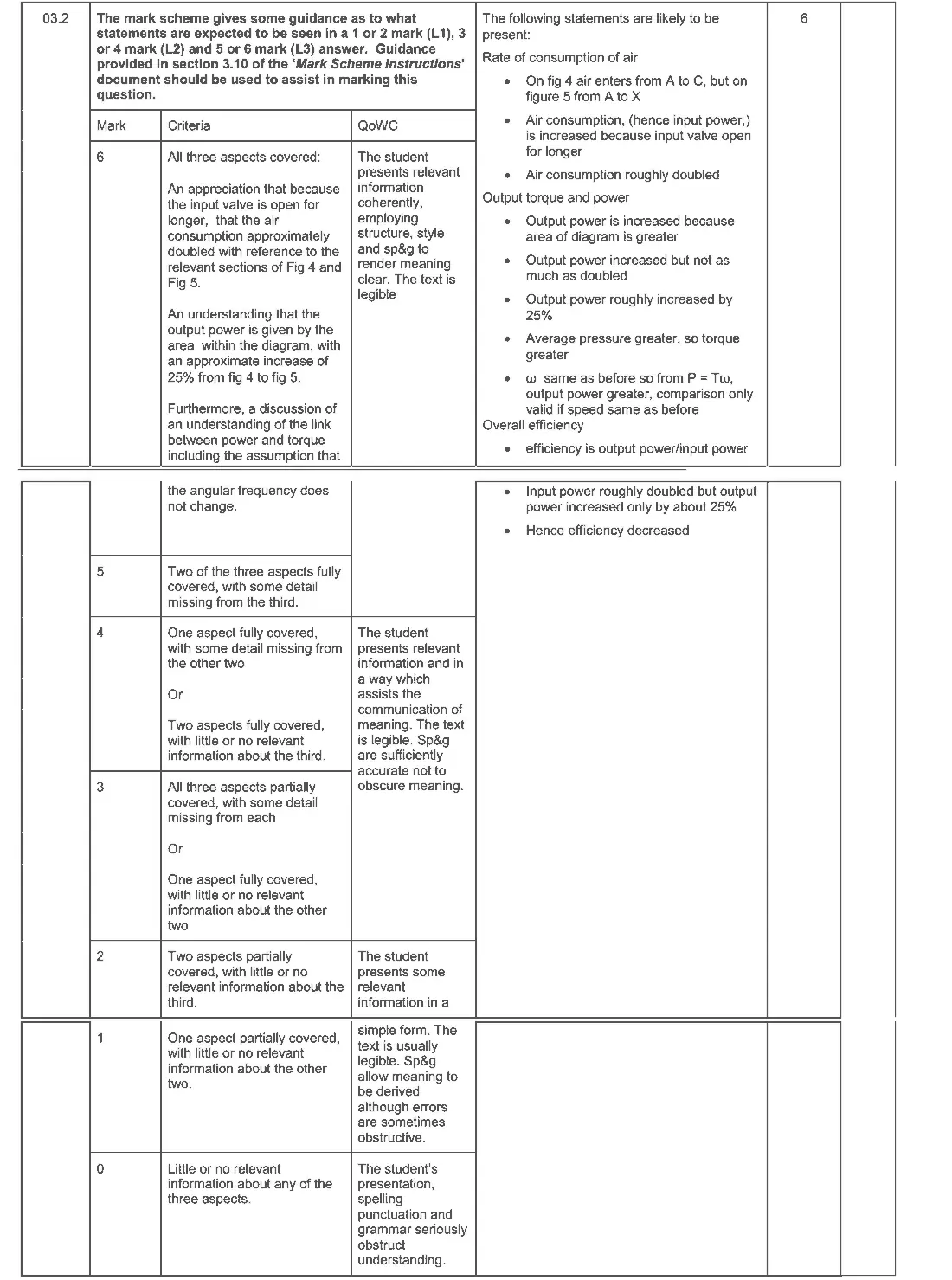
Compare Figures 4 and 5 and discuss the effect this change has on the operation of
the motor, assuming that it continues to run at about the same speed and with air at
the same pressure.
You should include in your answer how the change affects:
•
the rate of consumption of air
•
the output torque and power
•
the overall efficiency.
[6 marks]
Specimen set 1 · Paper 3B Turning points · Q3.3 6 marks 6-mark extended response wave particle duality history
Earlier part of question 3 that this part usesEarlier part of Specimen set 1 Paper 3B Turning points question 3
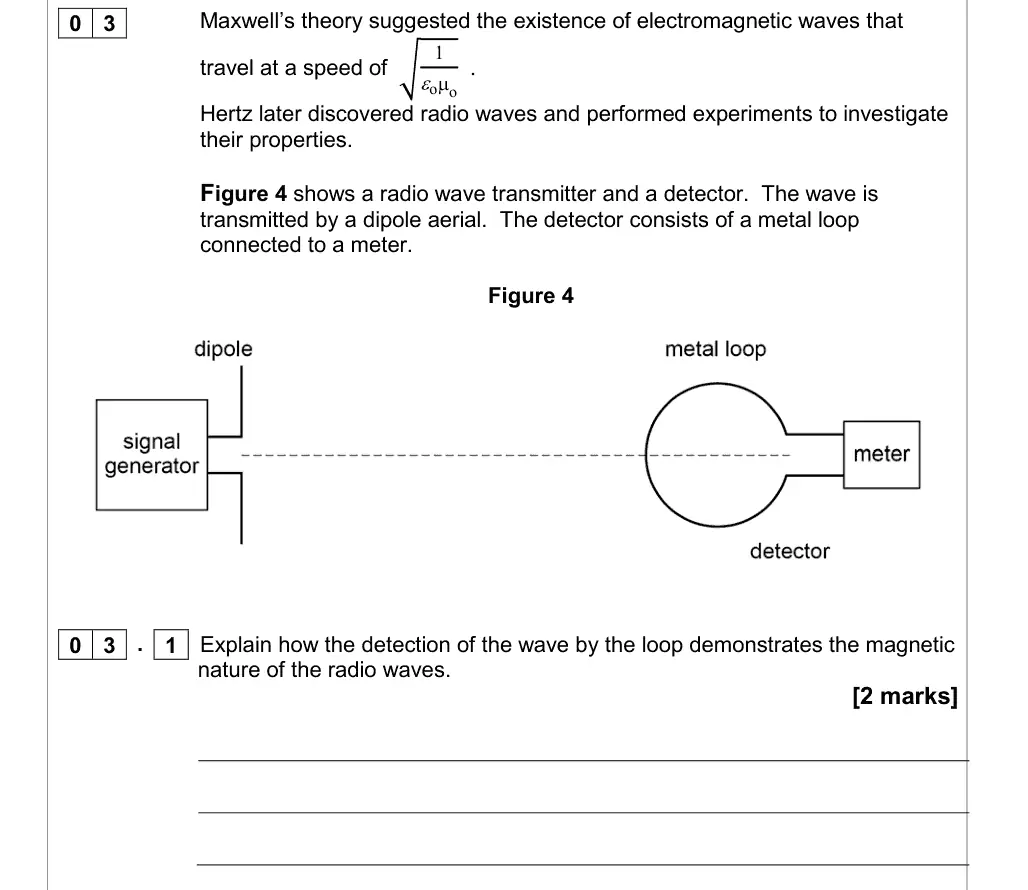
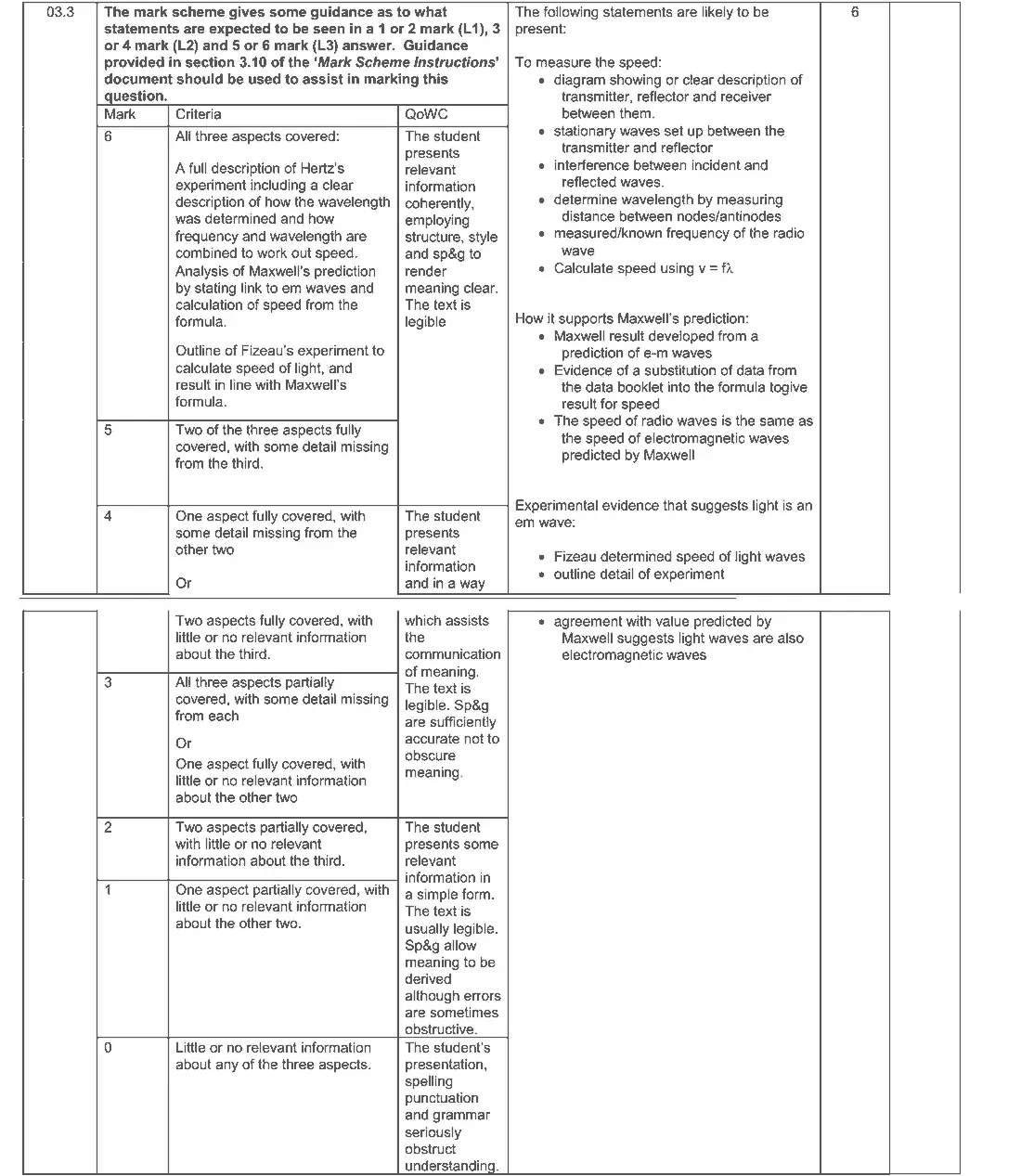
Hertz used an arrangement like that shown in Figure 4 to determine the
speed of radio waves.
Describe how the speed was determined.  Go on to discuss how the
experiments of Hertz confirmed  Maxwell’s prediction and the experimental
evidence that suggests that light is also an electromagnetic wave.
[6 marks]
Specimen set 1 · Paper 3B Electronics · Q5 6 marks 6-mark extended response data communication
Compare the advantages and disadvantages of optic fibre and copper wire for
transmitting information.
[6 marks]

Work with an AQA physics tutor

Dropping marks on calculations, required practicals or the six-markers? Book a trial session with a specialist AQA physics tutor.

Prefer email? Send an enquiry

If you are under 18, please include a parent's contact details. Enquiries go to enquiries@physicsaleveltutor.com and are deleted once handled. All tutoring is online.