Answer
C
Mark scheme

Notes from the mark scheme and report
- Answer: C
Skills: MS0.3 Use ratios, fractions and percentages
Every multiple-choice question: Section B of A-level Papers 1 and 2 (25 each) and Section B of AS Paper 2 (30), with the answer behind the button. Allow about 1 minute 12 seconds each. 800 questions.
Other types: Calculation questions · Show that questions · Explain and describe questions · Graph and diagram questions · Six-mark extended response questions · Practical questions · Short-answer questions
C
Skills: MS0.3 Use ratios, fractions and percentages
D
Students were more successful in answering questions 6, 11, 14, 19, 22, 28, and were less successful in answering questions 10, 15, 21, 25, 29.
Skills: MS1.4 Make order of magnitude calculations
A
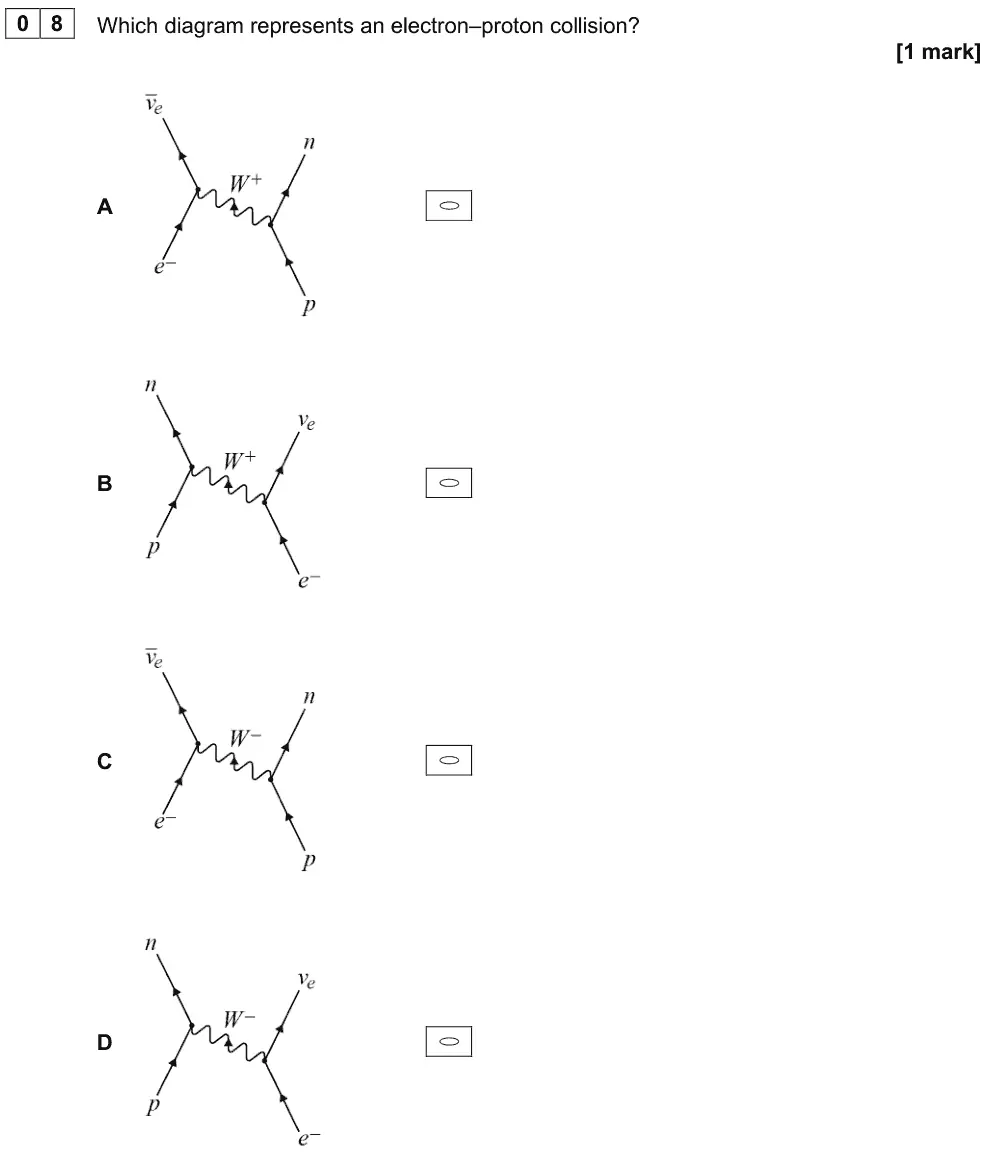
D
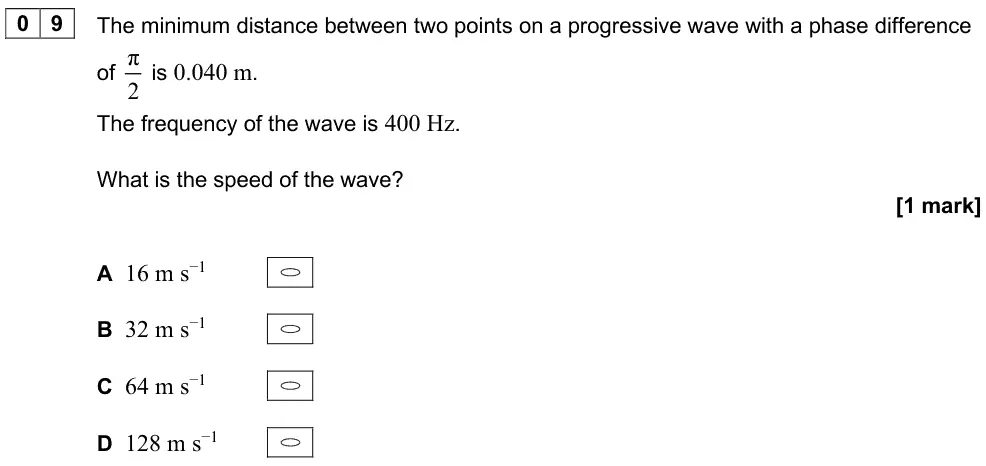
C
Skills: MS4.7 Understand the relationship between degrees and radians and translate from one to the other
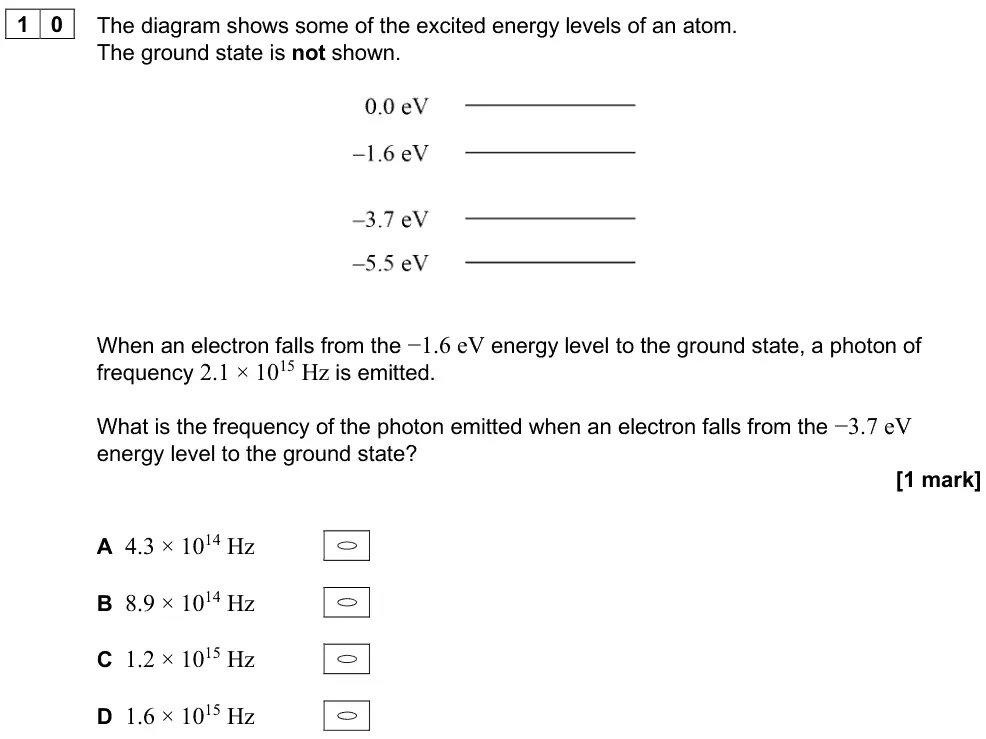
D
Students were more successful in answering questions 6, 11, 14, 19, 22, 28, and were less successful in answering questions 10, 15, 21, 25, 29.
Skills: MS0.2 Recognise and use expressions in decimal and standard form
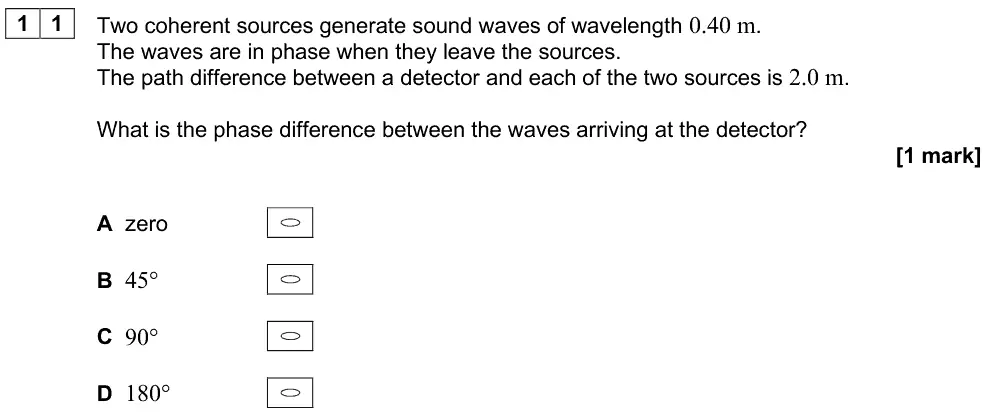
A
Students were more successful in answering questions 6, 11, 14, 19, 22, 28, and were less successful in answering questions 10, 15, 21, 25, 29.
A
D
B
Students were more successful in answering questions 6, 11, 14, 19, 22, 28, and were less successful in answering questions 10, 15, 21, 25, 29.
A
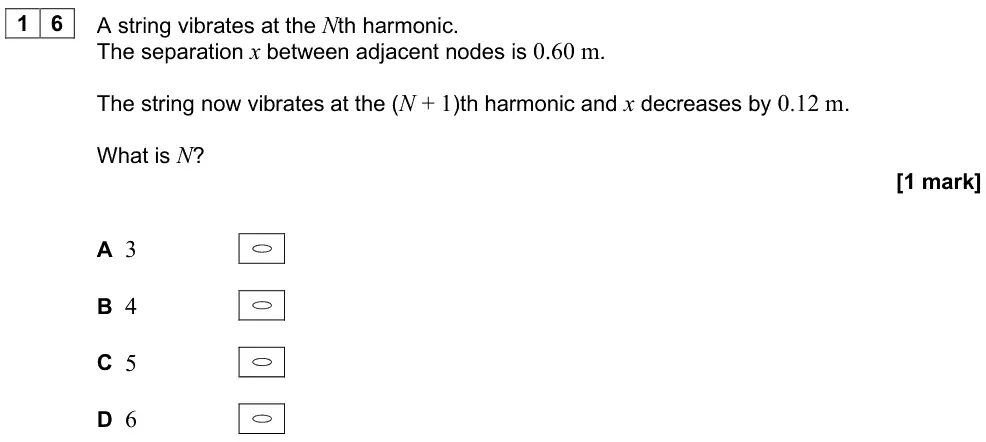
B
Skills: MS2.4 Solve algebraic equations, including quadratic equations
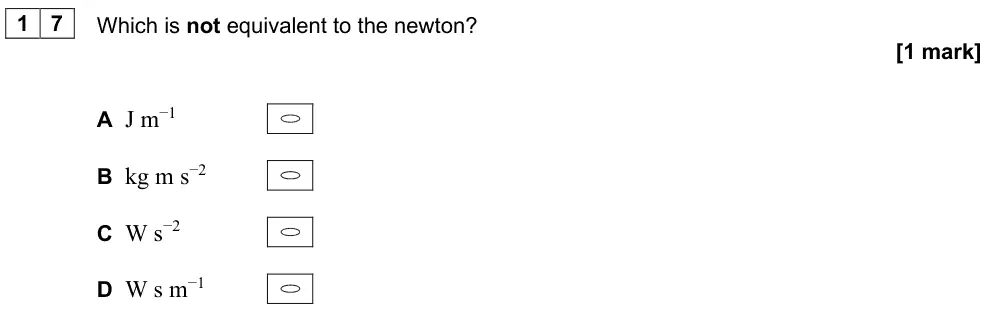
C
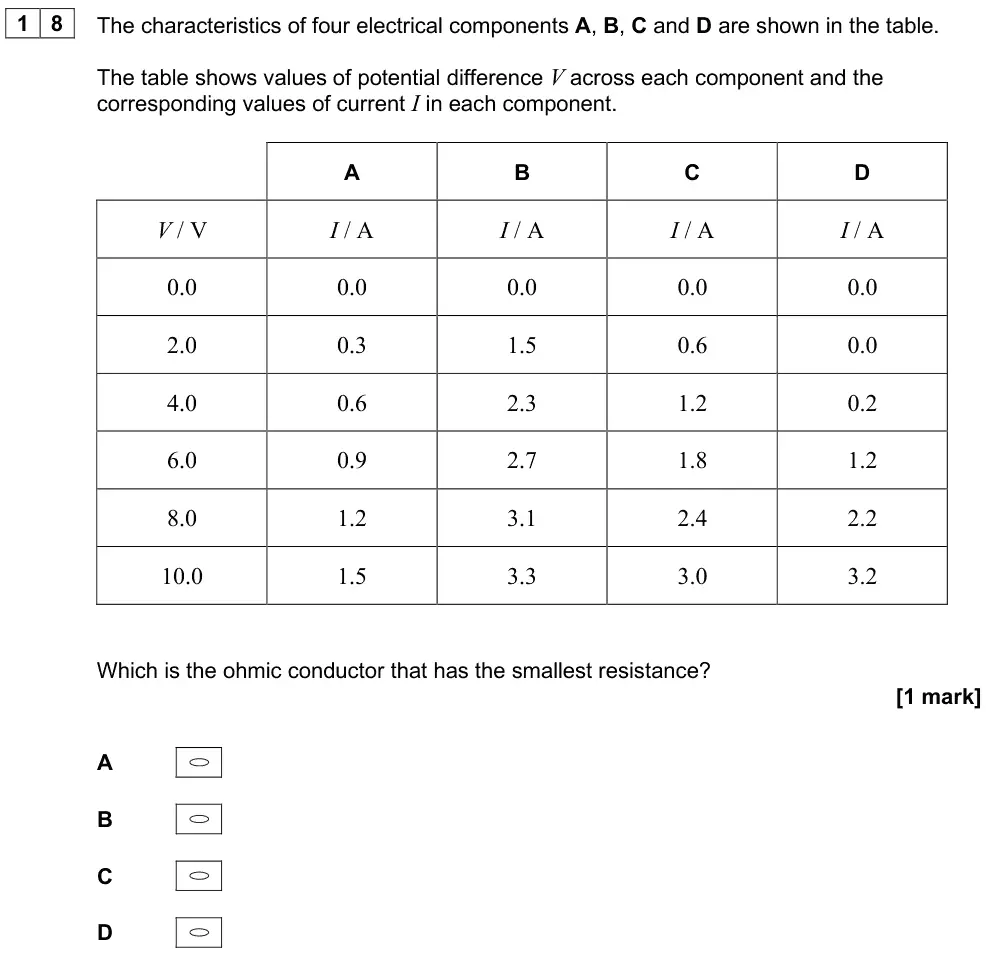
C
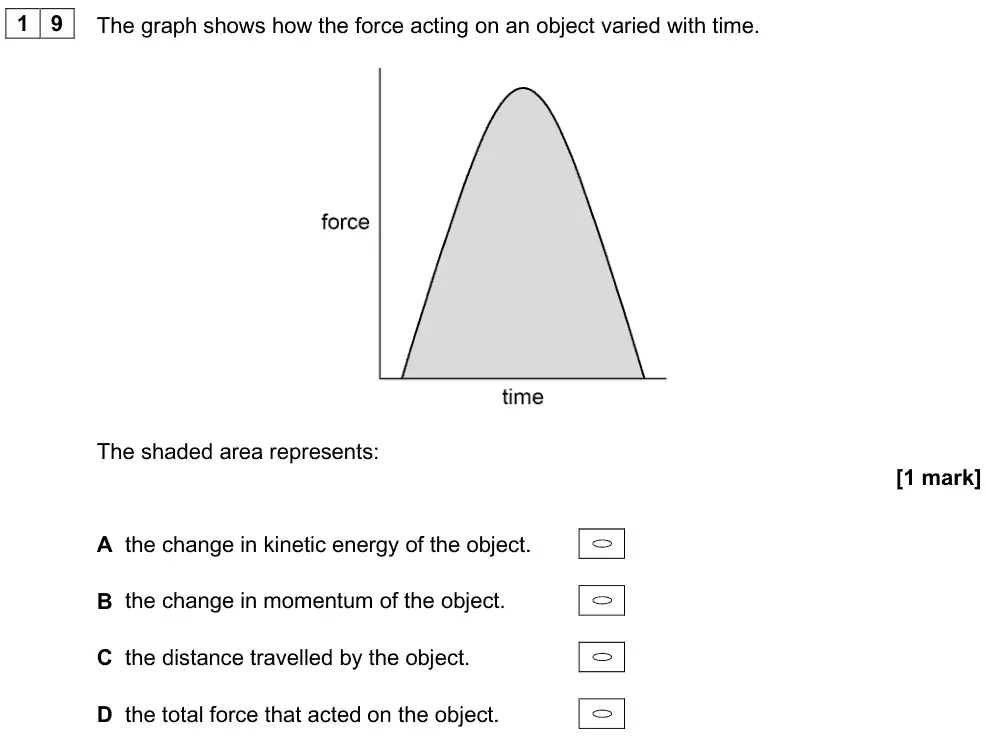
B
Students were more successful in answering questions 6, 11, 14, 19, 22, 28, and were less successful in answering questions 10, 15, 21, 25, 29.
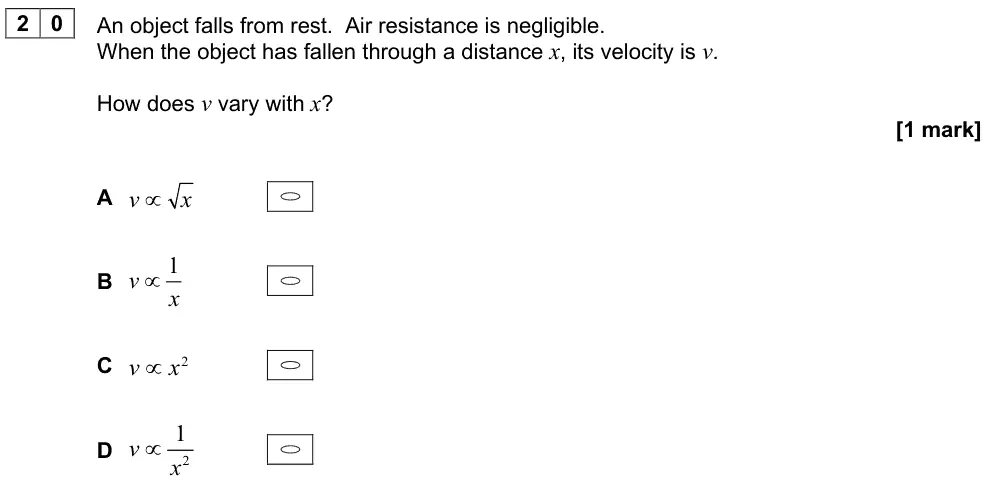
A
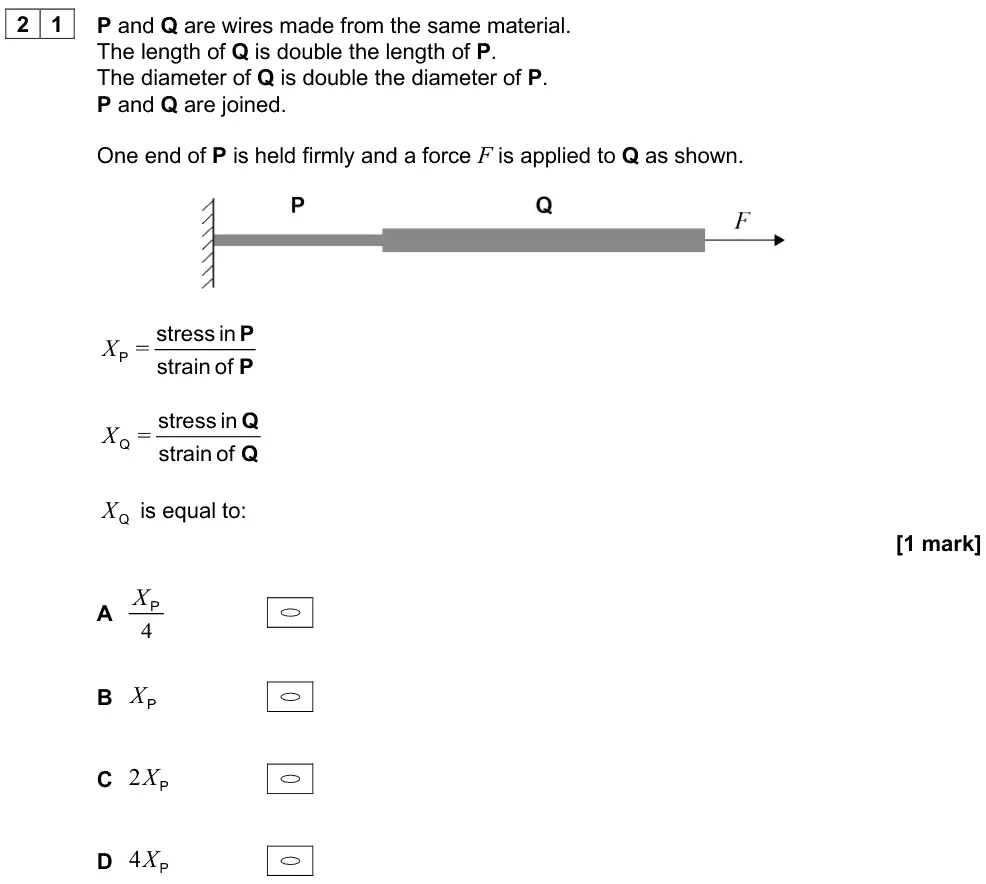
B
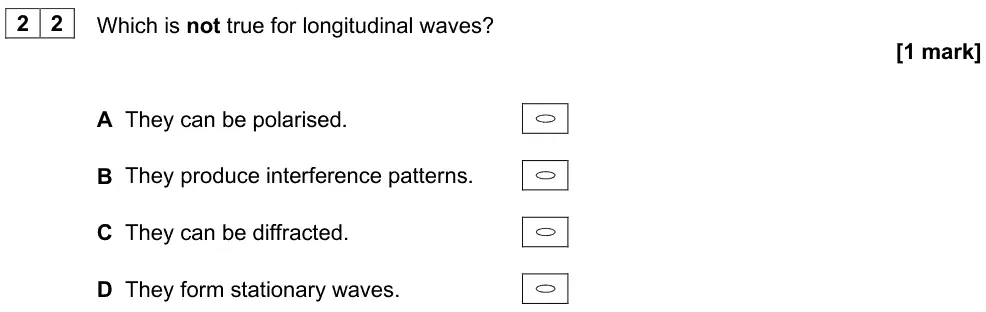
A
Students were more successful in answering questions 6, 11, 14, 19, 22, 28, and were less successful in answering questions 10, 15, 21, 25, 29.
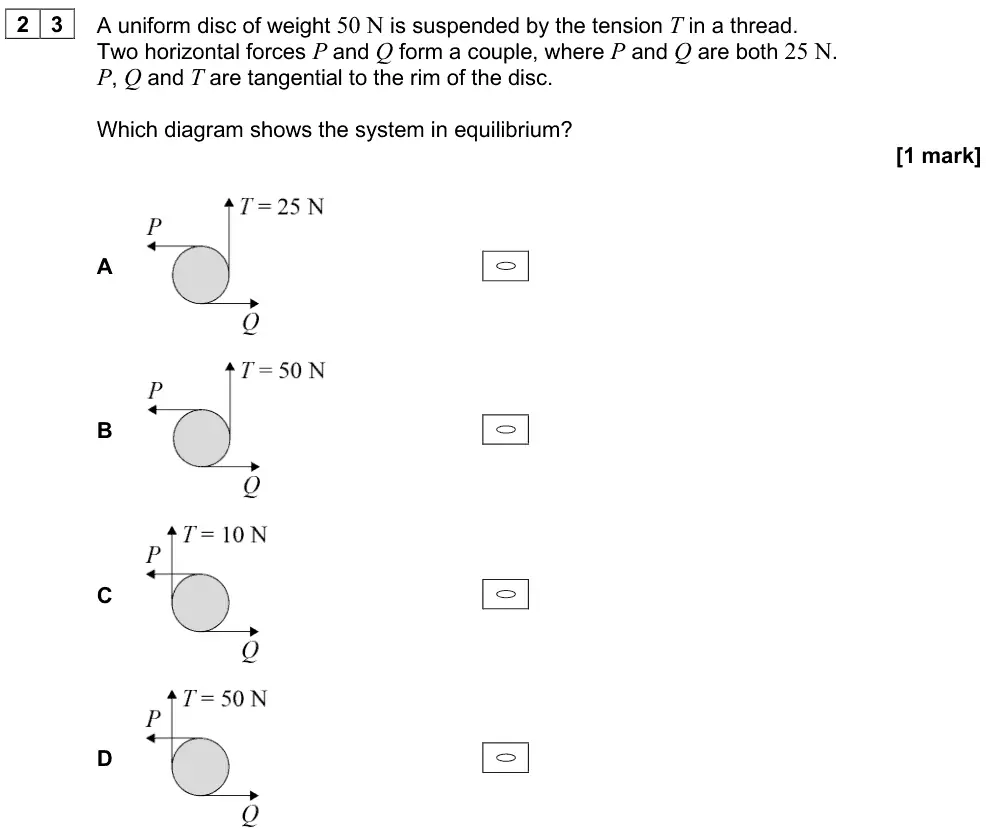
D
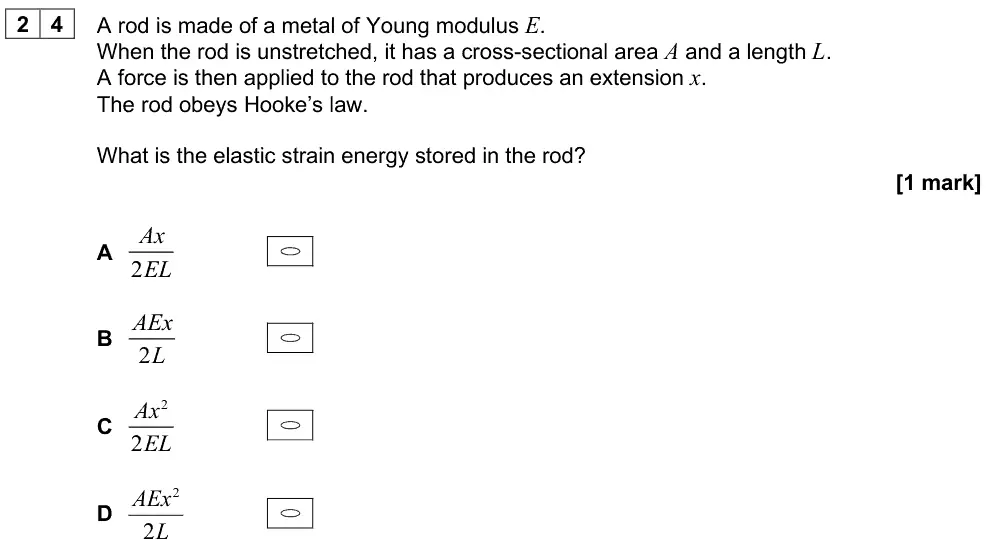
D
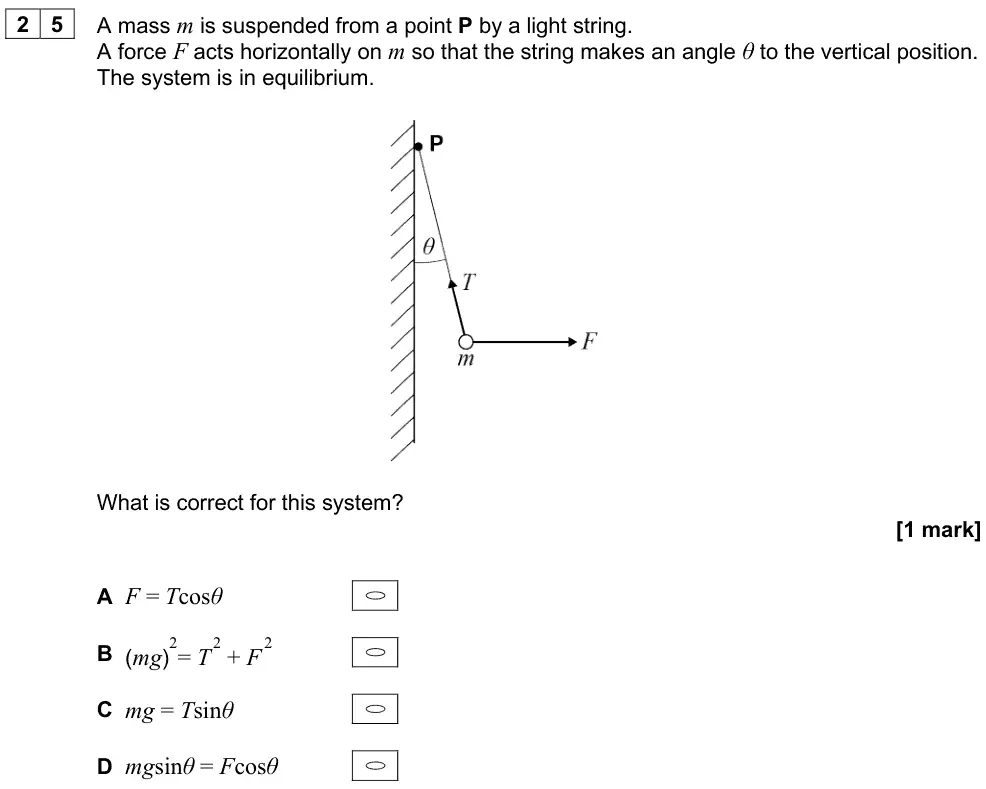
D
Skills: MS4.5 Use sin, cos and tan in physical problems
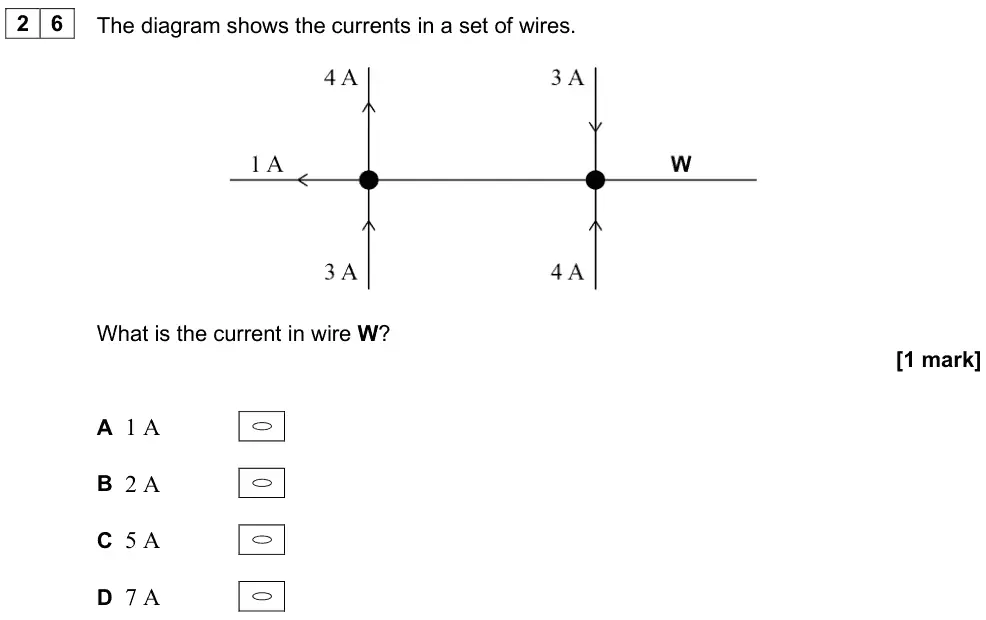
C
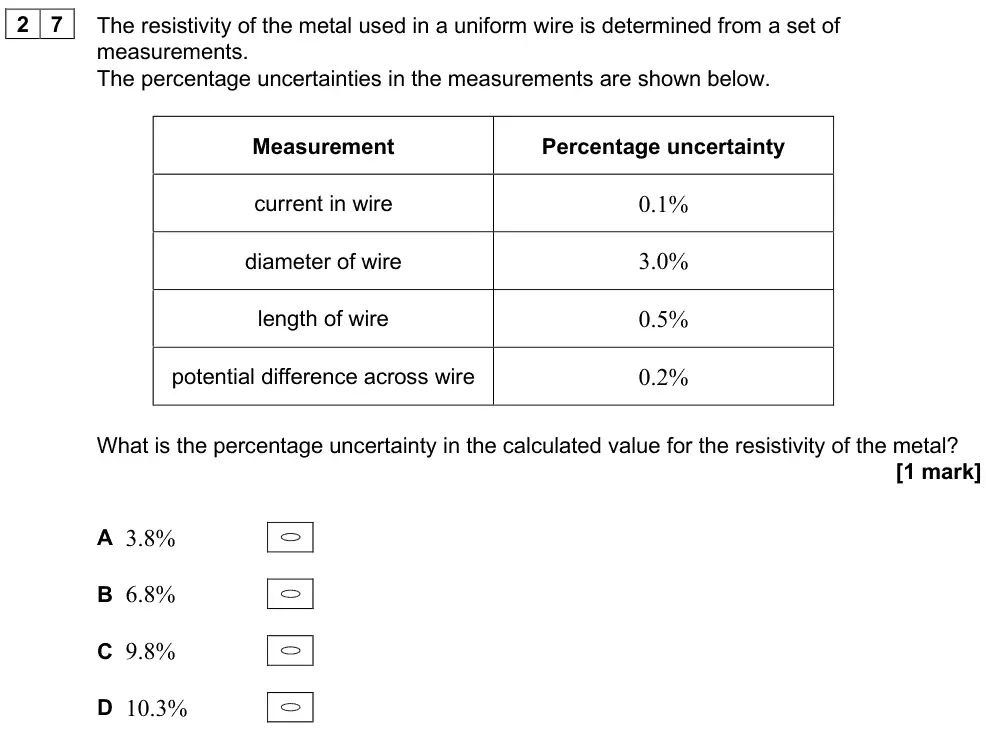
B
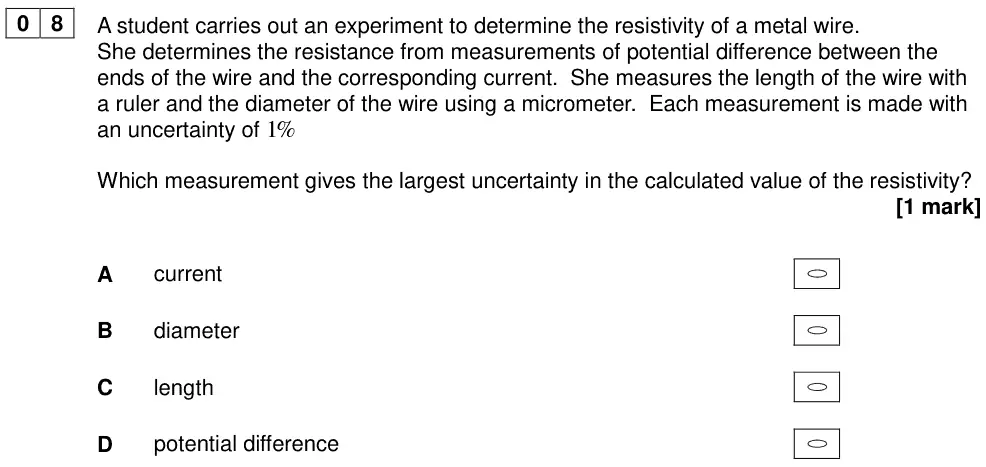
Skills: MS1.5 Identify uncertainties in measurements and use simple techniques to determine uncertainty when data are combined by addition, subtraction, multiplication, division and raising
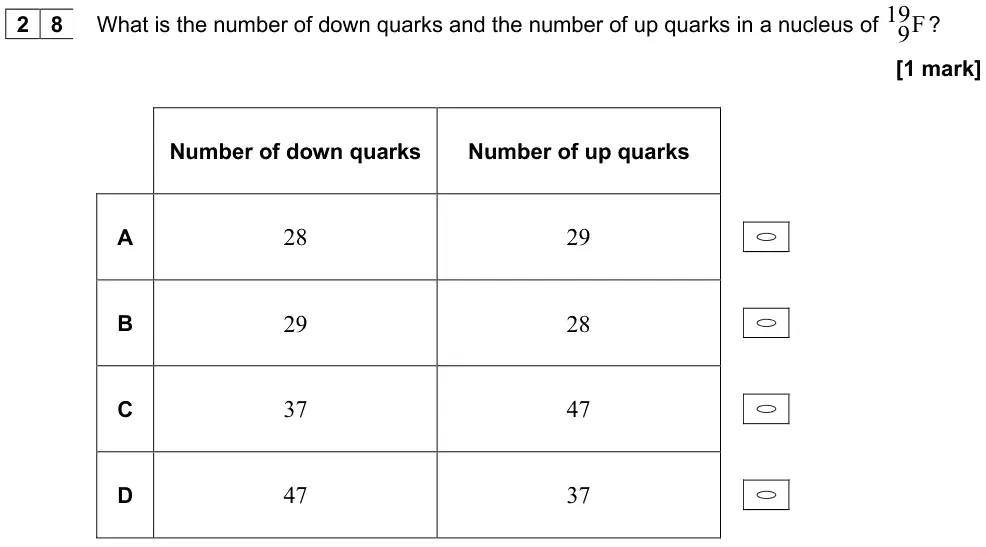
B
Students were more successful in answering questions 6, 11, 14, 19, 22, 28, and were less successful in answering questions 10, 15, 21, 25, 29.
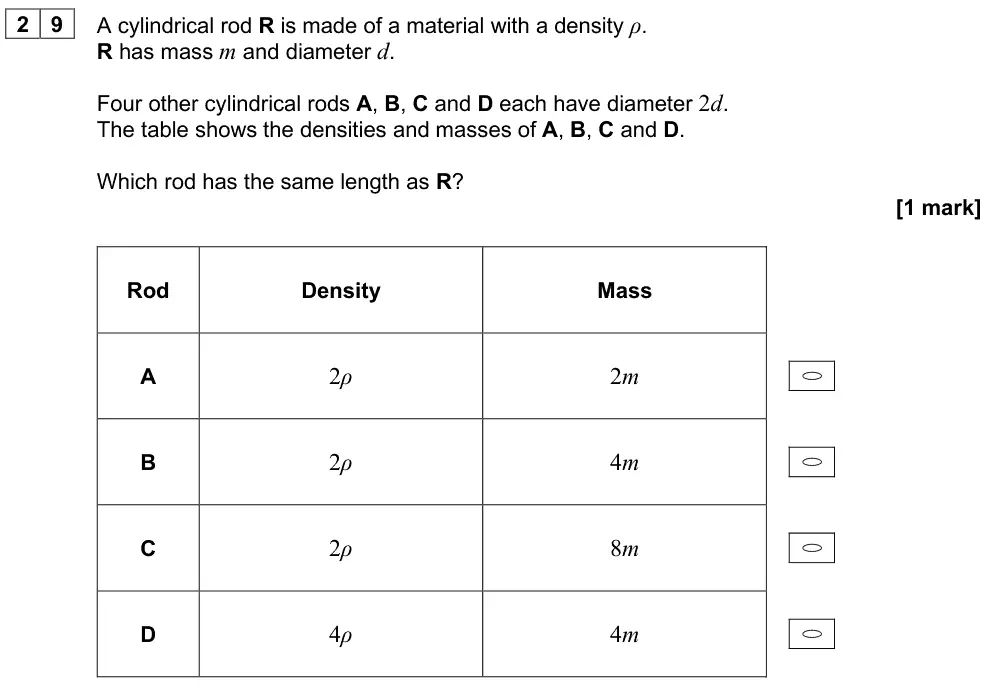
C
Skills: MS4.3 Calculate areas of triangles, circumferences and areas of circles, surface areas and volumes of rectangular blocks, cylinders and spheres
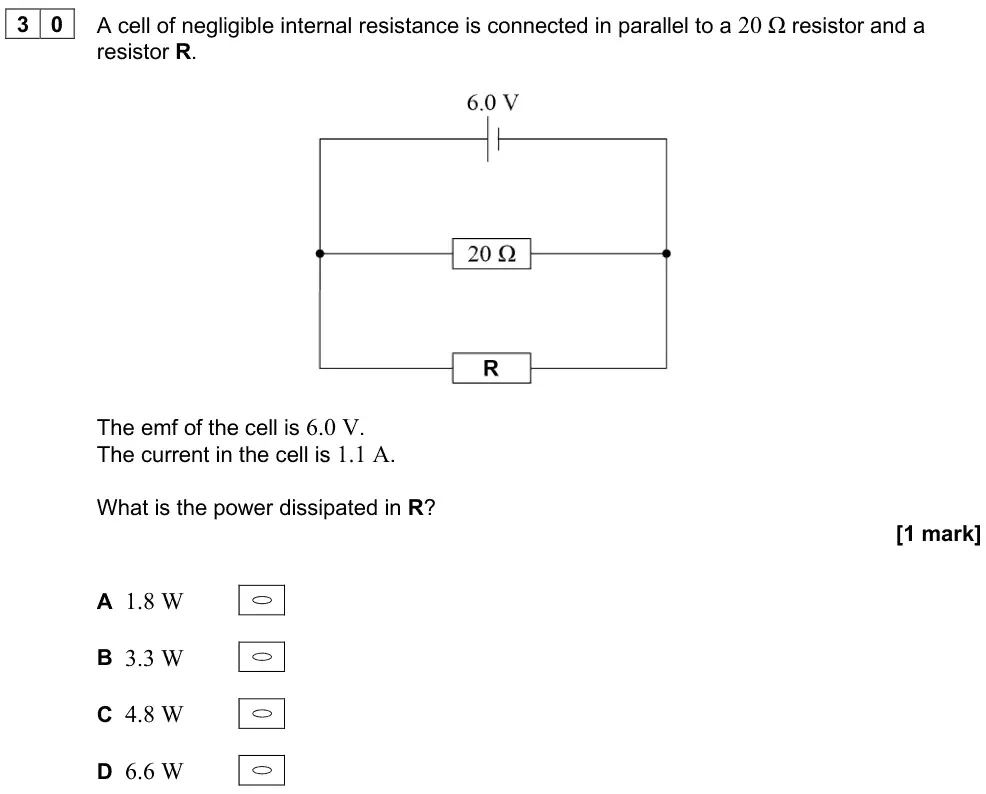
C
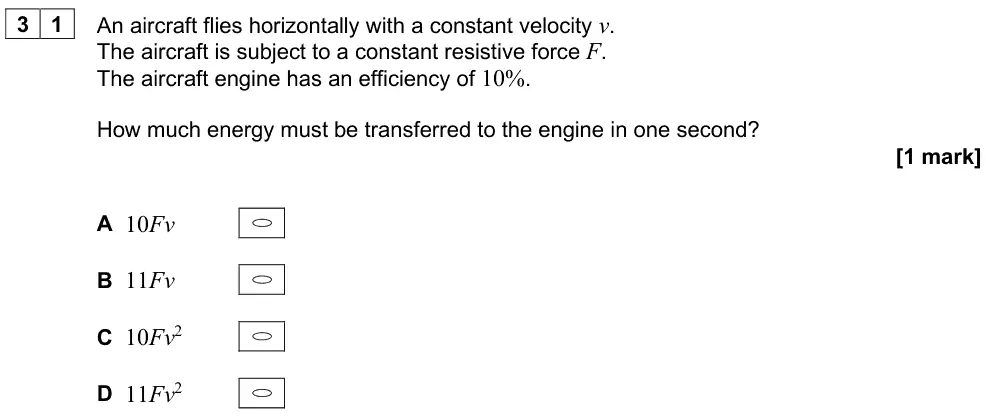
A
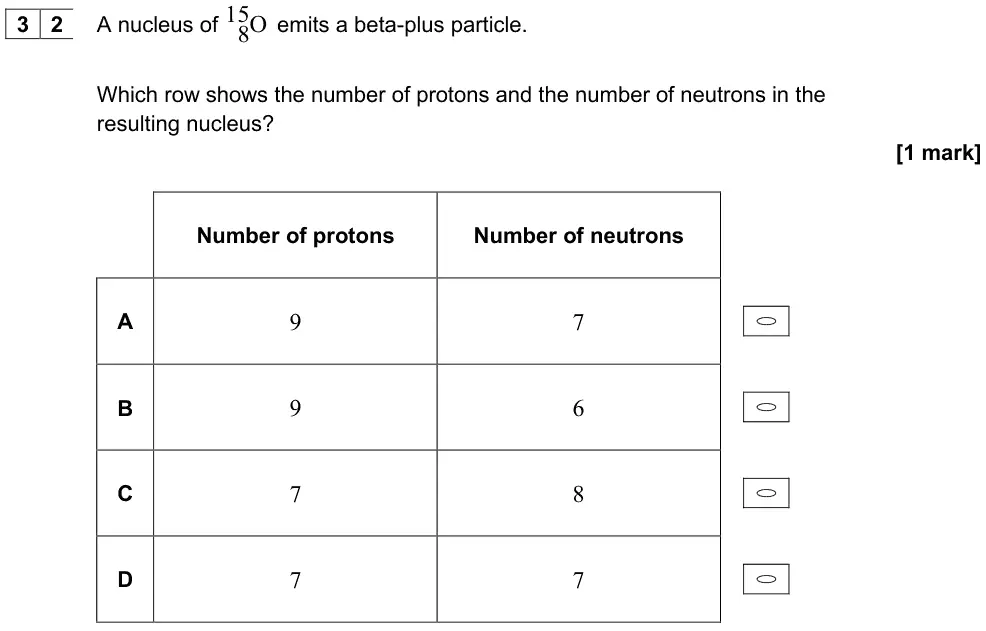
C
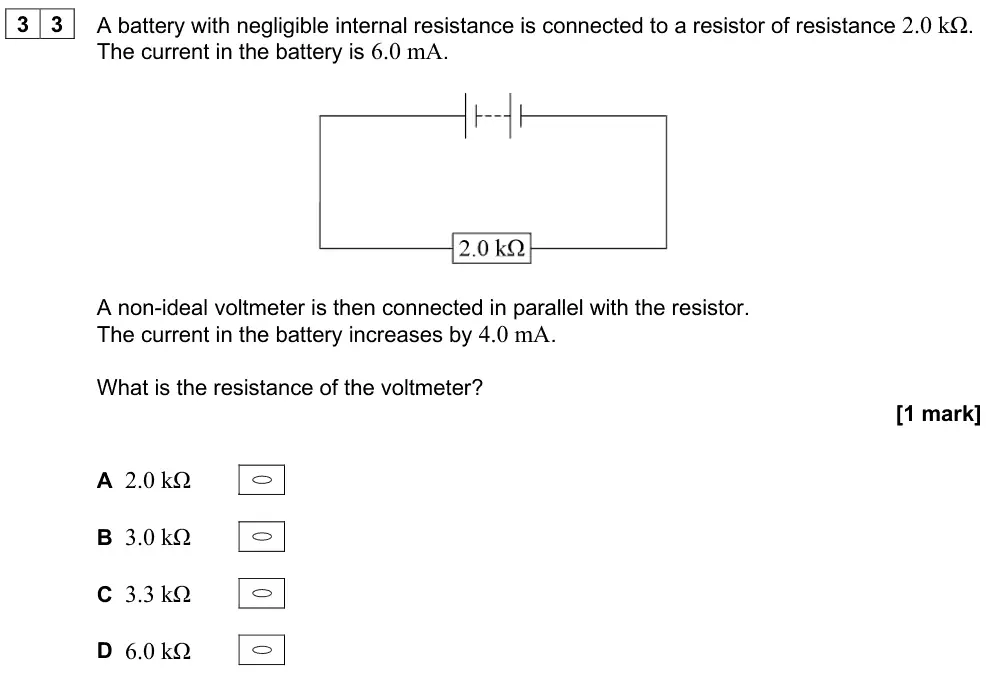
B
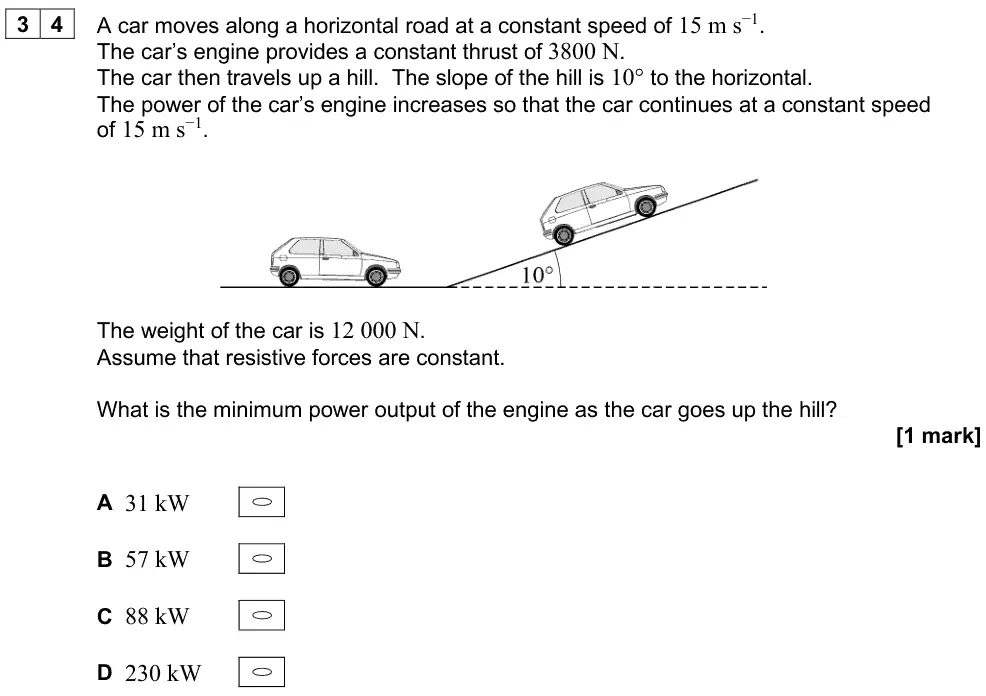
C
Skills: MS4.5 Use sin, cos and tan in physical problems
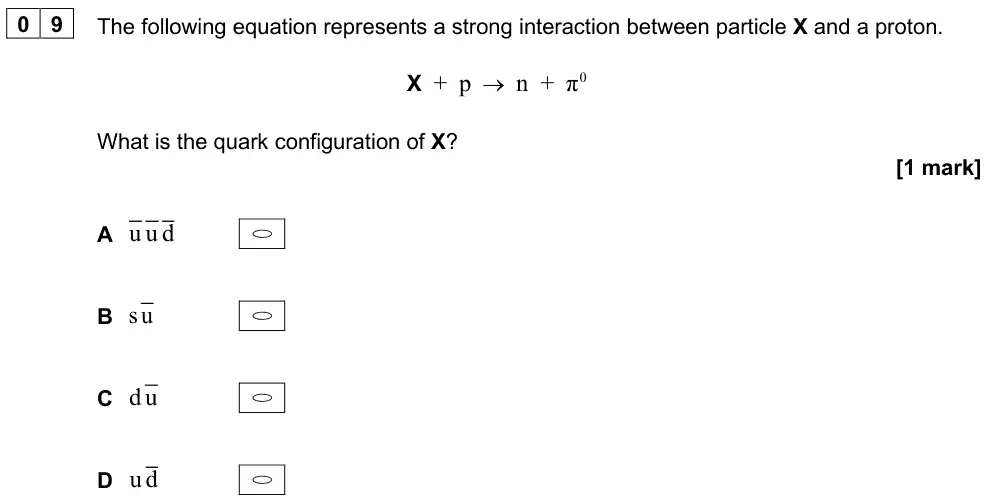
C
A
A
Skills: MS0.2 Recognise and use expressions in decimal and standard form
C
C
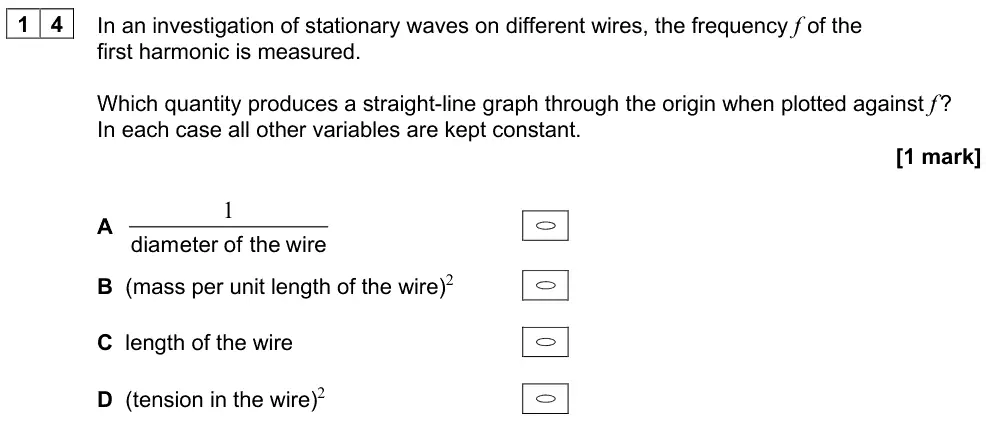
A
Skills: MS3.1 Translate information between graphical, numerical and algebraic forms; MS2.2 Change the subject of an equation, including non-linear equations; RP1 Investigation into the variation of the frequency of stationary waves on a string with length, tension and mass per unit length of the string.
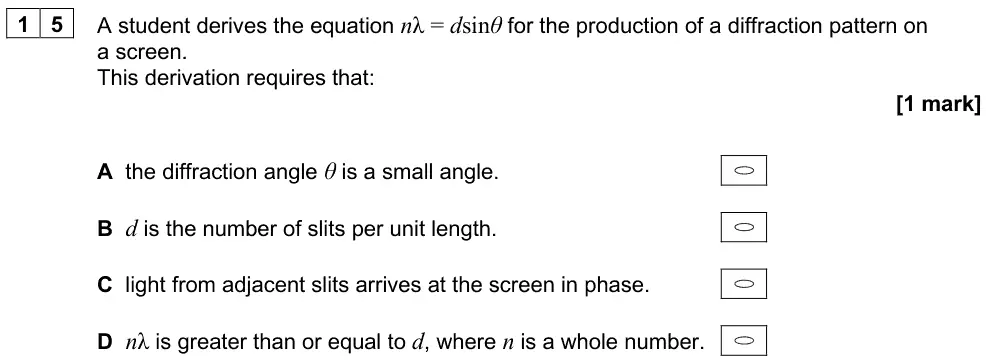
C
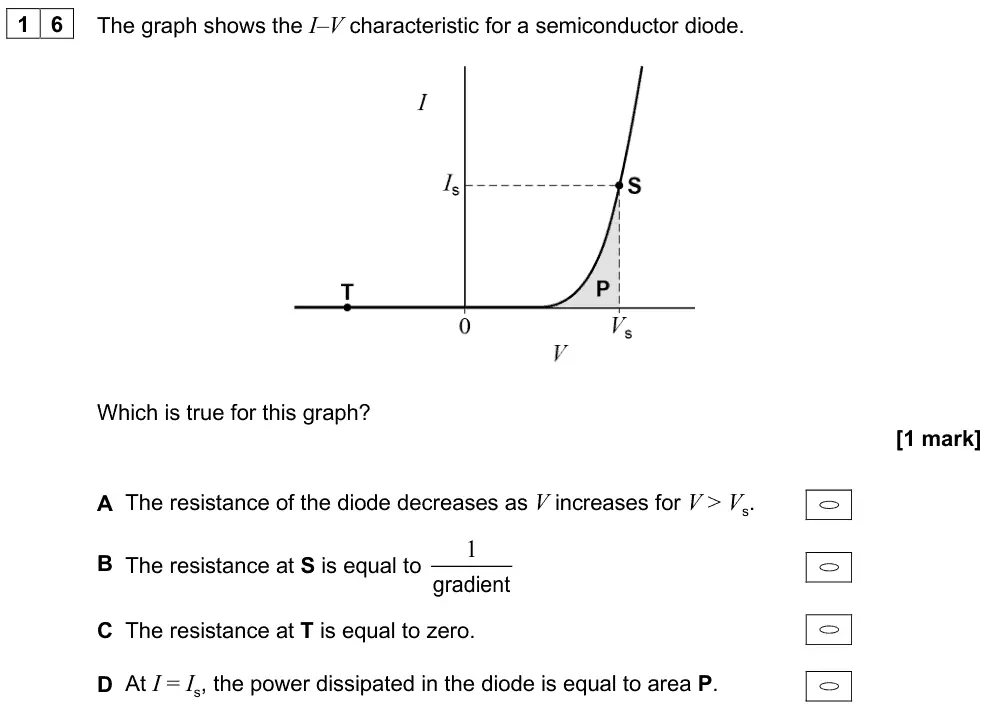
A
Skills: MS3.1 Translate information between graphical, numerical and algebraic forms
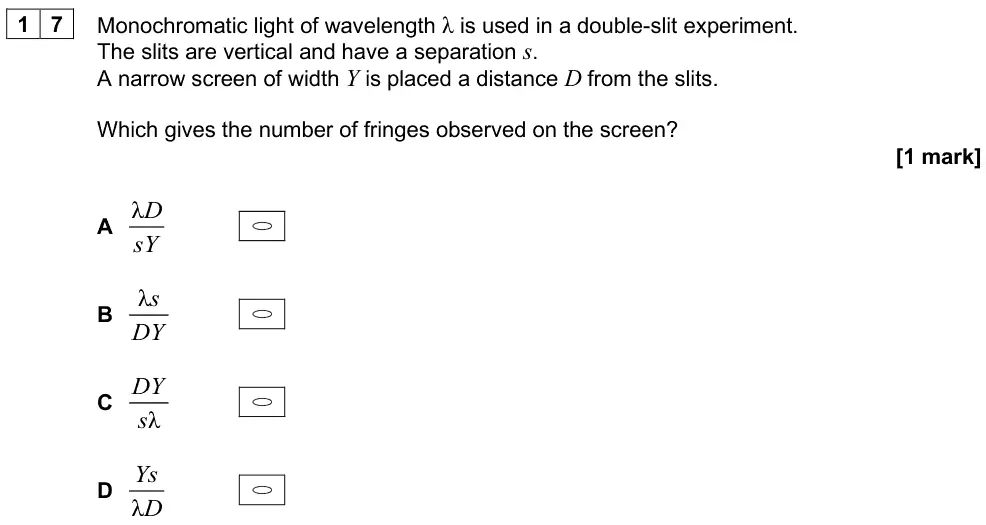
D
Skills: MS2.2 Change the subject of an equation, including non-linear equations
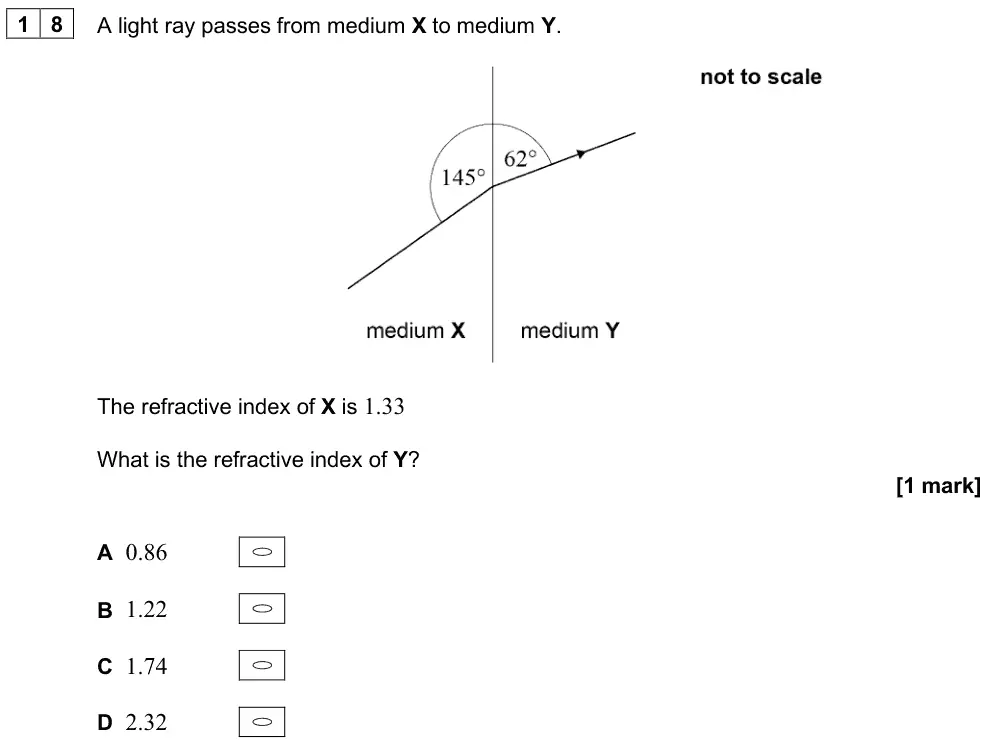
D
Skills: MS0.6 Use calculators to handle sin x, cos x, tan x when x is expressed in degrees or radians; MS4.1 Use angles in regular 2D and 3D structures
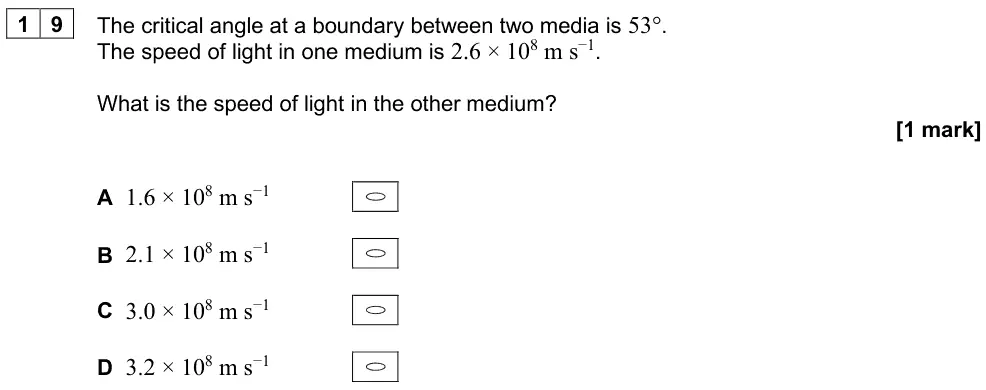
B
Skills: MS0.6 Use calculators to handle sin x, cos x, tan x when x is expressed in degrees or radians
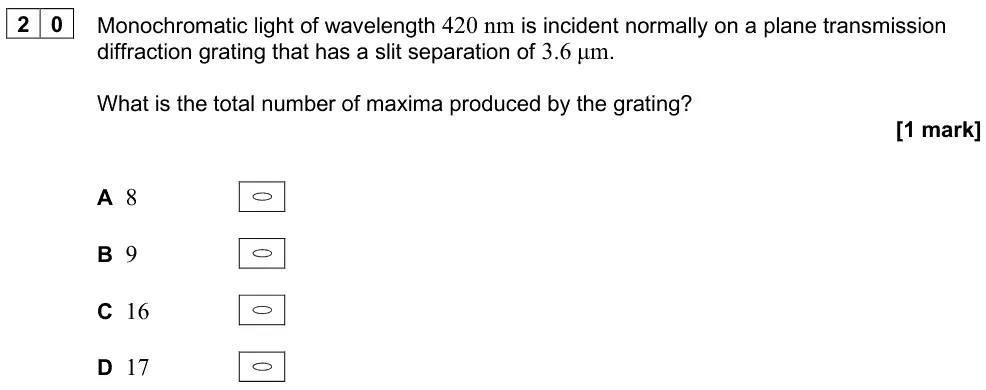
D
Skills: MS0.6 Use calculators to handle sin x, cos x, tan x when x is expressed in degrees or radians
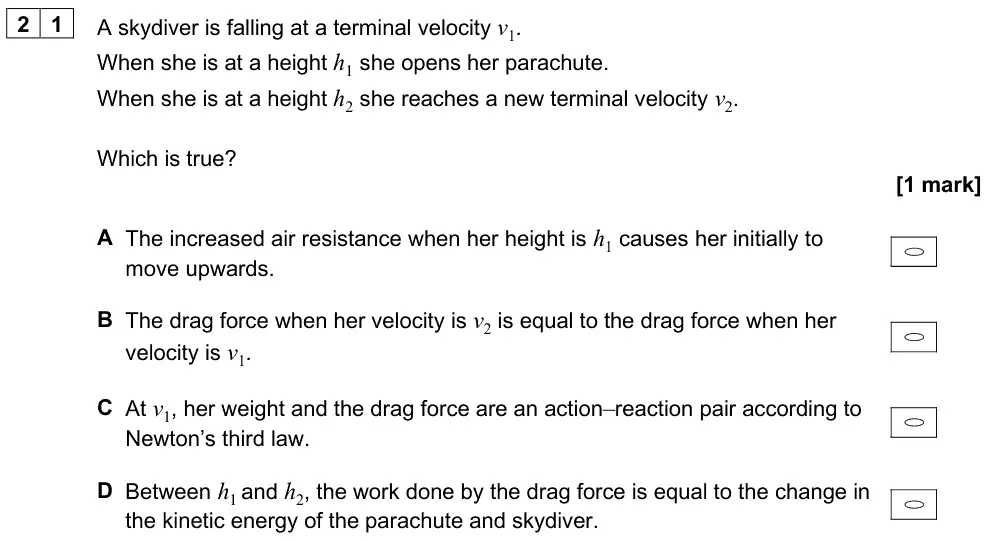
B
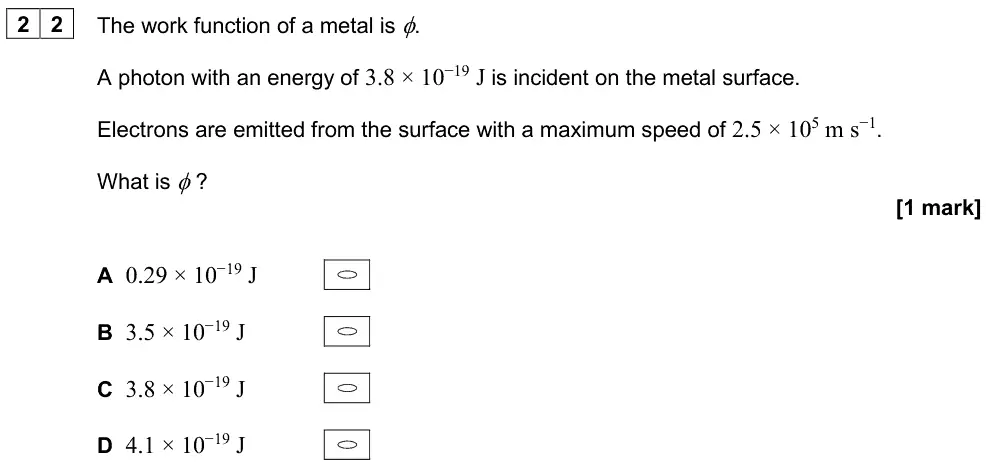
B
Skills: MS2.3 Substitute numerical values into algebraic equations using appropriate units for physical quantities
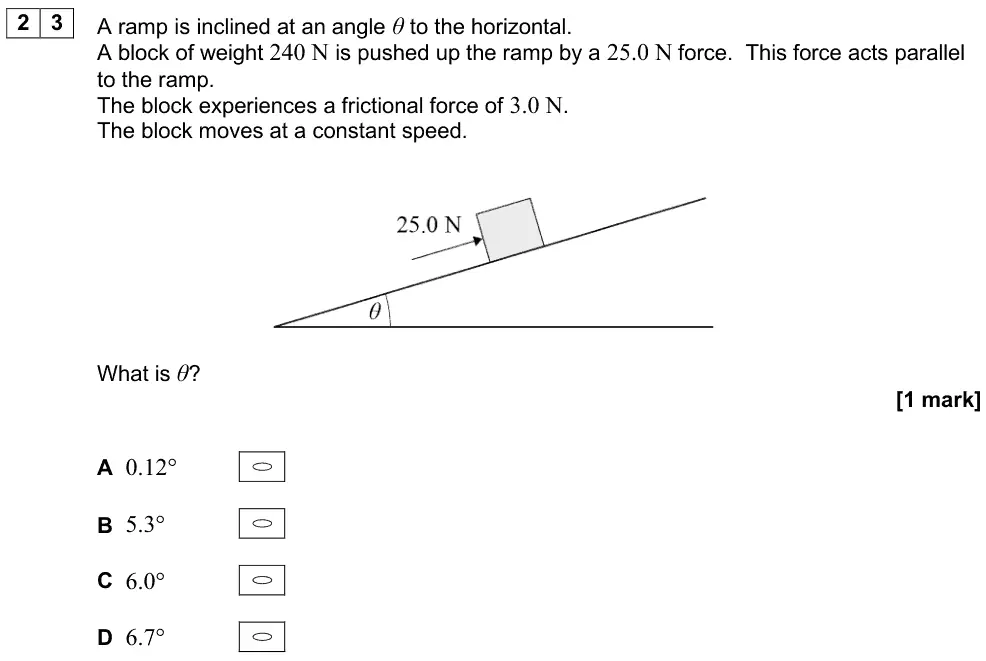
B
Skills: MS4.5 Use sin, cos and tan in physical problems
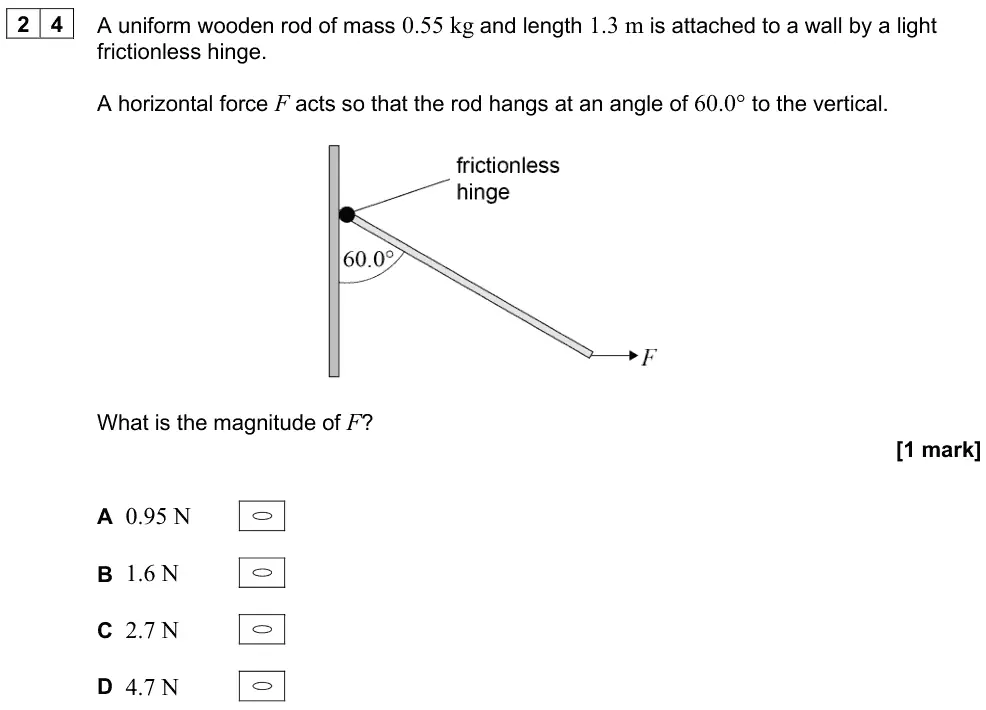
D
Skills: MS4.5 Use sin, cos and tan in physical problems
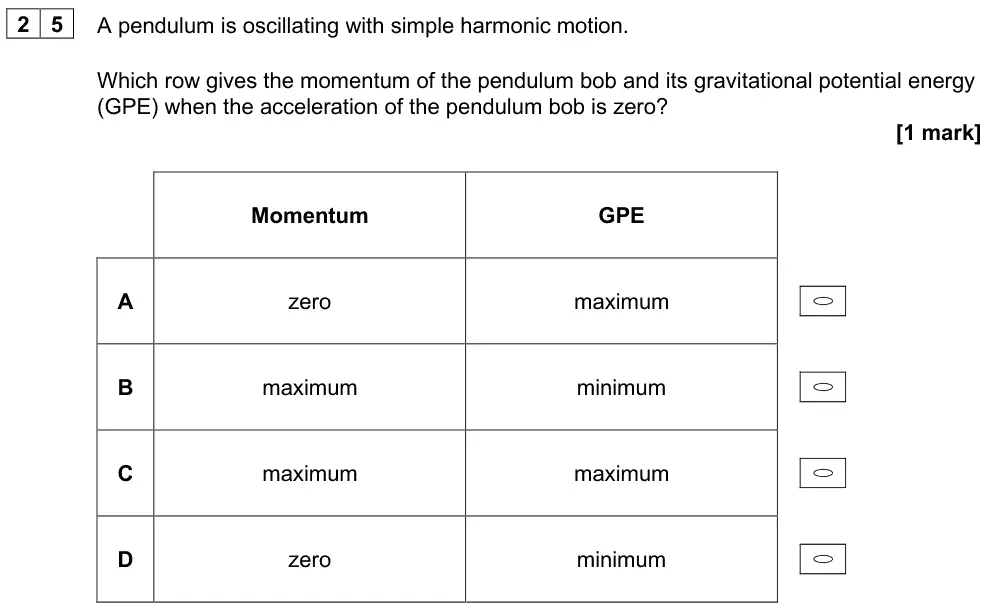
B
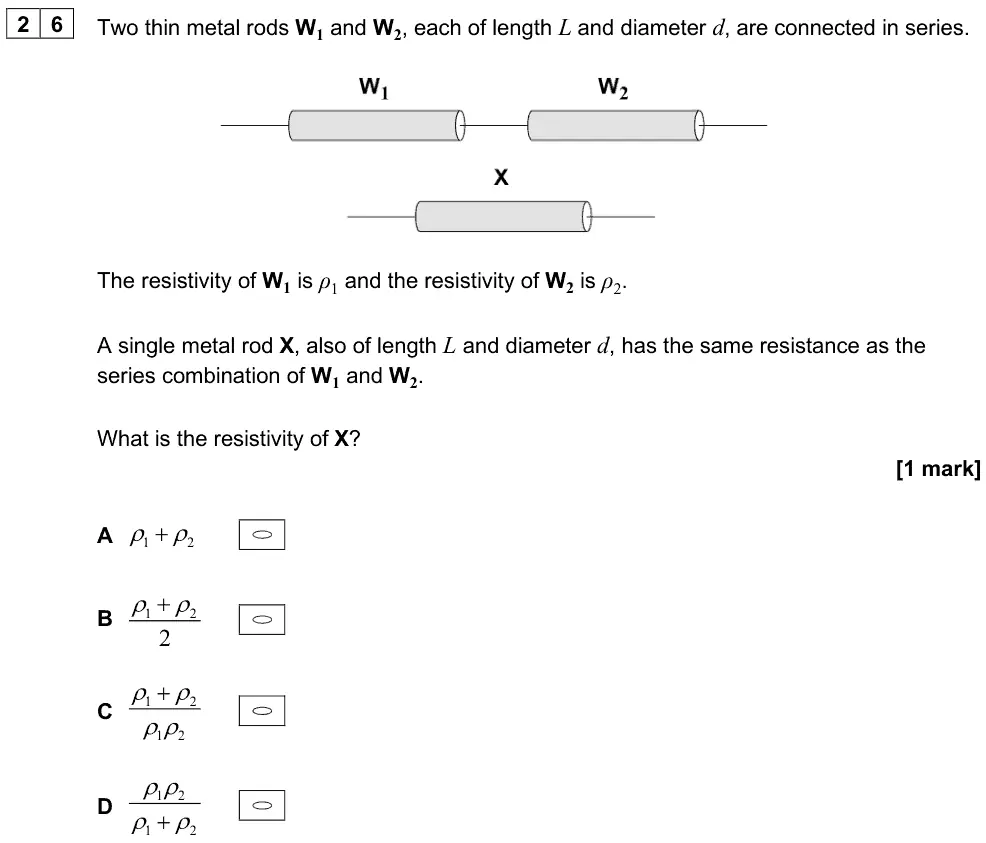
A
Skills: MS2.2 Change the subject of an equation, including non-linear equations
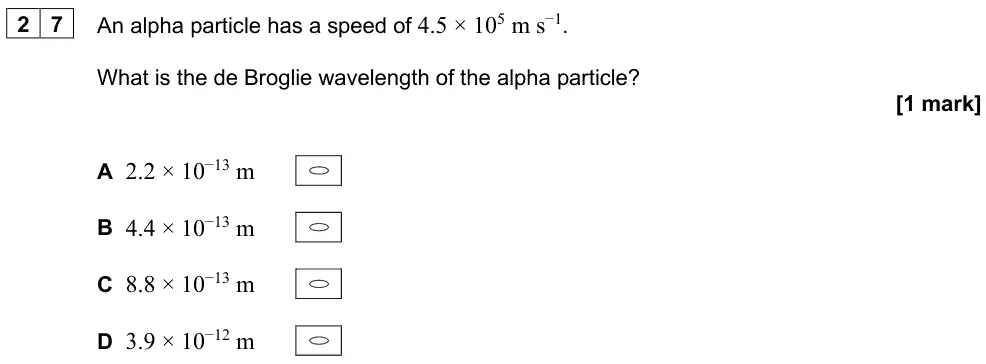
A
Skills: MS2.3 Substitute numerical values into algebraic equations using appropriate units for physical quantities
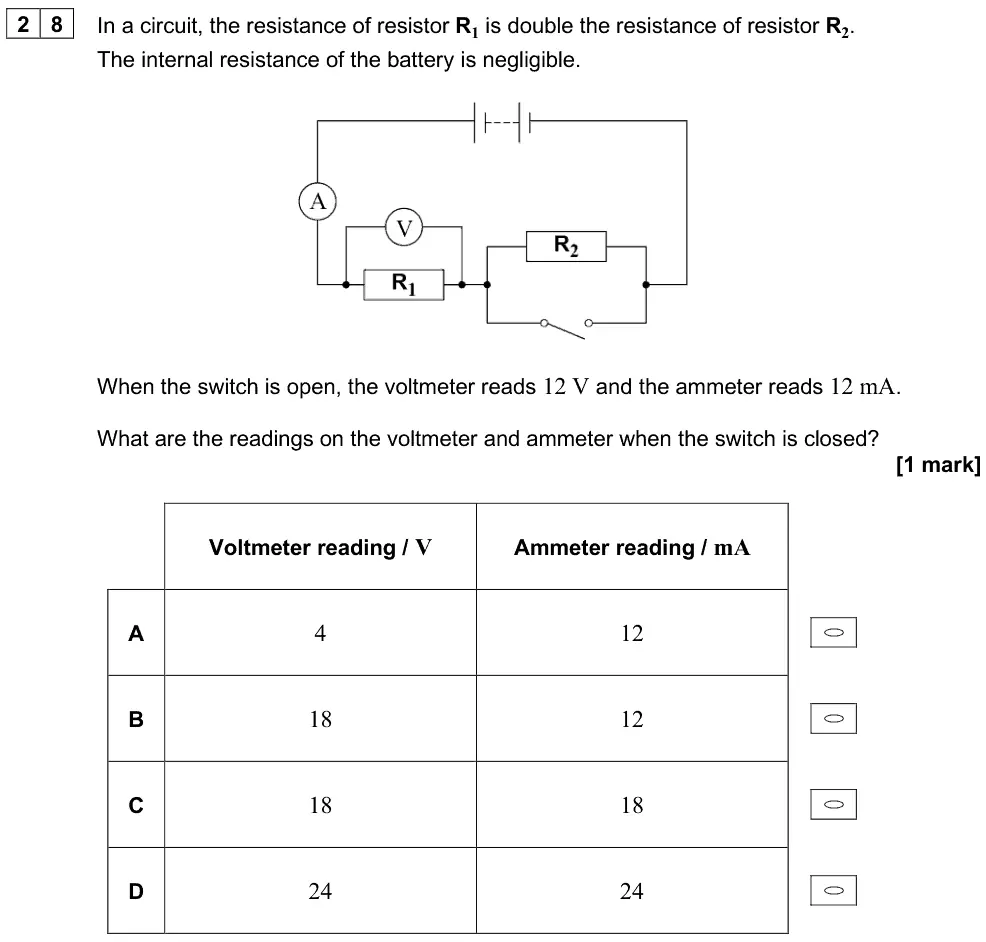
C
Skills: MS0.3 Use ratios, fractions and percentages
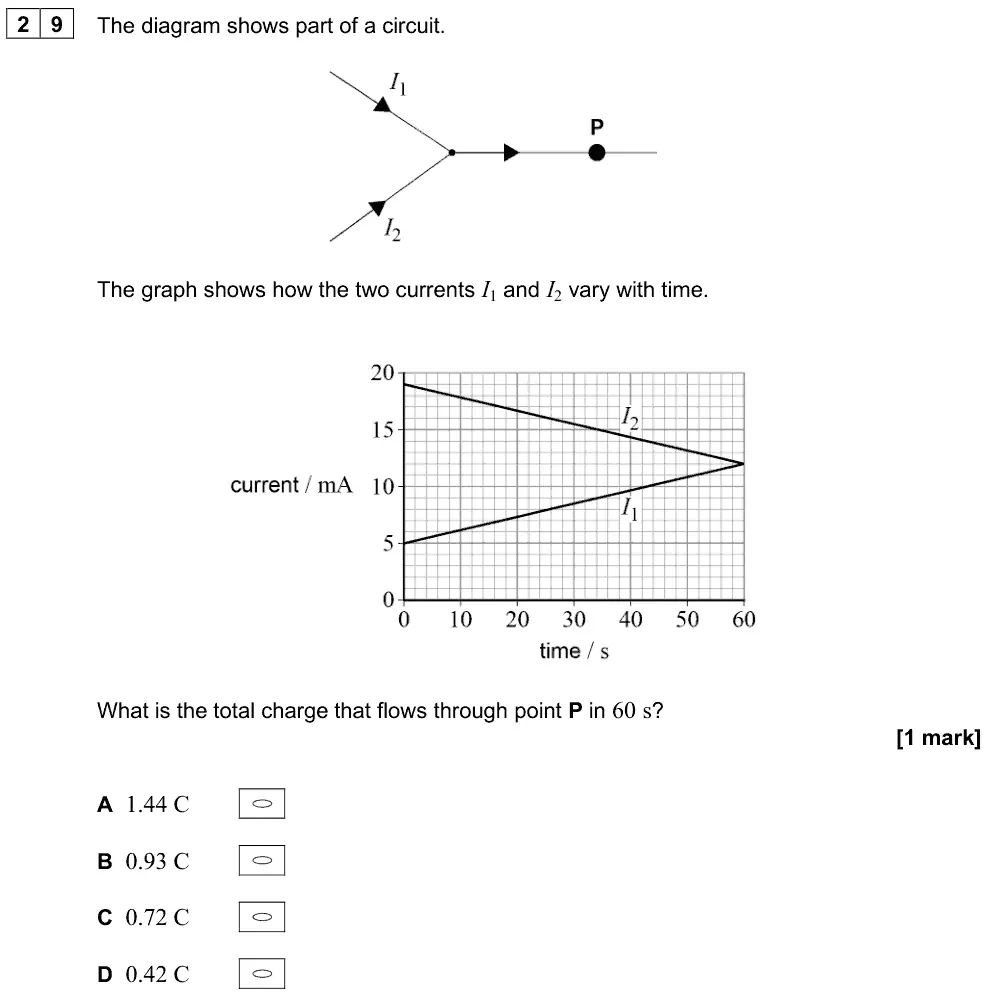
A
Skills: MS3.8 Understand the possible physical significance of the area between a curve and the x axis and be able to calculate it or estimate it by graphical methods as appropriate
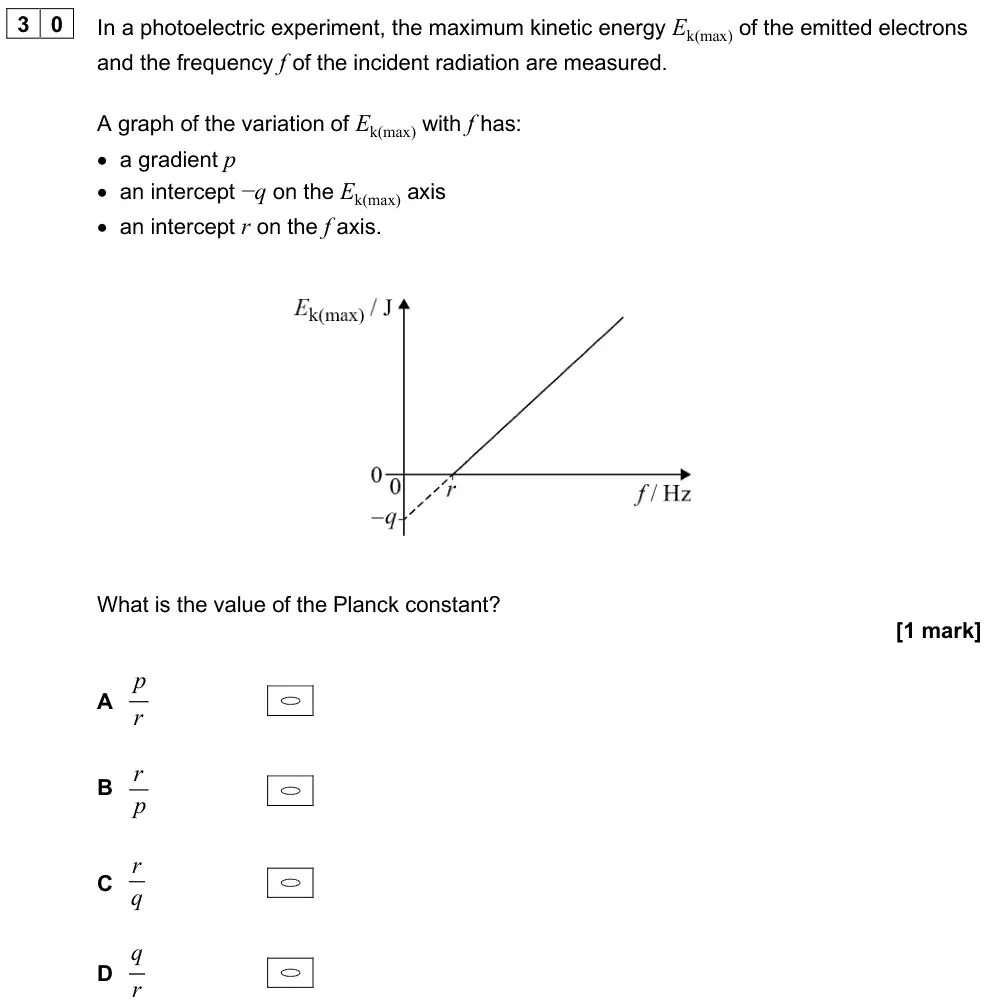
D
Skills: MS3.4 Determine the slope and intercept of a linear graph; MS3.3 Understand that y = mx + c represents a linear relationship
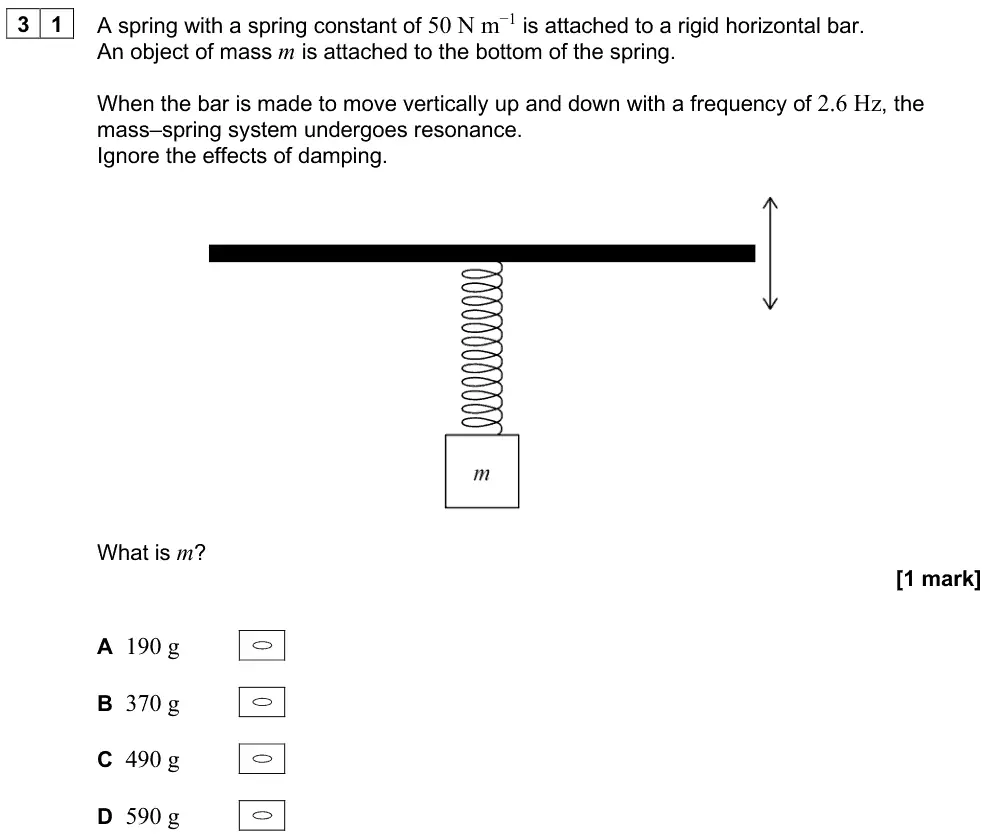
A
Skills: MS2.2 Change the subject of an equation, including non-linear equations
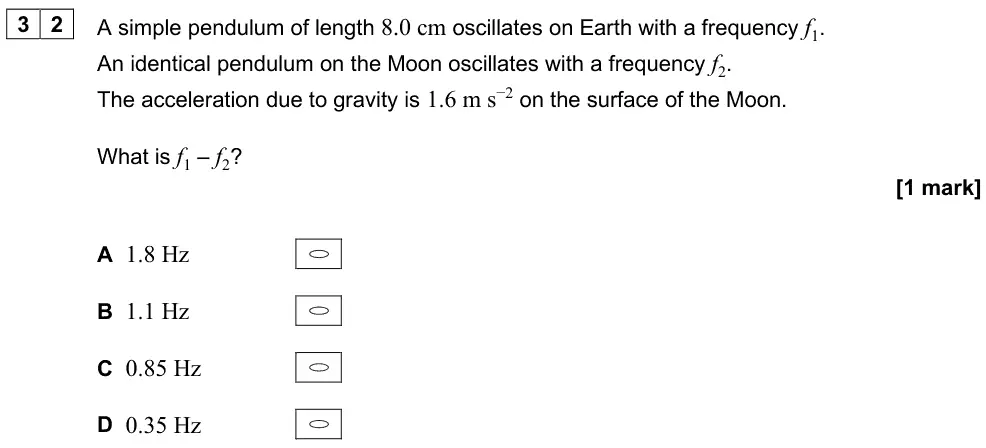
B
Skills: MS2.3 Substitute numerical values into algebraic equations using appropriate units for physical quantities
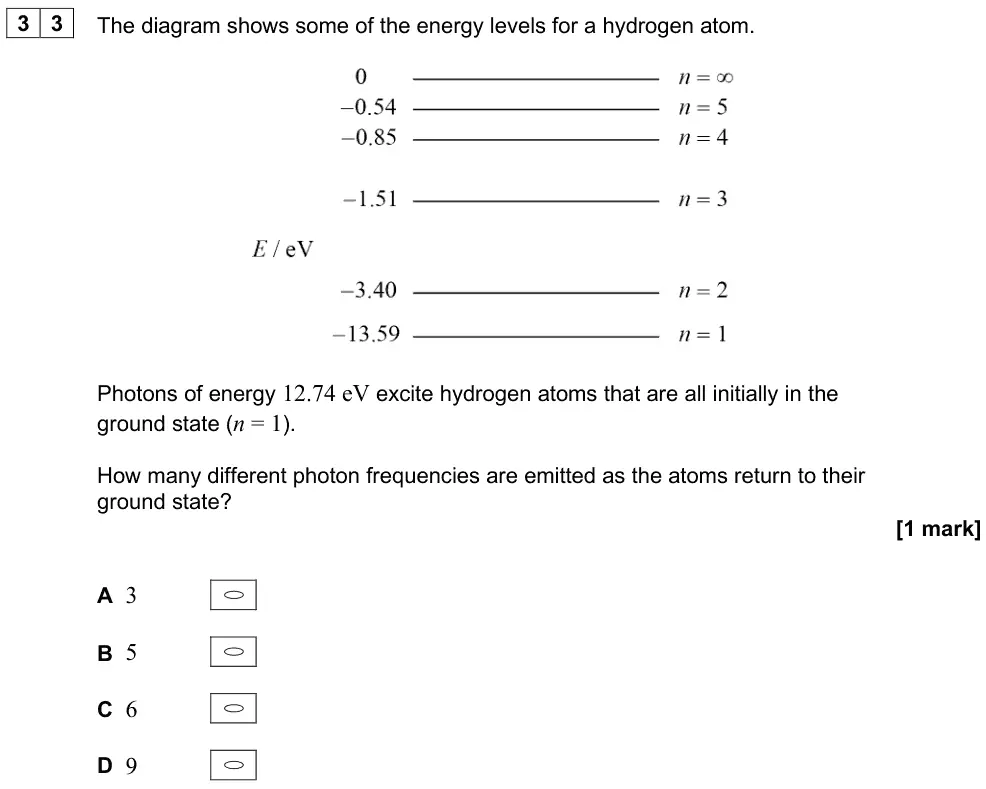
C
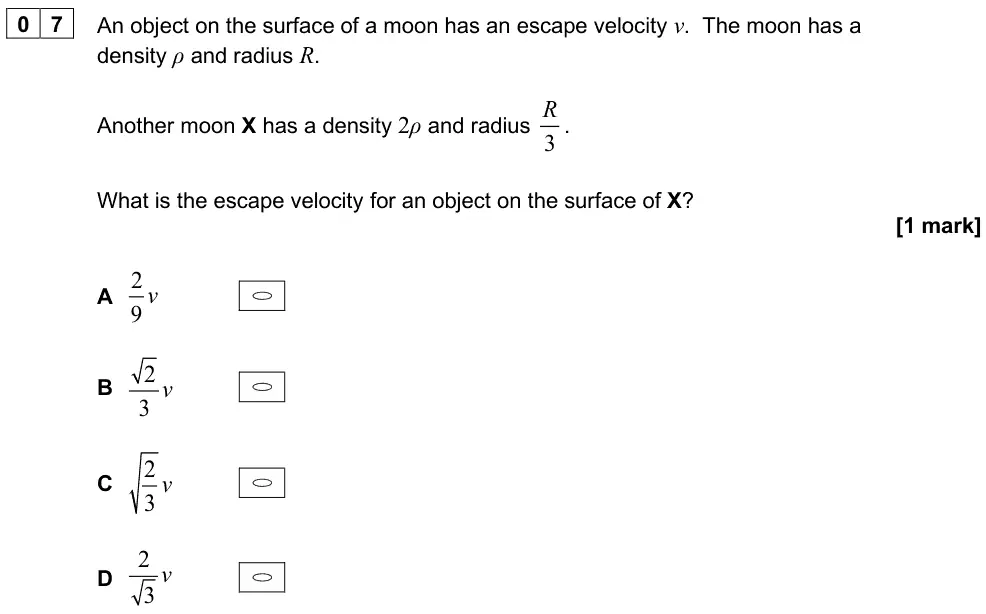
B
Skills: MS0.3 Use ratios, fractions and percentages
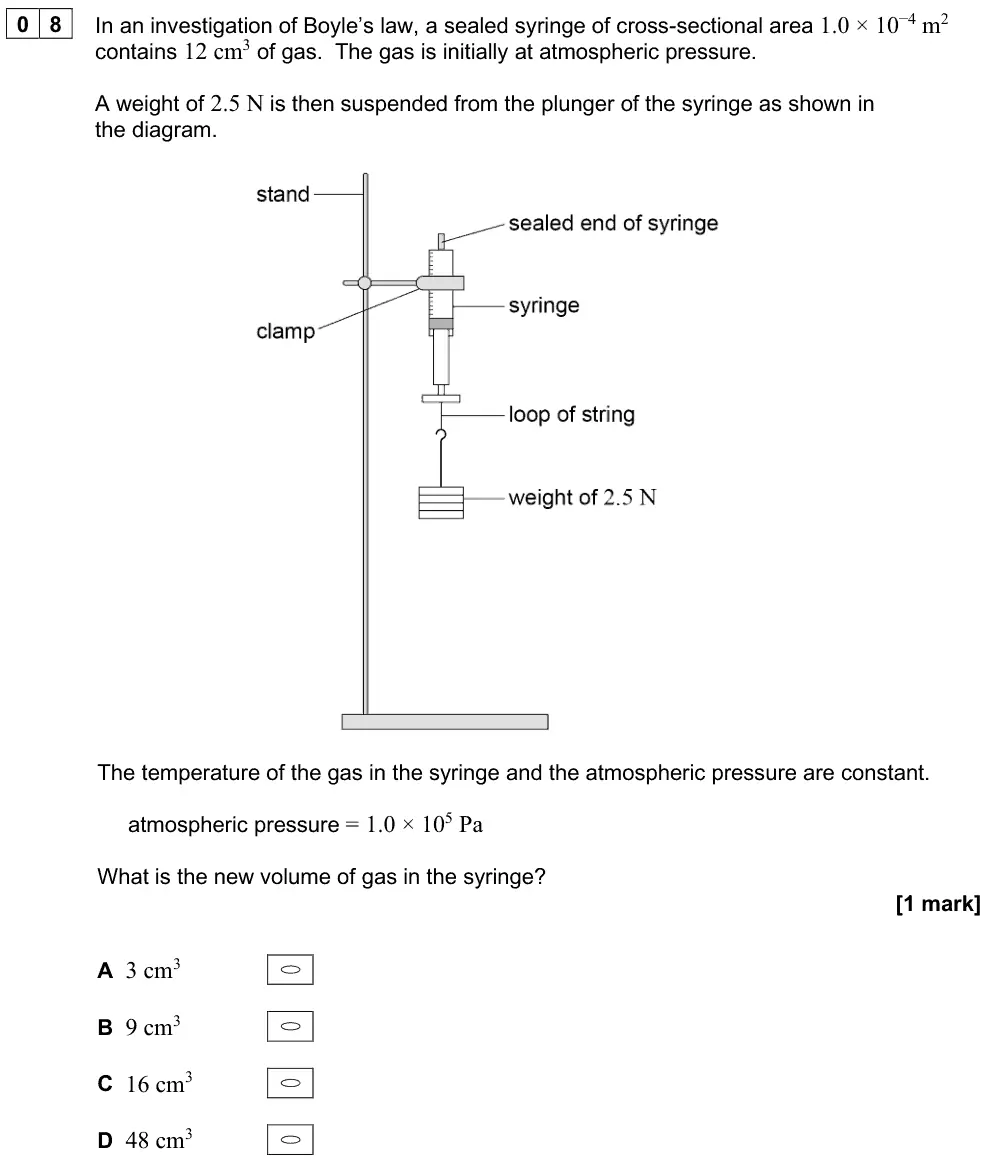
C
Skills: MS0.3 Use ratios, fractions and percentages; RP8 Investigation of Boyle's law (constant temperature) and Charles’s law (constant pressure) for a gas.
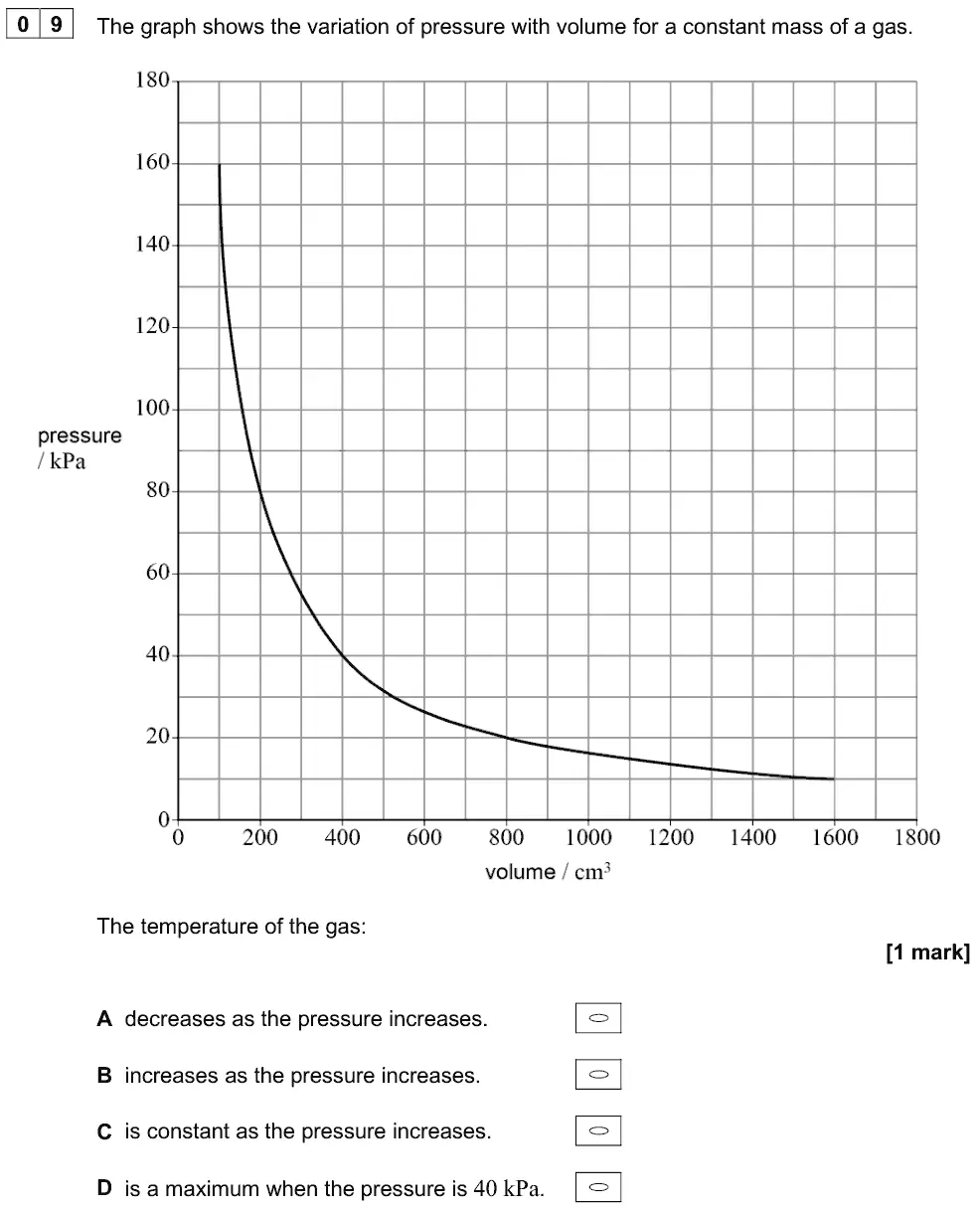
C
Skills: MS3.1 Translate information between graphical, numerical and algebraic forms
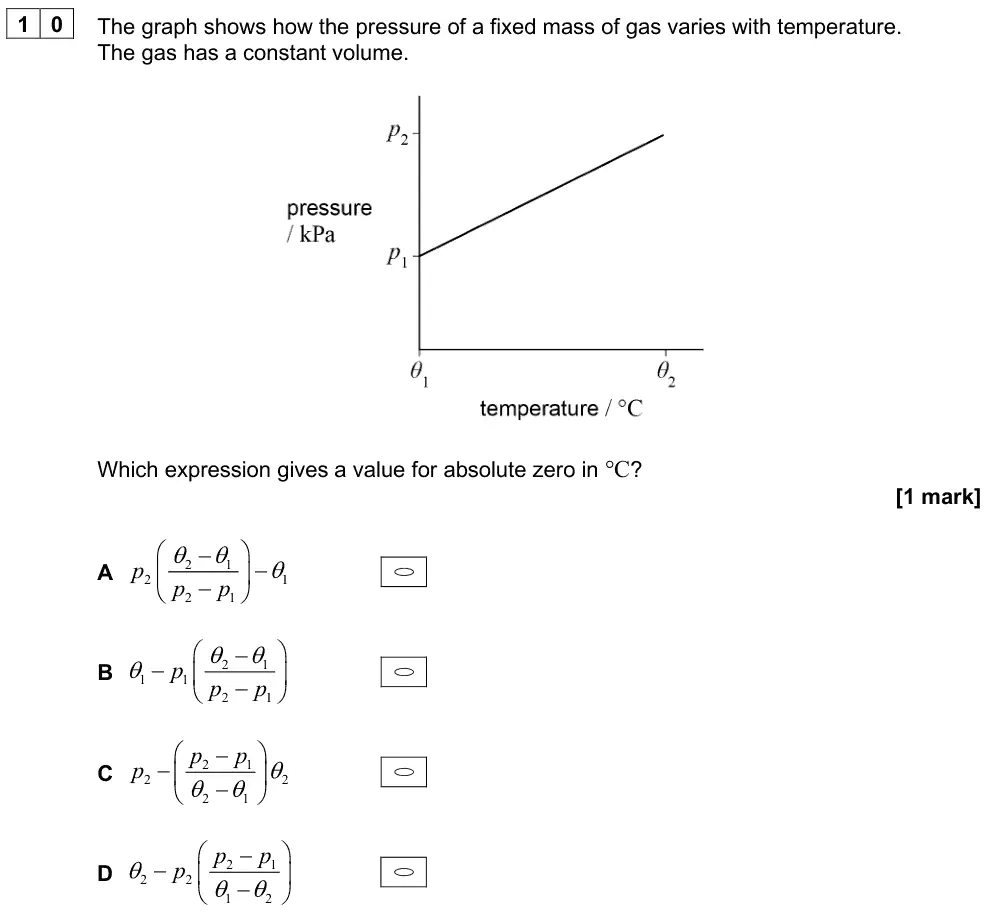
B
Skills: MS3.3 Understand that y = mx + c represents a linear relationship
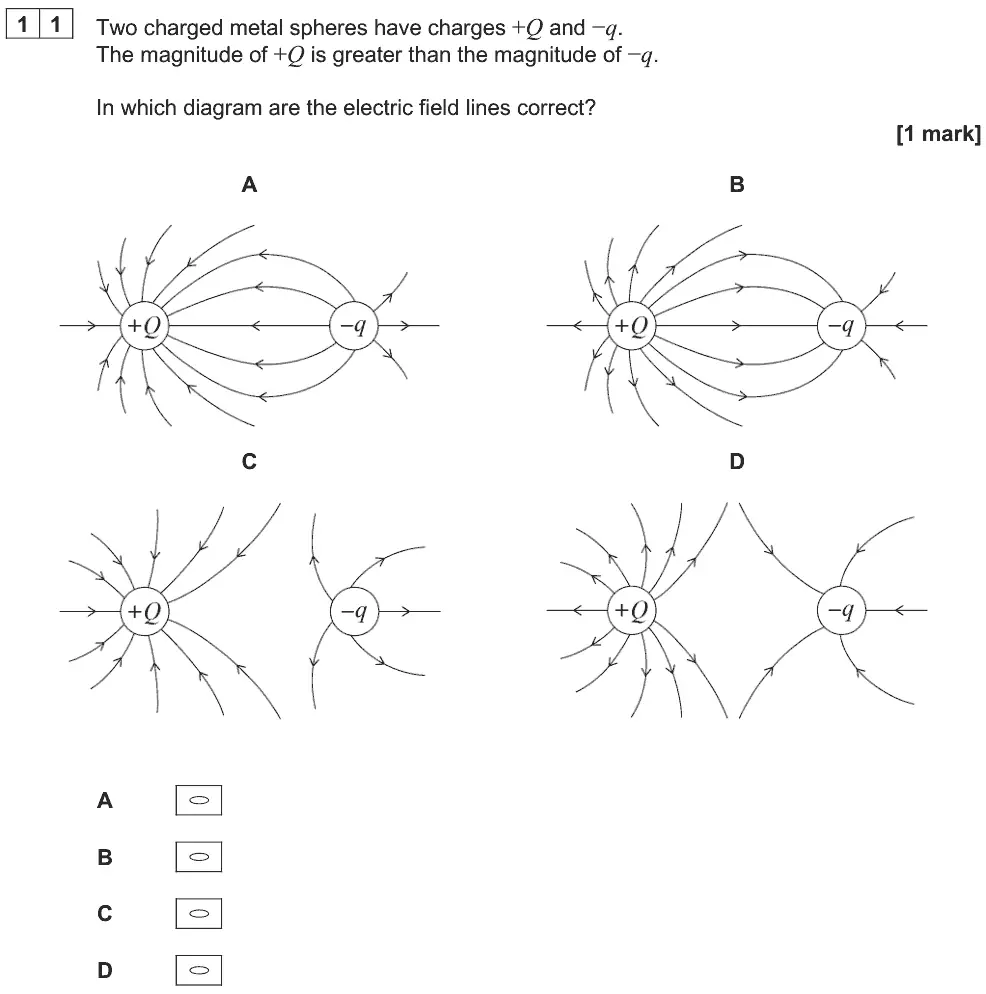
B
Students found questions 11, 14, 17, 28 and 30 to be very accessible with over two thirds getting these correct.
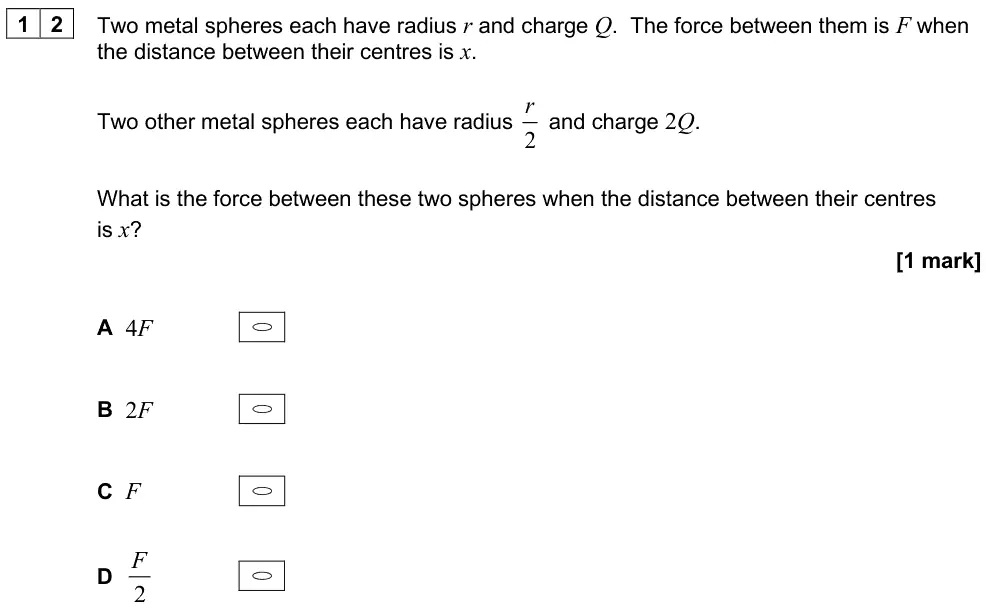
A
Skills: MS0.3 Use ratios, fractions and percentages
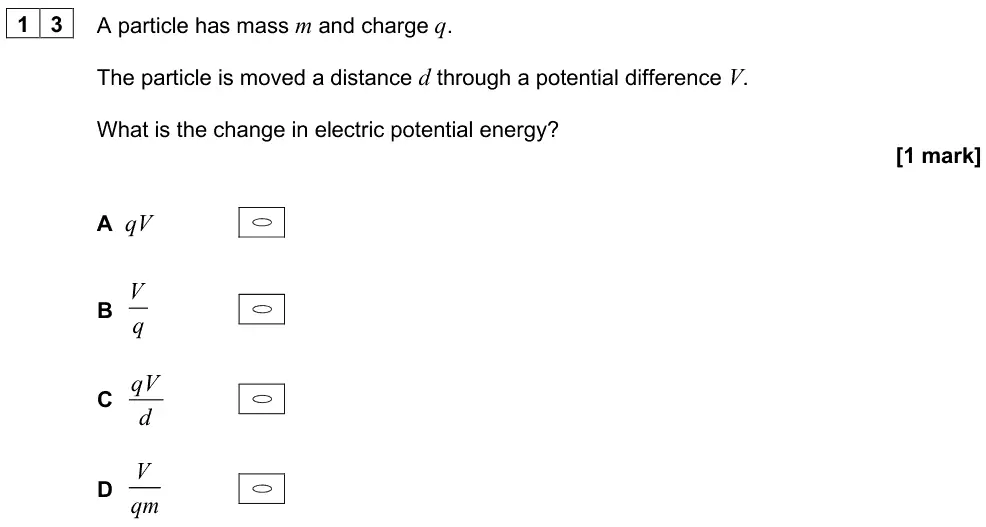
A
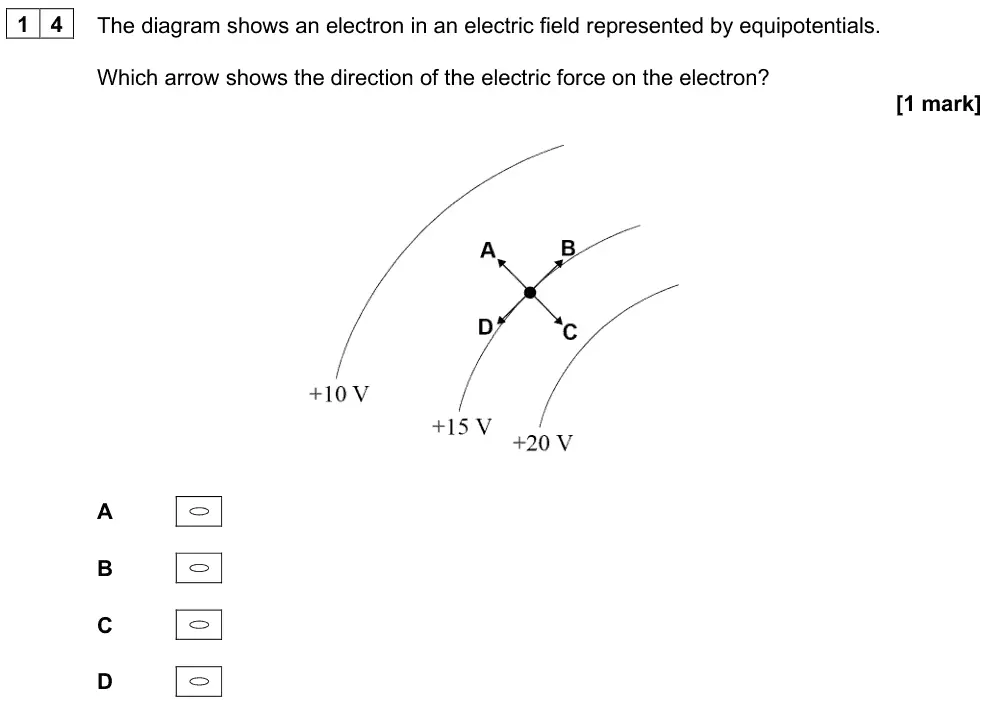
C
Students found questions 11, 14, 17, 28 and 30 to be very accessible with over two thirds getting these correct.
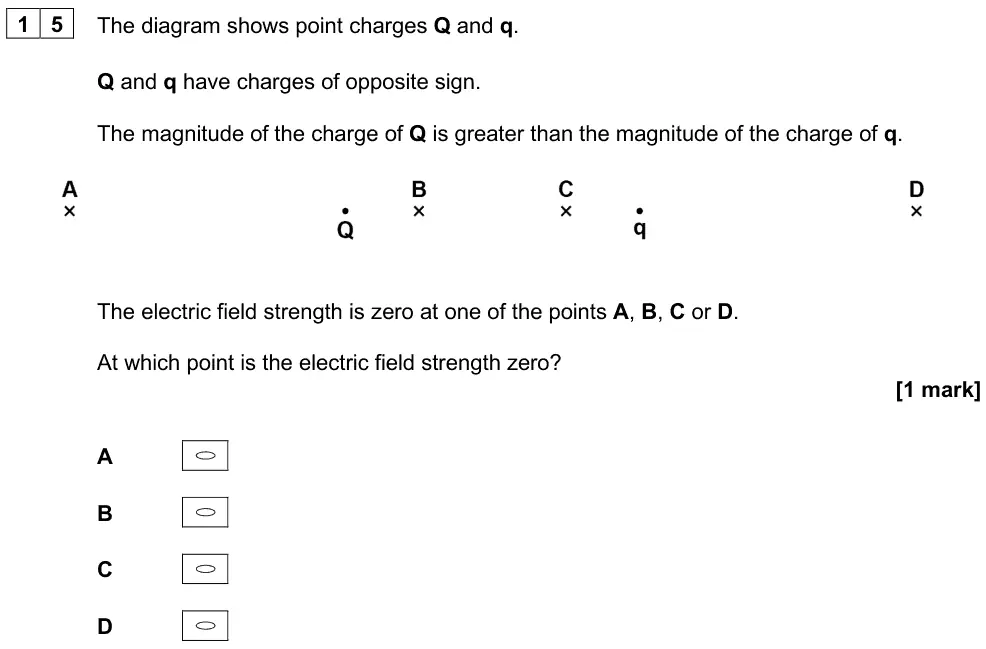
D
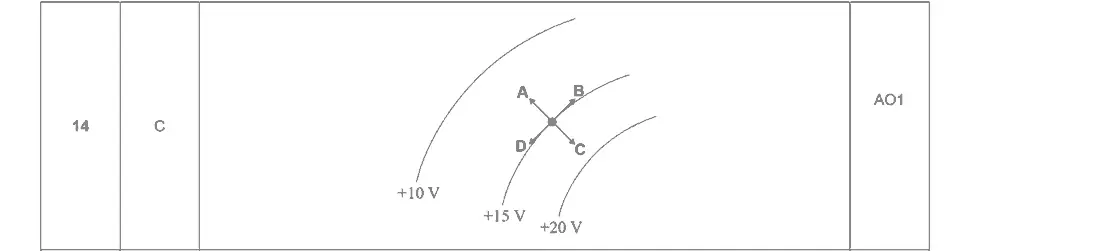
15 Around a third of students answered this question correctly. To answer this question, students must consider the magnitude and direction of the fields which would total to give zero. The magnitudes of the fields must be equal, so, since the magnitude of the charge of Q is larger than the magnitude of the charge of q, the point must be closer to q. The answer must be C or D. As electric field strength is a vector, when there are two charges the only way to get zero is for the fields to point in opposite directions. At any location between the two charges, the fields will point in the same direction, as it must point towards one and away from the other. The answer must be A or D. Therefore, the answer must be D; it is closer to q and the fields are in opposite directions. The most popular answer was C, showing students had an awareness of the magnitude of the charge but did not properly take into account the vector nature of electric field. This is nature of electric fields.
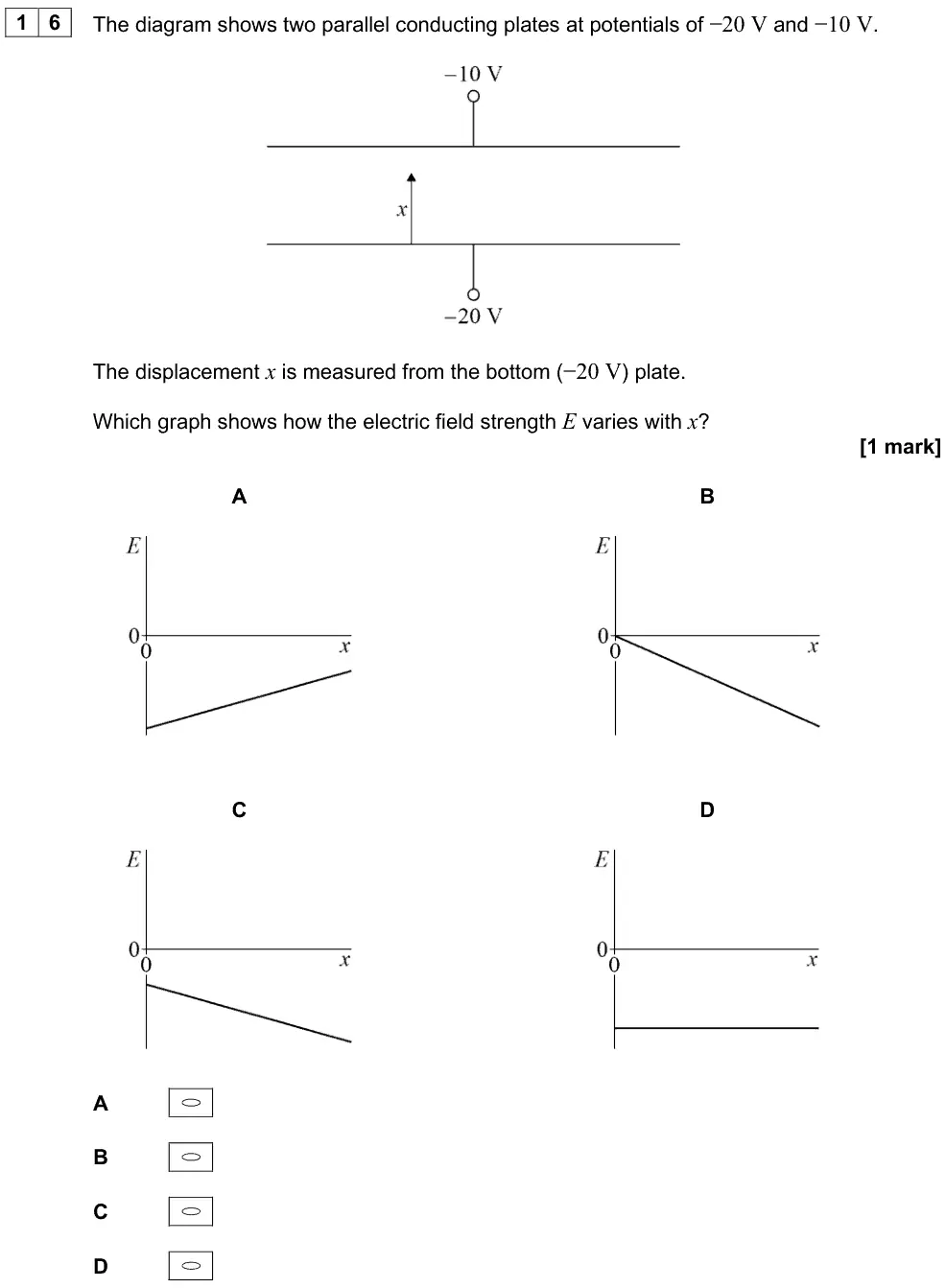
D
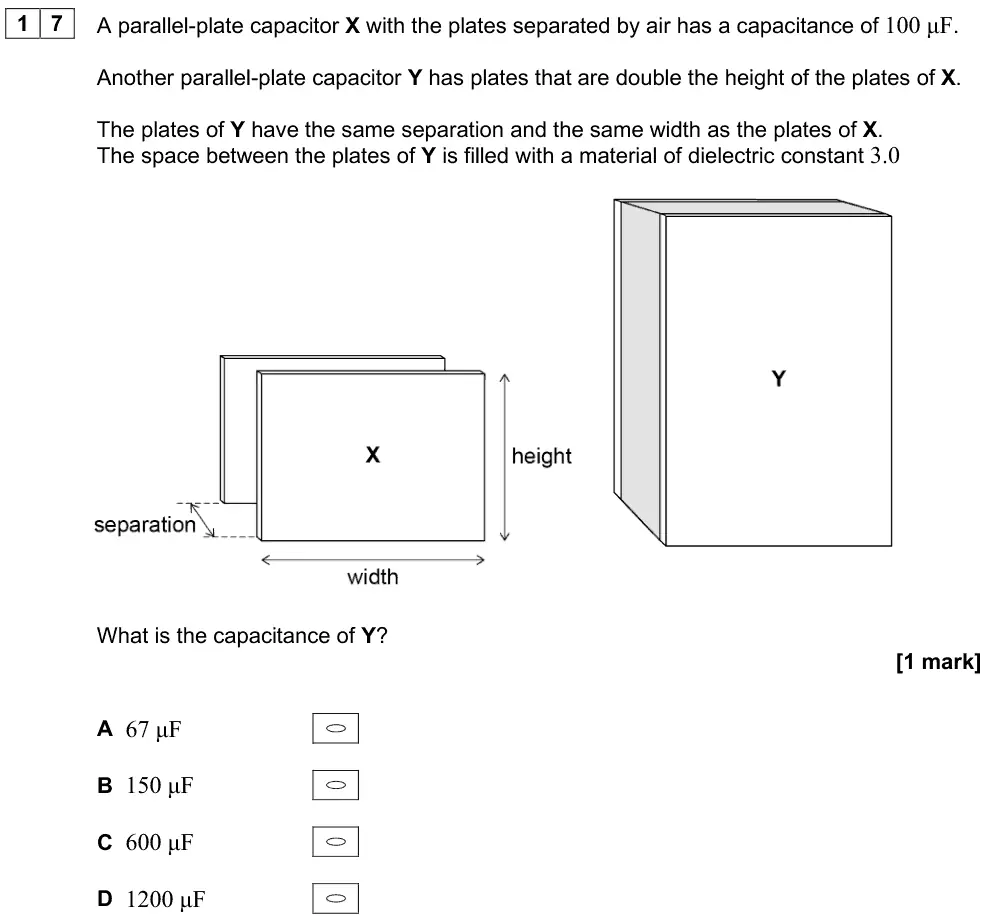
C
Students found questions 11, 14, 17, 28 and 30 to be very accessible with over two thirds getting these correct.
Skills: MS0.3 Use ratios, fractions and percentages
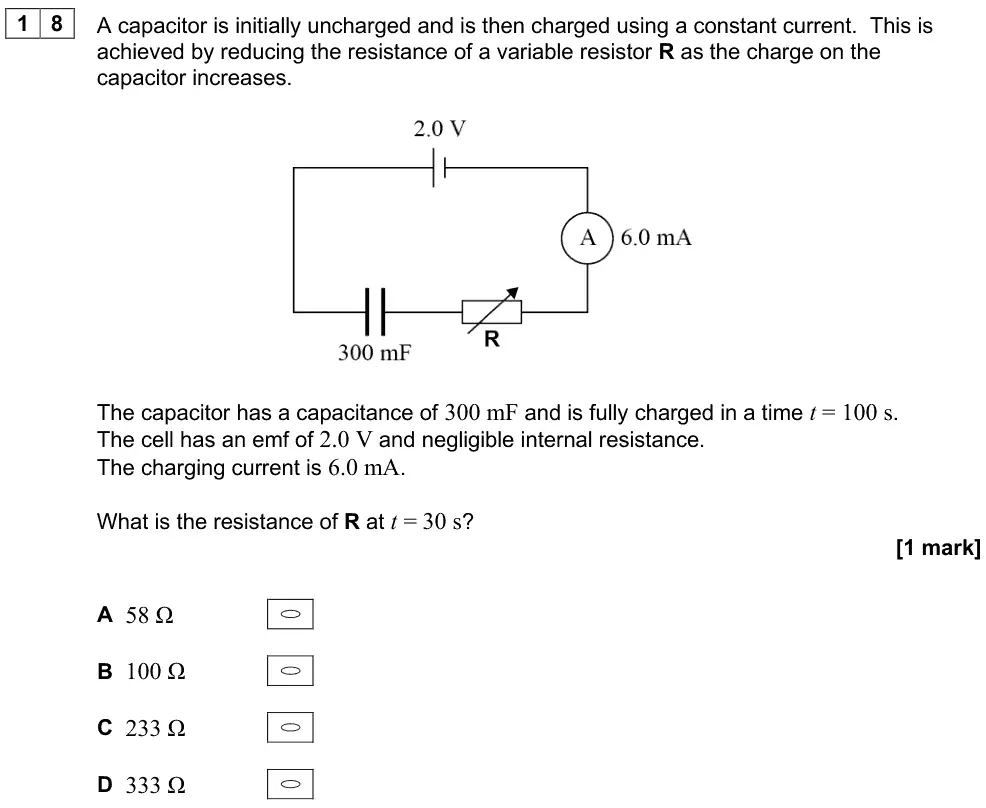
C
Skills: MS2.3 Substitute numerical values into algebraic equations using appropriate units for physical quantities
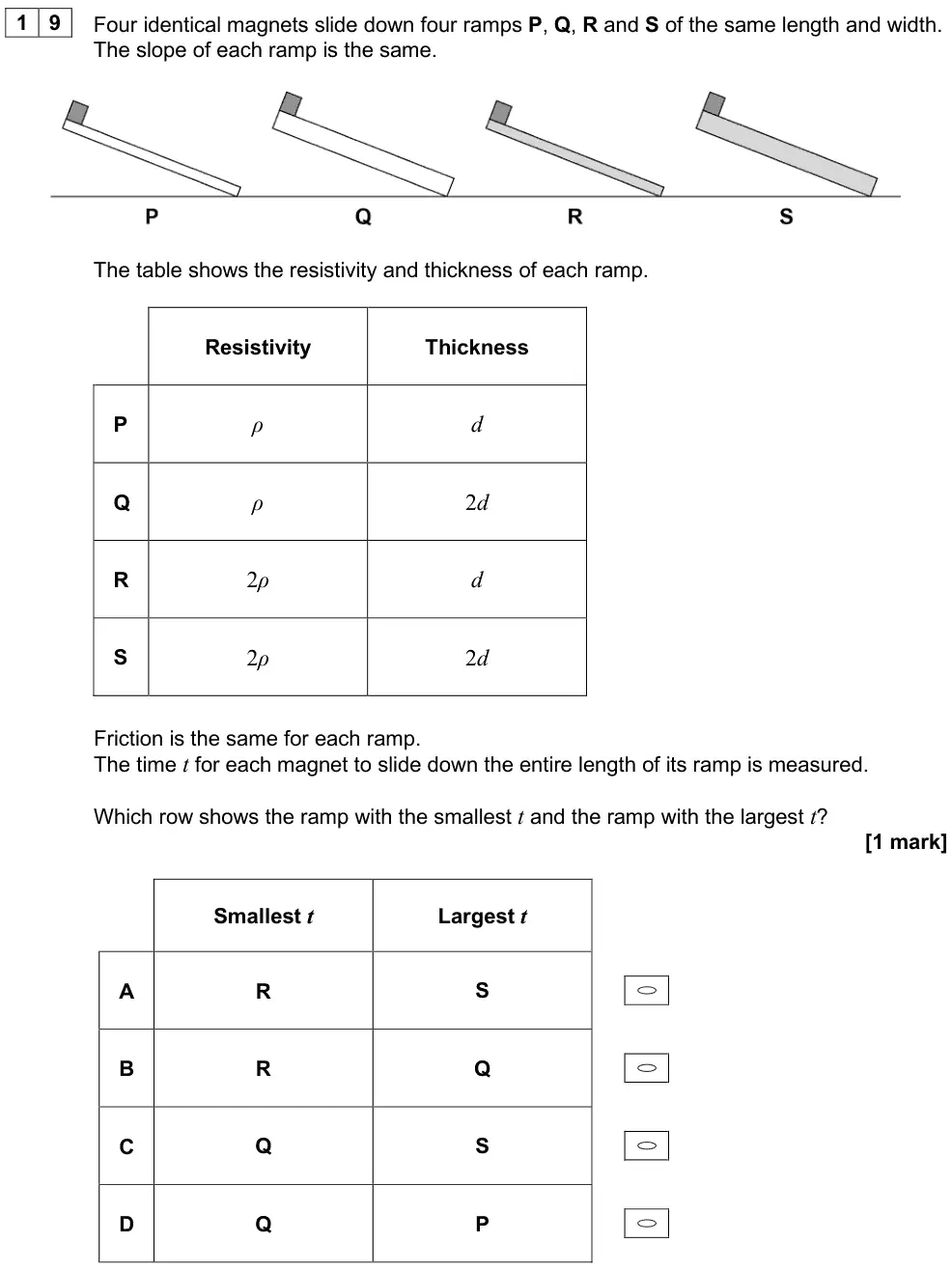
B
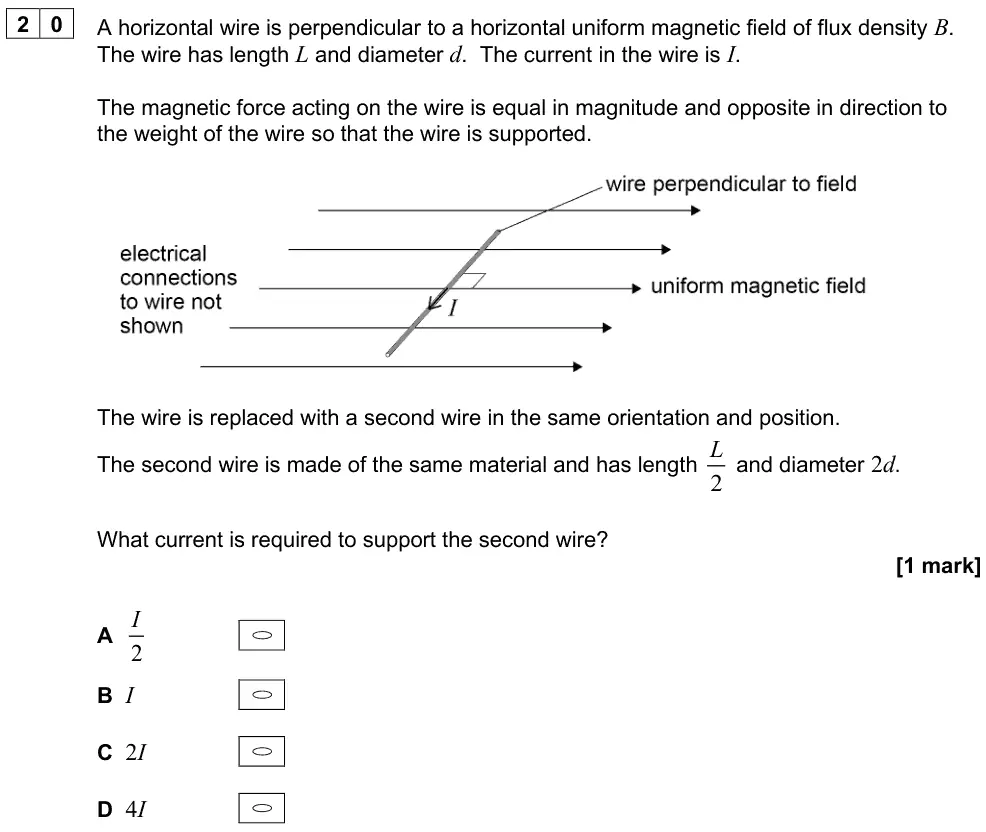
D
question. This question relies on 𝑚𝑚𝑚𝑚= 𝐵𝐵𝐵𝐵𝐵𝐵 and 𝑚𝑚= 𝜌𝜌𝜌𝜌= = 𝐵𝐵𝐵𝐵𝐵𝐵. Therefore, 𝜌𝜌𝜌𝜌𝑑𝑑2𝐿𝐿 𝜌𝜌𝜌𝜌𝑑𝑑2𝐿𝐿𝐿𝐿 20 This question was very challenging with only around one quarter correctly answering this 4 4 since 𝜌𝜌, 𝑔𝑔 and 𝐵𝐵 are constants and 𝐿𝐿 cancels, 𝐼𝐼∝𝑑𝑑2, the new current required is 4𝐼𝐼. C was the giving
Skills: MS0.3 Use ratios, fractions and percentages
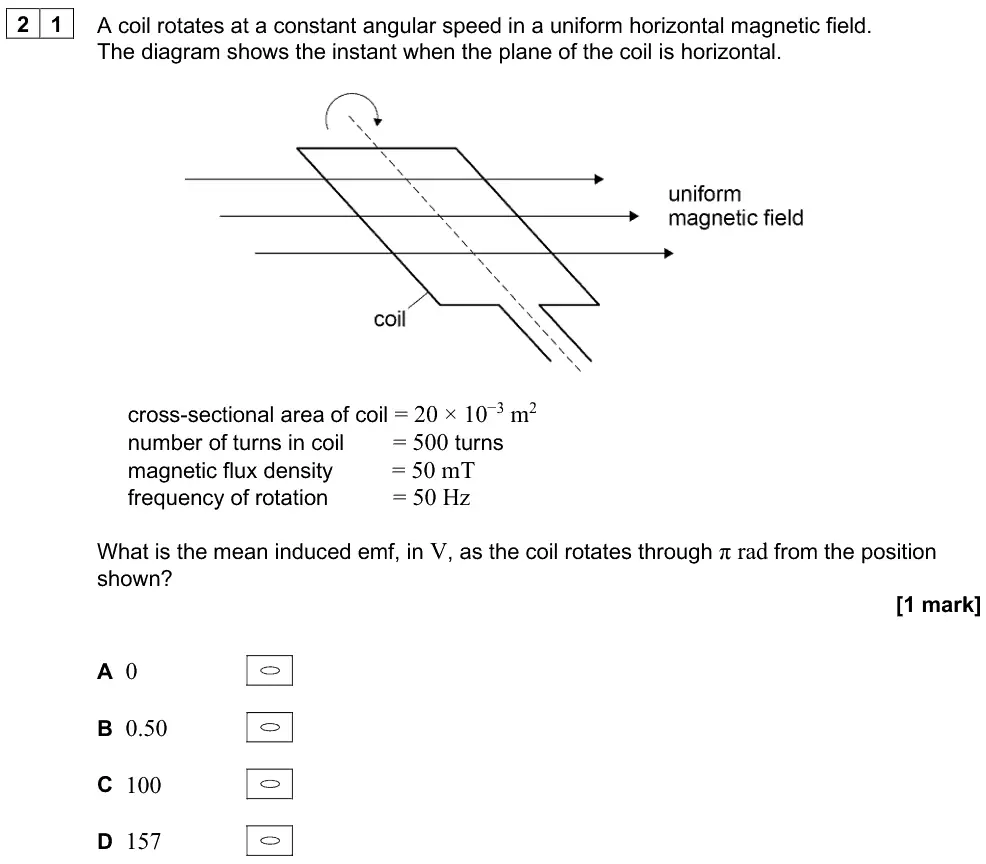
A
students to realise that as the coil rotates through 𝜋𝜋 radians, the magnetic flux first increases 21 Just less than a third of students answered this question correctly. This question required
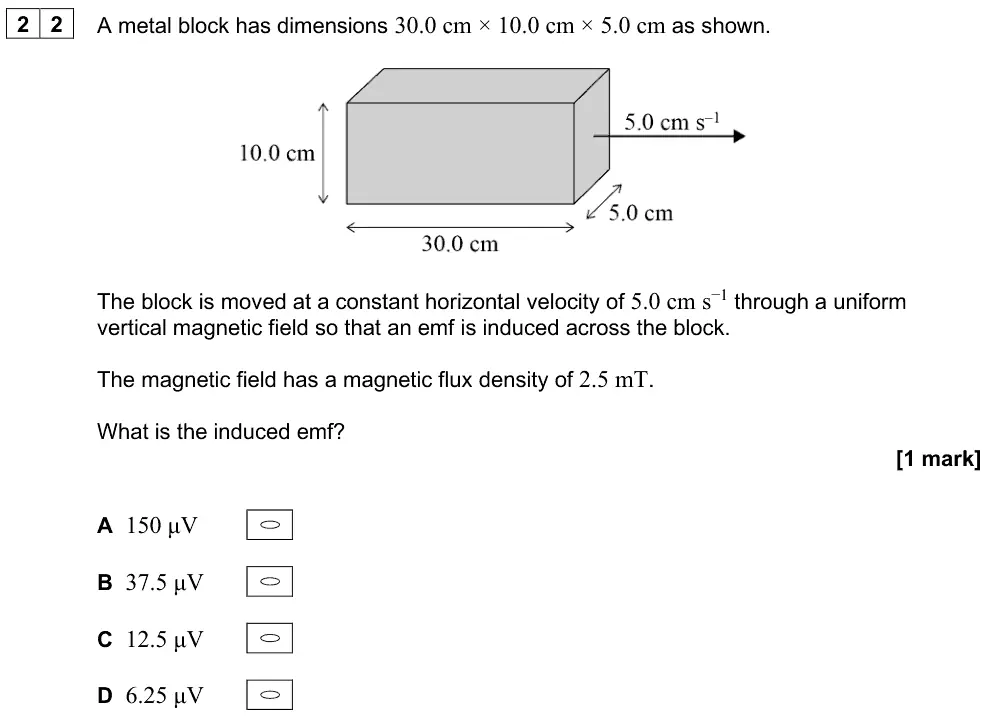
D
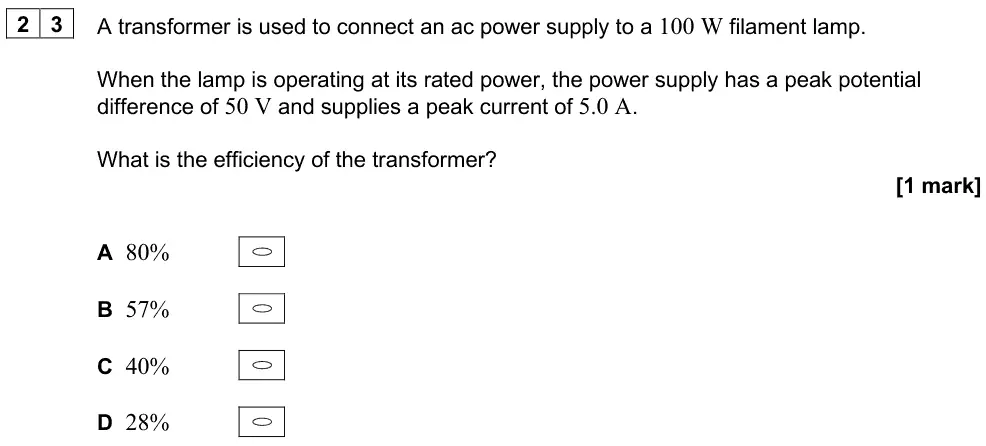
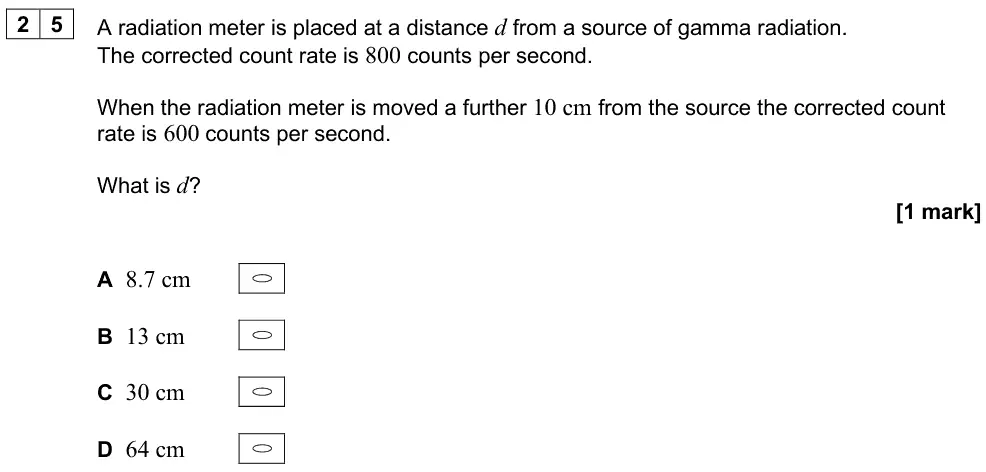
22 This question was very challenging with around one quarter of students answering it As a conductor moves through a magnetic field, the induced emf is given by 𝜀𝜀= 𝐵𝐵𝐵𝐵𝐵𝐵, however correctly. The correct answer was only the third most popular response. the students had to identify which distance was 𝑙𝑙. 𝑙𝑙 is the distance that is perpendicular to both the velocity and the magnetic field. The magnetic field is vertical, so 𝑙𝑙 cannot be 10 cm; the velocity is in the same direction as 30 cm, so 𝑙𝑙 must be 5.0 cm. The answer is therefore D. The most common answer was B which corresponded to 𝑙𝑙= 30 cm, the second most common answer was C corresponding to 𝑙𝑙= 10 cm. 23 This question also had the wrong answer as the most common choice, in this case C, with 𝑃𝑃= 𝐼𝐼rms𝑉𝑉rms = = 125 W. Thus, the efficiency is 125 × 100 = 80%. C comes from calculating 5×50 100 only around a third correctly identifying A as the correct answer. Students had to realise that 2 the power from the peak voltages rather than the rms values. inverse square law for radiation, which gives 800𝑑𝑑2 = 600(𝑑𝑑+ 10)2, giving 𝑑𝑑= 64 cm. 25 Around a third of students were able to answer this question correctly. This uses the
Skills: MS4.2 Visualise and represent 2D and 3D forms including two- dimensional representations of 3D objects
A
22 This question was very challenging with around one quarter of students answering it As a conductor moves through a magnetic field, the induced emf is given by 𝜀𝜀= 𝐵𝐵𝐵𝐵𝐵𝐵, however correctly. The correct answer was only the third most popular response. the students had to identify which distance was 𝑙𝑙. 𝑙𝑙 is the distance that is perpendicular to both the velocity and the magnetic field. The magnetic field is vertical, so 𝑙𝑙 cannot be 10 cm; the velocity is in the same direction as 30 cm, so 𝑙𝑙 must be 5.0 cm. The answer is therefore D. The most common answer was B which corresponded to 𝑙𝑙= 30 cm, the second most common answer was C corresponding to 𝑙𝑙= 10 cm. 23 This question also had the wrong answer as the most common choice, in this case C, with 𝑃𝑃= 𝐼𝐼rms𝑉𝑉rms = = 125 W. Thus, the efficiency is 125 × 100 = 80%. C comes from calculating 5×50 100 only around a third correctly identifying A as the correct answer. Students had to realise that 2 the power from the peak voltages rather than the rms values. inverse square law for radiation, which gives 800𝑑𝑑2 = 600(𝑑𝑑+ 10)2, giving 𝑑𝑑= 64 cm. 25 Around a third of students were able to answer this question correctly. This uses the
Skills: MS0.3 Use ratios, fractions and percentages
A
Skills: MS3.1 Translate information between graphical, numerical and algebraic forms
D
22 This question was very challenging with around one quarter of students answering it As a conductor moves through a magnetic field, the induced emf is given by 𝜀𝜀= 𝐵𝐵𝐵𝐵𝐵𝐵, however correctly. The correct answer was only the third most popular response. the students had to identify which distance was 𝑙𝑙. 𝑙𝑙 is the distance that is perpendicular to both the velocity and the magnetic field. The magnetic field is vertical, so 𝑙𝑙 cannot be 10 cm; the velocity is in the same direction as 30 cm, so 𝑙𝑙 must be 5.0 cm. The answer is therefore D. The most common answer was B which corresponded to 𝑙𝑙= 30 cm, the second most common answer was C corresponding to 𝑙𝑙= 10 cm. 23 This question also had the wrong answer as the most common choice, in this case C, with 𝑃𝑃= 𝐼𝐼rms𝑉𝑉rms = = 125 W. Thus, the efficiency is 125 × 100 = 80%. C comes from calculating 5×50 100 only around a third correctly identifying A as the correct answer. Students had to realise that 2 the power from the peak voltages rather than the rms values. inverse square law for radiation, which gives 800𝑑𝑑2 = 600(𝑑𝑑+ 10)2, giving 𝑑𝑑= 64 cm. 25 Around a third of students were able to answer this question correctly. This uses the
Skills: MS0.3 Use ratios, fractions and percentages; MS2.2 Change the subject of an equation, including non-linear equations
C
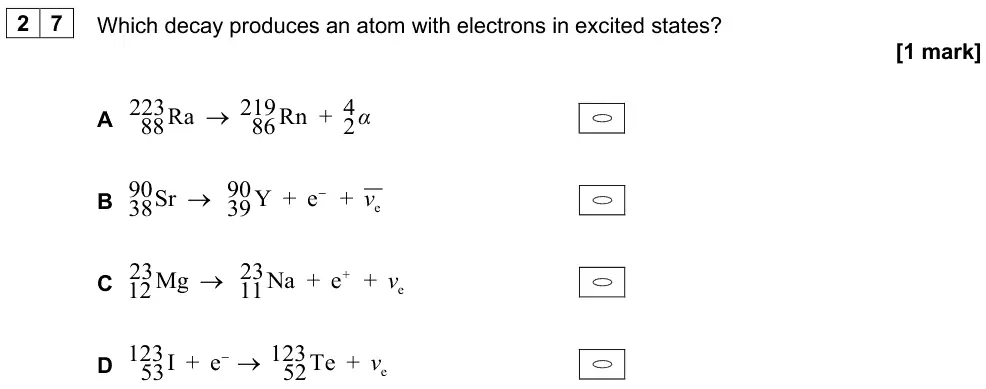
D
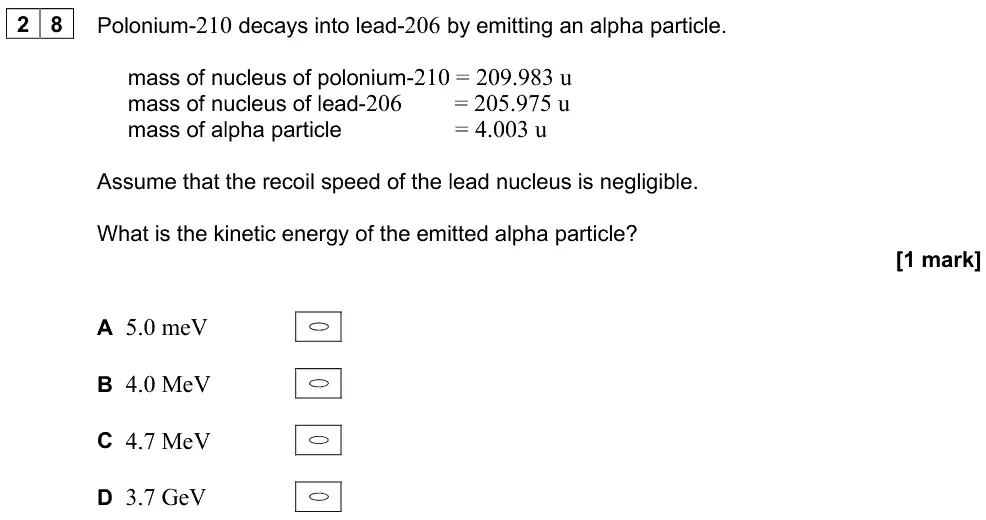
C
Students found questions 11, 14, 17, 28 and 30 to be very accessible with over two thirds getting these correct.
Skills: MS2.3 Substitute numerical values into algebraic equations using appropriate units for physical quantities
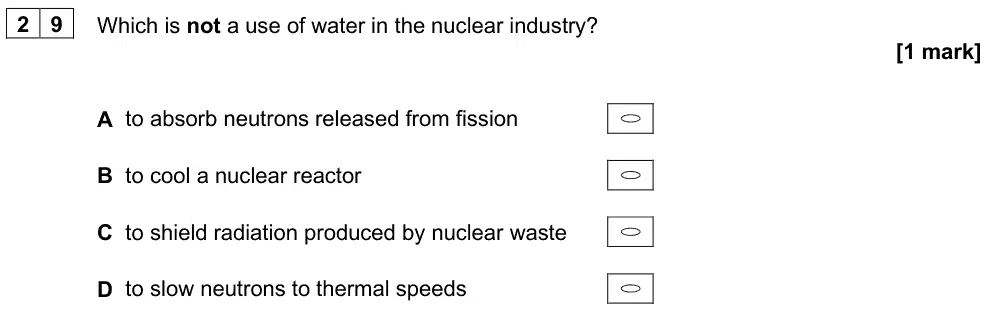
A
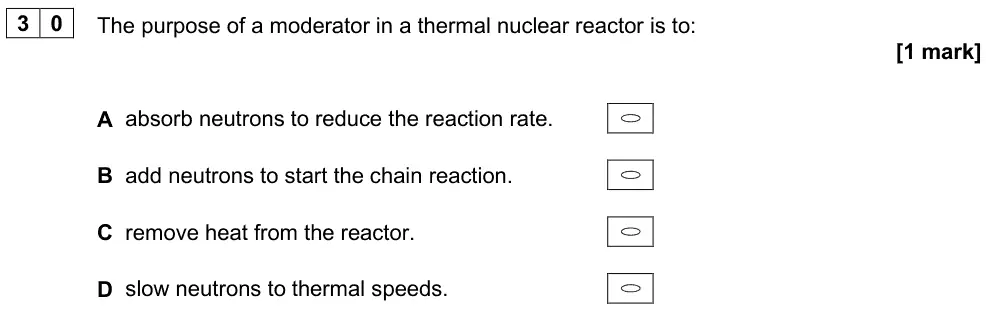
D
Students found questions 11, 14, 17, 28 and 30 to be very accessible with over two thirds getting these correct. 22 This question was very challenging with around one quarter of students answering it As a conductor moves through a magnetic field, the induced emf is given by 𝜀𝜀= 𝐵𝐵𝐵𝐵𝐵𝐵, however correctly. The correct answer was only the third most popular response. the students had to identify which distance was 𝑙𝑙. 𝑙𝑙 is the distance that is perpendicular to both the velocity and the magnetic field. The magnetic field is vertical, so 𝑙𝑙 cannot be 10 cm; the velocity is in the same direction as 30 cm, so 𝑙𝑙 must be 5.0 cm. The answer is therefore D. The most common answer was B which corresponded to 𝑙𝑙= 30 cm, the second most common answer was C corresponding to 𝑙𝑙= 10 cm. 23 This question also had the wrong answer as the most common choice, in this case C, with 𝑃𝑃= 𝐼𝐼rms𝑉𝑉rms = = 125 W. Thus, the efficiency is 125 × 100 = 80%. C comes from calculating 5×50 100 only around a third correctly identifying A as the correct answer. Students had to realise that 2 the power from the peak voltages rather than the rms values. inverse square law for radiation, which gives 800𝑑𝑑2 = 600(𝑑𝑑+ 10)2, giving 𝑑𝑑= 64 cm. 25 Around a third of students were able to answer this question correctly. This uses the
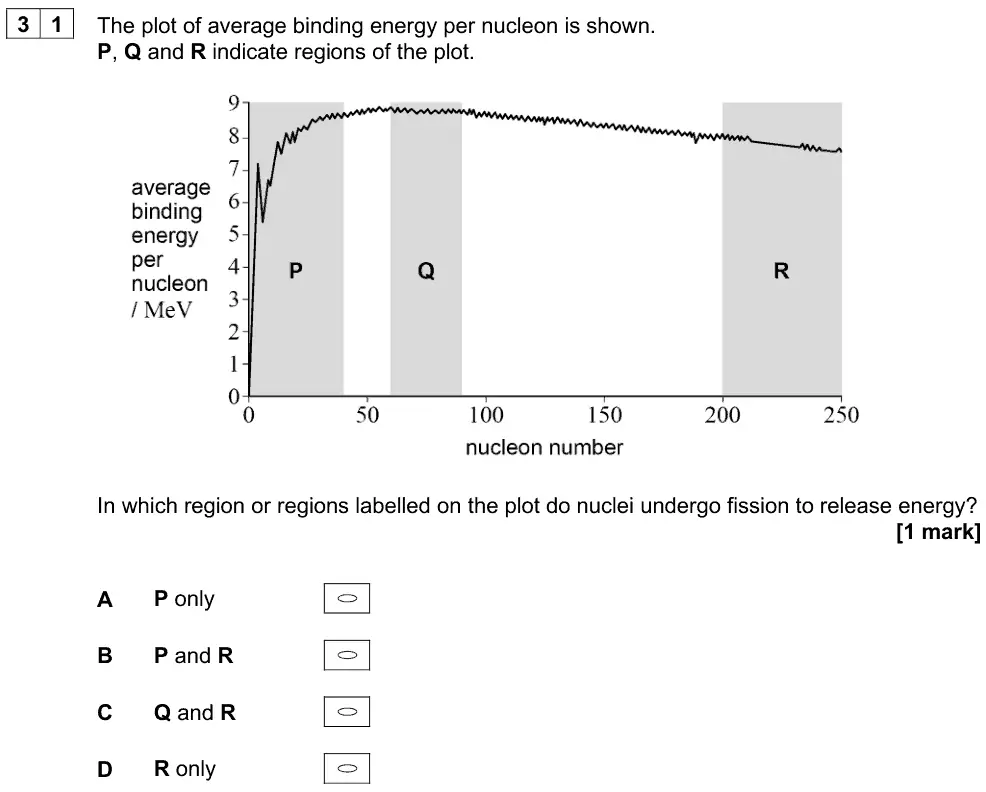
D
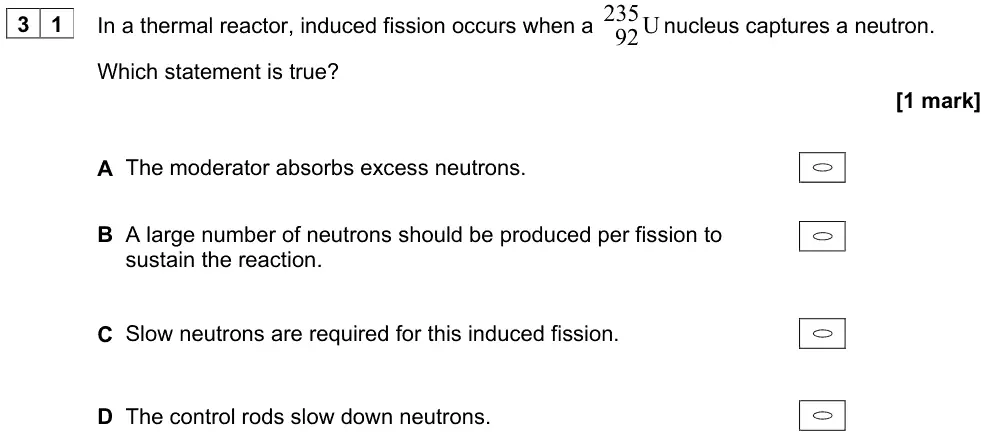
31 The most popular answer to this question was C, with just over half thinking that any fission to the right of the peak will release energy. However, the nuclei with approximately half the nucleon number of the nuclei in region Q have a lower binding energy per nucleon and so would not release energy in fission. Only nuclei with a large nucleon number such as those found in region R will release energy when fissioning. Around a third got this question correct. Grade boundaries and cumulative percentage grades are available on the Results Statistics page of the AQA Website.
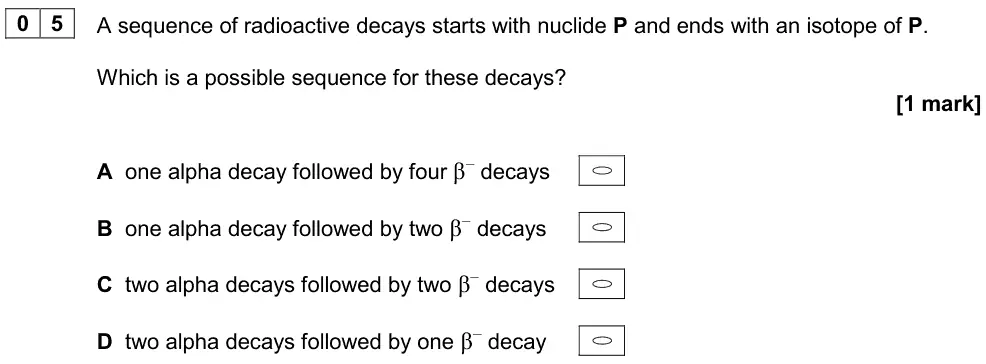
B
Generally, students were more successful in answering questions 5, 6, 7, 11, 14, 17 and were less successful in answering questions 9, 10, 12, 13, 15, 16, 18, 21, 22, 23.
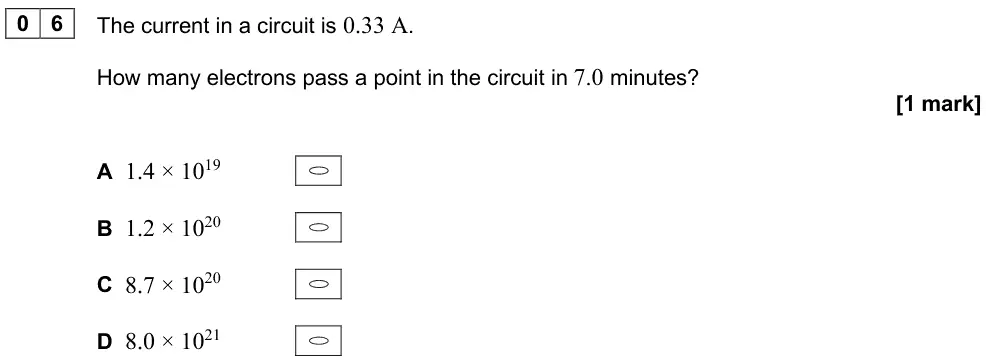
C
Generally, students were more successful in answering questions 5, 6, 7, 11, 14, 17 and were less successful in answering questions 9, 10, 12, 13, 15, 16, 18, 21, 22, 23.
Skills: MS0.2 Recognise and use expressions in decimal and standard form
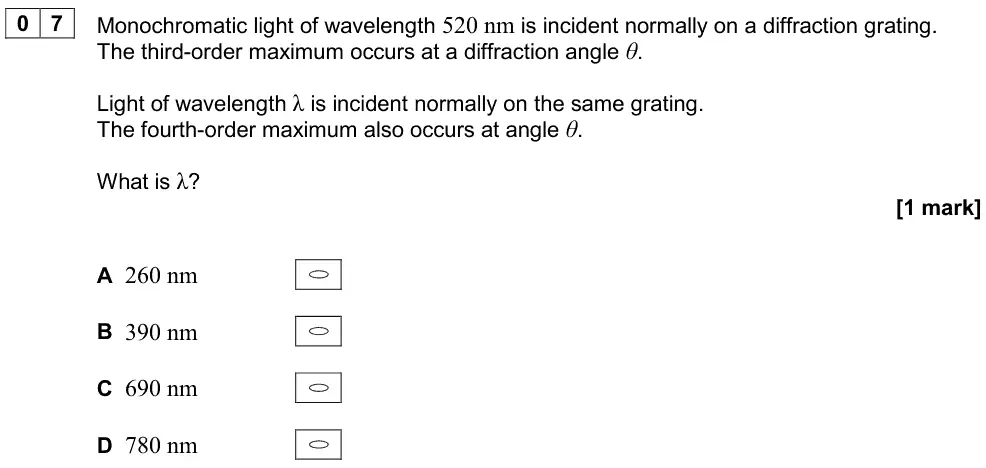
B
Generally, students were more successful in answering questions 5, 6, 7, 11, 14, 17 and were less successful in answering questions 9, 10, 12, 13, 15, 16, 18, 21, 22, 23.
Skills: MS0.3 Use ratios, fractions and percentages
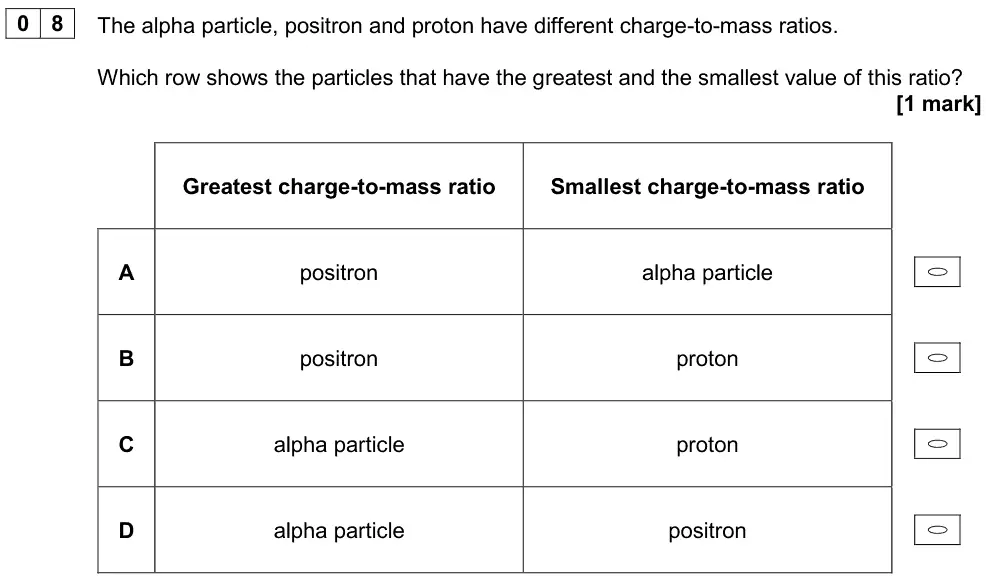
A
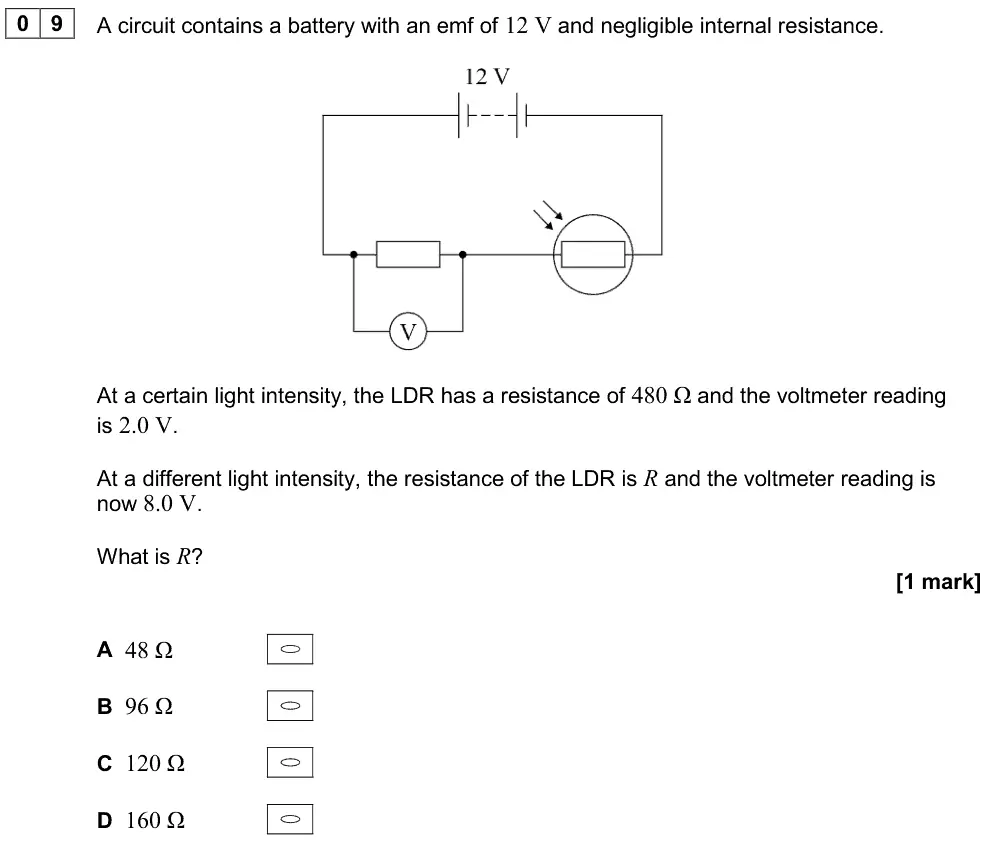
A
Generally, students were more successful in answering questions 5, 6, 7, 11, 14, 17 and were less successful in answering questions 9, 10, 12, 13, 15, 16, 18, 21, 22, 23.
Skills: MS0.3 Use ratios, fractions and percentages
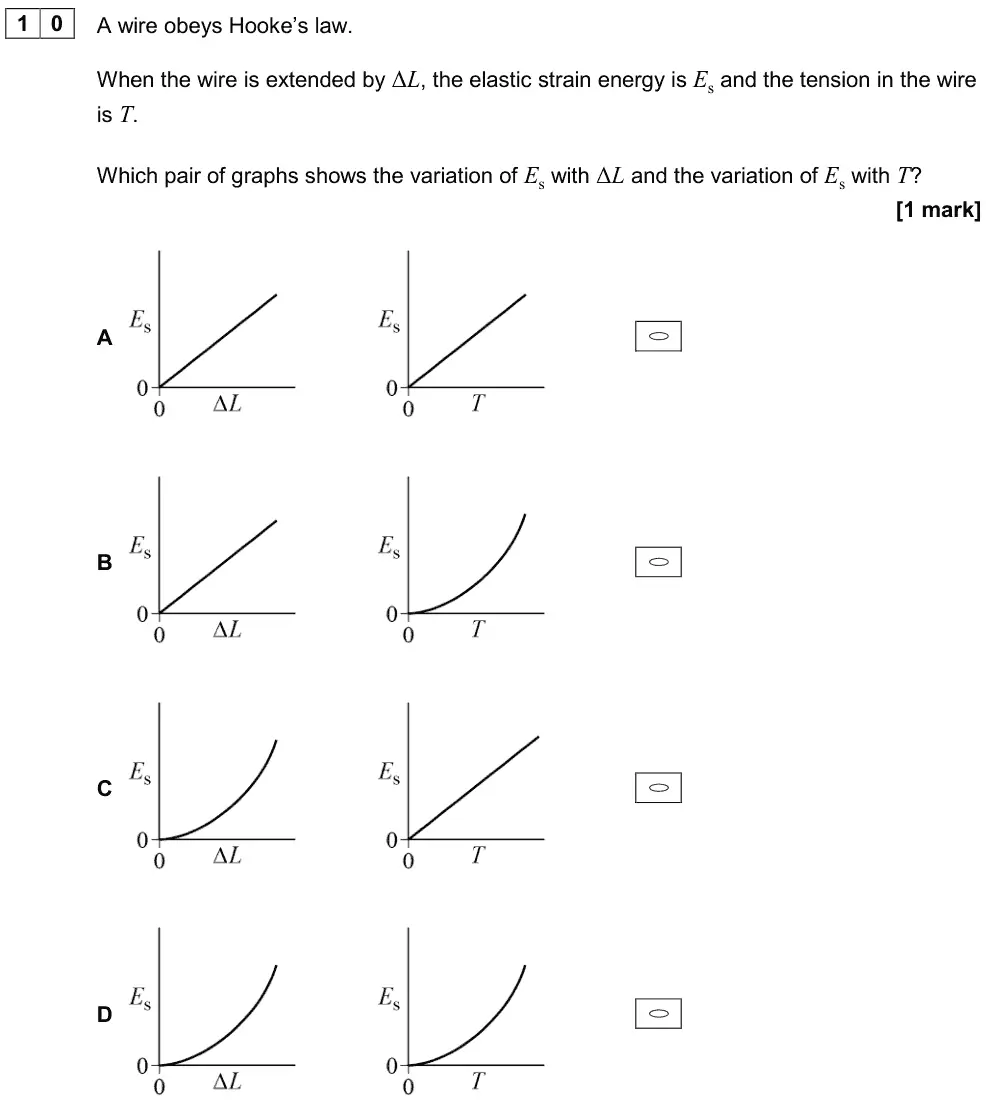
D
Question 10: Options A, B and C were equally popular.
Skills: MS3.1 Translate information between graphical, numerical and algebraic forms
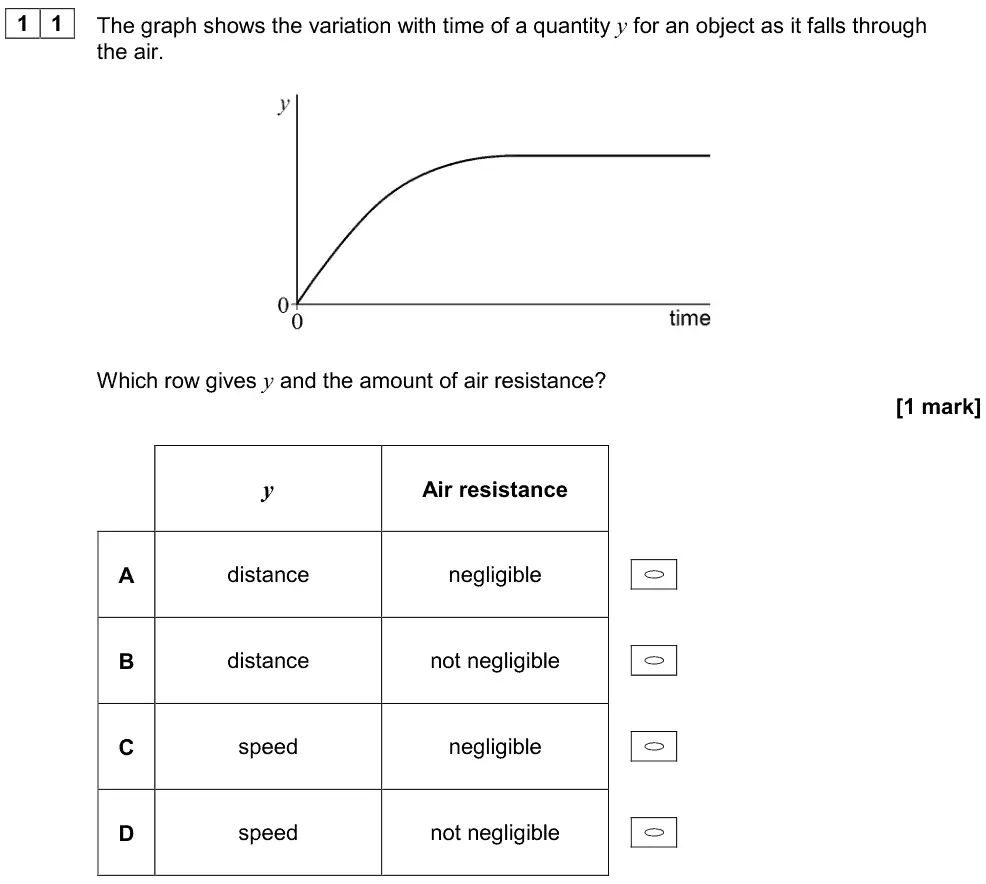
D
Generally, students were more successful in answering questions 5, 6, 7, 11, 14, 17 and were less successful in answering questions 9, 10, 12, 13, 15, 16, 18, 21, 22, 23.
Skills: MS3.1 Translate information between graphical, numerical and algebraic forms
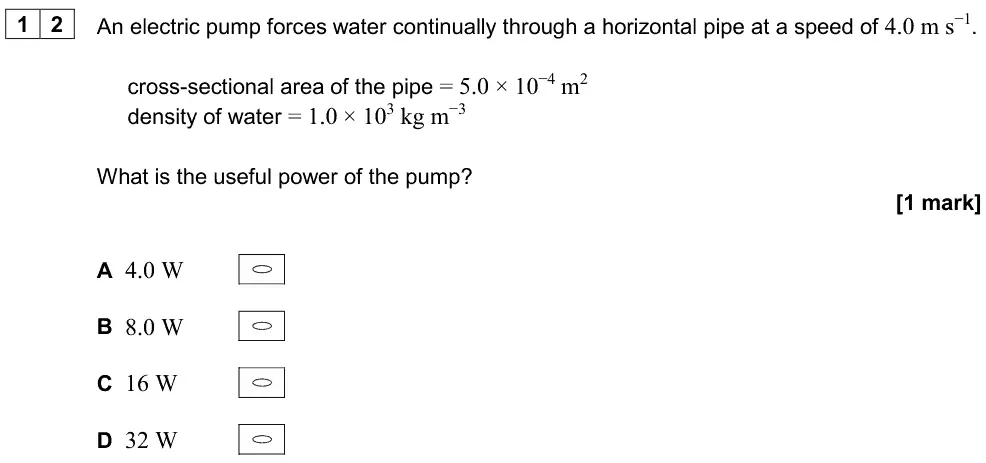
C
Question 12: Option B (8.0 W) was the most popular response. This is likely to be from multiplying the mass of water per second (2 kg) by the speed (4.0 m s–1). This question also had a large number of non- attempts.
Skills: MS2.3 Substitute numerical values into algebraic equations using appropriate units for physical quantities
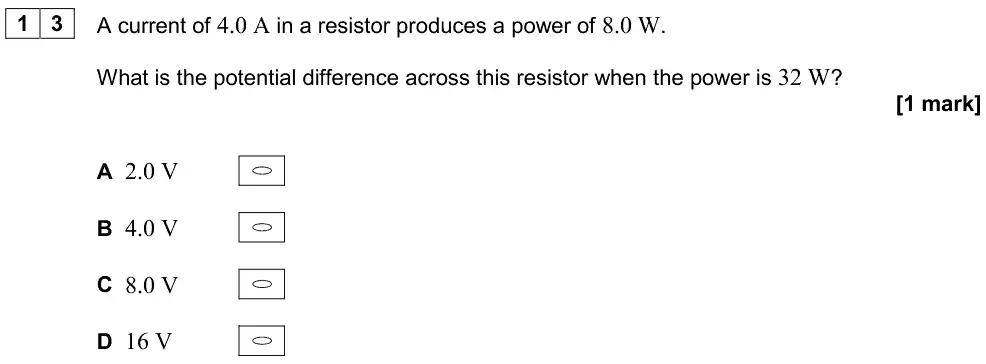
B
Question 13: Option C (8.0 V) was the most popular response. This arises from arriving at a potential difference of 2.0 V for the initial state and then reasoning that p.d. increases by a factor of four in line with the increase in power.
Skills: MS0.3 Use ratios, fractions and percentages
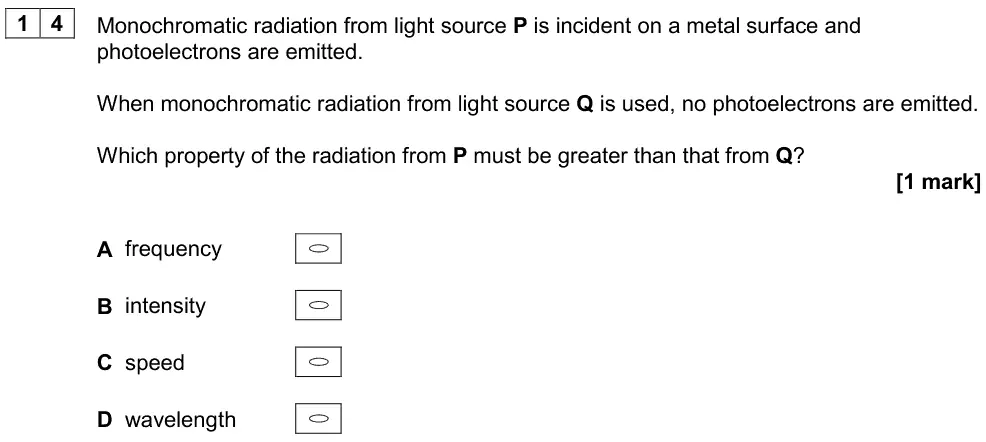
A
Generally, students were more successful in answering questions 5, 6, 7, 11, 14, 17 and were less successful in answering questions 9, 10, 12, 13, 15, 16, 18, 21, 22, 23.
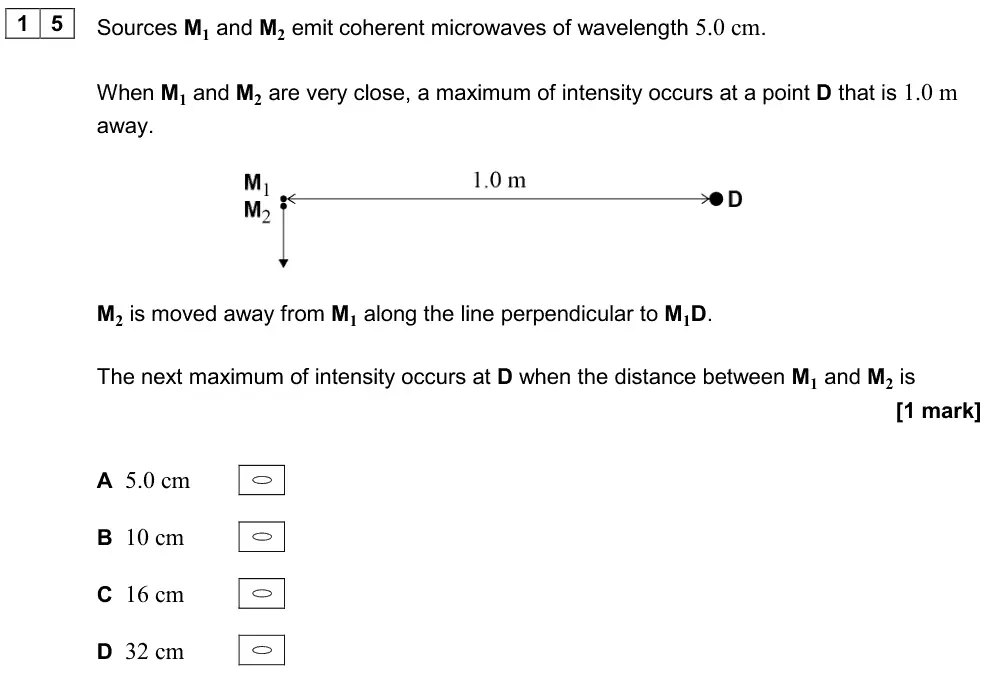
D
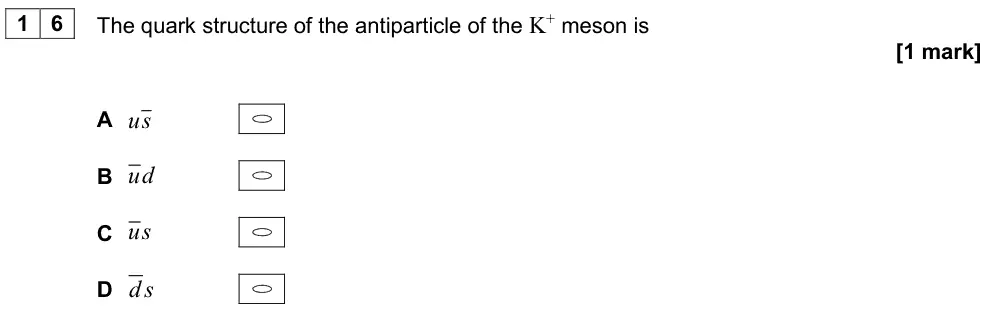
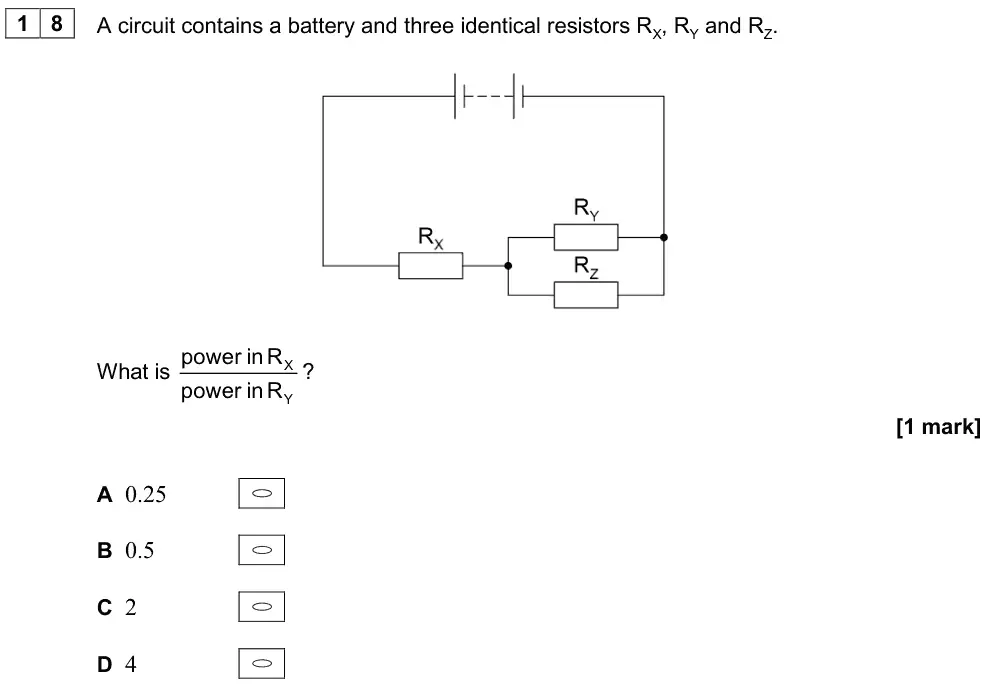
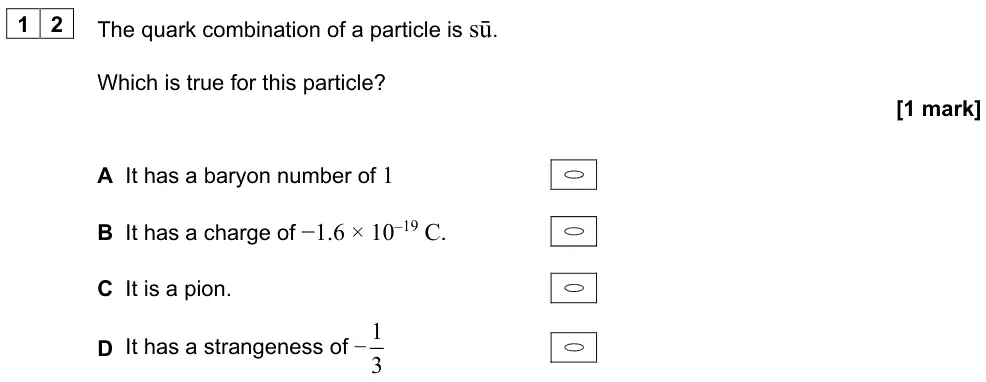
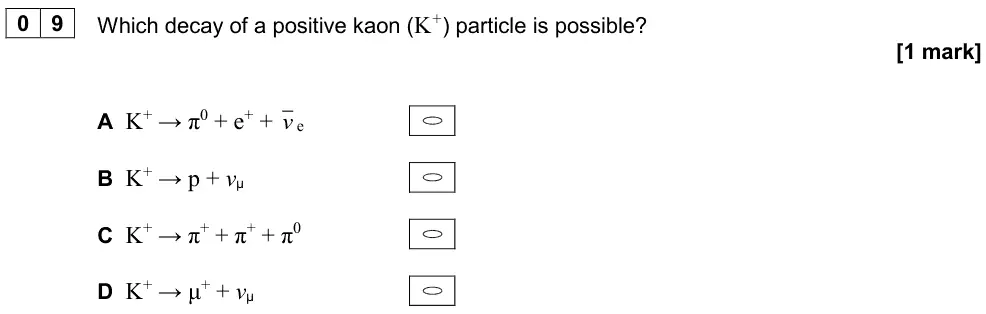
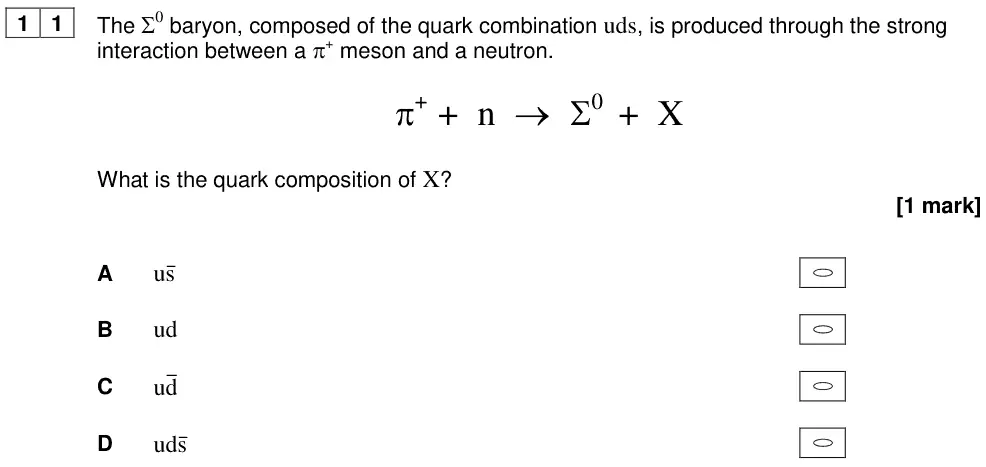
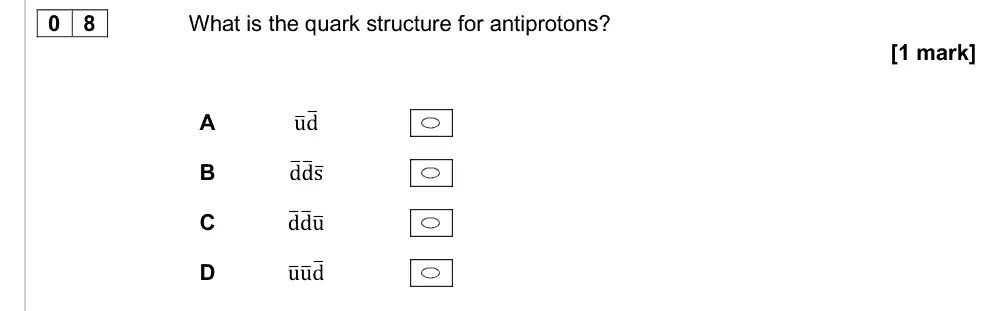
Question 15: Option B (10 cm) was the most popular response. Question 16: Option A (𝑢𝑢𝑠𝑠̅) was the most popular response. This is the quark structure of the K+ meson. Question 18: Option C (2) the most popular response.
Skills: MS4.4 Use Pythagoras’ theorem, and the angle sum of a triangle
C
D
Generally, students were more successful in answering questions 5, 6, 7, 11, 14, 17 and were less successful in answering questions 9, 10, 12, 13, 15, 16, 18, 21, 22, 23.
Skills: MS0.2 Recognise and use expressions in decimal and standard form
D
Skills: MS0.3 Use ratios, fractions and percentages
D
Skills: MS3.8 Understand the possible physical significance of the area between a curve and the x axis and be able to calculate it or estimate it by graphical methods as appropriate
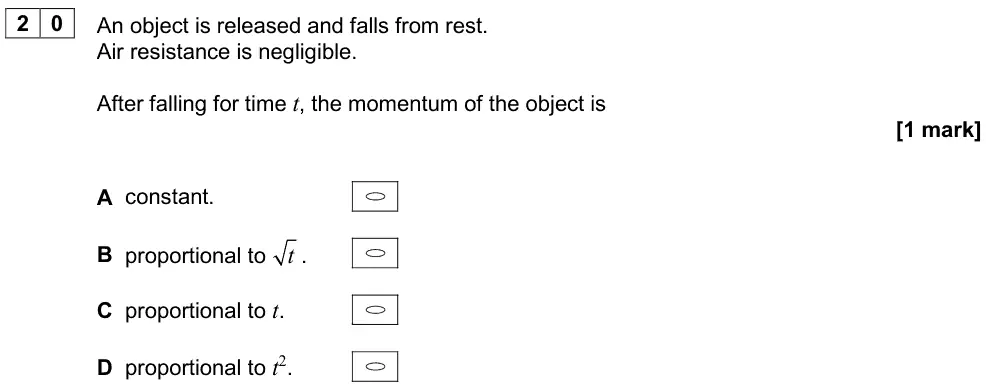
C
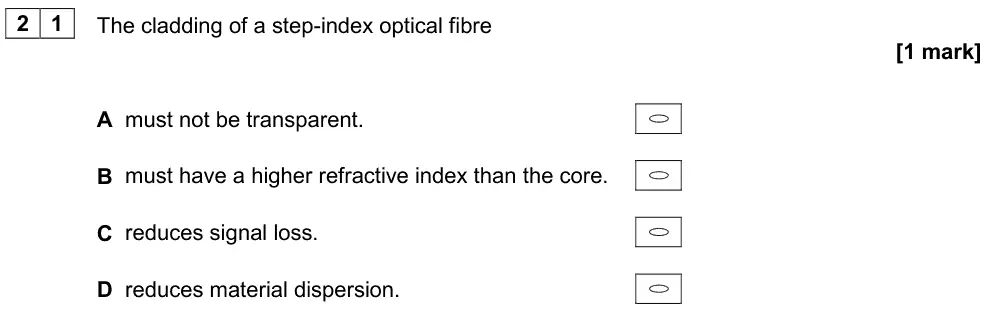
C
Question 21: Option B was the most popular response.
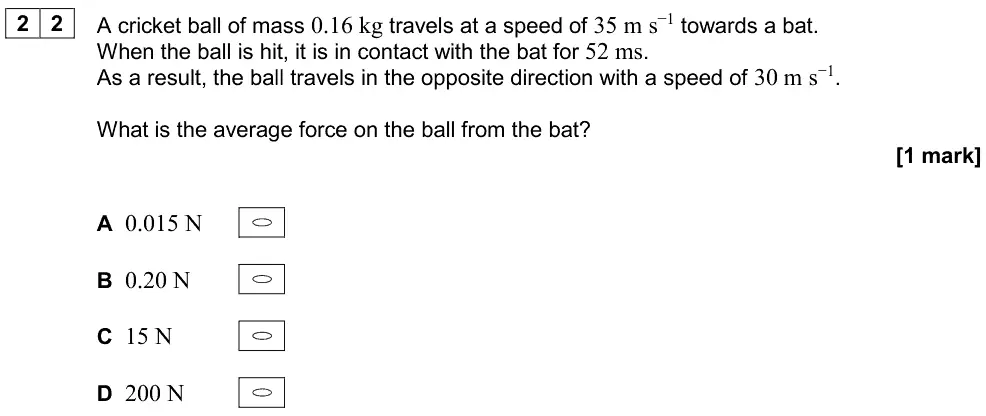
D
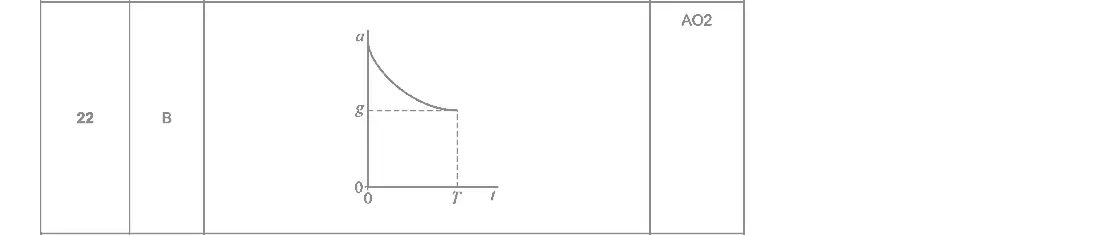
Question 22: Option C (15 N) was the most popular response. This is obtained using a change in velocity of 5 m s–1.
Skills: MS0.1 Recognise and make use of appropriate units in calculations
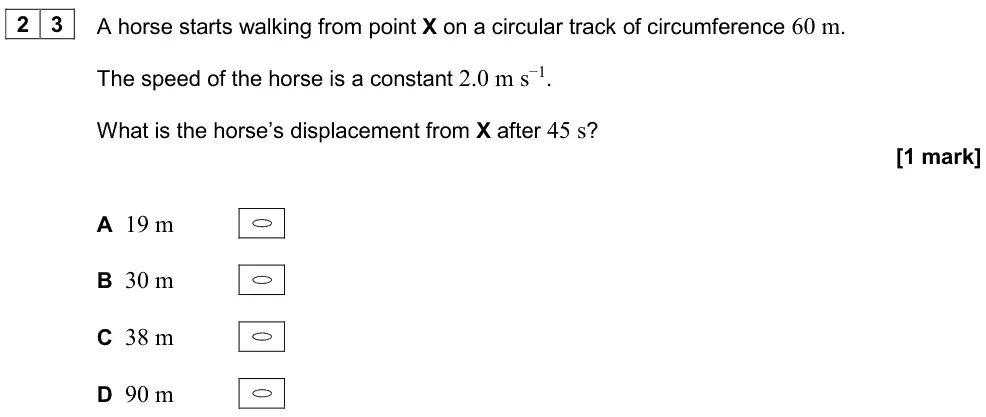
A
Question 23: Option B (30 m) was the most popular response. This is half the circumference, not the diameter, which is the correct answer.
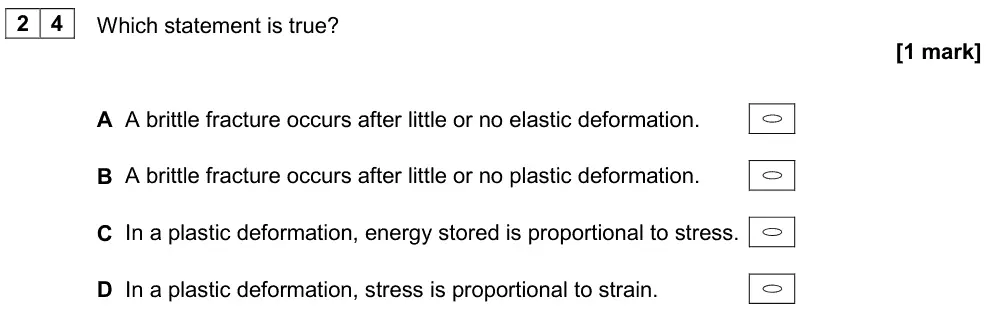
B
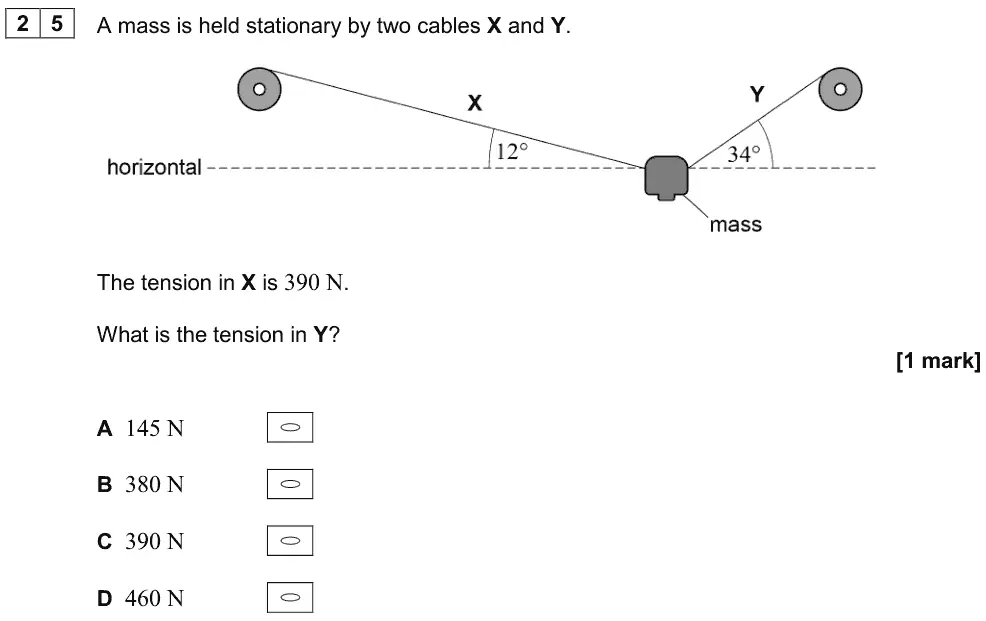
D
Skills: MS4.5 Use sin, cos and tan in physical problems
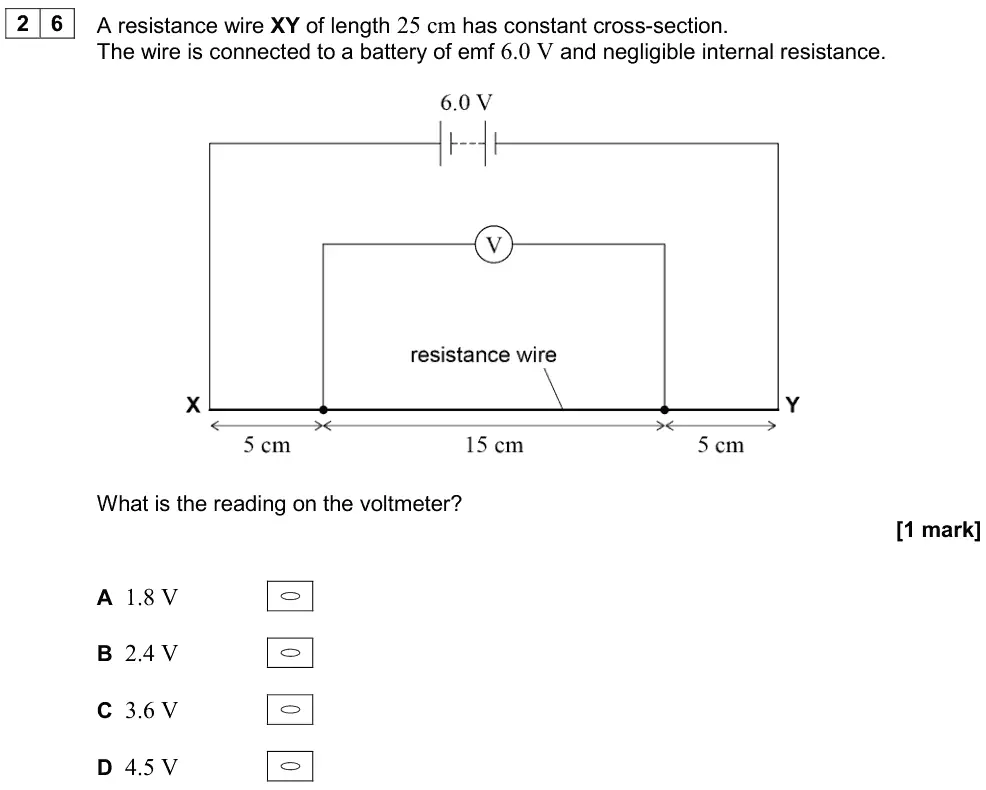
C
Skills: MS0.3 Use ratios, fractions and percentages
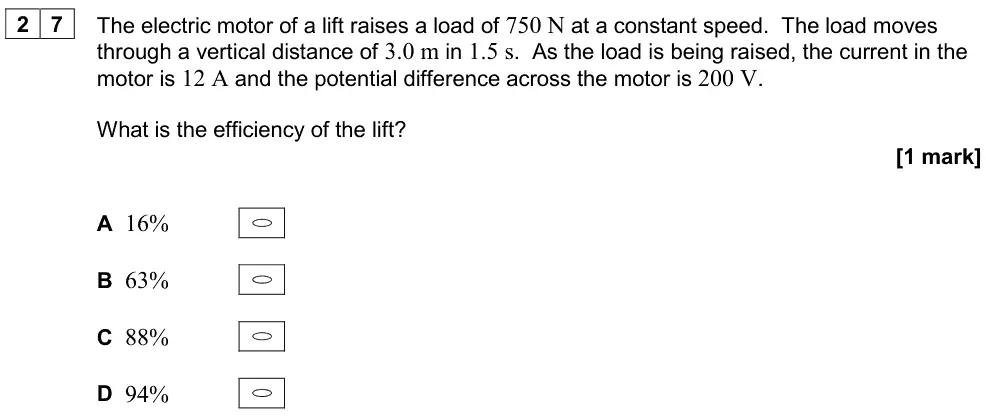
B
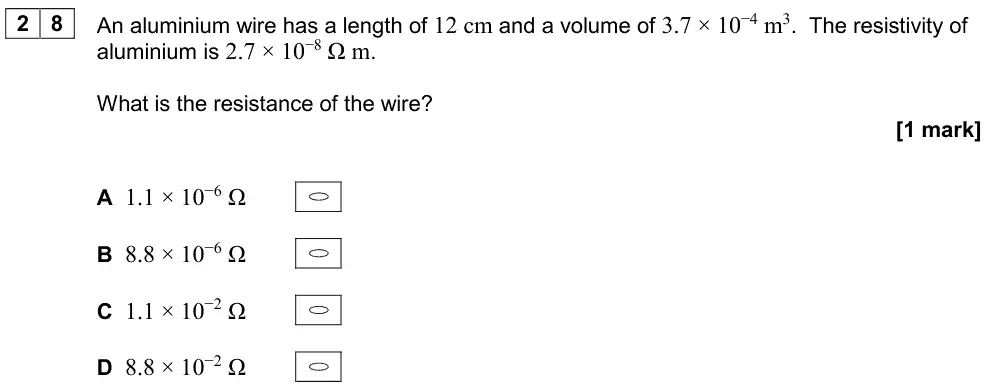
A
Skills: MS0.2 Recognise and use expressions in decimal and standard form; MS2.3 Substitute numerical values into algebraic equations using appropriate units for physical quantities
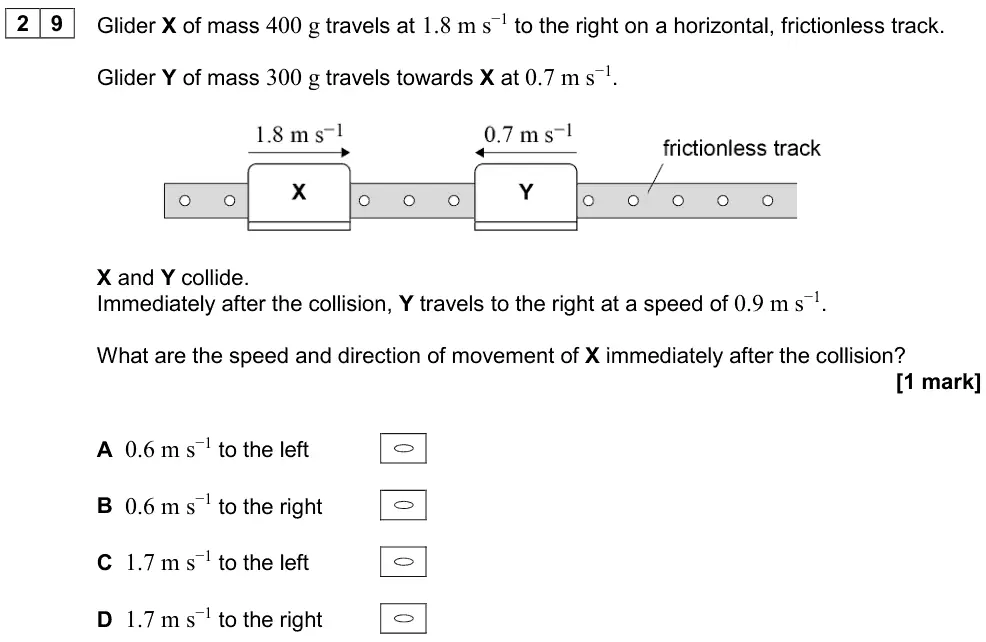
B
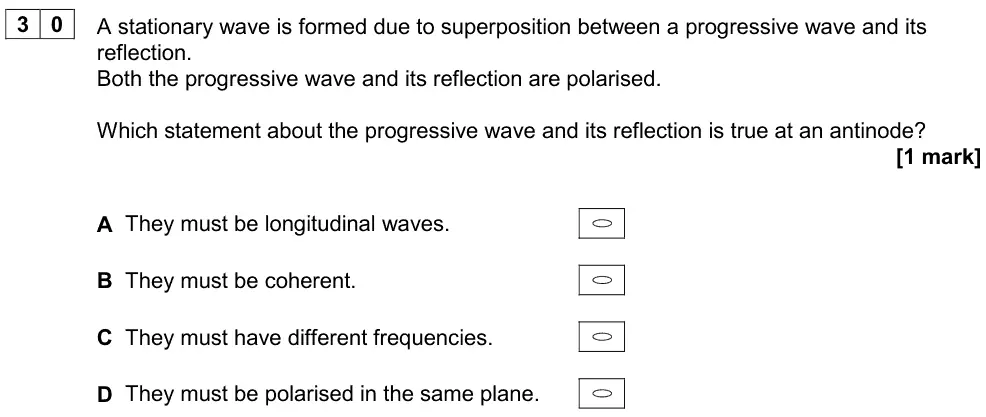
D
Question 30: Option B was the most popular response.
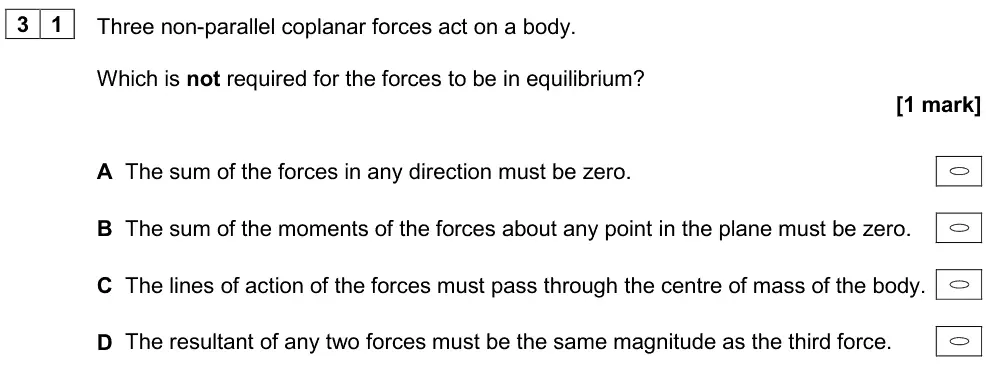
C
C
D
Skills: MS3.3 Understand that y = mx + c represents a linear relationship
A
C
Skills: MS0.3 Use ratios, fractions and percentages
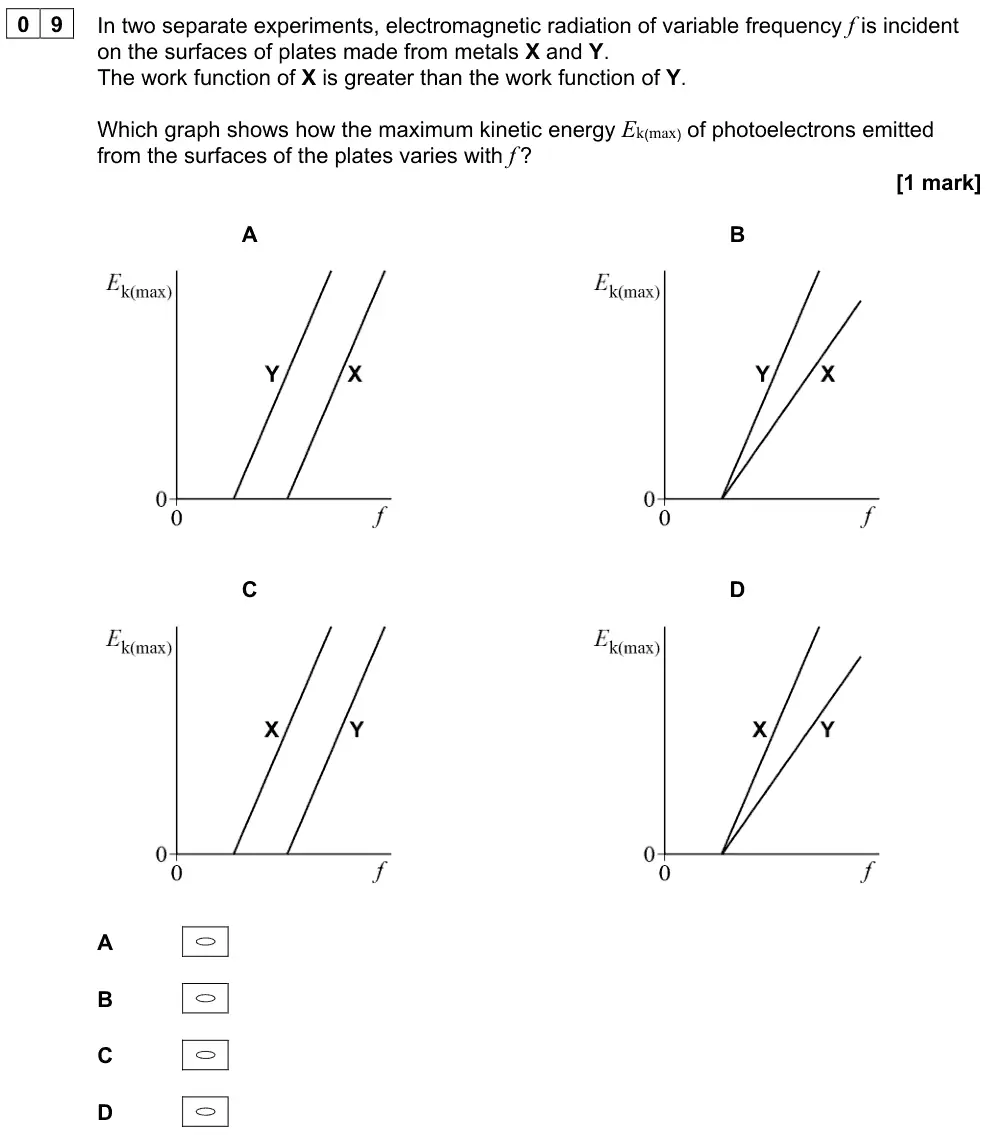
A
Skills: MS3.1 Translate information between graphical, numerical and algebraic forms
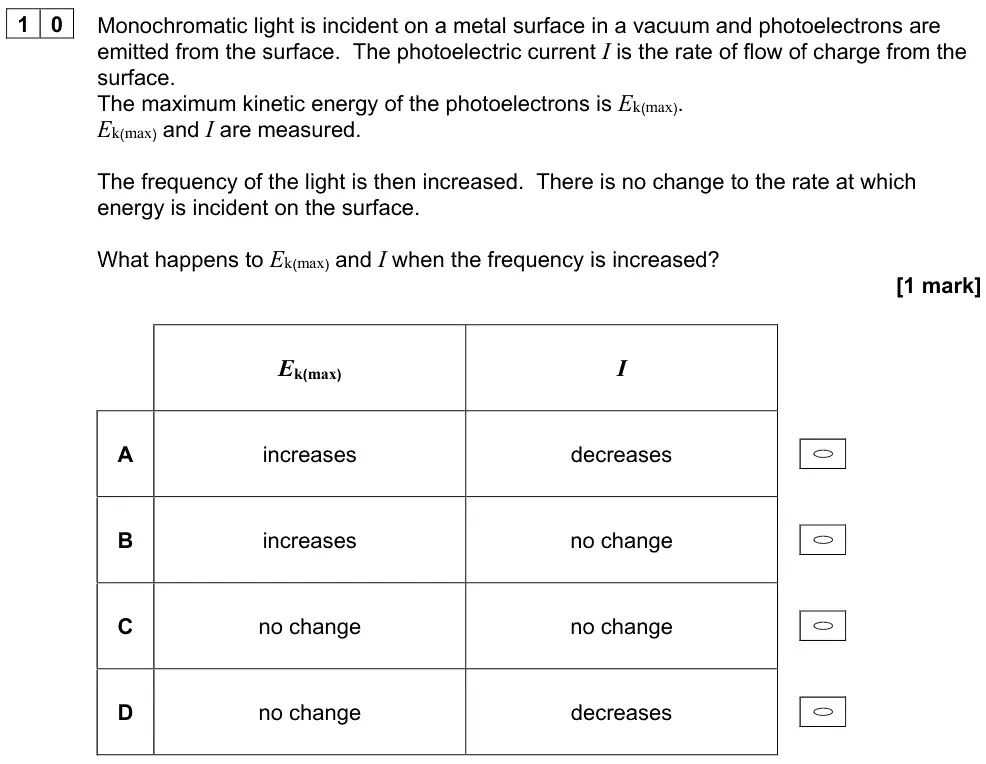
A
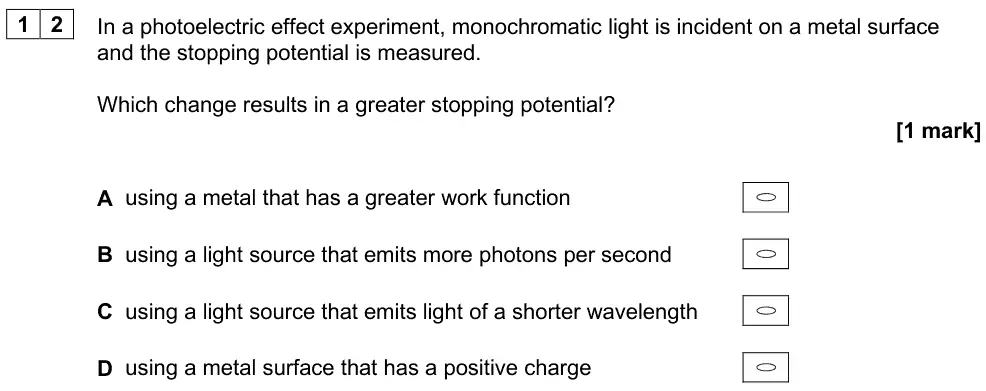
There were two very demanding questions answered correctly by fewer than 12% of students. These were B10 and B25. In B10 most students chose option B. This suggests that they did not realise that, when the energy transfer rate stays the same, using light of higher frequency means fewer photons per second and therefore a lower current.
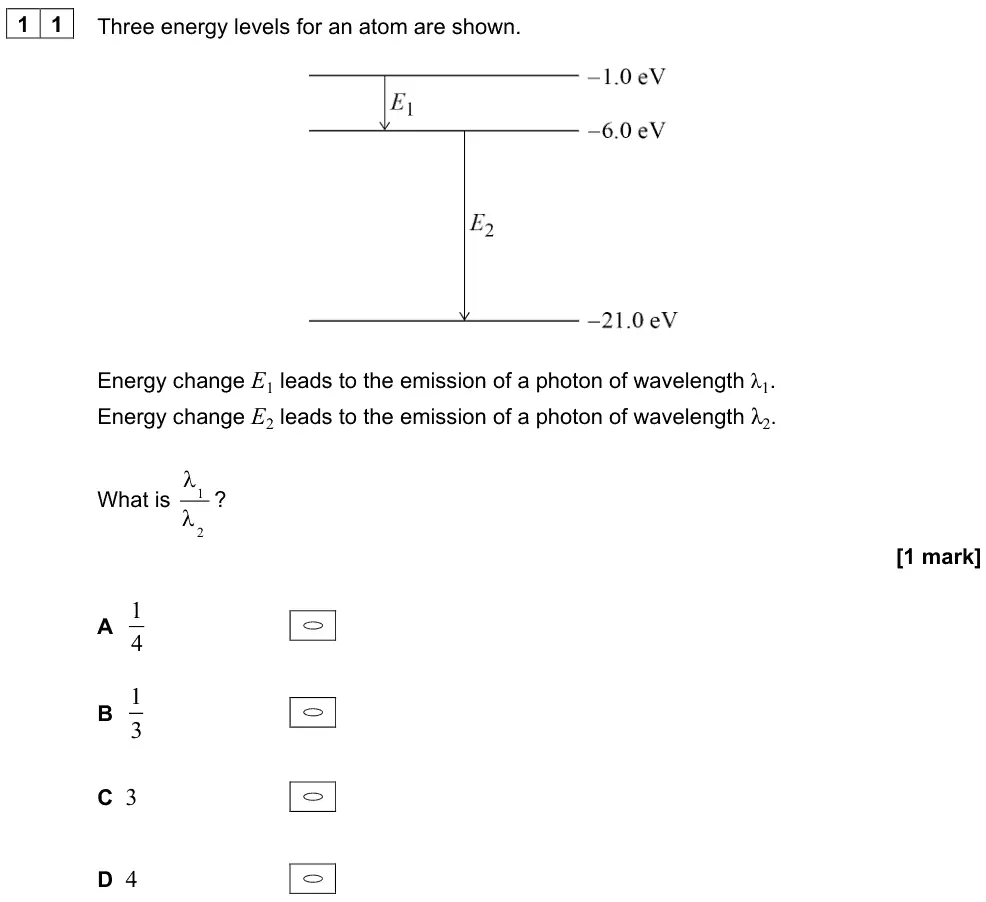
C
Skills: MS0.3 Use ratios, fractions and percentages
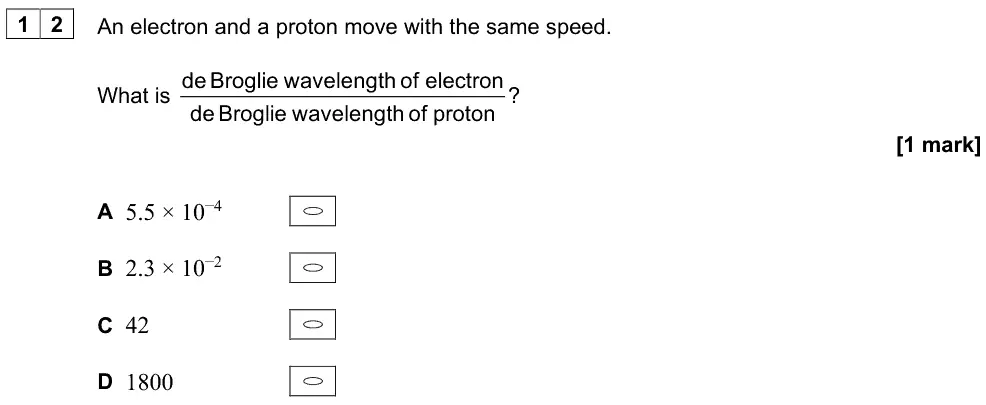
D
There were five very accessible questions that were correctly answered by more than 70% of students. These were B12, B18, B14, B27 and B29.
Skills: MS0.3 Use ratios, fractions and percentages
D
Skills: MS0.2 Recognise and use expressions in decimal and standard form
A
There were five very accessible questions that were correctly answered by more than 70% of students. These were B12, B18, B14, B27 and B29.
D
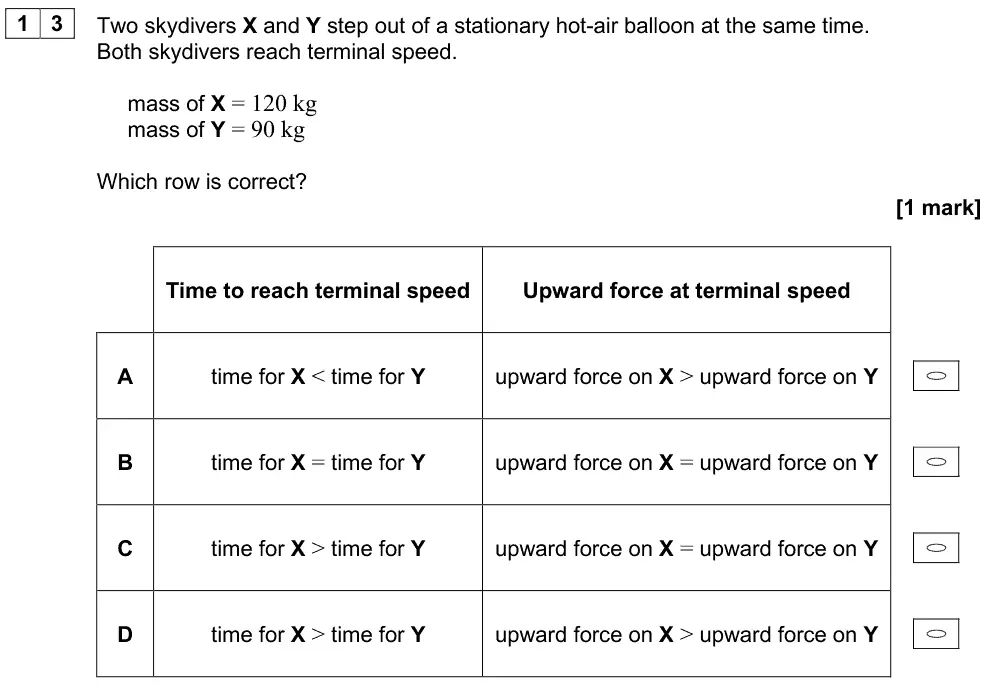
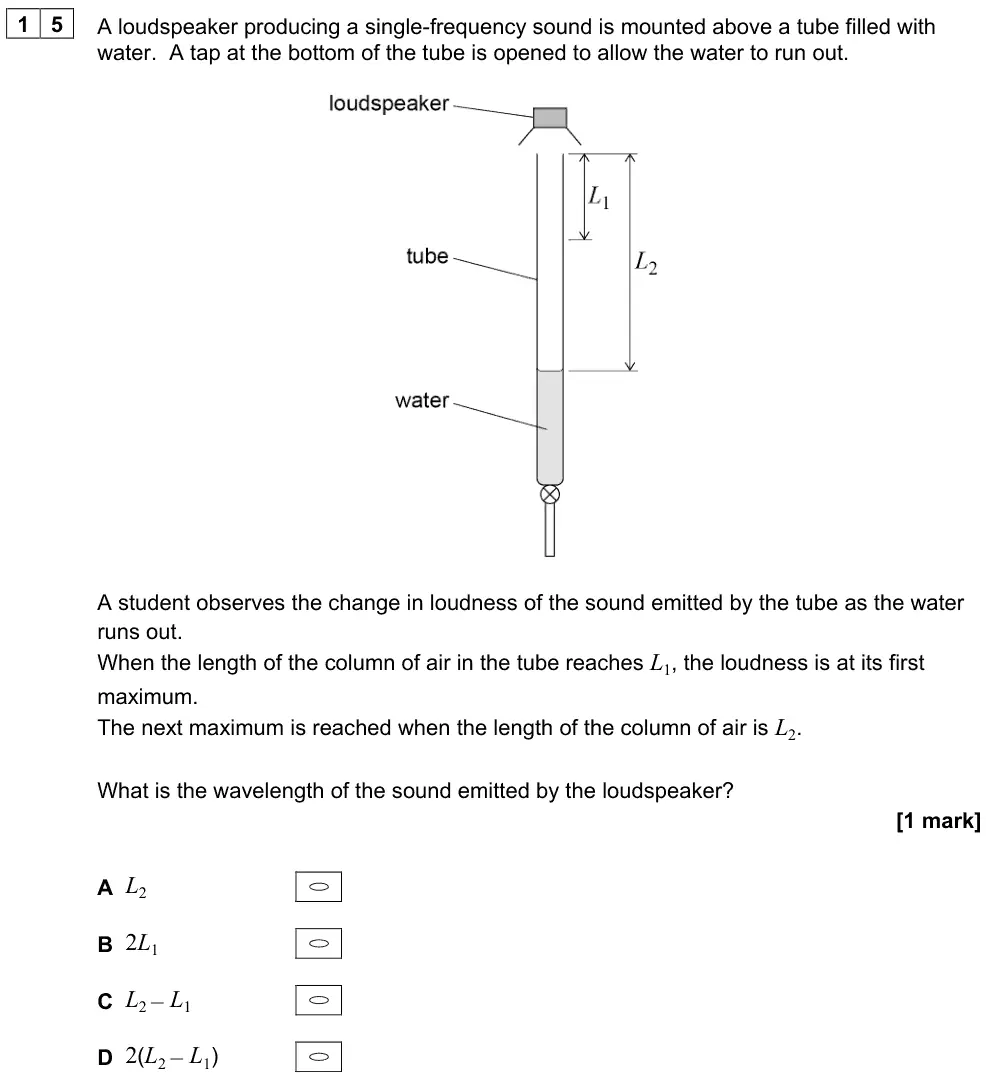
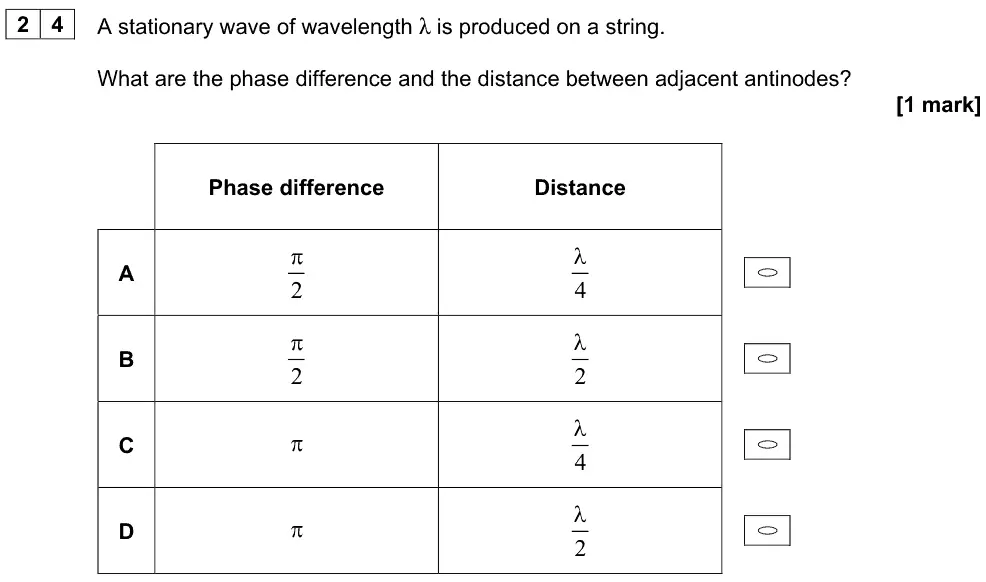
In B15 most students chose C, which is the distance between two nodes, or half the wavelength. In B20 most students chose B, presumably because they did not take into account the increased time of flight. In B22 most students chose D, despite a terminal speed being mentioned in the stem of the question.
A
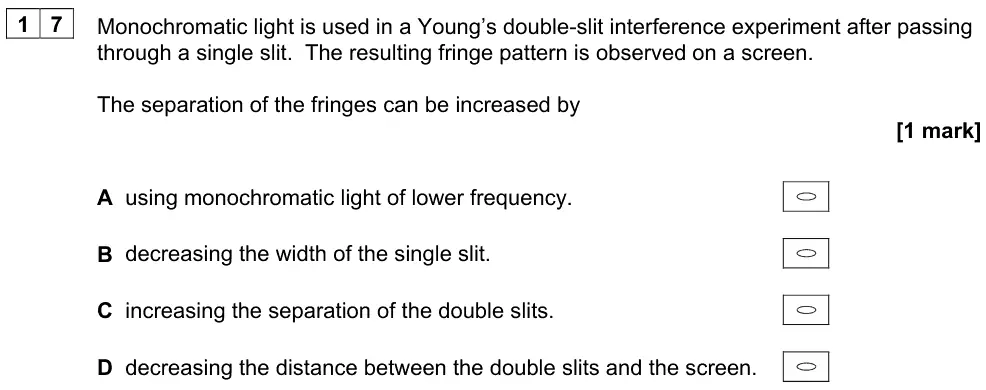
A
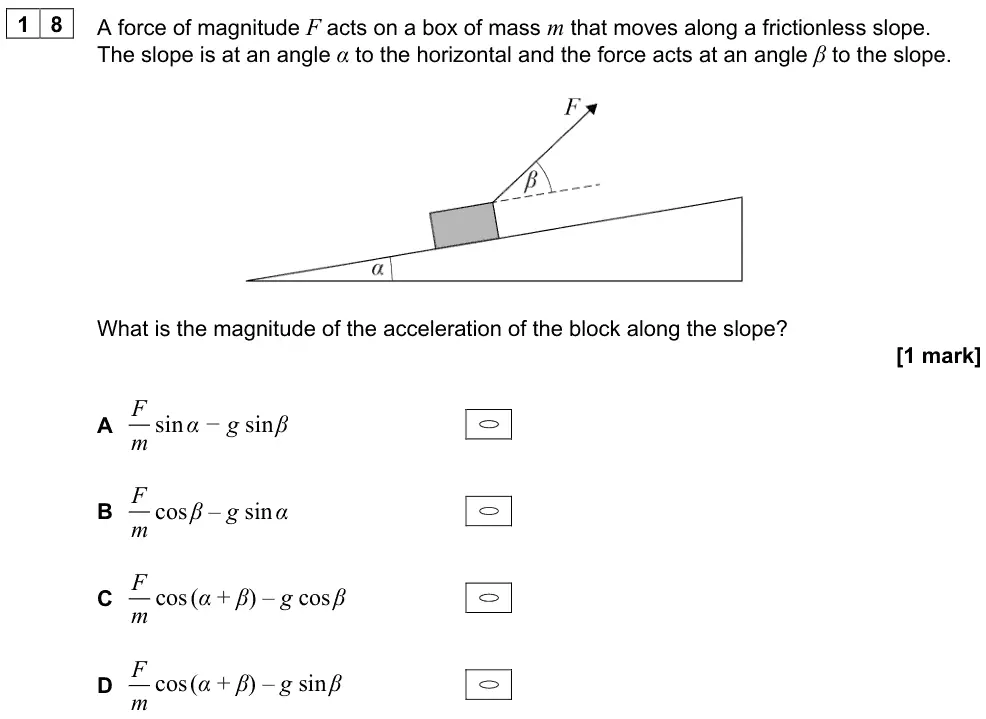
B
There were five very accessible questions that were correctly answered by more than 70% of students. These were B12, B18, B14, B27 and B29.
Skills: MS4.5 Use sin, cos and tan in physical problems
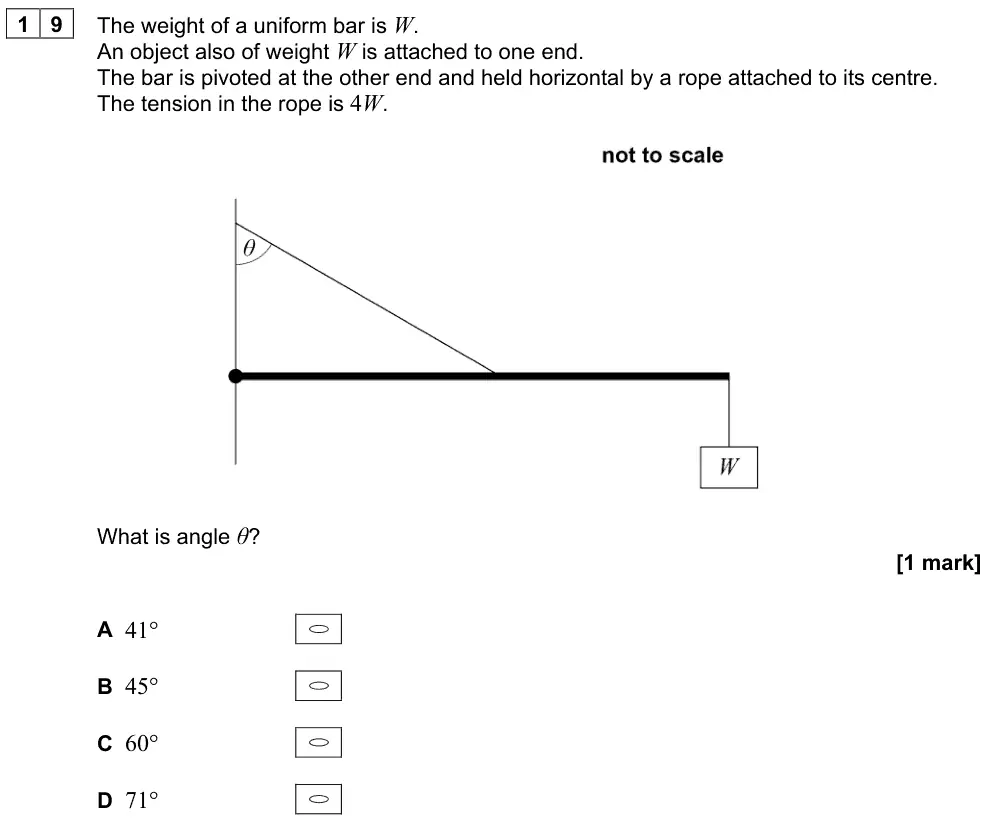
A
Skills: MS4.5 Use sin, cos and tan in physical problems
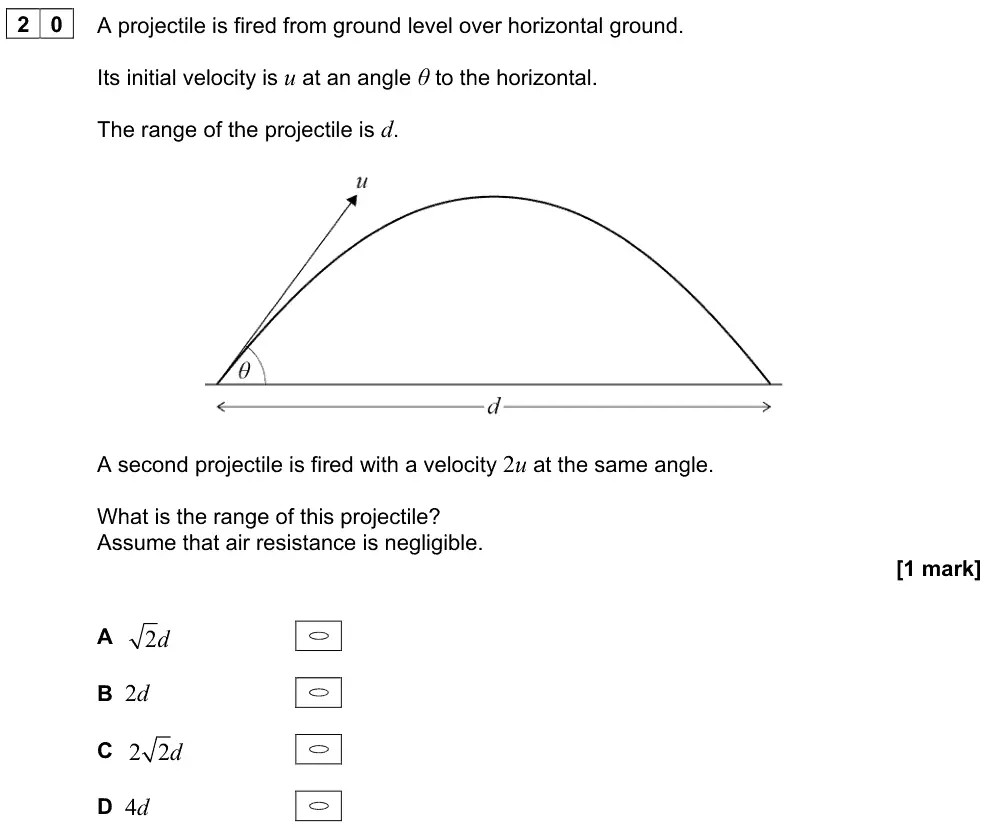
D
In B15 most students chose C, which is the distance between two nodes, or half the wavelength. In B20 most students chose B, presumably because they did not take into account the increased time of flight. In B22 most students chose D, despite a terminal speed being mentioned in the stem of the question.
Skills: MS0.3 Use ratios, fractions and percentages
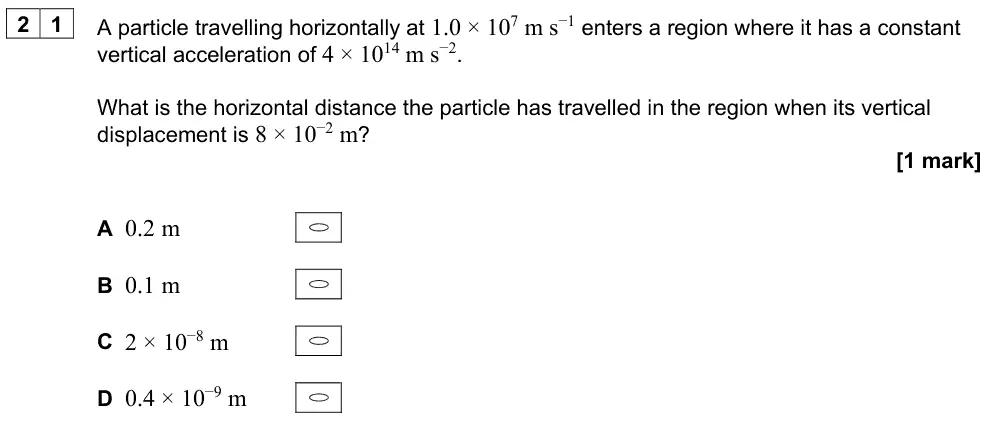
A
Skills: MS0.2 Recognise and use expressions in decimal and standard form
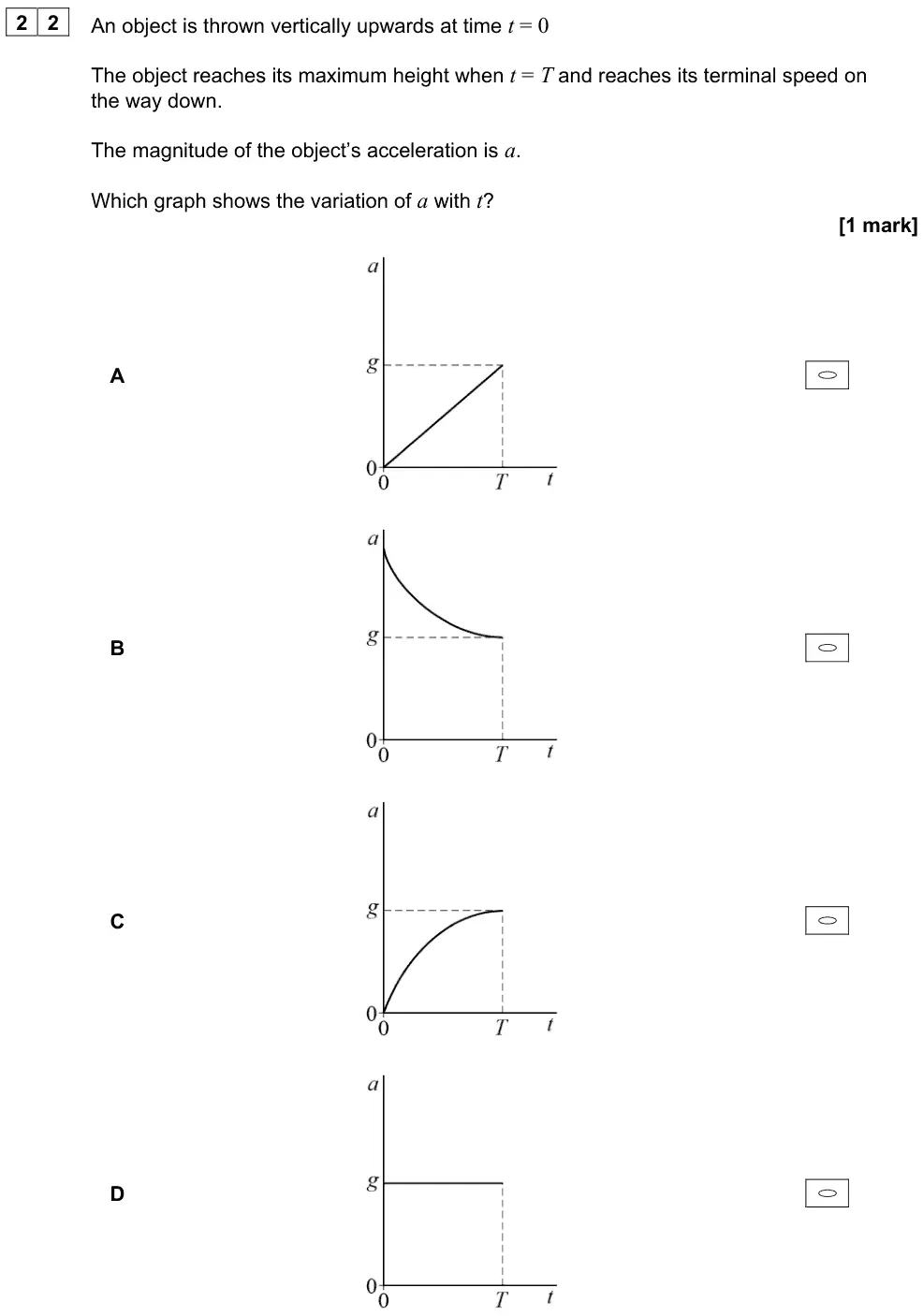
B
In B15 most students chose C, which is the distance between two nodes, or half the wavelength. In B20 most students chose B, presumably because they did not take into account the increased time of flight. In B22 most students chose D, despite a terminal speed being mentioned in the stem of the question.
Skills: MS3.1 Translate information between graphical, numerical and algebraic forms
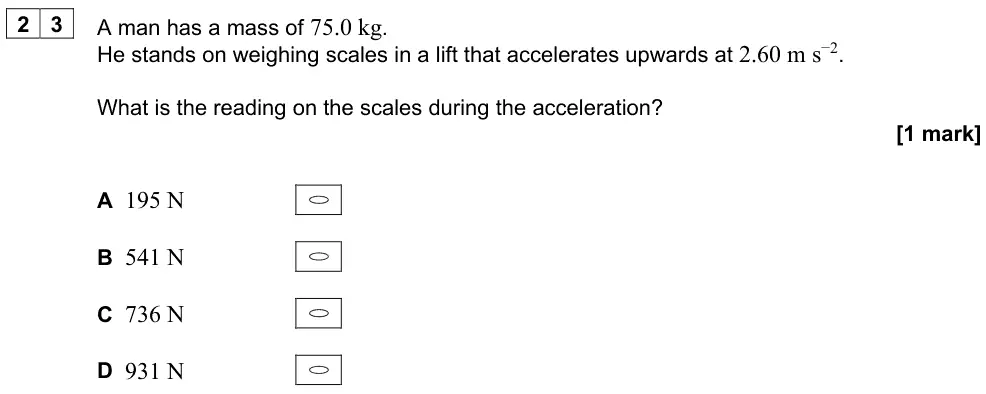
D
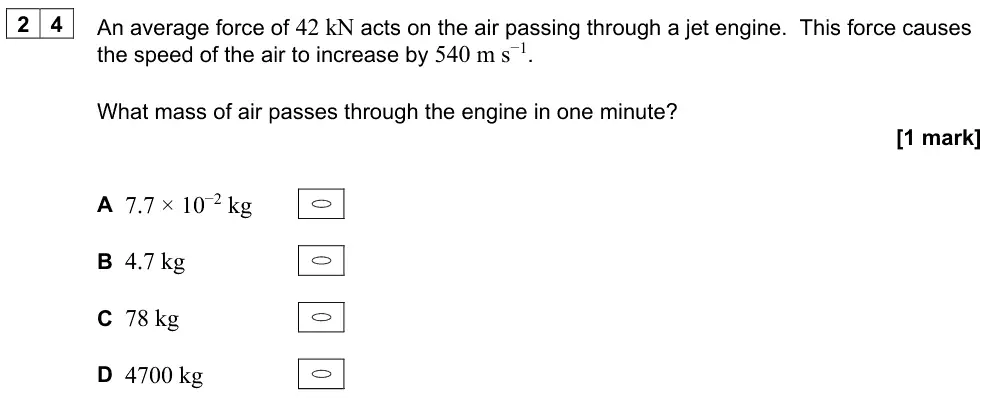
D
Skills: MS0.1 Recognise and make use of appropriate units in calculations
C
There were two very demanding questions answered correctly by fewer than 12% of students. These were B10 and B25. In B25 most students chose option B. In fact, the correct answer was the least popular option. Careful analysis, using a sketch graph for example, would show that the answer is C.
Skills: MS0.3 Use ratios, fractions and percentages
C
D
There were five very accessible questions that were correctly answered by more than 70% of students. These were B12, B18, B14, B27 and B29.
A
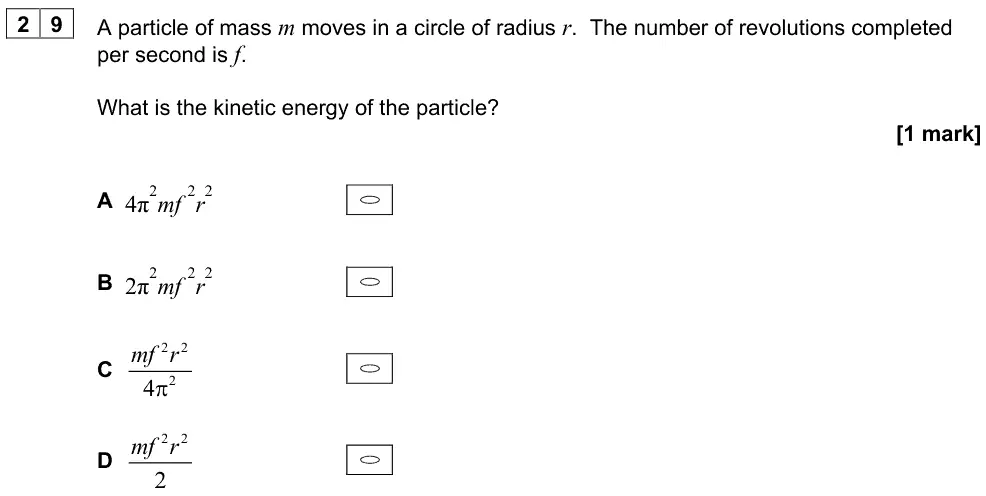
B
There were five very accessible questions that were correctly answered by more than 70% of students. These were B12, B18, B14, B27 and B29.
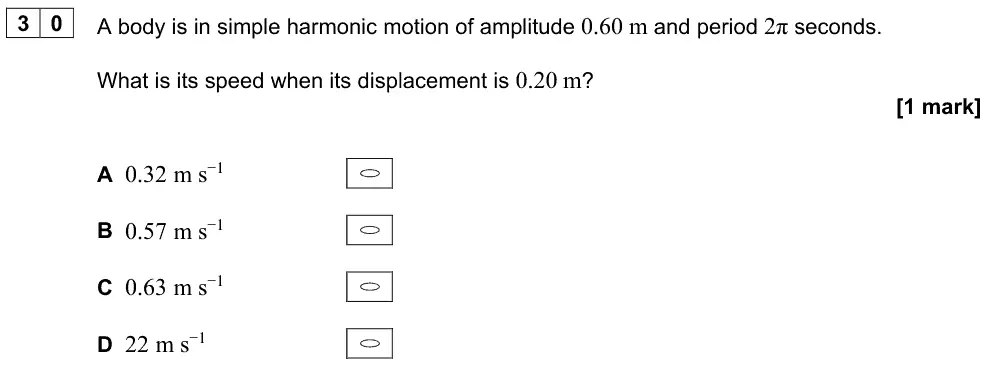
B
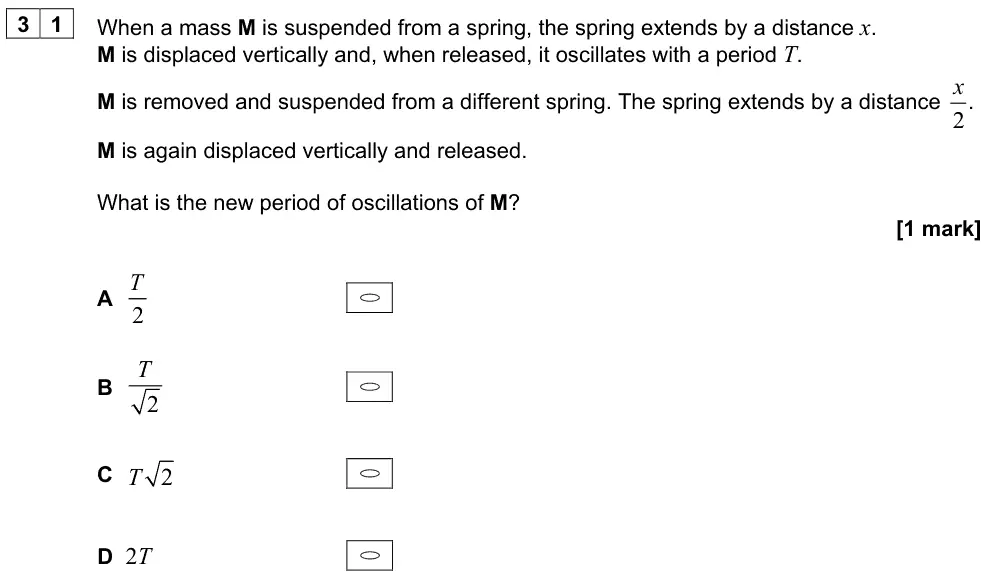
B
Skills: MS0.3 Use ratios, fractions and percentages
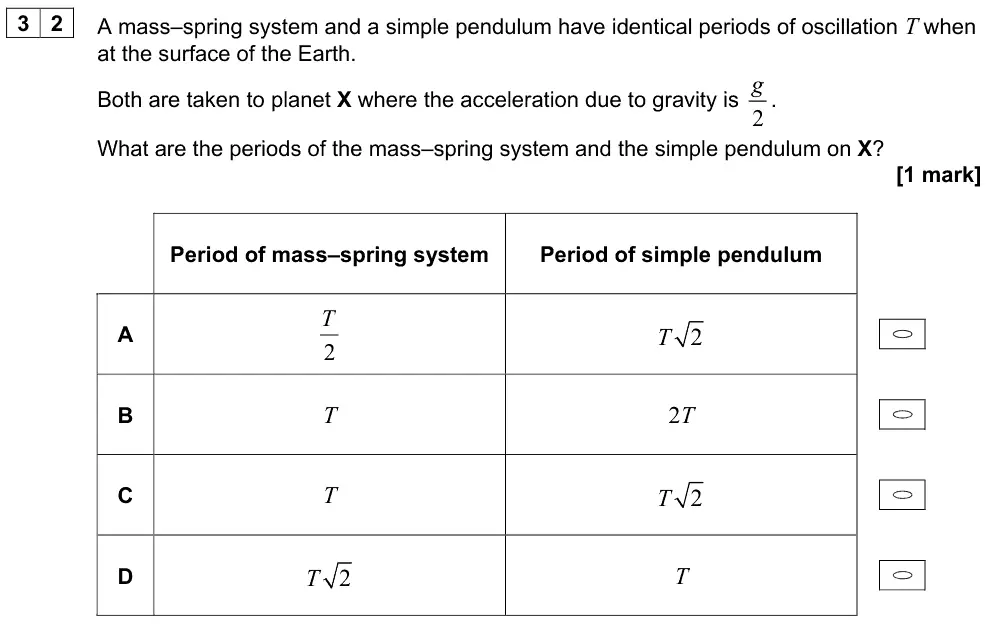
C
Skills: MS0.3 Use ratios, fractions and percentages
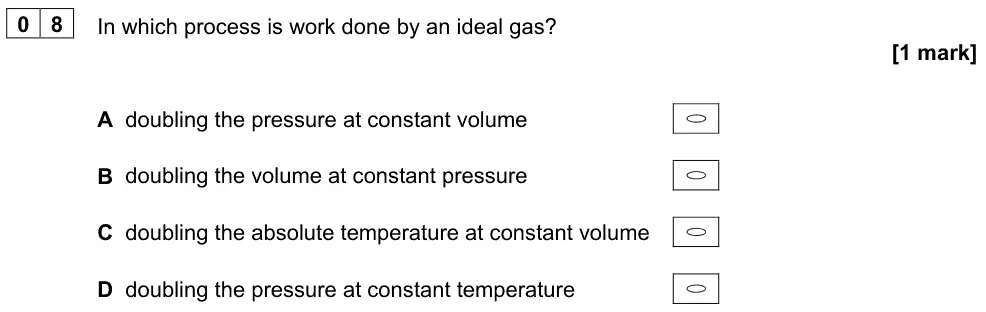
B
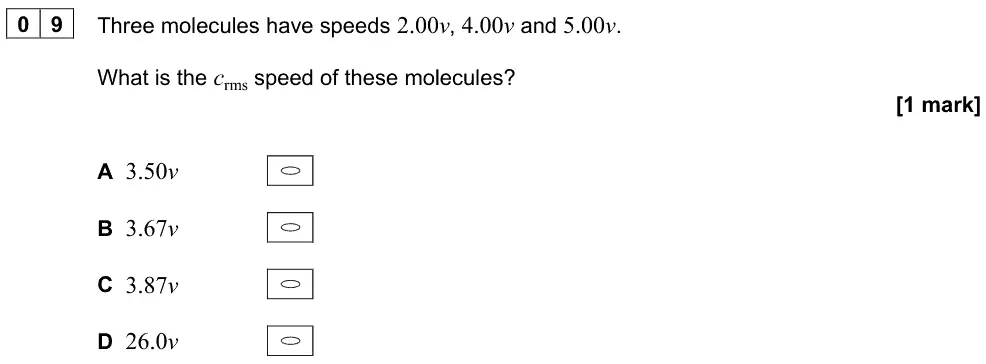
C
Skills: MS1.2 Find arithmetic means
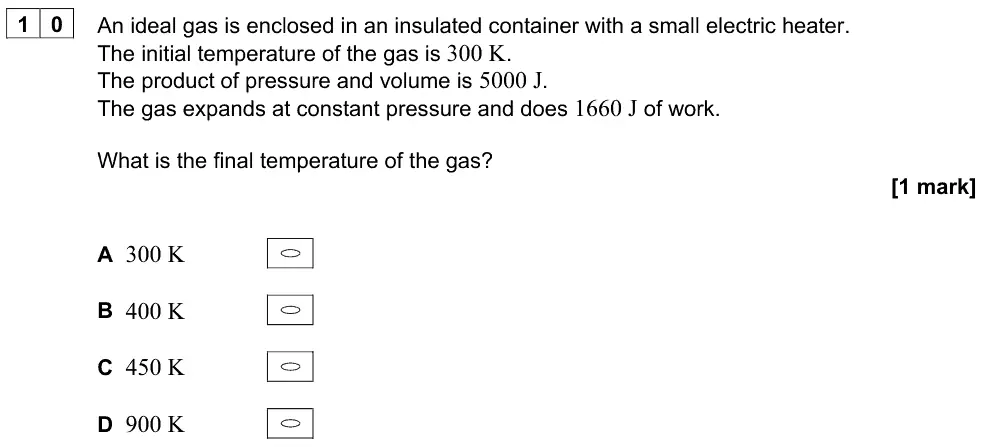
B
Skills: MS0.3 Use ratios, fractions and percentages
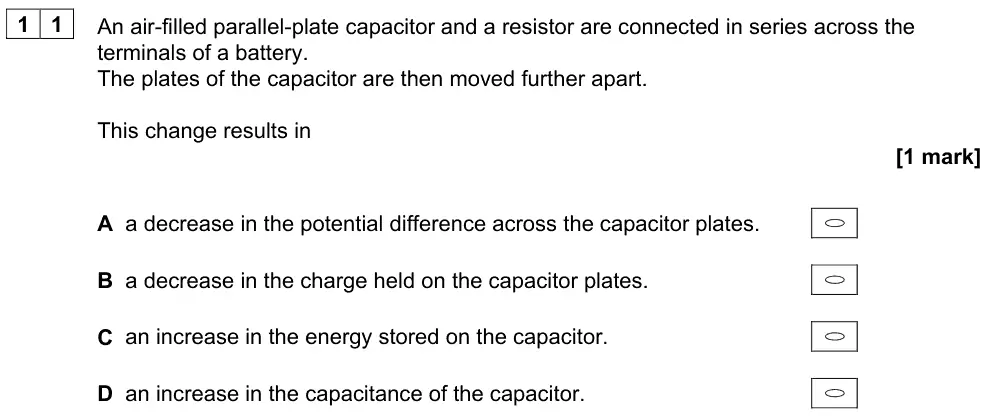
B
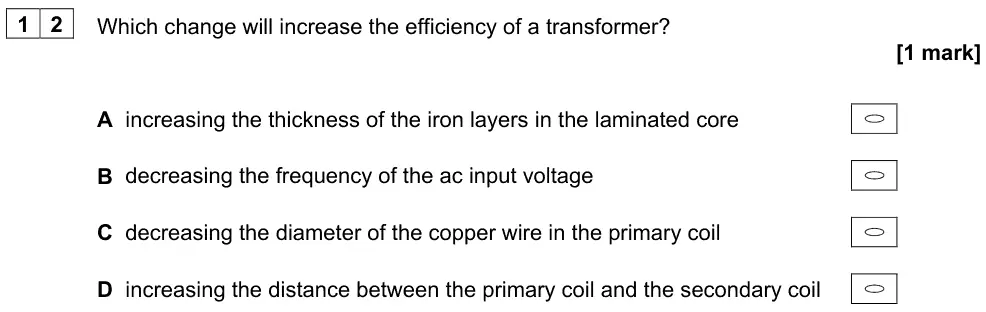
B
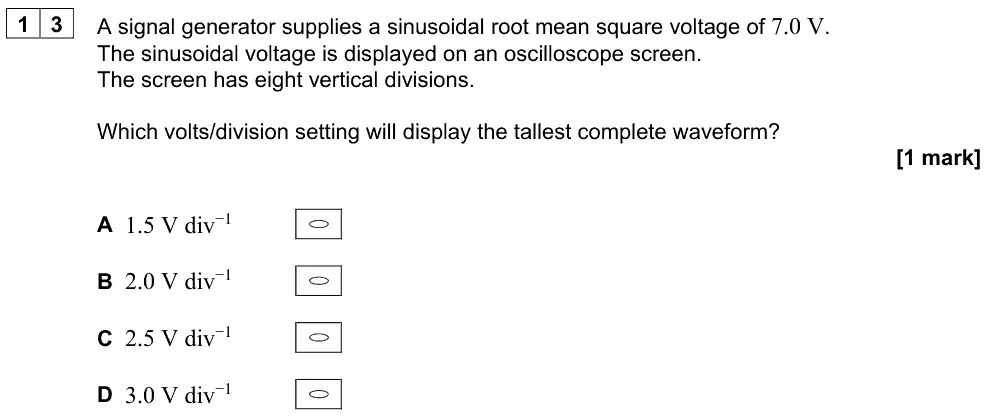
C
Skills: MS0.3 Use ratios, fractions and percentages
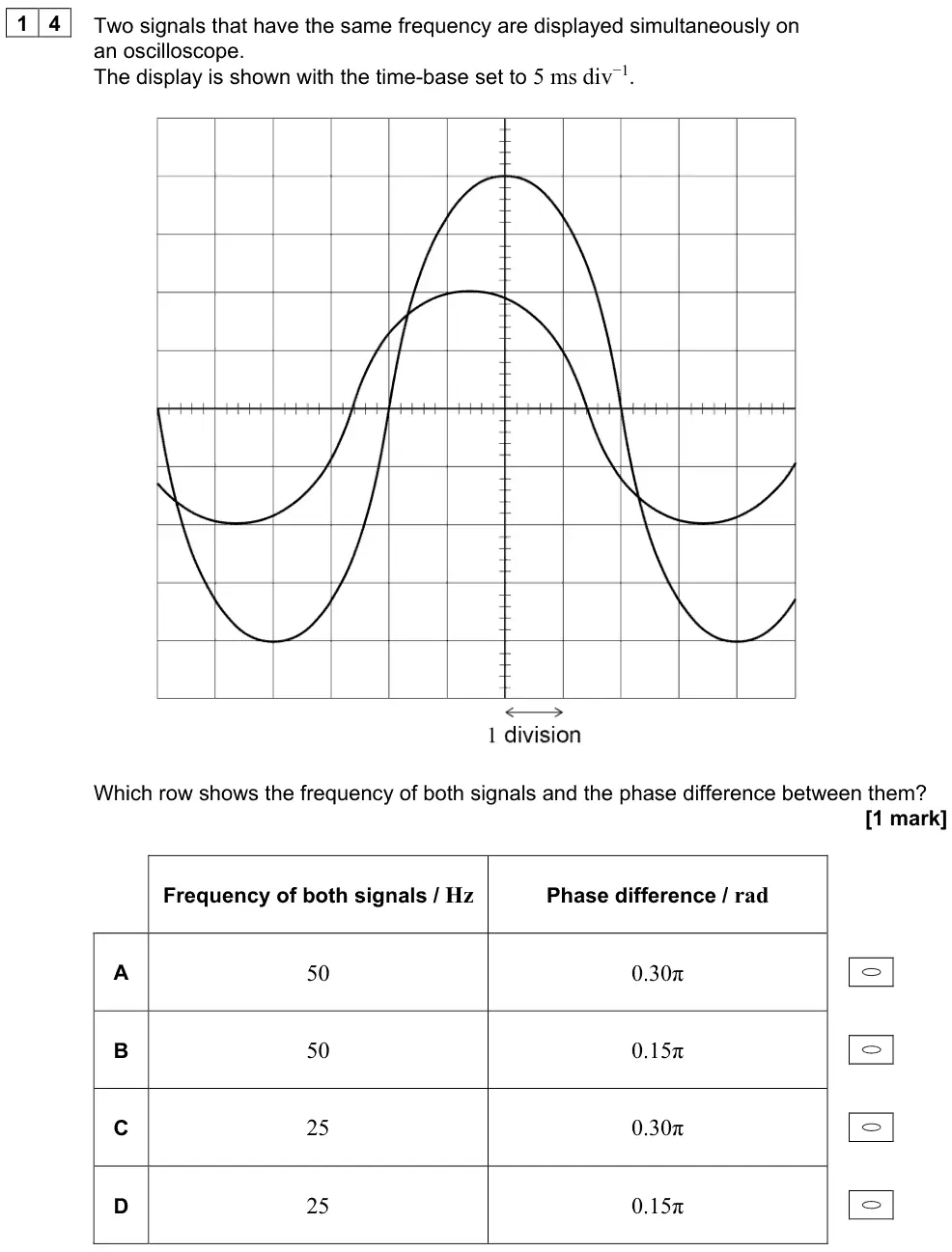
D
Skills: MS3.1 Translate information between graphical, numerical and algebraic forms
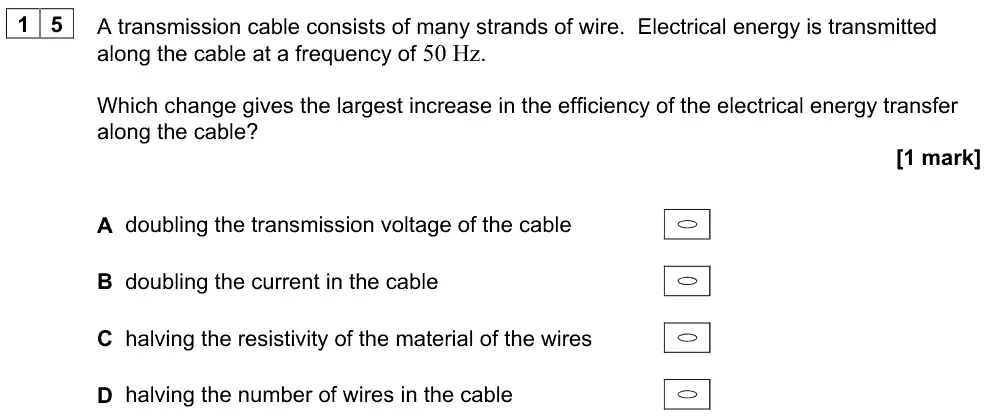
A
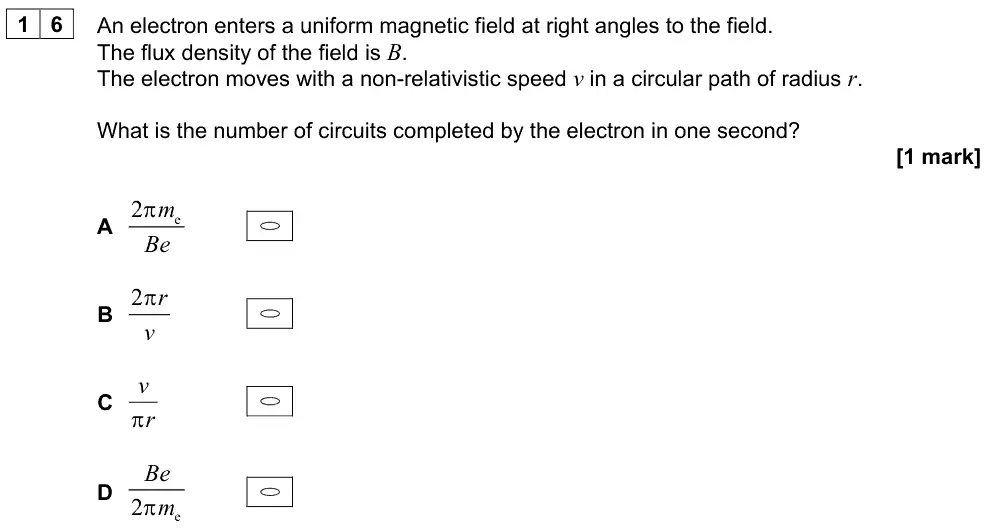
D
Skills: MS2.2 Change the subject of an equation, including non-linear equations
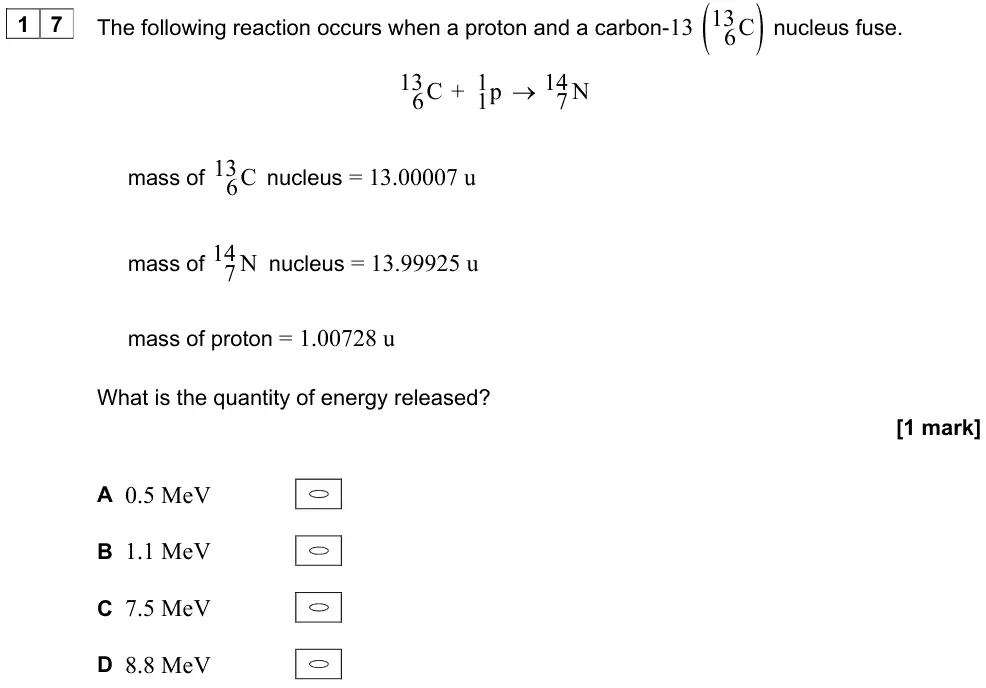
C
Skills: MS2.3 Substitute numerical values into algebraic equations using appropriate units for physical quantities
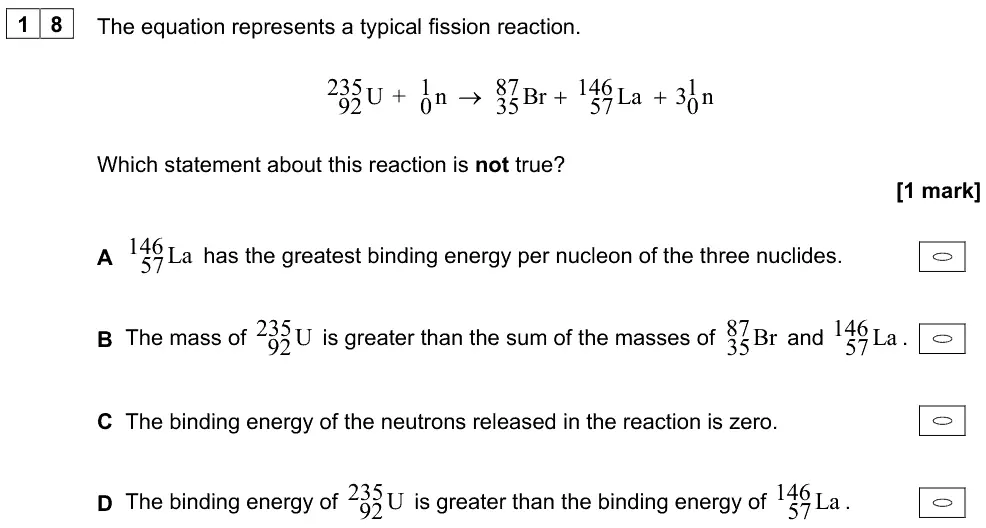
A
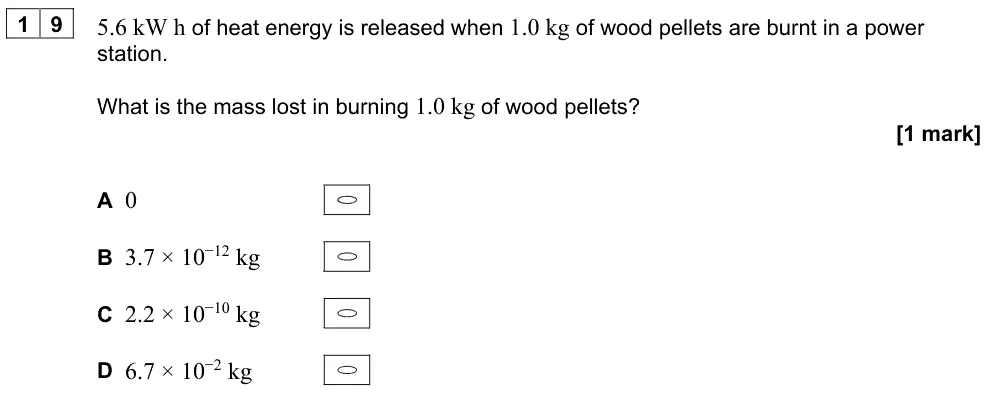
C
Skills: MS2.3 Substitute numerical values into algebraic equations using appropriate units for physical quantities
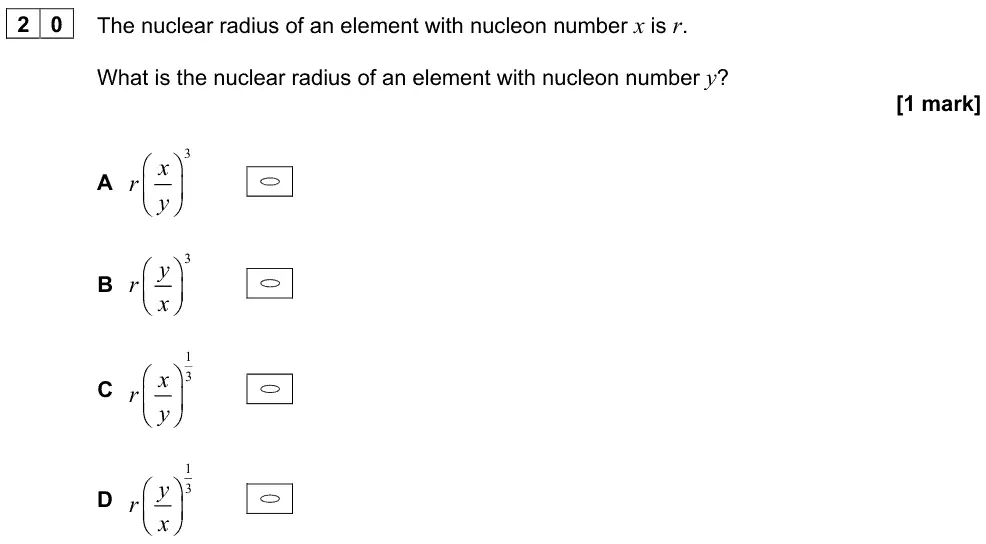
D
Skills: MS0.3 Use ratios, fractions and percentages
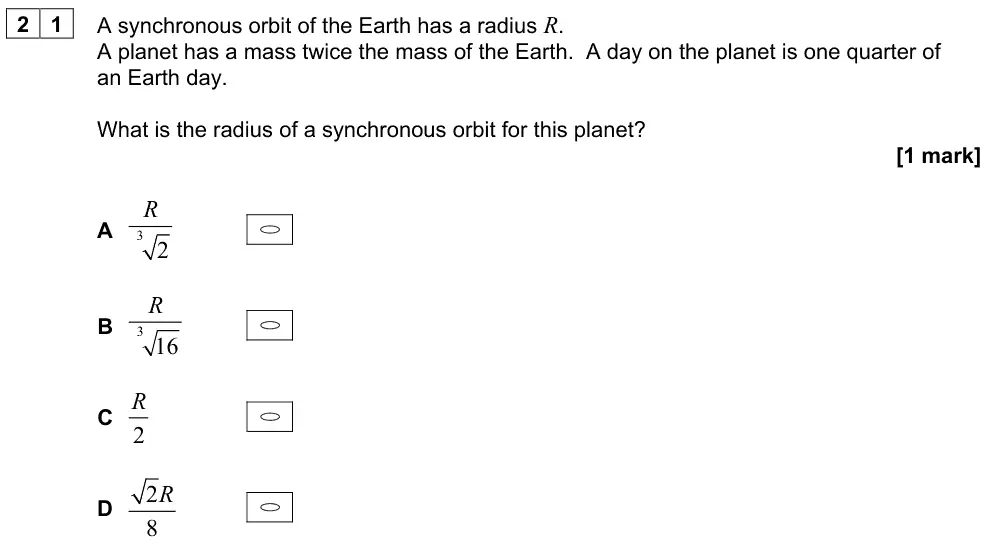
C
Skills: MS0.3 Use ratios, fractions and percentages; MS0.5 Use calculators to find and use power, exponential and logarithmic functions
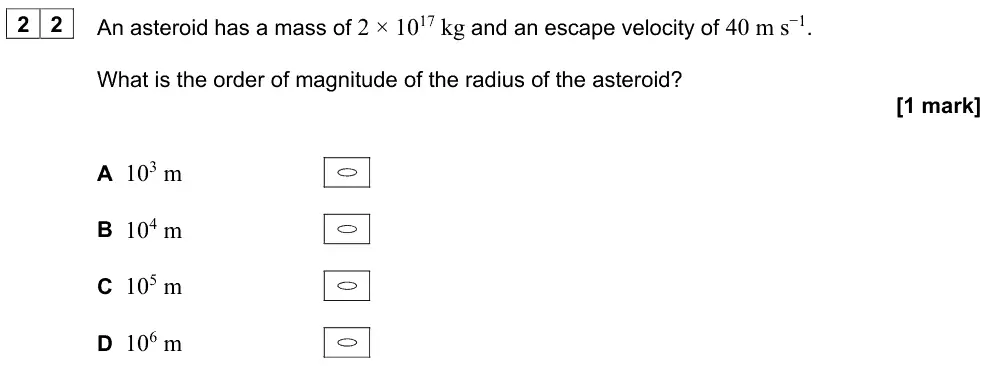
B
Skills: MS1.4 Make order of magnitude calculations
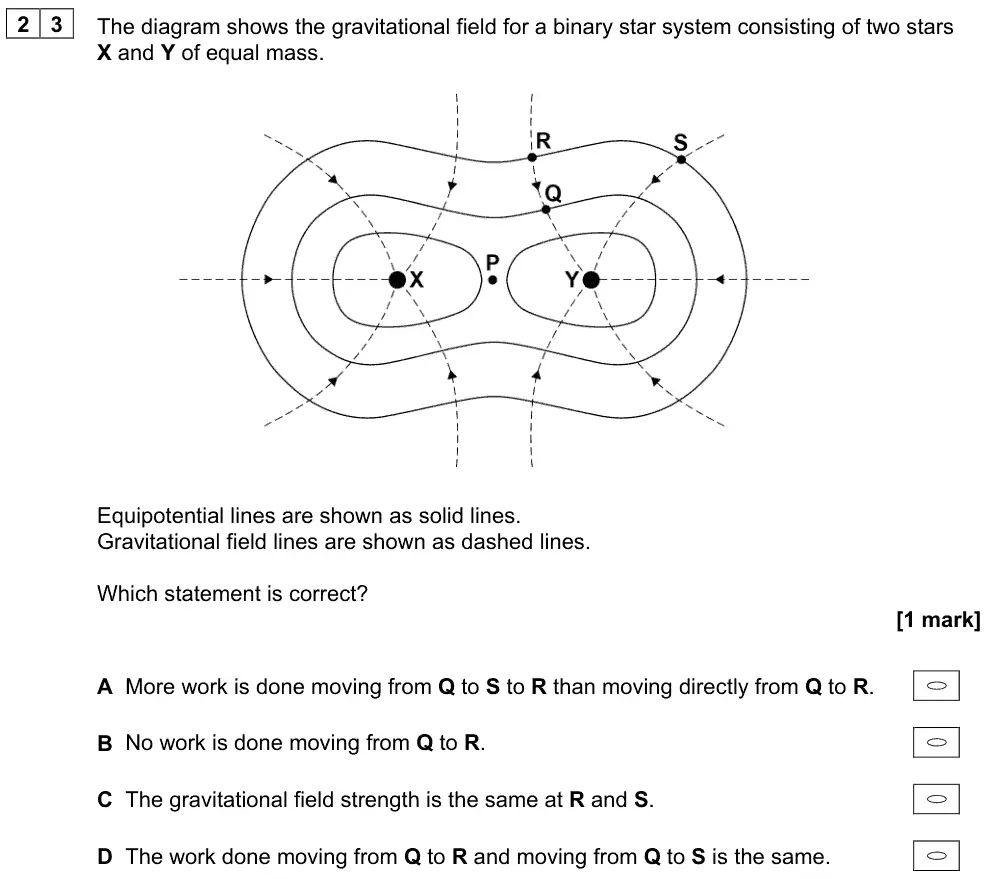
D
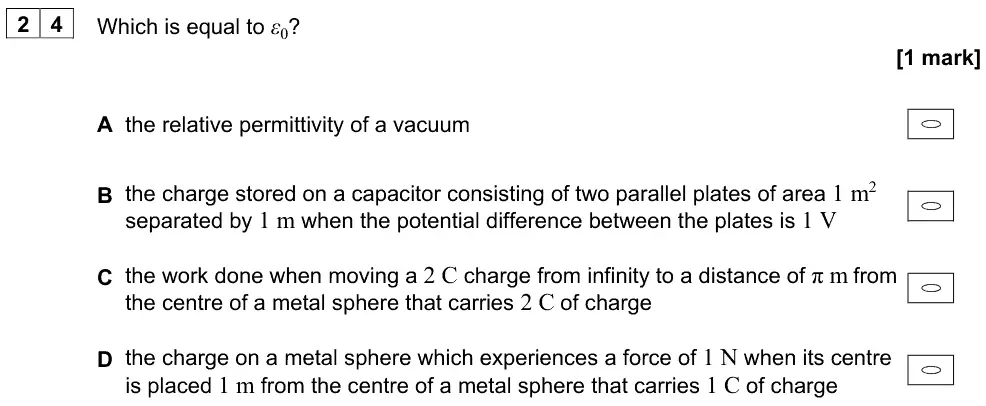
B
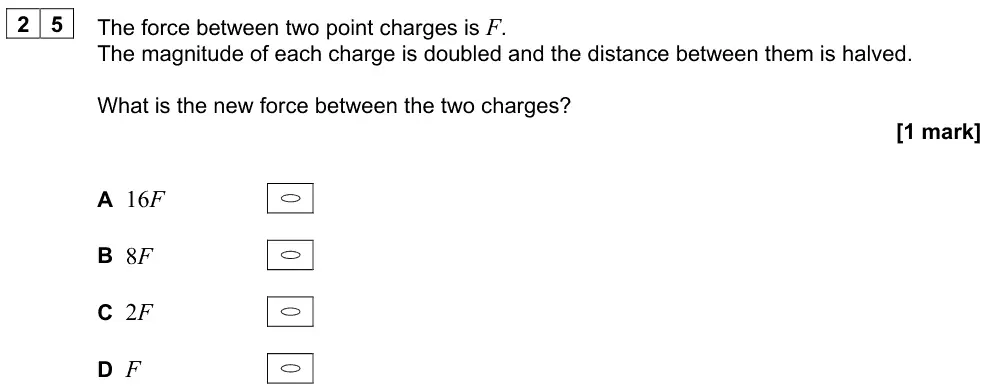
A
Skills: MS0.3 Use ratios, fractions and percentages
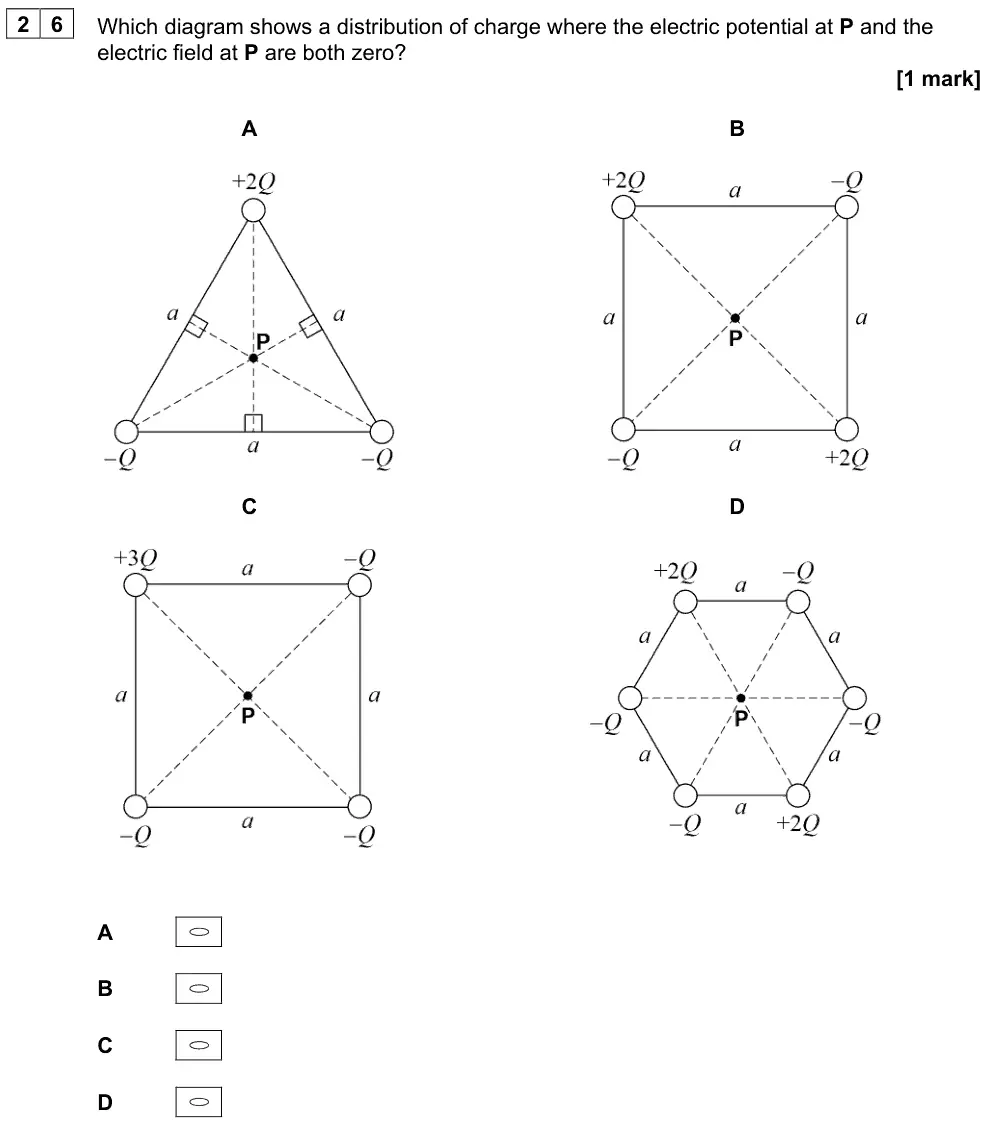
D
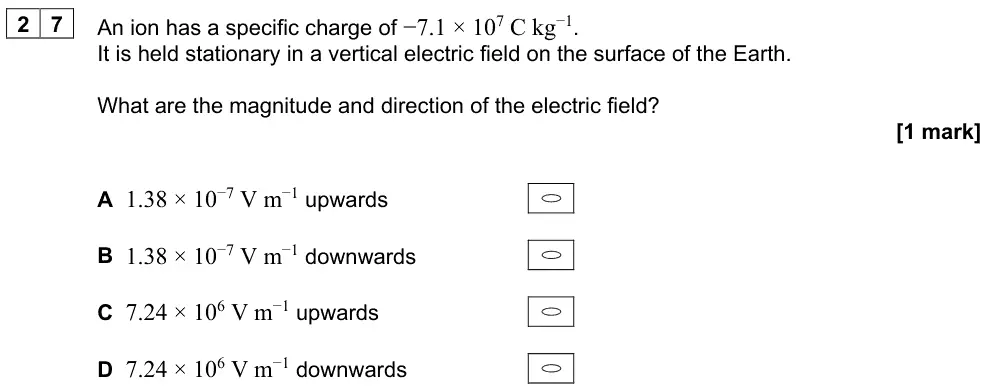
B
Skills: MS2.3 Substitute numerical values into algebraic equations using appropriate units for physical quantities
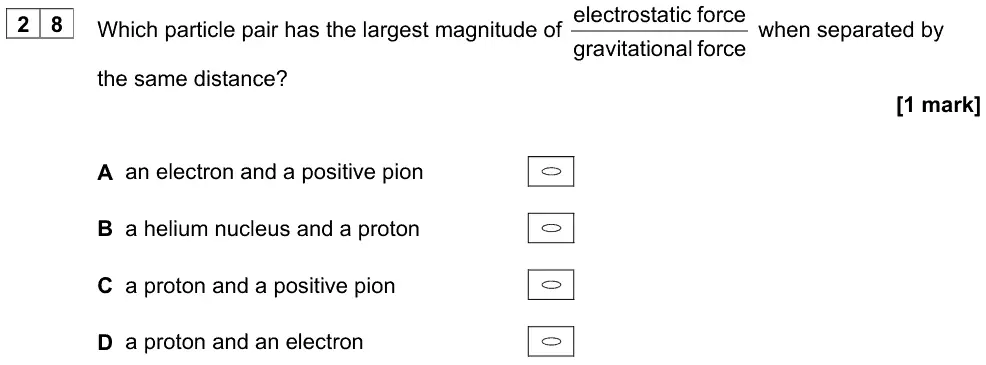
A
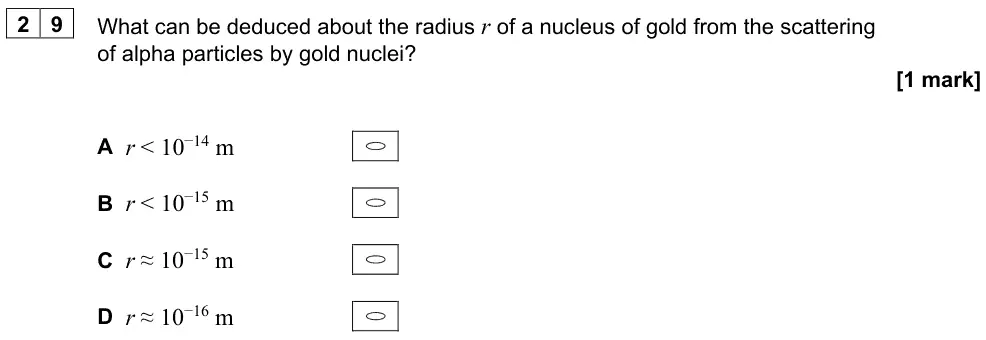
A
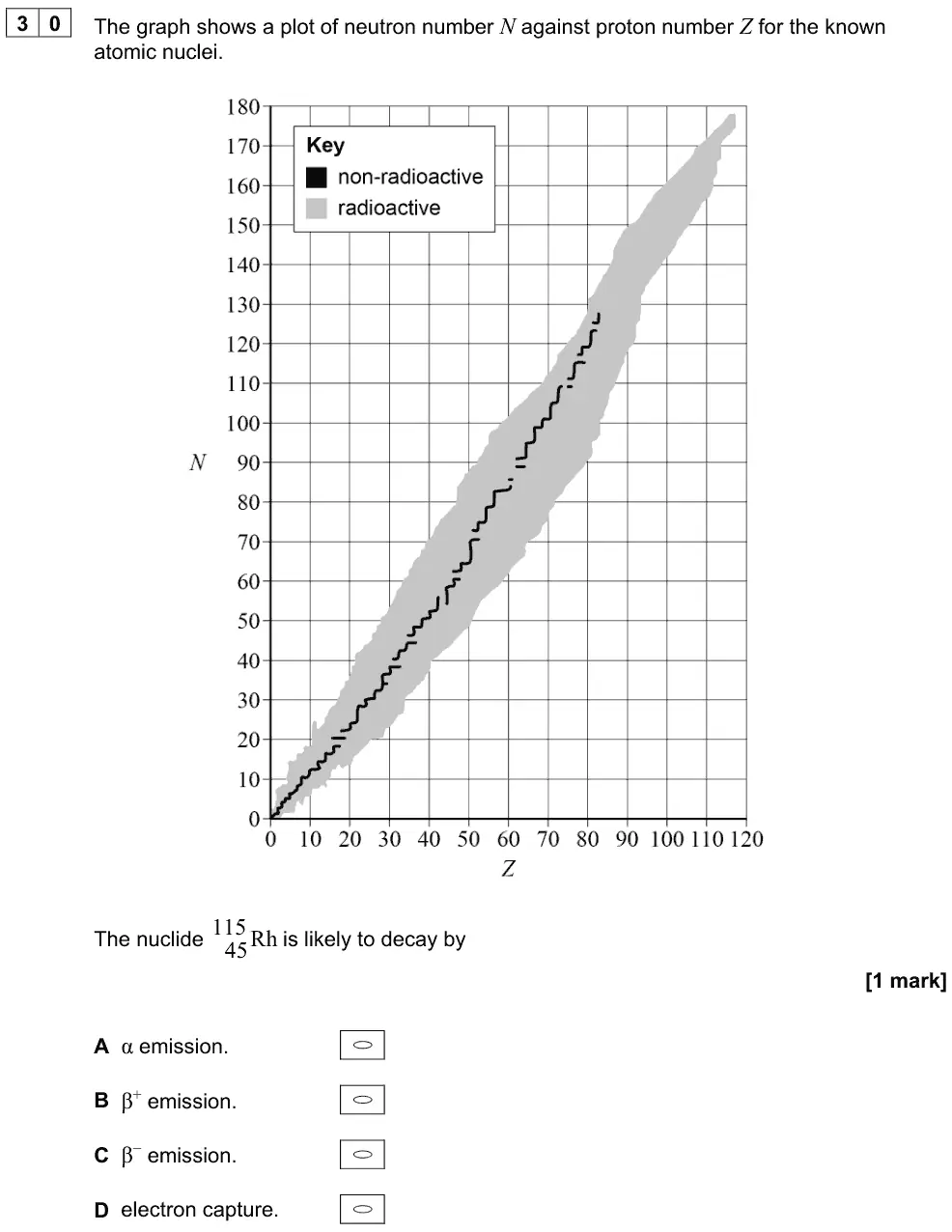
C
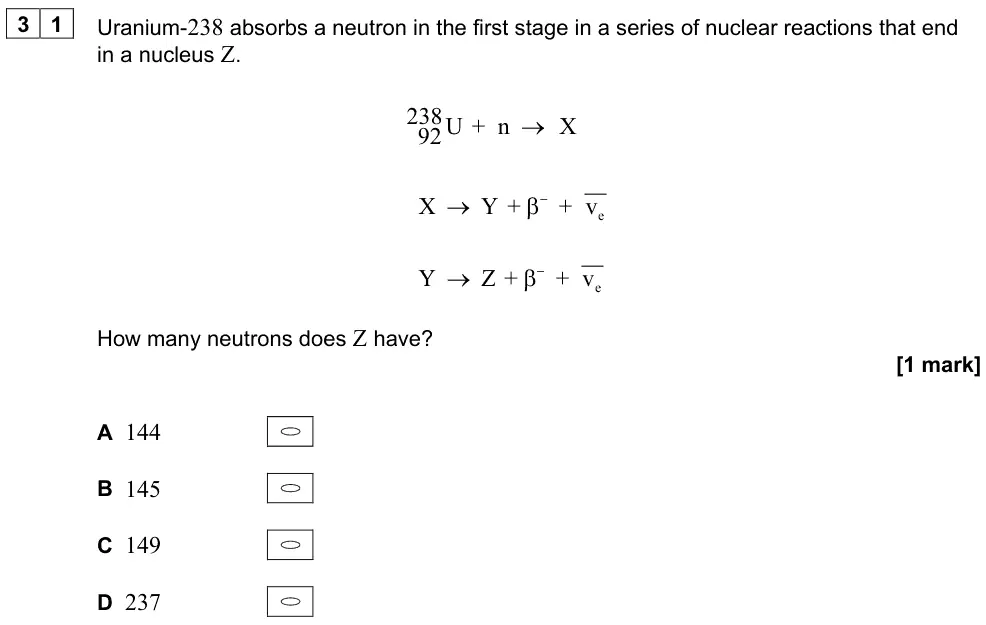
B
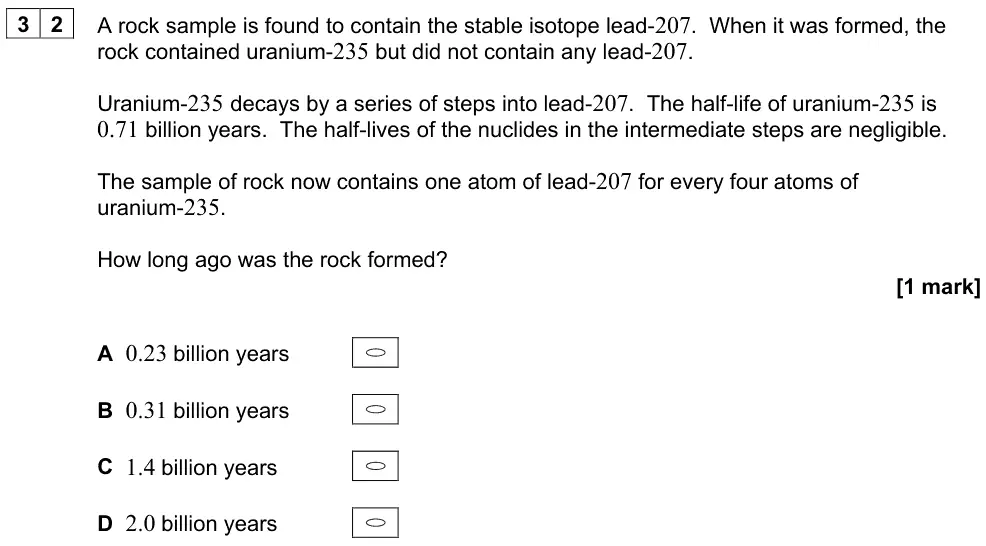
A
Skills: MS0.5 Use calculators to find and use power, exponential and logarithmic functions
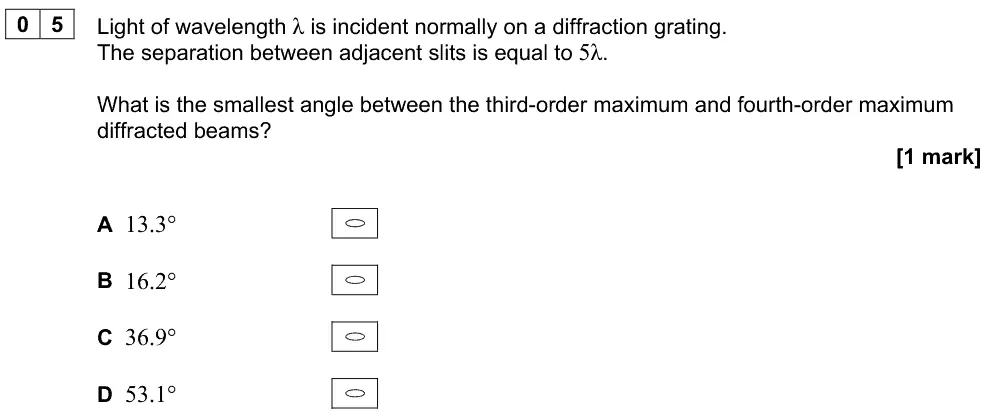
B
Skills: MS0.6 Use calculators to handle sin x, cos x, tan x when x is expressed in degrees or radians
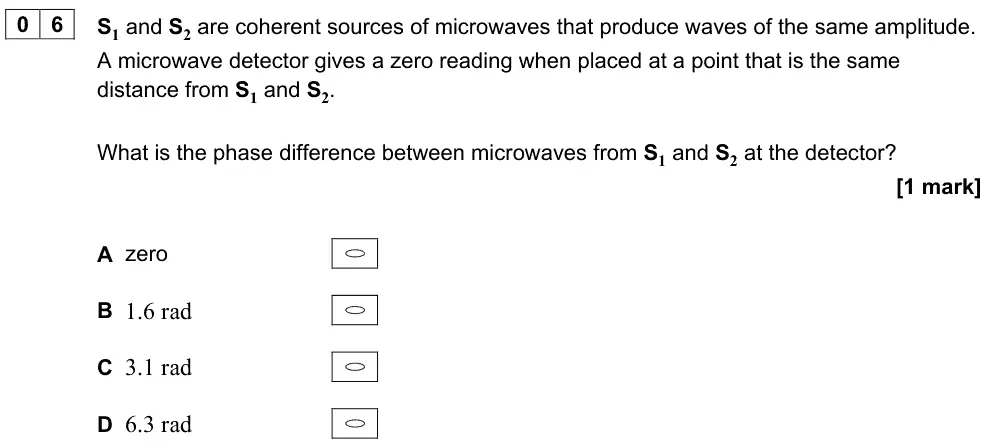
C
Generally, students were more successful in answering questions 9, 15, 16, 19, 25, 27, 28 (these all had a success rate of at least 65%) and were less successful in answering questions 6, 7, 18, 23 and 31 (answered correctly by 35% or fewer).
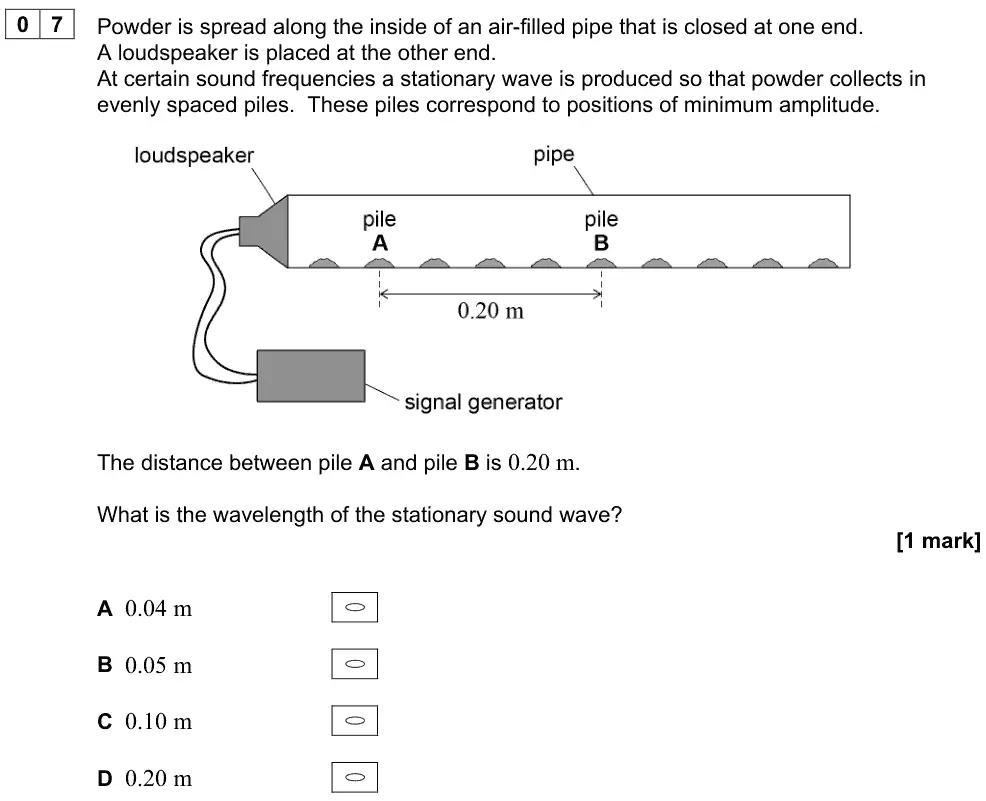
C
Generally, students were more successful in answering questions 9, 15, 16, 19, 25, 27, 28 (these all had a success rate of at least 65%) and were less successful in answering questions 6, 7, 18, 23 and 31 (answered correctly by 35% or fewer).
A
D
Generally, students were more successful in answering questions 9, 15, 16, 19, 25, 27, 28 (these all had a success rate of at least 65%) and were less successful in answering questions 6, 7, 18, 23 and 31 (answered correctly by 35% or fewer).
A
C
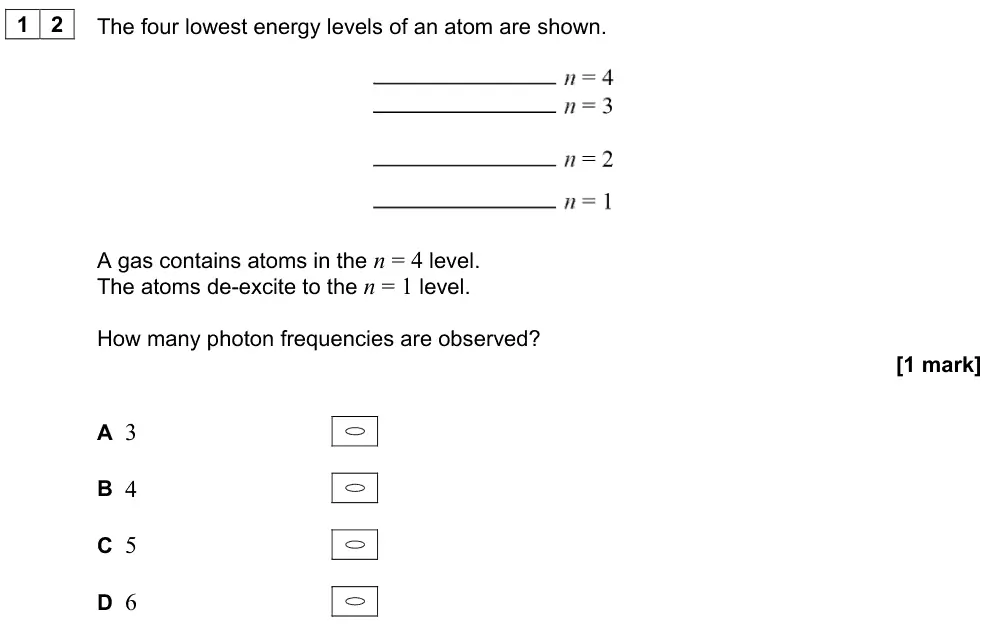
D
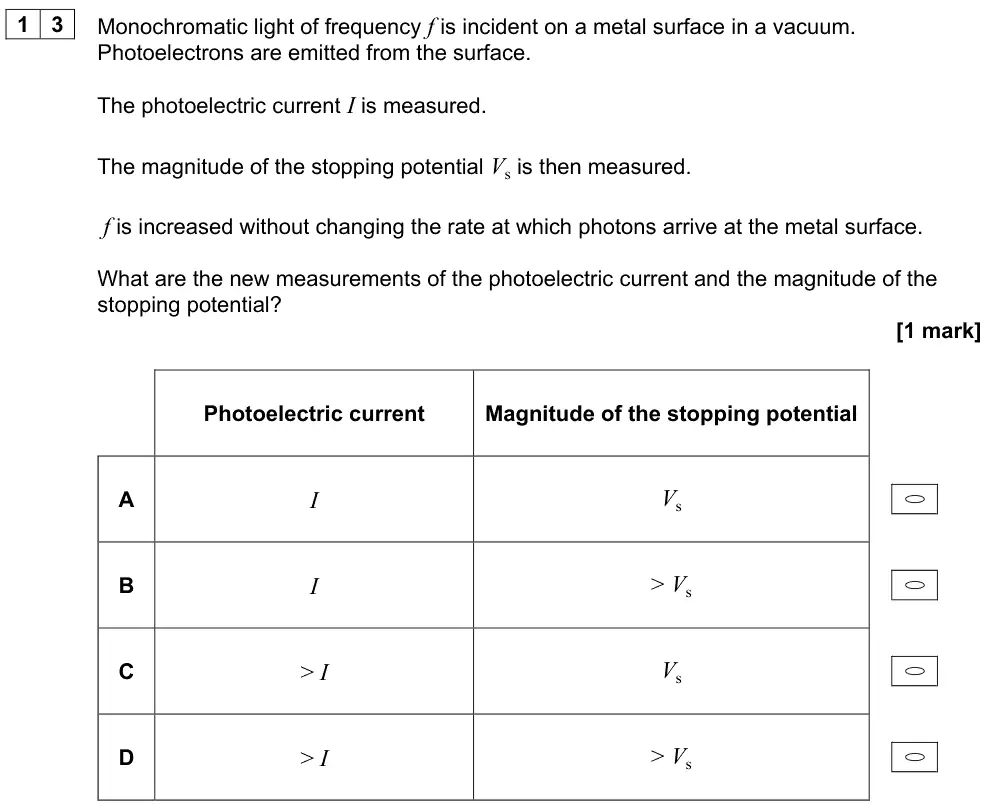
B
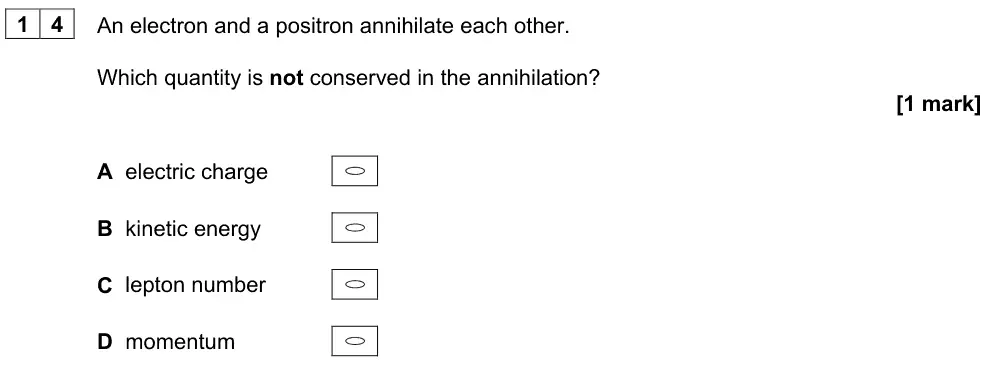
B
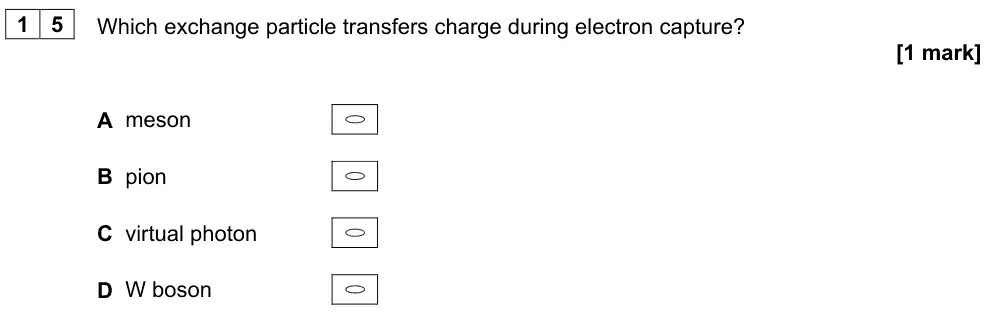
D
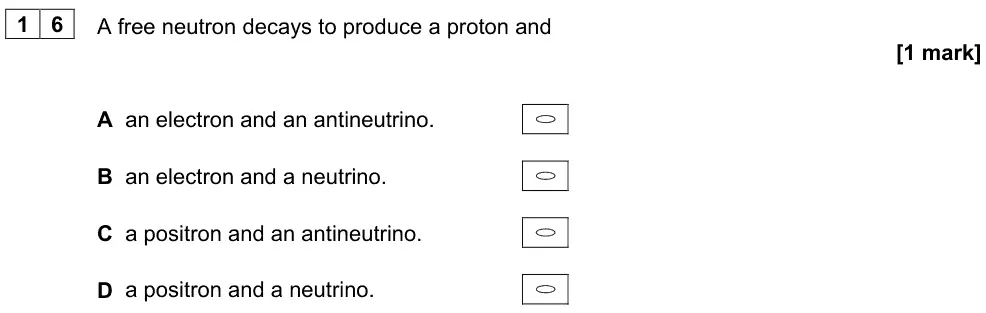
A
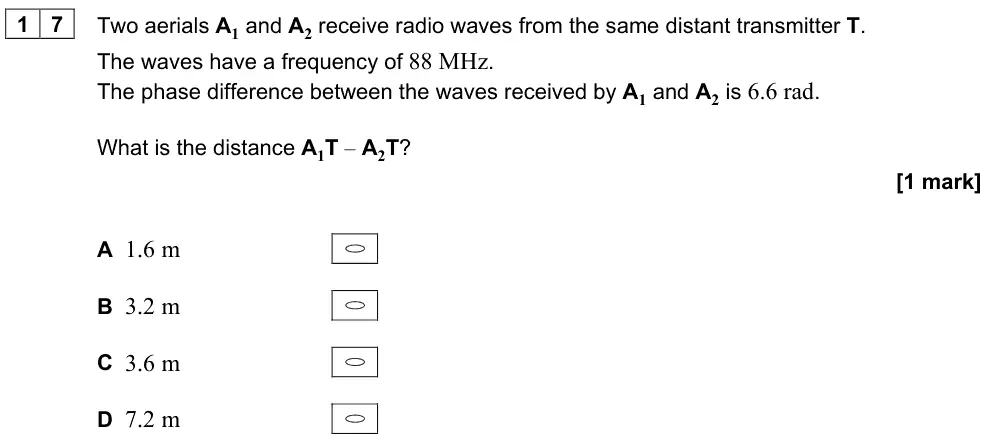
C
Skills: MS4.7 Understand the relationship between degrees and radians and translate from one to the other
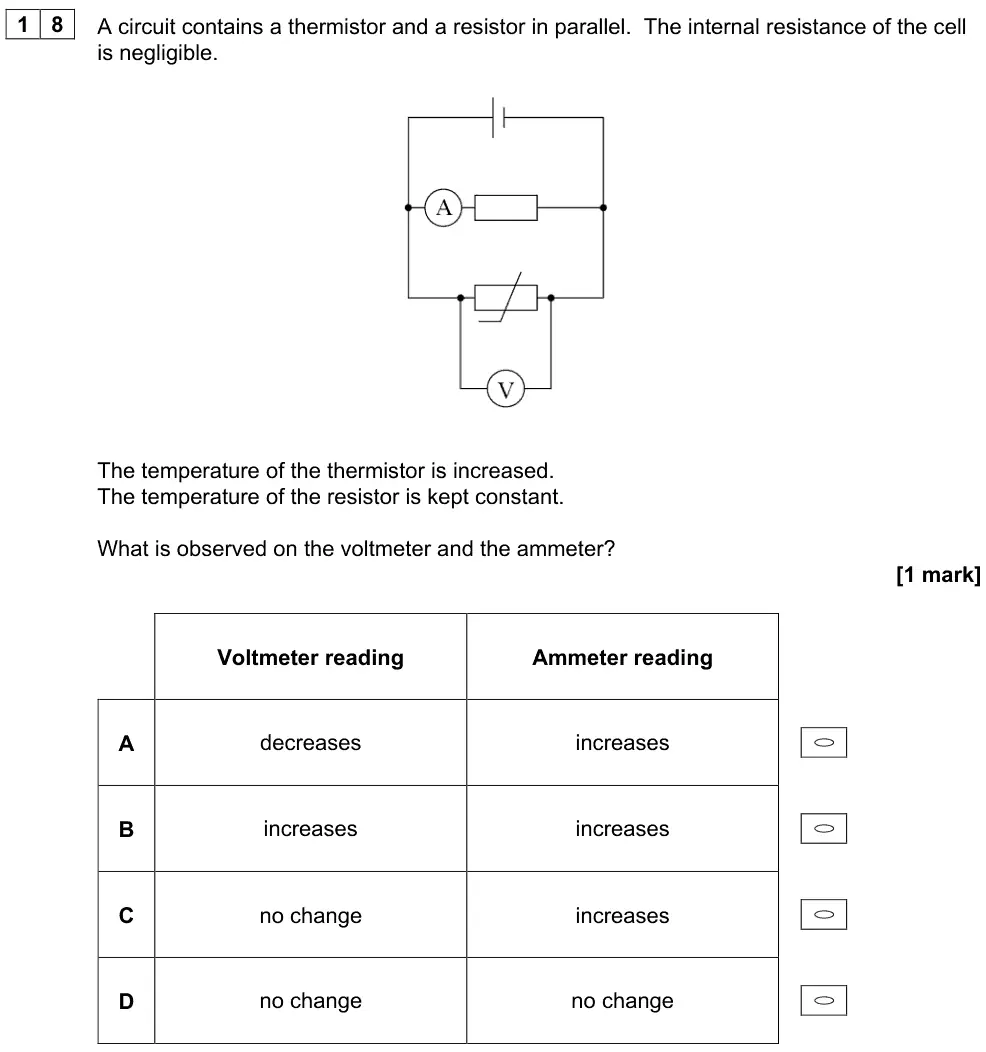
D
Generally, students were more successful in answering questions 9, 15, 16, 19, 25, 27, 28 (these all had a success rate of at least 65%) and were less successful in answering questions 6, 7, 18, 23 and 31 (answered correctly by 35% or fewer).
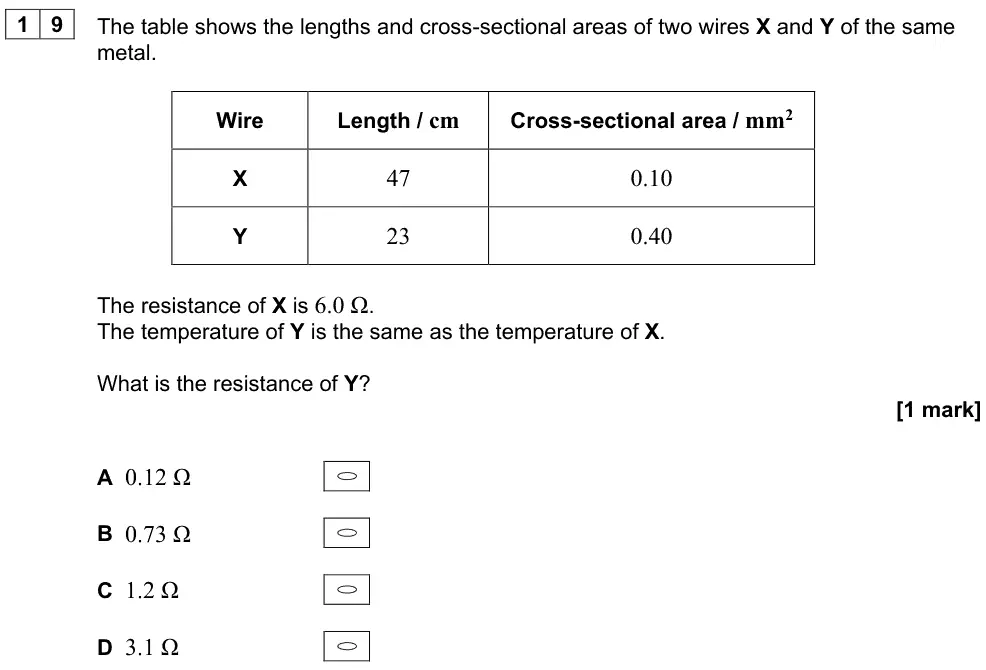
B
Skills: MS0.3 Use ratios, fractions and percentages
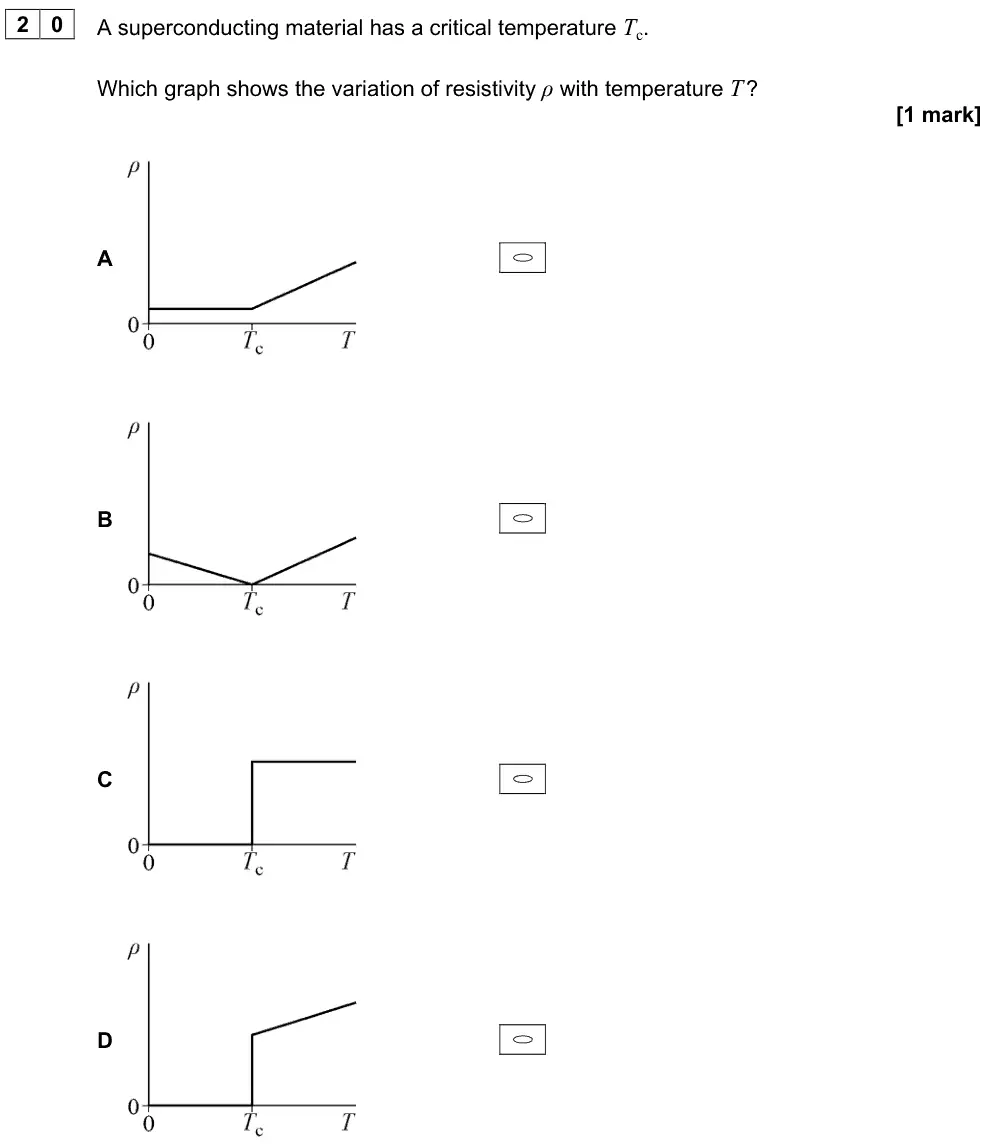
D
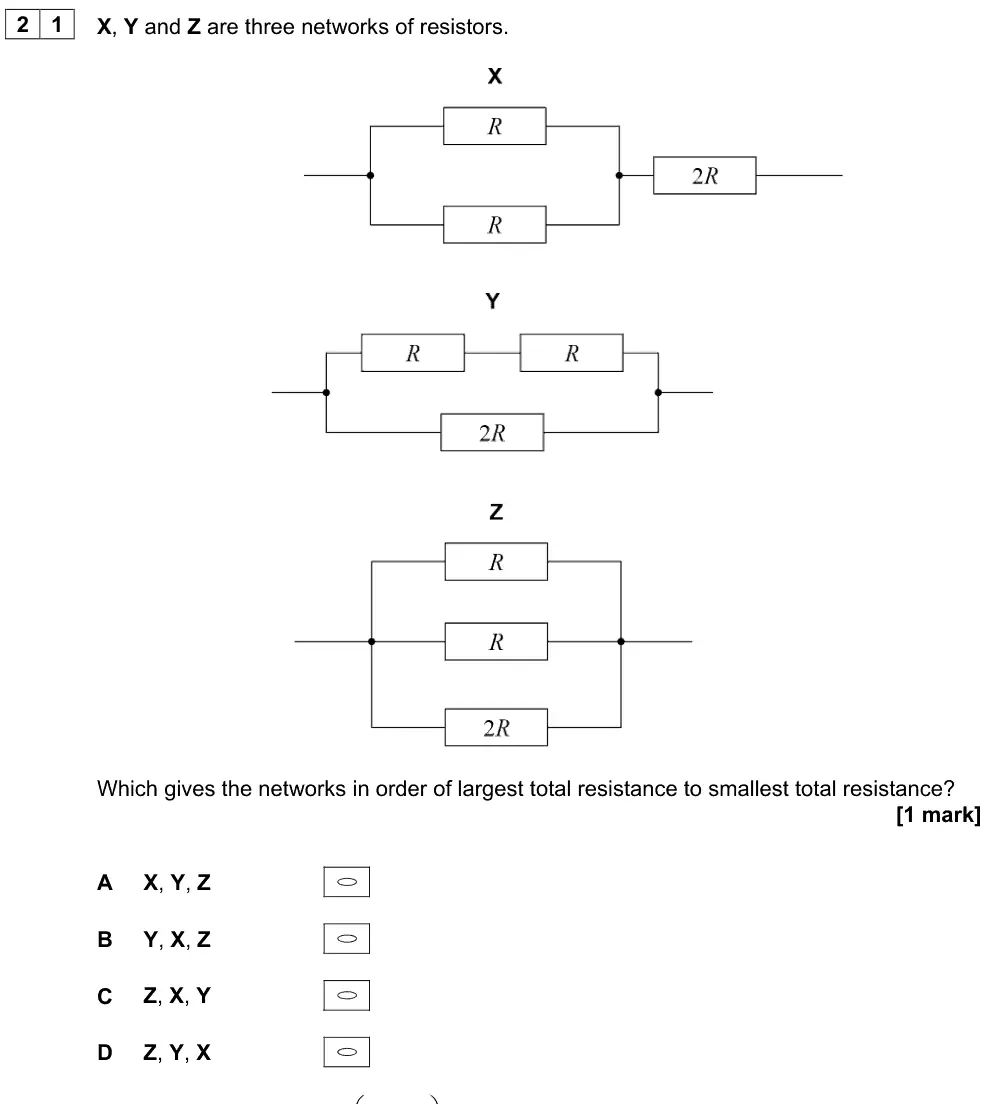
A
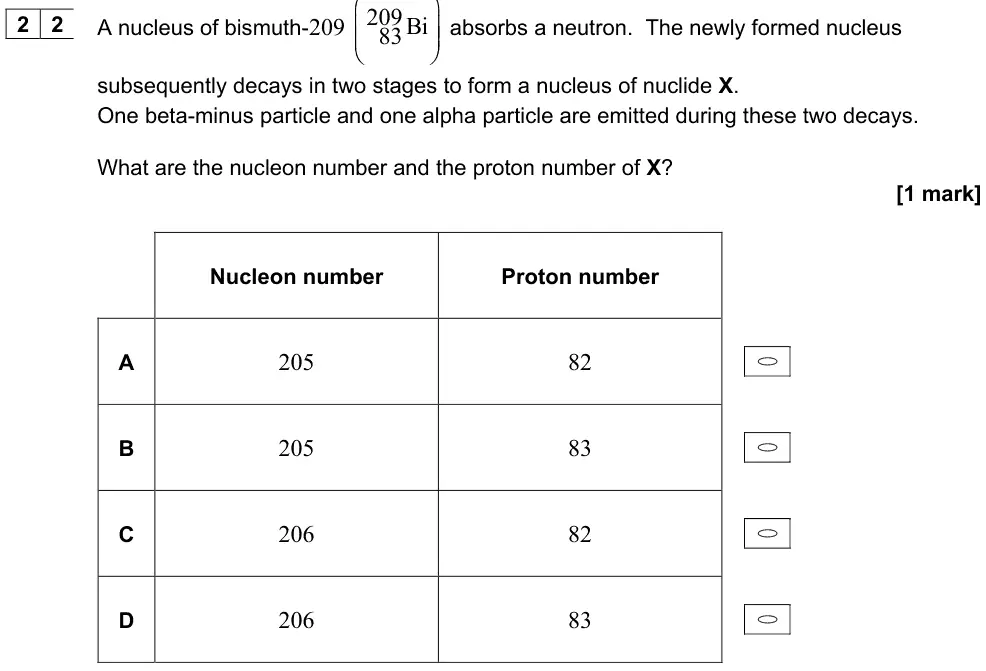
C
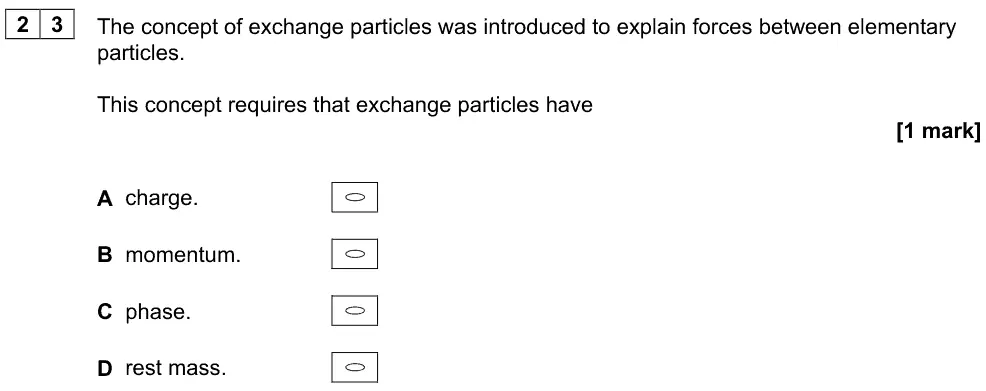
B
Generally, students were more successful in answering questions 9, 15, 16, 19, 25, 27, 28 (these all had a success rate of at least 65%) and were less successful in answering questions 6, 7, 18, 23 and 31 (answered correctly by 35% or fewer).
D
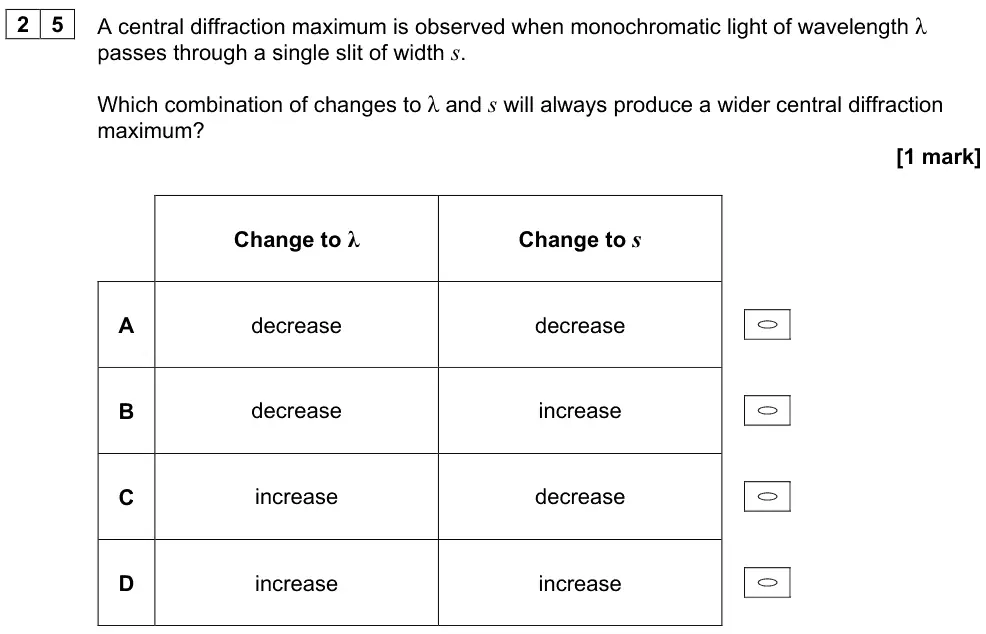
C
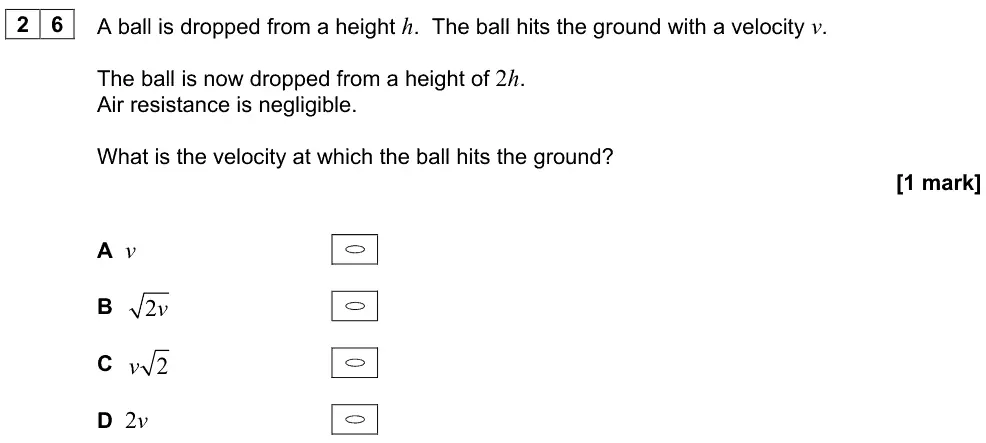
C
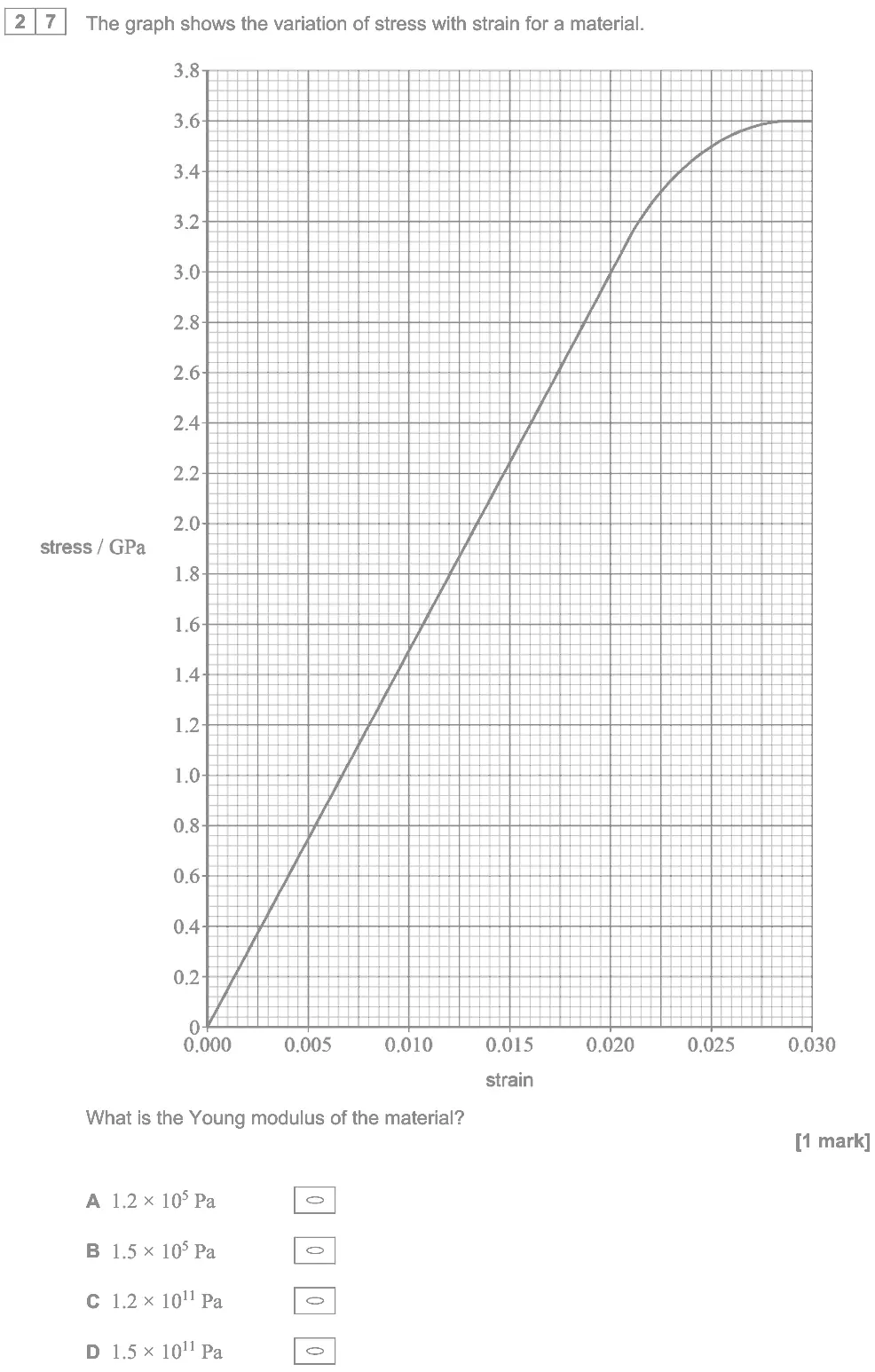
D
Generally, students were more successful in answering questions 9, 15, 16, 19, 25, 27, 28 (these all had a success rate of at least 65%) and were less successful in answering questions 6, 7, 18, 23 and 31 (answered correctly by 35% or fewer).
Skills: MS3.4 Determine the slope and intercept of a linear graph
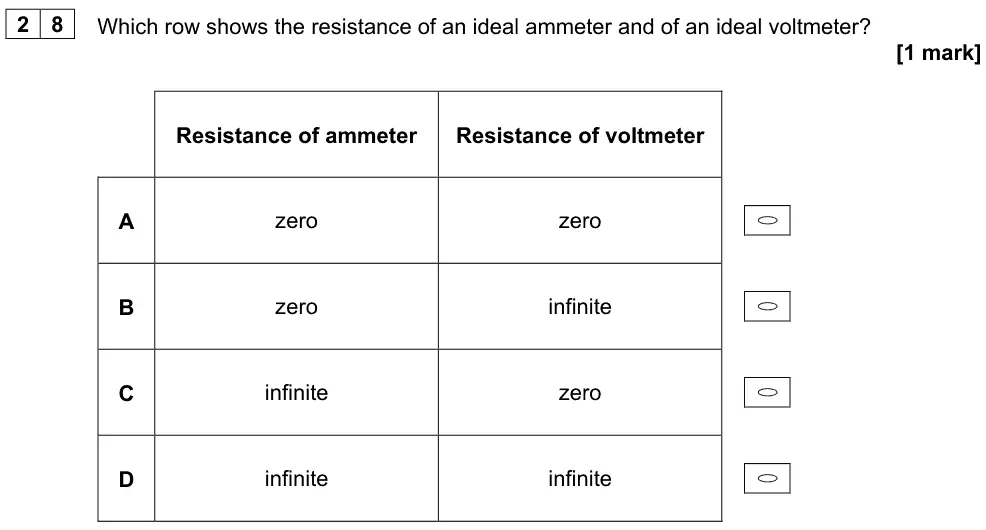
B
Generally, students were more successful in answering questions 9, 15, 16, 19, 25, 27, 28 (these all had a success rate of at least 65%) and were less successful in answering questions 6, 7, 18, 23 and 31 (answered correctly by 35% or fewer).
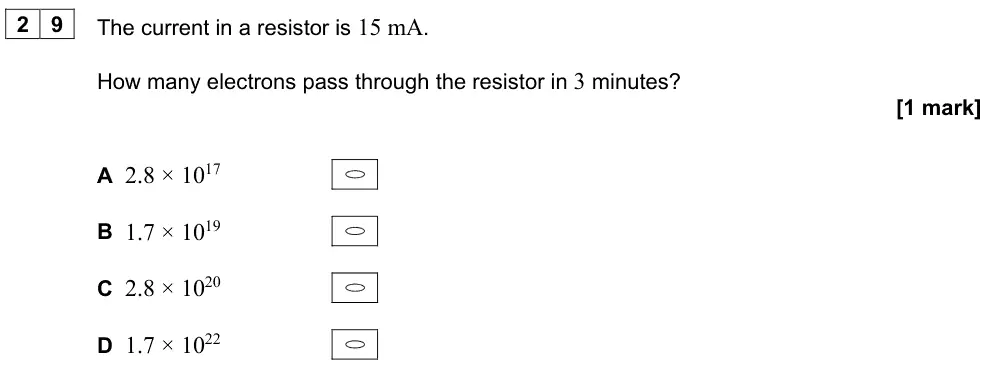
B
Skills: MS0.2 Recognise and use expressions in decimal and standard form
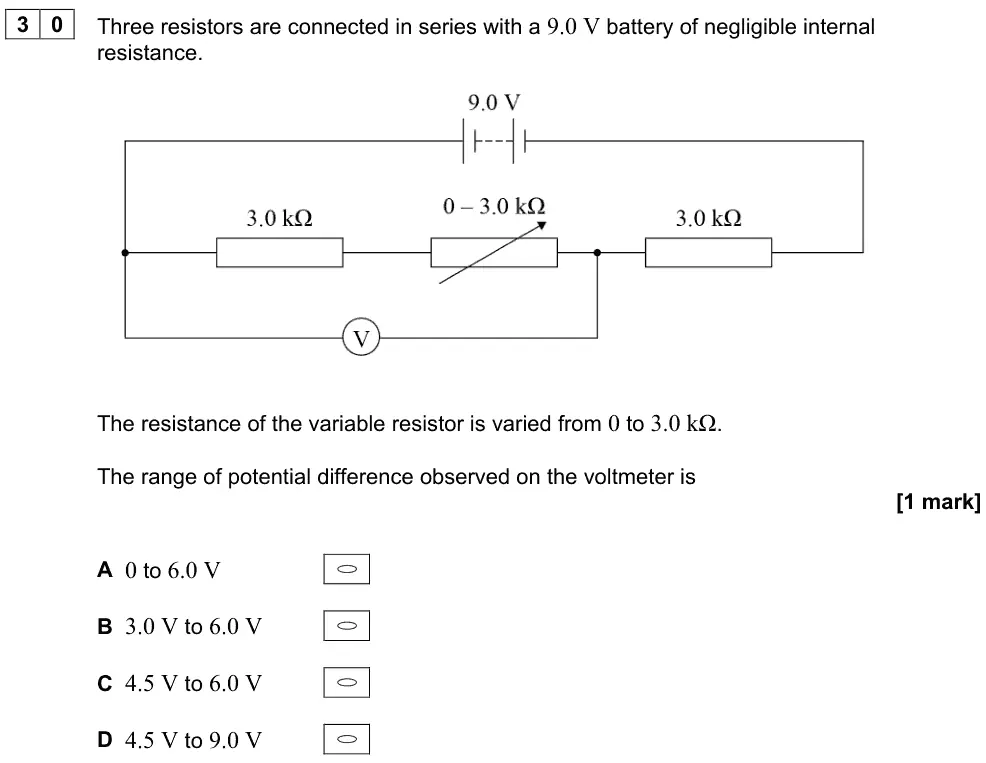
C
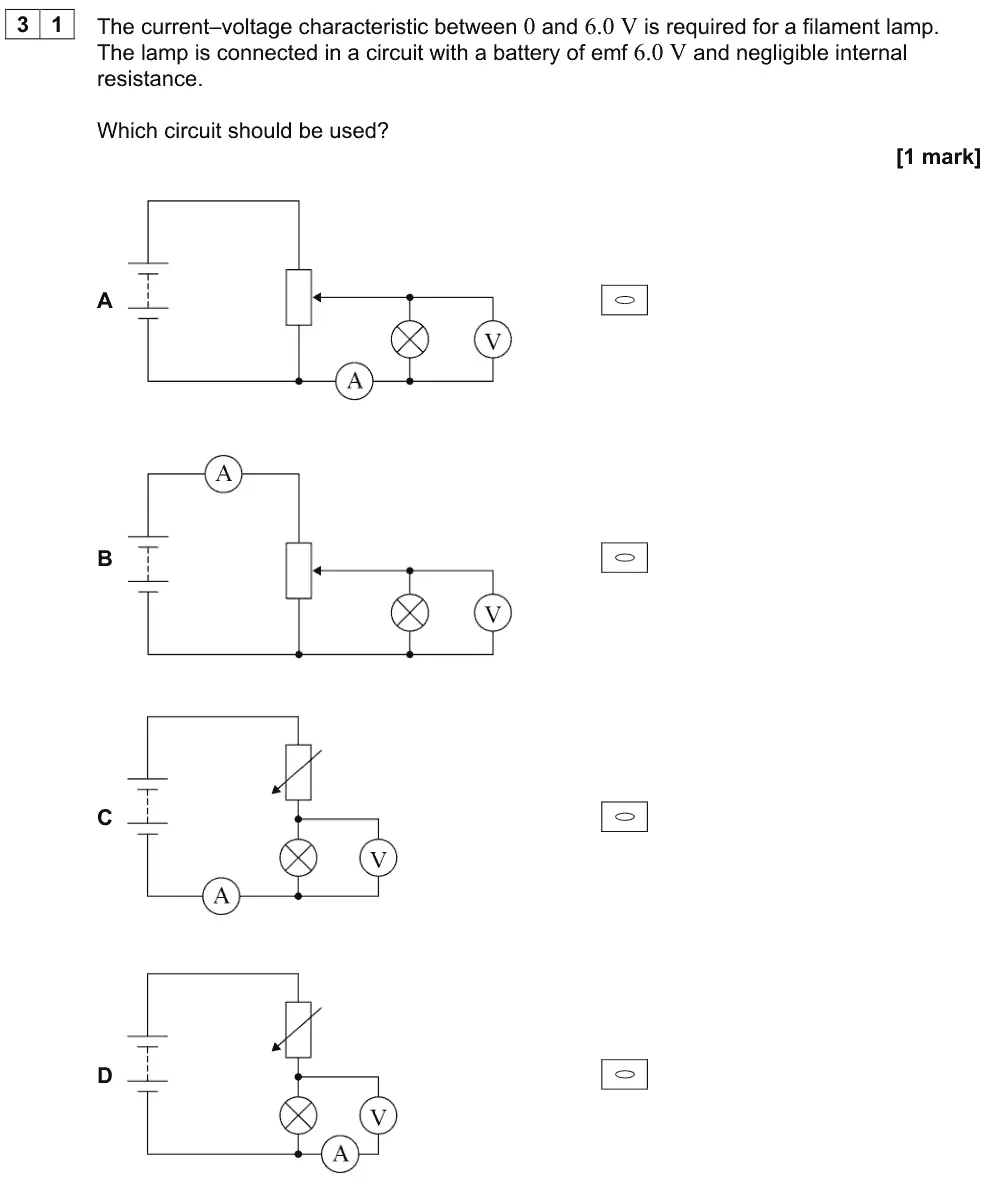
A
Generally, students were more successful in answering questions 9, 15, 16, 19, 25, 27, 28 (these all had a success rate of at least 65%) and were less successful in answering questions 6, 7, 18, 23 and 31 (answered correctly by 35% or fewer).
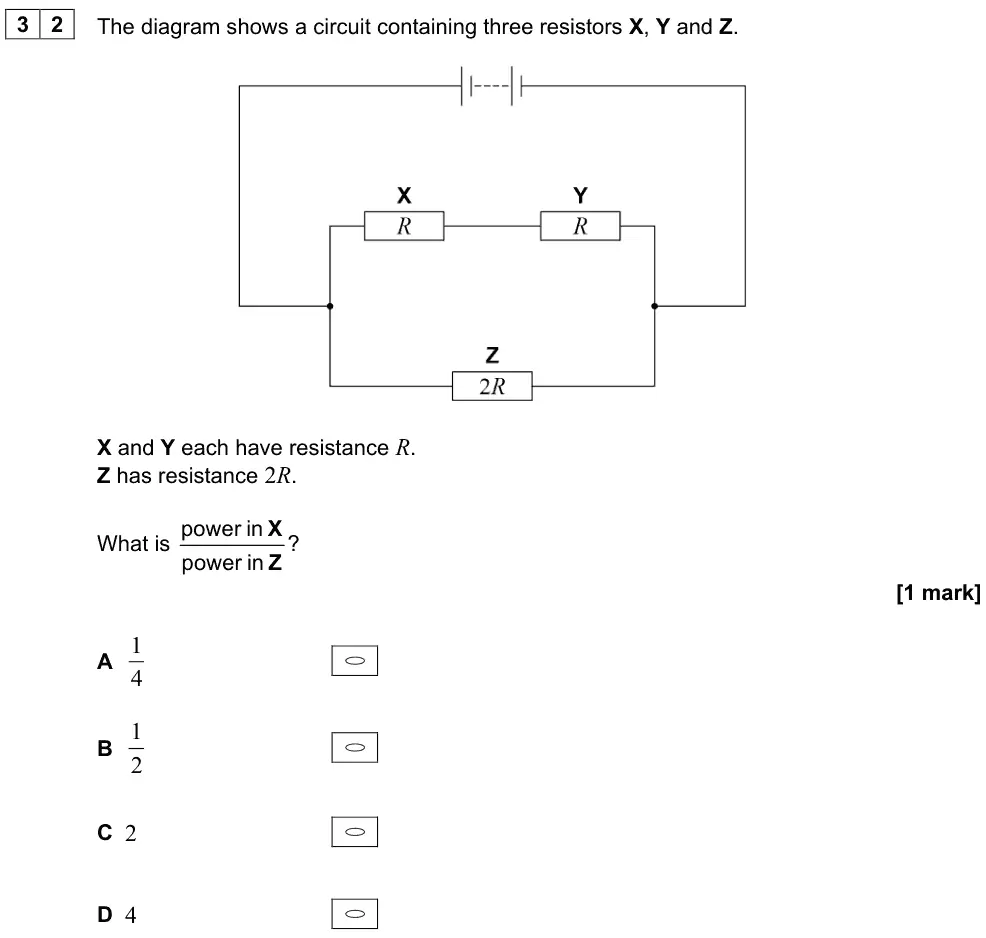
B
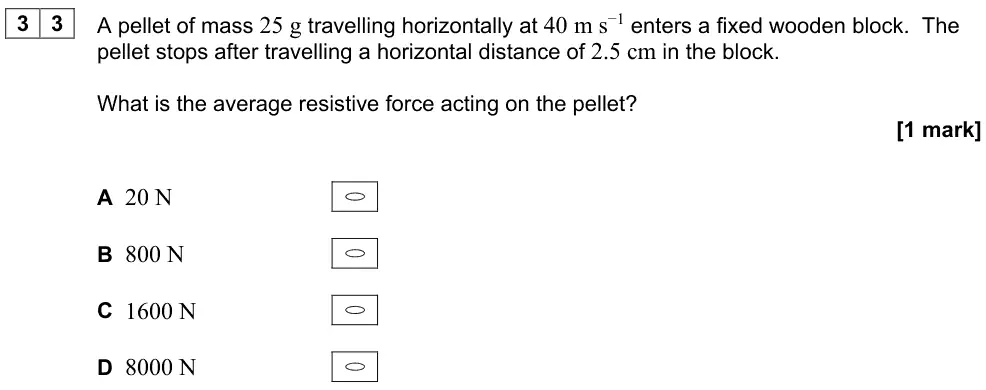
B
Skills: MS2.3 Substitute numerical values into algebraic equations using appropriate units for physical quantities
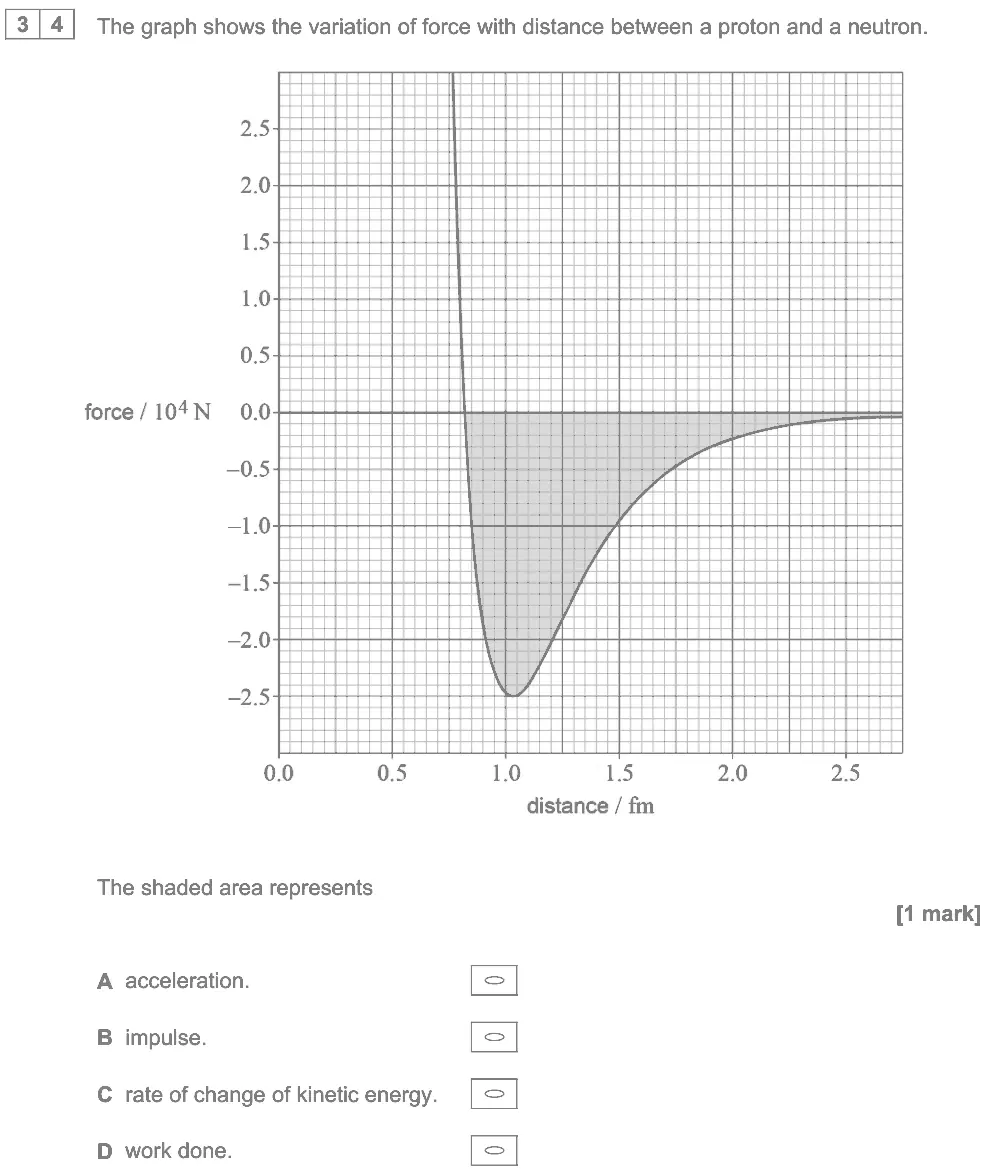
D
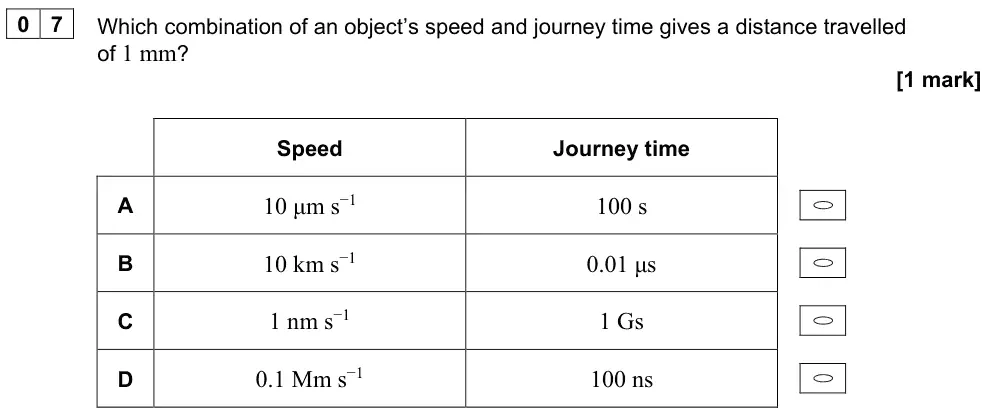
A
The multiple choice questions covered parts of the specification not covered in Section A. The distractors in these questions were written with common errors and misconceptions in mind. These questions are therefore an extremely useful resource when preparing students. The easiest questions were 7, 12, 20, 10 and 11, with over 75% of students getting these questions right. The most demanding were 18, 26, 22, 21 and 13; fewer than 40% of students got these right. For several of these the correct answer was not the most popular choice.
Skills: MS0.2 Recognise and use expressions in decimal and standard form
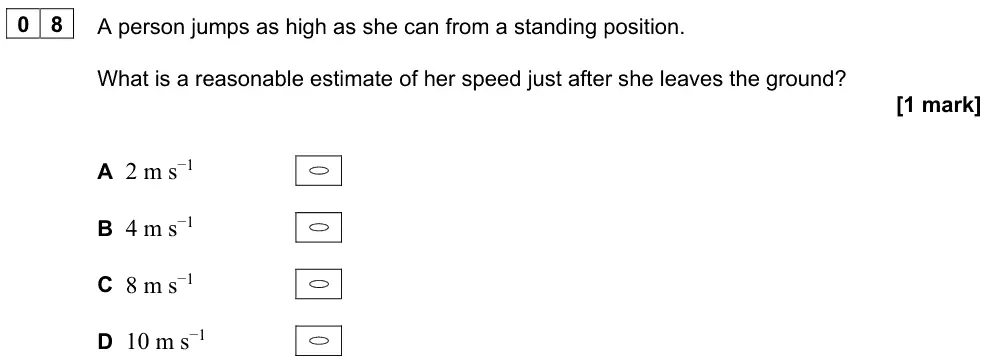
B
Skills: MS0.4 Estimate results
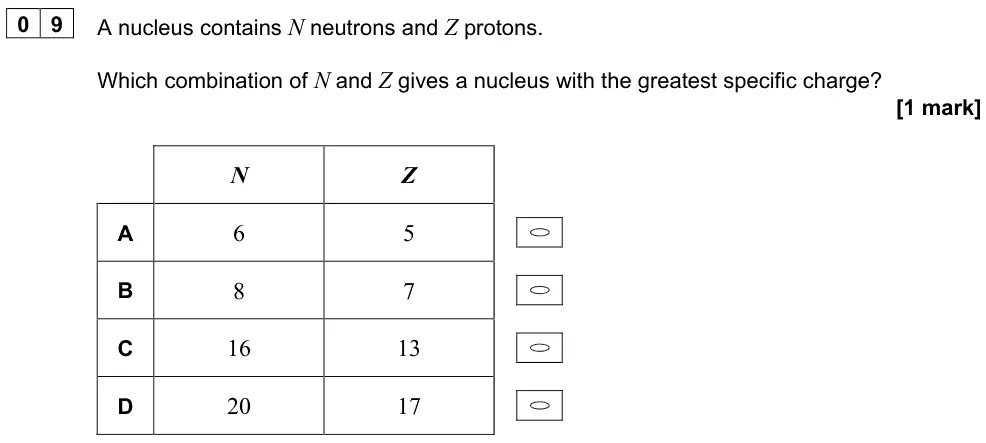
B
Skills: MS0.3 Use ratios, fractions and percentages
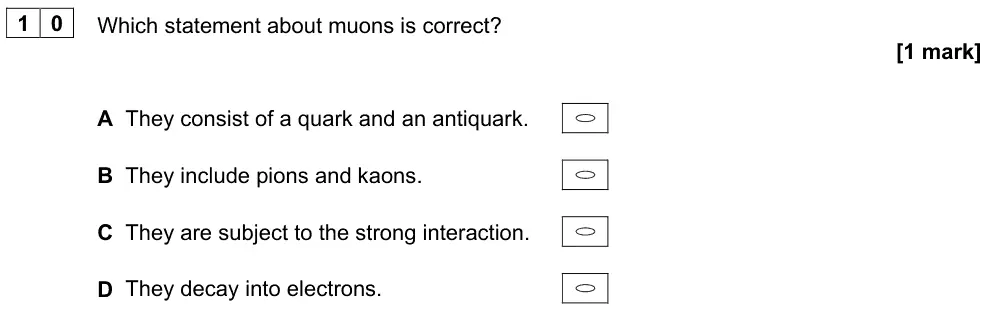
D
The multiple choice questions covered parts of the specification not covered in Section A. The distractors in these questions were written with common errors and misconceptions in mind. These questions are therefore an extremely useful resource when preparing students. The easiest questions were 7, 12, 20, 10 and 11, with over 75% of students getting these questions right. The most demanding were 18, 26, 22, 21 and 13; fewer than 40% of students got these right. For several of these the correct answer was not the most popular choice.
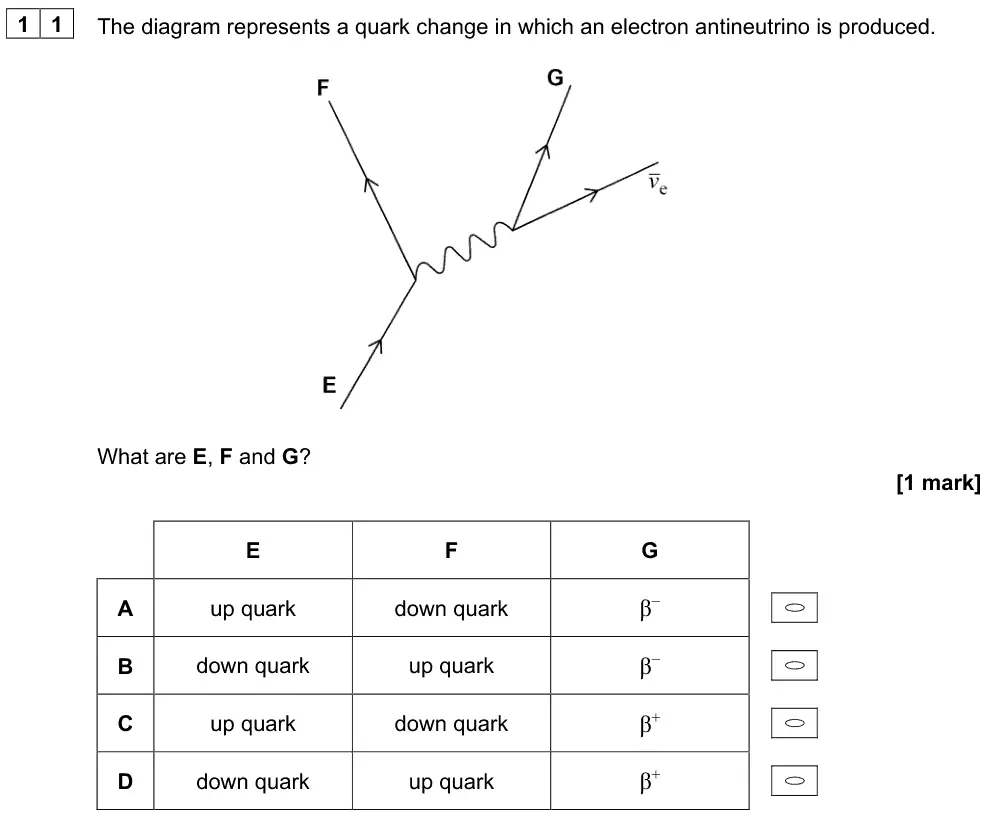
B
The multiple choice questions covered parts of the specification not covered in Section A. The distractors in these questions were written with common errors and misconceptions in mind. These questions are therefore an extremely useful resource when preparing students. The easiest questions were 7, 12, 20, 10 and 11, with over 75% of students getting these questions right. The most demanding were 18, 26, 22, 21 and 13; fewer than 40% of students got these right. For several of these the correct answer was not the most popular choice.
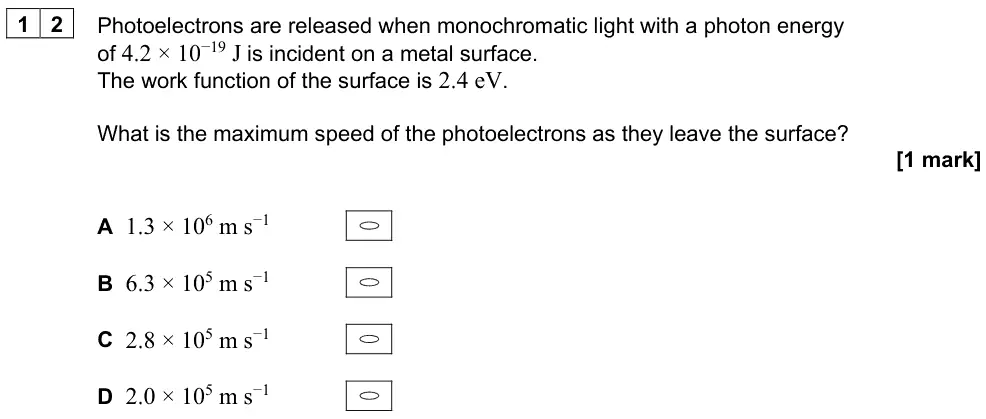
C
The multiple choice questions covered parts of the specification not covered in Section A. The distractors in these questions were written with common errors and misconceptions in mind. These questions are therefore an extremely useful resource when preparing students. The easiest questions were 7, 12, 20, 10 and 11, with over 75% of students getting these questions right. The most demanding were 18, 26, 22, 21 and 13; fewer than 40% of students got these right. For several of these the correct answer was not the most popular choice.
Skills: MS2.3 Substitute numerical values into algebraic equations using appropriate units for physical quantities
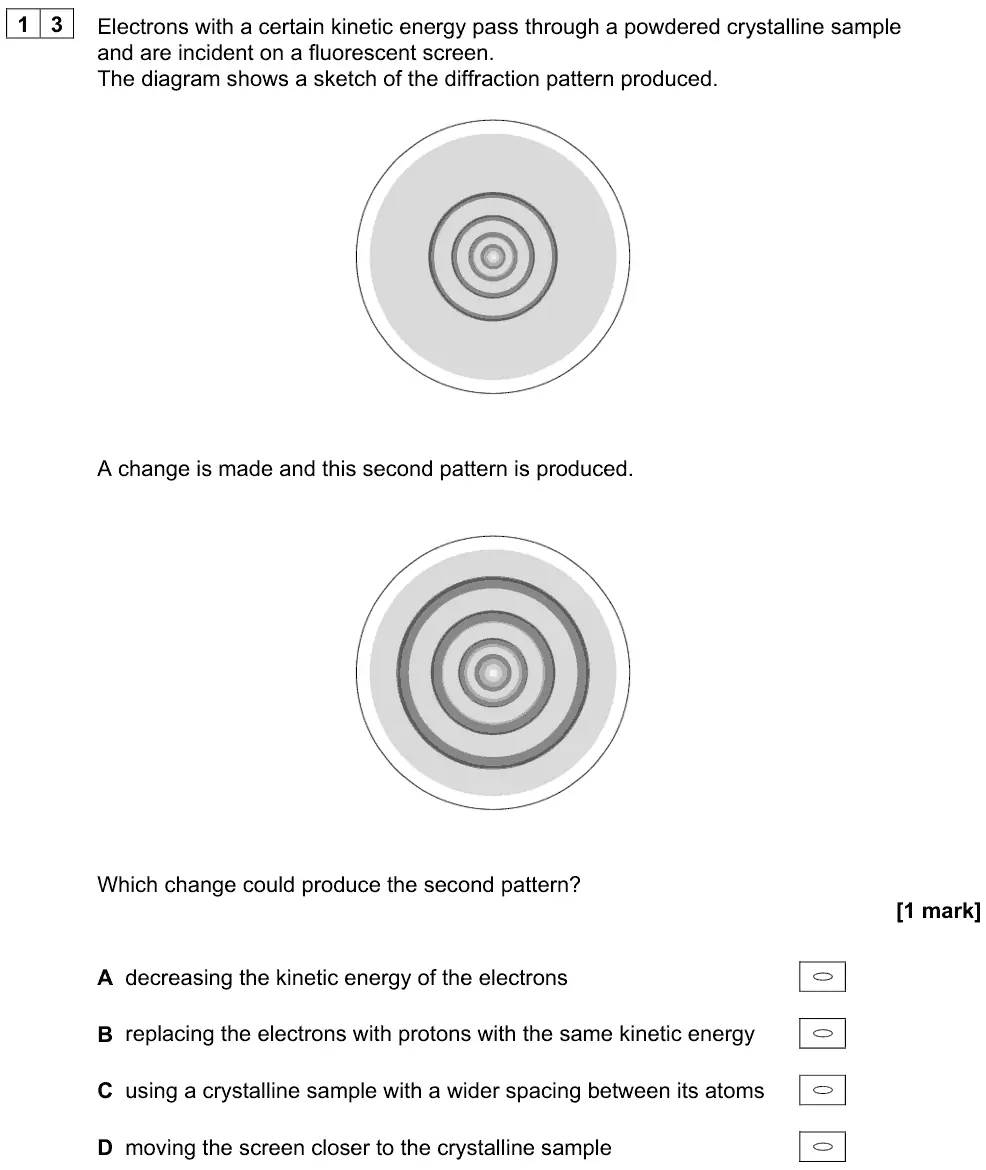
A
The multiple choice questions covered parts of the specification not covered in Section A. The distractors in these questions were written with common errors and misconceptions in mind. These questions are therefore an extremely useful resource when preparing students. The easiest questions were 7, 12, 20, 10 and 11, with over 75% of students getting these questions right. The most demanding were 18, 26, 22, 21 and 13; fewer than 40% of students got these right. For several of these the correct answer was not the most popular choice.
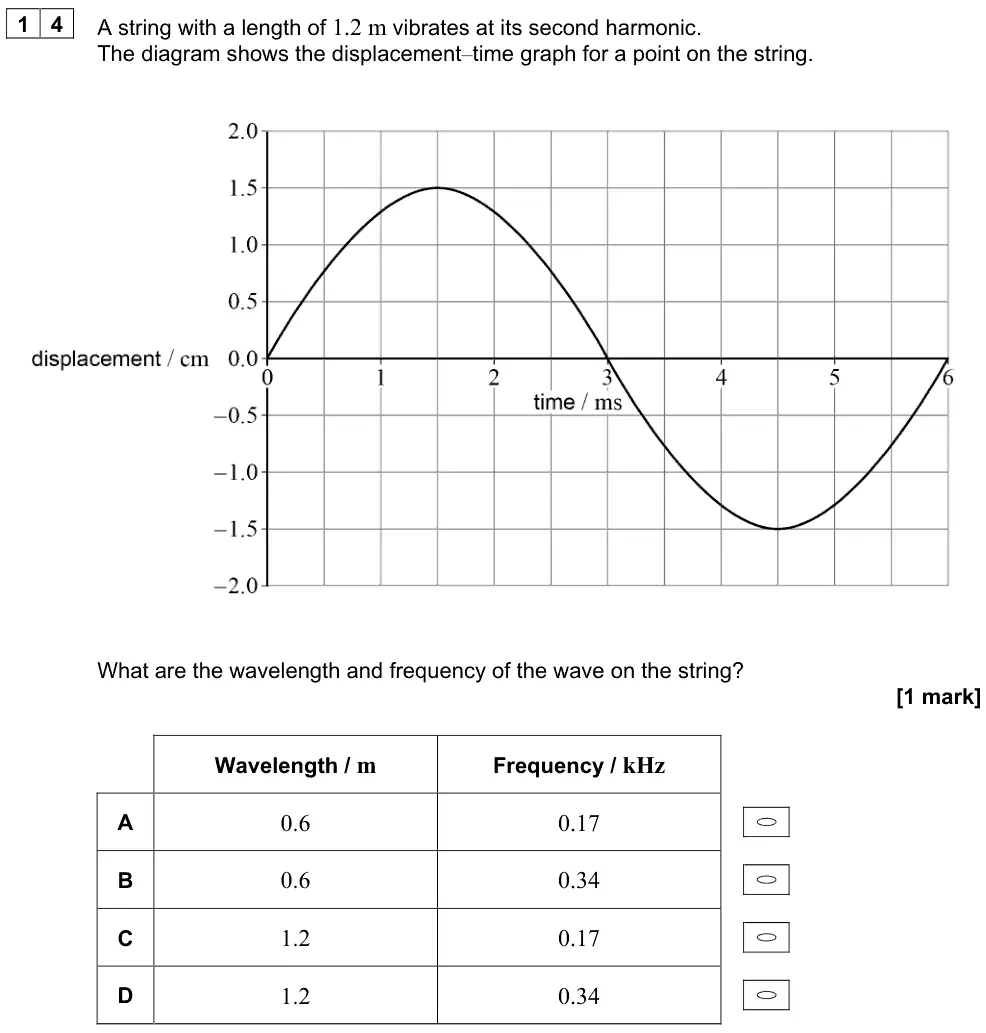
C
Skills: MS3.1 Translate information between graphical, numerical and algebraic forms
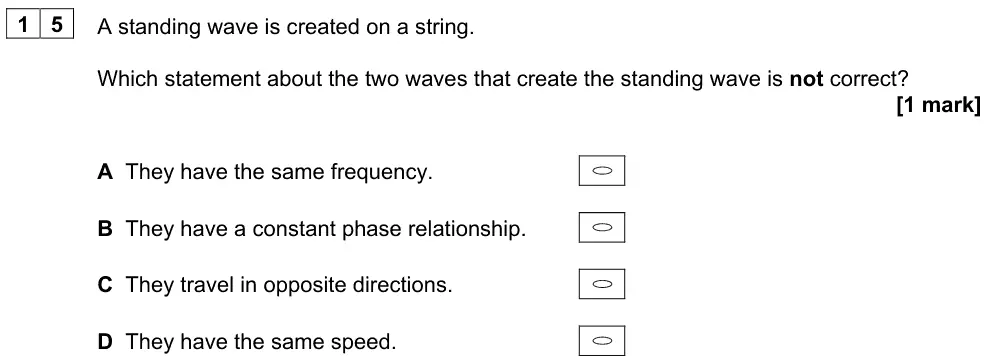
B
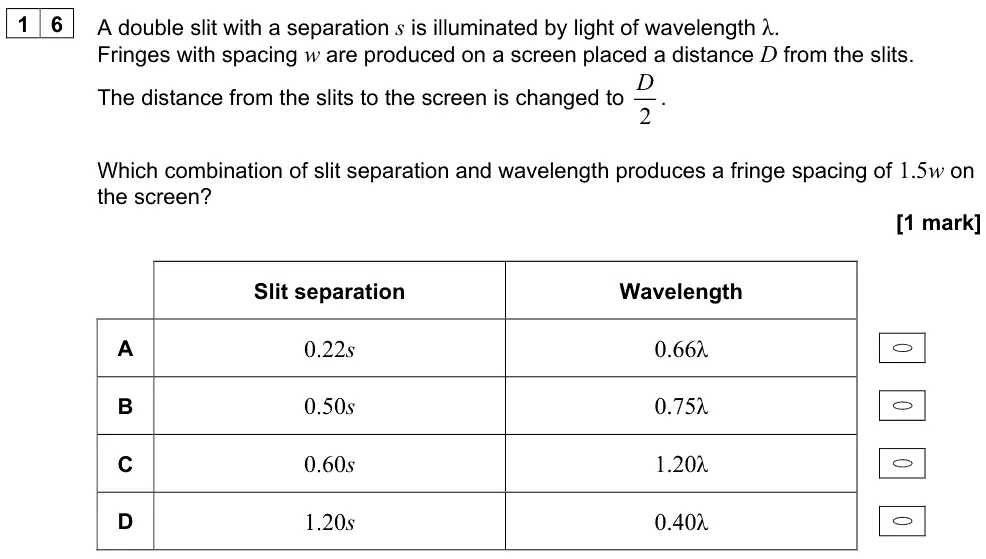
A
Skills: MS0.3 Use ratios, fractions and percentages
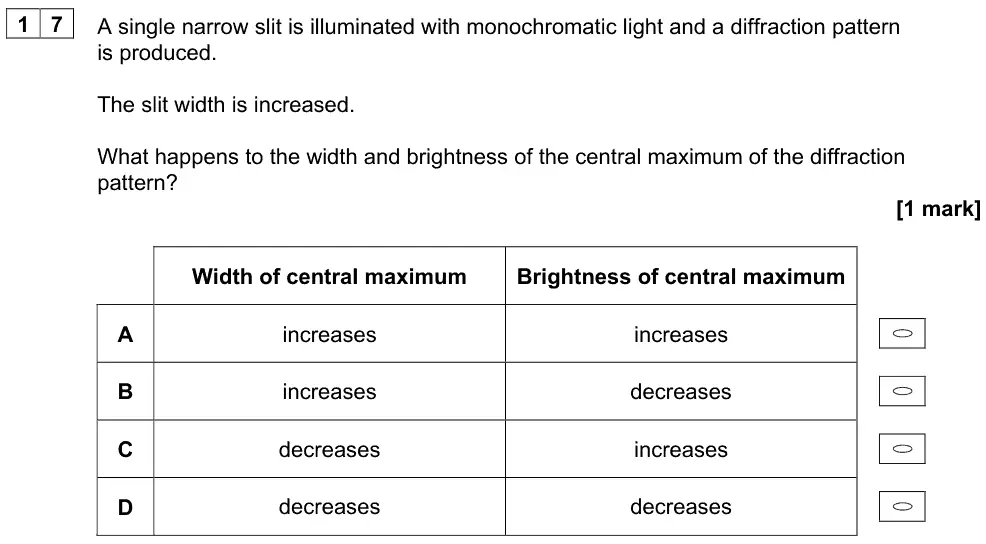
C
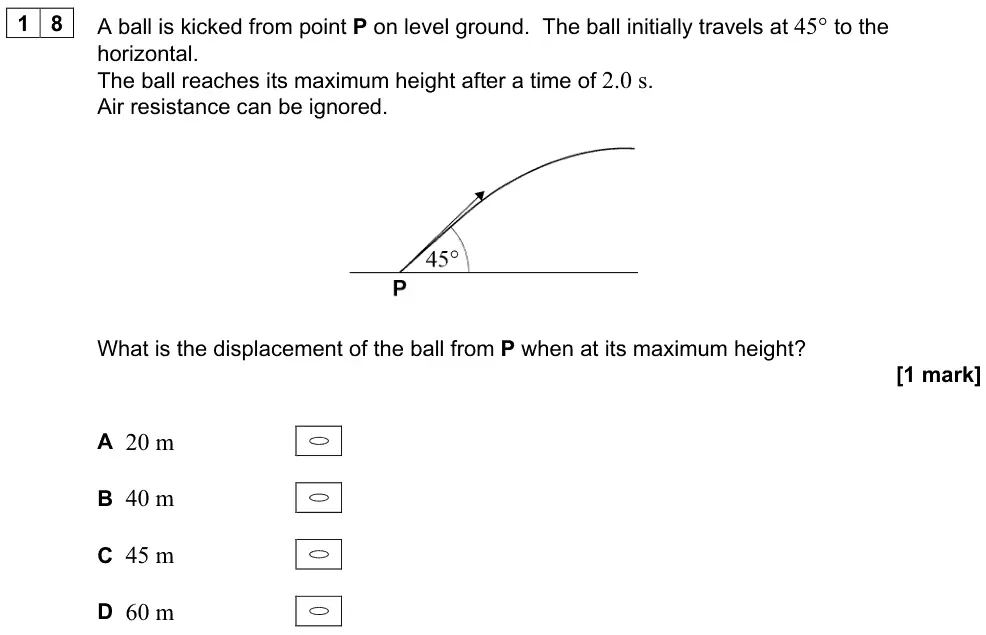
C
The multiple choice questions covered parts of the specification not covered in Section A. The distractors in these questions were written with common errors and misconceptions in mind. These questions are therefore an extremely useful resource when preparing students. The easiest questions were 7, 12, 20, 10 and 11, with over 75% of students getting these questions right. The most demanding were 18, 26, 22, 21 and 13; fewer than 40% of students got these right. For several of these the correct answer was not the most popular choice. Question 18 was about the displacement of a projectile. The most popular answer was A, followed by B. These answers suggested that students did not identify that displacement, and not distance, was required.
Skills: MS4.4 Use Pythagoras’ theorem, and the angle sum of a triangle
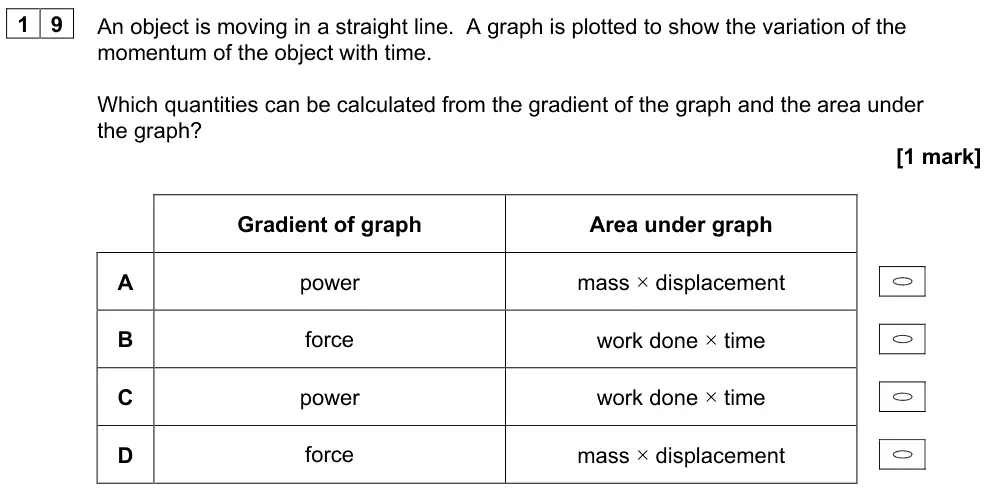
D
Skills: MS3.8 Understand the possible physical significance of the area between a curve and the x axis and be able to calculate it or estimate it by graphical methods as appropriate
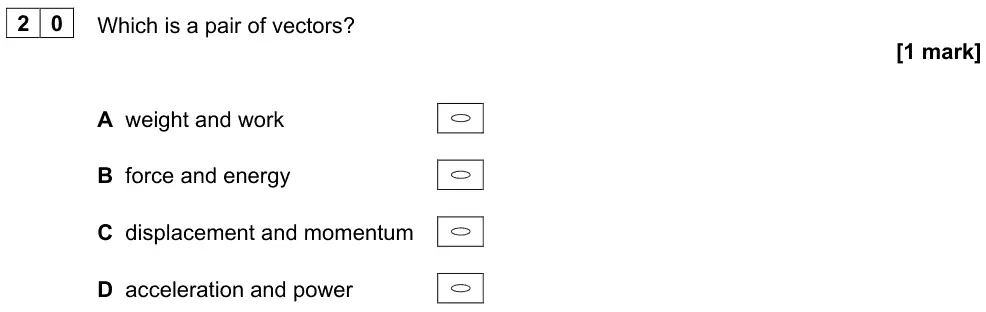
C
The multiple choice questions covered parts of the specification not covered in Section A. The distractors in these questions were written with common errors and misconceptions in mind. These questions are therefore an extremely useful resource when preparing students. The easiest questions were 7, 12, 20, 10 and 11, with over 75% of students getting these questions right. The most demanding were 18, 26, 22, 21 and 13; fewer than 40% of students got these right. For several of these the correct answer was not the most popular choice.
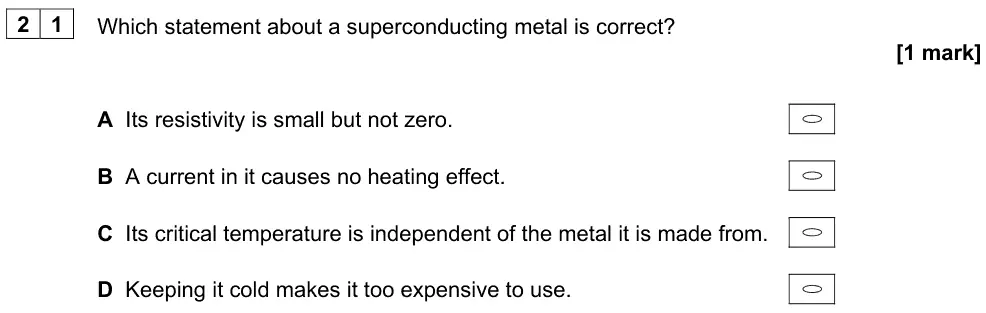
B
The multiple choice questions covered parts of the specification not covered in Section A. The distractors in these questions were written with common errors and misconceptions in mind. These questions are therefore an extremely useful resource when preparing students. The easiest questions were 7, 12, 20, 10 and 11, with over 75% of students getting these questions right. The most demanding were 18, 26, 22, 21 and 13; fewer than 40% of students got these right. For several of these the correct answer was not the most popular choice.
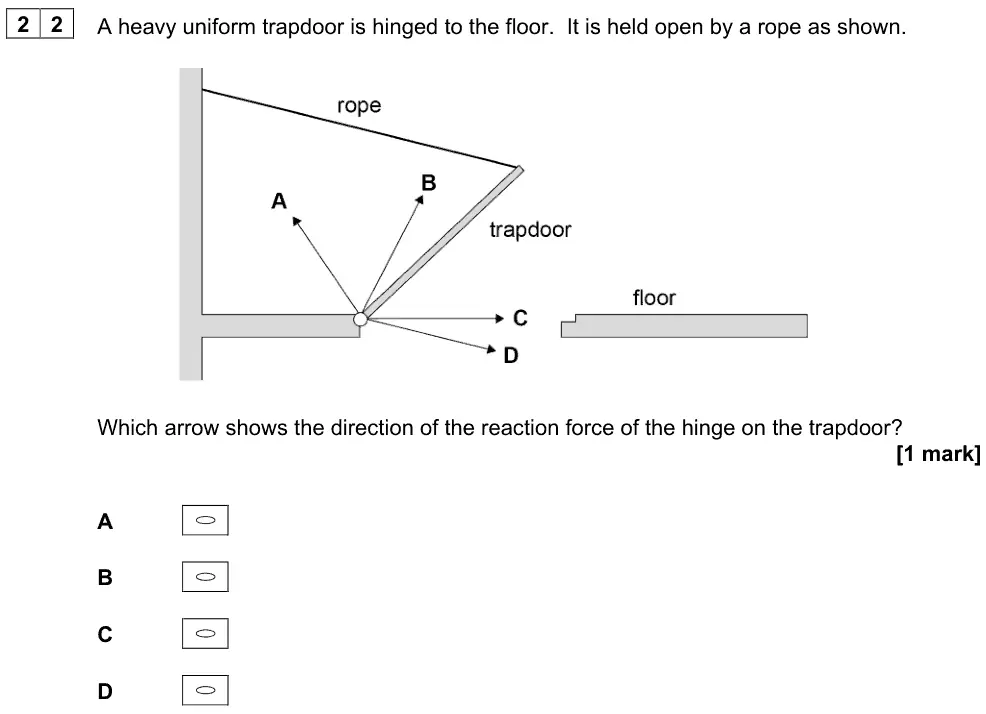
B
The multiple choice questions covered parts of the specification not covered in Section A. The distractors in these questions were written with common errors and misconceptions in mind. These questions are therefore an extremely useful resource when preparing students. The easiest questions were 7, 12, 20, 10 and 11, with over 75% of students getting these questions right. The most demanding were 18, 26, 22, 21 and 13; fewer than 40% of students got these right. For several of these the correct answer was not the most popular choice. Question 22 was about the equilibrium of forces. The most popular answer was A. Drawing the weight of the trapdoor and the tension in the rope on the diagram would have shown their lines of action. This would have indicated B as the only force with a line of action that would pass through a common point and therefore give no turning effect.
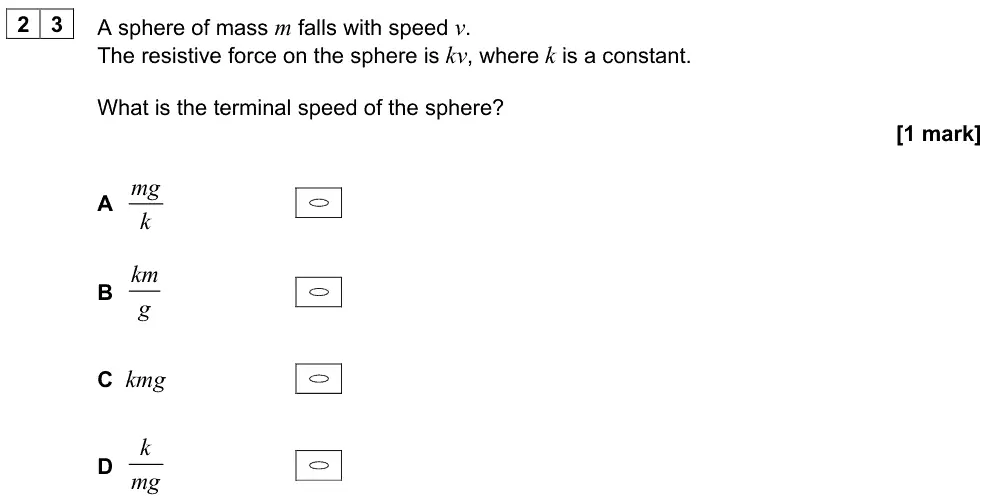
A
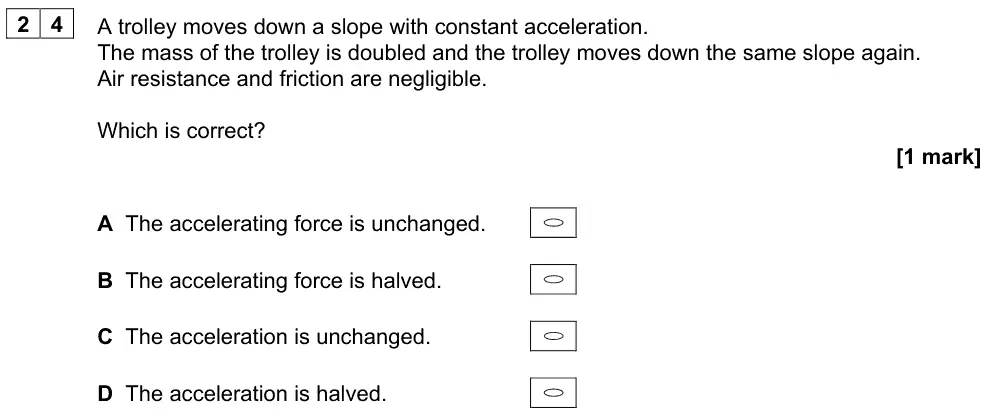
C
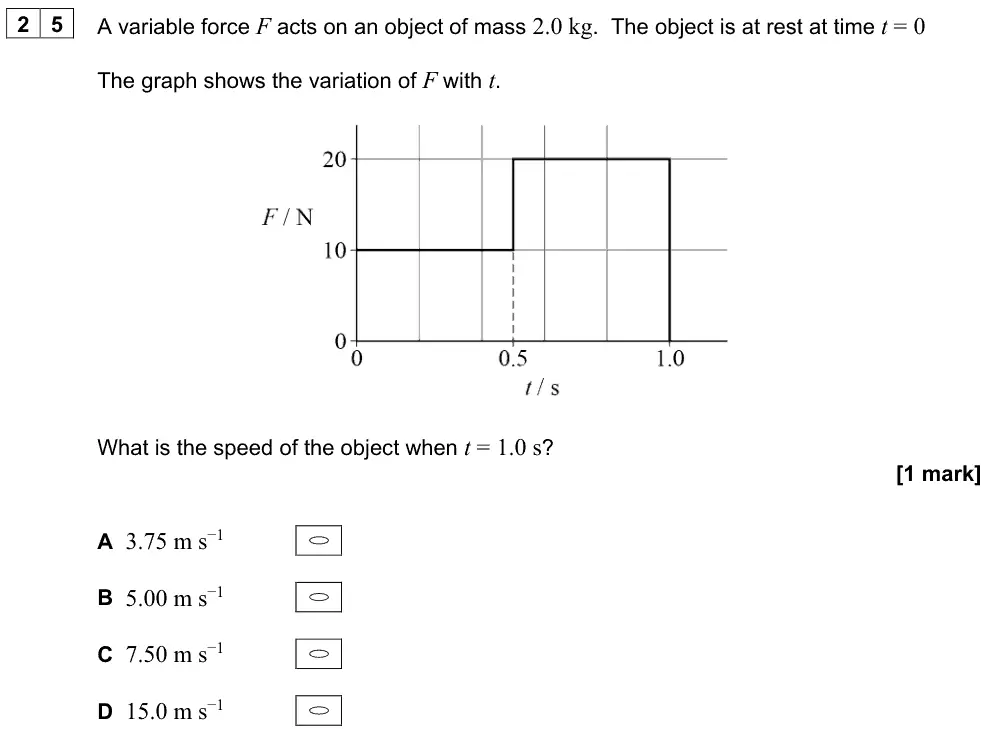
C
Skills: MS3.8 Understand the possible physical significance of the area between a curve and the x axis and be able to calculate it or estimate it by graphical methods as appropriate
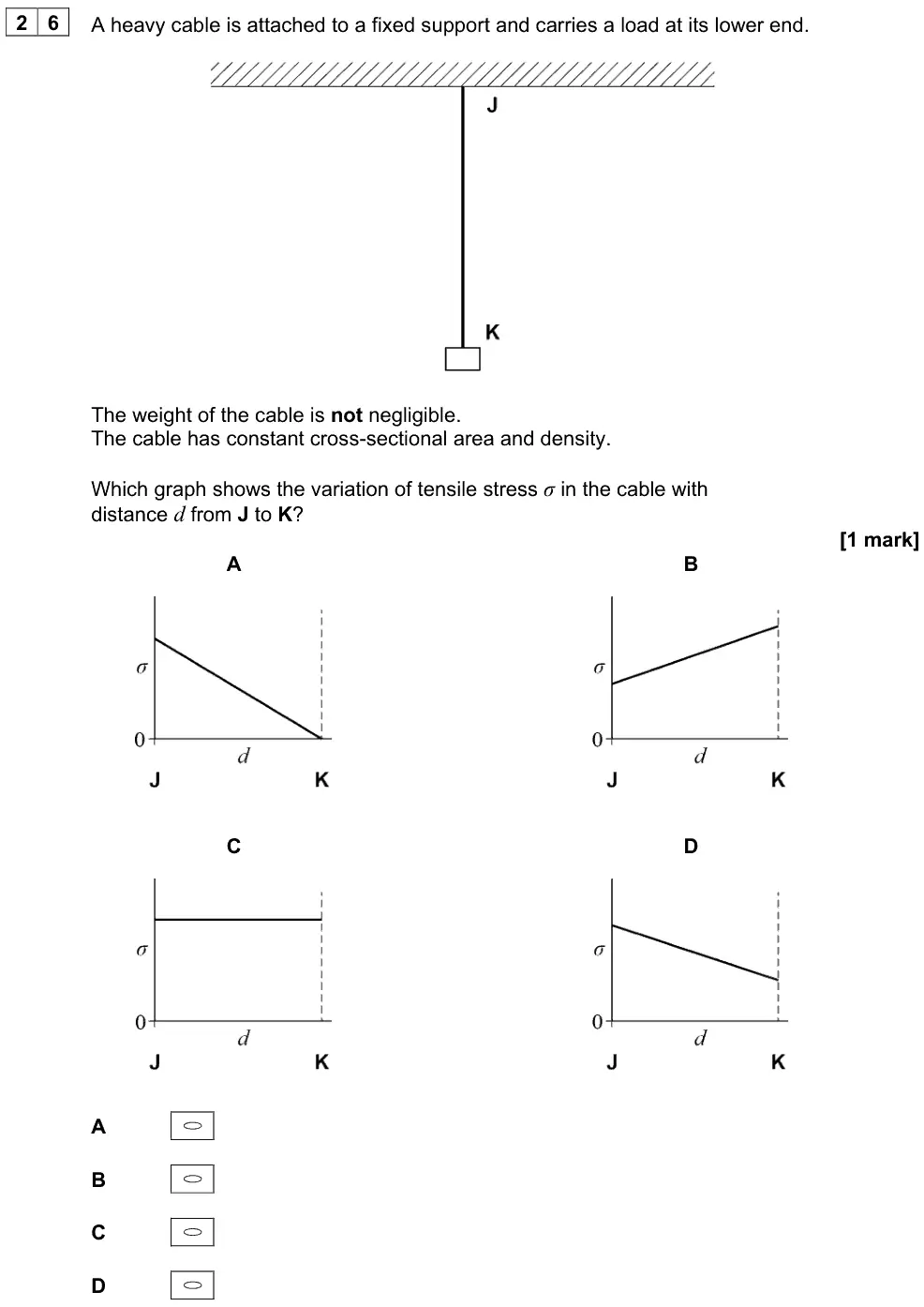
D
The multiple choice questions covered parts of the specification not covered in Section A. The distractors in these questions were written with common errors and misconceptions in mind. These questions are therefore an extremely useful resource when preparing students. The easiest questions were 7, 12, 20, 10 and 11, with over 75% of students getting these questions right. The most demanding were 18, 26, 22, 21 and 13; fewer than 40% of students got these right. For several of these the correct answer was not the most popular choice. Question 26 was about tensile stress in a heavy cable. The most popular answers were B and C, the latter suggesting that students did not realise that the weight of the cable was not negligible.
Skills: MS3.1 Translate information between graphical, numerical and algebraic forms
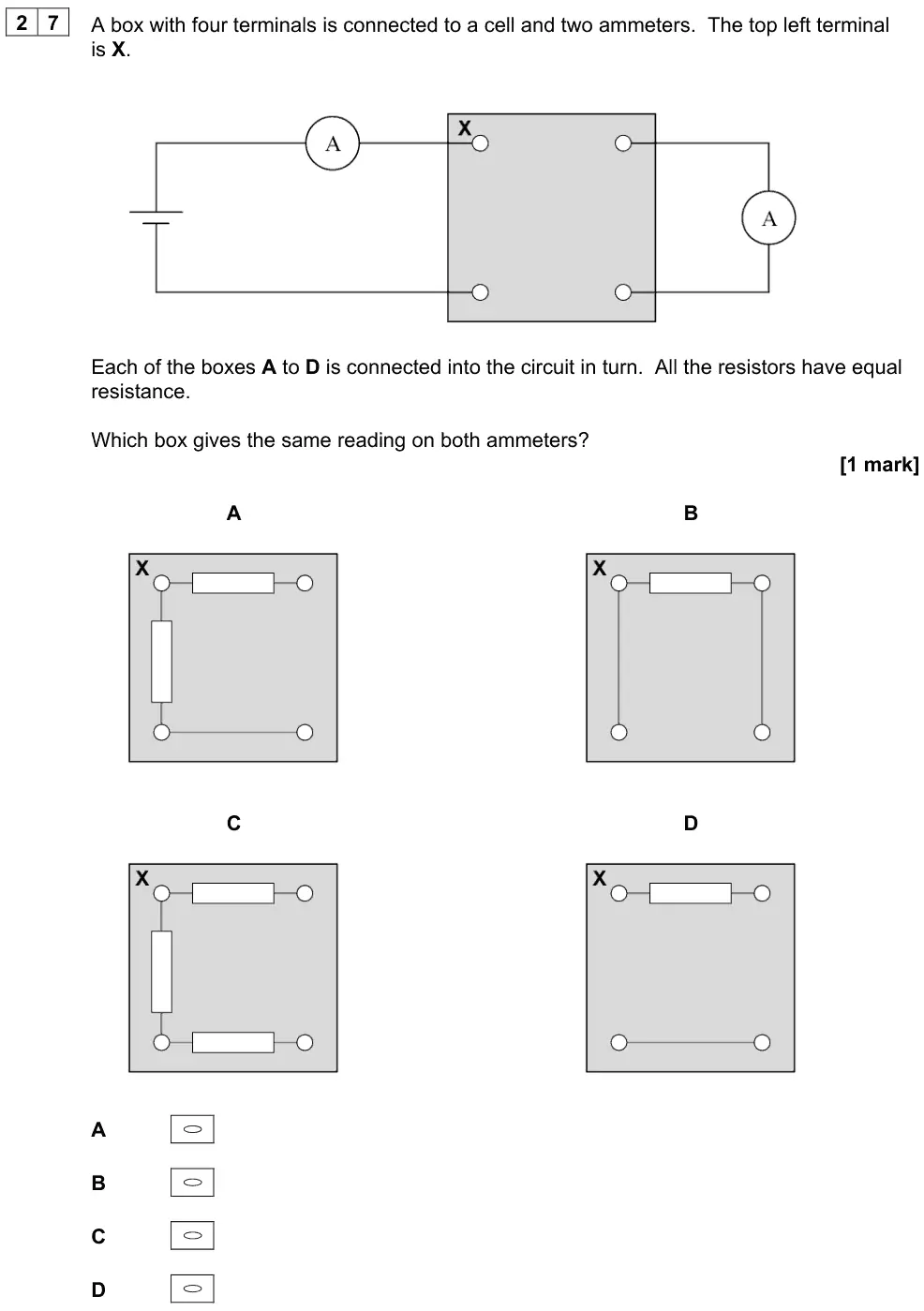
D
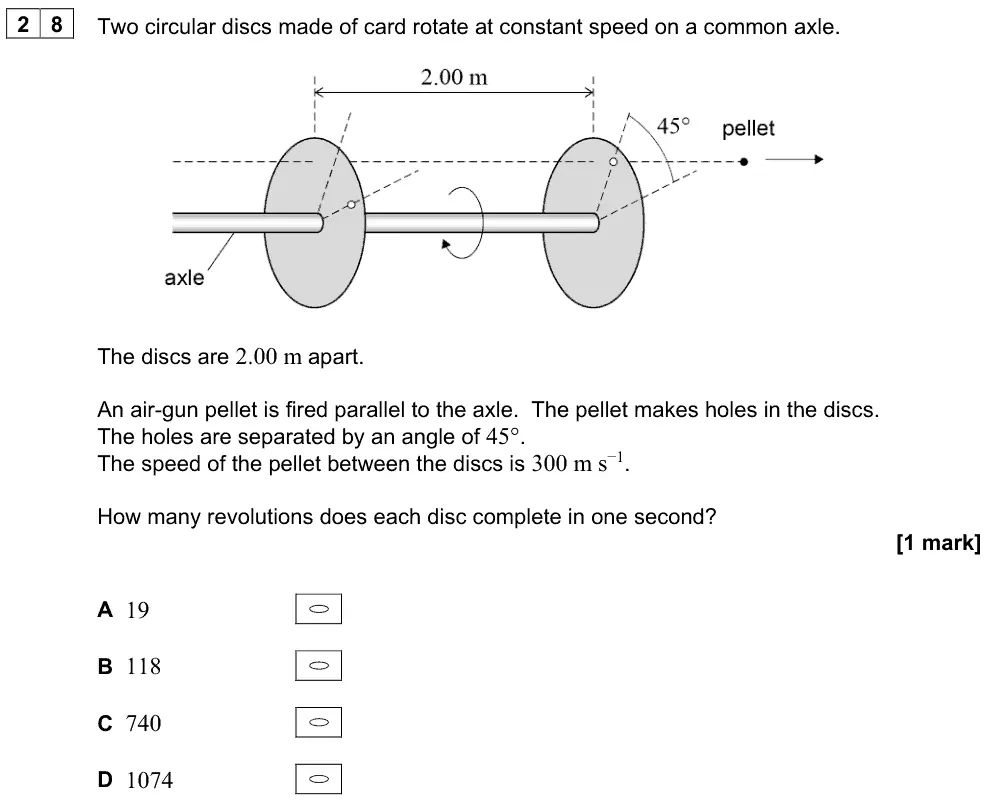
A
Skills: MS4.7 Understand the relationship between degrees and radians and translate from one to the other
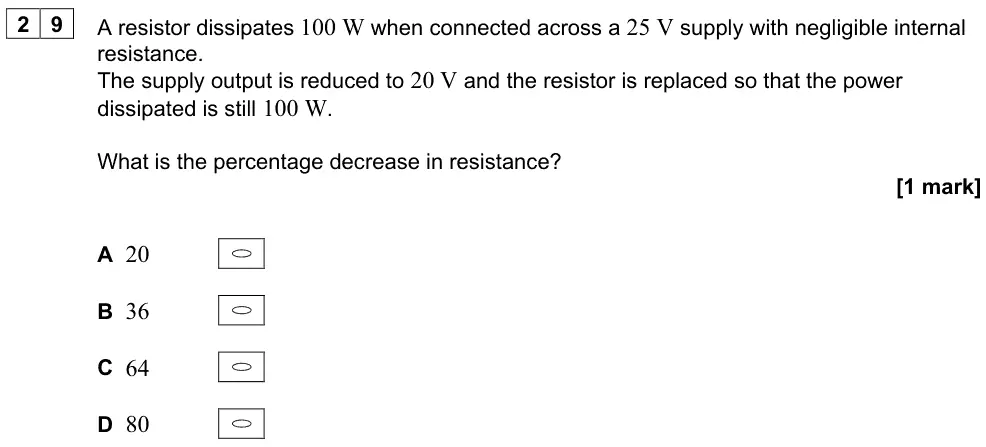
B
Skills: MS0.3 Use ratios, fractions and percentages
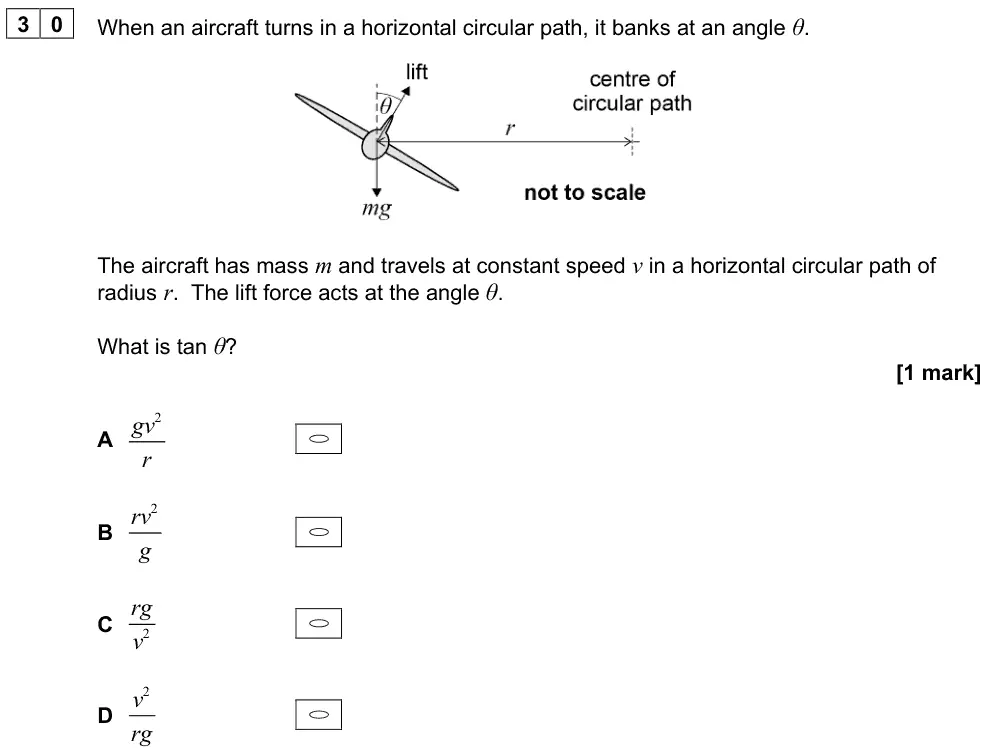
D
Skills: MS4.5 Use sin, cos and tan in physical problems
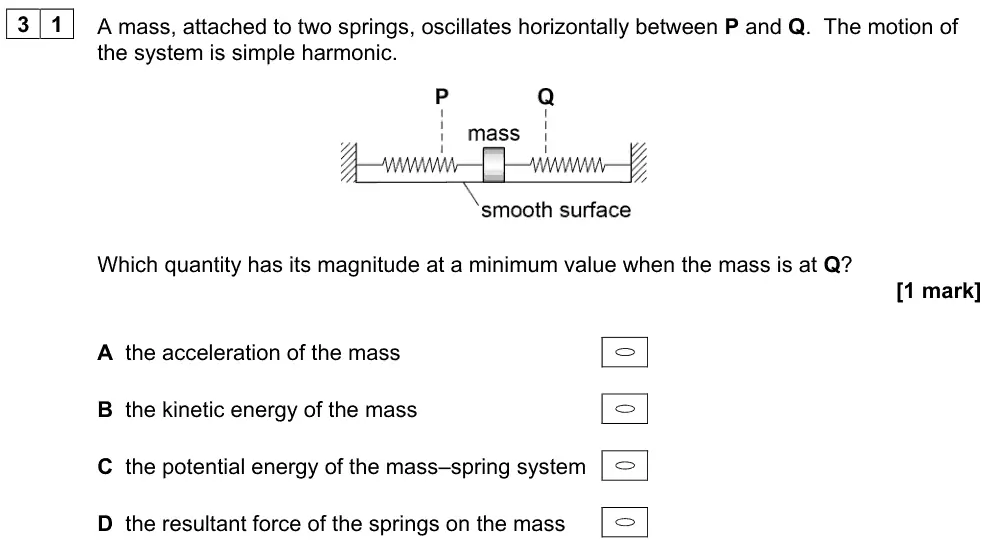
B
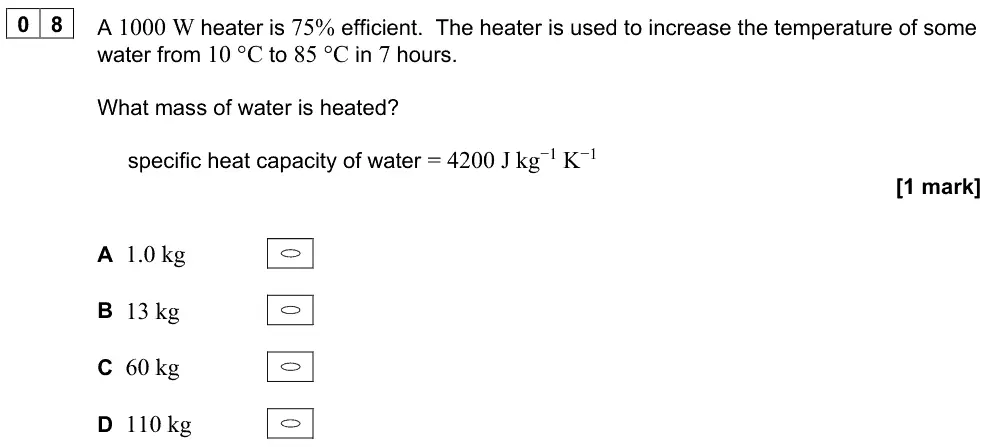
C
A number of questions were found to be quite straightforward by students. These included B8, B11, B12, B17, B18, B20, B26 and B28 which were all answered correctly by at least 70% of students. The questions found to be the most difficult were B14, B15 and B25 – answered correctly by fewer than 35% of students.
Skills: MS2.3 Substitute numerical values into algebraic equations using appropriate units for physical quantities
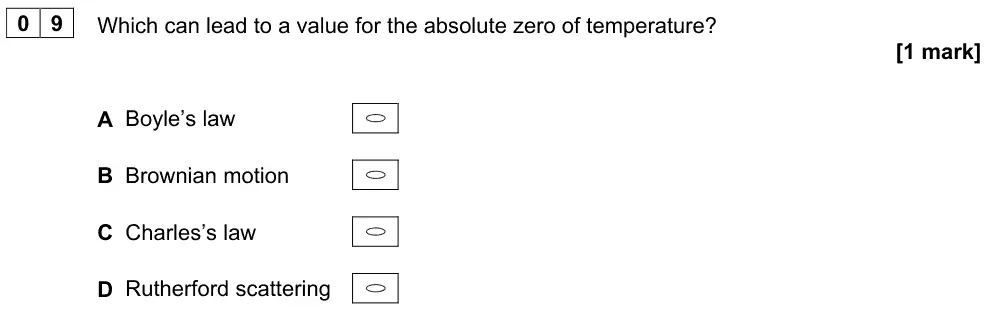
C
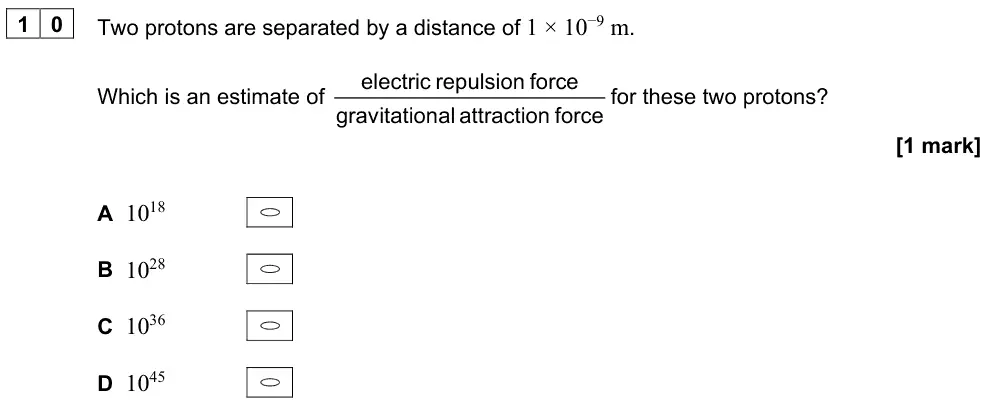
C
Skills: MS1.4 Make order of magnitude calculations
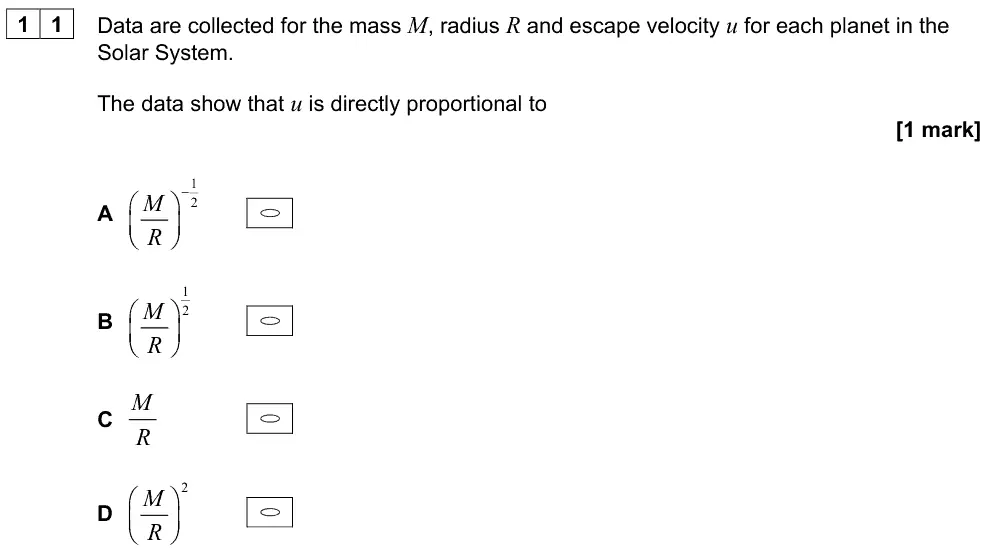
B
A number of questions were found to be quite straightforward by students. These included B8, B11, B12, B17, B18, B20, B26 and B28 which were all answered correctly by at least 70% of students. The questions found to be the most difficult were B14, B15 and B25 – answered correctly by fewer than 35% of students.
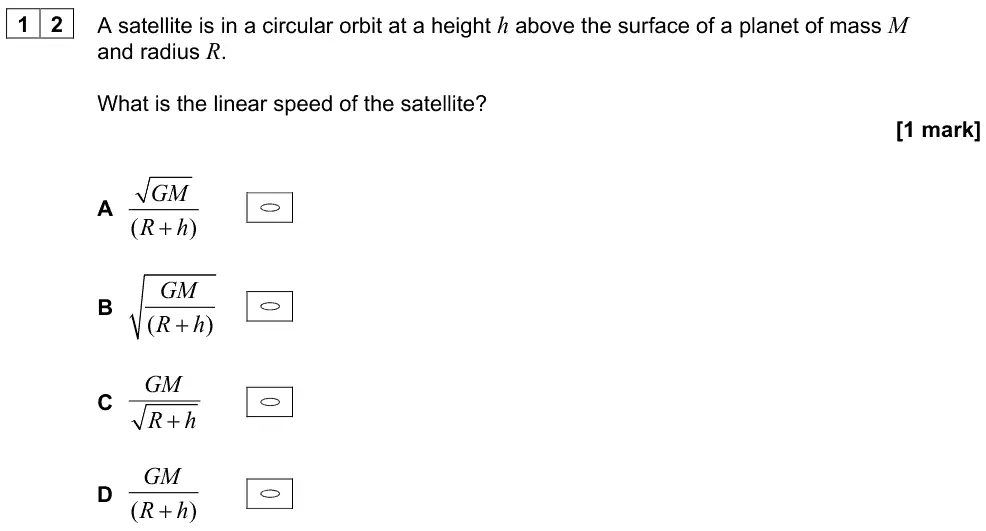
B
A number of questions were found to be quite straightforward by students. These included B8, B11, B12, B17, B18, B20, B26 and B28 which were all answered correctly by at least 70% of students. The questions found to be the most difficult were B14, B15 and B25 – answered correctly by fewer than 35% of students.
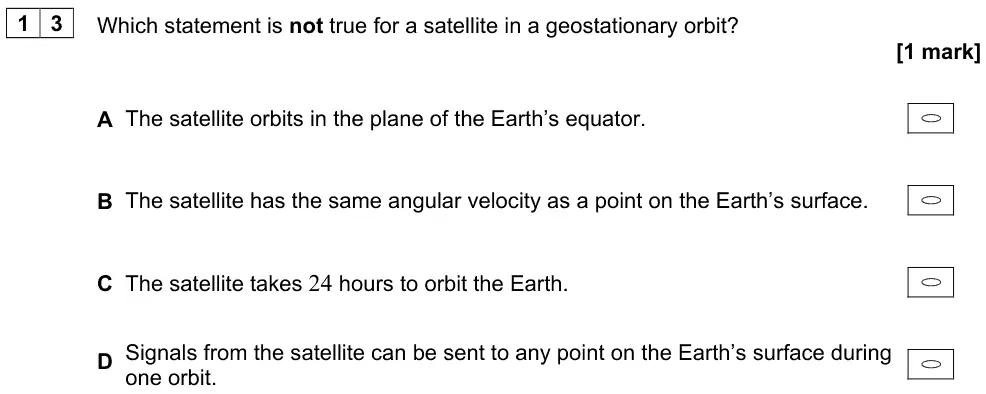
D
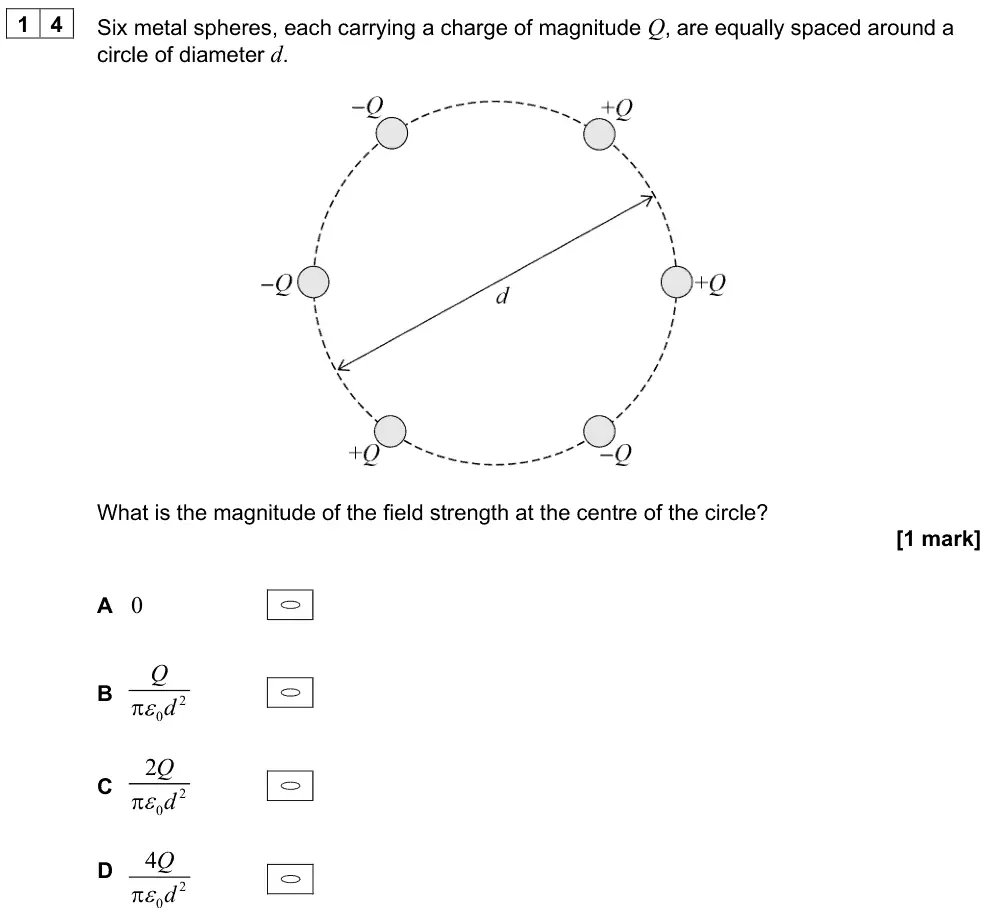
C
A number of questions were found to be quite straightforward by students. These included B8, B11, B12, B17, B18, B20, B26 and B28 which were all answered correctly by at least 70% of students. The questions found to be the most difficult were B14, B15 and B25 – answered correctly by fewer than 35% of students.
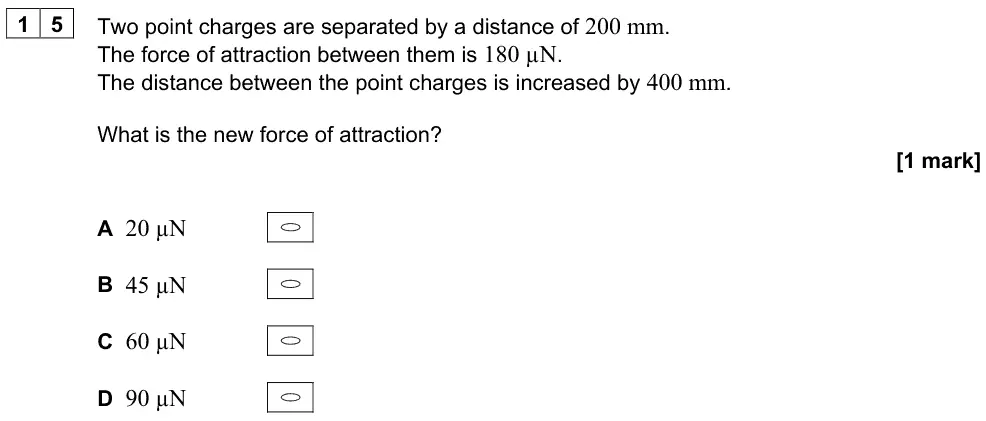
A
A number of questions were found to be quite straightforward by students. These included B8, B11, B12, B17, B18, B20, B26 and B28 which were all answered correctly by at least 70% of students. The questions found to be the most difficult were B14, B15 and B25 – answered correctly by fewer than 35% of students.
Skills: MS0.3 Use ratios, fractions and percentages
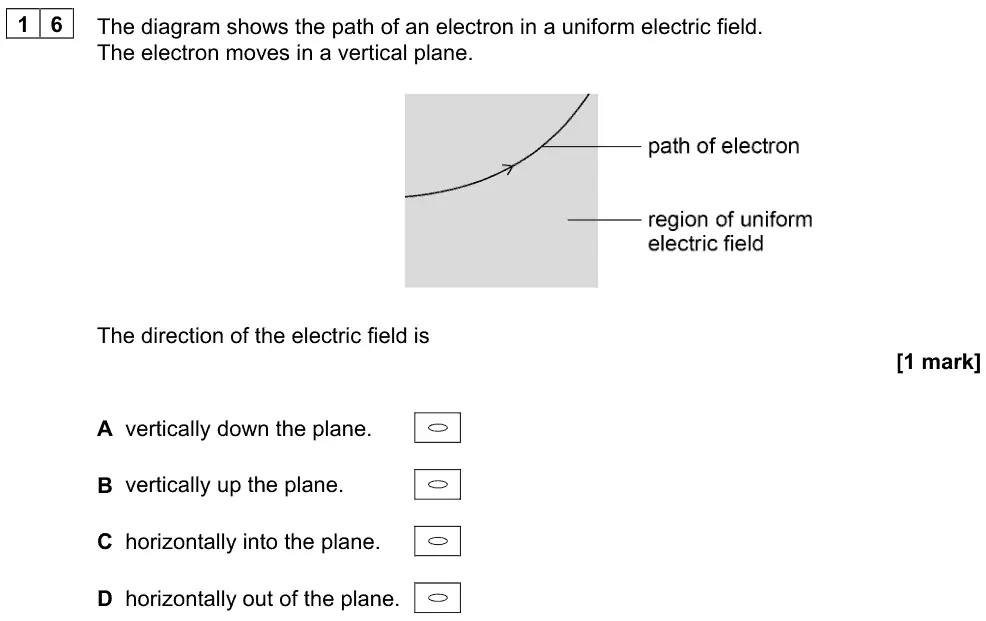
A
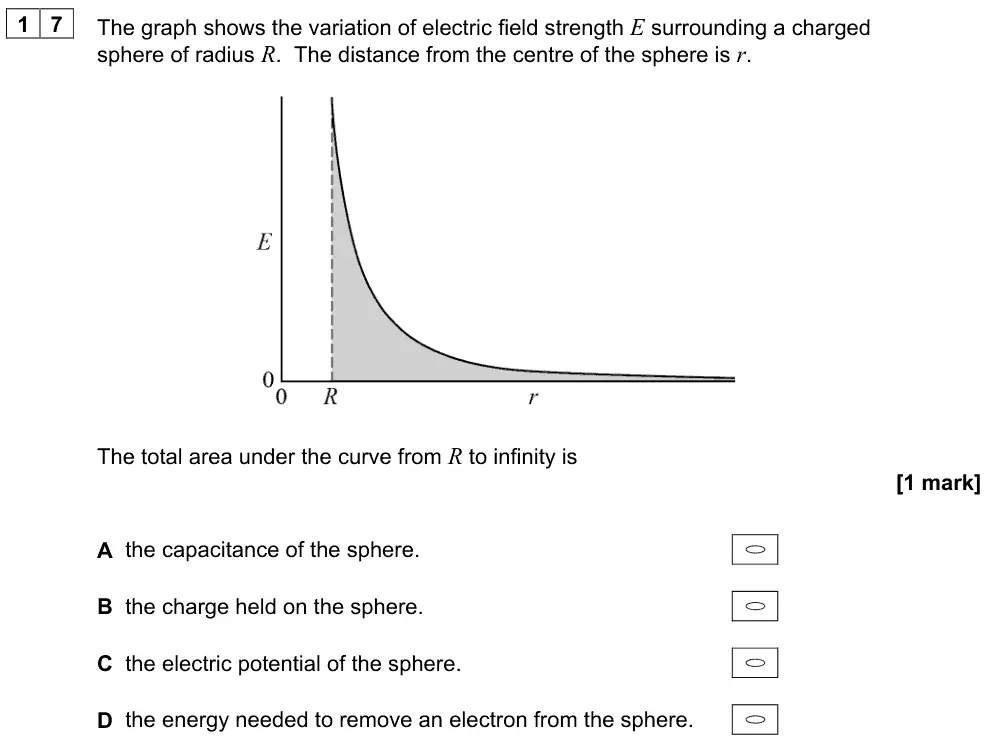
C
A number of questions were found to be quite straightforward by students. These included B8, B11, B12, B17, B18, B20, B26 and B28 which were all answered correctly by at least 70% of students. The questions found to be the most difficult were B14, B15 and B25 – answered correctly by fewer than 35% of students.
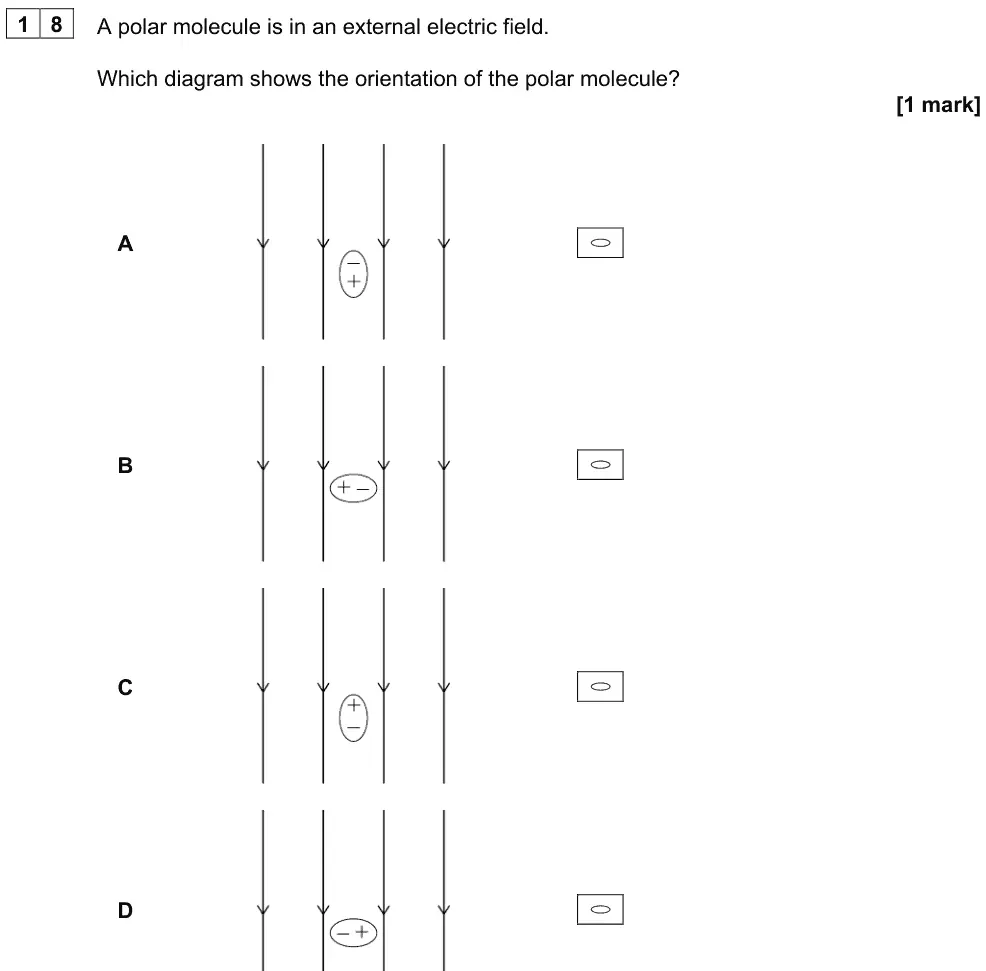
A
A number of questions were found to be quite straightforward by students. These included B8, B11, B12, B17, B18, B20, B26 and B28 which were all answered correctly by at least 70% of students. The questions found to be the most difficult were B14, B15 and B25 – answered correctly by fewer than 35% of students.
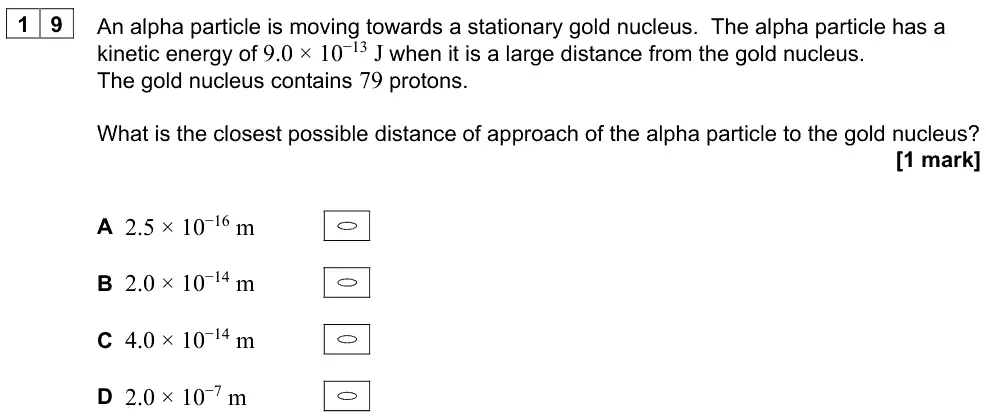
C
Skills: MS2.3 Substitute numerical values into algebraic equations using appropriate units for physical quantities
B
A number of questions were found to be quite straightforward by students. These included B8, B11, B12, B17, B18, B20, B26 and B28 which were all answered correctly by at least 70% of students. The questions found to be the most difficult were B14, B15 and B25 – answered correctly by fewer than 35% of students.
Skills: MS2.3 Substitute numerical values into algebraic equations using appropriate units for physical quantities
B
A
Skills: MS3.5 Calculate rate of change from a graph showing a linear relationship
D
Skills: MS2.3 Substitute numerical values into algebraic equations using appropriate units for physical quantities
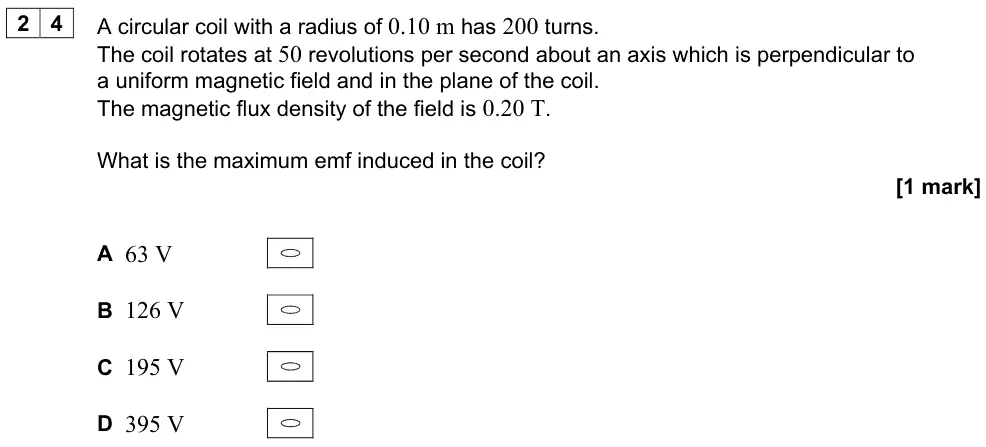
D
Skills: MS4.3 Calculate areas of triangles, circumferences and areas of circles, surface areas and volumes of rectangular blocks, cylinders and spheres; MS2.3 Substitute numerical values into algebraic equations using appropriate units for physical quantities
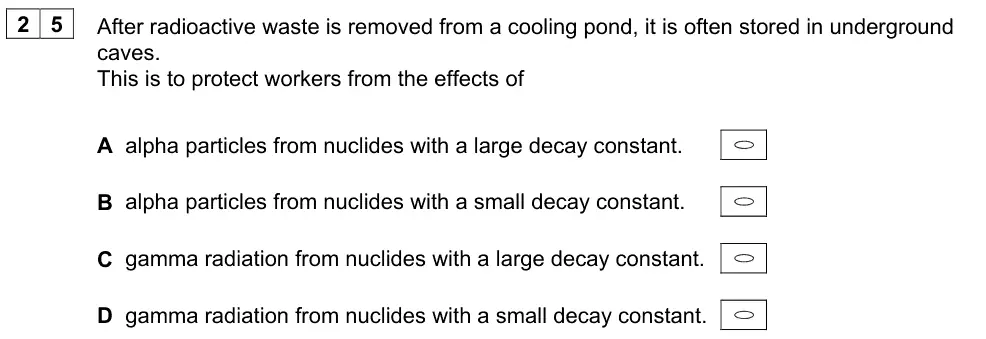
D
A number of questions were found to be quite straightforward by students. These included B8, B11, B12, B17, B18, B20, B26 and B28 which were all answered correctly by at least 70% of students. The questions found to be the most difficult were B14, B15 and B25 – answered correctly by fewer than 35% of students.
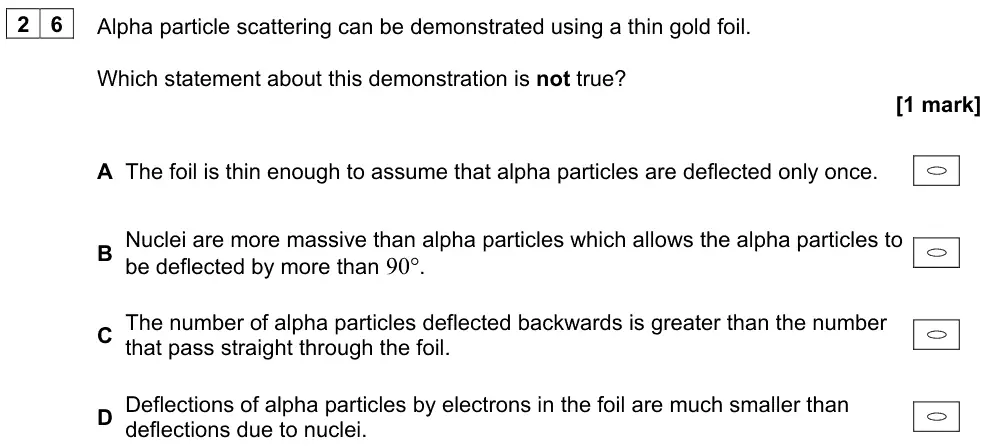
C
A number of questions were found to be quite straightforward by students. These included B8, B11, B12, B17, B18, B20, B26 and B28 which were all answered correctly by at least 70% of students. The questions found to be the most difficult were B14, B15 and B25 – answered correctly by fewer than 35% of students.
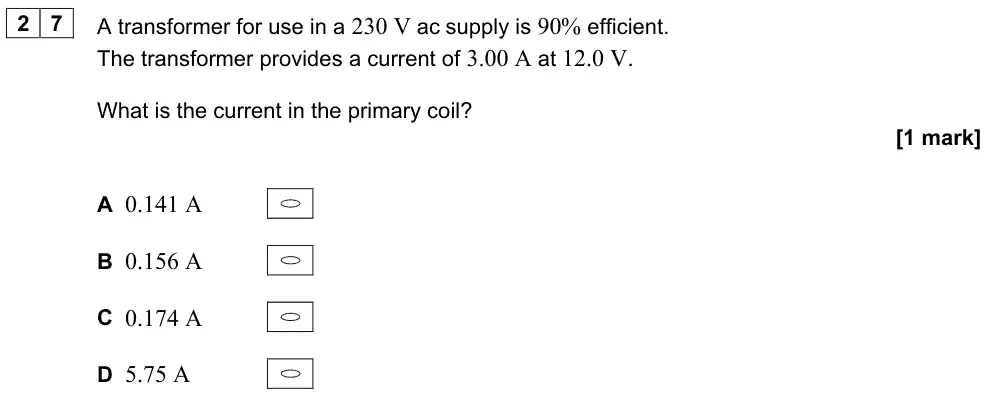
C
Skills: MS0.3 Use ratios, fractions and percentages
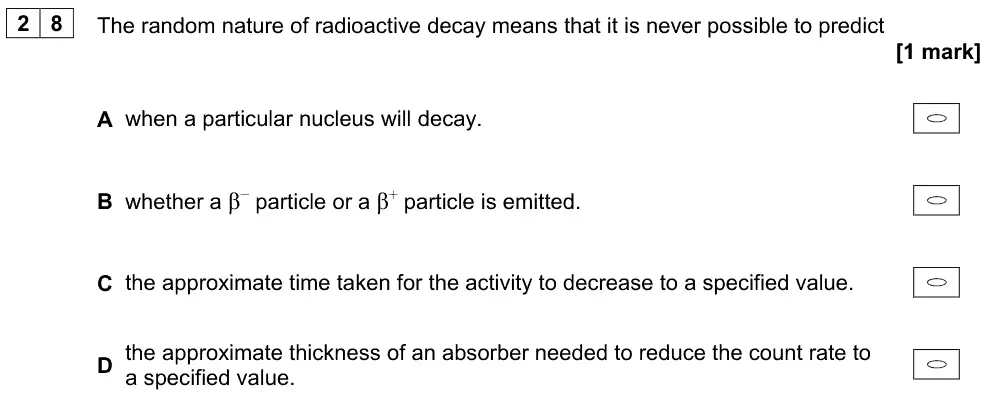
A
A number of questions were found to be quite straightforward by students. These included B8, B11, B12, B17, B18, B20, B26 and B28 which were all answered correctly by at least 70% of students. The questions found to be the most difficult were B14, B15 and B25 – answered correctly by fewer than 35% of students.
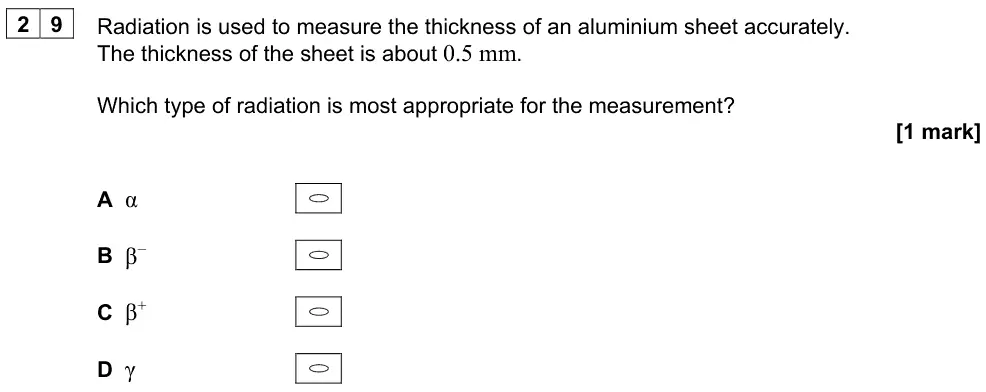
B
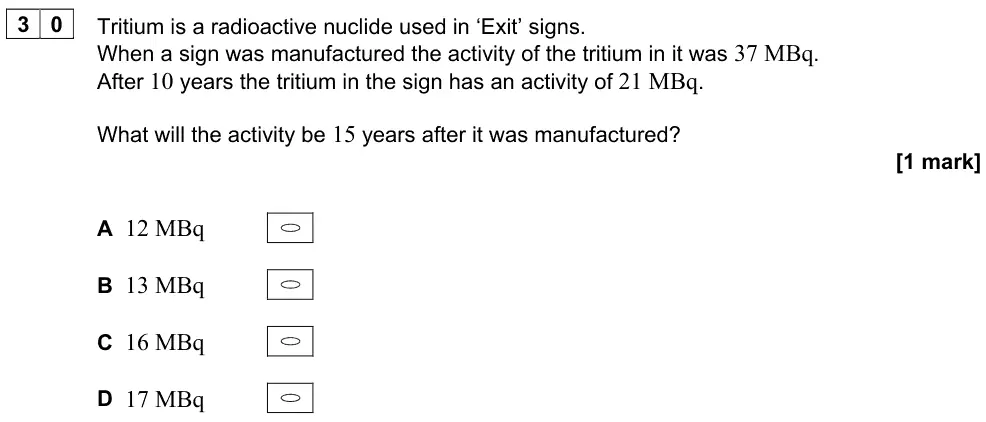
C
Skills: MS0.5 Use calculators to find and use power, exponential and logarithmic functions
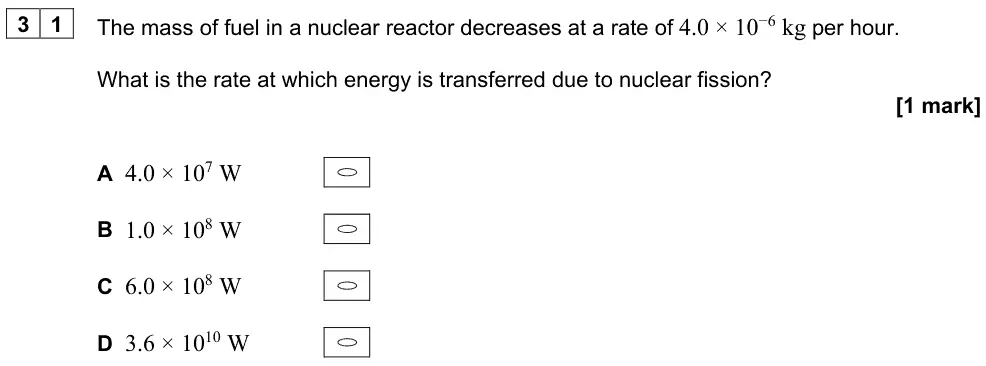
B
Skills: MS2.3 Substitute numerical values into algebraic equations using appropriate units for physical quantities
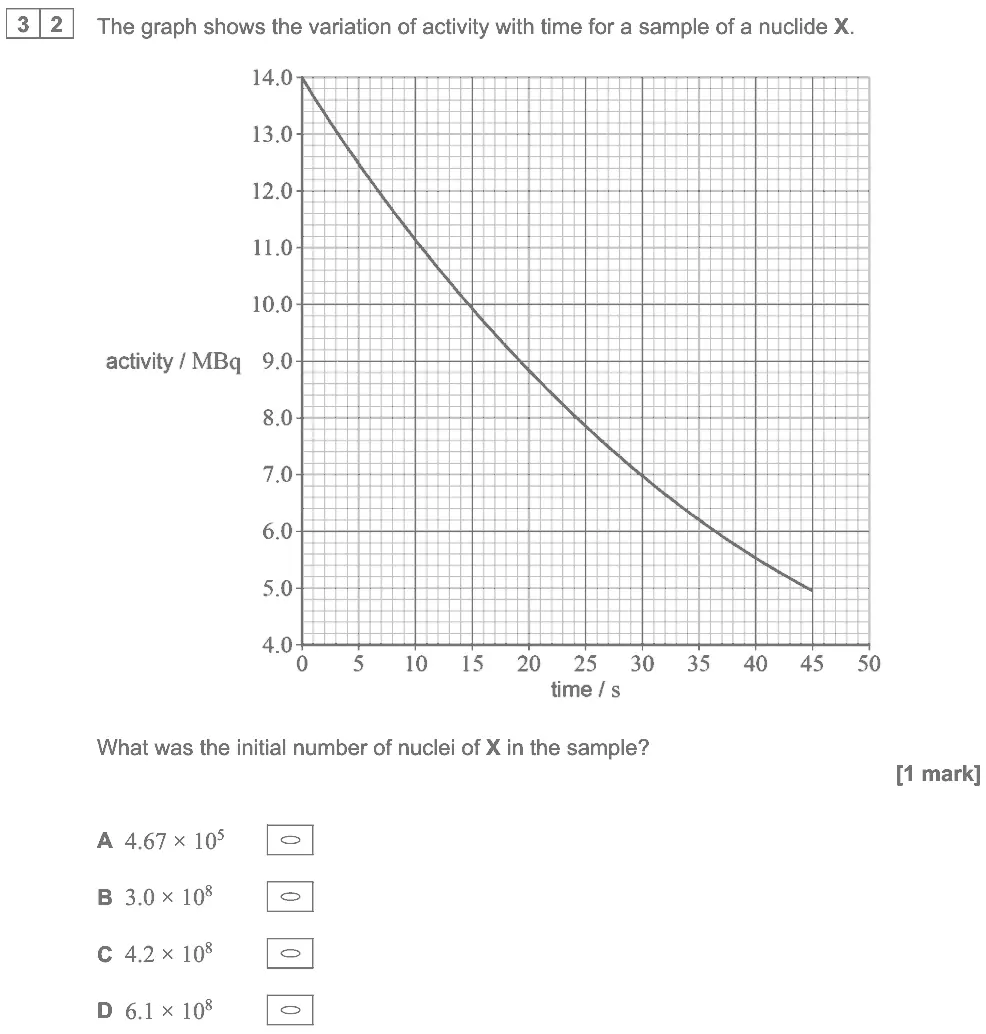
D
Skills: MS3.1 Translate information between graphical, numerical and algebraic forms
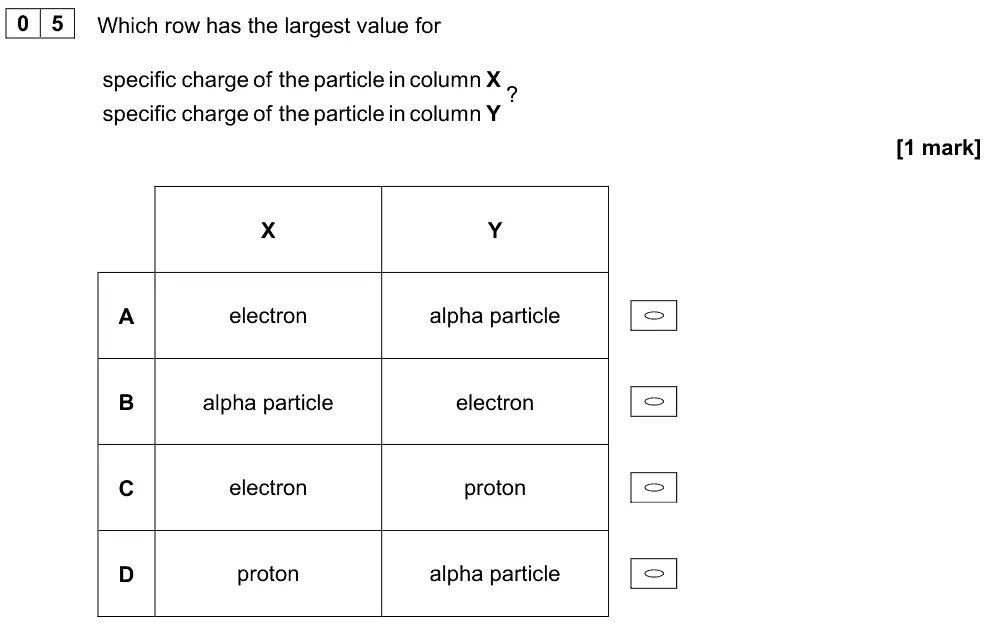
A
Skills: MS0.3 Use ratios, fractions and percentages
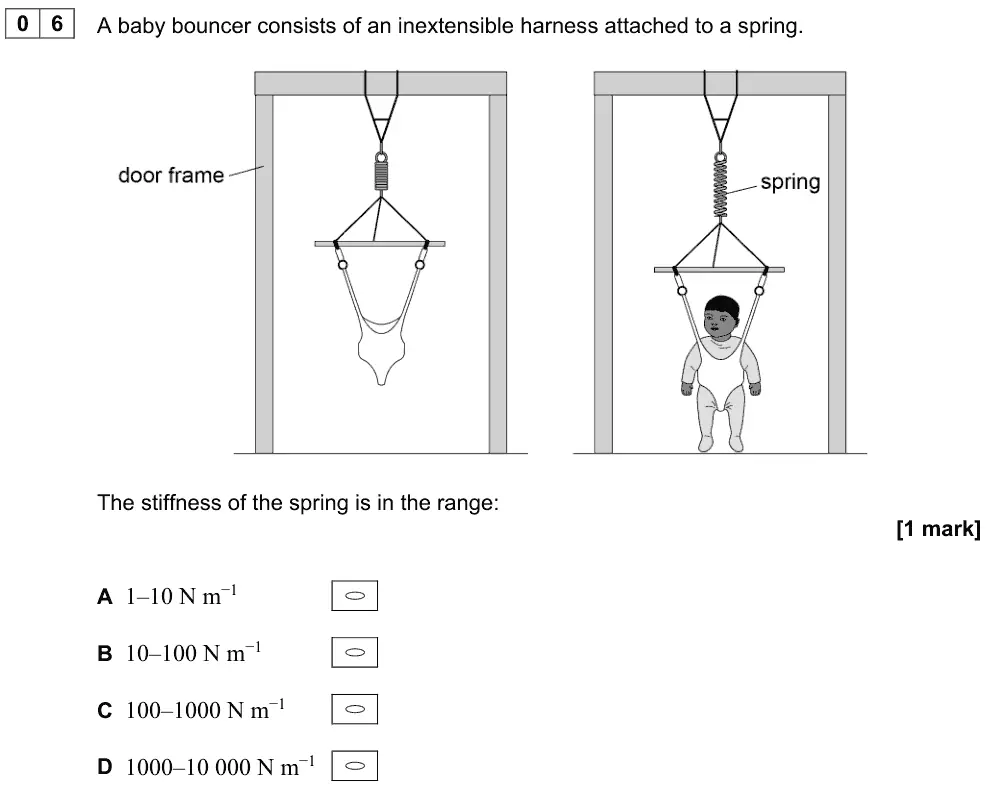
C
Skills: MS1.4 Make order of magnitude calculations
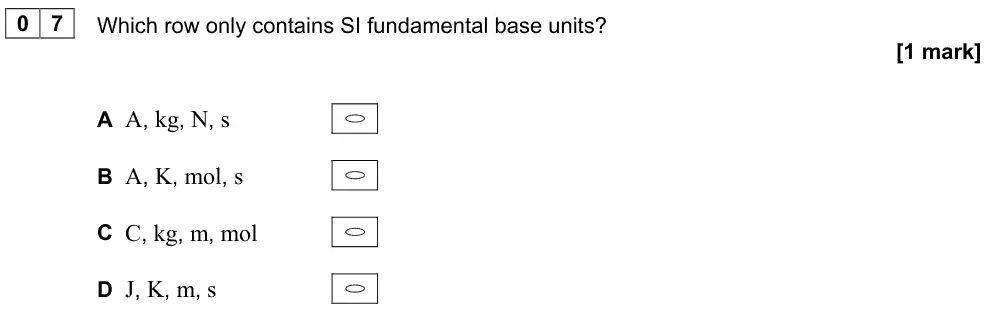
B
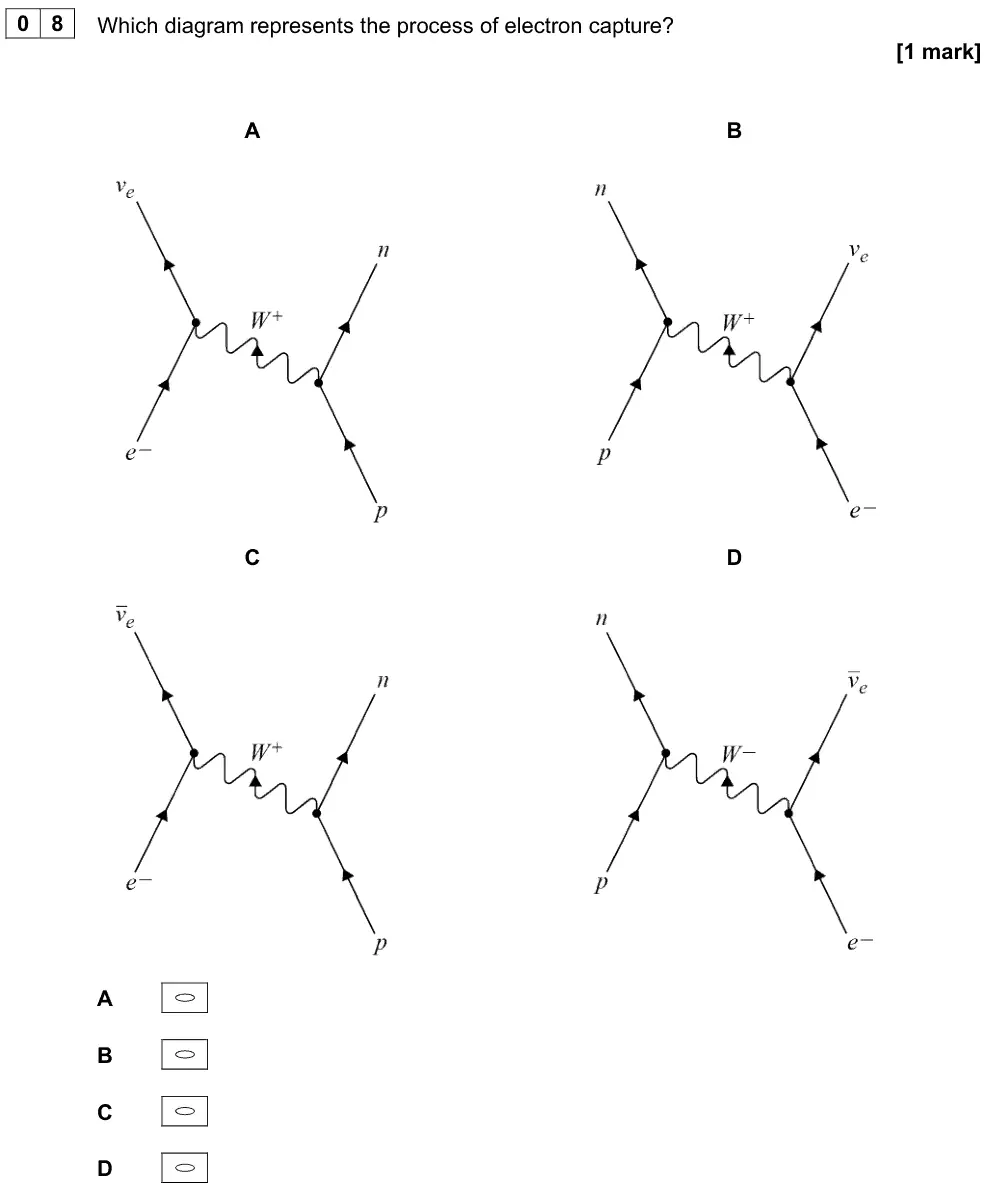
A
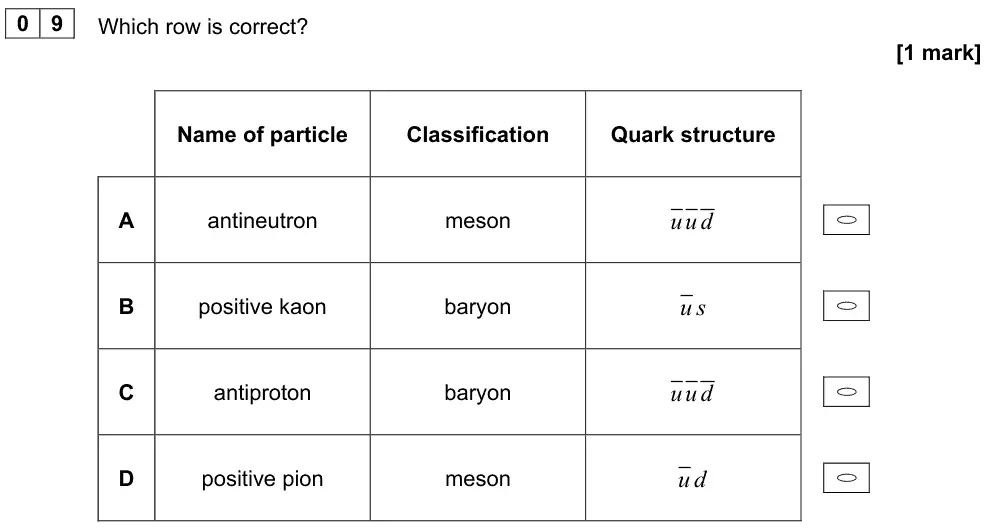
C
Generally, students were more successful in answering questions 9, 21, 23 and 30 and less successful in answering 7, 8, 19, 20, 22, 24, 32 and 34.
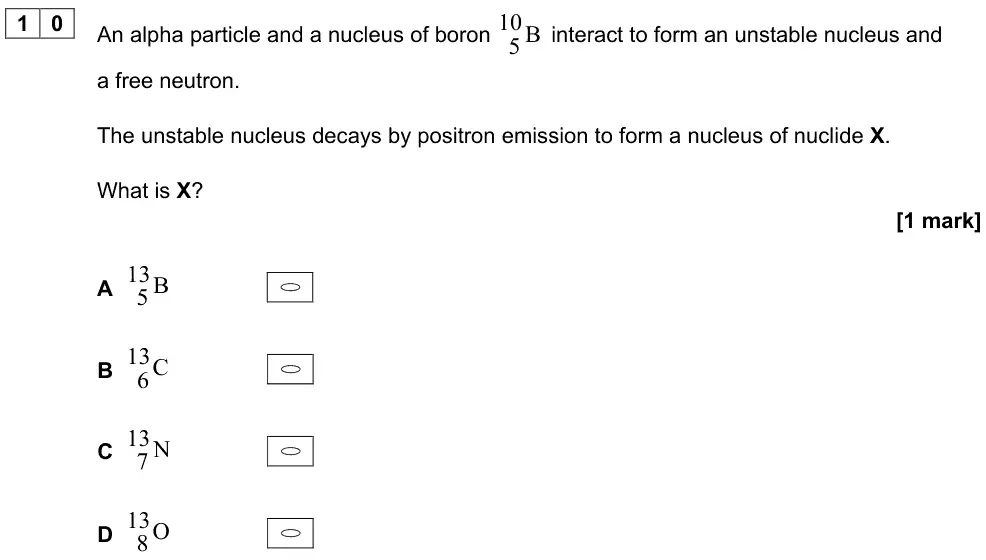
B
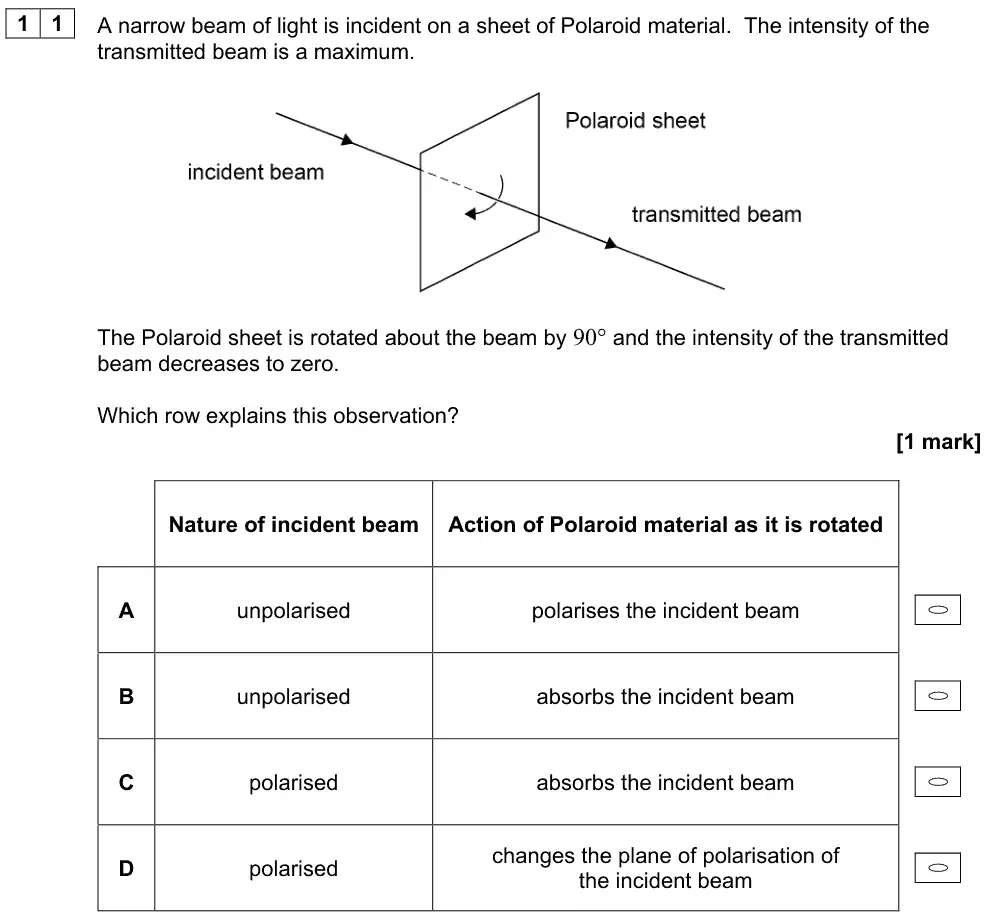
C
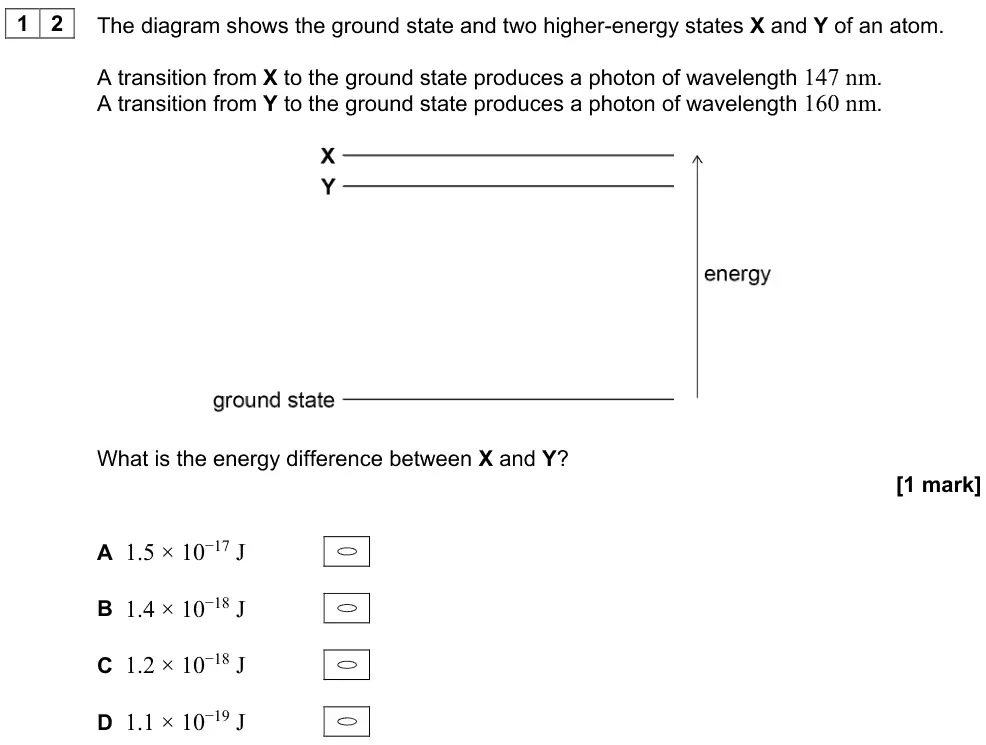
D
Skills: MS0.2 Recognise and use expressions in decimal and standard form
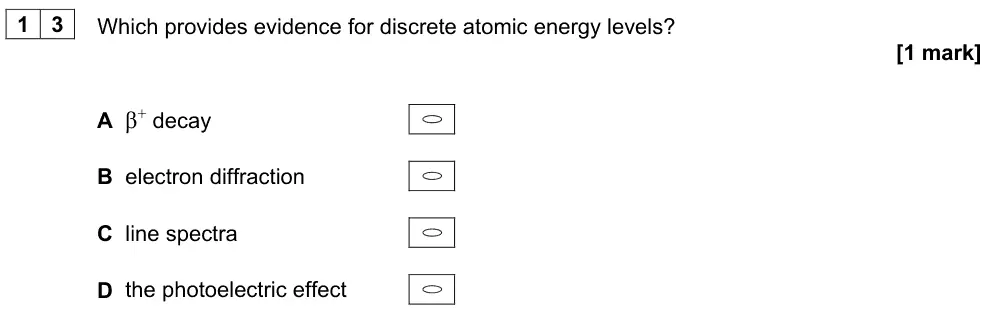
C
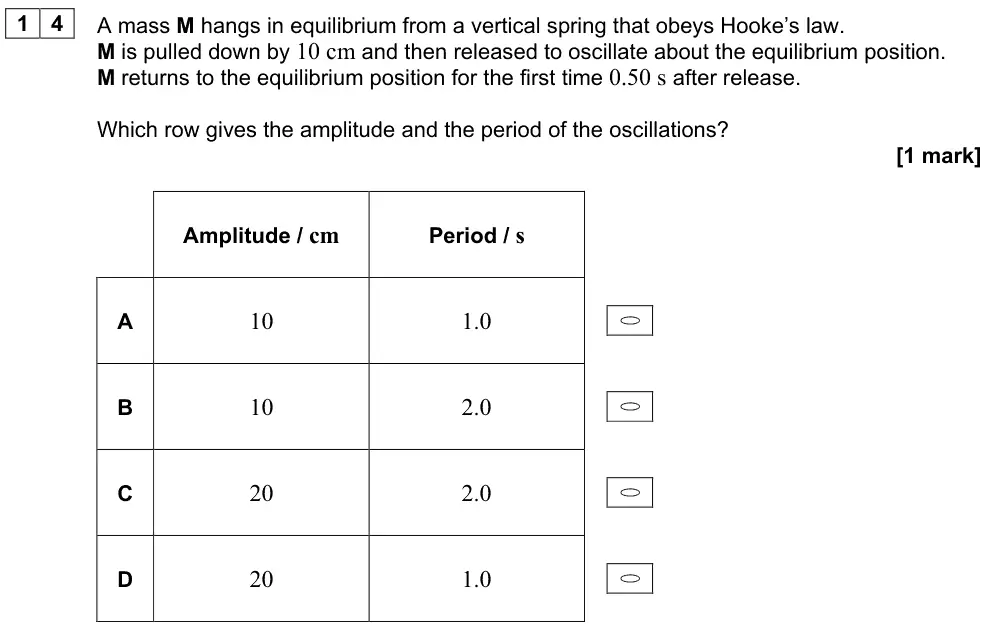
B
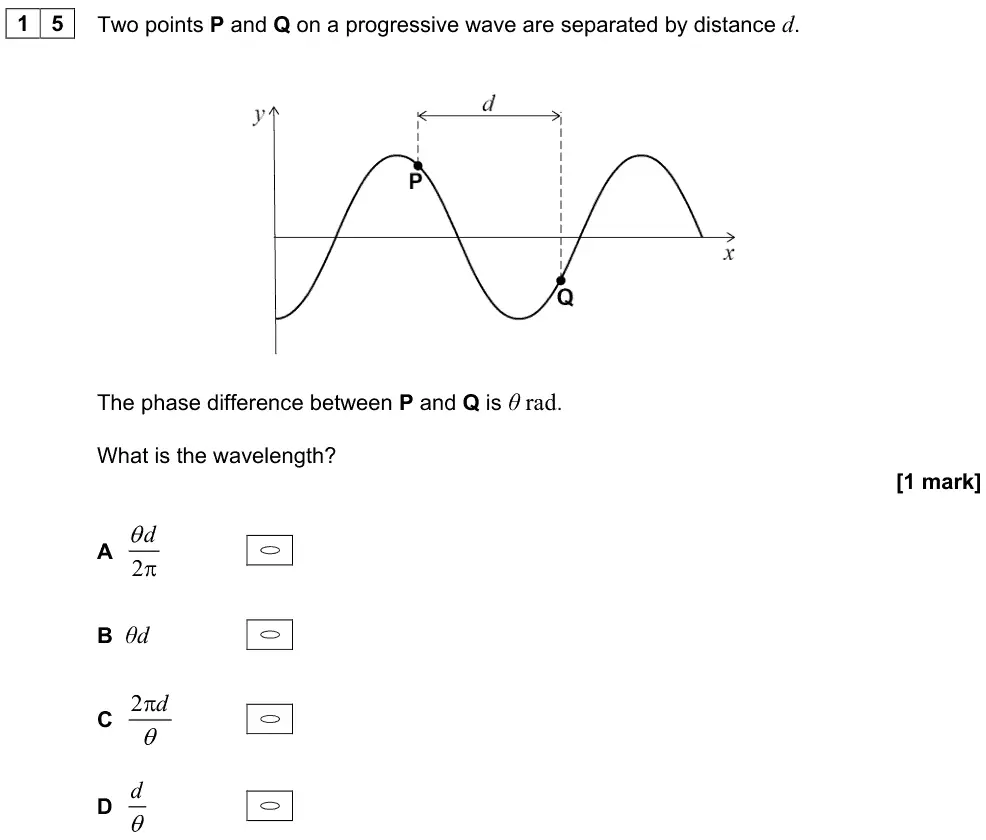
C
Skills: MS4.7 Understand the relationship between degrees and radians and translate from one to the other
A
B
Skills: MS0.3 Use ratios, fractions and percentages
C
D
Skills: MS0.6 Use calculators to handle sin x, cos x, tan x when x is expressed in degrees or radians
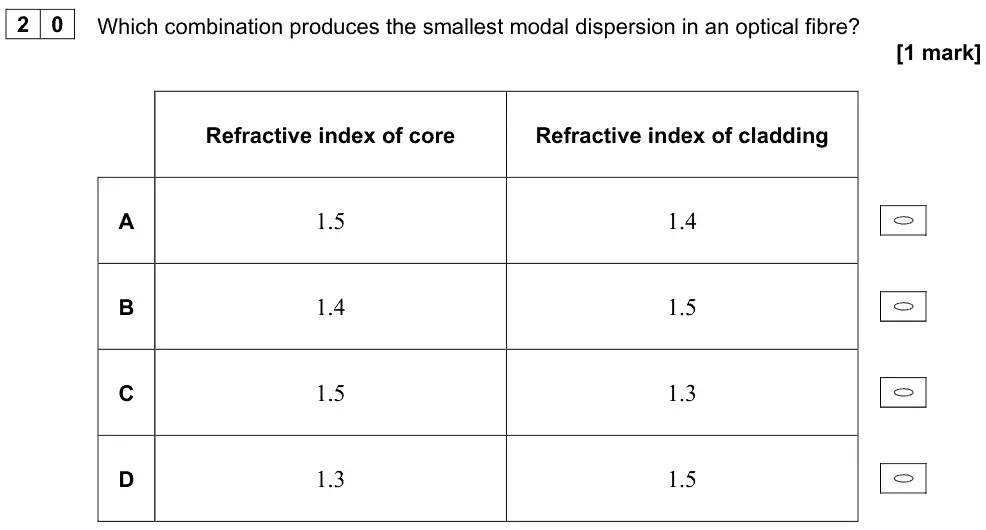
A
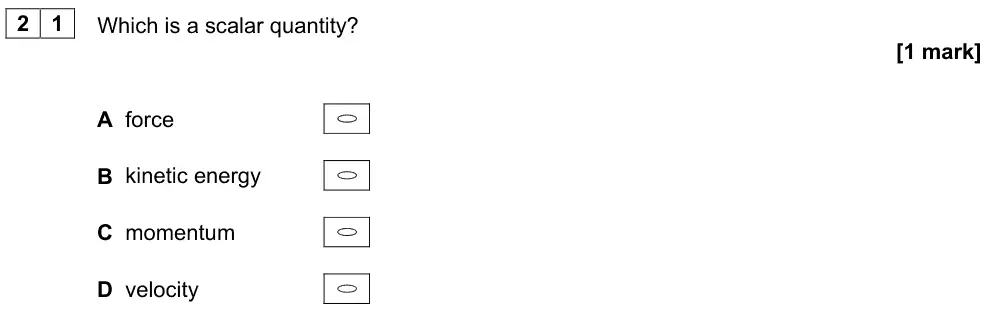
B
Generally, students were more successful in answering questions 9, 21, 23 and 30 and less successful in answering 7, 8, 19, 20, 22, 24, 32 and 34.
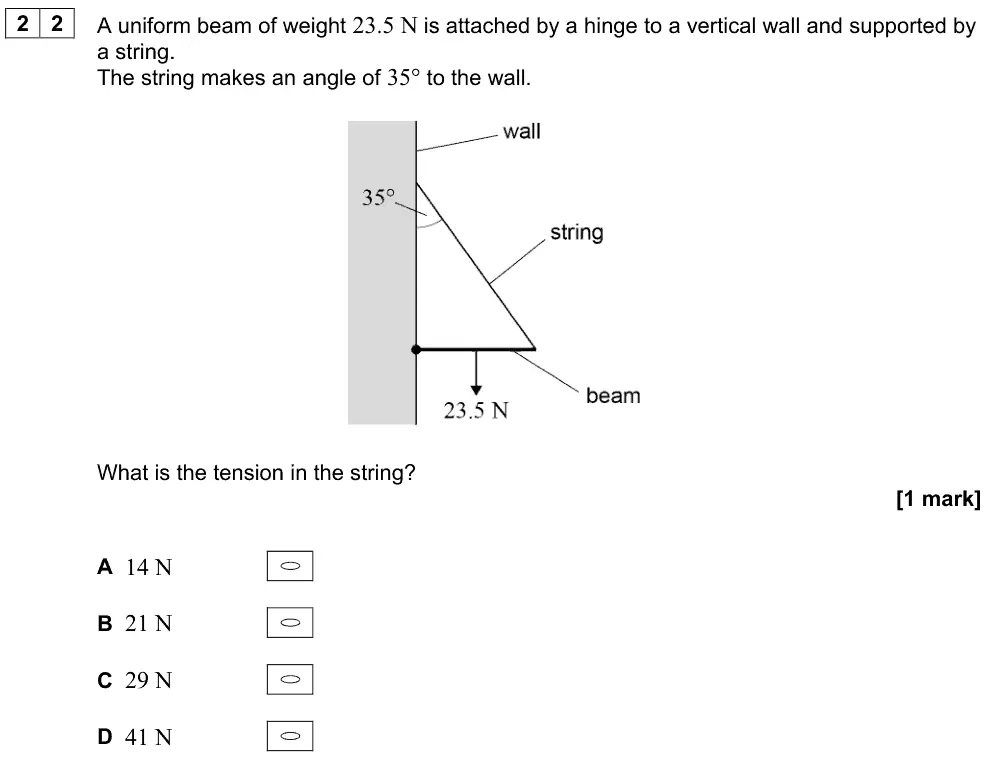
A
Skills: MS4.5 Use sin, cos and tan in physical problems
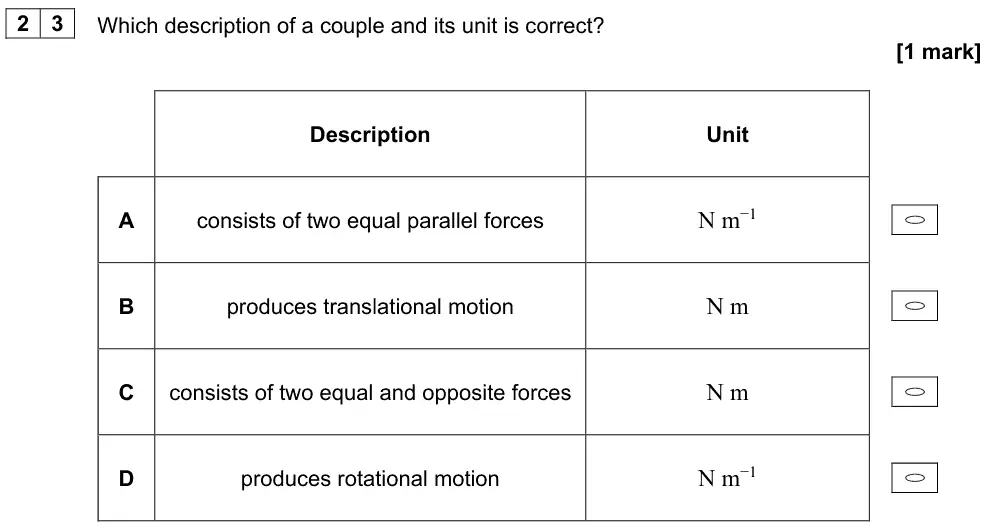
C
Generally, students were more successful in answering questions 9, 21, 23 and 30 and less successful in answering 7, 8, 19, 20, 22, 24, 32 and 34.
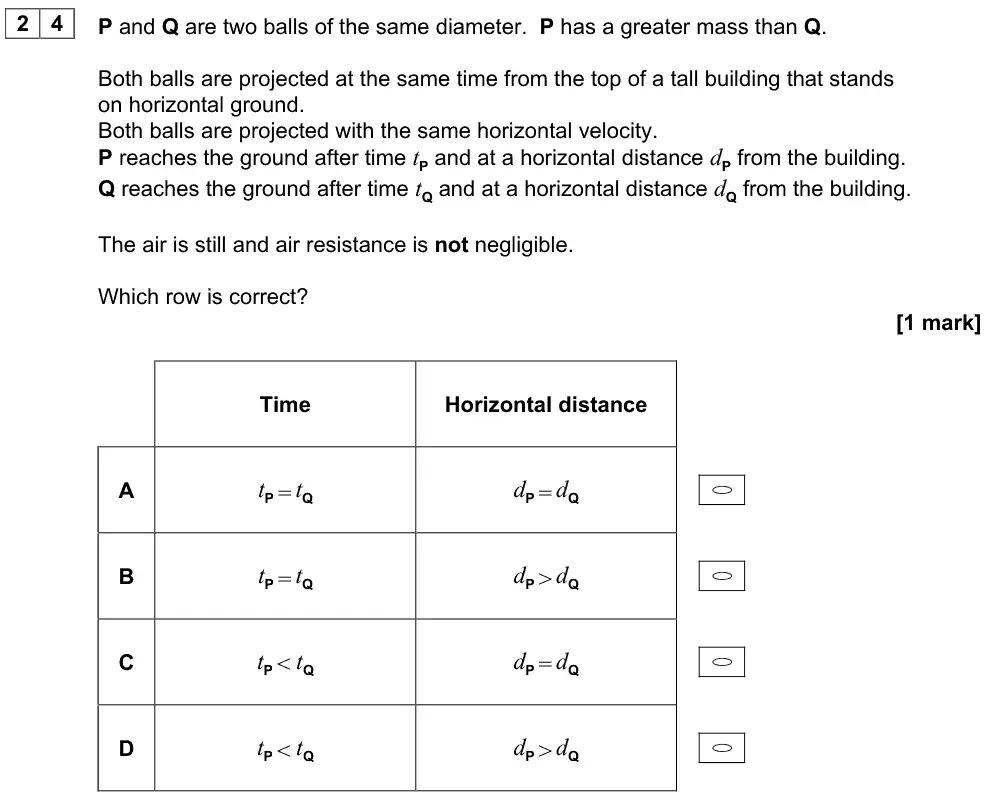
D
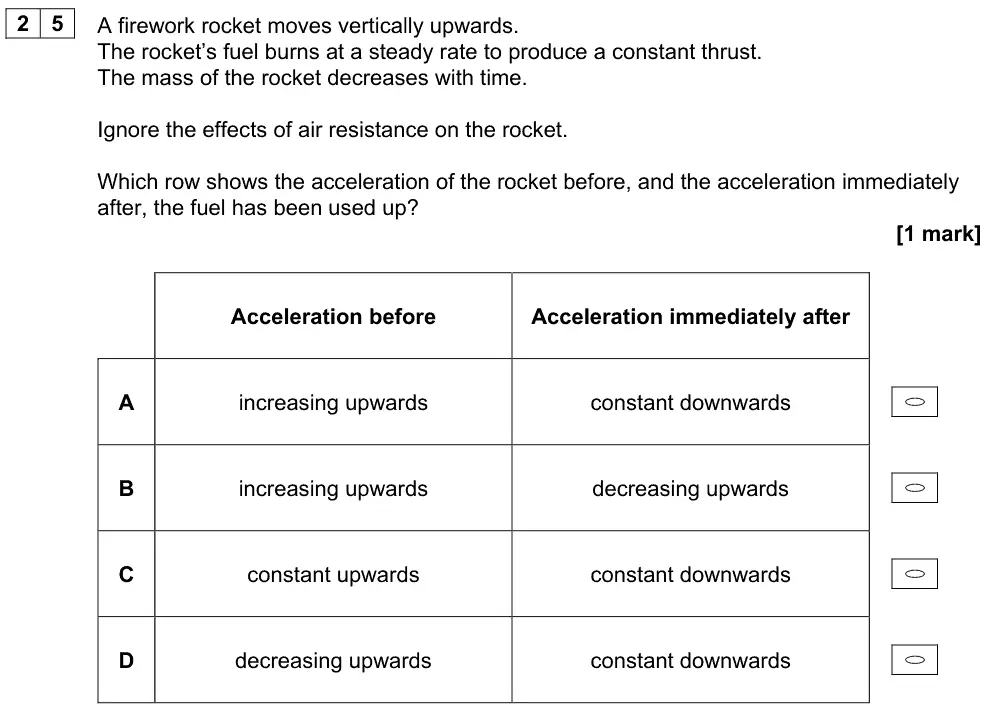
A
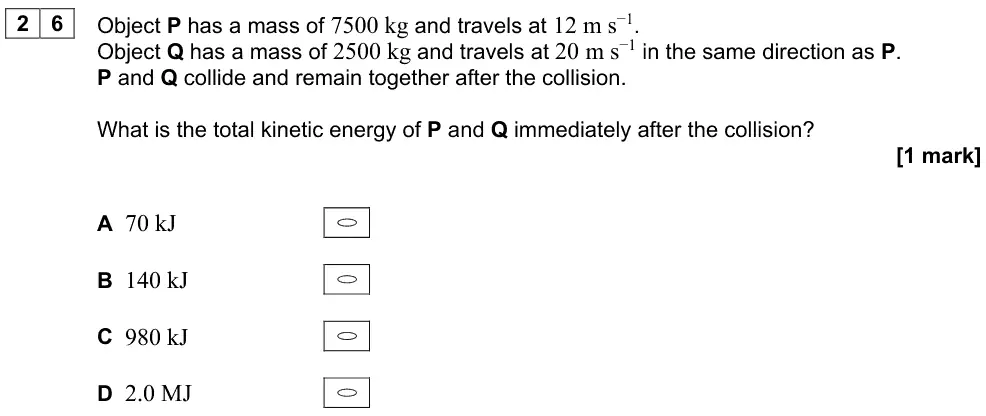
C
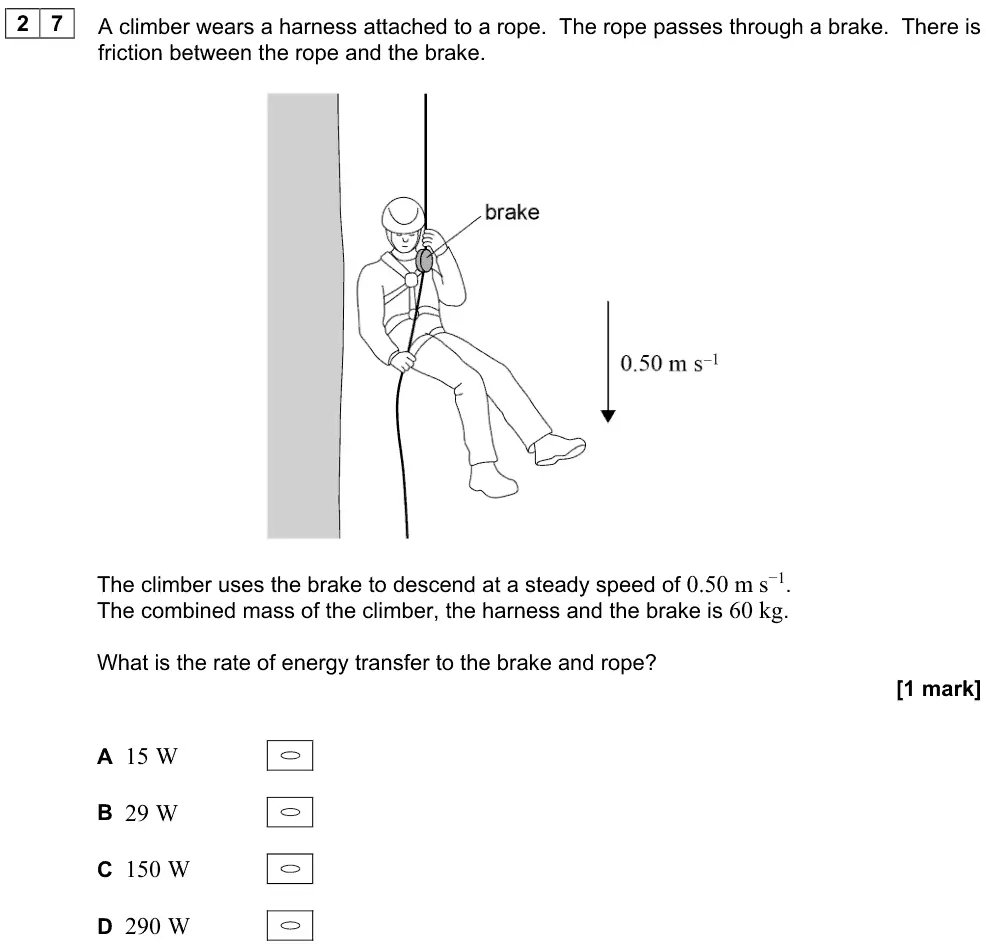
D
B
Skills: MS0.3 Use ratios, fractions and percentages
A
Skills: MS2.2 Change the subject of an equation, including non-linear equations
B
Generally, students were more successful in answering questions 9, 21, 23 and 30 and less successful in answering 7, 8, 19, 20, 22, 24, 32 and 34.
D
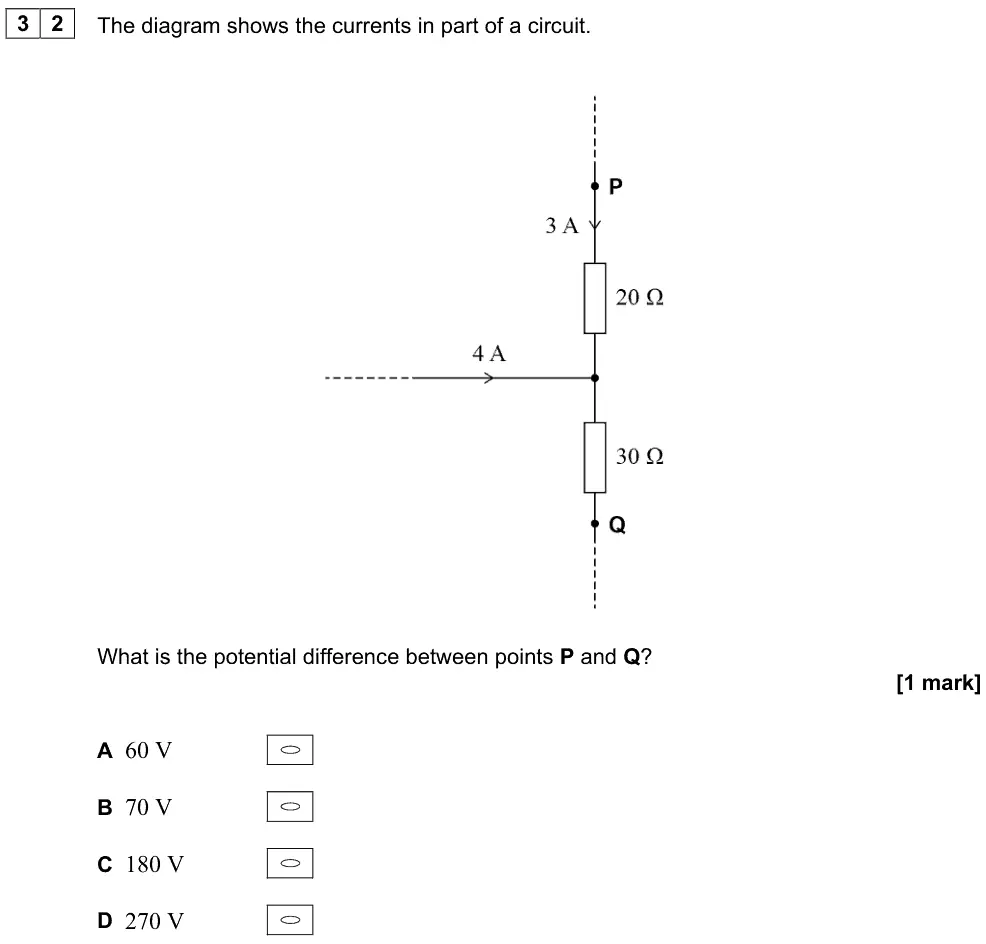
D
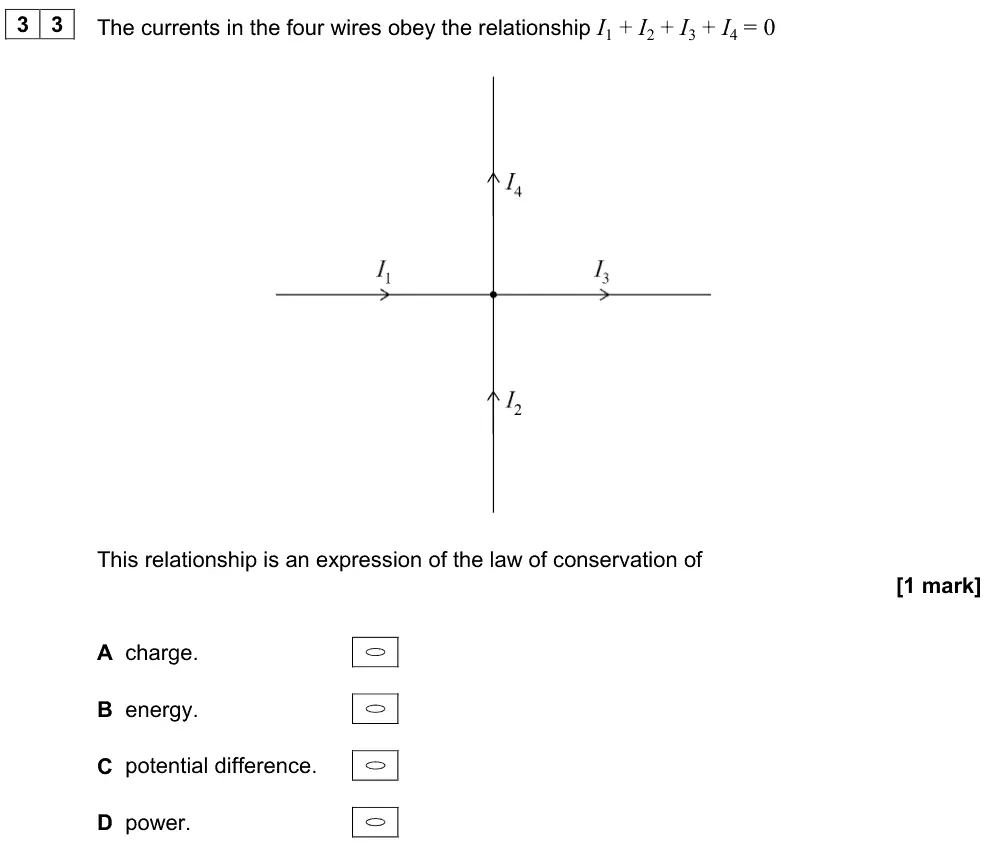
A
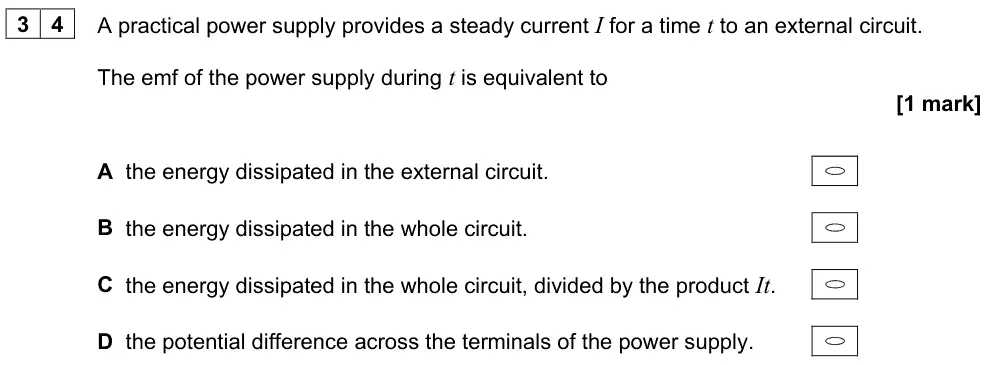
C
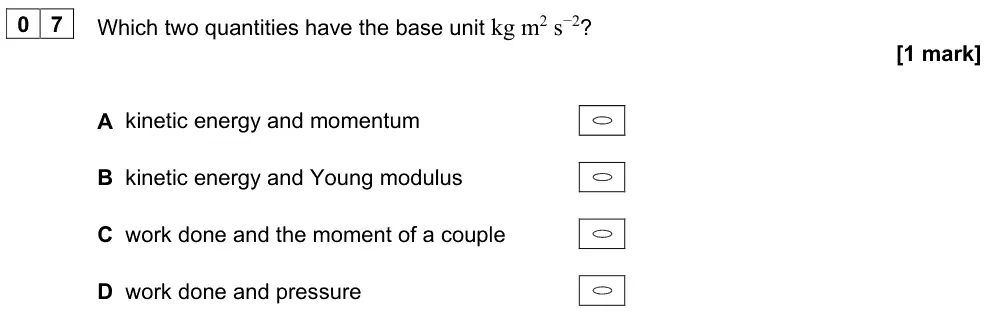
C
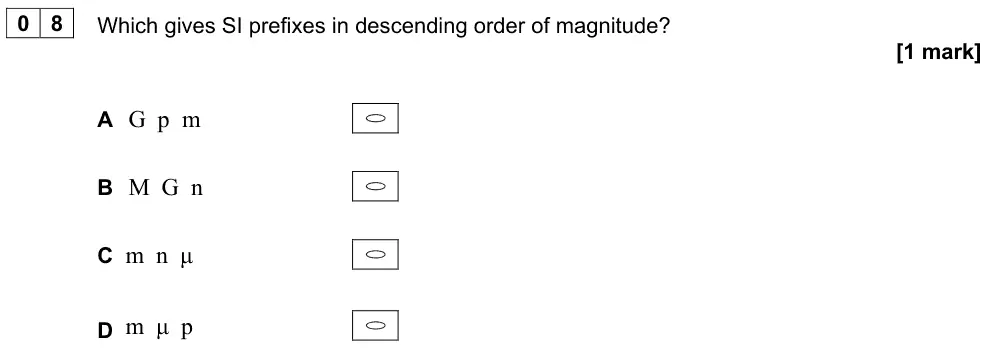
D
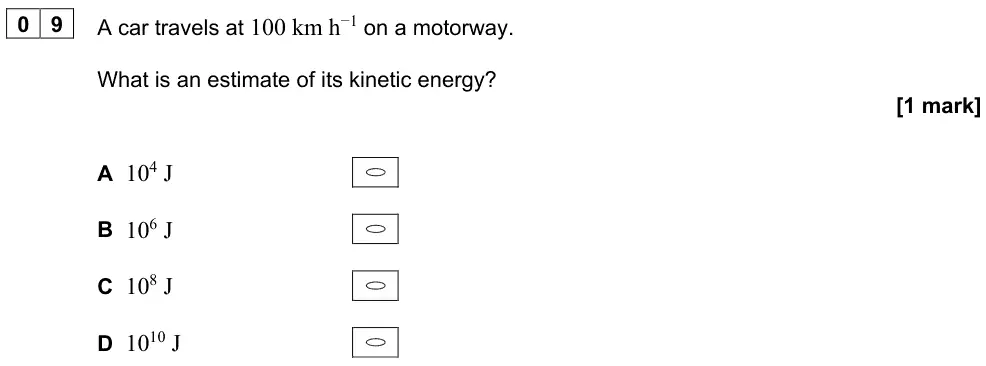
B
Skills: MS1.4 Make order of magnitude calculations; MS0.4 Estimate results
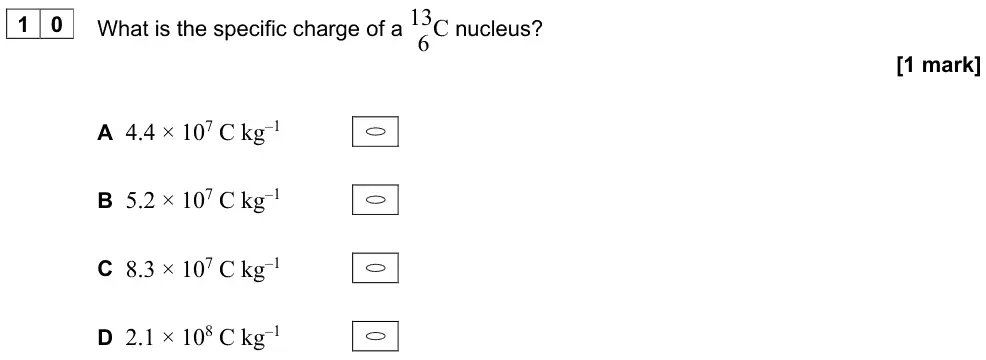
A
Skills: MS0.2 Recognise and use expressions in decimal and standard form
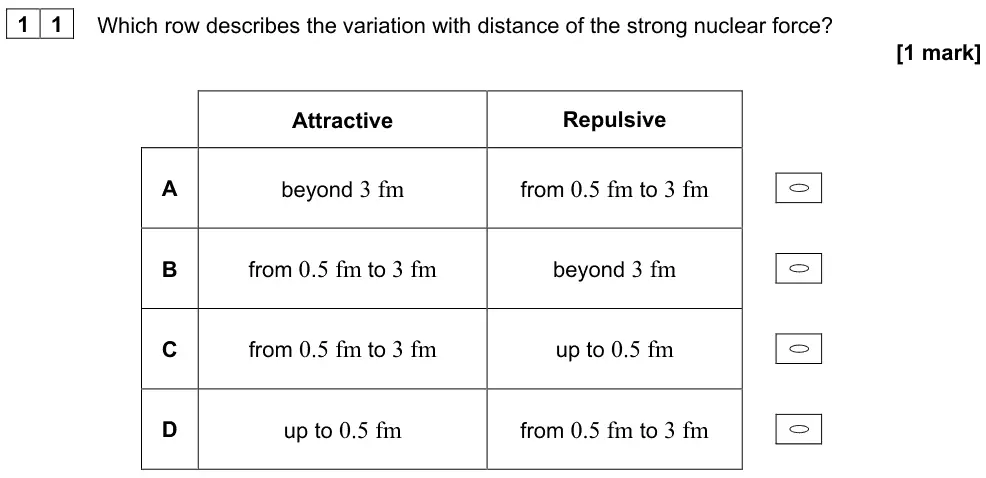
C
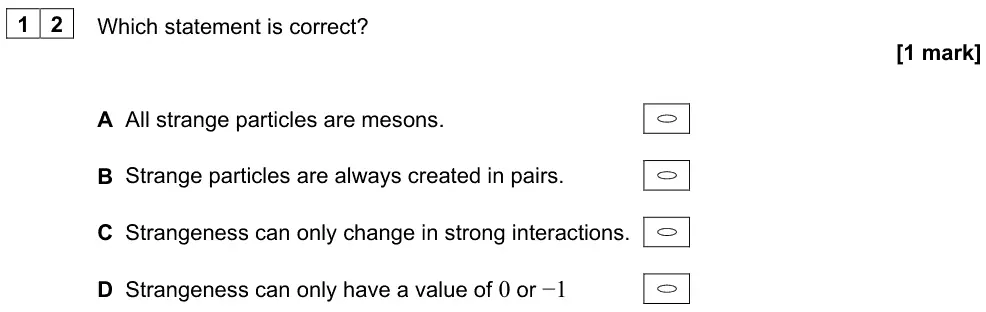
B
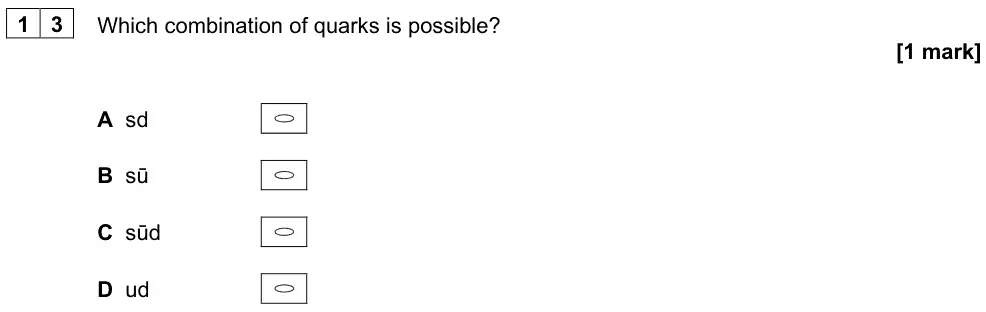
B
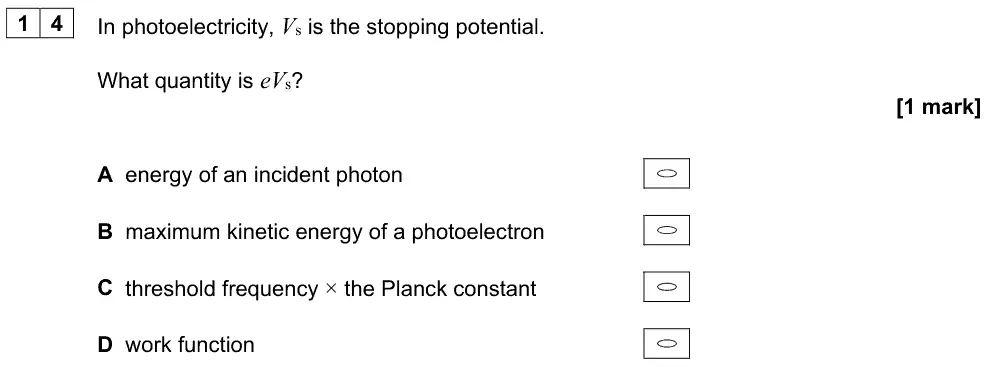
B
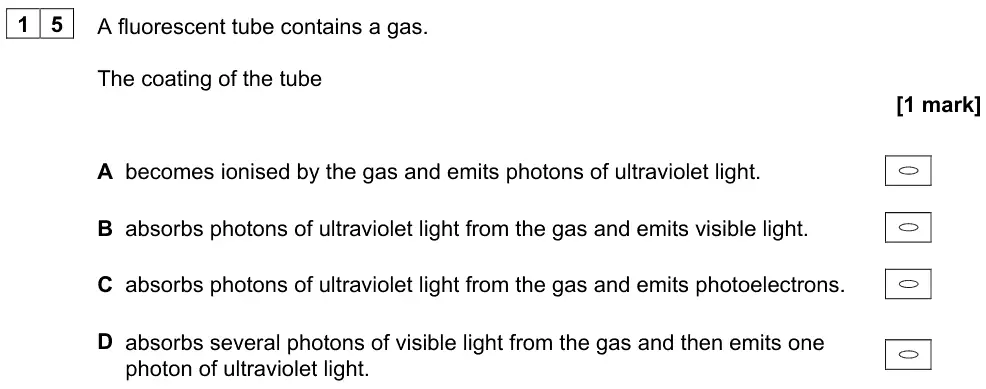
B
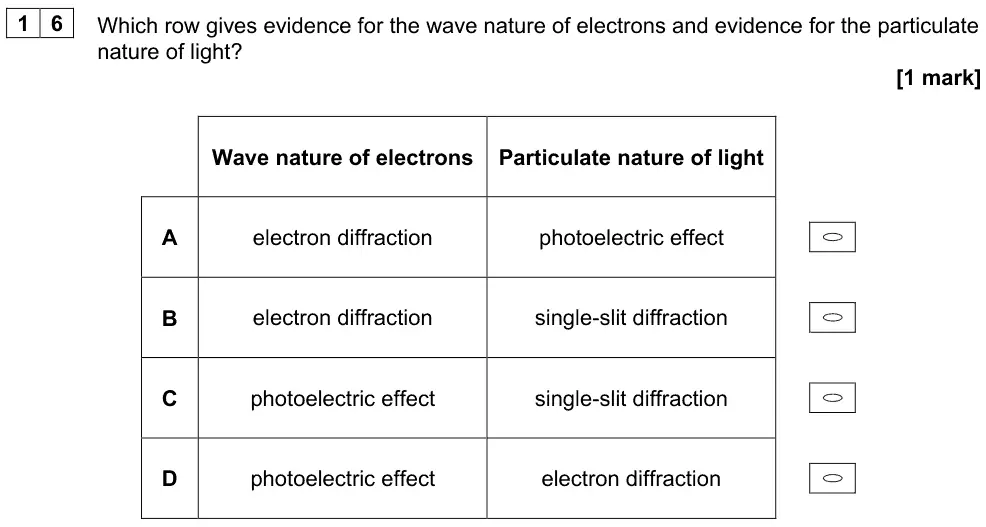
A
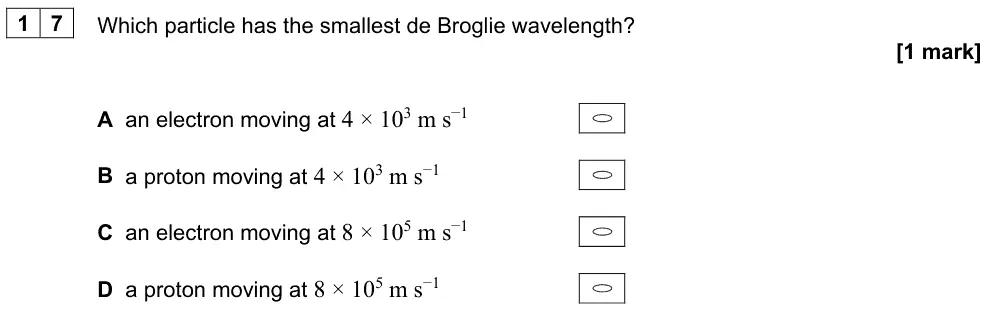
D
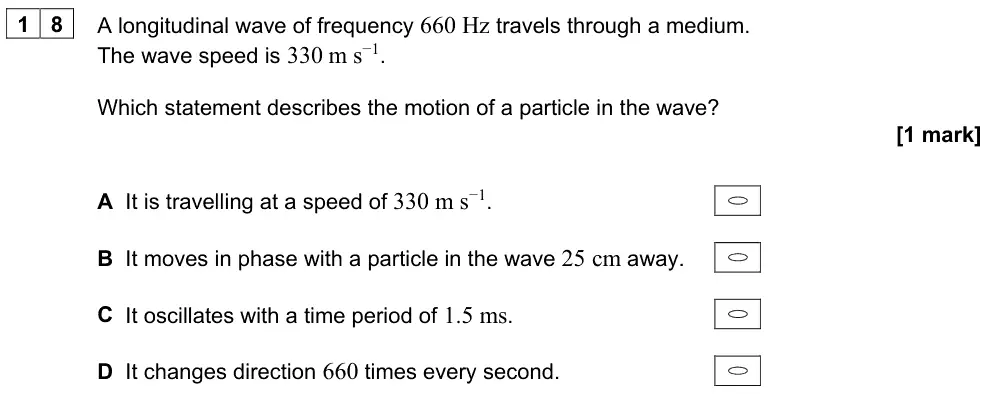
C
Skills: MS0.2 Recognise and use expressions in decimal and standard form
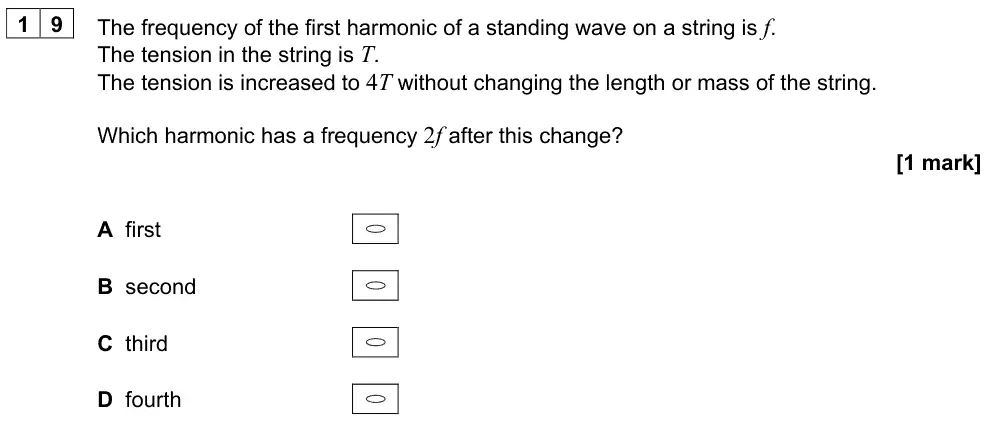
A
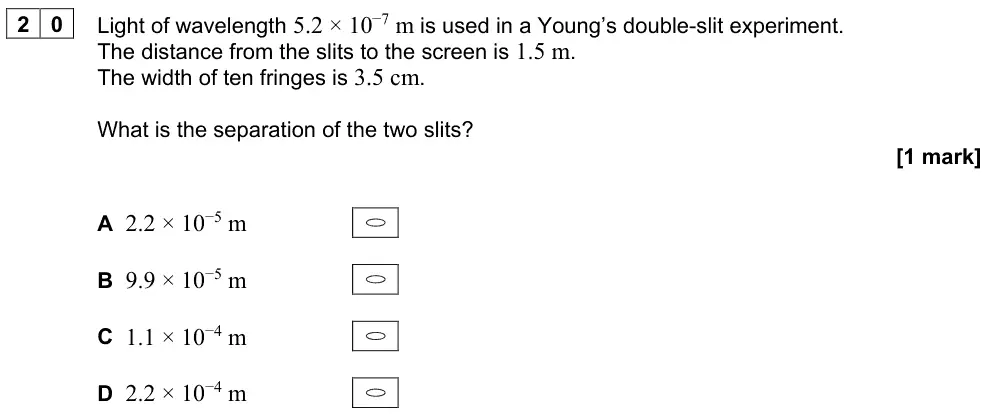
D
Skills: MS2.2 Change the subject of an equation, including non-linear equations; MS0.2 Recognise and use expressions in decimal and standard form
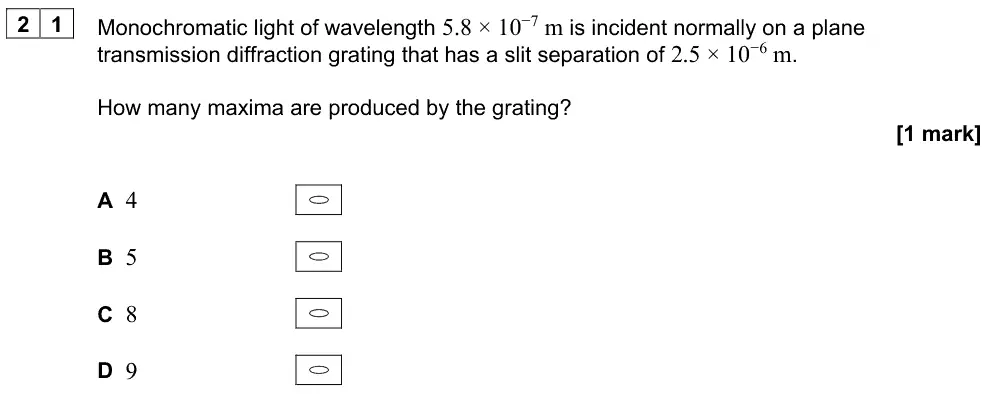
D
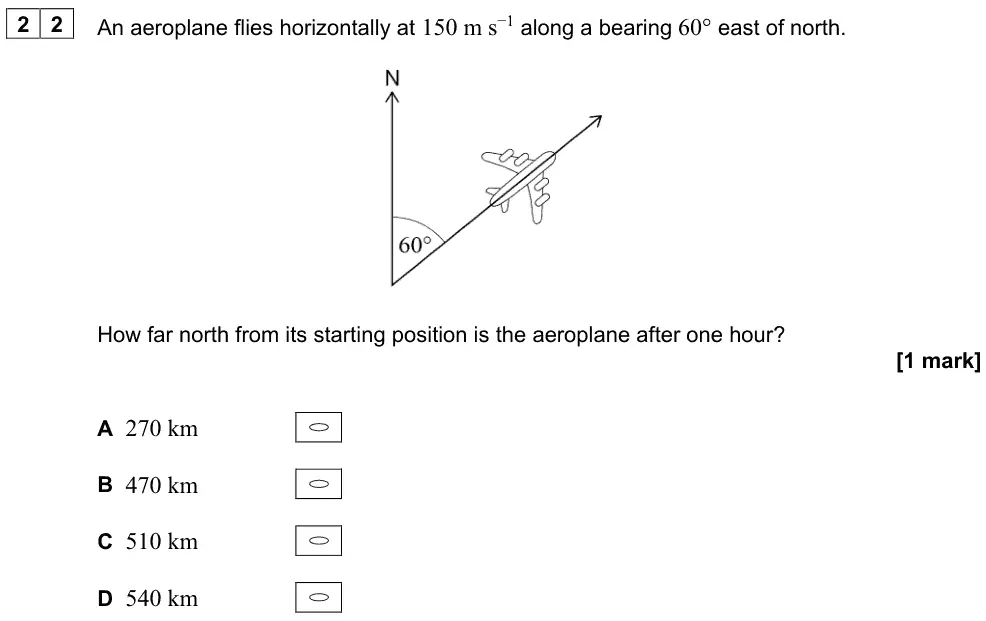
A
Skills: MS4.5 Use sin, cos and tan in physical problems
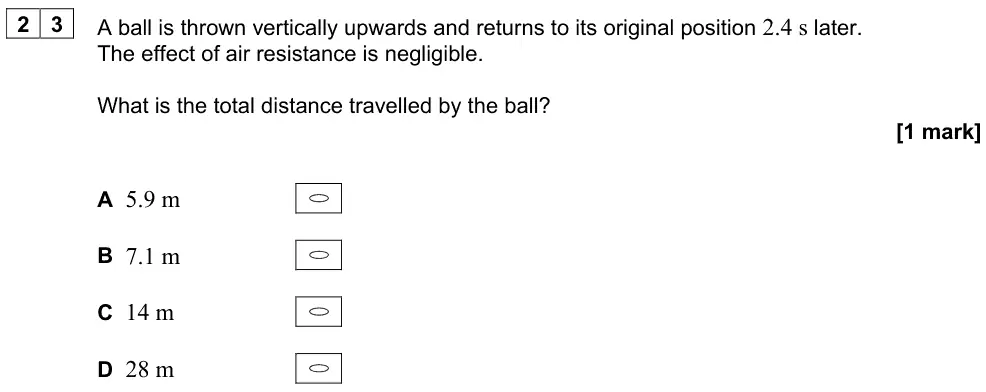
C
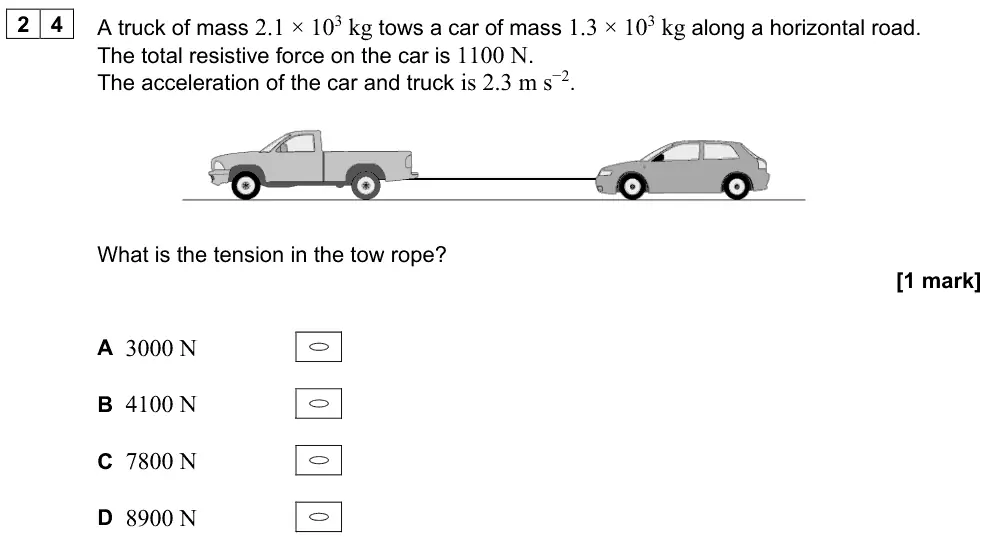
B
Skills: MS2.3 Substitute numerical values into algebraic equations using appropriate units for physical quantities
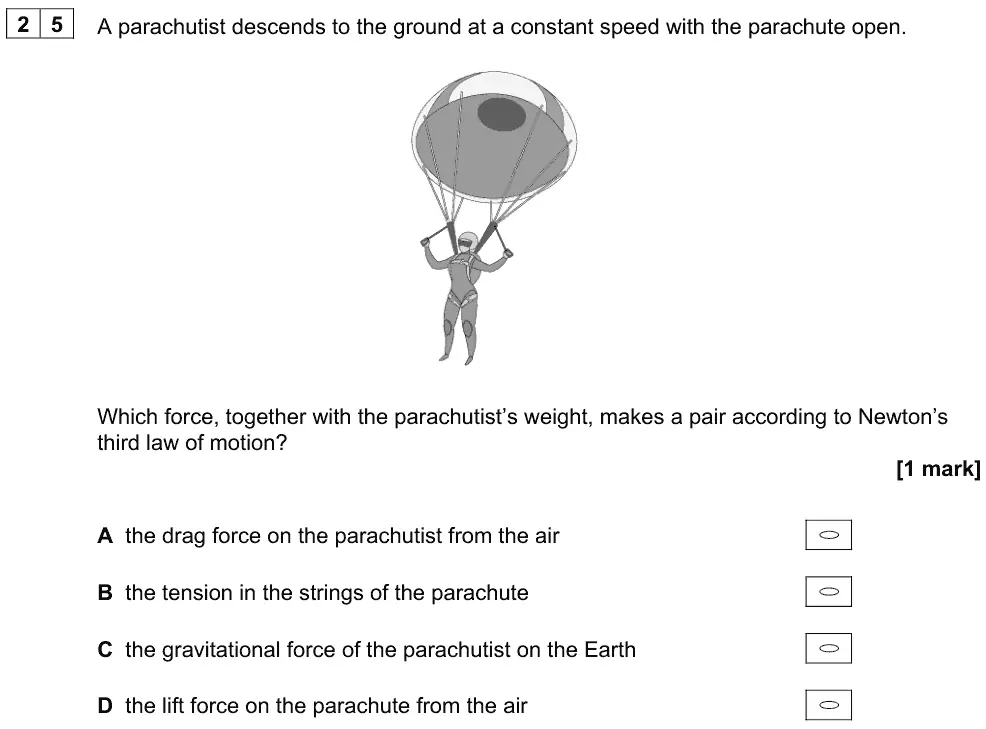
C
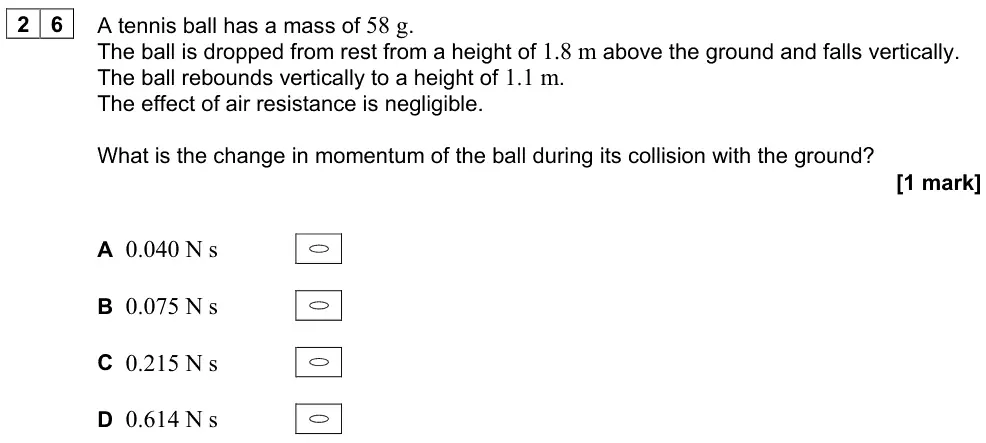
D
Question 26 was a difficult multi-step calculation. Most students chose B, and the next most popular was D, the correct answer.
Skills: MS2.3 Substitute numerical values into algebraic equations using appropriate units for physical quantities
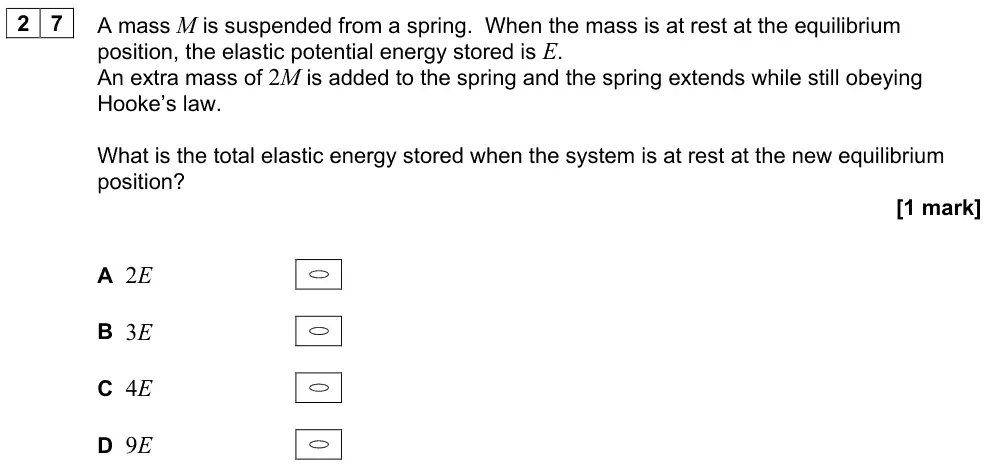
D
Skills: MS0.3 Use ratios, fractions and percentages
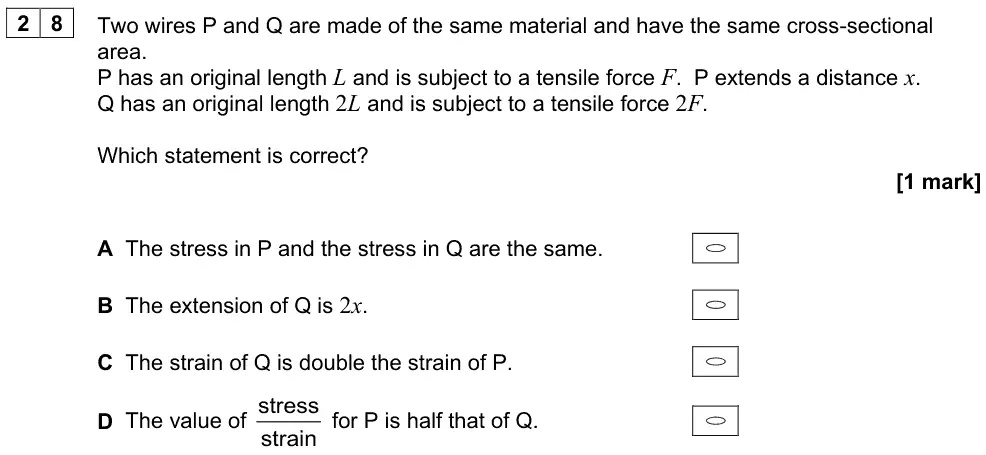
C
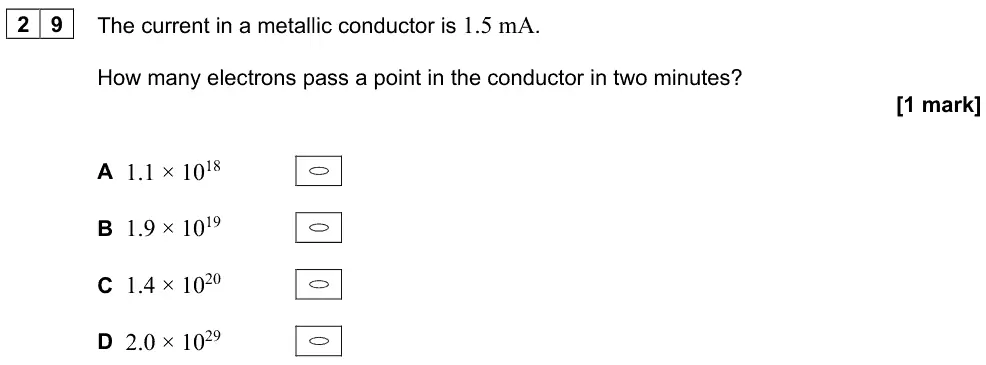
A
Skills: MS0.2 Recognise and use expressions in decimal and standard form
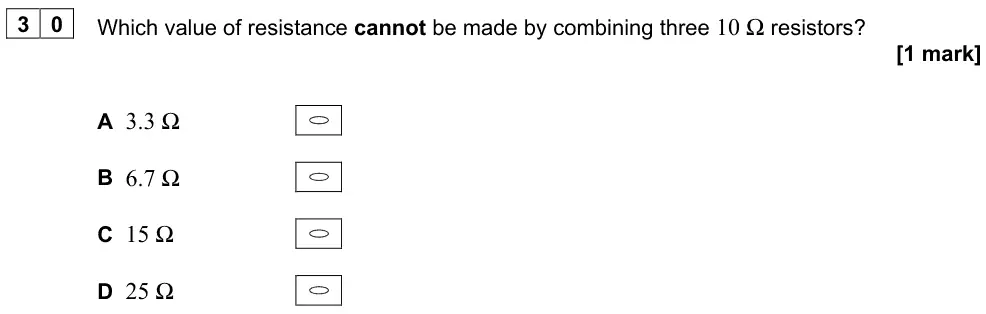
D
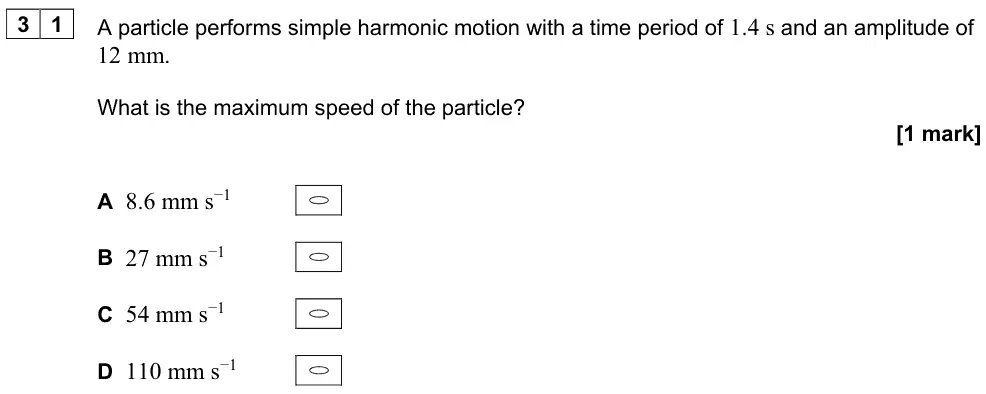
C
Skills: MS2.3 Substitute numerical values into algebraic equations using appropriate units for physical quantities
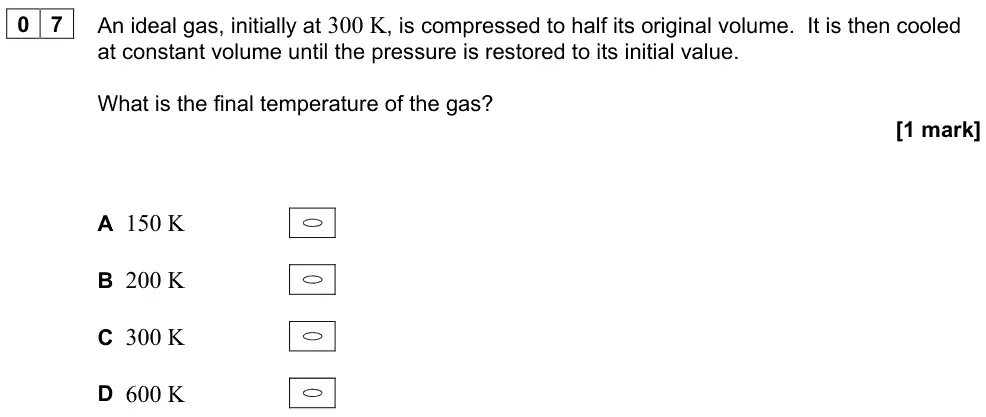
A
Skills: MS0.3 Use ratios, fractions and percentages
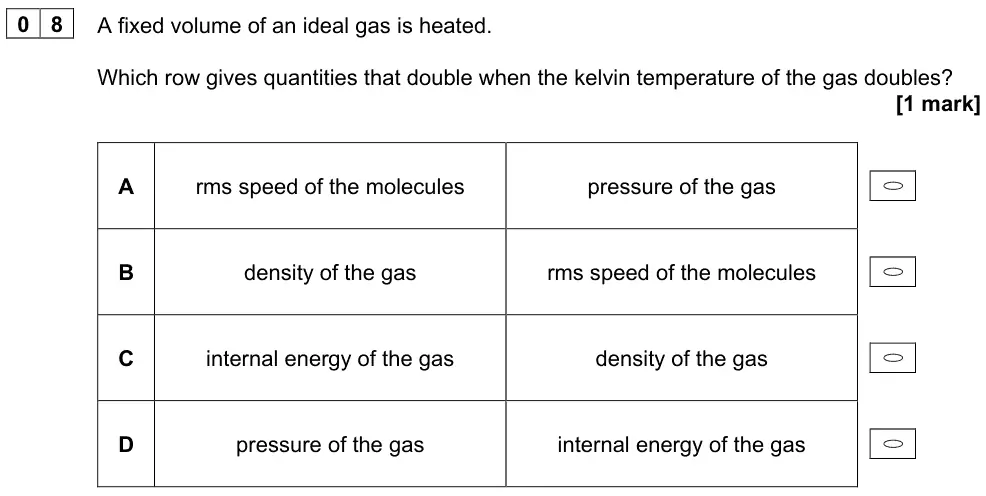
D
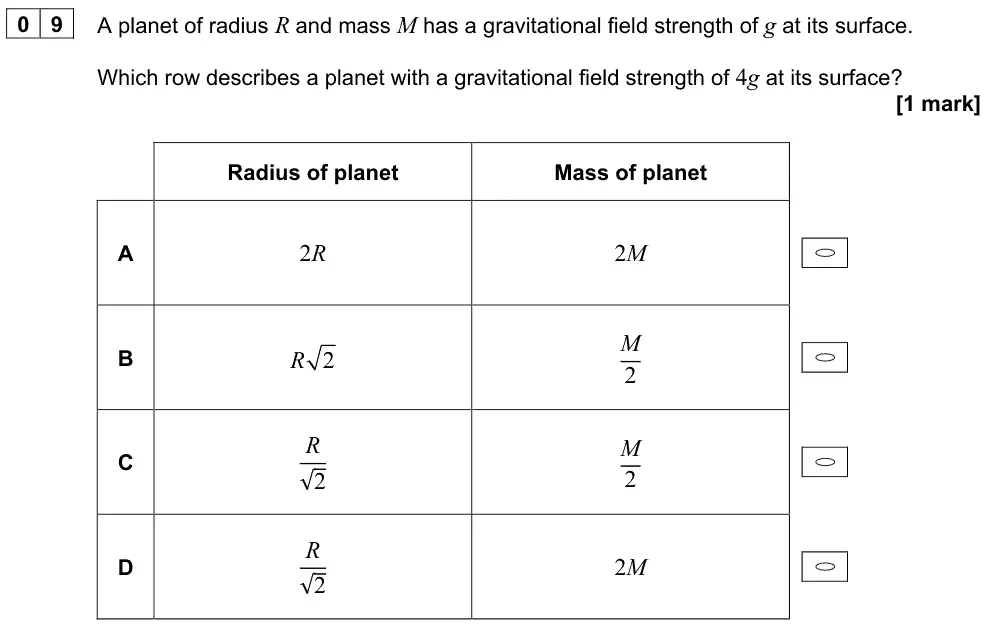
D
Skills: MS0.3 Use ratios, fractions and percentages
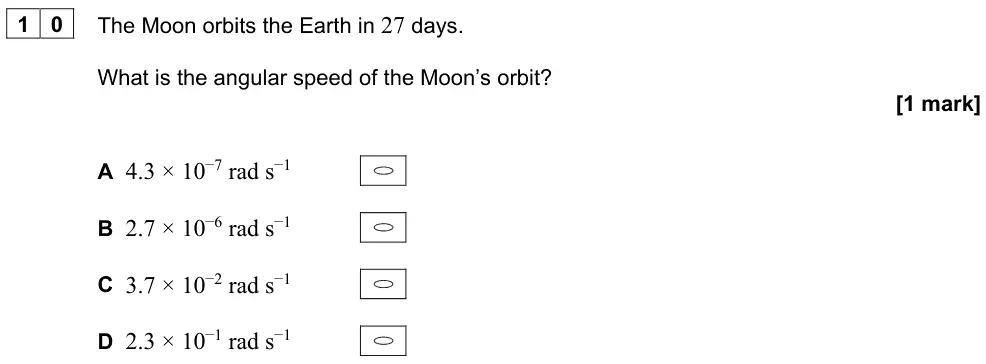
B
Skills: MS2.3 Substitute numerical values into algebraic equations using appropriate units for physical quantities
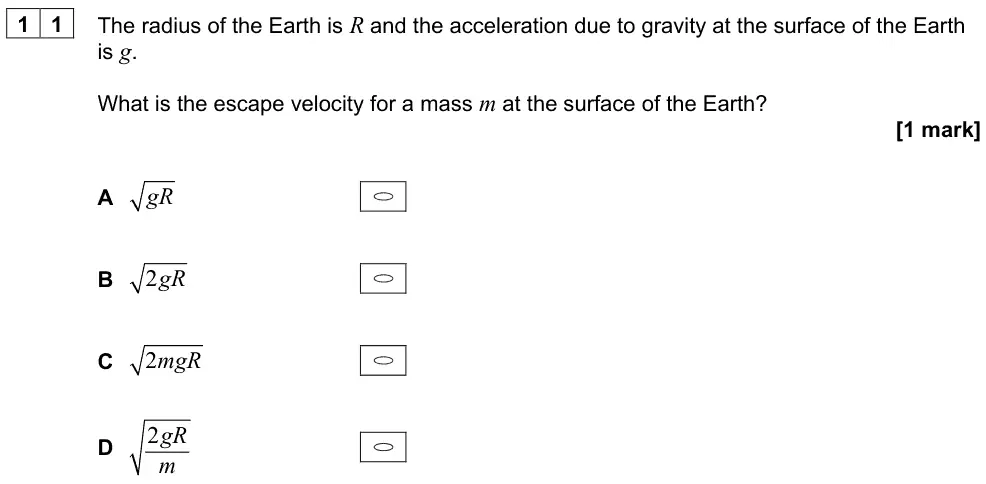
B
Skills: MS2.2 Change the subject of an equation, including non-linear equations
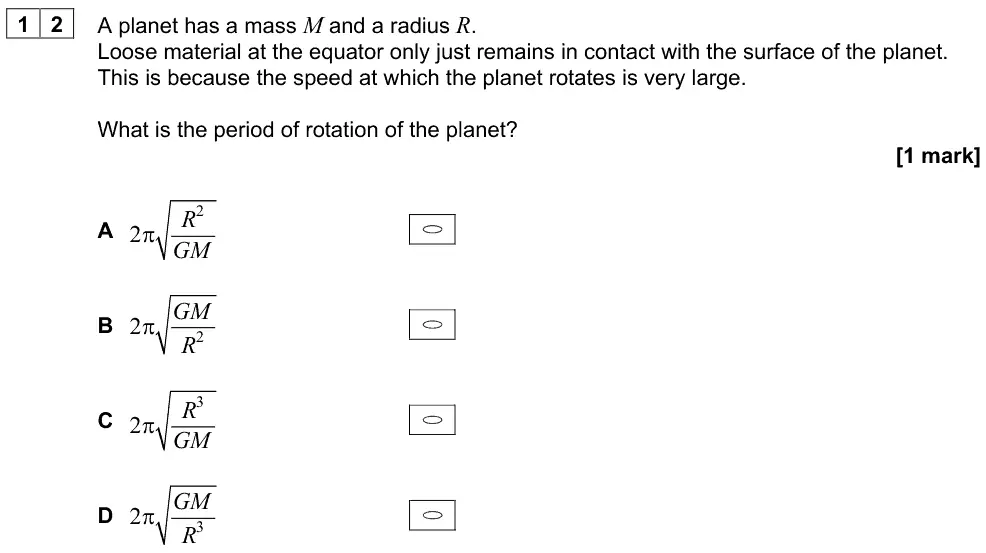
C
Skills: MS2.2 Change the subject of an equation, including non-linear equations
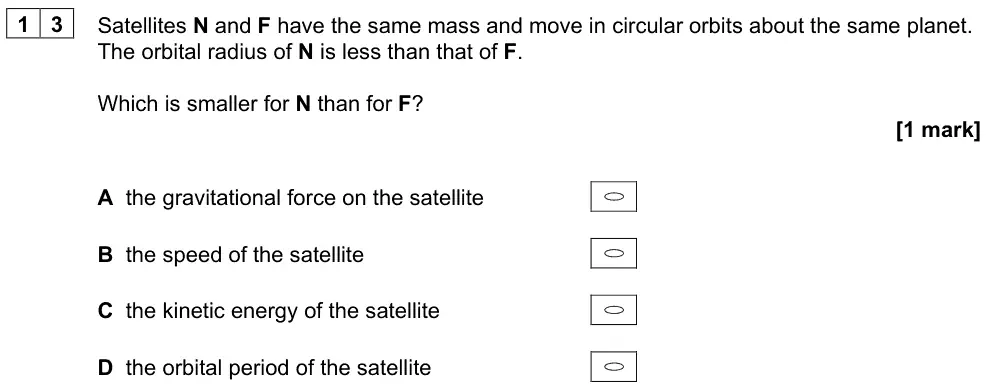
D
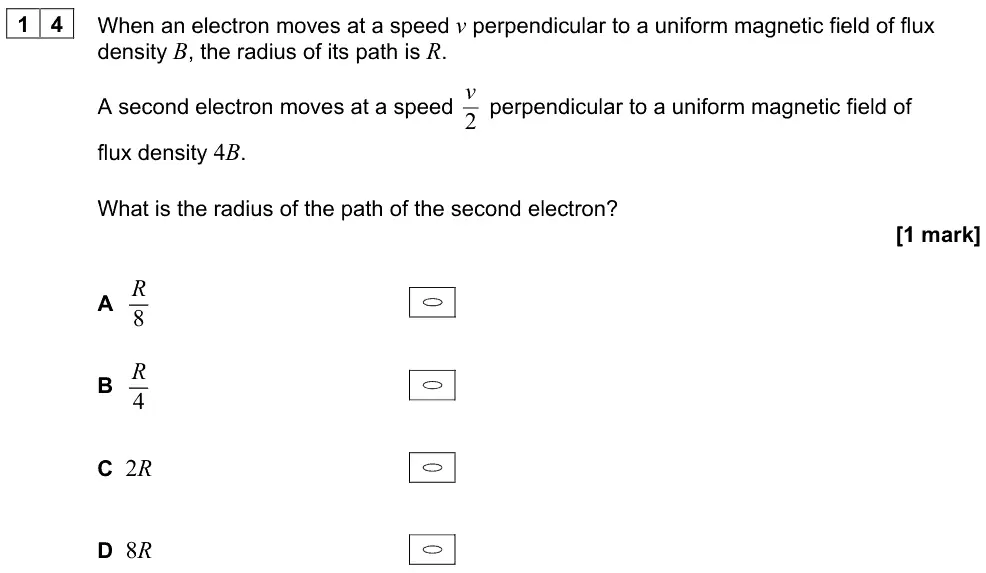
A
Skills: MS0.3 Use ratios, fractions and percentages
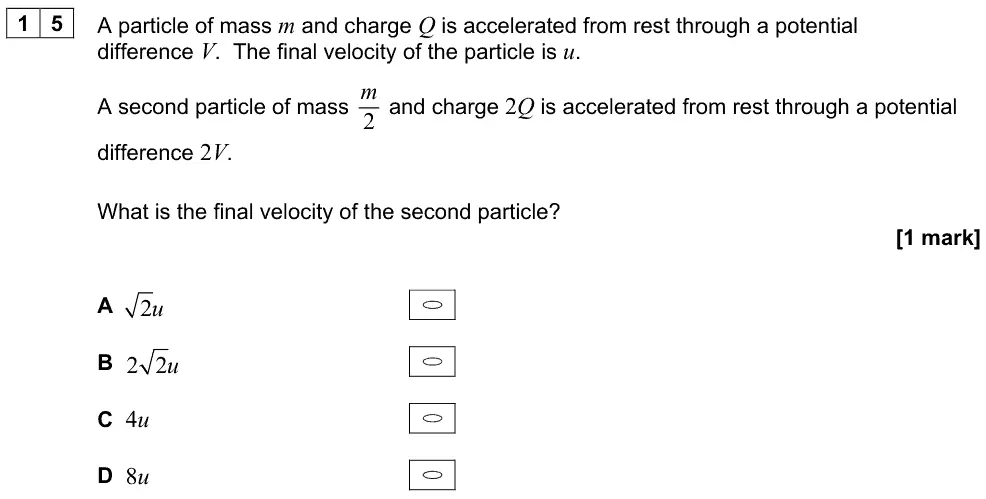
B
Skills: MS0.3 Use ratios, fractions and percentages
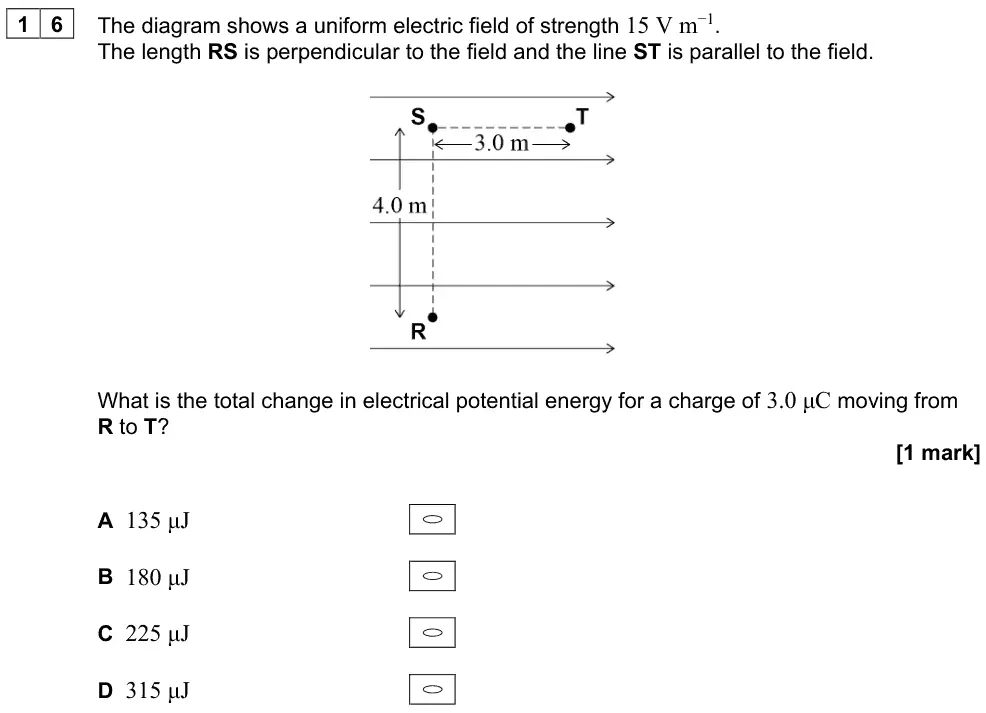
A
There was a good spread in the performance on the multiple-choice section. Questions 16, 17, 24, 25 and 29 received correct answers from less than 40% of students. For question 24 it was less than 20%.
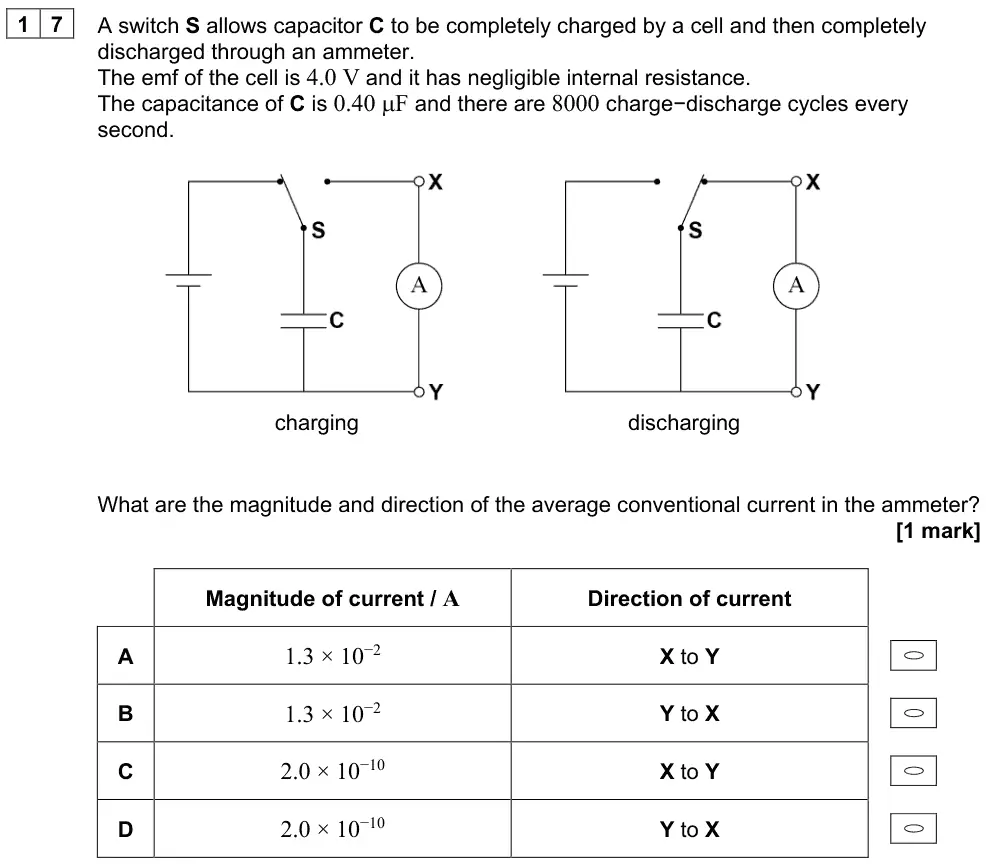
A
There was a good spread in the performance on the multiple-choice section. Questions 16, 17, 24, 25 and 29 received correct answers from less than 40% of students. For question 24 it was less than 20%.
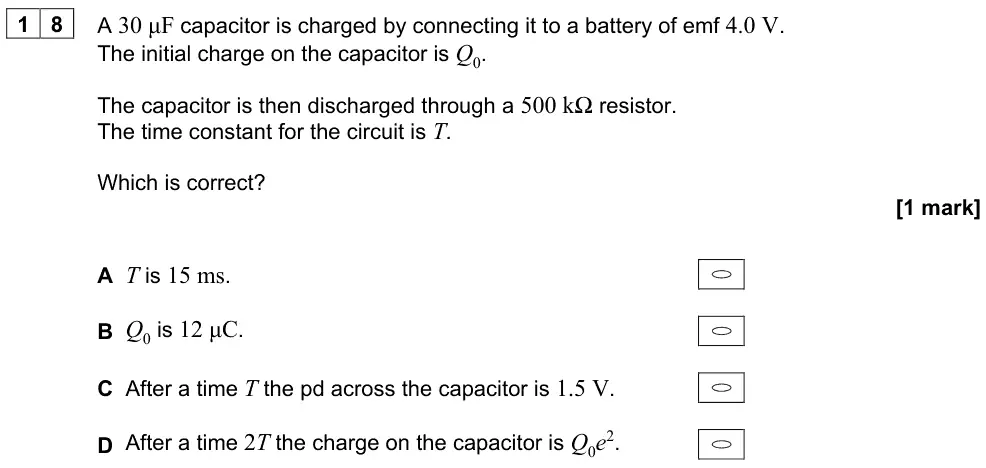
C
Skills: MS0.5 Use calculators to find and use power, exponential and logarithmic functions
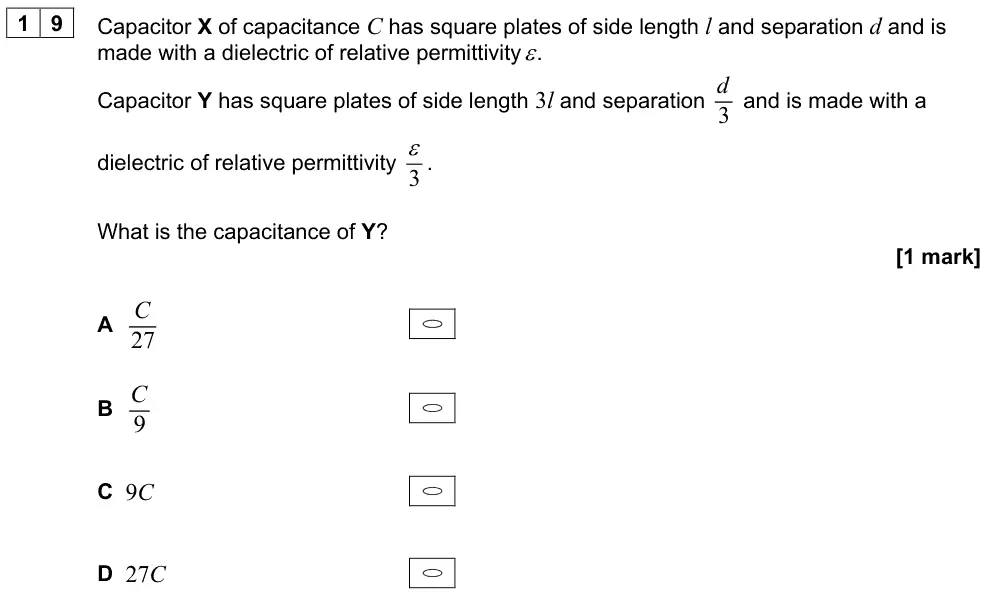
C
Skills: MS0.3 Use ratios, fractions and percentages
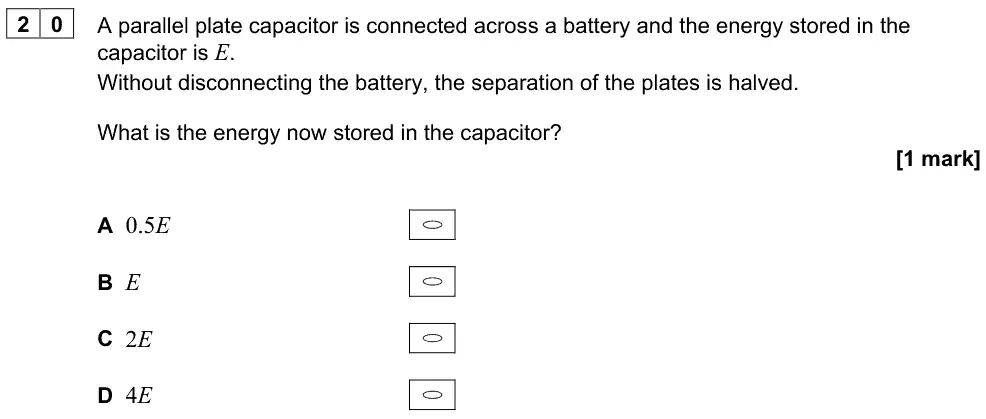
C
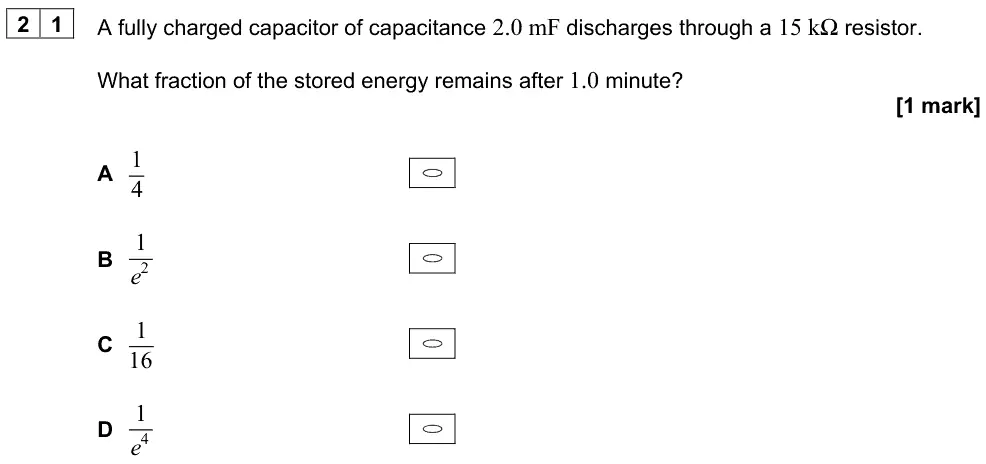
D
Skills: MS0.5 Use calculators to find and use power, exponential and logarithmic functions
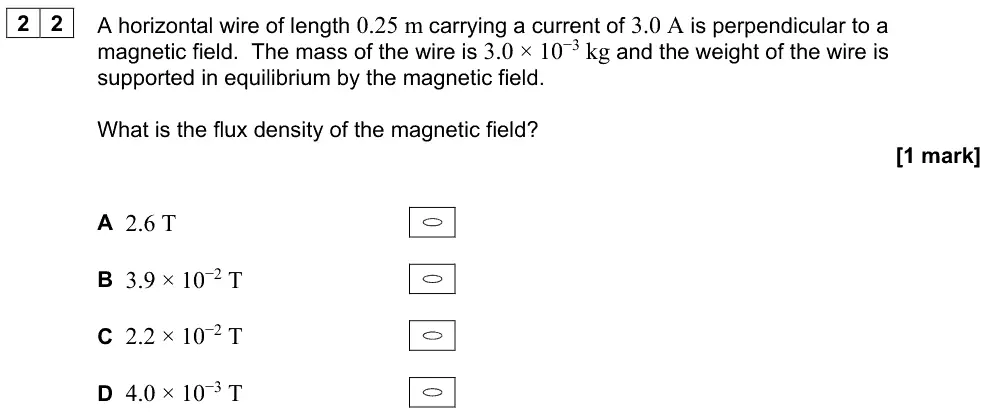
B
Skills: MS2.3 Substitute numerical values into algebraic equations using appropriate units for physical quantities
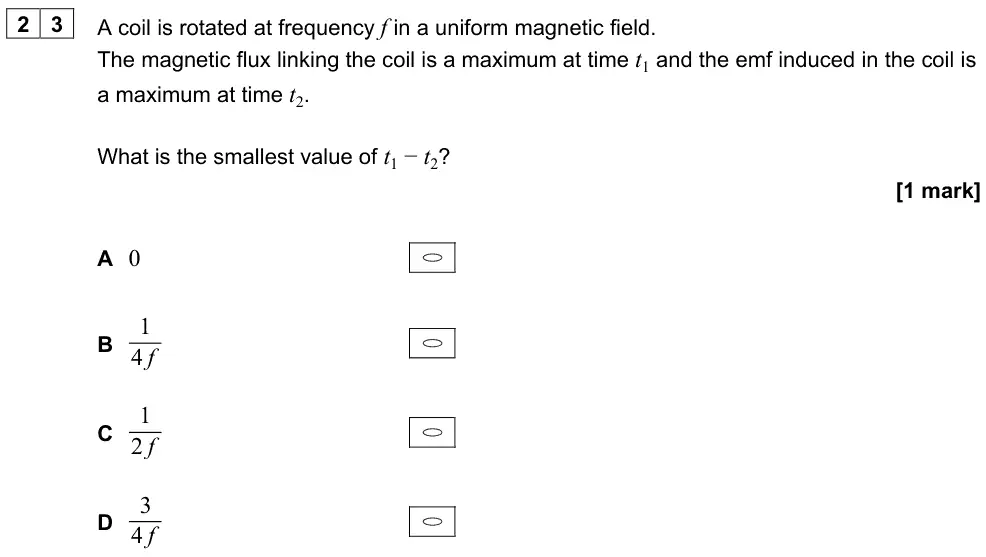
B
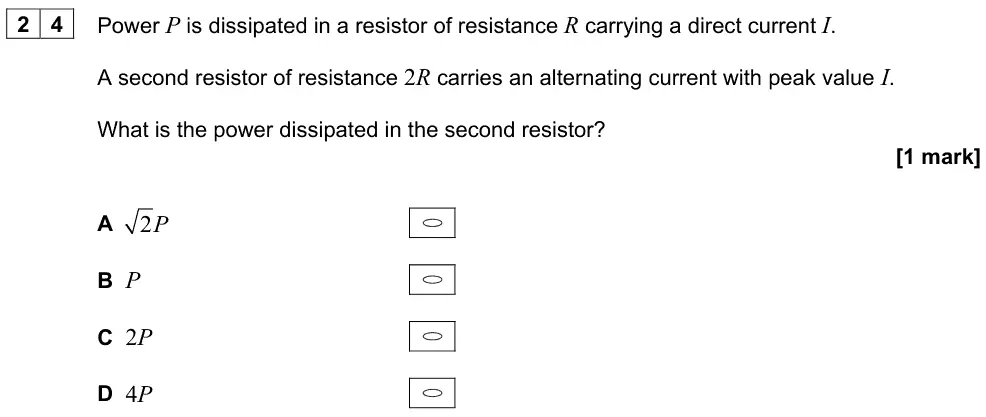
B
There was a good spread in the performance on the multiple-choice section. Questions 16, 17, 24, 25 and 29 received correct answers from less than 40% of students. For question 24 it was less than 20%.
Skills: MS0.3 Use ratios, fractions and percentages
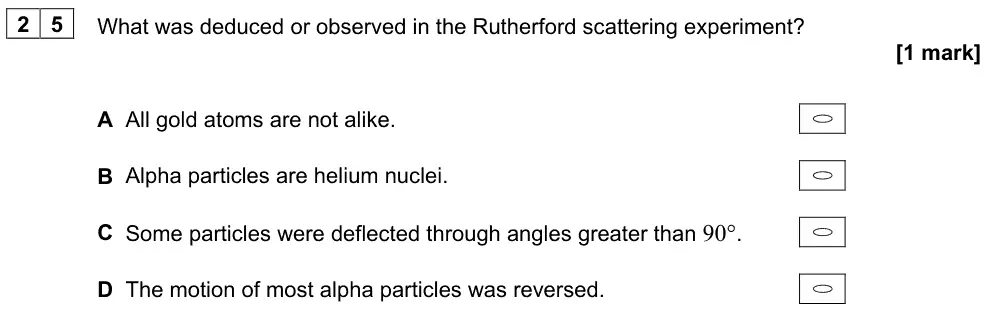
C
There was a good spread in the performance on the multiple-choice section. Questions 16, 17, 24, 25 and 29 received correct answers from less than 40% of students. For question 24 it was less than 20%.
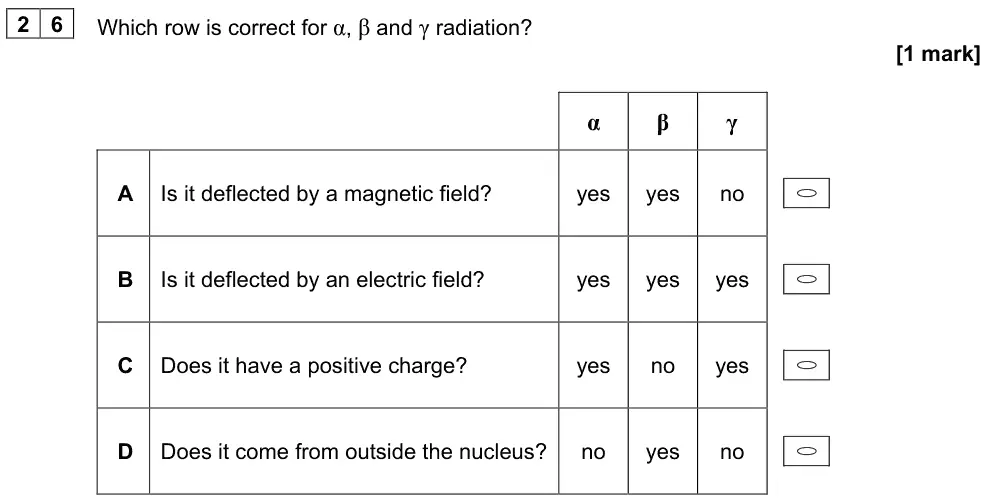
A
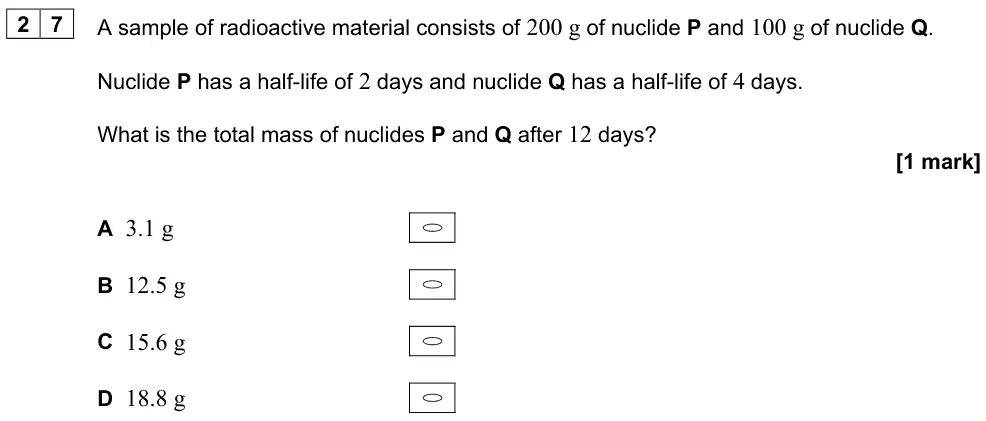
C
Skills: MS0.3 Use ratios, fractions and percentages
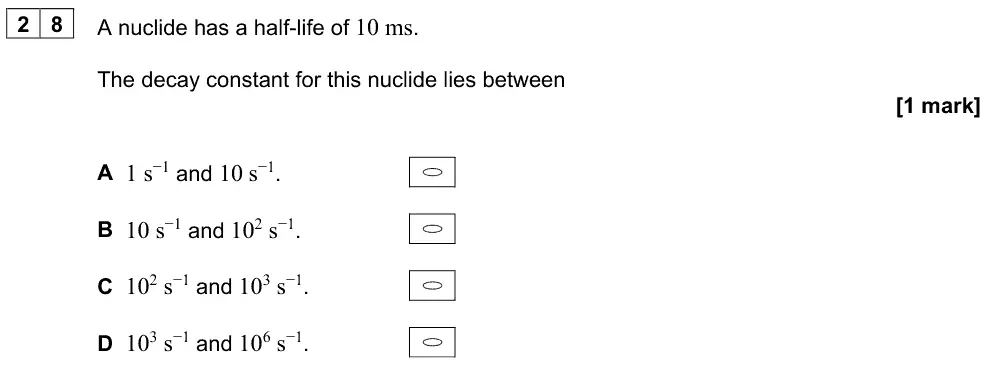
B
Skills: MS1.4 Make order of magnitude calculations
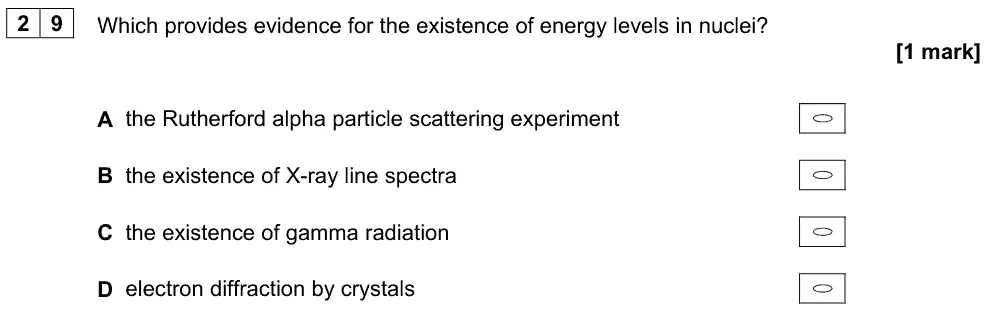
C
There was a good spread in the performance on the multiple-choice section. Questions 16, 17, 24, 25 and 29 received correct answers from less than 40% of students. For question 24 it was less than 20%.
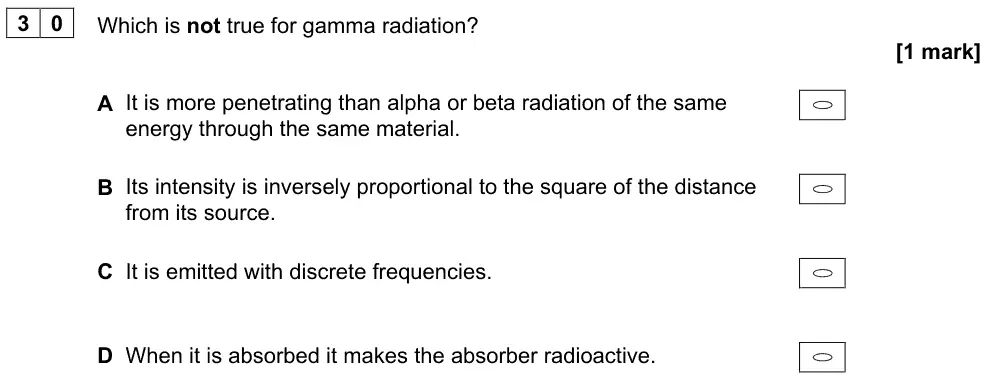
D
C
A
Skills: MS0.2 Recognise and use expressions in decimal and standard form
D
A
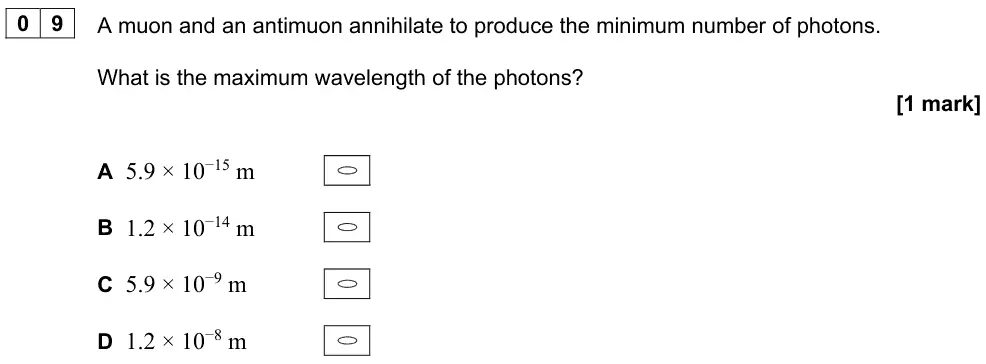
B
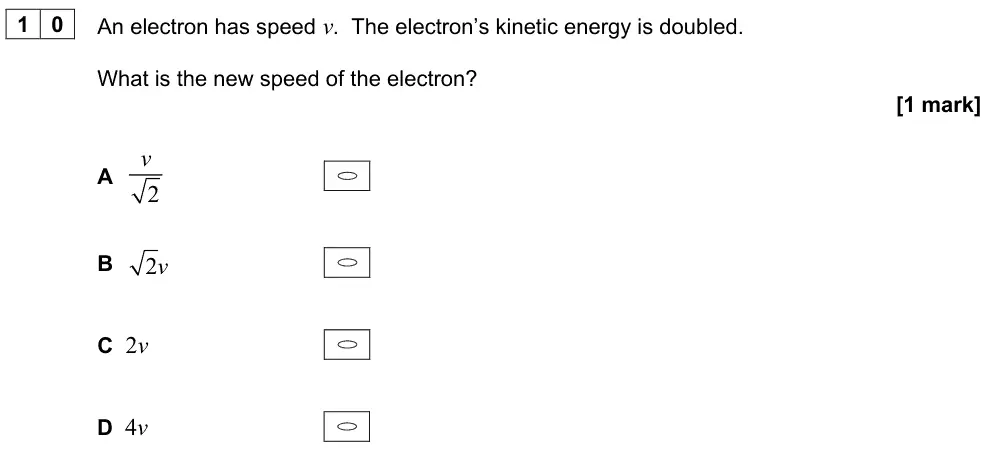
B
Skills: MS0.3 Use ratios, fractions and percentages
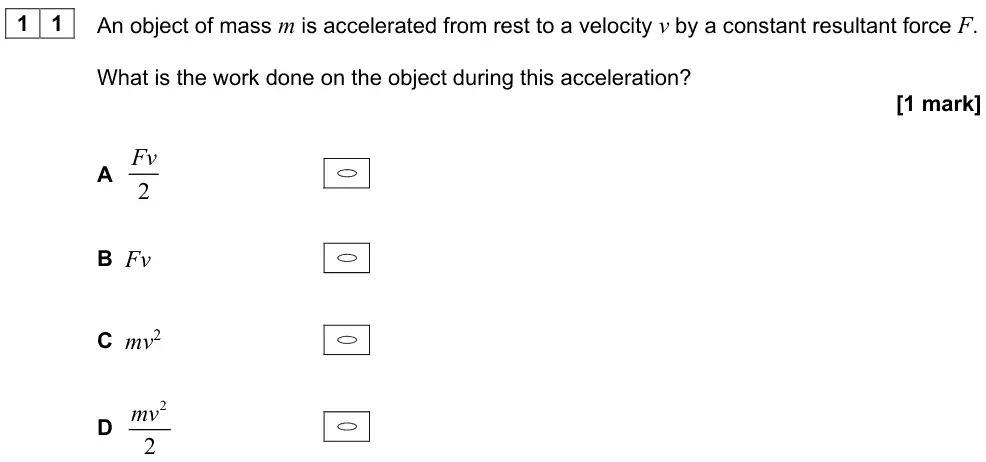
D
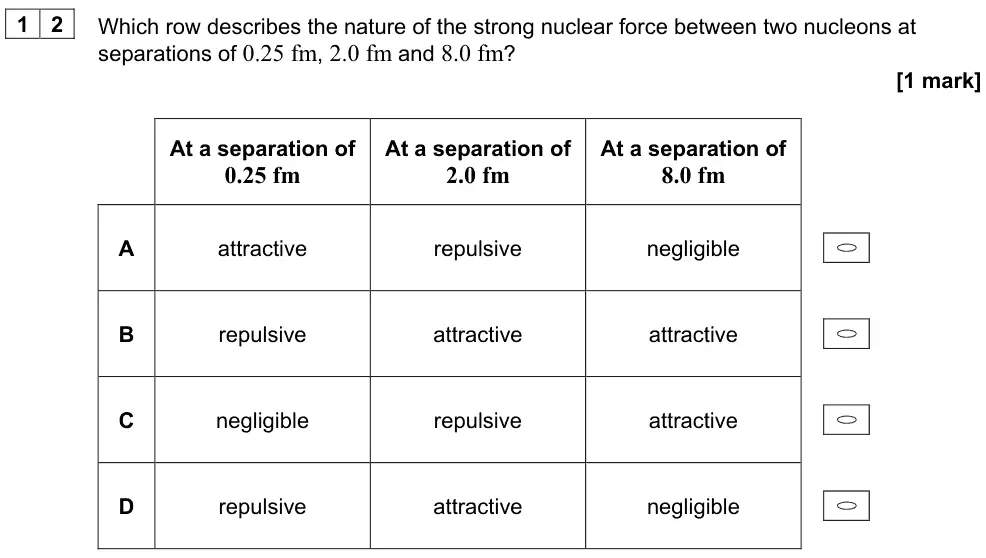
D
A
C
B
D
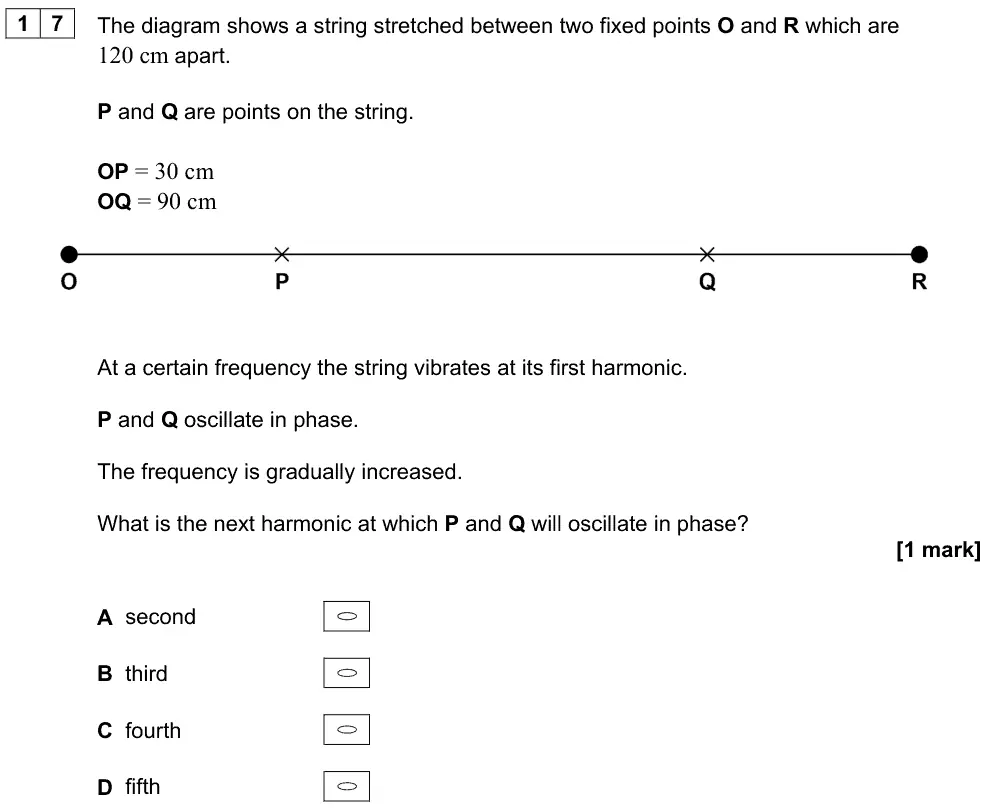
B
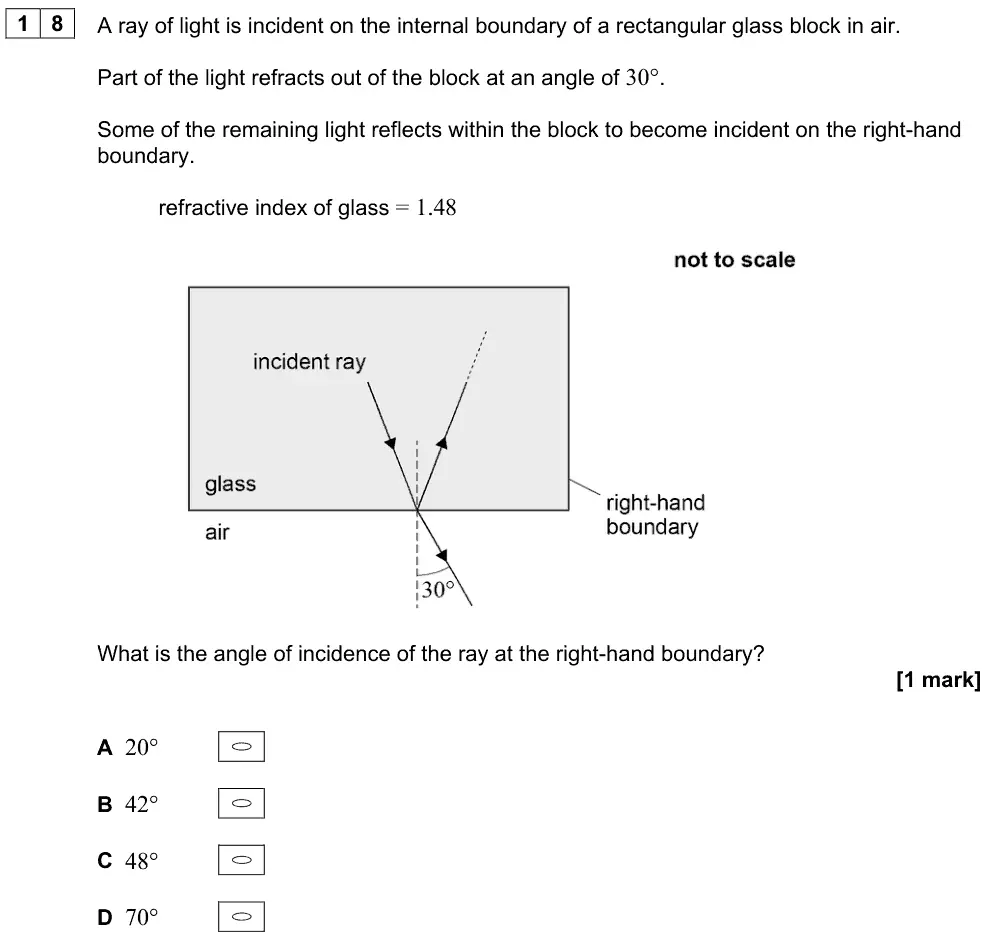
D
Skills: MS0.6 Use calculators to handle sin x, cos x, tan x when x is expressed in degrees or radians; MS4.1 Use angles in regular 2D and 3D structures
C
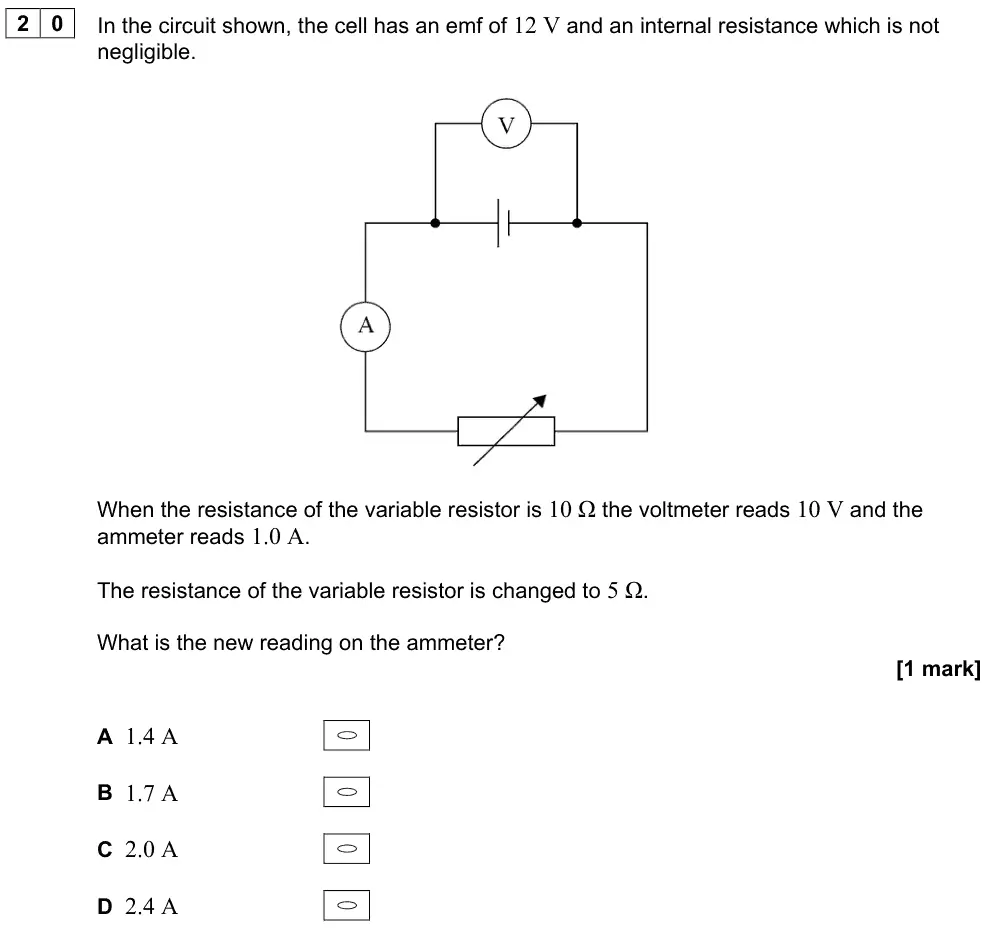
B
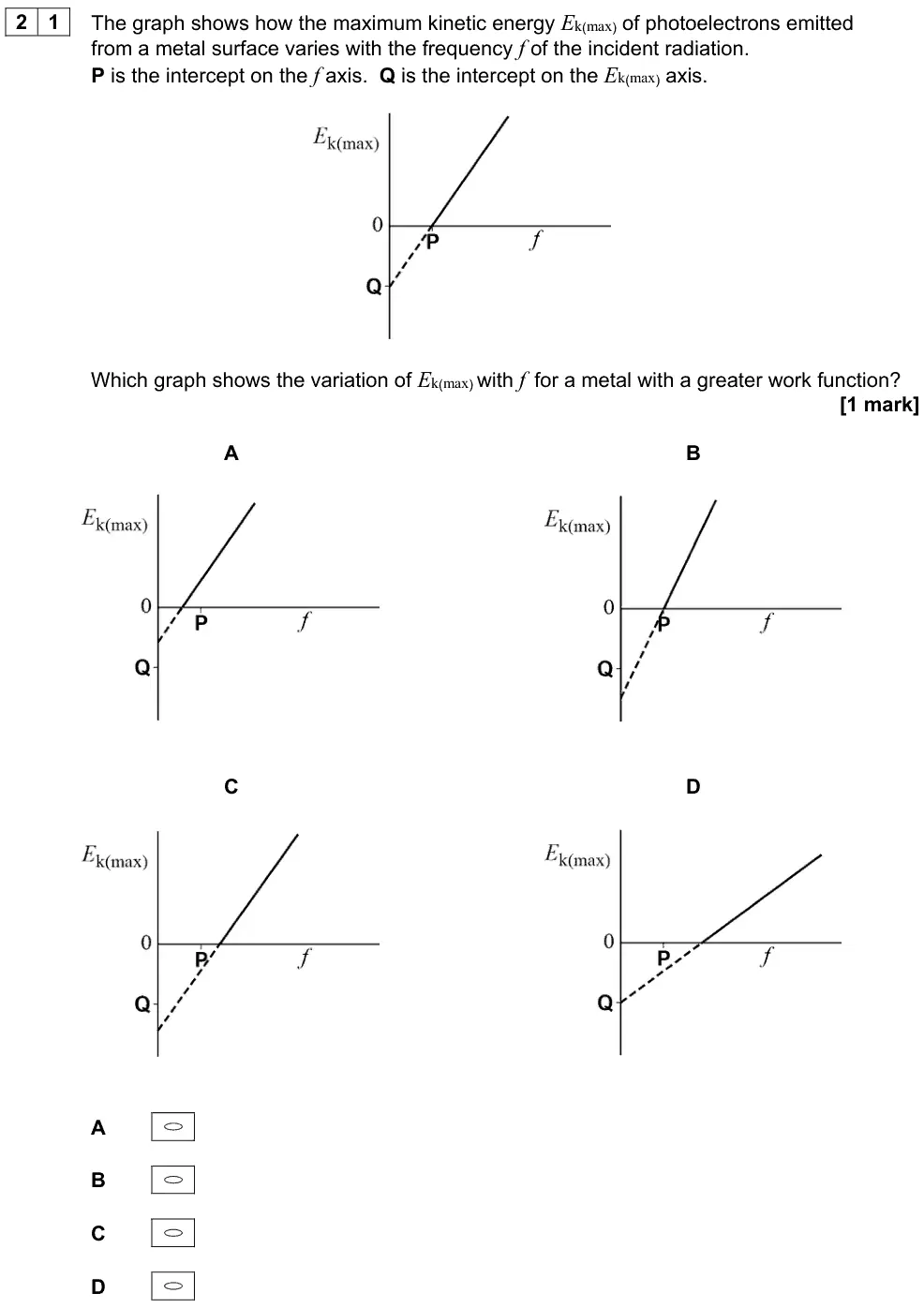
C
Skills: MS3.1 Translate information between graphical, numerical and algebraic forms
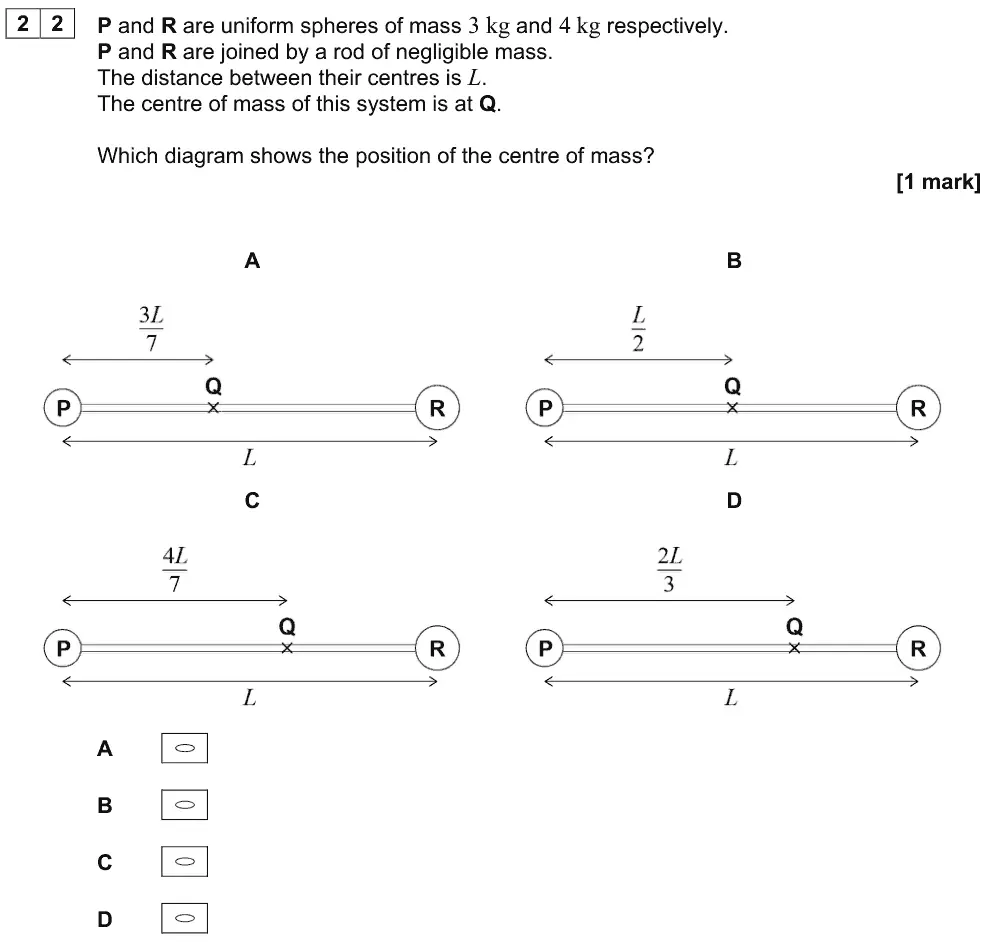
C
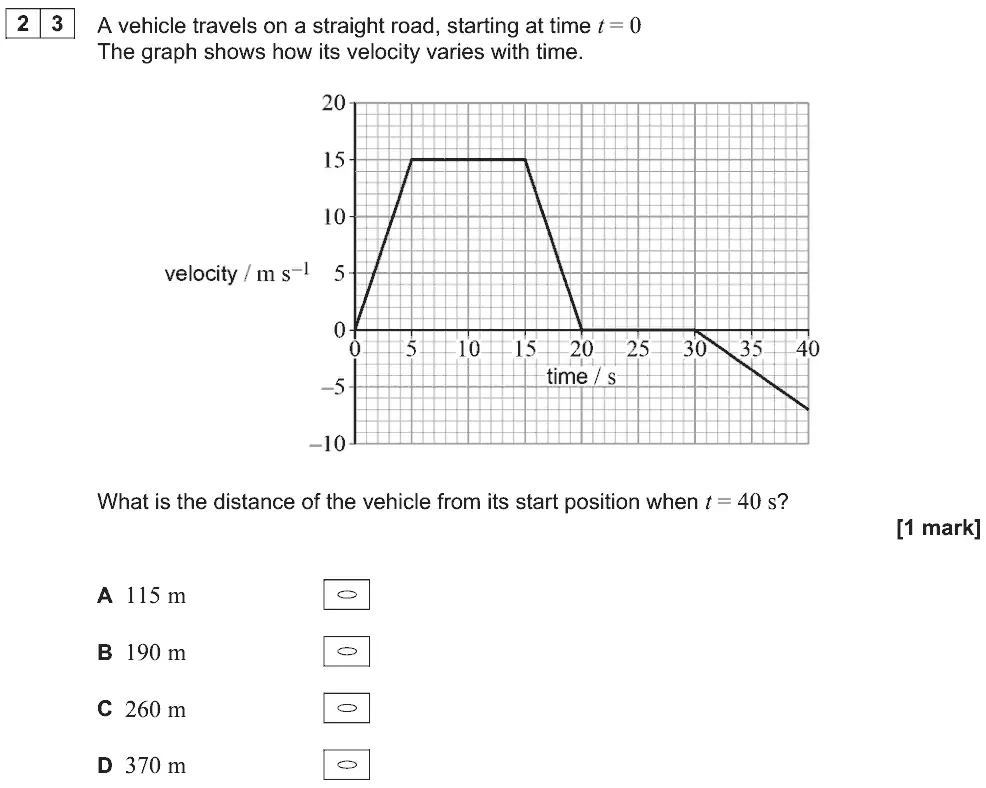
B
Skills: MS3.8 Understand the possible physical significance of the area between a curve and the x axis and be able to calculate it or estimate it by graphical methods as appropriate
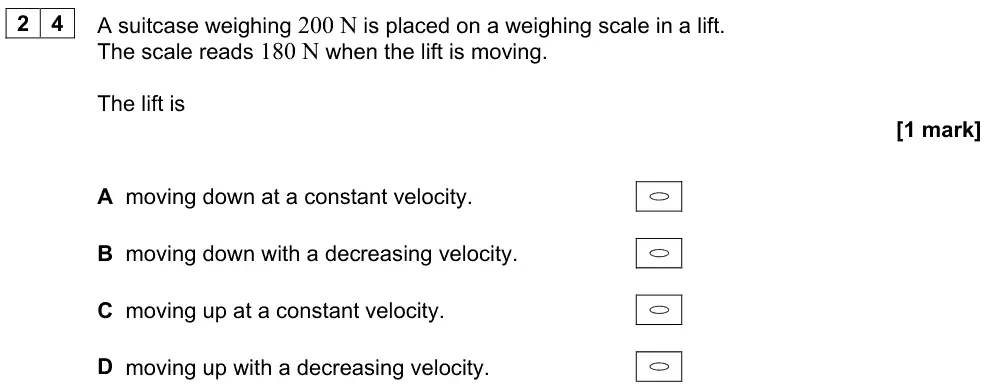
D
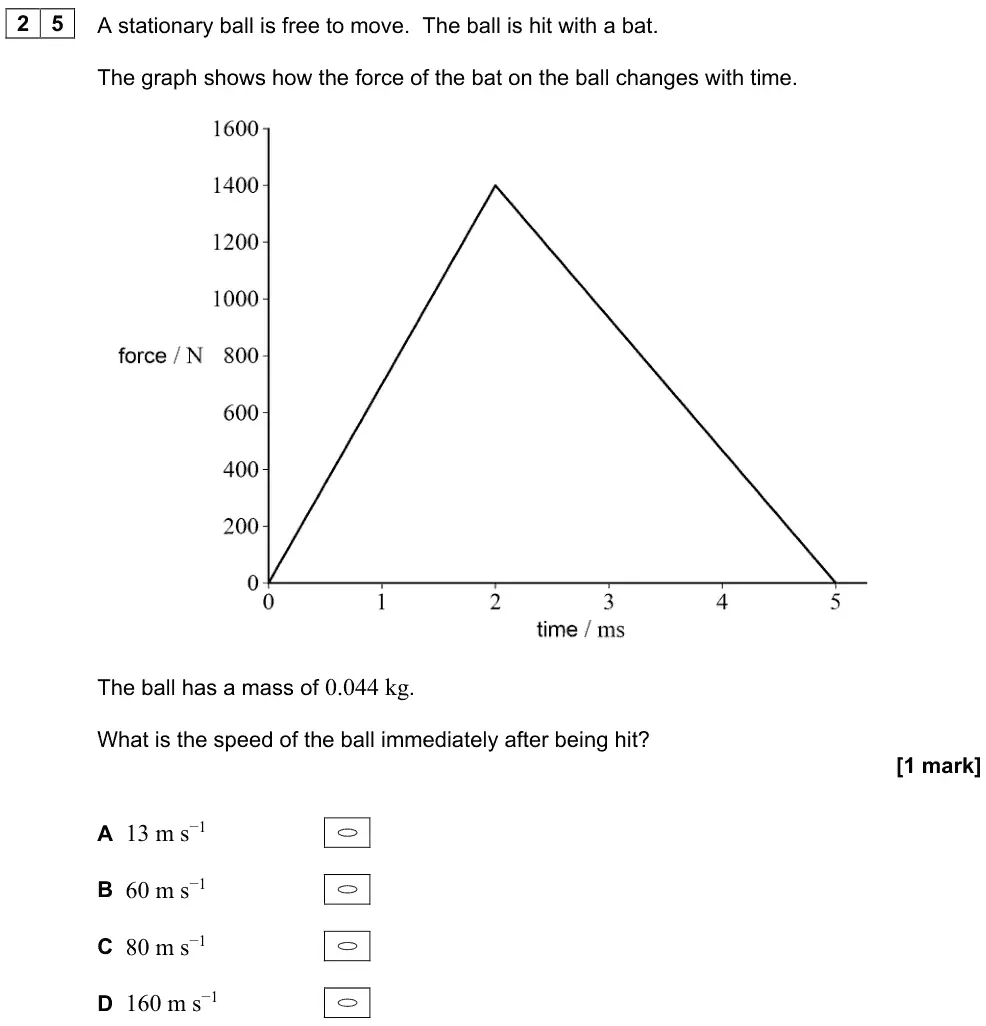
C
Skills: MS3.8 Understand the possible physical significance of the area between a curve and the x axis and be able to calculate it or estimate it by graphical methods as appropriate
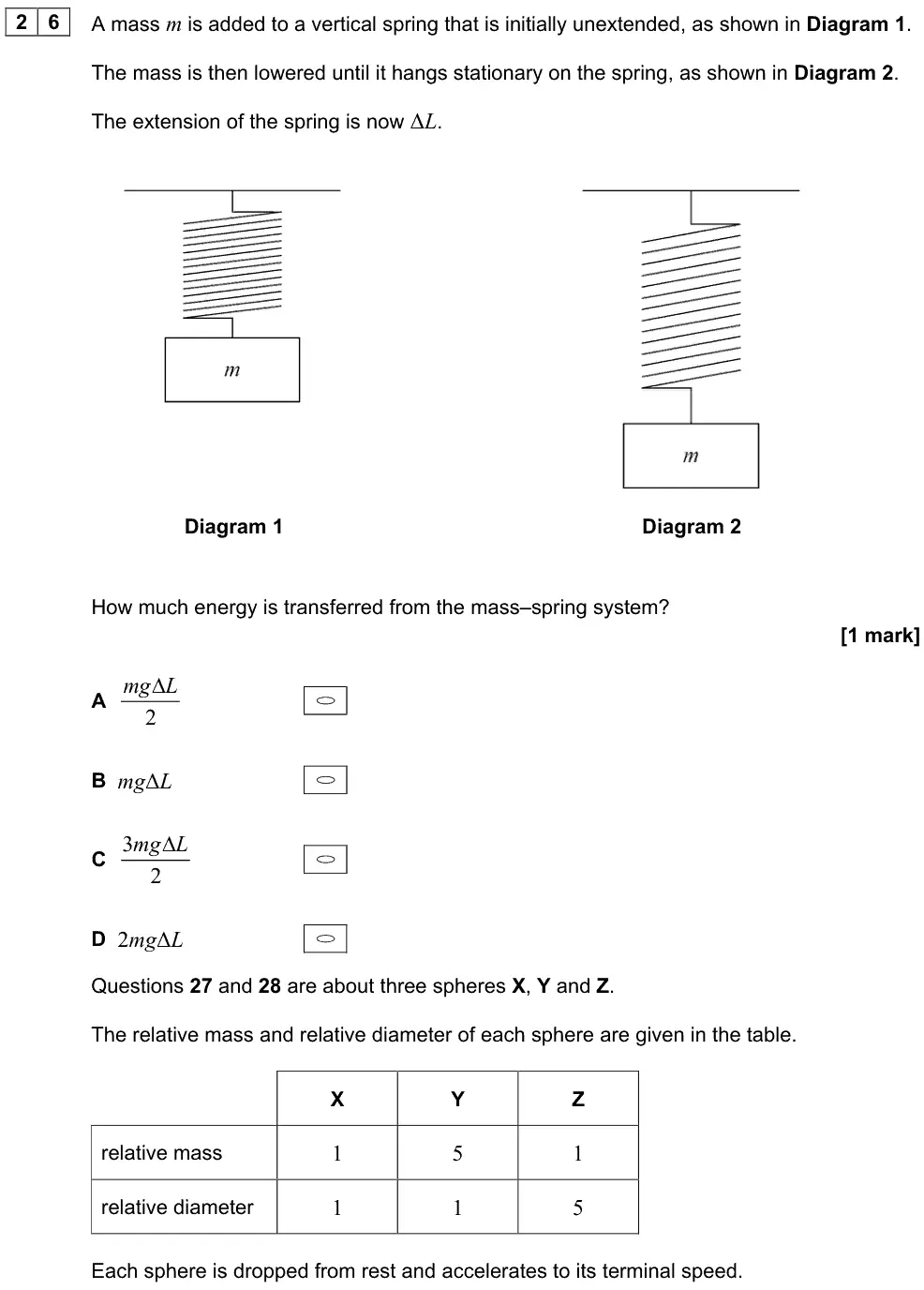
A
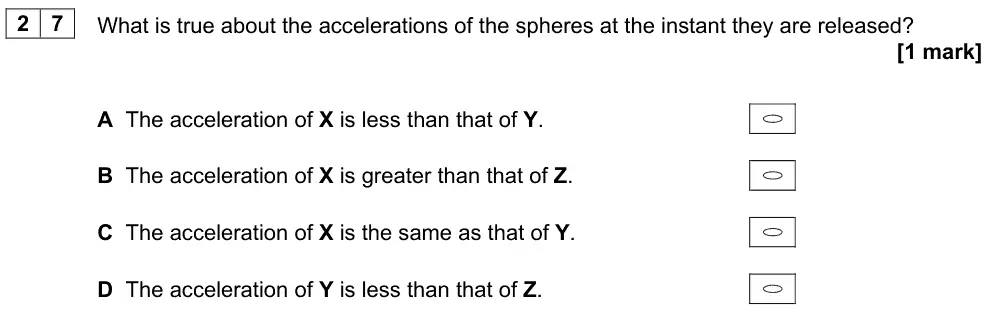
C
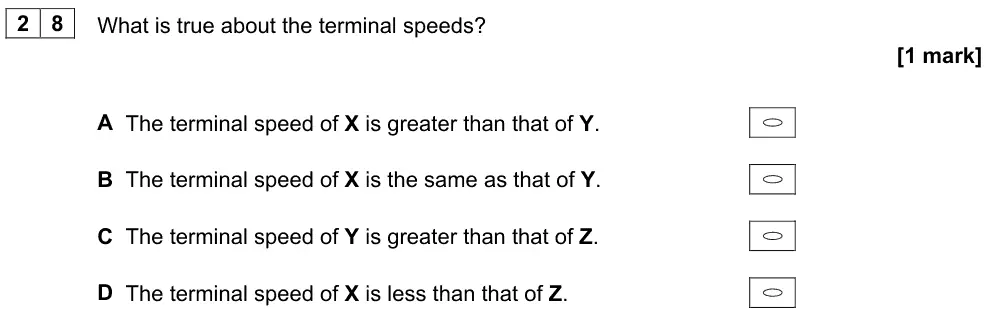
C
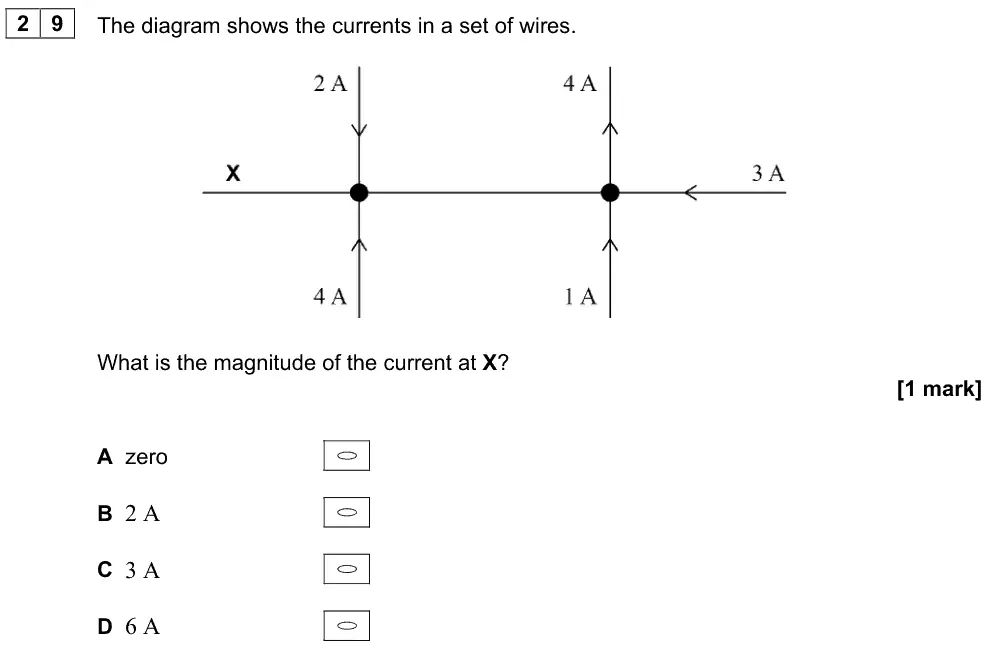
D
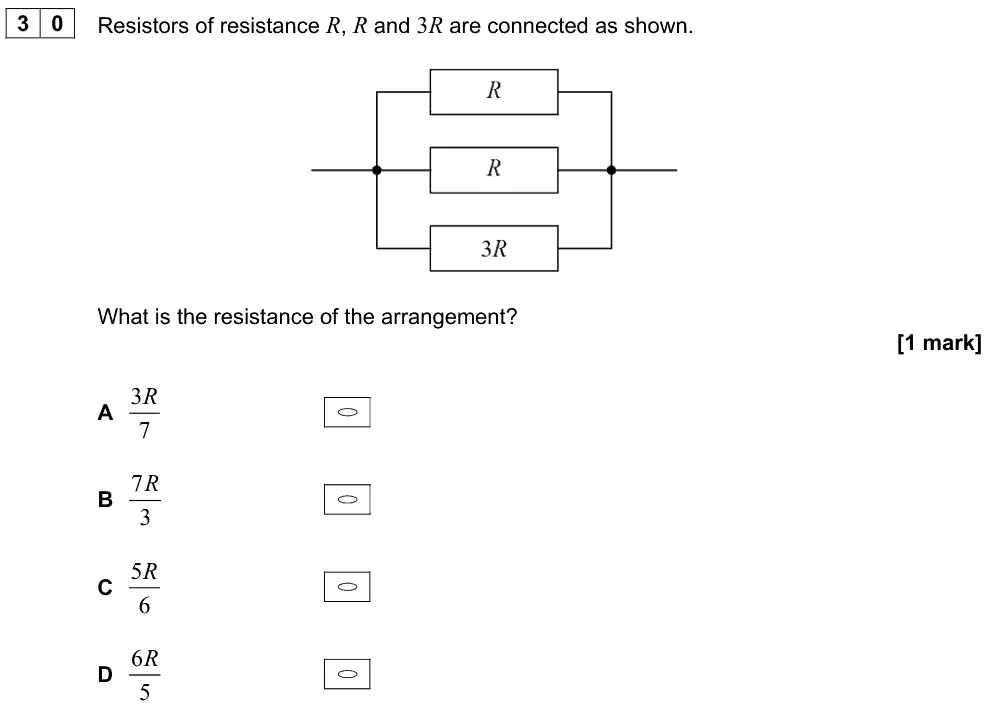
A
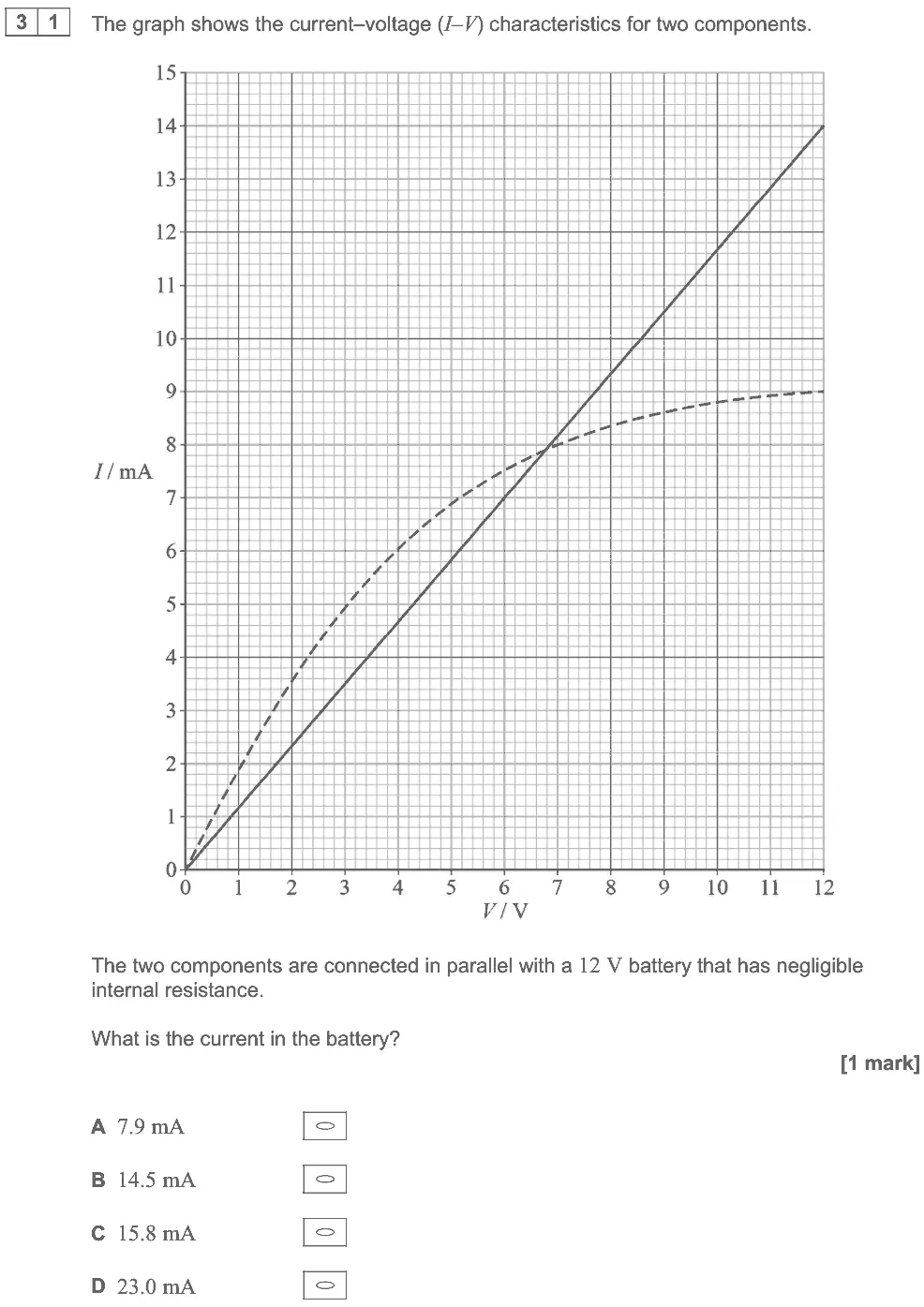
D
Skills: MS3.1 Translate information between graphical, numerical and algebraic forms
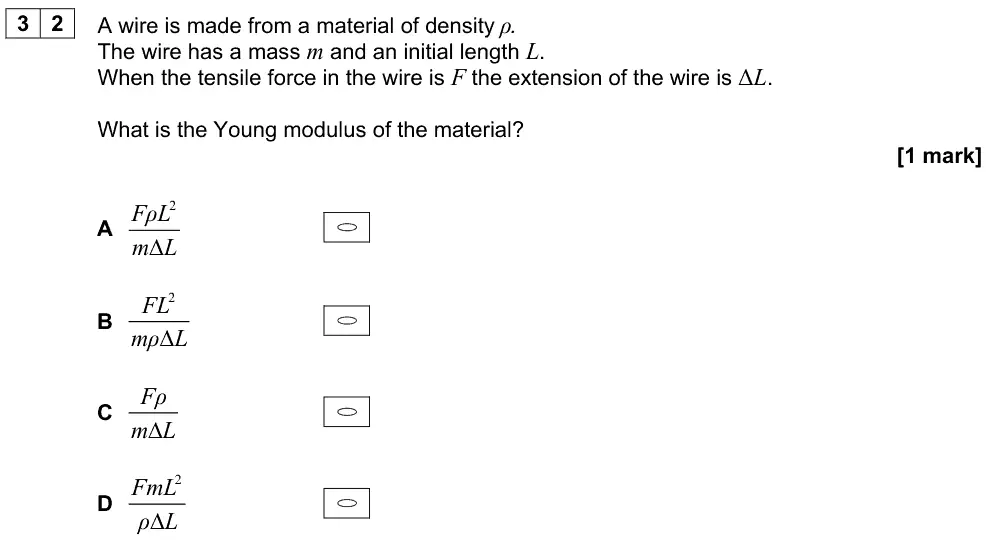
A
Skills: MS2.2 Change the subject of an equation, including non-linear equations
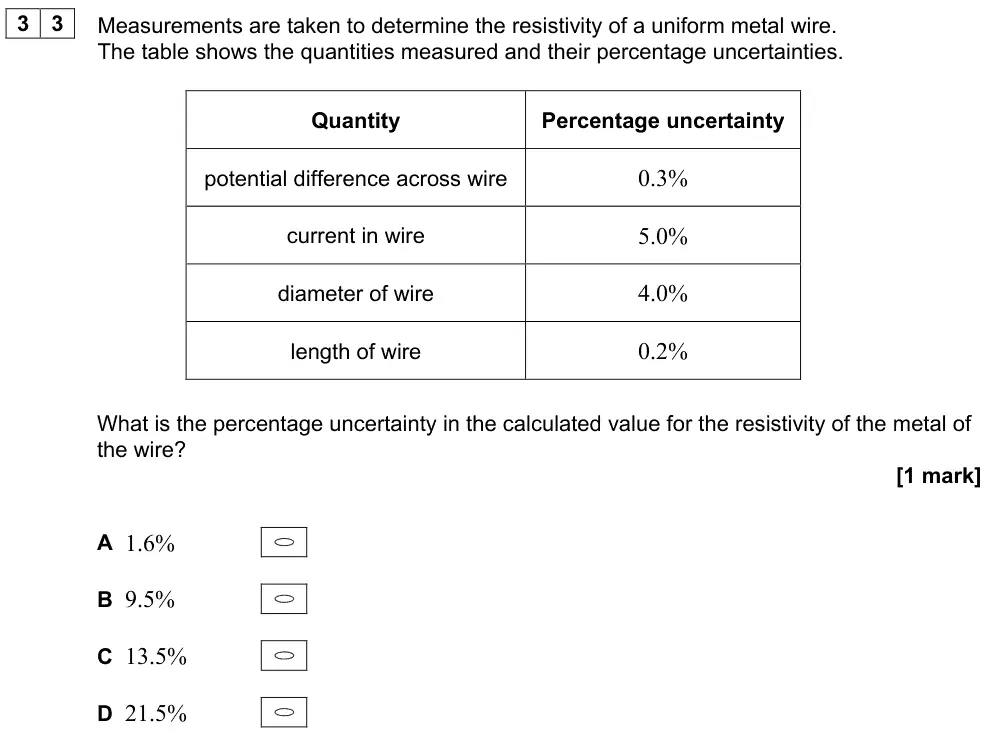
C
Skills: MS1.5 Identify uncertainties in measurements and use simple techniques to determine uncertainty when data are combined by addition, subtraction, multiplication, division and raising
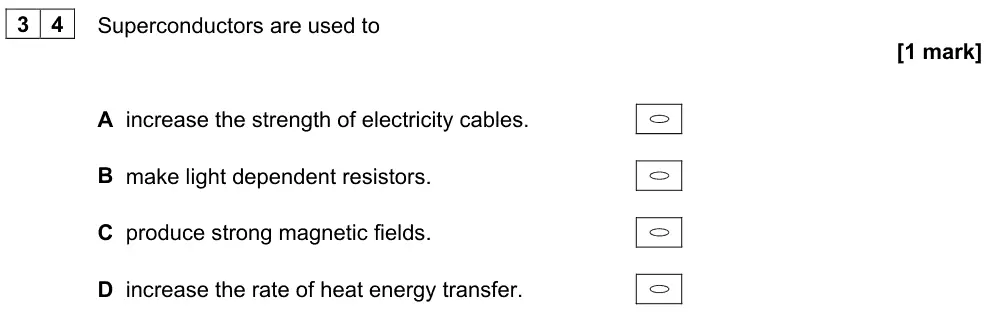
C
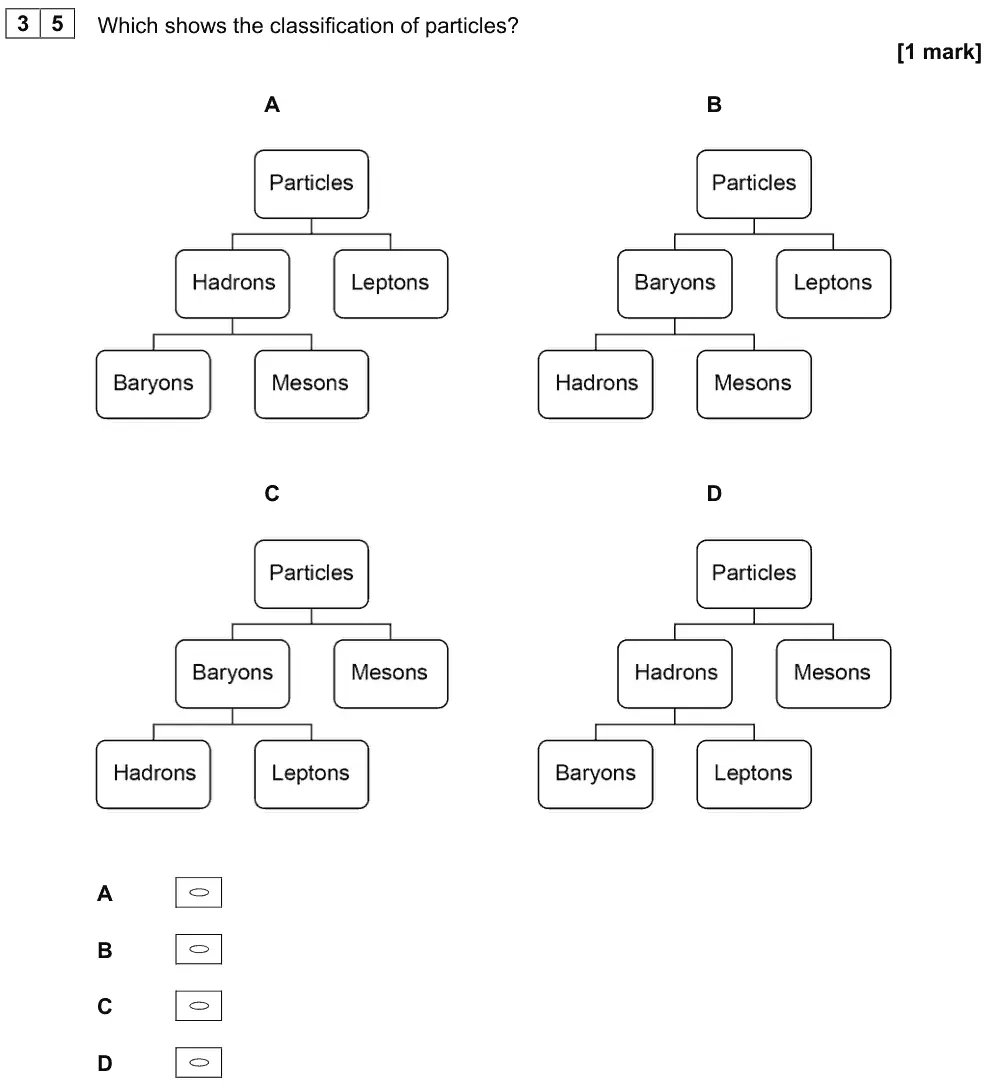
A
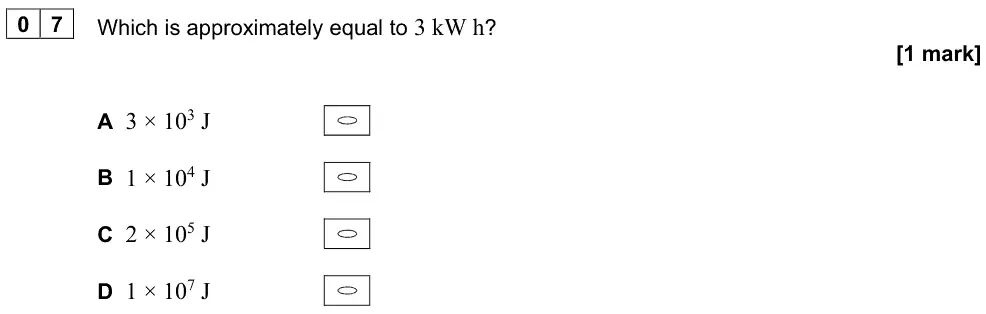
D
Skills: MS0.2 Recognise and use expressions in decimal and standard form
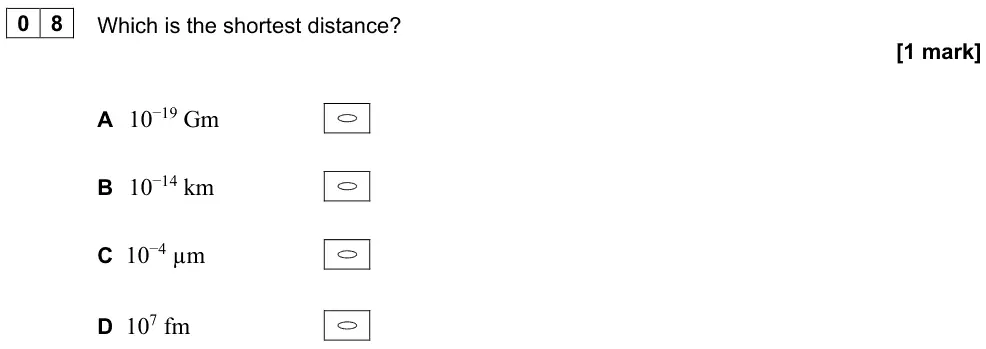
B
Skills: MS0.2 Recognise and use expressions in decimal and standard form
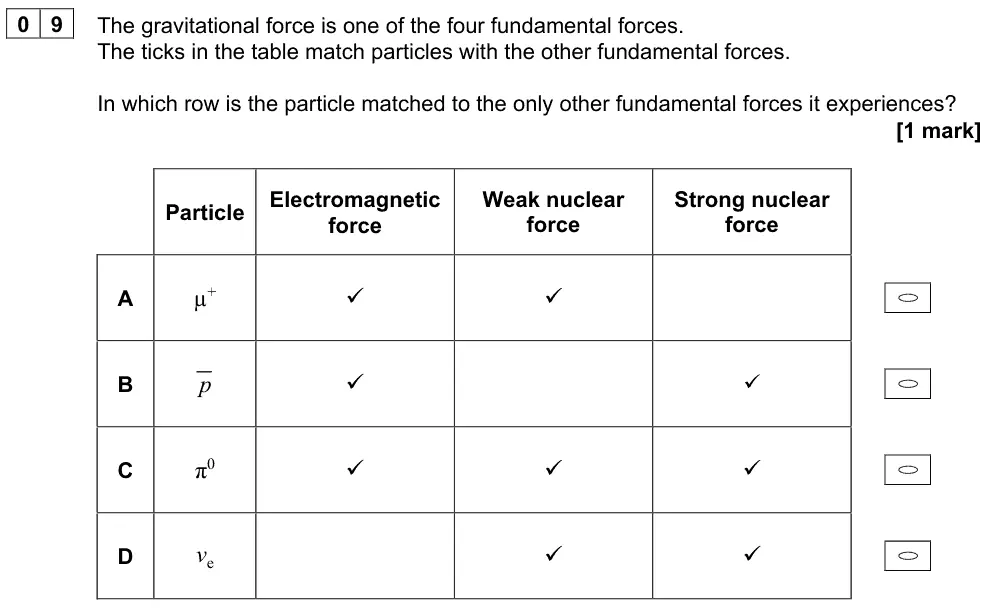
A
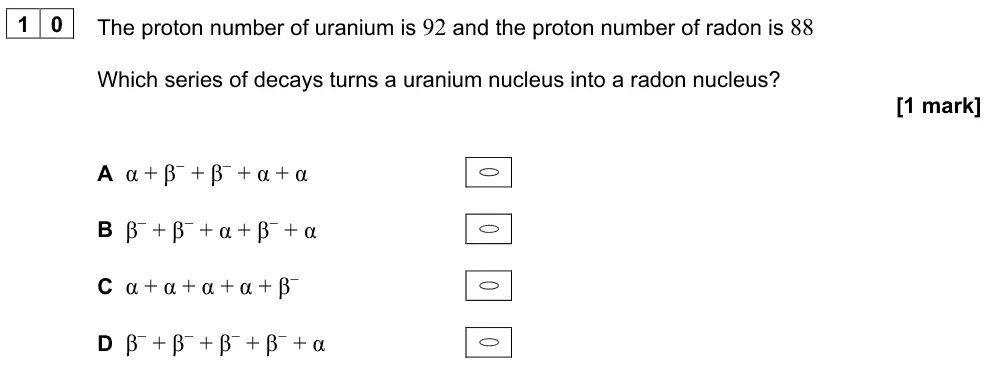
A
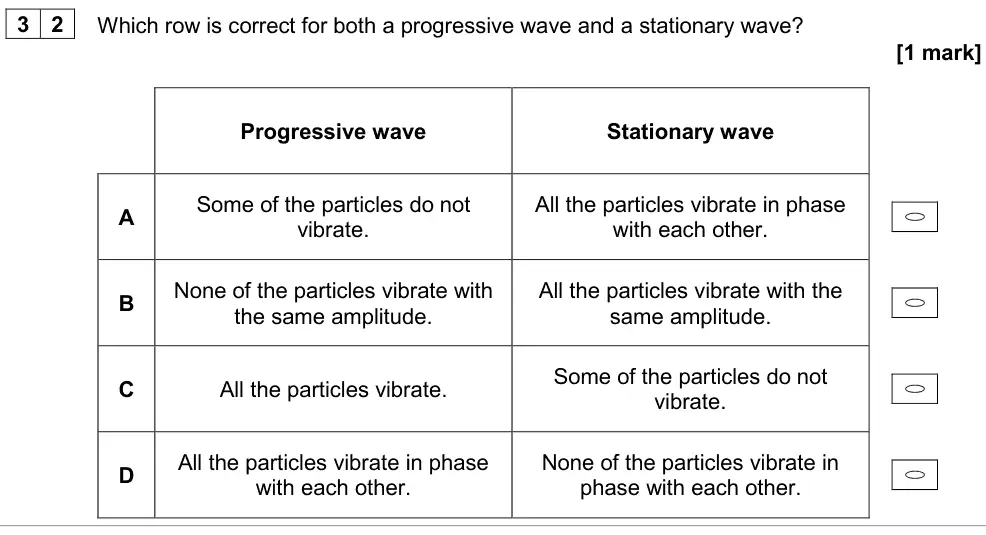
Several of the multiple-choice questions proved to be extremely difficult. In particular, questions 20, 27 and 29 were answered correctly by fewer than 30% of the students. In question 20 more students opted for B and for C than for the correct answer (D), indicating a lack of familiarity with scale diagrams. In question 27 the most popular answer was B, indicating the difficulties students have with combining resistors, and the second most popular was C, suggesting that students did not understand the difference between open and short circuits. The most popular answer to question 18 was D, probably because the students did not spot that this was a stationary, rather than progressive, wave. The most accessible questions were 10 and 16, both of which were answered correctly by over 70% of the students.
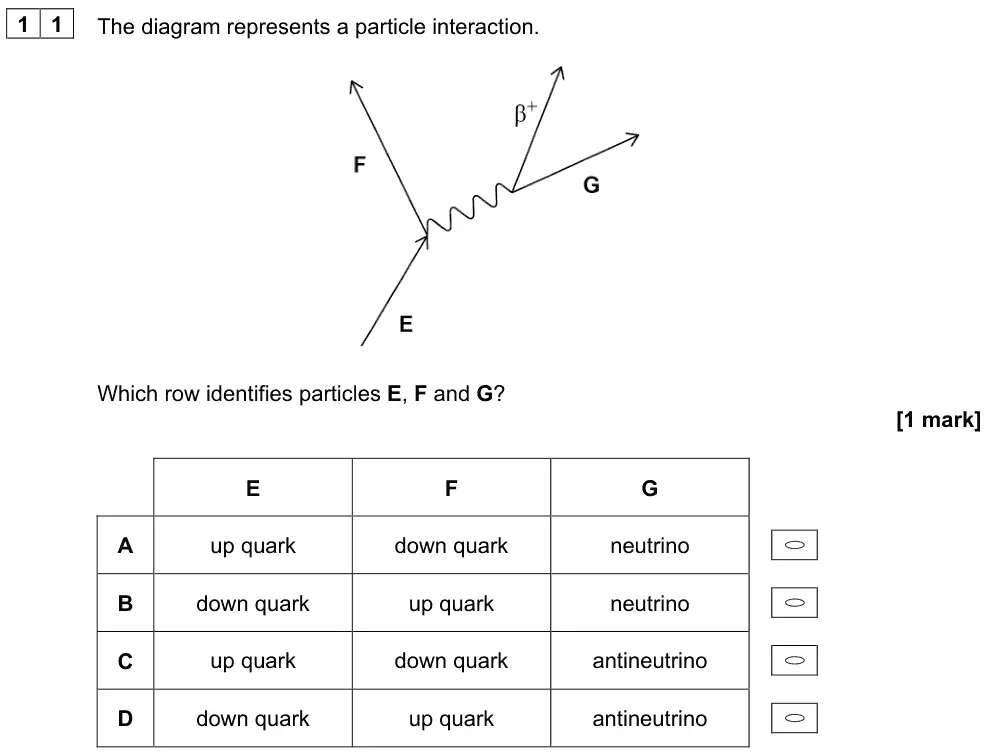
A
B
B
Skills: MS2.3 Substitute numerical values into algebraic equations using appropriate units for physical quantities
D
C
Skills: MS2.3 Substitute numerical values into algebraic equations using appropriate units for physical quantities
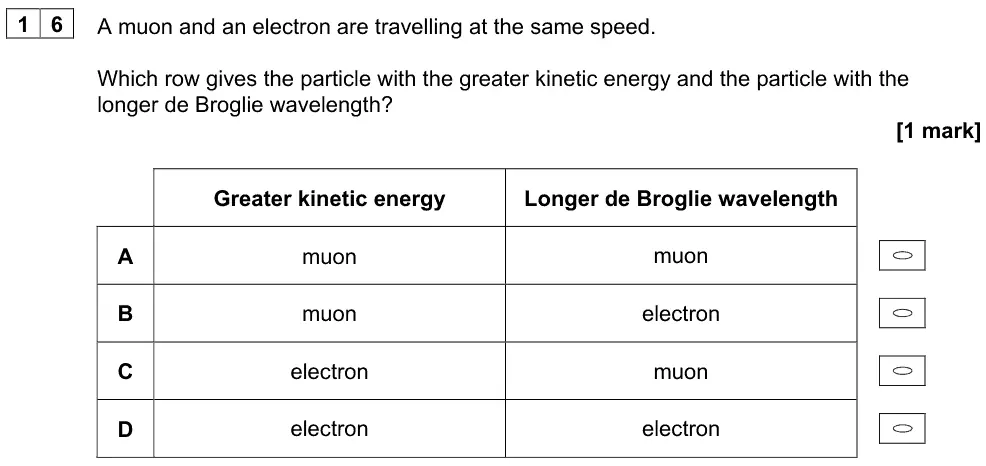
B
Several of the multiple-choice questions proved to be extremely difficult. In particular, questions 20, 27 and 29 were answered correctly by fewer than 30% of the students. In question 20 more students opted for B and for C than for the correct answer (D), indicating a lack of familiarity with scale diagrams. In question 27 the most popular answer was B, indicating the difficulties students have with combining resistors, and the second most popular was C, suggesting that students did not understand the difference between open and short circuits. The most popular answer to question 18 was D, probably because the students did not spot that this was a stationary, rather than progressive, wave. The most accessible questions were 10 and 16, both of which were answered correctly by over 70% of the students.
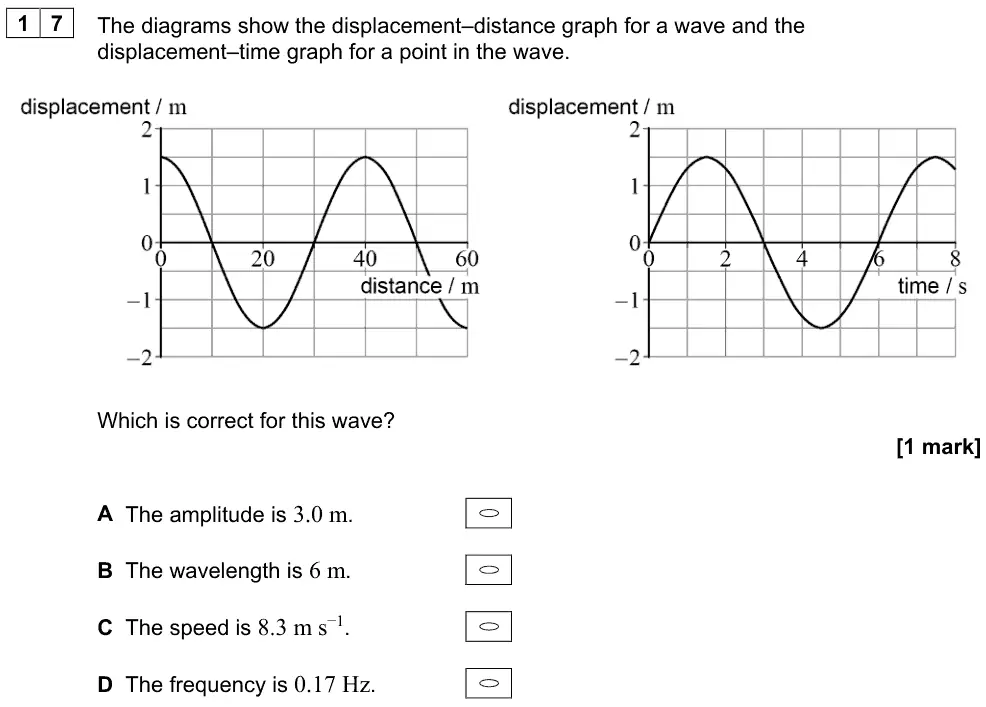
D
Skills: MS3.1 Translate information between graphical, numerical and algebraic forms
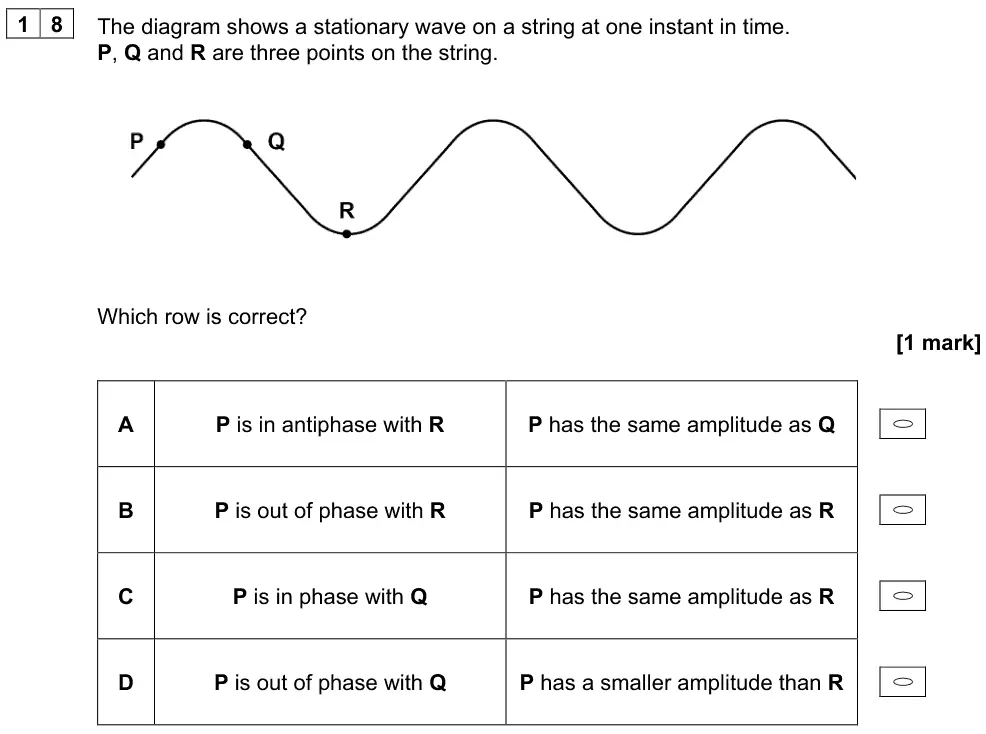
A
Several of the multiple-choice questions proved to be extremely difficult. In particular, questions 20, 27 and 29 were answered correctly by fewer than 30% of the students. In question 20 more students opted for B and for C than for the correct answer (D), indicating a lack of familiarity with scale diagrams. In question 27 the most popular answer was B, indicating the difficulties students have with combining resistors, and the second most popular was C, suggesting that students did not understand the difference between open and short circuits. The most popular answer to question 18 was D, probably because the students did not spot that this was a stationary, rather than progressive, wave. The most accessible questions were 10 and 16, both of which were answered correctly by over 70% of the students.
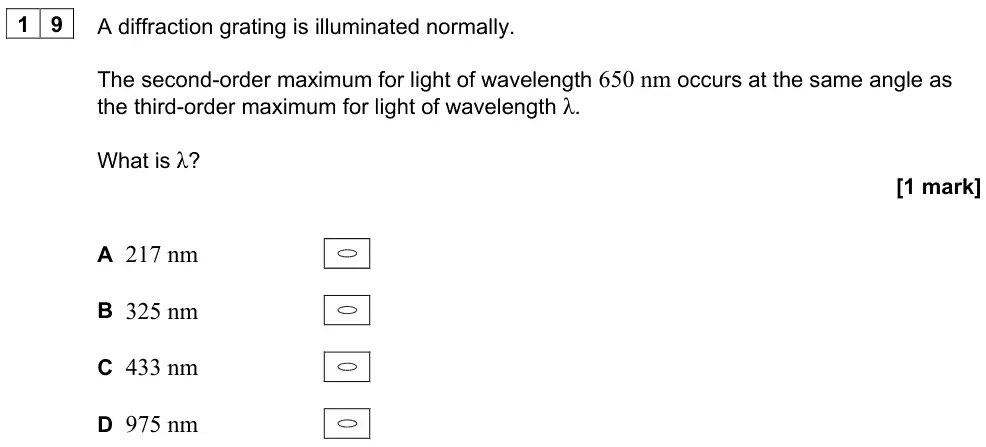
C
Skills: MS0.3 Use ratios, fractions and percentages
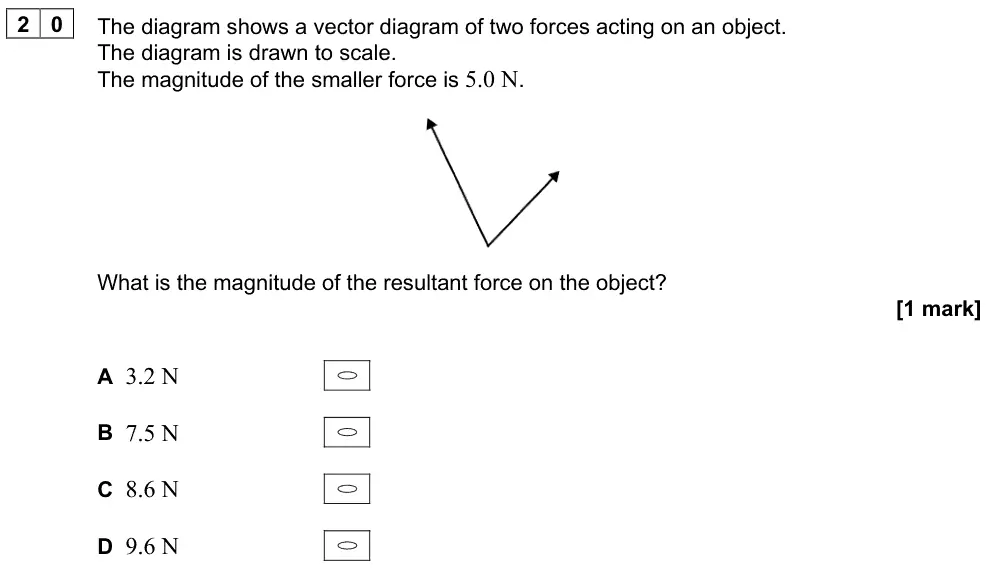
D
Several of the multiple-choice questions proved to be extremely difficult. In particular, questions 20, 27 and 29 were answered correctly by fewer than 30% of the students. In question 20 more students opted for B and for C than for the correct answer (D), indicating a lack of familiarity with scale diagrams. In question 27 the most popular answer was B, indicating the difficulties students have with combining resistors, and the second most popular was C, suggesting that students did not understand the difference between open and short circuits. The most popular answer to question 18 was D, probably because the students did not spot that this was a stationary, rather than progressive, wave. The most accessible questions were 10 and 16, both of which were answered correctly by over 70% of the students.
Skills: MS4.1 Use angles in regular 2D and 3D structures
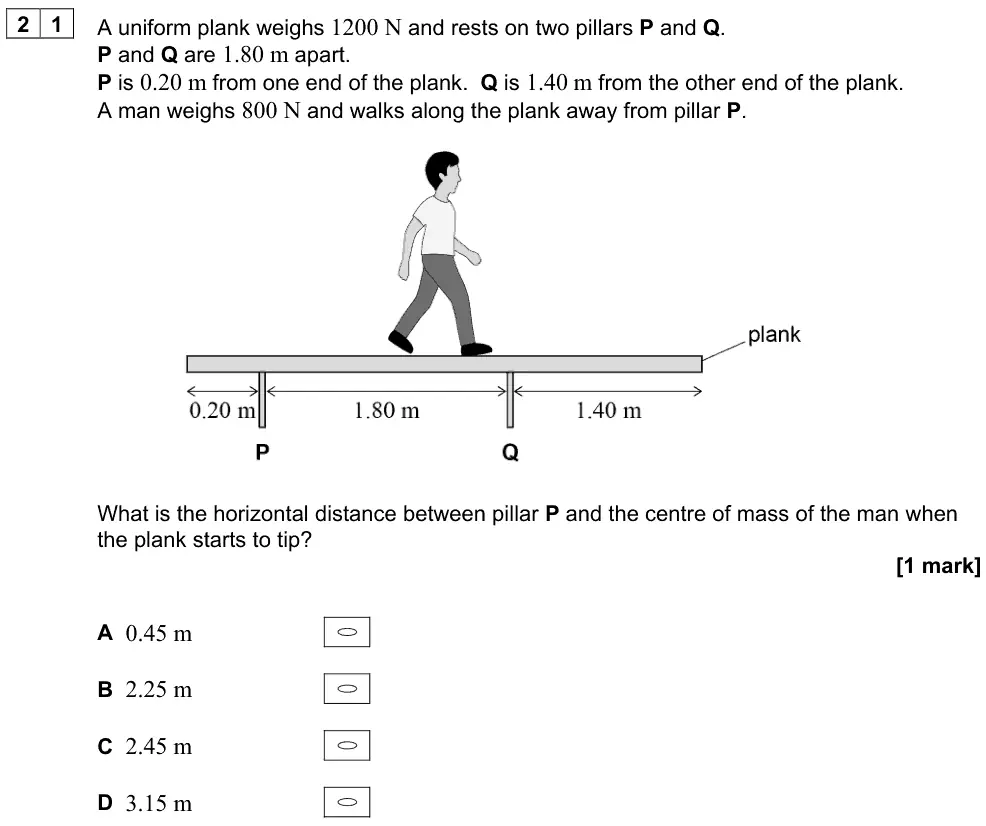
B
Skills: MS2.2 Change the subject of an equation, including non-linear equations
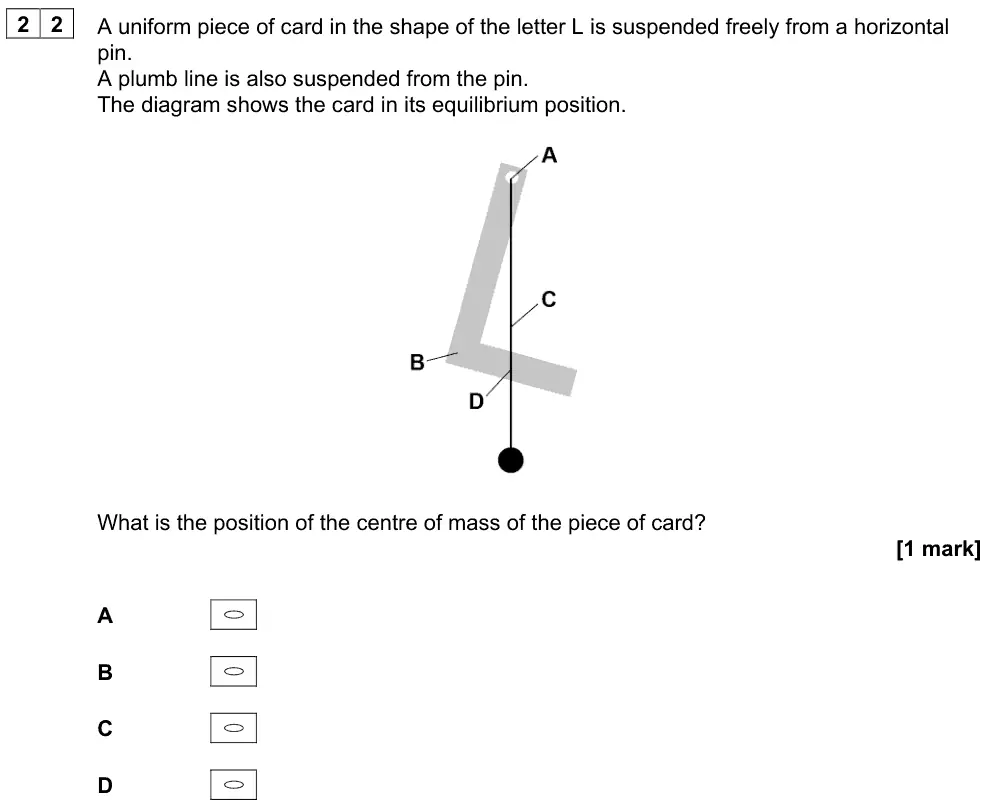
C
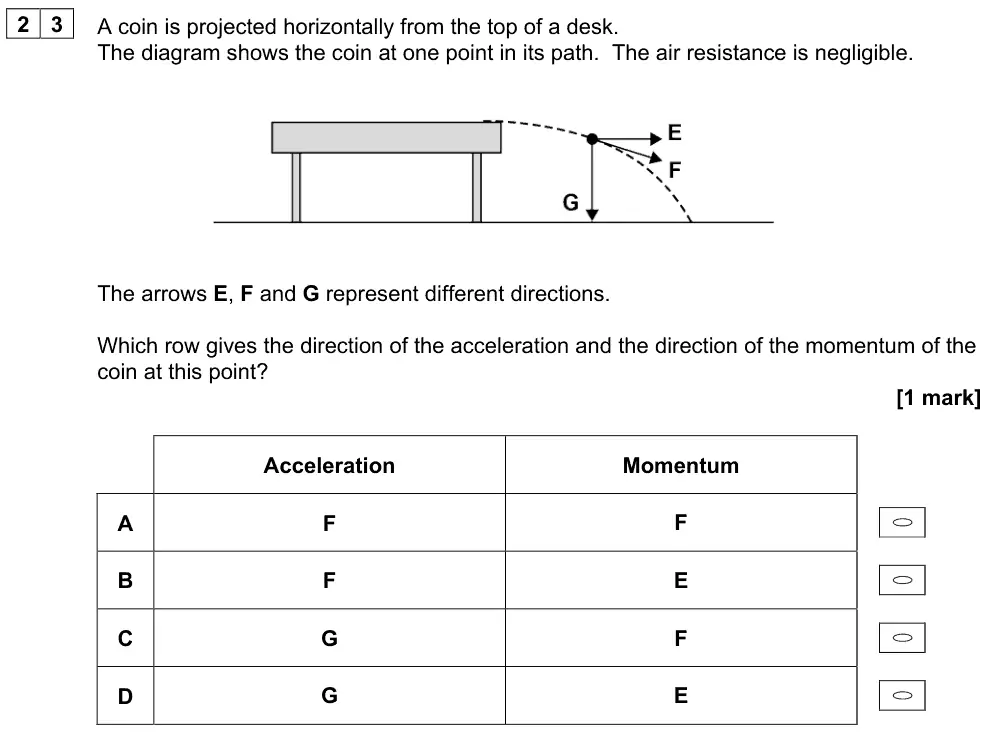
C
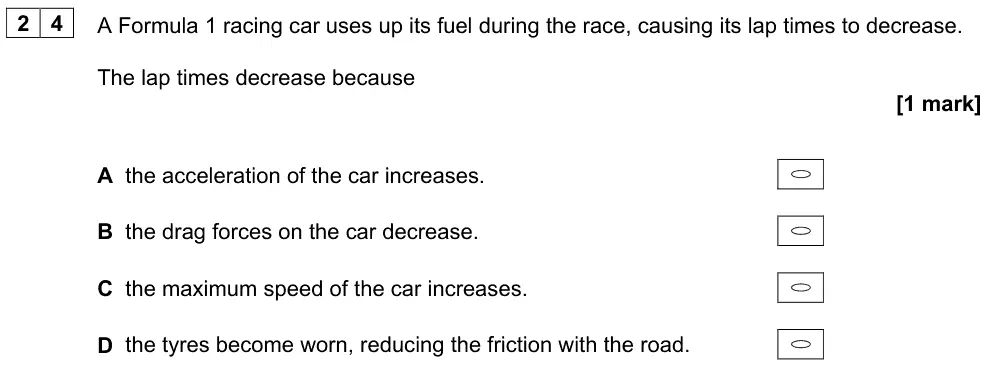
A
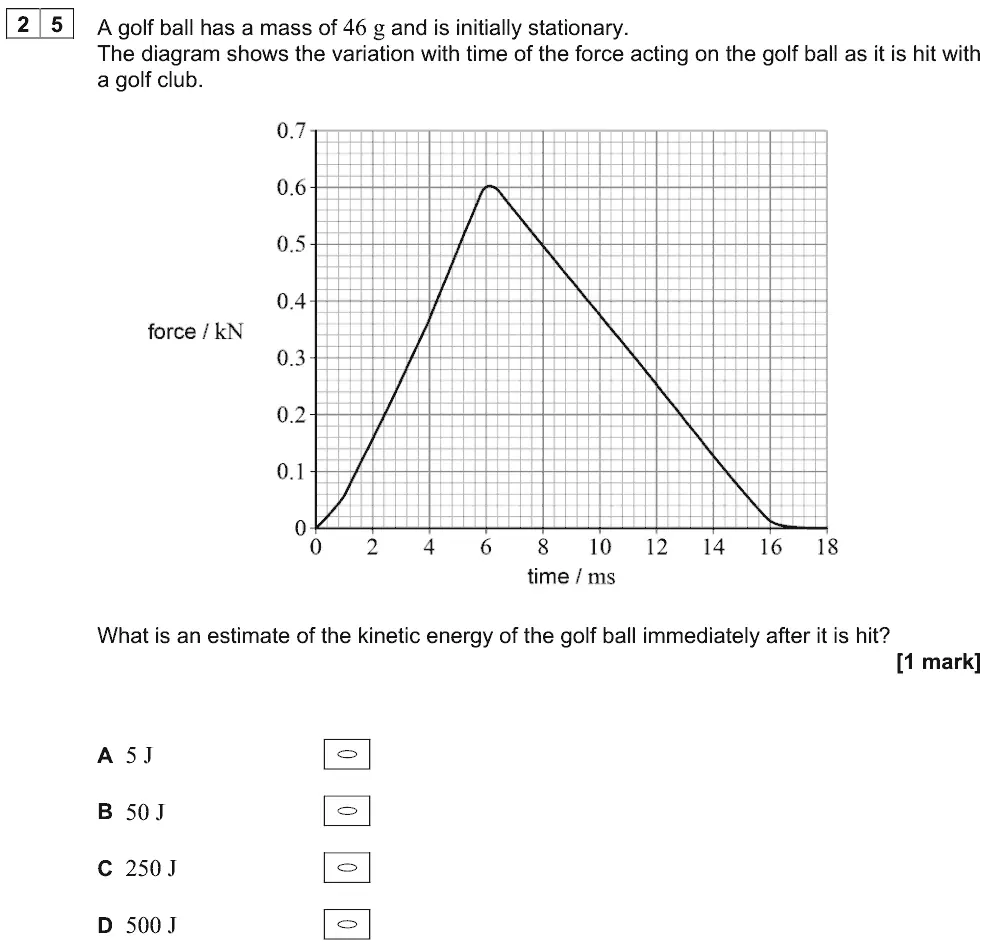
C
Skills: MS3.8 Understand the possible physical significance of the area between a curve and the x axis and be able to calculate it or estimate it by graphical methods as appropriate; MS0.4 Estimate results
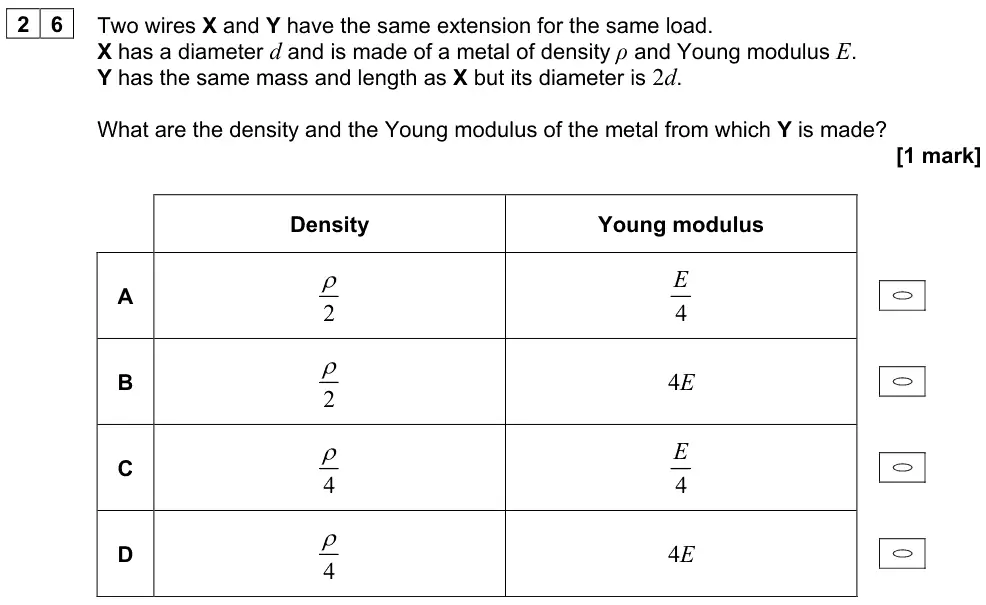
C
Skills: MS0.3 Use ratios, fractions and percentages
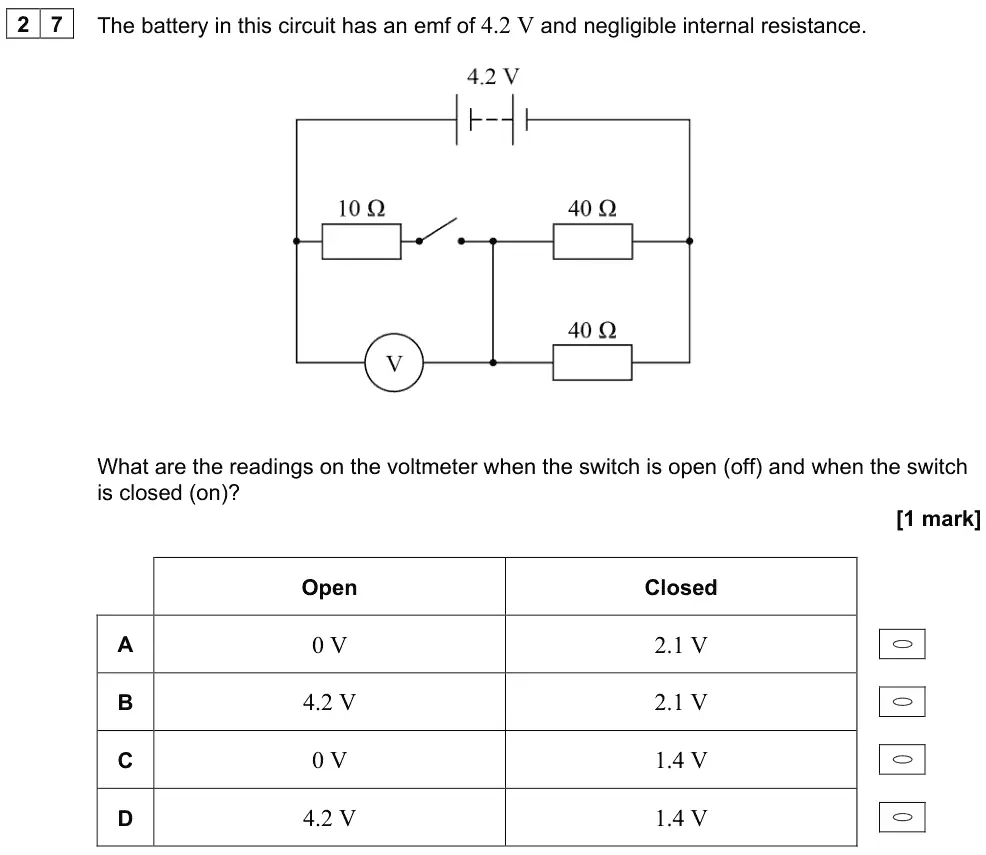
D
Several of the multiple-choice questions proved to be extremely difficult. In particular, questions 20, 27 and 29 were answered correctly by fewer than 30% of the students. In question 20 more students opted for B and for C than for the correct answer (D), indicating a lack of familiarity with scale diagrams. In question 27 the most popular answer was B, indicating the difficulties students have with combining resistors, and the second most popular was C, suggesting that students did not understand the difference between open and short circuits. The most popular answer to question 18 was D, probably because the students did not spot that this was a stationary, rather than progressive, wave. The most accessible questions were 10 and 16, both of which were answered correctly by over 70% of the students.
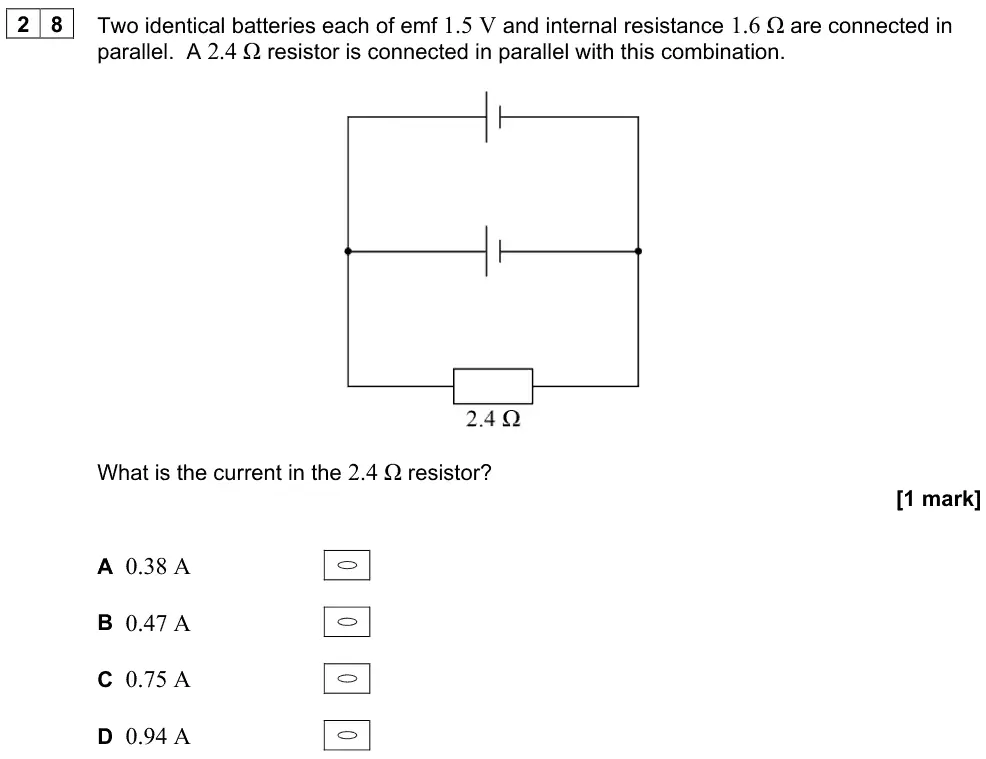
B
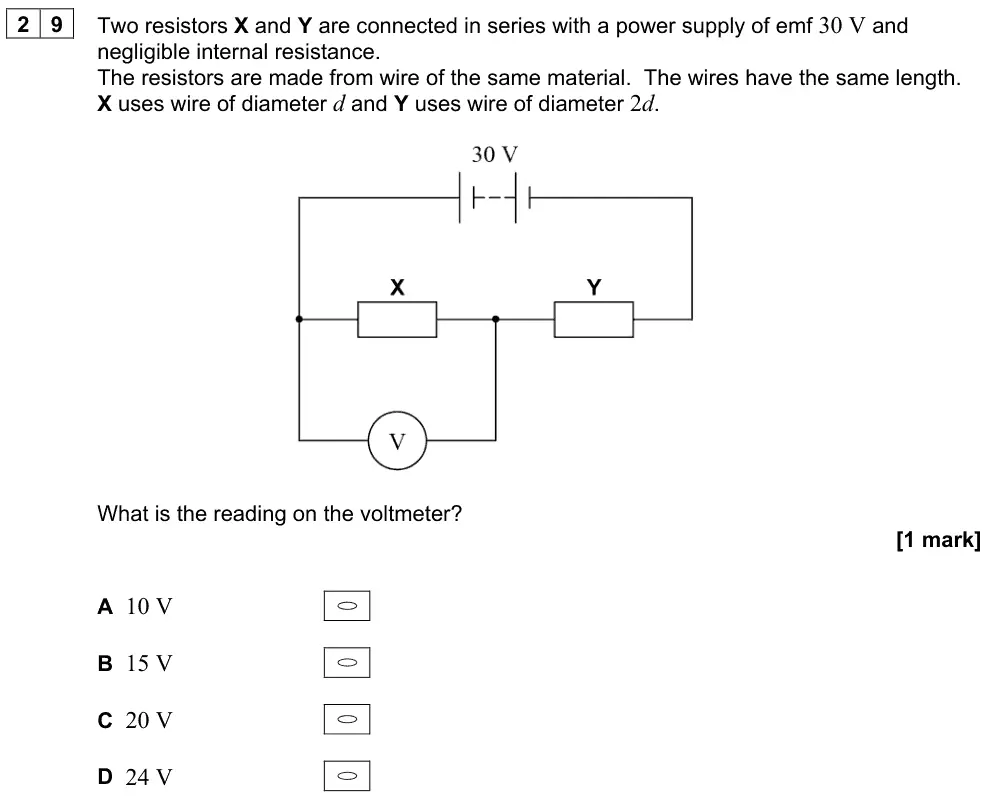
D
Several of the multiple-choice questions proved to be extremely difficult. In particular, questions 20, 27 and 29 were answered correctly by fewer than 30% of the students. In question 20 more students opted for B and for C than for the correct answer (D), indicating a lack of familiarity with scale diagrams. In question 27 the most popular answer was B, indicating the difficulties students have with combining resistors, and the second most popular was C, suggesting that students did not understand the difference between open and short circuits. The most popular answer to question 18 was D, probably because the students did not spot that this was a stationary, rather than progressive, wave. The most accessible questions were 10 and 16, both of which were answered correctly by over 70% of the students.
Skills: MS0.3 Use ratios, fractions and percentages
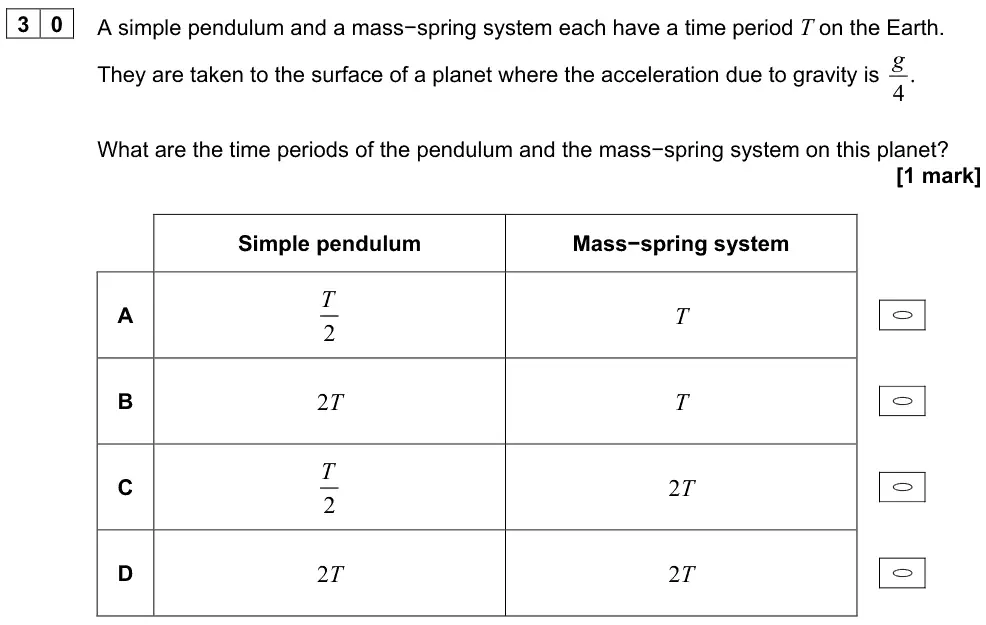
B
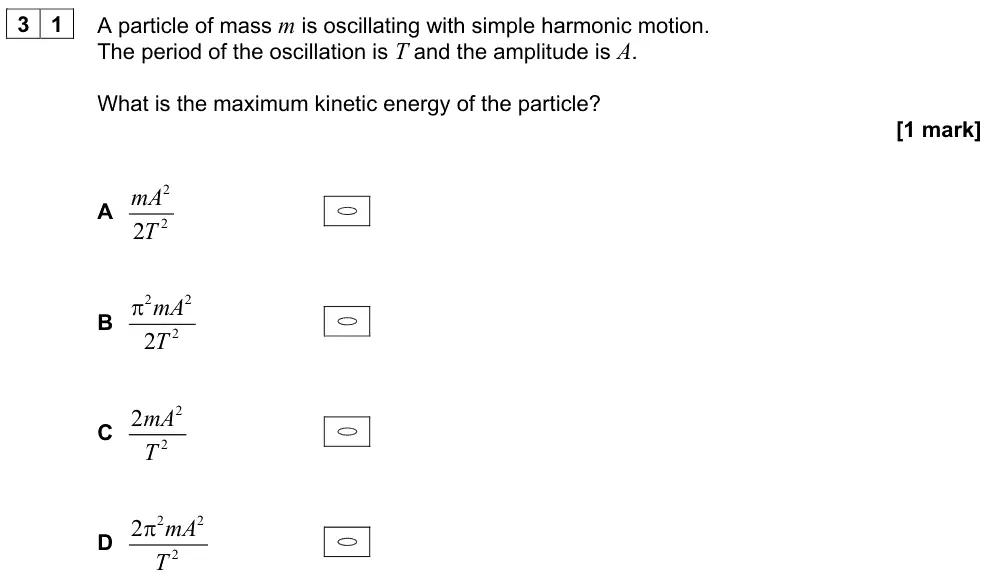
D
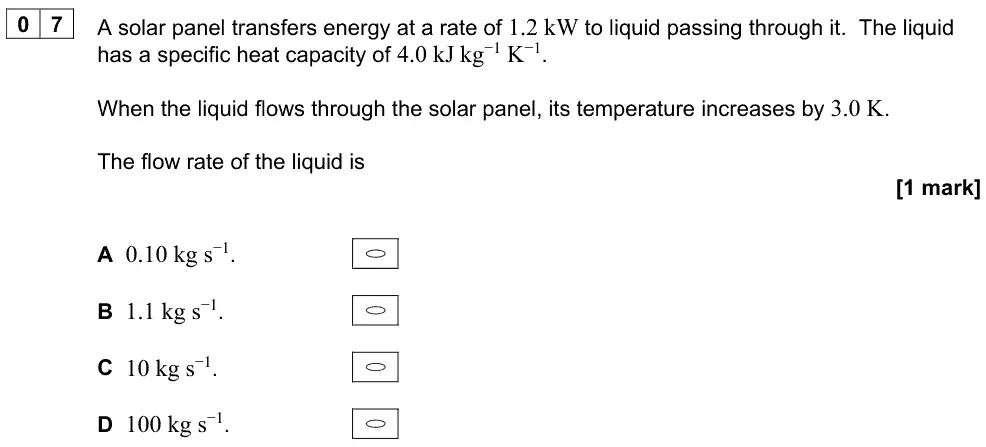
A
Questions 7 – 31 The success rate on almost all the multiple-choice questions was between 25% and 55%. Questions that were noticeably more straightforward than this were B7, B14, B19 and B29. Only questions B22 and B23 proved to be accessible to less than 25% of students.
Skills: MS2.2 Change the subject of an equation, including non-linear equations
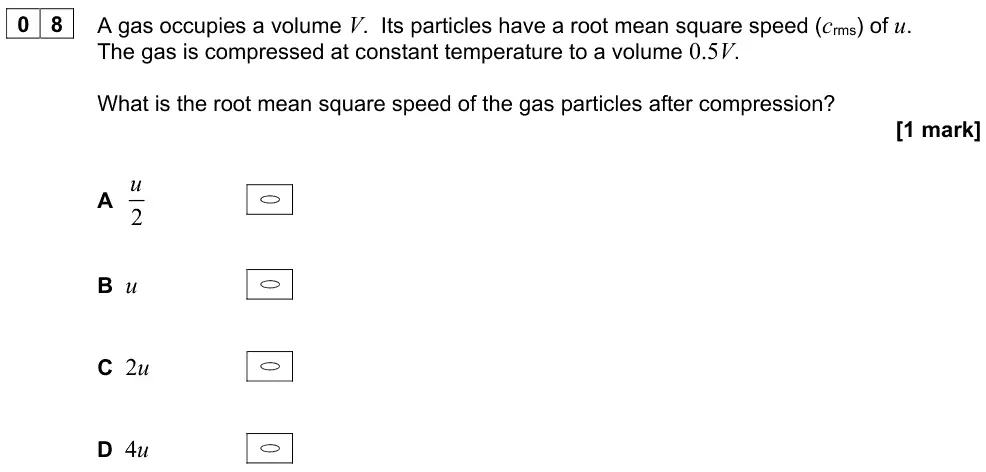
B
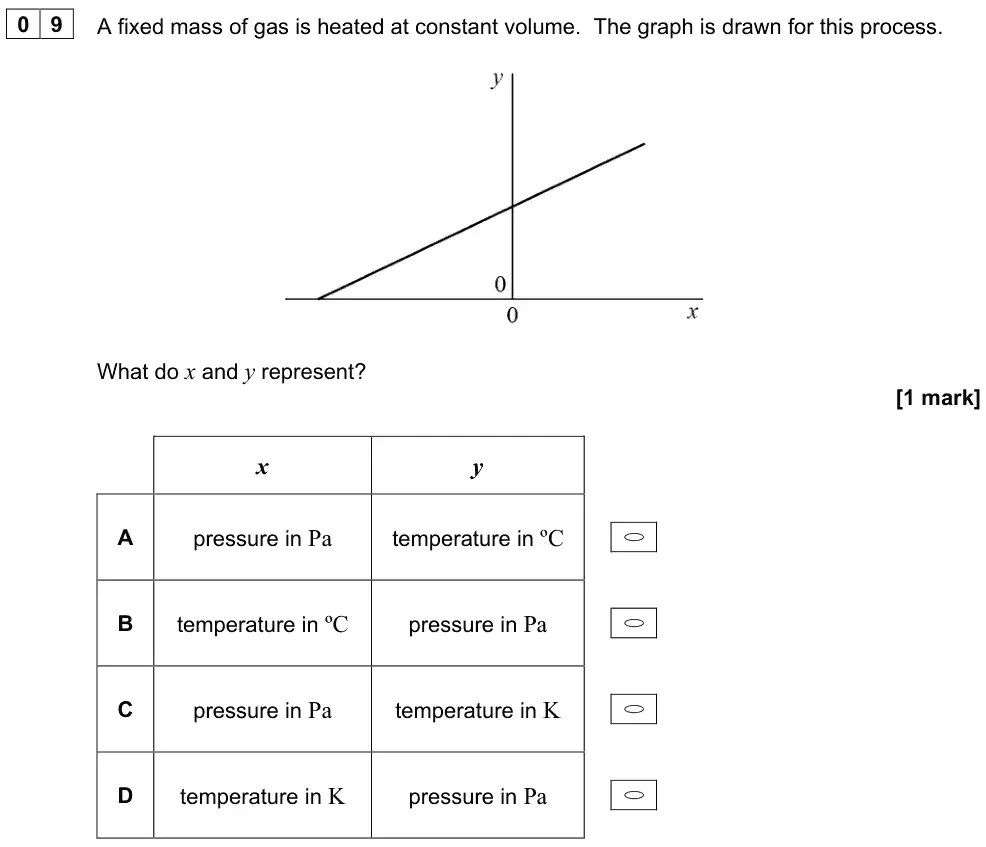
B
Skills: MS3.3 Understand that y = mx + c represents a linear relationship
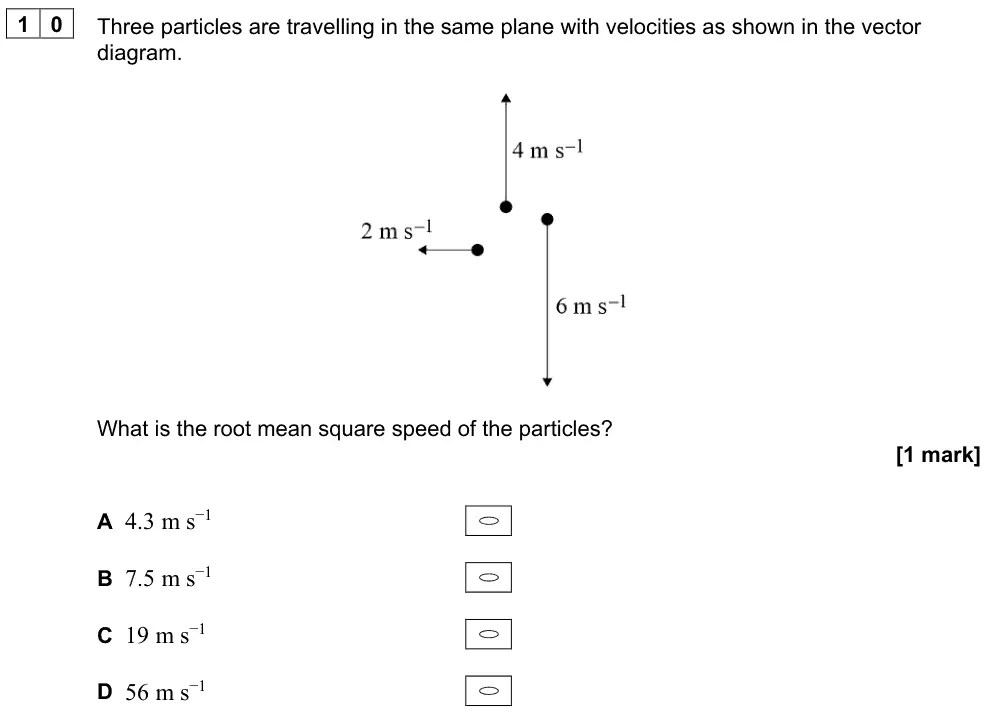
A
Skills: MS1.2 Find arithmetic means
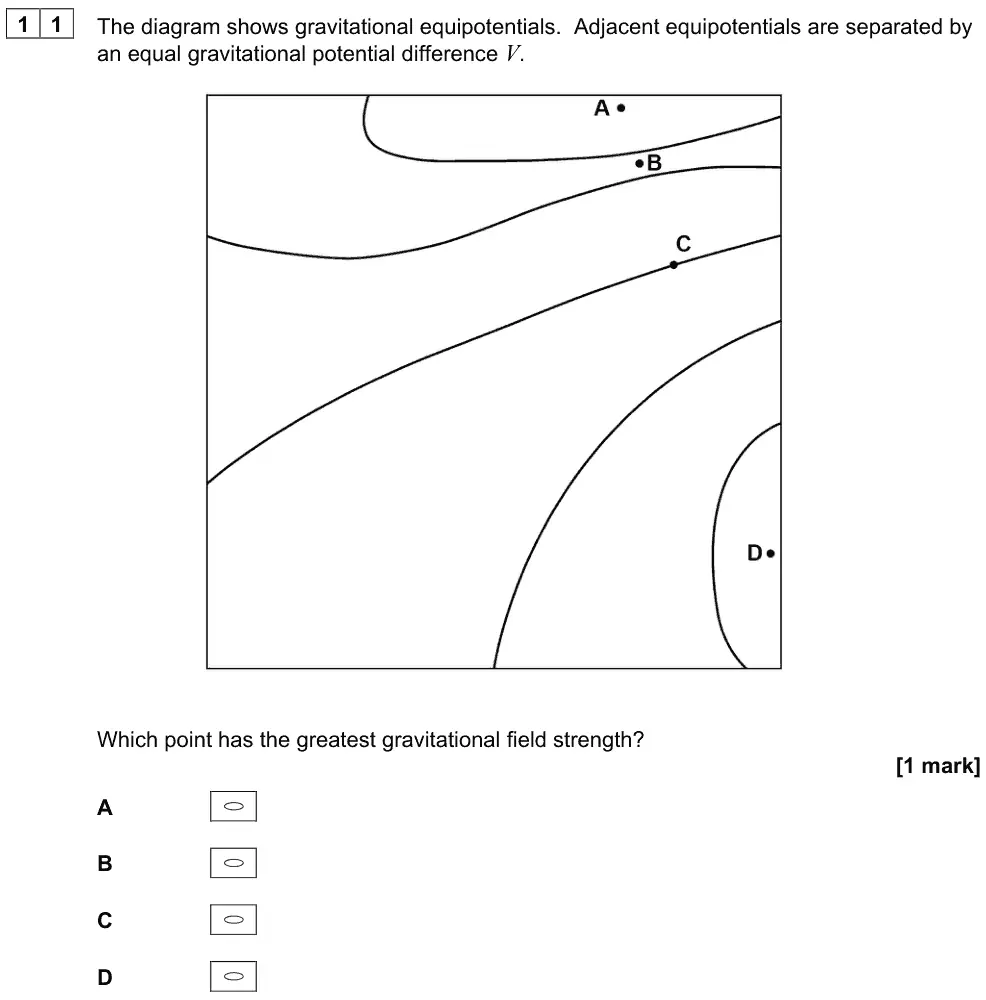
B
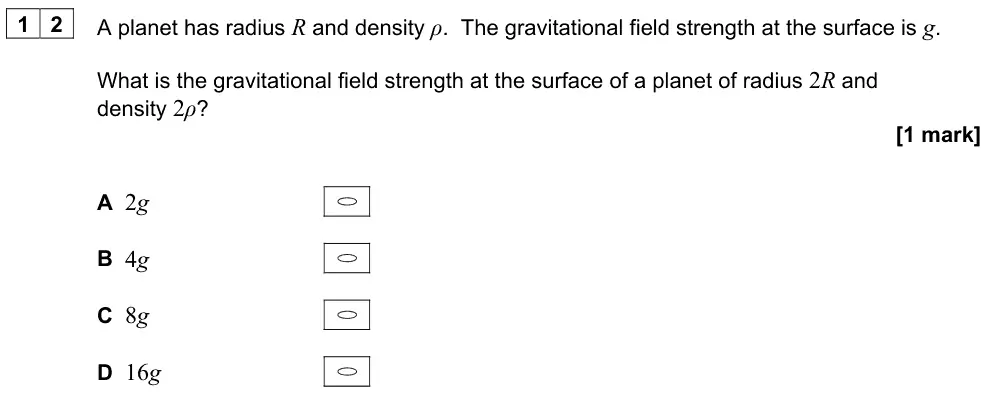
B
Skills: MS0.3 Use ratios, fractions and percentages
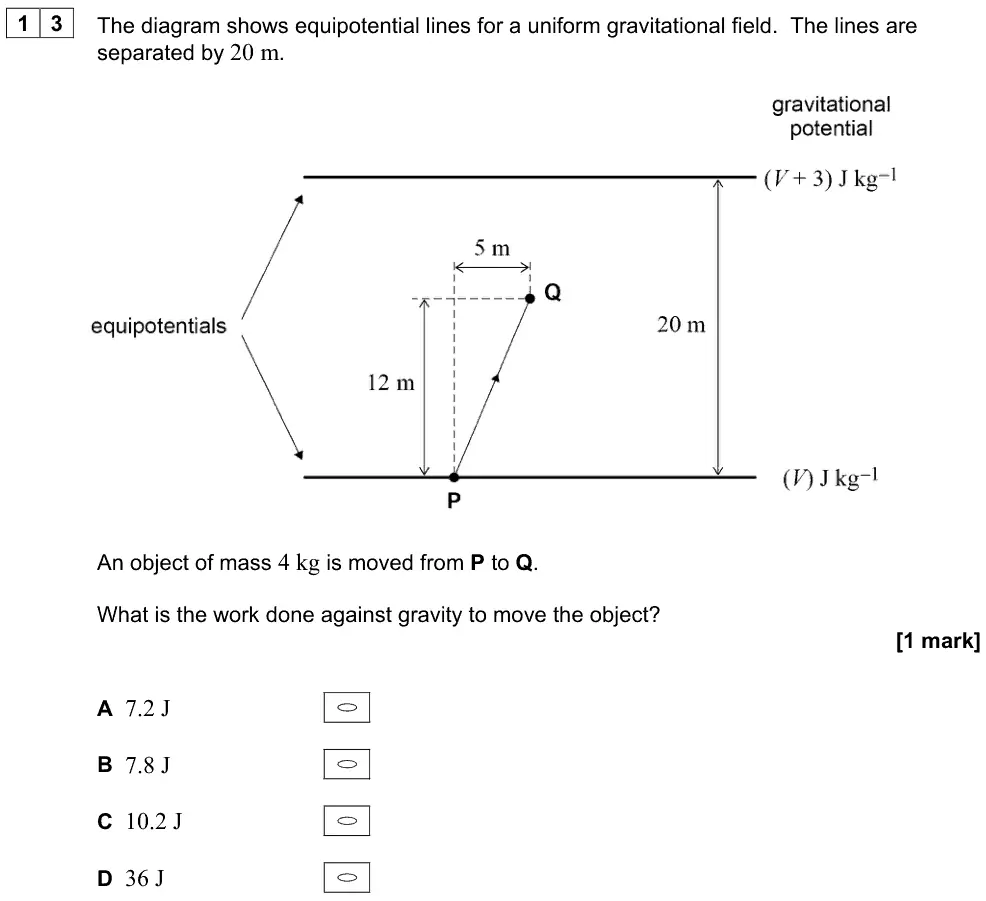
A
Skills: MS0.3 Use ratios, fractions and percentages
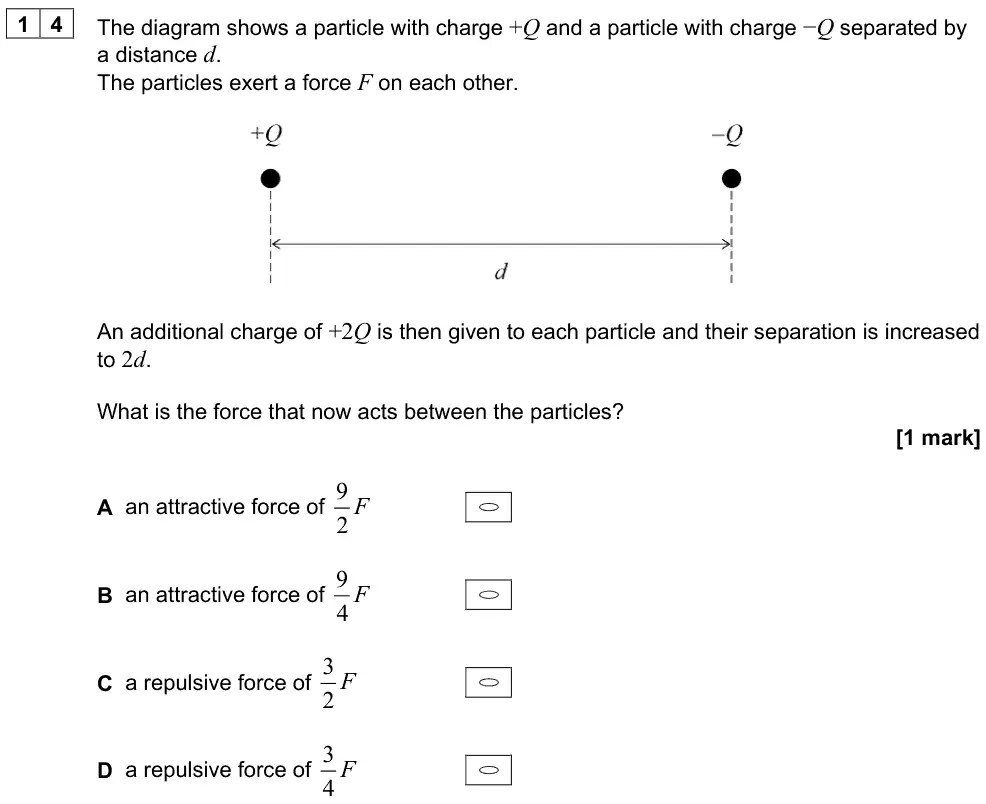
D
Skills: MS0.3 Use ratios, fractions and percentages
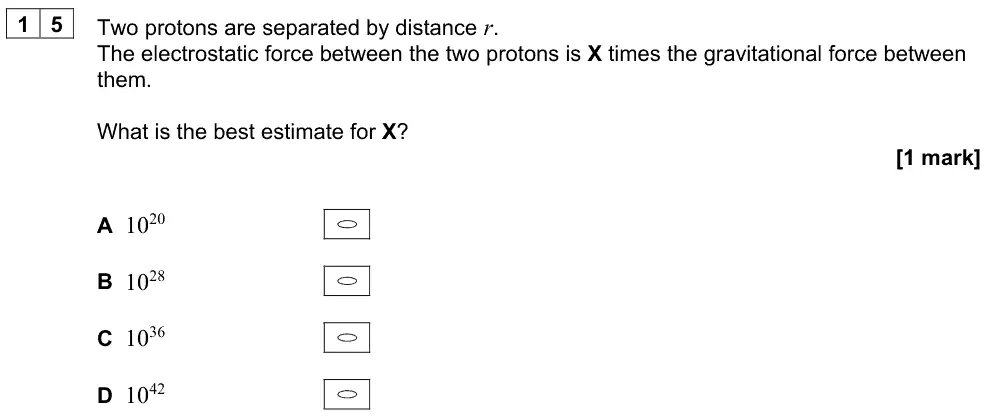
C
Skills: MS1.4 Make order of magnitude calculations
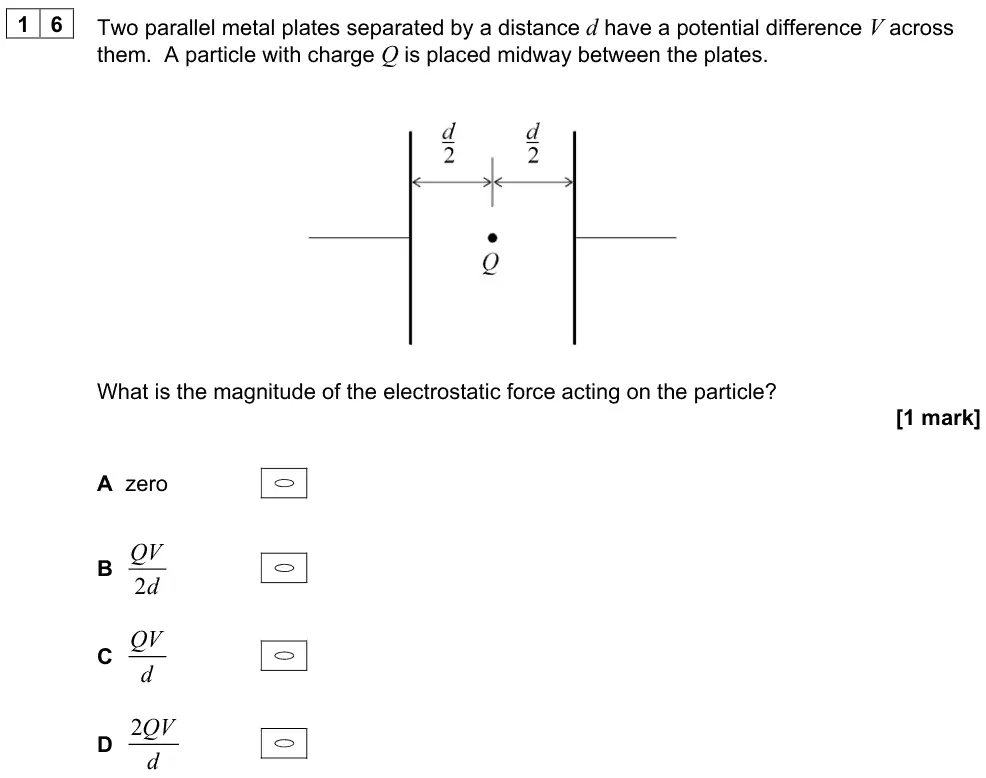
C
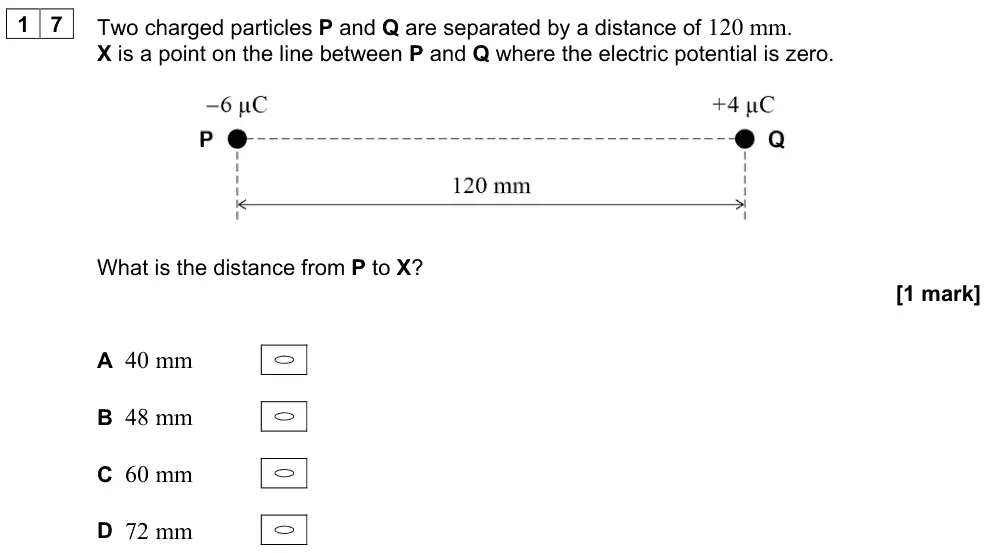
D
Skills: MS2.4 Solve algebraic equations, including quadratic equations
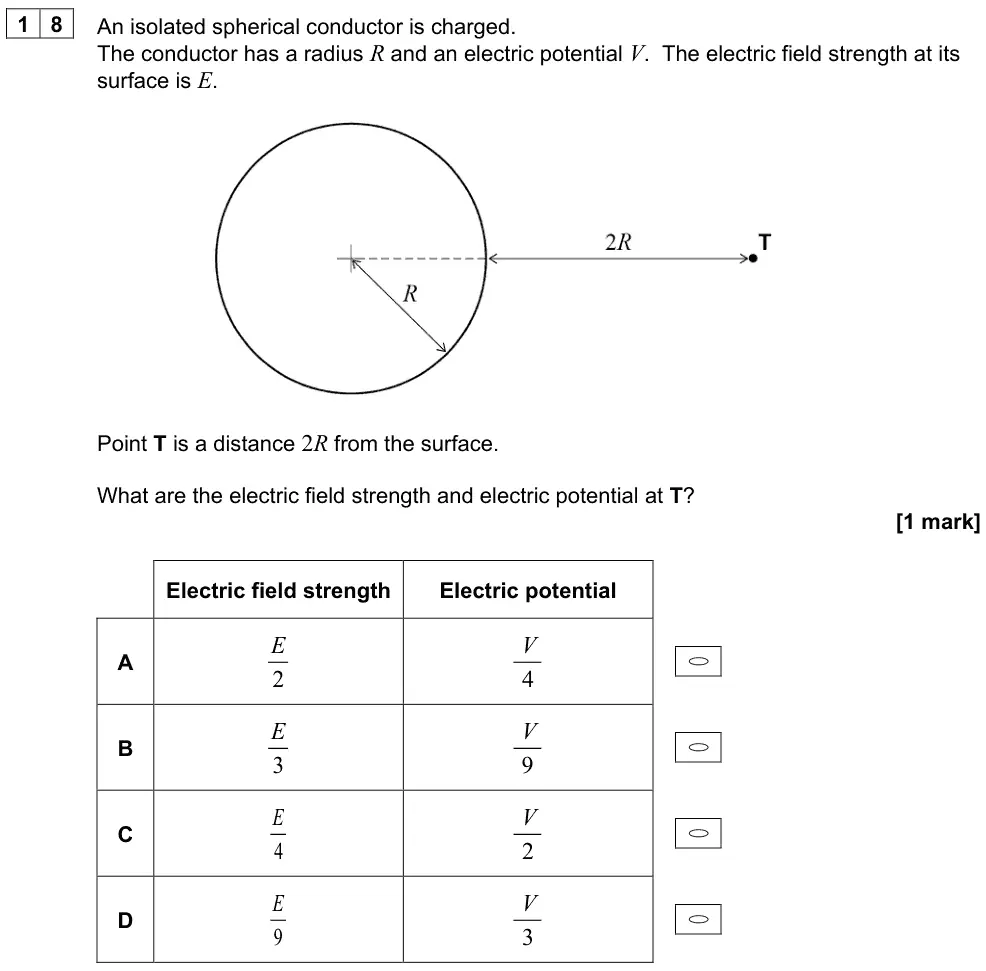
D
Skills: MS0.3 Use ratios, fractions and percentages
C
D
Skills: RP9 Investigation of the charge and discharge of capacitors. Analysis techniques should include log-linear plotting leading to a determination of the time constant, RC
A
A
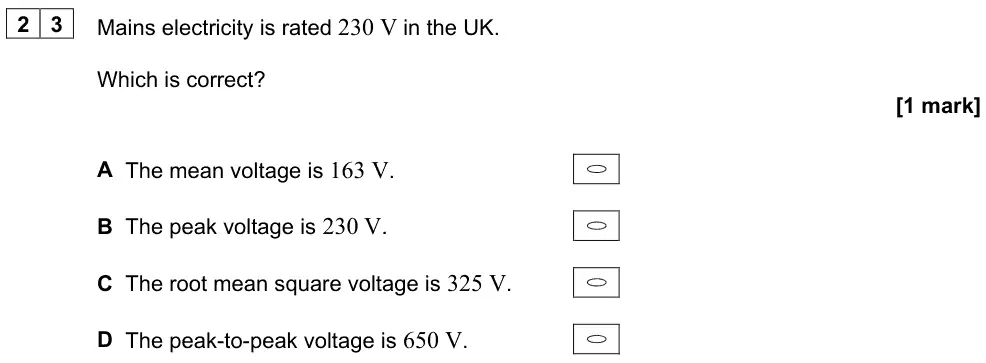
D
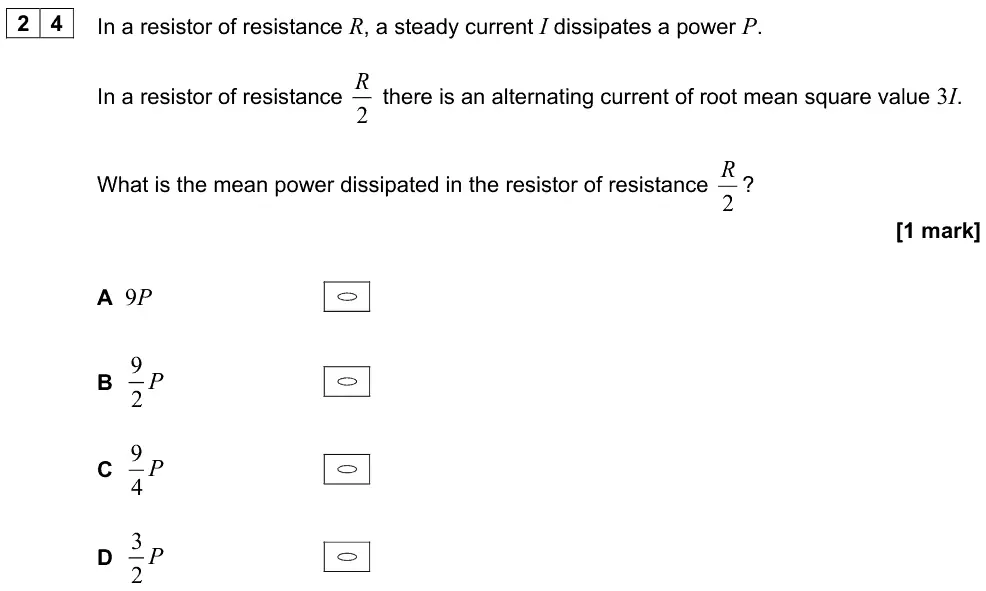
B
Skills: MS0.3 Use ratios, fractions and percentages
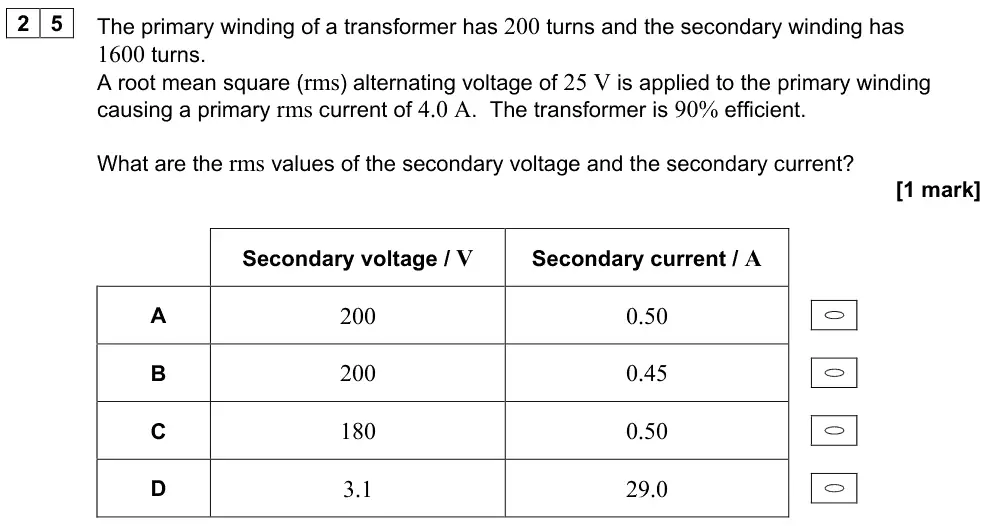
B
Skills: MS0.3 Use ratios, fractions and percentages
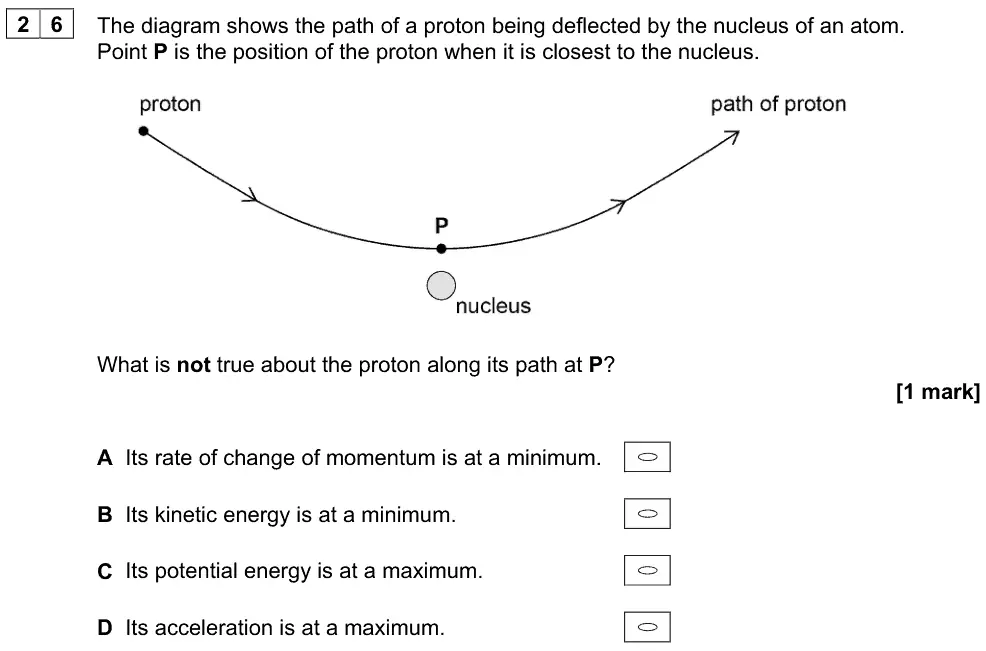
A
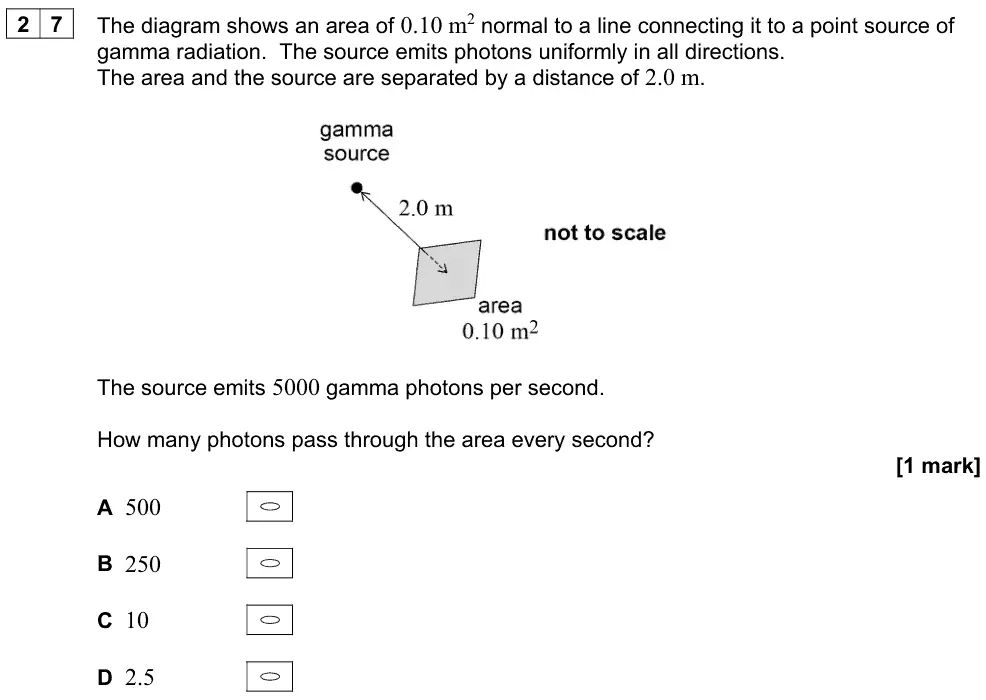
C
Skills: MS4.3 Calculate areas of triangles, circumferences and areas of circles, surface areas and volumes of rectangular blocks, cylinders and spheres; MS0.3 Use ratios, fractions and percentages
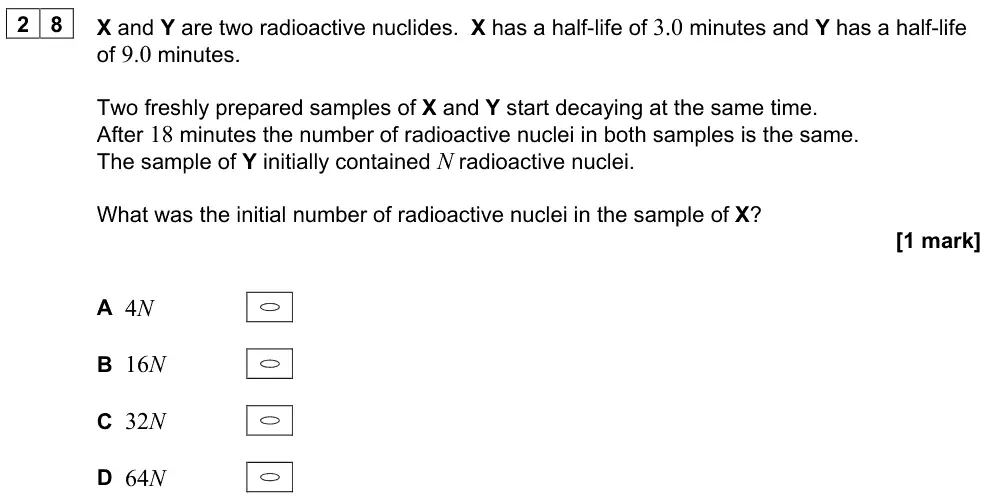
B
Skills: MS0.3 Use ratios, fractions and percentages
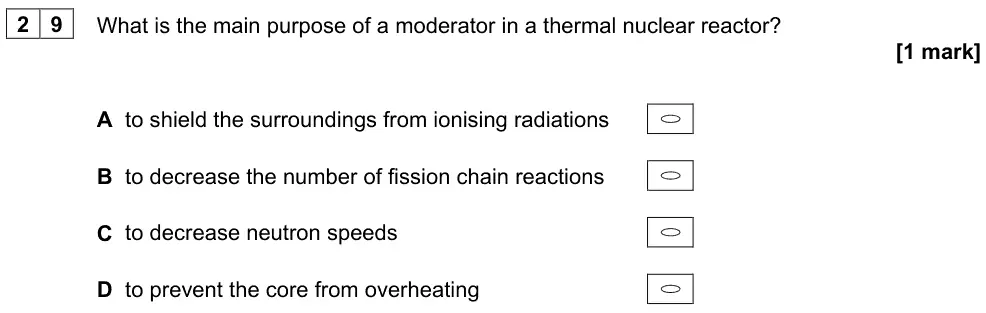
C
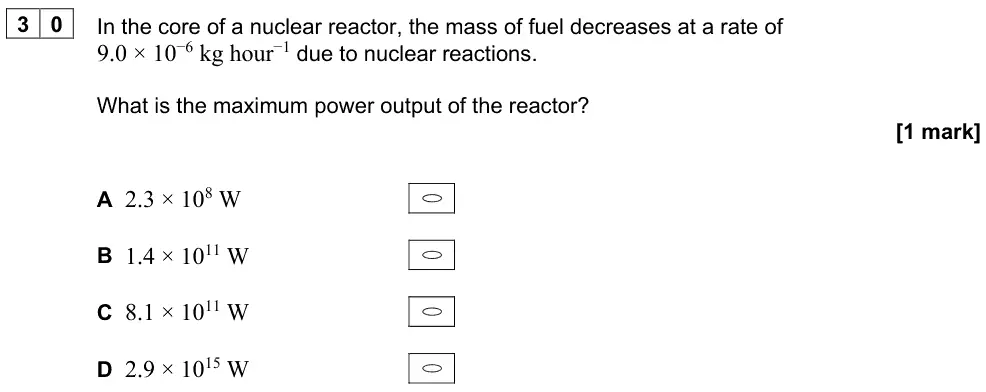
A
Skills: MS0.1 Recognise and make use of appropriate units in calculations; MS2.3 Substitute numerical values into algebraic equations using appropriate units for physical quantities
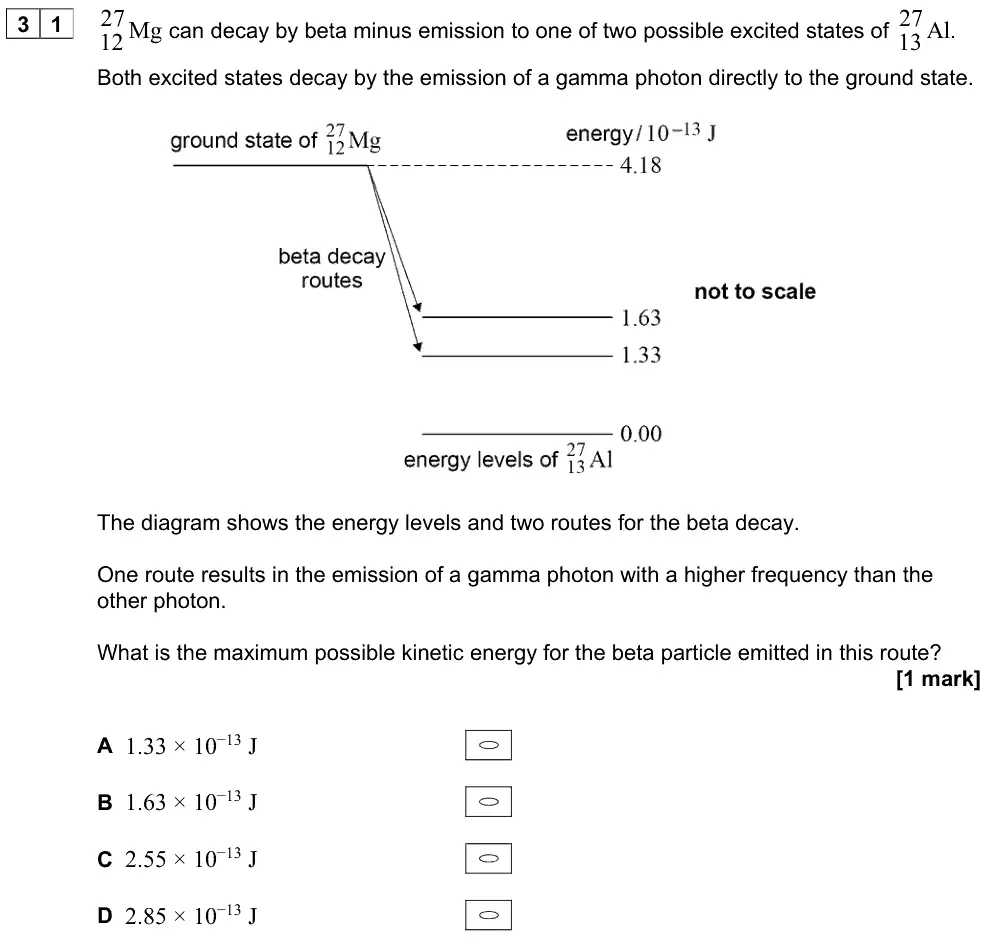
C
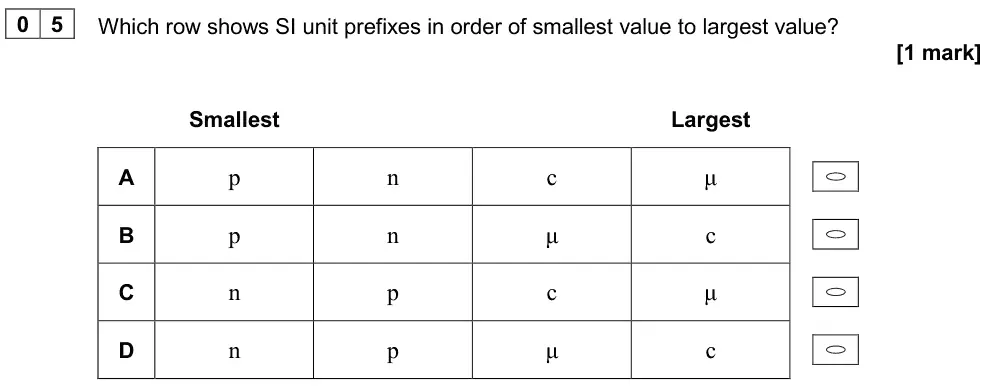
B
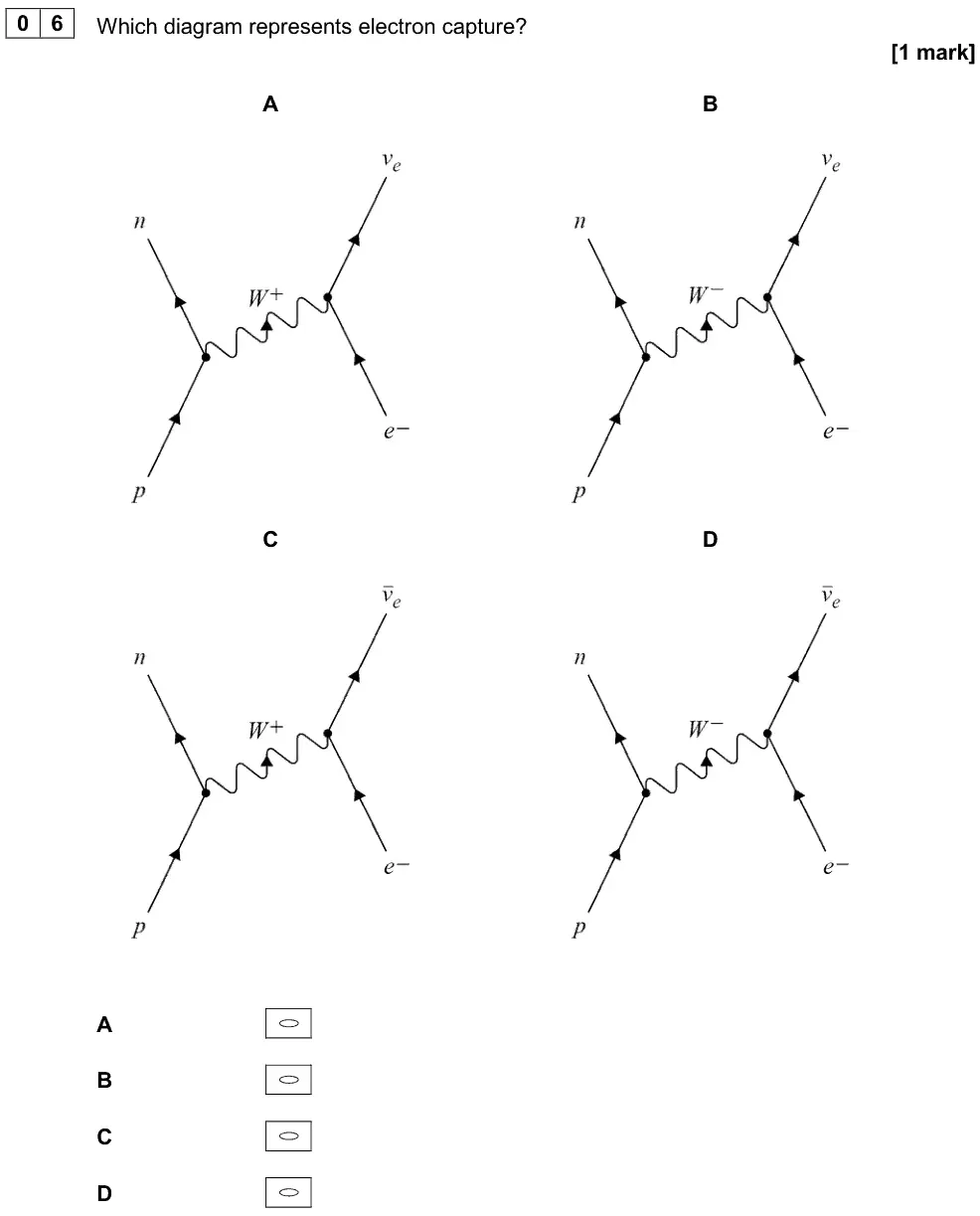
A
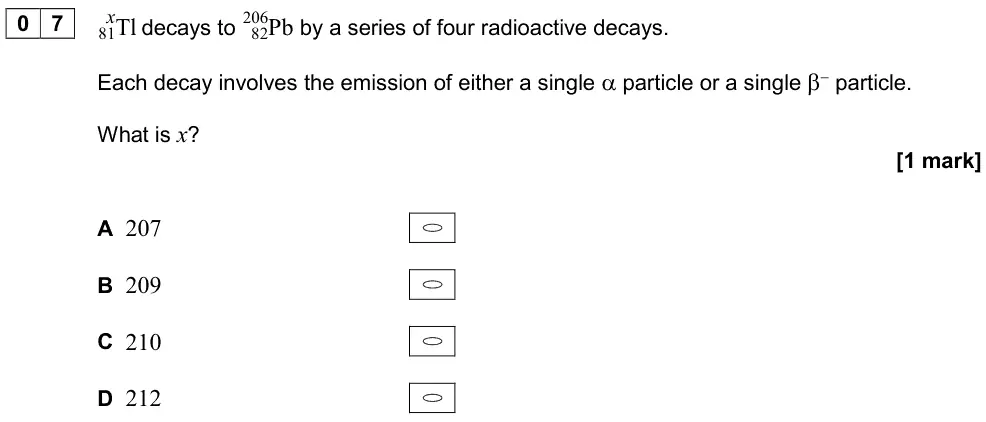
C
Skills: MS2.4 Solve algebraic equations, including quadratic equations
B
D
A
A
Skills: MS0.3 Use ratios, fractions and percentages
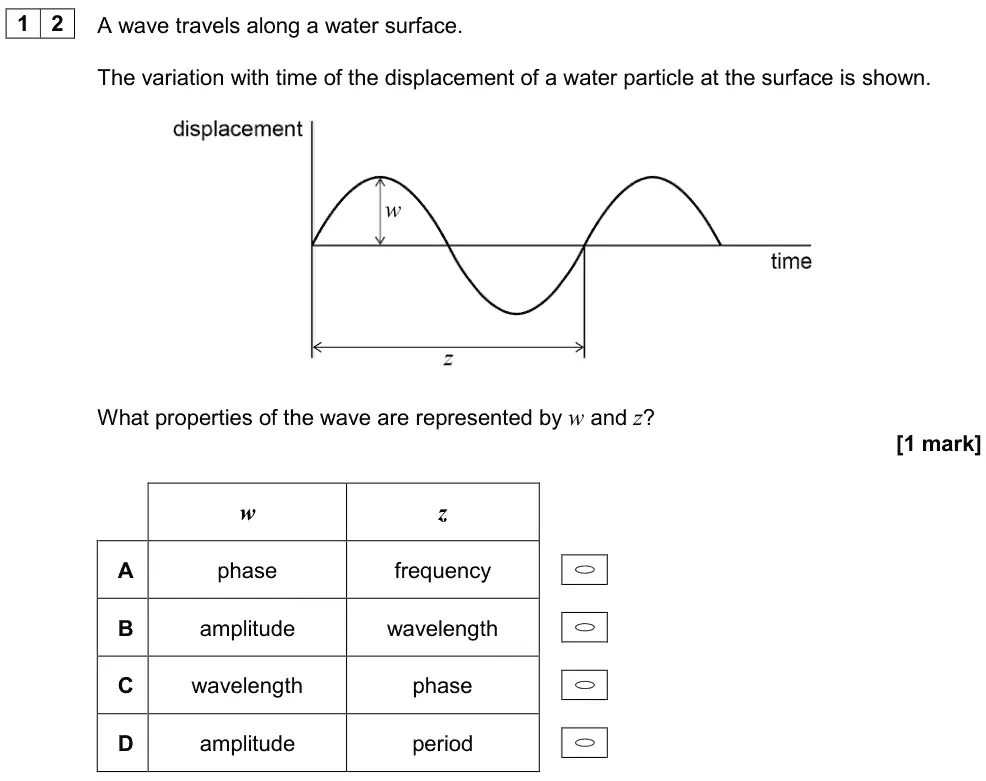
D
Skills: MS3.1 Translate information between graphical, numerical and algebraic forms
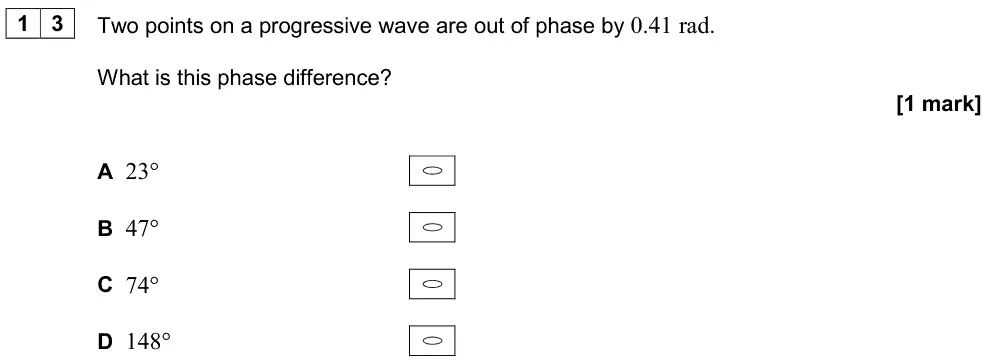
A
Skills: MS4.7 Understand the relationship between degrees and radians and translate from one to the other
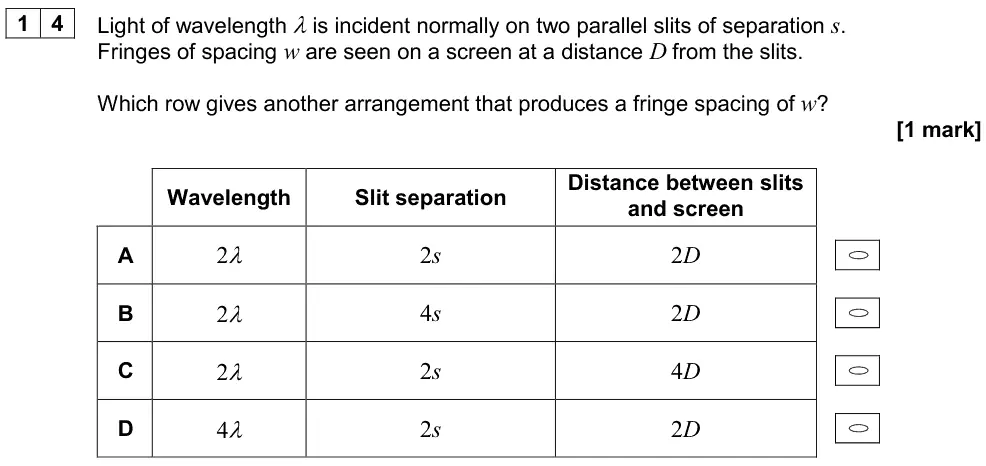
B
Skills: MS0.3 Use ratios, fractions and percentages
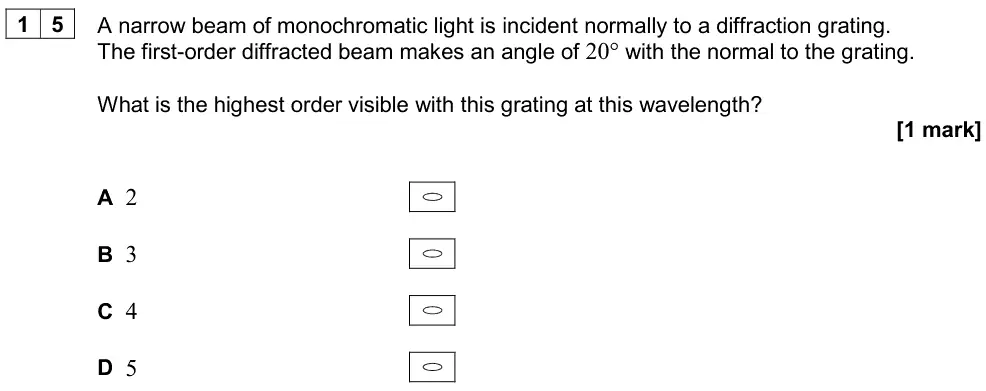
A
Skills: MS0.6 Use calculators to handle sin x, cos x, tan x when x is expressed in degrees or radians
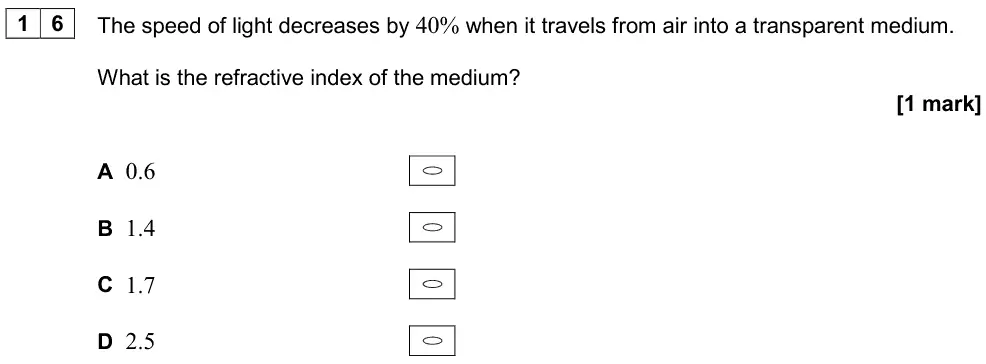
C
Skills: MS0.3 Use ratios, fractions and percentages
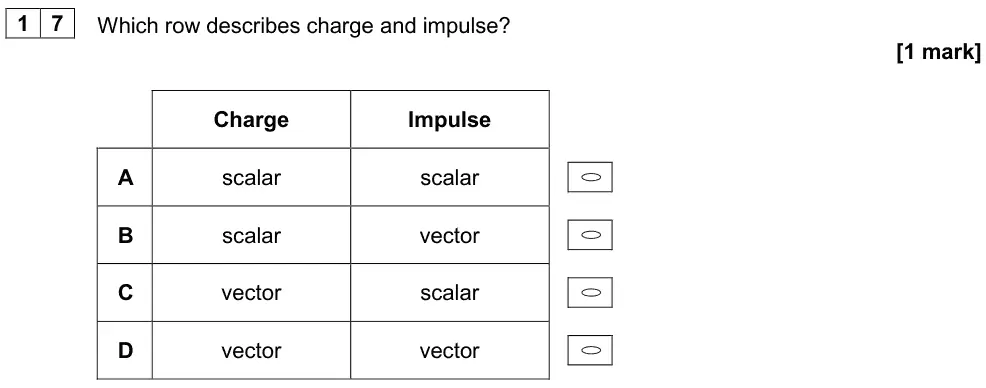
B
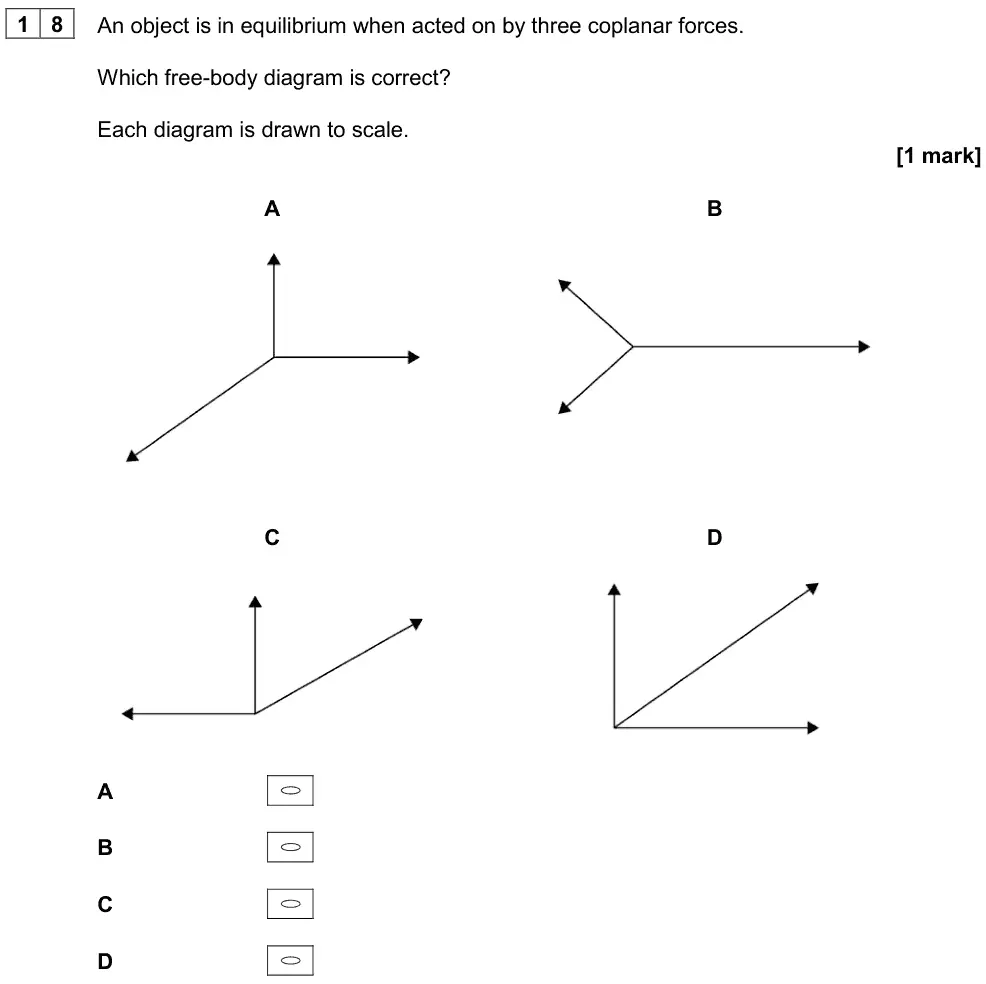
A
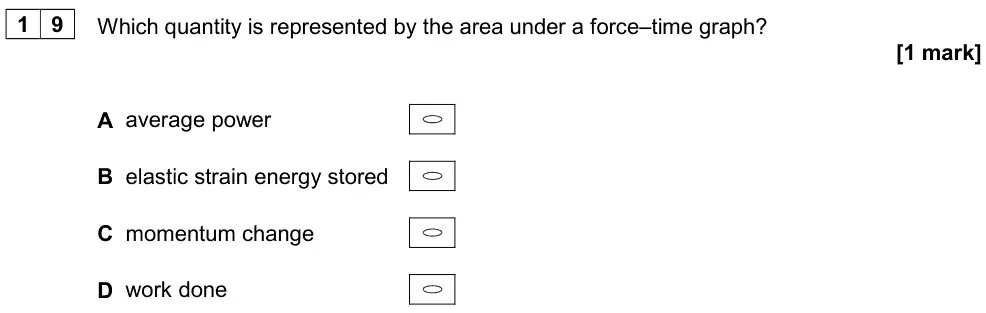
C
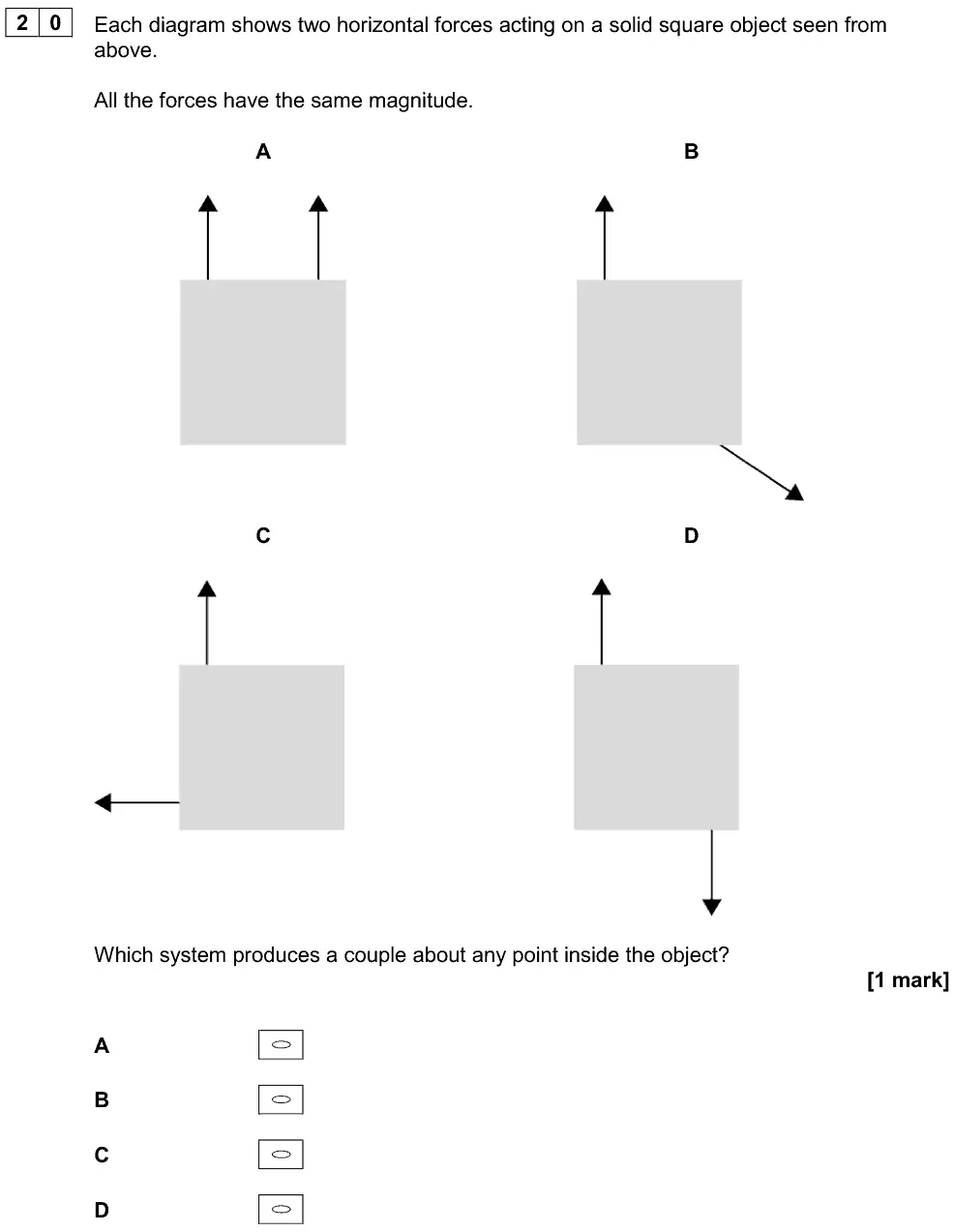
D
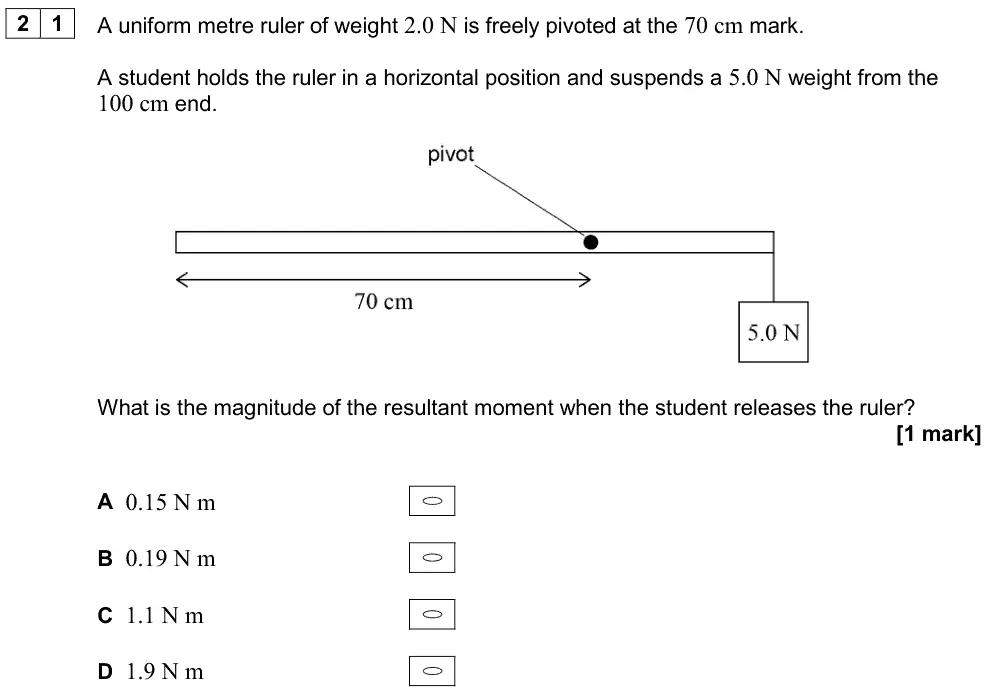
C
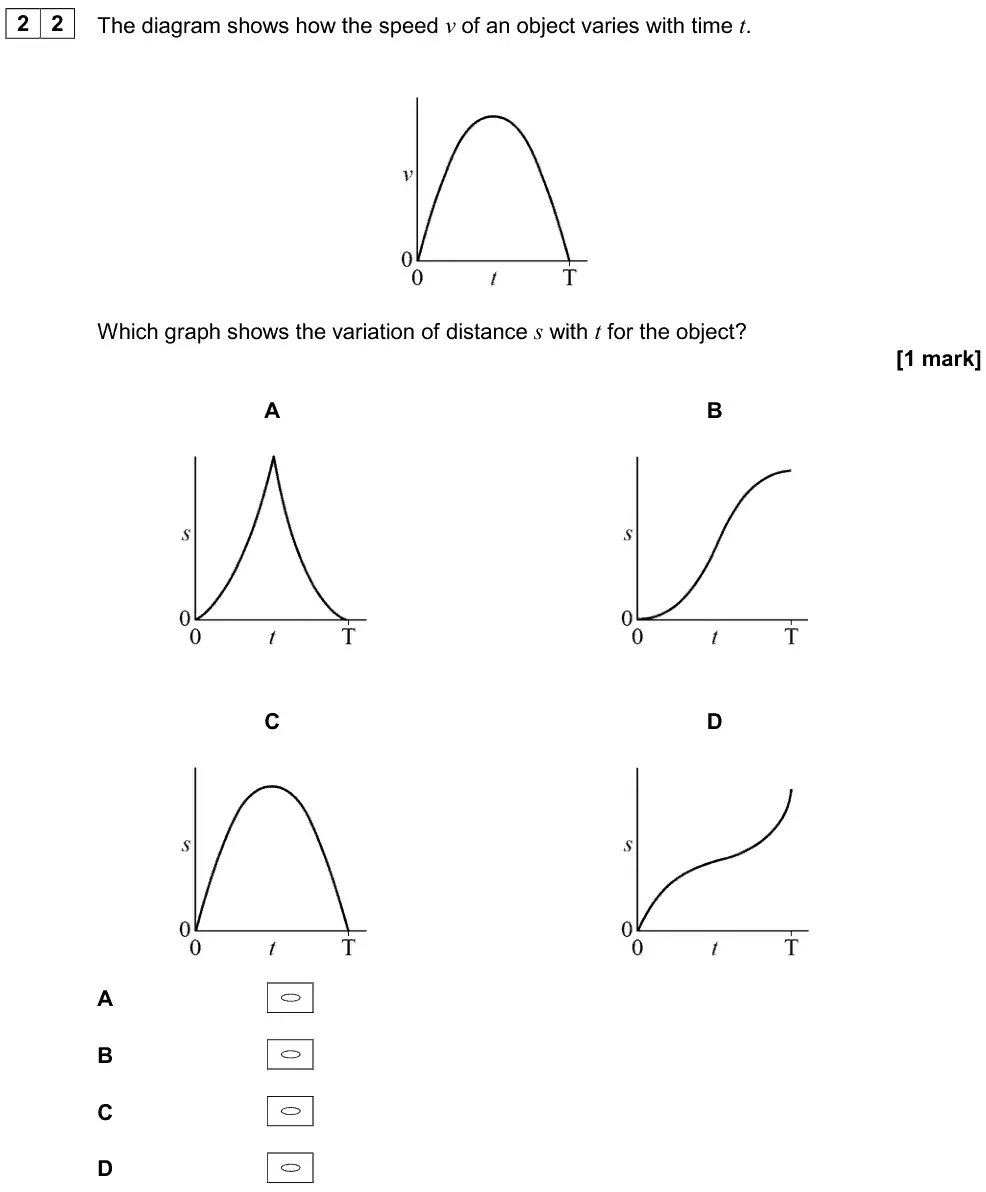
B
Skills: MS3.8 Understand the possible physical significance of the area between a curve and the x axis and be able to calculate it or estimate it by graphical methods as appropriate
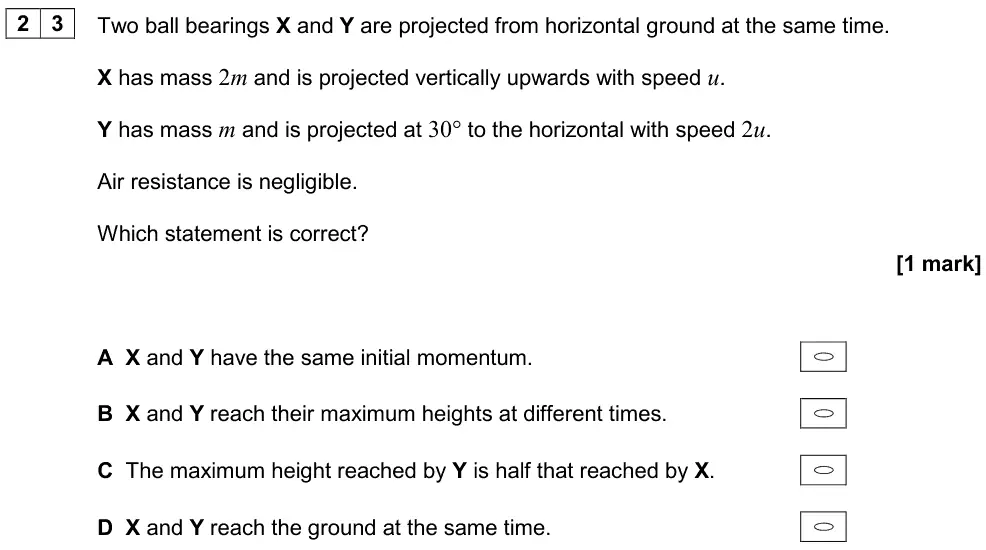
D
Skills: MS4.5 Use sin, cos and tan in physical problems
A
B
Skills: MS2.2 Change the subject of an equation, including non-linear equations
C
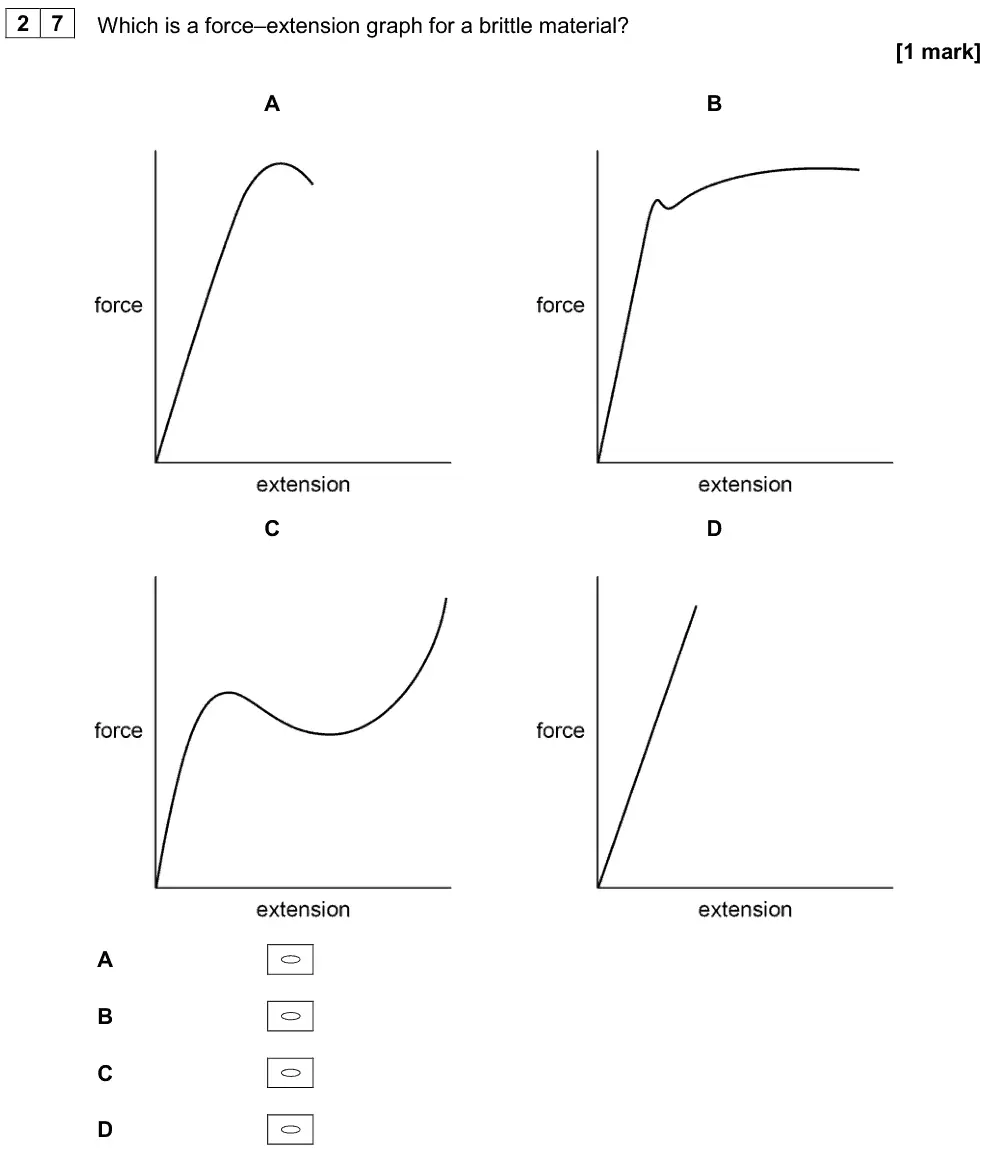
D
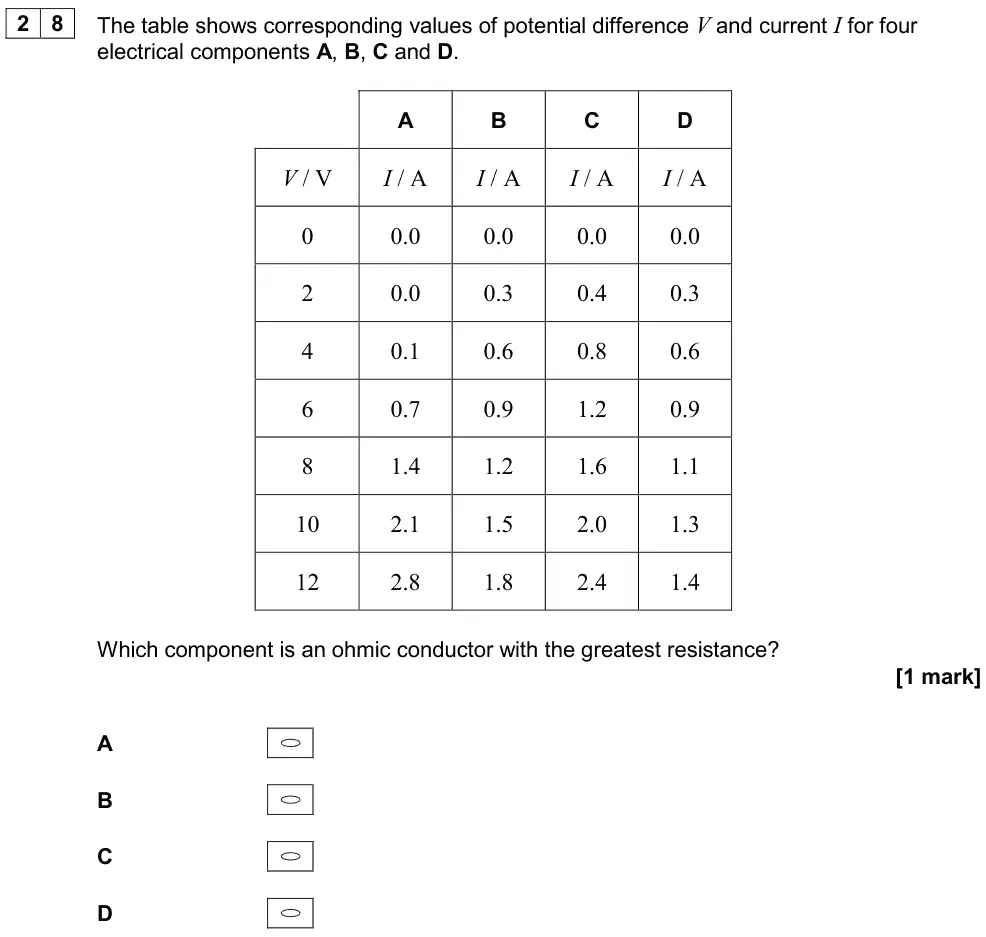
B
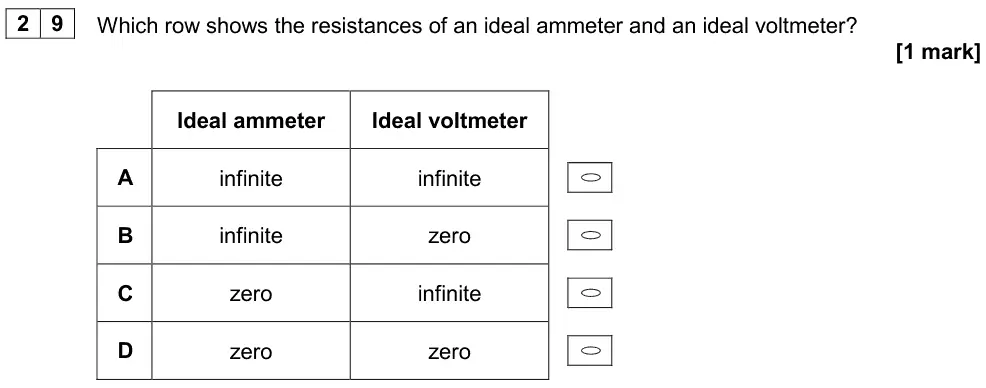
C
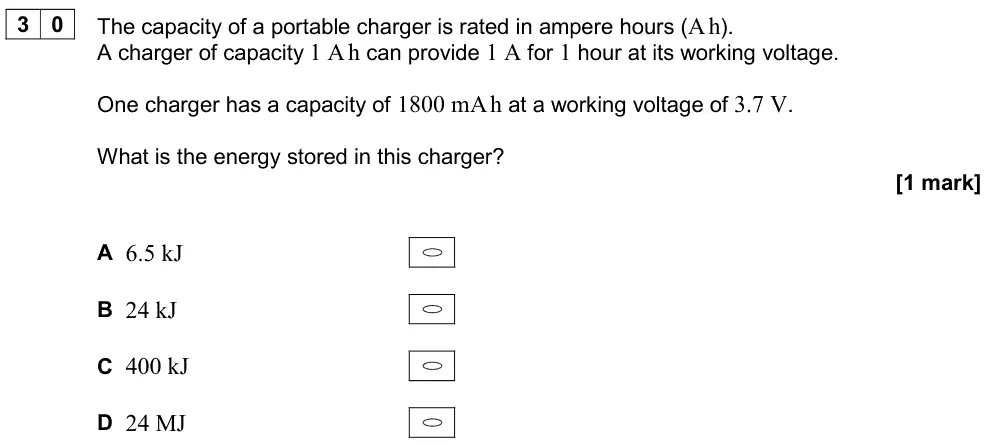
B
Skills: MS0.1 Recognise and make use of appropriate units in calculations
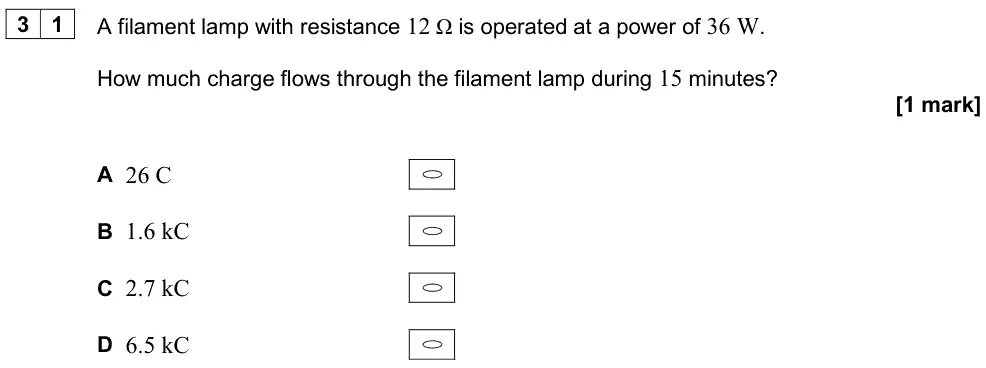
B
Skills: MS0.1 Recognise and make use of appropriate units in calculations
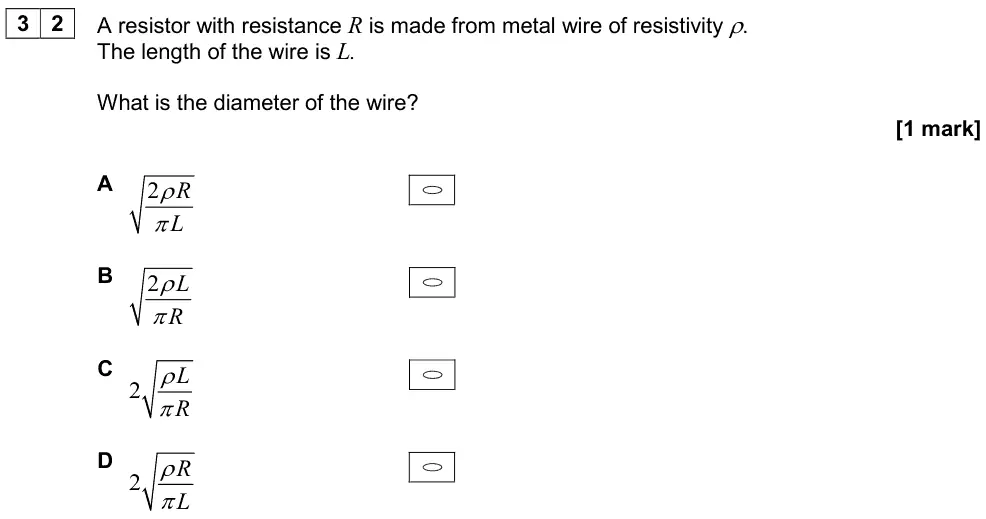
C
Skills: MS2.2 Change the subject of an equation, including non-linear equations; MS4.3 Calculate areas of triangles, circumferences and areas of circles, surface areas and volumes of rectangular blocks, cylinders and spheres
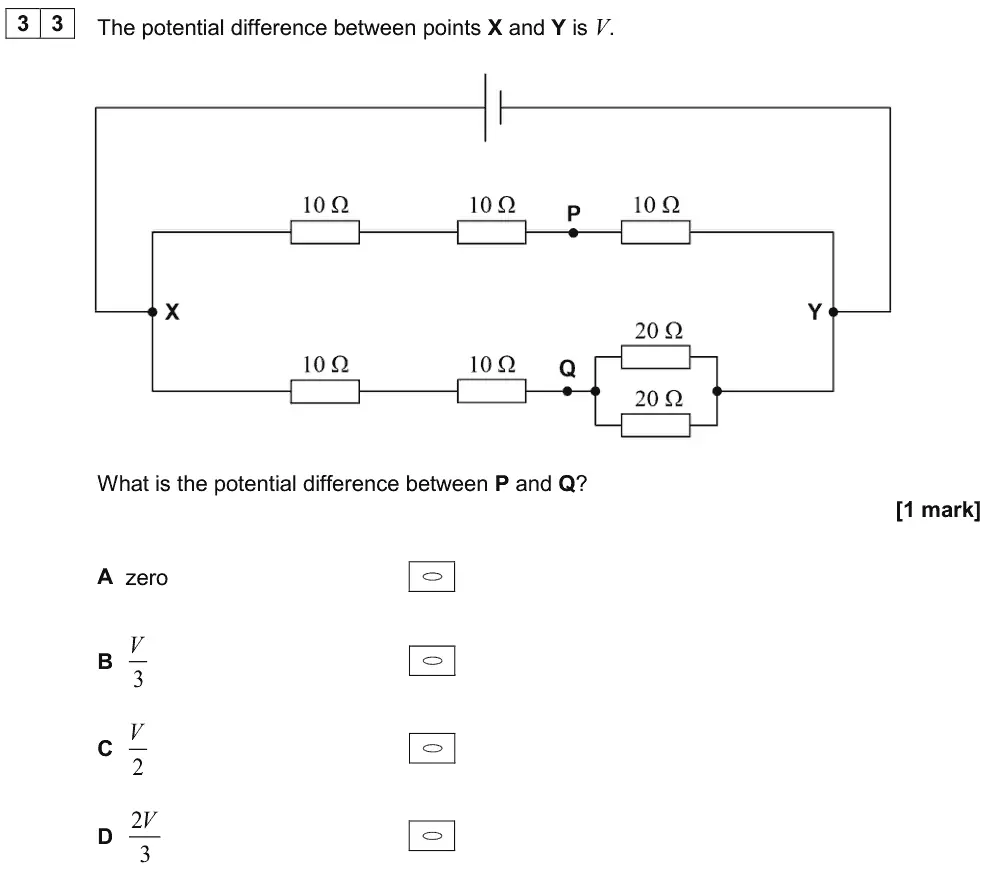
A
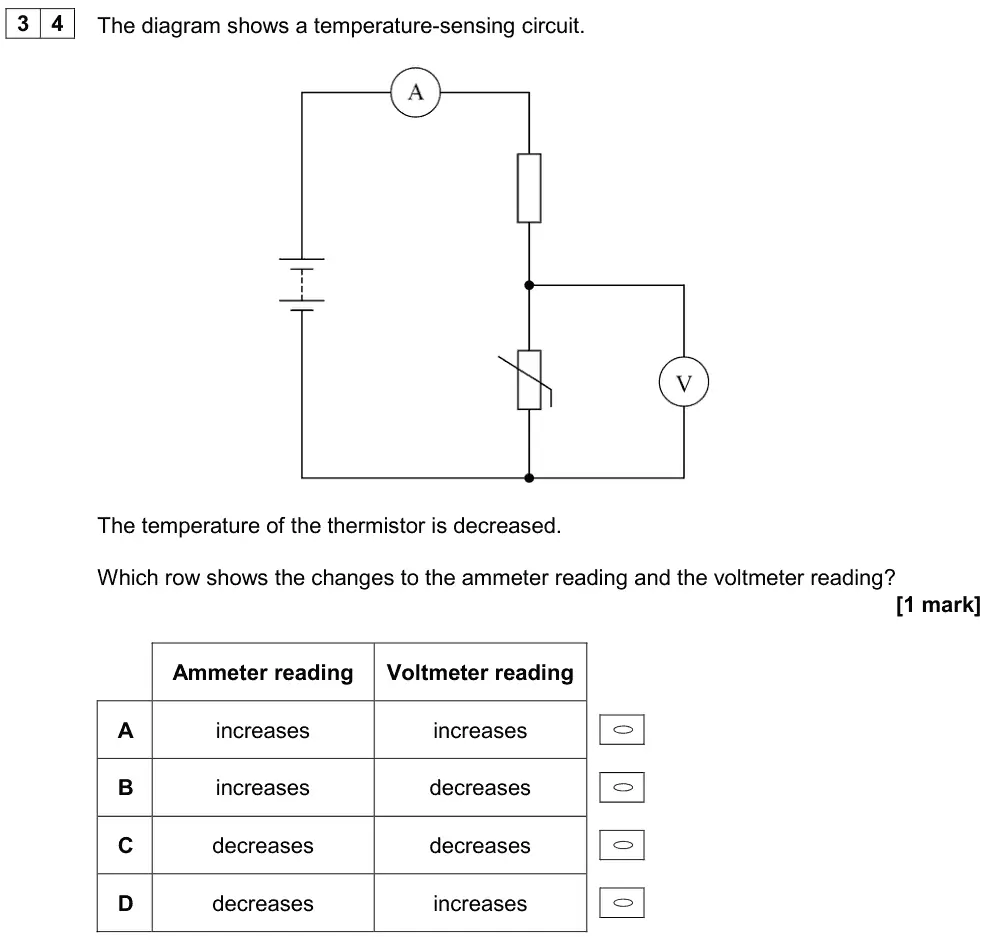
D
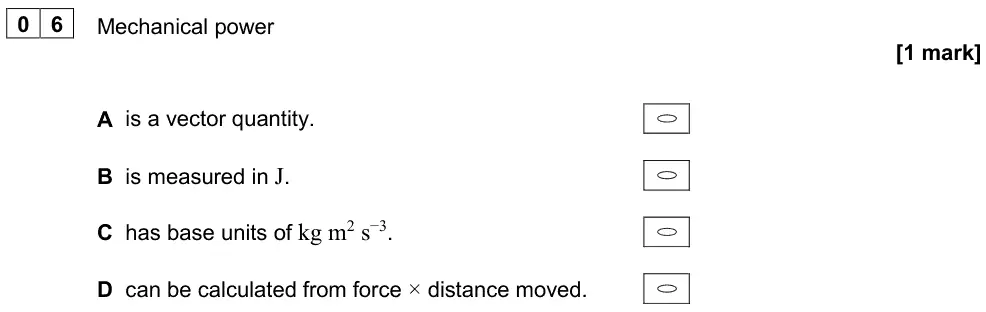
C
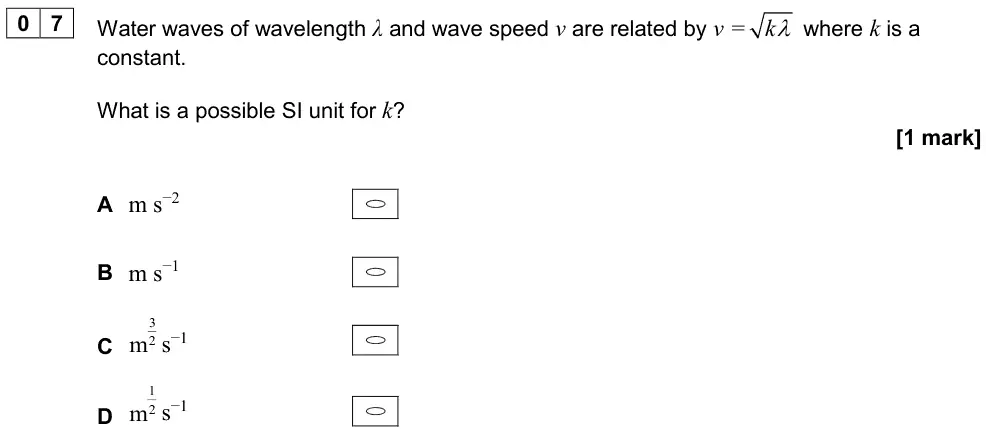
A
Skills: MS2.2 Change the subject of an equation, including non-linear equations
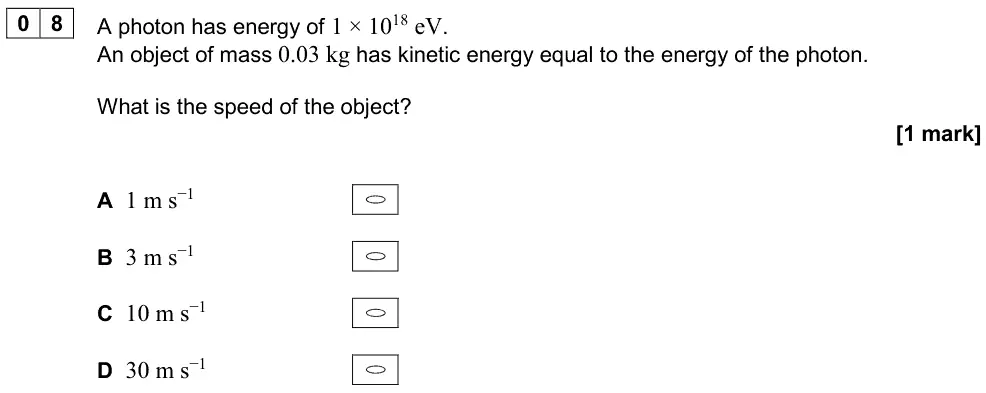
B
Skills: MS0.2 Recognise and use expressions in decimal and standard form; MS2.2 Change the subject of an equation, including non-linear equations
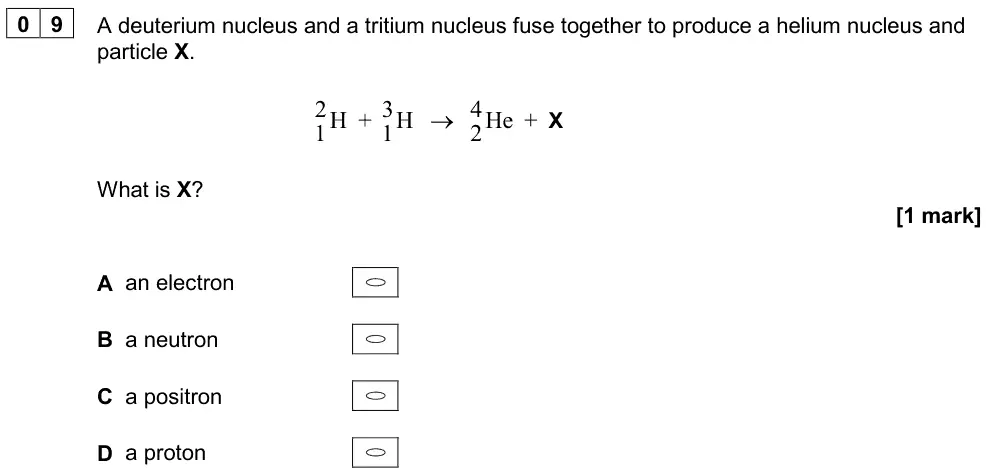
B
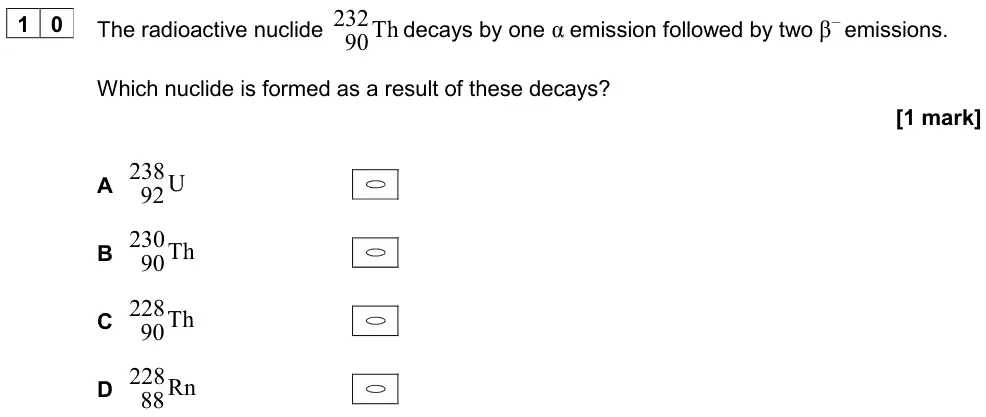
C
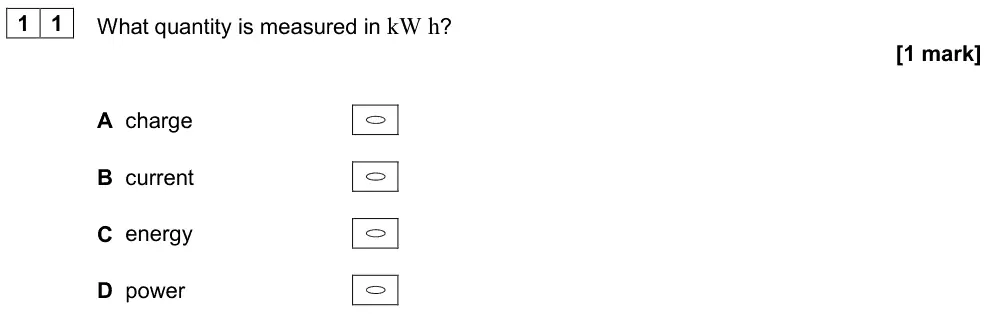
C
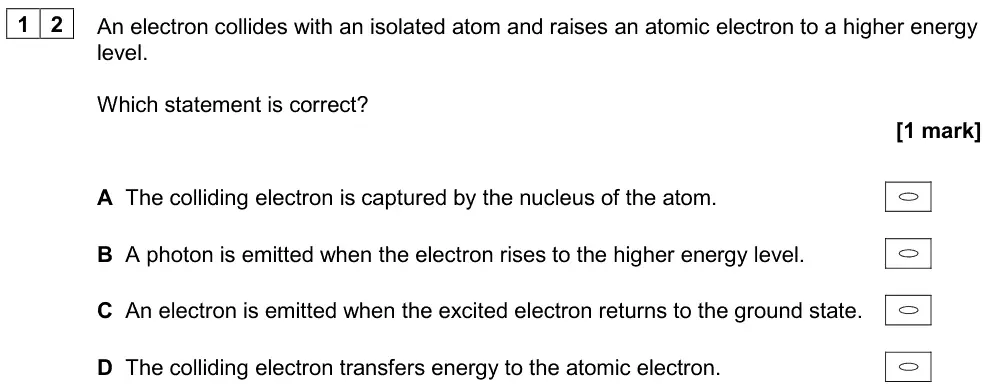
D
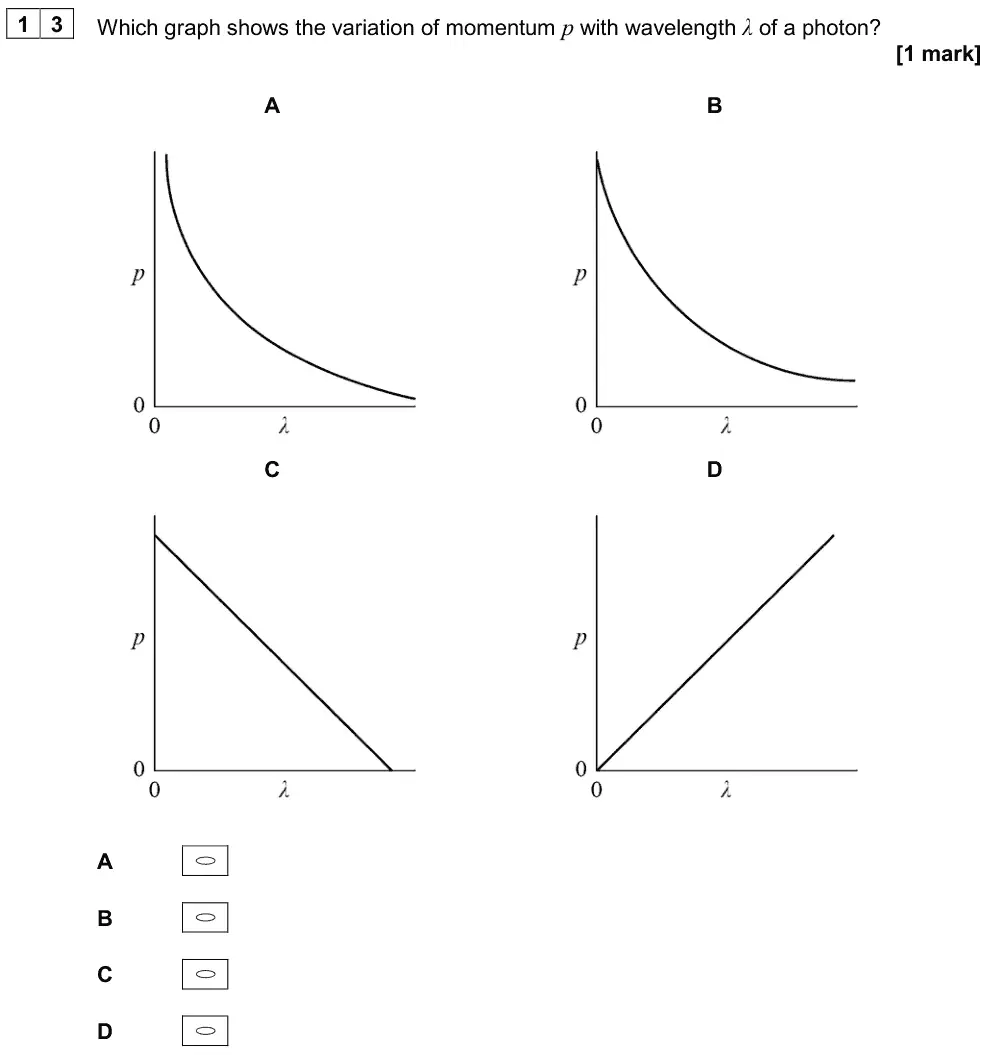
A
Skills: MS3.1 Translate information between graphical, numerical and algebraic forms
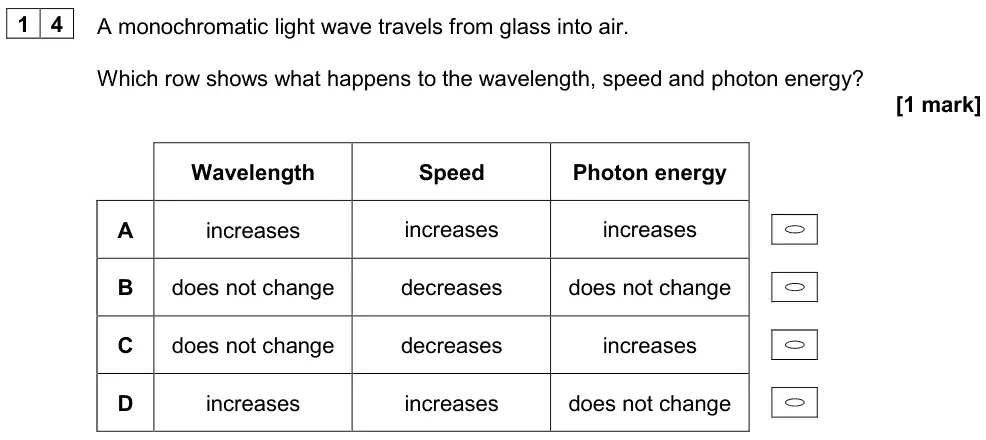
D
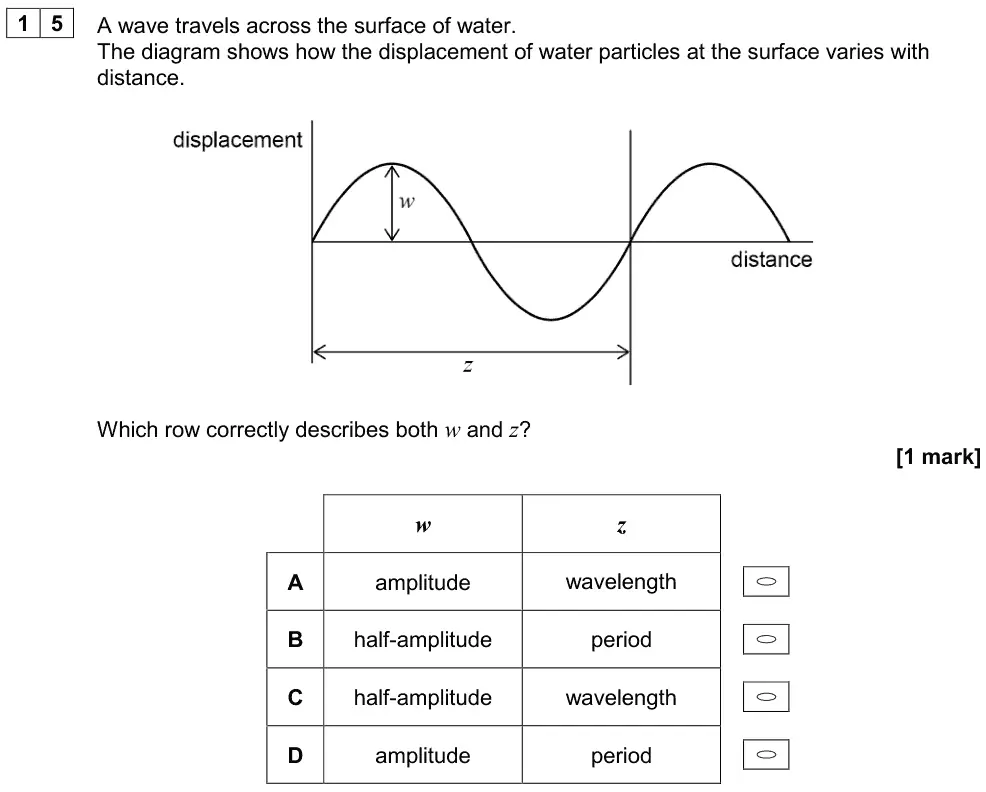
A
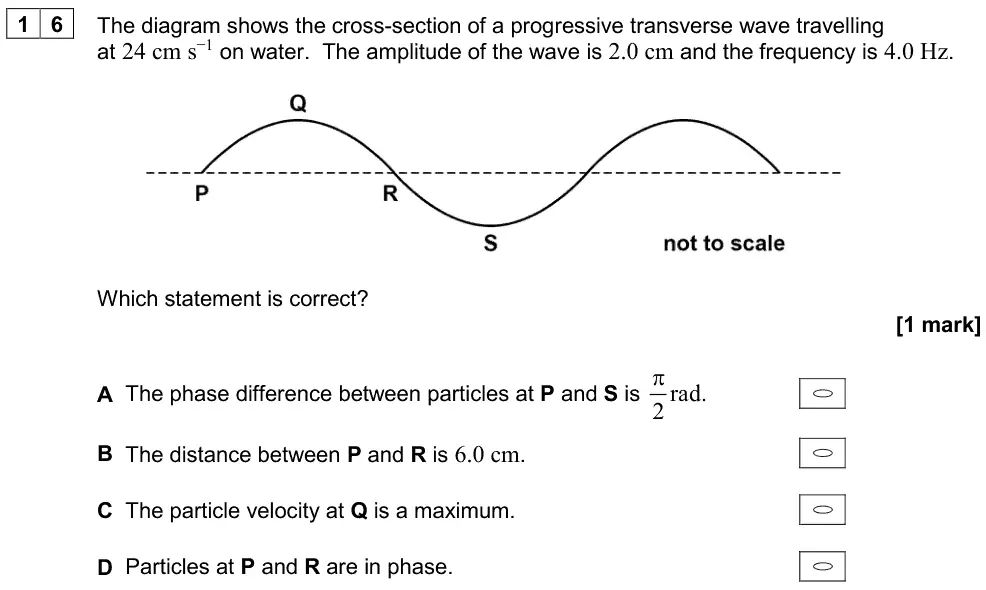
A
Skills: MS2.3 Substitute numerical values into algebraic equations using appropriate units for physical quantities
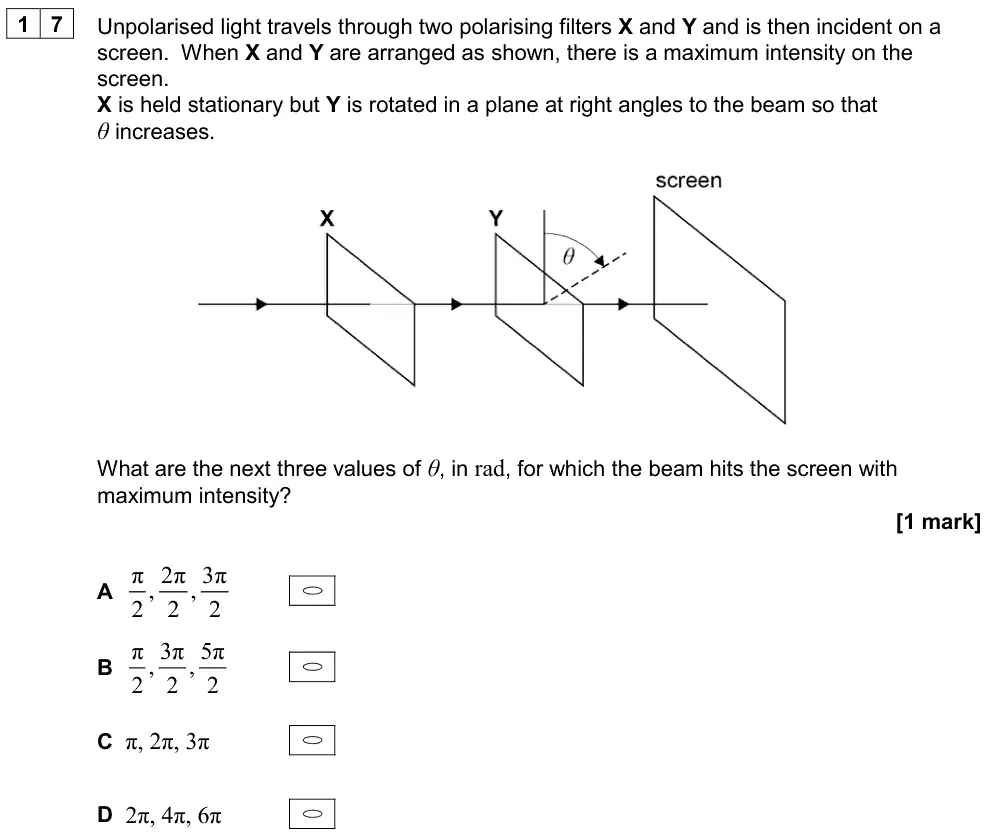
C
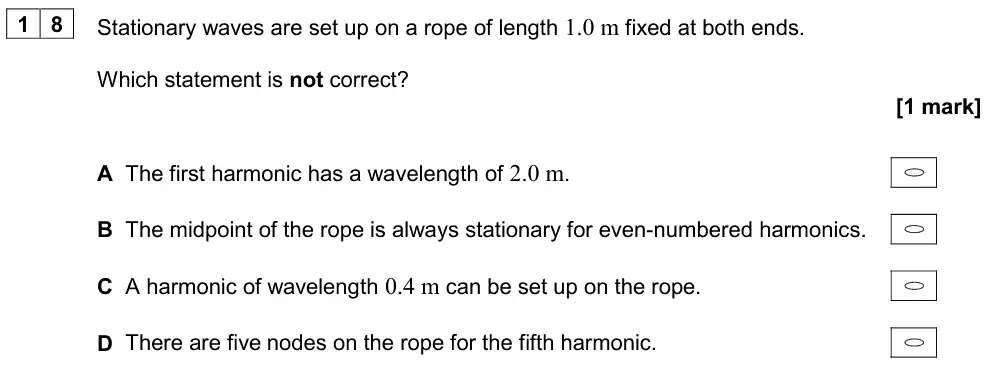
D
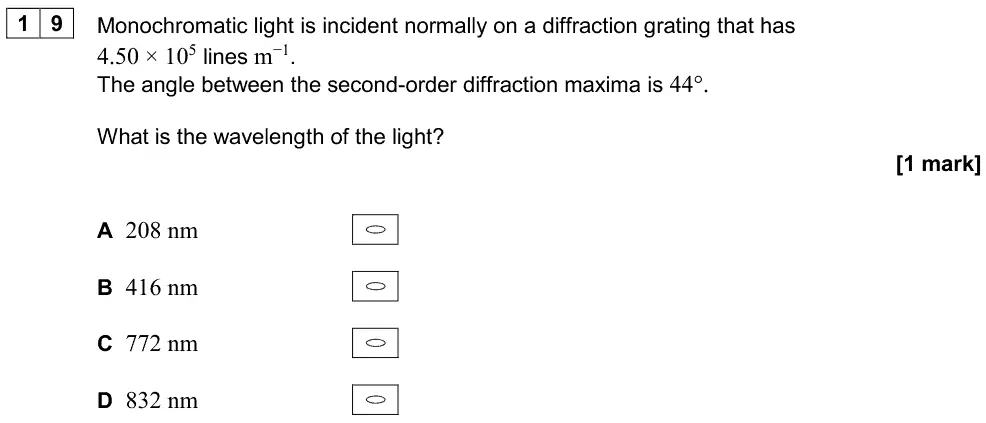
B
Skills: MS0.6 Use calculators to handle sin x, cos x, tan x when x is expressed in degrees or radians
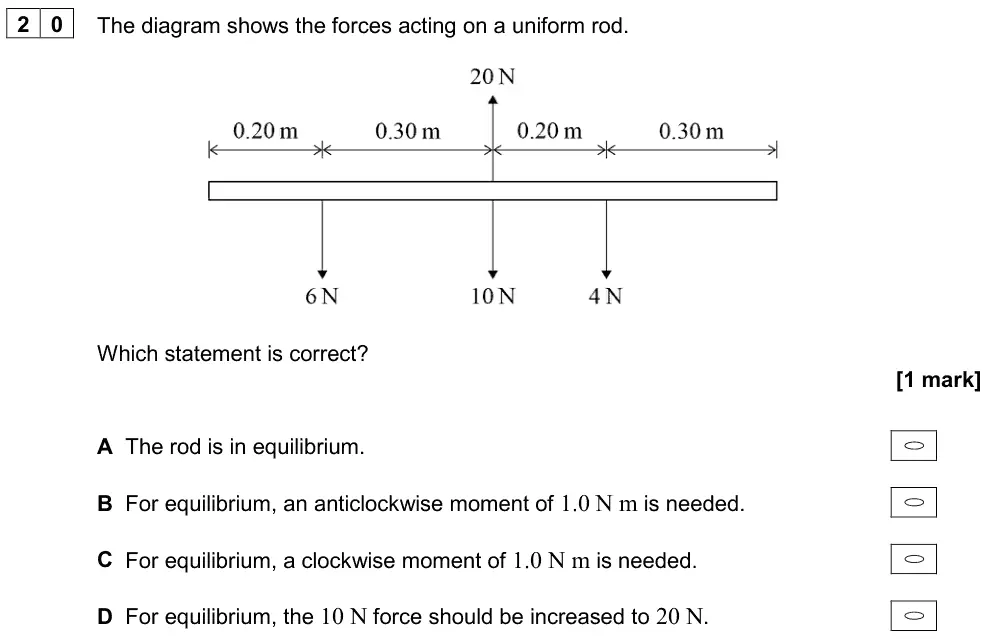
C
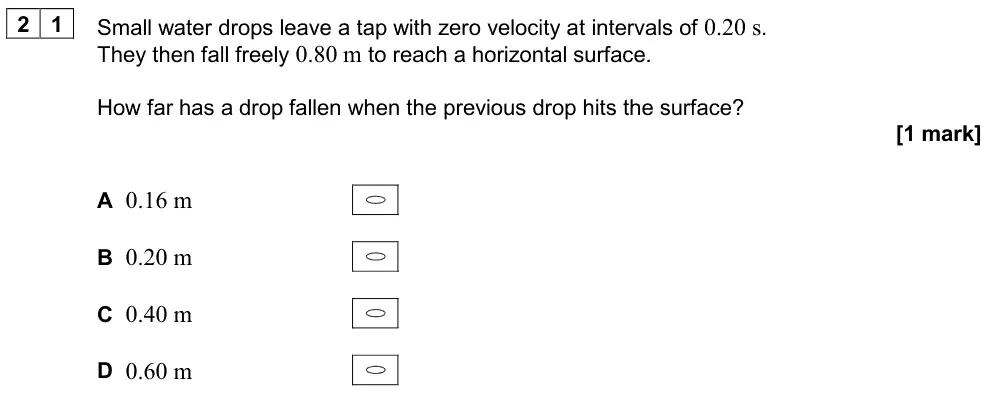
B
Skills: MS2.3 Substitute numerical values into algebraic equations using appropriate units for physical quantities
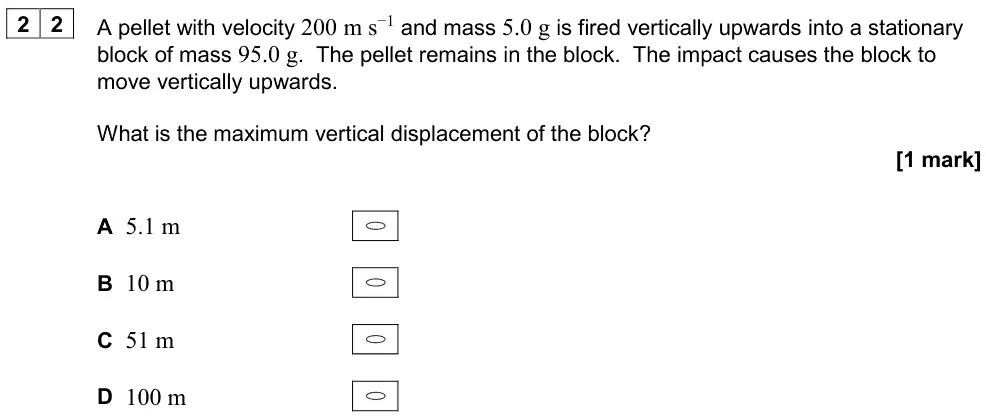
A
Skills: MS2.3 Substitute numerical values into algebraic equations using appropriate units for physical quantities
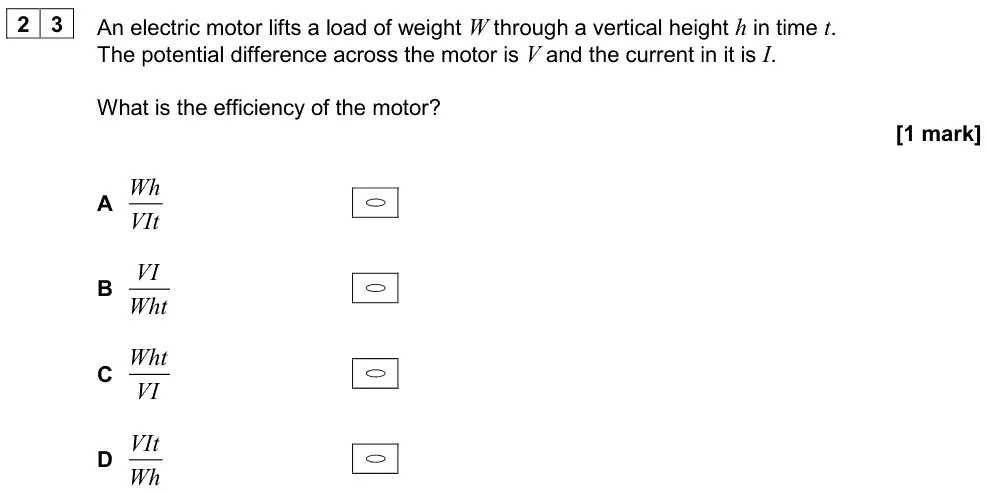
A
B
C
Skills: MS2.3 Substitute numerical values into algebraic equations using appropriate units for physical quantities
D
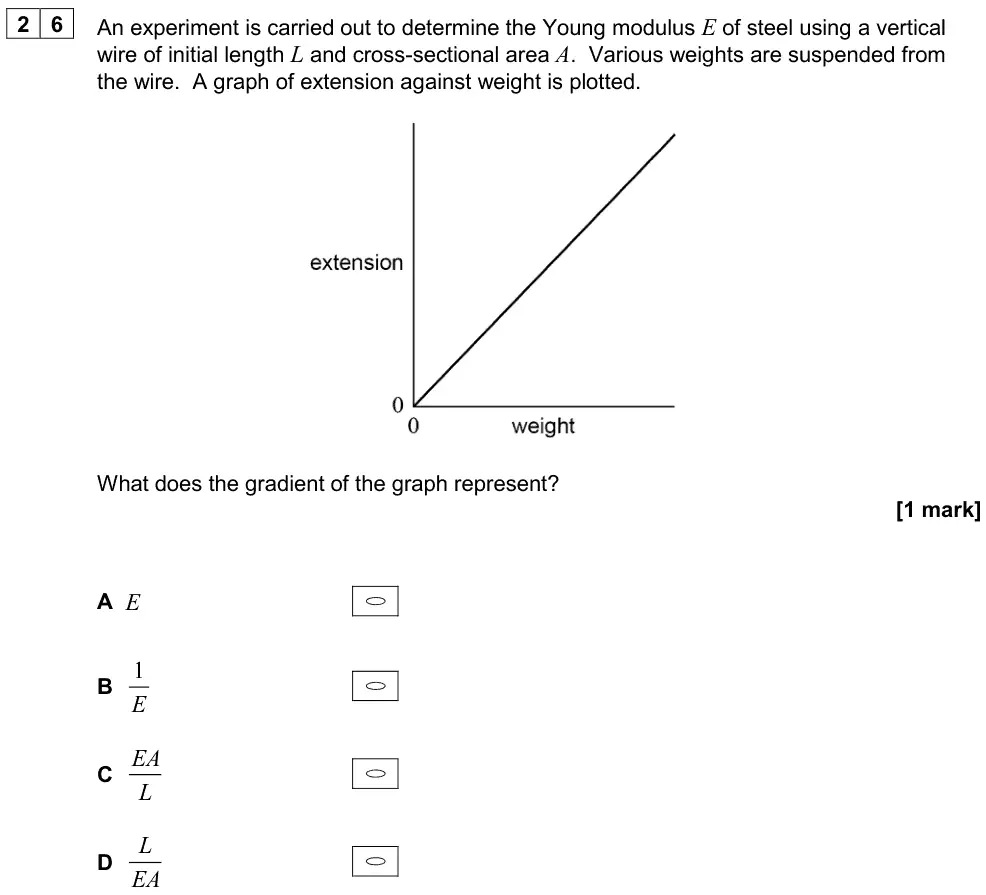
Skills: MS3.4 Determine the slope and intercept of a linear graph
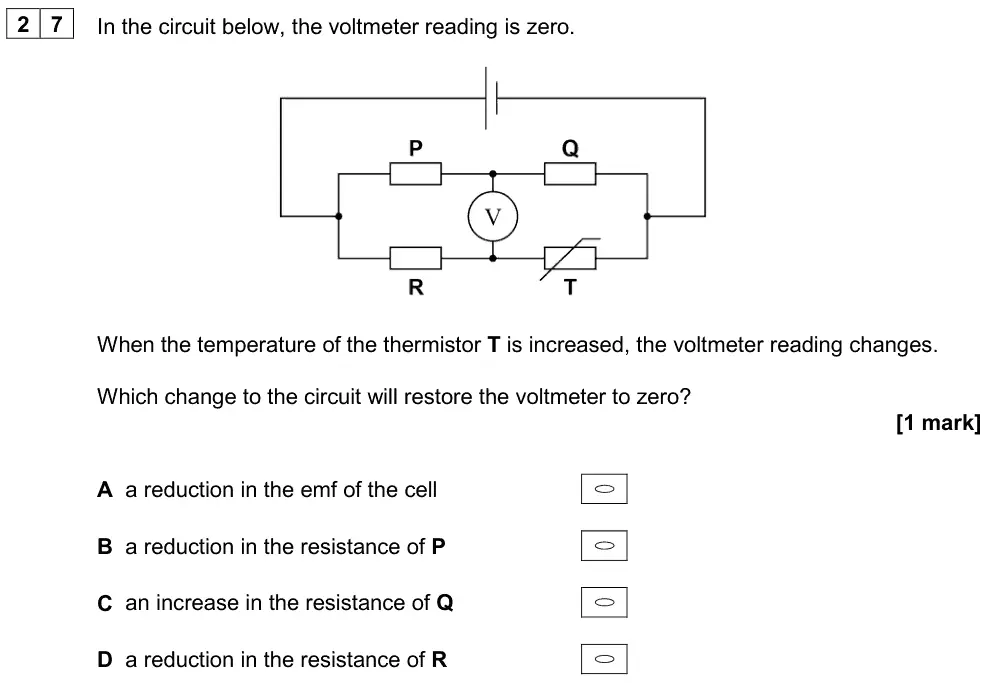
D
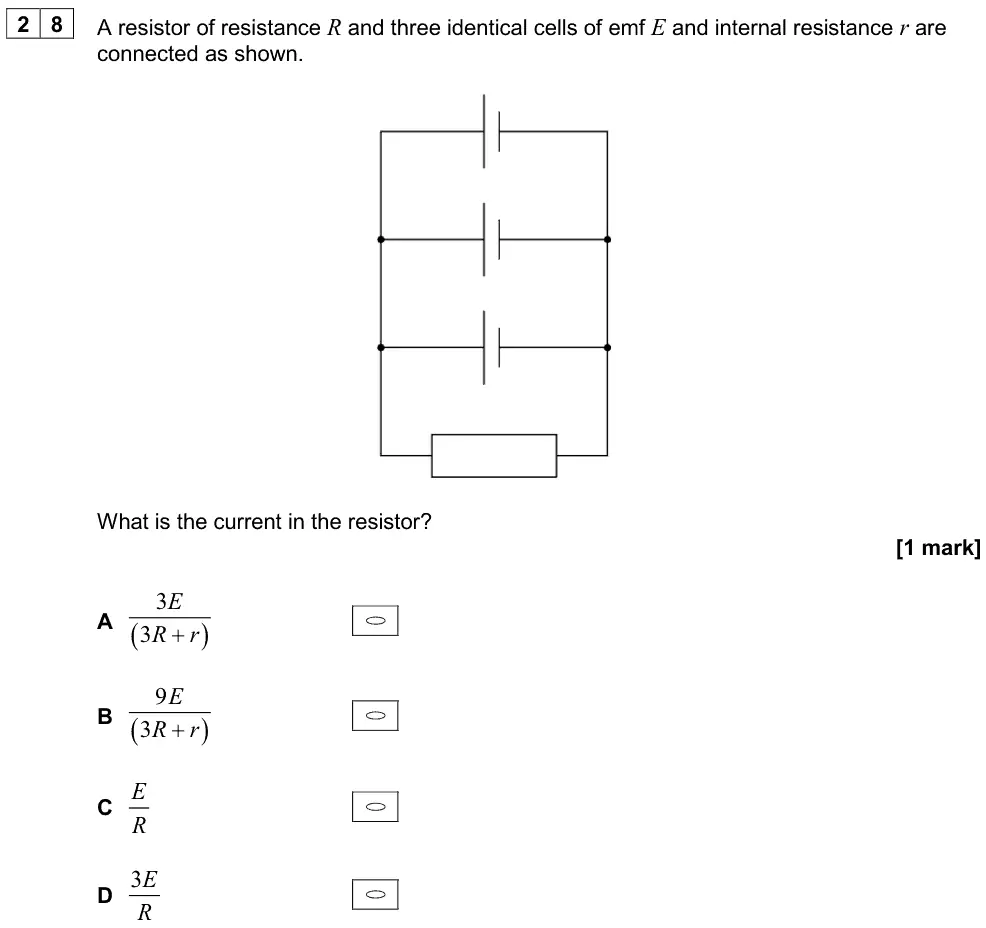
A
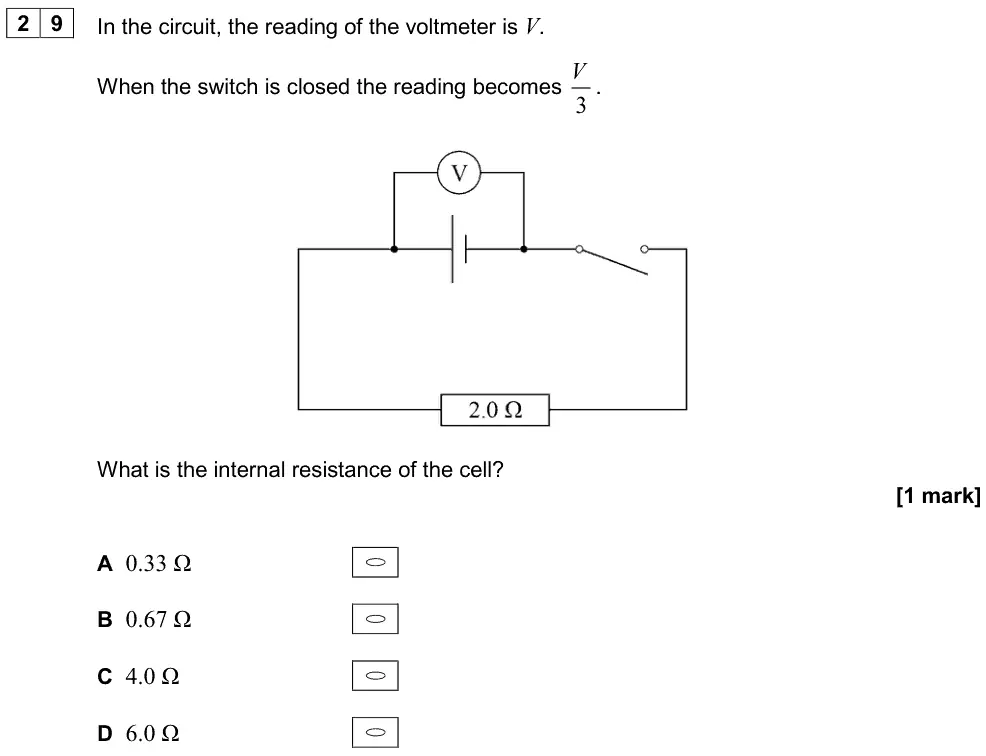
C
Skills: MS2.2 Change the subject of an equation, including non-linear equations
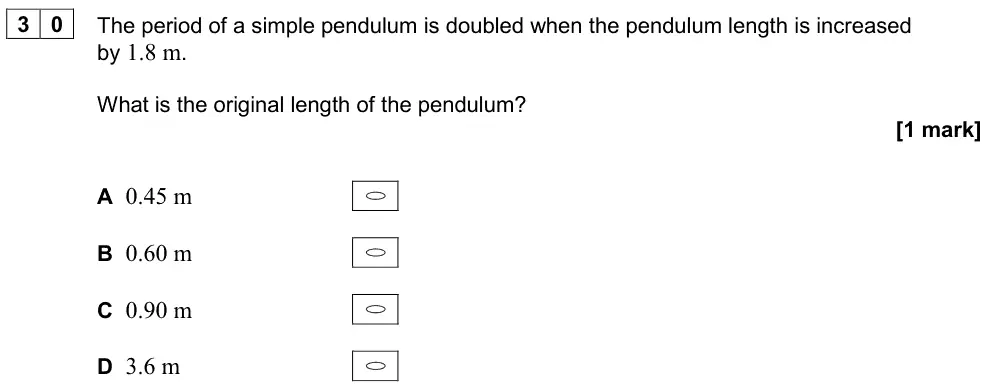
B
Skills: MS2.2 Change the subject of an equation, including non-linear equations
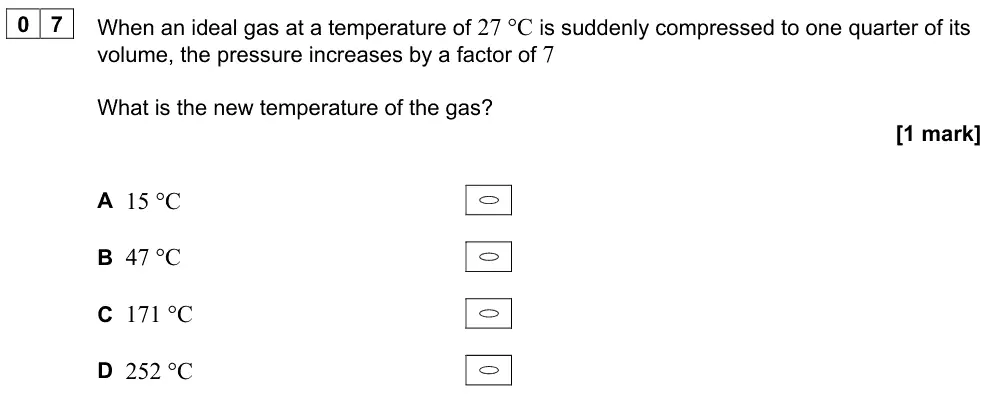
D
The percentage scores in the multiple-choice questions were much higher than in the written questions. A majority of the questions yielded success rates of between 50 and 75%. Questions B14 and B30 had higher success rates than this. Questions that scored in the region of 30 to 50% correct were B8, B16, B22, B26, B27, B29 and B31. Questions B7 and B24 were found to be particularly difficult with only about 16% of students being successful.
Skills: MS0.3 Use ratios, fractions and percentages
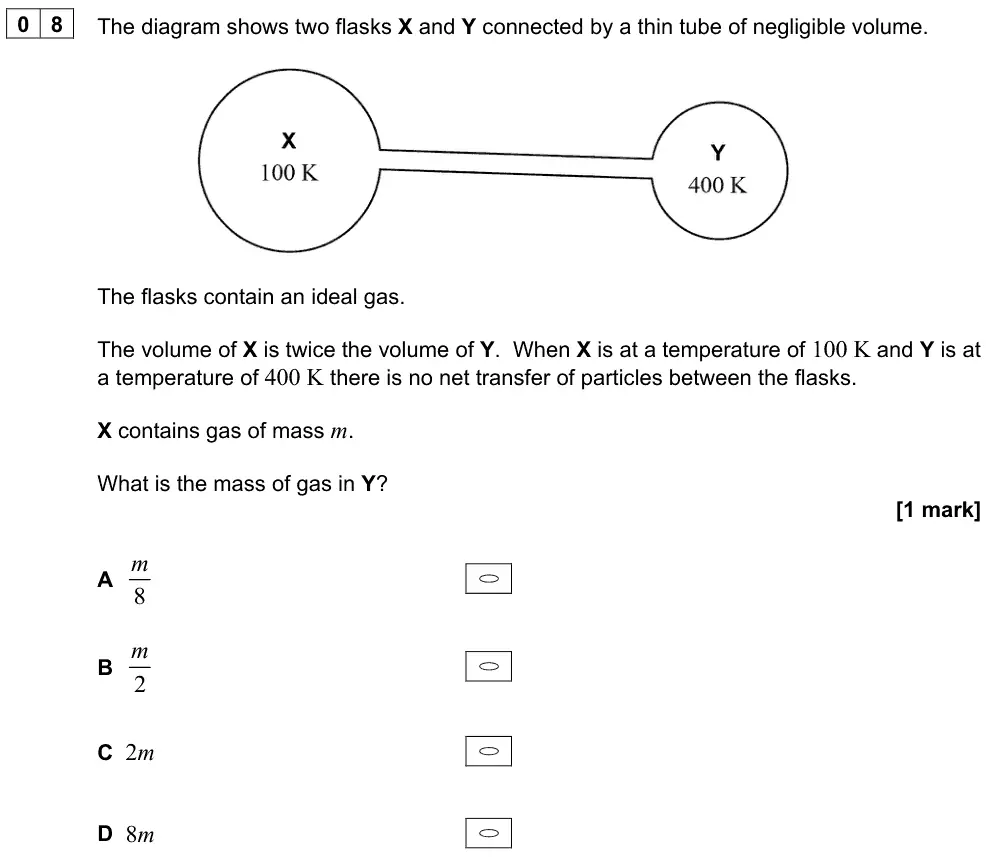
A
The percentage scores in the multiple-choice questions were much higher than in the written questions. A majority of the questions yielded success rates of between 50 and 75%. Questions B14 and B30 had higher success rates than this. Questions that scored in the region of 30 to 50% correct were B8, B16, B22, B26, B27, B29 and B31. Questions B7 and B24 were found to be particularly difficult with only about 16% of students being successful.
Skills: MS0.3 Use ratios, fractions and percentages
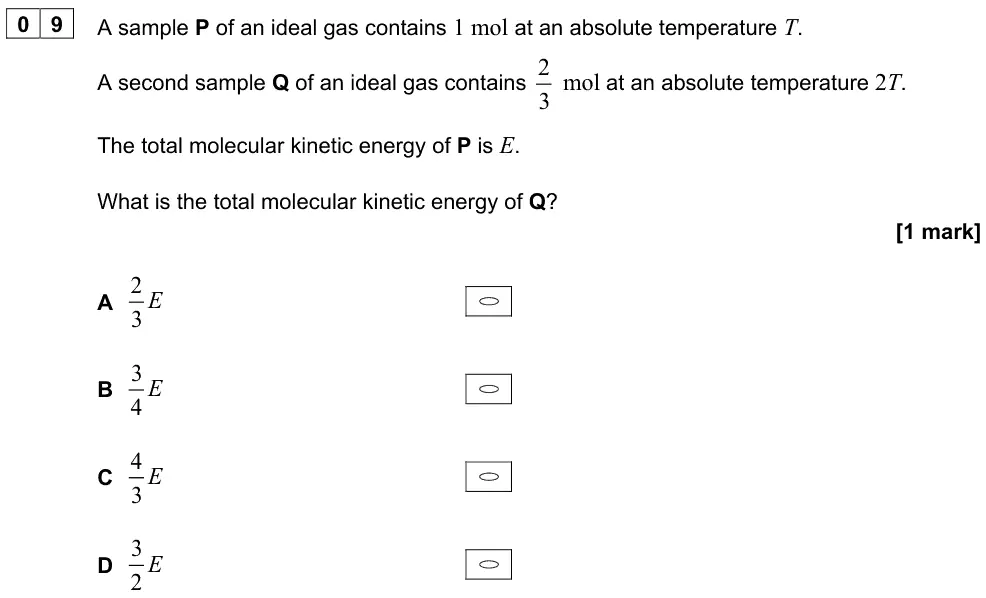
C
Skills: MS0.3 Use ratios, fractions and percentages
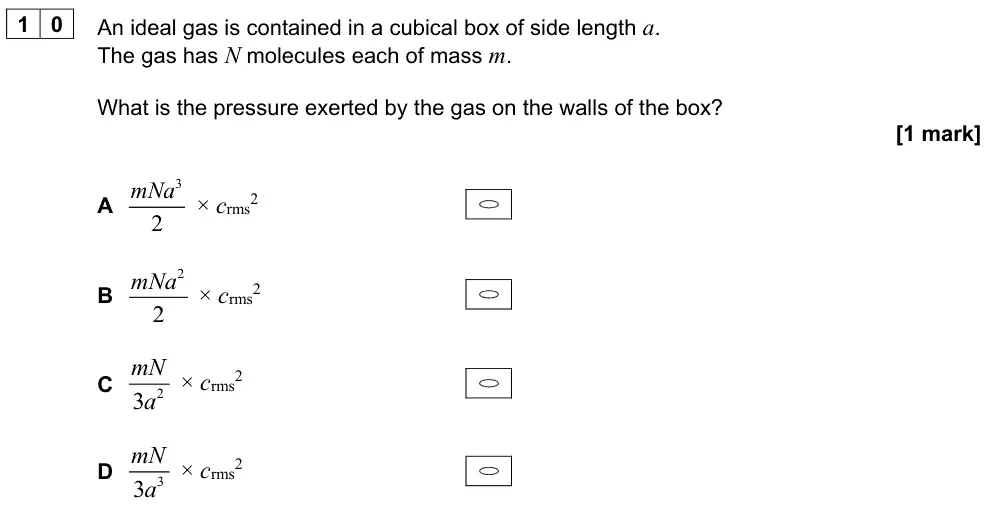
D
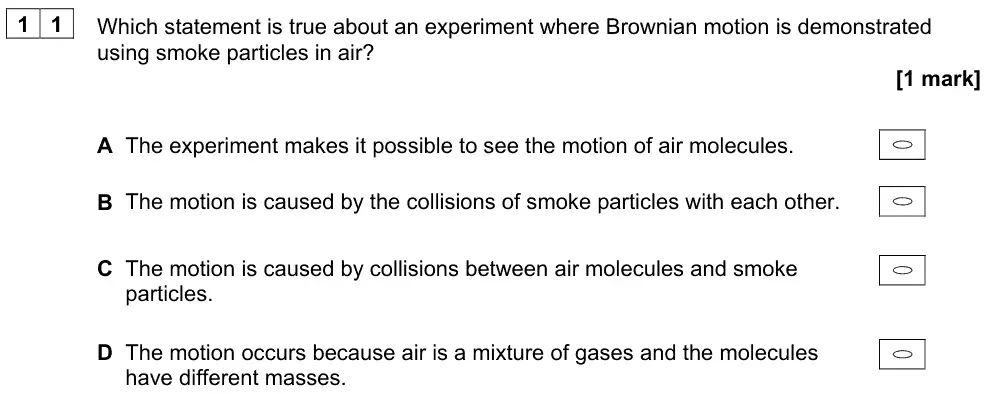
C
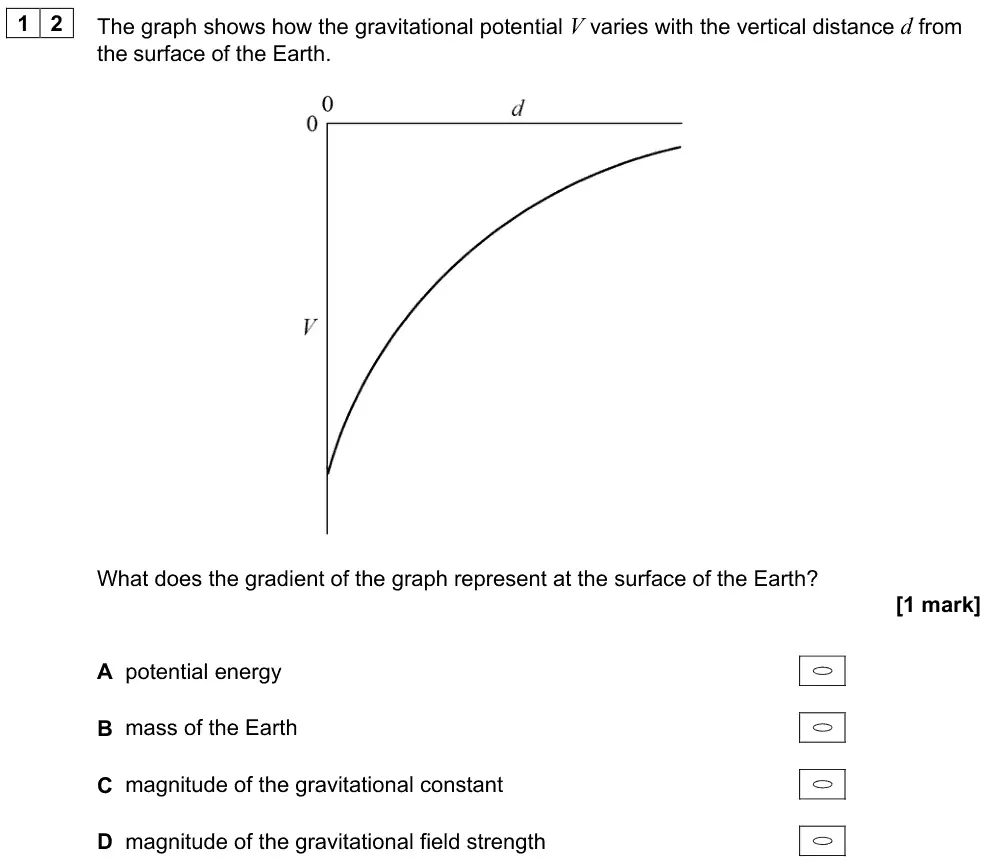
D
Skills: MS3.6 Draw and use the slope of a tangent to a curve as a measure of rate of change
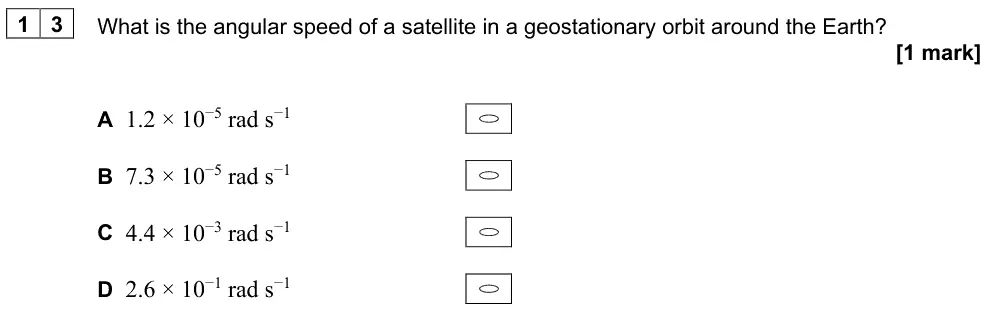
B
Skills: MS2.3 Substitute numerical values into algebraic equations using appropriate units for physical quantities
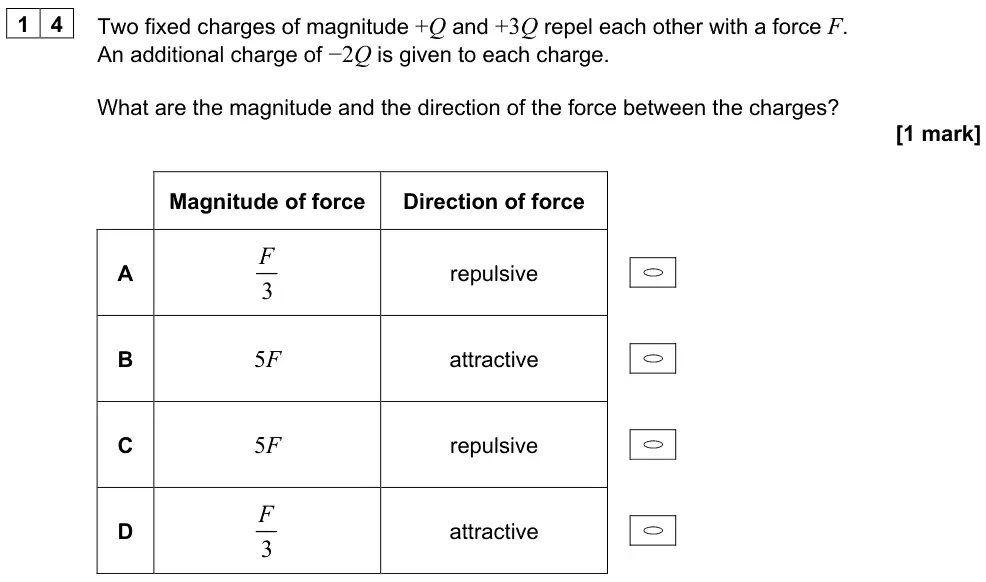
D
The percentage scores in the multiple-choice questions were much higher than in the written questions. A majority of the questions yielded success rates of between 50 and 75%. Questions B14 and B30 had higher success rates than this. Questions that scored in the region of 30 to 50% correct were B8, B16, B22, B26, B27, B29 and B31. Questions B7 and B24 were found to be particularly difficult with only about 16% of students being successful.
Skills: MS0.3 Use ratios, fractions and percentages
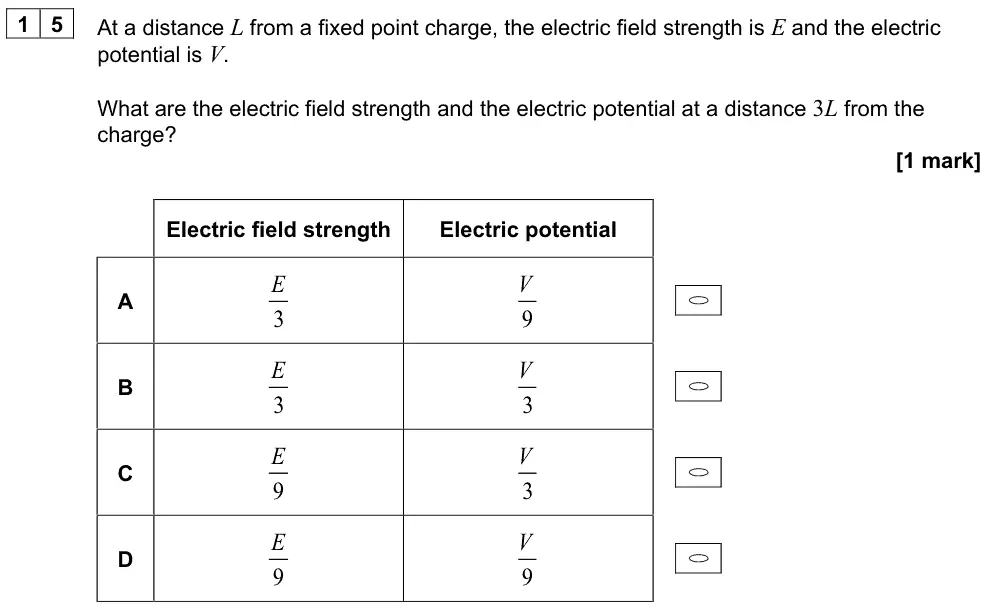
C
Skills: MS0.3 Use ratios, fractions and percentages
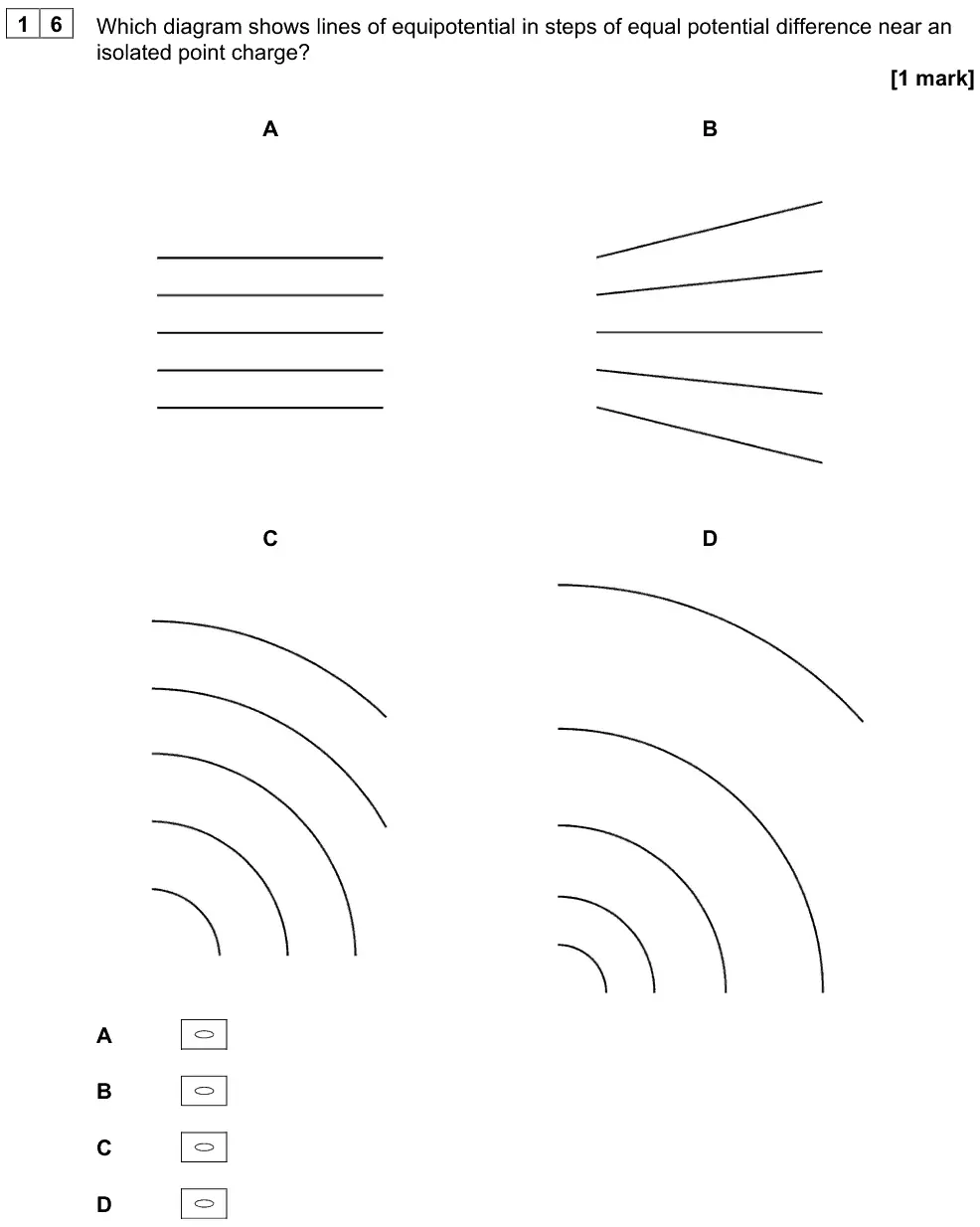
D
The percentage scores in the multiple-choice questions were much higher than in the written questions. A majority of the questions yielded success rates of between 50 and 75%. Questions B14 and B30 had higher success rates than this. Questions that scored in the region of 30 to 50% correct were B8, B16, B22, B26, B27, B29 and B31. Questions B7 and B24 were found to be particularly difficult with only about 16% of students being successful.
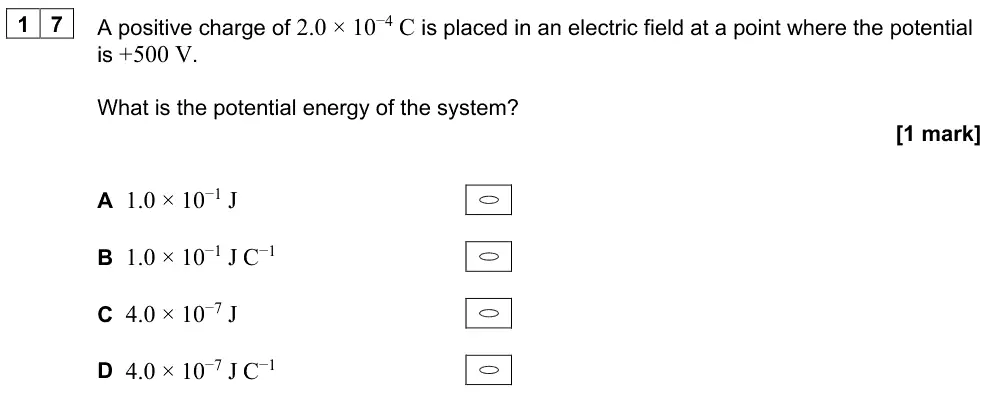
A
Skills: MS0.1 Recognise and make use of appropriate units in calculations
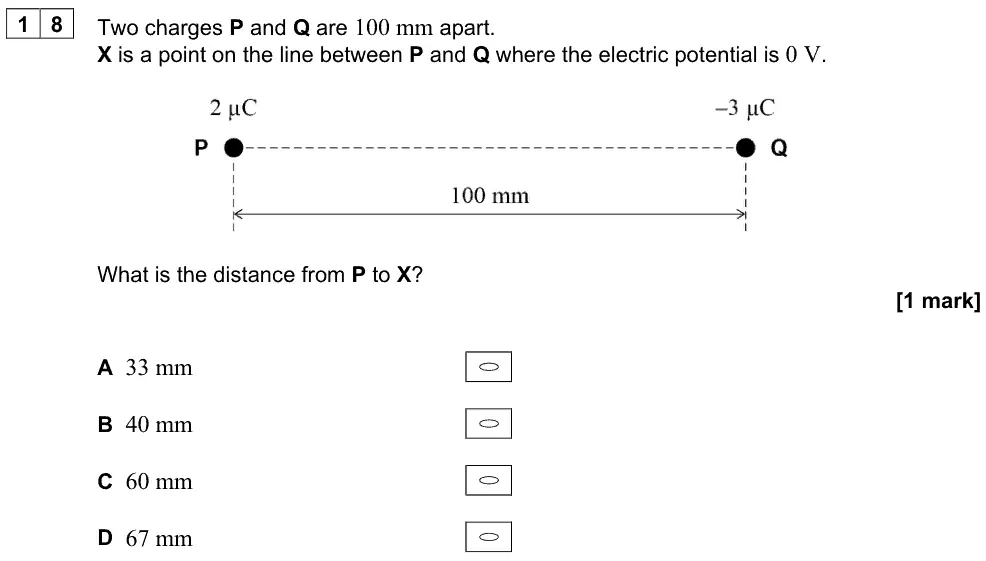
B
Skills: MS2.4 Solve algebraic equations, including quadratic equations
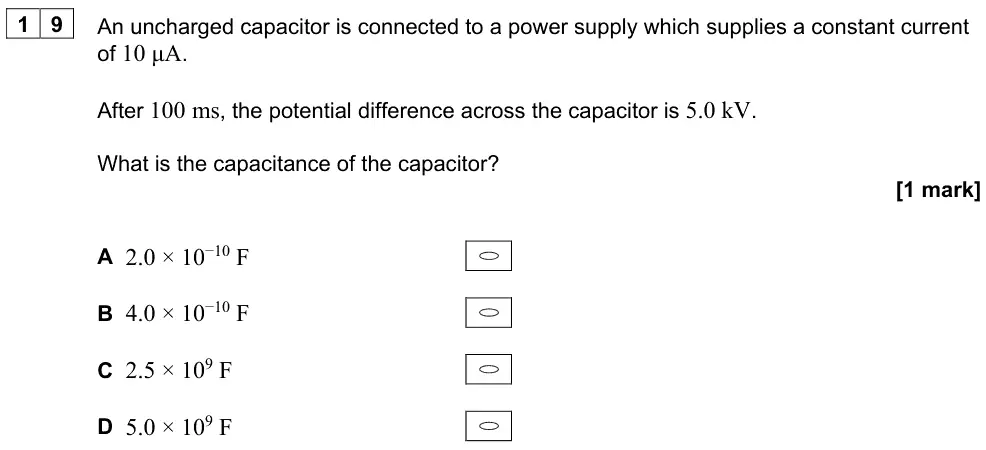
A
Skills: MS0.2 Recognise and use expressions in decimal and standard form
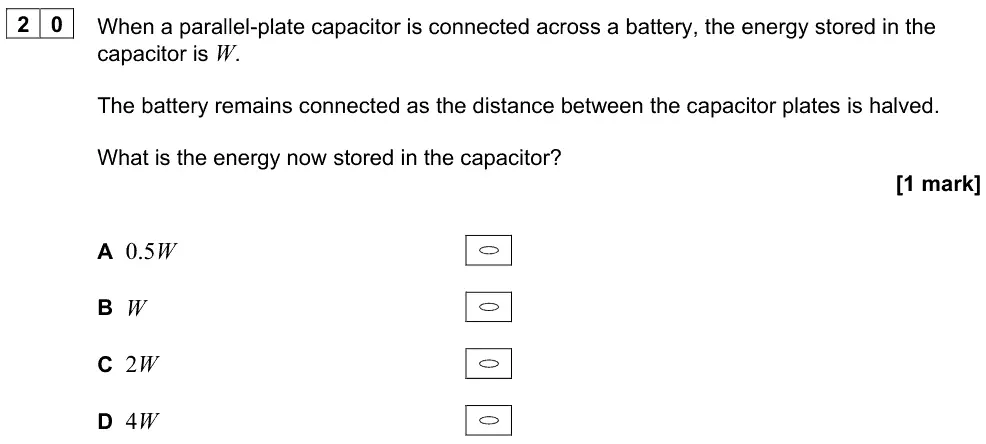
C
Skills: MS0.3 Use ratios, fractions and percentages
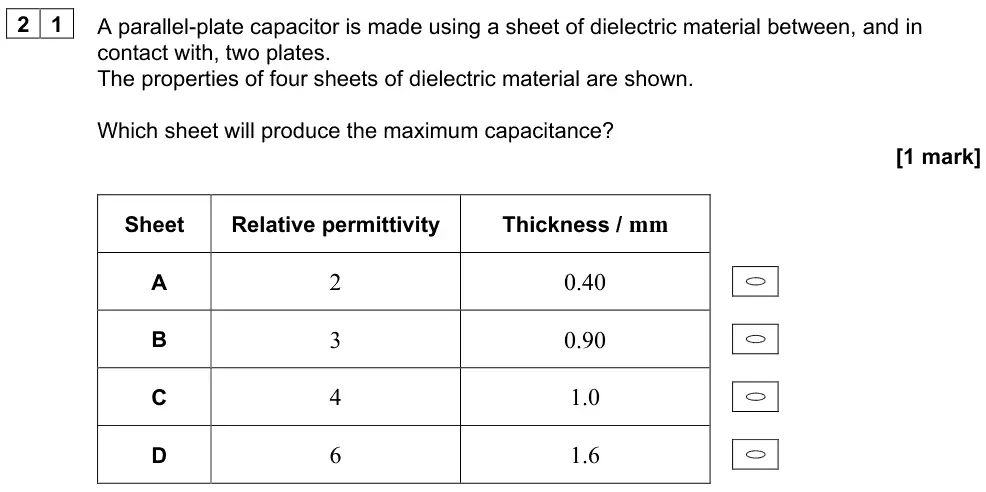
A
Skills: MS0.3 Use ratios, fractions and percentages
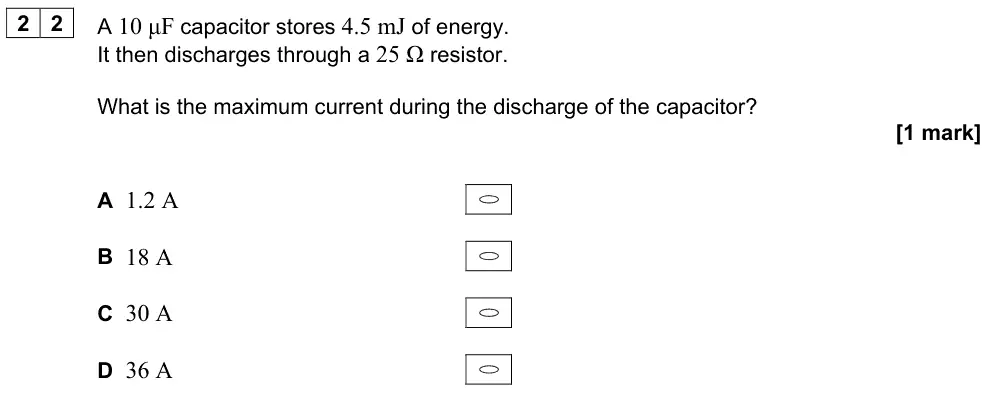
A
The percentage scores in the multiple-choice questions were much higher than in the written questions. A majority of the questions yielded success rates of between 50 and 75%. Questions B14 and B30 had higher success rates than this. Questions that scored in the region of 30 to 50% correct were B8, B16, B22, B26, B27, B29 and B31. Questions B7 and B24 were found to be particularly difficult with only about 16% of students being successful.
Skills: MS2.2 Change the subject of an equation, including non-linear equations
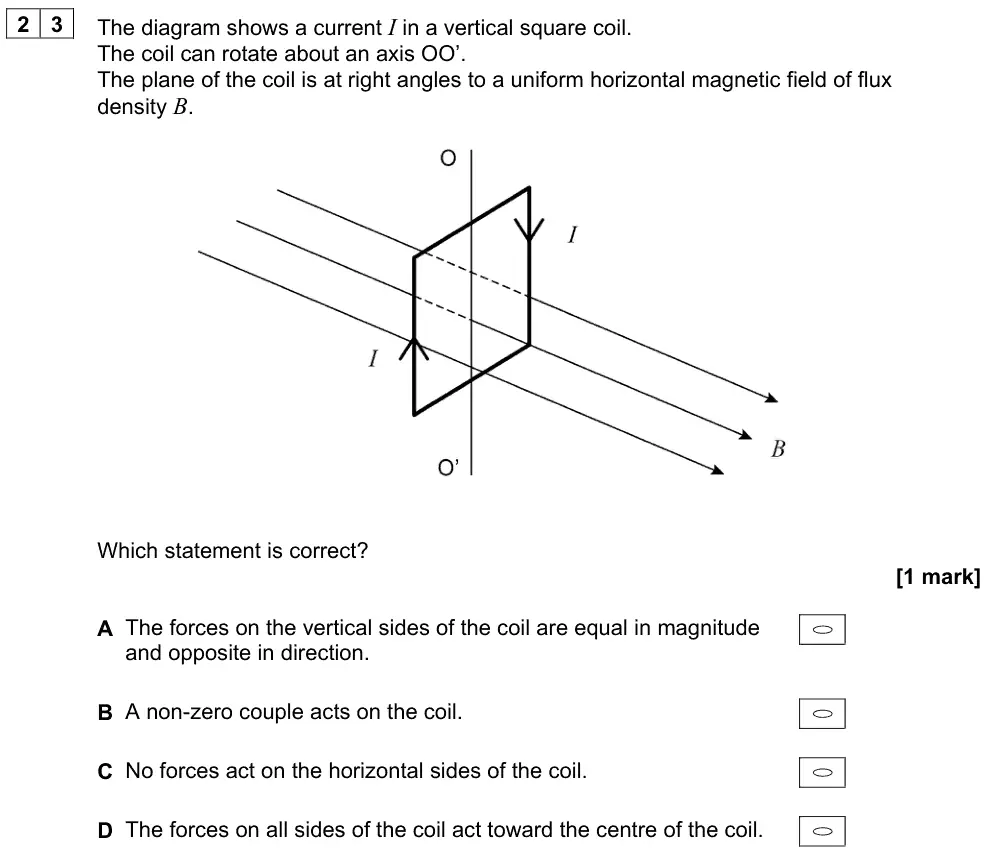
A
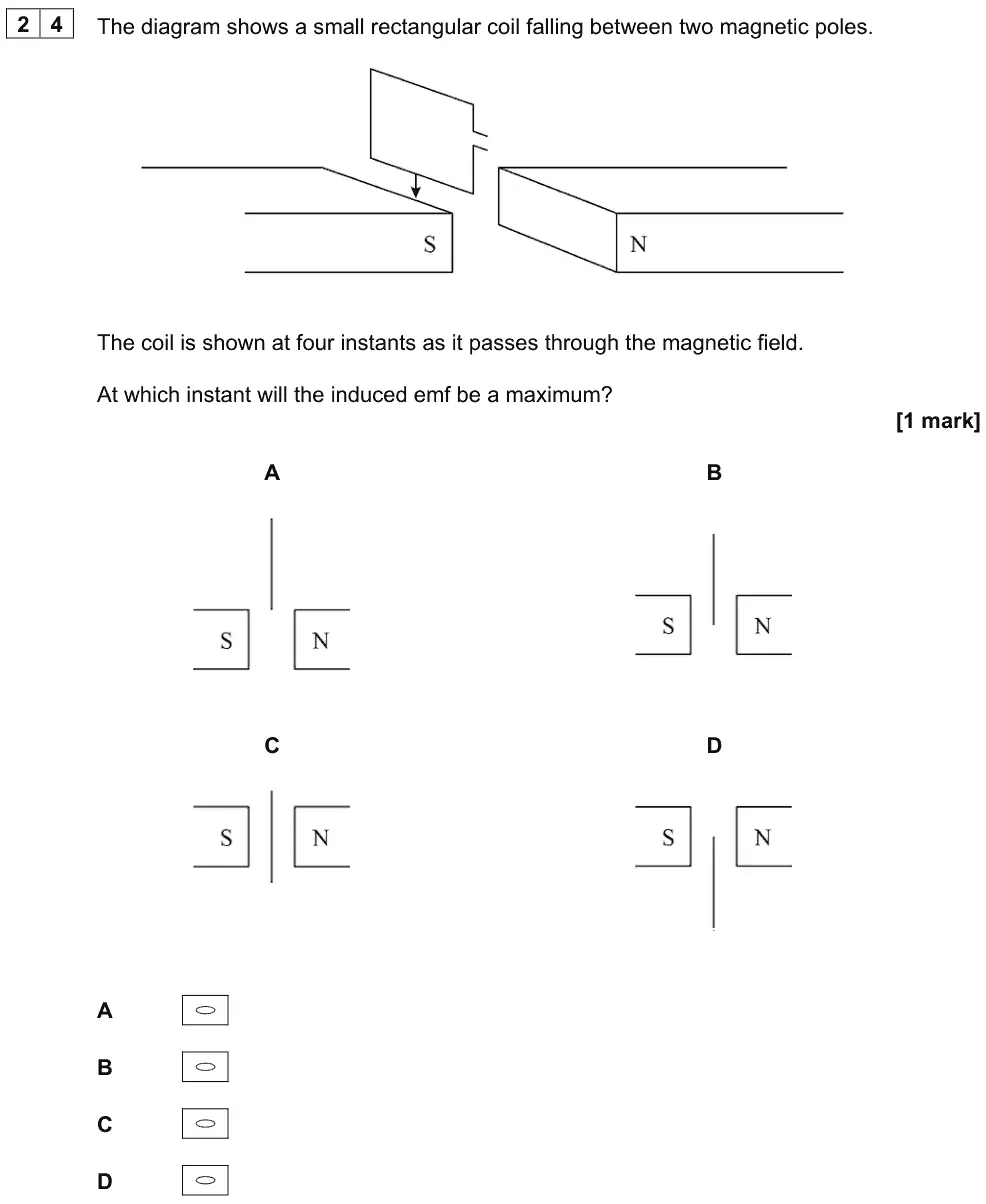
D
The percentage scores in the multiple-choice questions were much higher than in the written questions. A majority of the questions yielded success rates of between 50 and 75%. Questions B14 and B30 had higher success rates than this. Questions that scored in the region of 30 to 50% correct were B8, B16, B22, B26, B27, B29 and B31. Questions B7 and B24 were found to be particularly difficult with only about 16% of students being successful.
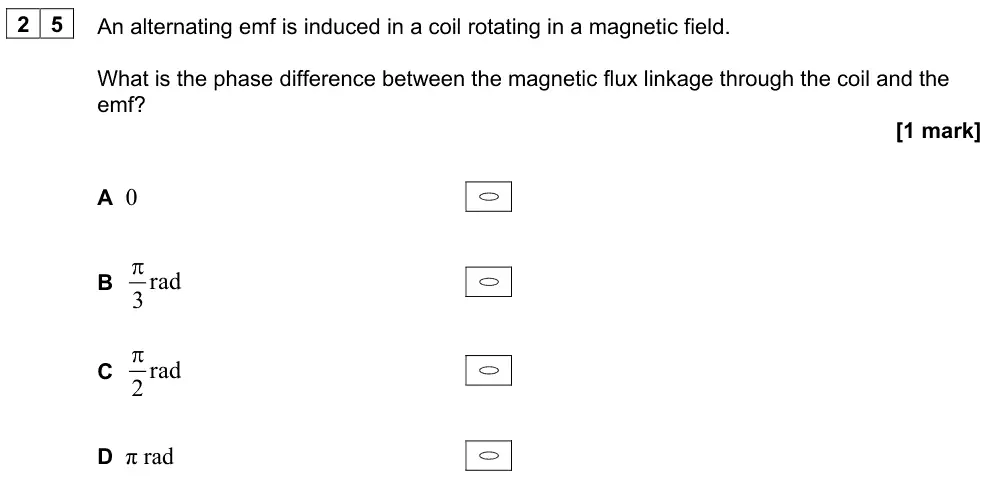
C
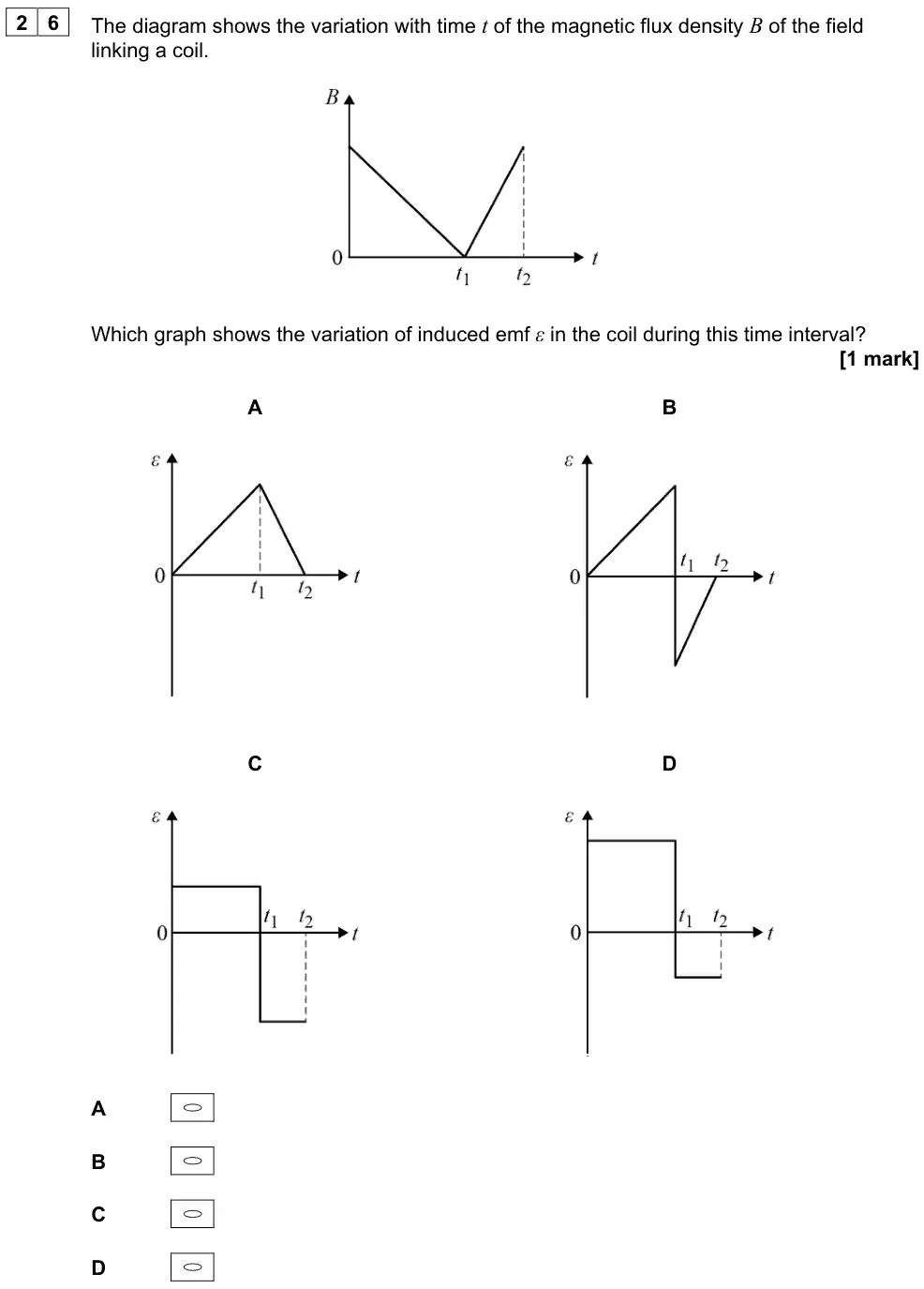
C
The percentage scores in the multiple-choice questions were much higher than in the written questions. A majority of the questions yielded success rates of between 50 and 75%. Questions B14 and B30 had higher success rates than this. Questions that scored in the region of 30 to 50% correct were B8, B16, B22, B26, B27, B29 and B31. Questions B7 and B24 were found to be particularly difficult with only about 16% of students being successful.
Skills: MS3.5 Calculate rate of change from a graph showing a linear relationship
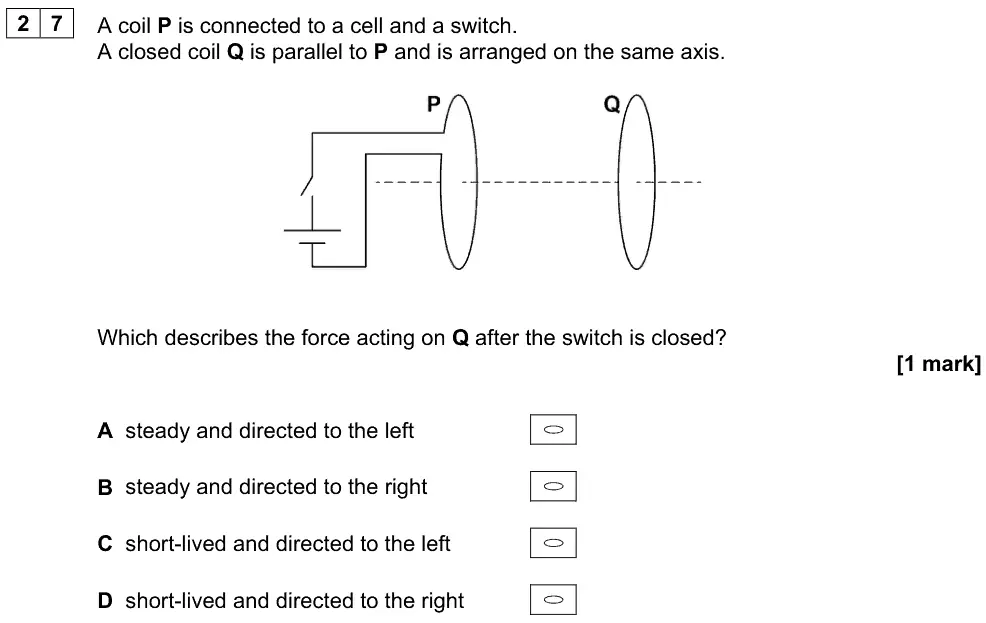
D
The percentage scores in the multiple-choice questions were much higher than in the written questions. A majority of the questions yielded success rates of between 50 and 75%. Questions B14 and B30 had higher success rates than this. Questions that scored in the region of 30 to 50% correct were B8, B16, B22, B26, B27, B29 and B31. Questions B7 and B24 were found to be particularly difficult with only about 16% of students being successful.
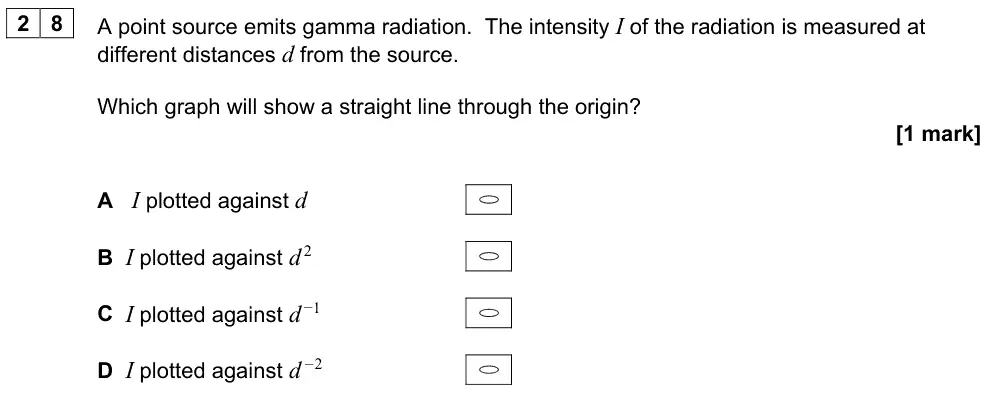
D
Skills: MS3.3 Understand that y = mx + c represents a linear relationship
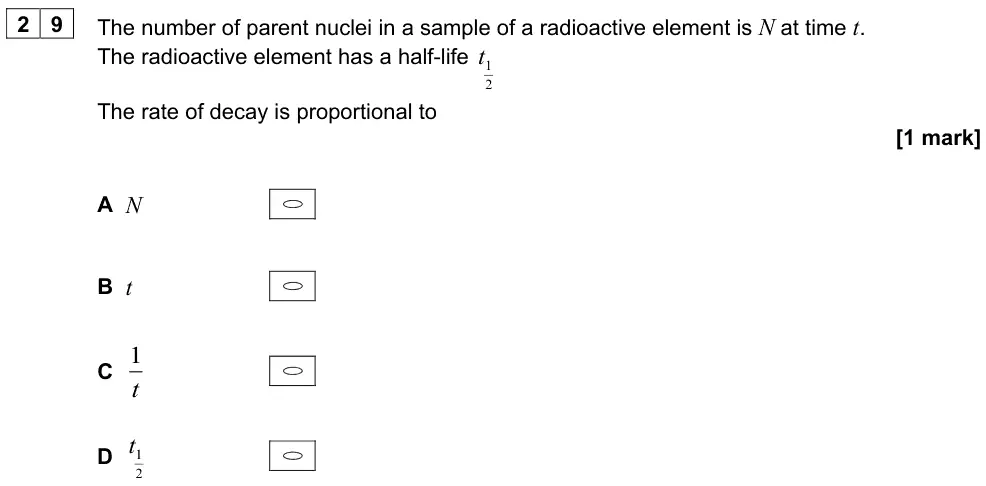
A
The percentage scores in the multiple-choice questions were much higher than in the written questions. A majority of the questions yielded success rates of between 50 and 75%. Questions B14 and B30 had higher success rates than this. Questions that scored in the region of 30 to 50% correct were B8, B16, B22, B26, B27, B29 and B31. Questions B7 and B24 were found to be particularly difficult with only about 16% of students being successful.
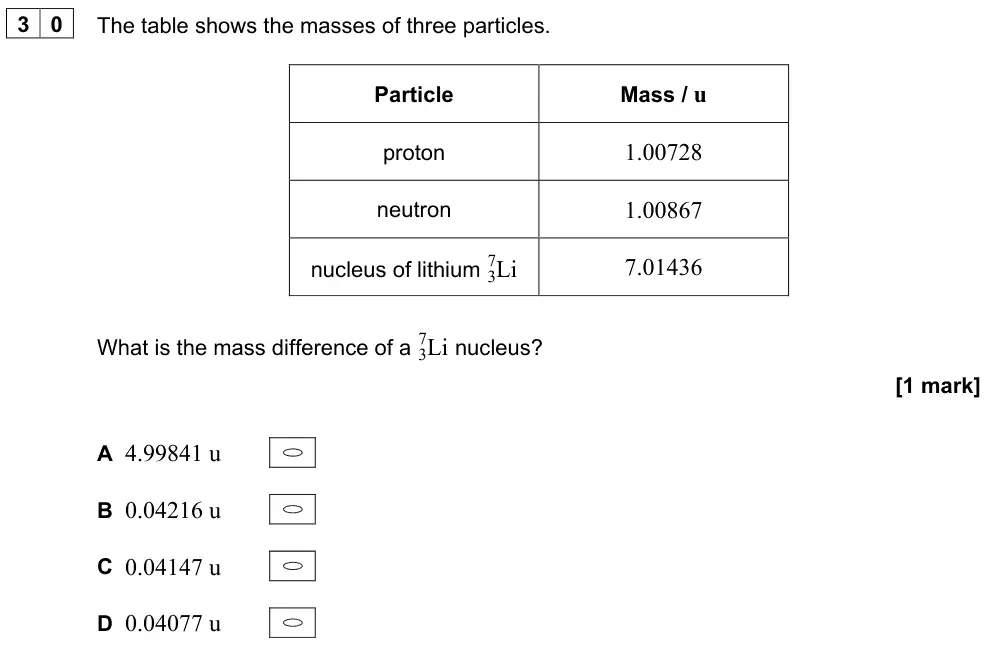
B
The percentage scores in the multiple-choice questions were much higher than in the written questions. A majority of the questions yielded success rates of between 50 and 75%. Questions B14 and B30 had higher success rates than this. Questions that scored in the region of 30 to 50% correct were B8, B16, B22, B26, B27, B29 and B31. Questions B7 and B24 were found to be particularly difficult with only about 16% of students being successful.
Skills: MS2.3 Substitute numerical values into algebraic equations using appropriate units for physical quantities
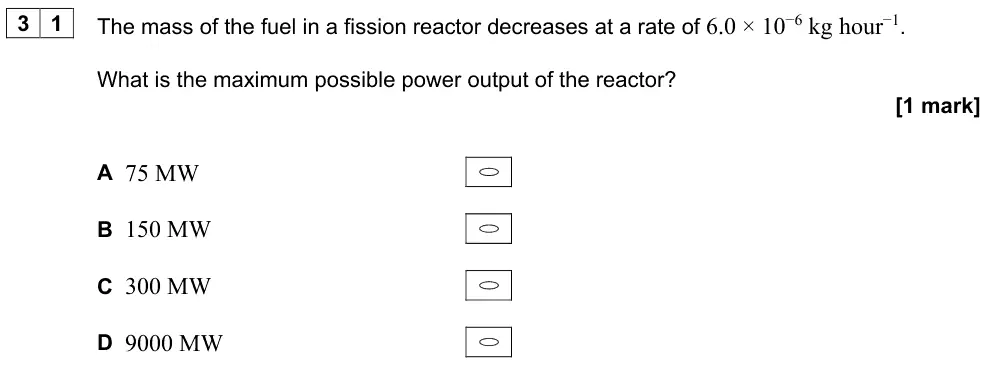
B
The percentage scores in the multiple-choice questions were much higher than in the written questions. A majority of the questions yielded success rates of between 50 and 75%. Questions B14 and B30 had higher success rates than this. Questions that scored in the region of 30 to 50% correct were B8, B16, B22, B26, B27, B29 and B31. Questions B7 and B24 were found to be particularly difficult with only about 16% of students being successful.
Skills: MS0.1 Recognise and make use of appropriate units in calculations; MS2.3 Substitute numerical values into algebraic equations using appropriate units for physical quantities
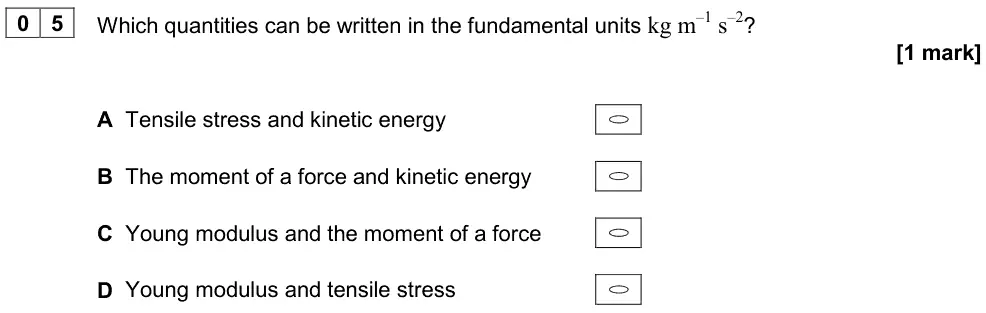
D
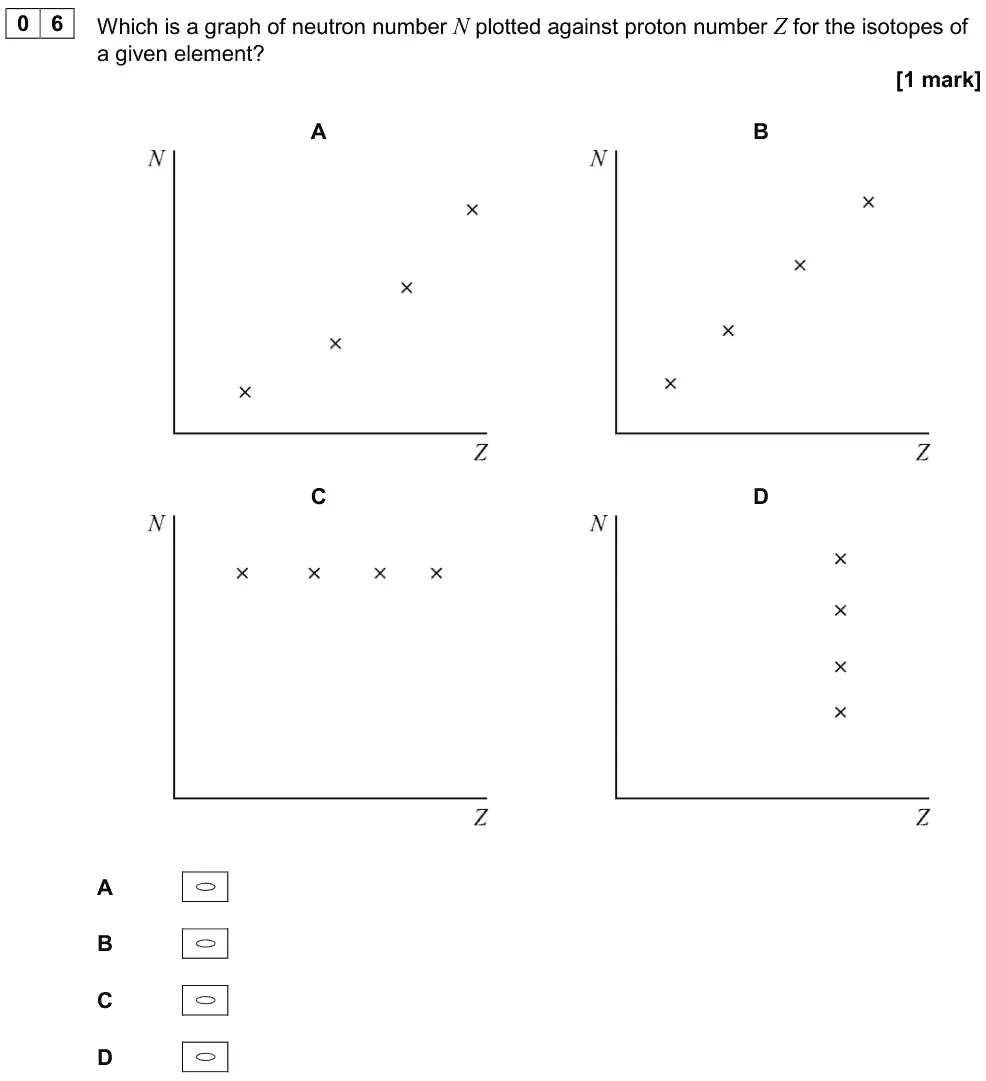
D
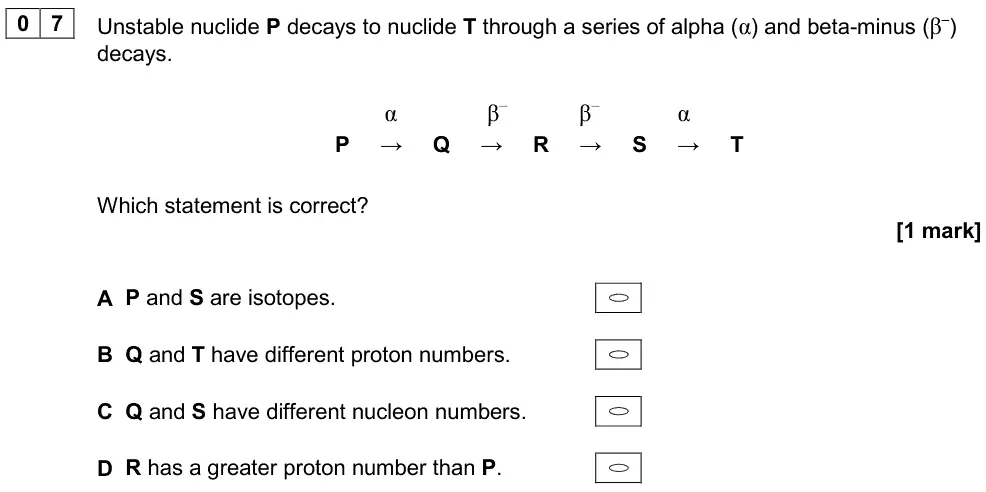
A
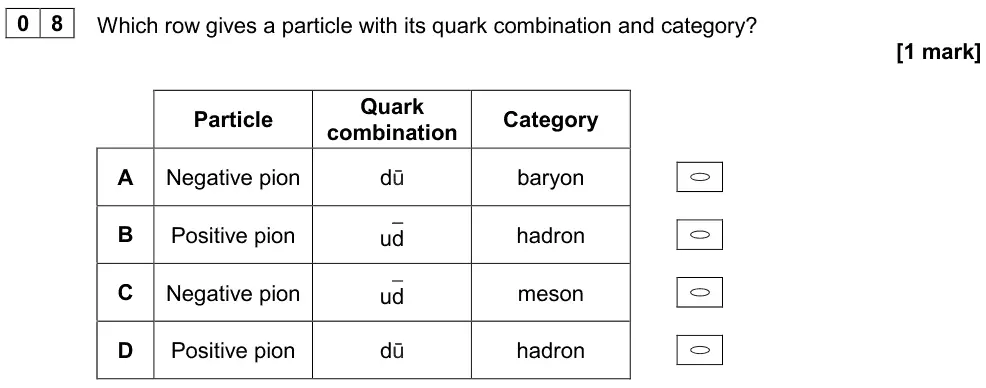
B
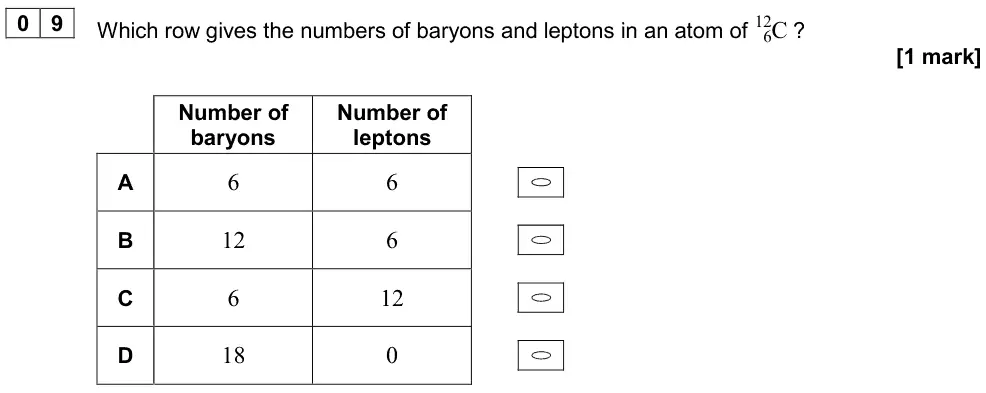
B
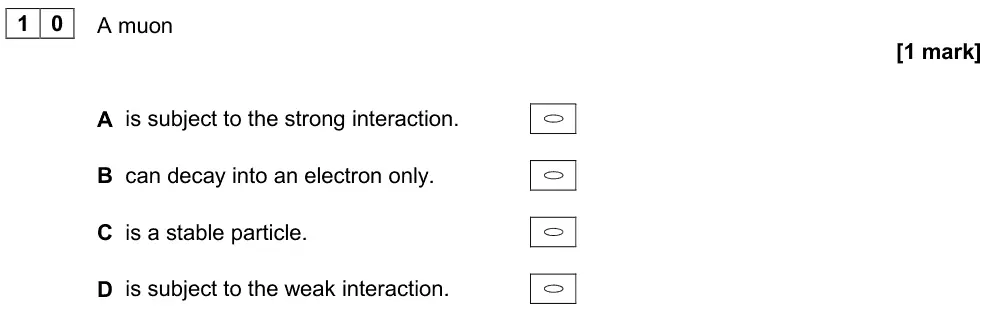
D
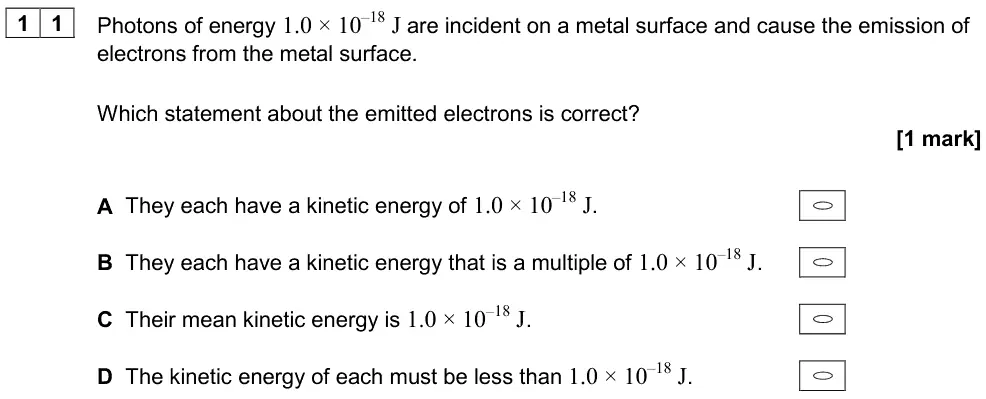
D
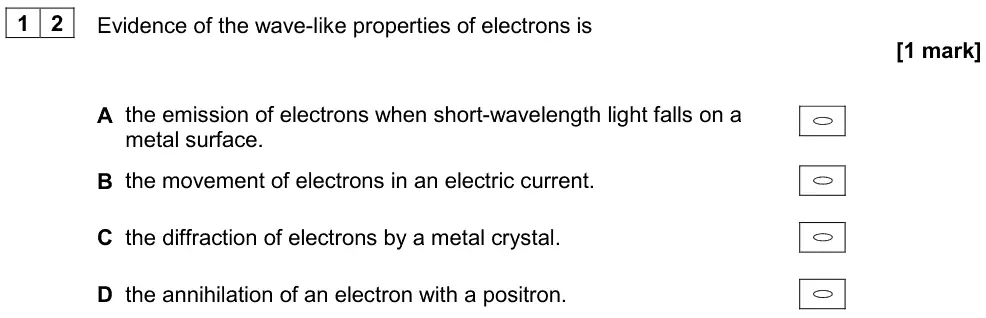
C
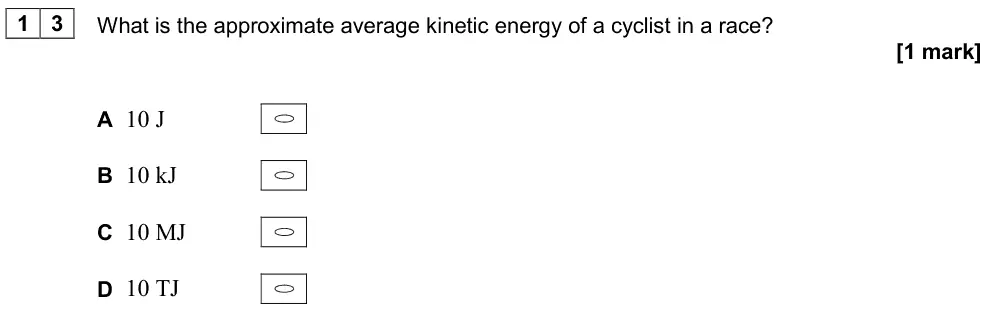
B
Skills: MS1.4 Make order of magnitude calculations
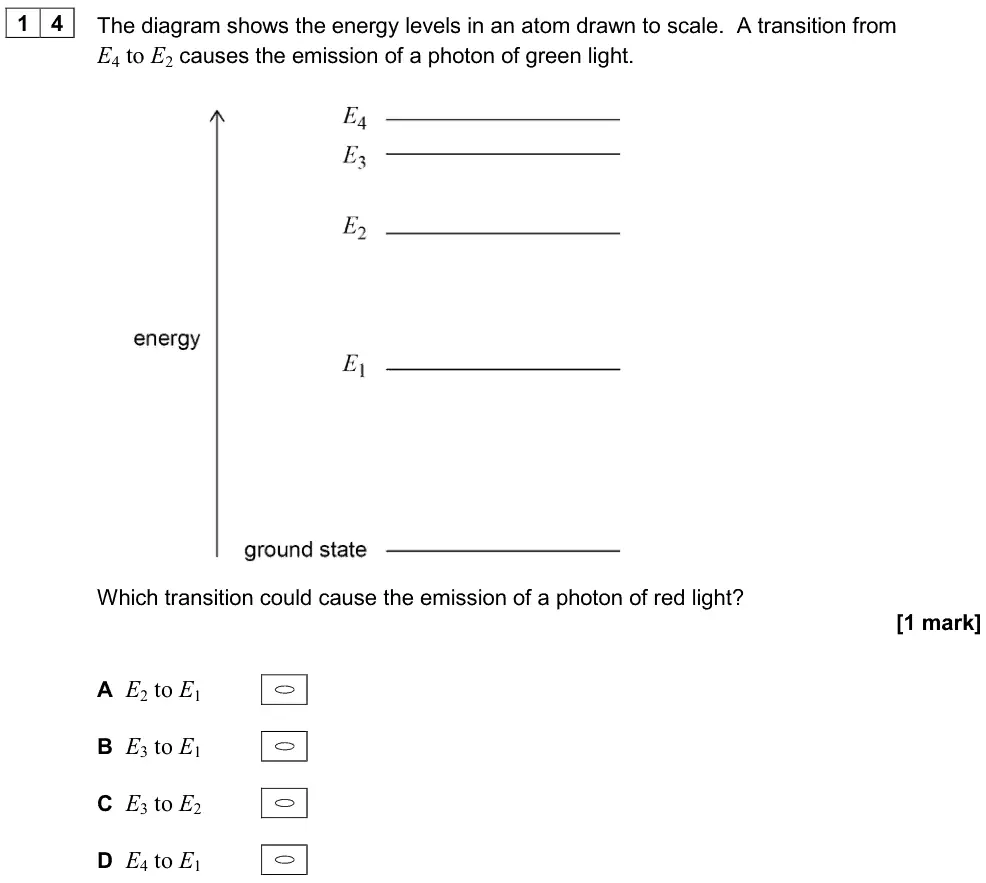
C
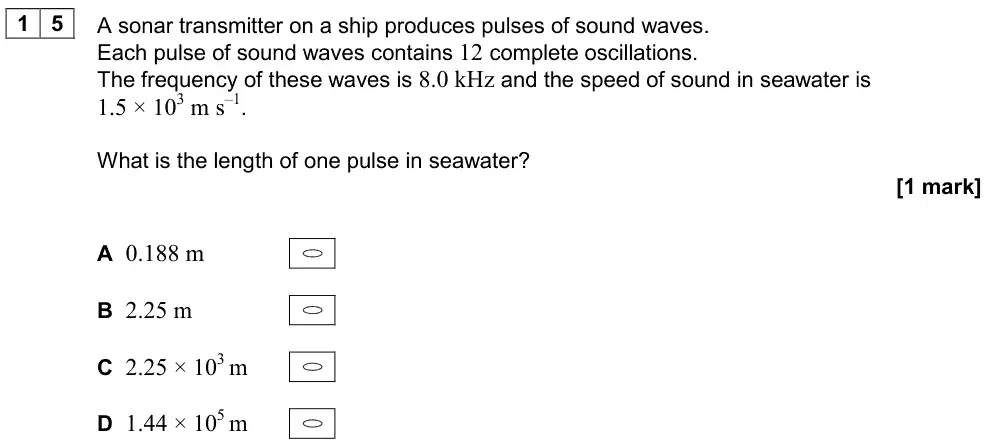
B
Skills: MS0.2 Recognise and use expressions in decimal and standard form
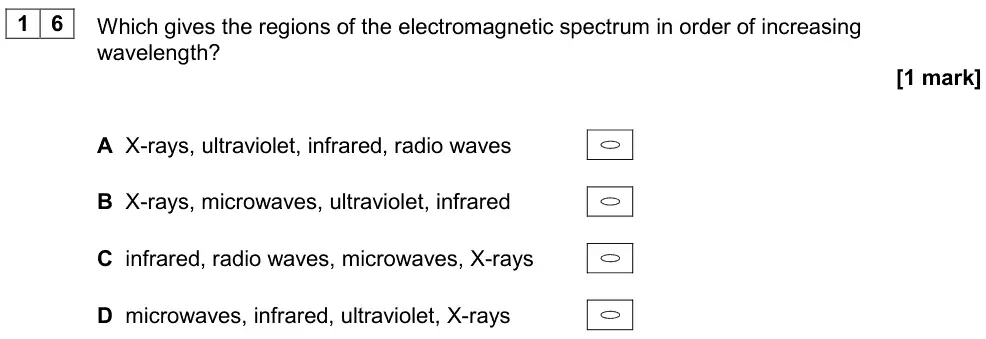
A
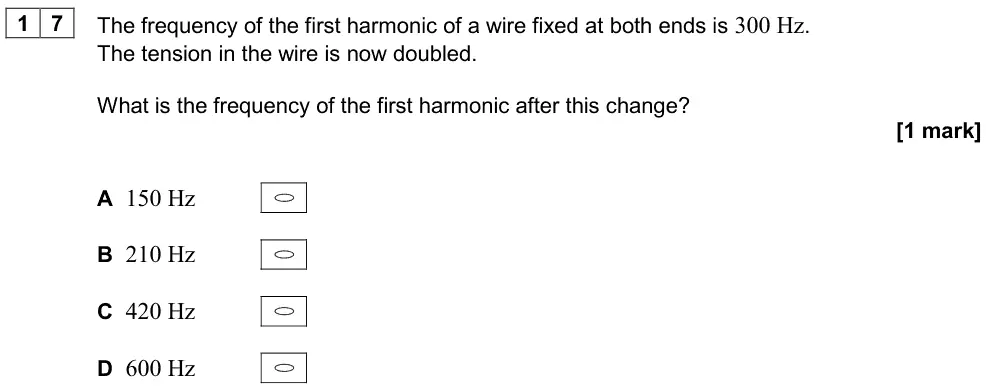
C
Skills: MS0.3 Use ratios, fractions and percentages
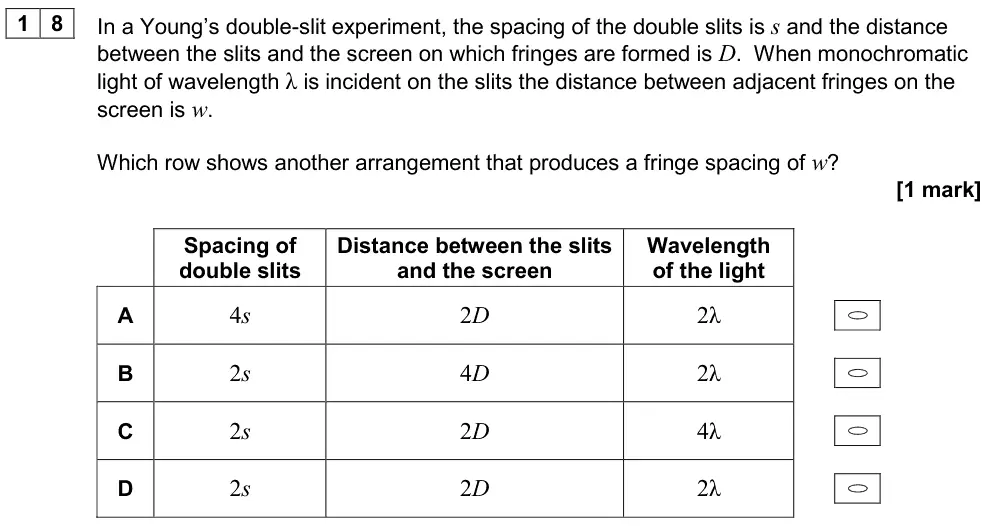
A
Skills: MS0.3 Use ratios, fractions and percentages
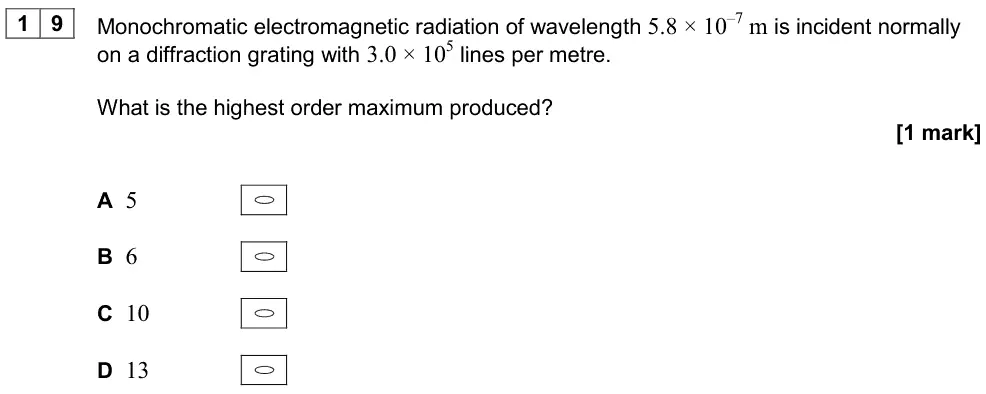
A
Skills: MS0.2 Recognise and use expressions in decimal and standard form
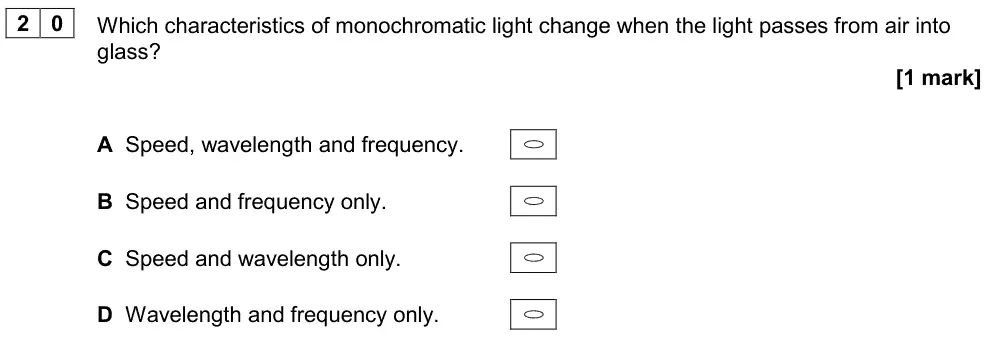
C
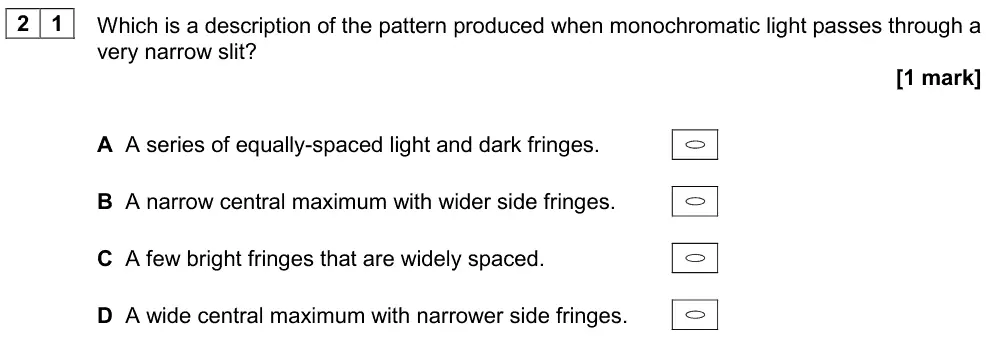
D
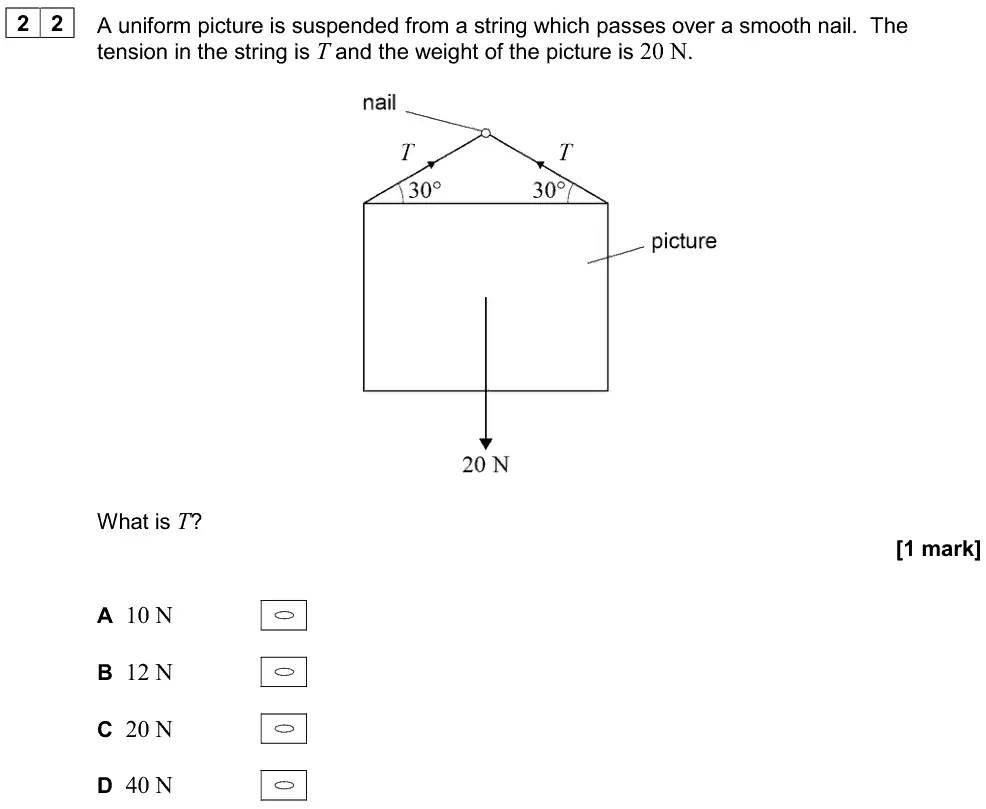
C
Skills: MS4.5 Use sin, cos and tan in physical problems
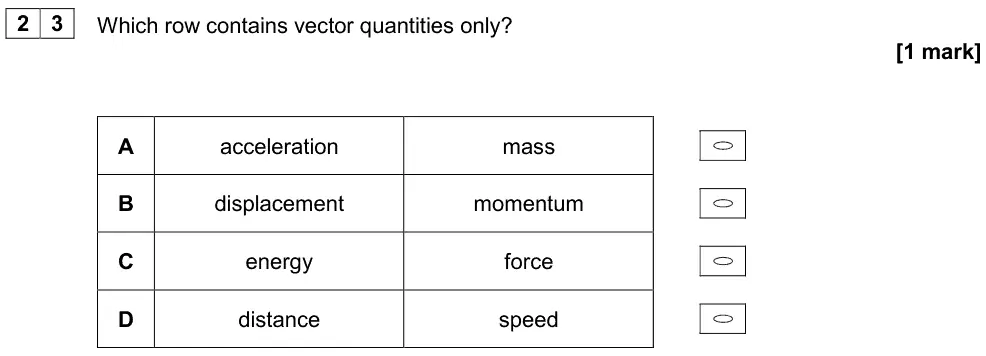
B
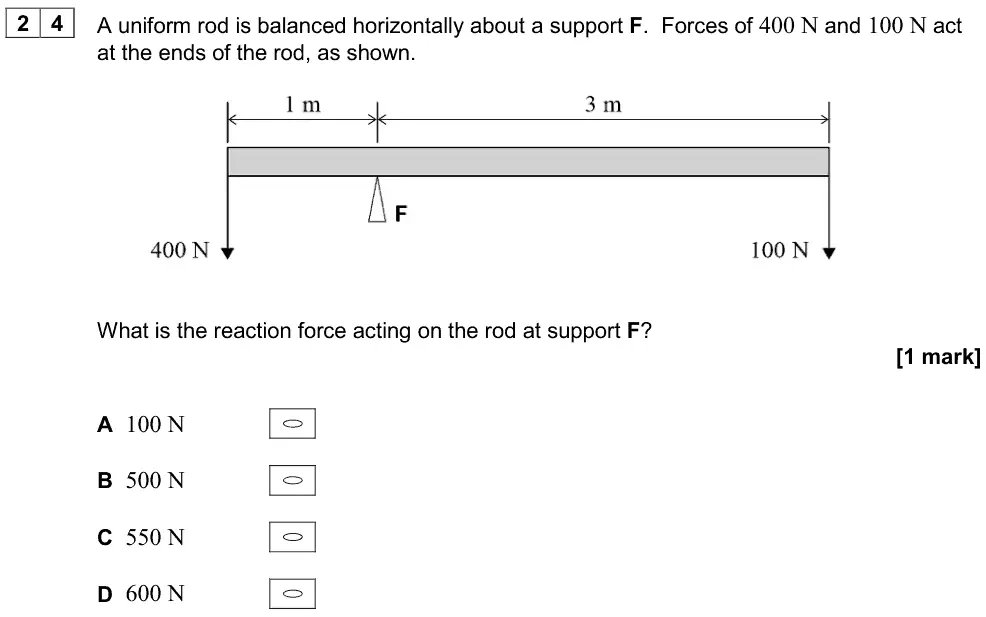
D
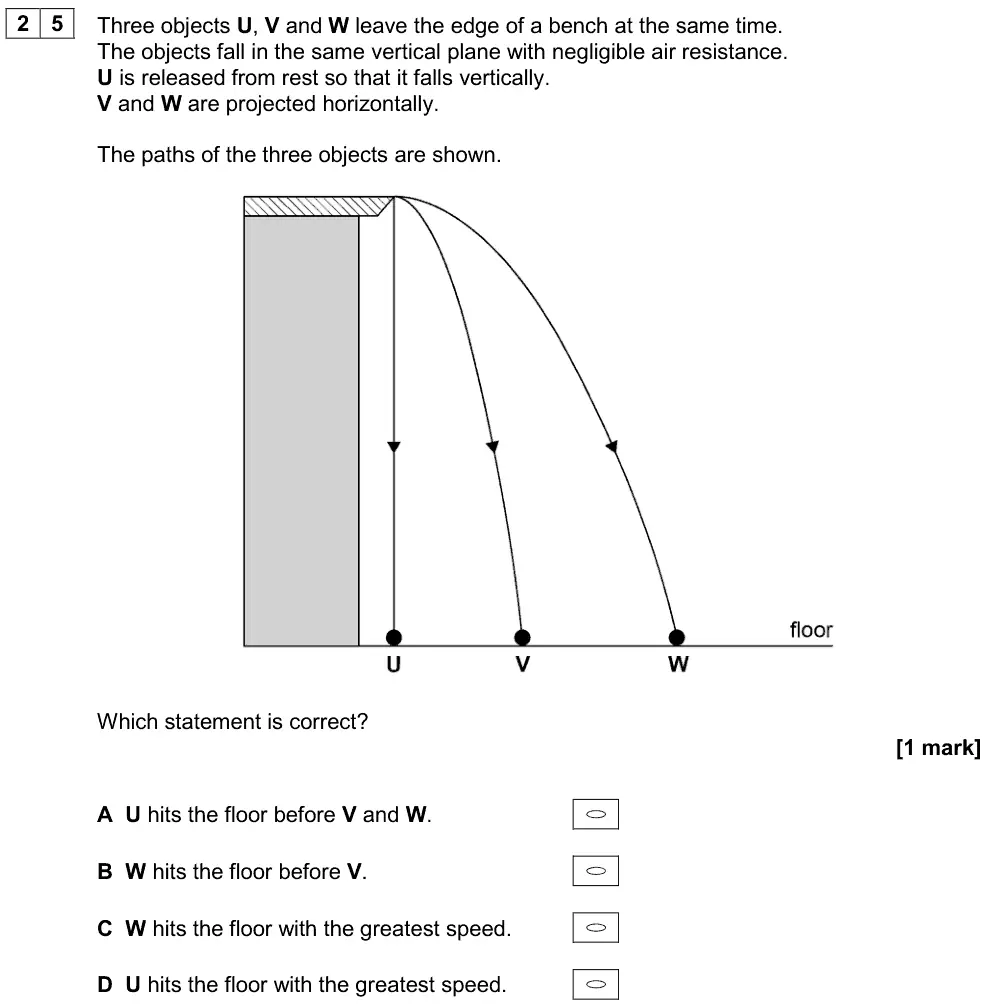
C
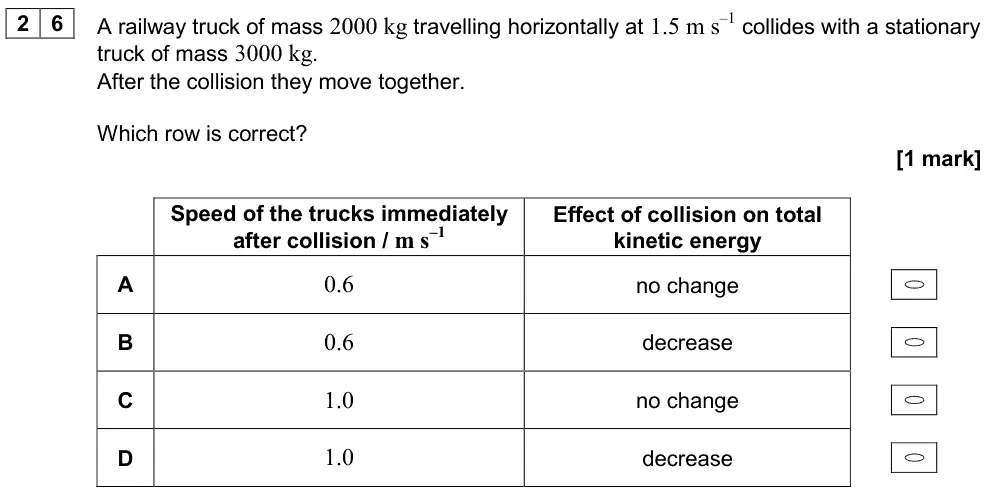
B
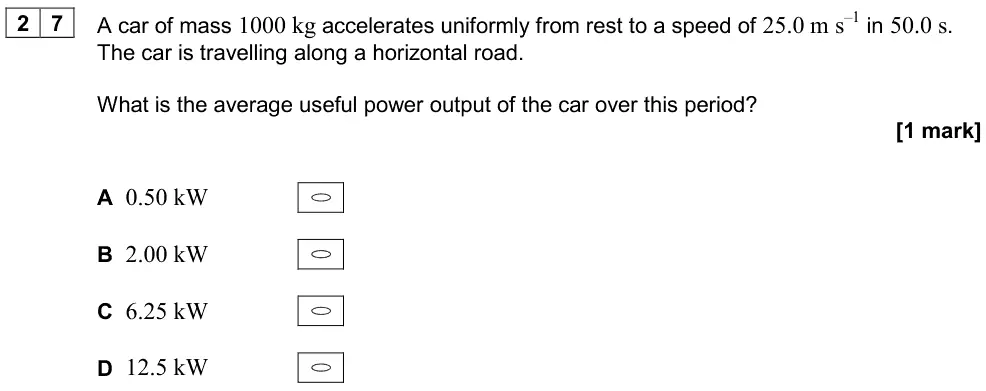
C
Skills: MS2.3 Substitute numerical values into algebraic equations using appropriate units for physical quantities
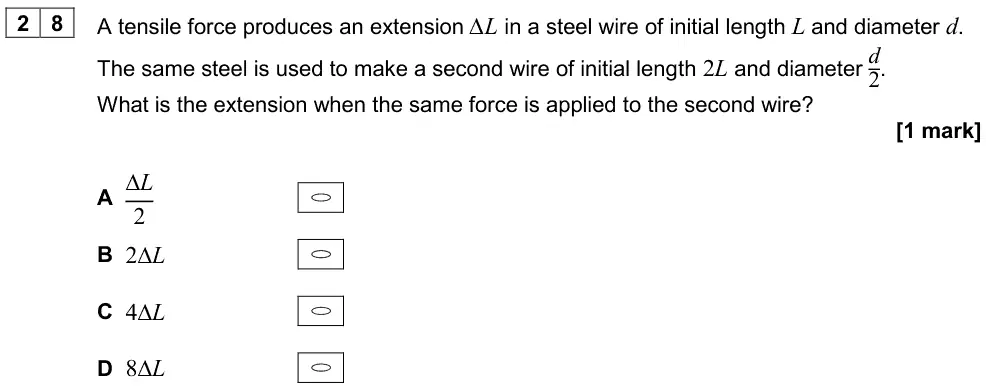
D
Skills: MS0.3 Use ratios, fractions and percentages
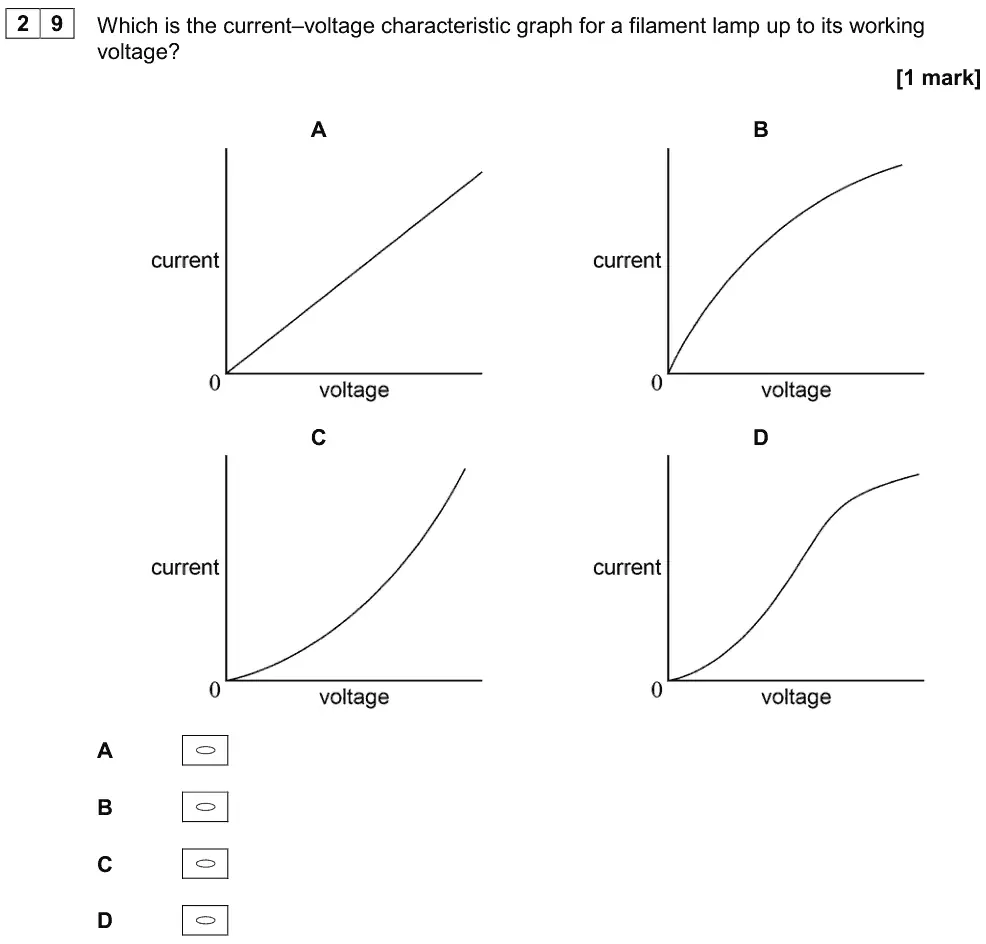
B
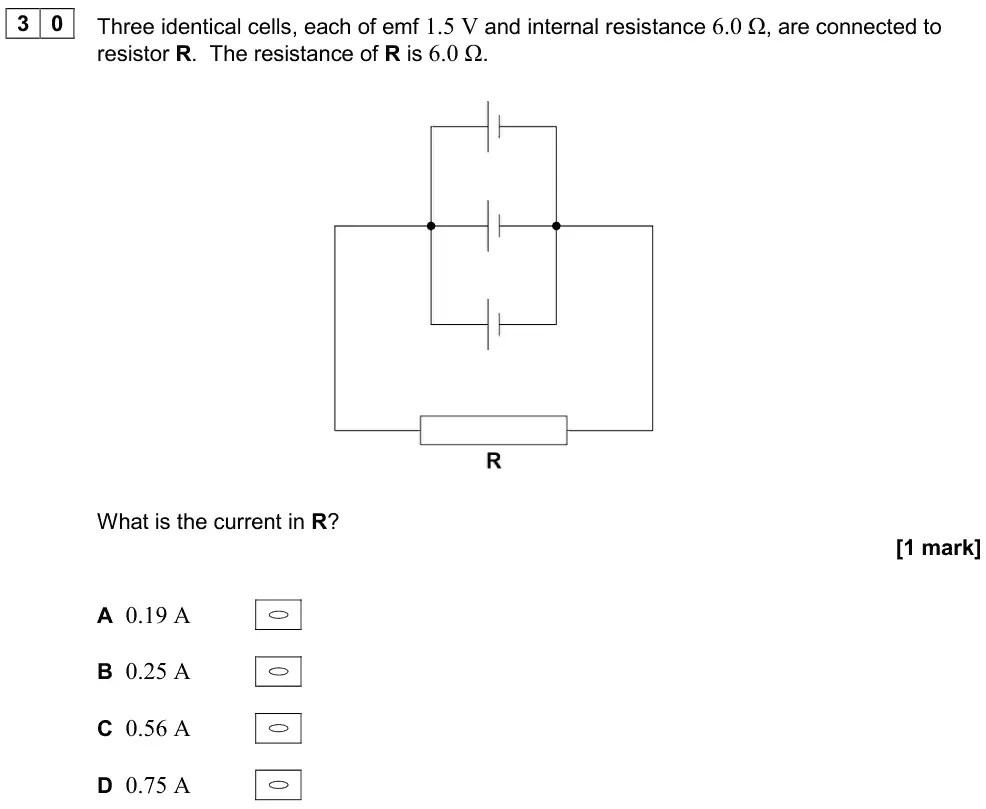
A
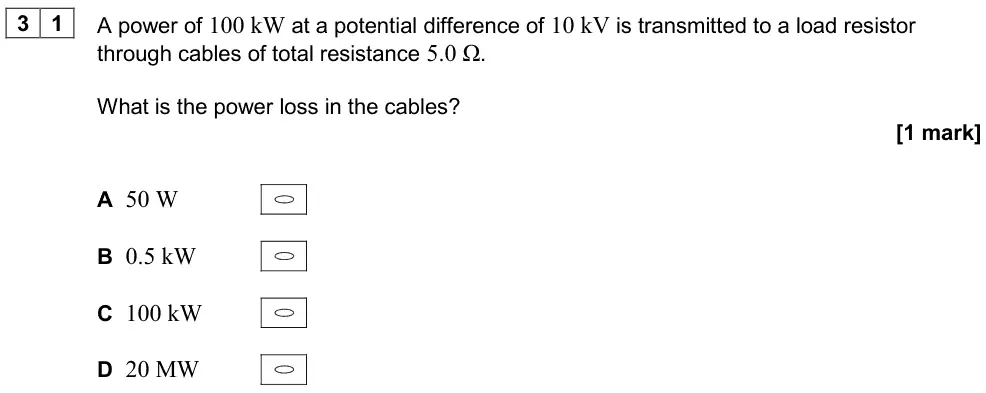
B
Skills: MS0.2 Recognise and use expressions in decimal and standard form
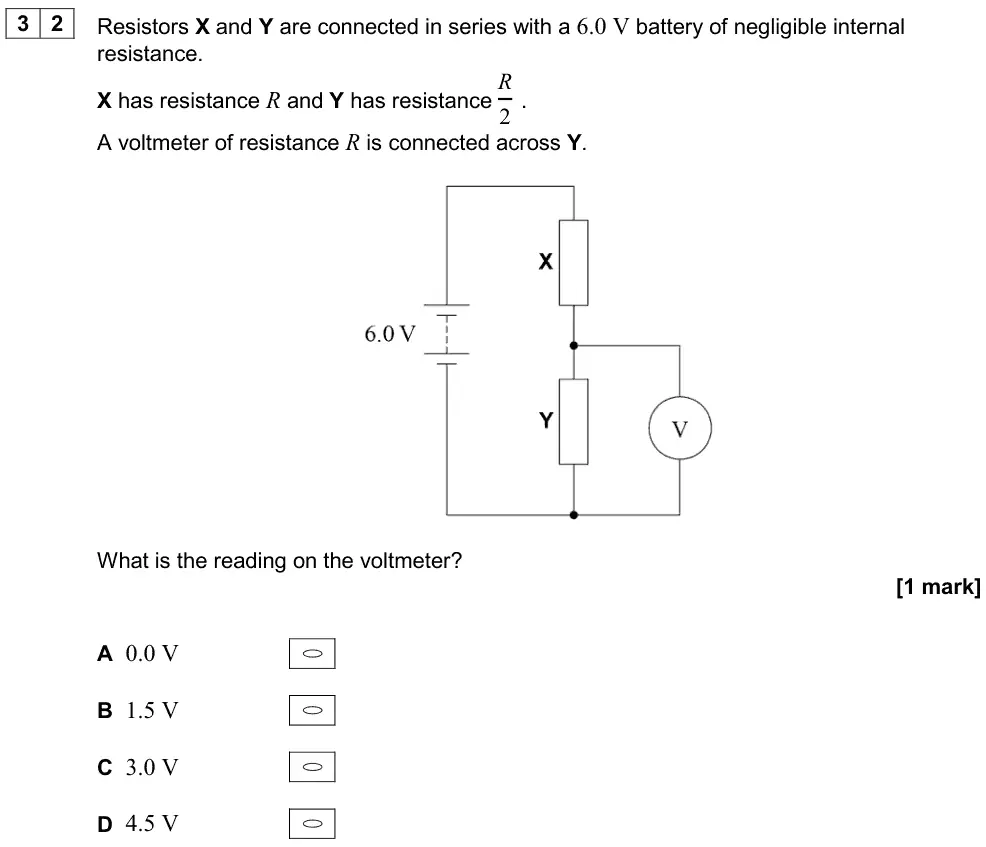
B
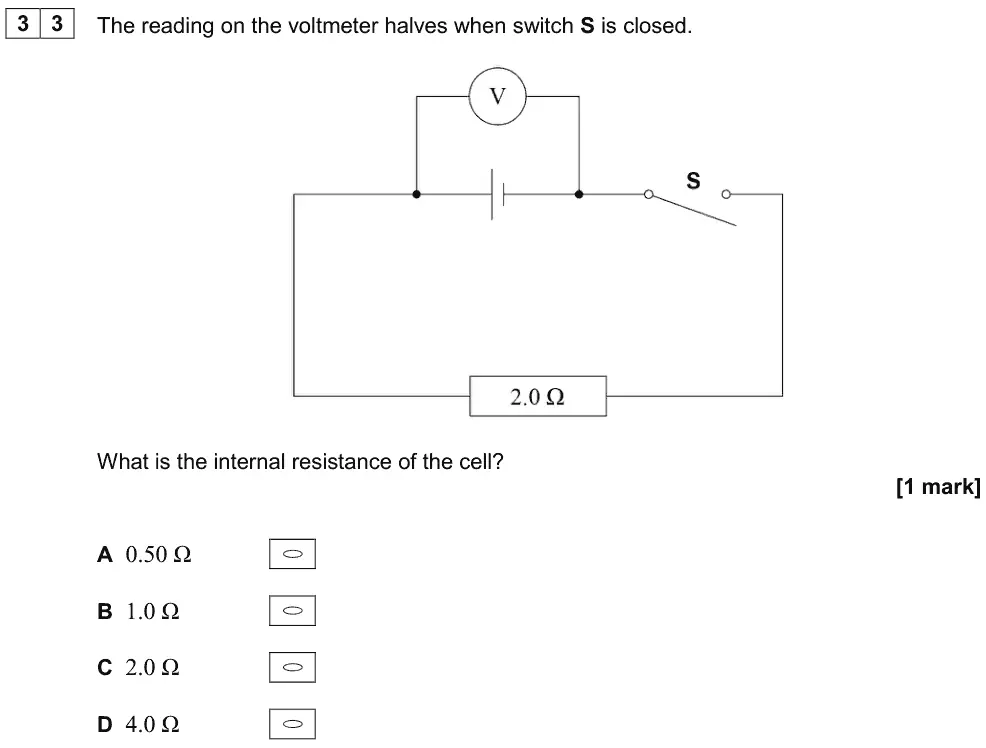
C
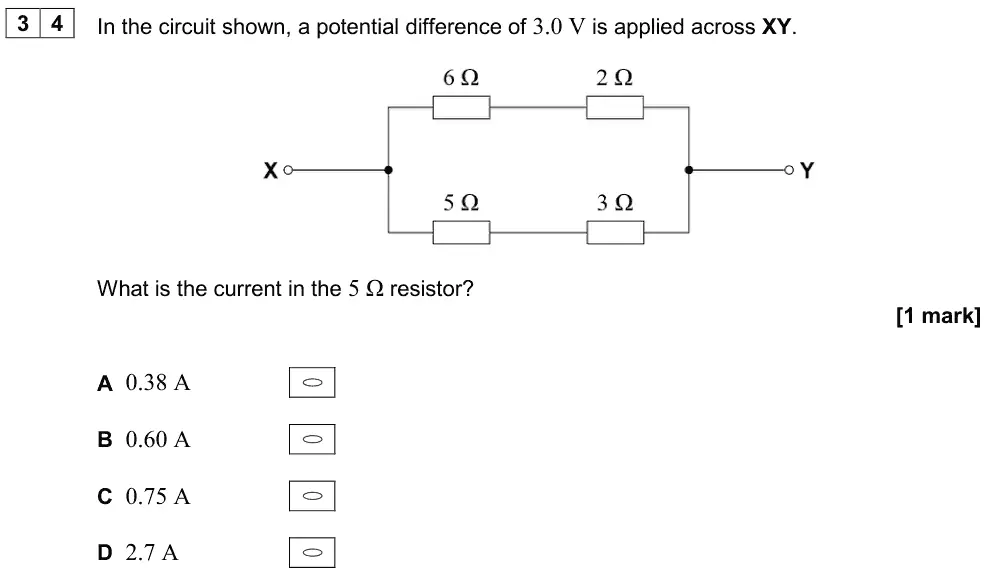
A
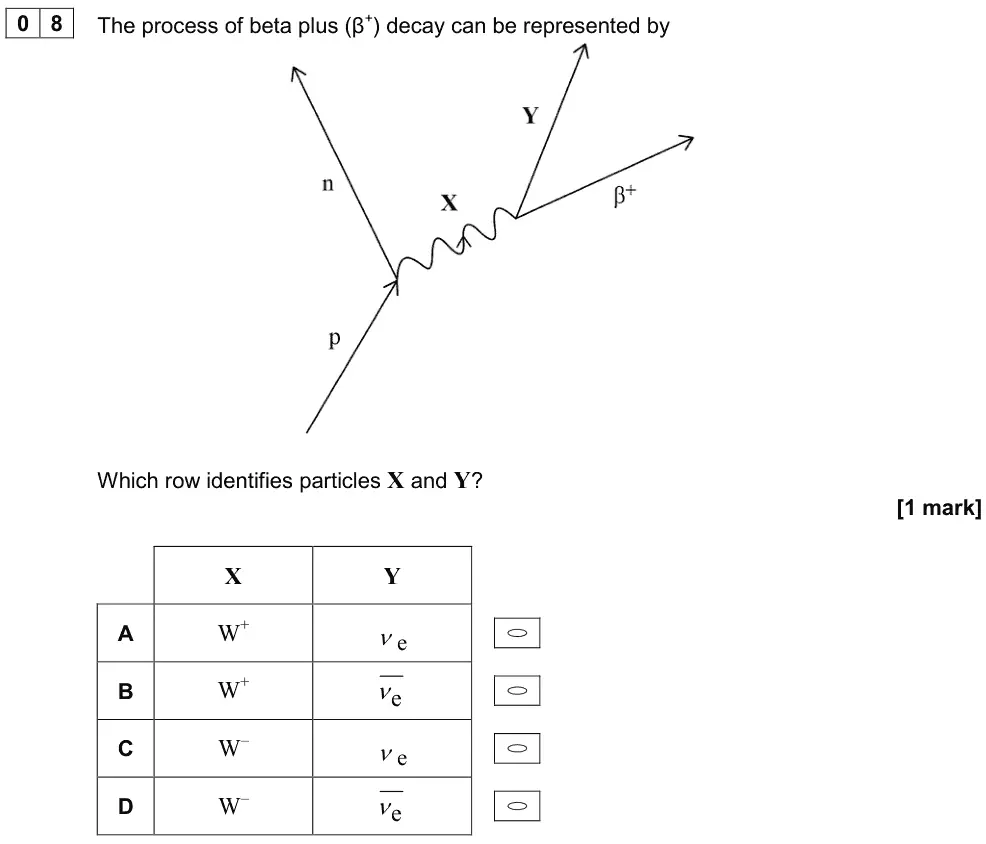
A
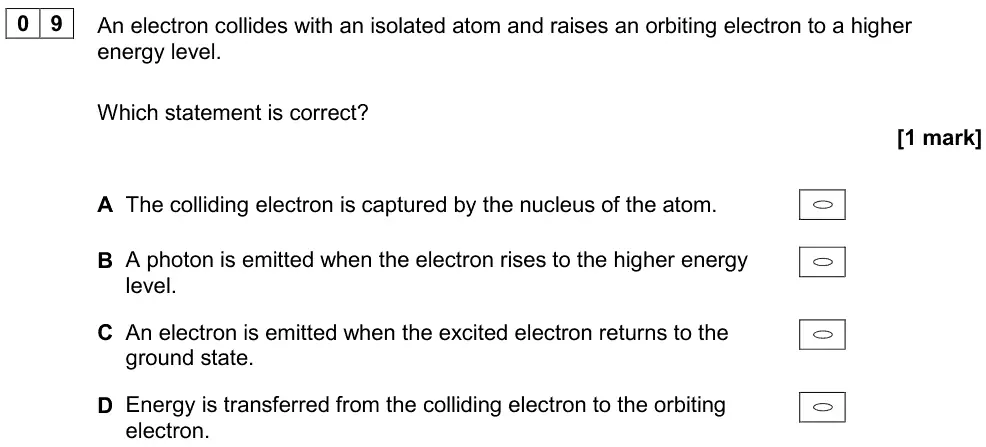
D
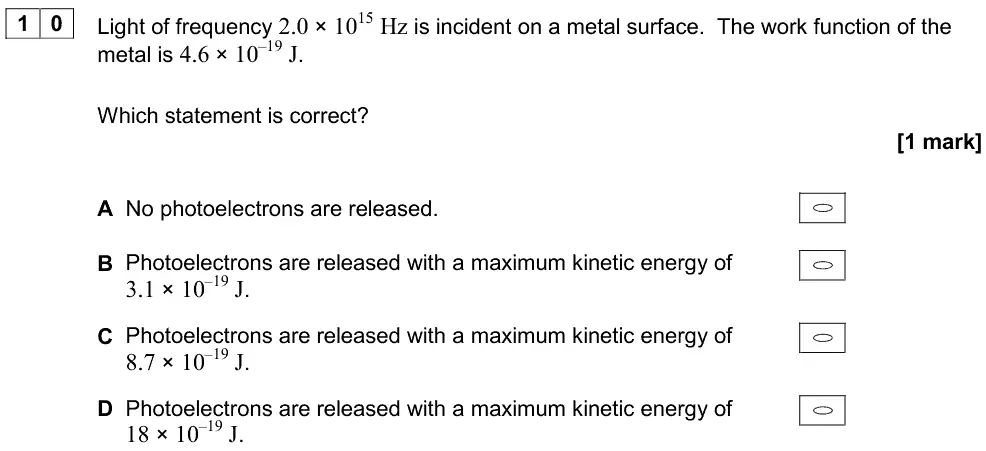
C
Skills: MS2.3 Substitute numerical values into algebraic equations using appropriate units for physical quantities
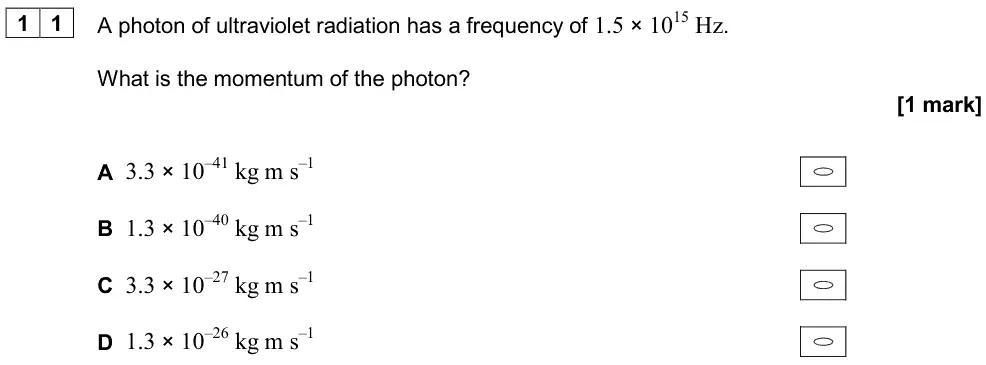
C
Skills: MS2.3 Substitute numerical values into algebraic equations using appropriate units for physical quantities
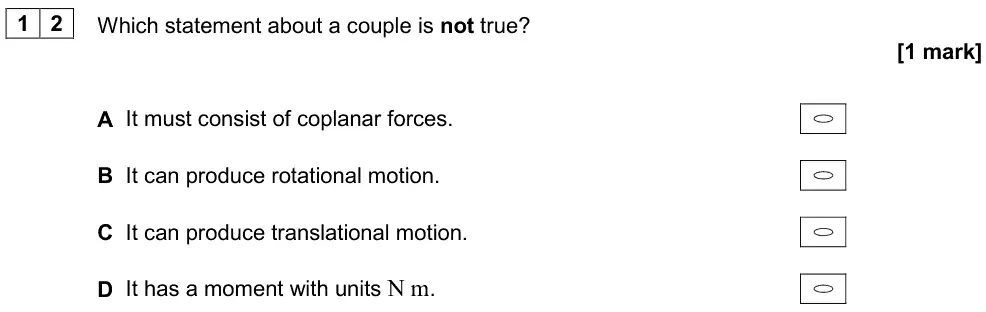
C
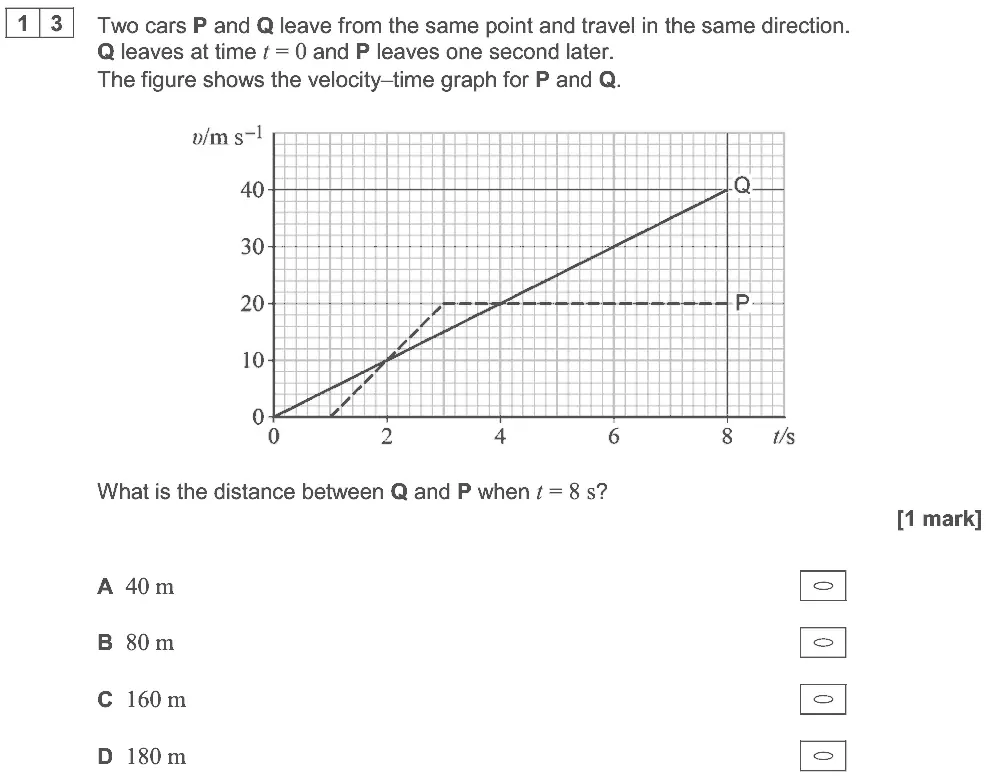
A
Skills: MS3.8 Understand the possible physical significance of the area between a curve and the x axis and be able to calculate it or estimate it by graphical methods as appropriate
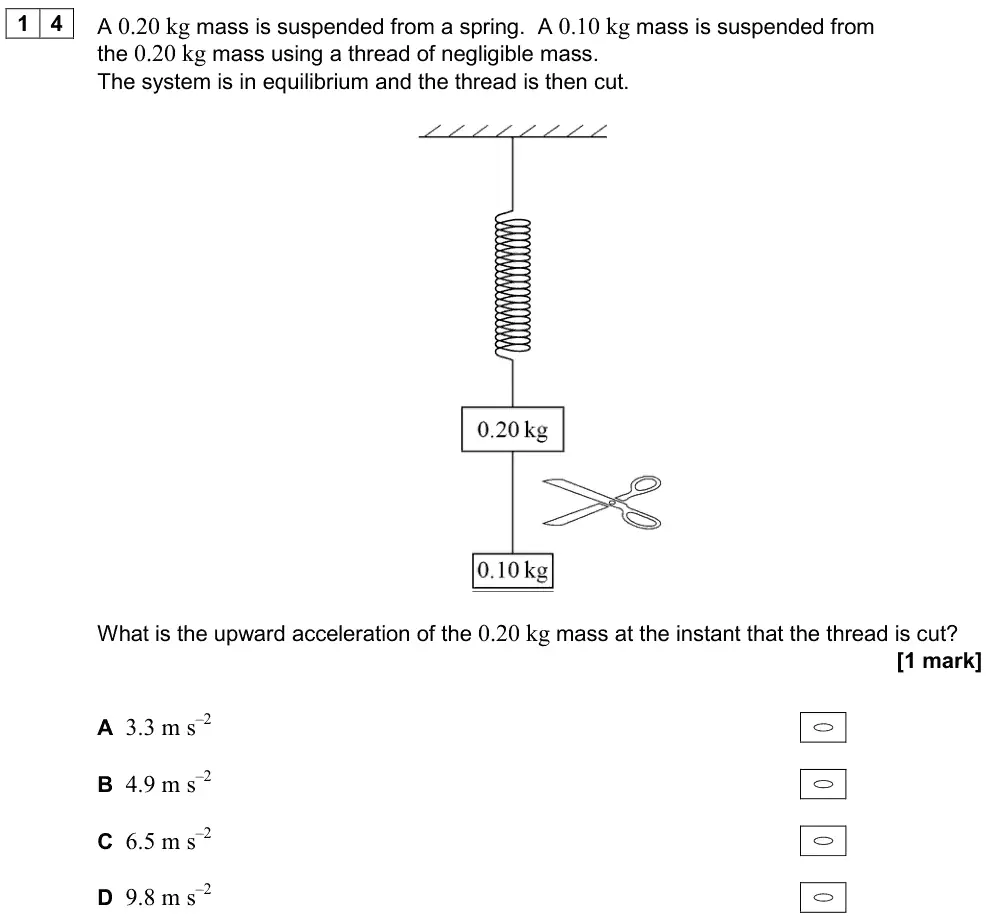
B
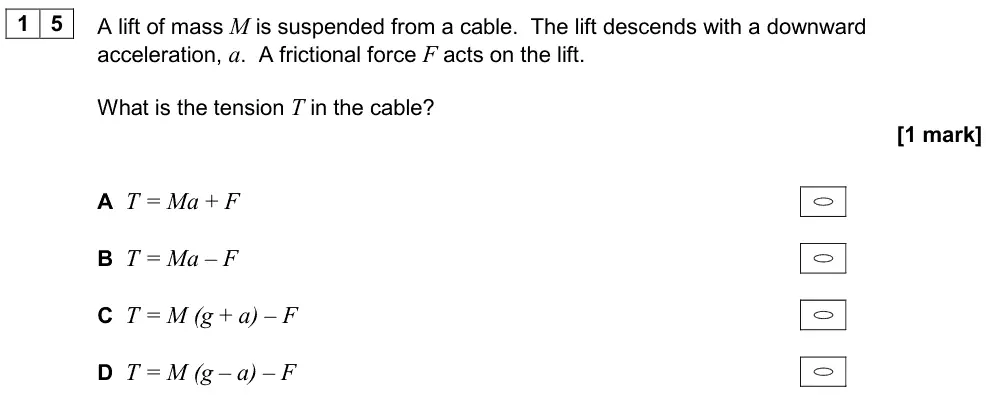
D
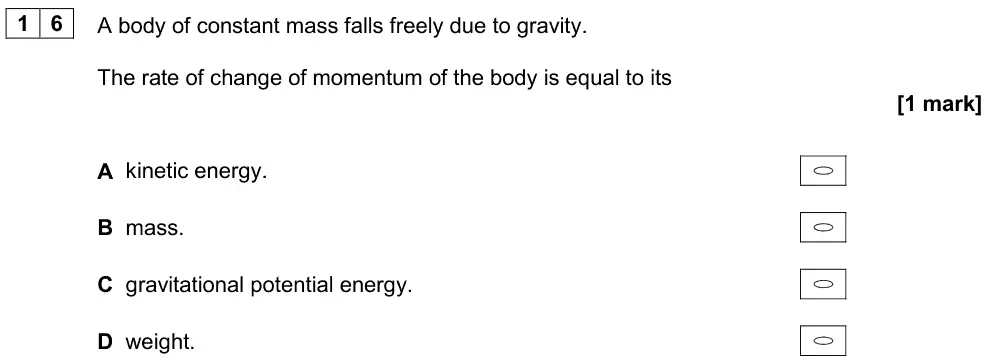
D
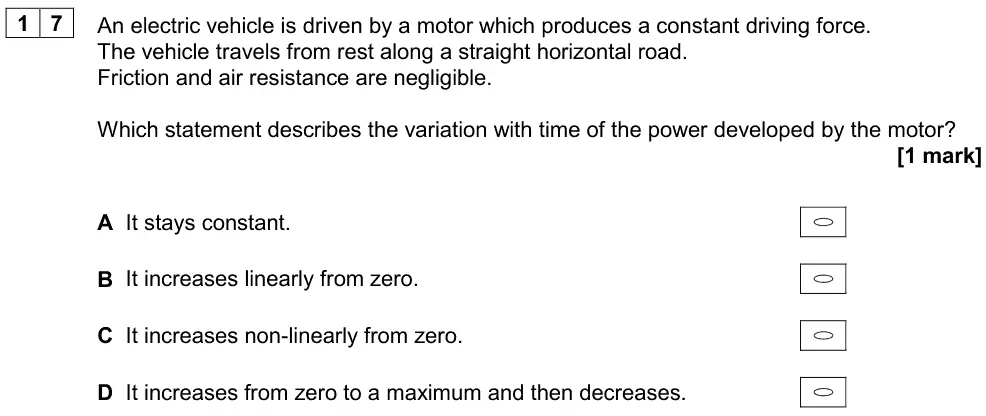
B
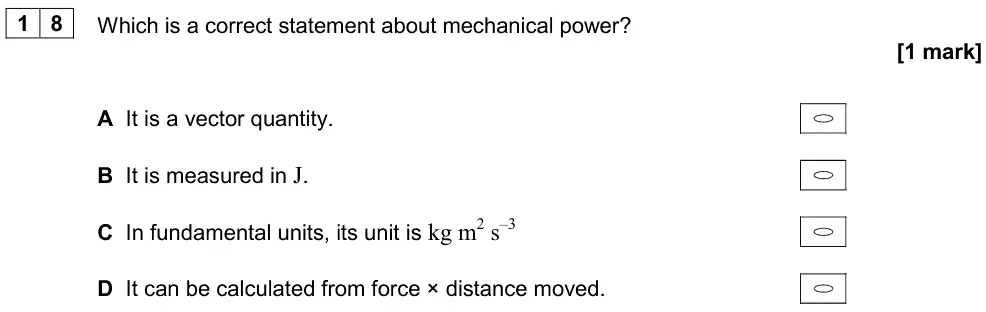
C
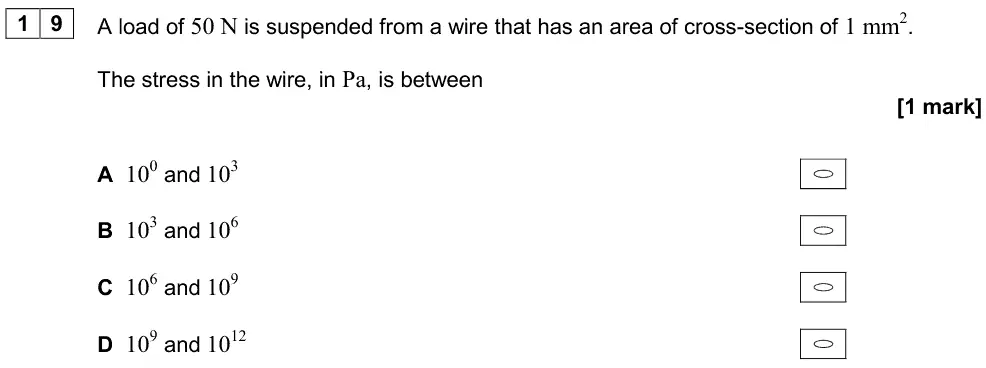
C
Skills: MS0.2 Recognise and use expressions in decimal and standard form
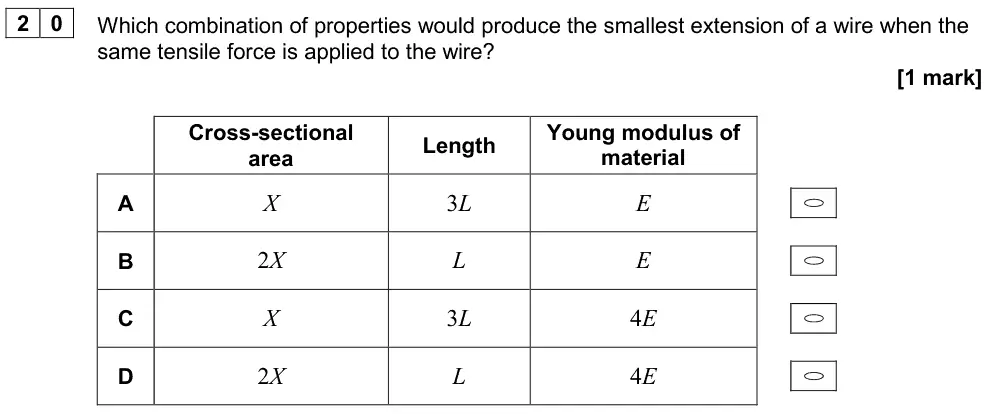
D
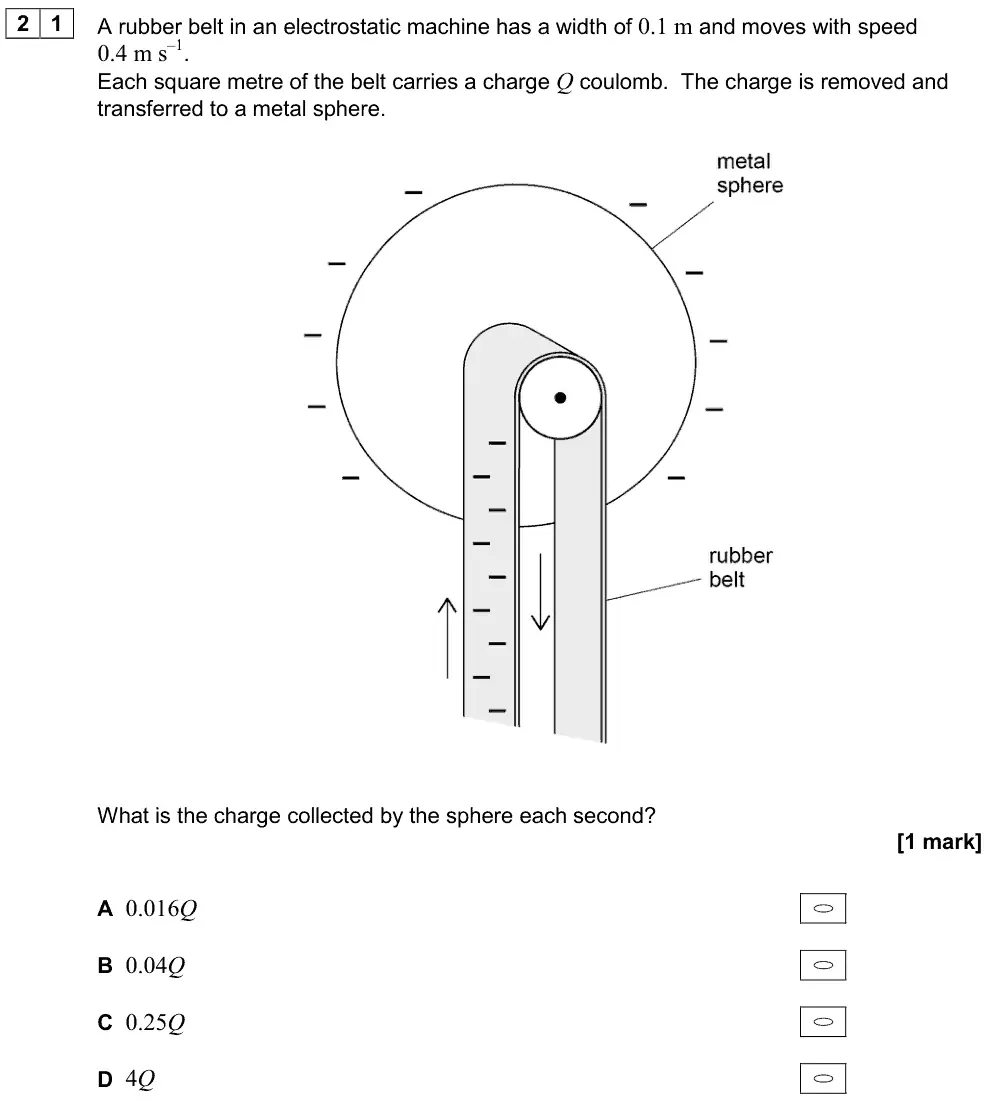
B
Skills: MS4.3 Calculate areas of triangles, circumferences and areas of circles, surface areas and volumes of rectangular blocks, cylinders and spheres
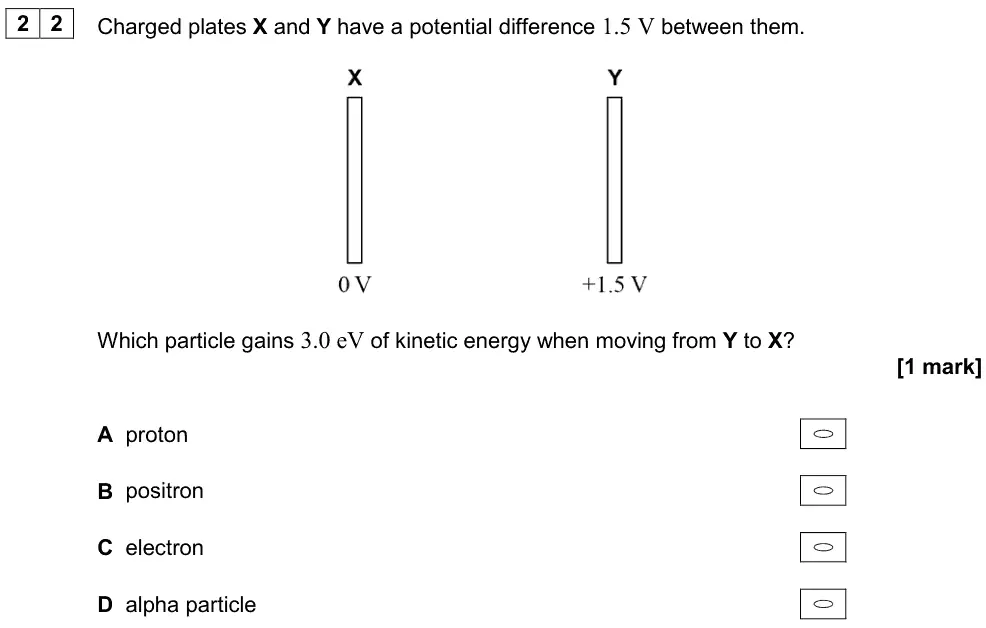
D
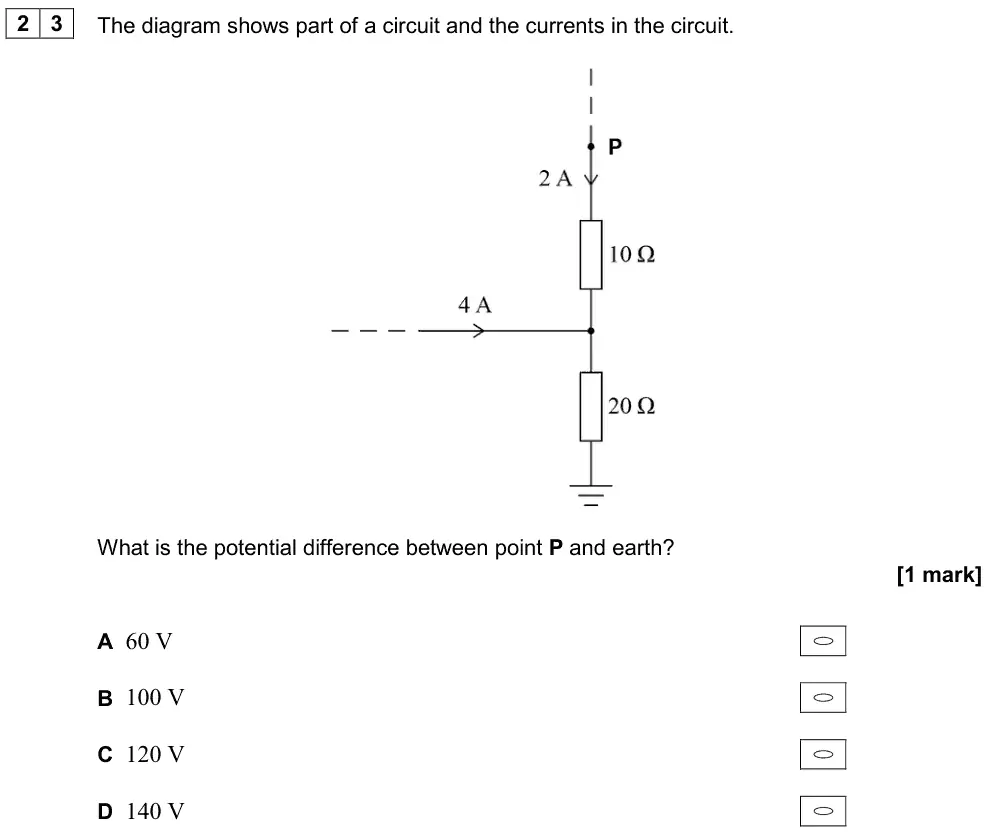
D
Skills: MS2.3 Substitute numerical values into algebraic equations using appropriate units for physical quantities
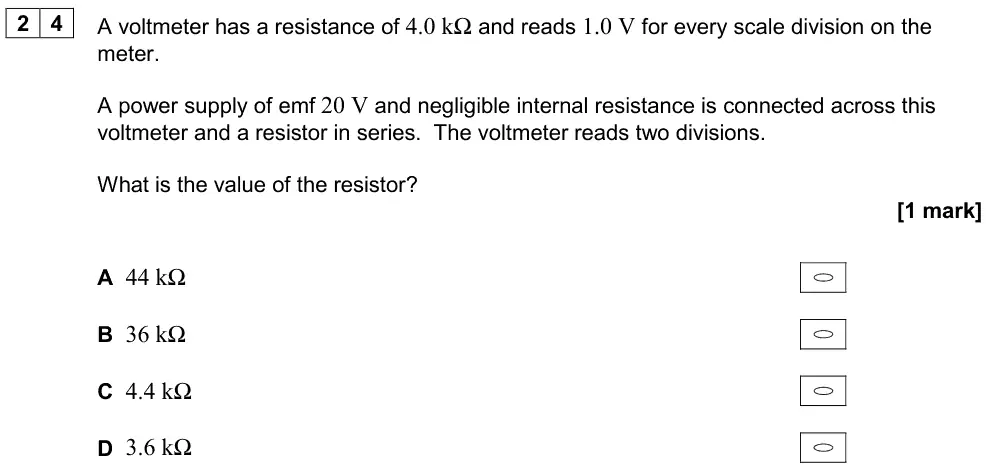
B
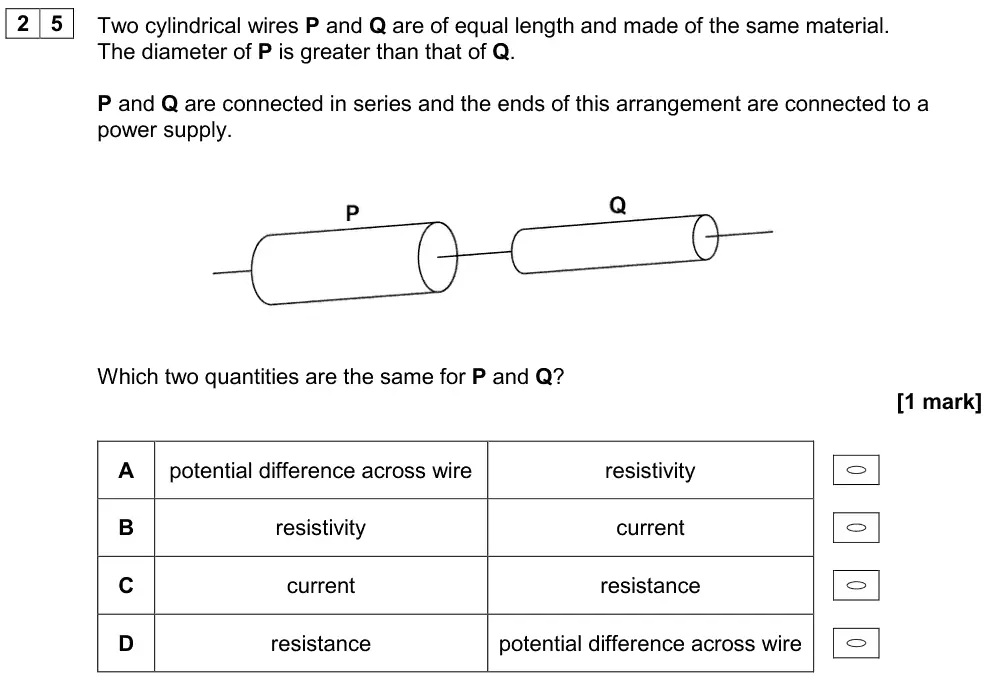
B
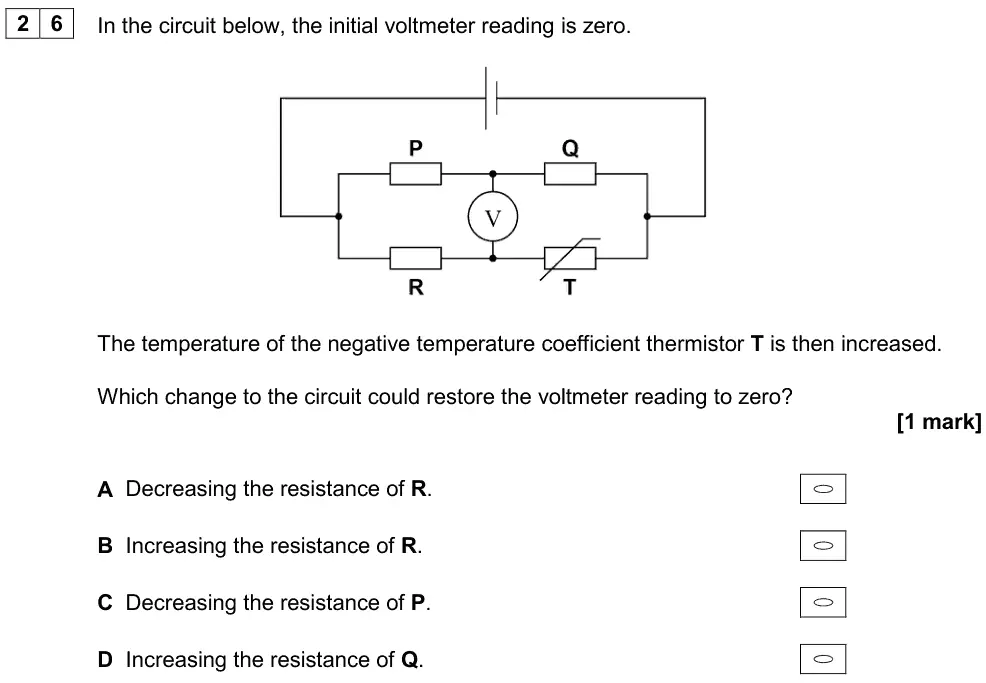
A
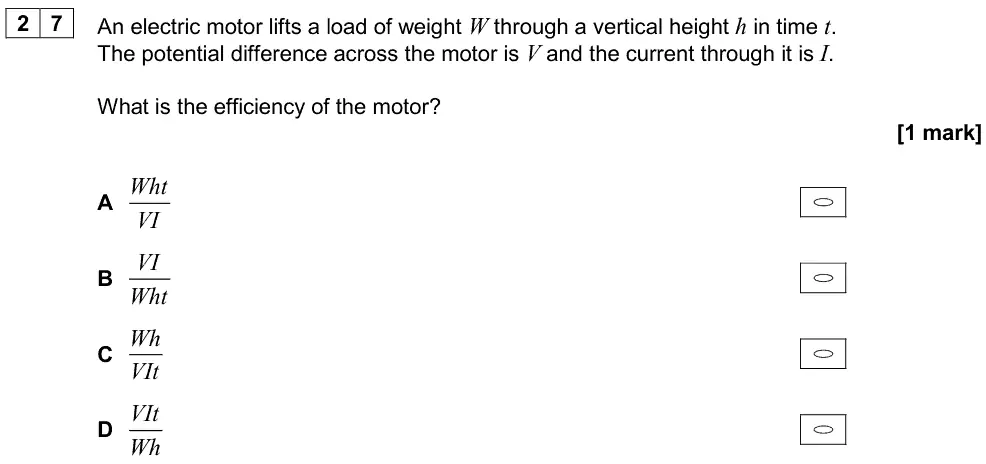
C
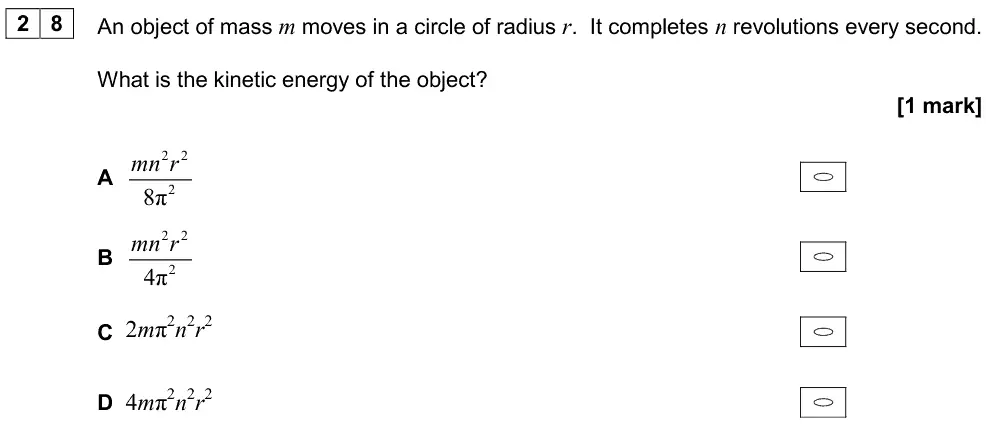
C
Skills: MS2.3 Substitute numerical values into algebraic equations using appropriate units for physical quantities
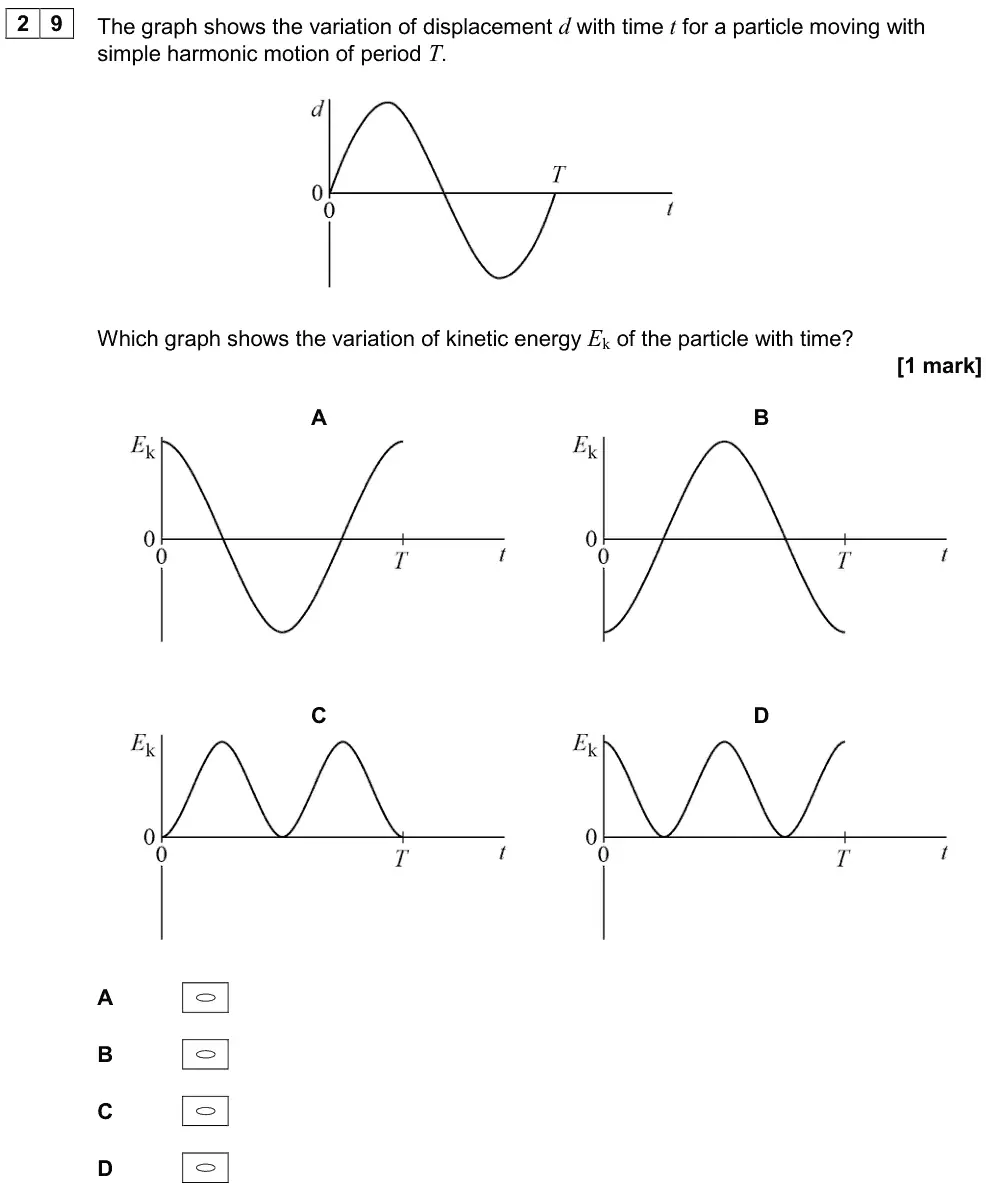
D
Skills: MS3.1 Translate information between graphical, numerical and algebraic forms
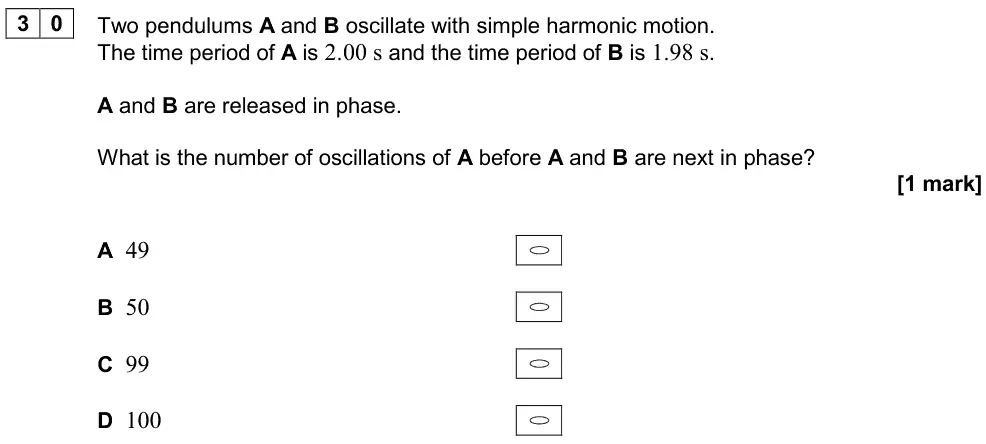
C
Skills: MS0.3 Use ratios, fractions and percentages
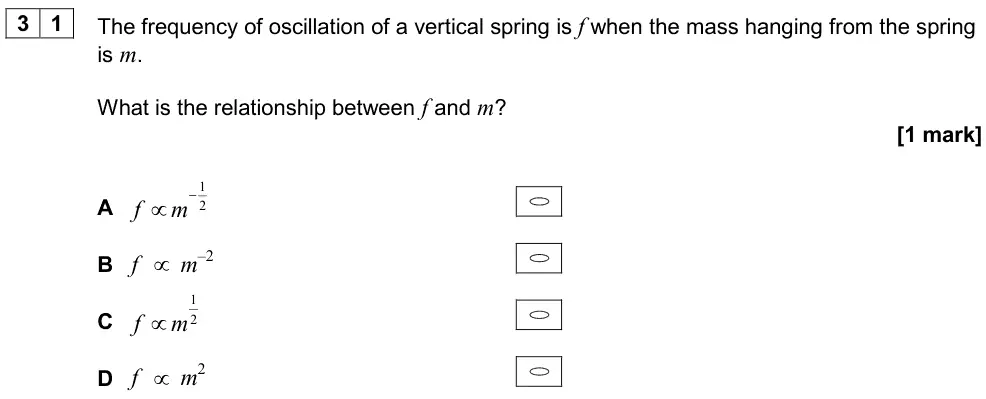
A
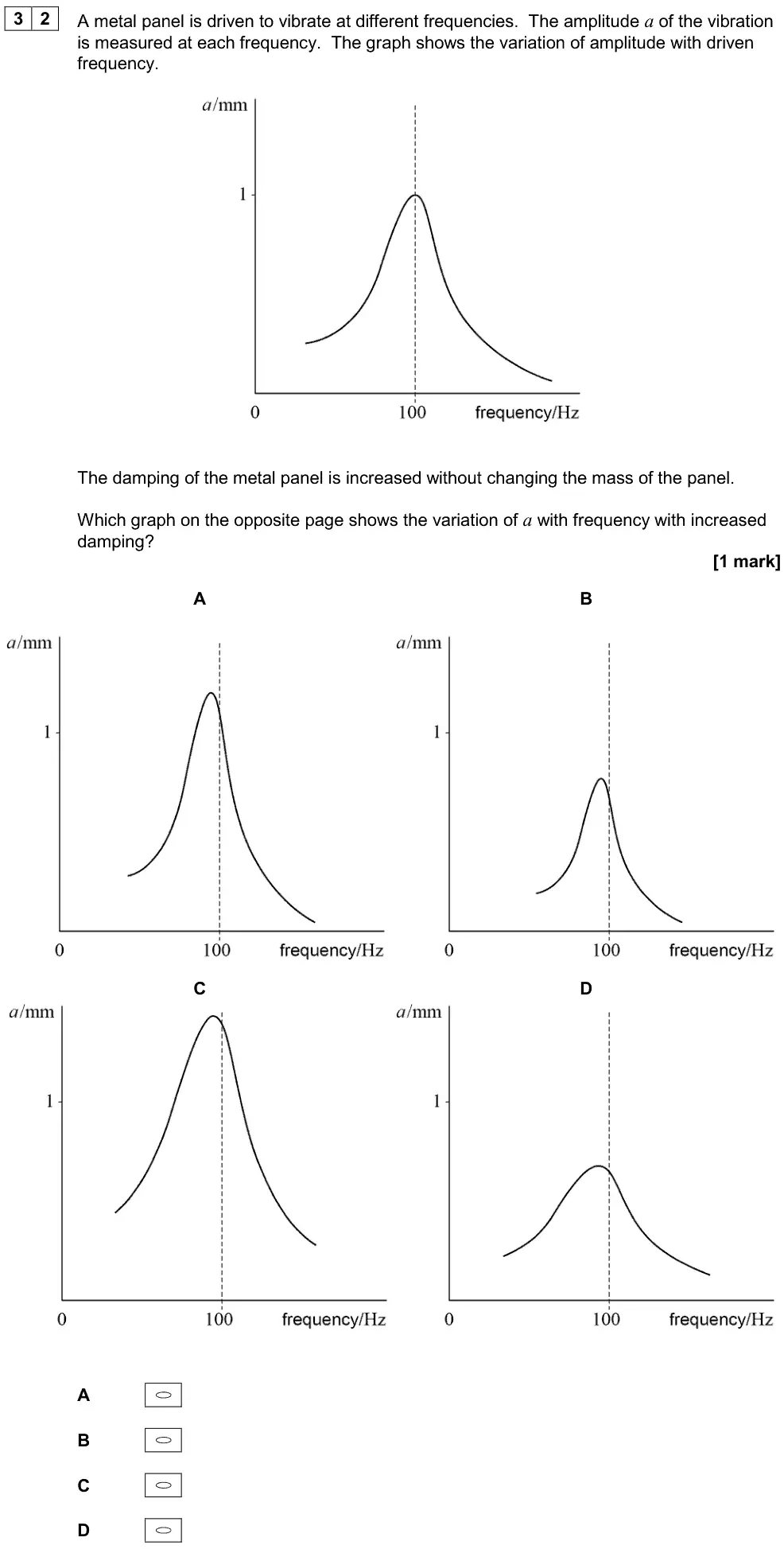
D
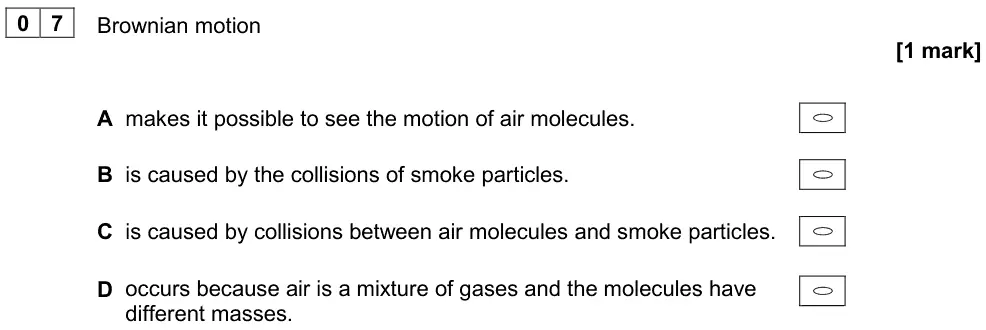
C
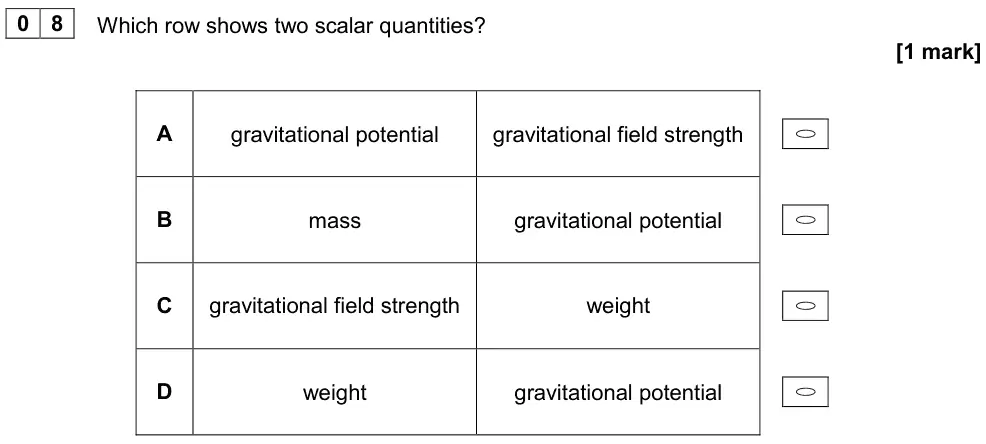
B
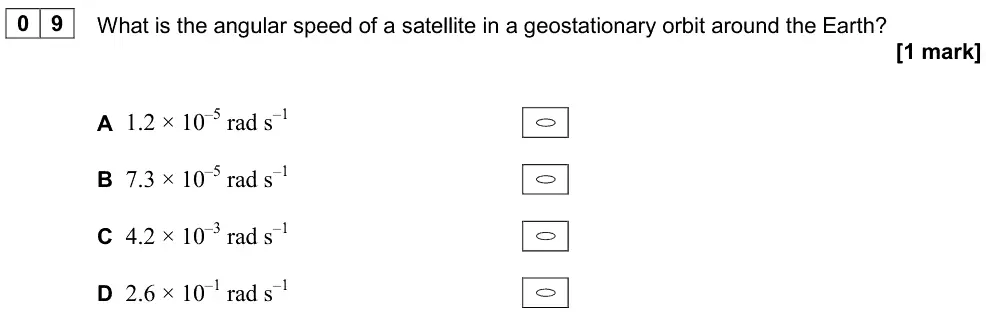
B
Skills: MS2.3 Substitute numerical values into algebraic equations using appropriate units for physical quantities
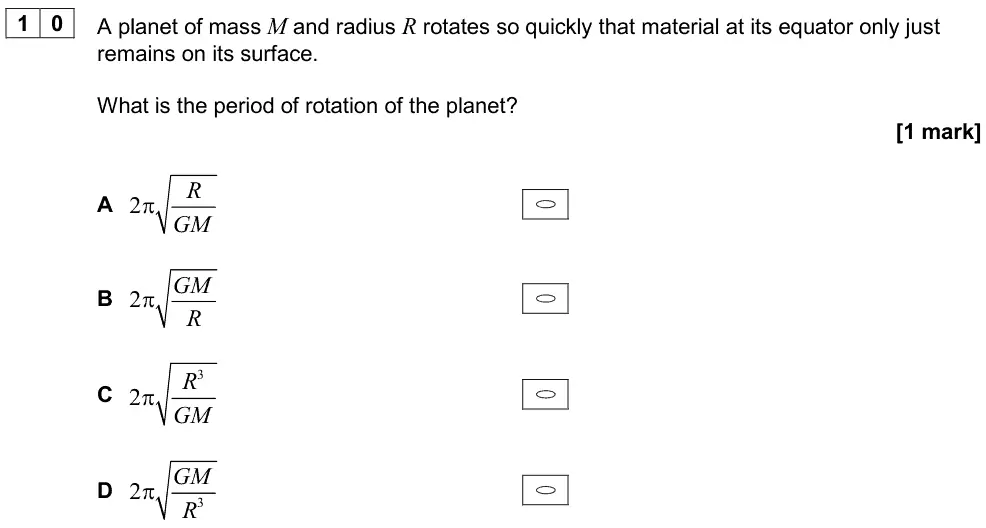
C
Skills: MS2.2 Change the subject of an equation, including non-linear equations
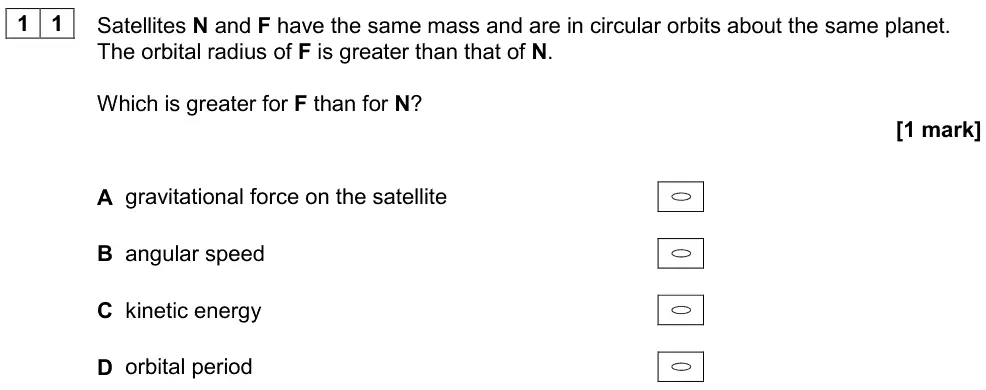
D
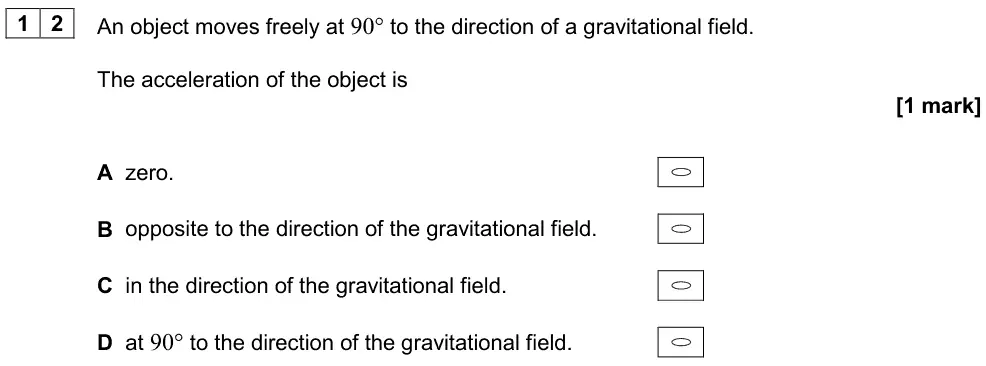
C
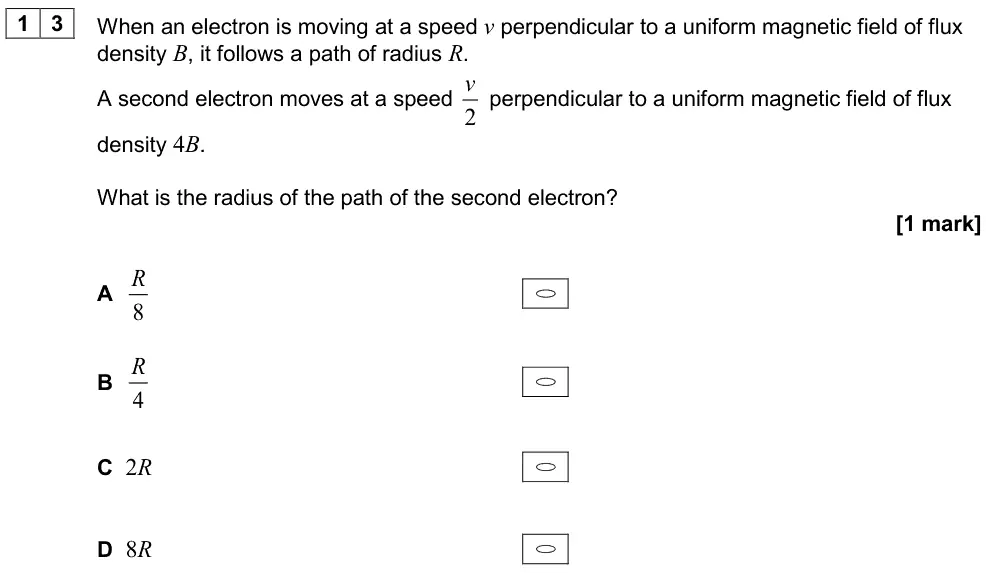
A
Skills: MS0.3 Use ratios, fractions and percentages
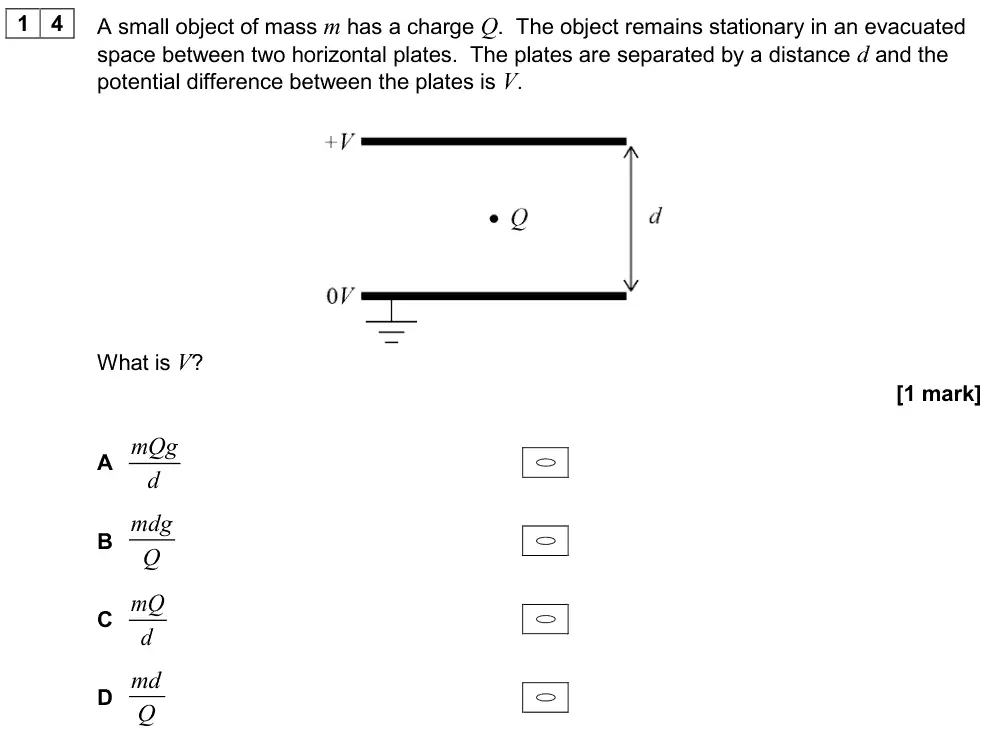
B
Skills: MS2.2 Change the subject of an equation, including non-linear equations
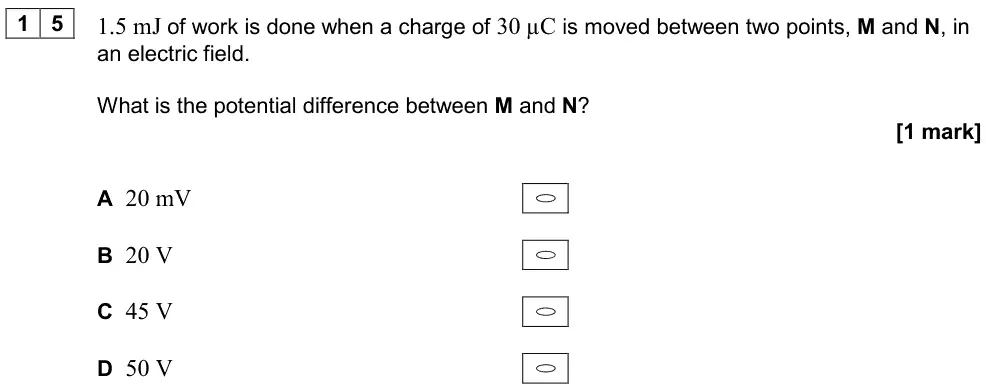
D
Skills: MS0.2 Recognise and use expressions in decimal and standard form
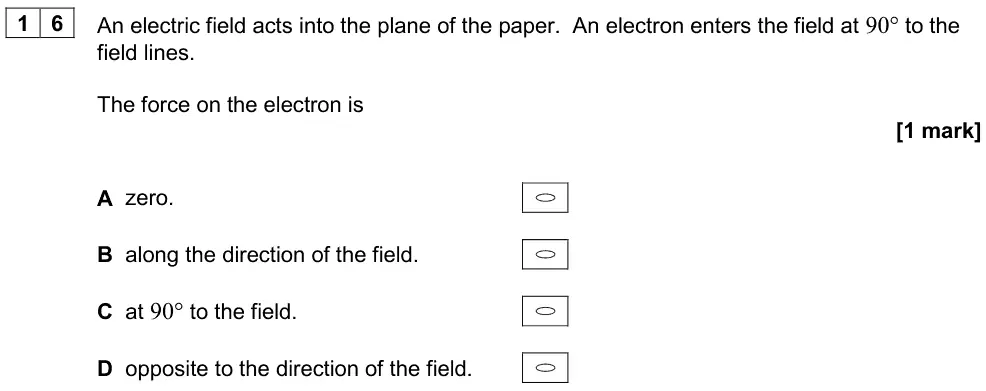
D
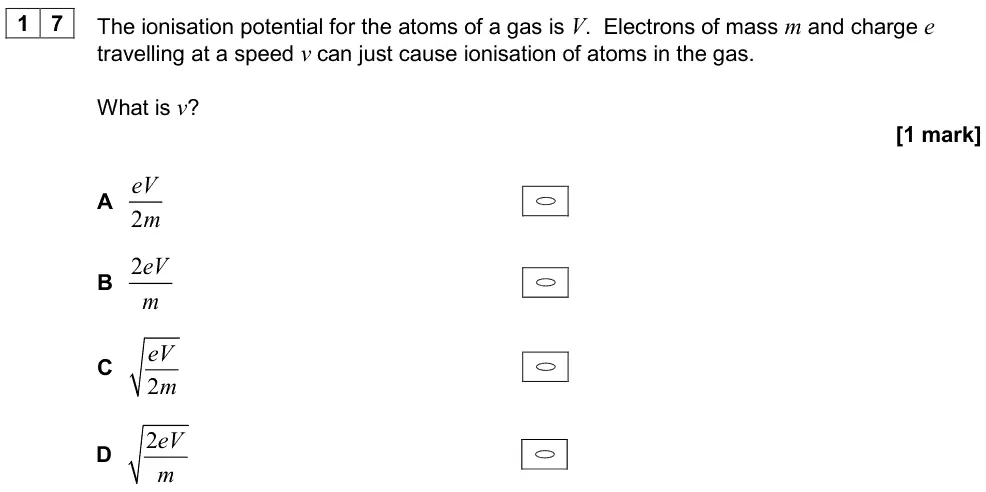
D
Skills: MS2.2 Change the subject of an equation, including non-linear equations
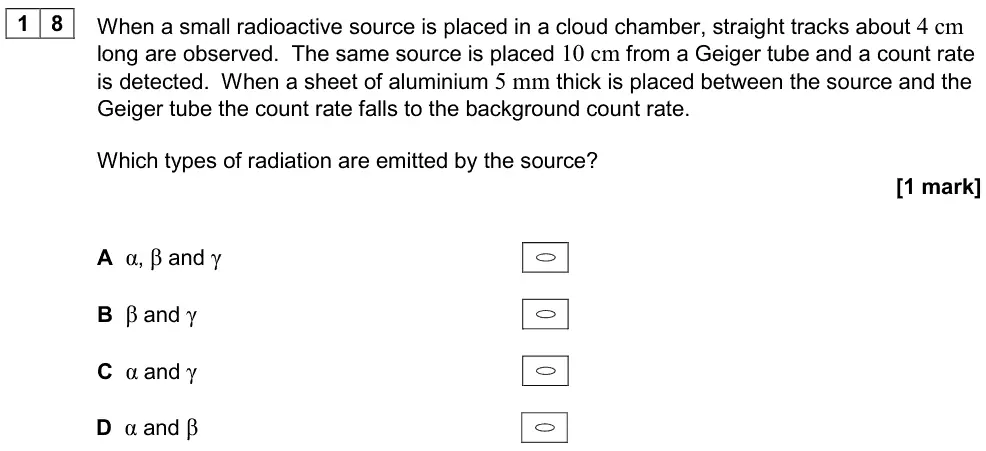
D
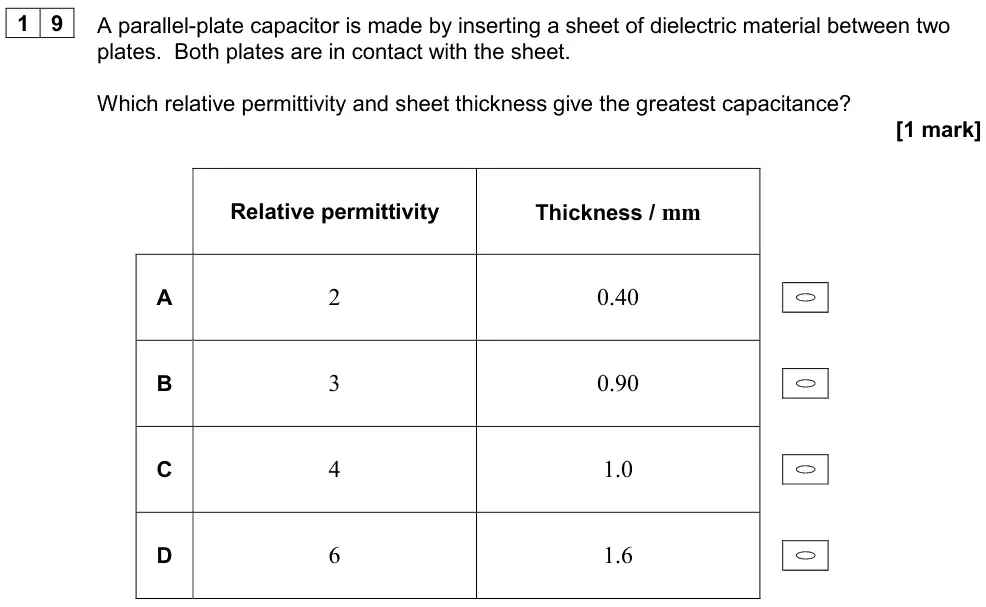
A
Skills: MS0.3 Use ratios, fractions and percentages
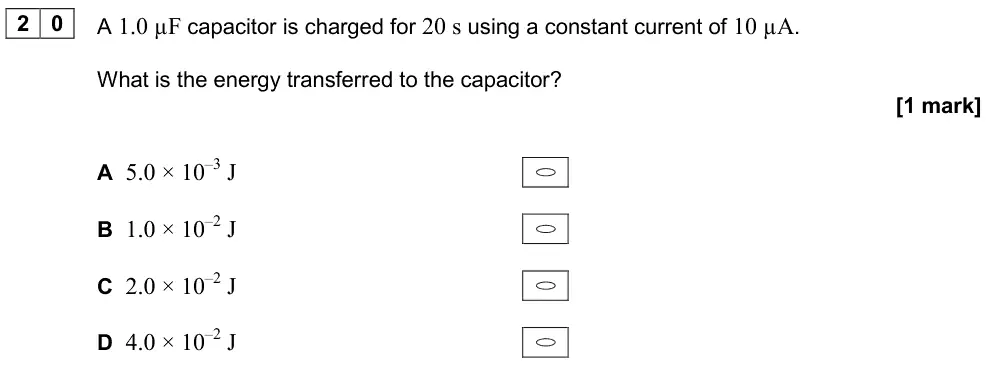
C
Skills: MS2.3 Substitute numerical values into algebraic equations using appropriate units for physical quantities
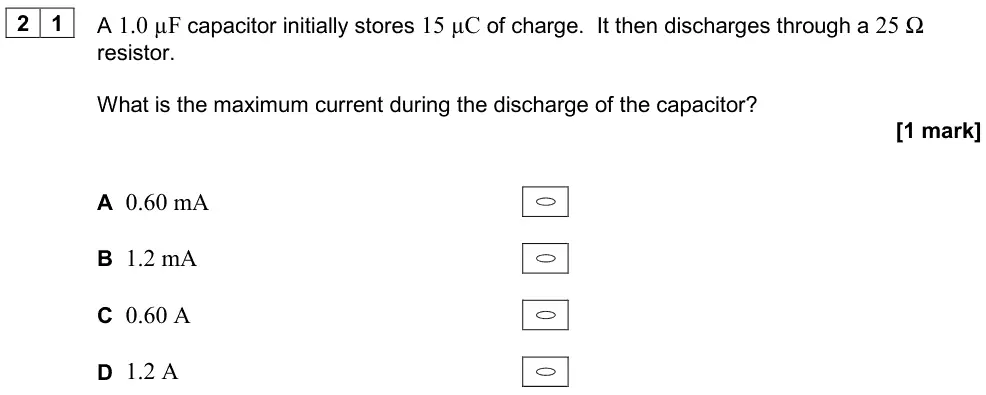
C
Skills: MS2.3 Substitute numerical values into algebraic equations using appropriate units for physical quantities
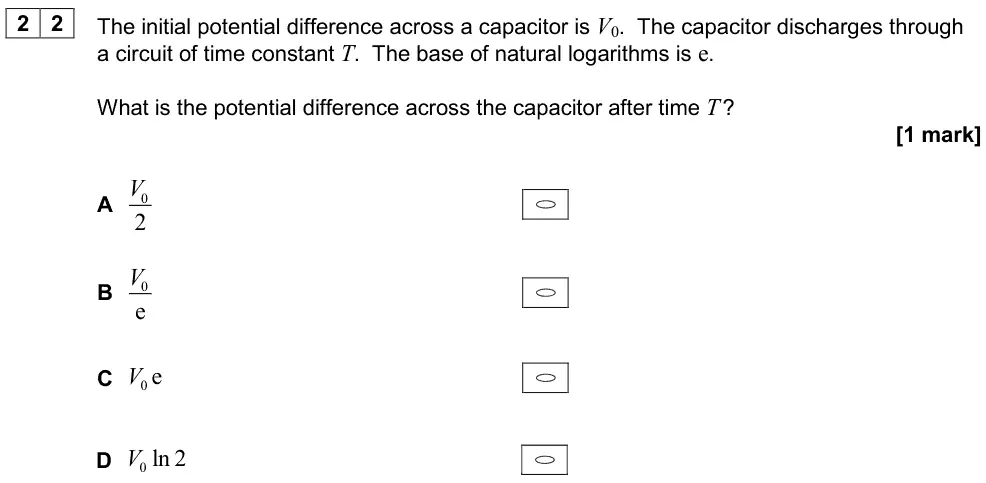
B
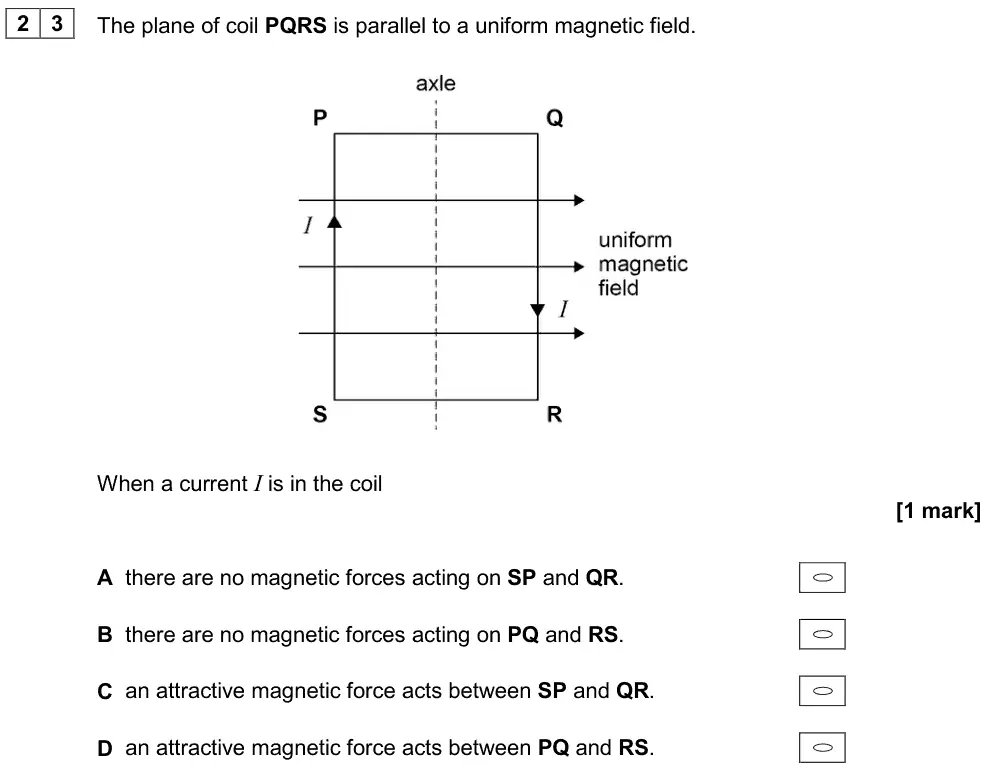
B
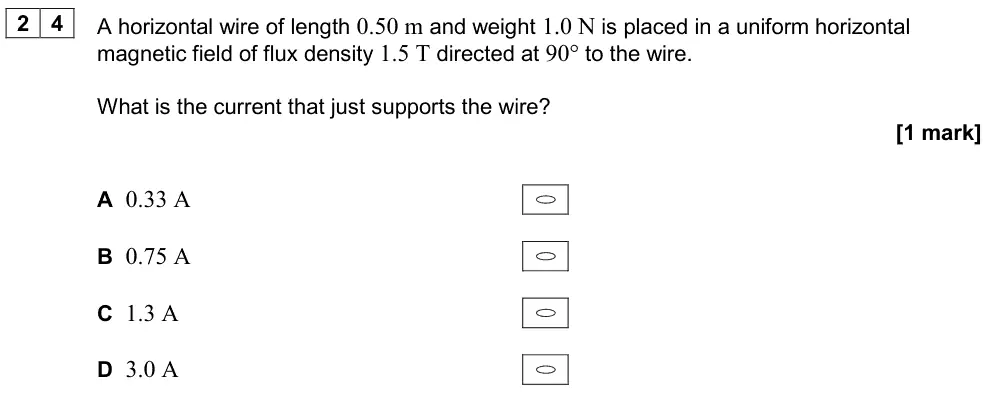
C
Skills: MS2.2 Change the subject of an equation, including non-linear equations
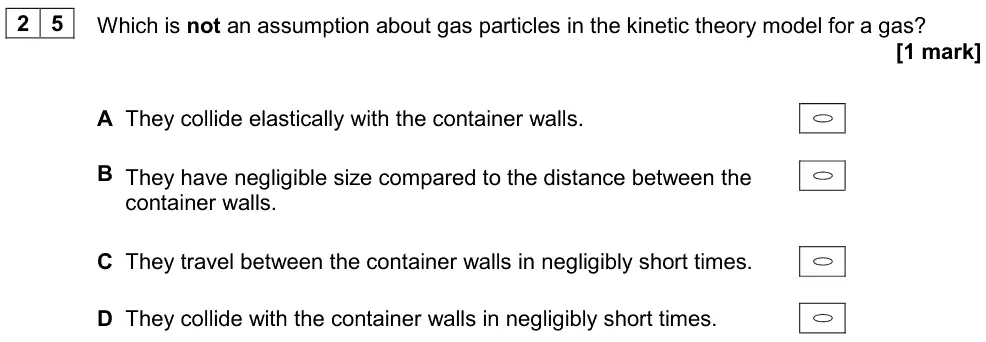
C
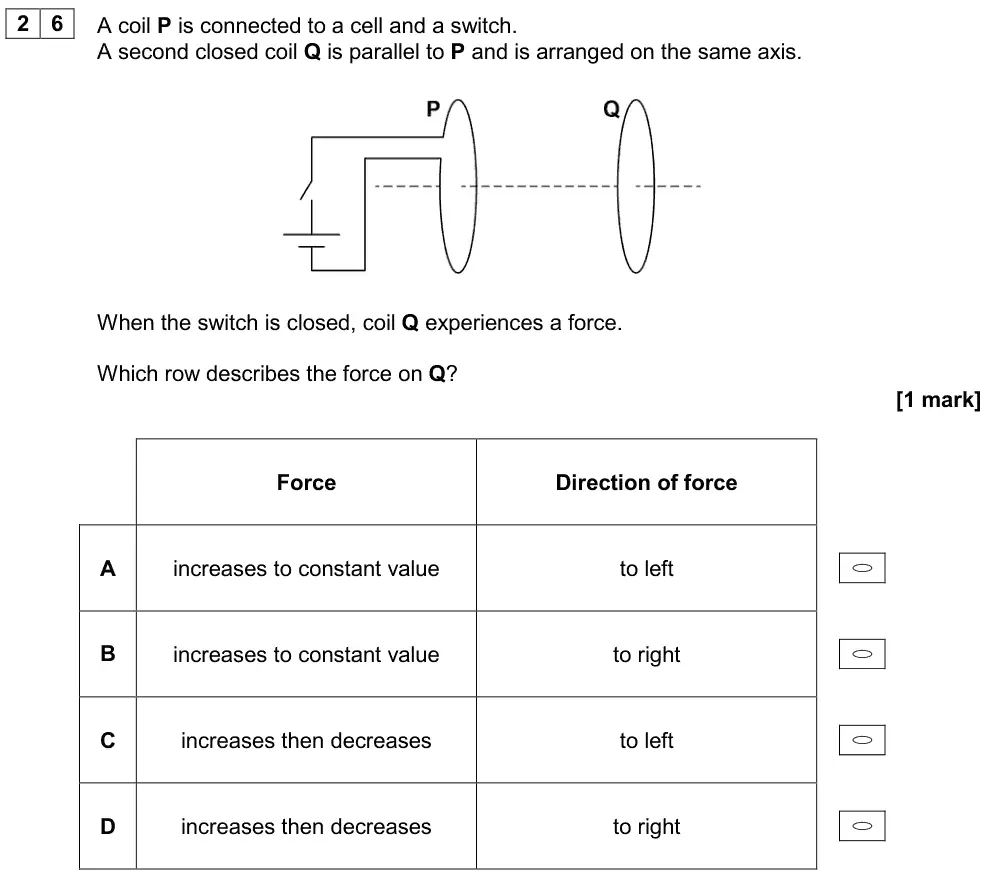
D
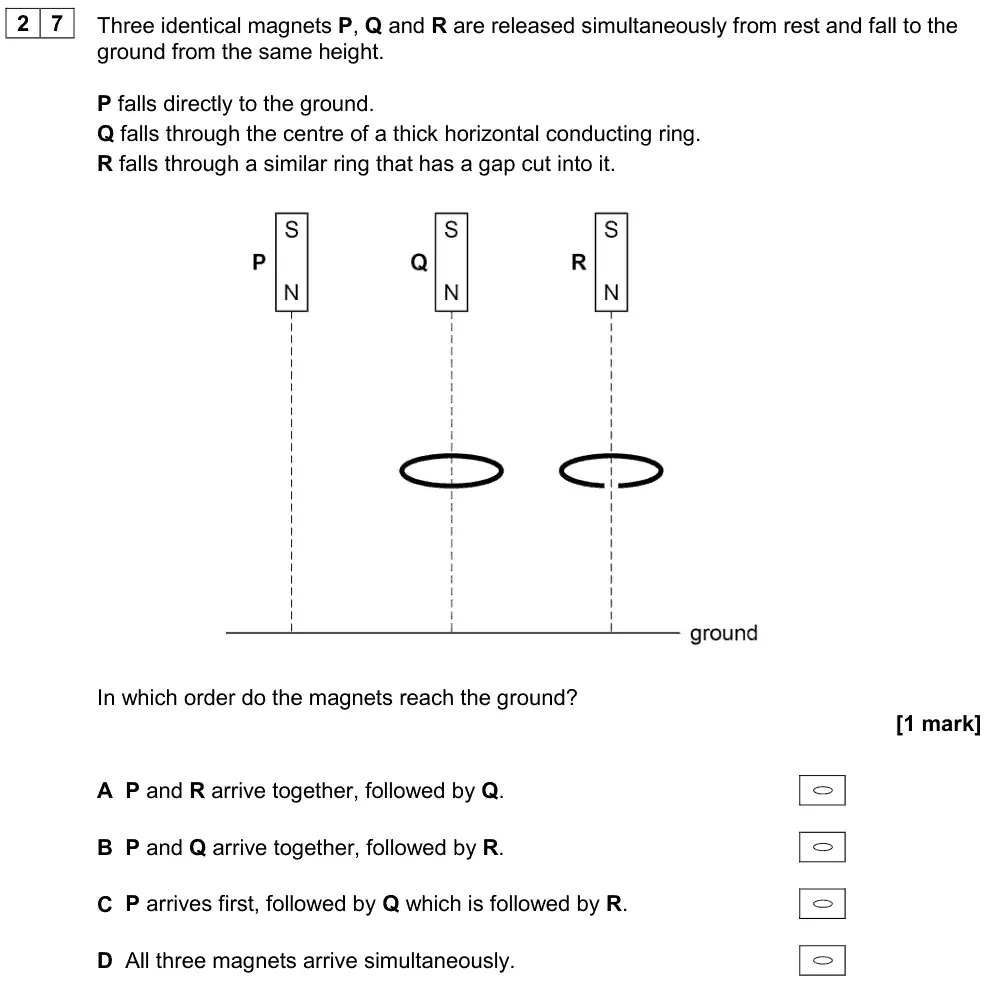
A
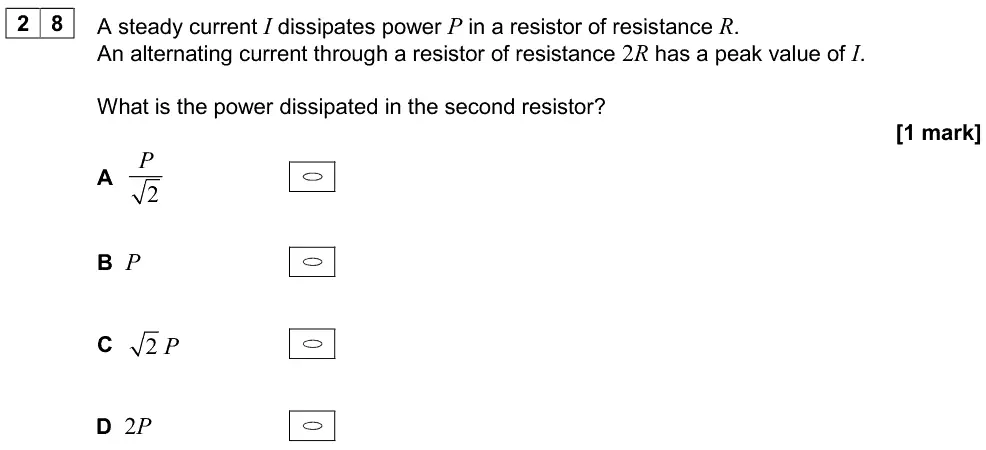
B
Skills: MS0.3 Use ratios, fractions and percentages
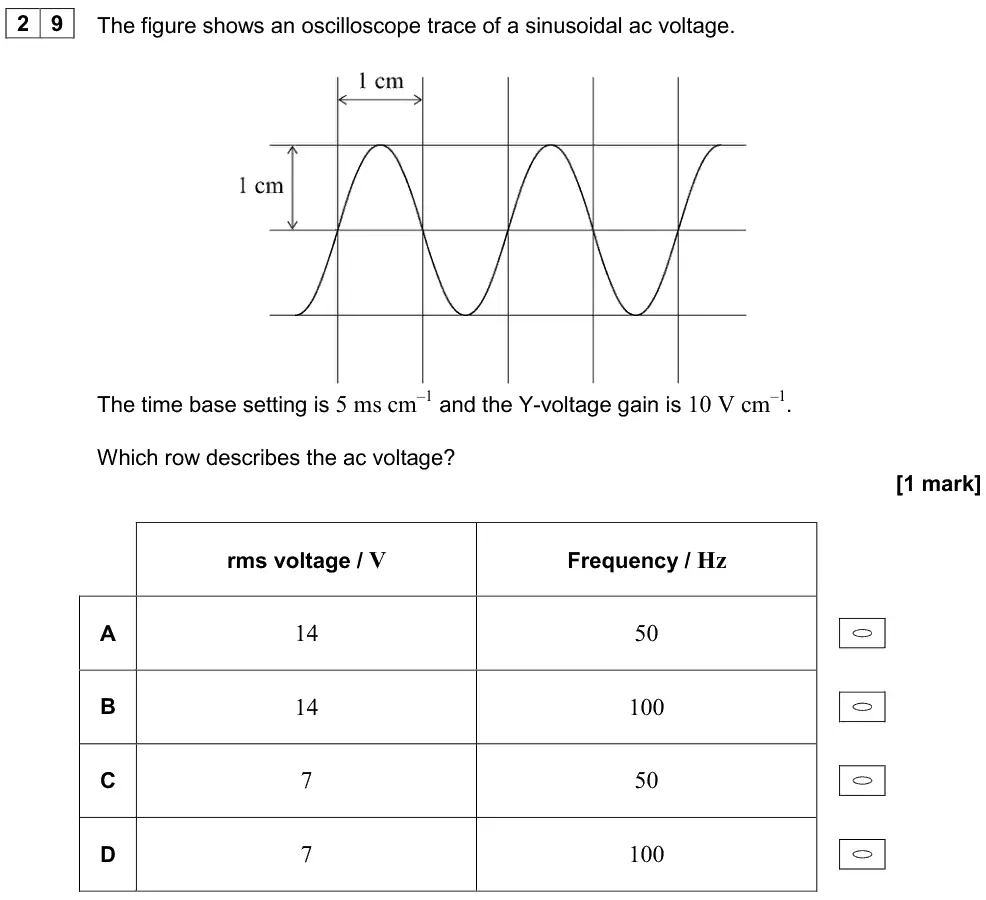
D
Skills: MS3.1 Translate information between graphical, numerical and algebraic forms
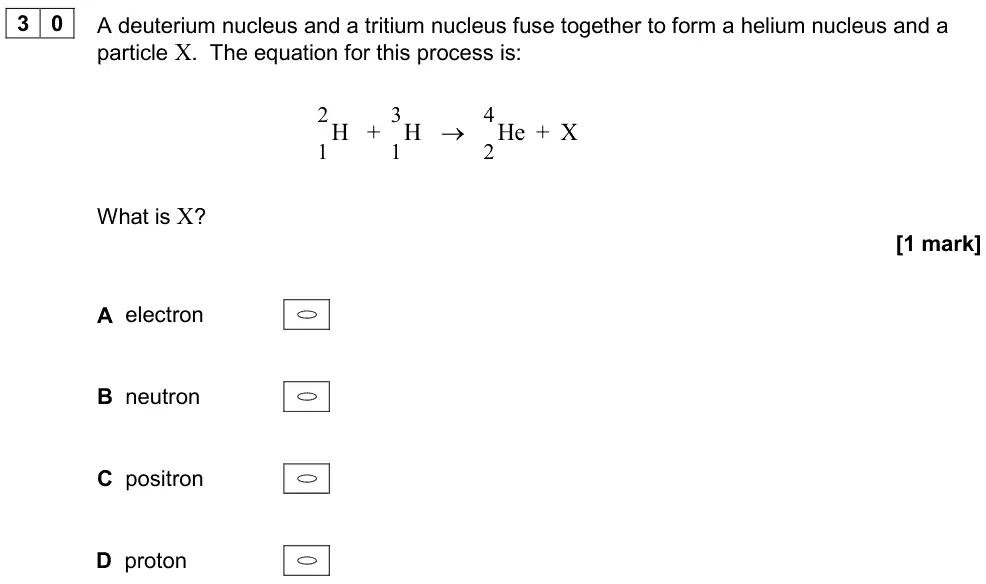
B
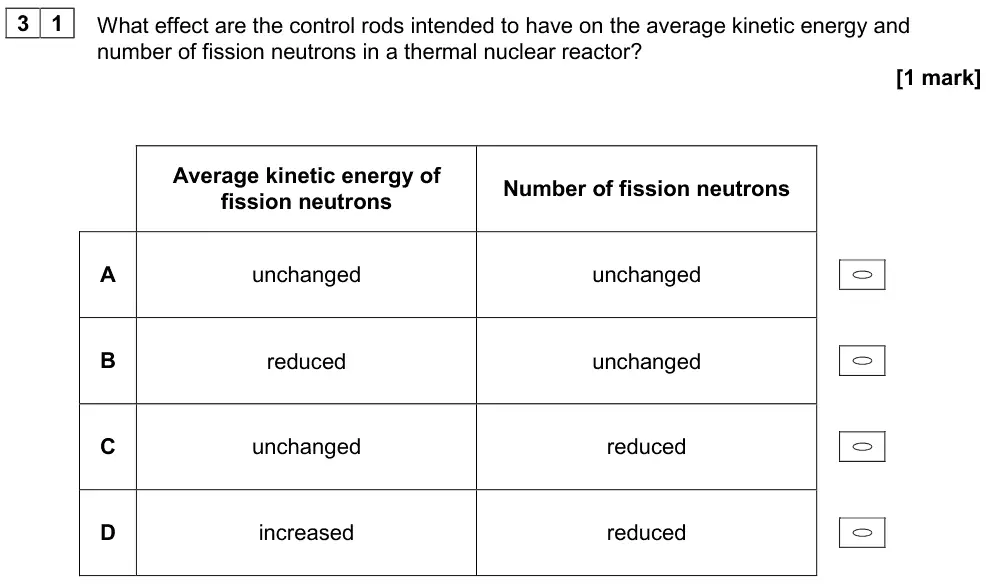
C
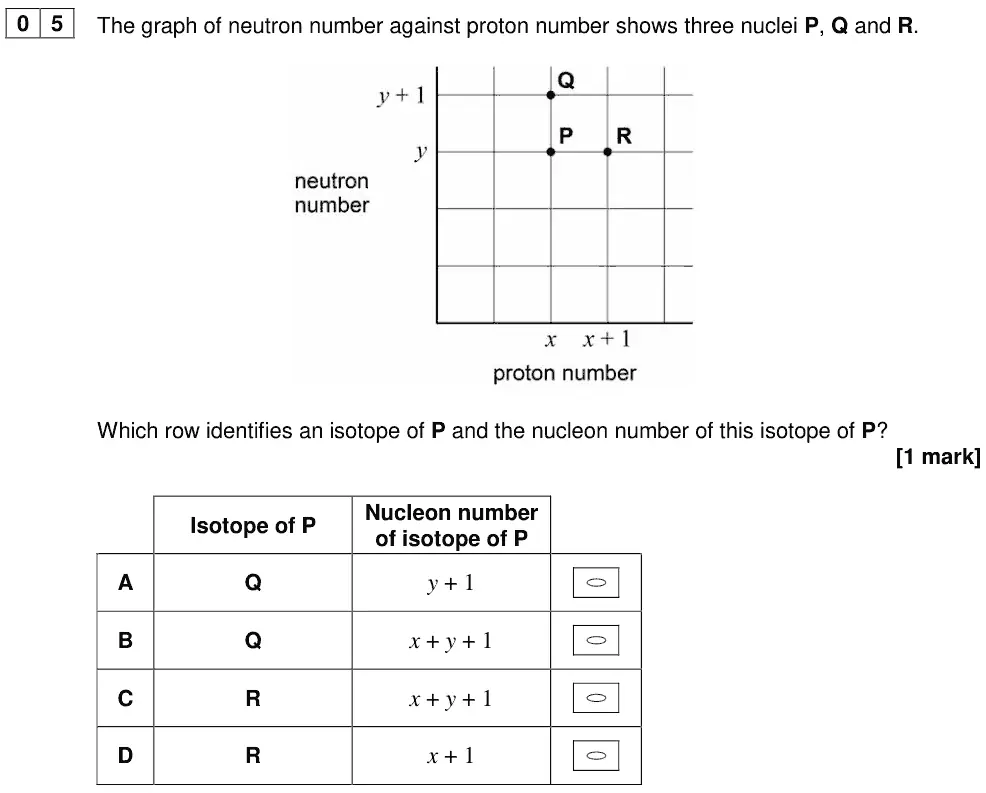
B
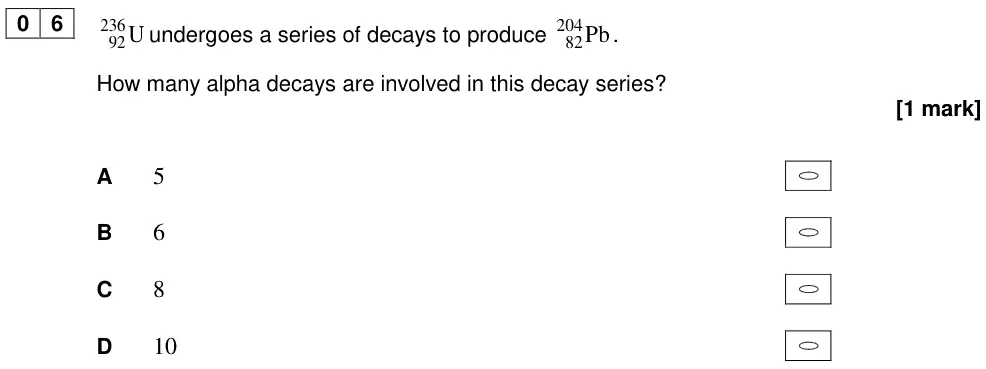
C
Skills: MS0.3 Use ratios, fractions and percentages
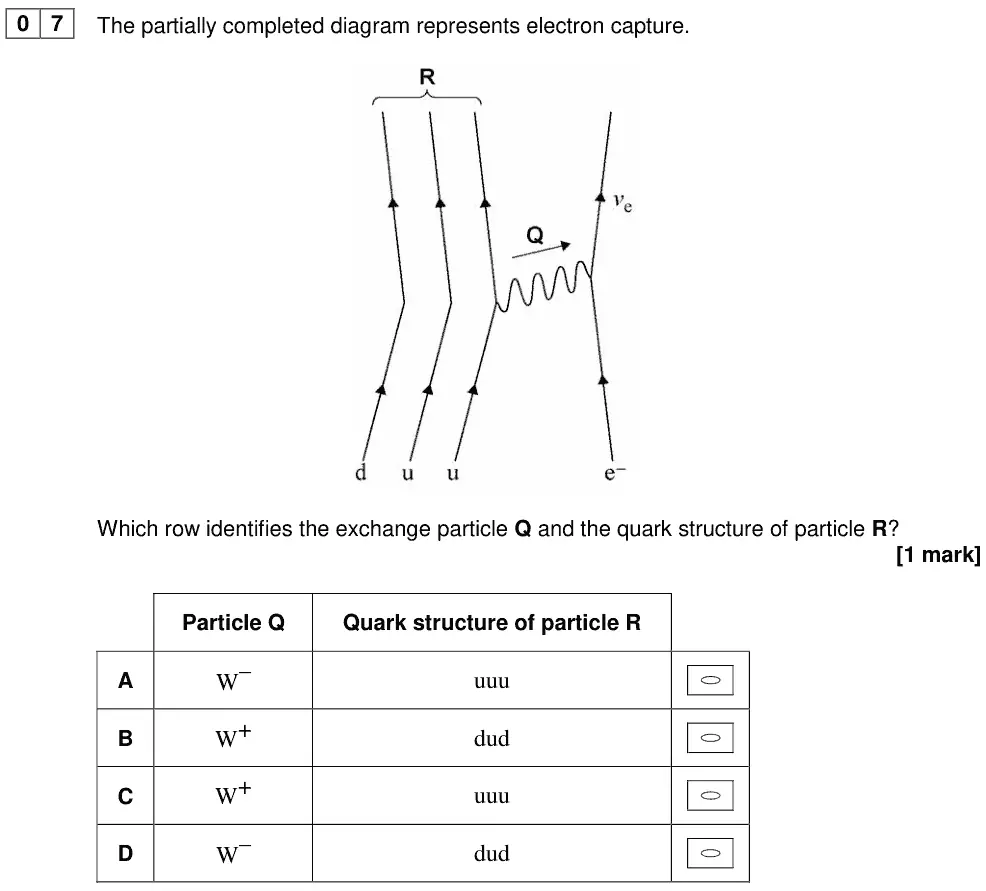
B
C
C
Skills: MS3.1 Translate information between graphical, numerical and algebraic forms
D
D
Skills: MS2.2 Change the subject of an equation, including non-linear equations
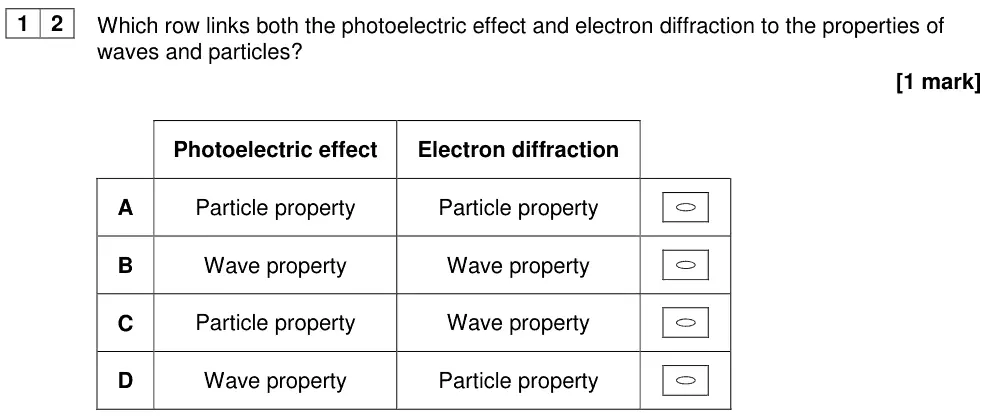
C
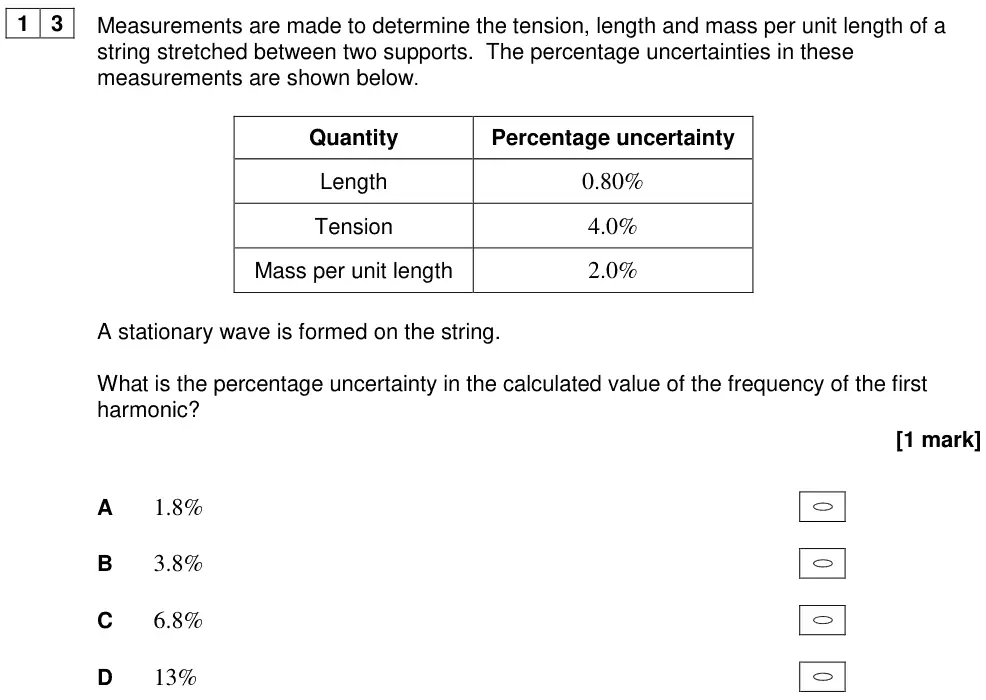
B
Skills: MS1.5 Identify uncertainties in measurements and use simple techniques to determine uncertainty when data are combined by addition, subtraction, multiplication, division and raising
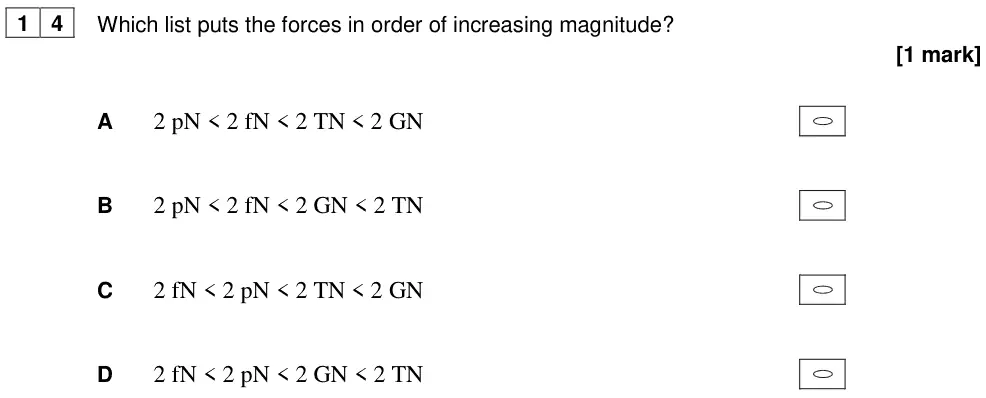
D
Skills: MS0.2 Recognise and use expressions in decimal and standard form
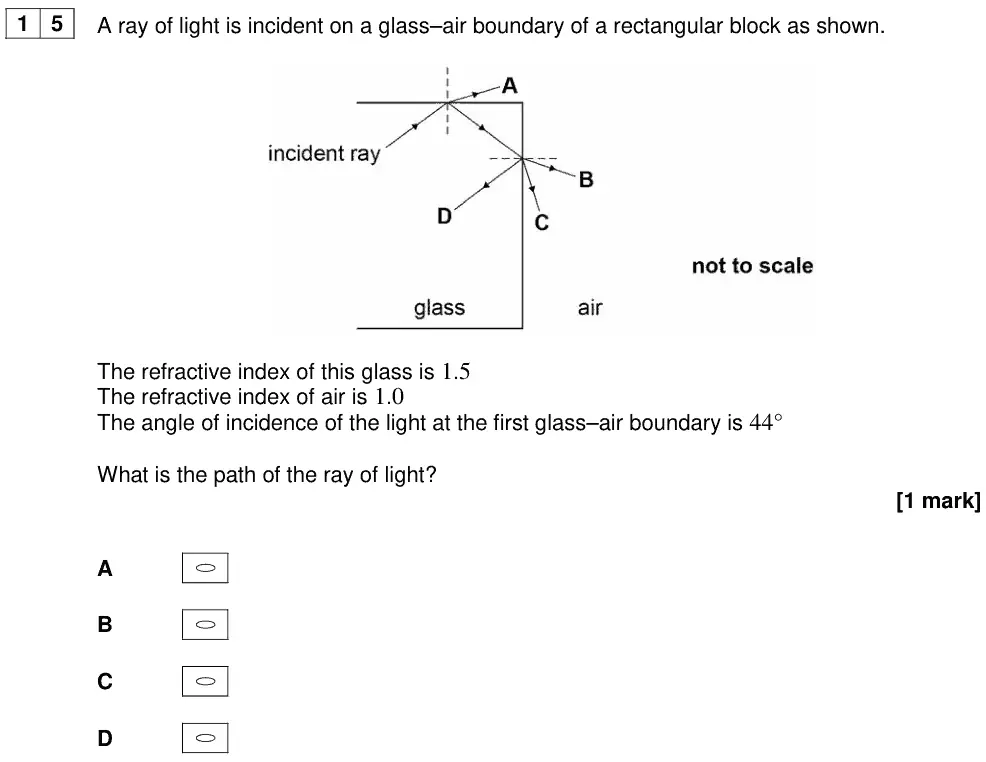
D
Skills: MS0.6 Use calculators to handle sin x, cos x, tan x when x is expressed in degrees or radians
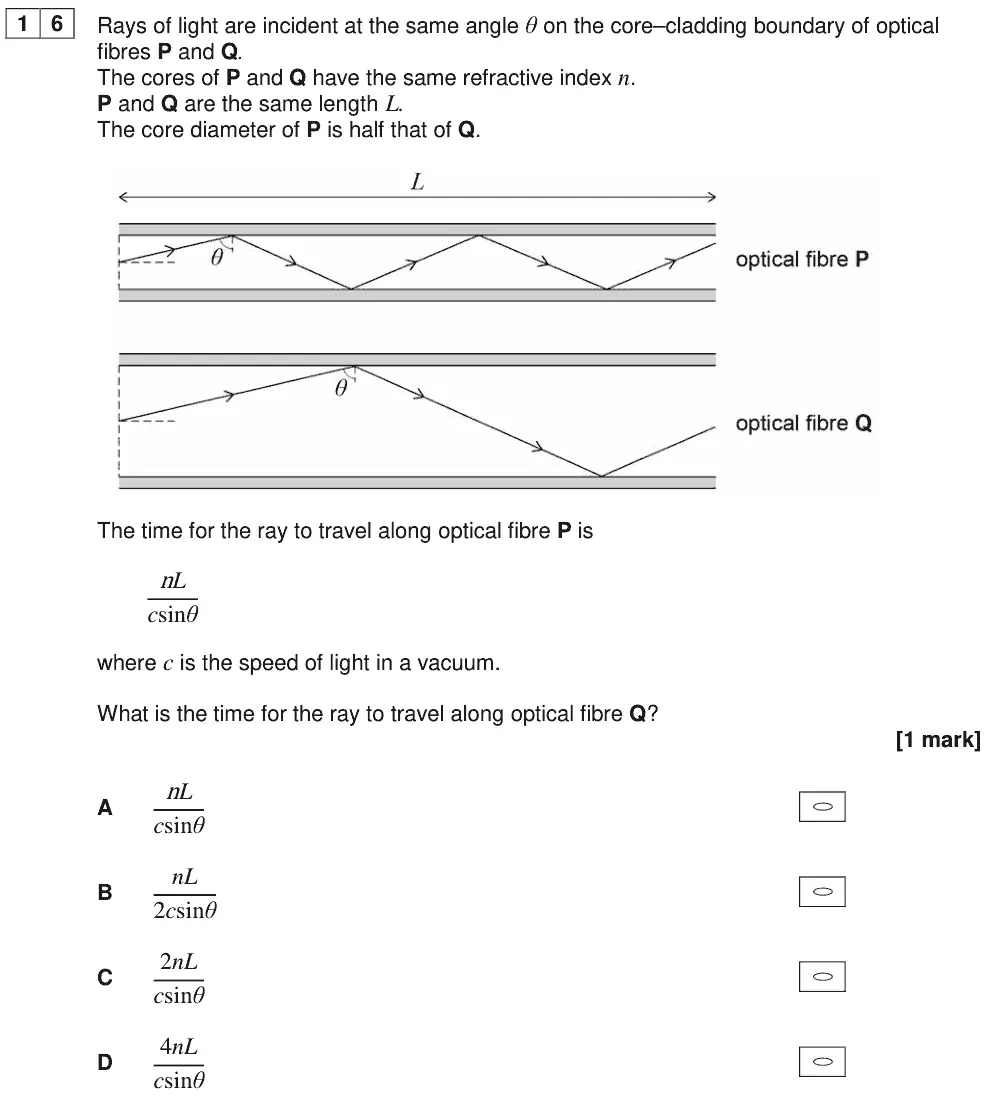
A
Skills: MS4.5 Use sin, cos and tan in physical problems
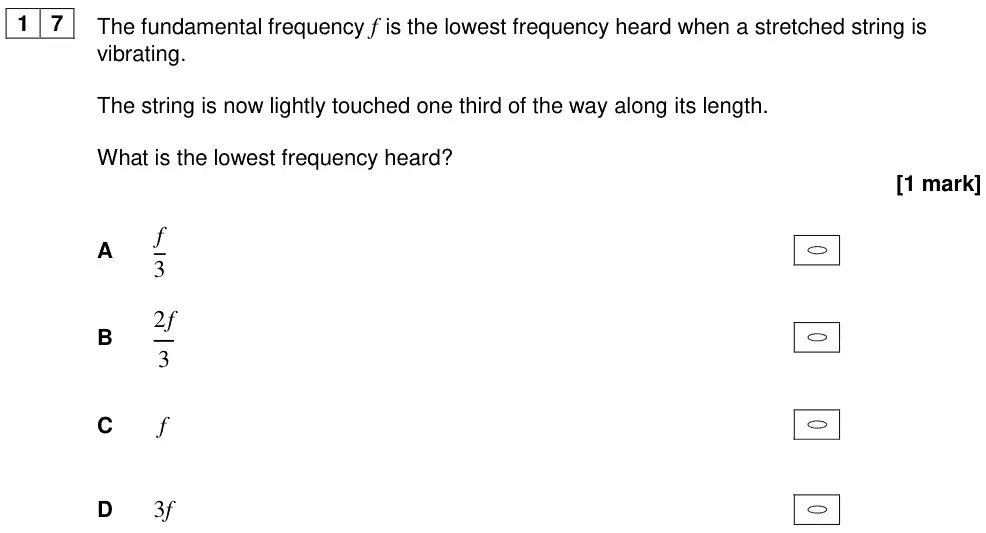
D
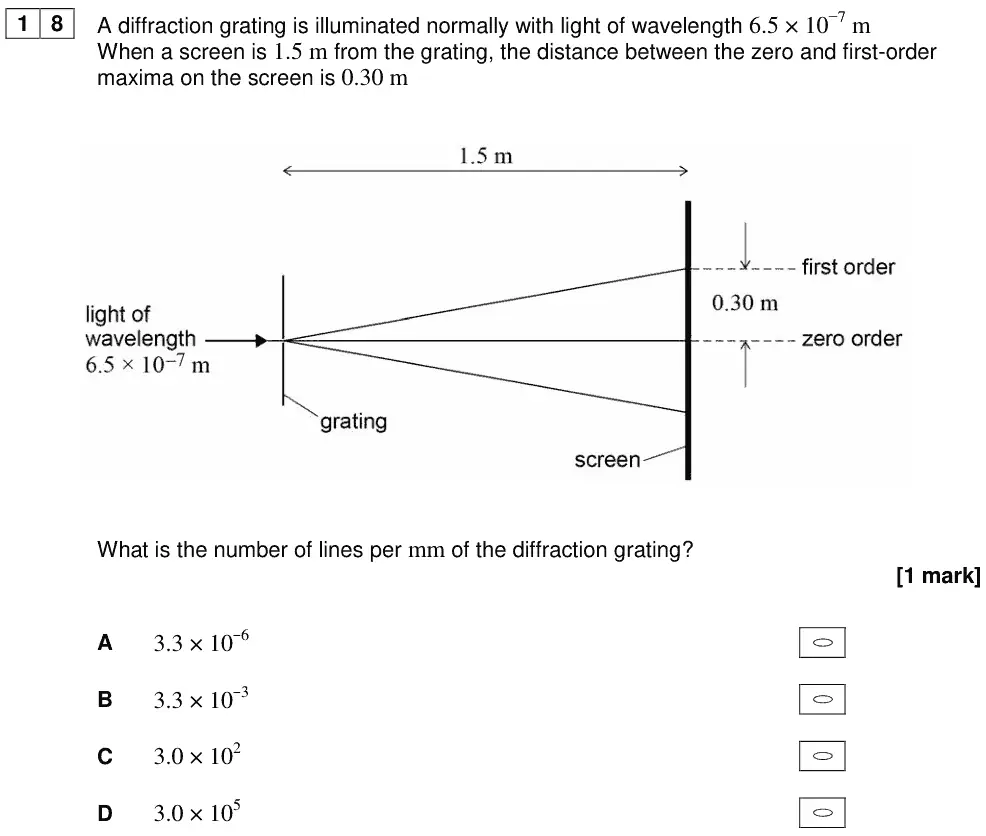
C
Skills: MS4.5 Use sin, cos and tan in physical problems; MS0.1 Recognise and make use of appropriate units in calculations
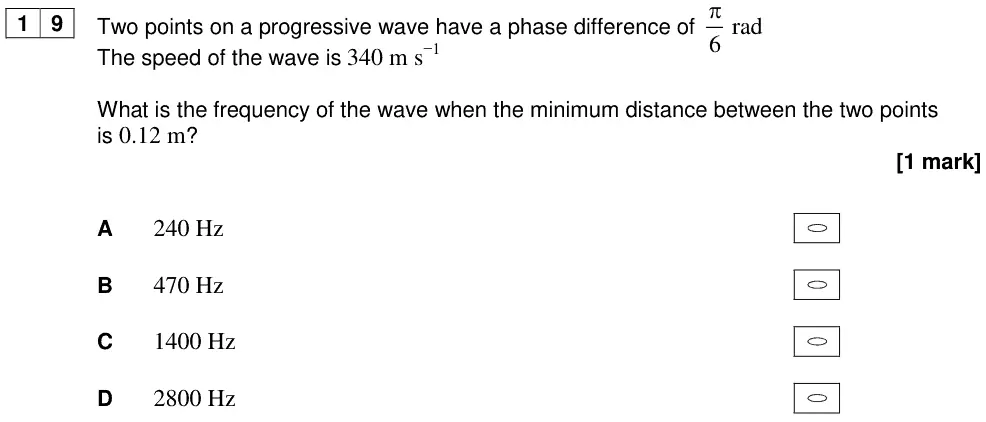
A
Skills: MS4.7 Understand the relationship between degrees and radians and translate from one to the other
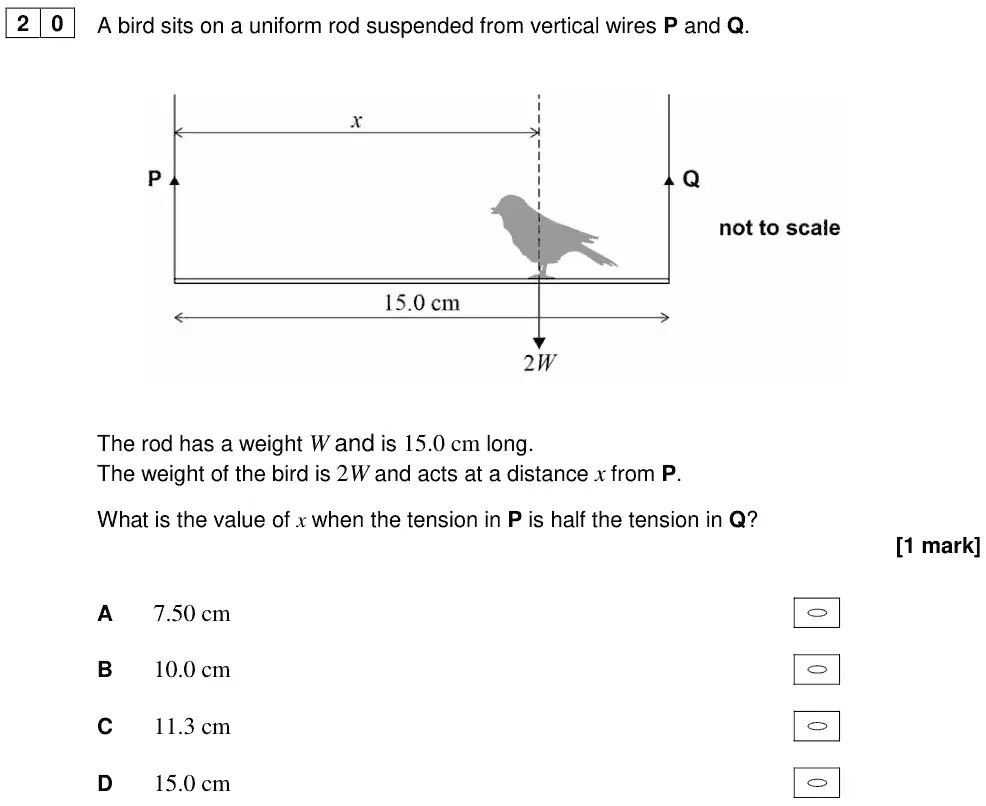
C
Skills: MS2.4 Solve algebraic equations, including quadratic equations
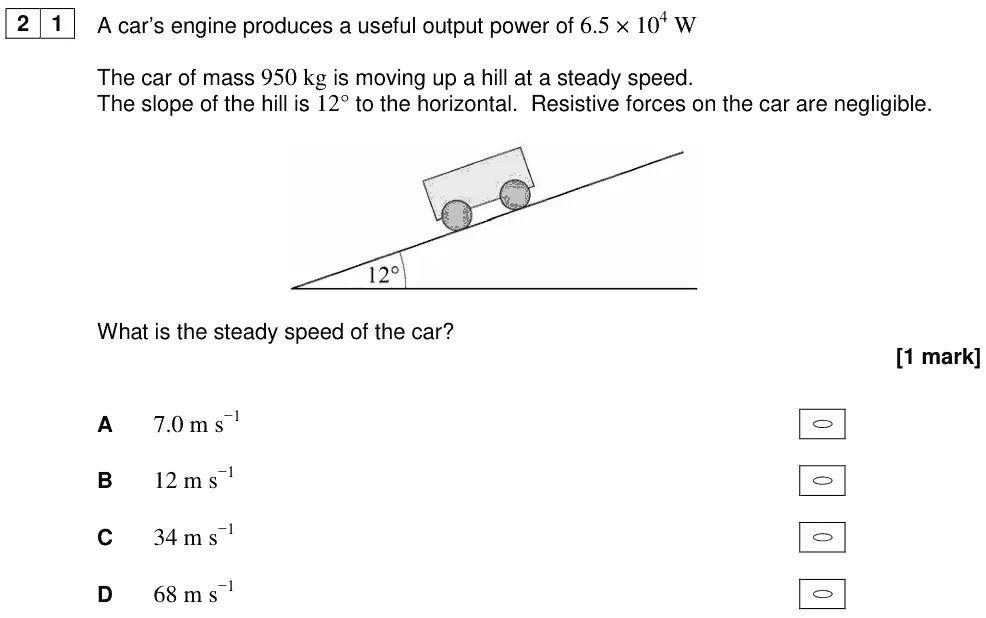
C
Skills: MS4.5 Use sin, cos and tan in physical problems
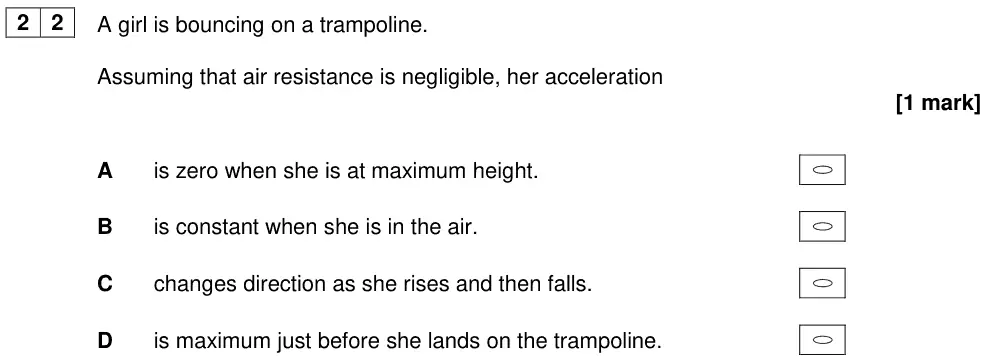
B
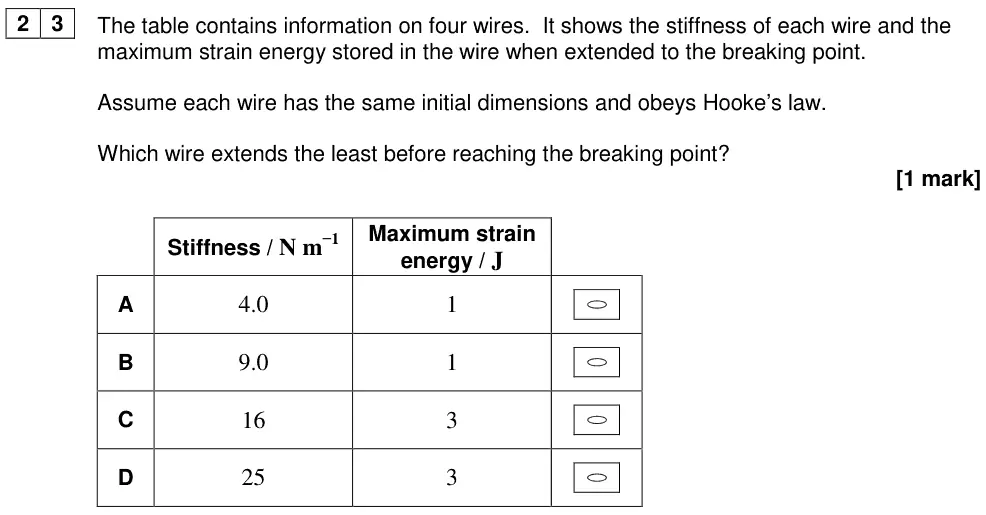
B
Skills: MS2.2 Change the subject of an equation, including non-linear equations
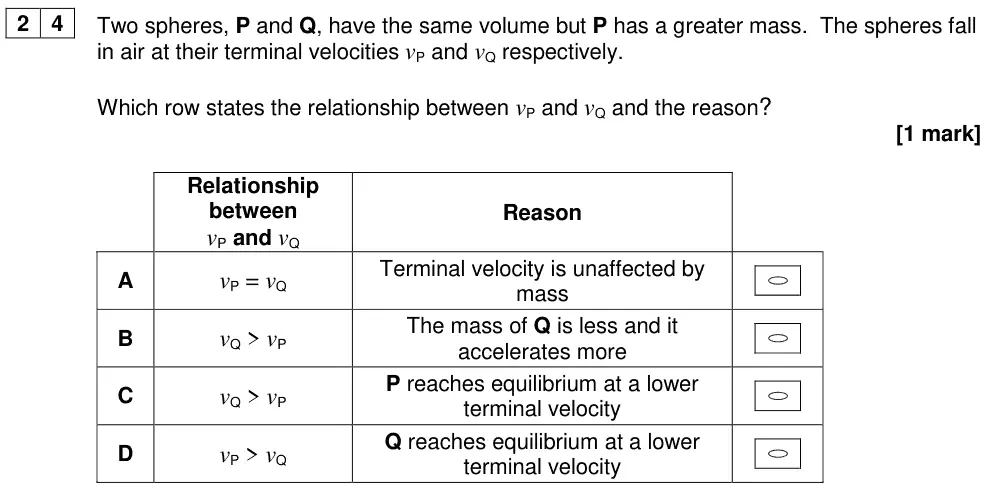
D
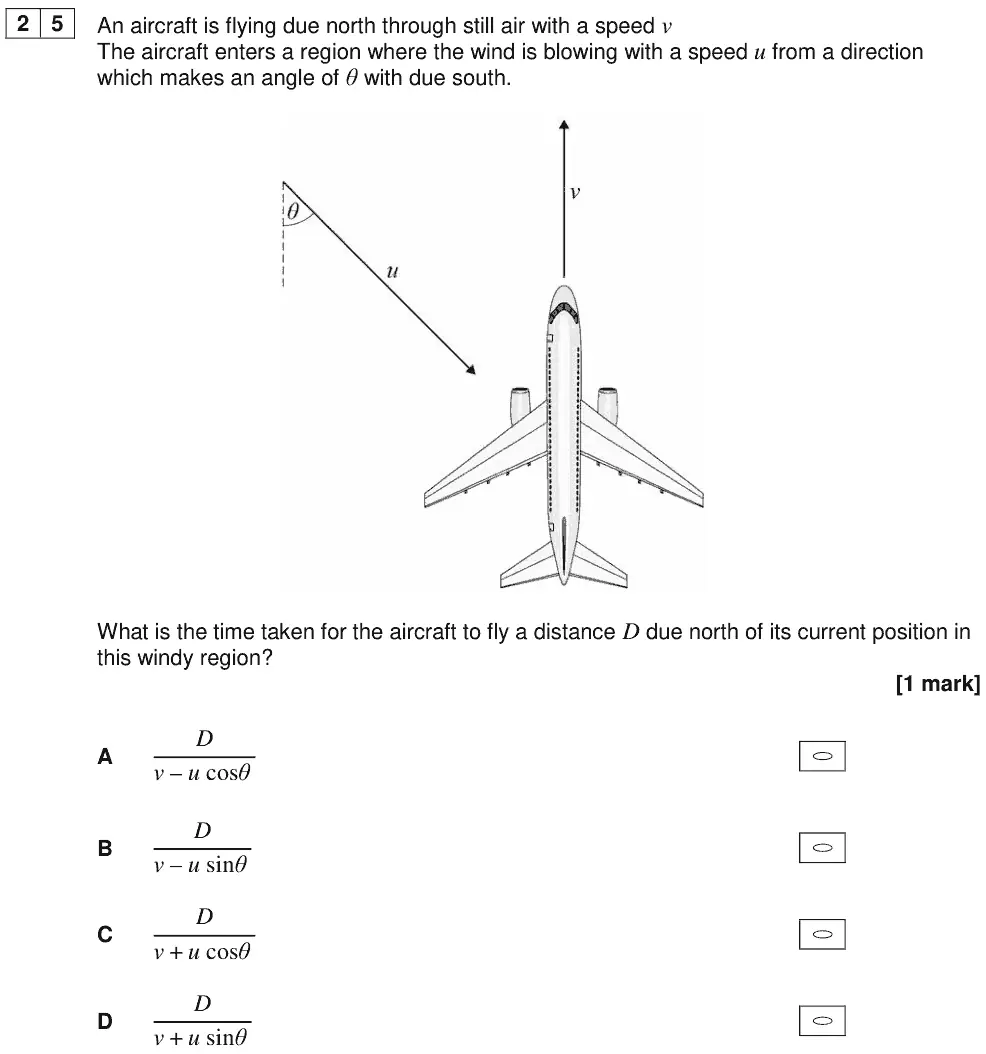
A
Skills: MS4.5 Use sin, cos and tan in physical problems
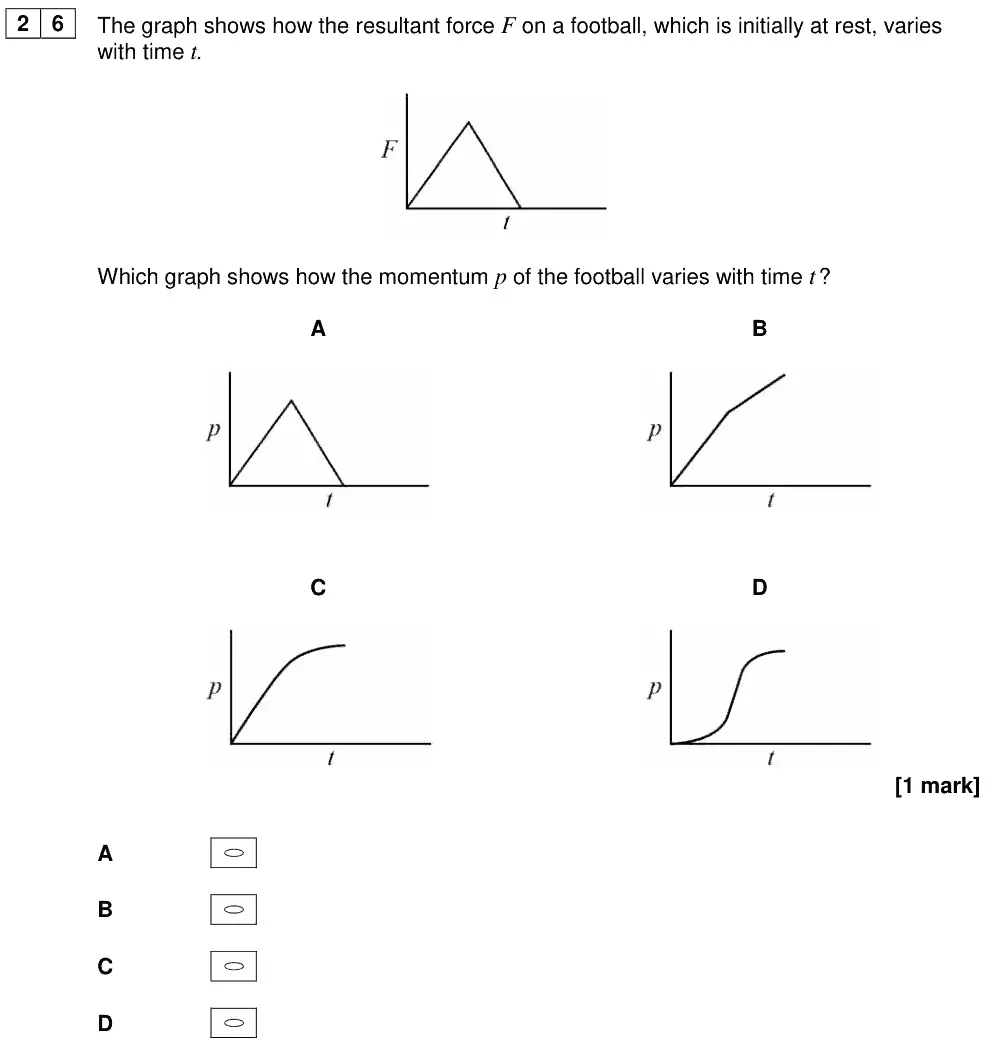
D
Skills: MS3.8 Understand the possible physical significance of the area between a curve and the x axis and be able to calculate it or estimate it by graphical methods as appropriate
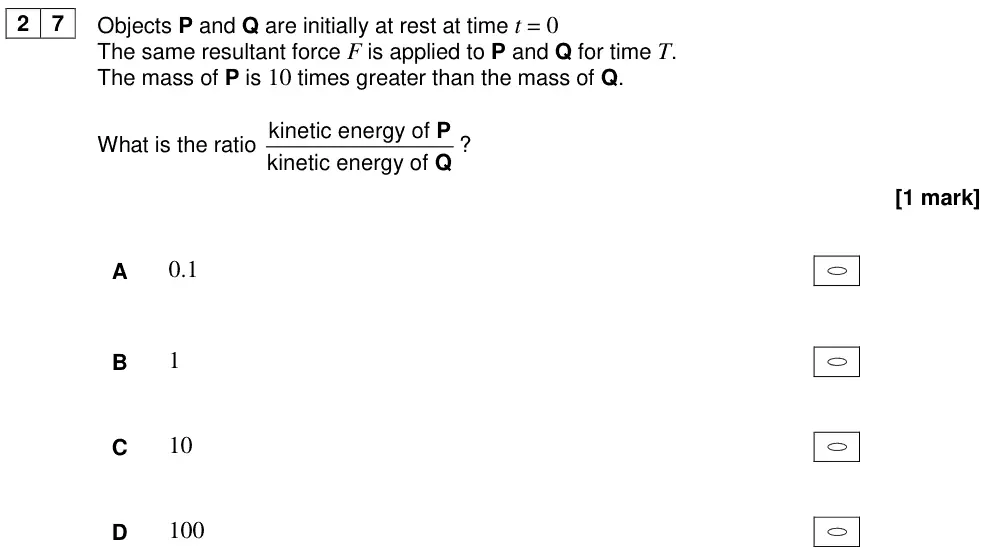
A
Skills: MS0.3 Use ratios, fractions and percentages
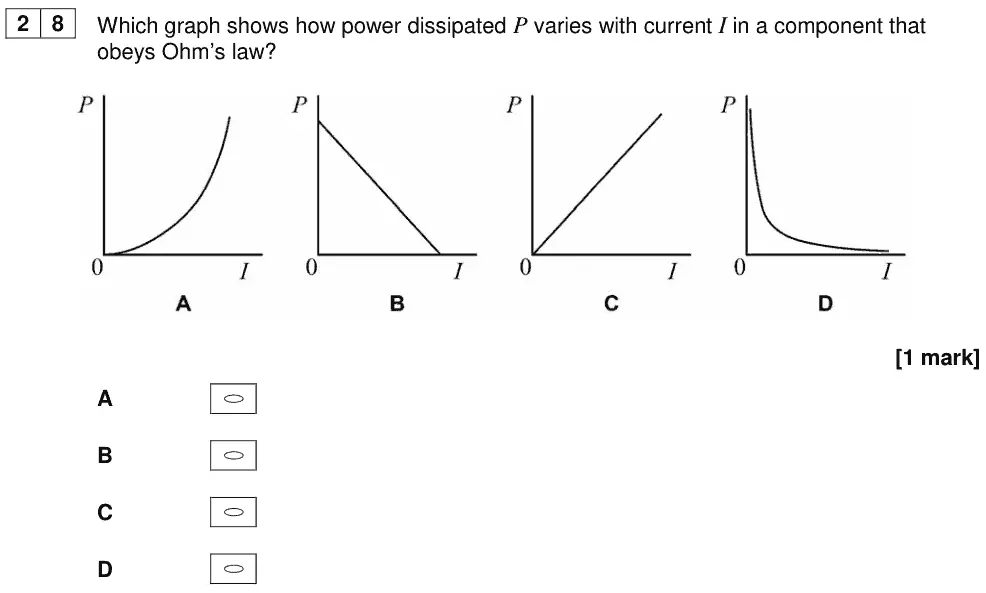
A
Skills: MS3.1 Translate information between graphical, numerical and algebraic forms
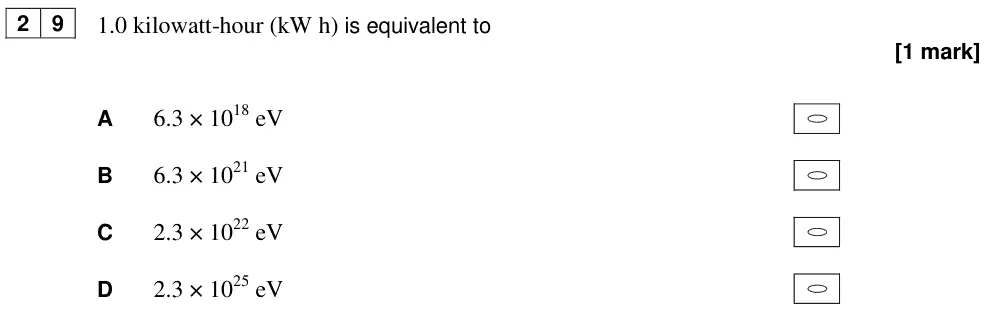
D
Skills: MS0.2 Recognise and use expressions in decimal and standard form
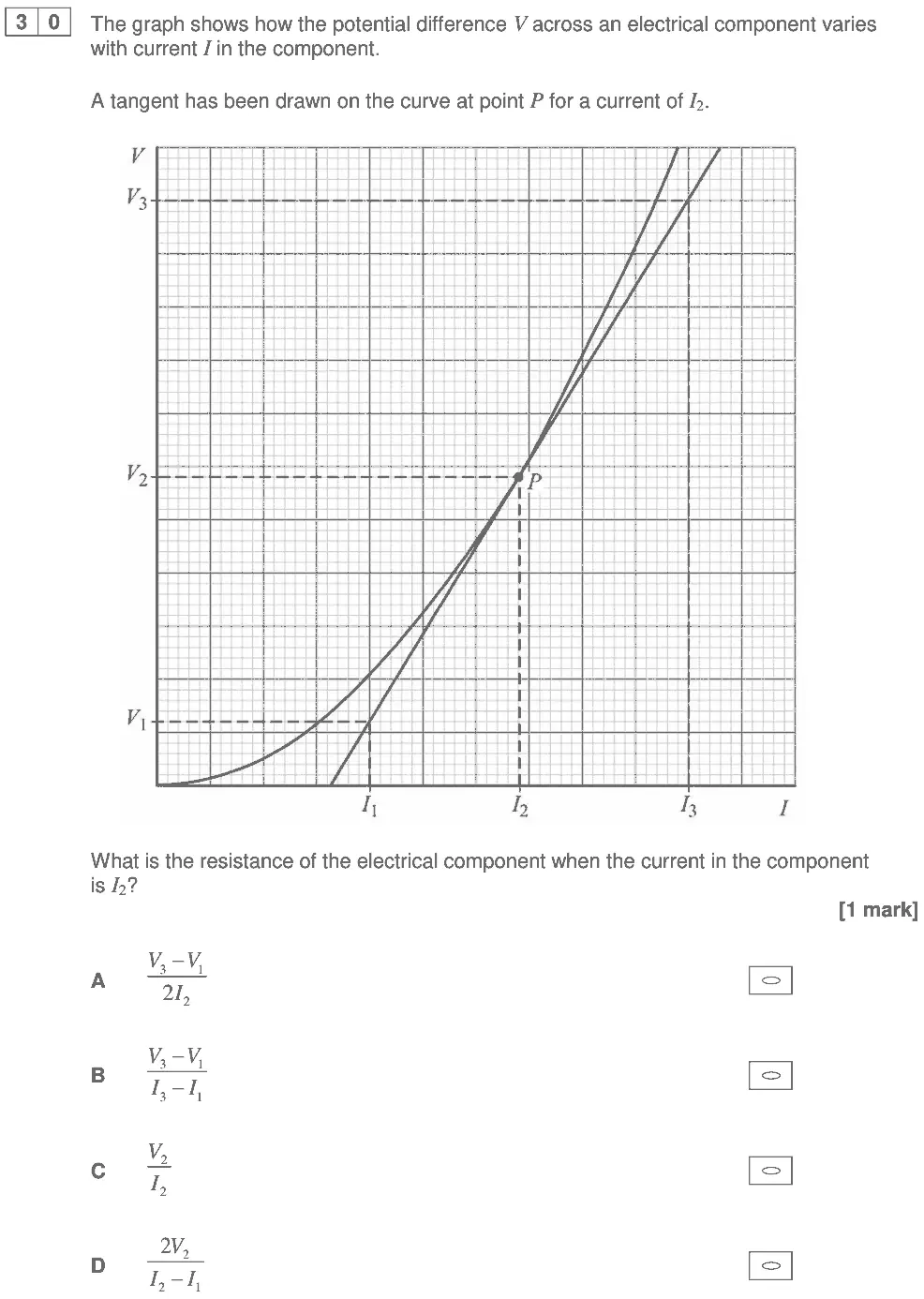
C
Skills: MS3.1 Translate information between graphical, numerical and algebraic forms
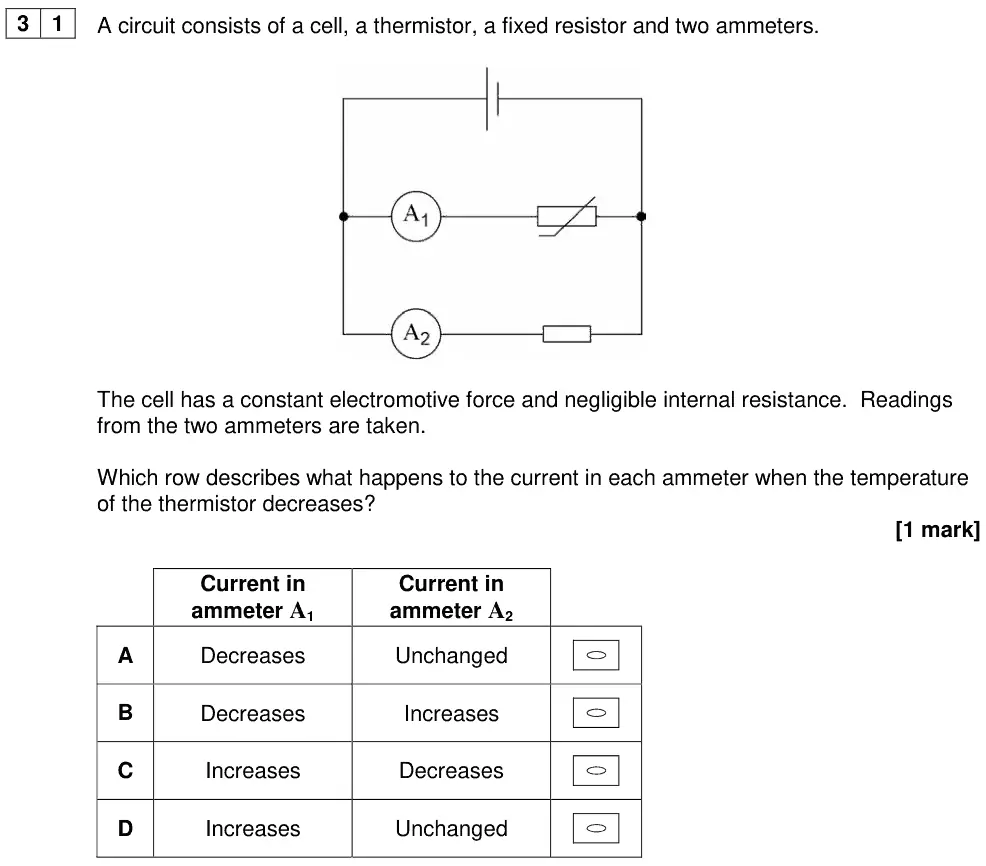
A
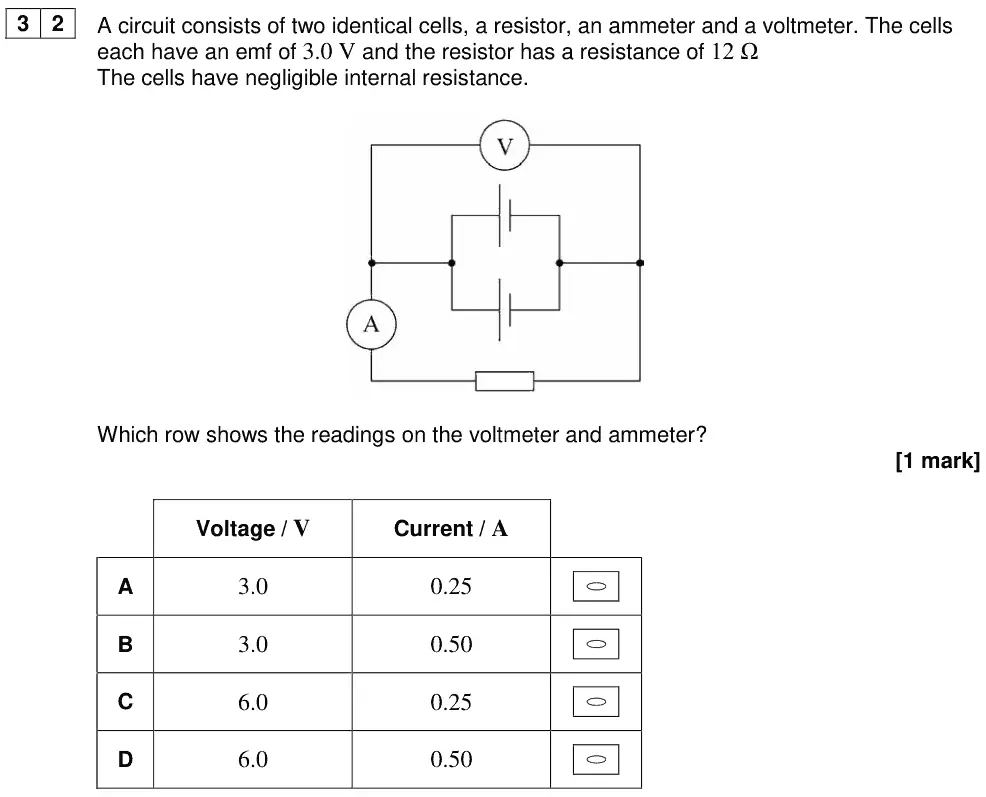
A
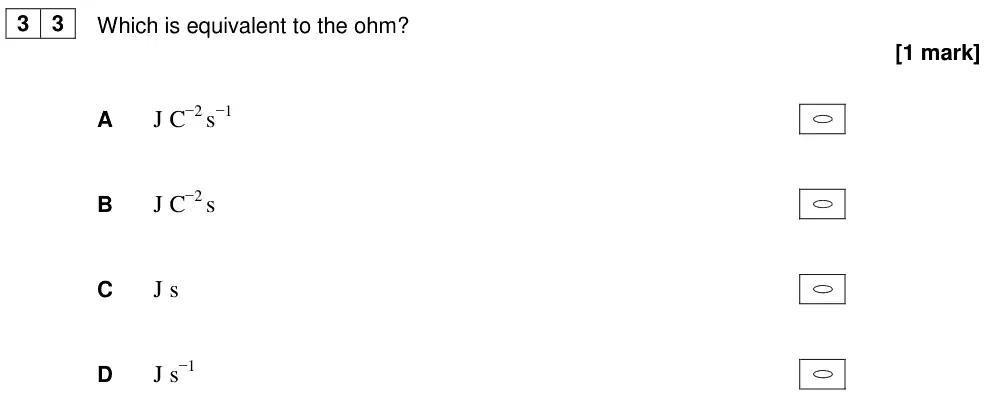
B
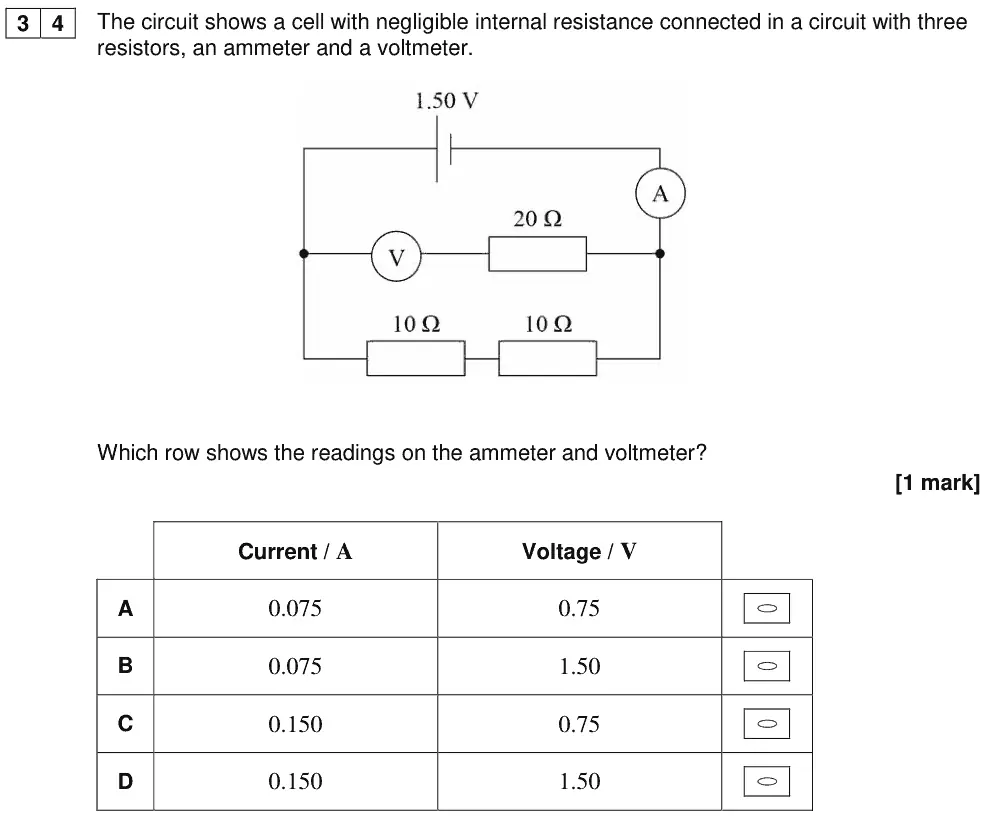
B
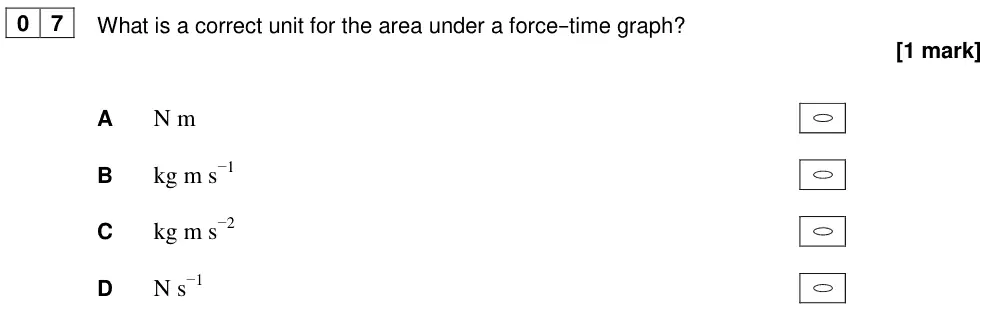
B
B
C
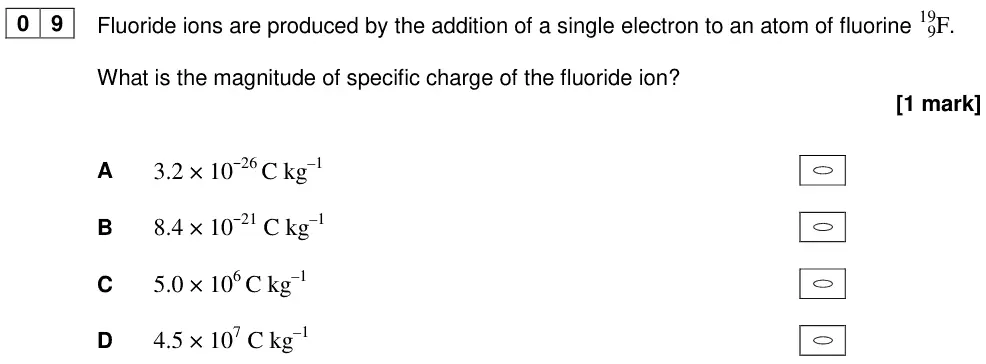
Skills: MS0.2 Recognise and use expressions in decimal and standard form
C
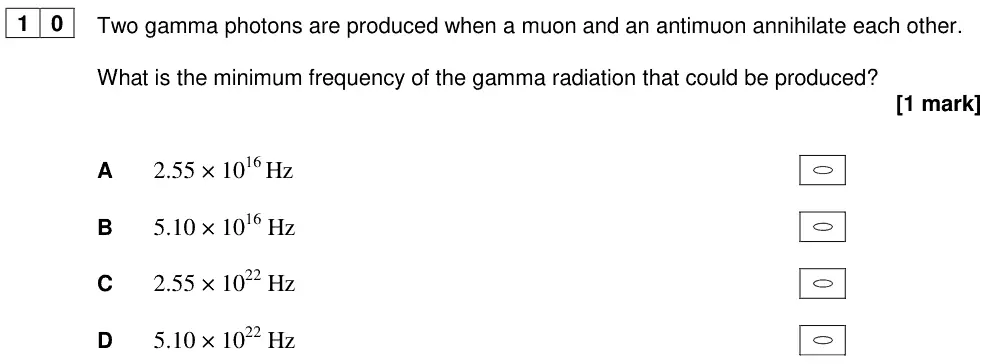
Skills: MS0.2 Recognise and use expressions in decimal and standard form
A
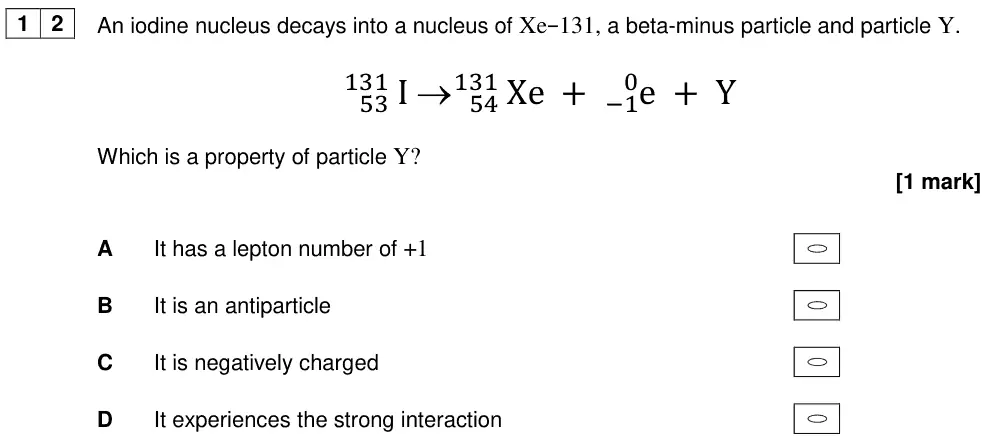
B
The 25 questions in Section B are summarised in the table below. For each question, the key (correct answer) is provided, along with the percentage of students answering correctly. There was a good range of ‘facility’ across this section; the most accessible questions were 12 and 18 (both answered correctly by 89.2% of students), the least accessible was 20 (answered correctly by only 38.1% of students). The overall mean mark achieved by the students for Section B was 15.7 out of 25 (62.8%).
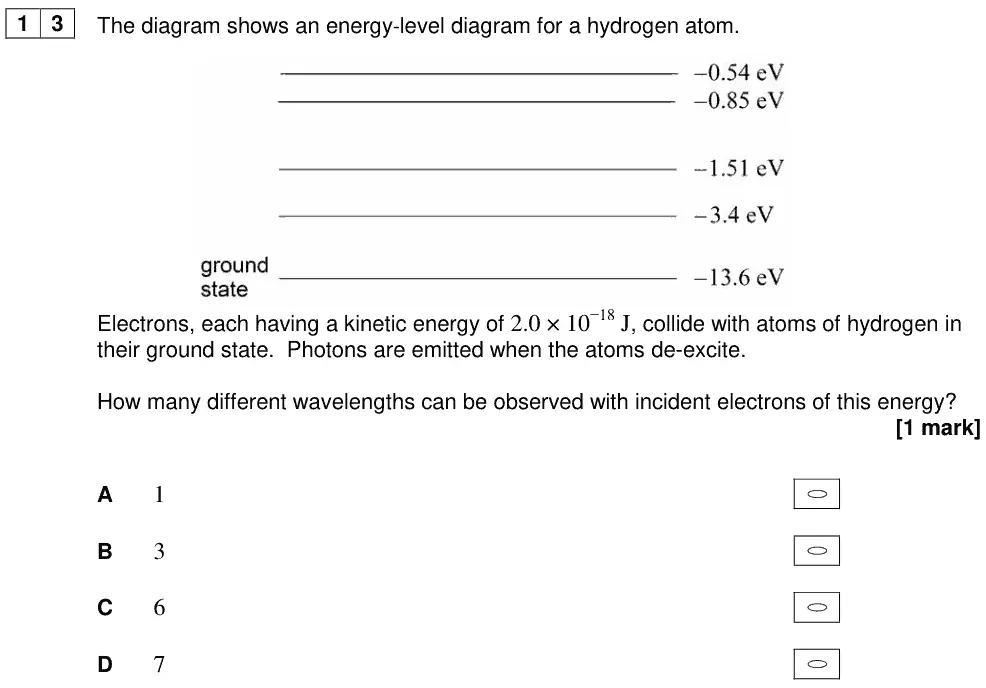
B
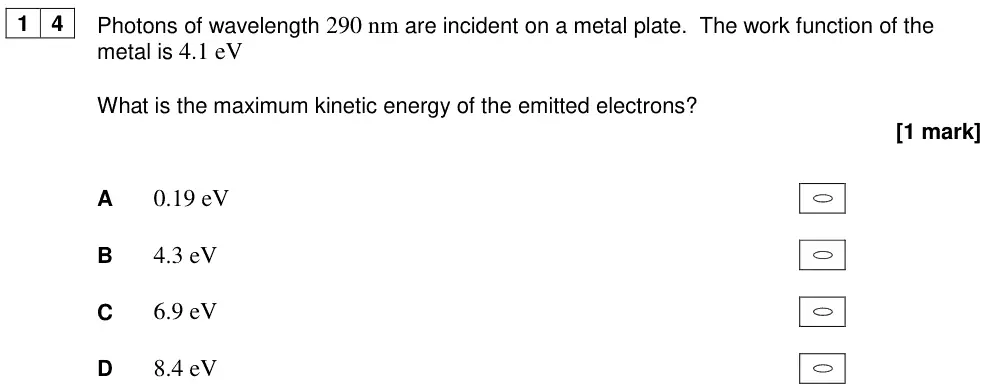
A
Skills: MS2.3 Substitute numerical values into algebraic equations using appropriate units for physical quantities
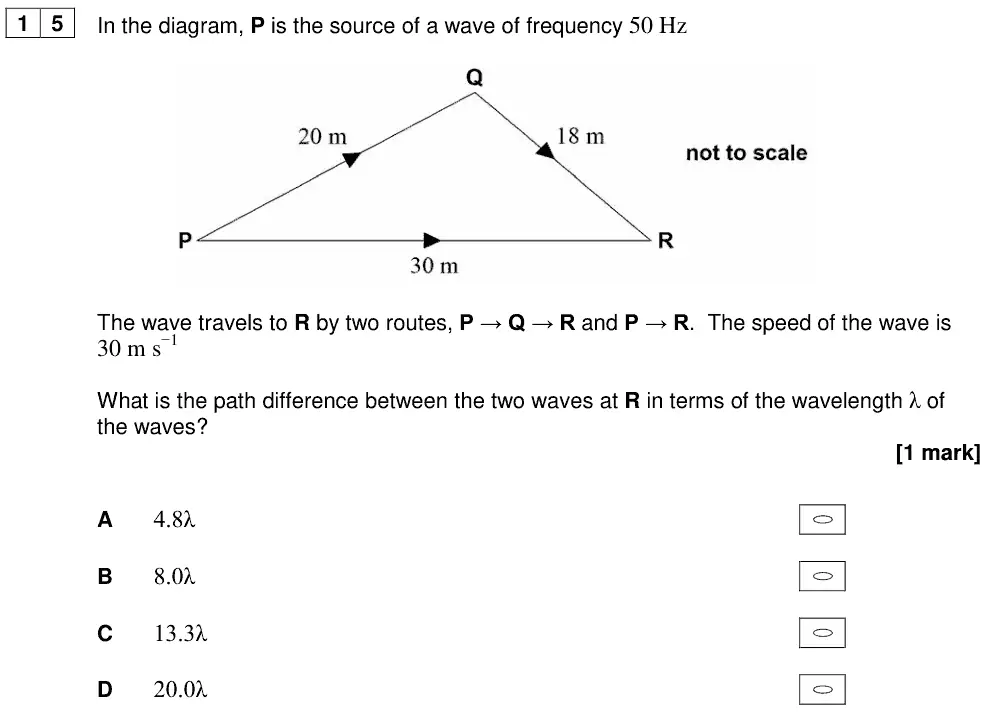
C
Skills: MS0.3 Use ratios, fractions and percentages
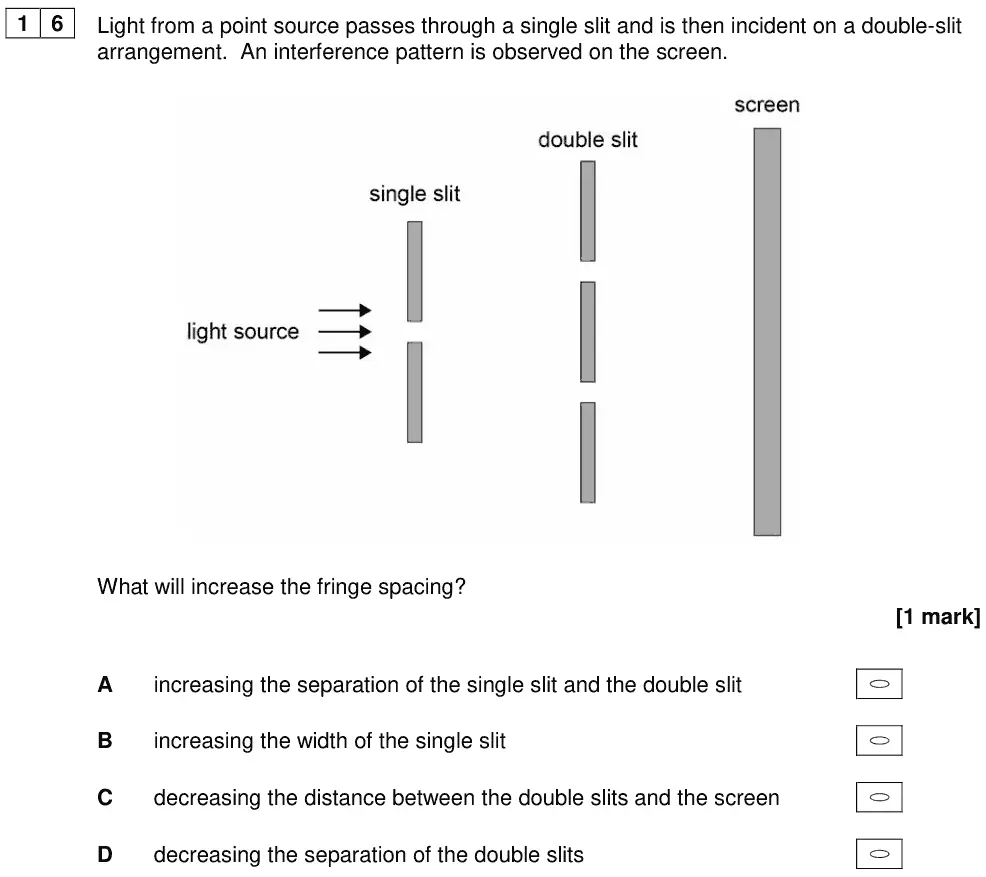
D
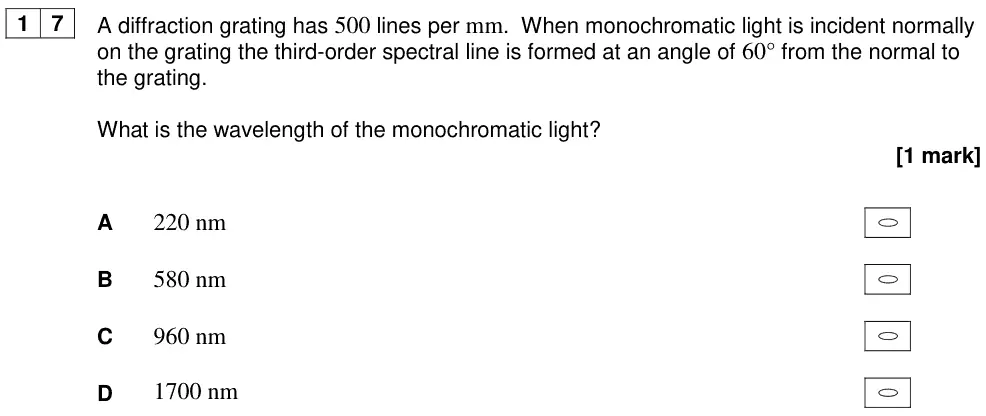
B
Skills: MS0.6 Use calculators to handle sin x, cos x, tan x when x is expressed in degrees or radians
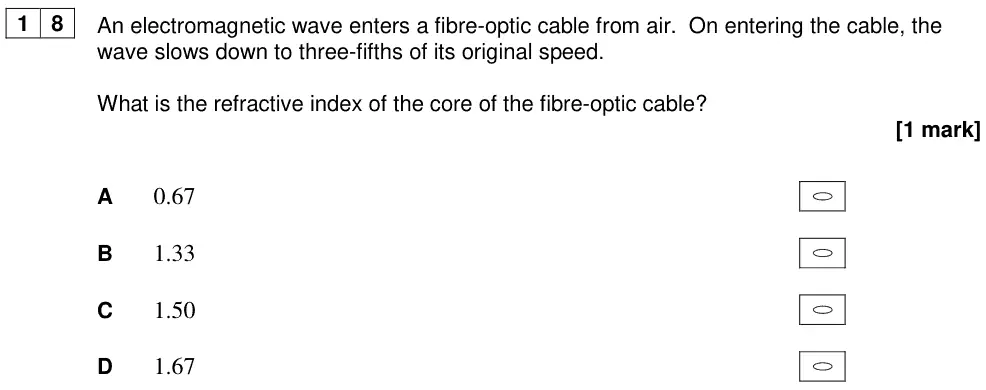
D
The 25 questions in Section B are summarised in the table below. For each question, the key (correct answer) is provided, along with the percentage of students answering correctly. There was a good range of ‘facility’ across this section; the most accessible questions were 12 and 18 (both answered correctly by 89.2% of students), the least accessible was 20 (answered correctly by only 38.1% of students). The overall mean mark achieved by the students for Section B was 15.7 out of 25 (62.8%).
Skills: MS0.3 Use ratios, fractions and percentages
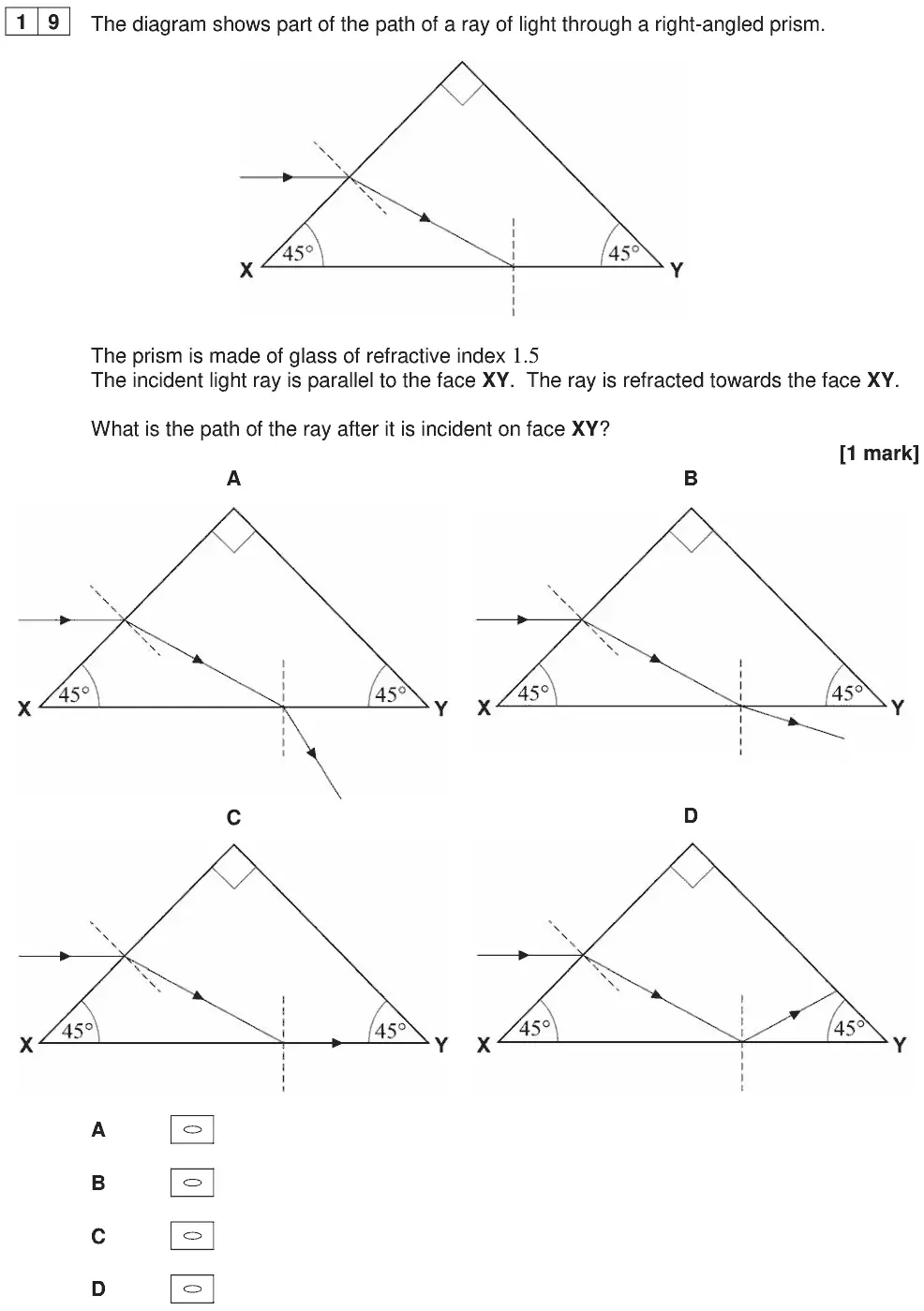
D
Skills: MS4.1 Use angles in regular 2D and 3D structures
D
The 25 questions in Section B are summarised in the table below. For each question, the key (correct answer) is provided, along with the percentage of students answering correctly. There was a good range of ‘facility’ across this section; the most accessible questions were 12 and 18 (both answered correctly by 89.2% of students), the least accessible was 20 (answered correctly by only 38.1% of students). The overall mean mark achieved by the students for Section B was 15.7 out of 25 (62.8%).
D
Skills: MS2.2 Change the subject of an equation, including non-linear equations
C
Skills: MS2.3 Substitute numerical values into algebraic equations using appropriate units for physical quantities
C
Skills: MS4.5 Use sin, cos and tan in physical problems
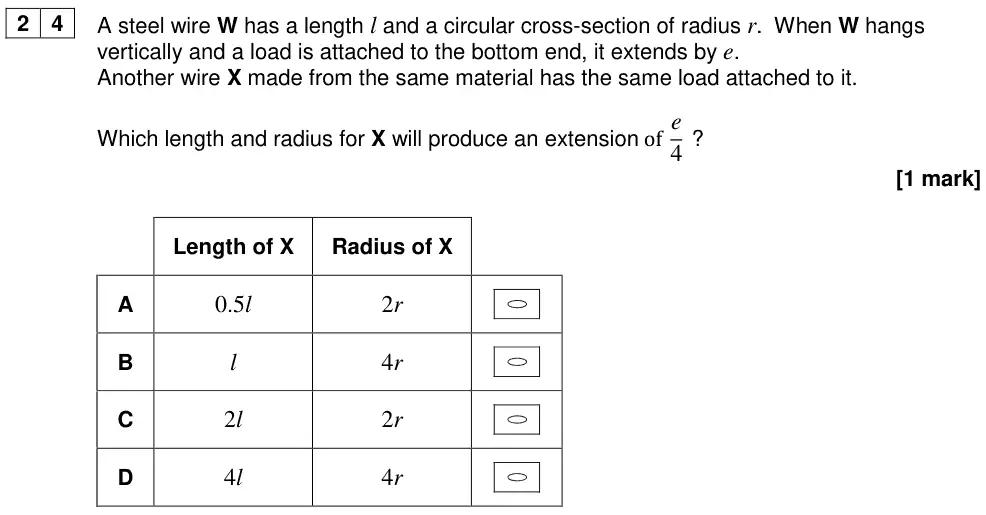
D
Skills: MS0.3 Use ratios, fractions and percentages
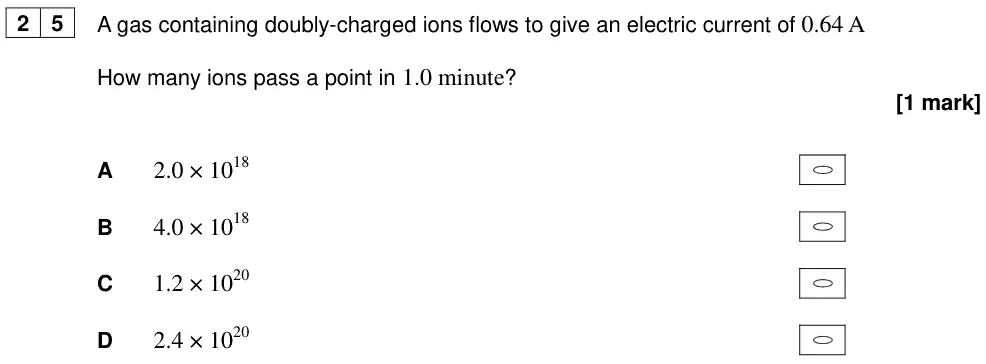
C
Skills: MS0.2 Recognise and use expressions in decimal and standard form
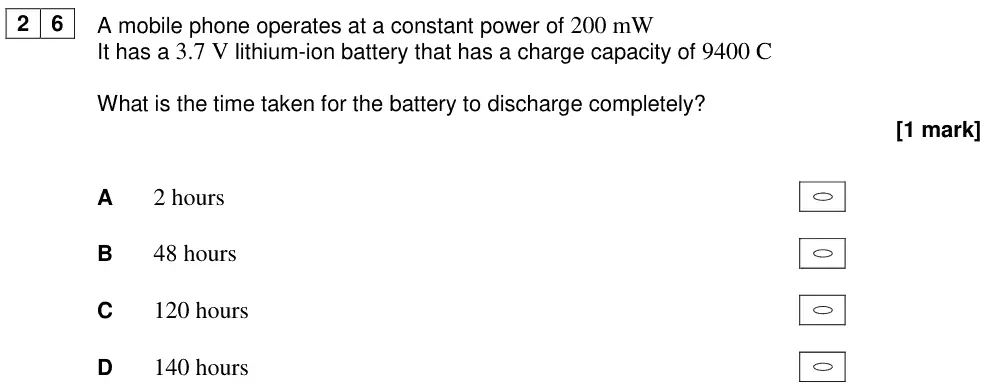
B
Skills: MS0.1 Recognise and make use of appropriate units in calculations
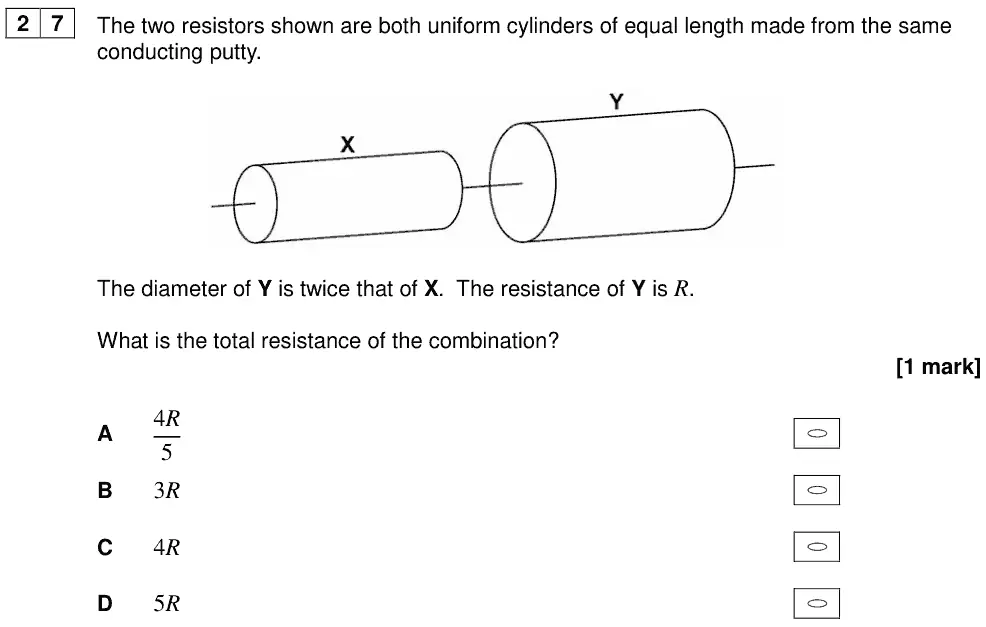
D
Skills: MS0.3 Use ratios, fractions and percentages
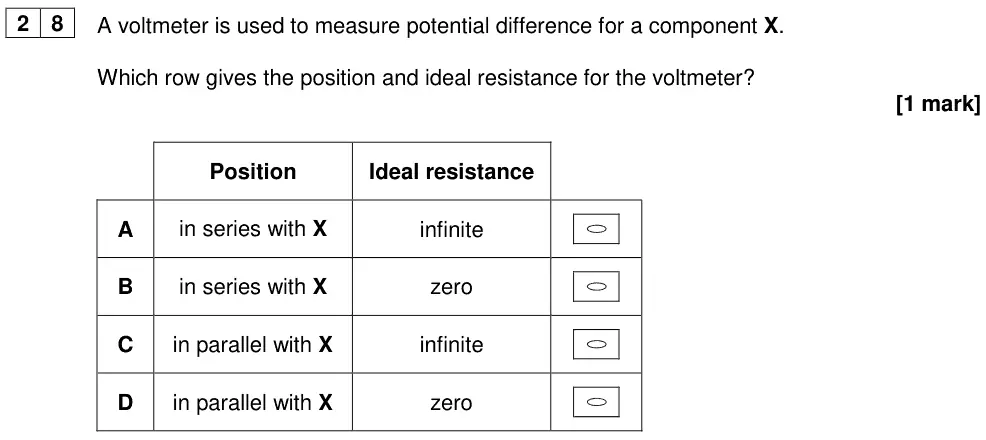
C
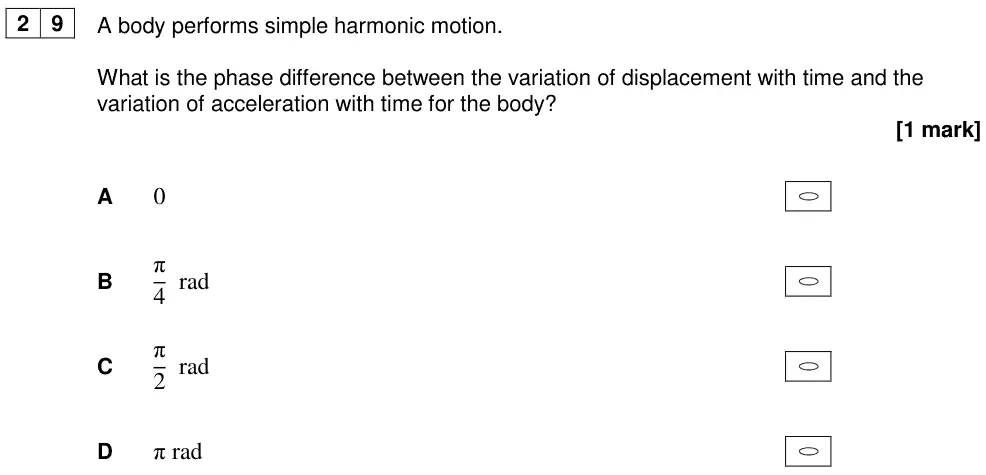
D
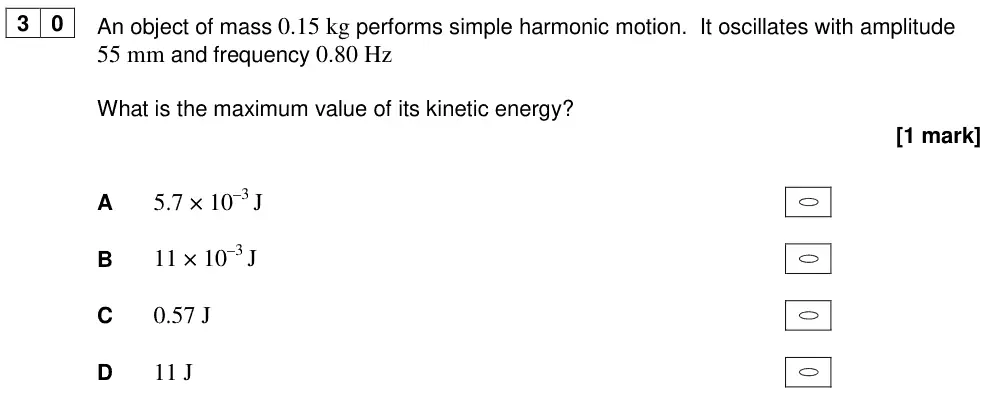
A
Skills: MS2.3 Substitute numerical values into algebraic equations using appropriate units for physical quantities; MS0.2 Recognise and use expressions in decimal and standard form
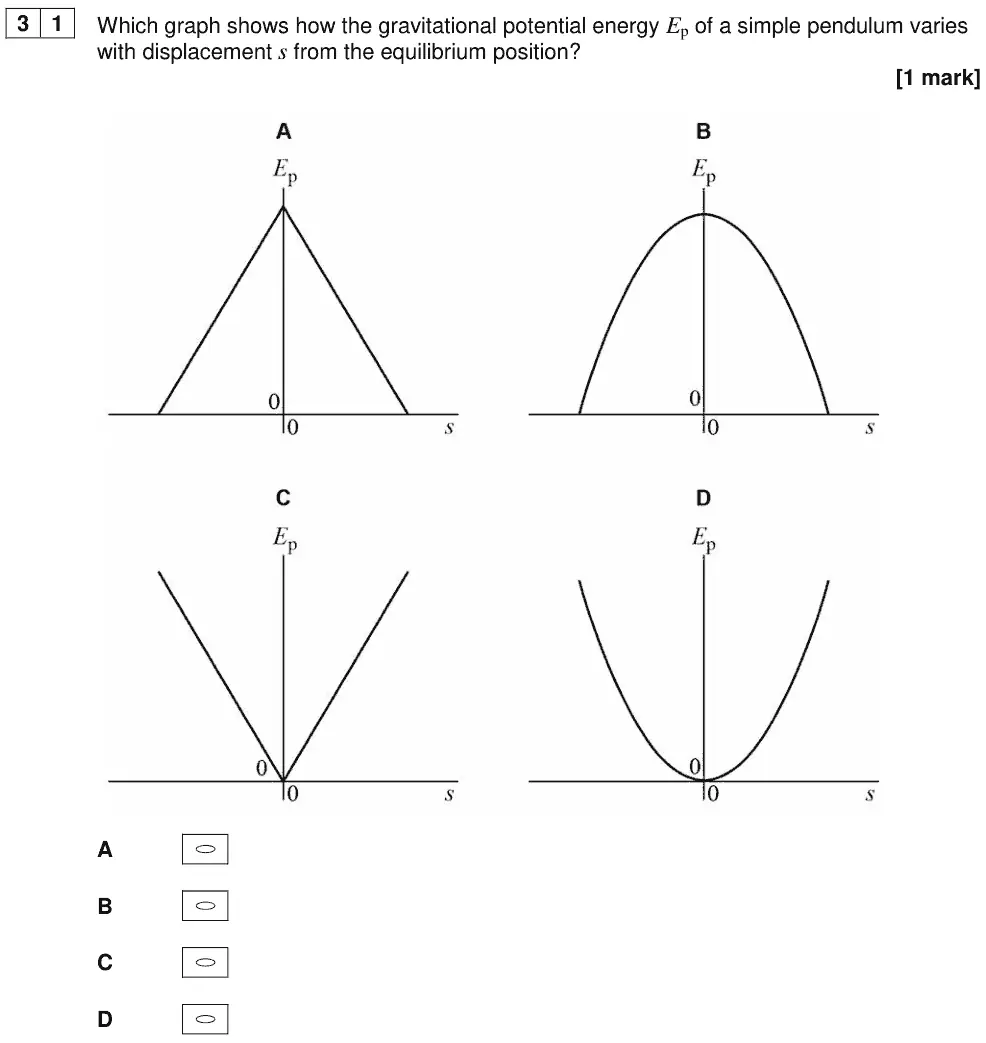
D
Skills: MS3.1 Translate information between graphical, numerical and algebraic forms
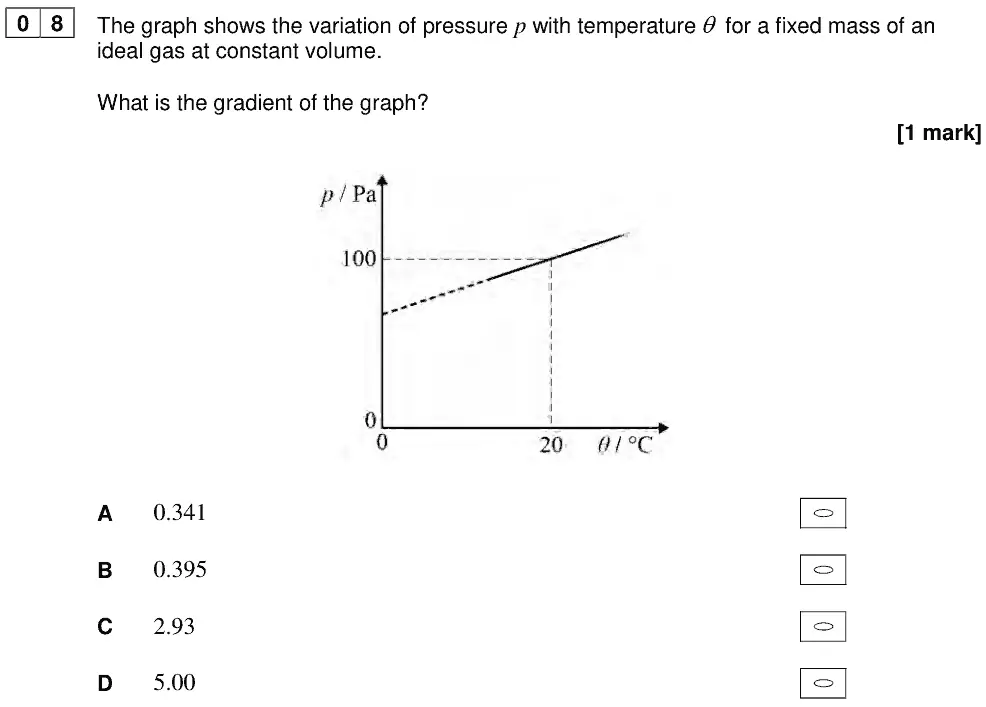
A
Skills: MS3.4 Determine the slope and intercept of a linear graph
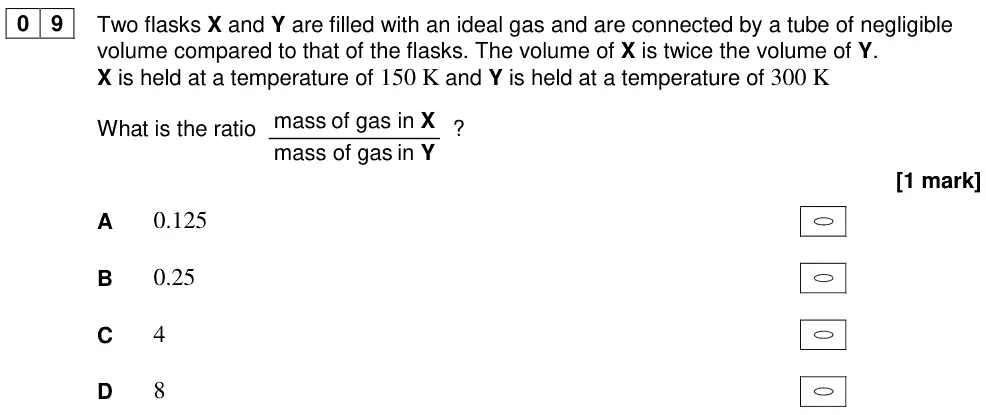
C
Skills: MS0.3 Use ratios, fractions and percentages
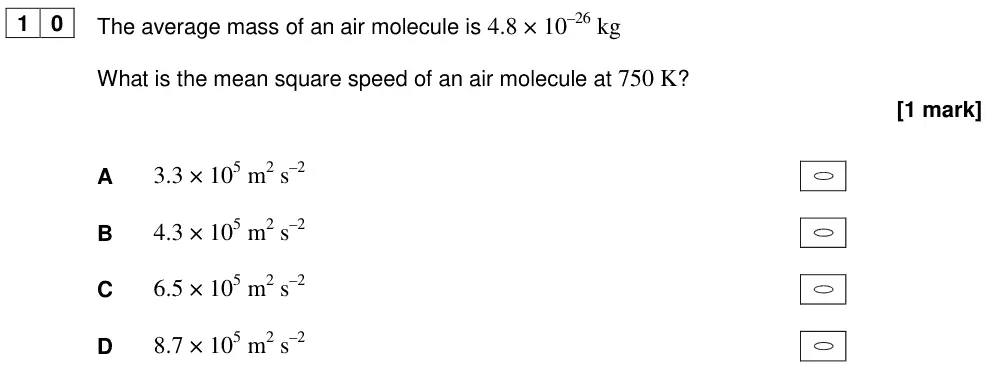
C
Skills: MS2.3 Substitute numerical values into algebraic equations using appropriate units for physical quantities
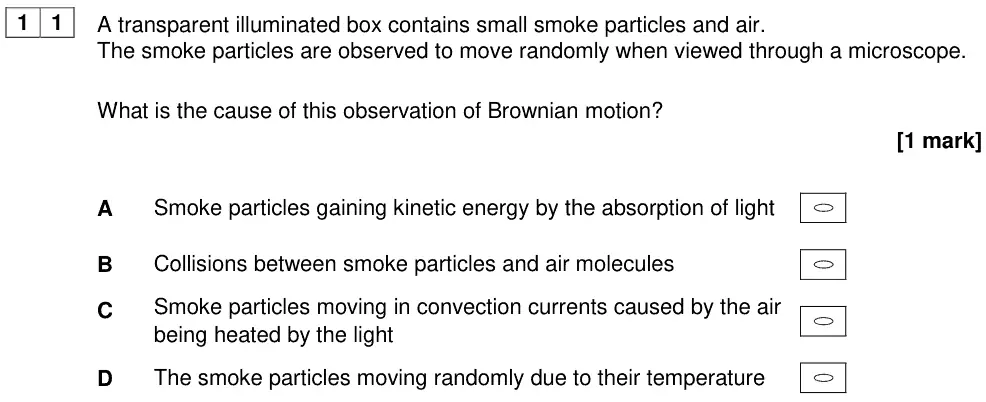
B
B
The 25 questions in Section B are summarised in the table below. For each question, the key (correct answer) is provided, along with the percentage of students answering correctly. There was a good range of ‘facility’ across this section; the most accessible question was 13 (answered correctly by 81.4% of students), the least accessible were 12 and 23 (answered correctly by only 15% and 13.3% of students respectively). The overall mean mark achieved by the students for Section B was 15.4 out of 25 (61.6%).
Skills: MS4.2 Visualise and represent 2D and 3D forms including two- dimensional representations of 3D objects
A
The 25 questions in Section B are summarised in the table below. For each question, the key (correct answer) is provided, along with the percentage of students answering correctly. There was a good range of ‘facility’ across this section; the most accessible question was 13 (answered correctly by 81.4% of students), the least accessible were 12 and 23 (answered correctly by only 15% and 13.3% of students respectively). The overall mean mark achieved by the students for Section B was 15.4 out of 25 (61.6%).
Skills: MS2.3 Substitute numerical values into algebraic equations using appropriate units for physical quantities
D
C
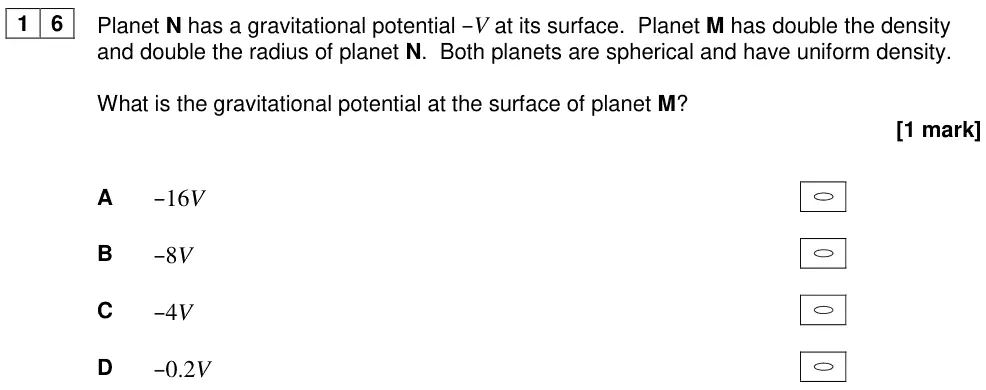
B
Skills: MS0.3 Use ratios, fractions and percentages
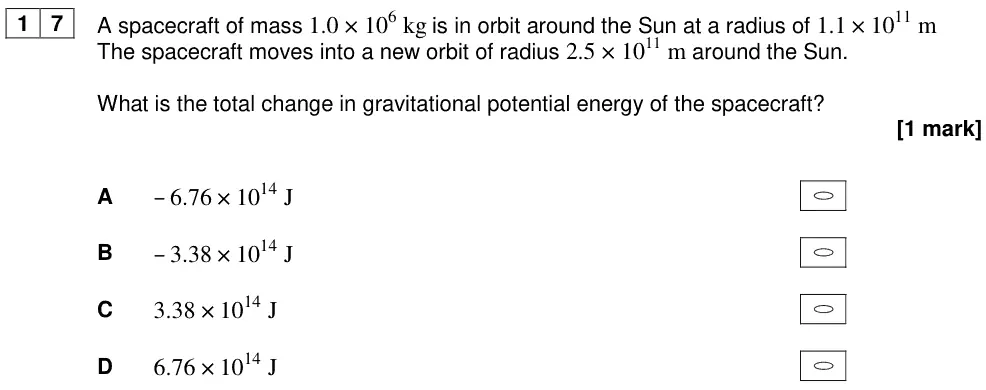
D
Skills: MS2.3 Substitute numerical values into algebraic equations using appropriate units for physical quantities
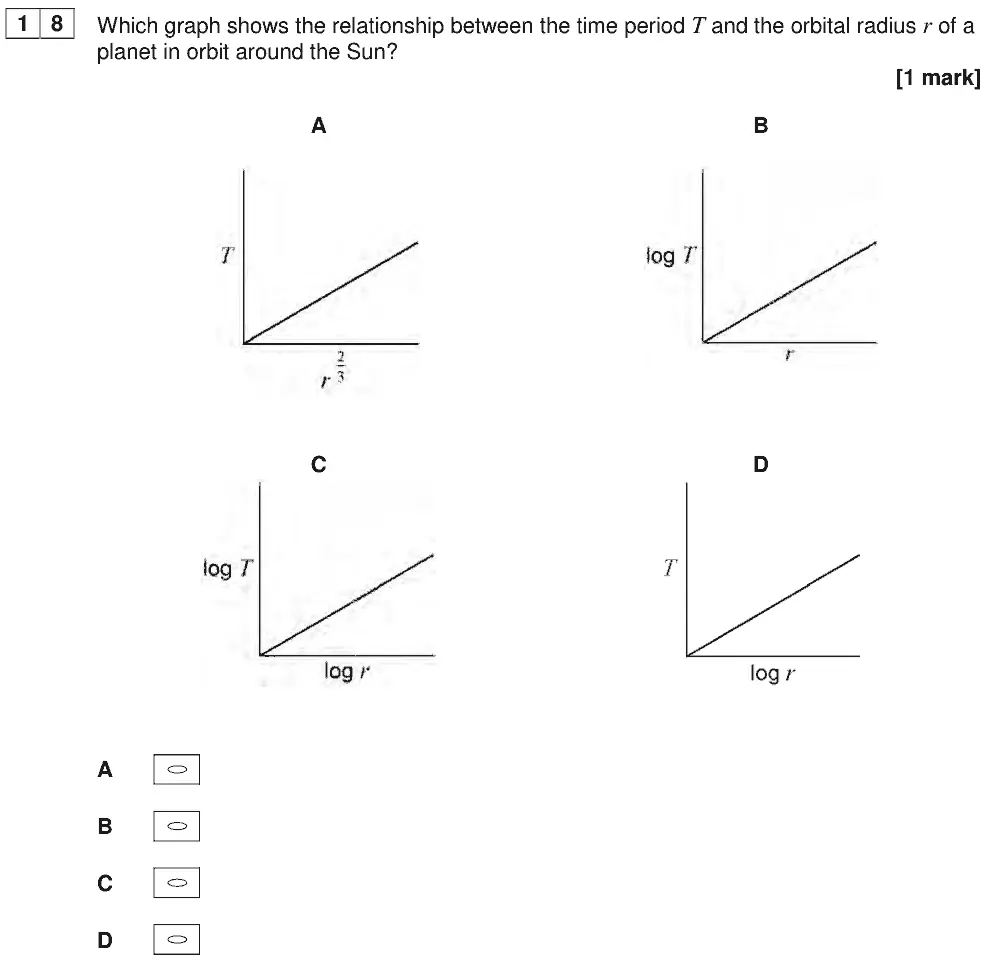
C
Skills: MS3.11 Use logarithmic plots to test exponential and power law variations
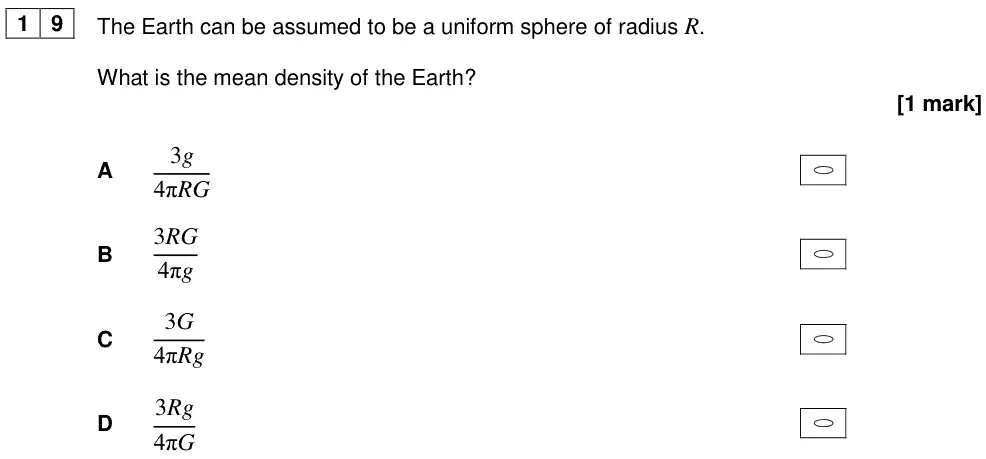
A
Skills: MS2.2 Change the subject of an equation, including non-linear equations; MS4.3 Calculate areas of triangles, circumferences and areas of circles, surface areas and volumes of rectangular blocks, cylinders and spheres
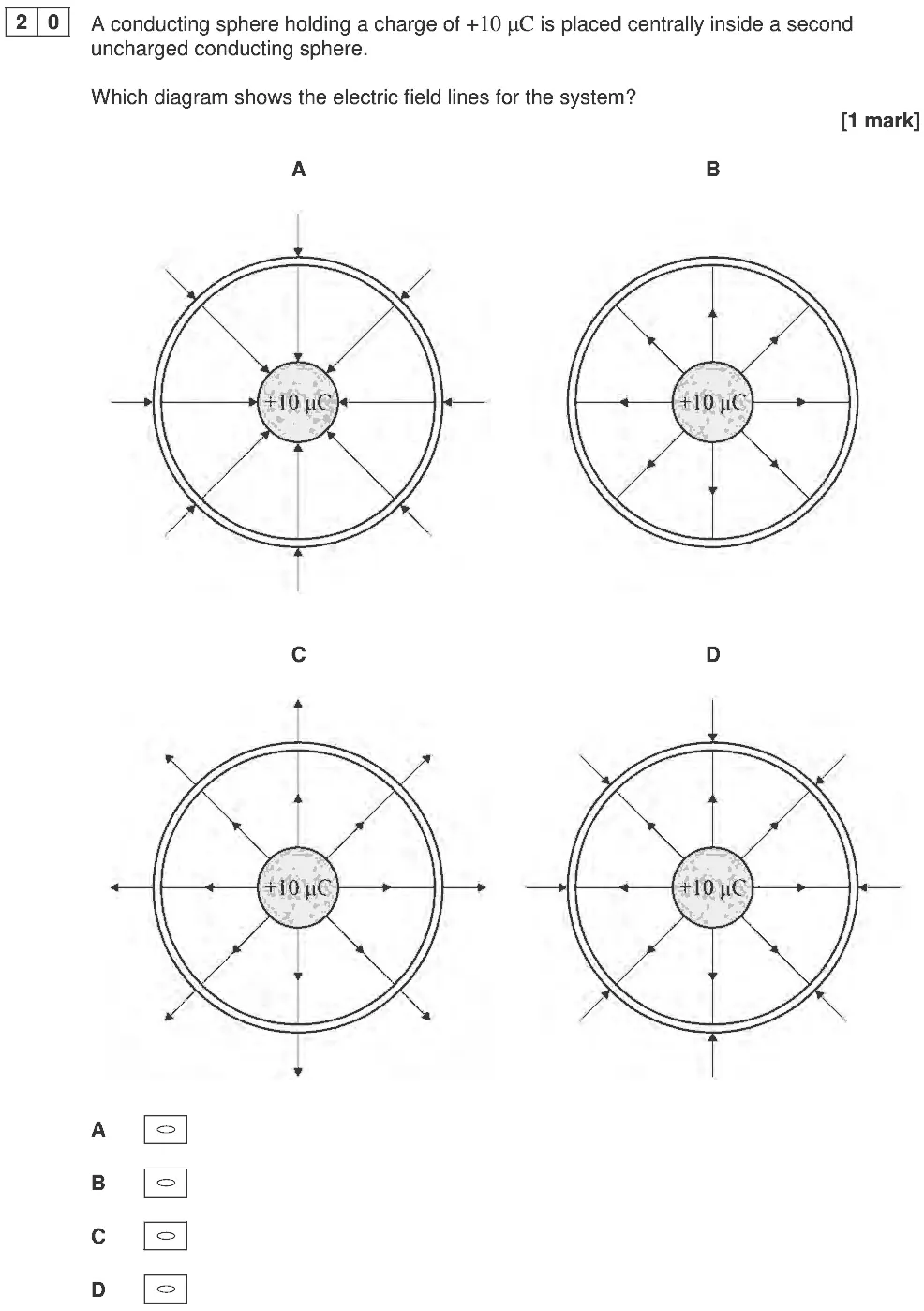
C
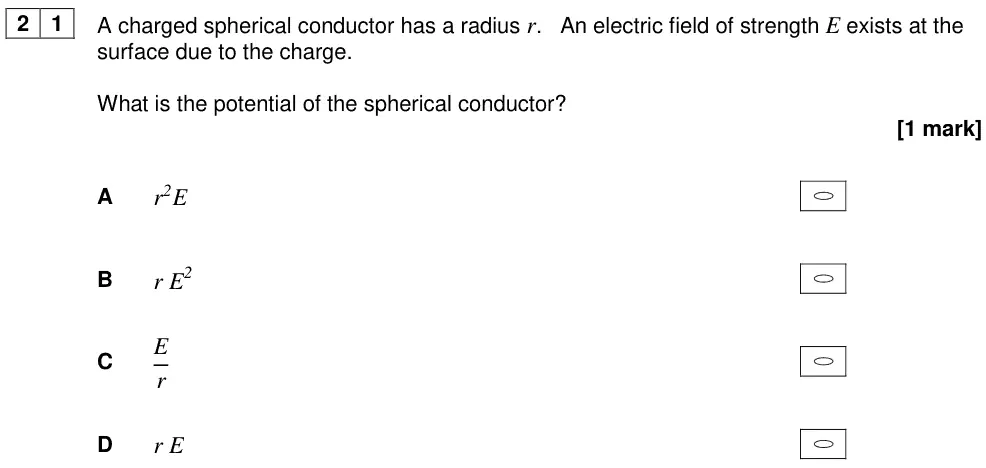
D
Skills: MS2.2 Change the subject of an equation, including non-linear equations
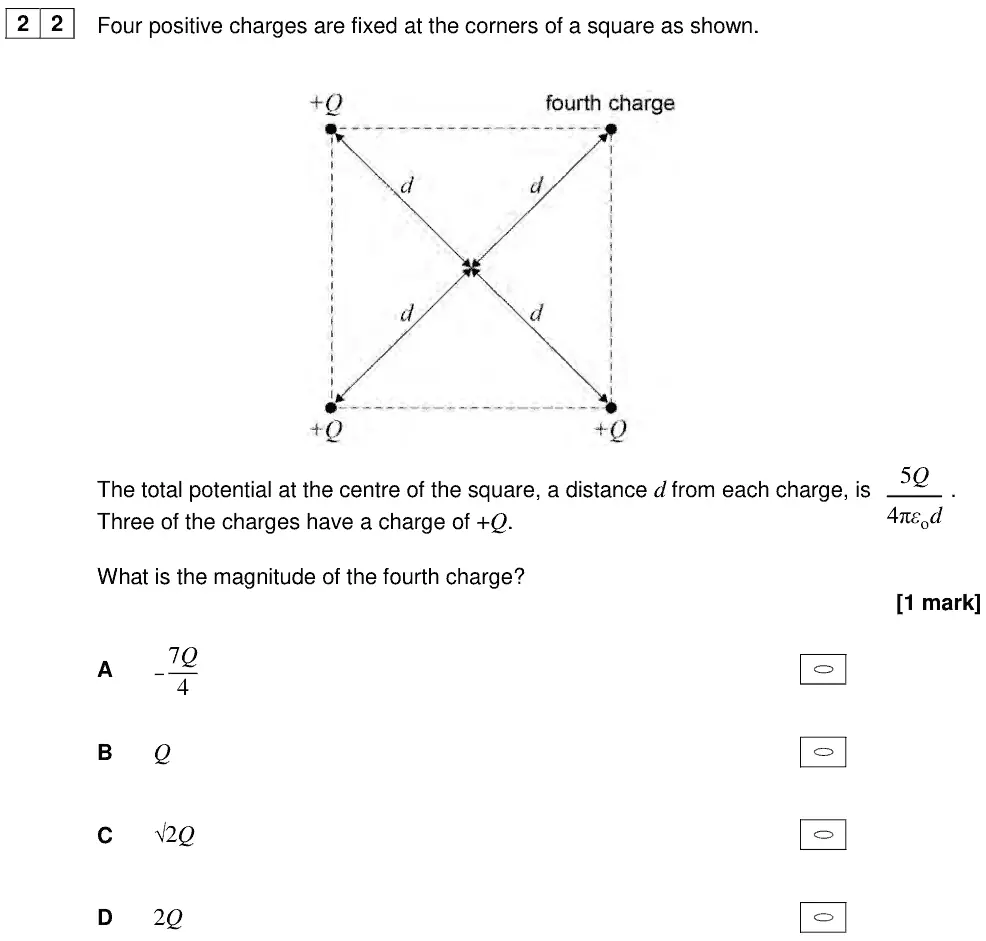
D
Skills: MS2.2 Change the subject of an equation, including non-linear equations
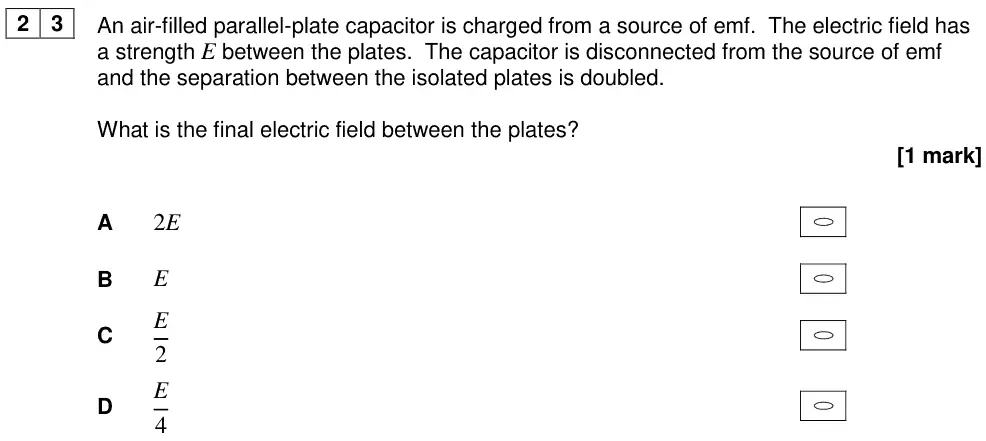
B
The 25 questions in Section B are summarised in the table below. For each question, the key (correct answer) is provided, along with the percentage of students answering correctly. There was a good range of ‘facility’ across this section; the most accessible question was 13 (answered correctly by 81.4% of students), the least accessible were 12 and 23 (answered correctly by only 15% and 13.3% of students respectively). The overall mean mark achieved by the students for Section B was 15.4 out of 25 (61.6%).
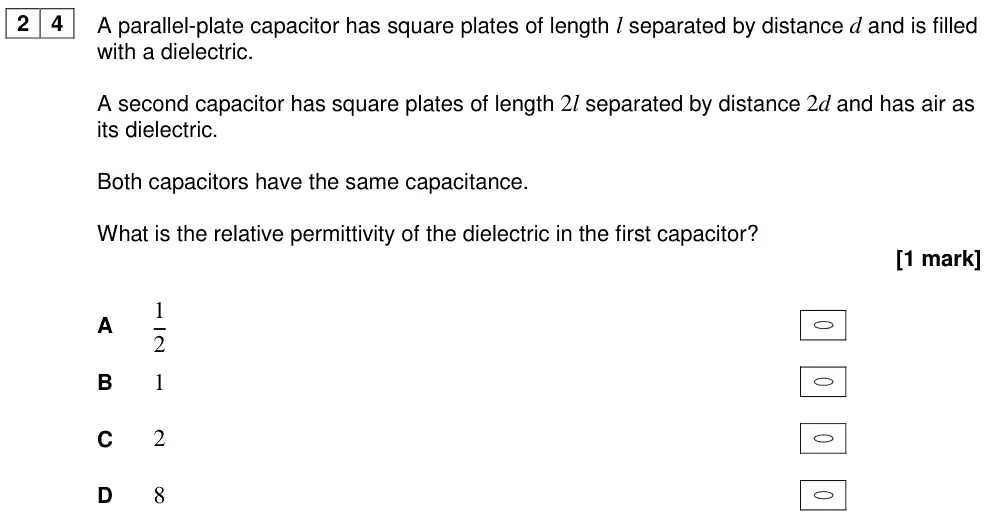
C
Skills: MS0.3 Use ratios, fractions and percentages
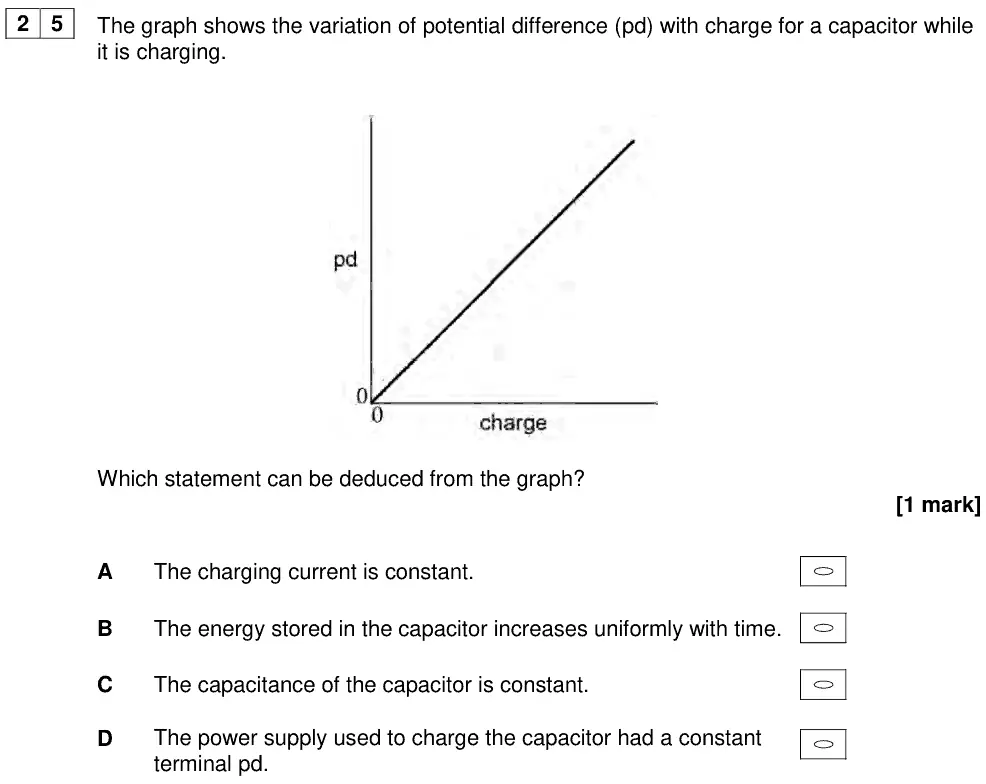
C
Skills: MS3.1 Translate information between graphical, numerical and algebraic forms
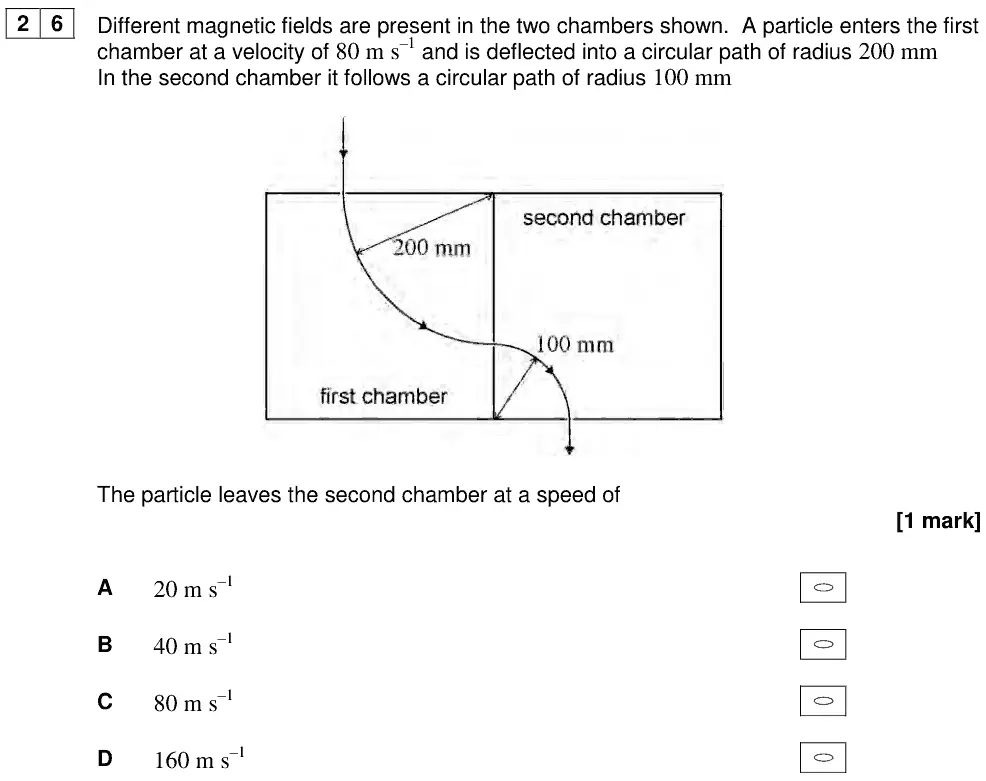
C
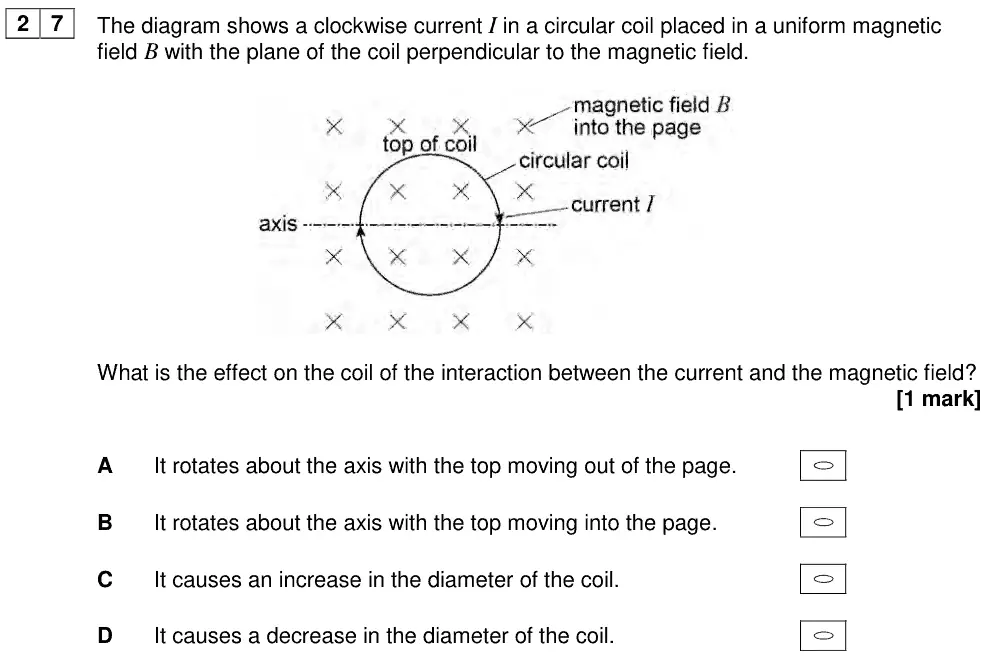
C
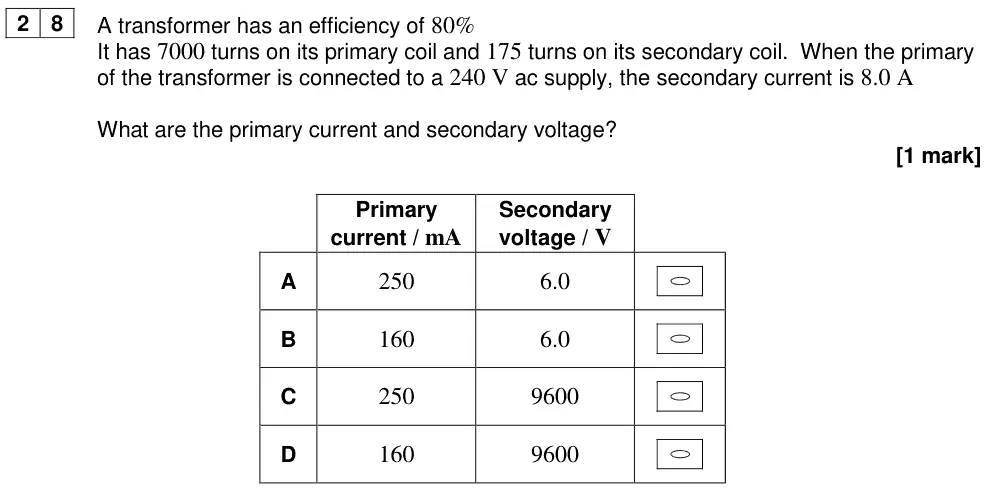
A
Skills: MS0.3 Use ratios, fractions and percentages
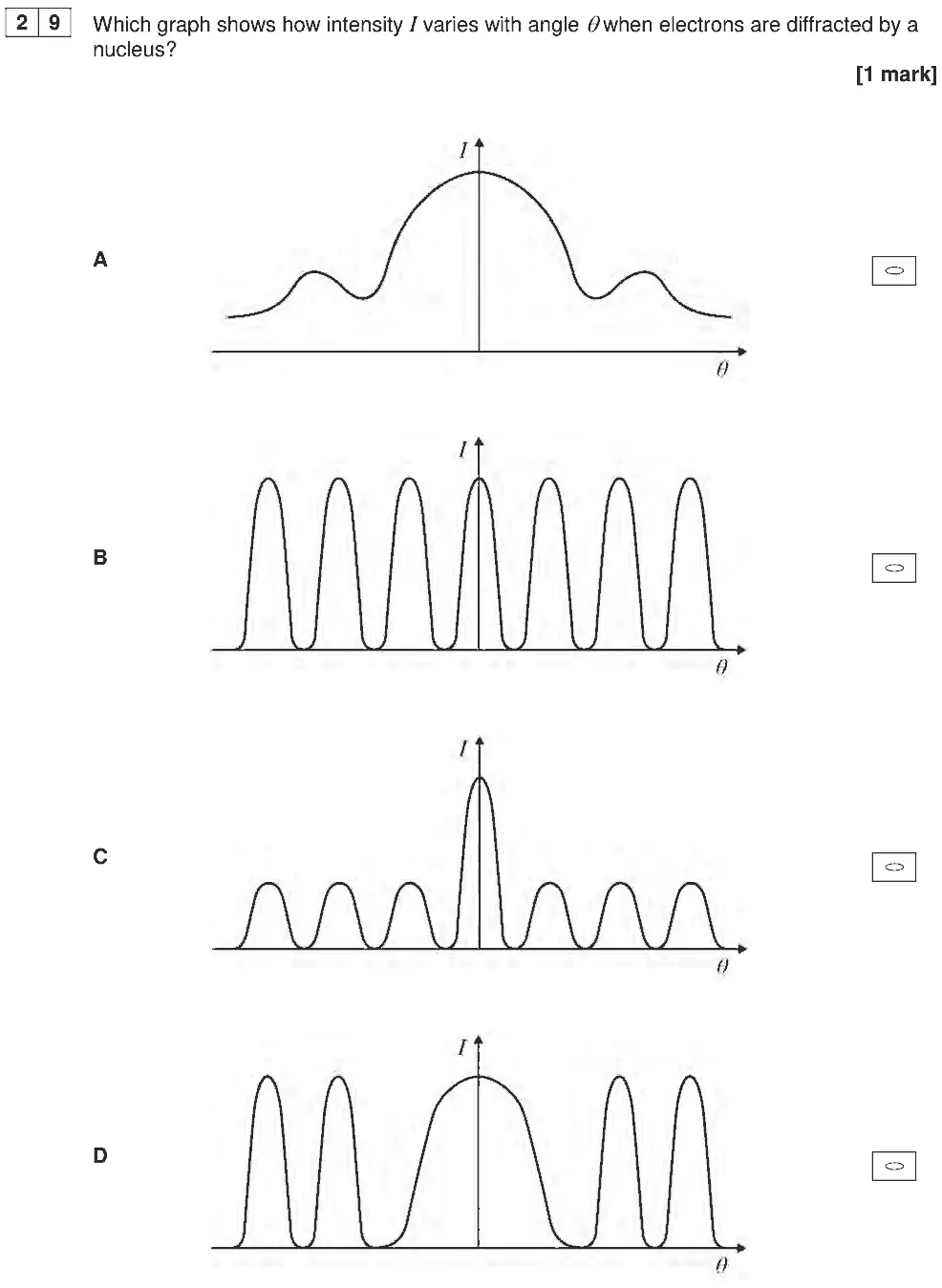
A
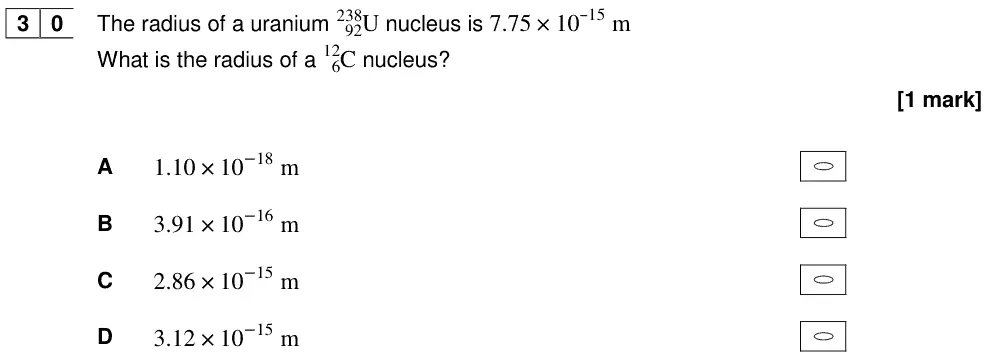
C
Skills: MS0.5 Use calculators to find and use power, exponential and logarithmic functions
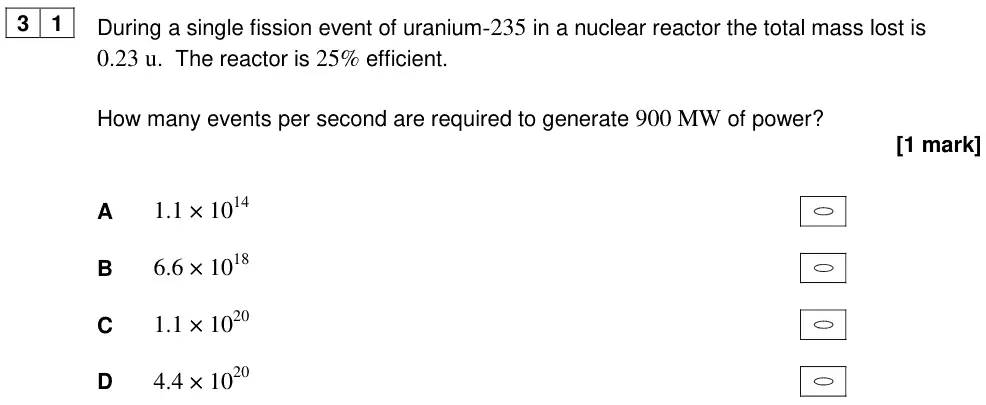
C
Skills: MS0.3 Use ratios, fractions and percentages; MS0.2 Recognise and use expressions in decimal and standard form
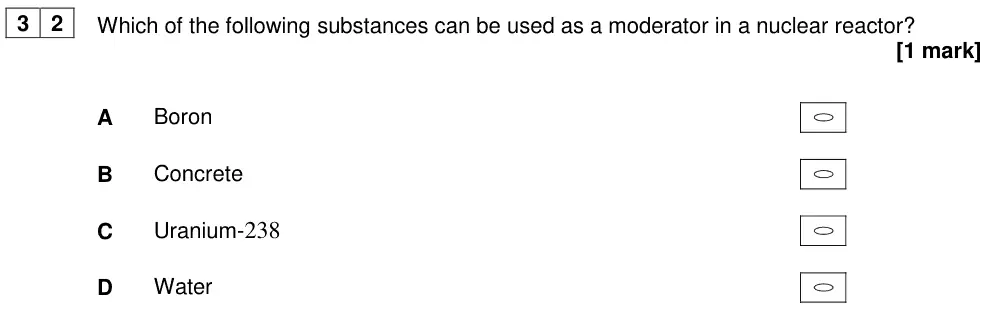
D
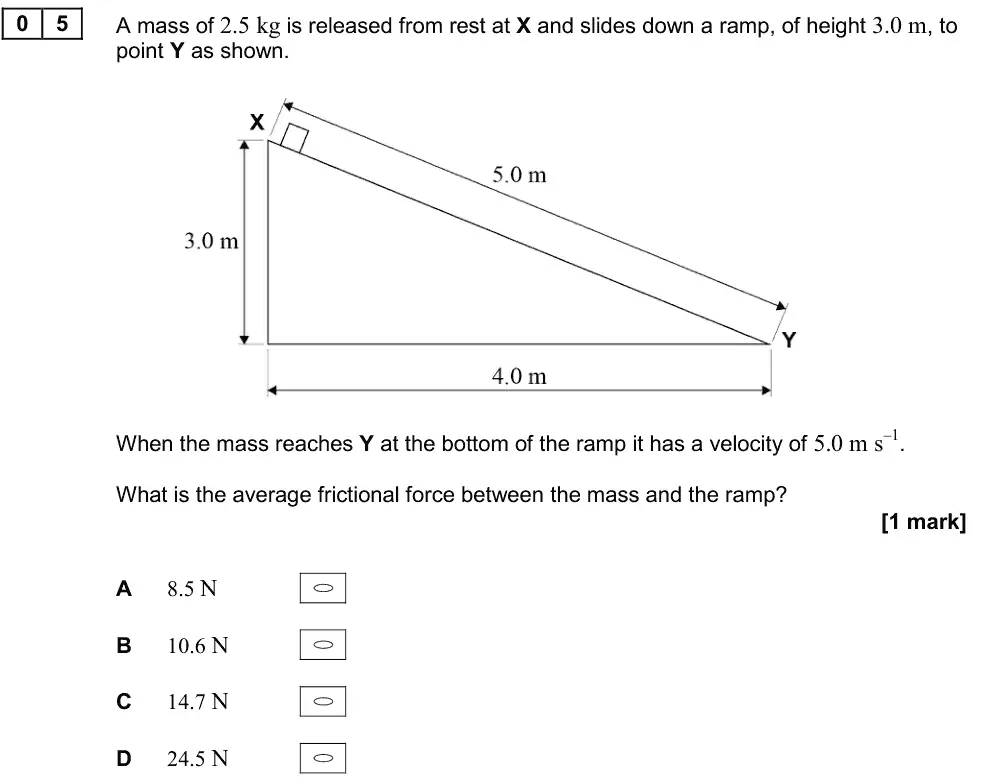
A
Skills: MS2.3 Substitute numerical values into algebraic equations using appropriate units for physical quantities
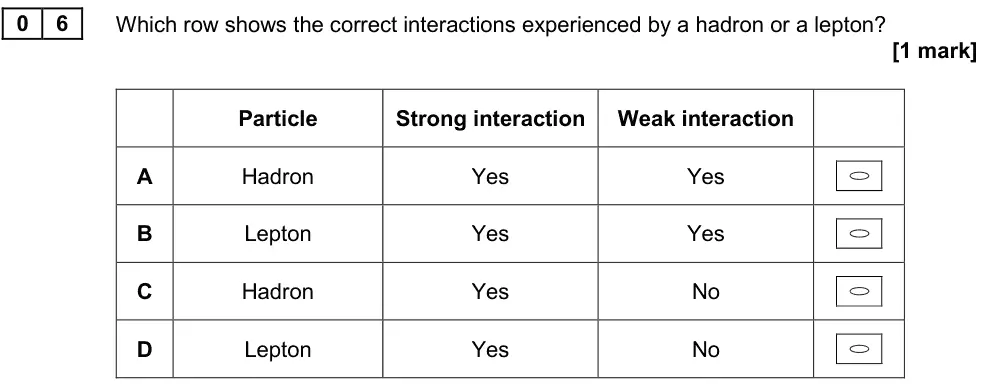
A
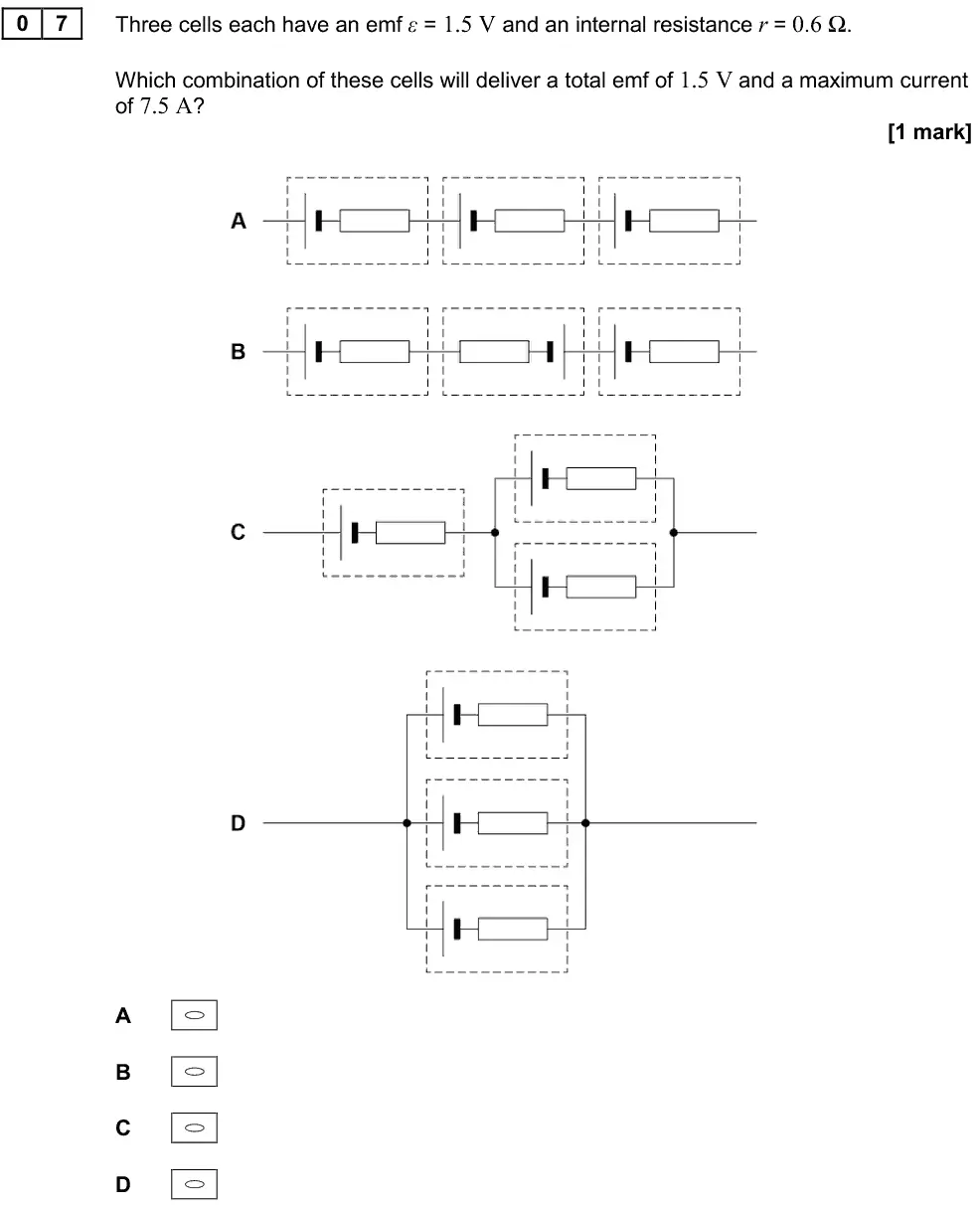
D
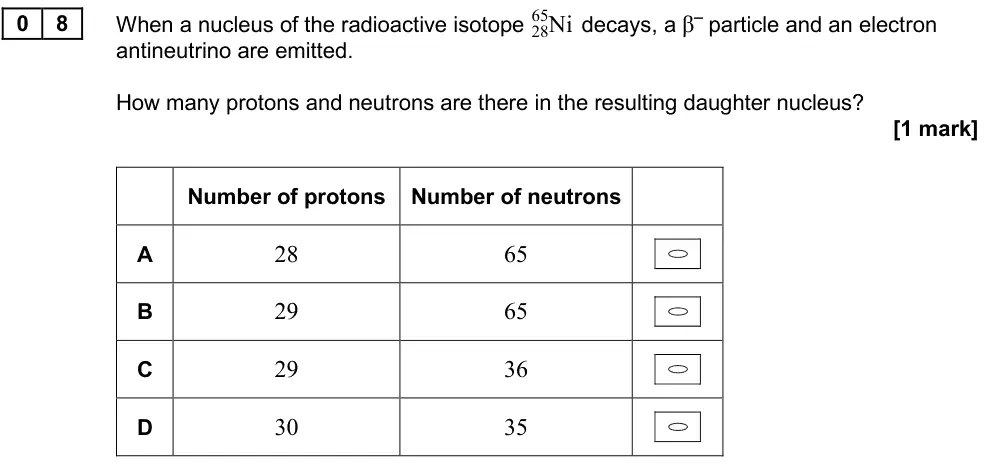
C
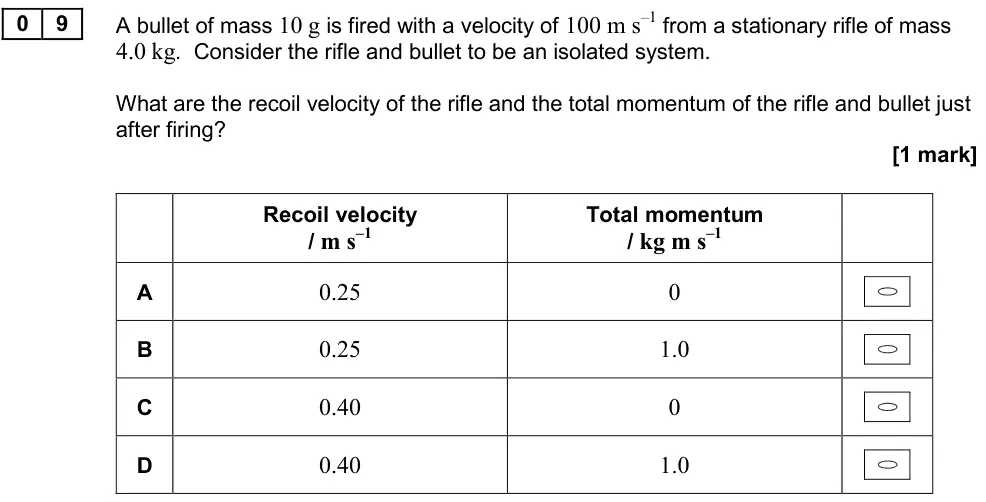
A
Skills: MS2.3 Substitute numerical values into algebraic equations using appropriate units for physical quantities
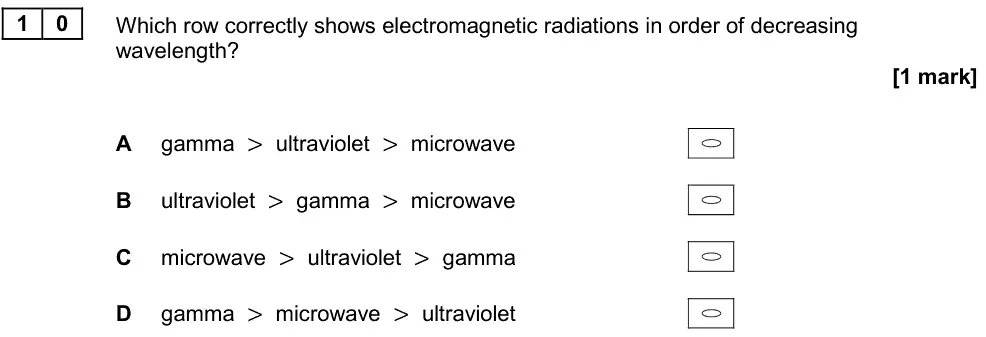
C
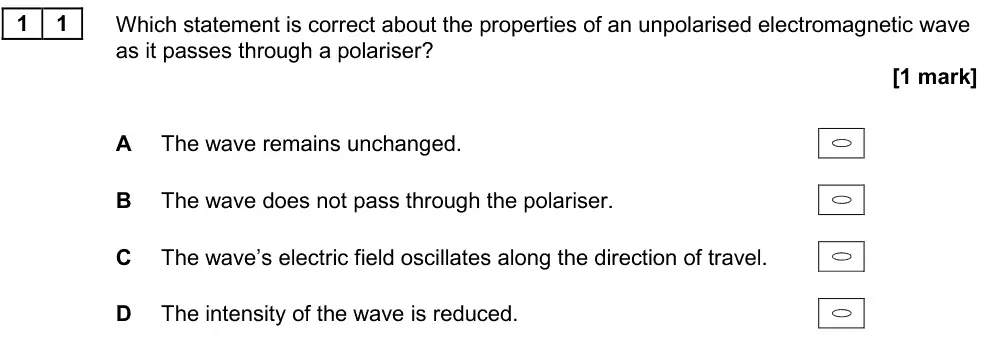
D
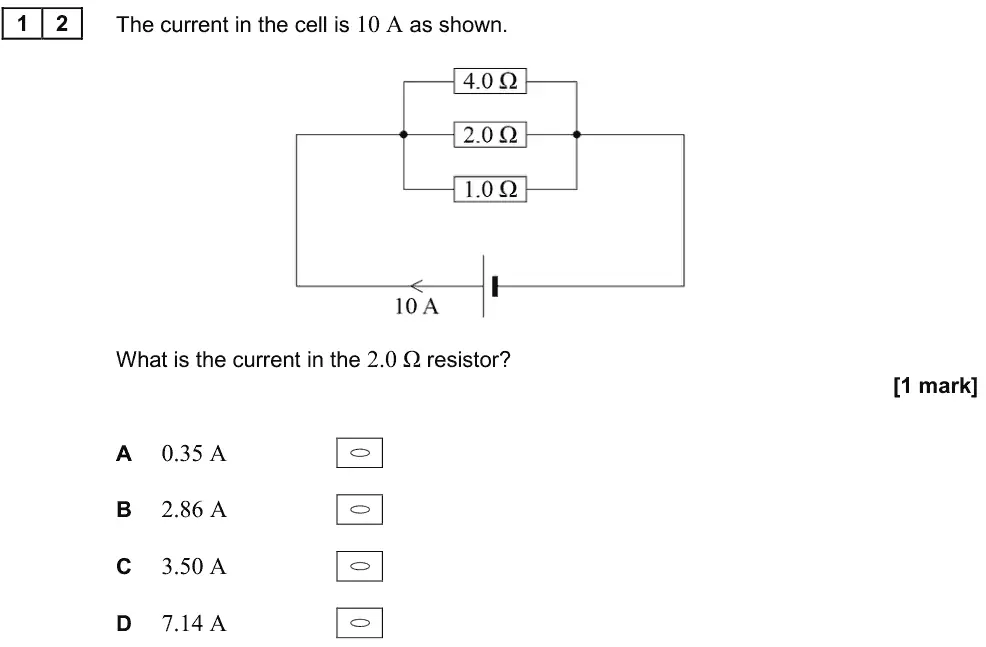
B
Skills: MS2.3 Substitute numerical values into algebraic equations using appropriate units for physical quantities
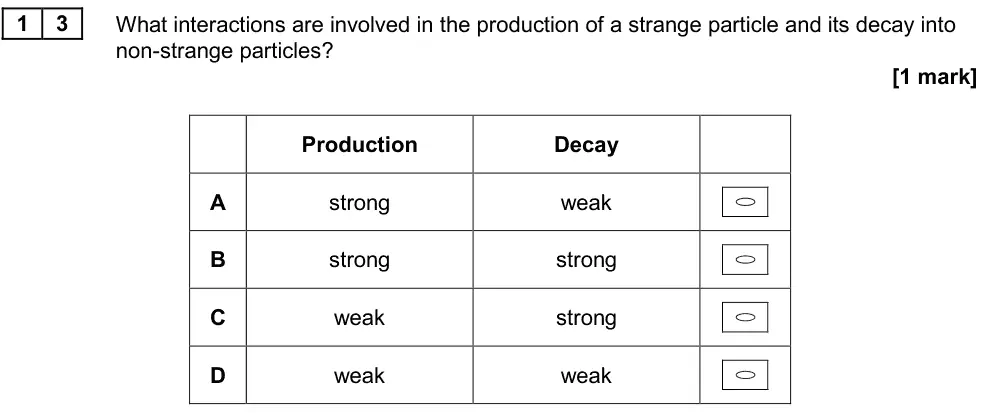
A
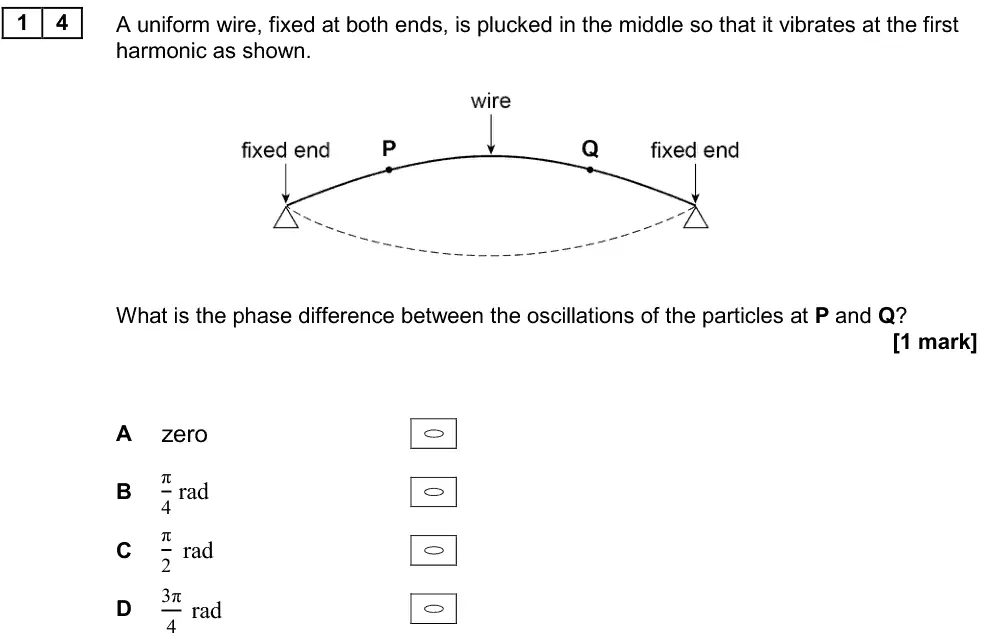
A
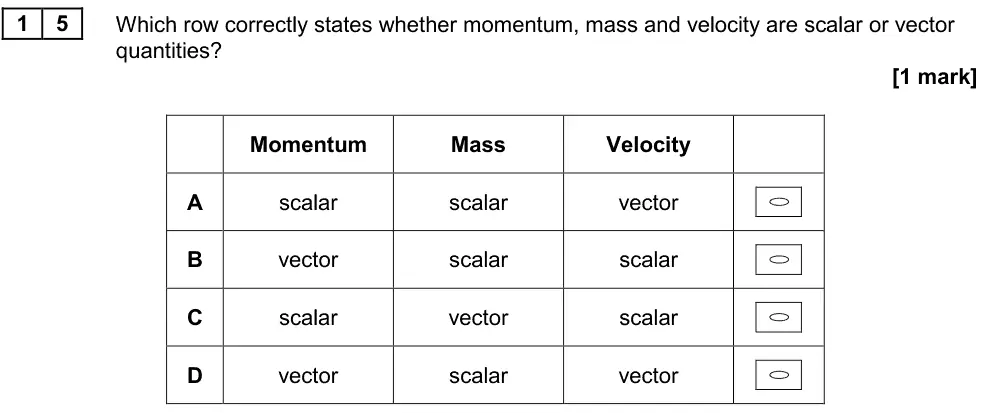
D
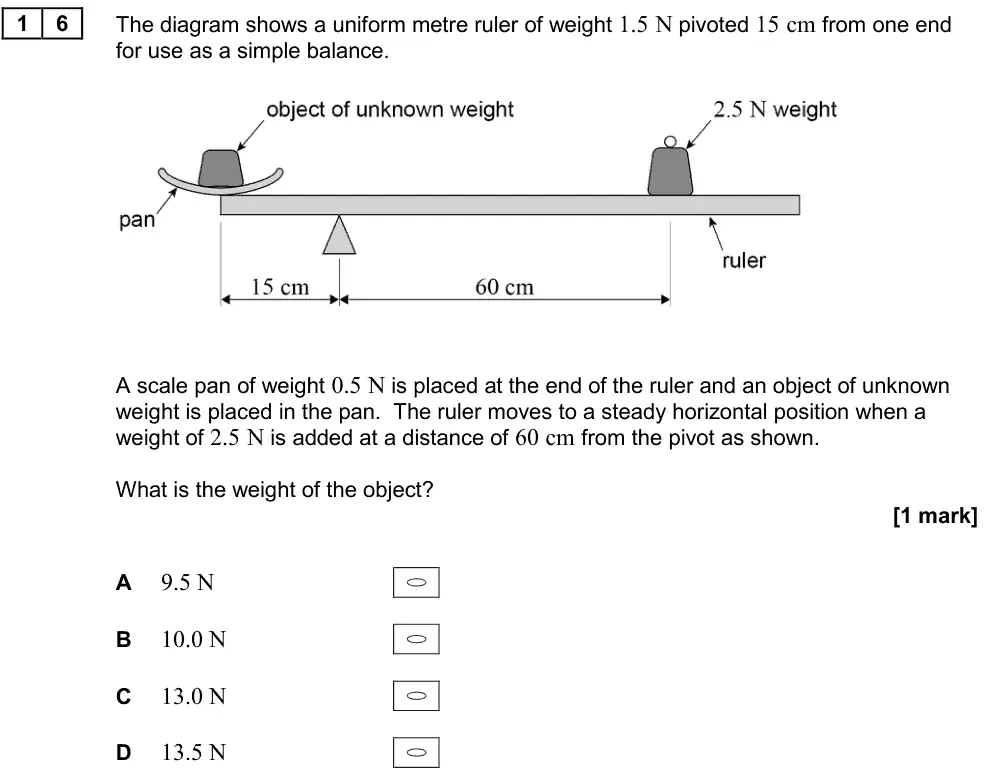
C
Skills: MS2.3 Substitute numerical values into algebraic equations using appropriate units for physical quantities
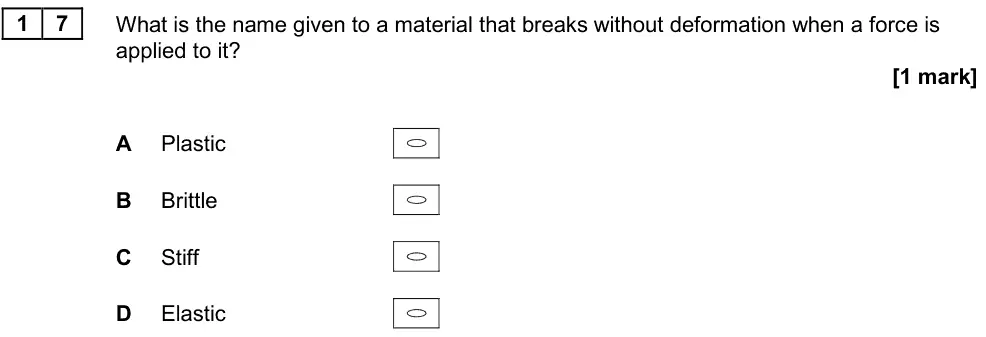
B
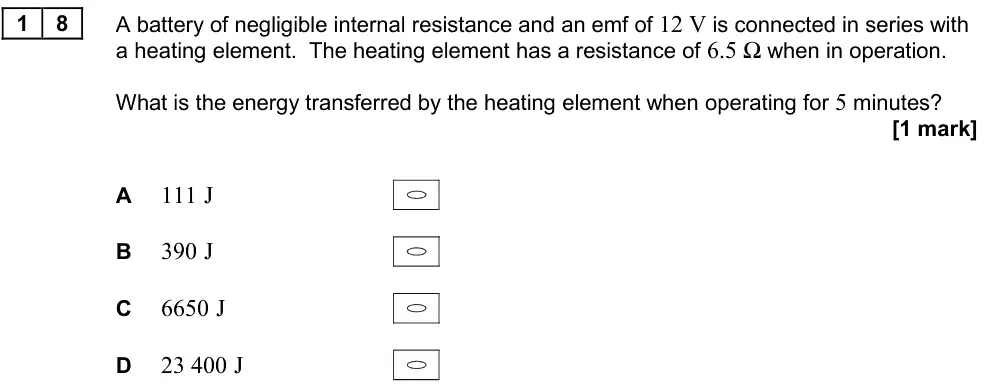
C
Skills: MS2.3 Substitute numerical values into algebraic equations using appropriate units for physical quantities
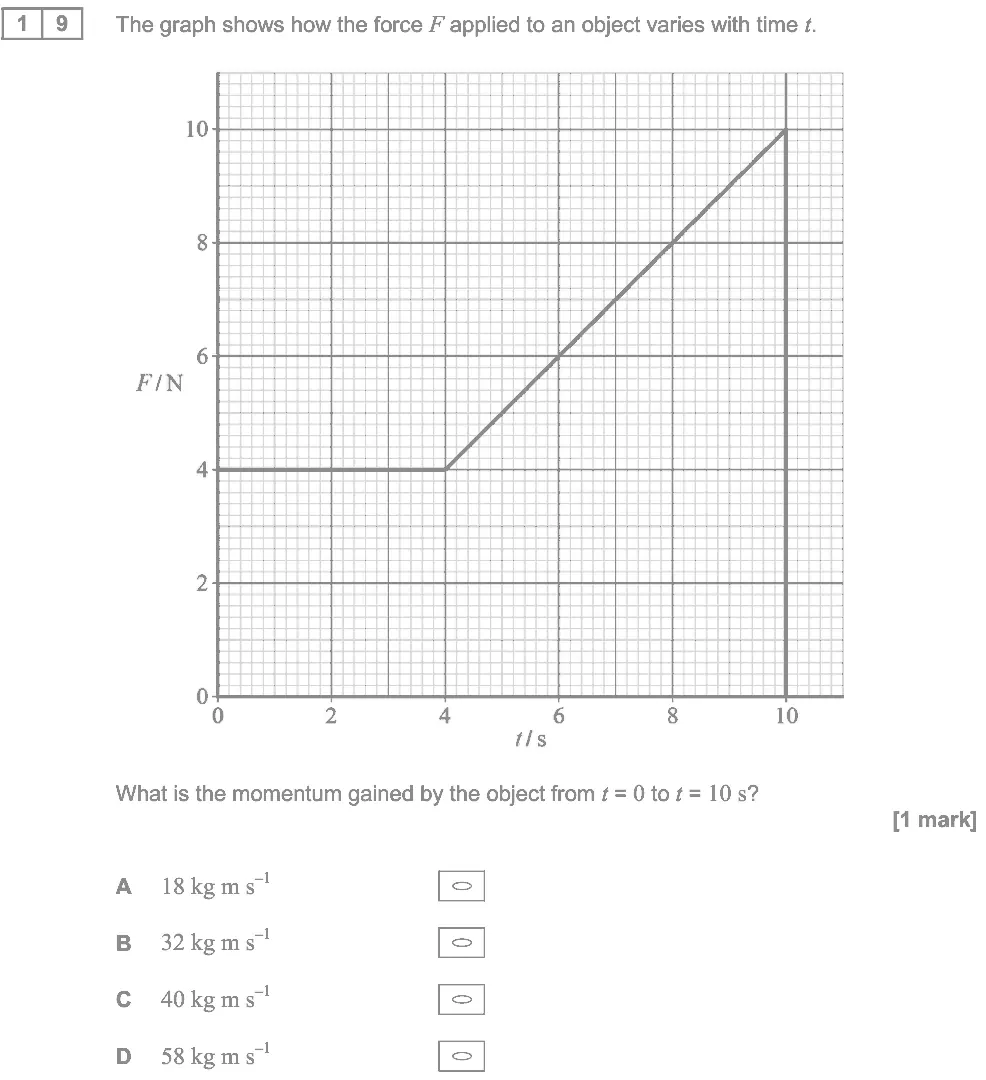
D
Skills: MS3.8 Understand the possible physical significance of the area between a curve and the x axis and be able to calculate it or estimate it by graphical methods as appropriate
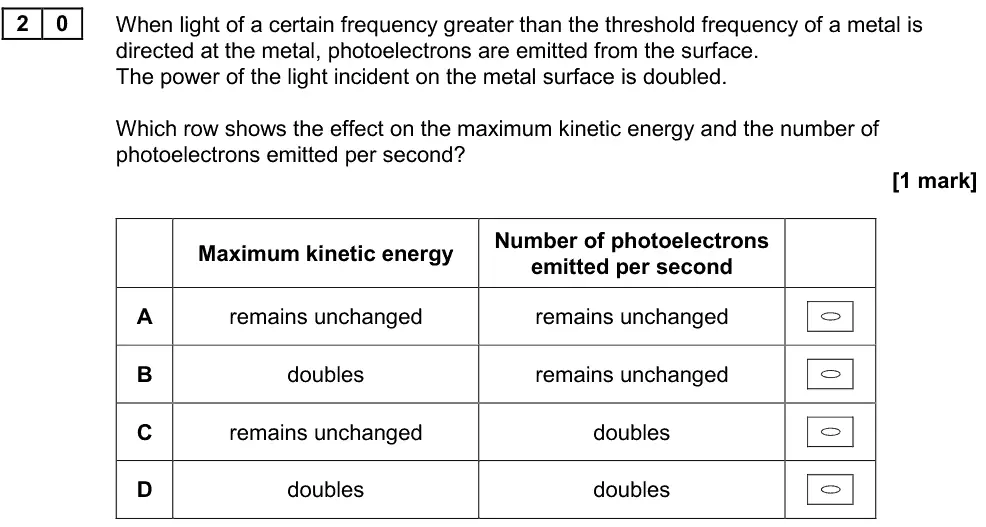
C
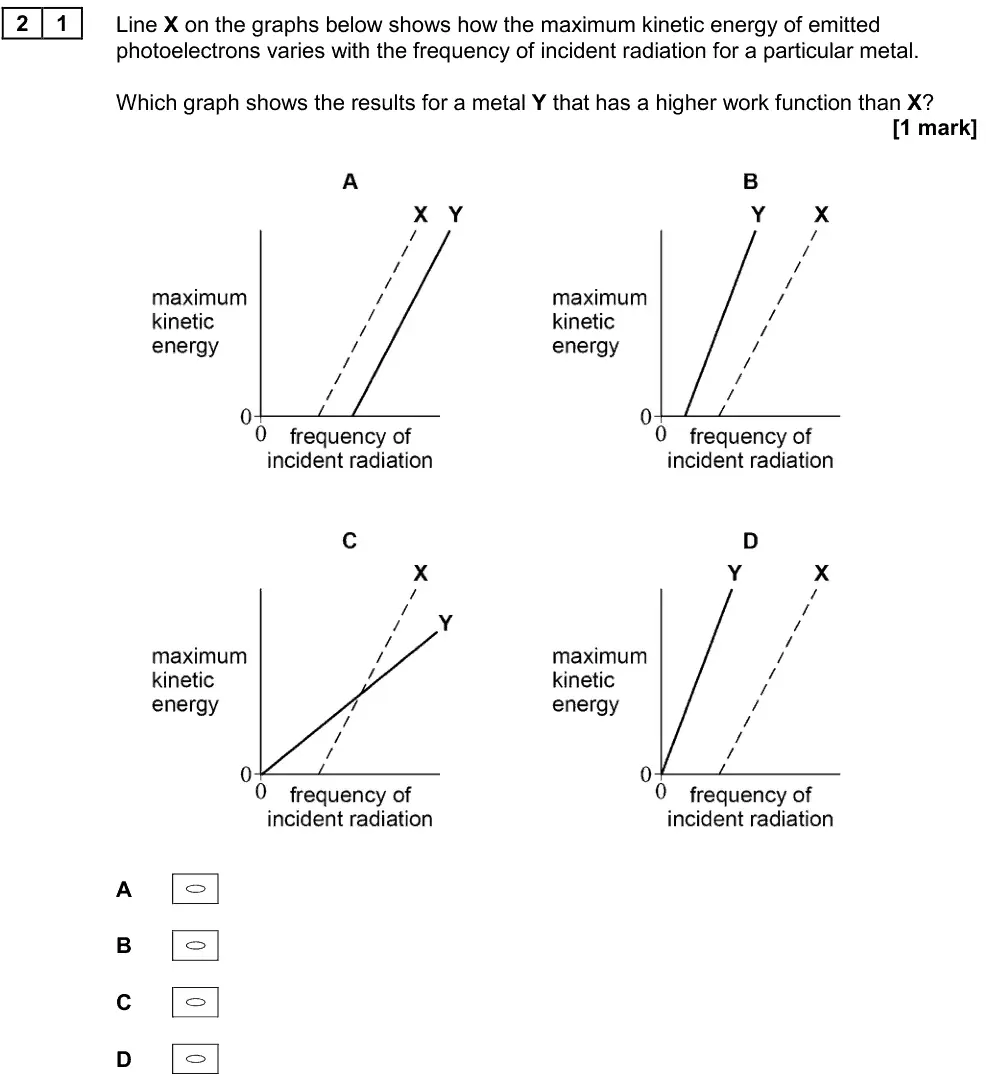
A
Skills: MS3.3 Understand that y = mx + c represents a linear relationship
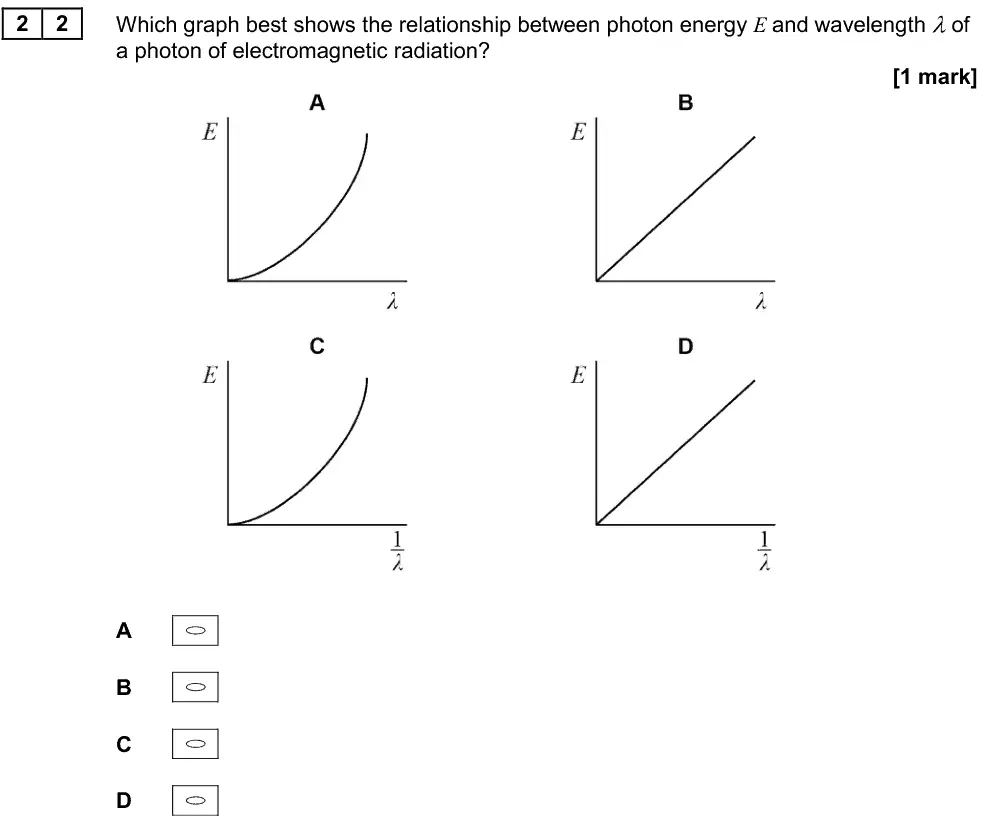
D
Skills: MS3.3 Understand that y = mx + c represents a linear relationship
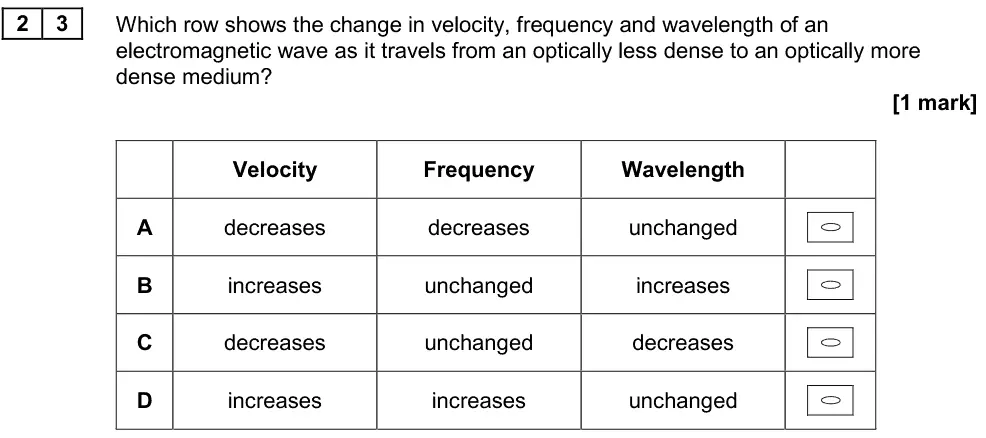
C
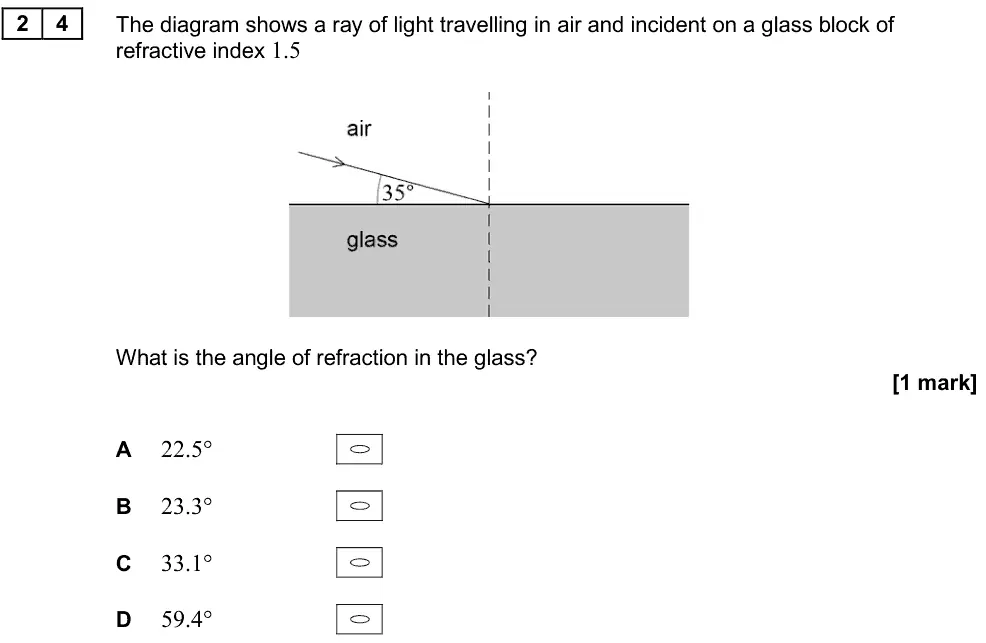
C
Skills: MS0.6 Use calculators to handle sin x, cos x, tan x when x is expressed in degrees or radians
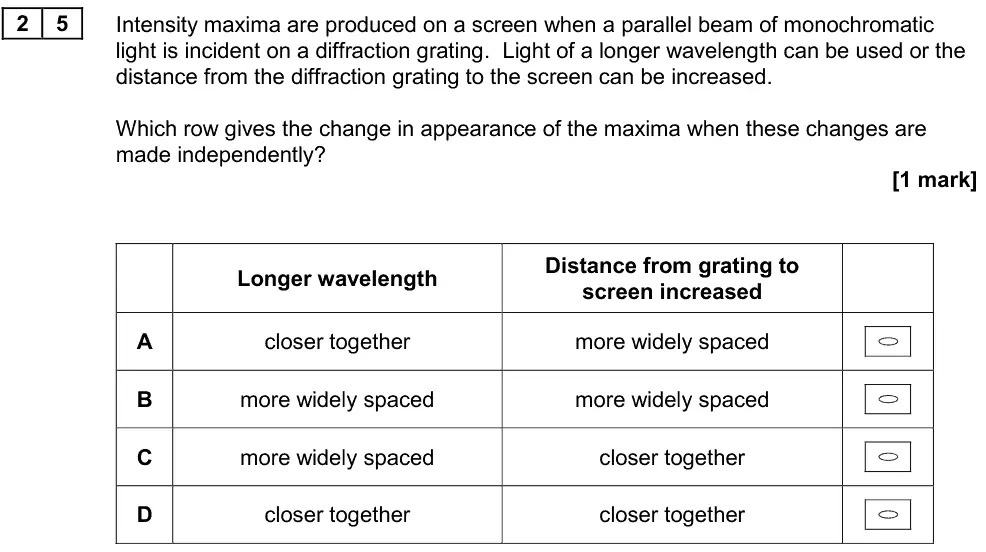
B
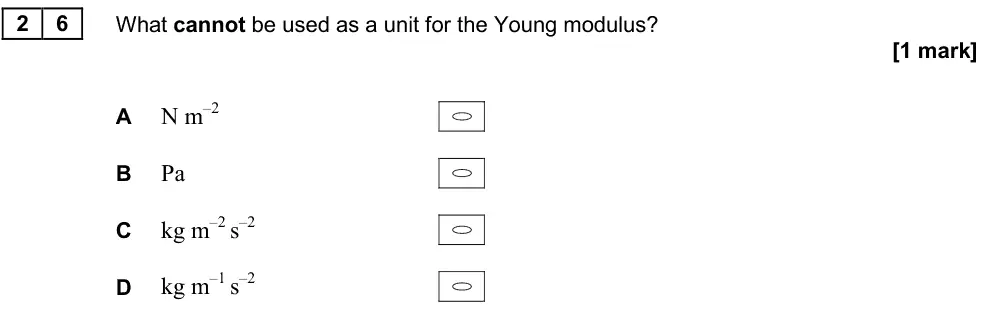
C
Skills: MS0.1 Recognise and make use of appropriate units in calculations
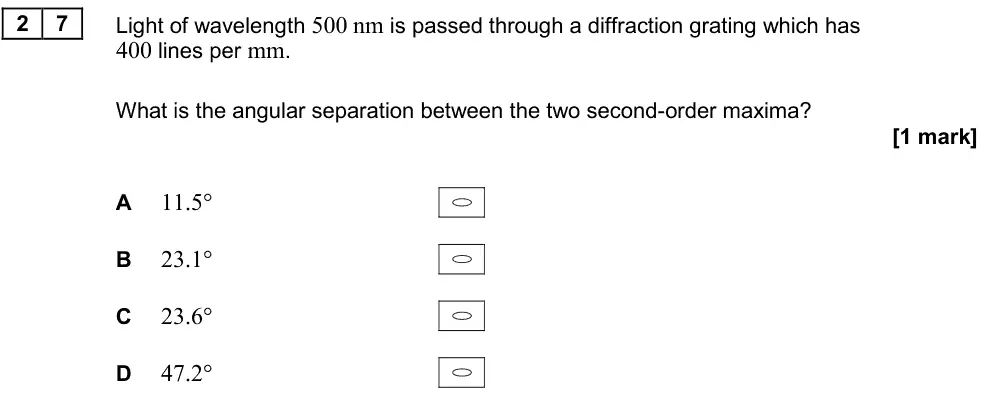
D
Skills: MS0.6 Use calculators to handle sin x, cos x, tan x when x is expressed in degrees or radians; MS2.3 Substitute numerical values into algebraic equations using appropriate units for physical quantities
A
A
B
B
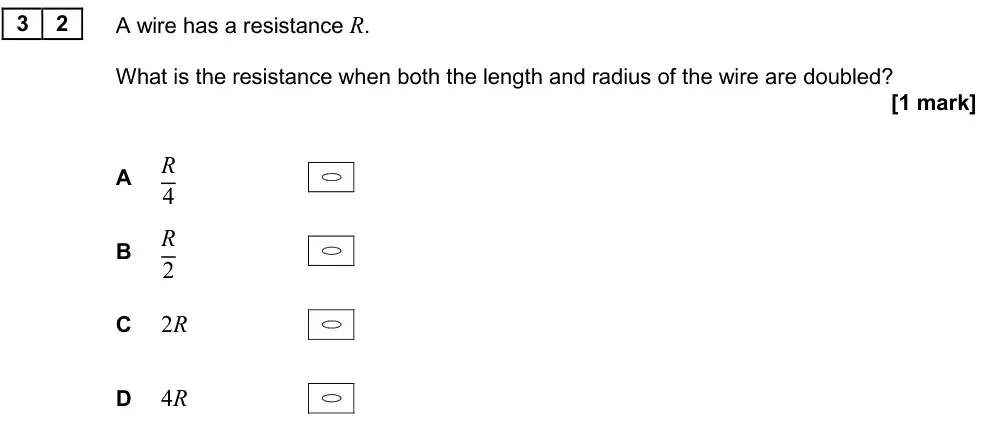
B
Skills: MS0.3 Use ratios, fractions and percentages
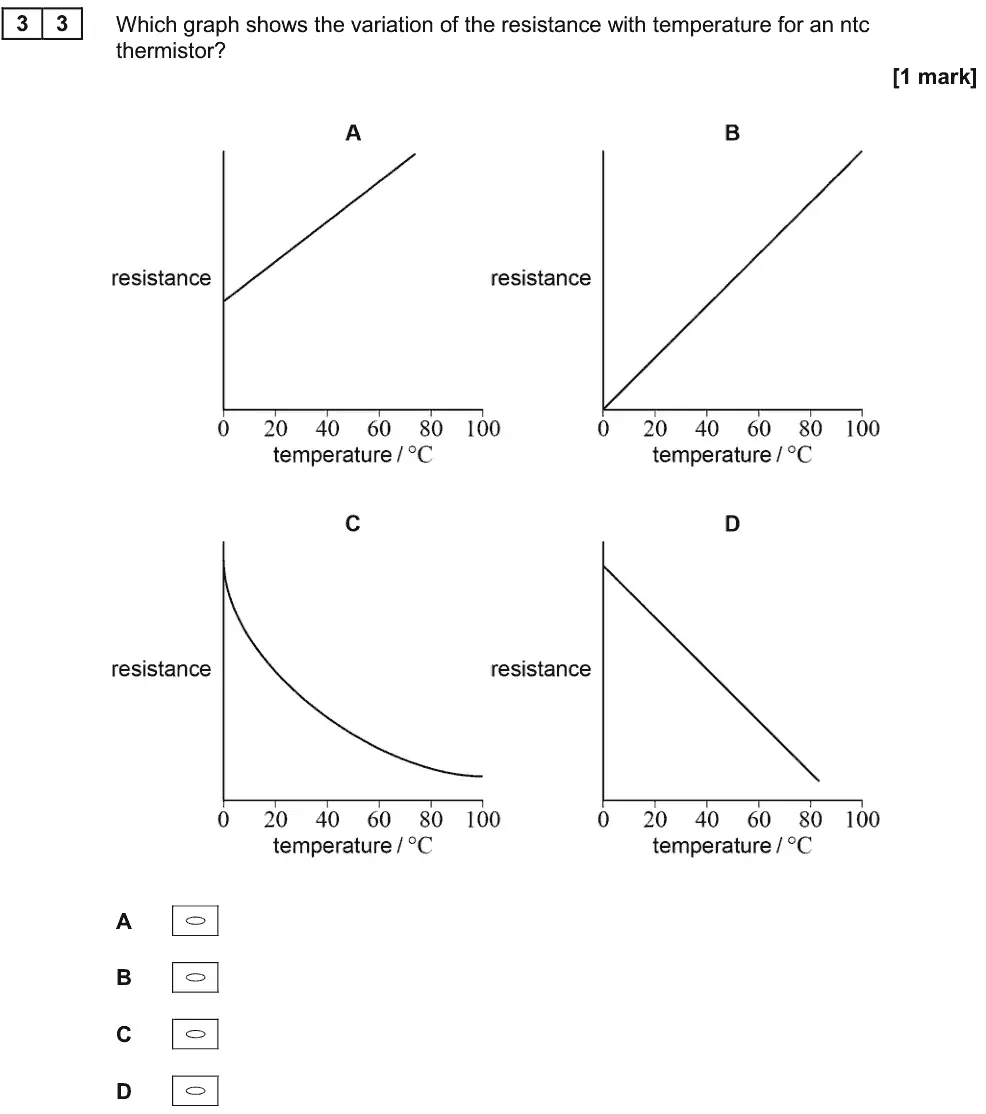
C
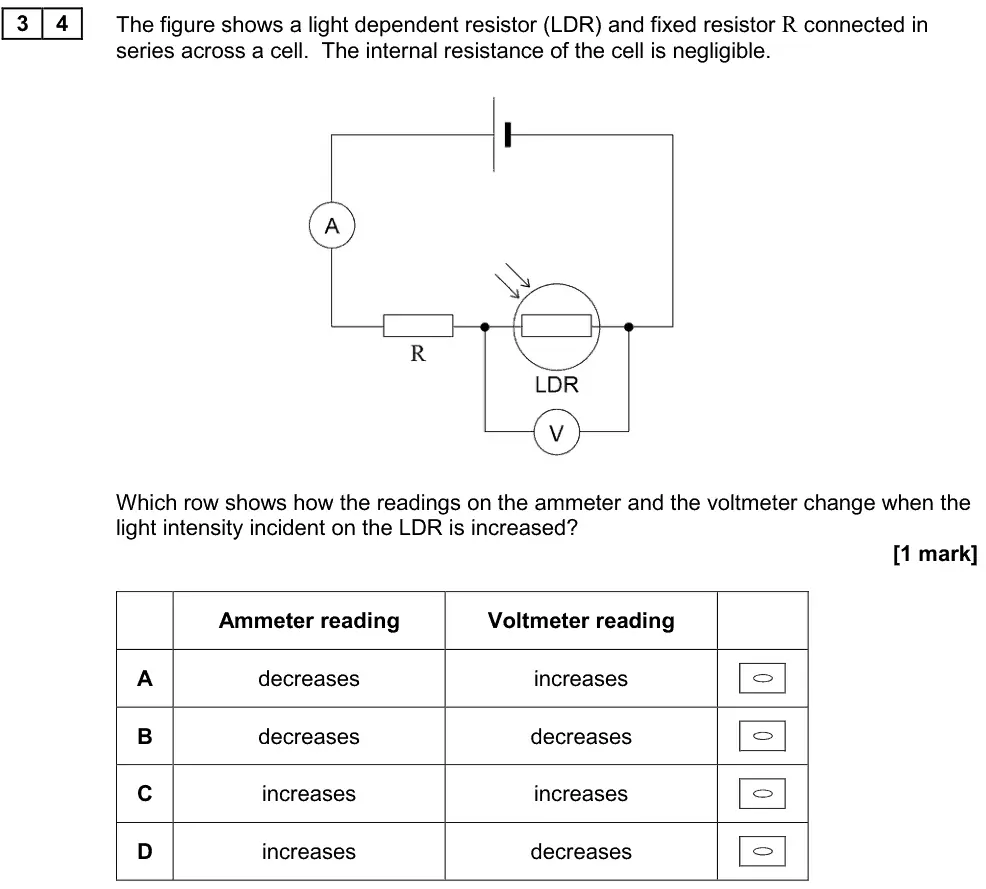
D
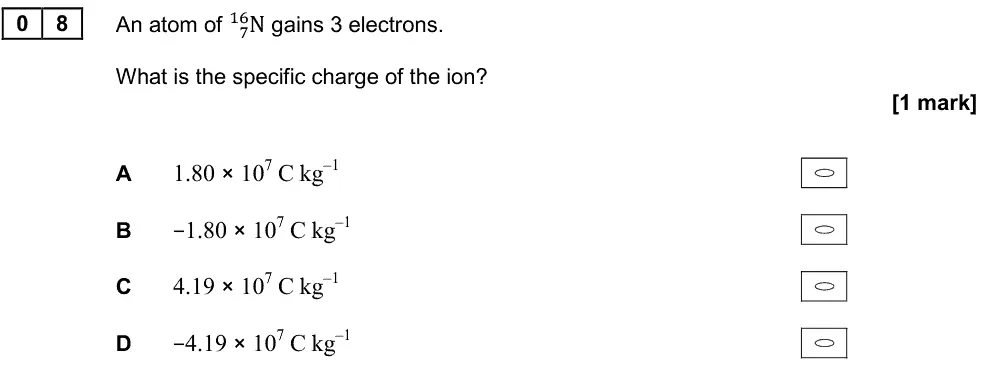
B
Skills: MS0.2 Recognise and use expressions in decimal and standard form
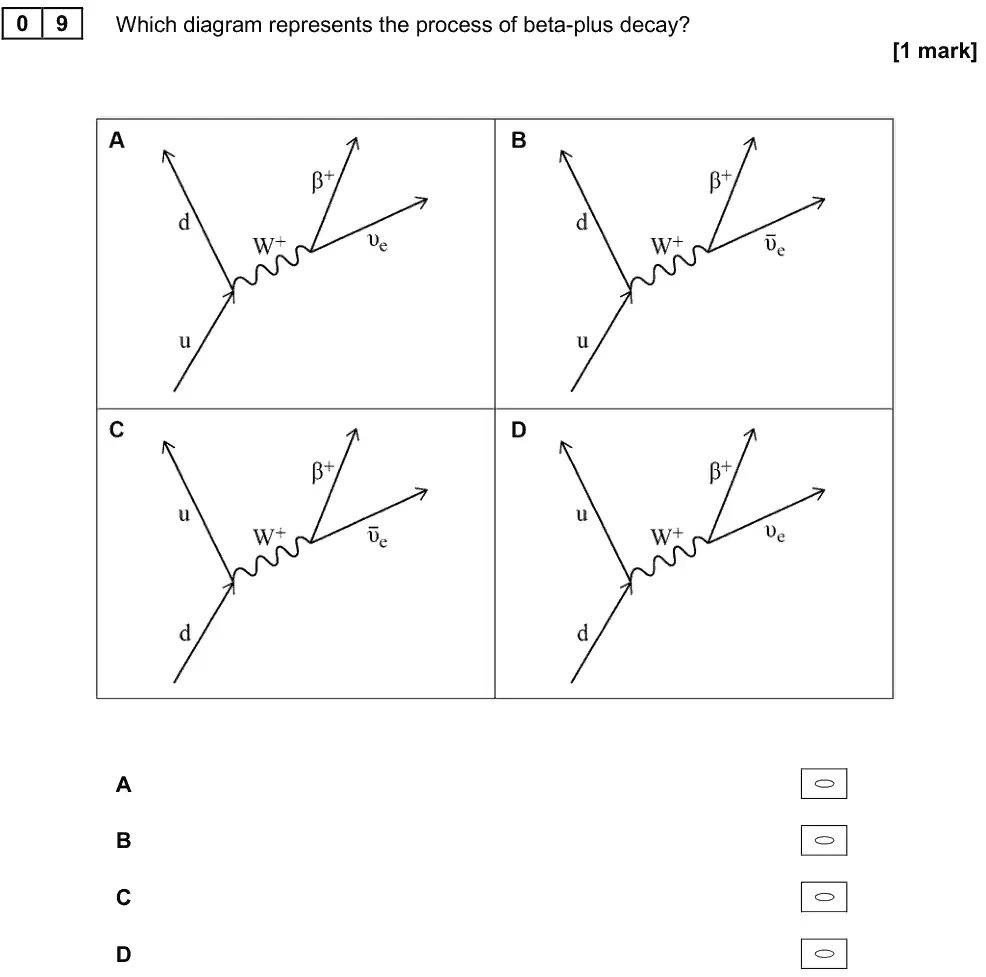
A
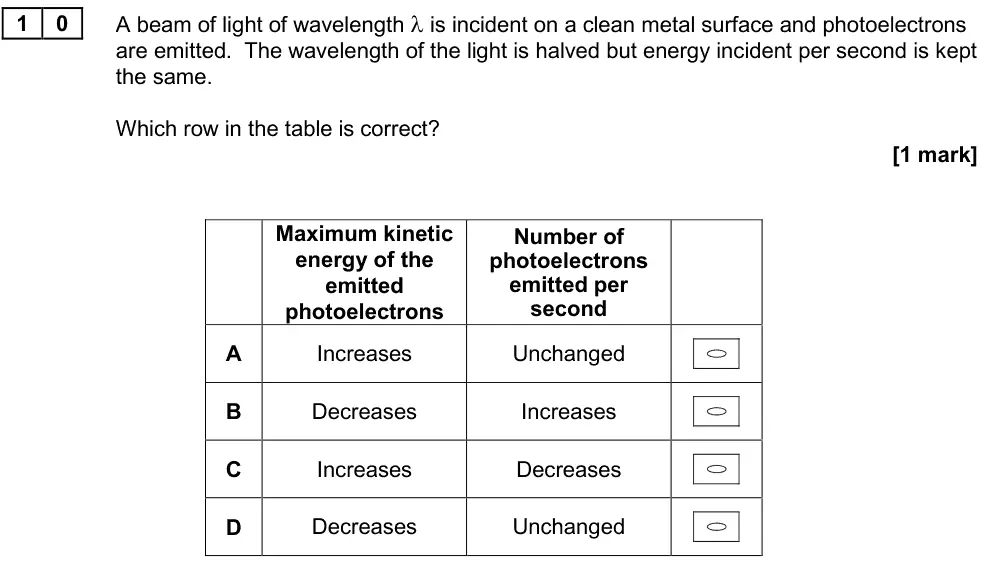
C
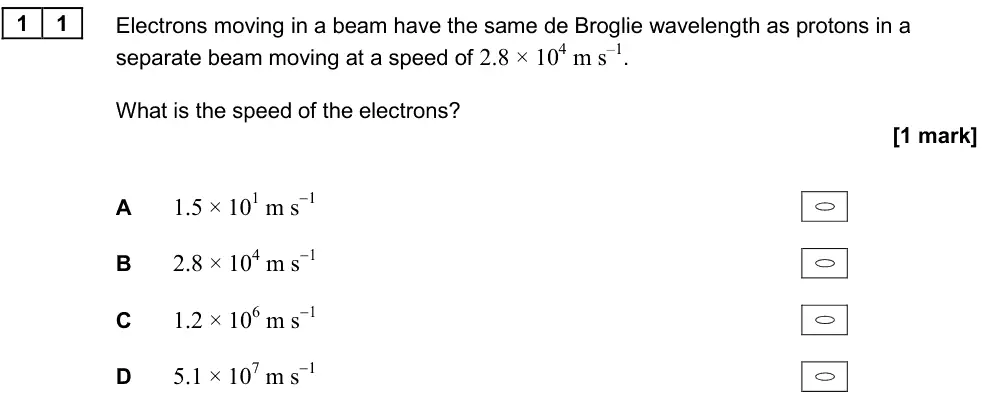
D
Skills: MS0.3 Use ratios, fractions and percentages
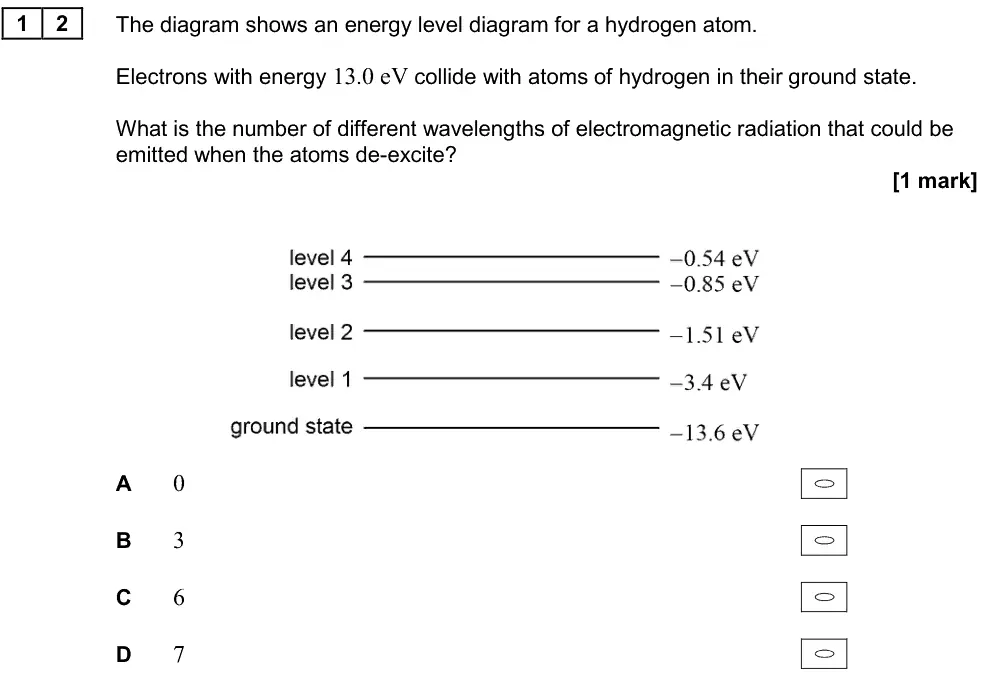
C
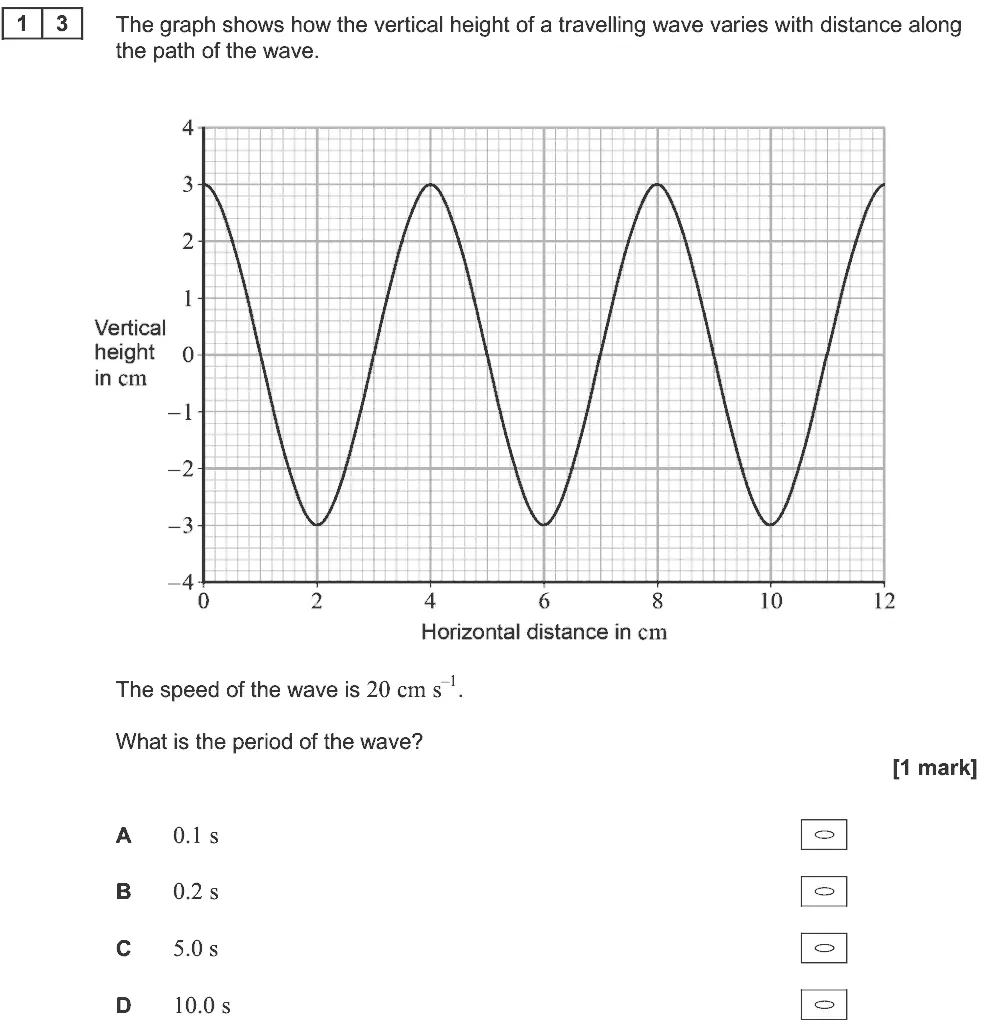
B
Skills: MS3.1 Translate information between graphical, numerical and algebraic forms
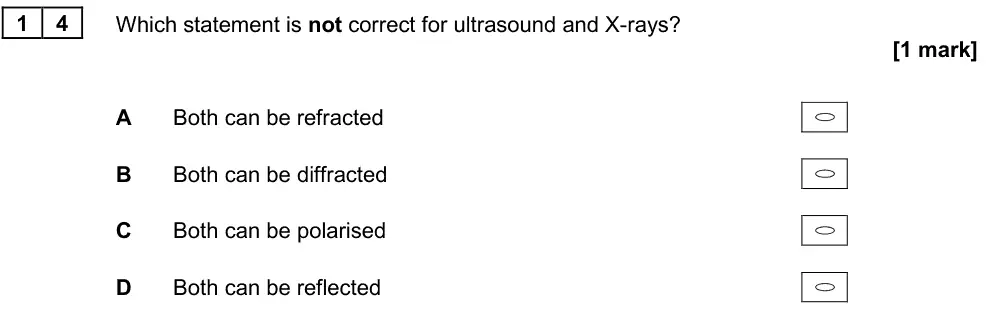
C
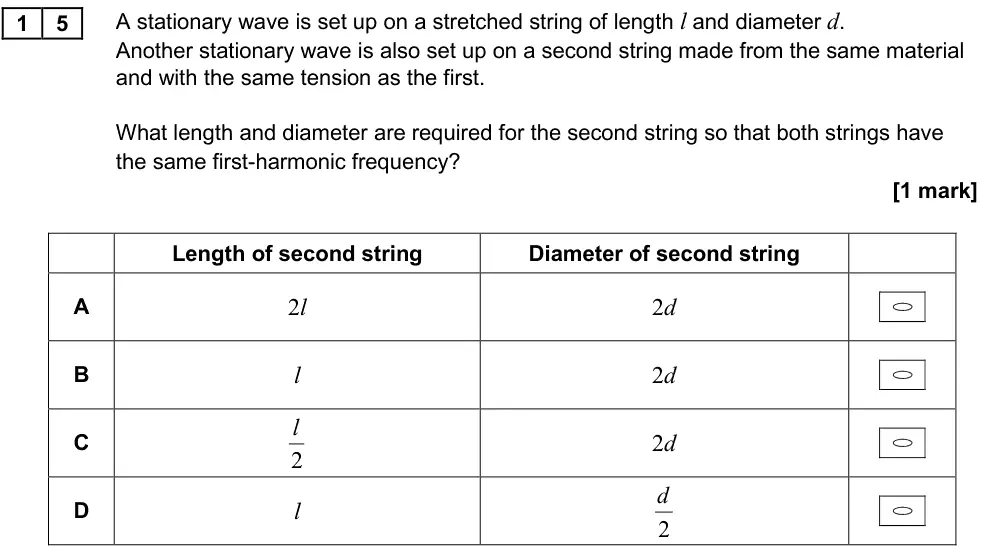
C
Skills: MS0.3 Use ratios, fractions and percentages
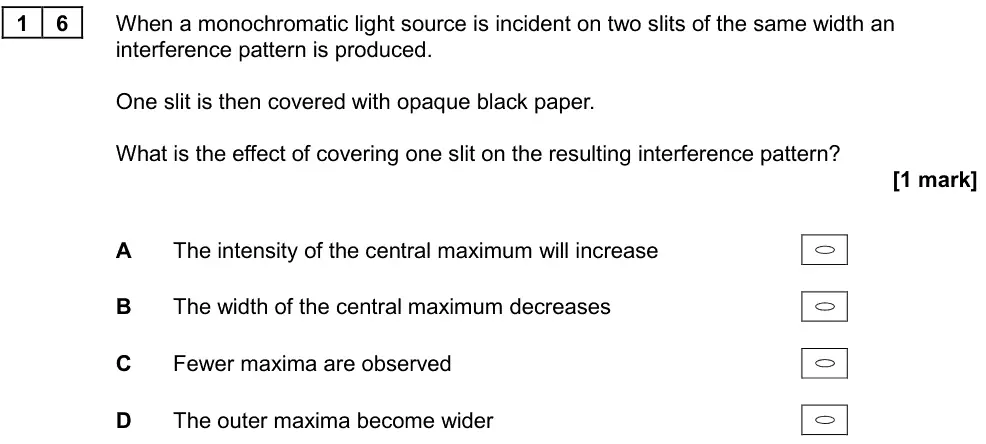
C
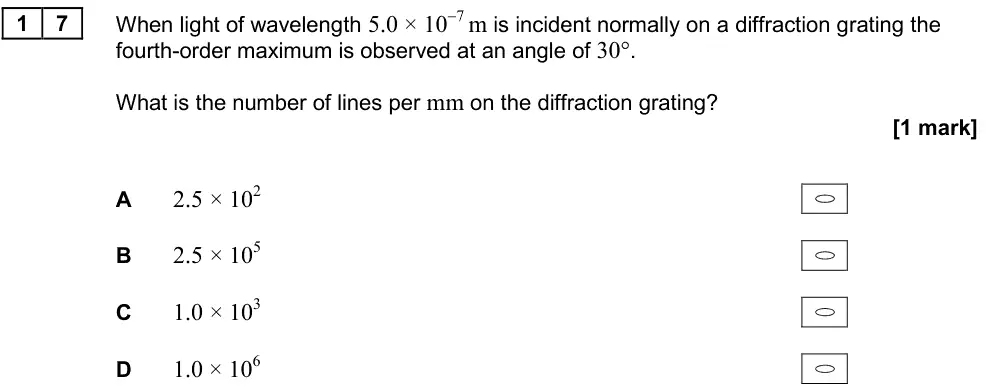
A
Skills: MS0.6 Use calculators to handle sin x, cos x, tan x when x is expressed in degrees or radians; MS0.1 Recognise and make use of appropriate units in calculations
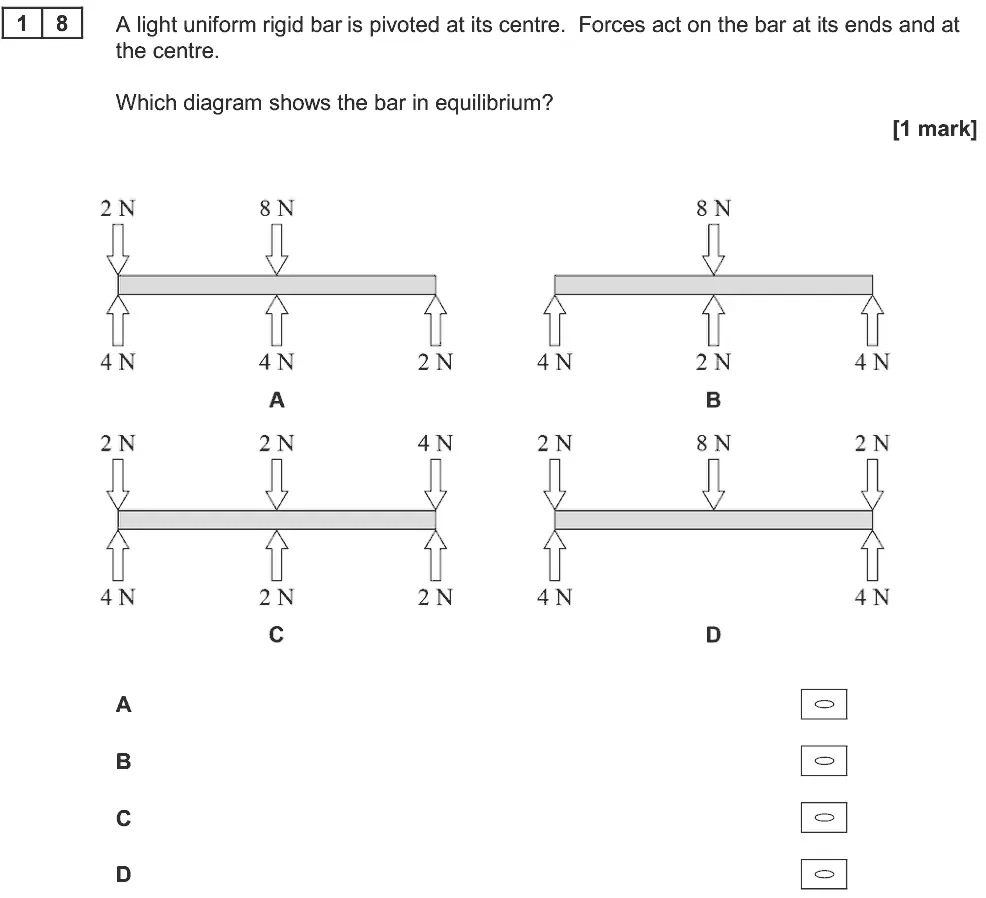
A
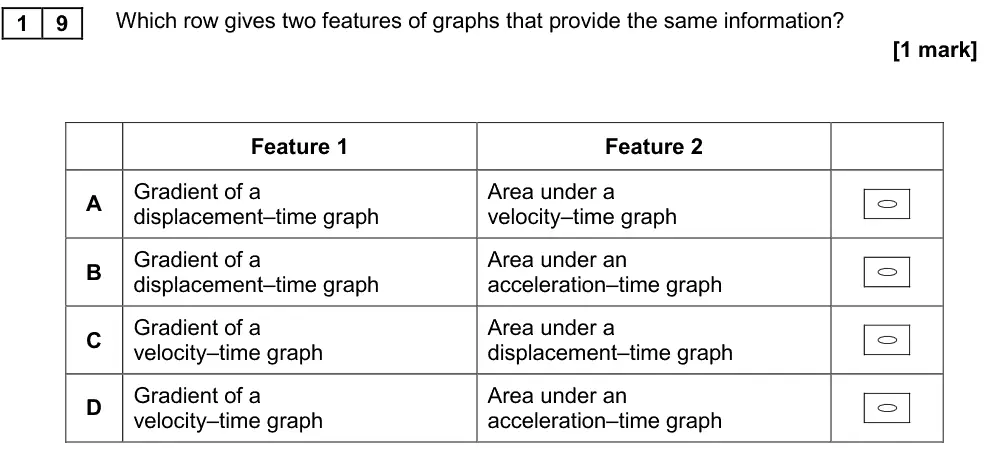
B
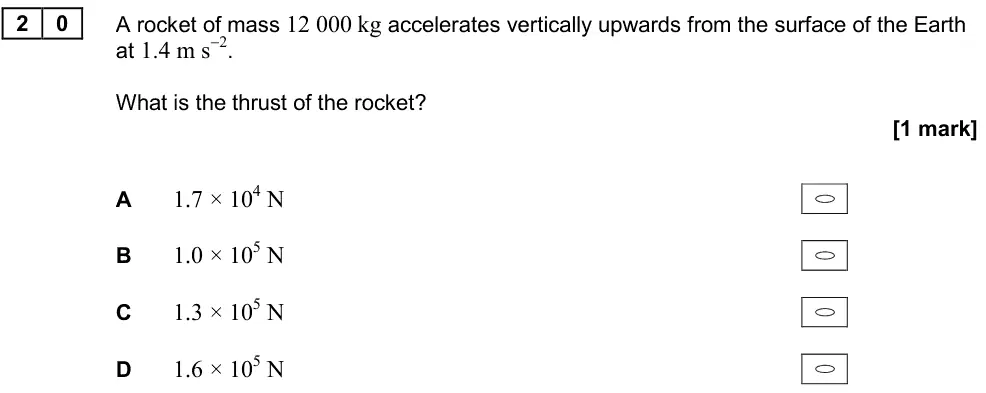
C
Skills: MS2.3 Substitute numerical values into algebraic equations using appropriate units for physical quantities
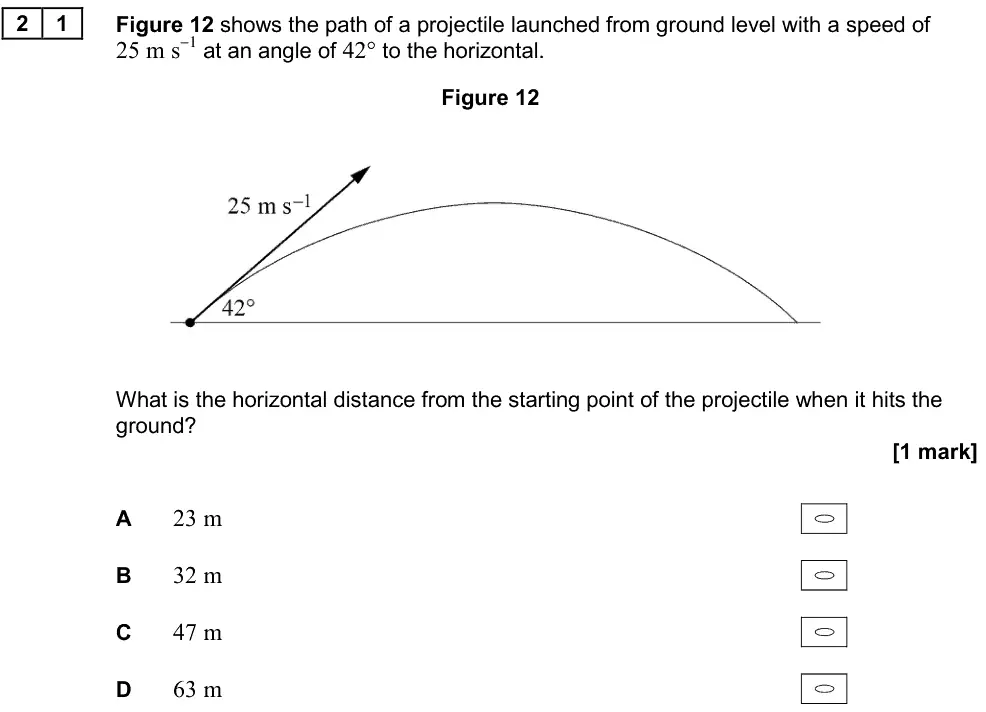
D
Skills: MS4.5 Use sin, cos and tan in physical problems
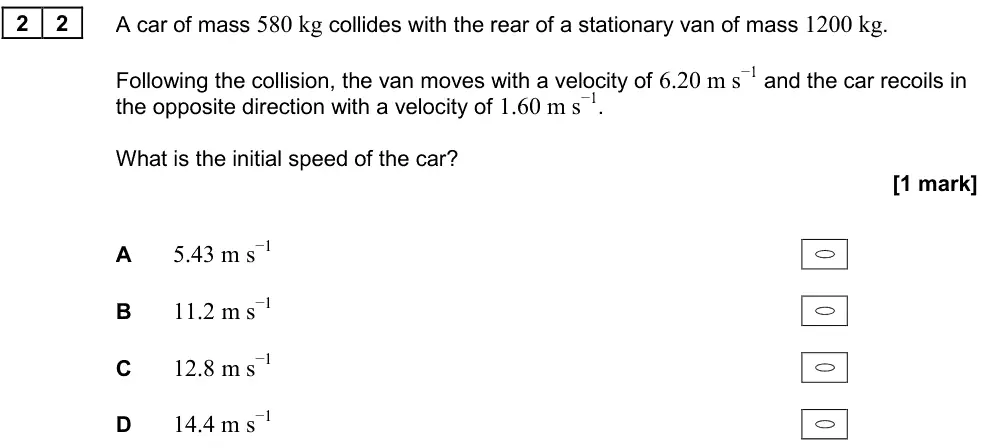
B
Skills: MS2.3 Substitute numerical values into algebraic equations using appropriate units for physical quantities
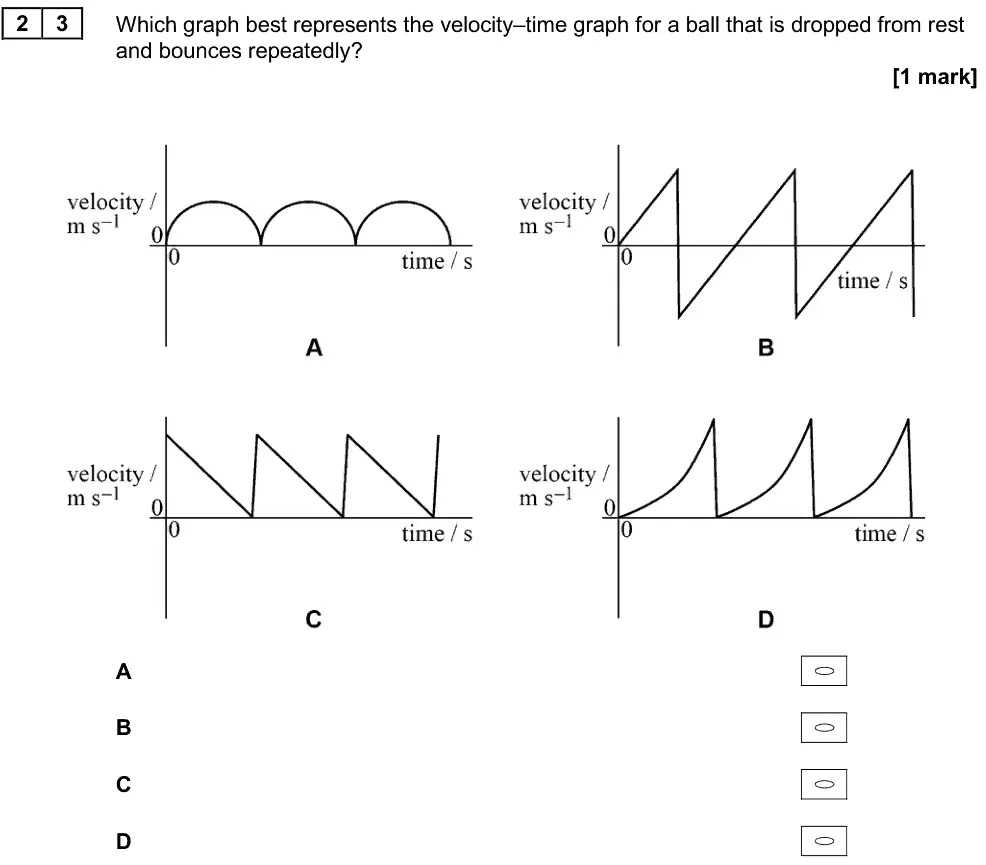
B
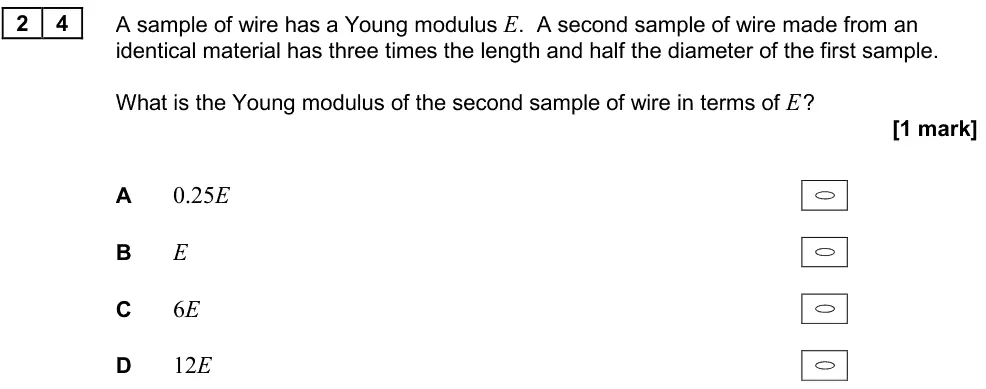
B
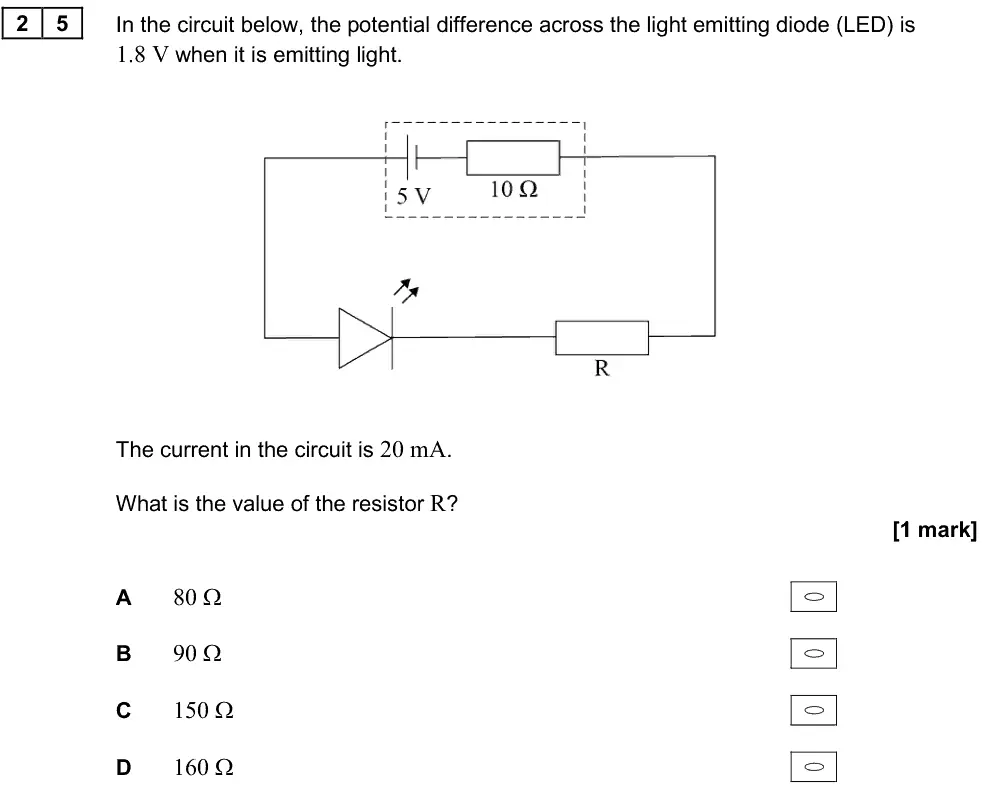
C
Skills: MS2.3 Substitute numerical values into algebraic equations using appropriate units for physical quantities
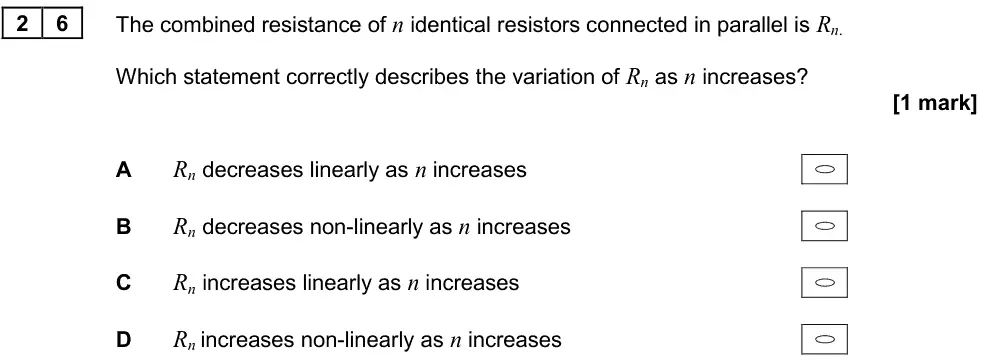
B
Skills: MS3.1 Translate information between graphical, numerical and algebraic forms
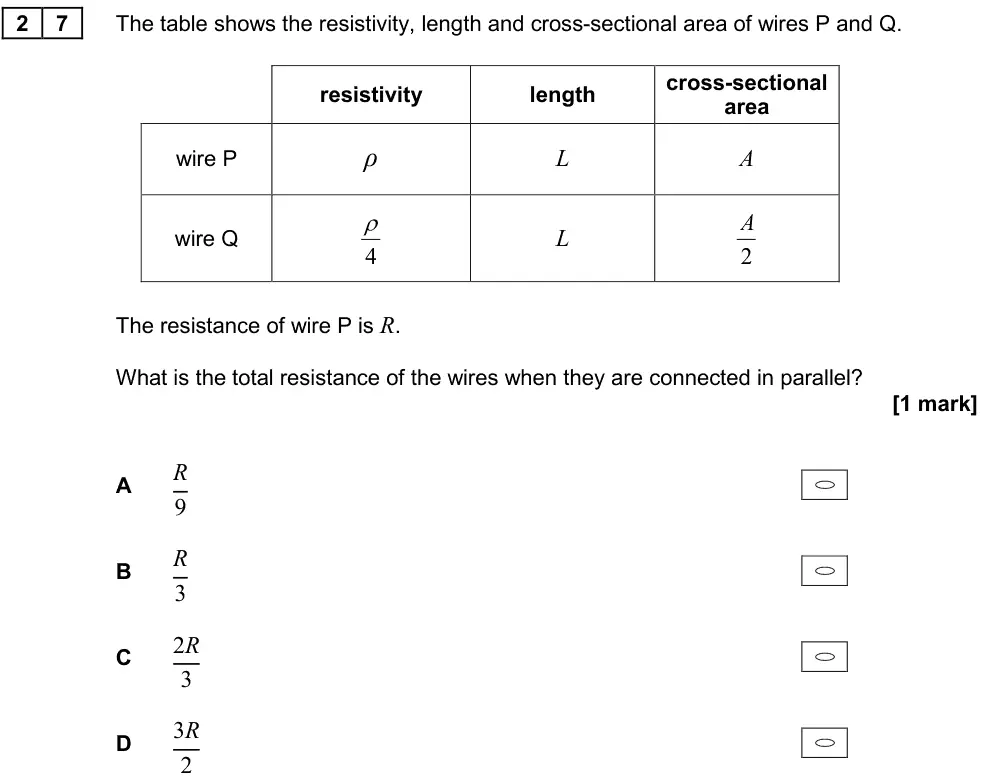
B
Skills: MS0.3 Use ratios, fractions and percentages
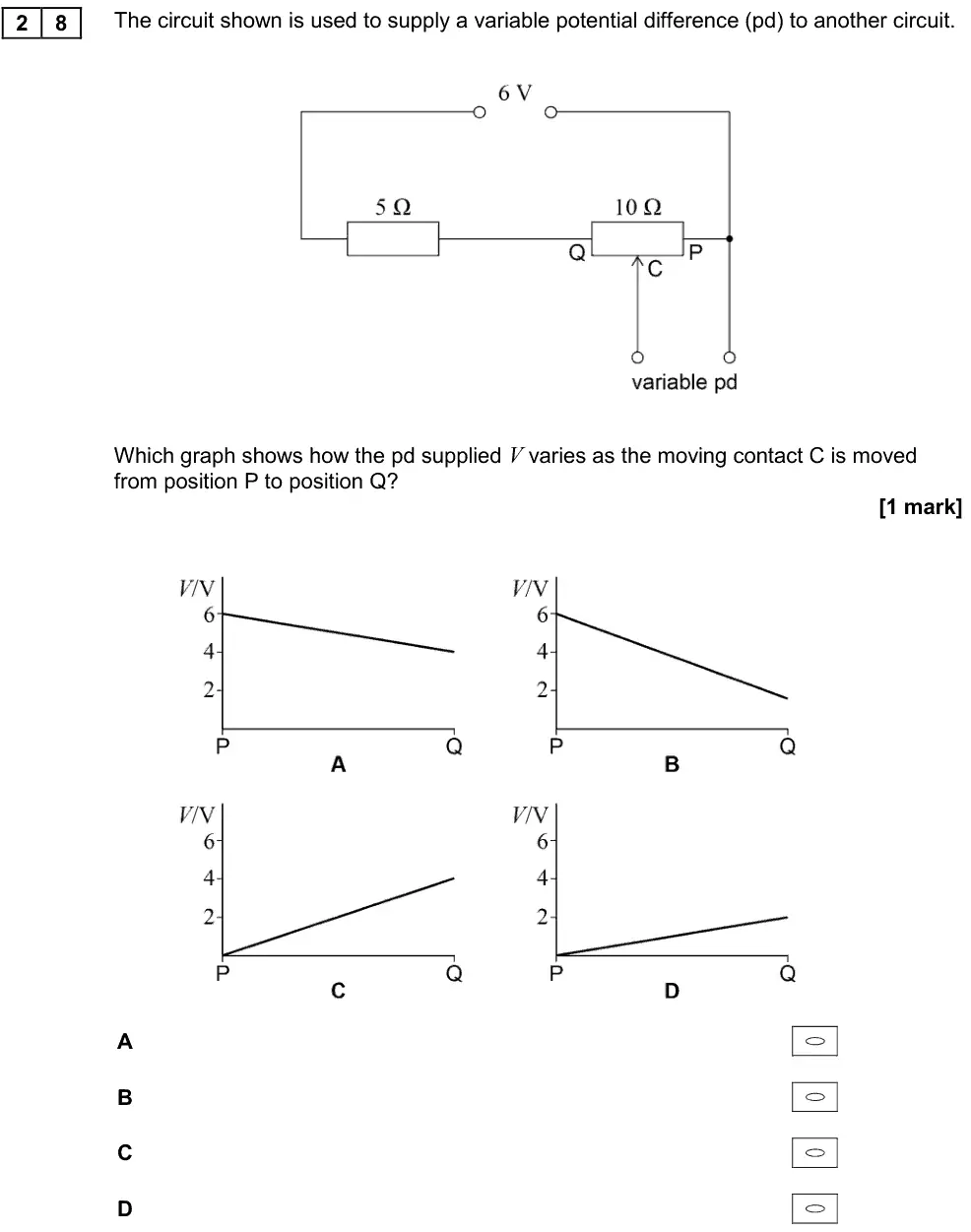
C
Skills: MS3.1 Translate information between graphical, numerical and algebraic forms
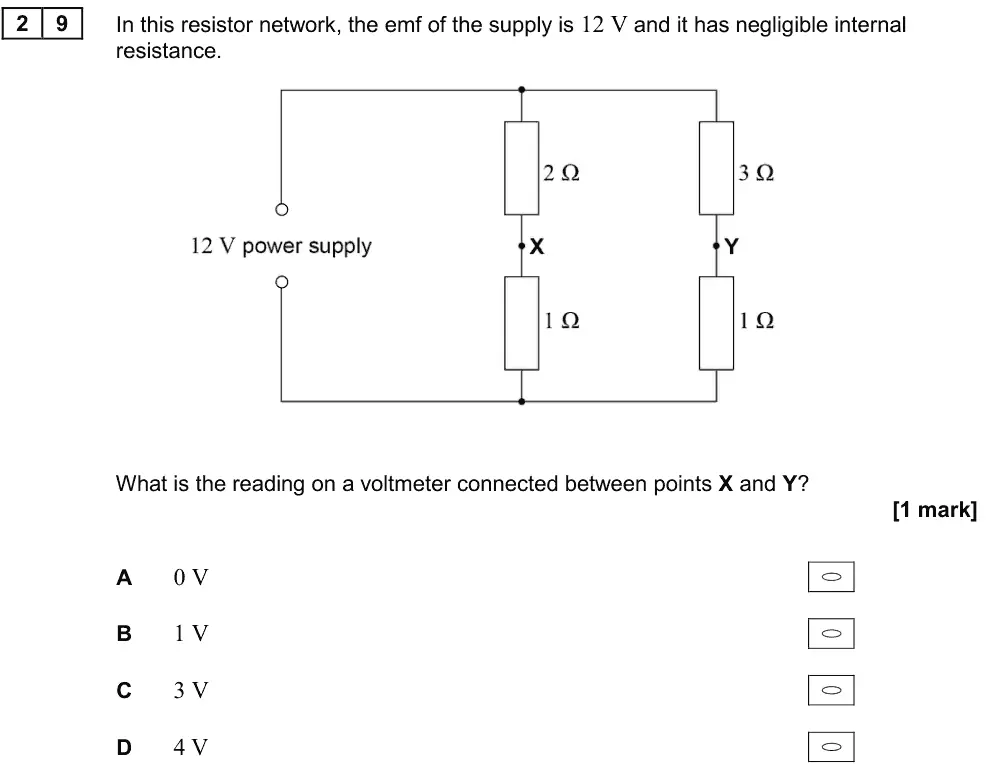
B
Skills: MS0.3 Use ratios, fractions and percentages
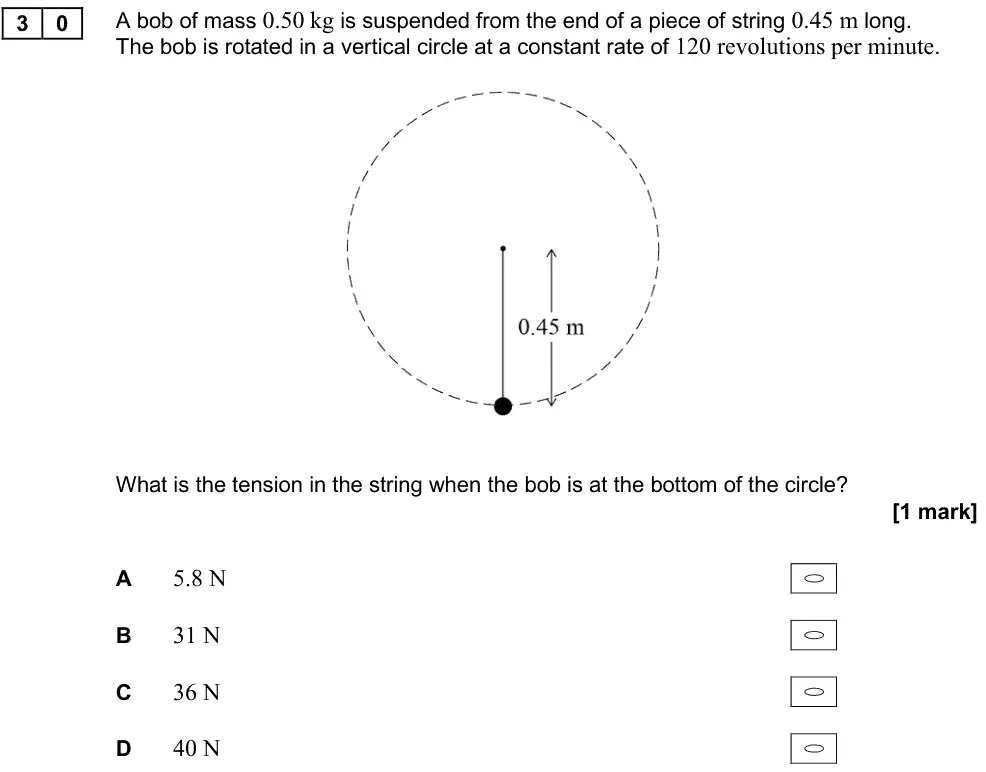
D
Skills: MS2.3 Substitute numerical values into algebraic equations using appropriate units for physical quantities
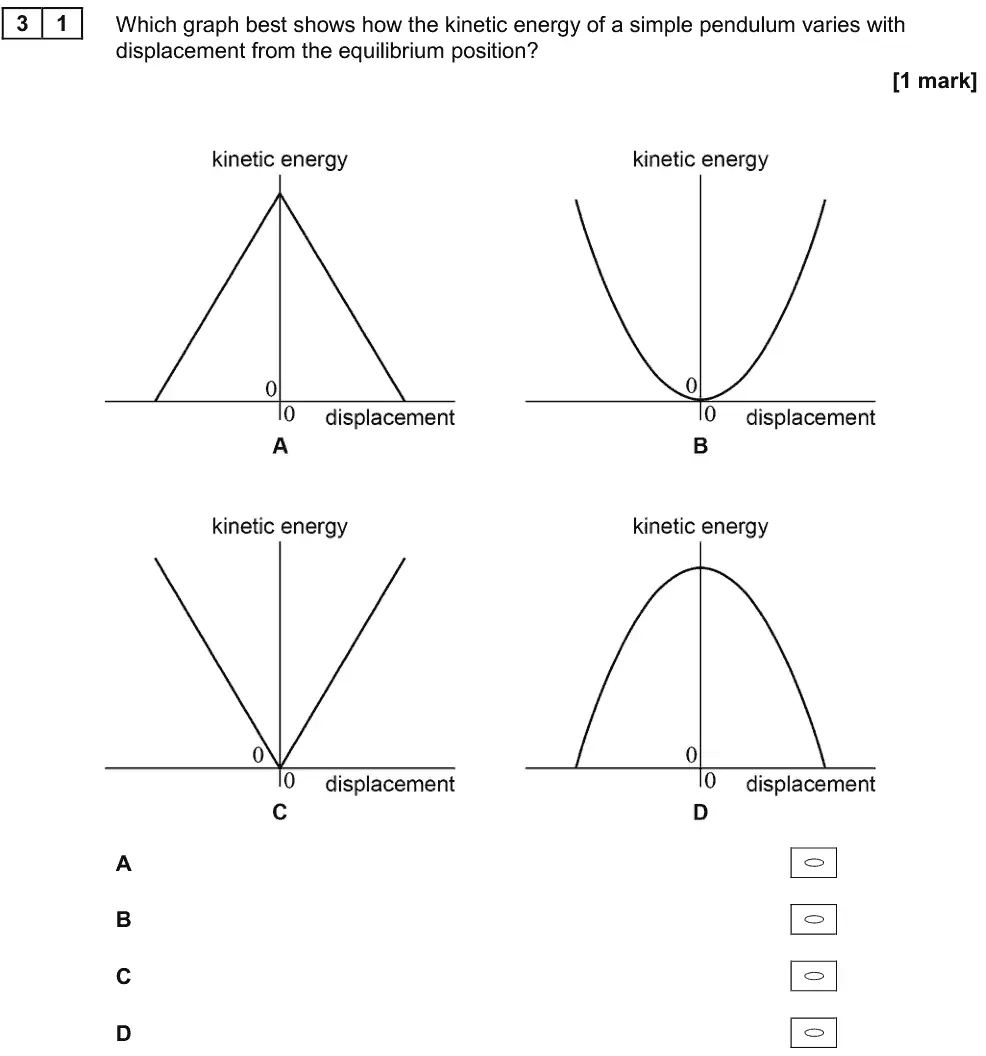
D
Skills: MS3.1 Translate information between graphical, numerical and algebraic forms
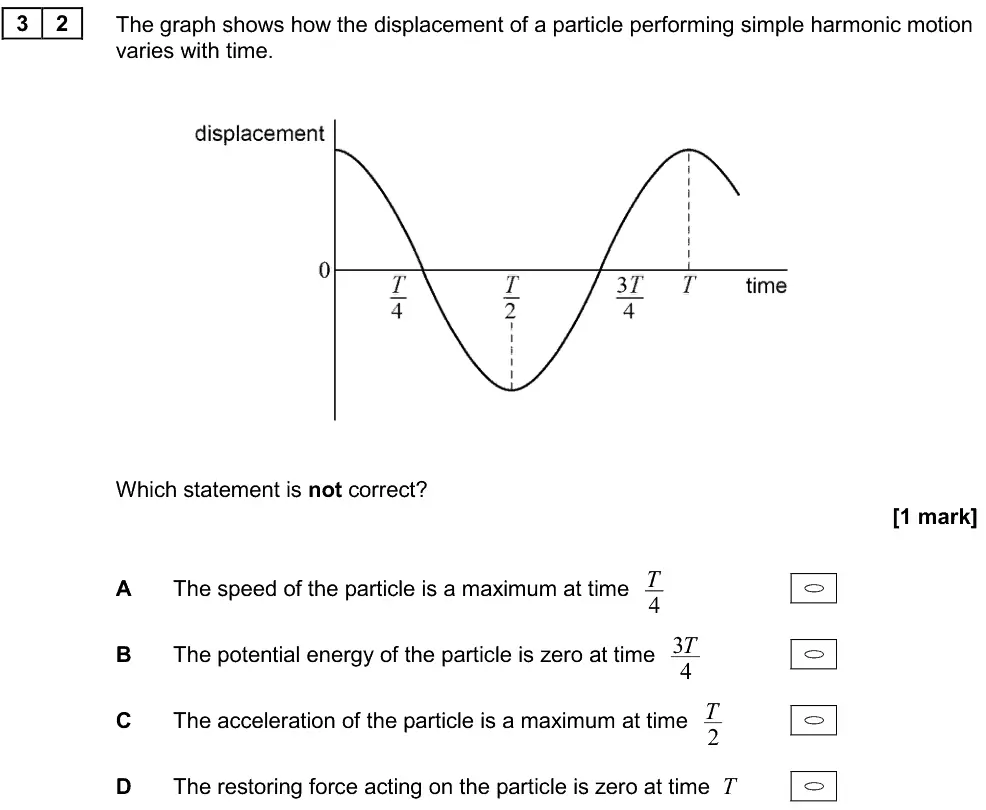
D
Skills: MS3.1 Translate information between graphical, numerical and algebraic forms
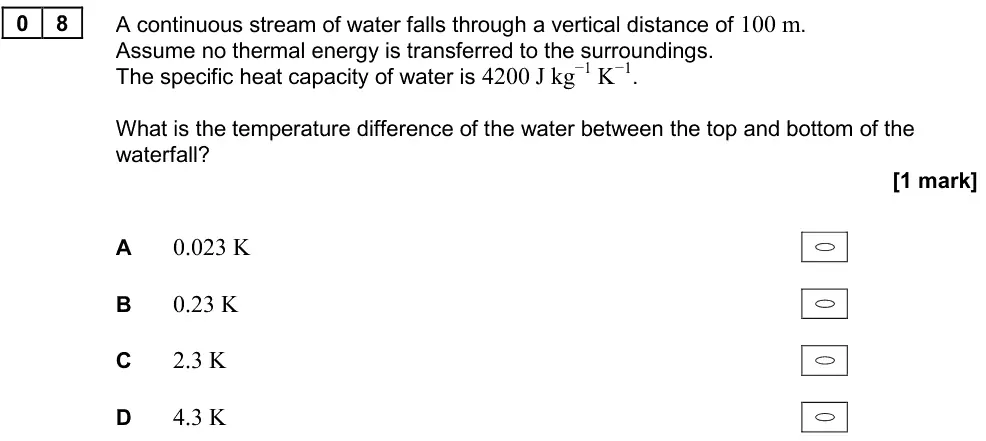
B
Skills: MS2.3 Substitute numerical values into algebraic equations using appropriate units for physical quantities
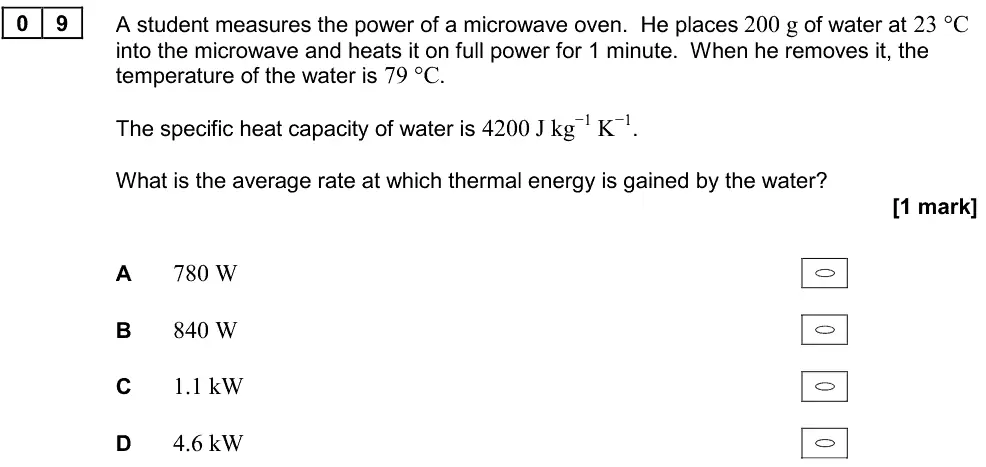
A
Skills: MS2.3 Substitute numerical values into algebraic equations using appropriate units for physical quantities
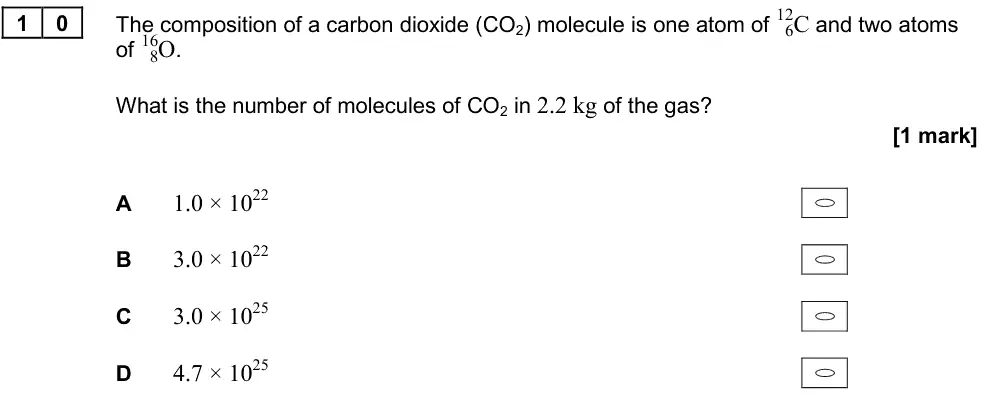
C
Skills: MS0.2 Recognise and use expressions in decimal and standard form
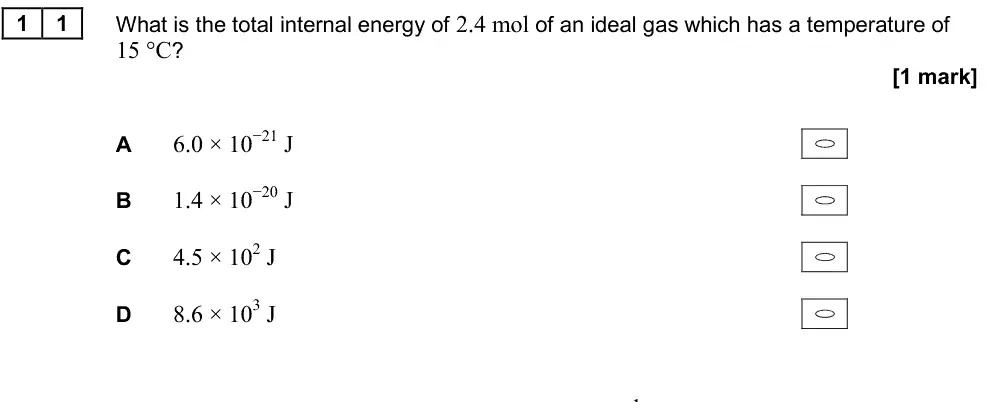
D
Skills: MS2.3 Substitute numerical values into algebraic equations using appropriate units for physical quantities
C
Skills: MS2.4 Solve algebraic equations, including quadratic equations
A
Skills: MS0.3 Use ratios, fractions and percentages
A
Skills: MS2.2 Change the subject of an equation, including non-linear equations
A
Skills: MS3.1 Translate information between graphical, numerical and algebraic forms
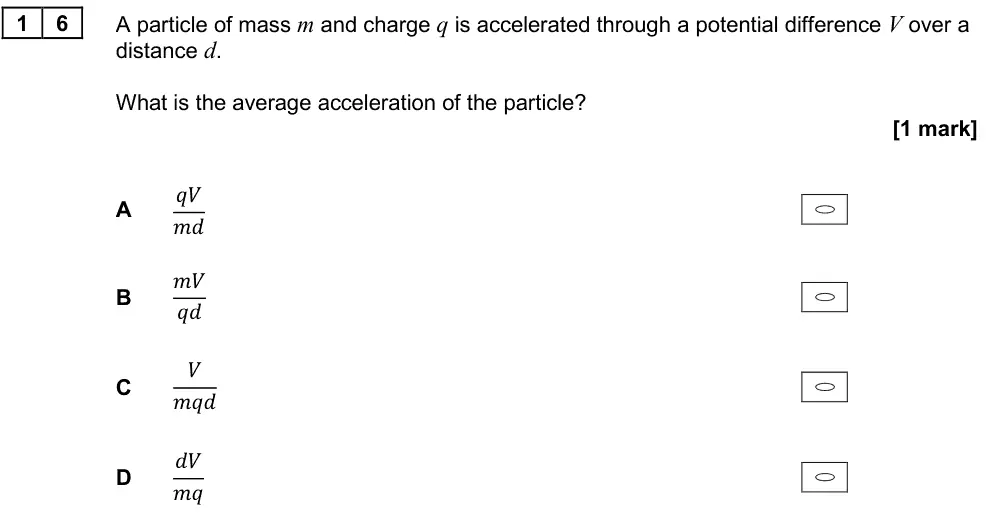
A
Skills: MS2.2 Change the subject of an equation, including non-linear equations
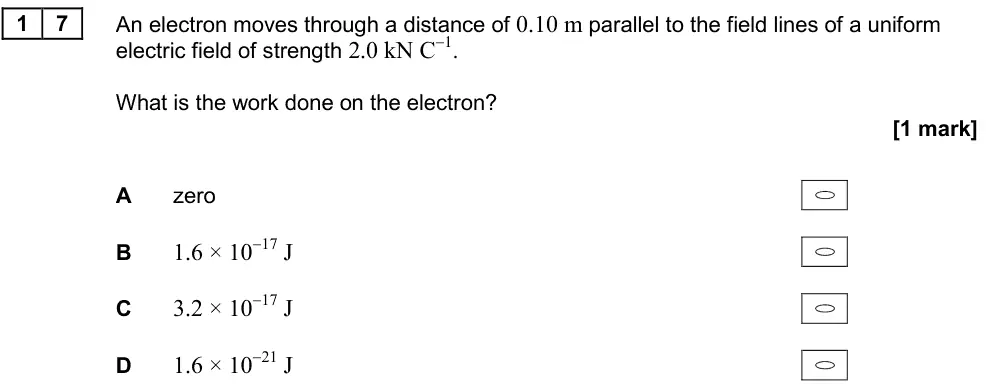
C
Skills: MS2.3 Substitute numerical values into algebraic equations using appropriate units for physical quantities
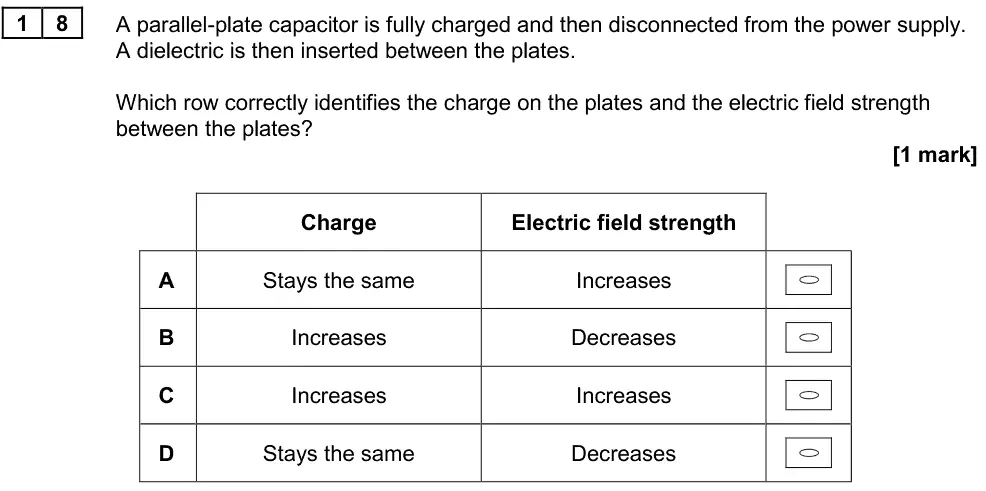
D
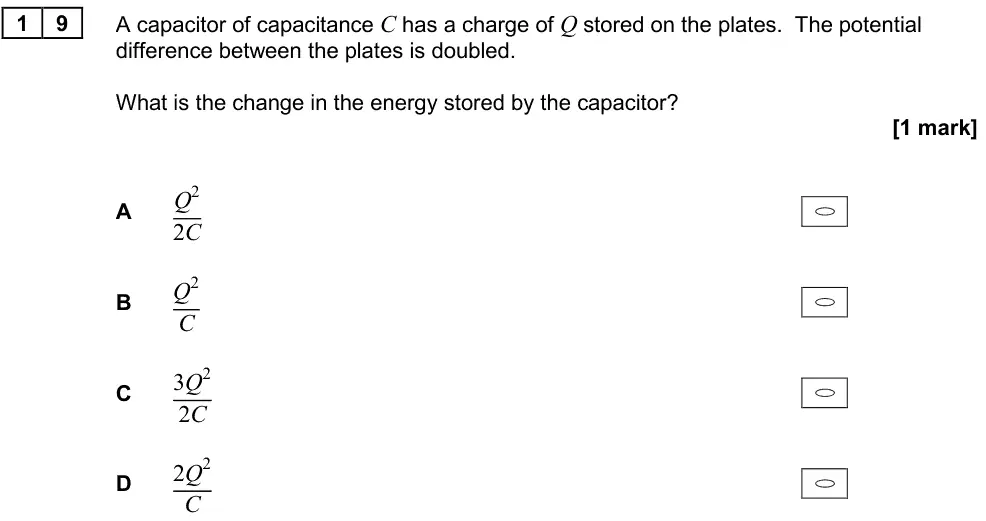
C
Skills: MS0.3 Use ratios, fractions and percentages
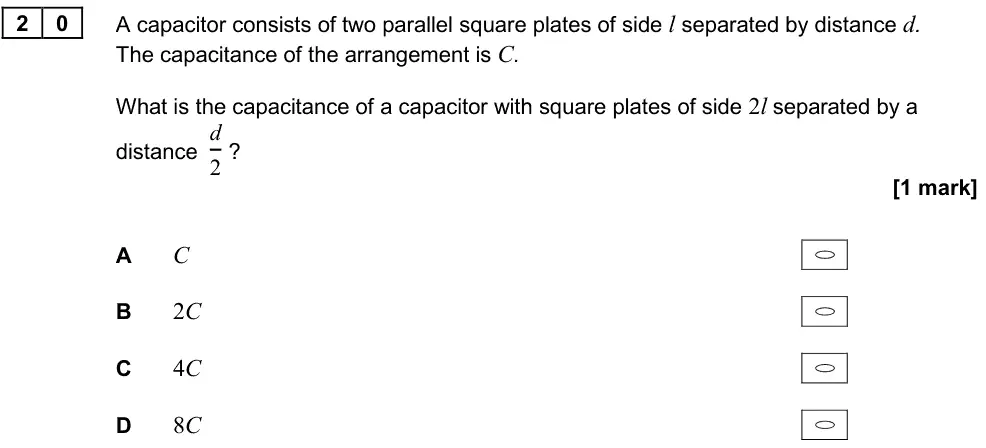
D
Skills: MS0.3 Use ratios, fractions and percentages
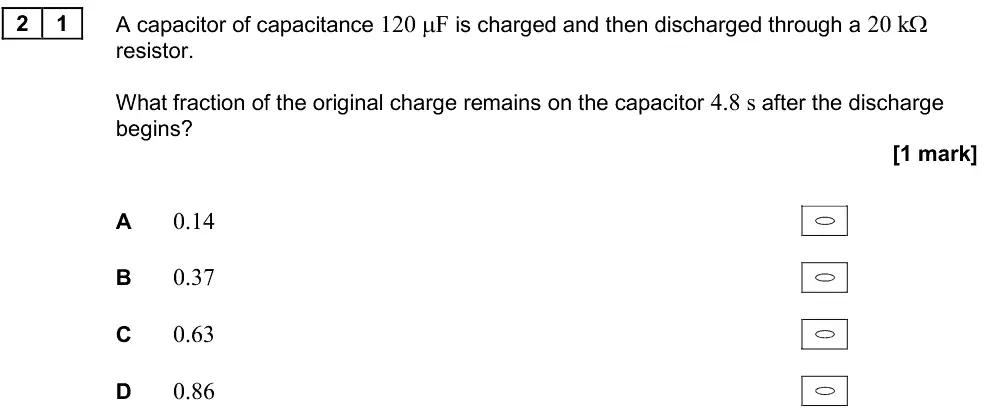
A
Skills: MS0.5 Use calculators to find and use power, exponential and logarithmic functions
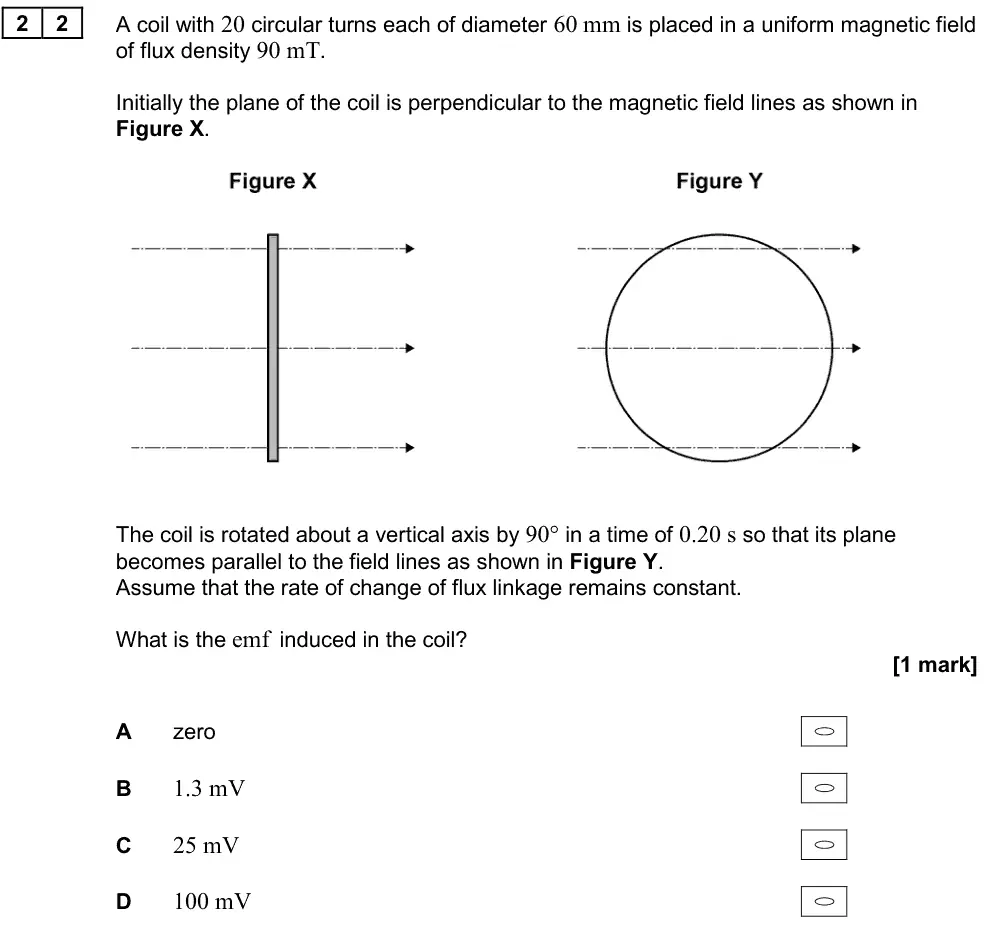
C
Skills: MS4.3 Calculate areas of triangles, circumferences and areas of circles, surface areas and volumes of rectangular blocks, cylinders and spheres
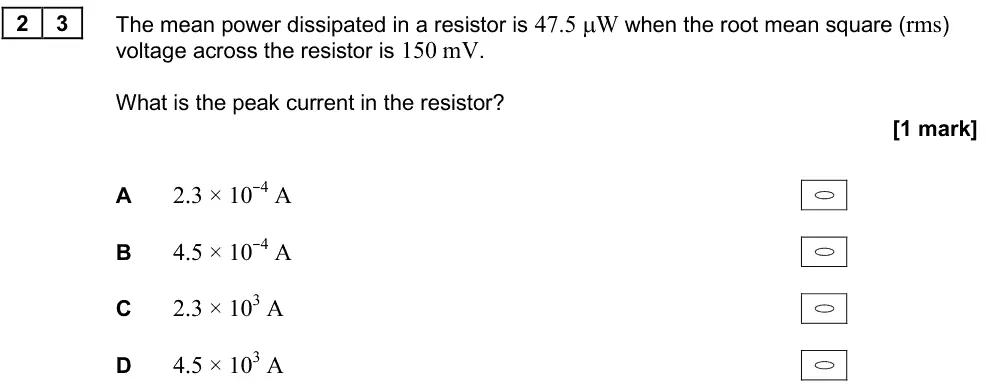
B
Skills: MS2.3 Substitute numerical values into algebraic equations using appropriate units for physical quantities
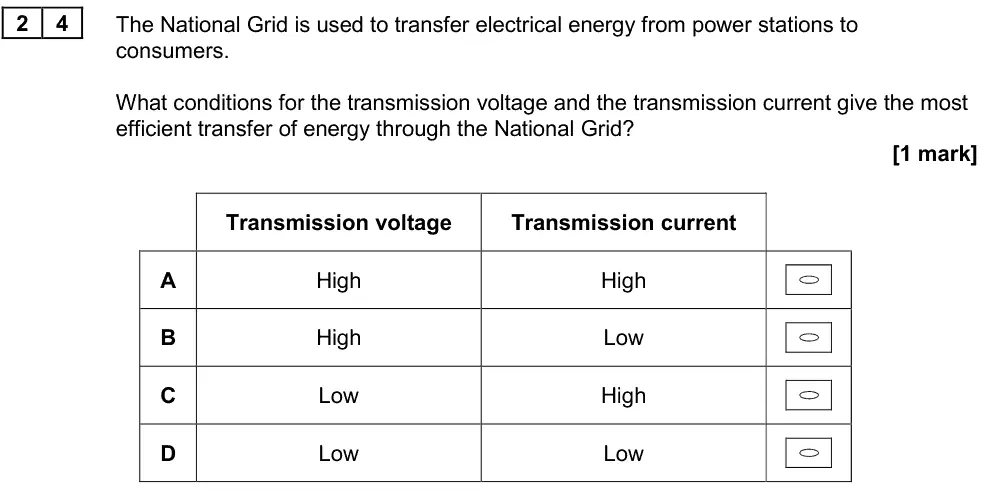
B
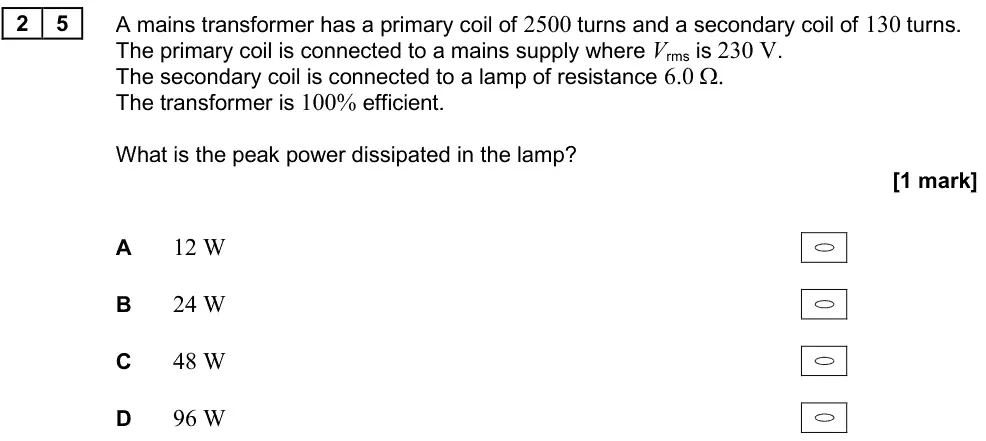
C
Skills: MS0.3 Use ratios, fractions and percentages
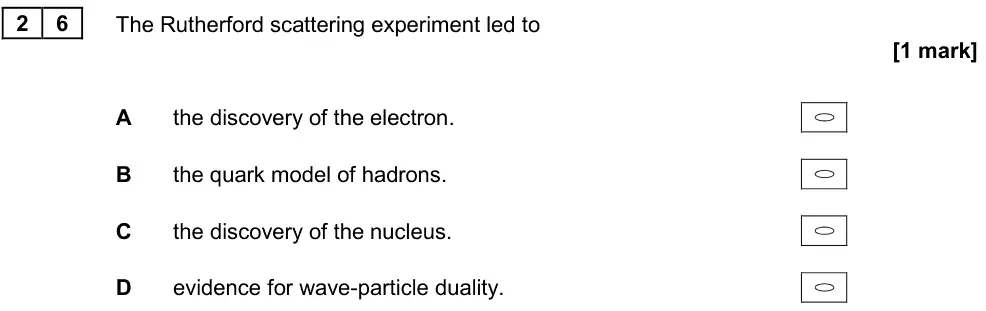
C
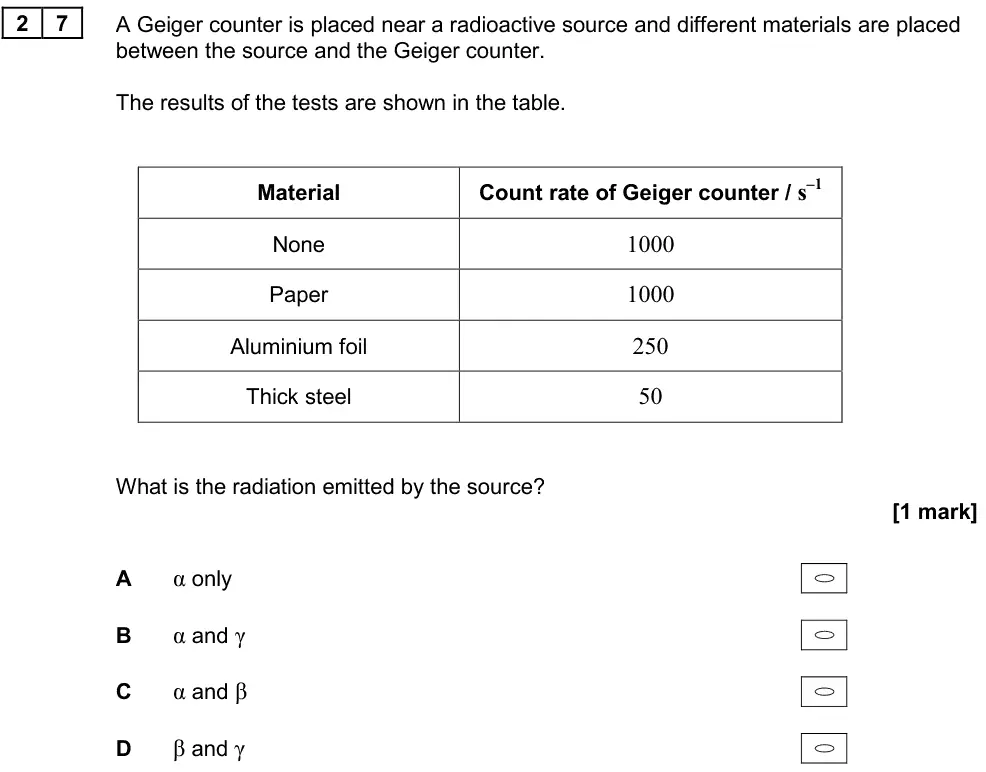
D
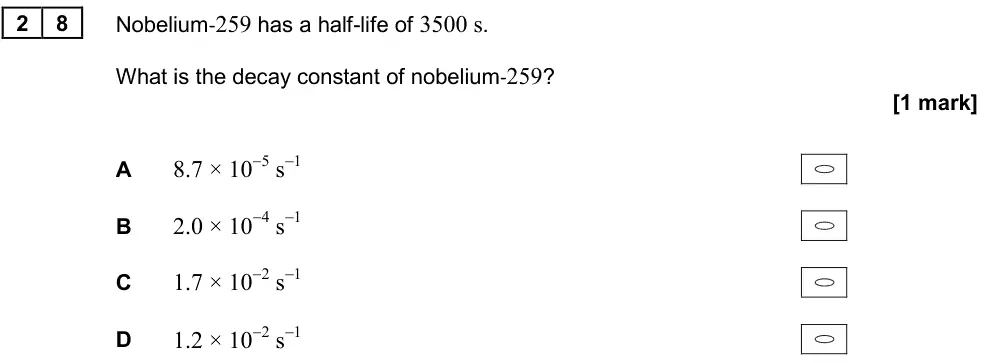
B
Skills: MS2.3 Substitute numerical values into algebraic equations using appropriate units for physical quantities
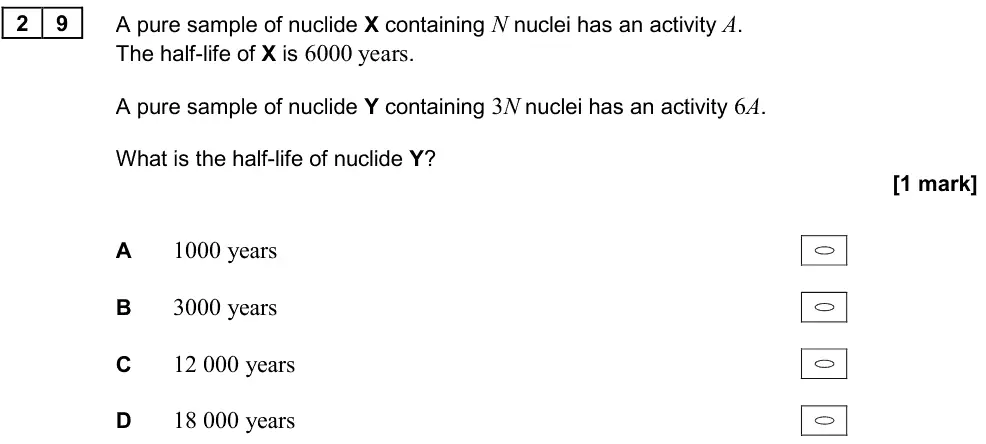
B
Skills: MS0.3 Use ratios, fractions and percentages
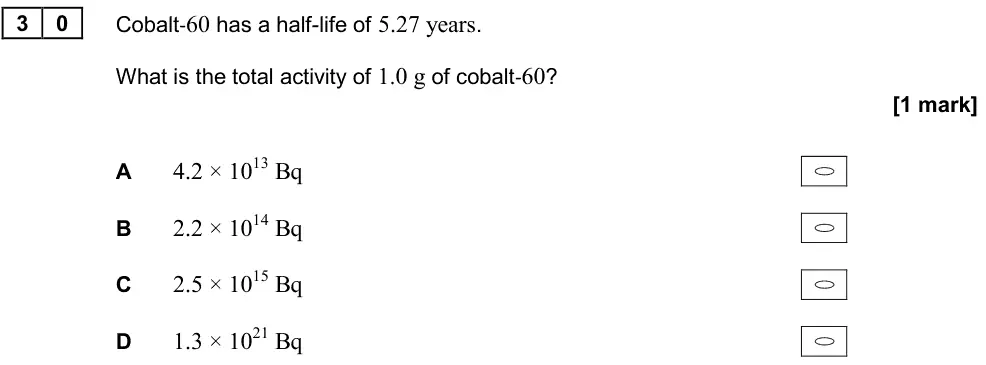
A
Skills: MS0.2 Recognise and use expressions in decimal and standard form
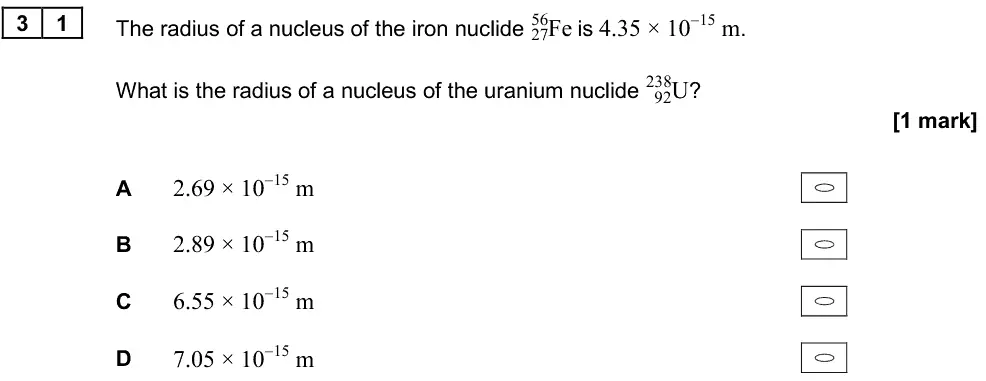
D
Skills: MS0.5 Use calculators to find and use power, exponential and logarithmic functions
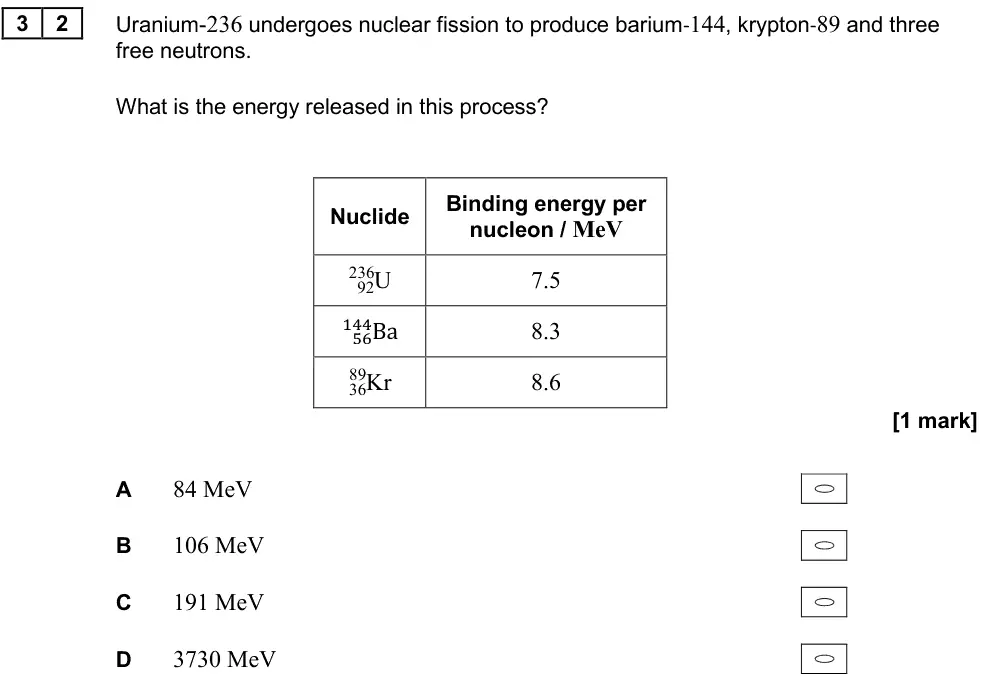
C
Skills: MS0.3 Use ratios, fractions and percentages
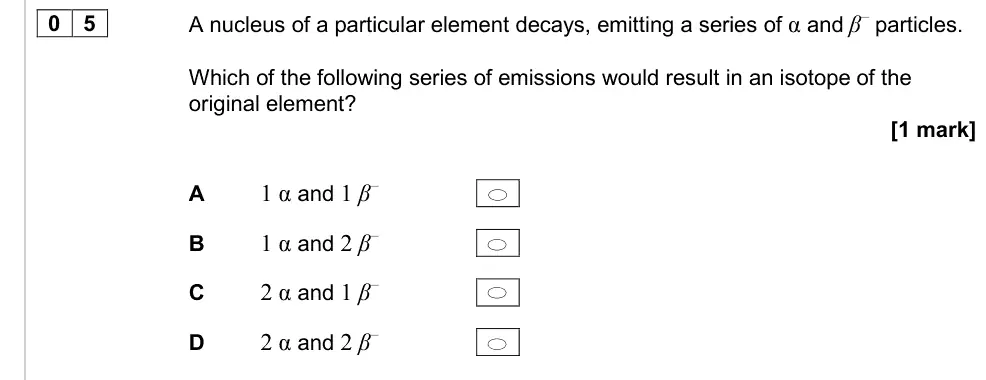
B
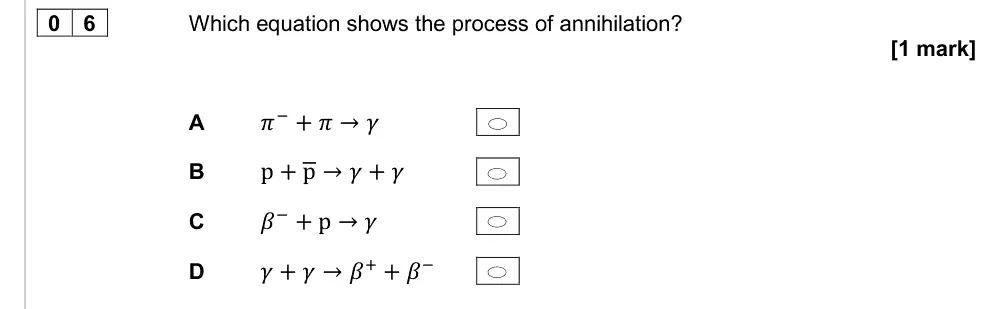
B
6 Students generally find most aspects of the particle physics topic fairly straightforward. This question was no exception with 83% of students remembering the need for two gamma photons to be produced. A was the most common distractor, chosen by students who forgot this important point perhaps.
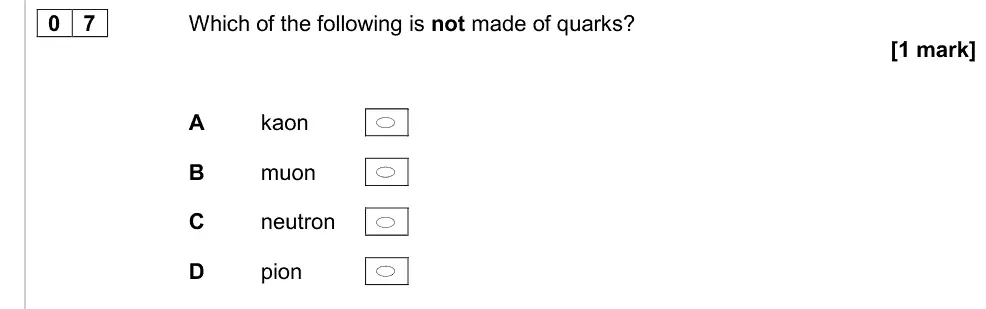
B
7 With 87% of students choosing the correct answer, few students had any difficulty with this question. The remaining answers were fairly evenly spread between the three distractors.
D
8 This was the most accessible question on the paper with 95% of students able to recall the quark structure of an antiproton. C was the most popular distractor, chosen by students confusing protons and neutrons perhaps.
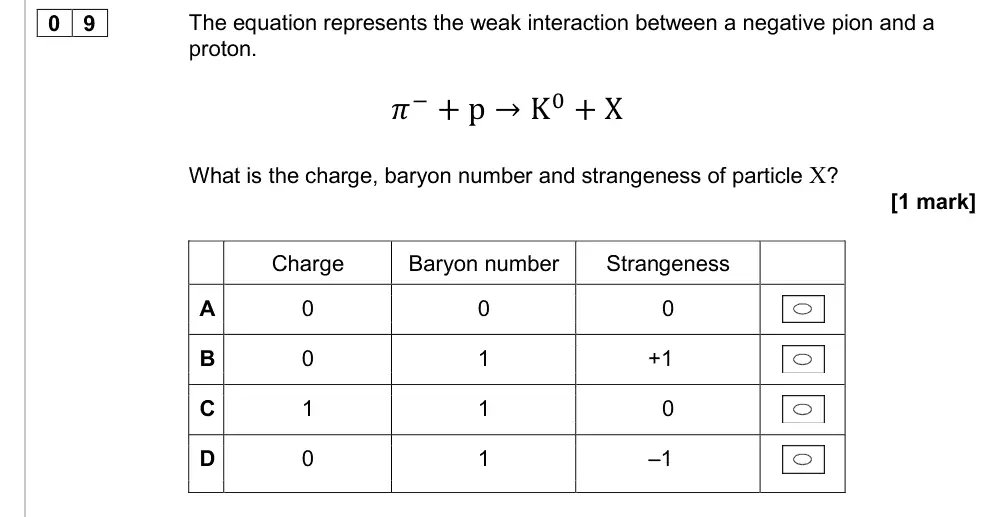
This section consisted of 30 multiple choice questions covering all of the topics in the AS specification. A problem associated with question 9 meant that this question was withdrawn. There was some evidence to suggest that some students were unfamiliar with this form of assessment and that they would have benefitted from more practice. In particular students should be made aware that they can write on the paper to perform any necessary calculations and that, when the correct answer isn’t obvious, eliminating incorrect answers increases the likelihood of a guess being correct. Given that there is no negative marking (ie no penalty for incorrect answers), it was surprising to see some of the answers left blank. Many students did not use the correct method to mark, or correct, their answer as laid out at the beginning of the section. Whilst benefit of the doubt was given to many of these answers on this occasion, students should be made aware that they increase the likelihood of their intentions being understood if they follow the instructions in the paper. This includes the clear instruction that only one answer per question is allowed: any indication of more than one answer being provided immediately lost the mark.
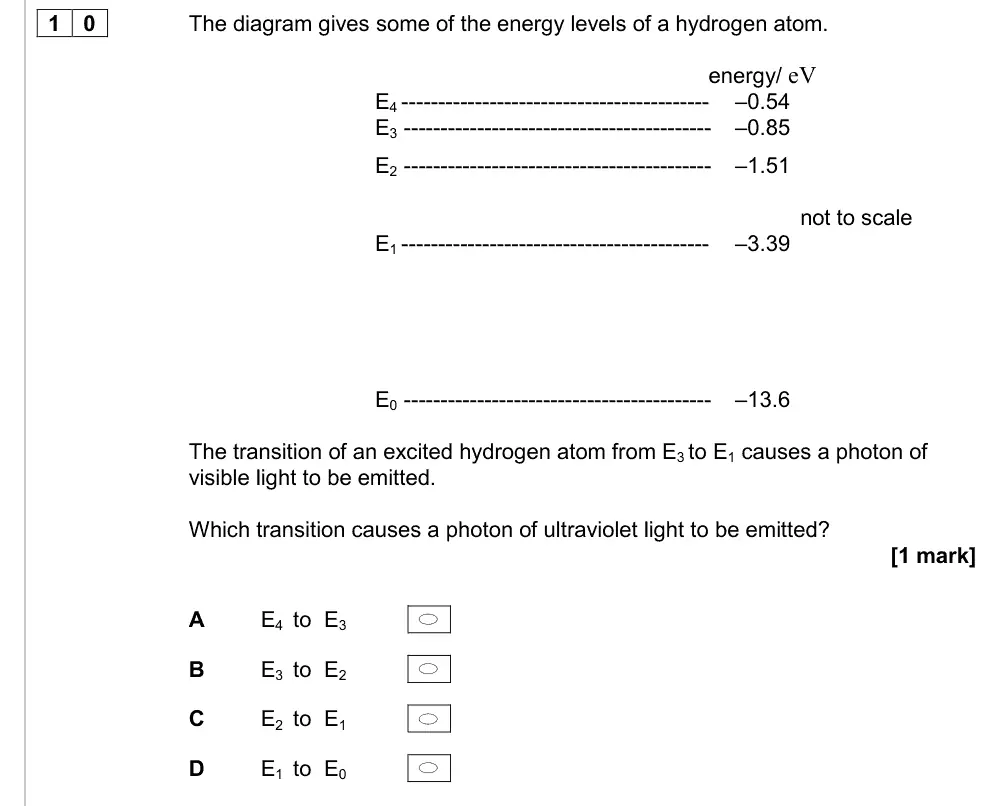
D
9 This question was removed prior to the exam. There was no evidence to suggest that students were disadvantaged by this. 10 Approximately two thirds of students spotted that a bigger energy jump was needed to produce a photon of UV, and therefore chose D. Distractors A (the smallest energy jump) and C (the next smallest) were chosen by a similar number of students who failed to make the link between energy and frequency perhaps.
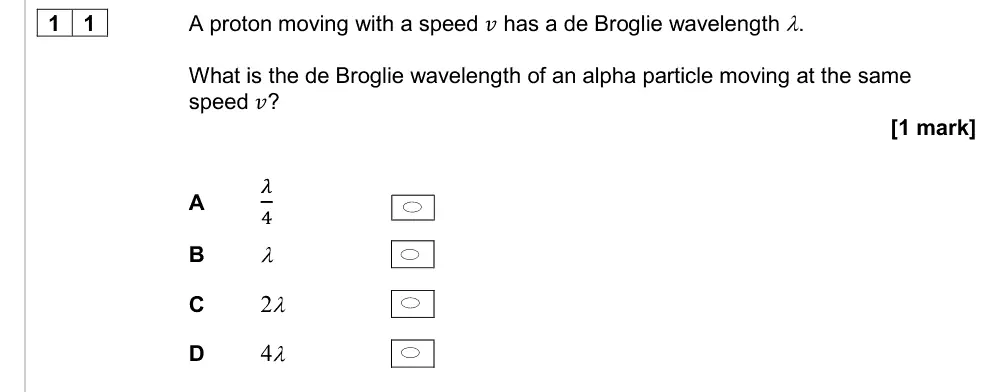
A
Skills: MS0.3 Use ratios, fractions and percentages
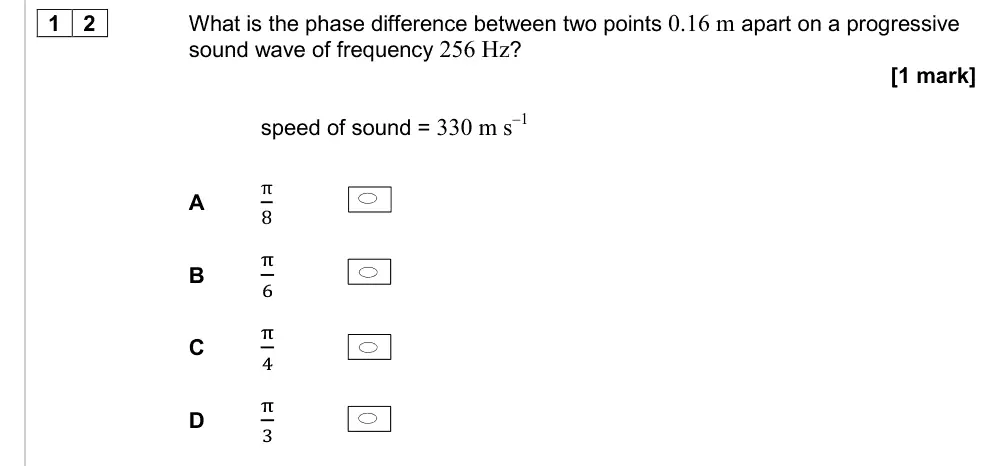
C
12 This question required students to work out the wavelength of the sound wave, and then calculate the phase difference of two parts a certain distance apart. 45% of students correctly identified the correct answer. Approximately 35% thought A was correct, using π, rather than 2π, as the phase difference for two points a whole wavelength apart, perhaps.
Skills: MS2.3 Substitute numerical values into algebraic equations using appropriate units for physical quantities; MS0.3 Use ratios, fractions and percentages
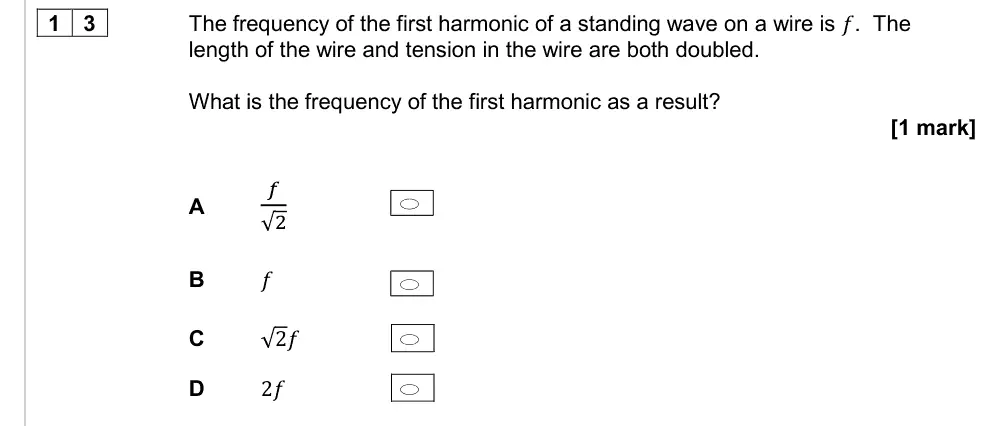
A
Skills: MS0.3 Use ratios, fractions and percentages
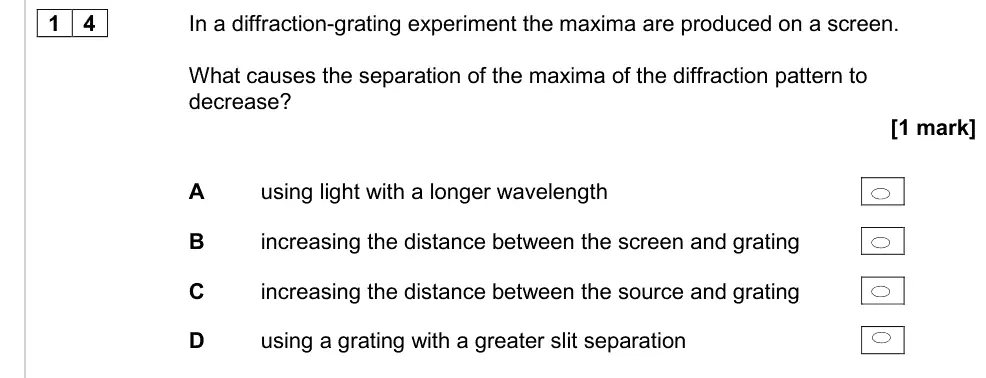
D
14 57% of students correctly identified D as the appropriate answer. The other students were split almost evenly between the distractors, with A being slightly more popular.
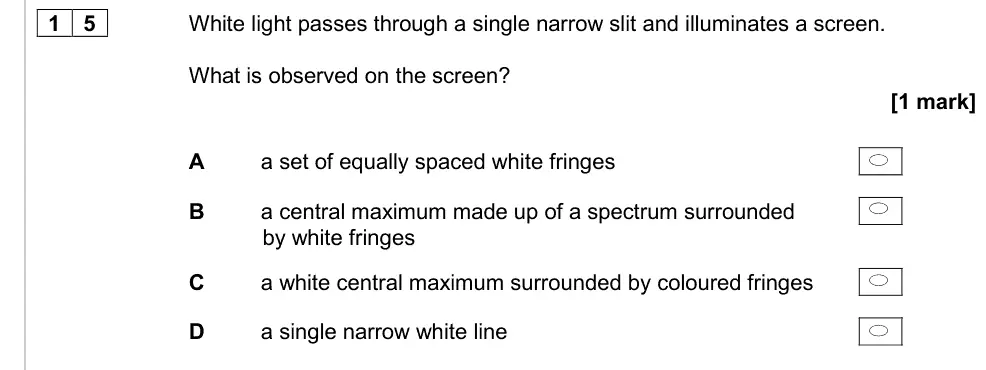
C
15 It was pleasing to note that 74% of students were sufficiently familiar with white light single slit diffraction to give the correct answer here. Approximately 10% of students gave the answer D, suggesting that they were unaware that any effect would occur.
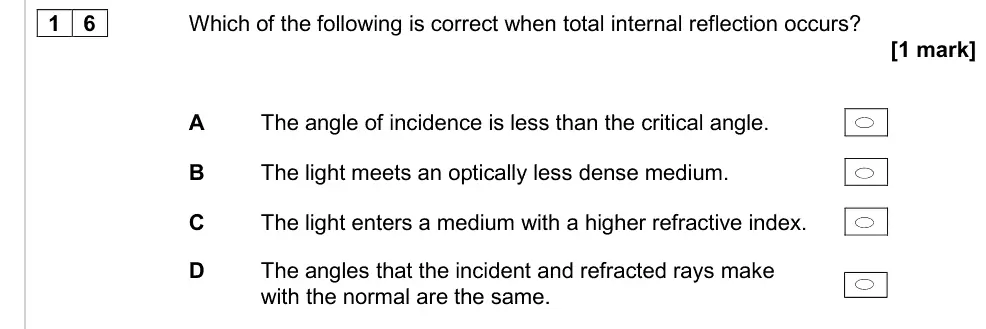
B
16 This question proved to be quite demanding, with 40% of the students giving the correct answer. Nearly 30% chose D, confusing angles of reflection and refraction perhaps.
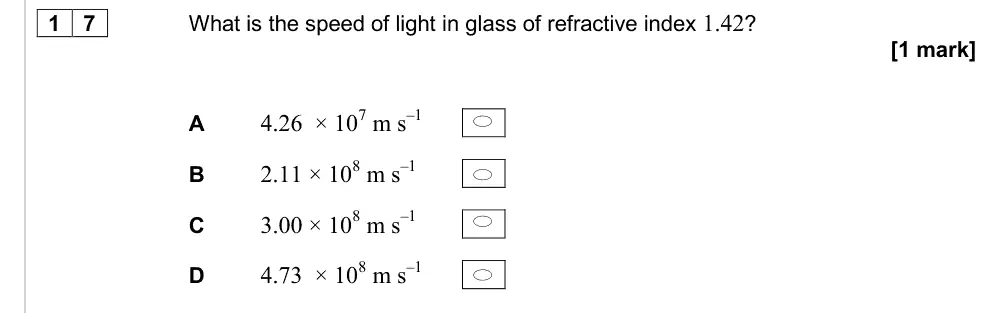
B
17 This straightforward calculation proved to be very accessible with 85% of the answers correct. It is worth pointing out that only about 2% of students chose D, an answer greater than the speed of light in a vacuum.
Skills: MS2.3 Substitute numerical values into algebraic equations using appropriate units for physical quantities
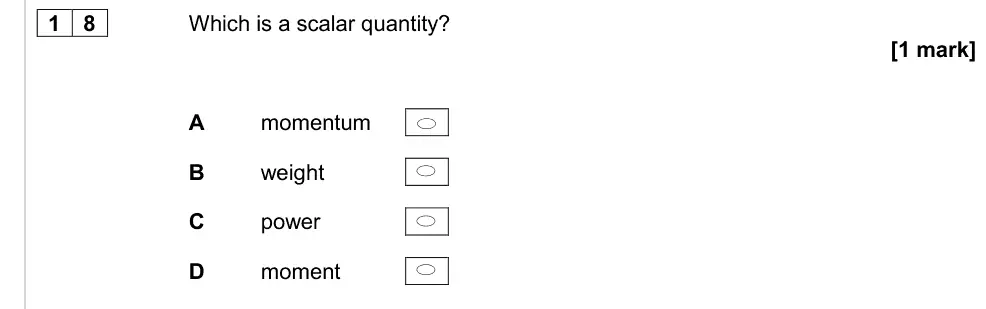
C
18 Surprisingly the most popular distractor here was B, perhaps highlighting students’ confusion with mass and weight. 70% were able to identify the correct answer.
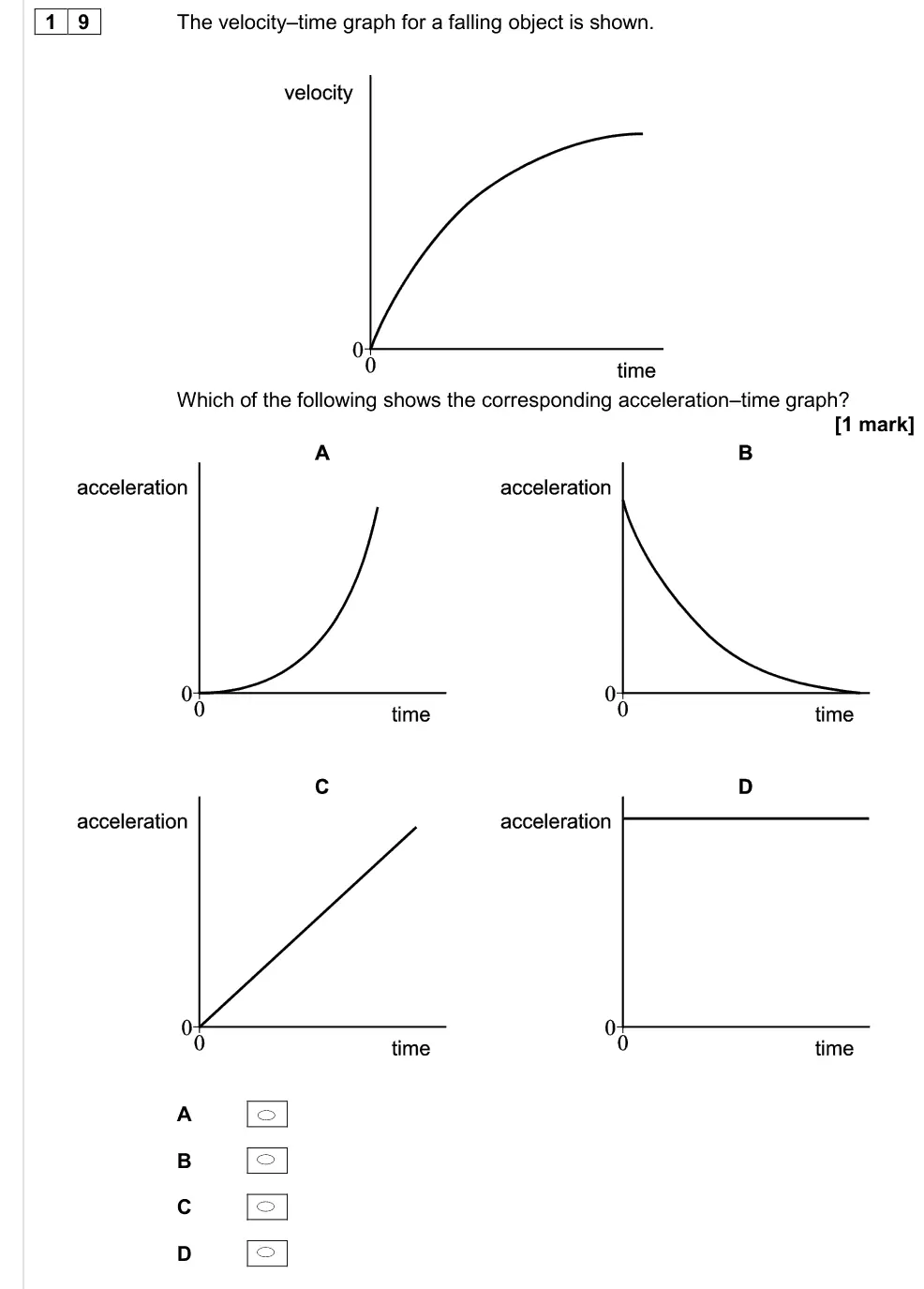
B
Skills: MS3.6 Draw and use the slope of a tangent to a curve as a measure of rate of change
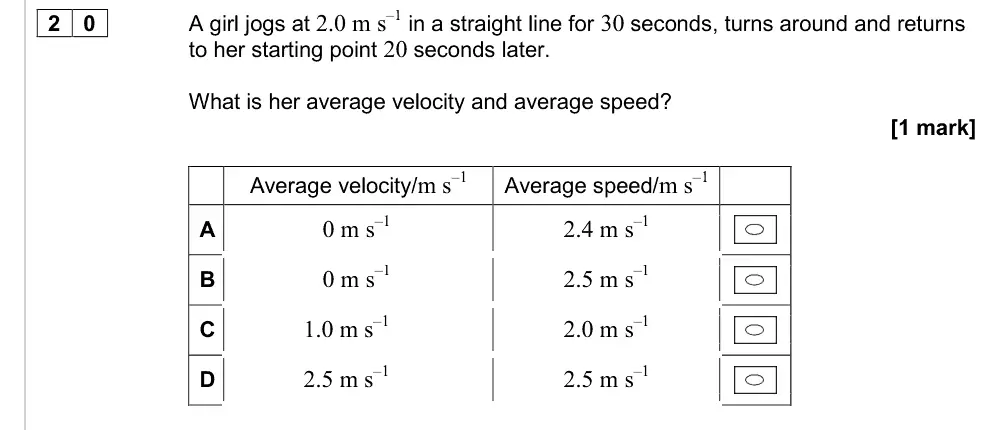
A
Skills: MS0.3 Use ratios, fractions and percentages
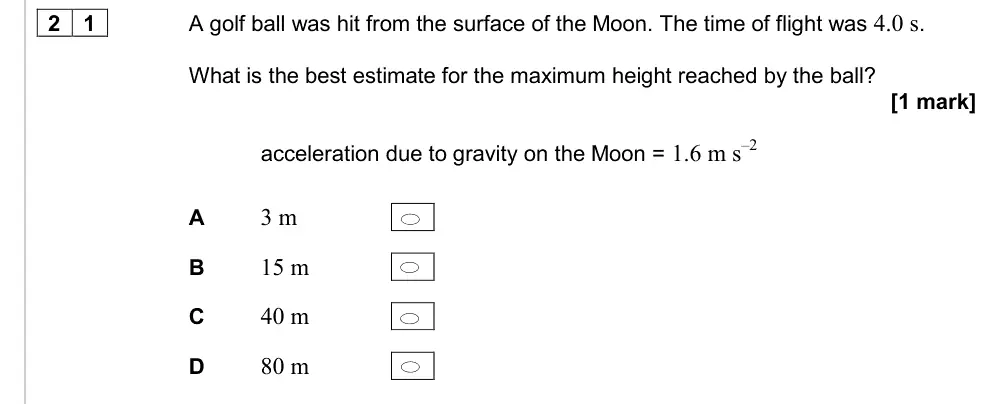
A
20 Students should be warned about multiple-choice questions that have an apparently very straightforward solution. Approximately the same number of students gave the incorrect response B as gave the correct response in this question. Presumably they calculated the speed for the second half of the journey, and took the average of the two speeds rather than calculating the total distance divided by the total time. 21 This question is a fairly demanding projectiles problem, requiring students to realise that at half the time of flight (2s) the ball would be at its highest point, and using s= ut + ½ at2 for the remainder of the vertical motion, with u=0 ms-1 and a = 1.6 ms-2. Only 32% of the students were able to do this, with approximately half of the answers being B, which may have been a guess as it seemed feasible.
Skills: MS2.3 Substitute numerical values into algebraic equations using appropriate units for physical quantities
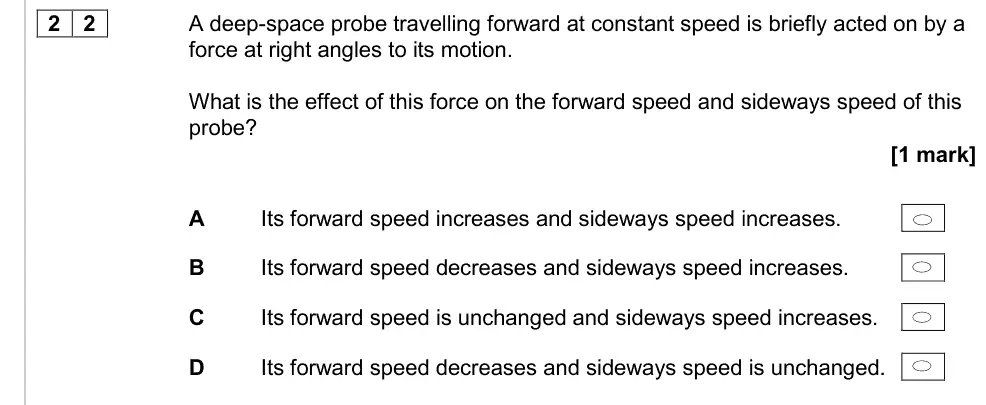
C
22 68% of students identified the correct answer to this question. The most popular distractor was B, given by students believing that the sideways force must somehow reduce the forward speed.
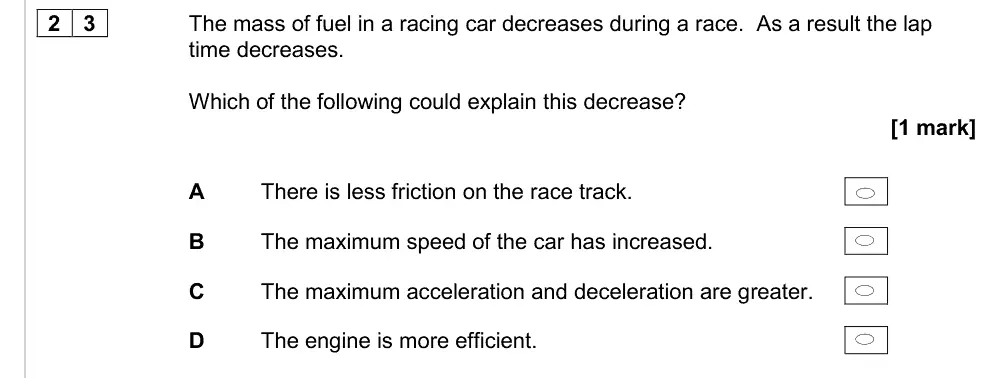
C
23 The correct answer was given by 43% of students. Unsurprisingly perhaps, A was the most popular distractor.
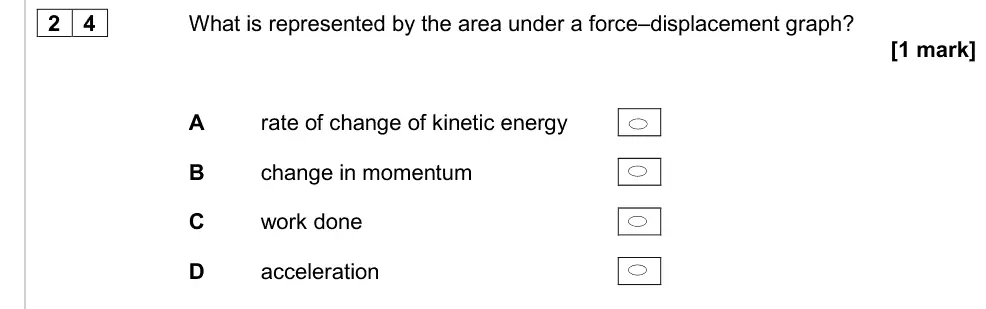
C
24 Over 68% of students were able to recall, or work out, the significance of the area under a force-displacement graph. Those who chose B (approximately 20%) were probably confusing force-displacement with force-time.
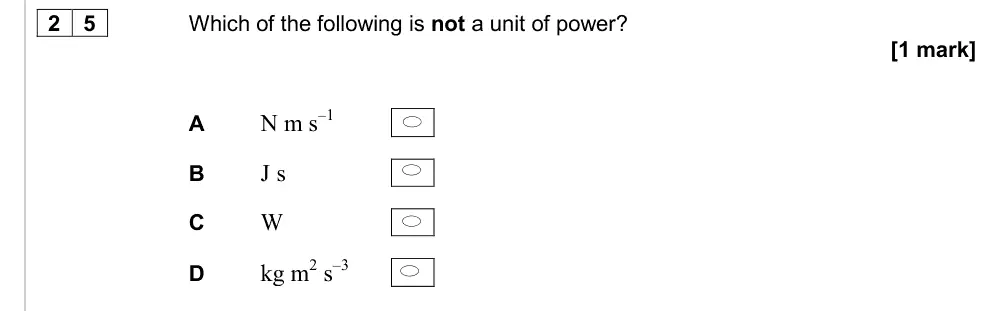
B
25 Occasionally students are presented with multiple choice questions which require them to work out the “incorrect” answer. This will be highlighted by a bold “not” in the question. The fact that only 40% of students managed to find the correct answer may indicate that this could have caused difficulties, although this is contradicted by the small number (2%) of students choosing the watt. The most popular distractor, D, may have been chosen because of its apparent complexity.
Skills: MS0.1 Recognise and make use of appropriate units in calculations
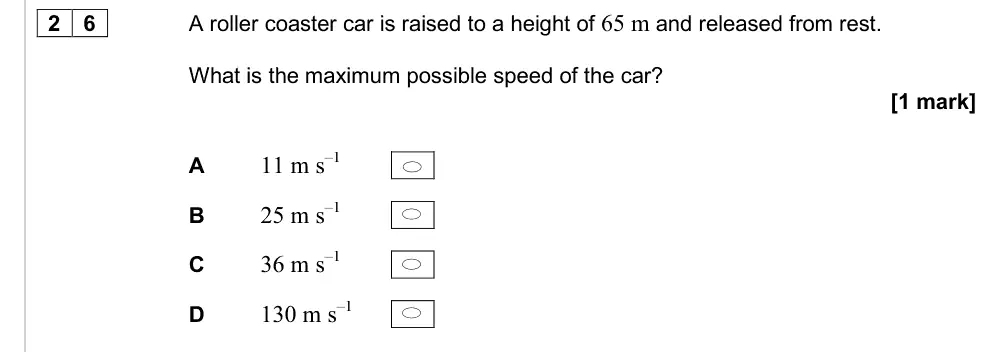
C
26 This calculation proved to be very accessible, with 84% of students giving the correct answer. It should be noted that, in a written paper, students who use the suvat equations would not get the same credit as those who correctly equate GPE and KE, despite the two approaches giving the same answer.
Skills: MS2.3 Substitute numerical values into algebraic equations using appropriate units for physical quantities
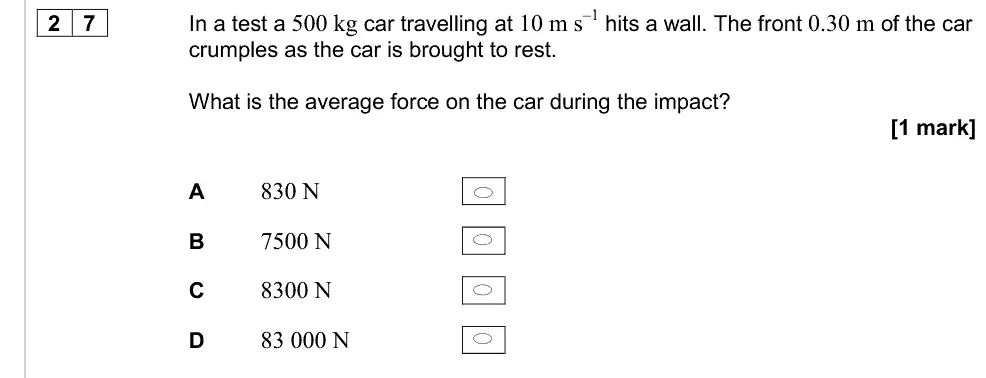
D
27 This proved to be a very demanding question with only 29% of students giving the correct answer, although it proved to be quite discriminating. Students were required to calculate the kinetic energy of the car, and divide this by the distance to find the average decelerating force. The same answer could be obtained by calculating the acceleration using the suvat equations, and using F=ma. Slightly more students gave the answer C than gave the correct answer, perhaps neglecting to square the speed when calculating the kinetic energy.
Skills: MS2.3 Substitute numerical values into algebraic equations using appropriate units for physical quantities
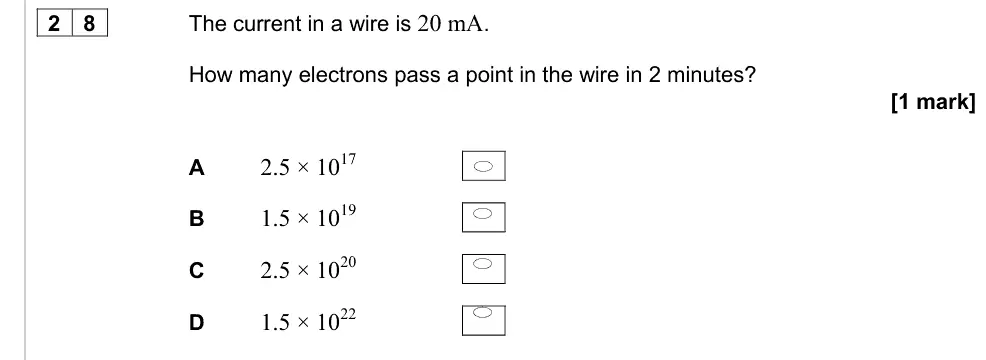
B
28 54% of students were able to perform this relatively straightforward calculation. Surprisingly D was the least popular distractor, suggesting students had more problems with correctly using seconds rather than minutes than dealing with the m in mA.
Skills: MS0.2 Recognise and use expressions in decimal and standard form; MS0.1 Recognise and make use of appropriate units in calculations
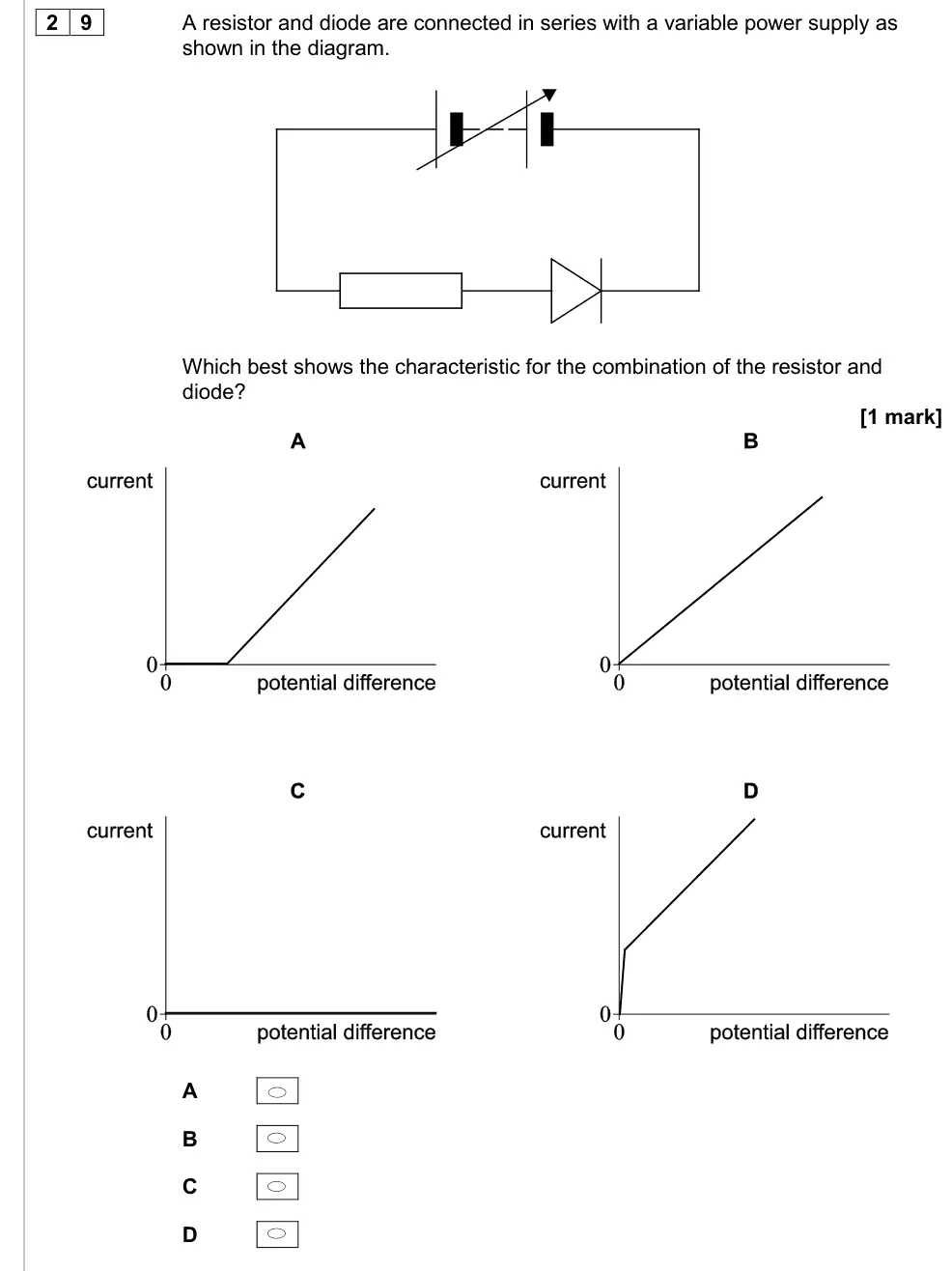
A
29 With 55% of students giving the correct answer, this question proved to be reasonably accessible. This may be because the experiment is often carried out with a protective resistor in series with the diode. The most popular distractor, D, indicates some confusion between current and pd. A relatively high number of students opted for C, suggesting some difficulties working out whether the diode was reverse biased or not.
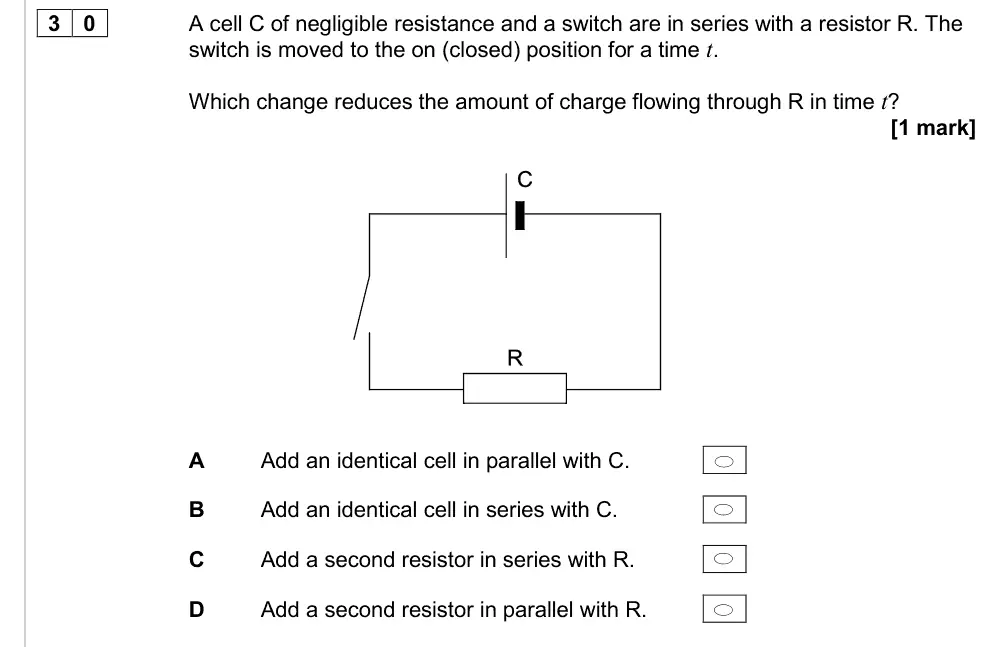
C
30 Many students have difficulties with electricity questions. Using multiple choice questions such as this one may help deal with some misconceptions. The correct answer was given by 40% of students, but nearly 50% believed that adding a resistor in parallel would reduce the current (and hence the charge) through R, despite being told that the cell has negligible resistance. Presumably the students believed that the current through the cell does not change, and therefore the current is shared between the two resistors.
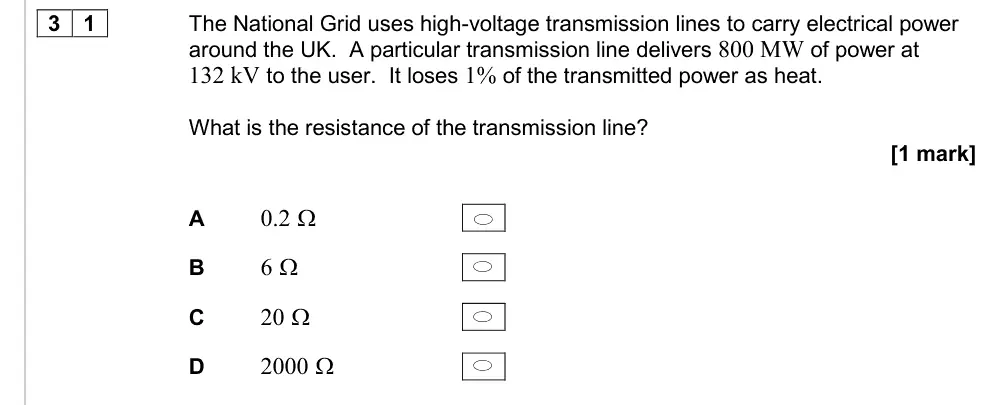
A
31 It is clear from answers to this question that few students (approximately 13%) had much understanding of how using high voltage power lines reduces energy loss. In fact the correct answer proved to be the least popular of the choices. The current through a transmission line is found from the power being delivered and the voltage of the line (P=IV). Hence higher voltages result in lower currents. The power dissipated is then related to the current in the line, and the resistance of the line. Students were expected to use P=IV to calculate the current in the line, and then use the power loss (1%P) = I2R to calculate the resistance. Responses suggested that many students believe that the 132kV is dropped across the line, rather than between the line and earth.
Skills: MS0.3 Use ratios, fractions and percentages; MS2.3 Substitute numerical values into algebraic equations using appropriate units for physical quantities
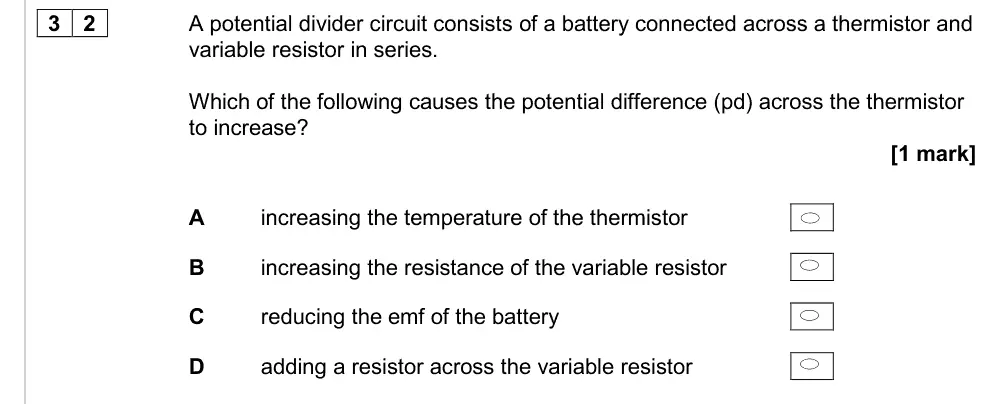
D
32 This proved to be more demanding than expected, with more students choosing A than the correct answer (D). This was perhaps due to students realising that thermistors had something to do with temperature, without realising that the higher the temperature the lower the resistance. It may be that these students rejected the other answers without checking them as an understanding of resistors in series and parallel should have led to the correct answer.
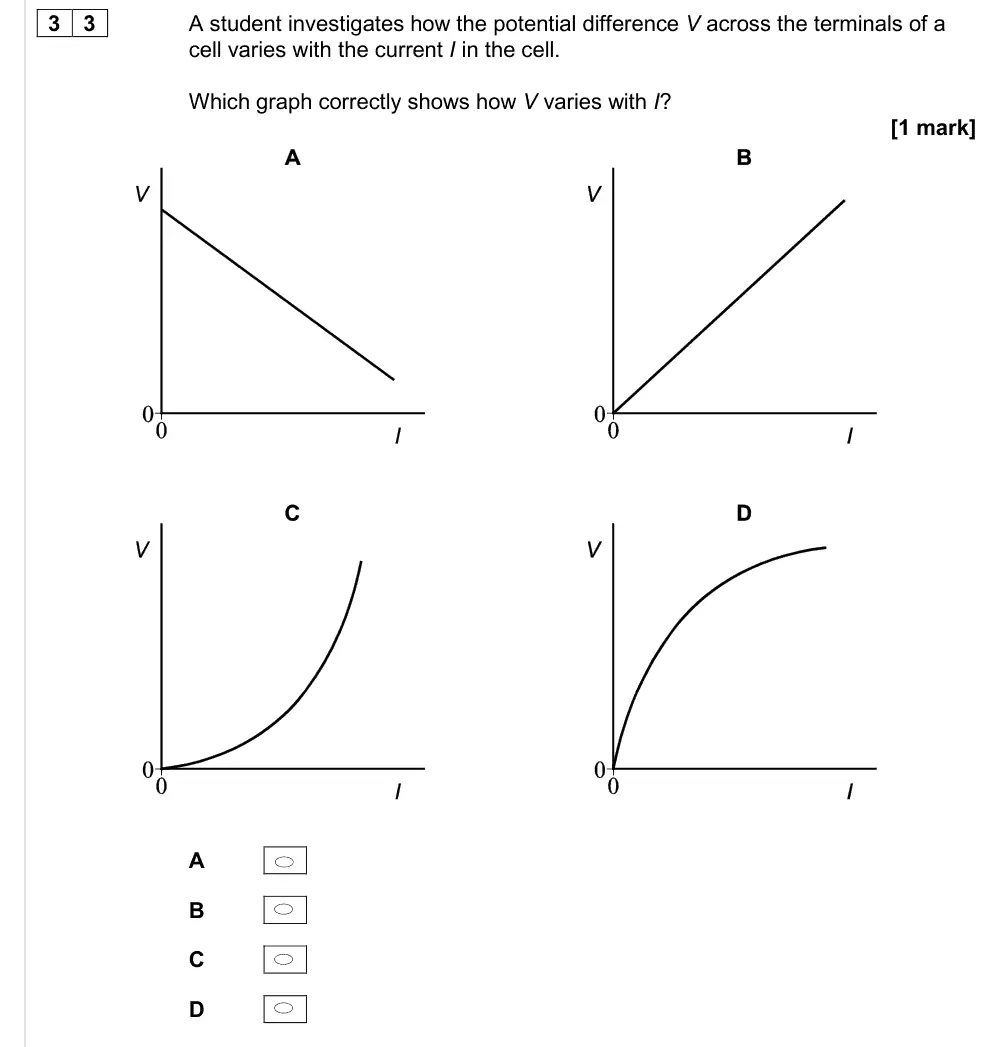
A
Skills: RP6 Investigation of the emf and internal resistance of electric cells and batteries by measuring the variation of the terminal pd of the cell with current in it.
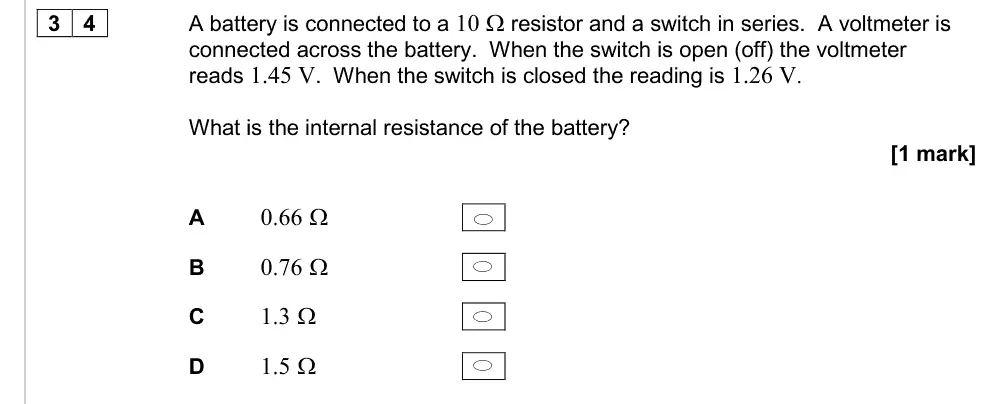
D
34 This calculation was fairly demanding with only 27% of students giving the correct answer. In fact answers B, C and D proved to be almost equally popular, suggesting a fair amount of informed guessing was going on. It may have been made easier had a circuit diagram been provided. In the absence of one, students should be encouraged to draw their own in the spaces on the paper.
Skills: MS2.3 Substitute numerical values into algebraic equations using appropriate units for physical quantities
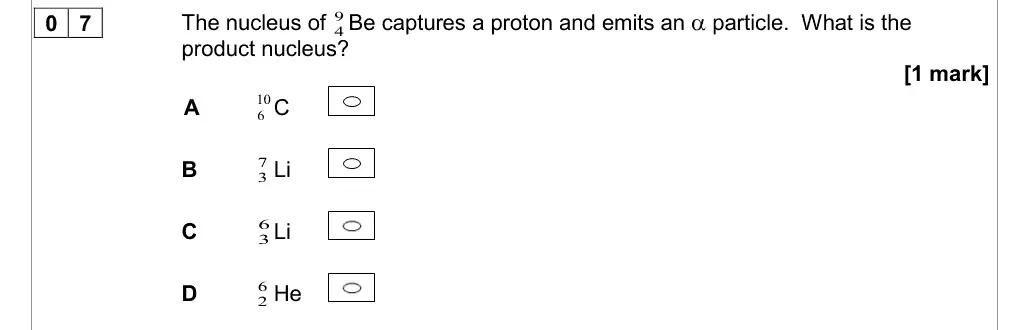
C
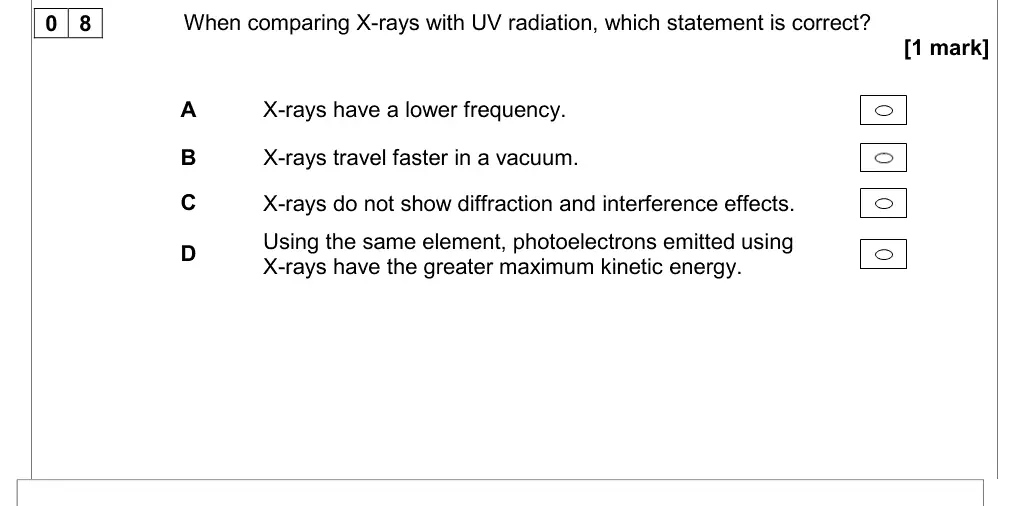
D
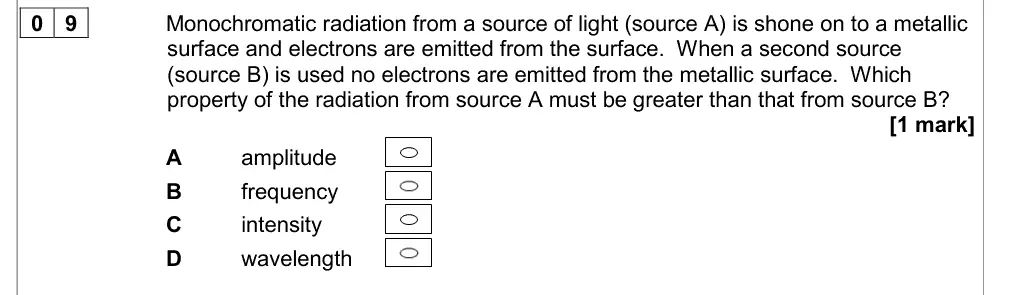
B
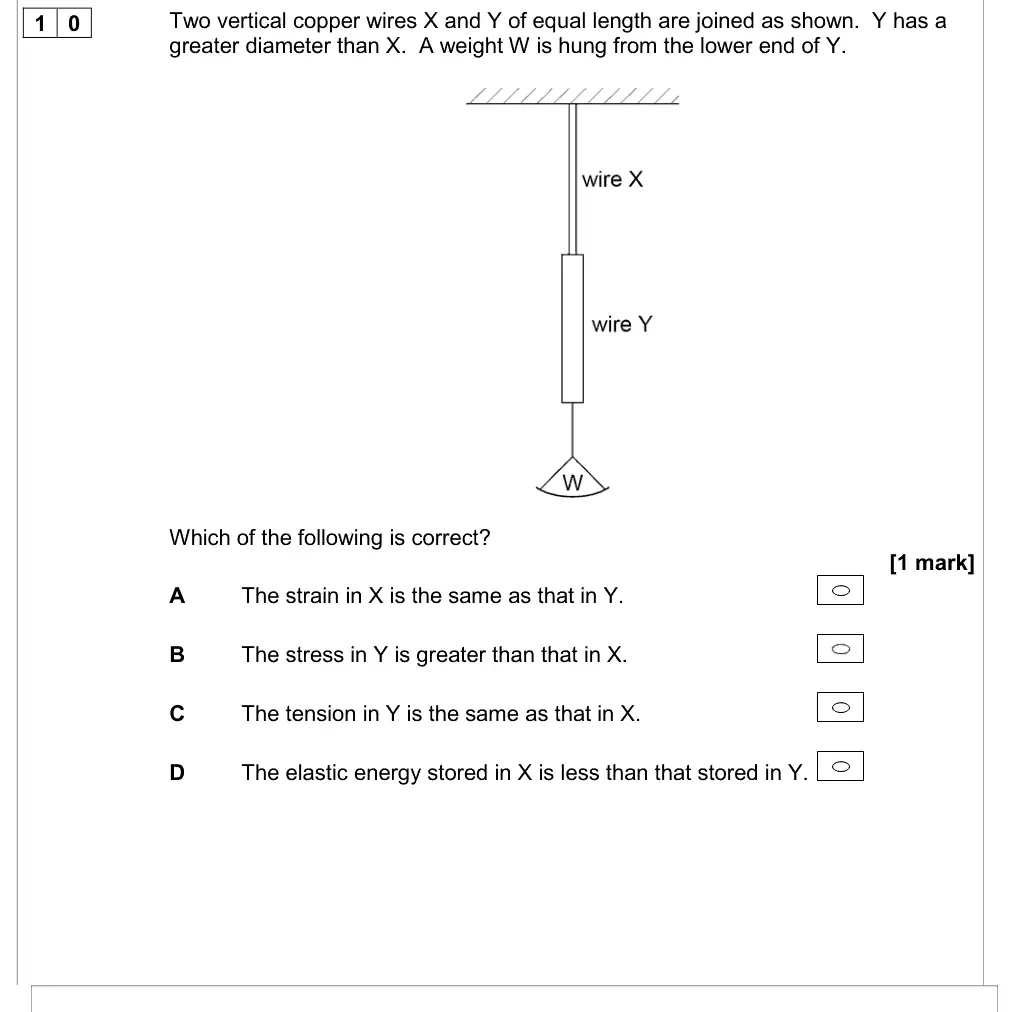
C
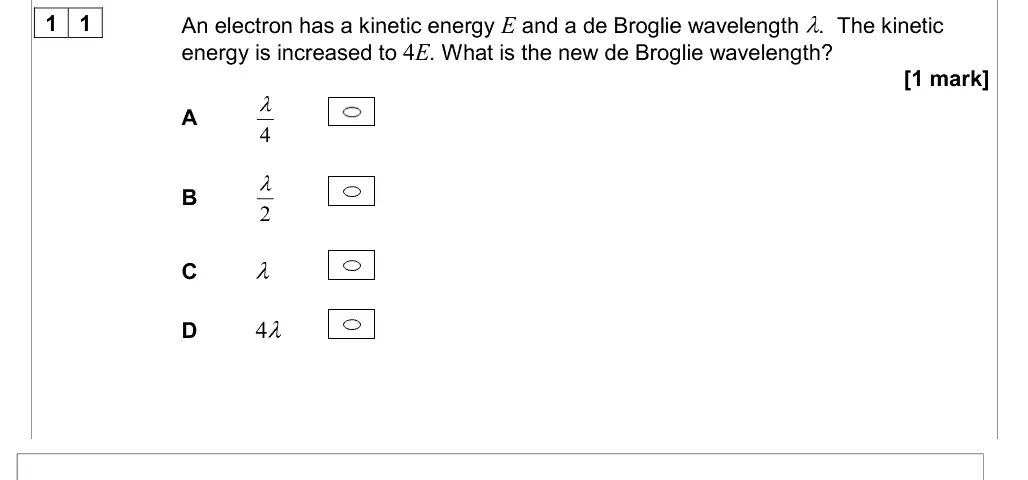
B
Skills: MS0.3 Use ratios, fractions and percentages
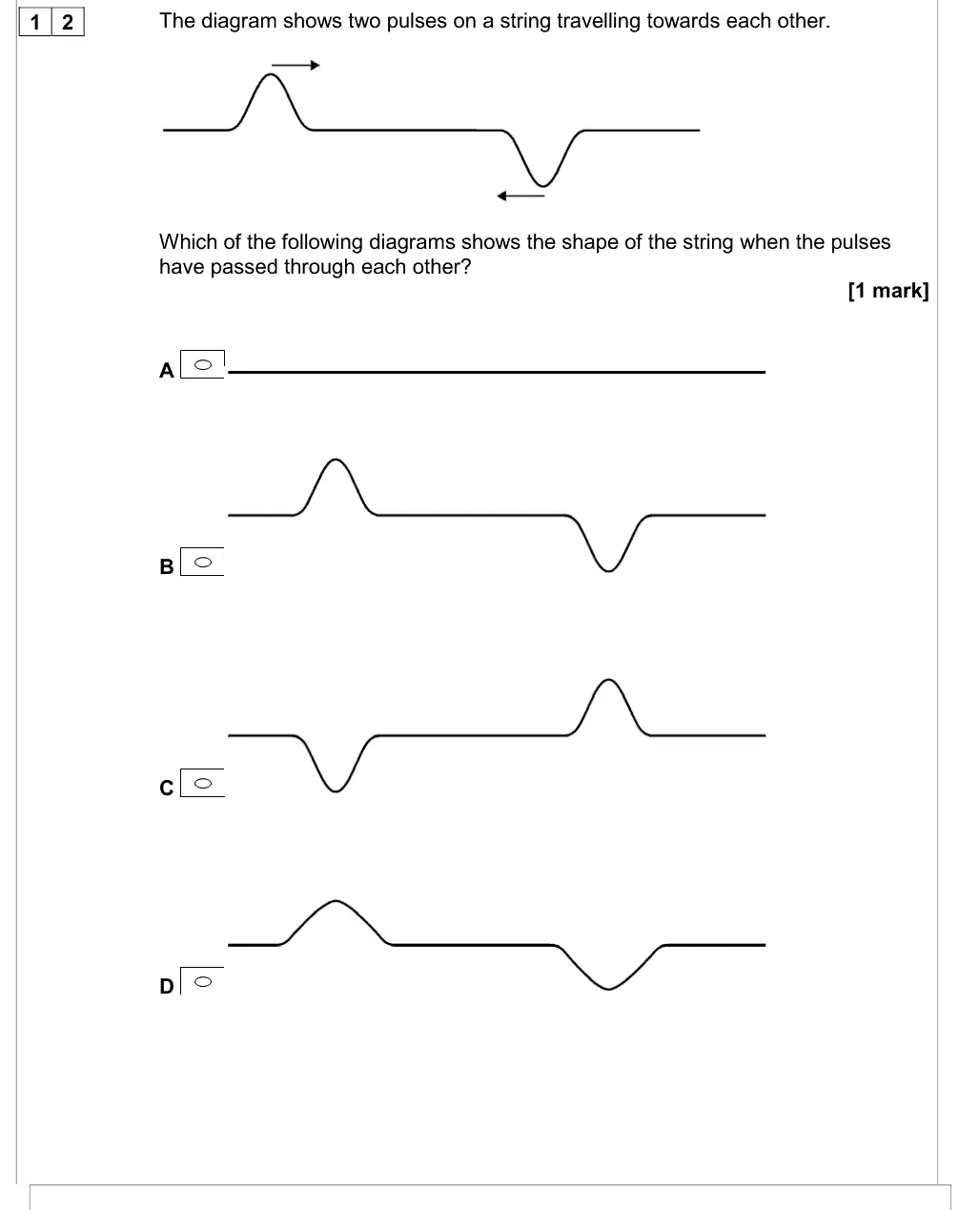
C
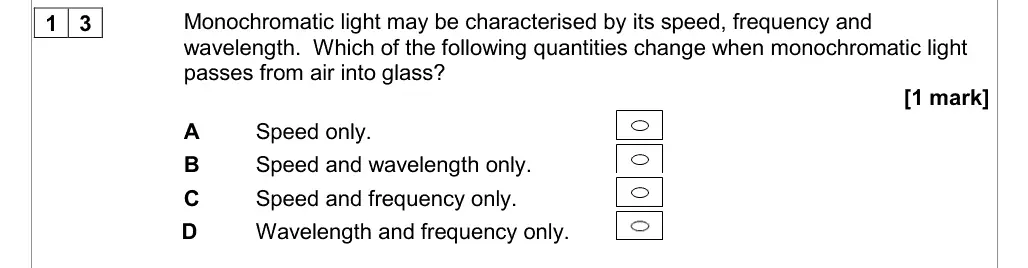
B
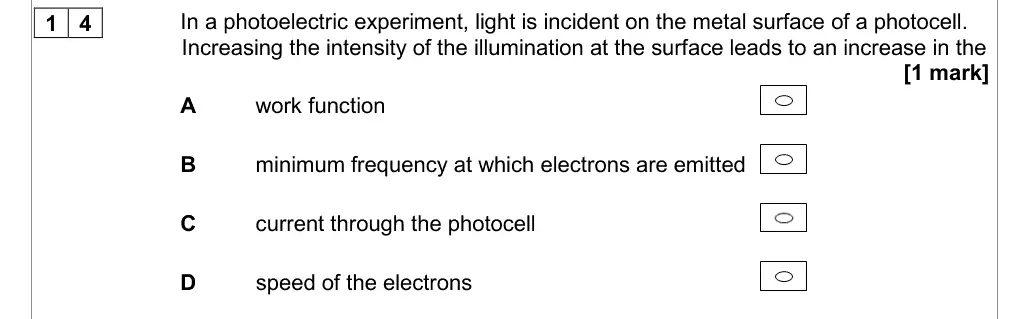
C
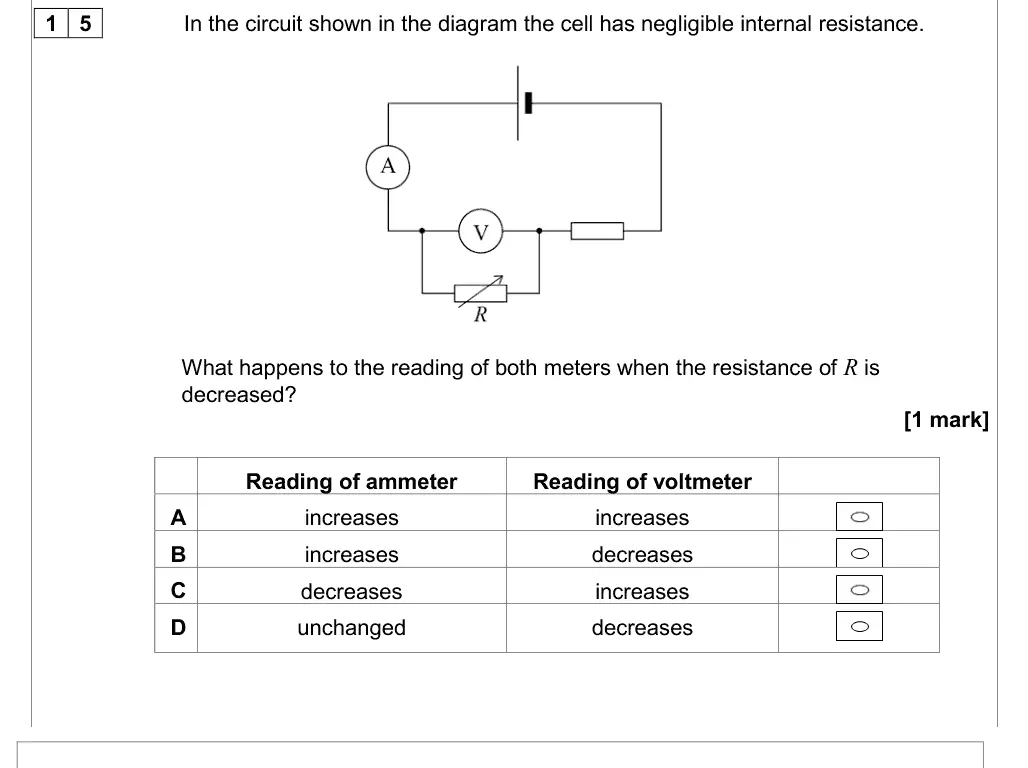
B
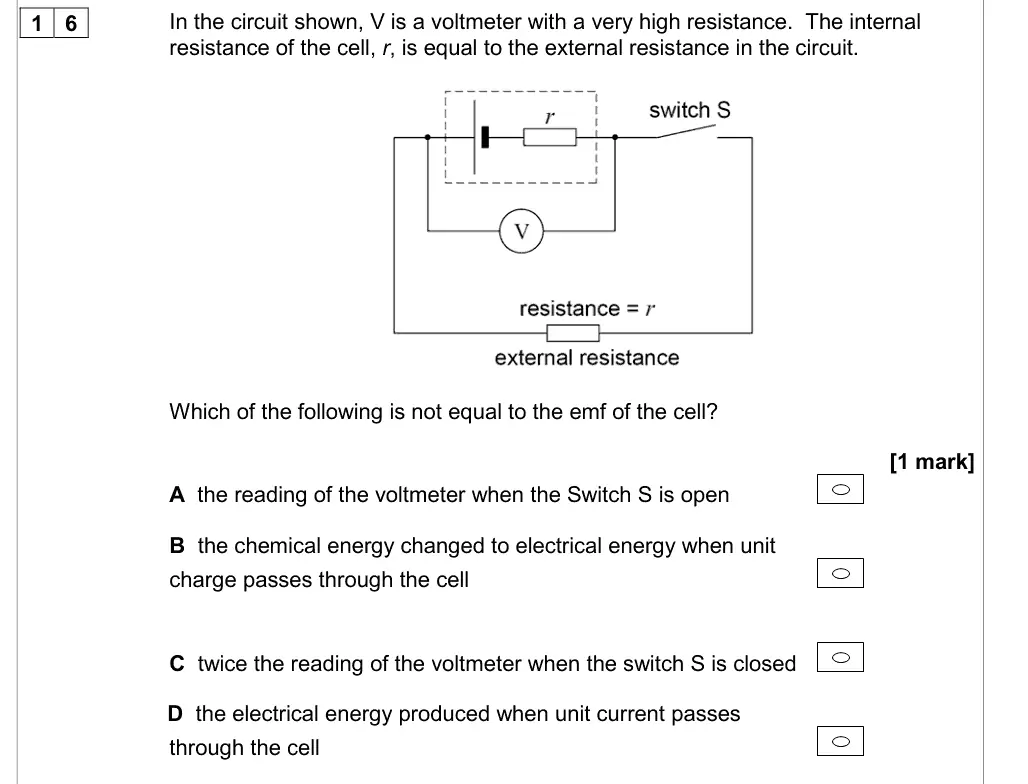
D
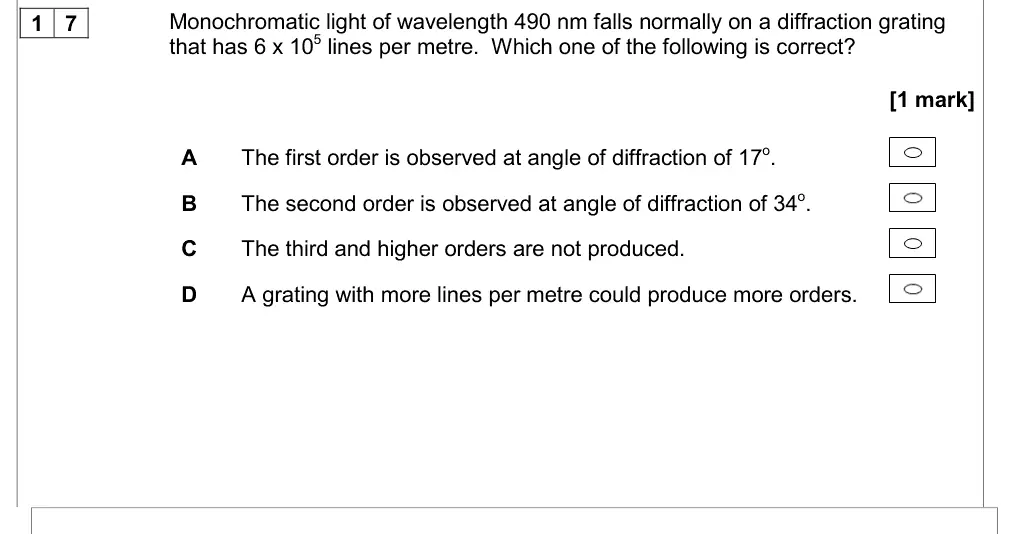
A
Skills: MS0.6 Use calculators to handle sin x, cos x, tan x when x is expressed in degrees or radians
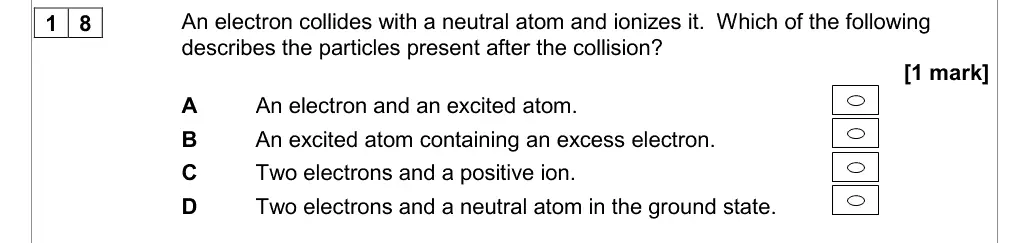
C
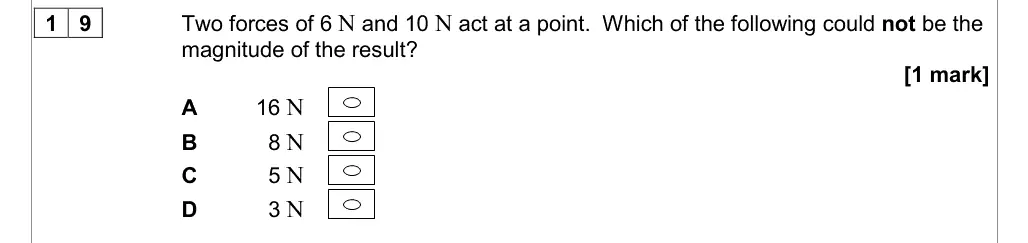
D
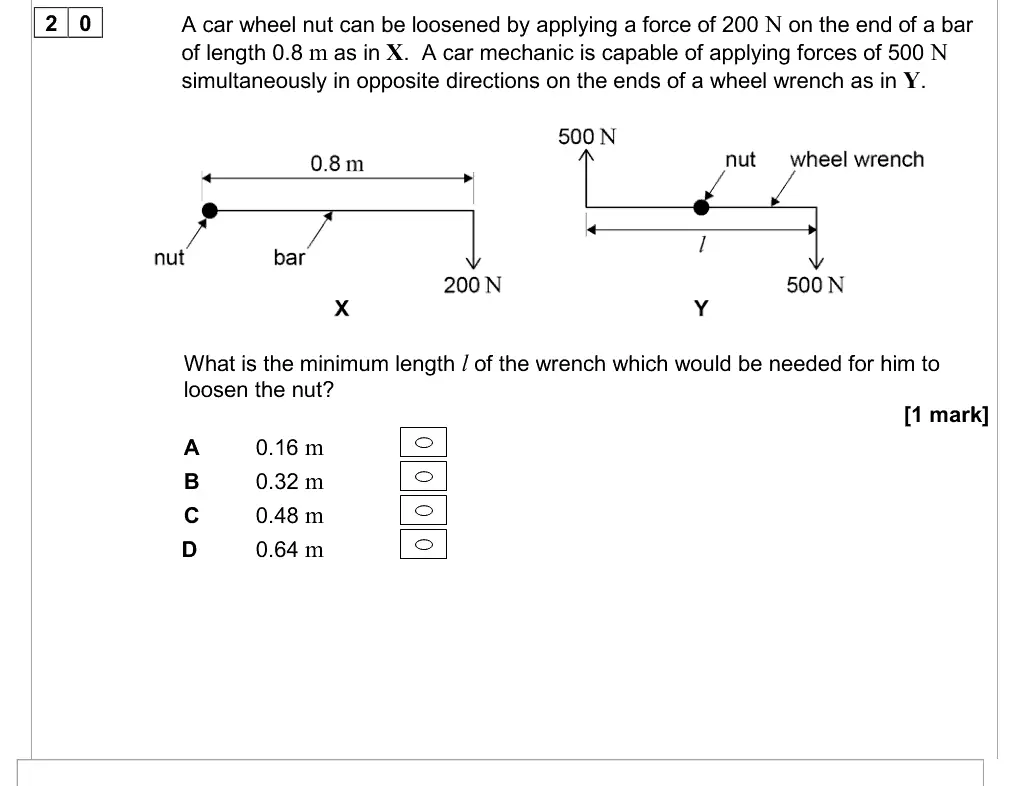
B
Skills: MS2.2 Change the subject of an equation, including non-linear equations
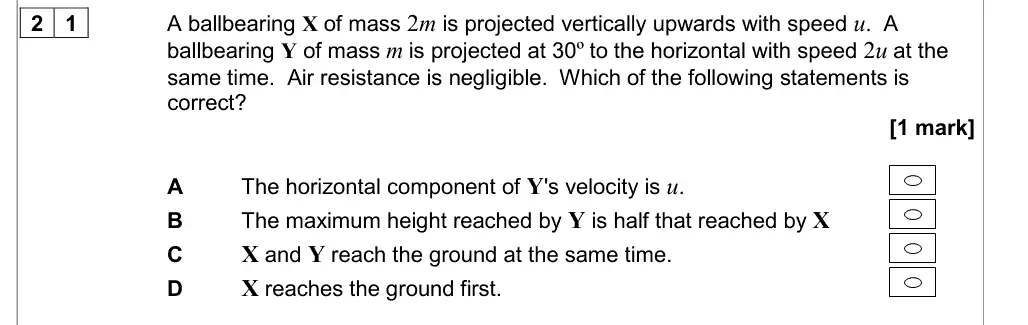
C
Skills: MS4.5 Use sin, cos and tan in physical problems
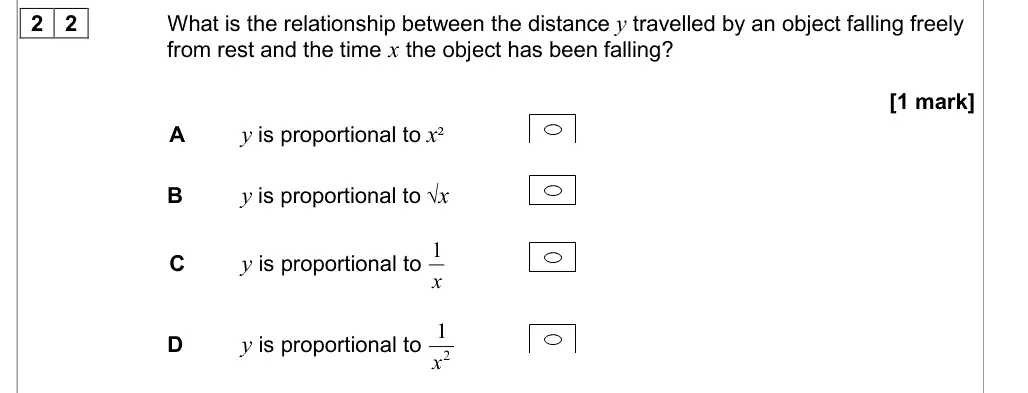
A
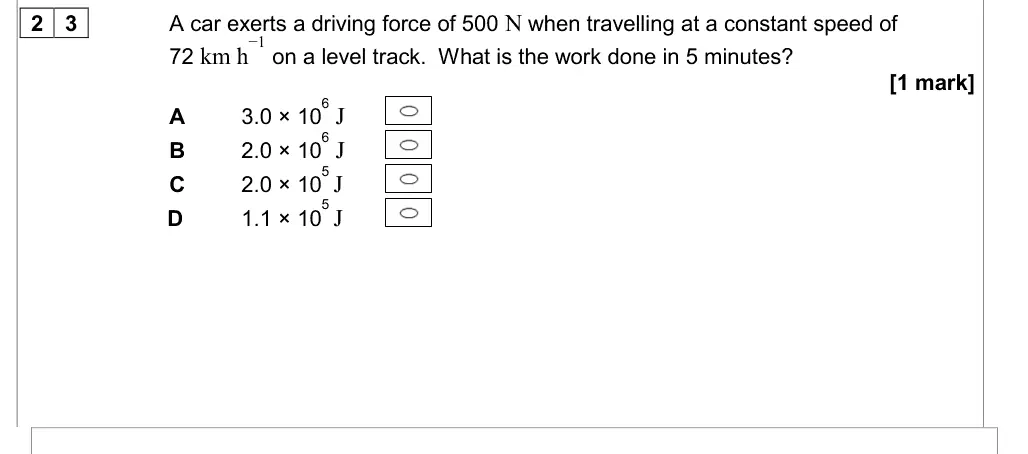
A
Skills: MS0.1 Recognise and make use of appropriate units in calculations; MS0.2 Recognise and use expressions in decimal and standard form
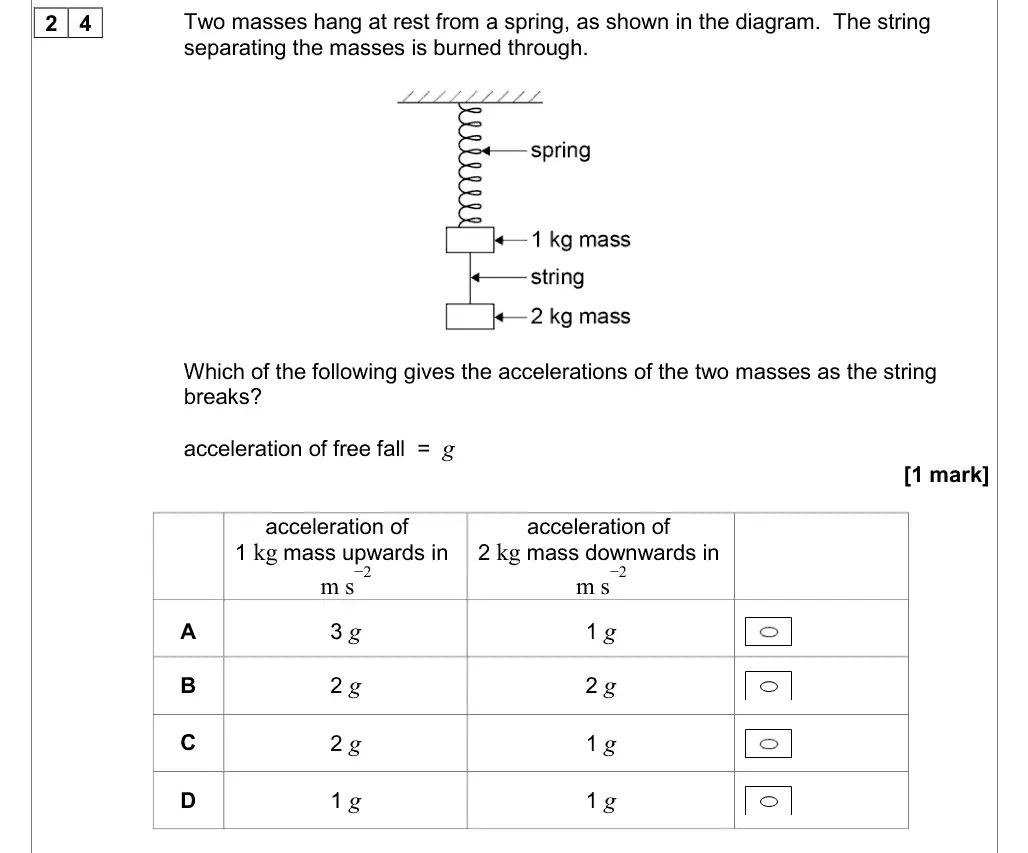
C
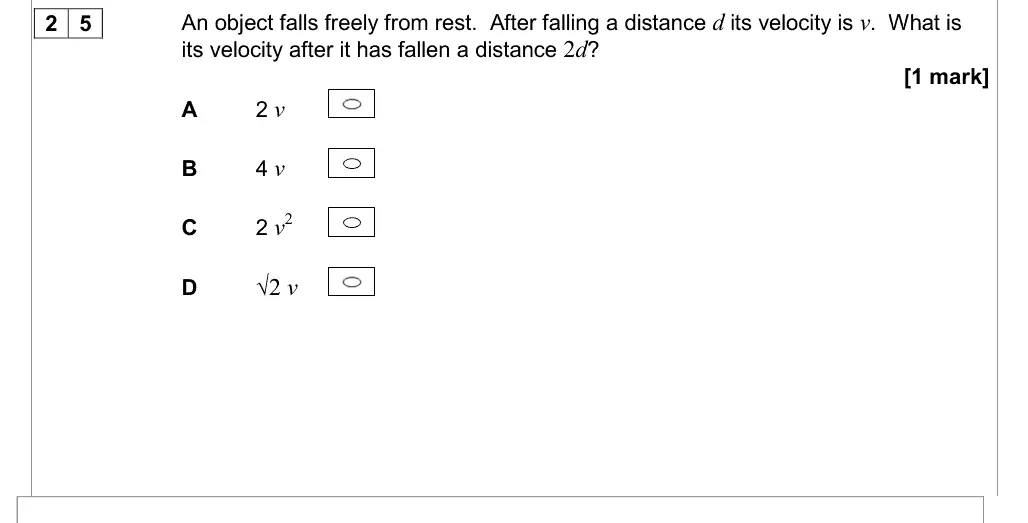
D
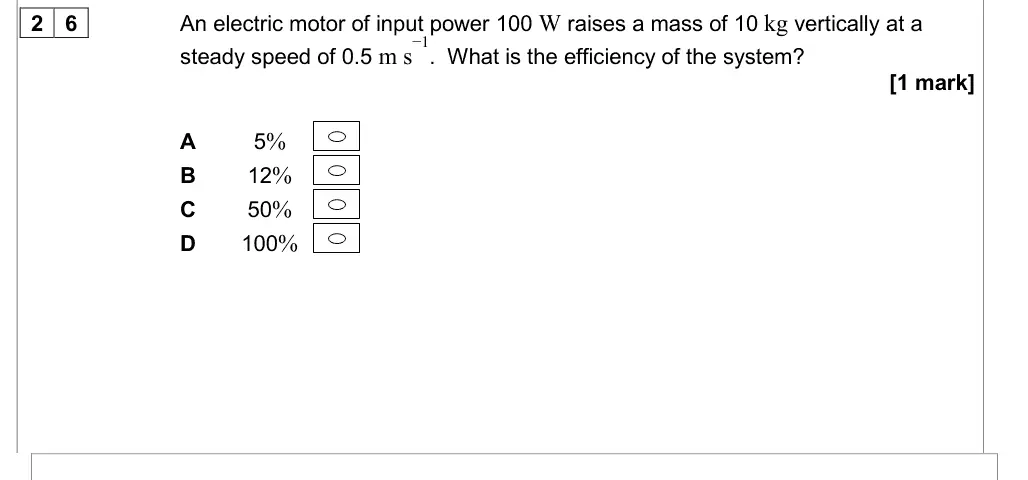
C
Skills: MS0.3 Use ratios, fractions and percentages
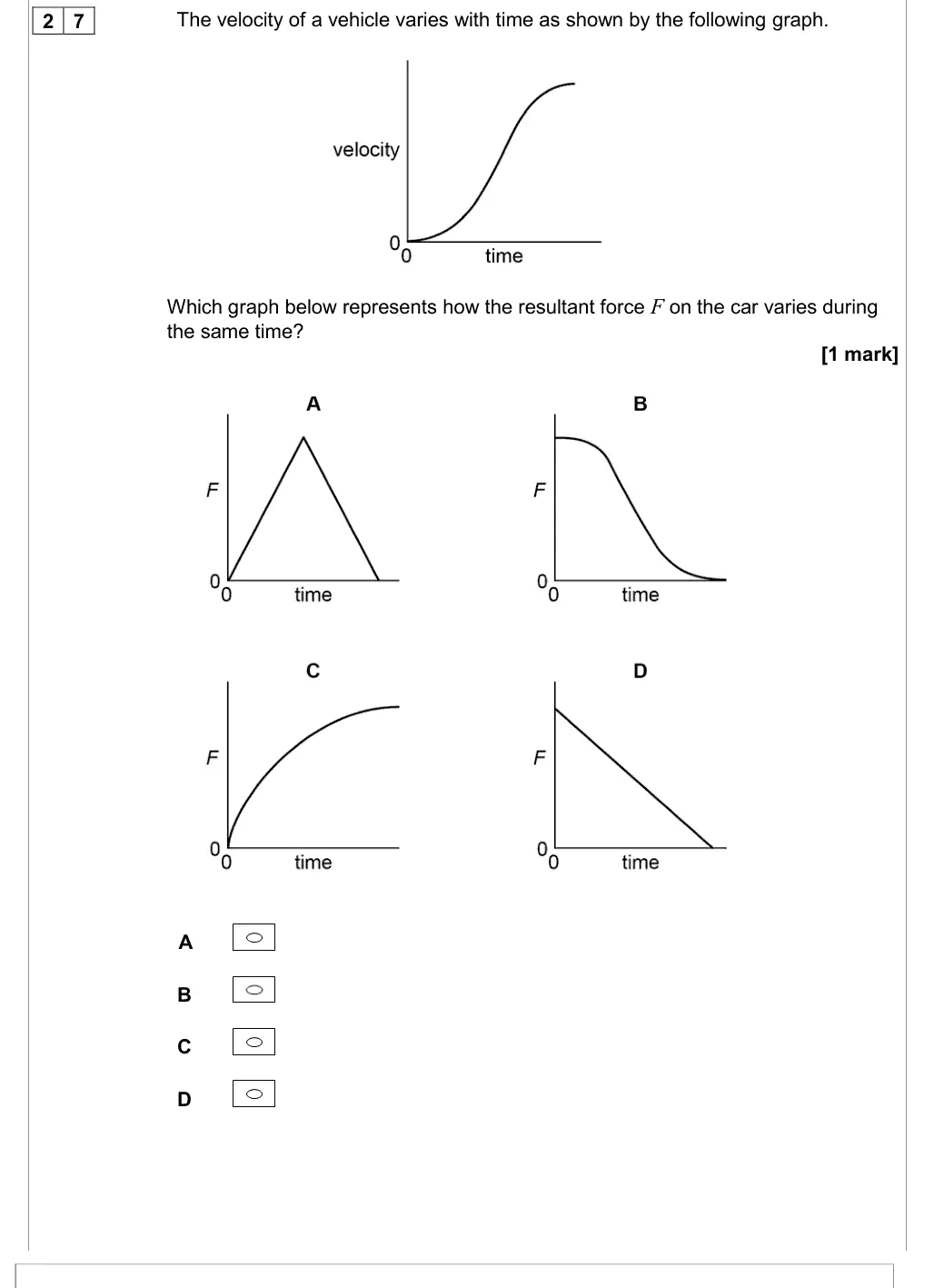
A
Skills: MS3.6 Draw and use the slope of a tangent to a curve as a measure of rate of change
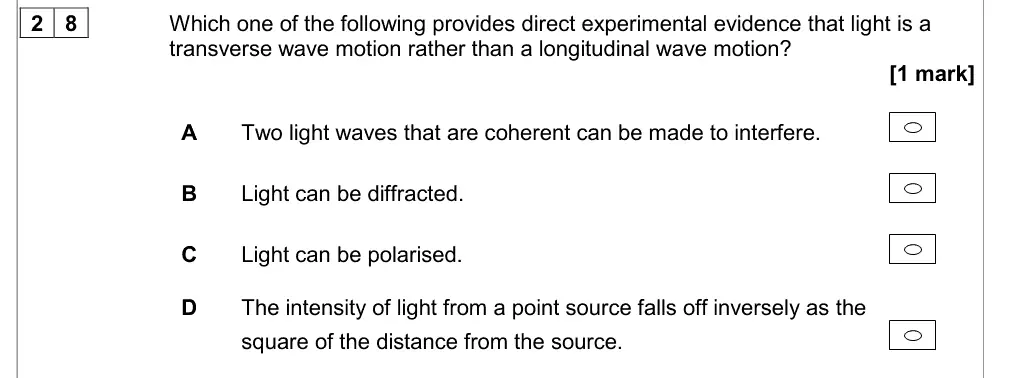
C
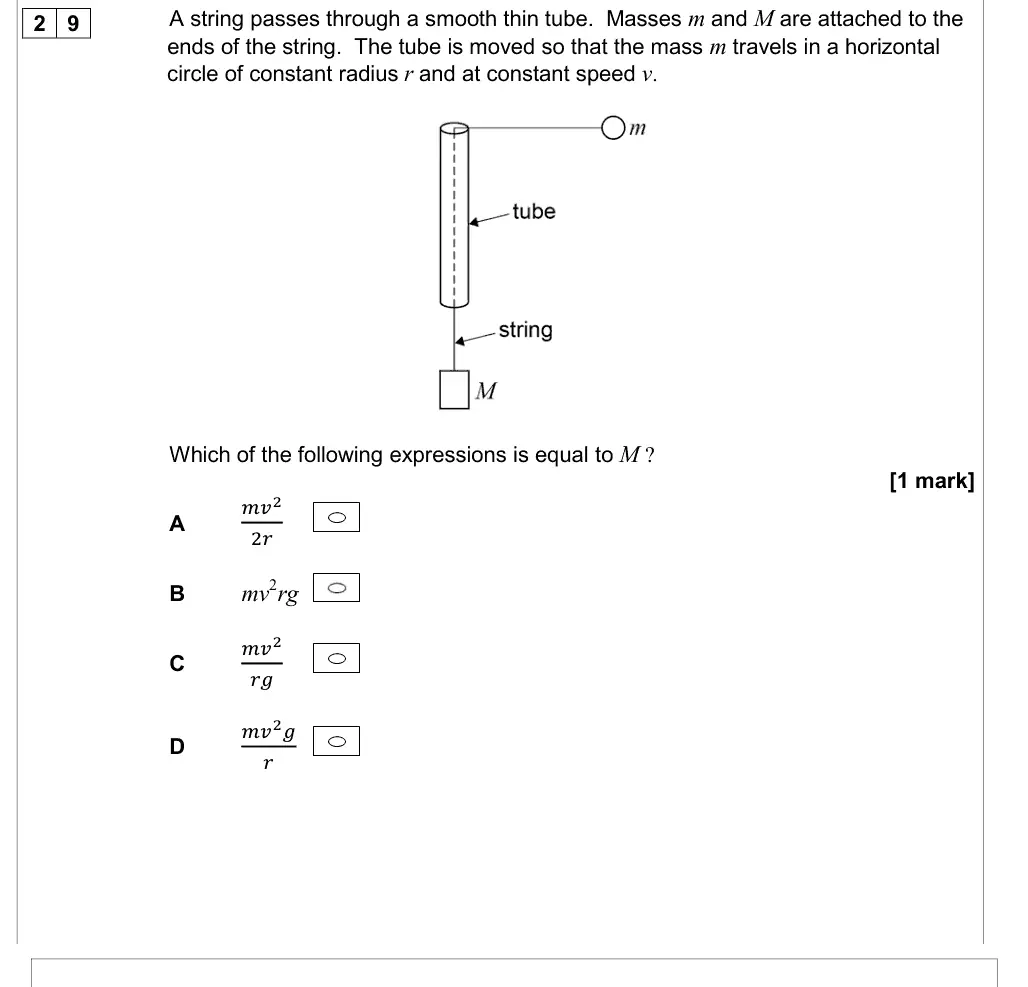
C
Skills: MS2.2 Change the subject of an equation, including non-linear equations
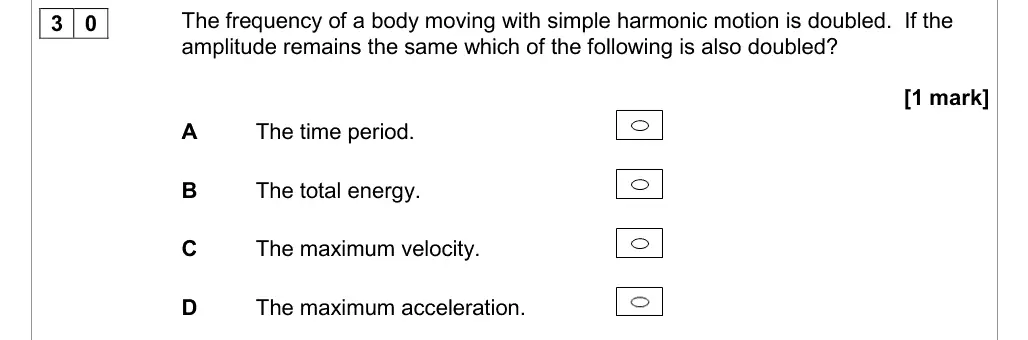
C
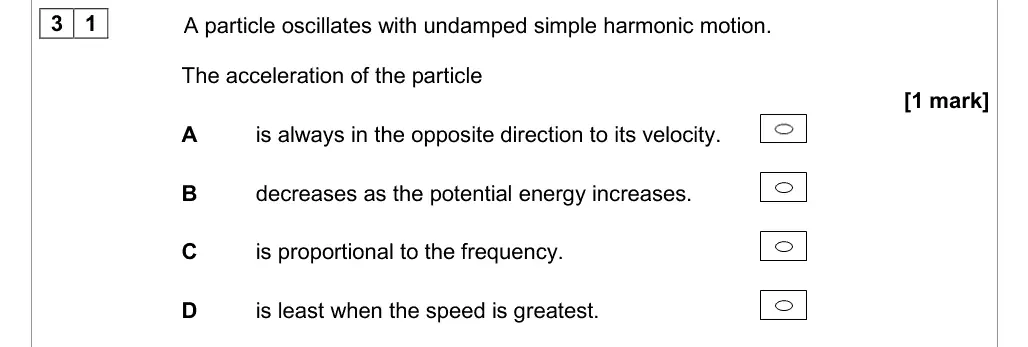
D
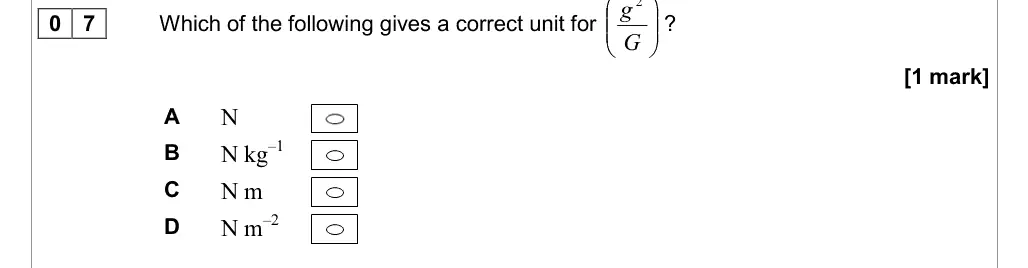
D
Skills: MS0.1 Recognise and make use of appropriate units in calculations
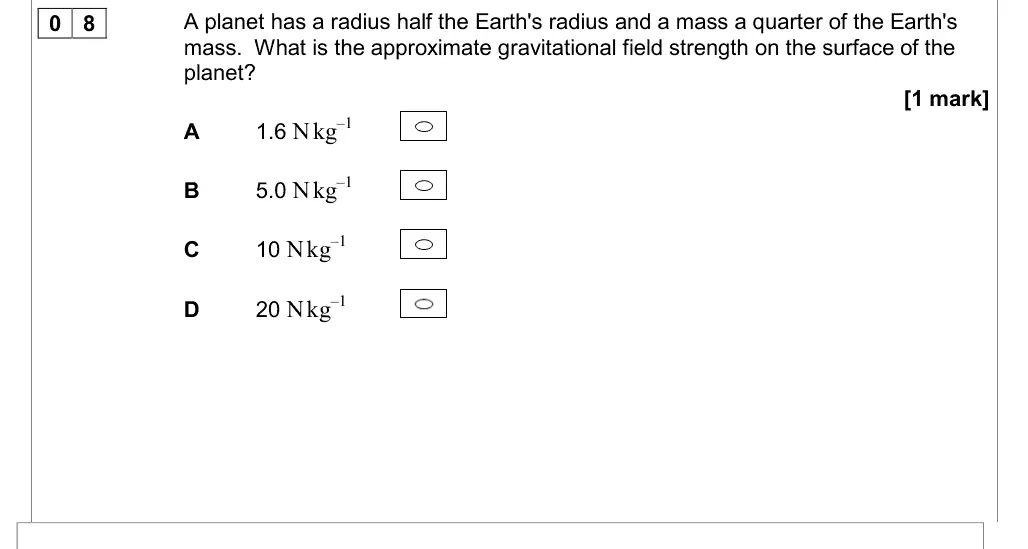
C
Skills: MS0.3 Use ratios, fractions and percentages
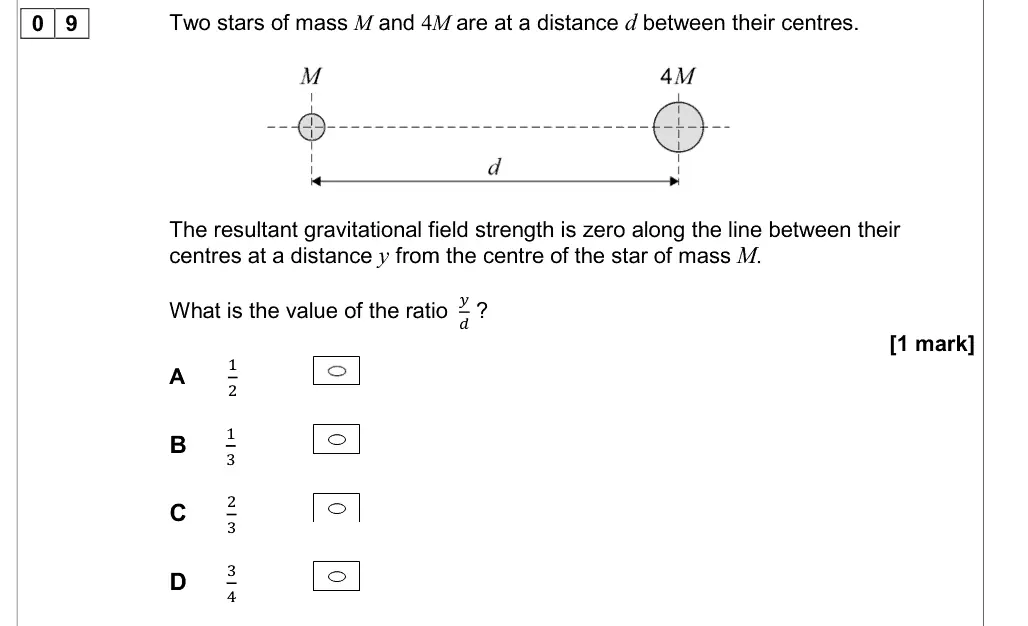
B
Skills: MS2.4 Solve algebraic equations, including quadratic equations; MS0.3 Use ratios, fractions and percentages
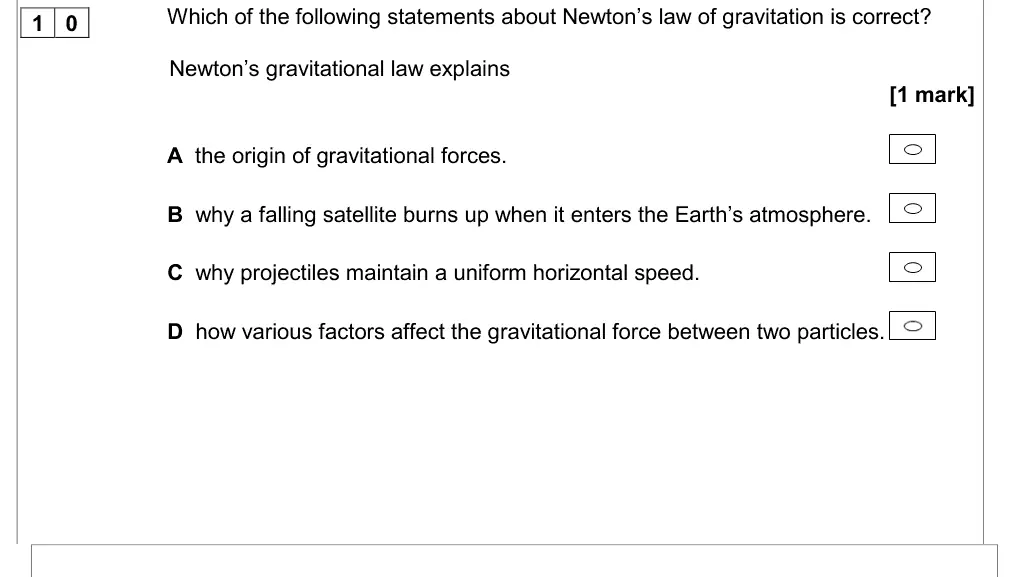
D
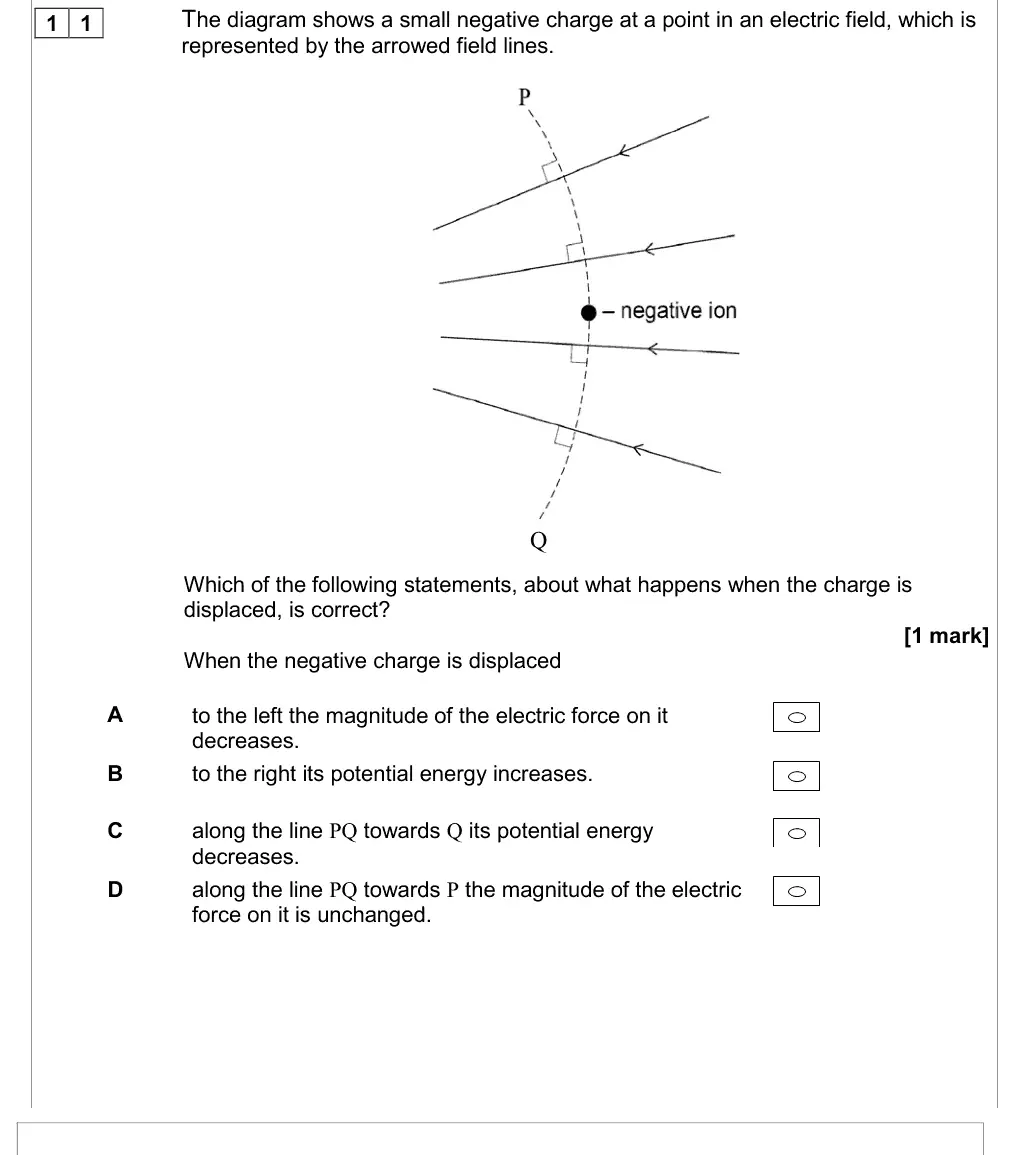
D
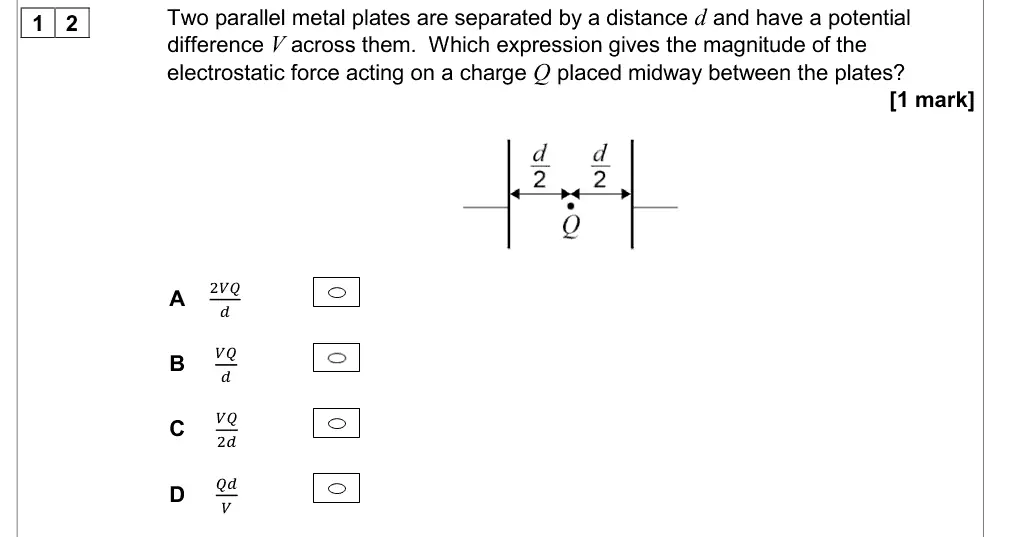
B
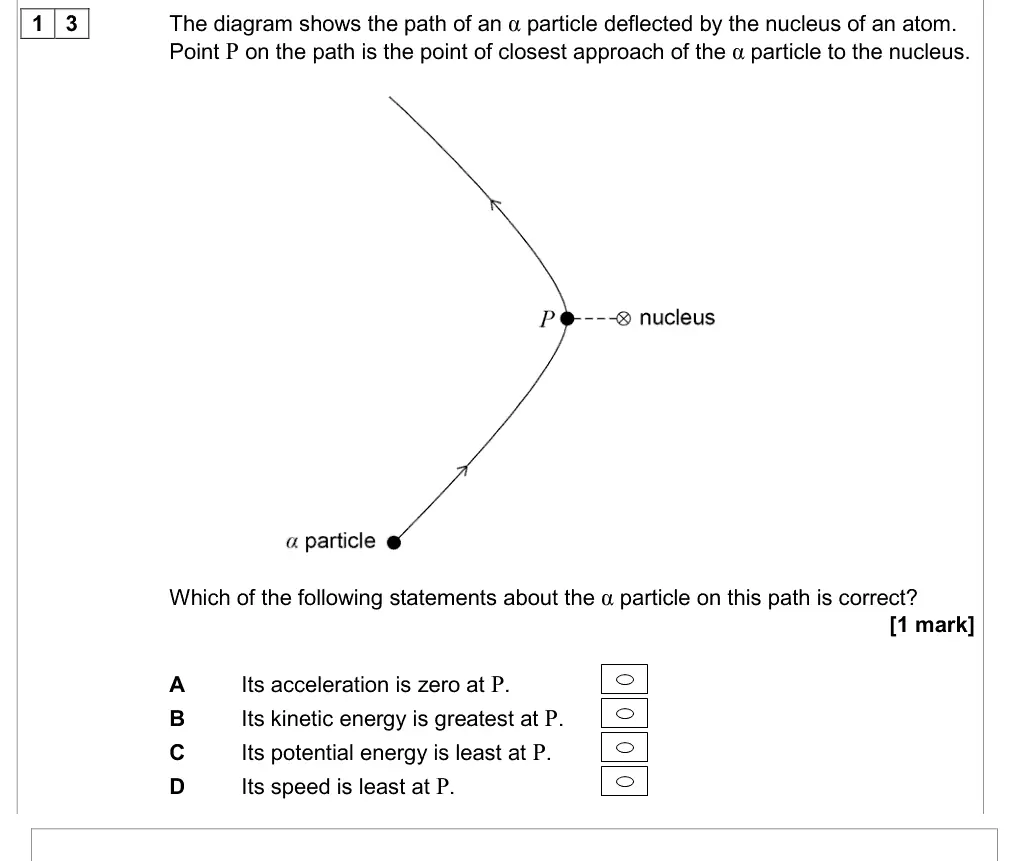
D
D
Skills: MS2.4 Solve algebraic equations, including quadratic equations
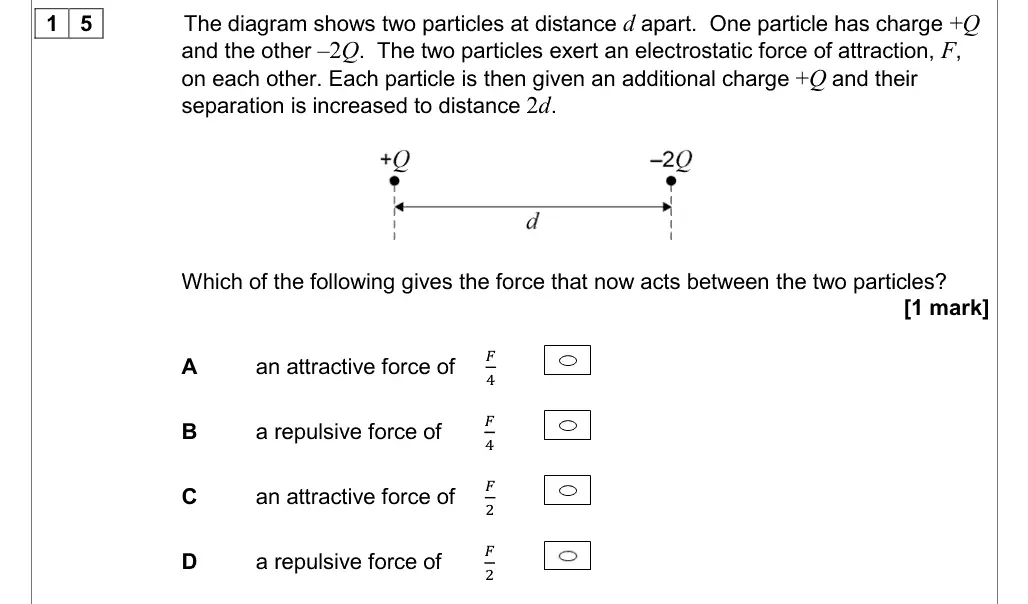
A
Skills: MS0.3 Use ratios, fractions and percentages
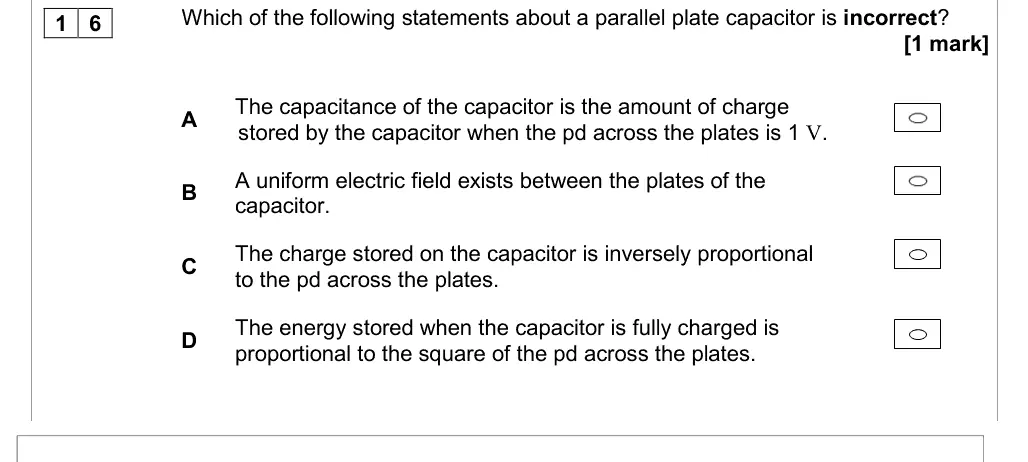
C
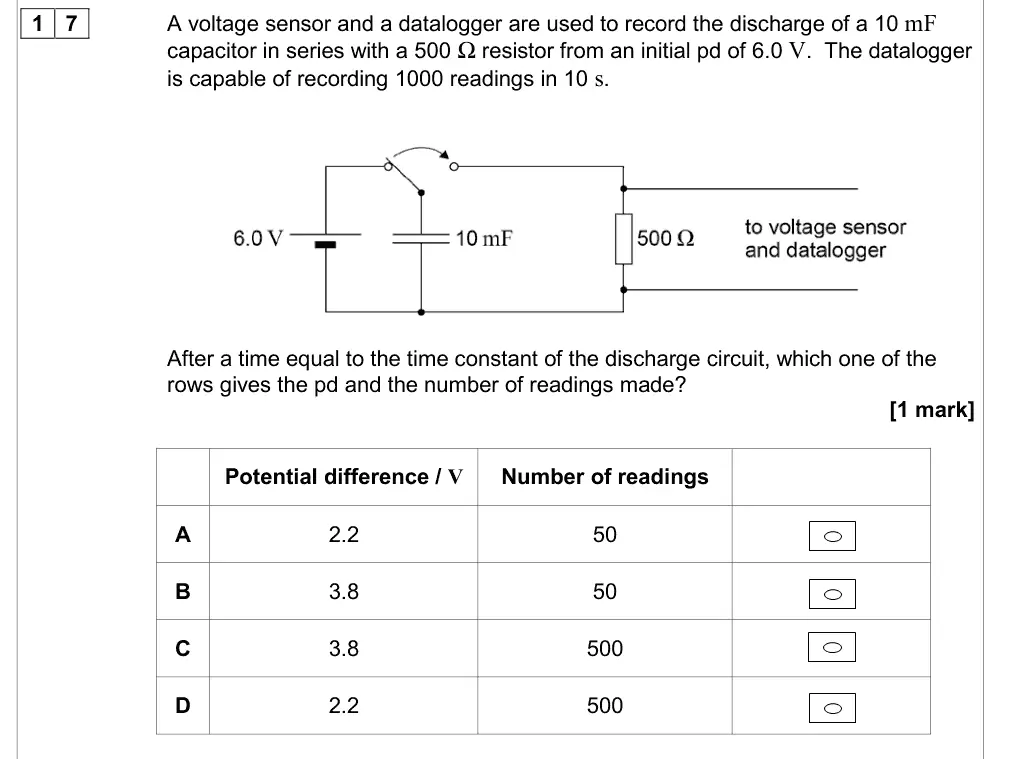
D
Skills: MS0.5 Use calculators to find and use power, exponential and logarithmic functions; RP9 Investigation of the charge and discharge of capacitors. Analysis techniques should include log-linear plotting leading to a determination of the time constant, RC
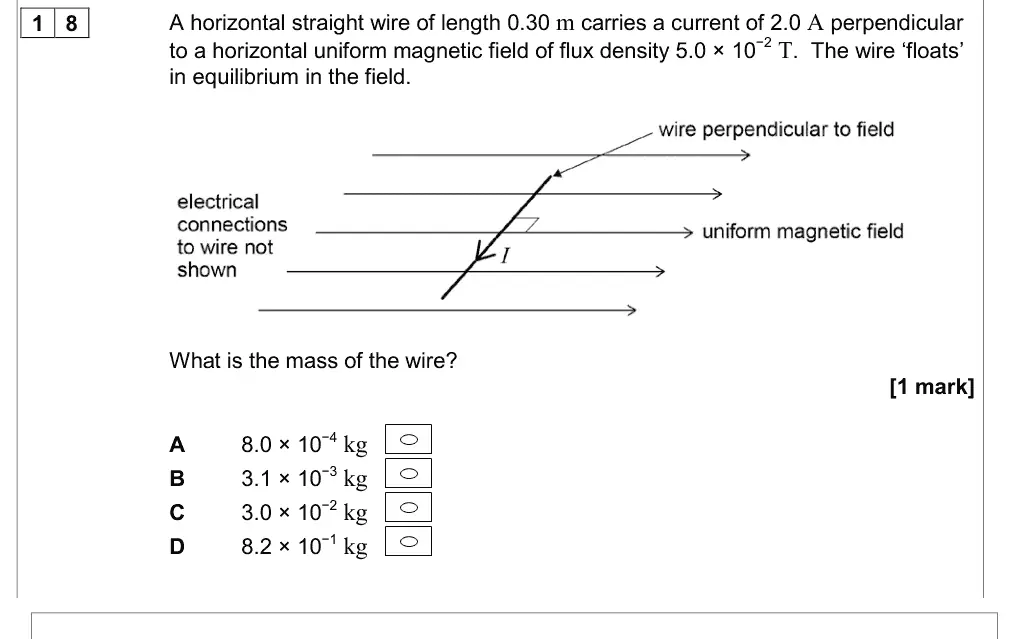
B
Skills: MS2.3 Substitute numerical values into algebraic equations using appropriate units for physical quantities
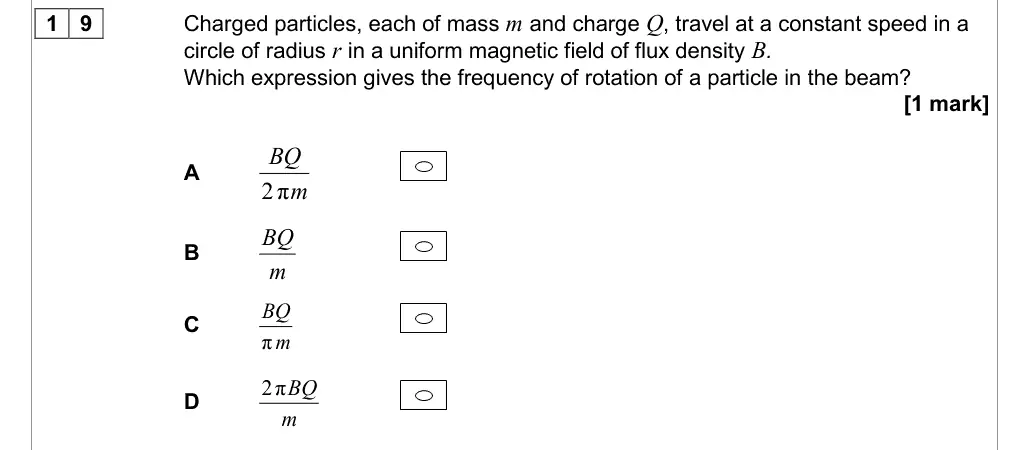
A
Skills: MS2.2 Change the subject of an equation, including non-linear equations
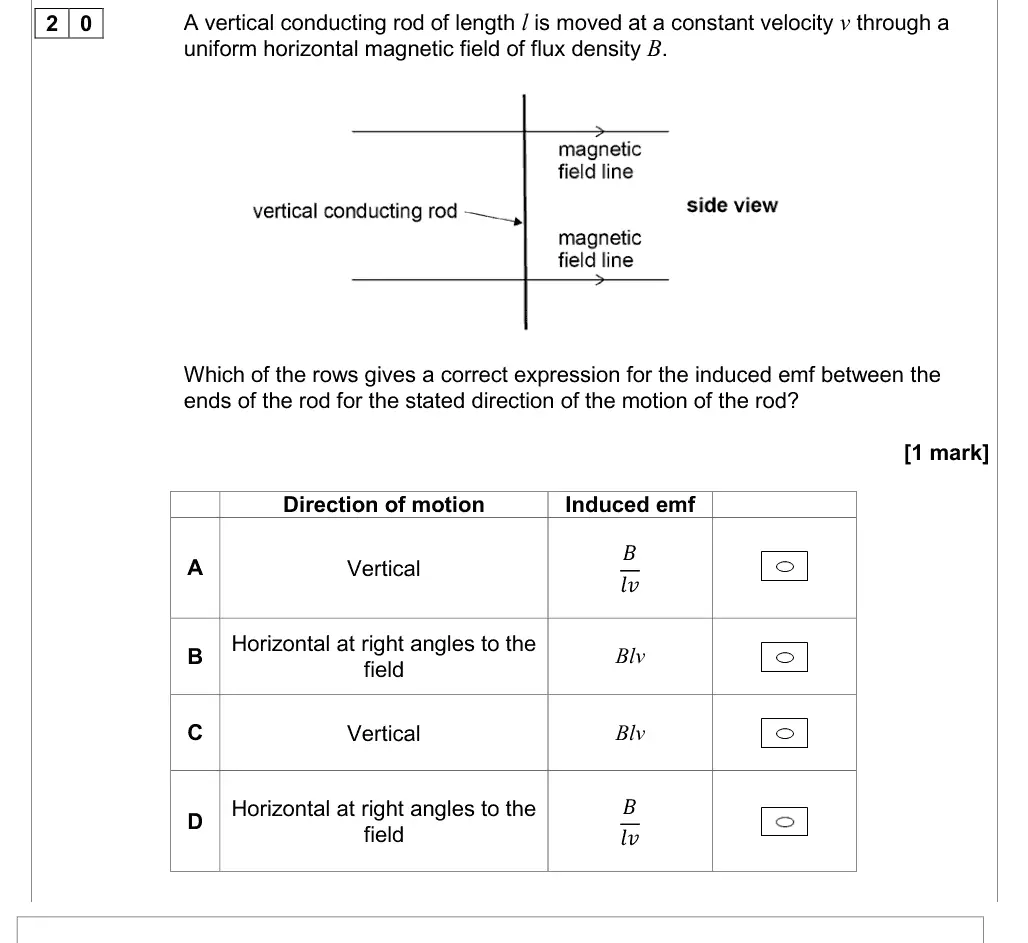
B
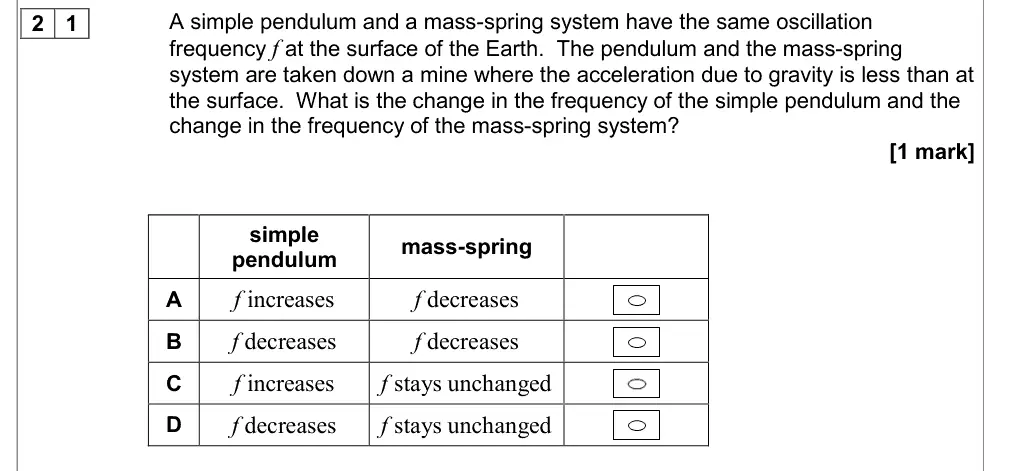
C
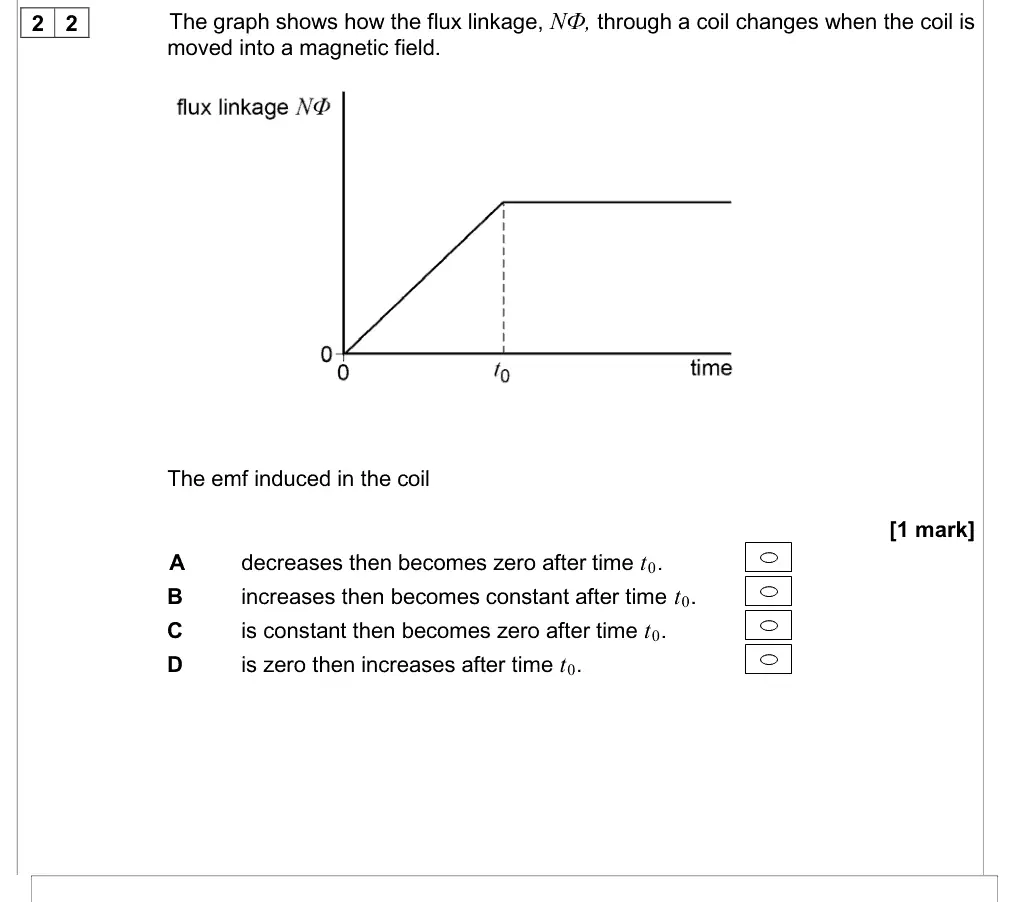
C
Skills: MS3.5 Calculate rate of change from a graph showing a linear relationship
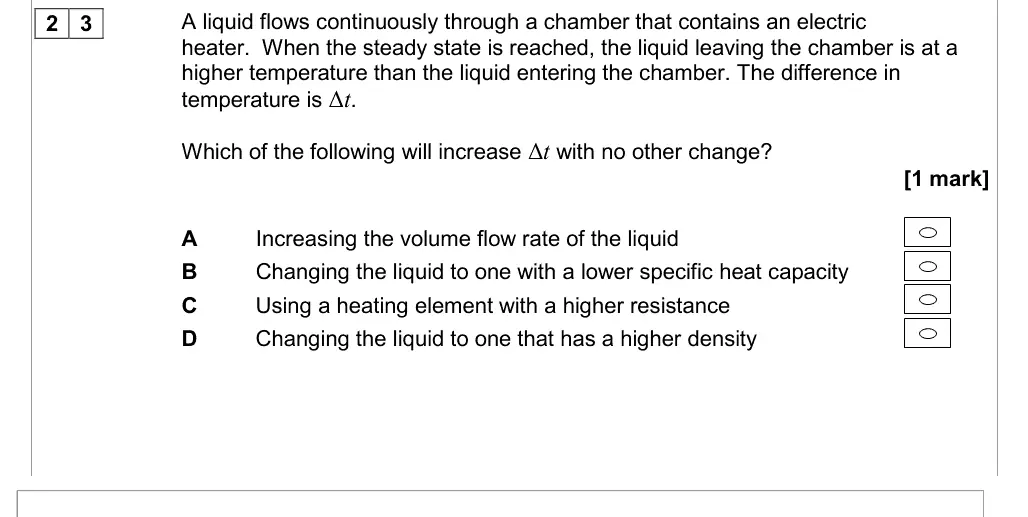
B
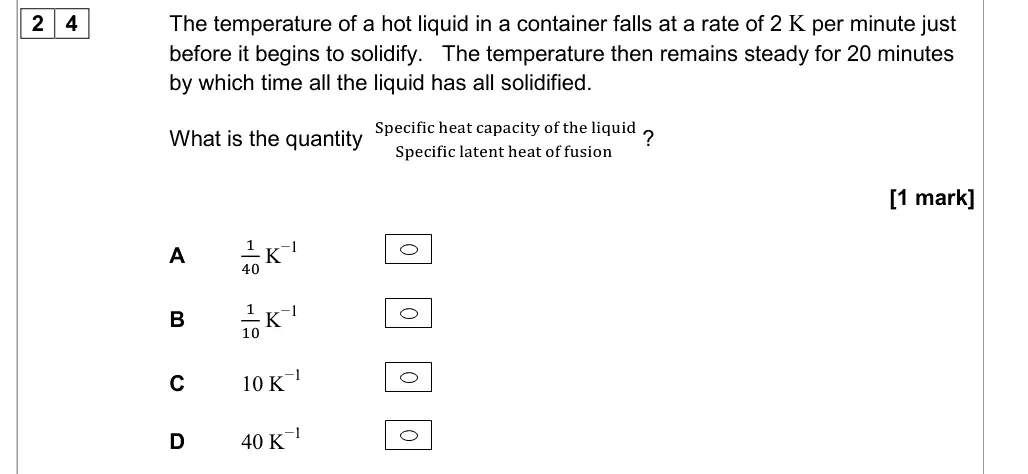
A
Skills: MS0.3 Use ratios, fractions and percentages
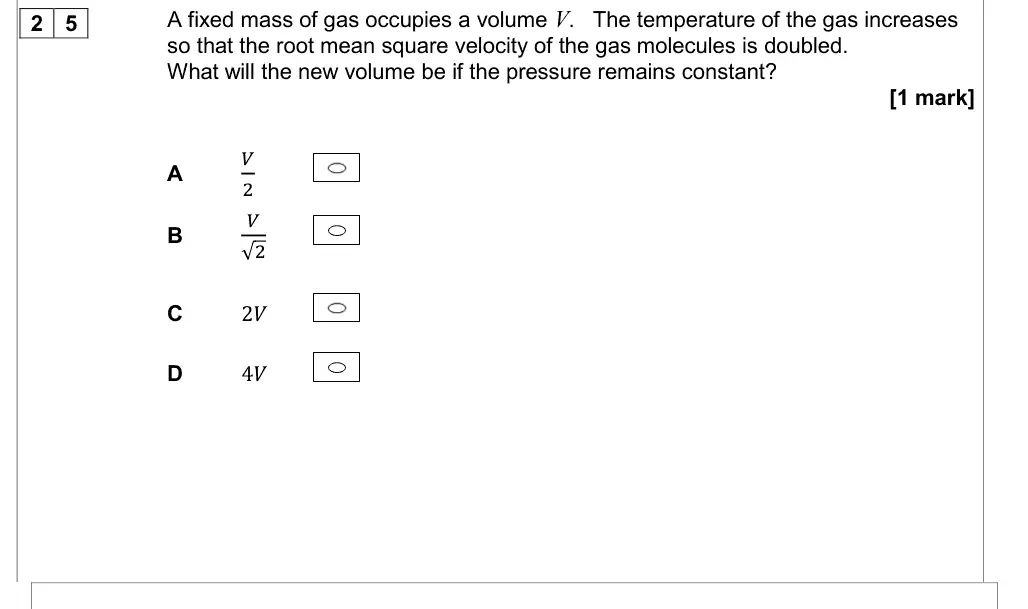
D
Skills: MS0.3 Use ratios, fractions and percentages
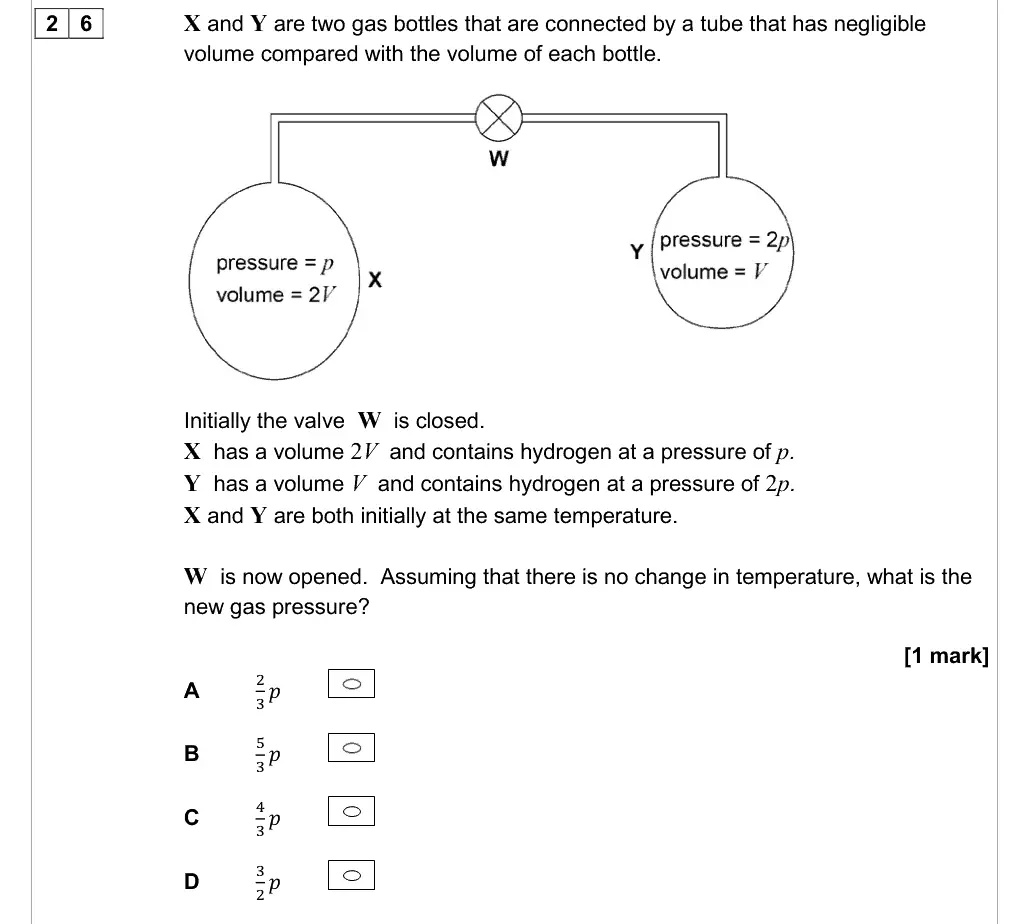
C
Skills: MS0.3 Use ratios, fractions and percentages
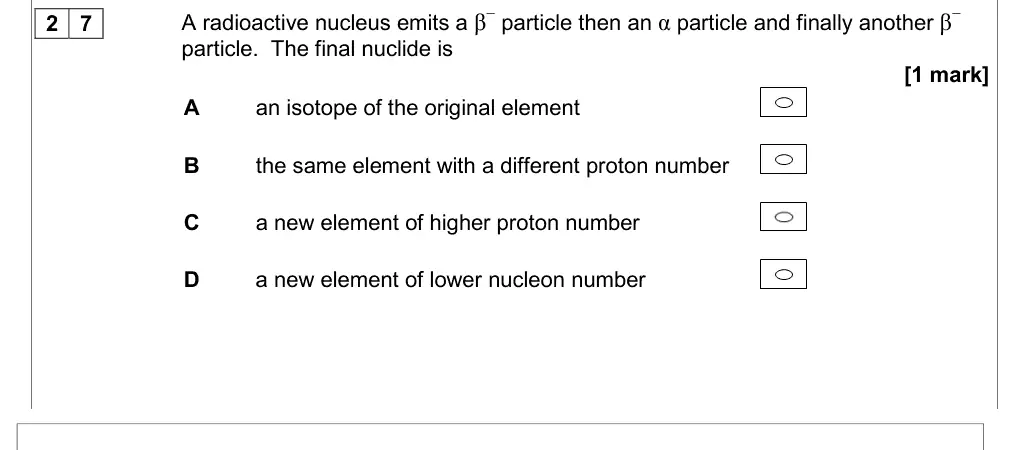
A
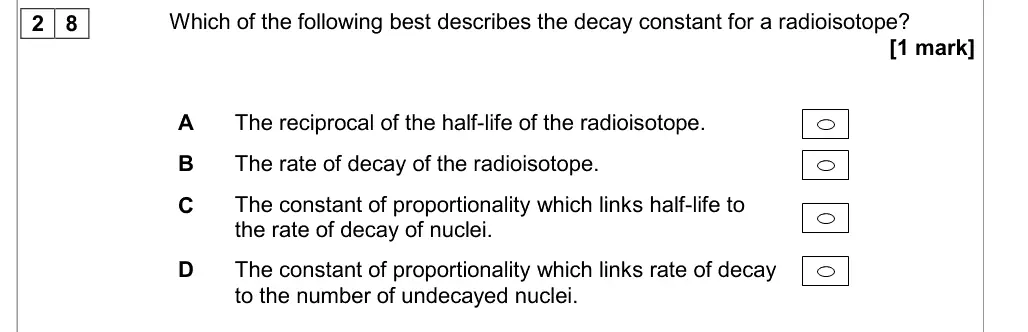
D
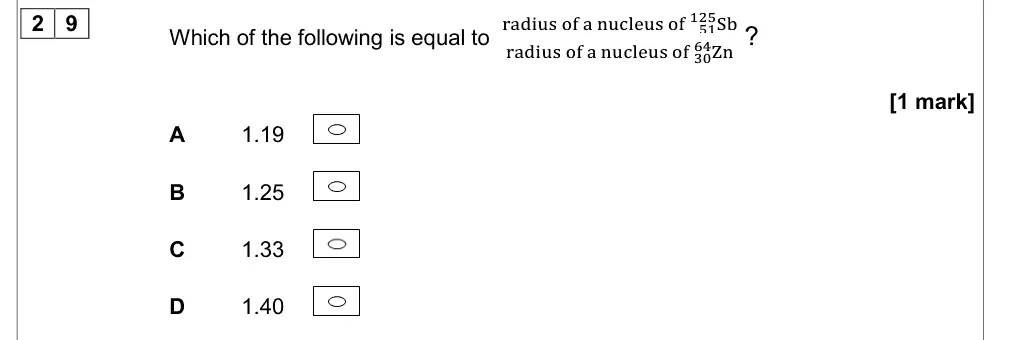
B
Skills: MS0.5 Use calculators to find and use power, exponential and logarithmic functions
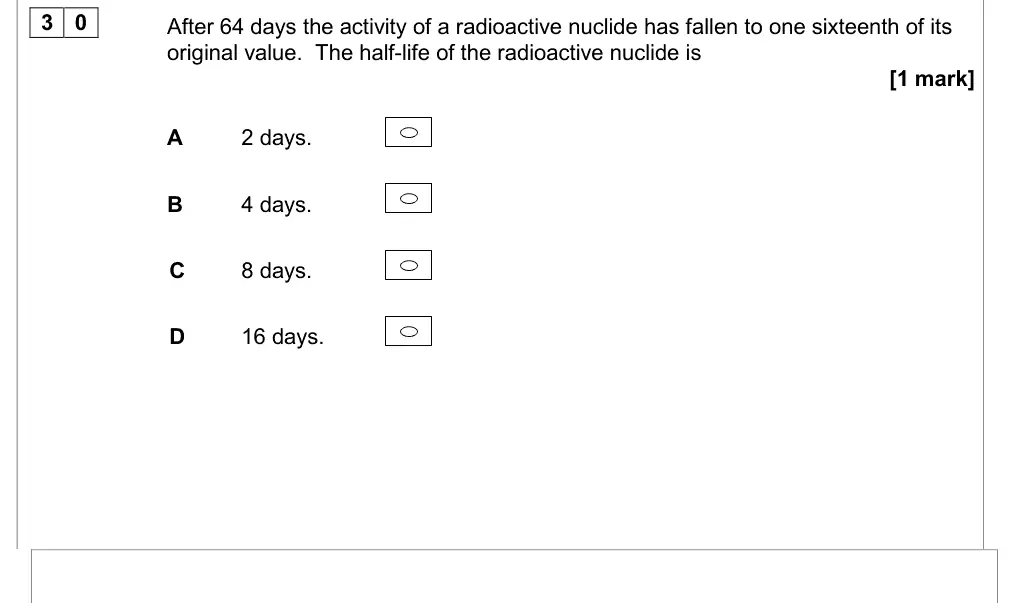
D
Skills: MS0.3 Use ratios, fractions and percentages
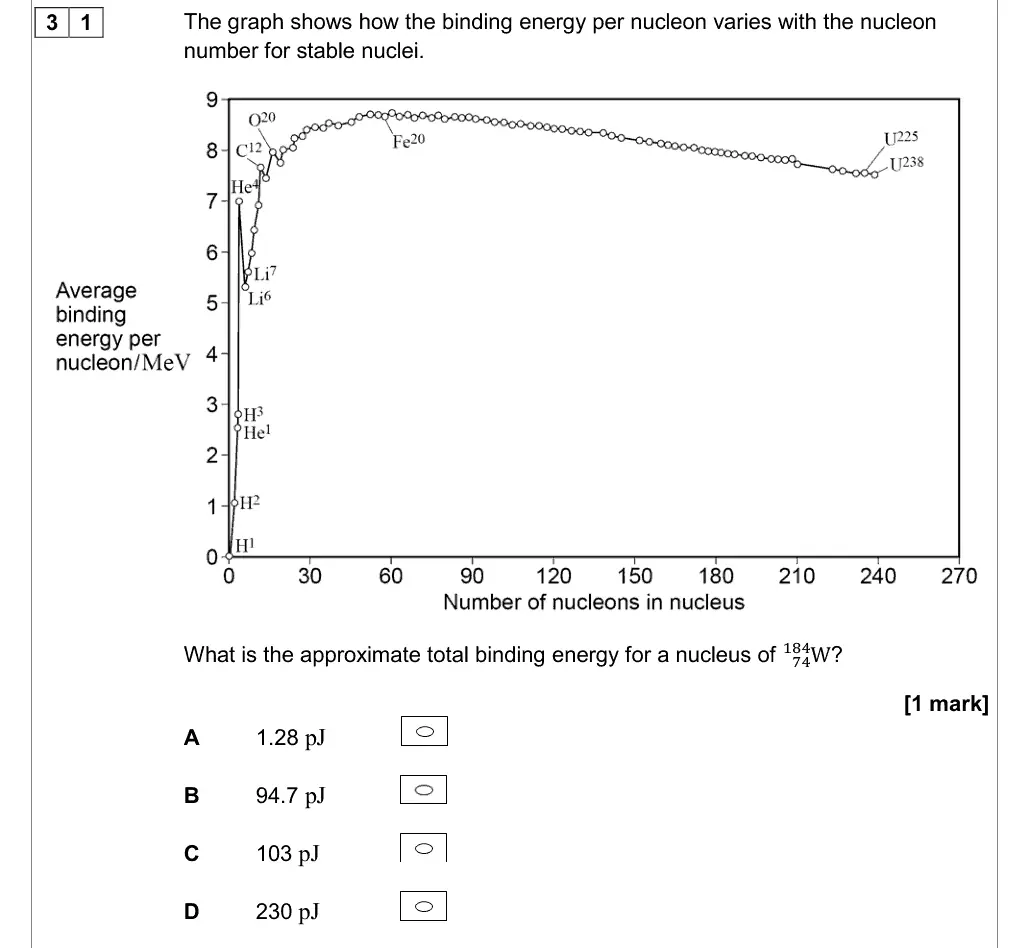
D
Skills: MS3.1 Translate information between graphical, numerical and algebraic forms; MS0.2 Recognise and use expressions in decimal and standard form
Dropping marks on calculations, required practicals or the six-markers? Book a trial session with a specialist AQA physics tutor.